

Submitted:
25 September 2025
Posted:
26 September 2025
You are already at the latest version
Abstract
Background/Objective: Acceptance and Commitment Therapy (ACT) has been widely applied in clinical settings, yet its adaptation to elite sports—particularly precision-based disciplines such as shooting—remains underexplored. This study aimed to develop and preliminarily validate an ACT-based psychological training program, the Acceptance and Commitment Performance Training for Shooters (ACPT-S). By reframing ACT from therapy to performance training, the program sought to enhance psychological flexibility, attentional control, and emotional resilience in elite shooters. Methods: A multi-phase formative evaluation design was employed. Needs assessment was conducted with 28 elite and collegiate shooters to identify psychological demands. A ten-session ACPT-S framework was then developed by integrating ACT’s six processes with sport-specific routines and metaphoric interventions. Two pilot studies were conducted: Phase 1 with four collegiate/corporate athletes, and Phase 2 with 15 national-level shooters. Data sources included session reflections, focus group interviews, and expert panel evaluations. Content Validity Ratio (CVR) analysis was applied to assess conceptual clarity and implementation feasibility. Results: ACPT-S was perceived as both feasible and contextually relevant. Athletes reported improved attentional focus, emotional acceptance, value-based motivation, and reduced performance anxiety. Thematic analysis confirmed strong engagement and integration of ACT principles. All program elements achieved CVR scores ≥ .80, indicating expert consensus. Revisions were guided by feedback on activity sequencing, metaphor resonance, and personalization strategies. Conclusions: This study redefined ACT as a performance-enhancement framework, extending its reach beyond clinical contexts. The ACPT-S model represents a novel, theory-driven, and scalable intervention for cultivating psychological skills in precision sports. Its metacognitive foundation and sport-specific design provide a promising basis for future longitudinal and comparative validation.
Keywords:
1. Introduction
2. Methods
2.1. Study Design
2.2. Participants and Recruitment
2.2.1. Needs Assessment
2.2.2. Pilot Study Participants
- Phase 1(2021): Approved by the Korea National Sport University IRB (No. 1263-202106-HR-072-01). Four athletes (2 male, 2 female; Mₐge = 23.0 years; Mₑxp = 9.0 years) from collegiate and corporate teams participated in 10 online sessions delivered via Zoom. Participant characteristics are presented in Table 2.
- Phase 2(2023-2024): Approved by Hanshin University IRB (No. 2023-02-006). Fifteen national-level athletes with international competition experience, including several ranked within the global top tier, took part in the second pilot study. The sample included pistol shooters (4 male, 3 female) and rifle shooters (4 male, 4 female). The average age was 29.4 years, and the mean length of competitive experience was 15.5 years. Participant characteristics are summarized in Table 3.
2.3. Intervention Overview
- Each session of the program was composed of five structured components:
- Conceptual overview – introducing the core psychological process of ACT in a sport-relevant context.
- Experiential activity – engaging athletes in practical exercises to embody the concept.
- Metaphor application – reinforcing understanding through context-sensitive metaphors.
- Individual reflection – encouraging athletes to internalize and personalize the learning experience.
- Performance linkage – directly connecting psychological processes to shooting-specific skills such as pre-shot routines and trigger control.
2.4. Procedures
2.4.1. Needs Assement
2.4.2. Pilot Implementation
- Phase 1 (2021): Ten online sessions (60 minutes each) were delivered via Zoom. The focus of this pilot was to assess the structural coherence, delivery flow, and practical feasibility of the initial ACPT-S draft. After each session, participants provided written feedback on comprehension, clarity, and applicability of metaphors. Demographic and athletic information for Phase 1 participants is summarized in Table 2.
- Phase 2 (2023-2024):
2.5. Measures and Data Sources
- Self-report: Post-session questionnaires (5-point Likert scale) assessing attentional control, anxiety regulation, and perceived session relevance.
- Qualitative data: Open-ended survey responses (needs assessment), session reflections, semi-structured interviews, FGI transcripts, and researcher field notes
- Expert review: Training manuals, worksheets, and evaluation sheets reviewed by a panel of experts. Expert panel demographics are summarized in Table 4.
2.6. Data Analysis
- Quantitative: Descriptive statistics (means, SDs) were calculated for post-session Likert ratings. Inferential statistics were not conducted due to the small pilot sample.
- Qualitative: Data were analyzed using Braun and Clarke’s (2006) six-step thematic analysis (familiarization, coding, theme generation, theme review, naming/defining, reporting). Triangulation across self-reports, interviews, and field notes ensured analytic rigor.
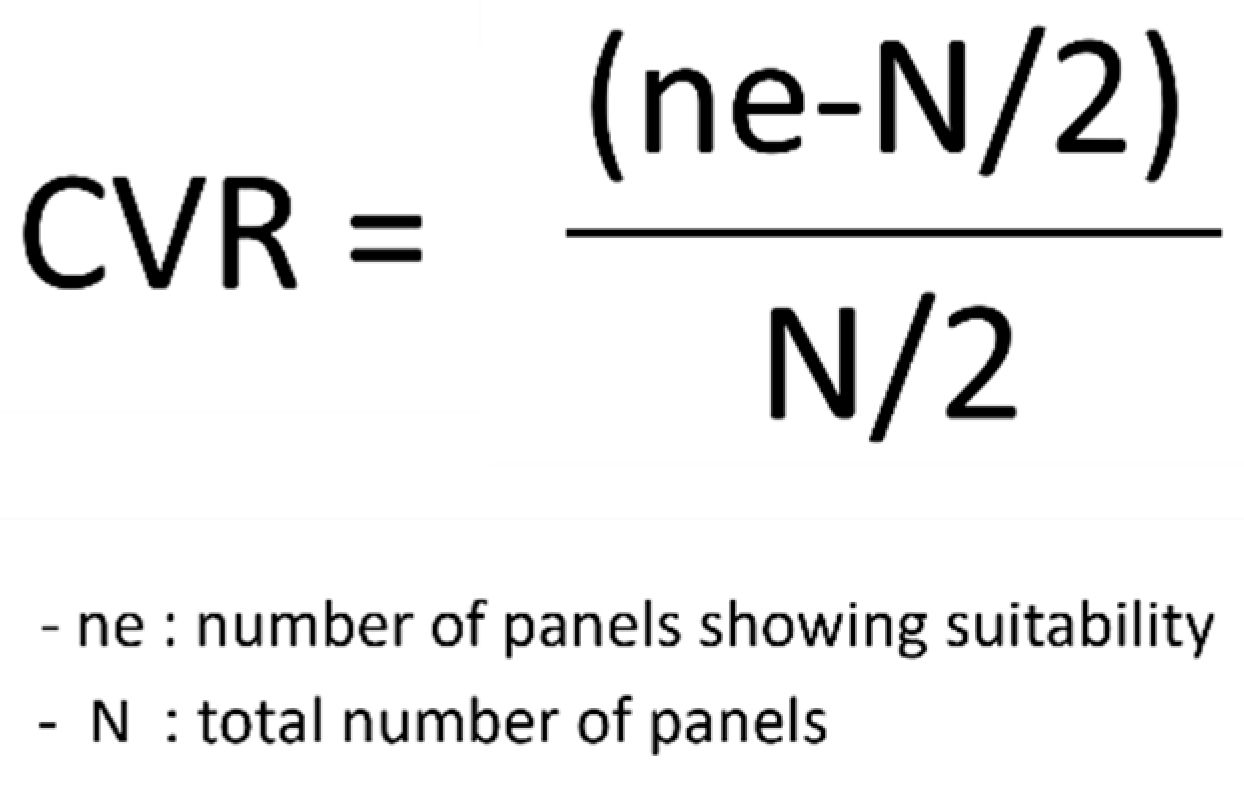
- Content Validity: Lawshe’s (1975) Content Validity Ratio (CVR) was computed for expert panel ratings, with the threshold for a 10-member panel set at .62. The calculation formula is presented in Figure 4.

| Group | Gender | Coaching Experience (years) | Athletic Experience (years) | Position | Sport | |||
|---|---|---|---|---|---|---|---|---|
| Shooting Expert |
M | 30 | 10 | National Coach | Shooting | |||
| F | - | 10 | Active Athlete | Shooting | ||||
| Group | Gender |
Teaching Experience (years) |
Research Experience (years) |
Sport Psychology Counseling Experience (years) |
ACT Counseling Experience (years) |
Sport | ||
| Sport Psychology Counseling Expert |
F | 25 | 20 | 20 | 6 | Shooting | ||
| M | 24 | 20 | 18 | 18 | - | |||
| M | 13 | 13 | 13 | - | Golf | |||
| M | 20 | 15 | 10 | 1 | Track | |||
| M | 12 | 14 | - | 13 | - | |||
| M | 10 | 16 | 10 | 5 | Taekwondo | |||
| M | 9 | 12 | 9 | - | - | |||
| M | 3 | 8 | 7 | - | - | |||
3. Trustworthiness and Ethical Considerations
3.1. Ethical Approval and Participant Rights
3.2. Trustworthiness and Rigor
4. Researcher Positionality
5. Results
5.1. Sample Characteristics
- Phase 1 involved four collegiate and corporate team athletes (2 male, 2 female; M_age = 23.0 years; M_experience = 9.0 years).
- Phase 2 included 15 national-level shooters (7 pistol, 8 rifle), many with international competition experience and global top-tier rankings (M_age = 29.4 years; M_experience = 15.5 years).
5.2. Needs Assessment Validation
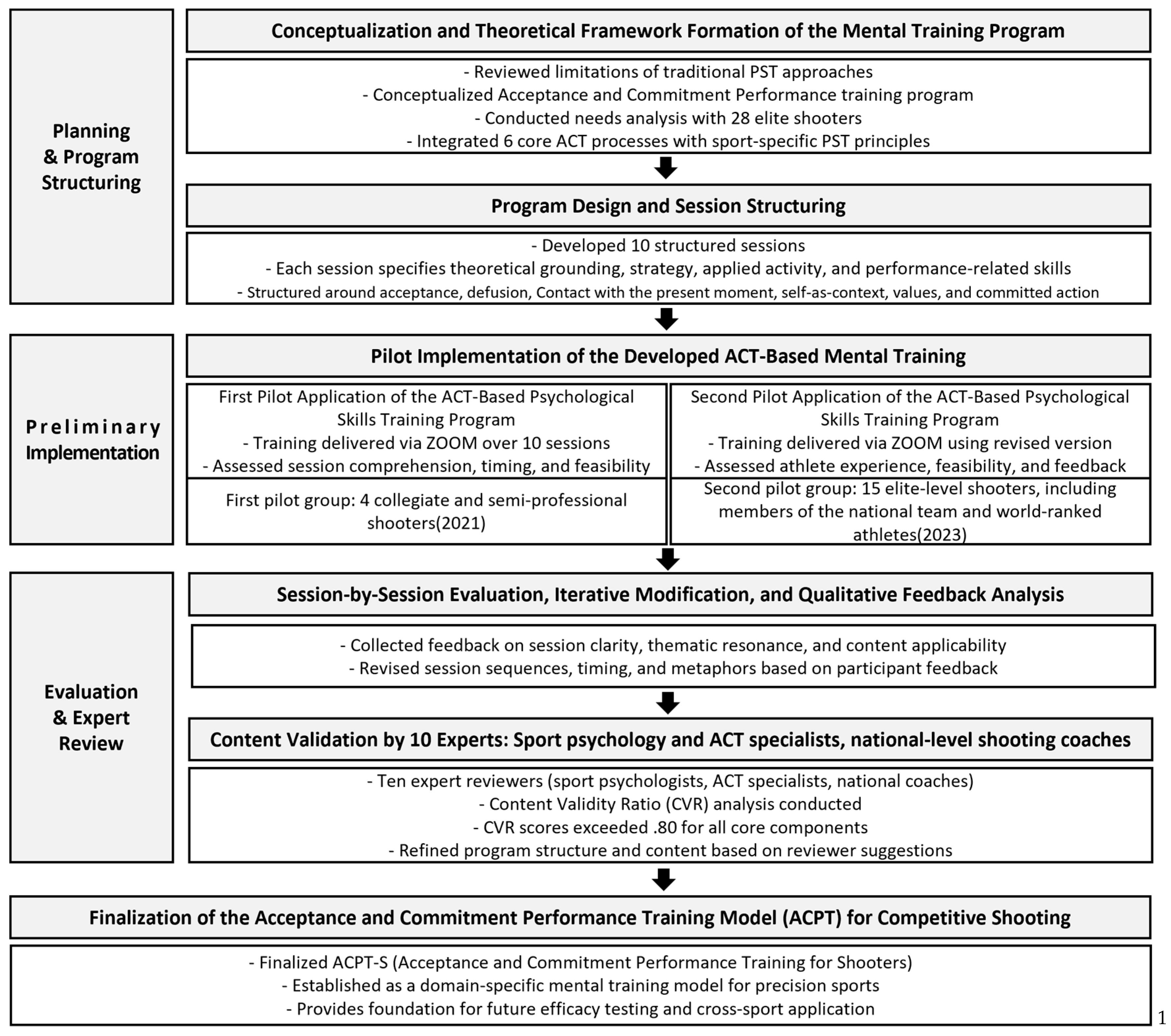
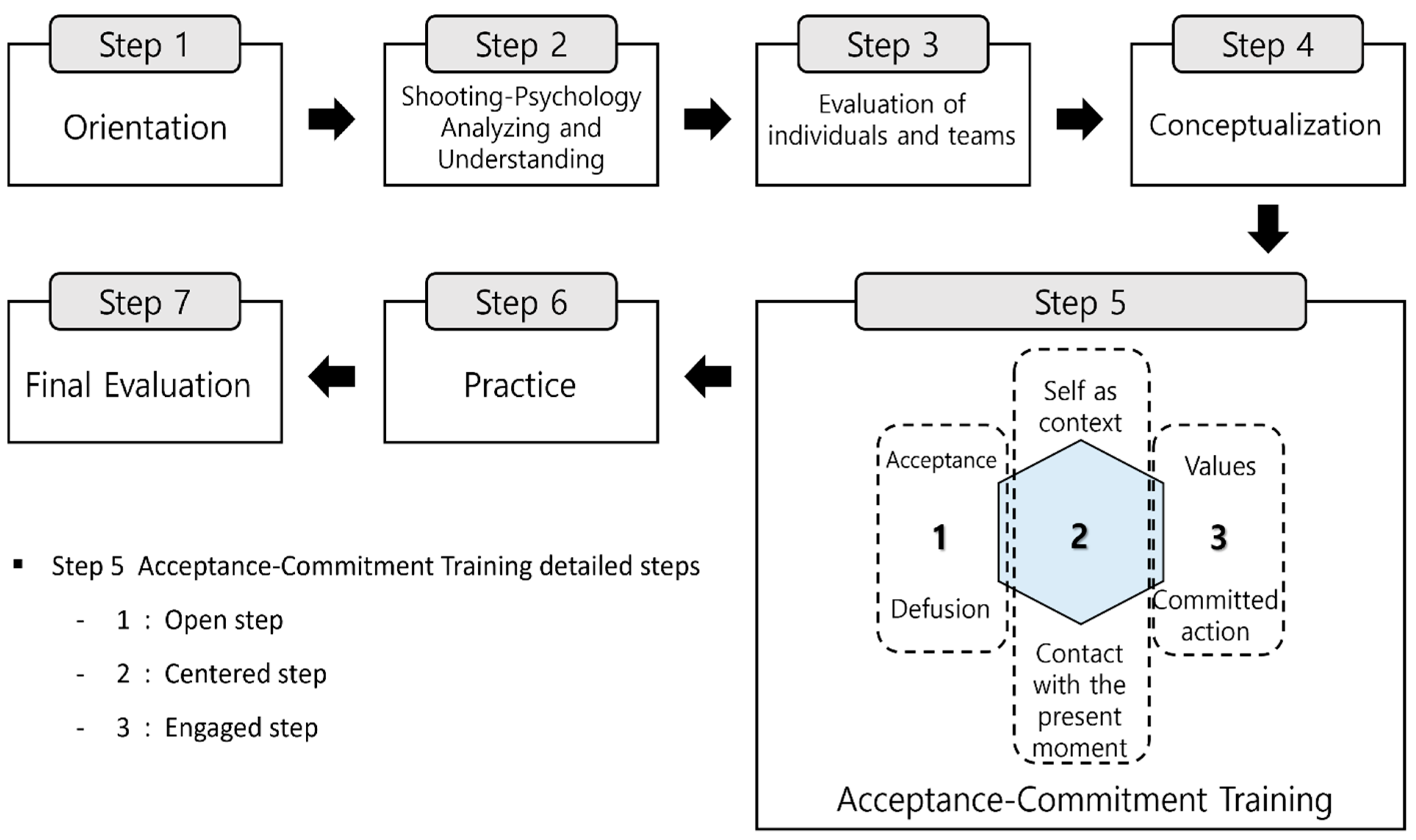
5.3. Theoretical Model Output
5.4. Pilot Validation
5.4.1. Operational Evaluation
5.4.2. Process Evaluation
- Improved emotional acceptance (“Observing my thoughts and myself from a third-person perspective helped me approach problems more calmly”).
- Enhanced attentional control and self-awareness.
- Increased trust in self through defining ACT concepts in their own words.
- Enjoyment from value-based activities and personalized engagement due to the small group setting.
5.4.3. Outcome Evaluation
- Internalization of ACT principles: athletes reported cognitive defusion and increased psychological flexibility (e.g., shifting from suppression to acceptance of negative emotions).
- Selective attentional focus: prioritizing solvable problems while letting go of uncontrollable concerns.
- Enhanced tolerance of negative emotions and reduced rumination.
- Expanded temporal self-awareness, integrating past, present, and future perspectives.
| Participants’ Reflections on the Benefits of Acceptance and Commitment Performance Training | |
|---|---|
| A | Observing my thoughts and myself from a third-person perspective without judgment helped me realize that the problems were not as severe as they seemed. Applying this perspective to my daily life was highly effective—it helped relieve more than half of the worries and concerns that had been overwhelming my mind. |
| B | I enjoyed the activity where we visualized the most joyful moments in our lives. It was fun and engaging. |
| C | The training that involved defining elements of ACT in my own words was especially meaningful. Through this process, I came to trust myself more and realized that the answers lie within me. I also learned to better understand my thoughts and emotions and to view myself more objectively. |
| D | Writing a letter of encouragement to myself and setting personal exercise goals were particularly helpful. Because the sessions involved only a small number of participants, each individual could fully engage in the training and accurately identify areas for personal improvement. |
| Participants’ Reflections on Psychological Changes after ACT-Based Training | |
|---|---|
| A | During the course, I applied what I learned to address major worries and concerns and found it very effective. Negative thoughts became more positive, and by looking at my problems from a third-person perspective, I was able to approach them more calmly. |
| B | I now focus only on the problems I can solve and no longer dwell on those I cannot. |
| C | I used to suppress or ruminate on negative emotions and thoughts. Through the training, I learned to face and accept them from a third-person perspective. Now I can respond more adaptively to similar situations. |
| D | I gained insight into what is needed across past, present, and future timelines. |
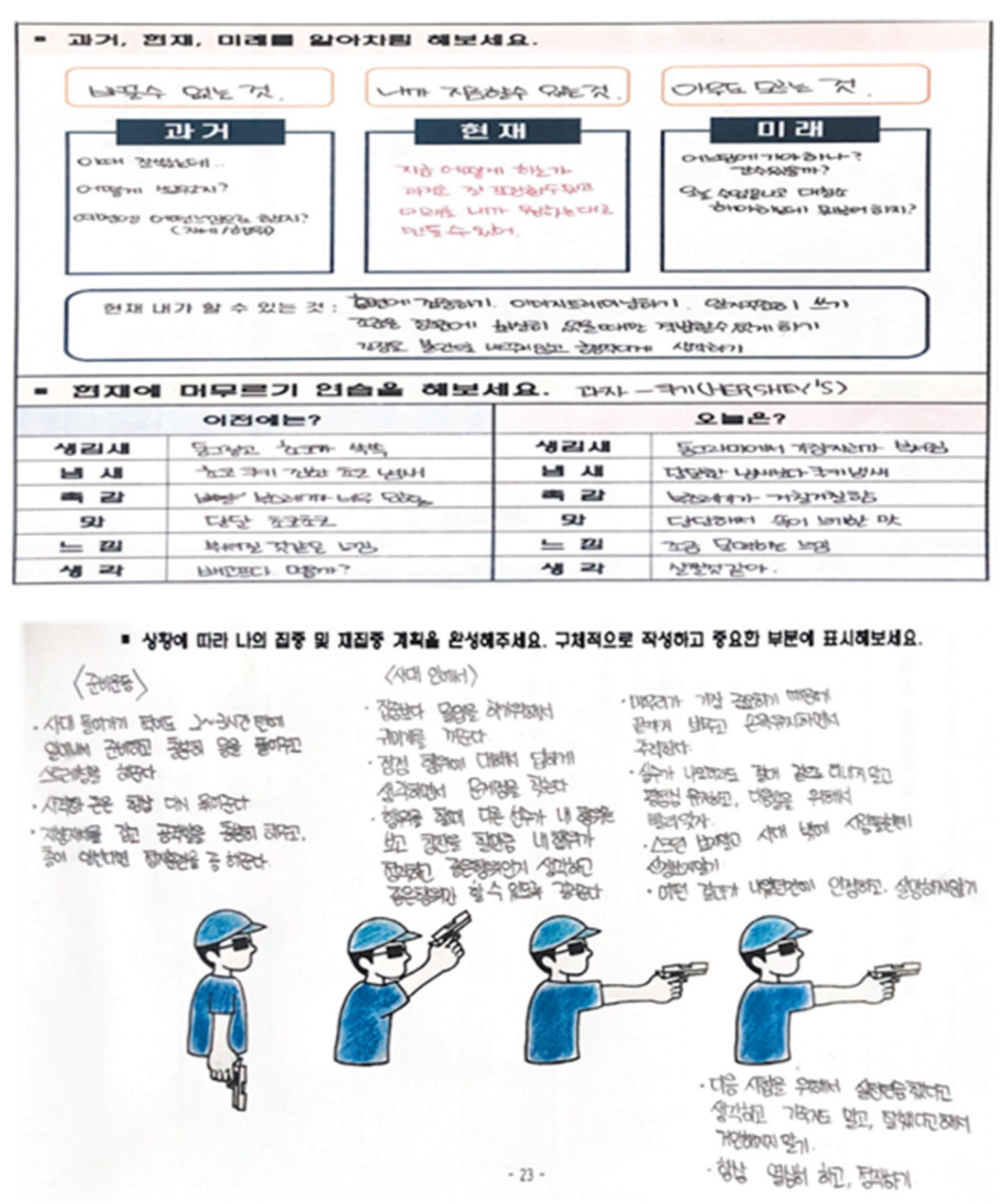
5.5. Expert Validation
- The importance of providing clearer explanations of ACT concepts.
- The need for adjusted time allocation to prevent disengagement.
- Prioritizing participant reflection over excessive activity load.
- Designing tasks that allow continued practice beyond sessions.
5.6. Program Finalization as Validation Output
- Conceptual overview,
- Experiential activity,
- Metaphor application,
- Individual reflection, and
- Performance linkage.
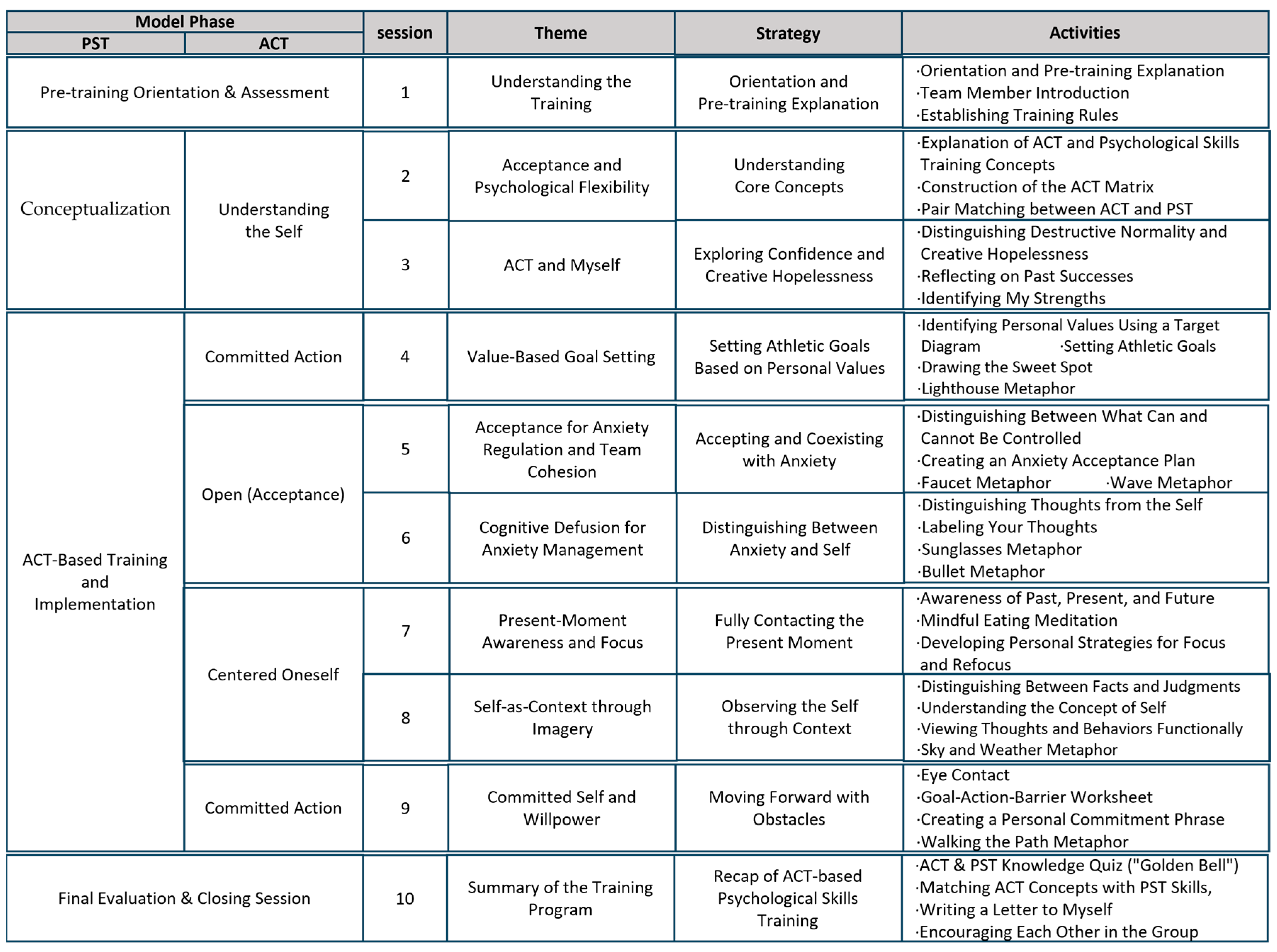
5.7. Session-Level Program Highlihts
- Self-Understanding: Activities such as Creative Hopelessness Sharing and the ACT Matrix (Krafft et al., 2017) guided athletes to recognize limitations of avoidance-based coping and fostered motivation for change. In addition, the concept of self-compassion was introduced, emphasizing support over control or avoidance in dealing with distress. Research indicates that self-compassion positively influences confidence in performance and anxiety regulation (Terry & Leary, 2011), thereby strengthening athletes’ internal motivation and resilience.
- Values: Introduced early using the “Value Target Tool,” enabling athletes to connect training goals with personal and performance-related values. This design aligns with recent evidence that clarifying performance-related values enhances motivation and sustainable goal pursuit among elite athletes (Su et al., 2024). By linking values to concrete training behaviors, shooters were able to maintain clarity and persistence under evaluative pressure.
- Acceptance: Metaphors such as the faucet and Olympic surfing wave were combined with Anxiety–Acceptance Plans to cultivate openness in evaluative contexts. Consistent with findings from Sabzevari et al. (2023), acceptance-based strategies improved cognitive flexibility and reduced maladaptive rumination, allowing athletes to remain functional under performance stress.
- Cognitive Defusion: Exercises like “Fact vs. Judgment” and the “Sunglasses Metaphor” promoted flexible distancing from anxiety-laden thoughts. Recent studies highlight that defusion practices not only reduce the believability of negative thoughts but also facilitate attentional reallocation toward task-relevant cues (McLoughlin et al., 2023), which is particularly critical in precision sports such as shooting.
- Present-Moment Awareness: Practices such as “Noticing Past–Present–Future” and eating meditation enhanced attentional anchoring and refocusing strategies. Research on elite shooters and archers (Lu et al., 2021) shows that maintaining present-moment awareness is directly linked to efficiency in attention networks, validating the inclusion of mindfulness-based attentional resets within the ACPT-S framework.
- Self-as-Context: The Sky and Weather Metaphor, imagery practices, and functional perspective activities expanded athletes’ awareness of self beyond transient internal states. By cultivating decentered awareness, athletes reported greater tolerance of fluctuating emotional states, consistent with evidence that perspective-taking supports resilience and psychological well-being in high-performance contexts (Ronkainen et al., 2025).
- Committed Action: Goal–Action–Barrier planning and commitment phrases reinforced persistence and value-driven behavior, even under pressure. These strategies operationalized the transition from abstract values to concrete actions, ensuring that performance routines remained aligned with both athletic and personal goals, a link emphasized in recent ACT-based sport interventions (Pears & Sutton, 2021).
6. Discussion
7. Limitations
8. Conclusions and Recommendations
Author Contributions
Funding
Institutional Review Board Statement
Informed Consent Statement
Data Availability Statement
Acknowledgments
Conflicts of Interest
Abbreviations
| ACT | Acceptance and Commitment Therapy |
| ACPT-S | Acceptance and Commitment Performance Training for Elite Shooters |
| PST | Psychological Skills Training |
References
- Adler, R. H. (2022). Trustworthiness in qualitative research. Journal of Human Lactation, 38(4), 598–602. [CrossRef]
- Bernard, M. E. (2013). The strength of self-acceptance: Theory, practice and research. Springer. [CrossRef]
- Birt, L., Scott, S., Cavers, D., Campbell, C., & Walter, F. (2016). Member checking: A tool to enhance trustworthiness or merely a nod to validation? Qualitative Health Research, 26(13), 1802–1811. [CrossRef]
- Boutcher, S. H., & Rotella, R. J. (1987). A psychological skills educational program for closed-skill performance enhancement. The Sport Psychologist, 1(2), 127–137. [CrossRef]
- Breitmayer, B. J., Ayres, L., & Knafl, K. A. (1993). Triangulation in qualitative research: Evaluation of completeness and confirmation purposes. Image: The Journal of Nursing Scholarship, 25(3), 237–243. [CrossRef]
- Donkoh, S., & Mensah, J. (2023). Application of triangulation in qualitative research. Journal of Applied Biotechnology and Bioengineering, 10(1), 6–9. [CrossRef]
- Gardner, F. L., & Moore, Z. E. (2004). A mindfulness-acceptance-commitment-based approach to athletic performance enhancement: Theoretical considerations. Behavior Therapy, 35(4), 707–723. [CrossRef]
- Gardner, F. L., & Moore, Z. E. (2007). The psychology of enhancing human performance: The mindfulness-acceptance-commitment (MAC) approach. Springer Publishing.
- Han, W. (2022). The effects of ACT-based psychological skills training for shooters: Relationships between ACT process variables and psychological factors [Doctoral dissertation, Korea National Sport University]. Korea National Sport University.
- Hayes, S. C. (2011). Acceptance and commitment in psychotherapy. Institute for the Advancement of Human Behavior.
- Hayes, S. C. (2019). Acceptance and commitment therapy: Towards a unified model of behavior change. World Psychiatry, 18(2), 226–227. [CrossRef]
- Hayes, S. C., & Sackett, C. (2014). Acceptance and commitment therapy. In The encyclopedia of clinical psychology. Wiley. [CrossRef]
- Hwang, S., & Chang, D. (2022). Development of elite shooter’s marksmanship perfectionistic strivings scale. Korean Journal of Sport Science, 31(5), 323–344.
- Hwang, S., & Yi, E. (2025). HOPE-FIT in action: A hybrid effectiveness–implementation protocol for thriving wellness in aging communities. Journal of Clinical Medicine, 14(7), 1123. [CrossRef]
- Hwang, S., Kim, H., & Yi, E. (2025). Healthy movement leads to emotional connection: Development of the Movement Poomasi “Wello!” application based on digital psychosocial touch—A mixed-methods study. Healthcare, 13(4), 987. [CrossRef]
- Ihalainen, S., Kuitunen, S., Mononen, K., Linnamo, V., & Häkkinen, K. (2016). Determinants of competitive rifle shooting performance. Scandinavian Journal of Medicine & Science in Sports, 26(3), 266–274. [CrossRef]
- Johnson, M. I., Hudson, M., & Ryan, C. G. (2023). Perspectives on the insidious nature of pain metaphor: We literally need to change our metaphors. Frontiers in Pain Research, 4, 1224139. [CrossRef]
- Josefsson, T., Gustafsson, H., Robinson, P., Cedenblad, M., Sievert, E., & Ivarsson, A. (2024). Examining the effects of the mindfulness-acceptance-commitment (MAC) programme on sport-specific dispositional mindfulness, sport anxiety, and experiential acceptance in martial arts. Scandinavian Journal of Sport and Exercise Psychology, 6(1), 19–26. [CrossRef]
- Josefsson, T., Ivarsson, A., Gustafsson, H., Stenling, A., Lindwall, M., Tornberg, R., & Lundqvist, C. (2019). Effects of mindfulness-acceptance-commitment (MAC) on sport-specific dispositional mindfulness, emotion regulation, and self-rated athletic performance in a multiple-sport population: An RCT study. Mindfulness, 10(8), 1518–1529. [CrossRef]
- Josefsson, T., Tornberg, R., Gustafsson, H., & Ivarsson, A. (2020). Practitioners’ reflections of working with the mindfulness-acceptance-commitment (MAC) approach in team sport settings. Journal of Sport Psychology in Action, 11(2), 92–102. [CrossRef]
- Kang, H. C. (2016). Effects of mindfulness-acceptance-commitment (MAC) and psychological skills training (PST) for shooters [Unpublished doctoral dissertation]. Korea National Sport University.
- Krafft, J., Levin, M. E., Potts, S., & Schoendorff, B. (2017). A randomized controlled trial of multiple versions of an acceptance and commitment therapy Matrix app for well-being. Behavior Modification, 43(2), 246–272. [CrossRef]
- Lawshe, C. H. (1975). A quantitative approach to content validity. Personnel Psychology, 28(4), 563–575. [CrossRef]
- Lincoln, Y. (1980). Guba. E.(1985). Naturalistic inquiry. Beverly Hills: Sage. LincolnNaturalistic Inquiry1985.
- Lu, Q., Li, P., Wu, Q., Liu, X., & Wu, Y. (2021). Efficiency and enhancement in attention networks of elite shooting and archery athletes. Frontiers in Psychology, 12, 527–536. [CrossRef]
- McLoughlin, G., Roca, A., & Ford, P. R. (2023). Metacognition and attentional control in high-performance sport: Implications for training and performance. International Journal of Sport and Exercise Psychology, 21(4), 389–405. [CrossRef]
- McLoughlin, S., & Roche, B. T. (2023). ACT: A process-based therapy in search of a process. Behavior Therapy, 54(6), 939–955. [CrossRef]
- Morris, T., & Thomas, P. (1995). Approaches to applied sport psychology. In T. Morris & J. Summers (Eds.), Sport psychology: Theory, applications and issues (pp. 215–258). Wiley.
- Morrow, S. L. (2005). Quality and trustworthiness in qualitative research in counseling psychology. Journal of Counseling Psychology, 52(2), 250–260. [CrossRef]
- Noetel, M., Ciarrochi, J., Van Zanden, B., & Lonsdale, C. (2019). Mindfulness and acceptance approaches to sporting performance enhancement: A systematic review. International Review of Sport and Exercise Psychology, 12(1), 139–175. [CrossRef]
- Pears, M., & Sutton, J. (2021). Acceptance and commitment training for stress management in collegiate athletes. Journal of Applied Sport Psychology, 33(5), 482–498. [CrossRef]
- Poulus, D., McCarthy, P., & Jones, G. (2024). Emotional-technical integration and elite sport performance: A conceptual model. Sport, Exercise, and Performance Psychology, 13(2), 145–158. [CrossRef]
- Ronkainen, H., Lundgren, T., Kenttä, G., Ihalainen, J. K., Kalaja, S., Valtonen, M., & Lappalainen, R. (2025). A sport-specific ACT group intervention for promoting athletes’ mental well-being: A randomized controlled trial. Journal of Applied Sport Psychology, 37(1), 1–26. [CrossRef]
- Ronkainen, N. J., Ryba, T. V., & Aunola, K. (2025). Flow and acceptance in endurance sport: A mixed-methods exploration. Psychology of Sport and Exercise, 68, 102308. [CrossRef]
- Sabzevari, F., Samadi, H., Ayatizadeh, F., & Machado, S. (2023). Effectiveness of mindfulness-acceptance-commitment based approach for rumination, cognitive flexibility and sports performance of elite players of beach soccer: A randomized controlled trial with 2-months follow-up. Clinical Practice and Epidemiology in Mental Health, 19(1), e174501792303282. [CrossRef]
- Son, J. R. (2020). Metaphors and Acceptance and Commitment Therapy [In Korean]. Hakjisa.
- Stafford-Brown, J., & Pakenham, K. I. (2012). The effectiveness of acceptance and commitment therapy for athlete burnout: A case study. Journal of Clinical Sport Psychology, 6(3), 189–207. [CrossRef]
- Stoddard, J. A., & Afari, N. (2014). The big book of ACT metaphors: A practitioner’s guide to experiential exercises and metaphors in acceptance and commitment therapy. New Harbinger Publications.
- Su, N., Si, G., Liang, W., Bu, D., & Jiang, X. (2024). Mindfulness and acceptance-based training for elite adolescent athletes: A mixed-method exploratory study. Frontiers in Psychology, 15, 1401763. [CrossRef]
- Taylor, J. (2017). Assessment in applied sport psychology. Human Kinetics.
- Terry, M. L., & Leary, M. R. (2011). Self-compassion, self-regulation, and health. Self and Identity, 10(3), 352–364. [CrossRef]
| Group(R) | Pre-Test | Intervention | Post-Test |
|---|---|---|---|
| R12 | Q13 | X1 | Q24 |
| No | Gender | Type | Age | Years of Experience |
|---|---|---|---|---|
| 1 | M | Pistol | 23 | 11 |
| 2 | M | Rifle | 23 | 8 |
| 3 | F | Rifle | 23 | 7 |
| 4 | F | Rifle | 23 | 10 |
| No | Gender | Type | Age | Athletic Experience(years) |
|---|---|---|---|---|
| 1 | M | Pistol | 37 | 23 |
| 2 | M | Pistol | 33 | 18 |
| 3 | M | Pistol | 35 | 20 |
| 4 | M | Pistol | 23 | 8 |
| 5 | F | Pistol | 29 | 14 |
| 6 | M | Pistol | 32 | 16 |
| 7 | M | Pistol | 27 | 15 |
| 8 | M | Rifle | 25 | 20 |
| 9 | M | Rifle | 23 | 17 |
| 10 | M | Rifle | 30 | 12 |
| 11 | M | Rifle | 28 | 13 |
| 12 | M | Rifle | 32 | 16 |
| 13 | F | Rifle | 30 | 15 |
| 14 | F | Rifle | 29 | 14 |
| 15 | F | Rifle | 28 | 11 |
| ▷What psychological aspects do you feel need improvement? | ||
|---|---|---|
| Response Content | Category | Percentage (%) |
| ·Frequently worried ·Useless thoughts ·Reduce rumination |
Worries and Overthinking |
21.4 |
| ·Feeling distracted due to excessive thoughts when anxious ·Need to avoid being anxious ·Extreme tension |
Anxiety and Tension |
21.4 |
| ·Low mental resilience ·Mental weakness ·Easily losing mental focus |
Mental Toughness |
21.4 |
| ·concentration | concentration | 7.1 |
| ·Thinking without becoming emotionally reactive or stressed | Emotional Regulation | 7.1 |
| ·Need to enhance self-confidence | Self-Confidence | 7.1 |
| ·expressing emotions ·Need to practice expressing desires |
Others |
14.3 |
| ▷ What kind of support would you like to receive from psychological skills training? | ||
|---|---|---|
| Response Content | Category | Percentage (%) |
| ·Mental training ·Learning how to manage mental skills ·Mental strengthening ·Support to become a better athlete becoming more mentally resilient and consistent |
Mental Toughness Enhancement |
42.9 |
| ·How to manage tension ·Overcoming tension |
Tension Management | 14.3 |
| ·Learning how to cope with anxiety ·Getting out of anxious states |
Anxiety Regulation | 14.3 |
| ·Maintaining focus in distracting or stressful situations | Concentration | 7.1 |
| ·Emotional regulation | Emotional Control | 7.1 |
| ·Learning how to overcome slumps | Overcoming Slumps | 7.1 |
| ·Not giving up easily | Persistence | 7.1 |
| No | Contents of the question | N | ne | CVR |
|---|---|---|---|---|
| 1 | Is the training suitable for field application? | 10 | 9 | .80 |
| 2 | Are the training objectives and activity content appropriate? | 10 | 9 | .80 |
| 3 | Is the training suitable for university and professional shooting athletes? | 10 | 9 | .80 |
| Category | Summary of expert opinions |
|---|---|
|
Concrete Explanation of Concepts |
• It is necessary to provide appropriate instructional materials to support conceptual understanding of ACT and psychological skills. • Training should clarify the purpose of each session so athletes understand why it is being conducted. • Using concrete examples and explaining the meanings of key terms can improve athletes’ comprehension. |
|
Adjustment of Training Duration |
• Allocating 20 minutes to explain core concepts may result in disengagement. • Rather than including excessive content, training should be structured in a more concise and segmented manner to encourage athletes’ open engagement. • Detailed preparation is necessary to effectively conduct multiple activities within limited time. • Participants need sufficient time to understand, reflect, and complete worksheets—therefore, current time allocations may be too tight. |
|
Revision and Supplementation of Program Content |
• Instead of setting long-term goals within a one-year frame, goals should be framed broadly in terms of the athlete’s identity to enhance psychological flexibility. • For athletes who struggle with visual expression, written alternatives should be provided. • Adding open-ended sections instead of fixed checklists allows athletes to express individual values and thoughts. • Self-reflection should be prioritized, and session order may need to be rearranged accordingly. • Limiting practice to within-session tasks may be burdensome; training should be designed to allow for ongoing practice and follow-up. • Experts viewed the program as highly beneficial and emphasized that sustained application would further enhance its effectiveness. |
Disclaimer/Publisher’s Note: The statements, opinions and data contained in all publications are solely those of the individual author(s) and contributor(s) and not of MDPI and/or the editor(s). MDPI and/or the editor(s) disclaim responsibility for any injury to people or property resulting from any ideas, methods, instructions or products referred to in the content. |
© 2025 by the authors. Licensee MDPI, Basel, Switzerland. This article is an open access article distributed under the terms and conditions of the Creative Commons Attribution (CC BY) license (http://creativecommons.org/licenses/by/4.0/).