
Submitted:
22 September 2025
Posted:
23 September 2025
You are already at the latest version
Abstract
The intersection of beneficial microbes and sensor technologies presents a transformative opportunity for sustainable smart agriculture. This review explores the synergistic potential of microbial applications and advanced sensor systems to enhance agricultural productivity while minimizing environmental impacts. Beneficial microbes, including bacteria and fungi, play crucial roles in soil health, nutrient cycling, and plant growth promotion. Their utilization can lead to improved crop resilience and yield, offering an eco-friendly alternative to chemical fertilizers and pesticides. Concurrently, the advent of sensor technologies facilitates real-time monitoring and management of agricultural systems, allowing for data-driven decisions that optimize resource use and reduce waste. We discuss various sensor technologies, such as soil moisture sensors, nutrient sensors, and remote sensing tools, which provide critical insights into soil and crop conditions. The integration of these technologies with microbial solutions can lead to precision agriculture practices that enhance soil fertility and health while ensuring efficient water and nutrient management. Furthermore, the manuscript addresses the challenges and opportunities presented by this dual approach, including the need for interdisciplinary research, technology transfer, and farmer education. By harnessing the power of beneficial microbes alongside innovative sensor technologies, the agricultural sector can transition towards a more sustainable model that meets the growing global food demand without compromising ecological integrity. This review ultimately argues that the future of agriculture lies in the intelligent integration of biological systems and technological advancements, paving the way for resilient food systems capable of withstanding climatic and economic challenges.
Keywords:
beneficial microbes
; sensor technologies
; sustainable agriculture
; precision farming
; soil health
1. Introduction to Smart Agriculture
Smart agriculture represents a groundbreaking technological advancement that seamlessly integrates beneficial microbes, sophisticated sensor technologies, and comprehensive data analysis to optimize agricultural productivity in a way that significantly minimizes environmental impact compared to traditional farming methods. Unlike conventional farming techniques, which heavily rely on chemical fertilizers and pesticides, smart farming offers a more resource-efficient, cost-effective, and eco-friendly alternative that is especially crucial in today's rapidly changing climate [1]. The conventional approaches are widely recognized for their intensive use of resources, high operational costs, and overall inefficiency, leading to increased pollution and resource depletion. Smart farming, on the other hand, utilizes advanced sensor arrays that are interconnected through the Internet of Things (IoT) to gather real-time data regarding critical environmental parameters—such as soil moisture levels, ambient temperature, humidity, and pH—factors that are crucial for influencing plant growth and development effectively [2]. This essential information is gathered and transmitted seamlessly to farmers’ smartphones, tablets, or computers, enabling them to analyze the data thoroughly to determine the most favorable timing and dosage for fertilizer application and irrigation with unprecedented precision. By expertly combining the natural benefits presented by plant growth-promoting microorganisms with precise monitoring and control, this innovative approach not only maximizes crop yields and quality but also significantly reduces harmful chemical residues in the soil and water supply, enhancing food safety [3]. Furthermore, it plays a vital role in preventing environmental degradation while fostering sustainability across economic, social, and environmental dimensions, which are essential for long-term agricultural viability. The successful implementation of smart agriculture hinges on collaborative efforts among professionals from diverse fields including biology, plant science, chemistry, engineering, information and communication technology, as well as policy development and community engagement. These cross-disciplinary efforts are essential for translating the promising potential of smart agriculture into more widespread and practical applications in the farming community, ultimately leading to a more sustainable future for global food production [4].
2. The Role of Beneficial Microbes in Agriculture
Beneficial microbes, which encompass a variety of microorganisms including bacteria and fungi, play a critical role in enhancing crop productivity through a multitude of diverse mechanisms. Certain rhizobacteria are particularly adept at suppressing both foliage and root pests, as well as various diseases that affect plant health [5]. Additionally, other beneficial microbes promote plant growth by mechanisms such as reducing stress, synthesizing phytohormones, facilitating nitrogen fixation, or solubilizing nutrients that are otherwise difficult for plants to absorb [6]. Furthermore, arbuscular mycorrhizal fungi significantly improve plants' ability to uptake essential nutrients and water, further enhancing their growth and resilience [7]. In a similar vein to these beneficial microbes, advanced sensor technologies have been developed to monitor critical agricultural parameters, including but not limited to water levels, temperature fluctuations, and humidity conditions. By leveraging the combined power of microbial and sensor technologies, the overall productivity, health, and environmental impacts of crops can be substantially optimized for better yields and sustainability. The potential of microorganisms in agriculture remains significant, particularly for increasing crop health and maximizing yields. In fact, microbial tools have been utilized in agricultural practices for over 120 years, and there is a strong expectation that these methods will sustainably enhance production levels over the ensuing decades (Figure 1). Implementing various microbial approaches, such as biofertilizers and biopesticides, represents a vital part of an integrated crop-management strategy that could lead to improved agricultural practices and outcomes [8,9].
2.1. Types of Beneficial Microbes
Beneficial microbes can be broadly categorized into several groups, including growth promoters, biofertilizers, biopesticides, and agents for bioremediation and biocontrol, all of which play crucial roles in enhancing sustainable crop productivity on a significant scale [10]. The promotion of plant growth can occur through both direct and indirect mechanisms that ensure plants receive the support they need to thrive. Direct plant promotion involves the synthesis of key metabolites, including phytostimulators, various plant hormones, siderophores, and essential nutrients. These compounds work collectively to stimulate root development and increase overall biomass, resulting in healthier plants that are better equipped to compete in their environments [11]. On the other hand, indirect promotion occurs when microbes exert fungistatic or fungicidal actions, primarily through the production of beneficial antibiotics, virulence molecules, hydrolytic enzymes, antifungal metabolites, and volatile organic compounds. These compounds offer protection to plants from harmful pathogens, thereby increasing resilience and yield. Moreover, microbial inoculants are known to significantly augment soil nitrogen levels, which is essential for optimal plant growth. They stimulate processes like nodulation in legumes and enhance seed germination, flowering stages, and fruit formation, contributing to higher crop yields. Microorganisms play vital roles in nutrient cycling, including nitrogen fixation and phosphorus mineralization, which together contribute to the development of effective biofertilizers for a variety of crops [12]. In addition, bioremediation techniques employ microbes specifically to decompose recalcitrant compounds such as hydrocarbons and pesticides found in contaminated soils. This process not only enhances soil conservation but also helps in maintaining crop quality and safety. Through bioremediation, these helpful microbes can effectively remove xenobiotic components from polluted environments and convert them into harmless, non-toxic metabolites, ensuring a cleaner and more productive agricultural landscape [9].
2.2. Mechanisms of Action
Smallholder agriculture, a vital component of global food systems, is characterized by an array of diverse cropping patterns, rain-fed systems, and innovative rainwater harvesting practices that are essential for sustainable development in rural areas. The forthcoming sections aim to provide an in-depth scientific review of various mechanisms of action, emerging sensor technologies, and the usage of microbial inoculants-guided sustainable smart agriculture. A comprehensive understanding of the fundamental modes of microbial activity underpins the creation and development of practical technologies specifically tailored for smallholder farmers. Over time, four notable common modes of action (MoA) have emerged as particularly beneficial in enhancing agricultural productivity: enhancing resource acquisition, modulating hormone levels, antagonizing pathogens, and conferring tolerance to abiotic stress conditions [13]. It is important to note that these mechanisms frequently overlap; acting synergistically to collectively boost crop productivity at modest costs and within reasonable input requirements. Therefore, practitioners are strongly encouraged to thoughtfully consider these mechanisms when selecting inputs for various specific bio-industry applications, leading to more informed decision-making. The enhancement of resource acquisition substantially increases the availability and uptake of vital nutrients. This process is achieved by developing highly specialized fine filamentous systems that meticulously explore soil pores and actively mobilize or scavenge crucial ions through the excretion of modulators, as well as the deliberate depletion of localized concentrations of nutrients [14]. Smaller microbes, due to their unique characteristics, benefit significantly from higher surface area-to-volume ratios and enhanced motility, and some of these resilient organisms develop stress-tolerant spores that ensure their survival amidst adverse conditions. Specific strategies are employed to target the mobilization of essential macronutrients such as phosphorus, nitrogen, and potassium, critical for plant growth and development. Phytohormones and related regulators are instrumental in influencing key developmental processes in plants; consequently, a few specific microbial taxa have garnered recognition for their ability to elevate important hormones such as auxin and homoserine lactones, which play crucial roles in plant health [15]. Microbial samples that stimulate early developmental events in plants may possess significant activity within this important regulatory category. Moreover, biopesticidal microbes have been shown to produce agents that effectively suppress or inhibit prevalent root and shoot pathogens. They achieve this through various mechanisms including parasitism, competition, or antibiosis, all of which are crucial for maintaining plant health. These processes considerably limit disease incidence in both controlled environments and open field conditions, thus substantially lowering the need for specialized synthetic inputs. However, it should be noted that the selection of strains within a single sum category can generate either synergistic or competing interactions among microbial populations. In contrast, randomly combined inputs that lack underlying mechanistic coherence are more likely to exacerbate existing agricultural problems, further complicating management practices. Tolerance to diverse abiotic factors, including extremes in water availability, salinity, pH fluctuations, and exposure to heavy metals, significantly shapes the survival prospects of beneficial microbes, as well as their ability to counteract adverse environmental effects. Commercial inoculants are often specifically formulated to enhance the resilience of agricultural systems against these various stresses, thereby ensuring improved crop performance. Additionally, it has been observed that unprotected greenhouse systems are prone to revealing more severe stresses, emphasizing the necessity of protective measures. Input combinations that are designed to strategically match identified environmental challenges have been reported to typically enhance performance, surpassing that of independent components in agricultural practices. Such tailored approaches can effectively advance the sustainability and productivity of smallholder agriculture systems worldwide [8,9,16].
2.3. Applications in Crop Production
Agricultural productivity is fundamentally reliant on essential resources such as light, water, and the presence of healthy, nutrient-rich soil. With the waves of industrialization and the intensification of farming practices, there has been a significant rise in the usage of chemical pesticides and fertilizers. Unfortunately, this trend has led to damaging repercussions for our vital natural resources, particularly soil, water, and air quality. Thus, it has become increasingly imperative to establish sustainable and smart agricultural systems that align with the overarching goals of the 2030 Agenda. Achieving this aim requires the careful integration of agricultural technologies tailored to the specific conditions of local environments. Moreover, it necessitates the active engagement and collaboration of communities, farmers, and entrepreneurs who play crucial roles in this transformative process. In this context, agricultural microbes present a promising solution as they can effectively promote plant growth; enhance the efficiency of nutrient utilization, and control pests as well as phytopathogens [17]. These benefits contribute significantly to the reduction of the dependence on chemical amendments and pesticides that so often plague traditional agricultural methods. Currently, several commercially available microbial products that contain beneficial strains such as Bacillus spp., Pseudomonas spp., and Trichoderma spp. are being utilized in various agricultural practices around the world, showcasing their effectiveness and versatility [18]. In addition to microbial solutions, advanced technologies like nanobiosensors and nanoformulations are emerging as vital tools to monitor plant health and deliver agrochemicals in a more controlled and targeted manner. This approach not only enhances efficiency but also reduces the likelihood of environmental contamination [19]. A diverse array of sensors has been developed to support essential practices related to nutrient management and pest assessment. These instruments often enable on-site analysis and, in some cases, come equipped with communication capabilities. Typically, sensor data is geo-referenced, allowing for seamless integration into sophisticated decision-support systems that facilitate real-time monitoring and analysis. Smart agricultural applications harness technology to track various conditions, including soil moisture levels, atmospheric parameters, electrical conductivity, charges, pH levels, humidity, and pest activity. The integration of these smart technologies with microbial products paves the way for the creation of innovative smart-MIP (microbial- and sensor-based integrated-precision) systems. Such systems are crucial for supporting sustainable agricultural practices that utilize modern techniques for smart agriculture. The combined efforts of microbes and sensors in precision crop production have proven to be effective in maintaining and even increasing crop yields while simultaneously minimizing the consumption of fertilizers, pesticides, and water resources, thereby promoting environmental sustainability and agricultural resilience [8,20,21].
3. Sensor Technologies in Agriculture
Contemporary sensor technologies have a pivotal role that extends beyond basic agricultural practices to create a more sustainable framework for smart agriculture. The latest progress in this dynamically evolving domain includes significant advancements in nano-electrochemical developments, which yield highly sensitive, remarkably low-cost, and swift-response devices specifically designed for the real-time detection of a variety of physiologically and environmentally relevant parameters [22]. These advanced sets of sensors are adept at swiftly measuring the biosignatures of plant leaves, detecting pesticides present in water, or identifying pathogens that could threaten livestock and various crops. Additionally, specific nutrients found in soils, such as nitrogen and other essential minerals, are similarly and effectively monitored with rapid turnaround times. Notably, internal electronics and the integration of IoT connectivity facilitate deployment of these technologies at distances from established supply chains, thereby enhancing accessibility for farmers. Farmers in search of complementary technologies are increasingly discovering that electrochemical sensor platforms not only deliver antimicrobial sensitivity at an impressive scale but also possess considerable potential to transform agri-food supply strategies significantly [23]. The functionality of embedded sensors, when combined with machine learning, data analytics, and classification algorithms, enables robust predictive capabilities essential for contemporary farming practices. Sensor arrays, in particular, allow for repeatable and quasi-continuous monitoring of various aspects related to plant health—including nutrient content, moisture levels, sunlight exposure, pesticide presence, and even specific diseases; livestock wellbeing, and food quality factors such as ammonia levels and pH readings; as well as the critical characteristics of soil and water, which include moisture content, pH balance, nutrient availability, and the potential for eutrophication. Collectively, these technologies empower on-site, real-time interventions and contribute significantly to the broader field of smart sustainable agricultural practices. Moreover, biosensor functionality extends deeply into precision agriculture applications through innovative trajectories associated with gene editing, bioelectronics, advanced nanomaterials, and state-of-the-art electrochemical device design [24]. The deployment of devices that seamlessly combine in situ plant measurements with machine-learning prediction and orchestration of drilling and chemical release promises to alter the wider agri-food network on a horizon characterized by the concept of “Agriculture 4.0.” These highly advanced toolkits play a crucial role in helping to collect extensive data concerning soil and water variables, thereby effectively limiting pollutant runoff as well as reducing excessive fertilizer use. They furnish a more detailed, comprehensive survey of the entire farming process, ultimately providing farmers with a holistic understanding. This enhanced understanding assists them significantly with informed decision-making and the optimization of deficit irrigation strategies, generating additional income streams as a result. Furthermore, innovative nanobiosensors are capable of detecting biotic and abiotic stresses in plants even before production is imperiled, providing a proactive approach to farming challenges. Meanwhile, nanofertilisers, herbicides, insecticides, and fungicides allow for site-targeted controlled delivery, which enhances efficiency while requiring lower dosages than traditional approaches utilized in agricultural practices [21,25].
3.1. Types of Sensors Used
Sensor technologies serve as the foundational elements of modern smart agriculture, delivering vital real-time insights regarding numerous environmental parameters. These agricultural sensors can be categorized into six distinct types, specifically optical, electromagnetic, electrochemical, location, acoustic, and airflow sensors [26] (Figure 2). Each type of sensor fulfills unique functions and plays a significant role in supporting the Internet of Things (IoT). With sensor systems deployed across various agricultural settings, they are instrumental in accumulating extensive and comprehensive data. This data undergoes detailed analysis and consolidation through the application of sophisticated algorithms and model calculations, which in turn facilitates farming operations that are more precise and effective. Optical sensors are frequently utilized to measure key indicators such as illumination levels, chlorophyll content, crop quality, and color variations. These measurements are essential for assessing plant health and growth conditions [27]. On the other hand, electromagnetic sensors possess the capability to detect a wider array of parameters, including temperature, electrical conductivity, water moisture levels, and various atmospheric conditions that can impact crop growth. Electrochemical sensors are specifically designed to measure crucial aspects like pH levels, vapor concentrations, and light intensity, which are important for monitoring soil and water quality. Location sensors provide critical geospatial information necessary for effective farming practices, and this information can also be captured using specialized geosensors. Geosensors play a vital role in monitoring and managing essential spatiotemporal parameters related to farming conditions, thus enabling enhanced accessibility and collaborative management strategies among farmers and stakeholders [28]. Acoustic sensors have predominantly been used to evaluate the physiological responses of livestock to external stimuli, although their use can be broadened to encompass other agricultural domains, contributing to animal welfare and productivity monitoring. Likewise, airflow sensors are currently utilized to track climate conditions within livestock housing, but they also hold potential for adaptation across a wider array of agricultural applications, thus enhancing overall farm management. The versatility of agricultural sensors enables their application across a variety of farming environments, including open-field operations, greenhouse cultivation, and hydroponic systems. In these diverse settings, sensors meticulously regulate essential factors such as humidity levels, water supply, and illumination requirements, thereby ensuring optimal growing conditions. Therefore, sensor technology assumes a pivotal role in the realm of smart agriculture, providing accurate situational awareness on a local scale and allowing numerous electronic systems to function intelligently and efficiently. Furthermore, the integration of real-time microbial information with sensor data has the potential to maximize data availability within smart agricultural systems, enhancing decision-making processes. Commonly deployed types of smart agricultural sensors encompass temperature, humidity, and moisture sensors. Temperature sensors can be categorized into electrical types such as thermistors, thermocouples, resistance temperature detectors (RTDs), and thermistor integrated circuits (ICs). They can also be mechanical, like NTE temperature switches, or infrared-based systems. Each type of electrical temperature sensor offers distinct advantages, boasting higher accuracy and broader operational coverage. Mechanical sensors are recognized for their reliability and simplicity, while infrared sensors allow for rapid measurements without requiring direct contact, thus adding convenience to temperature monitoring. Humidity sensors are instrumental in quantifying relative humidity levels; they are typically capacitive or resistive in nature, selected based on appropriate measurement ranges suited for varying agricultural needs. The significance of both humidity and temperature data becomes apparent, as these factors are critical for making informed irrigation and fertilization decisions essential to agricultural productivity. Soil moisture sensors specifically indicate current soil moisture levels, which are invaluable for effective irrigation scheduling, enabling farmers to optimize water usage. Most agricultural sensors are designed to operate wirelessly, facilitating the seamless transmission of data via Wi-Fi to web applications, which in turn allows for the automation of water supply and other vital processes within smart agricultural frameworks, thereby improving efficiency and sustainability in food production [20,29].
3.2. Data Collection and Analysis
On-the-go sensors provide a wide array of options when it comes to the type of data that can be collected, including the choice of sensor brand, the level of accuracy offered, the associated costs, and the ease of maintainability. Commercial on-the-go soil sensor systems include well-known brands such as Crop Circle (Holland Scientific), GreenSeeker (NTech Industries), CCS-645 and CCS-661 (Veris Technologies), SoilOptix (Soil Optix), Multiplex3 (Force A), and RapidSCAN CS-45 (Holland Scientific). However, the substantial volume of data generated by these sensors complicates the distribution to the intended end users, which primarily consist of farm operators and local advisors who rely on such data for making informed decisions. Processing software often hinges on specific sensor types, complicating matters further, as other programs may not be able to directly read files produced by the sensor due to data formats being proprietary and incompatible with third-party software solutions. The rapid proliferation of different sensor types and data sources has resulted in a wide range of formats used during data transmission, which has subsequently eroded the traditional language required for a cohesive support system [30]. This scenario reflects broader issues related to data flow that currently exists between users and the products they utilize. Farm Management Information Systems (FMISs) have experienced significant evolution over the years and currently provide a majority of the functions offered by Decision Support Systems (DSS). The role of farmers in utilizing DSS has increasingly shifted toward a more directive capacity, as these sophisticated systems now generate specific dosages, provide temporal prompts, and designate locations for each intervention, consequently reducing the farmer's autonomy in decision-making processes [2]. Data gathering remains a pivotal component, highlighting the necessity for a robust support tool that not only automates data handling but also puts in place streamlined procedures for data exchange. Automatic data transfer is essential for effective information sharing in large-scale agricultural operations that involve multiple operators and machines. Additionally, data delivery can also be directed toward other users, such as service technicians, agronomists, or plant consultants; for instance, distributed sensor services could facilitate smoother data management and encourage more effective assistance. The increase in adoption of on-the-go sensors has initiated a profound paradigm shift: errors that are introduced in the earlier phases of data collection and processing negatively impact subsequent steps in the overall workflow. Although the capability for real-time data acquisition enables more timely responses to emerging needs, the importance of quality and accuracy cannot be overstated, as these factors are crucial to ensuring the longevity and reliability of sensor performance and the validity of outputs produced [28]. The end result relies heavily not only on the sensor itself but also on how sensitive the system is to the accumulation of errors over time. Quality monitoring and an efficient rapid exchange procedure are essential to swiftly identify and mitigate the risk of significant error impacts. Consequently, the transfer of data from the sensor device to the various systems employed for evaluation and prescription emerges as a critically important aspect of the entire process. An ideal system for data exchange must boast flexibility, enabling it to operate seamlessly with various sensors that may be collecting soil or crop data; it should ensure traceability back to both the sensor and its original data source; maintain processing efficiency that allows for the repair of corrupted or missing data using Info Management System (IMS) Tools; offer traceability for each individual data item so that temporal and spatial relationships can be identified and leveraged to avert further errors; and remain easily accessible to a diverse range of users and machines for both data exchange purposes and remote monitoring functions. Farms that are equipped with on-the-go soil sensors, along with well-structured data transfer and management systems possess the capability, for example, to effectively feed a yield monitor with a spatial variation map of several key parameters. Furthermore, the integration of satellite imagery with soil parameter maps acquired through the utilization of on-the-go sensors can contribute significantly to accurately defining the boundaries of management zones, providing essential feedback on the appropriate identification of these zones to foster further refinement of agricultural practices [31].
3.3. Integration with Farming Practices
An important characteristic of any smart agriculture system is its inherent ability to adaptively integrate a variety of information sources, ensuring it makes use of those that are most appropriate to the specific problem at hand. For any given crop sequence, the major controllable factors that farmers can manipulate are the timing, volume, and composition of water and nutrients that are applied to the crops. Hence, the cornerstone of any robust digital agriculture platform must consist of a comprehensive soil–water–plant mathematical model, which is suitably adapted to the particular conditions and requirements of the specific farming location [32]. Complementary sources of data can range from simple capacitance sensors that detect soil moisture levels, to fractional cover cameras that analyze plant coverage, and electrical resistivity tomography that measures soil properties, adding valuable insights. Additionally, more specialized data sets, such as satellite hyperspectral images, high-precision airborne gamma-ray surveys, and on-farm meteorological stations, can provide critical data for analysis. The sophisticated model can use such varied data sources to effectively parameterize its components, initialize its state variables, and infer otherwise unobserved information [33]. This capability enables the platform to provide instant state estimates, short-term forecasts, and evaluate different scenarios for improved decision-making. As new technologies become available, such as advanced distributed image analysis and high-resolution drone stereography, they can be seamlessly incorporated into the platform to significantly increase its scope and resolution [34]. Information gathered is delivered from a centralized web server and embedded into each farmer’s existing decision routines through convenient phone alerts and supplementary checklists. The adaptive web platform intelligently guides the farmer through a few carefully framed questions, allowing for personalized input, and then presents the results in a concise, graphical form that vividly highlights crop health. Furthermore, it presents critical indicators such as soil water balance, nitrogen requirements, and the predicted impact of upcoming weather conditions. Web and phone accessibility has become a key factor in the platform’s success, allowing farmers to easily augment the standard service with their own measurements and to utilize numerous external information sources whenever necessary, ensuring they are well-equipped to make informed decisions for optimal crop management [4,16].
4. Combining Microbial and Sensor Technologies
The combined integration of various microbes and advanced sensors within the realm of agriculture brings about more sustainable and efficient crop production through numerous synergistic effects. An exemplary field case from England wonderfully illustrates the significant increase of Critical Nitrate Concentration (CNC) that accompanies increasing biomass, a phenomenon that is primarily attributable to nitrate immobilization occurring during the crucial initial growth phase of winter wheat. This notable effect plays a critical role in postponing the development of nitrogen deficiency, which can severely impact crop yields. By implementing timely fertilizer nitrogen inputs, which are specifically directed by sensor data, farmers can effectively compensate for this immobilization, leading to enhanced nitrogen nutrition for the crops [35]. Consequently, this strategic approach results in elevated final crop yields, with improvements of as much as 11% when comparing sensor-based nitrogen fertilization methods to traditional conventional agronomic advice that has been used over the years. Additionally, another enlightening case highlights the optimization of micronutrient supply within agricultural practices, whereby sensor-guided adjustments are made to balance the timing and amounts of applications, thereby maximizing the yield of the target crop [36]. These examples clearly underscore the considerable potential that microbial and sensor technologies hold in driving forward agricultural sustainability while operating within the innovative context of Smart Agriculture. Such advancements not only help in boosting productivity but also contribute to the overall environmental health, thus paving the way for a more sustainable agricultural future [9,25,37].
4.1. Synergistic Effects
The synergistic effects of combining beneficial microbes and sensor technologies can be classified into three distinct categories (Figure 3). First, microbial technologies and sensor systems work together to enhance the efficacy of beneficial microbes through comprehensive real-time analysis and precise control of crop growth status. Beneficial microbes, such as plant growth-promoting rhizobacteria (PGPR), various species of rhizobia, mycorrhizal fungi, Trichoderma, and other microbial entities, significantly promote crop growth through an array of mechanisms. These mechanisms include nitrogen fixation, which enriches the soil, improved nutrient uptake by plants, the production of siderophores that help in iron acquisition, the synthesis of growth hormones that stimulate plant development, and the enhancement of soil structure, which contributes to better root development [6]. By integrating these valuable microbial interventions with cutting-edge sensor technologies, farmers and agricultural professionals can enable precise monitoring and timely adjustment of conditions, thereby maximizing microbial efficiency to create optimal growing environments. Second, the integration of sensor systems with beneficial microbes plays a crucial role in reducing dependence on chemical fertilizers and pesticides, which ultimately leads to a significant decrease in agrochemical inputs and associated environmental impacts. This reduction not only conserves resources but also promotes a healthier ecosystem and soil microbiome, creating a more sustainable agricultural landscape [18]. Third, the combined application of microbial technologies and sensor systems actively supports sustainable agricultural practices. These practices help maintain current productivity levels without compromising the capacity of future generations to meet their needs effectively. By strategically combining these innovative technologies, agricultural processes are improved significantly, which ultimately boosts crop production and enhances food security. This collaborative approach paves the way for a more resilient agricultural sector, capable of adapting to challenges such as climate change and resource scarcity [8,9,16].
4.2. Case Studies
The integration of beneficial microbes and advanced sensor technologies in precision smart agriculture has been uniquely exemplified through a range of insightful case studies that collectively validate their combined potential for achieving economically feasible and environmentally safe agricultural practices. Across the globe, the banana industry has successfully achieved high productivity levels and sustained growth rates by effectively limiting both the incidence and intensity of diseases through a holistic integrated approach. This approach involves the strategic combination of microbial inoculants, compatible biocontrol agents, innovative hyv-derived biopriming, diverse microbial consortia, carefully formulated bioformations, and the stimulation of native soil microbes [6]. In Brazil, the extensive use of nitrogen-fixing bacteria within soybean cultivation fields has significantly and largely replaced the need for chemical fertilizers, which effectively demonstrates the viability and efficiency of microbial technologies when applied at a large scale [38]. Furthermore, the mycorrhizal fungus Gigaspora rosea, in conjunction with the beneficial Penicillium bilaiae bioinoculants, has shown remarkable efficacy in promoting the growth and development of soybean plants, while also enhancing phosphorus uptake in various cropping systems, including vineyards and wheat. Additionally, Venezuelan soils also derive notable benefits from the action of phosphorus-solubilizing bacteria and plant-growth-promoting rhizobacteria, both of which contribute to the enhanced nutritional status of plants and overall agricultural productivity. Sensor technologies emerge as crucial tools in the ongoing efforts to monitor and optimize the application and effectiveness of these advantageous microbial solutions. For instance, drones that are equipped with hyperspectral sensors provide real-time, high-resolution data regarding the conditions of soil and crops, thereby enabling farmers to achieve precise guidance for the strategic deployment of biopesticides along with other vital agrochemical products [37]. A California-based company, Semios, successfully leverages an integrated suite of wireless sensors that measure crucial weather conditions, monitor tree microclimates, track potential insect threats, and detect various aspects of plant-health status, thereby assisting in making informed pest management decisions and significantly reducing the need for unnecessary pesticide applications. In addition, AgriSens has developed an affordable low-cost device designed to efficiently measure important soil parameters such as pH level, moisture content, and temperature, which ultimately supports efficient and environmentally friendly crop management practices. Collectively, these compelling case studies vividly demonstrate the transformative and impactful potential of combining microbial and sensor technologies to significantly advance the principles of sustainable smart agriculture [39].
5. Sustainable Practices in Agriculture
Sustainability stands as the paramount aspiration of the 21st century, capturing the attention and commitment of individuals and organizations across the globe. Smart farming represents a sophisticated approach that seeks to deploy agricultural intelligent systems alongside intelligent support systems; designed explicitly to produce only what is necessary for efficient yield and resource management. This innovative system creates a positive feedback loop that effectively corrects any unintended negative consequences, while also adapting seamlessly to the ever-changing requirements of both the environment and consumers. By doing so, it significantly enhances the productivity and quality of crops, conserves vital resources, and contributes positively to the revival of agricultural prosperity in various regions [40]. The principles and practices of smart farming play a pivotal role in stimulating crop improvement and establishing a sustainable ecological cycle that can be achieved at a remarkably low cost. This process also works to eliminate the geographic boundaries that previously separated different crops from their necessary resources. Agriculture itself remains a crucial source of economic stability, employment opportunities, and livelihood support for billions of people around the world, particularly in a country like India, where agriculture employs a significant portion of the population. Healthy, active, and diverse soil biota are essential in maintaining crop productivity, quality, and overall soil health. Nevertheless, the sustainability of agriculture stands at a crossroads, becoming a topic of intense debate due to the prevalence of faulty agricultural practices and the disproportionate use of agrochemicals. The severe toxic effects that agrochemicals inflict upon the environment and human health can be effectively remediated through several innovative methods, including (1) the introduction of beneficial soil microorganisms, (2) the implementation of bioremediation techniques, (3) the promotion of nutrient cycling practices, and (4) the application of biological control strategies [19]. Soil microbial communities are significantly influenced by various agricultural practices, particularly through the utilization of organic amendments. The strategic use of microbial inoculations and specialized formulations presents sustainable methods that can meet rising global food demands while ensuring minimal harm to the environment [18]. A variety of microbial products are now recognized as effective alternatives to traditional inorganic fertilizers and chemical pesticides, significantly enhancing overall crop production outcomes while concurrently protecting and preserving natural resources for future generations. Through these measures, the agricultural sector can evolve into a more sustainable and resilient system, ensuring food security and environmental health in a rapidly changing world [8,16].
5.1. Case Studies
Sustainability is a multifaceted and intricate concept that revolves around the idea of conducting human activities in a manner that does not compromise the integrity of the natural environment or the essential ability of future generations to meet their own needs effectively. This notion of sustainability is widely recognized as an essential driving force for the 21st century, with significant implications for influencing various global economic, political, and cultural ecologies. The overarching aim of sustainability is to protect and enhance the long-term interests of society as a whole, rather than merely focusing on the short-term interests of specific groups or individuals [41]. The emergence of innovative practices such as smart farming plays a crucial role in reinforcing sustainable development within the realms of agriculture and natural resource management, particularly during the processes of food production and distribution. Sustainable agriculture is fundamentally rooted in three essential principles: environmental health, economic profitability, and social equity [42]. It encourages and promotes agricultural practices that consciously avoid causing harm to human health or negatively impacting the surrounding environment. The health and viability of agricultural soils are significantly enhanced by the support of a diverse soil microbial community, which underpins many essential ecological processes. This diversity contributes to critical aspects like plant nutrition, soil fertility, and overall agricultural sustainability [43]. Fundamental agricultural practices such as fertilization, tillage, and effective protection against pests and diseases are instrumental in sustaining food production on a global scale. Nonetheless, the reliance on certain agricultural inputs like pesticides and mineral fertilizers—especially when they lead to over-exploitation of the soil—can result in poor nutrient cycling. This process is crucial to the maintenance of sustainable agricultural systems and emphasizes the need for a balanced approach that prioritizes both productivity and ecological health [8,16].
5.2. Benefits of Sustainable Agriculture
Sustainable agriculture involves an assortment of methods and practices that effectively satisfy society’s needs for food and textiles without compromising the ability of future generations to meet their own needs. These innovative methods aim to protect the environment, as opposed to degrading it, while being more energy-efficient and less harmful to ecological systems [44]. Sustainability pertains not only to conservation of resources but also encompasses the costs associated with resource use and ecological preservation. When agriculture evolves toward sustainability, both economic growth and community well-being improve significantly. Agriculture stands out as a crucial component of overall economic development in both urban and rural sectors. A sustainable agricultural sector is paramount to ensure food security, while simultaneously avoiding the depletion of resources that are critical to long-term economic development. Moreover, sustainable practices are necessary for achieving broader community objectives, such as providing affordable and accessible food options, creating adequate employment opportunities, encouraging community development, and enhancing social well-being for all inhabitants [45]. The various practices employed in sustainable agriculture work together to contribute to the long-term productivity of land while minimizing soil erosion and reducing pollution levels. A robust sustainable system relies on the intricate interactions between numerous processes and components, including soils, nutrients, vegetation, and climate. Careful and thoughtful management of these interrelated factors plays a crucial role in maintaining a stable, long-term agricultural system that is both productive and profitable, thereby enhancing food security for everyone [46]. Agriculture consists of several key components, including preagricultural, agricultural, and dissipative elements. In developing countries, the preagricultural and preindustrial technologies continue to dominate food production; thus, the demand for these foundational components is expected to persistently grow. In contrast, the dissipative and agricultural components grow at a considerably lower rate, which means they might be able to satisfy population growth using currently available supplies without exhausting resources. Using renewable energy to effectively produce and transport food across the globe is critically important for ensuring food security while reducing our ecological footprint. There is a pressing long-term need to innovate within agricultural technology to adapt to and meet the rising demands for food, energy, and fiber that are ever-growing in correlation with world population increases. Energy required manufacturing inputs for agricultural infrastructure stands as a significant concern for future development; thus, research efforts are primarily focused on enhancing the efficiency of both dissipative and agricultural components to optimize production and sustainability [8,16].
6. Challenges in Implementing Smart Agriculture
Microbial technologies present a wealth of promising avenues for significantly advancing sustainable smart agriculture. However, numerous challenges continue to limit their widespread adoption among farmers and agricultural practitioners. One of the primary difficulties faced in this realm lies in the process of scaling up the efficacy observed under carefully controlled laboratory conditions to actual field implementations, where results often become inconsistent across a diverse range of soils, crops, and environmental scenarios [47]. Uncontrolled biotic and abiotic factors—including the interaction with indigenous microbial communities, various climate variables, the innate quality of different soil types, and the presence of pollutants in the environment—frequently influence the success and performance of microbial inoculants during their application. Complementing these biological constraints are pragmatic issues such as limited shelf-life of the microbial products, incompatibility with existing agrochemicals and farming equipment, as well as storage and transportation challenges that create barriers to effective use. Moreover, the lack of clear user guidelines and detailed recommendations complicates these issues further. In developed regions, agricultural practices tend to benefit considerably from fortified scientific research and robust commercial support. However, the inconsistent efficacy of microbial technologies leads many farmers to prioritize the reliability they perceive in traditional agrochemicals over these newer methods. Meanwhile, in developing areas, high costs associated with these technologies, low levels of awareness about their potential benefits, poor regulatory frameworks, and inadequate systems for quality control create significant barriers that particularly hinder their deployment among small-scale farms [48]. Additionally, information technologies present substantial potential for revolutionizing precision agriculture by optimizing production efficiency, enhancing the quality of harvested crops, minimizing environmental impact, and reducing the overall consumption of vital inputs such as water, fertilizers, and other essential agricultural materials. Yet, a variety of barriers such as the high upfront costs of expensive equipment, operational complexity that requires specialized knowledge, ongoing maintenance demands, and the lack of standardized protocols for sensor networks have delayed the realization of widespread adoption of these advanced technologies in cultivation practices [49]. Recent advances in embedded devices, the Internet of Things (IoT), and Ubiquitous Sensor Networks are paving the way for creating inexpensive, user-friendly systems that employ standard communication protocols with low power consumption. For instance, a low-cost sensor and actuator platform based on IoT technology has been developed, extensively tested, and is currently being utilized to effectively control environments within greenhouses that are cultivating hydroponic crops. These exciting developments suggest that both IoT advancements and optimized Smart Object Communication Patterns can significantly promote the deployment of precision agricultural technologies by effectively diminishing the associated costs and energy usage while simultaneously increasing acceptance and trust among agricultural specialists and practitioners who are eager to adopt these innovative solutions [9,50].
6.1. Technical Barriers
The integration of beneficial microbes and sensor-based technologies into the realm of sustainable smart agriculture presents an impressive opportunity to significantly promote both economic and environmental sustainability in agricultural practices. This section emphasizes the various integration challenges faced from a technical perspective. Despite extensive efforts aimed at gaining a deeper understanding of the crucial role played by beneficial microbes in agriculture, the existing body of research is still limited, with only a handful of model species having been thoroughly examined [47]. Technical limitations present significant barriers that restrict the application of recent fundamental discoveries, ultimately hindering the effective use of beneficial microbes to foster productive and sustainable smart agriculture. Fortunately, advances in methodology and technology are making substantial strides in improving the understanding of plant beneficial microbes, including their functions, mechanisms, and application strategies. These developments are laying a solid foundation that could support the future of sustainable smart agriculture practices. Currently envisioned technologies in this field encompass genetic engineering, microbial inoculants, next-generation sequencing (NGS), and nano-particle fabrication, showcasing a diverse array of approaches [51]. However, it is noteworthy that the practice of using native microbe inoculation tends to be more prevalent compared to genetic modification. This trend occurs primarily due to the current lack of field-scale application involving genetically engineered microbes, which poses challenges for their widespread adoption. A widespread strategy within the industry employs naturally associated microbes to enhance the growth of crops, utilizing them both individually and in various beneficial combinations that promote ecological harmony and sustainability in agricultural practices. The preference for employing indigenous microbes stems from several advantageous factors, including their geographical distribution, which favors community acceptance, reduces potential conflicts among various stakeholders involved, and fosters a sense of empowerment within local communities. Additionally, the innovative application of nanotechnology plays a crucial role in the development of specialized nutrients tailored for enhancing microbial growth, further bolstering the ongoing evolution of smart agriculture practices [13]. Through these integrative approaches, the potential for maximizing productivity while maintaining ecological balance can be realized, paving the way for a more sustainable agricultural future.
6.2. Economic Considerations
Alongside technical implementations, economic factors present a vital and substantial challenge to the improvement of agricultural sustainability through the utilization of beneficial microbes. Gaining a comprehensive and deep understanding of these economic considerations will greatly assist in the development of effective policy and market mechanisms that can successfully address and overcome these challenges. This will enable beneficial microbes to assume a more prominent and significant role in the realm of smart agriculture—potentially leading to an opportunity for a complete and effective replacement of conventional chemical fertilizers and harmful pesticides [16].
6.3. Cultural Resistance
The adoption of new agricultural practices has, in various instances, fostered a notable cultural resistance that significantly hampers the effective implementation of cutting-edge sustainable technologies. This resistance may stem from a collective adherence to traditional methods that have long been ingrained within farming communities [52]. The potential of innovative solutions like biosensors, for instance, remains largely unrealized, partly due to the insufficient education that is specifically targeted at sub-Saharan farmers. These farmers frequently encounter vexing challenges such as injurious droughts or catastrophic floods, conditions that are often unsuitable for hydrological models that rely on satellite imagery and detailed precipitation data to function effectively. Despite the escalating use of agrochemicals, which is increasingly linked to a range of suspected adverse health outcomes, policymakers have at times proved to be reluctant, even hesitant, to promote or advance necessary changes that could encourage the adoption of such beneficial technologies. This hesitance can be attributed to a variety of factors, including socioeconomic considerations and the weight of historical precedent [53]. In several contextual landscapes, immigrants develop strong reservations regarding the adoption of biosensor usage. These apprehensions are often rooted in historical correlations, with the fact that the vicinity of sensor readings has been associated with the spread of infectious diseases, a phenomenon which labor unions may interpret as a modern-day plague, further complicating the path toward acceptance of innovative agricultural technologies [8,16,54].
7. Future Trends in Smart Agriculture
Smart agriculture continues to rapidly evolve and improve by leveraging a wide variety of plant-growth-promoting microbes, sensor-based nutrient management systems, and cutting-edge smart systems designed to enhance overall sustainability (Figure 4). Intensive and ongoing research focused on the discovery and application of plant-health-protecting microbes, as well as the development of microbial biofertilizers and biopesticides, aims to significantly reduce the agricultural sector's dependence on harmful agrochemicals [6]. Furthermore, major advances in nanotechnology and biotechnological techniques have greatly improved the synthesis, characterization, and practical application of effective microbial inoculants [13]. Beneficial microbes that contribute to alleviating abiotic stress, as well as microbes that play a role in soil-health restoration, represent a prominent frontier for future studies and innovative research [18]. The incorporation of smart sensor systems, Internet-of-Things devices, user-friendly mobile apps, cloud computing, and Web-of-Things technologies will markedly empower digital, data-driven, autonomous, and increasingly self-aware smart-farming operations, making them more efficient and effective in addressing modern agricultural challenges.
7.1. Advancements in Microbial Research
Microbial research in agriculture aims to characterize beneficial organisms, understand their interactions and modes of action, design improved inoculants and microbial consortia, and optimize inoculation strategies to strengthen task performance. Plant growth-promoting microbes are expected to sustainably boost agricultural production and climate resilience. Despite more than 120 years of application, the full potential of microbial tools has been realized only with recent technological progress. Inconsistent efficacy under diverse field conditions, complex questions related to plant–microbiome interactions, and limited understanding of microbial colonization mechanisms constitute major challenges [47]. Clear communication about research requirements and timelines is essential to manage expectations and sustain investment and public trust. Biofertilizers and biopesticides are intended to complement rather than replace chemical fertilizers and pesticides, forming part of integrated crop management strategies [9]. The success of microbial tools is measured by increased yields and reduced chemical use; environmental and social benefits further encourage adoption in developed countries. In developing countries, microbial inoculants offer additional advantages: local production at lower cost, job creation, and regional development. Widespread deployment requires coordinated efforts from researchers, policymakers, industry, and farmers. Public-private partnerships, multidisciplinary approaches, and long-term commitment are indispensable to promote food security, environmental sustainability, and climate change mitigation [13].
The burgeoning global food demand increases pressure on agricultural production, especially in developing countries, and calls for intensification coupled with sustainable resource use. Drivers such as urbanization, rising income, dietary shifts toward meat, processed foods, and dairy products, and a preference for organic produce affect microbial diversity. Manipulating the rhizosphere and fostering soil organic matter accumulation enhance microbial biodiversity and improve plant performance. Technologies including microbial inoculations and soil-management practices (crop rotation, irrigation scheduling) are vital to maintain soil health. Exploiting soil microbial communities and beneficial microbes presents promising agri-biotechnological solutions. Strategies such as rhizosphere engineering, endophytes, and low-input biotechnology can be implemented in commercial or subsistence systems to ensure environmental sustainability [16]. DNA sequencing advancements have deepened knowledge of the soil microbiome, yet the effects of tillage on microbial community structure and function remain poorly understood; further research is warranted. In sum, microbial biotechnology offers valuable avenues to guarantee ecosystem health and agricultural productivity within a secure global food system. Beneficial microorganisms may display multifunctional traits and diversity of mechanisms, which complicate the establishment of clear correlations between microbial effects and plant metabolic responses/substrate availability. Achieving consistent activity in crop protection frequently hinges on the formulation of efficient inoculants. Technological progress in multi-omics platforms, microbial resource expansion, and computational tools can facilitate the deciphering of microbe–host interactions as well as the development of synthetic communities (SynComs)—composed of multiple isolates exerting synergistic effects on plants [55]. SynComs, also termed microbial inoculants, biofertilizers, or biostimulants, are designed to protect crops from biotic and abiotic stresses, thereby boosting agricultural productivity and resilience.
7.2. Emerging Sensor Technologies
Emerging Sensor Technologies the new era of smart agriculture demands robust monitoring technologies. In-situ analysis tools enable real-time farm data acquisition that addresses diverse analytical challenges. Electrochemical sensors leveraged by recent advances in nanoelectrochemistry have become a critical asset for agriculture 4.0 [25]. Meanwhile, nanobiosensors help reveal biotic and abiotic stressors that threaten plants, and nanoscale formulations allow more efficient and less polluting delivery of agrochemicals. Digital technologies have the potential to revolutionize the agri-food supply chain and transform traditional agriculture into a knowledge-based industry [56]. Increased connectivity allows producers to use data for improved farm management, loss reduction, quality enhancement, and resolution of consumer concerns such as traceability. New decision-support tools and advanced analytics based on embedded sensors are essential to harness real-time data to assist stakeholders. Various sensors—optical, chemical, and electrochemical—have been developed for applications including health monitoring for plants and animals, pesticide residue detection, and quantification of soil and water quality. Electrochemical sensors stand out because of their high sensitivity, portability, low cost, rapid output, versatility, low power consumption, and straightforward integration with electronic systems. Nanoscale electrodes offer surface-to-volume ratios vastly exceeding those of traditional electrodes, thus enhancing sensitivity and response speed. As such, electrochemical nanosensors are particularly promising for sustainable agriculture and environmental applications [29]. Advances in fabrication have enabled the creation of solid-state micro/nano electrochemical sensors, such as versatile platforms housing multiple sensing electrodes within a compact system. These devices can determine diverse analytes—pesticides, nitrates, disease markers—and perform in-situ pH measurements with smartphone-controlled electronics. Nanobiosensors detect biotic and abiotic stress in plants before crop production declines, whereas nanoscale formulations improve agrochemical efficiency and reduce pollution. Nanoparticle-based formulations—including fertilizers, herbicides, insecticides, and fungicides—facilitate site-targeted delivery that increases efficiency, reduces dosages, and lowers environmental impact. Nanobiosensors provide real-time data on nutrient levels, metabolites, pathogens, soil moisture, and temperature, which fosters precision farming and more efficient use of resources. Successful implementation also depends on farmer education and extensive field testing to validate effectiveness under real-world conditions [21].
7.3. Policy and Regulation Changes
Recent policy and regulatory frameworks are confronting the increasing application of microorganisms in crop protection and growth promotion. Microbial strains often exhibit dual roles, such as specific rhizosphere bacteria that produce phytohormones (classifiable as biostimulants) alongside substances with antibiosis effects on phytopathogens. Retail products, however, cannot concurrently be marketed as biopesticides and biostimulants, revealing a substantial limitation of current regulations. The absence of a clear taxonomic division between microorganisms used for plant disease control and biostimulation compounds the challenge, with genera such as Bacillus, Pseudomonas, and Trichoderma encompassing strains valuable in both domains [57]. Several countries and commerce areas rely on authorization and marketing frameworks originally developed for chemical pesticides. The absence of dedicated regulations for microbials engenders regulatory imbalance that hampers the implementation of microbial control agents [58]. The principal constraint inherent in inherited frameworks concerns their inappropriate suitability for microorganisms. Accordingly, placing microorganisms under extensive, pre-existing frameworks designed for other agents engenders procedural inefficiencies. A viable solution entails the adoption of dedicated regulatory systems tailored to microbials or the designation of specialized units within extant frameworks to address their specificities. The enhancement of microbial regulation involves either the reform of current policies or the enactment of new, comprehensive legislation [59]. Efforts within the European Union currently focus on streamlining approval processes, yet substantial legislative modifications pose complexity and necessitate thorough evaluation. Any prospective frameworks must delineate data requirements, evaluation principles, expertise requisites, and organizational structures; hence, they should be considered as long-term development options [60].
8. Case Studies of Successful Implementations
Complementary research highlights successful microbiome-based innovations in agriculture. Microbial applications have led to commercialization, yield improvements, disease resistance, nutrient supply, drought-stress tolerance, and changes in food safety regulations. Case studies include Sphingomonas melonis conferring rice disease resistance; nitrogen-fixing bacteria replacing chemical fertilizers for Brazilian soybean; fungal products like Penicillium bilaiae enhancing soil phosphorus availability; and Bacillus simplex promoting maize drought tolerance. An Internet-of-Things (IoT) multiple-sensor system enables real-time soil-information diagnosis. Precision agriculture remains limited, with many relying on traditional manual methods that waste resources and incur high costs. Sensors and IoT provide access to information on planting, pest control, fertilization, and weather. Smart agriculture reduces waste and increases productivity by optimizing fertilizer use and farm vehicle routes; it connects plants, animals, equipment, and facilities through wireless or wired networks to improve management, yields, and costs. Applications include environmental monitoring, water-saving irrigation, greenhouse-gas emission control, weather forecasting, product safety, traceability, and equipment management. The objective is to combine historical data and real-time information to develop accurate models and sustainable solutions. Soil moisture and temperature critically influence crop growth; accurate prediction is essential for scientific and efficient cultivation [4,39].
8.1. Global Examples
To meet growing demands for agricultural productivity while protecting soil and water quality, implementing smart and environmentally sustainable agricultural practices worldwide is necessary. Among the various strategies developed, the combined application of beneficial microbes and sensor technologies can allow for sustainable agricultural intensification and smarter, more environment-friendly practices. A range of climate-smart agricultural technologies and practices have been proposed over the past decade by organizations such as the World Bank, the Food and Agriculture Organization (FAO) of the United Nations, the International Fund for Agricultural Development (IFAD), and the World Wildlife Fund. These approaches enable adaptation to changing environments and emerging stresses. While global forces are driving farming systems to evolve in response to rapidly consolidating commercial exchanges, a higher level of coordination, coherence, and long-term sustainability is required [16]. As a specific example, a strategy to maximize benefits during terminal drought and heat stress uses climate forecasts to target plant growth regulators and biophysical applications. Early warming events induced by increased fresh and dry matter accumulation reduce the damage caused by late water stress under forecasted dry terminal conditions. Another strategy is to match crop and genotype selection with seasonal forecasts so that the right genotype is grown—or seed correctly ordered—at the right planting time and the proper location [9].
8.2. Local Innovations
In Pakistan, the development of smart agriculture has led to enhanced water and nitrogen use efficiency, improved crop productivity, and the introduction of new crop production methods [9]. Saffron cultivation exemplifies these benefits, addressing food and nutritional insecurity and improving livelihoods, particularly for women and youth. Pakistan’s development of a peasant-workers' microfinance system facilitates access to electricity and modern production means, such as climate-resilient seeds, energy-efficient solar pumps, and drip irrigation systems. Moreover, small-scale and roof-top renewable energy technologies contribute to market accessibility and local economic growth. These initiatives reinforce the need for policies that promote smart, sustainable and inclusive agriculture, underscoring the value of interdisciplinary collaboration among biology, technology and policy.
9. Economic Impacts of Smart Agriculture
Smart agriculture enhances productivity and efficiency across agricultural value chains. IoT technologies allow precise application of agro-chemicals and inputs in response to rapidly changing conditions [2]. Although farmers have long exploited beneficial microbes, continued study and application are driven by new technologies. Agriculture has been identified as a key use area for synthetic biology, while the beneficial effects of microbes on crop growth and livestock have been described worldwide. Once identified and cultured, beneficial microbes have been cultivated and held as an asset, commercialized or farmed as part of a production system, and introduced directly into the agro-ecosystem as inoculants [13]. Microbe-enhanced crop production ensures productivity and profitability in the face of climatic challenges. The integration of beneficial microbes with modern technology is a natural progression that leverages complementary advances in sustainable production. High-throughput complex data collection can be converted to simple feedback for field decision-making. Together, microbes and technology afford a century of innovation to advance the sustainability qualities of modern agriculture. Potential economic impacts include reduced costs, higher yields, and greater resilience [52].
9.1. Cost-Benefit Analysis
Strategies to significantly increase food production must comprehensively address the inconsistent supply as well as the various inefficiencies present within the global food chain. It is also crucial to consider the alarming loss of biodiversity, the increased carbon emissions accompanying food production, and the overarching issue of environmental degradation. The introduction of new technologies, alongside a commitment to enhanced basic research, could play a vital role in improving the cost–benefit ratio associated with food production systems [45]. There has been a notable and growing worldwide demand for agricultural and food products that not only meet basic nutritional needs but also provide additional health benefits and pleasurable sensory attributes that enhance the eating experience. This dual focus on nutrition and enjoyment is increasingly important in our modern food landscape. Microbially influenced manufacture emerges as a particularly promising approach in this context, as it is well suited to effectively capture and stabilize flavor while also enhancing functional flavor development [61]. Furthermore, this innovative process contributes to increasing safety standards, ensuring product consistency, and promoting biodegradability, therefore supporting sustainable practices in food production [8,9,62].
9.2. Market Trends
Global precision farming was worth USD 7.0 billion in 2021 and is projected to reach USD 20.9 billion by 2026, reflecting rapid market expansion. The field has matured over two decades, having been in a nascent state before 2000 [9]. In the United States, nearly 80% of surveyed farmers employ smart devices—satellites, drones, or sensors—committed to unlocked potential. Vietnam exemplifies this trend, with smart agriculture/Vietnamese agriculture market value expected to reach nearly USD 205 billion by 2024, growing at an 8.0% compound annual rate from an estimated USD 135 billion in 2023 [8]. Market growth encompasses manufacturing, semiconductors, sensors, optoelectronics, telecom services, and data transmission. Elevated crop yield, quality improvements, and enhanced production efficiency are major growth factors, alongside advanced technologies such as sensors for soil nutrient measurement and GPS devices integrated with cloud computing, big data, and analytics platforms.
10. Environmental Impacts of Smart Agriculture
Plant growth and crop production are intricately connected to the renewal and activity of various groups of beneficial microbes that thrive in the rhizosphere. This essential ecosystem is home to beneficial microbes, which include plant-growth-promoting bacteria (PGPB) such as Rhizobacteria belonging to the genera Rhizobium. In addition, there are other significant bacterial groups under the genera Pseudomonas, Bacillus, Azotobacter, Azospirillum, and Frankia, as well as fungi like Glomus. These microbes play a critical role in promoting substantial increases in the agricultural yield of staple crops, including rice, corn, and wheat, as well as a variety of fruits and vegetables [6]. The importance of beneficial microbes is underscored by their ability to enhance soil health, nutrient availability, and overall plant vigor. Moreover, when combined with sensor technologies, these beneficial microbes hold tremendous potential for improving agricultural productivity and efficiently supplying essential nutrients to crops [18]. This is particularly valuable in the context of sustainable smart agricultural systems, which aim to optimize farming practices, conserve resources, and reduce environmental impact [63].
10.1. Soil Health Improvement
Soil health encompasses the continued and enduring capacity of soil to function as a vital living ecosystem that plays an essential role in sustaining not only plants and animals but also human populations. Smart agriculture merges and combines emerging advanced technologies, beneficial biologicals, and innovative digital platforms to effectively drive sustainability in agriculture and related allied sectors. The deterioration of soil health is a complex problem that is not only difficult but also costly to reverse, often requiring decades or even centuries to restore, making it imperative to protect and actively manage soil health over the long term. One proactive and promising strategy toward significantly improving soil health is the use of beneficial microbes, which play a crucial role in helping to maintain the dynamic and intricate processes that regulate overall soil health and enhance a wide range of soil functions [64]. The evolving threats to soil health have increased significantly due to poorly managed and unsustainable farming practices, rising population pressure, the adverse impacts of climate change, the worrying rise in soil acidity, environmental degradation, and the concerning transition to chemical farming practices without sufficient checks and balances. Importantly, improved and sustainable crop production has been achieved by thoughtfully integrating suitable beneficial microbes with conventional production technology, leading to more resilient agricultural systems [65,66,67].
10.2. Biodiversity Enhancement
Smart agriculture represents a wide array of technological innovations that are thoughtfully and carefully applied to the field of agriculture. These advancements are designed to improve farming practices and drive efficiency while being environmentally conscious. Beneficial microbes play a crucial role in this process, as they empower crop plants to fully utilize their intrinsic genetic potential. This is achieved by modulating their inherent growth patterns, development processes, and defense mechanisms against pests and diseases. As a result, these enhanced plants can thrive in a variety of environmental conditions, showcasing a remarkable adaptability [68]. Alongside this, the integration of advanced sensor technology effectively monitors crops and the conditions in which they grow, facilitating management practices that are both smart and forward-thinking. For instance, specialized sensors, including innovative sunflower sensors, can expertly detect water stress in crops, providing invaluable information to farmers. This data is essential for implementing timely interventions and ensuring crops receive optimal care throughout their growth cycles [69]. A close and collaborative partnership between the farmer and technology fosters a sustainable approach to agriculture, combining traditional wisdom with modern advancements. When both strategies—microbial utilization and sensor technology—are employed concurrently, the resulting synergy leads to a more sustainable form of smart agriculture. Sustainability, in this context, encompasses the ability of all forms of life on Earth to coexist harmoniously within a balanced biosphere. The practical implications of sustainability are far-reaching, impacting several aspects, including community engagement, economic advancements, environmental changes (particularly concerning soils, water, and biodiversity), and social dynamics. Moreover, it extends to technological innovations and the regulatory frameworks that govern agricultural practices. From the viewpoint of integrating microbial applications into smart agriculture, several facets can be addressed, including aspects of smart management, the use of bio-nanofertilizers, and the development of bio-nanopesticides, co-cropping strategies, and the principles of precision farming. The successful integration of these components enables the economy and environment to be handled in an intelligent, sensitive, and sustainable manner. This holistic approach not only enhances productivity but also preserves the ecological balance that is vital for the ongoing health of our planet’s ecosystems [47].
11. Social Implications of Smart Agriculture
Smart agriculture provides a viable opportunity to shift away from intensive farming practices that deplete natural resources and degrade the agricultural system. Smart agriculture relies on distributed and interconnected sensors, global wireless access, cloud computing, analytics, big data, and artificial intelligence to collect various types of field, cultivation, and crop data constantly. Beneficial microbes promote crop productivity, nutrient and water-use efficiency, soil quality, and plant health. They therefore constitute an ideal strategy for increasing agricultural sustainability. Beneficial microbes can be combined with sensors to realize smart agriculture, by developing a realistic model of microbe–plant interactions and by using sensor-derived data to monitor crop growth, soil moisture, and microbe-use efficiency continuously. Because both drought and nitrogen starvation strongly decrease microbial efficiency, a simple algorithm enables the determination of when and where to apply microbes in a drought- and nitrogen-dependent manner. The sensor-based method leads to a yearly average yield increase of 8.5–11.5% in maize and tomato over untreated fields [16]. Finally, smart agriculture can promote sustainability.
11.1. Community Engagement
Rather than merely imparting basic information, Maize Demo invites the community to deeply reflect on the crucial role of science in our everyday lives. It prompts us to consider its ongoing interaction with past knowledge systems and the uncertainty that lies ahead in the future. During its engaging ‘Maize Along the Wall’ events, visitors have the opportunity, alongside a film screening, to explore oral histories, listen to music, and engage in thoughtful discussions. Participants have been encouraged to share their valuable reflections on indigenous heritage and articulate the cultural responsibilities that we hold toward future generations, highlighting the importance of the past as we build a better future together.
11.2. Education and Training
Smart agriculture depends on skilled workers. “Smart farm” applications require specialized training to ensure machinery operates correctly and safely. A range of models, tools, and approaches are available—from mobile and e-learning programs to living laboratories for continuous improvement. The Front Range Smart Agriculture Innovation Hub (Colorado State University) propagates knowledge through hands-on lab and field training classes on farming equipment, drones, and proximate sensing (available to landowners or industry partners). Production Agriculture Risk Management Education (Purdue University, University of Idaho) provides farm families with strategies to make informed decisions that reduce risk and build viability. The SUNSpACe (Scalable User-centric smart farming Network for Smart, Precision and Automated Cultivations) project delivers science-based information for advancing local smart farm technology via mobile-learning solutions and laboratory activities. Smart farm training maximizes economic and social benefits, enabling practitioners to operate machinery and interpret sensor-data efficiently and safely. Consequently, researchers seek optimal pathways to disseminate the new skills required at all levels of the food supply chain. Agricultural extension services offer a major channel for training and technology transfer [52]. Delivery models are evolving: Universities and research institutions provide farm-related education and information via workshops and seminars to produce state extension specialists, who are often technical specialists with agronomic backgrounds. Digital monitoring and control technologies permit more site-specific extension services, enabling more targeted use of remote sensing and ICT tools to support site-specific recommendations within fields [70]. This possibility stands to complement traditional advisory systems based on general guidelines for different crops.
12. Technological Innovations in Microbial Applications
Technological advances in agriculture have accelerated the development of novel food-production technologies. These methods include the modification, transfer, and editing of genes associated with plant communication to microbiomes, and the use of nanotechnologies to enhance the functionalities and delivery of microbes [9]. Some of these approaches facilitate the colonization and symbiosis of specific microorganisms with plants. Compared with traditional cultivation transformation, microbial symbioses have a higher and wider capacity for promoting crop growth and yield. The identification of specific microbes also offers the possibility for further microbial manipulation and a more targeted planting strategy dependent on the particular agricultural environment and crop growth stage [8]. Recent advances in the discovery and design of novel far-red-absorbing, light-harvesting photosynthetic pigments provide opportunities to increase crop productivity by enabling photosynthesis using untapped regions of the solar spectrum. Phototrophic microorganisms can be attached to plant tissues or located near roots without interfering with nutrient uptake, serving as artificial photosynthetic systems on surfaces or in the soil. Other technologies use artificial soils that maximize microbial processes and benefit nodulation and symbiotic nitrogen fixation. Microbial enhancement in food production can be achieved through the smart integration of biotechnologies that allow for a more rapid and precise understanding of the mechanisms governing the beneficial effects of particular microbial species on specific crops and farm environments. Nanotechnologies can improve the formulation of beneficial microbes, increase their viability, and enable more efficient delivery to target sites.
12.1. Biotechnology in Microbial Enhancement
Beneficial microbes contribute significantly to sustainable agriculture and can stimulate crop growth under environmentally adverse conditions. Advances in genetic engineering and synthetic biology offer promising avenues for harnessing microbial capabilities. Beneficial microorganisms such as plant growth-promoting rhizobacteria (PGPR), rhizobia, mycorrhiza, and endophytes are widely employed in agricultural activities and are recognized as productive tools competent to increase the nutritional value and shelf life of agricultural goods [9]. These microbes can be used directly to improve crop productivity or as inoculants in the production of bio-fertilizers, bio-pesticides, bio-control agents, bio-remediators, growth enhancers, and bio-energy [16]. A recent global survey across various crop fields assessed 40,849 plant growth-promoting microbial inoculant technologies, accounting for US $1762.8 million, with a significant market expansion around 11.5% year-on-year in 2019. Despite ancient traditions of microbial use in agriculture over 120 years, microbial tools on a technical platform have only recently been understood through advancements in analytical and computational tools [13]. Increased public awareness on environmental issues and the desire to shift towards sustainable agriculture has intensified the demand for microbial technologies. Plant growth-promoting microbes encompass PGPR, root nodulating bacteria, mycorrhizal fungi, cyanobacteria, actinomycetes, among others. Notwithstanding their potential benefits, microbial inoculants exhibit inconsistent efficacy attributable to complex biotic and abiotic factors of diverse field conditions. Key questions confronting research institutes include understanding plant–microbiome interactions, defining core microbiota, deciphering communication pathways, resolving microbe–microbe interactions, characterizing colonization requirements, establishing competitive advantages, optimizing formulation and inoculation timing for inoculants, amongst others. Communicating the nature of these requirements to governments, industries, investors, and the public is crucial to avoid reduced funding and diminished interest. Commercially, microbial products are better positioned as integrative tools complementing conventional nutrient and pest-management programs rather than outright replacements for chemical inputs. From an industrial perspective, success metrics encompass increased productivity or yield alongside reduced agrochemical application. Parallel efforts focus on underscoring the economic, environmental, and social benefits of microbial inoculants as tools to curtail the indiscriminate use of chemical fertilizers and pesticides [5,15,71].
12.2. Nanotechnology Applications
Nanotechnology offers an array of promising applications in the realm of smart agriculture that can transform the way we approach food production. One of the key innovations in this field is the use of nanobiosensors, which are designed to detect various plant stresses at an early stage. By identifying these stresses promptly, farmers can implement timely interventions to address potential issues before crop productivity begins to decline significantly. This proactive approach not only sustains yields but also enhances overall agricultural resilience. Moreover, innovative nanoformulations—including those that utilize nanoparticle-based fertilizers and pesticides—facilitate site-targeted and controlled delivery of essential nutrients and protection. This method enhances efficiency in resource use, ensuring that agricultural inputs are utilized where they are needed most, while simultaneously reducing the risk of environmental pollution that can arise from conventional agricultural practices [72]. Integrating nanobiosensors in smart farming systems allows for the real-time monitoring of nutrient levels, metabolites, pathogens, soil moisture, and temperature. These advanced systems support sustainable agricultural practices by providing farmers with detailed insights that guide their decision-making processes. For instance, sensors engineered from electrochemically functionalized carbon nanotubes and metal nanoparticles are particularly adept at identifying gases such as ammonia, nitrogen oxides, and hydrogen sulfide, which are critical for assessing agricultural pollutants and their impact on crop health and safety [73]. Recent advances in the field of bionanotechnology have further propelled the development of sophisticated biosensors capable of detecting harmful mycotoxins and various other analytes that can adversely affect both crops and human health. The versatility of nanotechnology extends beyond monitoring and assessment; it also provides invaluable solutions for remediating soils and groundwater that have been contaminated by excessive use of pesticides and fertilizers, thus restoring the natural balance of ecosystems [74]. However, for the widespread adoption of these state-of-the-art technologies to occur, it is essential that farmers receive comprehensive education and training on the utility and advantages of nanotechnology in agriculture. Conducting field trials to validate the effectiveness of these innovative solutions under real-world cultivation conditions is equally important. This collaborative effort will ensure that the transition to nanotechnology-driven agriculture is both successful and sustainable [21,75].
13. Regulatory Framework for Smart Agriculture
The deployment of plant-beneficial microorganisms in agriculture is hindered by regulatory frameworks designed for chemical pesticides [57]. The EU pesticide registration process does not adequately address the distinctive hazards and risks associated with microbial control agents. Oversight within large, existing regulatory frameworks inherited from chemical pesticide legislation reduces the relevance and efficiency of evaluation procedures for microorganisms, resulting in suboptimal use of resources. Establishing dedicated regulatory systems or specialized units with expertise in plant-beneficial microorganisms could promote more pertinent and streamlined authorization processes. Improvements might be pursued through immediate adaptations to current legislation or via longer-term, more extensive legislative reforms. Given the complexity and protracted nature of legislative change, ongoing efforts to modify evaluation protocols within the prevailing framework are essential. Future regulatory reform should carefully consider data requirements, assessment principles, necessary expertise, and the designation of appropriate regulatory authorities to ensure effective governance of these products. Advancing policies that facilitate the responsible use of beneficial microbes is vital for enabling smarter, more sustainable agricultural practices.
13.1. Current Regulations
Microbial techniques offer a sustainable alternative to chemical approaches in addition to assisting plant growth [57]. Existing regulations have lagged behind industrial developments, however, constraining the introduction of new techniques. Microorganisms proposed for plant pest control are already tightly regulated within the European Union (EU). They are categorized as plant protection products (PPPs), entailing a pre-market approval process that requires costly and time-consuming risk assessments. Active agents based on microorganisms must comply with specific data requirements and evaluation principles; updating legislation aims to address the growing interest in microbial PPPs. Such PPPs are frequently classified as low-risk, especially when they do not possess transferable antimicrobial resistance genes. This status permits shorter and less expensive approval procedures [76]. In contrast, plant biostimulants and microorganisms that enhance plant tolerance to abiotic stress currently lack a comprehensive EU regulatory framework. Consequently, their management varies between member states and typically falls under fertilizer legislation, which exhibits significant differences in definitions and regulatory approaches across countries [77]. Various initiatives seek to promote more uniform regulation in the near future, thereby facilitating the development of smarter and more sustainable agricultural strategies [78].
13.2. Future Policy Directions
One of the biggest challenges modern societies face is the delivery of secure, safe, and nutritious food. The challenge demands innovative food production systems, sustainable use of natural resources, and reduction in production waste alongside a reduction in carbon emissions. An effective strategy recognizes that microbes help plants capture nutrients and resist pests and diseases; hole-sensor systems can monitor inputs, analyzing data to fine-tune their use. Combined, the technologies enable nutritionally improved crops with higher yields that use fewer inputs and reduce waste output. Agricultural sustainability involves maintaining productivity, quality, and useful biodiversity in a heterogeneous and changing environment. The task demands embedding the integration of intelligent use of microbes and geo-spatial sensing within a policy framework that embraces the circular economy, biodiversity, and global rural environmental goods [79]. Fabrication and characterization of novel microbial formulations, combined with the development of novel sensor systems, will drive the development of sustainable agricultural and environmental systems. In turn, development of incentive systems that capitalize on the innovative properties available from microbial biosensors and active bioformulations will be critical. If the development of an effective microbial intelligence system for sustainable smart agriculture is to become a reality, a multidisciplinary team spanning biology, chemistry, and process engineering must co-design novel smart microbially based smart formulations and sensor systems with data-analysis workflows. Beyond the direct application to agricultural systems, it will provide mechanisms for the delivery of bulk and trace elements from the macro to the micro scale in a sustainable manner across all industrial sectors. The wider reaching impact of this development will be the inception of a research priority that places microbiology at the heart of Science Technology Engineering and Mathematics (STEM), delivering large societal impact globally. Food security remains the greatest future challenge. The development of a global microbial initiative for smart agriculture is a major step toward its resolution [9]. It is recognized that sustained food production covering a much broader geographical range will require not only extended and advanced irrigation approaches but also the development and utilization of beneficial microbes. A range of necessary plant- and soil-beneficial microbes can further enhance crop performance and adaptability to prevailing challenges. The related technology overlays each other in a way that assists sustainability and, ultimately, food security. It is the recognition of the requisite multi-reader nature of the system that is not only most effective but also offers the urgent gateways to sustainable global food production and security [16].
14. Conclusion
The challenges that agriculture is encountering today are truly unprecedented and it is highly likely that they will continue to persist throughout the entirety of the twenty-first century. Addressing these multifaceted challenges will necessitate not only an increase in research efforts but, even more significantly, the development of a comprehensive and innovative framework for the effective implementation of sustainable smart agriculture practices. Beneficial microbes and sensor technologies have the potential to play a pivotal role in fostering sustainable developments within the smart agroecosystem. Specifically, beneficial microbes and microbial inoculants, which provide a multitude of growth-promoting effects, are increasingly utilized to enhance agricultural productivity on a global scale. In addition to boosting crop yields, these microbes contribute significantly to processes such as archaeal remediation, the restoration of soil fertility, the degradation of harmful substances, and the facilitation of nutrient cycles within the soil ecosystem. By facilitating the transmission of data across cultivated lands in real time, sensor technologies enable farmers to capture and analyze valuable information that can be instrumental in the fine-tuning of critical factors such as irrigation, temperature control, and the management of pests and crops. A diverse array of sensors is currently being deployed worldwide across various agricultural applications, greatly enhancing the capacity for precision farming. Moving forward, the focus should shift towards the development of fusion methodologies that effectively combine microbial communities with sensor data to generate more detailed and exhaustive maps of the farmland environment. This integration would allow for the optimal fine-tuning of agricultural parameters through feedback control mechanisms, whether they be short-term or long-term in nature. Despite the promising potential that smart agriculture holds for improving food security and sustainability, it is evident that much work remains to be accomplished regarding the practical implementation of these solutions in real-world scenarios. The realization of the expected benefits inherent in smart agriculture will depend significantly on the active participation and collaboration of a diverse range of stakeholders, including consumers, farmers, policymakers, and scientists. All of these groups must collectively embrace the environmentally safe and sustainable potential of an integrated approach that combines biological sciences, technological advancements, and effective policy guidelines. Through such collaborative efforts, the future of agriculture can be transformed, ensuring food security, environmental stewardship, and the health of our planet [9,16].
References
- Shen, Y.; Oki, T.; Utsumi, N.; Kanae, S.; Hanasaki, N. Toward sustainable agriculture: Balancing water, food, energy, and environmental needs. Front. Sustain. Food Syst. 2020, 4, 120.
- Wolfert, S.; Ge, L.; Verdouw, C.; Bogaardt, M. J. Big Data in Smart Farming – A review. Agric. Syst. 2017, 153, 69–80. [CrossRef]
- Li, B.; Zhang, Z.; Wang, Y. Integration of IoT and microbial technologies for sustainable smart farming. J. Clean. Prod. 2022, 350, 131489.
- Wu, Y.; Yang, Z.; Liu, Y. Internet-of-Things-Based Multiple-Sensor Monitoring System for Soil Information Diagnosis Using a Smartphone. Micromachines 2023, 14(7), 1395. [CrossRef]
- Compant, S.; Samad, A.; Faist, H.; Sessitsch, A. A review on the plant microbiome: Ecology, functions, and emerging trends in microbial application. J. Adv. Res. 2019, 19, 29–37. [CrossRef]
- Backer, R.; Rokem, J. S.; Ilangumaran, G.; Lamont, J.; Praslickova, D.; Ricci, E.; Smith, D. L. Plant growth-promoting rhizobacteria: Context, mechanisms of action, and roadmap to commercialization of biostimulants for sustainable agriculture. Front. Plant Sci. 2018, 9, 1473. [CrossRef]
- Berruti, A.; Lumini, E.; Balestrini, R.; Bianciotto, V. Arbuscular mycorrhizal fungi as natural biofertilizers: Let’s benefit from past successes. Front. Microbiol. 2016, 6, 1559. [CrossRef]
- Ray, P.; Lakshmanan, V.; Labbé, J. L.; Craven, K. D. Microbe to Microbiome: A Paradigm Shift in the Application of Microorganisms for Sustainable Agriculture. Front. Microbiol. 2020, 11, 622926. [CrossRef]
- Batista, B. D.; Singh, B. K. Realities and hopes in the application of microbial tools in agriculture. Microb. Biotechnol. 2021, 14(4), 1258–1268. [CrossRef]
- Singh, J. S.; Pandey, V. C.; Singh, D. P. Efficient soil microorganisms: A new dimension for sustainable agriculture and environmental development. Agric. Ecosyst. Environ. 2011, 140, 339–353. [CrossRef]
- Mahanty, T.; Bhattacharjee, S.; Goswami, M.; Bhattacharyya, P.; Das, B.; Ghosh, A.; Tribedi, P. Biofertilizers: A potential approach for sustainable agriculture development. Environ. Sci. Pollut. Res. 2017, 24(4), 3315–3335. [CrossRef]
- Aloo, B. N.; Makumba, B. A.; Mbega, E. R. The potential of endophytic bacteria as biofertilizers and biocontrol agents for sustainable agriculture. Microbiol. Res. 2019, 219, 26–37.
- Mitter, B.; Pfaffenbichler, N.; Sessitsch, A. Plant–microbe partnerships in 2021: Why the future of agriculture lies in biodiversity. Curr. Opin. Biotechnol. 2021, 70, 30–36.
- Berg, G.; Rybakova, D.; Fischer, D.; Cernava, T.; Vergès, M. C.; Charles, T.; Schloter, M. Microbiome definition re-visited: Old concepts and new challenges. Microbiome 2017, 5(1), 27.
- Liu, H.; Brettell, L. E.; Qiu, Z.; Singh, B. K. Microbiome-mediated stress resistance in plants. Trends Plant Sci. 2020, 25(8), 733–743. [CrossRef]
- Gupta, A.; Singh, U. B.; Sahu, P. K.; Paul, S.; Kumar, A.; Malviya, D.; Singh, S.; Kuppusamy, P.; Singh, P.; Paul, D.; Rai, J. P.; Singh, H. V.; Manna, M. C.; Crusberg, T. C.; Kumar, A.; Saxena, A. K. Linking Soil Microbial Diversity to Modern Agriculture Practices: A Review. Int. J. Environ. Res. Public Health 2022, 19(5), 3141. [CrossRef]
- Woo, S. L.; Pepe, O. Microbial consortia: Promising probiotics as plant biostimulants for sustainable agriculture. Front. Plant Sci. 2018, 9, 1801. [CrossRef]
- Chaudhary, P.; Sharma, A.; Singh, B.; Chauhan, H. Role of microbial inoculants in sustainable crop production and stress management. Agronomy 2022, 12(5), 1118.
- Kumar, R.; Kumar, V.; Singh, J. Applications of nanotechnology in sustainable agriculture: Recent developments and future prospects. Environ. Nanotechnol. Monit. Manag. 2019, 11, 100212.
- Thessler, S.; Kooistra, L.; Teye, F.; Huitu, H.; Bregt, A. K. Geosensors to support crop production: Current applications and user requirements. Sensors 2011, 11(5), 4358–4389. [CrossRef]
- Miguel-Rojas, C.; Pérez-de-Luque, A. Nanobiosensors and nanoformulations in agriculture: New advances and challenges for sustainable agriculture. Emerg. Top. Life Sci. 2023, 7(2), 229–238. [CrossRef]
- Esfahani, M.; Shadmehri, A.; Soleimani, H. Electrochemical sensors for sustainable agriculture: Progress, challenges, and future perspectives. Sens. Actuators B Chem. 2021, 343, 130153.
- Zhao, X.; Li, Y.; Wang, C. Applications of electrochemical biosensors for precision agriculture: From field monitoring to smart farming. Biosens. Bioelectron. 2022, 204, 114067.
- Chaudhary, V.; Kim, J. Recent advances in nanobiosensors for agriculture and food safety applications. Biosensors 2019, 9(1), 20.
- Seymour, I.; Narayan, T.; Creedon, N.; Kennedy, K.; Murphy, A.; Sayers, R.; Kennedy, E.; O’Connell, I.; Rohan, J. F.; O’Riordan, A. Advanced Solid State Nano-Electrochemical Sensors and System for Agri 4.0 Applications. Sensors 2021, 21(9), 3149. [CrossRef]
- Jawad, H. M.; Nordin, R.; Gharghan, S. K.; Jawad, A. M.; Ismail, M. Energy-efficient wireless sensor networks for precision agriculture: A review. Sensors 2017, 17(8), 1781. [CrossRef]
- Khanna, A.; Kaur, S.; Deep, V. Internet of Things (IoT) based precision farming: Predictive analysis using artificial neural network. Comput. Electron. Agric. 2019, 157, 218–231.
- Shafi, U.; Mumtaz, R.; García-Nieto, J.; Hassan, S. A.; Zaidi, S. A. R.; Iqbal, N. Precision agriculture techniques and practices: From considerations to applications. Sensors 2019, 19(17), 3796. [CrossRef]
- Kour, K.; Gupta, D.; Gupta, K.; Anand, D.; Elkamchouchi, D. H.; Pérez-Oleaga, C. M.; Ibrahim, M.; Goyal, N. Monitoring Ambient Parameters in the IoT Precision Agriculture Scenario: An Approach to Sensor Selection and Hydroponic Saffron Cultivation. Sensors 2022, 22(22), 8905. [CrossRef]
- Kamilaris, A.; Kartakoullis, A.; Prenafeta-Boldú, F. X. A review on the practice of big data analysis in agriculture. Comput. Electron. Agric. 2017, 143, 23–37. [CrossRef]
- Peets, S.; Mouazen, A. M.; Blackburn, K.; Kuang, B.; Wiebensohn, J. Methods and procedures for automatic collection and management of data acquired from on-the-go sensors with application to on-the-go soil sensors. Comput. Electron. Agric. 2012, 80, 80–88. [CrossRef]
- van Evert, F. K.; Gaitán-Cremaschi, D.; Fountas, S.; Kempenaar, C. Big data for weed control and crop protection. Weed Res. 2017, 57(5), 218–233. [CrossRef]
- Zhang, C.; Walters, D.; Kovacs, J. M.; Liu, J. Applications of low-cost multi-spectral sensors for monitoring crop growth and health. Remote Sens. 2019, 11(6), 681.
- Tseng, T.-L. B.; Hsieh, F.-S.; Chen, Y. H.; Lin, Y.-C. Integration of drones and IoT for precision agriculture applications. Comput. Electron. Agric. 2020, 178, 105757.
- Adetunji, A. T.; Lewu, F. B.; Mulidzi, R.; Ncube, B. The biological activities of β-glucosidase, phosphatase and urease as soil quality indicators: A review. J. Soil Sci. Plant Nutr. 2020, 20, 794–807. [CrossRef]
- Bhakta, I.; Phadikar, S.; Majumder, K. State-of-the-art technologies in precision agriculture: A systematic review. J. Sci. Food Agric. 2019, 99(11), 4878–4888. [CrossRef]
- Mahlein, A.-K. Plant disease detection by imaging sensors – Parallels and specific demands for precision agriculture and plant phenotyping. Plant Dis. 2016, 100(2), 241–251. [CrossRef]
- Hungria, M.; Mendes, I. C. Nitrogen fixation with soybean: The perfect symbiosis? In Biological Nitrogen Fixation; de Bruijn, W., Ed.; John Wiley & Sons: Hoboken, NJ, 2015; pp 1005–1019.
- Olmo, R.; Wetzels, S. U.; Armanhi, J. S. L.; Arruda, P.; Berg, G.; Cernava, T.; Cotter, P. D.; Araujo, S. C.; de Souza, R. S. C.; Ferrocino, I.; Frisvad, J. C.; Georgalaki, M.; Hansen, H. H.; Kazou, M.; Kiran, G. S.; Kostic, T.; Krauss-Etschmann, S.; Kriaa, A.; Lange, L.; Maguin, E.; Mitter, B.; Nielsen, M. O.; Olivares, M.; Quijada, N. M.; Romaní-Pérez, M.; Sanz, Y.; Schloter, M.; Schmitt-Kopplin, P.; Seaton, S. C.; Selvin, J.; Sessitsch, A.; Wang, M.; Zwirzitz, B.; Selberherr, E.; Wagner, M. Microbiome Research as an Effective Driver of Success Stories in Agrifood Systems – A Selection of Case Studies. Front. Microbiol. 2022, 13, 834622. [CrossRef]
- Mabhaudhi, T.; Chimonyo, V. G. P.; Hlahla, S.; Massawe, F.; Mayes, S.; Nhamo, L.; Modi, A. T. Prospects of orphan crops in climate change. Planta 2019, 250, 695–708. [CrossRef]
- Rockström, J.; Williams, J.; Daily, G.; Noble, A.; Matthews, N.; Gordon, L.; Smith, J. Sustainable intensification of agriculture for human prosperity and global sustainability. Ambio 2017, 46(1), 4–17. [CrossRef]
- El Bilali, H. Research on agro-food sustainability transitions: A systematic review of research themes and an analysis of research gaps. J. Clean. Prod. 2019, 221, 353–367. [CrossRef]
- Bender, S. F.; Wagg, C.; van der Heijden, M. G. A. An underground revolution: Biodiversity and soil ecological engineering for agricultural sustainability. Trends Ecol. Evol. 2016, 31(6), 440–452. [CrossRef]
- Kremen, C.; Merenlender, A. M. Landscapes that work for biodiversity and people. Science 2018, 362(6412), eaau6020. [CrossRef]
- Pretty, J.; Benton, T. G.; Bharucha, Z. P.; Dicks, L. V.; Flora, C. B.; Godfray, H. C. J.; Wratten, S. Global assessment of agricultural system redesign for sustainable intensification. Nat. Sustain. 2018, 1(8), 441–446. [CrossRef]
- Tittonell, P. Assessing resilience and adaptability in agroecological transitions. Agric. Syst. 2020, 184, 102862. [CrossRef]
- Timmusk, S.; Behers, L.; Muthoni, J.; Muraya, A.; Aronsson, A.-C. Perspectives and challenges of microbial application for crop improvement. Front. Plant Sci. 2017, 8, 49. [CrossRef]
- Bashir, A.; Rizwan, M.; Hussain, T.; Rehman, M. Z. U.; Iqbal, M. Challenges and prospects of using microbial inoculants in sustainable agriculture. Appl. Soil Ecol. 2020, 147, 103438.
- Rose, D. C.; Chilvers, J. Agriculture 4.0: Broadening responsible innovation in an era of smart farming. Front. Sustain. Food Syst. 2018, 2, 87. [CrossRef]
- Ferrández-Pastor, F. J.; García-Chamizo, J. M.; Nieto-Hidalgo, M.; Mora-Pascual, J.; Mora-Martínez, J. Developing Ubiquitous Sensor Network Platform Using Internet of Things: Application in Precision Agriculture. Sensors 2016, 16(7), 1141. [CrossRef]
- Jaiswal, A. K.; Elad, Y.; Graber, E. R.; Frenkel, O.; Kallenbach, C. M. Harnessing microbiomes for sustainable agriculture. Nat. Rev. Microbiol. 2020, 18(11), 701–702.
- Klerkx, L.; Rose, D. Dealing with the game-changing technologies of Agriculture 4.0: How do we manage diversity and responsibility in food system transition pathways? Glob. Food Sec. 2020, 24, 100347. [CrossRef]
- Rijswijk, K.; Klerkx, L.; Turner, J. A. Digitalisation in the New Zealand agricultural knowledge and innovation system: Initial understandings and emerging organisational responses to digital agriculture. NJAS Wageningen J. Life Sci. 2021, 92, 100356. [CrossRef]
- Bronson, K. Looking through a responsible innovation lens at uneven engagements with digital farming. NJAS Wageningen J. Life Sci. 2019, 90–91, 100294. [CrossRef]
- Sessitsch, A.; Mitter, B. 21st century agriculture: Integration of plant microbiomes for improved crop production and food security. Biotechnol. J. 2015, 10(1), 17–24. [CrossRef]
- Kojo Gyamfi, E.; ElSayed, Z.; Kropczynski, J.; Awinsongya Yakubu, M.; Elsayed, N. Agricultural 4.0 leveraging on technological solutions: Study for smart farming sector. Sustainability 2024, 16(5), 2455.
- Sundh, I.; Del Giudice, T.; Cembalo, L. Reaping the Benefits of Microorganisms in Cropping Systems: Is the Regulatory Policy Adequate? Microorganisms 2021, 9(7), 1437. [CrossRef]
- Chandler, D.; Bailey, A. S.; Tatchell, G. M.; Davidson, G.; Greaves, J.; Grant, W. P. The development, regulation and use of biopesticides for integrated pest management. Philos. Trans. R. Soc., B 2015, 370(1681), 20140255. [CrossRef]
- Gao, X.; Liu, X.; Ruan, Y. Regulatory challenges and perspectives for microbial biopesticides. Crop Prot. 2020, 135, 105200.
- Le Mire, G.; Nguyen, M. L.; Fassotte, B.; du Jardin, P.; Verheggen, F.; Delaplace, P. Implementing biocontrol and biostimulant agents in the EU regulatory framework: Challenges and opportunities. Biocontrol Sci. Technol. 2016, 26(5), 651–669.
- Rezac, S.; Kok, C. R.; Heermann, M.; Hutkins, R. Fermented foods as a dietary source of live organisms. Front. Microbiol. 2018, 9, 1785. [CrossRef]
- Siegner, A.; Sowerwine, J.; Acey, C. Does urban agriculture improve food security and food sovereignty for low-income people of color? Insights from the case of Oakland, California. Food Policy 2021, 100, 102019.
- Sharma, S. B.; Sharma, R.; Gaur, R. K. Smart farming and sustainable agriculture: The role of beneficial microbes and digital technologies. Sustainability 2021, 13(9), 4654.
- Obade, V. P.; Gaya, C. Digital technology dilemma: On unlocking the soil quality index conundrum. Bioresour. Bioproc. 2021, 8(1), 6. [CrossRef]
- Lal, R. Soil health and climate change: An overview. J. Soil Water Conserv. 2020, 75(5), 123A–129A.
- Yadav, A. N.; Verma, P.; Kumar, V.; Kumar, M. Beneficial microbiomes for sustainable agriculture: Soil microbial diversity for improved crop production and soil health. Arch. Microbiol. 2021, 203(7), 3351–3373.
- Singh, J.; Kumar, A.; Sharma, V.; Guo, D. Soil microbial communities and their role in improving soil health through sustainable agricultural practices. Front. Microbiol. 2022, 13, 884767.
- Schmidt, R.; Ulanova, D.; Wick, L. Y.; Bode, H. B.; Garbeva, P. Microbe-driven chemical ecology: Past, present and future. ISME J. 2019, 13, 2656–2663. [CrossRef]
- Méndez, V.; Cortés, P.; Muñoz-Carpena, R. Smart sensors in agriculture for water stress detection: Recent trends and applications. Agric. Water Manag. 2020, 239, 106263.
- Rose, D. C.; Wheeler, R.; Winter, M.; Lobley, M.; Chivers, C. A. Agriculture 4.0: Making it work for people, production, and the planet. Land Use Policy 2021, 100, 104933. [CrossRef]
- Barea, J. M.; Pozo, M. J.; Azcón, R.; Azcón-Aguilar, C. Microbial co-operation in the rhizosphere. J. Exp. Bot. 2018, 69(13), 3261–3275. [CrossRef]
- Kah, M.; Kookana, R. S.; Gogos, A.; Bucheli, T. D. A critical evaluation of nanopesticides and nanofertilizers against their conventional analogues. Nat. Nanotechnol. 2019, 14(6), 532–540. [CrossRef]
- Rai, M.; Ingle, A. P.; Paralikar, P.; Anasane, N.; Santos, C. A. Emerging role of nanobiosensors in detection of plant pathogens: Current trends and future perspectives. Appl. Microbiol. Biotechnol. 2021, 105(9), 3617–3631.
- Usman, M.; Farooq, M.; Wakeel, A.; Nawaz, A.; Cheema, S. A. Nanotechnology in agriculture: Current status, challenges and future opportunities. Sci. Total Environ. 2020, 721, 137778. [CrossRef]
- Sekhon, B. S. Nanotechnology in agri-food production: An overview. Nanotechnol. Sci. Appl. 2014, 7, 31–53. [CrossRef]
- Ehlers, R.-U. Regulation of biological control agents and plant strengtheners in the European Union: An ongoing story. BioControl 2020, 65, 357–368.
- du Jardin, P. Plant biostimulants: Definition, concept, main categories and regulation. Sci. Hortic. 2019, 243, 389–396.
- Traon, D.; Amat, L.; Zotz, F.; du Jardin, P. A legal framework for plant biostimulants and agronomic additives in the EU: Analysis and perspectives. Front. Plant Sci. 2019, 10, 1527.
- Singh, B. K.; Trivedi, P. Microbiome and the future for food and nutrient security. Microb. Biotechnol. 2017, 10(1), 50–53. [CrossRef]
Figure 1.
Flow diagram illustrating the role of beneficial microbes in agriculture. Beneficial microorganisms (bacteria, fungi, others) contribute as growth promoters, biofertilizers, biopesticides, and through integration with smart technologies. Their mechanisms of action include resource acquisition, hormone modulation, pathogen antagonism, and Smart-MIP (microbial- and sensor-based precision agriculture). Applications in crop production include enhanced plant growth and yields, pest and disease suppression, reduced chemical dependency, and improved soil quality and sustainability.
Figure 1.
Flow diagram illustrating the role of beneficial microbes in agriculture. Beneficial microorganisms (bacteria, fungi, others) contribute as growth promoters, biofertilizers, biopesticides, and through integration with smart technologies. Their mechanisms of action include resource acquisition, hormone modulation, pathogen antagonism, and Smart-MIP (microbial- and sensor-based precision agriculture). Applications in crop production include enhanced plant growth and yields, pest and disease suppression, reduced chemical dependency, and improved soil quality and sustainability.
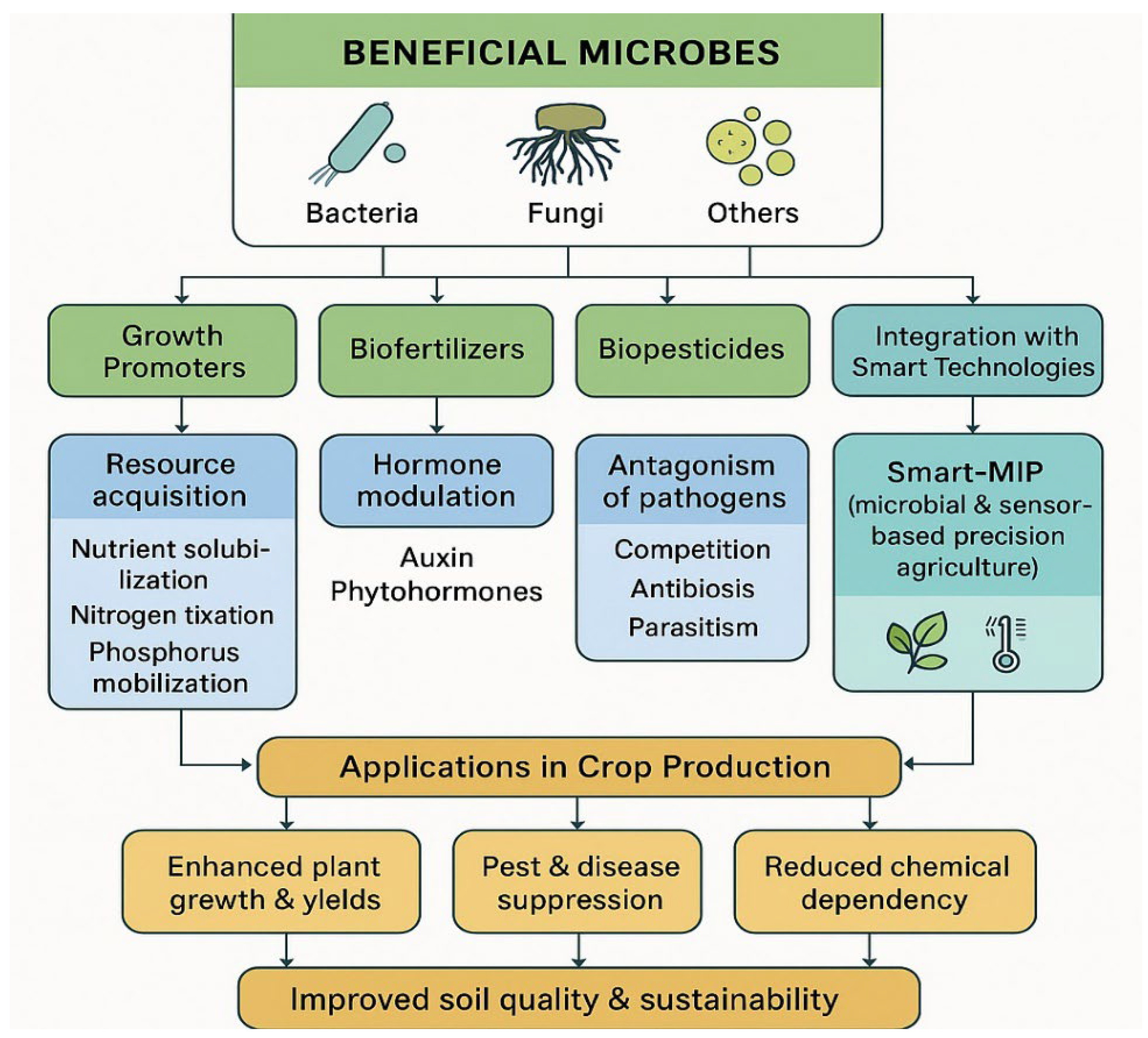
Figure 2.
Classification of sensor types in smart agriculture. Agricultural sensors are categorized into six main groups—optical, electromagnetic, electrochemical, location (geosensors), acoustic, and airflow—each with specific applications in monitoring plant, soil, and livestock parameters. Common smart sensors include temperature, humidity, and soil moisture sensors, applied across diverse systems such as open-field farming, greenhouses, and hydroponics.
Figure 2.
Classification of sensor types in smart agriculture. Agricultural sensors are categorized into six main groups—optical, electromagnetic, electrochemical, location (geosensors), acoustic, and airflow—each with specific applications in monitoring plant, soil, and livestock parameters. Common smart sensors include temperature, humidity, and soil moisture sensors, applied across diverse systems such as open-field farming, greenhouses, and hydroponics.
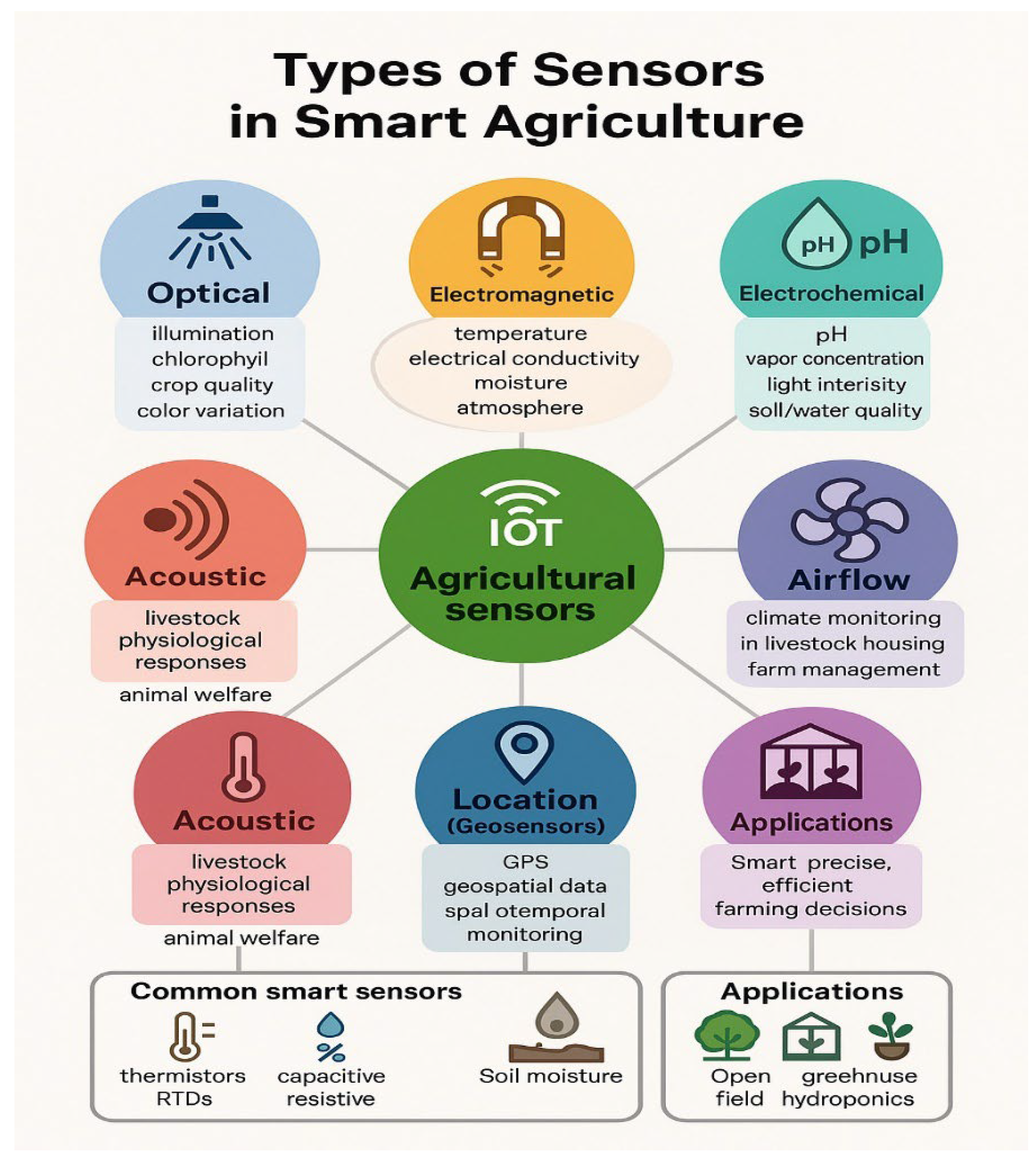
Figure 3.
Circular framework of synergy between beneficial microbes and sensor technologies. Microbial functions and sensor applications interact dynamically to deliver outcomes including reduced agrochemical inputs, optimized nutrient use, higher yields, and improved environmental health, collectively advancing sustainability in agriculture.
Figure 3.
Circular framework of synergy between beneficial microbes and sensor technologies. Microbial functions and sensor applications interact dynamically to deliver outcomes including reduced agrochemical inputs, optimized nutrient use, higher yields, and improved environmental health, collectively advancing sustainability in agriculture.
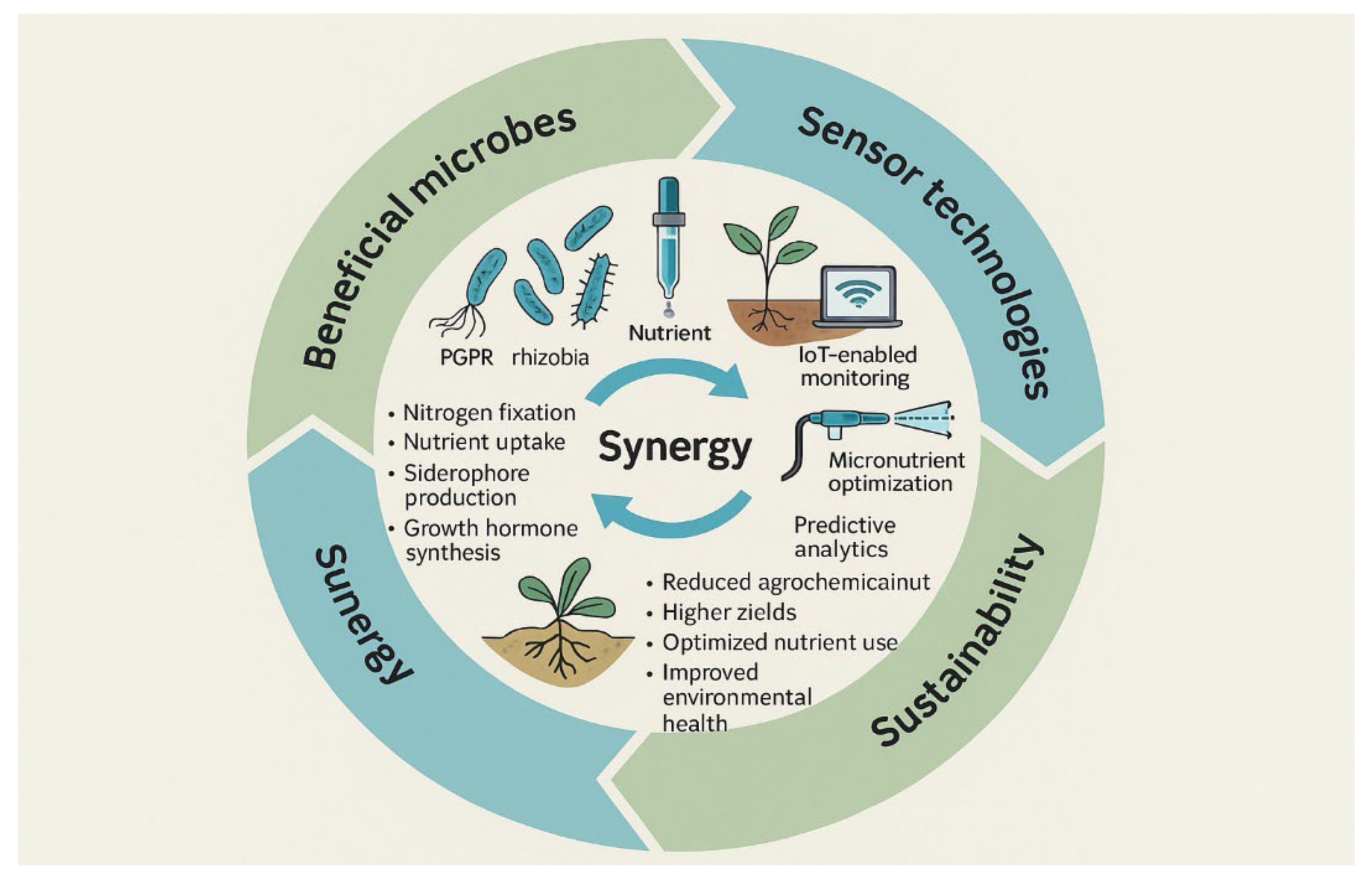
Figure 4.
Flow schematic of future trends in smart agriculture. Advancements in microbial research, emerging sensor technologies, and evolving policy/regulatory frameworks represent three core pillars shaping the evolution of smart agriculture. Together, they aim to reduce agrochemical dependency, restore soil health, improve climate resilience, and ensure sustainable intensification of farming.
Figure 4.
Flow schematic of future trends in smart agriculture. Advancements in microbial research, emerging sensor technologies, and evolving policy/regulatory frameworks represent three core pillars shaping the evolution of smart agriculture. Together, they aim to reduce agrochemical dependency, restore soil health, improve climate resilience, and ensure sustainable intensification of farming.
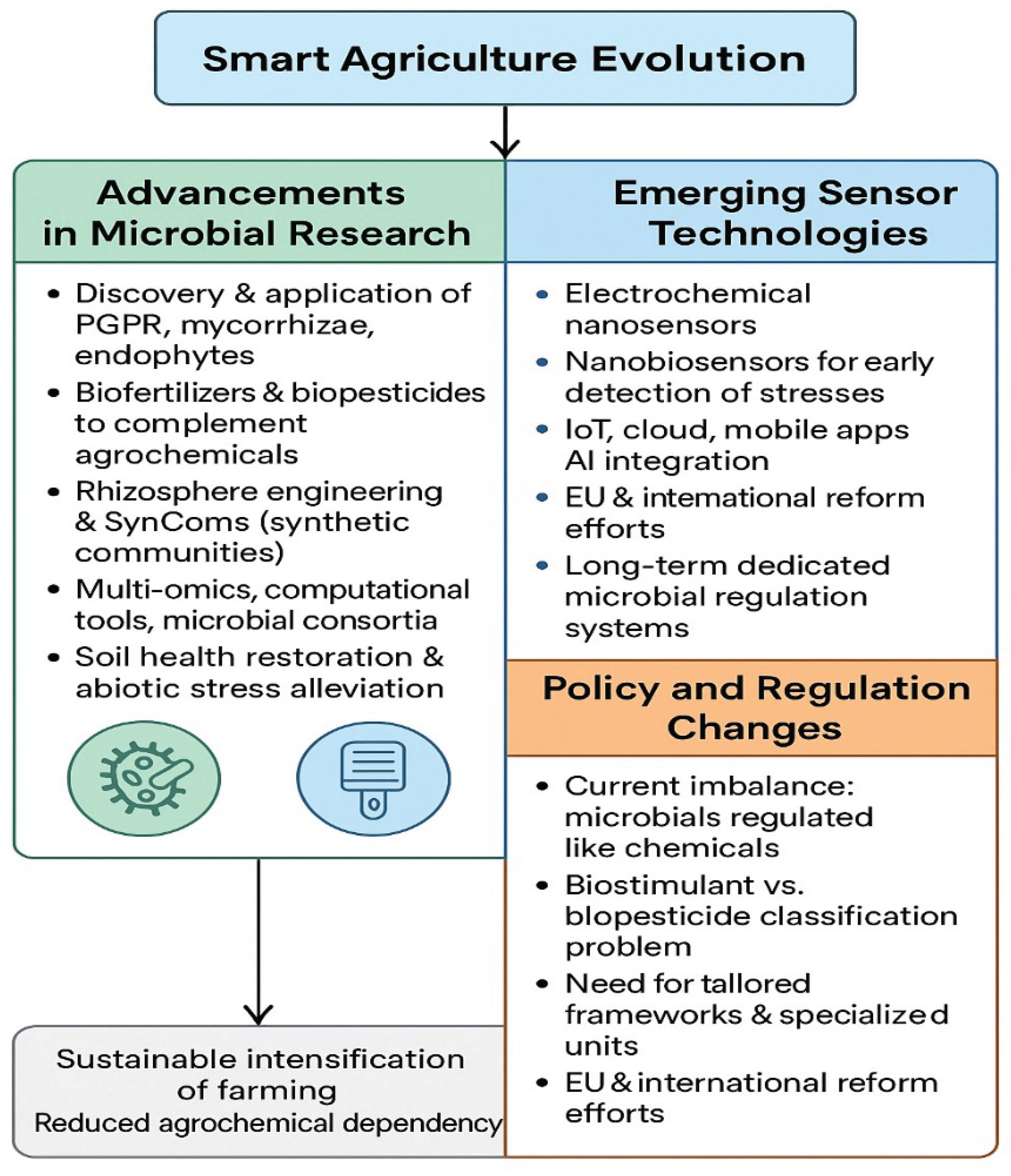
Disclaimer/Publisher’s Note: The statements, opinions and data contained in all publications are solely those of the individual author(s) and contributor(s) and not of MDPI and/or the editor(s). MDPI and/or the editor(s) disclaim responsibility for any injury to people or property resulting from any ideas, methods, instructions or products referred to in the content. |
© 2025 by the authors. Licensee MDPI, Basel, Switzerland. This article is an open access article distributed under the terms and conditions of the Creative Commons Attribution (CC BY) license (http://creativecommons.org/licenses/by/4.0/).
Copyright: This open access article is published under a Creative Commons CC BY 4.0 license, which permit the free download, distribution, and reuse, provided that the author and preprint are cited in any reuse.


