

Submitted:
16 September 2025
Posted:
16 September 2025
You are already at the latest version
Abstract
In this study, the spectroscopic and aromaticity properties of newly synthesized methylene bridged [6], [8] and [10] rings of p-styrene (MCPP) were investigated. The photophysical properties of MCPP with n=6, 8 and 10 are calculated and analyzed by time-varying density functional theory (TD-DFT). The main characteristics of Raman spectra are revealed by vibration analysis. The results show that the contribution of π orbital to electron excitation is the main cause of antiaromaticity. By means of induced current density anisotropy (AICD), isochemical shield surface (ICSS) and magnetic induction galvanometer (GIMIC), the responses of these molecules to external magnetic fields, especially the ring current induction and magnetic shield effects, were investigated. The results show that these MCPP systems exhibit anti-aromaticity, which is mainly driven by the delocalization of strong π electrons. This study deepens the understanding of the structure and electronic properties of MCPP, and provides a reference for practical application in material design in the future.
Keywords:
OPA
; TPA
; raman
; nonlinear optical properties
; antiaromaticity
; electron delocalization
1. Introduction
In recent years, with the rapid development of nanotechnology and organic chemistry[1,2,3], cyclic molecular materials have become the frontier research field of materials science because of their unique electronic structure and optical properties[4,5,6]. Carbon nanomaterials, such as fullerenes, graphene, carbon nanotubes, etc., have shown significant application potential in electronic devices, energy storage, and sensing technologies[7,8,9]. In 2017, Segawa et al. from Nagoya University in Japan achieved the first organic synthesis of carbon nanoribbons from a simple precursor (para-xylene) through an iterative Wittig reaction and an aryl-aryl coupling reaction catalyzed by nickel [10]. In 2022, Segawa et al. designed a macrocyclic precursor with an odd number of repeating units, and determined a feasible synthesis route through Z-selective Wittig reaction and nickel-mediated intramolecular homologous coupling reaction. The first Mobius ring (MCNB) was synthesized in 14 steps [11]. In 2023, Kono et al successfully synthesized [8]MCPP and [10]MCPP using readily available ethoxy-substituted column [8] aromatics and column [10] aromatics as precursors through a three-step reaction of deethylation, trifluoromethanesulfonylation and nickel-mediated aryl - aryl coupling[12]. In 2024, Lei S et al prepared 3 2, 9-dibromine derivatives CoTCNR1-3 containing carbon nanocorrings by using an efficient one-pot Yamamoto coupling method catalyzed by nickel [13]. In the same year, Cong H et al jointly developed a new method for the synthesis of macrocyclic molecules of whole benzene based on post-functionalization of MCPPs [14]. Albrech et al. realized the precise synthesis of odd-ring carbon molecule C13 on a specific surface through advanced scanning probe microscopy [15]. Jasti et al. has developed a multifunctional active template method and successfully synthesized a series of mechanically interlocked catenanes and rotaxane-type carbon nanostructures, which are entirely composed of π-conjugated units. [16]. At the same time, cyclic para-phenylene (MCPP), as a unique carbon nanostructure, has gradually become a new research hotspot in materials science and chemistry due to its unique photophysical properties, anti-aromaticity and π-electron delocalization[17,18,19]. The exploration of such molecular structures not only helps to reveal the basic physical and chemical properties of new materials, but also provides new ideas for the development of advanced optoelectronic devices, molecular electronics and nanotechnology in the future.
From early diamond, to graphite in the Middle Ages, to fullerenes discovered in the last 20 years, emerging carbon materials such as carbon nanotubes, graphene and graphylene have also had an important impact on human life. For example, graphene, known as "black gold", "the king of new materials", and even known as "black technology that completely changed the 21st century". Since its discovery in 2004, the research achievements over more than ten years have shown that graphene has extraordinary application potential in fields such as flexible display, new energy batteries, supercapacitors, electronic information technology, aerospace technology, biomedicine, and daily life[20,21]. For the cyclic carbon structures formed by carbon atoms connected through alternating single bonds and triple bonds, since they possess the properties of semiconductors, this implies that similar linear carbon structures may be able to become molecular-level electronic components, including useful elements such as transistors.
This research aims to systematically investigate the electronic structures, photophysical properties and responses to external magnetic fields of MCPP molecules with different sizes through a series of precise computational chemistry methods and spectroscopic analysis techniques. Specifically, we utilize technical means such as the anisotropic induced current density (AICD), isochemical shielding surfaces (ICSS) and gauge-including magnetically induced currents (GIMIC) to conduct an in-depth analysis of the antiaromaticity characteristics of MCPP molecules, and quantify their spectral characteristics through time-dependent density functional theory (TD-DFT) calculations. The research results will not only contribute to a further understanding of the intrinsic physical mechanisms of MCPP molecules, but also provide a theoretical basis for future application explorations in the fields of optoelectronic materials and molecular electronics. In this research, several already synthesized derivatives were selected, and their unique size dependence in terms of the highest occupied molecular orbital-lowest unoccupied molecular orbital (HOMO-LUMO) gap and the maximum single-photon wavelength was investigated.
2. Materials and Methods
In this study, the Gaussian 16 (A.03) program [22] was employed to perform optimizations and frequency calculations on [6] MCPP, [8] MCPP and [10] MCPP based on density functional theory (DFT) and time-dependent density functional theory (TD-DFT) at the b3lyp/6-31g (d, p) theoretical level with the addition of D3 dispersion correction, and stable structures without imaginary frequencies were obtained. The wave function of the structure was analyzed using the Multiwfn 3.8 (dev) program [23]. In combination with the VMD software [24], isochemical shielding surfaces (ICSSzz) [25] and other surface maps were plotted. The anisotropic induced current density (AICD) was analyzed through the AICD program [26], and images were rendered and generated by the POV-Ray program [27]. Based on the data files optimized by the Gaussian program, the gauge-including magnetically induced currents (GIMIC) program was utilized to complete the GIMIC analysis, and the ParaView visualization program [28] was used to plot images. Based on the vibration analysis, the Raman spectrum was plotted. Based on the cam-b3lyp/6-311g (d) method, the optimized structures were excited, and the ultraviolet-visible spectrum, the transition density matrix (TDM) spectrum as well as the electron-hole density map were plotted. The orbital isosurface maps and hole-electron density maps of the structure were plotted by using the VMD software. All the calculations in this work were carried out under the condition of toluene solution.
3. Results
3.1. Molecular Structure
The three structural names described in this paper are methylene-bridged [6] cycloparaphenylene, methylene-bridged [8] cycloparaphenylene and methylene-bridged [10] cycloparaphenylene respectively. The basic configurations are shown in Figure 1. The molecular structures of such nanoribbons present a perfect circular shape, and the diameters of the circles are 7.758 Å , 10.451 Å and 13.127 Å respectively.
3.2. UV-Vis Spectra and Excited State Analysis
In this work, electronic excitation calculations were performed based on the optimized structural coordinates, and the ultraviolet-visible absorption spectra of [6] MCPP, [8] MCPP and [10] MCPP were obtained, along with the transition density matrix (TDM) and the charge density difference (CDD) maps of each excited state. The light absorption characteristics of these three structures were analyzed. Figure 2a shows the ultraviolet-visible spectrum of [6] MCPP. In the wavelength range from 300 nm to 400 nm, there is an obvious absorption peak, which is mainly contributed by S3 and is a strong peak at 337.95 nm. Figure 2b shows the ultraviolet-visible spectrum of [8] MCPP. There is a strong peak mainly contributed by S2 at 359.57 nm. Figure 2c shows the ultraviolet-visible spectrum of [10]MCPP. There is a strong peak mainly contributed by S2 at 381.31 nm. Figure 2d is the superimposed diagram of the three absorption spectra, which shows that as the molecular size increases, the wavelength corresponding to the absorption peak exhibits a red shift in the absorption spectrum, and the absorption rate also increases accordingly. This indicates that the absorption spectrum has an obvious size dependence..
Figure 3a–c shows the transition density matrix (TDM) maps and charge density difference (CDD) maps of [6] MCPP in the S3 excited state, [8] MCPP in the S2 excited state and [10] MCPP in the S2 excited state. It can be seen from the TDM maps that the transition densities of the three structures all exist at the diagonal positions, demonstrating relatively strong local excitation characteristics. It can be known from the charge density difference (CDD) maps that there are obvious hole densities and electron densities at the benzene rings of the three structures, and the excitation mode is the transition of the pi orbitals at the benzene rings
As can be seen from Figure 2, as the molecular size increases, the wavelength corresponding to the absorption peak shows a red - shift in the absorption spectrum. This is because the excitation energy of the molecule becomes smaller, thus absorbing in the direction of longer wavelengths. It can be known from Figure 3 that the highest occupied molecular orbitals (HOMO) of the three structures are all distributed on both sides of the plane where the benzene rings are located. The lowest unoccupied molecular orbitals (LUMO) are distributed near the five-membered rings. For the peak at 338 nm of [6] MCPP, it is mainly contributed by the orbitals from 138 to 141. For the peak at 360 nm of [8]MCPP, it is mainly contributed by the 184→186 and 183→185 orbitals. For the peak at 381 nm of [10]MCPP, it is mainly contributed by the 230→232 and 228→231 orbitals. It can be seen from Figure 4 that as the size of the molecular ring of [n]MCPPs increases, the occupied orbitals rise and the unoccupied orbitals decline. This results in the reduction of the energy required for electrons to transition from occupied orbitals to unoccupied orbitals. The transition energies of HOMO → LUMO + 1 / LUMO + 2 and HOMO−1 / HOMO−2 / HOMO−3 → LUMO decrease, making electron transitions occur more easily. This leads to the color shift of the wavelength corresponding to the maximum absorption peak.
Figure 5a indicates that [6] MCPP has a relatively high two-photon absorption efficiency at the wavelength of 512.72 nm, and there are multiple excited states with similar energies at 467.43 nm, which result in this peak. In Figure 5b, the maximum absorption peak of [8]MCPP appears at 558.77 nm, which is caused by S11. It also indicates that [8]MCPP has a relatively high two-photon absorption efficiency at this frequency. Moreover, due to the presence of a large number of closely connected excited states near 491.34 nm, the absorption band here is relatively wide. In Figure 5c, the relatively high two-photon absorption (TPA) cross-section of [10] MCPP corresponds to the wavelength of 592.68 nm, which is caused by S13. There is a peak caused by S20 at 527.08 nm. Figure 5b shows the combined diagram of the two-photon absorption (TPA) spectra, and its absorption wavelengths are mainly in the range of 400 - 600 nm. In summary, as the number of benzene rings in the n[MCPP] structure increases, the absorption peaks all experience a red - shift. This indicates that the excitation energy required for the transition becomes smaller. This is closely related to the change in orbital energy.
Two-photon absorption is a typical third-order nonlinear optical effect and has numerous applications in photopolymerization, fluorescence imaging, and the study of molecular reaction cross-sections. In this paragraph, the charge density difference (CDD) and transition density matrix (TDM) are utilized to qualitatively analyze the electron transition characteristics of each excited state. It can be seen from the two - photon absorption (TPA) spectrum in Figure 5a that the relatively strong two - photon absorption cross - sections of [6]MCPP are in the S15 and S25 excited states, and the intermediate state of these two excited states is S4. By observing the S0-S4 transition density matrix maps in Figure 6a, it can be seen that the transition density is mainly concentrated in the diagonal region. The electron-hole density maps reveal that the excitation process has local excitation characteristics because electrons are mainly located on both sides of the benzene rings in the structure. It can be seen that for the S4 - S15 transition, the transition density matrix shown in Figure 6c indicates that the transition density is not only distributed along the diagonal but also in the corners. Meanwhile, in the electron - hole pair density map, the electron distribution is shifted to the two sides of the five - membered ring. The TDM and CDD maps of S25 also have similar changes.
Similarly, the two-photon absorption cross-sections of [8]MCPP are also quite strong in the S11 and S26 excited states, and their intermediate states are all S3. The TDM map of S0 - S3 for the S11 excited state in Figure 6e shows that the transition density is mainly distributed along the diagonal, while there is almost no distribution in the upper left and lower right corners of the figure, indicating a localized excitation. The charge density difference (CDD) map shows that electrons are distributed on both sides of the five-membered ring while holes are distributed near the carbon atoms. The TDM map of S3 - S11 in Figure 6g also reveals that the transition density is mainly distributed along the diagonal and the range is even smaller. The CDD map shows that electrons are not only transferred to the vicinity of carbon atoms but also the isosurface becomes smaller. The image of S0 - S3 for the S26 excited state is the same as that of S11. The TDM map of S3 - S26 shows that the electron distribution is quite extensive. The electron transfer situation in the CDD map is similar to that of S3 - S11. [10]MCPP has relatively strong two-photon absorption cross-sections in the S13 and S20 excited states, and their intermediate states are all S3. The TDM maps of S0 - S3 for these two excited states in Figure 6i show that the transition density is mainly distributed along the diagonal, indicating a localized excitation. The CDD map shows that electrons are distributed on both sides of the five-membered ring while holes are distributed near the carbon atoms. The TDM maps of S3 - S13 and S3 - S20 in Figure 6k show that the transition density is mainly distributed along the diagonal. The CDD maps show that electrons and holes are distributed on both sides of the ring structure and the isosurfaces become smaller.
3.3. Raman Spectral Analysis
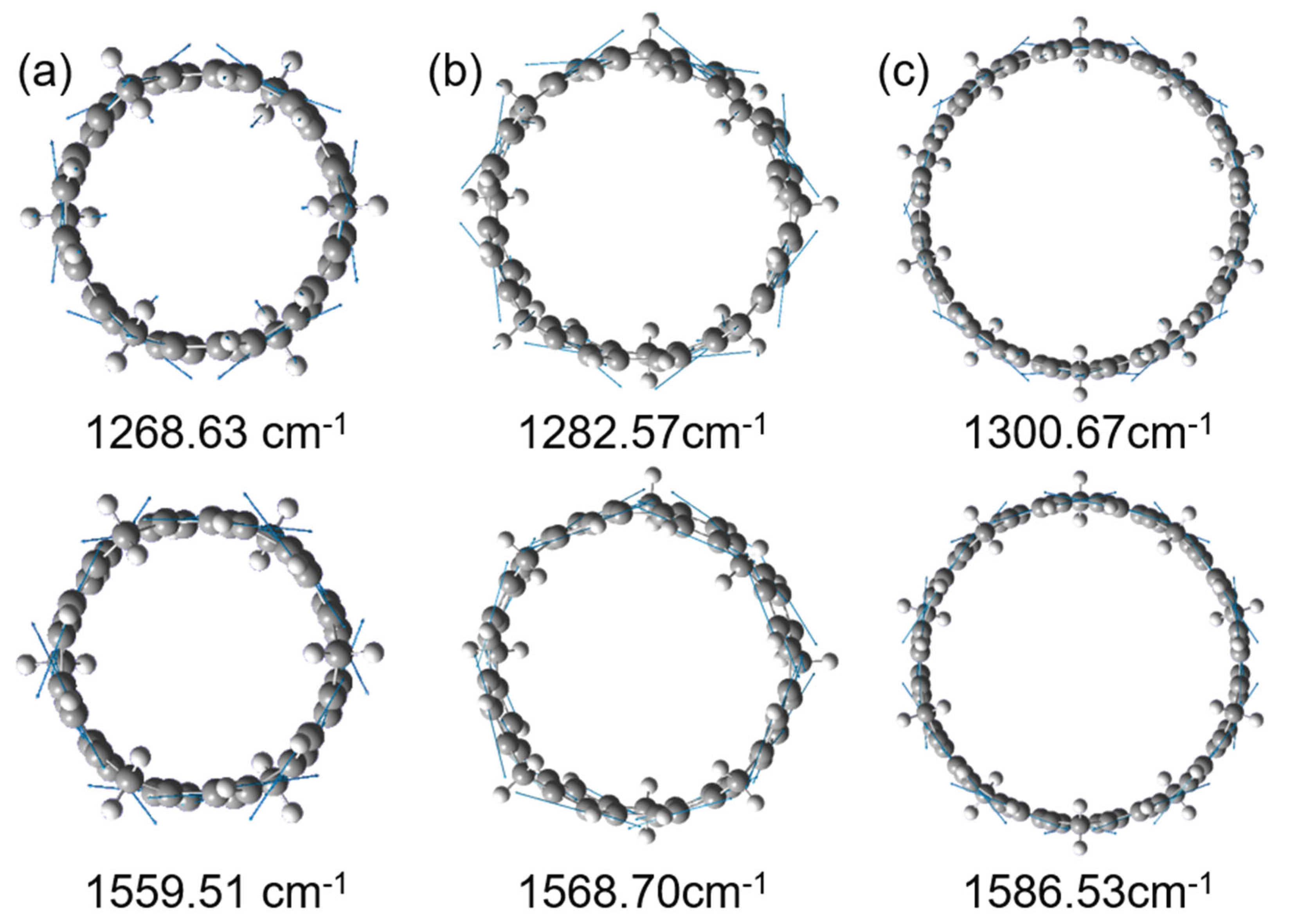
In the Raman spectra of Figure 7a–c studied in this section, the wavelengths of the incident light sources for [6]MCPP, [8]MCPP, and [10]MCPP were set at no light source and 532 nm respectively. Two relatively strong Raman peaks of the three structures under the two incident light sources were studied respectively. In the Raman spectrum of [6]MCPP, the two characteristic peaks under static conditions and with a 532 nm light source are located at 1268.63 cm⁻¹ and 1559.51 cm⁻¹ respectively. For [8]MCPP, the two characteristic peaks under static conditions and with a 532 nm light source are located at 1282.57 cm⁻¹ and 1568.70 cm⁻¹ respectively. For [10]MCPP, the two characteristic peaks under static conditions and with a 532 nm light source are located at 1300.67 cm⁻¹ and 1586.53 cm⁻¹ respectively. It can be found from Figure 7 that the Raman intensity generated by the nanorings under static conditions is ten times smaller than that under the 532 nm light source. The first Raman peaks of the three structures under static conditions and with a 532 nm light source are located at 1268.63 cm⁻¹, 1282.57 cm⁻¹, and 1300.67 cm⁻¹ respectively, and their vibration modes are all the stretching vibration of the C - C bond in the benzene ring. The second Raman peaks of the three structures under static conditions and with a 532 nm light source are located at 1559.51 cm⁻¹, 1568.70 cm⁻¹ and 1586.53 cm⁻¹ respectively, and their vibration modes are all the torsional vibration of the C - C bond.
Figure 8.
(a-c) The vibrational states of carbon nanorings in the Raman spectra of [6]MCPP, [8]MCPP and [10]MCPP nanorings.
Figure 8.
(a-c) The vibrational states of carbon nanorings in the Raman spectra of [6]MCPP, [8]MCPP and [10]MCPP nanorings.
3.4. Response to External Magnetic Field: Anisotropy of Induced Current Density (AICD), Iso-Chemical Shielding Surface (ICSS), and Gauge-Including Magnetically Induced Current (GIMIC)
The AICD (Anisotropy of the Induced Current Density) function serves as a convenient method for studying the anisotropy and aromaticity of molecules. Usually, the AICD is used to plot the surface current density and to distinguish between aromatic compounds and anti-aromatic compounds [29]. Antiaromatic compounds exhibit properties opposite to those of aromatic compounds, being highly unstable and highly reactive. [30] As shown in the AICD schematic diagram in Figure 9a, when an external magnetic field perpendicular to the plane of the ring and pointing outward is applied to [6]MCPP, a counterclockwise ring current is formed within the ring in the π system. The direction of the current is opposite to that predicted by the left-hand rule. The π electrons are not delocalized as a whole but exhibit delocalization in local spaces. Near the C - C bonds of the benzene ring, the induced current density vectors generate local ring currents. It reflects that [6]MCPP has local anti-aromaticity. Figure 9b shows the AICD schematic diagram of [8]MCPP. The current is concentrated in the benzene ring structures of the molecule. Compared with [6]MCPP, it has stronger localization and the motion trajectories of electrons are closer to the C - C bonds on the benzene ring. Figure 9c shows the AICD schematic diagram of [10]MCPP. The induced current density vectors also generate local ring currents that closely surround the ten benzene rings. The formation of counterclockwise ring currents within the rings reflects the same anti-aromaticity as that of [6]MCPP and [8]MCPP. As the size of the nanoring increases, the overall anti-aromaticity gradually weakens.
The GIMIC provides an alternative complementary method for aromaticity to the AICD method. In the GIMIC maps of Figure 9g–i, the whiter the region is, the greater the current will be. As shown in Figure 9g, white rings are formed at the carbon rings, indicating that the ring current in this ring area is relatively large. Obvious counterclockwise currents are observed inside the carbon skeleton ring, and obvious clockwise currents are observed outside the carbon skeleton ring, which proves that [6]MCPP has anti-aromaticity. Figure 9h shows the GIMIC map of [8]MCPP. The proportion of the white parts at the carbon rings is significantly smaller compared with that of [6]MCPP, indicating that its aromaticity has relatively weakened. At the C - C bond parts where benzene rings are connected to each other, the flow direction of the current is significantly different from that at the benzene rings. However, obvious counterclockwise currents within the nanoring and clockwise currents outside the nanoring can still be seen. Figure 9i shows the GIMIC map of [10]MCPP. The scarcity of the white parts in the figure indicates its weaker aromaticity. The counterclockwise current within the structure is relatively weak, and the currents all surround the benzene rings in the structure without obvious integrity.
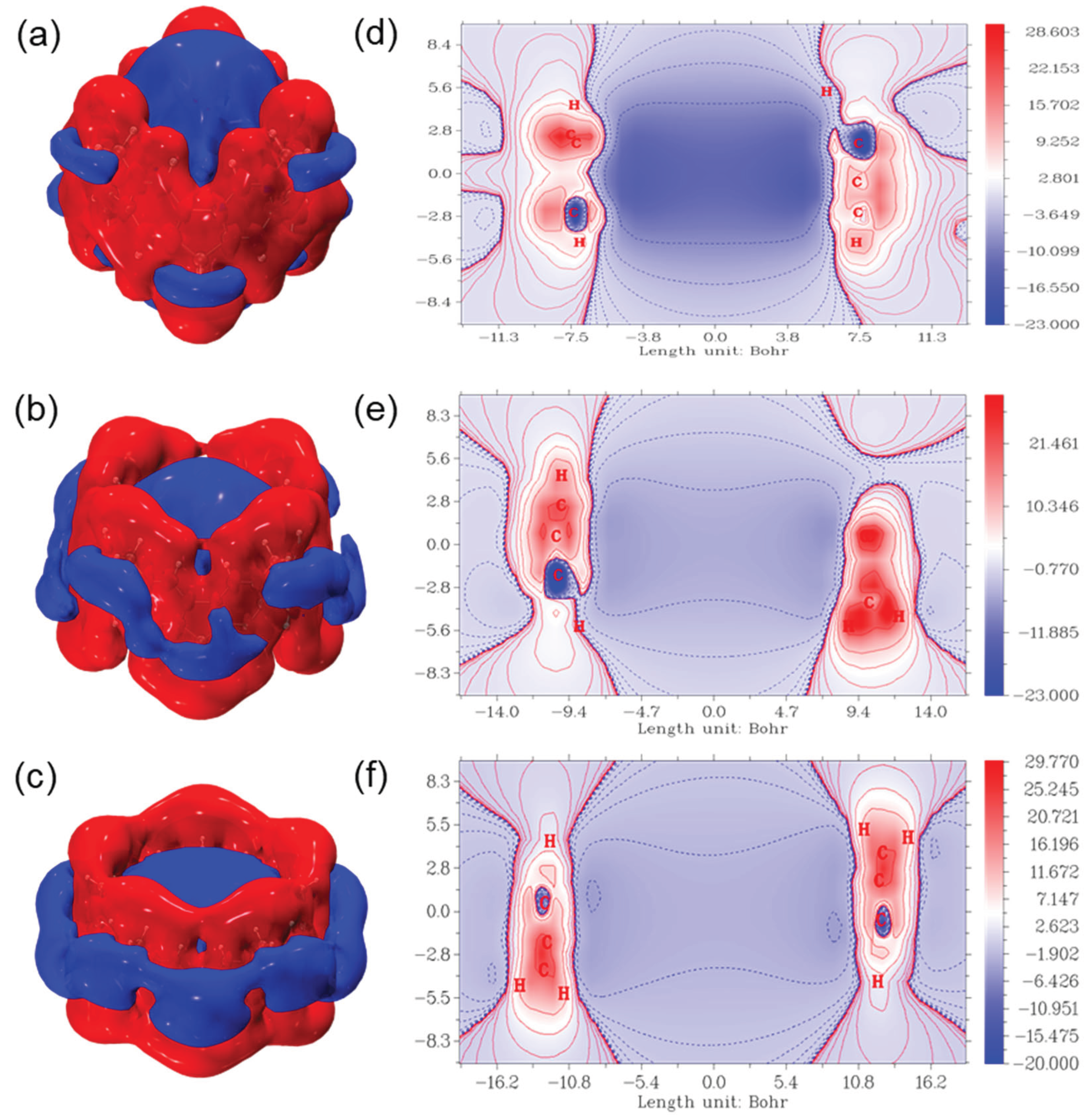
In this section, the method of the Isochemical Shielding Surface (ICSS) [31] was utilized to study the degrees of magnetic shielding and deshielding effects of delocalized electrons in different regions[32]. If the external magnetic field is shielded/deshielded at a certain point, the ICSSZZ will be locally positive/negative. In Figure 10a, in the direction perpendicular to the plane of the [6]MCPP ring, its shielding region is not prominent, indicating that the magnetic deshielding in the internal region of [6]MCPP is relatively strong. This is because [6]MCPP has anti-aromaticity. Even in the region where benzene rings are concentrated, the external magnetic field is significantly shielded and thus surrounded by the red isosurface. The reason is that the electrons in the π bonds of the benzene rings form local induced circulations in the C - C bond regions, and the external magnetic field in the C - C bond regions is also shielded to a large extent. It can be seen from Figure 10d–f that at 1 Å above the molecular plane of the [6]MCPP ring, the magnetic shielding value in the direction of the YZ plane is relatively high, and there is a strong contrast between the magnetic shielding effect inside the ring and that outside the ring. In Figure 10b, the blue deshielding region of [8]MCPP in the vertical direction of the ring plane becomes smaller compared with that of [6]MCPP, and the isosurface of deshielding in the ring plane expands. This indicates that compared with [6]MCPP, the magnetic shielding in the internal region of [8]MCPP is weaker and it has lower anti-aromaticity. Judging from the cross-section of ICSS in the YZ direction, the magnetic shielding value is weaker and the difference from that outside the ring is smaller. In Figure 10c, there is an obvious continuous deshielding region outside the [10]MCPP ring, and the deshielding region inside the ring is very flat, indicating that its anti-aromaticity is relatively weak, the mobility of π electrons is low and they are concentrated on individual benzene rings.
4. Discussion
This paper has studied various physical mechanisms of [n]MCPP. [6]MCPP, [8]MCPP and [10[]MCPP each have three relatively high absorption peaks, among which the strongest peaks are located at 338 nm, 360 nm and 381 nm respectively, and are mainly contributed by the S3 and S2 excited states. The transition density matrices show that the densities of these excited states are concentrated along the diagonal regions, reflecting their local excitation characteristics. The distribution of electrons and holes on the nanoring in the charge difference density map further indicates its tendency towards local excitation. The Raman spectrum shows that under the light source of 532 nm, the Raman intensity is ten times greater than that under the condition without a light source. The aromaticity calculation spectra illustrate that [n]MCPP is an anti-aromatic substance, so its structural stability is relatively poor. Electronic structure analysis shows that the orbital system of [n]MCPP consists of electrons on the benzene rings in the structure. The benzene rings of [n]MCPP have stronger π - π interactions. By analyzing the ring currents under the action of an external magnetic field through AICD (Anisotropic Induced Current Density), ICSSZZ (Isochemical Shielding Surface along the Z-axis) and GIMIC (Gauge-Independent Molecular Orbital Currents), it was found that the ring currents flowed in opposite directions inside and outside the ring, which proved that [n]MCPP has anti-aromaticity. The special photophysical properties of cyclic carbons can be applied in fields such as high-performance organic semiconductors and energy storage materials. The detailed analysis of cyclic carbons in this work is helpful for its practical applications and can guide the research on other carbon-rich anti-aromatic molecules.
Author Contributions
Conceptualization, W.Ren.; methodology, J.Wang.; software, Q.Wang.; formal analysis, J.Wang.; investigation, W.Ren.; resources, W.Ren.; data curation, W.Ren.; writing—original draft preparation, Q.Wang. All authors have read and agreed to the published version of the manu-script.
Conflicts of Interest
The authors declare no conflicts of interest.
References
- Zhang Peng-Fei, Cheng Zheng-Dong. Applications of two-dimensional nanomaterials in biomedicine[J]. PHYSICS 2023, 52, 830–837. [Google Scholar] [CrossRef]
- Yue Wu, Xinyuan Zhang, Zhe Ma, Weida Hong, Chunyu You, Hong Zhu, Yang Zong, Yuhang Hu, Borui Xu, Gaoshan Huang, Zengfeng Di, Yongfeng Mei. Nanomembrane on Graphene: Delamination Dynamics and 3D Construction. ACS Nano 2025, 19, 1–331. [Google Scholar] [CrossRef]
- Kevin, J. Hughes, Kavita A. Iyer, Robert E. Bird, Julian Ivanov, Saswata Banerjee, Gilles Georges, Qiongqiong Angela Zhou. Review of Carbon Nanotube Research and Development: Materials and Emerging Applications. ACS Applied Nano Materials 2024, 7, 18695–18713. [Google Scholar] [CrossRef]
- Han Deng, Zilong Guo, Yaxin Wang, Ke Li, Qin Zhou, Chang Ge, Zhanqiang Xu, Sota Sato, Xiaonan Ma, Zhe Sun. Modular synthesis, host–guest complexation and solvation-controlled relaxation of nanohoops with donor–acceptor structures. Chem. Sci. 2022, 13, 14080. [Google Scholar] [CrossRef]
- F. Lucas, C. Brouillac, N. McIntosh, S. Giannini, J. Rault-Berthelot, C. Lebreton, D. Beljonne, J. Cornil, E. Jacques, C. Quinton, Electronic and Charge Transport Properties in Bridged versus Unbridged Nanohoops: Role of the Nanohoop Size. Chem. Eur. J. 2023, 29, e202300934. [Google Scholar] [CrossRef] [PubMed]
- X. Gai, L. Zhang, J. Wang, Electronic Structure, Aromaticity and Optical Properties of Dehydro[10]annulene. ChemPhysChem 2023, 24, 202300246. [Google Scholar] [CrossRef]
- Bai, H. , Gai, X., Sun, L. et al. Theoretical study on the prediction of optical properties and thermal stability of fullerene nanoribbons. Sci Rep 2024, 14, 28978. [Google Scholar] [CrossRef]
- Rupam Roy, Clément Brouillac, Emmanuel Jacques, Cassandre Quinton, Cyril Poriel. Angew. π-Conjugated Nanohoops: A New Generation of Curved Materials for Organic Electronics. Chem. Int. Ed. 2024, 63, e202402608. [Google Scholar] [CrossRef]
- Xinyu Zhang, Youzhi Xu, Pingwu Du, Functional Bis/Multimacrocyclic Materials Based on Cycloparaphenylene Carbon Nanorings. Accounts of Materials Research 2025, 6, 399–410. [CrossRef]
- Guillaume Povie; Yasutomo Segawa; Taishi Nishihara; Yuhei Miyauchi; Kenichiro Itami. Synthesis of a carbon nanobelt. Science 2017, 356, 172–175. [Google Scholar] [CrossRef] [PubMed]
- Yasutomo Segawa; Tsugunori Watanabe; Kotono Yamanoue; Motonobu Kuwayama; Kosuke Watanabe; Jenny Pirillo; Yuh Hijikata & Kenichiro Itami. Synthesis of a Möbius carbon nanobelt. Nature Synthesis 2022, 1, 535–541. [CrossRef]
- Hideya Kono; Yuanming Li; Riccardo Zanasi; Guglielmo Monaco; Francesco F. Summa; Lawrence T. Scott; Akiko Yagi; Kenichiro Itami. Methylene-Bridged [6]-, [8]-, and [10]Cycloparaphenylenes: Size-Dependent Properties and Paratropic Belt Currents. Journal of the American Chemical Society 2023, 145, 8939–8946. [Google Scholar] [CrossRef]
- Sheng-Nan Lei; Ling Zhu; Ning Xue; Xuedong Xiao; Le Shi; Duan-Chao Wang; Zhe Liu; Xin-Ru Guan; Yuan Xie; Ke Liu; Lian-Rui Hu; Zhao-Hui Wang; J. Fraser Stoddart; QingHui Guo. Cyclooctatetraene-Embedded Carbon Nanorings. Angew. Chem. Int. Ed. 2024, e202402255. [CrossRef]
- Jia-Nan Gao; An Bu; Yiming Chen; Mianling Huang; Prof. Dr. Zhi Chen; Prof. Dr. Xiaopeng Li; Prof. Dr. Chen-Ho Tung; Prof. Dr. Li-Zhu Wu; Prof. Dr. Huan Cong. Synthesis of All-Benzene Multi-Macrocyclic Nanocarbons by Post-Functionalization of meta-Cycloparaphenylenes. Angew. Chem. Int. Ed. 2024. [CrossRef]
- Florian Albrecht; Igor Ron cević; Yueze Gao; Fabian Paschke; Alberto Baiardi; Ivano Tavernelli; Shantanu Mishra; Harry L. Anderson; Leo Gross. The odd-number cyclo[13]carbon and its dimer, cyclo[26]carbon. SCIENCE 2024, 384, 677–682. [Google Scholar] [CrossRef] [PubMed]
- James H., May; Jeff M. Van, Raden; Ruth L., Maust; Lev, N. Zakharov; Ramesh JastiNat. Active template strategy for the preparation of π-conjugated interlocked nanocarbons. Chem 2023, 15, 170–176. [Google Scholar] [CrossRef]
- FENG Weijian, ZOU Yi, WANG Jingang. Aromaticity of Kekulene and Physical Mechanism of Photoinduced Charge Transfer[J]. Journal of Petrochemical Universities 2024, 37, 24–30. [Google Scholar]
- LI Yue, GAI Xinwen, ZHAO Bo, et al. Chiral Nonlinear Luminescence Study of Pentaoxonium Salt Molecules Driven by Internal Electric Field Induced by Orbital Polarization[J]. Journal of Petrochemical Universities 2025, 38, 65–73. [Google Scholar]
- YANG Zhiyuan, ZOU Yi, WANG Jingang. One and Two-Photon Absorption Properties of Twist Bilayer Graphene Nanosheets [J]. Journal of Petrochemical Universities 2023, 36, 73–82. [Google Scholar]
- Ruitao Jia, Fangzhu Qing, Shurong Wang, Yuting Hou, Changqing Shen, Feng Hao, Yang Yang, Hongwei Zhu, Xuesong Li. Preparation of meter-scale Cu foils with decimeter grains and the use for the synthesis of graphene films. Journal of Materiomics 2024, 10, 1–1. [Google Scholar] [CrossRef]
- Yang Z, Gai X, Zou Y, Jiang Y. The Physical Mechanism of Linear and Nonlinear Optical Properties of Nanographene-Induced Chiral Inversion. Molecules 2024, 29, 1053. [Google Scholar] [CrossRef]
- Frisch, M.; Trucks, G.; Schlegel, H.; Scuseria, G.; Robb, M.; Cheeseman, J.; Scalmani, G.; Barone, V.; Petersson, G.; Nakatsuji, H. Gaussian 16, revision a. 03, gaussian, inc., wallingford ct. Gaussian16 2016.
- Lu, T.; Chen, F.J.J.o.c.c. Multiwfn: A multifunctional wavefunction analyzer. Computational Chemistry 2012, 33, 580–592. [Google Scholar] [CrossRef]
- Humphrey, W.; Dalke, A.; Schulten, K. VMD: visual molecular dynamics. Molecular Graphics 1996, 14, 33–38. [Google Scholar] [CrossRef]
- Chem. Eur. J. 2023, 28, e202300348, J. Phys. Chem. C 2019, 123, 18593. Carbon 2020, 165, 468. Chem. Eur. J. 2022, 28, e202103815. [CrossRef]
- Geuenich, D.; Hess, K.; Köhler, F.; Herges, R. Anisotropy of the induced current density (ACID), a general method to quantify and visualize electronic delocalization. Chem. Rev. 2005, 105, 3758–3772. [Google Scholar] [CrossRef] [PubMed]
- Persistence of Vision Pty. Ltd. (2004)Persistence of Vision Raytracer (Version 3.6)[Computer software].Retrieved from http://www.povray.org/download/.
- ParaView. (2023). Version 5.10. Kitware. Retrieved from https://www.paraview.org/.
- Barquera-Lozada, J.E.J.A.i.Q.C.T.B.Q. Scalar and vector fields derived from magnetically induced current density. Advances in Quantum Chemical Topology Beyond QTAIM 2023, 335–357. [Google Scholar]
- Xinwen Gai, Lei Zhang, Jingang Wang, Theoretical study of double antiaromatic structure - cyclo[16]carbon, Journal of Molecular Structure (2024). [CrossRef]
- Klod, S, Kleinpeter, E. Ab initio calculation of the anisotropy effect of multiple bonds and the ring current effect of arenes—application in conformational and configurational analysis. The Chemical Society, Perkin Transactions 2001, 2, 1893–1898. [Google Scholar]
- Z. Liu, T. Lu, Q. Chen, An sp-hybridized all-carboatomic ring, cyclo[18]carbon: Bonding character, electron delocalization, and aromaticity. Carbon 2020, 165, 468–475. [Google Scholar] [CrossRef]
Figure 1.
Structures of Methylene-Bridged [6]-, [8]-, and [10]Cycloparaphenylenes.
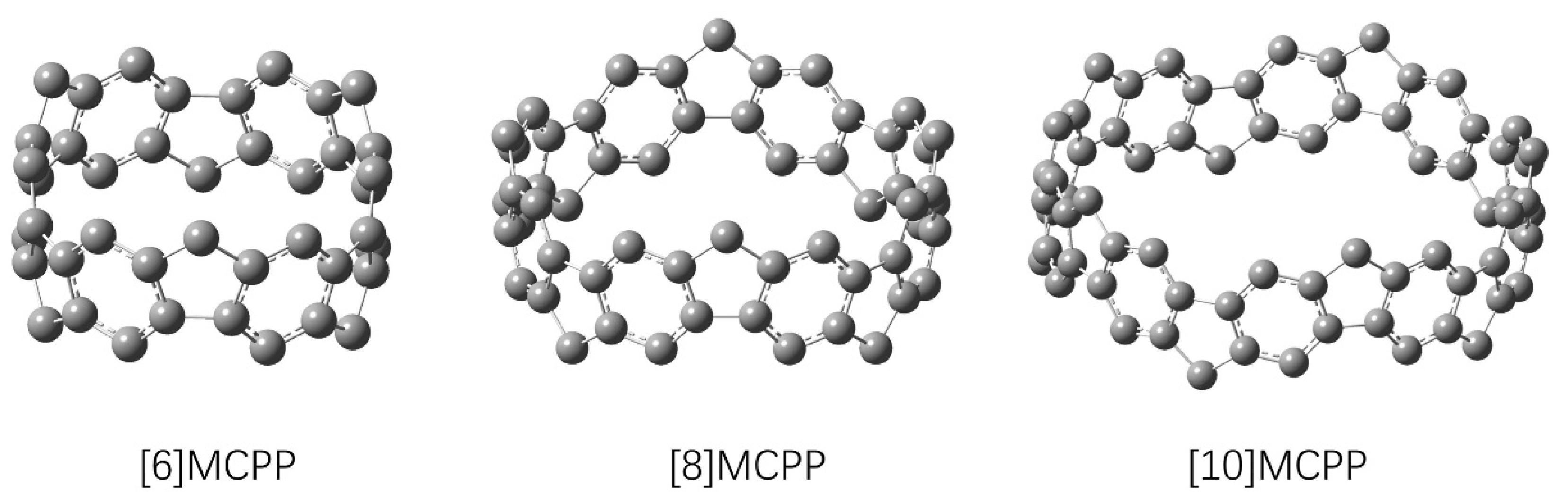
Figure 2.
(a-c) The ultraviolet-visible spectra of [6] MCPP, [8] MCPP and [10] MCPP (the ordinate represents the molar absorption coefficient); (d) The combined diagram of the ultraviolet-visible spectra of the three nanorings.
Figure 2.
(a-c) The ultraviolet-visible spectra of [6] MCPP, [8] MCPP and [10] MCPP (the ordinate represents the molar absorption coefficient); (d) The combined diagram of the ultraviolet-visible spectra of the three nanorings.
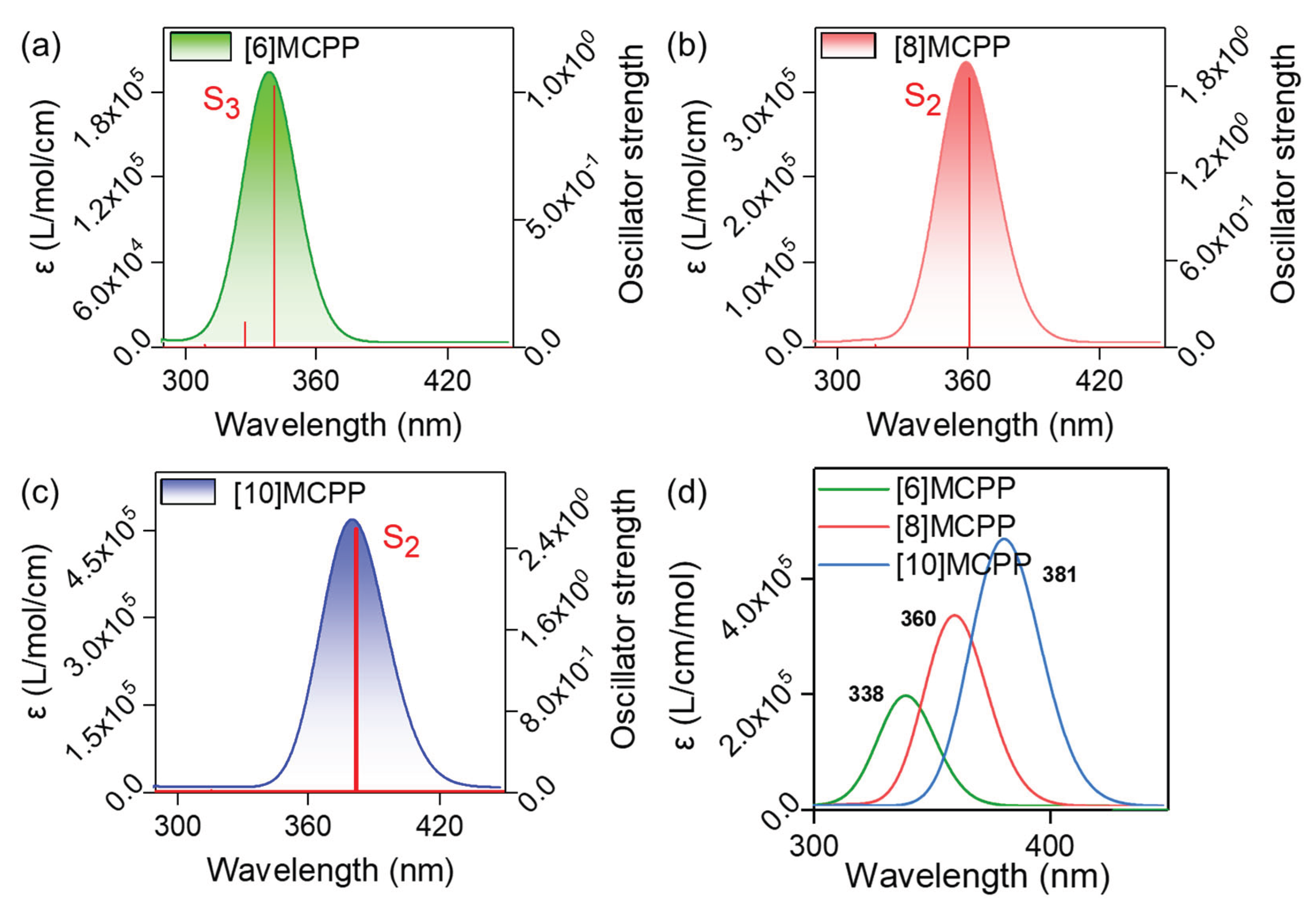
Figure 3.
(a-c) The ultraviolet-visible spectra of [6] MCPP, [8] MCPP and [10] MCPP (the ordinate represents the molar absorption coefficient), the transition density matrix (TDM) maps, and the hole-electron density maps (electrons are represented by blue and holes are represented by red).
Figure 3.
(a-c) The ultraviolet-visible spectra of [6] MCPP, [8] MCPP and [10] MCPP (the ordinate represents the molar absorption coefficient), the transition density matrix (TDM) maps, and the hole-electron density maps (electrons are represented by blue and holes are represented by red).
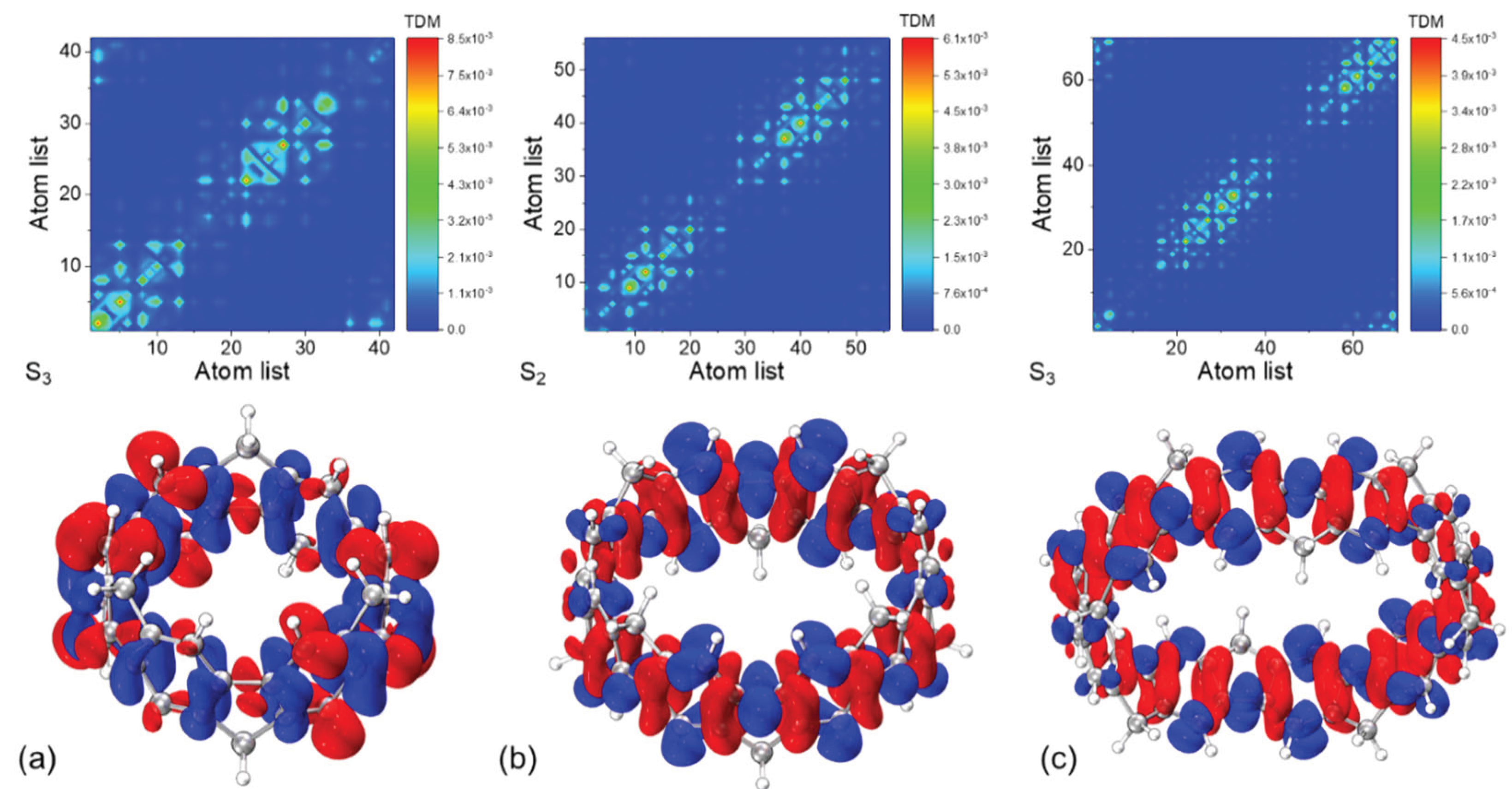
Figure 4.
The energy of the [n]MCPPs orbitals and the isosurface maps of the HOMO and LUMO molecular orbitals (the positive phase of the HOMO orbital is represented by red and the negative phase is represented by blue).
Figure 4.
The energy of the [n]MCPPs orbitals and the isosurface maps of the HOMO and LUMO molecular orbitals (the positive phase of the HOMO orbital is represented by red and the negative phase is represented by blue).
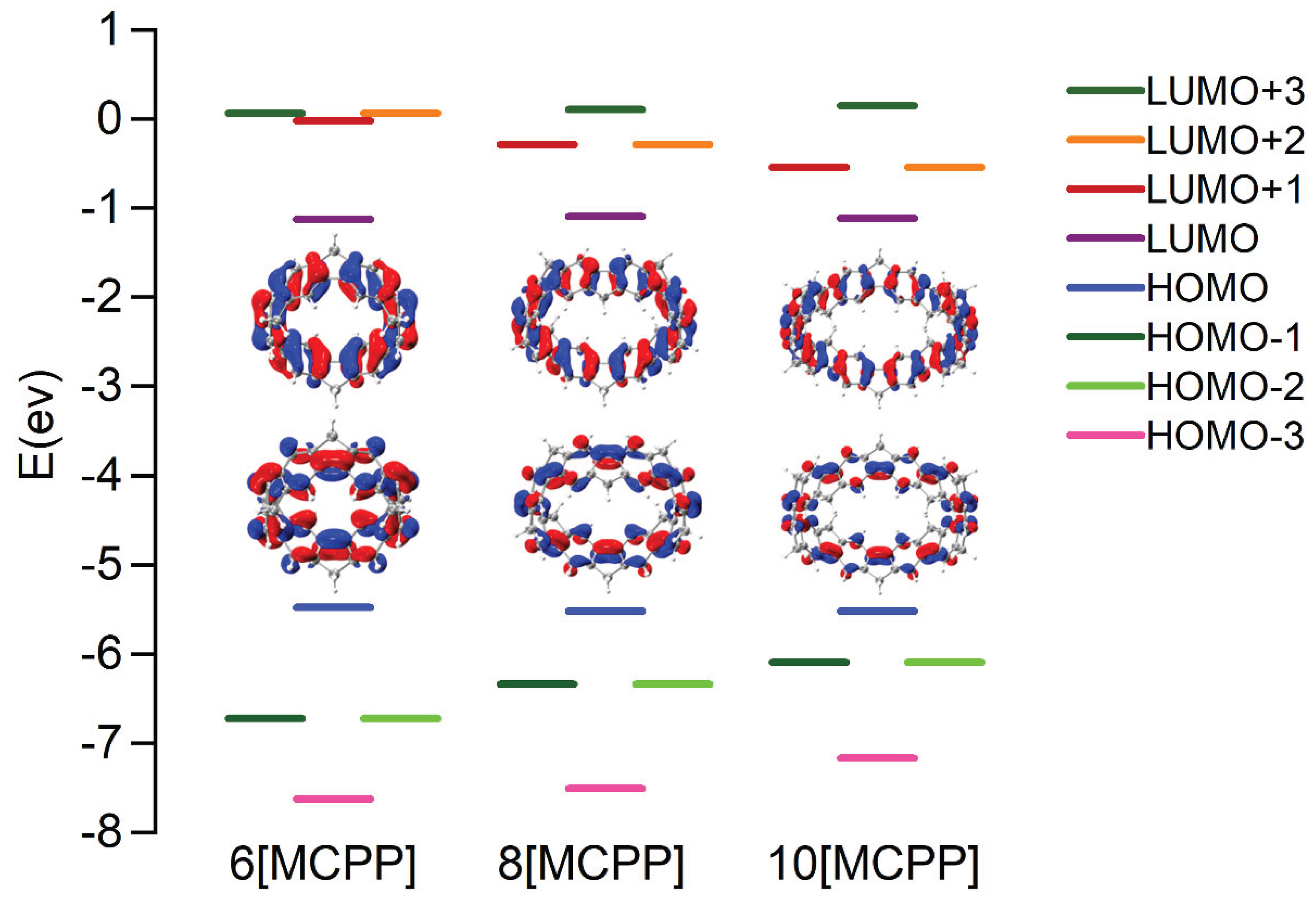
Figure 5.
(a-c) The two-photon absorption (TPA) spectra of the [6] MCPP, [8] MCPP and [10] MCPP nanorings, and (d) the TPA spectra of the three nanorings.
Figure 5.
(a-c) The two-photon absorption (TPA) spectra of the [6] MCPP, [8] MCPP and [10] MCPP nanorings, and (d) the TPA spectra of the three nanorings.
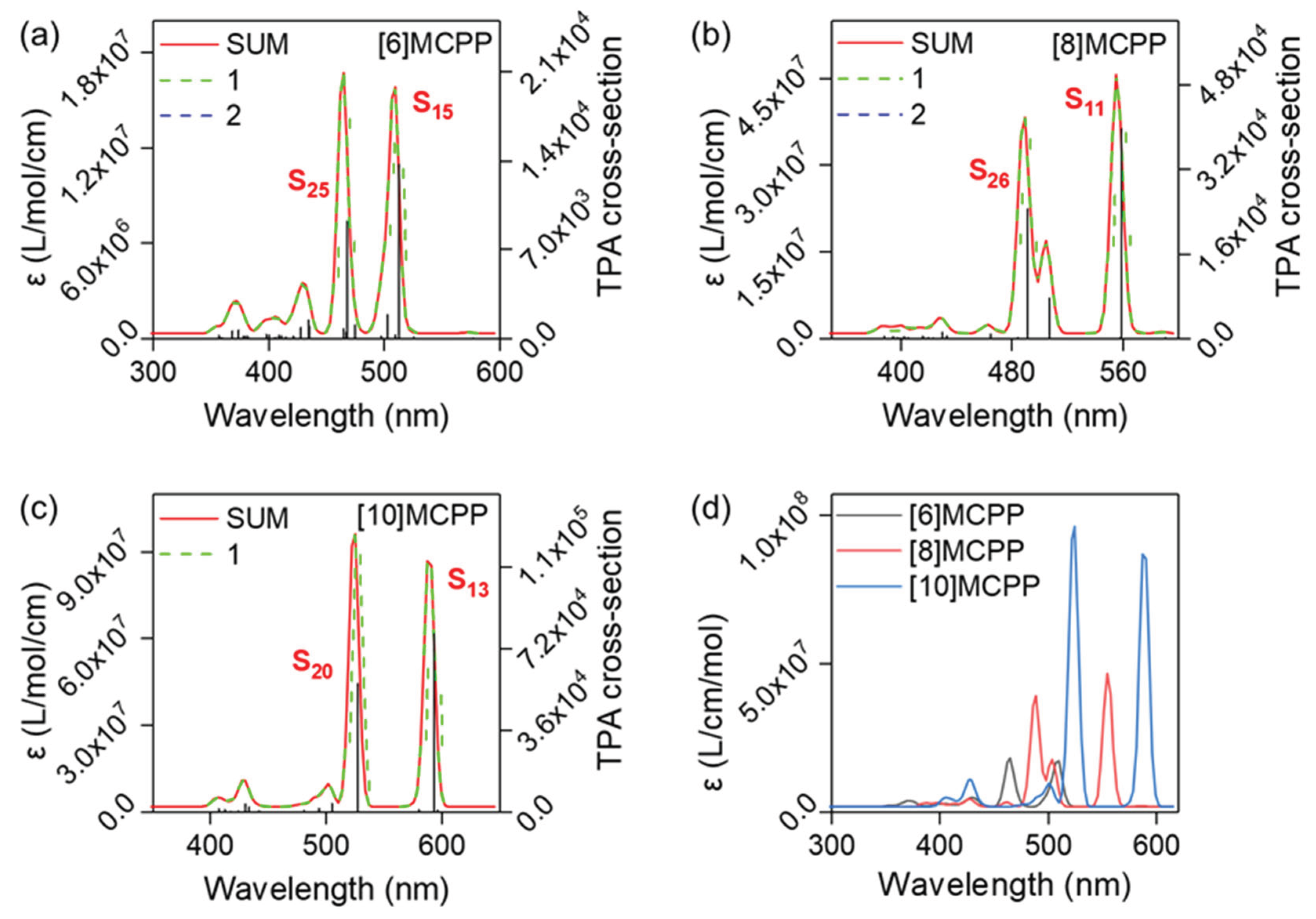
Figure 6.
(a-l) The two-step transition processes of [6]MCPP, [8]MCPP, and [10]MCPP, including the transition density matrix (TDM) and electron-hole pair density from the ground state to the intermediate state and from the intermediate state to the final state.
Figure 6.
(a-l) The two-step transition processes of [6]MCPP, [8]MCPP, and [10]MCPP, including the transition density matrix (TDM) and electron-hole pair density from the ground state to the intermediate state and from the intermediate state to the final state.
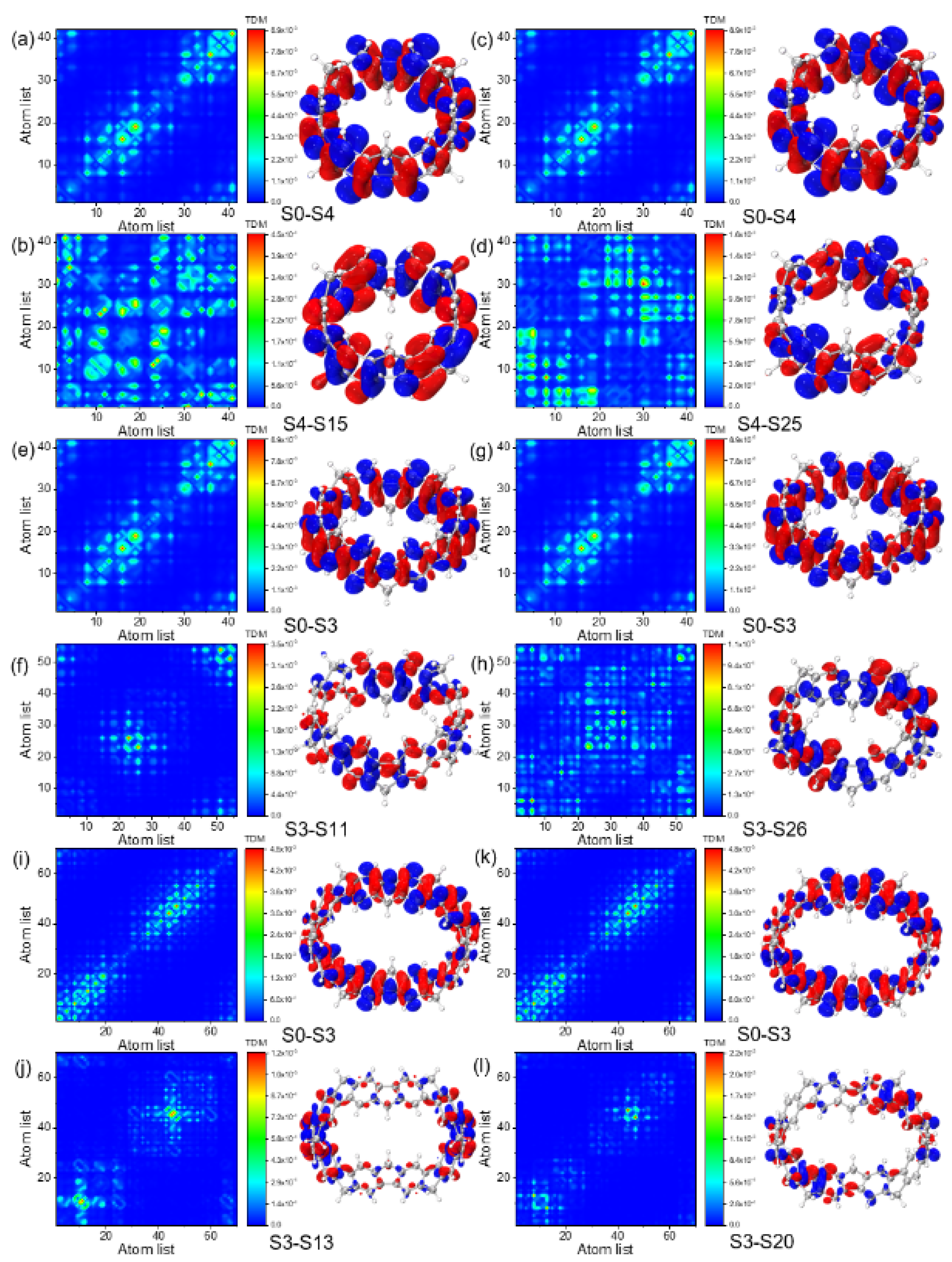
Figure 7.
(a-c) The Raman spectra of [6]MCPP, [8]MCPP and [10]MCPP nanorings.
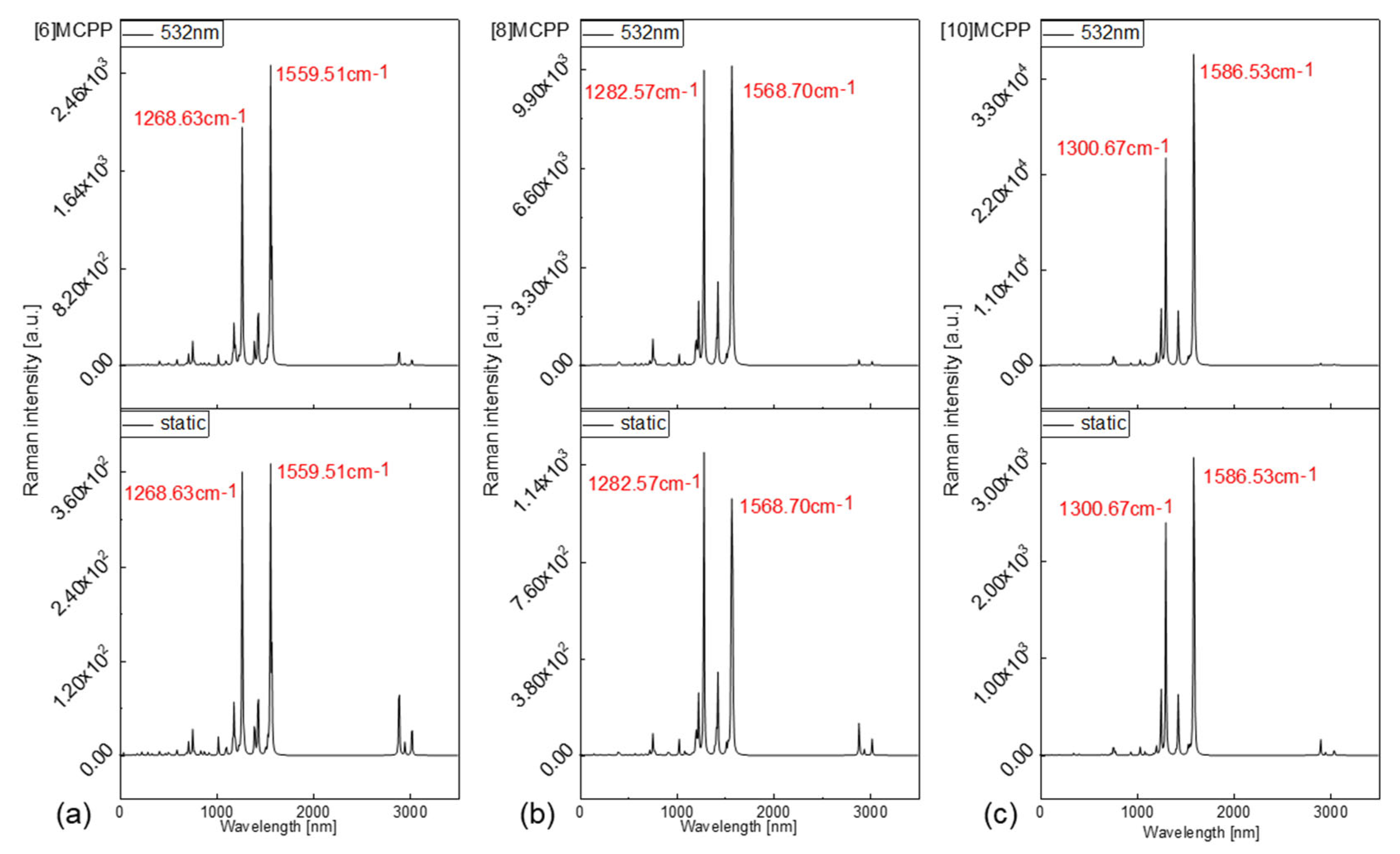
Figure 9.
Response characteristics of [6]MCPP, [8]MCPP, and [10]MCPP to an external magnetic field: (a - f) AICD (Anisotropy of the Induced Current Density) maps composed of π-all electrons (isosurface value of 0.05 a.u., with the magnetic field perpendicular to the paper plane and pointing outward). (g - i) Toroidal GIMIC (Generalized Induced Magnetic Current) maps (the external magnetic field is perpendicular to the plane of the ring and points outward, arrows indicate the direction of the induced current, and the color bar scale is represented in a.u.)
Figure 9.
Response characteristics of [6]MCPP, [8]MCPP, and [10]MCPP to an external magnetic field: (a - f) AICD (Anisotropy of the Induced Current Density) maps composed of π-all electrons (isosurface value of 0.05 a.u., with the magnetic field perpendicular to the paper plane and pointing outward). (g - i) Toroidal GIMIC (Generalized Induced Magnetic Current) maps (the external magnetic field is perpendicular to the plane of the ring and points outward, arrows indicate the direction of the induced current, and the color bar scale is represented in a.u.)
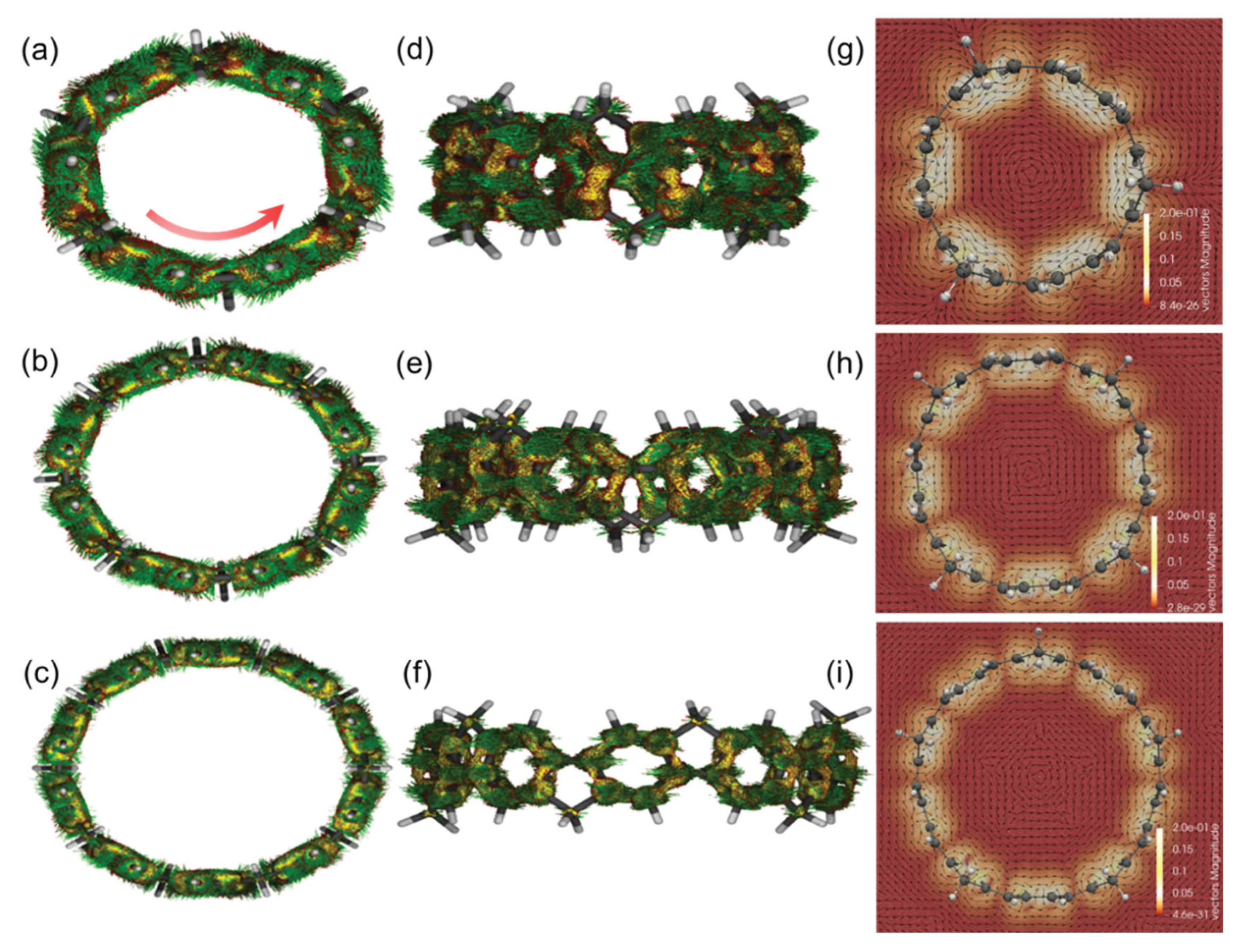
Figure 9.
Response characteristics of [6]MCPP, [8]MCPP and [10]MCPP to an external magnetic field: (a - c) ICSSZZ (Region color code: shielding, red; deshielding, blue) on the equivalent surface of the slice plane parallel to the ring (isovalue: 0.8); (d - f) Two-dimensional cross-sections of [6]MCPP, [8]MCPP and [10]MCPP (the unit of the color bar scale is Bohr)
Figure 9.
Response characteristics of [6]MCPP, [8]MCPP and [10]MCPP to an external magnetic field: (a - c) ICSSZZ (Region color code: shielding, red; deshielding, blue) on the equivalent surface of the slice plane parallel to the ring (isovalue: 0.8); (d - f) Two-dimensional cross-sections of [6]MCPP, [8]MCPP and [10]MCPP (the unit of the color bar scale is Bohr)
Disclaimer/Publisher’s Note: The statements, opinions and data contained in all publications are solely those of the individual author(s) and contributor(s) and not of MDPI and/or the editor(s). MDPI and/or the editor(s) disclaim responsibility for any injury to people or property resulting from any ideas, methods, instructions or products referred to in the content. |
© 2025 by the authors. Licensee MDPI, Basel, Switzerland. This article is an open access article distributed under the terms and conditions of the Creative Commons Attribution (CC BY) license (http://creativecommons.org/licenses/by/4.0/).
Copyright: This open access article is published under a Creative Commons CC BY 4.0 license, which permit the free download, distribution, and reuse, provided that the author and preprint are cited in any reuse.


