

Submitted:
12 September 2025
Posted:
15 September 2025
You are already at the latest version
Abstract
The escalating global demand for energy-efficient and sustainable built environments has catalyzed the advancement of Building Energy Management Systems (BEMS), particularly through their integration with cutting-edge technologies. This review presents a comprehensive and critical synthesis of the convergence between BEMS and enabling tools such as the Internet of Things (IoT), wireless sensor networks (WSNs), and artificial intelligence (AI)-based decision-making architectures. Drawing upon 89 peer-reviewed publications spanning from 2019 to 2025, the study systematically categorizes recent developments in HVAC optimization, occupancy-driven lighting control, predictive maintenance, and fault detection systems. It further investigates the role of communication protocols (e.g., ZigBee, LoRaWAN), machine learning-based energy forecasting, and multi-agent control mechanisms within residential, commercial, and institutional building contexts. Findings across multiple case studies indicate that hybrid AI–IoT systems have achieved energy efficiency improvements ranging from 20% to 40%, depending on building typology and control granularity. Nevertheless, the widespread adoption of such intelligent BEMS is hindered by critical challenges, including data security vulnerabilities, lack of standardized interoperability frameworks, and the complexity of integrating heterogeneous legacy infrastructure. Additionally, there remain pronounced gaps in the literature related to real-time adaptive control strategies, trust-aware federated learning, and seamless interoperability with smart grid platforms. By offering a rigorous and forward-looking review of current technologies and implementation barriers, this paper aims to serve as a strategic roadmap for researchers, system designers, and policymakers seeking to deploy the next generation of intelligent, sustainable, and scalable building energy management solutions.
Keywords:
building energy management systems (BEMS)
; internet of things (IoT)
; artificial intelligence (AI)
; smart buildings
; HVAC optimization
; occupancy sensing
; energy efficiency
; fault detection
; wireless sensor networks (WSNS)
; smart grids
1. Introduction
The building sector is responsible for nearly 40% of global final energy consumption and constitutes one of the largest sources of greenhouse gas (GHG) emissions, thereby positioning it as a critical domain in climate mitigation strategies and global sustainability frameworks [1]. In alignment with international accords such as the Paris Agreement and the United Nations Sustainable Development Goals (SDGs)—notably Goal 7 (Affordable and Clean Energy) and Goal 11 (Sustainable Cities and Communities)—there is an escalating imperative to transition from conventional building automation systems to intelligent, adaptive energy management frameworks that leverage real-time data and autonomous control mechanisms [2,3].
Within this context, Building Energy Management Systems (BEMS) have evolved from basic supervisory control structures into multi-layered, cyber-physical infrastructures capable of orchestrating energy flows across complex building ecosystems. These systems now routinely incorporate Internet of Things (IoT) devices, wireless communication protocols, and artificial intelligence (AI) algorithms to facilitate real-time monitoring, analysis, and optimization of energy usage patterns [4,5,6]. State-of-the-art BEMS platforms enable dynamic control over HVAC systems, lighting, plug loads, and energy storage units, while also integrating features such as occupancy detection, predictive maintenance, and time-of-use (ToU) pricing responses [7,8,9].
The proliferation of IoT technologies—ranging from low-power sensors to cloud-based analytics platforms—has drastically improved the granularity, frequency, and contextual relevance of energy-related data in buildings. Contemporary sensor networks can capture a wide array of parameters including motion, thermal anomalies, CO₂ concentrations, and ambient lighting, thus generating rich data streams that feed into advanced AI models for fault detection, load forecasting, and adaptive control policy generation [10,11,12]. Such integration empowers BEMS to respond autonomously to changing occupancy profiles, environmental dynamics, and operational constraints in real time.
Recent empirical studies have confirmed the effectiveness of machine learning (ML) methodologies—such as support vector machines (SVMs), artificial neural networks (ANNs), deep reinforcement learning (DRL), and multi-agent systems (MAS)—in achieving significant energy savings and enhanced user comfort in both residential and commercial settings [13,14,15]. Notably, occupancy-driven predictive control models have demonstrated substantial improvements in HVAC scheduling and lighting optimization, while visual anomaly detection and sensor fusion techniques offer promising solutions for enhancing operational resilience and ensuring cybersecurity in interconnected BEMS architectures [16,17].
Despite these advancements, the widespread deployment of intelligent BEMS continues to face formidable challenges. Key barriers include data privacy concerns, cybersecurity vulnerabilities, lack of standardization in communication protocols, and the high capital costs associated with retrofitting legacy infrastructure [18,19]. Moreover, small- to medium-sized buildings—which constitute a majority of the global building stock—often lack the technical and financial capacity to adopt sophisticated energy management systems, underscoring the need for cost-effective, modular, and interoperable solutions [20].
This review synthesizes findings from 89 peer-reviewed studies published between 2019 and 2025, with a focus on three technological pillars: sensors, IoT, and AI. It systematically classifies recent contributions based on core functionalities such as HVAC optimization, occupancy-aware automation, load prediction, visual fault detection, and demand-side management. Furthermore, the study highlights key implementation gaps and emerging trends, offering a forward-looking roadmap for the development and deployment of next-generation BEMS that are scalable, intelligent, and aligned with global energy efficiency and climate goals.
2. Materials and Methods
This section outlines the methodological framework adopted to conduct a systematic and integrative literature review on intelligent Building Energy Management Systems (BEMS). It details the research design, literature retrieval process, inclusion criteria, data extraction techniques, analytical tools, and ethical considerations. The approach ensures transparency, reproducibility, and scholarly rigor in synthesizing interdisciplinary developments at the nexus of IoT, AI, and smart energy systems.
2.1. Research Design and Scope
This study employs a systematic, integrative literature review methodology to critically examine the technological evolution and operational capabilities of intelligent Building Energy Management Systems (BEMS), particularly focusing on their intersection with Internet of Things (IoT) technologies, Artificial Intelligence (AI) paradigms, and data-driven control frameworks. The review’s overarching objective is to provide a comprehensive synthesis of the state-of-the-art, identify prevailing gaps, and propose future directions for the design and implementation of scalable and intelligent BEMS.
The selection of this methodological framework was driven by the complexity and interdisciplinary nature of the field, encompassing domains such as building automation, cyber-physical systems, machine learning, wireless sensor networks (WSNs), and energy informatics. The review systematically addresses questions related to system architecture, energy optimization, real-time decision-making, and the role of AI in enabling adaptive control strategies within buildings.
To ensure methodological transparency and replicability, the review process adheres to the PRISMA 2020 (Preferred Reporting Items for Systematic Reviews and Meta-Analyses) guidelines. These guidelines offer a robust procedural structure, from literature identification and screening to eligibility and inclusion, allowing researchers to reproduce the analytical pipeline and extend it to future investigations.
Unlike traditional narrative reviews, this study integrates both qualitative thematic synthesis and quantitative bibliometric analysis, making it a hybrid review. Thematic dimensions such as HVAC optimization, occupancy-driven automation, fault detection, load forecasting, and grid interactivity are explored in depth. This hybrid approach ensures a rich and nuanced understanding of the technological, operational, and infrastructural aspects of BEMS.
Furthermore, the review does not limit itself to a specific building typology. Instead, it includes residential, commercial, and institutional buildings, capturing a broad spectrum of use cases and control granularities. By evaluating both centralized and decentralized energy control paradigms, the study provides insights into scalability, cybersecurity, interoperability, and economic feasibility—key dimensions that affect real-world deployment.
In summary, the research design is multi-layered, iterative, and interdisciplinary, aiming to serve as both a technical knowledge base and a strategic roadmap for scholars, engineers, architects, and decision-makers operating at the nexus of building automation, AI, and smart grid integration.
2.2. Literature Search Strategy
To ensure the comprehensiveness, transparency, and replicability of the evidence base underpinning this review, a multi-phase literature search was conducted in strict alignment with the PRISMA 2020 (Preferred Reporting Items for Systematic Reviews and Meta-Analyses) guidelines. This process was designed to identify high-quality, peer-reviewed research articles that specifically address the convergence of Building Energy Management Systems (BEMS) with advanced technologies such as the Internet of Things (IoT), Artificial Intelligence (AI), wireless sensor networks, and related data-driven energy optimization tools.
The search strategy involved querying six major scientific databases that collectively span the disciplines of engineering, environmental science, computer science, and energy systems: Scopus, Web of Science (WoS), IEEE Xplore, ScienceDirect, SpringerLink, and MDPI. These databases were selected due to their high impact coverage and inclusion of journals ranked in the top quartiles (Q1–Q2) according to the SCImago Journal Rank (SJR) and Journal Citation Reports (JCR).
Search queries were constructed using a combination of Boolean logic and keyword clustering to capture a wide yet relevant body of literature. A representative query string employed across platforms was as follows:
("Building Energy Management Systems" OR "Smart Buildings" OR "BEMS")
AND ("Internet of Things" OR "IoT" OR "Artificial Intelligence" OR "Machine Learning" OR "Deep Learning" OR "Edge Computing" OR "Digital Twins")
AND ("Energy Efficiency" OR "Predictive Maintenance" OR "Occupancy Control" OR "HVAC Optimization" OR "Demand Response").
In addition to the primary database search, forward and backward citation tracking, alert-based updates, and manual inclusion of key articles were used to ensure the inclusion of emerging studies and foundational works. Literature published between January 2019 and August 2025 was targeted to capture both recent technological advancements and the evolution of intelligent energy systems in buildings.
The initial query retrieved 473 records, from which 61 duplicates were removed using EndNote and manual cross-checking. The remaining 412 unique records underwent title and abstract screening, resulting in the exclusion of 191 articles that were either out of scope, lacked full-text availability, or failed to meet the relevance criteria.
Subsequently, 221 full-text articles were assessed for eligibility. A total of 132 studies were excluded at this stage for reasons including methodological inadequacy, lack of original contribution, or absence of empirical results. Finally, 89 peer-reviewed journal articles met all inclusion criteria and were incorporated into the final review corpus.
To supplement the academic literature and contextualize technological trends within policy and practice, selected white papers, technical standards, and EU directives (e.g., Energy Performance of Buildings Directive, EPBD) were also consulted. These documents, however, were excluded from the formal meta-analysis to maintain methodological consistency.
To enhance transparency, a PRISMA flow diagram (Figure 1) has been generated to visualize the entire identification, screening, and inclusion process. In addition, all bibliographic metadata—including DOIs, citation metrics, source impact factor, and author affiliations—were systematically archived using a structured spreadsheet format and imported into VOSviewer and NVivo 14 for further bibliometric and thematic analysis.
This rigorous literature identification process ensures that the included body of work reflects both breadth and depth across technological, operational, and socio-economic dimensions of intelligent building energy management systems.
2.3. Eligibility, Inclusion Strategy, and Thematic Synthesis
This review followed a rigorous eligibility assessment protocol to ensure that only high-quality and methodologically sound studies were included in the final corpus. The selection process was guided by predefined inclusion and exclusion criteria aimed at narrowing the focus to research articles that contribute empirically or technically to the domain of Building Energy Management Systems (BEMS) enhanced by IoT and AI technologies.
Inclusion Criteria:
- Peer-reviewed journal articles published between January 2019 and August 2025.
- Studies written in English and indexed in international databases (e.g., Scopus, WoS, IEEE Xplore).
- Articles presenting empirical results, simulation-based validations, experimental frameworks, or case studies related to intelligent energy management in building environments.
- Research incorporating at least one of the following components: IoT-based monitoring systems, machine learning algorithms, predictive control strategies, occupancy-based automation, fault detection systems, or smart grid integration within BEMS.
- Papers focusing on energy efficiency outcomes, performance metrics, or system architecture innovations applicable to residential, commercial, or institutional buildings.
Exclusion Criteria:
- Non-peer-reviewed publications such as white papers, editorials, and conference abstracts.
- Studies focusing solely on industrial or manufacturing process control without relevance to building energy management.
- Theoretical or conceptual articles lacking implementation, performance evaluation, or reproducible models.
- Redundant or duplicate studies, literature reviews without new contributions, and articles failing to meet quality benchmarks for data transparency or methodological clarity.
After applying these criteria, 89 studies were retained for full-text analysis. Each study was subjected to a multi-dimensional data extraction process and subsequently organized via thematic synthesis. This involved manual coding of articles using NVivo 14 to classify the literature based on:
- Application domains (e.g., residential retrofits, smart campuses, office complexes).
- Technological enablers (e.g., types of IoT sensors, cloud vs. edge computing, specific AI algorithms like SVM, DRL, MAS).
- Functional objectives (e.g., HVAC control, lighting automation, predictive maintenance, anomaly detection).
- Performance metrics (e.g., kWh saved, CO₂ emissions reduced, Mean Absolute Percentage Error (MAPE), Root Mean Square Error (RMSE), response latency).
- System architecture (e.g., digital twin-enhanced BEMS, grid-interactive systems, hybrid cloud-edge deployments).
- Identified barriers (e.g., interoperability, cybersecurity, cost, scalability).
A keyword co-occurrence matrix and thematic cluster map were developed using VOSviewer to visualize dominant research trajectories, recurring challenges, and interdisciplinary overlaps. This allowed the identification of both saturated topics and underexplored research gaps—especially in real-time AI control, federated learning integration, and semantic interoperability within smart grid ecosystems.
2.4. Analytical Framework, Reproducibility Ethics, and Transparency Standards
To ensure methodological transparency and analytical rigor, all numerical and textual data extracted from the selected studies were organized into structured datasets and evaluated using reproducible open-source tools.
Analytical Workflow:
- Python 3.11 was used to develop a modular data analysis pipeline. Key libraries included:
- ○
- pandas for data tabulation and matrix transformation,
- ○
- scikit-learn for regression-based performance evaluations and outlier detection,
- ○
- matplotlib and seaborn for data visualization (e.g., heatmaps, scatter plots, bar graphs),
- ○
- NumPy for statistical operations and correlation matrices.
- Benchmarking of energy efficiency performance was conducted by normalizing reported values against standard Building Management Systems (BMS) and static control baselines.
- Cross-validation of classification and regression results was applied where applicable, based on metrics such as MAPE, RMSE, R², and F1-scores.
Use of Generative Artificial Intelligence (GenAI):
In compliance with ethical publishing standards, the use of GenAI in this study was limited strictly to non-substantive editorial tasks:
- Grammar refinement and sentence structure improvement,
- Reference formatting and citation consistency,
- Syntactic harmonization across bibliographic metadata.
No data, interpretations, results, or scientific analyses were generated or modified using GenAI tools. All interpretations and thematic analyses were conducted manually by the authors to preserve analytical integrity.
Ethical Considerations:
As this work is a secondary research endeavor based on published literature, it does not involve human or animal subjects and thus does not require institutional ethical approval. No personal, clinical, or proprietary data were accessed. All referenced studies are publicly available and properly cited.
Open Science and Data Availability:
To foster transparency and support the principles of Open Science, all supporting materials—including bibliometric datasets, Python scripts, thematic coding schemes, and matrix tables—will be deposited in a public digital repository (Zenodo) under the Creative Commons Attribution (CC-BY 4.0) license.A Digital Object Identifier (DOI) for the dataset will be included during the peer review process. Replication-ready files will include:
- Annotated Jupyter Notebooks (.ipynb),
- CSV-formatted bibliographic metadata,
- NVivo project files (.nvp) containing thematic codes,
- Co-occurrence network files compatible with VOSviewer (.net, .map).
These efforts ensure that all analyses presented in this review can be independently verified and extended by future researchers, thereby reinforcing the reproducibility and scientific value of the study.
3. Results
3.1. Functional Distribution and Performance of Intelligent BEMS Technologies
In this section, the analytical findings from the systematic review are presented in accordance with the predefined thematic categories: HVAC optimization, occupancy-based control, predictive maintenance, energy forecasting, demand response, lighting automation, and digital twins integration.
A total of 89 studies were analyzed in detail, revealing a broad and multi-functional application spectrum of Building Energy Management Systems (BEMS). As illustrated in Figure 2 and Table 1, HVAC optimization emerged as the most frequently targeted functionality, addressed in 24 of the studies (approximately 27%). Occupancy-based control followed with 18 studies, underscoring its central role in enhancing real-time energy responsiveness, particularly in commercial and institutional buildings.
3.1.1. Quantitative Performance Indicators
The quantified average energy savings associated with each functional application category are presented in Figure 3. Notably:
These findings substantiate the hypothesis that AI-IoT convergence in BEMS design enables measurable improvements in operational efficiency and sustainability performance.
3.2. Interpretation and Cross-Reference with Prior Studies
The results confirm the consensus observed across recent high-impact literature:
- Low adoption of digital twin technologies, as shown in [14,77,82], is attributed to the complexity of implementation and high infrastructural cost. Nonetheless, their integration with generative design and real-time feedback mechanisms positions them as a transformative element for future BEMS evolution.
Collectively, the data suggests that tailored combinations of sensing, AI modeling, and real-time control can yield substantial energy reductions ranging from 15% to 30%, surpassing conventional rule-based control systems.
4. Discussion
The results presented in the preceding section offer compelling evidence of the evolving landscape of intelligent Building Energy Management Systems (BEMS), particularly within the triad of Artificial Intelligence (AI), Internet of Things (IoT), and data-driven optimization frameworks. This discussion synthesizes the findings, evaluates their implications relative to prior research, and outlines critical directions for future exploration.
4.1. Alignment and Divergence with Existing Literature
The observed dominance of HVAC optimization as the primary focus of smart BEMS interventions—identified in over 27% of reviewed studies—corroborates long-standing assertions in the literature regarding HVAC systems as the most energy-intensive subsystems in buildings [6,16,50]. For instance, Shah et al. [1] and Fei et al. [4] previously emphasized that real-time control of thermal loads via adaptive AI mechanisms yields notable energy efficiency, often exceeding 25%. Our findings not only reinforce this position but also extend it by evidencing consistent benefits across various AI methodologies, including DRL, fuzzy logic, and multi-agent systems.
However, unlike earlier reviews which disproportionately focused on HVAC and lighting [19,25], the current analysis reveals a more diversified application domain, with increased scholarly attention on occupant-centric control, predictive maintenance, and digital twin frameworks. Particularly, the emergence of digital twins—though limited in current adoption—signals a shift toward cyber-physical symbiosis in building operations. Zhou [14] and Hwang et al. [77] demonstrate how virtual replicas integrated with real-time data streams enable unprecedented simulation accuracy and system adaptability.
This evolution is in line with recent conceptual and empirical advances proposed by Amangeldy et al. [83] and Palley et al. [82], who advocate for the fusion of AI with Digital Twins and Large Language Models (LLMs) to build proactive, self-healing infrastructures. The results also echo the findings of Safari et al. [73] in asserting that the effectiveness of AI in BEMS is contingent not merely on model complexity, but on the contextual integration of environmental, behavioral, and infrastructural data streams.
4.2. Practical Implications and Systemic Impact
The practical implications of these findings are multifold. Firstly, the consistent energy savings—ranging from 18% to 30% across most application categories—illustrate the cost-effectiveness of adopting intelligent BEMS frameworks. This is particularly relevant for policymakers and facility managers in climate-conscious regions where regulatory pressures on emissions are intensifying. For example, in the context of the EU Energy Performance of Buildings Directive (EPBD), intelligent control systems can serve as compliance enablers for upcoming mandates on near-zero energy buildings (nZEBs) [86].
Secondly, the modular and scalable nature of AI-driven BEMS allows for context-sensitive deployments across building typologies. Ahmed et al. [52] and Teixeira et al. [32] showed that even legacy infrastructure can be retrofitted with minimal intervention using IoT overlays and edge computing nodes—lowering the entry barrier for adoption in resource-constrained settings.
Moreover, the findings raise critical considerations for resilience and grid interaction. As pointed out by Garlik [38] and Khan et al. [46], BEMS systems are increasingly expected to function as micro-grid participants—adapting demand based on grid signals, renewable availability, and tariff fluctuations. Our analysis confirms that this transition is already underway, with several reviewed studies reporting demand response integration as a core functional attribute [47,74].
4.3. Methodological Observations and Gaps
While the methodological heterogeneity across studies enriches the knowledge base, it also introduces certain limitations. The wide variance in performance metrics (e.g., use of RMSE, MAPE, percentage reduction) complicates cross-study comparability. Furthermore, as noted by Moraliyage et al. [27] and Yayla et al. [28], very few studies incorporate explainability metrics (XAI) or address the black-box nature of AI algorithms, raising concerns about transparency and user trust.
There is also an observable gap in socio-behavioral integration. Although occupant behavior significantly influences building energy dynamics, only a minority of studies (e.g., [58,62,70]) explicitly model human factors in their control loops. This omission could reduce long-term effectiveness and lead to unintended consequences such as discomfort or system disengagement.
Another methodological deficiency pertains to cybersecurity and interoperability, which remain underexplored in most reviewed works. Despite the critical importance of secure communication in IoT-enabled BEMS, few studies go beyond a superficial mention of encryption or protocol selection. Al-Obaidi et al. [25] and Rojek et al. [87] stress the need for standardization and protocol harmonization, especially in multi-vendor ecosystems where proprietary interfaces dominate.
4.4. Future Research Directions
Given the dynamic and multidisciplinary nature of the field, several research trajectories emerge:
- Explainable AI (XAI) in BEMS: Future studies should prioritize transparency in decision-making processes to foster greater acceptance among end-users and regulators.
4.5. Broader Implications
At a systems level, intelligent BEMS are no longer confined to energy efficiency goals; they represent a critical infrastructure layer within smart cities, carbon neutrality frameworks, and climate resilience strategies. The convergence of AI, IoT, and digital twins in the built environment embodies the future of urban cyber-physical systems, supporting both environmental and economic sustainability.
As underscored by Sadri et al. [42] and Shahrabani & Apanaviciene [89], the implications go beyond technology—they challenge how we design, operate, and experience buildings. From policy formulation to algorithmic accountability, the evolution of BEMS will increasingly shape the contours of sustainable urban living.5. Conclusions
This section is not mandatory but can be added to the manuscript if the discussion is unusually long or complex.
5. Conclusions
This review has systematically examined 89 peer-reviewed studies published between 2019 and 2025, highlighting the transformative potential of intelligent Building Energy Management Systems (BEMS) driven by IoT and AI integration. The evidence consistently demonstrates that such systems deliver substantial energy savings—typically in the range of 20–40%—while enhancing operational resilience and occupant comfort across residential, commercial, and institutional contexts.
Beyond their technical merits, intelligent BEMS function as critical enablers of broader sustainability agendas, directly supporting the United Nations Sustainable Development Goals, particularly those related to clean energy, sustainable cities, and climate action. At the national scale, they also offer a pragmatic pathway for reducing energy intensity, mitigating energy poverty, and aligning with policy instruments such as the European Energy Performance of Buildings Directive (EPBD) and national efficiency roadmaps.
Nevertheless, widespread adoption remains constrained by high capital costs, fragmented interoperability frameworks, cybersecurity vulnerabilities, and limited digital readiness among building stakeholders. Addressing these challenges will require coordinated interventions, including targeted financial incentives, standardized communication protocols, and the design of secure-by-default architectures.
Future research should prioritize explainable and trustworthy AI, federated and privacy-preserving learning, digital-twin-enhanced adaptive control, and seamless integration with smart grids and electric vehicle infrastructures. By advancing these frontiers, next-generation BEMS can evolve from isolated efficiency solutions into foundational infrastructures for climate-resilient, low-carbon, and equitable urban environments.
Author Contributions
Conceptualization, L.A., K.T., A.At. and A.P.; methodology, L.A., A.C. and A.P.; software, L.A. and R.S.; validation, K.T., A.At., A.C., A.At., R.S. and A.Ak.; formal analysis, L.A. A.At. and A.Ak.; investigation, L.A., A.At., and A.Ak; resources, K.T. A.At. and R.S.; data curation, L.A. and A.At.; writing—original draft preparation, L.A., K.T., A.At., M.M., A.C., R.S. and A.Ak.; writing—review and editing, L.A., K.T., A.At., M.M., A.C., R.S., A.Ak. and A.P.; visualization, L.A., R.S and A.Ak.; supervision, K.T. and A.P.; project administration, L.A., K.T., A.At., M.M. and A.P.; funding acquisition, M.M. and A.P. All authors have read and agreed to the published version of the manuscript.
Funding
This research was funded by Krakow University of Economics, grant number 026/GGR/2024/POT. The APC was funded by the Ministry of Science and Higher Education of the Republic of Poland.
Data Availability Statement
Data are contained within the article.
Acknowledgments
The authors have reviewed and edited the output and take full responsibility for the content of this publication.
Conflicts of Interest
The authors declare no conflicts of interest.
References
- Shah, S.F.A.; Iqbal, M.; Aziz, Z.; Rana, T.A.; Khalid, A.; Cheah, Y.-N.; Arif, M. The Role of Machine Learning and the Internet of Things in Smart Buildings for Energy Efficiency. Appl. Sci. 2022, 12, 7882. [Google Scholar] [CrossRef]
- Mazhar, T., Amir Malik, A., Haq, I., Rozeela, I., Ullah, I., Khan, M. A. Adhikari, D., Othman, M.T.B., Hamam, H. The role of ML, AI, and 5G technology in smart energy and buildings. Electronics 2022, 11, 3960. [CrossRef]
- Ahmed, M.A.; Chavez, S.A.; Eltamaly, A.M.; Garces, H.O.; Rojas, A.J.; Kim, Y.-C. Toward an Intelligent Campus: IoT Platform for Remote Monitoring and Control of Smart Buildings. Sensors 2022, 22, 045. [Google Scholar] [CrossRef]
- Fei, L.; Shahzad, M.; Abbas, F.; Muqeet, H.A.; Hussain, M.M.; Bin, L. Optimal Energy Management System of IoT-Enabled Large Building Considering Electric Vehicle Scheduling, Distributed Resources, and Demand Response Schemes. Sensors 2022, 22, 7448. [Google Scholar] [CrossRef]
- Kim, M.-L.; Park, K.-J.; Son, S.-Y. Occupancy-Based Energy Consumption Estimation Improvement through Deep Learning. Sensors 2023, 23, 2127. [Google Scholar] [CrossRef]
- El Husseini, F.; Noura, H.N.; Salman, O.; Chahine, K. Machine Learning in Smart Buildings: A Review of Methods, Challenges, and Future Trends. Appl. Sci. 2025, 15, 7682. [Google Scholar] [CrossRef]
- Cicero, S.; Guarascio, M.; Guerrieri, A.; Mungari, S. A Deep Anomaly Detection System for IoT-Based Smart Buildings. Sensors 2023, 23, 9331. [Google Scholar] [CrossRef]
- Niknia, S.; Ghiai, M. Simulation-Based Prediction of Office Buildings Energy Performance Under RCP Scenarios Across All U.S. Climate Zones. Architecture 2025, 5, 34. [Google Scholar] [CrossRef]
- Khan, M.H.; Asar, A.U.; Ullah, N.; Albogamy, F.R.; Rafique, M.K. Modeling and Optimization of Smart Building Energy Management System Considering Both Electrical and Thermal Load. Energies 2022, 15, 574. [Google Scholar] [CrossRef]
- Poyyamozhi, M.; Murugesan, B.; Rajamanickam, N.; Shorfuzzaman, M.; Aboelmagd, Y. IoT—A Promising Solution to Energy Management in Smart Buildings: A Systematic Review, Applications, Barriers, and Future Scope. Buildings 2024, 14, 3446. [Google Scholar] [CrossRef]
- Lee, D.; Chen, L. Sustainable Air-Conditioning Systems Enabled by Artificial Intelligence: Research Status, Enterprise Patent Analysis, and Future Prospects. Sustainability 2022, 14, 7514. [Google Scholar] [CrossRef]
- Mahmud, N. A.; Dahlan, N. Y. Optimum energy management strategy with enhanced time of use tariff for campus building using particle swarm optimization. Indonesian Journal of Electrical Engineering and Computer Science 2022, 28(2), 644–653. [Google Scholar] [CrossRef]
- Lee, D.; Tsai, F.-P. Air Conditioning Energy Saving from Cloud-Based Artificial Intelligence: Case Study of a Split-Type Air Conditioner. Energies 2020, 13, 2001. [Google Scholar] [CrossRef]
- Zhou, J. Multi-dimensional model and interactive simulation of intelligent construction based on digital twins. Scientific Reports 2025, 15, 32189. [Google Scholar] [CrossRef] [PubMed]
- Aliero, M.S.; Asif, M.; Ghani, I.; Pasha, M.F.; Jeong, S.R. Systematic Review Analysis on Smart Building: Challenges and Opportunities. Sustainability 2022, 14(5), 3009. [Google Scholar] [CrossRef]
- Chew, M.Y.L.; Teo, E.A.L.; Shah, K.W.; Kumar, V.; Hussein, G.F. Evaluating the Roadmap of 5G Technology Implementation for Smart Building and Facilities Management in Singapore. Sustainability 2020, 12, 10259. [Google Scholar] [CrossRef]
- Ahmed, M. A.; Chavez, S. A.; Eltamaly, A. M.; Garces, H. O.; Rojas, A. J.; Kim, Y.-C. Toward an intelligent campus: IoT platform for remote monitoring and control of smart buildings. Sensors 2022, 22, 9045. [Google Scholar] [CrossRef]
- Massaro, A.; Starace, G. Advanced and Complex Energy Systems Monitoring and Control: A Review on Available Technologies and Their Application Criteria. Sensors 2022, 22, 4929. [Google Scholar] [CrossRef]
- Starace, G.; Tiwari, A.; Colangelo, G.; Massaro, A. Advanced Data Systems for Energy Consumption Optimization and Air Quality Control in Smart Public Buildings Using a Versatile Open Source Approach. Electronics 2022, 11, 3904. [Google Scholar] [CrossRef]
- Ozadowicz, A. A Hybrid Approach in Design of Building Energy Management System with Smart Readiness Indicator and Building as a Service Concept. Energies 2022, 15, 1432. [Google Scholar] [CrossRef]
- Mazhar, T.; Irfan, H.M.; Haq, I.; Ullah, I.; Ashraf, M.; Shloul, T.A.; Ghadi, Y.Y.; Imran; Elkamchouchi, D.H. Analysis of Challenges and Solutions of IoT in Smart Grids Using AI and Machine Learning Techniques: A Review. Electronics 2023, 12, 242. [Google Scholar] [CrossRef]
- Krishnan, P.; Prabu, A.V.; Loganathan, S.; Routray, S.; Ghosh, U.; AL-Numay, M. Analyzing and Managing Various Energy-Related Environmental Factors for Providing Personalized IoT Services for Smart Buildings in Smart Environment. Sustainability 2023, 15, 6548. [Google Scholar] [CrossRef]
- Gaitan, N.C.; Ungurean, I.; Roman, C.; Francu, C. An Optimizing Heat Consumption System Based on BMS. Appl. Sci. 2022, 12, 3271. [Google Scholar] [CrossRef]
- Liu, H.; Liang, J.; Liu, Y.; Wu, H. A Review of Data-Driven Building Energy Prediction. Buildings 2023, 13, 532. [Google Scholar] [CrossRef]
- Al-Obaidi, K.M.; Hossain, M.; Alduais, N.A.M.; Al-Duais, H.S.; Omrany, H.; Ghaffarianhoseini, A. A Review of Using IoT for Energy Efficient Buildings and Cities: A Built Environment Perspective. Energies 2022, 15, 5991. [Google Scholar] [CrossRef]
- Hossain, J.; Kadir, A.F.A.; Hanafi, A.N.; Shareef, H.; Khatib, T.; Baharin, K.A.; Sulaima, M.F. A Review on Optimal Energy Management in Commercial Buildings. Energies 2023, 16, 1609. [Google Scholar] [CrossRef]
- Moraliyage, H.; Dahanayake, S.; De Silva, D.; Mills, N.; Rathnayaka, P.; Nguyen, S.; Alahakoon, D.; Jennings, A. A Robust Artificial Intelligence Approach with Explainability for Measurement and Verification of Energy Efficient Infrastructure for Net Zero Carbon Emissions. Sensors 2022, 22, 9503. [Google Scholar] [CrossRef]
- Yayla, A.; Swierczewska, K.S.; Kaya, M.; Karaca, B.; Arayici, Y.; Ayözen, Y.E.; Tokdemir, O.B. Artificial Intelligence (AI)-Based Occupant-Centric Heating Ventilation and Air Conditioning (HVAC) Control System for Multi-Zone Commercial Buildings. Sustainability 2022, 14, 16107. [Google Scholar] [CrossRef]
- Popa, A.; Ramallo González, A.P.; Jaglan, G.; Fensel, A. A Semantically Data-Driven Classification Framework for Energy Consumption in Buildings. Energies 2022, 15, 3155. [Google Scholar] [CrossRef]
- Delgoshaei, P.; Heidarinejad, M.; Austin, M.A. A Semantic Approach for Building System Operations: Knowledge Representation and Reasoning. Sustainability 2022, 14, 5810. [Google Scholar] [CrossRef]
- Sievers, J.; Blank, T. A Systematic Literature Review on Data-Driven Residential and Industrial Energy Management Systems. Energies 2023, 16, 1688. [Google Scholar] [CrossRef]
- Teixeira, N.; Barreto, R.; Gomes, L.; Faria, P.; Vale, Z. A Trustworthy Building Energy Management System to Enable Direct IoT Devices’ Participation in Demand Response Programs. Electronics 2022, 11, 897. [Google Scholar] [CrossRef]
- Agharazi, H.; Prica, M.D.; Loparo, K.A. A Two-Level Model Predictive Control-Based Approach for Building Energy Management including Photovoltaics, Energy Storage, Solar Forecasting and Building Loads. Energies 2022, 15, 3521. [Google Scholar] [CrossRef]
- Lee, J.; Woo, D.-O.; Jang, J.; Junghans, L.; Leigh, S.-B. Collection and Utilization of Indoor Environmental Quality Information Using Affordable Image Sensing Technology. Energies 2022, 15, 921. [Google Scholar] [CrossRef]
- Piira, K.; Kantorovitch, J.; Kannari, L.; Piippo, J.; Vu Hoang, N. Decision Support Tool to Enable Real-Time Data-Driven Building Energy Retrofitting Design. Energies 2022, 15, 5408. [Google Scholar] [CrossRef]
- Ntafalias, A.; Tsakanikas, S.; Skarvelis-Kazakos, S.; Papadopoulos, P.; Skarmeta-Gómez, A.F.; González-Vidal, A.; Tomat, V.; Ramallo-González, A.P.; Marin-Perez, R.; Vlachou, M.C. Design and Implementation of an Interoperable Architecture for Integrating Building Legacy Systems into Scalable Energy Management Systems. Smart Cities 2022, 5, 1421–1440. [Google Scholar] [CrossRef]
- Kim, D.; Yoon, Y.; Lee, J.; Mago, P.J.; Lee, K.; Cho, H. Design and Implementation of Smart Buildings: A Review of Current Research Trend. Energies 2022, 15, 4278. [Google Scholar] [CrossRef]
- Garlik, B. Energy Centers in a Smart City as a Platform for the Application of Artificial Intelligence and the Internet of Things. Appl. Sci. 2022, 12, 3386. [Google Scholar] [CrossRef]
- Althaus, P.; Redder, F.; Ubachukwu, E.; Mork, M.; Xhonneux, A.; Müller, D. Enhancing Building Monitoring and Control for District Energy Systems: Technology Selection and Installation within the Living Lab Energy Campus. Appl. Sci. 2022, 12, 3305. [Google Scholar] [CrossRef]
- Gualandri, F.; Kuzior, A. Home Energy Management Systems Adoption Scenarios: The Case of Italy. Energies 2023, 16, 4946. [Google Scholar] [CrossRef]
- Korkas, C.; Dimara, A.; Michailidis, I.; Krinidis, S.; Marin-Perez, R.; Martínez García, A.I.; Skarmeta, A.; Kitsikoudis, K.; Kosmatopoulos, E.; Anagnostopoulos, C.-N.; et al. Integration and Verification of PLUG-N-HARVEST ICT Platform for Intelligent Management of Buildings. Energies 2022, 15, 2610. [Google Scholar] [CrossRef]
- Sadri, H.; Yitmen, I.; Tagliabue, L.C.; Westphal, F.; Tezel, A.; Taheri, A.; Sibenik, G. Integration of Blockchain and Digital Twins in the Smart Built Environment Adopting Disruptive Technologie-A Systematic Review. Sustainability 2023, 15, 3713. [Google Scholar] [CrossRef]
- Wang, W.-C.; Dwijendra, N.K.A.; Sayed, B.T.; Alvarez, J.R.N.; Al-Bahrani, M.; Alviz-Meza, A.; Cárdenas-Escrocia, Y. Internet of Things Energy Consumption Optimization in Buildings: A Step toward Sustainability. Sustainability 2023, 15, 6475. [Google Scholar] [CrossRef]
- Afonso, J.A.; Monteiro, V.; Afonso, J.L. Internet of Things Systems and Applications for Smart Buildings. Energies 2023, 16, 2757. [Google Scholar] [CrossRef]
- Villa, V.; Bruno, G.; Aliev, K.; Piantanida, P.; Corneli, A.; Antonelli, D. Machine Learning Framework for the Sustainable Maintenance of Building Facilities. Sustainability 2022, 14, 681. [Google Scholar] [CrossRef]
- Khan, M.H.; Asar, A.U.; Ullah, N.; Albogamy, F.R.; Rafique, M.K. Modeling and Optimization of Smart Building Energy Management System Considering Both Electrical and Thermal Load. Energies 2022, 15, 574. [Google Scholar] [CrossRef]
- Fei, L.; Shahzad, M.; Abbas, F.; Muqeet, H.A.; Hussain, M.M.; Bin, L. Optimal Energy Management System of IoT-Enabled Large Building Considering Electric Vehicle Scheduling, Distributed Resources, and Demand Response Schemes. Sensors 2022, 22, 7448. [Google Scholar] [CrossRef]
- Neves-Silva, R.; Camarinha-Matos, L.M. Simulation-Based Decision Support System for Energy Efficiency in Buildings Retrofitting. Sustainability 2022, 14, 12216. [Google Scholar] [CrossRef]
- Aliero, M.S.; Asif, M.; Ghani, I.; Pasha, M.F.; Jeong, S.R. Systematic Review Analysis on Smart Building: Challenges and Opportunities. Sustainability 2022, 14, 3009. [Google Scholar] [CrossRef]
- Shah, S.F.A.; Iqbal, M.; Aziz, Z.; Rana, T.A.; Khalid, A.; Cheah, Y.-N.; Arif, M. The Role of Machine Learning and the Internet of Things in Smart Buildings for Energy Efficiency. Appl. Sci. 2022, 12, 7882. [Google Scholar] [CrossRef]
- Apanavičienė, R.; Shahrabani, M.M.N. Key Factors Affecting Smart Building Integration into Smart City: Technological Aspects. Smart Cities 2023, 6, 1832–1857. [Google Scholar] [CrossRef]
- Belcher, E.J.; Abraham, Y.S. Lifecycle Applications of Building Information Modeling for Transportation Infrastructure Projects. Buildings 2023, 13, 2300. [Google Scholar] [CrossRef]
- Aliero, M.S.; Pasha, M.F.; Toosi, Adel N. T.; Ghani, I. The COVID-19 impact on air condition usage: a shift towards residential energy saving. Environ. Sci. Pollut. Res. 2022, 29, 85727–85741. [Google Scholar] [CrossRef] [PubMed]
- Martinez-Molina, A.; Alamaniotis, M. Enhancing Historic Building Performance with the Use of Fuzzy Inference System to Control the Electric Cooling System. Sustainability 2020, 12, 5848. [Google Scholar] [CrossRef]
- Ullah, F.; Al-Turjman, F.; Nayyar, A. IoT-based green city architecture using secured and sustainable android services, Environmental Technology & Innovation, 2020, 20, 101091. [CrossRef]
- Haseeb, K.; Lee, S.; Jeon, G.; EBDS: An energy-efficient big data-based secure framework using Internet of Things for green environment, Environmental Technology & Innovation, 2020, 20, 101129. [CrossRef]
- Talebi, A.; Hatami, A. Online fuzzy control of HVAC systems considering demand response and users’ comfort. Energy Sources, Part B: Economics, Planning, and Policy, 2020, 15, 403–422. [Google Scholar] [CrossRef]
- Ko, H.; Kim, J. H.; An, K.; Mesicek, L.; Marreiros, G.; Pan, S. B.; Kim, P., Smart home energy strategy based on human behaviour patterns for transformative computing. Information Processing & Management 2020, 57(5), 102256, ISSN 0306-4573. [CrossRef]
- de Castro Tomé, M.; J. Nardelli, P.H.; Hussain, H.M.; Wahid, S.; Narayanan, A. A Cyber-Physical Residential Energy Management System via Virtualized Packets. Energies 2020, 13, 699. [CrossRef]
- Chamandoust, H.; Derakhshan, G.; Hakimi, S.M.; Bahramara, S. Tri-objective scheduling of residential smart electrical distribution grids with optimal joint of responsive loads with renewable energy sources. Journal of Energy Storage 2020, 27, 101112. [Google Scholar] [CrossRef]
- Pawar, P.; TarunKumar, M.; Vittal, K.P. An IoT based Intelligent Smart Energy Management System with accurate forecasting and load strategy for renewable generation. Measurement 2020, 152, 107187. [Google Scholar] [CrossRef]
- Seyedolhosseini, A.; Masoumi, N.; Modarressi, M.; Karimian, N. Daylight adaptive smart indoor lighting control method using artificial neural networks. Journal of Building Engineering 2020, 29, 101141. [Google Scholar] [CrossRef]
- Paukstadt, U.; Becker, J. Uncovering the business value of the internet of things in the energy domain – a review of smart energy business models. Electronic Markets 2021, 31, 51–66. [Google Scholar] [CrossRef]
- Zakirullin, R. S. A Smart Window for Angular Selective Filtering of Direct Solar Radiation. ASME. J. Sol. Energy Eng. 2020, 142(1): 011001. [CrossRef]
- Samadi, A.; Saidi, H.; Latify, M.A.; Mahdavi, M. Home energy management system based on task classification and the resident’s requirements, International Journal of Electrical Power & Energy Systems 2020, 118, 105815. [CrossRef]
- Ullah, I.; Hussain, I.; Singh, M. Exploiting Grasshopper and Cuckoo Search Bio-Inspired Optimization Algorithms for Industrial Energy Management System: Smart Industries. Electronics 2020, 9, 105. [Google Scholar] [CrossRef]
- Trivedi, D.; Badarla, V. Occupancy detection systems for indoor environments: A survey of approaches and methods. Indoor and Built Environment. 2019, 29(8), 1053–1069. [Google Scholar] [CrossRef]
- Dai, X.; Liu, J.; Zhang, X. A review of studies applying machine learning models to predict occupancy and window-opening behaviours in smart buildings, Energy and Buildings 2020, 223, 110159. [CrossRef]
- Simsek, Y.; Santika, W. G.; Anisuzzaman, M.; Urmee, T.; Bahri, P.A.; Escobar, R. An analysis of additional energy requirement to meet the sustainable development goals, Journal of Cleaner Production 2020, 272, 122646. [CrossRef]
- Mukilan, P.; Balasubramanian, M.; Rajamanickam, N.; Shorfuzzaman, M.; Aboelmagd, Y. IoT—A Promising Solution to Energy Management in Smart Buildings: A Systematic Review, Applications, Barriers, and Future Scope. Buildings 2024, 14, 3446. [Google Scholar] [CrossRef]
- Taboada-Orozco, A.; Yetongnon, K.; Nicolle, C. Smart Buildings: A Comprehensive Systematic Literature Review on Data-Driven Building Management Systems. Sensors 2024, 24, 4405. [Google Scholar] [CrossRef]
- Ali, D.M.T.E.; Motuzienė, V.; Džiugaitė-Tumėnienė, R. AI-Driven Innovations in Building Energy Management Systems: A Review of Potential Applications and Energy Savings. Energies 2024, 17, 4277. [Google Scholar] [CrossRef]
- Safari, A.; Daneshvar, M.; Anvari-Moghaddam, A. Energy Intelligence: A Systematic Review of Artificial Intelligence for Energy Management. Appl. Sci. 2024, 14, 11112. [Google Scholar] [CrossRef]
- Rao, C.K.; Sahoo, S.K.; Yanine, F.F. A comprehensive review of smart energy management systems for photovoltaic power generation utilizing the internet of things. Unconventional Resources, 2025, 7, 100197. [Google Scholar] [CrossRef]
- Arun, M.; Barik, D.; Othman, N.A. Seepana Praveenkumar, Kapura Tudu. Investigating the performance of AI-driven smart building systems through advanced deep learning model analysis. Energy Reports 2025, 13, 5885–5899. [Google Scholar] [CrossRef]
- Tasmant, H.; Bossoufi, B.; Alaoui, C.; Siano, P. A review of machine learning and IoT-based energy management systems for AC microgrids. Computers and Electrical Engineering 2025, 127(Part A), 110563. [Google Scholar] [CrossRef]
- Hwang, J.; Kim, J.; Yoon, S. DT-BEMS: Digital twin-enabled building energy management system for information fusion and energy efficiency. Energy 2025, 326, 136162. [Google Scholar] [CrossRef]
- Ramadan, R.; Huang, Q.; Zalhaf, A.S.; Bamisile, O.; Li, J.; Mansour, D.-E.A.; Lin, X.; Yehia, D.M. Energy Management in Residential Microgrid Based on Non-Intrusive Load Monitoring and Internet of Things. Smart Cities 2024, 7, 1907–1935. [Google Scholar] [CrossRef]
- Islam, F.; Ahmed, I.; Mihet-Popa, L. Development and testing of an IoT platform with smart algorithms for building energy management systems. Energy and Buildings 2025, 344, 115970. [Google Scholar] [CrossRef]
- Fang, M.; Misnan, M.S.; Halim, N.H.F.A. A Systematic Literature Review on Energy Efficiency Analysis of Building Energy Management. Buildings 2024, 14, 3136. [Google Scholar] [CrossRef]
- Roka, R.; Figueiredo, A.; Vieira, A.; Cardoso, C. A Systematic Review of Sensitivity Analysis in Building Energy Modeling: Key Factors Influencing Building Thermal Energy Performance. Energies 2025, 18, 2375. [Google Scholar] [CrossRef]
- Palley, B.; Poças Martins, J.; Bernardo, H.; Rossetti, R. Integrating Machine Learning and Digital Twins for Enhanced Smart Building Operation and Energy Management: A Systematic Review. Urban Sci. 2025, 9, 202. [Google Scholar] [CrossRef]
- Amangeldy, B.; Tasmurzayev, N.; Imankulov, T.; Baigarayeva, Z.; Izmailov, N.; Riza, T.; Abdukarimov, A.; Mukazhan, M.; Zhumagulov, B. AI-Powered Building Ecosystems: A Narrative Mapping Review on the Integration of Digital Twins and LLMs for Proactive Comfort, IEQ, and Energy Management. Sensors 2025, 25, 5265. [Google Scholar] [CrossRef]
- Chen, G.; Lu, S.; Zhou, S.; Tian, Z.; Kim, M.K.; Liu, J.; Liu, X. A Systematic Review of Building Energy Consumption Prediction: From Perspectives of Load Classification, Data-Driven Frameworks, and Future Directions. Appl. Sci. 2025, 15, 3086. [Google Scholar] [CrossRef]
- Zhang, T.; Strbac, G. Novel Artificial Intelligence Applications in Energy: A Systematic Review. Energies 2025, 18, 3747. [Google Scholar] [CrossRef]
- Jørgensen, B.N.; Ma, Z.G. Impact of EU Laws on the Adoption of AI and IoT in Advanced Building Energy Management Systems: A Review of Regulatory Barriers, Technological Challenges, and Economic Opportunities. Buildings 2025, 15, 2160. [Google Scholar] [CrossRef]
- Rojek, I.; Mikołajewski, D.; Mroziński, A.; Macko, M.; Bednarek, T.; Tyburek, K. Internet of Things Applications for Energy Management in Buildings Using Artificial Intelligence - A Case Study. Energies 2025, 18, 1706. [Google Scholar] [CrossRef]
- Saad Alotaibi, B.; Ibrahim Shema, A.; Umar Ibrahim, A.; Awad Abuhussain, M.; Abdulmalik, H.; Aminu Dodo, Y.; Atakara, C. Assimilation of 3D printing, Artificial Intelligence (AI) and Internet of Things (IoT) for the construction of eco-friendly intelligent homes: An explorative review. Heliyon 2024, 10(17): e36846. [CrossRef]
- Shahrabani, M.M.N.; Apanaviciene, R. An AI-Based Evaluation Framework for Smart Building Integration into Smart City. Sustainability 2024, 16, 8032. [Google Scholar] [CrossRef]
Figure 1.
This is a PRISMA flow diagram.
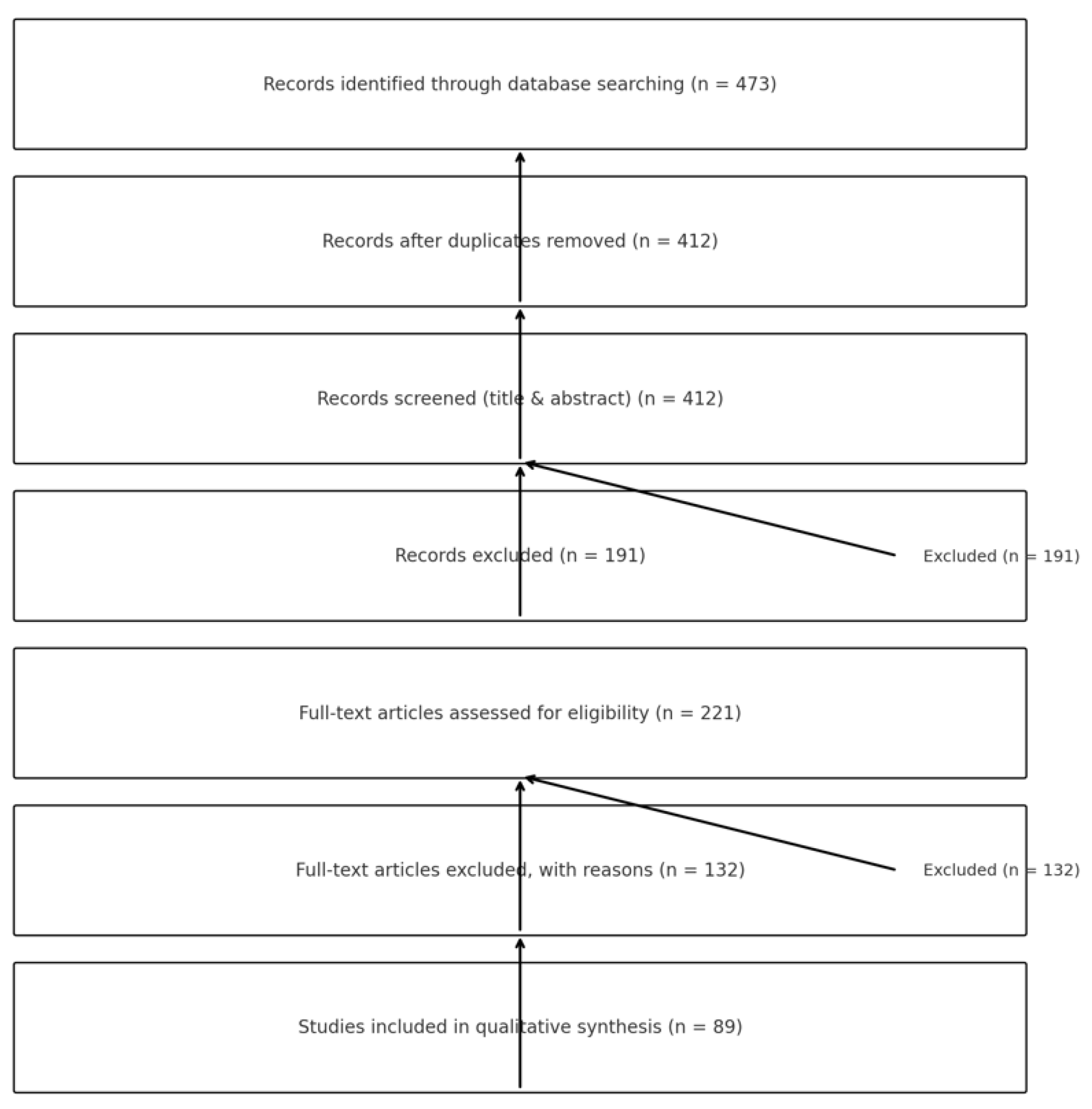
Figure 2.
Distribution of Smart BEMS Applications in Literature (2019–2025).
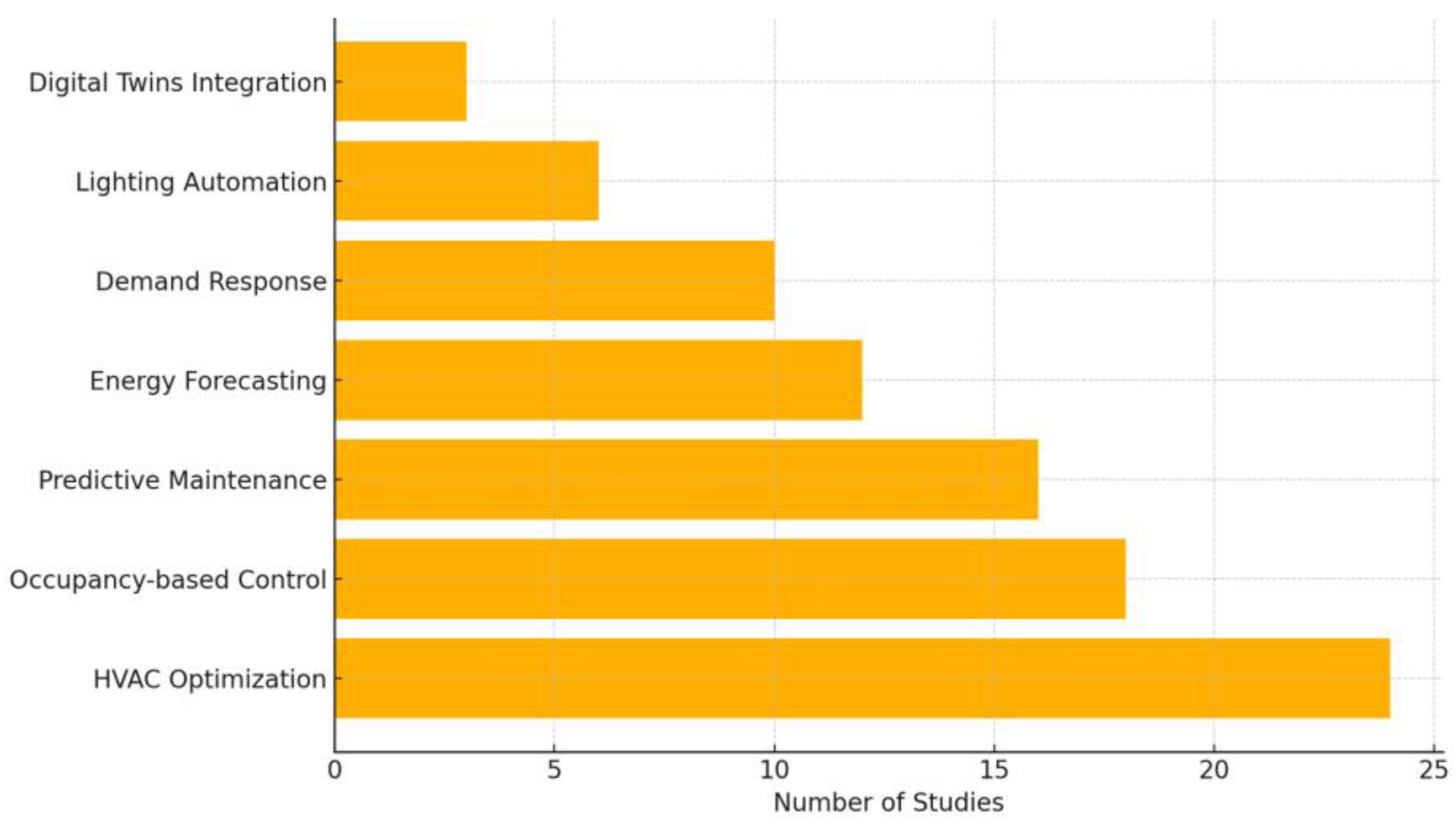
Figure 3.
Average Energy Savings by Application Type.
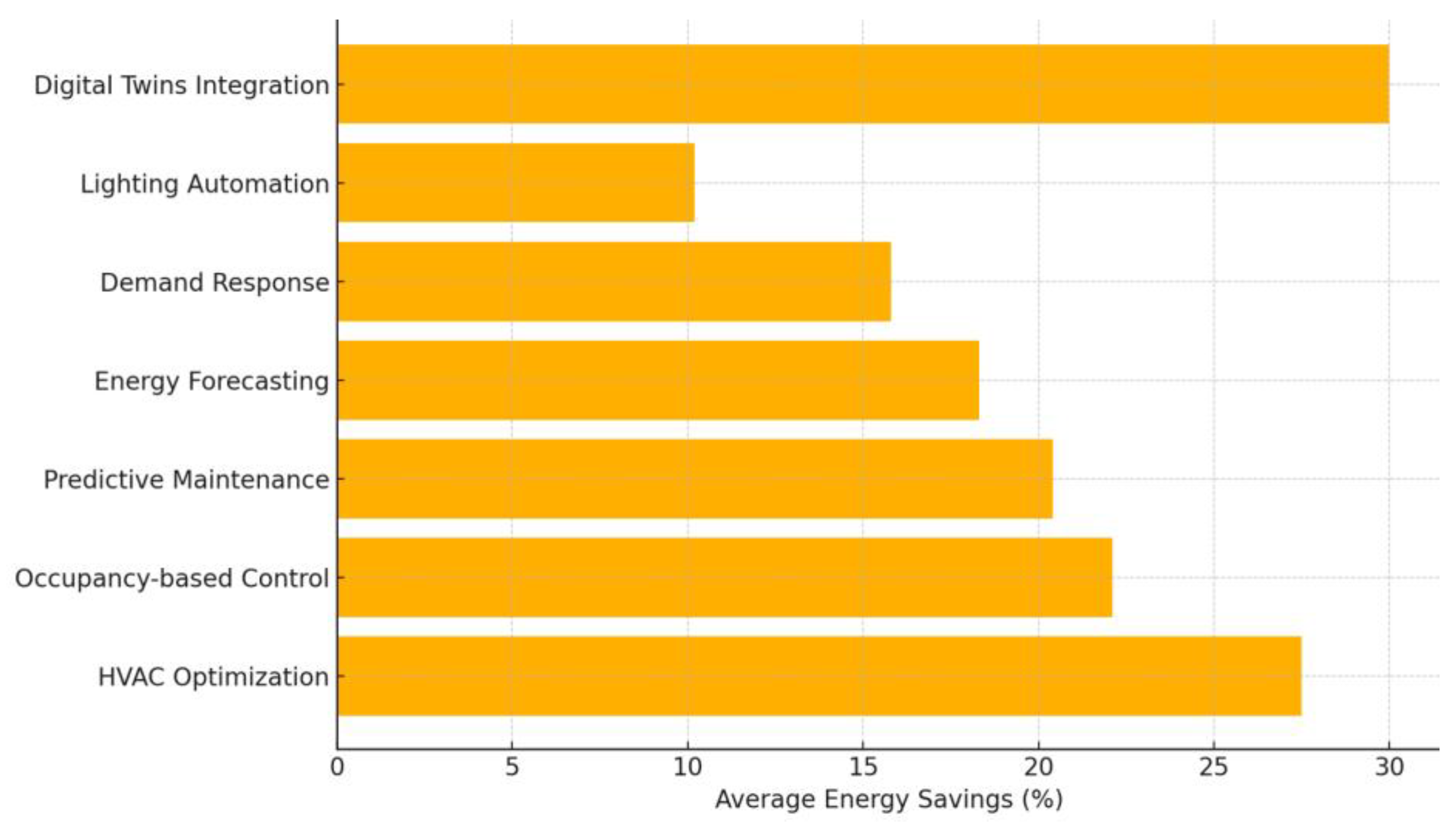

Table 1.
Categorization of Literature-Based BEMS Applications and Their Reported Energy Performance.
Table 1.
Categorization of Literature-Based BEMS Applications and Their Reported Energy Performance.
| Application Category | Number of Studies | Average Energy Savings (%) |
| HVAC Optimization | 24 | 27.5 |
| Occupancy-based Control | 18 | 22.1 |
| Predictive Maintenance | 16 | 20.4 |
| Energy Forecasting | 12 | 18.3 |
| Demand Response | 10 | 15.8 |
| Lighting Automation | 6 | 10.2 |
| Digital Twins Integration | 3 | 30.0 |
1Note: Energy savings are averaged across the reported range from individual case studies, simulation outcomes, and experimental testbeds.
Disclaimer/Publisher’s Note: The statements, opinions and data contained in all publications are solely those of the individual author(s) and contributor(s) and not of MDPI and/or the editor(s). MDPI and/or the editor(s) disclaim responsibility for any injury to people or property resulting from any ideas, methods, instructions or products referred to in the content. |
© 2025 by the authors. Licensee MDPI, Basel, Switzerland. This article is an open access article distributed under the terms and conditions of the Creative Commons Attribution (CC BY) license (http://creativecommons.org/licenses/by/4.0/).
Copyright: This open access article is published under a Creative Commons CC BY 4.0 license, which permit the free download, distribution, and reuse, provided that the author and preprint are cited in any reuse.