

Submitted:
11 September 2025
Posted:
12 September 2025
You are already at the latest version
Abstract
Hijra communities in South Asia have long held spiritual and cultural significance, yet colonial legacies and ongoing structural inequities have relegated them to the margins of health policy and research. Despite legal recognition as a third gender in several countries, reproductive and ageing health needs—including menstrual health, fertility, and menopause care—remain largely invisible. This highlights the historical, ethical, legal, and cultural dimensions of Hijra exclusion from health systems, with particular focus on menopause and reproductive inequities. Addressing these gaps is critical to expanding reproductive and ageing health beyond binary frameworks and advancing health equity for all gender-diverse populations.
Keywords:
Hijra communities
; gender diversity
; third - gender
; cultural dimensions
; Menstrual health
; Binary health
; Reproductive inequities
Background
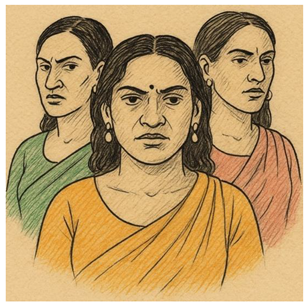
The Hijra community, described as gender-diverse individuals who did not conform to binary definitions of male or female, are a spiritually significant and integral part of South Asian societies for centuries, with references dating back to ancient Hindu epics such as the Ramayana and Mahabharata ) approximately 500 BCE to 400 CE) [1]. Early Sanskrit writings, including the Manusmriti and classical Ayurvedic texts (2nd century BCE–3rd century CE), referred to a “tritiya-prakriti” or “third nature,” offering one of the earliest documented acknowledgements of gender diversity in human history [2].
Throughout much of pre-colonial South Asia, Hijras were neither marginalised nor socially excluded. In hindu and muslim traditions, they have been closely associated with fertility and religious rituals. For instance, blessings bestowed by Hijras at weddings or childbirth ceremonies were believed to confer prosperity and reproductive success [3]. Devotion to deities such as Bahuchara Mata and Aravan underscores their longstanding spiritual significance. With the arrival of islamic dynasties from the 12th century onwards, Hijras maintained prominence. During the Delhi Sultanate and Mughal Empire (16th–19th centuries), they held respected roles within royal courts as guardians of harems, political advisors, and custodians of religious spaces. Their unique gender status was seen as a mark of trustworthiness, allowing them to act as intermediaries in matters of both state and faith [4].
The status and livelihoods of Hijras were profoundly altered under British colonial rule. Beginning in the late 18th century and consolidating during the Raj (1858–1947), Victorian ideals of gender and sexuality clashed with long-established South Asian traditions of gender diversity. The british administration codified these biases through punitive legislation, most notably the Criminal Tribes Act of 1871, which labelled Hijras as a “criminal tribe”. This Act outlawed their traditional ceremonial performances, stripped them of civil rights, subjected them to state surveillance, and in many cases, led to property confiscations and imprisonment. This colonial criminalisation dismantled the established social structures that had sustained Hijra communities for centuries. Once respected participants in religious and courtly life, they were forced into marginalised economic activities, including begging and sex work, to survive. The stigma entrenched during this period persists today, shaping societal attitudes and institutional policies long after the act’s repeal [5].
Following independence in 1947, South Asian states made gradual legal reforms addressing gender diversity. In India, the 2014 NALSA v. Union of India Supreme Court ruling recognised Hijras and transgender individuals as a third gender, affirming their rights to education, employment, and healthcare [6]. Pakistan formally acknowledged third-gender status in 2009 and passed the 2018 Transgender Persons Act to strengthen protections, though implementation remains weak [7]. Bangladesh followed in 2013 with official third-gender recognition and issuance of identity cards, while Nepal has recognised third-gender individuals since 2007, introducing progressive measures in census and citizenship laws. Despite these advances, social and economic exclusion remains entrenched. Hijras continue to face discrimination in education, formal employment, and healthcare. Access to comprehensive reproductive and sexual health services including menstrual health, menopause care, and fertility treatments remains virtually non-existent [8].
Scientific and Practical Challenges
While Hijras assigned male at birth typically do not menstruate, many undertake hormone therapy or gender-affirming surgery whose long-term effects replicate or diverge from menopausal conditions. Yet peer-reviewed research on Hijra experiences of menopause, bone health, vasomotor symptoms or cardiovascular risk is non-existent. Mainstream tools and practice guidelines within these regions fail to capture these gender-diverse profiles, a vital scientific gap that demands culturally adapted frameworks [9].
Issues including transphobia, barriers to sexually transmitted infection screening, reproductive counselling and fertility services continue to raise physical and mental health concerns among Hijra populations relative to cis peers. Inclusion of Hijra menstrual and menopause health is an equity issue. It is ethically untenable that scientific instruments and research protocols omit entire gender categories. Health systems must operationalise inclusive ethics by co-designing tools validated with Hijra communities, respecting their embodiment, language and cultural rituals [10].
Ethical, Legal and Cultural Dimensions
Though countries like Bangladesh and India recognise Hijras as legal third-gender, such recognition rarely extends to reproductive laws. Hijras are denied inheritance, property rights, access to social welfare, and formal inclusion in health legislation. Without enforcement, formal recognition remains symbolic. Laws governing assisted reproduction or menopause care rarely reference gender-diverse people, leaving Hijras structurally invisible. Global reproductive rights agendas increasingly acknowledge gender diversity in SRHR [8]. The Bangladesh study protocol and broader WHO transgender health frameworks offer entry points for integrating menopause and menstrual health priorities into national policies. South Asian courts have extended legal recognition for transgender and third-gender identities. Translating recognition into enforceable health rights including access to hormone care, menopause services, and parenthood pathways is achievable with evidence-informed advocacy [8].
Hijra blessings at weddings and births illustrate their entrenched cultural significance in Hindu and Muslim contexts. Yet religious sanction contrasts starkly with contemporary social rejection. Medical services that ignore Hijra rituals and beliefs lose legitimacy. Respectful integration of cultural identity into clinical frameworks could improve uptake and trust. Despite centuries of marginalisation, Hijra communities have preserved their cultural identity and resilience through structured communal systems known as gharanas (clans) and the guru-chela (teacher-disciple) tradition. Religious festivals, such as the annual Koovagam festival in Tamil Nadu, celebrate Hijra spirituality and honour historical narratives of sacrifice and devotion to deities [3].
Today, many Hijras still earn a livelihood through traditional blessing ceremonies, yet systemic barriers force a significant proportion into precarious informal work. Their health outcomes are disproportionately poor, exacerbated by societal stigma, inadequate policy implementation, and healthcare settings that fail to account for gender diversity [11]. These structural inequities extend across the life course, leaving critical gaps in menstrual health management, reproductive autonomy, and menopause support. As Hijra individuals enter mid-life and beyond, physiological ageing including potential hormone withdrawal effects brings symptoms akin to menopause. Without clinical recognition, they remain unsupported, risking worsened mental health, bone density loss, and cardiovascular events [11].
Using the minority stress model, qualitative research in Mumbai demonstrated that Hijras face familial rejection, social harassment, and identity-related trauma during gender transitioning a burden likely exacerbated in ageing and health-transition contexts such as menopause . Psychological distress, isolation and diminished community support create immense barriers to accessing reproductive and menopause care [12]. Intervention must therefore be contextually sensitive, embedding peer networks such as guru-chela structures) into service delivery.
Recommended Actions
- Projects such as MARIE and PLATO should be expanded to further explore underserved populations such as the Hijra communities in India, Pakistan, Bangladesh and Nepal, and indigenous groups in Sri Lanka. Adaptions to toolkits should be co-designed and validated, capturing menopause analogue symptoms, psychosocial stress, and access barriers
- Use community-based participatory research for tool development, ensuring agency, respect and cultural relevance. Ethical guidelines should mandate inclusion of third-gender individuals in SRHR and menopause studies to avoid epistemic exclusion.
- Engage stakeholders to translate symbolic third-gender recognition into enforceable rights to reproductive health services, including menopause care, fertility support, and gender-affirming hormone access. Policy briefs and legal analyses must cite existing communities
- Health programming must acknowledge Hijra ceremonial roles and cultural traditions. Designing respectful clinics co-located with community centres or including trusted peer navigators can reduce stigma and promote dignity
Conclusion
Hijra communities stand at the intersection of scientific invisibility, ethical neglect, legal invisibility, and cultural marginalisation. Their exclusion from menstrual and menopause health research reflects broader structural injustice. Integrating peer-reviewed evidence and official policy frameworks, the PLATO-MARIE synergy offers a transformative blueprint where scientifically rigorous, ethically sound, culturally respectful, legally enforceable and socially inclusive. It is time to recognise that reproductive, sexual and ageing health must be expanded beyond binary norms and that to truly deliver global health equity, we must ensure that no gender identity is left behind.
Author Contributions
GD conceptualised this manuscript and wrote the first draft. All authors critically appraised, reviewed and commented on all versions of the manuscript. All authors read and approved the final manuscript.
Funding
No funding
Ethics approval
Not applicable
Consent to participate
Not applicable
Consent for publication
All authors consented to publish this manuscript
Code availability
Not applicable
Conflicts of interest
All authors report no conflict of interest.
References
- Hinchy JB. Hijras and South Asian Historiography. Wiley Online Library 2022. [CrossRef]
- Dukpa LT. The Third Gender: A Sociological Exploration of Life of Hijaras of North Bengal and Kolkata: Sikkim university; 2021.
- Farah Ashraf PAS, Mansoor Ahmad. Exploring The Social Dynamics Of Hijras In India: A Comprehensive Survey Of Literature. Educational Administration: Theory and Practice. 2023.
- Khatun A. Status of Women in Mughal Period: A Historical Perspective. International Journal for Multidisciplinary Research (IJFMR). 2023. [CrossRef]
- Asafu-Adjaye AKaPA. Exploring the Social Realities of Hijras in India: Challenges, Resilience, and Pathways to Inclusion. International Journal of Gender & Women's Studies. 2024.
- SIKRI KSRAK. National legal services authority (Nalsa) Vs.Union of India South Asian translaw database2013 [.
- Redding JA. The Pakistan Transgender Persons (Protection of Rights) Act of 2018 and Its Impact on the Law of Gender in Pakistan. 2019. [CrossRef]
- Shahinur Akter SS. Impact of legal recognition on the lives of the third gender: A study in Khulna district of Bangladesh. Heliyon. 2024. [CrossRef]
- A.S. Cheung BJN, and S. Zwickl. Transgender health and the impact of aging and menopause. CLIMACTERIC. 2023. [CrossRef]
- Allison J. McLaughlin SN, Lauren Glupe, Jordon D. Bosse. Systemic transphobia and ongoing barriers to healthcare for transgender and nonbinary people: A historical analysis of #TransHealthFail. Plos digital health. 2025. [CrossRef]
- Iram Manzoor ZHK, Rafia Tariq, Rijah Shahzad. Health Problems & Barriers to Healthcare Services for the Transgender Community in Lahore, Pakistan. Pakistan journal of Medical sciences. 2022. [CrossRef]
- Natalia Ramos MCM. Traumatic Stress and Resilience Among Transgender and Gender Diverse Youth. Child Adolesc Psychiatr Clin N Am. 2024. [CrossRef]
Disclaimer/Publisher’s Note: The statements, opinions and data contained in all publications are solely those of the individual author(s) and contributor(s) and not of MDPI and/or the editor(s). MDPI and/or the editor(s) disclaim responsibility for any injury to people or property resulting from any ideas, methods, instructions or products referred to in the content. |
© 2025 by the authors. Licensee MDPI, Basel, Switzerland. This article is an open access article distributed under the terms and conditions of the Creative Commons Attribution (CC BY) license (http://creativecommons.org/licenses/by/4.0/).
Copyright: This open access article is published under a Creative Commons CC BY 4.0 license, which permit the free download, distribution, and reuse, provided that the author and preprint are cited in any reuse.


