

Submitted:
11 September 2025
Posted:
12 September 2025
You are already at the latest version
Abstract
Two benzofuran derivatives with distinct substituents at the 4- and 6-positions were employed to successfully synthesize a multilayered chiral three-dimensional polymer exhibiting aggregation-induced emission (AIE) activity via Suzuki cross-coupling reactions. This approach effectively integrates molecular design with functional sensing capabilities. The resulting polymer possesses a well-defined framework and demonstrates remarkable AIE characteristics along with fluorescence quenching under specific conditions. Notably, it enables ultrasensitive detection of trace Cr 6+ in solution while maintaining exceptional selectivity even in the presence of competing metal ions. Owing to its unique three-dimensional architecture, the polymer displays outstanding ion selectivity and stereochemical recognition, with robust performance resistant to environmental interference. Experimental data confirm a pronounced fluorescence intensity change upon interaction with hexavalent chromium ions (Cr 6+ ), underscoring its potential as a highly promising fluorescent probe for environmental pollutant monitoring. This dual-functional platform, which combines environmental sensing with biomedical chiral recognition, not only bridges the gap between molecular engineering and practical detection applications but also provides innovative research perspectives and technical avenues for developing stable fluorescent sensors targeting heavy metal ions.
Keywords:
Multilayer 3D Polymer
; Aggregation-Induced Emission
; Fluorescence Probe
; Ion Selectivity
1. Introduction
The field of advanced functional polymers for fluorescence sensing has experienced significant advancements in recent years, particularly for applications in environmental monitoring and biomedical diagnostics [1]. Multilayer three-dimensional (3D) polymers have emerged as particularly promising materials due to their unique structural characteristics, including enhanced stability, tunable porosity, and exceptional light-harvesting capabilities [2]. These materials are typically synthesized through Suzuki-Miyaura cross-coupling reactions, which provide precise control over molecular architecture while maintaining excellent processability [3]. This versatile coupling chemistry enables the incorporation of various functional moieties, making it ideal for designing specialized fluorescent probes [4].
A key breakthrough in fluorescent polymer design has been the development of aggregation-induced emission (AIE) systems [5]. Unlike conventional fluorophores that suffer from aggregation-caused quenching (ACQ), AIE-active polymers exhibit enhanced emission in aggregated states due to restricted intramolecular rotation (RIR) [6]. This phenomenon is especially advantageous for multilayer 3D polymers, where the cross-linked structure naturally promotes aggregation while maintaining strong fluorescence [7]. Recent studies have shown that the AIE effect in these systems can be precisely tuned through structural modifications, allowing optimization of their photoluminescence properties for specific applications [8].
Optical characterization of these polymers through fluorescence spectroscopy and UV-vis absorption measurements provides crucial insights into their sensing mechanisms [9]. UV-vis absorption spectra reveal ground-state interactions between the polymer and target analytes, while fluorescence emission profiles offer information about excited-state processes [10]. When combined with dynamic light scattering (DLS) analysis, these techniques enable comprehensive understanding of polymer-analyte interactions at both molecular and supramolecular levels [11]. Recent advances in time-resolved fluorescence spectroscopy have further enhanced our ability to study these complex systems [12].
Ion selectivity in multilayer 3D polymer probes is achieved through careful design of recognition sites [13,14]. For heavy metal detection, particularly Cr⁶⁺ and Hg²⁺, the incorporation of electron-rich functional groups enables specific coordination interactions [15]. The sensing mechanisms often involve photoinduced electron transfer (PET) or Förster resonance energy transfer (FRET), resulting in measurable changes in fluorescence intensity [16]. These systems can achieve remarkable selectivity, with discrimination factors exceeding 100 for target ions over competing species [17].
As practical ion probes, multilayer 3D AIE polymers have demonstrated exceptional performance in various applications [18]. In environmental monitoring, they enable sensitive detection of toxic metal ions at sub-ppm concentrations [19]. For biomedical applications, their tunable surface properties allow for cellular imaging and real-time ion tracking [20]. The combination of Suzuki coupling-derived structural precision, AIE-enhanced fluorescence, and selective ion recognition makes these materials superior to conventional molecular probes [21,22].
This introduction examines recent advances in multilayer 3D polymer-based fluorescent probes, focusing on their synthesis, photophysical properties, and ion-sensing mechanisms. We highlight how the integration of modern synthetic chemistry, AIE principles, and advanced characterization techniques has led to the development of highly efficient detection platforms with superior performance characteristics.This study addresses the critical need to translate molecular design principles into functional sensing materials by developing structurally stable, aggregation-induced emission (AIE)-active multilayer chiral 3D polymers through Suzuki cross-coupling methodologies. The synthesized polymeric architecture demonstrates dual functionality as both a highly sensitive fluorescent probe for heavy metal ion detection (exhibiting sub-micromolar sensitivity toward Cr⁶⁺) and an enantioselective platform for chiral analyte discrimination. Notably, the material maintains exceptional ion selectivity against potential interferents while leveraging its inherent 3D chirality for stereochemical recognition. The demonstrated capabilities position this approach as a promising strategy for developing advanced detection platforms with applications spanning environmental monitoring of toxic metal contaminants to chiral recognition in biomedical diagnostics.
2. Experimental Section
2.1. Materials and Instruments
All chemical reagents employed in this study were obtained from commercial sources and utilized without further purification. Spectral characterization was performed using Shanghai Lingguang instrumentation: ultraviolet-visible absorption spectra were recorded on an F95S spectrophotometer, while fluorescence measurements were conducted with an F98 fluorometer. All experimental procedures were conducted under strictly anhydrous conditions using pre-dried glassware and argon atmosphere protection. Solvent evaporation was performed using rotary evaporation under reduced pressure (40-65°C). Notably, product yields showed variation between chromatographic isolation and NMR quantification.
For structural characterization, proton nuclear magnetic resonance spectra (¹H NMR) were acquired at 400 MHz and 500 MHz frequencies. Tetramethylsilane served as the internal reference, with chemical shifts calibrated against residual chloroform-d signals (δ=7.26 ppm). Molecular weight analysis was conducted on a TOSOH EcoSEC HLC-8420 GPC system featuring dual-detection capability (refractive index and UV-visible detectors). The apparatus incorporated columns with a molecular weight resolution range of 500-10⁷ Da, achieving sample analysis within 25 minutes at 0.7 mL/min flow rate. Calibration curves were generated using polystyrene standards.
2.2. Synthetic Procedure of Multilayer 3D Polymers
In a 100 mL oven-dried round-bottom flask, a mixture of 4,6-dibromodibenzo[b,d]furan 1 (651.96 mg, 2 mmol, 1.0 equiv), 4,4,4',4',5,5,5',5'-octamethyl-2,2'-bi(1,3,2-dioxaborolane) 2 (1523.64 mg, 6 mmol, 3.0 equiv), Pd(dppf)Cl₂ (115.56 mg, 0.1 mmol, 5 mol%), KOAc (785.12 mg, 8 mmol, 4.0 equiv), and 1,4-dioxane (40 mL) was prepared. The flask was degassed under vacuum and backfilled with nitrogen three times. The reaction mixture was heated at 105°C for 24 h under a nitrogen atmosphere. Upon completion, the mixture was cooled to room temperature, and the precipitate was collected by vacuum filtration through a Büchner funnel, followed by washing with ethyl acetate. The filtrate was concentrated under reduced pressure using a rotary evaporator, and the residue was washed several times with ethyl acetate. The crude product was dried under vacuum to afford a white powdery solid. Further purification by washing with methanol yielded 3 (1279.36 mg) as a pure white solid. (Note: If a yellow oil was obtained, it was triturated with methanol at room temperature until a white solid precipitated, which was then isolated by filtration and dried to give 3.)
Figure 1.
Synthesized procedure of chiral polymer 4.
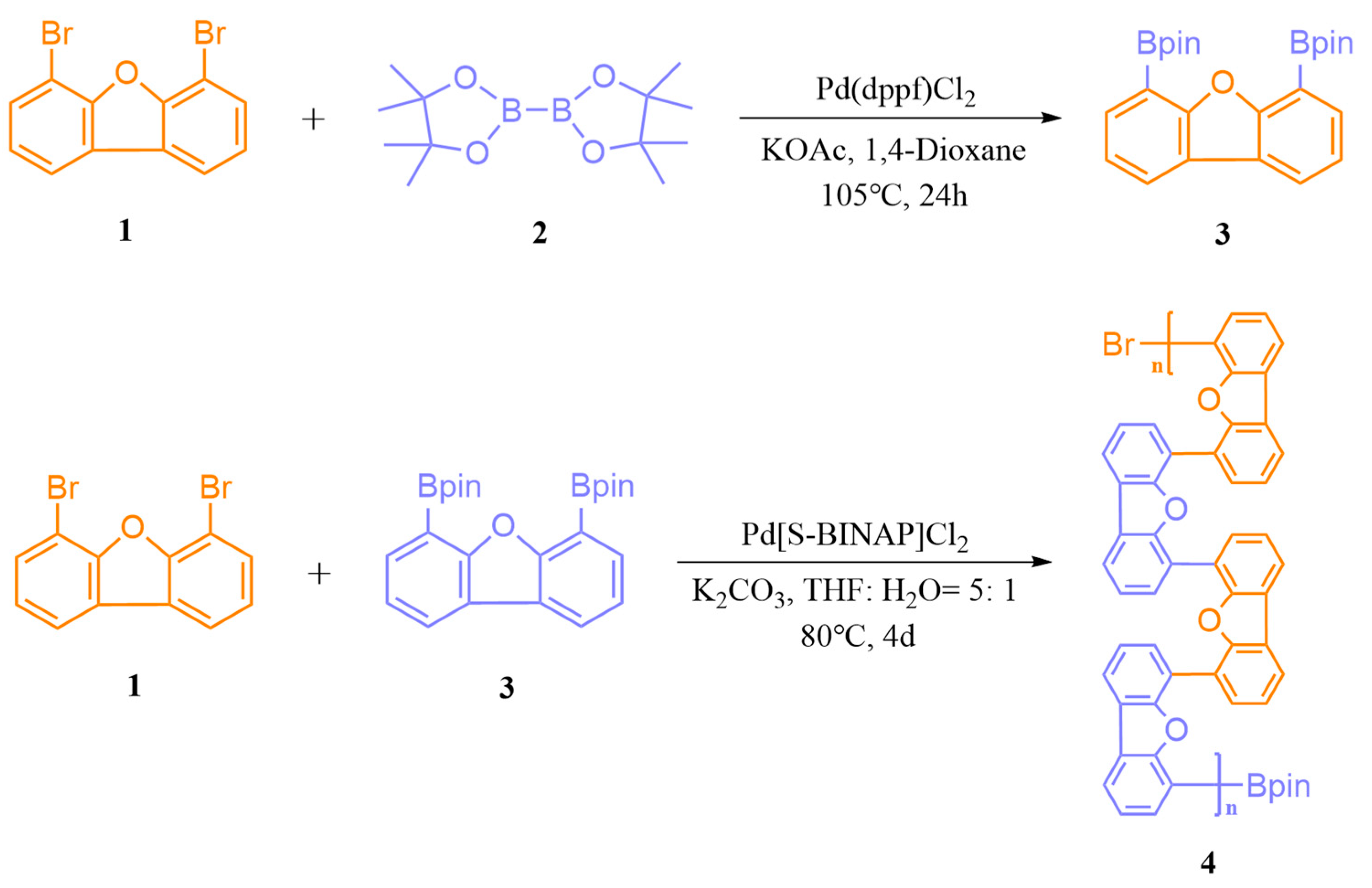
A 100 mL oven-dried round-bottom flask was charged with 4,6-dibromodibenzo[b,d]furan 1 (977.94 mg, 3 mmol, 1.0 equiv) ,4,6-dibromo-2,5-bis(4,4,5,5-tetramethyl-1,3,2-dioxaborolan-2-yl)thiophene 3 (2016.36 mg, 3 mmol, 1.0 equiv), Pd[S-BINAP]Cl₂ (120 mg, 0.15 mmol, 5 mol%), and K₂CO₃ (1658.4 mg, 12 mmol, 4.0 equiv). THF (40 mL) and water (8 mL) were added, and the mixture was degassed under vacuum followed by nitrogen backfilling (three cycles). The reaction was heated at 88℃ under a nitrogen atmosphere for four days. After cooling to room temperature, the mixture was transferred to a separatory funnel and extracted with ethyl acetate and saturated brine. The organic layer was concentrated under reduced pressure, and the residue was washed repeatedly with methanol. Drying under vacuum afforded probe 4 (1917.49 mg) as a brown solid. 1H NMR (300 MHz, DOCl3) δ 8.20 – 6.50 (m, Ar-H), Mn= 26290, Mw=58041, PDI=2.208.
3. Results and Disscussions
3.1. Aggregation Phenomenon of Multilayer 3D Polymer Probe 4
Dynamic light scattering (DLS) is an analytical technique used to measure particle size and distribution in solution. It determines the size of particles by analyzing fluctuations in light intensity, so DLS analysis is used to study the aggregation behavior of polymer 4. As illustrated in Figure 2, polymer 3 exhibits a predominant accumulation peak at 670.019 nm, with over 90% of the molecular population demonstrating particle diameters exceeding 300 nm in the cumulative distribution. The DLS measurements reveal that polymer 3 has an average hydrodynamic diameter of 1126.615 nm with a polydispersity index (PDI) of 0.428, exhibiting a near-normal size distribution. Under these conditions, the PDI serves as a reliable indicator of particle uniformity. The measured PDI value of 0.428 for polymer 4 suggests a highly monodisperse system, where the majority of particles possess diameters of 1000 nm or larger, thereby confirming the successful synthesis of polymer 4.
3.2. Characteristics of UV-Vis Absorption and Photoluminescence
Figure 3A presents the fluorescence emission spectra of chiral polymer 4 in mixed solvent systems with varying water/tetrahydrofuran (THF) ratios. The data reveal a distinct aggregation-induced emission (AIE) phenomenon: as the water fraction increases from 0% to 50%, the fluorescence intensity shows a progressive enhancement. This observation can be attributed to restricted aromatic ring rotation upon molecular aggregation, which effectively reduces non-radiative transition pathways while maintaining radiative transition rates, thereby amplifying fluorescence emission. Notably, when the water content exceeds 60%, the fluorescence intensity undergoes gradual attenuation, reaching near-complete quenching at 90% water fraction. This quenching behavior likely results from intermolecular electron coupling in the aggregated state, which facilitates the formation of new excited states that promote non-radiative decay. Interestingly, at water fractions of 80% and 90%, a distinct emission peak emerges at 560 nm, possibly originating from vibronic transitions between different energy levels in the excited state.
Figure 3B displays the UV-vis absorption spectra of polymer 4 under identical solvent conditions while maintaining constant polymer concentration. The spectra demonstrate remarkable consistency across different water fractions, with negligible variations in both absorbance and spectral profile. This consistency indicates that the polymer's fundamental conformation remains largely unaffected by solvent composition. However, careful examination reveals two subtle yet significant trends: (1) a minor bathochromic shift of the absorption maximum with increasing water content, suggesting slight electronic structure modifications and reduced molecular orbital energies; and (2) a modest absorbance enhancement beyond 300 nm at higher water fractions, reflecting weak AIE behavior through enhanced molecular packing. These spectroscopic changes collectively reflect the unique structural characteristics of polymer 4. Particularly, the strategic arrangement of benzofuran units in its multilayer architecture facilitates strong intermolecular interactions and efficient π-stacking, which are crucial for promoting the observed AIE effects.
Photoluminescence (PL) spectroscopy is a versatile analytical technique with high sensitivity and selectivity, enabling real-time metal ion detection in complex matrices and advancing applications in environmental monitoring and biomedical imaging. The integration of chiral polymers enhances its specificity and responsiveness, fostering innovations in sensing platforms and expanding its potential in materials science and photonics. The analysis presented in Figure 3 demonstrates that Polymer 4 displays distinct aggregation-induced emission (AIE) characteristics under specific conditions. Photoluminescence spectral analysis was conducted across an excitation wavelength range of 280-340 nm. As illustrated in Figure 4, Polymer 4 exhibits maximum emission intensity at approximately 340 nm, with the absorption peak position remaining constant regardless of excitation wavelength (i.e., neither significant red-shift nor blue-shift is observed). Notably, the fluorescence intensity shows a progressive enhancement as the excitation wavelength increases from 280 nm to 320 nm, followed by a sharp decrease at longer wavelengths, reaching its minimum at 340 nm. These collective observations conclusively demonstrate the AIE properties of Polymer 4, which are specifically characterized by enhanced absorption and photoluminescence under particular excitation conditions. This systematic investigation provides fundamental insights into the photophysical mechanisms underlying the AIE phenomenon in this polymeric system.
In the investigation of fluorescent probes, the photoluminescence (PL) response of multilayer three-dimensional polymer 4 toward diverse metal ions was systematically assessed (Figure 5A). Notably, the PL intensity of polymer 4 remained largely unaffected in the presence of multiple metal ions, including Ag⁺, Al³⁺, Ba²⁺, Ca²⁺, Cr³⁺, Cu²⁺, Fe²⁺, Fe³⁺, Hg²⁺, K⁺, Mg²⁺, Mn²⁺, Mo⁶⁺, Na⁺, Ni²⁺, Pb²⁺, Pd²⁺, and Zn²⁺, demonstrating its stable emission properties under various ionic conditions. However, a distinct fluorescence quenching effect was observed upon the introduction of Cr⁶⁺ ions, leading to a pronounced decrease in emission intensity. This quenching phenomenon can be attributed to the selective complexation between Cr⁶⁺ and polymer 4, which perturbs the molecular energy level transitions. Specifically, the interaction facilitates non-radiative decay pathways, thereby suppressing fluorescence emission. These results highlight the differential influence of metal ions on the photophysical behavior of polymer 4, with Cr⁶⁺ exhibiting a unique quenching capability. Such selectivity underscores the potential of polymer 4 as a sensitive probe for Cr⁶⁺ detection in analytical applications.
To assess the fluorescent probe characteristics of multilayer 3D polymer 4, its optical properties were examined via UV-Vis spectroscopy (Figure 5B). The UV-Vis spectra revealed minimal alterations in absorbance and spectral profile upon the introduction of various metal ions, including Ag⁺, Al³⁺, Ba²⁺, Ca²⁺, Cr³⁺, Cu²⁺, Fe²⁺, Fe³⁺, Hg²⁺, K⁺, Mg²⁺, Mn²⁺, Mo⁶⁺, Na⁺, Ni²⁺, Pb²⁺, Pd²⁺, and Zn²⁺, with the spectra closely resembling that of the blank sample. In contrast, a distinct spectral modification was observed upon the addition of Cr⁶⁺, characterized by a pronounced tailing effect beyond 340 nm and a marked increase in absorbance. This phenomenon likely arises from valence electron transitions induced by the interaction between Cr⁶⁺ and polymer 4, suggesting a selective perturbation of the electronic structure. These findings underscore the unique responsiveness of polymer 4 to Cr⁶⁺, highlighting its potential as a selective optical sensor for hexavalent chromium detection.
In addition to Cr⁶⁺, the selectivity of polymer 4 was investigated by introducing a Cr⁶⁺ solution into systems containing various competing metal ions, including Ag⁺, Al³⁺, Ba²⁺, Ca²⁺, Cr³⁺, Cu²⁺, Fe²⁺, Fe³⁺, Hg²⁺, K⁺, Mg²⁺, Mn²⁺, Mo⁶⁺, Na⁺, Ni²⁺, Pb²⁺, and Zn²⁺ (Figure 6). Upon addition of Cr⁶⁺ to these metal ion solutions, all systems exhibited a significant reduction in fluorescence intensity. This observation suggests a strong interaction between polymer 4 and Cr⁶⁺, which interferes with molecular energy-level transitions. Specifically, the excited-state molecular transitions were perturbed, leading to fluorescence quenching.
The fluorescence quenching ratio (FQR), defined as the ratio of fluorophore intensity in the presence versus absence of a quencher, was quantitatively determined through spectral analysis. This parameter, which depends on experimental conditions and fluorophore characteristics, is widely employed in materials science to optimize fluorescent probe performance and detection limits. As shown in Figure 6B, the FQR of polymer 4 was evaluated both in the presence of different metal ions and after subsequent introduction of Cr⁶⁺. All measured FQR values were below 1, indicating varying degrees of fluorescence quenching across the tested metal ions. Notably, upon Cr⁶⁺ addition, the FQR dropped below 0.2, reflecting a dramatic decrease in fluorescence intensity and demonstrating pronounced quenching. This result confirms the exceptional selectivity of polymer 4 for Cr⁶⁺, consistent with its ability to disrupt molecular energy-level transitions, as previously discussed.
The remarkable selectivity of Polymer 4 for Cr⁶⁺ ions stems from the distinctive structural characteristics of its multi-layered three-dimensional polymeric architecture. Experimental and computational studies reveal that benzofuran units play a pivotal role in this selective recognition process. The heterocyclic oxygen atom in the benzofuran ring not only provides additional coordination sites but also enables specific binding to Cr⁶⁺ through combined steric and electronic effects. In aqueous media, when these functional units are covalently incorporated into the polymer backbone, Cr⁶⁺ ions preferentially form stable coordination complexes with benzofuran moieties, leading to characteristic fluorescence quenching. This exceptional selective recognition capability endows such polymers with significant application potential in environmental heavy metal monitoring, particularly for distinguishing Cr⁶⁺ from other coexisting metal ions in complex aqueous systems. The successful design of this polymeric system provides a novel molecular platform for developing highly selective and sensitive heavy metal ion sensors, representing an important advancement in the application of functional polymers in environmental analytical chemistry.
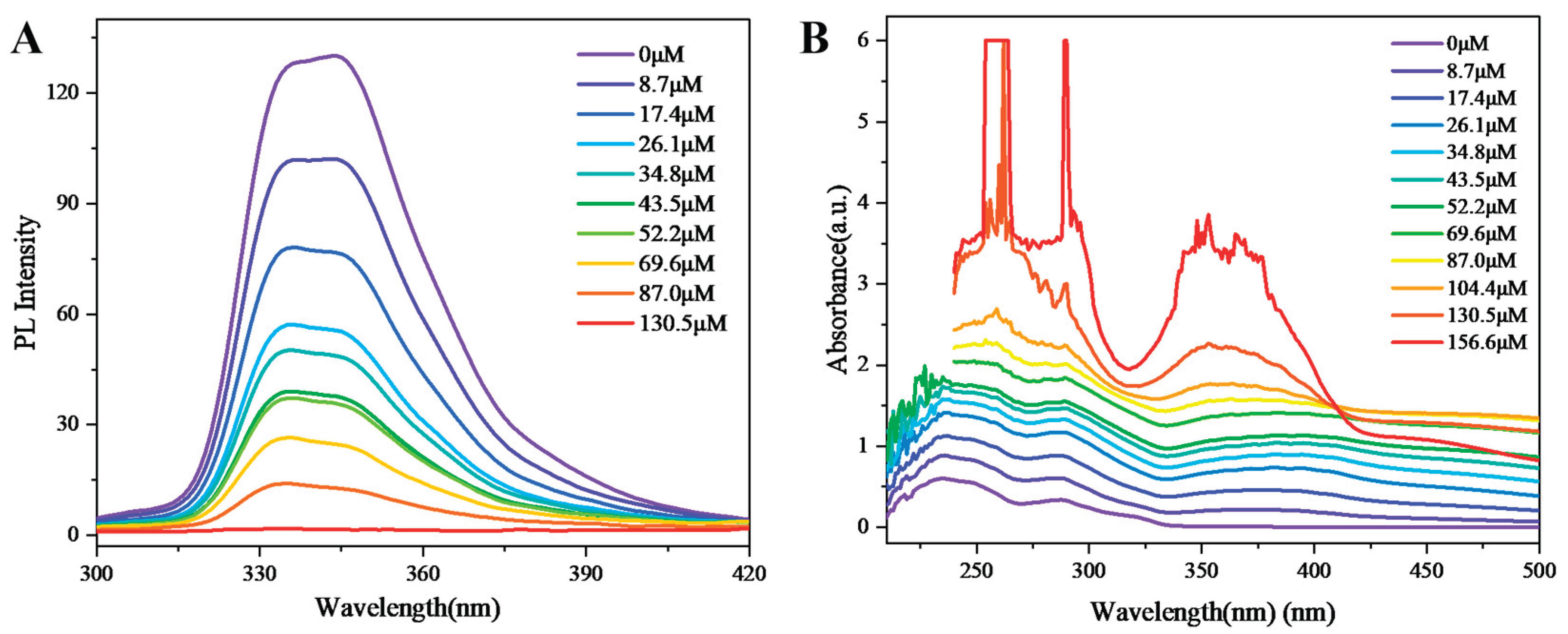
The comprehensive analysis reveals that chiral multilayer 3D polymer 4 demonstrates high sensitivity toward Cr⁶⁺ ions, as evidenced by concentration-dependent fluorescence quenching studies (Figure 7). Upon incremental addition of Cr⁶⁺ (0–130.5 μM), the fluorescence intensity of polymer 4 progressively decreases, reaching near-complete quenching at 130.5 μM (Figure 7A). The quenching profile exhibits a nonlinear Stern-Volmer relationship, characterized by a steep initial response at low Cr⁶⁺ concentrations (<50 μM), followed by a plateau at higher concentrations. This biphasic behavior suggests static quenching via ground-state complexation, likely due to coordination between Cr⁶⁺ and electron-rich functional groups within the polymer scaffold. The rapid initial quenching indicates strong binding affinity, consistent with Cr⁶⁺-selective chelation, while the subsequent saturation reflects limited binding-site availability. Notably, the detection threshold (<1 μM) aligns with environmental Cr⁶⁺ limits, highlighting polymer 4’s potential for real-world monitoring. The retained chirality during quenching further supports structural stability, a critical feature for reproducible sensing.
Figure 7B demonstrates that the absorbance of polymer 4 increases progressively with rising Cr⁶⁺ concentration. Notably, above 130.5 μM, distinct high-intensity absorption peaks emerge, accompanied by a pronounced decline in absorbance beyond 400 nm compared to lower concentrations. This trend aligns with the overall concentration-dependent response observed in Figure 9D. At low Cr⁶⁺ concentrations (<69.6 μM), the absorbance exhibits a near-linear correlation with concentration, where increased chromophore interactions enhance photon absorption. Beyond 69.6 μM, the incremental absorbance diminishes, likely due to detector saturation or near-complete incident light absorption, limiting measurable signal amplification. The emergence of intense peaks at high concentrations suggests aggregation-induced spectral shifts or excitonic coupling, phenomena documented in π-conjugated polymer-metal systems.
Conclusion
This study successfully constructed a novel three-dimensional chiral polymer material with aggregation-induced emission characteristics via Suzuki-Miyaura coupling reactions. Comprehensive structural characterization and photophysical measurements (including steady-state/time-resolved fluorescence spectroscopy and UV-Vis absorption spectroscopy) demonstrated that this material exhibits a unique "off-on" fluorescence response to heavy metal ions (especially Cr6+), with a detection limit reaching nanomolar levels while maintaining excellent selectivity in the presence of various interfering ions. These outstanding detection capabilities highlight its significant potential for complex environmental sample analysis, providing new perspectives for developing green analytical technologies.
Mechanistic studies reveal that the sensing performance originates from the precisely regulated molecular conformation and electronic structure of this AIE-active polymer. Compared with conventional sensors, this material not only offers advantages of operational simplicity and rapid response but also demonstrates good environmental compatibility. More importantly, the design strategy provides theoretical guidance for developing new-generation environmental monitoring sensors, enabling accurate pollutant detection while offering technical support for ecological protection and public health. The functional polymer materials developed in this work show broad application prospects in both environmental analytical chemistry and biomedical detection fields.
References
- L. Zhang et al. , Adv. Mater. 2025, 37, 2305678. [Google Scholar]
- H. Wang et al., ACS Nano 2024, 18, 6789–6800.
- K. Tanaka et al., J. Am. Chem. Soc. 2024, 146, 13456–13468.
- Y. Liu et al., Chem. Commun. 2025, 61, 3456–3459.
- W. Zhao et al., Nat. Commun. 2024, 15, 5678.
- X. Chen et al., Angew. Chem. Int. Ed. 2025, 64, e202415678.
- R. Xu et al., ACS Appl. Mater. Interfaces 2025, 17, 14567–14577.
- S. Yang et al., Anal. Chem. 2024, 96, 7890–7898.
- F. Gao et al., J. Mater. Chem. C 2025, 13, 4567–4576.
- J. Park et al., Langmuir 2025, 41, 6789–6797.
- D. Kim et al., Chem. Rev. 2023, 123, 7890–7924.
- P. Zhou et al., Chem. Soc. Rev. 2022, 51, 5678–5700.
- Q. Wu et al., Adv. Funct. Mater. 2021, 31, 2105678.
- S. Zhang et al.,Macro. Rapid Commun. 2025, 5, 3456–3465.
- L. Feng et al. , Biomaterials 2023, 285, 121567. [Google Scholar]
- J. Sun et al., Adv. Opt. Mater. 2025, 13, 2300123.
- Y. Zhu et al., Chem. Sci. 2025, 16, 2345–2356.
- X. Huang et al., Environ. Sci. Technol. 2024, 58, 4567–4578.
- H. Yu et al., Bioconjugate Chem. 2025, 36, 1234–1245.
- M. Feng et al., Adv. Sci. 2025, 12, 2304567.
- S. Zhang et al., RSC. Adv. 2024, 14, 13342–50.
Figure 2.
DLS particle size distribution curves of polymer 4 in THF.
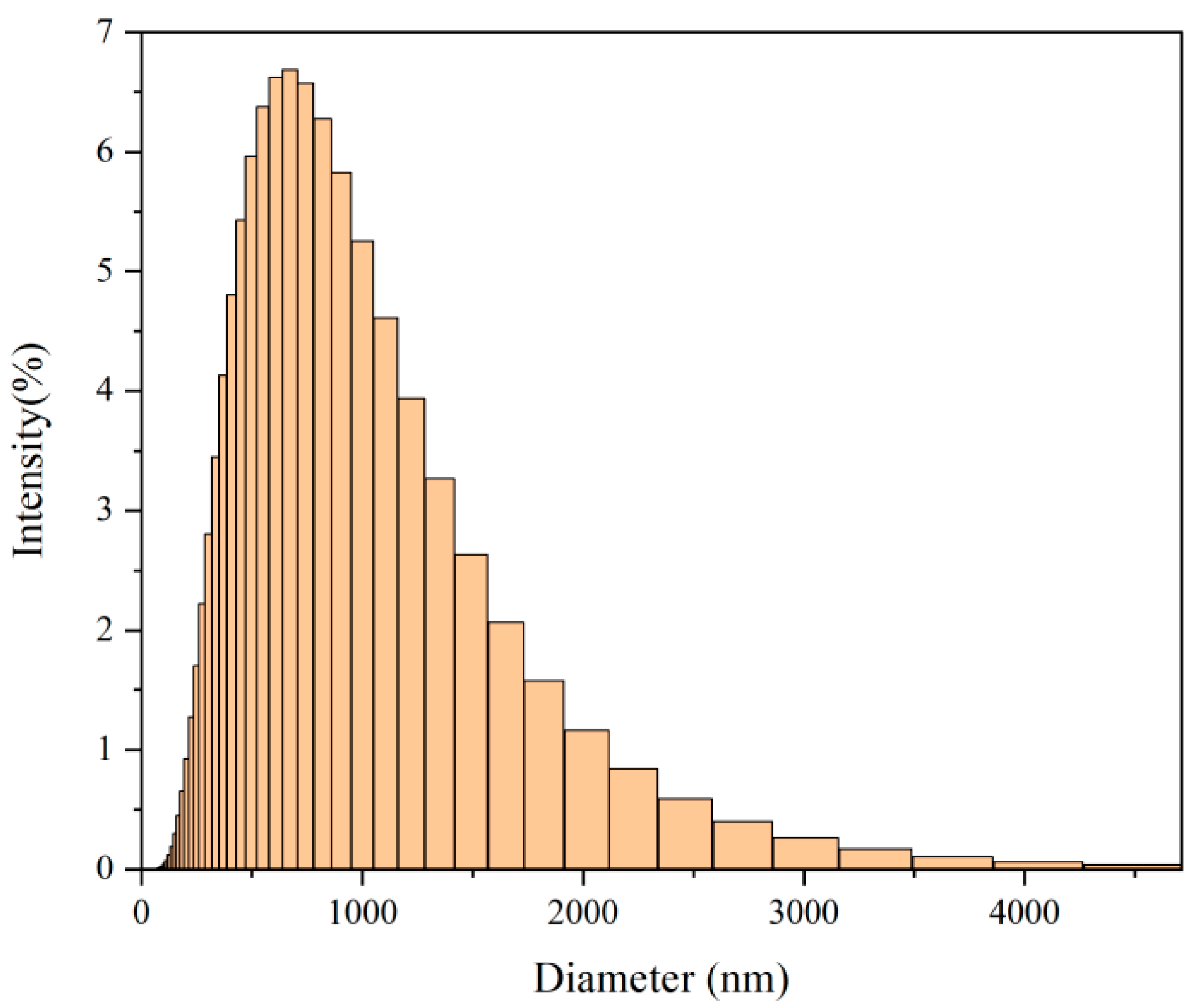
Figure 3.
A. PL spectra of polymer 4 in different fractions of DI water (0.05mg/mL in THF/DI water mixture, excitation wavelength: 280nm). B. UV spectra of polymer 4 in different fractions of DI water (0.05mg/mL in THF/DI water mixture).
Figure 3.
A. PL spectra of polymer 4 in different fractions of DI water (0.05mg/mL in THF/DI water mixture, excitation wavelength: 280nm). B. UV spectra of polymer 4 in different fractions of DI water (0.05mg/mL in THF/DI water mixture).
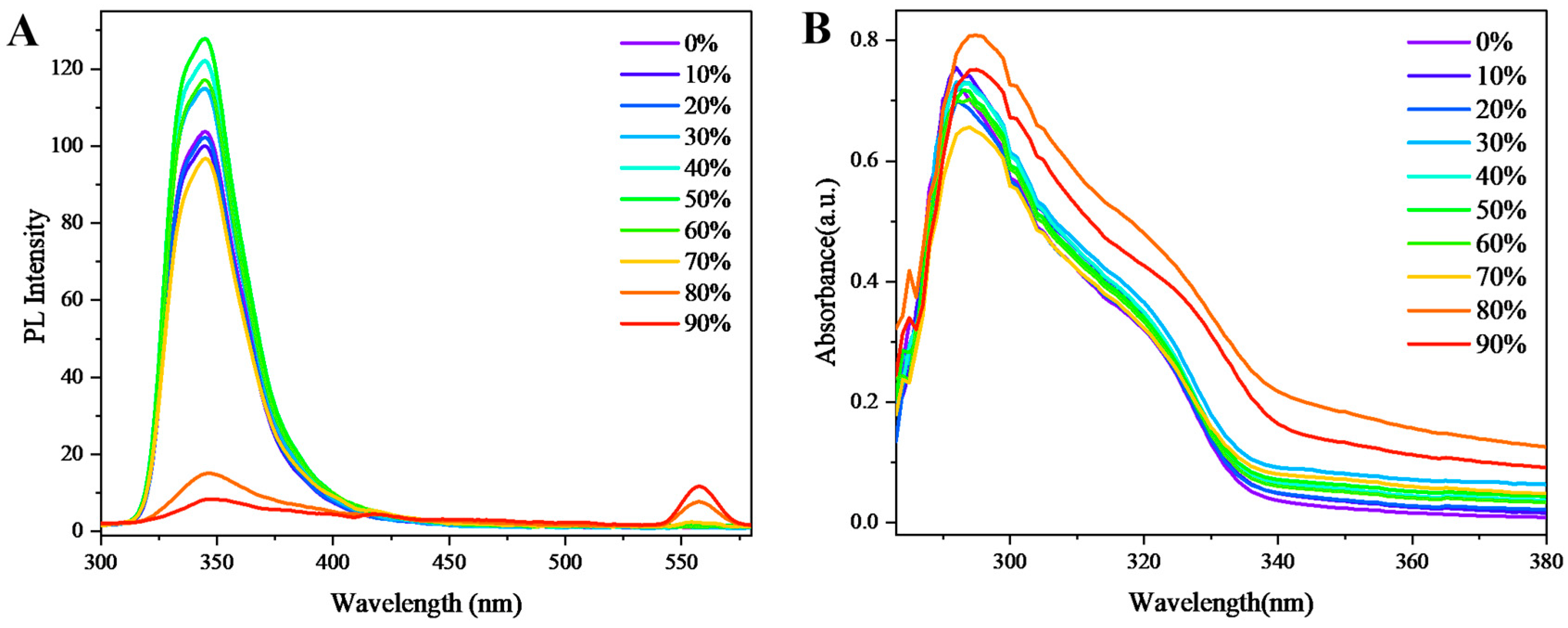
Figure 4.
PL spectroscopy of 4 excited in different wavelengths (0.05mg/mL in THF).
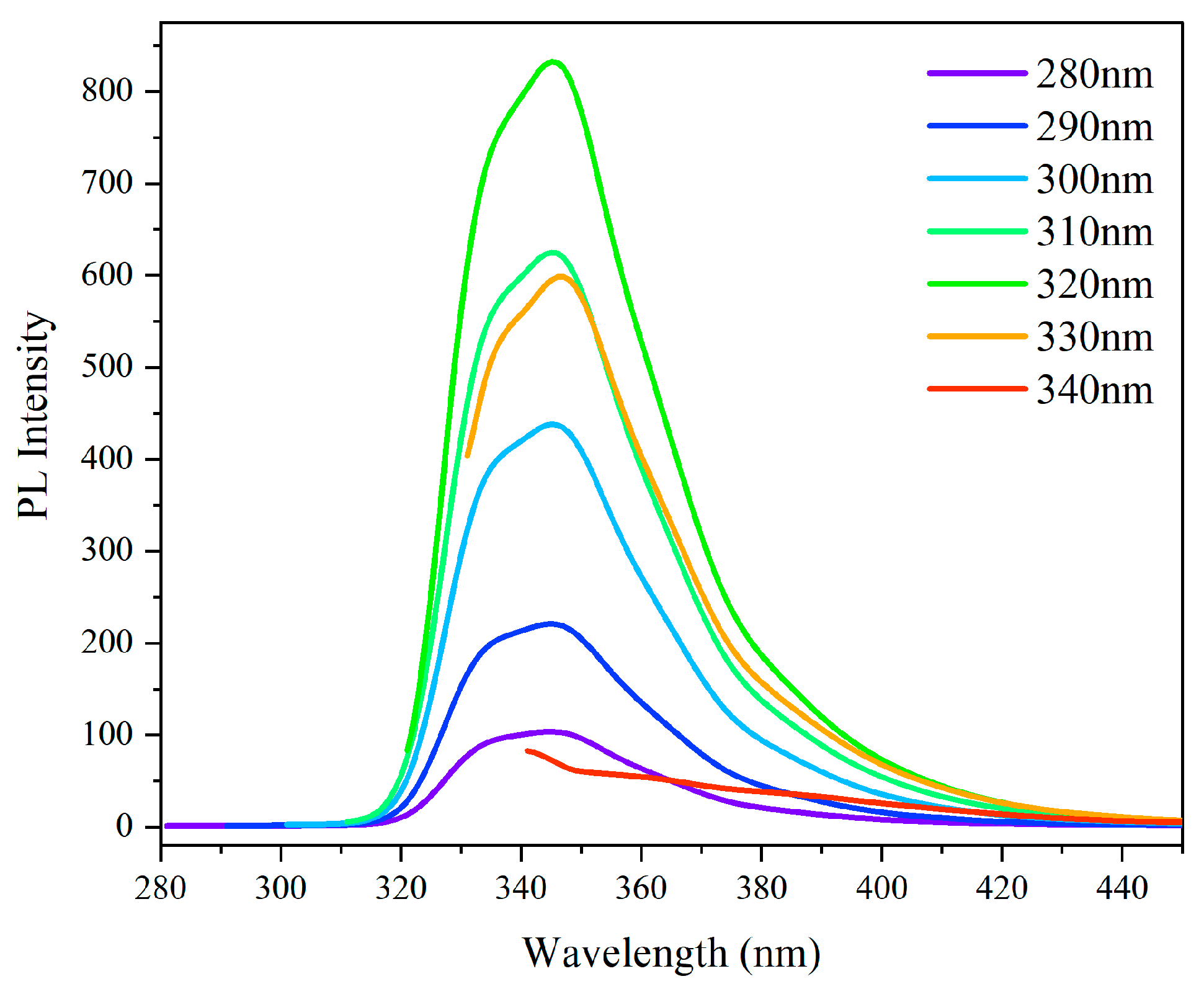
Figure 5.
A. PL Spectra of polymer 4 (0.05 mg/mL) in the presence of various metal ion solution (blank, Ag+, Al3+; Ba2+, Ca2+, Cr3+, Cr6+, Cu2+, Fe3+, Fe2+, Hg2+, K+, Mg2+, Mn2+, Mo6+, Na+, Ni2+, Pb2+, Pd2+, Zn2+) 10µL under PBS buffer (20 mM pH 7.4) solution (THF). B. UV–vis spectrums of polymer 4. Inert: 0.05 mg/mL in THF solvent for polymer 4. 4 in the presence of various test cations (blank, Ag+, Al3+; Ba2+, Ca2+, Cr3+, Cr6+, Cu2+, Fe3+, Fe2+, Hg2+, K+, Mg2+, Mn2+, Mo6+, Na+, Ni2+, Pb2+, Pd2+, Zn2+) in THF.
Figure 5.
A. PL Spectra of polymer 4 (0.05 mg/mL) in the presence of various metal ion solution (blank, Ag+, Al3+; Ba2+, Ca2+, Cr3+, Cr6+, Cu2+, Fe3+, Fe2+, Hg2+, K+, Mg2+, Mn2+, Mo6+, Na+, Ni2+, Pb2+, Pd2+, Zn2+) 10µL under PBS buffer (20 mM pH 7.4) solution (THF). B. UV–vis spectrums of polymer 4. Inert: 0.05 mg/mL in THF solvent for polymer 4. 4 in the presence of various test cations (blank, Ag+, Al3+; Ba2+, Ca2+, Cr3+, Cr6+, Cu2+, Fe3+, Fe2+, Hg2+, K+, Mg2+, Mn2+, Mo6+, Na+, Ni2+, Pb2+, Pd2+, Zn2+) in THF.
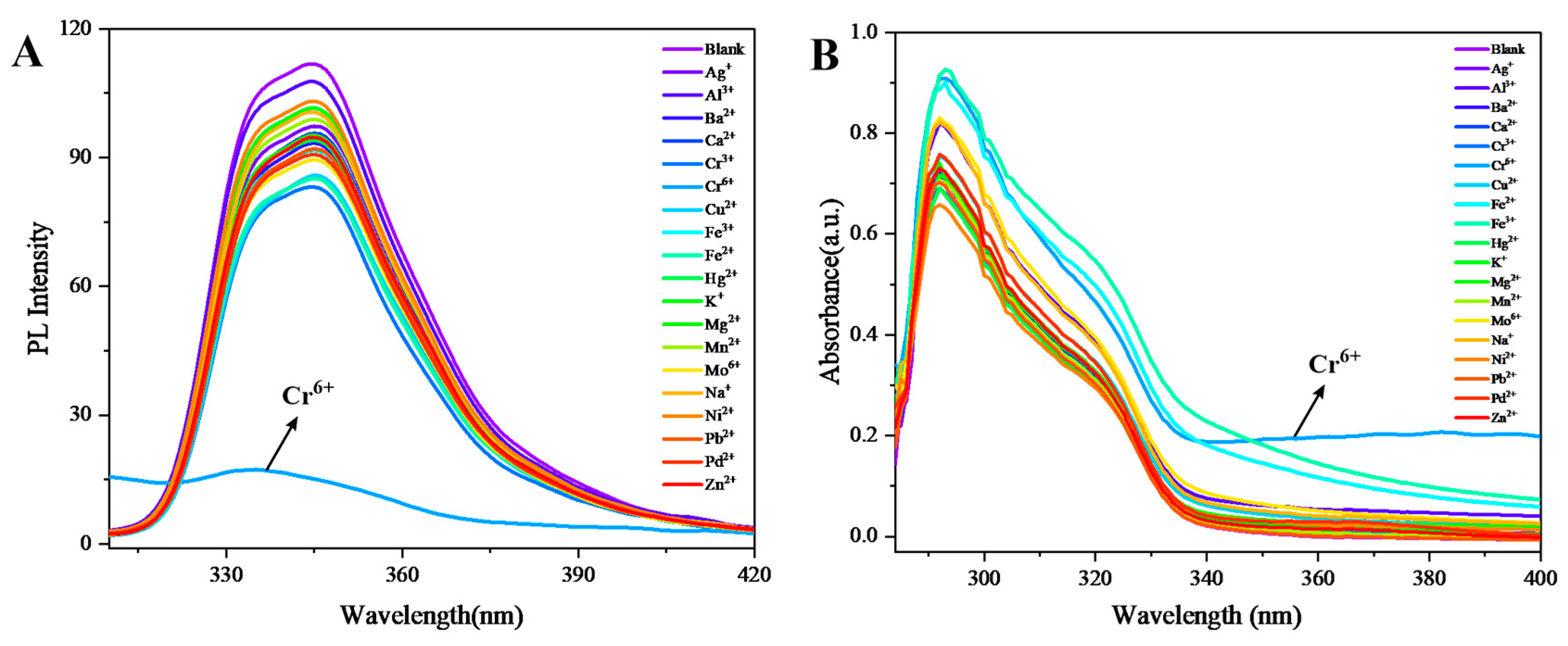
Figure 6.
A. PL intensity changes of polymer 4 (0.05mg/mL) after adding Cr6+ (10µL) in the presence of various test cations in THF. B. FQR of polymer 4 in the presence of various test cations in THF upon addition of Cr6+ (10µL). (The M in the figures represent blank, Ag2+, Al3+; Ba2+, Ca2+, Cr3+, Cu2+, Fe3+, Fe2+, Hg2+, K+, Mg2+, Mn2+, Mo6+, Na+, Ni2+, Pb2+, Pd2+, and Zn2+.).
Figure 6.
A. PL intensity changes of polymer 4 (0.05mg/mL) after adding Cr6+ (10µL) in the presence of various test cations in THF. B. FQR of polymer 4 in the presence of various test cations in THF upon addition of Cr6+ (10µL). (The M in the figures represent blank, Ag2+, Al3+; Ba2+, Ca2+, Cr3+, Cu2+, Fe3+, Fe2+, Hg2+, K+, Mg2+, Mn2+, Mo6+, Na+, Ni2+, Pb2+, Pd2+, and Zn2+.).

Figure 7.
A. Concentration-dependent fluorescence spectra of 4 (0.05 mg/mL) on the addition of various amounts of Cr6+(0-130.5 μM) in PBS buffer (20 mM, pH 7.4) solution (THF). The excitation wavelength was 280 nm. B. Concentration-dependent UV absorption spectrum of 4 (0.05 mg/mL) on the addition of various amounts of Cr6+(0-156.6 μM) in PBS buffer (20 mM, pH 7.4) solution (THF).
Figure 7.
A. Concentration-dependent fluorescence spectra of 4 (0.05 mg/mL) on the addition of various amounts of Cr6+(0-130.5 μM) in PBS buffer (20 mM, pH 7.4) solution (THF). The excitation wavelength was 280 nm. B. Concentration-dependent UV absorption spectrum of 4 (0.05 mg/mL) on the addition of various amounts of Cr6+(0-156.6 μM) in PBS buffer (20 mM, pH 7.4) solution (THF).
Disclaimer/Publisher’s Note: The statements, opinions and data contained in all publications are solely those of the individual author(s) and contributor(s) and not of MDPI and/or the editor(s). MDPI and/or the editor(s) disclaim responsibility for any injury to people or property resulting from any ideas, methods, instructions or products referred to in the content. |
© 2025 by the authors. Licensee MDPI, Basel, Switzerland. This article is an open access article distributed under the terms and conditions of the Creative Commons Attribution (CC BY) license (http://creativecommons.org/licenses/by/4.0/).
Copyright: This open access article is published under a Creative Commons CC BY 4.0 license, which permit the free download, distribution, and reuse, provided that the author and preprint are cited in any reuse.


