

Submitted:
09 September 2025
Posted:
10 September 2025
You are already at the latest version
Abstract
This review critically evaluates the scientific progress in this field through a bibliometric analysis that maps research evolution, trends, and collaborative networks. In its second part, the article addresses key research questions regarding the technical advantages of microwave pretreatment, the physicochemical transformations induced in biomass, and the associated environmental benefits. Reported findings demonstrate that microwave irradiation promotes hemicellulose depolymerization, reduces cellulose crystallinity, and partially removes lignin, thereby facilitating higher pyrolysis efficiency, increased yields of bio-oil and syngas, and improved biochar properties. From an environmental perspective, MWP contributes to energy savings, mitigating greenhouse gases, and integrating renewable electricity sources into biomass conversion pathways. By consolidating current evidence, this review highlights both the opportunities and challenges of microwave-assisted strategies, providing a foundation for future research and positioning this technology as a promising enabler for sustainable biomass valorization.
Keywords:
microwave-assisted pretreatment
; biomass pyrolysis
; conversion
; thermochemical processes
; sustainable bioenergy
1. Introduction
Global energy demands are continuously increasing, yet petroleum, historically the primary energy source, faces limited medium-term availability, making energy supply from fossil fuels uncertain [1]. Moreover, global climate change and environmental pollution due to high carbon dioxide and particulate matter concentrations have become major scientific concerns [2]. Consequently, attention has shifted toward renewable feedstocks as sustainable sources of fuels and industrially valuable chemicals [3,4].
Among renewable sources, biomass—defined as the biodegradable fraction of products, residues, and wastes from agriculture, forestry, and related industries (including fisheries and aquaculture), as well as the biodegradable portion of industrial and municipal waste [5,6]—represents a promising energy source capable of meeting current and future demands [7,8]. Biomass-derived biofuels produce lower greenhouse gas emissions than fossil fuels and typically avoid competition with food production [9]. As illustrated in Figure 1, biomass can be transformed into various fuels and chemicals through thermochemical conversion technologies such as combustion, pyrolysis, gasification, hydrolysis, anaerobic digestion, and liquefaction, each yielding different products with distinct applications [10,11].
Pyrolysis is a thermal decomposition process that occurs in the absence of oxygen. It has been widely recognized as a potential method for biomass conversion due to its relatively simple operation [15,16]. It is an emerging technology capable of producing more than 300 organic chemical compounds, mainly condensable vapors, non-condensable gases, and a solid residue known as biochar [17,18,19]. In particular, pyrolysis is widely investigated for producing bio-oil, syngas, and biochar due to its adaptability to diverse biomass types and operational flexibility [13]. However, the efficiency of pyrolysis strongly depends on the physical and chemical properties of the feedstock, including moisture content, particle size, and lignocellulosic structure [14].
The decomposition of biomass during pyrolysis involves a wide range of reactions, including dehydration, depolymerization, isomerization, aromatization, carbonization, and decarboxylation [20,21,22,23]. Condensable vapors consist of hydrocarbons, alcohols, phenols, sugars, furans, nitrogenous compounds, carbonyls, among others [24]. The liquid fraction can serve as an alternative fuel or diesel energy source [25]. Through oxygen removal and waste reduction, the quality of the liquid product can be significantly improved; it does not need to be consumed at the production site, as it can be easily stored and is transported [26]. Non-condensable gases (H2, CO, C2H2, CH4, C2H4, etc.) generated during pyrolysis processes constitute another valuable by-product [27]. The solid fraction, or biochar, is a carbonaceous residue formed during primary and secondary reactions [28].
The pretreatment of lignocellulosic biomass is a crucial step in which the complex structure of lignocellulose is fractionated into its main components, namely cellulose, hemicellulose, and lignin [29]. During this process, lignin is partially or entirely removed, hemicellulose is preserved to a certain extent, cellulose crystallinity is reduced, and the porosity of the raw material is enhanced [30]. An economically viable pretreatment strategy should improve sugar release during subsequent enzymatic hydrolysis, while minimizing carbohydrate degradation and the generation of inhibitory compounds that adversely affect hydrolysis and fermentation [31].
An emerging heating technique is the use of microwaves, which have garnered significant interest due to several advantages over conventional thermal methods [32]. Notable benefits include non-contact volumetric heating, short reaction times, minimal solvent requirements, limited side reactions, and reduced parametric complexity [33,34]. Microwave radiation can achieve up to 50% higher heating efficiency than natural gas or steam [35,36]. It converts electromagnetic energy directly into heat at the molecular level, promoting uniform energy dissipation across the material—particularly effective in bulk systems [37,38]. Table 1 illustrates these advantages in comparison with conventional heating.
Microwave-assisted pretreatment has emerged as a promising approach to enhance biomass pyrolysis. Microwaves can rapidly and selectively heat biomass, reducing moisture content, disrupting the lignocellulosic matrix, and improving mass and heat transfer during subsequent pyrolysis. In conventional heating, heat is transferred from the surface to the core of the material through conduction driven by temperature gradients, and mass flux consistently proceeds from the interior toward the exterior. In contrast, microwaves induce heating at the molecular level by directly converting electromagnetic energy into thermal energy, leading to heat and mass flows that are opposite to those observed under conventional heating [41], as illustrated in Figure 2.
Microwave radiation lies between infrared radiation and radio waves in the electromagnetic spectrum. Their wavelength range spans from 0.001 to 1 m, corresponding to frequencies between 300 and 0.3 GHz, respectively [43]. The two most commonly employed microwave frequencies are 915 MHz and 2.45 GHz [44]. Microwave heating techniques have been applied in several areas of analytical chemistry, including elemental analysis, digestion, solvent extraction, sample drying, moisture determination, desorption and adsorption analysis, sample cleaning, metal extraction from soils and plants, sterilization, cooking, microwave-assisted chemistry, drying, and heating, among others [45,46,47]. Microwave energy is homogeneous and consists of electric and magnetic fields arranged perpendicularly [48], with conversion efficiencies of approximately 85% for 915 MHz and 50% for 2.45 GHz [49]. The 2.45 GHz frequency (≈1 J·mol−1) does not induce significant direct molecular activation, as occurs with photochemical energy [50]. Penetration depth is greater at 915 MHz compared to 2.45 GHz, which is highly relevant when evaluating the microwave absorption capacity of materials [51]. The heating of materials under microwave irradiation can be determined by the loss tangent, defined as the ratio between the dielectric loss factor and the material’s dielectric constant [52]. Microwaves can rapidly heat materials with a high dielectric loss factor to high temperatures, providing a hot surface where reactions can be induced; in addition, the fast heating rate inhibits the formation of undesirable secondary reactions [53]. Materials can be categorized into three groups according to their response to microwaves: insulators, absorbers, and conductors. Insulators are transparent to microwaves (e.g., glass and ceramics), and conductors are materials with high electrical conductivity that reflect microwaves from their surface (e.g., metals). In contrast, absorbers or dielectrics can absorb microwaves and convert this energy into heat [54] (Figure 3).
Recent reviews emphasize the role of microwave absorbents and catalysts in achieving efficient heating and high product selectivity [55]. Experimental studies using biochar as a low-cost microwave absorber have demonstrated significant improvements in heating rate and control, corroborating the advantages of microwave systems over conventional thermal methods [56]. Further investigations using lignin model compounds highlight that microwave pretreatment can reduce the formation of undesired pyrolysis byproducts, such as tars or chars [57]. The combination of microwave pretreatment and pyrolysis represents a viable strategy to optimize biofuel production from diverse biomass feedstocks, aligning with global efforts to develop sustainable and low-carbon energy technologies.
This work presents a comprehensive literature review, incorporating a bibliometric analysis and addressing several research questions to elucidate the benefits of applying microwave pretreatment to biomass before pyrolysis. The study seeks to systematically summarize current knowledge, identify trends, and highlight critical factors influencing process performance, ultimately supporting the development of sustainable and efficient biofuel production strategies.
2. Methods
This study employed a qualitative methodology grounded in a systematic review of the scientific literature, structured into two main phases.
2.1. Phase One: Comprehensive Literature Review
An extensive search was conducted across internationally recognized academic databases, including Scopus, ScienceDirect, SpringerLink, and Nature. These databases were chosen due to their strong relevance and impact in disseminating science, technology, and engineering advances. Search queries combined keywords such as microwave pretreatment, biomass, pyrolysis, bio-oil yield, and lignocellulosic materials. The review considered only articles published in English and indexed in Scopus. The inclusion criteria targeted peer-reviewed publications that examined microwave-assisted biomass pretreatment and its effects on physicochemical properties, pyrolysis performance, or product distribution. The selected studies were critically evaluated regarding relevance, methodological soundness, and overall contribution to the field.
2.2. Phase Two: Thematic Analysis Guided by Research Questions
Based on the selected studies, a thematic analysis was conducted to address the following research questions, aiming to synthesize the key findings and identify trends, gaps, and opportunities for future research in microwave-assisted biomass pretreatment for pyrolysis applications:
- RQ1: How does microwave-assisted pretreatment alter the physicochemical structure of lignocellulosic biomass (e.g., cellulose crystallinity, lignin removal, and porosity enhancement)?
- RQ2: How do combined microwave-assisted pretreatments influence the physicochemical properties of lignocellulosic biomass? What are their implications for enhancing energy efficiency, product selectivity, and environmental sustainability in subsequent pyrolysis processes?
- RQ3: What are the current challenges, limitations, and future perspectives in applying microwave pretreatment at pilot and industrial scales for sustainable bioenergy production?
This approach allowed for a structured synthesis of the literature, highlighting both experimental outcomes and theoretical insights. It ultimately provided a comprehensive understanding of the current state of the art in microwave-assisted pretreatment of biomass prior to pyrolysis.
3. Results
3.1. Phase One: Comprehensive Literature Review
3.1.1. Publications per Year
Figure 4 shows the number of publications per year on microwave-assisted biomass pretreatment, as retrieved from Scopus on August 19, 2025. The data indicate a gradual but notable increase in scientific output over the past two decades. Between 2008 and 2013, the field shows very low activity, with only 1–2 publications per year, reflecting the early stage of research in microwave-assisted biomass pretreatment. From 2014 to 2016, a steady increase was observed (3–4 publications per year), suggesting growing interest and initial experimental studies. A temporary dip occurs in 2017 (1 publication), likely due to the small sample size of niche studies or database indexing effects. Starting in 2018, the number of publications rose significantly, peaking at 12 in 2021, indicating intensified research activity, likely driven by advances in microwave reactor technology and increasing interest in sustainable bioenergy solutions. Slight fluctuations are observed from 2022 to 2025 (10, 8, 11, 7 publications), suggesting that while the field remains active, the growth rate has stabilized as research matures and diversifies. Overall, the trend demonstrates that microwave-assisted biomass pretreatment has evolved from a niche topic to a recognized study area, highlighting its importance for improving pyrolysis efficiency and promoting sustainable bioenergy production.
3.1.2. Subject Area
Figure 5 presents the distribution of publications on microwave-assisted biomass pretreatment across various subject areas according to Scopus classification. The Energy category dominates with 46 publications, representing the largest share of research output. This reflects the field’s strong focus on bioenergy production, pyrolysis optimization, and renewable energy applications. Environmental Science follows with 36 publications, indicating the relevance of microwave-assisted biomass pretreatment for sustainability, emission reduction, and environmental impact assessments. Chemical Engineering contributes 31 publications, highlighting the importance of process design, reactor optimization, and scale-up considerations. Engineering (20 publications) and Chemistry (18 publications) show active interdisciplinary engagement, covering materials characterization, reaction kinetics, and thermal processes. Agricultural and Biological Sciences (10 publications) emphasizes the role of feedstock selection, biomass composition, and pretreatment strategies derived from biological studies. Lower representation is observed in Materials Science and Biochemistry, Genetics and Molecular Biology (6 publications each), reflecting more specialized investigations into biomass structure, enzymatic interactions, and material properties. Physics and Astronomy (5 publications) and Medicine (4 publications) account for a minor fraction, likely associated with physical modeling, thermal analysis, or biomedical applications of bio-based materials. The distribution indicates that microwave-assisted biomass pretreatment is a highly interdisciplinary research area, with predominant contributions from energy, environmental, and chemical engineering domains, reflecting its relevance for sustainable energy production and process innovation.
3.1.3. Keywords
Figure 6 summarizes the most frequently used keywords in publications on microwave-assisted biomass pretreatment retrieved from Scopus. The frequency of each keyword provides insights into the main research themes and priorities in the field. Biomass (60 occurrences) and Pyrolysis (59 occurrences) are the most prominent keywords, reflecting the core focus on biomass conversion and thermochemical processes. Keywords related to microwave technology, including Microwaves (28), Microwave Radiation (22), Microwave Heating (14), and Microwave Pyrolysis (14), highlight the central role of microwave-assisted methods as an emerging and widely investigated pretreatment strategy. Terms such as Pretreatment (21), Pre-treatment (13), Heating (13), and Microwave (15) emphasize the methodological aspects and process optimization efforts within the field. Keywords associated with feedstock components, notably Lignin (16) and Cellulose (21), indicate that structural and compositional analysis of lignocellulosic biomass is a critical research focus. Bioenergy-related terms such as Biofuel (14) and Biofuels (16), and Biofuel Production (12), underscore the ultimate application goal: sustainable energy production from biomass. The distribution of keywords demonstrates that research in this field is methodologically driven (microwave techniques, heating, pretreatment) and application-oriented (biofuel generation, biomass composition), reflecting the interdisciplinary nature of microwave-assisted pyrolysis research. Overall, the keyword analysis confirms that microwave-assisted pretreatment is a highly active study area, bridging materials characterization, process engineering, and sustainable energy applications.
3.1.4. Correlation Keywords
Figure 7 demonstrates that microwave-assisted pretreatment of biomass is at the intersection of fundamental biomass chemistry (green cluster), thermochemical conversion processes (red cluster), and energy valorization (blue and yellow clusters). The strong centrality of biomass, pyrolysis, and microwaves/microwave radiation reflects the field’s consolidation around microwave-assisted pyrolysis (MAP) as a process-intensification route that reduces energy use and can improve carbon efficiency relative to conventional heating, according to recent comprehensive reviews [58]. Links between the green cluster (biomass composition and pretreatment) and the red cluster (pyrolysis and product distribution) are consistent with evidence that microwave pretreatment alters lignocellulosic structure and dielectric behavior, lowering apparent activation barriers and shifting devolatilization kinetics, which in turn affects product yields and selectivity [59]. Connections among lignin, cellulose, hemicellulose, temperature, and pretreatment methods align with reports that microwave pretreatment adjusts moisture, porosity, and functional groups, facilitating subsequent pyrolysis and enabling shorter residence times and higher quality of value-added products [60]. The dense links between catalysis, reaction kinetics, bio-oil, and biochar match the literature showing that microwave-responsive absorbents and catalysts (e.g., carbons, zeolites, ferrites) localize heating (“hot-spots”) and steer pathways toward deoxygenation and aromatic formation, thereby upgrading bio-oil and tailoring biochar properties [55]. Edges connecting the yellow/blue clusters (process intensification, biofuel production) to the core terms reflect MAP’s scalability considerations—reactor design, absorber selection, and parameter optimization—as key levers for improving efficiency and lowering global-warming potential in life-cycle terms [58]. At the study level, microwave pretreatment before catalytic fast pyrolysis has been shown to modify surface morphology and increase ketone/aromatic formation (e.g., with CaO), exemplifying the product-distribution links in the map [61]. Overall, the network’s high inter-cluster connectivity quantitatively mirrors the literature’s interdisciplinary integration of materials science (dielectric/structure), chemical engineering (reactors/catalysts), and energy valorization (bio-oil/biochar/syngas) in microwave-enabled biomass upgrading [62].
3.1.5. Correlation Keyword Clusters
The keyword co-occurrence network highlights the main research domains associated with biomass pretreatment using microwave technology before pyrolysis. Four main clusters can be identified:
Green Cluster—Biomass Composition and Pretreatment: This cluster revolves around biomass, cellulose, lignocellulose, pretreatment methods, and hydrolysis. It reflects studies focused on the structural characteristics of biomass and the role of pretreatment in enhancing thermal conversion efficiency. The presence of temperature, lignin, and hemicellulose indicates strong research interest in how microwave-assisted pretreatment modifies the physicochemical properties of biomass components, particularly lignocellulosic feedstocks.
Red Cluster—Pyrolysis and Product Distribution: Centered around pyrolysis, bio-oil, biochar, and carbon, this cluster emphasizes the thermochemical conversion process and the resulting products. The association with microwave pretreatment, reaction kinetics, and catalysis suggests that research is strongly directed toward understanding how microwaves influence reaction pathways, heating mechanisms, and yield distribution, particularly in improving bio-oil quality and biochar functionality.
Yellow Cluster—Energy Applications and Process Intensification: Keywords such as microwave heating, activation energy, fast pyrolysis, gasification, and biomass pretreatments form a cluster focused on process optimization and scaling-up perspectives. This indicates efforts to enhance energy efficiency, reduce activation barriers, and integrate microwave systems with other thermochemical routes for renewable energy generation.
Blue Cluster—Biofuel Production and By-products: This cluster is represented by terms such as biofuel production, phenols, decomposition, microwave cooking, and biotechnology. It highlights the valorization of pyrolysis-derived compounds into high-value chemicals and biofuels. The co-occurrence of phenolic derivatives and polyphenols reflects growing attention to the selective recovery of functional chemicals beyond conventional bioenergy applications.
3.1.6. Publications per Country
Figure 8 presents the number of publications on microwave-assisted biomass pretreatment by country, based on Scopus data. China leads the field with 45 publications, demonstrating its dominant role in developing microwave-assisted biomass pretreatment and bioenergy technologies. India (13) and the United States (10) follow, highlighting significant contributions from other major players in renewable energy research. Taiwan (6), Canada (5), and Australia (4) represent countries with growing interest and active research groups in this area. Countries such as Egypt (3), Denmark (3), and several others with two publications (e.g., United Kingdom, Thailand, Spain, South Korea, Poland, Philippines, Malaysia, Japan, Ireland, Iran, Greece, Colombia, Belgium) show emerging contributions, often reflecting collaborative or niche studies. A long tail of countries with one publication each, including Viet Nam, Sweden, Pakistan, Norway, New Zealand, Netherlands, Latvia, Indonesia, Hungary, Hong Kong, France, Ecuador, Czech Republic, Croatia, Chile, Brazil, and Bangladesh, illustrates the global reach and interdisciplinary interest of microwave-assisted biomass research, even in countries with nascent research activities. Overall, the distribution highlights that microwave-assisted biomass pretreatment research is highly concentrated in China, followed by India and the United States, while a diverse set of countries are contributing to the global expansion of knowledge in sustainable bioenergy and pyrolysis technologies. This geographic pattern reflects the availability of research infrastructure and national priorities in renewable energy and biomass utilization.
3.1.7. Publications per Affiliation
Figure 9 presents a treemap visualization of the analysis of publications by institutional affiliation. The treemap reveals that the Ministry of Education of the People’s Republic of China and the Chinese Academy of Sciences are the leading contributors, each with 10 publications. They are followed by the Guangzhou Institute of Energy Conversion of the Chinese Academy of Sciences, with 8 publications, and Huazhong University of Science and Technology, with 6 publications. Other notable contributors include Nanchang University (5 publications), Shenzhen University, the University of Chinese Academy of Sciences, and the Department of Bioproducts and Biosystems Engineering, each with 4 publications. In addition, international collaborations are evident through the contributions from institutions such as Washington State University Tri-Cities (3 publications), Tunghai University (3 publications), and Shanghai Jiao Tong University (3 publications). These results highlight a strong research concentration in Chinese institutions, particularly within the Chinese Academy of Sciences and its affiliated institutes, while also demonstrating an emerging network of global collaboration in this research field.
3.1.8. Publications per Funding Sponsors
The analysis of funding sponsors (Figure 10) indicates that the National Natural Science Foundation of China (NSFC) is the primary supporter of research on microwave-assisted biomass pretreatment, with 25 publications acknowledging its funding. This underscores the pivotal role of NSFC in promoting fundamental and applied research in biomass conversion and renewable energy technologies in China.
Other significant Chinese funding agencies include the Fundamental Research Funds for the Central Universities (5 publications), the Natural Science Foundation of Guangdong Province (4), and the National Key Research and Development Program of China (4). Additionally, organizations such as the Youth Innovation Promotion Association of the Chinese Academy of Sciences (3) and the Science and Technology Planning Project of Guangdong Province (3) contribute to supporting emerging research initiatives and regional projects.
International and other institutional funding is also evident. For example, the European Commission is acknowledged in 3 publications, highlighting cross-border collaboration, while the Ministry of Science and Technology, Taiwan (3) and Ministry of Education (3) show that regional governments outside mainland China also contribute to this research area. Other contributors include the Key Research and Development Program of Jiangxi Province (3), National Cheng Kung University (2), and the Ministry of Science and Technology of the People’s Republic of China (2).
Overall, the funding landscape reveals a strong dominance of Chinese national and provincial agencies, emphasizing the strategic importance of biomass and bioenergy research in China, while international and regional sponsors also play a complementary role in supporting research diversity and collaboration.
3.1.9. Publications per Source
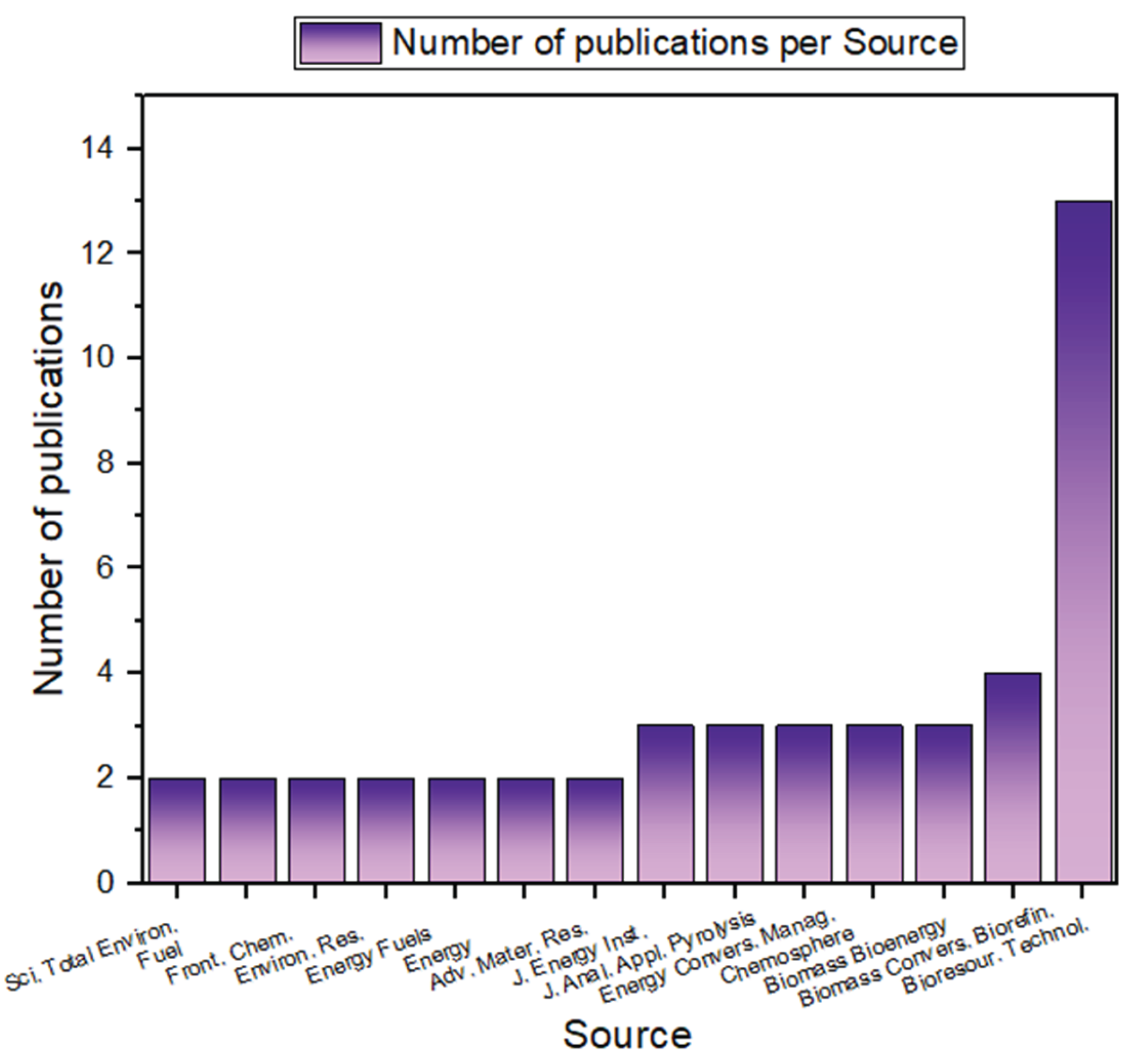
Figure 11 presents the distribution of publications on microwave-assisted biomass pretreatment by journal source.
Bioresource Technology is the leading journal, with 13 publications, indicating its central role in disseminating research on biomass conversion, bioenergy, and thermochemical pretreatment processes. Biomass Conversion and Biorefinery follows with 4 publications, highlighting its focus on biorefinery strategies and sustainable biomass utilization. Journals such as the Journal of the Energy Institute, Journal of Analytical and Applied Pyrolysis, Energy Conversion and Management, Chemosphere, and Biomass and Bioenergy each contribute 3 publications, reflecting interest in energy engineering, pyrolysis analytics, environmental impact, and bioenergy applications. Several other journals, including Science of the Total Environment, Fuel, Frontiers in Chemistry, Environmental Research, Energy and Fuels, Energy, and Advanced Materials Research, have published 2 papers each, demonstrating the interdisciplinary nature of the field, encompassing energy, chemistry, materials science, and environmental studies. Overall, the distribution of sources shows that research on microwave-assisted biomass pretreatment is published predominantly in journals focused on energy, biomass, and environmental science, underscoring the intersection of chemical engineering, sustainable energy production, and environmental applications.
3.2. Phase Two: Thematic Analysis Guided by Research Questions
The direct use of lignocellulosic biomass as a feedstock for obtaining biofuels and chemicals of interest is difficult due to its complex structure [63,64,65]. The main objective of a pretreatment is to achieve the modification of its components (hemicellulose, cellulose and lignin) [66,67], in order to produce biomass with greater accessibility to the cellulose surface and/or the solubilization of lignin [68], and to modify its distribution in products of interest in its catalytic conversion [69].
Pretreatment is one of the most important steps in the conversion of lignocellulosic biomass to biofuels from an economic point of view for the subsequent commercialization of the products [70]. The effectiveness of a pretreatment method depends on its ability to [71,72,73,74]: (a) delignify the feedstock without much alteration in the native lignin structure, (b) low energy consumption, (c) cost-effective operation, (d) reduce the crystallinity index of cellulose, (e) reduce particle size in order to improve the surface area for enhanced enzymatic hydrolysis, (f) process versatility to pretreat different types of biomass feedstocks, (g) avoid the production of enzyme inhibitors, (h) use environmentally friendly chemicals. Microwaves are non-ionizing electromagnetic radiation that induce explosions within the particles of a material and therefore facilitate the rupture of recalcitrant structures [75]. These intraparticle explosions accelerate the relocation of the crystalline structure [76]. On the other hand, the presence of ionic and non-ionic crystalline amorphous regions in lignocellulosic biomass serves as a biological conductor [77]. The realignment of polar molecules results in a displacement that causes the breaking of hydrogen bonds and destroys cell wall components (cellulose crystallinity), thus enhancing hydrolysis [29]. Hardwoods are highly susceptible to microwave treatment, resulting in the formation of a large number of micropores and providing a large surface area accessible for enzymatic activity [29,78,79]. Irradiation (MW) is a substitute for the conventional heating method, as it renews the complicated structure of cellulose a and partially disintegrates hemicelluloses and lignin [80].
3.2.1. How Does Microwave-Assisted Pretreatment Alter the Physicochemical Structure of Lignocellulosic Biomass?
In a microwave pretreatment of lignocellulosic biomass, information about its dielectric properties is necessary to understand its interaction with electromagnetic energy, primarily to find an optimal condition during heating [81]. Thus, the hydroxyl groups of lignocellulosic biomass are polar, and lignocellulosic fibers give rise to the formation of dipoles. Furthermore, electric current flows through the crystalline region of the biomass, and higher moisture content aids flow in the amorphous regions [82]. A more dipolar material exhibits greater dielectric properties and subsequently generates heat within its interior [81]. The crystalline region present in biomass facilitates the flow of electric current within it, and the presence of moisture aids flow in the amorphous regions [82]. Furthermore, the addition of acids or alkalis can significantly affect the polar orientation within the material during the pretreatment process [81]. Under the influence of an electromagnetic field such as microwaves, the polar structure of cellulose molecular chains orients [83], and due to microwave vibration, these polar molecules collide [84], and these collisions form hot spots that are randomly located within the biomass [85]. Due to the increase in heat, explosions occur that accelerate the relocation of the crystalline structure [76]. On the other hand, the OH groups present in the biomass absorb microwaves, accelerating heating and increasing pressure, resulting in lignocellulosic destruction [86]. During the process, water loss by evaporation and the microwave power level must also be analyzed as necessary mechanisms to control the reaction [81]. Other advantages of applying microwaves as a pretreatment are that a minimal amount of solvent is required, and the formation of secondary reactions is limited [87]. During the hydrocracking of α-cellulose from merbau wood waste (Intsia spp.), microwaves (399 W) were used to pretreat the feedstock [38]. Wood charred at 800 °C and microwave-irradiated for 5 min was compared to wood flakes irradiated with microwaves for 30 min. A Ni catalyst (1.0, 1.5, and 2.0 wt%) was also used. The charred and microwave-treated wood showed the best performance and had a lower specific surface area (364.12 m2/g), total pore volume (0.28 cm3/g), mean pore diameter (3.03 nm), and acidity (2.18 mmol/g). The conversions to liquid were 58.76 wt% for the Ni1.5 catalyst, 57.51 wt% for the Ni1 catalyst, and 34.18 wt% for the Ni2 catalyst [88].
Physical principle and selectivity. Microwave (MW) fields couple mainly through dipole rotation and ionic conduction, delivering rapid, volumetric heating to polar phases (bound water, acids/alkalis, hydrotropes, DES/ILs). This accelerates autohydrolysis, deacetylation, and cleavage of lignin–carbohydrate complexes (LCC), while moisture acts as an in situ susceptor that generates internal steam pressure and micro-fractures [89]. The net effect is fast softening/swelling of the cell wall and greater enzyme accessibility compared with conventional convective heating [90].
Lignin removal (delignification). Under MW with suitable media (e.g., hydrotropes, alkali, organosolv, or ionic liquids), lignin solubilization is markedly enhanced [90]. High-pressure MW hydrotropic pretreatment of softwood/hardwood/non-wood feedstocks using sodium cumene sulfonate (NaCS) reduced lignin to ~4 % (dw basis) and extracted >58 % of biomass components, while MW-assisted hydrotropic delignification in Scientific Reports achieved up to ~55 % mass removal (mainly lignin/extractives) depending on substrate and conditions. FTIR confirmed attenuation of lignin aromatic bands (1512–1605 cm−1) after MW pretreatment [91].
Cellulose crystallinity. X-ray diffraction generally shows an apparent increase in crystallinity index (CrI) because MW-assisted pretreatment preferentially removes amorphous hemicellulose and lignin, enriching crystalline cellulose. For example, MW pretreatment (water, NaOH, NaCS, ethanol/H2SO4) increased CrI across pine, beech and straw; reported increases include bamboo (49.5 → 56.9 % with MW hot water), catalpa sawdust (32.3 → 39.4 % with MW + NaOH), and eucalyptus (55.0 → 59.5 % with MW + IL). Note that CrI can also decrease when severe conditions induce cellulose chain scission or partial amorphization; however, recent high-pressure MW studies predominantly report CrI increases associated with amorphous-phase removal rather than lattice disorder [91]. In another work, Biomass samples were subjected to microwave pretreatment under varying powers (259, 462, 595, and 700 W) and exposure times (1, 2, 3, and 5 min). According to Venegas et al. [92], the maximum temperatures reached under the 700 W–5 min condition were 147.69 °C for Pinus radiata (PR) and 130.71 °C for Eucalyptus globulus (EG), which induced rearrangement of cellulose crystalline chains through vibrational excitation, increased the internal energy of the biomass, and promoted lignin decomposition by reaching its glass transition temperature.
Porosity and surface morphology. MW pretreatment produces pronounced microstructural changes—fiber fibrillation, fissures, and pore formation—observed by SEM. After MW under alkaline/hydrotropic media, surfaces transition from smooth/compact to porous/fibrous with visible openings; this correlates with higher enzymatic digestibility due to increased accessible surface area and pore volume. (Several studies report clear SEM evidence; when BET is reported, increases are consistent with the SEM trends.) [91].
Hemicellulose deconstruction and acetyl removal. MW-assisted liquid hot water (MA-LHW) in bamboo removed hemicellulose and other non-crystalline fractions, exposing crystalline cellulose ; MW-hydrothermal pretreatment of Acacia at 170 °C for 60 min enhanced hemicellulose dissolution, further contributing to porosity and reduced recalcitrance [93].
Mechanistic implications for pretreatment design. Because MW fields directly heat polar phases and reaction media, combining MW with alkali, hydrotropes, DES/ILs, or organosolv accelerates β-O-4 ether cleavage in lignin, breaks LCCs, deacetylates xylan, and promotes selective solubilization of non-cellulosic fractions. The resulting biomass exhibits (i) lower lignin content, (ii) increased CrI (by enrichment), and (iii) higher porosity—conditions that jointly improve enzymatic hydrolysis kinetics and overall saccharification yields [90].
3.2.2. How Do Combined Microwave-Assisted Pretreatments Influence the Physicochemical Properties of Lignocellulosic Biomass and What Are Their Implications for Enhancing Energy Efficiency, Product Selectivity, and Environmental Sustainability in Subsequent Pyrolysis Processes?
Hybrid pretreatment strategies that integrate microwaves with chemical, physical, or solvent-based approaches have recently attracted attention as a means of improving the efficiency and selectivity of biomass pyrolysis. By leveraging the volumetric and rapid heating of microwaves together with mechanisms such as alkali- or acid-driven delignification, hydrothermal solubilization, ultrasonic disruption, or ionic liquid dissolution, researchers have reported significant improvements in lignin removal, cellulose accessibility, and sugar or bio-oil yields. Such synergies not only reduce energy barriers and process times but also contribute to higher overall conversion efficiency. Table 2 compiles representative studies of combined microwave-assisted pretreatments, summarizing their key findings and impacts on subsequent biomass pyrolysis.
3.2.3. What Are the Current Challenges, Limitations, and Future Perspectives in Applying Microwave Pretreatment at Pilot and Industrial Scales for Sustainable Bioenergy Production?
From an environmental perspective, microwave pretreatment (MWP) can help decarbonize thermochemical biomass conversion by (i) reducing process energy demand through rapid, volumetric, and selective heating; (ii) shortening residence times and avoiding energy-intensive auxiliaries such as deep drying or extensive size reduction; and (iii) enabling direct electrification so that low-carbon renewable power can displace fossil process heat. Recent assessments of microwave-assisted (catalytic) pyrolysis show that product selectivity improvements and the ability to heat moisture-containing feedstocks can offset some electricity penalties, especially when efficient microwave sources and strong microwave absorbers are used, and when grid mixes are low-carbon or coupled to onsite renewables [55]. In addition, pretreatment-driven structural changes—partial delignification, increased cellulose accessibility, and higher porosity—translate into faster conversion and higher yields, which reduce the feedstock and logistics footprints per unit of product. Overall, while scale-up and device efficiency remain critical bottlenecks, the literature points to a credible pathway where MWP lowers energy use and mitigates greenhouse gas (GHG) emissions, particularly in distributed systems and when powered by renewable electricity. The most significant advances reported in this field are summarized in Table 3, which compiles key environmental contributions of microwave pretreatment prior to biomass pyrolysis.
4. Future Works
Future research on microwave pretreatment (MWP) of lignocellulosic biomass prior to pyrolysis should focus on six fronts:
Reactor engineering, scale-up, and electrification efficiency. Bench-scale benefits must be translated into continuous, kilo- to ton-scale systems with rigorous energy balances. Priorities include optimizing applicator geometry for heterogeneous, moist feedstocks; transitioning from magnetron to high-efficiency solid-state sources; and mapping spatiotemporal temperature and dielectric fields with in-situ diagnostics for model-based control. Community-accepted reporting of wall-to-core energy efficiency and heat losses is needed to make results comparable across labs and scales [55].
Microwave absorbers and catalytic co-pretreatments. Systematic screening and durability testing of absorbers (e.g., biochar, SiC, carbons) and supported catalysts under MWP conditions are needed to understand long-term stability, fouling, and regeneration, as well as their consequences for downstream pyrolysis selectivity (oxygenate suppression, aromatic enrichment). Hybrid pretreatments—alkali/acid, organosolv, and hydrothermal—should be rationally designed to couple selective dielectric heating with targeted delignification/hemicellulose removal [98].
Microwave-assisted hydrothermal and organosolv routes. MW-hydrothermal pretreatment has shown faster hemicellulose solubilization and improved carbohydrate recovery; future studies should quantify how such structural changes (porosity, crystallinity, lignin condensation) shift pyrolysis kinetics and product distributions in continuous reactors. Likewise, MW-assisted organosolv systems warrant solvent/acid selection maps (including recyclability and corrosion) tied to techno-economic and safety outcomes [103,114].
Integrated TEA/LCA under renewable electricity supply. Because MWP is inherently electrical, future work should couple reactor data with grid-specific emission factors and on-site renewable scenarios, explicitly propagating absorber dosage, electrical efficiency, and throughput into cost and GHG metrics. Solar-powered or hybrid renewable cases suggest favorable windows, but sensitivity analyses and uncertainty quantification are needed for policy-relevant comparisons to conventional heating [109].
Feedstock breadth, moisture tolerance, and quality control. MWP’s ability to process wet and ash-rich residues should be benchmarked across diverse feedstocks (agricultural residues, forestry by-products, sewage-derived biosolids), with standardized protocols for moisture/ash normalization, particle-size distributions, and scale-relevant handling. Kinetic/thermogravimetric studies indicate MWP can reduce activation energies and shift decomposition temperatures; connecting these shifts to continuous reactor performance and product upgrading remains an open task [115].
Data standards and reproducibility.
Field-wide datasets that report dielectric properties vs. temperature and moisture, absolute power balances (delivered/absorbed), and absorber/catalyst inventories will enable predictive models and fair cross-study comparisons. Reviews call for harmonized metrics linking pretreatment conditions to structural descriptors (e.g., accessible cellulose, lignin S/G ratio) and to downstream pyrolysis yields/quality [98].
5. Conclusions
This review has demonstrated that microwave pretreatment (MWP), especially when integrated with hybrid chemical, hydrothermal, ultrasonic, or ionic-liquid strategies, plays a pivotal role in enhancing biomass deconstruction. The collective evidence shows that MWP effectively promotes delignification, increases cellulose accessibility, reduces crystallinity, and enhances porosity, thereby improving both enzymatic hydrolysis and subsequent pyrolysis performance. Furthermore, MWP shortens residence times, enables processing of wet and ash-rich feedstocks, and offers a direct pathway for coupling biomass valorization with renewable electricity, aligning with low-carbon energy transition goals. Beyond the mechanistic and experimental evidence, the following key insights emerge:
Efficiency and Product Selectivity—MWP reduces activation energies and enhances product selectivity, yielding higher-value outputs such as increased bio-oil, biochar with improved surface properties, and sugar-rich hydrolysates.
Scalability and Engineering Challenges—Translation from bench- to pilot- and industrial-scale reactors requires advances in applicator design, solid-state microwave generators, and real-time monitoring of dielectric properties to ensure process uniformity.
Integration with Hybrid Pretreatments—Rational design of combined strategies (alkali/acid, hydrothermal, organosolv, or ionic liquids) can exploit synergistic effects between dielectric heating and selective fractionation, further lowering energy inputs and enhancing sustainability.
Environmental and Policy Implications—Techno-economic analyses (TEA) and life cycle assessments (LCA) indicate that MWP, particularly when powered by renewable electricity, can mitigate greenhouse gas emissions and reduce feedstock logistics footprints, strengthening its role in decarbonizing thermochemical biorefineries.
Valorization of By-Products—The integration of lignin-derived compounds, hemicellulosic sugars, and bioactive molecules generated during MWP into value-added product streams could improve the overall profitability and resource efficiency of biomass conversion chains.
Standardization and Data Sharing—Progress requires harmonized metrics for dielectric properties, power balances, and pretreatment efficiency, as well as open datasets to support predictive modeling and cross-study reproducibility.
In conclusion, microwave pretreatment stands as a transformative enabler for sustainable bioenergy production. Its continued development, informed by mechanistic understanding, engineering innovations, and integrated TEA/LCA, offers a credible pathway to scale-up. As such, MWP has the potential not only to improve the efficiency of pyrolysis and related processes but also to accelerate the broader transition towards renewable, low-carbon energy systems.
Author Contributions
Conceptualization, D.V.V. and S.A.M.; methodology, D.V.V.; software, D.V.V.; validation, D.V.V., L.O.E., Y.V., A.S., L.T.S., R.R.C, and S.A.M.; formal analysis, D.V.V., L.O.E., Y.V., A.S., L.T.S., R.R.C, and S.A.M.; investigation, D.V.V.; resources, D.V.V., L.O.E., Y.V., A.S., L.T.S., R.R.C, and S.A.M.; data curation, D.V.V.; writing—original draft preparation, D.V.V. and S.A.M.; writing—review and editing, D.V.V., L.O.E., Y.V., A.S., L.T.S., R.R.C, and S.A.M.; visualization, D.V.V. and S.A.M.; supervision, D.V.V., L.O.E., Y.V., A.S., L.T.S., R.R.C, and S.A.M.; project administration, D.V.V. and S.A.M.; funding acquisition, D.V.V. and S.A.M. All authors have read and agreed to the published version of the manuscript.
Funding
This research received no external funding.
Acknowledgments
Special thanks to the “Escuela de Hábitat, Infraestructura y Creatividad” and the “Dirección de Investigación” of “Pontificia Universidad Católica del Ecuador, Sede Ambato” for their support in conducting this research.
Conflicts of Interest
The authors declare no conflicts of interest.
References
- Orejuela-Escobar L, Venegas-Vásconez D, Méndez MÁ. Opportunities of artificial intelligence in valorisation of biodiversity, biomass and bioresidues—towards advanced bio-economy, circular engineering, and sustainability. Int J Sustain Energy Environ Res. 2024;13(2):105–13.
- Smith CJ, Forster PM, Allen M, Fuglestvedt J, Millar RJ, Rogelj J, et al. Current fossil fuel infrastructure does not yet commit us to 1.5 °C warming. Nat Commun. el 15 de enero de 2019;10(1):101.
- Daimary N, Deb B, Roy B, Ranjan RK, Mukherjee A. Sustainable biorefinery approach for the transformation of biowaste into biofuels and chemicals for the circular economy: A review. Sustain Energy Technol Assess. octubre de 2025;82:104457.
- Ahmed S, Ali A, D’Angola A. A Review of Renewable Energy Communities: Concepts, Scope, Progress, Challenges, and Recommendations. Sustainability. el 21 de febrero de 2024;16(5):1749.
- Li F, Srivatsa SC, Bhattacharya S. A review on catalytic pyrolysis of microalgae to high-quality bio-oil with low oxygeneous and nitrogenous compounds. Renew Sustain Energy Rev. julio de 2019;108:481–97.
- Venegas-Vásconez D, Orejuela-Escobar L, Valarezo-Garcés A, Guerrero VH, Tipanluisa-Sarchi L, Alejandro-Martín S. Biomass Valorization through Catalytic Pyrolysis Using Metal-Impregnated Natural Zeolites: From Waste to Resources. Polymers. el 4 de julio de 2024;16(13):1912.
- Bridgwater, AV. Review of fast pyrolysis of biomass and product upgrading. Biomass Bioenergy. marzo de 2012;38:68–94.
- Scarlat N, Fahl F, Dallemand JF, Monforti F, Motola V. A spatial analysis of biogas potential from manure in Europe. Renew Sustain Energy Rev. octubre de 2018;94:915–30.
- Fargione J, Hill J, Tilman D, Polasky S, Hawthorne P. Land Clearing and the Biofuel Carbon Debt. Science. el 29 de febrero de 2008;319(5867):1235–8.
- Vamvuka, D. Bio-oil, solid and gaseous biofuels from biomass pyrolysis processes-An overview. Int J Energy Res. agosto de 2011;35(10):835–62.
- Lei H, Cybulska I, Julson J. Hydrothermal Pretreatment of Lignocellulosic Biomass and Kinetics. J Sustain Bioenergy Syst. 2013;03(04):250–9.
- Zaman CZ, Pal K, Yehye WA, Sagadevan S, Shah ST, Adebisi GA, et al. Pyrolysis: A Sustainable Way to Generate Energy from Waste. En: Samer M, editor. Pyrolysis [Internet]. InTech; 2017 [citado el 18 de agosto de 2025]. Disponible en: http://www.intechopen.com/books/pyrolysis/pyrolysis-a-sustainable-way-to-generate-energy-from-waste.
- Neumann J, Meyer J, Ouadi M, Apfelbacher A, Binder S, Hornung A. The conversion of anaerobic digestion waste into biofuels via a novel Thermo-Catalytic Reforming process. Waste Manag. enero de 2016;47:141–8.
- Alvira P, Tomás-Pejó E, Ballesteros M, Negro MJ. Pretreatment technologies for an efficient bioethanol production process based on enzymatic hydrolysis: A review. Bioresour Technol. julio de 2010;101(13):4851–61.
- Demirbaş, A. Biomass resource facilities and biomass conversion processing for fuels and chemicals. Energy Convers Manag. julio de 2001;42(11):1357–78.
- Wang S, Dai G, Yang H, Luo Z. Lignocellulosic biomass pyrolysis mechanism: A state-of-the-art review. Prog Energy Combust Sci. septiembre de 2017;62:33–86.
- Roy P, Dias G. Prospects for pyrolysis technologies in the bioenergy sector: A review. Renew Sustain Energy Rev. septiembre de 2017;77:59–69.
- Nishu, Liu R, Rahman MdM, Sarker M, Chai M, Li C, et al. A review on the catalytic pyrolysis of biomass for the bio-oil production with ZSM-5: Focus on structure. Fuel Process Technol. marzo de 2020;199:106301.
- Zainan NH, Srivatsa SC, Bhattacharya S. Catalytic pyrolysis of microalgae Tetraselmis suecica and characterization study using in situ Synchrotron-based Infrared Microscopy. Fuel. diciembre de 2015;161:345–54.
- Collard FX, Blin J. A review on pyrolysis of biomass constituents: Mechanisms and composition of the products obtained from the conversion of cellulose, hemicelluloses and lignin. Renew Sustain Energy Rev. octubre de 2014;38:594–608.
- Lange, J. Lignocellulose conversion: an introduction to chemistry, process and economics. Biofuels Bioprod Biorefining. septiembre de 2007;1(1):39–48.
- Traven, L. Sustainable energy generation from municipal solid waste: A brief overview of existing technologies. Case Stud Chem Environ Eng. diciembre de 2023;8:100491.
- Isahak WNRW, Hisham MWM, Yarmo MA, Yun Hin T yap. A review on bio-oil production from biomass by using pyrolysis method. Renew Sustain Energy Rev. octubre de 2012;16(8):5910–23.
- Ryu S, Lee HW, Kim YM, Jae J, Jung SC, Ha JM, et al. Catalytic fast co-pyrolysis of organosolv lignin and polypropylene over in-situ red mud and ex-situ HZSM-5 in two-step catalytic micro reactor. Appl Surf Sci. mayo de 2020;511:145521.
- Hamza M, Ayoub M, Shamsuddin RB, Mukhtar A, Saqib S, Zahid I, et al. A review on the waste biomass derived catalysts for biodiesel production. Environ Technol Innov. febrero de 2021;21:101200.
- Demirbas, A. Partly chemical analysis of liquid fraction of flash pyrolysis products from biomass in the presence of sodium carbonate. Energy Convers Manag. 2002;43:1801–9.
- Motasemi F, Afzal MT. A review on the microwave-assisted pyrolysis technique. Renew Sustain Energy Rev. diciembre de 2013;28:317–30.
- Conesa JA, Marcilla A, Moral R, Moreno-Caselles J, Perez-Espinosa A. Evolution of gases in the primary pyrolysis of different sewage sludges. Thermochim Acta. marzo de 1998;313(1):63–73.
- Kumar B, Bhardwaj N, Agrawal K, Chaturvedi V, Verma P. Current perspective on pretreatment technologies using lignocellulosic biomass: An emerging biorefinery concept. Fuel Process Technol. marzo de 2020;199:106244.
- Kumari D, Singh R. Pretreatment of lignocellulosic wastes for biofuel production: A critical review. Renew Sustain Energy Rev. julio de 2018;90:877–91.
- Ge L, Ali MM, Osman AI, Elgarahy AM, Samer M, Xu Y, et al. A critical review on conversion technology for liquid biofuel production from lignocellulosic biomass. Renew Sustain Energy Rev. julio de 2025;217:115726.
- Giorcelli M, Das O, Sas G, Försth M, Bartoli M. A Review of Bio-Oil Production through Microwave-Assisted Pyrolysis. Processes. el 23 de marzo de 2021;9(3):561.
- Zhang Y, Chen P, Liu S, Fan L, Zhou N, Min M, et al. Microwave-Assisted Pyrolysis of Biomass for Bio-Oil Production. En: Samer M, editor. Pyrolysis [Internet]. InTech; 2017 [citado el 19 de agosto de 2025]. Disponible en: http://www.intechopen.com/books/pyrolysis/microwave-assisted-pyrolysis-of-biomass-for-bio-oil-production.
- Bundhoo ZMA. Microwave-assisted conversion of biomass and waste materials to biofuels. Renew Sustain Energy Rev. febrero de 2018;82:1149–77.
- Roberts BA, Strauss CR. Toward Rapid, “Green”, Predictable Microwave-Assisted Synthesis. Acc Chem Res. el 1 de agosto de 2005;38(8):653–61.
- Nüchter M, Ondruschka B, Bonrath W, Gum A. Microwave assisted synthesis—a critical technology overview. Green Chem. 2004;6(3):128–41.
- Hassan SS, Williams GA, Jaiswal AK. Emerging technologies for the pretreatment of lignocellulosic biomass. Bioresour Technol. agosto de 2018;262:310–8.
- Lei H, Ren S, Julson J. The Effects of Reaction Temperature and Time and Particle Size of Corn Stover on Microwave Pyrolysis. Energy Fuels. el 18 de junio de 2009;23(6):3254–61.
- Zhang X, Rajagopalan K, Lei H, Ruan R, Sharma BK. An overview of a novel concept in biomass pyrolysis: microwave irradiation. Sustain Energy Fuels. 2017;1(8):1664–99.
- Fernández I, Pérez SF, Fernández-Ferreras J, Llano T. Microwave-Assisted Pyrolysis of Forest Biomass. Energies. el 27 de septiembre de 2024;17(19):4852.
- Chen P, Xie Q, Addy M, Zhou W, Liu Y, Wang Y, et al. Utilization of municipal solid and liquid wastes for bioenergy and bioproducts production. Bioresour Technol. septiembre de 2016;215:163–72.
- Omoriyekomwan JE, Tahmasebi A, Dou J, Wang R, Yu J. A review on the recent advances in the production of carbon nanotubes and carbon nanofibers via microwave-assisted pyrolysis of biomass. Fuel Process Technol. abril de 2021;214:106686.
- Menéndez JA, Arenillas A, Fidalgo B, Fernández Y, Zubizarreta L, Calvo EG, et al. Microwave heating processes involving carbon materials. Fuel Process Technol. enero de 2010;91(1):1–8.
- Thostenson ET, Chou TW. Microwave processing: fundamentals and applications. Compos Part Appl Sci Manuf. septiembre de 1999;30(9):1055–71.
- Jin Q, Liang F, Zhang H, Zhao L, Huan Y, Daqian Song. Application of microwave techniques in analytical chemistry. TrAC Trends Anal Chem. julio de 1999;18(7):479–84.
- Abdulridha S, Zhang R, Xu S, Tedstone A, Ou X, Gong J, et al. An efficient microwave-assisted chelation (MWAC) post-synthetic modification method to produce hierarchical Y zeolites. Microporous Mesoporous Mater. febrero de 2021;311:110715.
- Akhlisah ZN, Yunus R, Abidin ZZ, Lim BY, Kania D. Pretreatment methods for an effective conversion of oil palm biomass into sugars and high-value chemicals. Biomass Bioenergy. enero de 2021;144:105901.
- Ge S, Yek PNY, Cheng YW, Xia C, Wan Mahari WA, Liew RK, et al. Progress in microwave pyrolysis conversion of agricultural waste to value-added biofuels: A batch to continuous approach. Renew Sustain Energy Rev. enero de 2021;135:110148.
- Osepchuk, JM. Microwave Power Applications. IEEE Trans Microw Theory Tech. 2002;50:975–85.
- Cundy, CS. Microwave Techniques in the Synthesis and Modification of Zeolite Catalysts. A Review. Collect Czechoslov Chem Commun. 1998;63(11):1699–723.
- Mushtaq F, Mat R, Ani FN. A review on microwave assisted pyrolysis of coal and biomass for fuel production. Renew Sustain Energy Rev. noviembre de 2014;39:555–74.
- Haque, KE. Microwave energy for mineral treatment processes—a brief review. Int J Miner Process. julio de 1999;57(1):1–24.
- Jones DA, Lelyveld TP, Mavrofidis SD, Kingman SW, Miles NJ. Microwave heating applications in environmental engineering—a review. Resour Conserv Recycl. enero de 2002;34(2):75–90.
- Huang YF, Chiueh PT, Lo SL. A review on microwave pyrolysis of lignocellulosic biomass. Sustain Environ Res. mayo de 2016;26(3):103–9.
- Ke L, Zhou N, Wu Q, Zeng Y, Tian X, Zhang J, et al. Microwave catalytic pyrolysis of biomass: a review focusing on absorbents and catalysts. Npj Mater Sustain. el 22 de julio de 2024;2(1):24.
- Singh R, Lindenberger C, Chawade A, Vivekanand V. Unveiling the microwave heating performance of biochar as microwave absorber for microwave-assisted pyrolysis technology. Sci Rep. el 22 de abril de 2024;14(1):9222.
- Erythropel HC, Zimmerman JB, De Winter TM, Petitjean L, Melnikov F, Lam CH, et al. The Green ChemisTREE: 20 years after taking root with the 12 principles. Green Chem. 2018;20(9):1929–61.
- Foong SY, Chan YH, Yek PNY, Lock SSM, Chin BLF, Yiin CL, et al. Microwave-assisted pyrolysis in biomass and waste valorisation: Insights into the life-cycle assessment (LCA) and techno-economic analysis (TEA). Chem Eng J. julio de 2024;491:151942.
- Hoang AT, Nižetić S, Ong HC, Mofijur M, Ahmed SF, Ashok B, et al. Insight into the recent advances of microwave pretreatment technologies for the conversion of lignocellulosic biomass into sustainable biofuel. Chemosphere. octubre de 2021;281:130878.
- Syed NR, Zhang B, Mwenya S, Aldeen AS. A Systematic Review on Biomass Treatment Using Microwave-Assisted Pyrolysis under PRISMA Guidelines. Molecules. el 20 de julio de 2023;28(14):5551.
- Liang J, Xu X, Yu Z, Chen L, Liao Y, Ma X. Effects of microwave pretreatment on catalytic fast pyrolysis of pine sawdust. Bioresour Technol. diciembre de 2019;293:122080.
- Qiu B, Wang Y, Zhang D, Chu H. Microwave-assisted pyrolysis of biomass to high-value products: Factors assessment, mechanism analysis, and critical issues proposal. Chem Eng J. octubre de 2024;498:155362.
- Mahmood H, Moniruzzaman M, Yusup S, Muhammad N, Iqbal T, Akil HMd. Ionic liquids pretreatment for fabrication of agro-residue/thermoplastic starch based composites: A comparative study with other pretreatment technologies. J Clean Prod. septiembre de 2017;161:257–66.
- Kumar AK, Sharma S. Recent updates on different methods of pretreatment of lignocellulosic feedstocks: a review. Bioresour Bioprocess. diciembre de 2017;4(1):7.
- Ramos Maldonado M, Duarte Sepúlveda T, Gatica Neira F, Venegas-Vásconez D. Machine learning para predecir la calidad del secado de chapas en la industria de tableros contrachapados de Pinus radiata. Maderas Cienc Tecnol [Internet]. el 29 de julio de 2024 [citado el 2 de diciembre de 2024];26. Disponible en: https://revistas.ubiobio.cl/index.php/MCT/article/view/6661.
- Mahmood H, Moniruzzaman M, Iqbal T, Khan MJ. Recent advances in the pretreatment of lignocellulosic biomass for biofuels and value-added products. Curr Opin Green Sustain Chem. diciembre de 2019;20:18–24.
- Kumari D, Singh R. Pretreatment of lignocellulosic wastes for biofuel production: A critical review. Renew Sustain Energy Rev. julio de 2018;90:877–91.
- Lynd LR, Weimer PJ, Van Zyl WH, Pretorius IS. Microbial Cellulose Utilization: Fundamentals and Biotechnology. Microbiol Mol Biol Rev. diciembre de 2002;66(4):739–739.
- Ryu HW, Kim DH, Jae J, Lam SS, Park ED, Park YK. Recent advances in catalytic co-pyrolysis of biomass and plastic waste for the production of petroleum-like hydrocarbons. Bioresour Technol. agosto de 2020;310:123473.
- Rezania S, Oryani B, Cho J, Talaiekhozani A, Sabbagh F, Hashemi B, et al. Different pretreatment technologies of lignocellulosic biomass for bioethanol production: An overview. Energy. mayo de 2020;199:117457.
- Sankaran R, Parra Cruz RA, Pakalapati H, Show PL, Ling TC, Chen WH, et al. Recent advances in the pretreatment of microalgal and lignocellulosic biomass: A comprehensive review. Bioresour Technol. febrero de 2020;298:122476.
- Anu, Kumar A, Rapoport A, Kunze G, Kumar S, Singh D, et al. Multifarious pretreatment strategies for the lignocellulosic substrates for the generation of renewable and sustainable biofuels: A review. Renew Energy. noviembre de 2020;160:1228–52.
- Li H, Qu Y, Yang Y, Chang S, Xu J. Microwave irradiation—A green and efficient way to pretreat biomass. Bioresour Technol. enero de 2016;199:34–41.
- Beig B, Riaz M, Raza Naqvi S, Hassan M, Zheng Z, Karimi K, et al. Current challenges and innovative developments in pretreatment of lignocellulosic residues for biofuel production: A review. Fuel. marzo de 2021;287:119670.
- Mankar AR, Pandey A, Modak A, Pant KK. Pretreatment of lignocellulosic biomass: A review on recent advances. Bioresour Technol. agosto de 2021;334:125235.
- Hu Z, Wen Z. Enhancing enzymatic digestibility of switchgrass by microwave-assisted alkali pretreatment. Biochem Eng J. marzo de 2008;38(3):369–78.
- Budarin VL, Clark JH, Lanigan BA, Shuttleworth P, Macquarrie DJ. Microwave assisted decomposition of cellulose: A new thermochemical route for biomass exploitation. Bioresour Technol. mayo de 2010;101(10):3776–9.
- Sólyom K, Mato RB, Pérez-Elvira SI, Cocero MJ. The influence of the energy absorbed from microwave pretreatment on biogas production from secondary wastewater sludge. Bioresour Technol. diciembre de 2011;102(23):10849–54.
- Eskicioglu C, Terzian N, Kennedy K, Droste R, Hamoda M. Athermal microwave effects for enhancing digestibility of waste activated sludge. Water Res. junio de 2007;41(11):2457–66.
- Devi A, Singh A, Bajar S, Pant D, Din ZU. Ethanol from lignocellulosic biomass: An in-depth analysis of pre-treatment methods, fermentation approaches and detoxification processes. J Environ Chem Eng. octubre de 2021;9(5):105798.
- Haldar D, Purkait MK. A review on the environment-friendly emerging techniques for pretreatment of lignocellulosic biomass: Mechanistic insight and advancements. Chemosphere. febrero de 2021;264:128523.
- Shinoj S, Visvanathan R, Panigrahi S, Kochubabu M. Oil palm fiber (OPF) and its composites: A review. Ind Crops Prod. enero de 2011;33(1):7–22.
- Tsubaki S, Ozaki Y, Azuma J. Microwave-Assisted Autohydrolysis of Prunus mume Stone for Extraction of Polysaccharides and Phenolic Compounds. J Food Sci [Internet]. marzo de 2010 [citado el 21 de agosto de 2025];75(2). Disponible en: https://ift.onlinelibrary.wiley.com/doi/10.1111/j.1750-3841.2009.01466.x.
- Gabhane J, Prince William SPM, Vaidya AN, Mahapatra K, Chakrabarti T. Influence of heating source on the efficacy of lignocellulosic pretreatment—A cellulosic ethanol perspective. Biomass Bioenergy. enero de 2011;35(1):96–102.
- Shi J, Pu Y, Yang B, Ragauskas A, Wyman CE. Comparison of microwaves to fluidized sand baths for heating tubular reactors for hydrothermal and dilute acid batch pretreatment of corn stover. Bioresour Technol. mayo de 2011;102(10):5952–61.
- Dhua S, Mishra P. Microwave drying: A novel technique in the sustainable development of corn starch-based aerogel and its comparison with traditional freeze dried aerogel. Colloids Surf Physicochem Eng Asp. septiembre de 2025;720:137135.
- Zaker A, Chen Z, Wang X, Zhang Q. Microwave-assisted pyrolysis of sewage sludge: A review. Fuel Process Technol. mayo de 2019;187:84–104.
- Prasiwi AD, Trisunaryanti W, Triyono T, Falah II, Santi D, Marsuki MF. Synthesis of Mesoporous Carbon from Merbau Wood (Intsia spp.) by Microwave Method as Ni Catalyst Support for α-Cellulose Hydrocracking. Indones J Chem [Internet]. el 11 de abril de 2019 [citado el 21 de agosto de 2025]; Disponible en: https://journal.ugm.ac.id/ijc/article/view/34189.
- Anoopkumar AN, Reshmy R, Aneesh EM, Madhavan A, Kuriakose LL, Awasthi MK, et al. Progress and challenges of Microwave-assisted pretreatment of lignocellulosic biomass from circular bioeconomy perspectives. Bioresour Technol. febrero de 2023;369:128459.
- Mikulski D, Kłosowski G. Delignification efficiency of various types of biomass using microwave-assisted hydrotropic pretreatment. Sci Rep. el 16 de marzo de 2022;12(1):4561.
- Mikulski D, Kłosowski G. High-pressure microwave-assisted pretreatment of softwood, hardwood and non-wood biomass using different solvents in the production of cellulosic ethanol. Biotechnol Biofuels Bioprod. el 7 de febrero de 2023;16(1):19.
- Venegas-Vásconez D, Arteaga-Pérez LE, Aguayo MG, Romero-Carrillo R, Guerrero VH, Tipanluisa-Sarchi L, et al. Analytical Pyrolysis of Pinus radiata and Eucalyptus globulus: Effects of Microwave Pretreatment on Pyrolytic Vapours Composition. Polymers. el 17 de septiembre de 2023;15(18):3790.
- Cui JY, Zhang N, Jiang JC. Effects of Microwave-Assisted Liquid Hot Water Pretreatment on Chemical Composition and Structure of Moso Bamboo. Front Bioeng Biotechnol. el 7 de febrero de 2022;9:821982.
- Kaur K, Phutela UG. Enhancement of paddy straw digestibility and biogas production by sodium hydroxide-microwave pretreatment. Renew Energy. julio de 2016;92:178–84.
- Zheng A, Zhao Z, Huang Z, Zhao K, Wei G, Jiang L, et al. Overcoming biomass recalcitrance for enhancing sugar production from fast pyrolysis of biomass by microwave pretreatment in glycerol. Green Chem. 2015;17(2):1167–75.
- Keshwani DR, Cheng JJ. Microwave-based alkali pretreatment of switchgrass and coastal bermudagrass for bioethanol production. Biotechnol Prog. mayo de 2010;26(3):644–52.
- Shengdong Z, Yuanxin W, Yufeng Z, Shaoyong T, Yongping X, Ziniu Y, et al. Fed-Batch simultaneous saccharification and ferementation of microwave/acid/alkali pretreated rice straw for production of ethanol. Chem Eng Commun. mayo de 2006;193(5):639–48.
- Nair LG, Agrawal K, Verma P. Organosolv pretreatment: an in-depth purview of mechanics of the system. Bioresour Bioprocess. el 11 de agosto de 2023;10(1):50.
- Akhtar N, Goyal D, Goyal A. Characterization of microwave-alkali-acid pre-treated rice straw for optimization of ethanol production via simultaneous saccharification and fermentation (SSF). Energy Convers Manag. junio de 2017;141:133–44.
- Marx S, Ndaba B, Chiyanzu I, Schabort C. Fuel ethanol production from sweet sorghum bagasse using microwave irradiation. Biomass Bioenergy. junio de 2014;65:145–50.
- Alio MA, Tugui OC, Vial C, Pons A. Microwave-assisted Organosolv pretreatment of a sawmill mixed feedstock for bioethanol production in a wood biorefinery. Bioresour Technol. marzo de 2019;276:170–6.
- Li J, Dai J, Liu G, Zhang H, Gao Z, Fu J, et al. Biochar from microwave pyrolysis of biomass: A review. Biomass Bioenergy. noviembre de 2016;94:228–44.
- Torrado I, Neves BG, Da Conceição Fernandes M, Carvalheiro F, Pereira H, Duarte LC. Microwave-assisted hydrothermal processing of pine nut shells for oligosaccharide production. Biomass Convers Biorefinery. septiembre de 2024;14(17):20751–60.
- Dai L, He C, Wang Y, Liu Y, Yu Z, Zhou Y, et al. Comparative study on microwave and conventional hydrothermal pretreatment of bamboo sawdust: Hydrochar properties and its pyrolysis behaviors. Energy Convers Manag. agosto de 2017;146:1–7.
- Hassan SS, Williams GA, Jaiswal AK. Emerging technologies for the pretreatment of lignocellulosic biomass. Bioresour Technol. agosto de 2018;262:310–8.
- Aylin Alagöz B, Yenigün O, Erdinçler A. Ultrasound assisted biogas production from co-digestion of wastewater sludges and agricultural wastes: Comparison with microwave pre-treatment. Ultrason Sonochem. enero de 2018;40:193–200.
- Darji D, Alias Y, Mohd Som F, Abd Razak NH. Microwave heating and hydrolysis of rubber wood biomass in ionic liquids. J Chem Technol Biotechnol. noviembre de 2015;90(11):2050–6.
- Zhu Z, Macquarrie DJ, Simister R, Gomez LD, McQueen-Mason SJ. Microwave assisted chemical pretreatment of Miscanthus under different temperature regimes. Sustain Chem Process. diciembre de 2015;3(1):15.
- Fodah AEM, Abdelwahab TAM. Process optimization and technoeconomic environmental assessment of biofuel produced by solar powered microwave pyrolysis. Sci Rep. el 22 de julio de 2022;12(1):12572.
- Allende S, Brodie G, Jacob MV. Breakdown of biomass for energy applications using microwave pyrolysis: A technological review. Environ Res. junio de 2023;226:115619.
- Osman AI, Farghali M, Ihara I, Elgarahy AM, Ayyad A, Mehta N, et al. Materials, fuels, upgrading, economy, and life cycle assessment of the pyrolysis of algal and lignocellulosic biomass: a review. Environ Chem Lett. junio de 2023;21(3):1419–76.
- Ethaib, S. Microwave-assisted pretreatment for lignocellulosic biomass energy conversion path. Bioresour Technol Rep. diciembre de 2024;28:102006.
- Li S, Li C, Shao Z. Microwave pyrolysis of sludge: a review. Sustain Environ Res. el 1 de abril de 2022;32(1):23.
- Ding W, Ji X, Tian Z, Liu S, Zhang F, Zhou J. Effect of microwave hydrothermal pretreatment on dissolution of composite components in Acacia wood and subsequent pulping performance. Adv Compos Hybrid Mater. 2024;7(191).
- Zhang X, Ma X, Yu Z, Shen G. Effect of microwave pretreatment on pyrolysis of chili straw: thermodynamics, activation energy, and solid reaction mechanism. Env Sci Pollut Res Int. 2024;31(10):15759–69.
Figure 1.
Biomass transformation into value-added products. Adapted from [12].
Figure 1.
Biomass transformation into value-added products. Adapted from [12].
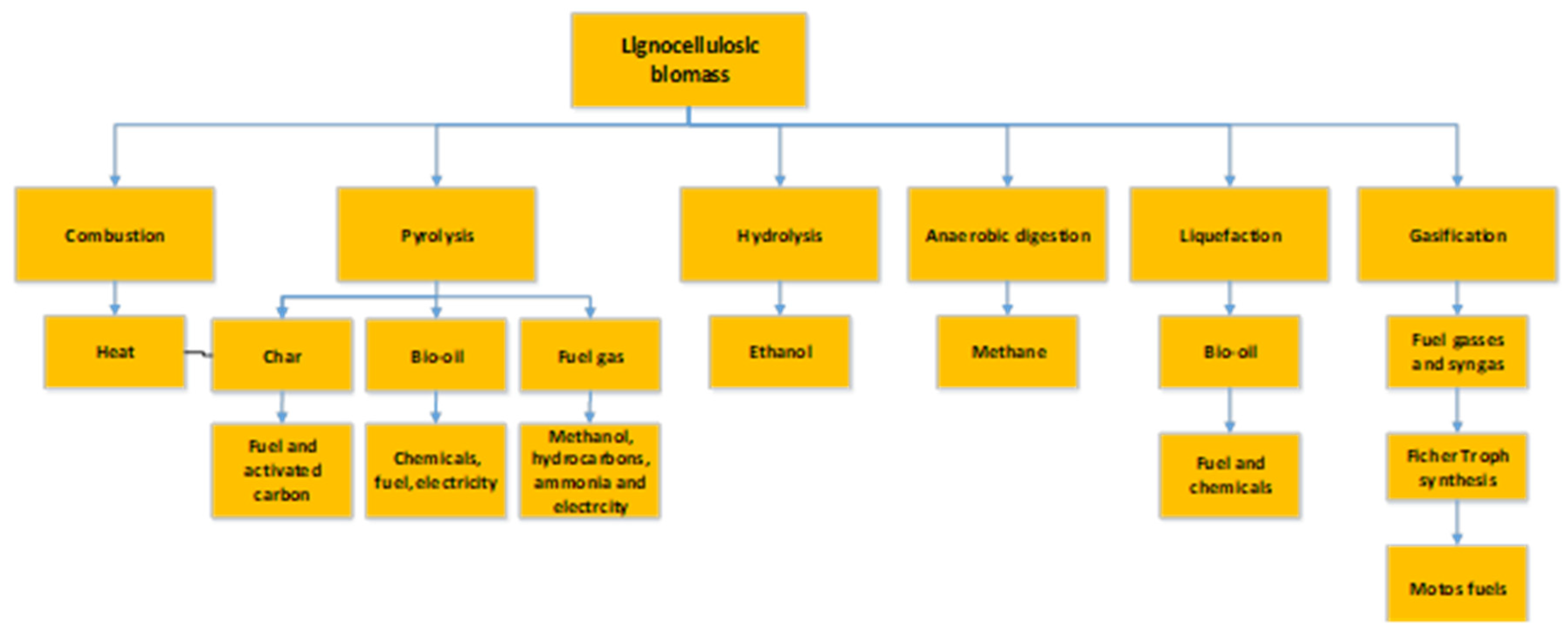
Figure 2.
Schematic diagram of temperature distribution and heat/mass transfer under conventional and microwave heating. Adapted from [42].
Figure 2.
Schematic diagram of temperature distribution and heat/mass transfer under conventional and microwave heating. Adapted from [42].
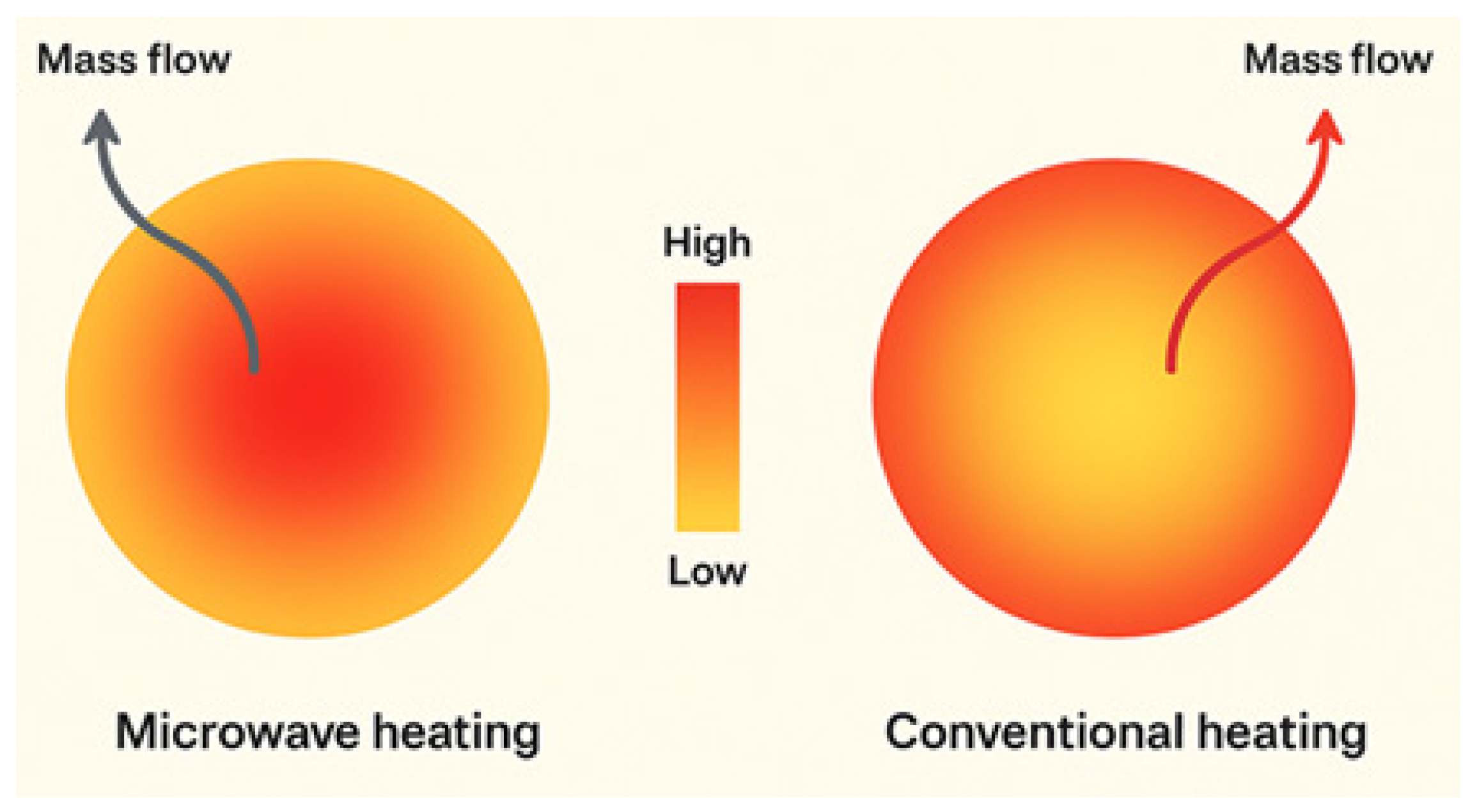
Figure 3.
Interaction of microwaves with various materials. Adapted from [52].
Figure 3.
Interaction of microwaves with various materials. Adapted from [52].
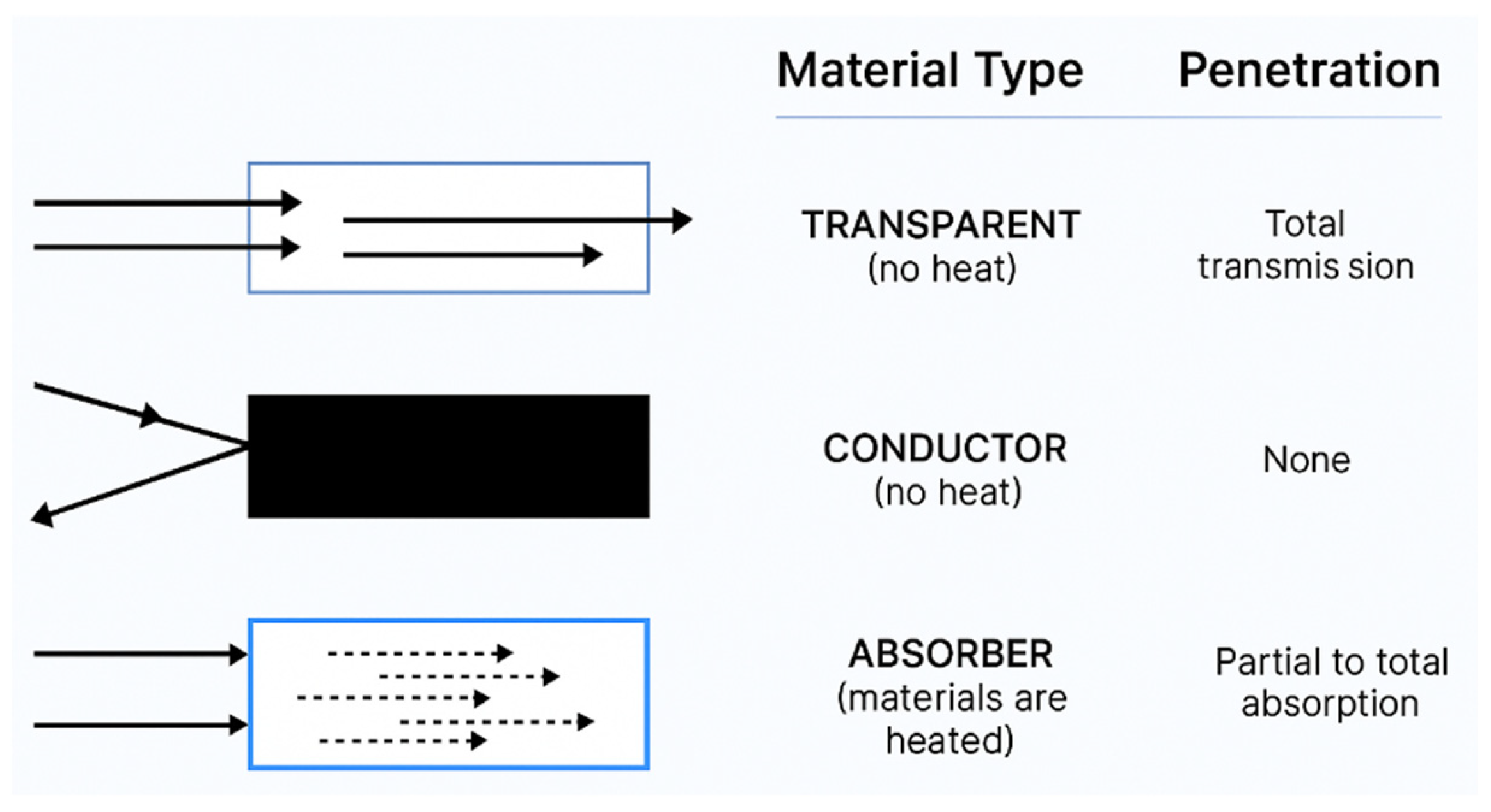
Figure 4.
Publications per year in the Scopus database.
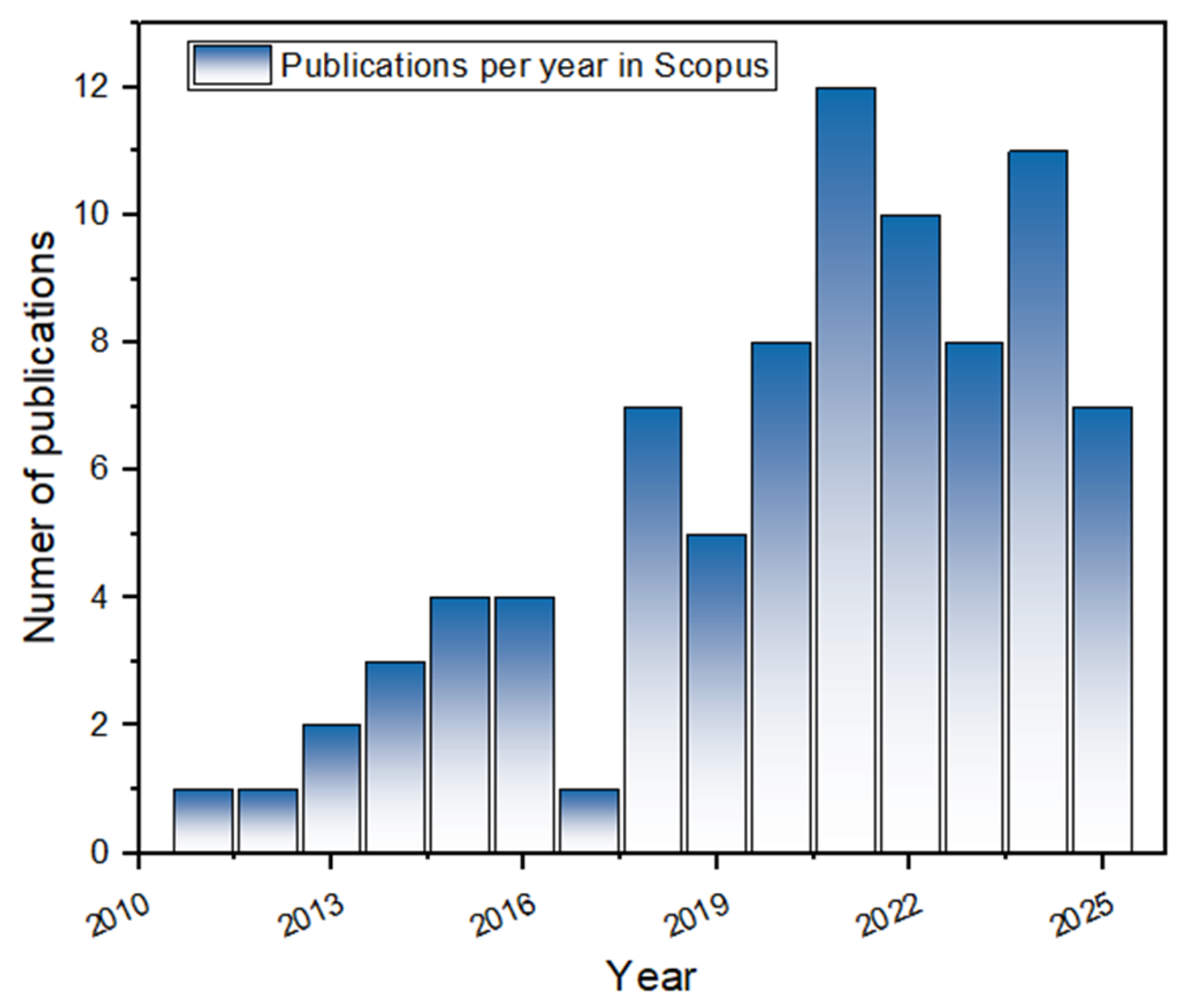
Figure 5.
Subject area publications in the Scopus database.
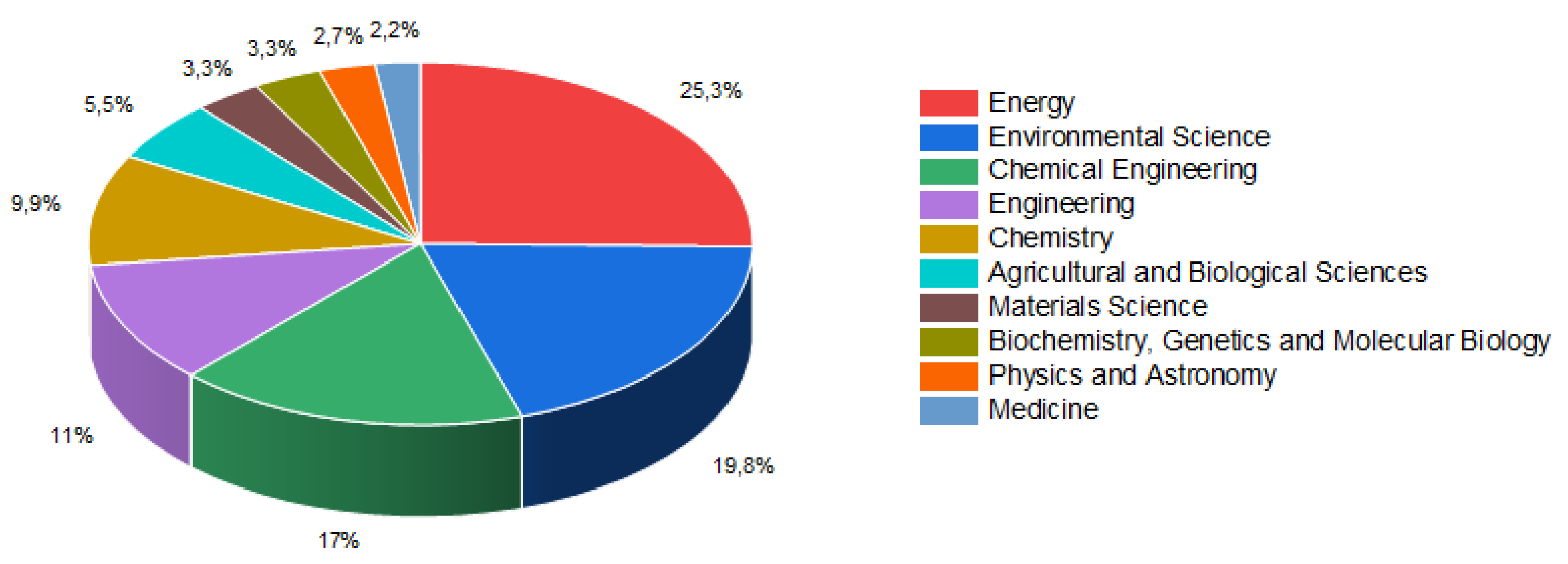
Figure 6.
Keywords in the Scopus database.
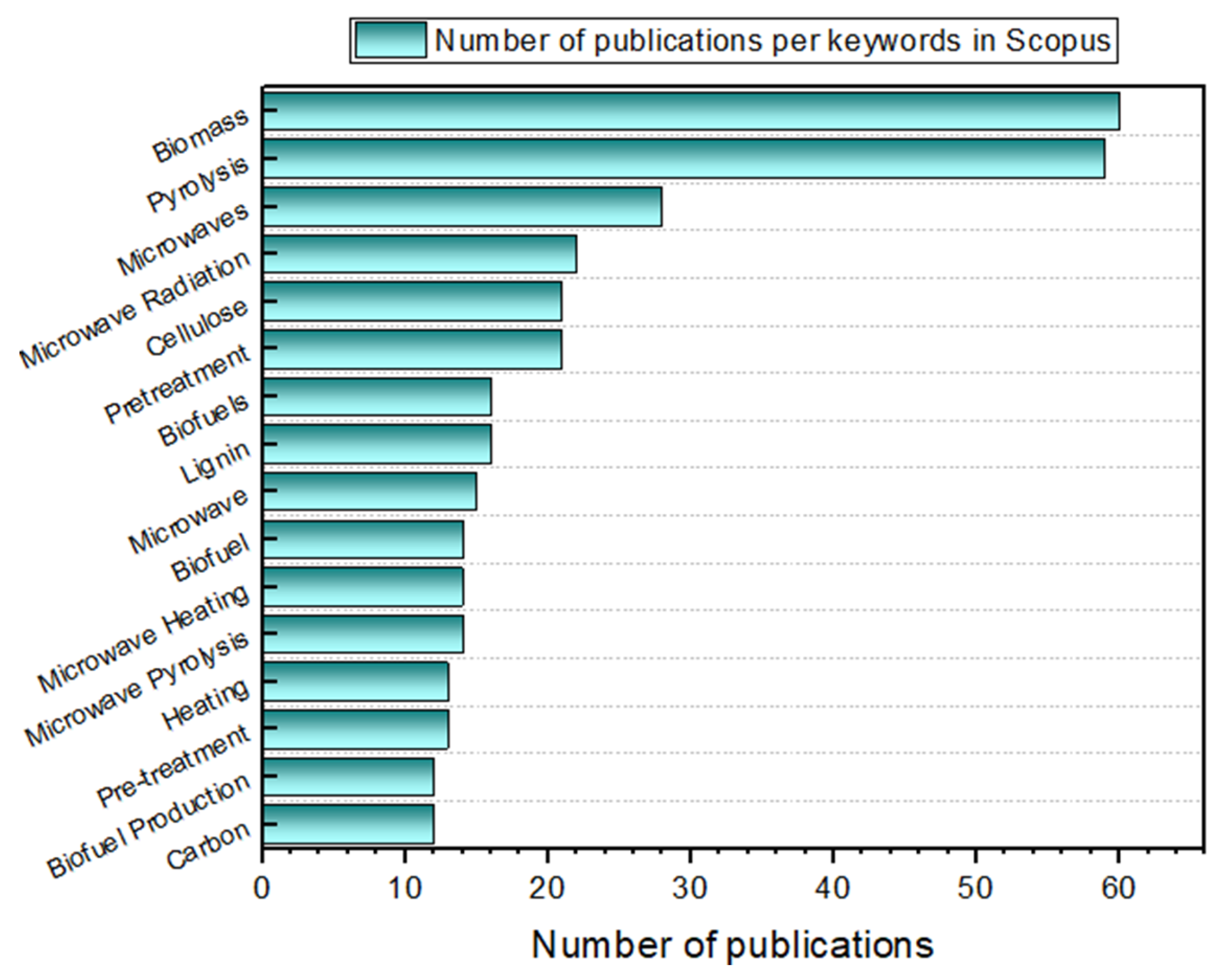
Figure 7.
Correlation keywords in the Scopus database.
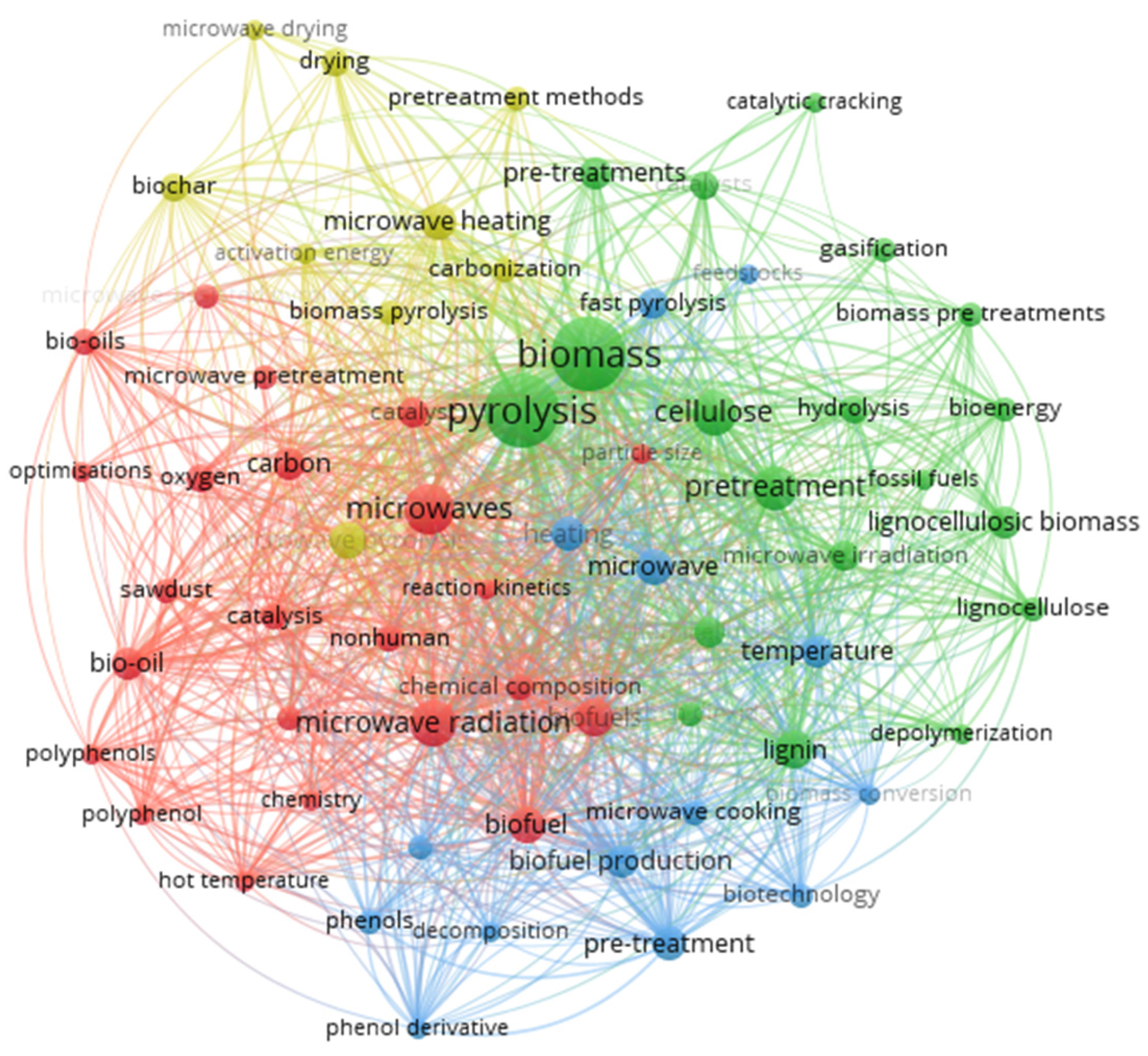
Figure 8.
Publications per country in the Scopus database.
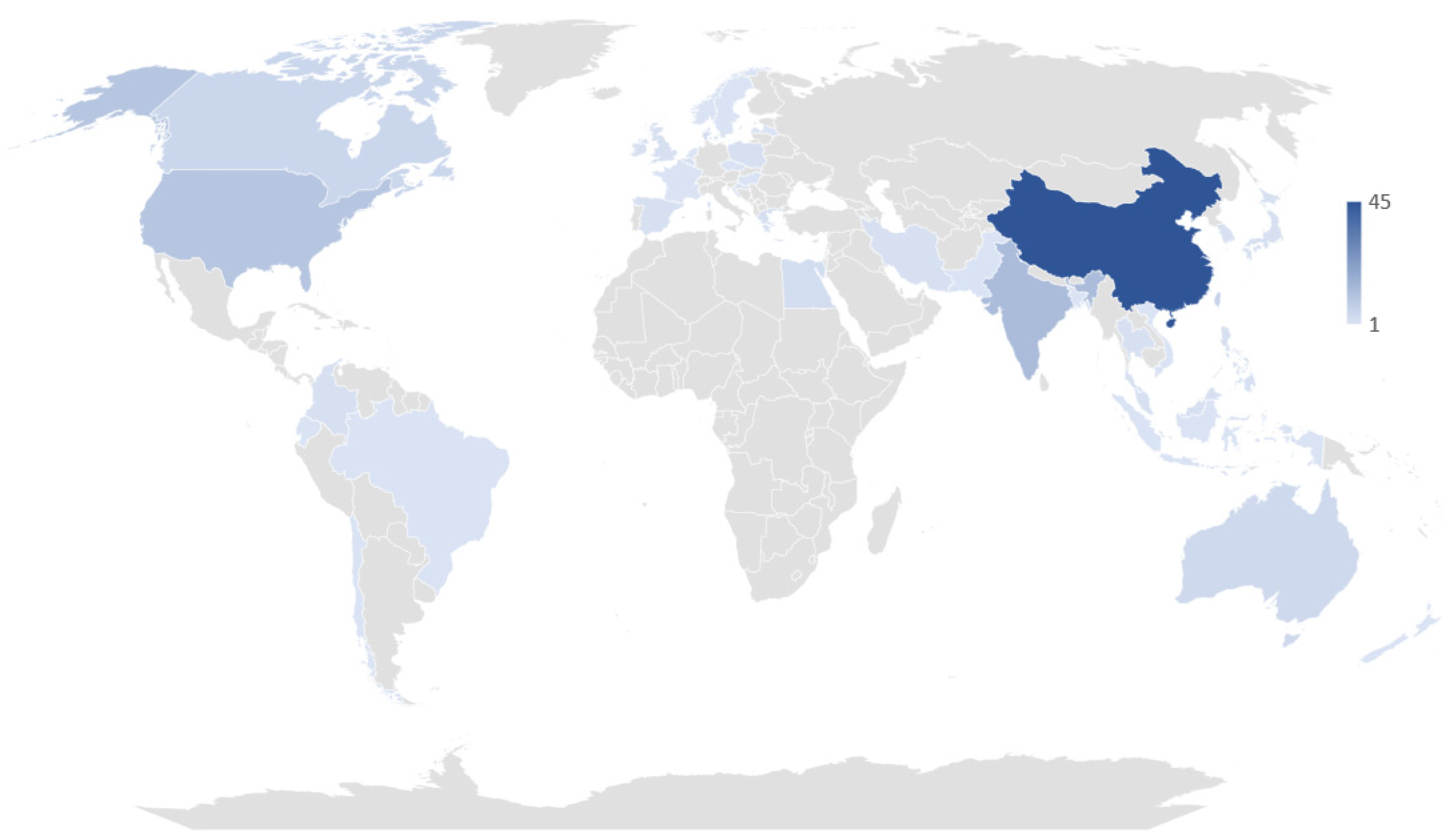
Figure 9.
Publications per affiliation in Scopus database.
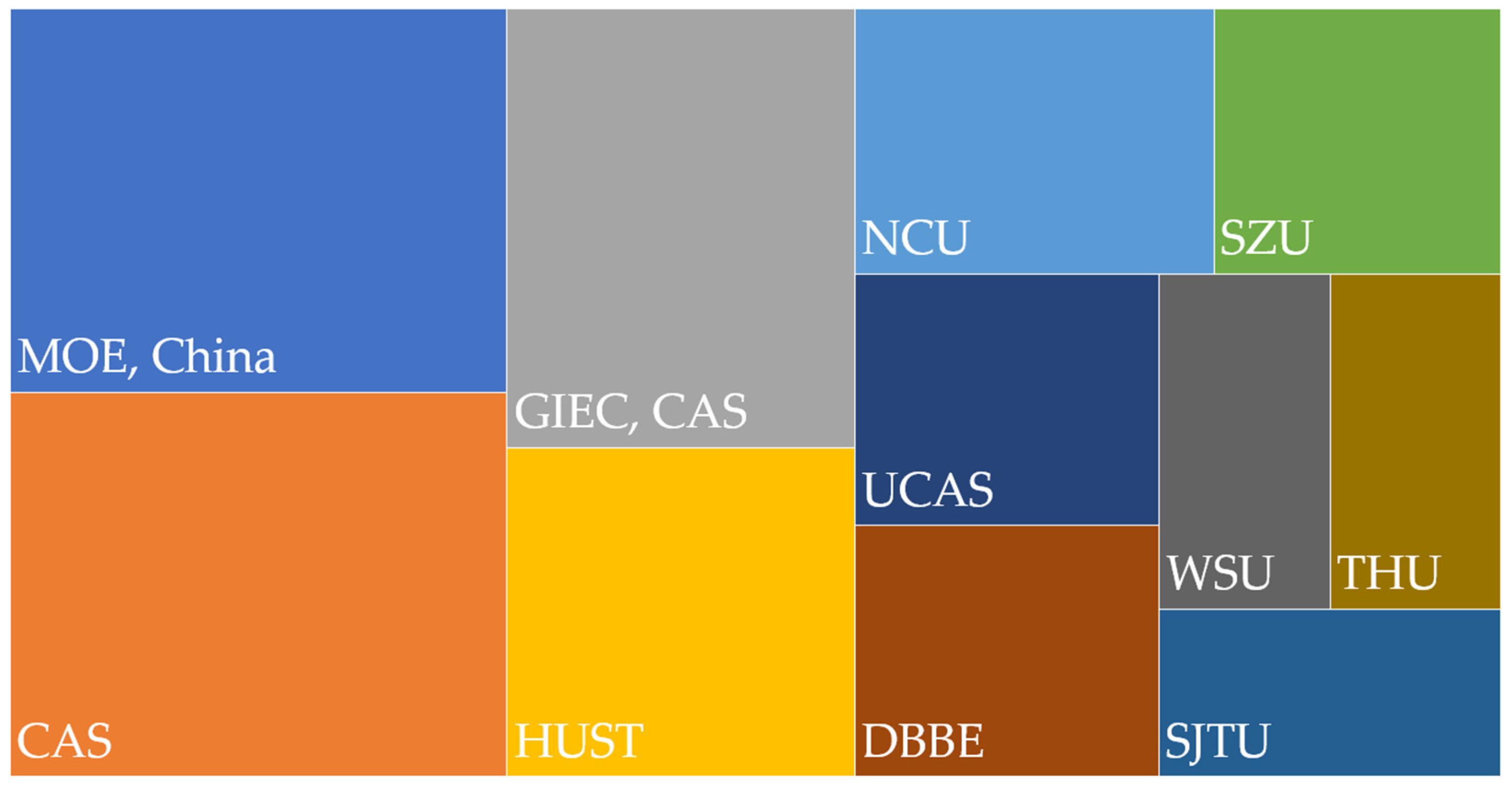
Figure 10.
Publications per funding sponsors in Scopus database.
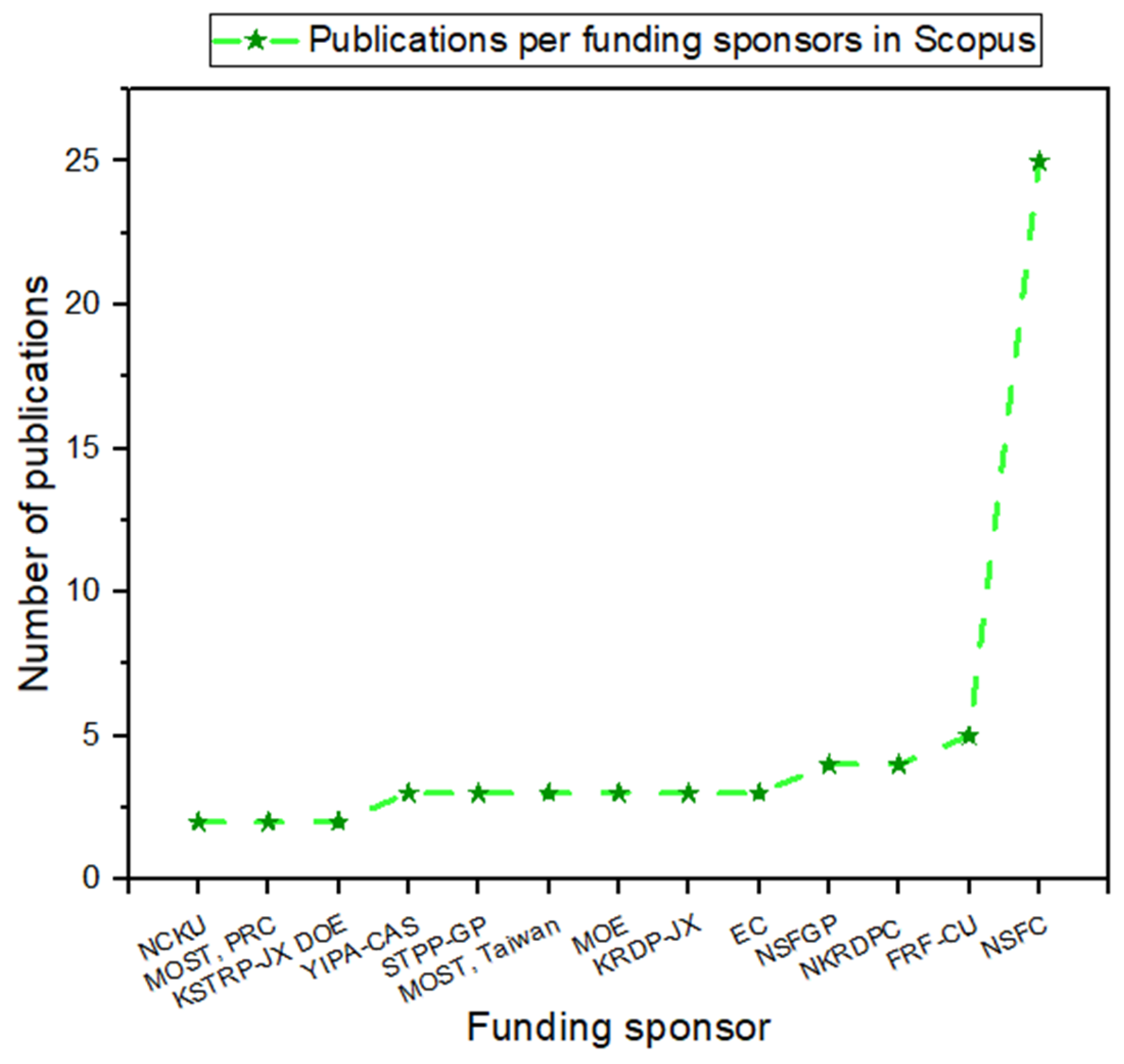
Figure 11.
Publications per funding sponsors in Scopus database.

| Conventional Heating | Microwave Heating |
| Energy transfer | Energy conversion |
| Surface heating by conduction, convection, and radiation | Volumetric and uniform core heating at the molecular level |
| Absence of hot spots | Presence of hot spots |
| Slow, inefficient, and limited | Fast and efficient |
| Lower electricity-to-heat conversion efficiency | Higher electricity-to-heat conversion efficiency |
| Non-selective | Selective |
| Less dependent on material properties | Dependent on material properties |
| Less controllable heating | Precise and controllable heating |
| Less flexible process | Flexible process |
| Less portable equipment | Portable equipment |
| Polluting process | Less polluting process |
| Higher thermal inertia | Lower thermal inertia |
Table 2.
Combination of microwave-assisted pretreatments applied to lignocellulosic biomass prior to pyrolysis.
Table 2.
Combination of microwave-assisted pretreatments applied to lignocellulosic biomass prior to pyrolysis.
| Combination | Key Findings | Ref. |
| Alkali | Rice straw pretreated with 4% NaOH and microwaves for 30 min showed 65% reduction in lignin and 88.7% reduction in silica, resulting in a 54.7% increase in biogas production. | [94] |
| Sugarcane bagasse treated with Ca(OH)2 under microwaves improved cellulose crystallinity and led to higher bio-oil yields in subsequent pyrolysis. | [64] | |
| Corn stover pretreated with NaOH and microwaves showed 72% delignification and increased enzymatic digestibility, enhancing downstream pyrolysis performance | [91] | |
| Corn cob treated with glycerol and microwaves at 150 W for 18 min exhibited ~189-fold increase in levoglucosan yield compared to untreated pyrolysis, due to effective delignification, demineralization, and selective removal of hemicellulose and lignin fractions. | [95] | |
| Grass pretreated with microwaves and alkalis (Na2CO3, Ca(OH)2, NaOH) enhanced enzymatic hydrolysis, yielding 82% glucose and 63% xylose. | [96] | |
| Acid | Rice straw pretreated with acid and alkali under microwaves removed hemicellulose and lignin, achieving ethanol yield of 61.3% (29.1 g/L). | [97] |
| Hardwood residues treated with dilute H2SO4 and microwaves (175 °C) increased cellulose recovery to >80% and reduced lignin content, facilitating higher yields of volatiles. | [98] | |
| Rice straw treated with acetic acid and NaOH under microwaves for simultaneous saccharification and fermentation (SSF) increased cellulose from 42.54% to 60.07%, while hemicellulose and lignin decreased to 14.90% and 4.52%, respectively. | [99] | |
| Sweet sorghum bagasse pretreated with 50 g/kg H2SO4 under microwaves at 180 W for 20 min reached total sugar yield of 820 g/kg and ethanol yield of 480 g/kg. | [100] | |
| Sawmill residues (fir, Scots pine, Douglas fir) pretreated with H2SO4 under microwaves (ethanol-water 60:40, 175 °C, 0.25% H2SO4) achieved cellulose yield of 82% ± 3% and purity of 71% ± 3%. | [101] | |
| Hydrothermal | Increased biomass moisture enhances microwave absorption via dielectric heating. | [102] |
| Microwave-assisted hydrothermal pretreatment enhanced hemicellulose solubilization in pinewood, improving sugar recovery and reducing char formation. | [103] | |
| Bamboo sawdust hydrothermally pretreated with microwaves removed more acetyl groups from hemicellulose than conventional hydrothermal treatment, resulting in 9.82% higher glucopyranose content and 4.12% lower acid content in pyrolysis. | [104] | |
| Ultrasound | Combined microwaves and ultrasound reduce particle size, increase exposed surface area, and improve accessibility of cellulose, hemicellulose, and oligosaccharides. | [74,105] |
| Combined MW-ultrasound pretreatment of agricultural residues enhanced porosity and surface exposure, boosting enzymatic hydrolysis and subsequent pyrolysis yields. | [55] | |
| Agricultural residues (olive and grape pomace) and wastewater sludge pretreated with microwaves and ultrasound showed enhanced surface area, selective lignin and wax degradation, improving enzymatic hydrolysis for biogas production. | [106] | |
| Ionic Liquids | Rubberwood treated with microwaves and ionic liquids (1-ethyl-3-methylimidazolium acetate & 1-butyl-3-methylimidazolium acetate) at 200 W achieved 85% biomass dissolution and 52% sugar yield. | [107] |
| Pretreatment of rubberwood with imidazolium-based ionic liquids under MW achieved >80% biomass dissolution and improved sugar release. | [108] |
Table 3.
Key environmental contributions of microwave pretreatment (before pyrolysis).
| Environmental/Sustainability Advantage | Why It Helps (Mechanism) | Ref. |
| Lower process energy via rapid, volumetric heating | Microwaves couple directly with dipoles/ions, cutting heat-up times and thermal losses vs. convective heating. | [59] |
| Less pre-drying / size-reduction energy | MAP tolerates higher moisture and larger particle sizes, avoiding energy-intensive drying and fine milling. | [55] |
| Integration of renewables | Microwaves are inherently electric—easy coupling to PV/wind or hybrid systems | [109] |
| Improved product selectivity → lower downstream upgrading burden | Selective, in-core heating and catalyst/absorber synergy yield higher-quality, lower-oxygen bio-oil, reducing hydrotreating severity and associated emissions. | [110] |
| Potential life-cycle GHG reduction (with biochar co-product) | Biochar/activated carbon from MAP can act as carbon sequestration; MAP systems can be designed for distributed conversion to cut transport emissions. | [111] |
| Reduced reagent intensity when paired with tunable pretreatments | MAP enhances physicochemical pretreatments (acid/alkali/organosolv/hydrothermal), enabling milder conditions or shorter times for delignification/demineralization. | [59,112] |
| Lower emissions from process intensification | Compact reactors, rapid start/stop, and targeted heating minimize off-gas/cooling loads relative to large, thermally massive units. | [55] |
| Valorization of wet/heterogeneous wastes | MAP handles moist, variable feedstocks (sludge, residues), enabling diversion from landfilling and fossil displacement. | [113] |
| Scalable routes to higher-surface-area biochar (adsorbents/soil) | Faster heating and localized hotspots can yield chars with higher surface area, supporting soil health, pollutant capture, and circular uses. | [110] |
Disclaimer/Publisher’s Note: The statements, opinions and data contained in all publications are solely those of the individual author(s) and contributor(s) and not of MDPI and/or the editor(s). MDPI and/or the editor(s) disclaim responsibility for any injury to people or property resulting from any ideas, methods, instructions or products referred to in the content. |
© 2025 by the authors. Licensee MDPI, Basel, Switzerland. This article is an open access article distributed under the terms and conditions of the Creative Commons Attribution (CC BY) license (http://creativecommons.org/licenses/by/4.0/).
Copyright: This open access article is published under a Creative Commons CC BY 4.0 license, which permit the free download, distribution, and reuse, provided that the author and preprint are cited in any reuse.


