1. Introduction
In today's rapidly evolving educational landscape, the concept of smart leadership has emerged as a critical factor in driving institutional excellence. Smart leadership is characterized by the ability to integrate technology, foster innovation, and enhance collaborative practices within organizations. This holistic approach not only addresses the immediate challenges faced by educational institutions but also aligns with long-term goals of sustainability and growth (Black, 2015). The attributes of smart leaders, such as adaptability, emotional intelligence, and strategic vision, play a pivotal role in shaping institutional culture and performance (Stine, 2023).
Research highlights that effective leadership in higher education significantly influences outcomes, like student satisfaction, faculty engagement, and overall academic performance (Chapdelaine, 2023). Leaders who adopt smart leadership practices often embrace data driven decision making, improving operational efficiency and fostering a culture of academic excellence. These leaders not only manage complex institutional dynamics but also inspire collective achievement through shared vision and collaboration.
Furthermore, smart leadership transcends traditional models by integrating emotional intelligence and spiritual awareness. Emotional intelligence enables leaders to forge deep connections with their teams, strengthening interpersonal relationships while cultivating a nurturing environment ripe for innovation. Spiritual leadership offers a broader perspective for ethical decision-making and community building, further enriching institutional excellence (Subhaktiyasa et al., 2023). This comprehensive leadership model is essential in adapting to the ever-changing nature of education.
Smart leadership is characterized by the ability to adapt to change, foster innovation, and leverage technology to enhance decision-making processes (Norman, 2019). Smart leadership is critical in fostering a positive organizational culture, enhancing employee engagement, and driving performance (Northouse, 2016).
In the context of higher education, embracing smart leadership becomes indispensable for addressing challenges driven by technological advancements and socio-economic change (Karam & Kitana, 2020). leaders who embody these qualities foster resilience, and a commitment to continuous improvement.
Moreover, the relationship between smart leadership and institutional excellence can be seen in the implementation of innovative educational practices and technologies that enhance learning experiences. As institutions strive to meet the demands of a globalized society, the role of smart leaders becomes increasingly vital in fostering an adaptive and forward-thinking institutional culture.
Given the dynamic nature of higher education, the exploration of smart leadership’s impact on institutional excellence is both timely and necessary. The insights derived from examining this relationship can inform policy makers, academic administrators, and educators, providing them with evidence-based strategies to bolster the effectiveness and resilience of their institutions. Consequently, this study aims to investigate the role of smart leadership in enhancing institutional excellence among Saudi universities, thereby contributing to a deeper understanding of leadership’s influence on academic success and long-term institutional sustainability.
2. Overview of the Study's Objectives
This study examines how effective rational, emotional, and spiritual leadership drives excellence in higher education by fostering organizational trust and psychological capital, which are vital for innovation (Amjad et al., 2025). Using a quantitative approach and Structural Equation Modeling with SmartPLS, it aims to identify practical, evidence-based leadership strategies. The findings contribute to academic discourse and provide actionable insights for policymakers and educators, supporting inclusive excellence through diversity and quality initiatives (Williams et al., 2005), ultimately redefining excellence and improving institutional performance.
The main objectives of this study are as follows:
To investigate the role of smart leadership through its dimensions (rational leadership, emotional leadership, and spiritual leadership) in achieving institutional excellence in Saudi universities.
To fill a gap in the literature by addressing the limited research on the specific impact of these smart leadership dimensions on institutional excellence, thereby enhancing our understanding of academic leadership.
To motivate further research by providing a conceptual framework and empirical insights that encourage additional studies on the influence of smart leadership in higher education.
To present a theoretical foundation and practical recommendations that delineate how rational, emotional, and spiritual leadership contribute to creating dynamic and high-performing academic institutions.
3. Background
Definition of Institutional Excellence
Institutional performance refers to a structured set of standards and processes designed to achieve strategic organizational objectives by enhancing efficiency and effectiveness. It involves a comprehensive evaluation of all institutional components, including governance structures, human capital, operational processes, and technological infrastructure. As a foundational element of institutional excellence, robust performance management enhances competitiveness and promotes innovation within organizations (Abdelgadir et al., 2022). To achieve this, many institutions implement established performance frameworks such as the Baldrige Criteria for Performance Excellence, which advocate for a systematic approach focused on measurable results, customer satisfaction, and workforce engagement (Baldrige Performance Excellence Program, 2021).
In the context of higher education, universities are pivotal institutions contributing to societal and intellectual advancement. Achieving high institutional performance in universities requires addressing multiple dimensions—namely education, research, and community engagement (El Araby, 2020). This is commonly facilitated through the deployment of Key Performance Indicators (KPIs) that assess the quality and impact of academic programs, research output, and societal contributions.
Furthermore, institutional excellence is intricately linked to student achievement and stakeholder satisfaction, highlighting its significance in educational research and policy (Kuh et al., 2010). As higher education institutions navigate dynamic global challenges, identifying and enhancing the drivers of institutional excellence becomes imperative for maintaining relevance and long-term sustainability.
4. Importance of Institutional Excellence in Higher Education
Achieving institutional excellence in higher education is essential for meeting the evolving demands of an increasingly interconnected and globalized world. This endeavor encompasses the delivery of high-quality education, the promotion of innovation, and responsiveness to diverse demographic needs. Institutions that pursue excellence are better positioned to adapt to the rapid transformations in economic, technological, and societal domains. In this context, effective leadership is essential for managing the multifaceted challenges inherent in higher education settings (Karam & Kitana, 2020).
In addition, the concept of inclusive excellence serves as a critical mechanism for reconciling the goals of access and quality. It supports the inclusion of historically underrepresented groups while enhancing the educational experiences of all students (Williams et al., 2005). By embedding inclusive practices into institutional culture, universities can reinforce operational effectiveness and strengthen community engagement, fostering an environment of continuous institutional enhancement.
The pursuit of excellence further necessitates strategic planning that aligns institutional resources and competencies with external expectations. Higher education institutions must develop flexible, innovation-oriented frameworks that can respond to shifting educational paradigms while upholding academic integrity and rigor (Ghasemy, 2021). This strategic congruence lays the groundwork for sustainable institutional success, positioning universities to navigate complex challenges and contribute meaningfully to societal progress.
5. Dimensions of Smart Leadership
Smart leadership is best understood as a complex strategy that weaves together various leadership styles and qualities to boost the efficacy of organizational management. It underscores the capacity of leaders to inspire, motivate, and empower individuals within an institution to work towards common objectives and enhance overall performance. Based on insights from the GLOBE Project, smart leadership entails several dimensions, including charismatic/value-based leadership that galvanizes commitment through shared values, team-oriented leadership that nurtures collaboration among members, and participative leadership that invites involvement in decision-making processes (GLOBE Project, 2020).
Astute leadership comprises a multitude of dimensions, each playing a distinctive role in the pursuit of institutional excellence. At the heart of rational leadership lies a commitment to data-informed decision-making and strategic foresight. Rational leaders apply logical reasoning and critical analysis to tackle intricate challenges, empowering their organizations to adapt and flourish amid competition. Dåderman et al. (2013) argue that a manager uses rational intelligence in traditional tasks and routine decisions in the organization. However, intelligent leaders care about other intelligence, and this is because rational intelligence is incompatible with concern for the spiritual aspects of subordinates. Instead, rationality focuses on performing tasks according to calculations and procedures thoughtfully, and therefore a leader’s possession of rational intelligence does not consistently lead to positive results.
Conversely, emotional leadership underscores the importance of emotional intelligence in nurturing interpersonal relationships and enhancing team dynamics. As noted in (Coronado-Maldonado & Benítez-Márquez, 2023), leaders who are sensitive to their own emotions as well as those of their team members can cultivate trust, improve collaboration, and foster a supportive atmosphere that encourages transparent communication. This ability is increasingly acknowledged as vital for effective leadership within today's educational milieu.
Adding depth to this framework, spiritual leadership addresses the moral and ethical dimensions inherent in leading others. As discussed in (Subhaktiyasa et al., 2023), it harmonizes physical, mental, emotional, and spiritual aspects, creating an environment where values like integrity and compassion steer decision-making. This approach instills a sense of purpose among team members, inspiring them to surpass expectations while positively impacting their organizational culture.
Together, these aspects construct a well-rounded framework for astute leadership that not only boosts institutional effectiveness but also encourages individual development among both students and staff.
Following the literature review, these hypotheses have been developed:
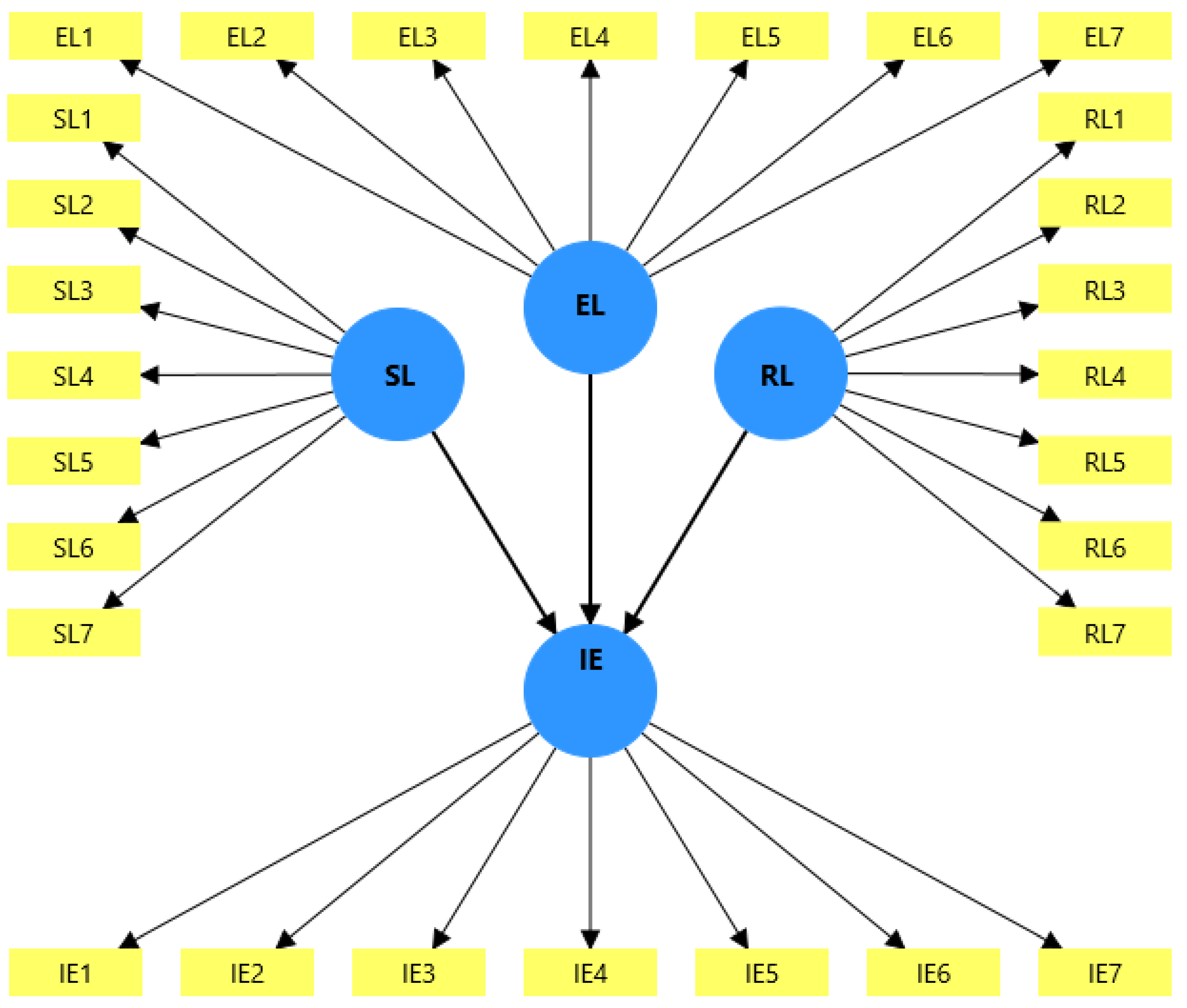
H1: There is a positive role for rational leadership in Advancing institutional excellence.
H2: There is a positive role for emotional leadership in Advancing institutional excellence.
H3: There is a positive role for spiritual leadership in Advancing institutional excellence.
Based on the developed hypotheses, the researchers developed the following model (see
Figure 1), which presents the relationship between Smart Leadership with its dimensions and institutional excellence:
6. Methodology
The aim of this study is to explore the role of smart leadership in achieving organizational excellence within North Private College of Nursing in Saudi Arabia. The selection of participants included students from NPCN, chosen randomly. This study has obtained approval from the Ethics Committee of NPCN, and the approval number for this study is NCN-25042025-35.
Ethical considerations played a crucial role in the participant selection journey. Verbal consent was secured from all individuals prior to their involvement in the study, in keeping with cultural practices where obtaining written consent may hinder participation, as referenced in (Shaban, 2024). This method cultivated trust and encouraged active involvement among participants.
The research adopted a quantitative research approach. To evaluate the research model and hypotheses, this study utilized a data collection method through an electronic questionnaire using the Google Forms platform, with questionnaires distributed randomly.
The questionnaire consisted of statements evaluated using a 5-point Likert scale. The appropriate sample size was determined by applying the "Robert Mason" equation (Mason, et al., 1998), which is represented by the following formula:
Based on the report from the Admissions and Registration Unit at the college, the total population by the end of the first semester of the 2024/2025 academic year was (2,443) male and female students. By substituting in the aforementioned equation, it was found that the appropriate sample size should exceed (333) students in order to be representative of the population and to generalize the results accordingly. After distributing the questionnaire to the study sample, a total of (502) questionnaires were retrieved, which constituted the final sample subjected to statistical analysis.
The measurement scale used in the study is detailed in
Table 2. The survey questions were adopted from previously validated scales, in accordance with the recommendations by (Van and Rose, 2015; Shaban, 2024). This approach contributes to achieving statistical reliability and validity.
To achieve the objectives of this study, researchers developed the Scale, comprising 28 items categorized into four dimensions: Rational Leadership, Emotional Leadership, Spiritual Leadership, and Institutional Excellence. Each dimension contained seven items.
The answers to the items were a 5-point Likert scale multiple-choice, ranging from 5 (strongly agree) to 1 (strongly disagree).
Table 1 shows different measures of the measurement scale fit for the constructs and model, including Cronbach’s alpha, average variance extracted (AVE), and composite reliability (CR).
The results of Cronbach’s alpha show that all constructs meet the internal consistency requirements, with most constructs having above 0.7 indicate good reliability and values between 0.6 and 0.7 can be recognized as additional indicators are good reliability (Mayers, 2013, Miremadi et al., 2020). On the other hand, the study relied on factor loadings to measure construct reliability, the criterion that specifies the rule of thumbs when performing factor loadings > 0.70. In addition, the factor loadings’ (FL) elements exceeded 0.70. For all components of the four variables, these exceeded the advised value and showed 0.70 with the exception of RL6, SL1, and SL6 where their percentage was less than 0.70.
The study used construct reliability and validity to establish construct validity using AVE, CR, discriminant validity, and finally, structural model improvement. Part of construct reliability and validity is used to improve the measurement model, where regression paths between second-order constructs are replaced with association paths using an iterative process (Zainudin, 2012; Santoso et al., 2023).
Furthermore, the evaluations of AVE and CR are based on the outputs of the optimal measurement model. The results meet the recommendations. AVE values greater than 0.5 indicate a good measure of convergent validity (Hair et al., 2021). However, if AVE is less than 0.5, CR > 0.80 alone is sufficient to assess construct validity (Santoso et al., 2023). Following the recommendations, CR values for all constructs were large and greater than 0.8, which meets the requirements of construct validity.
Table 2 shows the evaluations of AVE and CR. Moreover, discriminant validity was successful, which is assessed by verifying that the square root of AVE for second-order constructs is greater than the correlations between second-order constructs (Hair et al., 2023).
Table 2 shows the evaluation of discriminant validity. The diagonal values are the square roots of the AVE for each construct. The off-diagonal correlation values are the correlations between the constructs. The diagonal values are greater than the off-diagonal correlation values, which indicates that the constructs are distinct from each other.
The study’s results demonstrate that the findings are both valid and reliable. This is because the measurement model has good discriminant validity, which means that the constructs are distinct from each other. This is important because it allows the researchers to attribute the results of the study to the correct constructs.
Table 1.
Construct reliability and validity.
Table 1.
Construct reliability and validity.
| Variable |
Items |
Factor loading |
Cronbach alpha |
AVE |
CR |
| Rational Leadership (RL) |
RL1 |
0.754 |
0.925 |
0.693 |
0.932 |
| RL2 |
0.888 |
| RL3 |
0.890 |
| RL4 |
0.788 |
| RL5 |
0.806 |
| RL6 |
0.903 |
| RL7 |
0.786 |
| Emotional Leadership (EL) |
EL1 |
0.801 |
0.861 |
0.578 |
0.902 |
| EL2 |
0.850 |
| EL3 |
0.831 |
| EL4 |
0.823 |
| EL5 |
0.836 |
| EL6 |
0.634 |
| EL7 |
0.748 |
| Spiritual Leadership (SL) |
SL1 |
0.736 |
0.799 |
0.587 |
0.852 |
| SL2 |
0.866 |
| SL3 |
0.785 |
| SL4 |
0.723 |
| SL5 |
0.876 |
| SL6 |
0.697 |
| SL7 |
0.731 |
| Institutional Excellence (IE) |
IE1 |
0.750 |
0.896 |
0.618 |
0.902 |
| IE2 |
0.827 |
| IE3 |
0.844 |
| IE4 |
0.745 |
| IE5 |
0.812 |
| IE6 |
0.674 |
| IE7 |
0.835 |
Table 2.
Discriminant validity: Fornell-Larcker criterion.
Table 2.
Discriminant validity: Fornell-Larcker criterion.
| |
RL |
EL |
SL |
IE |
| RL |
0.833 |
|
|
|
| EL |
0.937 |
0.760 |
|
|
| SL |
0.931 |
0.901 |
0.622 |
|
| IE |
0.933 |
0.918 |
0.887 |
0.786 |
7. Analysis
The analysis was conducted using SmartPLS 4, while the descriptive analysis was conducted using SPSS and SEM using SmartPLS 4. The study used various literary sources, including statistical concepts, and SEM analysis. SEM is a potent statistical tool for analyzing intricate relationships among variables, allowing researchers to explore direct and indirect effects within theoretical frameworks, ideal for testing complex hypotheses and models. Finally, based on the analysis of survey data, the default model is well-fitting and ready for discussion of the results.
8. Results
Table 3 shows the optimal structural model; the fit quality statistics met the relevant criteria for the recommended model with the following values: Chi-Square/df = 3.724, Normed Fit Index (NFI) = 0.903, and Standardized Root Mean Square Residual (SRMR) = 0.072. These values are consistent with the thresholds commonly recommended in the literature: a Chi-Square/df ratio below 5.0 (indicating acceptable model fit), an NFI greater than 0.90 (reflecting good comparative fit), and an SRMR below 0.08 (indicating low residual differences).
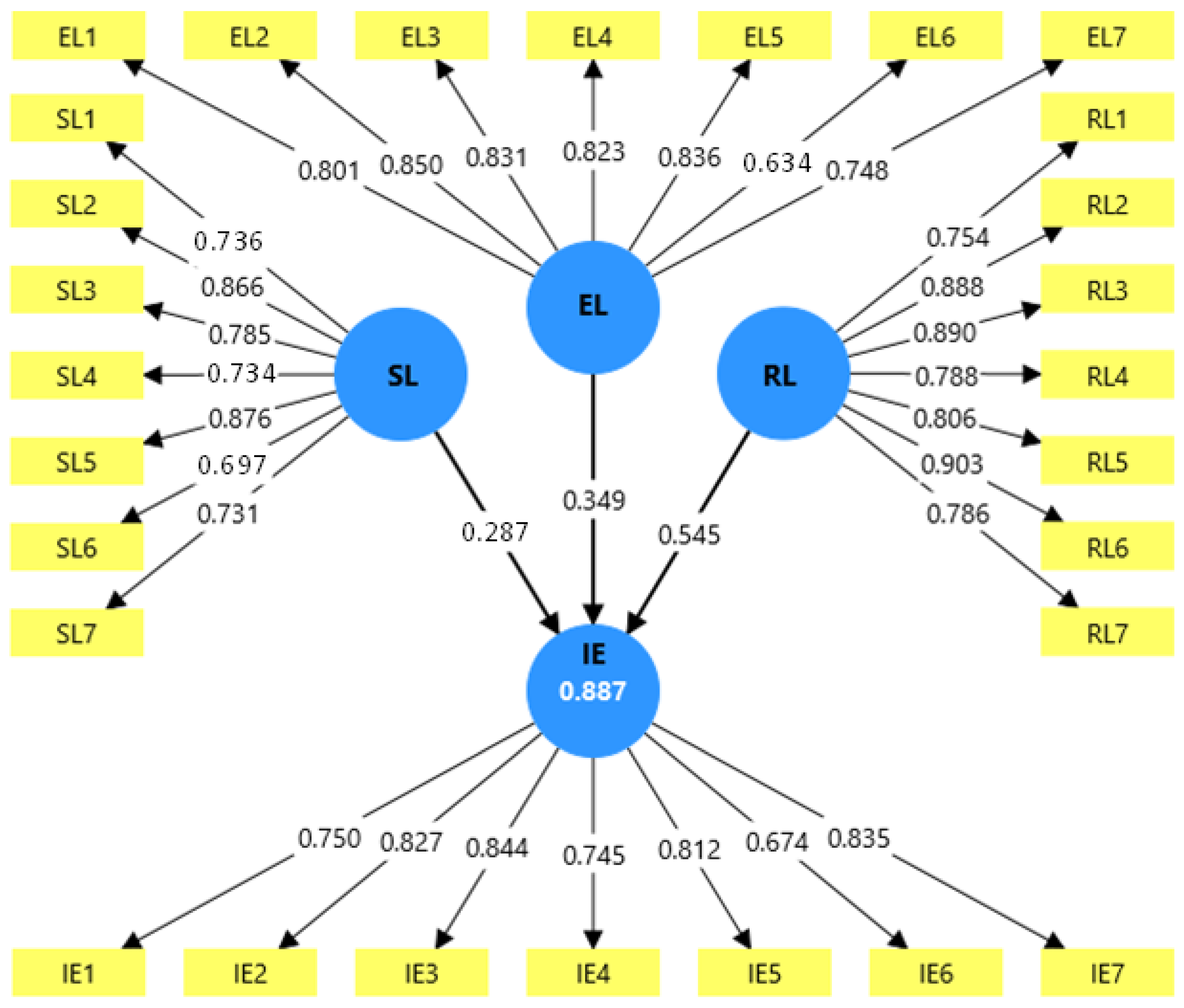
The results showed that all indicators met or exceeded the recommended values cited in relevant references and previous studies, allowing the researchers to conclude that the model used in this study is statistically valid and well-fitted. Furthermore, these results support the appropriateness of applying the model for hypothesis testing and suggest that the findings can be reliably published and generalized to the study population. Based on this statistical evaluation of model fit, the study proceeds to discuss the tested hypotheses and their outcomes as presented in
Table 4 (see
Figure 2).
H1: There is a positive role for rational leadership in Advancing institutional excellence.
This hypothesis was supported by the results (T-statistics = 13.814; P < 0.05 = 0.000; path coefficient (β) = 0.545). This indicates that rational leadership (RL) has a statistically significant and positive impact on institutional excellence (IE). The high T-value confirms the strength and reliability of the relationship, while the very low P-value (< 0.001) suggests that the observed effect is not due to chance.
Moreover, the path coefficient (β = 0.545) reflects a strong direct influence of rational leadership on institutional excellence, highlighting it as a key driver in achieving institutional excellence within the context studied. Among the Smart leadership dimensions examined, this result suggests that rational leadership is a critical factor that contributes significantly to the overall advancement and performance of the institution.
H2: There is a positive role for emotional leadership in Advancing institutional excellence.
This hypothesis was supported by the results (T-statistics = 9.334; P < 0.05 = 0.000; path coefficient (β) = 0.349). This indicates that emotional leadership (EL) has a statistically significant and positive impact on institutional excellence (IE). The relatively high T-value reinforces the robustness of the relationship, and the extremely low P-value confirms that this effect is highly significant and unlikely to have occurred by chance.
Furthermore, the path coefficient (β = 0.349) also indicates that emotional leadership comes in second place, and suggests a moderate but meaningful positive influence of emotional leadership on institutional excellence. This implies that the ability of leaders to manage emotions, build strong interpersonal relationships, and foster a positive emotional climate within the institution contributes notably to improving institutional performance and excellence. Among the smart leadership dimensions examined in this study, emotional leadership emerges as an essential element that supports institutional growth by enhancing employee engagement, satisfaction, and organizational culture.
H3: There is a positive role for spiritual leadership in Advancing institutional excellence.
This hypothesis was supported by the results (T-statistics = 6.775; P < 0.05 = 0.000; path coefficient (β) = 0.287). This indicates that spiritual leadership (SL) has a statistically significant and positive impact on institutional excellence (IE). The T-value of 6.775 confirms the strength of the relationship, and the P-value of 0.000 indicates that the effect is highly significant and not due to random chance.
The path coefficient (β = 0.287) indicates that spiritual leadership comes in third place, and reflects a moderate positive influence of spiritual leadership on institutional excellence. This suggests that while spiritual leadership is not the most dominant factor, it still plays a meaningful and supportive role in advancing institutional excellence. Within the broader framework of smart leadership, this result highlights the importance of leaders’ spiritual intelligence in fostering a supportive environment that enhances institutional performance and sustainability.
9. Discussion and Interpretation of Results
The results of this study illuminate the profound impact that smart leadership has on institutional excellence across various dimensions, with rational, emotional, and spiritual leadership all playing integral roles. Rational leadership cultivates an environment grounded in data, facilitating informed decision-making and boosting organizational effectiveness—an alignment evident in previous research (Irfan et al., 2022). Emotional leadership enriches interpersonal dynamics within educational environments, fostering trust and collaboration among both staff and students, a finding supported by insights into knowledge-oriented leadership (Atif et al., 2025). Spiritual leadership proves its worth by nurturing a collective vision and shared values among stakeholders, thereby deepening commitment to the institution's objectives and creating an atmosphere ripe for excellence.
There is a positive role for rational leadership in institutional excellence by R= 0.545. This can be explained by the fact that institutional excellence is often linked to the effectiveness of internal frameworks, policies, and procedures. Rational leadership contributes to optimizing these elements by fostering a culture of planning, performance measurement, and continuous improvement. In this context, rational leadership emerges as a core dimension of smart leadership, facilitating strategic alignment and effective resource management—both of which are essential for institutional growth and sustainability. These findings are consistent with similar research, such as studies by Karam and Kitana (2020), which findings indicated that transformational leadership had the most substantial positive effect. While the study primarily focused on transformational leadership, it also acknowledged the significance of other styles, including rational approaches, in enhancing institutional frameworks, policies, and procedures.
There is a positive role for emotional leadership in institutional excellence by R= 0.349. This can be attributed to the fact that institutional excellence is not only a function of systems and strategies but also of people and culture. Emotional leadership enhances organizational climate by improving communication, boosting morale, and increasing employee engagement. When employees feel emotionally supported and valued, they are more likely to contribute positively, remain committed, and align themselves with the institution's goals. These findings align with contemporary research, such as Strugar Jelača et al. (2022), which demonstrate that managers’ emotional competencies significantly enhance organizational performance by influencing morale, employee engagement, and operational effectiveness, Additionally, Kwalipo (2025) emphasizes the value of emotional intelligence in leadership within higher education, noting that it fosters trust, collaboration, and continuous improvement. Therefore, emotional leadership stands as a critical complement to rational leadership, reinforcing a holistic approach to smart leadership that balances logic with empathy to drive institutional success.
There is a positive role for spiritual leadership in institutional excellence by R= 0.287. This can be explained by the fact that spiritual leadership—rooted in values such as vision, altruistic love, integrity, and a sense of purpose—plays a critical role in creating a deeply committed and value-driven organizational culture. Such a culture promotes employee well-being, strengthens ethical practices, and encourages alignment between individual and institutional goals. Leaders who demonstrate spiritual intelligence tend to foster trust, inspire intrinsic motivation, and promote a shared sense of purpose—all of which are essential for long-term sustainability and performance. Within the context of smart leadership, this finding highlights that spiritual leadership complements rational and emotional dimensions, contributing to a holistic leadership approach. These results align with prior studies, such as those by Salehzadeh et al. (2015) found that spiritual leadership significantly influences organizational performance by promoting a sense of calling and membership among employees. Similarly, Fry et al. (2016) demonstrated that spiritual leadership positively affects organizational commitment and productivity, as evidenced in Baldrige Award-winning organizations, These findings suggest that spiritual leadership fosters an environment of trust and intrinsic motivation, aligning individual and organizational goals. While the correlation coefficient indicates a moderate relationship, it highlights the complementary role of spiritual leadership alongside rational and emotional leadership dimensions, contributing to a holistic approach to achieving institutional excellence.
10. Implications for Theory and Practice
The main contribution of this study lies in exploring the role of smart leadership—comprising rational, emotional, and spiritual leadership—in advancing institutional excellence within higher education institutions. This study addresses a clear gap in the existing literature, especially in the context of integrating multi-dimensional leadership models with institutional performance outcomes. By empirically validating the impact of each leadership dimension, the study offers a theoretical advancement that enables future researchers to compare and build on these findings across different institutional and cultural settings.
From a practical perspective, the findings provide valuable insights for university leadership and administrative bodies. Management teams can utilize these results to develop targeted leadership development programs that emphasize strategic planning, emotional intelligence, and spiritual values to enhance institutional effectiveness and sustainability. In addition, the study’s outcomes can benefit faculty and academic leaders by encouraging a leadership style that promotes motivation, collaboration, and a shared vision, ultimately contributing to improved teaching quality, student satisfaction, and institutional competitiveness.
11. Limitations and Suggestions
The researchers encountered several limitations during the course of this study. Firstly, there was a scarcity of prior empirical studies specifically addressing the role of smart leadership—encompassing rational, emotional, and spiritual dimensions—in the context of nursing education and institutional excellence, especially in Saudi environment.
A second limitation concerns the sample size and scope. The study was conducted among students in a single College of Nursing (North Private College of Nursing), which restricts the generalizability of the findings. Broader participation across different colleges, institutions, or regions would allow for a more comprehensive understanding of the phenomena. Concentrating on specific organizations or sectors may obscure broader understandings of smart leadership, as highlighted in (Mouazen et al., 2023). Additionally, the limited time frame available for data collection posed constraints on participant recruitment and depth of analysis.
Moreover, cultural and institutional factors inherent to the Saudi educational environment may have influenced the results as indicated by observations in (Canavesi & Minelli, 2021). As such, the applicability of the findings to other national or international contexts should be approached with caution. Variations in leadership styles, organizational structures, and cultural expectations could lead to different outcomes in other settings.
Future studies are encouraged to replicate this research across diverse academic disciplines and institutional types to assess the consistency of smart leadership’s impact on institutional excellence. Longitudinal research would also be valuable in capturing shifts in perception over time. To mitigate potential response biases such as social desirability or authority influence—especially relevant when surveying students about institutional leadership—future researchers should ensure anonymity, diversify data collection methods, and consider triangulating survey data with interviews or observational techniques.
12. Conclusions
The aim of this study was to investigate the role of smart leadership—through its dimensions of rational leadership, emotional leadership, and spiritual leadership—in advancing institutional excellence in higher education institutions. The study targeted students from North Private College of Nursing. A quantitative research methodology was adopted, and data were collected through an online survey distributed via Google Forms. Out of 502 distributed questionnaires, returned, and valid for analysis. The data were analyzed using Structural Equation Modeling (SEM) through SmartPLS 4.
The results demonstrated that all three dimensions of smart leadership have a statistically significant and positive impact on institutional excellence. Rational leadership emerged as the most influential factor, followed by emotional leadership, and then spiritual leadership. These findings highlight the multidimensional nature of effective leadership in driving institutional performance and quality. In conclusion, this study provides valuable insights for institutional leaders and faculty members, supporting the development of leadership strategies that foster organizational growth, sustainability, and excellence in the higher education sector.
Final Thoughts on Smart Leadership's Role in Institutional Excellence
Smart leadership emerges as a foundational paradigm for realizing institutional excellence, particularly in the context of higher education, which is marked by constant and complex change. This comprehensive approach to leadership involves various dimensions—rational, emotional, and spiritual—that collectively enhance the operational core of educational institutions. Numerous studies, as (Williams et al., 2005), and (Saad Alessa, 2021), demonstrate that transformational leadership is closely associated with improved organizational performance and increased employee engagement. The essence of smart leadership goes beyond simple decision-making; it focuses on creating an inclusive environment that motivates every member to contribute their best efforts.
By adopting the principles of servant leadership (as noted in (Irfan et al., 2022), educational leaders can cultivate a culture that prioritizes the needs of both faculty and students, ultimately resulting in greater job satisfaction and a stronger commitment to the institution's goals. This approach aligns with the necessity for continuous adaptation in response to changing student demographics and societal pressures—highlighting the vital role of innovative teaching strategies and curricula that respond to community needs.
In summary, smart leadership represents more than just a set of practices; it embodies a transformative shift toward an adaptive mindset that regards inclusivity and innovation as essential principles for sustaining excellence within higher education institutions. By integrating traditional methodologies with contemporary demands, leaders can ensure that their institutions not only survive but thrive amidst uncertainty.
References
- Black, S. A. Qualities of Effective Leadership in Higher Education. Open Journal of Leadership 2015, 4, 54–66. [Google Scholar] [CrossRef]
- Stine, J. (2023). Unlocking Success: Key Qualities of Academic Leaders in Shaping Higher Education's Future.
- Chapdelaine, A. (2023). Applying Sustainability to Presidential Leadership, In “Sustainable Futures for Higher Education”.
- Subhaktiyasa, P. G. , Sintari, S. N. N., Lede, Y. U., Sumaryani, N. P., Andriana, K. R. F., & Wati, W. S. Effect of Transformational Leadership, Servant Leadership, and Spiritual Leadership on Organizational Citizenship Behavior. Jurnal Organisasi Dan Manajemen 2023, 19, 224–238. [Google Scholar] [CrossRef]
- Norman, B. Faculty Leadership and Institutional Resilience: Indicators, Promising Practices, and Key Questions. Change: The Magazine of Higher Learning 2019, 51, 48–54. [Google Scholar] [CrossRef]
- Northouse, P. G. (2016). Leadership: Theory and Practice.
- Karam, A.A. , & Kitana, A. An Exploratory Study to Identify the Impact of Leadership Styles on Achieving Institutional Excellence in the Public Sector: United Arab Emirates. International Journal of Biometrics 2020, 15, 16. [Google Scholar] [CrossRef]
- Amjad, S. , Yasin, R., Munir, Y. & Atif, M. (2025). Knowledge-oriented leadership, organizational trust and psychological capital: a gateway to innovative performance: a multisource approach. Management Research Review. [CrossRef]
- Williams, D. A. , Berger, J. B., & McClendon, S. A. (2005). Toward a Model of Inclusive Excellence and Change in Postsecondary Institutions.
- Abdelgadir, W. A. , Al-Dirawi, A., & AL-Shehri, B. A. S. Administrative Governance and its Role in Institutional Excellence Case Study - King Khalid University of Saudi Arabia. Journal of Economics, Finance and Management Studies 2022, 5, 3573–3591. [Google Scholar] [CrossRef]
- Baldrige Performance Excellence Program. (2021). 2021–2022 Baldrige Excellence Framework (Education): Proven Leadership and Management Practices for High Performance. Gaithersburg, /: Department of Commerce, National Institute of Standards and Technology. https.
- El Araby, M.A. , & Ayaad, N.E.S. Dilemma of institutional performance assessment in governmental sector: A proposed KPIs model. Journal of Humanities and Applied Social Sciences 2020, 2, 115–139. [Google Scholar] [CrossRef]
- Kuh, G. D. , Kinzie, J., Buckley, J. A., Bridges, B. K., & Hayek, J. C. (2006). What Matters to Student Success: A Review of the Literature: Commissioned Report for the National Symposium on Postsecondary Student Success.
- Ghasemy, M. , Mohajer, L., Frömbling, L., & Karimi, M. Faculty Members in Polytechnics to Serve the Community and Industry: Conceptual Skills and Creating Value for the Community—The Two Main Drivers. SAGE Open 2021, 11, 1–13. [Google Scholar] [CrossRef]
- GLOBE Project. (2020). An overview of the 2004 study: Understanding the Relationship Between National Culture, /: Effectiveness and Desirable Leadership Attributes. https, 2004.
- Dåderman, A. M. , Ronthy, M., Ekegren, M., & Mårdberg, B. E. Managing with my Heart, Brain and Soul: The Development of the Leadership Intelligence Questionnaire. Journal of Cooperative Education and Training 2013, 47, 61–106. [Google Scholar]
- Coronado-Maldonado, I. , & Benítez-Márquez, M. D. Emotional intelligence, leadership, and work teams: A hybrid literature review. Heliyon 2023, 9, e20356. [Google Scholar] [CrossRef] [PubMed]
- Subhaktiyasa. P. G., Andriana, K. R., Sintari, S. N., Wati, W. S., Sumaryani. N. P., & Lede, Y. U. The Effect of Transformational Leadership, Servant Leadership, and Spiritual Leadership on Organizational Citizenship Behavior. Jurnal Organisasi dan Manajemen 2023, 19, 224–238. [Google Scholar]
- Mason, R. , Lind, D., & Marchal, W. (1998). Statistical Techniques in Business and Economics.
- Van, C. , & Rose, J. Risky business: Factor analysis of survey data—assessing the probability of incorrect dimensionalisation. PloS One 2015, 10, e0118900. [Google Scholar] [CrossRef]
- Shaban, E. A. The role of strategic agility in achieving organizational excellence in Jordanian universities. Cogent Business & Management. [CrossRef]
- Mayers, A. (2013). Introduction to statistics and SPSS in psychology.
- Miremadi, M. , Bandari, R., Heravi-Karimooi, M., Rejeh, N., Sharif Nia, H., & Montazeri, A. The Persian short form Aging Perceptions Questionnaire (APQ-P): A validation study. Health and quality of life outcomes 2020, 18, 7. [Google Scholar] [CrossRef] [PubMed]
- Zainudin, A. (2012). The Second Order Confirmatory Factor Analysis. In A Handbook on SEM; UiTM Press: Shah Alam, Malaysia.
- Santoso, N. P. L. , Sunarjo, R. A., & Fadli, I. S. Analyzing the factors influencing the success of business incubation programs: A SmartPLS approach. ADI Journal on Recent Innovation (AJRI) 2023, 5, 60–71. [Google Scholar] [CrossRef]
- Hair, J. F. , Jr, Hult, G. T. M., Ringle, C. M., Sarstedt, M., Danks, N. P., & Ray, S. (2021). Partial least squares structural equation modeling (PLS-SEM) using R: A workbook.
- Hair, J. F. , Jr, Sarstedt, M., Ringle, C. M., & Gudergan, S. P. (2023). Advanced issues in partial least squares structural equation modeling.
- Strugar Jelača, M. , Bjekić, R., Berber, N., Aleksić, M., Slavić, A., & Marić, S. Impact of Managers’ Emotional Competencies on Organizational Performance. Sustainability 2022, 14, 8800. [Google Scholar] [CrossRef]
- Mbangula, D. K. Examining the Intersections between Emotional Intelligence and Leadership Practices in Higher Education Institutions to Improve Institutional Success. Innovare Journal of Education 2025, 13, 1–6. [Google Scholar] [CrossRef]
- Salehzadeh, R. , Pool, K. J., Lashaki, K. J., Dolati, H., & Jamkhaneh, B. H. Studying the effect of spiritual leadership on organizational performance: an empirical study in hotel industry. International Journal of Culture, Tourism and Hospitality Research 2015, 9, 346–359. [Google Scholar] [CrossRef]
- Fry, L. W. , Latham, J. R., Clinebell, S. K., & Krahnke, K. Spiritual leadership as a model for performance excellence: a study of Baldrige award recipients. Journal of Management, Spirituality & Religion 2016, 14, 22–47. [Google Scholar] [CrossRef]
- Mouazen, A. M. , Hernández-Lara, A. B., Abdallah, F., Ramadan, M., Chahine, J., Baydoun, H., & Bou Zakhem, N. Transformational and Transactional Leaders and Their Role in Implementing the Kotter Change Management Model Ensuring Sustainable Change: An Empirical Study. Sustainability 2024, 16, 16. [Google Scholar] [CrossRef]
- Canavesi, A. , & Minelli, E. Servant Leadership and Employee Engagement: A Qualitative Study. Employee Responsibilities and Rights Journal 2022, 34, 413–435. [Google Scholar] [CrossRef] [PubMed]
- Alessa, S. G. The Dimensions of Transformational Leadership and Its Organizational Effects in Public Universities in Saudi Arabia: A Systematic Review. Systematic Review. Front. Psychol 2021, 12, 682092. [Google Scholar] [CrossRef]
- Irfan, M. , Salameh, A. A., Saleem, H., Naveed. T. R., Dalain, A. F., & Shahid, R. M. Impact of servant leadership on organization excellence through employees’ competence: Exploring a cross-cultural perspective. Front. Environ. Sci, 8543. [Google Scholar] [CrossRef]
|
Disclaimer/Publisher’s Note: The statements, opinions and data contained in all publications are solely those of the individual author(s) and contributor(s) and not of MDPI and/or the editor(s). MDPI and/or the editor(s) disclaim responsibility for any injury to people or property resulting from any ideas, methods, instructions or products referred to in the content. |
© 2025 by the authors. Licensee MDPI, Basel, Switzerland. This article is an open access article distributed under the terms and conditions of the Creative Commons Attribution (CC BY) license (http://creativecommons.org/licenses/by/4.0/).