Preprint
Review

This version is not peer-reviewed.

Antimicrobial Materials Used in Coating Dental Implant Surfaces: State of Art and Future Prospectives

Submitted:

01 September 2025

Posted:

02 September 2025

You are already at the latest version

Abstract

This review presents a comprehensive overview of dental materials that support tissue healing while exhibiting antimicrobial properties. Emphasis is placed on materials that are biocompatible, bioactive, and non-toxic to host cells, with demonstrated bacteriostatic and bactericidal activity. The review summarizes current research on natural bactericides, antimicrobial polymers, and bioactive glass/polymer composites, along with various techniques employed for surface coating of dental implants. Three principal categories of antimicrobial coatings have been identified: antibacterial phytochemicals, synthetic antimicrobial agents (including polymers and antibiotics), and metallic nanoparticles. Among these, antibacterial peptide-based coatings have been the most extensively studied and have shown the greatest effectiveness in reducing bacterial colonization, especially during extended incubation periods. These coatings offer high antimicrobial potency, durability, and excellent biocompatibility, positioning them as promising candidates for long-term protection against microbial contamination. However, additional in vitro and pre-clinical studies are warranted to thoroughly evaluate their therapeutic potential and to establish their efficacy and safety for clinical applications in the prevention of peri-implant infections.

Keywords: 
;  ;  ;  ;  ;  ;  ;  

1. Introduction

The widespread use of implants, such as catheters, prosthetics, and various medical devices, has significantly transformed the field of medicine in recent years. Modern medical implants gained widespread use in the mid-20th century and millions of different types are implanted in North America each year. Consequently, dental implants have been widely utilized as a means of supporting prosthetic teeth, with a long and complex history of development. According to data from the American Association of Oral and Maxillofacial Surgeons, approximately 69% of adults between the ages of 35 and 44 have lost at least one permanent tooth due to factors such as trauma, periodontal disease, failed endodontic treatment, or dental caries[1]. Additionally, by the age of 74, approximately 26% of individuals experience complete edentulism. Annually, the placement of dental implants has become increasingly common, with an estimated 100,000 to 300,000 implants inserted[2]
In recent years, research on dental implant designs, biomaterials, and surgical techniques has expanded significantly and is anticipated to continue growing. This trend is driven by the rapid expansion of the global dental implant market and the increasing demand for aesthetic and restorative dental treatments [3] .
However, these devices carry a high risk of infection, making implant-related infections some of the most common and serious complications associated with biomaterials. In the United States, infections related to medical devices represent about 26% of healthcare-associated infections [4,5]. Orthopedic and dental implants, which are intended to remain inside the body, pose particular challenges, as infections can lead to prosthetic failure, often necessitating implant replacement and resulting in chronic or recurrent issues[6]. Diagnosing infections in these implants is complex and requires identifying the specific pathogen and assessing its drug susceptibility. Treatment is further complicated by challenges such as antimicrobial resistance and persistent infections[7]
Dental implants comprise the implant body and its supporting superstructure (crown and abutment), referred to as a prosthetic tooth root, constructed from synthetic materials and surgically inserted into the jawbone at the site of the missing tooth. Dental implants provide an effective solution for restoring chewing function, offering superior strength and stability compared to other traditional restoration materials. In addition, implants can greatly beautify the patient’s appearance, are more convenient in daily life than traditional dentures, protect the remaining natural teeth, prevent bone loss, and restore facial bone structure. It is important to understand that dental implants provide a restoration that is very similar in function, structure, and aesthetics to a natural tooth, and the structural comparison between a healthy tooth and a dental implant is shown in Figure 1.

2. Challenges Associated with Dental Implants

Dental implants should be long-lasting and durable, but they can sometimes fail over time. Ensuring their longevity is essential for optimal performance and patient satisfaction. Many implants have seen substantial advancements, however, there are still certain issues and obstacles linked with them. These difficulties lead to failure, shorten life, and may even endanger human life. Dental and orthopedic implants are widely used to restore function and aesthetics. However, they can be associated with various challenges, as summarized below.

2.1. Post Operative Infection:

After dental implant insertion, a large sum of patients experienced postoperative infections. These are treated with prescribed antibiotics and most are resistant to antibiotics, and 15 Canadians per day were estimated to have lost their lives to antimicrobial-resistant infections[9,10]. The resistance rate will reach 40 % by 2050, 13,700 individuals will die per year from resistant bacterial infections[9]. According to estimates, 26 percent of bacterial infections in Canada are already resistant to first prescription medications generally used to treat them[10]. Antibiotic failure necessitated surgical retreatment for 90 % of the infected patients, and 65% of the impacted implants were removed[11].
Surgical procedures and the presence of foreign bodies further exacerbate the risk of infection by causing tissue damage, activating immune responses, and triggering the production of inflammatory mediators, which are intensified by bacterial toxins and activity[12]. Certain bacteria, such as Staphylococcus epidermidis, which are typically non-virulent, can evade immune defenses and antibiotic treatments[13]. This has driven the development of alternative strategies, including infection-resistant materials designed to act as antimicrobial drug-delivery systems. These systems enable the localized, sustained release of antimicrobial agents around the implant site, avoiding systemic side effects and achieving drug concentrations far higher than conventional systemic treatments.
The bioengineering of hybrid implant materials is advancing rapidly, focusing on optimizing device performance while minimizing inflammatory reactions and cellular disorganization at the interface. These innovative materials, capable of slowly releasing antimicrobial agents, hold promise for reducing implant-related infections in the future.

2.2. Implant Rejection

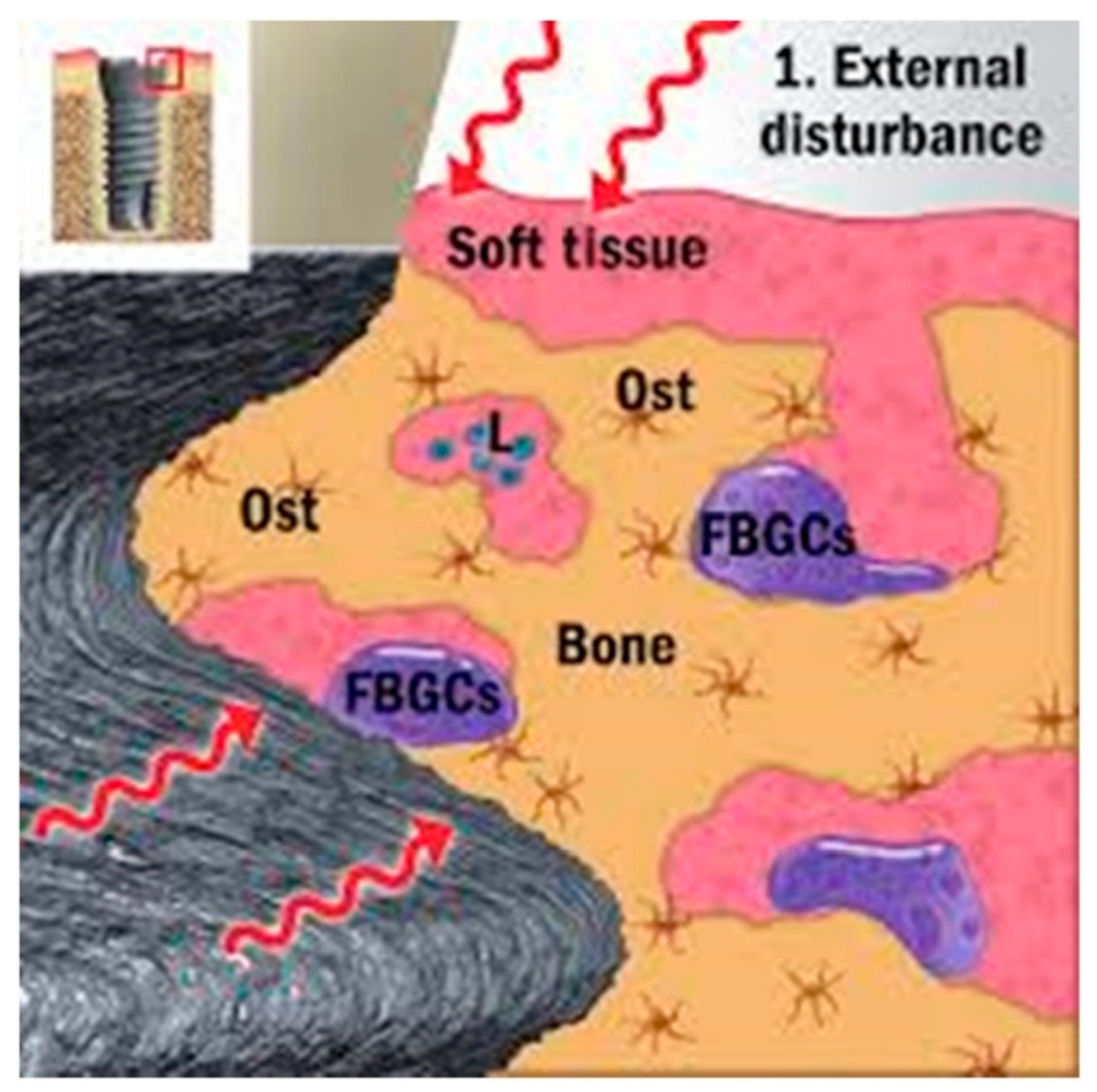
The body may react adversely to an implant, viewing it as a foreign object. There is evidence for a persistent foreign body reaction at osseointegrated dental implants and its possible role in crestal bone loss characteristic of peri-implantitis [14]. The release of implant-related materials, including titanium particles and corrosion by-products, into the surrounding tissue plays a significant role in the onset and advancement of peri-implantitis, leading to rejection [15]. Rejections may be long term responses, further fusing into foreign body giant cells (FBGC), while bone cells make and remodel hydroxyl apatite. The above sequence results in osseointegration (shown in Figure 2). The lifespan of an implant depends on maintaining a balance with the surrounding tissues. If this equilibrium is disrupted, it can lead to reduced functionality through a process where macrophages become activated and form FBGCs in larger numbers. This can trigger bone resorption, as cells like osteoclasts, and possibly even macrophages, break down more bone than osteoblasts can rebuild. Additionally, mucosal seals may rupture through complex mechanisms. Secondary infections can further complicate the situation, potentially leading to implant failure[15]. Although true implant rejection is rare, hyperallergic reactions to materials, such as metals, can cause inflammation and discomfort.

2.3. Allergic Reactions:

Specific materials, primarily metals used in implants, may induce allergic responses in sensitive individuals, resulting in pain, edema, or inflammation. Metals such as nickel, chromium, and cobalt, as well as bone cement constituents such acrylates and gentamicin, may induce intolerant responses to implants [16]. Metal allergies in dentistry are common, with nickel allergy upto 20%, making it a leading cause of allergic dermatitis. In industrialized countries, it ranks as the top allergen[17]. Among orthodontic patients, 30% are allergic to nickel, copper, and chromium. Though rare, allergies to other metals like mercury, gold, platinum, palladium, silver, and cobalt can also occur[17]. Eczemas were mainly observed after osteosynthesis in sensitive patients implanted with material made from nickel, chromium or cobalt [16]. Type IV (delayed) allergic hypersensitivity reaction may cause fistula formation, eczema and itching of the skin or mucosa due to reactions from restorative composites to fissure sealants, bonding agents and orthodontic and crown and bridge resins made from polymerized poly(methyl methacrylate) (PMMA) “pellets” with additives dibenzoyl peroxide, N,N-Dimethyl-p-toluidine or 2-[4-(Dimethylamino)phenyl]ethanol [16].

2.4. Peri-Implantitis

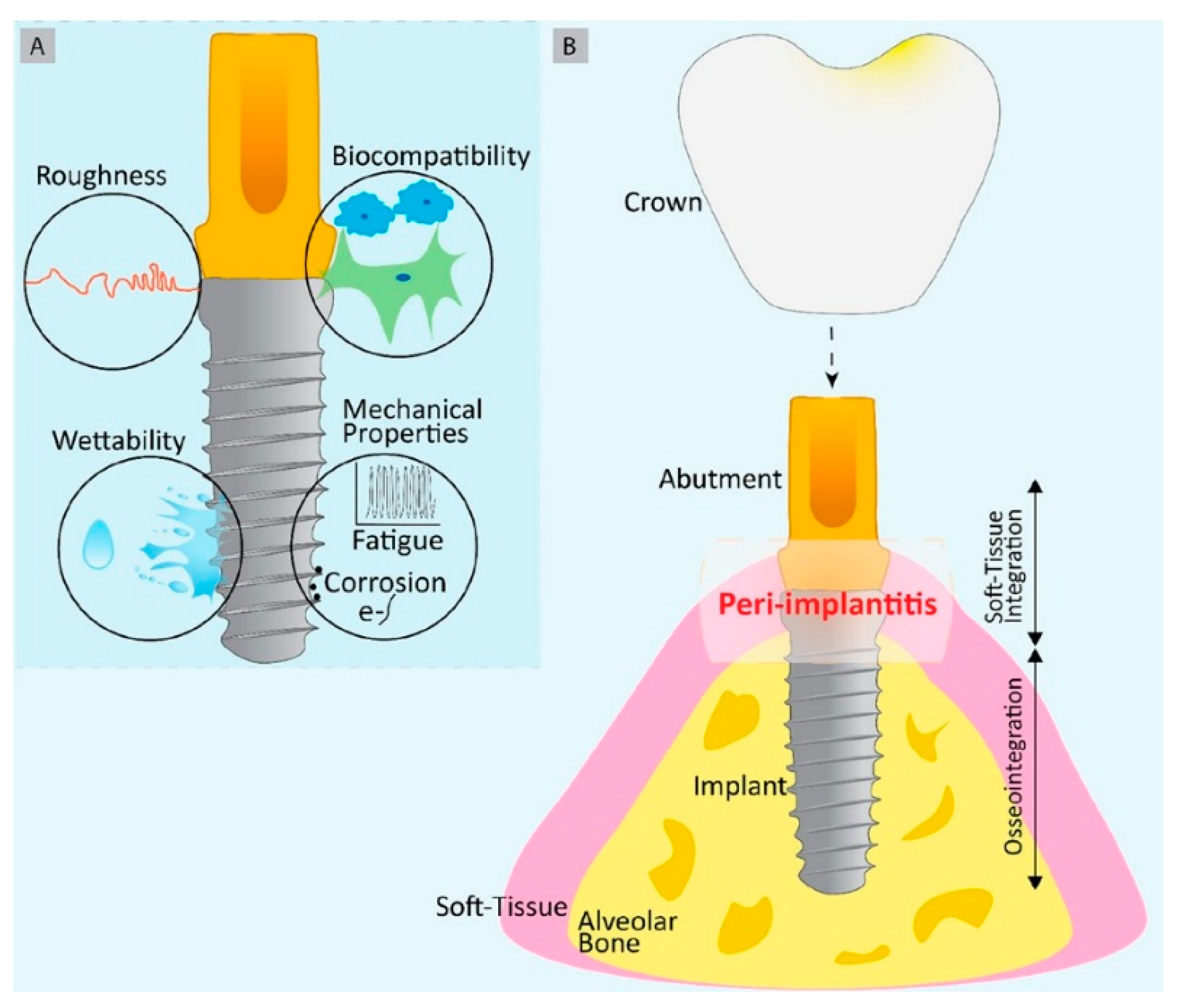
Especially in dental implants, peri-implantitis involves inflammation around the tissues surrounding and can lead to bone loss. Peri-implant disease occurs when the soft tissue around a dental implant becomes infected and begins to break down. This may result in pain, swelling, difficulty in biting and chewing, and, if untreated, potential failure [18]. Treatment for peri-implantitis often entails a mix of mechanical debridement and antibiotic treatment [19]. Ongoing research involves in modification of dental implants that could reduce peri-implantitis as shown in Figure 3.

2.5. Implant Failure

Mechanical issues, such as wear and tear, stress fractures, or loosening over time, can lead to implant failure [21]. This is common in weight-bearing implants like especially dental where the implant might wear out due to stress[22]. To minimize failure, implants are tested on biomechanical evaluation which include tests to assess their mechanical properties, such as compression, tension, and torsion[23].

2.6. Bone Loss or Resorption:

Dental implants, may lead to tooth loss around the implant site due to a lack of bone stimulation or other factors like infection, which can compromise the implant’s stability. Lliterature on commercially available implant systems reports 6% bone loss in the first year, 10% in the first 10 years and 12% in the 15 years after surgery[24]. So designing such implants that may be prone to bone loss, considerations on biocompatible materials facilitating osteointegration, thread designs reducing bone to implant contacts, appropriate geometry, length and size [25]

2.7. Aesthetic Issue

In cases of cosmetic implants, there may be issues with symmetry, shape, or placement, which can impact patient satisfaction and may require revision surgery.

3. Implant Related Dental Infections

Concluding, it can be stated that infection due to dental implants may be one of the major challenges, as it increased the rate of implant failure. The osseointegration process may be hampered by microbial infections, which may ultimately result in the implant's removal [26]. Peri-implantitis and peri-implant mucositis are the primary infectious complications that cause implant loss. They are brought on by the patient's immune system, which causes an inflammatory process in the bone and mucosa surrounding the implant, both of which are linked to the organized microorganisms in biofilm [27]. It is believed that peri-implant disorders occur at a rate of about 30%, with smokers having a greater prevalence [28].
With around 700 species of bacteria, fungi, viruses, and protozoa that interact with one another either antagonistically, cooperatively, or even as signalling agents, the oral microbiome is the second biggest in the human body. A highly structured community known as biofilm is formed by these oral bacteria adhering to the biotic or abiotic substrate as well as to one another [29].
In their many settings, microorganisms can appear as communities, which is their preferred form, or in their free form, known as planktonic microorganisms. Biofilm is the collective term for the group of microorganisms affixed to a surface.

3.1. Microbiota of Oral Cavity and Dental Implants

Oral Microbiota [30] : The oral cavity represents a complex and dynamic environment composed of several distinct microhabitats, including the teeth, buccal mucosa, hard and soft palates, and tongue. The oral microbiota consists of a wide array of microorganisms, including bacteria, fungi, and viruses. Among these, bacteria constitute the predominant microbial population, primarily belonging to the phyla Firmicutes, Bacteroidetes, Proteobacteria, and Actinobacteria. In contrast to the gut microbiota, the composition of oral bacterial communities exhibits relative stability and is less influenced by external factors such as diet and environment. Interestingly, the oral microbiota of healthy individuals tends to be highly conserved across different geographic and ethnic populations.
The oral mycobiome includes approximately 85 fungal species, with Candida spp., particularly Candida albicans, being the most frequently detected and clinically significant. Under conditions of microbial homeostasis, Candida species are generally commensal; however, when dysbiosis occurs, they can shift to an opportunistic pathogenic role. Notably, Candida can co-aggregate with Streptococcus spp. to form pathogenic biofilms that contribute to oral diseases such as candidiasis and caries.
Among the bacterial species, several are of particular clinical relevance. Streptococcus mutans, a Gram-positive facultative anaerobe, is a key colonizer of the dental biofilm and a primary etiological agent of dental caries, which is the most prevalent chronic disease affecting the hard tissues of the teeth. Porphyromonas gingivalis, a Gram-negative anaerobic and asaccharolytic bacterium, is a major periodontal pathogen implicated in the progression of periodontitis. Chronic colonization by P. gingivalis can lead to destruction of the periodontal ligament and eventual tooth loss. Members of the genus Lactobacillus—including Lactobacillus acidophilus and related species—are lactic acid-producing bacteria that, while often considered beneficial in gastrointestinal contexts (e.g., as probiotics), are also associated with caries development due to their acidogenic and aciduric properties. Other notable genera present in the oral cavity include Staphylococcus, which may play a role in opportunistic infections, and Prevotella, Dialister, and Filifactor, which have been implicated in both dental caries and periodontal disease through recent metagenomic analyses.
Implant Microbiota : The bacterial species identified included Staphylococcus epidermidis, Eubacterium spp., Corynebacterium spp., and Streptococcus viridans. Staphylococcus epidermidis was isolated from most patients and exhibited resistance to penicillin, a commonly preferred antibiotic among clinicians[31]. A summary of the most common bacteria isolated from dental implants that have failed due to infection is represented in Table 1.

3.2. Biofilms on Implants

Biofilms are the predominant form of microbial life, consisting of a biologically active matrix of cells and extracellular substances attached to implant surfaces. They are composed of numerous bacteria embedded in an organic polymeric material. The extra-cellular polysaccharides (EPS), a slimy and insoluble fluids produced by bacterial cells, surrounded by millions of neighboring microbes within a well-organized, structured matrix. This EPS matrix has key properties necessary for the bacteria within biofilms[33]. First, EPS facilitates the distribution of nutrients essential for cell growth [33]. Second, its diverse composition of charged polysaccharide groups efficiently traps external nutrients necessary for cell survival and proliferation [33]. Third, the EPS matrix offers enhanced protection to encapsulated cells from environmental stresses compared to free-floating, planktonic bacteria [34]. Biofilms also provide advantages such as resistance to antibiotics [35], biocides [36], and harsh environments [37].
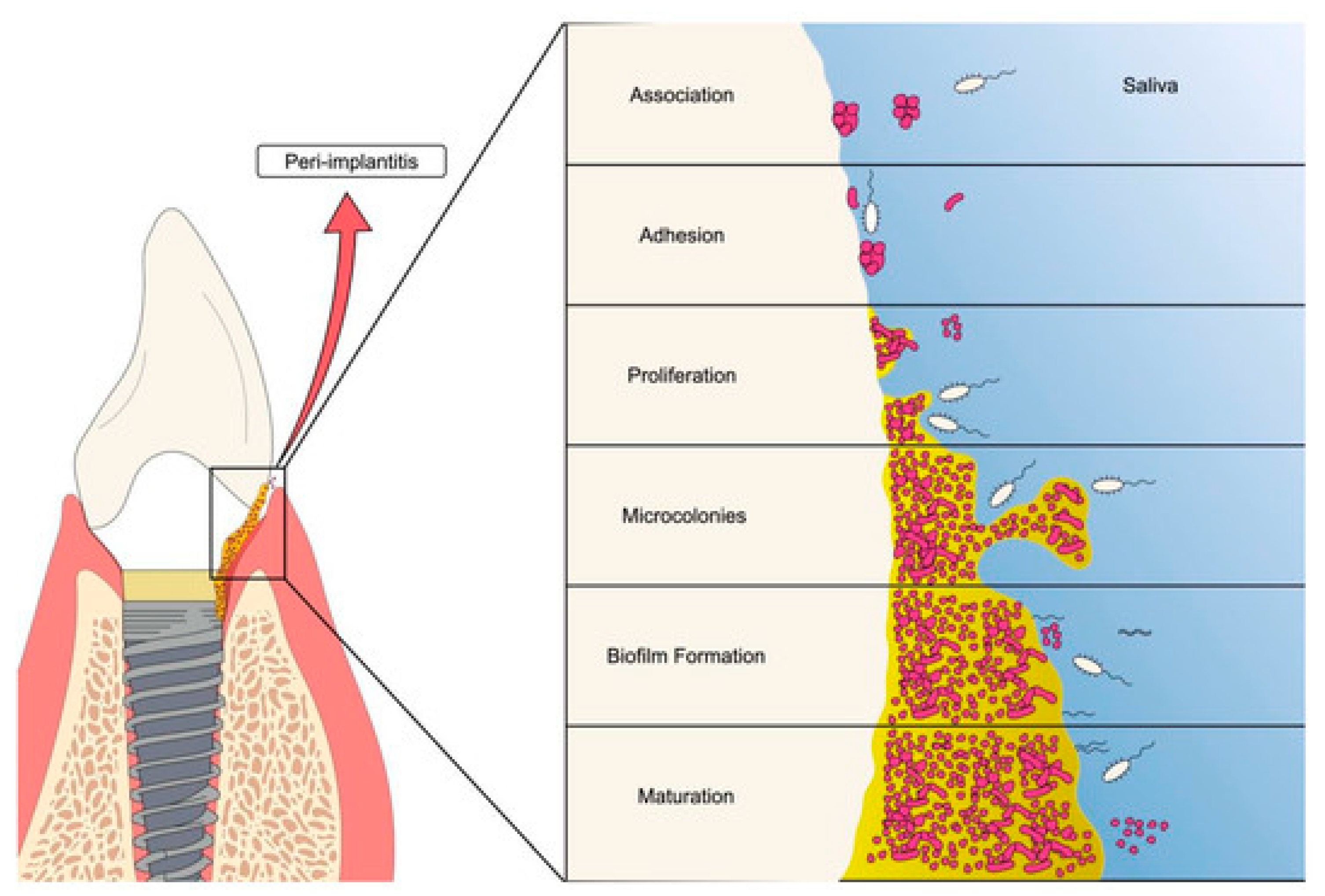
The first stage of biofilm involves the quick adhesion of microbes to the surface of the medical devices and proliferation of cells (Figure 1, Figure 2, Figure 3 and Figure 4). The attachment of bacteria initially, is dependant on polarity, London-van der Waals forces and hydrophobic interactions [38] . There are various bacteria’s adhered to the protein surface contributing to the initial adhesion . The first stage involves the capsular polysaccharide - adhesion (PS/A) to enable attachment and slime production[39].
The 2nd stage involves the formation of colonization of bacteria. Bacterial cell multiplication and intercellular bonding occur once the microorganisms are secured to the implants' surface. Polysaccharide intercellular adhesion (PIA) is a polysaccharide antigen that promotes intercellular adhesion and biofilm formation in Staphylococci [40]. Colonies are enclosed by an EPS, gaining protection inside the EPS and form larger macro colonies[41]. Cell proliferation and maturations processes further continue (as shown in Figure 1, Figure 2, Figure 3 and Figure 4: steps 3 and step 4). In the last stage, the biofilm reaches a critical mass and due to a depletion in nutrients, planktonic bacteria disperse from the surface[42]. Dispersed bacteria leaves the macro-colony and moves into the bloodstream, spreading infection elsewhere. The manner of dispersal varies between species, influencing their morphological characteristics. S. aureus disperses and recolonizes a surface after approximately 6 h [43] , V. parahaemolyticus after 4 h, and V. harveyi recolonizes only after 2 h [44].
Figure 4. Process of oral biofilm formation on dental implants[45].
Preprints 174738 g004
Quorum sensing has been shown to regulate biofilm differentiation and, in some Gram-negative bacteria, can result in the destruction of leukocytes. The EPS production, combined with the altered properties of biofilm-associated bacteria, provide protection, making it challenging for the immune system and antibiotics to eliminate these embedded cells once on a surface. As a result, biofilm infections often become chronic. Additionally, biofilm bacteria typically trigger a weaker inflammatory response compared to planktonic bacteria, complicating the treatment of such infections.

4. Dental Antimicrobial Approaches

Like periodontal diseases, peri-implant diseases are linked to the accumulation of dental plaque on implants. Various unconventional methods have been explored for plaque removal from infected implants; however, none can fully and permanently eliminate bacterial invasion. Fortunately, the ongoing advancement of antibacterial implant materials offers a promising solution. This review outlines the development and evaluation of different antibacterial strategies for dental implant materials aimed at preventing peri-implantitis. By emphasizing the benefits and limitations of these approaches, we hope to contribute to the continuous improvement of oral implant materials.. Many of the solutions to the challenges discussed in Section 2. 2 may be addressed through proactive measures to prevent bacterial colonization by engineering the implant surface to confer antimicrobial properties. This represents a line of development pursued in recent years.
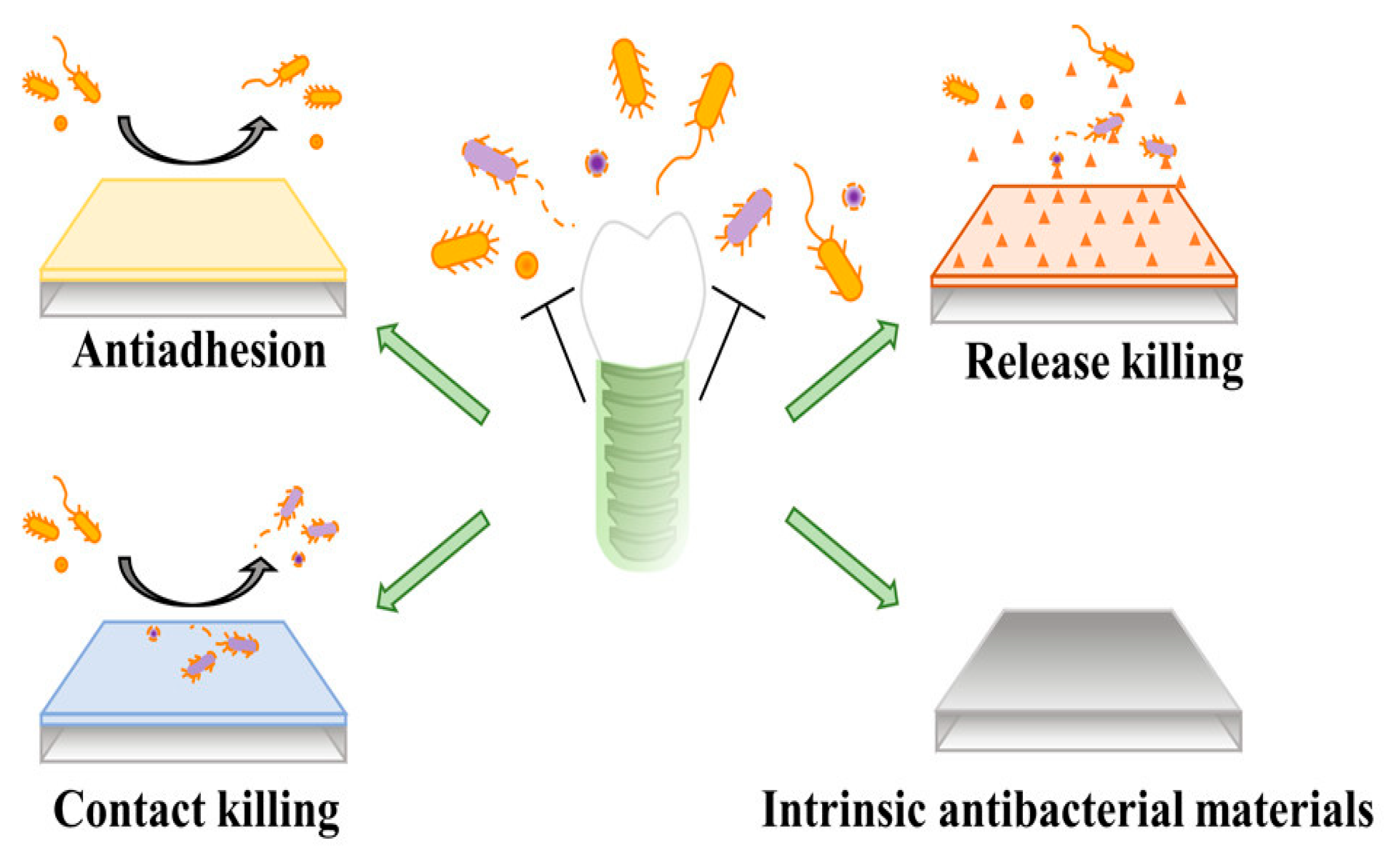
Figure 5 outlines the methods for antimicrobial coating types. One of the approaches used to prevent infection is to develop coatings for implants that microbes find difficult to colonize in the first place as known as anti microbial surfaces. Antimicrobial material prevent the adherence of bacteria by repelling properties and prevent the biofilm formation as shown in Figure 1, Figure 2, Figure 3, Figure 4, Figure 5 and Figure 6, following their sub division of preventive strategies. Sections 1.4.1. – 1.4.4 outlines the primary types of antimicrobial materials used in dentistry.

4.1. AMPs

Antimicrobial peptides (AMPs) are short peptides with broad-spectrum antibacterial properties that interact with bacterial cell membranes, leading to bacterial death[47]. Unlike antibiotics, AMPs have a different bactericidal mechanism, making them less likely to cause drug resistance. Studies have shown that AMP-functionalized surfaces exhibit strong antibacterial effects with low cytotoxicity. For instance, AMPs immobilized on titanium can inhibit bacterial adhesion while promoting osteoblast activity[48].
There are two main methods for immobilizing AMPs on implant surfaces: physical adsorption and covalent immobilization[49]. While physical adsorption is simple, it provides only a short-term antibacterial effect due to limited AMP attachment. In contrast, covalent immobilization ensures long-term stability and enhanced bioactivity by properly orienting AMPs for effective bacterial interaction. Research has demonstrated that controlling AMP orientation significantly improves their antibacterial efficiency[50].
To further optimize AMP-functionalized surfaces, factors such as AMP properties, spacer selection, and AMP density should be considered.

4.2. Metal-Releasing Coatings:

Antibacterial metals and their alloys display an increased ability to prevent bacterial adhesion, development and cell proliferation through element alloying, and exposure to heat. In recent years, Cu- and Ag-containing antibacterial metal alloys have been shown to be effective against a wide range of germs, including antibacterial titanium and it’s alloys. The components that make up the alloy are mostly Ag and Cu, which have been shown to have wide-ranging antibacterial effects. Table 2 summarizes each metals used, its features, toxicity and antimicrobial analysis.

4.3. Phytochemicals Used in Dental Materials (Phytodentistry)

Plant-derived chemicals may improve dental biomaterials' physicochemical qualities and aid oral health. To improve dental biomaterial performance, plant polysaccharides, proteins, and bioactive phytochemical-rich extracts are used. Despite strong evidence that plant-derived compounds increase material-tissue and cell interactions, research on potential novel dental biomaterials is scarce. Only a few studies have explored plant extract-based titanium implant coatings and periodontal regenerative materials, highlighting the need for further investigation in this promising area. These extracts and compounds are difficult to obtain, needing long and complex protocols of extraction, chemical characterization and isolation, often with a low yield. In some cases, isolating a single compound in significant amounts remains a challenge. Table 3 highlights examples of phytochemicals responsible for antimicrobial properties, and their applications:

4.4. Quaternary Ammonium Compounds:

Quaternary ammonium salts (QAS) are widely employed in the food industry, textiles, surface compounds, and water purification due to their broad-spectrum antimicrobial properties and low toxicity. Their antibacterial properties are derived from their capacity to bind to bacterial membranes, which results in bacterial lysis [82]. When negatively charged bacterial cells meet the positively charged quaternary amine group (N+), the electrical balance is disrupted, causing the bacteria to rupture under osmotic pressure[83]. Long-chain cationic polymers may also enter bacterial cells, puncturing their membranes in the same way as a needle does when exploding an air sac.
Research on the synthesis of novel quaternary ammonium monomers aims to identify compounds with strong antibacterial effects, low cytotoxicity, affordability, ease of production, and minimal impact on mechanical properties[84]. For over three decades, antimicrobial QAS monomers have been included into composite materials to inhibit plaque accumulation and secondary caries. The notion of "immobilized bactericide" was established in dentistry to guarantee sustained antibacterial efficacy while maintaining mechanical integrity. In 1994, Imazato et al. pioneered the incorporation of a quaternary ammonium monomer into dental composites [85,86]. Since then, various QAMs have been synthesized and incorporated into materials like glass ionomer cement (GIC), etching-bonding systems, and resin composites to enhance their antibacterial properties[87]. This review provides an overview of previous studies on dental materials incorporating QASs, serving as a foundation for the subsequent chapters of this thesis, which focus on the synthesis, antimicrobial analysis of QASs in dental implants.
Single Chain QAS : Studies on composite materials containing antibacterial components released over time have been reported by a number of researchers [88]. Reports of such materials were evaluated by Chen and colleagues [88]. In their review, they classified antibacterial chemicals into three groups: (1) leachable compounds like chlorhexidine and benzalkonium chloride, (2) polymerizable monomers like quaternary ammonium (QA) methacrylates, and (3) filler particles like nano silver. Even though many antibacterial compounds were investigated between 2012 and 2017, only four agents—benzalkonium chloride, chlorhexidine, glutaraldehyde, and 12-methacryloyloxydodecylpyridinium bromide—were included in commercial goods.
FDA has approved the human consumption and use of many quaternary ammonium compounds, which may be safely used given following conditions[89]:
  • The additive contains the following compounds: n- dodecyl dimethyl benzyl ammonium chloride (CAS Reg. No. 139-07-1); n- dodecyl dimethyl ethylbenzyl ammonium chloride (CAS Reg. No. 27479-28-3); n- hexadecyl dimethyl benzyl ammonium chloride (CAS Reg. No. 122-18-9); n- octadecyl dimethyl benzyl ammonium chloride (CAS Reg. No. 122-19-0); n- tetradecyl dimethyl benzyl ammonium chloride (CAS Reg. No. 139-08-2); n- tetradecyl dimethyl ethylbenzyl ammonium chloride (CAS Reg. No. 27479-29-4).
  • The composition meets the following specifications: pH (5 percent active solution) 7.0-8.0; total amines, maximum 1 percent as combined free amines and amine hydrochlorides.
  • The compound is used as an antimicrobial agent, as defined [[89]] orally in food.
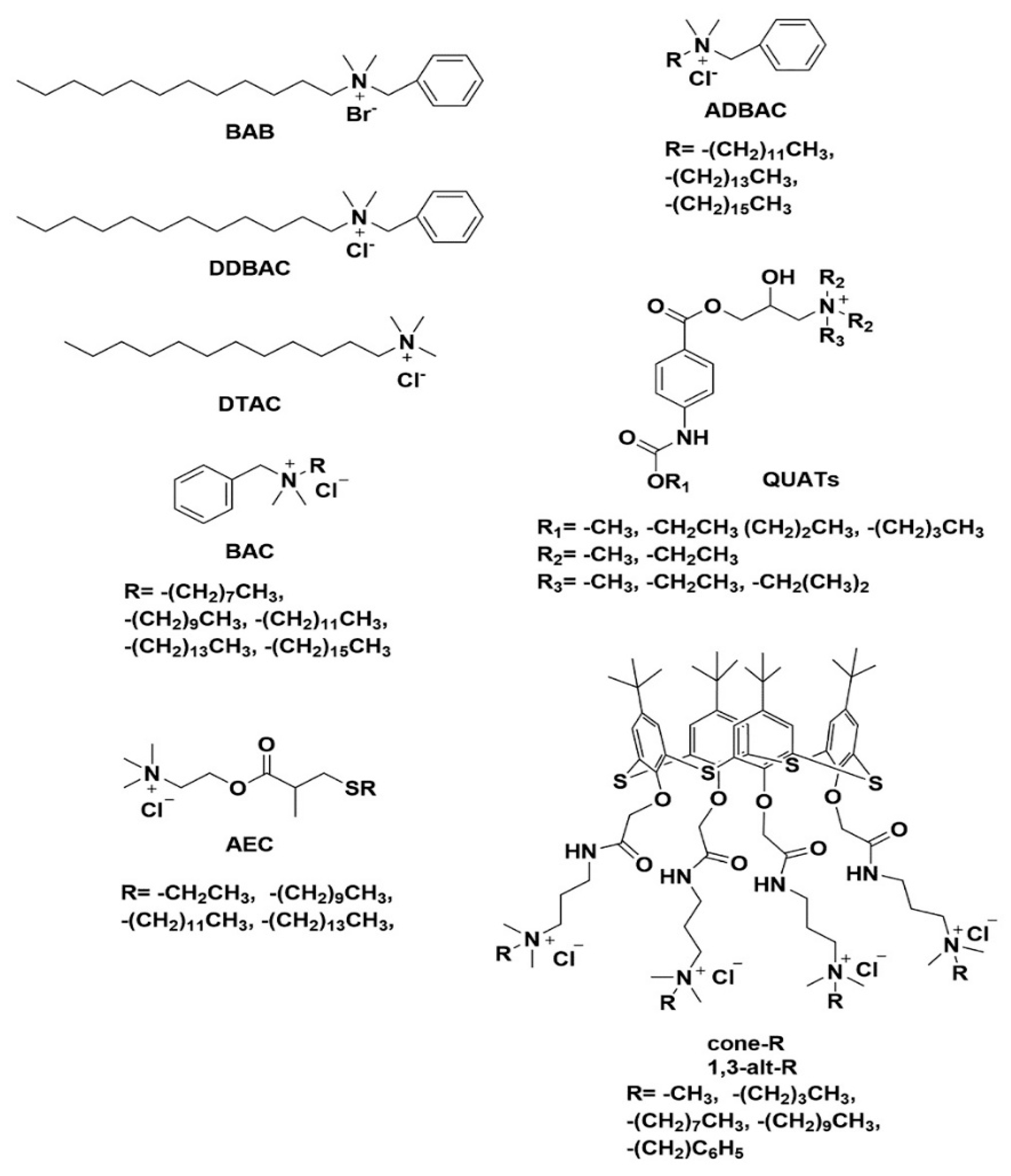
Figure 7. Chemical structures of different QASs. (Used with permission from [90]).
Preprints 174738 g007
Table 4. Different QASs, target bacteria/ fungus and their Minimum Inhibitory Concentration (MIC) .
Name of QAS Target Bacterial Strain Human Cell Toxicity Reference
Alkyl Dimethyl benzyl Ammonium Chloride (ADBAC) S. aureus; MIC: 0.6 μg mL–1 In chronic trials with beagles, mice, and rats, repeated dosage oral toxicity studies found no harmful effects at 10–93.1 mg/kg-day for DDAC and 3.7–188 mg/kg-day for ADBAC (C > 12).
At modest adverse impact levels, DDAC and ADBAC (C > 12) consistently cause decreased food intake, average body weight, body weight growth, and localized discomfort.
[91,92]
Dodecyl dimethyl benzyl ammonium chloride (DDBAC) Listeria monocytogenes; E. coli; S. aureus Cell viability (NIH-3T3 assays) was 39.7% within 24 hrs incubation at dose of 500 μg/mL respectively [93]
P-tert-butylthiacalix [4]arene (1,3-alt-R) S. aureus, B. subtills, E.coli, P. aeruginosa Cytotoxicity studies on human skin fibroblast (HSF) cells demonstrated that were less toxic compared to ref. drugs. [94]
Ammonium-esterified acrylate (AEC) S. aureus; MIC: 3 ppm,
E.coli ; MIC: 31 ppm,
P. aeruginosa; MIC: 250 ppm,
Candida albicans, Aspergillus niger; Klebsiella pneumoniae; Acinetobacter baummanii
_ [95]
Didecyl dimethylammonium chloride (DDAC) S. aureus; MIC: 1.63 uM,
E.coli ; MIC: 15. 63 uM,
P. aeruginosa; MIC : 500uM;
K. pneumoniae; MIC: 11 uM,
Enterococcus sp.;MIC: 3 uM.
Cell viability assays confirm a trend of a higher cytotoxicity in correlation to an increasing carbon chain length of the compounds.
The toxic potential and low selectivity for microbes over mammalian cells, these novel compounds will likely be more useful as surface disinfectants rather than antiseptics.
[96]
N,N-dialkyl-N-(2-hydroxyethyl)-N-methylammonium salts (NDMAC) S. aureus; MIC: 0.9 uM,
E.coli ; MIC: 7.8 uM,
P. aeruginosa; MIC : 500uM
N-[N′(3-gluconamide)propyl-N′-alkyl]propyl-N,N-dimethyl-N-alkyl ammonium bromide (CDDGPB) S. aureus; MIC: 150ppm,
E.coli ; MIC: 150 ppm,
The mortality of mice test group was the highest, with an LD50 of mice larger than 100 mg/kg, indicating that the surfactant has medium toxicity.
The mortality of mice in the C10DDGPB test group was significantly lower than that in the C12DDGPB test group.
No obvious blackening or body stiffness was observed in any of the tested animals during the 14-day observation period.
[97]
QAS with Multiple Chain Lengths :
Increasing the alkyl chain length (CL) enhanced hydrophobicity, potentially improving the capacity to traverse the hydrophobic bacterial membrane. Cationic polymers with longer chain lengths may more effectively penetrate bacterial cells and disrupt membranes [98]As a consequence, multiple studies sought to synthesize QAS with different chain lengths before testing its anti-caries potential in various dental materials. A recent research on glass ionomers found that increasing chain length significantly improved antibacterial activity [99]. A series of QAS molecules with different chain lengths were synthesized in a separate study, including dimethylaminopropyl methacrylate (DMAPM, CL=3), dimethylaminohexyl methacrylate (DMAHM, CL=6), dimethylaminononyl methacrylate (DMANM, CL=9), dimethylaminododecyl methacrylate (DMADDM, CL=12), dimethylaminohexadecyl methacrylate (DMAHDM, CL=16), and dimethylaminooctadecyl methacrylate (DMAODM, CL=18). Two antibacterial monomers, DMADDM with a chain length of 12 and DMAHM with a chain length of 6, were selected for further investigation. MIC, Minimum Bactericidal Concentration, and ADT assays, DMAHM and DMADDM demonstrated significantly stronger antibacterial activity compared to the previous QADM. Furthermore, DMAHM, with a chain length of six, demonstrated significantly lower effectiveness compared to DMADDM, which possessed a chain length of twelve [100]. Owing to their strong antibacterial characteristics, two of these monomers DMADDM with a carbon chain length of 12 and DMAHDM with a carbon chain length of 16, were thoroughly investigated as anti-caries agents in diverse dental materials.
As anti-caries agents, DMADDM was added to orthodontic cement, resin composite, and adhesives [101,102]. One concern is that salivary pellicles may diminish the antibacterial efficacy of restorations subjected to saliva in vivo. An in vitro experiment was conducted to investigate the effects of salivary pellicles on bonding agents including DMADDM or nano-Ag in relation to microcosm biofilms. Despite the presence of salivary pellicle on surfaces, the findings indicated that novel bonding agents including DMADDM and nano-Ag markedly reduced biofilm development, indicating potential use in saliva-rich settings [103]. Another study by Wang et al. examined the inhibitory effects on S. mutans biofilms and dentin bonding characteristics by adding various mass fractions of DMADDM to commercial adhesives. It showed that the antibacterial effects of smaller mass fractions of DMADDM on early biofilms were comparable to those of larger mass fractions. On the mature biofilm, however, adhesives containing 5% DMADDM had more anti-biofilm capability than those containing 2.5% DMADDM. Additionally, the new antibacterial adhesives in this investigation had dentin adhesive bond strengths that were comparable to the control commercial product [104]. Zhang et al. recently investigated the antibacterial activity of DMADDM-containing adhesive on multispecies biofilms generated by Streptococcus mutans, Streptococcus gordonii, and Streptococcus sanguinis [105].
Additionally, Taqman real-time polymerase chain reaction was used to examine the proportional change in multispecies biofilms with varying mass fractions of DMADDM. The results indicated a consistent decrease in the ratio of Streptococcus gordonii throughout time, but the ratio of Streptococcus mutans in biofilms increased in adhesives devoid of DMADDM. Nevertheless, the proportion of Streptococcus mutans markedly decreased whereas the proportion of Streptococcus gordonii regularly rose in the adhesives [105]. According to reports, Streptococcus gordonii is linked to healthy enamel and is an early colonizer of the dental plaque biofilm[106]. As a result, following DMADDM control, the biofilm has a propensity toward healthier growth. DMADDM-containing adhesives inhibit MMPs, preventing hybrid layer degradation and enhancing dentin–resin bond durability[107].
Chen et al. developed a bonding agent by integrating DMADDM and amorphous calcium phosphate (NACP) nanoparticles into primer and adhesive, which has both antibacterial and remineralizing capabilities. NACP in adhesive released Ca and P ions for remineralization and caries inhibition, whereas DMADDM in the bonding agent had a potent antibacterial activity[108]. At one day and one month, this was accomplished without sacrificing the dentin bond strength. Bonding agents containing DMADDM and NACP were water-aged for six months in another long-term experiment. The results indicated that the innovative anti-caries adhesives exhibited robust and enduring antibacterial capabilities, together with a markedly superior bond strength compared to a commercial control after six months of water aging [109].
A separate in vitro study investigated the impact of chain length variations of QAS on cytotoxicity. The cytotoxicity of QAS against fibroblasts and odontoblasts, with chain lengths between three and sixteen, was comparable to that of commercial controls [110]. A methyl thiazolyltetrazolium test and a live/dead viability assay were used to evaluate the cytotoxicity of DMADDM on human gingival fibroblasts (HGF). The results indicated that BisGMA, a prevalent component in commercial products, had much more cytotoxicity than DMADDM [111]. A rat tooth model was used to study pulpal inflammation, tertiary dentin formation, and restoratives such NACP and DMADDM. DMADDM showed no effect on pulpal inflammation compared to commercial glue and glass-filled composites [112].
In order to create new antibacterial dental materials, DMAHDM with a chain length of 16 was also added to resin composites and adhesives. Microcosm biofilm CFU may be reduced by 4 log using adhesives containing 10% DMAHDM [113]. In another in vitro study, primers and adhesives received DMAHDM at 0%, 2.5%, 5%, 7.5%, and 10% mass fractions. As resin DMAHDM mass fraction grew, bacteria early attachment coverage decreased. Since DMAHDM does not improve dentin bond strength [114]. DMAHDM was administered for dental caries in conjunction with other efficacious therapies, such as NACP and 2-methacryloyloxyethyl phosphorylcholine (MPC), to attain dual or triple benefits in caries prevention [115].

5. Bioactive Dental Materials

5.1. Properties of Biomaterials

Biomaterials are materials designed to interact safely and effectively with the human body to restore, repair, or improve biological tissues. They play a crucial role in the creation of implants, devices, and systems that support healing and enhance the quality of life across various medical and biological applications. The main properties of biomaterials are they have be :
Biocompatible: to ensure that the body does not reject a material or trigger an inflammatory response. Some biomaterials can even regulate biological reactions with precision, influencing processes such as cell adhesion, cell growth, and the formation of blood vessels [116].
Mechanical properties: Dental implants, for instance, need to be robust and have enough load bearing capacity to withstand mechanical stresses of bone [117].
Degradability : To naturally break down over time, which can be beneficial in certain cases, allowing for the gradual replacement of the biomaterial by surrounding biological tissue. This is especially important in situations where the material needs to integrate permanently with the body, such as in temporary applications [118].

5.2. Metallic Substrates

Titanium (Ti) and its alloys are widely used to make orthopedic and dental implants because to its corrosion resistance, biocompatibility, low elastic modulus, and high fatigue strength [118]. Among these, commercially pure alpha titanium (CpTi) and the alpha-beta Ti-6Al-4V alloy are the most commonly employed materials for such biomedical applications. Due to its good mechanical performance and inexpensive cost, stainless steel, especially AISI 316L (316L SS), is still commonly utilized, however metal ions from corrosion and wear remain a worry [119]. In comparison to stainless steel and cobalt-chromium alloys, titanium and its alloys exhibit superior mechanical and biological characteristics [120,121]
In addition to non-resorbable metallic materials, magnesium (Mg) and its alloys are being explored for orthopedic applications due to their biodegradability and potential for temporary support [122]. However, their rapid degradation rate renders them unsuitable for dental implant use, where long-term structural integrity is essential[123].
Osseointegration is widely recognized as a critical determinant for the long-term success of biomedical implants. To enhance early implant stability and reduce the time required for effective osseointegration, various surface modification strategies have been investigated[124]. Surface roughness, in particular, plays a crucial role in mediating bone–implant interactions, as it affects cellular responses such as adhesion, proliferation, and differentiation. However, achieving the optimal surface topography is complex; excessively rough surfaces may promote bacterial colonization and peri-implantitis, while surfaces that are too smooth may impair osseointegration[125]. Consequently, numerous studies have focused on developing modified implant surfaces through both physical and chemical techniques, such as sandblasting, acid etching, combined blasting and etching, electrochemical oxidation, and laser treatments[126,127]
Drawbacks of uncoated Metal Substrates
Poor Biocompatibility – Some metals may not integrate well with surrounding bone and tissue, leading to implant failure or rejection. Coatings like titanium oxide or hydroxyapatite improve biocompatibility and osseointegration. Osseointegration has been considered as a key factor for the long-term success of biomedical implants. In order to obtain improved osseointegration and to shorten the time for osseointegration, enhancing implant stability in the early phases, several implant surface modifications have been explored[128].
Poor Osseointegration – Uncoated metals may not bond effectively with bone, leading to implant loosening or failure. Coatings enhance osseointegration by promoting bone growth around the implant. For instance, the surface roughness has been demonstrated to affect the bone-implant interactions[129], numerous research have endeavored to create changed surfaces by various physical and chemical methods, including as sandblasting, acid etching, a combination of blasting and etching, electrochemical oxidation, and laser treatments.
Coating materials may also be used to enhance the surfaces of implants, hence improving the performance of metallic implants. Surface characteristics of materials significantly influence chemical and biological interactions with adjacent bone tissue, while mechanical qualities are mostly dictated by the implant's mass [129].
In contrast poor mechanical properties of monolithic bioceramics and bioactive glasses limit their use in load-bearing applications. As a consequence, the materials of choice still remain metallic alloys, whose biological properties can be improved by means of coatings (e.g., bioactivity, reduction of corrosion and toxic ion release)[130,131,132].

5.3. Bioactive Glass:

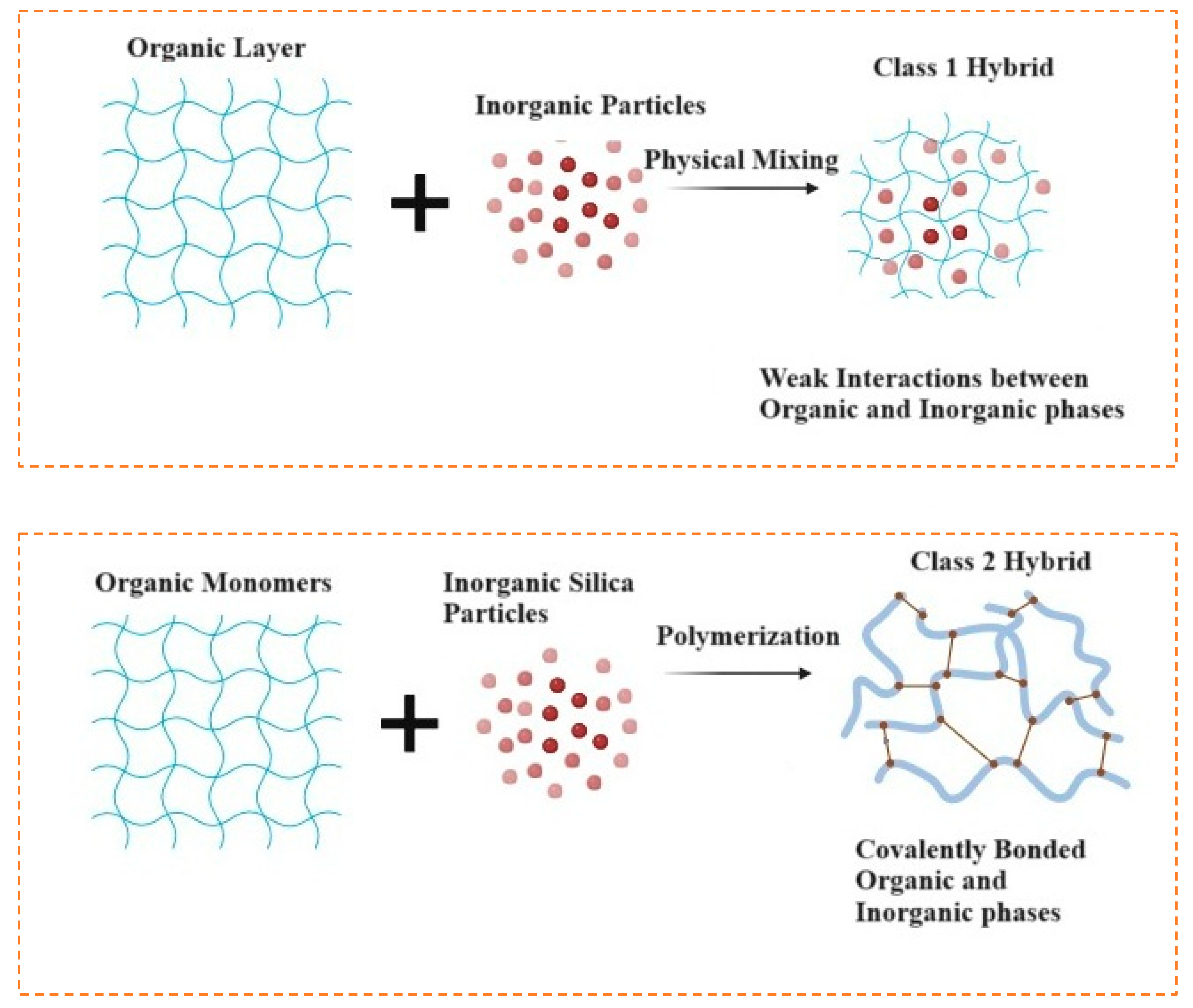
(O/I) hybrid biomaterials are defined as organic and inorganic materials combined at a molecular level, with their phases being indistinguishable at the nanoscale and above[133]. These hybrids are formed by interpenetrating networks of organic and inorganic biomaterials interacting below the nanoscale. Unlike nanocomposites, where phases remain distinct, the phases in O/I hybrids blend seamlessly at the nanoscale[134]. These biomaterials show homogeneous dispersion of organic and inorganic components, either as building blocks or interwoven networks. Due to their highly organized molecular structure, hybrid biomaterials not only exhibit the intrinsic physical properties of both organic and inorganic components but also display new properties arising from their synergistic effects[135]. To mix the organic and inorganic components at the molecular level, low-temperature synthesis methods, such as the sol-gel process, are typically used. The close molecular interactions between the phases enable the O/I hybrid material to function as a unified material with customizable mechanical, chemical, and physical properties [136]. However, due to the differing chemical nature of the organic and inorganic components, phase separation can occur during synthesis if there are no reactive sites in both phases. Therefore, it is necessary to select appropriate polymers or functionalize the polymer before synthesizing hybrid biomaterials that incorporate bioactive glass (BG) as the inorganic component. Based on the nature of interactions between the phases, hybrid materials are divided into two categories: Class I hybrids, which have weak molecular interactions like van der Waals forces, hydrogen bonding, or weak electrostatic interactions, and Class II hybrids, which have strong chemical interactions such as covalent bonds between the components [133] as shown in Figure 8. This review will focus on Class 2 Hybrid biomaterials and their use as biomaterials in bone tissue engineering.

5.4. Implant Coatings Made from Bioactive Glass:

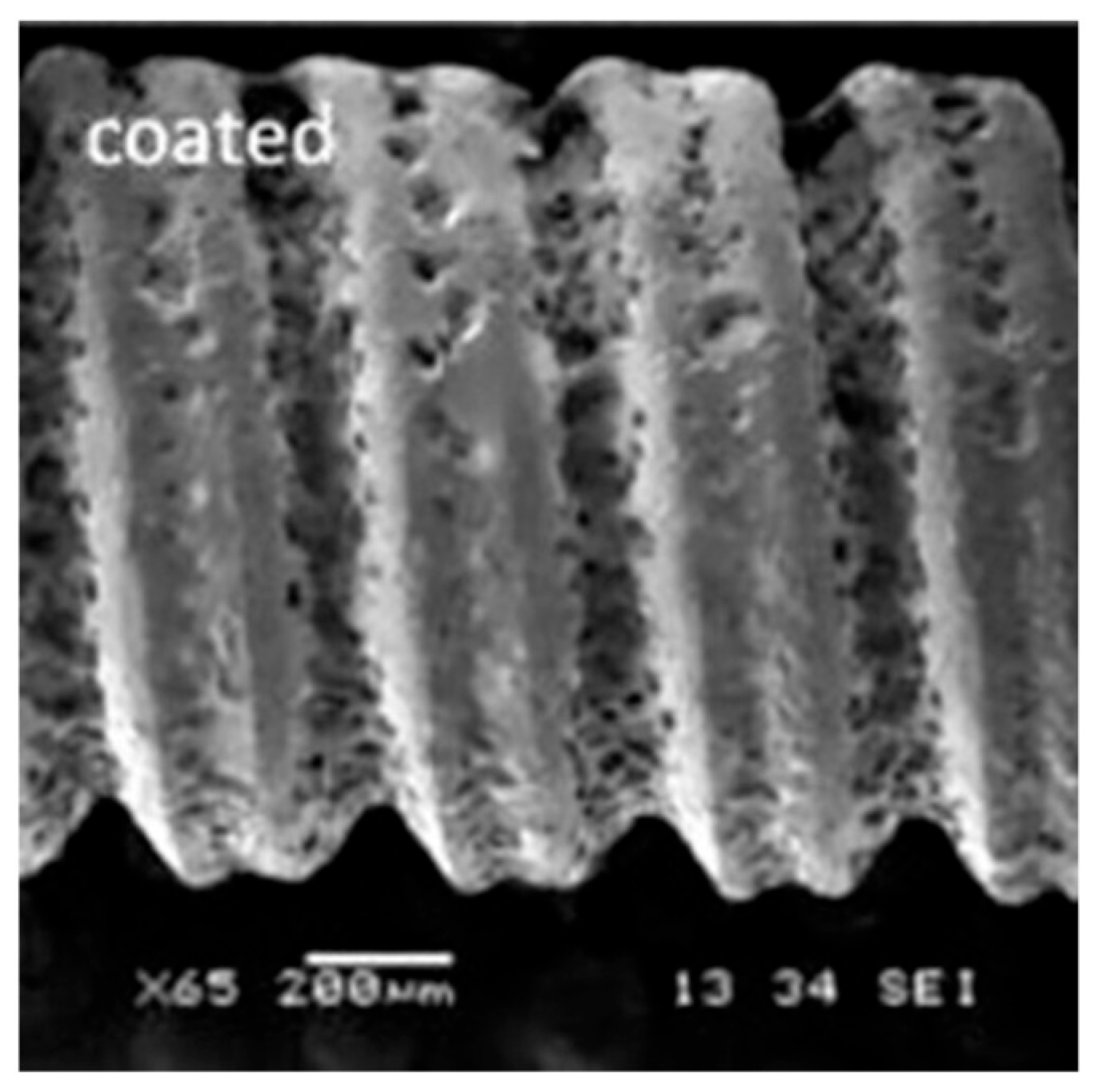
Implant surfaces after coating with bioactive inorganic materials showed favorable biocompatibility and enhanced bone healing performance[137]. The coatings had been completed on titanium and zirconia implants[138]. HA was used in dental implants because to its bioactive characteristics that emulate genuine bone. Hyaluronic acid is being extensively used in dental surgery for bone implants due to its chemical characteristics [139]. After surgery, the material's phosphate and calcium ion content resulted in low toxicity when implanted. Furthermore, a calcium-deficient layer that defined the contact between the bone and the implant promoted the direct bonding of the resulting bone structure to HA after surgery. While hydroxyapatite (HA) is a promising biomaterial for dental applications due to its biocompatibility and ability to mimic natural tooth structure, some challenges exist, including potential for bacterial susceptibility, coating failure, and the need for further research on long-term effectiveness and optimal particle size[140]. Bioactive glass, as seen in Figure 9, had also been used to cover implants before HA. More bioactivity, osteoblast metabolic activity, bone regrowth, and antibacterial properties were seen in implants with bioactive glass layers [141,142],[143,144]. In plasma-sprayed silicates of calcium coatings in [145] replaced calcium with magnesium, zinc, and strontium ions. It was found that doped with these charged particles enhanced the biological qualities and decreased the degradative behaviour. Silicate coating improved the bactericidal activity, binding strength, surface roughness, and degradation rate of metallic implant surfaces[146].
Coatings and materials for orthopedic or dental materials by various processes, such as hydrothermal[148], mechanochemical[149], precipitation [150], hydrolysis[151], and sol–gel methods[152].

5.5. Coating Synthesis

Various methods can be employed to synthesize organic–inorganic hybrid materials[153]:
sol–gel process,
in situ polymerization,
chemical vapor deposition (CVD),
hydrolysis

5.6. Sol- Gel Coating Process

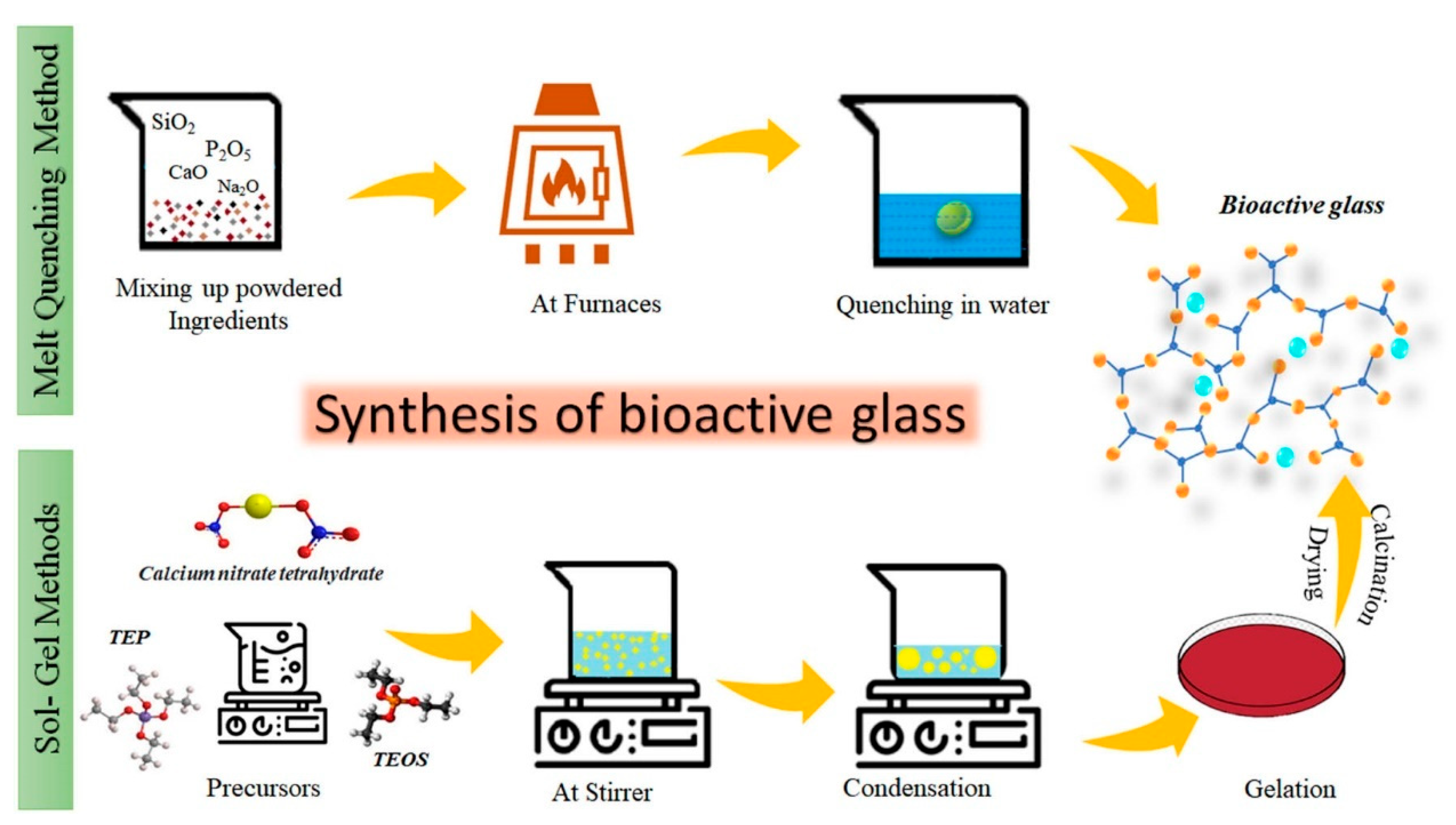
The sol–gel approach, a versatile method for synthesizing inorganic materials, involves transforming liquid solutions (sol) into solid three-dimensional gel structures[154,155]. This technique enables precise control over the chemical composition and properties of the final material. In the case of organic–inorganic hybrids produced via the sol–gel method, key factors such as reaction parameters, precursors, and plant components play a crucial role. It is well established that altering reaction conditions—such as time, temperature, and concentration—while using the same precursors can yield materials with distinct morphologies and properties. The structure of the biomaterial can be tailored and controlled to suit specific biomedical applications, including gels, powders, films, glasses, or ceramics.
For bone compatibility applications, SiO2–P2O5–CaO-based tertiary bioactive glasses, prepared through sol–gel processes, have been extensively used due to their biocompatibility, osteoconductivity, biodegradability, and ability to form bone-like mineral phases[156]. The ideal bioactive glass composition was kept constant as 70 mol % SiO2, 26 mol % CaCl2, and 4 mol % P2O5 for bone regeneration applications[157]. Despite their excellent in vitro and in vivo performance, their brittle and stiff nature imposes challenges for processing them into porous complex scaffolds, and their rapid degradation causes insufficient bone regeneration[158].
Polydimethoxysilane (PDMS) is a polymer that contains functional silane groups within its backbone. It has been utilized to create class II hybrids through hydrolysis with tetraethylorthosilicate (TEOS). However, PDMS has limited use in tissue engineering due to its non-degradable nature. An alternative approach to introducing silane functional groups into polymer chains is by copolymerizing a monomer with an alkoxysilane monomer. Copolymers such as polystyrene, poly(2-hydroxyethyl methacrylate), acrylonitrile butadiene styrene, and poly(methyl methacrylate) have been synthesized using various trialkoxysilyl (Si(OR)₃) monomers. These copolymers, along with their corresponding hybrids formed through hydrolysis with silica precursors, are not biodegradable or leachable in bodily fluids, which limits their potential for bone regeneration applications. Previously published in our lab, we have prepared copolymers of vinylpyrrolidone (VP) and triethoxyvinylsilane (TEVS) which was then hydrolyzed and polycondensation with tetraethyl orthosilicate (TEOS) and triethyl phosphate (TEP) in an aqueous sol–gel process using ethanol as the solvent to achieve a homogeneous organic/inorganic (O/I) network formation[157]. The prepared hybrid was proven to be degradable, and cytocompatibility, enabling bone regeneration. Despite their rapid degradation and excellent compatibility in bone regeneration, they lacked the ability to reduce infections on site, which could lead to potential implant failure. Below is a detailed sol gel process:

Preparation of the Sol:

A precursor (typically metal alkoxides or inorganic salts) is dissolved in a solvent. Hydrolysis and condensation reactions occur, forming a colloidal solution (sol). An inorganic matrix network forms and starts to gel.

Gelation

The sol undergoes polymerization, creating a three-dimensional network. The system transitions into a gel-like structure with interconnected solid and liquid phases.

Aging and Drying

The gel is aged to strengthen its network. Drying removes solvents, resulting in a porous or dense solid, depending on the process.

Thermal Treatment (If Required)

Additional heat treatment can be applied to remove organic residues or improve crystallinity. This step is common in the fabrication of ceramics and glasses.
Figure 11. Different methods of synthesis of bioactive glass in the sol-gel process (Adapted from [159] licensed under CC- 4.0 https://creativecommons.org/licenses/by/4.0/).
Preprints 174738 g011

Advantages of the Sol-Gel Process[160]

  • Precise Control: Allows fine-tuning of material composition and properties.
  • Simple/ Efficient: Suitable for applications where high temperatures may degrade components. Very high production efficiency. Low initial investment while having high quality products.Versatility: Can produce various material forms (thin films, coatings, fibers, powders).
  • Purity and Homogeneity: Ensures uniform chemical distribution.
Figure 12. A combination of the two phases explains the term ‘ceramer’, which is often associated with inorganic–organic hybrid coatings. (Adapted with permission from[161]).
Preprints 174738 g012

5.7. Combination of the Sol–Gel Method with Coating Techniques

Dip Coating: The sol–gel method is a chemical approach used to synthesize solid materials from liquid solutions. In contrast, the dip-coating technique entails submerging an object in a liquid solution and then allowing it to dry, forming a thin film on its surface. Incorporating sol–gel solutions into the dip-coating process represents the application of sol–gel technology within this technique[162].
Depending on the desired properties of the final film, rate of immersion and duration within the sol–gel solution influence the coating's thickness. After submersion, the coated surface is removed from the solution, allowing the gel to adhere to its surface by forming hydrogen bonds or other bonds. The coating is then dried, either through air drying or by using a temperature-controlled oven. During this process, the gel solidifies into a stable layer.
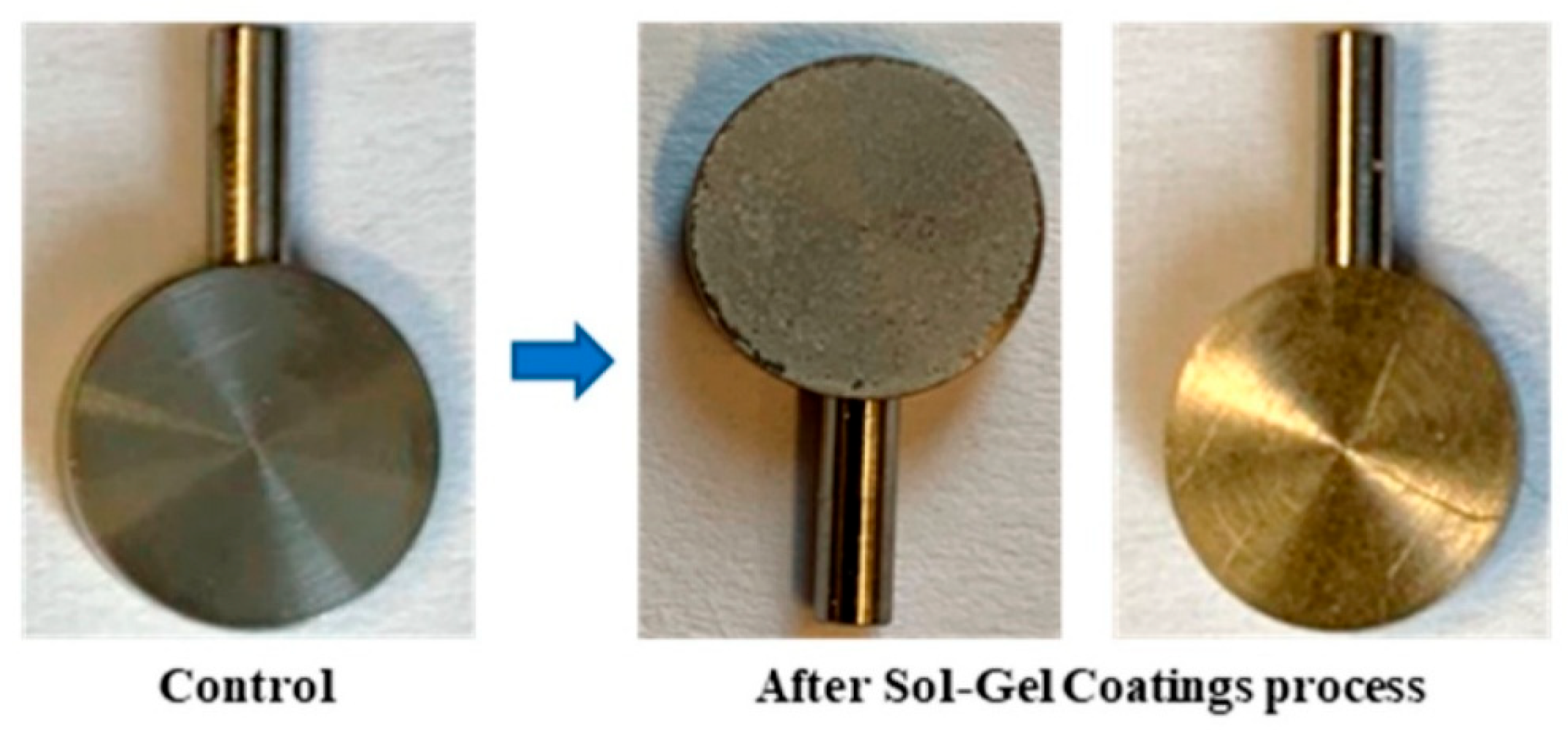
Thin coatings with a range of properties, including chemical and thermal resistance, transparency, and corrosion resistance, may be produced by combining the sol–gel process with the dip-coating method (Figure 13). This combination is applicable to a wide range of industries, such as the semiconductor sector, the manufacturing of specialty glass, corrosion prevention, and other sectors needing specific coating qualities, such as the biomedical sector, where materials are coated with sol–gel solutions to gain antibacterial, antioxidant, and anti-inflammatory qualities[162] .
Spin Coating: This is another technique which entails rapidly spinning a the sol gel solution after it has been poured onto a implant surface. The centrifugal force of the rotation pushes the liquid outward, coating the substrate with a thin, uniform layer[164]. Spin-coating entails rapidly spinning a liquid solution containing the required component after it has been poured onto a flat surface, often a substrate. Spin coating produces a very homogeneous layer thickness of a few nanometers to a few microns. The key advantage over other methods is its quick and simple deposit with incredibly uniform deposition of various nanostructured materials films. Spin-coating makes it possible to apply a very homogeneous layer with a comparatively adjustable and repeatable thickness across a wide area on a flat substrate. Inorganic, organic, and inorganic/organic solution mixes can all be coated via spin coating. With this method, spin coating is quite resilient because the only factors that can be changed are spin speed and fluid viscosity. In terms of manufacturing layer uniformity, thickness control, and material compatibility, both techniques have benefits and drawbacks. The requirements of the application in this thesis and the desired qualities of the deposited layer determined the use of spin-coating over any other technique of Ti alloys with the sol gel process.
3D Printing: By integrating the advantages of 3D printing with the unique properties of sol–gel materials, this approach enables the fabrication of three-dimensional structures with tailored characteristics[165]. To enhance printability, the sol–gel solution can be modified with specialized additives, such as binding agents, rheological modifiers, or other compounds. The 3D printer is loaded with the sol–gel solution, which is then deposited layer by layer, following a predefined path to build the desired object. After printing, the object may require drying to remove moisture and initiate the curing process.

5.8. Sol- Gel Based Antimicrobial Materials

Antibacterial materials are drawing more and more attention from researchers, particularly when they can be infused into bioactive materials. To construct future bioactive materials, designs have combined several organic molecules, such as polyethylene glycol, heparin, dextran sulfate, nafion, or polystyrene sulfonate, with TEOS as the main inorganic precursor to generate antimicrobial materials based on silica. The sol–gel process can be used to provide materials with antibacterial qualities to create surfaces that inhibit the development of bacteria and biofilm. Enhancing the antibacterial impact of bioactive glass has emerged as a prominent area of current study. Researchers in[166] created Ag containing bioactive glass, for dental restorations effective against Streptococcus mutans. Functionalizing silica- Poly(vinylpyrrolidone) hybrid with small molecules like vancomycin and ciprofloxacin was found to be antibacterial against S. aureus, Bacillus cereus, E.coli and Pseudomonas aeruginosa[167]. Other hybrid thin films based on polyvinyl alcohol (PVA)/tetraethyl orthosilicate (TEOS) embedded with silver nanoparticles (AgNps) were synthesized using sol–gel method and showed bactericidal effect against E. coli, S. aureus and P. aeruginosa[168].
QASs in combination with the bioactive glass is another line of development. The antibacterial agent dodecyl-di(aminoethyl)-glycine (DDAG) was incorporated using the dip-coating method during the deposition of TEOS-derived xerogel films onto a glass substrate. The colony-forming units (CFU) of E. coli, S. aureus and P. aeruginosa on the antibacterial-coated glass decreased by more than 99% when 1% of the antimicrobial agent was added to the coating solution, compared to glass coated without the antimicrobial[169]. Stainless steel was coated with a sol–gel film containing 40% N-(6-aminohexyl)-amino propyl trimethoxy silane and 60% butyl trimethoxy silane. NO-releasing coatings significantly reduced bacterial attachment, while untreated and sol–gel-coated steel showed similar adherence levels[170].
Incorporating antimicrobial compounds into sol–gel coatings has proven highly effective in preventing biocontamination and microbial growth[171]. Extensive research is needed to further explore the antibacterial, antifungal, and antiviral properties of sol gel based bioactive coatings.

6. Gaps and Future Directions

Grade 4 titanium has long been the metal substrate standard for dental implants due to its favorable mechanical properties and well-documented clinical success. It has been extensively studied worldwide, with numerous reports confirming its reliability and safety in dental applications. Compared to lower-grade titanium alloys, Grade 4 titanium offers higher tensile strength and reduced malleability, making it suitable for standard dental implants. However, it is generally not recommended for narrow-diameter implants or orthopedic prostheses, where higher mechanical loads are encountered. Despite its widespread use, Grade 4 titanium is often critiqued for certain limitations, including relatively poor wear resistance, lower biocompatibility and a higher Young’s modulus, which may contribute to stress shielding in surrounding bone tissue. Titanium does not bond effectively with bone, leading to implant loosening or failure[121]. In order to enhance osseointegration by promoting bone growth around the implant other bioactive treatments or layers must be added. For instance, the surface roughness has been demonstrated to affect the bone-implant interactions[129], and for this reason several studies have attempted to develop modified surfaces by means of physical and chemical approaches (e.g., sandblasting, acid etching, combination of blasting and etching, electrochemical oxidation and laser treatments).
Coating materials can be employed as well to further modify the implant surfaces in order to improve the performances of metallic implants. Material surface features play a crucial role in the chemical and biological interaction with the surrounding bone tissue, while the mechanical properties are strongly determined by the bulk of the implant [129].
In 1969, Larry Hench and co-workers brought in to the market, chemically bone-alike Hench’s 45S5 Bioglass® based on 45% SiO2, 24.5% Na2O, 24.5% CaO, and 6% P2O5. tested in a rat femoral implant[172]. In the first hour after implantation, Si-OH bonds developed, leading to the release of Si(OH)4 ions in the surrounding area. In the next hour, Si(OH)4 reacted to form a hydrated mesh of silica gel, and after 24 h, Ca, PO4, and CO3 precipitated on the top layer of silica gel leading to the foundation of carbonate apatite. Later, macrophages and differentiated stem cells accumulated in the carbonated apatite leading to the formation of a bony matrix. Finally, the matrix crystallized, and bone growth was enhanced[173].
The FDA has approved bioactive glass (Bioglass® 45S5 and S53P4) for clinical applications. Combined with FDA approval, there is increasing use of bioactive glasses in various aspects of dentistry including dental restorative materials, toothpaste, mineralizing agents, desensitizing agents, pulp capping, root canal treatment, and air abrasion[174]. BG is the best choice for dental applications for dentin remineralization and eliminated enzymatic degradation at the dentin interface, in periodontal surgical procedures to stimulate bone regeneration, especially in interproximal bone defects due to its hemostatic effect on trabecular bone[174]. It is reported that these two formulations of BG S53P4 and 45S5 were antimicrobial and had anti biofilm properties, against pathogens of osteomyelitis: Staphylococcus aureus, Staphylococcus epidermidis, Enterococcus faecalis, Escherichia coli and Candida albicans[175]. This targets a limited range of species (only, Gram-positive), which can miss emerging or less-studied pathogens. Incorporating antimicrobials into BG will address the need for broader-spectrum of Antimicrobial BG.
Addition of Zn+2 and Cu+2 ions in sol–gel based bioactive glasses remains the most common approach to combine antimicrobial effects to BG. As mentioned in Section 1.4.2 (table 1-2), the release of these metal ions from the bioactive glasses and its related cytocompatibility with osteoblast-like cells has reported[65] . Ag-dopings even at low concentrations was not cytotoxic for osteoblast in vitro [53] but studies showed that Ag+, Zn2+ and Hg2+ ions are very cytotoxic even at low concentrations [54]. While Cu ion may promote osteoblast proliferation, differentiation and migration [59], high concentrations of Cu ions inhibits growth and is causes cell death and toxicity on humans [60]. Although significant progress has been made in the development of antimicrobial addition to BG, further comprehensive studies are required to better understand the incorporation and release behavior of antimicrobial agents, as well as their overall biological performance.
In particular, the impact of such modifications on antimicrobial efficacy and cellular responses remains an area of active investigation. Therefore, the primary objective of this study is to synthesize ternary and quaternary sol–gel-derived bioactive glass systems, incorporating a variety of antimicrobial agents. These hybrid materials are designed to enhance antimicrobial activity while maintaining compatibility with biological tissues. In this context, the antimicrobial properties of the synthesized glasses were assessed, and their cytocompatibility was evaluated using osteoblast-like cells to determine their potential for applications in bone tissue engineering and infection prevention.
QAS are antimicrobials with the broadest spectrum of activities as reported in Section 4.4. QACs are lethal to a wide variety of organisms, gram-positive and gram-negative bacteria, fungi, parasites (e.g. Leishmania major, Plasmodia falciparum), and lipophilic (enveloped) viruses[176]. These stable, non-leaching antibacterial materials offer prolonged antimicrobial efficacy through direct contact between microorganisms and the biocidal surface, without compromising the mechanical integrity or polymerization characteristics of the original non-antibacterial dental formulations. Notably, quaternary ammonium (QA)-based resin materials demonstrate favorable biocompatibility, as indicated by their low toxicity, minimal allergenic potential, and limited tissue irritability[176]. Given these advantageous properties, quaternary ammonium compounds (QACs) are considered highly promising for the prevention and management of dental caries. QASs could be used in combination with the bioactive glass and is currently another line of development. The only QAS was dodecyl-di(aminoethyl)-glycine (DDAG) was incorporated using the dip-coating method during the deposition of TEOS-derived xerogel films onto a glass substrate. The colony-forming units (CFU) of E. coli, S. aureus and P. aeruginosa on the antibacterial-coated glass decreased by more than 99% when 1% of the antimicrobial agent was added to the coating solution, compared to glass coated without the antimicrobial[169]. Stainless steel was coated with a sol–gel film containing 40% N-(6-aminohexyl)-amino propyl trimethoxy silane and 60% butyl trimethoxy silane. NO-releasing coatings significantly reduced bacterial attachment, while untreated and sol–gel-coated steel showed similar adherence levels[170]. The development of advanced biomaterials design—particularly the rise of smart materials—encourages the need for novel opportunities in the formulation of bioactive glass materials with quaternary ammonium (QA)-functionalized. This approach may address limitations and challenges associated with integrating antibacterial agents in their conventional (bulk) forms into such materials. Incorporating antimicrobial compounds into sol–gel coatings has proven highly effective in preventing biocontamination and microbial growth[171]. Extensive research is needed to further explore the antibacterial, antifungal, and antiviral properties of sol gel based bioactive coatings.
Generally speaking, QASs' additional carbon chain permits more structural modifications than other antimicrobial agents, and additional functional groups can be added based on the needs of the application. For instance, an increase in biocompatibility or alterable toxicity is required in terms of medical applications.
Despite encouraging in vivo studies demonstrating the feasibility of using quaternary ammonium salts (QASs) in dental applications, their potential adverse effects remain a significant barrier to dental/clinical translation. Therefore, strategies to mitigate or eliminate these undesirable effects warrant careful consideration. We propose three potential approaches to address this challenge:
First, QASs can be combined with low-toxicity materials—bioactive glass being a notable example. QAS-incorporated hydrogels have recently exhibited excellent therapeutic efficacy and high biocompatibility in in vivo studies[90]
To further enhance their safety profile, linkages to degradable materials on can enhance biodegradation of newly synthesised QAS[177]
Addition to metal substrates will help enhance tensile strength, load bearing capacity and quality.
Furthermore, using QAS hybrids and coatings with low-toxicity materials, macromolecules can be cross-linked to form finer shapes, such as microspheres and three-dimensional mesh structures, to improve the comprehensive properties of the material.

7. Conclusion

This review included relevant background information on biocides and antimicrobial materials compatible in promoting healing along with effective antimicrobial properties. Although antifouling materials are also used in implants; antimicrobial materials is a broad research field; it was not possible to cover all aspects within this short review. However, every effort was made to include important work and significant research findings, with minimal bias. Aside from the various challenges and opportunities posed by bone tissue engineering strategies, this article addressed progress, commonly associated materials, cytotoxic studies, antimicrobial efficacy and limitations on the development of antimicrobial material for coating implant surfaces. This review examines the antimicrobial mechanisms of various agents while highlighting the influence of applications, synthesis process and limitations.

Author Contributions

K.T.: Writing, Statistical analysis, Review; A.R.: Supervision, Funding acquisition, editing; P.C.: Supervision, Funding acquisition, editing, review. All authors have read and agreed to the published version of the manuscript

Funding

This research was funded by the Natural Sciences and Engineering Research Council (NSERC). K.N.T was funded by Ontario Graduate Scholarships and the Queen Elizabeth II Graduate Scholarship in Science and Technology (QEII-GSST) Program.

Conflicts of Interest

The authors declare no conflicts of interest.

References

  1. “Oral and maxillofacial surgeons: the experts in face, mouth and jaw surgery ,” American Association of Oral and Maxillofacial Surgeons.
  2. A. Gupta, M. Dhanraj, and G. Sivagami, “Status of surface treatment in endosseous implant: A literary overview,” Indian Journal of Dental Research, vol. 21, no. 3, p. 433, 2010. [CrossRef]
  3. L. Gaviria, J. P. Salcido, T. Guda, and J. L. Ong, “Current trends in dental implants,” J Korean Assoc Oral Maxillofac Surg, vol. 40, no. 2, p. 50, 2014. [CrossRef]
  4. J. D. Lambris and R. Paoletti, “Advances in Experimental Medicine and Biology.” Online.. Available: http://www.springer.com/series/5584.
  5. S. S. Magill et al., “Multistate Point-Prevalence Survey of Health Care–Associated Infections,” New England Journal of Medicine, vol. 370, no. 13, pp. 1198–1208, Mar. 2014. [CrossRef]
  6. L. Montanaro et al., “Scenery of Staphylococcus Implant Infections in Orthopedics,” Future Microbiol, vol. 6, no. 11, pp. 1329–1349, Nov. 2011. [CrossRef]
  7. B. Li and T. J. Webster, “Bacteria antibiotic resistance: New challenges and opportunities for implant-associated orthopedic infections,” Journal of Orthopaedic Research, vol. 36, no. 1, pp. 22–32, Jan. 2018. [CrossRef]
  8. J. Gao et al., “Research Progress on the Preparation Process and Material Structure of 3D-Printed Dental Implants and Their Clinical Applications,” Coatings, vol. 14, no. 7, p. 781, Jun. 2024. [CrossRef]
  9. “Pan-Canadian Action Plan on Antimicrobial Resistance,” Jun. 2023.
  10. D. Zoutman, S. McDonald, and D. Vethanayagan, “Total and Attributable Costs of Surgical-Wound Infections at a Canadian Tertiary-Care Center,” Infect Control Hosp Epidemiol, vol. 19, no. 4, pp. 254–259, Apr. 1998. [CrossRef]
  11. O. Camps-Font, P. Martín-Fatás, A. Clé-Ovejero, R. Figueiredo, C. Gay-Escoda, and E. Valmaseda-Castellón, “Postoperative infections after dental implant placement: Variables associated with increased risk of failure,” J Periodontol, vol. 89, no. 10, pp. 1165–1173, Oct. 2018. [CrossRef]
  12. Anth. G. Gristina, “Biomaterial-Centered Infection: Microbial Adhesion Versus Tissue Integration,” American Association of Petroleum Geologists, 1981. Online.. Available: www.sciencemag.org.
  13. J. M. Schierholz and J. Beuth, “Implant infections: a haven for opportunistic bacteria,” Journal of Hospital Infection, vol. 49, no. 2, pp. 87–93, Oct. 2001. [CrossRef]
  14. S. Ivanovski, P. M. Bartold, and Y. Huang, “The role of foreign body response in <scp>peri-implantitis</scp> : What is the evidence?,” Periodontol 2000, vol. 90, no. 1, pp. 176–185, Oct. 2022. [CrossRef]
  15. R. Trindade, T. Albrektsson, P. Tengvall, and A. Wennerberg, “Foreign Body Reaction to Biomaterials: On Mechanisms for Buildup and Breakdown of Osseointegration,” Clin Implant Dent Relat Res, vol. 18, no. 1, pp. 192–203, Feb. 2016. [CrossRef]
  16. P. Thomas and B. Summer, “Implant allergy,” Allergol Select, vol. 1, no. 1, pp. 59–64, Jan. 2017. [CrossRef]
  17. “Allergies to dental materials,” Vital, vol. 4, no. 3, pp. 39–39, Sep. 2007. [CrossRef]
  18. F. Schwarz, J. Derks, A. Monje, and H. L. Wang, “Peri-implantitis,” Jun. 01, 2018, NLM (Medline). [CrossRef]
  19. J. Prathapachandran and N. Suresh, “Management of peri-implantitis,” 2012. Online.. Available: www.drj.ir.
  20. J. Hasan et al., “Preventing Peri-implantitis: The Quest for a Next Generation of Titanium Dental Implants,” Nov. 14, 2022, American Chemical Society. [CrossRef]
  21. Y.-S. Park, B.-A. Lee, S.-H. Choi, and Y.-T. Kim, “Evaluation of failed implants and reimplantation at sites of previous dental implant failure: survival rates and risk factors,” J Periodontal Implant Sci, vol. 52, no. 3, p. 230, 2022. [CrossRef]
  22. Y. Zhang, A. Pajares, and B. R. Lawn, “Fatigue and damage tolerance of Y-TZP ceramics in layered biomechanical systems,” J Biomed Mater Res B Appl Biomater, vol. 71, no. 1, pp. 166–171, Oct. 2004. [CrossRef]
  23. “Failure mechanisms of medical implants and their effects on outcomes”.
  24. F. E. Lambert, H. Weber, S. M. Susarla, U. C. Belser, and G. O. Gallucci, “Descriptive Analysis of Implant and Prosthodontic Survival Rates With Fixed Implant–Supported Rehabilitations in the Edentulous Maxilla,” J Periodontol, vol. 80, no. 8, pp. 1220–1230, Aug. 2009. [CrossRef]
  25. P. Shetty, P. Yadav, M. Tahir, and V. Saini, “Implant Design and Stress Distribution,” International Journal of Oral Implantology & Clinical Research, vol. 7, no. 2, pp. 34–39, Aug. 2016. [CrossRef]
  26. K. Liaw, R. H. Delfini, and J. J. Abrahams, “Dental Implant Complications,” Seminars in Ultrasound, CT and MRI, vol. 36, no. 5, pp. 427–433, Oct. 2015. [CrossRef]
  27. S. Renvert, G. R. Persson, F. Q. Pirih, and P. M. Camargo, “Peri-implant health, peri-implant mucositis, and peri-implantitis: Case definitions and diagnostic considerations,” J Clin Periodontol, vol. 45, no. S20, Jun. 2018. [CrossRef]
  28. M. A. Atieh, N. H. M. Alsabeeha, C. M. Faggion, and W. J. Duncan, “The Frequency of Peri-Implant Diseases: A Systematic Review and Meta-Analysis,” J Periodontol, vol. 84, no. 11, pp. 1586–1598, Nov. 2013. [CrossRef]
  29. A. Radaic and Y. L. Kapila, “The oralome and its dysbiosis: New insights into oral microbiome-host interactions,” Comput Struct Biotechnol J, vol. 19, pp. 1335–1360, 2021. [CrossRef]
  30. M. Lu, S. Xuan, and Z. Wang, “Oral microbiota: A new view of body health,” Food Science and Human Wellness, vol. 8, no. 1, pp. 8–15, Mar. 2019. [CrossRef]
  31. N. Bolukbasi, T. Ozdemir, L. Oksuz, and N. Gurler, “Bacteremia following dental implant surgery: Preliminary results,” Med Oral Patol Oral Cir Bucal, pp. e69–e75, 2012. [CrossRef]
  32. A. D. Pye, D. E. A. Lockhart, M. P. Dawson, C. A. Murray, and A. J. Smith, “A review of dental implants and infection,” Journal of Hospital Infection, vol. 72, no. 2, pp. 104–110, Jun. 2009. [CrossRef]
  33. G. Cheng, Z. Zhang, S. Chen, J. D. Bryers, and S. Jiang, “Inhibition of bacterial adhesion and biofilm formation on zwitterionic surfaces,” Biomaterials, vol. 28, no. 29, pp. 4192–4199, Oct. 2007. [CrossRef]
  34. C. M. Pang, P. Hong, H. Guo, and W.-T. Liu, “Biofilm Formation Characteristics of Bacterial Isolates Retrieved from a Reverse Osmosis Membrane,” Environ Sci Technol, vol. 39, no. 19, pp. 7541–7550, Oct. 2005. [CrossRef]
  35. J. Goldberg, “Biofilms and antibiotic resistance: a genetic linkage,” Trends Microbiol, vol. 10, no. 6, p. 264, Jun. 2002. [CrossRef]
  36. J.-S. Peng, W.-C. Tsai, and C.-C. Chou, “Inactivation and removal of Bacillus cereus by sanitizer and detergent,” Int J Food Microbiol, vol. 77, no. 1–2, pp. 11–18, Jul. 2002. [CrossRef]
  37. M. J. Chen, Z. Zhang, and T. R. Bott, “Direct measurement of the adhesive strength of biofilms in pipes by micromanipulation ,” Biotechnology Techniques, vol. 12, no. 12, pp. 875–880, 1998. [CrossRef]
  38. G. M. Dickinson and A. L. Bisno, “Infections associated with indwelling devices: infections related to extravascular devices,” Antimicrob Agents Chemother, vol. 33, no. 5, pp. 602–607, May 1989. [CrossRef]
  39. E. Muller, J. Hübner, N. Gutierrez, S. Takeda, D. A. Goldmann, and G. B. Pier, “Isolation and characterization of transposon mutants of Staphylococcus epidermidis deficient in capsular polysaccharide/adhesin and slime,” Infect Immun, vol. 61, no. 2, pp. 551–558, Feb. 1993. [CrossRef]
  40. D. Mack et al., “The intercellular adhesin involved in biofilm accumulation of Staphylococcus epidermidis is a linear beta-1,6-linked glucosaminoglycan: purification and structural analysis,” J Bacteriol, vol. 178, no. 1, pp. 175–183, Jan. 1996. [CrossRef]
  41. I. Sutherland, “The biofilm matrix – an immobilized but dynamic microbial environment,” Trends Microbiol, vol. 9, no. 5, pp. 222–227, May 2001. [CrossRef]
  42. W. M. Dunne, “Bacterial Adhesion: Seen Any Good Biofilms Lately?,” Clin Microbiol Rev, vol. 15, no. 2, pp. 155–166, Apr. 2002. [CrossRef]
  43. N. Aboelnaga et al., “Deciphering the dynamics of methicillin-resistant Staphylococcus aureus biofilm formation: from molecular signaling to nanotherapeutic advances,” Cell Communication and Signaling, vol. 22, no. 1, p. 188, Mar. 2024. [CrossRef]
  44. D. R. Korber, J. R. Lawrence, H. M. Lappin-Scott, and J. W. Costerton, “Growth of Microorganisms on Surfaces,” in Microbial Biofilms, Cambridge University Press, 1995, pp. 15–45. [CrossRef]
  45. R. C. S. Silva et al., “Titanium Dental Implants: An Overview of Applied Nanobiotechnology to Improve Biocompatibility and Prevent Infections,” Materials, vol. 15, no. 9, p. 3150, Apr. 2022. [CrossRef]
  46. Z. Chen, Z. Wang, W. Qiu, and F. Fang, “Overview of Antibacterial Strategies of Dental Implant Materials for the Prevention of Peri-Implantitis,” Apr. 21, 2021, American Chemical Society. [CrossRef]
  47. G. Li, H. Jiang, and F. Yang, “A Novel Diffuse Plasma Jet Without Airflow and Its Application in the Real-Time Surface Modification of Titanium,” IEEE Transactions on Plasma Science, vol. 50, no. 11, pp. 4603–4611, Nov. 2022. [CrossRef]
  48. J. Zhu, W. Chu, J. Luo, J. Yang, L. He, and J. Li, “Dental Materials for Oral Microbiota Dysbiosis: An Update,” Front Cell Infect Microbiol, vol. 12, Jun. 2022. [CrossRef]
  49. S.-J. An, J.-U. Namkung, K.-W. Ha, H.-K. Jun, H. Y. Kim, and B.-K. Choi, “Inhibitory effect of d-arabinose on oral bacteria biofilm formation on titanium discs,” Anaerobe, vol. 75, p. 102533, Jun. 2022. [CrossRef]
  50. N. Masurier et al., “Site-specific grafting on titanium surfaces with hybrid temporin antibacterial peptides,” J Mater Chem B, vol. 6, no. 12, pp. 1782–1790, 2018. [CrossRef]
  51. R. Wan et al., “Study on the osteogenesis of rat mesenchymal stem cells and the long-term antibacterial activity of <scp> Staphylococcus epidermidis </scp> on the surface of silver-rich <scp>TiN</scp> /Ag modified titanium alloy,” J Biomed Mater Res B Appl Biomater, vol. 108, no. 7, pp. 3008–3021, Oct. 2020. [CrossRef]
  52. G. Wang et al., “Antibacterial effects of titanium embedded with silver nanoparticles based on electron-transfer-induced reactive oxygen species,” Biomaterials, vol. 124, pp. 25–34, Apr. 2017. [CrossRef]
  53. J. Hardes et al., “The Influence of Elementary Silver Versus Titanium on Osteoblasts Behaviour In Vitro Using Human Osteosarcoma Cell Lines,” Sarcoma, vol. 2007, pp. 1–5, 2007. [CrossRef]
  54. F. Heidenau et al., “A novel antibacterial titania coating: Metal ion toxicity and in vitro surface colonization,” J Mater Sci Mater Med, vol. 16, no. 10, pp. 883–888, Oct. 2005. [CrossRef]
  55. F. Heidenau et al., “A novel antibacterial titania coating: Metal ion toxicity and in vitro surface colonization,” J Mater Sci Mater Med, vol. 16, no. 10, pp. 883–888, Oct. 2005. [CrossRef]
  56. W.-L. Du, S.-S. Niu, Y.-L. Xu, Z.-R. Xu, and C.-L. Fan, “Antibacterial activity of chitosan tripolyphosphate nanoparticles loaded with various metal ions,” Carbohydr Polym, vol. 75, no. 3, pp. 385–389, Feb. 2009. [CrossRef]
  57. C. Xia, D. Cai, J. Tan, K. Li, Y. Qiao, and X. Liu, “Synergistic Effects of N/Cu Dual Ions Implantation on Stimulating Antibacterial Ability and Angiogenic Activity of Titanium,” ACS Biomater Sci Eng, vol. 4, no. 9, pp. 3185–3193, Sep. 2018. [CrossRef]
  58. L. Yu, G. Jin, L. Ouyang, D. Wang, Y. Qiao, and X. Liu, “Antibacterial activity, osteogenic and angiogenic behaviors of copper-bearing titanium synthesized by PIII&D,” J Mater Chem B, vol. 4, no. 7, pp. 1296–1309, 2016. [CrossRef]
  59. L. Antoniazzi et al., “Effects of Cu2+ and Cu+ on the proliferation, differentiation and calcification of primary mouse osteoblasts in vitro,” Phys Rev D Part Fields, vol. 46, no. 11, pp. 4828–4835, Dec. 1992. [CrossRef]
  60. D. Zhang, L. Ren, Y. Zhang, N. Xue, K. Yang, and M. Zhong, “Antibacterial activity against Porphyromonas gingivalis and biological characteristics of antibacterial stainless steel,” Colloids Surf B Biointerfaces, vol. 105, pp. 51–57, May 2013. [CrossRef]
  61. J. O. Noyce, H. Michels, and C. W. Keevil, “Potential use of copper surfaces to reduce survival of epidemic meticillin-resistant Staphylococcus aureus in the healthcare environment,” Journal of Hospital Infection, vol. 63, no. 3, pp. 289–297, Jul. 2006. [CrossRef]
  62. J. O. Noyce, H. Michels, and C. W. Keevil, “Use of Copper Cast Alloys To Control Escherichia coli O157 Cross-Contamination during Food Processing,” Appl Environ Microbiol, vol. 72, no. 6, pp. 4239–4244, Jun. 2006. [CrossRef]
  63. L. P. T. M. Zevenhuizen, J. Dolfing, E. J. Eshuis, and I. J. Scholten-Koerselman, “Inhibitory effects of copper on bacteria related to the free ion concentration,” Microb Ecol, vol. 5, no. 2, pp. 139–146, Jun. 1979. [CrossRef]
  64. M. M. Almoudi, A. S. Hussein, M. I. Abu Hassan, and N. Mohamad Zain, “A systematic review on antibacterial activity of zinc against Streptococcus mutans,” Saudi Dent J, vol. 30, no. 4, pp. 283–291, Oct. 2018. [CrossRef]
  65. L. Li, Q. Li, M. Zhao, L. Dong, J. Wu, and D. Li, “Effects of Zn and Ag Ratio on Cell Adhesion and Antibacterial Properties of Zn/Ag Coimplanted TiN,” ACS Biomater Sci Eng, vol. 5, no. 7, pp. 3303–3310, Jul. 2019. [CrossRef]
  66. M. Yamaguchi, H. Oishi, and Y. Suketa, “Stimulatory effect of zinc on bone formation in tissue culture,” Biochem Pharmacol, vol. 36, no. 22, pp. 4007–4012, Nov. 1987. [CrossRef]
  67. W.-L. Du, S.-S. Niu, Y.-L. Xu, Z.-R. Xu, and C.-L. Fan, “Antibacterial activity of chitosan tripolyphosphate nanoparticles loaded with various metal ions,” Carbohydr Polym, vol. 75, no. 3, pp. 385–389, Feb. 2009. [CrossRef]
  68. D. Wang et al., “Where does the toxicity of metal oxide nanoparticles come from: The nanoparticles, the ions, or a combination of both?,” J Hazard Mater, vol. 308, pp. 328–334, May 2016. [CrossRef]
  69. F. Heidenau et al., “A novel antibacterial titania coating: Metal ion toxicity and in vitro surface colonization,” J Mater Sci Mater Med, vol. 16, no. 10, pp. 883–888, Oct. 2005. [CrossRef]
  70. H. Kokkonen, C. Cassinelli, R. Verhoef, M. Morra, H. A. Schols, and J. Tuukkanen, “Differentiation of Osteoblasts on Pectin-Coated Titanium,” Biomacromolecules, vol. 9, no. 9, pp. 2369–2376, Sep. 2008. [CrossRef]
  71. A. Irshad, R. Jawad, Q. Mushtaq, A. Spalletta, P. Martin, and U. Ishtiaq, “Determination of antibacterial and antioxidant potential of organic crude extracts from Malus domestica, Cinnamomum verum and Trachyspermum ammi,” Sci Rep, vol. 15, no. 1, p. 976, Jan. 2025. [CrossRef]
  72. A. Jain, J. Dixit, and D. Prakash, “Modulatory effects of Cissus quadrangularis on periodontal regeneration by bovine-derived hydroxyapatite in intrabony defects: exploratory clinical trial.,” J Int Acad Periodontol, vol. 10, no. 2, pp. 59–65, Apr. 2008.
  73. K. N. Chidambara Murthy, A. Vanitha, M. Mahadeva Swamy, and G. A. Ravishankar, “Antioxidant and Antimicrobial Activity of Cissus quadrangularis L.,” J Med Food, vol. 6, no. 2, pp. 99–105, Jul. 2003. [CrossRef]
  74. H. Kim et al., “The Effect of Safflower Seed Extract on Periodontal Healing of 1-Wall Intrabony Defects in Beagle Dogs,” J Periodontol, vol. 73, no. 12, pp. 1457–1466, Dec. 2002. [CrossRef]
  75. Aurora DOBRIN and Gabriela POPA, “799 EVALUATION OF THE ANTIMICROBIAL ACTIVITY OF CARTHAMUS TINCTORIUS EXTRACTS AGAINST NOSOCOMIAL MICROORGANISMS,” Scientific Papers. Series B, Horticulture, vol. 1, pp. 799–811, 2022.
  76. A. Merolli, L. Nicolais, L. Ambrosio, and M. Santin, “A degradable soybean-based biomaterial used effectively as a bone filler in vivo in a rabbit,” Biomedical Materials, vol. 5, no. 1, p. 015008, Feb. 2010. [CrossRef]
  77. S. A. Hosseini Chaleshtori, M. Ataie Kachoie, and S. M. Hashemi Jazi, “Antibacterial effects of the methanolic extract of Glycine Max (Soybean),” Microbiol Res (Pavia), vol. 8, no. 2, Nov. 2017. [CrossRef]
  78. A. Agrawal, A. Reche, S. Agrawal, and P. Paul, “Applications of Chitosan Nanoparticles in Dentistry: A Review,” Cureus, Dec. 2023. [CrossRef]
  79. C.-L. Ke, F.-S. Deng, C.-Y. Chuang, and C.-H. Lin, “Antimicrobial Actions and Applications of Chitosan,” Polymers (Basel), vol. 13, no. 6, p. 904, Mar. 2021. [CrossRef]
  80. W.-H. Lo, F.-S. Deng, C.-J. Chang, and C.-H. Lin, “Synergistic Antifungal Activity of Chitosan with Fluconazole against Candida albicans, Candida tropicalis, and Fluconazole-Resistant Strains,” Molecules, vol. 25, no. 21, p. 5114, Nov. 2020. [CrossRef]
  81. K. Tahsin, W. Xu, D. Watson, A. Rizkalla, and P. Charpentier, “Antimicrobial Denture Material Synthesized from Poly(methyl methacrylate) Enriched with Cannabidiol Isolates,” Molecules, vol. 30, no. 4, p. 943, Feb. 2025. [CrossRef]
  82. N. Beyth, I. Yudovin-Farber, R. Bahir, A. J. Domb, and E. I. Weiss, “Antibacterial activity of dental composites containing quaternary ammonium polyethylenimine nanoparticles against Streptococcus mutans,” Biomaterials, vol. 27, no. 21, pp. 3995–4002, Jul. 2006. [CrossRef]
  83. X. Xu, Y. Wang, S. Liao, Z. T. Wen, and Y. Fan, “Synthesis and characterization of antibacterial dental monomers and composites,” J Biomed Mater Res B Appl Biomater, vol. 100B, no. 4, pp. 1151–1162, May 2012. [CrossRef]
  84. X. Xu and S. Costin, “CHAPTER 10. Antimicrobial Polymeric Dental Materials,” 2013, pp. 279–309. [CrossRef]
  85. S. Imazato, T. Imai, R. R. B. Russell, M. Torii, and S. Ebisu, “Antibacterial activity of cured dental resin incorporating the antibacterial monomer MDPB and an adhesion-promoting monomer,” J Biomed Mater Res, vol. 39, no. 4, pp. 511–515, Mar. 1998. [CrossRef]
  86. S. Imazato, M. Torii, Y. Tsuchitani, J. F. McCabe, and R. R. B. Russell, “Incorporation of Bacterial Inhibitor into Resin Composite,” J Dent Res, vol. 73, no. 8, pp. 1437–1443, Aug. 1994. [CrossRef]
  87. Y. Ge, S. Wang, X. Zhou, H. Wang, H. Xu, and L. Cheng, “The Use of Quaternary Ammonium to Combat Dental Caries,” Materials, vol. 8, no. 6, pp. 3532–3549, Jun. 2015. [CrossRef]
  88. L. Chen, B. I. Suh, and J. Yang, “Antibacterial dental restorative materials: A review.,” Am J Dent, vol. 31, no. Sp Is B, pp. 6B-12B, Nov. 2018.
  89. US Food and Drug Admistration, “Sec. 172.165 Quaternary ammonium chloride combination. ,” Jan. 1985. Accessed: Jan. 30, 2025. Online.. Available: https://www.accessdata.fda.gov/scripts/cdrh/cfdocs/cfcfr/CFRSearch.cfm?fr=172.165.
  90. Z. Zhou et al., “Quaternary Ammonium Salts: Insights into Synthesis and New Directions in Antibacterial Applications,” Bioconjug Chem, vol. 34, no. 2, pp. 302–325, Feb. 2023. [CrossRef]
  91. C. J. Ioannou, G. W. Hanlon, and S. P. Denyer, “Action of Disinfectant Quaternary Ammonium Compounds against Staphylococcus aureus,” Antimicrob Agents Chemother, vol. 51, no. 1, pp. 296–306, Jan. 2007. [CrossRef]
  92. A. Luz, P. DeLeo, N. Pechacek, and M. Freemantle, “Human health hazard assessment of quaternary ammonium compounds: Didecyl dimethyl ammonium chloride and alkyl (C12–C16) dimethyl benzyl ammonium chloride,” Regulatory Toxicology and Pharmacology, vol. 116, p. 104717, Oct. 2020. [CrossRef]
  93. X. Ye et al., “π–π conjugations improve the long-term antibacterial properties of graphene oxide/quaternary ammonium salt nanocomposites,” Chemical Engineering Journal, vol. 304, pp. 873–881, Nov. 2016. [CrossRef]
  94. P. L. Padnya et al., “Thiacalixarene based quaternary ammonium salts as promising antibacterial agents,” Bioorg Med Chem, vol. 29, p. 115905, Jan. 2021. [CrossRef]
  95. X. Zhang et al., “Design and production of environmentally degradable quaternary ammonium salts,” Green Chemistry, vol. 23, no. 17, pp. 6548–6554, 2021. [CrossRef]
  96. M. Benkova et al., “Synthesis, Antimicrobial Effect and Lipophilicity-Activity Dependence of Three Series of Dichained N -Alkylammonium Salts,” ChemistrySelect, vol. 4, no. 41, pp. 12076–12084, Nov. 2019. [CrossRef]
  97. L. Zhi et al., “Synthesis and Performance of Double-Chain Quaternary Ammonium Salt Glucosamide Surfactants,” Molecules, vol. 27, no. 7, p. 2149, Mar. 2022. [CrossRef]
  98. H. Murata, R. R. Koepsel, K. Matyjaszewski, and A. J. Russell, “Permanent, non-leaching antibacterial surfaces—2: How high density cationic surfaces kill bacterial cells,” Biomaterials, vol. 28, no. 32, pp. 4870–4879, Nov. 2007. [CrossRef]
  99. D. Xie, Y. Weng, X. Guo, J. Zhao, R. L. Gregory, and C. Zheng, “Preparation and evaluation of a novel glass-ionomer cement with antibacterial functions,” Dental Materials, vol. 27, no. 5, pp. 487–496, May 2011. [CrossRef]
  100. L. Cheng, M. D. Weir, K. Zhang, D. D. Arola, X. Zhou, and H. H. K. Xu, “Dental primer and adhesive containing a new antibacterial quaternary ammonium monomer dimethylaminododecyl methacrylate,” J Dent, vol. 41, no. 4, pp. 345–355, Apr. 2013. [CrossRef]
  101. C. Zhou, M. D. Weir, K. Zhang, D. Deng, L. Cheng, and H. H. K. Xu, “Synthesis of new antibacterial quaternary ammonium monomer for incorporation into CaP nanocomposite,” Dental Materials, vol. 29, no. 8, pp. 859–870, Aug. 2013. [CrossRef]
  102. M. A. S. Melo, J. Wu, M. D. Weir, and H. H. K. Xu, “Novel antibacterial orthodontic cement containing quaternary ammonium monomer dimethylaminododecyl methacrylate,” J Dent, vol. 42, no. 9, pp. 1193–1201, Sep. 2014. [CrossRef]
  103. F. Li, M. D. Weir, A. F. Fouad, and H. H. K. Xu, “Effect of salivary pellicle on antibacterial activity of novel antibacterial dental adhesives using a dental plaque microcosm biofilm model,” Dental Materials, vol. 30, no. 2, pp. 182–191, Feb. 2014. [CrossRef]
  104. S. Wang et al., “Antibacterial Effect of Dental Adhesive Containing Dimethylaminododecyl Methacrylate on the Development of Streptococcus mutans Biofilm,” Int J Mol Sci, vol. 15, no. 7, pp. 12791–12806, Jul. 2014. [CrossRef]
  105. K. Zhang et al., “Effect of Antibacterial Dental Adhesive on Multispecies Biofilms Formation,” J Dent Res, vol. 94, no. 4, pp. 622–629, Apr. 2015. [CrossRef]
  106. P. D. Marsh and D. J. Bradshaw, “Dental plaque as a biofilm,” J Ind Microbiol, vol. 15, no. 3, pp. 169–175, Sep. 1995. [CrossRef]
  107. D. H. Pashley et al., “Collagen Degradation by Host-derived Enzymes during Aging,” J Dent Res, vol. 83, no. 3, pp. 216–221, Mar. 2004. [CrossRef]
  108. C. Chen et al., “Antibacterial activity and ion release of bonding agent containing amorphous calcium phosphate nanoparticles,” Dental Materials, vol. 30, no. 8, pp. 891–901, Aug. 2014. [CrossRef]
  109. K. Zhang, L. Cheng, E. J. Wu, M. D. Weir, Y. Bai, and H. H. K. Xu, “Effect of water-ageing on dentine bond strength and anti-biofilm activity of bonding agent containing new monomer dimethylaminododecyl methacrylate,” J Dent, vol. 41, no. 6, pp. 504–513, Jun. 2013. [CrossRef]
  110. F. Li, M. D. Weir, and H. H. K. Xu, “Effects of Quaternary Ammonium Chain Length on Antibacterial Bonding Agents,” J Dent Res, vol. 92, no. 10, pp. 932–938, Oct. 2013. [CrossRef]
  111. F. Li, M. D. Weir, A. F. Fouad, and H. H. K. Xu, “Time-kill behaviour against eight bacterial species and cytotoxicity of antibacterial monomers,” J Dent, vol. 41, no. 10, pp. 881–891, Oct. 2013. [CrossRef]
  112. F. Li, P. Wang, M. D. Weir, A. F. Fouad, and H. H. K. Xu, “Evaluation of antibacterial and remineralizing nanocomposite and adhesive in rat tooth cavity model,” Acta Biomater, vol. 10, no. 6, pp. 2804–2813, Jun. 2014. [CrossRef]
  113. H. Zhou, F. Li, M. D. Weir, and H. H. K. Xu, “Dental plaque microcosm response to bonding agents containing quaternary ammonium methacrylates with different chain lengths and charge densities,” J Dent, vol. 41, no. 11, pp. 1122–1131, Nov. 2013. [CrossRef]
  114. F. Li, M. D. Weir, J. Chen, and H. H. K. Xu, “Effect of charge density of bonding agent containing a new quaternary ammonium methacrylate on antibacterial and bonding properties,” Dental Materials, vol. 30, no. 4, pp. 433–441, Apr. 2014. [CrossRef]
  115. N. Zhang, J. Ma, M. A. S. Melo, M. D. Weir, Y. Bai, and H. H. K. Xu, “Protein-repellent and antibacterial dental composite to inhibit biofilms and caries,” J Dent, vol. 43, no. 2, pp. 225–234, Feb. 2015. [CrossRef]
  116. A. B. Karakullukcu, E. Taban, and O. O. Ojo, “Biocompatibility of biomaterials and test methods: a review,” Materials Testing, vol. 65, no. 4, pp. 545–559, Apr. 2023. [CrossRef]
  117. F. D. Al-Shalawi et al., “Biomaterials as Implants in the Orthopedic Field for Regenerative Medicine: Metal versus Synthetic Polymers,” Polymers (Basel), vol. 15, no. 12, p. 2601, Jun. 2023. [CrossRef]
  118. T. Binlateh, P. Thammanichanon, P. Rittipakorn, N. Thinsathid, and P. Jitprasertwong, “Collagen-Based Biomaterials in Periodontal Regeneration: Current Applications and Future Perspectives of Plant-Based Collagen,” Biomimetics, vol. 7, no. 2, p. 34, Mar. 2022. [CrossRef]
  119. M. Talha, C. K. Behera, and O. P. Sinha, “A review on nickel-free nitrogen containing austenitic stainless steels for biomedical applications,” Materials Science and Engineering: C, vol. 33, no. 7, pp. 3563–3575, Oct. 2013. [CrossRef]
  120. M. Niinomi, “Mechanical properties of biomedical titanium alloys,” Materials Science and Engineering: A, vol. 243, no. 1–2, pp. 231–236, Mar. 1998. [CrossRef]
  121. A. Palmquist, O. M. Omar, M. Esposito, J. Lausmaa, and P. Thomsen, “Titanium oral implants: surface characteristics, interface biology and clinical outcome,” J R Soc Interface, vol. 7, no. suppl_5, Oct. 2010. [CrossRef]
  122. M. P. Staiger, A. M. Pietak, J. Huadmai, and G. Dias, “Magnesium and its alloys as orthopedic biomaterials: A review,” Biomaterials, vol. 27, no. 9, pp. 1728–1734, Mar. 2006. [CrossRef]
  123. F. Zhang et al., “Corrosion behavior of mesoporous bioglass-ceramic coated magnesium alloy under applied forces,” J Mech Behav Biomed Mater, vol. 56, pp. 146–155, Mar. 2016. [CrossRef]
  124. H.-Y. Wang et al., “Effect of sandblasting intensity on microstructures and properties of pure titanium micro-arc oxidation coatings in an optimized composite technique,” Appl Surf Sci, vol. 292, pp. 204–212, Feb. 2014. [CrossRef]
  125. A. Palmquist, O. M. Omar, M. Esposito, J. Lausmaa, and P. Thomsen, “Titanium oral implants: surface characteristics, interface biology and clinical outcome,” J R Soc Interface, vol. 7, no. suppl_5, Oct. 2010. [CrossRef]
  126. H.-Y. Wang et al., “Effect of sandblasting intensity on microstructures and properties of pure titanium micro-arc oxidation coatings in an optimized composite technique,” Appl Surf Sci, vol. 292, pp. 204–212, Feb. 2014. [CrossRef]
  127. A. Civantos, E. Martínez-Campos, V. Ramos, C. Elvira, A. Gallardo, and A. Abarrategi, “Titanium Coatings and Surface Modifications: Toward Clinically Useful Bioactive Implants,” ACS Biomater Sci Eng, vol. 3, no. 7, pp. 1245–1261, Jul. 2017. [CrossRef]
  128. H. Y. Wang et al., “Effect of sandblasting intensity on microstructures and properties of pure titanium micro-arc oxidation coatings in an optimized composite technique,” Appl Surf Sci, vol. 292, pp. 204–212, Feb. 2014. [CrossRef]
  129. A. Palmquist, O. M. Omar, M. Esposito, J. Lausmaa, and P. Thomsen, “Titanium oral implants: surface characteristics, interface biology and clinical outcome,” J R Soc Interface, vol. 7, no. suppl_5, Oct. 2010. [CrossRef]
  130. M. Catauro, F. Bollino, and F. Papale, “Biocompatibility improvement of titanium implants by coating with hybrid materials synthesized by sol-gel technique,” J Biomed Mater Res A, p. n/a-n/a, Feb. 2014. [CrossRef]
  131. S. Midha, T. B. Kim, W. Van Den Bergh, P. D. Lee, J. R. Jones, and C. A. Mitchell, “Preconditioned 70S30C bioactive glass foams promote osteogenesis in vivo,” Acta Biomater, vol. 9, no. 11, pp. 9169–9182, Nov. 2013. [CrossRef]
  132. M. Niinomi, “Recent metallic materials for biomedical applications,” Metallurgical and Materials Transactions A, vol. 33, no. 3, pp. 477–486, Mar. 2002. [CrossRef]
  133. G. Kickelbick, “Introduction to Hybrid Materials,” in Hybrid Materials, Wiley, 2006, pp. 1–48. [CrossRef]
  134. B. M. Novak, “Hybrid Nanocomposite Materials—between inorganic glasses and organic polymers,” Advanced Materials, vol. 5, no. 6, pp. 422–433, Jun. 1993. [CrossRef]
  135. D. Grosso, F. Ribot, C. Boissiere, and C. Sanchez, “Molecular and supramolecular dynamics of hybrid organic–inorganic interfaces for the rational construction of advanced hybrid nanomaterials,” Chem. Soc. Rev., vol. 40, no. 2, pp. 829–848, 2011. [CrossRef]
  136. C. Sanchez, B. Julián, P. Belleville, and M. Popall, “Applications of hybrid organic–inorganic nanocomposites,” J Mater Chem, vol. 15, no. 35–36, p. 3559, 2005. [CrossRef]
  137. Z. Khurshid et al., “Novel Techniques of Scaffold Fabrication for Bioactive Glasses,” Biomedical, Therapeutic and Clinical Applications of Bioactive Glasses, pp. 497–519, Jan. 2019. [CrossRef]
  138. H. Dong et al., “Surface Modified Techniques and Emerging Functional Coating of Dental Implants,” Coatings, vol. 10, no. 11, p. 1012, Oct. 2020. [CrossRef]
  139. T. U. Habibah, D. V. Amlani, and M. Brizuela, Hydroxyapatite Dental Material. 2025.
  140. M. A. Islam et al., “Advances of Hydroxyapatite Nanoparticles in Dental Implant Applications,” Int Dent J, Jan. 2025. [CrossRef]
  141. A. Al-Noaman, S. C. F. Rawlinson, and R. G. Hill, “MgF2- containing glasses as a coating for titanium dental implant. I- Glass powder,” J Mech Behav Biomed Mater, vol. 125, p. 104948, Jan. 2022. [CrossRef]
  142. J. anne N. Oliver, Y. Su, X. Lu, P. H. Kuo, J. Du, and D. Zhu, “Bioactive glass coatings on metallic implants for biomedical applications,” Bioact Mater, vol. 4, pp. 261–270, Dec. 2019. [CrossRef]
  143. N. Rohr et al., “Influence of bioactive glass-coating of zirconia implant surfaces on human osteoblast behavior in vitro,” Dental Materials, vol. 35, no. 6, pp. 862–870, Jun. 2019. [CrossRef]
  144. M. Zhang, X. Pu, X. Chen, and G. Yin, “In-vivo performance of plasma-sprayed CaO–MgO–SiO2-based bioactive glass-ceramic coating on Ti–6Al–4V alloy for bone regeneration,” Heliyon, vol. 5, no. 11, p. e02824, Nov. 2019. [CrossRef]
  145. D. Hu et al., “Different response of osteoblastic cells to Mg2+, Zn2+ and Sr2+ doped calcium silicate coatings,” J Mater Sci Mater Med, vol. 27, no. 3, p. 56, Mar. 2016. [CrossRef]
  146. I. Kinnunen, K. Aitasalo, M. Pöllönen, and M. Varpula, “Reconstruction of orbital floor fractures using bioactive glass,” Journal of Cranio-Maxillofacial Surgery, vol. 28, no. 4, pp. 229–234, Aug. 2000. [CrossRef]
  147. M. S. Zafar, I. Farooq, M. Awais, S. Najeeb, Z. Khurshid, and S. Zohaib, “Bioactive Surface Coatings for Enhancing Osseointegration of Dental Implants,” Biomedical, Therapeutic and Clinical Applications of Bioactive Glasses, pp. 313–329, Jan. 2019. [CrossRef]
  148. M. Yoshimura, H. Suda, K. Okamoto, and K. Ioku, “Hydrothermal synthesis of biocompatible whiskers,” J Mater Sci, vol. 29, no. 13, pp. 3399–3402, Jul. 1994. [CrossRef]
  149. C. C. Silva, A. G. Pinheiro, M. A. R. Miranda, J. C. Góes, and A. S. B. Sombra, “Structural properties of hydroxyapatite obtained by mechanosynthesis,” Solid State Sci, vol. 5, no. 4, pp. 553–558, Apr. 2003. [CrossRef]
  150. M. R. Saeri, A. Afshar, M. Ghorbani, N. Ehsani, and C. C. Sorrell, “The wet precipitation process of hydroxyapatite,” Mater Lett, vol. 57, no. 24–25, pp. 4064–4069, Aug. 2003. [CrossRef]
  151. W.-J. Shih, Y.-F. Chen, M.-C. Wang, and M.-H. Hon, “Crystal growth and morphology of the nano-sized hydroxyapatite powders synthesized from CaHPO4·2H2O and CaCO3 by hydrolysis method,” J Cryst Growth, vol. 270, no. 1–2, pp. 211–218, Sep. 2004. [CrossRef]
  152. I.-S. Kim and P. N. Kumta, “Sol–gel synthesis and characterization of nanostructured hydroxyapatite powder,” Materials Science and Engineering: B, vol. 111, no. 2–3, pp. 232–236, Aug. 2004. [CrossRef]
  153. S. Pandey and S. B. Mishra, “Sol–gel derived organic–inorganic hybrid materials: synthesis, characterizations and applications,” J Solgel Sci Technol, vol. 59, no. 1, pp. 73–94, Jul. 2011. [CrossRef]
  154. L. L. Hench and J. K. West, “The sol-gel process,” Chem Rev, vol. 90, no. 1, pp. 33–72, Jan. 1990. [CrossRef]
  155. W. Al Zoubi, M. P. Kamil, S. Fatimah, N. Nisa, and Y. G. Ko, “Recent advances in hybrid organic-inorganic materials with spatial architecture for state-of-the-art applications,” Prog Mater Sci, vol. 112, p. 100663, Jul. 2020. [CrossRef]
  156. J. R. Jones, “Review of bioactive glass: From Hench to hybrids,” Acta Biomater, vol. 9, no. 1, pp. 4457–4486, Jan. 2013. [CrossRef]
  157. D. Mondal, S. J. Dixon, K. Mequanint, and A. S. Rizkalla, “Bioactivity, Degradation, and Mechanical Properties of Poly(vinylpyrrolidone- co -triethoxyvinylsilane)/Tertiary Bioactive Glass Hybrids,” ACS Appl Bio Mater, vol. 1, no. 5, pp. 1369–1381, Nov. 2018. [CrossRef]
  158. B. Cinici, S. Yaba, M. Kurt, H. C. Yalcin, L. Duta, and O. Gunduz, “Fabrication Strategies for Bioceramic Scaffolds in Bone Tissue Engineering with Generative Design Applications,” Biomimetics, vol. 9, no. 7, p. 409, Jul. 2024. [CrossRef]
  159. Y. Gao, M. A. Seles, and M. Rajan, “Role of bioglass derivatives in tissue regeneration and repair: A review,” REVIEWS ON ADVANCED MATERIALS SCIENCE, vol. 62, no. 1, May 2023. [CrossRef]
  160. D. Bokov et al., “Nanomaterial by Sol-Gel Method: Synthesis and Application,” Advances in Materials Science and Engineering, vol. 2021, no. 1, Jan. 2021. [CrossRef]
  161. I. Zvonkina and M. Soucek, “Inorganic–organic hybrid coatings: common and new approaches,” Curr Opin Chem Eng, vol. 11, pp. 123–127, Feb. 2016. [CrossRef]
  162. E. Tranquillo and F. Bollino, “Surface Modifications for Implants Lifetime extension: An Overview of Sol-Gel Coatings,” Coatings, vol. 10, no. 6, p. 589, Jun. 2020. [CrossRef]
  163. M. Catauro et al., “Coating of Titanium Substrates with ZrO2 and ZrO2-SiO2 Composites by Sol-Gel Synthesis for Biomedical Applications: Structural Characterization, Mechanical and Corrosive Behavior,” Coatings, vol. 9, no. 3, p. 200, Mar. 2019. [CrossRef]
  164. A. C. Mendhe, “Spin Coating: Easy Technique for Thin Films.,” in Simple Chemical Methods for Thin Film Deposition: Synthesis and Applications, Singapore: Springer, 2023, pp. 387-424.
  165. R. Gvishi and I. Sokolov, “3D sol–gel printing and sol–gel bonding for fabrication of macro- and micro/nano-structured photonic devices,” J Solgel Sci Technol, vol. 95, no. 3, pp. 635–648, Sep. 2020. [CrossRef]
  166. M. Kawashita, S. Tsuneyama, F. Miyaji, T. Kokubo, H. Kozuka, and K. Yamamoto, “Antibacterial silver-containing silica glass prepared by sol–gel method,” Biomaterials, vol. 21, no. 4, pp. 393–398, Feb. 2000. [CrossRef]
  167. A. Bachvarova-Nedelcheva et al., “Sol–Gel Synthesis of Silica–Poly (Vinylpyrrolidone) Hybrids with Prooxidant Activity and Antibacterial Properties,” Molecules, vol. 29, no. 11, p. 2675, Jun. 2024. [CrossRef]
  168. R. Bryaskova, D. Pencheva, G. M. Kale, U. Lad, and T. Kantardjiev, “Synthesis, characterisation and antibacterial activity of PVA/TEOS/Ag-Np hybrid thin films,” J Colloid Interface Sci, vol. 349, no. 1, pp. 77–85, Sep. 2010. [CrossRef]
  169. G. J. Copello, S. Teves, J. Degrossi, M. D’Aquino, M. F. Desimone, and L. E. Diaz, “Antimicrobial activity on glass materials subject to disinfectant xerogel coating,” J Ind Microbiol Biotechnol, vol. 33, no. 5, pp. 343–348, May 2006. [CrossRef]
  170. B. J. Nablo, A. R. Rothrock, and M. H. Schoenfisch, “Nitric oxide-releasing sol–gels as antibacterial coatings for orthopedic implants,” Biomaterials, vol. 26, no. 8, pp. 917–924, Mar. 2005. [CrossRef]
  171. Y. S. Ubhale and A. P. More, “Antimicrobial sol–gel coating: a review,” J Coat Technol Res, Dec. 2024. [CrossRef]
  172. P. N. Gunawidjaja et al., “Biomimetic Apatite Mineralization Mechanisms of Mesoporous Bioactive Glasses as Probed by Multinuclear 31 P, 29 Si, 23 Na and 13 C Solid-State NMR,” The Journal of Physical Chemistry C, vol. 114, no. 45, pp. 19345–19356, Nov. 2010. [CrossRef]
  173. L. L. Hench, “Chronology of Bioactive Glass Development and Clinical Applications,” New Journal of Glass and Ceramics, vol. 03, no. 02, pp. 67–73, 2013. [CrossRef]
  174. H. E. Skallevold, D. Rokaya, Z. Khurshid, and M. S. Zafar, “Bioactive Glass Applications in Dentistry,” Int J Mol Sci, vol. 20, no. 23, p. 5960, Nov. 2019. [CrossRef]
  175. M. Gonzalez Moreno, M. E. Butini, E. M. Maiolo, L. Sessa, and A. Trampuz, “Antimicrobial activity of bioactive glass S53P4 against representative microorganisms causing osteomyelitis – Real-time assessment by isothermal microcalorimetry,” Colloids Surf B Biointerfaces, vol. 189, p. 110853, May 2020. [CrossRef]
  176. Y. Jiao, L.-N. Niu, S. Ma, J. Li, F. R. Tay, and J.-H. Chen, “Quaternary ammonium-based biomedical materials: State-of-the-art, toxicological aspects and antimicrobial resistance.,” Prog Polym Sci, vol. 71, pp. 53–90, Aug. 2017. [CrossRef]
  177. E. Grabińska-Sota, “Genotoxicity and biodegradation of quaternary ammonium salts in aquatic environments,” J Hazard Mater, vol. 195, pp. 182–187, Nov. 2011. [CrossRef]
  178. “Pilot Project Make more antimicrobials available,” Jan. 2025.
  179. “Device and surgical procedure-related infections in Canadian acute care hospitals, 2017−2021,” Canada Communicable Disease Report, vol. 49, no. 5, pp. 221–234, May 2023. [CrossRef]
  180. A. J. Tande and R. Patel, “Prosthetic Joint Infection,” Clin Microbiol Rev, vol. 27, no. 2, pp. 302–345, Apr. 2014. [CrossRef]
  181. S. B. Lee, R. R. Koepsel, S. W. Morley, K. Matyjaszewski, Y. Sun, and A. J. Russell, “Permanent, Nonleaching Antibacterial Surfaces. 1. Synthesis by Atom Transfer Radical Polymerization,” Biomacromolecules, vol. 5, no. 3, pp. 877–882, May 2004. [CrossRef]
  182. P. Teper, A. Celny, A. Kowalczuk, and B. Mendrek, “Quaternized Poly(N,N′-dimethylaminoethyl methacrylate) Star Nanostructures in the Solution and on the Surface,” Polymers (Basel), vol. 15, no. 5, p. 1260, Mar. 2023. [CrossRef]
  183. G. M. Esteves, J. Esteves, M. Resende, L. Mendes, and A. S. Azevedo, “Antimicrobial and Antibiofilm Coating of Dental Implants—Past and New Perspectives,” Antibiotics, vol. 11, no. 2, p. 235, Feb. 2022. [CrossRef]
  184. S. Wessels and H. Ingmer, “Modes of action of three disinfectant active substances: A review,” Regulatory Toxicology and Pharmacology, vol. 67, no. 3, pp. 456–467, Dec. 2013. [CrossRef]
  185. Y. Wu, C. Wu, T. Xu, and Y. Fu, “Novel anion-exchange organic–inorganic hybrid membranes prepared through sol–gel reaction of multi-alkoxy precursors,” J Memb Sci, vol. 329, no. 1–2, pp. 236–245, Mar. 2009. [CrossRef]
  186. E. Obłąk, A. Piecuch, K. Guz-Regner, and E. Dworniczek, “Antibacterial activity of gemini quaternary ammonium salts,” FEMS Microbiol Lett, vol. 350, no. 2, pp. 190–198, Jan. 2014. [CrossRef]
  187. Sigma-aldrich, “Glutathione-S-transferase (GST) assay kit sufficient for 500 multiwell testt.”.
  188. W. H. Habig, M. J. Pabst, and W. B. Jakoby, “Glutathione S-transferases. The first enzymatic step in mercapturic acid formation.,” J Biol Chem, vol. 249, no. 22, pp. 7130–9, Nov. 1974.
  189. F. Li, M. D. Weir, and H. H. K. Xu, “Effects of Quaternary Ammonium Chain Length on Antibacterial Bonding Agents,” J Dent Res, vol. 92, no. 10, pp. 932–938, Oct. 2013. [CrossRef]
  190. Y. Gu, W. Huang, M. N. Rahaman, and D. E. Day, “Bone regeneration in rat calvarial defects implanted with fibrous scaffolds composed of a mixture of silicate and borate bioactive glasses,” Acta Biomater, vol. 9, no. 11, pp. 9126–9136, Nov. 2013. [CrossRef]
  191. L. L. Hench and J. K. West, The Sol-Gel Process. Chemical Reviews, 1990.
  192. B. Mahltig, C. Swaboda, A. Roessler, and H. Böttcher, “Functionalising wood by nanosol application,” J Mater Chem, vol. 18, no. 27, p. 3180, 2008. [CrossRef]
  193. B. Mahltig, H. Haufe, and H. Böttcher, “Functionalisation of textiles by inorganic sol–gel coatings,” J Mater Chem, vol. 15, no. 41, p. 4385, 2005. [CrossRef]
  194. R. A. Bapat et al., “Recent Update on Applications of Quaternary Ammonium Silane as an Antibacterial Biomaterial: A Novel Drug Delivery Approach in Dentistry,” Front Microbiol, vol. 13, Sep. 2022. [CrossRef]
  195. S. Q. Gong et al., “Quaternary ammonium silane-functionalized, methacrylate resin composition with antimicrobial activities and self-repair potential,” Acta Biomater, vol. 8, no. 9, pp. 3270–3282, Sep. 2012. [CrossRef]
  196. P. Gilbert and A. Al-taae, “Antimicrobial activity of some alkyltrimethylammonium bromides,” Lett Appl Microbiol, vol. 1, no. 6, pp. 101–104, Jun. 1985. [CrossRef]
  197. S. Alkhalifa et al., “Analysis of the Destabilization of Bacterial Membranes by Quaternary Ammonium Compounds: A Combined Experimental and Computational Study,” ChemBioChem, vol. 21, no. 10, pp. 1510–1516, May 2020. [CrossRef]
  198. B. Mahltig, T. Grethe, and H. Haase, “Antimicrobial Coatings Obtained by Sol–Gel Method,” in Handbook of Sol-Gel Science and Technology, Cham: Springer International Publishing, 2016, pp. 1–27. [CrossRef]
  199. W. Z. Xu, G. Gao, and J. F. Kadla, “Synthesis of antibacterial cellulose materials using a ‘clickable’ quaternary ammonium compound,” Cellulose, vol. 20, no. 3, pp. 1187–1199, Jun. 2013. [CrossRef]
  200. W. Z. Xu, L. Yang, and P. A. Charpentier, “Preparation of Antibacterial Softwood via Chemical Attachment of Quaternary Ammonium Compounds Using Supercritical CO 2,” ACS Sustain Chem Eng, vol. 4, no. 3, pp. 1551–1561, Mar. 2016. [CrossRef]
  201. Y. Liu, W. Z. Xu, and P. A. Charpentier, “Synthesis of VO2/Poly(MMA-co-dMEMUABr) antimicrobial/thermochromic dual-functional coatings,” Prog Org Coat, vol. 142, p. 105589, May 2020. [CrossRef]
  202. Dibakar Mondal, “ Covalently Crosslinked Organic/Inorganic Hybrid Biomaterials for Bone Tissue Engineering Applications,” Western University, London, Ontario, 2018.
  203. Y. Wu, C. Wu, T. Xu, F. Yu, and Y. Fu, “Novel anion-exchange organic–inorganic hybrid membranes: Preparation and characterizations for potential use in fuel cells,” J Memb Sci, vol. 321, no. 2, pp. 299–308, Aug. 2008. [CrossRef]
  204. F. M. He, G. L. Yang, Y. N. Li, X. X. Wang, and S. F. Zhao, “Early bone response to sandblasted, dual acid-etched and H2O2/HCl treated titanium implants: an experimental study in the rabbit,” Int J Oral Maxillofac Surg, vol. 38, no. 6, pp. 677–681, Jun. 2009. [CrossRef]
  205. Y. Liu, W. Z. Xu, and P. A. Charpentier, “Synthesis of VO2/Poly(MMA-co-dMEMUABr) antimicrobial/thermochromic dual-functional coatings,” Prog Org Coat, vol. 142, p. 105589, May 2020. [CrossRef]
  206. G. D. Christensen, W. A. Simpson, A. L. Bisno, and E. H. Beachey, “Adherence of slime-producing strains of Staphylococcus epidermidis to smooth surfaces,” Infect Immun, vol. 37, no. 1, pp. 318–326, Jul. 1982. [CrossRef]
  207. D. Mondal, “Covalently Crosslinked Organic/Inorganic Hybrid Biomaterials for Bone Tissue Engineering Applications,” Electronic, Western University, London, 2018.
  208. O. Santoro and L. Izzo, “Antimicrobial Polymer Surfaces Containing Quaternary Ammonium Centers (QACs): Synthesis and Mechanism of Action,” Int J Mol Sci, vol. 25, no. 14, p. 7587, Jul. 2024. [CrossRef]
  209. Y. Kim, S. Farrah, and R. H. Baney, “Silanol - A novel class of antimicrobial agent,” Electronic Journal of Biotechnology, vol. 9, no. 2, pp. 176–180, Apr. 2006. [CrossRef]
  210. S. S. Arya, N. K. Morsy, D. K. Islayem, S. A. Alkhatib, C. Pitsalidis, and A.-M. Pappa, “Bacterial Membrane Mimetics: From Biosensing to Disease Prevention and Treatment,” Biosensors (Basel), vol. 13, no. 2, p. 189, Jan. 2023. [CrossRef]
  211. A. Ambrosino et al., “Investigation of biocidal efficacy of commercial disinfectants used in public, private and workplaces during the pandemic event of SARS-CoV-2,” Sci Rep, vol. 12, no. 1, p. 5468, Mar. 2022. [CrossRef]
  212. M. A. Mitchell, A. A. Iannetta, M. C. Jennings, M. H. Fletcher, W. M. Wuest, and K. P. C. Minbiole, “Scaffold-Hopping of Multicationic Amphiphiles Yields Three New Classes of Antimicrobials,” ChemBioChem, vol. 16, no. 16, pp. 2299–2303, Nov. 2015. [CrossRef]
  213. C. Gaspar, J. Rolo, N. Cerca, R. Palmeira-de-Oliveira, J. Martinez-de-Oliveira, and A. Palmeira-de-Oliveira, “Dequalinium Chloride Effectively Disrupts Bacterial Vaginosis (BV) Gardnerella spp. Biofilms,” Pathogens, vol. 10, no. 3, p. 261, Feb. 2021. [CrossRef]
  214. R. Joseph, A. Naugolny, M. Feldman, I. M. Herzog, M. Fridman, and Y. Cohen, “Cationic Pillararenes Potently Inhibit Biofilm Formation without Affecting Bacterial Growth and Viability,” J Am Chem Soc, vol. 138, no. 3, pp. 754–757, Jan. 2016. [CrossRef]
  215. J. Jung, J. Wen, and Y. Sun, “Amphiphilic quaternary ammonium chitosans self-assemble onto bacterial and fungal biofilms and kill adherent microorganisms,” Colloids Surf B Biointerfaces, vol. 174, pp. 1–8, Feb. 2019. [CrossRef]
  216. C. Qin, G. Yang, S. Wu, H. Zhang, and C. Zhu, “Synthesis, physicochemical characterization, antibacterial activity, and biocompatibility of quaternized hawthorn pectin,” Int J Biol Macromol, vol. 213, pp. 1047–1056, Jul. 2022. [CrossRef]
  217. E. A. Saverina, N. A. Frolov, O. A. Kamanina, V. A. Arlyapov, A. N. Vereshchagin, and V. P. Ananikov, “From Antibacterial to Antibiofilm Targeting: An Emerging Paradigm Shift in the Development of Quaternary Ammonium Compounds (QACs),” ACS Infect Dis, vol. 9, no. 3, pp. 394–422, Mar. 2023. [CrossRef]
  218. A. Haase et al., “Toxicity of silver nanoparticles in human macrophages: uptake, intracellular distribution and cellular responses,” J Phys Conf Ser, vol. 304, p. 012030, Jul. 2011. [CrossRef]
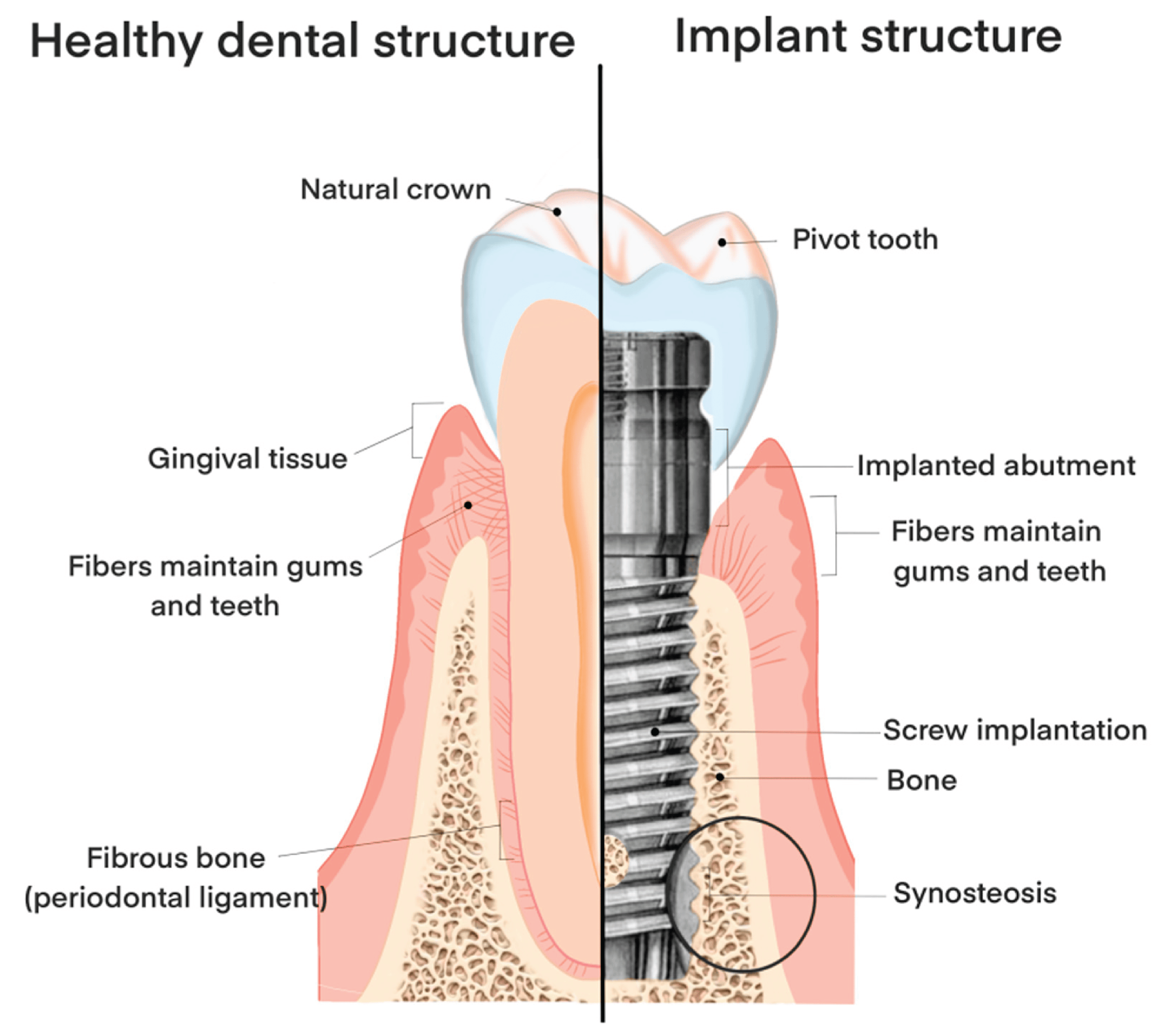
Figure 1. Typical structure of a Dental Implant[8].
Preprints 174738 g001
Figure 2. Diagram showing the “foreign body equilibrium” disruption theory of peri-implant bone loss. This notion views the osseointegrated implant as “encapsulated in bone,” indicating a persistent inflammatory state with “foreign body giant cells” (FBGCs). In response to a variety of external stimuli, these foreign body giant cells are activated and are responsible for the peri-implant bone loss. L:lymphocyte; Ost: osteocyte.[14].
Preprints 174738 g002
Figure 3. Dental implant design and its components with major regions of interest involved in peri-implantitis.[20].Copyright © 2022, American Chemical Society).
Preprints 174738 g003
Figure 5. Process of Biofilm accumulation on implants surfaces [46] . Copyright © 2021 Zehao Chen, Zhaodan Wang, Wei Qiu, and Fuchun Fang. Published by American Chemical Society. licensed under CC-BY-NC-ND 4.0).
Preprints 174738 g005
Figure 6. Classification of anti-infective biomaterials.
Preprints 174738 g006
Figure 8. Class 1 and Class 2 hybrid materials. Created in BioRender. Tahsin, K. (2025) https://BioRender.com/vs3l7cq.
Preprints 174738 g008
Figure 9. BG coating on a Ti6Al4V implant screw [147].
Preprints 174738 g009
Figure 13. Sol Gel Coating on Titanium grade 4 substrate (Adapted from [163]licensed under CC-BY-NC-ND 4.0 : https://www.mdpi.com/openaccess).
Preprints 174738 g013
Table 1. Summary of studies investigating microbiology of failing implants (Reused with permission from[32] Copyright © 2009, Elseivier).
Type of implant (no. of patients/implants) Most prevalent microbes detected (% sites infected with bacteria)
Brånemark: System is a well-established and widely used dental implant system based on the principle of osseointegration. The original Brånemark implant was a cylindrical, pure titanium implant with smooth, polished screw-like threads
Prevotella intermedia/P. nigrescens 60%
Actinobacillus actinomycetemcomitans 60%
Staphylococci, coliforms, Candida spp. 55%
Not stated Bacteroides forsythus 59%
Spirochetes 54%
Fusobacterium spp. 41%
Peptostreptococcus micros 39%
Porphyromonas gingivalis 27%
Titanium hollow cylinder implants (7/not stated) Bacteroides spp., Fusobacterium spp., spirochetes, fusiform bacilli, motile and curved rods (% not stated)
Not stated (13/20) Staphylococcus spp. 55%
Not stated (21/28) P. nicrescens, P. micros, Fusobacterium nucleatum (% not stated)
IMZ: The IMZ (IntraMobil Zylinder) implant system was notable for its two-part design, which included an inner elastic intramobile element that aimed to mimic the natural flexibility of teeth. This design was meant to reduce stress on the bone and improve load distribution.However, IMZ implants are now considered outdated and are rarely used in modern implants. Bacteroides spp. 89%
Actinobacillus actinomycetemcomitans 89%
Fusobacterium nucleatum 22%
Capnocytophaga spp. 27.8% Eikenella corrodens 17%
Astra : widely used in implant dentistry by OsseoSpeed™ surfaces, Micro Thread Technology, with Conical design, reducing complications like peri-implantitis. Astra implants come in various lengths and diameters, making them versatile for different clinical cases, including single tooth replacement, multiple teeth, and full-arch reconstructions.
ITI Staumann: Made of Titanium-zirconium alloy that is stronger than pure titanium, allowing for smaller implants with high strength—ideal for patients with limited bone. SLActive® Surface, modified hydrophilic implant surface speeds up osseointegration, reducing healing time. Esthetic finishing in visible areas. Morse Taper Connection for antimicrobial effects.
Actinomyces spp. 83% F. nucleatum 70%
P. intermedia/nigrescens group 60%
Steptococcus anginosus (milleri) group 70%
P. micros 63%
Enterococcus spp. 30% Yeast spp. 30%
Table 2. Type of metals, their properties, toxicity and antimicrobial effectiveness.
Metal Features Toxicity Profile Antimicrobial ability
Silver An early report on the formation of a TiN/Ag-modified titanium alloy by a multiarc ion-plating and ion implantation system and its in vitro result showed stable antimicrobial ability against Staphylococcus epidermidis for over 12 weeks[51].
To explore the antibacterial mechanism of Ag-implanted titanium surfaces, embedded Ag into Ti, Si, and SiO2 by PIII. [52] They found that electron transfer between the AgNPs and Ti is the first step.
Silver at low concentrations was not cytotoxic for osteoblast in vitro[53]
Studies showed that Ag+, Zn2+ and Hg2+ ions are very cytotoxic even at low concentrations [54]
Effective against
S. choleraesuis, E. coli[55], S. aureus, S. epidermis [56]
Copper N/Cu-incorporated Ti formed by PIII had a good antibacterial effect against Staphylococcus aureus and Escherichia coli with promotion of angiogenic activity endowed by the Cu and outstanding corrosion resistance endowed by TiN[57].
However, another study has shown that different forms of Cu (metallic Cu or Cu -NPs) in the coating were dependent on the parameters of the synthesis techniques, which led to different physicochemical properties, such as metallic Cu having better antibacterial ability and biocompatibility than CuNPs [58].
This study highlighted the importance of the preparation technology parameters, for they ultimately affect the antibacterial effect and biocompatibility of the surface.
Essential metal ion functioning of organs and metabolic processes[121].
Cu deficiency result in anemia, heart disease, arthritis, and osteoporosis, etc. [122].
Cu ion promotes osteoblast proliferation, differentiation and migration [59].
High concentrations of Cu ions inhibits growth and is causes cell death and toxicity on humans [60]
Effective against MRSA [61]and E. coli [62]within a few hours. Copper inhibited
K. aerogenes[63] and S. aureus[61].
Zinc Zinc, ZnO, nano ZnO and Zn2+ ion release is an antibacterial agent. Used as dental and formulated into oral health products to control plaque such us mouth rinses and toothpaste[64].
Ti surface with Zn- Ag increased ratio of Zn and made up for the inhibition of Ag on cell adhesion and growth of fibroblast-like cells[65].
Zn ion is not harmful to cells, and it is known for a long time that zinc can help bones grow. Zinc is an important part of making DNA, enzymes working, nucleic acid processing, biomineralization, and hormone action [66] Effective against S.aureus; E.coli; S.choleraesuis, [67]
P. phosphoreum, [68]
S. epidermis[69]
Table 3. Common Phytochemicals used in various medical applications against the targeted species.
Phytochemical Material Application Antimicrobial Efficancy
Malus domesticaL. Titanium implant coating[70] Dental implantology Streptococcus mutans, Salmonella typhi bacteria responsible for dental caries and periodontal diseases[71].
Escherichia coli, Salmonella, and Listeria monocytogenes
Cissus quadrangularisL. Periodontal filler in association with hydroxyapatite[72]. Periodontal regeneration Gram-positive bacteria [73]:
Bacillus subtilis, Bacillus cereus,
Staphylococcus aureus, and Streptococcus species
Carthamus tinctoriusL Periodontal filler in association with collagen sponge. Periodontal filler in association with polylactide glycolic acid bioresorbable barrier[74]. Periodontal regeneration. Escherichia coli (E. coli),
Klebsiella pneumoniae (K. pneumonia),
Acinetobacter baumannii (A. baumannii),
Pseudomonas aeruginosa (P. aeruginosa),
Staphylococcus aureus (S. aureus) and
Salmonella spp[75]
Glycine maxL. Bone filler [76]. Alveolar bone regeneration K. pneumoniae, L. monocytogenes
S. aureus[77]
Chitosan The mycelial cell walls of fungi consist of chitin, glucan and glycoproteins. Chitin is upto 45 % of the cell wall of Aspergillus niger and Mucor rouxii, Penicillium notatum. Chitosan is obtained from chitin by undergoing the process of deacetylation. Guided tissue regeneration (GTR) , hydrogel made of chitosan was developed with the purpose of delivering amelogenin, Dentin Bonding and Adhesion, coating of dental implants [78]. Prevents biofilm formation of
S. aureus, P.Aeruginosa, Proteus mirabilis and E. coli[79].
Antifungal against Candida albicans, Candida tropicalis, and other Candida species[80].
Cannabidiol (CBD), derived from the Cannabis plant, PMMA restorations To minimize denture-associated infections, antimicrobial enhancements to PMMA, the primary material for dentures, were coated with CBD nanoparticles[81]. Antimicrobial activity against :
Staphylococcus aureus,
Escherichia coli,
Streptococcus agalactiae[81].
Disclaimer/Publisher’s Note: The statements, opinions and data contained in all publications are solely those of the individual author(s) and contributor(s) and not of MDPI and/or the editor(s). MDPI and/or the editor(s) disclaim responsibility for any injury to people or property resulting from any ideas, methods, instructions or products referred to in the content.
Copyright: This open access article is published under a Creative Commons CC BY 4.0 license, which permit the free download, distribution, and reuse, provided that the author and preprint are cited in any reuse.
Prerpints.org logo

Preprints.org is a free preprint server supported by MDPI in Basel, Switzerland.

Subscribe

Disclaimer

Terms of Use

Privacy Policy

Privacy Settings

© 2025 MDPI (Basel, Switzerland) unless otherwise stated