

Submitted:
29 August 2025
Posted:
29 August 2025
You are already at the latest version
Abstract
Hybrid learning spaces may be described as physical environments enhanced by digital technologies, which enable learning scenarios involving both in-person and online par-ticipation. This article presents a hybrid learning space designed for higher education. The design of the space has been informed by Lefebvre's design principles: (a) spatial practice enabling flexible usage scenarios, (b) representations of space conveying openness and adaptability, and (c) representational spaces supporting experiences of presence in both physical and digital form. The article describes design characteristics guiding the imple-mentation of the hybrid learning space and explains corresponding design decisions, such as the use of a wall-sized projection. Further, the article introduces affordances and usage scenarios of the hybrid learning space developed. Moreover, an evaluation study of the hybrid learning space is conducted by means of a 360°-based virtual field trip (VFT). The VFT, led by an educator, serves as preparation for a field trip (FT) to a composting plant two weeks later. Participants of both VFT and FT (N=11) completed a questionnaire addressing psychological constructs related to learning, including motivation, emotion, immersion, presence, and cognitive load. We report the results of the VFT alongside those of the FT as a baseline. Some notable differences, for example in social presence, suggest areas for further development of the hybrid learning space. Overall, the study characteris-es key features of hybrid learning spaces, identifies their contribution to high-quality teaching and provides inspirations for their further development.
Keywords:
virtual excursion
; 360-degree
; 360°VR
; motivation
; emotion
; learning prerequisites
; presence
; immersion
; hybrid learning space
; learning scenarios
; spatial design
1. Introduction
The advantages of hybrid learning spaces include increased accessibility through flexibility (Kohls et al., 2023). A high utilization of technology makes these spaces accessible. New forms of collaboration and interaction are necessary for, but also made possible by, the targeted use of hybrid learning spaces (Eyal & Gil, 2022). Overall, hybrid learning spaces can be seen as valuable places of learning (Bennett et al., 2020; Raes et al., 2020), but these spaces require careful design (Bülow, 2022; Goodyear, 2020; Raes et al., 2020), not least because of the inherent costs (Xiao et al., 2020).
The article aims to outline the design principles that informed the design and guided the implementation of the HLA. Further, we describe a few usage scenarios enabled by the highly flexible HLA. As a pilot study, we present an assessment of a typical learning scenario in the HLA, a virtual field trip (VFT). The pilot study is designed as an evaluation study (Reinking & Alvermann, 2005) to validate and characterize the basic feasibility of a VFT in the HLA. To this end, a various psychological construct relevant to learning has been be collected. Accordingly, we aimed at evaluating the effects of using the HLA for an VFT on various learning prerequisites, such as motivation and emotion. Further, we compared these findings with the values obtained from an in-person field trip (FT). In the HLA scenario investigated here, both the instructor and all learners participated in person. The primary technology used was a wall-filling projection of the VFT-powering 360° space onto one of the HLA’s walls.
The remainder of the article is structured as follows. In the following chapter, we describe the method used, followed by a description of the HLA and its design foundations. Chapter 4 reports the results of the questionnaire, which are discussed in the following chapter 5. Chapter 6 concludes the article.
2. Method
Hybrid Learning Space. First, this article presents a hybrid learning space designed for higher education. The space design has been informed by Lefebvre’s design foundations: (a) spatial practice enabling flexible usage scenarios, (b) representations of space conveying openness and adaptability, and representational spaces supporting experiences of presence in both physical and digital form. We describe design characteristics guiding the implementation of the hybrid learning space and explain corresponding design decisions, such as the use of a wall-sized projection.
360° Space. 360° spaces, which can be utilized for virtual field trips (VFTs), are composed of multiple 360° images of an object, allowing users to change positions along the viewpoints of the original captures (Heuke Genannt Jurgensmeier et al., 2023; Pham et al., 2018). Using 360° images to create virtual reality (VR) applications offers advantages, such as reduced effort and greater authenticity, compared to VR applications based on 3D models (Shinde et al., 2023). 360° spaces have been described in various learning contexts (Fink et al., 2023; Mulders, 2023; Pham et al., 2018; Shadiev et al., 2022; Shinde et al., 2023; Violante et al., 2019; Wolf et al., 2021, 2023). Given their high suitability for teaching, it seems consistent to experiment with extending the characteristics of these learning contexts, such as designing them as escape rooms (Moreno-Reyes et al., 2022; Wolf, Montag, et al., 2024) or configure them as multi-user environments (Eiris et al., 2022; Teo et al., 2020; Wolf, Hartwig, et al., 2024). In this study, we explore the integration of a 360° space featuring a composting plant (Stadtwirtschaft Weimar et al., 2022) as a VFT into a lecture conducted in a hybrid learning space called Hybrid Learning Atelier (HLA, Hintzer et al., 2023).
Evaluation Study. The VFT was conducted using a 360° space (Stadtwirtschaft Weimar et al., 2022) as part of the course Anaerobic Technology within the Bachelor’s program in Environmental Engineering, serving as preparation for the FT to the same composting plant held one week later. Both VFT and FT lasted 90 minutes, and all participants travelled individually to the respective location. For the VFT, the hybrid learning space HLA was used. Both the VFT and the FT at the composting plant were conducted by the same educator as guided field trips aimed at conveying knowledge about the object, without specific active tasks for the students.
Survey. At the end of each session, participants completed a questionnaire capturing demographic information and several standardized instruments. Learning motivation was measured using the Questionnaire for Measuring Current Motivation in Learning and Performance Situations (QCM) (Rheinberg et al., 2001), while emotions were assessed using the Achievement Emotions Questionnaire (AEQ) focused on learning-related emotions (Pekrun et al., 2011). Additionally, social presence was measured using the Social Presence Questionnaire (SPQ) (Lin, 2004), and cognitive load was evaluated using the eight item instrument developed by Klepsch et al. (2017). Further we measured presence, using the Igroup Presence Questionnaire (IPQ) developed by Schubert et al. (2001) and immersion, using the Immersive Experience Questionnaire (IEQ) described by Jennett et al. (2008).
Demography. Eleven students participated in the VFT, with an average age of 22.6 years (SD = 3.78, range: 19–32). Eight students attended the FT, with an average age of 21.1 years (SD = 2.26, range: 19–26). Seven students participated in both VFT and FT.
3. The Hybrid Learning Atelier (HLA): Conceptual Foundations and Design Principles
3.1. Background and Objective
The concept for the HLA arose in response to the fundamental transformation of higher education and learning cultures in the digital age. Experiences during the pandemic had indeed highlighted the technical possibilities of digital teaching but at the same time revealed their limits regarding social presence, embodied learning experiences, and atmospheric qualities (Hodges et al., 2020; Reinman, 2021). Thus, we aimed to develop a prototypical learning space that synergistically combines the potential of physical and digital learning environments, rather than treating them as opposites.
The overarching design goal was creating a space that enables the simultaneous presence and productive interaction of participants who are physically on-site and those connected digitally. In doing so, the technical infrastructure was not intended to appear as a dominant element but rather to blend organically into an appealing learning environment with a welcoming atmosphere.
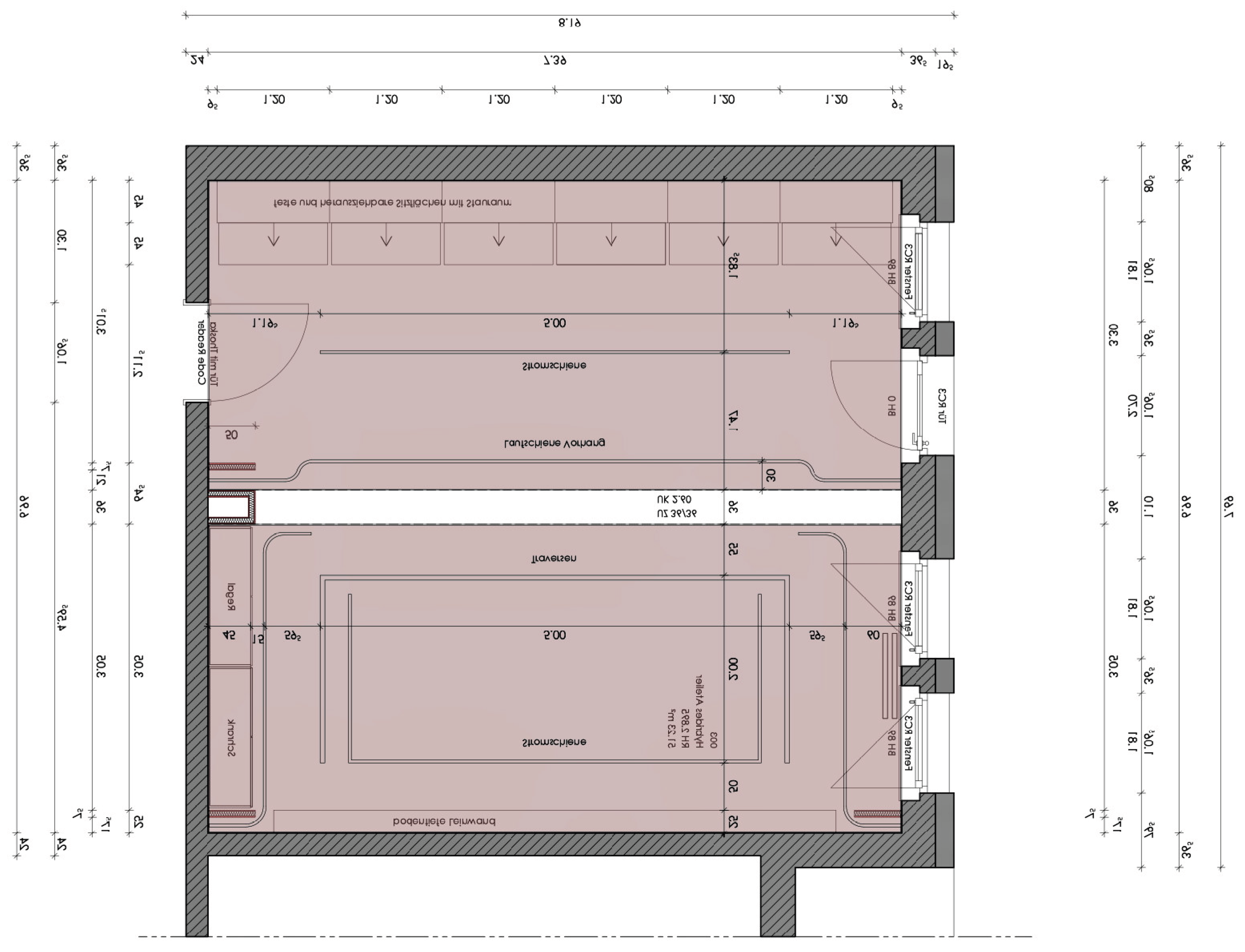
Figure 1.
Floor plan with ceiling rails for curtains and electricity, trusses, projection screen and furniture.
Figure 1.
Floor plan with ceiling rails for curtains and electricity, trusses, projection screen and furniture.
3.2. Foundations of Space Design
The conceptual basis of the HLA builds on Henri Lefebvre’s understanding of space as a socially produced entity. According to Lefebvre (1991), space emerges from the interplay of spatial practice (how the space is used), representations of space (how the space is conceived), and representational spaces (how the space is experienced). This triad became the guiding principle for the design process:
- Spatial Practice should enable flexible usage scenarios.
- Representations of Space should convey openness and adaptability.
- Representational Spaces should support experiences of presence in both physical and digital form.
Empirical findings show that spatial factors such as lighting, acoustics, and layout systematically correlate with attention, well-being, and performance measures (see Barrett et al., 2015). Further, findings also underline that targeted acoustic measures can significantly improve speech intelligibility and the quality of discourse (Cox & d’Antonio, 2016).
Purposing the HLA as a space for experimentation led to a non-deterministic spatial design. Instead of prescribing fixed usage patterns, the space was designed to allow for diverse ways in which users could adapt to various usage scenarios (Figure 1, Figure 3). This was manifested, for example, in the deliberate decision to avoid permanently installed furniture in favour of flexible, modular elements.
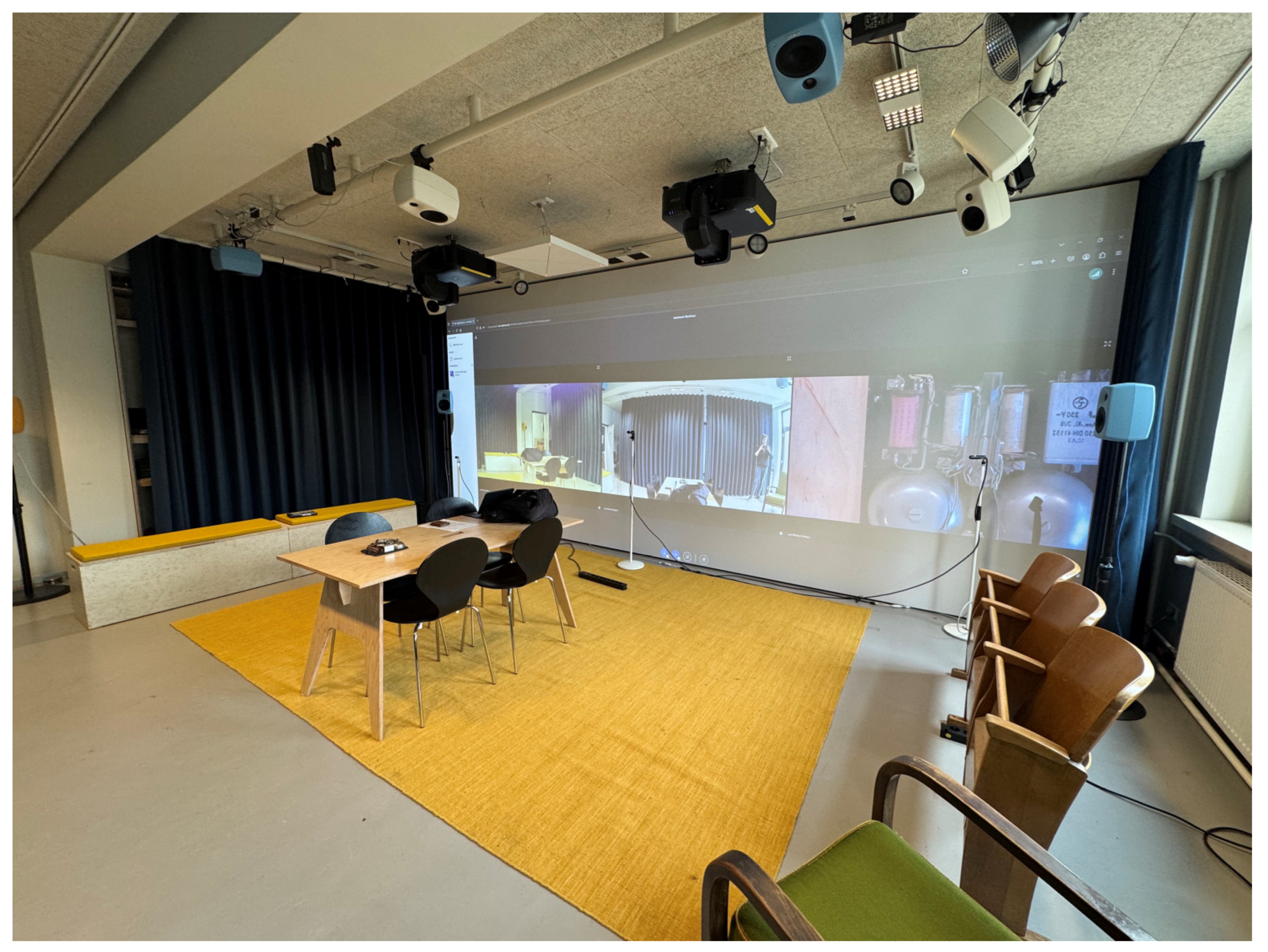
Moreover, considerable effort was made to accommodate the desired multi-sensory qualities of the room (see Pallasmaa, 2012). The design accounted not only for visual aspects but also for acoustic, haptic, and atmospheric dimensions. The choice of materials — warm, varnished wood for the furniture and wall panelling, textile surfaces for acoustic optimization, and a matte projection surface to prevent glare and to serve as a counterpoint to large monitor walls — was aimed at achieving a balance between technical functionality and the quality of sensory experience (Figure 2).
Figure 2.
Daylight situation with wall-filling projection.
3.3. Design Principles and Their Implementation
The following design principles were implemented based on an iterative, interdisciplinary design process:
- Learning-friendly Workspace Design. The combination of modular furniture and clear spatial affordances aims at reduction of extraneous cognitive load and should promote learning-relevant processing (germane load) (cf. Chandler & Sweller, 1991; Klepsch et al., 2017).
- Flexibility Through Modularity. The furniture consists of rectangular seating elements that can be used as individual seats, arranged in rows, or combined to form group tables. This flexibility should allow for fast adaptation to different teaching scenarios, from frontal presentations to small group work to informal discussion rounds (Ninnemann, 2018).
- Technology as an Invisible Enabler. The passive technical infrastructure has been deliberately integrated into wall cabinets and ceiling installations so as not to dominate the character of the room. Cables are routed through floor boxes and wall ducts.
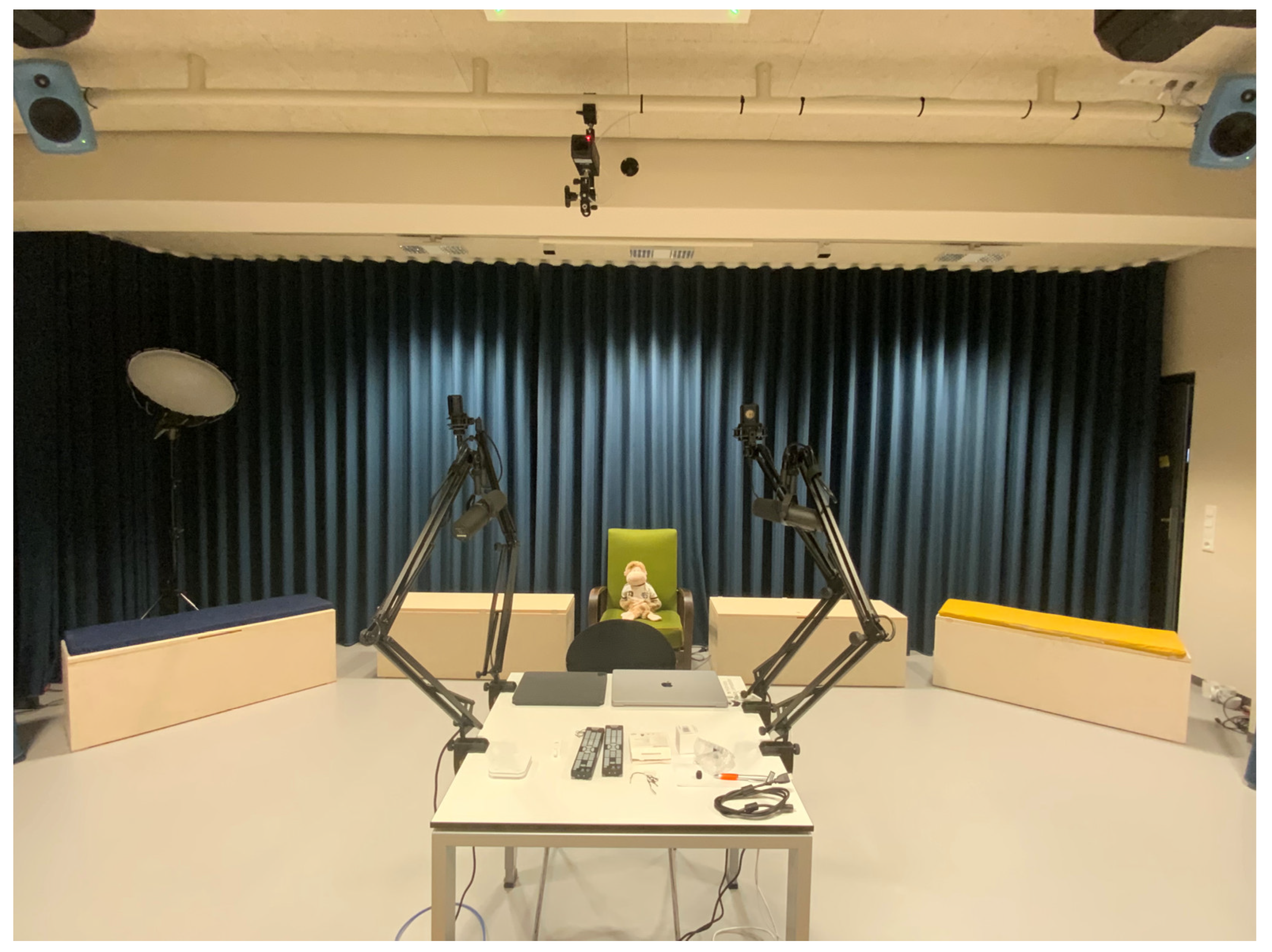
- Atmospheric Quality. The interior design strives to strike a balance between the perception of a creative studio and a technologically advanced learning space. Visible Oriented Strand Board (OSB) surfaces and a coarse coloured carpet reference the Bauhaus tradition of using materials in their pure form, while indirect LED lighting and acoustically effective textiles offer contemporary comfort (Figure 3).
Figure 3.
Partitioning of the HLA using a flexible, sound-absorbing curtain system.
3.4. Technical Implementation
The HLA technical infrastructure was developed consistently based on a range of identified usage scenarios, some of which were very different. The technical infrastructure is based on an elaborate integration of various subsystems: instead of simply adding individual technologies, an integrated system was created that aims to blur the boundaries between physical and digital space.
Immersive Projection Environment. The visual centrepiece, a wall-filling double projection measuring 6.25 m x 2.80 m, transforms an entire wall into a dynamic communication surface (Figure 4). This not only allows presentation content to be displayed but also creates a visual communication space in which remote participants can appear life-size. The ultra-short-throw technology allows instructors and students to move freely in front of the projection surface without casting distracting shadows, a key advantage for interactive teaching scenarios. The life-size, wall-filling display should support social presence. Seamless soft-edge blending allows the technical construction to fade into the background and may support immersion in virtual worlds, whether for 360°-based virtual field trips (Söbke & Kraft, 2024) or viewing large-format visualizations as a group. The projection represents the fourth wall of the room, which can be transparent for digital worlds or opaque for local activities as required.
Flexible Audio Ecosystem. The DANTE-based audio system reflects the philosophy of the HLA: maximum flexibility with minimum visibility. Twelve freely positionable loudspeakers should deliver an excellent acoustic environment for many scenarios, from clear speech reproduction in video conferences and immersive soundscapes for virtual excursions to experimental sound installations. Beamforming microphones and zoned DANTE routing increase speech intelligibility and reduce background noise, which reduces extraneous acoustic information and stabilizes AV synchronization (see Cox & d’Antonio, 2016; Klepsch et al., 2017). The ceiling microphone array with beamforming technology frees instructors and students from the need for individual microphones. It can follow the speaker in the room and intelligently filters out background noise. This invisible technology allows for natural movement and interaction without technology becoming a limiting factor.
Multidimensional Camera Operation. The camera system was designed to meet the challenges of hybrid communication. Three unobtrusive cameras positioned at eye level should give the impression of direct eye contact between people in the room and remote participants—aiming at improving the social presence of all participants. These compact lipstick cameras with interchangeable lenses can be positioned flexibly for close-ups, work surfaces, and interaction areas. Different arrangements allow both educators and learners, as well as work processes, to be viewed in high resolution by remote participants. While the eye-level cameras with consistent image grammar (discourse, detail, overview view) strengthen eye contact and presence perception and reduce visual searches when speakers change (Kreijns et al., 2022). The ceiling camera also provides an overview perspective, which is particularly valuable for collaborative work or documenting work that takes place in a traditional analogue setting, such as on a table.
Orchestration and Controlling. A PC workstation with a powerful graphics card for multiple projections serves as the concertmaster for the technical ensemble. It synchronises image and sound sources, manages multiple input signals, and enables seamless transitions between different usage scenarios. Predefined presets transform the HLA from a seminar room into a video conference environment or an immersive theatre experience. The integration of Network Device Interface (NDI) extends the possibilities beyond the boundaries of the room – content can be fed in via the campus network or transmitted to other rooms. This networking capability makes the HLA a hub in the emerging ecosystem of hybrid learning spaces.
Adaptive Lighting Design. The lighting follows the principle of scenario-based adaptation. For video conferences, frontal LED floodlights create uniform illumination that makes faces appear natural, while side spots provide contour and depth. In presentation mode, the light focuses on the presenter, while the audience area is bathed in subdued light. Lighting control influences facial legibility, depth, and visual fatigue; controlled lighting (key/fill/back, glare-free) supports attention and interaction (cf. Barrett et al., 2015). In the learning studio, integration with the existing power rail system and app-based control allow lighting moods to be precisely tailored to the respective learning situation – from a concentrated working atmosphere to a relaxed creative environment (Figure 5). However, the most effective means of creating a pleasant atmosphere is as simple as it is rarely used in similar environments: daylight. One side of the room is equipped with large windows and a glass door so that those in the studio do not have to isolate themselves from the outside world or forego the atmosphere surrounding the building.
3.5. Usage Scenarios
The technical infrastructure aims at a wide range of teaching possibilities; among these usage scenarios are:
Hybrid Seminars: Local and remote participants work together as equals, supported by life-size displays and natural eye contact.
- 5.
- Virtual Field Trips (VFTs): The combination of wall-to-wall projection and spatial audio creates immersive experiences that go far beyond traditional screen presentations.
- 6.
- Experimental Teaching Formats: The flexible infrastructure invites experimentation with new concepts – from interactive installations to networked courses across spatial boundaries.
- 7.
- Collaborative Creative Processes: Multiple inputs and freely scalable displays allow different work results to be presented and discussed simultaneously.
3.6. Design Summarization
The HLA aims to demonstrate how technology can become an invisible enabler when it is consistently design-driven and user-centric. Further, the HLA aims at not being the sum of its technical components but at being more - a carefully composed space that should inspire and support new forms of teaching and learning.
4. Evaluation Study
The following section describes the results of the evaluation study of one of the numerous learning scenarios offered by the HLA, a virtual field trip (VFT). The questionnaire was distributed to participants in written form following the respective event.
4.1. Motivation
Motivation is one of the prerequisites for learning; understanding motivation helps assess the learning effectiveness of an activity (Pintrich, 2003). The instrument for measuring motivation, the QCM (Rheinberg et al., 2001) includes the four subscales anxiety, interest, challenge and probability of success (Figure 6).
4.2. Emotion
A suitable emotional state is also considered a prerequisite for successful learning (Tyng et al., 2017). Thus, the learning-related emotions as an 8-item sub-questionnaire of the AEQ (Pekrun et al., 2011) were assessed (Figure 7).
4.3. Cognitive Load
Cognitive Load Theory (Chandler & Sweller, 1991) assumes that learning is associated with cognitive load. Measuring cognitive load allows for the identification of factors that either promote or hinder learning (Klepsch et al., 2017). Cognitive Load (CL) is divided into three subscales (Table 1): Intrinsic CL (related to the learning content), Germane CL (learning-related CL), and Extraneous CL (related to the design of the learning material). A major goal – when designing learning experiences – is to achieve a low extraneous CL alongside a high germane CL.
4.4. Presence and Immersion
Presence and immersion are frequently analyzed in combination (Nilsson et al., 2016; Radianti et al., 2020). While presence refers to the physical and spatial sensation of actually being physically present in the virtual environment (Witmer & Singer, 1998), immersion describes the psychological state of being immersed in a virtual world (Agrawal et al., 2020; Nilsson et al., 2016). Presence and immersion are significant for learning (Dengel & Mägdefrau, 2020; Huang et al., 2020; Petersen et al., 2022) because, among other things, they may increase attention and promote learning prerequisites such as motivation (Kim & Biocca, 2018) and emotions (Spangenberger et al., 2024). In addition, learning formats that particularly promote presence and immersion, such as virtual reality-based virtual environments, usually also offer the potential for highly effective experiential learning (Asad et al., 2021; Hu-Au & Lee, 2017).
Presence refers to the subjective experience of being physically present in a virtual environment, even though one is objectively located elsewhere (Schubert et al., 2001). This feeling is often described as spatial immersion or spatial presence and is central to virtual reality experiences, but also to many digital media, such as games or simulations (Skarbez et al., 2018; Slater & Wilbur, 1997). Presence is considered a key measure of the quality of virtual environments (Lombard & Ditton, 1997; Slater & Wilbur, 1997). A high presence is often associated with greater effectiveness (e.g., in learning simulations or therapy), more intense experiences (e.g., in VR games) and emotional involvement (Weber et al., 2021; Witmer & Singer, 1998). The IPQ (Schubert et al., 2001) measures the three subscales Spatial Presence – the feeling of being physically present in virtual space, i.e., the spatial location –, Involvement – the degree of attention to the virtual environment and cognitive and emotional involvement, Experienced Realism – the subjectively perceived realism of the virtual environment –, and General Presence, a single item for the global assessment of the sense of presence (Table 2).
Social Presence is defined as a psychological phenomenon in which other individuals are perceived to some extent as physical real persons in technology-mediated communication (Kreijns et al., 2022) and is likewise considered beneficial for learning. Social presence is a type of presence that appears to have a particular influence on satisfaction. (Bulu, 2012). The instrument by Lin (2004) measures three subscales (Table 3). Learning-Supportive Group Activities describes the extent to which group activities are conducive to learning, Social Well-Being outlines the degree to which participants found it enjoyable to share emotions in the group, and Social Orientation stands for the level to which the actions of group participants influenced their own activities.
Immersion. The Immersive Experience Questionnaire (IEQ) by Jennett et al. (2008) has been chosen for capturing the immersion of participants. The IEQ contains 16 pairs of items – each consisting of a complementary positive and negative statement and a general item for assessing immersion. To avoid the data collection becoming too extensive, we only included the positive items and the general item (Table 4).
5. Discussion
5.1. Hybrid Learning Atelier (HLA)
The HLA emerged from a combination of aspiration and necessity, driven by the need to devise hybrid learning scenarios that would facilitate the integration of online and in-person participants within a unified physical environment. After reviewing the state of the art, it became evident that there were no authoritative guidelines for the design of such a space and that a custom design was required. Accordingly, based on Lefebvre’s understanding of space as a socially constructed entity and the possibilities offered by modern technology, the HLA was designed and created. The HLA is supported by extensive technical capabilities that appeal to multiple senses and enable affective engagement with participants. The HLA’s high degree of flexibility allows for numerous different usage scenarios, which are currently being piloted. The present pilot phase is centered on the analysis of the divergent usage scenarios, with the objective of deriving experience-based didactic instructions for each scenario.
5.2. Evaluation Study
Hybrid learning spaces, such as the HLA, offer opportunities for novel learning scenarios. In this evaluation study, we utilized the HLA to conduct an educator-led 360°-based VFT at a composting plant. The FT conducted at the same location the following week served as a baseline for the data collected.
5.2.1. Survey
Motivation. The results show that learners scored highly on the subscale Interest, while the subscale Anxiedy scored very low. Both values are considered conducive to learning. The low challenge paired with a high perceived Probability of Success during the VFT could indicate that the learning activity was too easy, suggesting that learners could be given more demanding tasks. This assumption seems plausible for a simple FT experience where no immediate learning pressure is applied.
While the differences between VFT and FT in three subscales do not exceed 0.3 points, the one-point difference in Challenge in favour of the FT is notable. We assume that during an FT, participants are more engaged in following the educator’s explanations, understanding them acoustically, and navigating their place in an unfamiliar environment, while also attending to safety-relevant aspects. In contrast, the VFT provides a fixed, static position in a learning space with comfortable external conditions, such as temperature and lack of odours, which may be perceived as less challenging. Accordingly, we assume that an FT activates learners more.
Emotion. The results (Figure 2) may generally be considered conducive to learning. Positive emotions, such as Hope and Joy, scored high, i.e., above 6 points. In contrast, negative emotions, such as Boredom, Irritation, Shame, Hopelessness, or Nervousness, scored below 2 points and are therefore rated as very low. Pride occupies a middle position. For the FT, a score of 4.9 is regarded positive, while for the VTF, the score is 3.0, which is two points lower and in the lower half of the scale, thus rather low. This divergence is striking. It could reflect the lower level of challenge in the VFT. Alternatively, the higher level of pride in the FT might stem from the individual organizational effort required to arrive on time.
Cognitive Load. The measurement of Cognitive Load (CL) revealed generally learning-conducive conditions for both VFT and FT. The difficulty of the learning content (Intrinsic CL) was perceived as higher for the FT, possibly because more details about the composting plant were observable and discussed during the FT. In contrast, the preparation of the learning content (Extraneous CL) was perceived as slightly more challenging for the VFT, meaning the FT caused less extraneous CL, as the on-site experience may be perceived less as learning material. The learning-related load (Germane CL) reached the same high value of 5.7 for both VFT and FT. These high values for Germane CL, combined with the low values for Intrinsic and Extraneous CL for both VFT and FT, are to be considered highly conducive to learning.
Presence. The VFT receives average values for presence, which are lower than those of the FT. The highest value (3.3) is achieved for the 1-item scale General Presence, where, interestingly, the FT receives the full score of 6. The lowest score of 2.2 for involvement is noteworthy. This might align with the low score for the motivation subscale Challenge: it seems that the participants were less successfully activated.
Social Presence. Also, the measurement of social presence revealed significantly higher values—by at least one point—for all three subscales in the FT (Table 1). This may result from the higher individual activity levels and greater mixing of participants due to the ongoing physical movement during the FT. In contrast, these effects may be absent in the VFT, where participants remained in the same position throughout. However, the order of the three subscales appears consistent. The highest agreement is achieved for the subscale Learning-Supportive Group Activities, which measures the extent to which group activities are conducive to learning. The second-highest rated subscale, Social Well-Being, indicates the extent to which participants felt comfortable expressing and perceiving emotions within the group. The lowest-rated subscale, Social Orientation, reflects the extent to which the activities of other group members influenced one’s own activities.
Immersion. Values for immersion reveal an average value of almost 2 per positive item, i.e., in the middle of the scale. VFT and FT show no difference regarding the sum of the 16 items, while VFT values have a standard deviation that is almost 2 points higher. This might suggest that, on average, immersion is the same, but there are greater differences between individual participants. For the single item, the VFT value of 7.0 is well above the midpoint of 5.5, but below the FT value of 8.4. The immersion values are not to be rated as negative, but there seems still room for improvement.
5.2.2. Implications of the Survey
From the results, several conclusions might be drawn:
- i.
- The HLA-based VFT achieves conducive conditions for learning and can be considered an effective learning activity. This finding confirms the existing literature on the learning-conduciveness of VFTs (Koçoğlu & Haidari, 2025; Shadiev et al., 2022; Shinde et al., 2023).
- i.
- ii. The similarity of VFT and FT is reflected in their frequently comparable characterization across different constructs, such as motivation, emotion, and CL. The improved values regarding presence and social presence in the FT seem plausible.
- i.
- iii. The FT appears to be slightly more conducive to learning than the HLA-powered VFT. This finding aligns with the literature but does not diminish the validity of VFTs and especially the HLA. VFTs have various advantages, such as the ability to be used independent of time and location and significantly lower effort for implementation. Additionally, the VFT in this study was used as preparation and thus as a complement to the FT.
- i.
- iv. A further study result is the generation of exemplary values for the respective measures regarding an HLA-based learning activity.
- i.
- v. The effects of preparing for the FT with the VFT should also be examined in detail. It is to be assumed that learning already occurred during the VFT. If the germane CL for the FT reached the same value, this suggests that additional details about the learning content were learned during the FT, which aligns with the slightly higher intrinsic CL value for the FT.
5.2.3. Limitations
The study has some limitations and accordingly raises suggestions for future research. These include the small sample sizes, both in terms of participants and the investigation of only one FT site. Due to the small sample sizes, no inferential statistics were applied. The clear statements – presented for the sake of conciseness – should therefore be taken with caution. Nevertheless, we believe that the results provide valuable indications for hypothesis formation in studies with larger sample sizes.
Furthermore, the results may be highly dependent on the design characteristics of the HLA, especially since hybrid learning spaces., such as the HLA, encompass a very heterogeneous group of spaces. It is also likely that the outcomes are influenced by the specific FT site (the composting plant), as well as by the designer-dependent creation of the 360° space. The influence of the educator, particularly their approach to leading both the VFT and FT, should also be acknowledged.
Additionally, it should be noted that some of the standardized measures used were partly not applied in accordance with their usage guideline. The QCM, is designed to be used before the learning activity but was utilized after the activity in this study for practical reasons, avoiding an additional questionnaire). Participants were instructed to imagine a learning activity like the one just completed. Similarly, the SPQ is intended for online collaborative learning scenarios, whereas the online characteristic was not a major factor in this study. Further, the IEQ has been developed for measuring immersion in digital games. These modified uses call for the identification of alternative, more closely coordinated measures instruments for follow-up studies.
In both VFT and FT, all participants were included in the evaluation, not just those who participated in both VFT and FT. A pre- and post-test to measure knowledge gain would also be helpful in evaluating these learning activies.
The order in which the VFT was conducted first to prepare for the FT likely influenced the results but appears didactically advantageous (Klippel et al., 2020; Söbke et al., 2020). A comparison with the reverse order would be interesting, though from a didactic perspective, using the VFT to prepare for the FT seems more suitable. Revisiting the VFT afterward could be beneficial for learners, particularly for clarifying specific issues in the context of follow-up assignments. When participants were asked about their preferred sequence, 6 out of the 7 participants who attended both VFT and FT indicated that they preferred the VFT as preparation for the FT. In summary, it can be concluded that the HLA used led to a positively rated VFT. Further studies are necessary for a targeted improvement of the scenario.
We acknowledge that this pilot study has not been able to verify all design objectives. However, we were able to validate the basic functionality of the HLA and obtain preliminary values for learning-relevant psychological constructs for a use case.
6. Conclusions
Hybrid learning spaces are becoming increasingly popular due to the interaction possibilities they offer. However, there are not many clear, validated design guidelines for such spaces. We have therefore designed and created a space based on Lefebvre’s design principles. In this article, we describe the design principles and corresponding design characteristics that led to the actual hybrid learning space, the Hybrid Learning Atelier (HLA), which offers numerous usage scenarios. Accordingly, the HLA and its many details might serve as an inspiration for the design of hybrid learning spaces To provide basic proof of functionality, we conducted an evaluation study using a 360° virtual field trip. This study revealed that, on the one hand, the HLA is certainly capable of fulfilling its intended purpose. On the other hand, the study data point to positive aspects, such as the high level of motivation among participants, and to potential for optimization, such as the need to activate students. We understand this contrast as a call to supplement the technical and organizational foundations of the HLA with dedicated didactic instructions. Overall, the HLA opens up a wide range of usage scenarios and contributes highly to improving the quality of teaching.
Author Contributions
Conceptualization, J.S., A. B., H.S.; methodology, J.S., A. B., H.S.; software, J.S., A. B., H.S.; validation, J.S., A. B., H.S.; formal analysis, J.S., A. B., H.S.; investigation, J.S.; resources, J.S.; data curation, M.S.; writing—original draft preparation, J.S., A. B., H.S.; writing—re J.S., M.S., H.S.; visualization, J.S.; supervision, E.K; project administration, A.B.; funding acquisition, J.S., A. B., H.S., E.K. All authors have read and agreed to the published version of the manuscript.” Please turn to the CRediT taxonomy for the term explanation. Authorship must be limited to those who have contributed substantially to the work reported.
Funding
This research was funded by Stiftung Innovation in der Hochschullehre, grant no FMM2020-128. Further, the authors acknowledge support from the German Research Foundation (DFG) and Bauhaus-Universität Weimar within the program of Open-Access Publishing.
Institutional Review Board Statement
This study investigated the usage of a hybrid learning space within a supervised learning context. Specifically, the participants attended two 90-minute lectures as they routinely would in a similar everyday context. At no time was there any danger to the life and well-being of the participants. In addition, the participants were supervised by a supervisor who could intervene at any time. In Germany, there is no legal requirement for the ethical review of studies outside of medicine (§ 40-42 Medicines Act (“Arzneimittelgesetz”) (AMG, https://www.gesetze-im-internet.de/englisch_amg/index.html) and § 20 Medical Devices Act (“Medizinproduktegesetz”) (MPG, https://www.gesetze-im-internet.de/mpg/)). The statutes governing good scientific and artistic practice at the Bauhaus–Universität Weimar likewise do not require ethical review of studies conducted as part of research at the institution. (https://www.uni-weimar.de/fileadmin/user/uni/universitaetsleitung/kanzler/mdu_akad/23/16_2023_EN.pdf). The data were anonymized immediately after participation, so that the data are not subject to the nationally binding General Data Protection Regulation (GDPR). Thus, the research did not receive prior ethical clearance from an institutional review board (IRB) or ethics committee; however, all efforts were made to adhere to ethical research principles, including voluntary participation, informed consent, the protection of participant confidentiality and the minimization of potential risks. No personally identifiable information was collected or reported, and participants were not subjected to harm or coercion. While formal ethical approval was not obtained, the study was conducted in accordance with the Declaration of Helsinki.
Informed Consent Statement
Informed consent was obtained from all subjects involved in the study.
Data Availability Statement
The data that support the findings of this study are available on request from the corresponding author.
Acknowledgments
We are extremely grateful to Jörn Hintzer and Steffen de Rudder from Bauhaus-Universität Weimar for their pivotal contributions to the concept, planning and implementation of the hy-brid learning atelier.
Conflicts of Interest
The authors declare no conflicts of interest. The funders had no role in the design of the study; in the collection, analyses, or interpretation of data; in the writing of the manuscript; or in the decision to publish the results.
References
- Agrawal, S., Simon, A., Bech, S., Bærentsen, K., & Forchhammer, S. (2020). Defining Immersion: Literature Review and Implications for Research on Audiovisual Experiences. Journal of the Audio Engineering Society, 68(6), 404–417. [CrossRef]
- Asad, M. M., Naz, A., Churi, P., & Tahanzadeh, M. M. (2021). Virtual reality as pedagogical tool to enhance experiential learning: A systematic literature review. Education Research International, 2021(1), 7061623.
- Barrett, P., Davies, F., Zhang, Y., & Barrett, L. (2015). The impact of classroom design on pupils’ learning: Final results of a holistic, multi-level analysis. Building and Environment, 89, 118–133. [CrossRef]
- Bennett, D., Knight, E., & Rowley, J. (2020). The role of hybrid learning spaces in enhancing higher education students’ employability. British Journal of Educational Technology, 51(4), 1188–1202.
- Bülow, M. W. (2022). Designing Synchronous Hybrid Learning Spaces: Challenges and Opportunities. In E. Gil, Y. Mor, Y. Dimitriadis, & C. Köppe (Eds.), Hybrid Learning Spaces (pp. 135–163). Springer International Publishing. [CrossRef]
- Bulu, S. T. (2012). Place presence, social presence, co-presence, and satisfaction in virtual worlds. Computers & Education, 58(1), 154–161.
- Chandler, P., & Sweller, J. (1991). Cognitive load theory and the format of instruction. Cognition and Instruction, 8(4), 293–332.
- Cox, T., & d’Antonio, P. (2016). Acoustic absorbers and diffusers: Theory, design and application. CRC press.
- Dengel, A., & Mägdefrau, J. (2020). Immersive learning predicted: Presence, prior knowledge, and school performance influence learning outcomes in immersive educational virtual environments. 163–170.
- Eiris, R., Wen, J., & Gheisari, M. (2022). iVisit-Collaborate: Collaborative problem-solving in multiuser 360-degree panoramic site visits. Computers & Education, 177, 104365. [CrossRef]
- Eyal, L., & Gil, E. (2022). Hybrid learning spaces—A three-fold evolving perspective. In Hybrid learning spaces (pp. 11–23). Springer.
- Fink, M. C., Sosa, D., Eisenlauer, V., & Ertl, B. (2023). Authenticity and interest in virtual reality: Findings from an experiment including educational virtual environments created with 3D modeling and photogrammetry. 8, 969966.
- Goodyear, P. (2020). Design and co-configuration for hybrid learning: Theorising the practices of learning space design. British Journal of Educational Technology, 51(4), 1045–1060.
- Heuke Genannt Jurgensmeier, N., Schmidt, R., & Stumpe, B. (2023). Creating Virtual Field Trips for Education: A Comparison of Software and Tools for Creating Virtual Field Trips with 360° Images. International Journal of Technology in Education, 6(3), 385–417. [CrossRef]
- Hintzer, J., Rudder, S., Mai, A., Sieber, J. M., Andreas, Wolter, A., & Bast, C. (2023, January 1). Lernraum Bauhaus: Hybrides Lernatelier. https://www.uni-weimar.de/de/universitaet/struktur/zentrale-einrichtungen/zue/lernraum-bauhaus/hybrides-lernatelier/.
- Hodges, C., Moore, S., Lockee, B., Trust, T., & Bond, A. (2020). The difference between emergency remote teaching and online learning. Educause Review, 27(1), 1–9.
- Huang, C. L., Luo, Y. F., Yang, S. C., Lu, C. M., & Chen, A.-S. (2020). Influence of Students’ Learning Style, Sense of Presence, and Cognitive Load on Learning Outcomes in an Immersive Virtual Reality Learning Environment. Journal of Educational Computing Research, 58(3), 596–615. [CrossRef]
- Hu-Au, E., & Lee, J. J. (2017). Virtual reality in education: A tool for learning in the experience age. International Journal of Innovation in Education, 4(4), 215–226.
- Jennett, C., Cox, A. L., Cairns, P., Dhoparee, S., Epps, A., Tijs, T., & Walton, A. (2008). Measuring and defining the experience of immersion in games. International Journal of Human-Computer Studies, 66(9), 641–661. [CrossRef]
- Kim, G., & Biocca, F. (2018). Immersion in virtual reality can increase exercise motivation and physical performance. 94–102.
- Klepsch, M., Schmitz, F., & Seufert, T. (2017). Development and validation of two instruments measuring intrinsic, extraneous, and germane cognitive load. Frontiers in Psychology, 8, 294028.
- Klippel, A., Zhao, J., Oprean, D., Wallgrün, J. O., Stubbs, C., La Femina, P., & Jackson, K. L. (2020). The value of being there: Toward a science of immersive virtual field trips. Virtual Reality, 24(4), 753–770. [CrossRef]
- Koçoğlu, A., & Haidari, S. M. (2025). A three-level meta-analytic review of research on virtual field trips and their contribution to students’ academic achievement. Education and Information Technologies, 30(9), 12735–12763. [CrossRef]
- Kohls, C., Dubbert, D., & Kehrer, M. (2023). The dynamic campus – flexible learning spaces for hybrid education. Proceedings of the 28th European Conference on Pattern Languages of Programs, 1–11. [CrossRef]
- Kreijns, K., Xu, K., & Weidlich, J. (2022). Social Presence: Conceptualization and Measurement. Educational Psychology Review, 34(1), 139–170. [CrossRef]
- Lefebvre, H. (1991). The Production of Space (1st ed.). Wiley-Blackwell.
- Lin, G.-Y. (2004). Social Presence Questionnaire of Online Collaborative Learning: Development and Validity. Association for Educational Communications and Technology.
- Lombard, M., & Ditton, T. (1997). At the Heart of It All: The Concept of Presence. Journal of Computer-Mediated Communication, 3(2), JCMC321. [CrossRef]
- Moreno-Reyes, J. M., Alejos, D. J., Siefker, D., & Martínez-Meza, R. (2022). 360 virtual tour and escape room design as a video games-based learning process for diagnosis and strengthening of the English language. Revista de Tecnología Informática, 1–14. [CrossRef]
- Mulders, M. (2023). Learning about Anne Frank in Virtual Reality: Investigating the Role of Cognitive Load. 1034–1040.
- Nilsson, N. C., Nordahl, R., & Serafin, S. (2016). Immersion revisited: A review of existing definitions of immersion and their relation to different theories of presence. Human Technology, 12(2), 108–134.
- Ninnemann, K. (2018). Innovationsprozesse und Potentiale der Lernraumgestaltung an Hochschulen: Die Bedeutung des dritten Pädagogen bei der Umsetzung des” Shift from teaching to learning”. Waxmann Verlag.
- Pallasmaa, J. (2012). The Eyes of the Skin: Architecture and the Senses (3rd ed.). John Wiley & Sons Inc.
- Pekrun, R., Goetz, T., Frenzel, A. C., Barchfeld, P., & Perry, R. P. (2011). Measuring emotions in students’ learning and performance: The Achievement Emotions Questionnaire (AEQ). Contemporary Educational Psychology, 36(1), 36–48.
- Petersen, G. B., Petkakis, G., & Makransky, G. (2022). A study of how immersion and interactivity drive VR learning. Computers & Education, 179, 104429. [CrossRef]
- Pham, H. C., Dao, N., Pedro, A., Le, Q. T., Hussain, R., Cho, S., & Park, C. (2018). Virtual field trip for mobile construction safety education using 360-degree panoramic virtual reality. International Journal of Engineering Education, 34(4), 1174–1191.
- Pintrich, P. R. (2003). A motivational science perspective on the role of student motivation in learning and teaching contexts. Journal of Educational Psychology, 95(4), 667.
- Radianti, J., Majchrzak, T. A., Fromm, J., & Wohlgenannt, I. (2020). A systematic review of immersive virtual reality applications for higher education: Design elements, lessons learned, and research agenda. Computers & Education, 147, 103778. [CrossRef]
- Raes, A., Detienne, L., Windey, I., & Depaepe, F. (2020). A systematic literature review on synchronous hybrid learning: Gaps identified. Learning Environments Research, 23(3), 269–290.
- Reinking, D., & Alvermann, D. E. (2005). What Are Evaluation Studies, and Should They Be Published in” RRQ”? Reading Research Quarterly, 40(2), 142–146.
- Reinman, G. (2021). Hybride Lehre – Ein Begriff und seine Zukunft für Forschung und Praxis. Impact Free, 35, 1–10.
- Rheinberg, F., Vollmeyer, R., & Burns, B. D. (2001). FAM: Ein Fragebogen zur Erfassung aktueller Motivation in Lern-und Leistungssituationen (Langversion, 2001). Diagnostica, 2(2), 57–66.
- Schubert, T., Friedmann, F., & Regenbrecht, H. (2001). The experience of presence: Factor analytic insights. Presence: Teleoperators & Virtual Environments, 10(3), 266–281. [CrossRef]
- Shadiev, R., Yang, L., & Huang, Y. M. (2022). A review of research on 360-degree video and its applications to education. Journal of Research on Technology in Education, 54(5), 784–799.
- Shinde, Y., Lee, K., Kiper, B., Simpson, M., & Hasanzadeh, S. (2023). A Systematic Literature Review on 360° Panoramic Applications in Architecture, Engineering, and Construction (AEC) Industry. Journal of Information Technology in Construction, 28, 405–437. [CrossRef]
- Skarbez, R., Brooks, Jr., F. P., & Whitton, M. C. (2018). A Survey of Presence and Related Concepts. ACM Computing Surveys, 50(6), 1–39. [CrossRef]
- Slater, M., & Wilbur, S. (1997). A framework for immersive virtual environments (FIVE): Speculations on the role of presence in virtual environments. Presence: Teleoperators and Virtual Environments, 6(6), 603–616.
- Söbke, H., Arnold, U., & Montag, M. (2020). Intrinsic Motivation in Serious Gaming A Case Study: Games and Learning Alliance (I. Marfisi-Schottman, F. Bellotti, L. Hamon, & R. Klemke, Eds.; pp. 362–371). Springer International Publishing. [CrossRef]
- Söbke, H., & Kraft, E. (2024). Eine 360°-basierte virtuelle Exkursion in einem hybriden Lernraum. 10–18420.
- Spangenberger, P., Freytag, S.-C., & Geiger, S. M. (2024). Embodying nature in immersive virtual reality: Are multisensory stimuli vital to affect nature connectedness and pro-environmental behaviour? Computers & Education, 212, 104964.
- Stadtwirtschaft Weimar, Bauhaus-Universität Weimar, & Florian Wehking. (2022, January 1). Kompostierungsanlage Umpferstedt: 360°-Tour. https://www.360-degree.education/Umpferstedt/.
- Teo, T., Norman, M., Lee, G. A., Billinghurst, M., & Adcock, M. (2020). Exploring interaction techniques for 360 panoramas inside a 3D reconstructed scene for mixed reality remote collaboration. Journal on Multimodal User Interfaces, 14(4), 373–385.
- Tyng, C. M., Amin, H. U., Saad, M. N. M., & Malik, A. S. (2017). The influences of emotion on learning and memory. Frontiers in Psychology, 8, 235933.
- Violante, M. G., Vezzetti, E., & Piazzolla, P. (2019). Interactive virtual technologies in engineering education: Why not 360° videos? International Journal on Interactive Design and Manufacturing (IJIDeM), 13(2), 729–742. [CrossRef]
- Weber, S., Weibel, D., & Mast, F. W. (2021). How to Get There When You Are There Already? Defining Presence in Virtual Reality and the Importance of Perceived Realism. Frontiers in Psychology, 12, 628298. [CrossRef]
- Witmer, B. G., & Singer, M. J. (1998). Measuring Presence in Virtual Environments: A Presence Questionnaire. Presence: Teleoperators and Virtual Environments, 7(3), 225–240. [CrossRef]
- Wolf, M., Hartwig, S., Steinhöfel, G., Söbke, H., & Kraft, E. (2024). PanoramaViewer–A Framework for Educational Collaborative Virtual Field Trips. 269–274.
- Wolf, M., Montag, M., Söbke, H., Wehking, F., & Springer, C. (2024). Low-Threshold Digital Educational Escape Rooms Based on 360VR and Web-Based Forms. Electronic Journal of E-Learning, 01–18. [CrossRef]
- Wolf, M., Wehking, F., Montag, M., & Söbke, H. (2021). 360°-Based Virtual Field Trips to Waterworks in Higher Education. Computers, 10(9), 118. [CrossRef]
- Wolf, M., Wehking, F., Söbke, H., Montag, M., Zander, S., & Springer, C. (2023). Virtualised virtual field trips in environmental engineering higher education. European Journal of Engineering Education, 48(6), 1312–1334. [CrossRef]
- Xiao, J., Sun-Lin, H., Lin, T., Li, M., Pan, Z., & Cheng, H. (2020). What makes learners a good fit for hybrid learning? Learning competences as predictors of experience and satisfaction in hybrid learning space. British Journal of Educational Technology, 51(4), 1203–1219.
Figure 4.
Immersive Setting with interactive motion tracking application.
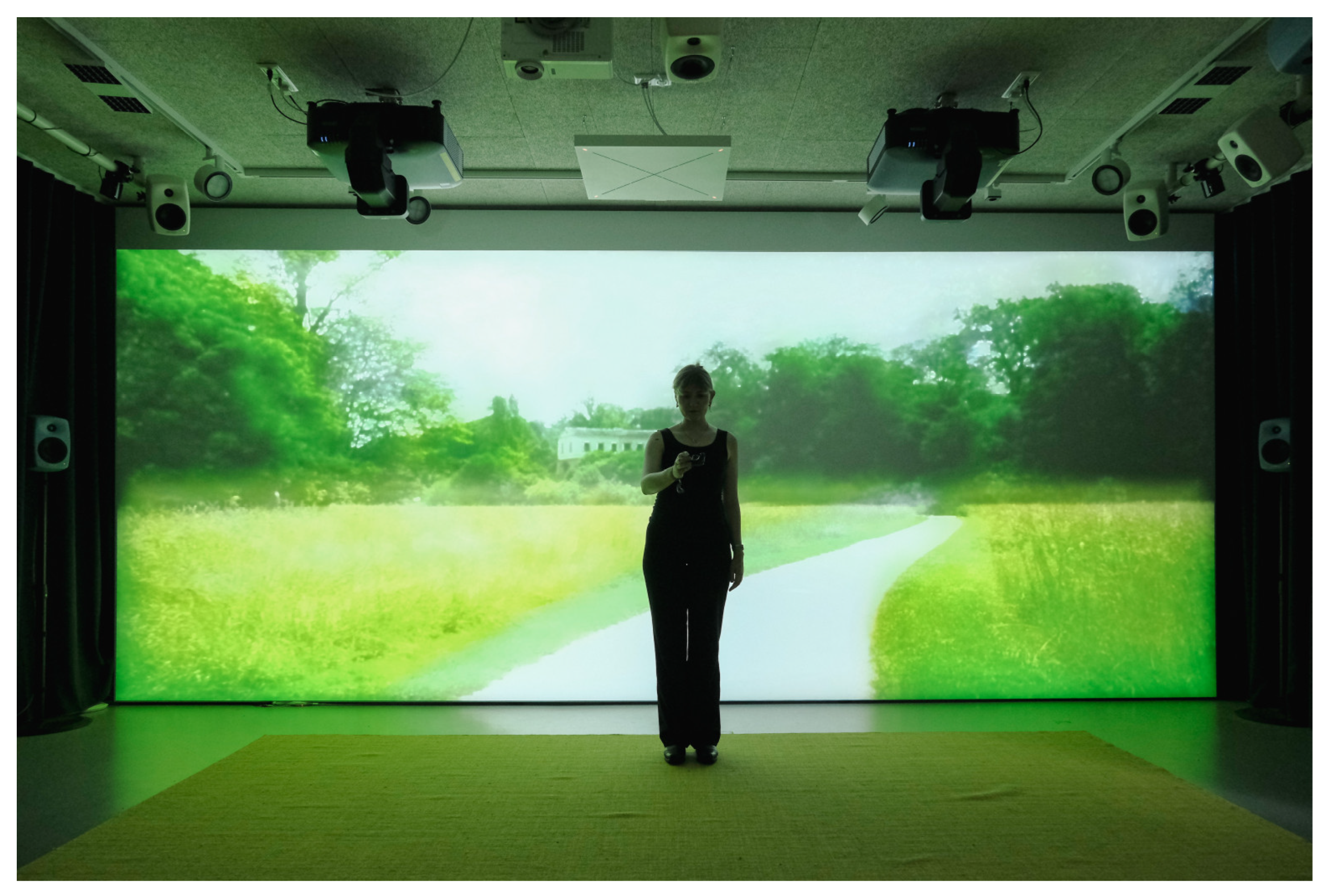
Figure 5.
Athmospheric light setting for a spatial audio installation.
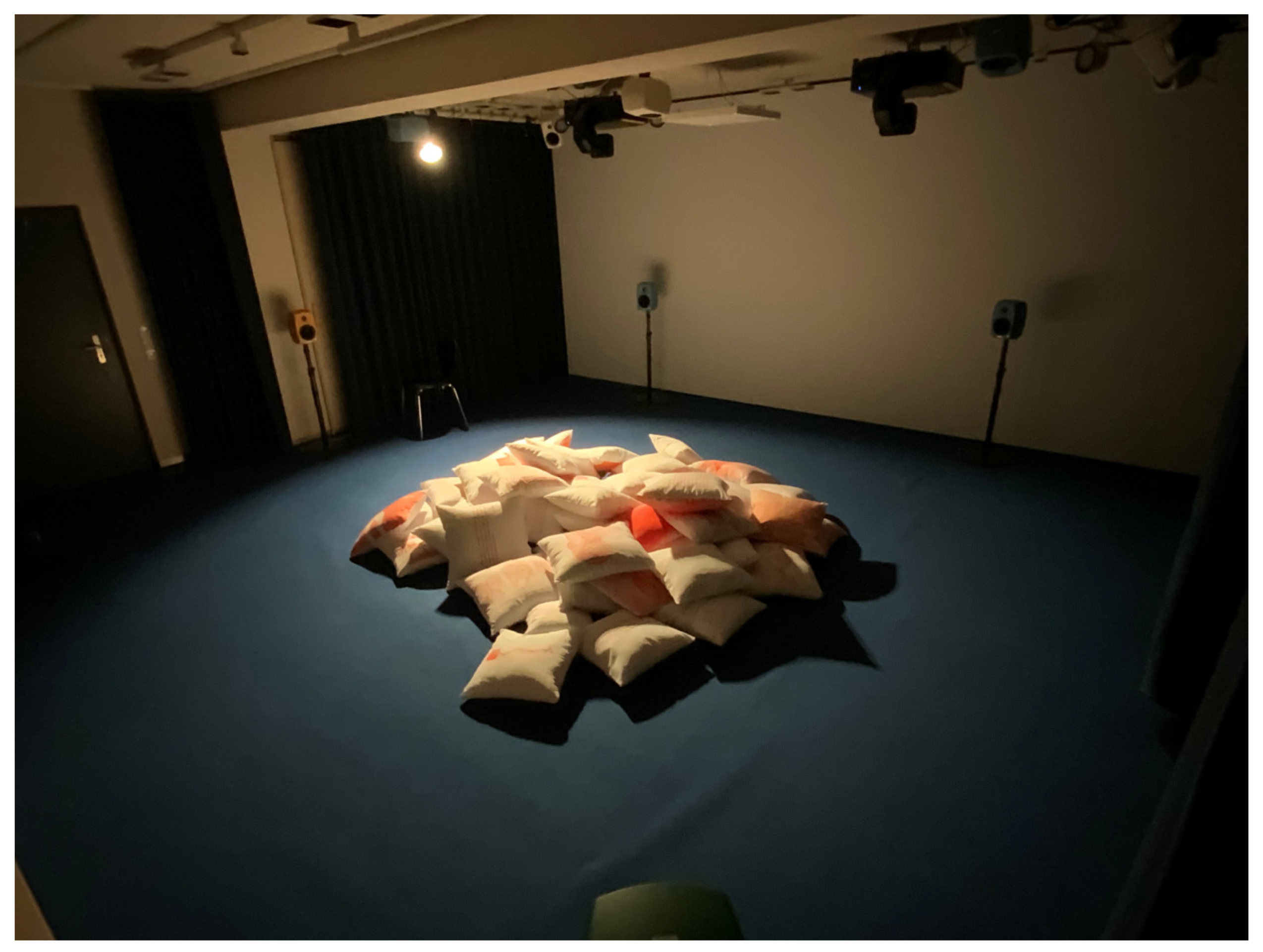
Figure 6.
Motivation according to QCM (Likert scale from 1 (no agreement) to 7 (full agreement), mean values and standard deviations).
Figure 6.
Motivation according to QCM (Likert scale from 1 (no agreement) to 7 (full agreement), mean values and standard deviations).
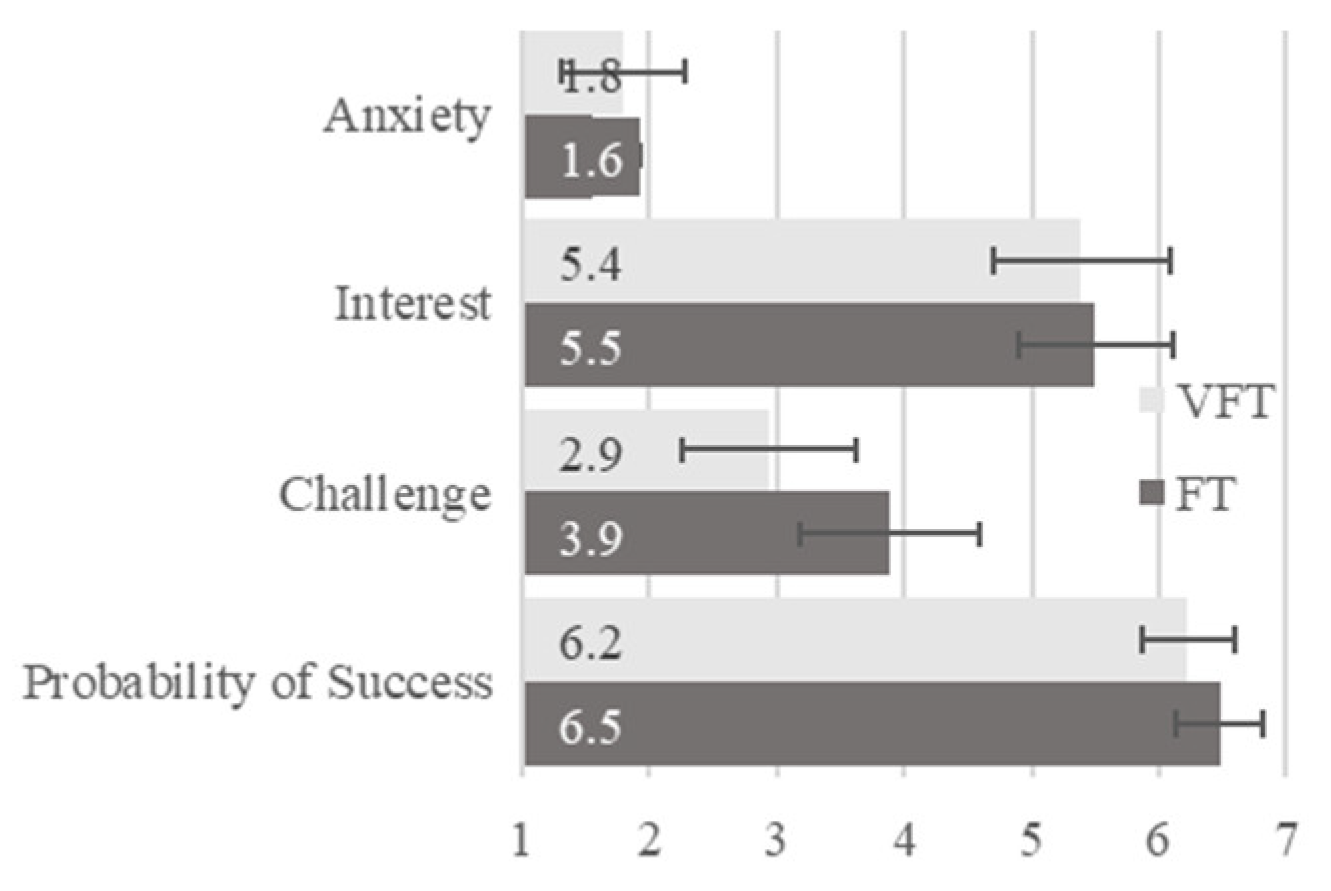
Figure 7.
Emotions according to AEQ (Likert scale from 1 (no agreement) to 7 (full agreement), mean values and standard deviations).
Figure 7.
Emotions according to AEQ (Likert scale from 1 (no agreement) to 7 (full agreement), mean values and standard deviations).
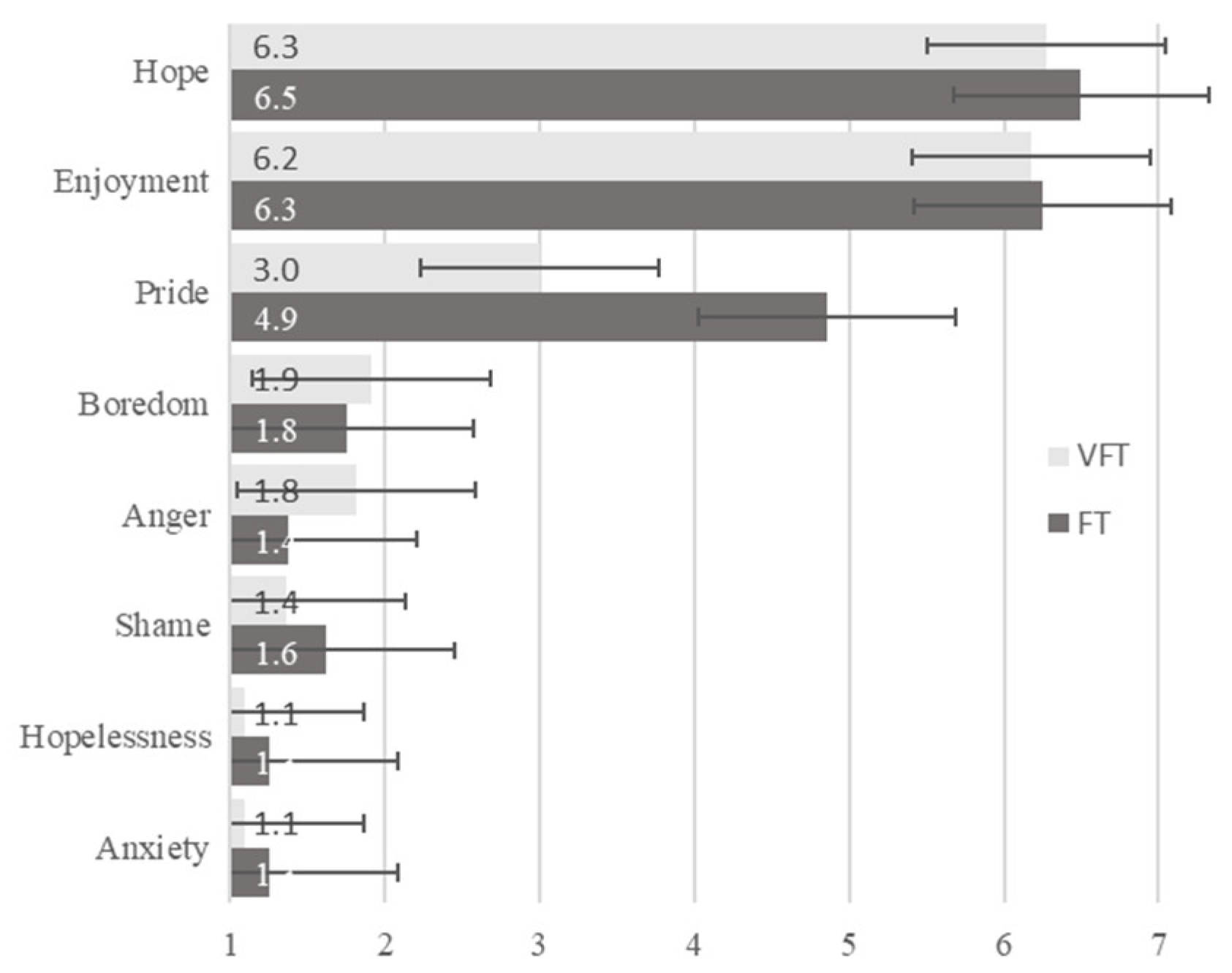

Table 1.
Cognitive Load (7-point Likert scale).
| Scale | VFT x̅ (σ) |
FT x̅ (σ) |
| Intrinsic | 2.6 (1.57) | 3.0 (1.27) |
| Germane | 5.7 (1.05) | 5.7 (0.95) |
| Extraneous | 2.2 (1.20) | 1.7 (0.65) |
Table 2.
Subscales of Presence (Likert scale from 0 to 6, determining increasing presence).
| Subscale | VFT x̅ (σ) |
FT x̅ (σ) |
| Spatial Presence (SP) | 2.7 (1.42) | 4.5 (1.49) |
| Involvement (INV) | 2.2 (1.34) | 2.7 (1.53) |
| Experienced Realism (EXP) | 2.7 (1.26) | 4.7 (1.68) |
| General Presence (G) | 3.3 (1.21) | 6.0 (0.00) |
Table 3.
Subscales of Social Presence (Likert scale from 1 (no agreement) to 7 (full agreement)).
| Subscale | VFT x̅ (σ) |
FT x̅ (σ) |
| Learning-Supportive Group Activities | 4.5 (1.31) | 5.4 (1.44) |
| Social Well-Being | 3.4 (1.58) | 5.0 (1.66) |
| Social Orientation | 2.7 (1.59) | 3.6 (1.59) |
Table 4.
Immersion.
| Scale | VFT x̅ (σ) |
FT x̅ (σ) |
| 16 Positive Items (0 to 4) | 31.8 (7.83) | 32.1 (6.17) |
| General Item (1 to 10) | 7.0 (1.76) | 8.4 (1.32) |
Disclaimer/Publisher’s Note: The statements, opinions and data contained in all publications are solely those of the individual author(s) and contributor(s) and not of MDPI and/or the editor(s). MDPI and/or the editor(s) disclaim responsibility for any injury to people or property resulting from any ideas, methods, instructions or products referred to in the content. |
© 2025 by the authors. Licensee MDPI, Basel, Switzerland. This article is an open access article distributed under the terms and conditions of the Creative Commons Attribution (CC BY) license (http://creativecommons.org/licenses/by/4.0/).
Copyright: This open access article is published under a Creative Commons CC BY 4.0 license, which permit the free download, distribution, and reuse, provided that the author and preprint are cited in any reuse.


