
Submitted:
26 August 2025
Posted:
27 August 2025
You are already at the latest version
Abstract
The department of Boyacá, located in the Andean region of Colombia, stands out for its historical, cultural, and natural richness, positioning itself as a strategic tourist desti-nation with significant economic potential. Its diverse tourism portfolio—including nature, cultural, ecological, and adventure tourism—generates opportunities for eco-nomic growth, employability, and sustainable development. This study employed a mixed-methods approach, combining documentary analysis and semi-structured interviews with key stakeholders in the tourism sector. Secondary sources such as government reports, academic studies, and sectoral statistics were an-alyzed, complemented by qualitative insights from stakeholders to identify challenges and opportunities. Findings reveal that innovation is essential for enhancing competitiveness. Moderni-zation of infrastructure, adoption of digital technologies, and improvements in service quality were identified as drivers of destination attractiveness. However, fragmenta-tion among stakeholders and the absence of a structured promotional strategy limit Boyacá’s visibility in national and international markets. The study recommends the implementation of innovative strategies, including the de-sign of thematic routes, personalized experiences, and digital and experiential mar-keting approaches. Sustainability must serve as a cross-cutting axis to balance eco-nomic growth with the conservation of natural and cultural heritage. Through collab-orative efforts among public, private, and community actors, Boyacá can consolidate its position as a competitive and sustainable tourist destination.
Keywords:
attractiveness
; competitiveness
; strategy
; territory
; tourism
; sustainability
1. Introduction
Tourism is increasingly recognized as a fundamental driver of territorial development, contributing to economic growth, social inclusion, and employment generation worldwide [1]. International experiences, particularly in Spain and France, demonstrate how tourism can evolve into a pillar of national economies and a catalyst for cultural exchange [2,3]. These examples underscore the importance of developing innovative strategies that enable emerging destinations to diversify services, strengthen quality standards, and attract international visitors. Innovation, digitalization, social media engagement, and sustainable practices are now critical to positioning territories as competitive destinations in the global market [4].
As a productive chain, tourism is inherently multidisciplinary, permeating infrastructure, communications, transportation, gastronomy, hospitality, and cultural heritage. Countries such as Japan and Australia have demonstrated the capacity of innovation to integrate these elements effectively, generating added value and fostering regional competitiveness [5]. From this perspective, tourism can serve as an instrument for long-term economic transformation and social cohesion [6]. Nevertheless, tourism development is not exempt from controversy. While it creates opportunities for growth, critics emphasize risks such as over-tourism, environmental degradation, and cultural homogenization when innovation and sustainability are not adequately balanced [7,8].
In Colombia, tourism has gained relevance as a strategic sector, yet persistent challenges limit its competitive and sustainable growth. Deficiencies in infrastructure, high levels of perceived insecurity, and unequal access to digital technologies hinder the sector’s capacity to meet international standards [9]. Comparisons with countries such as Mexico and Thailand, which have undertaken reforms to address similar structural issues, highlight the need for Colombia to adapt successful practices to its specific context [10]. Collaboration between public and private stakeholders, together with active community participation, emerges as an essential condition for overcoming these obstacles and consolidating tourism’s role in national development. International comparative experiences, such as those of Japan and Slovenia, further illustrate how adapting to diverse customer contexts can sustain cultural resources [25].
This study focuses on the department of Boyacá, located in the Andean region of Colombia, which is distinguished by its historical, cultural, and natural wealth. Boyacá encompasses iconic destinations such as Villa de Leyva, Monguí, El Cocuy National Natural Park, the Iguaque Flora and Fauna Sanctuary, and Lake Tota. Its tourism offer includes nature, cultural, ecological, and adventure modalities, which contribute to local economies and highlight its potential as a competitive destination [11]. Recently, Boyacá has gained international recognition, being nominated as South America’s leading destination in the 2025 World Travel Awards and identified by Booking.com as one of the most welcoming regions worldwide [12].
The aim of this research is to analyze the tourism value chain in Boyacá through the lens of innovation and sustainability, identifying strengths, challenges, and opportunities for improving competitiveness. By integrating qualitative and quantitative methods, the study seeks to propose strategies that reinforce Boyacá’s positioning in national and international markets. The principal conclusion emphasizes that innovation—across infrastructure, marketing, and service quality—combined with sustainability as a cross-cutting axis, is essential for consolidating Boyacá as a competitive and sustainable tourist destination.
2. Materials and Methods
Innovation in Tourism
Innovation is increasingly recognized as a critical driver of competitiveness and sustainability within the tourism value chain. As Rodríguez-Moreno and Cruz-Vásquez [1] note, analyzing and optimizing the links in the value chain is essential to ensure the provision of distinctive, high-quality tourism experiences. Innovation in this sector may take different forms, including the design of new tourism products, the improvement of infrastructure, and the adoption of advanced technologies.
Bibliometric mapping conducted through Connected Papers illustrates the evolution of research networks on this subject between 1998 and 2023 (see Figure 1). The visualization of the author collaboration network highlights clusters of research and citation patterns, identifying influential works such as Morrison, Pietrobelli, and Rabellotti’s framework on global value chains and technological capabilities [2], Viotti’s analysis of national learning systems [3], Figueiredo’s study on inter-firm differences in technological capability [4], and Jin and Zedtwitz’s research on China’s mobile phone industry [5]. Complementary studies directly linked to tourism emphasize the role of clusters in regional development [6], the use of ICTs in destination management [7], and the potential of technological capabilities to advance the Fourth Industrial Revolution in developing countries [8].
According to [9], innovation in tourism can be classified into five categories: product innovation (new tourism experiences), process innovation (efficiency in operations), market innovation (exploration of new tourist segments), organizational innovation (improved structures and cooperation), and management innovation (enhanced governance and decision-making). Information and communication technologies (ICTs) further transform the sector by enabling personalized services and greater interaction with tourists [10]. Smart tourism, powered by artificial intelligence, big data, and the Internet of Things (IoT), is reshaping destination management [11].
From a sustainability perspective, innovation must also safeguard natural and cultural heritage. Scholars argue that sustainable and regenerative tourism represent essential strategies for achieving a balance between development and conservation [12]. Within this framework, cooperation across the tourism value chain—spanning hotels, travel agencies, restaurants, and transport companies—becomes a decisive factor. Effective collaboration fosters synergies that strengthen competitiveness and add value at both local and regional levels [13,14].
In Colombia, tourism innovation has been promoted through government strategies and public policies focused on digitalization and the strengthening of regional competitiveness [15]. ICTs have proven to be essential for value chain management in destinations [9,16]. For the department of Boyacá, with its rich cultural and natural resources, the key challenge lies in embedding innovation within its tourism value chain. Doing so will enhance its attractiveness, ensure sustainability, and consolidate its role as a competitive destination in national and international markets.
Value Chain in Tourism
Porter’s value chain framework [1] is widely regarded as a cornerstone for understanding the creation of competitive advantage across industries, including tourism. The theory posits that each activity within the chain contributes to the generation of value for the end customer. In the tourism sector, primary activities encompass the management of attractions, transportation, accommodation, and visitor experiences, while support activities include training, marketing, and destination governance. Together, these processes offer a comprehensive perspective on how destinations create and deliver value.
As an analytical tool, the value chain facilitates a holistic understanding of the structure and functioning of the multiple stakeholders involved in providing tourism services. Porter [1] emphasized its relevance for identifying which activities contribute to value creation and which do not, thereby guiding strategic decision-making. Applied to tourism, this framework enables the analysis of how profits are generated and distributed within the sector, providing insights into opportunities for efficiency and innovation.
According to [8], the tourism value chain comprises sequential stages: trip planning, transportation, accommodation, activities, and return. Each stage involves a variety of actors—tour operators, airlines, hotels, restaurants, and cultural attractions—whose coordination is critical for delivering a seamless visitor experience. The World Tourism Organization [43] underscores the importance of such coordination to ensure a sustainable and high-quality tourism offering. Moreover, the integration of technology and innovation into the value chain is increasingly acknowledged as a determinant of competitiveness [21]. In this context, sustainable tourism value chain analysis allows evaluating tourism’s contribution to SDGs and local development [24].
Digital transformation plays a pivotal role in this context. As highlighted by [18], tools such as online booking platforms, artificial intelligence, and big data analytics have optimized processes, enhanced efficiency, and enabled greater personalization of services. These innovations have reshaped not only the design and marketing of tourism products but also the ways in which destinations interact with global markets [45].
Sustainability constitutes another critical dimension of the tourism value chain. Porter and Kramer [7] introduced the concept of shared value, emphasizing that economic growth must be aligned with positive social and environmental outcomes. In tourism, this translates into the integration of local communities, conservation of natural and cultural resources, and the promotion of responsible practices at all stages of the chain.
In Colombia, and particularly in the department of Boyacá, the value chain approach is essential for strengthening competitiveness while preserving heritage. Recent studies suggest that rural and community-based tourism are emerging as effective mechanisms for fostering local development and conserving cultural identity [38]. Embedding innovation and sustainability within Boyacá’s tourism value chain represents a strategic opportunity to enhance its attractiveness, ensure long-term viability, and consolidate its positioning in both national and international markets.
Innovation Models
Several models have been proposed to explain the dynamics of innovation in tourism. Despite criticism of its rigidity, the linear model of innovation provides an initial framework for understanding the evolution of ideas from basic research to practical application [15]. In contrast, the interactive model developed by Kline and Rosenberg (1985) emphasizes the interplay between commercial and technological forces, underscoring the non-linear and systemic nature of innovation. The Oslo Manual provides the most widely accepted guidelines for measuring innovation [33].
Building on these foundations, more recent frameworks reflect broader transformations. The concept of open innovation [10] highlights the importance of leveraging both internal and external ideas to accelerate innovation processes, a particularly relevant approach in tourism where collaboration across stakeholders in the value chain is critical. Similarly, the Triple Helix model (Etzkowitz & Leydesdorff, 2000) stresses the interaction between universities, industry, and government as a driver of competitiveness and sustainable development in destinations. Porter’s value chain theory [21] also remains highly influential in the tourism field, linking innovation to activities such as infrastructure improvements, service digitalization, experiential marketing, and environmental sustainability. In this sense, innovation is increasingly viewed as a strategic determinant of business competitiveness and regional development [42], with applications ranging from product and process innovation to organizational and market transformation [34].
Beyond technological and managerial perspectives, the notion of social innovation has gained prominence as a driver of sustainability and inclusion [27]. In tourism, social innovation refers to the creation of strategies, products, or services that not only improve competitiveness but also generate value for local communities [19,32]. This approach emphasizes community participation, equity in benefit distribution, and the conservation of natural and cultural heritage. Nevertheless, theoretical modeling of social innovation remains a challenge in an unconsolidated field [26]. Furthermore, social innovation has also been defined as the creation of new ideas, services, or models addressing social needs, generating long-term social value [31].
Empirical studies reinforce this perspective. Novelli, Schmitz, and Spencer (2006) argue that community involvement in tourism planning enhances both economic and social development, while Zapata et al. (2011) identify community-based tourism as a form of social innovation that empowers local actors to manage their resources and strengthen social cohesion. In Latin America, Scheyvens (2002) documents initiatives where indigenous communities have used tourism to preserve traditions while creating authentic visitor experiences. In Colombia, rural tourism and agrotourism have emerged as successful forms of social innovation, integrating small producers and entrepreneurs into the tourism value chain [20]. Nevertheless, challenges such as limited funding, insufficient training, and resistance to change persist (Hjalager, 2010). Despite these obstacles, opportunities are considerable: digitalization, collaborative economy platforms, and digital marketing networks can enable communities to co-create innovative solutions and expand their participation in the tourism sector [18].
In the case of Boyacá, social innovation could be harnessed through strategic alliances with local communities, fostering tourism products that authentically reflect cultural identity while ensuring long-term sustainability. This approach positions social innovation not merely as an operational strategy but as a transformative paradigm for inclusive and regenerative tourism development.
Sustainability and Competitiveness
In the tourism sector, sustainability is increasingly recognized as a fundamental component of innovation. The integration of sustainable practices not only enhances a destination’s competitiveness but also safeguards natural and cultural resources for future generations (Fernández, 2023). This perspective requires strategies that embed social responsibility into tourism management and promote inclusive, long-term development [41]. Ecotourism plays a central role in balancing conservation and development, especially in contexts that depend heavily on natural resources [22].
Innovation is equally essential for differentiation and growth in globalized markets. It has been defined as the introduction of new products, processes, markets, or organizational forms that create value [42]. In tourism, innovation encompasses a wide range of practices, including digitalization, the design of personalized experiences, and the development of sustainable business models [21]. Effective innovation in the tourism value chain depends on cooperation among stakeholders—suppliers, operators, and public administrations—to improve efficiency and strengthen sustainability [35]. Emerging technologies such as big data, artificial intelligence, and augmented reality are also reshaping the sector, generating opportunities for more adaptive and experiential services [9]. Visitor behavior is increasingly shaped by digital technologies and online planning tools [44].
Moreover, the concept of sustainability in tourism rests on achieving a balance across three dimensions: economic growth, environmental preservation, and social well-being. The World Tourism Organization [43] affirms that sustainable tourism must address present needs without jeopardizing those of future generations. Aligned with this perspective, the triple bottom line model [12] stresses the integration of economic, social, and environmental considerations into tourism management. In this regard, ecotourism and rural tourism have gained traction as viable strategies to promote sustainability in regions such as Boyacá, where cultural heritage and natural landscapes constitute the foundation of the tourism offering [23]. This aligns with Colombia’s Tourism Sector Plan 2022–2026, which emphasizes tourism in harmony with life [28].
Competitiveness, in turn, reflects a destination’s capacity to attract and retain visitors through distinctive, high-quality experiences. The concept of competitive advantage [36] in tourism can be achieved through innovation, infrastructure improvements, human capital development, and the promotion of authenticity. Ritchie and Crouch (2003) developed a destination competitiveness model that identifies key factors such as natural and cultural resources, infrastructure, policies, and community well-being. For Boyacá, these dimensions are critical, given its rich historical and environmental assets. Recent studies highlight persistent challenges in Colombian tourism, including infrastructure deficits, insecurity, and unequal access to technology [29].
Tourism in Boyacá is defined by its cultural, heritage, and natural diversity (Mincultura, 2023). Implementing innovative strategies in its value chain—such as digitalizing tourism promotion and consolidating cooperation networks among local entrepreneurs—can enhance competitiveness and sustainability [39]. Furthermore, mechanisms such as sustainable tourism certification, community-based tourism, and ecosystem conservation represent viable approaches to improving tourism offerings while preserving natural resources [17].
Methodology
This research was methodologically structured into several phases. In the first phase, the study was designed as descriptive and qualitative, enabling an in-depth understanding of the current situation of the tourism value chain in Boyacá, Colombia, as well as the perceptions and experiences of the actors involved. Rural and community tourism are recognized as mechanisms for local development in Boyacá, fostering economic growth and cultural heritage conservation [37].
In the second phase, a documentary review was carried out, including both recent studies (within the last five years) and seminal theories related to tourism innovation, value chains, and sustainable development. The review incorporated academic articles, books, government reports, and publications from international organizations. Previous studies in Boyacá emphasize the relevance of analyzing the tourism value chain to design competitive strategies [40]. To support this process, the visual tool Connected Papers was employed, which integrates documents from arXiv, Semantic Scholar, and PubMed databases, proving useful in identifying relevant works and mapping connections among them.
Phase three focused on the analysis of the current tourism offering, assessing available services, infrastructure, and tourism products. Secondary data were collected from tourism reports, official statistics, and prior studies.
In phase four, semi-structured interviews were conducted with key stakeholders, including tour operators, entrepreneurs, local authorities, and community representatives. These interviews provided insights into perceptions, experiences, and challenges, which informed the development of innovation proposals and differentiated marketing strategies. Considering the provincial structure of Boyacá, the study identified actors in the provinces of Centro, Alto Ricaurte, Valderrama, Neira, and Tundama. Stakeholders included hotels, hostels, country inns, travel agencies, restaurants, adventure and recreation centers, agroecological farms, museums, natural parks, cafés, and agencies specializing in ecotourism and rural tourism.
The study population comprised 50 tourism establishments forming part of Boyacá’s value chain. A non-probabilistic sample of 10 representative establishments per province was selected, distributed as shown in Table 1.
In addition, direct observation was conducted in several tourist destinations to evaluate infrastructure, service quality, and interactions between tourists and providers. This method allowed for a direct and unmediated assessment of the tourism context in Boyacá.
To ensure validity and reliability, multiple strategies were employed. Expert peer reviews were conducted to validate the findings, and a pilot test with five tour operators was used to refine the interview instrument, improving clarity and comprehension. Response consistency was also examined to detect atypical patterns and minimize errors in the collected data.
This descriptive and qualitative methodology provides a robust foundation for analyzing Boyacá’s current tourism context and for formulating innovative proposals that address the identified needs and challenges.
3. Results
The findings were classified and organized to inform the subsequent design of an innovation proposal for the tourism sector. Results are presented first in terms of tourism competitiveness, and second with regard to stakeholder cooperation and promotional strategies.
Tourism Competitiveness
Key aspects were identified to strengthen Boyacá’s tourism competitiveness, highlighting the need to optimize the value chain in several dimensions:
- Infrastructure. Improving infrastructure is fundamental to attracting and retaining tourists. This includes modernizing roads, expanding quality accommodations, and upgrading existing facilities. Investment in infrastructure directly affects accessibility and, consequently, the visitor experience.
- Service Quality. Service quality is a decisive factor in tourist satisfaction. Training programs for stakeholders are necessary to guarantee that services meet international standards and visitor expectations.
- Hospitality Training. The professionalization of tourism and hospitality staff is essential to delivering high-quality experiences.
Cooperation among Stakeholders
Collaboration between local communities, businesses, and authorities is vital for sustainable tourism development:
- Local Communities. Active participation ensures an equitable distribution of benefits and fosters practices that respect both the environment and local culture.
- Entrepreneurs. Building close collaboration networks between communities, entrepreneurs, and authorities is necessary to generate innovative and sustainable products.
- Authorities. Territorial authorities play a central role in regulation, promotion, and preservation, thus contributing to sustainable tourism development.
Promotional Strategies
The appropriate promotion of Boyacá’s natural and cultural resources is key to improving the tourist experience. Strategies include:
- Enhancing the Tourist Experience. Developing personalized products and unique experiences that highlight Boyacá’s cultural and natural richness.
- Promoting Natural and Cultural Resources. Utilizing digital marketing campaigns and presence on international platforms to increase visibility.
- Innovative Tools. Incorporating augmented reality and mobile applications to enable real-time interaction between tourists and destinations.
The results underscore the need for a comprehensive strategy that combines infrastructure and service improvements, stakeholder cooperation, and innovative promotional tools to position Boyacá as a competitive and sustainable destination.
The analysis of Boyacá’s tourism value chain revealed both strengths and weaknesses. The region offers a diverse portfolio of cultural, architectural, and natural heritage, ranging from historical sites such as Villa de Leyva and Tunja to natural attractions such as the Ocetá Páramo and Lake Tota. In addition, Boyacá maintains consolidated traditions in religious tourism, ecotourism, and adventure tourism. However, these assets are not sufficiently integrated into a coherent strategy that would enable the consolidation of a competitive product.
A central finding is the absence of a robust promotional strategy. Although local and departmental initiatives exist, they are fragmented and lack coordination, limiting Boyacá’s visibility in national and international markets. The digitalization of tourism offerings is also incipient, reducing the destination’s presence on global platforms and social media.
Despite its potential, Boyacá’s infrastructure in several municipalities does not meet the expectations of contemporary tourists. Poorly maintained access roads, insufficient accommodation capacity, and limited quality in restaurants reduce the destination’s competitiveness. Furthermore, inadequate training in customer service and foreign languages constrains the experience of international visitors.
Weak connections among industry leaders, government agencies, and local communities were also evident. The absence of joint strategies prevents the structuring of integrated, sustainable offerings and limits the generation of shared value across the tourism chain.
To address these challenges, a tourism positioning matrix was developed with strategic dimensions that reflect the approach to destination and experience promotion across the various actors of Boyacá’s value chain. Table 2 presents this matrix, providing a structured categorization of services, experience types, target audiences, trends, and marketing and innovation strategies.
Innovation Proposal
Diversified Tourism Offer
Diversifying the tourism offer in Boyacá is essential to address the varied needs and preferences of visitors. The following strategies are proposed:
- Customized Tour Packages. Identifying specific visitor interests—such as adventure tourism, cultural immersion, and wellness retreats—is crucial for designing tailored packages. These may include activities such as hiking, visits to historical sites, local craft workshops, and culinary experiences.
- Thematic Routes. The development of thematic routes can highlight the unique identity of Boyacá. Proposed examples include the Independence Route, the Heritage Towns Route, and the Coffee Route.
Strategic Alliances
- Strengthening cooperation among stakeholders is indispensable for achieving sustainable and competitive tourism development in Boyacá:
- Local Service Providers. Partnerships among hotels, restaurants, tour operators, and other service providers can generate integrated offerings and enhance service quality.
- Community Engagement. Local communities should be actively integrated into the design and management of tourism products, ensuring equitable benefit distribution and environmentally responsible practices.
Development of Routes and Circuits
Integrating diverse forms of tourism offers visitors comprehensive and enriching experiences:
- Ecotourism, Culture, and Gastronomy. Tourist circuits that combine ecological activities, cultural heritage visits, and gastronomic experiences can significantly increase destination appeal.
- Promotion and Digital Marketing. Effective promotional strategies, including social media campaigns and presence on international platforms, are vital to strengthen Boyacá’s visibility as a competitive destination.
Training and Professionalization
The professional development of tourism sector personnel is fundamental to service quality and visitor satisfaction:
- Continuing Education. Training programs for guides, hotel staff, operators, and other actors should be institutionalized to ensure continuous skill development.
- Certification. Encouraging the adoption of quality and sustainability certifications enhances both reputation and competitiveness in the global tourism market.
The proposed innovation strategies aim to contribute simultaneously to the competitiveness and sustainability of Boyacá’s tourism sector. By combining diversification of services, strategic alliances, integrated circuits, digital promotion, and human capital development, these initiatives seek to provide visitors with high-quality experiences while directly benefiting local communities through economic and social development.
4. Discussion
The tourism value chain emerges as a productive segment with considerable development potential in territories capable of fostering effective linkages. Conceptualizing the different entrepreneurial initiatives as interconnected links of a value chain makes it possible to identify strengths and opportunities for integration, aimed at consolidating tourism activities as a driver of territorial development. Previous research [3] has examined origin–destination connections, highlighting that alternative forms of tourism—such as ecotourism, adventure tourism, and rural tourism—are frequently offered in a spontaneous and unplanned manner, often guided solely by the perceptions of service providers. These findings align with the present study, which underscores the urgent need to design strategies capable of improving competitiveness under increasingly demanding technological and communication environments, where production costs, service quality, diversification, and constant adaptation are decisive factors.
The application of the value chain concept to tourism also requires reconsidering the central role of digital technologies in its structure, as well as in the decision-making processes of current and potential tourists. Gómez-Ceballos, Menoya-Zayas, and Vázquez-Loaiza (2023) highlight the growing importance of incorporating technological innovation into tourism value chain management in order to enhance destination positioning. Their study identifies the adoption of ICTs as a key driver of innovation, not only by providing personalized communication channels but also by reinforcing the integrated value of territorial tourism offerings. The digital revolution has created new opportunities for competitiveness in the tourism sector, reinforcing the importance of adopting technological strategies [30]. This perspective coincides with the findings of the present research, which emphasize the need to strengthen both local and business capacities to transition toward smart tourism ecosystems.
Similarly, the study Innovating Smart Cities in Latin America: Addressing Regional Urban Challenges and Opportunities analyzes the role of innovation, emerging technologies, and sustainability strategies in urban planning and development. Its findings resonate with those of this research, particularly in acknowledging the relevance of technological innovation and sustainability for urban mobility, quality of life, and governance. According to the authors, the debate on smart cities in Latin America began to gain traction around 2012, particularly in Brazil, with research predominantly focused on innovation and sustainability dimensions. In line with the present study, these results highlight the need for continued exploration of technology integration in tourism and urban development, while also evaluating the long-term sustainability and governance implications of smart initiatives in the region [13].
5. Conclusions
Innovation processes at each stage of the tourism value chain in Boyacá are identified as a key determinant of competitiveness. Infrastructure modernization, the adoption of service quality standards, and the integration of digital technologies emerge as essential strategies for attracting visitors and ensuring high-quality experiences.
The study reveals that the absence of robust promotional strategies and a coordinated plan limits the department’s potential to consolidate itself as a competitive destination. To address this, integrated digital campaigns with a focus on experiential marketing are recommended to strengthen Boyacá’s positioning in both national and international markets.
Fragmentation among stakeholders—including entrepreneurs, local communities, and authorities—was found to hinder the consolidation of a unified tourism offering. Strengthening community processes, fostering associative initiatives, and building strategic alliances are essential to designing diversified and sustainable products. The lack of joint strategies and partnerships also constrains the development of integrated tourism packages and reduces opportunities to generate shared value within the sector.
Based on the identified needs, a strategic approach is proposed to promote destinations and experiences across Boyacá’s value chain. The tourism positioning matrix establishes structured dimensions—services, audiences, trends, and marketing and innovation strategies—that provide a framework for an innovation proposal aligned with visitor preferences, including nature, adventure, cultural tourism, and wellness experiences.
The tourism potential of Boyacá is thus reaffirmed, highlighting opportunities for the creation of thematic routes, personalized experiences, and the strengthening of cultural, adventure, and community-based tourism. These initiatives enable the structuring of integrated tourism circuits that enhance the visitor experience while generating economic and social benefits for local communities. Sustainability is projected as a cross-cutting axis of these innovation strategies, ensuring a balance between growth and conservation, and safeguarding the department’s natural and cultural heritage.
Declarations
Ethics statement: The study was approved under Code PGIS3502ECACEN2024, Rectoral Resolution No. 08347 (April 23, 2024). It was exempted from ethical evaluation by CEI-UNAD, as it did not involve human experimentation, biological samples, or the collection of sensitive clinical data. This exemption was granted in accordance with institutional and national guidelines on research ethics and for the purpose of scientific publication. Ethical Exemption Number: 101.1-137.
CRediT authorship contribution statement: Marleny Torres Zamudio: Writing – review & editing, Methodology, Investigation, Formal analysis, Data curation. Juan Orlando Berdugo: Writing – review & editing, Writing – original draft, Project administration, Supervision, Conceptualization, Methodology, Validation. Fabio Bonilla: Writing – review & editing, Methodology, Validation.
Funding: This research was funded by Universidad Nacional Abierta y a Distancia (UNAD, Colombia), PGIS3502ECACEN2024.
Conflict of Interest: The authors declare no known competing financial interests or personal relationships that could have influenced the work reported in this article.
6. Patents
Not applicable.
Supplementary Materials
Not applicable.
Author Contributions
Conceptualization, Juan Orlando Berdugo and Marleny Torres Zamudio; Methodology, Marleny Torres Zamudio and Fabio Bonilla; Validation, Juan Orlando Berdugo and Fabio Bonilla; Formal analysis, Marleny Torres Zamudio; Investigation, Marleny Torres Zamudio; Data curation, Marleny Torres Zamudio; Writing—original draft preparation, Juan Orlando Berdugo; Writing—review and editing, Marleny Torres Zamudio and Fabio Bonilla; Supervision, Juan Orlando Berdugo; Project administration, Juan Orlando Berdugo; Funding acquisition, Marleny Torres Zamudio. All authors have read and agreed to the published version of the manuscript.
Funding
This research was funded by Universidad Nacional Abierta y a Distancia (UNAD, Colombia), PGIS3502ECACEN2024
Institutional Review Board Statement
The study was conducted in accordance with institutional and national research ethics guidelines and was exempted from ethical evaluation by CEI-UNAD (Ethical Exemption Number 101.1-137), Rectoral Resolution No. 08347 (April 23, 2024).
Informed Consent Statement
Not applicable.
Data Availability Statement
The data supporting the findings of this study are available on request from the corresponding author. Due to privacy considerations involving local stakeholders, the data are not publicly available.
Acknowledgments
The authors acknowledge the administrative and technical support provided by the Faculty of Economic, Administrative, and Accounting Sciences (ECACEN) at UNAD, and the collaboration of local tourism stakeholders in Boyacá during data collection. During the preparation of this manuscript, the authors used ChatGPT (OpenAI, GPT-5, 2025) for language polishing and editing. The authors reviewed and edited the output and take full responsibility for the content of this publication.
Conflicts of Interest
The authors declare no conflict of interest. The funders had no role in the design of the study; in the collection, analyses, or interpretation of data; in the writing of the manuscript; or in the decision to publish the results.
Abbreviations
The following abbreviations are used in this manuscript:
| UNAD | Universidad Nacional Abierta y a Distancia |
| ECACEN | Escuela de Ciencias Administrativas, Contables, Económicas y de Negocios |
| ICTs | Information and Communication Technologies |
| CEI-UNAD | Comité de Ética de Investigación UNAD |
| CRediT | Contributor Roles Taxonomy |
| Q1/Q2 | Quartile classification of scientific journals in Scopus database |
References
- El Espectador. Boyacá is the Department with the Most Municipalities Committed to Sustainable Tourism. El Espectador 2023. Available online: https://www.elespectador.com (accessed on 25 August 2025).
- RAP-E Central Region. Boyacá, a Key Destination for Promoting Sustainable Tourism in Colombia. RAP-E Central Region 2025.
- Benavides, G.F. Value Chains and Innovation Trends in Tourism Activities. Lat. Am. J. Manag. 2019, 15, 29. [Google Scholar] [CrossRef]
- Benavides, G.F. Value Chains and Trends in Innovation in Tourism Activities. Cuad. Latinoam. Adm. 2019.
- Bock, B.B. Rural Marginalization and the Role of Social Innovation: A Turn Towards Nexogenous Development and Rural Reconnection. Sociol. Ruralis 2016, 56, 552–573. [Google Scholar] [CrossRef]
- Bramwell, B.; Lane, B. Critical Research on the Governance of Tourism and Sustainability. J. Sustain. Tour. 2011, 19, 411–421. [Google Scholar] [CrossRef]
- Buckley, R. Sustainable Tourism: Research and Reality. Ann. Tour. Res. 2012, 39, 528–546. [Google Scholar] [CrossRef]
- Buhalis, D.; Amaranggana, A. Smart Tourism Destinations. In Information and Communication Technologies in Tourism 2015; Springer: Cham, Switzerland, 2015; pp. 377–389. [Google Scholar]
- Buhalis, D.; Law, R. Progress in Information Technology and Tourism Management: 20 Years on and 10 Years after the InterneThe State of eTourism Research. Tour. Manag. 2008, 29, 609–623. [Google Scholar] [CrossRef]
- Chesbrough, H. Open Innovation: The New Imperative for Creating and Profiting from Technology; Harvard Business Press: Boston, MA, USA, 2003. [Google Scholar]
- Christensen, C.M. The Innovator’s Dilemma: When New Technologies Cause Great Firms to Fail; Harvard Business Review Press: Boston, MA, USA, 1997. [Google Scholar]
- Elkington, J. Cannibals with Forks: The Triple Bottom Line of 21st Century Business; Capstone: Oxford, UK, 1998. [Google Scholar]
- Escobar, A.; Luna, J.; Caraballo, A. Innovating Smart Cities in Latin America: Addressing Regional Urban Challenges and Opportunities. J. Infrastruct. Policy Dev. 2024. [CrossRef]
- Etzkowitz, H.; Leydesdorff, L. The Dynamics of Innovation: From National Systems and ‘Mode 2’ to a Triple Helix of University–Industry–Government Relations. Res. Policy 2000, 29, 109–123. [Google Scholar] [CrossRef]
- Godin, B. The Linear Model of Innovation: The Historical Construction of an Analytical Framework. Sci. Technol. Hum. Values 2006, 31, 639–667. [Google Scholar] [CrossRef]
- Gómez-Ceballos, G.; Menoya-Zayas, S.; Vázquez-Loaiza, J.P. ICTs as a Support for Value Chain Management in Tourism Destinations: The Case of Cuenca, Ecuador. Sustainability 2023, 15, 10181. [Google Scholar] [CrossRef]
- González, L. Sustainable Tourism in Boyacá: Challenges and Opportunities. J. Tour. Dev. 2020, 12, 45–60. [Google Scholar]
- Gretzel, U.; Sigala, M.; Xiang, Z.; Koo, C. Smart Tourism: Foundations and Developments. Electron. Mark. 2015, 25, 179–188. [Google Scholar] [CrossRef]
- Hall, C.M.; Williams, A.M. Tourism and Innovation; Routledge: London, UK, 2008. [Google Scholar]
- Hernández-Mogollón, J.M.; Folgado-Fernández, J.A.; Duarte, P.A. The Contribution of Cultural and Creative Tourists to Sustainable Development: A Theoretical Model with an Empirical Application to the Case of Cáceres, Spain. Sustainability 2018, 10, 1943. [Google Scholar]
- Hjalager, A.M. A Review of Innovation Research in Tourism. Tour. Manag. 2010, 31, 1–12. [Google Scholar] [CrossRef]
- Honey, M. Ecotourism and Sustainable Development: Who Owns Paradise? 2nd ed.; Island Press: Washington, DC, USA, 2008. [Google Scholar]
- Konishi, Y. Global Value Chain in Services: The Case of Tourism in Japan. J. Southeast Asian Econ. 2019, 36, 183–203. [Google Scholar] [CrossRef]
- Lara-Morales, O.; Clarke, A. Sustainable Tourism Value Chain Analysis as a Tool to Evaluate Tourism’s Contribution to the Sustainable Development Goals and Local Indigenous Communities. J. Ecotour. 2022. [CrossRef]
- Masuda, H.; Krizaj, D.; Sakamoto, H.; Nakamura, K. Approaches for Sustaining Cultural Resources by Adapting Diversified Context of Customers in Tourism: Comparison between Japanese and Slovenian Cases. In Lecture Notes in Computer Science; Springer: Cham, Switzerland, 2017; Volume 10371, pp. 75–89. [Google Scholar] [CrossRef]
- Medina-Viruel, M.J.; Rueda-López, R. Theoretical Foundations of Social Innovation: The Problem of Modeling in an Unconsolidated Field of Study. CIRIEC-España Rev. Econ. Públ. Soc. Coop. 2023, 108, 131–162. [Google Scholar]
- MINCIT. National Sustainable Tourism Policy; Ministry of Commerce, Industry and Tourism of Colombia: Bogotá, Colombia, 2021. [Google Scholar]
- Ministry of Commerce, Industry and Tourism. Tourism Sector Plan 2022–2026: Tourism in Harmony with Life; Government of Colombia: Bogotá, Colombia, 2022. [Google Scholar]
- Miranda-Barros, A.V.; Caballero-Granado, J.D.; Rolón-Rodríguez, B.M. Problems of Colombian Tourism. J. Res. Manag. 2023, 6, 15–23. [Google Scholar] [CrossRef]
- More Ferrando, A.; Ramón Rodríguez, A.B.; Aranda Cuéllar, P. The Digital Revolution in the Tourism Sector: An Opportunity for Tourism in Spain. Ekonomiaz 2020, 98, 228–251. [Google Scholar]
- Mulgan, G. The Process of Social Innovation. Innovations 2006, 1, 145–162. [Google Scholar] [CrossRef]
- Novelli, M.; Schmitz, B.; Spencer, T. Networks, Clusters and Innovation in Tourism: A UK Experience. Tour. Manag. 2006, 27, 1141–1152. [Google Scholar] [CrossRef]
- OECD. Oslo Manual: Guidelines for Collecting and Interpreting Innovation Data; OECD Publishing: Paris, France, 2005. [Google Scholar]
- Porter, M.E. Competitive Advantage: Creating and Sustaining Superior Performance; Free Press: New York, NY, USA, 1985. [Google Scholar]
- Porter, M.E. The Competitive Advantage of Nations; Free Press: New York, NY, USA, 1990. [Google Scholar]
- Porter, M.E.; Kramer, M.R. Creating Shared Value. Harv. Bus. Rev. 2011, 89, 62–77. [Google Scholar]
- Ramírez, J.; Camargo, L. Rural Tourism and Local Development in Boyacá, Colombia. J. Reg. Urban Stud. 2020, 42, 45–67. [Google Scholar]
- Ramírez, J.; Varela, F. Innovation Strategies in the Colombian Tourism Industry. J. Bus. Stud. 2019, 25, 89–105. [Google Scholar]
- Ritchie, J.R.B.; Crouch, G.I. The Competitive Destination: A Sustainable Tourism Perspective; CABI Publishing: Wallingford, UK, 2003. [Google Scholar]
- Rodríguez-Moreno, D.C.; Cruz-Vásquez, J.L. The Value Chain of Tourist Destinations; UPTC Publishing House: Tunja, Colombia, 2021. [Google Scholar]
- Schumpeter, J.A. The Theory of Economic Development; Harvard University Press: Cambridge, MA, USA, 1934. [Google Scholar]
- UNWTO. Tourism and Sustainable Development; World Tourism Organization: Madrid, Spain, 2015. [Google Scholar]
- UNWTO. Tourism and the Sustainable Development Goals—Good Practices in the Americas; World Tourism Organization: Madrid, Spain, 2019. [Google Scholar]
- Xiang, Z.; Magnini, V.P.; Fesenmaier, D.R. Information Technology and Consumer Behavior in Travel and Tourism: Insights from Travel Planning Using the Internet. J. Retail. Consum. Serv. 2015, 22, 244–249. [Google Scholar] [CrossRef]
- Zada, M.; Zada, S.; Dhar, B.K.; Ping, C.; Sarkar, S. Digital Leadership and Sustainable Development: Enhancing Firm Sustainability Through Green Innovation and Top Management Innovativeness. Sustain. Dev. 2025. [CrossRef]
Figure 1.
Author collaboration network. Source: Connected Papers (Semantic Scholar database). Note: Visualization of the co-authorship and citation relationships among authors in the field.
Figure 1.
Author collaboration network. Source: Connected Papers (Semantic Scholar database). Note: Visualization of the co-authorship and citation relationships among authors in the field.
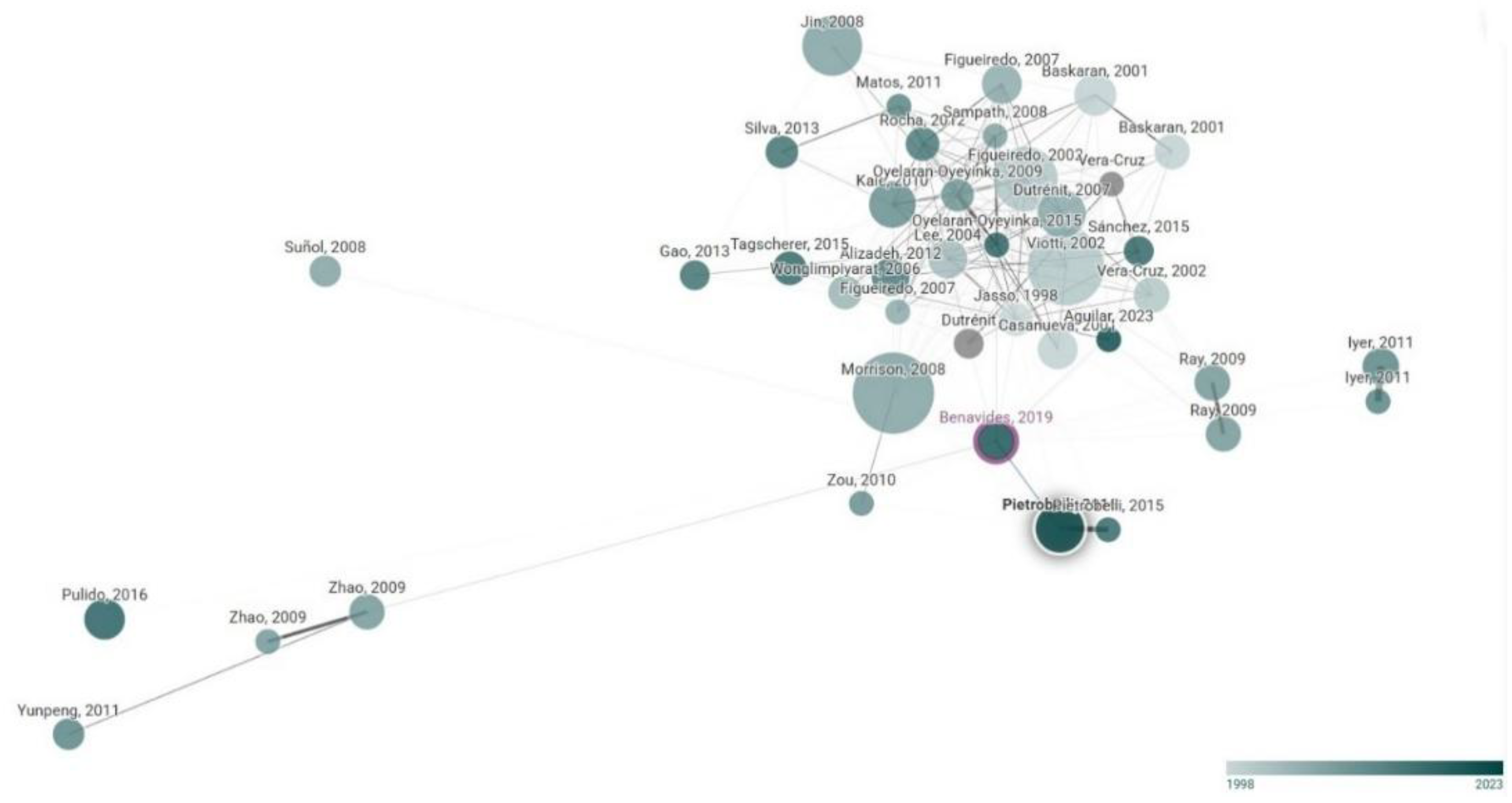

Table 1.
Sample by province and segment.
| Segment / Province | Central Province | Alto Ricaurte Province | Valderrama Province | Neira Province | Tundama Province |
| Hotels / Inns | Hotel Boutique La Mansión | Hotel Country The Sheet | Hotel Rural He Charm | Country Inn The Stay | Ecohotel The Mansion |
| Travel Agencies | Boyacá Tours | Alto Ricaurte Travel Agency | Ecoadventure Travel Agency | Excursions Neira Agency | Adventure Tundama Agency |
| Restaurants | El Rincón Restaurant of Boyacá | El Sabor Restaurant of the Land | Restaurant The Valderramense Seasoning | Restaurant Neiran Delights | Restaurant Taste of the Earth |
| Adventure & Recreation Centers | Adventure Center La Periquera | Recreational Center The Oasis | Leisure Center Adventure | Recreational Center The Forest | Recreational Center Eden |
| Agrotourism / Farms | Agrotourism El Encanto Estate | Agroecological Farm The Hope | Ecological Estate Living Earth | Tourist Estate Tierra Nueva | Agroecological Estate Tierra Verde |
| Museums | Gold Museum of Tunja | Gold Museum of Sogamoso | Historical Museum of Valderrama | Local History Museum | History Museum of Tundama |
| Hostels | Hostel La Home of the Grandparents | Hostel The Shelter | Hostel The Evening Starry | Hostel Sunrise Neirano | Hostel The Hidden Valley |
| Parks | Archaeological Park of Moniquirá | Natural Bridge Park of Boyacá | Hope Natural Park | Ecological Park La Palma | Tundama Natural Park |
| Cafés | Coffee The Mill | Coffee Heights of the Land | Organic Coffee Valley Green | Coffee Nature Pure | Coffee Of the Earth |
| Ecotourism Agencies | Boyacá Verde Ecotourism Agency | Green Land Ecotourism Agency | Andean Rural Tourism Agency | Neira Cultural Tourism Agency | Tundama Cultural Tourism Agency |
Note: Table 1 presents the non-probabilistic sample of 50 establishments selected from the tourism value chain in Boyacá. The sample includes 10 representative establishments per province, covering different segments (hotels, agencies, restaurants, recreational centers, farms, museums, hostels, parks, cafés, and ecotourism agencies) to reflect the diversity of tourism services across the territory.
Table 2.
Tourism Positioning Matrix for Boyacá.
| Strategic Dimension | Hotels | Travel Agencies | Restaurants | Adventure & Recreation Centers / Agroecological Farms | Museums of History & Culture | Cafés |
| Services | Accommodation, restaurant, tours | Tour packages, travel planning, excursions, guided routes, ground transportation | Typical food, catering services | Outdoor activities, lodging, camping areas, recreational facilities, event spaces, agricultural tours | Exhibitions, guided tours, educational workshops, cultural displays | Coffee shop services, coffee tours |
| Tourist Experience Denominations | Cultural and culinary experiences; nature and relaxation; rural getaways; wellness retreats | Historical and cultural routes; local circuits; adventure and exploration tours | Native regional dishes; local cuisine with fresh ingredients | Ecotourism; extreme sports; outdoor activities; organic and sustainable agricultural experiences | Heritage, history, and cultural interpretation | Quality coffee tastings; sensory experiences; organic coffee |
| Target Audience | National and international tourists; families and couples | Families, school groups, individual tourists, adventurers, groups of friends | Tourists and local residents | Youth and adventure groups; families; school groups; groups of friends | Students; cultural tourists | Coffee enthusiasts; domestic and international tourists |
| Trends | Sustainable tourism; authentic experiences; wellness and digital detox tourism | Ecotourism; adventure tourism; active and experiential travel | Organic food; healthy, locally sourced ingredients; traditional cuisine | Active tourism; nature tourism; weekend getaways; retreats; recreational group experiences | Cultural and educational tourism; heritage preservation; traveling exhibitions | Specialty coffee; origin coffee experiences |
| Marketing & Innovation Strategies | Social media campaigns; partnerships with local guides; online advertising; family packages | Promotions at fairs and events; seasonal offers; digital marketing campaigns | Social media promotion; participation in food fairs; local recommendations | Collaborations with influencers; online promotions; local media campaigns; family-oriented packages | Collaboration with schools; cultural events and exhibitions | Coffee workshops; social media presence; tasting events |
Note: The positioning matrix presents a structured categorization of services, experiences, audiences, trends, and marketing/innovation strategies for key segments of Boyacá’s tourism value chain.
Disclaimer/Publisher’s Note: The statements, opinions and data contained in all publications are solely those of the individual author(s) and contributor(s) and not of MDPI and/or the editor(s). MDPI and/or the editor(s) disclaim responsibility for any injury to people or property resulting from any ideas, methods, instructions or products referred to in the content. |
© 2025 by the authors. Licensee MDPI, Basel, Switzerland. This article is an open access article distributed under the terms and conditions of the Creative Commons Attribution (CC BY) license (http://creativecommons.org/licenses/by/4.0/).
Copyright: This open access article is published under a Creative Commons CC BY 4.0 license, which permit the free download, distribution, and reuse, provided that the author and preprint are cited in any reuse.


