

Submitted:
22 August 2025
Posted:
25 August 2025
You are already at the latest version
Abstract
We examine the impact of interdisciplinary, problem-based learning (PBL) on how Management and Chemistry students write. We designed role-plays and debates that required management students to interact in real-time and reflect critically on these experiences. They then collaborated with Chemistry students to solve a problem related to achieving the Sustainable Development Goals (SDGs), such as decontaminating water using locally grown biomass, by integrating human resource management and green chemistry research. Over three years, the experiential nature of the course activities transitioned from virtual to in-person delivery, facilitating real-time interdisciplinary collaborations. Textual analyses of reflections with LIWC-22 showed significant writing improvements, notably in the third year’s in-person and synchronous collaborations. Management students (n=84) increasingly used language reflecting different ways of thinking (β=.75, SE=.28, p=.02) and interest in new knowledge (β=.11, SE=.04, p=.03). Chemistry (n=13) students collaborating synchronously displayed more curiosity in their language (M=2.64, SD=1.42) than those who collaborated asynchronously (M=1.61, SD=1.9). We show that SDG-focused interdisciplinary PBL activities improve students’ writing skills, crucial for sustainability leadership. Our pedagogical approach of designing PBL activities to enhance interdisciplinary collaborations enhances communication and equips students to create context-specific solutions for global sustainability challenges.
Keywords:
Interdisciplinary Education
; Writing Skill Development
; SDGs
; Sustainability
; Problem-based Learning
; Experiential Learning
; Text Analysis
1. Introduction
There has been a growing emphasis on adopting innovative pedagogical approaches that better equip students to tackle complex global sustainability challenges, such as food insecurity, socio-economic disparities in healthcare, and environmental degradation (soil and water pollution) due to climate change and human behavior (e.g., synthetic pesticide use). Traditional teacher-centered methodologies are increasingly seen as insufficient for cultivating the multidisciplinary skills needed to address these pressing issues [1,2,3]. Such sustainability problems require comprehensive, integrated solutions so educators need to focus on developing students' interdisciplinary collaboration, communication, critical thinking, and data literacy skills—collectively known as essential soft skills [4,5]. Employers in various sectors like technology, healthcare, finance, and manufacturing also emphasize the critical importance of these skills, yet perceive gaps in the competencies of graduates from higher education institutions [6,7].
This paper proposes the Global Classroom approach as a robust pedagogical strategy to effectively foster these competencies. By engaging students from human resource management (HRM) and chemistry in interdisciplinary, problem-based learning projects directly aligned with the United Nations Sustainable Development Goals (SDGs), this approach not only enhances students' practical skills but also their ability to devise sustainable, context-specific solutions. Specifically, we analyze how students' written communication skills evolve through participation in interdisciplinary and problem-based learning (PBL) activities in solving SDG-focused problems.
1.1. Global Classroom
The Global Classroom [8] enhances learning through interdisciplinary collaboration, experiential learning, and practical applications addressing global issues (e.g., sustainable farming). The first iteration of the Global Classroom – started during COVID-19 pandemic, was delivered virtually and synchronously. It was offered in an in-person and synchronous format in the second and third years. The Chemistry research course, an independent supervised research study, was offered in both asynchronous and synchronous formats during these three years.
In the first year, the interdisciplinary group projects addressed global healthcare (e.g., increasing COVID-19 vaccination rates worldwide). Sustainability became the central theme in the second and third years. The overall structure of the Global Classroom initiative, including the integration of synchronous and asynchronous instructional modes and the interdisciplinary collaboration between HRM and chemistry students, is illustrated in Figure 1. The Global Classroom model supports assessment of sustainability competencies through students' written reflections and project outcomes. Finally, in all three years, around the mid-point of the semester HRM and chemistry students engaged in a workshop or field trip related to the topic of SDG-focused project they were working on1.
1.1.1. Experience of Chemistry Students in the Global Classroom
For chemistry students, the Global Classroom experience consisted of three distinct phases. In the initial phase, they were introduced to SDG-focused problems, such as inequitable vaccine access during the COVID-19 pandemic (SDG 3), food insecurity (SDG 2), or water pollution (SDG 6). They then embarked on a comprehensive literature review and reviewed existing empirical data to gain a well-rounded insight into the complexities surrounding these SDG focused challenges. This foundational research phase was crucial for chemistry students in order for them to grasp the global significance of the problem at hand, as well as the scientific principles and concepts relevant to chemistry.
In the second phase, the chemistry students presented their research in five-minute modules to the HRM students who would in turn formed country and crop (or drug) specific teams to find solutions to the SDG-focused challenges the Chemistry students had researched. To facilitate their interdisciplinary collaborations, we took the HRM and chemistry students on a topic-relevant field trip or workshop that provided real-world context to the challenge they were investigating that year. These experiential learning opportunities were instrumental in helping HRM and chemistry students consolidate their knowledge. Through the practical knowledge they gained from the workshop or field trip and through the team building experiences they gained from jointly attending them, these experiential learning opportunities enabled the students to better formulate and refine their proposed questions. For example, when visiting a local organic farm, the chemistry and HRM students learned of the practical constraints of maintaining an organic farm while being surrounded by farms that used harmful synthetic pesticides.
For the final phase of the project, both the HRM and chemistry students researched and articulated discipline-specific methodologies to address the SDG-focused problem. Students from both disciplines crafted detailed plans for their approaches and shared their findings with each other. Such sharing occurred through structured sessions synchronously allowing for real-time discussion and feedback. For example, HRM student teams presented their country and crop-specific research on the supply and availability of grapefruit peel in India.
Chemistry students who were working asynchronously first reviewed the research theses and reflections written by the chemistry students who had collaborated with the HRM students in the previous semester. They also viewed the presentations on the topic done by the HRM students. Then these chemistry students continued adding to the literature and experimental research on that topic. For example, research conducted by the cohort of chemistry students on using coffee for hydrogels (Year 2) was expanded by a later cohort to test the viability of grapefruit skin as a hydrogel (Year 3). Such types of asynchronous collaborations between chemistry and HRM students enabled flexibility in how and when the chemistry students could learn, integrate and conduct their research while maintaining continuity to the Global Classroom initiative. Such asynchronous collaboration opportunities promoted the conducting and accumulating of chemistry research on the topic when the HRM course was not offered in that semester, thus allowing for a continuation of the inter-disciplinary approach at solving the SDG-focused problem.
1.1.2. Experience of HRM Students in the Global Classroom
For HRM students, the Global Classroom comprised two phases. First, they participated in weekly PBL activities to learn about core concepts in labor relations. These labor-relations focused PBL activities were created to foster the skills they needed for the SDG-focused interdisciplinary group project. For example, in the first labor-relations focused PBL activity, students brainstormed in teams and identified different types of barriers (e.g., physical, virtual, visual, auditory etc.) that limit people’s accessibility to different types of environments (e.g., public transit, universities, libraries, schools, etc). Through this activity, the HRM students cultivated perspective-taking, and learned to pinpoint how and why barriers are created, and gained a deeper appreciation for the complexity and nuances of the different locations and stakeholders who use them. In subsequent labor-relations focused PBL activities, teams of students engaged in negotiation and arbitration role play cases set in the healthcare and agricultural context. In such exercises the HRM students were assigned to prepare ahead for different roles in the negotiation or arbitration cases (e.g., of an employee, a union steward, a union lawyer, an arbitrator, a supervisor, or the lawyer for the management side). Student teams switched perspectives across the negotiations and arbitration role-play cases. For example, for the negotiation case, one team would take the role of the management side while in the arbitration case they would take the role of the union. By switching their roles of union vs. management perspectives across cases and engaging in negotiation and arbitration role-plays, the HRM students honed their perspective-taking skills while simultaneously developing their argumentation skills – ultimately improving their critical thinking and communication skills.
Such labor-relations focused PBL activities helped the HRM student teams to collaborate with chemistry students on an SDG-focused interdisciplinary problem and develop appropriate solutions. HRM students were able to draw on their perspective and knowledge of different stakeholders in a labor-relations context (e.g., farmers, under-represented groups) and develop empathy while recommending training initiatives and governmental policies for those most affected by such initiatives. In doing so, the HRM students developed innovative strategies that directly accounted for and overcame these challenges. Furthermore, these labor-relations focused PBL activities help HRM students become effective communicators empowering them to make the most of their interdisciplinary collaboration with the chemistry students.
In the second phase, HRM students collaborated on a SDG-focused problem as described earlier. Their primary role involved developing country and crop or drug specific HRM strategies using the research provided by chemistry students. For example, in one year students collaboratively addressed water pollution caused by synthetic pesticides. Chemistry students researched creating hydrogels from local crops (e.g., coffee, seaweed, pomegranate) to purify contaminated water. they then presented their research to the HRM students who in turn conducted country and crop-specific labor-relations research. For example, they developed and presented policy, training, or educational interventions targeted for these crops in different countries (e.g. Sri Lanka, India) that would promote sustainable agriculture of these crops to supply the raw materials for these hydrogels. The HRM and chemistry students maintained regular communication to ensure technical accuracy of their understanding and the feasibility of their proposed strategies.
1.2. Synchronous vs. Asynchronous Learning
The delivery modes depicted in Figure 1 allowed us to uniquely examine how synchronous versus asynchronous learning environments impact interdisciplinary collaboration and student writing. As depicted in Figure 1, the chemistry course within the Global Classroom was offered in both synchronous and asynchronous formats, providing a unique opportunity to examine how these modalities of interdisciplinary collaboration influence student writing.
Recent scholarship highlights that the collaboration modality—whether synchronous or asynchronous—significantly impacts students’ engagement and learning outcomes [9]. Synchronous learning environments enable immediate feedback and enhanced social presence, fostering student confidence and reflective dialogue [10]. Conversely, asynchronous environments may support task completion and structural consistency, yet often with reduced depth in metacognitive engagement [11]. These findings are consistent with collaborative cognitive load theory, suggesting that shared, real-time interactions facilitate higher-order thinking by distributing cognitive effort across peers [12]. Moreover, fostering metacognitive reflection through purposeful writing, pauses, and self-questioning is crucial for more profound, analytical, and insightful learning [13].
By engaging HRM and Chemistry students collaboratively in addressing concrete sustainability challenges, the Global Classroom model effectively integrates social scaffolding and iterative reasoning emphasized by these theoretical frameworks, thereby helping students develop writing voices grounded in both evidence and empathy.
1.3. Problem-Based Learning
An important aspect of the Global Classroom is that the first half of the course is focused on helping HRM students develop the necessary communication and perspective-taking skills they need to collaborate with chemistry students on the SDG-focused interdisciplinary project. We used multiple, labor-relations focused PBL exercises and integrated them with writing development frameworks [14] to achieve this goal.
Problem-based learning (PBL) flips the traditional teaching approach on its head – turning students from passive learners to active learners. It is similar in approach to experiential learning, work-integrated learning, active-blended learning, gamification, community-engaged, and project-based learning [3,15,16,17]. Such pedagogical approaches empower students to take control of their learning by experimenting – through trial and error. For example, in the field of medicine [18,19], PBL is used as an "instructional (and curricular) learner-centered approach that empowers learners to conduct research, integrate theory and practice, and apply knowledge and skills to develop a viable solution to a defined problem" [20]. Compared to traditional classroom teaching, PBL in management courses [21,22] can increase student satisfaction with their learning, improve the quality of their reflections from their learning, improve teamwork skills, and help them develop transferable skills for the workplace [23,24].
Despite the benefits that PBL provides, it is not without its limitations. Research suggests that educators can have difficulties in ensuring adequate scaffolding for their students and with motivating them to be active learners [25].
One reason that it is difficult to motivate students to fully engage in PBL activities is when they do not fully understand what they are supposed to expect or learn from such activities [26]. One way to overcome such motivational issues with PBL is to ensure that students understand how the PBL activities they are engaging in are relevant to them [27,28].
To circumvent these pitfalls of PBL learning, we ensured that the labor-relations focused PBL exercises are personally relevant to the students and provided adequate scaffolding to them. For example, the identifying barriers exercise described earlier engaged them in identifying accessibility issues at the university and in the local transit system. In every activity, students first reviewed the instructor-provided readings, then completed the exercise in class, and finally joined a guided debrief. This ensures students have the background, practice, and reflection needed for effective knowledge acquisition. Such steps ensured that the HRM students acquired the important labor-relations knowledge and skills they needed to gain the maximum benefit from collaborating on the SDG-focused interdisciplinary project and developing writing and communication competencies in that context.
1.4. Using Relevance and Interdisciplinary Collaboration to Improve Writing
As with any skill, improving writing requires practice [29] and self-reflection [14,30]. Yet, in the age of generative AI, students may be even less motivated to practice writing than ever before. How then can we improve this important communication skill highly sought after by employers? Research shows that an important aspect of increasing student motivation to improve their writing is to demonstrate the relevance of the writing material for students [31,32]. Relevance can be established by relating the course activities to local issues, everyday applications, and current global crisis (e.g., food insecurity crisis; [33]).
In the Global Classroom, to engage students in reflective writing, we established the relevance to both HRM and Chemistry students in a number of ways. First, for HRM students, throughout the course we created labor-relations focused PBL exercises that were relevant to students’ careers and the local issues the city was facing (e.g., identifying accessibility issues at the university and the city transit system). We then broadened the relevance of the issues beyond that of their city to more globalized locations and issues such as problems with traditional farming practices (e.g., pollution) and the need to implement sustainable practices. This was done by creating an SDG-focused problem that required HRM students had to collaborate with Chemistry students to solve it. To further emphasize relevance into the project, students were given the choice of which crops they wanted to research as well as which country they wanted to investigate the issue in. HRM students typically picked crop and country combinations that were related to their diasporic country of origin (e.g., India, Sri Lanka, Canada), making it more relevant to them. For Chemistry students, relevance was created for them by having them conduct research on a crop (e.g., coffee, seaweed) they were interested in and allowing them to share their findings with HRM students.
The HRM and Chemistry students were required to reflect and write about their experiences in the discipline-specific PBL activities they engaged in throughout the semester. HRM students had to prepare for and reflect on their labor-relations focused PBL activities (e.g., debates on Universal Basic Income) that they completed throughout the semester. While chemistry students had to write weekly reflections on the progress of their primary literature research, their thesis, and on their collaborations with HRM students. At the same time the HRM and chemistry students had to communicate with each other via virtual meetings, group presentations, and chat or email messages while they collaborated on their SDG-focused interdisciplinary group project. Together all these activities helped them improve their communication and writing skills.
1.5. Theoretical Framework
This study draws on two complementary models of writing development: Hillocks’ [34] inquiry-based framework and Kellogg’s [14] cognitive model of writing. Hillocks’ model emphasizes the importance of sustained inquiry, explicit framing of writing tasks, and the strategic use of social scaffolds. In this view, writing is best developed through structured opportunities for students to explore authentic problems, receive feedback, and iteratively revise their thinking in response to evidence and discussion. This approach aligns closely with the design of both the HRM and Chemistry courses, where assignments are grounded in socially relevant issues and scaffolded across time.
Kellogg’s [14] model extends this by focusing on the cognitive processes involved in writing—planning, translating, and reviewing—and how these processes are strengthened through verbal interaction with peers during the experiential exercise that they are to write about and oral debriefing with instructors and classmates after the exercise.
In earlier work by Radhakrishnan et al., [35], they applied this model (see Figure 2) to show how management students develop stronger analytical and metacognitive language when they talk through complex ideas (like creating joint value in the ugli orange negotiation role-play). This problem-based interactive and experiential learning while orally discussing with peers supports how students develop their communication skills and promotes the articulation of nuanced, critical perspectives in writing.
Together, these frameworks support our investigation into how interdisciplinary, problem-based and experiential learning environments help HRM and chemistry students develop transferable communication skills, thinking and the desire to obtain new knowledge —analyzed here through Linguistic Inquiry and Word Count (LIWC-22; [37]) linguistic markers such as cognition (thinking) and curiosity (interest in new knowledge or experiences).
We chose to investigate language that reflects cognition because it reflects features of good communication skills (i.e., to be able to clearly articulate what you are thinking about, to others). Language that reflects curiosity was also chosen because it reflected the experiential learning elements of the Global Classroom course. We predicted that, through the new experiences garnered from engaging in the labor-relations focused PBL activities and the SDG-focused global and interdisciplinary group-project, the HRM students would become increasingly curious. By conducting primary literature research on the crop or drug of their choice, and by communicating with and collaborating with HRM students, while reflecting on all these experiences as they progress on their thesis, would make Chemistry students more curious.
Furthermore, from a curricular perspective, it also builds on the interdisciplinary pedagogical principles outlined in Radhakrishnan, Thavarajah, and Romain [8], which highlight the value of global classroom models, lived experience, and reflective assessment in shaping inclusive and socially responsive learning outcomes. We used LIWC-22 [37] metrics to assess the presence of thinking and interest in obtaining new knowledge or experiences.
1.6. Purpose and Research Questions
Building upon Hillocks’ (1986) inquiry-based framework and Kellogg’s (2008) cognitive model of writing we explore:
- How does course-level relevant PBL activities (e.g., for the HRM and Chemistry students) impact writing metrics that reflect cognition and curiosity?
- Do collaboration mode (synchronous vs. asynchronous for Chemistry students2) and instructional mode (virtual synchronous vs. in person for HRM students – Year 1 vs. Years 2 and 3) matter in shaping students' use of language that reflects thinking and curiosity?
2. Materials and Methods
We collected data from HRM and Chemistry students who enrolled in the Global Classroom over 3 years with each year representing one cohort of students. This yearly demographic data serves as a foundation for analyzing the representation of different disciplines of students and to evaluate the impact of our project on a diverse student cohort. At the end of semester, the students were asked if their course work could be used for research purposes. They were assured that the instructor would not know of their consent, that their data would only be analyzed after final grades were submitted and that there would be no negative consequences to them regardless or not whether they consented to the use of their course work in this project. We report the data of students who consented. All studies received the University Research Ethics Board approval (IRB: 00035602).
- Participants
Across three years of the Global Classroom, there were a total of 84 HRM students enrolled in a 3rd year HR course on Labor Relations and 13 Chemistry students enrolled in the 2nd year supervised independent research study course. Year 1 consisted of 15 HRM students and 3 Chemistry students; in Year 2 there were 36 HRM students teamed with 4 Chemistry students, while in Year 3, 33 HRM students collaborated with 6 Chemistry students. The majority of the HRM students across the 3 years identified as women (65%-89%), East-Asian (27%-61% or South-Asian (33%-45%).
- Procedure
HRM students. In each of the 3 years, HRM students engaged in scaffolded labor-relations focused PBL activities all of which required them to write a preparatory memo before engaging with their classmates. The first one consisted of brainstorming discussions on accessibility barriers, followed by a preparatory memo exercise on what unions should do to involve youth in them. A third writing exercise was to write a 1 page memo on the role of Women’s March (or the Million man march) on the Labor Relations movement or vice versa. The fourth exercise was to prepare for and against a debate on the effectiveness of governmental policies like Universal Basic Income.
During each session, the professor introduced key labor relations concepts (e.g., governmental initiatives on equity), followed by the PBL exercise (e.g. a debate on the effectiveness of Free University Tuition) and a class discussion afterward. We report the results of the 4 PBL activities in which students had to write about (i.e., Identifying barriers to accessibility, How youth can be engaged in Unions, The role of Women’s March in the Labor Relations movement, The Effectiveness of Equitable Governmental Initiatives like Universal Basic Income and Free University Tuition) and their reflections of these activities in their term Final Exam – a reflective, open-book, open notes exam on the labor-relations PBL activities they did throughout the course and about their collaborations with the chemistry students. These learning and writing activities were designed to teach HRM students’ concepts in Labor Relations while giving them the skills needed for collaborating with Chemistry students and taking the perspective of the stakeholders engaged in the SDG-focused problem.
Midway through the 12-week semester, the professor introduced the HRM students to the Global Classroom approach which identified the SDG-focused problem (e.g., food insecurity) for that cohort. The HRM students were reminded of the usefulness of participating in such a project in that as an interdisciplinary and global project, it was meant to simulate modern-day human-resource management contexts requiring them to collaborate with a peer in Chemistry. The Chemistry students delivered a short 5-min oral presentation about their research so far on the SDG-focused problem (e.g. on the COVID-19 vaccines Pfizer, Astrazeneca, Moderna or crops like coffee, seaweed, grapefruit) for that cohort.
The HRM students then formed country and crop (or drug) specific teams to develop solutions to these SDG-focused problems for local and international community stakeholders engaged in solving them (e.g., developing training programs for farmers in Sri Lanka to use biopesticides to overcome water and soil pollution). The HRM student teams simultaneously continued developing their perspective taking and communication skills by participating in negotiation and arbitration role-play exercises.
As week 12 approached and the HRM students worked in teams on their projects, they participated in a field trip or a workshop with the Chemistry students. Such structured and experiential learning opportunities to collaborate enabled them to build good interdisciplinary teams while learning about the practicalities of the SDG-focused issue (e.g., the problem of maintaining an eco-system for organic farms).
These inter-disciplinary HRM and chemistry student teams further met as needed throughout the rest of the semester to clarify their understanding of the scientific knowledge and the research findings about the crop. This allowed the HRM students to understand the complexity of the SDG-focused problem they were dealing with and to develop accurate tools while recommending broader country- and crop-specific solutions (e.g., how and where to grow seaweed in India) to solve the SDG-focused problem (e.g., of water pollution). In the last week of the semester, they made a 15-minute team presentation to the professors and to their HRM and chemistry peers.
Chemistry students. In each of the three years, the Chemistry students conducted literature or experimental research by enrolling in a supervised research study course. They conducted research on the SDG-focused interdisciplinary group project topic and collaborated with the HRM students either synchronously or asynchronously. The synchronous collaboration unfolded with chemistry students disseminating their findings to the HRM students enrolled in the same semester and exchanging ideas on it throughout while working on the interdisciplinary group project. As described earlier, as part of the interdisciplinary teams these Chemistry students started collaborating with the HRM students by first making a short research presentation to them. Then they engaged in interdisciplinary PBL activities (e.g., going on a field trip to an organic farm together or participating in a cooking workshop together). They then met in real-time as needed and communicated with each other via emails before making their final presentations to their discipline-specific professors. All throughout and at the end of the semester, these Chemistry students wrote reflections about their independent research study and the interdisciplinary group project with the HRM students. Finally, the Chemistry students also completed a written thesis summarizing the outcome of their literature and experimental research.
In year 1, both Chemistry and HRM courses were virtual, while in year 2 and 3, they were in-person. In each of the three years, the interdisciplinary collaboration started at week 6 of the 12 weeks when the Chemistry students presented their crop or drug specific research to the HRM students. Finally, in all three years, the HRM and Chemistry students engaged in interdisciplinary experiential learning activities by participating in workshops that directly addressed the topic of the SDG-focused problem (e.g., Covid 19 vaccine access).
- Text Analysis: LIWC-22 and Google Notebook Language Model
To assess improvements in writing, we used LIWC-22 [37] a linguistic analysis software that uses a large set of internal and validated dictionaries to identify specific verbal constructions associated with psychological categories of interest. We then used the Google Notebook Language Model (LM) to support qualitative quote extraction. This process enabled us to find student responses that strongly exemplify specific linguistic features allowing us to illustrate high- and low-use case of thinking and curiosity in HRM and chemistry students’ writing.
Cognition Language. Cognition language is a general category within the LIWC-22 dictionary that reflects thinking and metacognition [37]. It encompasses several other dimensions such as all-or-none thinking (absolutist language; consists of the use of words such as, “all”, “none” and “ever”), cognitive processes (e.g., insightful language, causal language) and language that highlights memory (consists of the use of words such as, “remember” and “forget”). Table 1 shows examples of high and low cognition language used by HRM and Chemistry students’ shows that they reflect more deeply on how the discipline-specific PBL activities help them uncover a solution to the SDG-focused interdisciplinary problem.
Curiosity Language. Writing reflecting curiosity highlights interest in new knowledge or experiences. It encompasses words such as, “look for”, “research”, and “wonder” and is predicted to be a correlate of openness to new experiences [37]. Curiosity ignites innovation and cultivates critical thinking and problem-solving skills. Table 2 shows examples of high and low curiosity language used by HRM and Chemistry students where they demonstrate an appreciation for learning the complexities of the SDG-focused problem.
3. Results
Building on Hillocks’ [34] inquiry-based framework and Kellogg’s [14] cognitive model of how students develop their writing skills, our results address two core questions. First, how do labor-relations focused PBL activities influence the use of language reflecting thinking, metacognition, and curiosity in writing? Second, does collaboration mode (synchronous vs. asynchronous for Chemistry students) and synchronous instructional mode (virtual vs. in-person for HRM students) shape the use of language reflecting thinking and curiosity?
Overall, we found that in-person synchronous classes (compared to virtual synchronous) were more beneficial for HRM students such that as the students completed more PBL activities and interdisciplinary collaboration, they used more words that reflect thinking and metacognition, andcuriosity in their writing. We also found that Chemistry students that participated in and collaborated with HRM students in a synchronous learning environment displayed more curiosity in their language than those that participated in an asynchronous learning environment.
3.1. Impact of Labor-relations focussed PBL Activities
We first aimed to explore how labor-relations focused PBL activities impacted HRM and Chemistry students across the three years. To examine this, for the HRM students we conducted linear mixed effects analyses to see if there was an increase in the usage of words that reflect thinking, metacognition, and curiosity as they progressed throughout the semester. This allowed us to account for each students’ writing baseline and the sequential nature of the writing they did. We used all 5 reflections that the students wrote for the PBL activities as well as what they wrote on the final exam. Across the three years, we found that there was a significant increase in the number of words used that reflects an interest in new knowledge or experiences (t(304.896) = 2.239, β = .034, SE = .015, p = .026) but there was no significant increase in the number of words that reflect thinking and metacognition (t(86.539) = -.836, β = -.085, SE = .102, p = .406).
3.2. Impact of Synchronous vs. Asynchronous Learning on Chemistry Students
We found that in general, chemistry students in the synchronous setting tend to use more varied and expressive language. Their scores are more spread out across several categories, though not always higher on average. This suggests that real-time interpersonal interactions in global classroom projects may help chemistry students collaborating synchronously express themselves differently than those chemistry students collaborating in an asynchronous setting.
Chemistry students in the synchronous learning environment (Msync = 2.64, SDsync = 1.42) used language associated with an interest in knowledge or new experiences more than those in the asynchronous one (Masync = 1.61, SDasync = 1.9). This suggests that chemistry students benefit from in-person PBL activities (e.g., presenting their research to their HRM team-mates) and real-time interactions (e.g., going together on field trips to local farms or participating in cooking workshops). Such students are able to integrate their learning from such experiences even in their technical writing outputs (e.g.., theses).
In contrast, chemistry students collaborating asynchronously (Masync = 2.72, SDasync = 0.4) used language more associated with thinking and metacognition than those collaborating synchronously (Msync = 2.27, SDsync = 1.68). Such differences in writing due to collaboration mode occur because chemistry students collaborating asynchronously do not engage in real-time interpersonal interactions with the HRM students. These real-time interactions enable the chemistry students in the synchronous collaboration condition to explain their thoughts to the HRM students – resulting in more cognition and curiosity in their writing.
Overall, the data suggest that synchronous collaborations in the Global Classroom helps chemistry students write in a way that is more emotionally expressive and exploratory, especially in terms of curiosity. Meanwhile, asynchronous activities promote deeper cognitive processing and more structured explanations of cause and insight. Both collaboration modes offer distinct benefits: synchronous interdisciplinary collaboration fosters engagement and boldness, while asynchronous interdisciplinary collaboration supports reflection and careful reasoning.
3.2. Impact of Virtual vs. In-Person Synchronous Class on HRM Students
To examine the impact of virtual vs. in-person synchronous instruction on HRM students, we repeated the same linear mixed effects analyses as described earlier except in this analysis we also examined whether the type of instruction had an impact (Year 1 = virtual; Year 2 and 3 = in-person). This analysis allowed us to account for each students’ baseline writing characteristics, the sequential nature of the writing that the HRM students did and compare the slopes between the different years. This analysis tests whether there was an effect of modality of instruction (virtual vs. in-person) on the same dependent variables as in the earlier analyses.
We found a significant difference between the virtual and in-person mode of instruction on HRM students’ writing. For the virtual synchronous instruction mode, there was a significant negative slope (t(77.795) = -2.471, β = -.547, SE = .221, p = .016) while for classes taught in the in-person synchronous mode, the slopes were non-significant for Year 2 and positive but non-significant for Year 3 (see Figure 3). When we further compared Year 3 to Year 1, we found a significant difference in the slopes (t(74.8) = 2.685, β = .752, SE = .280, p = .024). This indicates that compared to Year 1, HRM students in Year 3 were using significantly more words that reflect thinking and metacognition.
When examining HRM students’ use of words that reflect curiosity, we find a similar pattern. In Year 1, there was a negative – but non-significant – slope for Year 2 and 3 the slopes were more positive albeit still non-significant (see Figure 3). We find a significant difference in the slopes (t(73.4) = 2.648, β = .111, SE = .042, p = .027) of Year 1 and Year 3 suggesting that compared to Year 1, HRM students in Year 3 were using significantly more words that reflect thinking and metacognition.
4. Discussion
Across three years of the Global Classroom we found evidence that discipline-specific PBL activities and SDG-focused interdisciplinary PBL activities can improve Chemistry and HRM students' writing to reflect increasing cognition and curiosity. These are important features of writing that enable such students to be effective communicators in the workforce – an attribute that employers seek in those they hire [6,7].
HRM students progressively enriched their writing with language signaling curiosity and a pursuit of new knowledge as they engaged in the labour-relations PBL activities and the SDG-focused group project. These patterns suggest that such learning experiences introduce novel insights and contexts that deepen HRN students’ perspectives. Moreover, by participating in these activities, the HRM students enact the three stages of the writing process – telling, transforming, and crafting – described by Kellogg [14] which in turn, enhances their ability to communicate the knowledge they acquired effectively [36]. During the SDG-focused group project, the HRM students collaborate with their Chemistry peers. Such interdisciplinary collaborative learning opportunities prompt the HRM students to tailor their communication to convey their ideas to their Chemistry peers more clearly.
However, it should be noted that there are some caveats on the extent to which the HRM students' writing improved. We did not find overall significant increase in the use of words reflecting thinking and metacognition. In Year 1 (conducted during the Covid19 pandemic), we found that HRM students used significantly less language that reflected thinking and metacognition as they progressed through the semester, engaging in labor-relations focused PBL activities and interdisciplinary group project. This, we believe may be the result of virtual synchronous learning during the pandemic. A major component of the labour-relations PBL activities that the HRM students completed required real-time collaboration and negotiation. As with any negotiation, an important aspect is being able to understand what the other party is thinking (e.g., goals, interests) – can be facilitated by reading the parties body language. In a virtual setting, such verbal and nonverbal signals are far more difficult to perceive, which may have impeded students’ ability to engage in—and thus articulate—metacognitive processes during group negotiations. For example, due to the number of online breakout rooms, it was difficult to sustain engagement from all the HRM students for each week. Moreover, due to unequal access to technology infrastructure (i.e., robust wifi connections) many HRM students kept their webcams off. Even for those HRM students that had their videos enabled during activities, their faces were the only visible part, limiting students’ ability to interpret nonverbal body language and cues while engaging in labor-relations focused PBL.
The virtual nature of the interdisciplinary interactions also made it difficult for HRM students to form cohesive teams and collaborate with Chemistry students on the SDG-focused group-project. This is because such HRM students were not able to go on field trips and culinary workshops that served as important team building and communication opportunities. Indeed, when the HRM course was fully in-person (e.g. Year 3), we found that there was significant reversal in the trend in the use of thinking and metacognitive language used by the students: In Year 1 (i.e., virtual synchronous instruction) there was a significant decrease in cognitive and metacognitive language in their writing while in Year 3 (i..e, in-person instruction) there was a significant increase in such language as the semester progressed.
Our analysis of the Chemistry student reflections reveals important insights into how relevant research topics and the collaboration modality shapes the cognitive and linguistic features of students’ written work. Chemistry students who engaged in synchronous collaboration showed wider dispersion across key LIWC-22 categories such as curiosity. Live real-time interaction fostered richer diversity in reflection style, with the chemistry students collaborating synchronously with HRM students being more likely to integrate these novel experiences into their writing. Furthermore, the range of scores suggests that synchronous collaboration may amplify the effects of prior preparation, comfort with oral debriefs, and exposure to group dialogue—thereby promoting both assertive expression and exploratory thinking.
By contrast, chemistry students who collaborated asynchronously on the global, SDG-focused project with HRM students exhibited tighter distributions in the same LIWC categories. While their reflections still demonstrated evidence of thinking and metacognition as well as curiosity (albeit less so), the narrower spread suggests that, in the absence of live interactions and continuous dialogue with HRM students during the semester, these Chemistry students tended to converge around a more standardized or procedural writing style because they did not have the same amount of novel and course relevant experiences to draw from.
Overall, the findings from the Chemistry students’ reflections underscore the role of collaboration modality in shaping how they reflected on their global interdisciplinary, SDG-focused PBL project experience. Here we would like to note that these findings should be taken with caution given the small number of Chemistry students in our sample and future work should examine if this trend is robust.
- Implications for Research, Pedagogy and Student Learning Outcomes
The current study contributes to the literature by providing evidence of the impact that labour-relations PBL learning activities and SDG-focused collaboration has on developing important writing skills for students. For example, past research has shown that thinking and metacognitive language are shown to be significant predictors of being hired [38]. As such, a greater emphasis should be placed on this language and related language, to ensure students develop the appropriate communication skills to prepare them for the workforce.
However, future research should consider the types of PBL activities that are most effective for preparing students for the workforce. For example, in our study across all three years, we used the same negotiation role-plays and did not evaluate which aspect of the role-plays best facilitated writing development which is a skill that many graduating business students lack [6]. Education scholars would benefit from considering a taxonomy of PBL scenarios most effective for developing different competencies across different disciplines.
In our study, we also show how educators can leverage text analysis to examine if their activities are indeed helping students develop the writing skills they are designed to. Additionally, future research should provide a detailed evaluation of the PBL design features and SDG-focused collaboration (e.g., feedback, practice, incentives) that contribute to its effectiveness. As a result, academic research should be combined to provide educators with a valid and comprehensive model that can be leveraged to design innovative PBL courses that are effective in instilling students with the necessary knowledge to be successful in future endeavors.
Finally, while we found that interdisciplinary collaboration involving issues in sustainability were effective in helping HRM and Chemistry students develop their writing, future research should examine how to further increase the relevance and scope for students. This is especially important since global problems involving sustainability are some of the most pressing issues in the coming decade with the rise in climate change.
5. Conclusions
The Global Classroom demonstrates that embedding labour-relations PBL activities and structured SDG-focused collaboration on projects involving sustainability can meaningfully shape students’ writing. It amplifies the use of language associated with curiosity and cognition which are skills that are highly sought after by employers. The increased use of language associated with curiosity and cognition appears to be greatest when collaboration is synchronous and in-person. HRM students who engaged in live, face-to-face negotiation exercises showed greater gains in metacognitive and exploratory language in Year 3 (compared to Year1). Similarly, Chemistry students who worked in real time to complete course relevant activities and collaborate with HRM peers exhibited richer, more varied reflections than those in the asynchronous settings, highlighting the power of immediate dialogue and shared experiences in driving deeper cognitive engagement.
These results carry important implications for both pedagogy and future research. Educators should prioritize authentic, discipline-specific PBL scenarios and real-time collaboration modalities to foster essential communication skills that employers value. At the same time, text-analysis tools like LIWC offer a scalable way to monitor and refine writing outcomes. Moving forward, scholars should probe which PBL design elements most effectively cultivate writing competencies across diverse fields and explore methods to replicate the benefits of synchronous interaction in virtual or hybrid environments—ensuring that all students, regardless of context, gain the metacognitive and curious mindset needed to tackle complex, real-world problems.
Author Contributions
Conceptualization, P.R. and N.T.; methodology, P.R. and N.T.; data analysis, Y.P. and J.H.; investigation, P.R. and N.T.; data curation, Y.P. and J.H.; writing—original draft preparation, P.R., N.T., Y.P. and J.H..; writing—review and editing, P.R., N.T. and J.H. All authors have read and agreed to the published version of the manuscript.
Funding
This research received no external funding.
Institutional Review Board Statement
The study was conducted in accordance and approved by the Institutional Review Board of University of Toronto (#35602 and January 6th, 2018 - January 9th, 2026).
Informed Consent Statement
Informed consent was obtained from all subjects involved in the study.
Data Availability Statement
Not applicable.
Acknowledgments
Not applicable.
Conflicts of Interest
The authors declare no conflict of interest.
References
- Prensky, M. Digital Natives, Digital Immigrants. 2001.
- Knight, J.K.; Wood, W.B. Teaching More by Lecturing Less. CBE 2005, 4, 298–310. [Google Scholar] [CrossRef]
- El Sadik, A.; Al Abdulmonem, W. Improvement in Student Performance and Perceptions through a Flipped Anatomy Classroom: Shifting from Passive Traditional to Active Blended Learning. Anatomical Sciences Ed 2021, 14, 482–490. [Google Scholar] [CrossRef]
- Aoun, J. Robot-Proof: Higher Education in the Age of Artificial Intelligence; The MIT Press Ser; The MIT Press: Cambridge, Massachusetts, 2017; ISBN 978-0-262-34431-9.
- Deeley, S.J. Summative Co-Assessment: A Deep Learning Approach to Enhancing Employability Skills and Attributes. Active Learning in Higher Education 2014, 15, 39–51. [Google Scholar] [CrossRef]
- Finley, A. How College Contributes to Workforce Success; Association of American Colleges and Universities; Hanover Research, 2021; p. 39;
- Jackson, K.; Lower, C.L.; Rudman, W.J. The Crossroads between Workforce and Education. Perspectives in health information management 2016, 13. [Google Scholar]
- Engaging Management and STEM Students in Solving Global Problems of Sustainable Development. In The Palgrave Handbook of Social Sustainability in Business Education; Springer Nature Switzerland: Cham, 2024; pp. 271–288 ISBN 978-3-031-50167-8.
- Martin, F.; Sun, T.; Westine, C.D. A Systematic Review of Research on Online Teaching and Learning from 2009 to 2018. Computers & Education 2020, 159, 104009. [Google Scholar] [CrossRef]
- Wempe, B.; Collins, R.A. Students’ Perceived Social Presence and Media Richness of a Synchronous Videoconferencing Learning Environment. OLJ 2024, 28. [Google Scholar] [CrossRef]
- Liskala, T.; Volet, S.; Lehtinen, E.; Vauras, M. Socially Shared Metacognitive Regulation in Asynchronous CSCL in Science: Functions, Evolution and Participation. FLR 2015, 3, 78–111. [Google Scholar]
- Janssen, J.; Kirschner, P.A. Applying Collaborative Cognitive Load Theory to Computer-Supported Collaborative Learning: Towards a Research Agenda. Education Tech Research Dev 2020, 68, 783–805. [Google Scholar] [CrossRef]
- Tanner, K.D. Promoting Student Metacognition. LSE 2012, 11, 113–120. [Google Scholar] [CrossRef]
- Kellogg, R.T. Training Writing Skills: A Cognitive Developmental Perspective. Journal of Writing Research 2008, 1, 1–26. [Google Scholar] [CrossRef]
- Gossman, P.; Stewart, T.; Jaspers, M.; Chapman, B. Integrating Web-Delivered Problem-Based Learning Scenarios to the Curriculum. Active Learning in Higher Education 2007, 8, 139–153. [Google Scholar] [CrossRef]
- Guo, P.; Saab, N.; Post, L.S.; Admiraal, W. A Review of Project-Based Learning in Higher Education: Student Outcomes and Measures. International Journal of Educational Research 2020, 102, 101586. [Google Scholar] [CrossRef]
- Johnsen, H.M.; Fossum, M.; Vivekananda-Schmidt, P.; Fruhling, A.; Slettebø, Å. Teaching Clinical Reasoning and Decision-Making Skills to Nursing Students: Design, Development, and Usability Evaluation of a Serious Game. International Journal of Medical Informatics 2016, 94, 39–48. [Google Scholar] [CrossRef] [PubMed]
- Barrows, H.S. Problem-based Learning in Medicine and beyond: A Brief Overview. New Drctns for Teach & Learn 1996, 1996, 3–12. [Google Scholar] [CrossRef]
- Wood, D.F. ABC of Learning and Teaching in Medicine: Problem Based Learning. BMJ 2003, 326, 328–330. [Google Scholar] [CrossRef]
- Savery, J.R. Overview of Problem-Based Learning: Definitions and Distinctions. Interdisciplinary Journal of Problem-Based Learning 2006, 1. [Google Scholar] [CrossRef]
- Coombs, G.; Elden, M. Introduction to the Special Issue: Problem-Based Learning as Social Inquiry—PBL and Management Education. Journal of Management Education 2004, 28, 523–535. [Google Scholar] [CrossRef]
- Delaney, Y.; Pattinson, B.; McCarthy, J.; Beecham, S. Transitioning from Traditional to Problem-Based Learning in Management Education: The Case of a Frontline Manager Skills Development Programme. Innovations in Education and Teaching International 2017, 54, 214–222. [Google Scholar] [CrossRef]
- Carvalho, A. The Impact of PBL on Transferable Skills Development in Management Education. Innovations in Education and Teaching International 2016, 53, 35–47. [Google Scholar] [CrossRef]
- Lieberman, S.A.; Stroup-Benham, C.A.; Litwins, S.D. Cognitive Benefits of Problem-Based Learning: Do They Persist through Clinical Training? Academic Medicine 2001, 76, S84–S86. [Google Scholar] [CrossRef] [PubMed]
- Hung, W. Theory to Reality: A Few Issues in Implementing Problem-Based Learning. Education Tech Research Dev 2011, 59, 529–552. [Google Scholar] [CrossRef]
- Mckenna, T.; Gibney, A.; Richardson, M.G. Benefits and Limitations of Adopting Project-Based Learning (PBL) in Civil Engineering Education—A Review. Proceedings of the IV International Conference on Civil Engineering Education (EUCEET) 2018. [Google Scholar]
- Harun, N.F.; Yusof, K.M.; Jamaludin, M.Z.; Hassan, S.A.H.S. Motivation in Problem-Based Learning Implementation. Procedia - Social and Behavioral Sciences 2012, 56, 233–242. [Google Scholar] [CrossRef]
- Problem-Based Learning and Student Motivation: The Role of Interest in Learning and Achievement. In One-Day, One-Problem; Springer Singapore: Singapore, 2012; pp. 85–101 ISBN 978-981-4021-74-6.
- Radhakrishnan, P.; Schimmack, U.; Lam, D. Repeatedly Answering Questions That Elicit Inquiry-Based Thinking Improves Writing. Journal of Instructional Psychology 2011, 38, 247–252. [Google Scholar]
- Radhakrishnan, P.; Kerr, E. Prompted Written Reflection as a Tool for Metacognition: Applying Theory in Feedback. Teaching with Metacognition 2018, 2, 25–28. [Google Scholar]
- Frymier, A.B.; Shulman, G.M. “What’s in It for Me?”: Increasing Content Relevance to Enhance Students’ Motivation. Communication Education 1995, 44, 40–50. [Google Scholar] [CrossRef]
- Albrecht, J.R.; Karabenick, S.A. Relevance for Learning and Motivation in Education. The Journal of Experimental Education 2018, 86, 1–10. [Google Scholar] [CrossRef]
- Kember, D.; Ho, A.; Hong, C. The Importance of Establishing Relevance in Motivating Student Learning. Active Learning in Higher Education 2008, 9, 249–263. [Google Scholar] [CrossRef]
- Hillocks, G. Research on Written Composition: New Directions for Teaching; National Conference on Research in English ; ERIC Clearinghouse on Reading and Communication Skills, National Institute of Education: [New York, N.Y.] : Urbana, Ill, 1986; ISBN 978-0-8141-4075-8.
- Radhakrishnan, P.; Hoang, J.; Howard, Z. Telling, Transforming, and Crafting: How Reflecting on Career-Relevant Problem Based e-Learning Activities Improved Students Writing Skills. In Proceedings of the Proceedings of the 28th Annual Technological Advances in Science, Medicine, and Engineering Conference; Toronto, ON, Canada, July 2024.
- Howard, Z.; Hoang, J.; Radhakrishnan, P. Problem-Solving Activities and Business Students’ Writing and Performance. Presented at the Society for Industrial and Organizational Psychology Annual Conference, Boston, MA, United States, 2023.
- Boyd, R.L.; Ashokkumar, A.; Seraj, S.M.; Pennebaker, J.W. The Development and Psychometric Properties of LIWC-22; LIWC-22.; University of Texas at Austin, 2022.
- Elson, S.B.; Hartman, R.; Beatty, A.; Trippe, M.; Buckley, K.; Bornmann, J.; Bochniewicz, E.; Lehner, M.; Korenovska, L.; Lee, J.; et al. Critical Analytic Thinking Skills: Do They Predict Job-Related Task Performance Above and Beyond General Intelligence? PAD 2018, 1. [Google Scholar] [CrossRef]
Figure 1.
The Global Classroom model outlining interdisciplinary collaboration between HRM and chemistry students. In Year 1 (due to COVID-19), the HRM course was delivered virtually in synchronous mode; in Years 2 and 3, it transitioned to in-person synchronous delivery. The chemistry course was consistently offered in both synchronous and asynchronous formats across all three years.
Figure 1.
The Global Classroom model outlining interdisciplinary collaboration between HRM and chemistry students. In Year 1 (due to COVID-19), the HRM course was delivered virtually in synchronous mode; in Years 2 and 3, it transitioned to in-person synchronous delivery. The chemistry course was consistently offered in both synchronous and asynchronous formats across all three years.
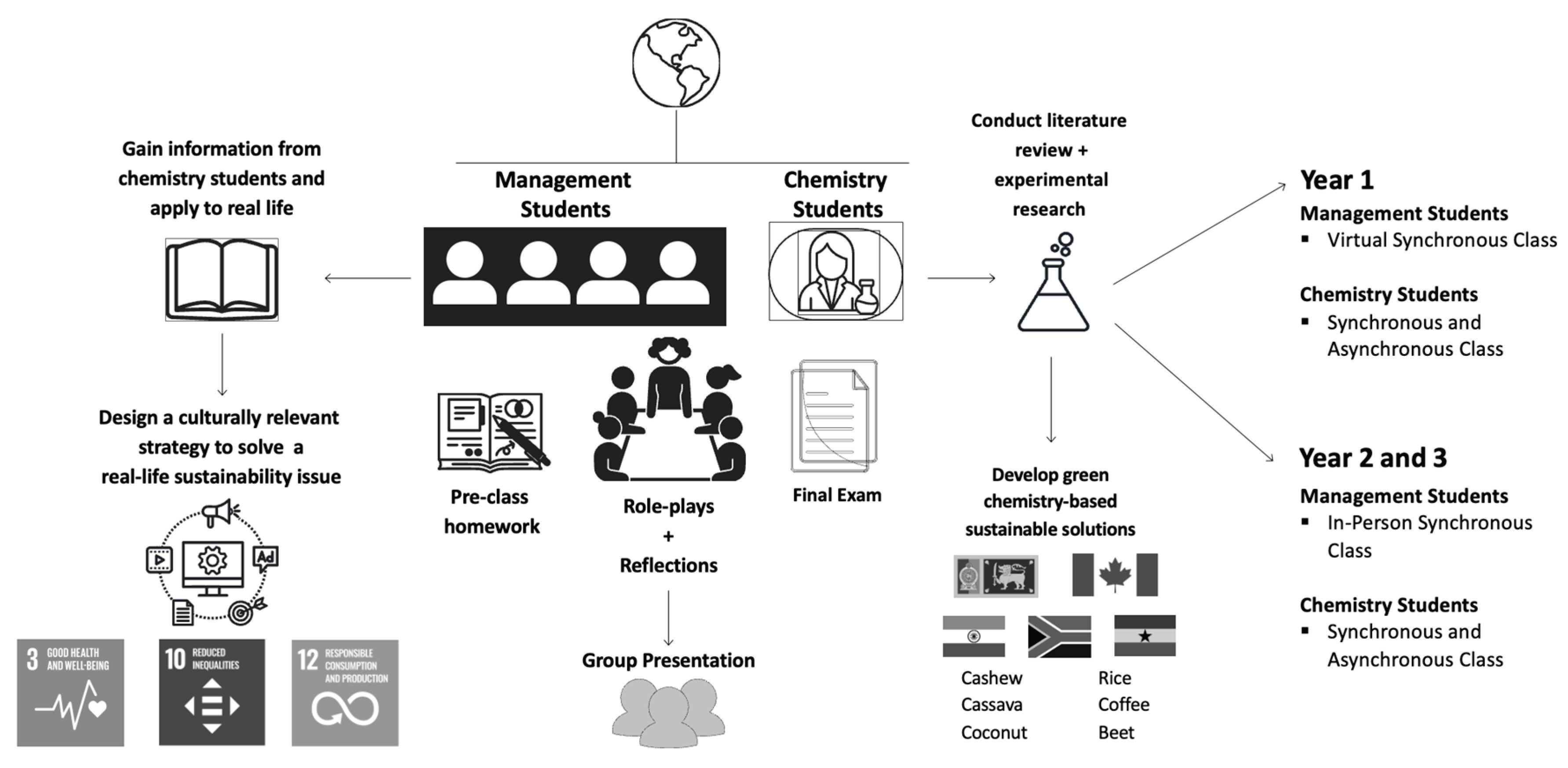
Figure 2.
An illustration of how writing about a concept and engaging in a PBL and experiential exercise with other students can enable students to transform their understanding of it [36] because they have become more sensitive to stakeholder or an audience perspective of it.
Figure 2.
An illustration of how writing about a concept and engaging in a PBL and experiential exercise with other students can enable students to transform their understanding of it [36] because they have become more sensitive to stakeholder or an audience perspective of it.
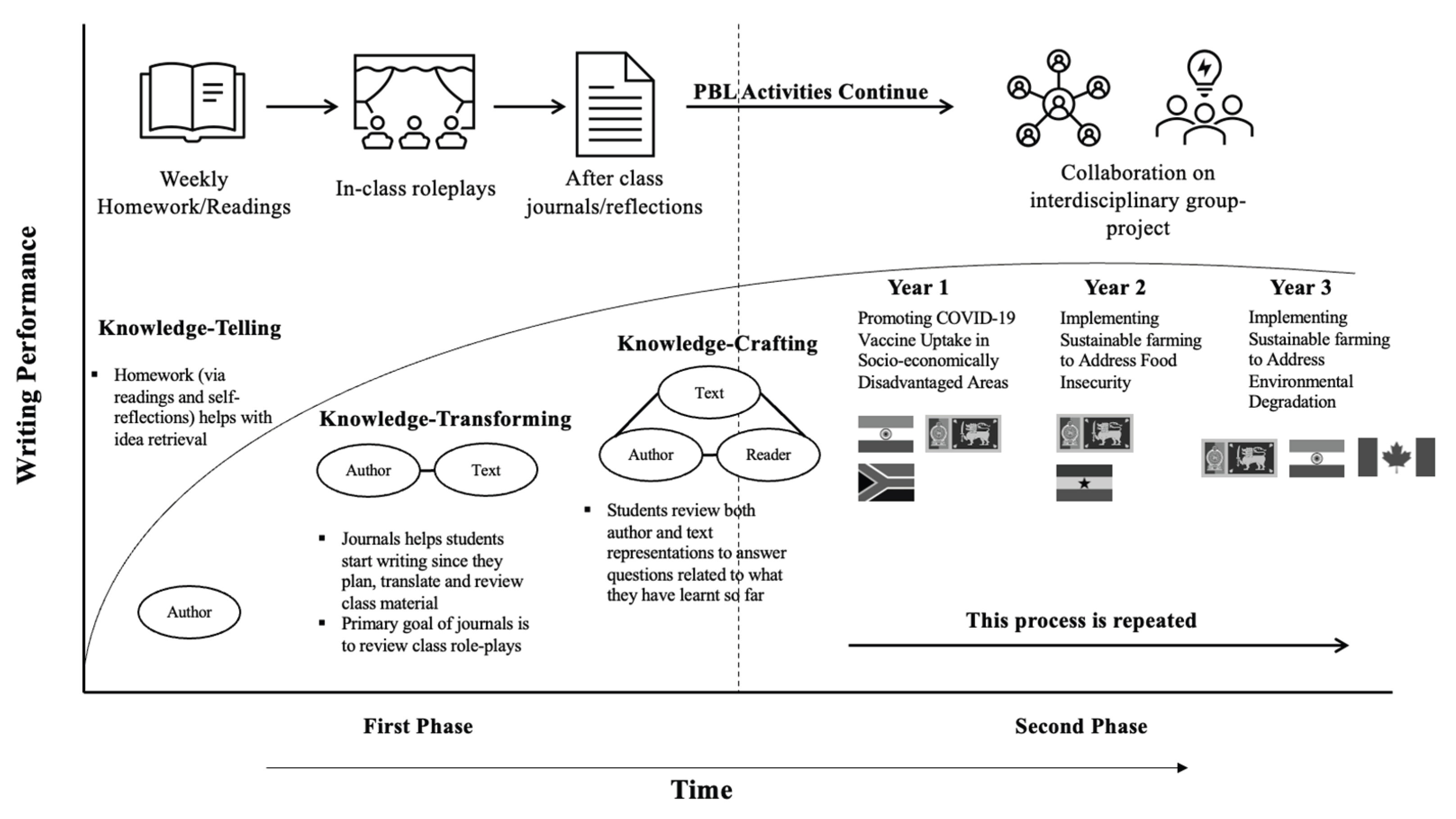
Figure 3.
Estimated model-based means for the use of language that reflects thinking and metacognition (Cognition) and language that reflects curiosity.
Figure 3.
Estimated model-based means for the use of language that reflects thinking and metacognition (Cognition) and language that reflects curiosity.
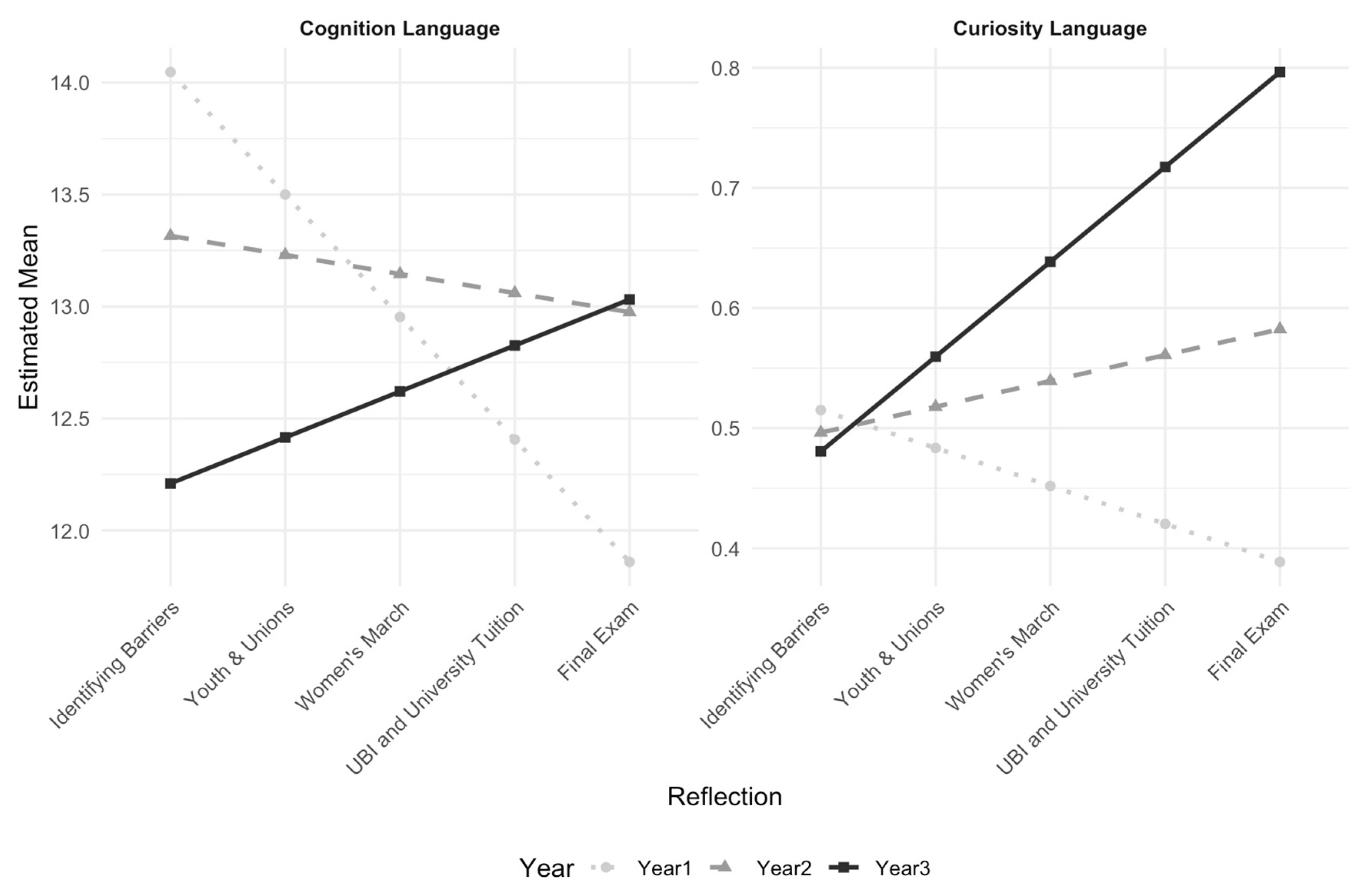

Table 1.
Examples of high and low use of cognition language in by HRM and Chemistry students as as identified by LIWC-22 and extracted with the Google Notebook Language Model.
Table 1.
Examples of high and low use of cognition language in by HRM and Chemistry students as as identified by LIWC-22 and extracted with the Google Notebook Language Model.
| Type of Student | High Cognition Language Example | Low Cognition Language Example |
|---|---|---|
| HRM1 | "Another thing it helped me with is with critical thinking and problem-solving. The debate and role play required me to think critically and come up with innovative solutions to complex problems. This was used in every roleplay and debate but as an example I used this for the arbitration case as I used what I learned from both sides of the union and the management to decide on the arbitrator. I can use this skill when addressing the social aspects of sustainability in coconut, as it allows me to identify root causes of the problems with coconuts in India and develop holistic approaches.” | "As arbitrator my assumptions would be everything presented to me by all witnesses is true and that all the facts are true by both lawyers" |
| Chemistry2 | “The goal of this international experiential learning project was to develop sustainable green farming practices in Sri Lanka and Ghana for cocoa and cashew plants using a systematic review approach. Specifically, I focused on the formulation of organic fertilizers which could potentially replace the use of synthetic fertilizers that pose serious health and safety concerns for both humans and the environment.” | "She often attempts to convince me to join her when she is tending to her plants; however, as a student more concerned with human biology as opposed to plant biology, I turned down her offers" |
1 In their open-book open notes term exam, HRM students were asked to reflect on specific concepts they learned (e.g., about advocacy) in the labor-relations focussed PBL exercises (e.g., the arbitration role play; the debate) and how they would apply this learning to the SDG-focussed interdisciplinary group project. 2 Chemistry students were asked to reflect on the interdisciplinary group project by discussing the importance of it and how it is relevant to their future goals.
Table 2.
Examples of high and low use of curiosity language in writing by HRM and Chemistry students as identified by LIWC-22 and extracted with the Google Notebook Language Model.
Table 2.
Examples of high and low use of curiosity language in writing by HRM and Chemistry students as identified by LIWC-22 and extracted with the Google Notebook Language Model.
| Type of Student | High Curiosity Language Example | Low Curiosity Language Example |
|---|---|---|
| HRM1 | "First on breaking preconceived notions the exercises helped me understand my preconceived notions as from what I learned on the role plays I can learn about farmers and farming practices without these notions. This is crucial as it helps in understanding the complexities and realities of farming communities, which is essential for developing effective strategies for sustainable development." | "Before I took this course, I never really knew anything about law and didn’t have much interest in it…After doing the exercises and being in class I learned that law shape the very foundation of over lives even further then the extents of HR" |
| Chemistry2 | “In addition, it made me appreciate that it is important to be proactive and explore the underlying cause of health issues and thereafter, work to treat the underlying cause to prevent health issues from arising in the first place. Thus, as Biology Course Design Assistant for UTSC as part of the work-study program, I am taking what I have learned about sustainability through this project and am developing methodologies that explore the development of organic pesticides." | “Since I was young, my grandmother always shared stories about our family’s farming heritage, but I never inquired about it until I began researching Sri Lankan farmlands” |
1 In their open-book open notes term exam, HRM students were asked to reflect on specific concepts they learned (e.g., about advocacy) in the labor-relations focused PBL exercises (e.g., the arbitration role play; the debate) and how they would apply this learning to the SDG-focused interdisciplinary group project. 2 Chemistry students were asked to reflect on what broad societal issues were connected to their learning and how they can make use of this knowledge.
| 1 | The workshop/field trip was virtual in Year 1. |
| 2 | Note. Year 1 was also virtual for Chemistry students |
Disclaimer/Publisher’s Note: The statements, opinions and data contained in all publications are solely those of the individual author(s) and contributor(s) and not of MDPI and/or the editor(s). MDPI and/or the editor(s) disclaim responsibility for any injury to people or property resulting from any ideas, methods, instructions or products referred to in the content. |
© 2025 by the authors. Licensee MDPI, Basel, Switzerland. This article is an open access article distributed under the terms and conditions of the Creative Commons Attribution (CC BY) license (http://creativecommons.org/licenses/by/4.0/).
Copyright: This open access article is published under a Creative Commons CC BY 4.0 license, which permit the free download, distribution, and reuse, provided that the author and preprint are cited in any reuse.


