

Submitted:
24 August 2025
Posted:
25 August 2025
You are already at the latest version
Abstract
This study explores the artistic experiences of individuals with low vision in creating clay-based artworks at the Pandawa Social Home for Blind Sensory Disabilities in Kudus Regency, Indonesia. The research used a qualitative, descriptive-exploratory design, and fifteen participants with varying levels of visual impairment were involved. Data were obtained through in-depth interviews, observations, and analysis of their clay creations. The findings reveal that clay, with its tactile qualities, serves as an effective medium for creative expression, enabling participants to explore form through touch and pressure. This process supported the development of fine motor skills, creativity, and self-confidence while fostering emotional well-being and social interaction. Participants relied on memory, imagination, and sensory perception to produce artworks that held personal and aesthetic meaning, despite differing from conventional visual standards. The study underscores the therapeutic benefits of clay art and highlights the crucial role of supportive environments—families, educators, and art communities—in nurturing creativity and enhancing the quality of life for individuals with visual impairments.
Keywords:
artistic experience
; therapeutic
; low vision
; clay media
; Indonesia
1. Introduction
Art is a form of human expression that not only functions as a medium of communication but also as a means of therapy, education, and self-empowerment. In the context of an inclusive society, access to art is a fundamental right that must be guaranteed for every individual, including those with visual disabilities [1,2]. In Indonesia, attention to the artistic experiences of people with low vision or visual impairments is still very limited, both in terms of research, policy, and practice in the field [3]. Art has great potential to improve the quality of life, self-confidence, and social participation of people with visual disabilities [4].
People with low vision often face various barriers in accessing arts activities, especially those that are visually based. These barriers do not only come from physical limitations, but also from a lack of environmental support, a lack of disability-friendly facilities, and a lack of understanding by the community and art educators about the special needs of this group [5]. In addition, the dominance of the visual paradigm in art education tends to ignore other sensory potentials such as touch, sound, and movement, which can actually be important entry points for individuals with visual impairments to explore and express themselves creatively [6].
Clay is an art medium that has tactile characteristics that are very suitable as a means of creative exploration for low vision individuals. Through the activity of forming, touching, and manipulating clay, individuals with visual impairments can develop spatial perception, imagination, and aesthetic experiences that are unique and different from visual experiences [7,8]. Research in various countries shows that tactile-based art, such as sculpture, ceramics, and clay installations, can improve fine motor skills, strengthen spatial concepts, and provide emotional satisfaction for people with visual disabilities [9,10]. However, in Indonesia, studies on the artistic experience of low vision in creating artwork from clay are still very limited, both in terms of the creative process, pedagogical approach, and documentation of the subjective experiences of the actors.
This is reinforced by the fact that art education in Indonesia is generally still oriented towards the final results of visual works, so that tactile-based creative processes receive less attention. The curriculum and art learning methods applied in schools and art training institutions have not fully accommodated the special needs of people with low vision [11,12]. As a result, individuals with visual impairments often feel marginalized and do not get equal opportunities to participate in art activities [13]. In fact, with the right approach, they can produce works of art that are no less meaningful and aesthetically valuable than individuals without disabilities.
Wexler [8] and Potočnik et al. [14] emphasize that the artistic experience of people with visual disabilities is not only important in terms of individual empowerment but also as part of social transformation towards a more inclusive and equitable society. Bux & van Schalkwyk [15] state that active involvement in the arts can improve quality of life, strengthen self-identity, and open up socio-economic opportunities for people with disabilities. On the other hand, tactile-based art, such as clay art can also be a means of education for the wider community to understand and appreciate the diversity of human experiences in creating and enjoying works of art.
Therefore, this study aims to: 1) analyze the perception of low vision beneficiaries in creating art using clay media at the Social Service Center for the Blind Sensory Disability “Pandawa” Kudus Regency; 2) analyze the process of artistic experience of low vision beneficiaries in creating art using clay media at the Social Service Center for the Blind Sensory Disability “Pandawa” Kudus Regency; and 3) analyze the results of artistic experience of low vision beneficiaries in creating art using clay media at the Social Service Center for the Blind Sensory Disability “Pandawa” Kudus Regency. With these objectives, this study is expected to provide a real contribution to more inclusive knowledge and art practices, as well as become an important reference for the development of art programs in educational institutions, art communities, and social service institutions in Indonesia.
2. Materials and Methods
The study employed a qualitative, descriptive-exploratory design focusing on understanding the experiences and creative processes of individuals with low vision in making clay art. The researcher focuses on how participants experience, interpret, and give meaning to the creative process. The study was conducted at the Pandawa Social Service Center for the Blind in Kudus Regency, Central Java. This institution specializes in providing rehabilitation services for individuals with sensory disabilities, particularly those with visual impairments, including those diagnosed as blind. The purposive sampling method was chosen because this study emphasizes individual experiences and specific creative processes that focus on clay media stems from its tactile nature, which aligns with the sensory abilities of individuals with low vision [9,16].
The procedures in this study include: 1) Formulation of research questions, 2) Case determination and unit of analysis, 3) Case study design and research protocol, 4) Data collection, 5) Data analysis, 6) Data validity and credibility, and 7) Case study reporting. The research flowchart adopted from Yin [17] and Massaro et al. [18], the case study research procedure emphasizes aesthetic perception to be used as an artistic experience so that it has a work as a self-meaning of what is made. The research process can be seen in Figure 1.
Fifteen participants formed the core of the study. Each met the World Health Organization definition of low vision: individuals with visual acuity worse than 6/18 but equal to or better than 3/60 in the better eye with optimal correction [19]. Selection criteria were participants who had adequate tactile sensitivity and motor coordination required to interact with the clay material. Ethical approval was obtained through institutional channels, and informed consent was obtained from each participant or their legal guardian. Table 1 shows the demographic respondents of this study.
Qualitative data collection included in-depth interviews, non-participant observation, and document analysis. Interviews followed the principles of Interpretative Phenomenological Analysis (IPA) developed by Smith et al. [20], which facilitated the exploration of participants’ subjective experiences and emotional interpretations of their engagement with clay. The interview protocol consisted of open-ended questions covering topics such as tactile perception, emotional resonance, artistic preferences, memory, and the role of imagination in their creative process. Field observations were conducted during six weeks of guided clay art sessions. The researcher documented each participant’s behavioral and expressive dynamics, focusing on how they manipulated clay, responded to various textures, and demonstrated aesthetic preferences through form-making. Observations also captured their interpersonal interactions, adaptive strategies for material engagement, and moments of creative breakthrough or hesitation.
In addition to interviews and observations, the study incorporated document analysis of clay artwork and instructional notes. Each participant created a portfolio of clay artwork that was assessed using a rubric adapted from the Art Therapy Credentials Board (ATCB), which included indicators such as cohesion of form, structural complexity, textural detail, and thematic integration. To ensure inter-rater reliability, two independent evaluators analyzed the artwork using the rubric, and Cohen’s Kappa coefficient was 0.82, confirming acceptable reliability.
3. Results
3.1. Perception of Low Vision Beneficiaries Towards Clay Materials
Based on information from participant R01, clay materials were familiar to his life while in SDLB-A (Special Elementary School for the Blind Category). The introduction to clay materials experience was an environmental orientation learning given by SDLB-A teachers. Participant RR2 also explained the desire to make eating utensils such as bowls, plates, and other pottery. Another experience in making art with clay media was when participant R01's parents taught him how to play with the remaining soil when making a well behind his house. Participant R01's knowledge was used to realize ideas and concepts in making art with clay media. This was explained by the researcher in the following interview results:
“I got to know clay materials during school learning, and together with friends were introduced through hand touch to identify the clay. I also played with friends at home when making a well at home, and I wanted to try making bowls, plates, and other eating utensils, which I hope can become objects that can be used for everyday needs”.
From the explanation of the R01 participant, the desire to realize making artwork with clay media is perceived as an applied art object for everyday life. The hope in the experience of creating art with clay media is so strong to realize a knowledge that has been experienced in childhood and previous experiences of having done art activities.
Furthermore, the response of R11 participants regarding clay materials was obtained from knowledge gained during SDLB-A education. Learning about concrete objects and the surrounding area was taught by their teachers to make basic shapes with clay materials. The artworks created were limited to knowledge of basic techniques for making three-dimensional works from clay, in identifying simple shapes. This was explained in the interview results with R11 participants as follows:
“When I was taking lessons at SDLB-A, the teacher asked me to hold clay by feeling and squeezing it. The teacher asked me to form various shapes from my fists to produce shapes like small balls, plates, and asked me to combine the shapes. What I remember at that time was making fruit shapes and people shapes. Back then, my friends at SDLB-A were very happy and enthusiastic about the lesson. It is possible that if there are more activities like that, I will feel challenged to create works of art using clay that suit my wishes, namely wanting to make animal statues”.
The experience of creating art with clay media has been experienced by R11 participants by creating artwork to introduce the character of clay materials and form simple shapes. It is hoped that with the activity of creating art with clay media, they will later have ideas for creating better forms.
Besides, R02's participants' perception of clay material is so complex because the case of his visual impairment began in adolescence. has been formed like a sighted person who has been constructed from real-life experiences. The contact of the five senses before the occurrence of visual impairment has been felt from experiences of creating art from an early age to adulthood. R02's participants' desire is not as strong as compared of other participants in responding to the initial perception of the activity of creating art with clay media. This is explained through the following interview statement:
“I used to do various art activities when I had normal vision. When I was a child, until I was an adult, I could understand how to create art, especially using clay, from kindergarten to high school. I have various experiences in creating art with clay media, such as making statues, pottery, and playing with clay. I often got that knowledge from junior high and high school in the Arts and Crafts (SBK) subject. In the past, during SBK learning, my teacher assigned me to make a face sculpture artwork and also told me to make pottery with the motif.
The clay art activities experienced by R02 participants have been carried out in a structured manner in formal education. The case of experience experienced by R02 participants is the same as most people are aware that clay art learning is carried out in the art education system in secondary schools.
In general, the results of the study showed that most low vision beneficiaries have known clay since childhood, either through play activities in the home environment or learning in special schools (SLB). They stated that clay is easily recognized through the sense of touch because of its plastic, sticky, and easy-to-shape nature, especially when given water. The touch and process of squeezing clay provide a pleasant sensation, even reminding them of childhood experiences and their home environment. In terms of motivation, beneficiaries showed enthusiasm and curiosity to develop skills in working with clay. For them, art activities with this medium are not only a means of self-expression and filling free time, but also a form of self-actualization and an effort to build independence.
Several informants stated that previous experience in making crafts from clay, such as statues, vases, or toys, is an important provision for fostering new creativity. Perception of clay is also influenced by their ability to identify and explore the material. They do the introduction through touching, pressing, and forming simple shapes such as circles or plates. This process helps them understand the characteristics of clay and design artwork ideas that suit their tactile potential. This shows that the perception of low vision beneficiaries towards clay materials is very positive. This material is considered easily accessible, safe, and provides a meaningful aesthetic and emotional experience. Through the process of working with clay, they not only develop motor skills and creativity but also build self-confidence, independence, and strengthen social interactions in the orphanage environment.
3.2. The Process of Low Vision Beneficiary Artistic Experience in Creating Art with Clay Media
The experience of creating art carried out by low vision beneficiaries includes carrying out the process of creating art through clay material identification activities, with the ability to recognize the touch of the hand in stages. The initial form made during the clay material introduction period is an exploration of the art technique that has been experienced through tactile sensitivity. Initially, from a lump of clay material held from the left palm then the thumb presses (massages) using one of the right hands. The working principle of this step is to create an area on the clay material to create the same thickness of space. The results of the clay formation process can be used as a type of work, such as a half-ball shape or a concave object.
There is also a process of creating art with clay media carried out by low vision beneficiaries who focus more on mastering the technique of working directly with to form through previously possessed knowledge. The technique of forming artwork with clay media can be seen in the application of various forming techniques that have been experienced in formal educational experiences. The beginning is from a lump of clay held with both palms, and then directly forming the artwork. The steps of creating art with clay media are passed through a comprehensive formation of what is to be made. Some low vision beneficiaries also perform various identifications of objects using the flat or plate technique in forming clay materials that have been done with both hands of low vision beneficiaries. The technique of creating art is done by taking a large lump of clay, then forming a ball, pressing (massaging) it so that a flat shape is formed. The process of creating art with clay is continued with the steps taken by low vision beneficiaries by making the initial formation. The results of the work products produced from the flat technique produce art experiences such as small bowls, fruit shapes, and ladles (spoons).
Low vision beneficiaries also perform the twisting technique by taking a small lump of clay by placing it in the palm of the hand and on a flat surface, followed by forward and backward movements to form a small and long oval. The form of the clay material that has been made is a small and long twist (rope). After forming it with the twisting technique, low vision beneficiaries apply the substantive technique by forming a work of art with clay media. The formation of the clay material is done by bending the results of the twisting technique, following what will be formed in the work of art. The results that have been produced produce works of art in the form of decorative products such as pencil cases or flower vases. Figure 2 shows the process of a low vision beneficiary's artistic experience in creating art with clay media.
Their artistic experience begins with the process of introducing and exploring clay materials using touch, pressure, and manipulation of simple shapes such as circles or plates. This activity fosters self-confidence, motivation, and curiosity to create works, as well as being a means of self-actualization, filling free time, and fulfilling emotional needs. In the process of creating works, they do not only rely on past visual memories (for those who have seen them), but also develop imagination, intuition, and sensory experiences that are increasingly honed through habituation. This artistic process also involves feelings of joy, nostalgia, and challenges when facing limitations in imagining the final result or applying advanced techniques.
However, with the support of mentors and the orphanage environment, beneficiaries can adapt, express ideas, and produce works of art that are personally meaningful. This artistic experience not only forms motor skills and creativity but also strengthens independence, self-appreciation, and social interaction among fellow beneficiaries. The process of artistic experience in creating works of art with clay for low vision beneficiaries is a holistic, integrative, and transformative journey, connecting physical, psychological, social, and aesthetic aspects. Through this process, they gain new experiences, build self-identity, and find meaning and satisfaction in art, despite their visual impairments.
3.3. The Results of Creating Art with Clay Media as an Artistic Experience for Low Vision Beneficiaries
The number of artworks with clay media produced by low vision beneficiaries differs in each activity meeting that has been carried out. The meaning of the artworks with clay media that have been carried out by low vision beneficiaries can be viewed from various aspects of aesthetic value. The results of the meaning of artworks with clay media in this research study have a meaningful form (signification form) for the aesthetic experience of low vision beneficiaries. More specifically, Zhang & Wei [10] emphasizes that works with clay materials have uniqueness that lies in the technical aspects, functionality, and aesthetic expression made by their creators.
Various works of art created are aesthetic objects related to natural objects and cultural objects [21]. The themes that encompass the creation of works of art with clay media as a representation of the experience and life of a creator [22]. From the findings of the document study data in the form of works of art with clay media, the researcher took two examples of work data as a representation of the product analyzed based on aesthetic form. The researcher conducted an analysis of the results of works of art with clay media by describing the research findings in the form of an aesthetic analysis recap matrix, which can be seen in Table 2.
The process of creating artwork with clay involves exploring non-visual senses, especially touch, so that participants can recognize, shape, and process materials through touch, pressure, and manipulation of form. Through stages such as recognizing the texture and plasticity of clay, wetting and softening the material, to forming works using pinch, slab, and coil techniques, the beneficiaries can produce works that have aesthetic and personal value. This activity gives them a pleasant sensation, evokes childhood memories, and fosters self-confidence and inner satisfaction. The resulting work is not only assessed in terms of form or visual perfection, but also from the meaning of the process and the experiences that accompany it. Each work is proof of their ability to adapt, creativity, and success in expressing ideas and feelings through media that can be accessed tactilely [23]. In addition, the creation of artwork with clay encourages the growth of fine motor skills, perseverance, and discipline, and strengthens social interaction among fellow beneficiaries.
4. Discussion
Based on the results show that the participants consistently demonstrated the ability to interact with the clay medium in highly expressive and cognitively structured ways. Their reliance on haptic perception—particularly the nuanced use of touch to understand form, texture, and spatial configuration—supports the argument that artistic engagement extends beyond the visual domain. Previous studies in sensory aesthetics echo this perspective, underscoring the role of embodied perception in constructing artistic meaning [24,25]. In this context, the hand not only acts as a tool for shaping matter but also as an organ of perception capable of interpreting and manipulating artistic language.
The role of memory and imagination emerged as key mechanisms through which participants internalized and externalized their experiences. While those with postnatal vision loss relied on visual memory to guide their clay modeling, individuals with congenital low vision or prenatal blindness constructed representations based on auditory cues, tactile memory, and imaginative synthesis. Giles [26], emphasized the different neurocognitive strategies used by individuals depending on the onset and severity of their visual impairment. In artistic terms, these sensory compensations often resulted in unique aesthetic expressions. Rather than conforming to traditional standards of visual balance or realism, participants produced forms characterized by asymmetry, abstraction, and greater textural detail. Disability aesthetics theory interprets these features not as technical deficiencies, but as valid aesthetic alternatives that expand the parameters of art appreciation [27]. The tactile complexity and affective depth found in the artworks underscore the importance of rethinking artistic value through a pluralistic lens that accommodates non-visual modalities.
The relationship between artistic expression and psychosocial development also requires further reflection. Participants described their engagement with clay not only as a means of channeling creativity, but also as a therapeutic process that allowed them to process emotions, build self-esteem, and express their inner experiences. These findings align with art therapy literature, which positions artistic creation as a medium for psychological integration and self-actualization [16,28]. Furthermore, participants’ statements indicate a shift in self-concept—from internalizing social stigma to recognizing themselves as capable and expressive agents. Shapiro [29], argued that the process of expressing one’s reality through creative means is an act of liberation. The social implications of this experience are equally important. As participants gained confidence in their artistic abilities, they began to assert themselves more actively in group settings. Their engagement with the artistic process fostered a sense of belonging and cultural participation that was previously inaccessible due to prevailing social stigma. Indonesian cultural norms often treat people with disabilities as objects of pity or dependency [30]. By enabling participants to produce artwork that is seen and appreciated, the program changes that perception and reframes them as creators and contributors within their communities.
This study also shows that artistic experiences through the creation of clay artwork have positive psychological and social impacts. Beneficiaries feel more appreciated, can actively participate in art activities, and gain space for self-actualization amidst the visual limitations they experience. Thus, the results of creating art with clay media are not only in the form of physical products, but also become a means of empowerment, fulfillment of aesthetic needs, and improvement of the quality of life for low vision beneficiaries in the social shelter environment. The findings of this study confirm that individuals with low vision have the capacity not only to engage with visual art but also to produce meaningful aesthetic experiences through tactile media such as clay. These results challenge long-standing assumptions in mainstream visual culture and art pedagogy, which often associate artistic production with the dominance of vision. By highlighting the artistic experiences of individuals with visual impairments, this study contributes to a growing body of literature that frames disability not as a deficit but as a source of sensory diversity and creative possibilities [31].
5. Conclusions
In conclusion, the creative process serves not only as a form of self-expression for individuals with low vision but also as a therapeutic medium that enhances self-confidence, independence, and sensory development. Through inclusive approaches—such as adapting tools and using varied textures—participants were able to create original, meaningful artworks. This study emphasizes the vital role of environmental support from families, art communities, and educational institutions in nurturing artistic potential. Clay-based art proves to be a replicable model for inclusive art education across Indonesian institutions. The findings offer valuable insights for art educators, encouraging curriculum designs that accommodate students with visual impairments. Educational and rehabilitation institutions are urged to adopt experience-based learning that engages non-visual senses like touch and sound. Moreover, the research advocates for inclusive art communities that provide equitable creative opportunities. Future studies are recommended to explore other accessible art forms, such as sound or digital media, and expand the participant base to broader regions in Indonesia.
Funding
This research was funded by Universitas Muria Kudus, Indonesia.
Institutional Review Board Statement
The study was conducted in accordance with the Declaration of Helsinki, and approved by the Universitas Muria Kudus Social Research Ethics Committee (154/MPD.PPS.UMK/B.09.15/VII/2025) for studies involving humans.
Informed Consent Statement
Informed consent was obtained from all participants involved in the study.
Data Availability Statement
Anonymized data are available from the authors on request.
Acknowledgments
We would like to thank to Universitas Muria Kudus for support on this project.
Conflicts of Interest
The authors declare no conflicts of interest
References
- Papa, M.; Papa, A. The transformative capacity of communication for social change and peacebuilding. In The Routledge Handbook of Conflict and Peace Communication, 1st Ed; Routledge: New York, 2024; pp. 221–230. [Google Scholar] [CrossRef]
- Fernandez, M. A. Art as a Mirror of Cultural Values: A Philosophical Exploration of Aesthetic Expressions. Cultura: Int. J. of Phil. of Culture and Axiology 2025, 22, 245–261. [Google Scholar]
- Fajrie, N.; Purbasari, I.; Bamiro, N. B.; Evans, D. G. Does art education matter in inclusiveness for learners with disabilities? A systematic review. Int. J. of Learning, Teaching and Edu. Research 2024, 23, 96–124. [Google Scholar] [CrossRef]
- Edwards, B. M.; Smart, E.; King, G.; Curran, C. J.; Kingsnorth, S. Performance and visual arts-based programs for children with disabilities: A scoping review focusing on psychosocial outcomes. Disability and rehabilitation 2020, 42, 574–585. [Google Scholar] [CrossRef] [PubMed]
- d'Evie, F.; Kleege, G. The gravity, the levity: Let us speak of tactile encounters. Disability Studies Quarterly 2018, 38, 3–12. [Google Scholar] [CrossRef]
- London, P. Towards a holistic paradigm of art education art education: Mind, body, spirit. Visual arts research 2006, pp. 8–15.
- Phutane, M.; Wright, J.; Castro, B. V.; Shi, L.; Stern, S. R.; Lawson, H. M.; Azenkot, S. Tactile materials in practice: Understanding the experiences of teachers of the visually impaired. ACM Trans. on Access. Comp. (TACCESS) 2022, 15, 1–34. [Google Scholar] [CrossRef]
- Wexler, A. What My Students Taught Me about Disability. Thresholds in Edu. 2023, 46, 209–222. [Google Scholar]
- Nan, J. K.; Hinz, L. D.; Lusebrink, V. B. Clay art therapy on emotion regulation: research, theoretical underpinnings, and treatment mechanisms. In The neuroscience of depression 2021, pp. 431–442. Academic Press. [CrossRef]
- Zhang, Z.; Wei, P. The Beauty of Clay: Exploring contemporary Ceramic Art as an Aesthetic Medium in Education. Comunicar: Revista Científica de Comunicación y Edu. 2024, (78), 67-81.
- Yusuf, M.; Yeager, J. L. The implementation of inclusive education for students with special needs in Indonesia. Excellence in Higher Edu. 2011, 2, 1–10. [Google Scholar] [CrossRef]
- Rante, N, S. V.; Wijaya, H.; Tulak, H. Far from expectation: A systematic literature review of inclusive education in Indonesia. Uni. J. of Edu. Research 2020, 8, 6340–6350. [Google Scholar] [CrossRef]
- Höger, B.; Meier, S. Exploring Marginalized Perspectives: Participatory Research in Physical Education with Students with Blindness and Visual Impairment. J. of Teaching in Physical Edu. 2025, 1, 1–12. [Google Scholar] [CrossRef]
- Potočnik, R.; Zavšek, K.; Vidrih, A. Visual Art Activities as a Means of Realizing Aspects of Empowerment for Blind and Visually Impaired Young People. European J. of Edu. Research 2025, 14, 41. [Google Scholar] [CrossRef]
- Bux, D. B.; van Schalkwyk, I. Creative arts interventions to enhance adolescent well-being in low-income communities: An integrative literature review. J. of Child & Adolescent Mental Health 2022, 34(1-3), 1-29. [CrossRef]
- Campbell, E. E.; Bergelson, E. Making sense of sensory language: Acquisition of sensory knowledge by individuals with congenital sensory impairments. Neuropsychologia 2022, 174, 108320. [Google Scholar] [CrossRef]
- Yin, R. K. Case study research and applications: Design and methods. Sage publications: London, 2017.
- Massaro, M.; Dumay, J.; Bagnoli, C. Transparency and the rhetorical use of citations to Robert Yin in case study research. Med. Accoun. Research 2019, 27, 44–71. [Google Scholar] [CrossRef]
- Keane, B. P.; Silverstein, S. M.; Papathomas, T. V.; Krekelberg, B. Correcting visual acuity beyond 20/20 improves contour element detection and integration: A cautionary tale for studies of special populations. Plos one 2024, 19, e0310678. [Google Scholar] [CrossRef]
- Smith, J. A.; Larkin, M.; Flowers, P. Interpretative phenomenological analysis: Theory, method and research. Sage Publication: London 2021, p. 100.
- Brady, E.; Brook, I.; Prior, J. Between nature and culture: The aesthetics of modified environments. Rowman & Littlefield: Maryland, USA, 2018.
- Bar-On, T. A meeting with clay: Individual narratives, self-reflection, and action. Psy. of Aesthetics, Creativity, and the Arts 2017, 1, 225–236. [Google Scholar] [CrossRef]
- Mohamad, N.; Vermol, V. V.; Anwar, R.; Kaspin, S. Visual Art Accessibility and Art Experience for the Blind and Visually Impaired. The Int. J. of Design in Society 2024, 19, 61–77. [Google Scholar] [CrossRef]
- Drobnick, J.; Fisher, J. Introduction: sensory aesthetics. The Senses and Society 2012, 7, 133–134. [Google Scholar] [CrossRef]
- Hagtvedt, H. A brand (new) experience: Art, aesthetics, and sensory effects. J. of the Academy of Marketing Science 2022, 50, 425–428. [Google Scholar] [CrossRef]
- Giles, G. M. Neurocognitive rehabilitation: skills or strategies? The American J. of Occup. Therapy 2018, 72, p1–p7206150010. [Google Scholar] [CrossRef]
- Edvardsen, N. K.; Gjærum, R. The Aesthetic Model of Disability. In: Janse Van Vuuren P, Rasmussen BK, Khala. Theatre and Democracy: Building Democracy in Post-war and Post-democratic Contexts. Cappelen Damm Akademisk 2021, p. 193-215.
- Chilton, G. Art therapy and flow: A review of the literature and applications. Art Therapy 2013, 30, 64–70. [Google Scholar] [CrossRef]
- Shapiro, E. R. Liberation psychology, creativity, and arts-based activism and artivism: Culturally meaningful methods connecting personal development and social change. In L. Comas-Díaz & E. Torres Rivera (Eds.), Liberation psychology: Theory, method, practice, and social justice, American Psychological Association: Washington DC 2020, pp. 247–264. [CrossRef]
- Fajrie, N.; Purbasari, I.; Bamiro, N. The perceptual ability of visual impaired children in the experience of making clay media artworks. Arts Educa 2024, 40, 134–145. [Google Scholar]
- Cho, J. D. A study of multi-sensory experience and color recognition in visual arts appreciation of people with visual impairment. Electronics 2021, 10, 470. [Google Scholar] [CrossRef]
Figure 1.
Research procedures.
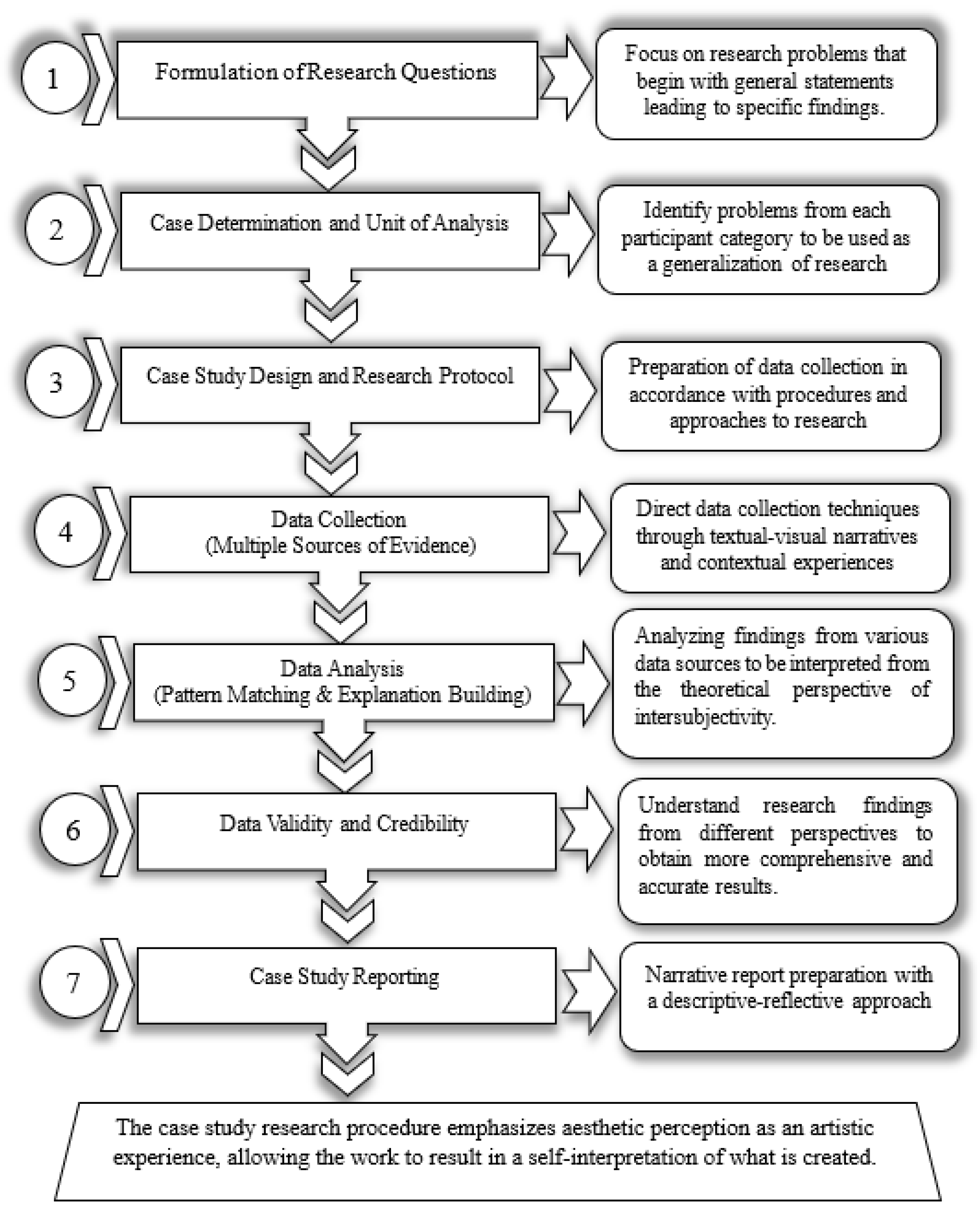
Figure 2.
(a) Experience in creating art using clay media using massage techniques; (b) Experience in identifying clay materials by exploring direct shaping techniques; (c) Experience in identifying and using clay plate techniques; (d) Experience in identifying and using twisting techniques with clay media.
Figure 2.
(a) Experience in creating art using clay media using massage techniques; (b) Experience in identifying clay materials by exploring direct shaping techniques; (c) Experience in identifying and using clay plate techniques; (d) Experience in identifying and using twisting techniques with clay media.
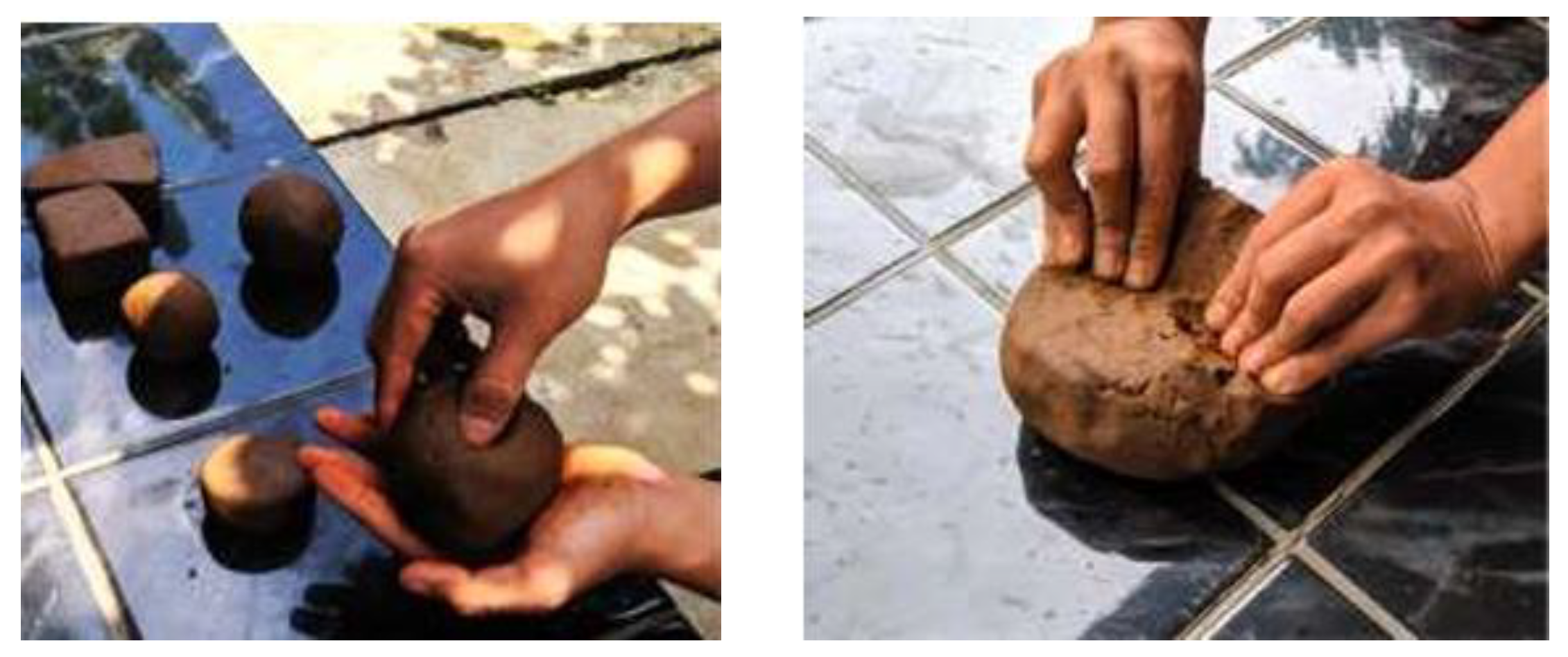
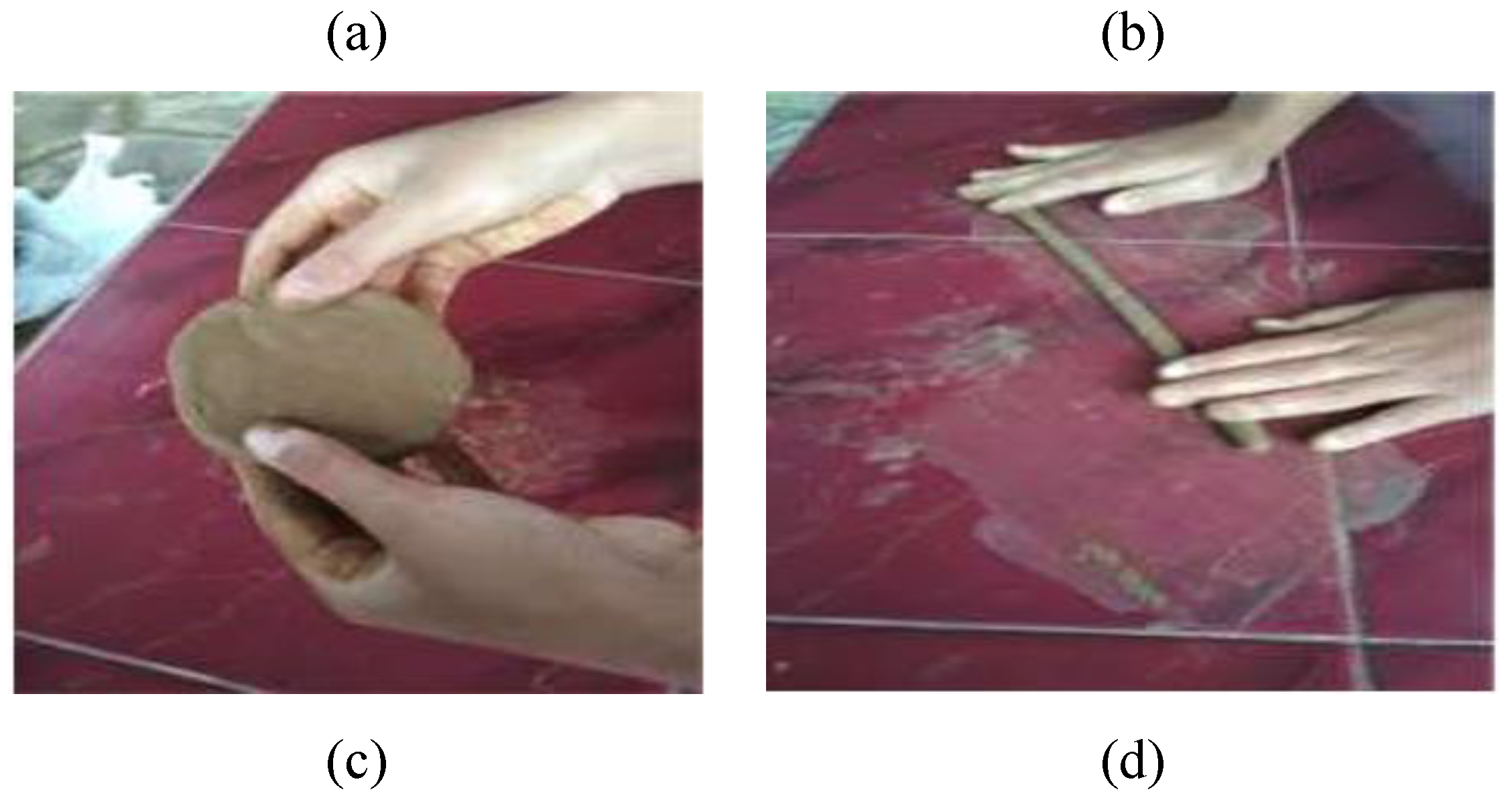

Table 1.
Demographics information.
| Respondent ID | Age | Gender | Level of vision | Onset of impairment | Prior artistic Experience |
|---|---|---|---|---|---|
| R01 | 22 | Female | Can perceive light and shadow only | Congenital | None |
| R02 | 35 | Male | Can distinguish large shapes and colors | Acquired (at age 18) | Some (school crafts) |
| R03 | 31 | Female | Total blindness | Congenital | Some (music) |
| R04 | 19 | Male | Can perceive light and motion | Congenital | None |
| R05 | 32 | Female | Total blindness | Acquired (at age 25) | None |
| R06 | 28 | Female | Can distinguish large shapes | Congenital | Extensive (hobbyist weaver) |
| R07 | 31 | Male | Can perceive strong colors | Acquired (at age 12) | None |
| R08 | 38 | Female | Total blindness | Congenital | Some (school crafts) |
| R09 | 25 | Male | Can perceive light and shadow only | Congenital | None |
| R10 | 39 | Female | Total blindness | Acquired (at age 30) | None |
| R11 | 21 | Male | Can distinguish large shapes and colors | Congenital | Some (drawing) |
| R12 | 25 | Male | Can perceive motion and large shapes | Acquired (at age 5) | Extensive (wood carving) |
| R13 | 33 | Male | Total blindness | Congenital | None |
| R14 | 29 | Female | Can perceive light and shadow only | Acquired (at age 22) | None |
| R15 | 33 | Female | Total blindness | Congenital | Some (music) |
Table 2.
Results of artworks using clay media.
| No. | Documentation of artworks | Identity of artwork | Analysis of the work |
|---|---|---|---|
| 1 |  |
Title of Work “Frog”
|
The shape of the object produced using a pinch massage technique by forming an animal in a symmetrical position. The addition of objects is used to produce components of the shape on each side of the object |
| 2 | 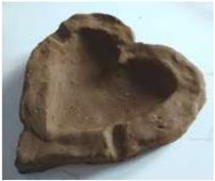 |
Title of Work: “Ashtray of Love”
|
Applying subtractive techniques to form depressions in clay materials in an effort to produce a central indentation in the artwork |
| 3 | 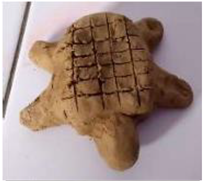 |
Title of Work: “Kura-Kura”
|
The creation of the work was carried out using the addition of clay materials with a plate technique and elements of cross or zig-zag lines as texture accents on the artwork |
| 4 | 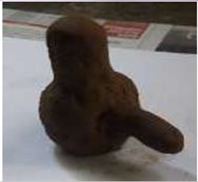 |
Title of Work “Small Jug”
|
Forming clay material using a wooden rod construction inside using a twisting technique |
Disclaimer/Publisher’s Note: The statements, opinions and data contained in all publications are solely those of the individual author(s) and contributor(s) and not of MDPI and/or the editor(s). MDPI and/or the editor(s) disclaim responsibility for any injury to people or property resulting from any ideas, methods, instructions or products referred to in the content. |
© 2025 by the authors. Licensee MDPI, Basel, Switzerland. This article is an open access article distributed under the terms and conditions of the Creative Commons Attribution (CC BY) license (http://creativecommons.org/licenses/by/4.0/).
Copyright: This open access article is published under a Creative Commons CC BY 4.0 license, which permit the free download, distribution, and reuse, provided that the author and preprint are cited in any reuse.


