

Submitted:
20 August 2025
Posted:
21 August 2025
You are already at the latest version
Abstract
Backyard poultry systems (BPS) are the most widespread form of animal production worldwide, contributing to household economies and improving food availability. However, limited biosecurity measures and close human–animal interactions raise concerns regarding zoonotic disease transmission. In recent years, consumer-driven motivations have given rise to non-traditional BPS with differential attributes (BPS-DA), yet there is limited knowledge about their food production practices. This study aimed to characterize and compare practices across 25 BPS and 25 BPS-DA in the Metropolitan Region using surveys, interviews, and direct observations of egg collections and poultry slaughters. Eggs were the main animal product in both systems, with women primarily responsible for care. Poultry slaughter was reported exclusively in BPS (60%), generally performed under inadequate hygienic conditions and without veterinary oversight. These practices, (poultry slaughter and by-food production), may considerably increase the risk of human exposure to zoonotic pathogens, such as avian influenza viruses. In contrast, BPS-DA prioritized birds as companion animals (60%), free-range rearing (68%), and hobby-based production (80%). While both systems showed limited biosecurity, significant differences were found in the use of dedicated footwear (p = 0.01), egg collection sites (p = 0.04), and refrigeration (p = 0.004). Veterinary access was limited in both. These findings highlight critical gaps in health management and underscore the need for context-specific educational and regulatory strategies for safer backyard poultry production.
Keywords:
backyard poultry production
; one health
; sustainability
; alternative poultry farming
1. Introduction
Small-scale animal production plays a critical role in the livelihoods of millions globally. Approximately one billion people are socioeconomically dependent on livestock, and nearly 13% of the global population is closely linked to family farming systems [1,2]. In this context, backyard poultry production systems (BPS) — characterized by the rearing of domestic birds within household premises — represent the most widespread form of animal production worldwide [3,4,5]. These systems are valued for producing high-quality animal-source foods, such as eggs and meat, with minimal investment, thereby contributing to both household economies and food security [3,6]. Over 80% of the world’s rural population relies on backyard poultry, which aids in poverty reduction and strengthens food access in low- and middle-income countries [3,5,6,7].
Despite these benefits, the close human-animal-environment interface in BPS creates favourable conditions for the maintenance and spread of infectious and zoonotic agents [8,9,10]. Practices such as slaughtering and handling of poultry products are documented risk factors for pathogens like Salmonella spp. and Escherichia coli, both of which pose significant public health risks [9,10,11,12,13,14]. Globally, foodborne illnesses affect approximately 600 million people and cause 420,000 deaths annually [15], a burden exacerbated by the rise of antimicrobial resistance resulting from the misuse of antimicrobial drugs in both human and veterinary contexts [16,17,18,19].
Concurrently, consumer preferences have shifted toward animal-source foods with added value attributes — such as sustainability and ethical sourcing — leading to the emergence of alternative or non-conventional backyard systems [20,21,22,23]. These systems, which we define as backyard production systems with differentiated attributes (BPS-DA), often prioritize free-range practices, animal welfare, and hobby-based motivations. Global urbanization trends have further accelerated the proliferation of such systems in residential settings, including in countries such as the U.S., Canada, the U.K., and France [24,25,26]. To date, no comprehensive characterization of non-traditional systems (BPS-DA) has been conducted in Chile.
In Latin America, emerging evidence highlights the sanitary and hygienic shortcomings of backyard poultry systems, particularly regarding food production practices [27,28,29]. In Chile, backyard poultry systems are widely distributed, especially in peri-urban and rural settings, but often operate informally and with limited veterinary oversight [30,31,32]. National studies have revealed a 4.6% prevalence of Salmonella spp. at the flock level [33], and a 7.7% prevalence of Shiga toxin-producing E. coli (STEC) in backyard poultry [34]. Antimicrobial residues have also been detected in eggs from these systems, indicating the use of veterinary drugs without professional guidance [32,35]. More recently, [36] reported a 43.5% seroprevalence and a 10.1% molecular prevalence of zoonotic influenza viruses in backyard birds from Central Chile, highlighting their role as a reservoir of pathogens of public health concern.
While several studies acknowledge the public health relevance of BPS, poultry slaughter practices remain a critical but largely understudied stage of food production in backyard systems — despite being a high-risk point for zoonotic pathogen exposure [9,10].This is particularly concerning given that animal slaughter outside of authorized facilities is legally prohibited. Yet, there is evidence suggesting that sick birds from backyard systems are routinely slaughtered, consumed, exchanged, or sold without awareness of the associated health risks [31,32]. Additionally, eggs from these systems are not currently included in Chile’s official national surveillance programs for antimicrobial residues [37], underscoring critical vulnerabilities in informal, unregulated food channels.
Given these regulatory gaps, biosecurity shortcomings, and emerging public health risks, there is a critical need to understand how different types of backyard poultry systems operate in practice. This study aims to characterize and compare food production practices between traditional backyard poultry systems (BPS) and those with differentiated attributes (BPS-DA) in Central Chile. By integrating structured surveys with direct observational methods, our findings provide an empirical foundation for assessing food safety risks in informal animal production systems and guiding the development of targeted public health and veterinary policies.
2. Materials and Methods
2.1. Study area and Study Design
A cross-sectional study was conducted among backyard poultry keepers in the Metropolitan Region of Chile. The target population included backyard systems with a maximum of 50 birds per household. Due to the informal and often sensitive nature of poultry slaughter practices [20,38], and limited information on the geographic distribution of these systems, a non-probabilistic convenience sampling strategy was employed [39,40].
Collaboration was established between the Veterinary Epidemiology Unit (EPIFAVET) of the University of Chile and the Local Development Program (PRODESAL), a government initiative that supports small-scale farmers [41]. Two operational types of backyard systems were defined:
- (i)
- Traditional Backyard Systems (BPS): Primarily oriented toward food access, with limited or absent biosecurity measures.
- (ii)
- Differentiated Attribute Systems (BPS-DA): oriented toward personal preferences, sustainability, or hobby farming, often incorporating specific production or motivational attributes.
A total of 50 backyard systems (25 BPS and 25 BPS-DA) were enrolled across four municipalities in Santiago (Figure 1): La Pintana (n=16), La Reina (n=9), Lampa (n=10), and Puente Alto (n=15).
2.2. Data Collection
Data were collected between December 2022 and May 2024 through semi-structured, in-person interviews with the person responsible for poultry management. Interviews lasted approximately 20 minutes and included both open- and closed-ended questions to gather information on socioeconomic characteristics, food production practices, biosecurity behaviors, and attributes related to the motivations for keeping poultry and the characteristics of their production systems (hereafter referred to as “motivational” and “productive” attributes) and type and use of animal-source food matrices (Table 1).
To supplement interview data, direct observation was conducted on ten egg collection events and four poultry slaughters. Participants were explicitly asked to carry out the activities as they would typically do, to minimize the potential for observation bias. Of these events, six egg collections and one slaughter were video-recorded with prior consent. Differentiated attributes mentioned by respondents were classified into:
- (i)
- Motivational attributes (e.g., hobby farming, companion animals)
- (ii)
- Productive attributes (e.g., free-range systems, local food consumption)
2.3. Variables and Assessment
2.4. Data Analysis
Quantitative and qualitative data were entered into Microsoft Excel and analyzed using RStudio. Descriptive statistics were calculated as absolute frequencies and proportions. Comparisons between the BPS and BPS-DA groups were made using the Chi-square test for categorical variables and the Student’s t-test for continuous variables. A significance level of p < 0.05 was applied with 95% confidence intervals.
3. Results
3.1. General and Socioeconomic Characteristics of Backyard Poultry Systems
A total of 50 backyard poultry systems were surveyed: 25 traditional systems (BPS) and 25 with differentiated attributes (BPS-DA). Of the systems, 64% (n = 32) were in peri-urban areas, and 36% (n = 18) in urban settings. In BPS, 80% were peri-urban and 20% urban, whereas among BPS-DA, 48% were urban and 52% peri-urban. Women predominantly manage backyard poultry systems in the Metropolitan Region of Chile. In both conventional (BPS) and differentiated attribute systems (BPS-DA), women were the primary caretakers, accounting for 76% and 84% of respondents, respectively. The average age of female caretakers was slightly higher in BPS (44.6 years; range: 18–60) compared to BPS-DA (40.4 years; range: 18–61). Most caretakers reported extensive experience in poultry rearing, with over 90% of those in BPS and 72% in BPS-DA having more than five years of experience.
Significant socioeconomic differences emerged between the two system types. Caretakers in BPS-DA reported substantially higher educational attainment: 100% had completed formal schooling, and over half (52%) held post-secondary qualifications. In contrast, only 56% of BPS caretakers had completed their basic education, with none reporting higher education. Household income followed a similar pattern. While 84% of BPS-DA respondents reported monthly earnings above the national minimum wage (CLP 500,000 / 500 USD), the majority (76%) of BPS respondents reported earning at or below this threshold—a statistically significant contrast (p < 0.001).
Regarding production, eggs were the primary food product across both systems, reported by 100% of BPS and 80% of BPS-DA (p = 0.059). However, meat production was exclusively reported in traditional systems (72%), with no reports from BPS-DA, suggesting a fundamental divergence in production goals. Trade practices also varied: BPS respondents more frequently reported informal egg sales (64% vs. 32%), while gifting was more common in BPS-DA (68% vs. 36%), with a statistically significant difference (p = 0.047). In both system types, the person responsible for animal care also managed the sale or distribution of products (Table 3).
3.2. Productive Characteristics of Backyard Poultry Systems
Significant differences in productive characteristics were observed between traditional backyard poultry systems (BPS) and those with differentiated attributes (BPS-DA) (Table 4). BPS-DA reported a significantly lower average number of birds per household, with a mean of 16.5 birds (range: 4–29; median: 16), compared to 21.7 birds in BPS (range: 7–45; median: 20) (t = 2.25, df = 45.17, p = 0.015). Species diversity also varied: 68% of BPS included other poultry species such as ducks or geese, while only 40% of BPS-DA did so. Pigs (8%) and equines (12%) were exclusively reported in BPS. Additionally, non-productive companion animals, such as dogs and cats, were more common in BPS (52%) than in BPS-DA (36%).
Feeding practices diverged notably between systems. All households in BPS and 80% in BPS-DA used household food scraps as feed. However, while 100% of BPS-DA were also supplemented with commercial grains, only 60% of BPS households did so. Regarding water sources, nearly all systems used piped potable water—96% in BPS and 100% in BPS-DA—while one BPS relied on a water tanker truck (4%).
Bird replacement strategies also differed; 88% of BPS-DA sourced replacement birds from their own flock, compared to 72% in BPS. Conversely, 28% of BPS households reported exchanging birds with other producers, whereas this was reported by only 12% of BPS-DA households.
3.3. Biosecurity Practices and Perception of Health Threats
Infrastructure characterization revealed a significantly higher presence of functional poultry houses in BPS-DA systems, where 76% reported having at least one coop, compared to only 32% in BPS (χ² = 8.05; p = 0.004). Regarding confinement practices, 52% of BPS and 64% of BPS-DA implemented a mixed system (combining nighttime confinement with free-ranging during the day), showing no significant difference (χ² = 0.32; p = 0.56). Strict confinement without outdoor access was reported in 28% of BPS and only 4% of BPS-DA (χ² = 3.72; p = 0.053), while no confinement was reported in 20% and 32%, respectively (χ² = 0.41; p = 0.51).
High levels of contact with peri-domestic fauna were reported in both systems; 88% in BPS and 96% in BPS-DA, mainly involving passerine birds (χ² = 3.72; p = 0.053).
Sanitation practices differed significantly between systems. While 88% of BPS-DA participants cleaned their facilities at least once a month, only 36% of BPS reported the same (χ² = 12.2; p = 0.0004). Burial was the predominant method for carcass disposal in BPS-DA (100%), compared to 68% in BPS (χ² = 7.29; p = 0.006). Additionally, incineration of dead birds was reported by 33% of BPS participants, a practice not observed in BPS-DA (χ² = 4.73; p = 0.02).
Veterinary service access remained low, reported by 32% of BPS and 44% of BPS-DA systems (χ² = 0.33; p = 0.56). Medication use in the past year—regardless of prescription—was reported by 24% of BPS and 36% of BPS-DA (χ² = 0.38; p = 0.53), while specific use of antimicrobials was low (8% in BPS vs. 20% in BPS-DA; χ² = 0.66; p = 0.41). Notably, none of the respondents could specify the type of drug or antimicrobial used.
Regarding perception of health threats, 76% of BPS-DA participants identified Salmonella as a risk, compared to 52% in BPS (χ² = 2.17; p = 0.14). Recognition of E. coli as a hazard was even lower: 28% in BPS-DA and 16% in BPS (χ² = 0.46; p = 0.49). Awareness of the concept of withdrawal period was limited, reported by only 12% of BPS-DA and 4% of BPS participants (χ² = 0.27; p = 0.6). Finally, contact between poultry and individuals outside the household was significantly more frequent in BPS-DA (60%) than in BPS (28%) (p = 0.04).
Full details on biosecurity and risk perception characteristics are presented in Table 5.
3.4. Characterization of the Motivational and Productive Profile of BPS-DA
3.4.1. Motivational Attributes
Among the 25 characterized BPS-DA respondents, 76% indicated that their involvement in backyard poultry keeping was primarily motivated by a desire to engage in the activity as a hobby. Additionally, 60% of the systems reported viewing poultry as companion animals. These motivations emerged as key defining attributes of the BPS-DA. During field interviews, affective interactions between the caretakers and their birds were observed, including physical expressions of affection (e.g., hugging or kissing the birds) and verbal communication mimicking conversations.
3.4.2. Productive Attributes
In 80% of the BPS-DA, the main productive goal was to obtain locally sourced food that aligned with the household's specific taste preferences. The remaining 20%, although maintaining egg production, reported not consuming the eggs due to personal dietary choices, instead choosing to give them away. Furthermore, 68% of the BPS-DA adopted a free-range poultry management model, which was perceived as the most natural and welfare-oriented practice for poultry rearing.
3.5. Characteristics of Food Production Practices
3.5.1. Egg Production Practices
In both backyard poultry systems (BPS and BPS-DA), adult women (over 18 years) were the primary individuals responsible for egg collection, accounting for 76% in BPS and 84% in BPS-DA (χ² = 0.125; p = 0.72).
However, the egg collection sites differed significantly. In BPS-DA, 92% of respondents reported collecting eggs primarily from nest boxes and inside coops, compared to 64% in BPS. Conversely, collection from open yards was more frequent in BPS (36%) than in BPS-DA (8%) (χ² = 4.19; p = 0.04). In a subset of 10 systems (5 BPS and 5 BPS-DA), direct observations were conducted, revealing that the nest boxes in BPS-DA were visibly cleaner than those in BPS. In BPS, unconventional laying sites were noted, such as hidden areas in the yard filled with discarded materials, including wood scraps, metal sheets, and old tires—spaces that seemed to be favored by hens for nesting.
The time dedicated to collection was similar across systems, with 84% of BPS-DA and 72% of BPS reporting that they completed the process within 10 minutes (χ² = 0.46; p = 0.49). These durations were also confirmed through video documentation and field observations.
Biosecurity practices during egg collection varied. Exclusive-use footwear was significantly more common in BPS-DA (55%) than in BPS (12%) (χ² = 6.09; p = 0.01). No system reported the use of gloves. Mask use was mentioned by 10% of BPS-DA respondents, but not by any BPS respondents (χ² = 0.52; p = 0.47). Handwashing after collection was reported by 32% of BPS-DA and 24% of BPS (χ² = 0.99; p = 0.75), though this was not observed during field visits.
Storage practices also differed. In BPS-DA, 64% of respondents reported refrigerating eggs immediately after collection, versus only 20% in BPS (χ² = 8.21; p = 0.004). Washing eggs before storage was reported by 44% of BPS-DA and 28% of BPS (χ² = 0.78; p = 0.37), although this was not corroborated through observation.
Finally, informal egg sales were significantly more common in BPS, with 64% selling eggs at least three times per month to support household income, compared to 32% in BPS-DA (χ² = 3.92; p = 0.04). Gifting eggs was frequent in both systems: 44% in BPS and 36% in BPS-DA (χ² = 0.8; p = 0.77).
3.5.2. Slaughtering Practices
Among the 25 BPS characterized as subsistence systems (BPS), 60% (n=15) reported performing on-site poultry slaughter. Of these, four systems allowed direct observation, and one consented to video documentation. In the 15 SPT systems practicing slaughter, adult women were the primary actors in 87% of cases, while 13% reported the involvement of adult men from the same household. Women conducted all slaughter events observed.
Based on self-reported data, the average number of birds slaughtered per year was 1.6 (range: 1–3). A frequency of at least one slaughtering event per month was reported by 73% of the systems, while the remaining 27% performed it at least once every two months. Selection criteria for birds primarily included ease of capture (53%), with a preference for birds closest to the handler or easiest to catch. Other criteria included the removal of roosters (27%) and older hens with decreased productivity (20%). In all directly observed events, hens were selected based on ease of capture.
Regarding the method of slaughter, 93% of respondents used cervical dislocation, describing it as a rapid technique that minimizes bird suffering. Only one household (7%) reported using jugular cutting, citing family tradition. All observed cases used cervical dislocation. The location for slaughtering varied: 73% of households performed it in non-designated areas of the backyard, while 27% used a specific area prepared for this purpose. Across all systems, the slaughtering process was completed in two minutes or less, as confirmed by direct observations.
Scalding practices were reported to occur primarily in the kitchen (73%) or in the backyard (27%), always involving the use of hot water. In kitchen-based scalding, all respondents disposed of feathers in sealed bags along with other household waste. In backyard scalding, 67% used similar disposal, while 33% discarded feathers in open waste piles or incinerated them. Of the four observed households, three performed scalding in the kitchen and one in the yard, all disposing of feathers with regular garbage.
Biosecurity practices during slaughter were generally limited. No use of gloves or face masks was reported or observed in any system. Only the household that used jugular cutting reported wearing exclusive-use footwear. In all systems, a knife was the primary tool used, and 80% also employed a cutting board. Exclusive utensils for slaughtering were available in only 13% of systems; the remaining 87% used regular kitchen tools shared with other domestic tasks. All observed systems used both a knife and a cutting board. In three cases, evisceration occurred in the kitchen, and in one, it took place in the yard. The slaughter process began with decapitation, followed by removal of the limbs and evisceration. During backyard slaughtering, contamination of the soil with blood and intestinal content was observed, and in one case, other birds were seen pecking at discarded remains. Although all respondents reported rinsing tools with water, disinfection practices were not described. Post-slaughter handwashing with soap and water was mentioned by 47% of participants, but this behaviour was not directly observed.
Regarding carcass storage, 80% of households refrigerated the meat, while 20% left it at room temperature in the kitchen due to immediate or near-future consumption. Finally, 13% of the households reported selling carcasses to nearby neighbours at least twice per year, while 7% reported giving them as gifts to relatives or members of their social circle. Details are presented in Table 7.
4. Discussion
Backyard poultry systems (BPS) serve as a cornerstone of food security for millions of families worldwide and are currently exhibiting a growing diversification of their purposes beyond traditional subsistence. This study offers a comparative characterization of two types of backyard poultry systems in Chile’s Metropolitan Region, revealing significant differences in production practices, motivations, and socioeconomic profiles that align with — yet also nuance — global patterns.
Eggs emerged as the primary food output across both systems, consistent with findings that highlight egg production as a principal motivation in small-scale poultry farming [3,42,43,44]. Women led the management of these systems, often with over five years of experience in the field. This gendered dimension has been widely recognized both globally [3,5,45] and locally [30,31,32], reinforcing the imperative of incorporating gender-sensitive approaches into biosecurity and production strategies.
Key operational distinctions were observed in egg collection practices. BPS-DA relied on designated nest boxes within henhouses, whereas SPT systems more commonly used nonspecific areas of the yard — including improvised sites such as old tires (p = 0.04). Hygiene and biosecurity measures were generally scarce across both systems, echoing international and Chilean literature [4,5,30,31,32,46]. However, henhouse functionality (p = 0.004), monthly cleaning routines (p = 0.0004), and the use of dedicated footwear (p = 0.01) were significantly more prevalent in the BPS-DA group. These practices have been demonstrated to lower microbial loads and reduce risks of infectious and zoonotic diseases [9,47].
Storage practices further illustrate disparities. BPS-DA systems frequently refrigerate eggs post-collection, in contrast to ambient storage in kitchen baskets in BPS households (p = 0.004), a practice that increases microbial risk due to temperature fluctuation and pathogen proliferation, especially Salmonella spp. [48]. Some households reported pre-storage egg washing, which can damage the cuticle and allow bacterial infiltration [48]. Informal egg commercialization was more common among BPS systems. In contrast, DPS-DA respondents preferred gifting within their social networks (p = 0.047), suggesting that they may have differing exposure levels to food safety risks depending on the handling and distribution pathways.
Another distinctive feature of BPS-DA systems is the emphasis on proximity foods (80%) and free-range poultry rearing (68%). Proximity foods are valued for both their geographical closeness—the short distance between production and consumption—and their value-based proximity, which reflects the importance of origin and quality in food choices [49,50,51]. Backyard production, managed directly by household members without intermediaries, ensures full traceability and fosters a sense of food safety. Eggs are consumed shortly after being laid, which enhances their perceived freshness and quality. Additionally, these foods often carry symbolic and functional meanings, reinforcing their cultural value in household food systems [49].
This connection between value and proximity is frequently cited as a primary motivation for keeping backyard poultry [7,52,53,54]. Free-range rearing further supports this model by promoting natural behaviors and social acceptance of animal welfare practices [55,56,57]. It is widely recognized as a hallmark of alternative poultry systems [57,58,59]. However, this production approach also increases birds’ exposure to environmental pathogens due to their greater interaction with the surroundings [55], underscoring the need for informed management and biosecurity practices to mitigate zoonotic risks.
A critical finding was the exclusive occurrence of poultry slaughter in BPS systems (60%). This practice, driven by cultural heritage and protein Access [3,52,60,61], contrasted with BPS-AD motivations rooted in companionship (60%) and hobbyist engagement (76%), as seen in non-conventional systems in North America and Europe [26,57,58,62,63]. These differences may explain the absence of slaughter in BPS-DA systems. Furthermore, higher levels of education (52%) and income (84%) in BPS-DA households — versus 0% and 24% in BPS — align with evidence that greater socioeconomic status correlates with more diversified consumption patterns and reduced reliance on meat [31,64].
In Chile, official slaughtering must occur in authorized establishments [65] under the supervision of the Agricultural and Livestock Service (SAG); however, such regulations are often unknown or unattainable for most backyard producers [31]. This regulatory void leaves informal slaughter unmonitored and without sanitary oversight, despite its role as a zoonotic exposure point. National studies have confirmed the presence of zoonotic pathogens in BPS, including a 4.6% prevalence for Salmonella spp. [33], 7.7% for STEC [34], and 43.5% seroprevalence for avian influenza [36].
Observed slaughter practices exacerbated these risks. Evisceration often occurred directly on the ground, spreading blood and intestinal contents and attracting other animals. Biosecurity was minimal: handwashing, tool disinfection, and exclusive utensils were rarely reported. Biological waste, including feathers and viscera, was often discarded improperly, potentially contaminating soil and water. These issues parallel reports from Bangladesh, Peru, Brazil, and Ecuador [27,28,29,61]. While Chile’s public health infrastructure differs, U.S. outbreaks linked to backyard poultry — including 1134 confirmed Salmonella cases and two deaths in 2019 alone [66]— illustrate how asymptomatic birds can pose substantial health risks.
Crucially, there were significant knowledge gaps. Awareness of the withdrawal period for antimicrobial residues was minimal (4% in BPS; 12% in BPS-DA), and while Salmonella was widely known, fewer respondents recognized E. coli as a risk (16% BPS; 28% BPS-DA). These findings are especially worrying considering the previously described evidence on the circulation of both agents and the presence of antimicrobial residues in foods from backyard systems in central Chile [33,34,67,68]. This knowledge-perception disconnect highlights the need for targeted education that extends beyond awareness and promotes practical measures, such as hand hygiene, tool separation, and safe waste management.
In light of this scenario, integrating backyard poultry production into existing health and regulatory frameworks is essential to advance the protection of both public and veterinary health. In a comparative analysis, [60] identified five types of regulatory frameworks applicable to these systems; (i) silent frameworks, which lack entirely specific regulations; (ii) discrete frameworks, where other laws indirectly recognize the practice without explicit rules; (iii) uneven frameworks, which vary depending on the animal species or sex; (iv) conditional frameworks, which allow slaughter under certain circumstances; and (v) prohibitive frameworks, where the practice is expressly forbidden.
This typology provides a helpful lens for examining how different countries have approached backyard poultry regulation. For example, the United States employs a conditional and uneven framework, as rules vary by state, animal species, and sanitary conditions. Home slaughter is permitted, but only under certain restrictions [60]. A more recent study in Colorado revealed a steady increase in municipal ordinances permitting poultry keeping in urban areas; however, fewer than half of the reviewed ordinances addressed slaughter explicitly, and very few included provisions for veterinary care, hygiene requirements, or disease prevention [24]. In Canada, particularly in the province of Ontario, the framework is also conditional: home slaughter is permitted for personal consumption, provided that no commercialization occurs and basic hygiene standards are met [62]. In New Zealand, the approach is discrete, as there are no specific laws governing backyard systems; however, other general statutes permit home slaughter within certain limits [69]. In Turkey, the recent expansion of backyard poultry in residential areas has prompted the development of regulations targeting issues such as animal density, noise, and health risks [70].
Several studies have emphasized that the high heterogeneity of backyard systems—regarding their goals, scale, and practices—poses a significant regulatory challenge for both sanitary oversight and the development of well-adapted public policies [13,44,60]. According to [60] typology, the Chilean regulatory framework for backyard poultry production would fall under a discrete framework. More specifically, regarding slaughter practices, there are no specific regulations or any provisions that formally acknowledge this activity. The absence of tailored legal norms for this production reality limits both enforcement and technical guidance, leaving these practices outside the scope of official control. Combined with the lack of official registries, this gap poses a significant barrier to designing effective and context-sensitive public health strategies.
This study has limitations, including a small sample size and potential biases in cross-cultural comparisons. However, it also has several strengths. The combined use of direct observation and standardized instruments provided detailed insights into underexplored and informal practices. Furthermore, it offers the first operational distinction between two types of backyard poultry systems in Chile, establishing a baseline for more nuanced policy development and targeted interventions.
To effectively mitigate the food safety and public health risks associated with backyard poultry systems, it is essential to advance toward the formal recognition and integration of these systems within national sanitary frameworks. A foundational step in this process involves encouraging the registration of families engaged in backyard production, particularly given the lack of official records and the general lack of awareness about their geographic distribution. Strengthening access to veterinary services must also be prioritized, especially for vulnerable and subsistence producers who currently operate with minimal technical support. Educational strategies should be developed not merely to raise awareness, but to build practical skills in hygiene and biosecurity—emphasizing practices such as proper handwashing, the use of exclusive utensils, safe egg collection and storage, and the adequate disposal of biological waste. Recognizing the distinct characteristics and risks posed by both traditional and alternative backyard systems will enable the design of more context-sensitive public health interventions. Ultimately, the institutional integration of backyard poultry production has the potential to promote safer and more sustainable food systems that align with the socio-productive diversity observed in urban and peri-urban settings in Chile.
5. Conclusions
The comparative characterization of backyard poultry systems in the Metropolitan Region of Chile reveals a wide diversity of practices, motivations, and risk levels that must be acknowledged in the development of public policies. Findings from this study, based on direct observation and an operational differentiation of production systems, provide an empirical foundation to support such policy recommendations. Unsupervised slaughter, improper egg handling, and poor waste management emerge as critical points of zoonotic exposure.
Among all the practices observed, slaughter revealed the most critical biosecurity shortcomings. The use of household utensils, lack of basic hygiene, and environmental exposure to blood, viscera, and other fluids reflect a high level of sanitary vulnerability. The disposal of these residues in open areas may facilitate access by other animals and contribute to the spread of pathogens such as avian influenza, Salmonella spp., or E. coli. These practices not only compromise the safety of the food produced but also pose a tangible risk to both human and animal health in shared environments.
Considering this reality, it is essential to move toward a regulatory framework that formally recognizes backyard production, establishing minimum biosecurity standards and appropriate monitoring mechanisms tailored to local contexts. Simultaneously, there is a need for practical and culturally relevant educational strategies that reinforce handwashing, the use of dedicated slaughtering utensils, hygienic egg collection, and safe waste disposal. These interventions must consider the producers' specific motivations and practices and be supported by accessible veterinary technical assistance. Only through an intersectoral and context-sensitive approach will it be possible to integrate these systems into effective sanitary governance and progress toward safe, sustainable, and socially recognized poultry production.
Author Contributions
“Conceptualization, CHW, FDP. and VM.; methodology, CHW, FDP, PJB, VM.; software, FDP, CB.; validation, VM, JC and FDP; formal analysis, FCDP, VM.; investigation, VM, TP, PG, CO.; resources, CHW and SSC.; writing—original draft preparation, VM, FDP.; writing—review and editing, CHW, FDP and SSC supervision, CHW and JC; funding acquisition, CHW. All authors have read and agreed to the published version of the manuscript.
Funding
This research project was financed by the National Institute of Allergy and Infectious Diseases grant CEIRR 75N93021C00016 to S.S.-C. and Fondecyt grant 1241908 to C.H.-W. The funders had no role in study design, data collection and analysis, decision to publish, or preparation of the manuscript.
Institutional Review Board Statement
The study was conducted in accordance with the Declaration of Helsinki, and approved by the Institutional Review Board (CICUA) of the University of Chile (19265-VET-UCH approved 24 March 2019, and 4781–VET–UCH approved 10 May 2024).
Informed Consent Statement
Informed consent was obtained from all subjects involved in the study.
Data Availability Statement
The data presented in this study are available on request from the corresponding author.
Conflicts of Interest
The authors declare no conflicts of interest.
References
- FAO The State of Food Security and Nutrition in the World 2023; FAO; IFAD; UNICEF; WFP; WHO;, 2023; ISBN 978-92-5-137226-5.
- Salmon, G.R.; MacLeod, M.; Claxton, J.R.; Pica Ciamarra, U.; Robinson, T.; Duncan, A.; Peters, A.R. Exploring the Landscape of Livestock ‘Facts. ’ Global Food Security 2020, 25, 100329. [Google Scholar] [CrossRef]
- Alders, R.G.; Dumas, S.E.; Rukambile, E.; Magoke, G.; Maulaga, W.; Jong, J.; Costa, R. Family Poultry: M Ultiple Roles, Systems, Challenges, and Options for Sustainable Contributions to Household Nutrition Security through a Planetary Health Lens. Maternal & Child Nutrition 2018, 14, e12668. [Google Scholar] [CrossRef]
- Conan, A.; Goutard, F.L.; Sorn, S.; Vong, S. Biosecurity Measures for Backyard Poultry in Developing Countries: A Systematic Review. BMC Vet Res 2012, 8, 240. [Google Scholar] [CrossRef] [PubMed]
- Wong, J.T.; De Bruyn, J.; Bagnol, B.; Grieve, H.; Li, M.; Pym, R.; Alders, R.G. Small-Scale Poultry and Food Security in Resource-Poor Settings: A Review. Global Food Security 2017, 15, 43–52. [Google Scholar] [CrossRef]
- Banda, L.J.; Tanganyika, J. Livestock Provide More than Food in Smallholder Production Systems of Developing Countries. Animal Frontiers 2021, 11, 7–14. [Google Scholar] [CrossRef]
- Abu Hatab, A.; Cavinato, M.E.R.; Lagerkvist, C.J. Urbanization, Livestock Systems and Food Security in Developing Countries: A Systematic Review of the Literature. Food Sec. 2019, 11, 279–299. [Google Scholar] [CrossRef]
- Ayala, A.J.; Yabsley, M.J.; Hernandez, S.M. A Review of Pathogen Transmission at the Backyard Chicken–Wild Bird Interface. Front. Vet. Sci. 2020, 7, 539925. [Google Scholar] [CrossRef]
- Klous, G.; Huss, A.; Heederik, D.J.J.; Coutinho, R.A. Human–Livestock Contacts and Their Relationship to Transmission of Zoonotic Pathogens, a Systematic Review of Literature. One Health 2016, 2, 65–76. [Google Scholar] [CrossRef]
- Rohr, J.R.; Barrett, C.B.; Civitello, D.J.; Craft, M.E.; Delius, B.; DeLeo, G.A.; Hudson, P.J.; Jouanard, N.; Nguyen, K.H.; Ostfeld, R.S.; et al. Emerging Human Infectious Diseases and the Links to Global Food Production. Nat Sustain 2019, 2, 445–456. [Google Scholar] [CrossRef]
- Behravesh, C.B.; Brinson, D.; Hopkins, B.A.; Gomez, T.M. Backyard Poultry Flocks and Salmonellosis: A Recurring, Yet Preventable Public Health Challenge. Clinical Infectious Diseases 2014, 58, 1432–1438. [Google Scholar] [CrossRef]
- Gebreyes, W.A.; Dupouy-Camet, J.; Newport, M.J.; Oliveira, C.J.B.; Schlesinger, L.S.; Saif, Y.M.; Kariuki, S.; Saif, L.J.; Saville, W.; Wittum, T.; et al. The Global One Health Paradigm: Challenges and Opportunities for Tackling Infectious Diseases at the Human, Animal, and Environment Interface in Low-Resource Settings. PLoS Negl Trop Dis 2014, 8, e3257. [Google Scholar] [CrossRef] [PubMed]
- Pohjola, L.; Nykäsenoja, S.; Kivistö, R.; Soveri, T.; Huovilainen, A.; Hänninen, M.L.; Fredriksson-Ahomaa, M. Zoonotic Public Health Hazards in Backyard Chickens. Zoonoses and Public Health 2016, 63, 420–430. [Google Scholar] [CrossRef] [PubMed]
- Wiethoelter, A.K.; Beltrán-Alcrudo, D.; Kock, R.; Mor, S.M. Global Trends in Infectious Diseases at the Wildlife–Livestock Interface. Proc. Natl. Acad. Sci. U.S.A. 2015, 112, 9662–9667. [Google Scholar] [CrossRef] [PubMed]
- WHO Foodborne Diseases. Available online: https://www.who.int/health-topics/foodborne-diseases (accessed on 14 August 2025).
- Holmes, A.H.; Moore, L.S.P.; Sundsfjord, A.; Steinbakk, M.; Regmi, S.; Karkey, A.; Guerin, P.J.; Piddock, L.J.V. Understanding the Mechanisms and Drivers of Antimicrobial Resistance. The Lancet 2016, 387, 176–187. [Google Scholar] [CrossRef]
- Murray, C.J.L.; Ikuta, K.S.; Sharara, F.; Swetschinski, L.; Robles Aguilar, G.; Gray, A.; Han, C.; Bisignano, C.; Rao, P.; Wool, E.; et al. Global Burden of Bacterial Antimicrobial Resistance in 2019: A Systematic Analysis. The Lancet 2022, 399, 629–655. [Google Scholar] [CrossRef]
- Rousham, E.K.; Unicomb, L.; Islam, M.A. Human, Animal and Environmental Contributors to Antibiotic Resistance in Low-Resource Settings: Integrating Behavioural, Epidemiological and One Health Approaches. Proc. R. Soc. B. 2018, 285, 20180332. [Google Scholar] [CrossRef]
- Van Boeckel, T.P.; Brower, C.; Gilbert, M.; Grenfell, B.T.; Levin, S.A.; Robinson, T.P.; Teillant, A.; Laxminarayan, R. Global Trends in Antimicrobial Use in Food Animals. Proc. Natl. Acad. Sci. U.S.A. 2015, 112, 5649–5654. [Google Scholar] [CrossRef]
- Fonseca, R.P.; Sanchez-Sabate, R. Consumers’ Attitudes towards Animal Suffering: A Systematic Review on Awareness, Willingness and Dietary Change. IJERPH 2022, 19, 16372. [Google Scholar] [CrossRef]
- Jeni, R.E.; Dittoe, D.K.; Olson, E.G.; Lourenco, J.; Seidel, D.S.; Ricke, S.C.; Callaway, T.R. An Overview of Health Challenges in Alternative Poultry Production Systems. Poultry Science 2021, 100, 101173. [Google Scholar] [CrossRef]
- Kemper, J.A.; Benson-Rea, M.; Young, J.; Seifert, M. Cutting down or Eating up: Examining Meat Consumption, Reduction, and Sustainable Food Beliefs, Attitudes, and Behaviors. Food Quality and Preference 2023, 104, 104718. [Google Scholar] [CrossRef]
- Van Dijk, M.; Morley, T.; Rau, M.L.; Saghai, Y. A Meta-Analysis of Projected Global Food Demand and Population at Risk of Hunger for the Period 2010–2050. Nat Food 2021, 2, 494–501. [Google Scholar] [CrossRef]
- Brinkley, C.; Kingsley, J.S.; Mench, J. A Method for Guarding Animal Welfare and Public Health: Tracking the Rise of Backyard Poultry Ordinances. J Community Health 2018, 43, 639–646. [Google Scholar] [CrossRef]
- Martin, W.; Wagner, L.; Marshall, K. Urban Hen Legislation: Exposing an Unexpected Public Health Problem. Human Geography 2022, 15, 273–286. [Google Scholar] [CrossRef]
- Souvestre, M.; Delpont, M.; Guinat, C.; Dumat, C.; Guichard, L.; Manis, L.; Duret, H.; Guérin, J.-L.; Le Loc’h, G. Backyard Poultry Flocks in France: A Diversity of Owners and Biosecurity Practices. Preventive Veterinary Medicine 2021, 197, 105511. [Google Scholar] [CrossRef] [PubMed]
- Carnero, A.M.; Kitayama, K.; Diaz, D.A.; Garvich, M.; Angulo, N.; Cama, V.A.; Gilman, R.H.; Bayer, A.M. Risk for Interspecies Transmission of Zoonotic Pathogens during Poultry Processing and Pork Production in Peru: A Qualitative Study. Zoonoses and Public Health 2018, 65, 528–539. [Google Scholar] [CrossRef] [PubMed]
- Garcia, D.T.; Nascimento, Y.F.; Dias, S.D.C.; Moura, A.O.; Costa, P.C.; Amaral, A.B.D.; Peres, P.A.B.M.; Carrijo, K.D.F.; Cossi, M.V. Microbiological Assessment at Slaughter of Chicken Carcasses from Commercial, Backyard and Semi-Backyard Production Systems. J Infect Dev Ctries 2021, 15, 1891–1898. [Google Scholar] [CrossRef]
- Waters, W.F.; Baca, M.; Graham, J.P.; Butzin-Dozier, Z.; Vinueza, L. Antibiotic Use by Backyard Food Animal Producers in Ecuador: A Qualitative Study. BMC Public Health 2022, 22, 685. [Google Scholar] [CrossRef]
- Baumberger, C.; Di Pillo, F.; Galdames, P.; Oyarzun, C.; Marambio, V.; Jimenez-Bluhm, P.; Hamilton-West, C. Swine Backyard Production Systems in Central Chile: Characterizing Farm Structure, Animal Management, and Production Value Chain. Animals 2023, 13, 2000. [Google Scholar] [CrossRef]
- Di Pillo, F.; Anríquez, G.; Alarcón, P.; Jimenez-Bluhm, P.; Galdames, P.; Nieto, V.; Schultz-Cherry, S.; Hamilton-West, C. Backyard Poultry Production in Chile: Animal Health Management and Contribution to Food Access in an Upper Middle-Income Country. Preventive Veterinary Medicine 2019, 164, 41–48. [Google Scholar] [CrossRef]
- Hamilton-West, C.; Rojas, H.; Pinto, J.; Orozco, J.; Hervé-Claude, L.P.; Urcelay, S. Characterization of Backyard Poultry Production Systems and Disease Risk in the Central Zone of Chile. Research in Veterinary Science 2012, 93, 121–124. [Google Scholar] [CrossRef]
- Alegria-Moran, R.; Rivera, D.; Toledo, V.; Moreno-Switt, A.I.; Hamilton-West, C. First Detection and Characterization of Salmonella Spp. in Poultry and Swine Raised in Backyard Production Systems in Central Chile. Epidemiol. Infect. 2017, 145, 3180–3190. [Google Scholar] [CrossRef] [PubMed]
- Pavez-Muñoz, E.; González, C.; Fernández-Sanhueza, B.; Sánchez, F.; Escobar, B.; Ramos, R.; Fuenzalida, V.; Galarce, N.; Arriagada, G.; Neira, V.; et al. Antimicrobial Usage Factors and Resistance Profiles of Shiga Toxin-Producing Escherichia Coli in Backyard Production Systems From Central Chile. Front. Vet. Sci. 2021, 7, 595149. [Google Scholar] [CrossRef] [PubMed]
- Cornejo, J.; Pokrant, E.; Figueroa, F.; Riquelme, R.; Galdames, P.; Di Pillo, F.; Jimenez-Bluhm, P.; Hamilton-West, C. Assessing Antibiotic Residues in Poultry Eggs from Backyard Production Systems in Chile, First Approach to a Non-Addressed Issue in Farm Animals. Animals 2020, 10, 1056. [Google Scholar] [CrossRef] [PubMed]
- Baumberger, C.; Anríquez, G.; Galdames, P.; Palma, T.; Gonzalez, M.A.; Orozco, K.; Oyarzun, C.; Rojas, C.; Marambio, V.; Ruiz, S.; et al. Exposure Practices to Animal-Origin Influenza A Virus at the Animal–Human Interface in Poultry and Swine Backyard Farms. Zoonoses and Public Health 2025, 72, 42–54. [Google Scholar] [CrossRef]
- MINSAL Ministerio de Salud. Plan Nacional contra la Resistencia a los Antimicrobianos CHILE 2021 - 2025. Available online: https://diprece.minsal.cl/wp-content/uploads/2021/10/Plan-Nacional-Contra-la-Resistencia-a-los-Antimicrobianos-Chile-2021-2025.pdf (accessed on 14 August 2025).
- Hartmann, C.; Siegrist, M. Consumer Perception and Behaviour Regarding Sustainable Protein Consumption: A Systematic Review. Trends in Food Science & Technology 2017, 61, 11–25. [Google Scholar] [CrossRef]
- Veterinary Epidemiologic Research; Dohoo, I., Ed.; Univ. of Prince Edward Island: Charlottetown, P.E.I, 2003; ISBN 978-0-919013-41-4.
- Otzen, T.; Manterola, C. Técnicas de Muestreo sobre una Población a Estudio. Int. J. Morphol. 2017, 35, 227–232. [Google Scholar] [CrossRef]
- INDAP Programa de Desarrollo Local - PRODESAL | Indap. Available online: https://www.indap.gob.cl/plataforma-de-servicios/programa-de-desarrollo-local-prodesal (accessed on 14 August 2025).
- Elkhoraibi, C.; Blatchford, R.A.; Pitesky, M.E.; Mench, J.A. Backyard Chickens in the United States: A Survey of Flock Owners. Poultry Science 2014, 93, 2920–2931. [Google Scholar] [CrossRef]
- Karabozhilova, I.; Wieland, B.; Alonso, S.; Salonen, L.; Häsler, B. Backyard Chicken Keeping in the Greater London Urban Area: Welfare Status, Biosecurity and Disease Control Issues. British Poultry Science 2012, 53, 421–430. [Google Scholar] [CrossRef]
- McClintock, N.; Pallana, E.; Wooten, H. Urban Livestock Ownership, Management, and Regulation in the United States: An Exploratory Survey and Research Agenda. Land Use Policy 2014, 38, 426–440. [Google Scholar] [CrossRef]
- Singh, M.; Mollier, R.T.; Paton, R.N.; Pongener, N.; Yadav, R.; Singh, V.; Katiyar, R.; Kumar, R.; Sonia, C.; Bhatt, M.; et al. Backyard Poultry Farming with Improved Germplasm: Sustainable Food Production and Nutritional Security in Fragile Ecosystem. Front. Sustain. Food Syst. 2022, 6, 962268. [Google Scholar] [CrossRef]
- Correia-Gomes, C.; Sparks, N. Exploring the Attitudes of Backyard Poultry Keepers to Health and Biosecurity. Preventive Veterinary Medicine 2020, 174, 104812. [Google Scholar] [CrossRef]
- Youssef, D.M.; Wieland, B.; Knight, G.M.; Lines, J.; Naylor, N.R. The Effectiveness of Biosecurity Interventions in Reducing the Transmission of Bacteria from Livestock to Humans at the Farm Level: A Systematic Literature Review. Zoonoses and Public Health 2021, 68, 549–562. [Google Scholar] [CrossRef]
- Chousalkar, K.K.; Khan, S.; McWhorter, A.R. Microbial Quality, Safety and Storage of Eggs. Current Opinion in Food Science 2021, 38, 91–95. [Google Scholar] [CrossRef]
- Enthoven, L.; Van Den Broeck, G. Local Food Systems: Reviewing Two Decades of Research. Agricultural Systems 2021, 193, 103226. [Google Scholar] [CrossRef]
- Eriksen, S.N. Defining Local Food: Constructing a New Taxonomy – Three Domains of Proximity. Acta Agriculturae Scandinavica, Section B - Soil & Plant Science 2013, 63, 47–55. [Google Scholar] [CrossRef]
- Granvik, M.; Joosse, S.; Hunt, A.; Hallberg, I. Confusion and Misunderstanding—Interpretations and Definitions of Local Food. Sustainability 2017, 9, 1981. [Google Scholar] [CrossRef]
- Blecha, J.; Davis, A. Distance, Proximity, and Freedom: Identifying Conflicting Priorities Regarding Urban Backyard Livestock Slaughter. Geoforum 2014, 57, 67–77. [Google Scholar] [CrossRef]
- Halvey, M.R.; Santo, R.E.; Lupolt, S.N.; Dilka, T.J.; Kim, B.F.; Bachman, G.H.; Clark, J.K.; Nachman, K.E. Beyond Backyard Chickens: A Framework for Understanding Municipal Urban Agriculture Policies in the United States. Food Policy 2021, 103, 102013. [Google Scholar] [CrossRef]
- Pollock, S.L.; Stephen, C.; Skuridina, N.; Kosatsky, T. Raising Chickens in City Backyards: The Public Health Role. J Community Health 2012, 37, 734–742. [Google Scholar] [CrossRef]
- Bonnefous, C.; Collin, A.; Guilloteau, L.A.; Guesdon, V.; Filliat, C.; Réhault-Godbert, S.; Rodenburg, T.B.; Tuyttens, F.A.M.; Warin, L.; Steenfeldt, S.; et al. Welfare Issues and Potential Solutions for Laying Hens in Free Range and Organic Production Systems: A Review Based on Literature and Interviews. Front. Vet. Sci. 2022, 9, 952922. [Google Scholar] [CrossRef]
- De Jong, I.C.; Bos, B.; Van Harn, J.; Mostert, P.; Te Beest, D. Differences and Variation in Welfare Performance of Broiler Flocks in Three Production Systems. Poultry Science 2022, 101, 101933. [Google Scholar] [CrossRef]
- Jeni, R.E.; Dittoe, D.K.; Olson, E.G.; Lourenco, J.; Seidel, D.S.; Ricke, S.C.; Callaway, T.R. An Overview of Health Challenges in Alternative Poultry Production Systems. Poultry Science 2021, 100, 101173. [Google Scholar] [CrossRef]
- Gentile, N.; Carrasquer, F.; Marco-Fuertes, A.; Marin, C. Backyard Poultry: Exploring Non-Intensive Production Systems. Poultry Science 2024, 103, 103284. [Google Scholar] [CrossRef]
- Otte, J.; Rushton, J.; Rukambile, E.; Alders, R.G. Biosecurity in Village and Other Free-Range Poultry—Trying to Square the Circle? Front. Vet. Sci. 2021, 8, 678419. [Google Scholar] [CrossRef]
- Blecha, J. Regulating Backyard Slaughter: Strategies and Gaps in Municipal Livestock Ordinances. JAFSCD 2015, 33–48. [Google Scholar] [CrossRef]
- Rimi, N.A.; Sultana, R.; Ishtiak-Ahmed, K.; Khan, S.U.; Sharker, M.A.Y.; Zaman, R.U.; Azziz-Baumgartner, E.; Gurley, E.S.; Nahar, N.; Luby, S.P. Poultry Slaughtering Practices in Rural Communities of Bangladesh and Risk of Avian Influenza Transmission: A Qualitative Study. EcoHealth 2014, 11, 83–93. [Google Scholar] [CrossRef] [PubMed]
- Mainali, C.; Houston, I. Small Poultry Flocks in Alberta: Demographics and Practices. Avian Diseases 2016, 61, 46. [Google Scholar] [CrossRef] [PubMed]
- Pires, A.F.A.; Peterson, A.; Baron, J.N.; Adams, R.; Martínez-López, B.; Moore, D. Small-Scale and Backyard Livestock Owners Needs Assessment in the Western United States. PLoS ONE 2019, 14, e0212372. [Google Scholar] [CrossRef] [PubMed]
- Leroy, F.; Abraini, F.; Beal, T.; Dominguez-Salas, P.; Gregorini, P.; Manzano, P.; Rowntree, J.; Van Vliet, S. Animal Board Invited Review: Animal Source Foods in Healthy, Sustainable, and Ethical Diets – An Argument against Drastic Limitation of Livestock in the Food System. animal 2022, 16, 100457. [Google Scholar] [CrossRef]
- MINSAL Ministerio de Salud. Decreto 977 Aprueba Reglamento Sanitario de los Alimentos. Available online: https://www.bcn.cl/leychile/navegar?idNorma=71271 (accessed on 14 August 2025).
- CDC 2019 Salmonella Infections Linked to Backyard Poultry | Outbreak of Salmonella Infections Linked to Backyard Poultry | May 2019 | Salmonella | CDC. Available online: https://archive.cdc.gov/www_cdc_gov/salmonella/backyardpoultry-05-19/index.html (accessed on 14 August 2025).
- Galarce, N.; Sánchez, F.; Escobar, B.; Lapierre, L.; Cornejo, J.; Alegría-Morán, R.; Neira, V.; Martínez, V.; Johnson, T.; Fuentes-Castillo, D.; et al. Genomic Epidemiology of Shiga Toxin-Producing Escherichia Coli Isolated from the Livestock-Food-Human Interface in South America. Animals 2021, 11, 1845. [Google Scholar] [CrossRef]
- Toro, M.; Rivera, D.; Toledo, V.; Campos-Vargas, R.; Allard, M.W.; Hamilton-West, C.; Moreno-Switt, A.I. Genomics of Salmonella Contaminating Backyard Production Systems Reveals Persistence and Transmission of Genetically Related Salmonella on a Farm Basis. Zoonoses and Public Health 2018, 65, 1008–1014. [Google Scholar] [CrossRef]
- Lockhart, C.; Stevenson, M.; Rawdon, T. A Cross-Sectional Study of Ownership of Backyard Poultry in Two Areas of Palmerston North, New Zealand. New Zealand Veterinary Journal 2010, 58, 155–159. [Google Scholar] [CrossRef]
- Özdemir, D. The Structural Characteristics, Management, and Challenges of Backyard Poultry Farming in Residential Areas of Turkey. Animals 2020, 10, 2336. [Google Scholar] [CrossRef]
Figure 1.
Schemes follow the same formatting Metropolitan Region of Chile and municipalities of origin for the 50 backyard poultry systems included in the study.
Figure 1.
Schemes follow the same formatting Metropolitan Region of Chile and municipalities of origin for the 50 backyard poultry systems included in the study.
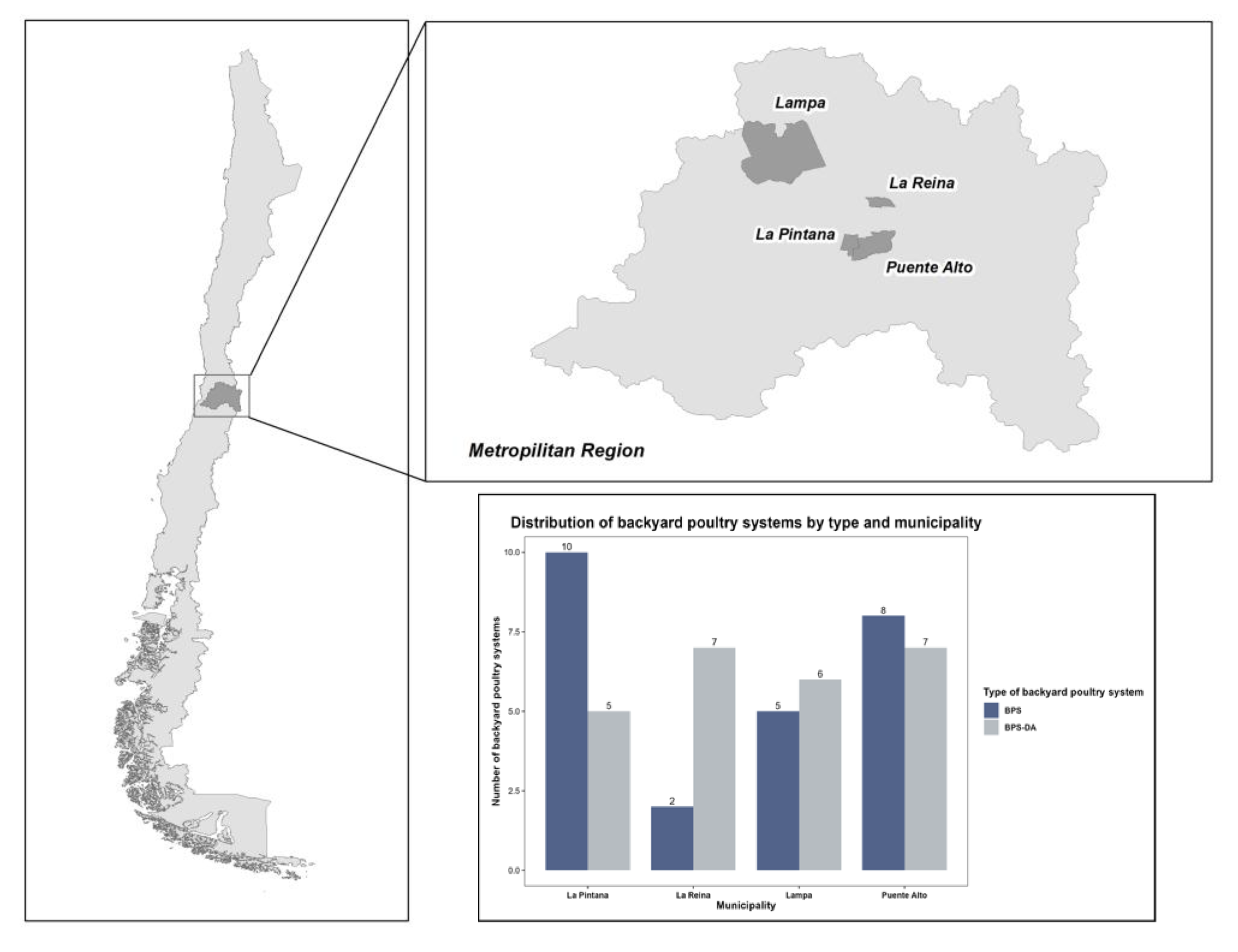
Figure 2.
Conceptual framework of poultry meat production practices in backyard poultry systems characterized in the Metropolitan Region of Chile.
Figure 2.
Conceptual framework of poultry meat production practices in backyard poultry systems characterized in the Metropolitan Region of Chile.
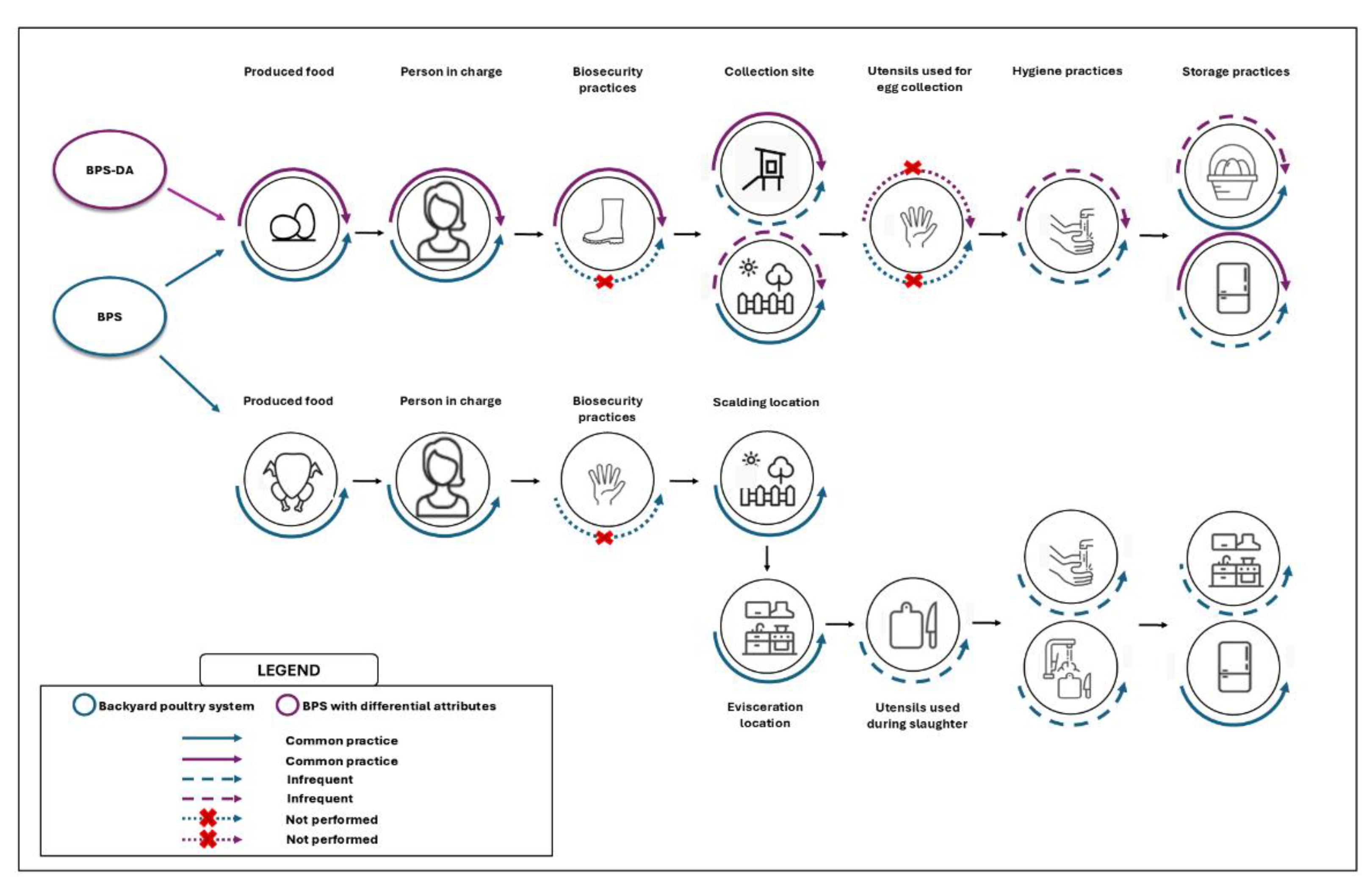

Table 1.
Evaluated items: classification, description, and assessment method.
| Classification | Evaluated Item | Description | Assessment Method |
|---|---|---|---|
| Socioeconomic | Bird caretaker | Gender of the person responsible for poultry care and management | Closed question |
| Education level | Educational background of the caretaker | Closed question | |
| Household income | Monthly income in relation to the national minimum wage | Closed question | |
| Production Practices | Rearing experience | Time dedicated to poultry rearing | Closed question |
| Bird feeding | Use of kitchen scraps, grain supplementation, and water source | Closed question | |
| Confinement modality | Strict, mixed, or free-range confinement | Closed question | |
| Bird replacement | Use of own birds or exchange with other producers | Closed question | |
| Food Production | Food matrix | Classification of main poultry products (eggs and/or meat) | Closed question |
| Egg collection | Location and time spent collecting eggs | Direct observation, open question | |
| Poultry slaughter | Slaughter method, bird selection, time, location, and frequency | Direct observation, open question | |
| Sale or gifting | Frequency and destination of food products | Open question | |
| Biosecurity | Facility hygiene | Frequency of cleaning or disinfection of coops and equipment | Open question |
| Disposal of mortalities | Practices such as burial or incineration of dead birds | Open question | |
| Contact with peri-domestic fauna | Interaction between poultry and surrounding wildlife | Open question | |
| Access to veterinary services | Access to veterinary care | Closed question | |
| Medication use | Use of medications, including antimicrobials | Closed and open question | |
| Personal protective equipment | Use of gloves, boots, dedicated tools, or other sanitary measures during collection or slaughter | Direct observation, open question | |
| Risk Perception | Hazard recognition | Awareness of pathogens like Salmonella spp. and E. coli as public health threats | Closed question |
| Withdrawal time awareness | Familiarity with drug withdrawal periods before consuming animal-source products | Closed question | |
| Storage | Eggs | Storage practices: refrigerated or ambient | Direct observation, open question |
| Slaughter products | Storage of meat under refrigeration or ambient conditions | Direct observation, open question | |
| Distribution | Eggs | Distribution practices through sale or gifting | Closed question |
| Slaughter products | Distribution practices through sale or gifting | Closed question | |
| Differentiated Attributes | Productive attributes | Practices such as free-range poultry or local food production | Closed question |
| Motivational attributes | Perception of poultry as companion animals or hobby farming | Closed question |
Table 2.
Evaluated items: description, assessment method, and response categories.
| Description | Assessment Method | Response Categories |
|---|---|---|
| Gender | Closed question | Female / Male / Other |
| Education level | Closed question | Incomplete/Complete Primary or Secondary / Higher Education |
| Household income | Closed question | Below / Equal / Above national minimum wage |
| Rearing experience | Closed question | Less than / Equal to / More than 5 years |
| Bird feeding | Closed question | Kitchen scraps and/or grain supplementation |
| Confinement modality | Closed question | Free-range / Mixed / Confined |
| Bird replacement | Closed question | Own flock and/or external exchange |
| Food matrix | Closed question | Eggs and/or Meat |
| Access to veterinary services | Closed question | Yes / No |
| Medication use | Closed and open question | Yes / No / Which ones |
| Awareness of Influenza A virus, Salmonella spp. and/or E. coli risk | Closed question | Yes / No |
| Withdrawal period knowledge | Closed question | Yes / No |
| Egg distribution | Closed question | Sale and/or Gifting |
| Meat distribution | Closed question | Sale and/or Gifting |
| Salmonella spp. recognition | Closed question | Yes / No |
| E. coli recognition | Closed question | Yes / No |
| Awareness of withdrawal periods | Closed question | Yes / No |
| Productive attributes | Closed question | Free-range poultry / Local food production |
| Motivational attributes | Closed question | Companion animals / Hobby farming |
Table 3.
General and socioeconomic characteristics of backyard poultry systems in the Metropolitan Region of Chile.
Table 3.
General and socioeconomic characteristics of backyard poultry systems in the Metropolitan Region of Chile.
| Variable | Production System | χ² | p-value | |
|---|---|---|---|---|
| BPS (n = 25) | BPS-DA (n = 25) | |||
| Bird caretaker¹ | 0.12 | 0.72 | ||
| Female | 76% (19/25) | 84% (21/25) | ||
| Male | 24% (6/25) | 16% (4/25) | ||
| Caretaker age (years) | — | — | ||
| Female | Mean 44.6 (18–60) | Mean 40.4 (18–61) | ||
| Male | Mean 46.3 (41–57) | Mean 39.8 (39–45) | ||
| Poultry rearing experience² | 2.16 | 0.14 | ||
| Less than 5 years | 8% (2/25) | 28% (7/25) | ||
| 5 years or more | 92% (23/25) | 72% (18/25) | ||
| Educational level² | ||||
| Completed schooling | 56% (14/25) | 100% (25/25) | 11.65 | 0.0006 |
| Higher education | 0% (0/25) | 52% (13/25) | 14.96 | 0.0001 |
| Household income³ | 15.78 | 7.11E-05 | ||
| Equal to or below minimum wage | 76% (19/25) | 16% (4/25) | ||
| Above minimum wage | 24% (6/25) | 84% (21/25) | ||
| Produced food | ||||
| Eggs | 100% (25/25) | 80% (20/25) | 3.55 | 0.059 |
| Meat | 72% (18/25) | 0% (0/25) | 25.08 | 5.48E-07 |
| Egg distribution (≥ 1×/month) | 3.92 | 0.047 | ||
| Sale⁴ | 64% (16/25) | 32% (8/25) | ||
| Gifting⁵ | 36% (9/25) | 68% (17/25) | ||
¹ All caretakers were over 18 years old.² Refers to the primary caretaker of the birds.³ Based on the national minimum monthly wage in Chile (~CLP 500,000).⁴ Eggs sold informally at least 3 times per month.⁵ Eggs gifted at least once per month.
Table 4.
Productive characteristics of backyard poultry systems in the Metropolitan Region of Chile.
Table 4.
Productive characteristics of backyard poultry systems in the Metropolitan Region of Chile.
| Variable | Production System | χ² | p-value | |
|---|---|---|---|---|
| BPS (n = 25) | BPS-DA (n = 25) | |||
| Number of birds (a) | Mean: 21.7 (min 7 – max 45) Median: 20 |
Mean: 16.5⁽ᵇ⁾ (min 4 – max 29) Median: 16 |
— | 0.014 |
|
Other bird species (ducks or geese) |
68% (17/25) | 40% (10/25) | 2.89 | 0.08 |
| Other productive species | ||||
| Pigs | 8% (2/25) | — | ||
| Equines | 12% (3/25) | — | ||
| Other domestic animals | 52% (13/25) | 36% (9/25) | 0.73 | 0.39 |
| Feeding | ||||
| Kitchen leftovers | 100% (25/25) | 80% (20/25) | 3.55 | 0.059 |
| Grain supplementation | 60% (15/25) | 100% (25/25) | 10.12 | 0.001 |
| Drinking water | ||||
| Well water | 96% (24/25) | 100% (25/25) | ||
| Truck-delivered water | 4% (1/25) | — | ||
| Bird replacement | 1.12 | 0.28 | ||
| Own flock | 72% (18/25) | 88% (22/25) | ||
| Exchange | 28% (7/25) | 12% (3/25) | ||
⁽ᵃ⁾ Situation not reported in BPS at the time of survey ⁽ᵇ⁾ t = 2.2527; df = 45.166; p = 0.01459.
Table 5.
Biosecurity and health threat perception characteristics of backyard poultry systems (BPS and BPS-DA) in the Metropolitan Region of Chile.
Table 5.
Biosecurity and health threat perception characteristics of backyard poultry systems (BPS and BPS-DA) in the Metropolitan Region of Chile.
| Variable | BPS (n=25) | BPS-DA (n=25) | χ² | p-value |
|---|---|---|---|---|
| Functional coops | 32% (8/25) | 76% (19/25) | 8.05 | 0.004 |
| Bird confinement modality | ||||
| Strict confinement | 28% (7/25) | 4% (1/25) | 3.72 | 0.053 |
| No confinement (free) | 20% (5/25) | 32% (8/25) | 0.41 | 0.51 |
| Mixed¹ | 52% (13/25) | 64% (16/25) | 0.36 | 0.56 |
| Cleaning or disinfection of facilities² | 36% (9/25) | 88% (22/25) | 12.22 | 0.0004 |
| Use of feces as fertilizer | 72% (18/25) | 56% (14/25) | 0.78 | 0.37 |
| Disposal of dead birds | ||||
| Birds are buried | 68% (17/25) | 100% (25/25) | 7.29 | 0.006 |
| Birds are burned | 32% (6/25) | — | 4.73 | |
| Contact with peridomestic fauna | 72% (18/25) | 96% (24/25) | 3.72 | 0.053 |
| Contact with non-household individuals3 | 28% (7/25) | 60% (15/25) | 3.97 | 0.04 |
| Access to veterinary services | 32% (8/25) | 44% (11/25) | 0.38 | 0.56 |
| Use of medications4 | 24% (6/25) | 36% (9/25) | 0.53 | 0.53 |
| Use of antimicrobials5 | 8% (2/25) | 20% (5/25) | 0.66 | 0.45 |
| Responsible Adult (RA) knows concept of withdrawal period | 4% (1/25) | 12% (3/25) | 0.27 | 0.6 |
| RA recognizes Salmonella spp. as a hazard | 52% (13/25) | 76% (19/25) | 2.17 | 0.14 |
| RA recognizes E. coli as a hazard | 16% (4/25) | 28% (7/25) | 0.46 | 0.49 |
1Mixed confinement: Nighttime confinement with free roaming during the day2Situation not reported in the BPS3With a frequency of at least once per month4Refers to individuals who are not part of the household5With or without veterinary supervision in the past year.
Table 6.
Practices associated with egg production in BPS and BPS-DA in the Metropolitan Region of Chile.
Table 6.
Practices associated with egg production in BPS and BPS-DA in the Metropolitan Region of Chile.
| Variable | Production system | |||
|---|---|---|---|---|
| BPS (n=25) | BPS-DA (n=25) | χ² | p-value | |
| Person in charge | ||||
| Woman | 76% (19/25) | 84% (21/25) | 0.125 | 0.72 |
| Collection site | ||||
| Nest boxes | 64% (16/25) | 92% (23/25) | 4.19 | 0.04 |
| Household yard | 36% (9/25) | 8% (2/25) | ||
| Collection time | ||||
| 10 minutes or less | 72% (18/25) | 84% (21/25) | 0.46 | 0.49 |
| Biosecurity during collection | ||||
| Use of container | 24% (6/25) | 16% (4/25) | 0.12 | 0.7 |
| Gloves | — | — | — | — |
| Masks | — | 8% (2/25) | 0.52 | 0.47 |
| Exclusive-use footwear | 12% (3/25) | 55% (12/25) | 6.09 | 0.01 |
| Handwashing after collection | 24% (6/25) | 32% (8/25) | 0.99 | 0.75 |
| Egg washing before storage | 28% (7/25) | 44% (11/25) | 0.78 | 0.37 |
| Storage | ||||
| Refrigeration | 20% (5/25) | 64% (16/25) | 8.21 | 0.004 |
| Egg sale or gifting | ||||
| Sale¹ | 64% (16/25) | 32% (8/25) | 3.92 | 0.04 |
| Gift² | 44% (11/25) | 36% (9/25) | 0.8 | 0.77 |
¹ At least 3 times per month² At least once per month— Data not reported for SPT.
Table 7.
Slaughtering practices in backyard poultry systems (BPS) characterized in the Metropolitan Region of Chile.
Table 7.
Slaughtering practices in backyard poultry systems (BPS) characterized in the Metropolitan Region of Chile.
| Variable | Production System | BPS (n = 25) |
|---|---|---|
| Reports slaughtering poultry | Yes | 60% (15/25) |
| Person responsible | Woman | 87% (13/15) |
| Slaughter frequency | ||
| Annual average of birds slaughtered | 1.6 (min 1 - max 3) | |
| At least once a month | 73% (11/15) | |
| At least once every two months | 27% (4/15) | |
| Criteria for bird selection | ||
| Ease of capture | 53% (8/15) | |
| Roosters | 27% (4/15) | |
| Older birds (reduced productivity) | 20% (3/15) | |
| Slaughter method | ||
| Cervical dislocation | 93% (14/15) | |
| Jugular cut | 7% (1/15) | |
| Slaughter location | ||
| Designated area in backyard | 27% (4/15) | |
| Undesignated backyard area | 73% (11/15) | |
| Slaughter time | ≤ 2 minutes | 100% (15/15) |
| Scalding location | ||
| Kitchen | 73% (11/15) | |
| Household yard | 27% (4/15) | |
| Biosecurity during scalding | ||
| Feathers disposed in appropriate bags | 33% (5/15) | |
| Feathers discarded in the environment | 67% (10/15) | |
| Evisceration location | ||
| Kitchen | 73% (11/15) | |
| Backyard (designated area) | 27% (4/15) | |
| Evisceration time | ≤ 20 minutes | 100% (15/15) |
| Biosecurity during slaughter | ||
| Gloves | — | |
| Face mask | — | |
| Apron or overalls | — | |
| Exclusive footwear | 7% (1/15) | |
| Exclusive utensils for slaughter | 13% (2/15) | |
| Knife | 93% (14/15) | |
| Scissors | 7% (1/15) | |
| Cutting board | 80% (12/15) | |
| Utensil cleaning | 100% (15/15) | |
| Utensil disinfection | — | |
| Handwashing after slaughter ¹ | 47% (7/15) | |
| Hand disinfection after slaughter | — | |
| Carcass storage | ||
| Refrigeration | 80% (12/15) | |
| Ambient temperature | 20% (3/15) | |
| Carcass disposal: sale or gifting | ||
| Sale ² | 13% (2/15) | |
| Gift ³ | 7% (1/15) |
1 Using water and soap2 At least twice per year3 To relatives and/or social circle.
Disclaimer/Publisher’s Note: The statements, opinions and data contained in all publications are solely those of the individual author(s) and contributor(s) and not of MDPI and/or the editor(s). MDPI and/or the editor(s) disclaim responsibility for any injury to people or property resulting from any ideas, methods, instructions or products referred to in the content. |
© 2025 by the authors. Licensee MDPI, Basel, Switzerland. This article is an open access article distributed under the terms and conditions of the Creative Commons Attribution (CC BY) license (http://creativecommons.org/licenses/by/4.0/).
Copyright: This open access article is published under a Creative Commons CC BY 4.0 license, which permit the free download, distribution, and reuse, provided that the author and preprint are cited in any reuse.


