

Submitted:
14 August 2025
Posted:
19 August 2025
You are already at the latest version
Abstract
Bioplastics are gaining attention as eco-friendly alternatives to conventional plastics, with Polybutylene Adipate Terephthalate (PBAT) emerging as a promising biodegradable substitute for polyethylene (PE) in food packaging. Commercial PBAT is often blended with other plastics or bio-based fillers to improve mechanical properties and reduce costs, though these additives can influence its environmental footprint. This study assessed the environmental impacts of producing and disposing of fossil-based PBAT blends containing bio-based fillers through a gate-to-gate life cycle assessment (LCA) and a screening-level gate-to-grave end-of-life analysis using the ReCiPe 2016 method and IPCC’s 100-year Global Warming Potential (GWP) in SimaPro. Producing 1 kg of PBAT blend generated 921 mPt in total environmental impact, with Human Health and Resource categories contributing similarly, and a GWP of 8.66 kg CO₂-eq, mainly from mixing and drying. End-of-life analysis revealed that composting PBAT offered clear advantages over landfilling PE, yielding –53.9 mPt impact and 10.7 kg CO₂-eq savings, ef-fectively offsetting production emissions. In contrast, landfilling PE caused 288.8 mPt impact and 2.2 kg CO₂-eq emissions. Sensitivity analysis showed that reducing electricity use by 30% could lower impacts by up to 10%, underscoring the importance of energy efficiency and renewable energy adoption for sustainable PBAT development.
Keywords:
low-carbon composite materials
; bioplastics
; LCA
; end-of-life management
; green design
1. Introduction
Packaging materials represent approximately 40% of total plastic production, with the food industry being the largest end-user [1]. Conventional plastics, made from fossil/petroleum-based polymers, are highly resistant to degradation, resulting in the massive accumulation of waste [2]. To address the environmental concerns of conventional plastics, bioplastics have emerged as a sustainable alternative with a wide range of applications such as packaging, textiles, and agriculture [3].
Bioplastics generally refer to materials that are either bio-based, biodegradable, or both. Bio-based plastics are derived partially or entirely from renewable biological sources such as corn, sugarcane, or potato starch, reducing reliance on fossil fuels and lowering the overall carbon footprint [1], [4]. Biodegradable plastics are polymers, whether petroleum-based or bio-based, that can decompose into carbon dioxide, methane, water, inorganic compounds, or biomass within a reasonable timeframe, thereby mitigating the problem of waste accumulation [1], [4]. Specific categories of these biodegradable polymers are also classified as compostable, which means they can degrade at the end of life at a faster rate in an industrial composting environment [1], [4], [5].
Beyond conventional end-of-life pathways such as recycling, incineration, and landfilling, biodegradable plastics offer the potential to be managed through organic waste treatment methods including composting [6]. However, when disposed of in landfills, the anaerobic degradation activities can generate methane, a potent greenhouse gas, raising concerns about the environmental implications [7]. This highlights the importance of evaluating alternative waste management strategies, such as industrial composting, alongside the recyclability of bioplastics, to ensure environmentally sound disposal practices during the transition toward biodegradable materials [8].
Among bioplastics, polybutylene adipate terephthalate (PBAT) is a fossil-based biodegradable polymer which widely used in active food packaging applications (Figure 1) [1]. As a commercially produced material, PBAT is considered a cost-competitive alternative to conventional plastics such as polyethylene (PE) [9]. The high flexibility of PBAT makes it attractive for various applications in the packaging sector. However, its limited mechanical strength requires improvement, which is usually achieved through blending with complementary polymers or fillers [9]. Blending PBAT with fillers not only improves mechanical performance but also increases cost efficiency by partially substituting the primary polymer with less expensive fillers. However, blending bioplastics with other materials often requires additional processing steps, which may affect the overall environmental footprint [10]. To ensure sustainable application and inform material development, a comprehensive environmental impact assessment of PBAT-based blends is essential.
Life cycle assessment (LCA) is a powerful tool for evaluating the environmental impacts of a product or service over its entire life cycle in terms of various impact categories [8]. LCA is particularly valuable for assessing bioplastics to enable a thorough comparison with conventional plastics and critically evaluate sustainability claims across different production methods and end-of-life scenarios [12], [13], [14]. The waste management stage, whether through biodegradation, composting, incineration, landfilling, or recycling, plays a crucial role in shaping a bioplastic’s overall environmental profile and must be carefully considered in the analysis [13], [15]. Recent studies, such as Luo et al. [16], performed a comparative cradle-to-gate LCA of BPAT produced from fossil-derived and second-generation bio-based feedstocks. The results showed that bio-based PBAT had a 37% lower global warming potential (GWP) compared to fossil-based PBAT, and up to 32% lower than conventional plastics such as low-density PE and high-density PE. To examine the production phase, Wang et al. [17] conducted a gate-to-gate analysis of petroleum-based PBAT and compared it with biomass-derived alternatives.
The blending of PBAT with other polymers is also well-established, with numerous studies demonstrating the development of PBAT-based composites using economically advantageous polymers and organic and inorganic fillers to enhance mechanical and thermal performance without compromising biodegradability [18]. For example, Zhou et al. [10] analyzed the gate-to-gate environmental performance of a composite film made from PBAT and montmorillonite fillers. The results demonstrated a lower environmental impact and reduced carbon emissions compared to a 100% PBAT film, as the composite film production required fewer PBAT pellets. Choi et al. (2018) assessed the carbon footprint of packaging films made from a polylactic acid (PLA)/PBAT blend, covering the full cradle-to-grave life cycle. Suwanmanee et al. [20] compared the GWP of bio-PE and a PBAT/starch blend using a cradle-to-grave LCA under three end-of-life scenarios: full landfilling, landfilling/incineration, and landfilling/composting. The results indicated that bio-PE had a lower carbon footprint, and the landfilling/composting pathway resulted in the lowest GWP among the scenarios. Saibuatrong et al. [21] performed a cradle-to-grave environmental impact analysis on conventional PE, bio-PE, and PBAT/starch. Results showed lower carbon emissions for bio-PE and PBAT/starch due to the photosynthesis reaction during plant growth. They also observed that composting was the most viable waste management strategy for PBAT/starch in terms of high ecosystem quality, confirming the former findings.
During blending process, inorganic fillers such as talc, silica, and magnesium compounds are widely used in polymer reinforcement due to their ability to enhance mechanical strength, stiffness, and barrier properties [22]. Their compatibility with PBAT makes them attractive for improving material performance in food packaging applications while maintaining biodegradability. Although recent literature has attempted to analyze the environmental impact of PBAT, there is still a lack of research focusing on PBAT blended with common fillers such as talc, silica, and magnesium. These materials are frequently used in the commercial production of cost-effective PBAT for food packaging applications. To address the existing research gap, the present study aims to perform a comprehensive comparative analysis between fossil-based biodegradable PBAT blends, which incorporate specific bio-based fillers, and traditional fossil-based non-biodegradable PE. To meet the overarching goals outlined above, the study focuses on the following sub-objectives:
- 1)
- Quantitative environmental impact analysis (gate-to-gate) and identification of process hotspots: This objective focuses on performing a detailed environmental impact assessment limited to the production phase (gate-to-gate) of the polymer blends. Utilizing ReCiPe method and the IPCC’s Global Warming Potential (GWP) 100-year timeframe, this analysis quantifies impacts across multiple categories including human health, ecosystem quality, and resource depletion. The analysis aims to identify critical process stages or components (“hotspots”) within the production chain that contribute highly to environmental burdens, thereby highlighting opportunities for targeted improvements or innovation.
- 2)
- Comparative screening-level end-of-life assessment: Beyond the production phase, this sub-objective expands the scope to conduct a preliminary evaluation of the end-of-life environmental impacts associated with fossil-based PBAT blends in comparison to conventional PE. This screening-level assessment focuses on examining how the biodegradability and composting potential of PBAT influence key environmental indicators. Both ReCiPe impact indicators and CO₂ emissions will be evaluated to capture environmental performance differences between the two materials. This approach serves as a proof of concept to demonstrate the potential benefits and trade-offs of adopting biodegradable plastics in end-of-life management.
2. Materials and Methods
2.1. Goal of This Study
This project focuses on quantifying the comparative environmental performance of the operation according to biodegradable PBAT blended with other ingredients, in comparison to PE resin, using CTK Bio Canada as the case study. CTK Bio Canada replaces virgin plastics with real sustainability using advanced material science. They manufacture high-performance materials helping carbon emissions reduction and landfill waste reduction to reach the sustainability goals without disrupting their supply chain. Comparing products using LCA method supports informed decision-making, particularly when evaluating alternatives. In the context of bioplastics, LCAs are primarily used to assess the broader implications of scaling up bioplastic production or substituting conventional petroleum-based plastics with biobased and biodegradable alternatives [23]. The analysis aims to quantify the potential sustainability benefits of using PBAT reinforced composite over conventional PE resin by assessing key environmental indicators [24].
2.2. Scope of This Study
2.2.1. Functional Unit
The functional unit of this LCA study is defined as 1 kg of resin produced. This ensures a fair comparison by focusing on the material production phase, as the resources required for cup manufacturing and paper lamination are assumed to be the same for both PE and PBAT based resin.
2.2.1. System Boundaries
As shown in Figure 2, the system boundary for this study focuses on the production of 1 kg of PBAT resin, supplying raw materials (excluding detailed production processes) and the conversion steps required to produce a biodegradable PBAT blend. In the first scenario, this assessment adopts a gate-to-gate approach, focusing only on the processes within the production facility, from the intake of raw materials to the completion of PBAT based resin. This study also considers second scenario with a focus on end-of-life scenarios for PBAT based resin and PE. The process begins with the supply of raw PBAT pellets, which serve as the main input material. These pellets are then processed through several stages in the conversion phase. The first step is weighing and suction, where electricity is used to handle and transfer the raw material. Next, the pellets go through mixing and drying, where additives like talc, silica, and magnesium are introduced. This stage also consumes both heat and electricity to ensure proper mixing and moisture removal.
After mixing, the material is sent to the extrusion process, where heat and electricity are applied to melt and shape it into a filament. The filament is then cooled down using electricity and water before moving to the final pelletizing stage, where the material is cut into small pellets using electricity (pelletizer). At the end of the process, PBAT resin is produced, ready for further applications.
Throughout these steps, different flows are considered. Material flow tracks how PBAT moves through the system, while chemical/resource inputs represent the added/required substances (e.g., talc, silica, magnesium). Energy flow includes electricity and heat used in processing, and emissions are tracked at different points where waste or byproducts might be released.
This study focuses solely on PBAT resin production, excluding pellet manufacturing, final product fabrication, transport, and end-of-life disposal. A gate-to-gate LCA compared PBAT with PE resin, assessing impacts of switching to biodegradable materials and adding fillers, from PBAT delivery to conversion.
2.2. Life Cycle Inventory (LCI) Analysis
In this section, for inventory analysis, all inputs and outputs of the involved processes in each method will be quantified and identified. The data were collected from primary and secondary sources (as can be seen in Table 1). Another source of data was the SimaPro software database (EcoInvent) provided data on raw materials extraction, electricity production, water, and fuels. Based on the defined gate-to-gate system boundary, the input parameters for each stage of the PBAT resin production process are quantified in detail. Two main phases are considered: conversion (mixing & drying) and intermediate processing (extrusion & pelletizing).
The energy and material inputs for this stage include electricity and thermal energy required for drying and blending raw components, as well as feedstock quantities for PBAT and additives. Specifically, electricity for drying is estimated at 0.128 kWh/kg of PBAT resin [25], while motor mixing requires 0.55 kWh/kg and 8.42 kWh/kg of heat energy (Ecoinvent). Additive feedstock inputs per tonne of final output are 0.155 tonnes of talc, 0.03 tonnes of silica, and 0.015 tonnes of magnesium (Industry expert). Additionally, 0.75 kWh/kg is used for suction and material transfer [26].
Extrusion consumes 0.6 kWh/kg of electricity and the cooling stage requires 9.72 kWh/kg [27], with corresponding cooling water demand of 1.78 liters/kg and 0.0643 liters/kg of water waste ([26]; Industry expert). Pelletizing consumes an additional 0.15 kWh/kg of PBAT resin [27], with a material loss rate of 0.061 kg per kg of resin. Other Assumptions to simplify the analysis are detailed as follows:
- Transportation Exclusion: All transportation activities, including raw material delivery and product distribution, are excluded from this assessment to maintain a gate-to-gate system boundary focused solely on on-site operations.
- PBAT Approximation Using PE: In this study, PBAT is approximated using PE synthesis for the cup production stage. This approximation is justified by the focus on a gate-to-gate analysis, where the aim is to assess the impacts associated with downstream processing rather than upstream synthesis. Existing research on PBAT has primarily examined its environmental impacts using various raw material scenarios, largely due to the lack of primary manufacturing data [28]. As a result, many studies have relied on assumptions based on PET or PE synthesis. Given that PE and PBAT share similar mechanical properties and behave comparably in extrusion and lamination processes, PE serves as a practical proxy for modeling material flow and energy demand during PBAT-blend product conversion. Furthermore, using PE as the conventional plastic counterpart in comparative assessments ensures consistency in evaluating processing impacts, minimizing bias from differences in upstream production pathways.
- LDPE Resin for PE Cup Production: For polyethylene-based cups, low-density polyethylene (LDPE) granules, used for lamination process, are assumed as the reference material.
- End-of-Life Composting Credit: Composting of PBAT is modeled to yield a substitute for organic fertilizer, with the resulting benefits treated as an avoided burden in the LCA. This approach supports global sustainable development trends, lowers reliance on primary raw materials, and cuts down the volume of waste destined for landfills (Walichnowska et al. 2024). During composting, the biodegradable components convert into CO₂ and water, while the remaining inorganic materials are considered non-toxic to soil. The environmental credits from this substitution are included in the long-term impact assessment, in line with standard system expansion practices in LCA.
2.2. Impact Assessment
This study applies two complementary methods for environmental impact evaluation: the ReCiPe 2016 Midpoint (H) [30] method for multi-category impact assessment and the Intergovernmental Panel on Climate Change (IPCC) GWP 100a method for focused climate change analysis. All assessments were performed using SimaPro version 8 software in accordance with ISO 14044 guidelines.
The Life Cycle Impact Assessment (LCIA) phase was conducted to translate the life cycle inventory data into potential environmental impacts. This study applies the ReCiPe 2016 Midpoint (H) method, one of the most widely recognized LCIA methodologies, developed to harmonize problem-oriented (midpoint) and damage-oriented (endpoint) approaches. ReCiPe Midpoint provides characterization factors across 18 impact categories (as shown in Table 2), representing environmental mechanisms at an intermediate level of cause-effect chain. These include: climate change, ozone depletion, terrestrial acidification, freshwater and marine eutrophication, photochemical oxidant formation, human toxicity, ecotoxicity (terrestrial, freshwater, marine), ionizing radiation, particulate matter formation, fossil and mineral resource scarcity, land use, and water use.
These are subsequently aggregated into 3 damage categories at the endpoint level:
- Human Health (measured in DALY);
- Ecosystem Quality (measured in species·yr);
- Resource Scarcity (measured in USD 2013).
In endpoint modeling methods such as ReCiPe, this climate-related impact is further translated into Disability-Adjusted Life Years (DALY) to reflect the potential burden on human health through diseases linked to global warming (e.g., cancer, vector-borne, or noncommunicable diseases). Beyond climate change, additional air-related impact categories include ozone depletion (measured in kg CFC-11 eq), ionizing radiation (kg U235 eq), and photochemical oxidant formation (kg NMVOC eq), all contributing to human health damage. Ecosystem-related impacts, such as freshwater and marine eutrophication (measured in kg P and kg N eq respectively) and ecotoxicity (in kg 1,4-DCB eq), are typically expressed at the endpoint level in terms of species loss per year (species·yr) [30]. These categories capture biodiversity degradation driven by land use change, fertilizer runoff, pesticide application, and aquatic pollution, common in bioplastic supply chains dependent on agricultural feedstocks. Studies have shown that while bioplastics can reduce GHG emissions, they often perform worse than petroleum-based conventional plastics in eutrophication and acidification due to resource-intensive cultivation practices. The endpoint approach of ReCiPe thus allows for a more integrated interpretation of environmental damage, bridging midpoint emissions with real-world outcomes on both human and ecological systems. The ReCiPe weighting step further enables the comparison of different impact categories through normalization and weighting factors. The weighted damage score (D) is typically computed using Equation (1):
Where is the characterized result for impact category i, is the normalization factor typically represents average global or regional contribution per person per year. is the normalization factor typically represents average global or regional contribution per person per year, and is the weighting factor as the relative importance assigned to each impact category.
This ReCiPe method was selected for its global relevance, comprehensive coverage of impact pathways, and compatibility with European and international datasets. Unlike region-specific models such as TRACI, ReCiPe offers a more universal perspective, which is particularly beneficial when assessing globally produced materials such as PBAT and PE resins.
Following the ISO framework, the LCIA process includes the mandatory steps of:
- Selection and classification: linking emissions and resource uses to relevant environmental impact categories;
- Characterization: applying scientifically derived characterization factors to quantify the contribution of each elementary flow to an impact category.
Most LCA of bioplastics focus on climate change–related environmental impacts, typically using the Global Warming Potential (GWP) metric, expressed in kilograms of CO₂-equivalent per kilogram of polymer [24]. In this regard, the IPCC 2007 GWP 100a methodology is utilized along with the method of the ReCiPe LCA.
3. Results
3.1. Gate-to-Gate Analysis (Without End-Of-Life)
The results of this LCIA reflect the environmental burdens associated with the production of 1 kg of PBAT, including mixing, drying, extrusion, cooling, and pelletizing operations.
The environmental performance of the PBAT resin production process was assessed across multiple midpoint and endpoint impact categories using the ReCiPe method, complemented by IPCC GWP 100a for climate change. The analysis was divided into two primary process stages: mixing & drying and extrusion & pelletizing.
Figure 3 illustrates the relative contribution of two production stages, mixing & drying and PBAT extrusion & pelletizing, to the overall environmental damage across three ReCiPe endpoint categories: Human Health, Ecosystems, and Resources. In terms of human health impacts, the contribution is nearly balanced, with mixing & drying accounting for approximately 47% of the total damage and extrusion & pelletizing making up the remaining 53%. A similar trend is observed for ecosystem damage, where mixing & drying contributes roughly 45%, and the extrusion stage slightly dominates at 55%. These outcomes highlight that both stages are environmentally intensive in terms of emissions and toxicity-related burdens.
However, a notably different pattern is seen in the resource damage category. Here, mixing & drying contributes the majority share, over 63%, compared to approximately 37% from extrusion and pelletizing.
Overall, while the environmental burdens are shared across both process phases, mixing & drying is clearly the dominant contributor to resource depletion, making it a critical target for optimization in efforts to reduce the environmental footprint of PBAT resin production.
The detailed environmental impact quantification per impact category with the total amount is also summarized in Table 3.
Based on the impact assessment results presented in Figure 4(a), at the endpoint level, the absolute environmental impacts across the three damage categories, Human Health, Ecosystems, and Resources, demonstrate varying magnitudes and contributions. The Resource damage category exhibits the highest total environmental impact, reaching nearly 0.002 units. This makes it the most significant among the three, even when all categories are treated with equal weighting.
Based on the weighted endpoint results shown in the chart, the environmental burden associated with the production of 1 kg of PBAT resin has been evaluated using ReCiPe weighting factors of 400 for Human Health, 400 for Ecosystems, and 200 for Resources. These weights reflect a higher priority placed on human health and ecosystem protection relative to resource depletion, consistent with many policy and academic frameworks. As shown in Figure 4(b), the weighted environmental impacts for both human health and resource depletion are nearly equal, each contributing approximately 376.4 and 365.82 mPt, respectively, making them the dominant environmental concerns in the PBAT production process. This outcome indicates that, despite resource damage receiving a lower weight, its absolute impact is high enough to match that of human health when normalized.
The 376.4 milli points (mPt) (maximum amount) for human health is not “out of” a fixed scale like 100, rather, it comes from the Environmental Footprint (EF) impact assessment method, where the unit “Pt” (point) represents the aggregated damage to the environment based on normalization and weighting across multiple impact categories.
- Pt values are relative and used to compare contributions across processes and categories;
- A higher Pt means a greater environmental burden.
There's no upper bound, the total is based on actual emissions and resource use and depends on the system size and functional unit.
Based on the weighted ReCiPe endpoint assessment, the total environmental impact of producing 1 kg of the bioplastic is calculated to be 921 mPt. This single score aggregates the contributions from human health, ecosystem quality, and resource depletion, providing a comprehensive measure of the overall environmental burden. This score remains constant in the comparative analysis and serves as a fixed reference point for benchmarking other materials assessed under similar system boundaries, functional unit, and characterization conditions.
Table 4 presents the normalization reference values for each impact category based on the ReCiPe model. These values are used to scale and compare the magnitude of environmental impacts across categories, enabling a standardized interpretation of LCA results. They represent the global average annual environmental load per capita and provide a baseline for assessing the relative significance of each impact category within the overall assessment [30].
The contribution network shown in Figure 5 using a 17% cut-off threshold, reinforces these findings by highlighting key resource inputs. Electricity, comprising 38.6 MJ per kg of PBAT resin, contributes nearly 40% of the overall impact. The production of PBAT granules (0.8 kg) also accounts for a substantial portion of the burden in mixing and drying stage. Notably, magnesium alloy and other additive inputs, despite their small mass, introduce high impact per unit due to energy-intensive processing and extraction.
Collectively, these results highlight that mixing and drying holds the highest overall process-level impact, primarily due to material demands. At the input level, electricity consumption during extrusion and the use of PBAT and magnesium alloy represent the key upstream environmental hotspots. Reducing energy use an in extrusion stages could improve the sustainability of PBAT resin production.
Also, as illustrated in Figure 6, the total greenhouse gas emissions associated with the gate-to-gate production of 1 kg of PBAT-based bioplastic are approximately 8.66 kg CO₂ eq, with mixing and drying alone contributing over 4.3 kg CO₂ eq. This highlights the significant role of thermal energy use in early processing stages.
When compared with previous studies such as [NO_PRINTED_FORM] [31] the GWP in this analysis (8.66 kg CO₂) is higher than the reported 5.89 kg CO₂, primarily due to the inclusion of additional processes. These extra conversion steps for producing PBAT-blend pellets account for approximately 2.77 kg CO₂ of the total impact.
3.2. Bioplastics Waste Management and End-Of-Life Options
In this study, the end-of-life scenario of composting for biodegradable bioplastics is compared against the landfilling of fossil-based polymers, such as PE, which are non-biodegradable and persist in the environment for extended periods. Fossil-based plastics that cannot degrade should be confined to landfill systems to prevent environmental leakage and mitigate long-term microplastics pollution.
While multiple disposal options exist for bioplastics, including recycling, landfilling, incineration, and degradation in various environments, their biodegradability offers a distinct environmental advantage. Composting aligns with circular economy goals by enabling bioplastics to return to the biosphere in a controlled and beneficial manner. Although biodegradation in aquatic or sewage environments is a valuable safety feature in cases of accidental littering, it should not be the primary disposal route. Instead, certified industrial composting provides a structured and sustainable path, allowing bioplastics to be managed through organic waste streams with minimal environmental burden [24].
As shown in Figure 7, several midpoint-level impact categories show clear environmental benefits when bioplastics are composted rather than disposing PE in landfills. Composting delivers notable net credits in metal depletion, particulate matter formation, climate change (ecosystems), and multiple land use and ecotoxicity categories. These benefits indicate avoided environmental burdens, particularly in resource depletion and ecosystem damage. However, trade-offs are observed, with composting leading to higher burdens in ozone depletion, ionising radiation, freshwater eutrophication, human toxicity, and fossil depletion. This mixed profile suggests that while composting can significantly reduce certain high-impact categories, targeted process improvements are necessary to mitigate the few impact areas where burdens increase.
Moreover, the comparison of endpoint-level environmental impacts under different end-of-life scenarios highlights the environmental advantages of composting bioplastics. In Figure 8(a), composting results in strong net benefits for both human health and ecosystems, shown as negative values around -100 mPt and -120 mPt, respectively, indicating that composting helps avoid environmental damage. In contrast, PE with landfill disposal shows significant environmental burden across all categories.
While the Resource category shows a negative impact for both materials, bioplastics with composting still perform slightly better than PE with landfill. However, when compared to the scenario with no composting or landfill (Figure 8(b)), surprisingly, the gate-to-gate analysis reveals that bioplastics can perform worse than conventional plastics when end-of-life treatment is not considered.
As shown in Figure 9, the single-score comparative environmental impact assessment between bioplastic (PBAT-based) and PE reveals significant differences across lifecycle stages. In the gate-to-gate phase, bioplastic exhibits a substantially higher total environmental impact (921.09 mPt) compared to PE (276.98 mPt), primarily due to resource-intensive production processes. However, in the gate-to-grave phase, bioplastic demonstrates a net negative environmental impact (-53.95 mPt), indicating environmental benefits during end-of-life treatment such as biodegradation or carbon sequestration. In contrast, PE shows a considerable impact (288.82 mPt) in this phase due to persistent waste and emissions, making bioplastic more favorable when evaluated over the entire life cycle. This emphasizes the critical role of end-of-life strategies in life cycle assessments and highlights that a fair, apples-to-apples comparison must account for biodegradability pathways. Incorporating composting clearly demonstrates the environmental advantages of bioplastics, turning them from a burden into a benefit.
The findings are consistent with those of Chen et al. [28] who reported that the global warming potential of PBAT pellets is approximately twice that of PE pellets, primarily due to the use of PET synthesis instead of PBAT resin synthesis. In our analysis, the global warming potential of PBAT-blend bioplastic is nearly three times higher than that of PE (as per Figure 9), driven by the additional processes required to mix PBAT with other ingredients.
While the production of 1 kg of bioplastic generates approximately 8 kg CO₂ eq. (as shown in Figure 6), composting offsets 10.7 kg CO₂ eq., leading to a net negative impact of -2.71 kg CO₂ eq. per kg of bioplastic as shown in Figure 10. This indicates that composting not only neutralizes the production emissions but also returns more carbon savings to the environment. Comparing bioplastic and PE, the Figure 10 shows that landfilling 1 kg of PE emits 2.22 kg CO₂ eq. This represents a total improvement of 4.93 kg CO₂ eq. per kg of material when switching from PE to bioplastic with composting. Therefore, advances in cost-effective end-of-life and waste disposal methods can enhance the sustainable adoption of PBAT, offering practical pathways for the growth of the biodegradable plastics industry [28].
3.2. Uncertainty Analysis
Uncertainty analysis is essential in LCA studies to ensure reliable comparisons and draw robust conclusions regarding the environmental sustainability of bioplastics that is biodegradable versus petrochemical-based plastics, which is non-biodegradable [23].
Given the significant role of electricity identified in the network analysis in Figure 5 mostly due to the extrusion & pelltizing process, this sensitivity analysis shown in Figure 11 confirms its influence, a 30% reduction in electricity use during the extrusion process results in a 12%, 11%, and 7% improvement in total environmental impacts of ecosystems, human health, and resources impact categories, respectively. This underscores that investing in more energy-efficient equipment can marginaly enhance the sustainability of bioplastic production.
For the improvement pathways, previous studies also showed that packaging process consumes large amount of electricity increasing its potential environmental impacts in case of improper energy management [29]. So, it is eesential to explore new energy sources and solutions minimizing its harmful effects [32].
The findings from the LCA analysis of this study can serve as a decision-making tool for implementing changes in each company’s energy management, helping to minimize the environmental impact of this stage and the overall process [33].
3. Conclusions
This study uses a life cycle assessment (LCA) to compare the environmental impacts of PBAT-based bioplastic resin and conventional polyethylene (PE), focusing on resin production and end-of-life disposal. Production impacts were assessed using a gate-to-gate boundary, and end-of-life impacts via composting (bioplastics) and landfilling (PE) using a gate-to-grave boundary. Unlike past full life cycle analyses, this study examines the added impact of blending PBAT with biofillers versus traditional resin, and preliminarily evaluates long-term waste treatment effects.
The life cycle inventory (LCI) was developed using data from primary sources, SimaPro software, and literature. Results indicated that electricity, thermal energy, and additive inputs in the mixing and drying phase contributed significantly to the total environmental burden, especially in resource depletion. The extrusion and pelletizing phase also had substantial impact due to high electricity demand.
Using the ReCiPe 2016 endpoint method, the total environmental impact of producing 1 kg of PBAT resin was quantified at 921 mPt, with the Human Health and Resource categories contributing nearly equally. The climate change impact assessed using the IPCC GWP 100a method was 8.66 kg CO₂ eq/kg, with mixing and drying being the dominant contributor.
The end-of-life analysis revealed that composting PBAT offers substantial environmental benefits compared to landfilling PE. Composting leads to net negative impacts of –53.9 mPt and carbon savings of 10.7 kg CO₂ eq, offsetting the production emissions of bioplastics. In contrast, PE with landfill showed a total end-of-life impact of 288.8 mPt and additional 2.2 kg CO₂ eq emissions. The single-score comparison reinforced that bioplastics become more sustainable than PE only when composting is implemented.
A sensitivity analysis confirmed that a 30% reduction in electricity use can lower environmental impacts by up to 10%, demonstrating the value of energy efficiency in bioplastic production.
In conclusion, while PBAT reinforced composite resin shows higher impacts than PE during production, it achieves superior environmental performance when end-of-life composting is considered. This underscores the need to pair bioplastics with appropriate waste management infrastructure to fully realize their sustainability potential. The findings support the adoption of bioplastics as a viable alternative to petrochemical plastics, provided that composting and energy optimization are prioritized.
One of the limitations of this study lies in the defined system boundaries, which may fail to capture all potential interactions and influences occurring beyond the immediate process under study. The obtained results are restricted to certain limitations including incomplete input data access. Future works include the cradle-to-grave assessment of PBAT with biofiller to include all the upstream activities including raw material supply for PBAT such as ingredients including Adipic Acid, Butanediol, Purified Terephtalic Acid according to Luo et al. [31] for more precise comparative LCA assessment. Localized life cycle inventories for the basis of environmental impact assessment is also essential through incentivizing the manufacturers to participate in data collection and reporting. As a future direction, a comprehensive life cycle cost analysis provides an additional pathway for managing the product system to achieve both environmental sustainability and economic efficiency [34], [35], [36]. Future work could also involve integrating economic, environmental, social, and technical dimensions into assessment and decision-making to provide a more holistic evaluation of the material [37].
Funding
This research was funded by the Circular Economy SEED Program.
Acknowledgments
The authors gratefully acknowledge the support of their industry partner, CTK Bio Canada Inc., as well as funding provided by the Circular Economy SEED Program.
Conflicts of Interest
The authors declare no conflicts of interest.
References
- E. Shlush and M. Davidovich-Pinhas, “Bioplastics for food packaging,” Jul. 01, 2022, Elsevier Ltd. [CrossRef]
- S. S. Ali et al., “Degradation of conventional plastic wastes in the environment: A review on current status of knowledge and future perspectives of disposal,” Science of the Total Environment, vol. 771, p. 144719, 2021. [CrossRef]
- S. Nanda, B. R. Patra, R. Patel, J. Bakos, and A. K. Dalai, “Innovations in applications and prospects of bioplastics and biopolymers: A review,” Environ Chem Lett, vol. 20, no. 1, pp. 379–395, 2022. [CrossRef]
- S. Nizamuddin, A. J. Baloch, C. Chen, M. Arif, and N. M. Mubarak, “Bio-based plastics, biodegradable plastics, and compostable plastics: Biodegradation mechanism, biodegradability standards and environmental stratagem,” Int Biodeterior Biodegradation, vol. 195, p. 105887, 2024. [CrossRef]
- N. Peelman et al., “Application of bioplastics for food packaging,” Aug. 2013. [CrossRef]
- G. Bishop, D. Styles, and P. N. L. Lens, “Environmental performance comparison of bioplastics and petrochemical plastics: A review of life cycle assessment (LCA) methodological decisions,” May 01, 2021, Elsevier B.V. [CrossRef]
- K. Changwichan, T. Silalertruksa, and S. H. Gheewala, “Eco-efficiency assessment of bioplastics production systems and end-of-life options,” Sustainability, vol. 10, no. 4, p. 952, 2018. [CrossRef]
- E. C. Van Roijen and S. A. Miller, “A review of bioplastics at end-of-life: Linking experimental biodegradation studies and life cycle impact assessments,” Jun. 01, 2022, Elsevier B.V. [CrossRef]
- S. Roy, T. Ghosh, W. Zhang, and J. W. Rhim, “Recent progress in PBAT-based films and food packaging applications: A mini-review,” Mar. 30, 2024, Elsevier Ltd. [CrossRef]
- S.-J. Zhou et al., “A high-performance and cost-effective PBAT/montmorillonite/lignin ternary composite film for sustainable production,” ACS Sustain Chem Eng, vol. 12, no. 40, pp. 14704–14715, 2024. [CrossRef]
- G. Vinci, R. Ruggieri, A. Billi, C. Pagnozzi, M. V. Di Loreto, and M. Ruggeri, “Sustainable management of organic waste and recycling for bioplastics: A lca approach for the italian case study,” Sustainability (Switzerland), vol. 13, no. 11, Jun. 2021. [CrossRef]
- A. Olagunju and S. L. Kiambi, “Life Cycle Analysis (LCA) of Bioplastics Compared to Conventional Plastics: A Critical Sustainability Perspective,” Biomass-based Bioplastic and Films: Preparation, Characterization, and Application, pp. 175–205, 2024. [CrossRef]
- M. Islam, T. Xayachak, N. Haque, D. Lau, M. Bhuiyan, and B. K. Pramanik, “Impact of bioplastics on environment from its production to end-of-life,” Aug. 01, 2024, Institution of Chemical Engineers. [CrossRef]
- N. Akbarian-Saravi, T. Sowlati, H. Ahmad, K. Hewage, R. Sadiq, and A. S. Milani, “Life cycle assessment of hemp-based biocomposites production for agricultural emission mitigation strategies: a case study,” in Biocomposites and the Circular Economy, Elsevier, 2025, pp. 261–285. [CrossRef]
- S. R. Hobbs, T. M. Harris, W. J. Barr, and A. E. Landis, “Life cycle assessment of bioplastics and food waste disposal methods,” Sustainability (Switzerland), vol. 13, no. 12, Jun. 2021. [CrossRef]
- C. Luo et al., “Comparative life cycle assessment of PBAT from fossil-based and second-generation generation bio-based feedstocks,” Science of the Total Environment, vol. 954, Dec. 2024. [CrossRef]
- B.-X. Wang, Y. Cortes-Peña, B. P. Grady, G. W. Huber, and V. M. Zavala, “Techno-economic analysis and life cycle assessment of the production of biodegradable polyaliphatic–polyaromatic polyesters,” ACS Sustain Chem Eng, vol. 12, no. 24, pp. 9156–9167, 2024. [CrossRef]
- V. C. Beber et al., “Effect of Babassu natural filler on PBAT/PHB biodegradable blends: An investigation of thermal, mechanical, and morphological behavior,” Materials, vol. 11, no. 5, May 2018. [CrossRef]
- B. Choi, S. Yoo, and S. Il Park, “Carbon footprint of packaging films made from LDPE, PLA, and PLA/PBAT blends in South Korea,” Sustainability (Switzerland), vol. 10, no. 7, Jul. 2018. [CrossRef]
- U. Suwanmanee, N. Charoennet, T. Leejarkpai, and T. Mungcharoen, “Comparative life cycle assessment of bio-based garbage bags: A case study on bio-PE and PBAT/starch,” Materials and Technologies for Energy Efficiency; Universal-Publishers: Boca Raton, FL, USA, pp. 193–197, 2015.
- W. Saibuatrong, N. Cheroennet, and U. Suwanmanee, “Life cycle assessment focusing on the waste management of conventional and bio-based garbage bags,” J Clean Prod, vol. 158, pp. 319–334, Aug. 2017. [CrossRef]
- B. E. Itabana et al., “Poly (Butylene Adipate-Co-Terephthalate) (PBAT) – Based Biocomposites: A Comprehensive Review,” Dec. 01, 2024, John Wiley and Sons Inc. [CrossRef]
- G. Bishop, D. Styles, and P. N. L. Lens, “Environmental performance comparison of bioplastics and petrochemical plastics: A review of life cycle assessment (LCA) methodological decisions,” Resour Conserv Recycl, vol. 168, p. 105451, May 2021. [CrossRef]
- S. Dadhwal, L. Ashton, E. D. G. Fraser, and M. G. Corradini, Life cycle assessment to evaluate bioplastics as alternatives to petroleum-based plastics in the food industry, vol. 2032. INC, 2024. [CrossRef]
- V. Siracusa, C. Ingrao, A. Lo Giudice, C. Mbohwa, and M. Dalla Rosa, “Environmental assessment of a multilayer polymer bag for food packaging and preservation: An LCA approach,” Food Research International, vol. 62, pp. 151–161, Aug. 2014. [CrossRef]
- F. Perugini, M. L. Mastellone, and U. Arena, “A life cycle assessment of mechanical and feedstock recycling options for management of plastic packaging wastes,” Environmental Progress, vol. 24, no. 2, pp. 137–154, Jul. 2005. [CrossRef]
- C. Caceres-Mendoza, P. Santander-Tapia, F. A. Cruz Sanchez, N. Troussier, M. Camargo, and H. Boudaoud, “Life cycle assessment of filament production in distributed plastic recycling via additive manufacturing,” Cleaner Waste Systems, vol. 5, p. 100100, Aug. 2023. [CrossRef]
- G. Chen et al., “Replacing Traditional Plastics with Biodegradable Plastics: Impact on Carbon Emissions,” Engineering, vol. 32, pp. 152–162, Jan. 2024. [CrossRef]
- “Implementation of modern films in the process of mass packaging of bottles based on the circular economy,” Scientific Papers of Silesian University of Technology Organization and Management Series, vol. 2024, no. 207, 2024. [CrossRef]
- A. J. H. Mark et al., “ReCiPe 2016 : A harmonized life cycle impact assessment method at midpoint and endpoint level Report I: Characterization,” 2017. [CrossRef]
- A. Luo et al., “Comparative life cycle assessment of PBAT from fossil-based and second-generation generation bio-based feedstocks,” Science of the Total Environment, vol. 954, Dec. 2024. [CrossRef]
- T. A. Hamed and A. Alshare, “Environmental Impact of Solar and Wind energy-A Review,” Journal of Sustainable Development of Energy, Water and Environment Systems, vol. 10, no. 2, Jan. 2022. [CrossRef]
- A. Salvi, V. Arosio, L. Monzio Compagnoni, I. Cubiña, G. Scaccabarozzi, and G. Dotelli, “Considering the environmental impact of circular strategies: A dynamic combination of material efficiency and LCA,” J Clean Prod, vol. 387, Feb. 2023. [CrossRef]
- Akbariansaravi, “A SUSTAINABILITY ASSESSMENT MODEL FOR SELECTING PRE- PROCESSING EQUIPMENT IN HEMP-BASED BIOCOMPOSITE SUPPLY CHAINS UNDER TECHNO-ECONOMIC , ENVIRONMENTAL , AND,” no. January, 2025.
- N. Akbarian-Saravi, T. Sowlati, and A. S. Milani, “Cradle-to-gate life cycle assessment of hemp utilization for biocomposite pellet production: A case study with data quality assurance process,” Clean Eng Technol, p. 101027, Jun. 2025. [CrossRef]
- N. Akbarian-Saravi, T. Sowlati, D. Fry, and A. S. Milani, “Techno-economic analysis and multi-criteria assessment of a hemp-based biocomposite production supply chain: a case study,” in Biocomposites and the Circular Economy, Elsevier, 2025, pp. 287–321. [CrossRef]
- N. Akbarian-Saravi, T. Sowlati, and A. S. Milani, “A Robust Analytical Network Process for Biocomposites Supply Chain Design: Integrating Sustainability Dimensions into Feedstock Pre-Processing Decisions,” Sustainability, vol. 17, no. 15, p. 7004, Aug. 2025. [CrossRef]
Figure 1.
Classification of plastics based on biodegradability and feedstock origin (adopted from [11]).
Figure 1.
Classification of plastics based on biodegradability and feedstock origin (adopted from [11]).
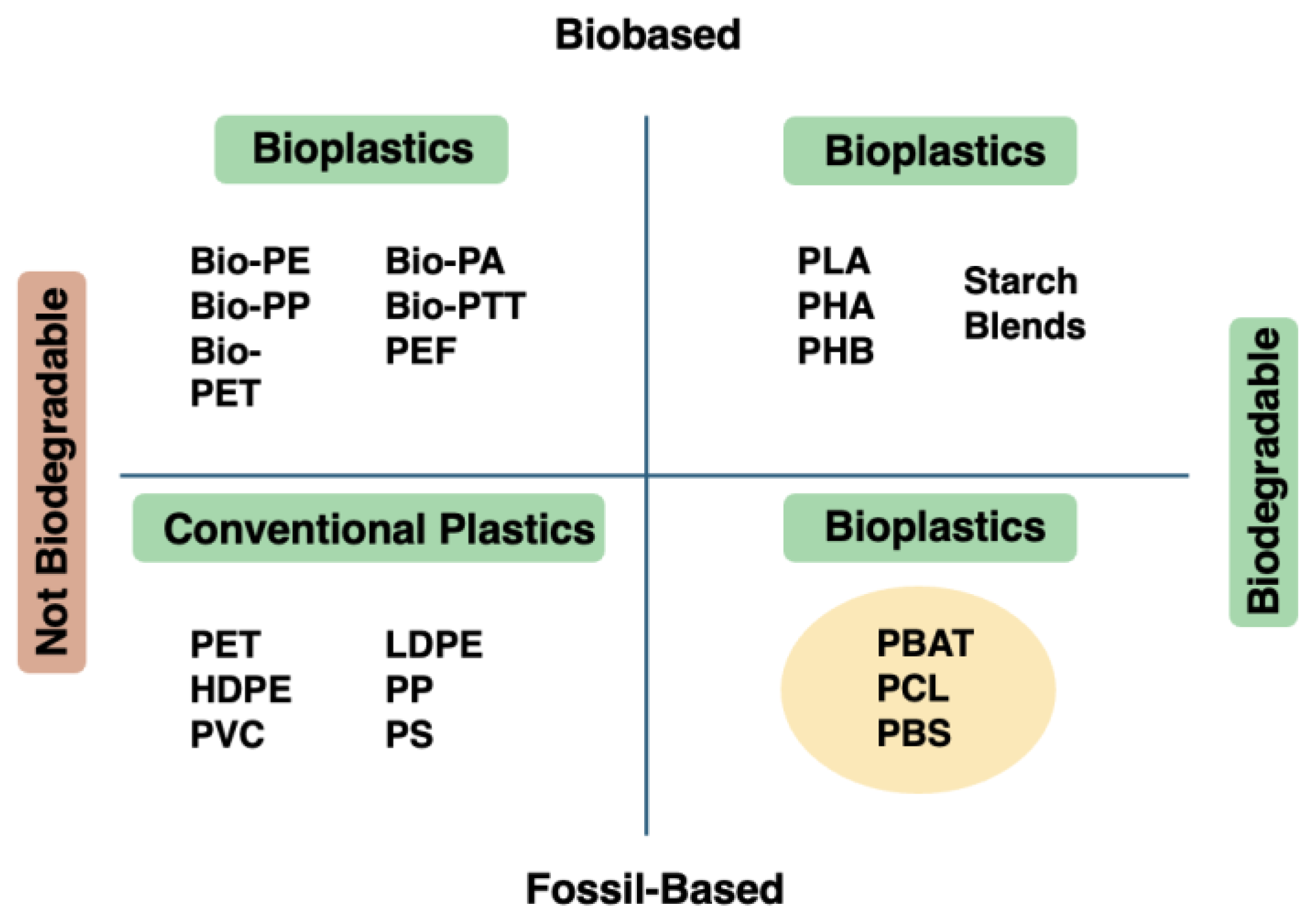
Figure 2.
Process flowchart of the PBAT-based resin production for cup manufacturing.
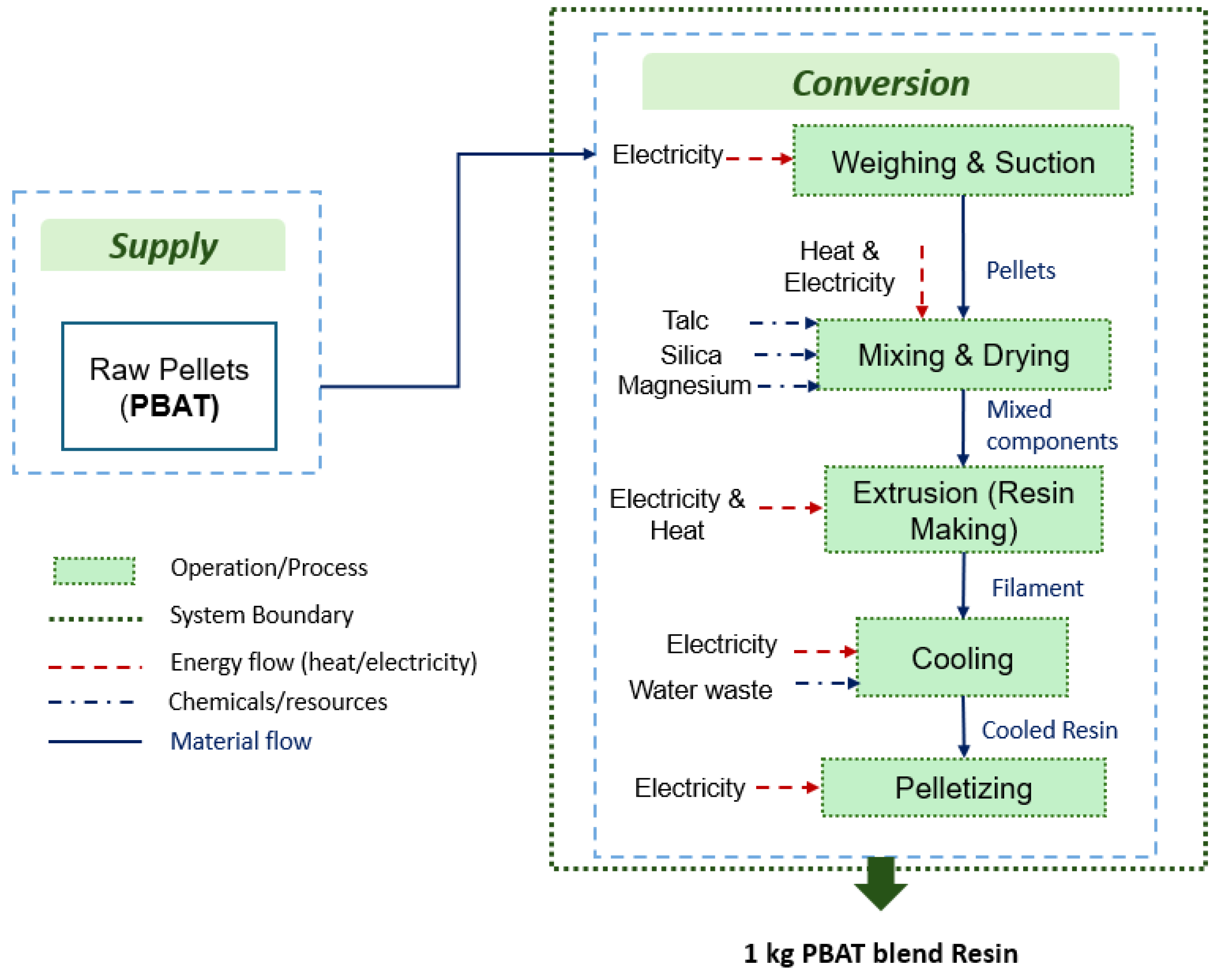
Figure 3.
Relative contribution of each process stage to impact categories (%).
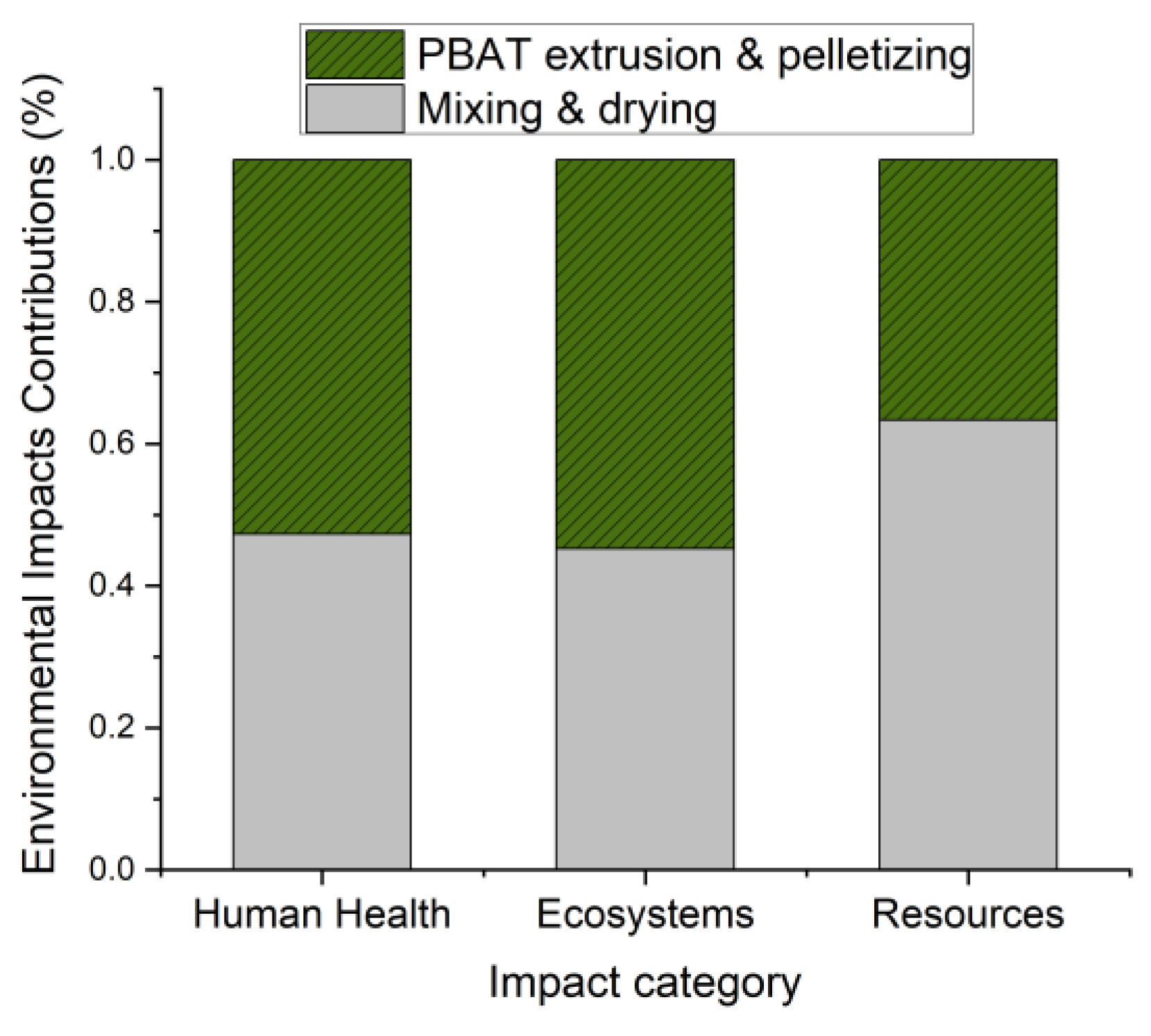
Figure 4.
Absolute environmental impacts (unitless) across impact categories; a) equal weights across impact categories; b) customized weighting across impact categories.
Figure 4.
Absolute environmental impacts (unitless) across impact categories; a) equal weights across impact categories; b) customized weighting across impact categories.
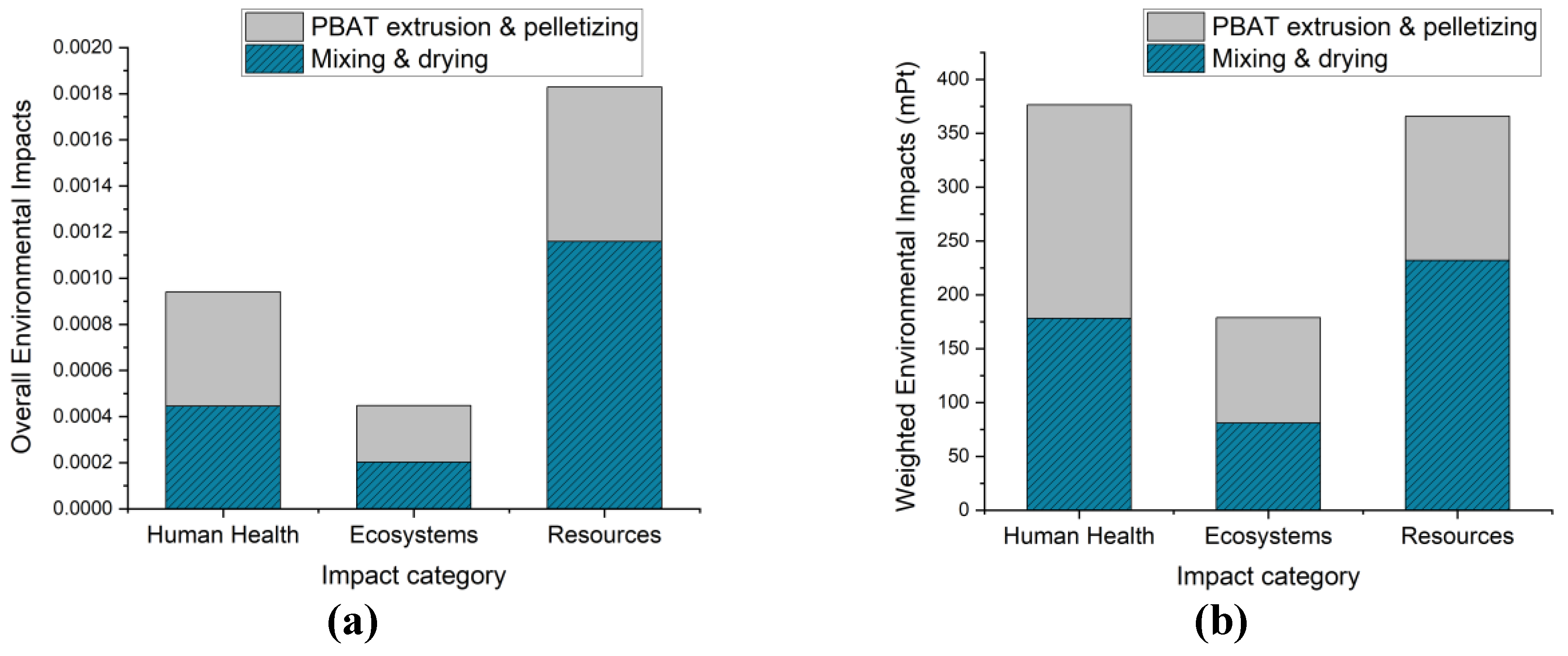
Figure 5.
Network diagram of environmental impacts (Pt) across the PBAT-based resin production system, showing the flow of impacts within the conversion facility (gate-to-gate).
Figure 5.
Network diagram of environmental impacts (Pt) across the PBAT-based resin production system, showing the flow of impacts within the conversion facility (gate-to-gate).
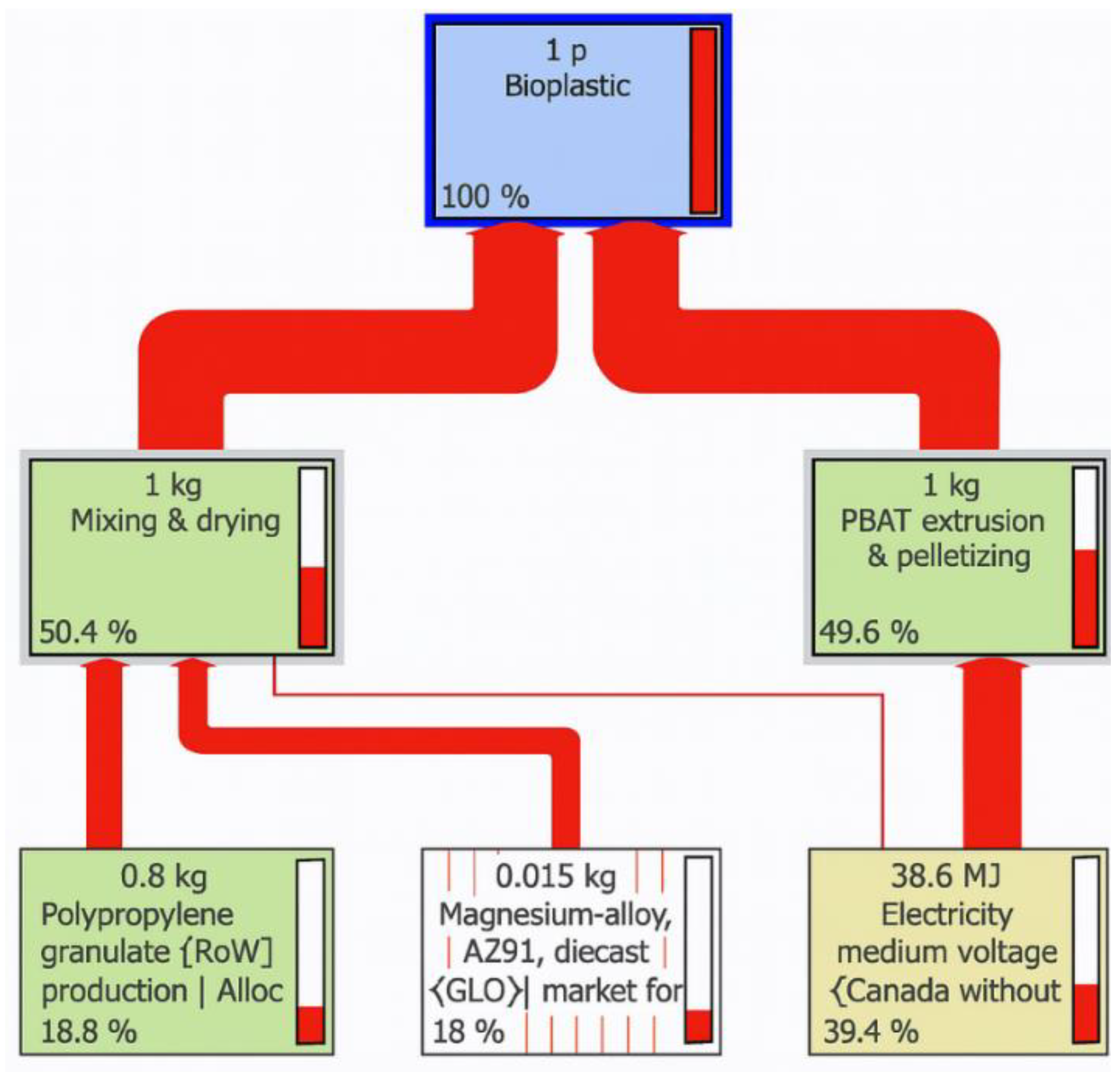
Figure 6.
CO₂-equivalent emissions (kg CO₂ eq) per process stage based on IPCC GWP 100a method.
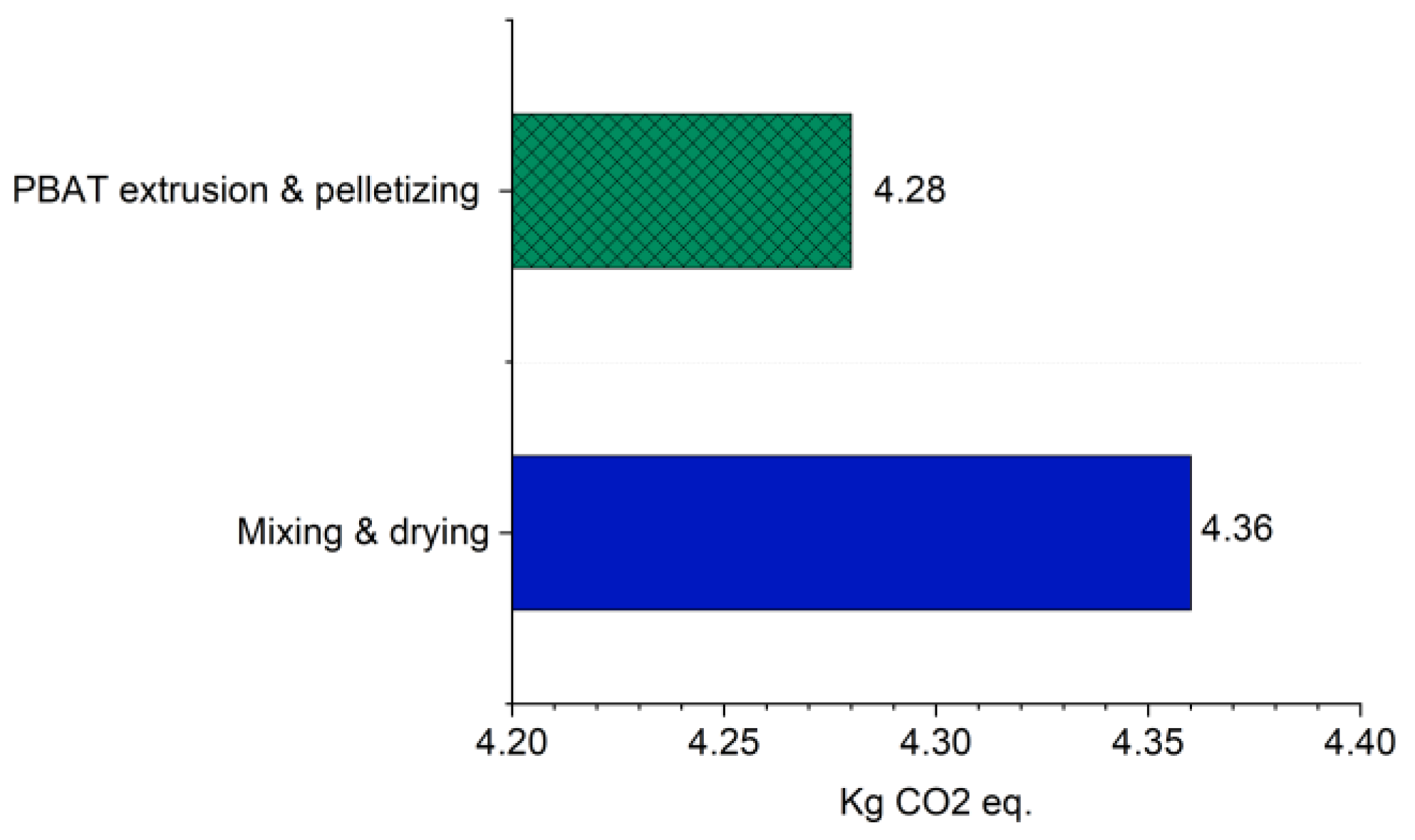
Figure 7.
Comparative end-of-life impact assessment of bioplastic with composting versus polyethylene (PE) with landfill across multiple environmental impact categories.
Figure 7.
Comparative end-of-life impact assessment of bioplastic with composting versus polyethylene (PE) with landfill across multiple environmental impact categories.
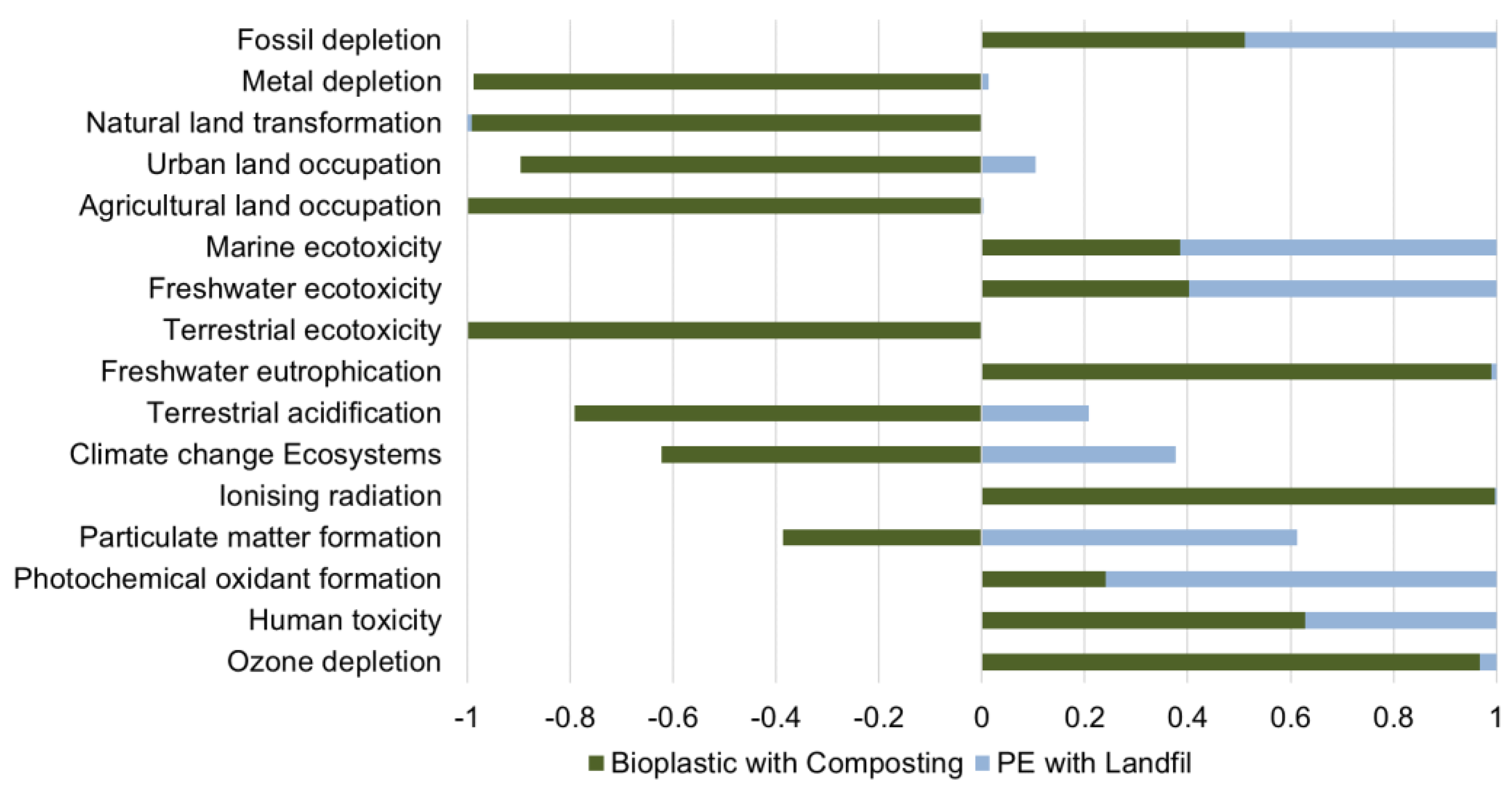
Figure 8.
Comparison of endpoint environmental impacts (mPt) for bioplastic with composting vs. PE with landfill.
Figure 8.
Comparison of endpoint environmental impacts (mPt) for bioplastic with composting vs. PE with landfill.
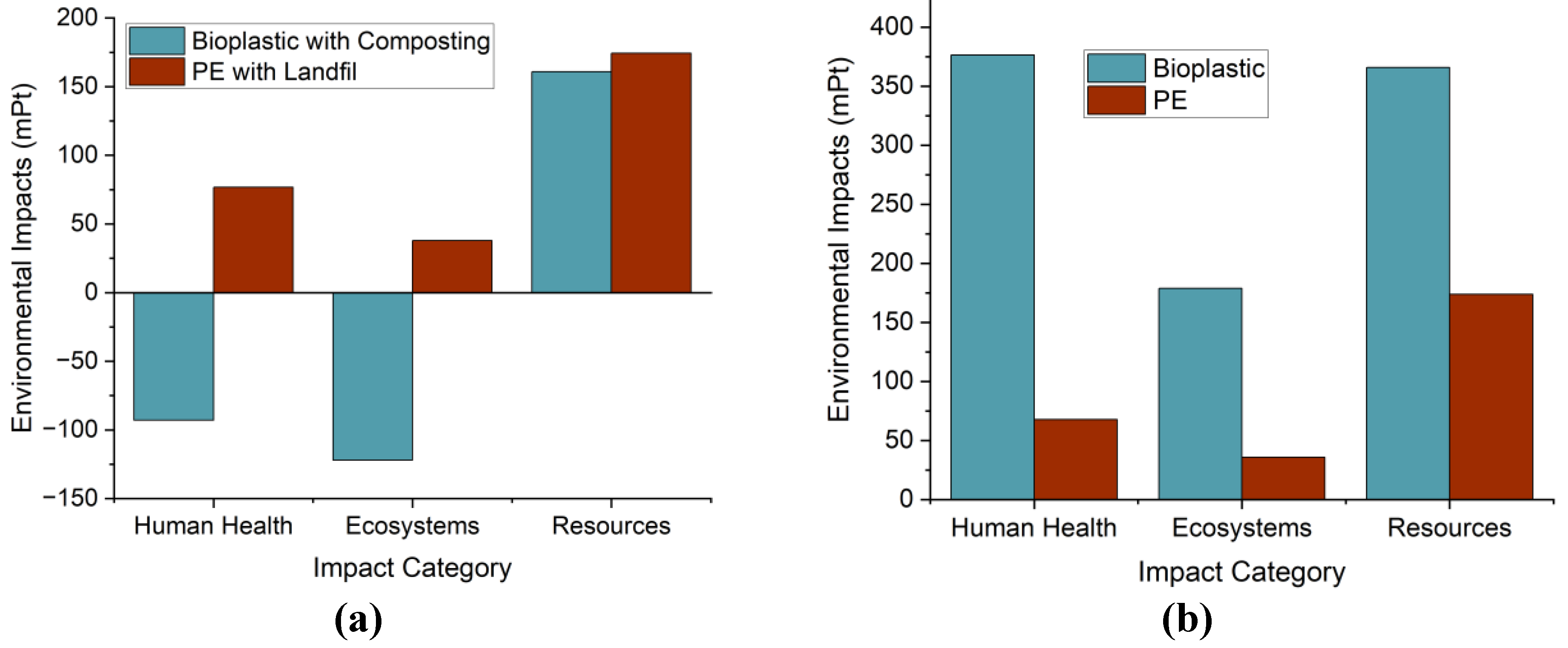
Figure 9.
single score Environmental impacts (mPt) of Bioplastic and PE assessed in gate-to-gate and gate-to-grave life cycle stages.
Figure 9.
single score Environmental impacts (mPt) of Bioplastic and PE assessed in gate-to-gate and gate-to-grave life cycle stages.
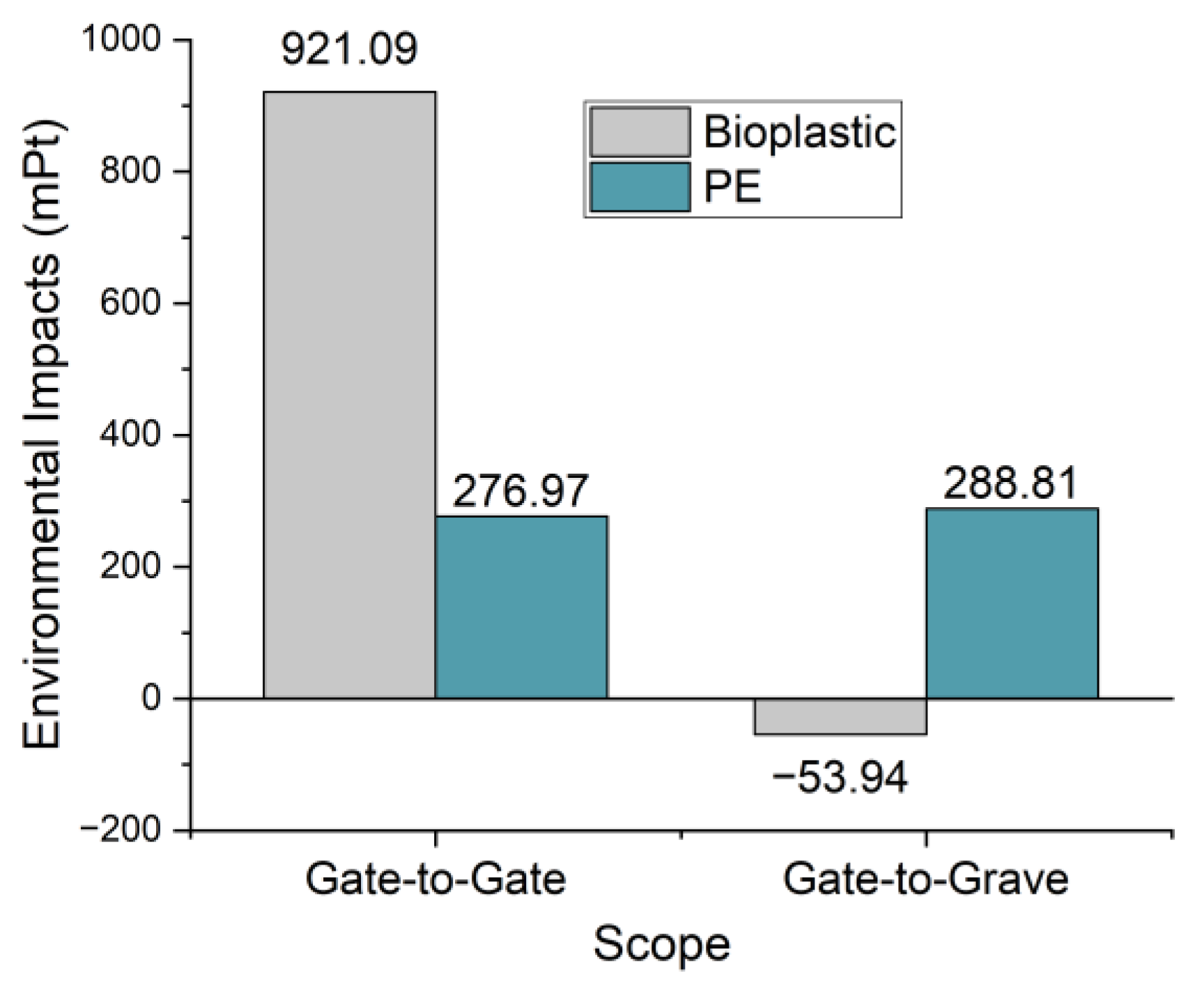
Figure 10.
Comparison of end-of-life environmental impacts for bioplastic with composting and PE with landfill, expressed in kg CO₂ equivalent.
Figure 10.
Comparison of end-of-life environmental impacts for bioplastic with composting and PE with landfill, expressed in kg CO₂ equivalent.
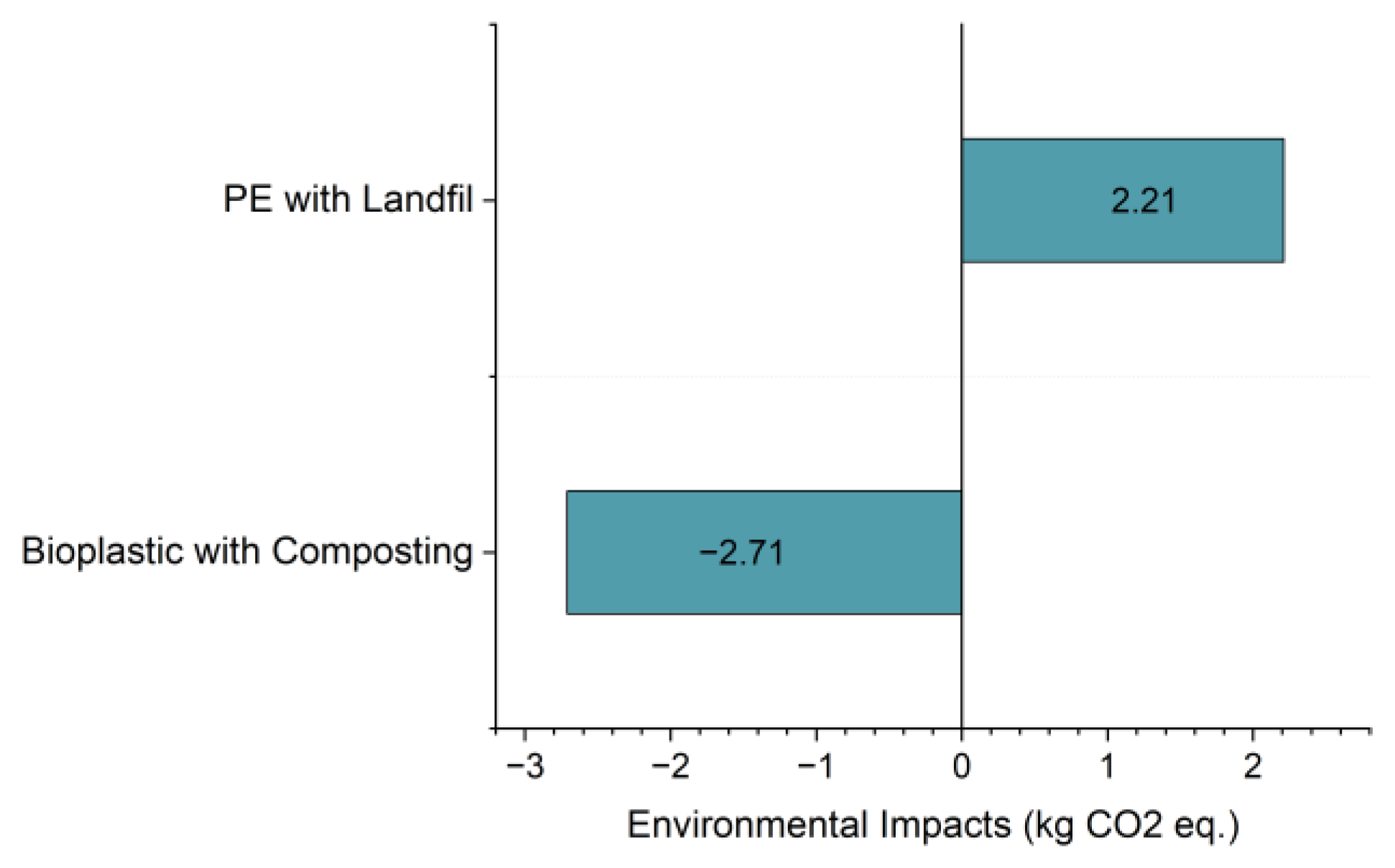
Figure 11.
Sensitivity analysis of environmental impacts for bioplastic production under ±30% variation in electricity input.
Figure 11.
Sensitivity analysis of environmental impacts for bioplastic production under ±30% variation in electricity input.
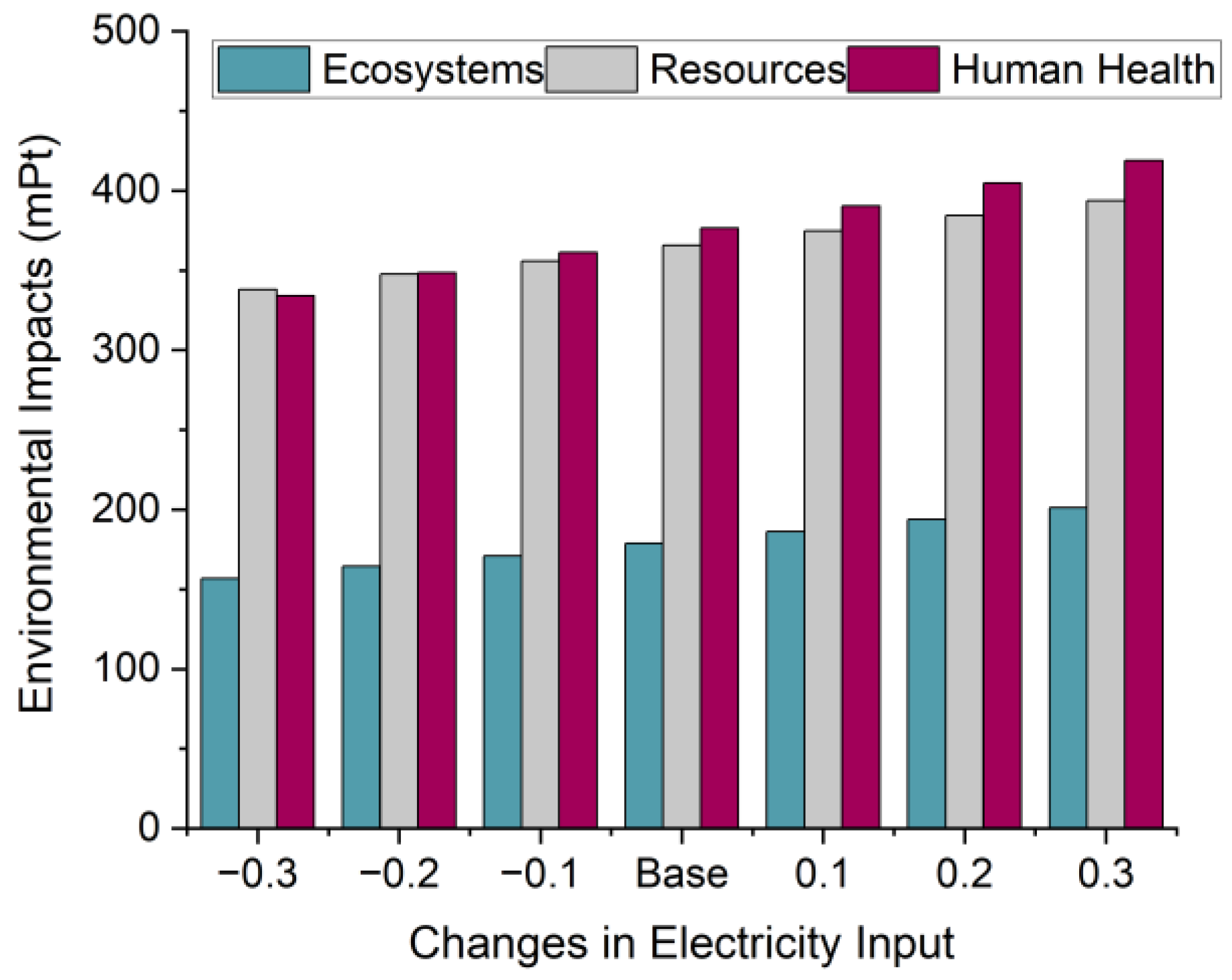

Table 1.
Data collection inventory for PBAT production.
| Description (unit/day) | Values | References |
|---|---|---|
| Reference Flows | ||
| Kg of PBAT resin | 1 | |
| Input Flows/parameters | ||
| Mixing & Drying | ||
| Feedstock requirement for PBAT (kg/kg of final output) | 0.8 | Industry expert |
| Feedstock requirement for talc (kg/kg of final output) | 0.155 | Industry expert |
| Feedstock requirement for silica (kg/kg of final output) | 0.03 | Industry expert |
| Feedstock requirement for magnesium (kg/kg of final output) | 0.015 | Industry expert |
| Electricity for drying process (KWh/kg of PBAT resin) | 0.128 | [25] |
| Electricity for motor shaft/blending (KWh/kg of PBAT resin) | 0.55 | Eco Invent |
| Electricity for suction and material transfer (KWh/kg of PBAT resin) | 0.75 | [26] |
| Extrusion & pelletizing | ||
| Electricity energy consumption for extrusion (KWh/kg of PBAT resin) | 0.6 | [27] |
| Electricity consumption for cooling (KWh/kg of PBAT resin) | 9.72 | [27] |
| Water consumption for cooling (cooling water) (liter per kg of PBAT resin) | 1.78 | [26] |
| Electricity consumption for pelletizing (kwh/kg of PBAT resin) | 0.15 | [27] |
| Material waste (kg/kg of PBAT) | 0.061 | Industry expert |
Table 2.
Impacts categories, evaluated by the ReCiPe impact assessment method.
| Area of Protection | Impact Category | Unit |
|---|---|---|
| Human Health | Climate Change – Human Health | DALY |
| Human Health | Ozone Depletion | DALY |
| Human Health | Human Toxicity | DALY |
| Human Health | Particulate Matter Formation | DALY |
| Human Health | Ionizing Radiation | DALY |
| Human Health | Photochemical Oxidant Formation | DALY |
| Ecosystems | Climate Change – Ecosystems | species·yr |
| Ecosystems | Terrestrial Acidification | species·yr |
| Ecosystems | Freshwater Eutrophication | species·yr |
| Ecosystems | Marine Eutrophication | species·yr |
| Ecosystems | Terrestrial Ecotoxicity | species·yr |
| Ecosystems | Freshwater Ecotoxicity | species·yr |
| Ecosystems | Marine Ecotoxicity | species·yr |
| Ecosystems | Agricultural Land Occupation | species·yr |
| Ecosystems | Urban Land Occupation | species·yr |
| Ecosystems | Natural Land Transformation | species·yr |
| Resource Scarcity | Fossil Resource Depletion | USD 2013 |
| Resource Scarcity | Mineral Resource Depletion | USD 2013 |
Table 3.
Environmental impacts quantification per impact category.
| Damage category | Unit | Mixing & drying | PBAT extrusion & pelletizing | Total |
|---|---|---|---|---|
| Human Health | DALY | 8.99515E-06 | 1.0015E-05 | 1.9E-05 |
| Ecosystems | species.yr | 3.66077E-08 | 4.42523E-08 | 8.09E-08 |
| Resources | $ | 0.357807255 | 0.206742791 | 5.65E-01 |
Table 4.
Normalization Reference Values for Environmental Impact Categories (ReCiPe Model) [30].
Table 4.
Normalization Reference Values for Environmental Impact Categories (ReCiPe Model) [30].
| Impact category | Value | Unit |
|---|---|---|
| Human health | 49.5 | DALY per person in 2010 |
| Ecosystem | 5,530 | Species year per person in 2010 |
| Resources | 0.00324 | USD2013 per person in 2010 |
Disclaimer/Publisher’s Note: The statements, opinions and data contained in all publications are solely those of the individual author(s) and contributor(s) and not of MDPI and/or the editor(s). MDPI and/or the editor(s) disclaim responsibility for any injury to people or property resulting from any ideas, methods, instructions or products referred to in the content. |
© 2025 by the authors. Licensee MDPI, Basel, Switzerland. This article is an open access article distributed under the terms and conditions of the Creative Commons Attribution (CC BY) license (http://creativecommons.org/licenses/by/4.0/).
Copyright: This open access article is published under a Creative Commons CC BY 4.0 license, which permit the free download, distribution, and reuse, provided that the author and preprint are cited in any reuse.


