

Submitted:
16 August 2025
Posted:
18 August 2025
You are already at the latest version
Abstract
Tackling climate change in the public-private partnership (PPP) infrastructure sector means radically transforming projects to be resilient against climate risks and free from excessive carbon emissions. PPP infrastructures such as transport, power plants, hospitals, schools and residential buildings experience more than 30% of global climate change risks. Therefore, this study aims at examining the climate risk management strategies in PPP infrastructure projects. The first step in conducting this research was to identify the strategies through a comprehensive literature review. The second step was data collection from 147 PPP stakeholders with a questionnaire. The third step was analysing the interrelationships between the strategies using a partial least square- structural equation model approach. The findings include green procurement, defined climate-resilient contract award criteria, identification of climate-conscious projects, feasible and contract management strategies. The results provide understanding of actionable measures to countermeasure climate risks, and it encourages PPP stakeholders to promote climate-friendly strategies. The results also serve as foundational information to investigate into climate change risk management strategies in PPP research.
Keywords:
climate risks
; carbon emission
; climate change
; decarbonisation
; infrastructures
; public-private partnership
1. Introduction
In the past few decades, public-private partnerships (PPPs) have attained enviable spot in project delivery in every nation [1]. Atamanov, et al. [2] mentioned that 40-60% of public infrastructures in many countries have been delivered by PPP arrangements between public institutions and private financiers. Projects such as the hospital of University of Sunshine Coast (Australia), Enugu-Port Harcourt Road (Nigeria), Saglemi affordable public houses (Ghana) and Shenzhen light rail (China) are prime examples PPP infrastructures [3]. These infrastructures generate a significant amount of carbon emissions with negative implications on climate change. Akomea-Frimpong, et al. [4] revealed that 20-33% of carbon emissions are associated PPP infrastructures. Batra [5] broke down the constituents of the carbon emissions of PPP projects as embodied (23%) and operational (77%). The source of embodied emissions includes the use of oil, bitumen, natural gas and other fossil fuel materials to construct the projects [6]. The operational carbon emissions are generated from cooling, lighting, maintenance and heating of the infrastructures [7]. Che, et al. [8] and Ali, et al. [9] also argued that the negative effects of carbon emissions is extreme climate risks against PPP infrastructures.
The intensity of climate change on PPP infrastructures has been widely reported in literature and the mass media. For instance, in the early 2025 in Southern California (United States), about 16,000 homes and valuable public properties were burnt down from wildfires [10]. The consequences of this incident is the culmination of insurance crisis where parties to partnership contracts supporting mortgages and operations of the infrastructures (properties) experienced huge financial losses [11]. In the Guangdong Province of China, a section of the freeway (road network) was swept away from heavy downpour of rain including twenty (20) cars and forty-eight (48) people [12]. Three countries (Germany, Belgium and Netherlands) within Europe have recorded over hundred (100) people killed, and many critical infrastructures destroyed within the last two years from torrential rain which are linked to climate change [13]. Between 1995 and 2025, Brazil has reported more than nine thousand cases of infrastructure damage from climatic risks [14]. Sub-Sharan African countries continue to experience long delays in completion of infrastructures as result of unfavorable weather with existing infrastructure not built to withstand climate change [15].
To manage these climate risks, there is an ongoing effort in the global PPP infrastructure sector to decarbonise and incorporate sustainable climate actions in alignment with the Paris Climate Accord and Sustainable Development Goals, SDGs [9,16]. However, there is limited empirical information about this important issue on PPP infrastructures. Moreover, a thorough search and review of documents from databases such as Scopus, Web of Science and Google Scholar demonstrate insufficient investigations into climate risk strategies suitable for PPP infrastructure delivery model. For example, Giesekam, et al. [17] and Sweet [18] listed climate change measures for construction projects but the studies failed to delve into their appropriateness for specific project delivery models such as PPP infrastructures. Furthermore, reviewed project reports demonstrate lack of practice frameworks and policies aimed at ensuring PPP projects meet climate targets [19,20]. Liu, et al. [21] also mentioned that very few studies on this topic have focused on the construction, demolition and waste management stages of PPP projects not the entire lifecycle. Therefore, this article’s purpose is the examinations of strategies on climate risk management of PPP infrastructure projects. The implementation of the findings from this study is expected to support the understanding and development of strategies to achieve long-term net-zero and climate goals in PPP infrastructures. The next sections include literature review, conceptual framework, method of study, discussion of the findings and conclusion.
2. Literature Review
2.1. PPP Infrastructures
Public-private partnership (PPP) is a collaborative project delivery model between governmental institutions and private entities aimed at building and managing infrastructure projects in long-term contracts [22]. Tang, et al. [23] argued that PPPs are advantageous than other project delivery models because it solicits financial and technical supports from private investors for public projects. Zou, et al. [24] mentioned the downside of PPPs as potential contractual disagreements and exploitations from private partners against the interests of the society The following are the key examples of the application of PPPs across the globe. In Asia and Oceania region, Beijing Transport Subways (China), Silk (Ahimsa) Spinning Mill (India), ITE college buildings (Singapore) and Newcastle community health facilities (Australia) were built by the PPP model (Devkar et al., 2020). European PPP projects include Klettwitz Renewable Wind Farm (Germany), Stade de France (France), Royal London Hospital and HS2 High speed-rail project (United Kingdom). The United States and Canada have California hydrogen vehicle fuel cell partnerships and Ontario’s 407 Highways [25]. Lastly, Gautrain Rails (South Africa) and Rio Olympic Stadium (Brazil) are all examples of PPP projects [26].
2.2. Climate Risks
Since the industrial revolution with massive expansion of manufacturing industries, the atmospheric temperature has risen beyond a threshold of 1.5°C [27]. Maslin, et al. [28] showed 2024 as the warmest year with temperature of more than 0.08± 0.01 per centigrade (approximately 1.55°C). Fawzy, et al. [29] attributes this occurrence to the rising volumes of greenhouse gases released into the atmosphere from modern technological, anthropogenic and industrial activities. For instance, Shivanna [30] explained that the actions of manufacturers in heavily industrialised nations such as United States, United Kingdom, China, India, Canada and the European Union (EU) countries produce the largest amount of carbon emission. The outcomes of the industrial activities relating to crude oil, wood and cements are instrumental in building PPP infrastructure activities [7]. These embodied carbon materials for PPP projects generate carbon emissions which cause negative changes in the weather conditions with harmful effects on construction workers and users of the projects.
2.3. Strategies on Managing Climate Risks
Strategies to minimise climate disasters in PPP infrastructures is explained in the context of implementing both human and non-human actions to either reduce or completely avoid exposure of the projects to the extreme weather conditions [4]. There are three layers of the strategy. First, emission reduction measures at the infrastructure project level. This includes the adoption and implementation of emission reduction policies and practices [31]. Amin [32] suggested sustainable supply of construction materials, and provision of zero carbon competency skills and knowledge to manage the embodied carbon emissions of the projects. Sanada and Zappa [33] argued for the replacement of non-renewable energies and continuous improvement to mitigate operational emissions. The second and third layers of decarbonisation actions involves strong collaborations among PPP practitioners and the state to improve standards and legislations such as the 2023 Climate Change (Net Zero Future) law of the New South Wales (Australia) [34].
3. Hypothesis Development
Figure 1 illustrates five categories of strategies to address climate risks in PPP infrastructures within the lifecycle stages of PPP projects of PPIAF [35]. The constructs (latent variables) and measurement items (indicators) are Ahmadi, et al. [36] put forward that the starting point in addressing climate risks in PPP infrastructures is the identification of projects which are threaten by climate change. It includes the assessment of climate resilience level of existing infrastructures. Out of the assessment of the nature of the projects, Tipu, et al. [37] that the various climate risks could be identified with the carbon emitting measures. For new infrastructure projects, Nguyen, et al. [38] proposed the identification and selection of green and climate adapting projects. At this stage, climate targets should be set together with the scope of potential risks. Alqahtani, et al. [39] argued for the involvement project leadership who have experienced in selecting and executing projects to promote emission reduction measures.
At this stage of the project, it is hypothesized that:
H1.
project identification strategies influence feasibility study strategies
H2.
project identification strategies influence contract management strategies
H3.
project identification strategies influence awarding of contract strategies
H4.
project identification strategies influence procurement strategies
In the next stage of feasibility assessment, the goal is to ascertain the practicality and impacts of the proposed project identification strategies to manage climate change [16,31]. There are range of feasibility suitable to realise the effects of climate risks in PPP projects. These include thermal resilience analysis [40], carbon emission analysis [41], water analysis [42], biodiversity analysis [43], people (stakeholder) analysis [44]. Therefore, it is hypothesized that:
H5.
feasibility study strategies influence procurement strategies
H6.
feasibility study strategies influence contract award strategies
H7.
feasibility study strategies influence contract management strategies
Sustainable procurements on PPP infrastructures are actionable drive to meet climate targets. Tipu, Mughal, Kundi, Nair and Thurasamy [37] analysed and explained the key climate-friendly materials from suppliers which promote green practices in the PPP projects. The study found positive relationships between green supply chain practices and climate adaptation of projects. Further, Tuffour, et al. [45] recounted the role of green procuring strategies in increasing the resilience of projects by 20%. Thus, it is hypothesized that:
H8.
procurement strategies influence contract award strategies
H9.
procurement strategies influence contract management strategies
Finally, Tian, et al. [46] Owusu (2024) highlighted that the contributions of awarding flexible and climate-induced contracts to successful management of PPP projects. Constant review of climate risks, setting of sound governance, insisting on including sustainable contract requirements shape the climate adaptation and mitigation strategies. Zhang, et al. [47] added that the information for partners and stakeholders should be improved together with upskilling of workers on climate change. Therefore, it is hypothesized that:
H10.
Contact award strategies influence contract management strategies.
4. Methodology
This study is based on a quantitative research design with the following sub-sections:
4.1. Questionnaire
The questionnaire was data collection instrument, and it had two parts. The first part was the demographic profile of the respondents. The profile includes the positions held at work, country, project type, educational status and experiences on PPP projects. The second section of the questionnaire was assigned to climate risk strategies as presented in Table 1. The measurement items from Table 1 were measured on a Likert-Scale (LS) from 1 to 5 (strongly disagree to strongly agree). The measurement items were validated by experts on PPP projects [73]. The experts included seven senior lecturers in tertiary institutions and eight industry professionals. These experts have been involved in several PPP projects for many years. The drafted questionnaire was shared with them who confirmed the clarity, appropriateness and suggested modification of some of the measurement items.
4.2. Respondents and Survey
Once the questionnaire was improved with the feedback from the experts, potential participants (respondents) were sampled through a mixture of purposive and snowball sampling techniques. First, participants were targeted purposely by PPP stakeholders. The search for the participants took place on LinkedIn where the profiles of potential respondents were searched and screened. Direct messages were sent to the targeted participants. In reply, 42 potential participants showed interest in the research. These 42 participants were asked to invite other stakeholders who qualified to be part of this research in a snowballing sampling approach. The total potential participants from these two exercises were 216. The questionnaire was shared with 216 participants via email. One hundred and forty-seven (147) responses were returned representing 68% rate of response. Comparing this response rate to 44% of Akomea-Frimpong, et al. [74] and 14% of Osei-Kyei, et al. [75], it is sufficiently representative for this study.
4.3. Analysing the Data
The statistical technique employed to analyse the collected data was the partial least squares structural equation modelling (PLS-SEM). The PLS-SEM was chosen over the covariance based (CB) SEM for three reasons. First, the PLS-SEM is suitable for a data set which is not normally distributed [76]. Second, the PLS-SEM is appropriate for a smaller sampled dataset [77]. Third, it is designed for easier interaction of multiple latent variables like the variables in Table 1 [78]. The software utilised for the PLS-SEM analysis is SmartPLS 4.
5. Results and Discussions
5.1. Profile of Respondents
Table 2 illustrates most of the respondents are project managers who are involved in building and managing the PPP infrastructures with architects, operators and financial consultants. The respondents hold first degrees who are knowledgeable in addition to 6-10 years working experiences on the subject. Most of the respondents are in India, Ghana and Nigeria and have worked on many PPP housing projects.
5.2. Analysis Using the PLS-SEM
5.2.1. The Measurement Model
The analysis of the measurement model aimed to determine the extent of relationships between the latent variables and the measurement items. The key indicators of this model include internal reliability (Cronbach Alpha, CA), composite reliability, CR) convergent validity (average variance explained, AVE) shown in Table 3. The discriminant validity is assessed by cross loadings, Fornell-Larcker criterion and heterotrait-monotrait (HTMT). Table 3 demonstrates that all the five key constructs (PIS, FSS, PRS, CAS and CMS) produced significant internal consistency above thresholds of CA (0.700), CR (0.700) and the convergent validity of AVE (0.500) [79]. In addition, the cross-loadings, the Fornell-Larcker criterion and HTMT as presented in Table 4 and 5 indicate the constricts are distinct from one another at the threshold of 0.85 or less [80]. These outcomes in Table 3 confirm the robustness of the validity and reliability of the measurement items of the study. Furthermore, keeping or dropping of some of the measurement items were assessed in accordance with established thresholds in literature. Generally, a stringent threshold of factor loading of 0.7 or more is acceptable to keep a measurement item for the PLS-SEM analysis [81,82]. Cheung, et al. [83], Wieland, et al. [84] and Hair, Risher, Sarstedt and Ringle [76] have recommended 0.4 factor loading coefficient or greater if the average variance explained (AVE) of the construct is greater than 0.5. Therefore, all the measurement items are kept except CAS 4 which was deleted because it recorded a factor loading of -0.147.

Table 3.
The outcomes of the measurement model.
| Constructs | Indicators | Factor loadings | CA | CR | AVE | VIF |
| PIS | 0.851 | 0.857 | 0.635 | |||
| PIS1 | 0.717 | 1.467 | ||||
| PIS2 | 0.811 | 1.185 | ||||
| PIS3 | 0.946 | 1.304 | ||||
| PIS4 | 0.814 | 1.411 | ||||
| PIS5 | 0.667 | 1.327 | ||||
| FSS | 0.778 | 0.802 | 0.507 | |||
| FSS1 | 0.681 | 1.890 | ||||
| FSS2 | 0.641 | 1.375 | ||||
| FSS3 | 0.646 | 1.436 | ||||
| FSS4 | 0.626 | 1.499 | ||||
| FSS5 | 0.786 | 1.772 | ||||
| FSS6 | 0.721 | 1.790 | ||||
| PRS | 0.805 | 0.816 | 0.518 | |||
| PRS1 | 0.620 | 1.490 | ||||
| PRS2 | 0.756 | 2.161 | ||||
| PRS3 | 0.754 | 1.897 | ||||
| PRS4 | 0.681 | 2.208 | ||||
| PRS5 | 0.796 | 2.057 | ||||
| PRS6 | 0.654 | 1.630 | ||||
| CAS | 0.859 | 0.860 | 0.702 | |||
| CAS1 | 0.835 | 2.014 | ||||
| CAS2 | 0.826 | 1.937 | ||||
| CAS3 | 0.865 | 2.256 | ||||
| CAS5 | 0.825 | 1.971 | ||||
| CMS | 0.845 | 0.852 | 0.576 | |||
| CMS1 | 0.814 | 2.565 | ||||
| CMS2 | 0.848 | 1.944 | ||||
| CMS3 | 0.744 | 1.782 | ||||
| CMS4 | 0.846 | 2.401 | ||||
| CMS5 | 0.739 | 1.645 | ||||
| CMS6 | 0.509 | 1.193 |
Figure 2.
Analysis of the measurement model.
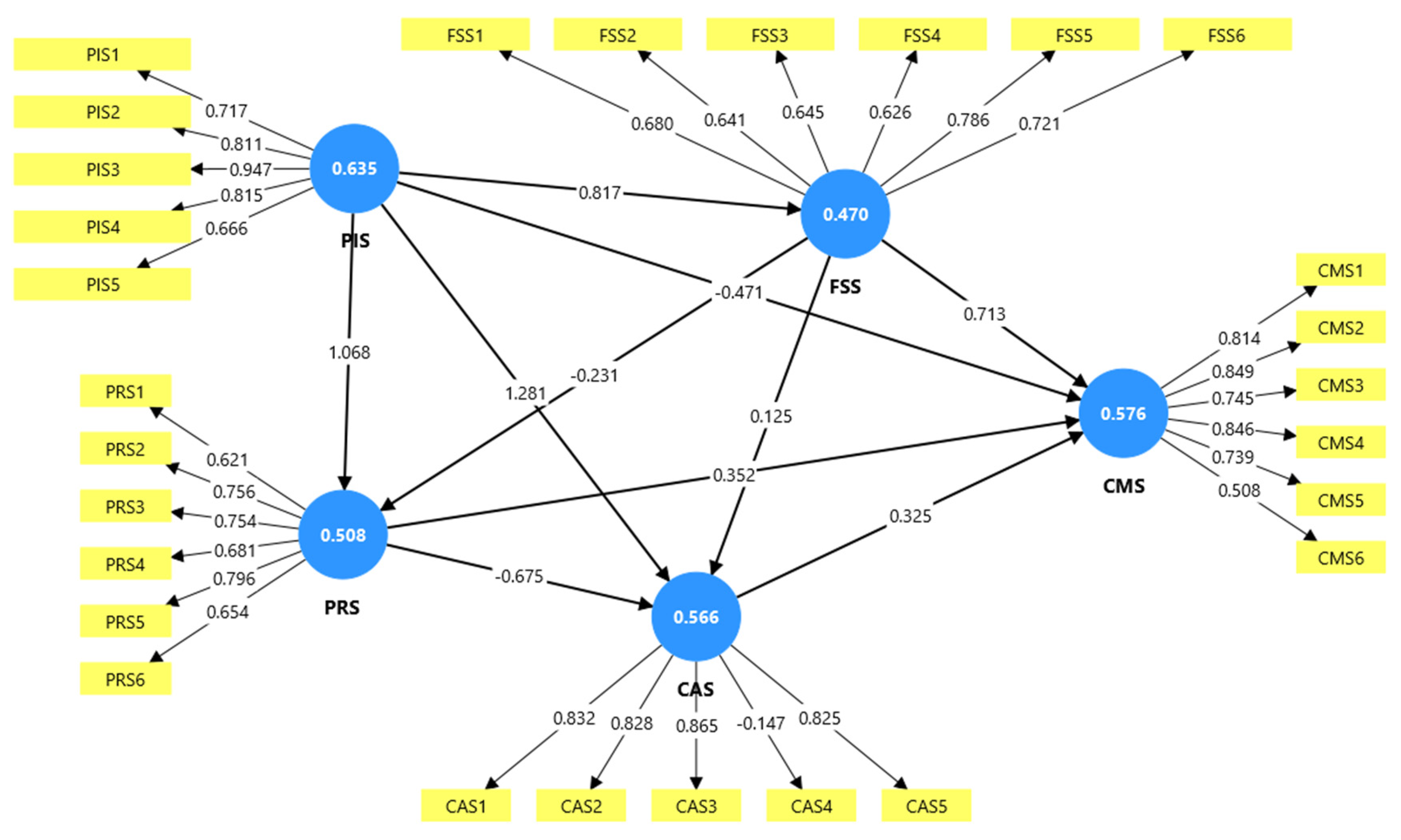
Table 4.
Discriminant validity assessment with cross loadings.
| CAS | CMS | FSS | PIS | PRS | |
| CAS1 | 0.435 | 0.552 | 0.620 | 0.634 | 0.393 |
| CAS2 | 0.526 | 0.464 | 0.540 | 0.672 | 0.414 |
| CAS3 | 0.665 | 0.619 | 0.644 | 0.684 | 0.477 |
| CAS5 | 0.325 | 0.586 | 0.674 | 0.629 | 0.479 |
| CMS1 | 0.480 | 0.214 | 0.611 | 0.468 | 0.428 |
| CMS2 | 0.429 | 0.648 | 0.557 | 0.435 | 0.447 |
| CMS3 | 0.463 | 0.544 | 0.530 | 0.415 | 0.377 |
| CMS4 | 0.501 | 0.246 | 0.630 | 0.536 | 0.439 |
| CMS5 | 0.106 | 0.439 | 0.670 | 0.600 | 0.386 |
| CMS6 | 0.389 | 0.509 | 0.580 | 0.614 | 0.511 |
| FSS1 | 0.416 | 0.301 | 0.681 | 0.478 | 0.323 |
| FSS2 | 0.444 | 0.328 | 0.641 | 0.658 | 0.535 |
| FSS3 | 0.350 | 0.427 | 0.646 | 0.501 | 0.362 |
| FSS4 | 0.413 | 0.567 | 0.626 | 0.488 | 0.486 |
| FSS5 | 0.173 | 0.476 | 0.286 | 0.661 | 0.544 |
| FSS6 | 0.568 | 0.403 | 0.321 | 0.532 | 0.319 |
| PIS1 | 0.585 | 0.477 | 0.178 | 0.317 | 0.512 |
| PIS2 | 0.444 | 0.450 | 0.509 | 0.411 | 0.455 |
| PIS3 | 0.746 | 0.604 | 0.638 | 0.146 | 0.111 |
| PIS4 | 0.851 | 0.592 | 0.589 | 0.214 | 0.526 |
| PIS5 | 0.445 | 0.556 | 0.632 | 0.667 | 0.494 |
| PRS1 | 0.263 | 0.255 | 0.342 | 0.625 | 0.620 |
| PRS2 | 0.444 | 0.428 | 0.441 | 0.303 | 0.556 |
| PRS3 | 0.399 | 0.438 | 0.485 | 0.694 | 0.254 |
| PRS4 | 0.463 | 0.457 | 0.499 | 0.544 | 0.581 |
| PRS5 | 0.445 | 0.491 | 0.552 | 0.661 | 0.296 |
| PRS6 | 0.162 | 0.321 | 0.405 | 0.503 | 0.654 |
Table 5.
Determining the discriminant validity with Fornell-Larcker criterion and HTMT.
| Fornell-Larcker | |||||
| CAS | CMS | FSS | PIS | PRS | |
| CAS | 0.838 | ||||
| CMS | 0.664 | 0.759 | |||
| FSS | 0.74 | 0.793 | 0.686 | ||
| PIS | 0.781 | 0.678 | 0.817 | 0.797 | |
| PRS | 0.526 | 0.568 | 0.641 | 0.879 | 0.713 |
| Heterotrait-monotrait (HTMT) | |||||
| CAS | CMS | FSS | PIS | PRS | |
| CAS | |||||
| CMS | 0.772 | ||||
| FSS | 0.765 | 0.619 | |||
| PIS | 0.808 | 0.803 | 0.792 | ||
| PRS | 0.613 | 0.687 | 0.783 | 0.762 | |
5.2.2. The Structural Model Assessment
With the assistance of the bootstrapping function within the SmartPLS 4, the structural model was analyzed with the focus on the interrelationships the five key latent variables in this study [85]. To ascertain the robustness of the model (Figure 1), the r-squared was used to determine the predictive power and goodness of fitness of the model. The results in Figure 3 indicate goodness of the model with more 0.5 coefficient, which is based on the variations in the relationships between the latent variables [86,87]. Furthermore, Table 6 presents the outcomes of the examination of the hypothesized relationships (H1-H10) specified in Section 3. Statistically, project identification strategies have significant positive effects in working with feasibility study strategies to address climate risks at a coefficient of 0.817 (HI). Project identification strategies (PIS) also influence procurement and contract award actionable measures on climate risks at 1.238 (H3) and 1.070 (H4) respectively. However, the relationship between PIS and contract management strategies was found to be insignificant (H2).
In the case of feasibility study strategies, the results demonstrate significant negative relationship between feasibility study and procurement strategies at (-0.233), H5 and positive impacts on contract management strategies at 0.708 (H7). But the results show insignificant effect of feasibility study on contract awards (H6). Procurement strategies were identified to have insignificant effects on contract management (H9) but pose negative effects on contract awards at -0.659 (H8). Lastly, Table 6 shows there is no unsubstantial impact of contract award on contract management (H10).
6. Discussions
In accordance with the research objectives and hypotheses set in Section 1 and Section 3 of the study, the first hypothesis, H1 (Table 6) confirms that identifying appropriate climate resilient projects forms the foundation of better PPP project feasibility studies. This means, strategies to identify climate-friendly PPP infrastructure are essential in assessing the viability of PPP projects against climate crisis. Casady, Cepparulo and Giuriato [63] mentioned that these strategies prioritize the scope of the threats taking into count the extent and magnitude of potential climate risks at project proposal meetings. Lupton, Jiménez, Bayraktar and Tsagdis [61] expanded this with the empirical evidence of the identifying climate adaptation and resilience issues at the identification stage of the projects. With respect to H2, the results in Table 6 indicate rejection of the relationship between project identification and contract management. This means identifying the right climate-conscious projects may not have any influence on ensuring the management of the contracts respond adequately to climate change. This is opposed by Akomea-Frimpong, Agyekum, Amoakwa, Babon-Ayeng and Pariafsai [4] research findings that argue that project identification influence climate actions related to contract management of PPP projects. Moreover, climate action documents from OECD countries such as Australia, Canada and New Zealand government for instance recognizes the strong link between project identification, climate and contract management strategies of PPP infrastructures [38]. This outcome on H2 provides a viable avenue for exploration of further studies to ascertain the mishaps between the two climate risk measures. In the case of H3 and H4, project identification strategies were found to significantly influence contract award and procurement protocols. Increasingly, public projects which are executed within the PPP arrangements have seen climate requirements as a key prerequisite in awarding contracts [32]. Governments are taking note of bidding and procurements contractors who can accept and manage climate risks. Contractors who fail to incorporate and comply with climate-friendly procurement practices are likely to lose contracts or be fined. This scenario has been identified in United Kingdom (UK) where more than 30 government contractors were fined for lack of due diligence to safety and environmentally conscious practices towards reducing carbon emissions [88].
Table 6 also demonstrates that two (H5 and H7) out of the three hypotheses on feasibility studies on climate risks of PPP projects were found to be empirically significant. Sustainable feasibility studies influence procurement and contract management-based climate actions [5,30]. Wang, et al. [89] recounted that environmentally conscious feasible studies on mechanisms and systems such as the studies on heat pumps and carbon performance levels of infrastructures are important in assessing the carbon emission status of projects. The feasibility analysis also considers the social support systems available within emission neutral projects to assist community development and foster preservation of indigenous cultures. Lastly, through feasibility analysis, the financial viability of PPP projects is ascertain triggering the selection of sustainable green finance models. Despite these outcomes, H6 discounts the relevance of feasibility studies in awarding climate-friendly contracts in the PPP sector. This finding is contrary to existing studies such as Martimort and Straub [90] and Feng, et al. [91] who mentioned that feasibility is an integral part of awarding climate-sensitive contracts in infrastructure developments. Procurement strategies were found to impact contract award but not contract management with H8 and H9 (See Table 6). Akomea-Frimpong, Jin and Osei-Kyei [68] explained that contractors prioritize procuring recycling materials and construction inputs which produce the least emissions and financial risks. Sustainable packaging initiatives together with partnerships promote sustainable practices. Project managers adopt cleaner technologies and tracking systems in the supply chain for PPP sustainable development. Giesekam, Tingley and Cotton [17] argued for procuring tensile project materials and green facades for PPP housing and buildings are important to stand against climate change. Lastly, H10 was not supported statistically, and it was rejected where no significant connection was found to exist between awarding contracts and contract management towards climate risk management in PPP infrastructure.
7. Conclusions, Implications and Limitations
The consequences of climate change negatively affect the sustainability of PPP infrastructure projects. In this research, various strategies to mitigate the risks have been presented considering the principal stages of the PPP project lifecycle. The study solicited primary data from key PPP stakeholders through online survey of questionnaires which were distributed to respondents in different parts of the world. The main data analysis tool to analyze the relationships between the strategies was PLS-SEM analysis. The results from the data collected indicated that most of the participants were gathered from various continents of the world showing the diversity of the participants. Also, majority of the PPP projects which featured prominently in the responses of the participants are housing and transportation infrastructures. From the measurement model analysis of the PLS-SEM, twenty-seven strategies were retained and CAS4 (incorporate sustainability requirements) was removed because it recorded a factor loading of -0.147. The structural model exhibits significant relationships and gaps between principal strategies of procurement, feasibility study, contract management, project identification and contract award towards climate risk management.
This article has two main potential implications. First, for practice, the findings provide understanding of key project identification measures on climate change management for PPP infrastructures. It encourages setting the appropriate targets, development of realistic timelines and defines the areas of climate risk management. Climate risk indicators for performance assessment should be set with the assistance of project leadership supervision and evaluation. The results provide insights for feasibility assessment taking into consideration retrofitting, cost, carbon footprint and justification of assessing the state of climate resilience and adaptation position of PPP projects. The findings also provide information on strategies to improve procurement, contract award and management. Secondly, the study is important for enriching few theoretical information and research on strategies on climate change risks of PPP projects. The outcomes are essential for further investigations and development of models to support future studies. Despite these contributions to research and practices, the study has the following limitations. The dataset for this analysis is limited to 147 PPP stakeholders. Even though it was proven to be significant for this research, further studies must expand the participants to cover a wider coverage of responses. Next, the strategies analyzed in this study are linked to all forms of PPP infrastructures. It is suggested that further studies should embark on project-specific analysis using case studies of ongoing and completed projects. Lastly, it would be great if future studies assess the geographical differences of the strategies and delve into practice and policy frameworks in every country or region about the strategies.
Author Contributions
Conceptualization- Isaac Akomea-Frimpong (IAF) and Andrew Victor Kabenlah Blay Jnr (AVKBJ); methodology- IAF; formal analysis - IAF and AVKBJ; data curation- IAF.; writing—original draft preparation- IAF and AVKBJ.; writing—review and editing, IAF and AVKBJ.; All authors have read and agreed to the published version of the manuscript.
Funding
This research received no external funding.
Data Availability Statement
The data on this study is available upon request from the corresponding author.
Acknowledgments
The authors are grateful to anonymous participants in the data collection and reviewers of this article. We also appreciate our respective universities: Excelsia University College (Australia) and University of East London (United Kingdom). Thank you very much for your significant contributions to this study.
Conflicts of Interest
The authors declare no conflicts of interest.
References
- De Matteis, F.; Borgonovi, E.; Notaristefano, G.; Striani, F. The contribution of public-private partnership (PPP) to sustainability: governance and managerial implications from a literature review. Corporate Governance: The International Journal of Business in Society 2025, 25, 144–159. [Google Scholar] [CrossRef]
- Atamanov, A.; Lakner, C.; Mahler, D.G.; Tetteh Baah, S.K.; Yang, J. The effect of new PPP estimates on global poverty: A first look; World Bank, 2020. [Google Scholar]
- Chileshe, N.; Njau, C.W.; Kibichii, B.K.; Macharia, L.N.; Kavishe, N. Critical success factors for Public-Private Partnership (PPP) infrastructure and housing projects in Kenya. International Journal of Construction Management 2022, 22, 1606–1617. [Google Scholar] [CrossRef]
- Akomea-Frimpong, I.; Agyekum, A.K.; Amoakwa, A.B.; Babon-Ayeng, P.; Pariafsai, F. Toward the attainment of climate-smart PPP infrastructure projects: A critical review and recommendations. Environment, Development and Sustainability 2024, 26, 19195–19229. [Google Scholar] [CrossRef]
- Batra, R. Review of public–private partnerships across building sectors in nine European countries: Key adaptations for PPP in housing. Engineering, Construction and Architectural Management 2023, 30, 2904–2927. [Google Scholar] [CrossRef]
- Wang, S.; Liu, C.; Zhou, Z. Government-enterprise green collaborative governance and urban carbon emission reduction: Empirical evidence from green PPP programs. Environmental Research 2024, 257, 119335. [Google Scholar] [CrossRef] [PubMed]
- Kumar, D.; Kamran, M.; Zhang, C.; Wang, L.; Zhai, H.; Demirkesen, S. Evaluating the impact of contracting and procurement methods on energy and carbon emissions reduction in the public construction sector. In ASCE Inspire 2023; 2023; pp. 886–894. [Google Scholar]
- Che, S.; Wen, L.; Wang, J. Global insights on the impact of digital infrastructure on carbon emissions: a multidimensional analysis. Journal of Environmental Management 2024, 368, 122144. [Google Scholar] [CrossRef] [PubMed]
- Ali, M.; Hashmi, S.H.; Habib, Y.; Kirikkaleli, D. The asymmetric impact of public–private partnership investment in energy on CO2 emissions in Pakistan. Energy & environment 2024, 35, 2131–2150. [Google Scholar]
- Amiri, A.; Gumiere, S.; Bonakdari, H. Firestorm in California: The new reality for wildland-urban interface regions. Urban Climate 2025, 62, 102528. [Google Scholar] [CrossRef]
- Xu, J.; Nair, D.J.; Waller, S.T. Implementing equitable wildfire response plans. Science 2025, 388, 158–159. [Google Scholar] [CrossRef]
- Xue, Y.; Chen, N.; Tang, R.; Yang, Z.; Jiao, M.; Wen, T.; Wang, Y.; Jin, J. Slope failure mechanism of the “5· 1” Meida Highway collapse in Guangdong, China: interaction between multi-source water and weathered granite soil. Landslides 2025, 22, 1199–1212. [Google Scholar] [CrossRef]
- Birkmann, J.; Truedinger, A.; Schuettrumpf, H. The Impact of Science: Uptake of Scientific Recommendations After Extreme Events—Case Study Floods in 2021 in Germany. J. Flood Risk Manag. 2025, 18, e70100. [Google Scholar] [CrossRef]
- de Souza, D.C.; Crespo, N.M.; da Silva, D.V.; Harada, L.M.; de Godoy, R.M.P.; Domingues, L.M.; Luiz, R.; Bortolozo, C.A.; Metodiev, D.; de Andrade, M.R.M. Extreme rainfall and landslides as a response to human-induced climate change: a case study at Baixada Santista, Brazil, 2020. Natural Hazards 2024, 120, 10835–10860. [Google Scholar] [CrossRef]
- Fagbemi, F.; Fajingbesi, A.; Bello, K.M. Infrastructure Impact of Climate Change in Sub-Saharan Africa: Is the Decarbonizing Strategy the Cinderella of Climate Action? Journal of Critical Infrastructure Policy 2025, 6, e12042. [Google Scholar] [CrossRef]
- Cheng, G.; Zhao, C.; Iqbal, N.; Gülmez, Ö.; Işik, H.; Kirikkaleli, D. Does energy productivity and public-private investment in energy achieve carbon neutrality target of China? Journal of Environmental management 2021, 298, 113464. [Google Scholar] [CrossRef] [PubMed]
- Giesekam, J.; Tingley, D.D.; Cotton, I. Aligning carbon targets for construction with (inter) national climate change mitigation commitments. Energy Build. 2018, 165, 106–117. [Google Scholar] [CrossRef]
- Sweet, R. Decarbonising construction: Six things the industry could do. Construction Research and Innovation 2019, 10, 109–113. [Google Scholar] [CrossRef]
- Huang, Y.; Xue, L.; Khan, Z. What abates carbon emissions in China: Examining the impact of renewable energy and green investment. Sustainable Development 2021, 29, 823–834. [Google Scholar] [CrossRef]
- Jin, H.; Chan, M.; Bai, Y. Joint Optimization of Critical Concession Parameters for Sustainable PPP Contracts. Journal of Construction Engineering and Management 2025, 151, 04025051. [Google Scholar] [CrossRef]
- Liu, L.; Anwar, A.; Irmak, E.; Pelit, I. Asymmetric linkages between public-private partnership, environmental innovation, and transport emissions. Ekon. Istraz. 2022, 35, 6519–6540. [Google Scholar] [CrossRef]
- Cui, C.; Liu, Y.; Hope, A.; Wang, J. Review of studies on the public–private partnerships (PPP) for infrastructure projects. International journal of project management 2018, 36, 773–794. [Google Scholar] [CrossRef]
- Tang, L.; Shen, Q.; Cheng, E.W. A review of studies on public–private partnership projects in the construction industry. International journal of project management 2010, 28, 683–694. [Google Scholar] [CrossRef]
- Zou, P.X.; Wang, S.; Fang, D. A life-cycle risk management framework for PPP infrastructure projects. Journal of financial management of property and construction 2008, 13, 123–142. [Google Scholar] [CrossRef]
- Akomea-Frimpong, I.; Dzagli, J.R.A.D.; Eluerkeh, K.; Bonsu, F.B.; Opoku-Brafi, S.; Gyimah, S.; Asuming, N.A.S.; Atibila, D.W.; Kukah, A.S. A systematic review of artificial intelligence in managing climate risks of PPP infrastructure projects. Engineering, Construction and Architectural Management 2023. [Google Scholar] [CrossRef]
- Neto, D.d.C.e.S.; Cruz, C.O.; Rodrigues, F.; Silva, P. PPP development and governance in Latin America: analysis of Brazilian state PPP units. Journal of Infrastructure Systems 2020, 26, 05020003. [Google Scholar] [CrossRef]
- Gillett, N.P.; Kirchmeier-Young, M.; Ribes, A.; Shiogama, H.; Hegerl, G.C.; Knutti, R.; Gastineau, G.; John, J.G.; Li, L.; Nazarenko, L. Constraining human contributions to observed warming since the pre-industrial period. Nature Climate Change 2021, 11, 207–212. [Google Scholar] [CrossRef]
- Maslin, M.; Ramnath, R.D.; Welsh, G.I.; Sisodiya, S.M. Understanding the health impacts of the climate crisis. Future Healthcare Journal 2025, 12, 100240. [Google Scholar] [CrossRef] [PubMed]
- Fawzy, S.; Osman, A.I.; Doran, J.; Rooney, D.W. Strategies for mitigation of climate change: a review. Environmental Chemistry Letters 2020, 18, 2069–2094. [Google Scholar] [CrossRef]
- Shivanna, K.R. Climate change and its impact on biodiversity and human welfare. Proceedings of the Indian National Science Academy 2022, 88, 160–171. [Google Scholar] [CrossRef]
- Saif, W.; Rogage, K.; Martinez, P.; Kassem, M. Decarbonising construction equipment: Management practices and strategies for net zero in UK infrastructure projects. Building and Environment 2025, 270, 112503. [Google Scholar] [CrossRef]
- Amin, S. Decarbonisation of Road Transportation in India—A Round-Robin Review on Low-Carbon Strategies and Financial Policies. Future Transportation 2025, 5, 36. [Google Scholar] [CrossRef]
- Sanada, K.; Zappa, M. Japan’s international cooperation on smart city development in Asia: International effort beneath the smart rhetoric in India and in Thailand. Research in Globalization 2025, 100270. [Google Scholar] [CrossRef]
- Saleeb, H.; El-Rifaie, A.M.; Youssef, A.A.; Mohamed, S.A.; Kassem, R. Providing Solutions to Decarbonize Energy-Intensive Industries for a Sustainable Future in Egypt by 2050. Sustainability 2025, 17, 2408. [Google Scholar] [CrossRef]
- PPIAF. ToolkiT for Public-PrivaTe ParTnershiPs in roads & highways; 2009. [Google Scholar]
- Ahmadi, L.; Arbabi, H.; Sobhiyah, M.H.; Laali, A. Investigation of factors affecting sustainability in public–private partnerships for infrastructure projects. Environment, Development and Sustainability 2024, 1–26. [Google Scholar] [CrossRef]
- Tipu, W.A.; Mughal, Y.H.; Kundi, G.M.; Nair, K.S.; Thurasamy, R. Enhancing the Sustainable Performance of Public–Private Partnership Projects: The Buffering Effect of Environmental Uncertainty. Buildings 2024, 14, 3879. [Google Scholar] [CrossRef]
- Nguyen, T.; Hallo, L.; Gunawan, I. Investigating risk of public–private partnerships (PPPs) for smart transportation infrastructure project development. Built Environment Project and Asset Management 2024, 14, 74–91. [Google Scholar] [CrossRef]
- Alqahtani, F.K.; Al-Jadhai, S.; Alromihy, H.; Alsaud, M.; Sherif, M.; Mohamed, A.G. Appraising critical success factors in sustainable housing projects: A comparative study of PPP modalities in Saudi Arabia. Heliyon 2024, 10. [Google Scholar] [CrossRef] [PubMed]
- Osei-Kyei, R.; Ampratwum, G. Developing a Model for Assessing the Performance Outcome for Building Urban Community Resilience Through Public–Private Partnership. Buildings 2025, 15, 2023. [Google Scholar] [CrossRef]
- Hou, X.; Li, W.; Li, D.; Peng, J. Public–private partnerships and carbon reduction targets: evidence from PPP investments in energy and environmental protection in China. Environment, Development and Sustainability 2025, 27, 6567–6597. [Google Scholar] [CrossRef]
- Tariq, S.; Zhang, X. A critical analysis of water PPP failures in sub-Saharan Africa. Engineering, Construction and Architectural Management 2022, 29, 3157–3180. [Google Scholar] [CrossRef]
- Xiao, H.; Li, S.; Kang, A.; Corlett, R.T.; Ma, K.; Shen, X. Biodiversity risk assessment and management for infrastructure projects under the Belt and Road Initiative. Conservation Biology 2025, e70039. [Google Scholar] [CrossRef]
- Ngo, V.M.; Nguyen, H.H.; Pham, H.C.; Nguyen, L.H. Engage or retreat? Exploring the determinants of participation in Climate Finance public-private partnerships. Clim. Change 2024, 177, 104. [Google Scholar] [CrossRef]
- Tuffour, P.; Chen, G.; Opoku-Mensah, E.; Darko, P.A.; Adu Agyapong, R. Toward sustainable development: Developing a decision-making framework for cross-sectoral engagement in green procurement. Sustainable Development 2024, 32, 2233–2252. [Google Scholar] [CrossRef]
- Tian, B.; Fu, J.; Xu, Y.; Sun, L. How does contract flexibility affect the sustainability performance of public–private partnership projects? A serial multiple mediator model. Engineering, Construction and Architectural Management 2024, 31, 28–47. [Google Scholar] [CrossRef]
- Zhang, L.; Shi, L.; Ma, L. Effect of public–private partnership features on contractual complexity: evidence from China. Engineering, Construction and Architectural Management 2024, 31, 3876–3894. [Google Scholar] [CrossRef]
- Akhtar, M.; Mufti, N.A.; Mubin, S.; Saleem, M.Q.; Zahoor, S.; Ullah, S. Identification of various execution modes and their respective risks for public–private partnership (PPP) infrastructure projects. Buildings 2023, 13, 1889. [Google Scholar] [CrossRef]
- Almarri, K.; Boussabaine, H. Critical success factors for public–private partnerships in smart city infrastructure projects. Constr. Innov. 2025, 25, 224–247. [Google Scholar] [CrossRef]
- Ampratwum, G.; Tam, V.W.; Osei-Kyei, R. Critical analysis of risks factors in using public-private partnership in building critical infrastructure resilience: a systematic review. Constr. Innov. 2023, 23, 360–382. [Google Scholar] [CrossRef]
- Demirel, H.C.; Leendertse, W.; Volker, L. Mechanisms for protecting returns on private investments in public infrastructure projects. International Journal of Project Management 2022, 40, 155–166. [Google Scholar] [CrossRef]
- Akomea-Frimpong, I.; Dzagli, J.R.A.D.; Eluerkeh, K.; Bonsu, F.B.; Opoku-Brafi, S.; Gyimah, S.; Asuming, N.A.S.; Atibila, D.W.; Kukah, A.S. A systematic review of artificial intelligence in managing climate risks of PPP infrastructure projects. Engineering, Construction and Architectural Management 2025, 32, 2430–2454. [Google Scholar] [CrossRef]
- Kim, J.Y.; Park, C.Y.; Lee, D.K.; Yun, S.H.; Hyun, J.H.; Kim, E.S. The cooling effect of trees in high-rise building complexes in relation to spatial distance from buildings. Sustainable Cities and Society 2024, 114, 12. [Google Scholar] [CrossRef]
- Xiahou, X.; Tang, L.; Yuan, J.; Zuo, J.; Li, Q. Exploring social impacts of urban rail transit PPP projects: Towards dynamic social change from the stakeholder perspective. Environ. Impact Assess. Rev. 2022, 93, 106700. [Google Scholar] [CrossRef]
- Mello, L.d.; Ter-Minassian, T. Subnational investments in mitigation and adaptation to climate change: some financing and governance issues. Public Finance and Management 2024, 23, 113–131. [Google Scholar] [CrossRef]
- Abden, M.J.; Tao, Z.; Alim, M.A.; Afroze, J.D.; Tam, V.W.Y. Enhancing building energy performance and climate resilience with phase change materials and reflective coatings. Journal of Energy Storage 2025, 120, 14. [Google Scholar] [CrossRef]
- Perera, A.T.D.; Javanroodi, K.; Nik, V.M. Climate resilient interconnected infrastructure: Co-optimization of energy systems and urban morphology. Applied Energy 2021, 285, 17. [Google Scholar] [CrossRef]
- Dafermos, Y.; Gabor, D.; Michell, J. The Wall Street Consensus in pandemic times: what does it mean for climate-aligned development? Canadian Journal of Development Studies/Revue canadienne d’études du développement 2021, 42, 238–251. [Google Scholar] [CrossRef]
- Moradi Shahdadi, L.; Aminnejad, B.; Sarvari, H.; Chan, D.W. Determining the critical risk factors of implementing public–private partnership in water and wastewater infrastructure facilities: Perspectives of private and public partners in Iran. Buildings 2023, 13, 2735. [Google Scholar] [CrossRef]
- Hai, D.T.; Toan, N.Q.; Van Tam, N. Critical success factors for implementing PPP infrastructure projects in developing countries: the case of Vietnam. Innov. Infrastruct. Solut. 2022, 7, 89. [Google Scholar] [CrossRef]
- Lupton, N.C.; Jiménez, A.; Bayraktar, S.; Tsagdis, D. Climate risk and private participation projects in infrastructure: Mitigating the impact of locational (dis) advantages. Management Decision 2021, 59, 51–67. [Google Scholar] [CrossRef]
- Hoeft, M.; Pieper, M.; Eriksson, K.; Bargstädt, H.-J. Toward life cycle sustainability in infrastructure: the role of automation and robotics in PPP projects. Sustainability 2021, 13, 3779. [Google Scholar] [CrossRef]
- Casady, C.B.; Cepparulo, A.; Giuriato, L. Public-private partnerships for low-carbon, climate-resilient infrastructure: Insights from the literature. Journal of Cleaner Production 2024, 470, 143338. [Google Scholar] [CrossRef]
- Sundararajan, S.; Suriyagoda, N. Climate risks and resilience in infrastructure PPPs: issues to be considered. World Bank Group 2016. [Google Scholar]
- Akomea-Frimpong, I.; Jin, X.; Osei-Kyei, R. Mapping studies on sustainability in the performance measurement of public-private partnership projects: a systematic review. Sustainability 2022, 14, 7174. [Google Scholar] [CrossRef]
- Jiang, W.; Jiang, J.; Martek, I.; Jiang, W. Critical risk management strategies for the operation of public–private partnerships: a vulnerability perspective of infrastructure projects. Engineering, Construction and Architectural Management 2025, 32, 4771–4795. [Google Scholar] [CrossRef]
- Khahro, S.H.; Ali, T.H.; Hassan, S.; Zainun, N.Y.; Javed, Y.; Memon, S.A. Risk severity matrix for sustainable public-private partnership projects in developing countries. Sustainability 2021, 13, 3292. [Google Scholar] [CrossRef]
- Akomea-Frimpong, I.; Jin, X.; Osei-Kyei, R. A holistic review of research studies on financial risk management in public–private partnership projects. Engineering, construction and architectural management 2021, 28, 2549–2569. [Google Scholar] [CrossRef]
- Li, Z.; Wang, H. Exploring risk factors affecting sustainable outcomes of global public–private partnership (PPP) projects: a stakeholder perspective. Buildings 2023, 13, 2140. [Google Scholar] [CrossRef]
- Jayasena, N.S.; Chan, D.W.; Kumaraswamy, M. A systematic literature review and analysis towards developing PPP models for delivering smart infrastructure. Built Environment Project and Asset Management 2021, 11, 121–137. [Google Scholar] [CrossRef]
- Feng, Y.; Guo, X.; Wei, B.; Chen, B. A fuzzy analytic hierarchy process for risk evaluation of urban rail transit PPP projects. Journal of Intelligent & Fuzzy Systems 2021, 41, 5117–5128. [Google Scholar]
- Arijeloye, B.T.; Aje, I.O.; Oke, A.E. Evaluating the key risk factors in PPP-procured mass housing projects in Nigeria: A Delphi study of industry experts. Journal of Engineering, Design and Technology 2024, 22, 60–76. [Google Scholar] [CrossRef]
- Hawkins, M.; Elsworth, G.R.; Hoban, E.; Osborne, R.H. Questionnaire validation practice within a theoretical framework: a systematic descriptive literature review of health literacy assessments. BMJ Open 2020, 10, e035974. [Google Scholar] [CrossRef]
- Akomea-Frimpong, I.; Tumpa, R.J.; Ofori, J.A.N.; Botchway, B.; Tetteh, P.A.; Jin, X. Critical success factors of green finance on zero carbon buildings. Energy Build. 2025, 338, 115735. [Google Scholar] [CrossRef]
- Osei-Kyei, R.; Chan, A.P.; Javed, A.A.; Ameyaw, E.E. Critical success criteria for public-private partnership projects: international experts’ opinion. International Journal of Strategic Property Management 2017, 21, 87–100. [Google Scholar] [CrossRef]
- Hair, J.F.; Risher, J.J.; Sarstedt, M.; Ringle, C.M. When to use and how to report the results of PLS-SEM. European business review 2019, 31, 2–24. [Google Scholar] [CrossRef]
- Memon, M.A.; Ramayah, T.; Cheah, J.-H.; Ting, H.; Chuah, F.; Cham, T.H. PLS-SEM statistical programs: a review. Journal of Applied Structural Equation Modeling 2021, 5, 1–14. [Google Scholar] [CrossRef] [PubMed]
- Purwanto, A.; Sudargini, Y. Partial least squares structural squation modeling (PLS-SEM) analysis for social and management research: a literature review. Journal of Industrial Engineering & Management Research 2021, 2, 114–123. [Google Scholar]
- Mas-Machuca, M.; Martínez Costa, C. Exploring critical success factors of knowledge management projects in the consulting sector. Total Quality Management & Business Excellence 2012, 23, 1297–1313. [Google Scholar] [CrossRef]
- Al-Maroof, R.A.S.; Al-Emran, M. Students acceptance of Google classroom: An exploratory study using PLS-SEM approach. International Journal of Emerging Technologies in Learning 2018, 13. [Google Scholar] [CrossRef]
- Chanda, R.C.; Vafaei-Zadeh, A.; Hanifah, H.; Ramayah, T. Investigating factors influencing individual user’s intention to adopt cloud computing: a hybrid approach using PLS-SEM and fsQCA. Kybernetes 2024, 53, 4470–4501. [Google Scholar] [CrossRef]
- Singh, H.; Singh, V.V.; Gupta, A.K.; Kapur, P. Assessing e-learning platforms in higher education with reference to student satisfaction: a PLS-SEM approach. Int. J. Syst. Assur. Eng. Manag. 2024, 15, 4885–4896. [Google Scholar] [CrossRef]
- Cheung, G.W.; Cooper-Thomas, H.D.; Lau, R.S.; Wang, L.C. Reporting reliability, convergent and discriminant validity with structural equation modeling: A review and best-practice recommendations. Asia pacific journal of management 2024, 41, 745–783. [Google Scholar] [CrossRef]
- Wieland, A.; Durach, C.F.; Kembro, J.; Treiblmaier, H. Statistical and judgmental criteria for scale purification. Supply Chain Management: An International Journal 2017, 22, 321–328. [Google Scholar] [CrossRef]
- Hair Jr, J.F.; Sarstedt, M.; Matthews, L.M.; Ringle, C.M. Identifying and treating unobserved heterogeneity with FIMIX-PLS: part I–method. European Business Review 2016. [Google Scholar] [CrossRef]
- Cepeda, G.; Roldán, J.L.; Sabol, M.; Hair, J.; Chong, A.Y.L. Emerging opportunities for information systems researchers to expand their PLS-SEM analytical toolbox. Industrial Management & Data Systems 2024, 124, 2230–2250. [Google Scholar] [CrossRef]
- Vaithilingam, S.; Ong, C.S.; Moisescu, O.I.; Nair, M.S. Robustness checks in PLS-SEM: A review of recent practices and recommendations for future applications in business research. Journal of Business Research 2024, 173, 114465. [Google Scholar] [CrossRef]
- GovUK. More than 30 companies fined as part of efforts to reduce emissions. 2022.
- Wang, Z.; Zhou, Y.; Jin, X.; Zhao, N.; Sun, J. Risk allocation and benefit distribution of PPP projects for construction waste recycling: a case study of China. Engineering, Construction and Architectural Management 2023, 30, 3927–3956. [Google Scholar] [CrossRef]
- Martimort, D.; Straub, S. How to design infrastructure contracts in a warming world: A critical appraisal of public–private partnerships. International Economic Review 2016, 57, 61–88. [Google Scholar] [CrossRef]
- Feng, D.-C.; Ding, J.-Y.; Xie, S.-C.; Li, Y.; Akiyama, M.; Lu, Y.; Beer, M.; Li, J. Climate change impacts on the risk assessment of concrete civil infrastructures. ASCE OPEN: Multidisciplinary Journal of Civil Engineering 2024, 2, 03124001. [Google Scholar] [CrossRef]
Figure 1.
Conceptual model.
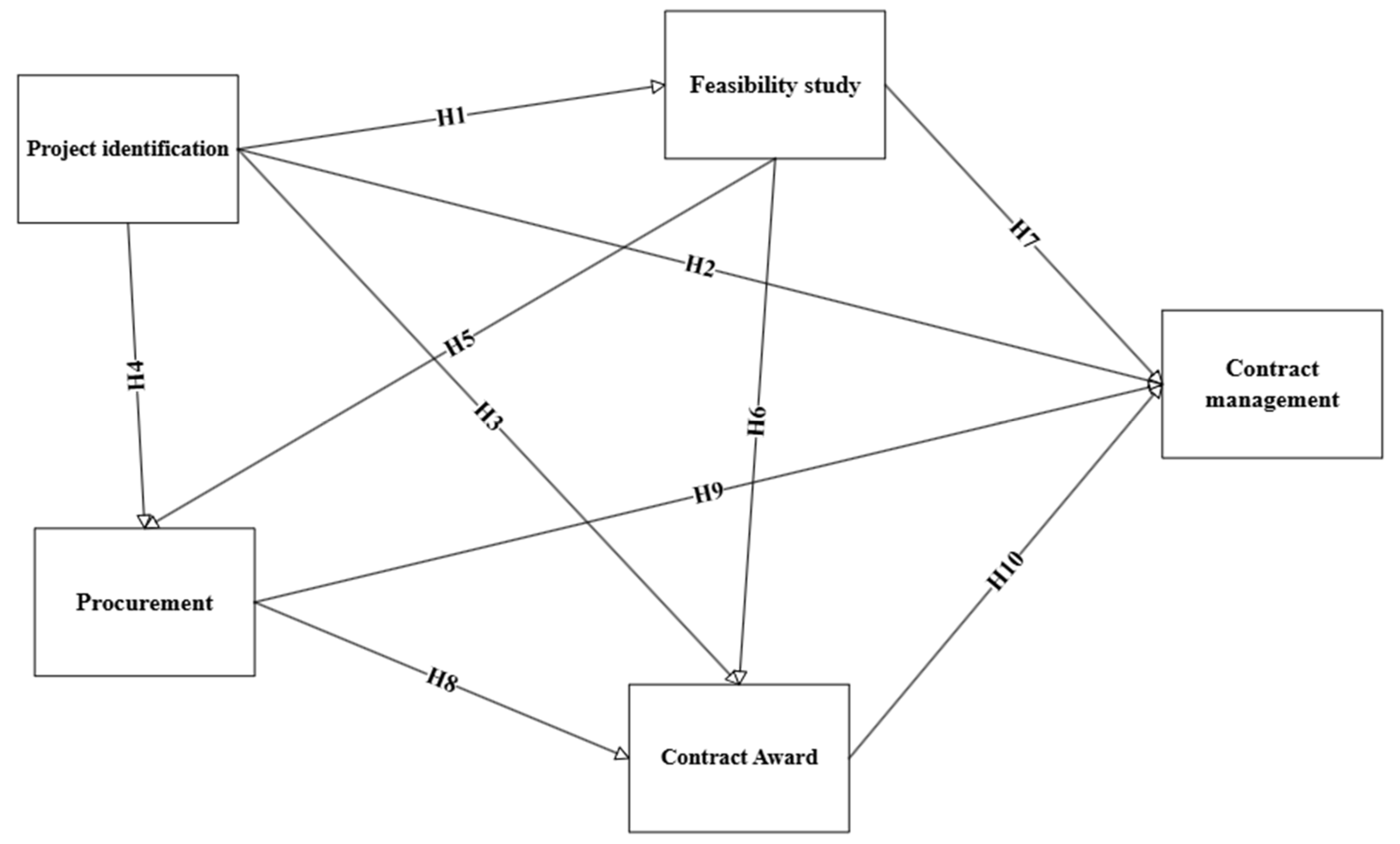
Figure 3.
Final structural model.
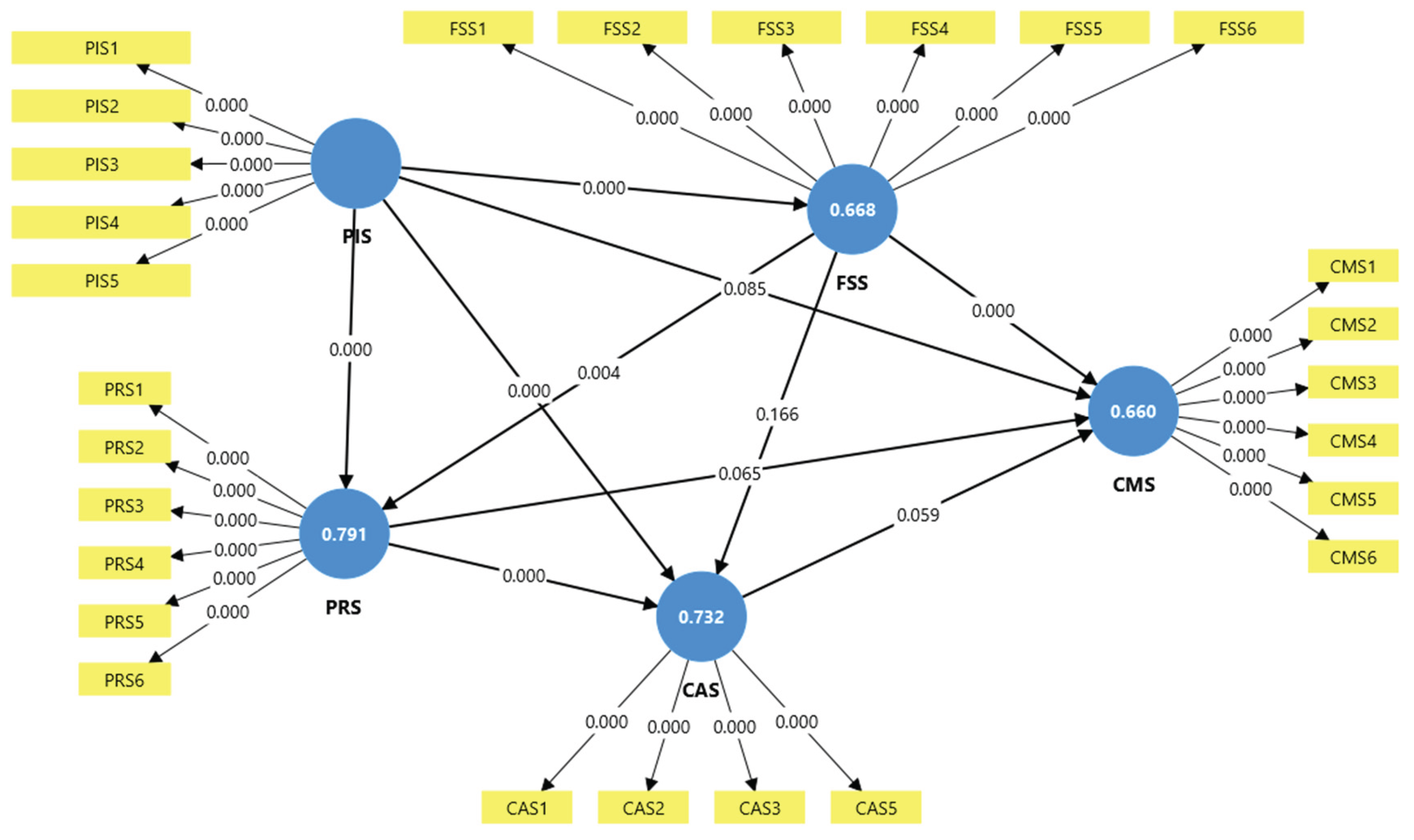
Table 1.
Strategies (variables) on climate risks of PPP projects.
| Latent variables | Code | Indicator/measurement variables | References |
|---|---|---|---|
| Project identification strategies | PIS | ||
| PIS1 | Set achievable climate risk targets | Akhtar, et al. [48] | |
| PIS2 | Develop timelines on the actions to reduce carbon emissions | Almarri and Boussabaine [49] | |
| PIS3 | Get leadership support to the decarbonisation roadmap | Ampratwum, et al. [50] | |
| PIS4 | Define the performance assessment targets | Demirel, et al. [51] | |
| PIS5 | Specify the scope of climate risks | Akomea-Frimpong, et al. [52] | |
| Feasibility assessment strategies | FSS | ||
| FSS1 | Carbon emission footprint assessment | Kim, et al. [53] | |
| FSS2 | Retrofitting and redesign of infrastructures | Xiahou, et al. [54] | |
| FSS3 | Compute the potential costs on each climate action | Mello and Ter-Minassian [55] | |
| FSS4 | Assess the appropriate clean energy tools | Abden, et al. [56] | |
| FSS5 | Determine the applicability of climate risk models | Perera, et al. [57] | |
| FSS6 | Justify the benefits of measures against climate risks | Dafermos, et al. [58] | |
| Procurement strategies | PRS | ||
| PRS1 | Climate-friendly supply chains | Moradi Shahdadi, et al. [59] | |
| PRS2 | Carbon neutral bidding measures | Hai, et al. [60] | |
| PRS3 | Green procurement policies | Lupton, et al. [61] | |
| PRS4 | Strong partnership with suppliers | Akomea-Frimpong, Agyekum, Amoakwa, Babon-Ayeng and Pariafsai [4] | |
| PRS5 | Circular procurement initiatives | Wang, Liu and Zhou [6] | |
| PRS6 | Real-time procurement tracking systems | Hoeft, et al. [62] | |
| Contract award strategies | CAS | ||
| CAS1 | Climate-conscious contracts | Nguyen, Hallo and Gunawan [38] | |
| CAS2 | Commitment to implement climate risk management practices | Casady, et al. [63] | |
| CAS3 | Contract clauses ensure meeting decarbonisation targets | Sundararajan and Suriyagoda [64] | |
| CAS4 | Incorporate sustainability requirements | Akomea-Frimpong, et al. [65] | |
| CAS5 | Select the lowest climate risk contract | Jiang, et al. [66] | |
| Contract management strategies | CMS | ||
| CMS1 | Implement climate resilience and adaptation measures | Khahro, et al. [67] | |
| CMS2 | Utilise renewable energies for infrastructures | Akomea-Frimpong, et al. [68] | |
| CMS3 | Upskill teams towards net-zero project management | Li and Wang [69] | |
| CM4 | Emission reduction monitoring systems | Jayasena, et al. [70] | |
| CM5 | Review of contract risks | Feng, et al. [71] | |
| CM6 | Establish climate-based governance structures | Arijeloye, et al. [72] |
Table 2.
Background information of respondents.
| Category | Profile and number of respondents |
| Job position | Risk consultant (24), Project manager (45), Public regulator (18), Architect (31), Operator (29) |
| Education | Diploma (25), First degree (74), master’s degree (38), Doctoral degree (10) |
| Experience | 0 to 5 years (12), 6 to 10 years (94), more than 10 years (41) |
| Project type | Roads (33), Hospitals (24), Energy & electricity (37), Housing (53) |
| Country | Australia (7), India (34), Ghana (27), Nigeria (18), US (8), UK (6), Kenya (23), Canada (5), South Africa (9), China (10) |
Table 6.
Hypothesis testing.
| Hypotheses | Path coefficient | T- Stat | P values | Decision |
| H1 (PIS -> FSS) | 0.817 | 22.657 | 0.000 | Supported |
| H2 (PIS -> CMS) | -0.426 | 1.725 | 0.085 | Reject |
| H3 (PIS -> CAS) | 1.238 | 6.157 | 0.000 | Supported |
| H4 (PIS -> PRS) | 1.070 | 16.121 | 0.000 | Supported |
| H5 (FSS -> PRS) | -0.233 | 2.870 | 0.004 | Supported |
| H6 (FSS -> CAS) | 0.150 | 1.385 | 0.166 | Reject |
| H7 (FSS -> CMS) | 0.708 | 7.014 | 0.000 | Supported |
| H8 (PRS -> CAS) | -0.659 | 4.611 | 0.000 | Supported |
| H9 (PRS -> CMS) | 0.331 | 1.844 | 0.065 | Reject |
| H10 (CAS -> CMS) | 0.299 | 1.892 | 0.059 | Reject |
Disclaimer/Publisher’s Note: The statements, opinions and data contained in all publications are solely those of the individual author(s) and contributor(s) and not of MDPI and/or the editor(s). MDPI and/or the editor(s) disclaim responsibility for any injury to people or property resulting from any ideas, methods, instructions or products referred to in the content. |
© 2025 by the authors. Licensee MDPI, Basel, Switzerland. This article is an open access article distributed under the terms and conditions of the Creative Commons Attribution (CC BY) license (http://creativecommons.org/licenses/by/4.0/).
Copyright: This open access article is published under a Creative Commons CC BY 4.0 license, which permit the free download, distribution, and reuse, provided that the author and preprint are cited in any reuse.


