

Submitted:
16 August 2025
Posted:
18 August 2025
You are already at the latest version
Abstract
Aggregate masonry buildings in historic urban centers constitute tangible testimony of collective identity and historical continuity. They encompass both simple terraced configurations and more intricate clusters, which are inherently vulnerable to earthquake-induced damage, due to their typological features and the transformations occurred in the course of time. Strategies aimed at the protection and valorization of such typical architectural heritage should be based on the recognition of their peculiarities, so that the intangible values embedded within the historic fabric could be preserved. A simplified approach able to identify the effect of facade layout in the vulnerability of terraced buildings was validated on a historical center struck by the Central Italy earthquake. It is based on the evaluation of vulnerability factors derived by the application of a multi-level procedure on large scale, which integrates data on typological and structural aspects, as well as on the condition state and previous interventions. In the center in question, the evidence of prevalent shear damage in the continuous frontage of the buildings facing the main street suggested the in-depth analysis of the facade characteristics, and its relation with the main direction of the seismic swarm. Starting from a preliminary abacus of twelve vulnerability factors, 16 archetypes of facades at increasing vulnerability defined by a combination of the most significant geometrical features of building aggregates were identified. These virtual models encompass typical features that can be found in similar building in different contexts, thus enabling preventive actions based on parametric assessment.
Keywords:
masonry buildings
; terraced buildings
; clustered buildings
; urban aggregates
; minor centers
; seismic damage
; seismic vulnerability
; conservation
; façade layout
; typological analysis
1. Introduction
Nowadays, sustainable living in historical centers requires facing several challenges. This is particularly demanding in the context of vernacular architecture and ‘minor’ centers, as they are exposed to increasing natural hazards (e.g., earthquakes, landslides, extreme climate conditions [1,2], owing to the presence of poor materials, their deteriorated conditions, the limited connections among structural elements, and the effect of possible flaws in the construction systems. Furthermore, the current use of historical buildings entails their upgrading both in terms of energy comfort and structural performances. These requirements cannot be postponed [3], and suitable retrofitting measures need to be provided to comply with the current standards [4,5]. However, these interventions can significantly alter the building setup, thus interfering with the original conception of the construction and its historical identity [6,7]. Especially in the case of seismic hazard, lessons learnt from past experiences have shown that some ‘modern’ interventions in masonry buildings have often been excessive or inappropriate, either in terms of material choice (e.g., reinforced concrete-based overlays or replacements) or of design and implementation procedures (e.g., defects in sizing and/or onsite installation) [8,9,10]. This was also due to the inherent complexity of the historical textures and shapes of urban aggregations, and to the lack of knowledge of the ‘real’ mechanical behavior of masonry buildings according to the available analytical and/or numerical tools [11,12].
It is worth to remind that, especially in the Cultural Heritage context, both the evaluation of the possible worsening effect of post-earthquake structural interventions and the integration and optimization of techniques for energy and seismic improvement are ongoing studies.
The insight into the construction history and the transformations that buildings underwent across centuries reveal tangible signs of precautions that can be identified as experienced good practices. This is particularly recognisable in seismic prone areas, where metal or wooden ties, buttresses, wall enlargements, contrasting arch, are implemented as traditional protective measures against damage and collapse [13,14]. Their effectiveness has been proved over time in the buildings still standing; furthermore, they frequently surpass more modern solutions with respect to simplicity and the consequent clearer and more direct overall functioning (e.g., application and distribution areas of loads, reaction forces and stresses).
Therefore, in CH buildings, understanding and ‘decoding’ the ancient construction strategies is paramount. Thanks to the implementation of the knowledge path, which includes examining the archive documentation, the onsite observation and survey and, where possible, the application of limited investigation procedures, one can discover and compose the elements (either typological or more specific) that characterize the current features of a building or a complex. By this approach, strengths and weaknesses of the built system can be recognised through the most proper language [11,15,16] and their effect can be implemented in provisional analyses. Of course, the collected data may be mostly qualitative and affected by some uncertainties, but they can be efficiently combined into a model that can be considered sufficiently ‘representative’ for structural analyses [17,18].
This is particularly challenging in the context of the variable forms of building aggregation that can be found in historic centres, i.e., terraced, clustered or, more generally, complex systems. Their construction features, combined with transformations and condition of materials, often results in high levels of vulnerabilities that can led to severe damage scenarios even in low-hazard areas [19,20].
Although several studies encompass the analysis of aggregates in historic centres, spanning from methodological [21,22,23], analytical [24], numerical [25,26,27,28] and experimental [29] approaches, the availability of simplified procedures for large-scale evaluations serving as effective prevention tools for the management of Municipalities is still challenging [30]. In such a connection, Formisano et al. [30] validated a procedure that takes into consideration the overall parameters of buildings, such as the interaction of elevation, the relative position of the unit inside the aggregate, the presence and position of staggered floors, as well as the heterogeneity in materials among adjacent units. However, except for the relative areas of openings among contiguous units, no other layout parameters of the facade are considered.
In this work, the author examines the influence of the construction aspects of masonry aggregates on their seismic behaviour. The study focusses on the effects of facade features of terraced buildings and, by extension, of simple or complex clustered buildings showing a continuous frontage. This can be typical in historic urban nuclei characterized by series of buildings facing the main streets.
The aim is to provide a simplified abacus of vulnerability factors that can be used to define archetypes of buildings for more in-depth analysis, both for assessment and for designing interventions, extendable to a larger scale. This approach was applied to an urban centre struck by the 2016 Central Italy earthquake in Italy and was validated on the basis of empirical vulnerability and damage observations.
A multi-level approach based on the application of a rapid screening procedures [31] was applied to 160 buildings belonging to the urban centre of Pievebovigliana (Marche region, Italy). Typological (i.e., in terms of materials and structural components) and geometrical features (e.g., in terms of aggregation types, construction system) were collected, and the post-earthquake damage was quantified according to the macroseismic methods [32,33]. All these data were implemented in GIS [34] maps to allow for overall thematic views on the entire urban centre. Results showed a strong majority of in-plane mechanisms affecting the facade of the terraced buildings, which was consistent to the main orientation of the seismic swarm [35]. Based on these results, a simplified method to identify the seismic vulnerability of buildings was proposed. It is based on the qualitative evaluation of twelve parameters encompassing the typological and structural systems, the geometrical layout and the masonry quality. For the specific case study, the resulting abacus is composed of 16 possible archetypes representative of facades of terraced buildings, whose vulnerability increases according to the combination of the identified factors.
This method can be generalized by its extension from terraced buildings to other forms of aggregations (e.g., clustered or complex buildings) showing a continuous frontage. Finally, the results can be implemented into parametric models and help for predictive analyses to safety assessment and the prioritization of intervention in the context of architectural heritage.
2. Materials and Methods
2.1. Mechanical Behaviour of Aggregate Buildings
Aggregate configurations of historical structures in urban centers consist of simple or more complex systems, which can be represented by (i) terraced or (ii) clustered buildings. Terraced houses are simple aggregates composing continuous rows where buildings share party walls, thus creating strong mutual lateral support. This configuration allows seismic forces to be distributed more uniformly across the aggregate, reducing the chances of differential displacement and local failure. The intermediate units benefit from confinement and bracing effects from adjacent units, which helps preventing overturning and collapse mechanisms [19]. However, end units at the edges or corners are more vulnerable, as they lack this lateral bracing and can be subject to significant torsional effects under seismic action [36,37].
Conversely, clustered buildings are aggregates with increasing complexity; they consist of more irregular configurations of interconnected buildings with varied heights, layouts, and stiffness. These irregularities introduce stress concentrations, uneven seismic force distributions, and torsional effects, which increase their overall vulnerability. The structural interactions among units in complex aggregates are limited and often induce pounding effects, localized damage, and concentration of deformation at perimeter walls and large-span slabs lacking lateral support [19,38]. Especially the units located at corners of the clusters can undergo severe damage due to the reduced mutual support and the amplified torsional effects [23,39].
Furthermore, for both configurations, the walls of adjacent structures often lack connections between orthogonal walls, as a consequence of the typical growth patterns of them. Therefore, the evaluation of the seismic behavior of aggregate buildings cannot disregard the importance of the identification of typical vulnerabilities connected to irregularities in heights, differences in construction methods between adjacent units, such as the stiffness of floors or walls, and the typical arrangements of facades.
2.2. Case Study
The urban center serving as pilot case for this study is Pievebovigliana, located in the Marche region in Italy. It was selected for its proximity to the epicenter (13 km in a straight line) of the 2016 earthquake [40]. The building process started with the medieval nucleus of the ‘castel’ (upland at south), followed by the nineteenth-century hamlet (at north) and the further expansion toward the central area occurred at the beginning of the 1900, which contributed to the current compact urban fabric. Despite their ages, these three zones can be considered homogeneous environments, i.e.: although different among them, the building organization shows unitary characteristics resulting from the adaptation to the evolution of cultural and traditional techniques. They preserve different aggregation systems of masonry buildings, i.e.: simple and more complex clustered buildings, and terraced buildings, characterized by long stretches of continuous frontage with openings overlooking the main street.
On the contrary, the newest constructions that surround the ancient nuclei are mostly isolated buildings with heterogeneous architectural characters: they are made of reinforced concrete (r.c.) or are mixed structures, far from the typical local ones. The center also include two churches, one in the ‘castle’ area (Romanesque style) and the other in the hamlet (baroque style); they were declared unfit to live after the 2016 earthquake.
The case study was examined by means of the rapid screening method of MUSE-DV (MUltilevel assessment of SEismic Damage and Vulnerability of Masonry buildings) [31,41], which permits to collect typological data on materials and structural components of masonry buildings and relate them for overall analyses. This procedure also evaluates the presence of interventions, taking into consideration their possible favorable or unfavorable effect on the behavior of a building.
Figure 1 shows the distribution of building systems in Pievebovigliana. The most widespread typology is the clustered building (59% including both simple and more complex ones), followed by the terraced building (26%). The high number of these aggregate configurations (isolated buildings excluded) leads to the prevalence of head or corner units (35% and 15%, respectively), which are most exposed to seismic damage compared to intermediate units (35%).
Two-story buildings prevails in all the three areas (54%), followed by the three-story ones (34%). Few one-story (5%, garage use) and even less (1%) four-story buildings (in the ‘castle’) are present; the remaining buildings (6%) have irregular heights compared to the previous ones, identifiable as an additional half story. Due to the slope, the ‘castle’ area features forty buildings with different heights on the two fronts.
Figure 2 shows the composition of the building walls. They mainly have full exposed facades, thus allowing most textures (about 64% of the total) to be detected. This generally concerns the old urban areas, as the plastered buildings are mostly found in the 1900 expansion. However, additional data on some types of mortars or units were examinable in walls having partially detached plaster. The cross-section was only observable in few of the most ancient buildings (6-7%), where two-leaf walls without keystones were found.
Masonry walls present rough-hewn elements ashlars with sub-horizontal (34%) or irregular courses (24%). The remaining masonry types are represented by limited mixed irregular textures, regular squared ashlars and clay brick masonry. Walls are made of local stones, especially grey or yellow sandstone (51%); limestone, tuff, solid bricks and mixed blocks complete the variety of units. However, stone elements mixed with clay bricks were found in several buildings (21%). This was due to the partial rebuilding adopted as repair measure after the 1997 Umbria-Marche earthquake [42]; this technique was applied to the 27% of buildings, especially in the hamlet (Figure 3.a). Repair works also interested the bed joints (traditionally filled with hydrate lime mortar) through extensive deep repointing with cement-based mortar (41% of buildings) [10] (Figure 3.b). When properly carried out, the deep repointing helped preventing the crumbling of poor quality masonry (see §3.2). Other interventions on the wall systems were those typical of the 1980s onwards, e.g.: r.c. jacketing (observed in 20% of buildings) and possible grout injections and/or thick concrete plastering (Figure 3.c). In some cases, these ‘modern’ interventions were not applied homogeneously on the walls and this entailed differential damage among parts in the buildings when the 2016 earthquake occurred. In the ‘castle’ area, the thickening of walls with batters was carried out, owing to the presence of the slope.
As regards the horizontal components, floors could be examined by sight in the 43% of buildings. Where possible, information gathered by historical archives integrated the data on diaphragms. Figure 4 shows the map of the roof type distribution including the available data on floors.
The examined floors are mainly composed of timber joist with orthogonal clay tiles or wood plank subflooring (24%). Some of these systems underwent strengthening intervention after previous seismic events through low-reinforced concrete overlay or multiple wooden planking (2%), or were substituted by high-stiffness techniques. These concerned the installation of heavy r.c. overlay, e.g., composite hollow clay blocks with precast r.c. joists (8%) or in situ r.c. ribs (8%) [10].
Today, in roof types, precast concrete joists with low shear reinforcement and without any overlay prevails (37%), compared to timber joist with low-reinforced concrete overlay (24%) or without it (19%). In situ r.c. rib-hollow clay block composite systems are also present (19%), either in recent buildings or as replacement of previous roofs in more ancient ones (hamlet and ‘castle’ areas). Currently, the typical roof made of timber joist with clay tiles or wooden planking persist mainly in the central area of the village (see picture in Figure 4).
According to [40] diaphragms can be recognized according to their role in the box-like behavior among flexible (traditional systems with timber joist and/or clay tiles), semi-rigid (traditional systems with overlays or prefabricated solutions), and rigid (r.c. rib-hollow clay block composite systems).
Both stiffening and replacements with r.c.-techniques entailed the insertion of r.c. ring beams at floor (19% of buildings) and roof (46%) levels (Figure 3.d). Such interventions can lead to worsening or even downgrading, especially if not integrated with effective connections to the masonry walls [12]. In some buildings, in fact, there is evidence of less than effective implementations, e.g.: insufficiently sized or too superficial steel meshes, and concrete castings that are too thin, poorly reinforced and not well anchored to the underlying existing covering structure. Metal ties were also applied, but limitedly to the 18% of the buildings. These conditions would keep the ‘pushing’ action of roofs on the supporting walls.
3. Results
Pievebovigliana underwent the effects of an earthquake swarm that developed from August to November 2016. The shakes of 26 and 30 October registered magnitudes Mw of 5,4 and 5,9, respectively. These shakes were most responsible for the accumulation of damage that led to a progressive worsening from VI to VIII degrees [43], according to the MCS (Mercalli-Cancani-Sieberg) microseismic scale [44] on the whole area.
The MUSE-DV approach was used to analyze damage and vulnerability aspects of the buildings according to their structural features. The masonry quality index (MQI) method was also applied to the inspectable portions of walls to integrate data on the influence of masonry features on the mechanical behavior of walls.
The estimate of damage was based on the 1998 European Macroseismic Scale (EMS-98), which defines progressive damage levels (DL), i.e.: D1 (negligible or slight damage), D2 (moderate), D3 (heavy), D4 (very heavy), and D5 (collapse) [32]. In the following, D0 was added to represent the condition of no damage.
3.1. Damage Distribution
According to the EMS-98 classification, Pievebovigliana was interested by an overall medium-low damage, which is mainly distributed between D1 (41%, 66 buildings) and D2 (31%, 50 buildings) classes (Figure 5). They were observed especially in the hamlet (in 50% of its buildings for D1 and 33% for D2) and in the ‘castle’ (37% for D1 and 20% for D2) areas. In the entire village, the hamlet also had the only collapsed building (1%, D5); also, in the 'castle', only one building suffered very serious damage (1%, D4). D3 affected 14 buildings (9%) that were mostly equally distributed among the three areas; no damage (D0) was observed in 28 buildings (17%), which were mostly located in the ‘castle’ (31% of its buildings) and the 1900 expansions (15%). This area had 37% of its buildings in D1 and D2 classes, and the 11% in D3 class.
Figure 5 also shows the distribution of DL according to the building types (cfr. Figure 1). The simple clustered buildings were interested almost equally by D0, D1 and D2. D3 was especially observed in complex clustered buildings and terraced ones. Isolated buildings primarily showed D2 and D1 levels. As expected, D3 affected the head and corner units (14% of buildings), which in total are present in the 50% of the aggregates (either terraced or clustered buildings) (cfr. §2.2); instead, only the 4% of the intermediate units (35% of the total) were affected by D3. Intermediate units mostly shoved D1 (51%) and D2 (33%), while D0 was limited to 12% of buildings. D0 affected head or corner units for 23% and 14% of buildings, respectively; D1 for 39% and 33% respectively; D2 for 23% and 38%, respectively. D4 was observed in an isolated building and D5, in a head unit only.
Three-story buildings were interested by D2 and D3 levels more than two-story ones. This was mainly due to the aggregation shapes, which often present adjacent buildings of different heights (e.g., in the ‘castle’, see Figure 1).
Figure 6 shows that the majority of the observed damage concerned the shear mechanisms, occurred on walls (in either pillars or lintels). Overall, mechanisms countable as mode 2 damage (i.e., shear, sliding and pounding) occurred for 61% of buildings. Shear and sliding were quite spread throughout the village, but especially in the hamlet and in the central expansion, i.e., the zones where terraced buildings prevails; pounding was also mostly observed in the hamlet, due to the differences in height of the buildings (see also Figure 1 and Figure 7.a). Mode 1 damage (i.e., corner and wall overturning, and horizontal and vertical bending) occurred in 16% of buildings; the highest occurrence concerned the corner overturning, which was observed in the ‘castle’ area, due to the higher irregularity of building types and the presence of small aggregates. Thanks to the improving of the mortar, mode 0 (crumbling) was limited to 5% of buildings and quite equally distributed among the areas. Figure 7.a also shows that, compared to the other areas, the ‘castle’ was the one least affected by damage: the ‘castle’ also included the remaining no-damage cases (17%), thanks to the extensive retrofit interventions carried out after the 1997 earthquake.
Figure 7.b confirms that EMS-98 D1 damage level is mainly associated to mode 2 mechanisms, whereas D2 and D3 mainly concern damage modes 0 and 1. D2 also partially affected mode 2 mechanisms, although with lower occurrence than mode 1. Mode 0 is associated to the weakest mechanisms (crumbling) that led to collapse an isolated building (see also Figure 5). Mode 0 is strictly related to the masonry quality, which was evaluated by the MQI method, as follows.
3.2. Effect of Masonry Quality on Damage
The Masonry Quality Index (MQI) method [45] was applied to twelve visible portions on facades of buildings, nine of which have mostly sandstone elements and three have limestone ones; two cross-sections were also identifiable (see Figure 2). This method provides a synthetic estimate of the vulnerability of a masonry wall, according to vertical (V, compression) or horizontal actions, the latter being possible in-plane (IP, shear) or out-of-plane (OP, overturning). The MQI ranges from 0 to 10 (where 0 refers to the weakest and 10 to the strongest condition) and is evaluated by checking the compliance of the features of a wall portion (either in face or cross-section) with the parameters of the ‘rule of art’ (e.g., type and dimension of units, type of mortar, presence of keystones, staggering of vertical joints, horizontality of bed joints) through a visual survey. Results are expressed by vulnerability categories A,B,C (from the best to the worst behavior), for each of the three types of action (V, IP, and OP).
Table 1 reports the mean values resulted per type of inspected masonry and the corresponding mechanical properties according to [46].
The overall result was a medium-poor-quality masonry, in terms of constitutive parameters. However, according to the Italian seismic code [47,48], the masonry type representative for the buildings in Pievebovigliana can be classified as ‘roughly shaped masonry with layers of uneven thickness’ regardless the lithotype. Its mechanical parameters can also increase in presence of intervention techniques (e.g., for that category of masonry, a multiplier of 1,5 is applied for good mortar, which becomes 2 for grout injection) [48]. This is the case for Pievebovigliana, where the repair techniques carried out after previous earthquakes made the state of conservation of its buildings mainly very good (37%) or good (57%), versus a limited number (6%) in bad conditions. Indeed, despite the high vulnerability expressed by MQI for both IP and OP behaviors, the current masonry conditions provide enough strength to limit the most dangerous mechanisms throughout the village, i.e., those of modes 0 and 1, against the predominance of mode 2 (see §3.1). More in detail, for the twelve investigated portions, the damage level from D3 onwards was observed in buildings with masonry resulted in C class for all the three type of actions; D2 refers to C class for V and OP actions (B for IP); D1 relates to C class for OP only (B for V and IP).
3.3. Estimate of Mean Damage
The overall mean damage , according to [33] is given by Equation 1:
where pk is the probability to achieve a damage level Dk, which increases with k from 0 to 5. It is a synthetic parameter useful to resume the damage state and can be adapted to various scales of the study.
The mean damage calculated for the whole center of Pievebovigliana is µD = 1,36, i.e. not high, which is consistent with the predominant mode 2 mechanisms (Figure 6). The distribution of the different damage levels is rather homogeneous in all the three areas of the town.
However, according to the MUSE-DV screening form [41], the mean damage can be computed for a more detailed set of damage mechanisms, which are grouped per categories of building components. They encompass vertical structures (external and internal bearing walls), horizontal diaphragms (floors and roofs), vertical connections (stairs), non-structural elements (e.g., decorative vaults, partitions, false ceilings, chimneys, cornices, roof covering, balconies, and door and window jambs); at last, the geometrical irregularities of a building and the interaction between adjacent buildings or between the building and the soil are considered. The corresponding relevant mechanisms within these groups sum up to 19 cases.
The most pertinent cases applicable to Pievebovigliana were analyzed. They are listed in the following and the corresponding values of µD are compared in Figure 8.
i) External walls (W):
- -
- Mechanisms affected by the masonry quality (MQ), i.e., a) layer separation and masonry crumbling; b) local effects due to discontinuities, voids or poor connections; c) sliding and/or pounding of rigid floors/roofs on walls;
- -
- Out-of-plane mechanisms (OP), i.e., a) local or global wall overturning; b) corner overturning; c) eaves strip or gable overturning; d) horizontal bending; e) vertical bending;
- -
- In-plane mechanisms (IP), i.e., a) shear or rotation in squat masonry piers; b) shear in spandrels and lintels;
ii) Roof structure (RF): rupture, sliding or loss of support of beams; dislocations or disconnections of decking;
iii) Non-structural elements (NS): dislocation, overturning, detachment, disconnection, sliding;
iv) Irregularities (IRR): pounding between buildings, global torsion, rigid sliding of one or more floors;
v) Interactions (INT): crushing of the masonry and foundation settlements at the corners.
The mechanisms connected to poor masonry quality influenced the seismic response of the buildings, especially due to crumbling and separation of leaves in multi-layers walls (62 buildings, µD = 0,70). Among OP mechanisms, corner overturning and overturning of eaves strips mostly affected damage (both occurred in 46 buildings).
However, the most recurrent mechanism (116 buildings) refers to the IP behavior: it is the shear cracking of masonry piers, which also corresponds to the maximum value of the mean damage (µD = 0,83). The shear on spandrels is also significant (75 buildings), but refers to a lower value of damage (µD = 0,50). The prevalence of terraced buildings and aggregates forming a continuous frontage caused the frequent activation (82 buildings) of pounding phenomena between adjacent structures with different heights or stiffness (µD = 0,59). Numerous buildings (88) underwent damage to non-structural components, mainly partially collapsed chimneys or dislocated roof tiles (µD = 0,67).
4. Discussion
4.1. Dominant Mechanism
The analysis of results obtained for the urban center of Pievebovigliana shoved that:
- -
- Mode 0 mechanisms corresponds to high values of mean damage but rarely activated in Pievebovigliana, thanks to the compactness of masonry achieved through retrofit carried out after the 1997 earthquake (e.g., deep repointing, and thick plastering). The consolidation applied to walls also compensated the possible downgrading due to heavy interventions on diaphragms (e.g., replacement of floors and roofs with more rigid structures, combined with r.c. ring beams), as no serious damage was observed as a result of these.
- -
- Mode 1 mechanisms were observed mainly in the ‘castle’ area, certainly favored by its irregular morphology and its location on a slope. Among OP mechanisms, the corner overturning prevailed in this area, due to the high presence of free edges belonging to small aggregates.
- -
- Mode 2 mechanisms definitely prevailed, resulting in slight overall damage for the whole center. However, the estimate through the synthetic parameter of the mean damage per more detailed mechanisms revealed that IP shear damage occurred in the masonry piers more than in spandrels (i.e., observed in 116 buildings against 75, Figure 8). This means that the 72% of buildings was able to activate the favorable box-like behavior but not enough to also apply the optimal hierarchy of the capacity design concept. This would results in more accurate distribution of interventions to carry out on the bearing walls.
IP damage activated in the whole urban area of Pievebovigliana, with a general predominance of shear mechanisms, except for the ‘castle’, as mentioned above. In fact, the prevalent linear-type morphology of the ‘hamlet’ and the expansion areas, combined with the non-uniform distribution of heights and stiffness between adjacent units also led to significant cases of pounding.
The even distribution of damage levels across the areas of Pievebovigliana denotes that no particular site effects activated. However, the distribution of mechanisms along the facades facing the main streets indicated a strong correlation with the orientation of the earthquake swarm that struck that area in October 2016. According to [35] it was along the axis NW-SE, which is consistent with the orientation of the Apennines and its faults. Figure 9 shows the distribution of damage activated after the 2016 earthquake, pointing out the mechanisms occurred in the walls of the facades. The most damaged walls were those along the N-S direction, which underwent IP failure, whereas the much less OP mechanisms mainly occurred on walls along the E-W direction. This correspondence between the main development of facades and the predominant direction of the seismic actions may not be coincidental, due to the seismic history of that area, and certainly made the whole center more resistant to face the earthquake.
To sum up, the damage scenario observed in Pievebovigliana depends to its construction features (i.e., mainly terraced buildings or clustered buildings aggregated in continuous frontages), but also to its morphology related to the main orientation of the expected seismic actions. Given the predominance of shear damage on the facade walls, the aim is to identify the influence of the facade layout on the mechanical behavior of these types of aggregated, so that predictive models could implement this vulnerability in the whole center.
4.2. Vulnerability of Facades
According to the typological study of buildings (§2.2), their observed (§3.1) and computed (§3.2) damage and the relevant mechanical parameters of masonry types (§3.2), the main vulnerabilities occurred in Pievebovigliana strongly related to (i) the factors that influenced shear mechanisms and (ii) to those defining the configuration of the facades. Figure 10.a and Figure 10.b show the relative frequency of buildings affected by these aspects, respectively, according to the elaboration of data collected through the MUSE-DV screening.
As for shear, the most common vulnerabilities for the masonry piers were the location of openings near the corners (slender piers) and the presence of numerous openings or weakening due to discontinuities; for the spandrels, the main vulnerabilities related to their reduced dimensions in height or thickness. The most common vulnerabilities due to the facade configuration included the absence of tie rods and the presence of pushing and/or heavy roofing.
4.3. Proposal of a Vulnerability Abacus Based on Facade Features
The facade features are here examined to propose a simplified method to identify the seismic vulnerability of terraced buildings and, in general, clustered buildings with continuous frontage.
As first step, Table 2 summarizes the most relevant aspects derived by the previous analysis (§4.2). These concerns: the number of floors and the modularity of the facade width (assuming a basic module of 5 m); the masonry quality and the presence of consolidation interventions; the quality of connection between the facade and the orthogonal walls; the opening distribution on the facade, in terms of overall uniformity, vertical alignment and the presence of large openings on the ground floor; the size of piers and spandrels so that the facade can behave as an effective equivalent frame; and the type of diaphragms and the presence of ring beams (for both floors and roof).
To reduce the possible combinations of all the parameters affecting the vulnerability of the buildings in Pievebovigliana (Tab. 2), the most significant factors related to the layout of facades and their possible variations were considered for a simplified approach, as follows:
- -
- Facade height: two or three storeys;
- -
- Distribution of openings: uniform or concentrated;
- -
- Vertical alignment of openings: regular or staggered;
- -
- Masonry piers in equivalent frame system: resistant (width higher than 1 m) or slender (width lower than 1 m).
The taxonomy of these four geometrical parameters combines in a graphic abacus containing 16 possible facade configurations, i.e., mentioned as façade ‘types’ in the following. Table 3 reports these combinations according to the main classification of two or three-story buildings The different types were arranged within the abacus according to their potential vulnerability, from the lowest (corresponding to the highest regular configuration) to the highest (the vulnerability increases downward by adding critical aspects gradually).
The presence of these 16 types was investigated in a sample of 62 structural units distributed across 14 aggregates located in the hamlet and the expansion areas of Pievebovigliana. The ‘castle’ area was not considered here, because of the prevalence of irregular buildings. Eight over the 16 combinations were found in the analyzed sample of buildings of Pievebovigliana: type 1-2S (43%) and type 1-3S (17,8%) were the most frequent, followed by type 5-2S (12,9%) and type 7-3S (11,4%), type 5-3S (6,4%) and type 3-2S (4,8%), and at last types 2-2S and 8-3S (both at 1,6%). The highest frequency of the less vulnerable type (1-2S) and the lowest of the most vulnerable one (8-3S) constitute a general favorable data of the areas under study to contain the damage of a possible future earthquake. On the other hand, buildings with staggered openings (types 3, 4, 7, 8) represent almost a fifth of the total and, therefore, a significant proportion of the buildings examined. However, buildings with concentrated openings (types 2, 4, 6, 8), which can lead to possible eccentric loads on facades, are not very common.
Figure 11 shows the findings in Pievebovigliana matching the selected vulnerability factors in the two analyzed areas.
By comparing the results showed in Figure 11 with those reported in Figure 5 and Figure 6 one can check the correspondence among vulnerability and damage occurred after the Central Italy earthquake. Such a simplified method to typify terraced buildings according to the systematic evaluation of their facade layout can help in a preliminary rapid screening of the vulnerability according to the increasing levels provided by the scale reported in the abacus of Table 3. This analysis, although qualitative, can be used by management bodies (such as Municipalities and Authorities for CH) at large scale to identify the buildings currently in the most critical conditions before a new earthquake could occur in an urban center. The following steps would be the in-depth assessment by mechanical approaches (either kinematic or numerical [49]) to assess the safety conditions of the buildings and to prioritize the possible intervention measures.
5. Conclusions
Aggregates in historic urban nuclei present diverse configurations, whose architectural variety defines their uniqueness as a testament to the cultural values inherited from the past. Their protection and conservation require non-invasive actions based on comprehensive evaluations, which should guide targeted analyses for the design of minimal but effective interventions. For those configurations that develop with continuous frontage, such as terraced buildings or some clustered systems, two main results emerge from this study.
First, attention should be paid on the overall configuration of continuous facades in the urban structure, as a correlation with the directionality of the past seismic swarms can be identified. This could date back to the construction knowledge of the past and be representative, today, of the memory of earthquakes stratified in history and in the architectural and structural transformations induced by them. Understanding a building as a historical document [50] therefore lies in our ability to read the signs of the past and interpret them in the light of the modern knowledge.
Second, a rapid gradation of seismic vulnerability of the buildings can be carried out according to some geometrical factors identified in their facade layout. In this study, an abacus combining 16 significant parameters was proposed. These factors define the possible variations that can characterize the urban fabric of a historic center and can therefore be applied to similar cases identifiable in different contexts to predict the high or low vulnerability expected with respect to a possible new seismic event.
This approach has the advantage of being easily applicable on a large scale, and therefore maintains its qualitative character. However, the approach developed in this study has been validated by a knowledge path carried out through a multi-level screening method applied to a typical sample of terraced building struck by an earthquake. The results were therefore based on comprehensive estimations of damage and vulnerability really occurred in that center.
The case study of Pievebovigliana was suitable for developing this approach. Its urban fabric is linear and compact, composed of terraced buildings and main complex aggregates. According to the evidences of the last Central Italy earthquake, the distribution of damage evaluated on 160 units and based on the EMS-98 scale was 17%, 41%, 31%, 9%, 1%, 1%, respectively, for DL from D0 to D5. The mean damage was not high (1,36) and its distribution among mechanisms of mode 0, mode 1, mode 2, was 5%, 16% and 61%, while non-structural damage was limited to 1% and no mechanism were in the 17% of units. This data confirmed that the predominant mechanism was shear (51%) and that the intervention on walls made after the 1997 earthquake (mainly deep repointing and thick plastering) were useful to increase the masonry quality and reduce crumbling. Therefore, the buildings were able to activate a box-like behavior and concentrate the main damage on the shear walls on facades. However, most damage occurred on the several squat portions of the piers, rather than on spandrels (mean damage of the piers was 0,83 compared to 0,50 for spandrels). This means that the capacity design was not respected, consequently, possible interventions should aim at strengthening the piers, so that the suitable hierarchy can be established [51].
In this connection, effective conservation efforts must reconcile the dual objectives of maintaining the historical and architectural authenticity of these aggregates while enhancing their structural resilience to seismic actions. Sustainable interventions must be preferred, based on compatibility of techniques and materials, either traditional or modern.
Further works on this subject may be: (i) to extend the macroseismic sample of buildings belonging to other historic centers; (ii) to carry out parametric analyses on mechanical models defined by the combinations provided by the abacus; (iii) to integrate possible additional parameters related to different facade layouts.
Funding
This research was carried out in the framework of the 2019–2021 DPC-ReLUIS Project (Italian Civil Protection Department - Laboratories University Network of Seismic Engineering).
Institutional Review Board Statement
Not applicable.
Informed Consent Statement
Not applicable.
Data Availability Statement
The raw data supporting the conclusions of this article will be made available by the authors on request.
Acknowledgments
The author wish to acknowledge C. Bernardinello, M.Fabris, Y. Saretta and L. Sbrogiò for their contribution in data processing, and the Private Works Office of Pievebovigliana for providing access to their archives.
Conflicts of Interest
The authors declare no conflicts of interest.
References
- Skilodimou, H.D.; Bathrellos, G.D. Natural and technological hazards in urban areas: Assessment, planning and solutions. Sustainability 2021, 13, 8301. [CrossRef]
- Frolova, N.I.; Larionov, V.I.; Bonnin, J.; Sushchev, S.P.; Ugarov, A.N.; Kozlov, M.A. Seismic risk assessment and mapping at different levels. Nat. Hazards 2017, 88, 43-62. [CrossRef]
- European Commission. The European green Deal - Communication from the Commission to the European Parliament, European Commission, Brussels, November 12, 2019. Available online: https://eur-lex.europa.eu/legal-content/EN/TXT/?uri=COM%3A2019%3A640%3AFIN (accessed on 14.08.2025).
- Filippidou, F.; Jimenez Navarro, J. Achieving the cost-effective energy transformation of Europe’s buildings. EUR 29906 EN, Publications Office, Luxembourg, 2019. https://data.europa.eu/doi/10.2760/278207.
- Pohoryles, D.A.; Bournas D.A.; da Porto F.; Caprino A.; Santarsiero G.; Triantafillou T. Integrated seismic and energy retrofitting of existing buildings: A state-of-the-art review. J. of Building Engineering 2022, 61, 105274. [CrossRef]
- Sisti, R.; Di Ludovico, M.; Borri, A.; Prota, A. Damage assessment and the effectiveness of prevention: the response of ordinary unreinforced masonry buildings in Norcia during the Central Italy 2016–2017 seismic sequence. Bull Earthquake Eng 2019, 17, 5609–5629. [CrossRef]
- Modena, C.; Valluzzi, M.R.; da Porto F; Casarin, F. Structural aspects of the conservation of historic masonry constructions in seismic areas: remedial measures and emergency actions, Int. J. Architect. Herit. 2011, 5, 539–558. [CrossRef]
- Spence R.; D’Ayala D. Damage assessment and analysis of the 1997 UmbriaMarche earthquakes, Struct. Eng. Int. 1999, 9, 229–233. [CrossRef]
- Formisano, A.; Chieffo, N.; Vaiano, G. Seismic vulnerability assessment and strengthening interventions of structural units of a typical clustered masonry building in the Campania region of Italy. GeoHazards 2021, 2, 101-119. [CrossRef]
- Saretta, Y.; Sbrogiò, L.; Valluzzi, M.R. Seismic response of masonry buildings in historical centres struck by the 2016 Central Italy earthquake. Calibration of a vulnerability model for strengthened conditions. Construction and Building Materials 2021, 299, 123911. [CrossRef]
- Giuffré A. A mechanical model for statics and dynamics of historical masonry buildings, V. Petrini, M. Save (Eds.); Prot. Archit. Herit. Earthq., Springer: Verlag, Wien, 1996; pp. 71–152. [CrossRef]
- Sbrogiò, L.; Saretta, Y.; Valluzzi, M.R. Empirical performance levels of strengthened masonry buildings struck by the 2016 Central Italy earthquake: proposal of a new taxonomy. Int. J. of Architectural Heritage, 2022, 17(7), 1017–1042. [CrossRef]
- Arrighetti A.; Razzante V.; Dessales 2022 H. Archaeology and earthquakes in Siena (Italy). Preliminary results from the survey of the historical buildings in the Terzo di Città. Restauro Archeologico 2022, 30(1), 14-31. [CrossRef]
- Valluzzi, M.R. Challenges and perspectives for the protection of masonry structures in historic centers: the role of innovative materials and techniques. RILEM Technical Letters 2016, 1, 45–49. 10.21809/rilemtechlett.2016.10.
- Carbonara, G. An Italian contribution to architectural restoration. Frontiers of Architectural Research 2012, 1(1), 2-9. [CrossRef]
- ICOMOS/Iscarsah. Guidelines for the Analysis, Conservation and Structural Restoration of Architectural Heritage, September 2024. Available online: https://www.google.com/url?sa=t&source=web&rct=j&opi=89978449&url=https://iscarsah.org/wp-content/uploads/2025/04/iscarsah-guidelines.-approved-september-2024-1.pdf&ved=2ahUKEwjy-oaTyoqPAxVch_0HHXUaNZYQFnoECCAQAQ&usg=AOvVaw3k28t4gey-EPeaPzk0__1s (accessed on 14.08.2025).
- ICOMOS. ICOMOS Charter – Principles for the Analysis, Conservation and Structural Restoration of Architectural Heritage; 14th General Assembly in Victoria Falls, Zimbabwe, 2003.
- ISO 13822:2010. Bases for design of structures — Assessment of existing structures, 2nd ed., ISO: Geneva, Switzerland, 2010.
- Formisano, A.; Ademovic, N. An overview on seismic analysis of masonry building aggregates. Frontiers in Built Environment 2022, 8, 966281. 10.3389/fbuil.2022.966281.
- Giuffrè, A. Safety and conservation of historical centres: The Ortigia case. Laterza: Roma-Bari, Italy, 1993. (in Italian).
- da Porto F.; Munari M.; Prota A.; Modena C. Analysis and repair of clustered buildings: Case study of a block in the historic city centre of L’Aquila (Central Italy). Construction and Building Materials 2013, 38, 1221-1237. [CrossRef]
- Cocco, G.; D'Aloisio, A.; Spacone, E.; Brando, G. Seismic Vulnerability of Buildings in Historic Centers: From the “Urban” to the “Aggregate” Scale. Frontiers in Built Environment 2019, 5. 10.3389/fbuil.2019.00078.
- Chieffo, N.; Formisano A. Comparative Seismic Assessment Methods for Masonry Building Aggregates: A Case Study. Frontiers in Built Environment 2019, 5, 123. 10.3389/fbuil.2019.00123.
- Pagnini, L.C.; Vicente, R.; Lagomarsino, S.; Varum H. A mechanical model for the seismic vulnerability assessment of old masonry buildings. Earthq Struct 2011, 2(1), 25-42. http://dx.doi.org/10.12989/eas.2011.2.1.025.
- Ramos, L.F. ; Lourenço, PB. Modeling and vulnerability of historical city centers in seismic areas: a case study in Lisbon. Eng Struct 2004, 26(9), 1295–310.
- Senaldi, I; Magenes, G; Penna A. Numerical investigations on the seismic response of masonry building aggregates. Adv Mater Res 2010, 133–134, 715–20. [CrossRef]
- Angiolilli, M.; Lagomarsino, S.; Cattari, S.; Degli Abbati, S. Seismic fragility assessment of existing masonry buildings in aggregate. Engineering Structures 2021, 247, 113218. [CrossRef]
- Grillanda, N.; Valente, M.; Milani, G.; Chiozzi, A.; Tralli, A. Advanced numerical strategies for seismic assessment of historical masonry aggregates. Engineering Structures 2020, 212, 110441. [CrossRef]
- Esposito, R.; Messali, F.; Ravenshorst, G.J.P.; Seismic assessment of a lab-tested two-storey unreinforced masonry Dutch terraced house. Bull Earthquake Eng 2019, 17, 4601–4623. [CrossRef]
- Formisano, A.; Florio, G.; Landolfo, R.; Mazzolani, F. Numerical calibration of an easy method for seismic behaviour assessment on large scale of masonry building aggregates. Advances in Engineering Software 2015, 116-138. [CrossRef]
- Sbrogiò, L.; Saretta, Y.; Molinari, F.; Valluzzi, M.R. Multilevel assessment of seismic damage and vulnerability of masonry buildings (MUSE-DV) in historical centers: development of a mobile android application. Sustainability 2022, 14(2), 7145.
- Grünthal, G. (ed.); Musson, R.M.W.; Schwarz, J.; Stucchi, M. (assoc. eds.) European macroseismic scale 1998 (EMS-98), 2nd ed., Cahiers du Centre Européen de Géodynamique et de Séismologie, vol. 15, Centre Européen de Géodynamique et de Séismologie : Luxembourg, 1998. [CrossRef]
- Giovinazzi, S. The vulnerability assessment and the damage scenario in seismic risk analysis. Ph.D. Thesis. Technical University Carolo-Wilhelmina at Braunschweig and University of Florence, 2005.
- QGIS. Available online: https://www.qgis.org (accessed on 14.08.2025).
- Cirella, A.; Pezzo, G.; Piantanesi, A. Rupture kinematics and structural-rheological control of the 2016 Mw6.1 Amatrice (Central Italy) earthquake from joint inversion of seismic and geodetic data. Geophysical Reasearch Letters 2018, 45, 302-311. [CrossRef]
- Ferreira, T.; Vicente, R.; Varum, H.; Costa, A.; Mendes da Silva, J. A. R. Seismic vulnerability assessment of the old city centre of Seixal, Portugal. In Proceedings of the 15th World Conferences on Earthquake Engineering, Lisbon, Portugal, 2012.
- Valente, M.; Milani, G.; Grande, E.; Formisano, A. Historical masonry building aggregates: advanced numerical insight for an effective seismic assessment on two row housing compounds, Engineering Structures 2019, 190, 360-379. [CrossRef]
- Torres-Olivares, S.; González-Rodrigo, B.; Saavedra-Flores, E.I.; Mosquera-Feijoo, J.C. Seismic behaviour of reinforced-masonry aggregate under different types of interaction between adjacent dwellings. Bull Earthquake Eng 2024, 22, 583–609. [CrossRef]
- Cima, V.; Tomei, V.; Grande, E.; Imbimbo, M. The influence of the aggregate configuration on the seismic assessment of unreinforced masonry buildings in historic urban areas. Sustainability 2024, 16, 4172. [CrossRef]
- Valluzzi, M.R.; Sbrogiò, L.; Saretta, Y.; Wenliuhan H. Seismic response of masonry buildings in historical centres struck by the 2016 Central Italy earthquake. Impact of building features on damage evaluation. Int. J. of Architectural Heritage 2021, 16(12), 1859–1884. 10.1080/15583058.2021.1916852.
- Saretta, Y.; Sbrogiò, L.; Molinari, F.; Vettore, M.; Valluzzi M.R. Proposta di un nuovo strumento multilivello per la valutazione del danno e della vulnerabilità a scala urbana: la procedura MUSE-DV masonry per la valutazione empirica del comportamento di edifici consolidati. Progettazione Sismica 2020, 12(1), 5-30. (in Italian). [CrossRef]
- Binda, L.; Cardani, G.; Saisi, A.; Valluzzi, M.R. Vulnerability analysis of the historical buildings in seismic area by a multilevel approach. Asian Journal of Civil Engineering (Building and Housing) 2006, 7(4), 343-357.
- Tertulliani, A.; Azzaro R. (eds) QUEST - Rilievo macrosismico per i terremoti nell’Italia centrale. Aggiornamento dopo le scosse del 26 e 30 ottobre 2016. INGV: Rome, Italy, 2016. (in Italian). Available on line: 10.5281/zenodo.182694. (accessed on 14.08.2025).
- Del Mese, S.; Graziani, L.; Meroni, F.; Pessina V.; Tertulliani A. Considerations on using MCS and EMS-98 macroseismic scales for the intensity assessment of contemporary Italian earthquakes. Bull Earthquake Eng 2023, 21, 4167–4189. [CrossRef]
- Borri, A.; Castori, G.; Corradi, M.; De Maria, A. A method for the analysis and classification of historic masonry. Bull. Earthq. Eng. 2015, 13, 2647–2665. [CrossRef]
- Borri, A.; de Maria, A. The masonry quality index after the 2019 Italian Guidelines. Structural 2019, 222, 1–21.
- MIT 2018. Ministry of Infrastructures and Transportation, Ministerial Decree 17/01/2018. Aggiornamento delle «Norme tecniche per le costruzioni. (in Italian).
- MIT 2019. Ministry of Infrastructures and Transportations, Regulation no. 7/2019. Istruzioni per l’applicazione dell’«Aggiornamento delle “Norme tecniche per le costruzioni”» di cui al Decreto Ministeriale 17 gennaio 2018. (in Italian).
- Onescu, I.; Onescu, E.; Mosoarca, M. Seismic risk assessment and crisis management for historical buildings in Timisoara. J. of Building Engineering 2023, 72, 106665. [CrossRef]
- ICOMOS. The Venice Charter - International Charter for the Conservation and Restoration of Monuments and Sites. 2nd International Congress of Architects and Technicians of Historic Monuments, Venice, 1964. ICOMOS: Paris 1965.
- Hafner, I.; Kišiček, T.; Gams, M. Review of Methods for Seismic Strengthening of Masonry Piers and Walls. Buildings 2023, 13, 1524. [CrossRef]
Figure 1.
Plan of Pievebovigliana with identification of the three main areas (hamlet, ‘castle’ and 1900 expansion) and examples of building aggregation; diagram of relative frequency of building types. In legend: n.e. stands for not examined, e.g., non-examinable, and/or because demolished or r.c. units; shapes in light blue in ‘castle’ and hamlet areas indicate two churches.
Figure 1.
Plan of Pievebovigliana with identification of the three main areas (hamlet, ‘castle’ and 1900 expansion) and examples of building aggregation; diagram of relative frequency of building types. In legend: n.e. stands for not examined, e.g., non-examinable, and/or because demolished or r.c. units; shapes in light blue in ‘castle’ and hamlet areas indicate two churches.
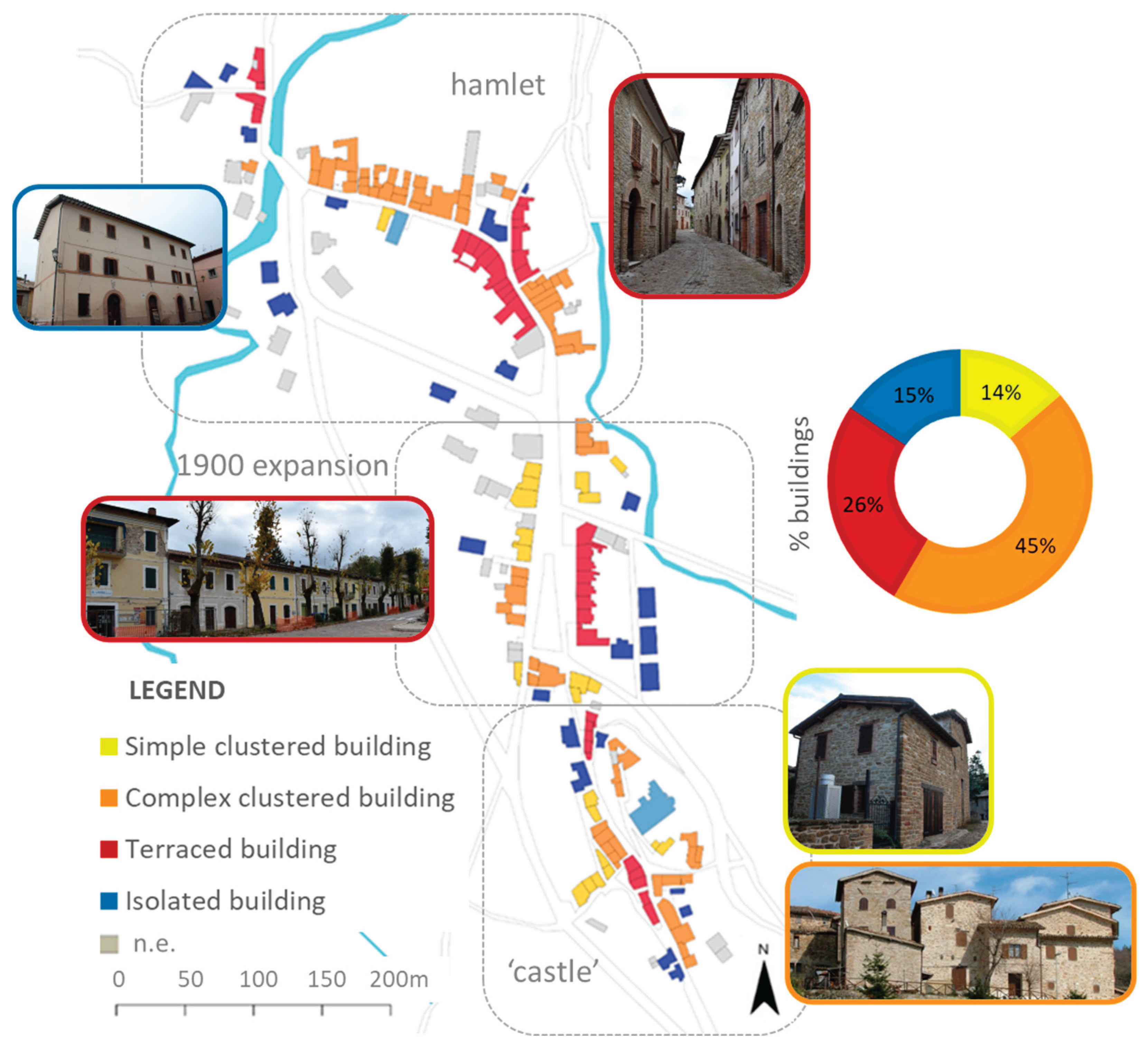
Figure 2.
Distribution of masonry types in buildings of Pievebovigliana: map with example of textures of walls and diagrams of overall relative frequency related to texture and material types (mortar and units). Red circles in map indicate façades and cross-sections (empty and dotted, respectively) of buildings examined by MQI method (see §3.2).
Figure 2.
Distribution of masonry types in buildings of Pievebovigliana: map with example of textures of walls and diagrams of overall relative frequency related to texture and material types (mortar and units). Red circles in map indicate façades and cross-sections (empty and dotted, respectively) of buildings examined by MQI method (see §3.2).
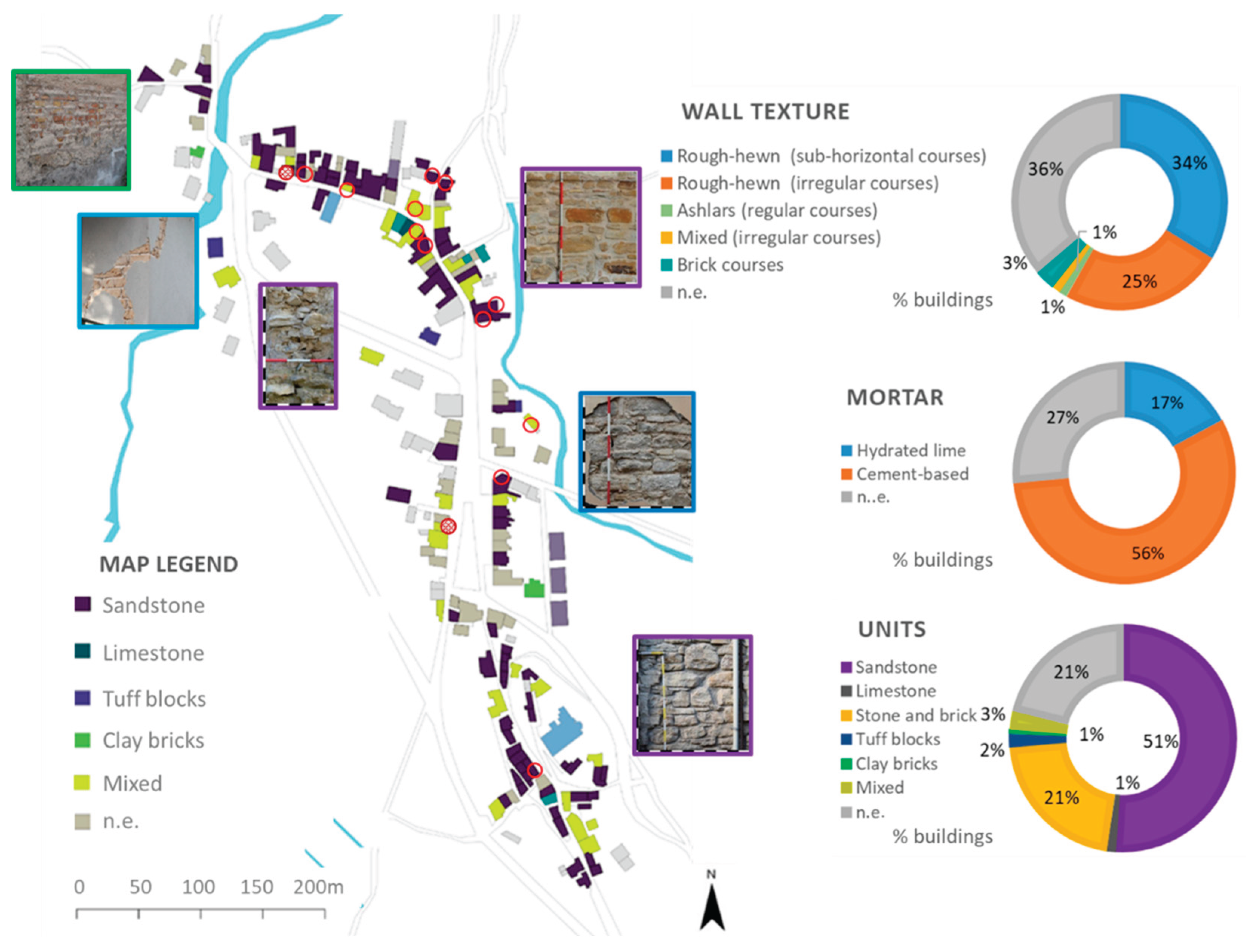
Figure 3.
Example of post-earthquake interventions (after 1997) in Pievebovigliana: (a) partial rebuilding (anchor of metal tie is also visible); (b) deep repointing; (c) thick plastering; (d) diaphragms connections at floor and roof levels by r.c. ring beams.
Figure 3.
Example of post-earthquake interventions (after 1997) in Pievebovigliana: (a) partial rebuilding (anchor of metal tie is also visible); (b) deep repointing; (c) thick plastering; (d) diaphragms connections at floor and roof levels by r.c. ring beams.
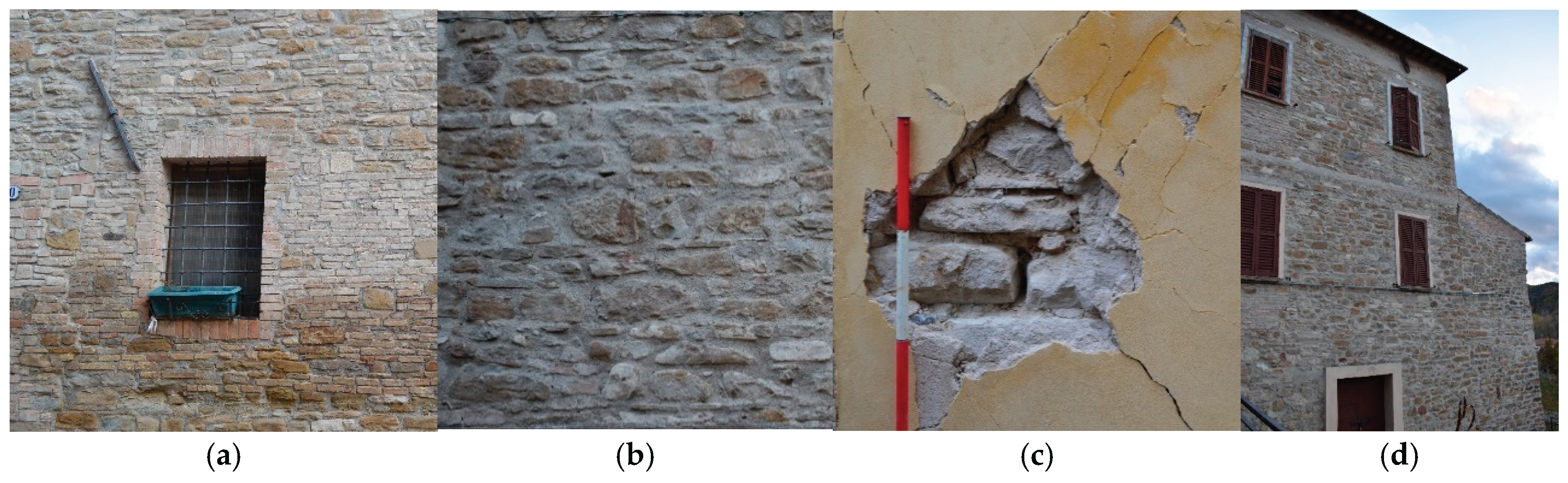
Figure 4.
Distribution of roof types in buildings of Pievebovigliana: map with example of traditional solution (timber joist with clay tiles in picture) and diagrams of relative frequency of diaphragm types (floors and roofs).
Figure 4.
Distribution of roof types in buildings of Pievebovigliana: map with example of traditional solution (timber joist with clay tiles in picture) and diagrams of relative frequency of diaphragm types (floors and roofs).
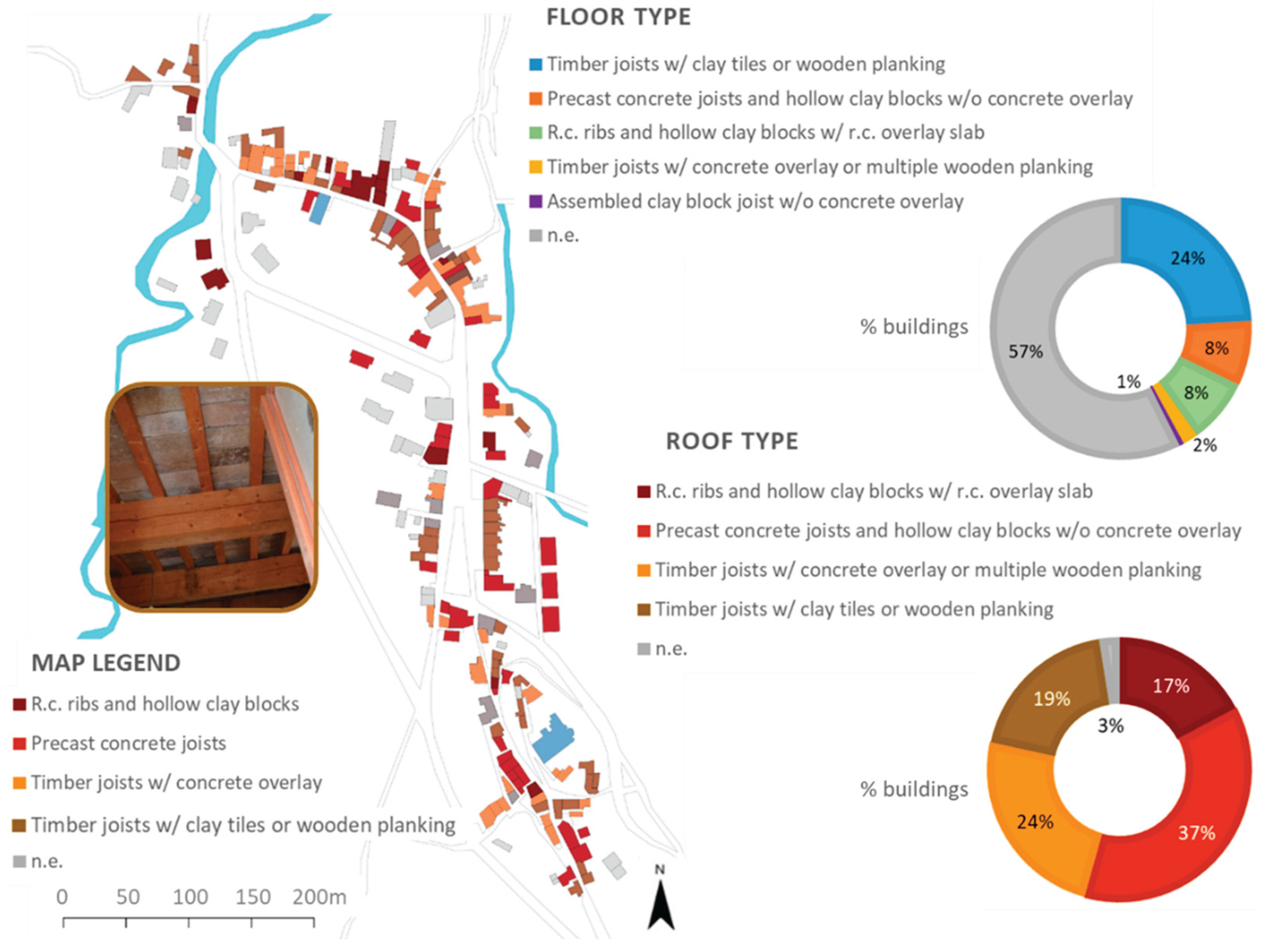
Figure 5.
Distribution of damage level (DL) in buildings of Pievebovigliana according to EMS-98: map with example of damage (from D1 to D4 in pictures) and diagram of overall relative frequency; histogram of relative frequency of DL related to aggregation type of buildings.
Figure 5.
Distribution of damage level (DL) in buildings of Pievebovigliana according to EMS-98: map with example of damage (from D1 to D4 in pictures) and diagram of overall relative frequency; histogram of relative frequency of DL related to aggregation type of buildings.
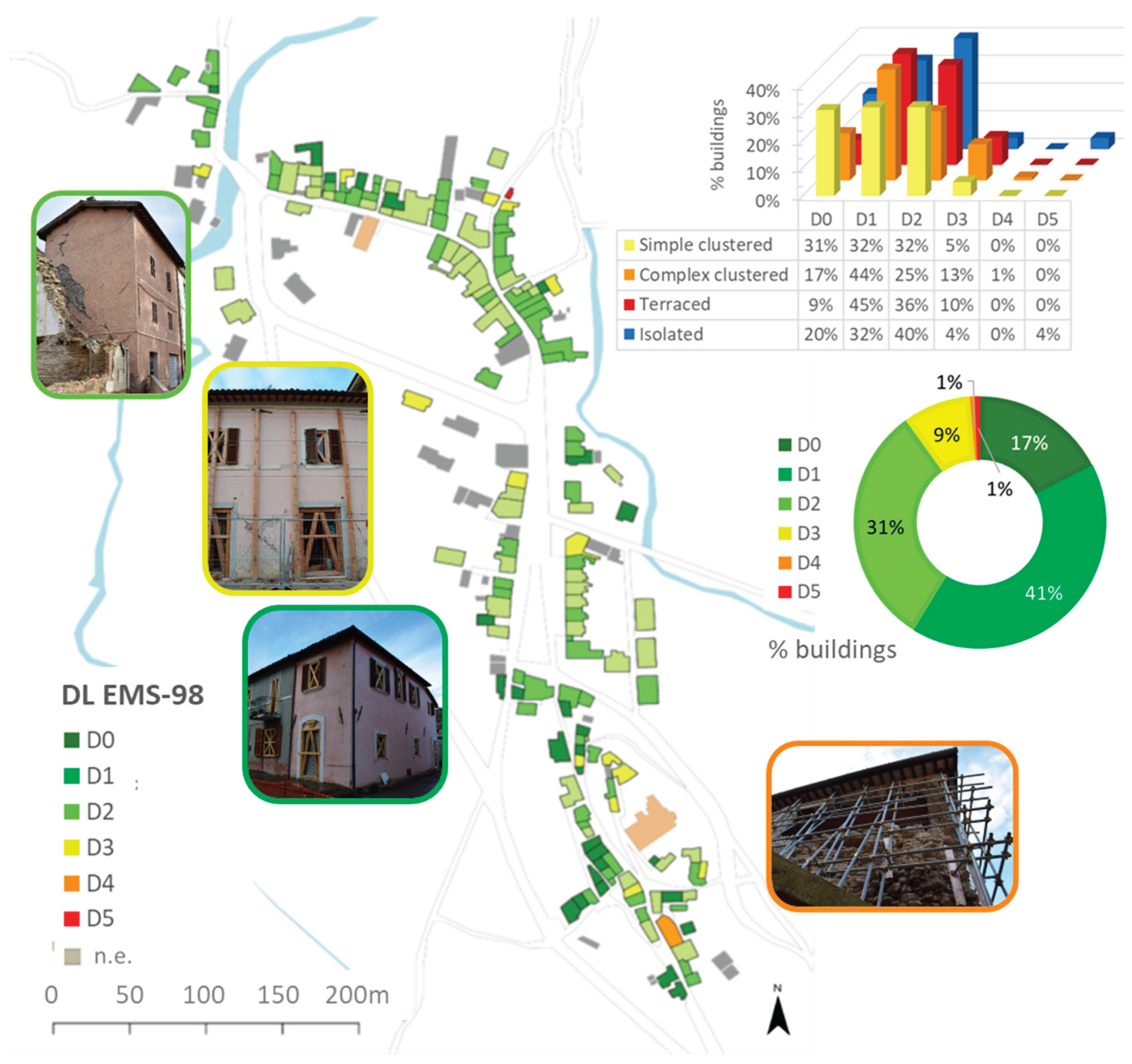
Figure 6.
Distribution of significant damage mechanisms in buildings of Pievebovigliana: map with example of mechanisms (in pictures) and diagram of overall relative frequency.
Figure 6.
Distribution of significant damage mechanisms in buildings of Pievebovigliana: map with example of mechanisms (in pictures) and diagram of overall relative frequency.
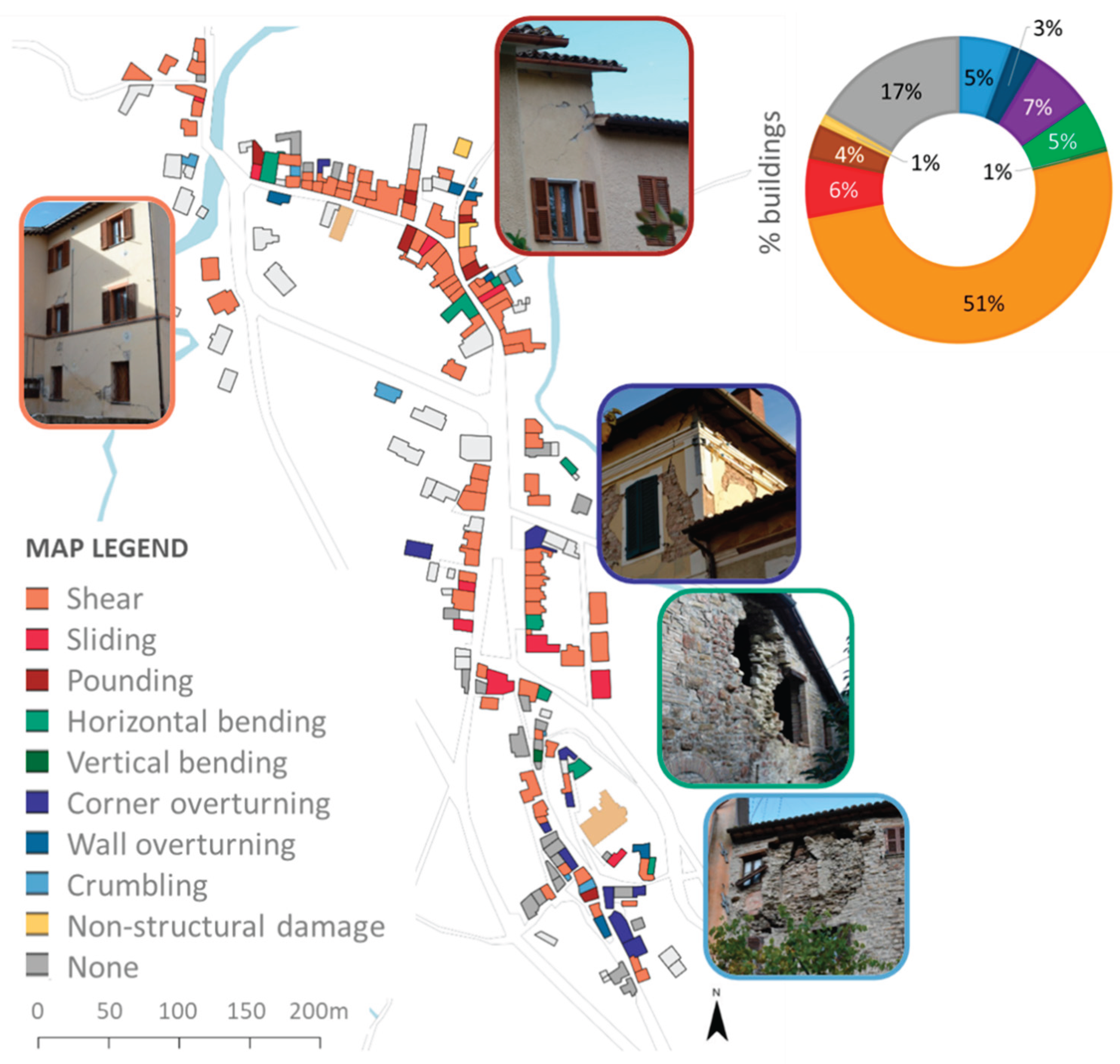
Figure 7.
Distribution of significant damage mechanisms in buildings of Pievebovigliana: subdivision according to village areas (a) and EMS-98 damage levels (b).
Figure 7.
Distribution of significant damage mechanisms in buildings of Pievebovigliana: subdivision according to village areas (a) and EMS-98 damage levels (b).
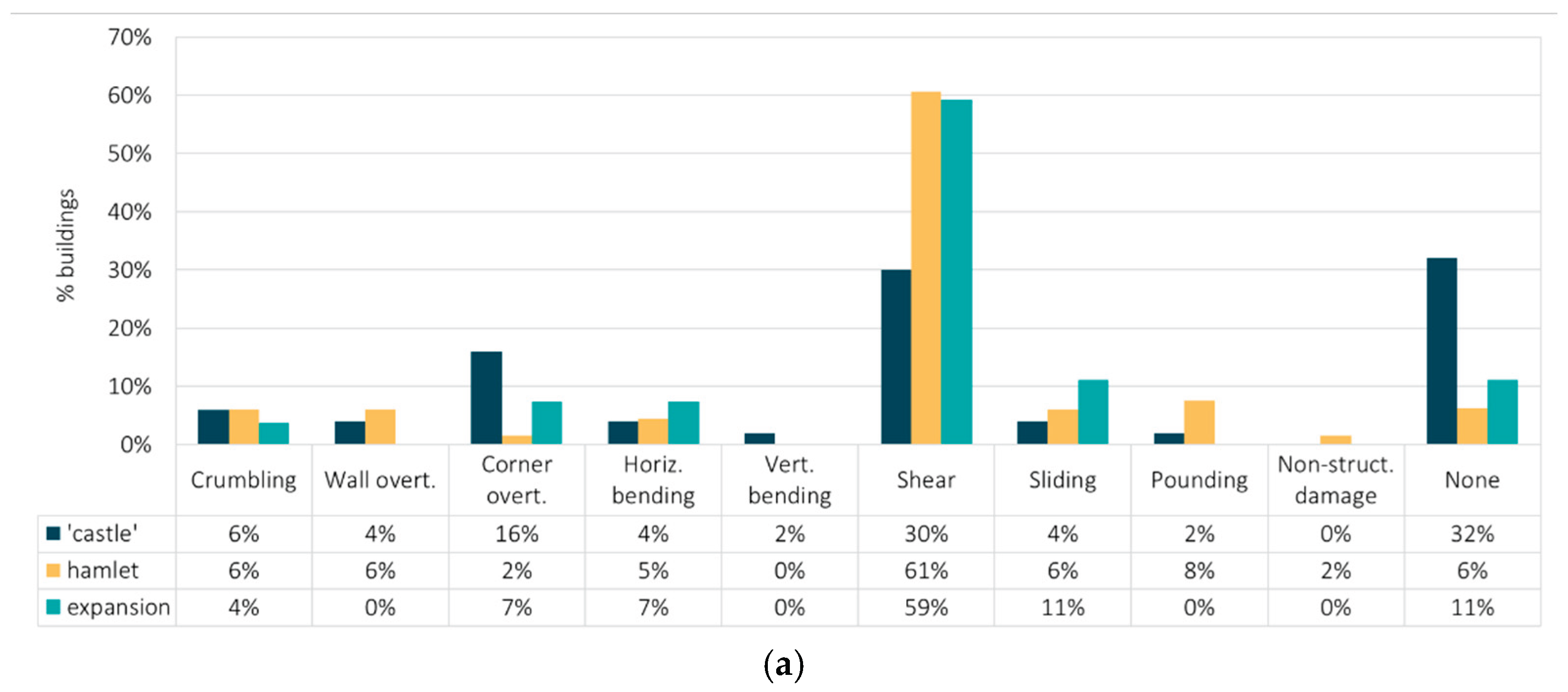
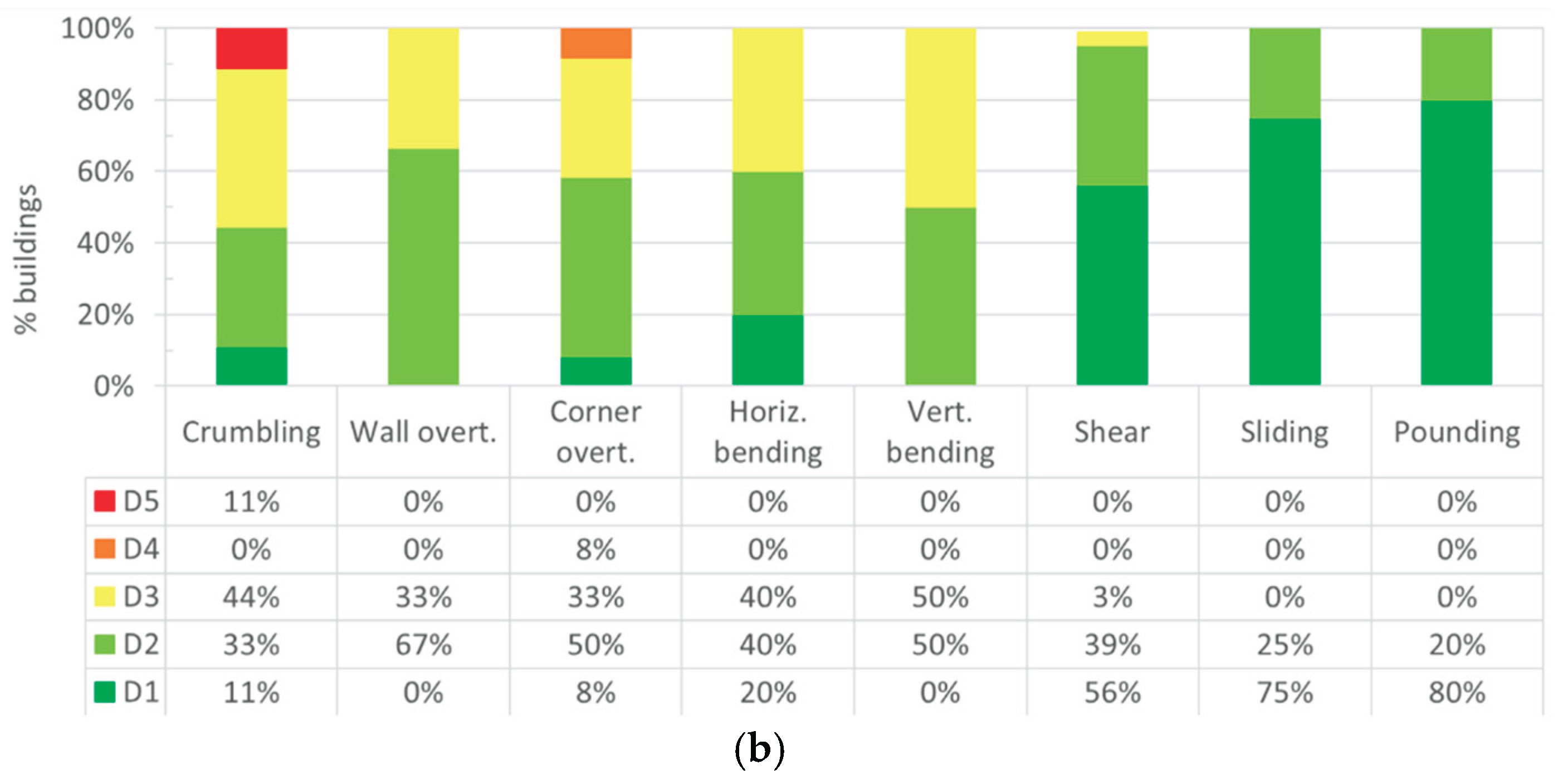
Figure 8.
Distribution of main damage per recurrent mechanisms in buildings of Pievebovigliana according to MUSE-DV screening.
Figure 8.
Distribution of main damage per recurrent mechanisms in buildings of Pievebovigliana according to MUSE-DV screening.
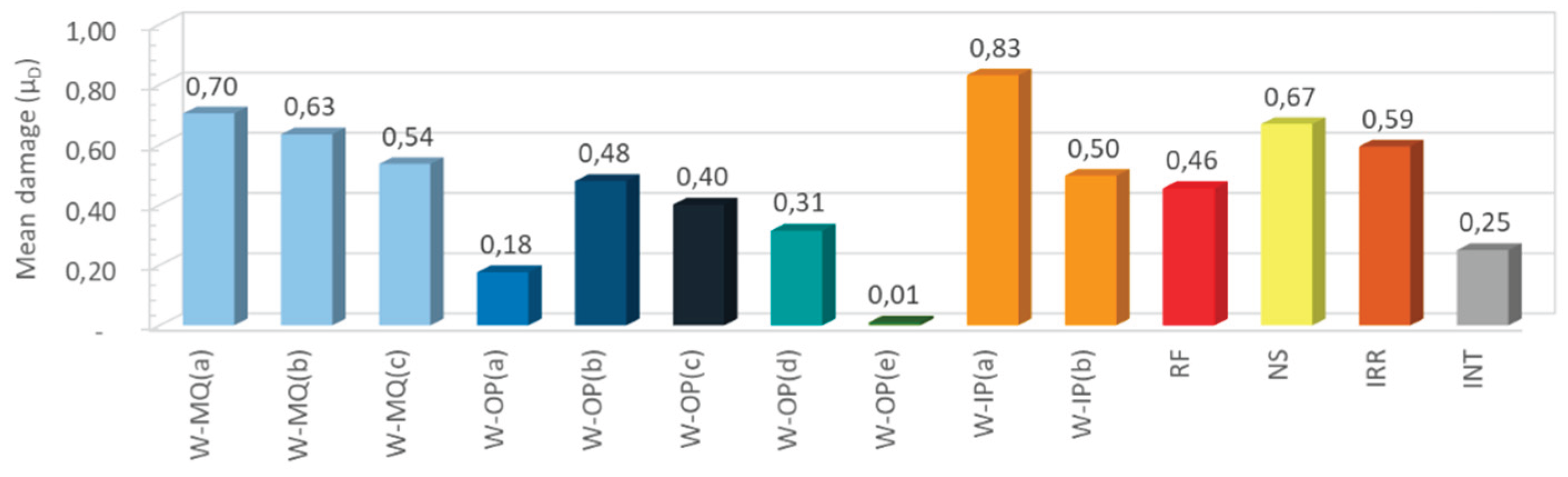
Figure 9.
Distribution of main mechanisms activated on building facades in Pievebovigliana according to main orientation of seismic swarm.
Figure 9.
Distribution of main mechanisms activated on building facades in Pievebovigliana according to main orientation of seismic swarm.
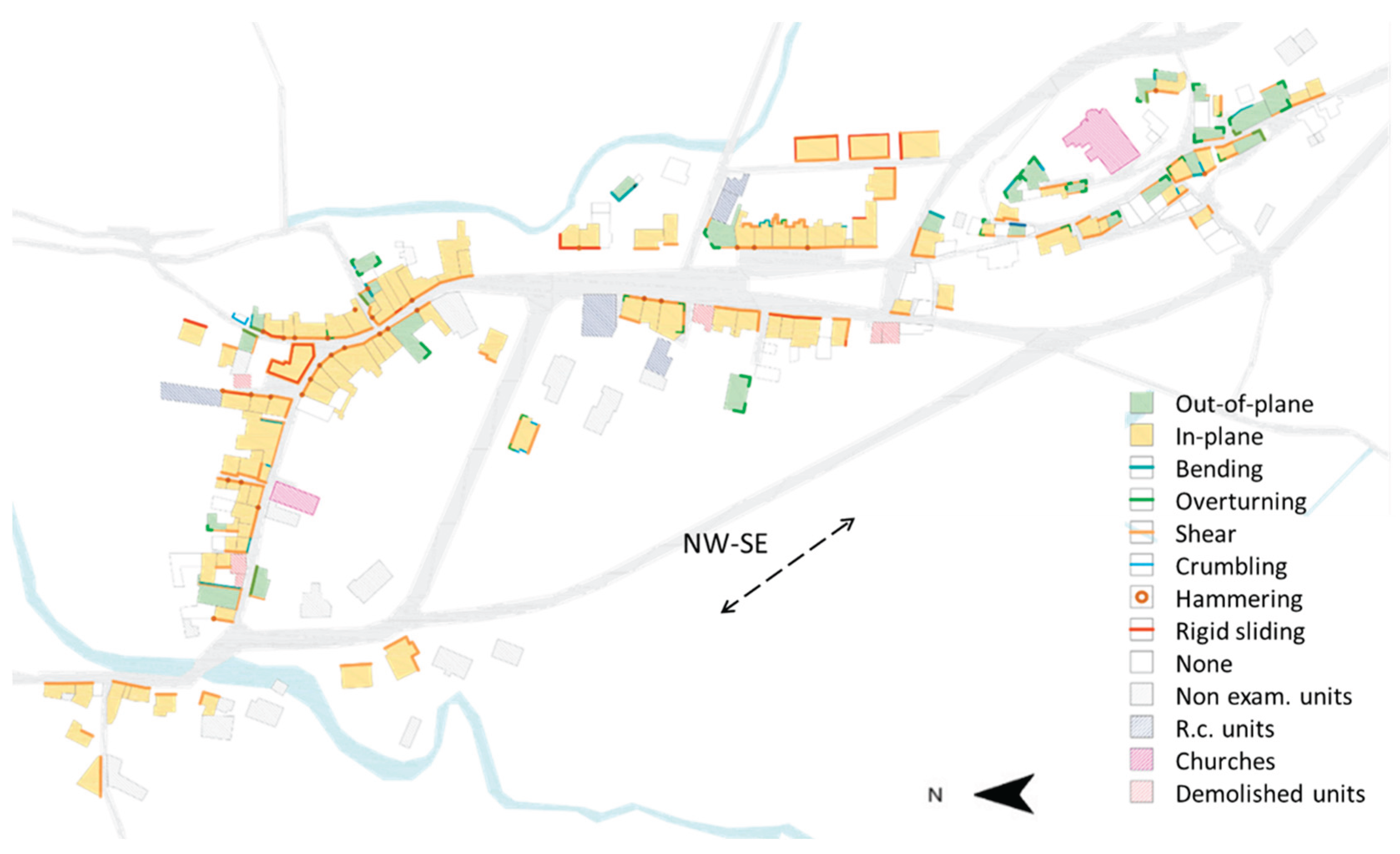
Figure 10.
Vulnerability identified in buildings of Pievebovigliana: factors affecting shear behavior (a) and connected to facade configuration (b).
Figure 10.
Vulnerability identified in buildings of Pievebovigliana: factors affecting shear behavior (a) and connected to facade configuration (b).
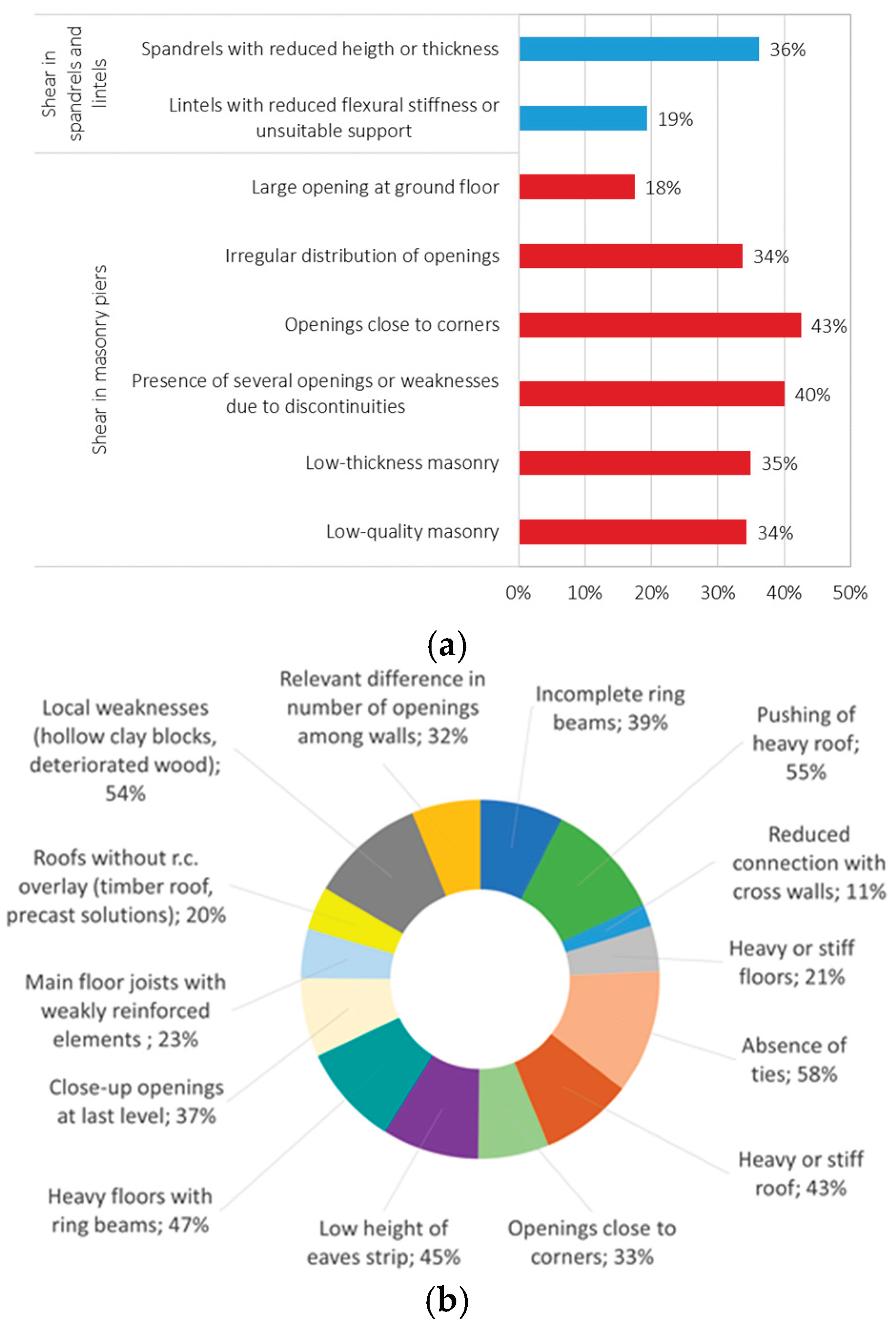
Figure 11.
Distribution of facade types in the analyzed areas of Pievebovigliana according to the significant layout vulnerability factors; identification of types in frontages (lines ending with full dots connect frontages in plan with their elevations) and examples of the eight types (in pictures).
Figure 11.
Distribution of facade types in the analyzed areas of Pievebovigliana according to the significant layout vulnerability factors; identification of types in frontages (lines ending with full dots connect frontages in plan with their elevations) and examples of the eight types (in pictures).
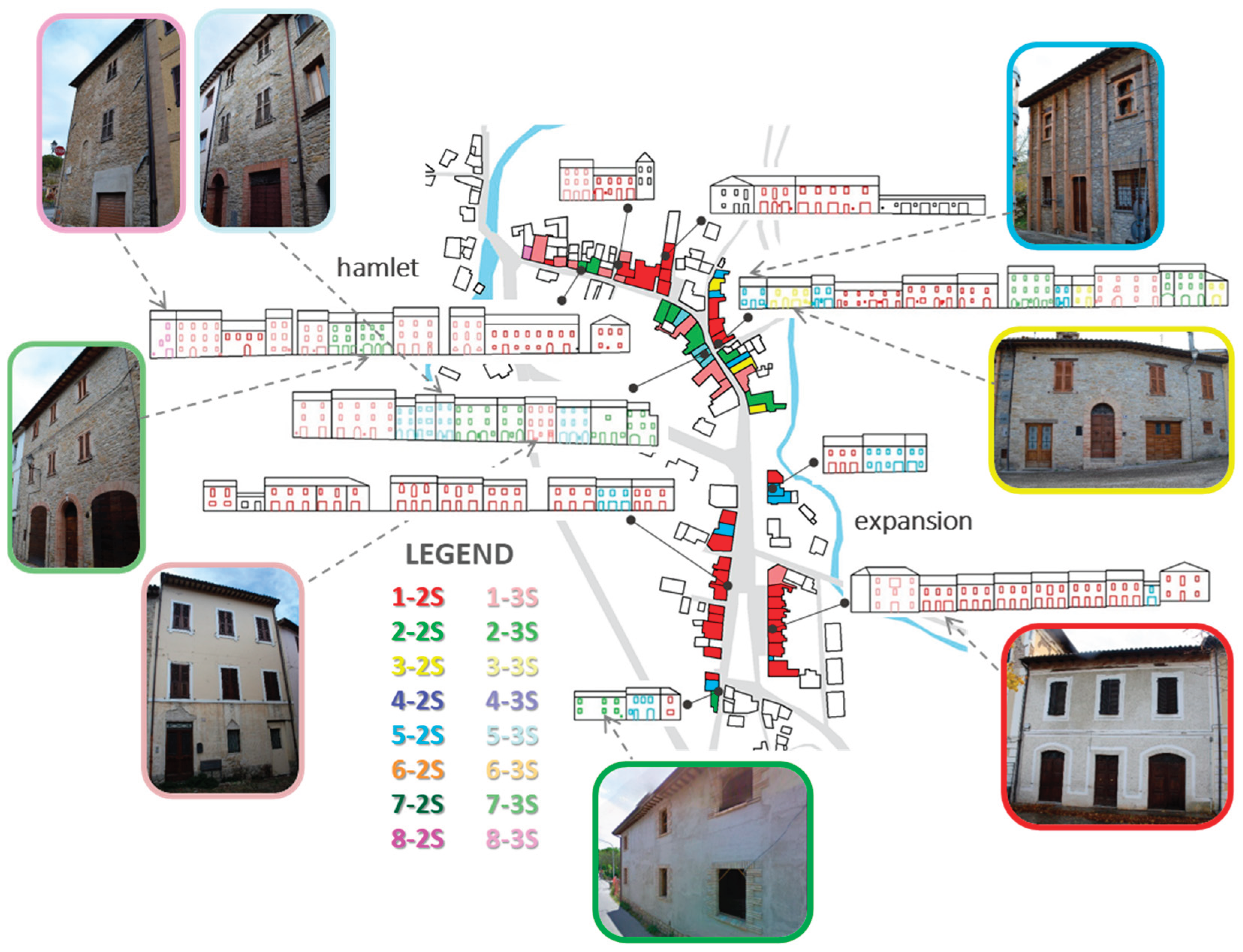

Table 1.
Mean results of MQI method and derived mechanical parameters.
| Masonry type | MQI / vulnerability category | fc | fv0/τ0 | E | G | ||
|---|---|---|---|---|---|---|---|
| V | IP | OP | (MPa) | (MPa) | (MPa) | (MPa) | |
| Sandstone and lime mortar | 2,9 / B | 2,5 / C | 2,8 / C | 2,05 | 0,11 / 0,05 | 1158 | 377 |
| Limestone and lime mortar | 4 / B | 3,3 / C | 2,8 / C | 2,84 | 0,12 / 0,05 | 1378 | 376 |
fc: mean compressive strength; fv0: mean initial shear strength (pure shear); τ0: mean shear strength (splitting); E: Young’s modulus; G: shear modulus.
Table 2.
Facade configuration characteristics affecting seismic vulnerability in Pievebovigliana.
| Elements | Characteristic | Parameter | Value | |||
|---|---|---|---|---|---|---|
| Facade wall | height | N. of storeys | two | three | ||
| modularity | width (*) | slender (1, 2 modules) | squat (3, 4, 5 modules) | |||
| Masonry | quality | MQI | V (A) | IP (B) | OP (C) | |
| interventions | presence and type | no | yes (**) | yes (***) | ||
| Connections | between orthogonal walls | presence | yes | one side only | no | |
| Openings | distribution | uniformity | yes | no | ||
| alignment between storeys | yes | no | ||||
| dimensions | openings at ground floor compared to the other storeys | large | comparable | |||
| Equivalent frame | piers | strength contribution | resistant | slender | ||
| spandrels | strength contribution | resistant | squat | |||
| Diaphragms | ring beam | presence | yes | no | ||
| floor type | IP stiffness | rigid | semi-rigid | flexible | ||
(*): 1 module = 5 m; (**): cement-based repointing or thick plastering; (***): grout injections or r.c. jacketing.
Table 3.
Simplified abacus of increasing vulnerability of terraced buildings related to facade layout factors.
Table 3.
Simplified abacus of increasing vulnerability of terraced buildings related to facade layout factors.
| Façade type |
Type label |
Façade height | Openings distribution | Openings alignment | Masonry piers | ||||
|---|---|---|---|---|---|---|---|---|---|
| 2 | 3 | uniform | concentrated | regular | staggered | resistant | slender | ||
| 1 | 1-2S | ● | ● | ● | ● | ||||
| 1-3S | ● | ● | ● | ● | |||||
| 2 | 2-2S | ● | ● | ● | ● | ||||
| 2-3S | ● | ● | ● | ● | |||||
| 3 | 3-2S | ● | ● | ● | ● | ||||
| 3-3S | ● | ● | ● | ● | |||||
| 4 | 4-2S | ● | ● | ● | ● | ||||
| 4-3S | ● | ● | ● | ● | |||||
| 5 | 5-2S | ● | ● | ● | ● | ||||
| 5-3S | ● | ● | ● | ● | |||||
| 6 | 6-2S | ● | ● | ● | ● | ||||
| 6-3S | ● | ● | ● | ● | |||||
| 7 | 7-2S | ● | ● | ● | ● | ||||
| 7-3S | ● | ● | ● | ● | |||||
| 8 | 8-2S | ● | ● | ● | ● | ||||
| 8-3S | ● | ● | ● | ● | |||||
Disclaimer/Publisher’s Note: The statements, opinions and data contained in all publications are solely those of the individual author(s) and contributor(s) and not of MDPI and/or the editor(s). MDPI and/or the editor(s) disclaim responsibility for any injury to people or property resulting from any ideas, methods, instructions or products referred to in the content. |
© 2025 by the authors. Licensee MDPI, Basel, Switzerland. This article is an open access article distributed under the terms and conditions of the Creative Commons Attribution (CC BY) license (http://creativecommons.org/licenses/by/4.0/).
Copyright: This open access article is published under a Creative Commons CC BY 4.0 license, which permit the free download, distribution, and reuse, provided that the author and preprint are cited in any reuse.


