

Submitted:
12 August 2025
Posted:
13 August 2025
You are already at the latest version
Abstract
This study presents an innovative approach based on the Von Bormann protocol for the early training of explosive detection dog puppies, focusing on the use of olfactory imprinting from the first days of life. Through an experimental design with puppies, the impact of early exposure to microtraces of explosives on the neurocognitive and olfactory development of dogs was explored. The results demonstrated that puppies trained using this protocol showed superior ability in detecting explosives, achieving performance levels comparable to conventionally trained adult dogs in less time. This approach also improved their resistance to working under stress, motivation, and accuracy in challenging operational conditions. The conclusions suggest that intervention during the critical imprinting period can accelerate the development of highly effective operational dogs in the detection of explosives.
Keywords:
early training
; detection dogs
; explosives
; imprinting
; neurocognitive development
; Von Bormann protocol
Introduction
The relationship between humans and dogs has evolved from domestication to a multifunctional bond that transcends the emotional, including operational collaboration in security, detection, rescue, and therapeutic assistance. This functional expansion has been made possible, in part, by the dog’s exceptional sensory abilities, among which smell plays a central role. Canine olfactory capacity is between 10,000 and 100,000 times greater than that of humans (Oliveira et al., 2012), allowing them to detect chemical compounds in extremely low concentrations. It is estimated that dogs can discriminate between more than a million odors, while humans cannot exceed 4,000 (Allen & Bekoff, 1999). This sensory ability is exploited in highly specialized tasks, such as the detection of explosives, drugs, missing persons, or metabolic diseases.
The effectiveness of this innate ability, however, depends largely on training. Comparative studies have shown that untrained domestic dogs, when faced with search tasks, tend to use visual or kinesthetic strategies, relegating smell as a last resort. In contrast, dogs specially trained in detection systematically use smell as their primary means of exploration (Smith, Shields, & Washburn, 2003).
This shows that training and experience modulate the functional channeling of an innate ability.
In this context, understanding the early development of the puppy becomes particularly relevant. Early learning—including the phenomenon of imprinting—is an essential determinant in shaping the animal’s future behavior. Imprinting, originally described by Konrad Lorenz (Kalikow, 1983), refers to a type of rapid, irreversible, and highly specific learning that occurs during a critical period of development, during which the puppy fixes key stimuli that will condition its future behavior. This phenomenon was first observed in birds, but has since been recognized in mammals, including canids (Beach & Jaynes, 1956; Diez et al., 2018; Wright & Russell, 1983).
During the imprinting stage, dogs establish lasting emotional and perceptual bonds, not only with their mother or siblings, but also with humans and environmental stimuli. The critical period in canines has been found to last around the first four months of life (Kretchmer & Fox, 1975). What happens during this time window can have a decisive effect on social, aggressive, reproductive, and territorial behaviors (Johnson, Josephson, & Hawke, 1985). Thus, early training, if implemented in a structured manner and adapted to the puppy’s level of development, can optimize not only operational learning but also the emotional stability of the adult dog.
However, some authors question the inflexible nature of the “critical period” and instead propose the concept of “periods of sensitivity,” which can be prolonged or modulated depending on the environment or specific interventions (Bateson, 1979; Parker & Mellor, 2011). This more flexible view opens the door to systematic interventions even beyond the first trimester of life, although without denying the special sensitivity of this initial stage.
From a neurobiological and developmental perspective, clear milestones have been identified in the first months of a puppy’s life. During the first 30 days of life, the puppy has limited sensory abilities: it is born blind, deaf, and anosmic, but with functional touch, taste, and thermotactism, which allow it to orient itself in the search for warmth and food (Navarrete, 2004; Monroy, 2001). From 20-25 days onwards, the temporal cortex begins to activate and auditory functionality is established. This moment coincides with the beginning of attachment to external figures and increased motor autonomy (Lorenz, 1950). The process of socialization and olfactory recognition intensifies between weeks 3 and 12, coinciding with the most sensitive phase of associative learning (Monroy, 2001; Vaz Ferreira, 1984).
Several authors warn that early separation from the mother before week 7 can have negative physiological and emotional consequences, interfering with the development of social skills and increasing the risk of behavioral disorders (Ackerman, 1997; Barth et al., 1998; Hafez, 1968; Kalikow, 1983). Play between siblings, contact with the mother, and exposure to new stimuli during this phase contribute to establishing communication and hierarchy mechanisms that will be fundamental in adult life (Slabbert & Rasa, 1993; Ferrari, 1997).
One of the key objectives in training working dogs is to take advantage of this behavioral plasticity to induce functional learning during the imprinting stage. According to Sire (1968), social interaction based on reciprocity allows the dog to perceive the human not as an object, but as a partner, an essential element in the bond between guide and animal. Training based on this relational logic allows for the establishment of more solid and stable cooperative behavior, overcoming the unilateral logic of classical conditioning.
Likewise, the sequence of behavior in these early stages follows a defined progression: appetitive phase (stimulus and motivation), consummatory phase (behavioral response), and stabilization phase (return to equilibrium), which allows for the design of structured programs that incorporate motivational principles and effective reinforcements (Reference pending; Gazit & Terkel, 2003).
Despite the available evidence, there are few empirical studies that analyze in depth how learning during the imprinting period specifically affects the development of olfactory detection skills in working dogs. The present study seeks to contribute to this gap by systematically observing the process of early socialization and olfactory initiation in puppies destined for security tasks, evaluating the impact of these interventions on their performance in scent search and discrimination tasks.
The main objective of this empirical research is to analyze the effects of early learning and structured socialization during the imprinting period on the acquisition of specialized olfactory skills in puppies destined for operational work. The results are expected to provide evidence on the importance of designing early stimulation and training protocols based on a deep understanding of the neurobehavioral processes of canine development.
Methodology
This study adopts a longitudinal observational empirical design, developed in a natural context, with the aim of evaluating how early intervention during the imprinting period influences the functional development of olfactory and social skills in puppies destined for operational tasks. The hypothesis is that a stimulating and structured environment, tailored to the stages of the puppy’s neurosensory development, favors the consolidation of functional learning that is highly relevant to future performance as a working dog.
This study implements the Von Bormann Protocol for the early stimulation of working puppies, with the aim of enhancing their ability to detect explosives through interventions during the critical imprinting period.
Experimental Design
The experiment was conducted with puppies from breeds specifically bred for detection work, including Belgian Malinois shepherds and Chesapeake Bay retrievers. Newborn puppies were selected to begin the protocol in the first days of life, much earlier than is conventionally done (9-12 months).
The puppies were exposed to microtraces of explosives (PG2, TNT, Goma 2, among others) using a bottle designed with a bell impregnated with the scent of the target substance, ensuring that each feeding was associated with a specific olfactory stimulus. This protocol was applied daily from day 7 until weaning around day 21.
Interventions
- Imprinting phase: From day 25 onwards, the puppies began to search for food in open spaces, gradually expanding the area and complexity of their searches. The aim was to reinforce olfactory discrimination in environments with multiple distractions (noises, smells from other people and objects).
- Olfactory Association: During weaning, the puppies were exposed to six different microtrace odors of explosives, and their response was continuously evaluated.
- Search Tests: Starting at 2 months of age, the “point-to-point” exercise was implemented, where the puppies had to identify the container holding the target explosive, avoiding distractors. The sessions were progressively made more complex as the puppies demonstrated a higher level of skill.
Procedure
The first empirical trial was carried out with Zephir, a 4-month-old Chesapeake Bay Retriever puppy, whom we began to stimulate early on through play. After 2-3 weeks, the dog was already able to perform searches of medium complexity and solved them with complete confidence. These searches gradually became more complex, to the point that at only 8 months old, after 4 months of training, when joint sessions were held with 20-month-old dogs already trained using the conventional protocol, the puppy showed superior search skills to the rest, exhibiting greater decisiveness and confidence in the searches, solving them with greater skill and in less time.
Later, when the dog had her first litter with a Labrador, also trained in detection, it was decided to repeat the experiment, but this time with the eight puppies and at an even earlier age, so that the first exercises were carried out from day 25 onwards (see Figure 1).
The protocol was structured around the main phases of the puppy’s neurosensory and social development. The intervention began at 21 days of age, coinciding with the opening of the ear canal, the maturation of the temporal cortex, and the onset of visual orientation, and continued until day 90, which marks the end of the socialization period and the beginning of detachment from the mother.
When the puppies began weaning, around day 21, we introduced small portions of feed, which we scattered in increasingly larger areas so that the puppies would be encouraged to search for their food. Within a few days, we were able to get the puppies to search in an open area of 1,500 m2. In this area, the puppies had to distinguish between a multitude of smells: trees, furniture, kennels, personal items with the scent of different people. In addition, we gradually introduced distractions into the searches to reinforce their ability to concentrate, such as loud music, firecrackers, and other dogs running loose. All of these are elements commonly used in the training of adult dogs.
The procedure consisted of placing food rations in different places before releasing the puppies so that the scent would spread. Then, I would release them and let them search until they found their ration, gradually reducing the time they had to spend finding their target. We repeated this process four times a day. Once or twice a week, I placed a ration of feed in a specific place so that only one puppy searched at a time without having to compete with the rest of its siblings. The aim was to encourage the dog to focus on its food, since when they all searched together, some of them, instead of searching for the food directly, followed the more determined ones and used this strategy to find the food.
When the dogs were two months old, she began to associate the ball game with the first marking exercises using the “sit” position, so that in order to receive their reward, they first had to mark by sitting down. The reward was no longer food but their ball, so that by five months old, the puppies were already marking perfectly when they located their target. This associative learning exercise is very complex for a puppy’s mind, yet dogs at this age were already solving it correctly. Although some puppies stood out for their skill, the truth is that they all managed to keep up with the level of exercises that were proposed.
For reasons unrelated to the trial itself and due to limited resources, the study had to be continued with only three of the puppies, the most outstanding ones, who were dedicated to detection disciplines, while the rest continued a normal domestic life, normalizing their routines. However, they were followed up for several years afterward, and it was found that these puppies, even though they had not continued their training routines, still maintained their ability to identify and recognize the characteristic sounds we made in the search routines and the smells they were presented with in the exercises when they were in the study. This demonstrates that the learning acquired during this imprinting period remains irreversible and does not disappear, even if the stimulus and motivation have disappeared..
With the three puppies that remained in the study, explosive detection exercises continued following conventional training methods for detection dogs, using the usual food and play reinforcers. At 14 months, they had already reached a level of proficiency equivalent to that of an adult dog with several years of operational experience. The way the dogs approached the work was significantly superior to that of dogs trained following conventional protocols. Not only did they show signs of being more motivated, but they also performed the exercises with greater confidence and in less time. To compare these behaviors, sessions were organized where the puppies were worked with alongside other “standard” dogs of different breeds to eliminate any bias due to breed.
The next trial was conducted with one of Zephir’s daughters, Dora, one of the puppies that had continued the early learning program. This dog had a litter, and the trials began 28 days after the puppies were born. In this case, food rations were placed inside boxes impregnated with the explosive PG2. This was so that when the puppy went to eat, it would associate this primary unconditioned stimulus with the smell of the explosive (conditioned stimulus). This wooden box had two compartments: a lower one where the food bowl with the ration of feed was placed and an upper one, perforated, where the explosive was impregnated, so that when the dog put its snout in to eat, its nose was exposed to the smell of the explosive. We found that this box system did not yield good results because when the dogs were induced to search for the explosive, they had a high percentage of hesitant searches, which can never happen in the most demanding discipline of explosive detection, due to the catastrophic errors it can cause. For this reason, we decided it was better to return to the free search system using feed rations, which was gradually replaced by samples impregnated with PG2 and TNT explosives.
On this occasion, we limited the search to an area of 70 m2. To increase the level of complexity in the search, we started the puppies on the exercise known as point-to-point, in which rows of cans are placed that may or may not contain the target substance, whether drugs, explosives, or any other substance, depending on the detection work discipline. Once a variable number of cans are placed in each row, the dog is accompanied by pointing with the hand so that it brings its nose close to the cans, which have perforated lids to allow the smell to escape. The target substance is placed in one of the cans, and the rest can be left empty or filled with distracting substances that improve the dog’s learning level by discarding substances that are not its target. These distractors can be aromatic herbs, cologne, air fresheners, food, etc. At this stage, food is no longer used as a reward, but has been replaced by playing with a ball or roller, so that when the dog is able to identify the jar containing the substance and marks it with the signal that the trainer has taught it as a mark (sitting position next to the target, barking, touching with the nose or paw...), the guide will automatically throw its toy so that it can reward the good result. In this way, the dog associates the work sessions with playtime, since, when the guide finishes, he spends a longer or shorter amount of time, depending on the dog’s performance, playing with it and relieving it of the tension caused by these concentration exercises. In these sessions, the dog is also trained to develop resistance to fatigue by increasing the duration and variety of exercises per session, thus increasing the dog’s work capacity and performance.
The following trial took place by chance when a newborn Belgian Malinois puppy was given away. The puppy was from a first-time mother who had rejected her only puppy, and there was a risk that the mother would kill the puppy (Figure 2).
The puppy, whom we named Hope, required intensive care 24 hours a day, not only for feeding and hygiene but also for sensory stimulation, so that this eventuality would cause as little damage as possible to her future social and physiological development. We began the stimulation process when she was only seven days old, taking advantage of bottle-feeding times. A bottle was designed with a felt cap on top so that we could attach a piece of paper impregnated with one of the explosives, always the same one, so that when the puppy went to suckle, she would receive the smell of the substance as her first stimulus. (Figure 2).
To proceed with the feeding, the puppy was first held firmly with the hand until the nervous agitation disappeared, since the puppy already associated this moment with food and the smell of the explosive. Once she calmed down, the bottle with the bell was brought closer and she was fed normally. When finished, she was petted and given perianal stimulation, just as her mother would do when cleaning and stimulating her, and she was allowed to sleep until the next feeding, respecting her rest periods. It is extremely important to intersperse breastfeeding with the promotion of the puppy’s natural instincts and reflexes, a very important factor for her subsequent cognitive and social development. At all times, we tried to encourage skin-to-skin contact and maintain a constant source of body heat so that the puppy would not suffer stress in these abnormal conditions.
To test her reaction to the smell of the explosive, when she was awake but not eating, we exposed her to a strip of felt with a piece of paper attached to it and impregnated with the same substance that was in the bottle’s nipple (Figure 2). We observed that the puppy showed the same nervous reaction when we brought the test strip close to her.
We were very surprised to observe that on the first day we began the odor association, when she was only 7 days old, the puppy had already associated the odor after the third feeding. Her sudden reaction to the test strip was very expressive. In the absence of the bottle, when the test strip impregnated with the target substance was brought close to her, the puppy became agitated, increasing her inhalation frequency, moving her head in circles, moving her front legs, and moving her nose toward the test strip, clearly showing an olfactory interest despite her young age. This was already happening when she was 8 days old.
On the other hand, to confirm that this reaction was not simply due to association with food, we performed the test with paper that was not impregnated with any substance, and the dog did not react.
To introduce a new explosive substance, intensive exposure was carried out so that during 12 continuous feedings, the puppy was exposed only to that new substance and then combined with the rest of the substances previously introduced as associated odors.
The same reaction occurred when the test strip impregnated with the other explosive substances was brought close to the dog.
As the puppy grew, the number of feedings decreased, but the amount of milk increased, which meant that the exposure time to the target substance was longer, even double. This meant that the last scent associations were much faster than the first ones, firstly because of the exposure time and secondly because of the puppy’s progressive neurological development.
After 21 days, when the puppy began to be weaned and the transition to feed began, the puppy had already associated six explosive odors (PG2, PG3, Trilite, TNT, Goma 2, and Amonal), the most commonly used by canine detection units.
It should be noted that, from the outset, microtraces of explosive substances were used, dispensed with automatic pens (Figure 3) and with a concentration ranging from 1 to 7 micrograms/ml, manufactured by Securesearch Inc. This method is widely used for training detection dogs in different substances (explosives, drugs, biological traces, COVID, etc.) It has the advantage of allowing long-term preservation and storage without the substance being contaminated by other odors or deteriorating due to light or air, as happens when the substances are used in their original state. It should also be noted that special conditions and licenses are required for their storage and preservation, which are very complex to obtain. The concentrations are legally permitted, so there is no problem with their use in this type of study and training exercise outside the facilities of the State Security Forces and Corps..
This microtrace system allows the dog to be trained with minute amounts of the substance and maximizes the dog’s olfactory ability.
From the age of 21 days, we began ground search exercises by hiding samples impregnated with the target substance in different locations. Despite her young age and contrary to the opinion of most traditional trainers, the puppy demonstrated her ability to find the hidden samples from day one. In the first sessions, the level of complexity was low and it took a little longer, but after 2-3 days, she was already able to perform more complex searches and at greater distances. It should be noted that these samples were hidden in environments with a lot of distracting odors such as food, cleaning products, and objects exposed to other intense odors such as the smell of other animals.
At 33 days old, we complicated the search level and designed a support to reproduce a point-to-point system scaled to her size so that we made her select the one containing the target substance from among six perforated cans. The puppy was able to identify the can on her first attempts in less than a minute and with a decisive execution, similar to that of adult dogs.
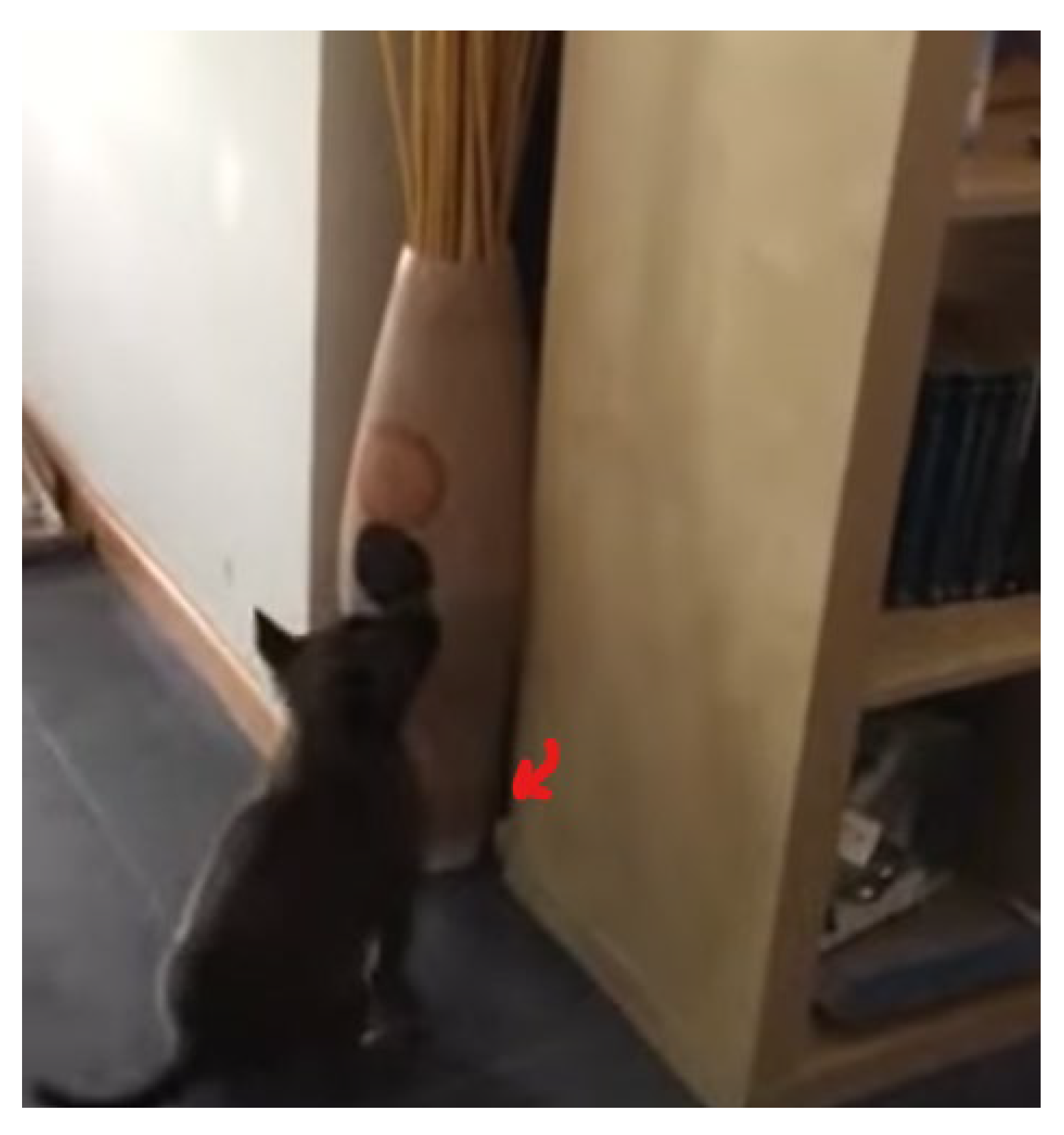
At 45 days old, the puppy was not only able to perform more complex searches with the various associated substances, but could also mark a well-defined sit (Figure 4).
In this type of trials, even with already trained adult dogs, it is important to consider the emotional aspect of the dog since we must teach them to handle frustration if they do not achieve the goal. On the other hand, we are training their resistance to fatigue so they can increasingly tolerate longer work sessions. For puppies, it is extremely important to consider that if the dog learns these disciplines as part of a game, in adulthood they will always be predisposed to work and will increase their eagerness to work, as this becomes part of their play routine, even though for humans it is a task of incalculable value due to the relevance of the dog’s role in security and defense. At 4 months of age, the puppy was able to locate all associated substances in free searches, point-to-point searches, and surprise exercises where the target substance is placed in unsuspected places outside a protocolized work session.
At 5 months, the dog had reached a level of search efficiency similar to that of a trained adult dog. Let’s remember that conventionally a dog begins its training between 10-18 months of age and takes approximately 12 months to have the basic skill to tackle substance detection with an acceptable level of resolution, even if it is not at the zenith of its maximum performance. At 16 months of age, the dog passed the AESA (Spanish Aviation Safety Agency) certification for explosive detection dogs, one of the most demanding tests at the European level.
The minimum age to pass these tests is 18 months, and normally dogs attending for the first time need 2-3 attempts to pass them, even when accompanied by expert handlers. In Hope’s case, we assigned a handler with less than a month of experience to test the dog’s capabilities, and still, she passed the tests with the highest score, 12 points. She did not fail any of the tests. On that occasion, only 30% of participants passed, and except for Hope, all were experienced dogs attending re-certification.

Table 1.
Early developmental stages manifested by Hope.
| PUPPY AGE | OBSERVED CAPABILITIES | COMPARISON WITH STANDARD PUPPIES |
|---|---|---|
| 4 months | Locate substances associated in various search situations: - in free search - in point-to -point - in surprise exercises |
The substance detection skills at 4 months significantly exceed the standard neurological capabilities of a puppy of that age, which would typically be in the early stages of cognitive and exploratory development. |
| 5 months | Search in three modes equivalent to an adult dog (10-18 months): - greater tracking security - greater effectiveness in identifying substances (less time) - lower level of false positives or negative failures. |
This level of detection skill at 5 months is remarkably advanced compared to the typical neurological capabilities of a standard puppy of that age, which would still be in the early stages of learning and development. |
| 16 months | Passed the AESA certification for explosive detection dogs, a very demanding test at the European level. | The ability to pass such a rigorous certification at 16 months demonstrates an extremely advanced level of detection skill, far surpassing the standard neurological capabilities of a puppy of that age, which would still be in a phase of cognitive development and learning. |
One observation we cannot overlook is that Hope in adulthood showed no sequelae from having been raised without a mother and alone without siblings. Her level of socialization with other dogs was optimal and in no case did she exhibit insecure or aggressive behaviors. Her degree of socialization with humans was also correct, even with small children, with no incidents to report in this regard.
From this study, we could summarize that to improve Hope’s neurocognitive development, we paid special attention to:
- Operant conditioning learning:
During Hope’s training, operant conditioning techniques would be used, positively reinforcing desired behaviors, such as the accurate detection of explosive substances. This could involve the use of food rewards or verbal praise each time Hope correctly identifies a target.
- Modeling-based learning:
Hope may have been trained in an environment where she had the opportunity to observe and learn from other explosive detection dogs in action. The presence and successful behavior of these dogs could have served as models to guide Hope’s behavior and accelerate her learning process.
- Learning by trial and error:
During training sessions, Hope likely experimented with different search and detection techniques. As she learns which behaviors lead to rewards, such as finding and indicating explosive substances, these behaviors will be reinforced and repeated.
- Social learning:
If Hope has had the opportunity to interact with other explosive detection dogs, she may have learned from their behavior and been motivated to imitate their actions. Additionally, group training may have fostered healthy competition and motivation to excel in explosive detection.
As for the specific variables and reinforcements we considered were:
- Environmental variables:
The training environments would have been varied to ensure that Hope can detect explosive substances in a variety of situations and locations, from open areas to confined spaces.
- Emotional variables:
Ensuring her confidence, motivation, and stress management during training and operations was crucial. A strong bond with the trainer, as well as her overall emotional well-being, were also fundamental to her performance and long-term health. In summary, addressing Hope’s emotional needs significantly contributed to her effectiveness and well-being in her role as an explosive detection dog.
- Primary reinforcements:
Highly desirable rewards, such as food, special treats, or favorite toys, were used to effectively reinforce Hope’s detection behavior.
- Secondary reinforcements:
In addition to primary rewards, enthusiastic verbal praise and physical contact with petting were used as secondary reinforcements to strengthen the positive association with detection behavior.
- Intermittent reinforcements:
To maintain high motivation and avoid reward satiation, an intermittent reinforcement schedule was likely used, where Hope receives rewards in a non-systematic but predictable manner after correctly detecting an explosive substance.
In conclusion, the development of Hope as an explosive detection dog likely involved a structured and systematic approach that combined training techniques based on operant conditioning, modeling, trial and error, as well as social learning, along with a variety of variables and reinforcements designed to maximize her performance and accuracy in explosive detection.
The following trial was conducted with the first litter Hope had with Angus, a Labrador-Chesapeake mix (son of Zephir from the second trial litter) also dedicated to explosive detection like Hope. From this litter, only 2 puppies were selected with which we repeated the experience carried out with Hope, but starting from day 20 of age, just when they were about to transition to kibble. In this case, we did not alter the attachment bond between Hope and her offspring but only interacted with the puppies once a day with a longer daily session during which we also used the bell bottle with the patch impregnated with the target substance and associating only 2 explosives.
The intention was to confirm the results of Hope’s trial, and we found that surprisingly, even though the exposure to explosives was not as intense and the association work with them started much later, the performance results of the dogs were similar. By the second day, the puppies had already associated both scents and were ready to perform search exercises. Initially, at very short distances and in subsequent days, increasingly longer distances as well as the first sessions of the point-to-point exercise at ages similar to when we started with Hope. The results obtained with these two puppies were similar to those we achieved with Hope. Likewise, the puppies did not show any alterations in their social behavior with humans or peers, demonstrating a completely balanced character. Similarly, they showed a high predisposition to work, great tolerance to fatigue, and high motivation, which confirmed our hypotheses about the benefits of fostering instincts and associative learning early in working dogs.
Results Evaluation
Key variables were measured such as:
- Tightness factor: ability to smell target samples inside a container whose interior is not easily accessible and with a low level of leakage for volatile substances.
- Work endurance: time that puppies maintained their detection capabilities without fatigue. It is the time the dog maintains its detection capabilities in optimal conditions without fatigue, boredom, or frustration altering the results in the work session. Generally, in canine units, it is considered that a dog is not able to maintain its performance at 100% in sessions lasting beyond 30 minutes.
- Detection rate: proportion of correct identifications of explosives. It allows us to evaluate the dog’s level of concentration when detecting its target in relation to the effectiveness of its search.
- Reaction distance: maximum distance at which puppies could detect the explosive. It is the greatest possible distance at which the dog reacts to the smell of the target sample. It depends on the search target, environmental conditions, air stability, and the dog’s physiological state at the time of the exercise. Anecdotal reports from trainers say that the detection distance can reach up to 5 meters, suggesting the presence of traces in the air as well as on the ground.
The data were analyzed using t-test to assess the statistical significance between the groups treated with the early protocol and the control groups, demonstrating significant improvements in the performance of the early trained dogs.
Results
The measurements of the 4 variables were carried out preserving the same conditions in both the experimental group and the control group.
Sealing Factor
In this test, Hope demonstrated an outstanding ability with a 100% positive detection rate, reaffirming her remarkable skill in detection. Early learning dogs, in general, continue to show a detection level far superior to that of control dogs.
Table 2.
Results of Leakage test.
|
Dog |
Type |
Evidence Realized | Positive Detected | Detection Rate (%) |
|---|---|---|---|---|
| Control Dog 1 | Control | 100 | 25 | 25 |
| Control Dog 2 | Control | 100 | 22 | 22 |
| Control Dog 3 | Control | 100 | 20 | 20 |
| Control Dog 4 | Control | 100 | 28 | 28 |
| Control Dog 5 | Control | 100 | 24 | 24 |
| Control Dog 6 | Control | 100 | 26 | 26 |
| Control Dog 7 | Control | 100 | 23 | 23 |
| Control Dog 8 | Control | 100 | 21 | 21 |
| Control Dog 9 | Control | 100 | 19 | 19 |
| Control Dog 10 | Control | 100 | 27 | 27 |
| Control Dog 11 | Control | 100 | 20 | 20 |
| Control Dog 12 | Control | 100 | 25 | 25 |
| Control Dog 13 | Control | 100 | 24 | 24 |
| Control Dog 14 | Control | 100 | 22 | 22 |
| Control Dog 15 | Control | 100 | 21 | 21 |
| Control Dog 16 | Control | 100 | 23 | 23 |
| Control Dog 17 | Control | 100 | 26 | 26 |
| Control Dog 18 | Control | 100 | 20 | 20 |
| Control Dog 19 | Control | 100 | 22 | 22 |
| Control Dog 20 | Control | 100 | 27 | 27 |
| Hope | Learning precocious | 100 | 100 | 100 |
| Dora | Learning precocious | 100 | 88 | 88 |
| Vayana | Learning precocious | 100 | 87 | 87 |
| Angus | Learning precocious | 100 | 85 | 85 |
The statistical analysis of these data conducted with SPSS provided us with the following information:
Table 3.
Table with the statistical analysis of the sealing factor data.
| Statistic | Control Group (0) | Treatment Group (1) | Difference | 95% CI for the Difference | t Value | Degrees of Freedom (df) | Significance Level (p-value) |
|---|---|---|---|---|---|---|---|
| Number of Observations | 20 | 4 | - | - | - | 22 | - |
| Mean | 0.647 | 0.875 | -0.228 | -0.3207 a -0.1353 | -5.1008 | 22 | 0.0000 |
| Standard Error (Std. Err.) | 0.0195 | 0.0104 | 0.0447 | - | - | - | - |
| Standard Deviation (Std. Dev.) | 0.0874 | 0.0208 | - | - | - | - | - |
We decided to use the t-test over other statistical tests because this type of analysis is the most convenient for comparing 2 groups (control vs study group). It has the advantage of being simple and straightforward for comparing means between two groups, and it can be more powerful than ANOVA when only two groups are compared, as it focuses solely on that comparison.
- Mean: Average of the “Positive Detection Rate” in each group.
- Standard Error (Std. Err.): Measure of the precision of the estimated mean.
- Standard Deviation (Std. Dev.): Measure of the dispersion of the “Positive Detection Rate” values in each group.
- Difference: The difference between the control group mean and the treated group mean is -0.228, indicating that the treated group has a significantly higher detection rate.
- 95% CI for the Difference: 95% confidence interval for the difference between group means, which does not include 0, suggesting the difference is significant.
- t-value: t-statistic, indicating the significance of the observed difference between means. A t-value of -5.1008 suggests a highly significant difference.
- Degrees of Freedom (df): Number of degrees of freedom associated with the t-test.
- Significance Level (p-value): A p-value of 0.0000 indicates that the difference is statistically significant.
Early learning dogs, and especially Hope, show a significantly higher positive detection capability compared to control dogs. Hope, with a 100% detection rate, stands out particularly among all the dogs evaluated. The t-test demonstrates that there is a significant difference in the positive detection rate in the context of the tightness factor.
Treated group (1) has a significantly higher mean compared to control group (0), suggesting that treatment improves the dogs’ ability to detect odors in tight conditions, where access to odor is limited. This result reinforces the effectiveness of treatment in enhancing dogs’ detection ability in challenging scenarios.
Reaction Distance
When we conducted the trial with the control dogs and the early learning dogs in this regard, the results were as follows:
Table 4.
Results of the reaction distance measurement (cm).
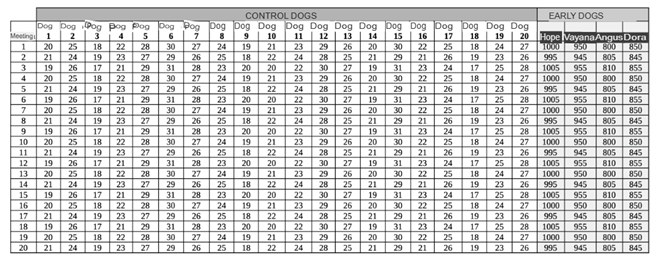 |
Table 5.
Statistical analysis of reaction distance.
| Estadístico | Grupo Control (0) | Grupo Tratado (1) | Diferencia | IC 95% para la Diferencia | Valor t | Grados de Libertad (df) | Nivel de Significancia (p-valor) |
|---|---|---|---|---|---|---|---|
| Número de Observaciones | 20 | 4 | - | - | - | 22 | - |
| Media | 23.895 | 901 | -877.105 | -914.8548 a -839.3552 | -48.1858 | 22 | 0.0000 |
| Error Estándar (Std. Err.) | 0.8569 | 44.7388 | 18.2026 | - | - | - | - |
| Desviación Estándar (Std. Dev.) | 3.8322 | 89.4777 | - | - | - | - | - |
- Mean: Average of the “Reaction Distance” in each group.
- Standard Error (Std. Err.): Measure of the precision of the estimated mean.
- Standard Deviation (Std. Dev.): Measure of the dispersion of the “Reaction Distance” values in each group.
- Difference: The difference between the mean of the control group and the treated group, which is extremely large (-877.105), indicating that the treated group has a significantly greater reaction distance.
- 95% CI for the Difference: 95% confidence interval for the difference between the group means.
- t Value: t statistic, indicating the significance of the observed difference between the means. A t value of -48.1858 suggests an extremely significant difference.
- Degrees of Freedom (df): Number of degrees of freedom associated with the t-test.
- Significance Level (p-value): A p-value of 0.0000 indicates that the difference is highly significant.
t-test demonstrates an extremely significant difference in “Reaction Distance” between the two groups. Treated group has a much higher average reaction distance (901 cm) compared to the control group (23.895 cm). This suggests that the treatment has had a very strong impact on the dogs’ ability to detect the target scent at greater distances. The reaction distance, measured in centimeters, showed highly significant differences between the treated group and the control group. The early trained dogs had an average distance of 901 cm, compared to 23.9 cm for control group, demonstrating a remarkable improvement in scent detection ability at greater distances.
- Value t: -48.1858
- p-value: 0.0000 (highly significant)
Work Resistance
Work resistance, measured as the time (in minutes) that dogs could maintain their detection capabilities without fatigue, also showed notable improvements. Treated group had an average of 173 minutes, compared to 30 minutes of ontrol group.
- Value t: -5.1008
- p- value: 0.0000 (highly significant)
Positive Detection Rate
Regarding the detection rate of positives under containment conditions, the treated group significantly outperformed the control group, with an average detection rate of 100% compared to 64.7% for the control group.
- Valor t: -5.1008
- p-valor: 0.0000 (highly significant)
Discussion
One of the main findings of this study was the evidence that puppies possess functional olfactory capacity before 15 days of age, as noted in previous studies (37). During the first exposure sessions to the stimulus (day 7), the puppy Hope showed specific physiological reactions to the target substance, without the need for other concurrent stimuli. These responses, recorded on video, indicate early olfactory learning, even before the critical imprinting period (around day 20).
This ability could be mediated by vomeronasal organ (Jacobson), a highly developed accessory olfactory system in canids, responsible for processing airborne odorant particles. Although initially linked to reproductive or intraspecific recognition functions, recent research (2, 32, 27) has demonstrated its active involvement in detecting new and non-biological odors, such as chemicals or explosives.
During this stage, puppies exhibit the Flehmen reflex, a physiological strategy that allows them to capture olfactory molecules through forced inhalations, directing them to the vomeronasal organ (35). This supports the hypothesis that, although the main olfactory system is not fully mature, the accessory system significantly contributes to early olfactory learning.
Additionally, it was found that dogs trained from an early age show greater sensitivity to encapsulated odors (ponds) compared to conventionally trained dogs. As noted by Gazit and Terkel (13) and Furton et al. (11), early exposure to specific odors during the critical period improves olfactory encoding, response accuracy, and performance stability in complex scenarios.
EDI dogs (Early Detection Imprint), like Hope, not only showed 100% detection rates but also remarkable physical endurance and a low false positive rate, consistently outperforming control dogs. These differences reflect not only an effect on olfactory sensitivity but also on motivational and cognitive variables.
A notable finding was the speed with which Hope reached operational levels, maintaining high motivation in repeated sessions, and responding enthusiastically to new exercises. This suggests facilitation of associative learning and a reduction in habituation, which is relevant for operational contexts where high tolerance to fatigue and stress is required.
In environments with multiple distracting stimuli (noise, crowds, traffic), EDI dogs maintained their olfactory effectiveness, reinforcing the hypothesis that early training positively modulates the ability to concentrate and self-control in the face of sensory overload.
Likewise, the results have implications for selection criteria in working dog breeding centers. In many cases, up to 40% of puppies are discarded for not fitting the expected profile. The Von Bormann protocol could reduce this percentage, as early stimulation modulates the puppy’s reactivity, self-control, and proactivity.
Finally, this early strategy also impacts the establishment of the guide-dog bond. When the guide intervenes during the imprinting period, the bond that develops is deeper and more functional, based on trust, cooperation, and loyalty, key aspects for success in operational units.
Conclusions
The findings of this study strongly support the effectiveness of the Von Bormann protocol as an early training method capable of significantly enhancing the olfactory and cognitive abilities of working dogs. The application of early sensory stimulation during the imprinting period not only accelerates learning but also allows for achieving an operational level with greater precision, endurance, and motivation than that achieved through conventional protocols.
The early detection of functional olfactory capabilities, even before day 10 of life, highlights the importance of the vomeronasal organ as a key auxiliary system at this stage and reinforces the hypothesis that the puppy’s olfactory system is not only operational but can be conditioned with complex non-biological stimuli such as explosives. This finding invites a rethinking of traditional paradigms regarding the timing of canine training and sensory maturation.
Likewise, the high detection rate, low frequency of false positives, greater physical endurance, and better emotional control observed in EDI (Early Detection Imprint) dogs, compared to control dogs, suggest that this type of intervention contributes to shaping a neurocognitive profile more adapted to complex operational scenarios. These results have direct implications for the design of training programs for police, military, and emergency canine units.
Moreover, the Von Bormann protocol proves to be a useful tool for reducing the discard rate of puppies in breeding centers, as it allows for shaping and correcting behaviors from an early age, reinforcing qualities such as motivation, concentration, and stress tolerance. This not only optimizes breeding and selection resources but also democratizes access to operational training for specimens that, under standard conditions, might be excluded.
The strengthening of the affective and functional bond between the guide and the dog, by intervening from such early stages, enhances the collaborative component of the human-animal pair, based on trust, loyalty, and mutual cooperation. This has added value in high-risk missions or critical conditions, where emotional and operational synchrony can make a difference in the outcomes.
Overall, this work provides empirical evidence and ethological and neurobiological foundations that justify the redesign of current training programs. The Von Bormann protocol, by focusing on the most plastic phases of development, represents an evolution in the training of detection dogs, aimed at maximizing their performance and well-being from the earliest stages of life.
Future studies could expand this line of research by exploring variants of olfactory imprinting with other target substances (drugs, human remains, weapons), as well as assessing the replicability of the protocol in different environments, breeds, and handler profiles, including women and civilian teams, to evaluate its universal applicability and long-term sustainability.
Statement on Bioethics and Animal Welfare
This study strictly complies with ethical and legal principles regarding animal welfare. No invasive interventions, experimentation, physical manipulation, or procedures causing harm, stress, or suffering to the participating animals have been conducted. All activities were carried out in natural environments, respecting the developmental rhythms of the puppies and the usual training conditions in operational contexts. The Von Bormann protocol was designed as an early sensory stimulation methodology based on positive reinforcement, compatible with international recommendations on animal welfare in working animals. Consequently, evaluation by an animal ethics committee was not necessary, as it is not an experimental or clinical procedure, but an applied practice respectful of the animal’s nature and environment.
Conflict of Interest
The authors declare no conflicts of interest regarding the research, authorship, or publication of this article. This work has been developed independently, without direct funding from institutions, companies, or entities with commercial interests related to the results obtained.
References
- Ackerman, P. Intelligence, personality, and interests: Evidence for overlapping traits. Psychological Bulletin 1997, 121, 219–245. [Google Scholar] [CrossRef]
- Adams, D.R.; Wiekamp, M.D. The canine vomeronasal organ. Journal of Anatomy 1984, 138, 771–787. [Google Scholar] [PubMed]
- Allen, C.; Bekoff, M. (1999). Species of mind: The philosophy and biology of cognitive ethology. MIT Press.
- Barnett, S.A. (1963). A study in behaviour. Methuen and Co.
- Bateson, P. How do sensitive periods arise and what are they for? Animal Behaviour 1979, 27, 470–486. [Google Scholar] [CrossRef]
- Battaglia, C.L. Periods of early development and the effects of stimulation and social experiences in the canine. Journal of Veterinary Behavior: Clinical Applications and Research 2009, 4, 203–210. [Google Scholar] [CrossRef]
- Beach, F.A.; Jaynes, J. Studies on the development of olfactory preferences in dogs. Journal of Comparative and Physiological Psychology 1956, 49, 623–628. [Google Scholar]
- Bertenthal, B.I.; Campos, J.J. New directions in the study of early experience. Child Development 1987, 58, 560–567. [Google Scholar] [CrossRef] [PubMed]
- Castellví Guimerá, J.L. Effectiveness in dog detection in the military: Proposal for an evaluation standard. Sanidad Militar 2019, 75, 57–66. [Google Scholar]
- Diezt, L.; et al. The importance of early life experiences for the development of behavioural disorders in domestic dogs. Behaviour 2018, 155, 83–114. [Google Scholar] [CrossRef]
- Ferrari, A. (1997). Confort y bienestar de los carnívoros domésticos. Obtenido de. Available online: http://www.aamfe.org.ar/confort.html.
- Fugazza, C.; Miklósi, Á. Deferred imitation and declarative memory in domestic dogs. Animal Cognition 2014, 17, 237–247. [Google Scholar] [CrossRef]
- Furton, K.G.; Caraballo, N.I.; Cerreta, M.M.; Holness, H.K. Advances in the use of odour as forensic evidence through canine chemical and instrumental analysis. Forensic Science International 2015, 251, 107–117. [Google Scholar]
- Graham, H. (1994). Probability of detection for search dogs or how long is your shadow? Response Magazine, Winter 1994.
- Gazit, I.; Terkel, J. Explosives detection by sniffer dogs following strenuous physical activity. Applied Animal Behaviour Science 2003, 81, 149–161. [Google Scholar] [CrossRef]
- Kretchmer, A.E.; Fox, M.W. Effects of odor stimulation and deprivation on olfactory discrimination learning in puppies. Behavioral Biology 1975, 13, 103–110. [Google Scholar]
- Hall, N.J.; Smith, D.W.; Wynne, C.D.L. Training and generalization of substance detection by dogs: Learning forgetting and application to real-world detection. Psychonomic Bulletin & Review 2016, 23, 835–846. [Google Scholar]
- Hafez, E.S.E. (1968). Adaptation of domestic animals. Lea & Febiger.
- Hepper, P.G.; Wells, D.L. Perinatal olfactory learning in the domestic dog. Chemical Senses 2006, 31, 207–212. [Google Scholar] [CrossRef]
- Hinsch, O. Inheritance of innate, acquired, and pathological behavior. Therios 1991, 90, 266–268. [Google Scholar]
- Irene, et al. The vomeronasal organ of wild canids: The fox (Vulpes vulpes) as a model. Journal of Anatomy 2020, 237, 890–906.
- Johnson, A.; Josephson, R.; Hawke, M. Clinical and histological evidence for the presence of the vomeronasal (Jacobson’s) organ in adult humans. The Journal of Otolaryngology 1985, 14, 71–79. [Google Scholar]
- Kalikow, T.J. Konrad Lorenz’s ethological theory: Explanation and ideology 1938–1943. Journal of the History of Biology 1983, 16, 39–73. [Google Scholar] [CrossRef]
- Klopfer, W.G. The Rorschach and old age. Journal of Personality Assessment 1974, 38, 420–422. [Google Scholar] [CrossRef]
- Lorenz, K.Z. (1950). Cuando el hombre encontró al perro. Tusquets.
- Monroy, E. (2001). Initiation to work and puppy training. Obtained from: http://www.aapoa.com.ar/articulo/inicacho.
- Navarrete, A. (2004). The imprinting period in domestic canids (Canis familiaris): Literature review. Austral University of Chile.
- Oliveira, M.L.; Norris, D.; Ramírez, J.F.M.; Peres, P.; Galetti, M.; Duarte, J.M. Dogs can detect scat samples more efficiently than humans: An experiment in a continuous Atlantic forest remnant. Zoología 2012, 29, 183–186. [Google Scholar] [CrossRef]
- Pageat, P. (2000). Dog Behavior Pathology. Pulso Ediciones.
- Parker, H.; et al. Genetic structure of the purebred domestic dog. Science 2004, 304, 1160–1164. [Google Scholar] [CrossRef]
- Parker, R.J.; Mellor, D. Early olfactory stimulation of detection dogs and its impact on search performance. International Journal of Comparative Psychology 2011, 24, 443–452. [Google Scholar]
- Peláez del Hierro, F.; Véa Baró, J. (1997). Ethology: Biological Bases of Animal and Human Behavior. Pirámide Editions.
- Polgár, Z.; Miklósi, Á.; Gácsi, M. Strategies used by pet dogs for solving olfaction-based problems at various distances. PLoS One 2015, 10, e0131610. [Google Scholar] [CrossRef]
- Pongrácz, P.; et al. Social learning in dogs: The effect of a human demonstrator on the performance of dogs in a detour task. Animal Behaviour 2001, 62, 1109–1117. [Google Scholar] [CrossRef]
- Pongrácz, P.; et al. Interaction between individual experience and social learning in dogs. Animal Behaviour 2003, 65, 595–603. [Google Scholar] [CrossRef]
- Sarría-Echegaray, P.; et al. The vomeronasal organ: Anatomic study of prevalence and its role. Revista Otorrinolaringología y Cirugía de Cabeza y Cuello 2014, 74, 115–122. [Google Scholar]
- Sax, B. (2007). Konrad Lorenz and the mythology of science. In A. Dave (Ed.), What are animals to us? Approaches from science religion folklore literature and art (pp. 269–276). University of Tennessee Press.
- Settles, G.S.; Kester, D.A. (1998). The external aerodynamics of canine olfaction. In F. G. Barth, J.A.C. Humphrey, & T. W. Secomb (Eds.), Sensors and sensing in biology and engineering (pp. 323–335). Springer.
- Sire, M. (1968). La vida social de los animales. Martínez Roca.
- Slabbert, J.M.; Rasa, O.A. Observational learning of an acquired maternal behaviour pattern by working dog pups: An alternative training method? Applied Animal Behaviour Science 1993, 53, 309–316. [Google Scholar] [CrossRef]
- Slabbert, J.M.; Odendaal, J.S.J. Early prediction of adult police dog efficiency: A longitudinal study. Applied Animal Behaviour Science 1999, 64, 269–288. [Google Scholar] [CrossRef]
- Smith, J.; Shields, W.; Washburn, D. The comparative psychology of uncertainty monitoring and metacognition. Behavioral and Brain Sciences 2003, 26, 317–339. [Google Scholar] [CrossRef]
- Van der Kloot, W. (1968). Behavior. Holt Rinehart and Winston.
- Vaz Ferreira, R. (1984). Ethology: The biological study of animal behavior. Organization of American States.
- Véa Baró, J.J.; Colell Mimó, M. (1997). Ethology. University of Barcelona Editions.
- Vicedo, M. The father of ethology and the foster mother of ducks: Konrad Lorenz as an expert on motherhood. Isis 2009, 100, 263–291. [Google Scholar] [CrossRef]
- Wright, H.F.; Russell, M.J. Olfactory communication and the mother-young relationship in dogs (Canis familiaris) and other mammals. Journal of Comparative Psychology 1983, 97, 101–111. [Google Scholar]
Figure 1.
Zhepir with her first litter and litter of puppies at 5 weeks.
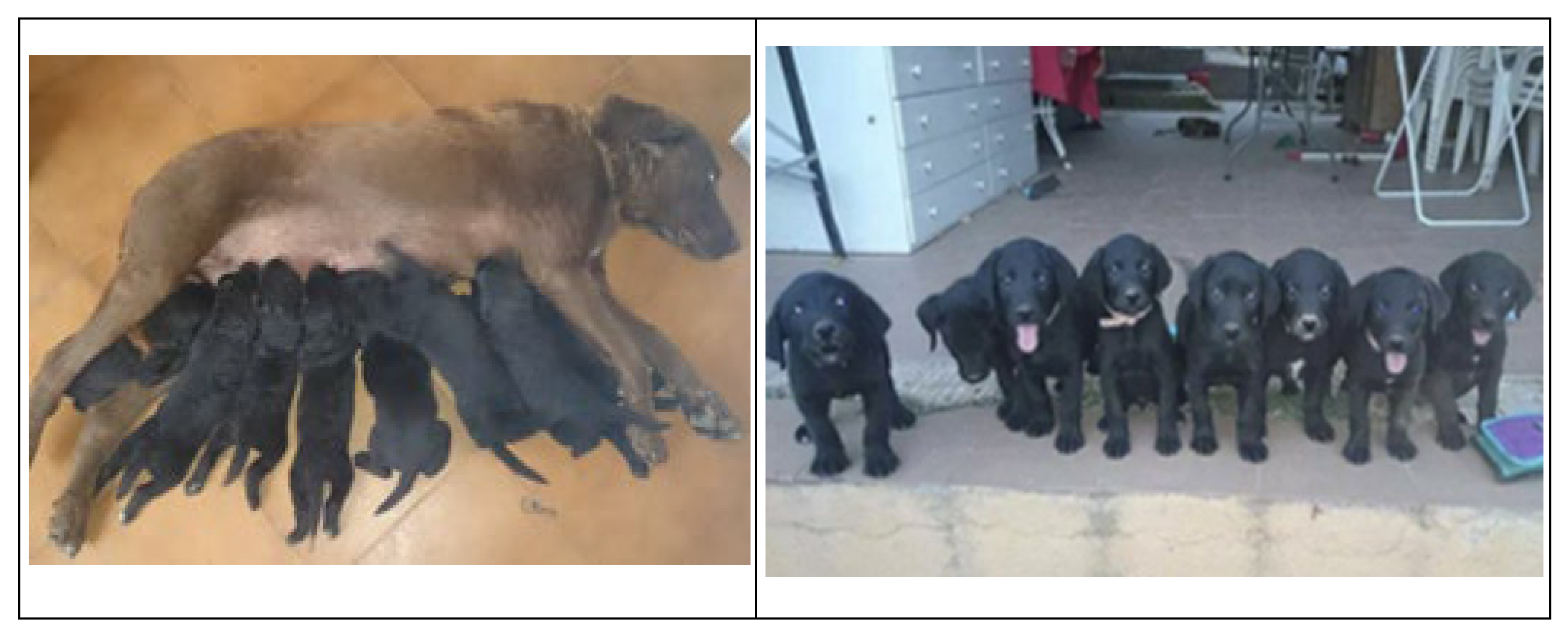
Figure 2.
Hope at 7 days drinking with modified baby bottle.
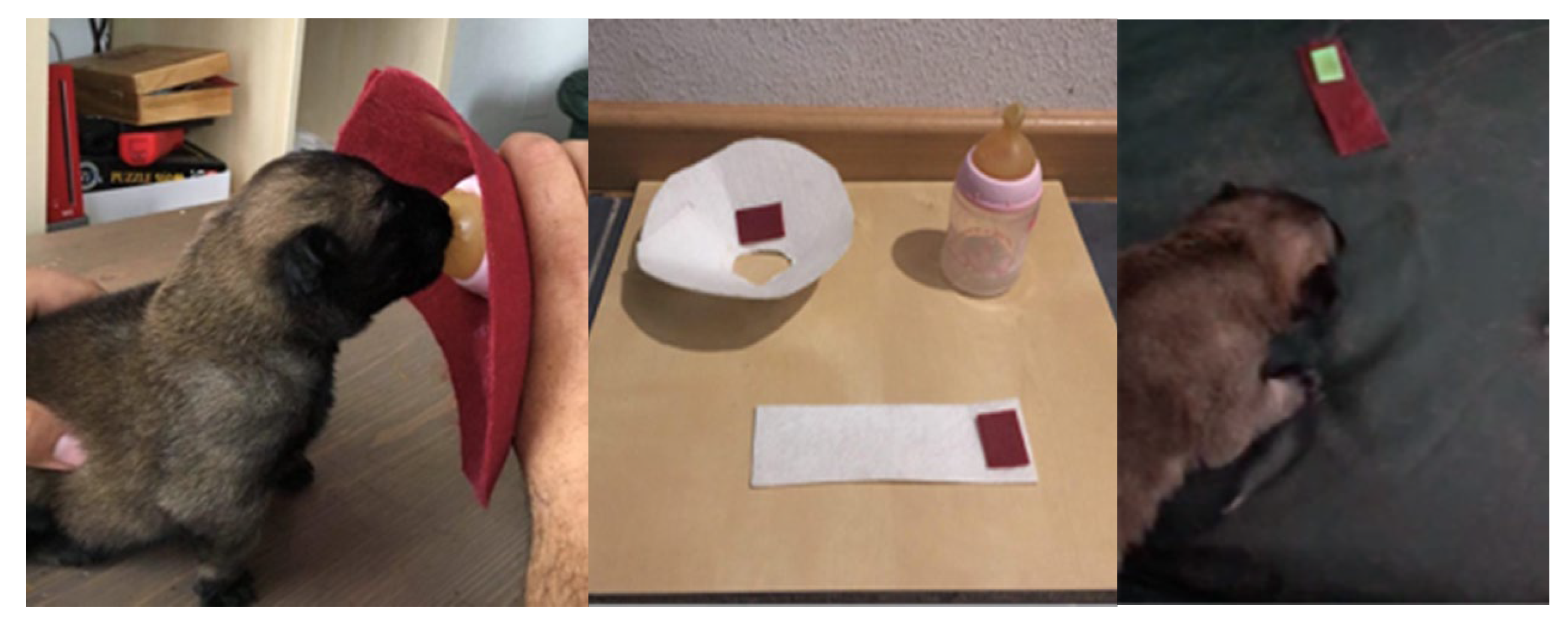
Figure 3.
Microtrace explosive pens.
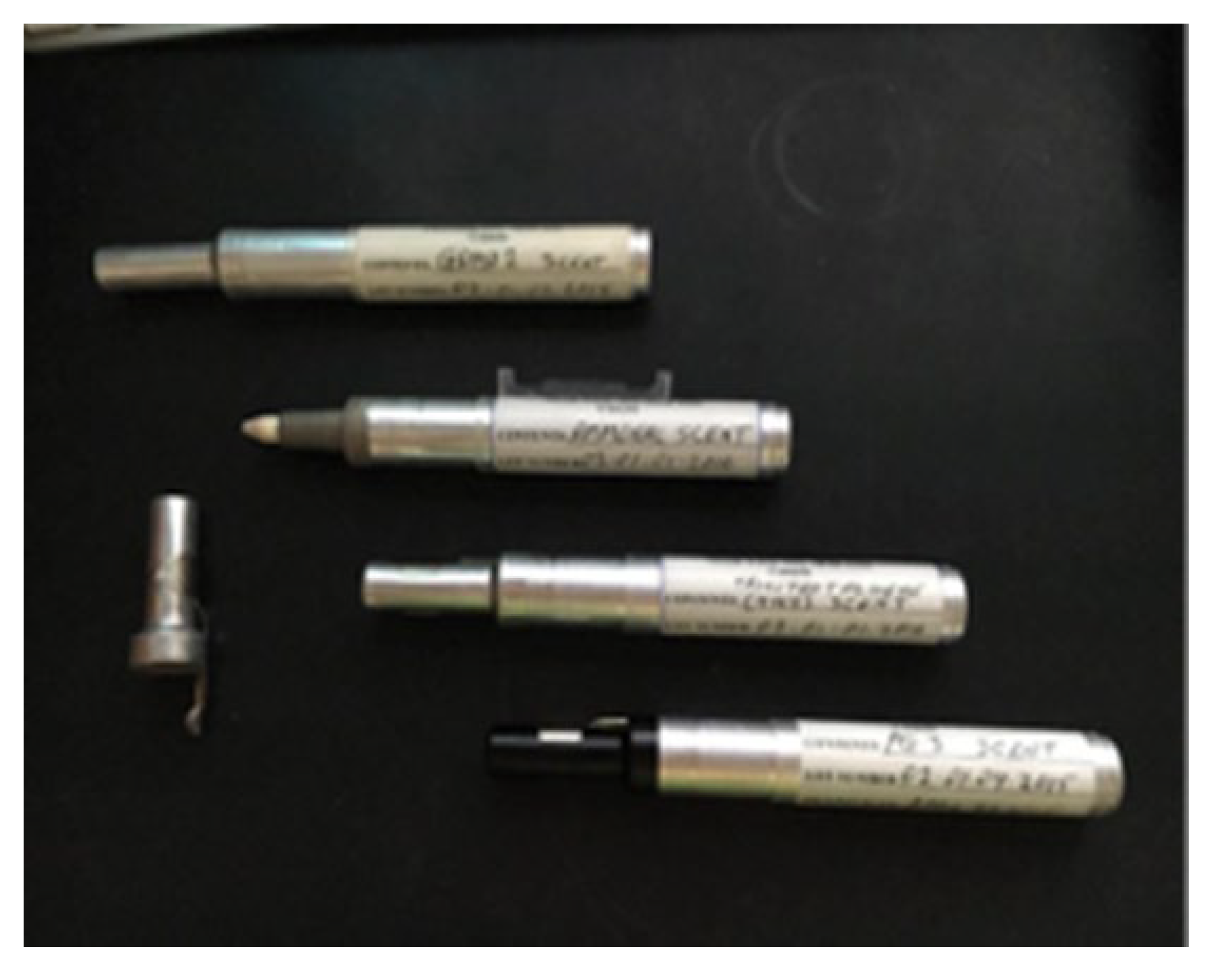
Figure 4.
Hope’s marking in search after 45 days.
Disclaimer/Publisher’s Note: The statements, opinions and data contained in all publications are solely those of the individual author(s) and contributor(s) and not of MDPI and/or the editor(s). MDPI and/or the editor(s) disclaim responsibility for any injury to people or property resulting from any ideas, methods, instructions or products referred to in the content. |
© 2025 by the authors. Licensee MDPI, Basel, Switzerland. This article is an open access article distributed under the terms and conditions of the Creative Commons Attribution (CC BY) license (http://creativecommons.org/licenses/by/4.0/).
Copyright: This open access article is published under a Creative Commons CC BY 4.0 license, which permit the free download, distribution, and reuse, provided that the author and preprint are cited in any reuse.


