

Submitted:
07 August 2025
Posted:
08 August 2025
You are already at the latest version
Abstract
Weeds carried by different plant pest-pathways in international cross-border traffic are linked to severe biological and biosecurity threats to plant health, animal health, food safety and environmental safety. Regulated quarantine weeds have zero tolerance in pest pathways across borders. This study analyzed 1668 human-aided transboundary plant pest-pathways drawn from 14 ports of entry and a non-official crossing point during the period stretching from 2020 to 2024 at the Plant Quarantine Services Institute Central Laboratory and the National Herbarium and Botanic Gardens Institute. Three regulated weeds that impact plant trade and seed production systems were identified. The weed approach rate was 182 from a global pest rate of 1072. Two weed species (Datura stramonium L and Adenium obesum (Forssk.) Roem. & Schult.) found in association with human-aided cross-border traffic concerns food and feed safety matters. Analysis of variance of the main effect of the pest-pathways categories revealed highly significant differences in weed approach rates (P< 0.001). Weed pests were prevalent in plant–pest-pathways imported for uses other than plant propagation. The Beitbridge and Forbes border ports had the highest volume of human-aided plant pest pathway traffic and were also associated with high weed approach rates into Zimbabwe. Victoria Falls and Robert Gabriel Mugabe International airports were associated with the hitchhiking of plant propagules in passengers’ baggage. It is recommended that weed pests be guarded precisely in grain products and passengers’ baggage by employing baggage scanners and sniffer dogs to aid phytosanitary inspections at ports of entry.
Keywords:
weed approach rate
; cross-border traffic
; human aided
; pest-pathways
Introduction
Plant pest transmission across borders is a serious threat to global agriculture, food security and biodiversity (Awasthi et al., 2024; Brooks et al., 2022; Garcia-Bastidas, 2022; Guha Roy et al., 2021; Munhoz et al., 2024; Mwangi et al., 2023; Trkulja et al., 2022). New weeds threaten biodiversity and plant life as well as animal and human life due to the nature biosecurity risks they cause (Lovett et al., 2016). Knowledge of weeds associated with cross-border traffic and their approach rates is one of the sure ways of managing the human aided pest-pathways-risk associations in plant biosecurity and agriculture (Bhunjun et al., 2021; Dubey et al., 2021). Knowledge of weed pest approach and infestation rates from incoming cross-border traffic pathways bridges the knowledge gap of plant protection organization to avert accidental new weed introductions (Douma et al., 2016; Griffin, 2017; Zhang, 2012).
Regulated quarantine weeds have a zero tolerance in international trade as these weeds pose high economic impacts to state economies (Froese et al., 2024; IPPC Secretariat, 2016b). The pest threshold, also referred to as the pest tolerance level, in international cross-border traffic, refers to the percentage of infestation in the entire consignment for phytosanitary action (IPPC Secretariat, 2016b). “Evidence exists in the scientific literature and in government data that people moving between areas contribute to the spread of weeds in several different ways: by carrying the weeds on themselves, their clothing, or their shoes; by transporting the weeds on objects brought to or taken from an area (e.g., handicrafts made from plant parts); or by intentionally collecting the weeds and take them to a different location” through any crossing point possible (Meissner et al., 2008) and by other anthropogenic behavior in trade.
One serious piece of recent history is when water hyacinth (Eichhornia crassipes (Mart.) Solms) and water lettuce (Pistia stratiotes L.) were first introduced in Zimbabwe and Africa from the Americas as an ornamental plants, where it has severely destroyed water sources, resulting in losses in excess of millions of dollars from reduced recreation parks activity and availability of land for farming among other issues (Macêdo et al., 2024; Getahun & Kefale, 2023). Another piece of history is regarding the wattle trees that have invaded the country eastern highlands occupying and ravaging the environment (Mujaju et al., 2021). Recently, Vernonanthura polyanthes (Sprang.), Hedychium gardnerianum Ker Gawl. has caused serious environmental damage in the eastern highlands of Zimbabwe (Kachena & Shackleton, 2024; Chakuya et al., 2023). Currently, this V. polyanthes (Zhang et al., 2022) is a threat to farming land, and adjusting plant quarantine measures to get rid of this transboundary weed menace is critical (Montilon et al., 2023; Waithira, 2023). Weed species found in cross-border traffic such as Datura sp. L. are associated with poisoning of feeds and food (Alegbeleye et al., 2022), leading to health complications in both humans and animals as well as causing phytotoxic through allelo-chemicals (Musabayana et al., 2024).
The data on weed-pest approach and infestation rates is an important assert in determining pest-pathway risk in cross traffic and biosecurity control system (Griffin, 2017). Understanding pest-pathway association provides a good measure to reduce the challenges associated with new weed introduction or weed resurgence (Friel et al., 2020). This study was conducted to provide new insights into the weeds associated with cross-border traffic and their approach rate across a variety of pest pathways at various ports of entry into Zimbabwe. The study also determined the relationship between entry points and pest approach rate of weeds found in cross-border traffic. This is the first study on weeds associated with cross-border traffic; their approach and infestation rate at the Zimbabwean ports of entry. The results of this study will aid the decision making on resources allocation for plant biosecurity controls at the ports of entries. The general analysis of variance was used to determine the differences in pest approach rates on the entry point and, pest pathways.
Materials and Methods
Sources of the Biological Materials
The biological samples used for the trapping of weeds associated with cross-border traffic were collected from human-aided pest pathways sub-sampled from14 ports of entry and also from non-official crossing points during the period between January 01, 2020 and December 31, 2024. Table 1, shows the list and characteristics of the sampling sites used for the trapping of pests in this research.
Sampling of the Biological Materials
A survey approach was used to collect biological materials from human-aided pest pathways (Table 1). Samples were drawn from all potential pest pathways (Webber, 2010) of pest spread through random sampling of human-aided pest pathways in cross-border traffic.
The pathways were grouped into three classes, which were also sub-divided into two more categories per class (Table 2) (Meurisse et al., 2019; Campbell & Schlarbaum, 2014). The three classes and the categorisation are outlined in Table 2. The singling out of the Solanaceae plant pest pathway was ascertained to the claim by (CABI, 2021; Ormeno et al., 2006) that Solanaceae plants from various parts of the world are critical for their roles in hosting pathogens or diseases of the cultivated plants and hence their importance in the studies of trans-boundary movement of pests as depicted whilst the other classes were classified according to the IPPC pest risk categorization (IPPC Secretariat, 2019). Multiple cargo pathway segments were collected for pest extraction (Webber, 2010; Webber & Rose, 2008). The sample size varied depending on the pathways sampled. Only anthropogenic aided pathways were sampled.
The data collected included the entry points, the nature of the entry points, the nature of the pest pathways, and the inspection outcome at the port. All indicative pest-pathways equally had chances of being sampled. Sampling was done over the same period across all sampling points for the period January 1, 2020 to December 31, 2024. For non-official crossing points, there were no consignments inspections carried at the ports of entry. Samples that were collected from non-official crossing points were obtained by purchasing a sub-sample of the smuggled goods from the border jumpers.
Trapping and Identification of Weed Seeds and Propagules from Samples
The extraction of weed seeds from consignments followed the process described by (Collier, 2024; Wilson et al., 2016). Weeds in the samples were extracted by cleaning, winnowing and sieving them from the consignment samples. Weeds in soil were extracted by subjecting the intercepted growing media contents to conditions that cause germination and emergence of weeds (Travlos et al., 2020). Weeds were identified up to the genus and species levels using the binomial system of taxonomy. The weeds were identified using methods prescribed by (Naidu, 2012).
Screening Consignments for Phytosanitary Measures at the Port of Entry
The intercepted pathways were sampled according to ISPM 32. Phytosanitary inspections were performed according to the general inspection procedure at ports of entry standard by the Zimbabwe NPPO (IPPC Secretariat, 2016b; The Head Plant Quarantine Services Institute, 2022).
Approach Rate
The number of times a particular pest (or pest collection/category) is associated with a particular volume in a specified pathway (Gilioli et al., 2017; NAPPO, 2017). This was determined by recording the frequencies at which a specific pest was isolated in the pest pathways. The data collected were segregated by port of entry, pathway, and pest category (NAPPO, 2017)
Data Analysis
Analysis of variance was used to compute the different factors studied. The factors were the sites and the pathways. Variables in the studies were the volume of phytosanitary traffic rejected due to non-compliance with phytosanitary standards at the port of entry and the weeds approach rate. The results from the Mazowe central laboratory examinations were used as confirmatory checks to the port of entry visual inspections. The frequency of contamination was calculated by expressing as a percentage, the infected samples as ratio of the total samples subjected to the pathway visual examination at ports of entry. The data obtained was analyzed using GenStat 14 and SPSS statistical packages. ANOVA and statistical inference were computed and, Fischer’s least significant deference was used for mean separation where necessary (Gomez & Gomez, 1984; Little & Hills, 1978). Regression analysis and general one-way ANOVA were used to determine the relationship between the frequencies of the port consignment rejection action rate (Bailey, 2008; Fisher, 1954; Williams & Abdi, n.d.)
Results
A total of 1668 samples were examined at the Mazowe Plant Quarantine services Laboratory, and 31 of the analyzed samples were obtained from unofficial crossing points. The remainders of the samples were obtained from the 14 ports of entry as referred in Table 1.
Weed Species Diversity in Pest Pathways Intercepted at Zimbabwe Ports of Entries
Weeds or plants comprised of eleven species in eight orders were found in association with the human-aided cross-border pest pathways from this research (Table 3). Two potentially new weed threats, Convolvulus arvensis (L) and Adenium obesum (Forssk) were found in association with human-aided pest-pathways into Zimbabwe. One weed that was intercepted in the maize grain consignment (Figure 1) that was destined for feed and food, (D. stramonium), was a regulated weed with a nil tolerance on seed market access. The weed is a restricted contaminant in plants for planting in Zimbabwe-. The pathway categories that carried weed pests into Zimbabwe were ‘other plants” destined for other uses. A weed not known to exist in Zimbabwe (C. arvensis) was intercepted in wheat grains destined for consumption. H. annus and D stramonium weeds were intercepted in maize consignments destined for animal feed and food.
Three weeds were smuggled for planting as flowers and ornamentals (A. obesum; Lilac Chaste Tree (Vitex agnus-castus) tree seeds, L. minor (Welw) (Figure 2) and Lemna aequinoctialis (Welw)). L. minor (Welw) and Lemna aequinoctialis were also smuggled to be planted as animal feeds.
Two weeds (D. stramonium and A. obesum) that were intercepted from human-aided pest pathways in cross-border traffic were a threat to food and feed safety as these were potential feed and food poisons. One weed which was found in passenger baggage; Vitex agnuscastus, was known for its medicinal properties in Asia and Middle East, where it also behaved as a weed. V. agnuscastus has a potential to grow in a wide range of climates and soil types with high seed production rates. Figure 1, Figure 2, Figure 3 and Figure 4 show some of the weeds that were found in association with cross-border traffic into Zimbabwe during the period 2020 to 2024.
Occurrence and Distribution of the Weed Threats Found Associated with Cross Border Traffic at Zimbabwean Ports of Entries
Approach Rates for the Weeds Found in Association with Cross-Border Traffic in Zimbabwe
Table 4 and Figure 5 show the weed pest approach rate to Zimbabwean ports of entries during the period 2020 to 2024. The weeds approach rate was 182 from the 1668 sampled human-aided plant pest pathways that were examined at the Mazowe central laboratory.
There were highly significant differences in the mean weed approach rates across the border ports (P<0.001), Table 5. The highest mean weed approach rate to Zimbabwe’s port of entry was encountered at the Beitbridge port of entry, which had a weed approach rate of 6.76, followed by Forbes, which had a mean weed approach rate of 0.83 and lastly, Victoria Falls and RGMIA airports, which had mean weed approach rates of 0.04 each.
There were highly significant differences on the weeds approach rate across the main-pest-pathways (P>0.005) (Table 8). There were also significant interactions of weed pest approach rate on ports entry by main pest pathways and on ports of entries by sub-pest -pathways (P>0.001), Table 7. The year by main pathway by sub pathway also had significant interactions (P>0.001) (Table 7). Year by site by main pest-pathway by sub-pest-pathway had no significant interactions (P=0.063) at LSD5%, (Table 7). Pest-pathways categorized as ‘other plants’ had the highest mean weed pest approach rate of 1.52 and ‘organic materials’ and ‘solanaceae’ categories had a mean weed pest approach rate of zero each (Table 9).
Both the Pearson Chi-Square (5%) Asymptotic Significance (2-sided) and the Likelihood Ratio (5%) symptotic Significance (2-sided) analysis of weed pest approach and infestation rates at the ports of entries were not significant (Table 5). There was no relationship between weed approach and infestations rates at the ports of entry. These events were independent from each other.

Table 4.
Approach rate of pest categories found in samples collected from the cross-border traffic at Zimbabwe ports of entries for the period, January 1, 2020 to December 31, 2024.
Table 4.
Approach rate of pest categories found in samples collected from the cross-border traffic at Zimbabwe ports of entries for the period, January 1, 2020 to December 31, 2024.
| Pest Category | Samples Size Analyzed | Pest Approach Rate | Pest Approach Rate Frequency (%) | Pest Infestation Rate (%) |
|---|---|---|---|---|
| Weeds | 1668 | 182 | 16.95% | 10.91% |
| Other pests | 1668 | 894 | 83.05% | 53.60% |
| Freedom from pests | 1668 | 725 | - | 35.49% |
| Mean | 1668 | 600 | 50% | 33% |
| Standard Deviation | 0 | 372 | 47% | 21% |
Table 5.
The Pest Approach Rate for phytosanitary cross border traffic received at the points of entry during the period, January 1, 2020 to December 31, 2024.
Table 5.
The Pest Approach Rate for phytosanitary cross border traffic received at the points of entry during the period, January 1, 2020 to December 31, 2024.
|
Site (Port Of Entry) |
Volume Of Traffic Examined. | All Pest Approach Rates | Weeds Approach Rate | Infestation And Infection Rate (%) | Weed Infestation Rate (%) |
|---|---|---|---|---|---|
| Beitbridge | 389 | 265 | 160 | 68% | 10.09% |
| Forbes | 257 | 148 | 20 | 58% | 4.05% |
| Chirundu | 247 | 142 | 0 | 57% | 0.00% |
| Plumtree | 194 | 148 | 0 | 76% | 0.00% |
| Victoria Falls | 160 | 130 | 0 | 81% | 0.00% |
| Kariba | 44 | 25 | 0 | 57% | 0.00% |
| Nyamapanda | 182 | 140 | 0 | 77% | 0.00% |
| Kazingula | 10 | 9 | 0 | 90% | 0.00% |
| Sango | 27 | 0 | 0 | 0% | 0.00% |
| Maitengewe | 8 | 6 | 0 | 75% | 0.00% |
| Unofficial entry port | 31 | 13 | 0 | 42% | 0.00% |
| Mphoengs | 14 | 3 | 0 | 21% | 0.00% |
| R.G.M.I Airport | 88 | 40 | 1 | 45% | 4.18% |
| Mkumbura | 6 | 0 | 0 | 0% | 0.00% |
| Victoria Falls Airport | 5 | 5 | 1 | 100% | 2.78% |
| Pearson Chi-Square (5%) | 0.256 | 0.235 | 0.254 | 0.250 | 0.215 |
| Likelihood Ratio (5%) | 1.00 | 1.00 | 1.00 | 1,00 | 1.00 |
Table 6.
Sites effects x pest pathways in cross border traffic during the period 2020--2024 at ports of entries into Zimbabwe.
Table 6.
Sites effects x pest pathways in cross border traffic during the period 2020--2024 at ports of entries into Zimbabwe.
| Site / Port Of Entry | Mean Total Pest Approach Rate | Mean Weed Approach Rate | Mean Pest Infestation/Infection Rate (%). | Mean Weed Infestation Rate |
|---|---|---|---|---|
| 1) Beit-bridge | 5 | 6.67b | 41.00a | 10.09 |
| 2) Chirundu | 2.1 | 0.0 | 26.5ab | 0 |
| 3) Forbes | 6.8 | 0.83a | 27.5ab | 4.05 |
| 4) Kariba | 0.8 | 0a | 18.3b | 0 |
| 5) Kazingula | 0.3 | 0a | 15.3bcd | 0 |
| 6) Maitengewe | 0.3 | 0a | 7.0cd | 0 |
| 7) Mphoengs | 0.3 | 0a | 1.8cd | 0 |
| 8) Mkumbura | 0.0 | 0a | 0cd | 0 |
| 9) Nyamapanda | 2.1 | 0a | 25.4ab | 0 |
| 10) Plumtree | 2.3 | 0a | 23.7b | 0 |
| 11) R.G.M.I Airport | 3.5 | 0.4a | 24.5b | 4.18 |
| 12) Sango | 0.0 | 0a | 0cd | 0 |
| 13) Unofficial entry port | 0.0 | 0.0a | 21.9b | 0 |
| 14) Victoria Falls | 0.40 | 0a | 25.8ab | 0 |
| 15) Victoria Falls Airport | 0.2 | 0.04a | 12.5bcd | 2.78 |
| Grand mean | 4.5 | 0.51 | 18.1 | 1.41 |
| F Probability | P = 0.181 | P<0.001 | P <0.001 | P <0.001 |
| LSD (5%) | NS | 1.382 | 15.66 | 3.885 |
| CV% | - | 50.7 | 22.6% | 93.8% |
*Means with same letters were not significantly different.
Table 7.
Analysis of variance for the weed pest approach rate for the period from January 1, 2020 to December 31, 2024 in Zimbabwe.
Table 7.
Analysis of variance for the weed pest approach rate for the period from January 1, 2020 to December 31, 2024 in Zimbabwe.
| Source of variation d. f. | s.s. | m. s.v.r. F pr. | |||
|---|---|---|---|---|---|
| Year Stratum | 3 | 17.72 | 5.91 | 1.05 | |
| Year x Site Stratum | |||||
| Site | 14 | 991.41 | 70.81 | 12.57 | <.001 |
| Residual | 42 | 236.53 | 5.63 | 1.00 | |
| Year x Site x Main x Pathway | 2 | 184.02 | 92.01 | 16.29 | <.001 |
| Site x Main-Pathway | 28 | 1982.81 | 70.81 | 12.53 | <.001 |
| Residual | 90 | 508.50 | 5.65 | 0.32 | |
| Year.Site.Main_Pathway.Sub_Pathway | |||||
| Sub Pathway | 3 | 132.02 | 44.01 | 2.49 | 0.063 |
| Site x Sub_Pathway | 42 | 1493.11 | 35.55 | 2.01 | 0.001 |
| Residual | 135 | 2387.88 | 17.69 | ||
| Total 359 | 7933.99 | ||||
Table 8.
Effect of main-pest-pathways on weed pest approach and infestation rates in cross-border traffic into Zimbabwe from January 1, 2020 to December 31, 2024.
Table 8.
Effect of main-pest-pathways on weed pest approach and infestation rates in cross-border traffic into Zimbabwe from January 1, 2020 to December 31, 2024.
| Pathway | Mean Weed Approach Rate | Mean Weed Infection Rate (%) |
|---|---|---|
| Organic Materials | 0b | 0b |
| Other Plants | 1.52a | 4.22a |
| Solanaceae | 0b | 0b |
| Grand-Mean | 0.51 | 1.41 |
| F-Probability | (P>0.005) | P<0.001 |
| LSD (5%) | 0.610 | 1.849 |
| CV % | 50.7% | 93.8% |
*Means with same letters were not significantly different.
Table 9.
Effect of sub-pest-pathways on weed pest approach and infestation rates in cross-border traffic into Zimbabwe from January 1, 2020 to December 31, 2024.
Table 9.
Effect of sub-pest-pathways on weed pest approach and infestation rates in cross-border traffic into Zimbabwe from January 1, 2020 to December 31, 2024.
| Sub-Pathway | Weed Approach Rate | Mean Infestation Frequency (%) |
|---|---|---|
| Growing media | 0b | 1.41 |
| other use | 1.52a | 2.13 |
| packaging material | 0b | 1.41 |
| Propagation | 0.51ab | 0.69 |
| Grand Mean | 0.51 | 1.41 |
| F. Prob. | P<0.001 | P= 0.712 |
| LSD (5%) | 1.315 | NS |
*Means with same letters were not significantly different.
Infestation Frequencies for Weeds Found in Association with Cross-Border Traffic into Zimbabwe
The overall weed infestation frequency was 10.91% of all the pest pathways that were examined at the Mazowe central laboratory (Table 4). The overall pest infestation/infection rate was 53.60% from all the 1668 pathways examined, and 35.49% of the pathway samples examined was pest-free.
The weed infestation frequency was significant across the ports of entry with a mean infestation frequency of 1.41%. The Beitbridge port of entry had the highest weed infestation frequency of 10.09% (Table 5). The infestation frequency of the sub-pathways was not significant (P>0.005), (Table 9).
As indicated in Table 5, only four sites had weed infestation frequencies above zero and these ports were Beitbridge with 10.09%; Forbes with 4.05%, RGMIA with 4.18% and lastly Victoria Falls airport which had a weed infestation frequency of 2.78%. The Beitbridge port had the highest weed infestation frequency of 10.09%, followed by Forbes port, which had a weed infestation frequency of 4.05%. The Victoria Falls and RGMI airports had weed infestation frequencies of 2.78% and 4.18%, respectively. Unofficial crossing points had a weed infestation frequency of zero per cent as depicted at the other 10 ports of entries (Table 5) studied.
Discussion
There is a big threat of weeds to attack the Zimbabwe’s biosecurity system due to cross-border traffic. As depicted from these studies, six weed-plant species were found in association with the human-aided cross-border human aided pest pathways. Passengers carrying plant propagation propagules in their luggage are a serious threat to the accidental introduction of exotic invasive weed species into the country. Water Hyacinth was introduced into the country through movement of plants for ornamental purposes. From this research, we noted the hitch hiking of two weed threats, (Convolvulus arvensis (L) and Adenium obesum (Forssk)), which were destined for feed production. Though this might be a noble cause for importation, the need for weed risk assessment to determine economic and biosecurity threats associated with the weed pathway has not been complied with as per the plant pest and disease act chapter 19.08 of 9159 revised in 2016. The weeds species; Lemna aequinoctialis and A. obesum are a concern to the country’s environment and national parks. Lemna aequinoctialis is a nuisance in water bodies, rice field agro-ecosystems, irrigation and drainage channel reservoirs, and recreational lakes. Several mosquito larvae, particularly those of Culex bitaeniorhynchus, C. tritaeniorhynchus and Ficalbia minima, are closely associated with Lemna (Njambuya et al., 2011; A. Osman et al., 1994).
This study managed to isolate large weed seeds from the pathways at ports of entry using the visual inspections. Given the continued use of visual inspection at ports of entry, there is a likely risk of the accidental introduction of very small weed seeds that may not be easily detected the naked eye. The pest-pathway categories that carried weed pests into Zimbabwe were ‘other plants” destined for other uses. The results from this current research was not in tandem with the IPPC ISPM 31 (2008) which categorized plants for planting as the main risk pathway of pest movement across borders. From this present research, pest pathways for weeds were more common not in plants for planting, but grain imported for consumption or plant propagules imported for ornamental purposes. This research did not find any weeds associated with the planting media or plants accompanying planting media. An indicator suggesting that the exporting biosecurity certification system considers the importance of adhering to phytosanitary measures demanded by importing states.
Human-aided pest pathways in cross-border traffic are associated with food and feed safety threats (Toumasis et al., 2025; Kasem et al., 2024). The issue of food poisons carried in plant pest pathways which are food contaminants has remained a critical issue in plant biosecurity, food safety and animal health (Musawa, 2022; Njoroge et al., 2016). On the same phenomena, the weed found in association with human-aided pest pathways in cross border traffic; Datura stramonium and Adenium obesum, were potential feed and food poisons (Abalaka et al., 2014; Mutebi et al., 2022). Datura sp. is associated with dangerous toxins of the tropane alkaloids, atropine, hyoscyamine, and scopolamine, all of which are classified as deliriants or, anticholinergics. As previously highlighted, the exotic plant, ‘A. obesum’ which was brought into the country for ornamental purposes via the Victoria Falls Airport border port, is reported to be a food and feed poisoning agent. All the parts of the plant, ‘A. obesum’ are toxic and may cause slow heartbeat, low blood pressure, lethargy, dizziness and stomach upset (Abalaka et al., 2014) https://www.health.qld.gov.au/). The interception of the weed, A. obesum’, indicates a critical requirement to port of entries plant biosecurity systems to be vigilant and strong. The weed, A. obesum’, is a concern that causes food and feed poisoning (Mutebi et al., 2022).
From this current research, we noted that the most threatening pathways for weeds were grain consignments destined for other uses as well as passengers carrying planting propagules in their baggage, which they import for any purpose including ornamental and nutrition issues. This research proposes to align quality issues from the industry, food safety as defined by CODEX Alimentarius (CODEX), and the plant quarantine polices regarding the quality of grain passing through the border. For example, the CODEX standard for maize (CODEX, 1995) denotes other organic extraneous matter, which is defined as organic components other than edible grams of cereals (foreign seeds, stems, etc.) to be a maximum of 1.5% m/m max; and inorganic extraneous matter, which is defined as any inorganic component (stones, dust, etc.) to be 0.5% m/m as the maximum threshold of foreign materials; the Grain marketing Board and (ministry of industry and commerce of Zimbabwe) considers 3% as the maximum foreign material required for maize for the first class grain, whereas the plant quarantine polices has zero tolerance to foreign matter in any imported maize grain consignments. Such polices cause disharmony in the industry between the grain traders, food safety and plant quarantine on port of entry decision regarding acceptance of denying of entry of such commodities including other grains such as wheat and sorghum (The Head Plant Quarantine Services Institute, 2022, CODEX, 1995).
To further the example of maize above, this research found out that for those truckloads of maize grain intercepted at the Beitbridge port of entry, where maize grain was found to be contaminated with weed seeds and foreign organic matter, the average foreign matter content found in contaminated maize grain shown in Figure 3, were averaging 3%. In such instances, each truck load found carrying 34.5 tonnes of maize grain would also had literally delivered (hitchhiked) a whopping 1.035 tonnes of rubbish consisting of weeds seeds and foreign debris. That is, rubbish were shipped across borders risking the biosecurity of the country. Considering that the country imported over 20,000 truck-loads of maize grain with 3% foreign material during the period of study, the maize consignment pathway assisted the hitchhiking of 20,700 tonnes of rubbish comprised of weeds and other rubbish that are a serious threat to the country’s biosecurity.
Weeds such as Datura sp. are a regulated weeds on seed market access and are a restricted weed in plants for planting in Zimbabwe (The Head Plant Quarantine Services Institute, 2020, 2022). This hitchhiking of foreign weeds that threaten the feed safety and the country seed systems has also been revealed by (Zhang, 2012a). A weed not known to exist in Zimbabwe (C. arvensis) was intercepted in wheat grains destined for consumption. H. annus and jimson weeds were intercepted in maize consignments destined for animal feed and food.
The mean weed pest infestation frequency was 1.41%, which was a big deviation from the expected pest threshold of zero per cent tolerance by plant port health authorities (IPPC Secretariat, 2008). Although no new weed pest records were recorded in the country for the period under study (Tambo et al., 2021; The Head Plant Quarantine Services Institute, 2020), there is a need to strengthen polices for weed and exotic plant inspections to reduce the weed threats associated with cross-border trade. The results of this research suggest that not all the plant parts and products found in cross-border trade require phytosanitary measures to reduce the ingress of weed pests from other states.
Pest pathways can carry anything with them (Shafi et al., 2023; Cui et al., 2020). From these studies, the grains of crop consignments and passenger baggage were the most noted potential transporters of weed pests across the border. The non-significant differences in pest approach rates for the sub-pest-pathway categories studied resonates well with Cui et al.,(2020) who reported that pest pathways can carry anything with them from one point to the next geographical area. However, the significant differences noted on the main pest-pathways for moving weed pests across geographical areas appeared antagonistic phenomena with the previously mentioned authors. Weeds were found more to pest pathway categories that included grain moved in bulky and as planting propagules in passenger baggage.
Weed infestation rates were found at land border ports (Victoria Falls and Forbes), ports that were associated with the highest volume of the cross-border traffic (Table 3) and at airports (Victoria Falls and RGMIA) as plant propagules hitchhiked in passengers’ baggage. The weed seeds were found in association with cereal grains most, which were dry commodities. These weeds contaminated the grain at harvest and the methods used during packaging did not screen out these weeds contaminants. Other planting propagules were found in association with individuals who carried them for the purposes of propagation as ornamental crops or as feed crops in their baggage. The Beitbridge border post and the Forbes border post were associated with large traffic volume; likewise, Forbes border port had high traffic volumes entering the country as well. In Beitbridge, Zimbabwe is separated from the Republic of South Africa by a large river called the Limpopo. Most traffic passes into Zimbabwe through normal ports of entry, and a few consignments are smuggled using boats across the Limpopo. The high infestation frequency noted at the Beitbridge port of entry resonates very well with the claims by Nyoni, in 2022 that few goods are smuggled by boats across the river Zambezi between Zambia and Zimbabwe (Nyoni, 2022) where the natural physical river barrier causes bulky goods to be channeled through the designated ports of entryies where they are subjected to phytosanitary inspections on arrival.
The zero pest approach rates at ten ports of entry (Table 3) in this study does note real mean that these ports of entry had no association with potential weed pest entries. The samples taken from these ports comprised of par-boiled rice and dried–salted fish and other fresh produce which could not real hitch hike weed seeds. The cross-border traffic encountered with these other ports of entries were more of pest pathways categorized as non-pathways for pest spread by the IPPC (IPPC Secretariat, 2016a).
Conclusion
From this study, two potential new weed threats, C. arvensis and A. obesum, were found in association with human-aided pest-pathways into Zimbabwe. Two weeds (D. stramonium and A. obesum) associated with cross-border traffic were a threats to food and feed safety. Beitbridge, Forbes, Chirundu and Robert Mugabe International airport ports of entries exhibited high weed pest approach rates into the country. Airports, as depicted at the Victoria Falls and Robert Mugabe International airports, were associated with passenger baggage as pathways for the ingress of new pest threats into the country. Also as noted by Mahabaleswara, et al., (2024), the weed biosecurity threat associated with cross border traffic requires thorough port of entry inspection at airports, especially in passenger baggage and in grain consignments.
Recommendations
Given the high potential of passenger baggage to hitchhike potential weed threat at airports, advanced baggage scanners and sniffer dogs are important assets that can be deployed to identify potential dangers hidden in passenger baggage. Further work is recommended to trap virus pests associated with human-aided cross-border traffic. Further work is also recommended to screen imported cereals against mycotoxins-causing organisms at ports of entry. It is also recommended that national sanitary and phytosanitary committees harmonize border security inspections and controls to enhance the protection of plant and animal health as well as food and nutrition security hazards.
Author Contributions
Nhamo MUDADA, Origination of ideas, origination of manuscript, data, collection and analysis, project development, and review of manuscript. James CHITAMBA, Data analysis and review of manuscript. Earnest NYANGANI, Data collection. Louisa MAKUMBE, Data collection and review of the manuscript. Dumisani KUTWYAYO, Review of the manuscript and supervision of the project. Christopher CHAPANO, Data analysis and review of the manuscript. Nyamande MAPOPE, Origination of ideas, review of the manuscript and supervision of the project. Wonder NGEZIMANA, Review of the manuscript and supervision of the project.
Funding
This research was supported by the National Plant Protection Organization of Zimbabwe through in-kind support with laboratory space, equipment, reagents and personnel for the collection and transportation of samples.
Acknowledgements
The National Plant Protection Organization of Zimbabwe (NPPOZw) and the Marondera University of Agricultural Sciences and technology are acknowledged for their support in these studies.
Conflict of Interest
There are no conflicts of interest.
References
- Abalaka S, Fatihu M, Ibrahim N, Ambali S (2014). Haematotoxicity of ethanol extract of Adenium obesum (Forssk) Roem & Schult stem bark in Wistar rats. Tropical Journal of Pharmaceutical Research, 13(11), 1883. [CrossRef]
- Alegbeleye O, Odeyemi O A, Strateva M, Stratev D (2022). Microbial spoilage of vegetables, fruits and cereals. Applied Food Research, 2(1), 100122. [CrossRef]
- Awasthi L P, Das S, Lee R F, Pattanayak S (2024). Plant Pathology. CRC Press.
- Bailey J (2008). First steps in qualitative data analysis: Transcribing. Family Practice, 25(2), 127–131. [CrossRef]
- Bhunjun C S, Phillips A J L, Jayawardena R S, Promputtha I, Hyde K D (2021). Importance of Molecular Data to Identify Fungal Plant Pathogens and Guidelines for Pathogenicity Testing Based on Koch’s Postulates. Pathogens, 10(9), 1096. [CrossRef]
- Brooks D R, Hoberg E P, Boeger W A, Trivellone V (2022). Emerging infectious disease: An underappreciated area of strategic concern for food security. Transboundary and Emerging Diseases, 69(2), 254–267. [CrossRef]
- CABI (2021). Potato virus Y (potato mottle) (p. 43762) [Dataset]. [CrossRef]
- Campbell F, Schlarbaum S (2014). Fading Forests III. American Forests: What Choice Will We Make. The Nature Conservancy, Arlington, VA, and the University of Tennessee, Knoxville, TN.
- Cantamutto M, Poverene M (2007). Genetically modified sunflower release: Opportunities and risks. Field Crops Research, 101, 133–144. [CrossRef]
- Chakuya J, Furamera CA, Jimu D, Nyatanga T T C (2023). Effects of the invasive Hedychium gardnerianum on the diversity of native vegetation species in Bvumba Mountains, Zimbabwe. International Journal of Environmental Studies, 80(5), 1322–1329. [CrossRef]
- CODEX (1995). CODEX STANDARD FOR MAIZE (CORN). Codex Standard 153-1985.
- Collier J (2024). Import Health Standard: Seeds for Sowing. Ministry for Primary Industries. New Zealand.
- Cui B, Hu C, Fan X, Cui E, Li Z, Ma H, Gao F (2020). Changes of endophytic bacterial community and pathogens in pepper (Capsicum annuum L.) as affected by reclaimed water irrigation. Applied Soil Ecology, 156, 103627. [CrossRef]
- Douma J C, Pautasso M, Venette R C, Robinet C, Hemerik L, Mourits M C M, Schans J, Van Der Werf W (2016). Pathway models for analysing and managing the introduction of alien plant pests an overview and categorization. Ecological Modelling, 339, 58–67. [CrossRef]
- Dubey S C, Gupta K, Akhtar J, Chalam V C, Singh M C, Khan Z, Singh S P, Kumar P, Gawade B H, Kiran R, Boopathi T, Kumari P (2021). Plant quarantine for biosecurity during transboundary movement of plant genetic resources. Indian Phytopathology, 74(2), 495–508. [CrossRef]
- Eschen R, Rigaux L, Sukovata L, Vettraino A M, Marzano M, Grégoire JC (2015). Phytosanitary inspection of woody plants for planting at European Union entry points: A practical enquiry. Biological Invasions, 17(8), 2403–2413. [CrossRef]
- Fisher R (1954). The Design of Experiments. Hafner Publishing Company.
- Friel S, Schram A, Townsend B (2020). The nexus between international trade, food systems, malnutrition and climate change. Nature Food, 1(1), 51–58. [CrossRef]
- Froese J G, Murray J V, Beeton N J, Van Klinken R D (2024). The Pest Risk Reduction Scenario Tool (PRReSTo) for quantifying trade-related plant pest risks and benefits of risk-reducing measures. Crop Protection, 176, 106484. [CrossRef]
- Garcia-Bastidas F (2022). Fusarium oxysporum f.sp. Cubense tropical race 4 (Foc TR4) (p. 59074053) [Dataset]. [CrossRef]
- Getahun S, Kefale H (2023). Problem of Water Hyacinth (Eichhornia crassipes (Mart.)) in Lake Tana (Ethiopia): Ecological, Economic, and Social Implications and Management Options. International Journal of Ecology, 2023, 1–9. [CrossRef]
- Gilioli G, Schrader G, Grégoire JC, MacLeod A, Mosbach-Schulz O, Rafoss T, Rossi V, Urek G, Van Der Werf W (2017). The EFSA quantitative approach to pest risk assessment – methodological aspects and case studies. EPPO Bulletin, 47(2), 213–219. [CrossRef]
- Gomez KA, Gomez A A (1984). Statistical Procedures for Agricultural Research. Wiley and Sons, New York. ISBN 0-471-87092-7.
- Government of Zimbabwe (2000). Seeds (Certification Scheme) Notice, 2000 (No. [CAP. 19:13; Version Statutory Instrument 213 of 2000.). Government Printers.
- Griffin R (2017). Introduction to the International Symposium for Risk-Based Sampling. International Symposium for Risk- Based Sampling, 6–11. https://nappo.org/application/files/4215/8746/3813/RBS_Symposium_Proceedings_-10062018-e.pdf.
- Guha Roy S, Dey T, Cooke D E L, Cooke L R (2021). The dynamics of Phytophthora infestans populations in the major potato-growing regions of Asia – A review. Plant Pathology, 70(5), 1015–1031. [CrossRef]
- Https://www.health.qld.gov.au/. (n.d.).
- IPPC Secretariat (2016a). Categorization of commodities according to their pest risk. FAO on behalf of the Secretariat of the International Plant Protection Convention (IPPC). https://openknowledge.fao.org/server/api/core/bitstreams/24313cae-2ca8-49a2-85cd-16da3fe320e1/content.
- IPPC Secretariat (2016b). INTERNATIONAL STANDARDS FOR PHYTOSANITARY MEASURES ISPM 27 Diagnostic protocols for regulated pests (ISPM No. 32). FAO on behalf of the Secretariat of the International Plant Protection Convention (IPPC). https://assets.ippc.int/static/media/files/publication/en/2024/07/ISPM_05_2024_En_Glossary_PostCPM-18_InkAmdts_2024-07-29.pdf.
- IPPC Secretariat (2019). Categorization of commodities according to their pest risk. International Standards for Phytosanitary Measures 32. (No. International Standards for Phytosanitary Measures 32.; Version 2019).
- IPPC Secretariat (2023). Guidelines for a phytosanitary import regulatory system. Produced by the Secretariat of the International Plant Protection Convention Adopted 2023; published 2023. https://assets.ippc.int/static/media/files/publication/en/2023/04/ISPM_20_2023_En_Import_PostCPM-17_2023-04-14.pdf.
- IPPC Secretariat (2024). Glossary of phytosanitary terms. International Standard for Phytosanitary Measures. FAO on behalf of the Secretariat of the International Plant Protection Convention (IPPC).
- Kachena L, Shackleton R T (2024). The impact of the invasive alien plant Vernonanthura polyanthes on conservation and livelihoods in the Chimanimani uplands of Zimbabwe. Biological Invasions, 26(6), 1749–1767. [CrossRef]
- Kasem SM, Baka Z, El- Metwally M A, Ibrahim A A, Soliman M (2024). Biocontrol Agents of Mycoflora to Improve the Physiological and Genetic Characteristics of Maize Plants. Egyptian Journal of Botany, 64(3), 298–317. [CrossRef]
- Little T M, Hills F J (1978). Agricultural Experimentation. Design and Analysis. Wiley and Sons, New York. Wiley and Sons, New York. I.
- Lovett G, Weiss M, Liebhold A, Holmes T, et la (2016). Nonnative forest insects and pathogens in the United States: Impacts and policy options. Ecological Applications, 26, 1437-1455.
- Macêdo R L, Haubrock P J, Klippel G, Fernandez R D, Leroy B, Angulo E, Carneiro L, Musseau C L, Rocha O, Cuthbert R N (2024). The economic costs of invasive aquatic plants: A global perspective on ecology and management gaps. Science of The Total Environment, 908, 168217. [CrossRef]
- Mahabaleswara S L, Hodson D P, Alemayehu Y, Mwatuni F, Macharia I, Bekele B, Bomet D, Ngaboyisonga C, Mdili K S, Msiska K, Kamangira D, Mudada N, Prasanna B M (2024). Monitoring and tackling Maize Lethal Necrosis (MLN) in Eastern and Southern Africa from 2014 to 2024. CIMMYT. [CrossRef]
- Mapaura A, Timberlake J (Edds) (2004). A checklist of Zimbabwean vascular plants. Southern African Botanical Diversity Network Report No. 33. SABONET, Pretoria and Harare. Southern African Botanical Diversity Network Report No. 33. SABONET. www.sabonet.org.
- Meissner H Ε, Bertone C A, Ferguson L M, Lemay A V, Schwartzburg K A (2008). Proceedings of the Caribbean Food Crops Society. Proceedings of the Caribbean Food Crops Society., 44 (2), 584–592.
- Meurisse N, Rassati D, Hurley B P, Brockerhoff E G, Haack R A (2019). Common pathways by which non-native forest insects move internationally and domestically. Journal of Pest Science, 92(1), 13–27. [CrossRef]
- Mikulyuk A (2009). Lemna perpusilla (duckweed) (p. 30243) [Dataset]. [CrossRef]
- Montilon V, Potere O, Susca L, Bottalico G (2023). Phytosanitary Rules for the Movement of Olive (Olea europaea L.) Propagation Material into the European Union (EU). Plants, 12(4), 699. [CrossRef]
- Mujaju C, Mudada N, Chikwenhere G P (2021). Invasive Alien Species in Zimbabwe (Southern Africa). In T. Pullaiah & M. R. Ielmini (Eds.), Invasive Alien Species (1st ed., pp. 330–361). Wiley. [CrossRef]
- Munhoz T, Vargas J, Teixeir, L, Staver C, Dita M (2024). Fusarium Tropical Race 4 in Latin America and the Caribbean: Status and global research advances towards disease management. Frontiers in Plant Science, 15. [CrossRef]
- Musabayana Z, Mandumbu R, Mapope N (2024). Allelopathy as a tool for invasiveness of Tithonia diversifolia extracts through in vitro suppression of crop seeds germination. African Journal of Plant Science, 18(4), 28–40. [CrossRef]
- Musawa G (2022). Exposure Risk Assessment to Aflatoxins Through the Consumption of Peanut Among Children Aged 6-59 Months in Lusaka District [Master Thesis]. School of Veterinary Medicine, University of Zambia.
- Mutebi R R, Ario A R, Nabatanzi M, Kyamwine I B, Wibabara Y, Muwereza P, Eurien D, Kwesiga B, Bulag, L, Kabwama S N, Kadobera D, Henderson A, Callahan J H, Croley T R, Knolhoff A M, Mangrum J B, Handy S M, McFarland M A, Sam, J L F, Zhu BP (2022). Large outbreak of Jimsonweed (Datura stramonium) poisoning due to consumption of contaminated humanitarian relief food: Uganda, March–April 2019. BMC Public Health, 22(1), 623. [CrossRef]
- Mwangi R W, Mustafa M, Charles K, Wagara I W, Kappel N. (2023). Selected emerging and reemerging plant pathogens affecting the food basket: A threat to food security. Journal of Agriculture and Food Research, 14, 100827. [CrossRef]
- Naidu V S G R (2012). Hand Book on Weed Identification. Directorate of Weed Science Research, Jabalpur, India Pp 354. https://dwr.icar.gov.in/Downloads/Books_and_Other_publications/Hand%20Book%20on%20-%20Weed%20Identification.pdf.
- NAPPO (2017). Proceedings International Symposium for Risk Based Sampling. North American Plant protection Organisation (NAPPO) Mexico, USA, Canada. https://nappo.org/application/files/4215/8746/3813/RBS_Symposium_Proceedings_-10062018-e.pdf.
- Njambuya J, Stiers I, Triest L (2011). Competition between Lemna minuta and Lemna minor at different nutrient concentrations. Aquatic Botany, 94(4), 158–164. [CrossRef]
- Njoroge S M C, Matumba L, Kanenga K, Siambi M, Waliya, F, Maruwo J, Monyo E S (2016). A Case for Regular Aflatoxin Monitoring in Peanut Butter in Sub-Saharan Africa: Lessons from a 3-Year Survey in Zambia. Journal of Food Protection, 79(5), 795–800. [CrossRef]
- Nyoni (2022). Smuggled tomatoes flood Zim markets Agriculture. Southern Eye. https://www.newsday.co.zw/southerneye/agriculture/article/200004041/smuggled-tomatoes-flood-zim-markets.
- Ormeno J, Sepulveda P, Rojas R, Araya J (2006). Datura genus weeds an epidemiological factor of Alfalfa mosaic virus, Cucumber mosaic virus and Potato virus Y on Solanaceous crops. Agric. Technica, 66, 333-341.
- Osman A E, Bahhady F, Hassan N, Ghassali F, Al Ibrahim T (2006). Livestock production and economic implications from augmenting degraded rangeland with Atriplex halimus and Salsola vermiculata in northwest Syria. Journal of Arid Environments, 65(3), 474–490. [CrossRef]
- Osman A, Mansor M, Abu A (1994). A preliminary study on the distribution and association of mosquito larvae with aquatic weeds. Journal of Bioscience, 54.
- Rojas-Sandoval J (2020). Vitex agnus-castus (chaste tree) (p. 56520) [Dataset]. [CrossRef]
- Shafi Z, Ilyas T, Shahid M, Vishwakarma S K, Malviya D, Yadav B, Sahu P K, Singh U B, Rai J P, Singh H B, Singh H V (2023). Microbial Management of Fusarium Wilt in Banana: A Comprehensive Overview. In U. B. Singh, R. Kumar, & H. B. Singh (Eds.), Detection, Diagnosis and Management of Soil-borne Phytopathogens (pp. 413–435). Springer Nature Singapore. [CrossRef]
- Shaima Hassan Ali Al-Abbasi, Harith Mustafa, Al-Naqib A T H, Ghufran Aldouri (2021). Weed of Convolvulus arvensis damage and control methods. Unpublished. [CrossRef]
- Sharma M, Dhaliwal I, Rana K, Delta A, Kaushik P (2021). Phytochemistry, Pharmacology, and Toxicology of Datura Species—A Review. Antioxidants, 10(8), 1291. [CrossRef]
- Tambo J A, Kansiime M K, Rwomushana I, Mugambi I, Nunda W, Mloza Banda C, Nyamutukwa S, Makale F, Day R (2021). Impact of fall armyworm invasion on household income and food security in Zimbabwe. Food and Energy Security, 10(2), 299–312. [CrossRef]
- The Head Plant Quarantine Services Institute (2020). Annual Report 2020. [Annual Report]. Plant Quarantine Services Institute, Department of Research and Specialist Services, Mazowe, Zimbabwe.
- The Head Plant Quarantine Services Institute (2022). General Phytosanitary Inspecting and Control Standard Operation Procedures Standard: Operating Procedures for Phytosanitary Inspection and Certification of Plants/ Plant Products & other Regulated Articles. (Version 1). PLANT QUARANTINE SERVICES INSTITUTE Mazowe Research Centre P. Bag 2007 Mazowe, Zimbabwe.
- The Head Plant Quarantine Services Institute (2023). Annual report 2023. [Annual Report]. Plant Quarantine Services Institute, Department of Research and Specialist Services, Mazowe, Zimbabwe.
- Toumasis P, Vrioni G, Gardeli I, Michelaki A, Exindari M, Orfanidou M (2025). Macrophomina phaseolina: A Phytopathogen Associated with Human Ocular Infections—A Case Report of Endophthalmitis and Systematic Review of Human Infections. Journal of Clinical Medicine, 14(2), 430. [CrossRef]
- Travlos I, Gazoulis I, Kanatas P, Tsekoura A, Zannopoulos S, Papastylianou P (2020). Key Factors Affecting Weed Seeds’ Germination, Weed Emergence, and Their Possible Role for the Efficacy of False Seedbed Technique as Weed Management Practice. Frontiers in Agronomy, 2, 1. [CrossRef]
- Trkulja V, Tomić A, Iličić R, Nožinić M, Milovanović T P (2022). Xylella fastidiosa in Europe: From the Introduction to the Current Status. The Plant Pathology Journal, 38(6), 551–571. [CrossRef]
- Waithira J (2023). Status of Maize Lethal Necrosis in Seed Production Systems and Interaction of Viruses Causing the Disease in Kenya [Thesis, University of Nairobi]. [University of Nairobi]. http://erepository.uonbi.ac.ke/handle/11295/164469.
- Webber J (2010). Pest Risk Analysis and Invasion Pathways for Plant Pathogens. New Zealand Journal of Forestry Science.
- Webber J, Rose J (2008). Dissemination of Aerial and Root Infecting Phytophthoras by Human Vectors 1. Proc. Sudden Oak Death Third Sci. Symp.
- Williams L J, Abdi H (n.d.). Fisher’s Least Significant Difference (LSD) Test.
- Wilson C E, Castro K L, Thurston G B, Sissons A (2016). Pathway risk analysis of weed seeds in imported grain: A Canadian perspective. NeoBiota, 30, 49–74. [CrossRef]
- Zhang B (2012). Evolutionary genetics and human assisted movement of a globally invasive pest (Russian wheat aphid: Diuraphis noxia). [Doctor of Philosophy thesis]. Queensland University of Technology Brisbane, Australia.
- Zhang S, Griffiths J S, Marchand G, Bernards M A, Wang A (2022). Tomato brown rugose fruit virus: An emerging and rapidly spreading plant RNA virus that threatens tomato production worldwide. Molecular Plant Pathology, 23(9), 1262–1277. [CrossRef]
Figure 1.
Intercepted maize with Sunflower weeds (A) and Datura sp. weeds (B) and organic debris (C) at the Beitbridge border port during the period 2020-2024.
Figure 1.
Intercepted maize with Sunflower weeds (A) and Datura sp. weeds (B) and organic debris (C) at the Beitbridge border port during the period 2020-2024.
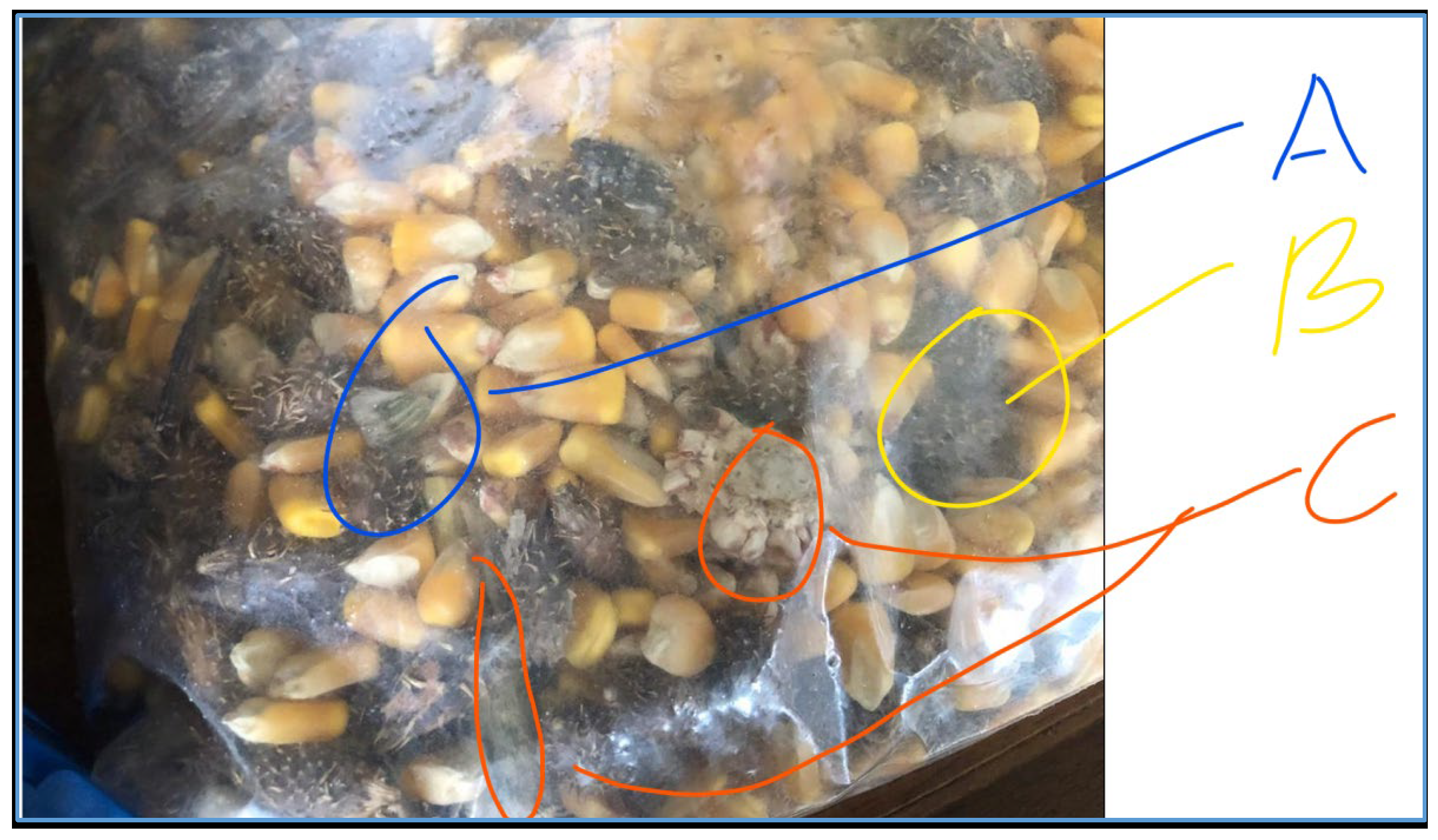
Figure 2.
Lemna minor weed smuggled through the RMIGA that was found planted in a pond in the Hwedza district during the period 2020-2024.
Figure 2.
Lemna minor weed smuggled through the RMIGA that was found planted in a pond in the Hwedza district during the period 2020-2024.
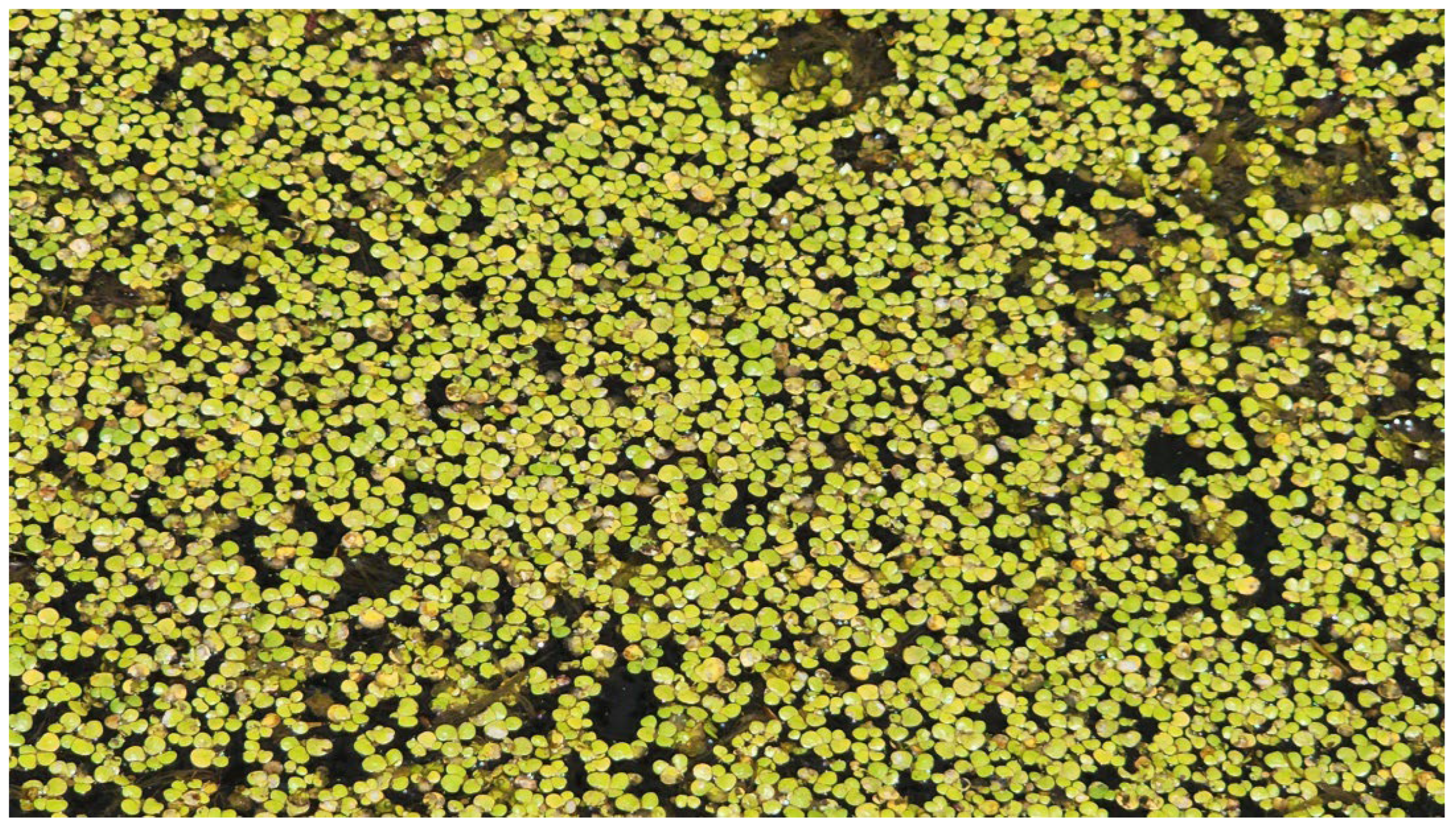
Figure 3.
Convolvulus arvensis L. (A) and Datura stramonium L. (B) Weed seeds isolated from wheat and in association with maize grain intercepted at the Forbes and the Beitbridge border ports respectively, during the period 2020-2024.
Figure 3.
Convolvulus arvensis L. (A) and Datura stramonium L. (B) Weed seeds isolated from wheat and in association with maize grain intercepted at the Forbes and the Beitbridge border ports respectively, during the period 2020-2024.
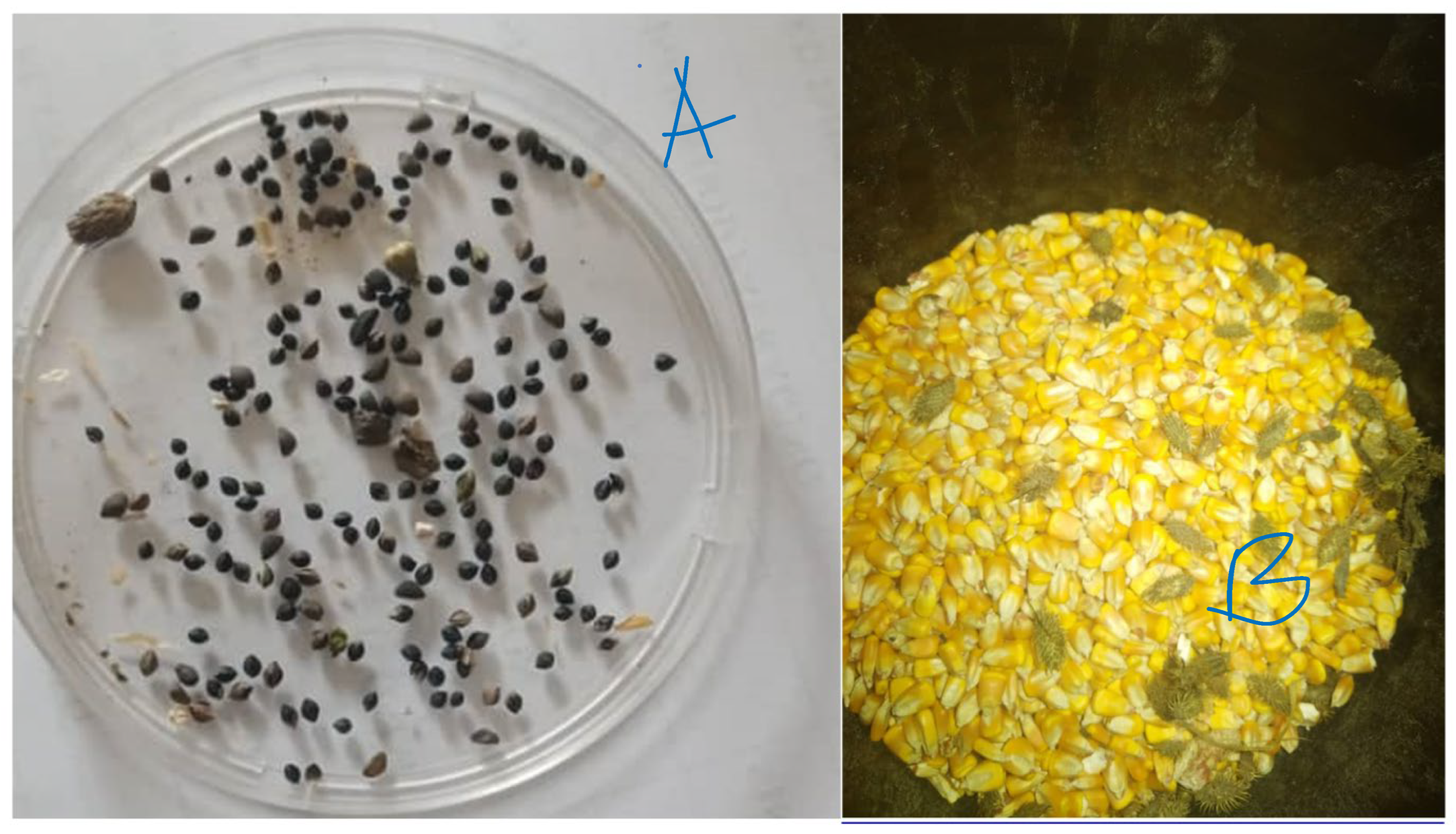
Figure 4.
A consortium of smuggled plants intercepted in passenger baggage at the RGMIA during the period 2020-2024.
Figure 4.
A consortium of smuggled plants intercepted in passenger baggage at the RGMIA during the period 2020-2024.
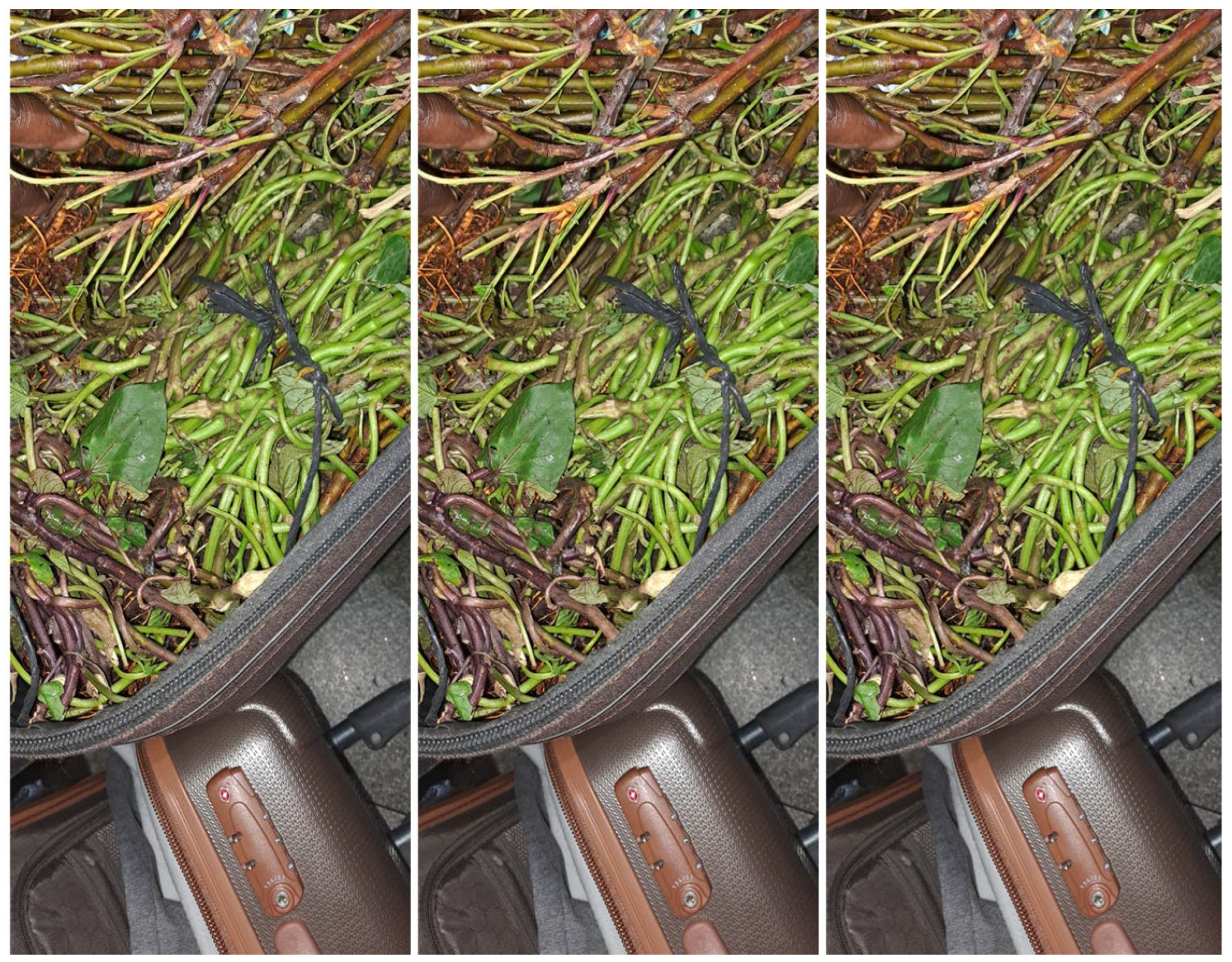
Figure 5.
The Pest Approach Rate for phytosanitary cross border traffic received at the points of entries during the period, January 1, 2020 to December 31, 2024.
Figure 5.
The Pest Approach Rate for phytosanitary cross border traffic received at the points of entries during the period, January 1, 2020 to December 31, 2024.
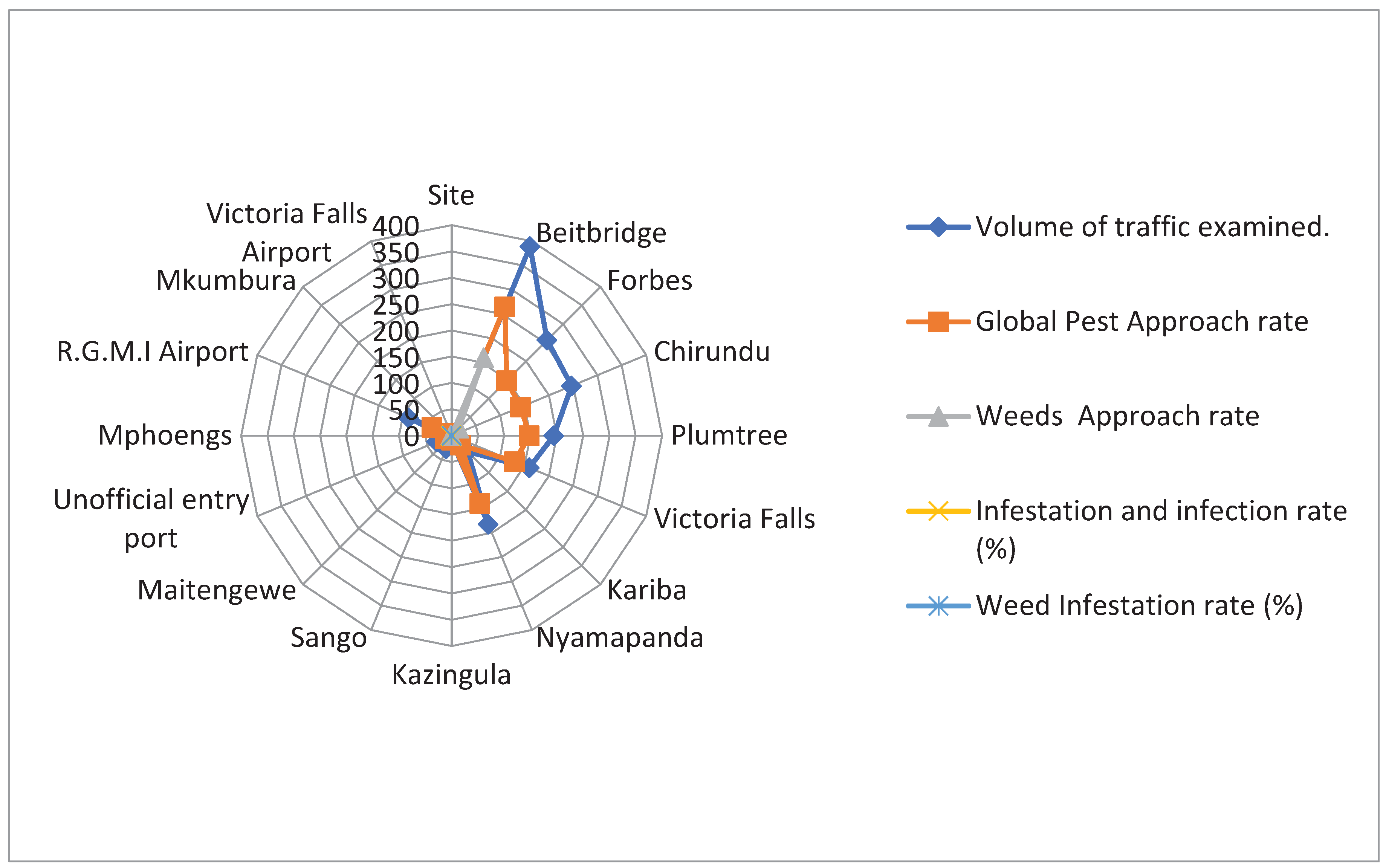
Table 1.
List and Characteristics of the sampling sites for the trapping of trans-boundary plant pests associated with cross-border traffic into Zimbabwe for the period from January 1, 2020 to December 31, 2024.
Table 1.
List and Characteristics of the sampling sites for the trapping of trans-boundary plant pests associated with cross-border traffic into Zimbabwe for the period from January 1, 2020 to December 31, 2024.
| Name of the entry point | Locations (GPS: Latitude, longitude)# | Category and Characteristic of the Entry Port | Customs declarations characteristics | Operating times of the day | Bordering countries |
|---|---|---|---|---|---|
| 1. Beitbridge Border Port | 22°13’05”S 29°59’10”E | Land border | Commercial and non-commercial cargo | Twenty four hours | South Africa |
| 2. Chirundu Border Port | 16°02’19”S 28°51’09”E | Land border | Commercial and non-commercial cargo | Twenty four hours* | Zambia * |
| 3. Forbes Border | 19°00’18”S 32°42’42”E | Land border | Commercial and non-commercial cargo | Twenty four hours** | Mozambique** |
| 4. Kariba Border Port | 16°31’33”S 28°45’40”E | Land border | Commercial and non-commercial cargo | 0600–2000 hours | Zambia |
| 5. Kazingula Border Port | 17°47’57”S 25°15’24”E | Land border | Commercial and non-commercial cargo | 0600–1800 hours | Botswana |
| 6. Maitengewe Border Port | 20°06’51”S 27°13’49”E | Land border | Non-commercial cargo | 0600–1800 hours | Botswana |
| 7. Mkumbura Border Port | 16°12’04”S 31°41’21”E | Land border | non-commercial cargo | 0600 – 1800 hours | Mozambique |
| 8. Mphongs Border Port | 21°17’26”S 27°53’58”E | Land border | non-commercial cargo | 0600–1800 hours | Botswana |
| 9. Nyamapanda Border Port | 16°57’46”S 32°51’50”E | Land border | Commercial and non-commercial cargo | 0600–2200 hours | Mozambique |
| 10. Plumtree Border Port | 20°32’28”S 27°44’15”E | Land border | Commercial and non-commercial cargo | 0600–2200 hours | Botswana |
| 11. Robert Gabriel Mugabe International Airport (RGMIA) | 17°56’19”S 31°06’54”E | Airport | Commercial and non-commercial cargo | Twenty four hours | Multi-countries |
| 12. Sango Border Port | 22°04’10”S 31°41’01”E | Land border | Commercial and non-commercial cargo | 0600 – 1800 hours | Mozambique |
| 13. Unofficial crossing points | N/A | Unofficial crossing points along the Zimbabwean border. | None | Unofficial | Botswana. Zambia, Zimbabwe and Mozambique |
| 14. Victoria falls Border Port | 17°55’42”S 25°51’49”E | Land border | Commercial and non-commercial cargo | 0600 – 2000 hours | Zambia |
| 15. Victoria Falls International Airport | 18°05’44”S 25°50’59”E | Airport | Commercial and non-commercial cargo | 24 hours | Multi-countries |
*The entry point became a 24 hours border in 2023 from 0600 hours to 2200 hours border; **became 24 hours border in 2024 from a 0600-2200 hours border [Source (Customs and Excise Act (CAP 23:02] #Google earth.
Table 2.
Description of the segregated plant pest pathways for the period 1 January 2020 to 31 December 2024.
Table 2.
Description of the segregated plant pest pathways for the period 1 January 2020 to 31 December 2024.
| Pathway type | Purpose of the import | Description of the pathway | Comment on this categorization |
|---|---|---|---|
|
Solanaceae species (Juss). |
Other use | Solanaceae plant material imported for the purpose other than propagation. | The singling out of solanecous plant pest pathway was ascertained from the claim by Ormeno et al. (2006) that solanaceae plants from various parts of the world are critical for their roles in hosting pathogens or diseases of the cultivated plants and hence their importance in the studies of transboundary movement of pests as depicted. The solanaceae contain 98 genera and some 2,700 species (Ormeno et al., 2006). |
| Propagation (planting – including replanting) (IPPC Secretariat, 2024) | Solanaceae plant species material imported with the intention to ensuring their subsequent growth, reproduction or propagation. | ||
| Organic Materials |
Growing media | Any material imported with the intention in which plant roots are growing or intended for that purpose (IPPC Secretariat, 2024, 2023). | Materials like Peat and Peat-Like Materials; wood Residues; Wood residues ; Bagasse; Rice Hulls; Soil; etc. |
| Packaging materials | Imported Material used in supporting, protecting or carrying a commodity (IPPC Secretariat, 2024, 2023) | Packaging material capable of being pathways of pests such as pallets, used bags, etc. | |
| Other plant species |
Propagation (planting including replanting) | Any other plant species material apart from the Solanaceae family imported with an intention to ensure their subsequent growth, reproduction or propagation for solanaceae plants (IPPC Secretariat, 2024). | All propagative materials used for the purposes of reproducing plants or the process of creating new plants from a variety of sources: seeds, cuttings, bulbs and other plant parts (such as whole plants, flowers, tissues, etc.). |
| Other use | Any plant material other than the Solanaceae family imported for any purpose other than propagation (IPPC Secretariat, 2024). | All other plant materials and products imported for the purpose not including propagation. |
Table 3.
Nomenclature of plants/weeds found in association with cross-border pest pathways during the 2020-2024 periods at Zimbabwe ports of entries.
Table 3.
Nomenclature of plants/weeds found in association with cross-border pest pathways during the 2020-2024 periods at Zimbabwe ports of entries.
| Common Name | Order | Species | Pathways | Purpose of Importation | Pest Status In Zimbabwe | Biosecurity Concern associated with the pest |
|---|---|---|---|---|---|---|
| European bindweed. | Solanales | Convolvulus arvensis L. | Wheat grain | Consumption | Absent (Intercepted only) | Invasive weed species, that, reduce the value and importance of agricultural land (Shaima Hassan Ali Al-Abbasi et al., 2021). |
| Common Sunflower | Asterales | Helianthus annuus L. | Maize grain and soya beans | Consumption | Present | Risk of accidental genome contamination with poorly adapted genomes (Cantamutto & Poverene, 2007). |
| Thorn apple, and jimsonweed | Solanales | Datura stramonium L. | Maize grain. | Consumption | Present | Food and feed poisoning (Mutebi et al., 2022; Sharma et al., 2021) |
| Common duckweed | Alismatales | Lemna minor L. | Passenger baggage | Feed production | Present. In national parks (Mapaura & Timberlake, 2004) | A nuisance in water bodies, rice field agroecosystem and in irrigation and drainage channel reservoirs and recreational lakes. Several mosquito larvae, particularly those of Culex bitaeniorhynchus, C. tritaeniorhynchus and Ficalbia minima, are closely associated with Lemna Invasive (Njambuya et al., 2011; A. E. Osman et al., 2006) |
| Lesser duckweed | Alismatales | Lemna aequinoctialis Welw. | Passenger baggage | Feed production | Present in national parks (Mikulyuk, 2009; Mapaura & Timberlake, 2004) | A nuisance in water bodies. |
| Desert rose | Gentianales | Adenium obesum ((Forssk.) Roem. & Schult.) | Passenger baggage | Unknown (suspected ornamental) | Absent (intercepted and destroyed) (The Head Plant Quarantine Services Institute, 2023) | All parts of the plant are toxic and may cause slow heartbeat, low blood pressure, lethargy, dizziness and stomach upset.(Abalaka et al., 2014) (Https://Www.Health.Qld.Gov.Au/, n.d.) |
| Lilac Chaste Tree | Lamiales |
Vitex agnus-castus L. |
Passenger baggage | Unknown (suspected ornamental) | Absent (intercepted only) (The Head Plant Quarantine Services Institute, 2023; Rojas-Sandoval, 2020) | Vitex agnus-castus is widely cultivated as an ornamental and for medicinal use, but it often behaves as a weed and has the potential to grow in a wide range of climates and soil types with a high seed production rate (Rojas-Sandoval, 2020). |
| Apples | Rosales | Malus domestica | Passenger baggage | Planting | Present | Planting material with soil are threats as soils carries a variety of microorganism that threaten the country biosecurity systems (IPPC Secretariat, 2019). |
| Grapes | Vitales | Vitis vinifera L | Passenger baggage | Planting | Present | Planting material with soil are threats as soils carries a variety of microorganism that threaten the country biosecurity systems (Mahabaleswara et al., 2024). |
| Oranges | Sapindales | Citrus × sinensis | Passenger baggage | Planting | Present | Planting material with soil is a threat as soils carry a variety of microorganism that threaten the country’s biosecurity systems (IPPC Secretariat, 2019). |
| Sweet potatoes | Solanales | Ipomea batatas | Passenger baggage | Planting | Present | Introduction of plants for planting need to follow regulated biosecurity measures to reduce accidental introduction of new exotic pest species (Eschen et al., 2015). |
Disclaimer/Publisher’s Note: The statements, opinions and data contained in all publications are solely those of the individual author(s) and contributor(s) and not of MDPI and/or the editor(s). MDPI and/or the editor(s) disclaim responsibility for any injury to people or property resulting from any ideas, methods, instructions or products referred to in the content. |
© 2025 by the authors. Licensee MDPI, Basel, Switzerland. This article is an open access article distributed under the terms and conditions of the Creative Commons Attribution (CC BY) license (https://creativecommons.org/licenses/by/4.0/).
Copyright: This open access article is published under a Creative Commons CC BY 4.0 license, which permit the free download, distribution, and reuse, provided that the author and preprint are cited in any reuse.


