
Submitted:
06 August 2025
Posted:
07 August 2025
You are already at the latest version
Abstract
This study presents an integrated approach for the collection, classification, characterisation, and repurposing of spent lithium-ion batteries (LIBs), leveraging low-cost embedded systems and safe discharge techniques. Spent LIBs were obtained from mobile phone repair shops near Kwame Nkrumah University of Science and Technology and classified using a machine learning-based separator deployed on an ESP32-CAM and an Arduino nano microcontroller. The system incorporated a conveyor mechanism driven by a NEMA 17 stepper motor and SG90 servo motors, with real-time image classification trained via the Edge Impulse platform. Battery characterization was conducted based on terminal voltage, using 2.5 V as the threshold for sorting. Cells with voltages below this threshold were recharged and evaluated for charge retention, while those above were subjected to controlled discharge tests using an electronic load tester. Recovered cells were then assembled into series and parallel configurations using a Battery Management System (BMS) and buck converter. The repurposed systems demonstrated effective performance in low-power applications such as LED desk lamps, Bluetooth headphones, and emergency power banks. However, the system was unsuitable for high-demand devices like smartphones due to current mismatches, which triggered device protection mechanisms. Additionally, chemical discharge using 50% and 60% brine solutions (NaCl) revealed that higher salt concentrations enhanced discharge rates but also introduced safety concerns such as hydrogen evolution and corrosion. The findings underscore the potential of repurposing end-of-life LIBs for secondary applications, the limitations of edge-device AI deployments, and the importance of safe, environmentally conscious discharge practices. This work contributes to the advancement of circular economy models and sustainable energy management.
Keywords:
lithium-ion battery (spent)
; machine learning
; end-of-life management
1. Introduction
Lithium-ion batteries (LIBs) are the gateway technology among rechargeable batteries, consisting of various chemistries and compositions that typically include lithium as a key component in the cathode and electrolyte. Initially, LIBs were primarily used in consumer electronics. However, their applications have rapidly expanded in recent years, particularly in battery electric vehicles (BEVs) and large-scale energy storage systems. This growth has significantly increased global demand for LIBs, driven by their high energy density, lightweight design, and declining production costs.
Despite the focus on lithium, LIBs also rely on other critical and finite materials such as cobalt, manganese, and graphite. These materials are often sourced from a limited number of countries, raising concerns about supply chain stability and long-term availability [1]. Since their commercial introduction in the early 1990s, the use of LIBs has grown exponentially. This trend is expected to continue, fueled by advances in technology and a growing push toward clean energy alternatives [2,3]. However, the increasing demand also highlights a key challenge: the limited global reserves of the raw materials necessary for LIB production.
This scarcity underscores the importance of developing efficient recycling strategies to ensure resource sustainability [4,5]. Recycling plays a crucial role not only in reducing environmental impact but also in recovering valuable materials that would otherwise be lost during disposal [6]. End-of-life (EoL) LIBs can be managed through three main strategies: remanufacturing, repurposing, and recycling—each assessed based on the battery’s State of Health (SoH). While remanufacturing and repurposing aim to extend the functional lifespan of batteries, recycling is essential for reclaiming core materials once batteries reach complete degradation [7]. Unfortunately, in many parts of the world, particularly across Africa, LIB recycling infrastructure remains underdeveloped [8]. Poor disposal practices—such as dumping LIBs in unregulated landfills—pose serious health and environmental risks due to the presence of toxic metals and flammable organic compounds [9,10,11].
According to market data, the global LIB recycling industry was valued at USD 8.10 billion in 2023 and is projected to reach USD 10.26 billion in 2024. As illustrated in Figure 1, the market is expected to expand significantly, reaching approximately USD 85.69 billion by 2033 at a compound annual growth rate (CAGR) of 26.6% [12]. This growth reflects not only rising demand for sustainable battery management but also the economic potential of circular solutions such as resource recovery and job creation [13]. Additionally, the required global battery capacity is anticipated to increase from approximately 700 GWh in 2022 to 4.7 TWh by 2030 [14], intensifying the urgency for scalable and effective end-of-life battery solutions.
In response to this global and regional challenge, this study explores practical, low-cost methods for recovering and repurposing spent lithium-ion batteries, particularly within resource-constrained environments. The research focuses on evaluating battery performance through discharging and recharging cycles, assessing safe dismantling practices, and examining the potential of recovered batteries for low-energy applications. Through this work, we aim to contribute toward sustainable LIB waste management and demonstrate feasible approaches for extending the usable life of batteries, ultimately supporting broader efforts toward e-waste reduction and circular economy development.
1.1. Role of Artificial Intelligence in Recycling
Artificial Intelligence (AI) is playing a transformative role across industries, with growing significance in environmental sustainability. In battery recycling, one impactful branch of AI—Computer Vision (CV)—enables systems to interpret and analyze visual data, facilitating the automatic recognition, classification, and tracking of battery types. This has proven especially useful in the sorting and processing of battery waste (B-waste), where accuracy and speed are essential.
CV systems are widely adopted in fields such as object detection and industrial automation and are increasingly being integrated into B-waste management. These systems automate critical tasks such as identifying battery chemistry, determining physical condition, and guiding robotic or conveyor-based sorting mechanisms [15]. As the complexity and volume of waste grow, CV is expected to play a central role in streamlining the processes of identification, classification, collection, segregation, and monitoring of recyclable materials [16].
Current sorting solutions use a combination of manual labor and machine learning (ML) algorithms, including Support Vector Machines (SVMs) and Convolutional Neural Networks (CNNs) for material classification [17]. Technologies like Radio Frequency Identification (RFID) are also employed for contactless identification and tracking of waste streams [18]. For example, ZenRobotics’ ZRR2 robot in Finland demonstrates the efficacy of combining deep learning and CV in sorting construction waste [19].
The application of AI and ML in recycling has not only increased operational efficiency but also improved the accuracy of material recovery. These technologies process vast datasets much faster than human operators, enabling faster decision-making and reducing error rates. In the context of battery recycling, ML algorithms can help distinguish between healthy and degraded cells, predict reuse potential, and optimize safe disassembly.
Building upon these advances, this study proposes the development of a lightweight computer vision-based classification system for lithium-ion battery recycling. The system utilizes embedded AI models deployed on resource-constrained microcontrollers (e.g., ESP32-CAM) to perform real-time battery identification and sorting based on physical characteristics. Unlike cloud-based systems, this edge deployment model is designed to function offline, making it suitable for use in low-resource settings or rural environments where internet connectivity is limited or unavailable.
This system addresses three key challenges:
- Model compression and deployment – Ensuring that trained models can run efficiently on devices with limited memory and processing power.
- Real-time classification – Achieving sufficient inference speed for timely sorting decisions.
- Robustness across variations – Ensuring reliable classification despite variations in battery size, wear, and markings.
Several studies have highlighted the challenges of deploying deep learning models on embedded devices, including issues related to model size, inference time, power consumption, and limited computational resources. Techniques such as model quantization, pruning, and knowledge distillation have been explored to overcome these limitations [20,21,22].
This work contributes to the field by applying these principles in a real-world B-waste context, demonstrating how AI-powered, low-cost solutions can enhance circular economy practices in emerging economies.
1.2. Repurposing for Smaller Applications
Discarding cellphone and laptop batteries has raised concerns about possible second use, especially since current recycling resources for lithium-ion (Li-ion) batteries remain insufficient [23]. While lead-acid battery recycling is well established, recycling systems for Li-ion technologies are still in early stages. From both economic and environmental standpoints, it is inefficient to discard batteries that still retain usable capacity. The financial and labor investments required to produce these batteries—along with the rising costs of critical raw materials—underscore the need for second-life strategies [24].
A prime example is lithium cobalt oxide (LCO), a widely used cathode material in consumer electronics and electric vehicles (EVs). Cobalt, although essential, is scarce—comprising only 0.0023% of the Earth’s crust—and primarily mined in regions of geopolitical instability, particularly in the Democratic Republic of Congo. These factors have led to steep price hikes, with cobalt soaring from USD 26,500 per ton in September 2016 to USD 94,250 per ton in March 2018 [25]. Repurposing such batteries maximizes the value extracted from these expensive materials and helps delay costly and inefficient recycling efforts.
Research by [26] estimates that by 2040, approximately 3.4 million kg of Li-ion battery cells from EVs may enter the waste stream, containing both non-recyclable materials (e.g., graphite) and high-energy-demand materials (e.g., lithium, nickel, aluminum, cobalt). Yet, direct recycling is often impractical due to the complexity and high energy cost of material recovery. For instance, lithium only constitutes 2–7% of a battery’s total weight, and extracting it via recycling is up to five times more expensive than sourcing it naturally [27]. Presently, cobalt is the only material with viable recycling returns, but industry efforts are underway to develop cobalt-free chemistries that are cheaper and more sustainable [27].
In this context, our study prioritizes battery repurposing over recycling as an interim and practical solution. Repurposing extends battery utility without the high energy and infrastructure demands associated with full recycling processes. This approach supports circular economy principles and helps reduce e-waste while preserving economic value. It also aligns with global sustainability objectives such as the United Nations Sustainable Development Goals (SDGs).
To ensure safe reuse, [28] proposes a three-stage assessment method. First, a visual inspection identifies physically damaged cells for immediate rejection. Second, a voltage check filters out critically degraded units. Finally, the state of health (SoH) evaluation, typically embedded in a Battery Management System (BMS), quantifies the remaining capacity and predicts lifespan. While SoH estimation remains challenging due to nonlinear battery behavior, it is essential for reliable and safe operation [29].
In our study, recovered batteries that passed SoH evaluation were repurposed for low-power applications such as powering LED desk lamps, Bluetooth headphones, and emergency power banks. These devices operate within safe voltage and current limits, minimizing risk. When repurposing batteries for such uses, adherence to safety standards is crucial. Guidelines such as IEC 62133 (for secondary cells and batteries in portable applications) and UN Manual of Tests and Criteria, Part III, Subsection 38.3 (for transport safety) provide essential protocols for assessing battery safety post-reuse. Furthermore, national directives like the U.S. EPA’s Battery Safety Best Practices or the EU Battery Directive also inform safe handling and reuse of Li-ion batteries in non-critical systems [30].
By following such standards and applying rigorous assessment protocols, second-life applications for Li-ion batteries can be safely and responsibly implemented—bridging the gap until scalable, cost-effective recycling becomes widely available.
1.3. Discharge with NaCl
Before lithium-ion batteries (LIBs) can be safely dismantled or recycled, residual electrical energy must be neutralized to avoid hazards such as thermal runaway, electric shock, or short circuits. Among the available discharge methods, immersion in sodium chloride (NaCl) brine solution has emerged as a cost-effective, simple, and relatively safe technique [28]. However, while effective in energy neutralization, post-discharge brine presents environmental management challenges that must be addressed early in any end-of-life battery treatment system.
Discharged LIBs may release trace heavy metals such as cobalt, nickel, and manganese, which can leach into the brine during immersion. Furthermore, the electrochemical reactions in high-salinity brine can lead to hydrogen gas generation and pH fluctuations, which in turn increase the corrosiveness of the solution and pose hazards to waste treatment systems. A drop in pH below 5 or a rise above 9 is especially significant, as it indicates a shift in leachate chemistry, potentially mobilizing toxic ions into solution [31]. As a result, post-discharge brine should be treated as hazardous waste, requiring neutralization (e.g., via lime or sodium hydroxide) and filtration before disposal or reuse [32]. Environmental regulations in regions like the EU and US mandate such precautions to avoid secondary pollution and groundwater contamination.
In this context, discharging charged LIBs via brine immersion offers a safer and more controlled alternative to direct short-circuiting or resistive discharging, especially for small-scale and low-resource recycling settings [28]. This technique relies on the ionic conductivity of saline water, which enables gradual dissipation of stored energy through the conductive medium. Typically, a 10% NaCl solution can reduce the voltage of a standard 18650 cell to below 1 V in less than 12 hours without significant temperature rise or gas evolution [31]. However, the discharge rate is influenced by battery design, state of charge, electrolyte leakage, and electrolyte/binder degradation over time.
Higher salt concentrations—such as 50% or 60% NaCl—can significantly accelerate discharge, reducing time to less than 6 hours. However, this increase in concentration also raises risks of electrode corrosion, brine contamination, and excess hydrogen gas generation, which can pose flammability risks in confined spaces [30]. Studies show that 10–15 wt% NaCl provides an optimal balance between safety, discharge efficiency, and minimal side reactions [31]. Nonetheless, prolonged immersion—even at moderate concentrations—can lead to structural degradation of electrodes and electrolyte components, further contaminating the brine.
In our study, we integrate this discharge technique within a broader framework for LIB circularity. Specifically, we present a low-cost, AI-powered LIB sorting and management system using the ESP32-CAM microcontroller, capable of classifying batteries by geometry (cylindrical, prismatic, pouch) without relying on high-performance computing platforms. Post-sorting, batteries undergo voltage-based screening and controlled recharging, followed by discharge profiling and safe pack formation for second-life applications.
To evaluate energy neutralization efficiency, we immersed various cells in 50% and 60% NaCl solutions, observing full discharge within 3–5 hours. However, electrolyte leakage, visible corrosion, and pH drop from ~7.5 to below 5 were observed, reinforcing the need for brine pH stabilization and post-treatment. These findings support recommendations for environmental discharge management and underscore the importance of coupling electrochemical protocols with waste treatment strategies.
This work offers a practical and affordable approach to small-scale LIB repurposing, combining AI-driven battery identification, embedded health assessment, and electrochemical safety protocols with consideration for environmental discharge trade-offs.
2. Materials and Methods
End-of-life (EoL) batteries can be managed through re-manufacturing, repurposing, or recycling, collectively referred to as assessing the State of Health (SoH) of the battery. Remanufacturing and repurposing extend the life of LIBs, while recycling recovers valuable components to close the loop. Ideally, LIBs should undergo recycling after remanufacturing or re-purposing to maximize their value, with remanufacturing considered the optimal choice due to the high quality it requires as stated by [9].
2.1. Development of an LIB Separator System
An LIB sorter was built to automatically sort batteries into Cylindrical, Prismatic and Pouch forms using an Arduino Nano microcontroller and an ESP32 CAM module.
2.1.1. Collection of Spent Lithium-Ion Batteries (LIBS)
The collection of spent Lithium-ion batteries (LIBs) was conducted through visits to mobile phone repair shops located around the Kwame Nkrumah University of Science and Technology school premises. This approach involved engaging with shop owners and technicians to identify and gather used or discarded batteries, ensuring a diverse sample.
2.1.2. Design of Separator System
A machine learning model was built for identifying batteries by shape (cylindrical, prismatic, and pouch). A data-set was collected using an AI Thinker ESP32-CAM microcontroller-based camera, which was programmed using the “Eloquent Esp32cam library” in the Arduino IDE. Multiple images of each battery type were captured in various orientations to enhance model’s accuracy and consistency. The data-set was annotated and labeled on the “Edge Impulse” platform, which facilitated the training and development of the machine learning model. The training involved annotating the captured batteries ((cylindrical, prismatic, and pouch). After training, the model was converted to an Arduino-compatible library and deployed to the ESP32-CAM.
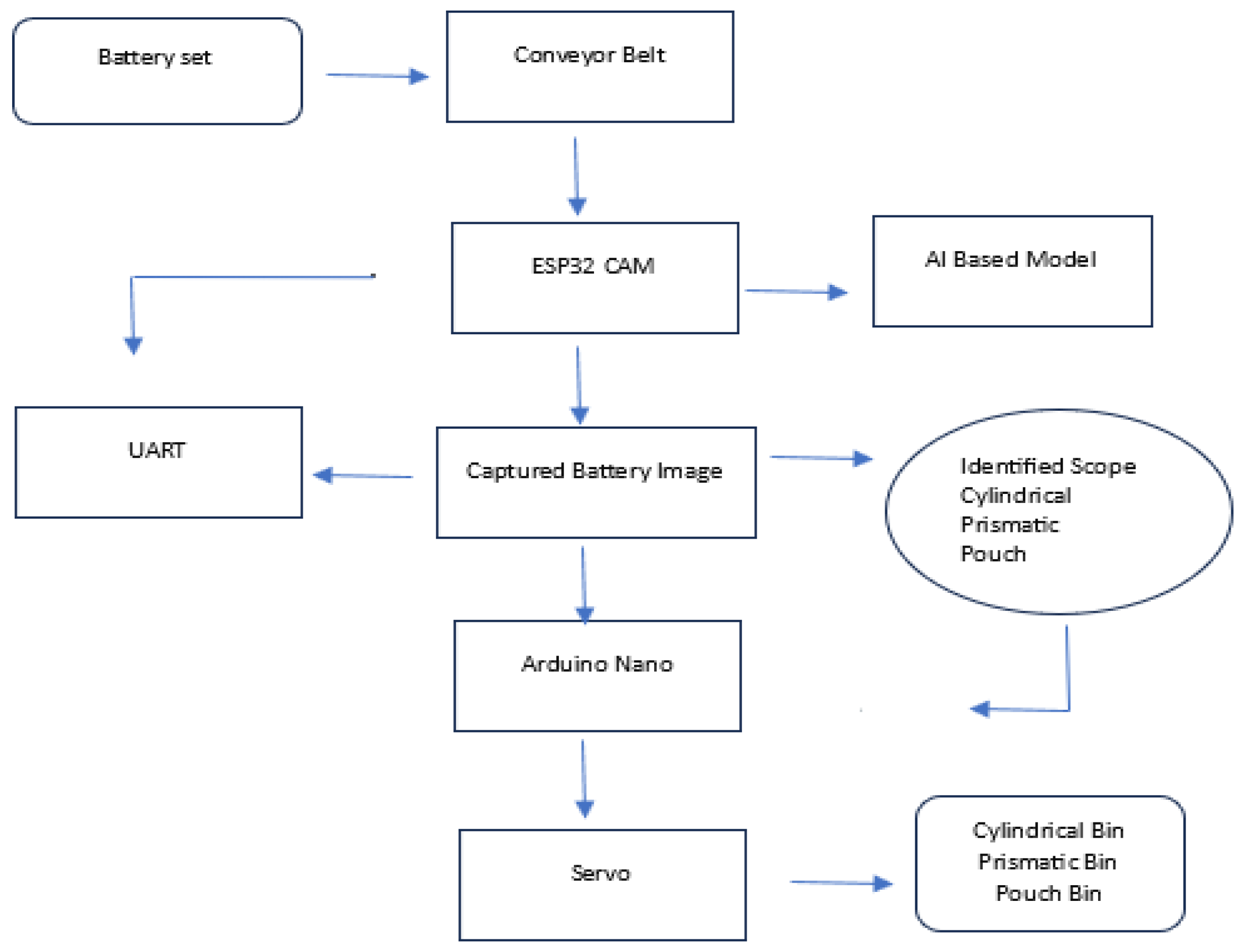
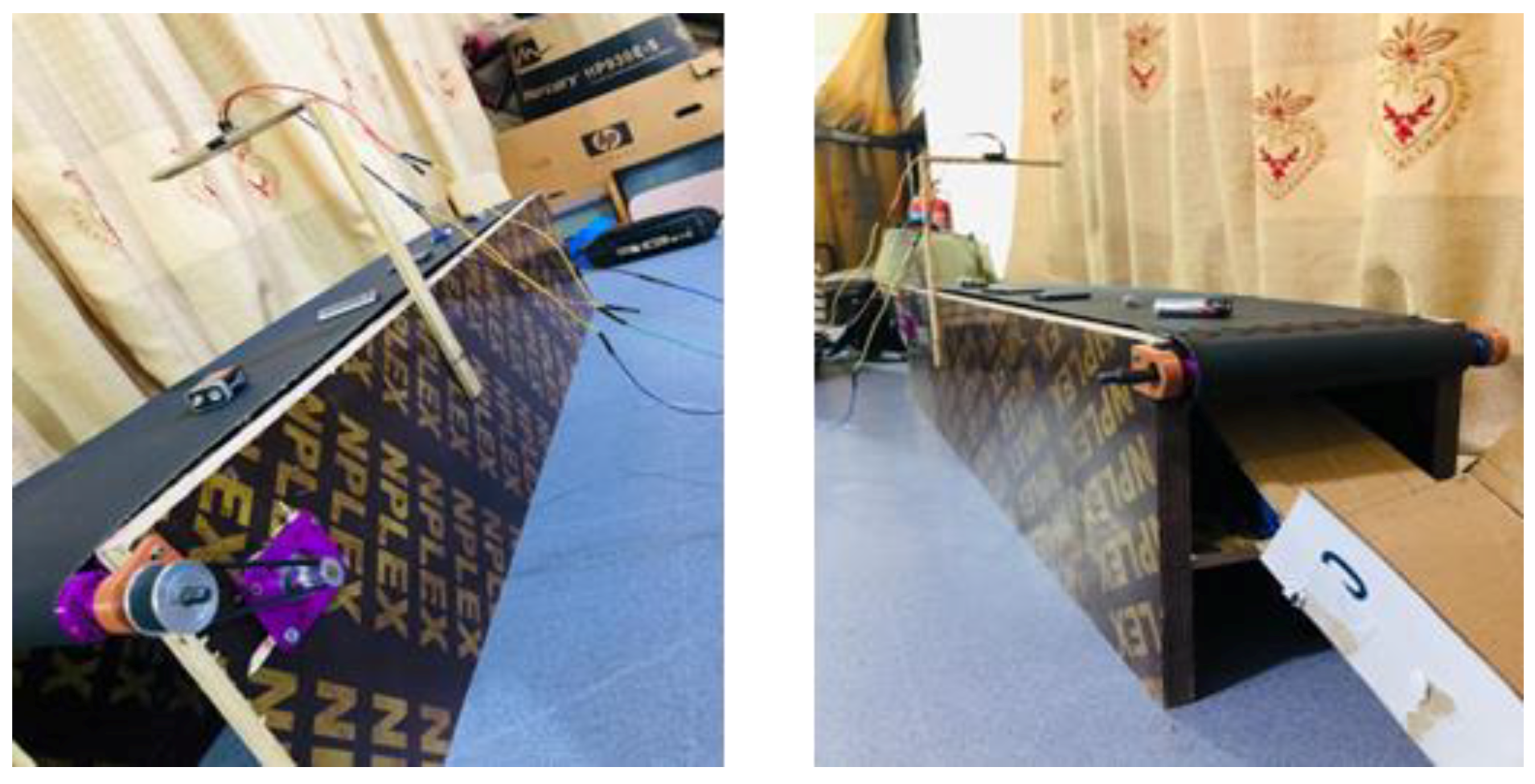
A NEMA 17 stepper motor was used to build a conveyor belt for the movement of the batteries. The belt was programmed to move at a slow rate to allow for the ESP-32 CAM to take pictures and then send the feedback to the Arduino Nano. The Nano, based on the information received from the ESP CAM triggers a signal for a servo motor at the end of the conveyor to move to a prescribed angle based on the identified battery and deliver it to a collection can.
The ESP32-CAM is cost-effective, has compact design, and has a built-in camera module suitable for real-time image processing. The NEMA 17 stepper motor was chosen for its precision and torque, which are essential for driving the conveyor belt consistently. The SG90 servos were selected for their lightweight design and ability to provide precise angular movements needed for sorting mechanisms. The machine assembly involved cutting wood to specific dimensions to create a table-like structure. An area was carved to house the NEMA 17 stepper motor, which drove the conveyor belt. The ESP32-CAM was mounted on a wooden plank above the conveyor, while the SG90 servo was attached to a sloped wooden piece to assist in sorting the batteries based on the camera’s identification.
Communication between the ESP32-CAM and an Arduino Nano was established through a UART (Universal Asynchronous Receiver/Transmitter) serial interface. This enabled the identification data captured by the camera to be sent to the Arduino Nano via the TX and RX pins. The Arduino Nano then triggered the sorting mechanism, adjusting to one of three preset angles to guide the batteries to designated collection bins.
Details of the training process on Edge Impulse included augmenting the data-set with rotated and flipped images to improve robustness. The model was evaluated for accuracy, ensuring it met a threshold that balanced both precision and recall to achieve reliable performance in practical scenarios.
Figure 2.
A diagram of the process of sorting.
2.2.1. Characterization of Batteries
The process began with measuring the initial voltages of the collected spent batteries to assess their remaining life.
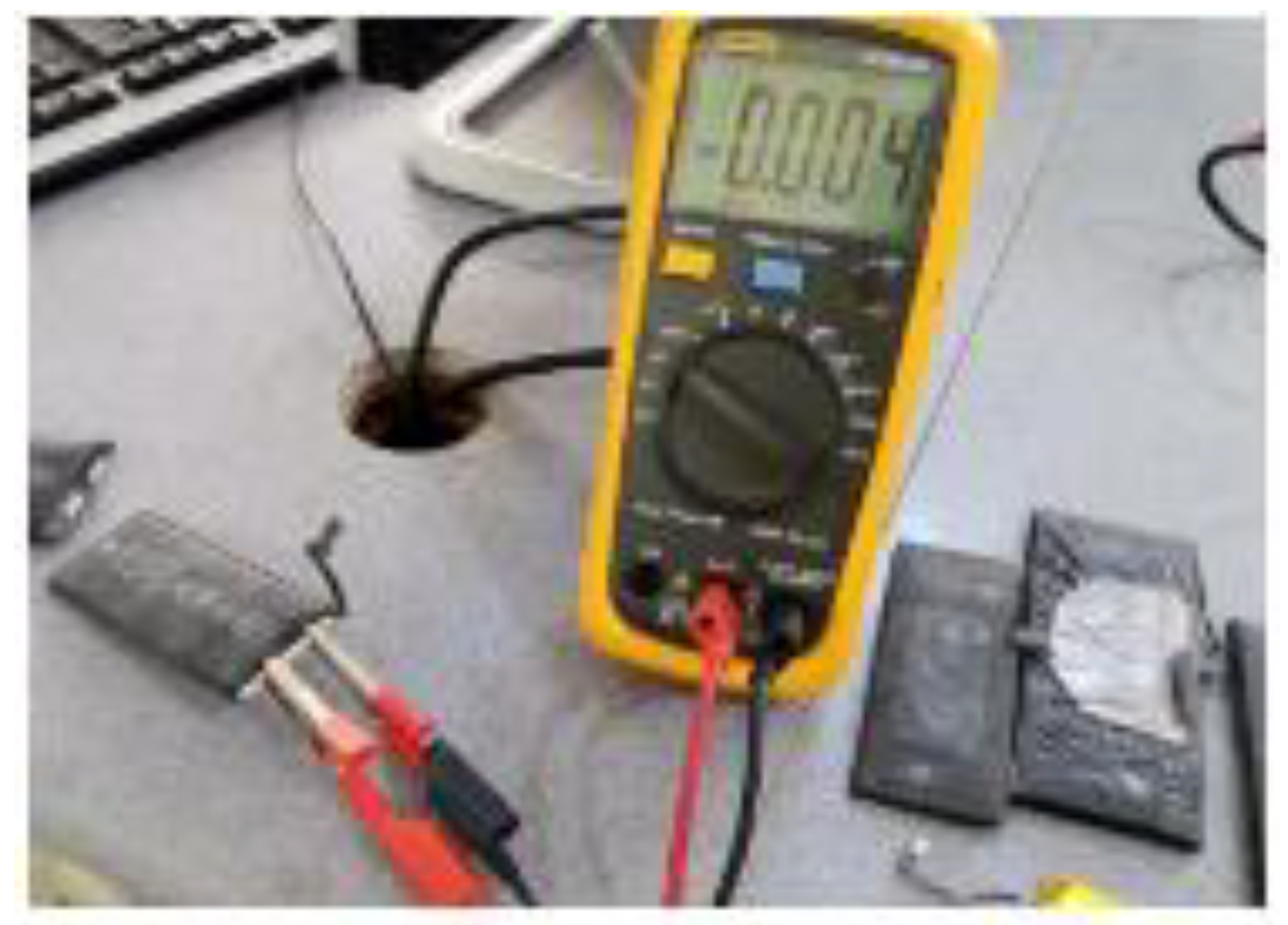
A threshold of 2.5V, representing approximately 70% of the total life contained in a spent battery, was set as the criterion for sorting. Batteries were categorized based on whether their voltages were equal to or greater than 2.5V or below this value. Those with initial voltages at or above 2.5V were set aside, indicating a higher remaining capacity. In contrast, batteries showing voltages below 2.5V were separated for further analysis or potential disposal.
To better understand the discharging behavior of the batteries with higher voltages (≥2.5V), an electronic load tester was employed. This device allowed for controlled and precise discharge testing, providing insights into how these batteries performed under load. This step was crucial for determining the discharge rate and overall performance of the batteries that still retained a significant portion of their charge. Those with voltages below 2.5V were charged to see if they could retain some amount of charge.
Through this methodical approach, batteries were effectively categorized and evaluated, providing valuable data for further stages of experimentation, such as controlled discharge tests using different electrolyte solutions or other re-purposing methods. This detailed characterization allowed for a clear understanding of each battery’s condition, aiding in targeted recycling or repurposing strategies.
Figure 3.
Characterization process of batteries found to be more than 2.5V.
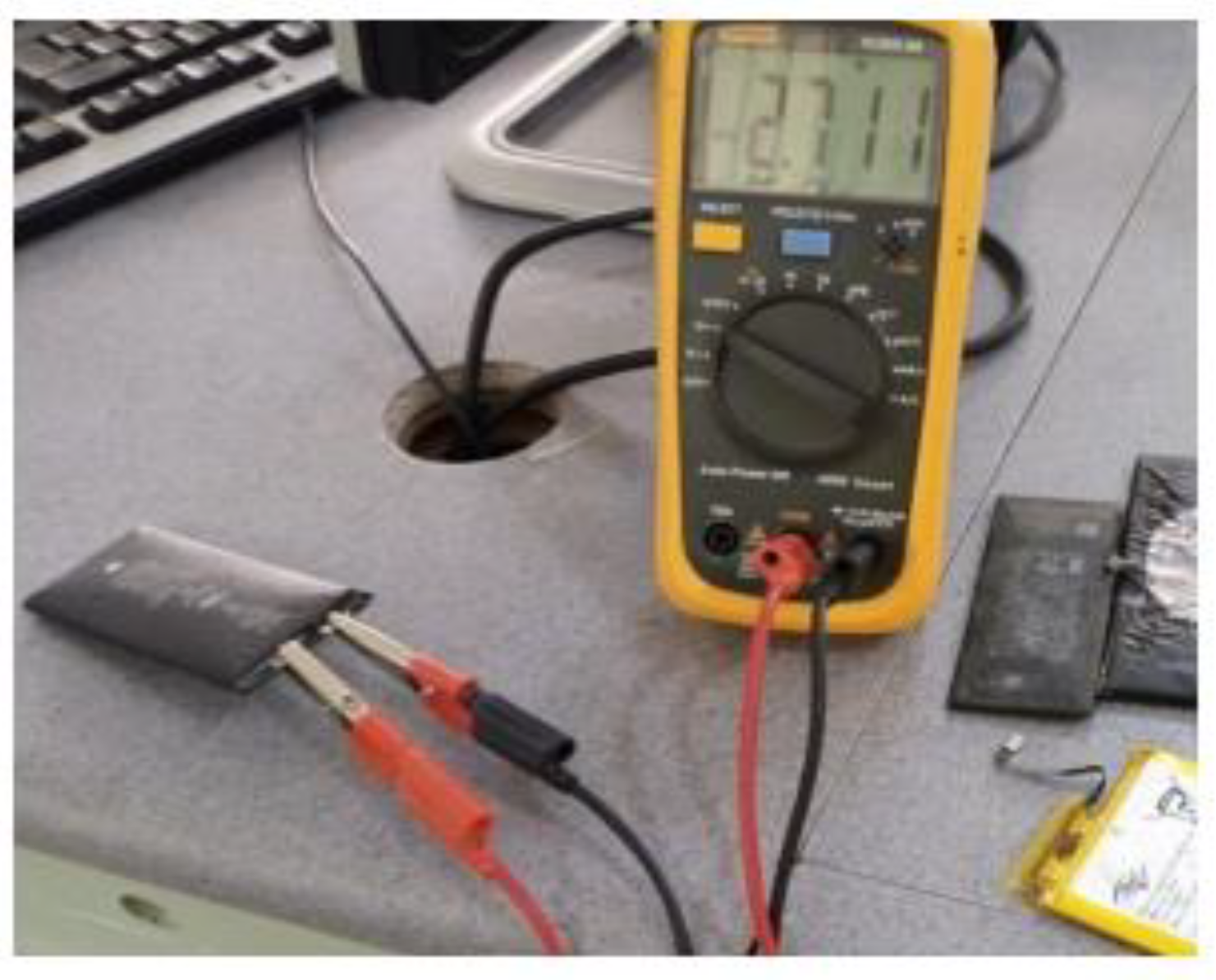
Figure 4.
Characterization process of batteries found to be less than 2.5V.
2.2.2. Repurposing
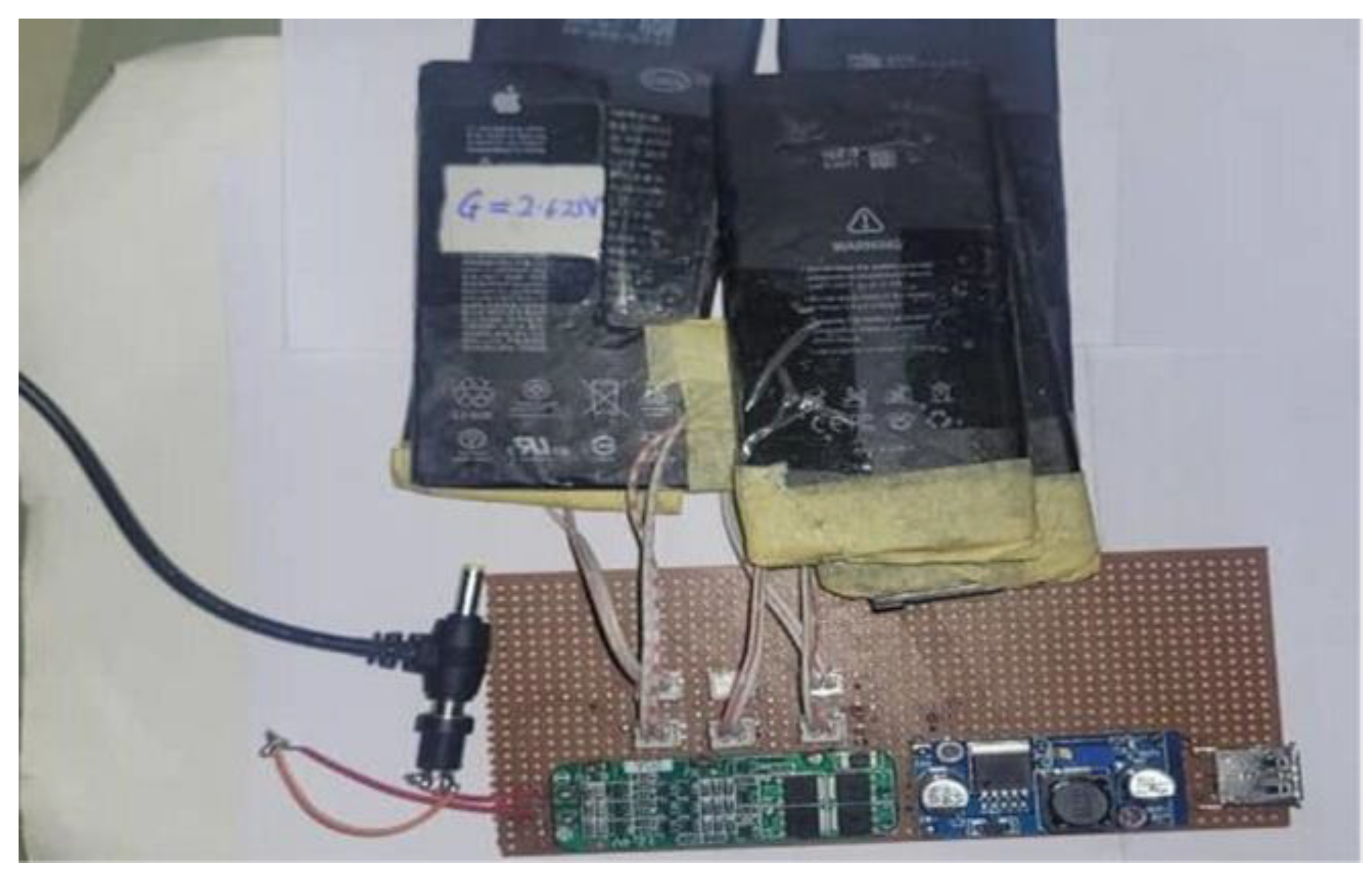
A battery system was developed utilizing a Battery Management System (BMS) and a buck converter, enabling both parallel and series configurations. Following a thorough characterization process, lithium-ion battery cells exhibiting terminal voltages below 2.5 V were identified and subjected to a controlled charging cycle. These cells were charged over a period of three hours, after which they were tested for their ability to retain charge and deliver power to various electronic devices.
Figure 5.
Battery management system for repurposing.
2.3. Discharge Using Sodium Chloride (NaCl)
[34,35] tested LIB discharge in NaCl, Na₂S, and MgSO₄ brines. They found that higher salt concentrations (up to 16–20 wt%) accelerated discharge initially, but long-term conductivity decreased due to corrosion and deposition, eventually equalizing discharge rates across different concentrations.
NaCl solutions with concentrations at or above 50% are known for providing a high ionic conductivity that facilitates effective discharge by allowing consistent ion flow between battery electrodes.
50% of NaCl was dissolved in water and the batteries were placed into it to discharge. Values were recorded between 15 minutes interval for about 75 minutes.
50% was chosen as a baseline concentration that balances effectiveness and handling ease, while 60% was included to observe potential improvements in discharge rates without creating excessive viscosity that could impede ionic movement. From literature, High ionic strength solutions promote efficient electrochemical reactions, which are necessary for safe and thorough energy depletion from the battery. The increase in concentration from 50% to 60% was intended to analyze how ionic saturation impacts discharge speed and completion [36].
Figure 6.
A graphical representation of the measurement procedure for discharging.
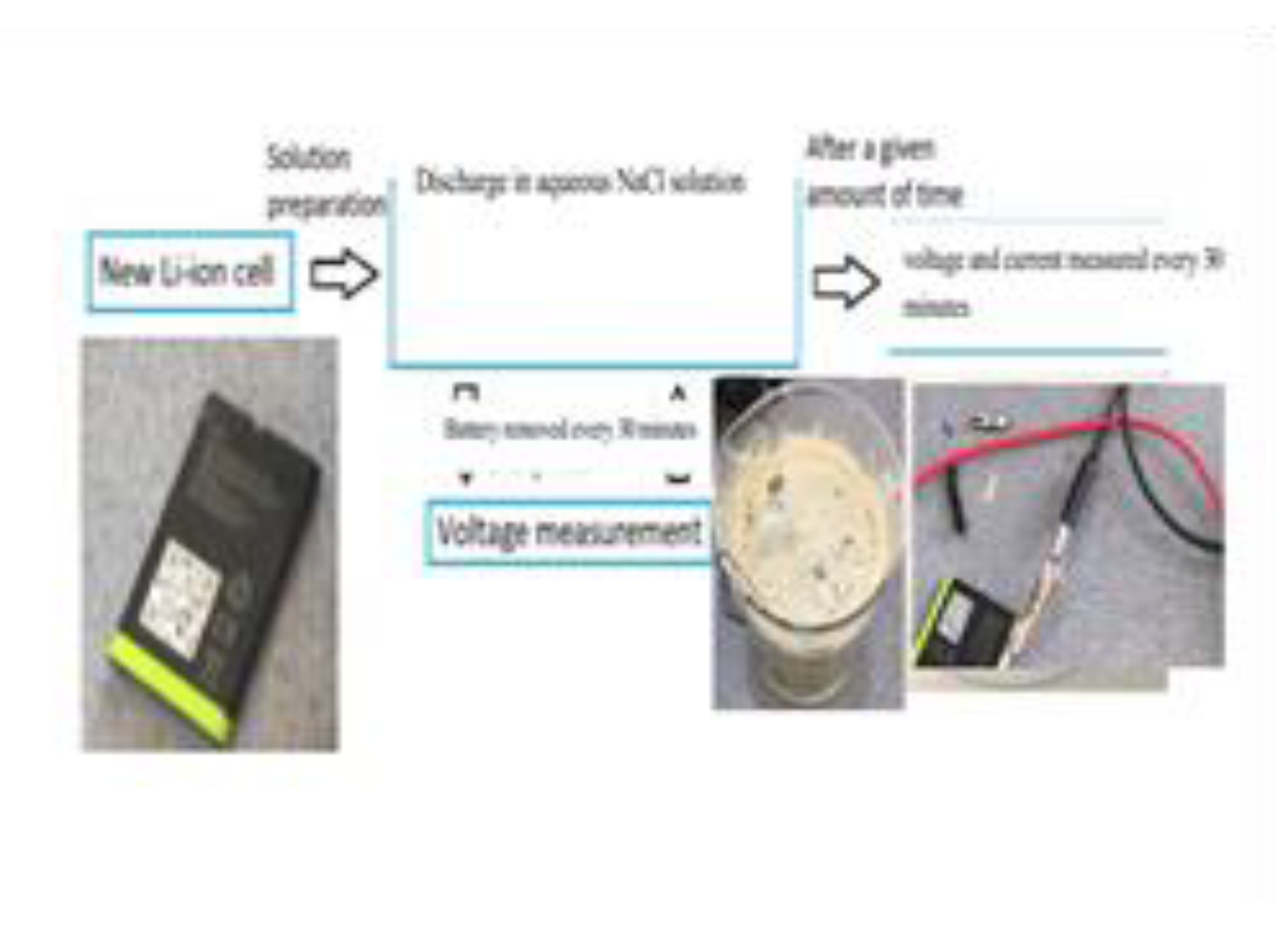
Figure 7.
.
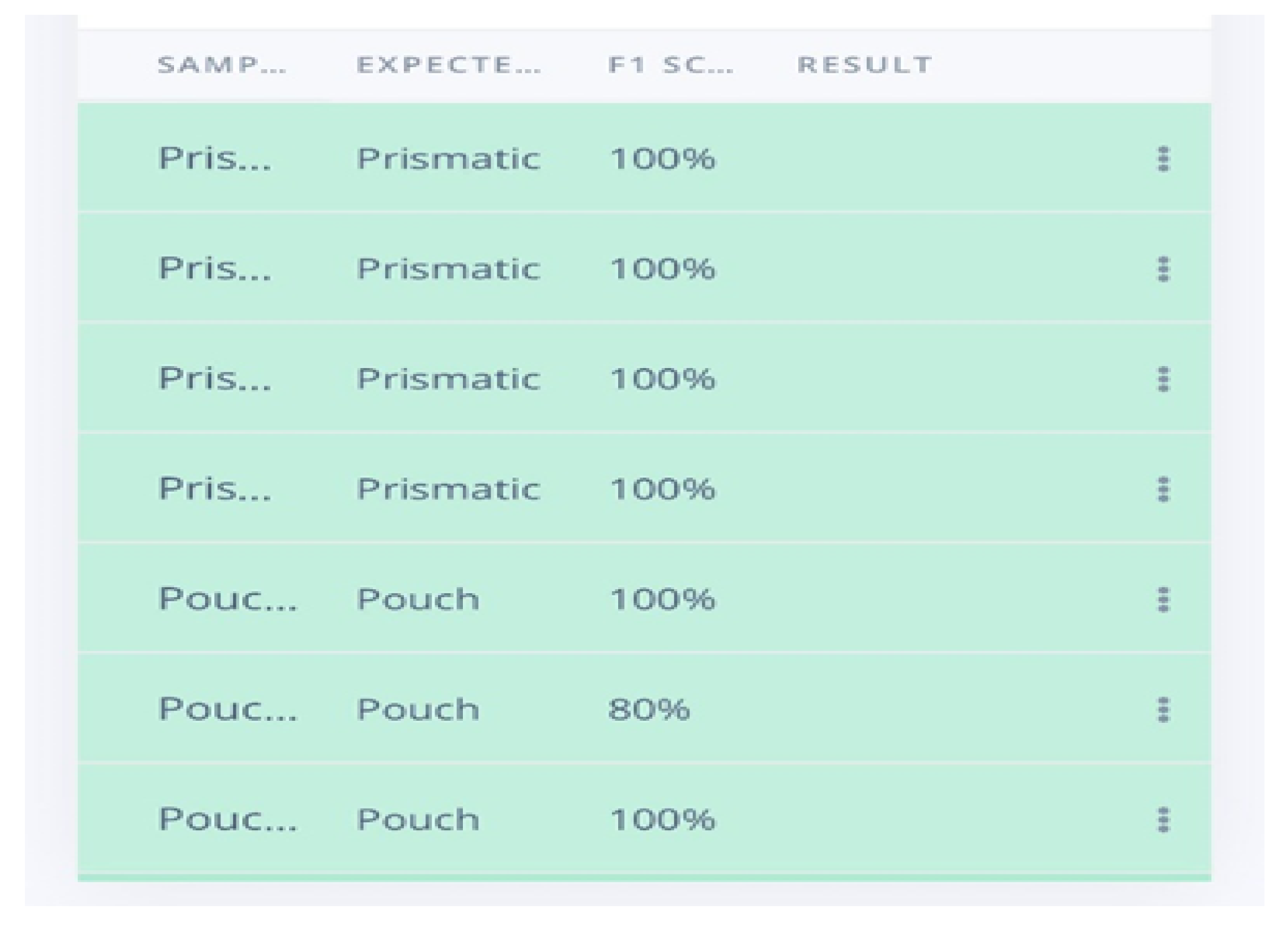
Figure 8.
Caption.
To assess the effects of different electrolyte concentrations on battery discharge, a systematic approach was employed using the same brand of spent Lithium-ion batteries over a two-hour period. The batteries were carefully placed in glass beakers containing brine solutions of varying concentrations (50% and 60% NaCl by mass). Between discharge measurements, batteries were removed, rinsed with deionized water to ensure accurate voltage readings, and re-immersed.
3. Results
3.1. Separator Model Performance
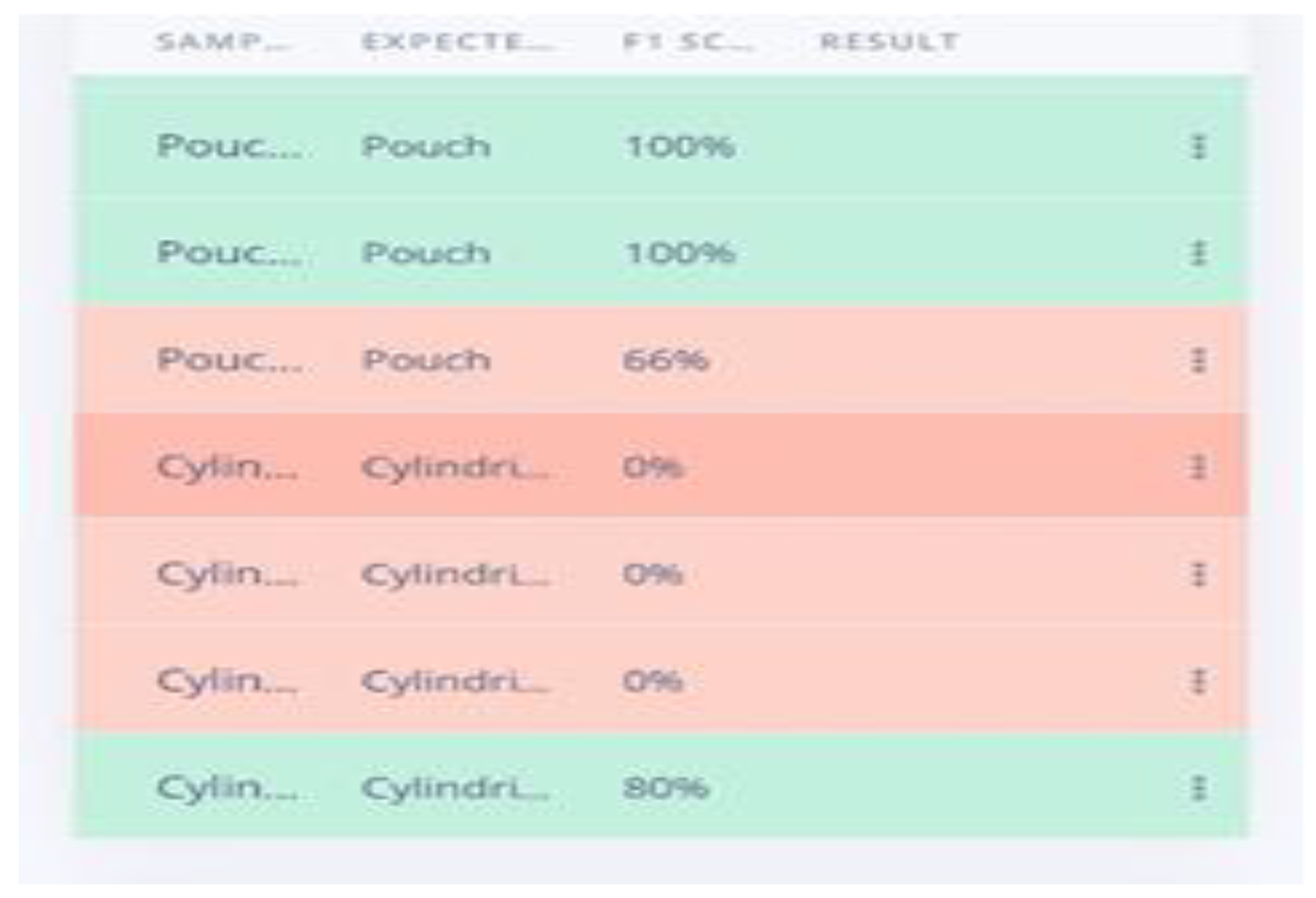
Figure 7 and Figure 8 illustrate the model performance in identifying the various types of batteries
Figure 8 shows the model’s identification performance.
Figure 9.
Model accuracy results.
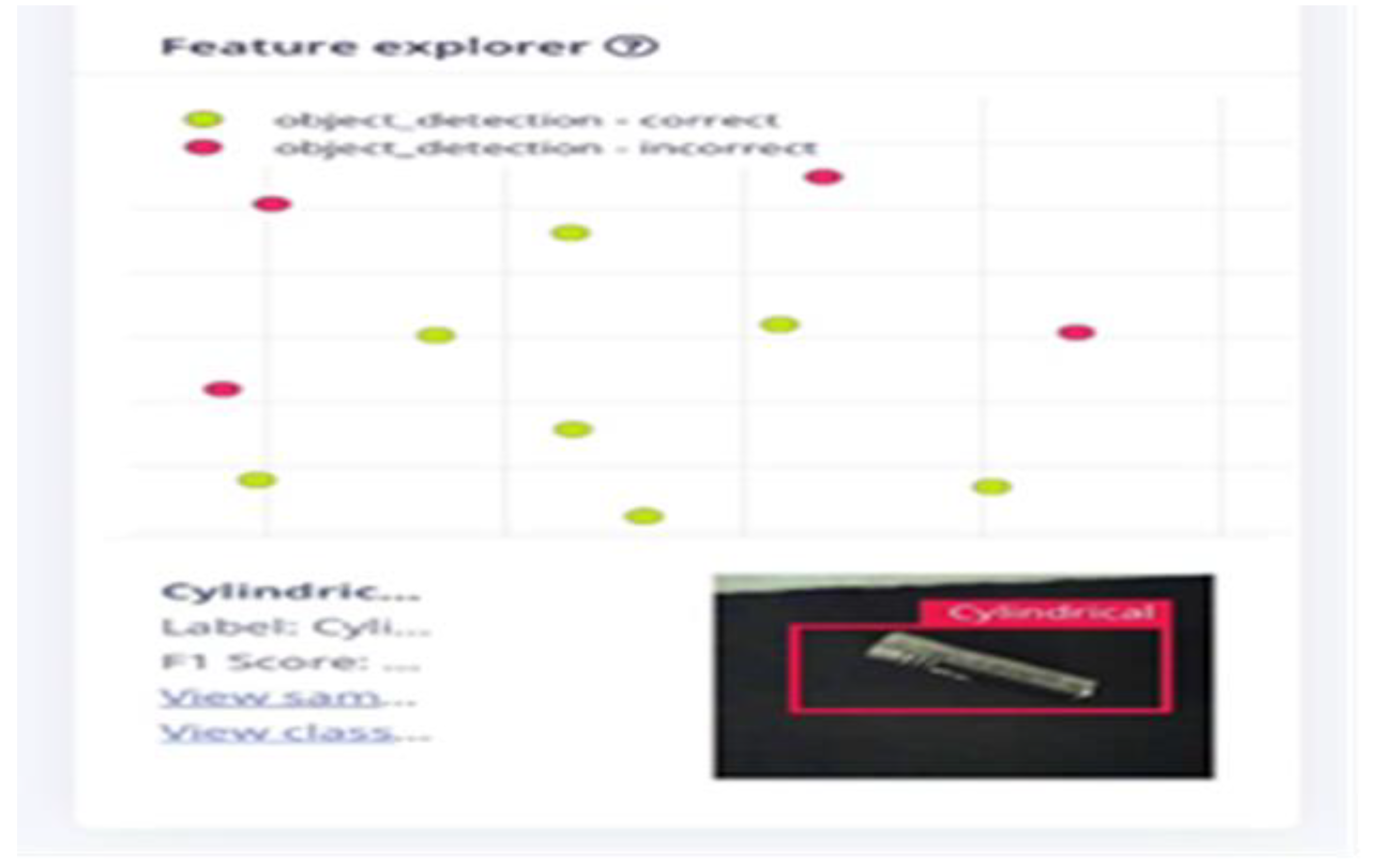
Table 1 shows the model performance of the ESP32 CAM.
A complete setup for sorting the batteries into their desired forms.
Figure 10.
A complete setup of the sorting system.
3.2. Characterization and Repurposing of Spent LIBs
3.2.1. Characterization
Discharging Rates of Individual Batteries
3.2.2. Repurposing
3.3. Discharge with NaCl
A graph and table showing the results for discharge with brine solution.
4. Discussion
4.1. Separator Model Performance
Figure 7 and Figure 8 illustrate the model’s performance in identifying and classifying three primary lithium-ion battery types: pouch, cylindrical, and prismatic. The model exhibited strong results when detecting pouch and prismatic batteries under controlled testing conditions. Specifically, it accurately identified most pouch batteries, with only a few misclassifications, indicating that the model effectively learned the distinct features of this battery type during training. Similarly, prismatic batteries were detected with high accuracy, likely due to their uniform, well-defined structure that makes them easier for the model to recognize and classify consistently. However, the model struggled with cylindrical batteries, frequently misclassifying them or failing to detect them altogether. This inconsistency may be due to several factors, including greater variability in shape, lighting sensitivity, or visual overlap with other battery types. It is also possible that cylindrical batteries were underrepresented in the training dataset, leading to poor generalization. These observations highlight the importance of further refining the model to better capture the distinguishing features of cylindrical cells.
Figure 9 provides a visual representation of the model’s classification accuracy. Green markings indicate successful detections, while red markings highlight misclassifications. The dominance of green regions shows that the model can reliably identify a significant portion of battery samples, reaffirming its potential in real-world classification tasks. Nonetheless, the presence of red markings—though less frequent—underscores areas where improvement is needed. These errors could result from external factors such as inconsistent lighting, partial occlusion, or physical degradation of the batteries, as well as internal limitations like insufficient training diversity or inadequate feature differentiation.
The model’s strong performance during controlled offline testing where it achieved a precision, recall, and F1 score of 0.80 demonstrates its core effectiveness. However, real-time deployment on the ESP32-CAM AI Thinker revealed significant performance gaps. The edge device’s limited computational power, restricted memory, and low camera resolution created a challenging environment for running complex object detection models. These hardware constraints contributed to slower inference times and a drop in detection accuracy, especially for cylindrical and pouch batteries.
Moreover, the variation in the physical appearance and wear conditions of real-world battery samples further hindered the model’s reliability during live testing. These inconsistencies suggest that the model may not have been exposed to a wide enough range of training data to handle such variability effectively. To address these issues, future work should focus on expanding and diversifying the training dataset, particularly for cylindrical batteries. Additionally, optimizing the model for edge deployment such as through model compression, pruning, or using lightweight architectures could significantly improve real-time performance on devices like the ESP32-CAM.
While the object detection model has demonstrated strong potential—particularly in identifying pouch and prismatic batteries under controlled conditions—its current limitations on edge hardware and with cylindrical classification indicate areas that require targeted improvements. Enhancing the dataset, refining the model architecture, and optimizing deployment for resource-constrained environments will be key steps in advancing the system’s overall reliability and practical usability.
4.2. Characterization and Repurposing of Spent LIBs
Table 2 presents the discharging rates of various individual lithium-ion batteries using the load tester, which follow a distinct exponential trend, as illustrated in Figure 11. This exponential behavior reflects the typical discharge profile of lithium-ion cells, where the rate of voltage drop is initially steep and gradually tapers off as the battery approaches full depletion. Such a pattern is indicative of efficient energy release in the early stages of discharge, followed by a slower rate as the remaining charge becomes more difficult to extract. The graphical representation in Figure 10 reinforces the need for effective battery management systems, particularly in maintaining performance stability across the full discharge cycle. These insights are essential for predicting battery behavior and ensuring safety, especially in applications where consistent energy output is critical.
The data in Table 2 and the corresponding curves in Figure 11 provide a deeper understanding of the complexities involved in the charge-discharge dynamics of lithium-ion batteries. Whether discharged individually or in series, the batteries demonstrated varying efficiency levels across the discharge timeline. This variability emphasizes the importance of considering both individual battery characteristics and system-level interactions when designing or repurposing lithium-ion cells.
The results highlight not only the effectiveness of discharging spent lithium-ion batteries using controlled methods but also the broader implications for battery health monitoring and optimization in second-life or recycling applications.
4.3. Repurposing
4.3.1. Charging of Individual Batteries
Table 3 presents the charging rates of different individual lithium-ion batteries, while Figure 12 shows their charging behavior over time. The graph reveals an exponential pattern charging begins quickly and then gradually slows as the battery approaches full capacity. This is a common characteristic of lithium-ion batteries, caused by internal resistance and safety mechanisms that prevent overcharging. The variation in charging curves also shows that each battery charges at a slightly different rate. These differences can be due to the age, condition, or remaining capacity of each cell. This information is useful when evaluating spent batteries for reuse, as it helps identify which ones can be effectively repurposed and which may no longer be suitable for reliable performance.
4.3.2. Charging Rates for Parallel-Connected Batteries
Table 4 presents the charging rates of a set of lithium-ion batteries connected in parallel, recorded over a 180-minute period at 15-minute intervals. The corresponding graph in Figure 13 illustrates a nonlinear charging trend, indicating that the rate of energy uptake varied throughout the charging cycle. This nonlinear behavior highlights the complex dynamics involved in parallel battery configurations. Factors such as differences in internal resistance, state of charge, and cell health among the individual batteries may contribute to the irregular charging pattern. The graph suggests that energy distribution in parallel-connected cells is not uniform, and interactions between cells can significantly influence overall charging performance.
These underscore the importance of balanced cell selection and monitoring in parallel battery setups to ensure optimal and safe charging behavior.
4.3.3. Charging Rates for Series-Connected Batteries
Table 5 presents the charging rates of lithium-ion batteries connected in series over a 180-minute period, with data recorded at 15-minute intervals. As shown in Figure 14, the batteries exhibited nonlinear charging behavior, steadily acquiring energy at an appreciable rate throughout the test period. Although these recovered batteries were not capable of powering high-demand devices like smartphones, further testing revealed they still retained usable capacity. With the integration of a Battery Management System (BMS) and a buck converter, the batteries were successfully repurposed to power low-energy devices such as Bluetooth earphones, small LED lamps, and even served as emergency power banks for low-consumption electronics. These results demonstrate that end-of-life batteries can still be functional in suitable applications, promoting resource efficiency and reducing electronic waste [37].

Table 5.
Showing the charging rate for batteries in a series connection for 180 mins at 15 mins interval.
Table 5.
Showing the charging rate for batteries in a series connection for 180 mins at 15 mins interval.
| Voltage/ V | 9.96 | 10.09 | 11.54 | 11.73 | 12.89 | 12.97 | 13.11 | 13.96 | 14.12 | 15.49 | 16.75 | 17.11 | 17.42 |
| Time/mins | 0 | 15 | 30 | 45 | 60 | 75 | 90 | 105 | 120 | 135 | 150 | 165 | 180 |
Table 6.
Showing results of battery discharge with brine solution at different masses of salt.
| 0 min | 30 mins | 60 mins | 90 mins | 120 mins | ||||||
| Mass of solute | v/V | I/ μA | v/V | I/ μA | v/V | I/ μA | v/V | I/ μA | v/V | I/ μA |
| 0% of Salt | 3.93 | 0.9 | 3.93 | 0.9 | 3.93 | 0.9 | 3.93 | 0.9 | 3.93 | 0.9 |
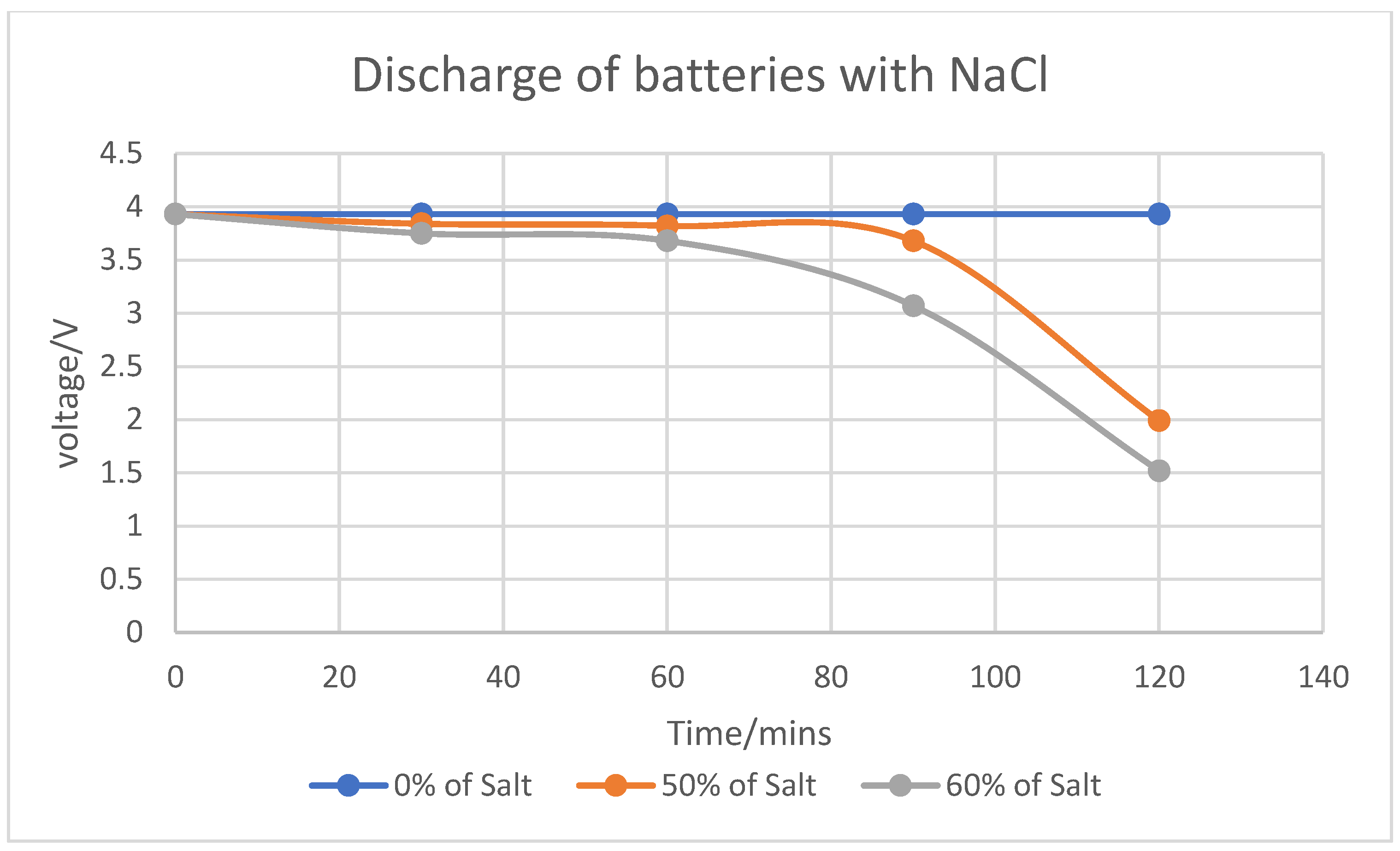
| 50% of Salt | 3.93 | 0.9 | 3.84 | 0.8 | 3.82 | 0.8 | 3.68 | 0.6 | 1.99 | 0.0 |
| 60% of Salt | 3.93 | 0.9 | 3.75 | 0.7 | 3.68 | 0.6 | 3.07 | 0.0 | 1.52 | 0.0 |
Figure 14.
A graph showing the relationship between charge time and voltage in a series connected batteries.
Figure 14.
A graph showing the relationship between charge time and voltage in a series connected batteries.
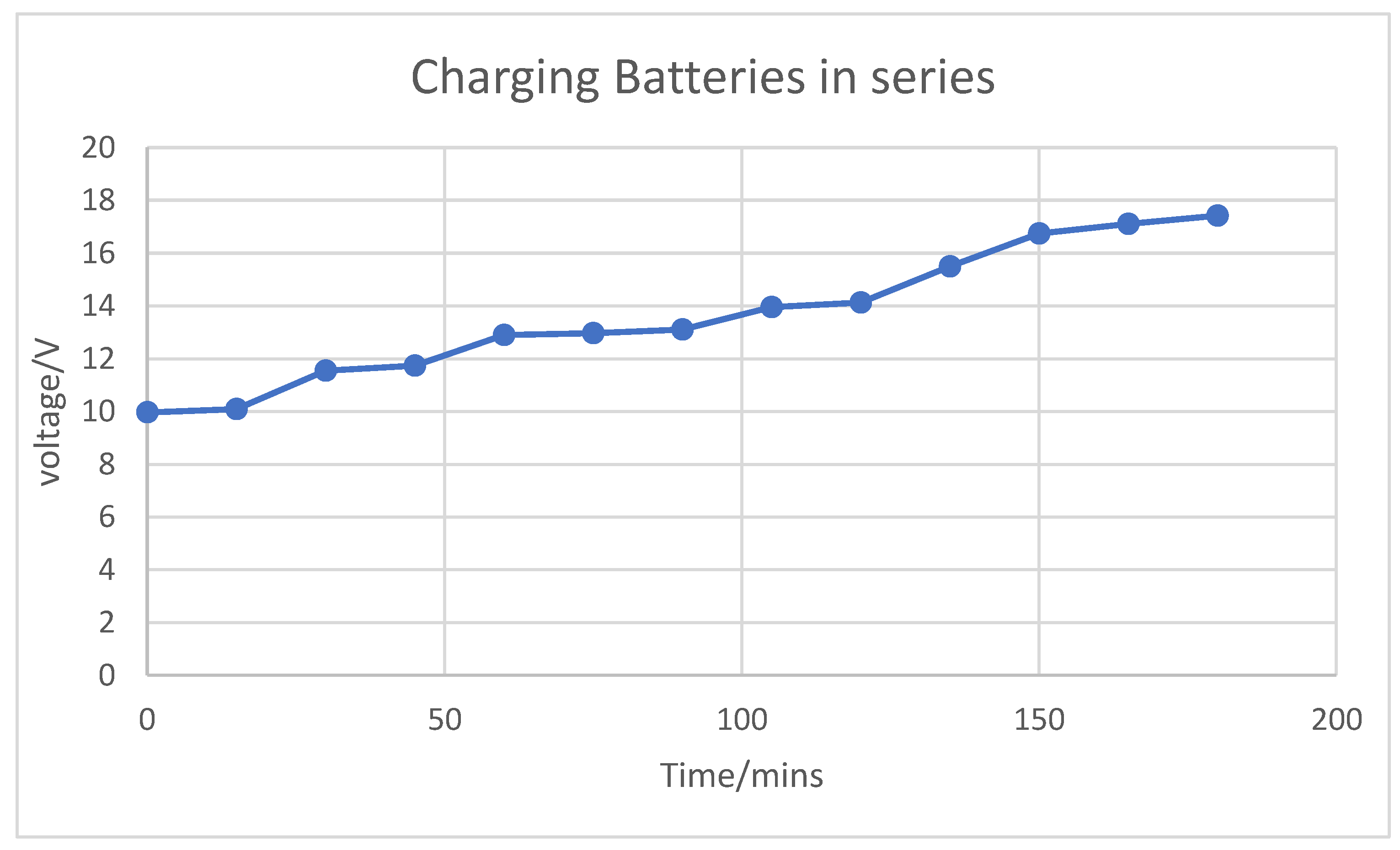
Figure 15.
A graph representing data from the discharge with NaCl.
However, attempts to use the same battery system to charge a smartphone were unsuccessful. The issue arose not just from limited battery capacity, but from a mismatch in current delivery—the system supplied more current than the phone could safely accept. As a result, the phone’s internal protection mechanism halted the charging process to prevent damage [37]. This highlights the importance of compatibility and current regulation when repurposing batteries.
Despite these limitations, the experiment supports the potential of second-life battery use in low-power contexts. Repurposing spent batteries in simple, non-critical applications contributes to waste reduction and aligns with the principles of a circular economy [35].
4.3.4. Discharge with NaCl
The NaCl discharge experiments revealed that higher salt concentrations improve battery discharge efficiency. Using a 50% NaCl solution, voltage dropped to approximately 1.99 V after two hours, while a 60% solution achieved a lower final voltage of around 1.52 V in the same time. This indicates that increased electrolyte concentration accelerates the discharge process, with a clear correlation between discharge time and final voltage. Post-discharge pH measurements showed a drop from 6.5 to 5.7 (50% NaCl) and 5.5 (60% NaCl), pointing to increased acidity in the residual solutions. This raises environmental concerns and highlights the need for proper waste management.
Gas evolution was observed at both battery terminals, likely due to water electrolysis producing hydrogen and oxygen gases as oberved by [36]. Although gas collection was not performed, the presence of hydrogen poses a potential explosion risk, emphasizing the need for caution during large-scale discharges. Visible corrosion was also noted on the battery casings, though no structural failure occurred. While the corrosion was not quantified, the results suggest that battery enclosures remained intact under the test conditions. Compared to traditional brine discharges (5–10% NaCl), higher concentrations offer faster discharge but introduce safety and environmental risks. Further study is needed to assess their viability for large-scale recycling applications.
5. Conclusions
5.1. LIB Separator
The research advanced the development of an AI-powered LIB separator designed to enhance the safety and efficiency of battery recycling processes. This system incorporated machine learning models trained to identify cylindrical, pouch, and prismatic batteries based on shape and direct them to designated collection points via a conveyor belt system. Despite promising results, the real-time application was impacted by limited processing power and environmental lighting conditions, leading to inconsistencies in performance. This highlights the importance of ongoing optimization to ensure reliable battery sorting under variable conditions.
The ESP-32’ robustness in operation would have been a cause for the 69.23% accuracy; a higher value was expected than that. The accuracy is believed to have reduced to the type and orientation of the cylindrical batteries’ recall and precision. The output wasn’t what was expected, with a device of high resolution like the Raspberry Pi it is believed that the system will work without flaws.
5.2. Characterization and Repurposing
The widespread retirement of lithium-ion batteries (LIBs) emphasizes the urgent need to develop strategies for their safe and eco-friendly recycling. Recycling stands out as a promising method for maximizing the surplus value of retired LIBs while adhering to standards of reliability, efficiency, and sustainability. The primary objective of this research was to design a charging and discharging mechanism for used LIBs, assessing their viability for small-scale applications.
Through extensive characterization of the batteries, including analysis of their charging and discharging rates, we determined their potential for use as energy storage (backup) systems for such applications. The results revealed that the charging and discharging rates of the used batteries closely resembled those of a typical power bank, suggesting their suitability for backup energy storage.
However, when tested for small-scale applications, the system constructed from these batteries was unable to power devices like smartphones. This was due to the higher current output of the charging system, which exceeded the input current tolerance of smartphones. As a result, the smartphone’s surge protection mechanism intervened, cutting off power and preventing the devices from charging.
While the used LIBs showed potential as energy storage solutions for small-scale applications, further adjustments to the charging system would be necessary to ensure compatibility with sensitive devices like smartphones.
5.3. Discharge with NaCl
The use of sodium chloride (NaCl) as an electrolyte for discharging spent LIBs proved effective and practical. Experiments showed that batteries immersed in NaCl solutions discharged to voltages between 1.55 and 1.99V over two hours. The results confirmed that higher electrolyte concentrations accelerated the discharge rate, while extended discharge times mitigated voltage recovery, indicating a stronger discharge at consistent concentrations. However, minor rust formation on battery casings underscored the need for further evaluation to avoid long-term structural issues, despite the rust being superficial.
Incorporating safe discharge practices can significantly reduce environmental risks associated with LIB disposal. Sodium chloride solutions provide an accessible and secure method for de-energizing batteries, minimizing hazards during handling and transport. Public education campaigns on safe disposal methods and coordinated collection efforts can further reduce risks and enhance community safety. Future studies should include examining other electrolyte solutions, tracking side reactions, and testing multiple batteries to assess scalability and collective discharge behavior.
Acknowledgments
The authors would like to express their sincere gratitude to their families for the financial support provided throughout this study. Special thanks are extended to the faculty and staff of the Department of Physics, Kwame Nkrumah University of Science and Technology, for their technical assistance and for granting access to laboratory equipment. We are also deeply grateful to our supervisors and lecturers in the department for their insightful suggestions and constructive feedback during the course of this research. Finally, we acknowledge the contributions of our colleagues and peers whose support was invaluable throughout the development of this work.
Conflicts of Interest
The authors declare no conflicts of interest.
Abbreviations
The following abbreviations are used in this manuscript:
| LIB | Lithium-Ion Battery |
| SoH | State of Health |
| EoL | End of Life |
| BMS | Battery Management system |
References
- Steward, D.; Mayyas, A.; Mann, M. Economics and challenges of Li-ion battery recycling from end-of-life vehicles. Procedia Manufacturing 2019, 33, 272–279. [Google Scholar] [CrossRef]
- Zanoletti, A.; Carena, E.; Ferrara, C.; Bontempi, E. A Review of Lithium-Ion Battery Recycling: Technologies, Sustainability, and Open Issues. Batteries 2024, 10, 38. [Google Scholar] [CrossRef]
- Ralls, A.M.; Leong, K.; Clayton, J.; Fuelling, P.; Mercer, C.; Navarro, V.; Menezes, P.L. The Role of Lithium-Ion Batteries in the Growing Trend of Electric Vehicles. Materials 2023, 16, 6063. [Google Scholar] [CrossRef] [PubMed]
- Kachate, N.; Sharma, D.; Baidya, K. Material Recovery in Li-Ion Battery Recycling: Case Study. Mater. Today Proc. 2023, 72, 1498–1502. [Google Scholar] [CrossRef]
- Jose, S.A.; Stoll, J.L.; Smith, T.; Jackson, C.; Dieleman, T.; Leath, E.; Eastwood, N.; Menezes, P.L. Critical Review of Lithium Recovery Methods: Advancements, Challenges, and Future Directions. Processes 2024, 12, 2203. [Google Scholar] [CrossRef]
- Bird, R.; Baum, Z.J.; Yu, X.; Ma, J. The Regulatory Environment for Lithium-Ion Battery Recycling. ACS Energy Lett. 2022, 7, 736–740. [Google Scholar] [CrossRef]
- Olsson, L.; Fallahi, S.; Schnurr, M.; Diener, D.; van Loon, P. Circular Business Models for Extended EV Battery Life. Batteries 2018, 4, 57. [Google Scholar] [CrossRef]
- Yu, J. , He, Y., Ge, Z., Li, H., Xie, W., Wang, S., A promising physical method for recovery of licoo2 and graphite from spent lithium-ion batteries: Grinding notation. Separation and Purification Technology 2018, 190, 45–52. [Google Scholar] [CrossRef]
- Mrozik, W.; Rajaeifar, M. A. , Heidrich, O., Christensen, P., Environmental impacts, pollution sources and pathways of spent lithium-ion batteries. Energy & Environmental Science 2021, 14, 6099–6121. [Google Scholar]
- Neumann, J.; Petranikova, M.; Meeus, M.; Gamarra, J. D. , Younesi, R., Winter, M., Nowak, S., Recycling of lithium-ion batteries current state of the art, circular economy, and next generation recycling. Advanced energy materials 2022, 12, 2102917. [Google Scholar] [CrossRef]
- Gomaa, H. , Shenashen, M., Yamaguchi, H., Alamoudi, A., El-Safty, S., Ex- traction and recovery of co 2+ ions from spent lithium-ion batteries using hierarchical mesosponge γ-al 2 o 3 monolith extractors. Green Chemistry 2018, 20, 1841–1857. [Google Scholar] [CrossRef]
- Precedence Research. (2025). Lithium-Ion Battery Recycling Market Size, Report 2024 to 2033. Retrieved March 5, 2025, from https://www.precedenceresearch.com/lithium-ion-battery-recycling-market.
- Deshwal, D.; Sangwan, P.; Dahiya, N. Economic Analysis of Lithium-Ion Battery Recycling in India. Wirel. Pers. Commun. 2022, 124, 3263–3286. [Google Scholar] [CrossRef]
- McKinsey & Company. (2024). Lithium-Ion Battery Demand Forecast for 2030. Retrieved March 26, 2025, from https://www.mckinsey.com/industries/automotive-and-assembly/our-insights/battery-2030-resilient-sustainable-and-circular.
- Sharma, H.; Kumar, H.; Mangla, S.K. Enablers to Computer Vision Technology for Sustainable E-Waste Management. J. Clean. Prod. 2023, 412, 137396. [Google Scholar] [CrossRef]
- Akbar, J.U.M.; Kamarulzaman, S.F.; Muzahid, A.J.M.; Rahman, M.A.; Uddin, M. A Comprehensive Review on Deep Learning Assisted Computer Vision Techniques for Smart Greenhouse Agriculture. IEEE Access 2024, 12, 4485–4522. [Google Scholar] [CrossRef]
- Bhattacharya, S.; Kumar, A.; Krishav, K.; Panda, S.; Vidhyapathi, C.M.; Sundar, S.; Karthikeyan, B. Self-Adaptive Waste Management System: Utilizing Convolutional Neural Networks for Real-Time Classification. Eng. Proc. 2024, 62, 5. [Google Scholar]
- Checkpoint Systems. (2024). RFID Technology Examples on Sustainability and Circular Economy. Retrieved March 5, 2025, from https://checkpointsystems.com/blog/rfids-role-in-the-circular-economy-and-sustainability-journey.
- Sitra. (2024). ZenRobotics robots sort waste efficiently: “Artificial intelligence will revolutionise recycling”. Retrieved , 2024, from https://www.sitra.fi/en/cases/zenrobotics-robots-sort-waste-efficiently-artificial-intelligence-will-revolutionise-recycling/. 1 October.
- David, R.; et al. TensorFlow Lite Micro: Embedded Machine Learning on TinyML Systems. arXiv. 2020. https://arxiv.org/abs/2010. 0867. [Google Scholar]
- Lin, J.; et al. MCUNet: Tiny Deep Learning on IoT Devices. arXiv. 2020. https://arxiv.org/abs/2007. 1031. [Google Scholar]
- Pierre-Emmanuel, Novac; et al. Quantization and Deployment of Deep Neural Networks on Microcontrollers . arXiv. 2105. [Google Scholar]
- Xu, C.; et al. (2020). Status and challenges of lithium-ion battery recycling: Global perspectives.
- US Geological Survey. (2019). Mineral Commodity Summaries: Cobalt.
- BloombergNEF (2018). Cobalt Price Spikes in Response to Market Uncertainty.
- Gaines, L.; et al. Recycling Lithium-Ion Batteries from Electric Vehicles. Nature Sustainability 2018, 1, 236–240. [Google Scholar]
- Harper, G.; et al. Recycling lithium-ion batteries from electric vehicles. Nature 2019, 575, 75–86. [Google Scholar] [CrossRef]
- Bobba, S.; et al. Preparing for the second use of batteries from electric vehicles: A three-stage approach. Journal of Energy Storage 2018, 19, 212–223. [Google Scholar]
- Hu, X.; et al. State-of-charge estimation of Li-ion batteries using an adaptive extended Kalman filter based on a new equivalent circuit model . Energies 2012, 5, 604–624. [Google Scholar]
- IEC 62133:2017. Secondary cells and batteries containing alkaline or other non-acid electrolytes – Safety requirements.
- Liu, T.; et al. Safety discharge process of end-of-life lithium-ion batteries via salt solution immersion: Hydrogen evolution and metal leaching. Journal of Hazardous Materials 2021, 417, 126045. [Google Scholar]
- Lv, W.; Wang, Z.; Cao, H.; Sun, Y.; Zhang, Y.; Sun, Z. A critical review and analysis on the recycling of spent lithium-ion batteries. Frontiers in Environmental Science & Engineering 2020, 14, 89. [Google Scholar] [CrossRef]
- Zhang, X.; He, W.; Li, G. A study on discharging methods for lithium-ion batteries in recycling process. Procedia CIRP 2018, 69, 752–757. [Google Scholar] [CrossRef]
- Chen, Y.; Li, Z.; Huang, T. Safe discharging of spent lithium-ion batteries using sodium chloride solutions. Journal of Environmental Chemical Engineering 2021, 9, 105234. [Google Scholar] [CrossRef]
- Torabian, D.; Zahiri, B.; Maghami, M.R.; Ghoreishian, S.M.; Behnia, A. Discharge performance of lithium-ion batteries in brine solutions of different compositions. Scientific Reports 2022, 12, 2917. [Google Scholar] [CrossRef]
- Liu, H.; Zhang, J.; Wang, B. Environmental risks of discharging lithium-ion batteries in brine: A review of gas emissions and leachate toxicity. Waste Management 2022, 138, 137–144. [Google Scholar] [CrossRef]
- Casals, L.C.; García, B.A.; Aguesse, F. Second life batteries: Legal, regulatory, and environmental issues. Energy Policy 2017, 107, 684–695. [Google Scholar]
Figure 1.
LIB market growth rate.
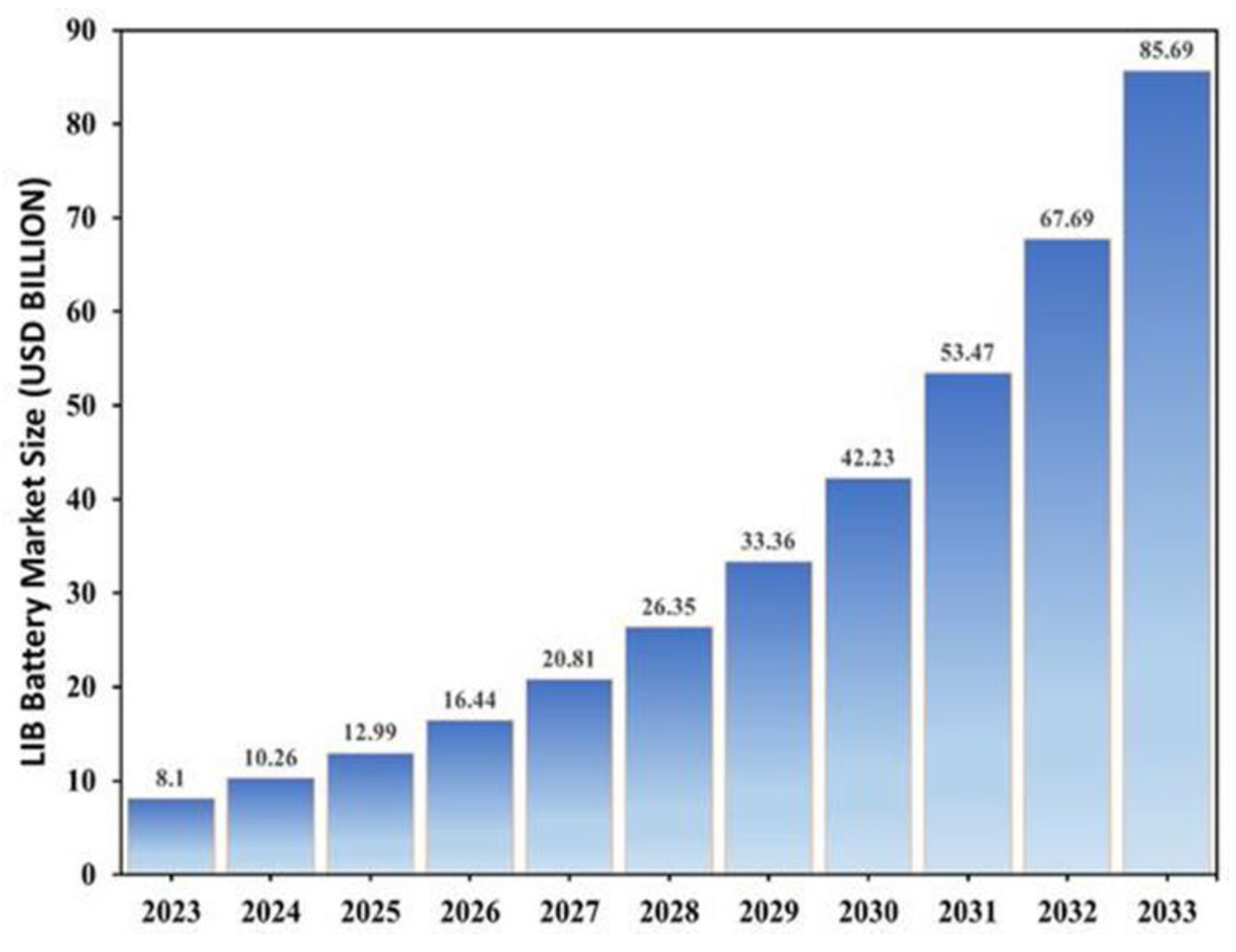
Figure 11.
Discharge rate of individual batteries.
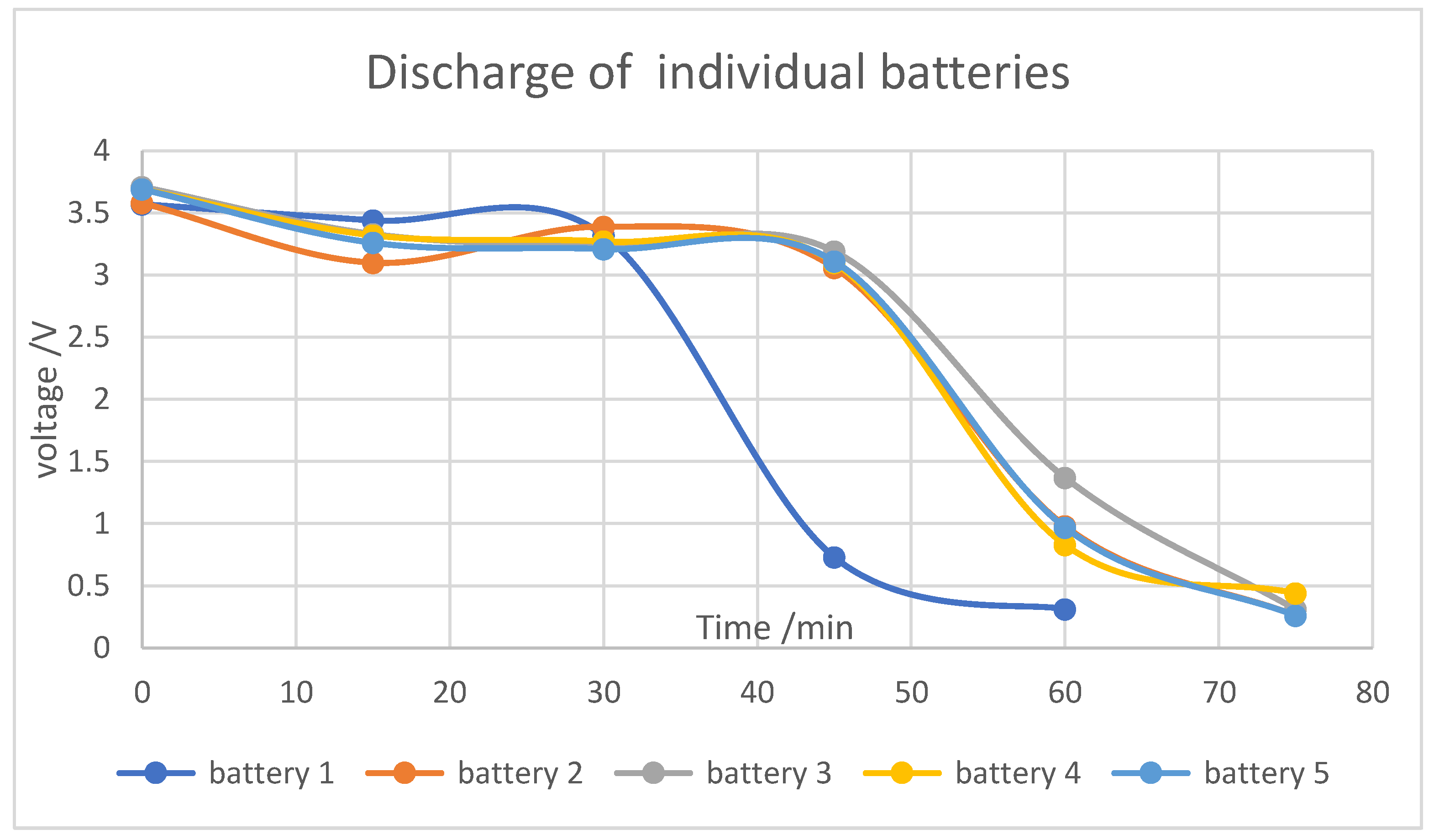
Figure 12.
Charging rates of individual batteries.
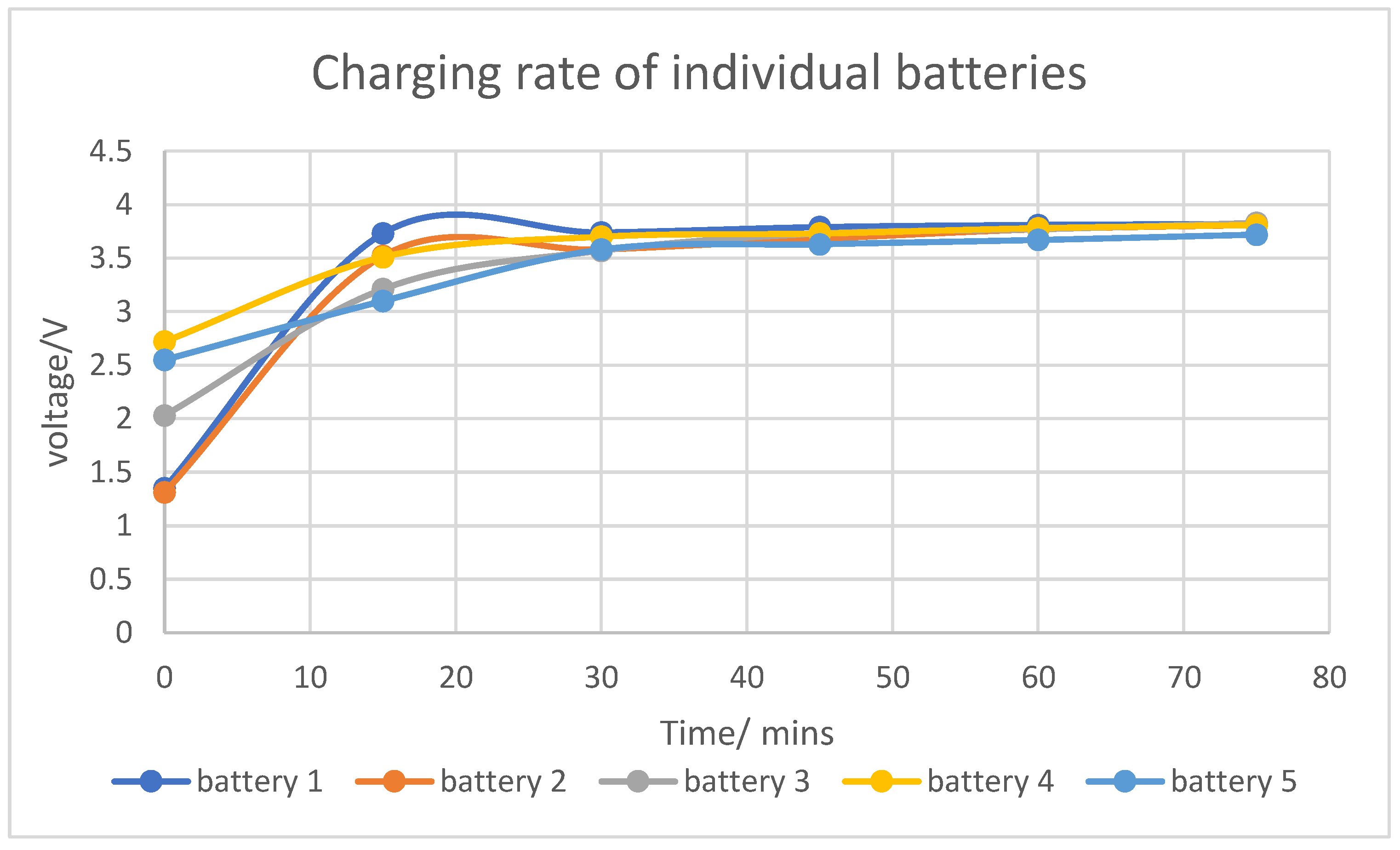
Figure 13.
Showing the rate of charge of batteries connected in parallel.
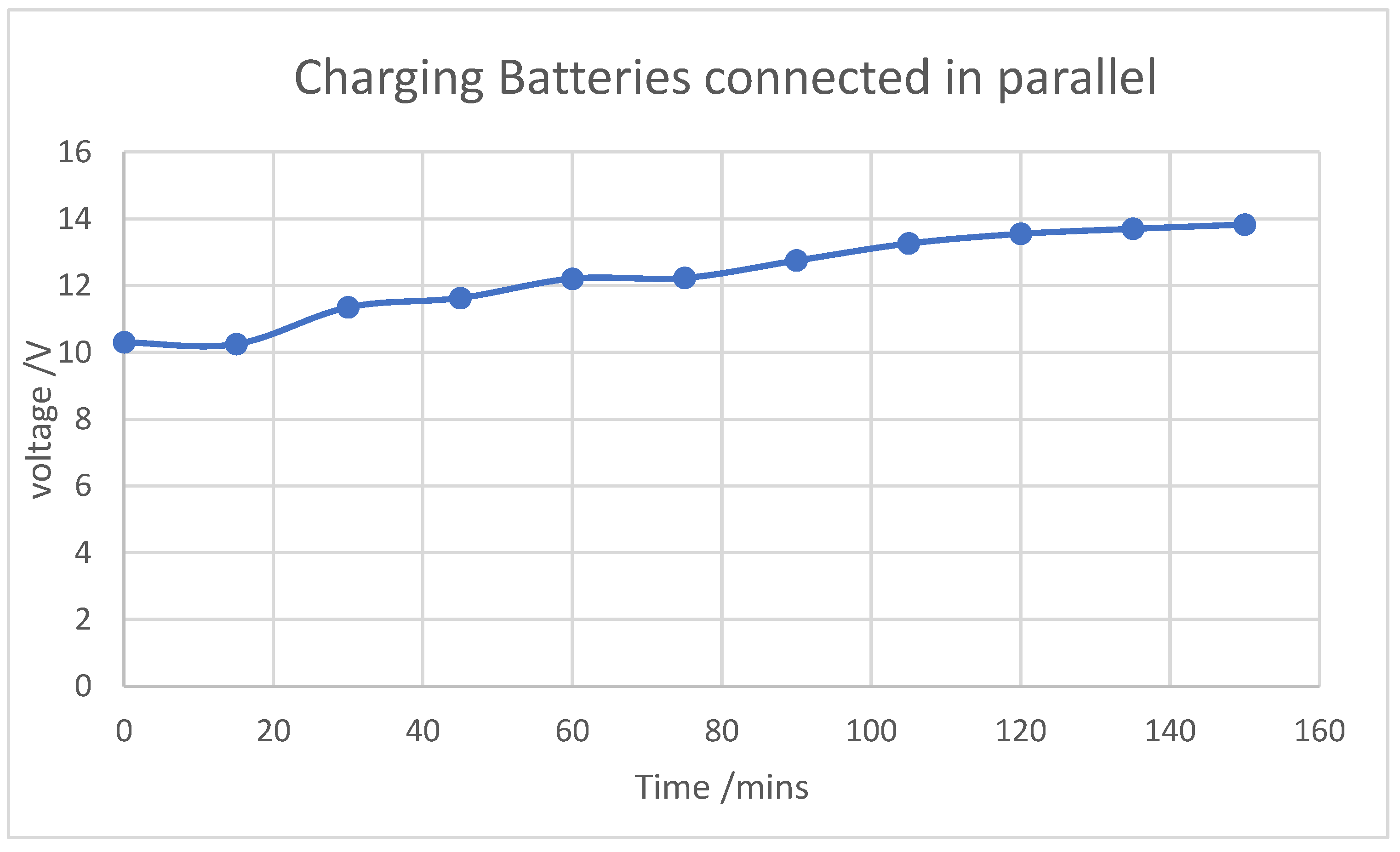
Table 1.
Comparison between the performance of the ESP-32 CAM and standard CNN models.
| Metric | ESP32-CAM Model | Standard CNN-Based Systems |
| Accuracy | 69.23 | 85.0 |
| Precision | 0.8 | 0.9 |
| Recall | 0.8 | 0.88 |
Table 2.
Showing results of discharge for 5 different batteries.
| Time/mins | 0 | 15 | 30 | 45 | 60 | 75 |
| Voltage/V battery 1 | 3.57 | 3.44 | 3.32 | 0.73 | 0.31 | |
| Voltage/V battery 2 | 3.58 | 3.1 | 3.39 | 3.06 | 0.98 | 0.26 |
| Voltage/V battery 3 | 3.71 | 3.33 | 3.23 | 3.19 | 1.37 | 0.31 |
| Voltage/V battery 4 | 3.69 | 3.32 | 3.27 | 3.1 | 0.83 | 0.44 |
| Voltage/V battery 5 | 3.69 | 3.26 | 3.21 | 3.11 | 0.97 | 0.26 |
Table 3.
showing the charging rate of batteries.
| Time/s | 0 | 15 | 30 | 45 | 60 | 75 |
| Voltage/V battery 1 | 1.35 | 3.73 | 3.74 | 3.79 | 3.81 | 3.82 |
| Voltage/V battery 2 | 1.31 | 3.52 | 3.58 | 3.68 | 3.77 | 3.81 |
| Voltage/V battery 3 | 2.03 | 3.21 | 3.57 | 3.73 | 3.77 | 3.83 |
| Voltage/V battery 4 | 2.72 | 3.51 | 3.70 | 3.73 | 3.78 | 3.81 |
| Voltage/V battery 5 | 2.55 | 3.1 | 3.58 | 3.63 | 3.67 | 3.72 |
Table 4.
showing the charging rate for batteries in a Parallel connection for 180 mins at 15 mins interval.
Table 4.
showing the charging rate for batteries in a Parallel connection for 180 mins at 15 mins interval.
| Voltage/ V | 10.3 | 10.25 | 11.35 | 11.63 | 12.21 | 12.23 | 12.75 | 13.26 | 13.55 | 13.70 | 13.83 | 13.96 | 14.02 |
| Time/mins | 0 | 15 | 30 | 45 | 60 | 75 | 90 | 105 | 120 | 135 | 150 | 165 | 180 |
Disclaimer/Publisher’s Note: The statements, opinions and data contained in all publications are solely those of the individual author(s) and contributor(s) and not of MDPI and/or the editor(s). MDPI and/or the editor(s) disclaim responsibility for any injury to people or property resulting from any ideas, methods, instructions or products referred to in the content. |
© 2025 by the authors. Licensee MDPI, Basel, Switzerland. This article is an open access article distributed under the terms and conditions of the Creative Commons Attribution (CC BY) license (http://creativecommons.org/licenses/by/4.0/).
Copyright: This open access article is published under a Creative Commons CC BY 4.0 license, which permit the free download, distribution, and reuse, provided that the author and preprint are cited in any reuse.


