

Submitted:
05 August 2025
Posted:
06 August 2025
You are already at the latest version
Abstract
Numerous studies show that transitioning out of sport can be an extremely critical phase which, if not adequately supported, can lead to identity crises, loss of meaning, depressive symptoms, and social isolation. We conducted a scoping literature review following the PRISMA Extension for Scoping Reviews guidelines. The aim of our research was to retrieve all articles published between January 2015 and January 2025 in peer-reviewed English-language journals relating to the risk and protective factors that characterize the transition to post-career for professional athletes. The 66 selected studies were organized into six thematic categories with the support of Artificial Intelligence. Among the most recurrent risk factors are exclusive identification with the athletic role, unplanned retirement, and lack of emotional and professional support. The most effective protective factors include advance planning for the end of career, well-structured dual career paths, favorable cultural and organizational contexts, and targeted psychological interventions. This review highlights the need to develop specific, validated, and culturally sensitive intervention protocols to support athletes in building new identities and life trajectories after retirement.
Keywords:
Protective factor AND life after sport
; Social support AND post career adjustment
; Psychological distress AND athletic retirement
; Identity loss AND former athletes
; Dual career AND retirement from sport
1. Introduction
1.1. Background
Several international studies have addressed the issue of career endings in professional athletes and the closely related concept of dual careers (Zimet et al., 2024; Ryan, 2019; Haslam, 2024; Rajaram, 2021). In particular, studies on former Spanish Olympians, Scandinavian elite athletes, and selected groups of Brazilian athletes highlight that the transition out of sport can be an extremely critical phase, not only psychologically, but also socially and professionally (Jewett et al., 2019; Cosh et al., 2021; Montero et al., 2024; Zimmerman, 2024; Rajaram, 2021; Shander & Petrie, 2021). When not adequately supported, this phase can lead to identity moratorium, loss of meaning, depressive symptoms, and social isolation (Haslam et al., 2021; Zimet et al., 2024; Giannone et al., 2017; Ahmann, 2023; Welch, 2023; Rajaram, 2021; De Cristofano et al., 2024).
The scientific literature highlights multiple risk factors that can emerge in this transition phase, such as a strong identification with athletic identity, often constructed since childhood and never questioned (Giannone et al., 2017; Mooney et al., 2024; Ryan, 2019; Shinnick, 2024; Filippini et al., 2023; Filippini et al., 2023; Cristofanelli et al., 2023; Di Sarno et al., 2019), the lack of a post-career plan (디피카, 2021; Ryan, 2019), the absence of adequate psychological and social support (Lenton, 2020; Barcza-Renner, 2020; Jewett et al., 2019), forced retirement due to injury or deselection (Ahmann, 2023; Rajaram, 2021; Zimet et al., 2024), as well as gender and sport-related inequalities (individual or team sports) (Montero et al., 2024; Shander & Petrie, 2021; Scognamiglio & Scia, 2022; Diamare et al., 2020). The presence of a structured dual career model, the possibility for athletes to combine sport with education, work, or training, has been identified by several studies as one of the main protective factors for athletes in the post-career transition phase (Haslam et al., 2021; Lenton, 2020; Rich et al., 2022; Barcza-Renner, 2020). Athletes who have pursued parallel academic or professional paths have shown better adaptation, greater self-efficacy, and often a more positive perception of retirement. The concept of dual career, in its broadest sense, refers to the opportunity for athletes to develop a secondary identity, to be several things at once: athlete, worker, parent, active citizen (Haslam, 2024; Haslam et al., 2021; Menke, 2019; Lenton, 2020; Jewett et al., 2019; Cosh et al., 2021). It is important to note that psychological support is provided during the transition. Theoretical models such as SIMIC (Social Identity Model of Identity Change) and Ruthven's model of transition emphasize the need for emotional and narrative support to accompany athletes, already in the midst of their careers, on a path of orientation, identity development, and planning for the future (Haslam et al., 2021; Zimet et al., 2024; De Santo et al., 2019). Similar experiences already exist at the international level: In Spain, the Fundación Trinidad Alfonso promotes dual career programs in Valencia; in France, INSEP has an integrated model of sports career, education, and psychological support; in Belgium, the University of Leuven has established sport-psychology hubs for student athletes. In Italy, too, “Sport2Next” is being developed, a multidimensional model characterised by direct experience, peer mentoring, knowledge of the sports system and attention to the individual.
1.2. Aims
In this review, we have examined recent literature on the risk and protective factors that influence the psychological, social, and professional adaptation of athletes in the post-career phase. Our goal was to gather all the information related to this transition phase, as we believe that an integrated set of findings on this topic can offer a deeper understanding of the phenomenon of athletic retirement. At the same time, these findings provide the basis for the development of increasingly specific and targeted intervention models to support athletes, already in the midst of their careers, in a process of orientation, identity development, and planning for the future.
2. Methodology
2.1. Research and Recovery
Scoping reviews are a useful methodological tool for exploring and organizing key concepts in existing literature on topics that are still under-researched or lack established evidence. By analyzing a wide selection of articles, this type of review provides a general overview of a given topic, highlighting emerging trends in cases where research questions specific enough for a systematic review have not yet been defined.
This work was conducted following the guidelines of the PRISMA Extension for Scoping Reviews (PRISMA-ScR), which provides a set of 20 mandatory criteria (plus two optional ones) to ensure the methodological consistency of the review (Tricco et al., 2018). The aim of our analysis was to identify all peer-reviewed articles in English published between January 2015 and January 2025 that focused on risk and protective factors associated with post-career transition in professional athletes. The time window was extended to ten years because a search limited to the most recent five years did not yield a sufficient number of relevant articles.
The search terms were defined based on a preliminary assessment of the existing literature and an exploratory analysis conducted using ChatGPT. The bibliographic search phase took place between January and June 2025. The sources retrieved from different databases were unified into a single dataset after removing duplicates. The search strategies included combinations of keywords according to the following thematic clusters, using the Boolean operator AND: (1) “Psychological distress AND athletic retirement”; (2) “Protective factor AND life after sport”; (3) “Social support AND post career adjustment”; (4) “Identity loss and former athletes”; (5) “Dual career AND retirement from sport”.
The searches were conducted in the PubMed and Google Scholar databases. Table 1 describes the inclusion and exclusion criteria used in the selection of articles. Studies that did not fall within the time frame evaluated, did not meet the eligibility criteria, or were not in line with the search terms used were excluded from our review.

Table 1.
Elegibility and Exclusion Criteria.
| Elegibility Criteria | Exclusion Criteria |
|---|---|
| 1. Published in English 2. Published within the last 10 years 3. Published in a peer-reviewed journal 4. Empirical research on the transition to post-career life in professional athletes, with a focus on psychological aspects. |
1. Books 2. Literature reviews 3. Articles not focused on the post-career transition phase or not addressing issues related to psychological distress. |
Table 2.
Prototype table.
| Title | Authors and Year | Sample | Study Aim | Data Analysed | Conclusion |
Table 3.
Thematic Macro-Categories Identified by the Chatbot.
| Category | N. records | Description |
|---|---|---|
| Barriers in transition | 6 | Focus on obstacles in the post-career phase (e.g., emotional difficulties, lack of support). Importance of planning |
| Importance of planning | 3 | Emphasize the importance of advance preparation for the transition. |
| Cultural influence on dual career | 2 | Analyze how the sociocultural context influences support for dual careers. |
| Positive role of dual career | 1 | Dual career as a factor facilitating transition. |
| Limits of dual career | 1 | Dual career programs are not always effective. |
| Other | 53 | Very varied conclusions or conclusions that are not easily categorized. |
2.2. Study Selection
The study selection process was divided into two phases and managed through the Rayyan platform (Ouzzani et al., 2016). In the first phase, we selected articles based on their title and abstract, excluding those not focused on the transition to post-career for professional athletes or the psychological distress associated with it. In the second phase, a second selection of these studies was made by reading the articles in full. Three independent researchers carried out the selection; any discrepancies were resolved by discussion between two reviewers or, if necessary, with the involvement of a third expert in the field.
2.3. Methodological Quality Assessment
Based on the PRISMA guidelines for scoping reviews, the methodological quality of the studies was not assessed.
2.4. Data Extraction and Selection
This study involved the collaboration of five experts: two in sports psychology, one in sports coaching, and two in clinical psychology research. To extract the data, the selected articles were imported into a new Rayyan project. After reading them in full, the relevant information was collected using a standardized form created specifically for this purpose. As with the selection phase, the extraction also required the contribution of two independent reviewers and the resolution of conflicts by a third researcher with expertise in the field. All final decisions were shared within the team through collegial discussions. It was therefore not necessary to apply inter-rater reliability tests. The screening process, divided into two phases, consisted of a first phase of reading the titles and abstracts and a second phase of evaluating the full texts. The following keywords were searched using the PubMed database: (1) “Protective factor AND life after sport”; (2) “Social support AND post-career adjustment”; (3) “Psychological distress AND athletic retirement”; (4) “Identity loss and former athletes”; (5) “Dual career AND retirement from sport.” The search for the first two keywords yielded 22 and 25 results, respectively. After reading the titles and abstracts in full, no articles were considered relevant to the focus of the study and categorizable according to the eligibility and exclusion criteria listed in the study. With regard to the third keyword, “Psychological distress AND athletic retirement,” the database search yielded 12 results, of which only 5 were included in our exploratory review and consulted in full text. The keyword “Identity loss and former athletes” produced 2 results, both of which were consulted in full text and deemed relevant to the focus of our study. With regard to the keyword “Dual career AND retirement from sport,” the database search produced 8 results, of which only 5 were included in the exploratory review and subsequently consulted in full text.
The same set of keywords used for the PubMed search was applied to a search in the Google Scholar database. The keyword “Protective factor AND life after sport” yielded 18,800 results, but none of the articles met the relevance criteria defined for the study objective. The second keyword, “Social support AND post career adjustment,” yielded 17,800 results, of which, after consulting up to the twelfth page of the database, no articles were considered relevant and categorizable in accordance with the eligibility criteria specified in our research protocol. The search for the keyword “Psychological distress AND athletic retirement” yielded 15,900 results. The search extended up to the eighth page of Google Scholar, resulting in the selection of 30 articles identified as relevant to the investigation of psychological distress associated with the post-career transition phase of professional athletes. Those studies were considered eligible and reviewed in full text. The search for the keyword “Identity loss AND former athletes” yielded 18,323 results, of which 21 articles were included in our exploratory review and consulted in full text. The search for the keyword “Dual career AND retirement from sport” produced 17,200 results. The search was conducted up to the sixth page of Scholar, selecting 25 articles relevant to the focus of the study, of which only 19 were considered categorizable according to the eligibility and exclusion criteria established for our study.
Of the 149 abstracts evaluated in the first screening phase, only 82 were relevant and addressed the issue of risk and protective factors influencing the psychological, social, and professional adaptation of athletes in the post-career phase. These 82 publications, deemed eligible, were consulted in their entirety. Of these 82 articles, 13 were excluded in the first phase, based on the exclusion criteria described above. Further selection led to the exclusion of 3 more articles, as one was not an article on athletic retirement but aimed to validate a tool; the other two had a marginal focus with respect to the central theme of our study. Finally, it was possible to identify 66 publications that were included in our exploratory review.
2.5. Data Representation Process
The results were organized and presented using tables, graphs, and diagrams. In order to summarize the results schematically, it was necessary to develop an initial table. Additional graphical representations were useful in developing an overview of the studies analyzed, highlighting the most relevant data that emerged.
3. Results
3.1. Selection of Sources of Evidence
A total of 66 sources of evidence were selected and, after verifying their suitability, were included in the review. During the initial screening phase, documents that, based on an analysis of the abstract, were found to be irrelevant to the research topic, or were books and book chapters, were excluded, as per the established inclusion criteria. Subsequently, we also excluded opinion pieces, literature reviews, and research whose focus was marginal to the topic under investigation. This process is described graphically in the flowchart (Figure 1).
3.2. Characteristics of Sources of Evidence
We have included all the articles included in our exploratory review in a table, which outlines the objective of the study, the sample, the data analyzed, and the conclusions for each article, as shown in the Tab. 2.
3.3. Characteristics of Sources of Evidence
Using artificial intelligence, we organized the 66 articles collected for our exploratory review. We asked Chat GPT to analyze the descriptive table containing all the studies and identify categories that grouped articles with similar methodologies and conclusions. As described in Table 4, the chatbot identified six recurring thematic macro-categories, albeit with varying levels of depth and methodologies.
(1) The most represented category is “Barriers in transition.” It includes six studies that address the difficulties athletes experience in the transition phase after retiring from sport. Identity disorientation, psychological stress, emotional difficulties, and a lack of institutional or social support are the issues most frequently cited in the studies.(2) “Importance of planning” includes three studies that emphasize that early preparation for the end of a sporting career is a protective factor for this transition phase. The structuring of professional orientation programs and the presence of psychological support allow athletes to experience this transition to post-sport life with greater serenity.
(3) The category “Cultural influence on dual career” includes two studies that highlight the influence of the socio-cultural context on the effectiveness of integrating sports and work careers. The institutional structures of more developed countries offer greater support to athletes during their transition to post-sport life.
(4) “Positive role of dual career” includes only one study that focuses on dual careers as a protective factor for the end of a sporting career: educational or professional paths parallel to sporting activities allow athletes to experience the end of their sporting careers with greater peace of mind.
(5) “Limits of dual career” is another category represented by a single study that highlighted that sometimes dual career programs do not guarantee real preparation or an effective transition to life after sport.
(6) Most of the studies (53 out of 66) were grouped into a category called “Other,” which includes studies that couldn't be classified into any of the previous categories. These articles deal with specific or marginal aspects using methodologies that can't be compared.
3.4. Synthesis of Results
Table 4 presents a summary of the review results.
4. Discussion
This scoping review frames the phenomenon of transition to post-sport life as a complex process influenced by psychological, social, and cultural variables. Unintegrated athletic identity represents one of the main risk factors for athletes developing disorientation, anxiety, and adaptive difficulties following retirement (Giannone et al., 2021; Schmid, 2018; Huml et al., 2014; Menke & Germany, 2021; Mooney & Roderick, 2021). Studies show that high athletic identification is a strength during one's career but a source of negative emotions at the time of retirement (Ryan, 2019). In this sense, the literature highlights that unplanned retirement due to injury or deselection increases the risk of psychological distress and a more general feeling of loss of control (Ahmann, 2023; Rajaram, 2021; Zimmerman et al., 2024). The most represented category is “Barriers in transition”, characterised by six studies (Mateo-Orcajada et al., 2022; Moreno et al., 2021; Tekavc et al., 2015; Papathomas et al., 2025; DeFreese et al., 2021; Stavitz et al., 2025), recognizes the lack of emotional and institutional support, loss of social role, and emotional stress as the main obstacles to well-being in the post-career phase. Confirming this, other authors (Stambulova et al., 2007; Park et al., 2013; Lally, 2007; Barriopedro et al., 2018) have emphasized the need for ongoing psychological support and personalized strategies to cope with identity change. One of the main protective factors is the ability to plan for retirement from sport in advance. Recent studies have shown that preparing for retirement during one's sporting career improves future adaptation (Hong & Hong, 2023; Ryan, 2019; 디피카, 2021). In line with previous studies (Lavallee, 2005; Stambulova et al., 2009), DeFreese et al. (2021) argue that clear planning can drastically reduce the subsequent risk of maladjustment. The dual career, understood as a combination of a sports career and an educational or professional path, plays a crucial role in some studies as a protective factor in the construction of multiple identities and self-efficacy (Torregrosa et al., 2015; Tshube et al., 2015). Other studies (Nyberg et al., 2023) question the real effectiveness of these programs, especially in the absence of an adequate organizational structure. The sociocultural context is another discriminating factor for retirement from sport. The availability of resources and a supportive institutional culture (Kuettel et al., 2020: Mateos-Padorno et al., 2021), as well as gender and economic disparities (Barriopedro et al., 2018; Barrett et al., 2020; Bergström et al., 2023), have a significant impact on determining athletes' paths to reintegration into work and society.
Finally, some contributions (Lenton et al., 2023; Ronkainen et al., 2020; Holding et al., 2022) propose innovative intervention models aimed at increasing athletes' ability to rework their sporting experience and develop new identity trajectories. These approaches are characterized as narrative spaces, psychological support, and personalized career guidance.
5. Conclusion
From this scoping review, it can be concluded that the transition to post-career life is an extremely critical phenomenon, influenced by individual, relational, and structural factors. An exclusive and unintegrated athletic identity; forced or unplanned retirement; and a lack of adequate emotional, family, or professional support are the main risk factors. The protective factors that emerged are: advance planning of the transition; the existence of a well-structured dual career; the presence of cultural and organizational contexts that facilitate the athlete's transition; and access to psychological, narrative, and guidance interventions during and after the athletic career. The use of artificial intelligence for the categorization of studies has made it possible to highlight with greater precision the thematic convergences between the contributions analyzed, offering a systematic overview useful both for the design of future interventions and for the planning of more inclusive sports policies.
6. Limits and Future Developments
Despite the breadth of the research and the use of advanced digital tools for thematic categorization, this study has some limitations. First, many studies do not provide clear details on the design, tools, and methods of analysis used, making rigorous methodological comparison difficult. Second, the literature analyzed is dominated by qualitative studies or narrative reviews, with few systematic quantitative data or longitudinal studies that allow causal inferences or evaluations of the effectiveness of interventions. A further limitation of the study is the heterogeneity of the concepts of dual career, retirement, career transition, and athletic identity, which are not always used consistently and sometimes overlap. Although the use of AI has allowed for a broad and structured classification, the automatic categorization of themes and methods may have overlooked some conceptual nuances, especially in works with less standardized formulations. Finally, some subgroups of athletes (athletes with disabilities, athletes from disadvantaged socioeconomic backgrounds, or minor disciplines) are underrepresented in the literature reviewed, limiting the generalizability of the results. The results of this analysis suggest some fundamental directions for enhancing research and improving interventions in the post-career transition phase of athletes. First, it appears necessary to develop structured and standardized protocols for psychological and professional support that can be integrated into federal or academic sports programs associated with interventions on identity, training, emotional support, and career guidance (Glorioso et al., 2024). A second priority area concerns the need for longitudinal and quantitative studies that allow athletes to be monitored over time, from the moment of retirement to the construction of new identities and life paths. Through the use of validated tools and the contribution of artificial intelligence (Cioffi et al., 2025), such studies would allow for a more accurate assessment of the effectiveness of interventions and the weight of psychological, social, and economic variables throughout an athlete's career. Recognizing the influence of cultural and organizational contexts, a comparative approach between countries could offer useful insights for building flexible intervention models that are sensitive to cultural specificities. Finally, in order to guide policies that are truly equitable and sensitive to diversity, it is desirable to broaden the research targets to include Paralympic athletes, people from marginalized backgrounds, or those with atypical sporting trajectories.
Funding
This research received no external funding.
Conflicts of Interest
The authors declare no conflict of interest.
References
- Ahmann, L. (2023). An Examination of the Mental Health Symptoms of Former Adolescent Athletes Who Experienced Either Forced or Expected Athletic Retirement.
- Barcza-Renner, K.; Shipherd, A.; Basevitch, I. A Qualitative Examination of Sport Retirement in Former NCAA Division I Athletes. J. Athlete Dev. Exp. 2020, 2, 1. [Google Scholar] [CrossRef]
- Barrett, S.L.; Petrie, T.A. Female Athletes in Retirement: A Test of a Psychosocial Model of Bulimic Symptomatology. J. Sport Exerc. Psychol. 2020, 42, 490–499. [Google Scholar] [CrossRef]
- Barriopedro, M.; de Subijana, C.L.; Muniesa, C.; Müller, J. Insights into life after sport for Spanish Olympians: Gender and career path perspectives. PLOS ONE 2018, 13, e0209433. [Google Scholar] [CrossRef]
- Barriopedro, M.; de Subijana, C.L.; Muniesa, C.; Müller, J. Insights into life after sport for Spanish Olympians: Gender and career path perspectives. PLOS ONE 2018, 13, e0209433. [Google Scholar] [CrossRef]
- Benson, A.J.; Evans, M.B.; Surya, M.; Martin, L.J.; Eys, M.A. Embracing athletic identity in the face of threat.. Sport, Exerc. Perform. Psychol. 2015, 4, 303–315. [Google Scholar] [CrossRef]
- Bon, M.; Doupona, M.; Wilson-Gahan, S.; Capranica, L.; Guidotti, F. Transnational Migration and Dual Career of Slovenian and Swiss Elite Female Handball Players—A Longitudinal Analysis. Sports 2022, 10, 137. [Google Scholar] [CrossRef]
- Brown, C.J.; Webb, T.L.; Robinson, M.A.; Cotgreave, R. Athletes' experiences of social support during their transition out of elite sport: An interpretive phenomenological analysis. Psychol. Sport Exerc. 2018, 36, 71–80. [Google Scholar] [CrossRef]
- Brown, C.J.; Webb, T.L.; Robinson, M.A.; Cotgreave, R. Athletes’ retirement from elite sport: A qualitative study of parents and partners’ experiences. Psychol. Sport Exerc. 2019, 40, 51–60. [Google Scholar] [CrossRef]
- Cioffi, V. Editorial: Mental Health 4. 0: the contribution of LLM models in mental health care processes. Phenomena Journal - International Journal of Psychopathology, Neuroscience and Psychotherapy 2025, 7, 38–40. [Google Scholar] [CrossRef]
- Claytor, A. W. (2019). Isolation, athletic identity, and social support: An exploration among injured collegiate student-athletes.
- Cosh, S.M.; McNeil, D.G.; Tully, P.J. Poor mental health outcomes in crisis transitions: an examination of retired athletes accounting of crisis transition experiences in a cultural context. Qual. Res. Sport, Exerc. Heal. 2020, 13, 604–623. [Google Scholar] [CrossRef]
- Cristofanelli, S. Group psychotherapy in mental states at risk: a treatment hypothesis. Phenomena Journal - International Journal of Psychopathology, Neuroscience and Psychotherapy 2023, 5, 1–12. [Google Scholar] [CrossRef]
- De Cristofano, G. , Barone, M., De Masis, M., Di Donna, A., Forino, A. A., & Marino, L. Defining vigoroxia: a review of the literature. Phenomena Journal - International Journal of Psychopathology, Neuroscience and Psychotherapy 2024, 6, 1–13. [Google Scholar] [CrossRef]
- De Santo, RM. Sconfiggere la malattia renale cronica: una strategia di adattamento tra incertezza e speranza. Phenomena Journal - Rivista internazionale di psicopatologia, neuroscienze e psicoterapia 2019, 1, 25–36. [Google Scholar] [CrossRef]
- de Subijana, C.L.; Galatti, L.; Moreno, R.; Chamorro, J.L. Analysis of the Athletic Career and Retirement Depending on the Type of Sport: A Comparison between Individual and Team Sports. Int. J. Environ. Res. Public Heal. 2020, 17, 9265. [Google Scholar] [CrossRef] [PubMed]
- DeFreese, J.; Weight, E.; DeCicco, J.; Nedimyer, A.; Kerr, Z.; Carneiro, K.; Mihalik, J.; Chandran, A. Transition Experiences of Former Collegiate Women’s Soccer Athletes. J. Intercoll. Sport 2021, 14. [Google Scholar] [CrossRef]
- Di Sarno, A. D. , Costa, V., Di Gennaro, R., Di Leva, G., Fabbricino, I., Iennaco, D., … Mosca, L.L. At the roots of the sense of self: Proposals for a study on the emergence of body awareness in early childhood. Phenomena Journal - International Journal of Psychopathology, Neuroscience and Psychotherapy 2019, 1, 37–46. [Google Scholar] [CrossRef]
- Diamare, S. , Ferrara, A., Ricciardi, O., & Verniti, S. (). Directionality and condensation of body movement through a self-assessment tool. Phenomena Journal - International Journal of Psychopathology, Neuroscience and Psychotherapy 2020, 2, 16–25. [Google Scholar] [CrossRef]
- Eggleston, D.; Hawkins, L.G.; Fife, S.T. As the Lights Fade: A Grounded Theory of Male Professional Athletes’ Decision-Making and Transition to Retirement. J. Appl. Sport Psychol. 2019, 32, 495–512. [Google Scholar] [CrossRef]
- Filippini, M. , Filoso, V., Genghi, S., Acanfora, C.., Verniti, S., Granato, G., … Nascivera, N. SIDA-Sport, Identity and Adolescence: towards the construction of a new evaluation battery. Phenomena Journal - International Journal of Psychopathology, Neuroscience and Psychotherapy 2023, 5, 38–44. [Google Scholar] [CrossRef]
- Filippini, M. , Filoso, V., Genghi, S., Annunziata, N., & Nascivera, N. Sport, identity and adolescence: a brief review. Phenomena Journal - International Journal of Psychopathology, Neuroscience and Psychotherapy 2023, 5, 83–87. [Google Scholar] [CrossRef]
- Gavala-González, J.; Castillo-Rodríguez, A.; Fernández-García, J.C. Dual Career of the U-23 Spanish Canoeing Team. Front. Psychol. 2019, 10, 1783. [Google Scholar] [CrossRef]
- Geraniosova, K.; Ronkainen, N. The Experience of Dual Career through Slovak Athletes’ Eyes. Phys. Cult. Sport. Stud. Res. 2015, 66, 53–64. [Google Scholar] [CrossRef]
- Giannone, Z.A. (2016). Life after sport: The relationship between athletic identity and mental health outcomes after sport retirement (Doctoral dissertation, University of British Columbia).
- A Giannone, Z.; Haney, C.J.; Kealy, D.; Ogrodniczuk, J.S. Athletic identity and psychiatric symptoms following retirement from varsity sports. Int. J. Soc. Psychiatry 2017, 63, 598–601. [Google Scholar] [CrossRef]
- Glorioso, A. , D’Anna, E. ., Montalto, M., Sperandeo, R.., & Diamare, S. The method of Conscious Creative Embodied Aesthetic Experience®: from a bio-psycho-social perspective. Phenomena Journal - International Journal of Psychopathology, Neuroscience and Psychotherapy 2024, 6, 44–53. [Google Scholar] [CrossRef]
- Gouttebarge, V.; Kerkhoffs, G.M. A prospective cohort study on symptoms of common mental disorders among current and retired professional ice hockey players. Physician Sportsmed. 2017, 45, 252–258. [Google Scholar] [CrossRef] [PubMed]
- Gouttebarge, V.; Kerkhoffs, G.; Lambert, M. Prevalence and determinants of symptoms of common mental disorders in retired professional Rugby Union players. Eur. J. Sport Sci. 2015, 16, 595–602. [Google Scholar] [CrossRef]
- Haslam, C.; Lam, B.C.; Yang, J.; Steffens, N.K.; Haslam, S.A.; Cruwys, T.; Boen, F.; Mertens, N.; De Brandt, K.; Wang, X.; et al. When the final whistle blows: Social identity pathways support mental health and life satisfaction after retirement from competitive sport. Psychol. Sport Exerc. 2021, 57. [Google Scholar] [CrossRef]
- Haslam, C. , McAulay, C., Cooper, D., Mertens, N., Coffee, P., Hartley, C.,... & Fransen, K. “I’m more than my sport”: Exploring the dynamic processes of identity change in athletic retirement. Psychology of Sport and Exercise 2024, 73, 102640. [Google Scholar] [PubMed]
- Hayes, C. J. , Petrie, T. A., & Moore, W.G. Athletic Identity and psychological distress: The moderating roles of social support and self-compassion. Journal of Issues in Intercollegiate Athletics 2023, 16, 9. [Google Scholar]
- Holding, A.; Fortin, J.-A.; Carpentier, J.; Hope, N.; Koestner, R. Letting Go of Gold: Examining the Role of Autonomy in Elite Athletes’ Disengagement from Their Athletic Careers and Well-Being in Retirement. J. Clin. Sport Psychol. 2020, 14, 88–108. [Google Scholar] [CrossRef]
- Hong, H.J.; Hong, S.H. Fighting for Olympic dreams and life beyond: Olympian judokas on striving for glory and tackling post-athletic challenges. Front. Psychol. 2023, 14, 1269174. [Google Scholar] [CrossRef]
- Iverson, G.L.; Van Patten, R.; Terry, D.P.; Levi, C.R.; Gardner, A.J. Predictors and Correlates of Depression in Retired Elite Level Rugby League Players. Front. Neurol. 2021, 12. [Google Scholar] [CrossRef] [PubMed]
- Jewett, R.; Kerr, G.; Tamminen, K. University sport retirement and athlete mental health: a narrative analysis. Qual. Res. Sport, Exerc. Heal. 2018, 11, 416–433. [Google Scholar] [CrossRef]
- Kilic, Ö.; Carmody, S.; Upmeijer, J.; Kerkhoffs, G.M.M.J.; Purcell, R.; Rice, S.; Gouttebarge, V. Prevalence of mental health symptoms among male and female Australian professional footballers. BMJ Open Sport Exerc. Med. 2021, 7, e001043. [Google Scholar] [CrossRef]
- King, L.; Cullen, S.; O’cOnnor, S.; McGoldrick, A.; Pugh, J.; Warrington, G.; Woods, G.; Nevill, A.; Losty, C. Common mental disorders among Irish jockeys: prevalence and risk factors. Physician Sportsmed. 2020, 49, 207–213. [Google Scholar] [CrossRef]
- Kuettel, A.; Christensen, M.K.; Zysko, J.; Hansen, J. A cross-cultural comparison of dual career environments for elite athletes in Switzerland, Denmark, and Poland. Int. J. Sport Exerc. Psychol. 2018, 18, 454–471. [Google Scholar] [CrossRef]
- Lenton, A. , Bradbury, T., & Sayers, J. (2020). Elite Sport Retirement: Elite New Zealand Athletes' Perceptions of Retirement Interventions. Journal of Sport Behavior, 43(1).
- Mateo-Orcajada, A. , Leiva-Arcas, A., Vaquero-Cristóbal, R., Abenza-Cano, L., García-Roca, J. A., Meroño, L.,... & Sánchez-Pato, A. Spanish pre-Olympic athletes’ motivations and barriers to pursuing dual career as a function of sociodemographic, sport and academic variables. Frontiers in psychology 2022, 13, 850614. [Google Scholar] [PubMed]
- Matitu, B.; Santiago, R.; Pasco, M. Athletes After Retirement: How are they Doing? Bedan Res. J. 2019, 4, 136–163. [Google Scholar] [CrossRef]
- Menke, D.J.; Germany, M.-L. Reconstructing Athletic Identity: College Athletes and Sport Retirement. J. Loss Trauma 2018, 24, 17–30. [Google Scholar] [CrossRef]
- Montero, A.; Baranoff, J.; Adams, R.; Drummond, M.; Montero, \. Athletic retirement: factors contributing to sleep and mental health problems. Front. Psychol. 2024, 15, 1350925. [Google Scholar] [CrossRef]
- Montero, A.; Baranoff, J.; Adams, R.; Drummond, M.; Montero, \. Athletic retirement: factors contributing to sleep and mental health problems. Front. Psychol. 2024, 15, 1350925. [Google Scholar] [CrossRef]
- Mooney, J.; Bethell, A.; Wagstaff, C.; White, R. The Impact of Athletic Identity, Psychological Flexibility, and Value Consistent Living on the Mental Health and Well-Being of Retired Elite Rugby Players. J. Clin. Sport Psychol. [CrossRef]
- A Moore, M.; Vann, S.; Blake, A. Learning from the Experiences of Collegiate Athletes Living through a Season- or Career-Ending Injury. J. Amat. Sport 2021, 7. [Google Scholar] [CrossRef]
- Moreno, R.; Chamorro, J.L.; de Subijana, C.L. Employee-Athletes: Exploring the Elite Spanish Athletes' Perceptions of Combining Sport and Work. Front. Psychol. 2021, 12. [Google Scholar] [CrossRef]
- Norouzi, E.; Gerber, M.; Masrour, F.F.; Vaezmosavi, M.; Pühse, U.; Brand, S. Implementation of a mindfulness-based stress reduction (MBSR) program to reduce stress, anxiety, and depression and to improve psychological well-being among retired Iranian football players. Psychol. Sport Exerc. 2020, 47. [Google Scholar] [CrossRef]
- Nyberg, C.; Wagnsson, S.; Gustafsson, H.; Stråhlman, O. Dual career support among world-class athletes in Sweden: Performance, education, and employment. Front. Psychol. 2023, 13, 1093562. [Google Scholar] [CrossRef]
- Ouzzani, M.; Hammady, H.; Fedorowicz, Z.; Elmagarmid, A. Rayyan—A web and mobile app for systematic reviews. Syst. Rev. 2016, 5, 210. [Google Scholar] [CrossRef] [PubMed]
- Papathomas, A.; Petrie, T.; Moesch, K.; Newman, H.J. Body image experiences in retired Olympians: Losing the embodied self. Psychol. Sport Exerc. 2024, 77, 102792. [Google Scholar] [CrossRef] [PubMed]
- Pica, G.; Mallia, L.; Pierro, A.; Alivernini, F.; Borellini, V.; Lucidi, F. How stressful is retirement! Antecedents of stress linked to athletes’ career termination. J. Appl. Soc. Psychol. 2019, 49, 488–497. [Google Scholar] [CrossRef]
- Rajaram, R. (2021). The psychosocial factors associated with athletic retirement in elite and competitive athletes (Doctoral dissertation).
- Ramos Gómez, J. , López de Subijana, C., Barriopedro Moro, M. I., & Muniesa, C. Events of athletic career: a comparison between career paths. Revista de psicología del deporte 2017, 26, 0115–0120. [Google Scholar]
- Rich, J.; Pottratz, S.T.; Perreault, M. Strategies for Early Peak Performance Artistic Athletes’ Retirement from Sport. Strategies 2022, 35, 3–7. [Google Scholar] [CrossRef]
- Robnik, P.; Kolar, E.; Štrumbelj, B.; Ferjan, M. Dual Career Development Perspective: Factors Affecting Quality of Post-sport Career Transition of Employed Olympic Athletes. Front. Psychol. 2022, 12. [Google Scholar] [CrossRef]
- Rohrs-Cordes, K.; Paule-Koba, A.L. Evaluation of an NCAA sponsored online support group for career-ending injured collegiate athletes transitioning out of sports. J. Study Sports Athletes Educ. 2018, 12, 200–219. [Google Scholar] [CrossRef]
- Ryan, C. Factors impacting carded athlete's readiness for dual careers. Psychol. Sport Exerc. 2015, 21, 91–97. [Google Scholar] [CrossRef]
- Ryan, L. (2019). Flourishing after retirement: understanding the sport career transition of New Zealand's elite athletes (Doctoral dissertation, The University of Waikato).
- Schmid, J.; Conzelmann, A.; Engel, R.; Kuettel, A.; Schmid, M.J. Retirement from elite sport and self-esteem: a longitudinal study over 12 years. Front. Psychol. 2023, 14. [Google Scholar] [CrossRef]
- Schmid, M.J.; Hlasová, H.; Ronkainen, N.J.; Conzelmann, A.; Schmid, J. Leaving elite sport, abandoning athletic identity? Development and predictors of athletic identity post-retirement. Ger. J. Exerc. Sport Res. 2024, 54, 450–461. [Google Scholar] [CrossRef]
- Schmid, M.J.; Hlasová, H.; Ronkainen, N.J.; Conzelmann, A.; Schmid, J. Leaving elite sport, abandoning athletic identity? Development and predictors of athletic identity post-retirement. Ger. J. Exerc. Sport Res. 2024, 54, 450–461. [Google Scholar] [CrossRef]
- Scognamiglio, C. , & Scia, S. The emotional gender. Phenomena Journal - International Journal of Psychopathology, Neuroscience and Psychotherapy 2022, 4, 1–7. [Google Scholar] [CrossRef]
- Shander, K.; Petrie, T. Transitioning from sport: Life satisfaction, depressive symptomatology, and body satisfaction among retired female collegiate athletes. Psychol. Sport Exerc. 2021, 57. [Google Scholar] [CrossRef]
- Shander, K.; Petrie, T.; Moore, E.W.G. Retired College Student Athletes’ Psychological Well-Being: A Prospective Analysis. J. Loss Trauma 2024, 29, 828–843. [Google Scholar] [CrossRef]
- Silver, M.P. Adaptation to Athletic Retirement and Perceptions About Aging: A Qualitative Study of Retired Olympic Athletes. J. Aging Phys. Act. 2021, 29, 828–842. [Google Scholar] [CrossRef]
- Stambulova, N.B.; Engström, C.; Franck, A.; Linnér, L.; Lindahl, K. Searching for an optimal balance: Dual career experiences of Swedish adolescent athletes. Psychol. Sport Exerc. 2015, 21, 4–14. [Google Scholar] [CrossRef]
- Stavitz, J.; Porcelli, R.; Block-Lerner, J.; Marks, D.R.; Katzman, H. Burnout, Identity Loss and Institutional Gaps: A Qualitative Examination of Sport Discontinuation Among NCAA Division III Athletes. Sports 2025, 13, 116. [Google Scholar] [CrossRef]
- Stokowski, S. , Paule-Koba, A. L., & Kaunert, C. Former college athlete’s perceptions of adapting to transition. Journal of Issues in Intercollegiate Athletics 2019, 12, 13. [Google Scholar]
- Tekavc, J.; Wylleman, P.; Erpič, S.C. Perceptions of dual career development among elite level swimmers and basketball players. Psychol. Sport Exerc. 2015, 21, 27–41. [Google Scholar] [CrossRef]
- Torregrosa, M.; Ramis, Y.; Pallarés, S.; Azócar, F.; Selva, C. Olympic athletes back to retirement: A qualitative longitudinal study. Psychol. Sport Exerc. 2015, 21, 50–56. [Google Scholar] [CrossRef]
- Tricco, A. C.; Lillie, E.; Zarin, W.; O’Brien, K. K.; Colquhoun, H.; Levac, D.; Moher, D.; Peters, M. D. J.; Horsley, T.; Weeks, L.; et al. PRISMA Extension for Scoping Reviews (PRISMA-ScR): Checklist and Explanation. Ann. Intern. Med. 2018, 169, 467–473. [Google Scholar] [CrossRef] [PubMed]
- Tshube, T.; Feltz, D.L. The relationship between dual-career and post-sport career transition among elite athletes in South Africa, Botswana, Namibia and Zimbabwe. Psychol. Sport Exerc. 2015, 21, 109–114. [Google Scholar] [CrossRef]
- Van Patten, R.; Iverson, G.L.; Terry, D.P.; Levi, C.R.; Gardner, A.J. Predictors and Correlates of Perceived Cognitive Decline in Retired Professional Rugby League Players. Front. Neurol. 2021, 12. [Google Scholar] [CrossRef]
- Welch, K. (2023). " I still have that athlete soul": storying identity and pain in retired athletes (Doctoral dissertation, University of British Columbia).
- Zimet, D.; McDuff, D.; Iannone, V.N.; Moser, R.P. Elite athletes’ subjective wellbeing trajectories throughout the retirement transition: an analysis using Ruthven’s (2022) transition model. Int. Rev. Psychiatry 2024, 36, 272–283. [Google Scholar] [CrossRef]
- Zimmerman, J.; Bounds, E.M.; D’aoust, N.M.; Rowatt, W.C.; Schnitker, S.A. Inflexibility, Reactions to Retirement, and Mental Health in Elite Competitors: A Mediation Analysis. J. Adv. Sport Psychol. Res. 2024, 4, 4–20. [Google Scholar] [CrossRef]
- 디피카. (2021). The Effect of Athletic Factors on Quality of Adaptation to Post-Sport Retirement (Doctoral dissertation, 서울대학교 대학원).
Figure 1.
Selection of sources of evidence flow chart (n◦: means “numbers”).
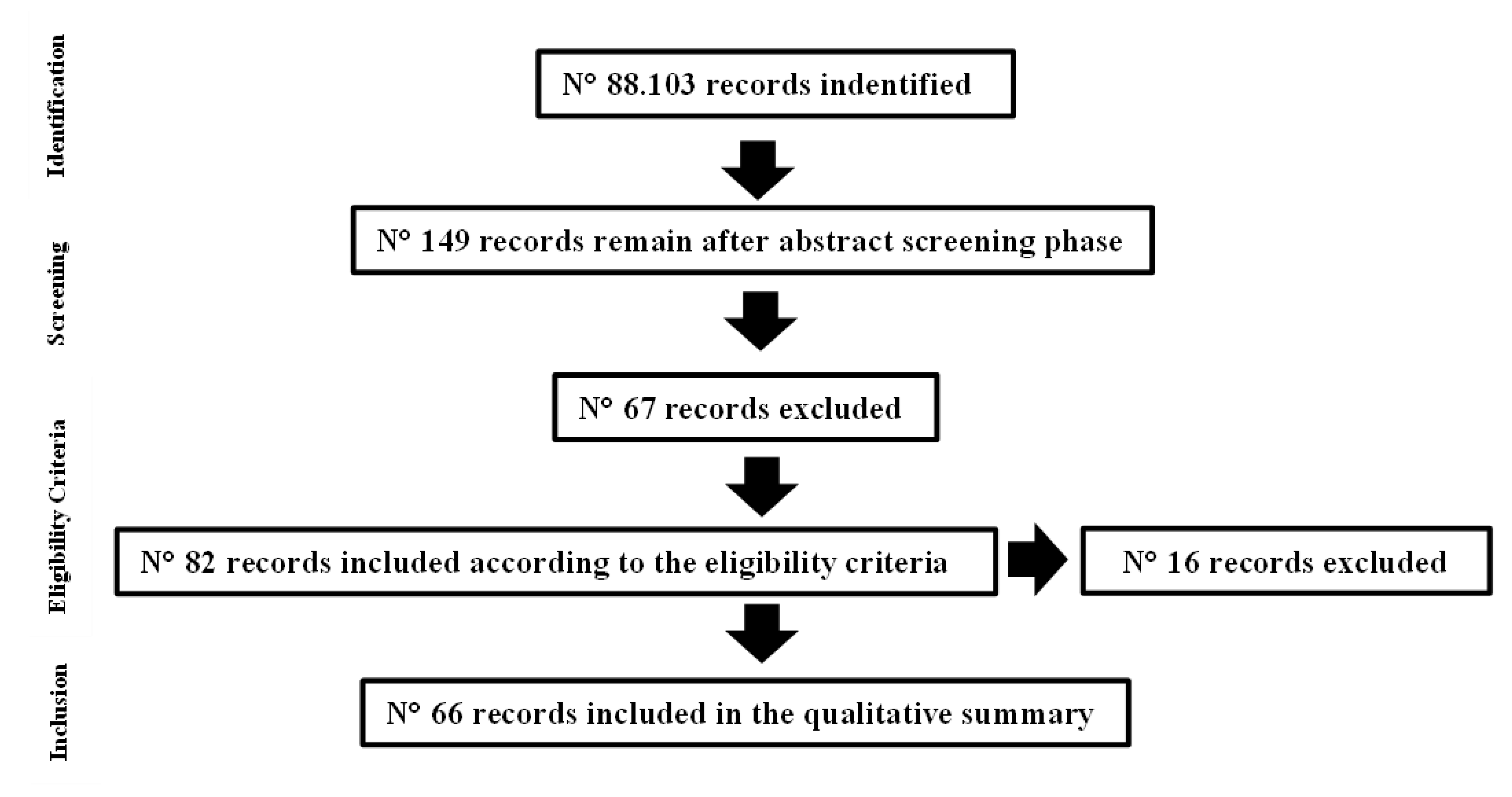
Table 4.
Synthesis of results.
| Title | Authors | Aims | Sample | Data analyzed | Conclusion |
|---|---|---|---|---|---|
| The relationship between dual-career and post-sport career transition among elite athletes in South Africa, Botswana, Namibia and Zimbabwe | Tshepang Tshube et al., (2015) | To explore the role of dual career in post-sport career transition across different cultural contexts. | 17 former athletes (12 men, 5 women) from 4 Southern African countries; individual and team sports. | Qualitative study using a grounded theory approach. | The quality of the transition depends on how the sports career ends. Some athletes neglected education to focus on sport, confirming the risk of sacrificing education for sporting success. |
| Olympic athletes back to retirement: A qualitative longitudinal study | Miquel Torregrosa et al., (2015) | To analyze the retirement process and the role of dual career in this transition. | 15 former Spanish Olympic athletes | Qualitative longitudinal study; semi-structured interviews conducted 10 years apart. Thematic analysis. | 10 athletes experienced positive transitions, often linked to dual career. The 5 who struggled had linear sports careers. A clear vision of the future facilitated adaptation to retirement. |
| A Cross-Cultural Comparison of Dual Career Environments for Elite Athletes in Switzerland, Denmark, and Poland | A. Kuettel et al., (2020) | To compare values and beliefs of stakeholders in different national dual career environments. | 12 key informants (6 women, 6 men) from Switzerland, Denmark, and Poland. | Qualitative study; semi-structured interviews. Analysis based on Schein’s (2010) organizational culture model. | Dual career is influenced by the sociocultural context. Similarities relate to secondary education and shared values on the benefits and barriers of dual career. |
| Spanish pre-Olympic athletes' motivations and barriers to pursuing dual career as a function of sociodemographic, sport and academic variables | A. Mateo-Orcajada et al., (2022) |
To analyze differences in motivations, barriers, value given to academic degree, and perception of dual career in relation to multifactorial variables. | 100 Spanish pre-Olympic athletes (41% men, 59% women), mean age 24.86 ± 5.99. | Descriptive cross-sectional study. t-test, ANOVA, χ2 for comparisons by gender, sport, career stage, employment, scholarships. | Individual sport athletes perceive more barriers than team athletes. Those without scholarships value education less and experience more obstacles. |
| Dual career support among world-class athletes in Sweden: Performance, education, and employment | C. Nyberg et al., (2023) | To examine the effectiveness of dual career support programs in the careers of elite Swedish athletes. |
274 world-class athletes (58% men), mean age 39.92 ± 6.25; 41 sports represented. | Quantitative study using a questionnaire. Descriptive analysis and Cramer's V for associations. | Dual career programs do not always enable athletes to reach their full potential. More research is needed on world-class athletes to assess the real usefulness of these programs. |
|
Searching for an optimal balance: Dual career experiences of Swedish adolescent athletes |
Stambulova et al., (2014) | To explore dual career (DC) experiences of adolescent athletes during their first year in Swedish elite sports schools (RIGs), with a focus on identity development and transitional variables. | First-year student-athletes (approx. 16 y/o), both genders, from 27 sports and 33 RIGs. | Longitudinal mixed-method design using AIMS, SIMS, and interviews. | Higher initial personal resources were associated with better adaptation to RIGs, lower perceived DC demands, and greater social support by the end of the year. |
| Events of athletic career: a comparison between career paths | Ramos et al., (2017) | Comparing the sporting milestones of elite athletes according to their career paths (linear, convergent, parallel). | 476 retired Spanish elite athletes from 32 sports. | Questionnaire (55 items); chi-square and Mann-Whitney U tests. | Significant differences were found between career paths in terms of age at peak performance, duration of the mastery phase, and retirement age. |
| Insights into life after sport for Spanish Olympians: Gender and career path perspectives | Barriopedro et al., (2018) | To investigate whether dual career paths differ by gender and to explore post-sport life outcomes. | 216 Spanish Olympians (inferred from figures). |
Questionnaire; classification tree analysis. | Women more frequently pursued a DC with education. A gender income gap emerged, with more women working part-time after sport. |
|
Retirement from elite sport and self-esteem: a longitudinal study over 12 years |
Schmid et al., (2023) | To examine how athletic retirement is associated with changes in self-esteem over time. | 903 elite junior athletes at T1; 290 former athletes at T2 (12 years later). | Longitudinal retrospective–prospective design; structural equation modeling | Self-esteem was less stable than in general population norms. Emotional reactions and adjustment processes mediated the link between individual antecedents and post-retirement self-esteem. |
| Dual Career of the U-23 Spanish Canoeing Team | Gavala-González et al., (2019) | To investigate how under-23 Spanish canoeists perceive the relationship between their academic and athletic careers. | 21 national team athletes (11 women, 10 men); mean age 20.6 years. | Mixed-method approach (questionnaires and interviews). | Athletes reported little interference between sport and academics. They were aware of the importance of education due to limited professional prospects in canoeing. |
| Impact of Dual Career Factors on the Quality of Post-Sport Career Transition and Social-Class Position of Elite and Olympic Athletes | Robnik et al., (2022) | To examine how education, DC support, and financial factors influence post-career employment and social status. | 49 retired Slovenian elite/Olympic athletes (mean age = 44.3 years). | Self-report questionnaires; correlation and multiple regression analysis. | Education and financial reasons significantly predicted the quality of transition and social class. DC support alone was insufficient for employment success. |
| Transnational migration and dual career of Slovenian and Swiss elite female handball players—a longitudinal analysis | Bon et al., (2022) | To explore the migration and dual career experiences of elite female handball players from Slovenia and Switzerland. | Migrant athletes from national handball teams (number not specified). |
7-year longitudinal qualitative study; semi-structured interviews; thematic analysis. | Migration from small countries was a key career facilitator. Athletes benefited from relocation, especially in developing life and professional skills. Success factors included high ambition, clear DC goals, and feeling supported in the host context. |
|
Employee-athletes: Exploring Spanish Elite Athletes’ Perceptions of Combining Sport and Work |
Moreno et al., (2021) | To examine elite athletes’ subjective perceptions of resources and barriers in combining sport and employment. |
18 elite Spanish athletes (10 men, 8 women; mean age = 39.8); active or retired. | Qualitative study using semi-structured interviews; Interpretative Phenomenological Analysis (IPA). |
Athletes valued flexible work and sport identity but faced barriers like job rigidity and workplace attitudes. Psychological pressure from conflicting demands was common. There is a lack of research and need for better DC integration post-retirement. |
| Perceptions of Dual Career Development Among Elite Swimmers and Basketball Players | Tekavc et al., (2015) | To explore retrospective perceptions of DC development and gender/sport differences. | 24 athletes (12 male, 12 female) from swimming and basketball. | Qualitative study; semi-structured interviews; directed content analysis. | DC programs overlooked sport- and gender-specific needs. Parental support was key; women focused more on academics. One athlete reported burnout; financial difficulties were common. |
|
The Experience of Dual Career Through Slovak Athletes’ Eyes |
Geraniosova et al., (2015) | To explore DC experience in Slovakia, focusing on enablers and barriers. | 5 Slovak elite athletes. | Interpretative Phenomenological Analysis (IPA); semi-structured interviews. | DC is a challenging process requiring athletes to balance sport with education or work. Individual interpretation and meaning-making were central. |
| Factors Impacting Carded Athletes’ Readiness for Dual Careers | Ryan et al., (2015) | : To investigate factors influencing New Zealand carded athletes’ ability to engage in dual careers. | 17 athletes from 8 sports; at least 2 years of carded status. | Qualitative study; semi-structured interviews; modified realist tale reporting | Athletes felt discouraged or unable to pursue activities beyond sport. CAPs must support both athletic and personal growth, and educate stakeholders on broader athlete development. |
|
Fighting for Olympic Dreams and Life Beyond: Olympian Judokas on Striving for Glory and Tackling Post-Athletic Challenges |
Hee Jung Hong & Seung Han Hong (2023) | To explore the experiences of Olympic judokas regarding their pursuit of athletic excellence and their transition out of sport. |
8 retired Olympic-level judokas (5 men, 3 women) from Portugal, South Korea, and the UK; aged 32–41. | Thematic analysis of semi-structured interviews. | Five main themes emerged: (a) Olympic dreams vs. reality, (b) identity loss, (c) importance of social support, (d) mixed effects of pre-retirement planning, and (e) ambivalent role of organizational support. Highlights the psychological toll of retirement and the critical need for accessible psychological support. |
| Analysis of the Athletic Career and Retirement Depending on the Type of Sport: A Comparison Between Individual and Team Sports | López de Subijana et al., (2020) |
To compare career and retirement patterns between athletes from individual and team sports. |
410 retired elite athletes (252 men, 158 women); 45% from individual sports, 55% from team sports. | Quantitative cross-sectional study; non-parametric statistics (SPSS v26). | Team athletes had longer careers, later peak performance and retirement, and better economic/employment status. Individual sport athletes trained more weekly and remained more physically active post-retirement. Team athletes more often participated in veteran competitions and spectated sports events. |
|
Insights into Life After Sport for Spanish Olympians: Gender and Career Path Perspectives |
Barriopedro, López de Subijana & Muniesa (2018) | To assess how dual career paths and gender affect career transition and professional integration post-sport. | 228 retired Spanish Olympians (57.9% men, 42.1% women); participated in 1992, 1996, or 2000 Summer Games. | Quantitative cross-sectional study using a 42-item questionnaire; statistical and classification tree analyses. | 66% followed a DC with studies. Those who studied had higher education and better job outcomes. Women experienced more difficulty finding employment and earned less, despite qualifications. Gender disparities persisted in job type (more part-time roles for women) and salary. DC with education facilitated better transitions. |
| Body image experiences in retired Olympians: Losing the embodied self | Anthony Papathomas et al., (2025) | To explore the meanings that elite athletes attribute to their body after retirement. | 31 retired elite athletes, including 23 former Olympians. | Reflexive thematic analysis of over 25 hours of transcribed semi-structured interviews. | Four themes emerged: (1) legacy of body awareness culture, (2) struggle for “normality,” (3) body loss as self-loss, and (4) finding new meanings and identities. Athletes described the enduring influence of elite sport’s body surveillance culture, difficulties in adjusting to new dietary and training routines, and the need to accept physical changes and reconstruct identity as effective coping strategies. |
|
Burnout, Identity Loss and Institutional Gaps: A Qualitative Examination of Sport Discontinuation Among NCAA Division III Athletes |
Stavitz et al., (2025) | To qualitatively examine the mental health barriers influencing former NCAA Division III athletes in their decision to discontinue sport. |
21 former NCAA Division III student-athletes. | Thematic analysis of qualitative interviews (exact method not specified in abstract). | Identified key themes—stress, burnout, identity loss, inadequate institutional support, and external pressures (academics, finances). The study highlights the need for enhanced mental health resources, reduced stigma, and stronger institutional support to improve athlete well-being and retention. |
| Athletic retirement: factors contributing to sleep and mental health problems | Montero et al., (2024) | To explore associations between demographic/sport-related factors and post-retirement sleep and mental health issues | 173 former athletes (balanced gender), various levels | Logistic regression | Younger, female athletes and those with higher body weight had greater risk of anxiety and sleep issues. Lower sport importance was linked to more sleep-disordered breathing. |
| Transition experiences of former collegiate women’s soccer athletes. | DeFreese et al., (2021) | To extend athlete transition and identity theory to inform support programs | 101 former female soccer players from a large public university in the southeastern United States. | Questionnaire with open-ended and closed-ended questions on post-sport transition. The open-ended responses were analyzed using a deductive approach; the closed-ended responses were analyzed using descriptive statistics. | Many female athletes faced difficulties related to identity, lack of support, and post-career direction, with nearly half experiencing an identity crisis. Facilitating factors included social support, new careers, and physical activity; desired resources included guidance, mentorship, and psychological support. |
| Embracing Athletic Identity in the Face of Threat | Benson et al., (2015) | To test if threat increases athletic identity exclusivity | Study 1: 81 CIS athletes; Study 2: 85 club/CIS athletes | Experimental tasks with identity measurements | Imagining career end increased exclusivity of athletic identity, not social identity. |
| Leaving elite sport, abandoning athletic identity? Development and predictors of athletic identity post-retirement | Schmid et al., (2024) | To track athletic identity over 12 years and identify influencing factors | 290 Swiss athletes (longitudinal) | Survey at two time points (t1, t2); AIMS-D, HLM | Identity decreased over time but varied by career engagement, post-career sport involvement, and subjective success. |
| Athletes’ experiences of social support in their transition out of elite sport: An interpretive phenomological analysis | Brown et al., (2018) | To explore how elite athletes perceive social support in retirement | 8 British elite athletes (4M/4F) | Interpretative Phenomenological Analysis (IPA) | Support was helpful when it felt emotionally attuned. Early retirement phase was often distressing. |
| Athletes’ retirement from elite sport: A qualitative study of parents and partners’ experiences | Brown et al., (2018) | To examine how close others experience athlete retirement | 7 relatives (3 parents, 4 partners) of retired UK athletes | Interpretative Phenomenological Analysis (IPA). | Partners and parents also underwent identity renegotiation during athlete’s transition. |
| Former College Athlete’s Perceptions of Adapting to Transition | Stokowski et al., (2019) | To explore former college athletes' transition experiences | 178 respondents via Twitter | Qualitative thematic analysis (Schlossberg model) | 57.3% reported negative transitions (loss of identity); 42.7% felt liberated and excited for new paths. |
| Isolation, Athletic Identity, and Social Support: An Exploration Among Injured Collegiate Student-Athletes | Claytor et al., (2019) | To explore isolation in season/career-ending injured athletes | 7 Division I college athletes (6F, 1M) | Interpretive qualitative approach | Isolation began soon after injury; limited support from coaches; unclear links to identity or support. |
| Learning from the Experiences of Collegiate Athletes Living through a Season- or Career-Ending Injury | Moore et al.,(2020) | To understand lived experience of season-ending injury | 10 Division I athletes (varied demographics) | Descriptive phenomenology | High stress, identity loss, and coping struggles emerged; athletes valued maintaining a sense of belonging. |
| Evaluation of an NCAA sponsored online support group for career-ending injured collegiate athletes transitioning out of sports | Rohrs-Cordes & Paule-Koba (2018) | To assess if NCAA-sponsored online support helps injured athletes | 12 former NCAA D-I athletes | Qualitative interviews | All faced adjustment issues; expressed strong interest in online peer support groups. |
| Leaving elite sport, abandoning athletic identity? Development and predictors of athletic identity post-retirement | Schmid et al., (2024) | To study post-retirement identity changes and predictors | 290 Swiss elite athletes (64 sports) | Longitudinal study (t1 and t2, 12 years apart), MLM | Average decline in identity, but high variability; initial strong identity led to greater change over time. |
| Life After Sport: The Relationship Between Athletic Identity and Mental Health Outcomes After Sport Retirement | Giannone et al., (2016) | To examine athletic identity and mental health outcomes post-retirement | 132 Canadian university athletes (72 completed both time points) | Two-wave survey (T1 during season, T2 post-retirement) | Higher identity levels predicted more depression and anxiety post-retirement. |
| University sport retirement and athlete mental health:A narrative analysis | Jewett et al., (2019) | Examine how sport structure affects mental health during retirement | 1 elite female university athlete | Dialogic narrative analysis | Loss of support/platform after retirement worsened mental health |
| Letting Go of Gold: Examining the Role of Autonomy in Elite Athletes’ Disengagement from Their Athletic Careers and Well-Being in Retirement | Holding et al. (2020) | Explore how autonomy in retirement affects well-being | 158 former Olympic-level athletes (mostly women) | Regression, correlation |
Autonomous motivation and detachment predicted better well-being |
|
Elite Athlete Retirement in New Zealand: Flourishing After Sport |
Ryan et al., (2019) | Identify predictors of flourishing post-retirement | 81 elite NZ athletes (31% female) | ANOVA, correlations | Voluntary retirement and planning improved adjustment; high AI linked to stronger emotions |
| The Psychosocial Factors Associated with Athletic Retirement in Elite and Competitive Athletes | Rajaram et al., (2021) | Examine how withdrawal type and identity affect transition | 50 athletes (questionnaires); 8 (interviews) | Mixed methods; ANOVA, thematic analysis | Involuntary withdrawal + strong AI = worse mental health and coping |
| Transitioning from sport: Life satisfaction, depressive symptomatology, and body satisfaction among retired female collegiate athletes | Shander & Petrie (2021) | Assess body image, depression, life satisfaction | 217 retired NCAA female athletes | Hierarchical regression | New interests and continued sport involvement improved outcomes |
|
Retired College Student Athletes’ Psychological Well-Being: A Prospective Analysis |
Shander et al., (2024) | Analyze readiness and well-being post-retirement | 166 retired NCAA athletes | Regression analysis | New focus and social support predicted better life satisfaction |
| Poor mental health outcomes in crisis transitions: an examination of retired athletes accounting of crisis transition experiences in a cultural context | Cosh et al., (2021) | Examine cultural narratives of crisis transition | 9 elite Australian athletes | Thematic media analysis | Retirement often linked to depression, abandonment, but sometimes relief |
| The Impact of Athletic Identity, Psychological Flexibility, and Value Consistent Living on the Mental Health and Well-Being of Retired Elite Rugby Players | Mooney et al., (2024) | Study identity, flexibility, and valued living | 77 former elite rugby players | Correlational, cross-sectional | 64% low well-being; flexibility and values predicted better outcomes |
|
The Athletes After Retirement: How are they Doing? |
Matitu et al., (2019) | Assess physical self-inventory and suffering | 34 retired athletes (Philippines) | Spearman, narrative analysis | Suffering more linked to body self-perception than time since retirement |
|
The Effect of Athletic Factors on Quality of Adaptation to Post-Sport Retirement |
디피카 (2021) | Examine impact of success, planning, identity on life adjustment | 295 former elite Sri Lankan athletes | SEM, CFA, path analysis | Career success, identity, and planning predicted better adaptation; self-efficacy mediated the effect |
|
Inflexibility, Reactions to Retirement, and Mental Health in Elite Competitors: A Mediation Analysis |
Zimmerman et al., (2024) | Explore how inflexibility relates to depression/anxiety | 223 former DCI competitors (age-out rule) | Regression, mediation (bootstrapping) | Inflexibility predicted depression; loss-of-control mediated the effect |
| An Examination of the Mental Health Symptoms of Former Adolescent Athletes Who Experienced Either Forced or Expected Athletic Retirement | Ahmann et al., (2023) | Compare mental health by retirement reason (forced/planned) | 347 U.S. former adolescent athletes | MANOVA, t-tests | Forced withdrawals = more distress; planned = more flourishing; control was protective |
| Elite athletes' subjective wellbeing trajectories throughout the retirement transition: an analysis using Ruthven's (2022) transition model | Zimet et al., (2024) | Analyze identity, voluntariness, reasons for retirement | 541 retired athletes (survey) | Linear mixed models | Strong AI, injury, or loss of motivation = lower well-being; timing mattered |
| How stressful is retirement! Antecedents of stress linked to athletes’ career termination | Pica et al., (2019) | Study how passion/regulation influence stress | 420 professional athletes | Mediation analysis | Obsessive passion linked to stress via closure needs; implications for intervention |
| Adaptation to Athletic Retirement and Perceptions About Aging: A Qualitative Study of Retired Olympic Athletes | Silver et al., (2021) | Explore how aging perceptions affect adaptation | 24 retired Olympic athletes | Thematic interviews | Positive aging views encouraged civic activity; lack of structure caused distress |
| Reconstructing Athletic Identity: College Athletes and Sport Retirement | Menke et al., (2019) | Explore identity loss and coping in revenue-sport athletes | Former U.S. college athletes (e.g., football, basketball) | Phenomenological interviews | Identity loss was common; coping varied; strengths from sport sometimes supported transition |
| Elite Sport Retirement: Elite New Zealand Athletes' Perceptions of Retirement Interventions | Lenton et al., (2020) | Assess perceptions of retirement interventions | 16 retired elite NZ athletes (gender-balanced) | Qualitative interviews | Educational support used, but limited emotional help; call for mentorship and workshops |
|
A Qualitative Examination of Sport Retirement in Former NCAA Division I Athletes |
Barcza-Renner et al., (2020) | Explore experiences 4–5 months post-retirement | ~15 former NCAA D-I athletes | Thematic content analysis | Positive transition tied to goals/support; many still needed professional support |
| “I still have that athlete soul”: storying identity and pain in retired athletes | Welch et al., (2023) | Understand how pain affects post-career identity | 8 retired athletes (various backgrounds) | Dialogical narrative analysis | Pain reshaped body perception and identity; storytelling aided meaning-making |
| Female Athletes in Retirement: A Test of a Psychosocial Model of Bulimic Symptomatology | Barrett et al., (2020) | Test a psychosocial model of eating disorders post-retirement | 218 former NCAA Division I female athletes | SEM (controlling for BMI, retirement years) | Sociocultural pressure and body dissatisfaction predicted bulimic symptoms post-retirement |
| “I’m more than my sport”: Exploring the dynamic processes of identity change in athletic retirement | Haslam et al., (2024) | Explore identity transition process after retirement | 21 retired elite athletes | Thematic analysis of semi-structured interviews | Identity change involved loss recognition, exploration, renegotiation, and integration |
| The relationship between demographic factors, psychological distress, COVID worries, resilience, and athletic identity: A study of collegiate student-athletes. | Shinnick et al., (2024) | Examine distress, COVID worries, resilience, identity | 325 NCAA athletes (various divisions) | Regression, path analysis | Juniors/seniors had lower AI; distress tied to low resilience; COVID worries mediated by distress |
| When the final whistle blows: Social Identity Pathways in Adjustment to Retirement from Competitive Sport | Haslam et al., (2021) | Test SIMIC model in Western and Chinese athletes | 215 Western, 183 Chinese former athletes | Multigroup path analysis | Identity loss reduced adaptation; SIMIC (social groups) mitigated effects differently across cultures |
| Predictors and Correlates of Depression in Retired Elite Level Rugby League Players. | Iverson et al., (2021) | Identify predictors of depression | 141 former elite rugby players (mean age 52.6) | Correlation, regression | Resilience reduced depression; pain increased it; concussions not significant predictors |
| Athletic Identity and Psychological Distress: The Moderating Roles of Social Support and Self-Compassion | Hayes et al., (2023) | Test moderators of distress post-COVID | 4,116 NCAA athletes (diverse demographics) | ANOVA, moderation (PROCESS model) | AI and distress linked via low self-compassion/support, with differences across race and gender |
| Implementation of a mindfulness-based stress reduction (MBSR) program to reduce stress, anxiety, and depression and to improve psychological well-being among retired Iranian football players | Norouzi et al., (2020) | Test MBSR effects on retired players' well-being | 40 retired Iranian footballers | Repeated-measures ANOVA | MBSR improved well-being and reduced anxiety, depression, and stress |
| As the Lights Fade: A Grounded Theory of Male Professional Athletes’ Decision-Making and Transition to Retirement | Eggleston et al., (2020) | Explore how pros decide to retire | U.S. professional athletes | Grounded theory | Social support eased transition; a theoretical model of retirement decision was developed |
| Prevalence of mental health symptoms among male and female Australian professional footballers. | Kilic et al., (2021) | Compare mental health symptoms across status and gender | 149M, 132F active; 81M retired soccer players (Australia) | χ2, regression | Higher distress and substance use in retired players; resilience was protective; injuries linked to symptoms |
| Athletic identity and psychiatric symptoms following retirement from varsity sports | Giannone et al., (2017) | Examine how athletic identity predicts anxiety and depression symptoms post-retirement | 72 varsity college athletes (surveyed during last season and 3 months after retirement) | Regression (controlling for pre-retirement anxiety) | Athletic identity significantly predicted post-retirement anxiety; a similar trend (non-significant) for depression |
| Common mental disorders among Irish jockeys: prevalence and risk factors | King et al., (2019) | Assess prevalence of CMDs among jockeys and test associations with risk factors | 84 professional jockeys (52% response rate) | Binary logistic regression | 79% met criteria for CMDs. Alcohol abuse (61%), depression (35%), anxiety (27%). Risk increased by burnout, low career satisfaction, poor support, and retirement contemplation |
| Predictors and Correlates of Perceived Cognitive Decline in Retired Professional Rugby League Players | Van Patten et al., (2021) | Identify predictors of self-reported cognitive decline | 133 retired professional rugby league players (Australia; mean age 53.1; avg. 28 concussions) | Clinical interview, neuropsychological tests, regression | Perceived decline associated with depression, lower resilience, fewer years in sport; not linked to concussion count or objective cognition |
| Prevalence and determinants of symptoms of common mental disorders in retired professional Rugby Union players | Gouttebarge et al., (2016) | Determine CMD prevalence and association with stressors | 295 retired Rugby Union professionals (France, Ireland, South Africa) | Cross-sectional; logistic regression | CMD prevalence: 25% distress, 28% anxiety/depression, 29% sleep issues, 62% adverse eating, 24% alcohol abuse. Life events and career dissatisfaction were key stressors |
| A prospective cohort study on symptoms of common mental disorders among current and retired professional ice hockey players | Gouttebarge & Kerkhoffs (2017) | Examine CMD symptoms and stressor links in current and retired players | Ice hockey players (Denmark, Finland, Norway, Switzerland) – number not specified | Prospective cohort study (6-month follow-up); validated tools | CMD prevalence: 8–24% active; 12–29% retired. High comorbidity. Incidence up to 25%. Injuries, surgeries, recent life events, and dissatisfaction increased CMD risk |
Disclaimer/Publisher’s Note: The statements, opinions and data contained in all publications are solely those of the individual author(s) and contributor(s) and not of MDPI and/or the editor(s). MDPI and/or the editor(s) disclaim responsibility for any injury to people or property resulting from any ideas, methods, instructions or products referred to in the content. |
© 2025 by the authors. Licensee MDPI, Basel, Switzerland. This article is an open access article distributed under the terms and conditions of the Creative Commons Attribution (CC BY) license (http://creativecommons.org/licenses/by/4.0/).
Copyright: This open access article is published under a Creative Commons CC BY 4.0 license, which permit the free download, distribution, and reuse, provided that the author and preprint are cited in any reuse.


