

Submitted:
04 August 2025
Posted:
05 August 2025
You are already at the latest version
Abstract
Tropical plants are producing a vast diversity of secondary metabolites as a result of evolutionary adaptations to highly diverse tropical ecosystems. These molecules have been exploited throughout history to formulate traditional and modern medicines. However, most plant-derived pharmaceuticals are currently derived from phytochemicals found in temperate species. Based on the results of systematic analysis of literature, review clearly illustrates the value of tropical plants as sources of bioactive secondary metabolites and shows their potential in the development of industrial products. Findings also highlight the importance of secondary metabolites in ecological interactions in tropical ecosystems, justify the importance of plant-derived products of tropical origin in drugs discovery and discuss opportunities and limitations of bioprospecting for novel phytochemicals in tropics. Furthermore, the paper emphasizes the need for conservation of quickly disappearing phytochemical diversity and related indigenous knowledge in tropical regions. Based on the findings, future bioprospecting success in tropical plants needs investment in research infrastructure, high-tech drug discovery methods, and international biodiversity law harmonization. Furthermore, intensifying conservation efforts in tropical areas will be crucial for preserving phytochemical diversity and indigenous knowledge of plant uses.
Keywords:
bioactive natural products
; bioprospecting
; secondary metabolites
; traditional knowledge
; tropical plants
1. Introduction
The tropics, also referred as the tropical or the torrid zone, are the regions lying between the Tropics of Cancer and Capricorn that constitute about 34.4% of Earth’s land surface [1]. In terms of climate, these zones receive more direct solar radiation and are generally hotter and wetter than other climatic regions [2]. Although the tropical zone includes also arid and cold regions such as deserts and snow-capped mountains, where only certain plant and animal species can survive, there are often areas of rich biodiversity, particularly in rainforests and seasonal forests. Though in perpetual regression, tropical rainforests are the most biologically diverse terrestrial ecosystems, which harbor half of all the living animal and plant species on the globe and two-thirds of all flowering plants [3]. The classic explanation for so many species is that the tropics have optimal climatic conditions and thus high productivity supporting their time, spatial, and resource partitioning, mutualism, and co-evolution [4]. Recent studies emphasize that other factors such as habitat specificity and dispersal limitation significantly contribute to the maintaining diversity of tropical plant species [5].
Due to their geographical, social, and political isolation, certain tropical regions remain home to some of the best-preserved ecosystems on the planet. Correspondingly, most biodiversity hotspots characterized by high level of vascular plant endemism and relative abundance of primary vegetation are still occurring in the tropics [6,7]. As a typical example of tropical biodiversity hotspot, New Guinea has recently been suggested as the most floristically diverse island in the world with 68% of endemic species [8]. In such hyperdiverse areas, new families and genera of angiosperms are still discovered today [9,10]. It is estimated that in the least studied tropical moist forests some 19 of each 20 species would be unknown to science [11]. Nevertheless, despite the long-term systematic effort of botanists working in Central and South Americas, West and Central Africa, and South and South-East Asia, the tropical flora remains severely undercollected and poorly studied [12].
Besides microorganisms, marine organisms and animals, plants remain one of the best reservoirs of novel biologically active secondary metabolites for drug development and an essential source of chemicals for the pharmaceutical industry [13]. Since these compounds are involved in the ecological relationships of the plant organism with both abiotic and biotic factors, plants grown in the areas where interactions between organisms and environment are extremely complex (such as in tropical rainforests) are characterized by great variation of secondary metabolites [14,15]. Therefore, tropical plants are thought to be more prospective sources for discovery of highly biologically effective compounds than temperate species. Despite this fact, tropical flora has been less phytochemically and pharmacologically explored then plants grown in temperate climate regions and only few studies have resulted in the development of new drugs based on compounds derived from plants of tropical origin until now [16]. Therefore, most drugs used in therapeutic areas in which natural compounds have had a major impact (e.g. antibiotics, immunosuppressants and anticancer drugs) originate from temperate climates [17]. With aim to illustrate the importance of tropical plants as sources of biologically active secondary metabolites and show their future potential in the drug discovery, the review summarizes data on diversity of secondary metabolites in tropical plants, justifies the value of bioactive plant-derived products of tropical origin and discusses opportunities and limitations of bioprospecting for novel compounds in tropics.
2. Diversity of Secondary Metabolites in Tropical Plants
The plant kingdom produces hundreds of thousands of low molecular weight organic compounds that are commonly classified based on the assumed functions into primary and secondary (also called specialized metabolites or natural products) metabolites [18]. Contrary to well established knowledge on physiological role of primary metabolites that are essential energy sources and structural components of plant bodies required for their normal growth, development and reproduction, there was much confusion over what the exact function and usefulness of secondary metabolites. By now, it is very well known that they are low-molecular-mass products of secondary metabolism that mediate a broad spectrum of interactions (e.g. antagonism, mutualism, parasitism, and symbiosis) between plant and its environment. More specifically, they protect plants against abiotic (e.g. heavy metals toxicity, cold and high temperatures, flooding, drought, salinity, and excessive radiation) and biotic (pests, diseases, parasites, and competitors) stress factors and play important roles in the plant reproduction (attraction of pollinators and seed distributors), growth and development [19,20,21].
Since the beginning, the study of tropical flora was crucial for uncovering of the role of secondary metabolites in plants. In one of the first comprehensive theories on plant chemical defenses, Ehrlich and Raven [22] proposed that responses of herbivorous organisms to the presence of secondary metabolites in tropical plants have been the dominant factors in their co-evolution. Following studies confirmed that the specific climatic conditions of tropical regions and huge genetic diversity of tropical ecosystems have created the high pressure of abiotic and biotic factors on plants, which has led to the synthesis of greater diversity of more biologically active compounds in tropical species, as compared to temperate ones (Figure 1). For example, it has been observed that various classes of secondary metabolites (e.g. alkaloids) are more common and more toxic in tropical plants [23]. Allelochemicals are another group of compounds present in tropical plants in a high number of chemical forms (e.g. tannins and terpenes) as evolutionary adaption to survive in strong competition with other plant species for sunlight, nutrients and water [24]. The great diversity and high contents of bioactive secondary metabolites make therefore tropical plants promising industrial sources of novel chemical agents. A duplication of phytochemical analogs in single species, which provides analog synergism and reduces the rate of herbivore adaptation to plant defenses, is a typical feature of chemical defense contributing to the high variability of secondary metabolites present in tropical plants [25]. Therefore, the species growing in tropical regions should also be considered as sources of synergistic and resistance-reducing agents.
Although tropical species are producing large amounts of secondary metabolites, their distribution in plant bodies varies during the process of growth and development. Especially young leaves, which are exposed to extremely high attack of herbivores all year round in the humid tropics, developed numerous anti-herbivore defenses, including investments in secondary metabolites. For example, concentrations of terpenes and alkaloids are significantly higher in young leaves of tropical plants as compared to mature ones [23]. In addition, the young leaves of slowly expanding tropical plants can synthesize more secondary metabolites than those of fast-expanding species [26]. However, in response to the low light, some tropical plants tend to accumulate more compounds (e.g. cyanogenic glycosides) in older leaves [27]. Based on the above-mentioned data, young leaves of slowly expanding tropical plants and shaded older leaves seem to be promising sources of highly concentrated bioactive secondary metabolites. Nevertheless, more data on accumulation and distribution of biologically active compounds in commonly harvested parts such as roots, bark, fruits and seeds are necessary before the status of plant organs as sources of secondary metabolites can be determined.
Furter study will be necessary for full understanding of the ecological, physiological and biochemical aspects determining the diversity of secondary metabolites in tropical plants. Unfortunately, huge areas of diverse tropical forest are lost or degraded every year with dramatic consequences for biodiversity. Deforestation and fragmentation, over-exploitation, invasive species and climate change are the main drivers of tropical forest diversity loss [28]. Recently, the extinction risk related to climate change has been demonstrated for epiphytes in tropical montane ecosystems [29]. Regarding the plant secondary metabolites, it must be emphasized that the disappearance of tropical flora leads also to the erosion of phytochemical diversity and, subsequently, to loss of possible benefits that phytochemicals have for humankind. The accelerating loss of chemical diversity is therefore an important stimulus for intensifying research of natural products in tropical regions [30].
3. Value of Bioactive Plant-Derived Products of Tropical Origin
Since tropical plants produce a great diversity of biologically active compounds, many species growing or collecting for their secondary metabolites are originating in tropical regions. Aromas, dyes, exudates, medicines, pesticides, spices, stimulants and tannins producing plants are the most important categories of secondary metabolites-bearing crops of tropical origin (known also as special crops). Historically, spices, aromatic and medicinal plants of tropical origin have played a pivotal role in the development of many aspects of modern civilization, including laying the foundation for the conventional healthcare systems, key sectors of industry, and international trade. Until now, many tropical stimulants (e.g. Coffea spp. and Theobroma cacao L.), exudates producing plants [e.g. Hevea brasiliensis (Willd. ex A.Juss.) Müll.Arg.], and spices (e.g. Piper nigrum L. and Capsicum spp.), are agricultural and industrial commodities of worldwide importance. Among all categories of tropical secondary metabolites-bearing crops, medicinal plants are providing greatest diversity of biologically active compounds. Since the early times of the development of pharmaceutical drugs, tropical flora has served as a vital source of bioactive secondary metabolites. For example, the history of antimalarial and local anesthetic drug discovery started with isolation of quinine (Cinchona spp.) and cocaine (Erythroxylum spp.) in the 19th century [31,32]. In the modern era of pharmacy and pharmacology, the tropical medicinal plants continue to provide natural product chemists with invaluable compounds for development of new drugs. In 80s of the last century, 20% of drugs used in US were originated in tropical rain forest [33]. According to the more recent data, at least 25 % of all modern drugs originally came from rainforests [34]. Examples of pharmaceuticals derived from tropical plants, which are currently available on the international market, are provided in Table 1.
The huge number of unexplored bioactive secondary metabolites produced by tropical plant species provides also great potential for the development of new drugs in the future. Nevertheless, less than 1 % of the world’s tropical forest plants have been tested for pharmaceutical properties until now [34,35]. In the 90s, it was estimated that more than 87% of the total number of pharmaceuticals, which can potentially be derived from higher plants growing in the world’s tropical forests are remaining undiscovered [36]. Nowadays, tropical plants remain one of the most important unexplored reservoirs of new chemical entities (lead molecules) for the development of drugs against deadly and difficult-to-treat diseases such as diabetes, dementia, cancers, and tuberculosis. For example, Tripterygium wilfordii Hook.f., a scandent shrub or vine naturally occurring at the intersection of the tropical and subtropical zones of southeast China, Myanmar and Vietnam [37], is containing triptolide which has previously been found to be very effective against pancreatic cancer in various types of preclinical studies [38]. Its water-soluble pro-drug minnelide has recently entered phase II of clinical trial with patients with adenosquamous carcinoma of the pancreas [39]. Despite the clear potential of tropical plants in drug discovery, a number of new drugs based on their secondary metabolites being currently in clinical trials or in process of registration remains limited [40].
3. Potential of Bioprospecting for Novel Compounds in Tropics
Since the early times of commercial exploration and utilization of biodiversity, industrial corporations and companies have led expeditions into tropical regions and scoured forests in search of valuable chemicals from plant, animal and microbial species for development of new pharmaceutical, cosmetic, food and agricultural products [41]. As a result of this effort, a number of secondary metabolites of industrial importance such as anticancer drugs camptothecin, vinblastine and vincristine have been discovered in (sub)tropical species [42]. Ethnodirected (ethnobotanical and ethnopharmacological) research has always played key role in the discovery of new drugs from tropical plants [16]. Several cases, however, raised issues related to ethical principles of the tropical biodiversity use for commercial purposes. For example, vincristine has been debated as a case of unethical pharmaceutical bioprospecting. Although Catharanthus roseus (L.) G.Don, a plant from which vincristine is derived, has not been used as folk remedy to treat cancer, but diabetes, some consider it as a case of biopiracy because local peoples in Madagascar were denied royalties from vincristine sales [34].
Since its adoption in 2010, the Nagoya Protocol sets out rules for the fair and equitable sharing of benefits arising out of the utilization of genetic resources with aim to prevent biopiracy and support good bioprospecting practice. Nevertheless, there are still many impediments and challenges towards the successful and efficient bioprospecting of biologically active secondary plant metabolites in tropical regions. Together with specific geoclimatic conditions and political instability in certain regions, the lack the scientific expertise and technology in developing countries geographically localized in tropics and high expenses and failure risk of research companies and institutions from developed countries working in tropical regions are main reasons for low progress in the discovery of new tropical plant-derived drugs [44]. The strategies for the future success of bioprospecting-oriented research and innovations should therefore involve direct foreign investment of industrialized nations in research infrastructure and scientific community in the low-income tropical regions. In order to increase efficiency of bioprospecting studies in tropics, multi-informational-based profiling and artificial intelligence assisted analysis of data from multiple sources, such as the results of ethnobotanical and ethnopharmacological inventories of plants used in traditional medicine in tropical regions, pharmacological evaluation of chemical leads previously isolated from tropical plants, phytochemical analyses of tropical flora and chemoecological data on interactions of plants with other organisms in tropical ecosystems should be combined together with modern methods and approaches used in drug discovery, including omics technologies, chemical and systems biology, chemometrics, virtual screening of compound libraries, combinatorial chemistry and structure-based drug design [45,46,47]. Because certain countries have a highly complex and fragmented national permitting system, making the acquisition of the requisite documents (e.g. collection permits) very challenging, the international harmonization of biodiversity and nature conservation law and policy would be helpful for fieldwork of bioprospectors in tropical regions. Especially studies carried out in protected conservation areas, which have been suggested as the most promising locations for bioprospecting in tropics, will require clarification of sensitive legal and ethical issues [48]. According to opinions of certain experts, specific aspects of international treaties, such as Nagoya Protocol also pose challenges for biological collections [49].
Similarly to distribution of diversity hotspots of flora, the most culturally diverse geographical regions (except for northern parts of North America), including areas with the richest traditional knowledge on the medicinal use of the plants, lie in the tropical zone [50]. The localization of geographical regions with the most cultural and highest floral diversity is shown in Figure 2. Since the areas of the highest biological and cultural diversities overlap in Central America, Western South America, Western Africa, Southeast Asia and South Pacific islands, these geographical regions seem to be the most promising for ethnobotanical and ethnopharmacological bioprospecting of biologically active compounds from plants traditionally used by local communities. Unfortunately, the massive destruction of forests in many parts of the tropics is accelerating the disappearance of native peoples who have been living in these areas and who have accumulated a compendium of folk knowledge about the traditional uses of the plants [51]. The knowledge on medicinal properties of plants obtained by the traditional healers using the method of trial and error during the administration of the herbal therapies across generations of patients provides undoubtedly relevant data for the identification of the effective plant-derived products for the treatment of specific health disorders [52]. Therefore, a gradual erosion of knowledge related to the traditional use of plants in tropical regions represents significant economic losses to both local and global economies (Figure 3). This situation calls for more intensive research and conservation activities related to indigenous knowledge on medicinal uses of plants of tropical origin.
3. Conclusion and Future Perspectives
The effects of global population growth and climate change on the decline of biodiversity are anticipated to intensify in the forthcoming years, with tropical forests being among the ecosystems most severely impacted. The loss of tropical plant species will result in the disappearance of unique biodegradable chemical structures that can be sustainably produced and processed through environmentally friendly approaches and methods. At the same time, the gradual vanishing of traditional knowledge on tropical plants utilized in traditional medicine will result in losses of bioactive compounds and their complex mixtures, which will have negative impact on development of new drugs and multi-target (or multi-functional) therapeutics. These developments will have detrimental consequences for global health and the environment, as well as significant economic losses for the agriculture, food, and pharmaceutical sectors. Future bioprospecting success will require investment in infrastructure of research institutions in low-income tropical areas, application of high-tech methods and approaches used in drug discovery and the international harmonization of biodiversity and nature conservation law and policy. Furthermore, more intensive efforts focused on conservation of tropical flora and cultural richness tropical regions will be necessary for stopping losses of phytochemical diversity and indigenous knowledge related to traditional uses of tropical plants.
Author Contributions
Writing, visualization, methodology, investigation, formal analysis, L.K.
Funding
This research was funded by the Internal Grant Agency of the Faculty of Tropical AgriSciences of the Czech University of Life Sciences Prague, grant number IGA 20253129.
Data Availability Statement
No new data were created or analyzed in this study. Data sharing is not applicable to this article.
Acknowledgments
Figures were created with Microsoft PowerPoint (Figures 1-3) and BioRender.com (Figures 1 and 2).
Conflicts of Interest
The author declares no conflicts of interest.
References
- Feeley, K.J.; Stroud, J.T. Where on Earth are the “tropics”? Front. Biogeogr. 2018, 10, e38649. [Google Scholar] [CrossRef]
- Hartshorn, G.S. Tropical forest ecosystems. In Encyclopedia of Biodiversity; Levin, S., Ed.; Elsevier: Amsterdam, Netherlands 2013; pp. 269–276. [Google Scholar]
- Dounias, E. Rainforest, tropical. In The International Encyclopedia of Anthropology; Callan, H., Ed.; John Wiley & Sons: New York City, USA; 2018; pp. 1–3. [Google Scholar]
- Goldsmith, F.B. Tropical rain forests — what are they really like. In Tropical Rain Forest: A Wider Perspective; Goldsmith, F.B., Ed.; Springer: Dordrecht, Netherlands, 1998; Conservation Biology Series, Volume 10, pp. 1–20. [Google Scholar]
- Burslem, D.F.R.P. , Garwood, N.C., Thomas, S.C. Tropical forest diversity - The plot thickens. Science 2001, 291, 606–607. [Google Scholar] [CrossRef]
- Harvey, M.G. , Bravo, G.A., Claramunt, S., Cuervo, A.M., Derryberry, G.E., Battilana, J., Seeholzer, G.F., McKay, J.S., O’Meara, B.C., Faircloth, B.C., Edwards, S., Perez-Eman, J., Moyle, R.G., Sheldon, F.H., Aleixo, A., Smith, B., Chesser, R.T., Silveira, L.F., Cracraft, J., Brumfield, R.T., Derryberry, E. The evolution of a tropical biodiversity hotspot. Science 2020, 370, 1343–1348. [Google Scholar]
- Myers, N. , Mittermeier, R.A., Mittermeier, C.G., da Fonseca, G.A.B., Kent, J. Biodiversity hotspots for conservation priorities. Nature 2000, 403, 853–858. [Google Scholar] [CrossRef]
- Camara-Leret, R. , Frodin, D.G., Adema, F., Anderson, C., Appelhans, M.S., Argent, G., Guerrero, S.A., Ashton, P., Baker, W.J., Barfod, A.S., Barrington, D., Borosova, R., Bramley, G.L.C., Briggs, M., Buerki, S., Cahen, D., Callmander, M.W., Cheek, M., Chen, C.W., Conn, B.J., Coode, M.J.E., Darbyshire, I., Dawson, S., Dransfield, J., Drinkell, C., Duyfjes, B., Ebihara, A., Ezedin, Z., Fu, L.F., Gideon, O., Girmansyah, D., Govaerts, R., Fortune-Hopkins, H., Hassemer, G., Hay, A., Heatubun, C.D., Hind, D.J.N., Hoch, P., Homot, P., Hovenkamp, P., Hughes, M., Jebb, M., Jennings, L., Jimbo, T., Kessler, M., Kiew, R., Knapp, S., Lamei, P., Lehnert, M., Lewis, G.P., Linder, H.P., Lindsay, S., Low, Y.W., Lucas, E., Mancera, J.P., Monro, A.K., Moore, A., Middleton, D.J., Nagamasu, H., Newman, M.F., Lughadha, E.N., Melo, P.H.A., Ohlsen, D.J., Pannell, C,M,, Parris. B,, Pearce, L., Penneys, D.S., Perrie, L.R., Petoe, P., Poulsen, A.D., Prance, G.T., Quakenbush, J.P., Raes, N., Rodda, M., Rogers, Z.S., Schuiteman, A., Schwartsburd, P., Scotland, R.W., Simmons, M.P., Simpson, D.A., Stevens, P., Sundue, M., Testo, W., Trias-Blasi, A., Turner, I., Utteridge, T., Walsingham, L., Webber, B.L., Wei, R., Weiblen, G.D., Weigend, M., Weston, P., de Wilde, W., Wilkie, P., Wilmot-Dear, C.M., Wilson, H.P., Wood, J.R., Zhang, L.B., van Welzen, P.C. New Guinea has the world’s richest island flora. Nature 2020, 584, 579–583. [Google Scholar] [PubMed]
- Christenhusz, M.J.M. , Fay, M.F., Clarkson, J.J., Gasson, P., Morales, J., Barrios, J.B.J., Chase, M.W. Petenaeaceae, a new angiosperm family in Huerteales with a distant relationship to Gerrardina (Gerrardinaceae). Bot. J. Linn. Soc. 2010, 164, 16–25. [Google Scholar] [CrossRef]
- Couvreur, T.L.P. , Niangadouma, R., Sonke, B., Sauquet, H. Sirdavidia, an extraordinary new genus of Annonaceae from Gabon. PhytoKeys 2015, 46, 1–19. [Google Scholar] [CrossRef]
- Dirzo, R. , Raven, P.H. Global state of biodiversity and loss. Annu. Rev. Environ. Resour. 2003, 28, 137–167. [Google Scholar] [CrossRef]
- Prance, G.T. , Beentje, H., Dransfield, J., Johns, R. The tropical flora remains undercollected. Ann. Missouri Bot. Gard. 2000, 87, 67–71. [Google Scholar] [CrossRef]
- Heinrich, M. , Gibbons, S. Ethnopharmacology in drug discovery: An analysis of its role and potential contribution. J. Pharm. Pharmacol. 2001, 53, 425–32. [Google Scholar] [CrossRef]
- Sedio, B.E. , Parker, J.D., McMahon, S.M,, Wright, S.J. Comparative foliar metabolomics of a tropical and a temperate forest community. Ecology 2018, 99, 2647–2653. [Google Scholar] [CrossRef]
- Stork, N.E. Tropical forest dynamics: The faunal components. Monogr. Biol. 1996, 74, 1–20. [Google Scholar]
- Albuquerque, U.P. , Ramos, M.A., Melo, J.G. New strategies for drug discovery in tropical forests based on ethnobotanical and chemical ecological studies. J. Ethnopharmacol. 2012, 140, 197–201. [Google Scholar] [CrossRef]
- Tulp, M. , Bohlin, L. Functional versus chemical diversity: is biodiversity important for drug discovery? Trends Pharmacol. Sci. 2002, 23, 225–231. [Google Scholar] [CrossRef]
- Erb, M. , Kliebenstein, D.J. Plant secondary metabolites as defenses, regulators, and primary metabolites: the blurred functional trichotomy. Plant Physiol. 2020, 184, 39–52. [Google Scholar] [CrossRef] [PubMed]
- Al-Khayri, J.M. , Rashmi, R. , Toppo, V., Chole, P.B., Banadka, A., Sudheer, W.N., Nagella, P., Shehata, W.F., Al-Mssallem, M.Q., Alessa, F.M., Almaghasla, M.I., Rezk, A.A.S. Plant secondary metabolites: The weapons for biotic stress management. Metabolites 2023, 13, 716. [Google Scholar]
- Rahman, A. , G.M., Waraich, E.A., Awan, T.H., Yavas, I., Hussain, S. Plant secondary metabolites and abiotic stress tolerance: Overview and implications. In Plant Abiotic Stress Responses and Tolerance Mechanisms; Hussain, S., Hussain Awan, T., Ahmad Waraich, E., Awan, M., Eds.; IntechOpen: London, UK, 2023; pp. 1–22. [Google Scholar]
- Ramawat, K.G. Goyal, S. Co-evolution of secondary metabolites during biological competition for survival and advantage: An overview. In Co-evolution of Secondary Metabolites. Reference Series in Phytochemistry; Merillon, J.M., Ramawat, K., Eds.; Springer: Cham, Germany, 2019; pp. 3–17. [Google Scholar]
- Ehrlich, P.R. , Raven, P.H. Butterflies and plants: a study in coevolution. Evolution 1964, 18, 586–608. [Google Scholar] [CrossRef]
- Coley, P.D. , Heller, M.V., Aizprua, R., Arauz, B., Flores, N., Correa, M., Gupta, M., Solis, P.N., Ortega-Barria, E., Romero, L.I., Gomez, B., Ramos, M., Cubilla-Rios, L., Capson, T.L., Kursar, T.A. Using ecological criteria to design plant collection strategies for drug discovery. Front. Ecol. Environ. 2003, 1, 421–428. [Google Scholar]
- Ooka, J.K. , Owens, D.K. Allelopathy in tropical and subtropical species. Phytochem. Rev. 2018, 17, 1225–1237. [Google Scholar] [CrossRef]
- Arnason, J.T. , Bernards, M.A. Impact of constitutive plant natural products on herbivores and pathogens. Can. J. Zool. 2010, 88, 615–27. [Google Scholar] [CrossRef]
- Brenes-Arguedas, T. , Horton, M.W., Coley, P.D., Lokvam, J., Waddell, R.A., Meizoso-O’Meara, B.E., Kursar, T.A. Contrasting mechanisms of secondary metabolite accumulation during leaf development in two tropical tree species with different leaf expansion strategies. Oecologia 2006, 149, 91–100. [Google Scholar] [CrossRef] [PubMed]
- Yulvianti, M. , Zidorn, C. Chemical diversity of plant cyanogenic glycosides: An overview of reported natural products. Molecules 2021, 26, 719. [Google Scholar] [CrossRef]
- Morris, R.J. Anthropogenic impacts on tropical forest biodiversity: a network structure and ecosystem functioning perspective. Philos. Trans. R. Soc. B 2010, 365, 3709–3718. [Google Scholar] [CrossRef]
- Hollenbeck, E.C. , Sax, D.F. Experimental evidence of climate change extinction risk in Neotropical montane epiphytes. Nat. Commun. 2024, 15, 6045. [Google Scholar] [CrossRef]
- McChesney, J.D. , Venkataraman, S.K., Henri, J.T. Plant natural products: Back to the future or into extinction? Phytochemistry 2007, 68, 2015–2022. [Google Scholar] [CrossRef] [PubMed]
- Ruetsch, Y.A. , Boni, T., Borgeat, A. From cocaine to ropivacaine: the history of local anesthetic drugs. Curr. Top. Med. Chem. 2001, 1, 175–182. [Google Scholar] [CrossRef] [PubMed]
- Tse, E.G. , Korsik, M., Todd, M.H. The past, present and future of anti-malarial medicines. Malar. J. 2019, 18, 93. [Google Scholar] [CrossRef] [PubMed]
- Soejarto, D.D. , Farnsworth, N.R. Tropical rain forests: potential source of new drugs? Perspect. Biol. Med. 1989, 32, 244–256. [Google Scholar] [CrossRef] [PubMed]
- Kong, J.M. , Goh, N.K., Chia, L.S., Chia, T.F. Recent advances in traditional plant drugs and orchids. Acta Pharmacol. Sin. 2003, 24, 7–21. [Google Scholar]
- Jachak, S.M. , Saklani, A. Challenges and opportunities in drug discovery from plants. Curr. Sci. 2007, 92, 1251–1257. [Google Scholar]
- Mendelsohn, R. , Balick, M.J. The value of undiscovered pharmaceuticals in tropical forests. Econ. Bot. 1995, 49, 223–228. [Google Scholar] [CrossRef]
- Hai, D.V. , Quang, B.H., Bach, T.T., Binh, T.D., Choudhary, R.K., Lee, J. Tripterygium wilfordii (Celastraceae): A new generic and species record for the flora of Vietnam. Korean J. Plant Taxon. 2021, 51, 319–325. [Google Scholar] [CrossRef]
- Zhang, C. , He, X.J., Li, L., Lu, C., Lu, A.P. Effect of the natural product triptolide on pancreatic cancer: A systematic review of preclinical studies. Front. Pharmacol. 2017, 8, 490. [Google Scholar] [CrossRef]
- Skorupan, N. , Ahmad, M.I., Steinberg, S.M., Trepel, J.B., Cridebring, D., Han, H.Y., Von Hoff, D.D., Alewine, C. A phase II trial of the super-enhancer inhibitor Minnelide™ in advanced refractory adenosquamous carcinoma of the pancreas. Future Oncol. 2022, 18, 2475–2481. [Google Scholar] [CrossRef]
- Butler, M.S. Natural products to drugs: natural product-derived compounds in clinical trials. Nat. Prod. Rep. 2008, 25, 475–516. [Google Scholar] [CrossRef]
- Nambisan, P. Chapter 8 - Biodiversity and sharing of biological resources. In An Introduction to Ethical, Safety and Intellectual Property Rights Issues in Biotechnology; Nambisan, P., Ed.; Elsevier: Amsterdam, Netherlands, 2017; pp. 189–209. [Google Scholar]
- Anifowose, S.O. , Alqahtani, W.S.N., Al-Dahmash, B.A., Sasse, F., Jalouli, M., Aboul-Soud, M.A.M., Badjah-Hadj-Ahmed, A.Y., Elnakady, Y.A. Efforts in bioprospecting research: A survey of novel anticancer phytochemicals reported in the last decade. Molecules 2022, 27, 8307. [Google Scholar] [CrossRef]
- Efferth, T. , Banerjee, M., Paul, N., Abdelfatah, S., Arend, J., Elhassan, G., Hamdoun, S., Hamm, R., Hong, C.L., Kadioglu, O., Nass, J., Ochwangi, D., Ooko, E., Ozenver, N., Saeed, M.E.M., Schneider, M., Seo, E.J., Wu, C.F., Yan, G., Zeino, M., Zhao, Q.L., Abu-Darwish, M.S., Andersch, K., Alexie, G., Bessarab, D., Bhakta-Guha, D., Bolzani, V., Dapat, E., Donenko, F.V., Efferth, M., Greten, H.J., Gunatilaka, L., Hussein, A.A., Karadeniz, A., Khalid, H.E., Kuete, V., Lee, I.S., Liu, L., Midiwo, J., Mora, R., Nakagawa, H., Ngassapa, O., Noysang, C., Omosa, L.K., Roland, F.H,, Shahat, A.A., Saab, A,, Saeed, E.M., Shan, L.T., Titinchi, S.J.J. Biopiracy of natural products and good bioprospecting practice. Phytomedicine 2016, 23, 166–173. [Google Scholar]
- Macilwain, C. When rhetoric hits reality in debate on bioprospecting. Nature 1998, 392, 535–536. [Google Scholar] [CrossRef]
- Meijer, D. , Beniddir, M.A., Cole,y C.W., Mejri, Y.M., Ozturk, M., van der Hooft, J.J.J., Medema, M.H., Skiredj, A. Empowering natural product science with AI: Leveraging multimodal data and knowledge graphs. Nat. Prod. Rep. 2025, 42, 654–662. [Google Scholar] [CrossRef]
- Tzvetkov, N.T. , Kirilov, K., Matin, M., Atanasov, A.G. Natural product drug discovery and drug design: Two approaches shaping new pharmaceutical development. Nephrol. Dial. Transplant. 2024, 39, 375–378. [Google Scholar] [CrossRef] [PubMed]
- Wolfender, J.L. , Litaudon, M., Touboul, D., Queiroz, E.F. Innovative omics-based approaches for prioritisation and targeted isolation of natural products - new strategies for drug discovery. Nat. Prod. Rep. 2019, 36, 855–68. [Google Scholar] [CrossRef]
- Brockelman, W.Y. Bioprospecting in Thai forests: Is it worthwhile? Pure Appl. Chem. 1997, 70, 23–7. [Google Scholar]
- Watanabe, M.E. The Nagoya Protocol on Access and Benefit Sharing: International treaty poses challenges for biological collections. BioScience 2015, 65, 543–50. [Google Scholar] [CrossRef]
- Morin, R.; The most (and least) culturally diverse countries in the world. Pew Research Center. Available online: https://www.pewresearch.org/short-reads/2013/07/18/the-most-and-least-culturally-diverse-countries-in-the-world/ (accessed on 14 July 2025).
- Alves, R.R.N. , Rosa, I.M.L. Biodiversity, traditional medicine and public health: Where do they meet? J. Ethnobiol. Ethnomed. 2007, 3, 14. [Google Scholar] [CrossRef] [PubMed]
- Wainwright, C.L. , Teixeira, M.M., Adelson, D.L., Buenz, E.J., David, B., Glaser, K.B., Harata-Lee, Y., Howes, M.J.R., Izzo, A.A., Maffia, P., Mayer, A.M.S., Mazars, C., Newman, D.J., Lughadha, E.N., Pimenta, A.M.M., Parra, J.A.A., Qu, Z.P., Shen, H.Y., Spedding, M., Wolfender, J.L. Future directions for the discovery of natural product-derived immunomodulating drugs: An IUPHAR positional review. Pharmacol. Res. 2022, 177, 106076. [Google Scholar] [PubMed]
Figure 1.
The complex system of environmental factors and ecological processes determining the high diversity of bioactive secondary metabolites in tropical plants.
Figure 1.
The complex system of environmental factors and ecological processes determining the high diversity of bioactive secondary metabolites in tropical plants.
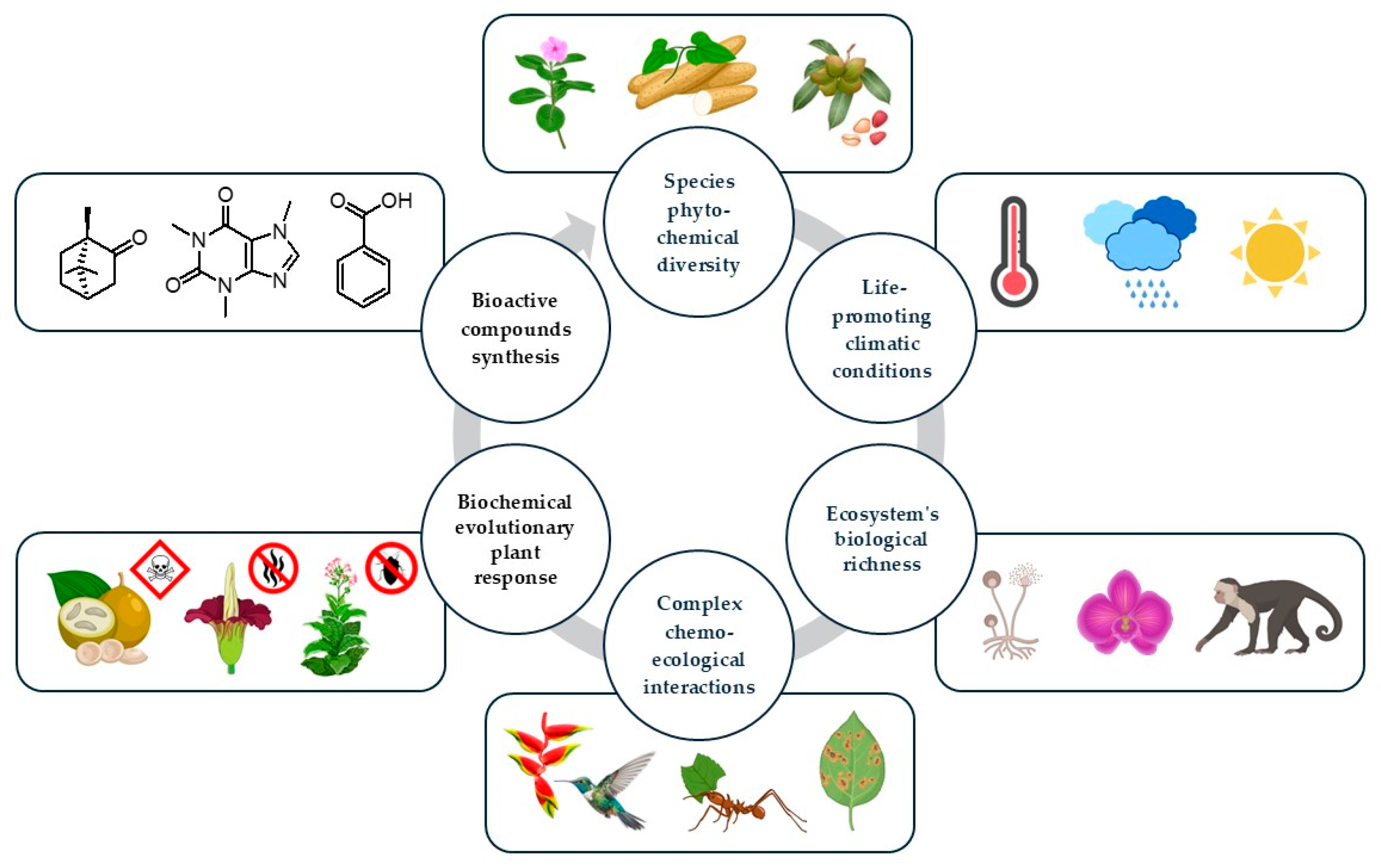
Figure 2.
World map of geographical regions with the most cultural and highest floral diversity.
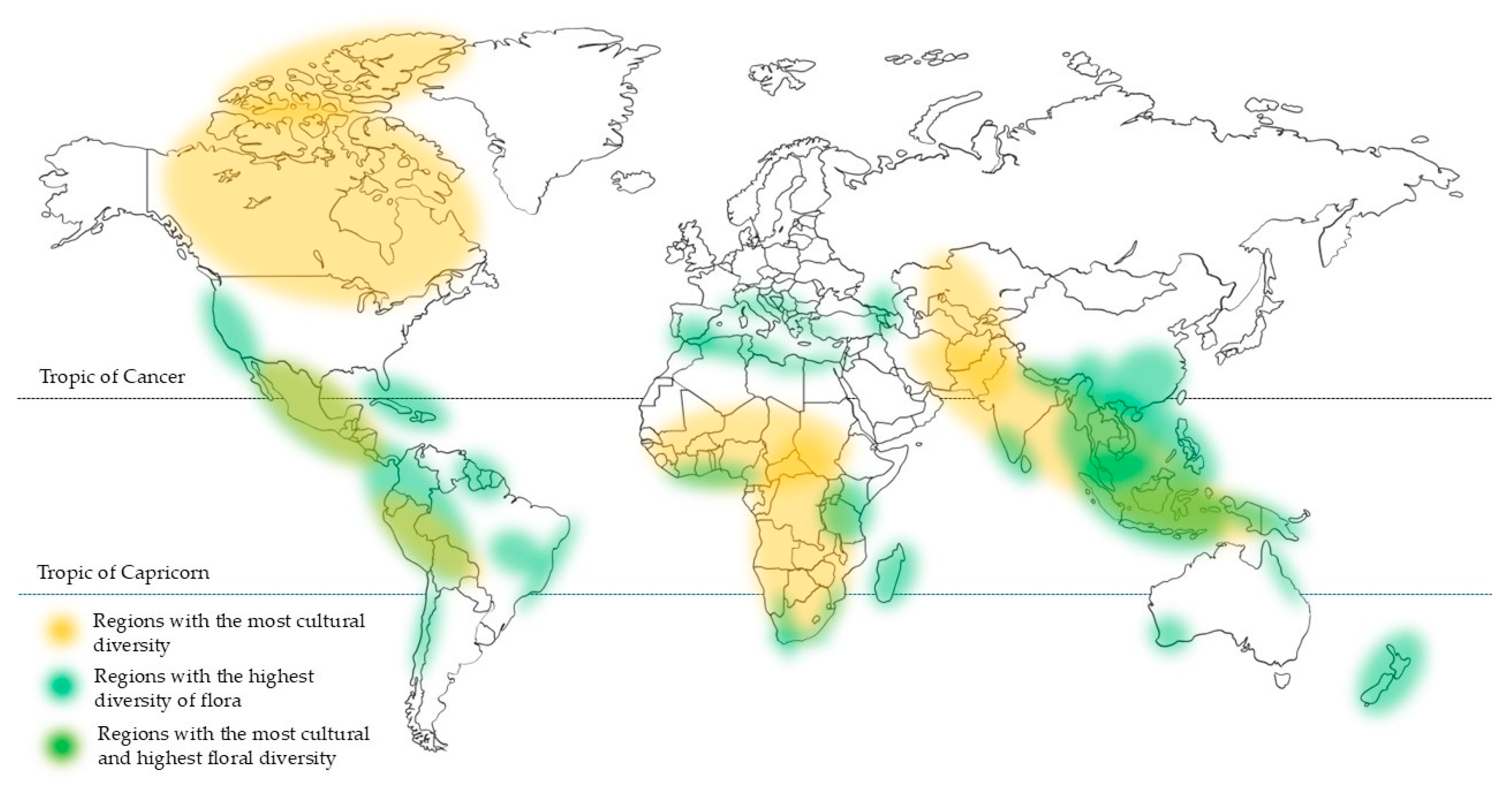
Figure 3.
Fundamental conflict of bioprospecting process between diversity and technology nations.
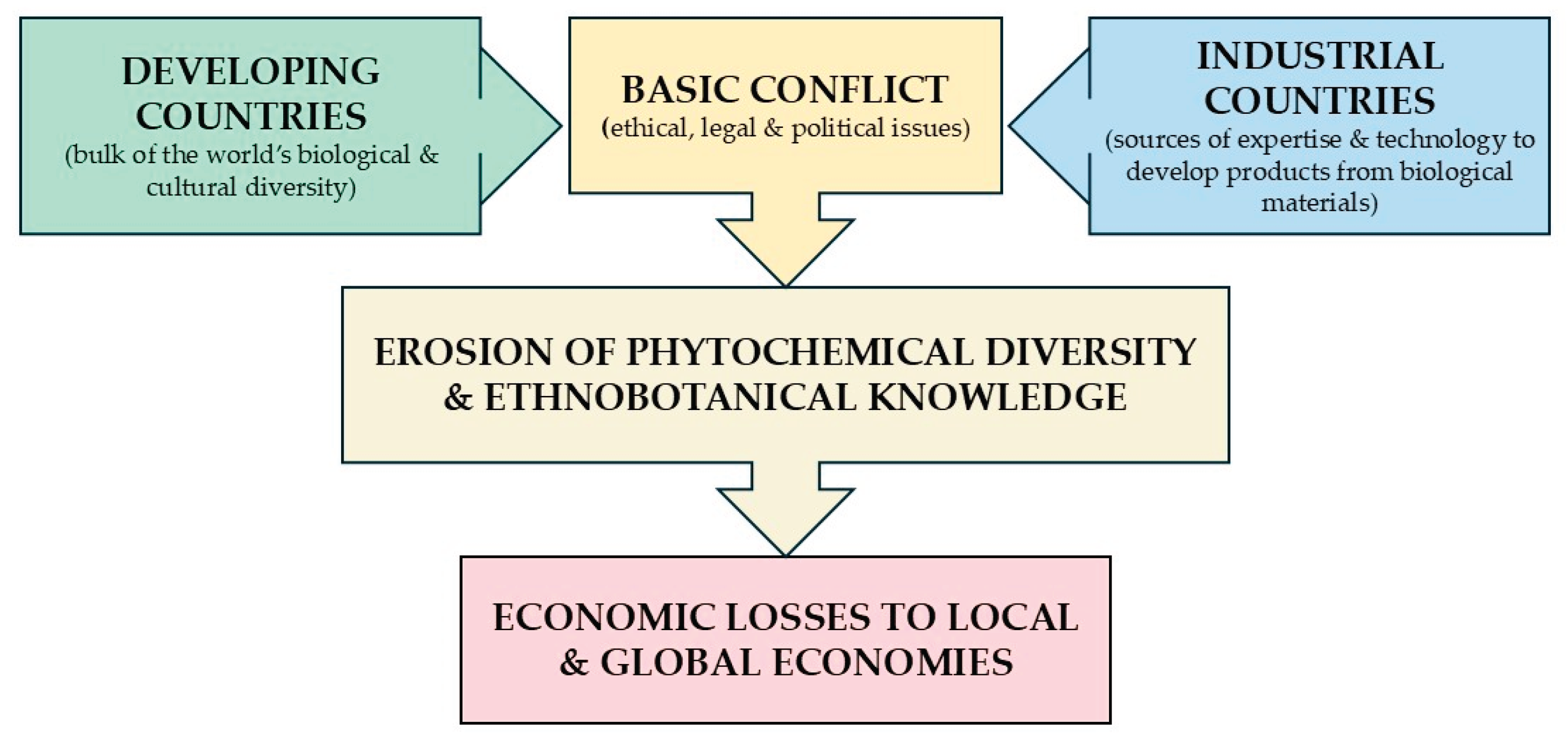

Table 1.
Pharmaceuticals derived from tropical plants.
| Species | Origin | Compound | Product | Use |
|---|---|---|---|---|
| Capsicum annuum L. | Mexico, Guatemala | Capsaicin | Qutenza patch (Averitas Pharma, Morristown, USA) | Treatment of neuropathic pain associated with postherpetic neuralgia or with diabetic peripheral neuropathy of the feet. |
| Hansaplast, heat plaster, pads or cream (Beiersdorf, Hamburg, Germany) | Muscle pain relief. | |||
| Catharanthus roseus (L.) G.Don | Madagascar | Vincristine | Cytocristin, vincristine sulphate injection (Cipla, Mumbai, India) | Treatment of leukaemias, malignant lymphomas, multiple myeloma, solid tumours and idiopathic thrombocytopenic purpura. |
| Vinblastine | Cytoblastin, vinblastine sulphate injection (Cipla, Mumbai, India) | Treatment of Hodgkin’s disease, lymphocytic and histiocytic lymphoma, mycosis fungoides, advanced carcinoma of the testis, Kaposi’s sarcoma and Letterer-Siwe disease. | ||
| Cinchona officinalis L. | Ecuador | Quinidine | Quinidine sulfate tablet (Sandoz, Princeton, USA) | Conversion and reduction of frequency of relapse into atrial fibrillation/flutter, suppression of ventricular arrhythmias and treatment of malaria. |
| Quinine | Qualaquin, quinine sulfate (Sun Pharmaceutical Industries, Mumbai, India) | Treatment of uncomplicated Plasmodium falciparum malaria. | ||
| Coffea arabica L. | Ethiopia, Kenya, Sudan | Caffeine | Coffekapton (Strallhofer Pharma, Siegendorf, Austria) | Stimulation and increase performance in cases of mental and physical fatigue. Analgesic effect on headaches (e.g. migraine). |
| Coldrex tablets (Omega Pharma, UK) containing paracetamol, phenylephrine hydrdochloride, ascorbic acid, terpin hydrate and caffeine | Relief of the symptoms of influenza and colds., caffeine is present as a mild stimulant. | |||
| Peyona, caffeine citrate (CHIESI Farmaceutici, Parma, Italy) | Treatment of primary apnea of premature newborns. | |||
| Erythroxylum coca Lam. | Bolivia, Brazil North, Colombia, Ecuador, Peru | Cocaine | Numbrino, cocaine hydrochloride (Lannett Company, Philadelphia, USA) | Induction of local anesthesia of the mucous membranes when performing diagnostic procedures and surgeries on or through the nasal cavities in adults. |
| Myroxylon balsamum (L.) Harms | From Mexico to from northern South America | Benzyl benzoate | Ascabiol, topical lotion containing benzyl benzoate and sulfirame (Laboratories FRILAB SA, Geneva, Switzerland) | Treatment of scabies. Also proposed in the fall trombiculosis (mullet or chiggers). |
| Nicotiana tabacum L. | Bolivia | Nicotine | Nicorette, nicotine lozenge, gum, inhalator, nasal spray, tablet and patch (GlaxoSmithKline, Brentford, Middlesex, UK) | Help relieve cigarette cravings and nicotine withdrawal symptoms. |
| Physostigma venenosum Balf. | West Africa | Physostigmine | Anticholium, physostigmine salicylate injection (Dr. Franz Kohler Chemie, Bensheim, Germany) | For the treatment of postoperative disorders and as antidote and/or antagonist in case of intoxication. |
| Pilocarpus jaborandi Holmes | Northeast Brazil | Pilocarpine | Pilocarpine hydrochloride ophthalmic solution (Akorn, Lake Forest, US) | Reduction of elevated intraocular pressure in patients with open-angle glaucoma or ocular hypertension, management of acute angle-closure glaucoma, prevention of postoperative elevated intraocular pressure associated with laser surgery and induction of miosis. |
| Rauvolfia serpentina (L.) Benth. ex Kurz | India, Sri Lanka, Thailand, Indonesia, Burma | Reserpine | Reserpine tablets (Sandoz, Princeton, USA) | Treatment of mild to moderate hypertension. Relief of symptoms in agitated psychotic states (e.g., schizophrenia). |
| Senna alexandrina Mill. | Sahara & Sahel to Indian subcontinent | Sennoside A & B | Pursennide (Novartis International, Basel, Switzerland) | Symptomatic treatment of constipation. |
| Styrax benzoin Dryand. | Bangladesh, Cambodia, Indonesia, Laos, Malaysia, Myanmar, Philippines, Thailand, Vietnam | Benzoic acid | Whitfield’s ointment containing benzoic and salicylic acids (Lambsmead, Richmond, UK) | Topical treatment of dermatophyte infections. Also used to treat skin conditions such as eczema, psoriasis and skin inflammation and irritations caused by burns and insect bites. |
Disclaimer/Publisher’s Note: The statements, opinions and data contained in all publications are solely those of the individual author(s) and contributor(s) and not of MDPI and/or the editor(s). MDPI and/or the editor(s) disclaim responsibility for any injury to people or property resulting from any ideas, methods, instructions or products referred to in the content. |
© 2025 by the authors. Licensee MDPI, Basel, Switzerland. This article is an open access article distributed under the terms and conditions of the Creative Commons Attribution (CC BY) license (http://creativecommons.org/licenses/by/4.0/).
Copyright: This open access article is published under a Creative Commons CC BY 4.0 license, which permit the free download, distribution, and reuse, provided that the author and preprint are cited in any reuse.


