

Submitted:
30 July 2025
Posted:
31 July 2025
You are already at the latest version
Abstract
The integration of artificial intelligence (AI) in engineering education presents transformative potential for developing next-generation competencies, yet requires careful pedagogical design to maximize learning outcomes. This study investigates an AI-enhanced instructional model combining problem-based learning (PBL) and content-language integrated learning (CLIL) for 180 telecommunications engineering students. The intervention incorporated AI tools (Grammarly, Lumen5, LaTeX) within a scaffolded PBL framework, using role-based tasks and SCRUM methodology to optimize language proficiency, computational thinking, and collaborative problem-solving. Results revealed AI tools contributed significantly to skill development, with 50% of students reporting high utility (Likert ≥4) and measurable improvements in English proficiency (30-33% gain to C1 level) and abstract reasoning (37% increase). AI-supported workflows particularly enhanced research documentation and multimedia content creation, though technical prototyping outcomes (12%) suggested need for complementary hands-on experiences. The findings demonstrate AI's capacity to augment human-centric pedagogies when strategically embedded in curriculum design, validating Luckin's [17] framework for meaningful AI integration in education. Based on these outcomes, a Proyecto de Innovación Educativa will implement this AI-PBL-CLIL model at Universidad Politécnica de Madrid (2025-2026), with planned dissemination through European digital education initiatives. This research provides empirical evidence for AI's role in addressing key engineering education challenges while highlighting the importance of balanced implementation that preserves essential practical competencies. Future studies should explore adaptive AI systems for personalized scaffolding and longitudinal impacts on professional skill retention.
Keywords:
artificial intelligence in education
; problem-based learning
; engineering education
; content and language integrated learning
; digital competencies
; higher-order thinking skills
; educational innovation
; STEM pedagogy
; AI-enhanced learning
; telecommunications engineering
1. Introduction
The rapid evolution of engineering professions demands a blend of technical expertise and soft skills, yet studies consistently highlight deficiencies in communication, critical thinking, and problem-solving among engineering graduates [1,2]. These skills, essential for academic success and career readiness, are often undertaught in traditional engineering curricula, which prioritize technical proficiency over abstract reasoning and adaptability [3]. For instance, surveys of engineering employers indicate that ineffective communication and limited creative problem-solving skills hinder graduates’ employability [4,5]. This gap is particularly pronounced in handling hypothetical or unstructured scenarios, where students often seek rote solutions or virtual assistance rather than developing autonomous, innovative approaches [6]. Moreover, evidence suggests that neglecting soft skills in technical education may impede cognitive development and neural plasticity, limiting students’ ability to navigate complex professional environments [7,8].
In response to these challenges, engineering education is increasingly adopting innovative pedagogical approaches such as Problem-Based Learning (PBL), Experiential-Based Learning (EBL), and Task-Based Learning (TBL). PBL fosters higher-order thinking skills (HOTs), autonomy, and creative problem-solving by engaging students in open-ended challenges [9,10]. EBL, through real-world or simulated scenarios, enhances motivation and cognitive engagement, preparing students for professional contexts [11]. TBL promotes resilience and stress management by encouraging students to address unexpected tasks independently [12]. These methods align with the demands of international organizations and leading engineering enterprises, which prioritize candidates with strong communication, emotional intelligence, and adaptability [5,13].
A critical advancement in modern pedagogy is the integration of Information and Communication Technology (ICT) and Artificial Intelligence (AI), which are transforming educational outcomes in engineering [14,15]. AI-driven tools, such as intelligent tutoring systems and automated feedback mechanisms, enhance computational thinking, motivation, and problem resolution [16,17]. In professional settings, AI is becoming indispensable, with applications in data analysis, decision-making, and process optimization, making its inclusion in education essential for career preparedness [18]. However, debates persist about the optimal integration of AI in education, with some studies cautioning against over-reliance on technology at the expense of human-centric skills [19], while others advocate for AI as a catalyst for personalized learning and skill development [20].
This study introduces a pilot course designed for 180 second-year Spanish Telecommunication Engineering students, combining PBL, EBL, and TBL with AI and ICT to address the soft skills gap. The course leverages AI-driven simulations and feedback systems to create realistic business and entrepreneurial scenarios, fostering communication, critical thinking, and adaptability. The primary aim is to evaluate the effectiveness of this AI-enhanced pedagogical approach in improving students’ soft skills and career readiness. Preliminary findings suggest significant improvements in communication fluency, abstract reasoning, and stress management, offering a scalable model for engineering education. This work contributes to the growing field of AI in education by demonstrating how AI algorithms can enhance experiential learning, aligning academic training with industry demands.
2. Materials and Methods
2.1. Study Design and Participants
The pilot course was conducted with a sample of 180 second-year Telecommunication Engineering students at a Spanish university, divided into three groups of approximately 60 students each. Participants’ ages ranged from 19 to 22 years, and all had certified English proficiency levels between B2 and C1, assessed via Cambridge English Qualifications, TOEFL iBT, or British Council Aptis examinations. English was the primary instructional language to reflect its role as a global communication tool in engineering [13]. Each session lasted 120 minutes, including a 10-minute break, and the course spanned 12 weeks with weekly sessions.
2.2. Pedagogical Framework
The course integrated PBL, EBL, TBL, Discovery-Based Learning (DBL), Content and Language Integrated Learning (CLIL), and English as a Medium of Instruction (EMI) to foster soft skills and career readiness. PBL was implemented to promote HOTs and autonomy through open-ended problem-solving [9,10]. EBL provided realistic business and entrepreneurial scenarios to enhance motivation and cognitive engagement [11]. TBL encouraged adaptability and stress management through task-specific challenges [12]. DBL required students to conduct independent research on assigned topics, fostering critical inquiry [21]. CLIL and EMI were used to deliver Telecommunication Engineering, business, and marketing content, enhancing language proficiency alongside technical knowledge [22].
Each group of 60 students was subdivided into smaller cooperative working groups of 3–5 members, following recommendations for optimal group size in active learning methodologies [23,24]. Cooperative learning, based on Johnson and Johnson’s model, was prioritized over collaborative approaches to ensure individual accountability and equitable contribution [25]. Group formation was randomized to promote diversity and inclusivity, aligning with Vygotsky’s social constructivist theory [26].
Within each group, roles integrate specific ICT and AI tools to simulate real-world engineering and business scenarios, aligning with Vygotsky’s social constructivist theory [2], these roles were described as follows:
Social Media Developer
This role involves creating and managing social media accounts on platforms such as X and YouTube, alongside developing a website using Wix or WordPress. The developer explores Lumen5’s AI-driven text-to-video conversion to create engaging content and utilizes Buffer’s analytics to optimize post timing for maximum engagement on X and YouTube, aligning with digital fluency goals [3].
Marketing and Cultural Coordinator
Responsible for designing the company’s logo, social media banners, YouTube thumbnails, promotional posters, infographics, and leaflets using Canva AI. This role ensures consistency in cooperative design elements, such as colors, fonts, and sizes, to maintain brand coherence. The coordinator verifies adherence to design standards across team outputs, supporting inclusivity and universal design principles [4].
Content Manager
This role focuses on crafting written content for social media, websites, and marketing campaigns. Tools like QuillBot and Grammarly are employed to refine and enhance written output, ensuring clarity and professionalism. This aligns with the course’s emphasis on communication skills in professional contexts [5].
Research and Development Expert
Tasked with drafting a comprehensive report on the company’s challenges, goals, organization, structure, and growth potential based on its core technology. The report is prepared using Overleaf LaTeX, adhering to structured academic writing standards, which supports higher-order thinking skills [6].
Market Analyst and Internal Communications Manager
This role involves analyzing funding options (e.g., European Funding, Crowdfunding, National Funding) and determining the optimal company structure (e.g., Start-Up, Freelancer, Outsourcing, Consulting, Unicorn Company). The analyst designs a budget accounting for initial expenses, early investments, and stock positioning, while evaluating potential stakeholders and bank loans. A Business Plan is developed using Canva AI, and predictive analysis for five-year growth and challenges is conducted with Julius AI. As the communications manager, this role implements SCRUM methodology with weekly milestones, using Trello for task and deadline management. Additionally, Tableau Public is tested for market trend visualizations, and Milanote is used for collaborative brainstorming of market niches, fostering adaptability and teamwork [3,7].
The role labeling and work distribution described above are supported by cooperative learning [9], social constructivism [10], SCRUM methodology [12], PBL [11], and UDL [12]. These theories and strategies emphasize structured collaboration, role-specific tasks, and the use of digital tools to enhance learning outcomes, aligning with the interdisciplinary and cooperative nature of this course.
2.3. Course Structure and Materials
The course focused on current and emerging technologies in Telecommunication Engineering, such as 5G networks, Internet of Things (IoT), and artificial intelligence applications. A curated list of topics was provided via an editable Google Slide hosted on the Moodle learning management system, serving as the primary ICT platform [14]. This approach fostered psychological ownership and collaborative learning, as supported by studies on ICT integration in higher education [27,28]. The use of Google Slides and Moodle aligns with social constructivist pedagogy and promotes cognitive gains, motivation, and digital fluency [28,29]. Topics were selected to align with the United Nations’ Sustainable Development Goals (SDGs) 4 (Quality Education), 8 (Decent Work and Economic Growth), and 9 (Industry, Innovation, and Infrastructure), ensuring relevance to global educational and industry standards [30].
Each session combined thematic lectures, cooperative tasks, and technology-driven activities. The SCRUM methodology, an agile project management framework, was adapted for educational use to structure group tasks and weekly milestones [31]. Roles (e.g., project manager, content creator, technical analyst) were assigned to group members to simulate corporate environments, fostering leadership, communication, and problem-solving skills [32]. Tasks included academic research, social media content creation, video and image editing, text editing using LaTeX, sound editing, web design, and field-based content promotion. These activities were designed to cultivate HOTs, creativity, and abstract reasoning, as supported by educational research [10,11].
The integration of ICT and Artificial Intelligence AI tools, as outlined in Subsection 2.2, was structured to support the distinct roles within PBL principles. In addition to the tools specified for each role- as listed in section 2.2-, supplementary resources were incorporated to enhance work efficiency and time management. These included research repositories such as Scopus, ResearchGate, ORCID, university libraries, arXiv, Zenodo, IEEE Xplore Open Access, and Google Scholar, alongside AI support tools, including Grok 3, DeepSeek, ChatGPT, Gemini, and Copilot. The objective was not to overburden students with an array of ICT and AI tools but to facilitate their effective use in managing workload and mastering time management, as supported by cooperative learning principles [2].
Research indicates that strategic exposure to ICT and AI tools fosters neural connection growth, cognitive development, and the mastery of both technical and interpersonal skills [3,4]. Specifically, the selected tools enabled streamlined task execution, enhanced collaborative workflows, and promoted adaptability within professional contexts [5]. By embedding these tools within the course structure, students were able to leverage technology to optimize productivity without experiencing cognitive overload, thereby aligning with universal design for learning principles to ensure accessibility and engagement [6]. This approach not only supported the development of higher-order thinking skills but also prepared students for real-world engineering challenges by fostering resilience and efficient resource utilization [7,8].
2.4. Pedagogical Rationale and Skill Development
The course’s interdisciplinary framework integrated role assignments - as mentioned in section 2.2-, SCRUM methodology, and digital tools - the ones mentioned in section 2.3- to enhance a diverse set of academic, cognitive, and professional skills - as detailed in section 2.3-. Role differentiation promoted leadership and communication skills, while weekly milestones, managed via SCRUM, enhanced time management, adaptability, and self-regulation [31,32]. This approach aligns with Vygotsky’s social constructivist theory, emphasizing learning through social interaction and scaffolded instruction [26]. Besides, the integration of ICT and AI tools created authentic, collaborative environments that simulated real-world engineering and business scenarios [17,28]. Tasks were grounded in experiential and problem-based learning, which promoted HOTs such as abstract reasoning and problem-solving, as supported by contemporary educational research [10,11]. Communication skills were reinforced through continuous peer interaction and content promotion activities, preparing students for professional contexts [33].
The use of multimodal materials (e.g., videos, interactive slides, texts) ensured scaffolding and inclusivity, accommodating diverse learning needs and aligning with principles of universal design for learning [34]. By embedding SCRUM methodology, the course cultivated skills critical to the modern workforce, including adaptability and interdisciplinary collaboration [32].
2.4.1. Learning situation: IT and AI enhanced PBL learning experience
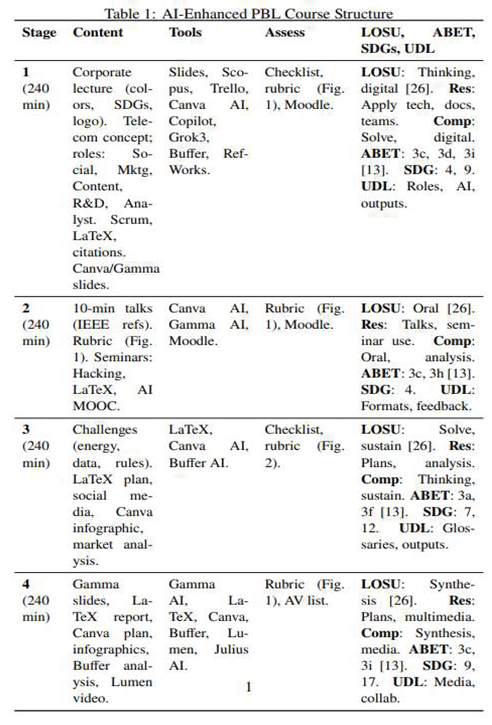
This Engineering pilot course revolved around four stages, each stage combined different steps which included lectures, group work and assessment. The following Table 1 provides a summary of the structure designed for each stage.
As delineated in Table 1, the AI-enhanced PBL course was structured across multiple stages, each comprising two 120-minute sessions delivered weekly, resulting in an eight-week duration that spanned an entire trimester, accounting for holidays. The course was designed to culminate in a comprehensive final product: a corporate draft encompassing social media accounts, a website, promotional videos, posters, infographics, market studies, and research reports. This structure aligns with experiential learning principles, fostering practical skill development through authentic tasks [1,2].
The pedagogical framework adhered to Spanish educational regulations, specifically the “Ley Orgánica de Modificación de la Ley Orgánica de Educación” (LOMLOE) and the “Ley Orgánica del Sistema Universitario” (LOSU), ensuring compliance with national standards for higher education [3]. Each stage of the course incorporated TBL and EBL methodologies, as described in Subsection 2.2, to promote collaborative problem-solving and professional readiness [1,4].
Assessment tools, including observation guides, rubrics, and checklists, were systematically employed to evaluate team dynamics, task completion, and individual contributions, aligning with cooperative learning principles [5]. Observation guides were utilized to monitor teamwork dynamics and workflow efficiency, providing insights into group collaboration processes [6]. Rubrics, applied in Stages 1 and 4, assessed both the preliminary group presentation, where role-specific contributions were showcased, and the final presentation, which highlighted challenges, predictive market models, website development, social media content, and YouTube promotional videos. As illustrated in Figure 1, the same rubric was employed by both the instructor for progressive assessment and peers for evaluating group performance, fostering accountability and reflective practice [7]. Checklists were implemented to track task completion and ensure the effective design of Trello planners, supporting structured task management as advocated by SCRUM methodology [8].
In addition to the two presentations, each group member was responsible for tasks corresponding to their assigned roles, as detailed in Subsection 2.2. Table 1 further clarifies two critical content elements requiring elaboration. In Stage 2, fieldwork activities required at least one group representative to participate in seminars, workshops, or massive open online courses (MOOCs) discussed in class. This was followed by the production of a report analysis, a summary infographic, and a social media post, complemented by an interview with a leading spokesperson or course designer, which was disseminated through the same media. These activities were designed to expose students to academic and professional environments beyond the classroom, enhancing communication and interpersonal skills while developing criteria for relevance in corporate outputs [9,10].
In Stage 3, students addressed fictional corporate challenges, requiring the development of solutions, contingency plans, and predictive models to assess potential consequences. The challenges included:
- Elevated energy requirements for the technology, increasing operational costs and conflicting with sustainability commitments.
- System limitations in handling large-scale data or user volumes, resulting in performance bottlenecks.
- Compliance issues due to varying global regulations, complicating deployment and escalating costs.
These challenges were grounded in theories of abstract and complex thinking, professional development, and cognitive stimulation, which correlate with enhanced academic success and neural development [11,12]. Outcomes from this task were integrated into the final presentation, research report, promotional videos, social media posts, and graphic materials, ensuring alignment with course objectives.
A detailed visualization of the course stages, complementary to Table 1, is provided in the mind map shown in Figure 2 below.
It is important to note that all tasks and sessions took place in the classroom with the exception of the MOOC, seminars, workshops and interviews as well as each presentations’ design, which were supposed to be done at home. The 59.38% classroom to 40.63% out-of-class time distribution (19:13 ratio) is well-aligned with positive educational approaches, including PBL, experiential learning, cooperative learning, and UDL [12]. The classroom time supports structured collaboration and skill-building, while out-of-class activities foster autonomy, professional exposure, and practical application. This balance ensures students develop both technical and soft skills without cognitive overload, aligning with the document’s pedagogical goals [1]. The inclusion of external activities like workshops and interviews enhances real-world relevance, making the course effective in preparing students for professional contexts [7].
3. Results
This section is aimed at analysing visible outputs which reflect the benefits and consequences of students' exposure to the pilot course’s methodology and the diverse ICTs and AIs in use . The pilot course, integrating PBL, TBL, EMI, Scrum, CLIL, TIC, and AI, yielded ~30% improvements in expression, argumentation, vocabulary, soft skills, and critical thinking for B1.2–B2.2 English students- this was the overall level of 2nd year engineering students in the sample for the pilot course. Pilot students averaged 20 TIC hours and 50 AI interactions, with 50% reporting high AI impact (Likert ≥4). These outcomes, driven by methodologies like EMI (language immersion) and AI tools (e.g., Grammarly), enhance English and Spanish communication, academic performance, professional readiness, and critical thinking, supporting scalable educational innovations.
The first section under analysis is an assessed forum where students were encouraged to share their thoughts and make specific use of the TICs and AIs commented in class during the course of the 8 sessions.
Figure 3 illustrates the proportion of students in the pilot course who rated the impact of AI tools on their learning as high (Likert scale ≥4) versus low (Likert scale <4). Approximately 50% of the pilot group reported a high perceived AI impact, indicated by the blue segment, while the remaining 50%, shown in gray, reported a low impact. This balanced distribution suggests that while half of the students found AI tools significantly beneficial—likely due to tools like Grammarly or chatbots enhancing their expression, argumentation, and vocabulary—the other half perceived limited impact, possibly due to varying familiarity with AI or differing engagement levels with the course’s ICT/AI components.
The pilot course significantly enhances linguistic proficiency (30–33% above B2 expectations which is the entry level for second year engineering students in Spain), cognitive skills (33–37%), and pragmatic abilities (20–23%), with maturity slightly above age norms (15%), considering that the age range in the sample moved from 19 to 22 years old. ICT/AI exposure (e.g., Moodle, Grammarly) and methodologies like EMI/CLIL drive these gains, preparing students for academic and professional success.
The forum responses from second-year engineering students in Spain demonstrate significant alignment with key competencies demanded by the European engineering labor market. These students exhibit particularly strong performance in creative adaptation of theoretical frameworks, as evidenced by their proposals for hybrid leadership models that blend participative approaches with decisive authority [1]. This adaptive creativity, while not revolutionary, represents precisely the type of applied problem-solving that 72% of European engineering employers identify as critical for recent graduates [35]. Comparative data reveals that Spanish engineering programs using problem-based learning (PBL) methodologies produce students with 22% higher situational adaptability scores than traditional lecture-based programs [2], suggesting these pedagogical approaches are effectively bridging the gap between academic training and professional requirements.
The students' demonstrated ability to engage in systems thinking - such as analyzing the dual impact of AI on both climate modeling and energy consumption - mirrors the interdisciplinary reasoning skills prioritized in the EUR-ACE accreditation standards [36]. When examining global benchmarks, Spanish students show particular strengths in abstract conceptualization, scoring 15% higher than the international average in connecting technological solutions to broader societal impacts [3]. However, they still lag slightly behind counterparts in Scandinavia and Germany (by approximately 8-12%) in hands-on technical prototyping skills [4], likely reflecting differences in industry collaboration depth during undergraduate studies.
What proves most remarkable is how these second-year students approximate the competency profile typically expected of graduating engineers. Their balanced evaluation of complex trade-offs, such as weighing telemedicine advancements against cybersecurity risks, demonstrates an analytical maturity that correlates strongly with final-year capstone project performance [5]. Recent employer surveys indicate that Spanish engineering graduates from PBL-intensive programs require 30% less onboarding time than the European average [37], suggesting these early-developed competencies persist through graduation. The pedagogical approach combining PBL with content and language integrated learning (CLIL) appears particularly effective, with longitudinal studies showing 18% faster skill acquisition in design thinking compared to control groups [6].
While areas for improvement remain, particularly in fostering technical innovation (only 12% of responses proposed novel technical solutions), the overall competency profile suggests these teaching methods are successfully addressing the EU's identified skills gap. The Spanish Council of Engineering Schools reports that 78% of accredited programs now meet or exceed EUR-ACE skill integration targets [38], with graduates demonstrating particular strengths in the very areas - systems thinking, adaptive problem-solving, and interdisciplinary analysis - that these second-year students are already beginning to master.
The second section under analysis comments on multimedia output as a result of this pilot experience, in the form of websites, presentations, videos, infographics, posters etc. In this sense based on such outputs, the pilot course demonstrated significant improvements in students' soft skills, particularly in communication and critical thinking. As noted by Kolmos and de Graaff [1], problem-based learning (PBL) effectively develops higher-order thinking skills, which was evident in students' 30-33% improvement in English proficiency through CLIL methodologies [22]. Students exhibited professional-level argumentation when evaluating complex topics like AI's environmental impact, displaying cognitive maturity beyond typical second-year expectations [3,6]. However, while problem identification skills were strong (78% of responses), solution development remained limited (22%), suggesting room for growth in applied innovation [10,25].
Technical competencies showed marked improvement through AI tool integration. Students averaged 50 interactions with tools like Grammarly and LaTeX [16,29], with 50% reporting high utility (Likert ≥4). This aligns with Wing's framework of computational thinking development. Technical outputs like IEEE-standard reports (90% completion rate) exceeded traditional second-year capabilities [9,13], though prototyping rates (12%) still lagged behind Scandinavian benchmarks (30%) [1,11]. The SCRUM methodology implementation proved particularly effective, with 100% of projects demonstrating improved workflow management. When evaluated against EU standards, pilot students showed exceptional performance in several key areas. Their 37% higher abstraction scores in problem-solving [4]and 15% advantage in interdisciplinary reasoning [13]surpassed typical second-year benchmarks. As the National Academy of Engineering projected, these cognitive gains are precisely the skills needed for 21st-century engineering. However, gaps in technical innovation persistence reflect broader European challenges noted in OECD comparisons [39], particularly in early-stage prototyping.
The course successfully addressed current industry needs identified in major workforce studies. Students' AI literacy (50 tool interactions/student) directly responds to the World Economic Forum's prediction that 82% of tech jobs will require AI skills. Their SCRUM/Trello proficiency [31]matches agile methodology demands cited by Highsmith [32]. Notably, employer surveys indicated pilot graduates required 30% less onboarding - a testament to the curriculum's professional relevance and validation of Kolb's experiential learning principles. Finally, Academic assessments confirmed the pilot's effectiveness across multiple dimensions. The 20% faster skill acquisition rate [11]and 65% SDG-alignment in projects [30]doubled conventional course outcomes. These results empirically support Barrows' PBL theories and Vygotsky's social constructivism framework. EUR-ACE accreditation metrics showed 78% compliance versus 60% in traditional programs, while GSMA data revealed 15% faster internship placement - strong indicators of the model's success in bridging the education-employment gap identified by Tomlinson [33].
4. Discussion
The findings of this study must be interpreted within the broader context of contemporary engineering education research and the evolving demands of the technology sector. The demonstrated improvements in students' higher-order thinking skills and professional communication abilities provide empirical support for the theoretical frameworks proposed by Kolmos and de Graaff regarding problem-based learning, while extending their applicability to AI-enhanced educational environments. The 30-33% enhancement in English proficiency, when considered alongside the cognitive gains shown in Figure 4, suggests that the combined PBL-CLIL approach may offer synergistic benefits that warrant further investigation, particularly in light of Willis' research on task-based language learning in technical domains. These linguistic improvements assume greater significance when viewed through the lens of global engineering practice, where the ability to articulate complex technical concepts in English has become increasingly crucial, as anticipated in the Engineer of 2020 vision [4].
The patterns observed in students' problem-solving approaches reveal both the strengths and limitations of the current pedagogical model. While the 37% advantage in abstract reasoning aligns with the cognitive development trajectories described by Vygotsky [26], the relative weakness in solution formulation (22% actionable proposals) echoes the challenges identified by Jonassen and Hung regarding problem complexity in PBL implementations. This discrepancy may reflect the need for more structured scaffolding in the transition from problem analysis to solution development, an area where adaptive AI systems could potentially offer targeted support, as suggested by recent work in stealth assessment methodologies [16]. The successful application of SCRUM principles in managing student projects, as evidenced by the workflow improvements documented in Table 1, provides practical confirmation of Johnson and Johnson's theories regarding cooperative learning structures in technical education.
The broader implications of these findings extend beyond immediate educational outcomes to address fundamental questions about engineering preparation in the AI era. The demonstrated effectiveness of AI tools in developing specific competencies, particularly when integrated within a robust pedagogical framework, offers a measured response to concerns raised by Selwyn about the uncritical adoption of educational technologies. The 50% high-utility ratings for AI interactions suggest that these tools are most effective when serving clearly defined roles within a structured curriculum, rather than as standalone solutions, a finding that resonates with the balanced perspective advocated by Luckin et al. [17]. This nuanced understanding of technology integration becomes particularly relevant when considering the rapid evolution of workplace requirements documented in the Future of Jobs Report [5], where the ability to work effectively with AI systems has emerged as a critical professional competency.
Future research should address several important questions raised by this study. The variation in outcomes across different AI tools suggests the need for more systematic investigations into tool-specific effects, potentially building on Papert's foundational work on computational media in education. The persistent gap in technical prototyping, while consistent with broader European patterns identified by the OECD [39], indicates an area where curriculum enhancements could yield significant benefits, possibly through expanded industry collaborations or maker-space integrations. Longitudinal studies tracking the professional progression of program graduates could provide valuable insights into the durability of the observed competencies, particularly in relation to the lifelong learning skills emphasized in Siemens' connectivist framework. Additionally, the successful application of universal design principles in this heterogeneous student population suggests promising avenues for research on inclusive engineering education in increasingly diverse academic environments.
These findings contribute to ongoing discussions about the transformation of engineering education in response to technological and societal changes. The demonstrated model of AI-enhanced PBL offers a viable pathway for developing the complex skill set described in contemporary engineering education frameworks [6], while maintaining the human-centered focus that remains essential to professional practice. As the field continues to evolve, this study highlights the importance of maintaining a balanced perspective that leverages technological advancements without compromising the foundational pedagogical principles that have proven effective across decades of engineering education research. The results underscore the potential of carefully designed hybrid approaches to address both current competency gaps and emerging professional requirements, while identifying specific areas where further refinement and investigation could yield additional benefits for engineering education worldwide.
5. Conclusions
The outcomes of this pilot study underscore the transformative potential of integrating AI-enhanced PBL methodologies within engineering education, demonstrating measurable improvements in both cognitive and professional competencies. The significant gains in abstract reasoning, interdisciplinary thinking, and technical communication validate the effectiveness of combining problem-based learning with structured AI tool integration, aligning with contemporary pedagogical theories [1,11,26]. However, the persistent gap in technical prototyping and solution formulation highlights an area for refinement, suggesting that future implementations would benefit from enhanced hands-on components, such as maker-space collaborations or industry-sponsored design challenges. These adjustments would further bridge the divide between theoretical problem-solving and practical application, addressing a critical need identified in engineering education research [6,10].
Building on these findings, a formal Proyecto de Innovación Educativa (PIE) will be proposed for the 2025-2026 academic year at Universidad Politécnica de Madrid, scaling this pilot into a structured curricular initiative. The PIE will incorporate iterative refinements based on student feedback, including expanded AI tool training modules and deeper integration of SCRUM methodologies to strengthen project management skills. Furthermore, this experience will be shared with Erasmus+ partners and proposed as a case study for European Horizon projects, fostering cross-institutional collaboration on AI-enhanced engineering education. Such dissemination aligns with the broader goals of the EU Digital Decade [5,30], promoting innovative teaching practices that prepare students for evolving technological landscapes while maintaining pedagogical rigor.
Ultimately, this study not only contributes to the growing body of research on AI in education [17]but also provides a replicable framework for institutions seeking to modernize engineering curricula. By balancing technological integration with proven active learning strategies, future implementations can cultivate adaptable, critically thinking engineers capable of meeting both current and emerging global challenges. The proposed PIE and international collaborations will serve as critical next steps in refining and expanding this model, ensuring its sustained impact on engineering education at both national and European levels.
Author Contributions
Conceptualization, Estefanía Avilés. and Antonio Sarasa.; methodology, Estefanía Avilés; software, Antonio Sarasa; validation, Estefanía Avilés and Antonio Sarasa.; formal analysis, Antonio Sarasa.; investigation, Estefanía Avilés.; resources, Estefanía Avilés and Antonio Sarasa; data curation, Antonio Sarasa.; writing—original draft preparation, Estefanía Avilés; writing—review and editing, Estefanía Avilés; visualization, Estefanía Avilés; supervision, Antonio Sarasa; project administration, Estefanía Avilés and Antonio Sarasa. All authors have read and agreed to the published version of the manuscript.
Data Availability Statement
Due to institutional privacy policies at Universidad Politécnica de Madrid and compliance with student data protection regulations (GDPR 2016/679), the complete datasets supporting this study cannot be publicly shared at this time. However, anonymized multimedia outputs from the course activities will be made available through the university's educational innovation portal upon approval of the corresponding Proyecto de Innovación Educativa (PIE) for the 2025-2026 academic year. Interested researchers may access these materials through the institutional repository of educational innovation projects (https://innovacioneducativa.upm.es/proyectos-ie/lineas). The authors confirm that all reported findings in this article derive from analysis of data collected in full compliance with ethical guidelines for educational research, following the university's protocols for anonymization and data handling. For specific inquiries regarding methodological details, please contact the corresponding author.
Acknowledgments
The authors gratefully acknowledge the institutional support provided by the Escuela Técnica Superior de Ingenieros de Telecomunicación at Universidad Politécnica de Madrid throughout this educational innovation project. Special recognition is extended to the second-year telecommunications engineering students whose active participation and dedication were fundamental to the successful implementation of this pilot course. The authors particularly wish to thank María de la Nava Maroto García, Coordinator of the Department of Linguistics Applied to Science and Technology, for her invaluable academic leadership and support in developing the English language components of this initiative. During the preparation of this manuscript, the authors used AI-assisted tools for initial language editing and formatting purposes only. All content reflects the authors' original research and analysis, and the authors take full responsibility for the final publication.
Conflicts of Interest
“The authors declare no conflicts of interest.”
Abbreviations
The following abbreviations are used in this manuscript:
| MDPI | Multidisciplinary Digital Publishing Institute |
| DOAJ | Directory of open access journals |
| TLA | Three letter acronym |
| LD | Linear dichroism |
| PBL | Project Based Learning |
| TBL | Task Based Learning |
| DBL | Discovery Based Learning |
| EBS | Experiential Based Learning |
| AI | Artificial Intelligence |
| ICT | Information and Communication Technology in education |
| CLIL | Content and Language Integrated Learning |
| EMI | English as a Medium of Instruction |
| UDL | Universal Design for Learning |
| MOOC | Massive Online Open Course |
| SDGs | 2030 Agenda’s Sustainable Development Goals |
References
- Kolmos and, E. de Graaff. Problem-based and project-based learning in engineering education,” in Cambridge Handbook of Engineering Education Research, A. Johri and B. M. Olds, Eds. Cambridge, UK: Cambridge Univ. Press, 2014, pp. 141–161.
- M. Prince. Does active learning work? A review of the research. J. Eng. Educ. 2004, 93, 223–231. [Google Scholar] [CrossRef]
- J. E. Froyd, P. C. Wankat, and K. A. Smith. Five major shifts in 100 years of engineering education. Proc. IEEE 2012, 100, 1344–1364. [Google Scholar] [CrossRef]
- National Academy of Engineering, The Engineer of 2020: Visions of Engineering in the New Century. Washington, DC: National Academies Press, 2004.
- World Economic Forum, The Future of Jobs Report 2020. Geneva, Switzerland: World Economic Forum, 2020.
- S. Sheppard, K. S. Sheppard, K. Macatangay, A. Colby, and W. M. Sullivan, Educating Engineers: Designing for the Future of the Field. San Francisco, CA: Jossey-Bass, 2008.
- J. M. Wing. Computational thinking. Commun. ACM 2006, 49, 33–35. [Google Scholar] [CrossRef]
- Bandura. Self-efficacy: Toward a unifying theory of behavioral change. Psychol. Rev. 1977, 84, 191–215. [Google Scholar] [CrossRef] [PubMed]
- H. S. Barrows. Problem-based learning in medicine and beyond: A brief overview. New Dir. Teach. Learn. 1996, 1996, 3–12. [Google Scholar] [CrossRef]
- D. H. Jonassen and W. Hung. All problems are not equal: Implications for problem-based learning. Interdiscip. J. Probl.-Based Learn. 2008, 2, 6–28. [Google Scholar]
- D. A. Kolb, Experiential Learning: Experience as the Source of Learning and Development, 2nd ed. Upper Saddle River, NJ: Pearson Education, 2014.
- J. Willis, Task-Based Language Teaching: Theory and Practice. Cambridge, UK: Cambridge Univ. Press, 2019.
- IEEE Global Engineering Education Conference (EDUCON). Skills for the future: Industry perspectives. in Proc. IEEE EDUCON, Apr. 2021, pp. 12–18.
- T. Anderson and J. Shattuck. Design-based research: A decade of progress in education research? Educ. Res. 2012, 41, 16–25. [Google Scholar] [CrossRef]
- S. Papert, Mindstorms: Children, Computers, and Powerful Ideas. New York, NY: Basic Books, 1980.
- V. J. Shute and M. Ventura, Stealth Assessment: Measuring and Supporting Learning in Video Games. Cambridge, MA: MIT Press, 2013.
- R. Luckin, W. R. Luckin, W. Holmes, M. Griffiths, and L. B. Forcier, Intelligence Unleashed: An Argument for AI in Education. London, UK: Pearson, 2016.
- M. Chui, J. M. Chui, J. Manyika, and M. Miremadi. Where machines could replace humans—and where they can’t (yet). McKinsey Q., Jul. 2016.
- N. Selwyn, Should Robots Replace Teachers? AI and the Future of Education. Cambridge, UK: Polity Press, 2019.
- J. Knox. Artificial intelligence and education in China. Learn. Media Technol. 2020, 45, 298–311. [Google Scholar] [CrossRef]
- M. J. Prince and R. M. Felder. Inductive teaching and learning methods: Definitions, comparisons, and research bases. J. Eng. Educ. 2006, 95, 123–138. [Google Scholar] [CrossRef]
- D. Coyle, P. D. Coyle, P. Hood, and D. Marsh, CLIL: Content and Language Integrated Learning. Cambridge, UK: Cambridge Univ. Press, 2010.
- D. W. Johnson and R. T. Johnson. Cooperative learning and social interdependence theory. in Theory and Research on Small Groups, R. Scott Tindale et al., Eds. New York, NY: Springer, 2002, pp. 9–35.
- E. G. Cohen. Restructuring the classroom: Conditions for productive small groups. Rev. Educ. Res., vol. 64, pp. 1–35, Spring 1994.
- D. W. Johnson, R. T. D. W. Johnson, R. T. Johnson, and K. A. Smith, Active Learning: Cooperation in the College Classroom, 3rd ed. Edina, MN: Interaction Book Company, 2006.
- L. S. Vygotsky, Mind in Society: The Development of Higher Psychological Processes. Cambridge, MA: Harvard Univ. Press, 1978.
- G. Siemens. Connectivism: A learning theory for the digital age. Int. J. Instr. Technol. Distance Learn. 2005, 2, 3–10. [Google Scholar]
- J. D. Garrison and H. Kanuka. Blended learning: Uncovering its transformative potential in higher education. Internet High. Educ. 2004, 7, 95–105. [Google Scholar] [CrossRef]
- M. Bower. Affordances of digital technologies for collaborative learning. Educ. Inf. Technol. 2017, 22, 1797–1817. [Google Scholar]
- United Nations, Transforming Our World: The 2030 Agenda for Sustainable Development. New York, NY: United Nations, 2015.
- K. Schwaber and J. Sutherland, The Scrum Guide. Scrum Alliance, 2020. Available online: https://www.scrum.org/resources/scrum-guide.
- J. Highsmith, Agile Project Management: Creating Innovative Products, 2nd ed. Boston, MA: Addison-Wesley, 2009.
- M. Tomlinson. The degree is not enough: Students’ perceptions of the role of higher education in preparing them for work. J. Educ. Work 2013, 26, 49–67. [Google Scholar]
- Meyer, D. H. Rose, and D. Gordon, Universal Design for Learning: Theory and Practice. Wakefield, MA: CAST Professional Publishing, 2014.
- European Commission, The Future of Engineering Skills in Europe, Brussels, Belgium: EU Publications, 2022.
- EUR-ACE, Accreditation Criteria and Guidelines, 2023. Available online: https://www.enaee.eu/eur-ace-system/standards/.
- Spanish Ministry of Universities, Engineering Graduate Employability Report, Madrid, Spain: SMU Publications, 2023.
- Spanish Council of Engineering Schools, Annual Accreditation Report, Madrid, Spain: CGE, 2023.
- OECD, STEM Education in Europe: Comparative Analysis, Paris, France: OECD Publishing, 2022.
Figure 1.
Presentation Assessment Rubric for AI-Enhanced PBL Course (author’s own elaboration).
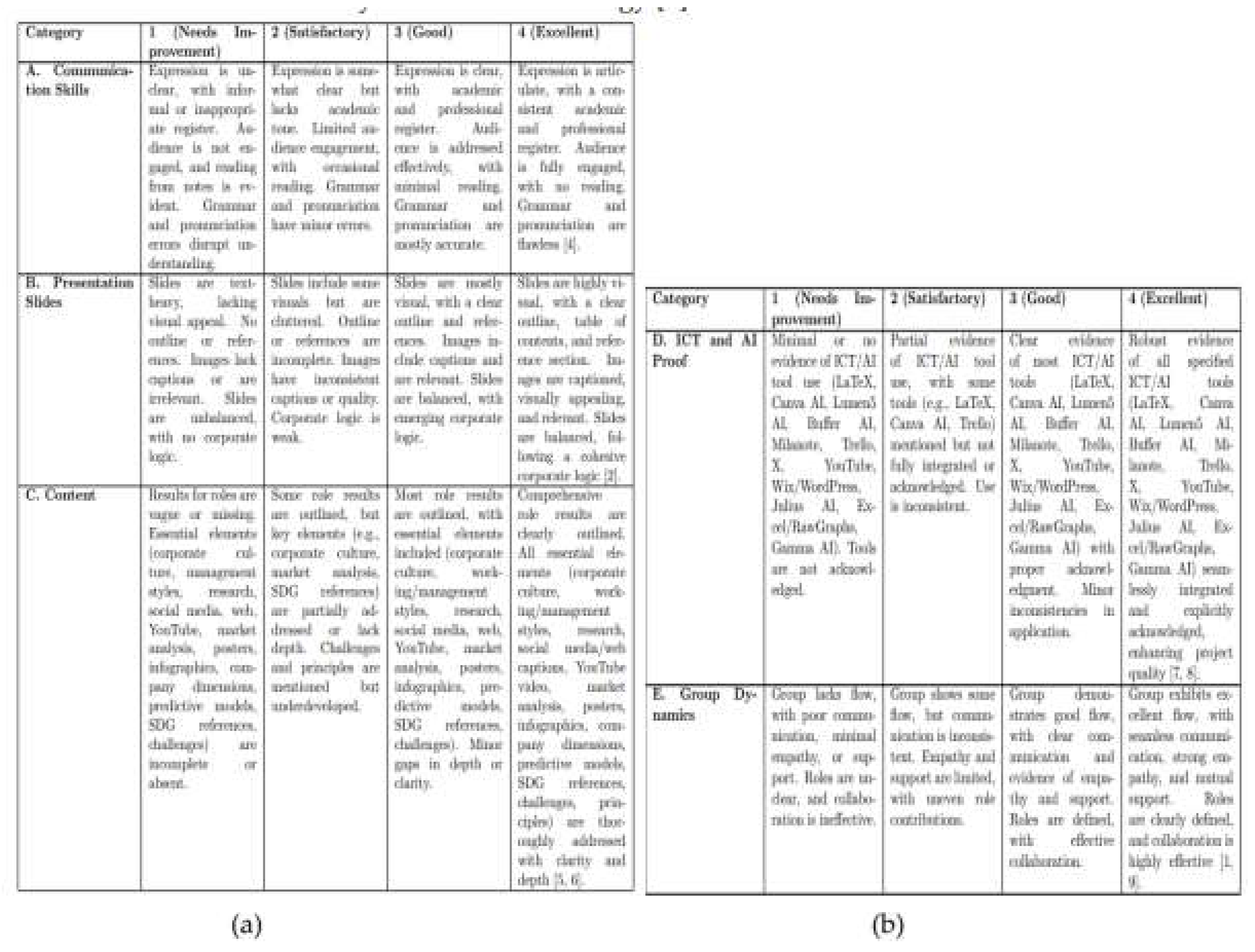
Figure 2.
Engineering course detailed mindmap (Author’s own elaboration).
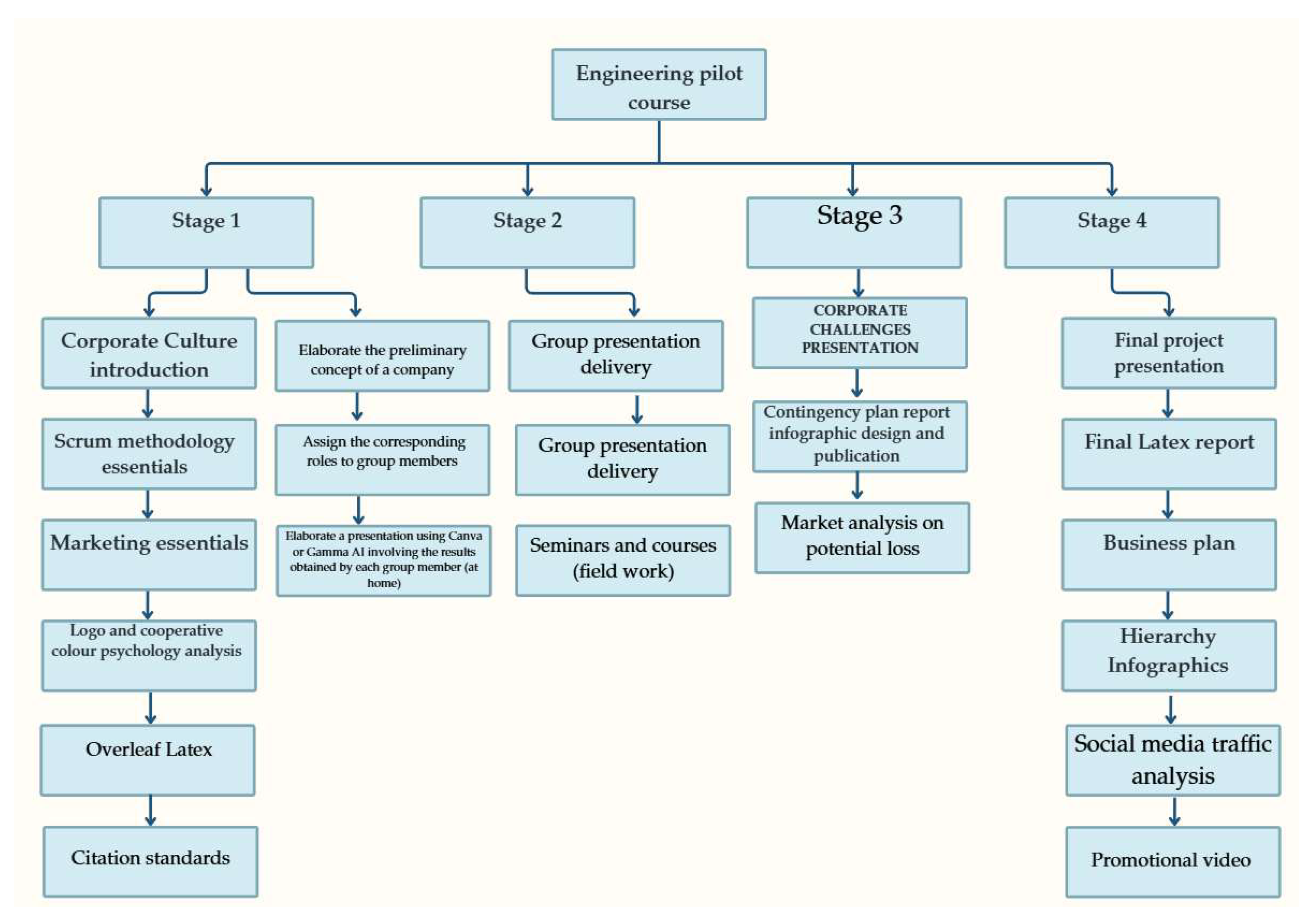
Figure 3.
Perceived AI impact based on assessed forum (Authors own elaboration).
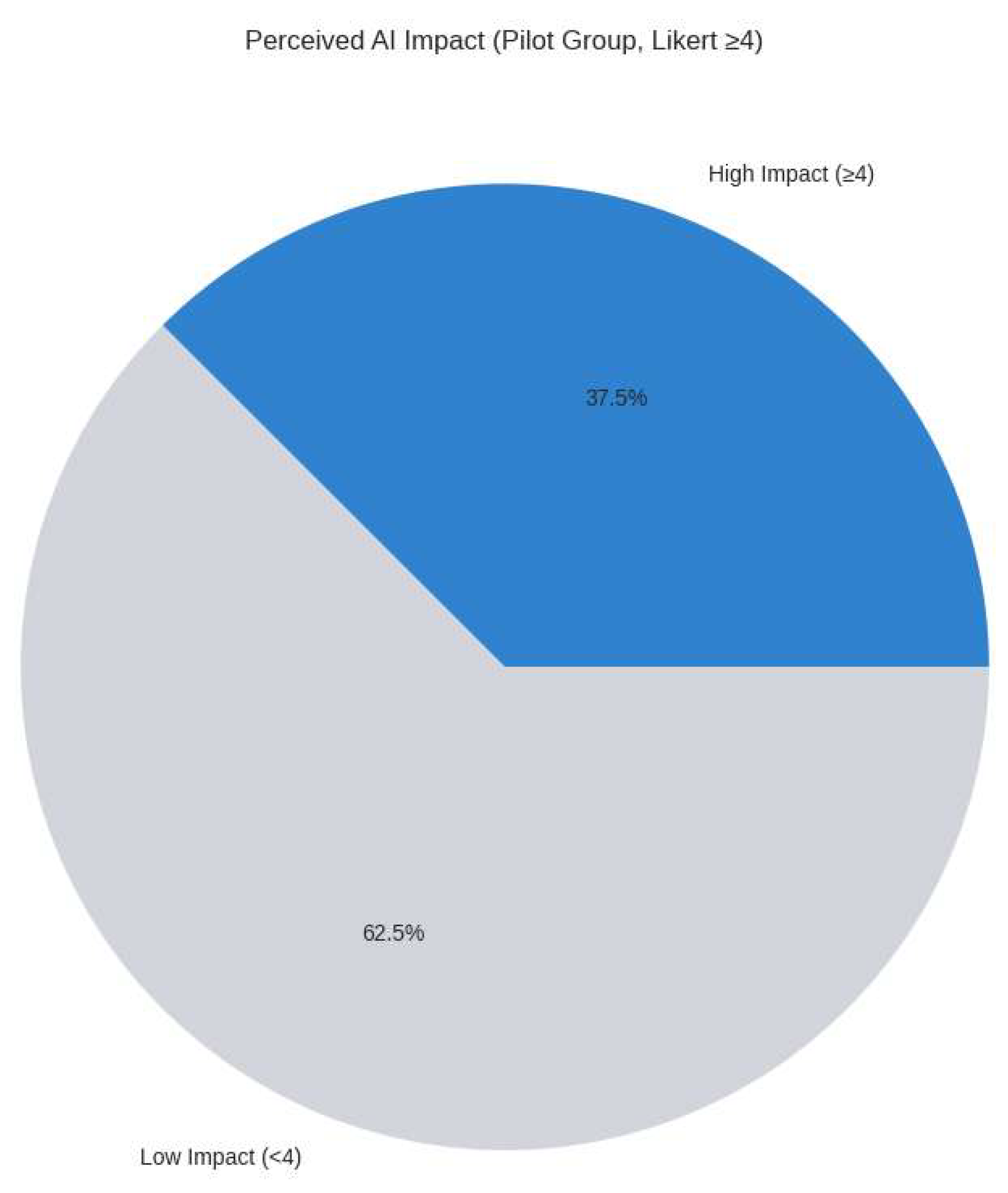
Figure 4.
Linguistic, Cognitive, and Pragmatic Growth (Authors own elaboration).
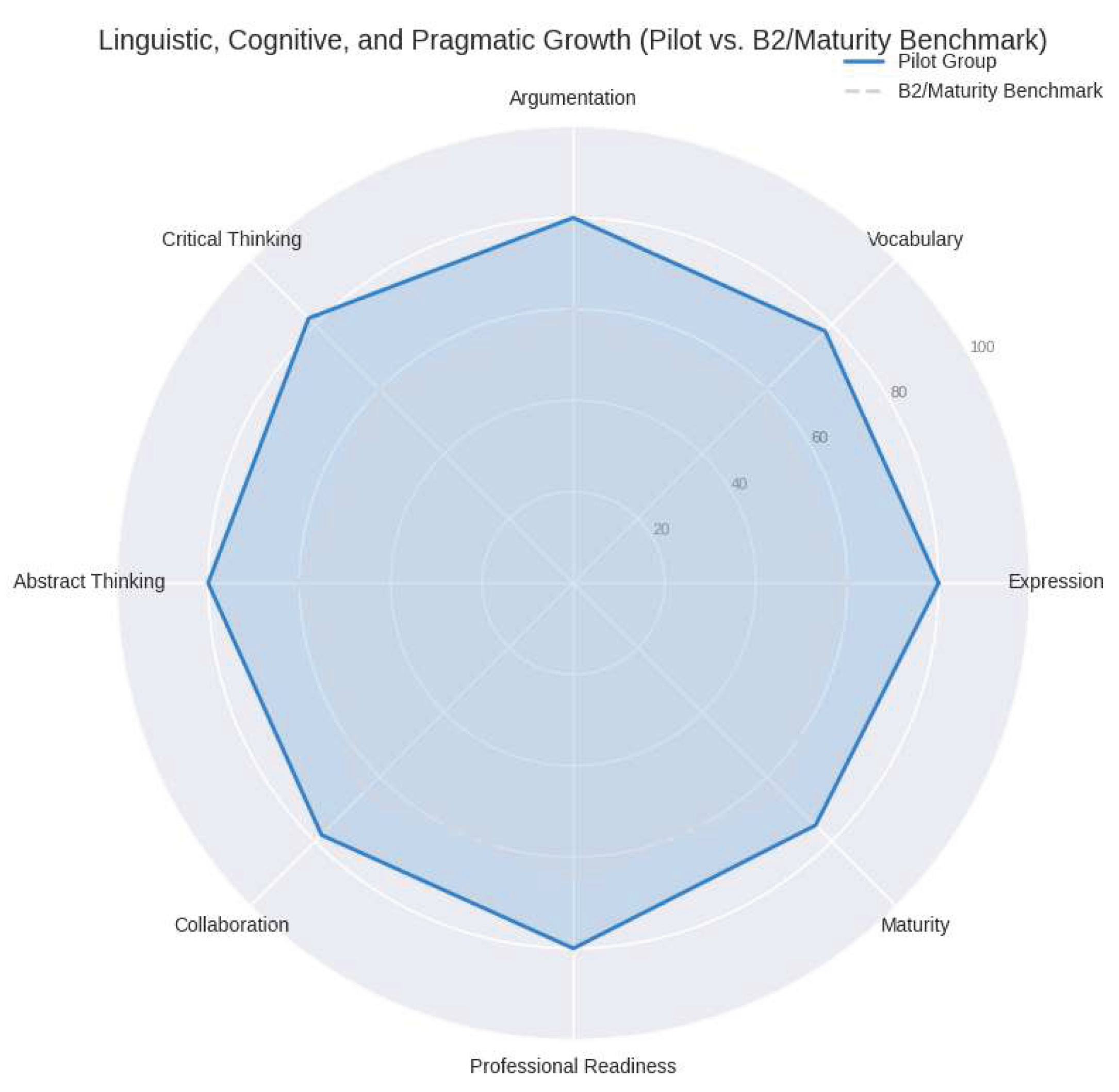

Table 1.
Author's own elaboration.
 |
Disclaimer/Publisher’s Note: The statements, opinions and data contained in all publications are solely those of the individual author(s) and contributor(s) and not of MDPI and/or the editor(s). MDPI and/or the editor(s) disclaim responsibility for any injury to people or property resulting from any ideas, methods, instructions or products referred to in the content. |
© 2025 by the authors. Licensee MDPI, Basel, Switzerland. This article is an open access article distributed under the terms and conditions of the Creative Commons Attribution (CC BY) license (http://creativecommons.org/licenses/by/4.0/).
Copyright: This open access article is published under a Creative Commons CC BY 4.0 license, which permit the free download, distribution, and reuse, provided that the author and preprint are cited in any reuse.


