

Submitted:
25 July 2025
Posted:
29 July 2025
You are already at the latest version
Abstract
When organizations adopt systems thinking principles, systemic organizational change becomes more achievable through intelligent automation (IA). Implementing intelligent process automation--beyond the capabilities of robotic process automation--demands a departure from traditional, discrete-target methods, which often fail to unlock the full strategic potential of these advanced technologies. This study analyzes current research and real-world case studies to develop a system-based implementation model that emphasizes maintaining organizational interconnections, response cycles, and achieving equilibrium across all operational segments. Intelligent automation empowers organizations to develop a strategic vision by leveraging systems thinking methodologies, while simultaneously enhancing operational agility. This evolution elevates IT from a basic support function to a driver of enterprise-level strategic leadership. The research offers both theoretical and practical insights by aligning systems thinking principles with smart automation implementation, thereby providing IT leaders with a comprehensive framework for leveraging automation technologies as instruments of strategic business transformation.
Keywords:
intelligent automation
; intelligent systems
; IA
; systems thinking
; IT strategy
; digital transformation
; robotic process automation
; organizational change
1. Introduction
Organizations are increasingly implementing intelligent automation (IA) over traditional automation due to its transformative potential in optimizing processes and reshaping business transformation strategies. While conventional automation technologies, such as robotic process automation (RPA), focus primarily on repetitive, rule-based tasks, intelligent automation integrates artificial intelligence and machine learning to handle cognitive functions that were previously considered manageable only by humans [1]. The rise of modern technologies presents organizations with unique opportunities to redefine operational strategies, service delivery models, and strategic business approaches.
However, current IA implementation practices often adopt a fragmented approach, rather than viewing them as components of an integrated organizational system. This narrow focus results in underwhelming outcomes and missed opportunities, leading to failures in system execution and limited strategic value [2]. A persistent gap exists in both research and practical applications, primarily due to the absence of an organizationally aligned strategic outlook in technology initiatives [3].
This study adopts a systems thinking perspective, offering a valuable framework that enhances IA implementation by emphasizing relational dynamics and holistic understanding. A systems-based approach repositions IA as a catalyst for organizational change, capable of influencing not only individual processes but also the entire organizational network [4].
The research addresses three core questions:
- What impact does a systems thinking methodology have on the execution of intelligent automation?
- How can feedback loops be applied to realize the full strategic value of intelligent automation?
- What guidance can organizations follow to achieve tactical results while maintaining strategic alignment through systems-based IA implementation?
Through an evaluation of existing literature and real-world case studies, this research constructs a systems-oriented framework that connects technological capabilities with strategic business direction. The study contributes to both theoretical knowledge and practical application by conceptualizing intelligent automation as a mechanism for organization-wide transformation [5,6].
2. From RPA to IRA: The Evolution of Automation
2.1. The Automation Continuum
Robotic process automation (RPA) initially emerged as a solution for automating routine, rule-based tasks through digital emulation of user interactions with software systems [7]. The primary focus of RPA implementations lies in processes involving structured data, clear input-output logic, and minimal exceptions [8]. While traditional RPA improves operational efficiency and reduces costs, its ability to handle unstructured information and execute complex, dynamic decision-making tasks remains limited [9].
Intelligent automation (IA) represents a significant evolutionary advancement beyond RPA. By integrating artificial intelligence (AI), machine learning (ML), natural language processing (NLP), and computer vision, IA systems can perform cognitive tasks requiring judgment and adapt over time through continuous learning [10,11]. This technological progression enables the automation of processes previously deemed too complex or variable for traditional automation tools [12].
As noted by Chakraborti et al. [1], intelligent process automation (IPA) reduces the need for human-led training and facilitates the automation of sophisticated, decision-based workflows [13]. These innovations are transforming industries such as healthcare, finance, law, and customer service by enabling automation in areas that require nuanced understanding and adaptive learning [14].
The Intelligent Automation Continuum (IA) shown in Figure 1 highlights a vendor neutral tools and platforms selection strategy along the path from RPA to AI based on the strategic business needs, technology requirements and IT landscape of an enterprise. RPA is the foundation followed by Heuristic at medium to AI as expert level of automation. These Bots operating at these three layers can be called “Doing Bots", “Thinking Bots" and “Learning Bots" respectively with their main attributes given. The vendors mentioned are representative and must be correlated to the customers techno-business landscape and assessments. RPA is touted as the gateway to AI or White-Collar automation, with more in the subsequent section on Hype vs. Reality [15].
The most suitable solution approach is to move Intelligent Automation into the business mainstream for long-term sustainable competitive excellence propelling [15]:
- New paths of Innovations across the Organization Ecosystem
- Greater Service levels that translate into enhanced Customer Satisfaction
- Alternatives of varied pricing and swift change in the market
The most important business driver would be to always lead in performance across [15]:
- Process Quality and Compliance
- Operational Efficiency and Scalability
- Costs Optimization and Effective Resources Utilization
2.2. Key Technological Enablers
The shift from RPA to IPA is driven by a convergence of enabling technologies. Machine learning algorithms allow systems to recognize patterns and adapt to new data without explicit programming, thereby improving performance in dynamic environments [16]. Natural language processing makes it possible to analyze and interpret unstructured text, enabling automation of tasks such as document handling and customer interactions [17].
Computer vision technologies enhance a system’s ability to interpret and respond to visual data, supporting automated recognition-based processes [13]. Additionally, advanced analytics provide the capability to process large volumes of data and extract actionable insights, enhancing decision-making across the enterprise.
Cloud computing plays a critical role by offering scalable, flexible infrastructure for deploying and managing these automation technologies [18]. As a result, organizations can rapidly develop and operationalize intelligent systems capable of executing complex, cognitive tasks [19].
These advancements collectively broaden the scope of automation, opening new opportunities for innovation and efficiency across multiple industries [20].
3. Systems Thinking: A Framework for Integration
3.1. Core Principles of Systems Thinking
Systems thinking has evolved into a structured methodology for understanding how interrelated components within a system interact and influence one another [21]. In the context of intelligent automation, these principles provide a foundational approach for guiding complex project implementation [22]. Systems thinking emphasizes Wholeness and Interconnection, encouraging organizations to view automation not as isolated tools, but as integral parts of a unified operational structure [23].
Feedback loops are essential for generating dynamic equilibrium within a system. They allow system elements to influence each other through cyclical interactions, enabling balance and adaptability [24]. Additionally, Emergent Properties-the collective behaviors and characteristics that arise from the interactions of system elements-cannot be fully understood by analyzing components in isolation [25]. Instead, evaluation must occur across the organization as a whole [26].
Given that organizational systems constantly evolve, the automated framework must exhibit Adaptability, responding effectively to internal and external changes [27]. These guiding principles form the intellectual foundation that enables advanced automation systems to simultaneously support immediate operational improvements and long-term strategic outcomes [28].
3.2. Systems Thinking in IT Strategy
Conventional IT strategy frameworks often outline linear steps for building IT capabilities aligned with operational goals. However, such approaches may fall short in today’s dynamic business environment [29]. Modern organizations must adopt integrated change methodologies that unite various systems and functions to manage growing complexity and continuous transformation [30].
Applying systems thinking to IT strategy means embedding it within the operational framework, rather than treating it as a standalone function. This approach focuses on relationship-based integration, highlighting how technology supports business objectives through collaboration among personnel, workflows, and enterprise information systems [31].
Strategic adaptability requires continuous information exchange through feedback loops. IT plays a key role as both an interpreter and generator of organizational insight [32]. Systems thinking also facilitates smoother collaboration among technology stakeholders by removing communication barriers, thus fostering unified, organization-wide solutions [33].
By incorporating systems thinking into intelligent automation initiatives, organizations can unlock strategic value and competitive advantage across all business domains [34].
4. Intelligent Automation Through Systems Lens
4.1. Strategic and Operational Integration
Organizations that implement automation through a systems-based lens extract value beyond process efficiency. When guided by systemic principles, intelligent automation becomes a strategic enabler rather than a mere operational tool [35].
Real-time visibility into operational areas is achieved through automated data flows, offering insights into customer behaviors, internal performance, and market dynamics [36]. These insights empower strategic decision-making by grounding it in continuously updated information. Organizational strategy, in this context, becomes an active driver of automation configurations, shaping intelligent workflows and priority-based task execution mechanisms [37].
Intelligent automation helps organizations exceed traditional business goals by enabling broader transformation. Strategic planning and operational execution are dynamically linked through ongoing feedback loops [38]. These loops ensure that the outcomes of automation initiatives continuously inform and refine strategic direction, creating a responsive and adaptive organization [39].
Thus, automation transitions from a static support function to an active managerial instrument that aligns tactical execution with long-term strategic intent [40].
4.2. Feedback Loops in Intelligent Automation
Feedback loops form the backbone of adaptive capability within intelligent automation systems. By embedding system-based learning processes, organizations enhance their capacity to respond intelligently to evolving conditions [41].
Intelligent automation systems gather and generate operational feedback in various forms-performance metrics, exceptions, and outcome-related data. When properly configured, these systems can autonomously fine-tune their operations, adjusting decision-making rules and system parameters in response to feedback [42].
Strategic feedback loops offer even greater value by analyzing cumulative data to identify trends such as customer behavior patterns, market fluctuations, and internal disruptions. Insights derived from this analysis allow organizations to align operational decisions with evolving strategic needs [43].
Furthermore, service analytics support both validation and recalibration of strategic plans. By facilitating interdepartmental integration, automation platforms enable shared feedback processes that enhance cross-functional collaboration and coherence [10].
By embedding accurate feedback mechanisms during the development of intelligent automation systems, organizations create continuous improvement cycles and preserve high-performing practices across the enterprise [44].
5. Cultural Transformation and Human-Machine Collaboration
5.1. Redefining Organizational Knowledge Creation
Intelligent automation compels organizations to reimagine how knowledge is created, distributed, and applied [30]. Traditional knowledge management systems prioritized the documentation of explicit knowledge and relied heavily on human-to-human communication for information exchange. These systems often overlooked the potential for automation to contribute to organizational learning [12].
The advent of intelligent automation introduces collaborative human–machine operations that drive the creation of new knowledge [10,37]. During implementation, organizations must convert tacit knowledge-experiential and often informal-into structured formats suitable for automated systems. This transformation makes knowledge more accessible, transferable, and usable across various platforms and teams [19,45].
Virtual intelligence systems extend employee capabilities by complementing-not replacing-human reasoning [46]. These systems allow workers to engage in complex problem-solving, foster collaboration, and generate novel insights. Human–machine collaboration gives rise to fluency knowledge–the type of knowledge co-created that neither humans nor machines could produce independently [47].
Blomkvist et al. [2] highlight the role of local entrepreneurs as critical intermediaries who align technical systems with community needs by facilitating knowledge exchange and supporting system adoption. To replicate this success internally, organizational leaders must design robust coordination between human resources and automation technologies to fully realize the synergies of integrated knowledge systems [6,9].
Despite significant technological advancements in the domain of automated vehicles, critical challenges persist in the realm of human–machine interaction, particularly concerning the transition of control from the automated system back to the human driver. This takeover process remains a complex and safety-critical phase that necessitates the development of advanced human–machine collaboration frameworks. During such transitions, drivers often require a brief period to disengage from non-driving-related tasks and attain a state conducive to effective vehicle control. Variability in drivers’ cognitive and physical readiness further complicates this process and must be systematically accounted for in interface design [48].
To mitigate the risks associated with inconsistent driver responsiveness, it is essential to implement adaptive guidance and support mechanisms that facilitate a secure, seamless, and timely takeover. In response to these requirements, this study proposes a novel human–machine collaboration methodology featuring an intelligent, two-phase haptic interface. This system is designed to dynamically adjust to the driver’s real-time physiological and cognitive condition, thereby enhancing the efficacy and safety of the takeover procedure in automated vehicles [48].
As shown in Figure 2, during takeover transition, the proposed human–machine collaboration system modulates the automation system’s control effort according to the measured states and control action of a driver. It also applies an intelligent haptic steering feedback to the driver to ensure that the takeover transition is completed in a safe and smooth manner.
5.2. Leadership Requirements in the IA Era
Implementing intelligent automation within a systems thinking framework demands a new set of leadership competencies. Leaders must cultivate a systemic vision, allowing them to understand the organization as a cohesive whole rather than a collection of isolated units [45,47]. This perspective enables strategic, informed decisions about where and how to deploy IA solutions for maximum impact.
While deep technical expertise is not mandatory, leaders must develop sufficient technological literacy to comprehend the capabilities and limitations of intelligent automation tools [39,45]. This knowledge supports strategic planning and ensures technology choices align with business goals [28,29].
Change management expertise is also essential, as IA implementation often redefines job roles, workflows, and responsibilities. Effective transition leaders maintain operational continuity while introducing transformative change [8,42].
Ethical leadership is increasingly important in the IA era. As automated systems begin making complex, value-laden decisions, leaders must ensure governance frameworks are in place to uphold organizational principles and social responsibility [14,49].
Together, these leadership attributes provide the foundation for successful intelligent automation deployment and long-term organizational transformation [10].
Technologists realize that the RPA tool environments are also referred to as “low code" or “nocode" with little programming expertise except when it comes to integrating with system APIs or performing advanced automation tasks.
As shown in Figure 3 RPA automates ‘hand work.’ When RPA is used along with AI and machine learning techniques to enable some level of reasoning and decision making (‘head work’) it is referred to as Intelligent Automation. The next edition of this playbook will pick up from here to Intelligent Automation RPA can be executed on a desktop, virtual desktop (VDI), or an enterprise platform (servers on-premise or in the cloud) [51]. RPA can be developed by ‘citizen developers’ without technical skills but this must be done according to specified IT process for code version control and security. For example, there must be separate development and test, and production environments, which the developers do not have access to and cannot make unauthorized code changes [50].
6. Implementation Framework
6.1. A Systems Approach to Intelligent Automation
Building on the principles outlined in previous sections, this study presents a systems-oriented framework for implementing intelligent automation, summarized in Table 1. This framework illustrates how operational processes, organizational knowledge, and strategic capabilities interact to support comprehensive automation initiatives [1,3].
Unlike conventional deployment methods that emphasize isolated process optimization, the proposed approach prioritizes strategic alignment, feedback integration, and adaptive learning [2]. By focusing on systemic connections rather than just technical execution, intelligent automation becomes a transformative organizational force rather than a functional tool [43,46].
This framework outlines clear phases-from assessment through to evolution-each guided by specific systems thinking principles. Activities such as mapping process relationships, designing feedback loops, and establishing adaptation protocols ensure that automation initiatives align with business objectives while remaining responsive to change [24,25].
6.2. Piloting and Scenario Testing
Before fully deploying intelligent automation systems, organizations should adopt pilot testing informed by systems thinking. This critical step identifies how automated processes will affect the broader organizational ecosystem, revealing both opportunities and potential disruptions [27,28].
Pilot programs offer several strategic benefits [29]. They uncover relationship dependencies between processes and resources, providing visibility into operational dynamics that may not be evident during initial planning. Furthermore, pilot testing allows organizations to assess the effectiveness of feedback mechanisms and refine continuous improvement protocols in a controlled environment [51].
7. Discussion and Implications
7.1. Theoretical Implications
This study contributes significant theoretical advancements by embedding systems thinking concepts into the analysis of intelligent automation [40]. By bridging two distinct disciplines-systems science and automation technologies-it offers a unified framework for understanding how organizational transformation unfolds through automation [41,43].
The research positions intelligent automation not merely as a technical solution but as a strategic enabler for adaptive and learning organizations [38,47]. By treating feedback, emergence, and interconnectedness as essential planning components, the study extends the scope of IT strategy beyond traditional linear models. This redefinition of intelligent automation promotes a systems-oriented mindset in academic research, providing scholars with a conceptual foundation for investigating automation’s broader implications in business ecosystems [37,46].
In doing so, the study lays the groundwork for future interdisciplinary research, encouraging the exploration of how automation technologies interact with organizational structures, behaviors, and strategic imperatives [9].
7.2. Practical Implications
This research also yields substantial value for practitioners, offering a practical framework that aligns intelligent automation efforts with broader business objectives [4,8].
By adopting a systems thinking methodology, organizations can reposition their intelligent automation investments from isolated efficiency projects to strategically integrated initiatives. This reframing increases the likelihood of executive sponsorship and resource allocation, as the value of automation becomes more visible at the strategic level [5,7].
The framework provided supports implementation planning by identifying the key stages, principles, and activities required for successful deployment [40]. It guides organizations in designing systems that not only deliver operational improvements but also enhance business agility and innovation [41].
Additionally, the study outlines essential leadership competencies-such as systemic vision, technical literacy, and ethical governance-that are critical for navigating the organizational changes introduced by IA. These insights help organizations develop internal capacity, improve cross-functional collaboration, and drive cultural transformation [19,21,28].
8. Conclusions
Intelligent automation has evolved beyond its initial role as a tool for improving operational efficiency. It now serves as a catalyst for comprehensive organizational transformation. By applying systems thinking principles during IA implementation, organizations can unlock both immediate operational benefits and sustained strategic value, creating agile and resilient business structures [4,6,18,25].
The conceptual framework developed in this study provides a clear pathway for integrating intelligent automation into broader organizational systems. It emphasizes inter-dependencies, feedback mechanisms, and dynamic equilibrium as essential components for achieving meaningful transformation [13,14,45,49,53].
This systems-based perspective redefines intelligent automation as more than just a technical solution. It becomes a linking technology-one that bridges operational execution with strategic direction. By doing so, it supports holistic organizational evolution during periods of digital disruption and change [5,10,20,44].
Ultimately, the systems approach to intelligent automation offers a practical roadmap for leaders aiming to align technological innovation with long-term business objectives. Organizations that understand and leverage automation as a system-wide enabler are better equipped to thrive in complex, fast-changing environments [10,18,24,26,27,54].
Acknowledgments
This research received funding from the Advanced Digital Innovation Research Initiative. The authors extend their sincere gratitude to Dr. Sarah Chen, Dr. Michael Rodriguez, and the anonymous reviewers for their valuable feedback and insights, which significantly improved the quality of this work. Special appreciation is also given to the AI Systems Research Group at Northern University for their academic input and collaborative discussions. The authors are especially thankful to the industry partners who generously shared their case study data, contributing essential real-world perspectives to this study. Additionally, the authors acknowledge the continued support and engagement of colleagues in the Information Technology department, whose contributions played a key role in the successful completion of this project.
Conflicts of Interest
The authors declare that they have no conflicts of interest or competing interests related to the content of this research.
References
- Chakraborti, T.; Isahagian, V.; Khalaf, R.; Khazaeni, Y.; Muthusamy, V.; Rizk, Y.; Unuvar, M. From Robotic Process Automation to Intelligent Process Automation: Emerging Trends. arXiv 2020, arXiv:2007.13257. [Google Scholar] [CrossRef]
- Blomkvist, P.; Karpouzoglou, T.; Nilsson, D.; Wallin, J. Entrepreneurship and alignment work in the Swedish water and sanitation sector. Technology in Society 2023, 74, 102280. [Google Scholar] [CrossRef]
- Chakraborti, T.; Isahagian, V.; Khalaf, R.; Khazaeni, Y.; Muthusamy, V.; Rizk, Y.; Unuvar, M. From Robotic Process Automation to Intelligent Process Automation; 2020; pp. 215–228. [CrossRef]
- Coombs, C.R. Will COVID-19 be the tipping point for the intelligent automation of work? A review of the debate and implications for research. International Journal of Information Management 2020, 55, 102182. [Google Scholar] [CrossRef] [PubMed]
- Coombs, C.R.; Hislop, D.; Taneva, S.K.; Barnard, S.P. The strategic impacts of intelligent automation for knowledge and service work: An interdisciplinary review. Journal of Strategic Information Systems 2020, 29, 101600. [Google Scholar] [CrossRef]
- Afrin, S.; Roksana, S.; Akram, R. AI-enhanced robotic process automation: A review of intelligent automation innovations. IEEE Access 2025, 13, 173–197. [Google Scholar] [CrossRef]
- Oduor, M.O.; Kimani, J. Applying Systems Theory to Ethical AI Development. African Journal of Interdisciplinary Research 2024, 9, 45–60. [Google Scholar]
- Asadov, R. Intelligent Process Automation: Streamlining Operations and Enhancing Efficiency in Management. SSRN Electronic Journal 2023, 1–7. [Google Scholar] [CrossRef]
- Adewale, A.S.; Olatunji, O.J. Advancements in Robotics Process Automation: A Novel Model with Enhanced Empirical Validation and Theoretical Insights. European Journal of Computer Science and Information Technology 2024, 12, 1–15. [Google Scholar] [CrossRef]
- Shaikh, K.M.; Giannakopoulos, G. Evolution of IVR building techniques: from code writing to AI-powered automation. arXiv 2024, arXiv:2411.10895. [Google Scholar] [CrossRef]
- ISG Provider Lens. Intelligent automation: ISG report evaluating 39 service vendors. 2024. Available online: https://www.tietoevry.com/en/campaigns/2025/isg-intelligent-automation/.
- Avasant. Intelligent Automation Services 2023–2024 Radar View. Technical report, Avasant LLC, 2024.
- Siderska, J.; Aunimo, L.; Süße, T.; Stamm, J.v.; Kedziora, D.; Aini, S.N.B.M. Towards Intelligent Automation (IA): Literature Review on the Evolution of Robotic Process Automation (RPA), its Challenges, and Future Trends. Engineering Management in Production and Services 2023, 15, 90–103. [Google Scholar] [CrossRef]
- Kedziora, D.; Hyrynsalmi, S. Turning robotic process automation into intelligent automation with machine learning. In Proceedings of the Proc. 11th Int. Conf. on Cloud Computing and Services Science (CLOSER); 2023; pp. 590–597. [Google Scholar]
- Hashim, M. Bridging Digital Transformations Through RPA. Dell Technologies Proven Professional Knowledge Sharing, 2020; Knowledge Sharing Article. [Google Scholar]
- Macha, K.B. Integrating AI, ML, and RPA for end-to-end digital transformation in healthcare. World Journal of Advanced Research and Reviews 2025, 25, 2116–2129. [Google Scholar] [CrossRef]
- Eros, E. On intelligent automation systems: Methods for preparation, control, and testing. PhD thesis, Chalmers, University of Technology, Gothenburg, Sweden, 2024. Doctoral theses at Chalmers University of Technology. New series: 5461. [Google Scholar]
- Vial, G. Understanding digital transformation: A review and a research agenda. Journal of Strategic Information Systems 2019, 28, 118–144. [Google Scholar] [CrossRef]
- Müller, S.D.; Konzag, H.; Nielsen, J.A.; Sandholt, H.B. Digital transformation leadership competencies: A contingency approach. International Journal of Information Management 2024, 75, 102734. [Google Scholar] [CrossRef]
- Kinyua, J.; Awuah, L. AI/ML in Security Orchestration, Automation and Response: Future Research Directions. Intelligent Automation & Soft Computing 2021, 28, 527–545. [Google Scholar] [CrossRef]
- Mubarik, M.; et al. Strategic and organisational factors for advancing knowledge in intelligent automation. Journal of Innovation & Knowledge 2025, 10, 100675. [Google Scholar] [CrossRef]
- Eikebrokk, T.R.; Olsen, D.H. Robotic process automation and consequences for knowledge workers: A mixed-method study. In Proceedings of the Proc. IFIP Working Conf. on the Impact of Digital Technologies. Springer IFIP AICT 591; 2020; pp. 268–282. [Google Scholar]
- Siderska, J. The adoption of robotic process automation technology to ensure business processes during the COVID-19 pandemic. Sustainability 2021, 13, 8020. [Google Scholar] [CrossRef]
- Dellermann, D.; Ebel, P.; Söllner, M.; Leimeister, J.M. Hybrid intelligence. Business & Information Systems Engineering 2019, 61, 637–643. [Google Scholar] [CrossRef]
- Fountaine, T.; McCarthy, B.; Saleh, T. Building the AI-powered organization. Harvard Business Review 2019, 97, 62–73. [Google Scholar]
- Wilson, H.J.; Daugherty, P.R. Collaborative intelligence: Humans and AI are joining forces. Harvard Business Review 2018, 96, 114–123. [Google Scholar]
- Deloitte. Automation with Intelligence: Harnessing Full Value from AI and Automation. Technical report, Deloitte, 2020. Global Intelligent Automation Survey Report.
- KPMG International. Easing the Pressure Points: The State of Intelligent Automation. Technical report, KPMG International, 2019.
- Gartner. Top 10 strategic technology trends for 2020: Hyperautomation. Gartner Research, 2019.
- Digital McKinsey. Intelligent process automation: The engine at the core of the next-generation operating model. Technical report, McKinsey & Company, 2017.
- A CIO plan for becoming a leader in intelligent process automation. Technical report, McKinsey & Company, 2018.
- Bailey, A.; Close, K.; Franke, M.R.; Grebe, M.; Hutchinson, R. Systems thinking powers bionic success. Boston Consulting Group, 2021.
- Accenture. Reworking the Revolution: Are You Ready to Compete as a Hybrid Workforce? Technical report, Accenture, 2018.
- World Economic Forum. The Future of Jobs Report 2020. Technical report, World Economic Forum, Geneva, 2020.
- Davenport, T.H.; Ronanki, R. Artificial intelligence for the real world. Harvard Business Review 2018, 96, 108–116. [Google Scholar]
- Gartner. Hype Cycle for Emerging Technologies 2020: Hyperautomation. Gartner Research, 2020.
- El-Gharib, N.M.; Amyot, D. Robotic Process Automation Using Process Mining — A Systematic Literature Review. arXiv 2022, arXiv:2204.00751. [Google Scholar] [CrossRef]
- Wewerka, J.; Reichert, M. Robotic Process Automation — A Systematic Literature Review and Assessment Framework. arXiv 2020, arXiv:2012.11951. [Google Scholar]
- Agostinelli, S.; Marrella, A.; Mecella, M. Towards Intelligent Robotic Process Automation for BPMers. arXiv 2020. [Google Scholar] [CrossRef]
- Paudel, R. The Impact of Automation and Artificial Intelligence on Leadership and the Workforce. FinTech Journal 2024, 1, 45–60. [Google Scholar] [CrossRef]
- Kurti, E.; Salavati, S.; Mirijamdotter, A. Using Systems Thinking to Illustrate Digital Business Model Innovation. Systems 2021, 9, 86. [Google Scholar] [CrossRef]
- Oosthuizen, R.; Manzini, D. Systems thinking for the digital economy: A sociotechnical perspective. South African Journal of Industrial Engineering 2022, 33, 262–273. [Google Scholar] [CrossRef]
- Beth, P. Intelligent Automation: Impact on Office Employees and Change Leadership Strategies to Enable the Initiatives. https://minds.wisconsin.edu/bitstream/handle/1793/82049/Beth,%20Peter.pdf?sequence=1, 2021. Capstone project for OCL 7920, University of Wisconsin - Platteville.
- Twilio. Getting Started with Twilio Studio. Technical report, Twilio, 2023.
- Li, J.; Wu, T.J.; Wu, Y.J.; Goh, M. Systematic literature review of human–machine collaboration in organizations using bibliometric analysis. Management Decision 2023, 61, 2920–2944. [Google Scholar] [CrossRef]
- Prell, L. The Future of Work: ’Collaborative Configurations of Minds’. Wired, 2020.
- Lacity, M.C.; Willcocks, L.P. Robotic Process Automation: The Next Transformation Lever for Shared Services. Outsourcing Unit Working Paper Series, Paper 16/01, 2016.
- Lv, C.; Li, Y.; Xing, Y.; Huang, C.; Cao, D.; Zhao, Y.; Liu, Y. Human-Machine Collaboration for Automated Driving Using an Intelligent Two-Phase Haptic Interface. Advanced Intelligent Systems 2000, 2000229. [Google Scholar] [CrossRef]
- Willcocks, L.P.; Lacity, M.C. Becoming strategic with intelligent automation. MIS Quarterly Executive 2021, 20, 143–152. [Google Scholar] [CrossRef]
- Bishop, C. Building an intelligent automation reference architecture. September 2019. Available online: https://isg-one.com/articles/building-an-intelligent-automation-reference-architecture.
- Emerging Technology Community of Interest Intelligent Automation Working Group. Intelligent Automation Playbook Volume 1: Robotic Process Automation. 2019. Available online: https://www.actiac.org/system/files/Intelligent%20Automation%20Playbook%20Vol%201%20RPA%20Ver1_0.pdf.
- Battina, D.S. The strategic impacts of Intelligent Automation for knowledge and service work: An interdisciplinary review. Journal of Emerging Technologies and Innovative Research 2020, 7, 8–11. [Google Scholar]
- Lacity, M.C.; Scheepers, R.; Willcocks, L.P. Cognitive automation as part of Deakin University’s digital strategy. MIS Quarterly Executive 2018, 17, 107–121. [Google Scholar]
- Fernández-Vidal, J.; Perotti, F.A.; González, R.; Gascó, J. Managing digital transformation: The view from the top. Journal of Business Research 2022, 152, 29–41. [Google Scholar] [CrossRef]
Figure 1.
Intelligent Automation Continuum [15].
Figure 1.
Intelligent Automation Continuum [15].
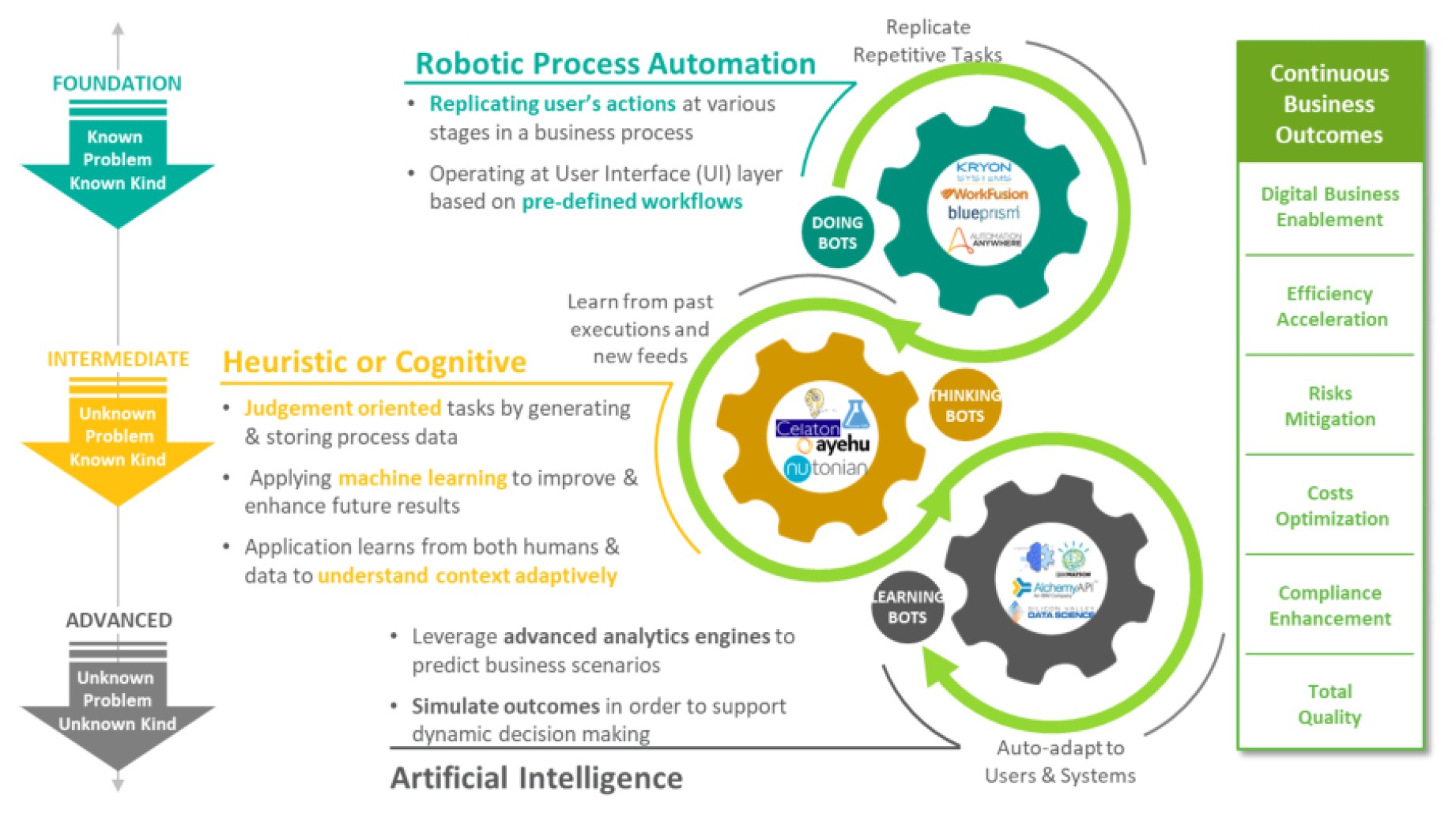
Figure 2.
Architecture of the human–machine cooperation system with the intelligent haptic interface for automated driving. a) After the multimodal TOR signal has been sensed, the human driver should take control of the vehicle driven in autonomous mode. In takeover transition, the proposed human–machine collaboration system modulates the control efforts of automation according to the driver state and control action, with an intelligent haptic steering interface to guide the human driver to take over control in a safe and smooth manner. As the input of the driver increases step by step, the input of automation decreases step by step correspondingly, and handover is intended to be finished step by step. b) The system proposed in this paper assesses the states and control ability of the driver in real time, calculating the maximum control authority (the upper limit) that can be allocated to the driver. At the same time, based on the status of the human–machine interaction process, which is monitored in real time, the two-phase intelligent haptic torque is implemented on the steering wheel. If the automation system assumes control (in phase 1), then a haptic guidance torque will be provided based on the prediction of the future driver behavior, helping the human driver to apply a sufficient amount of steering torque. If the driver starts to assume control (in phase 2), then the mode of operation of the haptic interface will be altered from predictive guidance to assistance [48].
Figure 2.
Architecture of the human–machine cooperation system with the intelligent haptic interface for automated driving. a) After the multimodal TOR signal has been sensed, the human driver should take control of the vehicle driven in autonomous mode. In takeover transition, the proposed human–machine collaboration system modulates the control efforts of automation according to the driver state and control action, with an intelligent haptic steering interface to guide the human driver to take over control in a safe and smooth manner. As the input of the driver increases step by step, the input of automation decreases step by step correspondingly, and handover is intended to be finished step by step. b) The system proposed in this paper assesses the states and control ability of the driver in real time, calculating the maximum control authority (the upper limit) that can be allocated to the driver. At the same time, based on the status of the human–machine interaction process, which is monitored in real time, the two-phase intelligent haptic torque is implemented on the steering wheel. If the automation system assumes control (in phase 1), then a haptic guidance torque will be provided based on the prediction of the future driver behavior, helping the human driver to apply a sufficient amount of steering torque. If the driver starts to assume control (in phase 2), then the mode of operation of the haptic interface will be altered from predictive guidance to assistance [48].
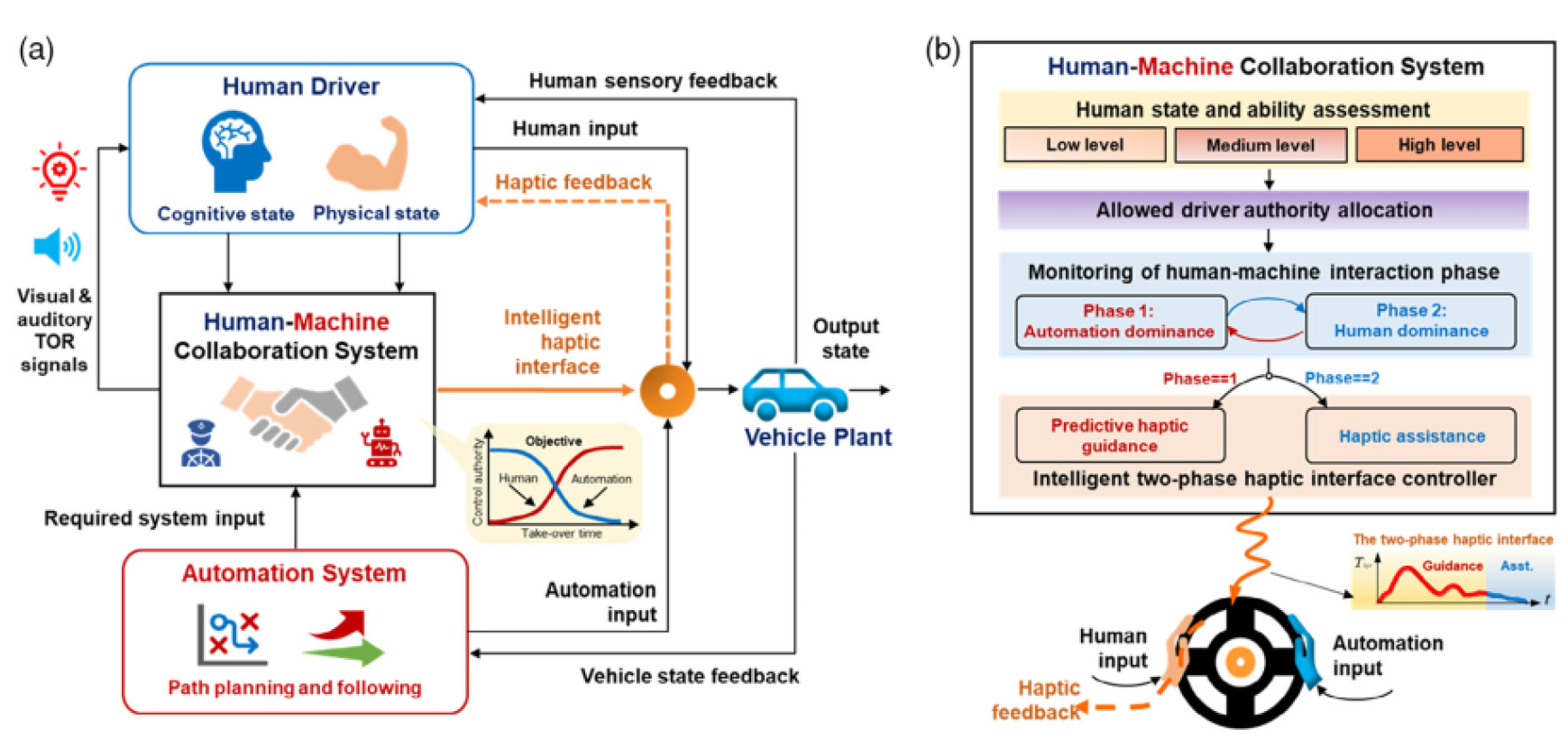
Figure 3.
Robotic Process Automation, automates hand work. Intelligent Automation is a blend of automation of hand work and head work over decision making (Presentation by WorkFusion) it comes to be known as Intelligent Automation [50,51].
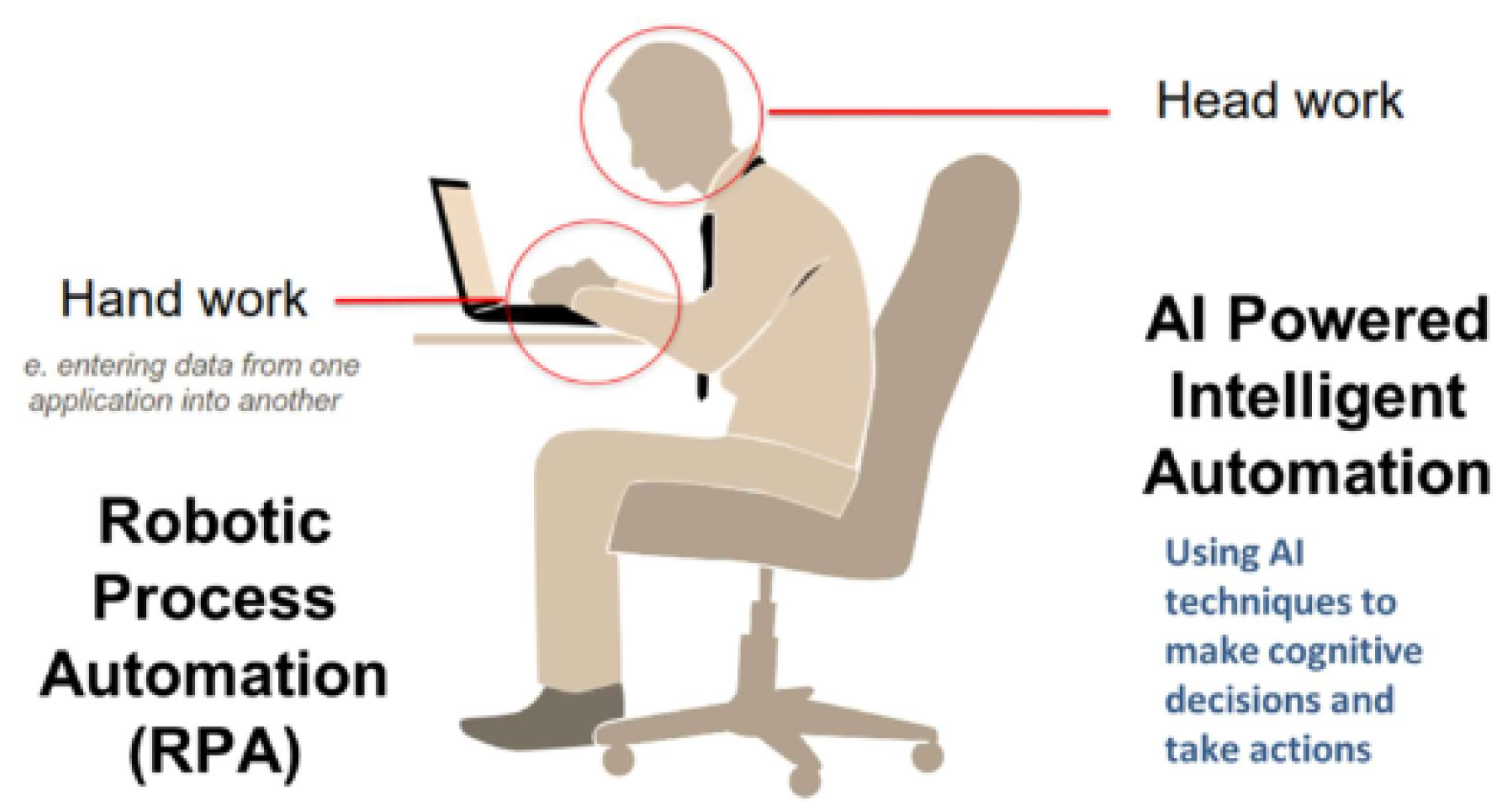

Table 1.
Systems-oriented implementation framework for Intelligent Automation.
| Phase | Systems Thinking Principle | Implementation Activities | Key Outcomes |
|---|---|---|---|
| Assessment | Wholeness and Context | + Map process relationships + Identify knowledge flows + Analyze strategic implications |
+ System map + Knowledge inventory + Strategic alignment assessment |
| Design | Feedback and Reinforcement | + Design feedback mechanisms + Identify integration points + Develop a knowledge management approach |
+ Feedback design + Integration architecture + Knowledge management plan |
| Implementation | Emergence and Adaptation | + Implement phased automation + Establish monitoring systems + Develop adaptation mechanisms |
+ Working automation + Performance dashboards + Adaptation protocols |
| Evolution | Dynamic Equilibrium | + Analyze system performance + Identify emergence patterns + Refine automation scope |
+ Performance analytics + Emergence map + Roadmap adjustments |
Disclaimer/Publisher’s Note: The statements, opinions and data contained in all publications are solely those of the individual author(s) and contributor(s) and not of MDPI and/or the editor(s). MDPI and/or the editor(s) disclaim responsibility for any injury to people or property resulting from any ideas, methods, instructions or products referred to in the content. |
© 1996 by the authors. Licensee MDPI, Basel, Switzerland. This article is an open access article distributed under the terms and conditions of the Creative Commons Attribution (CC BY) license (https://creativecommons.org/licenses/by/4.0/).
Copyright: This open access article is published under a Creative Commons CC BY 4.0 license, which permit the free download, distribution, and reuse, provided that the author and preprint are cited in any reuse.


