

Submitted:
19 February 2025
Posted:
19 February 2025
You are already at the latest version
Abstract
This systematic review comprehensively examines the transformative impact of artificial intelligence (AI) on business innovation across diverse industries. Through rigorous analysis of recent, high-impact research, we explore how AI is reshaping business models, processes, and strategies. This review synthesizes current knowledge on AI-driven business innovation, providing a robust foundation for future research and highlighting critical research gaps. Our focus encompasses AI applications in product and service innovation, operational efficiency, decision-making enhancement, and customer experience personalization. We also address implementation challenges, ethical considerations, and organizational implications. The findings reveal that AI facilitates unprecedented automation, predictive capabilities, and personalization, which catalyze innovation across various business functions. However, successful AI implementation necessitates addressing significant technical, organizational, and ethical hurdles. This review serves as a valuable roadmap for researchers and practitioners navigating the complexities of AI-driven business transformation, highlighting opportunities for future research and providing insights for effective AI adoption strategies.
Keywords:
1. Introduction
- How is AI being applied to drive innovation across different business functions and industries?
- What are the key benefits and challenges of AI-driven business innovation?
- What are the organizational and strategic implications of AI adoption for innovation?
- What ethical considerations arise from the use of AI in business innovation?
- What are promising directions for future research on AI and business innovation?
2. Methodology
2.1. PICO Framework
- Population: Businesses implementing AI for innovation.
- Intervention: AI technologies and applications.
- Comparison: Traditional or non-AI approaches to innovation.
- Outcomes: Impact on business processes, products, services, and performance.
2.2. Search Strategy
2.3. Screening and Selection Process
- Initial screening: Two independent reviewers screened titles and abstracts.
- Full-text review: The same reviewers assessed full texts of potentially eligible articles.
- Data extraction: Relevant information was extracted from the included studies.
2.3.1. Initial Screening Criteria
-
Inclusion Criteria:
- Language: Published in English.
- Document Type: Research articles or review articles.
- Publication Period: Published between January 2018 and December 2024.
- Journal Quartile: Published in journals ranked within the Q1 or Q2 quartiles according to the SCImago Journal Rank (SJR).
-
Exclusion Criteria:
- Language: Publications not in English.
- Document Type: Conference proceedings, books, book chapters, or non-peer-reviewed publications.
- Focus: Studies that focus solely on the technical aspects of AI without clear business innovation implications.
2.3.2. Full-text Review Criteria
-
Inclusion Criteria:
- Satisfactory Quality Assessment: Studies were included only if judged to have a low risk of bias based on the Quality Assessment detailed in Section 2.4.
-
Exclusion Criteria:
- Unsatisfactory Quality Assessment: Studies determined to have a moderate to high risk of bias in the overall assessment of methodological quality (Section 2.4) were excluded.
2.3.3. Number of Articles at Each Stage
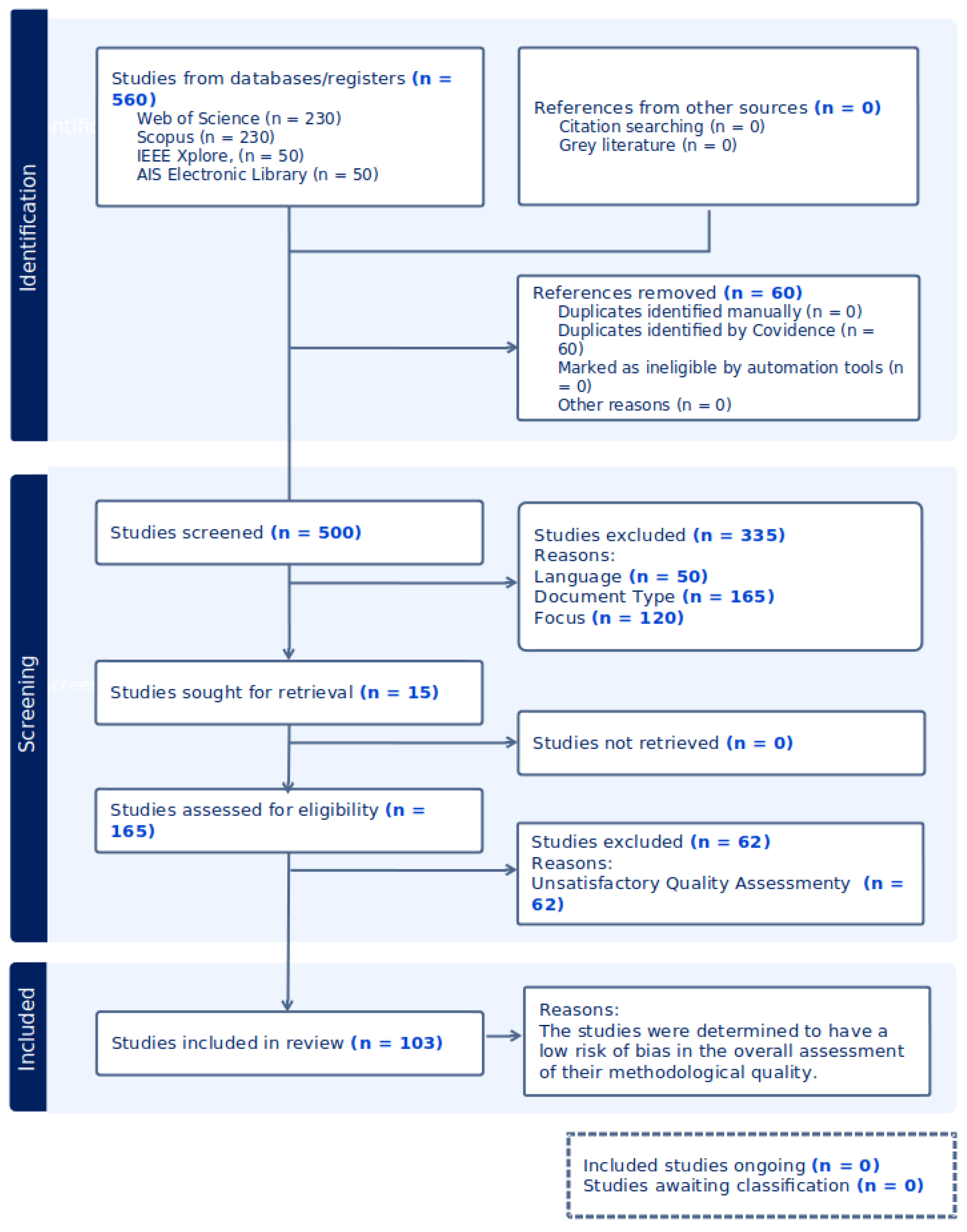
- Initial Screening: 500 titles and abstracts were screened by two independent reviewers.
- Full-text Review: 165 full texts of potentially eligible articles were assessed.
- Data Extraction: Relevant information was extracted from the 103 included studies.
2.4. Quality Assessment
Explanation of the Table 1:
- Domain: Broad category of potential bias.
- Sub-Criteria: Specific aspects within each domain that were evaluated.
- Assessment Levels: Possible ratings for each sub-criterion.
- Description: A short description of what each sub-criterion assesses.
2.5. Data Synthesis
- Familiarization with the data: Two independent researchers thoroughly examined the selected articles, immersing themselves in the content and making initial annotations on potential codes and themes.
-
Generating initial codes: Using Covidence, the researchers systematically coded salient features of the data across the entire dataset. Each researcher independently generated an initial set of codes, focusing on relevance to AI-driven business innovation. A total of 100 initial codes were generated.Table 2 provides a detailed overview of the 100 initial codes identified, systematically organized into broader categories to enhance clarity and facilitate interpretation. This classification captures the diverse range of AI applications, impacts, and considerations across various business domains. It establishes a foundational framework for uncovering key themes and emerging trends in AI-driven business innovation, offering valuable insights to advance academic research and guide practical implementation strategies.
-
Searching for themes: The researchers collated codes into potential themes, aggregating all data relevant to each potential theme. This phase involved creating conceptual maps and thematic networks to visualize relationships between codes and potential themes. Initially, twelve candidate themes were identified:
- (a)
- AI Applications Across Business Functions.
- (b)
- Organizational Challenges in AI Adoption.
- (c)
- Ethical Considerations in AI Implementation.
- (d)
- Human-AI Collaboration Models.
- (e)
- AI-Driven Business Model Innovation (ADBMI).
- (f)
- Regional Variations in AI Adoption.
- (g)
- Future Directions for AI in Business.
- (h)
- AI Governance and Regulation.
- (i)
- AI and Organizational Culture.
- (j)
- AI in Emerging Markets and Small and Medium-sized Enterprises (SMEs).
- (k)
- Ethical AI and Responsible Innovation.
- (l)
- Long-Term Impacts and Sustainability of AI.
- Reviewing themes: The researchers critically evaluated the themes in relation to the coded extracts and the entire dataset. This process involved refining, combining, or discarding themes as necessary to ensure coherence and distinctiveness. The researchers conducted regular meetings to discuss and refine the themes, ensuring they accurately reflected the data.
-
Defining and naming themes: The researchers further refined the specifics of each theme and generated clear definitions and names. This process involved identifying the essence of each theme and determining how it fits into the broader narrative of AI-driven business innovation.The criteria for theme selection and refinement were:
- Relevance to research questions.
- Frequency and prominence across the dataset.
- Distinctiveness and non-overlap between themes.
- Ability to provide meaningful insights into AI-driven business innovation.
Based on these criteria, the initial twelve themes were consolidated into seven main themes:- (a)
- AI Applications Across Business Functions.
- (b)
- Organizational Challenges in AI Adoption.
- (c)
- Ethical Considerations in AI Implementation.
- (d)
- Human-AI Collaboration Models.
- (e)
- ADBMI.
- (f)
- Regional Variations in AI Adoption.
- (g)
- Future Directions for AI in Business.
The consolidation process involved merging closely related themes (e.g., "AI Governance and Regulation" was incorporated into "Ethical Considerations in AI Implementation") and subsuming narrower themes under broader categories (e.g., "AI in Emerging Markets and SMEs" was integrated into "Regional Variations in AI Adoption"). - Producing the report: The researchers synthesized the findings into a comprehensive scientific article. They selected salient extracts, conducted a final analysis, and correlated results with the research questions and existing literature. The manuscript delineated the systematic review methodology, presented ·findings, and drew conclusions in a structured format, providing a detailed report of the thematic analysis.
2.6. PRISMA Flow Diagram
3. AI Applications and Impacts Across Business Functions
3.1. Product and Service Innovation
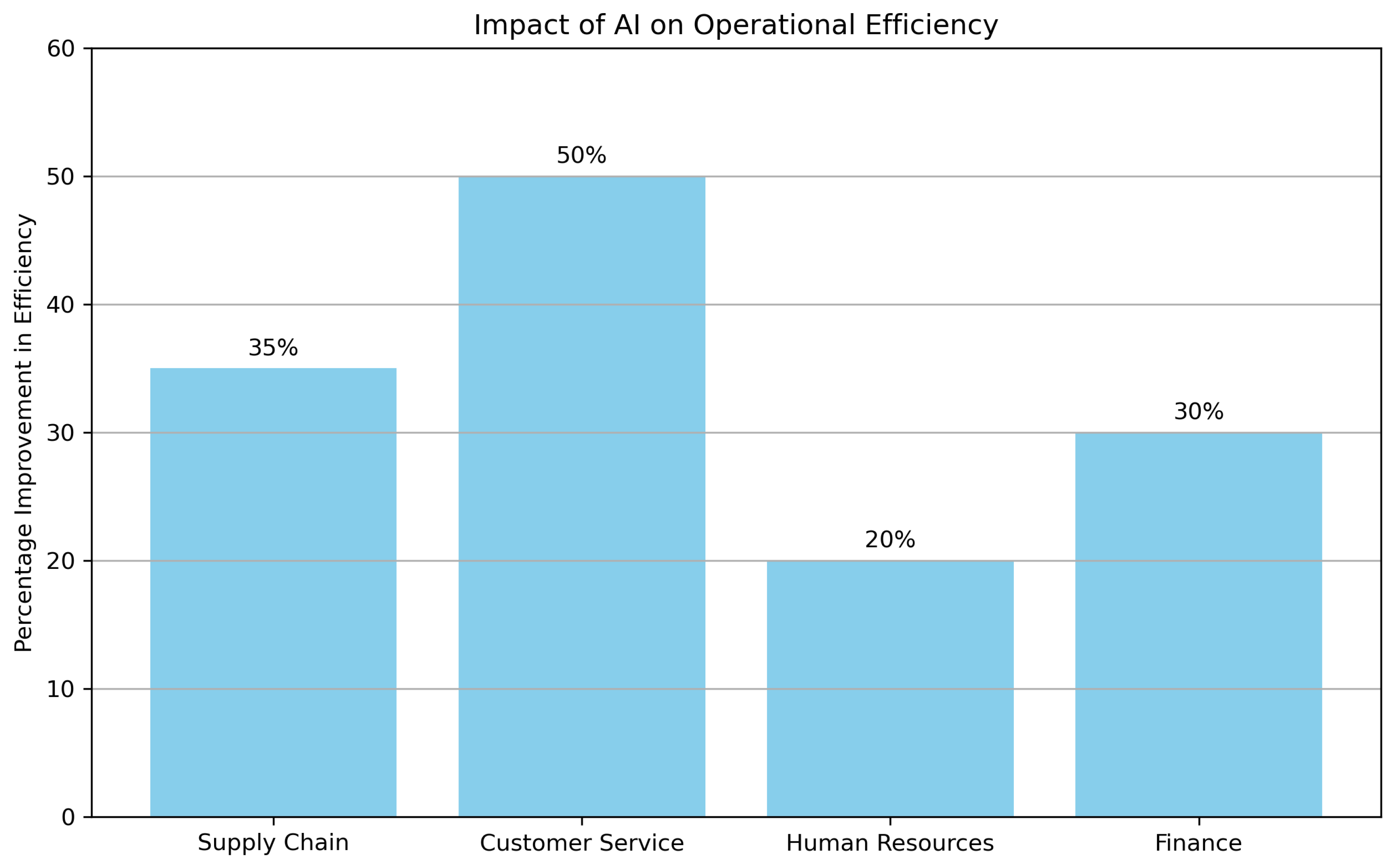
3.2. Operational Efficiency and Process Innovation
3.3. Decision Making and Strategic Planning
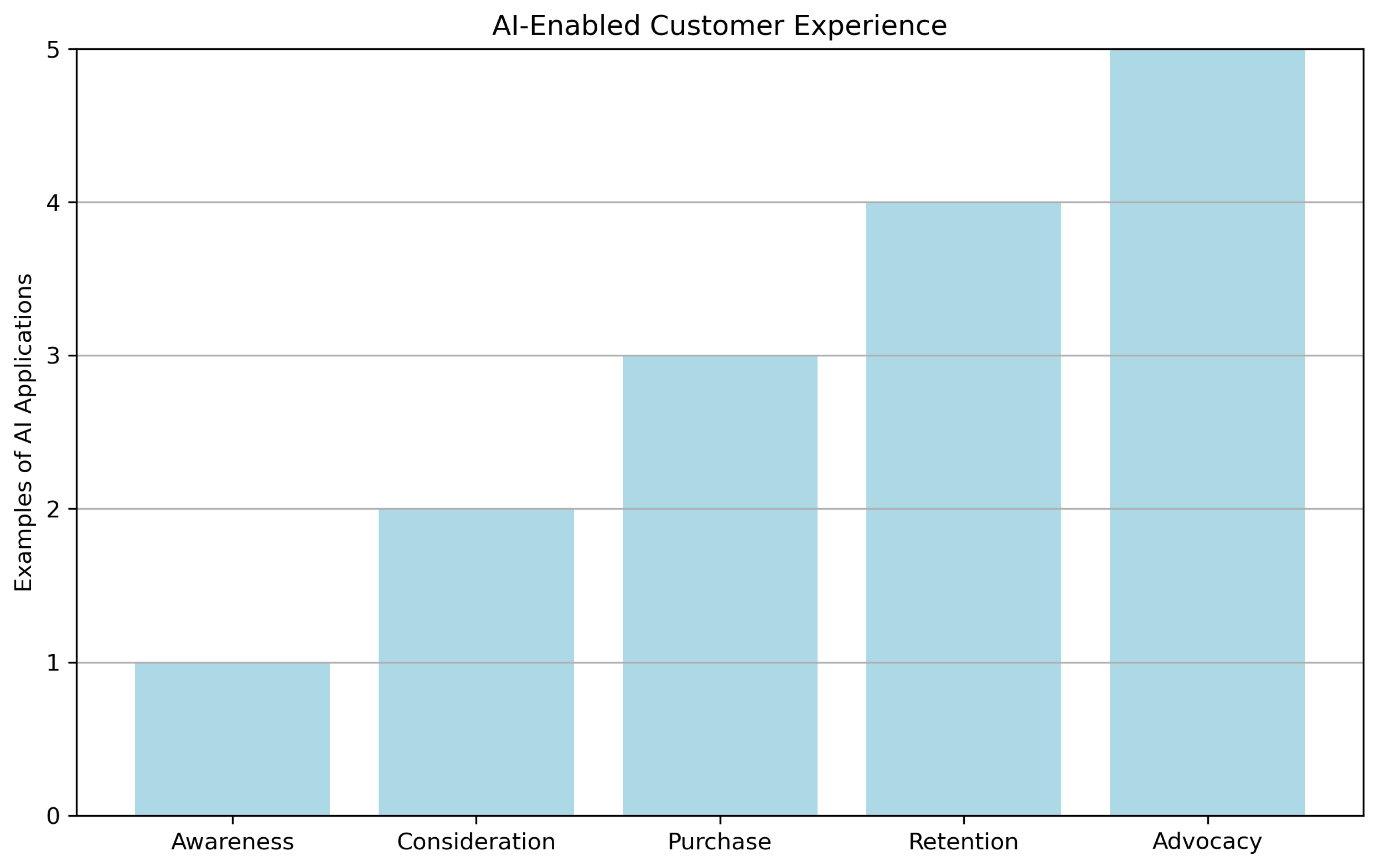
3.4. Customer Experience and Personalization
3.5. Critical Evaluation of AI Impact Studies
3.5.1. Service Innovation
- Personalization: AI enables the creation of highly personalized experiences and services based on customer data analysis.
- New business models: It facilitates the development of entirely new services, such as advanced virtual assistants and predictive analytics platforms.
- Enhancement of existing products: AI is used to continuously update and optimize services, making them more intelligent, and adaptable.
- Simulation and validation: AI-based Business Game Simulators (BGS) allow testing of new services in virtual environments before launch [42].
3.5.2. Operational Efficiency
- Automation: It enables the automation of repetitive tasks and complex processes, freeing human resources for higher-value activities.
- Supply chain optimization: AI algorithms can predict demand, optimize inventory, and improve logistics.
- Predictive maintenance: AI anticipates equipment and machinery failures, enabling proactive maintenance.
3.5.3. Decision Making
- Predictive analytics: AI models analyze large volumes of data to predict trends and support strategic planning.
- Real-time decisions: AI processes real-time information and provides immediate recommendations.
- Bias reduction: When properly implemented, AI algorithms can help reduce human biases in decision-making.
- Scenario simulation: BGS allow the evaluation of different decision scenarios before implementation.
3.5.4. Customer Experience
- Round-the-clock customer service: Chatbots and virtual assistants provide continuous attention.
- Personalized recommendations: AI analyzes customer behavior to offer highly personalized recommendations.
- More natural interactions: Natural language processing technologies enable more fluid interactions with automated systems.
- Experience simulation: AI-based BGS allow optimization of customer experience in virtual environments.
4. Organizational and Strategic Implications
4.1. AI Adoption and Implementation Challenges
- Lack of awareness of data value.
- Integration and interoperability difficulties.
- Limited resources for data technology investments.
- Data science skill shortages.
4.2. Organizational Learning and Capability Development
- Formulating internal AI ethics policies.
- Aligning AI initiatives with organizational values.
- Identifying and developing new technical and ethical competencies.
- Implementing robust risk assessment methodologies.
- Cultivating an ethics-centric culture in AI development and deployment.
- Adopting responsible innovation processes.
- Promoting inter-organizational collaboration and knowledge sharing.
- Developing performance metrics for ethical AI systems.
4.3. AI-Driven Business Model Innovation: Service-Centric Approaches and Ecosystem Value Capture in the Digital Era
4.3.1. Service-Centric Approaches and AI Integration
4.3.2. Ecosystem Value Capture and Digital Platform Business Models
4.3.3. Customer Collaboration and Understanding in Digital Ecosystems
4.3.4. Quantitative and Qualitative Analysis
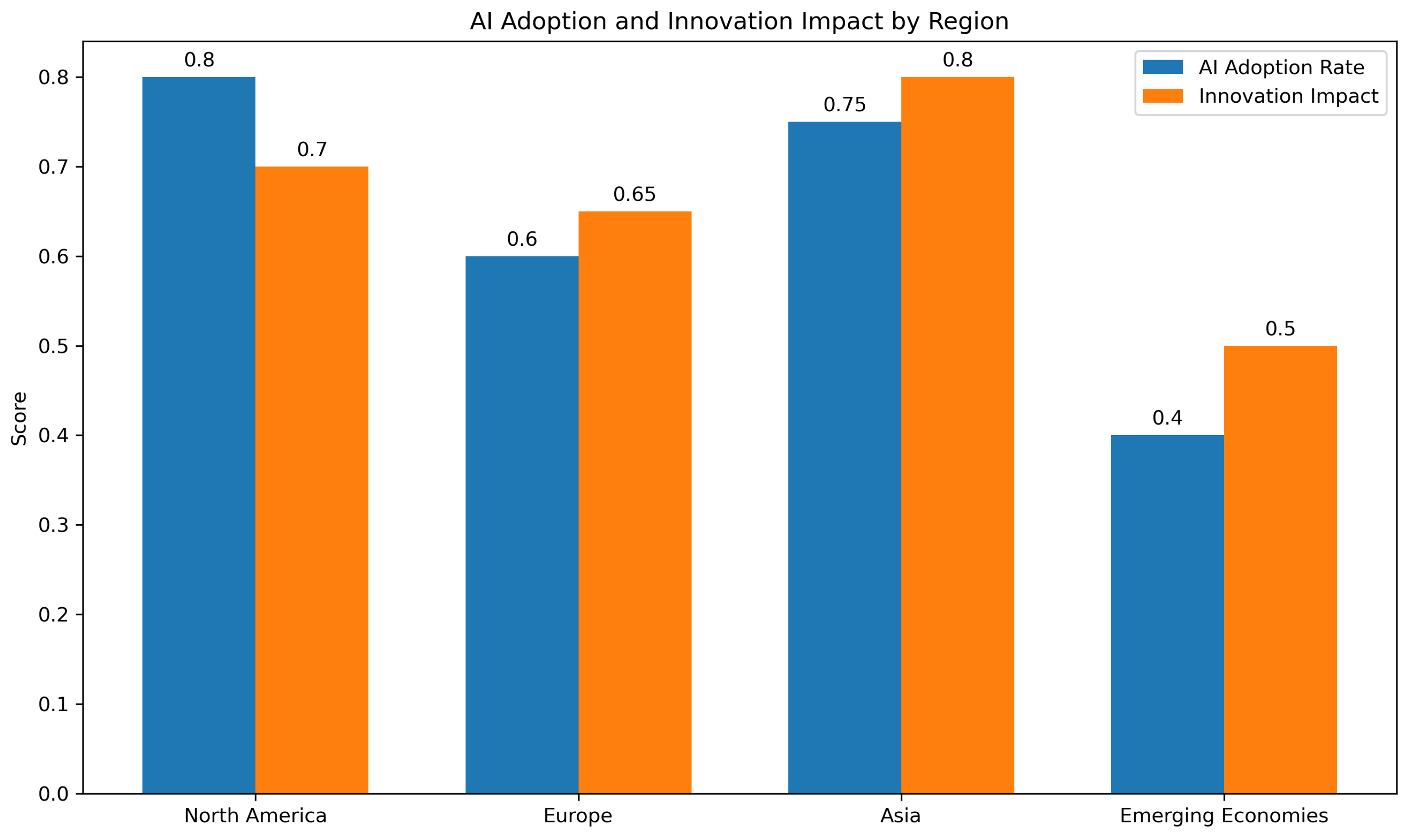
4.4. Regional Variations in AI-Driven Business Innovation
-
North America. The United States and Canada have experienced substantial growth in AI adoption, particularly in the information technology, finance, and professional services sectors. Since 2016, demand for AI skills has risen rapidly, with the highest demand observed in IT occupations, followed by roles in architecture, engineering, sciences, and management. A strong correlation (0.87) in AI job demand between the U.S. and Canada indicates similar adoption patterns [59].Projections suggest AI will generate millions of new jobs in North America by 2025, with many emerging roles resulting from human-machine collaboration. U.S. companies are investing heavily in AI research and development and human capital to maintain competitiveness. However, concerns exist regarding AI’s potential to create "winner-takes-all" markets, potentially leading to industry concentration and reduced innovation if not properly managed [60].
-
Europe. In Europe, particularly the United Kingdom and France, AI adoption shows a more gradual increase compared to North America. Demand for AI skills in these countries has been steadily rising from 2018 to early 2023, but with less dramatic fluctuations. The correlation between AI demand in France and other countries is lower (ranging from 0.08 to 0.54), suggesting a distinct AI job market in France [59,61].European regulators, such as the European Insurance and Occupational Pensions Authority (EIOPA), have released AI governance guidelines focusing on principles like proportionality, fairness, transparency, and human oversight. The United Kingdom’s (UK) Financial Conduct Authority (FCA) and Prudential Regulation Authority (PRA) have also initiated discussions on AI regulation in financial services [60].A study of 85 UK SMEs revealed that despite recognizing the value of data for their businesses, many SMEs face challenges in adopting AI and data analytics technologies due to resource limitations and restricted access to financing [46].
-
Asia. Asian countries like India, Singapore, and China exhibit varied patterns of AI adoption. India has experienced a significant and consistent increase in AI demand, with demand nearly tripling from 2018 to early 2023. This trend suggests heavy investment in AI that is likely to continue. As one of the fastest-growing economies, India has vast potential for AI growth, which can contribute to economic development and job creation.Singapore, conversely, shows a relatively flat trend in AI demand compared to other countries. This lack of growth is concerning and may be due to factors such as limited investment in AI research and development, a shortage of skilled AI professionals, or insufficient policy support for AI adoption [59].China has been actively promoting AI development, with initiatives to standardize AI applications in various sectors. The Chinese market for intelligent investment banking, initially dominated by Internet-based companies, has seen gradual adoption by major commercial banks and financial institutions [60].Asia leads significantly in the deployment of robots for direct customer service, contributing more substantially to the customer experience [62].
-
Emerging Economies. The rapid growth of AI adoption globally is likely to impact emerging economies, creating both opportunities and challenges. These countries may face skill shortages and the need to invest in education and training to keep pace with AI advancements.Analysis of skill shortages across different countries reveals both commonalities and disparities. For instance, while the U.S. and France exhibit shortages in deep learning and AI skills, India grapples with shortages in web-related technologies. This suggests that emerging economies may need to focus on developing specific skill sets to compete in the global AI market [11,59,63].
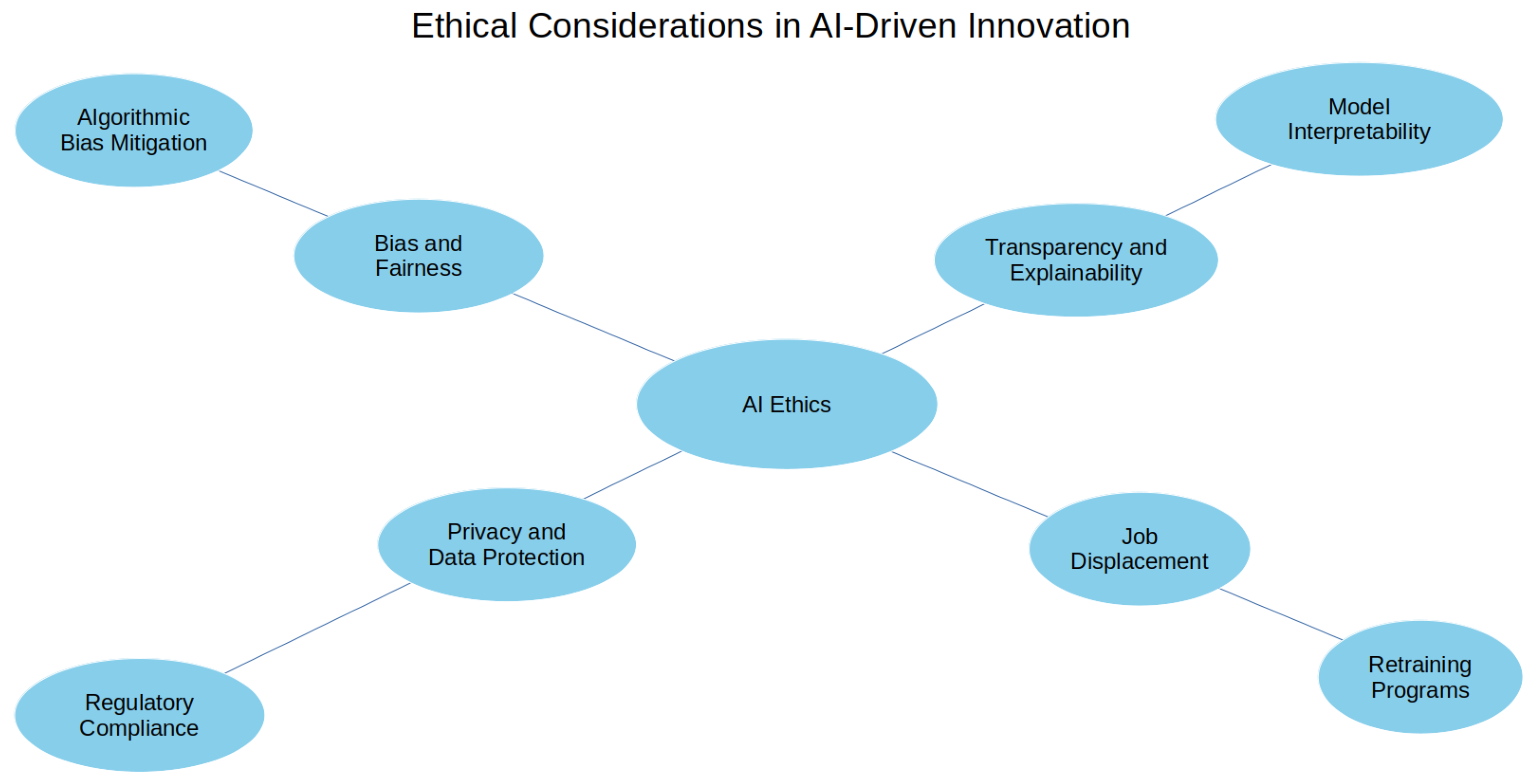
5. Ethical Considerations in AI-Driven Innovation: Operationalizing Principles in Organizational Processes
5.1. Key Ethical Issues in AI-Driven Innovation
5.1.1. Bias and Fairness
5.1.2. Privacy and Data Protection
5.1.3. Transparency and Explainability
5.1.4. Job Displacement and Workforce Impacts
5.1.5. Governance and Regulation
5.2. Operationalizing Ethical Principles in AI Innovation
5.2.1. Establishing AI Ethics Boards and Governance Structures
5.2.2. Implementing Fairness-Aware Machine Learning Techniques
5.2.3. Adopting Privacy-Preserving AI Techniques
5.2.4. Developing Explainable AI Systems
5.2.5. Conducting Regular Ethical Audits and Impact Assessments
5.2.6. Fostering Interdisciplinary Collaboration
5.2.7. Investing in AI Ethics Education and Training
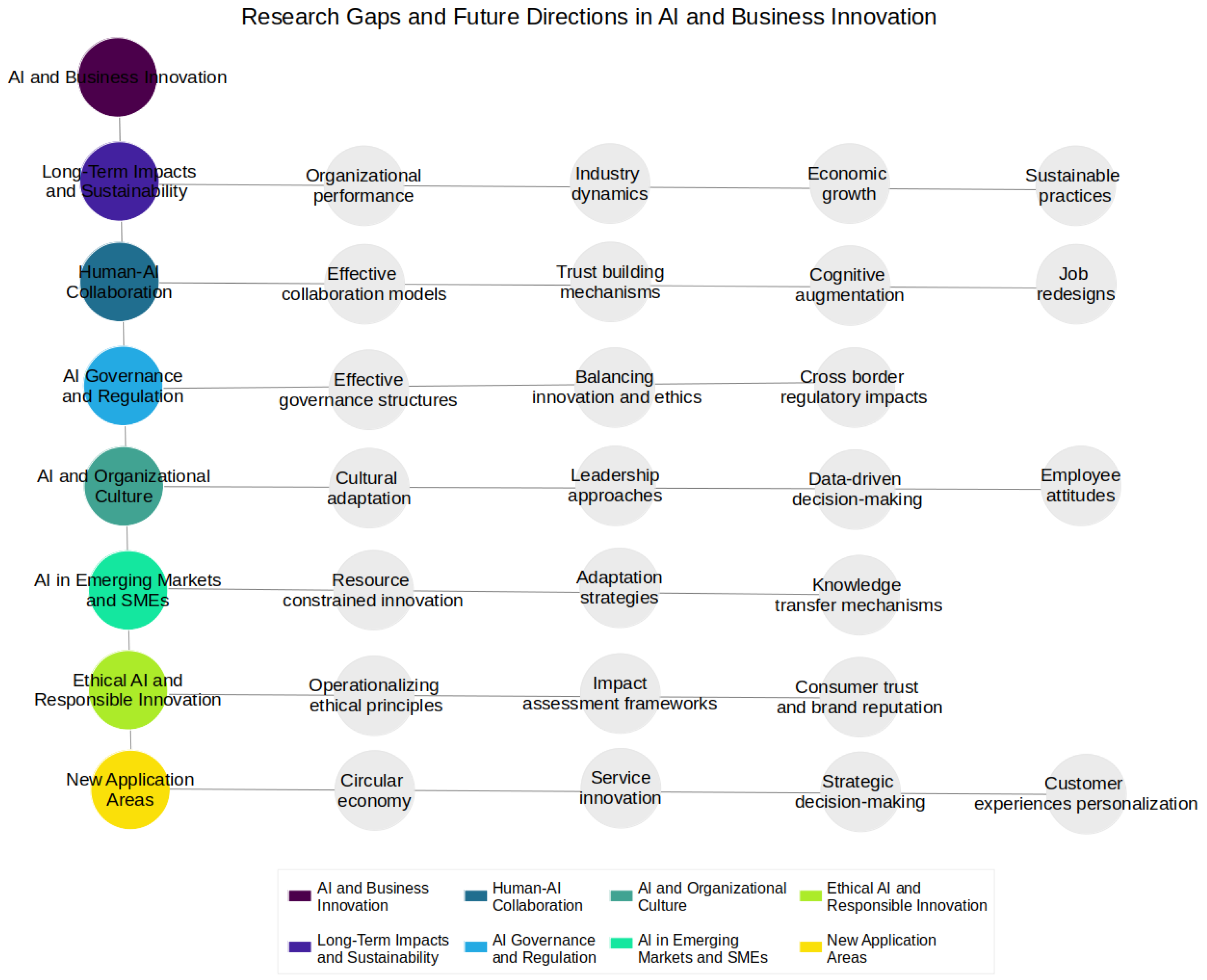
6. Research Gaps and Future Directions
6.1. Long-Term Impacts and Sustainability
- How does AI-driven innovation affect firm performance and competitive advantage over time?
- What are the long-term implications of AI adoption for industry structure and competition?
- How can AI contribute to sustainable business practices and addressing global challenges?
6.2. Human–AI Collaboration
- What are the most effective models for human–AI collaboration in different business contexts?
- How can organizations design AI systems that complement and enhance human skills?
- What factors influence trust in and the acceptance of AI systems among employees and customers?
6.2.1. Best Practices for Human–AI Collaboration
- Transparent AI decision-making: develop XAI models that provide clear rationales for their suggestions, enhancing trust and collaboration [69].
- Continuous learning and adaptation: implement systems that learn from human feedback and adapt over time [90].
- Clear role definition: clearly define the roles of humans and AI in the collaborative process, leveraging the strengths of each [89].
- Interdisciplinary teams: foster collaboration between domain experts, AI specialists, and user experience designers to create more effective systems [88].
- Ethical considerations: implement robust ethical guidelines for AI development and use, addressing issues such as bias and privacy [73].
- User-centric design: focus on the end-user experience, ensuring that the system is intuitive and useful, and meets the user’s needs [90].
- Feedback loops: create mechanisms for humans to provide feedback to the AI system, which can be used to refine and improve the models [87].
6.2.2. Designing Systems to Complement Human Skills
- Augmented intelligence approach: design AI systems to enhance rather than replace human capabilities [87].
- Adaptive user interfaces: develop interfaces that adjust to individual user preferences and skill levels [91].
- Contextual awareness: create AI systems that consider the broader contexts of tasks and user environments [92].
- Proactive assistance: implement AI that anticipates user needs and offers relevant information or suggestions preemptively [93].
- Multimodal interaction: design systems that support various input and output modalities, accommodating different user preferences and situations [94].
- Task complementarity: focus AI on tasks that require processing large amounts of data or repetitive actions, allowing humans to concentrate on tasks requiring creativity, empathy, and complex decision-making [89].
6.2.3. Examples of Successful Human–AI Collaboration
- Healthcare diagnostics: Google’s DeepMind collaboration with the UK’s National Health Service developed an AI system that detects acute kidney injury, alerting clinicians up to 48 hours earlier than traditional methods [97].
- Financial services: the use of AI-assisted methods by loan officers at a large bank improved the decision accuracy by 23% and reduced the default rates by 7% compared to traditional methods [98].
- Customer service: Amazon utilizes AI-powered virtual assistants like Alexa to handle customer inquiries and provide personalized recommendations, significantly reducing response times and improving customer satisfaction [13].
- Product development: Nikeland, Nike’s virtual platform on Roblox, revolutionizes product development by enabling avatar customization with exclusive items. This digital space provides valuable consumer data, facilitates rapid prototyping, and serves as a testing ground for new concepts. The integration of AI accelerates the product development cycle, fostering innovation in sportswear design [56].
- Content creation: Microsoft’s partnership with OpenAI has led to the integration of advanced natural language processing capabilities into Microsoft Azure, augmenting human creativity and productivity in content generation and analysis [99].
6.3. AI Governance and Regulation
- What governance structures are most effective for ensuring responsible AI development and use?
- How can regulations balance innovation incentives with ethical and societal concerns?
- What are the implications of different regulatory approaches for AI-driven business innovation?
6.4. AI and Organizational Culture
- How does AI adoption affect organizational culture and employee attitudes?
- What leadership approaches are most effective in driving AI-led transformation?
- How can organizations balance data-driven decision-making with human judgment and creativity?
6.5. AI in Emerging Markets and Small and Medium-sized Enterprises
- How do resource constraints in emerging markets and SMEs affect AI adoption and innovation?
- What are the most effective strategies for AI implementation in resource-limited contexts?
- How can AI technologies be adapted to address specific challenges in emerging markets?
6.5.1. AI Adoption in Small and Medium-sized Enterprises: Overcoming Barriers and Leveraging Opportunities
-
Limited Financial Resources. This study identified financial constraints as a primary barrier to AI adoption in SMEs. An investigation of 460 European manufacturing SMEs revealed that firms often struggle with the high initial costs of AI implementation.Strategy: The authors propose leveraging government incentives and exploring AI-as-a-Service (AIaaS) models. These cloud-based solutions offer scalable AI capabilities without significant upfront investments, making them particularly suitable for resource-constrained SMEs [103].
-
Lack of Technical Expertise. This study highlights the shortage of AI-related skills in SMEs as a significant obstacle to adoption.Strategy: The study recommends fostering partnerships with universities and research institutions to access expertise and training programs. Additionally, they suggest creating internal “AI champions” to lead adoption efforts and knowledge dissemination within the organization [104].
-
Data Management Challenges. This study identified data quality and availability as critical factors affecting AI adoption in SMEs.Strategy: The authors propose a phased approach to data management, starting with internal data sources and gradually incorporating external data. They also emphasize the importance of developing clear data governance policies to ensure data quality and compliance with regulations [105].
-
Organizational Resistance. This study found that organizational culture and employee resistance can significantly hinder AI adoption in SMEs.Strategy: The researchers recommend implementing change management strategies that focus on the clear communication of AI’s benefits, involving employees in the adoption process, and providing comprehensive training to alleviate fears and build enthusiasm for AI technologies [33].
-
Ethical and Trust Issues. This study highlighted concerns about AI ethics and trustworthiness as barriers to adoption. To overcome ethical concerns and unlock growth barriers in AI adoption for SMEs, the research suggests several key strategies:
- (a)
- Focus on frugal innovation and BMI as necessary conditions for successful internationalization, rather than AI alone.
- (b)
- Implement AI gradually as part of broader business model changes, not in isolation.
- (c)
- Provide AI literacy training to employees to address job displacement fears and build internal support.
- (d)
- Emphasize AI as an augmentation tool rather than a job replacement.
- (e)
- Start with small-scale AI pilot projects to test feasibility and demonstrate value.
- (f)
- Prioritize AI applications with clear return on investment and ethical considerations.
- (g)
- Develop AI governance frameworks to guide responsible use.
- (h)
- Ensure transparency in AI-powered processes and decisions.
- (i)
- Address potential biases in AI algorithms and training data.
- (j)
- Protect customer privacy and data security.
- (k)
- Consider the broader societal impact of AI applications [58].
By taking this strategic, ethical approach focused on frugal innovation and business model redesign, SMEs can overcome adoption barriers and leverage AI to drive sustainable growth and competitiveness in global markets.
6.6. Ethical AI and Responsible Innovation
- How can organizations operationalize ethical AI principles in their innovation processes?
- What metrics and evaluation frameworks can be used to assess the ethical impact of AI systems?
- How do ethical AI practices affect consumer trust, brand reputation, and business performance?
7. Limitations and Knowledge Gaps in AI-Driven Business Innovation Review
7.1. Limitations of the Current Review
7.2. Gaps in Current Knowledge
- Limited longitudinal studies on long-term impacts of AI adoption
- Insufficient research on AI implementation in small and medium enterprises
- Lack of studies examining AI’s role in addressing global sustainability challenges
8. Conclusions
- AI-driven innovation is reshaping business functions—from product development and operations to decision-making and customer experience—enabling new business models and transforming industry dynamics, with platform-based and service-centric models gaining prominence [7].
- Successful AI adoption requires organizations to develop new capabilities, foster a culture of learning, and navigate complex ethical considerations. This includes building data science expertise, establishing governance structures, and promoting cross-functional collaboration [52].
- Long-term impacts of AI adoption on organizational performance and industry dynamics.
- Effective models for human-AI collaboration and trust-building.
- AI governance frameworks that balance innovation with ethical and societal concerns.
- Cultural and organizational factors influencing AI adoption and implementation.
- AI-driven innovation in emerging markets and SMEs.
- Practical approaches to operationalizing ethical AI principles in business contexts.
Author Contributions
Acknowledgments
Conflicts of Interest
References
- Acemoglu, D.; Restrepo, P. The race between man and machine: Implications of technology for growth, factor shares, and employment. Am. Econ. Rev. 2018, 108, 1488–1542. [Google Scholar] [CrossRef]
- Haenlein, M.; Kaplan, A. A brief history of artificial intelligence: On the past, present, and future of artificial intelligence. Calif. Manag. Rev. 2019, 61, 5–14. [Google Scholar] [CrossRef]
- Dwivedi, Y.K.; Hughes, L.; Ismagilova, E.; Aarts, G.; Coombs, C.; Crick, T.; others. ; Williams, M.D. Artificial Intelligence (AI): Multidisciplinary perspectives on emerging challenges, opportunities, and agenda for research, practice and policy. Int. J. Inf. Manag. 2021, 57, 101994. [Google Scholar] [CrossRef]
- Kaplan, A.; Haenlein, M. Siri, Siri, in my hand: Who’s the fairest in the land? On the interpretations, illustrations, and implications of artificial intelligence. Bus. Horiz. 2019, 62, 15–25. [Google Scholar] [CrossRef]
- Lee, J.; Suh, T.; Roy, D.; Baucus, M. Emerging technology and business model innovation: The case of artificial intelligence. J. Open Innov.: Technol. Mark. Complex. 2019, 5, 44. [Google Scholar] [CrossRef]
- Brock, J.K.U.; von Wangenheim, F. Demystifying AI: What digital transformation leaders can teach you about realistic artificial intelligence. Calif. Manag. Rev. 2019, 61, 110–134. [Google Scholar] [CrossRef]
- Roberts, D.L.; Candi, M. Artificial intelligence and innovation management: Charting the evolving landscape. Technovation 2024, 136, 103081. [Google Scholar] [CrossRef]
- Naeem, R.; Kohtamäki, M.; Parida, V. Artificial intelligence enabled product–service innovation: past achievements and future directions. Rev. Manag. Sci. 2024. [Google Scholar] [CrossRef]
- Khalil, H.; Pollock, D.; McInerney, P.; Evans, C.; Moraes, E.B.; Godfrey, C.M.; Alexander, L.; Tricco, A.; Peters, M.D.J.; Pieper, D.; et al. Automation tools to support undertaking scoping reviews. Res. Synth. Methods 2024, 15, 839–850. [Google Scholar] [CrossRef]
- Więckowska, B.; Kubiak, K.B.; Jóźwiak, P.; Moryson, W.; Stawińska-Witoszyńska, B. Cohen’s Kappa Coefficient as a Measure to Assess Classification Improvement following the Addition of a New Marker to a Regression Model. Int. J. Environ. Res. Public Health 2022, 19, 10213. [Google Scholar] [CrossRef]
- Alfirević, N.; Praničević, D.G.; Mabić, M. Custom-Trained Large Language Models as Open Educational Resources: An Exploratory Research of a Business Management Educational Chatbot in Croatia and Bosnia and Herzegovina. Sustainability 2024, 16, 4929. [Google Scholar] [CrossRef]
- Cooper, R.G. The AI transformation of product innovation. Ind. Mark. Manag. 2024, 119, 62–74. [Google Scholar] [CrossRef]
- Hoy, M.B. Alexa, Siri, Cortana, and more: An introduction to voice assistants. Med. Ref. Serv. Q. 2018, 37, 81–88. [Google Scholar] [CrossRef]
- Maedche, A.; Legner, C.; Benlian, A.; Berger, B.; Gimpel, H.; Hess, T.; others. ; Söllner, M. AI-based digital assistants. Bus. Inf. Syst. Eng. 2019, 61, 535–544. [Google Scholar] [CrossRef]
- Vieira, B.; de Armas, J.; Ramalhinho, H. Optimizing an integrated home care problem: A heuristic-based decision-support system. Eng. Appl. Artif. Intell. 2022, 114, 105062. [Google Scholar] [CrossRef]
- Liu, X.; Faes, L.; Kale, A.U.; Wagner, S.K.; Fu, D.J.; Bruynseels, A.; others. ; Denniston, A.K. A comparison of deep learning performance against health-care professionals in detecting diseases from medical imaging: a systematic review and meta-analysis. Lancet Digit. Health 2019, 1, e271–e297. [Google Scholar] [CrossRef]
- Paul, D.; Sanap, G.; Shenoy, S.; Kalyane, D.; Kalia, K.; Tekade, R.K. Artificial intelligence in drug discovery and development. Drug Discov. Today 2021, 26, 80–93. [Google Scholar] [CrossRef] [PubMed]
- Vamathevan, J.; Clark, D.; Czodrowski, P.; Dunham, I.; Ferran, E.; Lee, G.; others. ; Zhao, S. Applications of machine learning in drug discovery and development. Nat. Rev. Drug Discov. 2019, 18, 463–477. [Google Scholar] [CrossRef]
- Jung, D.; Dorner, V.; Weinhardt, C.; Pusmaz, H. Designing a robo-advisor for risk-averse, low-budget consumers. Electron. Mark. 2018, 28, 367–380. [Google Scholar] [CrossRef]
- Belanche, D.; Casaló, L.V.; Flavián, C. Artificial Intelligence in FinTech: understanding robo-advisors adoption among customers. Ind. Manag. Data Syst. 2019, 119, 1411–1430. [Google Scholar] [CrossRef]
- Mhlanga, D. Industry 4.0 in Finance: The Impact of Artificial Intelligence (AI) on Digital Financial Inclusion. Int. J. of Financial Studies 2020, 8, 45. [Google Scholar] [CrossRef]
- Leo, M.; Sharma, S.; Maddulety, K. Machine learning in banking risk management: A literature review. Risks 2019, 7, 29. [Google Scholar] [CrossRef]
- Park, T.; Gu, P.; Kim, C.H.; Kim, K.T.; Chung, K.J.; Kim, T.B.; Jung, H.; Yoon, S.J.; Oh, J.K. Artificial intelligence in urologic oncology: the actual clinical practice results of IBM Watson for Oncology in South Korea. Prostate Int. 2023, 11, 218–221. [Google Scholar] [CrossRef] [PubMed]
- Lee, J.; Davari, H.; Singh, J.; Pandhare, V. Industrial Artificial Intelligence for industry 4.0-based manufacturing systems. Manuf. Lett. 2018, 18, 20–23. [Google Scholar] [CrossRef]
- Carvalho, T.P.; Soares, F.A.; Vita, R.; Francisco, R.D.P.; Basto, J.P.; Alcalá, S.G. A systematic literature review of machine learning methods applied to predictive maintenance. Comput. Ind. Eng. 2019, 137, 106024. [Google Scholar] [CrossRef]
- Zonta, T.; da Costa, C.A.; da Rosa Righi, R.; de Lima, M.J.; da Trindade, E.S.; Li, G.P. Predictive maintenance in the Industry 4.0: A systematic literature review. Comput. Ind. Eng. 2020, 150, 106889. [Google Scholar] [CrossRef]
- Toorajipour, R.; Sohrabpour, V.; Nazarpour, A.; Oghazi, P.; Fischl, M. Artificial intelligence in supply chain management: A systematic literature review. J. Bus. Res. 2021, 122, 502–517. [Google Scholar] [CrossRef]
- Blut, M.; Wünderlich, N.V.; Brock, C. Facilitating retail customers’ use of AI-based virtual assistants: A meta-analysis. J. Retail. 2024, 100, 293–315. [Google Scholar] [CrossRef]
- Przegalinska, A.; Ciechanowski, L.; Stroz, A.; Gloor, P.; Mazurek, G. In bot we trust: A new methodology of chatbot performance measures. Bus. Horiz. 2019, 62, 785–797. [Google Scholar] [CrossRef]
- Kietzmann, J.; Paschen, J.; Treen, E. Artificial intelligence in advertising: How marketers can leverage artificial intelligence along the consumer journey. J. Advert. Res. 2018, 58, 263–267. [Google Scholar] [CrossRef]
- Rust, R.T. The future of marketing. Int. J. of Res. in Marketing 2020, 37, 15–26. [Google Scholar] [CrossRef]
- Sarin, S.; Singh, S.K.; Kumar, S.; Goyal, S.; Gupta, B.B.; Alhalabi, W.; Arya, V. Unleashing the power of multi-agent reinforcement learning for algorithmic trading in the digital financial frontier and enterprise information systems. Comput. Mater. Contin. 2024, 80, 3123–3138. [Google Scholar] [CrossRef]
- Duan, Y.; Edwards, J.S.; Dwivedi, Y.K. Artificial intelligence for decision making in the era of Big Data – evolution, challenges and research agenda. Int. J. Inf. Manag. 2019, 48, 63–71. [Google Scholar] [CrossRef]
- Cherradi, M.; Bouhafer, F.; EL Haddadi, A. Data lake governance using IBM-Watson knowledge catalog. Sci. Afr. 2023, 21, e01854. [Google Scholar] [CrossRef]
- Shrestha, Y.R.; Ben-Menahem, S.M.; von Krogh, G. Organizational decision-making structures in the age of artificial intelligence. Calif. Manag. Rev. 2019, 61, 66–83. [Google Scholar] [CrossRef]
- Portugal, I.; Alencar, P.; Cowan, D. The use of machine learning algorithms in recommender systems: A systematic review. Expert Syst. Appl. 2018, 97, 205–227. [Google Scholar] [CrossRef]
- Zhang, S.; Yao, L.; Sun, A.; Tay, Y. Deep Learning Based Recommender System: A Survey and New Perspectives. ACM Comput. Surv. 2019, 52. [Google Scholar] [CrossRef]
- Ayemowa, M.O.; Ibrahim, R.; Bena, Y.A. A systematic review of the literature on deep learning approaches for cross-domain recommender systems. Decision Analytics Journal 2024, 13, 100518. [Google Scholar] [CrossRef]
- Grewal, D.; Noble, S.M.; Roggeveen, A.L.; Nordfält, J. The future of in-store technology. J. Acad. Mark. Sci. 2020, 48, 96–113. [Google Scholar] [CrossRef]
- Shankar, V. How Artificial Intelligence (AI) is Reshaping Retailing. J. Retail. 2018, 94, vi. [Google Scholar] [CrossRef]
- Flavián, C.; Ibáñez-Sánchez, S.; Orús, C. The impact of virtual, augmented and mixed reality technologies on the customer experience. J. Bus. Res. 2019, 100, 547–560. [Google Scholar] [CrossRef]
- Yaqub, M.Z.; Alsabban, A. Industry-4.0-Enabled Digital Transformation: Prospects, Instruments, Challenges, and Implications for Business Strategies. Sustainability 2023, 15, 8553. [Google Scholar] [CrossRef]
- del Val Núñez, M.T.; de Lucas Ancillo, A.; Gavrila Gavrila, S.; Gómez Gandía, J.A. Technological transformation in HRM through knowledge and training: Innovative business decision making. Technol. Forecast. Soc. Change 2024, 200, 123168. [Google Scholar] [CrossRef]
- Stahl, B.C. Responsible innovation ecosystems: Ethical implications of the application of the ecosystem concept to artificial intelligence. Int. J. Inf. Manag. 2022, 62, 102441. [Google Scholar] [CrossRef]
- Daradkeh, F.M.; Hassan, T.H.; Palei, T.; Helal, M.Y.; Mabrouk, S.; Saleh, M.I.; Salem, A.E.; Elshawarbi, N.N. Enhancing Digital Presence for Maximizing Customer Value in Fast-Food Restaurants. Sustainability 2023, 15, 5690. [Google Scholar] [CrossRef]
- Tawil, A.R.H.; Mohamed, M.; Schmoor, X.; Vlachos, K.; Haidar, D. Trends and Challenges towards Effective Data-Driven Decision Making in UK Small and Medium-Sized Enterprises: Case Studies and Lessons Learnt from the Analysis of 85 Small and Medium-Sized Enterprises. Big Data Cogn. Comput. 2024, 8, 79. [Google Scholar] [CrossRef]
- Jöhnk, J.; Weißert, M.; Wyrtki, K. Ready or not, AI comes— an interview study of organizational AI readiness factors. Bus. Inf. Syst. Eng. 2020, 63, 5–20. [Google Scholar] [CrossRef]
- Choung, H.; David, P.; Ross, A. Trust and ethics in AI. AI & SOC. 2022, 38, 733–745. [Google Scholar] [CrossRef]
- Garbuio, M.; Lin, N. Artificial intelligence as a growth engine for health care startups: Emerging business models. Calif. Manag. Rev. 2019, 61, 59–83. [Google Scholar] [CrossRef]
- Black, S.; Samson, D.; Ellis, A. Moving beyond ‘proof points’: Factors underpinning AI-enabled business model transformation. Int. J. Inf. Manag. 2024, 77, 102796. [Google Scholar] [CrossRef]
- Sjödin, D.; Parida, V.; Palmié, M.; Wincent, J. How AI capabilities enable business model innovation: Scaling AI through co-evolutionary processes and feedback loops. J. Bus. Res. 2021, 134, 574–587. [Google Scholar] [CrossRef]
- Jarrahi, M.H. Artificial intelligence and the future of work: Human-AI symbiosis in organizational decision making. Bus. Horiz. 2018, 61, 577–586. [Google Scholar] [CrossRef]
- Corrêa, N.K.; Galvão, C.; Santos, J.W.; Del Pino, C.; Pinto, E.P.; Barbosa, C.; Massmann, D.; Mambrini, R.; Galvão, L.; Terem, E.; et al. Worldwide AI ethics: A review of 200 guidelines and recommendations for AI governance. Patterns (N. Y.) 2023, 4, 100857. [Google Scholar] [CrossRef] [PubMed]
- Sjödin, D.; Parida, V.; Kohtamäki, M. Artificial intelligence enabling circular business model innovation in digital servitization: Conceptualizing dynamic capabilities, AI capacities, business models and effects. Technol. Forecast. Soc. Change 2023, 197, 122903. [Google Scholar] [CrossRef]
- Nambisan, S.; Baron, R.A. On the costs of digital entrepreneurship: Role conflict, stress, and venture performance in digital platform-based ecosystems. J. Bus. Res. 2021, 125, 520–532. [Google Scholar] [CrossRef]
- Mancuso, I.; Messeni Petruzzelli, A.; Panniello, U. Digital business model innovation in metaverse: How to approach virtual economy opportunities. Inf. Process. Manag. 2023, 60, 103457. [Google Scholar] [CrossRef]
- Jorzik, P.; Klein, S.P.; Kanbach, D.K.; Kraus, S. AI-driven business model innovation: A systematic review and research agenda. J. Bus. Res. 2024, 182, 114764. [Google Scholar] [CrossRef]
- Saleem, I.; Al-Breiki, N.S.S.; Asad, M. The nexus of artificial intelligence, frugal innovation and business model innovation to nurture internationalization: A survey of SME’s readiness. J. Open Innov. 2024, 10, 100326. [Google Scholar] [CrossRef]
- Jelenčič, J.; Massri, M.B.; Grobelnik, M.; Mladenić, D. A Multilingual Approach to Analyzing Talent Demand in a Specific Domain: Insights From Global Perspectives on Artificial Intelligence Talent Demand. IEEE Access 2024, 12, 80115–80127. [Google Scholar] [CrossRef]
- Ridzuan, N.N.; Masri, M.; Anshari, M.; Fitriyani, N.L.; Syafrudin, M. AI in the Financial Sector: The Line between Innovation, Regulation and Ethical Responsibility. Information 2024, 15, 432. [Google Scholar] [CrossRef]
- Lamperti, F. Unlocking machine learning for social sciences: The case for identifying Industry 4.0 adoption across business restructuring events. Technol. Forecast. Soc. Change 2024, 207, 123627. [Google Scholar] [CrossRef]
- Pistrui, B.; Kostyal, D.; Matyusz, Z. Dynamic acceleration: Service robots in retail. Cogent Bus. Manag. 2023, 10. [Google Scholar] [CrossRef]
- Pantanowitz, L.; Hanna, M.; Pantanowitz, J.; Lennerz, J.; Henricks, W.H.; Shen, P.; Quinn, B.; Bennet, S.; Rashidi, H.H. Regulatory Aspects of Artificial Intelligence and Machine Learning. Mod. Pathol. 2024, 37, 100609. [Google Scholar] [CrossRef]
- Mehrabi, N.; Morstatter, F.; Saxena, N.; Lerman, K.; Galstyan, A. A survey on bias and fairness in machine learning. ACM Computing Surveys (CSUR) 2021, 54, 1–35. [Google Scholar] [CrossRef]
- Ntoutsi, E.; Fafalios, P.; Gadiraju, U.; Iosifidis, V.; Nejdl, W.; Vidal, M.E.; others. ; Staab, S. Bias in data-driven artificial intelligence systems—An introductory survey. Wiley Interdiscip. Rev. Data Min. Knowl. Discov. 2020, 10, e1356. [Google Scholar] [CrossRef]
- Chen, Z. Ethics and discrimination in artificial intelligence-enabled recruitment practices. Humanit. Soc. Sci. Commun. 2023, 10. [Google Scholar] [CrossRef]
- Fuster, A.; Goldsmith-Pinkham, P.; Ramadorai, T.; Walther, A. Predictably Unequal? The Effects of Machine Learning on Credit Markets. J. Finance 2021, 77, 5–47. [Google Scholar] [CrossRef]
- Kaplan, A.; Haenlein, M. Rulers of the world, unite! The challenges and opportunities of artificial intelligence. Bus. Horiz. 2020, 63, 37–50. [Google Scholar] [CrossRef]
- Adadi, A.; Berrada, M. Peeking inside the black-box: A survey on explainable artificial intelligence (XAI). IEEE Access 2018, 6, 52138–52160. [Google Scholar] [CrossRef]
- Rudin, C. Stop explaining black box machine learning models for high stakes decisions and use interpretable models instead. Nat. Mach. Intell. 2019, 1, 206–215. [Google Scholar] [CrossRef]
- Arrieta, A.B.; Díaz-Rodríguez, N.; Del Ser, J.; Bennetot, A.; Tabik, S.; Barbado, A.; others. ; Herrera, F. Explainable Artificial Intelligence (XAI): Concepts, taxonomies, opportunities and challenges toward responsible AI. Information Fusion 2020, 58, 82–115. [Google Scholar] [CrossRef]
- Frank, M.R.; Autor, D.; Bessen, J.E.; Brynjolfsson, E.; Cebrian, M.; Deming, D.J.; others. ; Rahwan, I. Toward understanding the impact of artificial intelligence on labor. Proc. Natl. Acad. Sci. U. S. A. 2019, 116, 6531–6539. [Google Scholar] [CrossRef] [PubMed]
- Jobin, A.; Ienca, M.; Vayena, E. The global landscape of AI ethics guidelines. Nat. Mach. Intell. 2019, 1, 389–399. [Google Scholar] [CrossRef]
- Cath, C.; Wachter, S.; Mittelstadt, B.; Taddeo, M.; Floridi, L. Artificial intelligence and the ’good society’: the US, EU, and UK approach. Sci. Eng. Ethics 2018, 24, 505–528. [Google Scholar] [CrossRef] [PubMed]
- Vakkuri, V.; Kemell, K.K.; Kultanen, J.; Abrahamsson, P. The current state of industrial practice in artificial intelligence ethics. IEEE Software 2020, 37, 50–57. [Google Scholar] [CrossRef]
- Aïvodji, U.; Bidet, F.; Gambs, S.; Ngueveu, R.C.; Tapp, A. Local Data Debiasing for Fairness Based on Generative Adversarial Training. Algorithms 2021, 14, 87. [Google Scholar] [CrossRef]
- Wan, M.; Zha, D.; Liu, N.; Zou, N. In-Processing Modeling Techniques for Machine Learning Fairness: A Survey. ACM Trans. Knowl. Discov. Data 2023, 17, 1–27. [Google Scholar] [CrossRef]
- Yang, Q.; Liu, Y.; Chen, T.; Tong, Y. Federated machine learning: Concept and applications. ACM Trans. Intell. Syst. Technol. 2019, 10, 1–19. [Google Scholar] [CrossRef]
- Torkzadehmahani, R.; Nasirigerdeh, R.; Blumenthal, D.B.; Kacprowski, T.; List, M.; Matschinske, J.; Spaeth, J.; Wenke, N.K.; Baumbach, J. Privacy-Preserving Artificial Intelligence Techniques in Biomedicine. Methods Inf. Med. 2022, 61, e12–e27. [Google Scholar] [CrossRef]
- Mirzaei, S.; Mao, H.; Al-Nima, R.R.O.; Woo, W.L. Explainable AI Evaluation: A Top-Down Approach for Selecting Optimal Explanations for Black Box Models. Information 2023, 15, 4. [Google Scholar] [CrossRef]
- Linardatos, P.; Papastefanopoulos, V.; Kotsiantis, S. Explainable AI: A Review of Machine Learning Interpretability Methods. Entropy 2020, 23, 18. [Google Scholar] [CrossRef] [PubMed]
- Mökander, J.; Floridi, L. Ethics-Based Auditing to Develop Trustworthy AI. Minds and Machines 2021, 31, 323–327. [Google Scholar] [CrossRef]
- Dignum, V. Ethics in artificial intelligence: Introduction to the special issue. Ethics Inf. Technol. 2018, 20, 1–3. [Google Scholar] [CrossRef]
- Grosz, B.J.; Grant, D.G.; Vredenburgh, K.; Behrends, J.; Hu, L.; Simmons, A.; Waldo, J. Embedded EthiCS: Integrating ethics across CS education. Commun. ACM 2019, 62, 54–61. [Google Scholar] [CrossRef]
- Vinuesa, R.; Azizpour, H.; Leite, I.; Balaam, M.; Dignum, V.; Domisch, S.; others. ; Nerini, F.F. The role of artificial intelligence in achieving the Sustainable Development Goals. Nat. Commun. 2020, 11, 1–10. [Google Scholar] [CrossRef]
- Nishant, R.; Kennedy, M.; Corbett, J. Artificial intelligence for sustainability: Challenges, opportunities, and a research agenda. Int. J. Inf. Manag. 2020, 53, 102104. [Google Scholar] [CrossRef]
- Dellermann, D.; Ebel, P.; Söllner, M.; Leimeister, J.M. Hybrid intelligence. Bus. Inf. Syst. Eng. 2019, 61, 637–643. [Google Scholar] [CrossRef]
- Seeber, I.; Bittner, E.; Briggs, R.O.; de Vreede, T.; de Vreede, G.J.; Elkins, A.; others. ; Söllner, M. Machines as teammates: A research agenda on AI in team collaboration. Inf. Manag. 2020, 57, 103174. [Google Scholar] [CrossRef]
- Berretta, S.; Tausch, A.; Ontrup, G.; Gilles, B.; Peifer, C.; Kluge, A. Defining human-AI teaming the human-centered way: a scoping review and network analysis. Front. Artif. Intell. 2023, 6. [Google Scholar] [CrossRef]
- Ahmed, S.; Shahzad, K. Augmenting Business Process Model Elements With End-User Feedback. IEEE Access 2022, 10, 115635–115651. [Google Scholar] [CrossRef]
- Kolomaznik, M.; Petrik, V.; Slama, M.; Jurik, V. The role of socio-emotional attributes in enhancing human-AI collaboration. Front. Psychol. 2024, 15. [Google Scholar] [CrossRef] [PubMed]
- van Dijk, W.; Baltrusch, S.J.; Dessers, E.; de Looze, M.P. The effect of human autonomy and robot work pace on perceived workload in human-robot collaborative assembly work. Front. Robot. AI. 2023, 10. [Google Scholar] [CrossRef]
- Galland, L.; Pelachaud, C.; Pecune, F. Adapting conversational strategies in information-giving human-agent interaction. Front. Artif. Intell. 2022, 5. [Google Scholar] [CrossRef]
- Bai, S.; Yu, D.; Han, C.; Yang, M.; Gupta, B.B.; Arya, V.; Panigrahi, P.K.; Tang, R.; He, H.; Zhao, J. Warmth trumps competence? Uncovering the influence of multimodal AI anthropomorphic interaction experience on intelligent service evaluation: Insights from the high-evoked automated social presence. Technol. Forecast. Soc. Change 2024, 204, 123395. [Google Scholar] [CrossRef]
- Jauhiainen, J.S. The Metaverse: Innovations and generative AI. Int. J. Innov. Stud. 2024, 8, 262–272. [Google Scholar] [CrossRef]
- Mazarakis, A.; Bernhard-Skala, C.; Braun, M.; Peters, I. What is critical for human-centered AI at work? – Toward an interdisciplinary theory. Front. Artif. Intell. 2023, 6. [Google Scholar] [CrossRef]
- Connell, A.; Montgomery, H.; Martin, P.; Nightingale, C.; Sadeghi-Alavijeh, O.; King, D.; others. ; Raine, R. Evaluation of a digitally-enabled care pathway for acute kidney injury management in hospital emergency admissions. NPJ Digital Medicine 2019, 2, 1–9. [Google Scholar] [CrossRef] [PubMed]
- Fares, O.H.; Butt, I.; Lee, S.H.M. Utilization of artificial intelligence in the banking sector: a systematic literature review. J. Financ. Serv. Mark. 2022, 28, 835–852. [Google Scholar] [CrossRef]
- Huang, T.; Safranek, C.; Socrates, V.; Chartash, D.; Wright, D.; Dilip, M.; Sangal, R.B.; Taylor, R.A. Patient-Representing Population’s Perceptions of GPT-Generated Versus Standard Emergency Department Discharge Instructions: Randomized Blind Survey Assessment. J. Med. Internet Res. 2024, 26, e60336. [Google Scholar] [CrossRef]
- Cancela-Outeda, C. The EU’s AI act: A framework for collaborative governance. Internet Things (Neth.) 2024, 27, 101291. [Google Scholar] [CrossRef]
- Sun, W.; Tohirovich Dedahanov, A.; Li, W.P.; Young Shin, H. Sanctions and opportunities: Factors affecting China’s high-tech SMEs adoption of artificial intelligence computing leasing business. Heliyon 2024, 10, e36620. [Google Scholar] [CrossRef] [PubMed]
- Chatterjee, S.; Rana, N.P.; Dwivedi, Y.K. How does business analytics contribute to organisational performance and business value? A resource-based view. Inf. Technol. People 2021, 34, 736–764. [Google Scholar] [CrossRef]
- Ghobakhloo, M.; Iranmanesh, M.; Grybauskas, A.; Vilkas, M.; Petraitė, M. Industry 4.0, innovation, and sustainable development: A systematic review and a roadmap to sustainable innovation. Bus. Strategy Environ. 2021, 30, 2013–2032. [Google Scholar] [CrossRef]
- Schwaeke, J.; Peters, A.; Kanbach, D.K.; Kraus, S.; Jones, P. The new normal: The status quo of AI adoption in SMEs. J. Small Bus. Manag. 2024, 0, 1–35. [Google Scholar] [CrossRef]
- Oldemeyer, L.; Jede, A.; Teuteberg, F. Investigation of artificial intelligence in SMEs: a systematic review of the state of the art and the main implementation challenges. Manag. Rev. Q. 2024. [Google Scholar] [CrossRef]

| Domain | Sub-Criteria | Assessment Levels | Description |
|---|---|---|---|
| 1. Research Design and Methodology | Study Design Appropriate | Clearly Described & Appropriate / Partially Described or Somewhat Appropriate / Not Described or Inappropriate | Evaluation of how well the chosen study design aligns with the research question. |
| Methodological Rigor | High Rigor (Detailed & Reproducible) / Moderate Rigor (Some Details Missing) / Low Rigor (Insufficient Detail) | Assessment of the thoroughness and replicability of the research methods used. | |
| Sample Selection and Size | Representative & Adequate Sample Size / Limited Representativeness or Small Sample Size / Unclear or Inadequate Sample | Evaluation of the sample’s representativeness of the population and whether the sample size is sufficient for the study’s objectives. | |
| 2. AI Technology Specificity | Definition of AI Technology | Clearly Defined & Described / Partially Defined or Unclear / Not Defined | Assessment of the clarity and completeness of the definition of the AI technology under investigation. |
| Relevance to Business Innovation | Strong Relevance / Moderate Relevance / Weak or No Relevance | Evaluation of the degree to which the AI technology’s application directly relates to business innovation. | |
| 3. Business Innovation Metrics | Innovation Measurement | Clear & Appropriate Metrics Used / Somewhat Clear or Partially Appropriate Metrics Used / No Clear Metrics Provided | Assessment of the clarity and appropriate of the metrics used to measure innovation. |
| Validity of Innovation Measures | Valid & Reliable Measures / Partially Valid or Somewhat Reliable Measures / Invalid or Unreliable Measures | Evaluation of the validity and reliability of the measures used to assess innovation. | |
| 4. Data Quality and Analysis | Data Collection Methods | Clearly Described & Appropriate / Partially Described or Somewhat Appropriate / Not Described or Inappropriate | Evaluation of the clarity and appropriate of the methods used to collect the data. |
| Data Analysis Techniques | Appropriate & Correctly Performed Analysis / Somewhat Appropriate or Partially Correct Analysis / Inappropriate Analysis | Assessment of whether the data analysis techniques were suitable for the data and research questions, and if they were applied correctly. | |
| 5. Results and Findings | Clarity of Results | Results Clearly Presented & Address the Question / Results Somewhat Clear or Partially Address the Question / Results Unclear | Evaluation of the clarity of the presentation of the results and whether they directly address the research question. |
| Interpretation of Findings | Logical & Supported by Data / Somewhat Logical but Partially Supported by Data / Illogical or Unsupported by Data | Assessment of the logical coherence and evidentiary support for the interpretation of the study’s findings. | |
| Discussion of Limitations | Adequately Discussed Limitations / Partially Discussed Limitations / No Discussion of Limitations | Evaluation of whether the study’s limitations are acknowledged and discussed appropriately. | |
| 6. Relevance and Generalizability | Relevance to Research Question | Highly Relevant / Moderately Relevant / Not Relevant | Assessment of how closely the study aligns with the overall research question of the systematic review. |
| Generalizability | High Generalizability / Limited Generalizability / Not Generalizable | Evaluation of the extent to which the study’s findings can be applied to other contexts or businesses. | |
| 7. Ethical Considerations | Ethical Approval (if applicable) | Yes / No / Not Applicable | Documentation of ethical approval received for studies involving human subjects. |
| Ethical Implications Addressed | Yes / No / Partially Addressed | Evaluation of whether the study adequately addresses the ethical implications of the research. | |
| 8. Funding & Conflicts of Interest | Funding Disclosure | Yes / No / Not Reported | Disclosure of funding sources. |
| Conflict of Interest Disclosure | Yes / No / Not Reported | Disclosure of any potential conflicts of interest. | |
| 9. Overall Quality Assessment | Low Risk of Bias / Moderate Risk of Bias / High Risk of Bias | Overall judgment of the risk of bias in the study. |
| Category | Initial Codes |
|---|---|
| AI Technologies | AI-powered virtual assistants, Machine learning algorithms, Deep learning techniques, Natural language processing, Computer vision systems, Predictive analytics, Explainable AI (XAI) |
| Business Functions | Supply chain optimization, Marketing and advertising, Financial services, Human resources, Customer support, Product design, Inventory management, Quality control |
| AI Applications | Predictive maintenance, Fraud detection, Autonomous vehicles, Personalized recommendations, Chatbots, Sentiment analysis, Speech recognition, Image recognition |
| Industry-Specific | Healthcare diagnostics, Drug discovery, Precision agriculture, Smart cities, Legal services, Education, Logistics, Energy management |
| Decision Making | Automated decision-making, Risk assessment, Strategic planning, Scenario planning, Competitive intelligence, Business forecasting |
| Data and Analytics | Data privacy concerns, Big data analytics, Customer segmentation, Demand forecasting, Anomaly detection, Text analysis |
| Innovation | AI-driven business models, Product innovation, Process optimization, Service innovation, Digital transformation |
| Ethical Considerations | AI ethics boards, Bias in AI systems, AI governance structures, AI regulation and compliance, Responsible AI |
| Organizational Impact | AI adoption challenges, AI skills gap, Human-AI collaboration, Job displacement, Workplace safety, Employee engagement |
| Customer Experience | Personalized marketing, Customer retention, Dynamic pricing, Virtual/augmented reality, Voice assistants |
| Emerging Technologies | Internet of Things (IoT), Blockchain, 5G, Edge computing, Quantum computing |
| AI in Finance | Algorithmic trading, Robo-advisors, Credit scoring, Asset allocation, Portfolio management |
| AI in Manufacturing | Smart manufacturing, Industrial robotics, Digital twins, Quality assurance, Production planning |
| Societal Impact | AI in disaster response, Environmental monitoring, Smart home devices, Traffic optimization, Waste management |
| Industry | AI Applications | Examples |
|---|---|---|
| Technology | Virtual assistants, smart home devices | Amazon Alexa, Google Home |
| Healthcare | Medical imaging analysis, drug discovery | IBM Watson for Oncology, Atomwise |
| Financial Services | Robo-advisors, fraud detection | Wealthfront, Betterment |
| Retail | Personalized recommendations, virtual try-on | Amazon, Sephora Virtual Artist |
| Automotive | Autonomous vehicles, predictive maintenance | Tesla Autopilot, BMW’s AI maintenance |
| Category | Challenges | Potential Solutions |
|---|---|---|
| Technical | Data quality and availability, | Implement robust data governance practices, invest in data cleaning and preparation tools |
| Algorithm interpretability, | Develop and adopt XAI techniques | |
| and System integration | Use API-first approaches, adopt microservices architecture | |
| Organizational | Resistance to change, | Foster a culture of innovation, provide AI education and training |
| Skill gaps, | Invest in upskilling programs, partner with universities and AI companies | |
| and Scaling beyond pilots | Develop a clear AI strategy, establish cross-functional AI teams | |
| Strategic | Alignment with business strategy, | Involve C-suite in AI initiatives, develop AI-specific Key Performance Indicators (KPIs) |
| Managing expectations, | Set realistic goals, communicate AI capabilities and limitations | |
| and Regulatory compliance | Stay informed about AI regulations, implement ethical AI frameworks |
| Region | AI Adoption Rate | Key Focus Areas | Regulatory Approach |
|---|---|---|---|
| North America | High | IT, Finance, Professional Services | Balanced, Emphasis on Ethics |
| Europe | Moderate | Gradual Increase, Varied by Country | Strict, Principle-based |
| Asia (China, India) | High | Customer-oriented AI, Health | Permissive, Innovation-focused |
| Emerging Economies | Variable | Skill Development, Infrastructure | Developing Frameworks |
Disclaimer/Publisher’s Note: The statements, opinions and data contained in all publications are solely those of the individual author(s) and contributor(s) and not of MDPI and/or the editor(s). MDPI and/or the editor(s) disclaim responsibility for any injury to people or property resulting from any ideas, methods, instructions or products referred to in the content. |
© 2025 by the authors. Licensee MDPI, Basel, Switzerland. This article is an open access article distributed under the terms and conditions of the Creative Commons Attribution (CC BY) license (http://creativecommons.org/licenses/by/4.0/).


