

Submitted:
26 July 2025
Posted:
28 July 2025
You are already at the latest version
Abstract
China and Italy, both ancient civilizations, have numerous traditional villages that bear historical witness and facilitate cultural inheritance. However, these villages face challenges like homogenized development, population outflow, and interrupted cultural inheritance. While China emphasizes government-led overall protection and sustainable development through planning and resource integration, Italy focuses on protecting history and culture with community participation and private investment, turning villages into cultural tourist destinations. This study aims to compare the protection and utilization modes and planning methodologies of traditional villages in China and Italy, providing insights for mutual learning and reference.
Keywords:
Chinese and Italian traditional villages
; protection and utilization mode
; planning mythology
1. Introduction
1.1. Traditional Villages
Traditional villages refer to “traditional villages that are formed earlier, have rich traditional resources, have certain historical, cultural, scientific, artistic, social and economic values, and should be protected. [1] In terms of historical and cultural value, traditional villages have along historical background and rich cultural connotation. China and Italy have a large number of traditional villages, which have a long history, unique natural scenery and profound cultural deposits, and are witnesses to the splendid history and culture of the two countries. Traditional villages are the main spatial carriers of rural culture, industry and society, as well as a precious social and cultural heritage, which needs to be protected, inherited and trationally utilized to retain their unique value and significance, which is of great significance to the develodwpment of rural revitalization.
According to the “Blue Book of Chinese Traditional Villages: Survey Report on the Protection of Chinese Traditional Villages (2017)”, the total number of natural villages in China was 3.63 million in 2000, but it was reduced to 2.71 million in 2010, areduction of 900,000 in just 10 years, with an average of 80 to 100 villages disappearing every day.[2]In the No. 1 Central Document: Comprehensively Promoting Rural Revitalization issued by The State Council of China in 2021, it is clearly stated that “traditional villages, traditional houses and historic and cultural villages and towns should be protected.” [3]Traditional villages in China are rich in both material and intangible cultural heritage. The government and all sectors of society should strengthen the protection and utilization of traditional villages to make them the cultural cornerstone and spiritual force for the great rejuvenation of the Chinese nation and rural revitalization.
1.2. Traditional Chinese Villages
Chinese traditional villages refer to those villages with strong historical and cultural characteristics formed and preserved in the long course of Chinese history. [4]These villages are usually famous for their unique architectural style, cultural inheritance and social structure, carrying rich historical, cultural and folk heritage, and displaying characteristics of the lifestyle, architectural style and social structure of ancient Chinese rural society. As of June 6, 2019, the data released by the Ministry of Housing and Urban-Rural Development showed that there were 6,819 villages in the list of traditional Chinese villages. There are significantly more traditional villages in the southern region than in the northern region, which accounts for 78 percent of the country, while the northern region accounts for 22 percent. [5]
Figure 1.
I The distribution density map of traditional villages in China.

The features of traditional villages are not only reflected in the characteristics of architecture and culture, but also deeply influenced by traditional theories such as ethics and feng shui. The combination structure of traditional villages emphasizes the moral and ethical relationship, pays special attention to the hierarchical system and the division of old and young, and advocates the spatial consciousness of “centered as large”. Ancestral temples are the authoritative carriers of clans, and most of them are located in the center of villages. As the ancients said, “When a gentleman builds his palace, his ancestral temple is the first place, and he is sincere to the place where his ancestors originated, and all his tribes are from here. “ Therefore, group building combinations often emphasize the structural order of ethical relations.[6] The spatial layout of traditional village features is deeply influenced by the traditional geomantic omen theory, which is deeply imprinted on the spatial form, architectural form and natural environment form of villages.
1.3. Italian Traditional Village
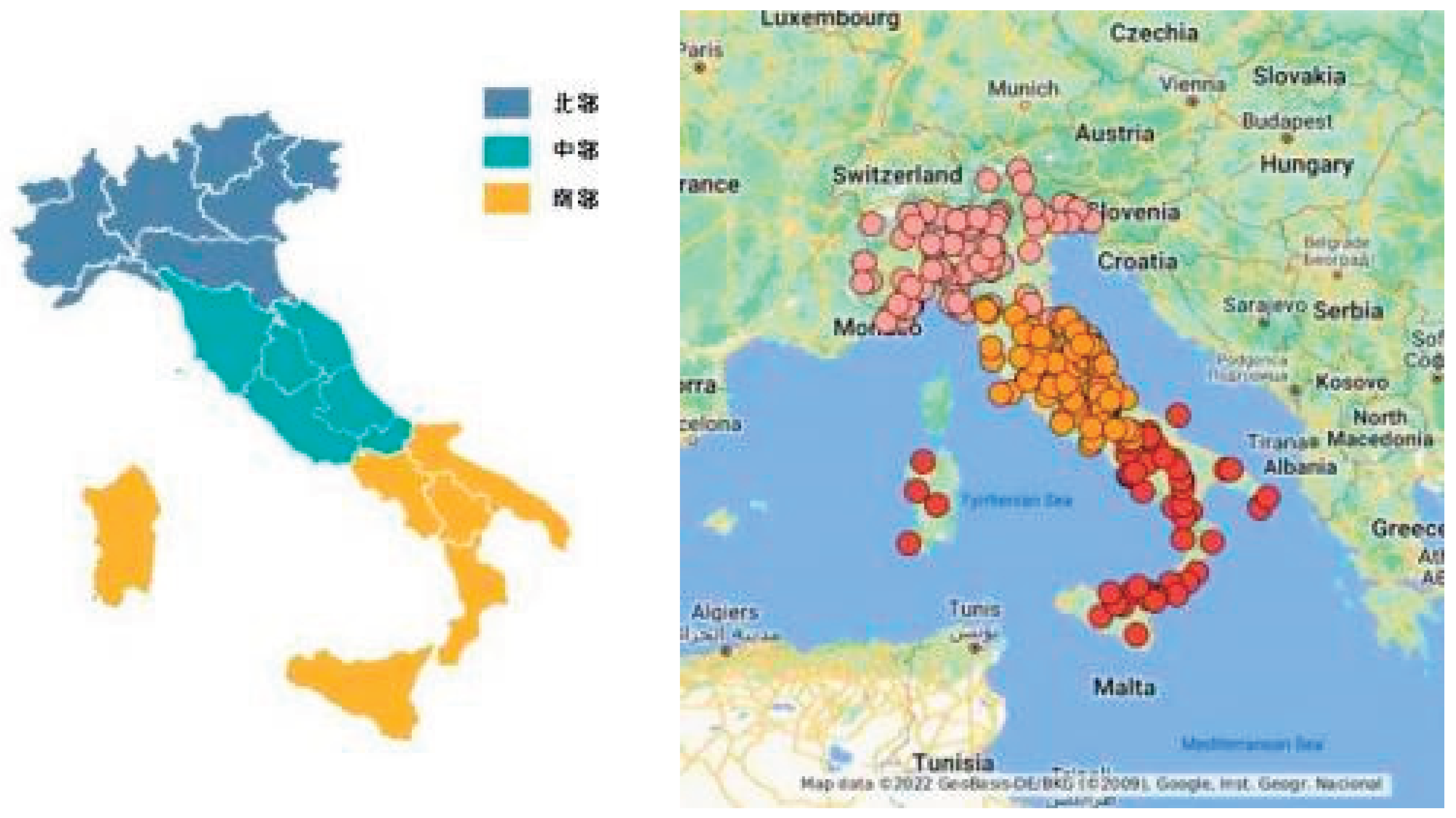
Traditional villages in Italy are widely distributed, covering all regions of the country. The distribution of traditional villages in Italy is characterized by diversity and richness, from the Alps in the north to the Mediterranean coastline in the south, and even beautiful islands, are dotted with many striking traditional villages. The geographical diversity of Italy gives these villages a unique look and charm.[7] The northern region is heavily influenced by the Alps, and traditional wooden and stone farmhouses are isolated or loosely scattered across the countryside. As you travel south, the areas along the Alps display a wealth of dark grey or brown stone buildings, often paired with stone slabs or deep red tiles, and these central villages are uniquely elegant in history and architecture.
However, halfway up the mountain between Rome and Naples, subtle changes are gradually revealed, and here another world begins - the second of the “two Italians”, namely southern Italy. While the remoteness of the southern region has long been overlooked by tourists, the land has nurtured a unique landscape. The landscape of southern Italy is rich and varied,including the rolling green plateaues of Puglia, the plains of Sardinia and Sicily, the volcanic regions of Campania and the remote mountains of Basilicata and Calabria.
The traditional villages of southern Italy show great diversity in landscape, climate, architecture and people, styles and customs. These villages are not only unique, but also reflect the history and culture of the region, but like villages in other regions, southern villages have gone through the same historical process. Defensive structures such as walls and trenches remain, and churches have become iconic Suin the village, often standing in the center or at the highest point, reminding people of their faith and spiritual home.[8]
To sum up, the diversity and richness of traditional Italian villages constitute their attraction. From the north to the south, from the mountains to the coast, from the architecture to the customs, each village tells a unique story and beauty.
Figure 2.
Map of location division and distribution of traditional villages in Northern and southern Italy.
Figure 2.
Map of location division and distribution of traditional villages in Northern and southern Italy.
1.4. Comparison of Chinese and Italian Traditional Villages
China and Italy are both ancient civilizations and the cradles of Eastern and Western cultures respectively. The two countries have the same long history and rich cultural heritage, with a large number of cultural heritage and historical sites, including a large number of traditional villages. Although the two countries have different cultural backgrounds and geographical environments, there are still many common features in the material space of villages.
[9]Traditional villages in China and Italy have a common feature, that is, relatively remote traffic and not obvious location, but this feature has become their advantage, because those villages with better location have often been replaced by modern civilization.[10]
By comparing the traditional villages of China and Italy, it can be found that the two countries have similarities in spatial scale, historical heritage, natural landscape and geographical location. First of all, the spatial scale of the villages in both countries is relatively small, the height of the traditional houses is not high, and the streets are winding, which is suitable for walking. Secondly, the villages have a long history. Many buildings and water conservancy facilities have a history of hundreds or even thousands of years, and many folk stories are spread. In terms of physical geography, most of the traditional villages of the two countries are located in valleys, rivers or beaches. They are attached to mountains and rivers and take advantage of their abundant resources to carry out agricultural activities, shipping and trade activities. In terms of geographical location, traditional villages in both countries are a certain distance from developed cities. Inconvenient transportation and backward development have helped to protect the villages, enabling them to preserve their history, culture and features relatively independently.
Although there are commonalities in traditional villages of the two countries, there are
obvious differences in spiritual construction, character characteristics and development stages. Italian traditional villages retain a large number of medieval churches, and Catholicism is the spiritual support and cultural foundation of people in these villages. In contrast, Chinese traditional villages have preserved a large number of ancestral halls, and clan culture has played a crucial role in the development of villages. Secondly, the character of traditional Chinese villages is completely different from that of Italian villages. One advocates light elegance, fresh and refined, while the other is characterized by bright colors and rich decorations, giving people a fairy-tale feeling. From the perspective of development stage, the protection of Italian traditional villages is relatively mature, the construction of villages is strict and orderly, and the development and protection are relatively balanced, while the protection and development of Chinese traditional villages started late, and the construction and style of villages in many places are not harmonious, the layout of industries is chaotic, and environmental health and modern services need to be improved. Although the traditional villages of the two countries have different historical destinies and features, they are faced with the same problems in the trend of globalization, that is, population loss, industrial decline, cultural decline, environmental damage and serious homogenization. The Italian and Chinese governments have issued policies and planning designs for rural revitalization to prevent the decline and disappearance of traditional villages, so as to protect the historical, cultural and spiritual homes and realize the sustainable development of traditional villages.
China and Italy share four intertwined crises: massive rural–urban migration and aging populations hollow out villages; the exodus severs inter-generational transmission so traditional crafts, festivals and folklore vanish; once-vibrant public squares, temples and markets fall silent as younger residents leave and digital life replaces face-to-face interaction; and the economic backbone—agriculture, handicrafts and local manufacturing—collapses under global competition, deserted farmland and the aging of artisans [11].
2. Comparison of Protection and Utilization Modes of Traditional Villages
There are some similarities between China and Italy in the protection and utilization of traditional villages. Both countries attach great importance to the historical and cultural value and social significance of traditional villages, recognize their importance as cultural heritage, and are committed to protecting traditional buildings, features and cultural inheritance. Both countries have promoted the protection of traditional villages through policies, regulations and projects, including the restoration of ancient buildings and the preservation of traditional crafts. In addition, both countries use traditional villages as cultural tourism resources to attract tourists and promote local economic development, but in the process of utilization, they also face the challenge of how to balance commercialization and preservation of traditions.
There are many similarities between China and Italy in the protection and utilization of traditional villages, but there are also some differences, which are reflected in the following aspects:
2.1. The Protection Objects of Laws and Policies Are Different
China has a series of laws and regulations concerning the protection of cultural heritage and historic buildings, such as the Law of the People’s Republic of China on the Protection of Cultural Relics, the Regulations of the People’s Republic of China on the Protection of Famous Historical and Cultural Cities, Towns and Villages, and the Regulations of the People’s Republic of China on the Protection of Famous Historical and Cultural Cities, Towns and Villages, etc. Various provinces and cities have corresponding local laws and regulations to protect traditional villages and historic buildings. China has adopted policies at the national and local levels to promote the protection and utilization of traditional villages, such as the establishment of cultural heritage protection units, financial support and renovation plans.
In Italy, Legge sugli Spettacoli Naturali (Protection of Natural Beauty) and Legge per la Protezione dei Beni Culturali di (Protection of Cultural Objects of Historical and Artistic Value), enacted as early as 1939 Interesse Storico e Artistico clearly identifies and protects certain built heritage and landscape types with special aesthetic qualities (qualita estetica), and protects individual buildings of artistic, historical, archaeological or ethnographic value. Since the 1960s, the Italian academic community has gradually shifted its understanding of architectural heritage from individual buildings to the whole that includes the historical built environment.
2.2. Different Modes of Working Mechanism
The protection and utilization of traditional villages in China is mainly promoted by the government and a top-down working mechanism, with departments at multiple levels from the central government to provinces, cities and localities in charge of coordinating planning, protection, development and supervision. The central government departments (the Ministry of Culture and Tourism, the National Development and Reform Commission, and the State Administration of Cultural Heritage) are responsible for formulating and implementing the overall plan, policies, laws and regulations for the protection of traditional villages, coordinating the responsibilities of governments at all levels in the protection work, and
promoting the overall coordinated development of the protection work; Provincial cultural and tourism authorities are responsible for formulating specific plans, policies and measures for the protection of traditional villages in their regions, organizing and coordinating the protection work of traditional villages, and promoting the protection and utilization of traditional villages; At the same time, the provincial development and reform Commission participates in the formulation and coordination of policies and plans to promote the protection and sustainable development of traditional villages; Prefecture-level cultural and tourism authorities are responsible for formulating and implementing specific plans for the protection of traditional villages within their respective regions, coordinating relevant departments and agencies to promote the protection and inheritance of traditional villages; In addition, prefecture-level planning and urban and rural construction authorities participate in the planning of the protection and development of traditional villages to ensure the rational use of the built environment; Village committees help organize the protection and management of villages at the local level to promote the inheritance of traditional culture; Village culture stations or cultural groups are responsible for cultural activities and inheritance of traditional villages, organizing publicity and education, and promoting residents’ participation.
In Italy, the protection and utilization of traditional villages mainly adopts a bottom-up approach and a top-down working mechanism. The European Union has formulated the framework of rural protection and development, and the Italian government has issued policies and regulations on the protection and utilization of rural heritage. The Gruppi di Azione Locale (Local Action Group), in cooperation with other social actors, leads the compilation of guidelines for the built rural heritage and provides operational guidelines for the protection and restoration of traditional villages. [12]And provide scientific guidance on the design schemes for the protection and activation of traditional buildings. These policies are approved and accepted by local governments in Italy with the support and cooperation of the government.
The protection and utilization planning of traditional villages in China takes cultural inheritance and sustainable development as the core objectives, comprehensively considers scope delineation, style control and construction guidelines, and defines the protection scope, covering core protection area, construction control area and style coordination area, and gives control guidance to visual corridors, buildings and street Spaces. In order to maintain the original flavor of the village. At the same time, China has compiled guidelines and plans for the construction of traditional villages to regulate new construction and restoration projects and provide a basis for the construction and renovation of traditional village buildings.
In Italy, GAL-led guidelines and top-down, highly refined heritage protection and rural building renewal management regulations have contributed to the “fundamentals” of rural built heritage protection in Italy. The Law of Bugarosi promulgated in 1977 separated property rights from construction rights and introduced the concept of “construction permit”, which stipulated that when verifying the needs of rural construction, the owner must pay “concession fee” to the government and complete the construction under specified conditions. In addition, owners are required to pay an “urbanization tax” arising from the conversion of building functions, such as those from agriculture to residential, industrial or tertiary industries, and related activities that result in the consumption of nearby infrastructure and village management costs.[13]
2.3. Different Emphasis on Protection and Utilization
There are significant differences between China and Italy in the construction techniques and preservation integrity of traditional villages. Wood, brick, stone and other materials are often used in the construction of traditional Chinese villages, which have strong regional characteristics and ethnic customs, and diverse and rich architectural techniques. However, in recent years, under the pressure of modernization development, many new buildings have appeared in some villages, which have conflicts with the traditional architectural style, resulting in challenges to the integrity of preservation. The protection of traditional villages in China usually focuses on the restoration of historical buildings and the preservation of their features, in which the government plays an important role in promoting the implementation of the project. However, commercial development and tourism-oriented development often bring about conflicts between modernization and tradition.
On the contrary, traditional village buildings in Italy are dominated by materials such as stone, brick and lime, which have a deep historical background and artistic value. Italy protects traditional buildings earlier, tends to maintain integrity, and emphasizes the restoration and protection of historical buildings.[14]
Italy pays more attention to the active utilization of cultural heritage. Village protection is often accompanied by community participation and the efforts of non-governmental organizations to encourage the transformation of ancient buildings into cultural centers, art workshops, homesthouses, etc., thus realizing the harmonious integration of history and modernity. The differences between these two approaches reflect the cultural, social and economic backgrounds of the two countries, and provide useful references for other countries in the protection and activation of traditional villages.
There are obvious differences between China and Italy in the development direction of cultural tourism in traditional villages. Chinese traditional village cultural tourism often emphasizes the display and inheritance of history and culture, allowing tourists to appreciate ancient buildings, traditional crafts and rural customs. The government usually attracts tourists through scenic area planning and marketing promotion to promote local economic development. However, this approach may lead to over-commercialization of some villages, harming the original lifestyle and community environment. [15]
In contrast, traditional Italian village cultural tourism puts more emphasis on a comprehensive experience, combining elements such as culture, art and cuisine, and emphasizing the interaction between tourists and the local community. Traditional villages in Italy usually set up cultural activities, handicraft markets and art exhibitions, so that tourists can deeply participate in and feel the local life. This model focuses more on community participation and the preservation of local identity, which contributes to the sustainable development of cultural tourism.
There are some differences between China and Italy in the protection of ecological background in traditional villages. In China, due to rapid urbanization and economic development, some traditional villages are facing environmental pressure, including land development, pollution and other problems. Although the Chinese government has stepped up its efforts in environmental protection in recent years and promoted the construction of ecological civilization in some places, ecological damage can still occur in some traditional villages, especially when tourism development and commercialization bring excessive development and environmental loads. [16]
In contrast, Italy usually pays more attention to ecological and environmental protection in
traditional villages. Traditional villages in Italy are often located in areas with beautiful natural scenery, and the government and communities usually take measures to protect the natural environment from overdevelopment and pollution. [17] In addition, some Italian traditional villages use ecological environment protection as one of the selling points to attract tourists, advocating sustainable tourism and cultural activities to protect the environment and local characteristics.
Figure 3.
Comparison of protection and utilization modes of traditional villages between China and Italy.
Figure 3.
Comparison of protection and utilization modes of traditional villages between China and Italy.
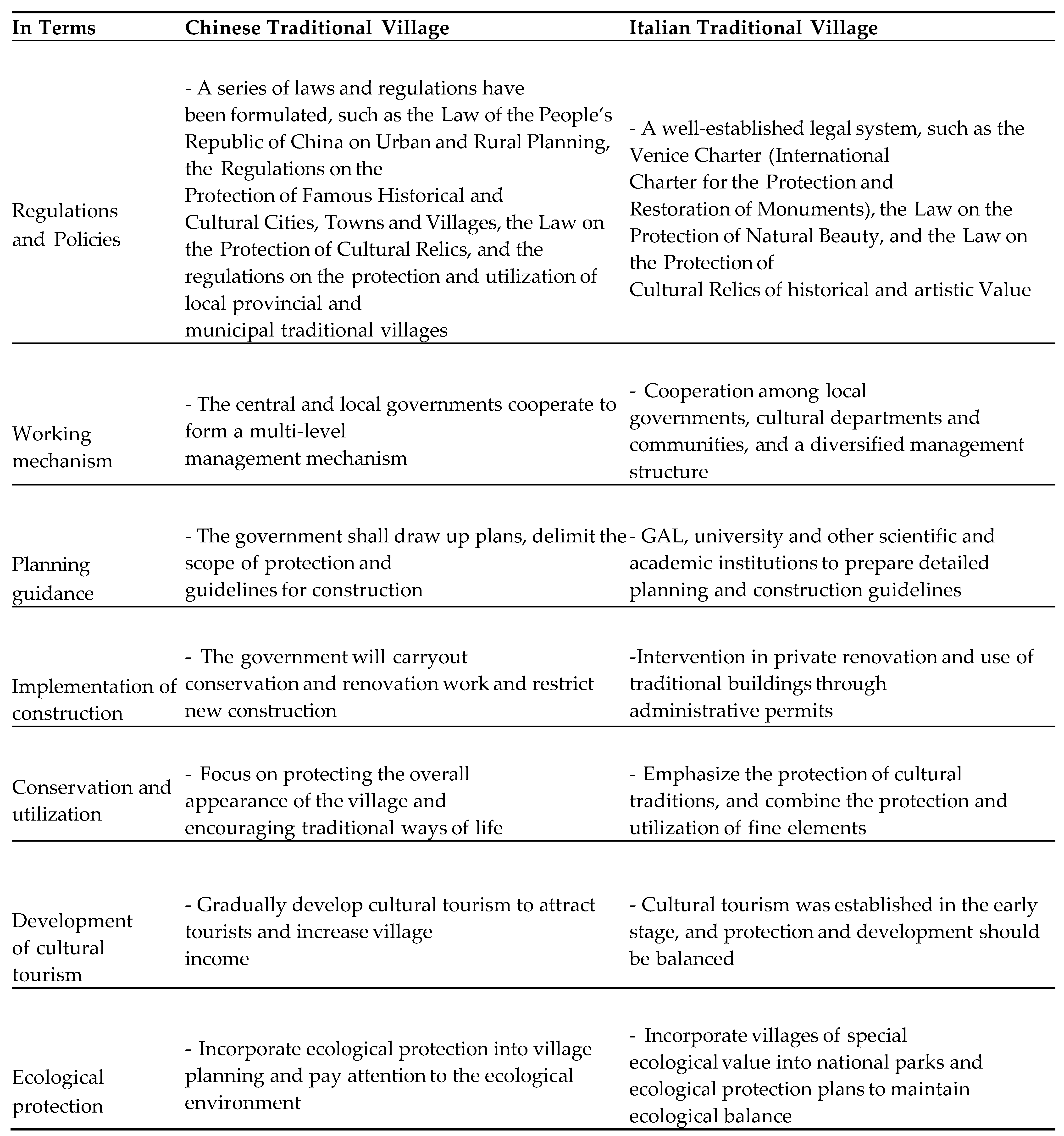
Italy, as a developed country, has a relatively mature protection system for traditional villages, with laws like the Bugarosi Law that emphasize the organic integration of cultural heritage and natural environment, and promote the protection of living, production, and ecological spaces. These efforts have led to the inclusion of traditional villages in the national park system, enhancing cultural tourism and sustainable development [19]. Meanwhile, China, in the context of rapid urbanization, is gradually establishing a similar system and shifting from government-led initiatives to multi-stakeholder participation. This includes activating traditional villages through cultural and creative industries, and moving toward comprehensive and sustainable development that involves community participation and empowers villagers as key agents in protection [21,22].
3. Case Study of Protection and Utilization of Chinese and Italian Traditional Villages
3.1. Jiande Traditional Villages in Hangzhou, China
In May 2023, Hangzhou City, Zhejiang Province, took the lead in releasing the “Demonstration Work Plan for the Concentrated and Continuous Protection and Utilization of Traditional Villages in Jiande City”, which covers the overall protection and development planning of 36 traditional villages in Jiande City. Jiande City is located in the west of Zhejiang Province, at the upper reaches of the Qiantang River, with a history of nearly 1,800 years. It was the former capital of ancient Muzhou and Yanzhou Prefecture, and is renowned for its beautiful natural scenery and rich historical and cultural relics. The plan emphasizes promoting the protection, development and cultural inheritance of traditional villages through innovative ways of revitalizing traditional buildings, improving protection mechanisms, and establishing a policy and technical system. The aim is to create a new model of livable, prosperous, harmonious and happy communities that achieve common prosperity.
Figure 4.
Natural and cultural resources.
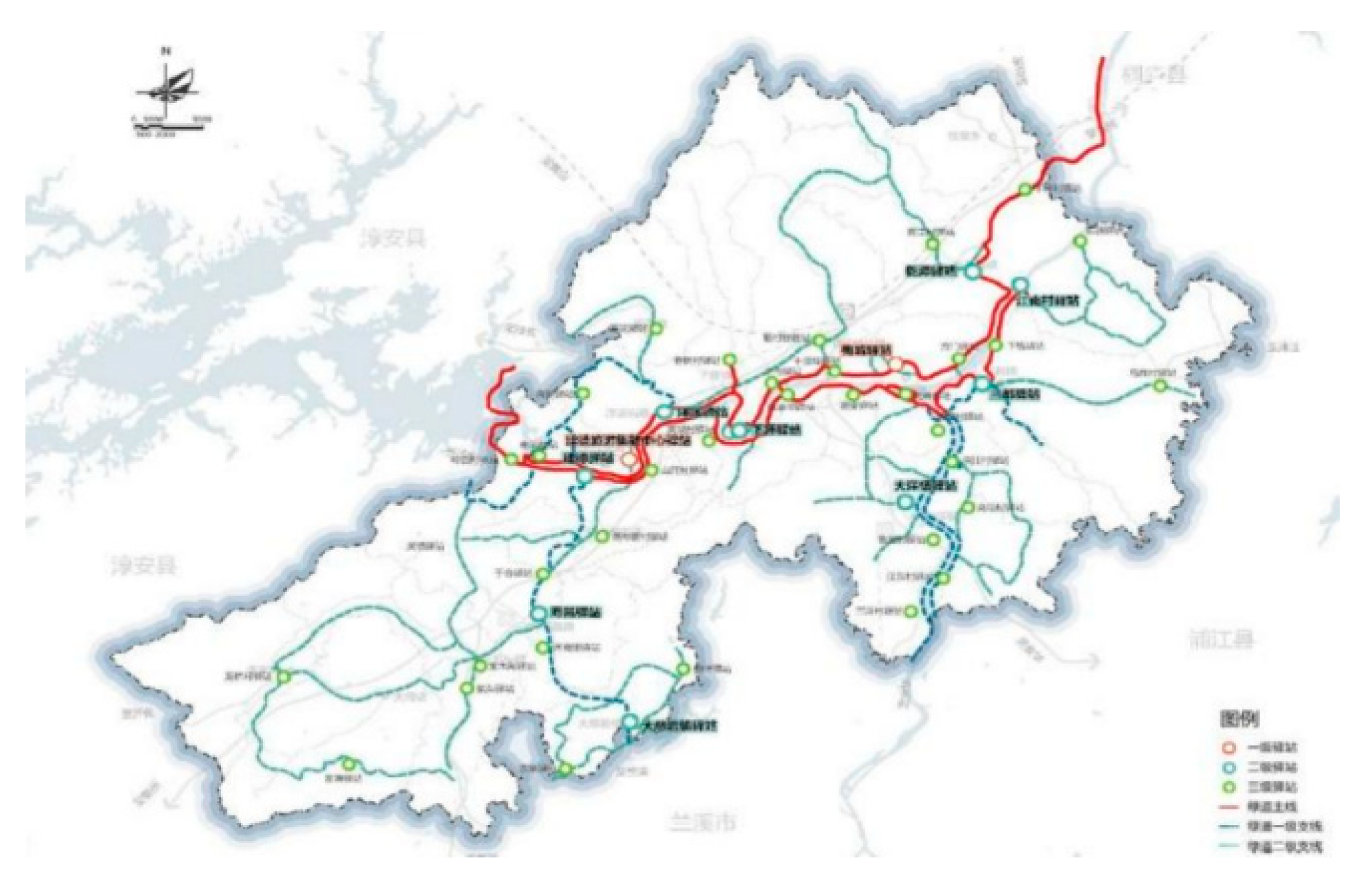
Figure 5.
Distinctive routes in Jinde.
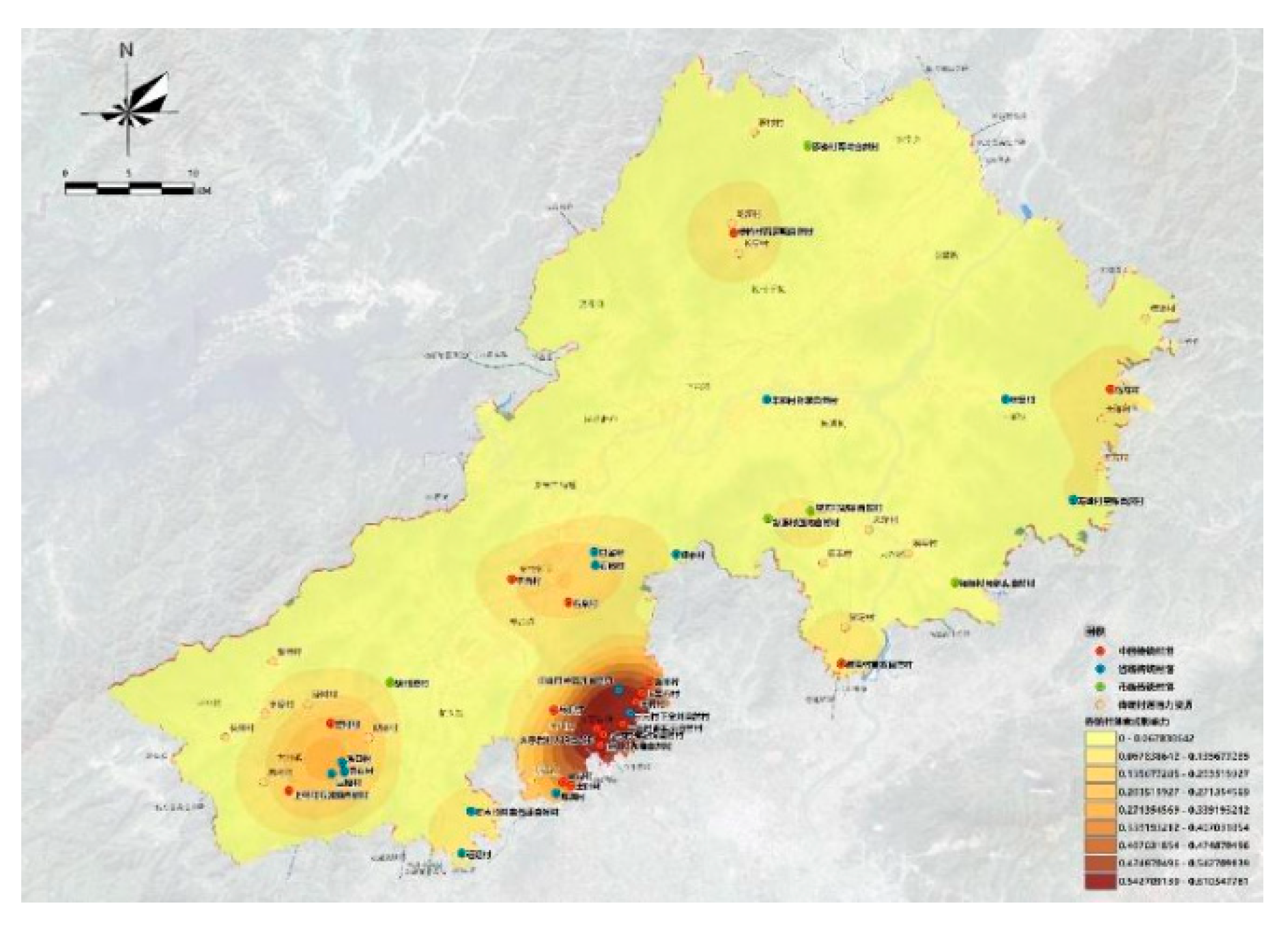
Figure 6.
Map of traditional villages.
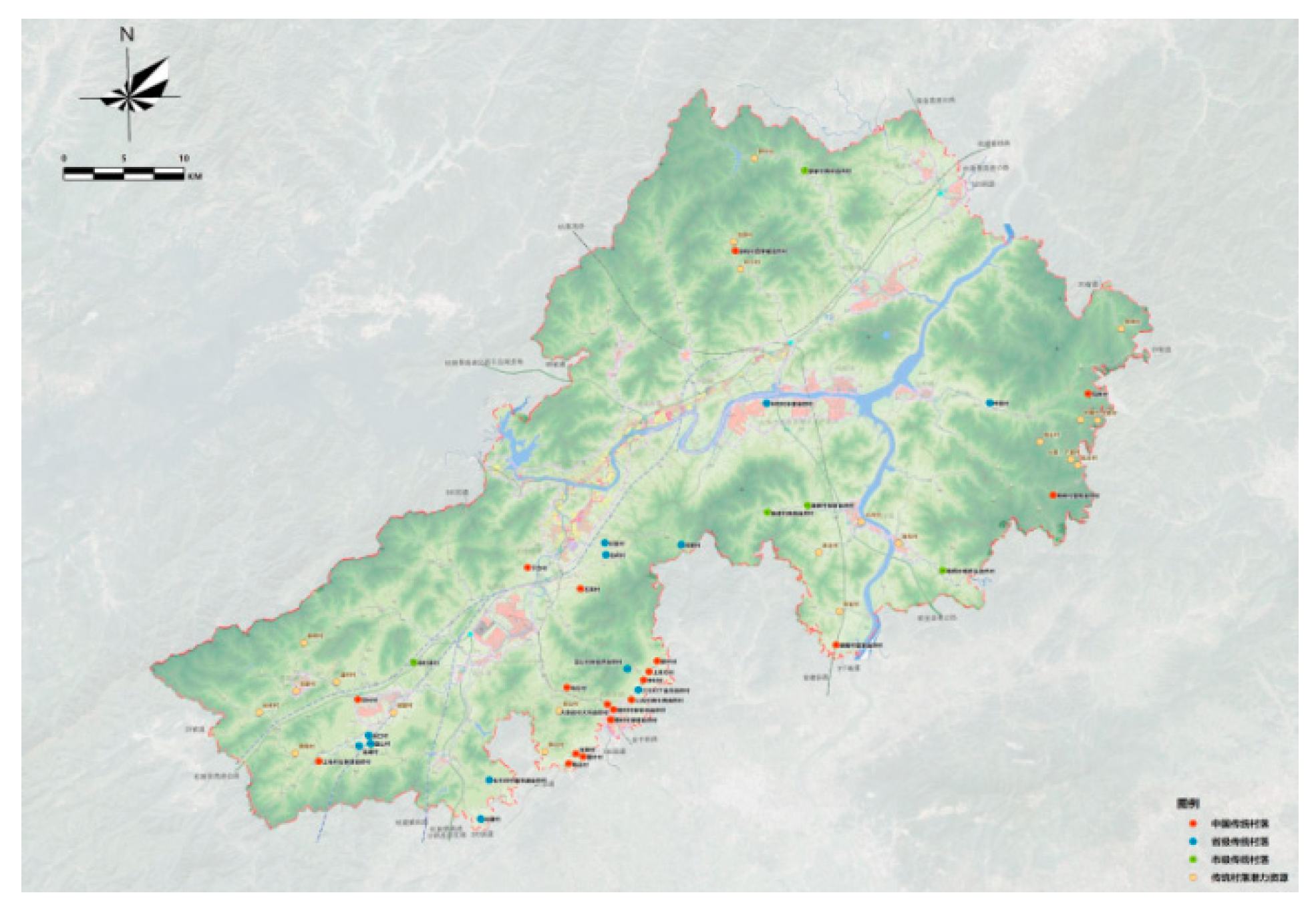
Figure 7.
Protection and utilization pattern.
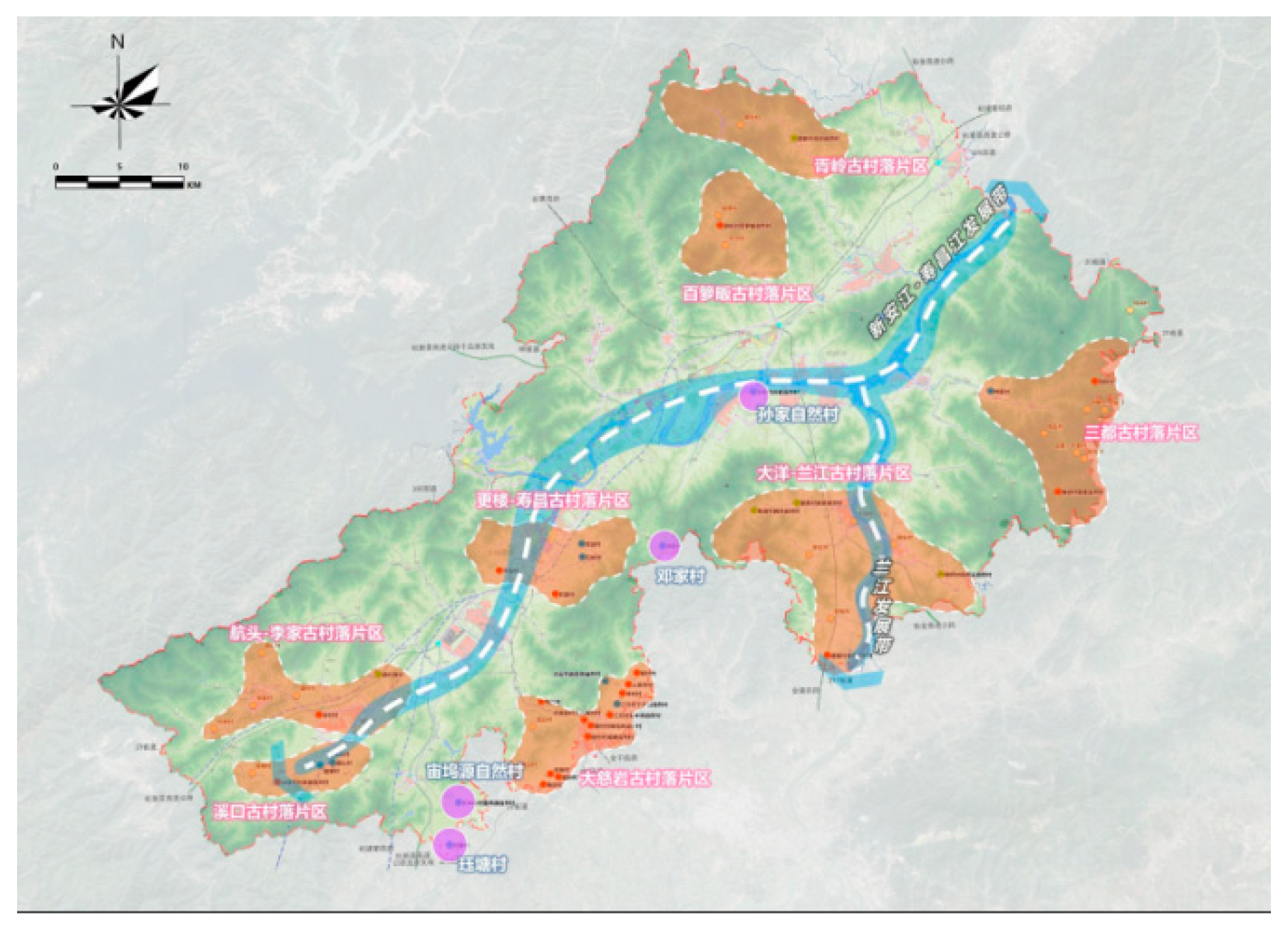
To systematically protect, revitalize, and sustainably develop traditional villages in Jiande City, creating a rural revitalization model. The plan proposes a “one belt, eight areas, multiple points” layout, focusing on eight concentrated traditional village areas guided by differentiated development. It integrates resources, constructs collectively, and develops coordinately to establish contiguous traditional village demonstration zones. The “one belt” highlights ancient Jiazhou culture along the New Anhui River - Shouchang River and Lan River. The “eight areas” promote rural revitalization through coordinated development. The plan centers on people, coordinates infrastructure and public services, and efficiently protects and utilizes cultural resources.
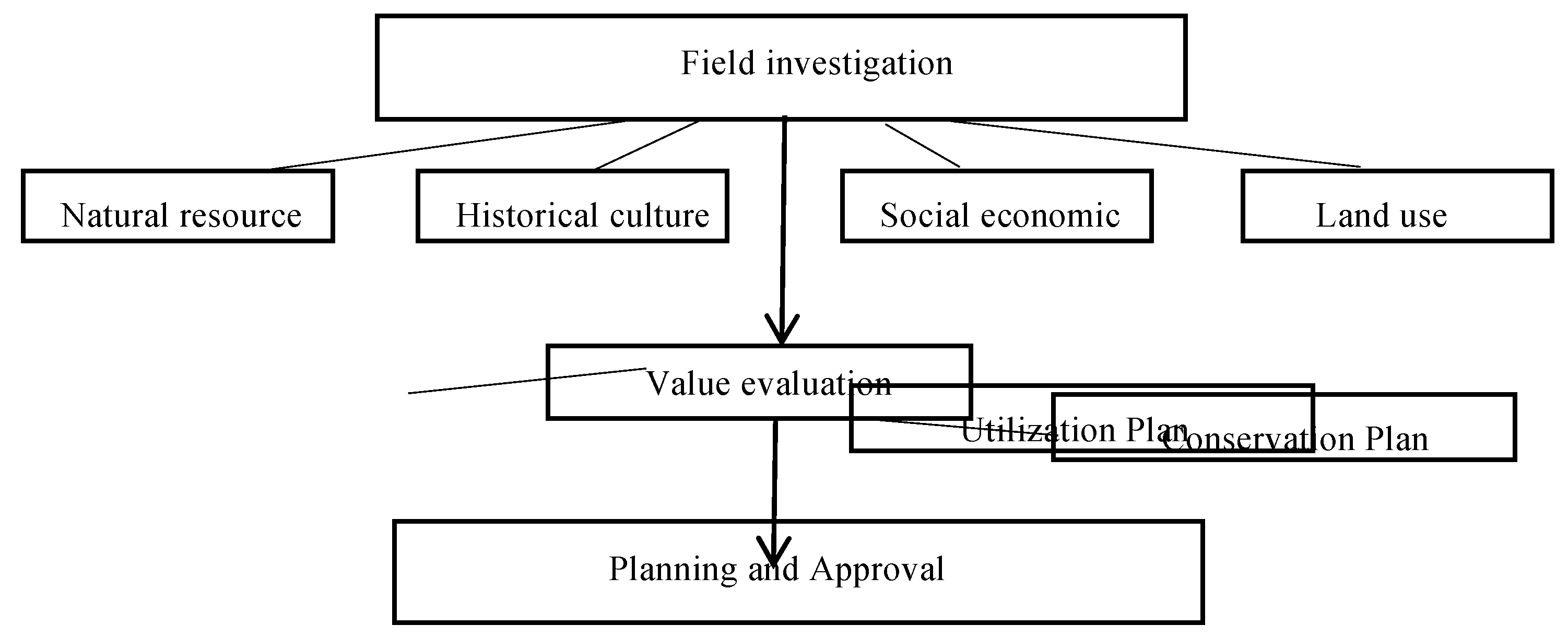
Conduct a comprehensive resource census and formulate protection and utilization plans. Establish a “three clean and two strong” protection mechanism. Issue policy documents and select pilot demonstration areas to advance the plan. Apply digital technology to create a traditional village digital platform. The plan aims to integrate cultural resources, improve protection efficiency, and promote regional coordinated development. Its strengths include cross-regional cooperation and leveraging scale effects. Challenges include high financial pressure, coordination difficulties, and balancing development with protection, which require robust resource mobilization and policy support.
Figure 8.
The protection and utilization model in China.
3.2. The Cinque Terre National Park in Italy
The protection and utilization of traditional villages in Italy is undergoing a series of changes, from the protection of individual villages to the utilization of the whole, from individual management to the operation and management of scenic spots, and at the same time, progress is being made in the construction of comprehensive national parks that promote the coexistence of nature and humanity.
First of all, the focus of protection and utilization extends from a single village to the whole contiguic area. Many traditional villages in Italy have unique geographical, historical and cultural connections with each other, gradually forming a continuous cultural heritage network. In order to better protect and inherit these cultural treasures, Italy began to include multiple villages as a whole in the scope of protection and utilization, and promote the sustainable development of the whole contiguous villages through joint development and resource sharing.[23]
Secondly, the individual business to scenic operation and management change. In order to better attract tourists and provide richer experience, Italian traditional villages gradually turn to the operation and management of scenic spots. This involves the construction of standardized tourism facilities, guided tour services, cultural activities, etc., to meet the needs of different tourists, while also injecting new economic vitality into the villages.
At the same time, Italy is also promoting the construction of national parks where traditional villages coexist with nature. Many traditional villages are located in beautiful natural environments, and in order to realize the common protection of natural resources and cultural heritage, traditional villages are included in the national park management system. This model not only emphasizes the protection of natural ecology, but also pays attention to the inheritance of human history, and promotes the sustainable development of villages and the natural environment through ecotourism and other means.[24] These trends contribute to better preserving and passing on Italy’s rich cultural heritage, while also injecting new vitality into tourism and sustainable development.
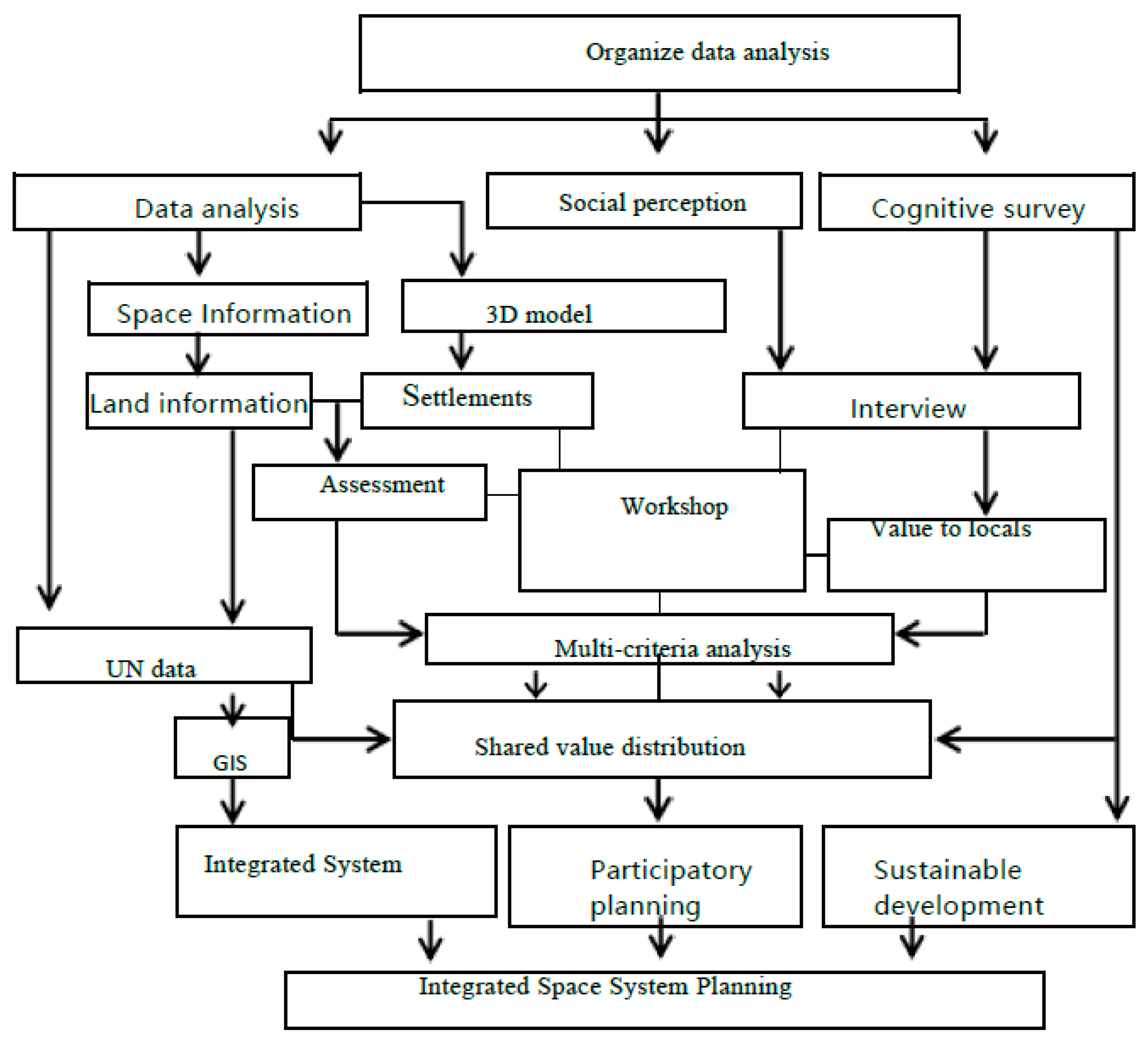
The Cinque Terre National Park in Italy, which is included in the UNESCO World Heritage list, is a representative example of the integration of traditional villages into national parks. While protecting traditional architecture and culture, Cinque Terre pays attention to the development of tourism, which has realized the organic combination of protection and development. Over the years, Italy has protected the five traditional villages and the rich heritage around them, and has tried to combine protection with sustainable development, make full use of their rich natural resources, develop eco-tourism, and attract tourists to hike, swim and watch birds here, which has achieved sustainable development of tourism. In addition, the protection and development work of Cinque Terre villages has been widely participated by the community, and the villagers actively participate in the restoration of traditional buildings and the inheritance of culture, which has improved the effectiveness and efficiency of the protection work. To this end, the European Community initiated a planning study on “Conservation and Utilization of Cinque Terre National Park”, which was included in the EU’s financial assistance “Culture 2000 program”, to provide ideas for analysis, intervention and management of Cinque Terre National Park through cooperation between transnational creatives, cultural operators and cultural organizations. The professional team adopts methods such as data analysis, social perception and visitor survey, uses spatial information system and site model to conduct dynamic assessment and analysis of the site, and organizes extensive participation of people from all walks of life to allocate shared values, and puts forward scientific and reasonable spatial system planning for the protection and utilization of Cinque Terre.[25]
Figure 9.
The protection and utilization model in Italy↓.
The comprehensive protection and utilization plan of Cinque Terre National Park puts forward the overall goal of “cultural identity protection in functional evolution”, and puts
forward three major indicators: “land protection”, “land quality and use”, and “sustainable tourism”.[26]In terms of protection, the plan puts forward the overall protection of traditional villages, ecological corridors, terraces and coastlines, and puts forward detailed guidance methods. In terms of utilization, the plan proposes to build park observation platform and tourism experience landscape, construct cultural activity facilities to organize meetings and research activities, carry out local markets and festivals, develop online and offline land, traditional culture, agriculture and Marine research museums, set up laboratories for various kinds of cuisine, wine, seafood and fish products, and inherit local artisans and architectural skills.[27]To carry out various large-scale international ecological protection seminars and conferences, add more attractive and functional scenic spots, and successfully build itself into a well-known tourist destination through targeted brand building and marketing promotion.
3.2.1. Spatial Integration and Planning
Overall planning framework: The Five Valleys adopt a spatial structure of “one belt (coastal railway) - eight patches (five villages + three sacred sites) - multiple points (terraces, ancient roads)” to integrate the villages, terraces, and marine ecosystems within a unified control boundary, forming an ecological-cultural continuum. This planning approach ensures the organic combination of cultural heritage and natural landscapes, and solves the fragmentation problem.[28]
Figure 10.
The real-time remote communication data system of the Five Valleys Village.
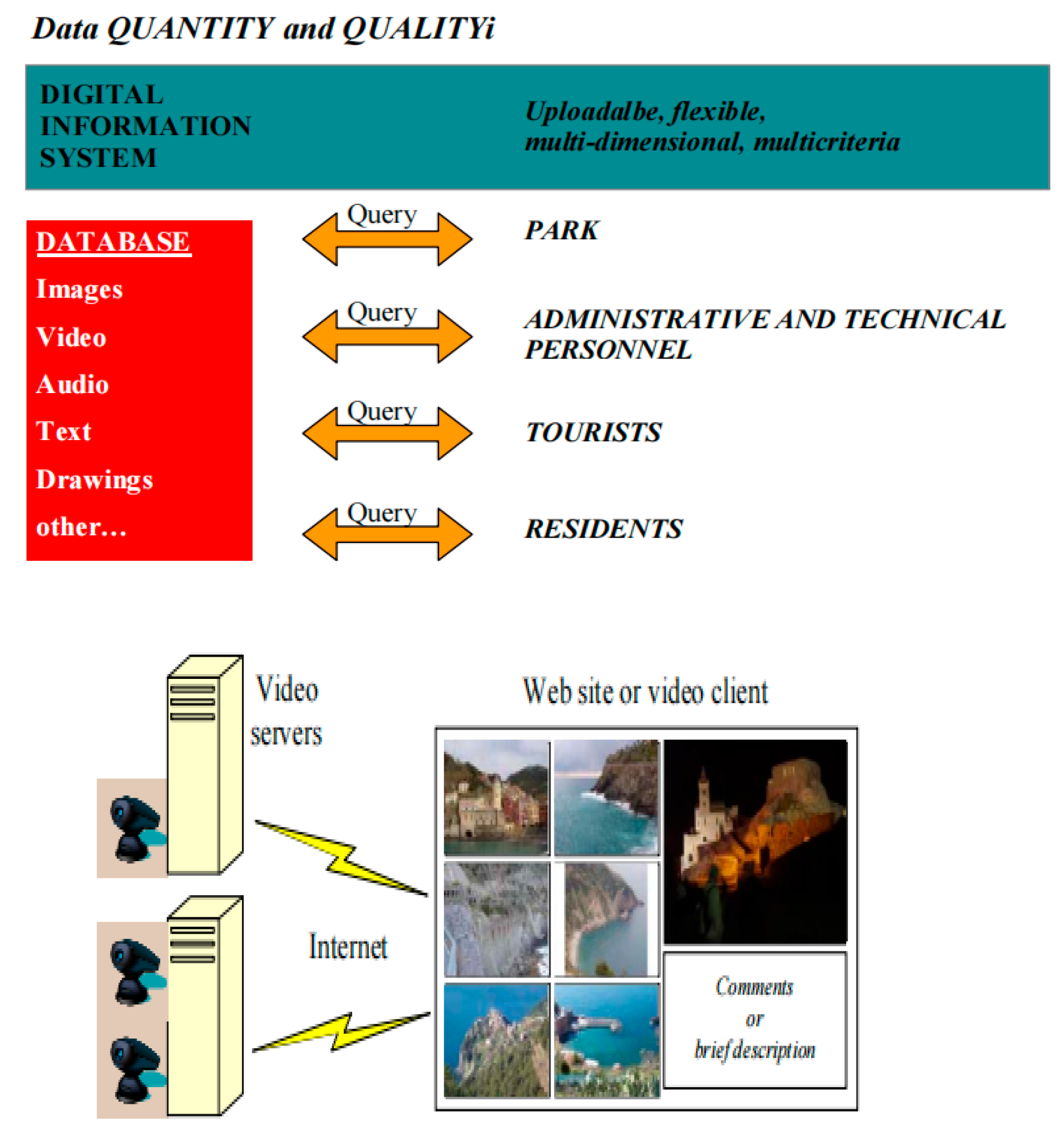
Figure 11.
Integrated Planning Map of Cinque Terre National Park (Figure 6).
Figure 11.
Integrated Planning Map of Cinque Terre National Park (Figure 6).
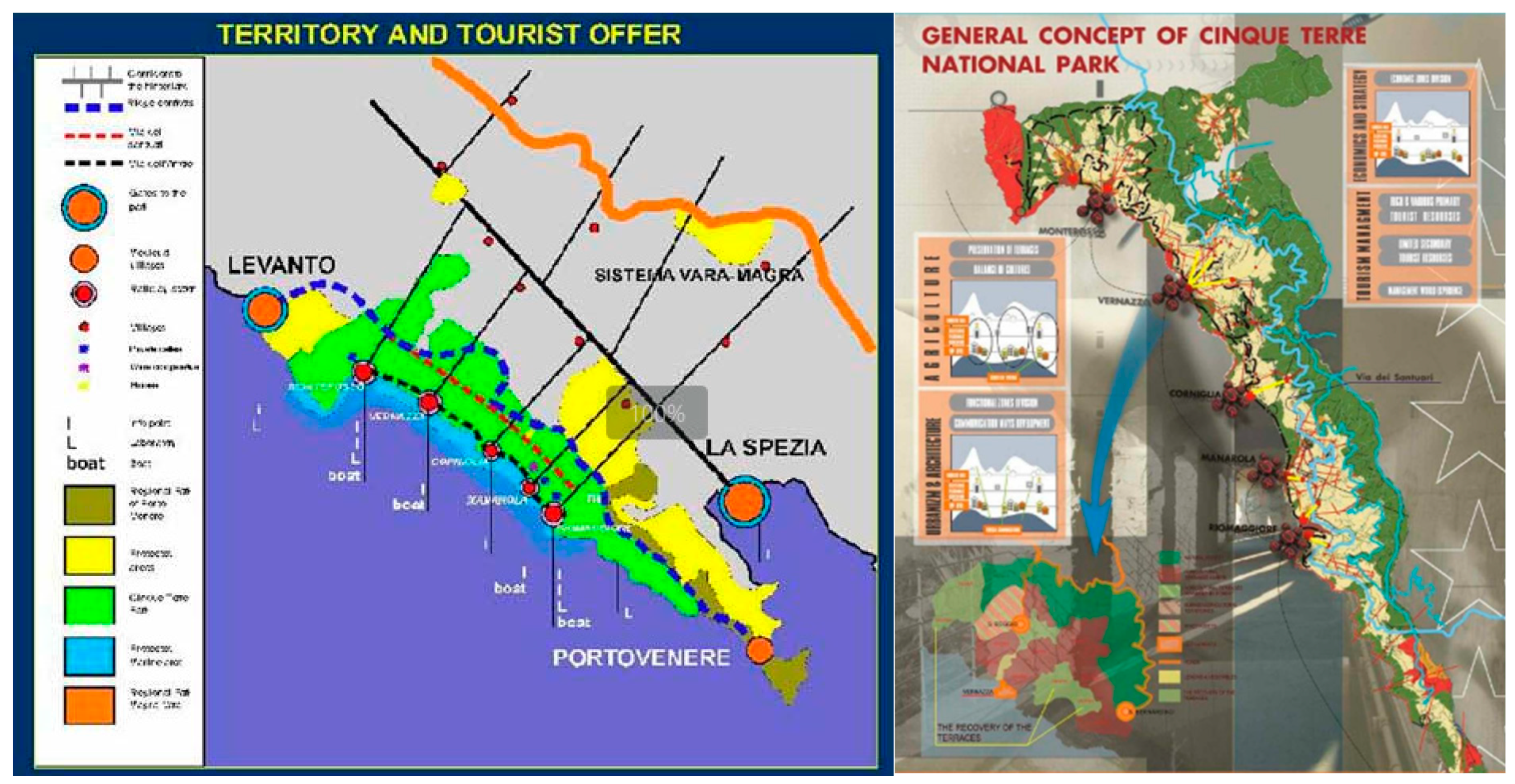
Heritage Corridor Construction: By connecting five villages through the coastal railway and trails, a heritage corridor is formed. This not only facilitates tourists’ visits but also promotes transportation and communication within the region.
3.2.2. Operating Mechanism
Dual Governance Structure: The National Park Company (Parco Nazionale) is responsible for the brand, infrastructure, and visitor capacity control (with a maximum of 30,000 visitors per day), while the village collective cooperatives (such as the “Cinque Terre Card” system in Manarola) operate specific business models like guesthouses and vineyard tours. The profits are distributed according to the “51% for villagers + 49% for the company’s reinvestment” ratio, ensuring that the tourism benefits can support the maintenance of the heritage.
Community Leadership and Participation: The village collective cooperatives play a leading role in the operation process, ensuring that villagers can directly participate and benefit from tourism development, thereby enhancing the cohesion and conservation awareness of the community.
3.2.3. Dynamic Management and Monitoring
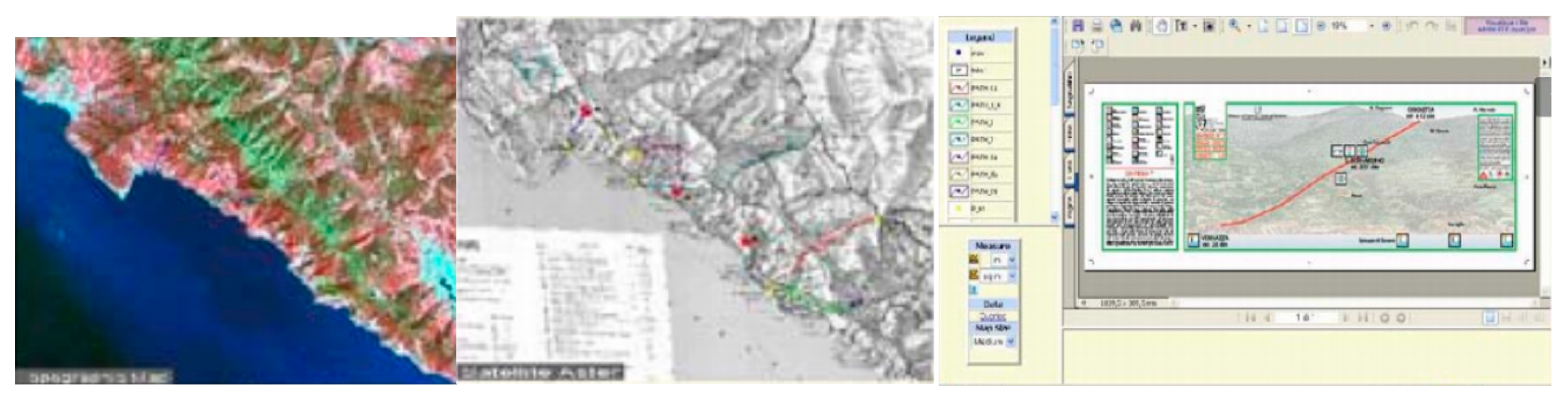
GIS Monitoring System: Based on the GIS tourist heat map and terraced field monitoring system, it provides real-time warnings of landslide risks to ensure the safety of cultural heritage and the natural environment.
Technical Alliance Support: The EU “Culture 2000” technical alliance provides annual restoration plans to ensure the sustainable protection of cultural heritage.
Figure 12.
Fifth Village GIS Platform.
3.2.4. Cultural IP and Event Planning
Four Seasons Events: The “Via dei Santuari” connects the five villages. Spring events such as “Grapevine Pruning Festival” and autumn events like “Sciacchetra Wine Festival” are all integrated with the “National Park Passport” stamp collection system, enhancing tourists’ cultural experience and sense of identity.
4. Implications
To promote the protection and utilization of traditional Chinese villages, it is necessary to deepen the community participation mechanism and grant villagers more decision-making power. By drawing on the model of the Cinque Terre in Italy, establish village cooperatives or associations, enabling villagers to play a leading role in the protection of traditional villages and enhancing their sense of responsibility and initiative. At the same time, expand the sources of funds, establish special protection funds, attract social capital and international organizations to participate in investment, and alleviate the financial pressure. Strengthen the application of technology, learn from the cooperation model of Cinque Terre and the EU Technology Alliance, strengthen cooperation with universities and research institutions, form cross-regional technology alliances, promote the construction of digital platforms for traditional villages, and improve the scientificity and effectiveness of the protection work. Promote cultural activity brands, plan activities throughout the year, and enhance tourists’ cultural experience and identification. Promote regional cooperation and contiguous protection, draw on the “three-level system” path of Cinque Terre, from individual village protection to overall contiguous areas, from individual operation to scenic area management, and to the construction of comprehensive national parks.
References
- Ministry of Housing and Urban-Rural Development, Ministry of Culture, State Administration of Cultural Heritage, & Ministry of Finance. (2012, March 21). Notice on carrying out the survey of traditional villages (Document No.58 〔2012). http://www.mohurd.gov.cn.
- Hu, B.; Li, X.; Wang, X. (2017). Traditional Chinese villages blue book: Report on the protection of traditional Chinese villages (2017). Social Sciences Academic Press.
- State Council of the People’s Republic of China. (2021, January 4). No. 1 central document: Opinions on comprehensively promoting rural revitalization and accelerating the modernization of agriculture and rural areas. http://www.gov.cn.
- Shan, J. (2007). Urban cultural heritage conservation and the construction of cultural cities [Doctoral dissertation, Tsinghua University]. Tsinghua University Institutional Repository.
- Ministry of Housing and Urban-Rural Development. (2019, June 6). Notice of the Ministry of Housing and Urban-Rural Development and other departments on announcing the list of the fifth batch of villages included in the directory of Chinese traditional villages. http://www.mohurd.gov.cn.
- Zhou, J. (2014). Conservation and development of Chinese villages. China Architecture & Building Press.
- Vitalini, S.; Tomè, F.; Fico, G. Traditional uses of medicinal plants in Valvestino (Italy). Journal of Ethnopharmacology 2009, 121, 106–116. [Google Scholar] [CrossRef] [PubMed]
- Cerase, F.P. Expectations and reality: A case study of return migration from the United States to Southern Italy. International Migration Review 1974, 8, 245–262. [Google Scholar] [CrossRef] [PubMed]
- Hua, M. (2016). A comparative study of the physical space of world heritage villages in China and Italy [Master’s thesis, Soochow University]. Soochow University Library.
- Zhou, Y.; Huang, H.; Liu, Y. Spatial distribution and influencing factors of villages in China. Acta Geographica Sinica 2020, 75, 2206–2224. [Google Scholar]
- Liu, X.; Wang, S. Dilemmas and solutions for the protection of traditional Chinese villages. Agricultural History of China 2015, 34, 99–110. [Google Scholar]
- Todisco, A. (2013). Gruppi di Azione Locale (GAL), governance and territorial development: Theoretical analysis and empirical evidence. Cacucci Editore Sas.
- Guo, X.; Han, F. Synergistic research on rural heritage conservation and sustainable development from the perspective of cultural landscape: Insights from the Piedmont heritage site in Italy. Landscape Architecture 2021, 28, 116–120. [Google Scholar]
- Serra, S. Urban planning and the market of development rights in Italy: Learning from Milan. City, Territory and Architecture 2021, 8, 1–14. [Google Scholar] [CrossRef]
- Zhang, C.; Zhu, M. Integration of culture and tourism: Multi-level connotations, challenges, and implementation pathways. Tourism Tribune 2020, 35, 11–23. [Google Scholar]
- Sun, Y. Research on the rule of law thinking and methods for promoting ecological civilization construction. Journal of Chongqing University (Social Science Edition) 2013, 19, 40–44. [Google Scholar]
- Cicatiello, L.; Ercolano, S.; Gaeta, G.L.; Lombardi, A.; Silvestri, L. Willingness to pay for environmental protection and the importance of pollutant industries in the regional economy: Evidence from Italy. Ecological Economics 2020, 177, 106774. [Google Scholar] [CrossRef]
- Guo, H.; Han, F. A review of rural tourism development in China. Progress in Geography 2010, 29, 1597–1605. [Google Scholar]
- Zhao, Y.; Zhang, J.; Li, N.; Deng, Y. Study on the evaluation system and methods for the protection of historical and cultural villages: Taking the first batch of famous historical and cultural towns (villages) in China as examples. Scientia Geographica Sinica 2006, 26, 497–505. [Google Scholar]
- Lu, S.; Lu, L.; Wang, L.; Wang, D. Temporal distribution of tourist flows in ancient villages and its influencing factors: A case study of world heritage sites Xidi and Hongcun. Scientia Geographica Sinica 2004, 24, 250–256. [Google Scholar]
- Liu, C.; Xu, M.; Liu, P.; Li, H. A compensatory model for the conservation of traditional village cultural landscapes and its empirical study in Western Hunan. Acta Geographica Sinica 2020, 75, 382–398. [Google Scholar]
- Wang, J.; Lan, H.; Chen, J. Holding on and reshaping: Local identity construction of traditional village residents under rural tourism intervention—A case study of Cuandixia Village in Beijing. Tourism Tribune 2023, 38, 45–57. [Google Scholar]
- Jokilehto, J. (2017). A history of architectural conservation (2nd ed.). Routledge.
- Agnoletti, M. Rural landscape, nature conservation and culture: Some notes on research trends and management approaches from a (southern) European perspective. Landscape and Urban Planning 2014, 126, 66–73. [Google Scholar] [CrossRef]
- Wang, R.; Cheng, L. Continuation and renewal strategies of Italian traditional village heritage and their implications for China’s rural revitalization: A case study of the Cinque Terre World Heritage Site. Development of Small Cities & Towns 2021, 39, 73–80. [Google Scholar]
- Chiovenda-Bensi, C. Florula medicinale delle Cinque Terre. Webbia 1960, 15, 631–641. [Google Scholar] [CrossRef]
- Zhang, Y. An extraordinary cultural heritage: A visit to the Cinque Terre on the Mediterranean coast. China Construction,(9) 2012, 58–59.
- The People’s Government of Jiande City, Hangzhou City. (2023). Demonstration Work Plan for the Concentrated and Continuous Protection and Utilization of Traditional Villages in Jiande City (Draft for Soliciting Opinions). Hangzhou Municipal People’s Government Official Website.
Disclaimer/Publisher’s Note: The statements, opinions and data contained in all publications are solely those of the individual author(s) and contributor(s) and not of MDPI and/or the editor(s). MDPI and/or the editor(s) disclaim responsibility for any injury to people or property resulting from any ideas, methods, instructions or products referred to in the content. |
© 2025 by the authors. Licensee MDPI, Basel, Switzerland. This article is an open access article distributed under the terms and conditions of the Creative Commons Attribution (CC BY) license (http://creativecommons.org/licenses/by/4.0/).
Copyright: This open access article is published under a Creative Commons CC BY 4.0 license, which permit the free download, distribution, and reuse, provided that the author and preprint are cited in any reuse.


