

Submitted:
24 July 2025
Posted:
25 July 2025
You are already at the latest version
Abstract
The ageing process includes not only physical deterioration but also cognitive and psychological changes that have a substantial impact on metabolic health. Chronic stress, sadness, and poor sleep—all psychological factors—can disrupt the hypothalamic-pituitary-adrenal (HPA) axis, resulting in hormonal imbalances that slow metabolism and increase fat storage. These variables indirectly contribute to muscle loss, insulin resistance, and systemic inflammation. Exercise remains an effective technique for combating both psychological and metabolic decline. Furthermore, increasing evidence connects the gut-brain axis to psychological well-being and metabolic health. Prebiotics and probiotics, which modulate the gut flora, have been shown to improve mood, reduce stress-induced inflammation, and preserve metabolic balance. The relationship between metabolism and psychological well-being as people age is examined in this article, along with the ways in which interventions like exercise and gut microbiome modification can support a healthier ageing process.
Keywords:
probiotics
; psychology
; metabolic health
; aging
; gut
1. Introduction
Although muscle loss and decreased energy expenditure are commonly linked to metabolic decline in ageing, psychological well-being is an important but frequently disregarded factor in metabolism regulation. Hormonal regulation, hunger, energy balance, and cellular ageing are all influenced by the brain through neuroendocrine and inflammatory pathways. Deterioration of mental health, such as anxiety, depression, and sleep disorders, might interfere with these regulatory systems and hasten the metabolic changes associated with ageing. Gut microbiota modification is a viable addition to behavioural therapies like physical activity to restore metabolic and psychological equilibrium [1,2].
2. Psychological Factors in Metabolic Aging [3,4,5,6,7]
2.1. Stress and HPA Axis Dysregulation
The hypothalamic-pituitary-adrenal (HPA) axis is one of the best-established connections between mental health and metabolism. Because it controls the release of cortisol, a glucocorticoid hormone essential to energy metabolism, inflammation, and muscle maintenance, this neuroendocrine system lies at the heart of the body’s stress response. The activation of the HPA axis is adaptive and aids in the body’s efficient response to acute stress. Chronic stress, on the other hand, dysregulates this reaction, resulting in persistent increases in cortisol that negatively impact metabolic health.
- Cortisol Overload
The HPA axis is repeatedly activated in response to chronic psychological stress, such as persistent anxiety, the pressure of caring for others, job stress, or loneliness in older persons. This leads to a condition known as cortisol overload, where cortisol levels are consistently elevated. Increased visceral fat accumulation, especially around the abdomen, is a result of elevated cortisol, which encourages energy storage over expenditure. Pro-inflammatory cytokines are secreted by metabolically active visceral adipose tissue, which exacerbates systemic inflammation and leads to insulin resistance. Furthermore, by decreasing muscle glucose uptake and increasing hepatic glucose synthesis, cortisol disrupts the effects of insulin. This results in increased blood glucose levels, decreased insulin sensitivity, and a higher chance of type 2 diabetes, a prevalent metabolic disease linked to ageing. Cortisol also influences appetite-regulating hormones like ghrelin and leptin, often leading to increased food intake, especially high-calorie, high-sugar foods, further compounding metabolic dysfunction.
- Metabolic Consequences
Long-term elevated cortisol levels have catabolic effects on skeletal muscle in addition to their effects on insulin action and fat storage. Cortisol promotes proteolytic mechanisms that break down muscle proteins for gluconeogenesis (the creation of energy from non-carbohydrate sources) while inhibiting anabolic pathways required for muscle protein synthesis. This eventually leads to muscle atrophy and a decrease in lean body mass, which are major causes of older adults’ lower basal metabolic rate (BMR). In turn, the loss of muscle mass causes ageing people to become less mobile, less functionally independent, and more susceptible to sarcopenia. A vicious cycle between psychological stress and metabolic deterioration results from the reduction of muscle tissue, which is a primary site of glucose utilisation. This reduces metabolic turnover and worsens insulin sensitivity.
Moreover, circadian rhythms and sleep quality—both of which are regulators of metabolic health—are disturbed by long-term stress and HPA dysregulation. Systemic inflammation, hunger dysregulation, and hormone abnormalities are all made worse by poor sleep, which is frequently linked to stress.
2.2. Depression and Behavioral Inactivity
In older adults, depression is a prevalent psychological disorder that has serious effects on one’s physical and mental well-being. Depression is known to cause emotional and cognitive symptoms like sadness, hopelessness, and lack of motivation, but it also directly causes metabolic dysregulation. It impacts inflammatory responses, hormone levels, appetite, and physical activity—all of which are closely related to the body’s energy metabolism and ageing process.
- Mood Disorders and Metabolism
Serotonin, dopamine, and norepinephrine pathways that control mood, hunger, and energy are specifically impacted by depression’s alteration of neuroendocrine function. Some people with depression exhibit decreased appetite and malnutrition, while others acquire emotional eating habits and crave foods high in fat and sugar, which can result in weight gain and visceral adiposity.
Moreover, pro-inflammatory cytokines such TNF-α and IL-6, which disrupt insulin signalling and mitochondrial function, are released more frequently when depressed. Insulin resistance brought on by inflammation affects how well glucose is used and leads to fat storage and metabolic syndrome, a group of disorders that increases the risk of diabetes and cardiovascular disease by causing hypertension, hyperglycemia, and abdominal obesity.
- Impact on Physical Activity and Muscle Loss
Psychomotor slowness, or a state of decreased motivation and physical lethargy, is one of the main signs of depression. This inactivity plays a major role in the progressive loss of strength and endurance, muscle atrophy, and muscle disuse in older persons. By lowering resting metabolic rate, less physical activity deteriorates metabolic health and further reduces energy expenditure.
As inactivity persists, it contributes to a self-reinforcing cycle: depression causes inactivity, which in turn causes metabolic deterioration, which in turn exacerbates mood and fatigue symptoms. Frailty, functional impairment, and the danger of sarcopenia—the aging-related degenerative loss of muscle mass and strength—are all accelerated by this cycle.
Furthermore, sleep disturbances are frequently associated with depression, and these sleep disturbances in turn impair the control of metabolic hormones. Lack of sleep raises ghrelin (the hunger hormone), decreases insulin sensitivity, and decreases leptin (the satiety hormone), all of which increase the risk of obesity and metabolic imbalance.
- Implications for Aging
As people age, the relationship between depression and metabolism becomes more crucial. Depressive symptoms are especially harmful to metabolic function in older adults because they are more vulnerable to the combined effects of inflammation, hormonal imbalance, and decreased stress resilience. According to studies, those who experience depression in their later years are more likely to become obese, develop type 2 diabetes, and have accelerated biological ageing.
Treating depression is a crucial tactic for preserving metabolic health in older persons because of its combined effects on mental and physical health. The depression-metabolism cycle may be broken by interventions including cognitive-behavioral therapy, structured exercise, and microbiome-targeted strategies (like probiotics).
2.3. Sleep Disturbances and Circadian Misalignment
Sleep is an essential biological function that controls metabolic health in addition to mental and emotional well-being. Both the amount and quality of sleep frequently decrease with age, resulting in fragmented sleep, less slow-wave (deep) sleep, and trouble regulating circadian rhythm. Although these disruptions are strongly associated with mood disorders and psychological stress, they also have a separate role in the deterioration of metabolic function seen in older persons.
- Sleep and Hormonal Regulation of Metabolism
Sleep is essential for controlling metabolic hormones related to glucose metabolism, hunger, and fat storage. The balance between the hormones leptin and ghrelin, which control hunger and satiety, is upset by inadequate or poor-quality sleep.
- Ghrelin, which increases hunger, is up following inadequate sleep, while leptin, which inhibits appetite and encourages energy expenditure, is decreased during sleep deprivation.
Overeating, weight gain, and increased central fat deposition—a defining feature of metabolic dysfunction in aging—are the results of this imbalance, which heightens desires for high-calorie foods that are frequently heavy in sugar and fat.
Additionally, lack of sleep impairs insulin sensitivity, which lowers the body’s capacity to metabolise glucose efficiently. Impaired glucose tolerance and increased fasting blood glucose levels can result from just a few nights of sleep deprivation.
- Circadian Misalignment and Aging
Circadian rhythms, which are internal biological clocks that affect hormone release, digestion, body temperature, and energy use during the 24-hour cycle, control the body’s metabolic activities. Light and darkness are the main environmental cues that these rhythms are synchronised with. However, melatonin synthesis changes and decreased sun exposure cause elderly persons’ circadian cycles to frequently get out of sync.
- Unusual sleep-wake patterns
- Exposure to evening light (from screens or artificial light)
The normal rhythmic secretion of growth hormone, cortisol, and insulin—all essential for maintaining metabolic homeostasis—is hampered by this circadian disruption. For instance, circadian misalignment can flatten the diurnal pattern of cortisol, which peaks in the morning and decreases at night. This can lead to cortisol dysregulation, which is comparable to that observed in chronic stress.
- Sleep, Mood, and Metabolic Vicious Cycle
Sleep deprivation contributes to and is a symptom of psychological suffering. The symptoms of anxiety, depression, and cognitive impairment are made worse by sleep disturbances, which further impair the quality of sleep. This loop damages tissues, lowers mitochondrial function, and causes oxidative stress and inflammation, all of which slow down metabolism and hasten ageing.
- Implications for Aging Populations
The confluence of psychological stress, mood swings, and sleep issues in older persons poses a multifaceted risk to metabolic health. Research indicates that a higher risk of metabolic syndrome, insulin resistance, and visceral obesity are linked to sleep apnoea, insomnia, and fragmented sleep. These impacts need to be addressed as part of a comprehensive approach to support healthy ageing because they frequently occur independently of other lifestyle factors.
Restoring sleep and metabolic balance in older adults may be possible with interventions like light therapy, cognitive-behavioral therapy for insomnia (CBT-I), sleep hygiene education, melatonin supplementation, and the use of pre/probiotics (which may support melatonin production through the gut microbiome).
3. Exercise as a Psychometabolic Intervention [8,9,10,11,12,13,14]
In addition to maintaining muscle mass and metabolic efficiency, physical activity is widely acknowledged as a key component of healthy ageing because of its significant positive effects on mental health and emotional resilience. The physiological and psychological alterations that lead to age-related metabolic decline are directly countered by exercise. It boosts mitochondrial function, lowers inflammation, changes brain chemistry, and increases insulin sensitivity—all of which are hampered by long-term stress, depression, and sleep deprivation.
3.1. Neurochemical and Mood Benefits
Improving mood and cognitive performance is one of exercise’s most direct psychological benefits. Exercise increases the synthesis of neurotransmitters like endorphins, which lessen pain perception and enhance emotions of wellbeing.
- Serotonin, which controls appetite, mood, and sleep.
- Dopamine and norepinephrine, which enhance mental clarity, motivation, and attentiveness.
These adjustments aid in reducing the symptoms of anxiety and depression, especially in older persons who may be socially isolated or under a lot of stress. In fact, some studies have found that regular aerobic exercise can treat mild to moderate depression just as well as antidepressants.
Additionally, exercise raises levels of BDNF, a protein that is necessary for memory, learning, and neuroplasticity.
3.2. Metabolic Resilience Through Physical Activity
By strengthening the body’s capacity to appropriately store nutrients, use energy efficiently, and maintain hormonal balance, exercise increases metabolic resilience. Important metabolic advantages consist of:
- Increased Insulin Sensitivity: Exercise increases the absorption of glucose into muscle cells, which lowers blood sugar levels and improves insulin’s effects.
- Increased Mitochondrial Biogenesis: Exercise, particularly endurance training, enhances the quantity and functionality of mitochondria, the cell’s energy factories, which improves energy metabolism in general.
- Fat Mobilisation and Redistribution: Exercise, even in the absence of notable weight changes, lowers dangerous visceral fat and encourages a healthier body composition.
Frequent exercise also reduces the consequences of sarcopenia, or age-related muscle loss, in older persons, maintaining basal metabolic rate (BMR) and lowering the risk of chronic illness, frailty, and disability.
3.3. Integration of Psychological and Physical Health
Exercise has reciprocal and synergistic psychometabolic benefits:
Exercise improves mood, which increases the likelihood that people would adopt good habits like regular sleep schedules and a healthy diet, which further supports metabolic health. Exercise also lowers stress by lowering cortisol levels, which in turn reduce inflammation and fat storage.
- Exercise that increases metabolism also increases energy, physical function, and self-efficacy, all of which contribute to improved emotional health.
Walking, tai chi, or water aerobics are examples of moderate-intensity exercises that can significantly improve psychological and metabolic markers in older populations. Crucially, organised group exercise can help lessen social isolation and loneliness, which are risk factors for depression and negative health consequences.
4. Gut-Brain-Metabolism Axis: The Role of Prebiotics and Probiotics [15,16,17,18,19,20,21]
The gut-brain axis has become a potent regulatory route in recent years, linking the endocrine, central neurological, and gastrointestinal systems. Many of the neurological, immunological, and hormonal signalling pathways that support this two-way communication network are mediated by the gut microbiota, which is made up of the billions of microorganisms that live in the digestive tract.
The makeup of the gut microbiota changes with age, frequently becoming less varied and more pro-inflammatory. This phenomenon is known as “inflammaging,” which is a term used to describe the persistent, low-grade systemic inflammation that is linked to a number of age-related illnesses. These alterations impact metabolic function, psychological well-being, and immunological and digestive health. The goal of interventions like probiotics and prebiotics is to improve brain and metabolic health as people age by re-establishing microbial equilibrium.
4.1. Gut Microbiota and Neuroendocrine Function
The production or modulation of important neurotransmitters and hormones that affect mood and brain function is directly influenced by the gut microbiome:
- Serotonin (5-HT): The gut produces over 90% of the body’s serotonin. Depression and anxiety may be exacerbated by dysbiosis, which lowers serotonin availability.
- Gamma-aminobutyric acid (GABA): This inhibitory neurotransmitter, which helps to relax the nervous system, is produced by some strains of Bifidobacterium and Lactobacillus.
- Short-chain fatty acids (SCFAs): These molecules, such as butyrate, are produced when microbes ferment prebiotic fibres. They help maintain the integrity of the intestinal barrier and have anti-inflammatory properties that benefit the body and brain.
A healthy microbiota forms the biological basis of the gut-brain connection by influencing stress response, mood regulation, and cognitive performance through these neuroendocrine pathways.
4.2. Probiotics for Psychological and Metabolic Health
Probiotics are live bacteria that help the host’s health when taken in sufficient quantities. Particularly in older populations, several probiotic strains—also known as psychobiotics—have been demonstrated to lessen the symptoms of anxiety, depression, and cognitive loss.
Among the notable examples are: • Lactobacillus rhamnosus: Research on animals has demonstrated that it lowers stress-induced corticosterone and anxiety-like behaviour.
In human clinical trials, Bifidobacterium longum has been linked to enhanced mood and cognitive performance.
Because these probiotics also improve insulin sensitivity, reduce gut permeability (sometimes called “leaky gut”), and alter inflammatory signalling, they can help alleviate the psychological and metabolic effects of ageing.
Additionally, taking probiotic supplements has been connected to:
- Better glucose metabolism
- Improved nutritional absorption (such as vitamin D, B12, and magnesium); • Decreased body fat buildup; • Improved immunological modulation, particularly in older persons with weakened defences
4.3. Prebiotics and Stress Modulation
Non-digestible fibres called prebiotics, such as galacto-oligosaccharides and inulin, specifically promote the development and activity of good gut flora. Prebiotics strengthen the gut barrier, improve the populations of microorganisms that produce SCFA, and affect brain chemistry by lowering systemic inflammation.
Prebiotics have been shown to: • Reduce cortisol levels, especially during psychological stress • Enhance emotional processing and lessen anxiety; • Boost sleep quality, probably via melatonin-microbiota interactions
Figure 1.
Hierarchical Overview of Probiotic Influence on Psychological and Metabolic Aging.
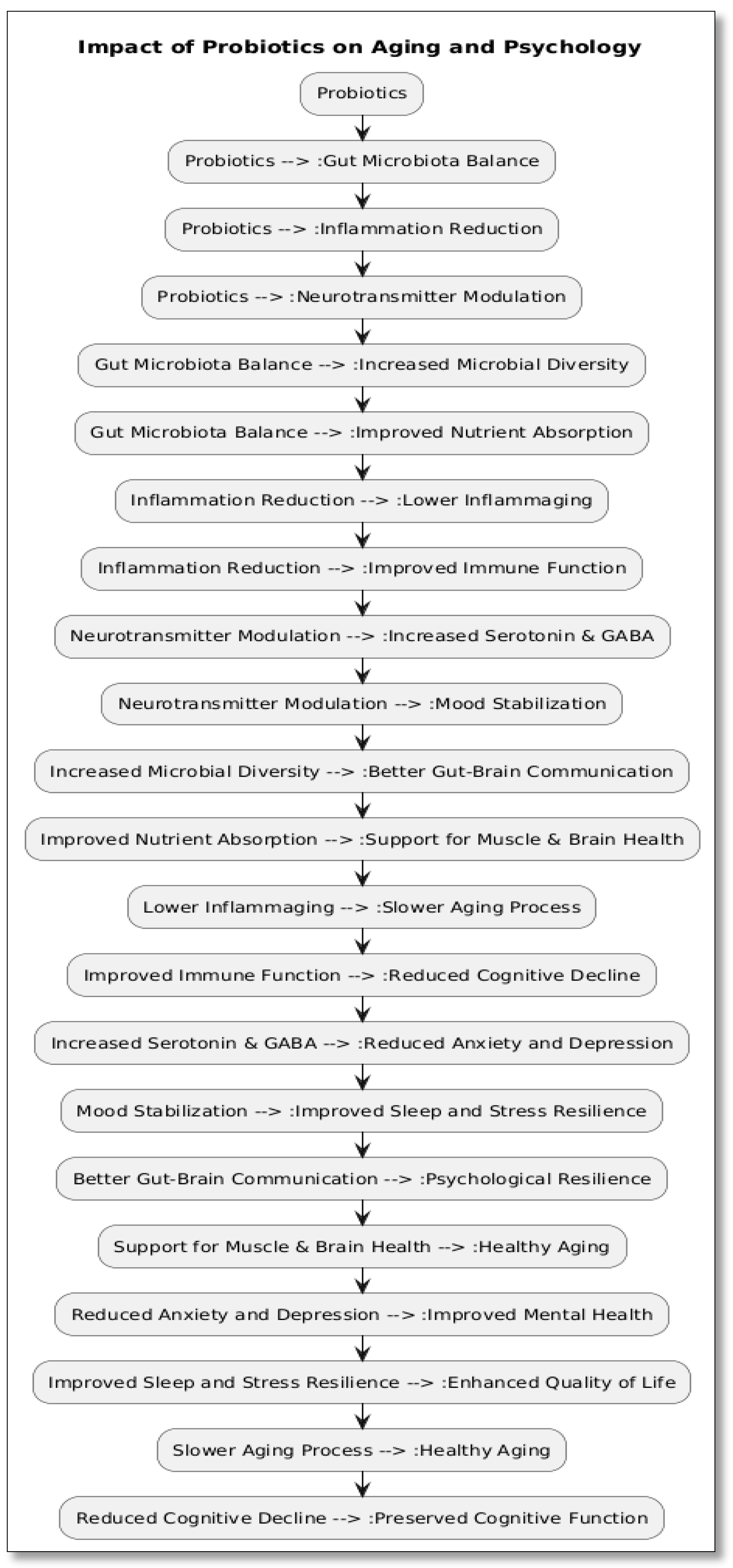
The decrease of microbial diversity and metabolic efficiency that frequently coincides with age-related dietary and lifestyle changes can be countered by prebiotic intake in older people, which can help re-establish a healthier microbiome composition.
4.4. Potential for Sarcopenia and Metabolic Syndrome Prevention
The potential of gut microbiome modulation to maintain muscle mass and strength is gaining attention. According to certain research, probiotics and prebiotics may:
- Improve the absorption of amino acids needed for the synthesis of muscle proteins;
- Reduce inflammation in muscles through systemic immune control.
- Enhance the nutritional status of elderly, fragile populations
These therapies may have a significant role in reducing metabolic syndrome and sarcopenia, two conditions that pose serious risks to older persons’ ability to maintain their functional independence, by addressing both inflammatory and nutritional pathways.
5. Synergistic Strategies for Healthy Aging [22,23,24,25,26,27,28]
A holistic approach to ageing is created by combining nutritional and physical interventions with psychological wellness practices. Taking care of the body and mind increases resistance to age-related deterioration.

Table 1.
Interaction of Psychology, Metabolism, and Gut Health During Aging.
| Factor | Impact on Metabolism | Intervention |
| Chronic Stress | ↑ Cortisol → ↑ Fat storage, ↓ Muscle synthesis | Exercise, Meditation, Probiotics |
| Depression | ↓ Activity, ↑ Inflammation, Disrupted appetite | Psychotherapy, Physical Activity, Probiotics |
| Sleep Disturbances | Hormonal imbalance → ↑ Hunger, ↓ Insulin sensitivity | Sleep hygiene, Melatonin, Pre/Probiotics |
| Gut Dysbiosis | ↑ Inflammation, ↓ Neurotransmitter production | Prebiotics, Probiotics, Dietary Fiber |
| Social Isolation (Psychosocial) | ↓ Activity, ↑ Inflammatory markers | Group Exercise, Community Support |
6. Conclusion
One important aspect of ageing that cannot be disregarded is the interaction between bodily metabolism and psychological well-being. Hormonal imbalance and metabolic inefficiency are exacerbated by mental stress, insomnia, and despair. Fat buildup and age-related sarcopenia exacerbate these consequences. Exercise is a potent tool that can be used to improve both physical and mental health. At the same time, a new way to affect the brain-gut-metabolism axis is by modifying the gut microbiota with probiotics and prebiotics. When combined, these tactics offer a viable, comprehensive strategy for preserving mental and physical health as people age. In order to achieve healthy lifespan, maintaining the mind is equally as important as supporting the body.
References
- Munot N, Kandekar U, Rikame C, Patil A, Sengupta P, Urooj S, et al. Improved mucoadhesion, permeation and in vitro anticancer potential of synthesized thiolated acacia and karaya gum combination: a systematic study. Molecules. 2022;27:6829. [CrossRef] [PubMed]
- Munot N, Kandekar U, Giram PS, Khot K, Patil A, Cavalu S. A comparative study of quercetin-loaded nanocochleates and liposomes: formulation, characterization, assessment of degradation and in vitro anticancer potential. Pharmaceutics. 2022;14:1601. [CrossRef] [PubMed]
- Manikyam HK, Tripathi P, Patil SB, Lamichhane J, Chaitanya M, Patil AR. Extraction, purification, and quantification of hesperidin from the immature Citrus grandis/maxima fruit Nepal cultivar. Asian J Nat Prod Biochem. 2022;20. [CrossRef]
- Patil A, Munot N, Patwekar M, Patwekar F, Ahmad I, Alraey Y, et al. Encapsulation of lactic acid bacteria by lyophilisation with its effects on viability and adhesion properties. Evid Based Complement Alternat Med. 2022;2022:1–9. [CrossRef] [PubMed]
- Nalawade AS, Gurav RV, Patil AR, Patwekar M, Patwekar F. A comprehensive review on morphological, genetic and phytochemical diversity, breeding and bioprospecting studies of genus Chlorophytum Ker Gawl. from India. Trends Phytochem Res. 2022;6(1):19–45.
- Patil KG, Balkundhi S, Joshi H, Ghewade G. Mehsana buffalo milk as prebiotics for growth of Lactobacillus. Int J Pharm Pharm Res. 2011;1(1):114–7.
- Das N, Ray N, Patil AR, Saini SS, Waghmode B, Ghosh C, et al. Inhibitory effect of selected Indian honey on colon cancer cell growth by inducing apoptosis and targeting the β-catenin/Wnt pathway. Food Funct. 2022;13:8283–303. [CrossRef] [PubMed]
- Patil MJ, Mali V. The diverse cytotoxicity evaluation of Lactobacillus discovered from sheep milk. Acta Sci Pharm Sci. 2021;5(12):69–70.
- Abhinandan P, John D. Probiotic potential of Lactobacillus plantarum with the cell adhesion properties. J Glob Pharma Technol. 2020;10(12):1–6.
- Patil A, Pawar S, Disouza J. Granules of unistrain Lactobacillus as nutraceutical antioxidant agent. Int J Pharm Sci Res. 2018;9(4):1594–9.
- Patil A, Mali V, Patil R. Banana fibers camouflaging as a gut worm in a 6-month-old infant. Iberoam J Med. 2020;2:245–7. [CrossRef]
- Munot NM, Shinde YD, Shah P, Patil A, Patil SB, Bhinge SD. Formulation and evaluation of chitosan-PLGA biocomposite scaffolds incorporated with quercetin liposomes made by QbD approach for improved healing of oral lesions. AAPS PharmSciTech. 2021;24(6):147. [CrossRef] [PubMed]
- Patil A. Psychology in the age of technology dependence and the mobile dilemma. Preprints.org. 2023;2023070101.
- Patil A, Kotekar D, Chavan G. Knowing the mechanisms: how probiotics affect the development and progression of cancer. Preprints.org. 2023;2023070243.
- Kim CS, Jung MH, Shin DM. Probiotic supplementation has sex-dependent effects on immune responses in association with the gut microbiota in community-dwelling older adults: a randomized, double-blind, placebo-controlled, multicenter trial. Nutr Res Pract. 2023;17(5):883–898. [CrossRef] [PubMed]
- Li G, Li W, Song B, et al. Differences in the gut microbiome of women with and without hypoactive sexual desire disorder: a case-control study. J Med Internet Res. 2021;23(2):e25342. [CrossRef] [PubMed]
- Kim CS, Jung MH, Shin DM. Probiotic supplementation has sex-dependent effects on immune responses in association with the gut microbiota in community-dwelling older adults: a randomized, double-blind, placebo-controlled, multicenter trial. Nutr Res Pract. 2023;17(5):883–898. [CrossRef] [PubMed]
- Li G, Li W, Song B, et al. Differences in the gut microbiome of women with and without hypoactive sexual desire disorder: a case-control study. J Med Internet Res. 2021;23(2):e25342. [CrossRef] [PubMed]
- Shingade JA, Padalkar NS, Shin JH, Kim YH, Park TJ, Park JP, Patil AR. Electrostatically assembled maghemite nanoparticles-Lactobacillus plantarum: A novel hybrid for enhanced antioxidant, antimicrobial, and antibiofilm efficacy. Bioresour Technol. 2025;430:132538. [CrossRef] [PubMed]
- Manikyam HK, Joshi SK, Patil SB, Vakadi S, Patil AR. Steroidal glycosides from Mallotus philippensis induce apoptosis in MCF-7 breast cancer cells via MTT and DAPI assays. Asian J Nat Prod Biochem. 2025;23(1).
- Wang J, Yuan F, Kendre M, He Z, Dong S, Patil A, Padvi K. Rational design of allosteric inhibitors targeting C797S mutant EGFR in NSCLC: an integrative in silico and in-vitro study. Front Oncol. 2025;15:1590779. [CrossRef] [PubMed]
- Sakate MK, Wategaonkar SB, Zambare DN, Shembade UV, Moholkar AV, et al. Dual extracellular activities of cobalt and zinc oxides nanoparticles mediated by Carica papaya latex: Assessment of antibacterial, antifungal, and anticancer activities. Inorg Chem Commun. 2025;114538. [CrossRef]
- Patil A, Singh N, Patwekar M, Patwekar F, Patil A, Gupta JK, Elumalai S, et al. AI-driven insights into the microbiota: Figuring out the mysterious world of the gut. Intell Pharm. 2025;3(1):46–52. [CrossRef]
- Manikyam HK, Joshi SK, Patil SB, Patil AR, Ponnuru VS. Free radical-induced inflammatory responses activate PPAR-γ and TNF-α feedback loops, driving HIF-α mediated metastasis in HCC: In silico approach of natural compounds. Univ Libr Biol Sci. 2025;2(1):1.
- Bhinge SD, Jadhav S, Lade P, Bhutkar MA, Gurav S, Jadhav N, Patil A, et al. Biogenic nanotransferosomal vesicular system of Clerodendrum serratum L. for skin cancer therapy: Formulation, characterization, and efficacy evaluation. Future J Pharm Sci. 2025;11(1):5. [CrossRef]
- Kareppa MS, Jangme CM, Patil AR. Phytochemical investigation and HPTLC screening of Tinospora cordifolia leaf extract. J Neonatal Surg. 2025;14(24s).
- Wang L, Xu Z, Bains A, Ali N, Shang Z, Patil A, Patil S. Exploring anticancer potential of Lactobacillus strains: Insights into cytotoxicity and apoptotic mechanisms on HCT 115 cancer cells. Biologics: Targets Ther. 2024:285–295. [CrossRef] [PubMed]
- Manikyam HK, Joshi SK, Patil SB, Patil AR. A review on cancer cell metabolism of fats: Insights into altered lipid homeostasis. Dis Res. 2025;4(2):97–107. [CrossRef]
Disclaimer/Publisher’s Note: The statements, opinions and data contained in all publications are solely those of the individual author(s) and contributor(s) and not of MDPI and/or the editor(s). MDPI and/or the editor(s) disclaim responsibility for any injury to people or property resulting from any ideas, methods, instructions or products referred to in the content. |
© 2025 by the authors. Licensee MDPI, Basel, Switzerland. This article is an open access article distributed under the terms and conditions of the Creative Commons Attribution (CC BY) license (http://creativecommons.org/licenses/by/4.0/).
Copyright: This open access article is published under a Creative Commons CC BY 4.0 license, which permit the free download, distribution, and reuse, provided that the author and preprint are cited in any reuse.


