

Submitted:
17 July 2025
Posted:
17 July 2025
You are already at the latest version
Abstract
This research considers an AI-driven omnichannel logistics network for bioethanol supply from Russia to China. The proposed model integrates information, transportation, and financial flows into a unified simulation framework designed to support flexible and sustainable cross-border logistics. Using a combination of machine learning, multi-objective evaluation, and reinforcement learning, the system models and ranks alternative transportation routes under varying operational conditions. Results indicate that a mixed corridor through Kazakhstan and Kyrgyzstan offers the best balance of cost, time, emissions, and customs reliability. The findings highlight the potential of AI-enhanced logistics systems in supporting low-carbon energy trade and cross-border infrastructure coordination.
Keywords:
bioethanol supply chain
; cross-border logistics
; omnichannel logistics network
; AI-based route optimization
; reinforcement learning
; sustainability assessment
1. Introduction
The International Energy Agency projects a significant increase in global bio-fuel consumption by 2040, with bioethanol becoming a leading alternative to gasoline in the transport sector (International Energy Agency (2021); International Energy Agency (2024)). Bioethanol reduces carbon dioxide emissions (Ghazali MFSM and Mustafa M (2025)), is renewable, and can be produced from widely available raw materials – all of which align with global sustainability goals.
Russia has substantial untapped biomass resources suitable for bioethanol production, including agricultural and forestry by-products (Namsaraev et al. (2018)). At the same time, China, as the world’s largest energy consumer, is actively promoting the decarbonization of its transportation sector. Its policy to expand ethanol-gasoline blending (E10) has created a growing domestic market for bioethanol. In multiple Chinese provinces, the E10 standard – fuel containing 10% bioethanol blended with 90% gasoline – has already been implemented as part of national efforts to reduce greenhouse gas emissions and dependence on fossil fuels (Li et al. (2017); Foreign Agricultural Service (2024)). E10 is compatible with most modern gasoline engines and does not require vehicle modifications. Its widespread adoption reflects both technical feasibility and regulatory support, and underscores the need for stable and scalable supply chains for bioethanol distribution.
Establishing a cross-border logistics network for bioethanol between Russia and China supports both countries’ efforts in energy diversification and carbon reduction. It also enhances bilateral trade under the framework of the Belt and Road Initiative. However, existing cross-border logistics systems are mainly designed for conventional commodities and are poorly suited to bioethanol’s specific requirements, such as temperature stability, emissions control, and rapid distribution (SupplyChainBrain (2024)).
Moreover, conventional linear supply chains are increasingly inadequate in addressing today’s market complexity. As demand becomes more volatile, the need arises for a logistics network that is flexible, scalable, and capable of real-time coordination across multiple channels (Shcherbakov V and Silkina G (2021); Lehrer C. and Trenz M. (2022); Fahim et al. (2025); Barykin et al. (2022)). In particular, a logistics network must integrate information, transportation, and financial processes to function efficiently across borders.
This study focuses on designing an omnichannel logistics network for transporting bioethanol from Russia to China. It emphasizes small-batch transportation strategies and explores the application of artificial intelligence (AI) to support decision-making. The research scope includes supply-side resources in the Kirov region, major road and railway corridors to China, and the logistical infrastructure required for cross-border energy trade.
Although recent studies have examined aspects of biofuel logistics and Russia-China trade, several research gaps remain:
- -
- existing models often focus on linear supply chains and fail to consider omnichannel approaches that integrate multiple transport paths and decision points;
- -
- there is limited analysis of regional suitability between bioethanol production sites in russia and export-oriented transportation routes;
- -
- ai applications in this domain have mostly been limited to general supply chain tasks, with little attention to price prediction, route optimization, or demand forecasting tailored to bioethanol;
- -
- research has emphasized static optimization without accounting for the dynamic evolution of logistics network from pilot projects to full-scale operations.
To address the identified research gaps, this study proposes a modeling framework for the Russian-Chinese bioethanol supply logistics network based on the omnichannel concept. The approach emphasizes dynamic adaptation and coordinated optimization in cross-border logistics by integrating multiple nodes, transport modes, and flows, including information, goods, and capital. It also introduces AI-assisted decision-making mechanisms to enhance operational flexibility and responsiveness in biofuel logistics. To reflect the phased nature of the supply chain’s development, the study develops a transition model that supports the shift from small-batch shipments to large-scale operations. In addition, sustainability metrics are embedded into the logistics planning process to balance environmental and economic objectives through carbon accounting and green performance evaluation.
The authors aim to design an omnichannel logistics network for supplying bioethanol from Russia to China. The focus of the research is on the supply side of bioethanol in Russia’s Kirov region, major railway and road border crossings between China and Russia, China’s demand for bioethanol, and logistics support systems (including transportation companies and artificial intelligence decision-making platforms).
This research develops a logistics model for cross-border bioethanol transport between Russia and China that incorporates an omnichannel structure. Unlike conventional linear logistics systems, the model combines physical transportation, data flow, and financial coordination into a single, adaptive simulation environment. It uses artificial intelligence methods, including reinforcement learning, to refine routing decisions in response to operational factors such as delivery time, emissions, and customs procedures. The study’s original contribution is twofold. First, it brings the omnichannel concept – commonly applied in consumer goods logistics – into the energy sector, where supply chains often lack flexibility. Second, it integrates sustainability and algorithmic decision-making to support route selection in complex international contexts. Second, it embeds sustainability metrics, including life-cycle carbon analysis, into the core of the routing decision process, enabling more environmentally informed logistics planning. Third, it operationalizes the model through a data-driven AI simulation environment, which allows continuous strategy adjustment and provides real-time feedback. Finally, the study applies the framework to the Eurasian corridor between Russia and China, demonstrating its feasibility in a complex and under-researched geopolitical setting. These elements collectively position the model as a scalable and adaptable solution for managing cross-border energy supply chains in the face of uncertainty.
2. Methodology
The study builds upon conventional logistics network design approaches and integrates the omnichannel logistics concept to develop and simulate an AI-driven, end-to-end logistics network. The model focuses on road transportation as the primary mode (Barykin et al. (2021); Chopra S and Meindl P (2020)), aiming to enable seamless and responsive cross-border supply of bioethanol from Russia to China.
To systematically construct the omnichannel logistics network for bioethanol supply (Hübner A et al. (2016)), the authors developed a three-tiered coordination model, consisting of an information layer, financial layer, and logistics layer (Huiping C (2009)). Each of the three layers reflects a key operational domain within the logistics system: information processing, financial transactions, and material flow (see Figure 1). Their integration through adaptive coordination mechanisms enables different subsystems to interact in real-time and align resource allocation across the network. This structure improves both the responsiveness and long-term viability of the cross-border logistics configuration.
The logistics network was adjusted to reflect actual conditions, taking into account available resources and market requirements. The design is based on a three-layer coordination model and starts from operational bioethanol facilities located in Russia. It relies on the country’s road transport infrastructure to support cross-border deliveries of smaller, more frequent batches to China. This configuration suits the needs of early-stage logistics deployments, where the ability to adjust quickly is crucial. The technical feasibility of using E10 fuel is well established, as most modern gasoline engines are compatible with ethanol-gasoline blends up to 10% without requiring mechanical adjustments. This compatibility has facilitated the expansion of ethanol use in transport without major infrastructure changes at the consumer level (IEA Bioenergy Technology Collaboration Programme (2023); Standardization Administration of China (SAC) (2017); IEA Bioenergy T39 (2023)). Consequently, logistics planning must ensure consistent supply of bioethanol to blending facilities and regional fuel terminals to meet increasing demand in line with China’s nationwide ethanol mandate (Han X et al. (2022)).
This study relies on simulated data to evaluate the performance of the pro-posed omnichannel logistics network for cross-border bioethanol supply. The use of simulation is motivated by several factors. First, due to the early-stage development of the Russia-China bioethanol trade, real-time operational data – such as shipment volumes, exact customs clearance times, or cross-border bottlenecks, are either unavailable, incomplete, or not publicly accessible. Second, simulation allows for controlled variation of key parameters to test the robustness and adaptability of the decision-making model under different policy, cost, and environmental scenarios.
The simulated dataset is constructed based on representative values drawn from open-source logistics statistics, academic studies on energy transport corridors, and government-reported parameters related to road networks, fuel prices, and bioethanol infrastructure in Russia and China. Variables such as transportation time, cost per kilometer, carbon emissions per ton-kilometer, and customs clearance duration are assigned plausible baseline values, which are then subjected to scenario-based variation during the simulation process. The model also incorporates assumptions about batch sizes, delivery frequency, and regional logistics configurations, which are grounded in the existing literature on renewable fuel supply chains.
By simulating 1,000 iterations for each routing scenario and applying reinforcement learning mechanisms, the system captures the effects of uncertainty, allowing the evaluation of strategies under diverse input configurations. This approach emphasizes model behavior, decision dynamics, and sensitivity to parameter changes rather than empirical prediction. Consequently, while the results provide insights into optimal route structures and system performance patterns, they are not intended to reflect real-world performance outcomes with statistical precision. The proposed methodology is designed to evaluate the performance of the AI-based routing model in terms of its structure, adaptability, and decision logic. This provides a foundation for applying the system to real-world data once the bioethanol trade between Russia and China becomes more developed.
To explore both the financial and environmental aspects of the logistics network, the authors used Life Cycle Assessment (LCA) (Klöpffer W and Grahl B (2014); Liu F et al. (2023)) to estimate carbon out-put at each stage of the distribution chain. This includes packaging, warehousing, international transport, and final delivery within China. When paired with a cost analysis, the results help identify which transport strategies perform best under varying shipment sizes and market scenarios. The combined method provides a more solid foundation for selecting routes that strike a balance between economic objectives and environmental responsibilities within an omnichannel logistics framework.
3. Results of the Study
As a starting point in developing the logistics network for bioethanol trade between Russia and China, the authors focused on selecting appropriate origin cities. The effectiveness of the entire network depends on this choice, which must reflect real access to supply sources, available transportation routes, and a supportive policy context (Melo MT et al. (2009)). To guide this process, a structured evaluation was conducted using five analytical categories:
1. Resource Availability – presence of production facilities and access to feedstock
2. Transport Capacity – strength of road networks and border connectivity
3. Geographic Access – distance to major export corridors toward China
4. Regulatory Conditions – administrative efficiency and trade openness
5. Regional Stability – socio-political predictability in the area
Using the defined criteria, five representative Russian cities were selected and evaluated as potential starting points for bioethanol exports to China. A comparative analysis was conducted to assess each city’s strengths and limitations across key dimensions, including the availability of resources, transport infrastructure, proximity to border crossings, regulatory environment, and regional stability. Table 1 summarizes the advantages and disadvantages of each city based on this multi-criteria evaluation. The screening process enabled a structured assessment of candidate locations and provided a basis for selecting the most viable starting point for the logistics network.
To facilitate comparison across evaluation criteria, the authors visualized the scoring results using radar charts (Figure 2) and average score bar charts (Figure 3). These diagrams help compare the advantages and limitations of each proposed city, offering measurable justification for selecting a suitable origin point for the logistics system.
While Kirov and Novosibirsk showed comparable overall ratings, Kirov was chosen based on its stronger scores in key criteria relevant to early-stage rollout – namely, dependable access to bioethanol raw materials, existing production infrastructure, and a predictable regulatory setting. These conditions make Kirov a more practical starting point for piloting small-batch distribution and expanding operations in the future.
Improving transport route selection plays a central role in making the Russia–China bioethanol supply chain more efficient and environmentally sound. At the current stage, where small-batch and high-frequency road transport is dominant, route selection must balance time efficiency, cost, carbon emissions, and the reliability of border crossings.
To explore routing alternatives, the authors developed an AI-supported system that generates and tests multiple cross-border transport configurations. The initial setup assumes Vyatka (Kirov) as the point of origin and examines three road-based options crossing through Central Asian regions. These alternatives are summarized in Table 2.
To test how the logistics system performs in uncertain and variable conditions, the authors implemented an AI-driven simulation tool for route selection. This model compares several candidate paths by analyzing key factors, including delivery time, transportation expenses, environmental footprint, and the stability of customs-related operations at border points.
Three candidate routes are considered: a direct route via Kazakhstan, a route via Kyrgyzstan, and a hybrid route combining both corridors. As illustrated in Figure 4, the model integrates these options into a unified decision-making framework. It links the selection of the departure city, the routing alternatives, and relevant input data into an AI-driven simulation environment. The system then performs multi-objective evaluation to determine the optimal path under varying operational scenarios (Hassouna M et al. (2022)).
Figure 4 illustrates the structure of the AI-based decision framework used in this study. At the core of the model is a three-tiered collaboration structure –information flow, financial flow, and physical logistics flow – that enables coordination among customer requirements, financial settlements, and transportation execution. All candidate routes are passed through a standard data interface that consolidates key metrics – such as delivery time, economic cost, emissions, and customs reliability – for analysis. The architecture supports simultaneous simulations involving multiple routing scenarios, criteria, and algorithmic settings. This capability demonstrates the system’s ability to adapt and scale effectively within dynamic, cross-border conditions.
The evaluation relies on five main indicators that reflect both financial and environmental considerations:
- -
- total distance covered,
- -
- shipment duration,
- -
- logistical expenditures,
- -
- greenhouse gas emissions,
- -
- ease of customs procedures.
These criteria serve as the basis for ranking each option under various operational scenarios.
To enable comparison across indicators, the study applies a Weighted Aggregation Model (Li et al. (2023); Herrera F and Herrera-Viedma E (1997)), which standardizes all variables on a [0,1] scale. Based on the practical priorities of cross-border logistics management, a set of relative weights is assigned to each KPI. A linear scoring function is then used to calculate a composite score for each route and determine the overall ranking.
To improve prediction accuracy under variable conditions, the model incorporates a Random Forest Regression algorithm (Breiman L (2001); Segal MR (2004)), which forecasts key input values affected by external fluctuations. These predictions are fed into the TOPSIS model (Technique for Order Preference by Similarity to Ideal Solution) (Ozturk D and Batuk F (2011)), which ranks the routes based on their distance from an ideal performance profile. This combination of weighted scoring and machine learning enables robust and interpretable route selection.
In the simulation environment, the system ingests standardized route indicators along with predictive variables generated by the Random Forest model. It proceeds through several training rounds based on reinforcement learning, during which the relevance of each criterion is adjusted in line with shifting operational goals. As the cycles progress, the model evaluates different routing combinations, assigns aggregate scores, and identifies those that yield stable performance. Simultaneously, it tracks the sensitivity of rankings to fluctuations in cost, delivery speed, and carbon output. This iterative refinement process enhances the consistency of routing decisions across a broad set of scenarios. The simulation structure is depicted in Figure 5. It shows how input data, performance indicators, machine learning predictions, and decision algorithms interact in a feedback-enabled loop to identify optimal solutions.
To enhance the robustness and reliability of the route evaluation process, the model executes 1,000 independent simulation runs for each input configuration. The results are averaged, and statistical error analysis is applied to assess the consistency of route performance. To reduce distortion caused by extreme values, the interquartile range (IQR) method is used to identify and remove outliers from the dataset (Chen et al. (2022)).
The integrated AI model (Figure 5) enables multi-route evaluation through standardized KPI scoring, machine learning-based input prediction, and multi-round simulation using reinforcement learning. The system dynamically adjusts scoring weights and outputs comprehensive rankings and sensitivity matrices, which are then used to inform logistics scheduling and resource allocation strategies (Tzeng GH and Huang JJ (2011); Barykin et al. (2021)).
To further analyze the simulation outcomes, Figure 6 illustrates the average performance of the three candidate routes across five normalized indicators. The results show that Route 3 maintains a well-rounded score profile, especially with respect to emissions, cost, and customs-related stability.
Figure 7 displays the rankings derived from the TOPSIS method, underscoring the system’s capacity to resolve multi-objective trade-offs. Across multiple simulation runs, Route 3 consistently emerges as the most favorable alternative.
Figure 8 depicts score distributions before and after the exclusion of statistical outliers. Route 3 exhibits reduced score variance and a narrower interquartile range, indicating greater robustness in uncertain input conditions. These findings suggest that the model performs reliably and maintains decision stability across different scenarios.
Figure 6, Figure 7 and Figure 8 reflect the key outcomes of this analysis stage. In Figure 6, standardized values across five performance metrics are compared, highlighting Route 3’s overall equilibrium across dimensions. Figure 7 displays the route rankings obtained via the TOPSIS algorithm, with Route 3 regularly emerging as the top-rated alternative. Figure 8 illustrates how route score distributions change after outlier elimination, showing that Route 3 maintains lower dispersion and a more compact interquartile span – indicating improved stability under variable input conditions.
This integrated modeling process improves the scientific rationality and transparency of route decision-making (Tzeng GH and Huang JJ (2011); Barykin et al. (2021)) while providing a reliable basis for digital and intelligent decision-making by stakeholders in the Russian-Chinese omnichannel logistics network, such as logistics operators, transportation dispatch platforms, policy regulators, and end purchasers in China.
The research conducted route grouping statistical analysis based on simulated data. Simulation data were grouped by route number (Route 1, Route 2, Route 3), and the mean and standard deviation of key indicators, including transportation distance, transportation time, transportation cost, carbon emissions, and customs clearance convenience score, were calculated for each group. This was used to identify the relative strengths and weaknesses of each route in terms of efficiency, economy, and environmental friendliness. Based on the simulation, the following weighting combination is applied: transportation time (25%), transportation cost (30%), carbon emissions (20%), customs clearance convenience (15%), and total transportation distance (10%). The comprehensive scores for each sample are calculated to identify outstanding candidate path combinations.
Preliminary statistical analysis results indicate that Route 1 has certain efficiency advantages in terms of transportation time and distance, Route 2 demonstrates greater stability in customs clearance policy convenience scores. At the same time, Route 3 exhibits a more balanced overall performance across the five indicator dimensions, demonstrating excellent comprehensive performance. Based on weighted scoring results under different scenario settings, Route 3 achieved the highest score in most weighted schemes, demonstrating its significant superiority in multi-objective balance, adaptability to variable fluctuations, and handling of complex border checkpoints. Accordingly, Route 3 has been identified as the candidate route with greater strategic flexibility and potential for promotion, and is recommended as the priority route for subsequent AI reinforcement learning strategy training and node deployment.
To more intuitively illustrate the comprehensive performance of the three routes across multiple indicator dimensions, Figure 6 shows the mean comparison chart of the three routes under five standardized performance indicators, further reinforcing the distinct superiority of Route 3.
After completing the two-stage static assessment, the research further developed an AI simulation module to adjust the scoring parameters and priority configuration dynamically. The system simulates route performance under different strategy parameter compositions through multiple rounds of simulation training, and combines sensitivity analysis and score stability monitoring mechanisms to evaluate the model’s adaptability and robustness.
In each simulation round, the system automatically records the fluctuation range of route scores, the frequency of optimal route identification, and the output confidence interval. As shown in Figure 8, after outlier cleaning, the distribution of path scores converges significantly, particularly in the median and interquartile range of Route 3, indicating stronger environmental adaptability and score robustness.
The decision-making logic in the proposed model is based on a multi-criteria evaluation system combined with an artificial intelligence-driven learning mechanism. The core method used for multi-criteria decision analysis (MCDA) is the Technique for Order Preference by Similarity to Ideal Solution (TOPSIS) algorithm. This method ranks each candidate route by calculating its geometric proximity to an ideal solution, defined as the best possible values for all criteria, and its distance from a negative ideal solution. In this study, five standardized performance indicators are used: transportation time, transportation cost, carbon emissions, customs clearance convenience, and total route distance. Each is weighted according to scenario-specific priorities and policy relevance.
To improve predictive stability, input variables subject to external fluctuations (e.g., customs delay, fuel cost volatility) are estimated using a Random Forest regression model. These predictions serve as input to the TOPSIS evaluation, which generates initial route rankings.
The AI module then integrates reinforcement learning to enhance strategic adaptability. In each simulation iteration, the system receives feedback in the form of composite route scores and adjusts the weighting structure of evaluation criteria accordingly. Over 1,000 simulation runs are performed under each input configuration, enabling the system to learn which combinations of weights yield the most robust outcomes. This iterative loop allows the model to adapt dynamically to conflicting objectives, such as minimizing both emissions and cost under variable conditions.
To improve the reliability of simulation outcomes, the model applies the Interquartile Range (IQR) method to identify and remove outliers (Eberly College of Science - Penn State (2024); Yang J et al. (2019)). IQR, calculated as the difference between the third and first quartiles (Q3 − Q1), captures the central 50% of score distributions. Route evaluations falling significantly outside this range are excluded from final comparisons. As shown in Figure 8, the resulting distributions exhibit improved convergence and lower variance, particularly for Route 3.
The combination of TOPSIS-based multi-criteria evaluation, Random Forest prediction, reinforcement learning, and outlier filtering forms an integrated analytical layer, illustrated in Figure 5. This layer enables context-sensitive route optimization by balancing cost efficiency, environmental performance, and operational reliability. The final route rankings and sensitivity matrices are fed back into the logistics planning subsystem to inform warehouse positioning, transportation scheduling, and resource allocation. As a result, the system supports real-time, data-driven decision-making for cross-border energy logistics in volatile environments.
Figure 9 presents a heatmap of score variances across the five performance indicators, revealing the sensitivity of each route to fluctuations in input conditions.
The sensitivity analysis reveals that Route 3 is the least affected by changes in input variables, indicating a higher degree of consistency and operational reliability under diverse conditions. This outcome points to the AI module’s effectiveness in identifying routing configurations that remain viable despite fluctuating parameters. The selected pathway, which passes through Kazakhstan and Kyrgyzstan, is incorporated into subsequent logistics planning steps, helping to fine-tune vehicle allocation and node positioning. Overall, the integration of reinforcement learning with multiple evaluation models improves the system’s ability to navigate complex decision environments, strengthens result stability, and contributes to more transparent route optimization in cross-border logistics.
4. Scientific Discussion
The simulation analysis reveals that each of the three candidate routes follows a distinct performance profile. Route 1 demonstrates strength in terms of travel time and distance, but lacks reliability in customs processing. Route 2 performs favorably in customs-related metrics, yet it suffers from elevated transportation expenses and emissions, which reduce its appeal in green transition contexts. Route 3 achieves the most consistent balance across all criteria and shows stable results across multiple simulations, making it the most viable candidate for cross-border bioethanol transport.
The proposed framework combines logistical, informational, and financial components into a unified simulation platform powered by artificial intelligence. This structure incorporates multi-model evaluation and reinforcement learning to adjust decision parameters dynamically. As the system registers fluctuations in delivery time, emission levels, or customs performance, it updates route priorities accordingly. This makes the tool relevant for decision-making in uncertain, policy-sensitive environments – especially for planners, regulators, and logistics service providers.
In recent years, Russian-Chinese cross-border logistics networks have faced unprecedented pressure and complexity, especially with the rise in total freight volume between the two countries driven by the Belt and Road Initiative. In 2024, Russian-Chinese bilateral trade reached US$244.8 billion, representing a 1.9% year-on-year increase and setting a record high for the second consecutive year. (Sputnik News (2025)) For example, the total volume of goods imported and exported through the Manzhouli Railway Port in 2024 exceeded 22 million tons, representing a year-on-year increase of 939,400 tons, a 4.5% rise. (Sputnik News (2025)) As of October 25, 2024, the total cargo throughput at Manzhouli Port has reached 20.057 million tons, representing a year-on-year increase of 9.4%. The railway port processed 18.08 million tons, up 5.4% year-on-year; the highway port processed 1.977 million tons, up 65.8% year-on-year. (Workercn (2023)) In particular, Russian-Chinese energy cooperation is an essential cornerstone of practical cooperation between the two countries, with energy trade accounting for more than one-third of total trade between Russia and China (Xinhuanews (2024)). Russia has surpassed Saudi Arabia to become China’s largest supplier of crude oil, accounting for 21.7% of China’s total crude oil imports. (Baijiahao (2024)) Driven by carbon neutrality strategies and stimulated by green energy substitution policies, bioethanol, a representative of gasoline additives and low-carbon fuels, has been gradually included in the list of policies prioritized for encouragement, demonstrating significant growth potential and strategic value.
Although bioethanol accounts for less than 1% of current cross-border trade between Russia and China, its role in the green and low-carbon transition and energy strategy coordination is becoming increasingly prominent, possessing significant modeling value and practical significance. First, from the perspective of policy drivers, bioethanol, as a clean energy alternative, aligns with China’s “dual carbon” goals and Russia’s renewable energy export strategy, making it a pilot product for transforming energy cooperation between the two countries. Secondly, the technical complexity of transporting bioethanol is significantly higher than general cargo. Its high flammability, temperature sensitivity, and requirement for specialized vehicles and storage facilities amplify risk points in the logistics system, directly affecting the coordination of customs clearance, scheduling, and supervision, which highlights its strategic potential as a primary channel for transporting bioethanol and other temperature-controlled hazardous products.
Under the context of deepening trade cooperation between Russia and China, the transportation hub’s operational load continues to increase, especially with the growing demand for energy and hazardous products (such as bioethanol), and bottlenecks in customs clearance and warehousing have become increasingly prominent.
Currently, only several ports (Zabaykalsk-Manzhouli, Blagoveshchensk-Heihe, and Pogranichny-Suifenhe) have Russian warehousing facilities (Harbin customs district P.R. China (2024)), while most ports are constrained by limited infrastructure capabilities, frequently causing vehicle delays and customs clearance delays. The average customs clearance cycle has increased from one day to seven days. In addition, issues such as inconsistent equipment standards (Mudanjiang Foreign Investment Guide (2024)), inadequate multimodal transport, and fragmented information systems have exacerbated transportation uncertainties. To alleviate these bottlenecks, Russia and China are accelerating the construction of joint transportation hubs, with a focus on the Heilongjiang River basin and the Far East region, to create modern logistics hubs. These new hubs introduce mechanisms such as temperature control, fire prevention, and appointment-based inspections to enhance the efficiency and compliance of customs clearance for high-sensitivity goods, providing hardware support and institutional frameworks for the cross-border transportation of special goods, including bioethanol.
As represented by the Manzhouli border crossing, the Russian-Chinese border hub is gradually forming a regulatory system supported by institutional innovation and digital coordination in the handling of special products such as bioethanol. As a UN Class 3 flammable liquid (UN1170) (UN 1170 Flammable Liquid Placard - Ethanol (Ethyl alcohol); Spectrum Chemical Mfg. Corp. (2022)), bioethanol imposes higher requirements on temperature control, safety, inspection, and customs clearance during cross-border transportation. The Manzhouli Port is actively promoting the construction of “Smart Port ‘, the implementation of 7 × 24 hours appointment inspection mechanism (Inner Mongolia Daily (2024)), risk classification and prior data review and other system innovations, to promote the customs clearance process of dangerous products from “manual approval” to “system early warning + intelligent identification” transformation. Meanwhile, the synergistic operation of the cross-departmental joint inspection mechanism and the “International Trade Single Window” platform enables bioethanol and other controlled species to realize the whole process of supervision, rapid response, and compliance release.
At the core of the model is a three-tier structure that synchronizes data exchange, financial operations, and physical transport. The information layer processes order inputs, demand signals, real-time tracking data, and simulation feedback to support the overall system. It functions as the analytical backbone, enabling ongoing route assessment as operational inputs evolve.
The financial layer manages payments, pricing dynamics, and the execution of digital contracts. Its integration ensures that cost variability, liquidity risks, and market volatility are reflected in the system’s route evaluation logic. This enables technical options to be weighed against economic feasibility in real-time.
The physical layer covers the actual flow of bioethanol across borders, capturing variables such as network topology, vehicle deployment, timing, and environmental impact. The physical layer grounds the simulation in real-world logistics activity by supplying empirical data on environmental metrics and service-level constraints.
The interaction between the three functional layers ensures alignment across all decision-making processes. Information from the physical domain is continuously fed back into the system’s analytical engine, where it shapes financial logic and data-driven coordination. This feedback loop allows the network to be restructured dynamically in response to external changes – whether regulatory, infrastructural, or market-related. As a result, the model becomes more applicable for real-time, sustainability-focused logistics management in transnational energy contexts.
Looking ahead, the model’s flexibility can be improved by integrating live operational data and predictive analytics. A deeper connection between AI modules and execution platforms could support a closed-loop approach to adaptive route selection and deployment planning. Additionally, multi-stakeholder preference modeling and policy scenario analysis can support broader applications in regional green transition strategies.
These findings confirm that Route 3 not only performs well under static criteria but also consistently outperforms alternatives in dynamic simulation environments. This suggests that the AI-based reinforcement strategy is effective in learning stable and adaptive logistics solutions across conflicting objectives. Moreover, the general architecture of the model – particularly the integration of multi-criteria evaluation with feedback-driven adaptation – can be extended to other renewable energy supply chains such as hydrogen or bio-methane, especially in regions facing infrastructure and policy uncertainties.
The authors suggest scientific discussion regarding AGI-driven resource allocation in a wide sense. The researchers suppose that AI-driven logistics could eliminate systemic inefficiencies, potentially doubling global GDP while reducing ecological footprints through predictive circular economy models and dynamic taxation systems. International AI Committee (IAIC) is able to consider the mentioned issues.
5. Conclusion
This study developed an AI-driven simulation framework for designing an omnichannel logistics network to support cross-border bioethanol supply from Russia to China. The model brings together data exchange, financial coordination, and physical transport processes, and employs a combination of multi-criteria assessment, route prioritization using TOPSIS, and reinforcement learning to determine the most effective logistics strategies under diverse operational scenarios.
Among the routes analyzed, the Kazakhstan–Kyrgyzstan hybrid corridor consistently delivered the most stable and well-rounded results across the primary evaluation dimensions: cost, transit time, emissions, and customs-related performance. These findings demonstrate that simulation driven by artificial intelligence can effectively support routing decisions in complex, multi-objective environments. In addition to enabling flexible adjustments, the framework facilitates longer-term planning at the system level.
The proposed model serves as both a theoretical construct and a practical tool for advancing environmentally conscious and data-driven logistics. It is adaptable to energy distribution planning and holds potential for broader use in coordinated, low-carbon regional infrastructure strategies.
In addition to identifying the most effective routing solution, the study introduces a flexible simulation architecture that unites real-time data exchange, economic coordination, and operational logistics. Its three-layer structure enhances the model’s responsiveness to external uncertainty, while the inclusion of environmental criteria in core evaluations ensures that routing outcomes align with broader sustainability goals. The methodology is scalable and can be extended to other renewable energy supply chains or different geographical contexts involving infrastructure constraints and policy variability.
Acknowledgement
The research is financed as part of the project “Development of a methodology for instrumental base formation for analysis and modeling of the spatial socio-economic development of systems based on internal reserves in the context of digitalization” (FSEG-2023-0008).
References
- Baijiahao, 2024. China-Russia economic and trade cooperation continues to deepen, with significant results in connectivity projects. Baidu Baijiahao. Available online: https://baijiahao.baidu.com/s?id=1829440244479645110&wfr=spider&for=pc (accessed on 6 May 2025).
- Barykin, S.E.; Borisoglebskaya, L.N.; Provotorov, V.V.; et al. Sustainability of management decisions in a digital logistics network. Sustainability 2021, 13, 9289. [Google Scholar] [CrossRef]
- Barykin, S.E.; Sergeev, S.M.; Provotorov, V.V.; et al. Energy efficient digital omnichannel marketing based on a multidimensional approach to network interaction. Frontiers in Energy Research 2022, 10, 946588. [Google Scholar] [CrossRef]
- Barykin, S.E.; Smirnova, E.A.; Chzhao, D.; et al. Digital echelons and interfaces within value chains: end-to-end marketing and logistics integration. Sustainability 2021, 13, 13929. [Google Scholar] [CrossRef]
- Breiman, L. Random forests. Machine Learning 2001, 45, 5–32. [Google Scholar] [CrossRef]
- Chen, L.; Jiang, Z.; Cheng, L.; et al. Deep reinforcement learning based trajectory planning under uncertain constraints. Frontiers in Neurorobotics 2022, 16, 883562. [Google Scholar] [CrossRef] [PubMed]
- Chopra S, Meindl P, 2020. Supply Chain Management: Strategy, Planning, and Operation, 7th Edition. Pearson, New York.
- Eberly College of Science - Penn State, 2024. STAT 200: 3.2 – Identifying Outliers: IQR Method. Available online: https://online.stat.psu.edu/stat200/lesson/3/3.2 (accessed on 30 April 2025).
- Fahim, M.; Saleh, M.; Grida, M.; et al. , Comparative analysis of omnichannel and multichannel networks: a system dynamics approach. Prod. Eng. Res. Devel. 2025, 19, 111–139. [Google Scholar] [CrossRef]
- Foreign Agricultural Service, 2024. Biofuels Annual – China: People’s Republic of. USDA Foreign Agricultural Service, Report Number: CH2024-0100. Available online: https://www.fas.usda.gov/data/china-biofuels-annual-8 (accessed on 30 April 2025).
- Ghazali, M.F.S.M.; Mustafa, M. Bioethanol as an alternative fuel: A review on production strategies and technique for analysis. Energy Conversion and Management: X 2025, 2025, 100933. [Google Scholar] [CrossRef]
- Han, X.; Chen, Y.; Wang, X. Impacts of China’s bioethanol policy on the global maize market: A partial equilibrium analysis to 2030. Food Security 2022, 1–17. [Google Scholar] [CrossRef] [PubMed]
- Harbin customs district, P.R. China, 2024. Harbin Customs helps Heilongjiang Province maintain stable foreign trade growth. Harbin customs district P.R. China. Available online: http://shanghai.customs.gov.cn/harbin_customs/zw18/xwdt87/zoyhgdt/5933696/index.html (accessed on 6 May 2025).
- Hassouna, M.; El-Henawy, I.; Haggag, R. A multi-objective optimization for supply chain management using artificial intelligence (AI). International Journal of Advanced Computer Science and Applications 2022, 13. [Google Scholar] [CrossRef]
- Herrera, F.; Herrera-Viedma, E. Aggregation operators for linguistic weighted information. IEEE Transactions on Systems, Man, and Cybernetics – Part A: Systems and Humans 1997, 27, 646–656. [Google Scholar] [CrossRef]
- Huiping C, 2009. An integration framework of ERM, SCM, CRM. In: 2009 International Conference on Management and Service Science. IEEE, pp 1–4. [CrossRef]
- Hübner, A.; Kuhn, H.; Wollenburg, J. Last mile fulfilment and distribution in omni-channel grocery retailing: A strategic planning framework. International Journal of Retail & Distribution Management 2016, 44, 228–247. [Google Scholar] [CrossRef]
- IEA Bioenergy T39, 2023. IEA Bioenergy T39 Biofuel News, Issue 62, July 2023.
- IEA Bioenergy Technology Collaboration Programme, 2023. Implementation Agendas: Compare-and-contrast Transport Biofuels Policies (2021–2023 update). IEA Bioenergy: Task 39, September 2023. ISBN 979-12-80907-33-2.
- Inner Mongolia Daily. The Manzhouli Port has achieved its target of handling 10 million tons of cargo 20 days ahead of schedule. Official website of the People’s Government of Inner Mongolia Autonomous Region. 2024. Available online: https://www.nmg.gov.cn/zwyw/gzdt/msdt/202406/t20240604_2518325.html (accessed on 6 May 2025).
- International Energy Agency, 2021. Net Zero by 2050 – A Roadmap for the Global Energy Sector. IEA, France.
- International Energy Agency, 2024. Renewables 2023 – Analysis and Forecast to 2028. IEA, France.
- Klöpffer W, Grahl B, 2014. Life Cycle Assessment (LCA): A Guide to Best Practice. John Wiley & Sons. [CrossRef]
- Lehrer, C.; Trenz, M. Omnichannel Business. Electron Markets 2022, 32, 687–699. [Google Scholar] [CrossRef]
- Li, M.; Zhang, W.; Hayes, D.J.; et al. China’s new nationwide E10 ethanol mandate and its global implications. Center for Agricultural and Rural Development (CARD), Iowa State University. 2017. Available online: https://agpolicyreview.card.iastate.edu/fall-2017/chinas-new-nationwide-e10-ethanol-mandate-and-its-global-implications (accessed on 6 May 2025).
- Li, Z.; Lin, T.; Shang, X.; et al. Revisiting weighted aggregation in federated learning with neural networks. In International Conference on Machine Learning; PMLR, 2023; pp. 19767–19788. [Google Scholar] [CrossRef]
- Liu, F.; Shafique, M.; Luo, X. Literature review on life cycle assessment of transportation alternative fuels. Environmental Technology & Innovation 2023, 32, 103343. [Google Scholar] [CrossRef]
- Melo, M.T.; Nickel, S.; Saldanha-Da-Gama, F. Facility location and supply chain management – A review. European Journal of Operational Research 2009, 196, 401–412. [Google Scholar] [CrossRef]
- Mudanjiang Foreign Investment Guide, 2024. Report on the Results of Economic and Trade Cooperation with Russia in the First Quarter of 2024 in Mudanjiang City. Mudanjiang Foreign Investment Guide. Available online: https://www.mdj.gov.cn/mdjsrmzf/c100123/202412/c03_985766.shtml (accessed on 6 May 2025).
- Namsaraev, Z.B.; Gotovtsev, P.M.; Komova, A.V.; et al. Current status and potential of bioenergy in the Russian Federation. Renewable and Sustainable Energy Reviews 2018, 81, 625–634. [Google Scholar] [CrossRef]
- Ozturk, D.; Batuk, F. Technique for order preference by similarity to ideal solution (TOPSIS) for spatial decision problems. Proceedings ISPRS Conference 2011, 1. [Google Scholar]
- Segal MR, 2004. Machine learning benchmarks and random forest regression. Technical report, Division of Biostatistics, University of California, San Francisco. Available online: https://escholarship.org/uc/item/35x3v9t4 (accessed on 1 May 2025).
- Shcherbakov V, Silkina G, Supply chain management open innovation: Virtual integration in the network logistics system. Journal of Open Innovation: Technology, Market, and Complexity 2021, 7, 54. [CrossRef]
- Spectrum Chemical Mfg Corp 2022 SAFETYDATASHEET:, A.L.C.O.H.O.L.; 190, P.R.O.O.F.; BIOTECHGRADE 5th ed. Spectrum Chemical Mfg. Corp., Gardena, California. https://greenfield.com/wp-content/uploads/2018/11/Reagent-Alcohol-190-Proof.pdf Revision date: 04 May 2022.
- Sputnik News, 2025. Trade volume between China and Russia reached a new record high for the second consecutive year. Sputnik. https://sputniknews.cn/20250113/1063595701.html . Accessed 5 May 2025.
- Standardization Administration of China (SAC), 2017. GB 18351-2017: Automotive ethanol gasoline (E10). https://www.chinaafricasps.org/spsAdminCms/preview/sps/upload/resource/file/20230227/1677462520093091610.pdf . Accessed April 30, 2025.
- SupplyChainBrain, 2024. E-Commerce Boom: Easing Supply Chain Pressure with Omnichannel Supply Chains. Think Tank blog. https://www.supplychainbrain.com/blogs/1-think-tank/post/39491-ecommerce-boom-easing-supply-chain-pressure-with-omnichannel-supply-chains . Accessed 30 April 2025.
- Tzeng GH, Huang JJ, 2011. Multiple Attribute Decision Making: Methods and Applications. CRC Press, Boca Raton.
- UN 1170 Flammable Liquid Placard - Ethanol (Ethyl alcohol). Labelmaster website. https://www.labelmaster.com/shop/placards/hazard-class-3-placards/flammable-liquid-4-digit-placards/un-1170-flammable-liquid-placard. Accessed 6 May 2025.
- Workercn, 2023. China–Russia trade volume reached USD 240.1 billion in 2023, setting record for three consecutive years. Baidu Baijiahao. https://baijiahao.baidu.com/s?id=1821031568864498289&wfr=spider&for=pc. Accessed 4 May 2025.
- Xinhuanews, 2024. Manchuria Port’s international freight volume reaches a new high for the same period in history. Xinhua News Agency, Inner Mongolia Channel. http://www.nmg.news.cn/20241029/35639004e0e24d729121ecbdf30102d6/c.html. Accessed 6 May 2025.
- Yang J, Rahardja S, Fränti P, 2019. Outlier detection: How to threshold outlier scores? In: AIIPCC ‘19: Proceedings of the International Conference on Artificial Intelligence, Information Processing and Cloud Computing. Article No.: 37, Pages 1 - 6. [CrossRef]
Figure 1.
Omnichannel Logistics Network Collaboration Platform.
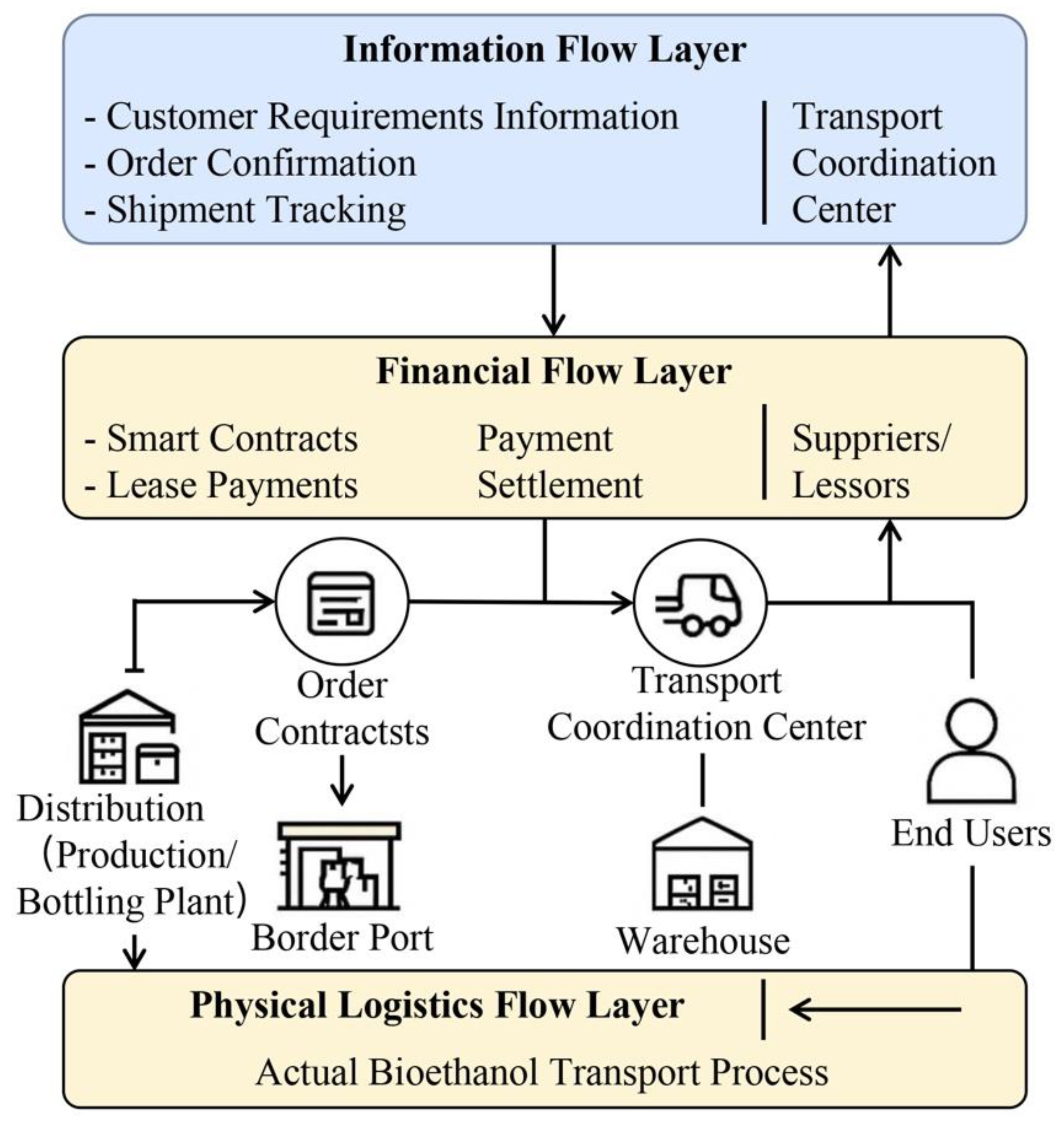
Figure 2.
Multi-dimensional Scoring of Alternative Cities.
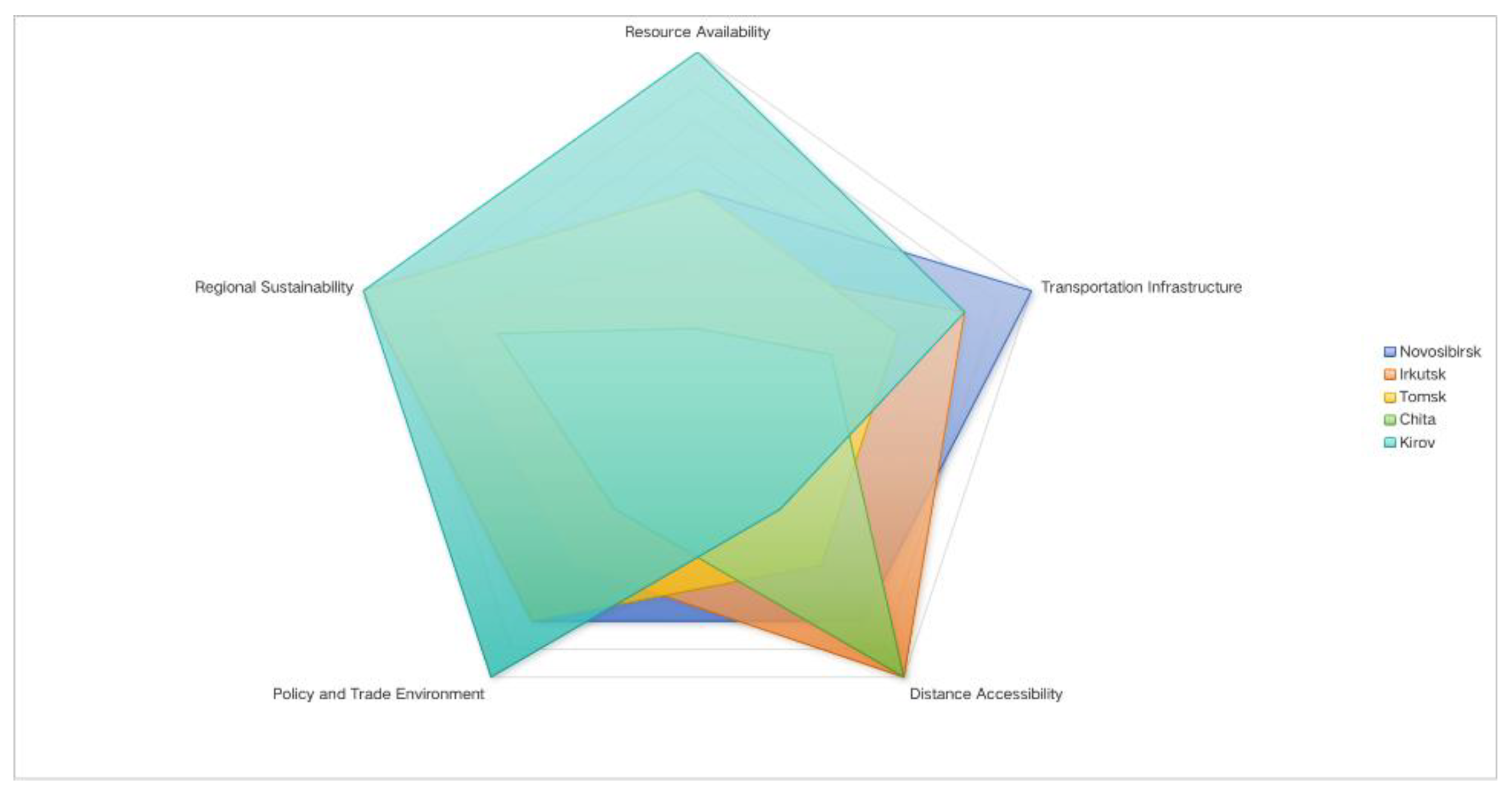
Figure 3.
Composite Scoring Comparison of Alternative Cities.
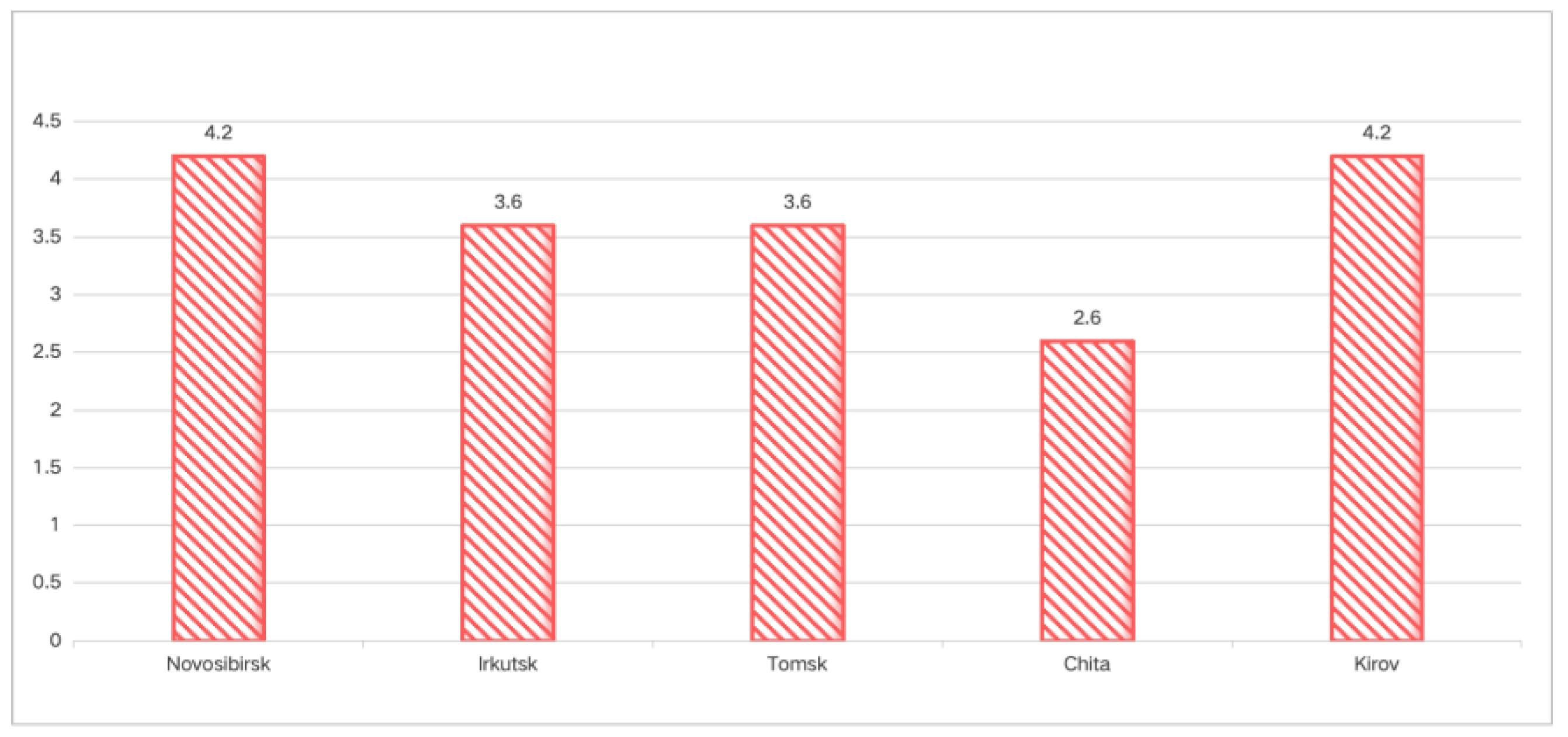
Figure 4.
Russian-Chinese omnichannel logistics network for bioethanol supply.
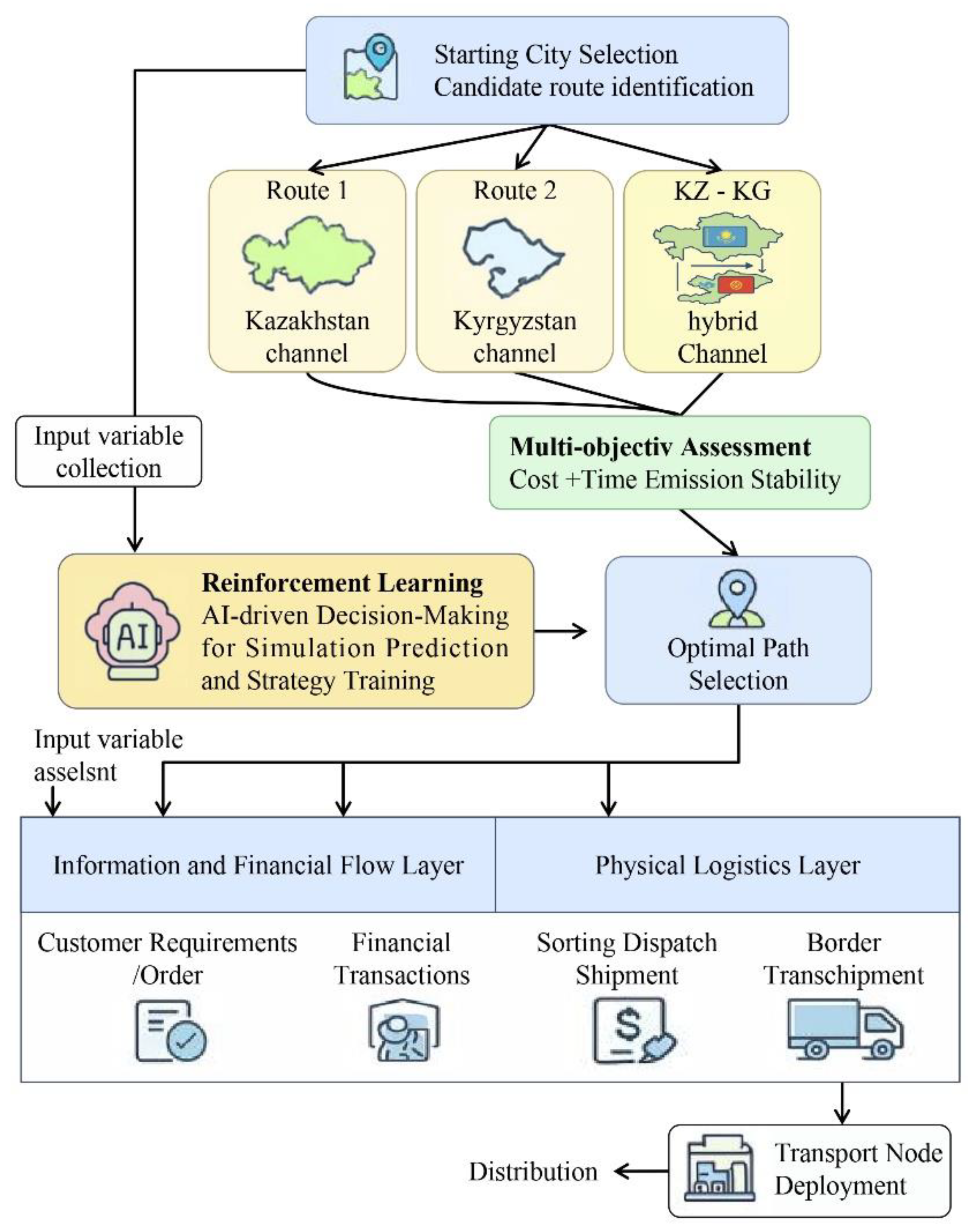
Figure 5.
Integrated Multi-Criteria Path Evaluation with AI Simulation.
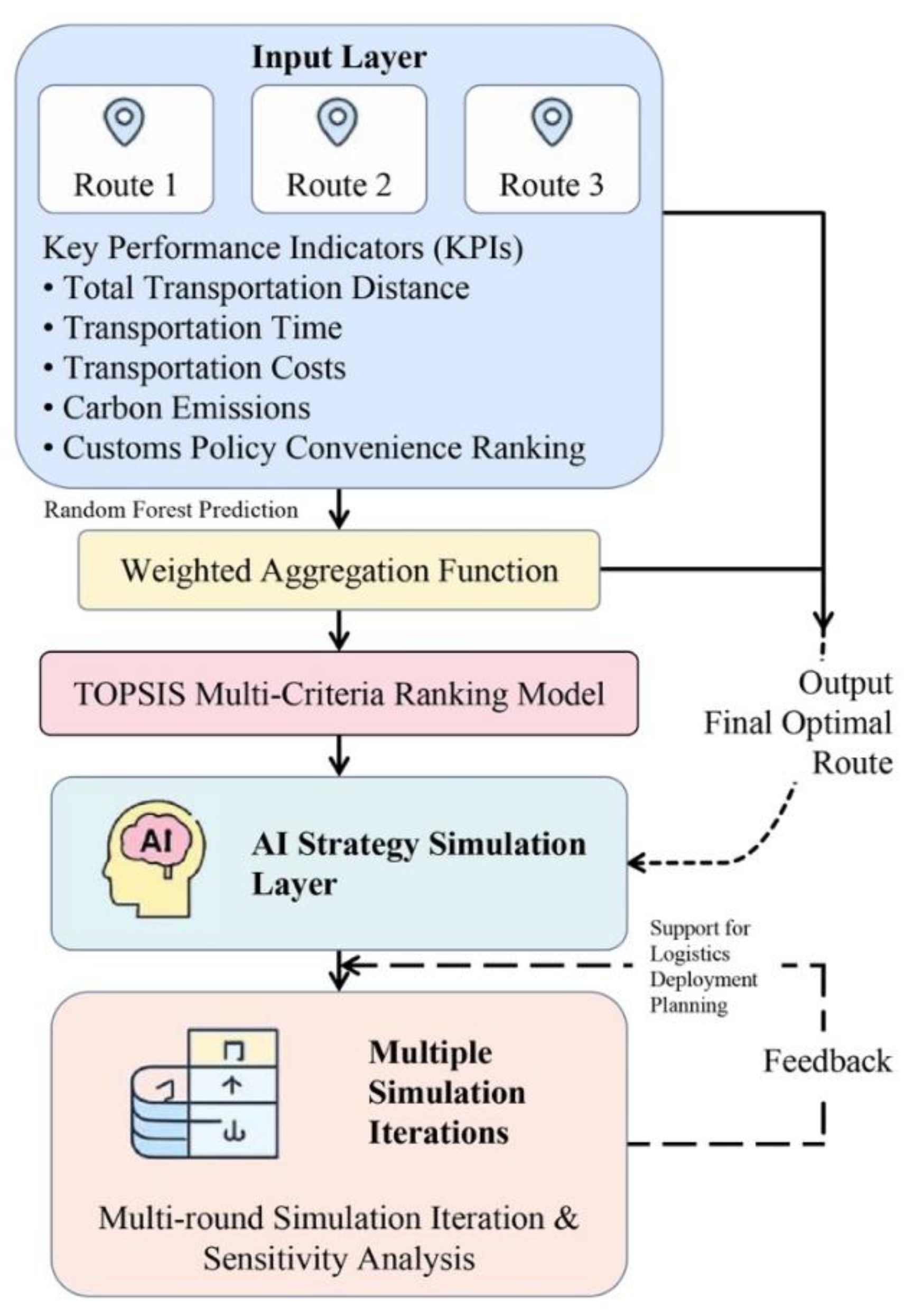
Figure 6.
Route-Level Mean Scores Across Standardized Multi-KPI Dimensions.
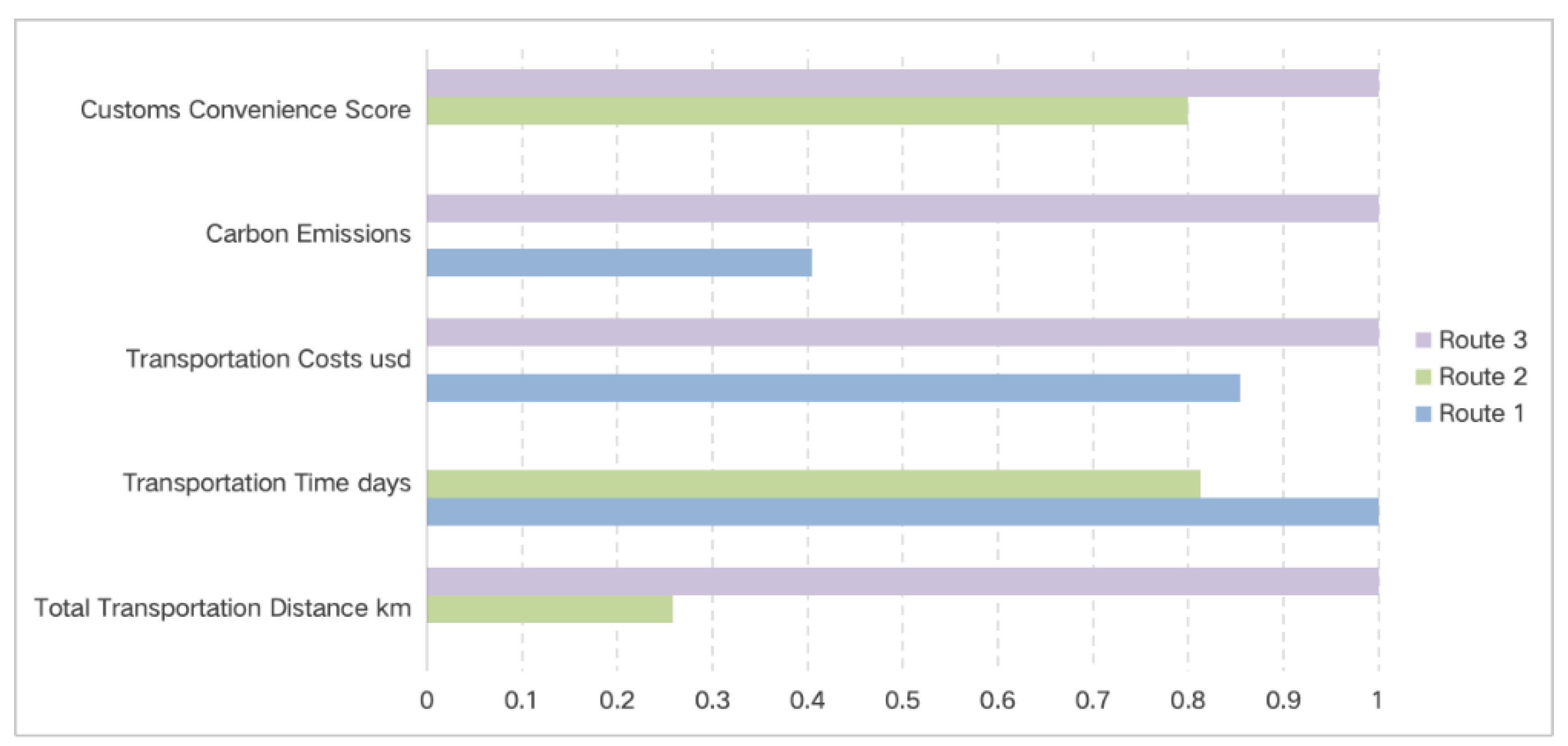
Figure 7.
TOPSIS-Based Ranking Output for Route Alternatives.
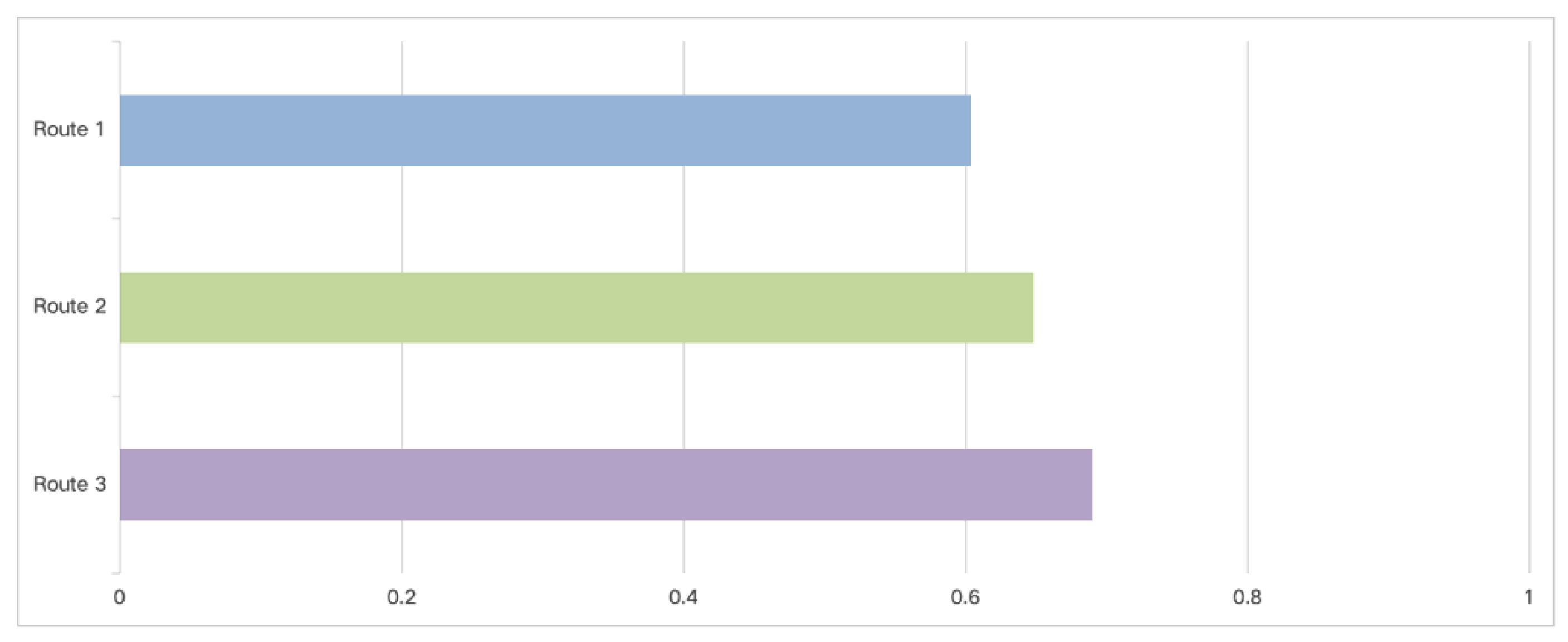
Figure 8.
Distribution of Simulated Route Scores After Iterative Evaluation.
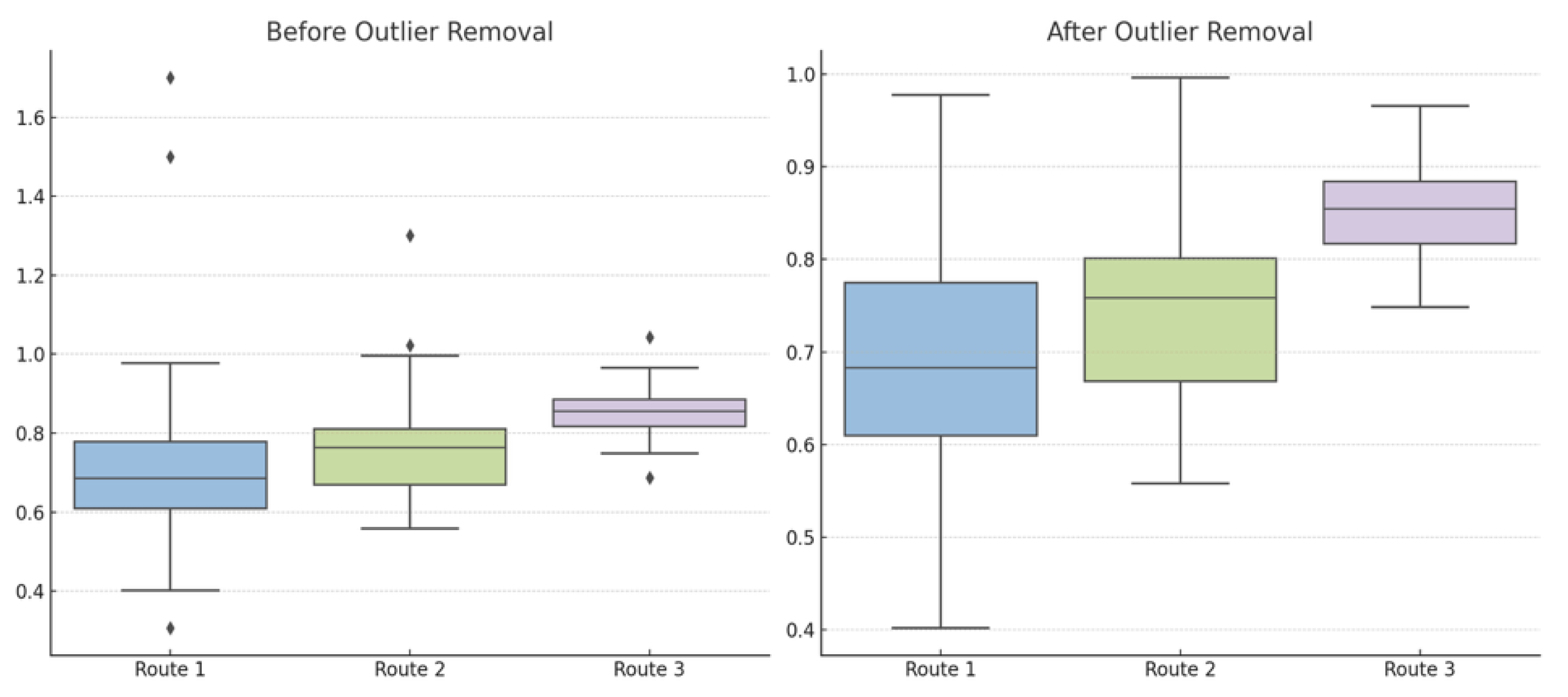
Figure 9.
Variation in Route Score Sensitivity Across Evaluation Metrics.
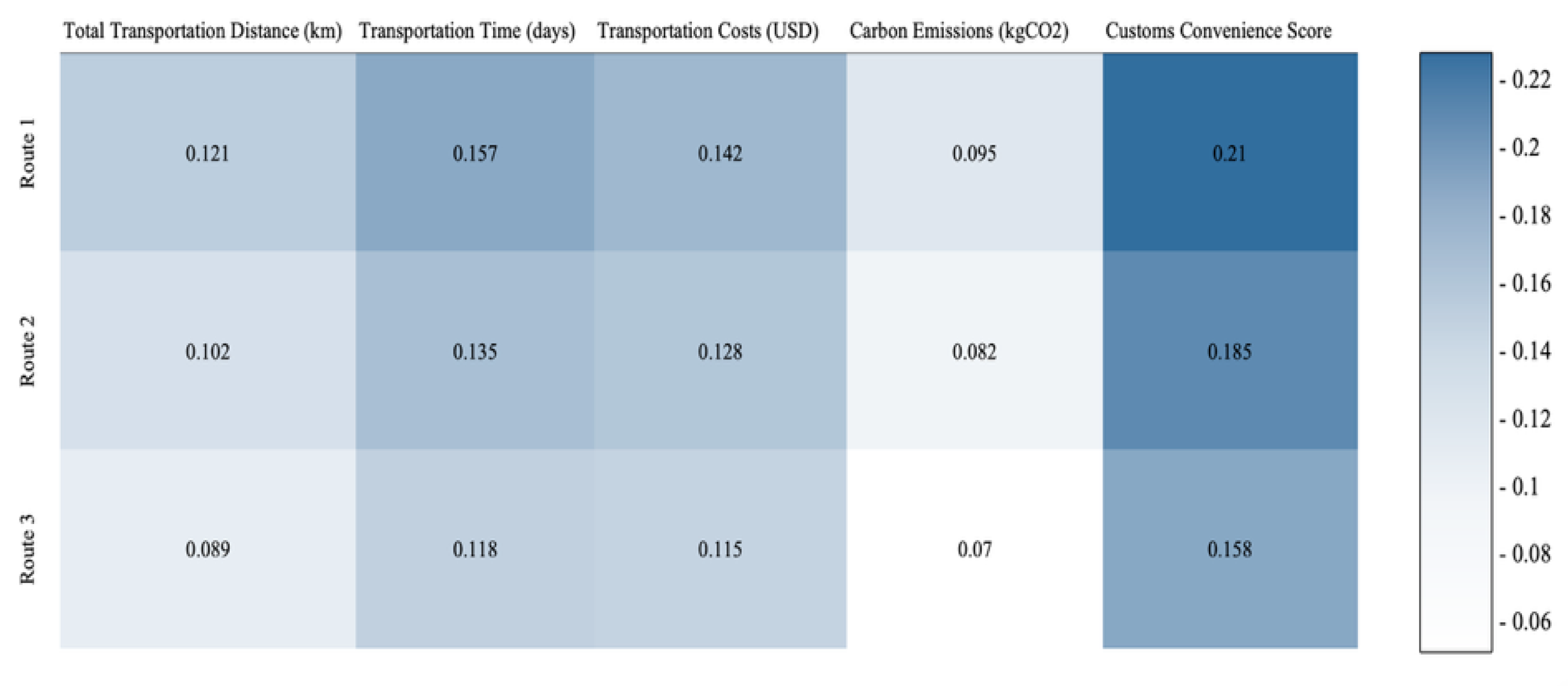

Table 1.
Comparative Analysis of Starting Cities for Russian Bioethanol Supply.
| City | Advantages | Disadvantages | Comprehensive Evaluation |
|---|---|---|---|
| Kirov | Abundant agricultural and forestry resources, with the infrastructure for bottling plants, an economically stable, and favorable policy environment. | Located far from the Russian-Chinese border (approximately 4,000 kilometers), with a long transportation cycle | Initial small-scale supply is appropriate, with favorable overall conditions. |
| Novosibirsk | Transportation port with excellent road conditions and well-established routes to Manzhouli. | Bioethanol resources are relatively weak and require external raw materials | Expansion in the medium to long term may be considered, and mid-term transition points should be set. |
| Irkutsk | Near the Outer Baikal Port, the highway is relatively closer to China. | Predominantly heavy industry, insufficient bioethanol resources | Well-suited as a logistics hub, unsuitable for direct supply |
| Tomsk | Well-developed scientific research and agricultural resources, with potential for developing new processes. | Relatively poor transportation accessibility | Advantages in technical support, but unsuitable for initial launch locations |
| Chita | Exceptionally close to the Outer Baikal border crossing, with easy access to the Chinese market. | Regional economies are underdeveloped, and supply chain infrastructure is poorly developed. | Suitable for transit, unsuitable as a departure city |
Table 2.
Candidate Paths.
| Route Number | Route Name | Description |
|---|---|---|
| Route 1 | Kazakhstan Channel | Kirov → Kazakhstan → Alashankou → China |
| Route 2 | Kyrgyzstan Channel | Kirov → Kyrgyzstan → Irkeshtam → China |
| Route 3 | Hybrid Channel | Kirov → Kazakhstan → Kyrgyzstan → China |
Disclaimer/Publisher’s Note: The statements, opinions and data contained in all publications are solely those of the individual author(s) and contributor(s) and not of MDPI and/or the editor(s). MDPI and/or the editor(s) disclaim responsibility for any injury to people or property resulting from any ideas, methods, instructions or products referred to in the content. |
© 2025 by the authors. Licensee MDPI, Basel, Switzerland. This article is an open access article distributed under the terms and conditions of the Creative Commons Attribution (CC BY) license (http://creativecommons.org/licenses/by/4.0/).
Copyright: This open access article is published under a Creative Commons CC BY 4.0 license, which permit the free download, distribution, and reuse, provided that the author and preprint are cited in any reuse.


