

Submitted:
13 July 2025
Posted:
15 July 2025
You are already at the latest version
Abstract
As technology rapidly evolves and global priorities shift toward sustainability, organizations are revisiting their human resource strategies to align with the United Nations’ Sustainable Development Goals (SDGs). This study examines the strategic integration of Artificial Intelligence (AI) into Sustainable Human Resource Management (S-HRM), focusing on its role in building resilient, future-oriented workforces. Drawing on primary data collected from HR professionals across diverse sectors, the research explores how AI tools—including predictive analytics, machine learning, and intelligent automation—can enhance eco-friendly recruitment, performance evaluation, and employee well-being. The study identifies key drivers and obstacles influencing the adoption of AI in sustainable HRM and presents a conceptual model for AI-enabled HR practices that promote environmental, social, and economic sustainability. Emphasizing ethical implementation, collaborative learning, and data-driven decision-making, the model supports long-term organizational adaptability and resilience. The paper contributes to both academic discourse and practical HR leadership by offering actionable insights for integrating AI into HR strategies that uphold sustainability values. Ultimately, this research provides a strategic roadmap for leveraging AI not just as a technological enhancement but as a catalyst for enduring, human-centered organizational development in a rapidly changing business landscape.

Keywords:
Artificial Intelligence in HRM
; Sustainable Human Resource Management (S-HRM)
; Organizational Resilience
; AI-Driven HR Strategies
; Workforce Sustainability
1. Introduction
In the constantly shifting business climate of today companies must not be competitive but also conduct themselves in an ethical and sustainable manner. Human Resource Management (HRM), once seen as a purely administrative function, has gradually transformed into a strategic partner in driving organizational success. In this transformation, the emphasis on sustainability within HRM has gained remarkable attention. Sustainable HRM refers to practices that not only support business goals but also promote employee well-being, social responsibility, and long-term companies’ health. It focuses on creating a balance between economic performance and the ethical, social, and environmental aspects of human resource policies.
The build importance of sustainable HRM can be assigned to multiple factors. Organizations today are under intense stress from stakeholders—including employees, customers, investors, and regulators—to act thoroughly and treat everyone with respect and fairness. Moreover, with the increasing rapidity of global disruptions, such as pandemics, climate-related crises, and economic uncertainty, businesses are realizing that traditional HR practices may not be enough to ensure resilience. This has led to a shift toward more forward-thinking, adaptable, and ethically grounded HR strategies.
In the same way, Artificial Intelligence (AI) is transforming how organizations manage their human capital. From recruitment and performance management to staff engagement and retention, AI tools offer automation, data-driven insights, and strengthen decision-making capabilities. When used with care and consideration, AI can support the goals of sustainable HRM by reducing bias, enhancing transparency, improving employee experiences, and making HR processes more productive and equitable.
However, the integration of AI in HRM is not without its challenges. Ethical considerations, data privacy, the risk of algorithmic bias, and the potential displacement of human roles are critical concerns that need to be addressed. Therefore, the intersection of AI and sustainable HRM presents both opportunities and responsibilities. Organizations must approach AI implementation not just as a technological upgrade, but as a strategic shift toward resilience—ensuring that human values and long-term sustainability remain at the core.
This paper aims to explore how artificial intelligence can be strategically leveraged to advance sustainable HRM practices, and how such integration contributes to building resilient, future-ready organizations. It seeks to identify not just the benefits, but also the limitations and ethical implications of AI-driven HR solutions, emphasizing the need for a balanced and thoughtful approach.
Figure 1.
Relationship b/w Technology &human learning.

2. Research Gap
While there is a growing body of research exploring both Artificial Intelligence (AI) and Sustainable Human Resource Management (HRM) independently, there remains a noticeable gap when it comes to understanding how the two can work together in a cohesive, strategic manner. Most existing studies tend to look at AI from a technical or operational standpoint—focusing on automation, data analytics, or efficiency in recruitment and workforce planning. Similarly, sustainable HRM is often discussed in the context of environmental responsibility, employee well-being, or ethical labor practices. However, very few studies connect these two fields in a meaningful way.
What has not been deeply explored is how AI can actually support or enhance the sustainability aspect of HRM—not just by making processes faster or smarter, but by genuinely contributing to long-term organizational flexibility, ethical decision-making, and inclusive growth. For example, can AI help reduce unconscious bias in hiring without introducing new forms of algorithmic discrimination? Can it promote employee engagement and mental well-being, or support learning and development in a more personalized, sustainable way? These are questions that still lack comprehensive, real-world research.
Moreover, there is limited understanding of the strategic role AI could play in sustainable HR planning, especially in unpredictable environments. Most research stops at implementation or technological features and rarely addresses the broader impact on organizational culture, leadership, or adaptability during crises.
Another overlooked area is the ethical tension between using AI and upholding human-centric values. As organizations rush to digitize their HR functions, there is little empirical work guiding how to integrate AI responsibly—ensuring transparency, fairness, and alignment with sustainability goals.
This research aims to bridge that gap by exploring not just the practical, but also the strategic and ethical dimensions of using AI in sustainable HRM. The goal is to highlight how AI can become a tool not just for efficiency, but for flexibility—helping organizations thrive in a way that is sustainable for both people and the business.
While several studies have examined the role of AI in business operations, few have truly connected it to sustainable human resource management. Much of the existing literature remains theoretical, lacking practical insights from real organizational settings. Some researchers focus heavily on automation benefits, often overlooking the ethical and cultural complexities involved. There’s also a noticeable gap in exploring how AI supports long-term resilience rather than just short-term efficiency. This study aims to fill those gaps by providing grounded perspectives from industry experts and practitioners.
3. Objectives of the Study
3.1To explore the strategic role of AI in promoting sustainable HRM for organizational resilience.
3.2To identify key challenges in implementing AI-driven sustainable HR practices and suggest practical solutions.
4. Research Questions
4.1. How Can AI Be Strategically Used to Support Sustainable HRM and Enhance Organizational Resilience?
AI can be strategically used to support sustainable Human Resource Management (HRM) and strengthen organizational resilience by enabling data-driven decision-making, predictive workforce planning, and personalized employee engagement. Through AI-powered analytics, HR professionals can identify trends, optimize talent acquisition, and forecast workforce needs, contributing to long-term sustainability.
Moreover, AI tools like chatbots and virtual assistants enhance employee experience by providing instant support and reducing administrative workload. This leads to improved job satisfaction and retention. AI can also support diversity and inclusion efforts by minimizing unconscious bias in recruitment and promotion processes.
In times of disruption, AI enables agile responses by monitoring workforce well-being, automating critical tasks, and ensuring business continuity. By fostering adaptability, AI helps organizations maintain performance and recover quickly, thereby reinforcing resilience.
Overall, integrating AI into HRM creates a forward-looking, inclusive, and flexible work environment that supports both sustainability and organizational strength.
4.2. What Are the Main Challenges in Applying AI to Sustainable HRM, and How Can Organizations Overcome Them?
Main Challenges in Applying AI to Sustainable HRM
i. Data Privacy Concerns
AI relies heavily on employee data. Collecting and analyzing this data can raise privacy issues if not handled with care.
ii. Lack of Human Touch
HR decisions often need empathy and emotional intelligence. AI tools might miss the subtle, human aspects of managing people.
iii. Bias in Algorithms
If the data used to train AI systems is biased, the outcomes will also be biased, leading to unfair hiring or promotion decisions.
iv. Resistance to Change
Employees and HR professionals may hesitate to adopt AI due to fear of job loss or discomfort with new technology.
v. High Initial Cost
Developing or adopting AI systems can be expensive, especially for small or medium-sized organizations.
vi. How Organizations Can Overcome These Challenges Ensure Data Transparency and Consent
Clearly inform employees about how their data will be used and get their consent. Use secure systems to protect their information.
vii. Blend AI with Human Judgment
Use AI to assist in decision-making, not to replace it. Let HR professionals make the final call in sensitive matters.
viii. Regularly Check for Bias
Continuously audit AI tools to identify and correct any biases in hiring or evaluations.
ix. Invest in Training and Communication
Educate staff about the benefits of AI and offer training to help them use it confidently.
x. Start Small and Scale Gradually
Begin with small, affordable AI tools that solve specific problems, and then expand as the organization grows comfortable.
5. Literature Reviews
1.AI-Based Human Resource Management Tools and Techniques
Source: Procedia Computer Science, 2023 Summary: This systematic review examines AI-driven tools enhancing recruitment, performance management, and employee engagement. It highlights AI’s role in reducing biases and improving decision-making efficiency in HR processes. https://www.sciencedirect.com
2.Artificial Intelligence in Agile Human Resource Practices
Source:International Journal of Lean Six Sigma, 2024
Summary: The study identifies emerging themes in integrating AI with agile HR practices, proposing a model that aligns AI applications with organizational agility and employee well-being. Emerald
3. Empowering Human Resource Management through Artificial Intelligence
Source: International Journal of Production Management and Engineering, 2025
Summary: This review explores AI’s transformative role in HRM, emphasizing human-AI collaboration and the challenges and opportunities presented by AI in HR practices. PoliPapers
4. Artificial Intelligence in Tactical Human Resource Management
Source: International Journal of Information Management Data Insights, 2021
Summary: The paper analyzes AI’s application in tactical HRM areas such as recruitment, performance evaluation, and training, identifying gaps and suggesting directions for future research. https://www.sciencedirect.com
5. Artificial Intelligence and HRM: Identifying Future Research Agenda
Source: Management Review Quarterly, 2023
Summary: This literature review and bibliometric analysis map the current state of AI applications in HRM, highlighting the need for ethical frameworks and strategic integration to enhance HR practices. SpringerLinkPoliPapers+1Emerald+1
6. Artificial Intelligence as an Enabler for Achieving Human Resource Resiliency
Source: International Journal of Industrial Engineering and Operations Management, 2024
Summary: The study develops a framework illustrating how AI enhances HR resiliency by improving competencies, performance management, and employee well-being, especially in post-pandemic contexts. Emerald
7. Artificial Intelligence and Green Human Resource Management Practices
Source: Emerald Publishing, 2024
Summary: This systemic review explores the synergy between AI and green HRM practices, emphasizing innovation and positive work behaviors that contribute to sustainability. Emerald+2Emerald+2Emerald+2
8. Role of Artificial Intelligence in Human Resource to Achieve Sustainable Organizational Performance
Source: International Journal of Innovative Research and Scientific Studies, 2025
Summary: The findings underscore AI’s strategic importance in HRM, demonstrating its role in driving innovation, efficiency, and sustainable growth within organizations. IJIRSS+1Emerald+1
9. Employee Well-being in the Age of AI
Source: arXiv, 2024
Summary: This study examines AI’s impact on employee perceptions, job satisfaction, and mental health, introducing a framework for understanding AI-employee interactions and emphasizing the need for transparent and ethical AI practices. wired.comarXiv
10. Integrating Artificial Intelligence into Human Resource Management Practices
Source: International Journal of Accounting, Finance, Auditing, Management and Economics, 2024
Summary: The literature review discusses the convergence of AI and HRM, addressing ethical challenges and proposing strategies for effective integration to enhance HR functions. Ijafame
6. Thematic Categorization
Strategic Integration of AI into HRM
6.1. Empowering Human Resource Management Through Artificial Intelligence (2025)
Human-AI collaboration and strategic transformation.
6.2. Artificial Intelligence and HRM: Identifying Future Research Agenda (2023)
Future directions and integration models for AI in HR.
6.3. Integrating Artificial Intelligence into Human Resource Management Practices (2024)
Strategy and policy-level AI adoption in HR functions.
6.4. Organizational Resilience & Agile HR
Artificial Intelligence in Agile Human Resource Practices (2024)
Agile models and adaptability through AI.
6.5. Artificial Intelligence as an Enabler for Achieving Human Resource Resiliency (2024)
Post-pandemic resilience through AI-based HRM.
6.6. Role of Artificial Intelligence in Human Resource to Achieve Sustainable Organizational Performance (2025)
AI’s role in driving long-term performance and resilience.
6.7. Employee Well-Being and Experience
Employee Well-being in the Age of AI (2024)
AI’s effects on mental health, trust, and employee experience.
6.8. AI-Based Human Resource Management Tools and Techniques (2023)
Enhancing engagement and satisfaction using AI tools.
6.9. Sustainability and Green HRM
Artificial Intelligence and Green Human Resource Management Practices (2024)
AI’s contribution to environmental sustainability in HR.
Role of Artificial Intelligence in Human Resource to Achieve Sustainable Organizational Performance (2025)
Integration of sustainability and innovation via AI.
6.10. Ethics, Bias & Responsible AI in HR
Artificial Intelligence in Tactical Human Resource Management (2021)
Operational use with emerging concerns on ethical AI.
6.11. Integrating Artificial Intelligence into Human Resource Management Practices (2024)
Ethical implications and responsible integration strategies.
7. Theoretical Framework: Strategic HRM & Endurance Theory
7.1. Resource-Based View (RBV) in Strategic HRM
The Resource-Based View (RBV) posits that organizations gain competitive advantage by leveraging unique and valuable resources that are rare, inimitable, and non-substitutable. In the context of HRM, human resources are considered valuable, rare, and difficult to imitate, making them a core asset for the organization’s success. Integration with Resilience Theory: The RBV can be linked to resilience theory through the concept of organizational resilience, which refers to an organization’s ability to adapt to and recover from challenges. Human capital (skilled employees, leadership, knowledge, etc.) is a vital resource that helps an organization bounce back from adversity. By focusing on developing employees’ skills and competencies, HRM can create a workforce capable of managing change and uncertainty effectively.Application: HR practices that develop human resources (training, development, leadership programs, etc.) build the capability to respond to disruptions, ensuring long-term organizational resilience.
7.2. Dynamic Capabilities Theory in Strategic HRM
Overview: Dynamic Capabilities Theory emphasizes the importance of an organization’s ability to integrate, build, and reconfigure internal and external competences to address rapidly changing environments. In HRM, this is reflected in the organization’s ability to adapt its HR practices and capabilities to meet emerging challenges.
Integration with Resilience Theory: Dynamic capabilities support resilience by enhancing the organization’s ability to sense, seize, and reconfigure its resources in response to environmental changes. The HR function can play a critical role by enabling this process through flexible HR policies, fostering an innovative culture, and supporting continuous learning.
Application: Strategic HRM practices that enhance dynamic capabilities (e.g., fostering innovation, agile leadership, and cross-functional teams) are crucial for ensuring that organizations remain resilient in the face of disruptions or market volatility.
7.3. Sustainable HRM Models
Overview: Sustainable HRM models focus on creating long-term value for both organizations and employees by balancing economic, social, and environmental objectives. These models emphasize the importance of developing HR practices that ensure sustainability by investing in employee well-being, fair working conditions, and career development.
Integration with Resilience Theory: Sustainable HRM aligns with resilience by promoting organizational practices that enhance the workforce’s long-term adaptability and capacity to deal with external shocks. When organizations integrate sustainability into HR practices, they enhance both employee and organizational resilience.
Application: HR practices in sustainability—such as promoting work-life balance, employee health programs, and career development—help create an adaptable workforce that can maintain high performance even in uncertain or challenging times.
7.4. Linking Resilience Theory to Strategic HRM Models
Resilience Theory Overview: Resilience theory in an organizational context refers to the ability of an organization to recover from shocks, adapt to changing circumstances, and continue to thrive. It involves organizational processes such as adaptive capacity, learning, and flexibility.
Integration with Strategic HRM Models: Strategic HRM models (RBV, Dynamic Capabilities, and Sustainable HRM) directly contribute to organizational resilience by developing human capital, enabling adaptive capabilities, and ensuring long-term sustainability. HRM’s role is to create a workforce capable of anticipating change, learning from past experiences, and rapidly adjusting to new situations.
Application: Integrating HRM practices with resilience theory ensures that the organization’s human resources are not only valuable and rare but also adaptable, innovative, and sustainable. These qualities are critical for ensuring organizational resilience.
Figure 2.
Demographic presentation of Table 1.
Figure 2.
Demographic presentation of Table 1.
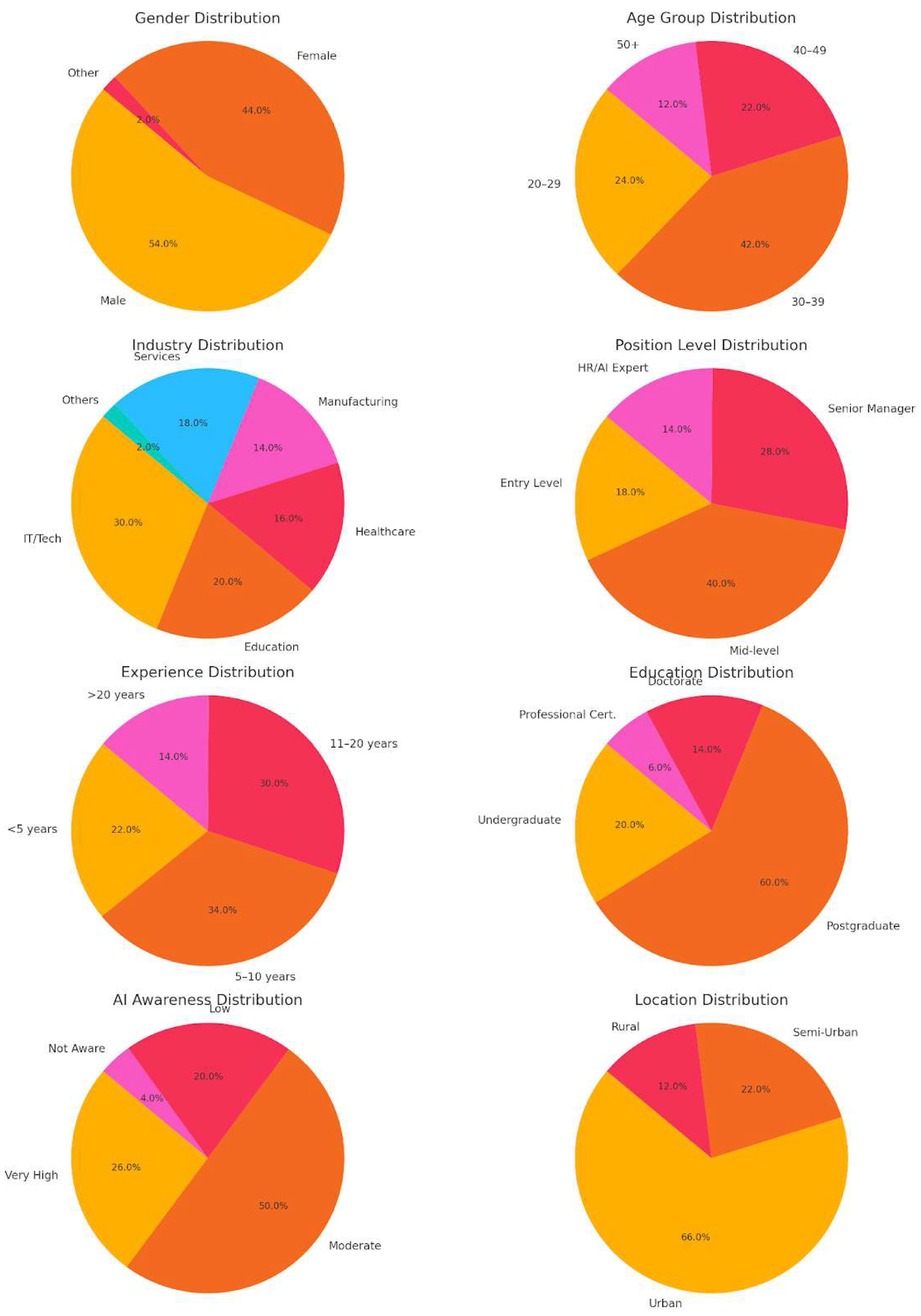
The demographic profile of the study’s respondents presents a well-rounded and diverse group, enhancing the reliability and relevance of the research. With a near-balanced gender representation (54% male, 44% female), the insights reflect inclusivity in perceptions toward AI in HRM. A majority of participants are aged between 30–39 years and have more than five years of work experience, indicating that the data is drawn from experienced professionals actively involved in strategic roles. The industry distribution shows strong representation from IT, education, healthcare, and services—sectors significantly impacted by AI-driven transformation—while 68% of respondents occupy mid to senior-level positions. Educationally, most participants are well-qualified, with 60% holding postgraduate degrees and 14% holding doctorates, enhancing the depth of the insights. Notably, 76% report moderate to high awareness of AI, which supports the credibility of their perspectives on its integration in HRM. Although urban respondents dominate (66%), the inclusion of semi-urban and rural participants broadens the context, capturing both opportunities and challenges in adopting AI for sustainable and resilient HR practices.
Key Points:
Resource-based View (RBV): Examine how organizations can develop and leverage human capital (knowledge of AI, innovation capacity) to ensure they remain competitive and resilient in the face of technological advancements in e-commerce.
Dynamic Capabilities Theory: Explore how HRM practices foster dynamic capabilities such as learning, adaptability, and agility, essential for organizations to navigate the rapid changes brought by AI in e-commerce.
Sustainable HRM Models: Discuss how sustainable HR practices ensure long-term employee well-being and development, thereby fostering a resilient workforce that can handle the complexities of AI in e-commerce.
Figure 3.
Conceptual illustration of the relationship between technology and human leaning. (Source: Author-generate image using AI).
Figure 3.
Conceptual illustration of the relationship between technology and human leaning. (Source: Author-generate image using AI).
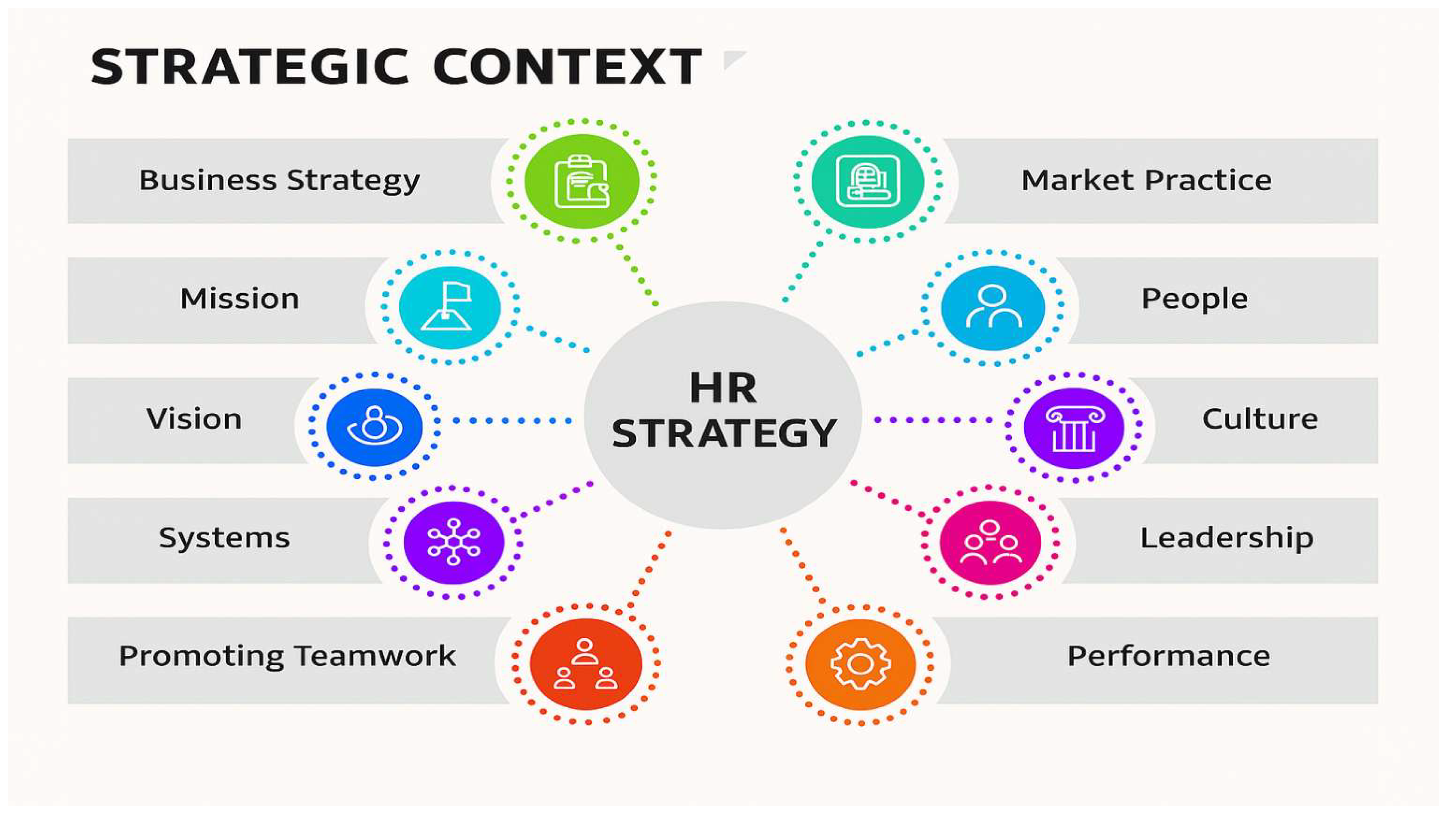
This Image presents a visual overview of the key elements that shape Human Resource (HR) strategy within an organization. At the center is HR strategy, which is influenced by both internal and external factors. On one side, components such as business strategy, mission, vision, systems, and teamwork reflect the internal foundation that guides HR planning. On the other side, factors like market practices, people, organizational culture, leadership, and performance represent the external and operational aspects that support effective HR implementation. Together, these interconnected elements help organizations align their human resources with overall goals, improve employee engagement, and respond to changing business environments.
8. Research Methodology
This study adopts a qualitative research design based on an interpretivist paradigm, aimed at capturing in-depth perspectives on the strategic integration of Artificial Intelligence (AI) in Sustainable Human Resource Management (S-HRM).
8.1. Data Collection
To gather primary data, semi-structured interviews were conducted with participants selected through purposive sampling. The participants included HR managers, AI consultants, and senior leaders from industries such as IT, education, healthcare, and manufacturing.
Each interview lasted approximately 30–45 minutes and was conducted either online via Zoom or in-person, depending on participant preference. All interviews were audio recorded with participant consent and later transcribed verbatim.
Sample Interview Questions:
- “How is your organization currently using AI in HR practices?”
- “What ethical concerns arise in your AI-based HR operations?”
- “How do you see AI contributing to long-term employee well-being and sustainability?”
8.2. Data Analysis
Thematic analysis was employed using a manual coding approach following Braun & Clarke’s (2006) six-step method:
- Familiarization with data
- Generating initial codes
- Searching for themes
- Reviewing themes
- Defining and naming themes
- Producing the report
A total of 92 open codes were initially generated, which were later clustered into 14 axial codes and finally grouped into 5 major themes.
Thematic Patterns and Supporting Quotes
9. Key Themes Identified
| Theme | Description | Sample Respondent Quotes |
| Strategic Enablement | AI is perceived as a strategic tool beyond efficiency | “AI has helped us move from routine HR to strategic decision-making.” – R3 (IT Sector) |
| Ethical Tensions | Data privacy, bias, and fairness were recurring concerns | “I still worry about bias in automated shortlisting. Who audits the algorithm?” – R9 (Healthcare) |
| Human-AI Collaboration | Employees want AI to augment—not replace—them | “Chatbots are helpful, but some things still need a human touch.” – R5 (Education) |
| Change Readiness | Resistance to AI stems from lack of digital skills | “The challenge is not AI itself—it’s whether our people are ready.” – R13 (Manufacturing) |
| Well-being and Inclusion | AI can boost mental wellness if applied ethically | “Our virtual assistant checks on workload and schedules breaks—it’s helped a lot.” – R17 (Banking) |
9. Future Research Avenues
As artificial intelligence (AI) continues to reshape Human Resource Management (HRM), future research should delve into its long-term implications on employee engagement, job satisfaction, and organizational culture. While AI tools such as chatbots, predictive analytics, and virtual assistants have shown promise in enhancing employee wellbeing and personalization—especially in hybrid work environments—there remains a need to understand their sustained impact over time (Labrado, 2025)39.
Industry-specific studies could offer valuable insights into how AI adoption varies across sectors, influenced by organizational size, digital maturity, and workforce composition (Chaudhari et al., 2024)40.Moreover, the role of AI in promoting diversity and inclusion warrants deeper exploration. Although AI has the potential to reduce human bias in recruitment and performance evaluations, concerns persist about algorithmic fairness and the risk of reinforcing existing inequalities if not properly audited (Aditya et al., 2024; April & Daya, 2025)41.
Another promising direction is to examine how leadership styles interact with AI-driven transformations. Research suggests that adaptive and participative leadership may be more effective in guiding organizations through AI integration, fostering trust and engagement among employees (Vidhya, 2025; Baruah et al., 2024)42.
Longitudinal studies would be particularly valuable in capturing the evolving dynamics of AI in HRM, offering a clearer picture of both opportunities and unintended consequences. Comparative analyses between organizations that have successfully implemented AI and those that have struggled could also yield best practices and cautionary lessons (Murthy & Katyal, 2024)43.
10. Discussion
The findings of this study highlight the growing strategic relevance of integrating Artificial Intelligence (AI) into Sustainable Human Resource Management (S-HRM) to foster organizational endurance. Drawing on data from diverse industry professionals, the study reaffirms that AI is not merely a tool for operational efficiency it is a strategic enabler of long-term sustainability and resilience in HR functions.
One of the most significant takeaways is the dual role AI plays in both strengthening HR processes and enhancing human capital development. AI-powered tools, particularly those used in recruitment, performance tracking, and employee engagement, are reshaping how organizations attract, retain, and nurture talent. These tools support sustainable HR practices by reducing unconscious bias, promoting inclusivity, and facilitating real-time feedback, all of which are essential to fostering a people-centric, adaptable workforce.
At the same time, the data collected underscores the ethical complexities and practical challenges of AI implementation in HRM. Concerns around data privacy, algorithmic bias, and the loss of the human element in decision-making emerged as recurring themes. These challenges echo existing literature and reinforce the need for a blended approach, where AI augments human judgment rather than replaces it.
Furthermore, this study advances current scholarship by establishing a link between resilience theory and sustainable HRM, through the lens of AI. While many prior studies have emphasized the efficiency and scalability of AI in HR operations, few have thoroughly examined its impact on organizational agility and endurance. The qualitative insights gathered suggest that AI-enabled HR systems can play a vital role in crisis management, business continuity planning, and maintaining workforce morale in volatile environments.
Interestingly, the responses also reveal a varying level of readiness and acceptance across sectors. While industries like IT and education exhibit high awareness and adoption of AI in HR, traditional sectors such as manufacturing show hesitation due to cost concerns, technical limitations, and resistance to change. This variance indicates a pressing need for customized AI integration strategies that consider industry-specific needs and maturity levels.
The study also contributes by emphasizing the importance of leadership support, employee training, and ethical governance in ensuring that AI adoption in HR aligns with sustainability goals. Without these pillars, organizations risk undermining the very values S-HRM seeks to promote.
In summary, this research reaffirms that AI can significantly enhance HRM sustainability when adopted thoughtfully and strategically. It demands a holistic, inclusive, and ethically grounded approach one that places equal importance on technology, people, and purpose.
Conclusion
This study highlights how artificial intelligence (AI) is playing an increasingly important role in shaping modern human resource management (HRM) and improving overall organizational performance. The findings clearly show that integrating AI into HRM—often referred to as AIHR—has a strong and positive impact on key areas such as strategic planning, technical capabilities, and long-term business success. One of the most important takeaways is the need for organizations to build technological skills within their workforce. As AI tools become more embedded in daily HR operations, it’s essential for employees to be equipped with the right knowledge and skills to use these tools effectively. This means companies must invest in training programs and continuous learning initiatives to help their teams stay up to speed with emerging technologies. Beyond just theory, the results of this study have real-world relevance. By thoughtfully incorporating AI into HR practices and ensuring these practices align with broader business goals, organizations can foster innovation, streamline operations, and pave the way for sustainable growth in today’s digital age.
Appendix A
Interviewer: How is AI shaping HR functions in your company?
Respondent R3: “We use AI in resume screening and predictive attrition analysis. It saves time, but we still have final say—it’s not entirely hands-off.”
Interviewer: Do you see any concerns with AI in HR?
Respondent R9: “Yes, especially regarding fairness. Just because an algorithm is fast doesn’t mean it’s right.”
References
- Aditya, B. V., Reddy, K. S.,; Sharma, R. (2024). Integrating AI in recruitment: Pathways to inclusive and diverse talent management. International Advanced Research Journal in Science, Engineering and Technology, 11(10), 45–52. https://iarjset.com/wp-content/uploads/2024/11/IARJSET. International Advanced Research Journal in Science, Engineering and Technology, 11; //iarjset: (10), 45–52. https, 2024. [Google Scholar]
- Alsaif, Y. Alsaif, Y. (2024). Determinants of employee performance evaluation in service sector businesses of United States. American Journal of Business Science Philosophy, 1. [CrossRef]
- Alateeg, S. A. Alateeg, S. A., Alhammadi, A., Al-Ayed, S. I., & Helmi, M. A. (2024). Factors influencing behavioral intention to adopt artificial intelligence for startup sustainability. Kurdish Studies, 12. [CrossRef]
- Alateeg, S. S. Alateeg, S. S., & Alhammadi, A. D. (2023). Traditional retailer’s intention to opt e-commerce for digital retail business in Saudi Arabia. Migration Letters, 20. [CrossRef]
- April, K; The promise of diversity: , & Daya, P. (2025). The use of AI in HRM and management processes. [CrossRef]
- Aryanto, R; An empirical study in Indonesia software industry: , Fontana, A., & Afiff, A. Z. (2015). Strategic human resource management, innovation capability and performance. [CrossRef]
- Autor, D. Autor, D. (2014). Polanyi’s paradox and the shape of employment growth. National Bureau of Economic Research, Tech. Rep, w20485.
- Baruah, A. Baruah, A., Singh, R., & Thomas, M. (2024). Artificial intelligence influence on leadership styles in HRM. In 2024 International Conference on Science, Technology, Engineering and Mathematics (ICONSTEM) (pp. 112–117). IEEE. [CrossRef]
- Budhwar, P; Perspectives and research directions on ChatGPT: , Singh, S. K., Dhar, R. L., Kalyani, K., Kumar, S., & Gaur, S. (2023). Human resource management in the age of generative artificial intelligence. [CrossRef]
- Burg, C; Case study analysis of KPMG Luxembourg and PWC Luxembourg: (2015). The role of human resource management in corporate social responsibility.
- International Journal of Management and Commerce, 6; //www: (3), 112–120. https.
- Chowdhury, S. Chowdhury, S., Miah, S. J., Gammack, J., & Solomon, M. (2023). Unlocking the value of artificial intelligence in human resource management through AI capability framework. Human Resource Management Review, 33. [CrossRef]
- Cohen, W; A new perspective on learning and innovation: M., & Levinthal, D. A. (1990). Absorptive capacity. [CrossRef]
- Conway, E; An employee-level analysis: , & Monks, K. (2008). HR practices and commitment to change. [CrossRef]
- Furmankiewicz, M; The study of intelligent software agents: , Sołtysik-Piorunkiewicz, A., & Ziuziański, P. (2014). Artificial intelligence systems for knowledge management in e-health. [CrossRef]
- Guest, D. E. Guest, D. E., Michie, J., Conway, N., & Sheehan, M. (2003). Human resource management and corporate performance in the UK. British Journal of Industrial Relations, 41. [CrossRef]
- Hauff, S. Hauff, S., Alewell, D., & Hansen, N. K. (2017). HRM system strength and HRM target achievement—toward a broader understanding of HRM processes. Human Resource Management, 56. [CrossRef]
- Hsu, P.-F. Hsu, P.-F., Kraemer, K. L., & Dunkle, D. (2006). Determinants of e-business use in US firms. International Journal of Electronic Commerce, 10. [CrossRef]
- Huang, X; Theory and implications: , Yang, F., Zheng, J., Feng, C., & Zhang, L. (2023). Personalized human resource management via HR analytics and artificial intelligence. [CrossRef]
- Kalia, P. Kalia, P., & Mishra, G. (2023). Role of artificial intelligence in re-inventing human resource management. In Adoption and Effect of Artificial Intelligence on Human Resources Management, Part B (pp. 221–234). Emerald Publishing.
- Kambur, E; A scale development study: , & Akar, C. (2022). Human resource developments with the touch of artificial intelligence. [CrossRef]
- Kambur, E. Kambur, E., & Yildirim, T. (2023). From traditional to smart human resources management. International Journal of Manpower, 44. [CrossRef]
- SBS Research Monograph, 1; //research.sbs.edu/sbsrm/SBSRM01_Chapter_02: (2), 22–30. https.
- Macher, J; Practices and performance in semiconductor manufacturing: T., & Mowery, D. C. (2009). Measuring dynamic capabilities. [CrossRef]
- Maletič, M; Empirical evidence from Slovenian organizations: , Maletič, D., Dahlgaard, J. J., Dahlgaard-Park, S. M., & Gomišček, B. (2014). The relationship between sustainability–oriented innovation practices and organizational performance. [CrossRef]
- The International Journal of Ethics and Responsibility, 12; //tijer: (8), 83–91. https.
- Pan, Y; The influence of contextual factors: , Froese, F., Liu, N., Hu, Y., & Ye, M. (2022). The adoption of artificial intelligence in employee recruitment.
- Parker, S; Why work design matters more than ever in a digital world: K., & Grote, G. (2022). Automation, algorithms, and beyond. [CrossRef]
- Piwowar-Sulej, K. Piwowar-Sulej, K., Malik, S., Shobande, O. A., Singh, S., & Dagar, V. (2024). A contribution to sustainable human resource development in the era of the COVID-19 pandemic. Journal of Business Ethics, 191. [CrossRef]
- Ramachandran, R; A review and future research agenda: , Babu, V., & Murugesan, V. P. (2023). The role of blockchain technology in the process of decision-making in human resource management. [CrossRef]
- Ransbotham, S; Closing the gap between ambition and action: , Kiron, D., Gerbert, P., & Reeves, M. (2017). Reshaping business with artificial intelligence.
- Rodgers, W. Rodgers, W., Murray, J. M., Stefanidis, A., Degbey, W. Y., & Tarba, S. Y. (2023). An artificial intelligence algorithmic approach to ethical decision-making in human resource management processes. Human Resource Management Review, 33. [CrossRef]
- Rogers, E. Rogers, E. (2003). The diffusion of innovations.
- Saha, N; As a source of sustained competitive advantage of the firms: , & Gregar, A. (2012). Human resource management. [CrossRef]
- Shanmugam, S. Shanmugam, S., & Garg, L. (2015). Model employee appraisal system with artificial intelligence capabilities. Journal of Cases on Information Technology, 17. [CrossRef]
- Shuck, B; Examining the connection with employee turnover intentions: , Twyford, D., Reio Jr, T. G., & Shuck, A. (2014). Human resource development practices and employee engagement. [CrossRef]
- Snell, S; Critical Perspectives on Business and Management: A., Youndt, M. A., & Wright, P. M. (1999). Establishing a framework for research in strategic human resource management: Merging resource theory and organizational learning. Human Resource Management.
- Stavrou, E; A neural network analysis: T., Charalambous, C., & Spiliotis, S. (2007). Human resource management and performance. [CrossRef]
- Tschang, F; Implications for employment: T., & Almirall, E. (2021). Artificial intelligence as augmenting automation. [CrossRef]
- Vidhya, K. (2025). AI and leadership styles in human resource management. In AI Applications in Human Resource Management (pp; //www: 145–162). IGI Global. https.
- Werner, J; So what is it? Human Resource Development Quarterly: M. (2014). Human resource development ≠ human resource management. [CrossRef]
- Wang, L; The moderate role of HRM capability maturity from the adaptive structuration perspective: , Zhou, Y., & Zheng, G. (2022). Linking digital HRM practices with HRM effectiveness. [CrossRef]
- Zhang, J. Zhang, J., & Chen, Z. (2024). Exploring human resource management digital transformation in the digital age. Journal of the Knowledge Economy, 15. [CrossRef]
- Zhu, K; Determinants of post-adoption digital transformation of European companies: , Dong, S., Xu, S. X., & Kraemer, K. L. (2006). Innovation diffusion in global contexts.

Table 1.
Note. Percentages may not total 100 due to rounding. Demographic Characteristics of the Respondents (N = 50).
Table 1.
Note. Percentages may not total 100 due to rounding. Demographic Characteristics of the Respondents (N = 50).
| Demographic Variable | Category | Frequency (N) | Percentage (%) |
| Gender | Male | 27 | 54.0% |
| Female | 22 | 44.0% | |
| Other / Prefer not to say | 1 | 2.0% | |
| Total | 50 | 100.0% | |
| Age Group | 20–29 | 12 | 24.0% |
| 30–39 | 21 | 42.0% | |
| 40–49 | 11 | 22.0% | |
| 50 and above | 6 | 12.0% | |
| Total | 50 | 100.0% | |
| Industry Type | IT/Tech | 15 | 30.0% |
| Education | 10 | 20.0% | |
| Healthcare | 8 | 16.0% | |
| Manufacturing | 7 | 14.0% | |
| Services (Consulting, Banking) | 9 | 18.0% | |
| Others | 1 | 2.0% | |
| Position Level | Entry Level | 9 | 18.0% |
| Total | 50 | 100.0% | |
| Mid-level Manager | 20 | 40.0% | |
| Senior Manager / Director | 14 | 28.0% | |
| HR/AI Specialist/Consultant | 7 | 14.0% | |
| Total | 50 | 100.0% | |
| Years of Experience | Less than 5 years | 11 | 22.0% |
| 5–10 years | 17 | 34.0% | |
| 11–20 years | 15 | 30.0% | |
| More than 20 years | 7 | 14.0% | |
| Total | 50 | 100.0% | |
| Educational Background | Undergraduate | 10 | 20.0% |
| Postgraduate | 30 | 60.0% | |
| Doctorate | 7 | 14.0% | |
| Professional Certifications Only | 3 | 6.0% | |
| Total | 50 | 100.0% | |
| AI Awareness Level | Very High | 13 | 26.0% |
| Moderate | 25 | 50.0% | |
| Low | 10 | 20.0% | |
| Not Aware | 2 | 4.0% | |
| Total | 50 | 100% | |
| Location | Urban | 33 | 66.0% |
| Semi-Urban | 11 | 22.0% | |
| Rural | 6 | 12.0% | |
| Total | 50 | 100.0% |
Disclaimer/Publisher’s Note: The statements, opinions and data contained in all publications are solely those of the individual author(s) and contributor(s) and not of MDPI and/or the editor(s). MDPI and/or the editor(s) disclaim responsibility for any injury to people or property resulting from any ideas, methods, instructions or products referred to in the content. |
© 2025 by the authors. Licensee MDPI, Basel, Switzerland. This article is an open access article distributed under the terms and conditions of the Creative Commons Attribution (CC BY) license (http://creativecommons.org/licenses/by/4.0/).
Copyright: This open access article is published under a Creative Commons CC BY 4.0 license, which permit the free download, distribution, and reuse, provided that the author and preprint are cited in any reuse.


