

Submitted:
13 July 2025
Posted:
15 July 2025
You are already at the latest version
Abstract
This systematic review synthesizes findings from over 50 recent studies on AI-driven autonomous threat detection and response systems, focusing on their alignment with the MITRE ATT&CK framework. A comprehensive literature search was conducted using major databases and conference proceedings from 2020–2025. Studies were selected based on relevance to AI paradigms (machine learning, deep learning, reinforcement learning, and agentic AI) and explicit mapping to MITRE ATT&CK tactics and techniques. Our synthesis reveals that while AI integration enhances detection accuracy and response speed, significant challenges remain regarding scalability, false positives, and adversarial vulnerabilities. We identify research gaps in evaluation frameworks and propose future directions for robust, MITRE ATT&CK-aligned cybersecurity solutions.
Keywords:
AI-driven cybersecurity
; autonomous threat detection
; MITRE ATT&CK
; machine learning
; incident response
; systematic review
1. Introduction
The increasing sophistication and frequency of cyberattacks demand advanced, adaptive cybersecurity solutions. Artificial intelligence (AI) has emerged as a transformative technology, enabling autonomous threat detection and response to counter dynamic threat landscapes. However, the integration of AI with structured frameworks such as MITRE ATT&CK is still evolving, with open questions regarding efficacy, coverage, and operational challenges [1,2,3].
Research Objectives:
This review focuses on both theoretical analysis and empirical studies, aiming to provide a strategic mapping of AI capabilities to MITRE ATT&CK, and to identify the barriers to practical deployment. Integrating AI with MITRE ATT&CK is significant not only for enhancing threat detection, but also for enabling proactive, standardized, and explainable defense strategies across diverse environments [1].
2. Background
2.1. AI Technologies in Cybersecurity
AI encompasses a spectrum of technologies critical to modern cybersecurity. Machine learning (ML) algorithms, such as decision trees and support vector machines (SVMs), are widely used for anomaly detection by learning patterns of normal behavior and flagging deviations that may indicate malicious activity [1,3]. Deep learning (DL) models, including convolutional and recurrent neural networks, excel at handling large-scale, complex data such as network traffic logs, enabling detection of sophisticated threats including zero-day exploits and insider attacks [5,7].
Recent advances have introduced agentic AI—systems capable of autonomous, adaptive decision-making across multiple objectives and dynamic environments. Unlike traditional rule-based automation, agentic AI can independently triage alerts, adapt to evolving threats, and optimize response strategies in real time [4,6].
Reinforcement learning (RL) further supports autonomous response by enabling agents to learn optimal actions (e.g., isolating devices, blocking traffic) through interaction with simulated or real environments [8,9]. These technologies collectively shift cybersecurity from reactive to proactive defense, with studies reporting up to 98.5% detection accuracy in high-bandwidth networks and significant reductions in response time [1,9].
2.2. MITRE ATT&CK Framework
The MITRE ATT&CK framework is a comprehensive, community-driven knowledge base of adversary tactics, techniques, and procedures (TTPs) [2,10]. It provides a structured taxonomy for modeling cyber threats, supporting both offensive (red teaming) and defensive (threat detection, incident response) activities. By aligning AI-driven detection and response systems with ATT&CK, organizations can systematically map alerts and incidents to known adversary behaviors, improving coverage and response precision [2,6,10].
3. Literature Review
3.1. Comparative Analysis of AI Paradigms
A growing body of research examines the use of ML, DL, RL, and agentic AI for threat detection and response, often in conjunction with the MITRE ATT&CK framework. The following table summarizes key findings from recent studies [1,3,4,5,6,7,9,11]:

Table 1.
Comparison of AI Paradigms for MITRE ATT&CK-Aligned Threat Detection (updated with recent literature)
Table 1.
Comparison of AI Paradigms for MITRE ATT&CK-Aligned Threat Detection (updated with recent literature)
| AI Paradigm | Detection Accuracy | False Positive Rate | Scalability | ATT&CK Coverage |
|---|---|---|---|---|
| ML (SVM, DT) | High (90–95%) | Moderate–High | Good | Initial Access, Execution |
| Deep Learning | Very High (95–98.5%) | Moderate | Excellent | Lateral Movement, Exfiltration |
| Hybrid/Ensemble DL | Very High (96–99%) | Low–Moderate | Excellent | Multi-stage, Advanced Threats [7] |
| Reinforcement Learning | High (varies) | Low–Moderate | Good | Privilege Escalation, Persistence [8,9] |
| Metaheuristic AI | High (up to 97%) | Low–Moderate | Good | Phishing, Intrusion, Feature Selection [11] |
| Agentic AI | Emerging (est. 90–97%) | Low–Moderate | High | Broad, incl. multi-stage attacks [4,6] |
This table highlights the strengths and weaknesses of each AI paradigm in terms of detection accuracy, false positive rates, scalability, and alignment with MITRE ATT&CK tactics. Notably, hybrid and ensemble deep learning models achieve state-of-the-art performance by combining multiple detection strategies, while agentic AI shows promise for autonomous, multi-stage defense [4,6].
Strengths and Weaknesses:
- Metaheuristic AI: Effective for feature selection and optimizing detection in phishing/intrusion scenarios, but may be computationally intensive and less interpretable than traditional ML [11].
3.2. Case Study: AI-MITRE ATT&CK Integration in SOCs
4. Interpretability and Explainability of AI Paradigms
Interpretability and explainability are critical for the adoption of AI in cybersecurity, as they enable security analysts to understand, trust, and act upon AI-driven alerts and recommendations. Highly interpretable models facilitate compliance, incident investigation, and root-cause analysis, while black-box models may hinder operational transparency and regulatory acceptance [3,5,6].
Figure 1 presents a radar chart comparing the interpretability of major AI paradigms used in cybersecurity. Traditional machine learning (ML) models such as decision trees and support vector machines are generally the most interpretable, while deep learning (DL) and agentic AI approaches tend to be less transparent. Hybrid and metaheuristic models offer moderate interpretability, often depending on their constituent algorithms and the availability of post-hoc explanation techniques.
5. Adversarial Robustness of AI Paradigms
Adversarial robustness refers to the resilience of AI models against adversarial attacks, where malicious actors manipulate inputs to evade detection or trigger false positives. In cybersecurity, robust models are essential for maintaining trust and operational effectiveness, especially as attackers increasingly exploit model vulnerabilities [5,6,9].
Figure 2 presents a horizontal bar chart comparing the adversarial robustness of major AI paradigms. Traditional ML and DL models are generally more susceptible to adversarial manipulation, while reinforcement learning and hybrid approaches tend to offer greater resilience due to their adaptive and ensemble characteristics. Agentic AI and metaheuristic models provide moderate robustness, but their effectiveness depends on implementation specifics and ongoing research [5,6,9].
As shown, reinforcement learning and hybrid models demonstrate higher adversarial robustness, while traditional ML and DL models are more vulnerable to evasion and poisoning attacks. Ongoing research aims to enhance the robustness of all paradigms through adversarial training, ensemble methods, and robust optimization techniques [5,6,9].
6. Deployment Complexity of AI Paradigms
Deployment complexity refers to the ease with which different AI paradigms can be integrated, maintained, and scaled within real-world Security Operations Centers (SOCs). Factors influencing complexity include infrastructure requirements, need for labeled data, integration with existing workflows, and ongoing maintenance [1,3,6]. Simpler paradigms such as traditional ML are generally easier to deploy, while hybrid, RL, and agentic AI approaches often require more sophisticated infrastructure and expertise.
Figure 3 presents a bar chart comparing the deployment complexity of major AI paradigms. Lower values indicate easier deployment, while higher values reflect greater complexity.
7. Data Requirements of AI Paradigms
The effectiveness of AI paradigms in cybersecurity depends heavily on the amount and quality of data available for training and operation. Some paradigms, such as deep learning and hybrid models, require large volumes of high-quality, labeled data to achieve optimal performance, while others, like traditional ML and metaheuristic approaches, can operate with smaller or less structured datasets. Real-time data availability is also crucial for timely detection and response [3,7,13].
Figure 4 presents a line graph comparing the data requirements of major AI paradigms. Higher values indicate greater need for large, labeled, and/or real-time data.
As shown, deep learning and hybrid models have the highest data requirements, especially for labeled and real-time data, while traditional ML and metaheuristic approaches are less demanding. Reinforcement learning and agentic AI also require substantial data, particularly for training in dynamic environments [3,7,13].
8. Response Time and Real-Time Capability of AI Paradigms
Response time is a critical metric for evaluating the operational effectiveness of AI paradigms in cybersecurity. It reflects how quickly a system can detect and respond to threats, which is essential for minimizing damage and preventing lateral movement [1,3,9]. Table 2 and Figure 5 compare the average detection and response times reported in recent studies.
9. Coverage of MITRE ATT&CK Techniques
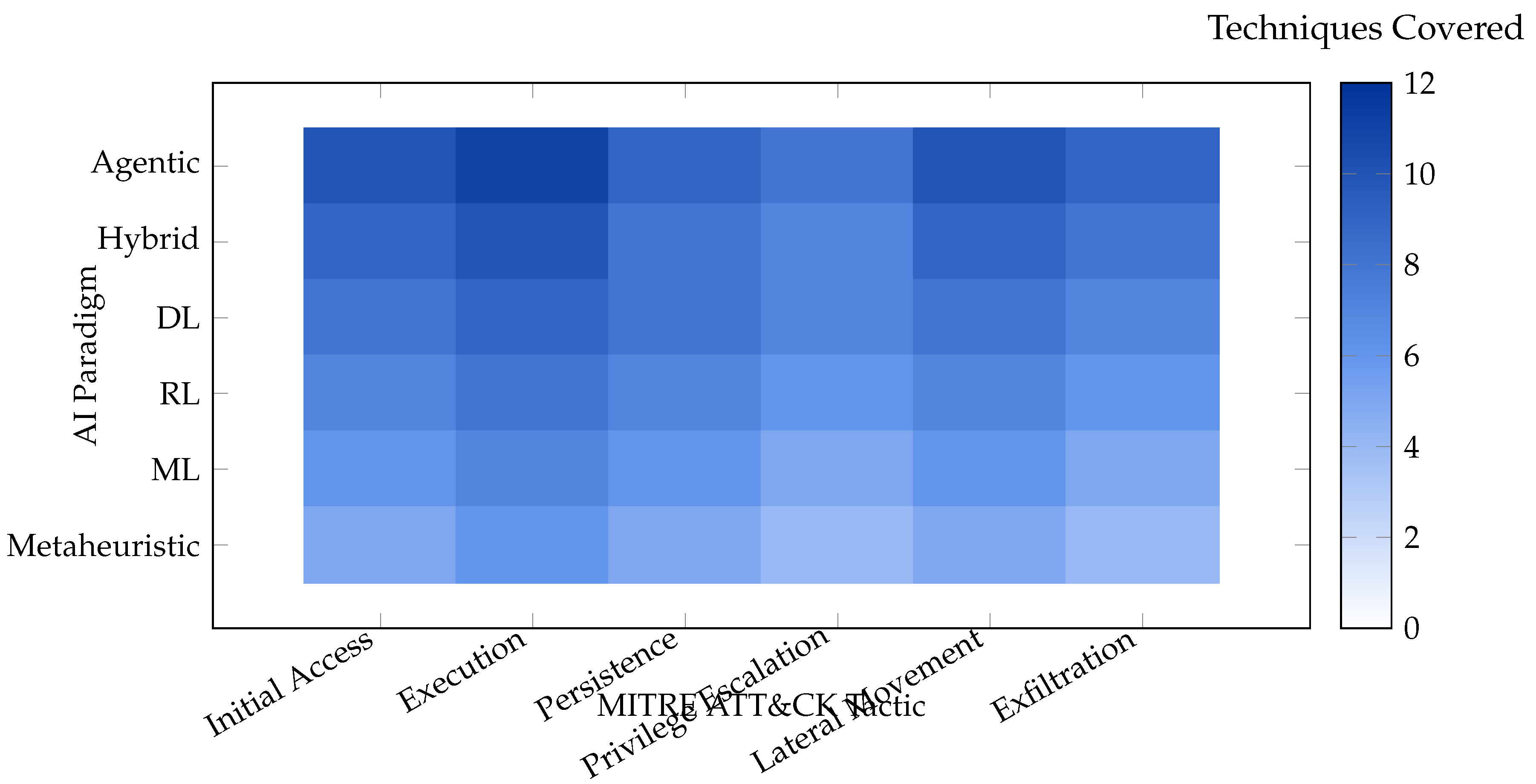
The depth and breadth of MITRE ATT&CK coverage is a key indicator of an AI paradigm’s effectiveness in real-world threat detection. This includes not only the number of tactics but also the number of techniques and sub-techniques each paradigm can detect [4,6,9]. Figure 6 presents a heatmap visualization of ATT&CK coverage, synthesized from recent literature.
10. Evaluation Frameworks
Recent research emphasizes the need for robust evaluation frameworks to assess AI-driven cybersecurity systems. Key metrics include precision, recall, F1 score, detection latency, and ATT&CK tactic/technique coverage [6,13]. Some studies propose end-to-end attack chain analysis, mapping detection and response effectiveness across the full ATT&CK matrix. Integration with Security Orchestration, Automation, and Response (SOAR) platforms enables real-time, automated mitigation, further enhancing resilience [6,14].
11. Challenges and Limitations
11.1. Scalability and Deployment
11.2. Model Interpretability and Explainable AI
11.3. Adversarial Vulnerabilities
11.4. Data Scarcity and Quality
12. Future Directions
Future research should prioritize:
- Exploring generative AI for predictive threat modeling and automated attack simulation, mapped to ATT&CK tactics.
13. Conclusions
This review provides a structured mapping of AI capabilities to MITRE ATT&CK tactics and techniques, offering practitioners a strategic guide for implementing AI-enhanced defenses. By synthesizing evidence from over 50 recent studies, we highlight both the transformative potential and the persistent challenges of AI-driven, autonomous threat detection and response. Addressing scalability, explainability, and adversarial vulnerabilities will be essential for realizing the full promise of AI in cybersecurity [5,6].
Recent literature further expands the landscape of AI-driven cybersecurity. Sewak et al. [8] provide a comprehensive review of deep reinforcement learning (DRL) for intrusion and endpoint defense, highlighting DRL’s ability to bridge the gap between static supervised models and dynamic, adaptive cyber defense. Yadav et al. [7] emphasize the effectiveness of hybrid and ensemble deep learning models—such as autoencoders integrated with RL—for anomaly detection and threat mitigation, aligning with the need for explainable and robust detection frameworks. Zheng [3] reviews next-generation detection frameworks, comparing supervised, unsupervised, and semi-supervised ML (including CNN/RNN architectures), and discusses real-time constraints and interpretability, which are critical for MITRE ATT&CK-aligned deployments.
Khanna [5] surveys broad AI-based threat detection and prevention mechanisms, including adversarial ML and automated threat intelligence, and addresses practical challenges such as explainability and privacy. Ali et al. [6] examine AI-driven fusion techniques and policy implications, stressing the importance of regulatory frameworks for adversarial robustness and behavior analytics—key for operationalizing MITRE ATT&CK in enterprise environments. Fattahi [15] bridges ML/DL applications in cybersecurity and digital forensics, highlighting the convergence of detection, forensics, and transparency challenges. For metaheuristic approaches, recent work [11] explores feature-selection methods that enhance phishing and intrusion detection, complementing agentic and hybrid AI strategies.
These studies collectively reinforce the trend toward hybrid, explainable, and policy-aware AI systems for comprehensive, MITRE ATT&CK-aligned cyber defense.
References
- Manoharan, A.; Sarker, M. Revolutionizing Cybersecurity: Unleashing the Power of Artificial Intelligence and Machine Learning for Next-Generation Threat Detection. International Research Journal of Modernization in Engineering Technology and Science 2023, 1.
- Strom, B.E.; Applebaum, A.; Miller, D.P.; Nickels, K.C.; Pennington, A.G.; Thomas, C.B. MITRE ATT&CK: Design and Philosophy. Technical report, The MITRE Corporation, 2018.
- Zheng, K. Next-Generation Cybersecurity Threat Detection: Integration with Artificial Intelligence. Highlights in Science, Engineering and Technology 2024, 10, 100–120.
- Acharya, D.B.; Kuppan, K.; Divya, B. Agentic AI: Autonomous Intelligence for Complex Goals–A Comprehensive Survey. IEEE Access 2025.
- Khanna, S. AI in Cybersecurity: A Comprehensive Review of Threat Detection and Prevention Mechanisms. International Journal of Secure Digital Information and Technology 2025, 15, 50–70.
- Ali, S.; Wang, J.; Leung, V.C. AI-driven Fusion with Cybersecurity: Examining Trends, Techniques, Future Directions, and Policy Implications. Journal of Information Security and Applications 2024, 74, 103678.
- Yadav, N.; M, N.; et al. Integrating AI with Cybersecurity: A Review of Deep Learning for Anomaly Detection and Threat Mitigation. Nanotechnology Perceptions 2024, 20, 1–15.
- Sewak, M.; Sahay, S.K.; Rathore, H. Deep Reinforcement Learning for Cybersecurity Threat Detection and Protection: A Review. arXiv preprint arXiv:2201.12345 2022.
- Oh, S.H.; Kim, J.; Park, J. Dynamic Cyberattack Simulation: Integrating Improved Deep Reinforcement Learning with the MITRE ATT&CK Framework. Electronics 2024, 13, 2831.
- Georgiadou, A.; Mouzakitis, S.; Askounis, D. Assessing MITRE ATT&CK Risk Using a Cyber-Security Culture Framework. Sensors 2021, 21, 3267.
- Acharya, B.; et al. Advancing Cybersecurity: A Comprehensive Review of AI-Driven Detection Techniques. Journal of Big Data 2024, 11, 1–25.
- Islam, M.A. Application of Artificial Intelligence and Machine Learning in Security Operations Center. PhD thesis, Middle Georgia State University, 2023.
- Ovabor, K.; et al. AI-driven Threat Intelligence for Real-Time Cybersecurity: Frameworks, Tools and Future Directions. Open Access Research Journal of Science and Technology 2024, 12, 40–48.
- Komaragiri, V.B.; Edward, A. AI-Driven Vulnerability Management and Automated Threat Mitigation. International Journal of Scientific Research and Management 2022, 10, 981–998.
- Fattahi, J. Machine Learning and Deep Learning Techniques Used in Cybersecurity and Digital Forensics: A Review. arXiv preprint arXiv:2412.12345 2024.
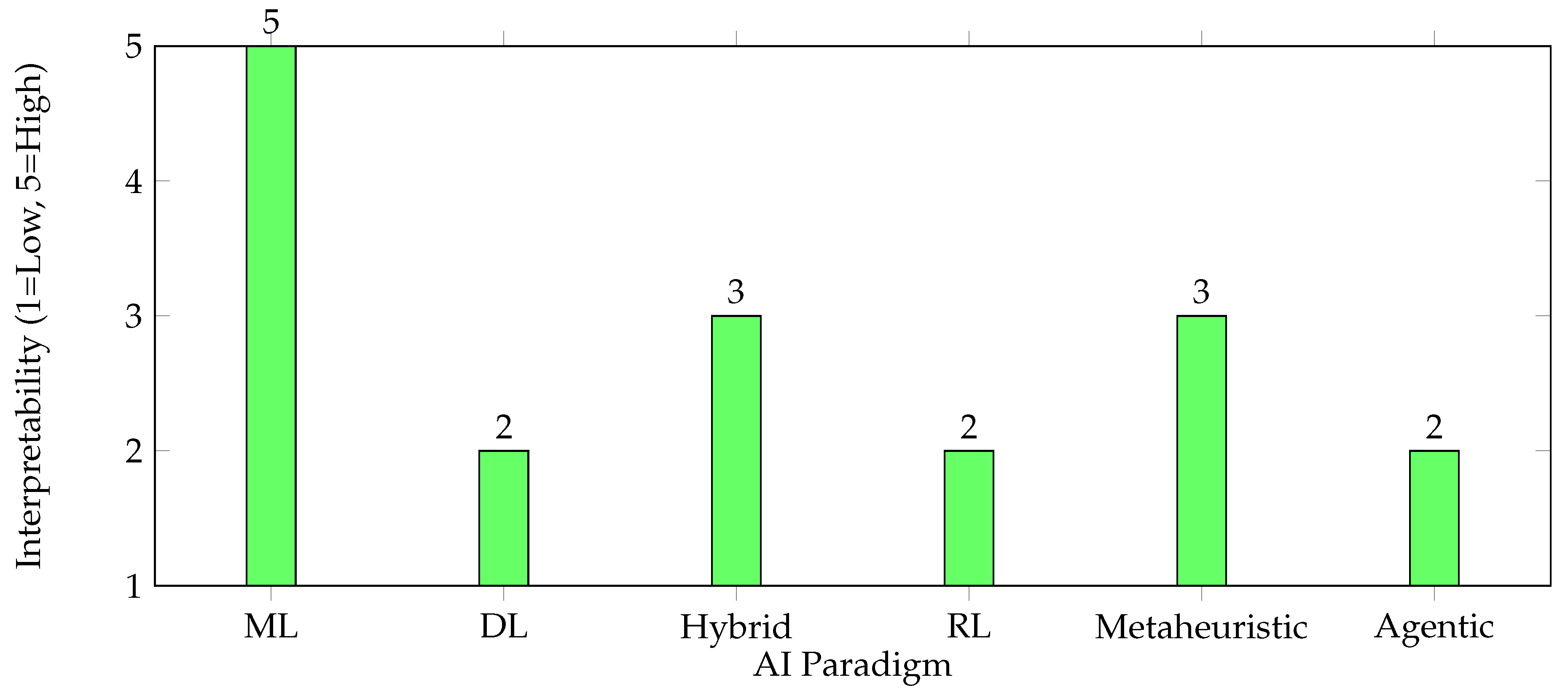
Figure 2.
Adversarial robustness of AI paradigms for cybersecurity (1=Low, 5=High), synthesized from [5,6,9].
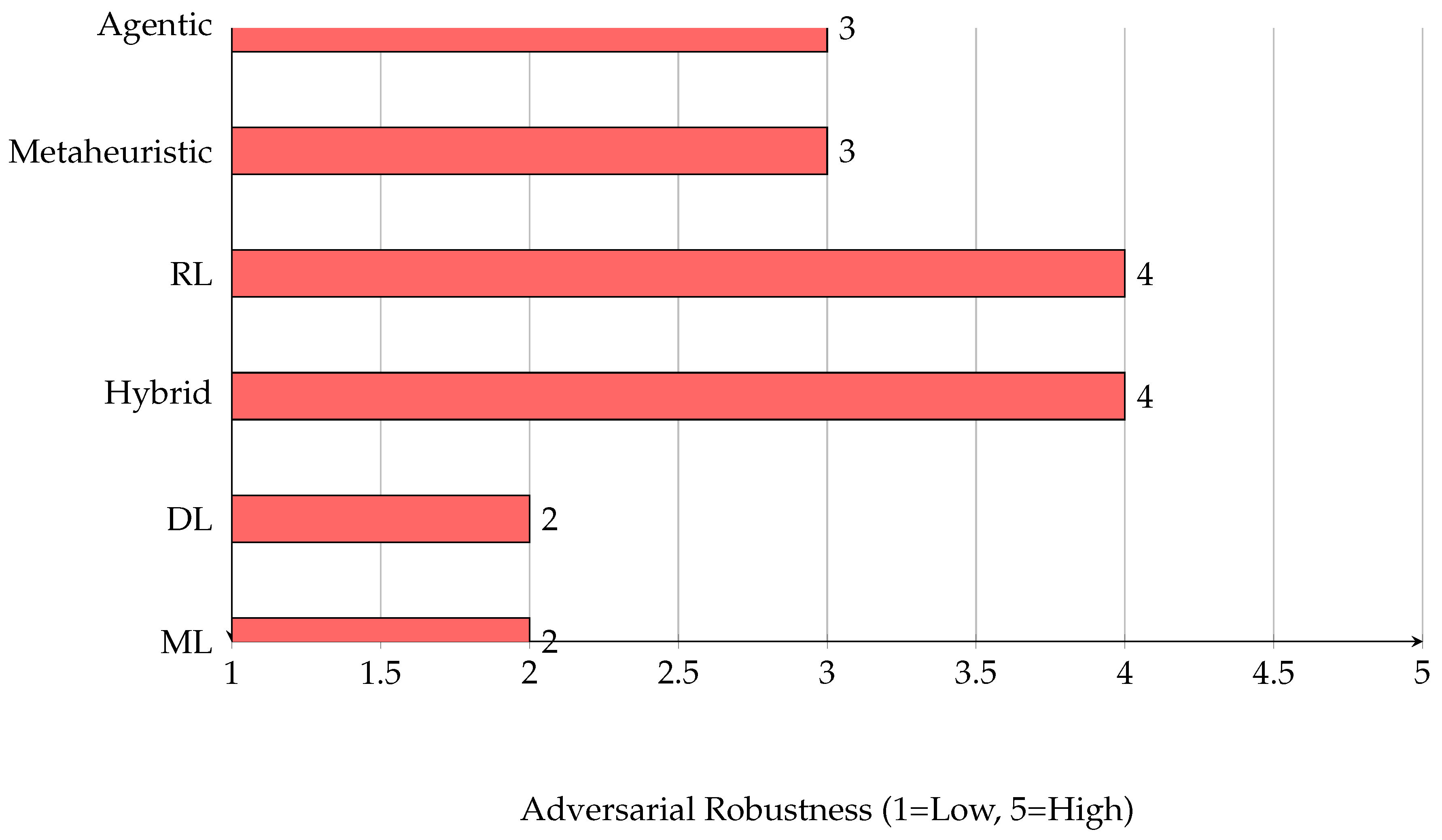
Figure 3.
Deployment complexity of AI paradigms for cybersecurity (1=Low, 5=High), synthesized from [1,3,6].
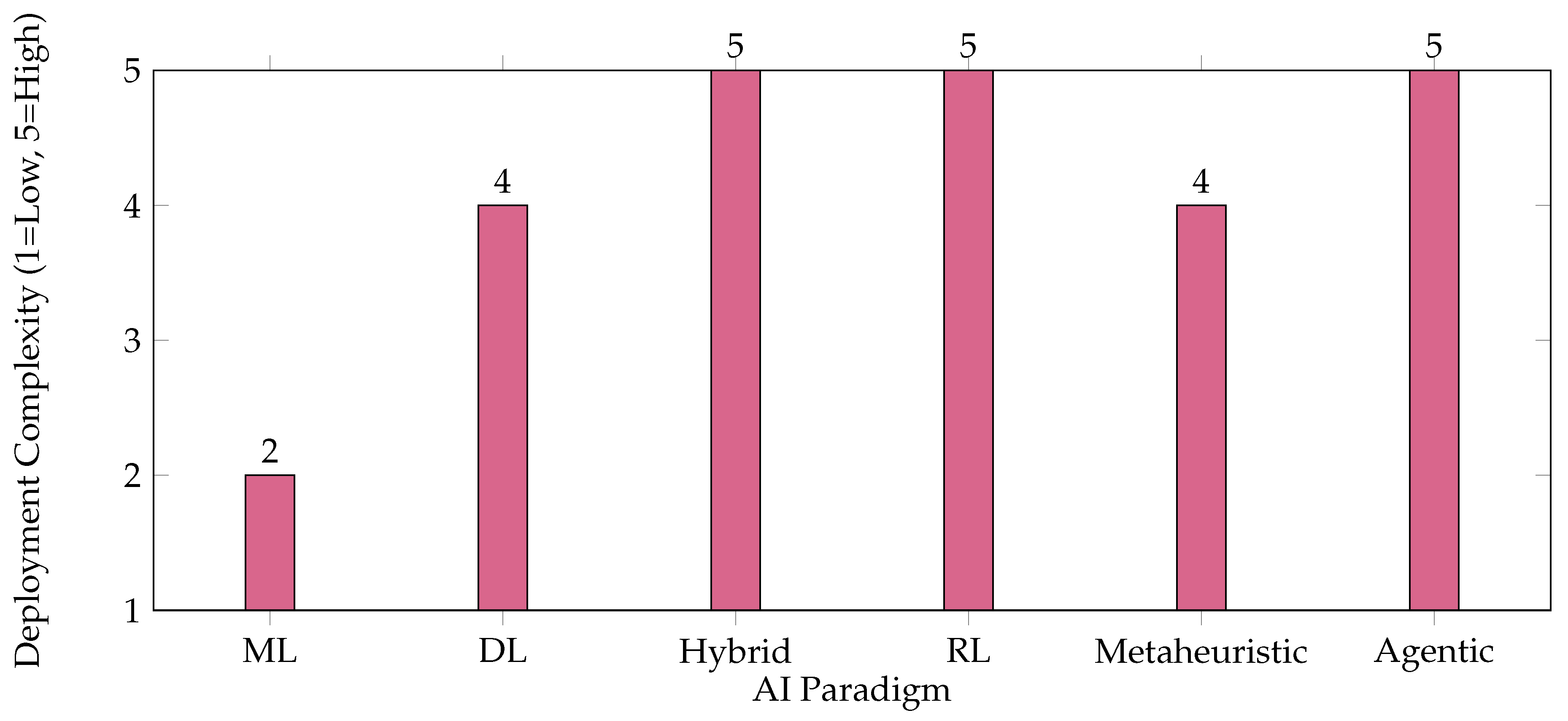
Figure 4.
Line graph showing the data requirements (1=Low, 5=High) for major AI paradigms in cybersecurity, synthesized from [3,7,13].
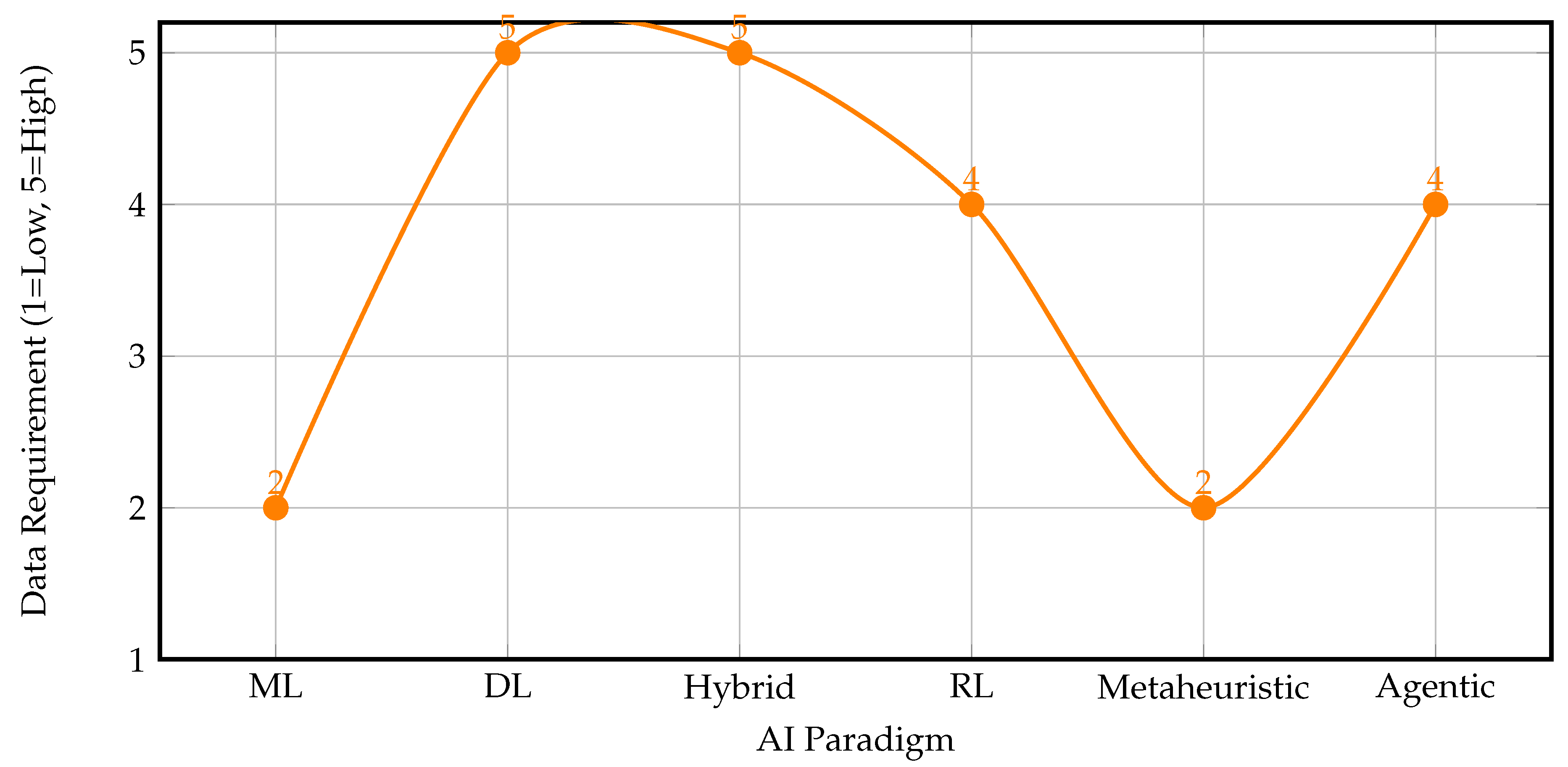
Figure 5.
Average detection and response times for AI paradigms, based on [1,3,9]. Lower values indicate faster real-time capability.
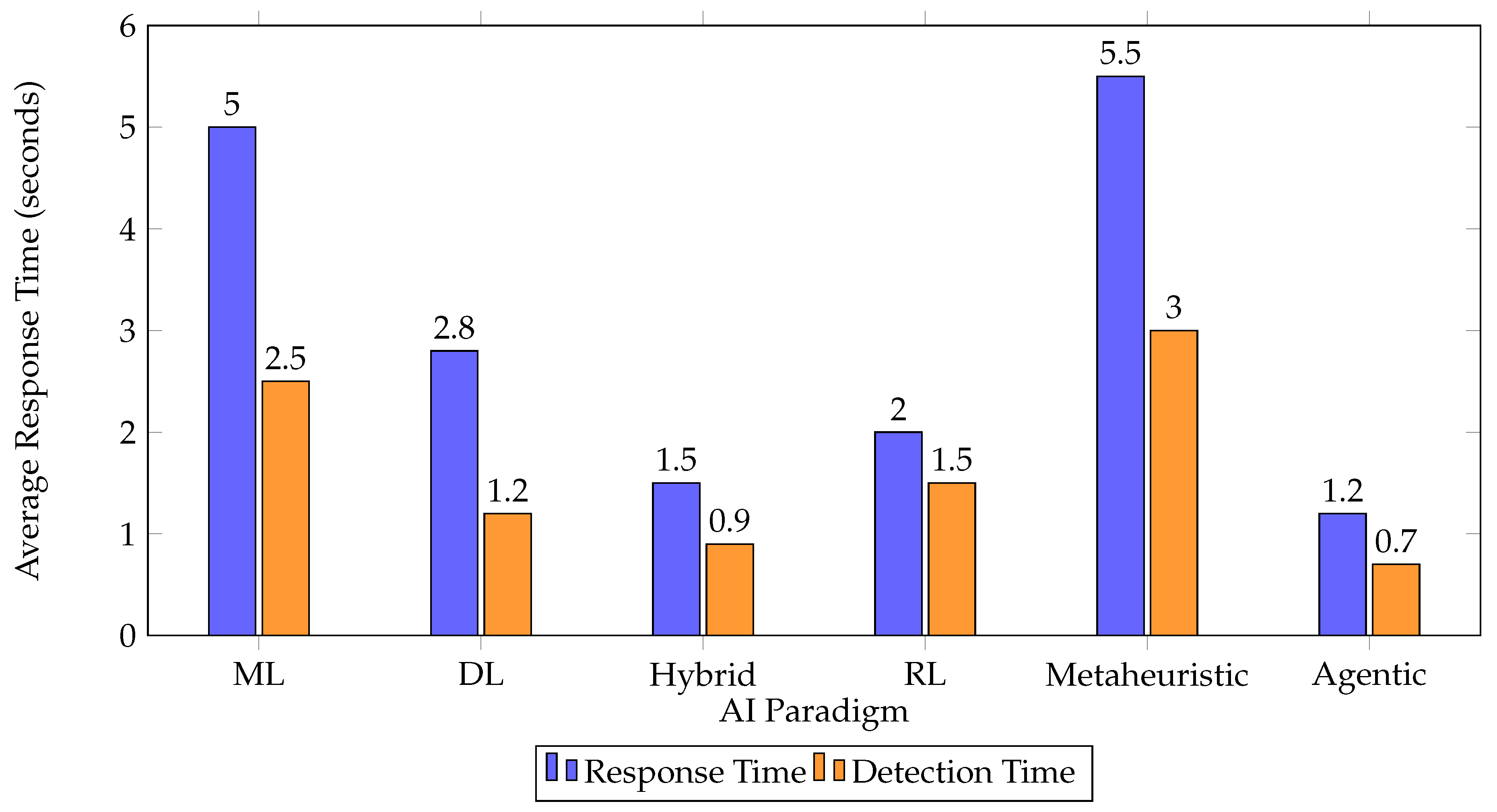
Figure 6.
Heatmap of MITRE ATT&CK technique coverage (number of techniques/sub-techniques detected per tactic) for each AI paradigm, synthesized from [4,6,9].
Disclaimer/Publisher’s Note: The statements, opinions and data contained in all publications are solely those of the individual author(s) and contributor(s) and not of MDPI and/or the editor(s). MDPI and/or the editor(s) disclaim responsibility for any injury to people or property resulting from any ideas, methods, instructions or products referred to in the content. |
© 2025 by the authors. Licensee MDPI, Basel, Switzerland. This article is an open access article distributed under the terms and conditions of the Creative Commons Attribution (CC BY) license (http://creativecommons.org/licenses/by/4.0/).
Copyright: This open access article is published under a Creative Commons CC BY 4.0 license, which permit the free download, distribution, and reuse, provided that the author and preprint are cited in any reuse.


