

Submitted:
12 July 2025
Posted:
16 July 2025
You are already at the latest version
Abstract
This paper presents a systematic review (SLR) of quantum entanglement for black holes (BH). The review utilizes databases such as Scopus, Science Direct, and Web of Science to find 250 requested texts. Through the PRISMA protocol, we found 91 papers to be analyzed with NVIVO and VOSviewer. After analyzing the corpus, we found that the most important topics are as follows. Black holes, entanglement entropy, quantum field theory, entanglement of the subsystem, S-matrix, density matrix, string theory, quantize the Hamiltonian, and quantum gravity... The most important methodology used by the authors is also modeling methodology, geometry, topology, and replica trick. The co-occurrence and co-authorship analyses provided insights into the collaborative nature of this research field and the interconnectedness of various concepts. The analysis revealed significant trends and patterns in the literature, including the prevalence of certain journals and the evolution of research over time.
Keywords:
SLR
; quantum entanglement
; black holes
; holography
; field theory
1. Introduction
First, we introduced the definition of quantum entanglement and black holes. In 1935, Albert Einstein, Boris Podolsky, and Nathan Rosen published a paper introducing quantum entanglement and explaining the EPR paradox[4]. This is a phenomenon in which particles become interconnected, such that the state of one affects the state of another, regardless of distance. The BH is a region in space where gravity is so strong that nothing, not even light, can escape. A puzzle arising from the apparent loss of information when matter falls into a black hole, conflicting with the principles of quantum mechanics leading to the so-called information paradox. Studying black holes through the lens of quantum mechanics has led to several groundbreaking insights. One of the most significant is the concept of the ’information paradox’. According to classical physics, information that falls into a black hole is lost forever. However, quantum mechanics suggests that information cannot be destroyed. This paradox has led to the proposal of various theories, including the idea that information might be encoded on the event horizon (the holographic principle) or that it could be preserved through quantum entanglement. Recent research has shown that entanglement plays a crucial role in understanding black hole thermodynamics and the nature of spacetime itself. For example, the concept of ER = EPR (Einstein-Rosen bridges = Einstein-Podolsky-Rosen entanglement) posits that wormholes could connect entangled particles, providing a potential resolution to the information paradox.
2. Methods
The method of SLR in the context of the study on quantum entanglement for black holes involves several steps:
-
a. Requests:In this work, we used the request: ("quantum entanglement" AND "black holes").
-
b. Scientific databases:We utilize databases such as Scopus, Science Direct, and Web of Science to find 250 articles with textual requests. We found 91 papers with an analysis of Zotero.
-
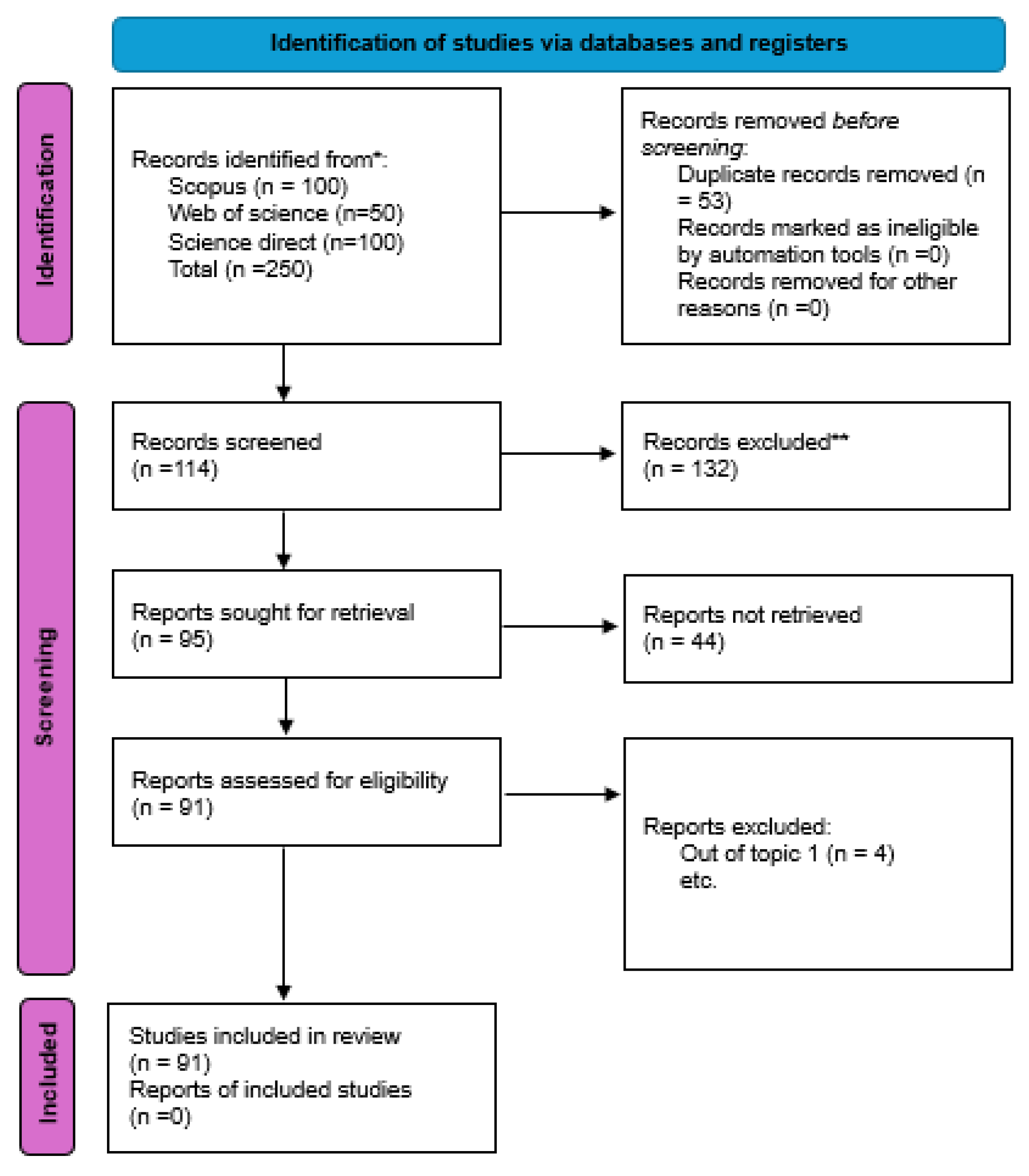
c. PRISMA:Applying the PRISMA protocol (Preferential Reporting Items for Systematic Reviews and Meta-Analyzes) to filter and select articles for analysis. This process led to the selection of 91 articles from an initial set of 250.InterpreterThe provided PRISMA illustrates a systematic and transparent process for selecting studies for review. This is a simple conclusion drawn from the diagram: The systematic review identified 250 articles from various databases. After removing 53 duplicates, 114 articles were screened and 132 were excluded. Of the 95 papers sought for retrieval, 44 were not retrieved. Ultimately, 91 articles were evaluated for eligibility, with 4 excluded for being out of topic. The review included 91 studies. This process ensures that the selection of studies is thorough and unbiased, providing a solid foundation for the systematic review.
-
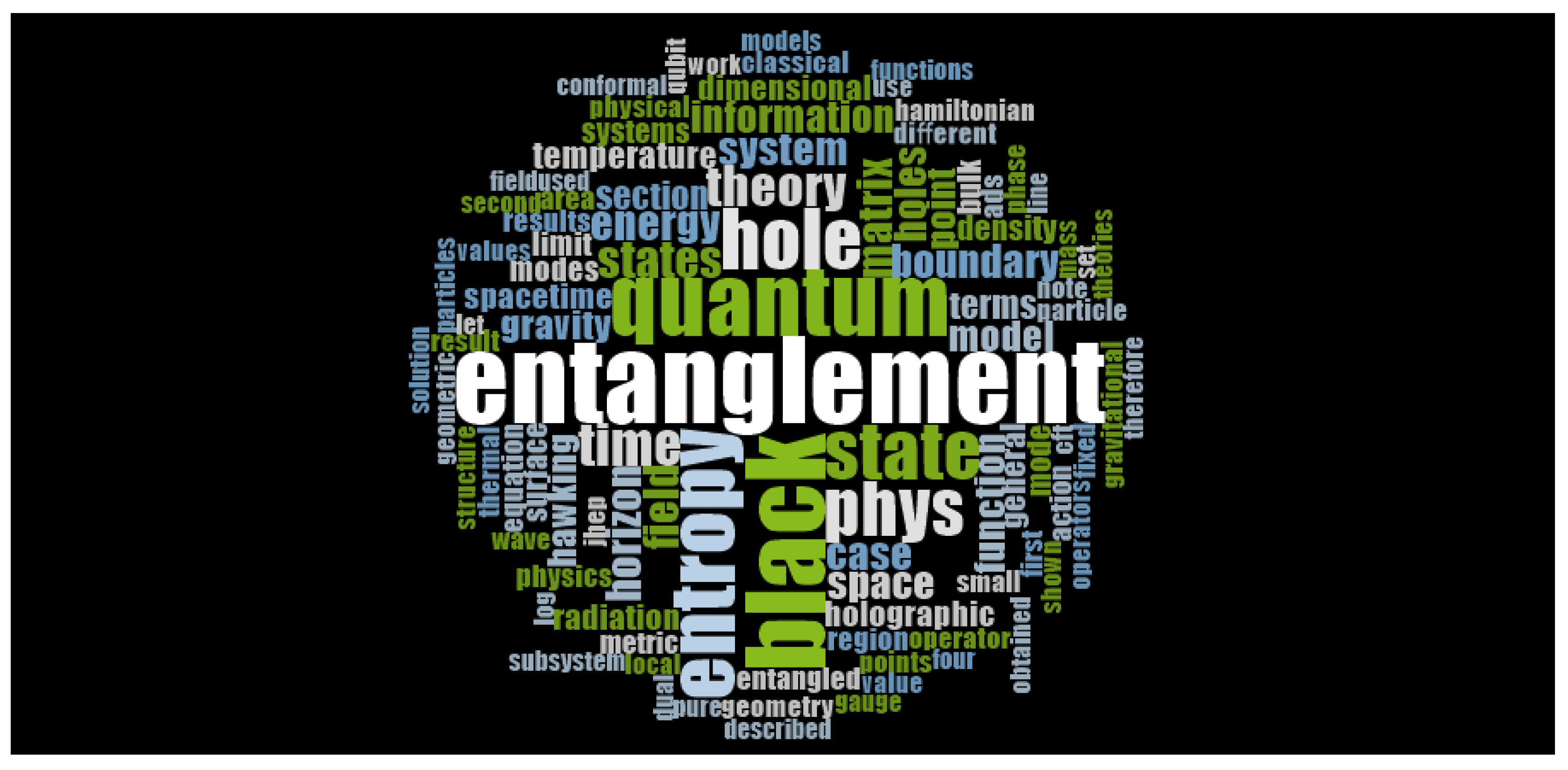
d. Pre-processing:The centers we offered were centered on quantum mechanics and theoretical physics. The word "entanglement," which is the largest, makes sense in this context. The terms "quantum," "theory," "state," and "physics" are also commonly used, indicating a concentration on ideas associated with quantum states and black holes. Other smaller terms allude to discussions about black holes, spacetime, and particles, such as "hole," "time," "space," and "particle." This word cloud graphically shows the frequency and significance of these SLRs. Is there a specific component of quantum mechanics and black hole physics?
3. Results
3.1. Presentation Corpus
VOSviewer is a tool used for constructing and visualizing bibliometric networks. These networks can include journals, researchers, or individual publications, and they are created based on citation, bibliographic coupling, co-occurrence, or co-authorship relationships.
3.2. Analyses by Co-Occurrence:
This network visualization map highlights various interconnected concepts in quantum physics. The central node is “quantum entanglement,” which is linked to other significant nodes such as “entanglement,” “holography,” “black holes,” “gravitation,” “stars,” and “entropy.” The color-coded nodes likely represent different categories or periods, as indicated by the color bar ranging from 2020 to 2022.
Figure 3.
Co-occurrence Network of key Terms in Quantum Entanglement and Black Hole Literature.
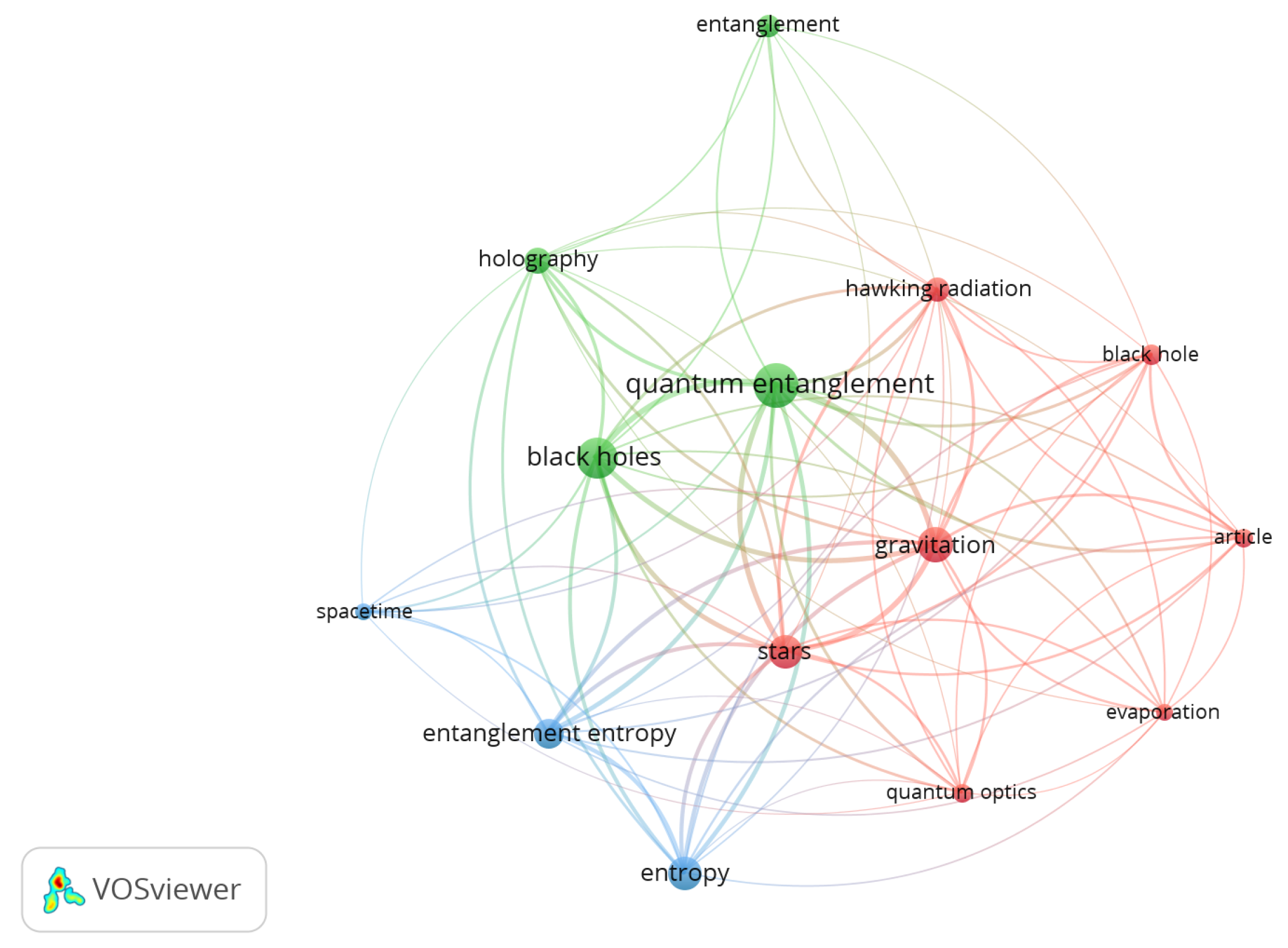
Figure 4.
Temporal Overlay of Term Co-occurrence in Quantum Entanglement and Black Hole Research (2020–2022).
Figure 4.
Temporal Overlay of Term Co-occurrence in Quantum Entanglement and Black Hole Research (2020–2022).
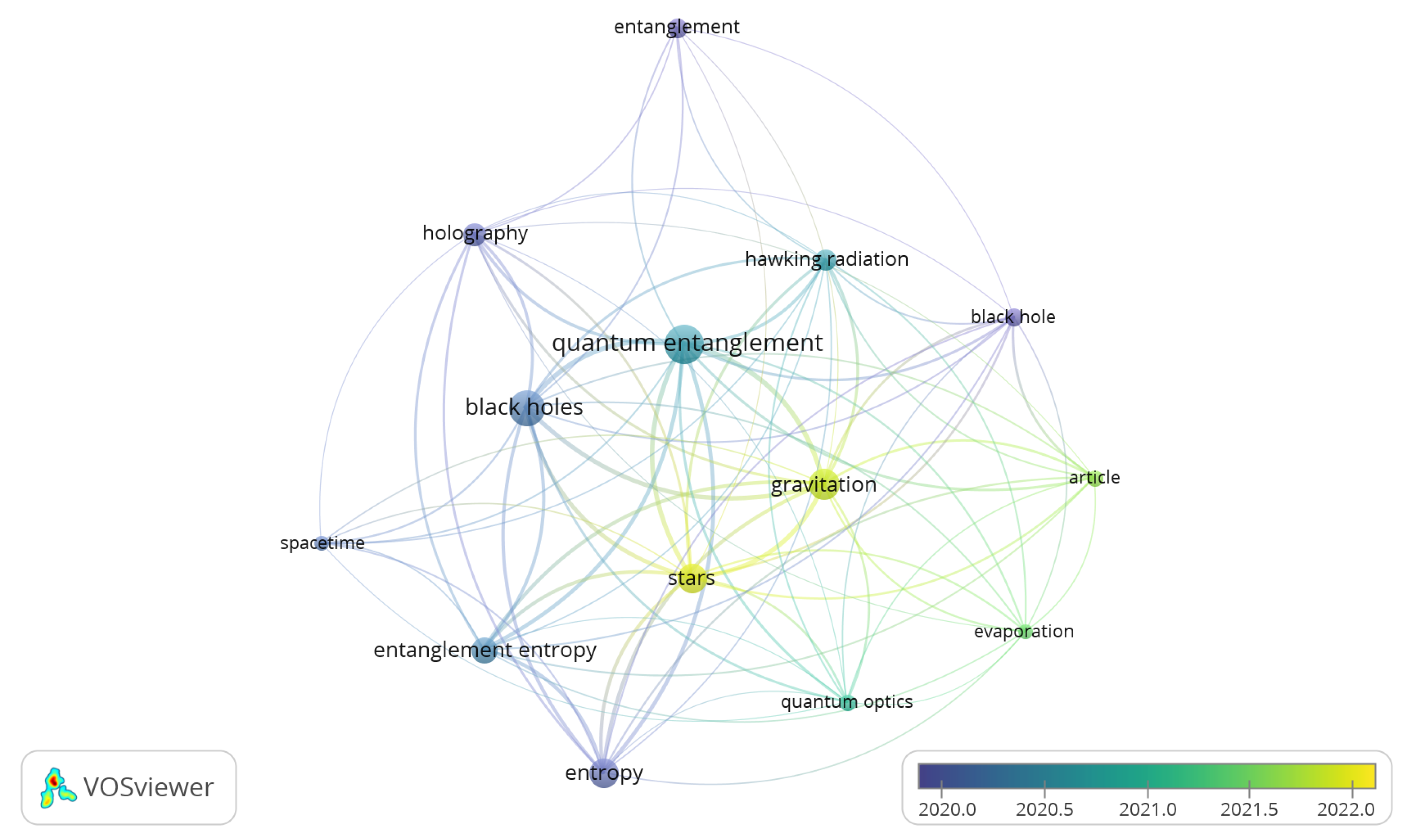
Figure 5.
Keyword density visualization of quantum entanglement and black hole physics.
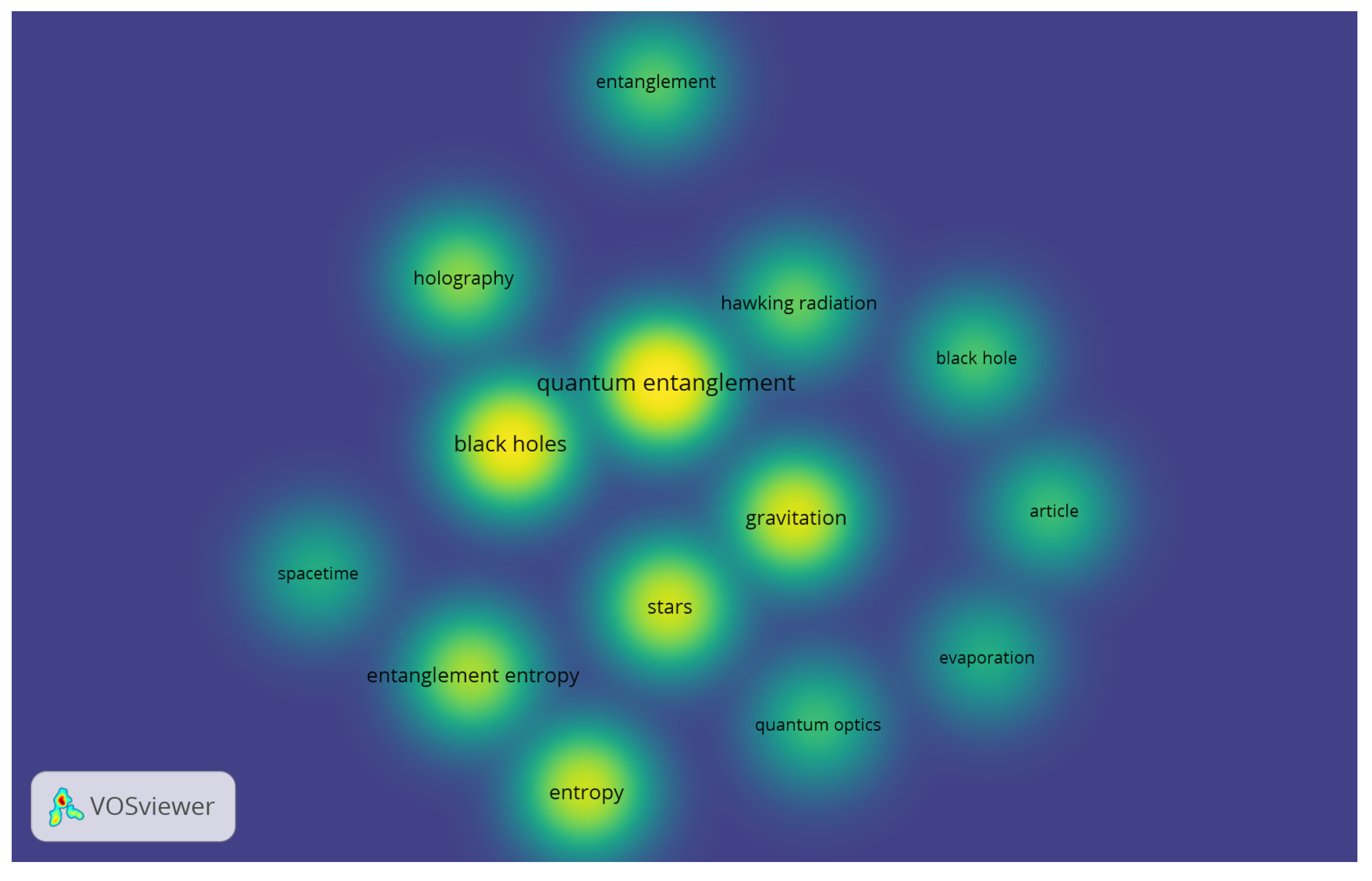
3.3. Analyses by Co-Authorships
These networks often represent relationships between scientific publications and authors.
Figure 6.
collaboration network among authors
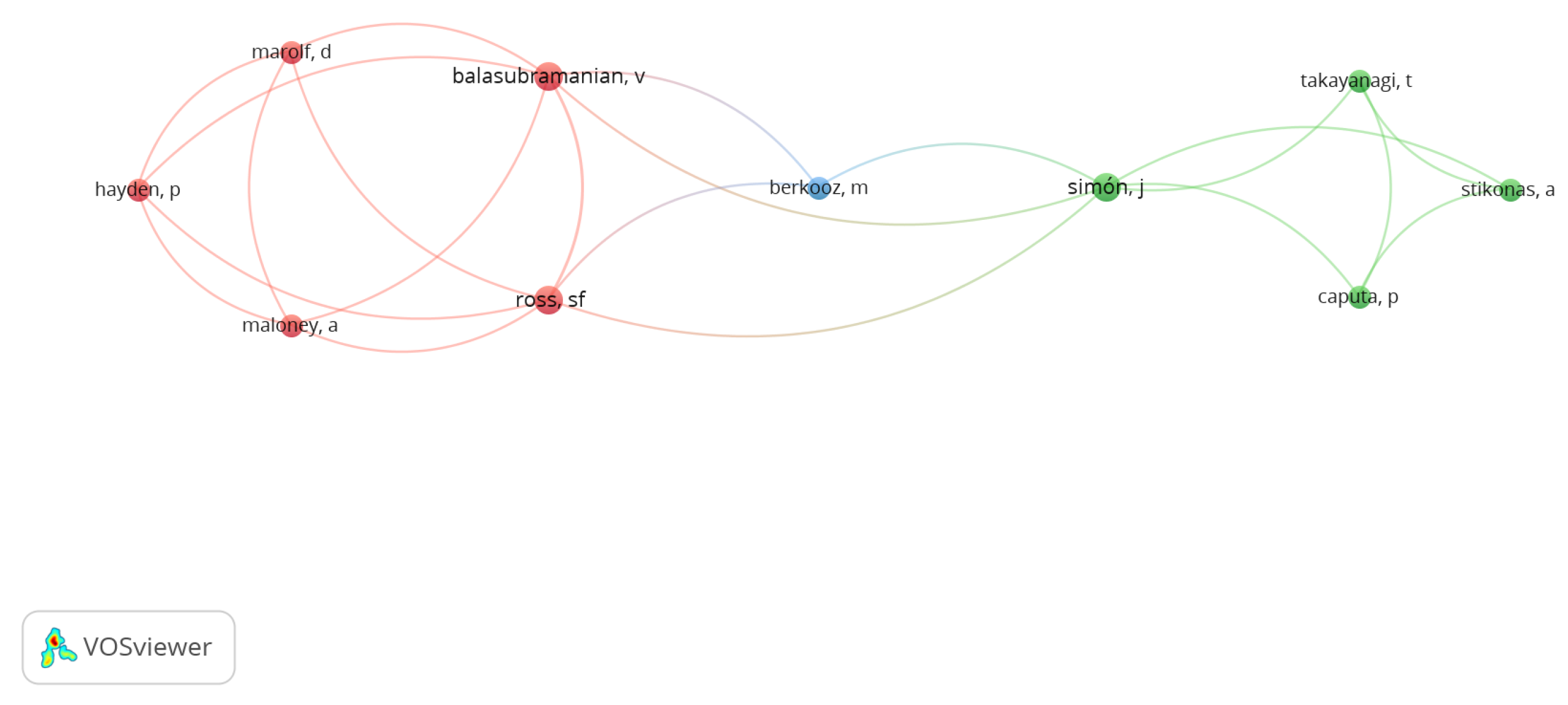
This network represents the connections between the different authors in the collaboration network. Each author is represented by a node, and the links between them indicate collaborations. We can see that the most central and well-connected authors are marolf, d, balasubramanian, v, and ross, sf.
Figure 7.
Temporal evolution of author collaborations
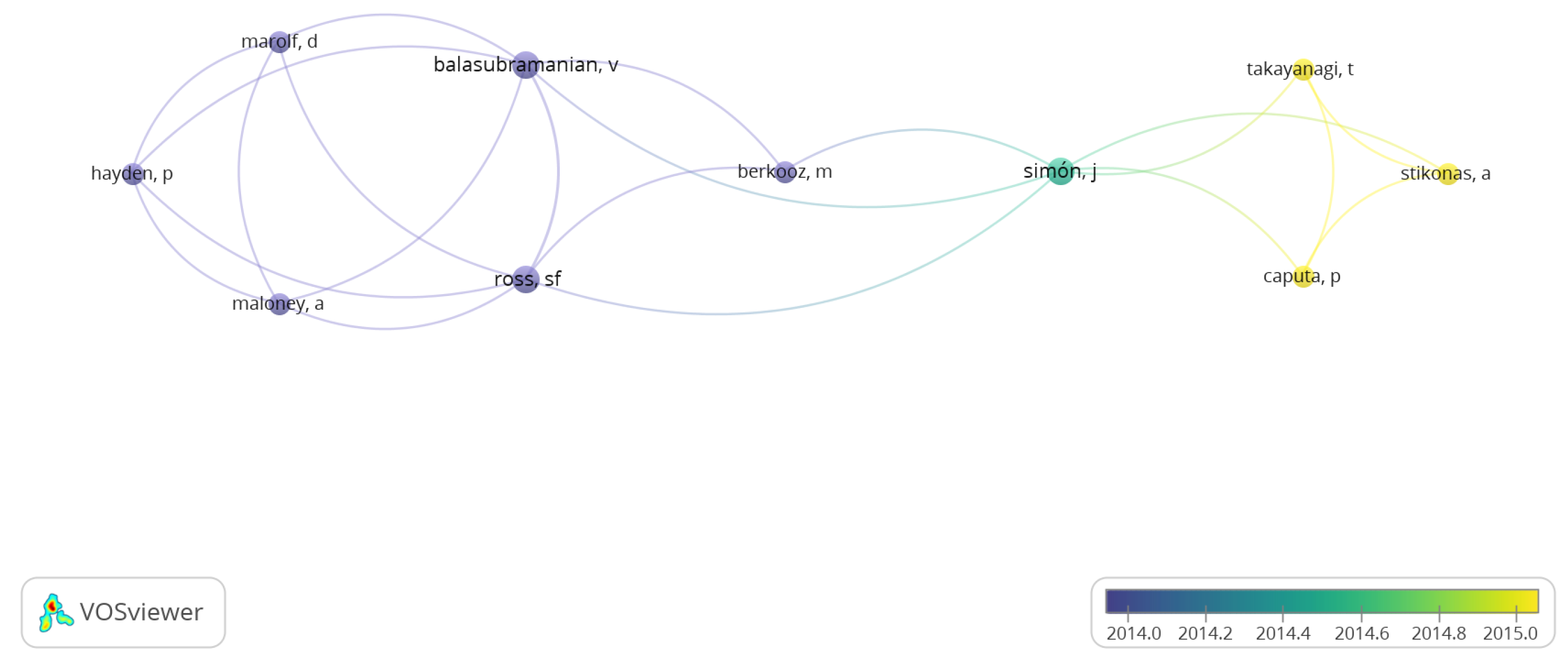
We combine the information form the previous tow, showing both the density of authors and their connections in the network. In addition, it includes a timeline from 2014 to 2015, allowing us to observe the evolution of this collaboration network over this period.
Figure 8.
Density of authors in research domain
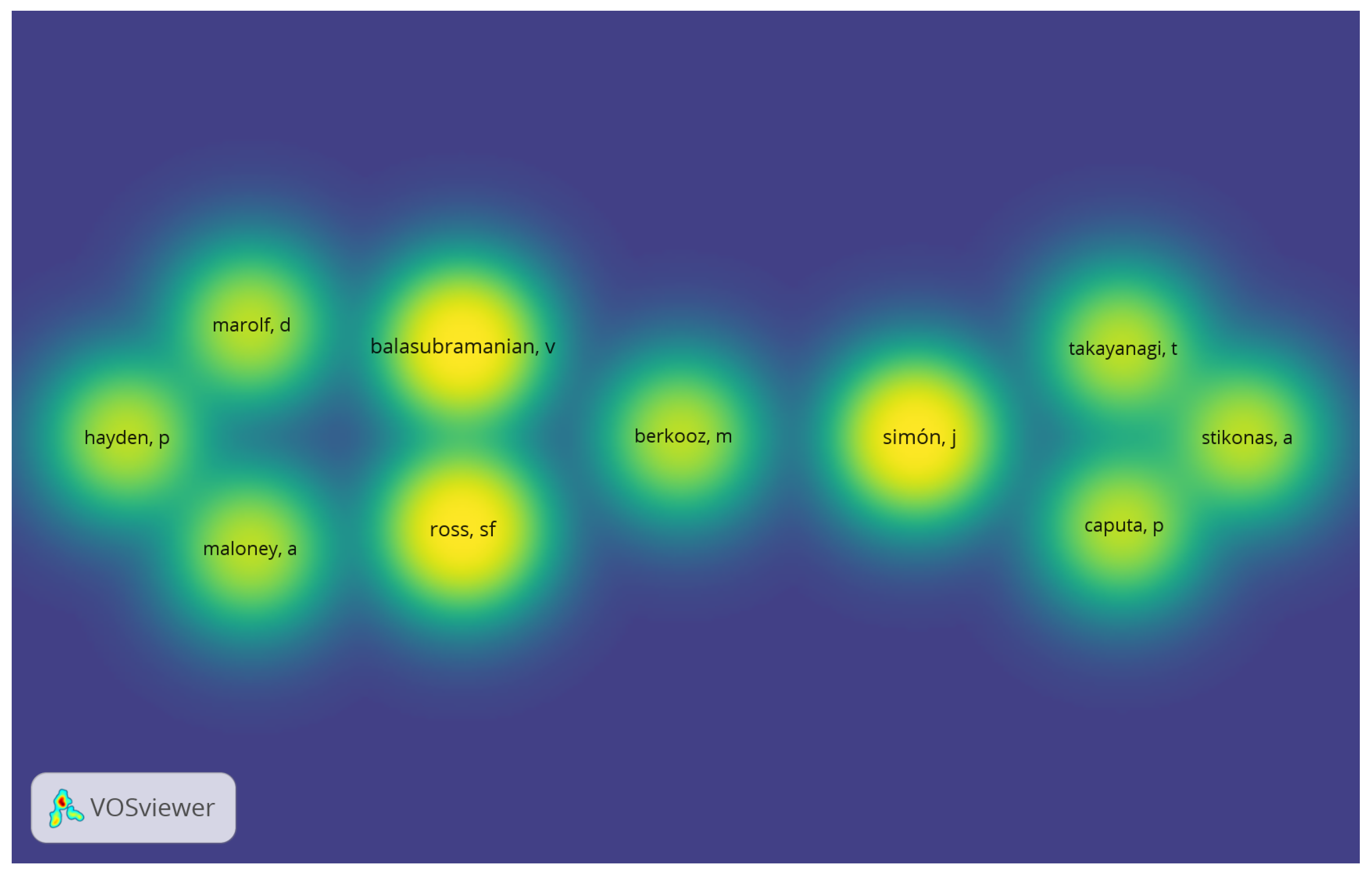
This density of authors in a scientific collaboration network. Each bubble represents an author, and its size is proportional to the number of publications by author.
3.4. Statistic Description:
-
a. by years:Interpreter This graph illustrates the development of growing papers over time, indicating a steady increase. Understanding the evolution of data over time, measuring performance, and studying the latest developments could all benefit from this.
-
b. by Sciences databases:InterpreterThis graph illustrates that three distinct database’s papers distribution is visually shown by NVivo. Most of the papers are on "Scopus" much more than on "Webofscience" and "Science Direct". This could indicate that “Scopus” is a more frequently and more extensive database in this regard.
-
c. by References type:InterpreterThe graph shows the distribution of reference types in a database. The pie chart shows that of the references in the databases are of the type "journal Article". indicating the absence of any other types of reference.
-
d. by journal:InterpreterThe graph shows that the most common secondary titles are "Physics Letters B" and "Nuclear Physics B", followed by "Reports on Mathematical Physics". Other titles, such as "International Journal of Modern Physics Letters", "Physical Review B", and "Physical Review Letters", also have a significant number of references. Also shows that there are several titles with a deficient number of references, such as "Journal of Physics A", "New Journal of Physics", and "Quantum Information".
Figure 9.
Annual distribution of references.
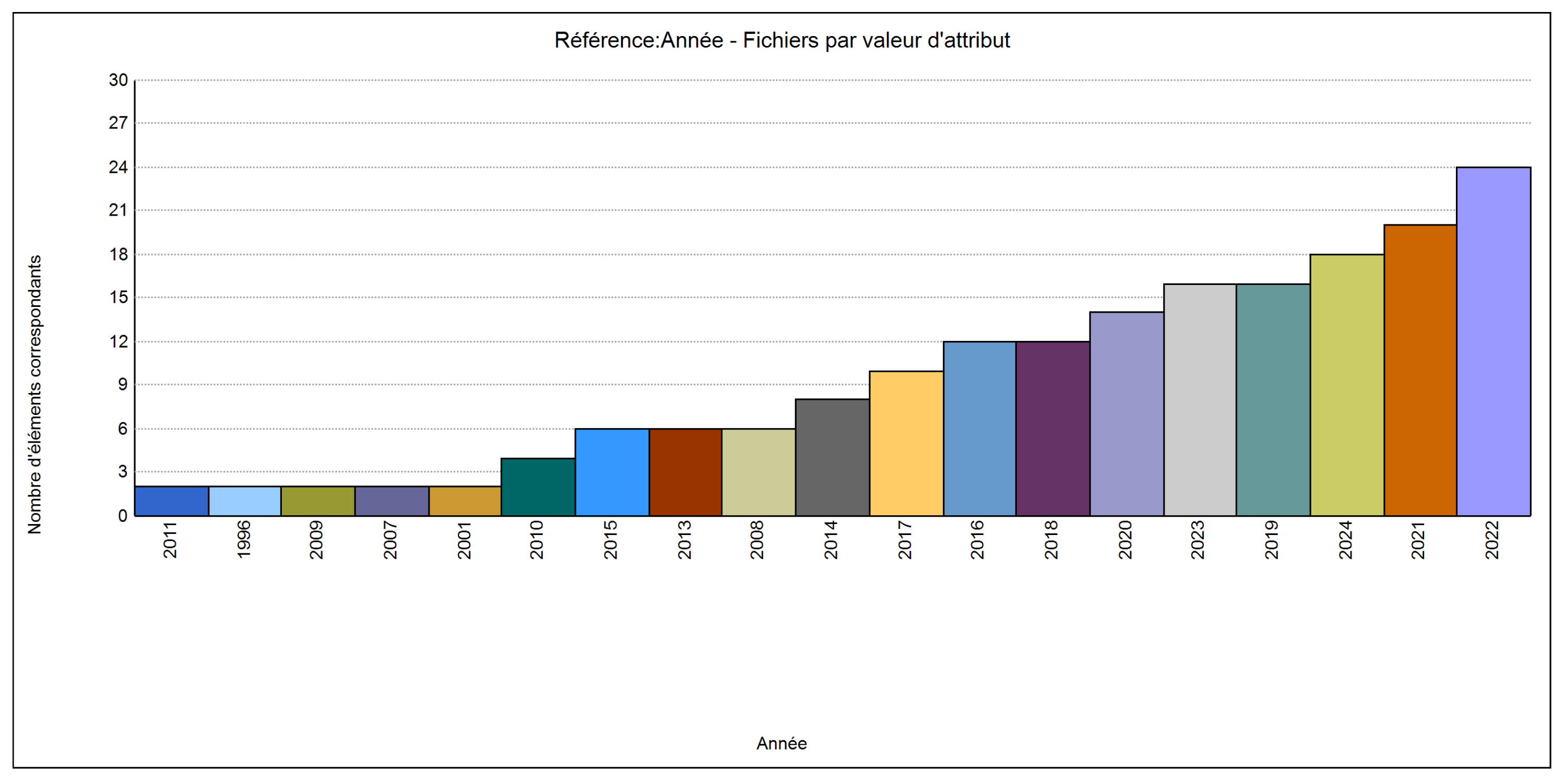
Figure 10.
Reference count by database.
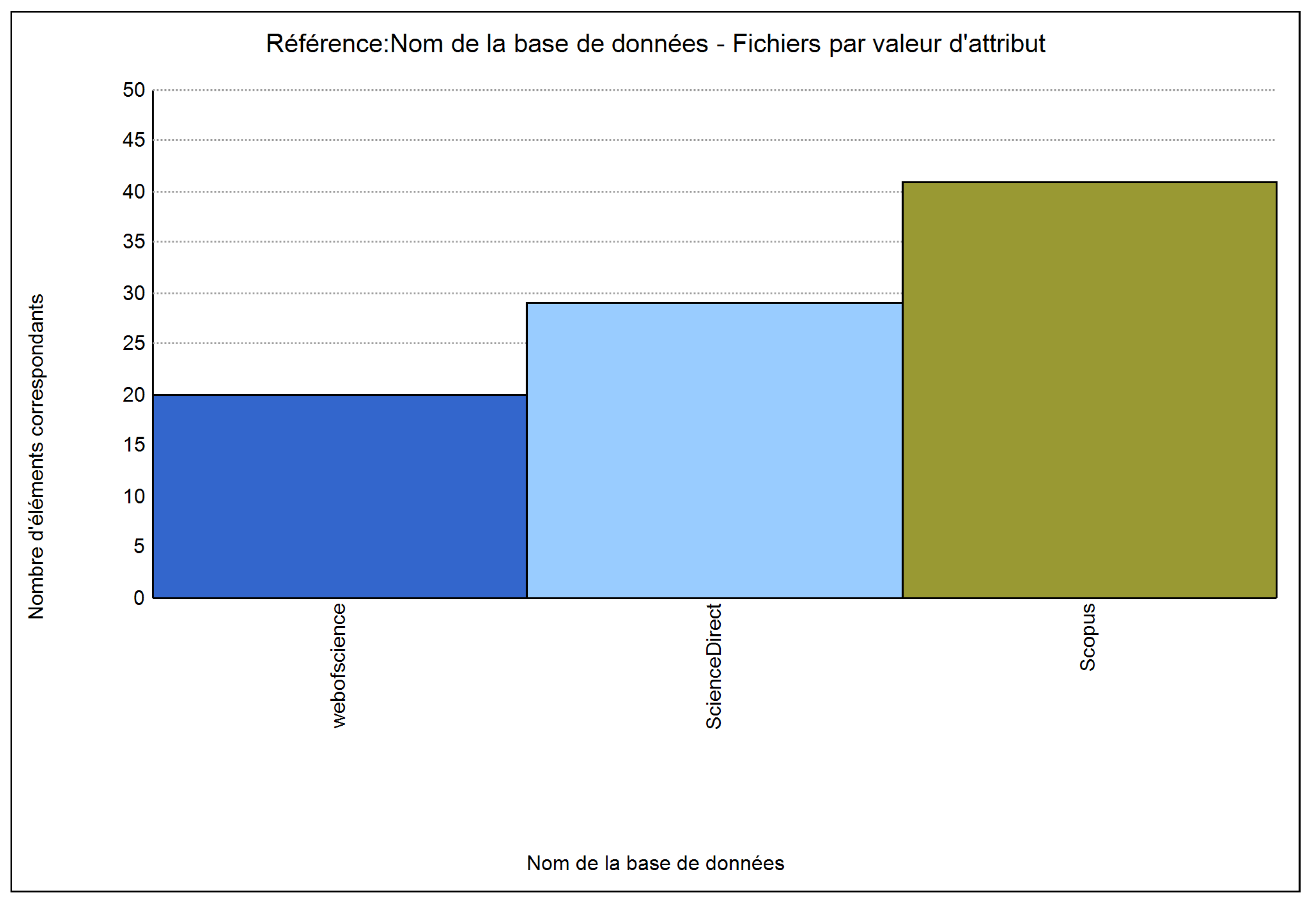
Figure 11.
Percentage of journal articles among references.
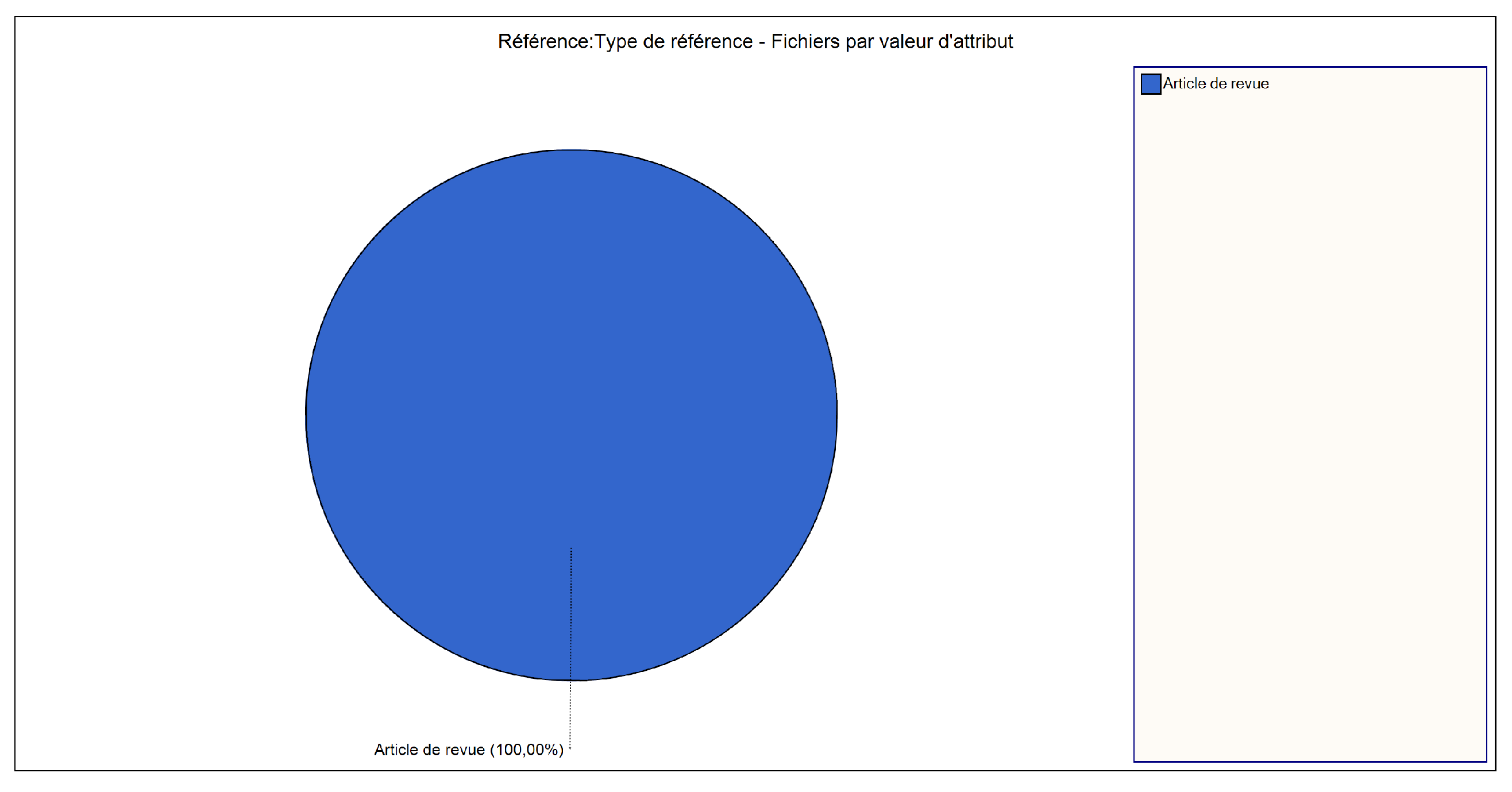
Figure 12.
Distribution of Files by Secondary Title Attribute Value.

4. Classification Thematic:

Table 1.
Table captions should be placed above the tables.
| Authors | Problematic | Method | Results |
|---|---|---|---|
| 1: Acquaviva, Giovanni; Iorio, Alfredo; Scholtz, Martin (2017)[1] | General arguments regarding the connection between low-energy theories (gravity and quantum field theory) and a hypothetical fundamental theory of quantum gravity. | Provide a simplistic toy model in which an average loss of information is obtained due to the geometry-field entanglement. | Construct a toy model of black hole evaporation that exhibits partial loss of information and leads to a modification of the Page curve.[1] |
| 2: Adhikari, K.; Choudhury, S.; Chowdhury, S.; Shirish, K.; Swain, A. (2021) | Investigate the quantum circuit complexity and entanglement entropy in the recently studied black hole gas. | Use the two-mode squeezed states formalism written in arbitrary dimensional spatially flat cosmological Friedmann-Lemaître-Robertson-Walker background space-time[2]. | Conclude that circuit complexity can be used as a useful tool to discover the underlying features of a model that are otherwise difficult to analyze. |
| 3: Afrasiar, M.; Basak, J.K.; Chandra, A.; Sengupta, G. (2024) | Computed the reflected entropy for various bipartite mixed states described by adjacent and disjoint subsystems at a finite temperature for the communicating black hole configurations in a Planck brane world geometry[3]. | Utilize the method discussed in configuration-13 of the adjacent subsystems to compute the EWCS in this configuration described in Fig.9a for the disjoint subsystems A and B. | Field theory replica technique results were substantiated by explicit bulk holographic computation of the EWCS in the dual brane world geometry. |
Interpretation
- The text discusses the connection between low-energy theories (like gravity and quantum field theory) and a fundamental theory of quantum gravity. It assumes the validity of the holographic bound and the preservation of unitary evolution. The authors propose a simplistic toy model to show how information loss can occur due to entanglement between geometry and fields. They aim to combine these considerations to explore the implications of black hole evaporation. - The researchers are investigating the quantum circuit complexity and entanglement entropy in the black hole gas model. They aim to understand the relationship between these two quantities and gain insight into the nature of quantum gravity and the information content of black holes. Using the two-mode squeezed states formalism, the study explores how these complexities evolve and their relationship with entanglement entropy in different spatial dimensions. - The text describes the computation of reflected entropy for various bipartite mixed states involving adjacent and disjoint subsystems at a finite temperature. This is done within the context of communicating black hole configurations in a Planck-brane world geometry.
5. Discussion
we compare three authors: In 2017 Acquaviva, Giovanni; Iorio, Alfredo; Scholtz, Martin[1]. they work on the connection between low-energy theories and quantum gravity, like assuming a holographic bound and unitary evolution. Proposes a toy model to show information loss due to entanglement between geometry and fields. Explores the implications of black hole evaporation. The second paper by Adhikari, K.; Choud-hury, S.;Chowdhury,S.; Shirish, K. And Swain, A[2]. In 2021. Propose the quantum circuit complexity and entanglement entropy in the black hole gas model. Investigates the relationship between these quantities. The method uses a two-mode squeezed state formalism to study their evolution in different spatial dimensions. The other paper, in 2024. by Afrasiar, M.; Basak, J.K.; Chandra, A.; Sengupta, G.[3]. Computed of reflected entropy, Focuses on bipartite mixed states with adjacent and disjoint subsystems at finite temperatures. Contextualized within communicating black hole configurations in a Planck brane world geometry.
6. Conclusions
This systematic review of the literature on quantum entanglement for black holes has provided a comprehensive analysis of the current state of research in this intriguing field. By examining 91 papers selected through the PRISMA protocol from an initial pool of 250 papers sourced from Scopus, Science Direct, and Web of Science, we identified key topics and methodologies that dominate the discourse. The review highlights the central role of quantum entanglement in understanding black-hole thermodynamics and the nature of spacetime. Key topics such as entanglement entropy, quantum field theory, and the holographic principle were frequently discussed, reflecting their importance in addressing the information paradox and other fundamental questions in theoretical physics. Methodologies like modeling, geometry, topology, and the replica trick were commonly employed, showcasing the diverse approaches researchers use to tackle these complex issues. Our analysis using tools like NVIVO and VOSviewer revealed significant trends and patterns in the literature, including the prevalence of certain journals and the evolution of research over time. The co-occurrence and co-authorship analyses provided insights into the collaborative nature of this research field and the interconnectedness of various concepts. In conclusion, this review underscores the importance of quantum entanglement in advancing our understanding of black holes and the broader implications for quantum gravity and theoretical physics. Future research should continue to explore these connections, with particular attention to resolving the information paradox and further elucidating the role of entanglement in the fabric of spacetime.
Acknowledgments
We are especially grateful to SEDRA Moulay Brahim for providing us with this valuable opportunity to explore quantum entanglement in black holes. We would also like to thank Aniss MOUMEN for their insightful discussions and innovative research methodologies.
References
- Acquaviva, Giovanni, Alfredo Iorio, et Martin Scholtz. 2017. « On the implications of the Bekenstein bound for black hole evaporation ». Annals of Physics 387 (décembre):317-33. [CrossRef]
- Adhikari, K., S. Choudhury, S. Chowdhury, K. Shirish, et A. Swain. 2021. « Circuit Complexity as a Novel Probe of Quantum Entanglement: A Study with Black Hole Gas in Arbitrary Dimensions ». Physical Review D 104 (6). [CrossRef]
- Afrasiar, M., J.K. Basak, A. Chandra, et G. Sengupta. 2024. « Reflected Entropy for Communicating Black Holes II: Planck Braneworlds ». European Physical Journal C 84 (3). [CrossRef]
- Kupczynski, M. 2016. « EPR Paradox, Quantum Nonlocality and Physical Reality ». Journal of Physics: Conference Series 701 (mars):012021. [CrossRef]
- Ibrahim Akal, Taishi Kawamoto, Shan-Ming Ruan, Tadashi Takayanagi, and Zixia Wei. Page curve under final state projection. Physical Review D, 105(12):126026, 2022.
- brahim Akal, Yuya Kusuki, Noburo Shiba, Tadashi Takayanagi, and Zixia Wei. Entanglement entropy in a holographic moving mirror and the Page curve. Physical Review Letters, 126(6):061604, 2021.
- Ali Akil, Oscar Dahlsten, and Leonardo Modesto. Conditional entanglement transfer via black holes: restoring predictability. New Journal of Physics, 23(11):113011, 2021.
- Jeffrey A. Steidle, Michael L. Fanto, Christopher C. Tison, Zihao Wang, Stefan F. Preble, and Paul M. Alsing. High spectral purity silicon ring resonator photon-pair source. In Quantum Information and Computation XIII, volume 9500, pages 252–256, 2015. SPIE.
- R. Aoude and M.Z. Chung. Y.-t. Huang, C.S. Machado and M.-K. Tam. Silence of Binary Kerr Black Holes, Phys. Rev. Lett, 125:181602, 2020.
- Erik Aurell, Lucas Hackl, Paweł Horodecki, Robert H. Jonsson, and Mario Kieburg. Random pure Gaussian states and Hawking radiation. Physical Review Letters, 133(6):060202, 2024.
- Vijay Balasubramanian, Micha Berkooz, Simon F. Ross, and Joan Simón. Black holes, entanglement and random matrices. Classical and Quantum Gravity, 31(18):185009, 2014.
- Vijay Balasubramanian, Patrick Hayden, Alexander Maloney, Donald Marolf, and Simon F. Ross. Multiboundary wormholes and holographic entanglement. Classical and Quantum Gravity, 31(18):185015, 2014.
Disclaimer/Publisher’s Note: The statements, opinions and data contained in all publications are solely those of the individual author(s) and contributor(s) and not of MDPI and/or the editor(s). MDPI and/or the editor(s) disclaim responsibility for any injury to people or property resulting from any ideas, methods, instructions or products referred to in the content. |
© 2025 by the authors. Licensee MDPI, Basel, Switzerland. This article is an open access article distributed under the terms and conditions of the Creative Commons Attribution (CC BY) license (http://creativecommons.org/licenses/by/4.0/).
Copyright: This open access article is published under a Creative Commons CC BY 4.0 license, which permit the free download, distribution, and reuse, provided that the author and preprint are cited in any reuse.


