

Submitted:
10 July 2025
Posted:
11 July 2025
You are already at the latest version
Abstract
Over the past few decades, the concept of sustainable agriculture has gained popularity. However, the notion of sustainable agriculture is highly imprecise and unclear, making its application and execution exceedingly challenging. Moreover, disagreements about what sustainability means can lead to a deeper understanding of the intricate empirical procedures and possibly debatable principles involved in any effort to achieve sustainability in agriculture. Practices to increase crop resilience, lower chemical inputs, and boost efficiency are examples of future developments. In this context, this paper aims to investigate and understand the current state of a major subject of climate change and its impacts on the environment and particularly on agriculture. All these can be measured by the Life Cycle Analysis (LCA) method so that its environmental footprint can be reduced. For this purpose, a search of the bibliographic database was carried out and the results obtained were analyzed with the open-source tool bibliometrix for the total findings which numbered 2,328 with publication years from 1993 to 2025 which refers to a pre-publication. Then, a post-processing analysis of 1411 articles was conducted and a narrative review of around 100 publications was carried out where agricultural practices with life cycle analysis, current trends and research gaps were explored.
Keywords:
Environmental footprint
; Climate change
; Life cycle analysis
; Agriculture
1. Introduction
The environment is a broad term that refers to all the physical, social, and cultural elements that surround humans [1]. It is the total space in which we live, work, and interact with the world around us [1]. It includes both the natural elements of the earth, such as trees, air, soil, oceans, lakes, and rivers, and the man-made elements, such as buildings, infrastructure, cities, and communities created by humans. On the one hand, the natural environment refers to all-natural elements that exist independently of human intervention. This includes vegetation, wildlife, ecosystems, and the natural processes that occur on the planet. It is the fundamental basis for the existence of life and plays a critical role in maintaining the balance of the ecosystem [2].
In contrast, the anthropogenic environment refers to what has been created by human activity and intervention. This consists of the buildings, infrastructure, cities, and communities we have developed, as well as the impacts of human activities on the natural environment such as pollution, overexploitation of natural resources, and climate change [3]. Rapid population growth combined with the adverse effects of climate change and intensifying pressures on both agricultural land and natural resources undermines the planet's ability to provide safe, nutritious, and adequate food for all its inhabitants without limitation generations [4,5]. The concept of environment has evolved, and today it encompasses an integrated approach that combines the protection of the natural environment with the development of sustainable social and economic systems [6].
In recent years, the agricultural sector has adopted intensive farming practices in order to meet the demands of the population. This has resulted in both the depletion of natural resources and climate change, among other consequences [7]. Natural resource scarcity is a growing concern in many parts of the world. Rapid population growth and increasing industrialization are putting considerable pressure on the world's finite resources, leading to shortages in many sectors. This is particularly true for key resources such as water, soil and energy [8]. Without these essential resources, human life and economic development are at risk. In some cases, natural resource scarcity can be mitigated through conservation efforts such as reducing water use, improving soil fertility and reducing energy consumption [9]. Pressures on agricultural land according to the Population Media Center, Education and Social Impact Education for International Development, [10] have wider implications for the expansion of pasture and the reduction of arable land under pressure from both population and economic growth. Still evident are the impacts of increasing greenhouse gas emissions from agricultural activities and land use changes [11].
In an effort to protect the environment and reduce pollution, many countries are adopting concepts like sustainable development and management. In the forestry sector, this approach means that if the amount of wood harvested does not exceed the volume regenerated during the same period, the forest is considered to be managed sustainably [12]. The concept of sustainability is open to a variety of interpretations, which highlight its various dimensions, philosophical, political, environmental, and educational [13]. Sustainability possesses different meanings depending on the scientific approaches and ideologies of those who use it or try to define it [14]. The concern for the natural environment and natural ecosystems is reflected in a second definition that has been attributed to the concept of Sustainable Development: 'Sustainable development means improving the quality of human life within the carrying capacity of supporting ecosystems'. This definition is accompanied by the adoption of principles related to two areas: ecological sustainability (interdependence, biodiversity, living on Earth without major impacts on nature, interspecies justice) and social justice (basic human needs, intergenerational justice, human rights, participation) [15]. According to UNESCO [16], the combination of the two definitions captures the basic idea of sustainable development, i.e. that it is beneficial for both people and ecosystems. In this respect, agriculture, forestry and fisheries are essential to the global economy, providing food, fiber and many other products. However, these industries face a growing challenge: the scarcity of natural resources [17]. Population growth is leading to increased demand for food, timber and other resources, while at the same time, land for agricultural production is being lost due to urbanization, deforestation and other forms of land degradation [18]. This leads to an unsustainable situation where the demand for resources outstrips supply [19]. In the agricultural sector, farmers are forced to use land more intensively and resort to unsustainable practices such as overgrazing, which can lead to soil erosion and desertification [20]. Governments and other stakeholders need to take urgent action to address these issues [21]. The lack of natural resources and the impact on agriculture are major concerns [22] as can drastically affect the world's agricultural systems. Therefore, it is necessary to implement policies and practices that promote sustainability and reduce the impacts of climate change to ensure the long-term health of global agricultural systems [23].
In this context, the aim of this paper is to investigate modern techniques and tools for process optimization, LCA methodologies and their potential integration into the production process so that decisions can be made [24,25].
The literature review aims to investigate how agriculture and food production can become more environmentally friendly, reducing their impact on climate change through life cycle analysis [26]. The aim is to make an inventory of the research that has been done to date and to identify any research gaps so that they can be filled by future research. The paper follows a specific structure and the next section describes the methods, the database and the software used, as well as the data collection process. Then, the main findings of the bibliometric analysis are presented and finally, the main conclusions of the study are presented.
2. Materials and Methods
The evaluation method and framework applied were based on an exhaustive, systematic search of the Scopus scientific database, using specific keywords such as environmental impact, climate change, life cycle assessment and agriculture [27,28,29]. More specifically, the way they were used makes sense so that we can derive data to see if there is a correlation between LCA in agriculture and how it affects the environment, what the footprint is, how much it affects climate change and whether we can measure this impact so that we can take corrective measures [30]. The aim is to provide a collection of innovative publications with distinctive features to bring together general trends in the integration of LCA methodologies, with optimization strategies and a focus on the agricultural sector [31]. The objectives of the literature review are based on understanding the interaction between agriculture, environmental impacts and climate change through the Life Cycle Assessment (LCA) methodology. More specifically is to understand the environmental impacts by investigating how different agricultural practices affect the environment and how they are affected by it. Through LCA, the stages of the life cycle of agricultural products, from production to disposal, can be assessed and the environmental factors that are affected (e.g. energy consumption, greenhouse gas emissions, water use, pollution) can be identified [32]. Secondly, for tackling climate change, is important to understand how agriculture contributes to climate change and how it is affected by it LCA methodology is crucial to assess how different agricultural processes can reduce for example the carbon footprint or other negative impacts on climate change [33]. Also, very important is to consider the assessment of agricultural systems and how different farming or food production systems compare with each other in terms of environmental sustainability [34]. This may include comparing conventional and organic farming or precision farming or other alternative methods [35]. Additionally, investigation of ways to improve agricultural practices to minimize negative environmental impacts is critical. Through the LCA, specific measures or strategies that will improve the sustainability of agricultural systems can be explored [36]. Lastly, identifying alignment with policies and regulations is also most important. The study of environmental impacts and climate change through LCA can help to create or adapt policies that promote sustainable agriculture, based on science-based approaches.
The first criterion was the publication title, which serves as an initial indicator of the study’s relevance to the field of Dynamic Life Cycle Analysis (LCA) in agriculture. Country or region was also considered, referring to the geographical location where the study was conducted or focused, as this provides valuable insight into regional variations in environmental impacts and methodological practices. The subject of the research, such as specific products like kiwi or olive oil, or a more general agricultural focus, was included to further contextualize the study within the broader research landscape. The authors were recorded to help identify the researchers involved and understand their expertise and collaborative networks within the field. The number of citations a publication received was considered as a potential indicator of its impact and influence in the scientific community.
Environmental dimensions were also categorized. The types of environmental impacts analyzed—such as CO₂ emissions, water use, impacts on biodiversity, or the inclusion of more than three specific indicators—were key considerations. The year of publication was noted to observe trends and developments in research over time. Additionally, the source of the publication, referring to the journal or database in which it appeared, was documented.
A crucial aspect of the classification involved identifying whether the study employed a dynamic or static LCA approach. Where dynamic LCA was used, further specification was made regarding the methodological approach adopted. The software utilized for modeling LCA—such as SimaPro, OpenLCA, Gabi, and others—was also listed, along with the LCA stages considered, emphasizing the importance of a holistic lifecycle perspective in identifying environmental "hotspots" and areas for improvement. Other methodologies or tools applied in the study were included as well, such as geographic information systems (GIS), machine learning (ML), or econometric analyses. The research’s consideration of energy resource use, including fossil fuel consumption or reliance on renewable sources, was noted. Furthermore, the inclusion or examination of sustainability policies and regulations was assessed, particularly where the research engaged with agricultural policy or regulatory frameworks relevant to LCA.
In order to conduct a thorough bibliometric analysis, it is important to clearly define the research objectives to address specific issues, thus maintaining a focused and relevant analysis [37,38,39]. Bibliometric analysis has gained immense popularity in business research in recent years [40,41,42] and can handle large volumes of scientific data as well as generate high research impact [43]. This review performed a bibliometric analysis of the specific features of published papers from the last 32 years that have investigated the viability of conditions related to Environmental Impact Assessment and Climate Change through Life Cycle Assessment (LCA) in agriculture. The strategy of this study was based on a systematic and multi-level approach aiming to thoroughly investigate the environmental and climate-related impacts of agriculture through the Life Cycle Assessment (LCA) methodology [44].
The LCA method was originally developed for the analysis of industrial systems[45,46] in the last years it has been adapted for use in agriculture [47,48,49,50]. Since the beginning of the 21st century, Life Cycle Analysis (LCA) has gained increased scientific and practical interest, transforming into an interdisciplinary tool applied to a variety of fields. Its standardization, coupled with global awareness of environmental impacts, has significantly expanded the range of applications and objects of study [51]. The standardization of LCA coupled with global awareness of environmental issues has broadened the scope of its objects of study as well as its related applications. These applications include Impact Assessment Systems such as eco-indicator 99 [52], IMPACT 2002+ [53], and CML 2002 [54], as well as system boundaries and allocation methods [55], spatial differentiation in LCA [56], risk-based LCA [57], dynamic LCA [58], and economic input-output models for environmental life-cycle assessment [59].
The objective of the bibliometric analysis is to record and process data related to scientific publications and to extract relevant bibliometric indicators, such as the number of publications, their citations, their association with specific institutions, scientific fields, etc. [60]. It is an important tool for the quantitative evaluation and analysis of published scientific literature [61]. The measurements of scientific publications with numerical data are expressed in terms of bibliometric indicators. Of these, the number of publications is the simplest indicator for recording the production of scientific work and hence research work per scientist, organization, discipline or country [62]. Apart from the number of publications, the most common bibliometric indicators used to assess the impact and originality of scientific work are based on the analysis of citations of publications from other scientific publications [63]. To ensure as far as possible the accuracy of the results of the literature analysis, three elements must be carefully selected: the literature to be analyzed, the bibliometric techniques to be used and the software to be used [64].
The search was conducted in the Scopus database, which is widely used for searching international literature. Its use allows the collection of a complete list of research-published papers with high reliability in our results. Given the research topic, the search was performed by entering the following words as criteria in a corresponding combination:
"environmental impact" or "climate change" and "life cycle assessment" or "lca" or "life cycle" or "life cycle assessment (lca)" or "life cycle analysis" and "agriculture"
These terms were searched in the title, abstract and keywords of the papers and no other filter was entered. The search results returned 2328 published papers from the Scopus database in the selected years since 1993, with the last paper in January 2025 as a pre-publication. The results of the survey were reviewed in this phase by running the following publications in order, firstly to adjust and delete words that are not considered keywords such as Article, Controlled study Human, Humans Livestock Nonhuman, Priority Journal, and Review, limiting the results to 1457.
Secondly, it was held exception of work in languages other than English, because Non-English-language articles are often not accessible through international databases (e.g. Scopus, Web of Science), or do not meet the same peer review criteria. A total of 44 papers were excluded with the maximum number of excluded papers being Chinese which had 28 results, followed by French with 6 results and the rest in other languages (Spanish 4, German 3, Portuguese 2, Ukrainian 1, Hungarian 1 and Finnish 1). The remaining papers were 1411.
The last step, after the statistical analysis of results using the relevant tool contained in Scopus, was to export the results to a CSV file in order to import them into the bibliometrix application and Biblioshiny 5.0.1, an open-source data science software company, Posit PBC (Public Benefit Corporation) which provides a web interface for bibliometrix for bibliometric analysis of the above features. The programming language R, RStudio 3.6.0+, in combination with the environment in which it operates, namely the “bibliometrix R-Tool”, contributes to the process of analysis using tools for quantitative research [65]. The conclusions of the bibliometric studies aim to capture the collective trends. Figure 1 details the process for the 1411 records remaining as the final file.
Subsequently, with the visualization program Biblioshiny, the csv file of the results from Scopus was imported for statistical processing and analysis of several variables. These metrics provide important information about the quality and impact of research by applying standardized metrics. [66].
The h-index [67] is an author-level measure of both productivity and impact of publications, originally used for an individual scientist or researcher. The h-index correlates with indicators of success such as winning the Nobel Prize, acceptance for research grants and holding positions at top universities [68], the index is based on the total number of the scientist's most cited papers and the number of citations they have received in other publications. The index was more recently applied to the productivity and impact of a scientific journal [69] as well as a group of scientists, such as a department or university or country [70] the index was proposed in 2005 by Jorge E. Hirsch, a physicist at UC San Diego, as a tool to determine the relative quality of theoretical physicists and is sometimes called the Hirsch index or Hirsch number. On the other hand, the g index is an author-level measure proposed in 2006 by Leo Egghe, [71] the index is calculated based on the distribution of citations received from a particular researcher's publications, such that given a set of articles ranked in descending order of the number of citations received, the g index is the single largest number, such that the top g articles together receive at least g2 citations.
Finally, Bradford's Law, as shown, explains how research articles on any particular topic are dispersed or disseminated in different journals. It was first reported in 1934 in the journal Mechanics by S.K. Bradford and then in a book documented by the same author in 1948 explaining the verbal formulation and graphical representation of his law, [72] Bradford's law is based on the doctrine that a minority of journals will present a majority of articles on a given topic, while a significant number of journals will present a smaller number of articles.
3. Reference Results
3.1. Bibliography Review
Firstly, statistical analysis was performed using the internal Scopus analysis tool. Figure 2 shows the temporal evolution of publications for the period from 1993 to the date of data extraction i.e. 23/09/2024, which includes the one pre-publication in January 2025 of the 1411 papers in our database. The temporal evolution in the number of published papers and their references during the years 1993-2025 allows the published work to be distinguished in three stages. The first stage (1993-2007) includes a very small number of articles (52 papers, 3.69% of the total). The second stage (2008-2016), during which 374 articles were produced, representing 26.51% of the total, and the number of articles is consistently in double digits. The percentage of citations is 4.4% with a total of 227 citations. In the third stage (2017-2025), the growth rate of publications accelerates, with a total of 985 articles published and a percentage of 69.80% of the total and a constant triple-digit number of publications per year, this post-2017 boom indicates a fertile and highly active domain.
Based on the analysis conducted, it is clear that the authors have been a significant presence in their field over the years with a wide range of research interests. As shown in Table 1, the h-index ranges from 6 to 17, indicating a consistent output of high-quality work. Also, the average h-index was 9.4, indicating a consistent output of high-quality work. Authors Nemecek T., Bacenetti J., Rieradevall J., Van Der Werf HMG. and Wang X. stood out with the highest h-index, highlighting their significant contribution to the field. Also, authors with a lower PY start, 2017, Nabavi-Pelesaraei A, may be in a phase of rapid career development. Finally, the minimal differences which are rounded to 1 of the m-index indicate possible differences in the degree of specialization and choice of research topics.
Regarding the local impact of authors based on the TC (Total Citations) index, i.e. how many times their papers have been cited, the largest circle belongs to Nemecek T, who has the largest number of citations (1613), followed by Van der Werf HMG. with 1,203 citations, which means that Nemecek T. has the largest local impact in terms of citations. Also the other authors, such as Gaillard G. (913) and Rieravevall J. (755), also have a high performance, but with fewer citations.
This principle is commonly referred to as the "Core-District" model [73], [74]. The R-Biblioshiny 5.0.1 and RStudio R 3.6.0+ was used, a software tool for bibliometric analysis and presented journals located in the "Core Sources" area which are considered the most important and recognized journals in the research field. Analysis of the distribution of publications based on Bradford's Law (Figure 3) reveals that most relevant articles are concentrated in a small group of high-impact journals, such as the Journal of Cleaner Production and Sustainability. The most dominant and most central journal for the topic (Table 2) is Journal of Cleaner Production with 287 publications, secondly Sustainability (Switzerland) with strong contributor, though with reduced density with 70 publications and last in Zone 1 is the Sustainable Production and Consumption Journal with 20 publications.
The network analysis shown in Figure 4a displays the collaboration between researchers. The nodes as shown represent authors, for example, Wang X, Nemecek T or Mira-de-Val J, involved in the review, while the different colors indicate different research fields or topic areas. Also shown is the link between the groups with a line indicating collaboration between authors. The denser a network is shown, the closer the collaborations between authors. Finally, there is a large dispersion between groups of authors suggesting that they deal with slightly different subject areas and do not collaborate closely with each other.
From the co-referral network shown in Figure 4b, it can be seen that the central nodes in the network are "Wernet G." and "Brentrup", which means that these authors have an influential role in the investigated field. The color units depicted indicate different research interests. Also, some groups of nodes depicted, that saws that they are less connected to the main core of the network. Finally, Wernet G is shown with many links to other studies and authors which demonstrates the importance of his research work.
The vertical axis of Figure 5a shows the impact of publications, while the horizontal axis shows the importance of publications. The cluster with the highest impact is the one that includes the Agriculture themes with a percentage of 39.6%. This is followed by Life Cycle and Environmental Impact with 33.8% each. This cluster has the greatest impact on this study, as well as the one shown in the bottom right section with similar characteristics. The cluster with the least impact and centrality is the one depicted in the bottom left with very low impact percentages. Finally, it is evident that the Life Cycle and Environmental Impact themes have a central role.
The topics shown in the upper right part of the figure (e.g., environmental impact, life cycle, agriculture) indicate high centrality and impact, as well as significant influence in the scientific community involved in environmental and agricultural studies. The clustering that is correlated is centered around the concepts of environmental impact and life cycle analysis. Finally, according to Table 3, the dominance of environmental impact in the clusters at two 21.9% and third 56.2% indicates that studies focused on this topic not only have a high impact but are also used as key references in the development of other topics.
Based on the MCA (Multiple Correspondence Analysis) method, it is possible to interpret the distribution of concepts in space, i.e. how concepts are thematically related to each other and how close they are to each other. In Figure 6 it can be observed that Life Cycle Assessment (LCA) is at the center, which demonstrates the importance of the concept in the analysis of environmental impacts as well as in the different activities. Climate change is placed close to concepts such as carbon footprint, alternative agricultural practices and greenhouse gases and more generally the actions taken to mitigate the effects of climate change. Finally, sustainability is linked to thematic axes such as environmental considerations and alternative agriculture.
The figure above illustrates the aspects of environmental impacts and agriculture and how important life cycle analysis is for quantifying environmental impacts and improving sustainability. A useful visual illustration of what is happening in the environmental field from a research perspective is Figure 7, which presents a strategic map, which breaks down the individual topics into the dimensions of importance (centrality) and degree of development [75]. The diagram is divided into four areas, as follows: Motor Themes (Upper Right), Niche Themes (Upper Left), Basic Themes (Lower Right) and in Emerging or Declining Themes (Lower Left). In the Motor Themes area are the topics that are currently being researched, such as Farms, economic and social effects, and economic analysis. In the Niche area are the topics that are well developed and not so popular features, such as waste management and ethanol. In the Basic area are the basic topics, such as life cycle assessment (LCA), environmental impact, and agriculture, which are very important in the sector but not yet fully developed. These topics are essential but need more research to reach maturity.
For a more complete picture of the literature review and the scientific search, the publications were classified according to specific criteria in order to identify the 100 publications that best fit our research field [76]. The criteria were carried out:
In evaluating the comprehensiveness of sustainability assessments, it was recorded whether the study combined environmental and economic data to provide more integrated sustainability [77]. Similarly, whether a cost-benefit assessment was performed to quantify the economic value of environmental impacts was also determined.
Finally, the classification included the nature of the data used, distinguishing between primary data (newly collected) and secondary data (pre-existing or historical). The source of funding or sponsorship was analyzed for insights into the relationship between funding structures and scientific impact. Moreover, the studies were examined for references to specific Sustainable Development Goals (SDGs), highlighting the alignment of the research with broader global sustainability objectives. In terms of Subject/Production, according to the figure below, the dominant subject is Apples with 7%, followed by Lettuce at 5%, while the rest Olive Oil, Peach, Soybean and Wheat occupy 3% and the other items appear with 1%.
Most publications, and an overwhelming 65%, examine several environmental indicators or General environmental impacts rather than just one specific indicator. The most citations are occupied by the publication Life Cycle Assessment of Swiss Farming Systems: I and II which together have 438 citations, followed by the publication Evaluation of the environmental impacts of apple production using Life Cycle Assessment (LCA): a case study in New Zealand with 204.
In terms of year of publication from the year 2003, we have three publications in the year 2024 and up to August when the data was extracted we have 13, as the Figure 8 presents.
The Sources dominated (Table 4) by publications is by far the Journal of Cleaner Production with 31%, followed by the other sources, followed by Sustainability (Switzerland) with 6%.
The countries in which the survey was conducted, with the international survey and Italy leading the way with 12% followed by the USA and Iran with 10% and 7%, respectively. The articles that meet the criteria in 99% do not use Dynamic LCA while the LCA research focuses on Cradle to farm gate stage with 25%. Out of the papers, most of the papers did not use software for environmental impact analysis. However, the rest at 21% used versions of SimaPro software, OpenLCA at 14%, and 3% used ReCiPe and DEA. Use of Energy Resources was addressed by only 18 publications and Sustainability Policies/Regulations were taken into account by 25 publications, while the number of articles containing Combination of Environmental and Economic Data was 26. Finally, Cost-benefit assessment was not addressed as it appears in 12 publications and Use of Primary Data for data input and use was only addressed in 2 publications. Most of the publications have been funded for this either by the EU or by public bodies in 57%. Finally, of great interest are the objectives of the publications related to the SDGs, as they show the trend in publications. The Figure 9 shows that Goal 12 Responsible Consumption and Production employs 98% of the publications, followed by 9 Industry, Innovation and Infrastructure with 93 references, 13 Climate Action with 63 references and 2 Zero Hunger with 60%.
3.2. Narrative Review
The bibliometric analysis shows that leading and central topics in research are Life Cycle Assessment (LCA), environmental impact and agriculture as they are at the center of scientific research with an increasing trend in recent years [78] .
LCA is a well-established method that contributes significantly to the study of the environmental impacts of agricultural practices and economic challenges [79]. In the context of the environmental challenges facing the planet, LCA is emerging as a critical tool that allows the estimation of energy consumption, greenhouse gas emissions, water use and pollution from agricultural activities [80,81]. This means that these issues are considered fundamental for the continuation of scientific understanding and development in the field of agriculture and environmental science. Agriculture is one of the most intense agents of environmental impact due to its intensive consumption of natural resources and production of pollutants [82] at the same time, the focus on key issues such as sustainability and greenhouse gases is increasing attention to environmental concerns that have a direct impact on agricultural practices [83]. These are in the Basic Themes zone which suggests that they are very important, but are still in a maturing phase where research continues to grow and evolve. From an economic and social perspective, the strong presence of economic and social effects (economic analysis) in the driving themes shows that the critical role of economic and social factors in agriculture is recognized. Research has shown that LCA helps to assess the environmental impacts of not only physical but also socio-economic factors. Incorporating socio-economic elements into LCA offers a more holistic approach to the analysis of agricultural systems and highlights the impacts of agricultural activities at local and global levels [84]. This approach is central to the development of policies that promote sustainable agriculture. This finding highlights the debate around the socio-economic consequences of agricultural practice and how these consequences interact with environmental sustainability [85]. The integration of these parameters and their importance makes it clear that any sustainable strategy must be both environmentally and economically sustainable [86]. Themes such as waste management and uncertainty analysis are in the Niche Themes which suggests that, although they are not the most widely researched topics, they have matured in specific research communities and can offer deep knowledge in niche contexts [87].
At the same time, the fact that topics such as animals and life cycle stages are in the Emerging or Declining Themes area indicates that they are either being downgraded or are in the early stages of emerging research [88]. The link between greenhouse gases and sustainability and alternative agriculture shows that environmental management is inextricably linked to agricultural practices. This finding brings to the fore the need to reduce environmental impacts through innovative agricultural practices and life cycle assessment [89]. In addition, the high centrality of issues such as sustainability and alternative agricultural practices suggests the research should focus on finding innovative solutions that can reduce environmental impacts while improving the performance of agricultural systems [90]. The agricultural sector's significant contribution to greenhouse gas (GHG) emissions and water consumption has led to increased attention to the study of the life cycle of products and processes, with a focus on reducing environmental impacts [91]. The data suggest that life cycle assessment (LCA) and environmental impact research are at a critical point where more researchers are beginning to focus on these issues. As it appears, the need for further development and systematic analysis of these factors will be central to the future of agricultural systems and environmental management. Reducing environmental impacts and integrating their socioeconomic factors with others [92]. Also with the development of technology, new possibilities for the integration of LCA in agriculture are emerging. Some innovative practices that need to be explored and researched for their effectiveness are digital monitoring and evaluation of flows and outputs, evaluation of alternative farming practices, use of renewable energy sources, and carbon footprint assessment [93]. Based on research and innovative practices, policies will be developed that are expected to play a key role in the future of environmental management and sustainable agriculture, especially when combined with data on energy use, emissions and socio-economic factors [94].
4. Research Gaps and Proposal for Future Research
While the present study offers a comprehensive bibliometric and narrative review of existing literature, certain limitations must be acknowledged, which in turn, suggest promising avenues for future investigation.
- Predominance of Static LCA Approaches: A significant portion (99%) of the analyzed studies rely on static LCA models, neglecting the inherent dynamism of agricultural systems and the temporal variability of key parameters, such as climate change impacts and evolving agricultural practices.
- Geographical Bias: The geographical scope of the existing literature exhibits a marked bias towards European and North American contexts (82% of studies), potentially limiting the applicability of findings to tropical and African agricultural systems.
- Limited Integration of Environmental and Economic Dimensions: Only a minority of studies (26%) integrate both environmental and economic indicators, thereby constraining the ability to formulate holistic policy recommendations.
Future research should prioritize the development of time-dependent simulation models for key agricultural sectors (e.g., olive groves, vineyards) [95], incorporating climate change projections (Representative Concentration Pathways - RCPs) and machine learning algorithms [96]. The increasing trend of publications in this area since 2017 (Figure 2 from the bibliometric analysis), suggests a growing recognition of the need for dynamic assessments [97]. It is necessary to expand the Geographical Scope and investigations should focus on comparative analyses of modern and traditional agricultural systems in under-represented regions (e.g., South Asia, the Sahel). Additional focus must be given to the utilization of Geographic Information Systems (GIS) to map spatial variations in environmental impacts) [98].
Efforts are needed to link LCA methodologies with economic evaluation tools and policy frameworks (e.g., the European Green Deal), building upon frameworks [99]. Bibliometric analysis underscores the need for interdisciplinary research that combines environmental and economic perspectives [100]. Finally, Future research should incorporate primary data collection from agricultural operations, supplemented by remote sensing data, to improve the accuracy and representativeness of LCA models [101].
The adoption of these research directions can enhance the reliability of environmental assessments used in policy-making, promote the sustainability [102], of agricultural enterprises through the adoption of precision agriculture technologies, and inform the allocation of resources to support vulnerable agricultural regions. The bibliometric analysis provides several key insights:
- The thematic map reveals Life Cycle Assessment (LCA) as a central concept in the assessment of environmental impacts and promotion of sustainability within the field.
- Analysis of the co-citation network identifies key researchers and influential publications that have shaped the field.
- The network of research collaborations indicates some dispersion between research groups, potentially suggesting specialization within different sub-areas of the field.
The limitations identified in this review underscore the need for methodological advancements and broader geographical representation in future LCA studies [103]. The development of dynamic modeling approaches, the integration of economic considerations, and the use of primary data sources offer promising avenues for enhancing the relevance and applicability of LCA in supporting sustainable agricultural practices and policies [104].
5. Conclusions
The bibliometric analysis of Life Cycle Assessment (LCA) in agriculture underlines its key role in addressing environmental and socio-economic challenges. LCA has become an established and indispensable tool for quantifying the environmental impacts of agricultural practices, encompassing energy consumption, greenhouse gas emissions, water use, and pollution. By integrating socio-economic dimensions, LCA offers a more holistic approach to understanding the complex interaction between agricultural activities and sustainability, thereby supporting the development of policies that promote environmentally sound and economically viable practices.
The findings reveal that key issues such as sustainability, greenhouse gas emissions and alternative agricultural practices are central to advancing research in this area. These issues highlight the urgent need for innovation in agricultural systems to reduce environmental impacts while enhancing performance. In addition, specialized topics such as waste management and uncertainty analysis provide specialized knowledge that can be extended to wider applications, while emerging topics such as animal life cycle stages present opportunities for future exploration.
The study further underlines the importance of exploiting technological developments to improve LCA methodologies. Innovations such as digital monitoring, renewable energy integration and carbon footprint assessments are critical to improving agricultural sustainability [105]. These approaches not only address environmental concerns but also align with global sustainability goals, enabling more efficient use of resources and reducing the ecological footprint.
In conclusion, the integration of LCA into agricultural systems is at a transformative juncture. As research continues to evolve, it is imperative to focus on systematic analyses and innovative practices that address both environmental and socio-economic dimensions. This will pave the way for resilient agricultural systems capable of meeting the demands of a growing population while safeguarding natural resources for future generations.
Author Contributions
Conceptualization, K.S. and D.A.; methodology, K.S.; formal analysis, K.S.; investigation, K.S. and N.K.; writing—original draft preparation, K.S.; writing—review and editing, K.S., N.K. and C.A.; visualization, K.S. and N.K.; supervision, D.A. All authors have read and agreed to the published version of the manuscript.
Funding
This research received no external funding.
Institutional Review Board Statement
Not applicable.
Informed Consent Statement
Not applicable.
Data Availability Statement
Data are contained within the article.
Conflicts of Interest
The authors declare no conflicts of interest.
References
- Davoudi, S. Climate risk and security: new meanings of “the environment” in the English planning system. Eur Plan Stud. 2012, 21, 49–69. [Google Scholar] [CrossRef]
- Sheridan, C. A critical process analysis of wine production to improve cost efficiency, wine quality and environmental performance. 2003. p. 31–44. [CrossRef]
- Bastianoni, S.; Capasso, S.; Menna, F. Environmental and economic sustainability. In Morata, A.; López, C. Wine Safety, Consumer Preference, Ed.; Academic Press: Cambridge, MA, USA, 2016; pp. 73–83. [Google Scholar]
- Altieri, M.A.; et al. Agroecology and the design of climate change-resilient farming systems. Agron. Sustain. Dev. 2015, 35, 869–890. [Google Scholar] [CrossRef]
- Hasegawa, T.; Fujimori, S.; Shin, Y.; Takahashi, K.; Masui, T.; Tanaka, A. Impacts of land use, population, and climate change on global food security. Food Secur. 2020, 12, 775–790. [Google Scholar] [CrossRef]
- Sygkollitou, E. Environmental Psychology (in Greek). Athens: Ellinika Grammata, 1997.
- Martinez-Blanco, J.M.; Antón, A.; Rieradevall, J.; Castellari, M.; Muñoz, P. Comparing nutritional value and yield as functional units in the environmental assessment of horticultural production with organic or mineral fertilization. Int. J. Life Cycle Assess. 2011, 16, 12–26. [Google Scholar] [CrossRef]
- Maja, M.M.; Ayano, S.F. The impact of population growth on natural resources and farmers’ capacity to adapt to climate change in low-income countries. Earth Syst. Environ. 2021, 5, 271–283. [Google Scholar] [CrossRef]
- Freedman, B. Chapter 12: Resources and sustainable development. In Environmental Science: A Canadian Perspective; Freedman, B., Ed.; Dalhousie University: Halifax, Canada, 2018; pp. 289–314. [Google Scholar]
- Population Media Center. How are population growth and climate change related? 2023. Available online: https://www.populationmedia.org/the-latest/population-growth-and-climate-change (accessed on 21 May 2025).
- Gomiero, T.; Pimentel, D.; Paoletti, M.G. Is there a need for a more sustainable agriculture? Crit. Rev. Plant Sci. 2011, 30, 6–23. [Google Scholar] [CrossRef]
- Sakiotis, A. Environmental education. In Angelidis, Z.; Papadopoulou, P., Athanasiou, Ch., Eds.; PPE: Environmental Education and Sustainability; Hellenic Open University: Patras, Greece, 2003; pp. 85–102. [Google Scholar]
- Jickling, B. Education for sustainability: a seductive idea, but is it enough for my grandchildren. In Blanken, H., Ed. Met een duurzaam perspectief, essaybundel bij de slotconferentie Extra Impuls 1996–1999; NCDO: Amsterdam, The Netherlands, 2000; pp. 34–38. [Google Scholar]
- Huckle, J. Realising sustainability in changing times. In Huckle, J.; Sterling, S., Ed.; Education for Sustainability; Earthscan: London, UK, 1996; pp. 3–17. [Google Scholar]
- Liarakou, G.; Florogiti, E. Environmental: education in education for sustainable development: reflections, trends and proposals; Nisos: Athens, Greece, 2007.
- UNESCO. UN Decade of Education for Sustainable Development 2005–2014: International Implementation Scheme – Draft; UNESCO: Paris, France, 2005. [Google Scholar]
- Alston JM, Alston, J. M.; Pardey, P.G. Agriculture in the global economy. J. Econ. Perspect. 2014, 28, 121–146. [Google Scholar] [CrossRef]
- Putri, R.F.; et al. The impact of population pressure on agricultural land towards food sufficiency (case in West Kalimantan Province, Indonesia). IOP Conf. Ser. Earth Environ. Sci. 2019, 256, 012050. [Google Scholar] [CrossRef]
- Bell, J.E.; et al. A natural resource scarcity typology: theoretical foundations and strategic implications for supply chain management. J. Bus. Logist. 2012, 33, 158–166. [Google Scholar] [CrossRef]
- Ariani, R.D.; Susilo, B. Population pressure on agricultural land due to land conversion in the suburbs of Yogyakarta. IOP Conf. Ser. Earth Environ. Sci. 2022, 1039, 012039. [Google Scholar] [CrossRef]
- Gitz, V.; Meybeck, A.; Lipper, L.; Young, C.; Braatz, S. Climate change and food security: risks and responses. FAO Report 2016. [CrossRef]
- Zekić, S.; et al. Determining agricultural impact on environment. Outlook Agric. 2018, 47, 116–124. [Google Scholar] [CrossRef]
- Bailey, D.; Katz, J.N. Implementing panel-corrected standard errors in R: The pcse package. J. Stat. Softw. 2011, 42, 1–11. [Google Scholar] [CrossRef]
- ISO 14040:2006. Environmental management – life cycle assessment – principles and framework; International Organization for Standardization: Geneva, Switzerland, 2006; Available online: https://www.iso.org/standard/37456.html (accessed on 15 May 2025).
- ISO 14044:2006. Environmental management – life cycle assessment – requirements and guidelines; International Organization for Standardization: Geneva, Switzerland, 2006; Available online: https://www.iso.org/standard/38498.html (accessed on 21 May 2025).
- Arvanitoyannis, I.S.; Kotsanopoulos, K.V.; Veikou, A. Life cycle assessment (ISO 14040) implementation in foods of animal and plant origin: review. Crit. Rev. Food Sci. Nutr. 2014, 54, 1253–1282. [Google Scholar] [CrossRef] [PubMed]
- Jirapornvaree, I.; Suppadit, T.; Kumar, V. Assessing the environmental impacts of agrifood production. Clean Technol. Environ. Policy 2021, 24, 1099–1112. [Google Scholar] [CrossRef] [PubMed]
- Waltman, L.; et al. The Leiden Ranking 2011/2012: data collection, indicators, and interpretation. CWTS, Leiden University: Leiden, The Netherlands, 2012. Available online: https://arxiv.org/pdf/1202.3941.pdf (accessed on 15 May 2025).
- Higgins, J.P.T.; Green, S. (Eds.) Cochrane Handbook for Systematic Reviews of Interventions, Version 5.1.0; The Cochrane Collaboration: London, UK, 2011; Available online: https://handbook.cochrane.org (accessed on 21 May 2025).
- Zhong, Z. Processes for environmentally friendly and/or cost-effective manufacturing. Mater. Manuf. Process. 2021, 36, 987–1009. [Google Scholar] [CrossRef]
- Caicedo Solano, N.E.; García Llinás, G.A.; Montoya-Torres, J.R. Towards the integration of lean principles and optimization for agricultural production systems: a conceptual review proposition. J. Sci. Food Agric. 2019, 100, 453–464. [Google Scholar] [CrossRef] [PubMed]
- Sieverding, H.; et al. A life cycle analysis (LCA) primer for the agricultural community. Agron. J. 2020, 112, 3788–3807. [Google Scholar] [CrossRef]
- Jaiswal, B.; Agrawal, M. Carbon footprints of agriculture sector. In Muthu, S.S., Ed. Environmental Footprints and Eco-design of Products and Processes; Springer: Singapore, 2019; pp. 81–99. [Google Scholar] [CrossRef]
- Lu, T.; Halog, A. Towards better life cycle assessment and circular economy: on recent studies on interrelationships among environmental sustainability, food systems and diet. Int. J. Sustain. Dev. World Ecol. 2020, 27, 515–523. [Google Scholar] [CrossRef]
- Venkat, K. Comparison of twelve organic and conventional farming systems: a life cycle greenhouse gas emissions perspective. J. Sustain. Agric. 2012, 36, 620–649. [Google Scholar] [CrossRef]
- Tziolas, E.; et al. Life cycle assessment and multi-criteria analysis in agriculture: synergies and insights. In Zopounidis, C.; Doumpos, M., Figueira, J., Eds.; Multiple Criteria Decision Making; Springer: Cham, Switzerland, 2018; pp. 289–321. [Google Scholar] [CrossRef]
- Sugimoto, C.R.; Larivière, V. Measuring Research: What Everyone Needs to Know; Oxford University Press: Oxford, UK, 2024; Available online: https://books.google.com/books/about/Measuring_Research.html?id=O3I8DwAAQBAJ (accessed on 15 May 2025).
- Rousseau, R.; Egghe, L.; Guns, R. Becoming Metric-Wise: A Bibliometric Guide for Researchers; Chandos Publishing: Hull, UK, 2018. [Google Scholar]
- Glä Glänzel, W.; Moed, H.F.; Schmoch, U.; Thelwall, M. (Eds.) Springer Handbook of Science and Technology Indicators; Springer: Cham, Switzerland, 2019. [Google Scholar]
- Donthu, N.; Kumar, S.; Pattnaik, D. Forty-five years of Journal of Business Research: a bibliometric analysis. J. Bus. Res. 2020, 109, 1–14. [Google Scholar] [CrossRef]
- Donthu, N.; Kumar, S.; Pandey, N.; Lim, W.M. Research constituents, intellectual structure, and collaboration patterns in Journal of International Marketing: an analytical retrospective. J. Int. Mark. 2021. [CrossRef]
- Khan, M.A.; Pattnaik, D.; Ashraf, R.; Ali, I.; Kumar, S.; Donthu, N. Value of special issues in the Journal of Business Research: a bibliometric analysis. J. Bus. Res. 2021, 125, 295–313. [Google Scholar] [CrossRef]
- Linnenluecke, M.K.; Marrone, M.; Singh, A.K. Conducting systematic literature reviews and bibliometric analyses. Aust. J. Manag. 2019, 45, 175–194. [Google Scholar] [CrossRef]
- Haas, G.; Wetterich, F.; Geier, U. Life cycle assessment framework in agriculture on the farm level. Int. J. Life Cycle Assess. 2000, 5, 345–348. [Google Scholar] [CrossRef]
- Habersatter, K. Ökobilanz von Packstoffen – Stand 1990; BUWAL: Bern, Switzerland, 1991. [Google Scholar]
- Heijungs, R.; Guinée, J.B.; Huppes, G.; Langreijer, R.M.; de Haes, H.A.U.; Sleeswijk, A.W. Environmental life cycle assessment of products – backgrounds 9267; CML: Leiden, The Netherlands, 1992; 130p. [Google Scholar]
- Audsley, E. Harmonisation of Environmental Life Cycle Assessment for Agriculture. Final Report, Concerted Action AIR3-CT94-2028; European Commission, DG VI Agriculture: Brussels, Belgium, 1997; p. 139. [Google Scholar]
- FAL. Ökobilanzen – Beitrag zu einer nachhaltigen Landwirtschaft; Schriftenreihe FAL: Zürich, Switzerland, 2002; 37p. [Google Scholar]
- Gaillard, G.; Nemecek, T. Swiss agricultural life cycle assessment (SALCA): an integrated environmental assessment concept for agriculture. In Proceedings of the International Conference “Integrated Assessment of Agriculture and Sustainable Development”, AgSAP Office, Wageningen University, Wageningen, The Netherlands, 2009; pp. 134–135. [Google Scholar]
- Sleeswijk, A.W.; Meussen, M.J.G.; van Zeijts, H.; Kleijn, R.; Leneman, H.; Reus, J.; Sengers, H. Application of LCA to agricultural products; CML: Leiden, The Netherlands, 1996; 106p. [Google Scholar]
- Moutik, B.; Summerscales, J.; Graham-Jones, J.; Pemberton, R. Life cycle assessment research trends and implications: a bibliometric analysis. Sustainability 2023, 15, 13408. [Google Scholar] [CrossRef]
- Goedkoop, M.; Spriensma, R. The Eco-Indicator 99: a damage oriented method for life cycle impact assessment, methodology report, 3rd ed.; PRé Consultants: Amersfoort, The Netherlands, 2001; Available online: https://www.researchgate.net/publication/247848113 (accessed on 6 June 2025).
- Jolliet, O.; Margni, M.; Charles, R.; Humbert, S.; Payet, J.; Rebitzer, G.; Rosenbaum, R. IMPACT 2002+: a new life cycle impact assessment methodology. Int. J. Life Cycle Assess. 2003, 8, 324–330. [Google Scholar] [CrossRef]
- . Guinée, J.B. Handbook on life cycle assessment: operational guide to the ISO standards. Int. J. Life Cycle Assess. 2002, 7, 311–313. [Google Scholar] [CrossRef]
- . Finnveden, G.; Hauschild, M.; Ekvall, T.; Guinée, J.; Heijungs, R.; Hellweg, S.; Koehler, A.; Pennington, D.; Suh, S. Recent developments in life cycle assessment. J. Environ. Manag. 2009, 91, 1–21. [Google Scholar] [CrossRef] [PubMed]
- Potting, J.; Hauschild, M.Z. Background for spatial differentiation in life cycle impact assessment. The EDIP2003 Methodology; DTU Library: Kongens Lyngby, Denmark, 2004. [Google Scholar]
- Binnemans, K.; Jones, P.T.; Blanpain, B.; Van Gerven, T.; Yang, Y.; Walton, A.; Buchert, M. Recycling of rare earths: a critical review. J. Clean Prod. 2013, 51, 1–22. [Google Scholar] [CrossRef]
- Levasseur, A.; Lesage, P.; Margni, M.; Deschênes, L.; Samson, R. Considering time in LCA: dynamic LCA and its application to global warming impact assessments. Environ. Sci. Technol. 2010, 44, 3169–3174. [Google Scholar] [CrossRef] [PubMed]
- Hendrickson, C.; Horvath, A.; Joshi, S.; Lave, L. Economic input-output models for environmental life-cycle assessment. Environ. Sci. Technol. 1998, 32, 184A–191A. [Google Scholar] [CrossRef]
- Ellegaard, O.; Wallin, J.A. The bibliometric analysis of scholarly production: how great is the impact? Scientometrics 2015, 105, 1809–1831. [Google Scholar] [CrossRef] [PubMed]
- Pritchard, A. Statistical bibliography or bibliometrics. J. Doc. 1969, 25, 348. [Google Scholar]
- Carpenter, C.R.; Cone, D.C.; Sarli, C.C. Using publication metrics to highlight academic productivity and research impact. Acad. Emerg. Med. 2014, 21, 1160–1172. [Google Scholar] [CrossRef] [PubMed]
- Durieux, V.; Gevenois, P.A. Bibliometric Indicators: Quality Measurements of Scientific Publication. Radiology 2010, 255, 342–351. [Google Scholar] [CrossRef] [PubMed]
- Rowley, J.; Slack, F. Conducting a literature review. Manag. Res. News 2004, 27, 31–39. [Google Scholar] [CrossRef]
- Aria, M.; Cuccurullo, C. Bibliometrix: An R-tool for comprehensive science mapping analysis. J. Informetr. 2017, 11, 959–975. [Google Scholar] [CrossRef]
- Zachos, G.K. Evaluating Basic Research Using Bibliometric Techniques; [Εκδότης]: Athens, Greece, 2019; ISBN 9789602868485. [Google Scholar]
- Hirsch, J.E. An index to quantify an individual's scientific research output. Proc. Natl. Acad. Sci. USA 2005, 102, 16569–16572. [Google Scholar] [CrossRef] [PubMed]
- Bornmann, L.; Daniel, H.D. What do we know about the h-index? J. Am. Soc. Inf. Sci. Technol. 2007, 58, 1381–1385. [Google Scholar] [CrossRef]
- Suzuki, H. Google Scholar Metrics for Publications. 2012. Available online: https://googlescholar.blogspot.com.br (accessed on 15 May 2025).
- Jones, T.; Huggett, S.; Kamalski, J. Finding a way through the scientific literature: indexes and measures. World Neurosurg. 2011, 76, 36–38. [Google Scholar] [CrossRef] [PubMed]
- Egghe, L. Theory and practise of the g-index. Scientometrics 2006, 69, 131–152. [Google Scholar] [CrossRef]
- Biradar, N.; Kumbar, P. A comparative study: application of Bradford’s law of scattering to the epidemiology literature of India and Japan. Res. J. Libr. Inf. Sci. 2020, 4, 7–16. [Google Scholar] [CrossRef]
- Bradford, S.C. Sources of information on specific subjects. Engineering: An Illustrated Weekly Journal 1934, 10, 85–86. [Google Scholar]
- Bradford, S.C. Specific subjects. J. Inf. Sci. 1985, 10, 173–180. [Google Scholar] [PubMed]
- Zupic, I.; Cater, T. Bibliometric methods in management and organization. Organ. Res. Methods 2015, 18, 429–472. [Google Scholar] [CrossRef]
- Wee, B.V.; Banister, D. How to write a literature review paper? Transp. Rev. 2016, 36, 278–288. [Google Scholar] [CrossRef]
- Symeonaki, E.G.; Arvanitis, K.G.; Piromalis, D.D. Current trends and challenges in the deployment of IoT technologies for climate smart facility agriculture. Int. J. Sustain. Agric. Manag. Inform. 2019, 5, 181. [Google Scholar] [CrossRef]
- Hou, Q.; Mao, G.; Zhao, L.; Zuo, J. Mapping the scientific research on life cycle assessment: a bibliometric analysis. Int. J. Life Cycle Assess. 2015, 20, 541–555. [Google Scholar] [CrossRef]
- Hou, Q.; et al. Mapping the scientific research on life cycle assessment: a bibliometric analysis. Int. J. Life Cycle Assess. 2015, 20, 541–555. [Google Scholar] [CrossRef]
- Notarnicola, B.; Tassielli, G.; Renzulli, P.A.; Castellani, V.; Sala, S. Environmental impacts of food consumption in Europe. J. Clean. Prod. 2017, 140, 753–765. [Google Scholar] [CrossRef]
- Sieverding, H.; et al. A life cycle analysis (LCA) primer for the agricultural community. Agron. J. 2020, 112, 3788–3807. [Google Scholar] [CrossRef]
- Rebitzer, G.; Ekvall, T.; Frischknecht, R.; Hunkeler, D.; Norris, G.; Rydberg, T.; Schmidt, W.P.; Suh, S.; Weidema, B.P.; Pennington, D.W. Life cycle assessment part 1: framework, goal and scope definition, inventory analysis, and applications. Environ. Int. 2004, 30, 701–720. [Google Scholar] [CrossRef] [PubMed]
- Shahzad, A.; et al. Nexus on climate change: agriculture and possible solution to cope future climate change stresses. Environ. Sci. Pollut. Res. 2021, 28, 14211–14232. [Google Scholar] [CrossRef] [PubMed]
- Anton, A.; et al. Improvement of agricultural life cycle assessment studies through spatial differentiation and new impact categories: case study on greenhouse tomato production. Environ. Sci. Technol. 2014, 48, 9454–9462. [Google Scholar] [CrossRef] [PubMed]
- Dawson, N.; Martin, A.; Camfield, L. Can agricultural intensification help attain Sustainable Development Goals? Evidence from Africa and Asia. Third World Q. 2019, 40, 926–946. [Google Scholar] [CrossRef]
- Whitelock, V.G. Multidimensional environmental social governance sustainability framework: integration, using a purchasing, operations, and supply chain management context. Sustain. Dev. 2019, 27, 923–931. [Google Scholar] [CrossRef]
- Hietala, M.; Geysmans, R. Social sciences and radioactive waste management: acceptance, acceptability, and a persisting socio-technical divide. J. Risk Res. 2020, 25, 423–438. [Google Scholar] [CrossRef]
- Anderson, S.C.; et al. Trends in ecology and conservation over eight decades. Front. Ecol. Environ. 2021, 19, 274–282. [Google Scholar] [CrossRef]
- Streimikis, J.; Baležentis, T. Agricultural sustainability assessment framework integrating sustainable development goals and interlinked priorities of environmental, climate and agriculture policies. Sustain. Dev. 2020, 28, 1702–1712. [Google Scholar] [CrossRef]
- Sarkar, A.; et al. A bibliometric analysis of sustainable agriculture: based on the Web of Science (WOS) platform. Environ. Sci. Pollut. Res. 2022, 29, 38928–38949. [Google Scholar] [CrossRef] [PubMed]
- Pelletier, N.; Arsenault, N.; Tyedmers, P. Scenario-modeling potential eco-efficiency gains from a transition to organic agriculture: life cycle perspectives on Canadian canola, corn, soy and wheat production. Environ. Manag. 2008, 42, 989–1001. [Google Scholar] [CrossRef] [PubMed]
- Valdivia, S.; et al. Principles for the application of life cycle sustainability assessment. Int. J. Life Cycle Assess. 2021, 26, 1900–1905. [Google Scholar] [CrossRef]
- Gangwar, D.S.; Tyagi, S.; Soni, S.K. A techno-economic analysis of digital agriculture services: an ecological approach toward green growth. Int. J. Environ. Sci. Technol. 2021, 19, 3859–3870. [Google Scholar] [CrossRef]
- Jain, C.K.; Singh, S. Best management practices for agricultural nonpoint source pollution: policy interventions and way forward. World Water Policy 2019, 5, 207–228. [Google Scholar] [CrossRef]
- Gómez, J.; et al. Modeling to evaluate and manage climate change effects on water use in Mediterranean olive orchards with respect to cover crops and tillage management. Adv. Agric. Syst. Model. 2015, 5, 237–265. [Google Scholar] [CrossRef]
- Gabaldón-Leal, C.; et al. Impact of changes in mean and extreme temperatures caused by climate change on olive flowering in southern Spain. Int. J. Climatol. 2017, 37, S940–S957. [Google Scholar] [CrossRef]
- Boitshwarelo, B.; Reedy, A.K.; Billany, T. Envisioning the use of online tests in assessing twenty-first century learning: a literature review. Res. Pract. Technol. Enhanc. Learn. 2017, 12, 1. [Google Scholar] [CrossRef] [PubMed]
- Reynolds, T.W.; et al. Environmental impacts and constraints associated with the production of major food crops in Sub-Saharan Africa and South Asia. Food Secur. 2015, 7, 795–822. [Google Scholar] [CrossRef]
- Sala, S.; et al. The evolution of life cycle assessment in European policies over three decades. Int. J. Life Cycle Assess. 2021, 26, 2295–2314. [Google Scholar] [CrossRef]
- Schoolman, E.D.; et al. How interdisciplinary is sustainability research? Analyzing the structure of an emerging scientific field. Sustain. Sci. 2011, 7, 67–80. [Google Scholar] [CrossRef]
- Yang, Y.; et al. Effects of spatial scale on life cycle inventory results. Environ. Sci. Technol. 2019, 54, 1293–1303. [Google Scholar] [CrossRef] [PubMed]
- Tziolas, E.; et al. Life cycle assessment and multi-criteria analysis in agriculture: synergies and insights. In Multiple Criteria Decision Making; Springer: Cham, Switzerland, 2018; pp. 289–321. [Google Scholar] [CrossRef]
- Bjørn, A.; et al. Review of life-cycle based methods for absolute environmental sustainability assessment and their applications. Environ. Res. Lett. 2020, 15, 083001. [Google Scholar] [CrossRef]
- Gustafson, D.; et al. In pursuit of more fruitful food systems. Int. J. Life Cycle Assess. 2022, 27, 1267–1269. [Google Scholar] [CrossRef]
- Symeonaki, E.G.; Arvanitis, K.G.; Piromalis, D.D. Current trends and challenges in the deployment of IoT technologies for climate smart facility agriculture. Int. J. Sustain. Agric. Manag. Inform. 2019, 5, 181. [Google Scholar] [CrossRef]
Figure 1.
Research framework and flowchart.
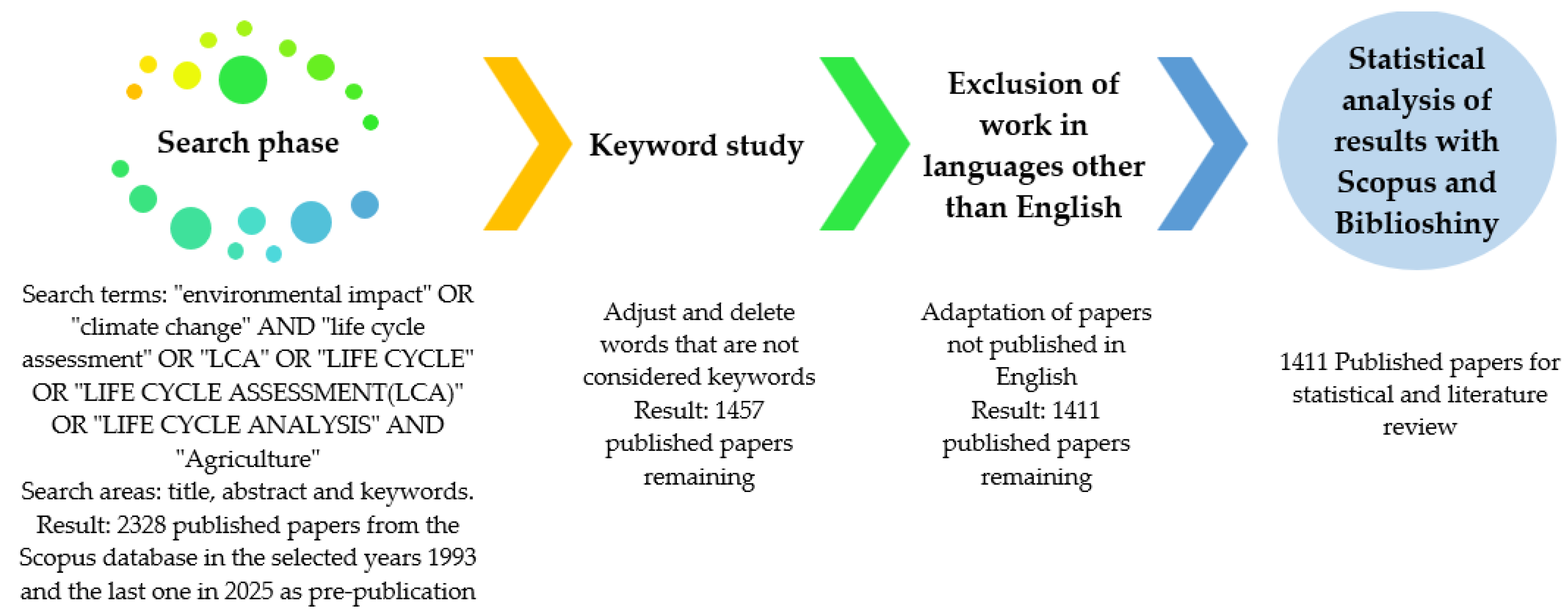
Figure 2.
Production of articles per year.
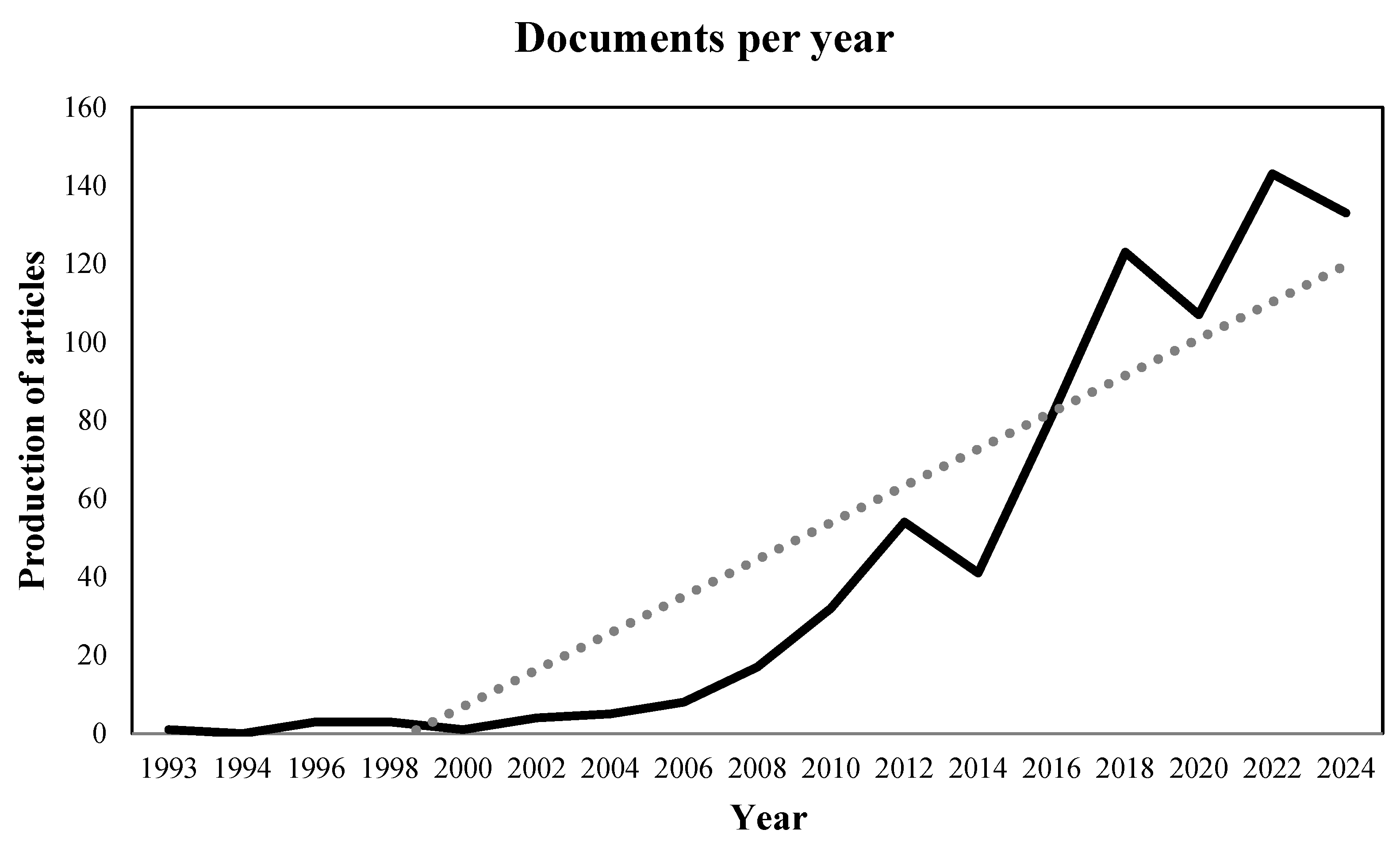
Figure 3.
Key Sources from Bradford Law.
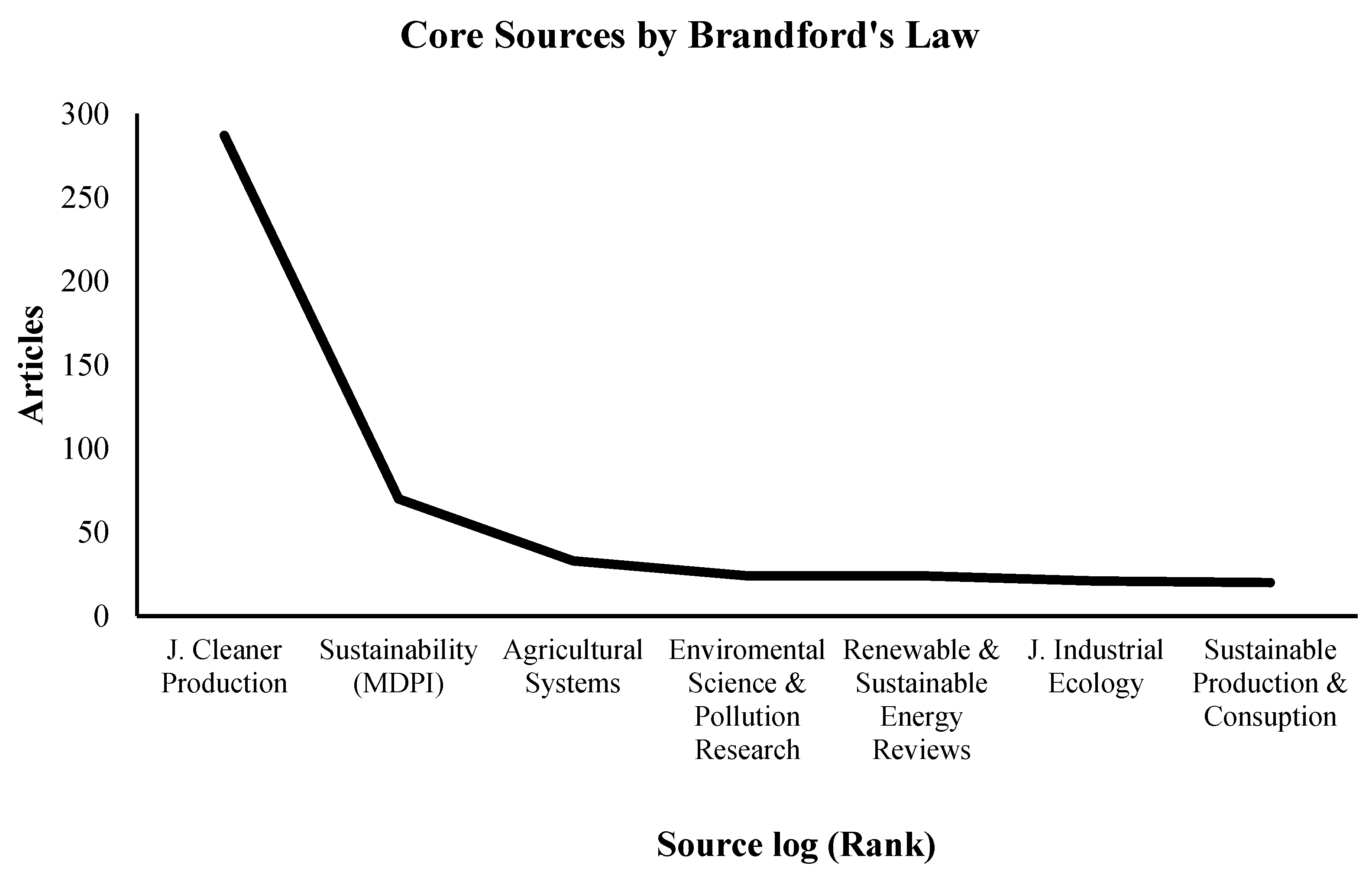
Figure 4.
a) Cooperation network; (b) Co-referral network.
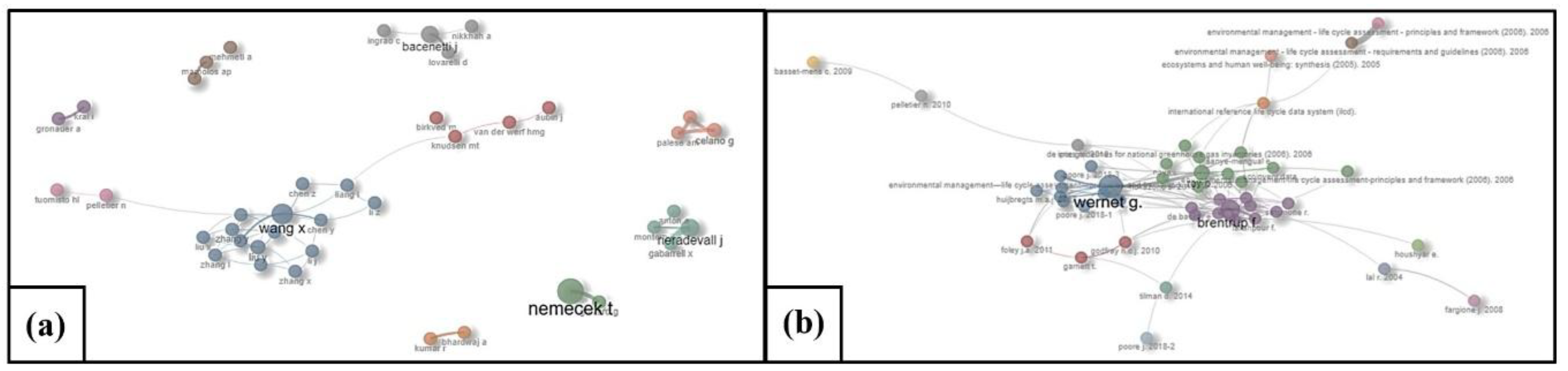
Figure 5.
Coupling clusters of Articles.
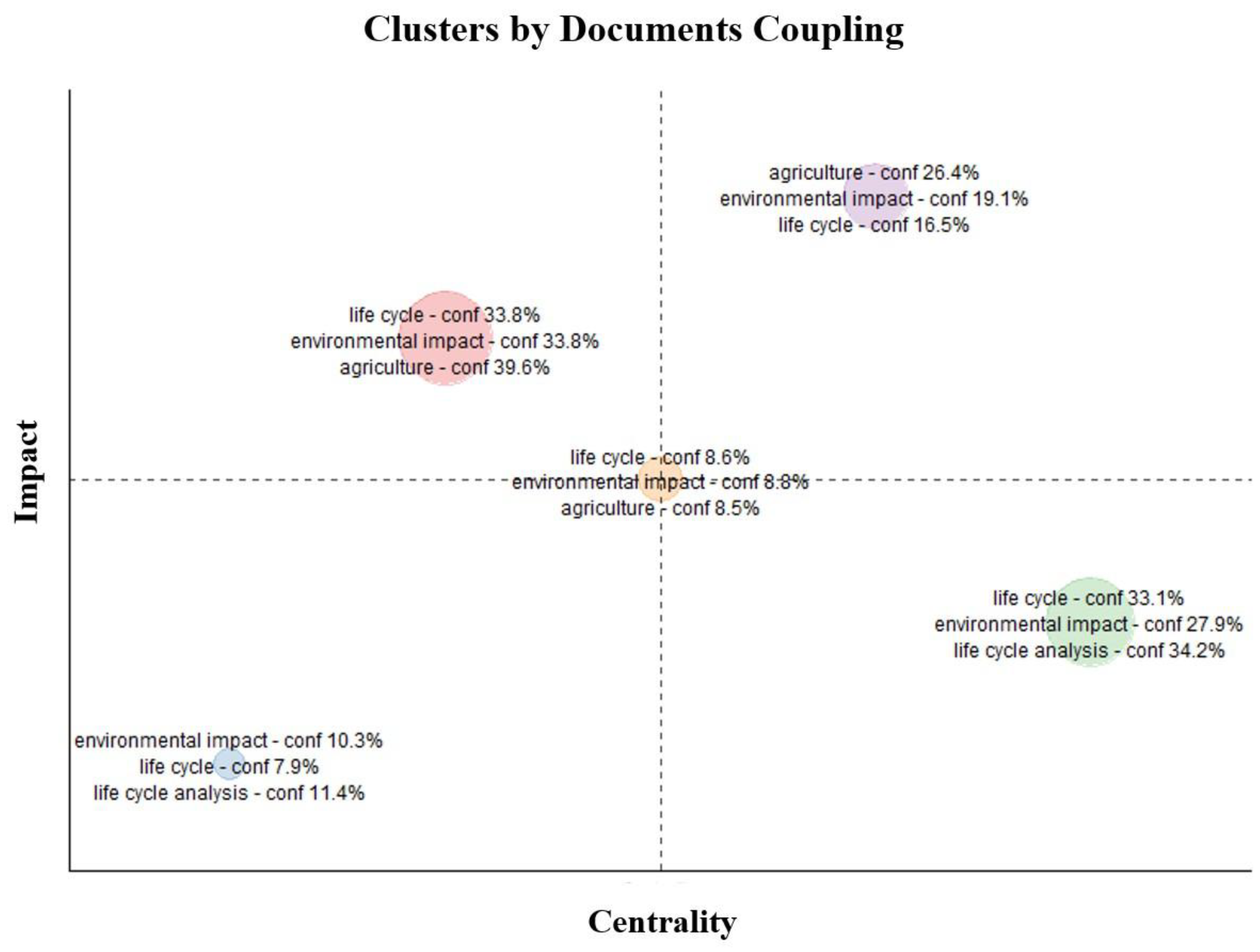
Figure 6.
Clusters of coupling sources.
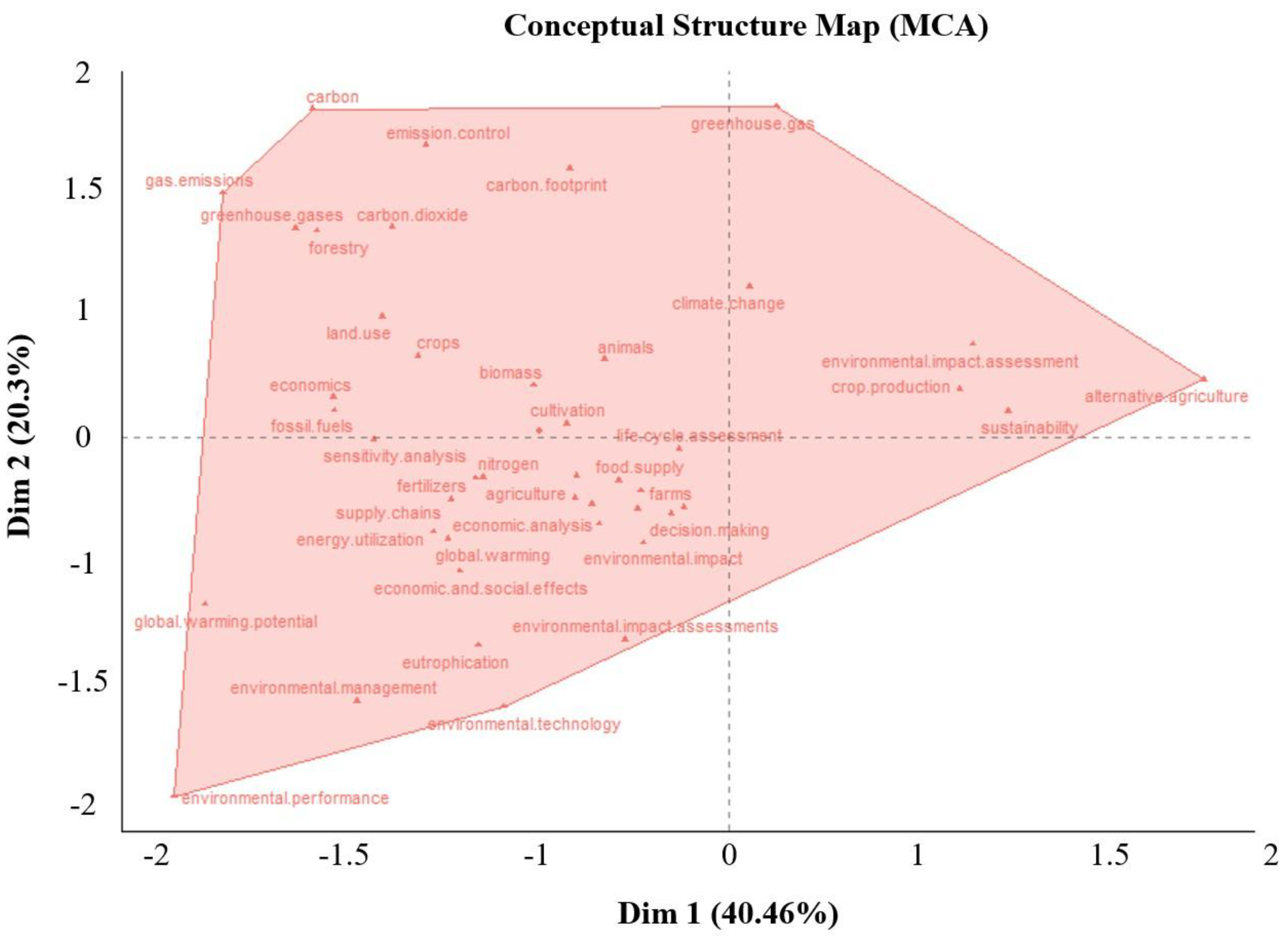
Figure 7.
Thematic Map.
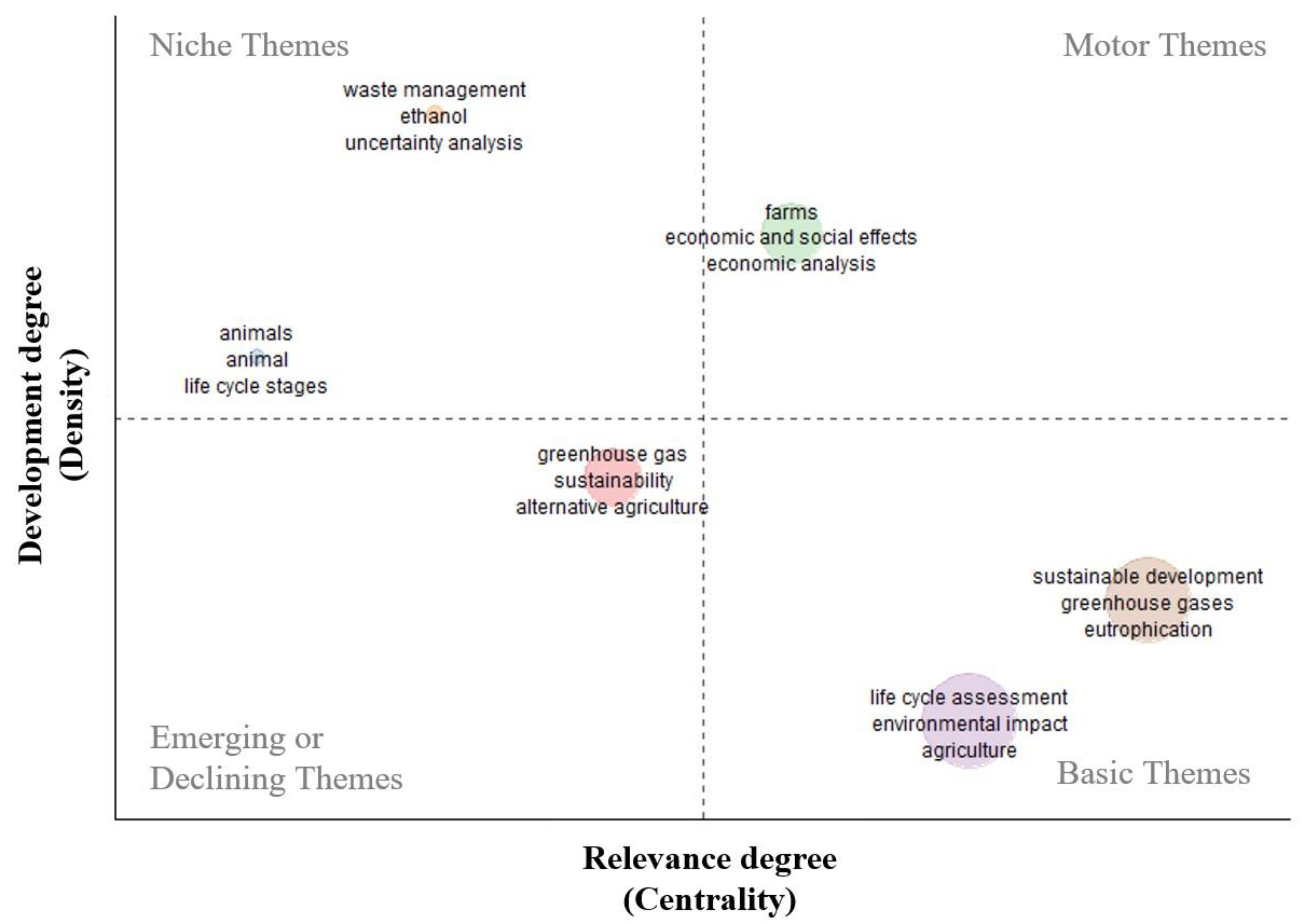
Figure 8.
Number of publications per year.
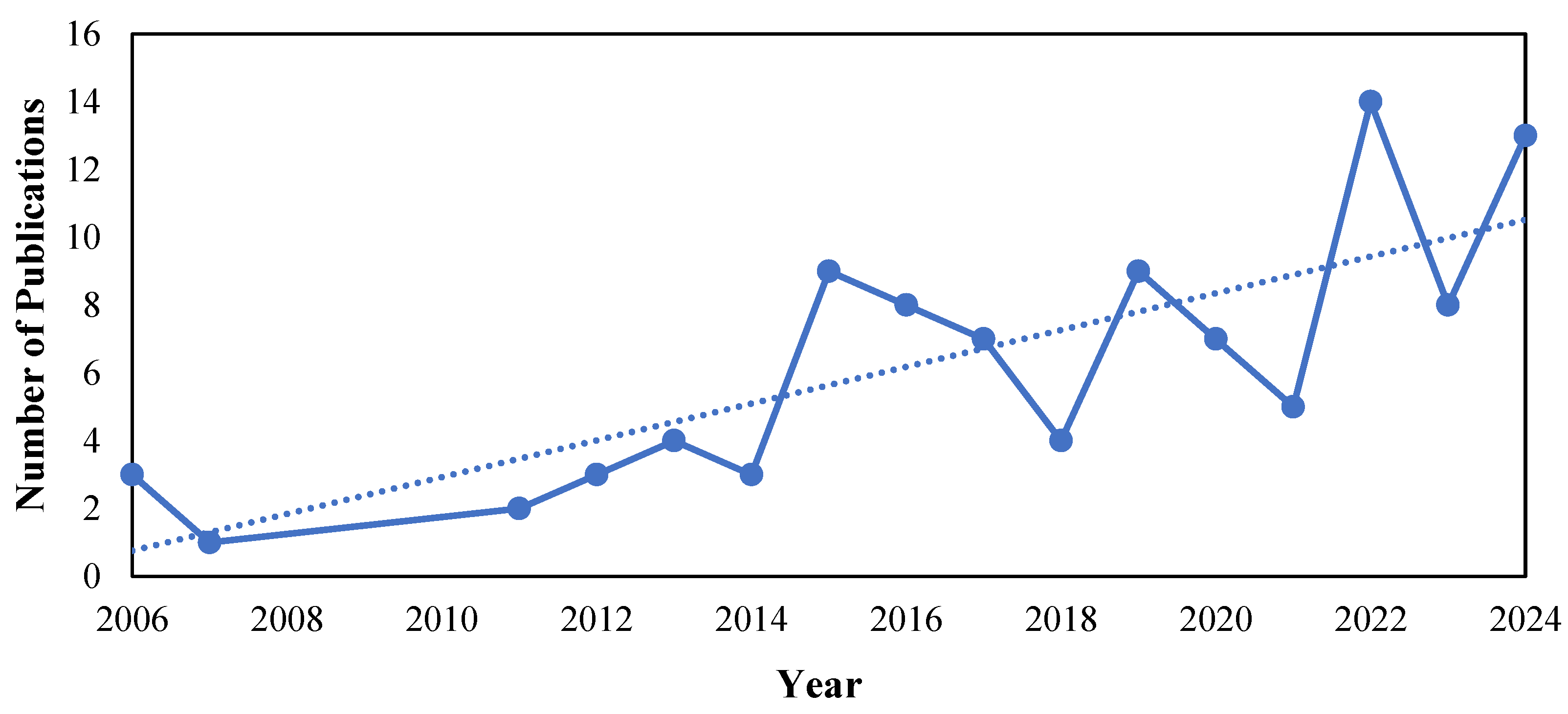
Figure 9.
Sustainable Development Goals.
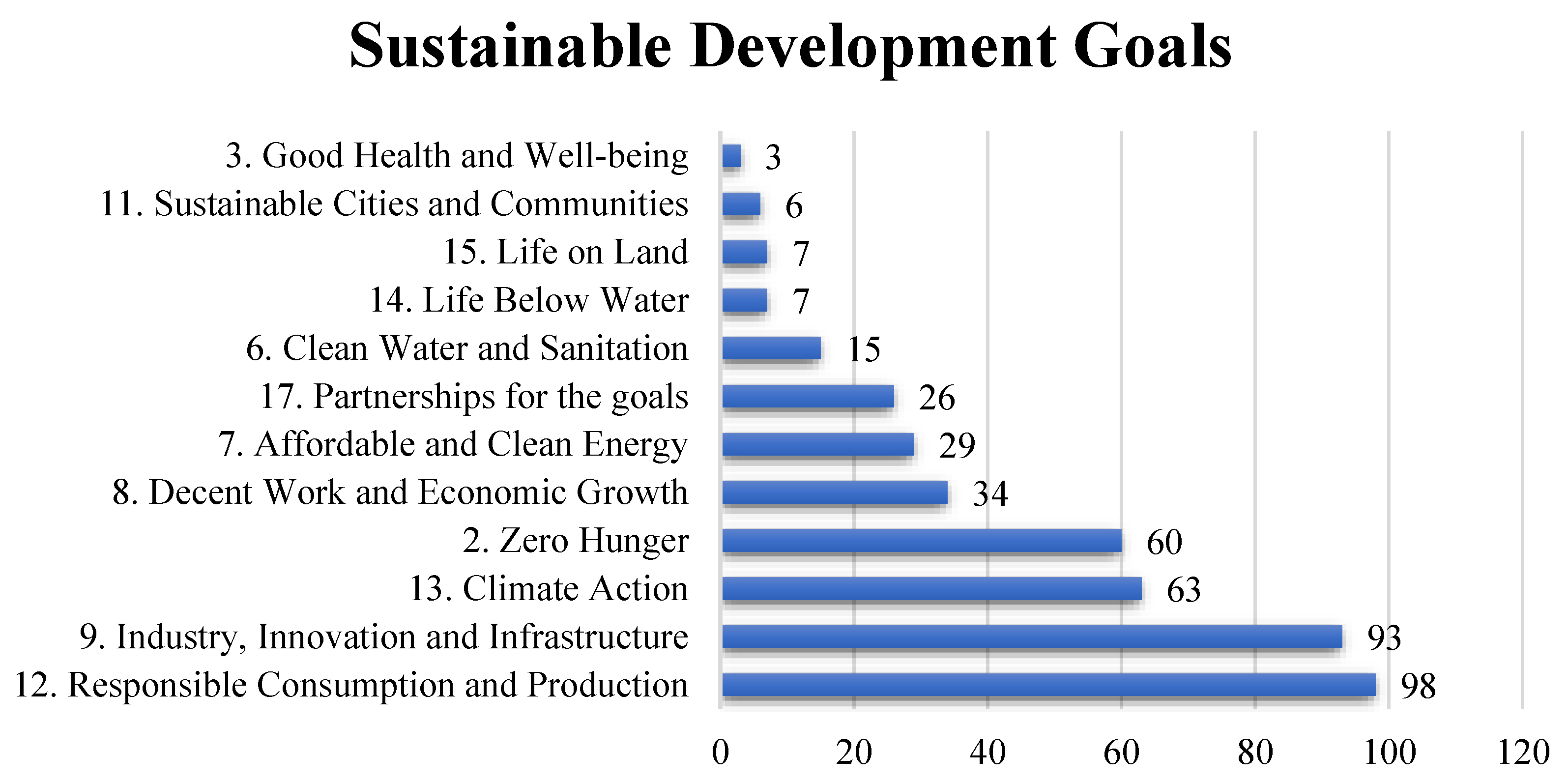

Table 1.
Author productivity by year.
| Author | h index | g index | M index | TC | NP | PY start |
| Nemecek T | 17 | 22 | 0,8947368 | 1613 | 22 | 2006 |
| Bacenetti JJ | 10 | 13 | 0,9090909 | 513 | 13 | 2014 |
| Rieravevall J | 10 | 11 | 0,6666666 | 755 | 11 | 2010 |
| Van der Werf HMG | 10 | 11 | 0,5 | 1205 | 11 | 2005 |
| Wang X | 10 | 13 | 0,7692307 | 386 | 13 | 2012 |
| Gaillard G | 9 | 10 | 0,4736842 | 913 | 10 | 2006 |
| Nabali - Pelesaraei A | 8 | 8 | 1 | 646 | 8 | 2017 |
| Gabarrell X | 7 | 8 | 0,4666666 | 484 | 8 | 2010 |
| Zhang Y | 7 | 9 | 0,4375 | 243 | 9 | 2009 |
| Aubin J | 6 | 6 | 0,375 | 351 | 6 | 2009 |
Table 2.
Distribution of key sources based on Bradford's Law.
| Source | Rank | Freq | cumFreq |
| Journal of Cleaner Production | 1 | 287 | 287 |
| Sustainability (Switzerland) | 2 | 70 | 357 |
| Agricultural Systems | 3 | 33 | 390 |
| Environmental Science and Pollution Research | 4 | 24 | 414 |
| Renewable and Sustainable Energy Reviews | 5 | 24 | 438 |
| Journal of Industrial Ecology | 6 | 21 | 459 |
| Sustainable Production and Consumption | 7 | 20 | 479 |
Table 3.
Analysis of coupling clusters from sources.
| Label | Group | Freq | Centrality | Impact |
| environmental impact - conf 21.9% life cycle - conf 14.6% agriculture - conf 13.3% |
1 | 27 | 0,54298317 | 4,72050265 |
| life cycle - conf 29.3% agriculture - conf 26.7% environmental impact - conf 21.9% |
3 | 18 | 0,52981857 | 1,84077243 |
| life cycle - conf 56.1% agriculture - conf 60% environmental impact - conf 56.2% |
5 | 48 | 1,43121433 | 1,66410422 |
Table 4.
Sources with the most publicity.
| Source | Publications |
| Journal of Cleaner Production | 31 |
| Sustainability (Switzerland) | 6 |
| Sustainable Production and Consumption | 5 |
| Agricultural Systems | 4 |
| Environmental Impact Assessment Review | 3 |
Disclaimer/Publisher’s Note: The statements, opinions and data contained in all publications are solely those of the individual author(s) and contributor(s) and not of MDPI and/or the editor(s). MDPI and/or the editor(s) disclaim responsibility for any injury to people or property resulting from any ideas, methods, instructions or products referred to in the content. |
© 2025 by the authors. Licensee MDPI, Basel, Switzerland. This article is an open access article distributed under the terms and conditions of the Creative Commons Attribution (CC BY) license (http://creativecommons.org/licenses/by/4.0/).
Copyright: This open access article is published under a Creative Commons CC BY 4.0 license, which permit the free download, distribution, and reuse, provided that the author and preprint are cited in any reuse.


