

Submitted:
09 July 2025
Posted:
10 July 2025
You are already at the latest version
Abstract
This research examines the influence of innovative leadership and an entrepreneurial mindset on building sustainable business development. Based on five business leadership case studies, the study aims to assess the degree to which innovative leadership, an entrepreneurial mindset, and a certain business leadership style account for organizational sustainability. The central hypothesis is that this combination is essential for sustained organizational progress. Using a purposive sampling approach, five cases across different industries and geographical locations were selected to provide insights and address the research question. The findings clarify the characteristics of innovative leadership, entrepreneurial mindset, and five different leadership styles. The results indicate that a proper fit between the leadership style adopted and the dominant innovative leadership and entrepreneurial mindset can enable the establishment of a unique organizational identity, fostering differentiation and continuous growth.
Keywords:
innovative leadership
; entrepreneurial mindset
; sustainable business development
; case study
; qualitative research
Introduction
In the modern business context, the combination of innovative leadership and an entrepreneurial mindset has become important for facilitating sustainable business development (Hahn et al., 2017; Ndou et al., 2018; Parrish, 2009). The present situation is characterized by a growing acknowledgement of the interlinkage between business activities, environmental responsibility, and social accountability, which is motivating organizations to adopt more sustainable approaches (Ikerd, 2024; Nunhes et al., 2020; Peter & Daphne, 2019) . Yet, numerous companies are confronted with the difficulty of being in a position to effectively incorporate sustainability in their main strategies and operation system due to insufficient innovative leadership and weak entrepreneurial vision that can propel the necessary change (Partiti & Arcuri, 2021). Although the necessity of sustainable business practice is undisputed, how innovative leadership and entrepreneurial mindset contribute to accomplishing sustainable business growth is not clearly addressed, thereby reflecting a gap in current literature.
To fill the noted gap, this research investigates the interactive relationships among innovative leadership, entrepreneurial orientation, and sustainable business practice development with the objective of offering practical recommendations to businesses interested in enhancing their sustainability performance. The research question guiding this investigation is: In what ways do innovative leadership and entrepreneurial orientation interact to affect sustainable business development in firms? To answer this question, the research tried to achieve several objectives: To analyze innovative leadership attributes in the framework of sustainable business growth; To assess the influence of an entrepreneurial spirit on promoting sustainable business practice; To investigate the confluence of innovative leadership, an entrepreneurial spirit, and sustainable business growth through case studies of prosperous companies; To determine practical solutions for companies to promote innovative leadership and an entrepreneurial spirit for sustainable business growth. The following is the organization of this paper: the paper starts with an extensive review of literature on innovative leadership, entrepreneurial leadership mindset, and the meeting point of these topics within the paradigm of sustainable business development.
Subsequently, this paper identifies the methodological paradigm used, including the case study strategy and data collection methods. Next, this paper presents the detailed analysis of the case studies chosen, emphasizing the role of innovative leadership and entrepreneurial orientation in driving sustainable business development. Lastly, this paper concludes with an exploration of the primary findings, their implications for the business environment, and potential avenues for future research.
Literature Review
Innovative Leadership
Innovative leadership is a leadership style that promotes employees to think creatively and develop innovative ideas, which can be instrumental in long-term business growth (Alharbi, 2021; Haroon et al., 2019; Sharma et al., 2023). Innovative leaders take risks and try new things, which can result in innovations that are good for the environment and society (Al-Shaikh & Hanaysha, 2022). They encourage change and foster a supportive climate in which new ideas are stimulated and rewarded, and have a clear vision of the future and can convince others to follow that vision (Zhang et al., 2024). Aside from that, they are also capable of recognizing innovation opportunities and mobilizing resources to address them, and are adept at forming and leading diverse teams, facilitating team collaboration and knowledge sharing (Giddens, 2017; Hakovirta et al., 2023; Rhee et al., 2020). They also understand that innovation is not a one-time task, but an ongoing process of learning and improvement, and thus they seek to create a culture of ongoing innovation within their organizations (Mogaji & Dimingu, 2024). They challenge the status quo and are willing to disrupt existing business models in order to create new value for stakeholders (Iqbal et al., 2021).
In order to create transformation to sustainable business, leaders anchor their vision for sustainability in organizational development combining organizational and individual orientations (Fietz & Günther, 2021; Kantabutra, 2020; Liao, 2022). Leaders understand the potential of employees' involvement in building innovation and sustainability and give employees autonomy to become owners of the sustainability initiatives (Li et al., 2022). To guide a sustainable business, they also form cooperation and collaboration with external stakeholders like customers, suppliers, and communities of people to generate mutual value and solve intricate sustainability issues. Sustainable leadership has been increasing, and the entire globe has begun considering the ethical role of the business in the sustainable systems (Panday & Kaur, 2022).
Entrepreneurial Leadership Mindset
An entrepreneurial leadership style is action-oriented, opportunity-driven, and focused on finding and seizing new business possibilities and developing value(Mariani & Anom, 2020; Ordu, 2020; Suriyankietkaew et al., 2022; Wardana et al., 2020). An entrepreneurial leader has a special combination of vision, innovativeness, and risk tolerance, along with the capabilities of stimulating and inspiring others in order to obtain challenging objectives (Stefan & Nazarov, 2020). An entrepreneurial leader is one who has the capacity to lead and keep developing along with the environment and market in order to take advantages of his organization (Soehari & Budiningsih, 2020). Not only do they prioritize ethical decision-making and transparency, but also sustainability in business operation (Adomako & Nguyen, 2024). They are also adept at building and managing high-performing teams, building a culture of innovation and collaboration.
The merits and demerits of entrepreneurship along with the probable success and failure determinants are matters of entrepreneurial sustainability (Karani & Mshenga, 2021). Entrepreneurial leaders are as much at ease with uncertainty and ambiguity and can make swift and decisive decisions even confronted with incomplete information (Baltazar & Franco, 2023; Dewi, 2024; Xing et al., 2022). They are also adept at establishing and maintaining stakeholder relationships, such as investors, customers, and employees, and are able to establish high levels of community around their ventures. Moreover, the entrepreneurial process usually begins with someone who thinks he or she shat the capability and character to begin his or her own company, grows into a start-up or new/newly formed business, and mature to become the owner-manager of a new or existing business (Baltazar & Franco, 2023). Such individuals have willpower and entrepreneurial mindset as inherent in their nature, and their decisions to launch a new business are triggered by a sequences of events.
Entrepreneurial thinking relies on business opportunities, integrated processes, and balance leadership (Mariani & Anom, 2020). Worldwide, entrepreneurship requires the mobilization and reconstruction of the available resources (Vlachou et al., 2021). Entrepreneurship is the capacity to initiate business action (Anisah et al., 2021). People spot and capture business opportunities, build something new, and generate value often, which demonstrates their significant level of entrepreneurship (Ahmetoglu et al., 2020). Entrepreneurship is the recognition, analysis, utilization of opportunities, and their subsequent realization by creating new business entities (Tesema & Lecturer, 2020). An entrepreneurial mindset is necessary to identify and exploit opportunities for sustainable development.
There exist numerous ways that sustainability and entrepreneurship are interconnected, such as fostering sustainable lifestyles as well as formulating innovative answers to social and environmental challenges (Veleva, 2020). Entrepreneurship has traditionally been recognized for being significant for growth and economic development, although it may influence society and the environment negatively or positively (Raimi, 2024; Tunjungsari et al., 2021; Veleva, 2020).
Sustainable business development, in short, entails developing and establishing businesses that satisfy the present needs without hindering future generations from satisfying their own needs (Iandolo & Ferrari, 2020). The meeting point of entrepreneurial orientation and innovative leadership is vital in maintaining business growth because it promotes the establishment of an innovation, risk taking, collaborative culture, essential in propelling businesses that are not only revenue-generating but also environmentally and socially sustainable (Maguate, 2024; Ordu, 2020; Tang, 2020; Veleva, 2020). It involves taking a long-term view while making business choice based on their economic, social, and environmental effects (Barror, 2021; Makki et al., 2020). Entrepreneurship is the activity of discovering, analyzing, and capturing opportunities and their exploitation through the establishment of new business enterprise (Tesema & Lecturer, 2020). An entrepreneurial mindset is critical in identifying and understanding opportunities for sustainable business growth and creating innovative and independent solutions to convert raw materials into more valuable products that consumers desire is a key aspect of entrepreneurship(Jemal, 2021; Sun et al., 2023; Wardana et al., 2020).
Methodology
Research Design
The research adopts a qualitative research methodology, and more precisely, a multiple case study design to explore the multifaceted interconnection among innovative leadership, entrepreneurial leadership mindset, and sustainable business development (Griva et al., 2021; Potluri & Phani, 2020). Qualitative research is a naturalistic inquiry that aims at comprehending phenomenon within their naturalistic environment (Nuringsih et al., 2020). The multi-case study design will facilitate an in-depth examination of the phenomenon in diverse contexts, which will enhance the strength and generalizability of the findings. By examining multiple cases, the study aims to reveal commonalities and idiosyncratic findings related to innovative leadership and entrepreneurial leadership mindset fuelling sustainable business growth. Qualitative data and methodologies are beneficial to micro firms and the sustainable innovative business model design process can be even more valuable (López-Nicolás et al., 2021). The overall research design objective is to explore in depth and extensively the relationship between the variables of interest in their natural setting (Suriyankietkaew et al., 2022).
Data Collection
The research utilize a purposeful sampling technique in identifying five high-performing business organization as a case studies. The principle of qualitative research is to selectively choose participants or sites (or documents or material) that will best enable the researcher to learn about the problem and the research questions (Stratton, 2024). Purposeful sampling enables the researcher to choose information-rich cases that are most relevant to the research question. They were chosen based on their stated commitment to sustainability, their reputation for innovativeness, and their reputation for entrepreneurial leadership. The evidence will be collected from a combination of document analysis and analysis of publicly available information. Official documents released by the selected cases, such as annual reports, sustainability reports, and strategic plans, will be analyzed to gain information regarding their leadership styles, entrepreneurial behaviors, and sustainability initiatives. This assists in comprehending the argument in the research and in obtaining information that will respond to the study question.
Data Analysis
Data gathered will be examined through a two-step process: within-case and cross-case analysis. Within-case analysis entails in-depth scrutiny of each case independently in order to realize significant themes and patterns regarding innovative leadership, entrepreneurial leadership attitude, and sustainable business growth, and to enable the determination of the essential elements and general factors (Krishnan et al., 2020). The first step in the analysis will be to define the chosen cases and reading of the most applicable information within the documents with an eye to comprehending the chosen five cases more deeply. Cross-case analysis will then be carried out in order to compare and contrast findings in the five cases, with an eye to recognizing common themes, distinctive insights, and possible relationships among the three factors being studied.
Proposed Conceptual Frameworks
This study adopts a conceptual model (Figure 1) that accounts for intricate interconnections among innovative leadership, entrepreneurial leadership mindset, and sustainable business growth. Innovative leadership, which is visionary, adaptive, and creative thinking aimed at the cultivation of creativity and experimentation, forms the basis of this model Entrepreneurial leadership mindset, which includes risk-taking propensity, opportunity alertness, and proactive problem-solving, serves as a catalyst to transform innovative ideas into sustainable business activities with a tangible form. The model proposes that innovative leadership with an entrepreneurial leadership mindset develops a sustainability culture in the organization. This culture, as such, promotes the incorporation of sustainable business strategies, including environmental sustainability, social sustainability, and economic sustainability, that result in improved sustainable business growth. The model also suggests that the confluence of innovative leadership and entrepreneurial leadership mindset has a synergistic influence, enhancing the combined effect on sustainable business development. By adopting the culture of innovation, entrepreneurial risk-taking, and long-term orientation, organizations are able to effectively deal with the dynamics of the business environment and grow sustainably.
Finding and Discussion
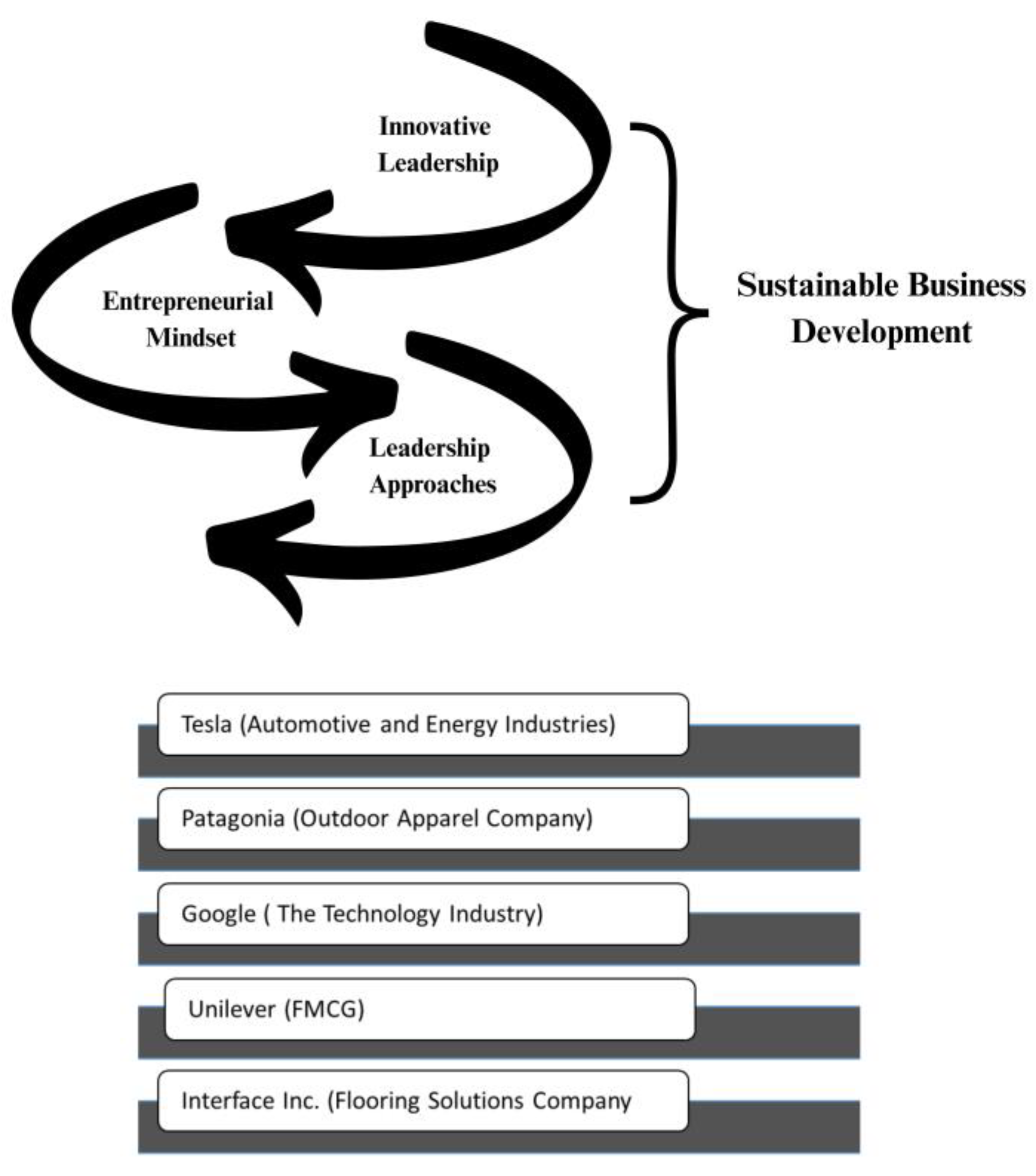
The following analysis commences with the discussion of five separate cases of business leadership, each exemplifying the triadic interaction model at the business leadership level (Figure 2). The analysis presented in this study and the following conclusions drawn will be elaborated on in later sections of this paper. This section provides a discussion of both within-case and cross-case analyses, with the objective of revealing commonalities and major distinctions among the three factors being examined. The theoretical model will also be examined in this study through the examination of innovative leadership and the entrepreneurial leadership mindset, and their practical relevance to business development.
Within Case Analysis
This research conducted an in-depth analysis of five representative cases, as described hereunder. The utilization of more than a single case enables broad exploration of various organizational settings, fostering a deeper understanding of the expressions and implications of innovative leadership and entrepreneurial orientation on sustainable business growth in varying contexts. Cross-case analysis enables the spotting of overall themes and distinctive findings, thereby improving the validity and generalizability of the findings.
The First Case: Examining the Three Way Interaction Between Innovative Leadership, Entrepreneurial Mindset, and Visionary Leadership Approach
To examine the theoretical framework, the study employs a case study from the Energy and Automotive sectors in the form of Tesla to illustrate the connection between innovative leadership, entrepreneurial leadership mindset, and business leadership style.
Innovative Leadership: Tesla's innovative leadership is exemplified in its forward-thinking founder, Elon Musk, who never hesitates to defy the established norm and spearheads revolutionary advancements in electric cars and renewable energy (Aarons, 2006; Jia, 2024; Tang, 2023). Musk's leadership at Tesla is characterized as risking and investing in disruptive technologies, which positions tesla at the forefront of clean transportation (Ingram, 2018; Tang, 2023; Thomas & Maine, 2019). His clearly articulated vision, risk-taking and ability to inspire and motivate his teams have left an indelible mark on Tesla’s organizational culture, future-proofing innovation, creativity, and drive for excellence (Zheng, 2024). Tesla’s innovation model is its emphasis on vertical integration (Qin, 2022)
Entrepreneurial Leadership Mindset: This leadership mindset of entrepreneurship is exhibited by Musk through his ability to recognize and exploit opportunities, promote innovation, and establish a culture that prioritizes experimentation and ongoing learning at tesla (Arreola et al., 2024; Khan, 2021; Olorunfemi, 2024). By adopting a culture of innovation and strategic risk-taking, Tesla has been able to accomplish a great deal, such as creating high performance electric vehicle and launching a worldwide charging network (Ganesh, 2024; Ingram, 2018; Liu et al., 2025). The aforementioned orientation is key to successfully navigating the evolving terrain of the automobile and energy industries without compromising a competitive edge.(Deb et al., 2018; Sun et al., 2019; Tang, 2023) Tesla personifies the significance of systematic entrepreneurship in prioritizing performance orientation and leveraging digital communication (Arreola et al., 2024).
Leadership Approach: Tesla's visionary leadership is reflected in its dedication to sustainability and in its goal of accelerating (Arreola et al., 2024; Kim, 2020) . The company's dedication to its worker is reflected in its endeavor to offer a safe and equitable work environment, as well as in engaging workers in sustainable development activities (Zheng, 2024). Tesla’s innovations in electric vehicle technology and green energy inititatives have transformed the automotive sector at its very core while simultaneously promoting higher environmental consciousness and adoption of sustainable in society. The integration of sustainability into the company’s core business activities has improved its brand image and generated long-term stakeholder value (Cramer, 2000; Ingram, 2018; Sukitsch et al., 2015)
The Second Case: Examining the Three Way Interaction Between Innovative Leadership, Entrepreneurial Mindset, and Transformational Leadership Approach
From the Apparel industry, this paper investigate Patagonia as a case example to examine the three-way interaction between innovative leadership, entrepreneurial mindset, and transformational leadership approach.
Innovative Leadership: Patagonia's innovative leadership is demonstrated though its steadfast adherence to environmental activism and sustainability that not only forms its business model but also shapes the outdoor apparel industry (Cerchia & Piccolo, 2019; Stefan & Nazarov, 2020). Its founder, Yvon Chouinard, has infused a philosophy that centered on environmental stewardship that is a departure from conventional corporate culture (Jones & Gettinger, 2016; Wong & Ngai, 2021). Patagonia's leadership actively supports grassroots environmental activism, building a culture of activism within the company and among its customer base. The company's unconventional approach, such as encouraging customers to fix their clothes and offering repair services, challenges the traditional consumerist model of planned obsolescence(Corvellec & Stål, 2019).
Entrepreneurial Leadership Mindset: Patagonia's entrepreneurial mindset is reflected in the fact that it is open to trying new materials, production processes, and business mdels that reduce environmental effects (Bridgens et al., 2017; Hartman & Haas, 1995; Sierra-Fontalvo et al., 2023; Todeschini et al., 2017). This is fulfilled by utilizing recycle materials in ints merchandise, organic cotton farming, and investigating new processes that are designed to limit waste and pollution. Patagonia’s entrepreneurial mindset is also realized through its advocacy work, where it leverages its brand reputation and visibility to promote public awareness of environmental concerns and advocate for legislative action (Carroll, 1991; Cerchia & Piccolo, 2019; Eich, 2021). It’s Black Friday “Don’t Buy this Jacket” campaign was a call for conscious consumption and challenge to consumerism, the kind of bold and unconventional marketing approach that aligns with its value (Hwang et al., 2016; Kortam & Mahrous, 2020).
Leadership Approach: The transformational leadership model employed by Patagonia can be observed through its influence and motivation of its employees, customers, and other stakeholders towards sustainability and nature preservation. The organization’s dedication to transparency and morality has generated a loyal customer base that comprehends as well as appreciates ots merchandise and general purpose (Patagonia, 2025; Rattalino, 2017; Stahlinski, 2014). Patagonia has established an exceptional brand reputation based on nature preservation, authenticity, and social accountability. Patagonia’s environmental sustainability is literally embedded in its leadership strategy (He et al., 2023). Patagonia views itself as an activist company, and it fosters the stewardship of the environment and a strong commitment to employees over the financial gains pursued by its niche outdoor fashion company (Rankin & Matthews, 2020). Patagonia is deeply dedicated to environmental sustainability and applies marketing practices demonstrating such dedication (Lozada, 2020).
The Third Case: Examining the Three Way Interaction Between Innovative Leadership, Entrepreneurial Mindset, and Distributed Leadership Approach
Google is used as a case example from technological industry to examine the three-way interaction framework between innovative leadership, entrepreneurial leadership mindset, and distributed leadership approach.
Innovative Leadership: The leadership vision of Google is exemplified in the dencentralized organizational framework and the earnest concentration on employee-led innovation (Green et al., 2020). The company’s “20% time” policy that permits employees to utilize a portion of their working hour to develop individual projects and ideas capture the practice (Sekar, 2024; Tran, 2017). Google's leadership promotes the environment that enables experimentation and risk-taking, thus permitting workers to investigate new technologies and create effective solutions. The organization’s dedication to innovation extends outside of its core search operations, including fields such as artificial intelligence, cloud computing, and self-driving cars (Aksu, 2024) .
Entrepreneurial Leadership Mindset: Google’s innovative entrepreneurial spirit is evident in its capacity to spot and exploit emerging trends and market opportunities (Annon, 2016; Kariv et al., 2019; Tran, 2017). The firm’s inclination to enter new and untapped territories, as evident in its investment in renewable energy projects and the production of high-tech hardware products, demonstrates the firm’s entrepreneurial spirit. Google entrepreneurial mindset is seen in how it goes about solving problems, whereby it employs technology and evidence-based knowledge to address world problems (Green et al., 2020; Schmitt & Almeida, 2020).
Leadership Approach: Google's leadership approach emphasizes collaboration, knowledge-sharing, and distributed decision-making. The organization utilizes its extensive network of professionals, partners, and stakeholders to source ideas, create solutions, and innovate (Burgstaller et al., 2020; Lentz, 2020; Tran, 2017). Google's open-source initiatives and collaborative platforms, tools like Google Docs and Google Meet, enable effective communication and collaboration among heterogeneous teams. Also, Google leadership fosters transparency and openness to inclusiveness, building a culture of ownership and responsibility among workers. This aligns with a paradigm of leadership attuned to agility and responsiveness in the contemporary digital landscape (Cortellazzo et al., 2019; Gajjar, 2025). Google has managed peer-to-peer learning as essential part of its cultural foundation through offering strong leadership support and this learning this courses may flourish when incorporated into a wholesome organizational culture placing emphasis on constant learning (Lentz, 2020).
The Fourth Case: Examining the Three Way Interaction Between Innovative Leadership, Entrepreneurial Mindset, and Purpose-Driven Leadership Approach
Unilever is used as a case example from consumer goods industry to examine the three-way interaction framework between innovative leadership, entrepreneurial leadership mindset, and purpose-driven leadership approach.
Innovative Leadership: Unilever's innovative leadership is marked by its dedication to sustainable development and the incorporation of environmental and social concerns it its corporate strategy (Maguate, 2024; Mirvis, 2011). This is evident in its Sustainable Living Plan, which makes ambitious commitments to halve environmental footprint, enhance health and well-being, and enhance livelihoods (Haq et al., 2021; Hoşgör et al., 2023). The Unilever leadership promotes a culture of innovation and collaboration, urging employees to develop sustainable approaches and generate positive social change (Holt et al., 2004; Paul et al., 2024).
Entrepreneurial Leadership Mindset: Unilever exemplifies entrepreneurial mindset in its openness to explore new business models, allocate resources to emerging markets, and build innovative products that solve social as well as environmental issues (Başar, 2018; Jones, 2024; Ndou et al., 2018). The company's The company’s forward-thinking stance to novel business designs, strategic financial investiments, and the development of pioneering products to address pressing environmental and social issues is an indicator of its entrepreneurism. Such entrepreneurial strategy allows Unilever to spot and seize new opportunities for growth, build value for its stakeholders, and shape positive transformations globally (Cheng, 2021).
Leadership Approach: Unilever's leadership strategy is focused on purpose-led leadership, where leaders inspire and empower employees to make a positive difference in their work. The Unilever Sustainable Development Plan is deeply integrated into the organizational systems, processes, and cultural fabric of the company (Krishnamoorthy, 2021). The leadership of Unilever demonstrates a strong commitment to social responsibility and sustainability, with a clear vision for improved future and encouraging others to follow them along the path (Paul et al., 2024). Paul Polman, the immediate former CEO of Unilever, led by example in that he also acted as a Global SDG Advocate, advocating for the need for sustainable development across the world (Beyne, 2020).
The Fifth Case: Examining the Three Way Interaction Between Innovative Leadership, Entrepreneurial Mindset, and Ethical and Value Based Leadership Approach
Interface Inc. is used as a case example from manufacturing industry to examine the three-way interaction framework between innovative leadership, entrepreneurial leadership mindset, and ethical and value based leadership approach.
Innovative Leadership: Interface Inc. is a case of innovative leadership with its unwavering dedication to sustainability, a philosophy that infuses each function of its business, including product design and supply chain management (Interface, Inc. - ESG, 2025; Lampikoski, 2012). This dedication is evident in its emphasis on closed-loop manufacturing, which seeks o do away with waste and pollution by designing products that are recyclable or reusable at the end of their life cycle (Aguilar-Hernández et al., 2018; Camilleri, 2018; Franco, 2019).
Entrepreneurial Leadership Mindset: Interface Inc. exemplifies a good instance of an entrepreneurial mindset by showing the desire to defy traditional business norms, with a focus on innovation and experimentation, and a commitment to making a positive social and environmental difference (Ndou et al., 2018; Sun et al., 2023). The entrepreneurial mindset is achieved through the firm’s adoption of unorthodox approaches and its tireless efforts in pursuing advancements that have the potential to revolutionize the industry. Interface’s sustainability journey offers a compelling case study of how leadership may spark organizational change, develop a culture of innovation, and generate shared value (Nelson, 2009; Struben & Kapmeier, 2023).
Leadership Approach: Interface Inc.'s leadership philosophy is characterized its dedication to ethical conduct, transparency, and active stakeholder involvement (Stefan & Nazarov, 2020). Organizational leaders emphasize the importance of establishing trustful relationships with employees, customers, suppliers, and surrounding communities, thereby developing a culture of cooperation and collective responsibility (Qalati et al., 2023). The focus on ethical conduct and open communication strengthens stakeholder relationships, resulting in a culture of cooperation and shared responsibility. By exhibiting exemplary leadership, interface illustrates that companies can be forces for positive change, generating economic value while simultaneously building a more sustainable and just world (Ardiansyah & Alnoor, 2024; Lampikoski, 2012).
Cross Case Analysis
The recurring themes of progressive leadership and entrepreneurial spirit were present in each of the five case studies, with each entity demonstrating a unique but successful style of leadership. Tesla's visionary leadership was marked by a relentless pursuit of sustainability and an intentional aim to accelerate the world's transition to electric vehicles and renewable energy sources. The organisation's incorporation of sustainability into the heart of its business model, coupled with its quest for disruptive and innovative technologies, has enabled it to be an industry-leading and pioneering organisation within the automobile and energy industries. Patagonia's exemplary transformational leadership is characterized by its staunch environmentalism, social justice, and promotion of sustainable business practices, thereby solidifying its position as a leadership exemplar of corporate social responsibility. Google, on the other hand, with its distributed leadership and shared culture models, have evolved an innovative process for product innovation and a firm focus on establishing a positive work environment. Unilever's value-based leadership enabled the company to seamlessly integrate environmental and social concerns into its core business strategy. Interface's value-based and moral leadership is reflected in its uncompromising and strong dedication to sustainability, closed-loop production, and making a positive social and environmental impact.
The examination revealed shared traits of innovative leadership that comprised visionary strategies, a readiness to defy established practices, and an unwavering commitment to sustainability and social responsibility. The cases possessed unique features of an entrepreneurial leadership style that encompassed the capacity to take risk, enable innovation, and follow unorthodox opportunities. The research concluded that values-based and ethics-driven, transformational, and purpose-driven leadership styles were all effective to a great extent in advancing sustainable business growth.
Conclusion
In business, pursuing business growth and sustainability is a challenge that demands creativity, innovation, and adaptability. The role of entrepreneurial spirit and innovative leadership is indispensable in surmounting challenges and recognizing opportunities amid the backdrop of evolving business contexts at a frantic pace. The proposed model in this study is generalizable to various industries and organizational settings and can be applied as a framework for leaders to review and advance their innovative leadership and entrepreneurial thought processes. By examining a variety of cases, this research offers practical suggestions and implications for business leaders who aspire to achieve sustainable business growth through innovation and entrepreneurship. Finally, the active participation and significant role of business leaders are crucial since they are the prime movers of strategic dialogue, closely considering possible options, and ultimately deciding on feasible and innovative answers to the complex issues of businesses. It can be argued, though, that besides innovative leadership and entrepreneurship, other aspects such as good governance, commitment to employee development, and robust stakeholder cooperation are no less important for the promotion of sustainable business development. The research has found it essential that sustainable business practice development includes entrepreneurial orientation and creative leadership.
Study Implications and Limitations
This research contributes in several significant ways to the literature. It establishes a connection between innovative leadership and an entrepreneurial mindset. It also offers an in-depth review of recent scholarly literature on these concepts across a wide range of contexts. In addition, it correlates five different styles of leadership with both innovative leadership and an entrepreneurial mindset. Finally, it offers a theoretical leadership development model that integrates these components. This study emphasizes the close connection between entrepreneurial mindset and innovative leadership in successful business leadership. Using an analysis of five case studies, this study adds depth and insight to discussion and knowledge of these concepts. The cases illustrate that this connection significantly influences the leadership, activities, and strategies of an organization, thereby resulting in enhanced performance. This research focuses in the field of business leadership with an emphasis on how entrepreneurial mindset and innovative leadership generate sustainable growth for the company. Future studies can examine additional topics of entrepreneurship concerning growth such as highly innovative projects, corporate entrepreneurship frameworks, or innovation technology.
The findings of this research indicate that organizations can utilize the suggested framework to implement leadership development programs and promote the culture of innovation and entrepreneurship. In addition, this study contributes towards a more informed understanding of the dynamic interplay between formal and informal institutions and their implications for entrepreneurial behavior. It provides policymakers with valuable information necessary for designing environments that will foster sustainable business development, especially in developing economies, whose cumulative impact could induce changes towards society's prosperity and well-being. The findings derived from the case studies offer a pragmatic framework for leaders to incorporate sustainability into their business models, developing innovative practices that enhance profitability with positive implications for environmental and social agendas. In addition, the research informs a holistic methodology to leadership development that not only includes the development of personal competencies but also the alignment of organizational values and systems to facilitate sustainable business practices.
Despite the contributions, this study is not without limitation. The study used secondary data, and this can affect the depth of analysis. The research concentrates on five cases, and this limits the generalizability of the results. The findings and conclusions are context-specific in nature, as they are derived from the unique circumstances and nature of the selected organizations.
Future studies may use a mixed-methods design, combining qualitative case study and quantitative questionnaire approaches, to provide a more intricate picture of how these factors interact and affect business results. Longitudinal studies may examine the long-term implications of creative leadership and entrepreneurial mindsets on business sustainability and growth. The extent of the research could be broadened to include a wider variety of industries and organizational sizes, increasing the generalizability of the results. Comparative studies between various cultural and economic environments can identify globally relevant best practices that can be tailored to local circumstances.
The research outcomes of this study highlight the necessity for entrepreneurs and leaders to develop values-driven practices and competences within organizations, focusing on human capital empowerment through care for all stakeholders. The necessity to develop ethical values through selfless actions, establish social capital through social innovation, and encourage environmentally sustainable actions and a strong sense of social responsibility in order to achieve holistic development, ensure sustainability, and develop resilience is highlighted. In order to successfully implement sustainable value creation, firms need to integrate corporate social responsibility into the design elements of their business models, thereby aligning business requirements and the general goals of social justice and environmental sustainability. This alignment is not just necessary to drive long-term profitability, but to create resilience against the background of changing environmental and social pressures, thus ensuring a rich and sustainable future for businesses and communities alike.
Funding
There are no funding sources in this study.
Acknowledgements
I would like to express my sincere gratitude to all those who have contributed to the successful completion of this research.
CrediT Authorship Contribution Statement: Dolendra Paudel
Conceptualization, Methodology, Software, Validation, Formal analysis, Investigation, Resources, Data Curation, Writing - Original Draft, Writing - Review & Editing, Visualization, Supervision.
Declaration of Competing Interest
The author declares that they have no known competing financial interests or personal relationships that could have appeared to influence the work reported in this paper.
References
- Aarons, G. A. (2006). Transformational and Transactional Leadership: Association With Attitudes Toward Evidence-Based Practice. Psychiatric Services, 57(8), 1162. [CrossRef]
- Adomako, S. , & Nguyen, N. P. (2024). Responsible entrepreneurship, social innovation, and entrepreneurial performance: Does commitment to SDGs matter? Business Strategy and the Environment, 33(5), 4887. [CrossRef]
- Aguilar-Hernández, G. A. , Sigüenza-Sánchez, C. P., Donati, F., Rodrigues, J. F. D., & Tukker, A. (2018). Assessing circularity interventions: a review of EEIOA-based studies [Review of Assessing circularity interventions: a review of EEIOA-based studies]. Journal of Economic Structures, 7(1). Springer Nature. [CrossRef]
- Ahmetoglu, G. , Nefyodova, V., Chamorro-Premuzic, T., & Codreanu, S. (2020). What Leads Entrepreneurial Employees to Want to Quit, or Stay in, Their Job? Exploring Two Conflicting Mechanisms. Applied Psychology, 70(2), 738. [CrossRef]
- Aksu, H. (2024). Google Innovation Culture: Fueling Creativity and Disruption. https://digitopia.co/blog/google-innovation-culture/.
- Alharbi, I. B. (2021). Innovative Leadership: A Literature Review Paper [Review of Innovative Leadership: A Literature Review Paper]. Open Journal of Leadership, 10(3), 214. Scientific Research Publishing. [CrossRef]
- Al-Shaikh, M. E. , & Hanaysha, J. R. (2022). A conceptual review on entrepreneurial marketing and business sustainability in small and medium enterprises [Review of A conceptual review on entrepreneurial marketing and business sustainability in small and medium enterprises]. World Development Sustainability, 2, 100039. Elsevier BV. [CrossRef]
- Anisah, H. U. , Isnawati, I., Novriyandana, R., & Yusup, M. (2021). Application of Wetland-Based Entrepreneurship Orientation and Entrepreneurial Competence to Increase MSME Income in Wetlands. Open Access Indonesia Journal of Social Sciences, 4(6), 551. [CrossRef]
- Annon, K. (2016). Google Strategy Teardown. https://www.cbinsights.com/reports/google-strategy.pdf.
- Ardiansyah, M. , & Alnoor, A. (2024). Integrating Corporate Social Responsibility into Business Strategy: Creating Sustainable Value. Deleted Journal, 1(1), 29. [CrossRef]
- Arreola, F. , Platania, F., Hernandez, C. T., & Unruh, G. (2024). Systemic entrepreneurship in the digital era: Tesla’s vision and social transformation. Journal of Engineering and Technology Management, 74, 101844. [CrossRef]
- Baltazar, J. R. , & Franco, M. (2023). The Influence of Different Leadership Styles on the Entrepreneurial Process: A Qualitative Study. Economies, 11(2), 36. [CrossRef]
- Barror, W. (2021). Building Better Business: Creating Socially, Environmentally, and Economically Sustainable Businesses. https://cedar.wwu.edu/cgi/viewcontent.cgi?article=1431&context=wwu_honors.
- Başar, P. (2018). Social Entrepreneurship: Case Study in Unilever Food Solutions’ Trusted Hands Food Safety Online Training Program. In InTech eBooks. [CrossRef]
- Beyne, J. (2020). Designing and Implementing Sustainability: An Integrative Framework for Implementing the Sustainable Development Goals. European Journal of Sustainable Development, 9(3), 1. [CrossRef]
- Bridgens, B. , Hobson, K., Lilley, D., Lee, J., Scott, J. L., & Wilson, G. T. (2017). Closing the Loop on E-waste: A Multidisciplinary Perspective. Journal of Industrial Ecology, 23(1), 169. [CrossRef]
- Burgstaller, A. , Vercamer, B., Ottiger-Arnold, B., Mulle, C., Scherrer, D., Eyþórsdóttir, E., Manoel, F., Cohen, L. E., Müller, M., Imhof, M., Baeriswyl, M., Bhadharavit, M., Tshabalala, N., Clark, R., Tshabalala, R., Fayez, S., Inversini, S., Papet, S., Reis, S., … Nielsen, T. (2020). Global Collaboration in Crises. In Advances in global leadership (p. 175). Emerald Publishing Limited. [CrossRef]
- Camilleri, M. A. (2018). The circular economy’s closed loop and product service systems for sustainable development: A review and appraisal. Sustainable Development, 27(3), 530. [CrossRef]
- Carroll, A. B. (1991). The pyramid of corporate social responsibility: Toward the moral management of organizational stakeholders. Business Horizons, 34(4), 39. [CrossRef]
- Cerchia, R. E., & Piccolo, K. (2019). The Ethical Consumer and Codes of Ethics in the Fashion Industry. Laws, 8(4), 23. [CrossRef]
- Cheng, Y. (2021). Analysis on the Opportunities and Challenges of Unilever’s Differentiated Competition by Using SWOT and PEST. Advances in Economics, Business and Management Research/Advances in Economics, Business and Management Research. [CrossRef]
- Cortellazzo, L. , Bruni, E., & Zampieri, R. (2019). The Role of Leadership in a Digitalized World: A Review [Review of The Role of Leadership in a Digitalized World: A Review]. Frontiers in Psychology, 10. Frontiers Media. [CrossRef]
- Corvellec, H. , & Stål, H. I. (2019). Qualification as corporate activism: How Swedish apparel retailers attach circular fashion qualities to take-back systems. Scandinavian Journal of Management, 35(3), 101046. [CrossRef]
- Cramer, J. (2000). Responsiveness of industry to eco-efficiency improvements in the product chain: the case of Akzo Nobel1. Business Strategy and the Environment, 9(1), 36. [CrossRef]
- Deb, S., Tammi, K., Kalita, K., & Mahanta, P. (2018). Impact of Electric Vehicle Charging Station Load on Distribution Network. Energies, 11(1), 178. [CrossRef]
- Dewi, L. (2024). The Role of Resilience in Entrepreneurial Success: A Qualitative Study of Startup Founders. Research Square (Research Square). [CrossRef]
- Eich, R. (2021). Five Lessons from Patagonia, a Successful Company with a Conscience. Journal of Values-Based Leadership, 14(2). [CrossRef]
- Fietz, B. , & Günther, E. (2021). Changing Organizational Culture to Establish Sustainability. Controlling & Management Review, 65(3), 32. [CrossRef]
- Franco, M. A. (2019). A system dynamics approach to product design and business model strategies for the circular economy. Journal of Cleaner Production, 241, 118327. [CrossRef]
- Gajjar, T. (2025). The Future of Tech Startups: Trends and Predictions. [CrossRef]
- Ganesh, K. (2024). Tesla’s company culture and the 7 pillars that make it popular: A complete breakdown. https://www.culturemonkey.io/employee-engagement/tesla-company-culture/.
- Giddens, J. (2017). Transformational leadership: What every nursing dean should know. Journal of Professional Nursing, 34(2), 117. [CrossRef]
- Green, D. D. , Polk, X., Custer, K., Johnson, A. M., Loyd, J., Pettijohn, J., & O’Donnell, H. (2020). The Disruptiveness of Technology: A Case Study of Google Dominance. Management and Economics Research Journal, 6, 1. [CrossRef]
- Griva, A. , Kotsopoulos, D., Karagiannaki, A., & Zamani, E. D. (2021). What do growing early-stage digital start-ups look like? A mixed-methods approach. International Journal of Information Management, 69, 102427. [CrossRef]
- Hahn, R. , Spieth, P., & Ince, I. (2017). Business model design in sustainable entrepreneurship: Illuminating the commercial logic of hybrid businesses. Journal of Cleaner Production, 176, 439. [CrossRef]
- Hakovirta, M. , Denuwara, N., Topping, P., & Eloranta, J. (2023). The corporate executive leadership team and its diversity: impact on innovativeness and sustainability of the bioeconomy. Humanities and Social Sciences Communications, 10(1). [CrossRef]
- Haq, H., Välisuo, P., & Niemi, S. (2021). Modelling Sustainable Industrial Symbiosis. Energies, 14(4), 1172. [CrossRef]
- Haroon, A. , Sami, A., Rehman, S., Fahad, H., & Irfan, A. (2019). Sustainable Leadership Enhance Innovation: A Systematic Review of Past Decade [Review of Sustainable Leadership Enhance Innovation: A Systematic Review of Past Decade]. Journal of Public Value and Administrative Insight, 2(4), 1. [CrossRef]
- Hartman, H. H., & Haas, E. J. (1995). Patagonia struggles to reduce its impact on the environment. Environmental Quality Management, 5(1), 1. [CrossRef]
- He, S. , Zhao, W., Li, J., Liu, J., & Wei, Y. (2023). How environmental leadership shapes green innovation performance: A resource-based view. Heliyon, 9(7). [CrossRef]
- Holt, D. B. , Quelch, J. A., & Taylor, E. L. (2004). How global brands compete. PubMed, 82(9), 68. https://pubmed.ncbi.nlm.nih.gov/15449856.
- Hoşgör, D. G., GÜNGÖRDÜ, H., & HOŞGÖR, H. (2023). Sustainable Consumption Behavior Measurement of Three Generations Using Descriptive Variables. Opportunities and Challenges in Sustainability, 2(2), 71. [CrossRef]
- Hwang, C. , Lee, Y., Diddi, S., & Karpova, E. (2016). “Don’t buy this jacket.” Journal of Fashion Marketing and Management, 20(4), 435. [CrossRef]
- Iandolo, F. , & Ferrari, P. (2020). Are Italian Start-Ups ‘Born Sustainable’? A Systems Approach to Sustainability Challenges. puntOorg International Journal, 4(2), 103. [CrossRef]
- Ikerd, J. (2024). Business Management for Sustainability. https://www.mdpi.com/2071-1050/16/9/3714.
- Ingram, N. (2018). Tesla Motors: A Potentially Disruptive Force in a Mature Industry. International Journal Of Management and Applied Research, 5(1), 8. [CrossRef]
- Interface, Inc. - ESG. (2025). https://investors.interface.com/corporate-responsibility-esg/default.aspx.
- Iqbal, Q. , Ahmad, N. H., & Li, Y. (2021). Sustainable Leadership in Frontier Asia Region: Managerial Discretion and Environmental Innovation. Sustainability, 13(9), 5002. [CrossRef]
- Jemal, S. (2021). EFFECT OF ENTREPRENEURIAL MINDSET AND ENTREPRENEURIAL COMPETENCE ON PERFORMANCE OF SMALL AND MEDIUM ENTERPRISE, EVIDENCE FROM LITRATURE REVIEW. International Journal of Management & Entrepreneurship Research, 2(7), 476. [CrossRef]
- Jia, D. (2024). Managing People with Leadership Theories: A Case Study of Tesla under Elon Musk. In Advances in economics, business and management research/Advances in Economics, Business and Management Research (p. 573). Atlantis Press. [CrossRef]
- Jones, G. , & Gettinger, B. (2016). Alternative Paths of Green Entrepreneurship: The Environmental Legacies of the North Face’s Doug Tompkins and Patagonia’s Yvon Chouinard. SSRN Electronic Journal. [CrossRef]
- Jones, K. (2024). Examining the Intersection of Entrepreneurship and Social Impact: Analyzing How Social Entrepreneurs Create Sustainable Business Models. Journal of Human Resource and Sustainability Studies, 12(2), 315. [CrossRef]
- Kantabutra, S. (2020). Toward an Organizational Theory of Sustainability Vision. Sustainability, 12(3), 1125. [CrossRef]
- Karani, C. , & Mshenga, P. (2021). Steering the sustainability of entrepreneurial start-ups. Journal of Global Entrepreneurship Research, 11(1), 223. [CrossRef]
- Kariv, D. , Matlay, H., & Fayolle, A. (2019). Introduction: entrepreneurial trends meet entrepreneurial education. In Edward Elgar Publishing eBooks. Edward Elgar Publishing. [CrossRef]
- Khan, Md. R. (2021). A critical analysis of Elon Musk’s leadership in Tesla motors. Journal of Global Entrepreneurship Research, 11(1), 213. [CrossRef]
- Kim, H. (2020). Analysis of How Tesla Creates Core Innovation Capability. International Journal of Business and Management, 15(6), 42. [CrossRef]
- Kortam, W. , & Mahrous, A. A. (2020). Sustainable Marketing: A Marketing Revolution or A Research Fad. Archives of Business Research, 8(1), 172. [CrossRef]
- Krishnamoorthy, R. (2021). Environmental, Social, and Governance (ESG) Investing: Doing Good to Do Well. Open Journal of Social Sciences, 9(7), 189. [CrossRef]
- Krishnan, R. , Yen, P., Agarwal, R., Kaur, A., & Bajada, C. (2020). Collaborative innovation and sustainability in the food supply chain- evidence from farmer producer organisations. Resources Conservation and Recycling, 168, 105253. [CrossRef]
- Lampikoski, T. (2012). Green, Innovative, and Profitable: A Case Study of Managerial Capabilities at Interface Inc. Technology Innovation Management Review, 2(11), 4. [CrossRef]
- Lentz, C. (2020). re:work. In De Gruyter eBooks. De Gruyter. [CrossRef]
- Li, Z. , Liu, P., Zhang, F., Xu, S., & Liu, Y. (2022). How does perceived respect affect innovative behavior? The role of thriving at work and spiritual leadership. Frontiers in Psychology, 13. [CrossRef]
- Liao, Y. (2022). Sustainable leadership: A literature review and prospects for future research [Review of Sustainable leadership: A literature review and prospects for future research]. Frontiers in Psychology, 13. Frontiers Media. [CrossRef]
- Liu, C. T. , Boothman, S. G., & Graham, J. D. (2025). The Rise and Recent Decline of Tesla’s Share of the U.S. Electric Vehicle Market. World Electric Vehicle Journal, 16(2), 90. [CrossRef]
- López-Nicolás, C., Ruiz-Nicolás, J., & Mateo-Ortuño, E. (2021). Towards Sustainable Innovative Business Models. Sustainability, 13(11), 5804. [CrossRef]
- Lozada, P. P. (2020). How Patagonia apply Triple Bottom Line in their marketing strategy. https://arc.cct.ie/business/16/.
- Maguate, G. (2024). Understanding Sustainable Leadership: A Review and Forward Outlook [Review of Understanding Sustainable Leadership: A Review and Forward Outlook]. SSRN Electronic Journal. RELX Group (Netherlands). [CrossRef]
- Makki, A. A. , Alidrisi, H., Iqbal, A., & Al-Sasi, B. O. (2020). Barriers to Green Entrepreneurship: An ISM-Based Investigation. Journal of Risk and Financial Management, 13(11), 249. [CrossRef]
- Mariani, W. E. , & Anom, I. G. A. (2020). The Characteristic of Business Incubator Tenant. [CrossRef]
- Mirvis, P. H. (2011). Chapter 2 Unilever’s Drive for Sustainability and CSR – Changing the Game. In Organizing for sustainable effectiveness (p. 41). Emerald Publishing Limited. [CrossRef]
- Mogaji, I. M., & Dimingu, H. (2024). A Conceptual Exploration of the Impact of Leadership Styles on the Innovative Culture of Organizations. Open Journal of Leadership, 13(2), 136. [CrossRef]
- Ndou, V. , Secundo, G., Schiuma, G., & Passiante, G. (2018). Insights for Shaping Entrepreneurship Education: Evidence from the European Entrepreneurship Centers. Sustainability, 10(11), 4323. [CrossRef]
- Nelson, E. (2009). How Interface innovates with suppliers to create sustainability solutions. Global Business and Organizational Excellence, 28(6), 22. [CrossRef]
- Nunhes, T. V. , Bernardo, M., & Oliveira, O. J. de. (2020). Rethinking the Way of Doing Business: A Reframe of Management Structures for Developing Corporate Sustainability. Sustainability, 12(3), 1177. [CrossRef]
- Nuringsih, K., Iwan, P., & Nuryasman, M. (2020, January 1). Ensuring Local Wisdom Environmental Sustainability Through Sustainable Entrepreneurial Development: A Conceptual Framework for Kulonprogo, Yogyakarta. Proceedings of the Tarumanagara International Conference on the Applications of Social Sciences and Humanities (TICASH 2019). [CrossRef]
- Olorunfemi, B. (2024). The Innovations Driving Tesla’s Success: Disruptions, Customer Transformation, and Entrepreneurial Strategies. Qeios. [CrossRef]
- Ordu, U. B.-A. (2020). Entrepreneurial Leadership in Start-up Businesses. DOAJ (DOAJ: Directory of Open Access Journals). https://doaj.org/article/697d4d6ad2be47cc84a35d5a0ff2284d.
- Panday, P., & Kaur, G. (2022). A Sustainable Model for Effective Employee Relations in Contemporary Organizations. International Journal of Human Capital and Information Technology Professionals, 13(1), 1. [CrossRef]
- Parrish, B. D. (2009). Sustainability-driven entrepreneurship: Principles of organization design. Journal of Business Venturing, 25(5), 510. [CrossRef]
- Partiti, E. , & Arcuri, A. (2021). SDG 12: Ensure Sustainable Consumption and Production Patterns. SSRN Electronic Journal. [CrossRef]
- Patagonia. (2025). https://www.hbs.edu/faculty/Pages/item.aspx?num=29721.
- Paul, P. O. , Ogugua, J. O., & Eyo-Udo, N. L. (2024). Sustainable procurement practices: Balancing compliance, ethics, and cost-effectiveness. International Journal of Scientific Research Updates, 8(1), 27. [CrossRef]
- Peter, J. , & Daphne, C. (2019). Business Contributions to Sustainable Development: A Study of Leading US Retailers. Advances in Environmental Studies, 3(1). [CrossRef]
- Potluri, S. , & Phani, B. V. (2020). Incentivizing green entrepreneurship: A proposed policy prescription (a study of entrepreneurial insights from an emerging economy perspective). Journal of Cleaner Production, 259, 120843. [CrossRef]
- Qalati, S. A. , Fan, M., Zhou, J., Limón, M. L. S., & Chen, X. (2023). Editorial: Environment and organization sustainability: an employee perspective. In Frontiers in Psychology (Vol. 14). Frontiers Media. [CrossRef]
- Qin, K. (2022). Analysis of Tesla’s Innovation Strategy and Influence of Leadership. In Advances in economics, business and management research/Advances in Economics, Business and Management Research (p. 228). Atlantis Press. [CrossRef]
- Raimi, L. (2024). The Role of Entrepreneurship as Catalysts for Sustainability and a Green, Resilient Economy: Critical Discourse Analysis. In Emerald Publishing Limited eBooks (p. 23). [CrossRef]
- Rankin, C. P. , & Matthews, T. L. (2020). Patterns of B Corps Certification: The Role of Institutional, Economic, and Political Resources. Societies, 10(3), 72. [CrossRef]
- Rattalino, F. (2017). Circular advantage anyone? Sustainability-driven innovation and circularity at Patagonia, Inc. Thunderbird International Business Review, 60(5), 747. [CrossRef]
- Rhee, S. , Park, J., & Shin, H. (2020). High-Performance Work Practices and Organizational Innovativeness: The Roles of Relational Coordination Competencies and Market Turbulence as a Mediator or Moderator. Journal of Open Innovation Technology Market and Complexity, 6(3), 83. [CrossRef]
- Schmitt, R. , & Almeida, F. (2020). Building a culture of continuous innovation: How Pixar and Google address this challenge? 22. [CrossRef]
- Sekar, N. (2024). Google’s “20% Time” Policy. https://medium.com/@nareshnavinash/googles-20-time-policy-60d5706084be.
- Sharma, L. , Agarwal, P., Joshi, B. P., Kumar, N., & Tiwari, S. (2023). A study of impact of inclusive leadership on innovative behaviors and diversity at workplace. Environment and Social Psychology, 9(1). [CrossRef]
- Sierra-Fontalvo, L. , González-Quiroga, A., & Mesa, J. A. (2023). A deep dive into addressing obsolescence in product design: A review [Review of A deep dive into addressing obsolescence in product design: A review]. Heliyon, 9(11). Elsevier BV. [CrossRef]
- Soehari, T. D. , & Budiningsih, I. (2020). Competitive Advantage Leadership in the Ultra Modern Era. In IntechOpen eBooks. IntechOpen. [CrossRef]
- Stahlinski, J. (2014). Patagonia: Case Analysis. https://www.slideshare.net/slideshow/patagonia-case-analysis/33384538.
- Stefan, T. , & Nazarov, A. (2020). Challenges and Competencies of Leadership in Covid-19 Pandemic. [CrossRef]
- Stratton, S. J. (2024). Purposeful Sampling: Advantages and Pitfalls. Prehospital and Disaster Medicine, 39(2), 121. [CrossRef]
- Struben, J. , & Kapmeier, F. (2023). From low-hanging fruit to high-impact sustainability transformations: unpacking dynamics of intra- and interorganizational capability traps. System Dynamics Review, 39(4), 404. [CrossRef]
- Sukitsch, M. , Engert, S., & Baumgartner, R. J. (2015). The Implementation of Corporate Sustainability in the European Automotive Industry: An Analysis of Sustainability Reports. Sustainability, 7(9), 11504. [CrossRef]
- Sun, J. , Shi, J., & Zhang, J. (2023). From entrepreneurship education to entrepreneurial intention: Mindset, motivation, and prior exposure. Frontiers in Psychology, 14. [CrossRef]
- Sun, X. , Li, Z., Wang, X., & Li, C. (2019). Technology Development of Electric Vehicles: A Review [Review of Technology Development of Electric Vehicles: A Review]. Energies, 13(1), 90. Multidisciplinary Digital Publishing Institute. [CrossRef]
- Suriyankietkaew, S. , Krittayaruangroj, K., & Iamsawan, N. (2022). Sustainable Leadership Practices and Competencies of SMEs for Sustainability and Resilience: A Community-Based Social Enterprise Study. Sustainability, 14(10), 5762. [CrossRef]
- Tang, J.-J. (2020). Psychological Capital and Entrepreneurship Sustainability. Frontiers in Psychology, 11. [CrossRef]
- Tang, Y. (2023). Tesla’s Pioneering Role in the New Energy Vehicle Industry: Strategies for Success. Highlights in Business Economics and Management, 23, 988. [CrossRef]
- Tesema, A. F. , & Lecturer, T. (2020). Entrepreneurial Attitude of Street Youth: In Case of Jigjiga Town, Somali Region, Ethiopia. European Journal of Business and Management. [CrossRef]
- Thomas, V. J. , & Maine, E. (2019). Market entry strategies for electric vehicle start-ups in the automotive industry – Lessons from Tesla Motors. Journal of Cleaner Production, 235, 653. [CrossRef]
- Todeschini, B. V. , Cortimiglia, M. N., Callegaro-de-Menezes, D., & Ghezzi, A. (2017). Innovative and sustainable business models in the fashion industry: Entrepreneurial drivers, opportunities, and challenges. Business Horizons, 60(6), 759. [CrossRef]
- Tran, S. K. (2017). GOOGLE: a reflection of culture, leader, and management. International Journal of Corporate Social Responsibility, 2(1). [CrossRef]
- Tunjungsari, H. K. , Selamat, F., & Chairy, C. (2021). Sustainable Entrepreneurship in SMEs: The Case of Creative-Industry SMEs in Jambi, Indonesia. Advances in Economics, Business and Management Research/Advances in Economics, Business and Management Research. [CrossRef]
- Veleva, V. (2020). The role of entrepreneurs in advancing sustainable lifestyles: Challenges, impacts, and future opportunities. Journal of Cleaner Production, 283, 124658. [CrossRef]
- Vlachou, C. , Iakovidou, O., Sergaki, P., & Menexes, G. (2021). The Entrepreneurial Environment in Greek Rural Areas: The Entrepreneur’s Viewpoint. Sustainability, 13(4), 1719. [CrossRef]
- Wardana, L. W. , Narmaditya, B. S., Wibowo, A., Mahendra, A. M., Wibowo, N. A., Harwida, G., & Rohman, A. N. (2020). The impact of entrepreneurship education and students’ entrepreneurial mindset: the mediating role of attitude and self-efficacy. Heliyon, 6(9). [CrossRef]
- Wong, D. T. W. , & Ngai, E. W. T. (2021). Economic, organizational, and environmental capabilities for business sustainability competence: Findings from case studies in the fashion business. Journal of Business Research, 126, 440. [CrossRef]
- Xing, R. , Zhou, N., Dang, Z., & Wang, G. (2022). The Relationship Between Cognitive Adaptability and Entrepreneurial Decision-making Quality: A Moderating Effect of Environmental Uncertainty. Advances in Social Science, Education and Humanities Research/Advances in Social Science, Education and Humanities Research. [CrossRef]
- Zhang, Q. , Zhu, X., & Lee, M. (2024). Exploring Institutional Pressures, Green Innovation, and Sustainable Performance: Examining the Mediated Moderation Role of Entrepreneurial Orientation. Sustainability, 16(5), 2058. [CrossRef]
- Zheng, S. (2024). Analysis of the Teslas Sustainable Supply Chain Management. Advances in Economics Management and Political Sciences, 84(1), 49. [CrossRef]
Figure 1.
Proposed Conceptual Frameworks.
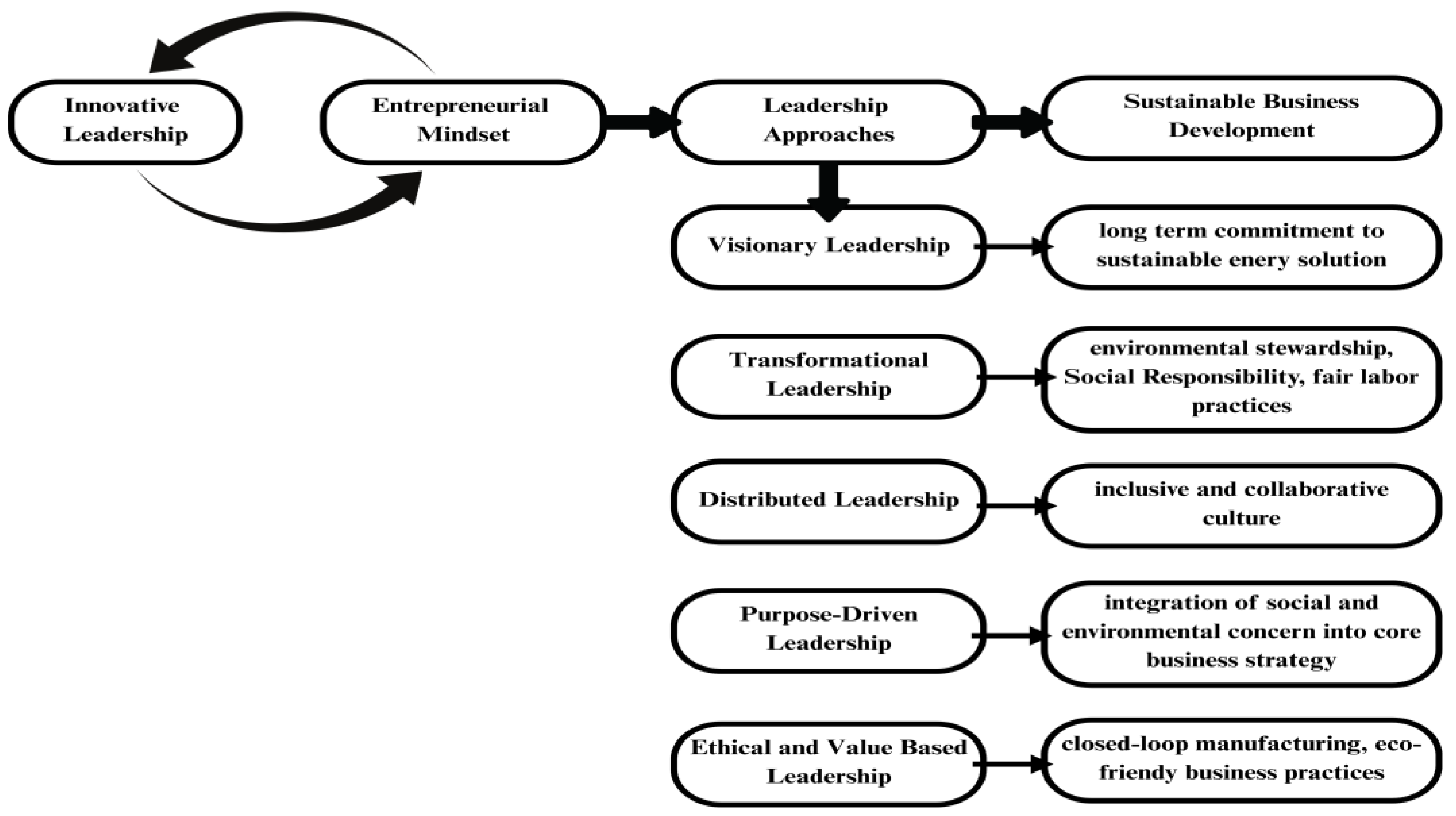
Figure 2.
Cases under Study.
Disclaimer/Publisher’s Note: The statements, opinions and data contained in all publications are solely those of the individual author(s) and contributor(s) and not of MDPI and/or the editor(s). MDPI and/or the editor(s) disclaim responsibility for any injury to people or property resulting from any ideas, methods, instructions or products referred to in the content. |
© 2025 by the authors. Licensee MDPI, Basel, Switzerland. This article is an open access article distributed under the terms and conditions of the Creative Commons Attribution (CC BY) license (http://creativecommons.org/licenses/by/4.0/).
Copyright: This open access article is published under a Creative Commons CC BY 4.0 license, which permit the free download, distribution, and reuse, provided that the author and preprint are cited in any reuse.


