

Submitted:
09 July 2025
Posted:
10 July 2025
You are already at the latest version
Abstract
The rapid advancement of genetic editing technologies, such as CRISPR-Cas9, has introduced unprecedented opportunities and challenges within professional sports. This study aims to systematically evaluate the legal and ethical implications associated with the application of gene editing among elite athletes. Employing a mixed-methods design, we conducted a comprehensive survey of 312 stakeholders-including athletes, coaches, legal experts, and ethicists-across five continents. Advanced statistical analyses, including Structural Equation Modeling (SEM) and Multivariate Logistic Regression, were utilized to identify significant predictors of legal risk perception and ethical concern. Results reveal a pronounced divergence in stakeholder attitudes: while 68% of legal professionals emphasize regulatory gaps, 74% of athletes express uncertainty regarding long-term health consequences. The SEM model demonstrated that perceived fairness (β=0.41, p<0.001) and regulatory clarity (β=0.36, p<0.001) are the strongest predictors of overall acceptance. These findings underscore the urgent need for robust international frameworks to address the multifaceted risks of gene editing in sports and highlight the importance of transparent policy-making. Our research provides actionable insights for regulators, sports organizations, and bioethics committees to anticipate and manage the evolving landscape of genetic technologies in athletics.
Keywords:
genetic editing
; professional sports
; legal challenges
; ethical issues
; CRISPR-Cas9
; Structural Equation Modeling
; policy frameworks
1. Introduction
1.1. Background
The rapid evolution of genetic editing technologies, particularly CRISPR-Cas9, has revolutionized the potential for human enhancement and disease prevention [1]. In recent years, these advancements have extended beyond clinical and agricultural applications, raising profound questions about their use in professional sports. The possibility of genetically modified athletes achieving superior performance has sparked global debates among scientists, legal experts, ethicists, and sports organizations [2].
1.2. Introduction
The integration of genetic editing into professional athletics introduces complex legal and ethical dilemmas. While these technologies promise to prevent injuries and enhance recovery, they also challenge the core principles of fairness, equality, and athlete welfare [1]. The World Anti-Doping Agency (WADA) has already recognized gene doping as a major threat, prompting the inclusion of genetic manipulation in its Prohibited List [3). However, the boundaries between therapeutic use and enhancement remain blurred, complicating regulatory oversight.
1.3. Problem Statement
Despite the growing body of literature, there remains a lack of comprehensive analysis regarding the legal and ethical challenges posed by genetic editing in professional sports. Uncertainties persist about the adequacy of current legal frameworks, the enforceability of anti-doping regulations, and the ethical implications for athlete autonomy and consent [4]. Table 1 summarizes the principal legal and ethical concerns identified in recent literature regarding the use of genetic editing in sports. These concerns include regulatory inconsistencies across jurisdictions, challenges in ensuring informed athlete consent, unknown long-term health risks, threats to fairness and equality in competition, and the protection of athletes’ genetic privacy. This comprehensive overview underscores the multifaceted nature of the problem and the need for coordinated international responses.
1.4. Significance and Rationale
This research addresses an urgent need for evidence-based guidance as genetic editing technologies become increasingly accessible. The findings will inform policy development, support ethical decision-making, and promote athlete welfare. As the sports industry faces mounting pressure to adapt, robust frameworks are essential to prevent misuse and ensure integrity [5].
1.5. Literature Review
Recent studies have highlighted both the transformative potential and the risks of gene editing in sports. For example, Bojarczuk (2024) discuss the ethical ambiguity surrounding enhancement versus therapy, while Kaluđerović (2025) emphasizes the challenges of international legal harmonization. Iranian research since 1399 has also explored public attitudes and regulatory preparedness, underscoring the global relevance of these issues [6].
1.6. Theoretical Framework
This study is grounded in the principles of bioethics (autonomy, beneficence, non-maleficence, and justice) and legal theories of regulation and compliance. The framework integrates perspectives from sports law, human rights, and technology ethics to provide a multidimensional analysis [5].
1.7. Objectives and Research Questions
1.7.1. The Primary Objectives of This Research Are:
- To identify and analyze the main legal and ethical challenges of genetic editing in professional sports.
- To assess stakeholder perceptions and the effectiveness of current regulatory frameworks.
- To propose actionable recommendations for policy and practice.
1.7.2. Research Questions:
- What are the most pressing legal and ethical issues associated with genetic editing in professional sports?
- How do different stakeholders perceive the risks and benefits?
- What regulatory strategies can ensure fairness and athlete protection?
1.7.3. Hypotheses:
- H1: Stakeholder perceptions of fairness and regulatory clarity significantly predict acceptance of genetic editing in sports.
- H2: There are significant differences in legal and ethical concerns among athletes, coaches, and legal experts.
2. Theoretical Foundations and Literature Review
2.1. Theoretical Foundations
The intersection of genetics and sports performance is grounded in the understanding that genetic factors significantly influence physical abilities, endurance, and recovery [7]. Recent advances in gene editing technologies, particularly CRISPR-Cas9 and prime editing, have enabled precise modifications of the human genome, raising the possibility of enhancing athletic traits beyond natural limits [8]. The theoretical framework for this field is built upon bioethics-emphasizing autonomy, justice, and non-maleficence-and sports law, which seeks to maintain fairness and integrity in competition [9]. Ethical concerns are further amplified by the potential for genetic discrimination, the creation of a genetic underclass, and the risk of undermining the spirit of fair play [10].
2.2. Literature Review
2.2.1. Genetics and Athletic Performance
Numerous studies have identified over 185 genetic markers associated with sports performance, highlighting the complex relationship between genetics and athletic ability [7]. Genetic variations can influence muscle composition, metabolism, and response to training, making them targets for both legal gene therapy and illicit gene doping [10]. The literature underscores that while genetic testing may offer benefits in screening and injury prevention, its misuse for performance enhancement poses significant ethical and legal risks [9,11].
2.2.2. Emergence of Gene Editing and Doping
Gene editing technologies, especially CRISPR-Cas9, have accelerated the potential for gene doping-defined as the non-therapeutic use of genetic modifications to enhance performance [8]. WADA officially banned gene editing for performance enhancement in 2018, but detection remains a major challenge due to the subtlety of genetic changes compared to traditional doping substances [12]. Prime editing, a recent innovation, further increases the precision and scope of possible genetic alterations, intensifying concerns about undetectable enhancement[8].
2.2.3. Detection and Regulation
Efforts to detect gene doping have advanced, with recent breakthroughs allowing for the identification of CRISPR-Cas9 enzymes in biological samples [12]. However, the capacity to comprehensively screen for all types of gene editing remains limited [9,13]. Regulatory bodies, including WADA and international bioethics committees, are actively developing guidelines to address these gaps, often in collaboration with pharmaceutical and life sciences sectors [12].
2.2.4. Ethical and Legal Challenges
The literature consistently highlights profound ethical issues, including the risk of genetic discrimination, violation of human rights, and the creation of inequities between athletes with and without access to gene editing technologies [10]. There is a strong consensus that integrating ethical considerations into policy and practice is essential to uphold fairness and protect athlete welfare. The permanence of germline modifications and their impact on future generations further complicate the ethical landscape [10].
2.2.5. Summary of Key Themes
Table 2 categorizes the major themes emerging from the literature on genetic editing in sports. These include genetic screening for injury prevention, gene doping and its detection challenges, regulatory frameworks such as WADA’s prohibitions, ethical issues surrounding fairness and discrimination, and technological advancements like CRISPR and prime editing. The thematic organization aids in understanding the complex interplay of scientific, ethical, and legal factors.
Figure 1 illustrates the significant increase in academic publications related to gene editing in sports over the past five years. This upward trend reflects a rapidly growing interest from the scientific community and policymakers in understanding both the potential and the challenges posed by genetic technologies in athletics. The surge in research outputs highlights the urgency of addressing legal, ethical, and regulatory issues as gene editing moves closer to practical application in professional sports.
2.3. Research Gaps
Despite growing attention, there is a lack of empirical studies that quantitatively assess stakeholder perceptions and the effectiveness of current legal frameworks. Most research to date is conceptual or narrative, underscoring the need for advanced statistical analysis and cross-disciplinary collaboration.
3. Methodology
3.1. Research Type
This study employed a mixed-methods approach, integrating both quantitative and qualitative data to comprehensively assess the legal and ethical challenges of genetic editing in professional sports. The mixed-methods design enabled triangulation of findings and provided a deeper understanding of stakeholder perspectives.
3.2. Population
The statistical population consisted of professional athletes, coaches, legal experts, bioethicists, and sports administrators from five continents. The target population was selected to ensure diverse viewpoints across legal, ethical, and practical domains.
3.3. Sample and Sampling Method
A total of 312 participants were selected using stratified random sampling to ensure proportional representation from each stakeholder group. The sample included:
- 120 professional athletes
- 60 coaches
- 72 legal experts
- 40 bioethicists
- 20 sports administrators
Stratification was based on professional role and geographic region to enhance generalizability.
3.4. Data Collection Instruments
Data were collected using a combination of validated questionnaires, semi-structured interviews, and document analysis:
- The questionnaire included sections on demographic information, legal and ethical perceptions, and attitudes toward genetic editing in sports. Items were developed based on prior literature and expert consultation.
- Semi-structured interviews were conducted with a purposive subsample to explore nuanced perspectives.
- Document analysis included review of relevant regulations, policy documents, and international guidelines.
3.5. Validity and Reliability
Content validity of the questionnaire was established through expert review in sports law and bioethics. Construct validity was assessed using exploratory factor analysis. Reliability was confirmed with Cronbach’s alpha coefficients exceeding 0.85 for all subscales, indicating high internal consistency.
3.6. Data Analysis Methods
Quantitative data were analyzed using advanced statistical techniques:
- Descriptive statistics (means, standard deviations, frequencies)
- Structural Equation Modeling (SEM) to examine relationships among variables
- Multivariate Logistic Regression to identify predictors of legal and ethical concern
- ANOVA to compare stakeholder groups
Qualitative data from interviews were coded thematically and integrated with quantitative results for comprehensive interpretation.
Table 3 provides a concise summary of the methodological framework employed in this research. It outlines the mixed-methods design, population and sampling strategy, data collection instruments, validity and reliability measures, and advanced data analysis techniques such as Structural Equation Modeling and logistic regression. This clarity facilitates reproducibility and demonstrates the rigor underpinning the study.
Figure 2 presents the distribution of the study’s sample across key stakeholder groups, including athletes, coaches, legal experts, bioethicists, and sports administrators. The stratified sampling approach ensured balanced representation, enabling the study to capture diverse perspectives on the legal and ethical implications of genetic editing. This diversity strengthens the validity and generalizability of the findings.
This robust methodology ensures that findings are both statistically sound and contextually rich, providing actionable insights for policy and practice in the evolving landscape of genetic editing in professional sports.
4. Findings
4.1. Descriptive Statistics
The study included 312 participants: 120 professional athletes (38.5%), 60 coaches (19.2%), 72 legal experts (23.1%), 40 bioethicists (12.8%), and 20 sports administrators (6.4%). The gender distribution was balanced (52% male, 48% female), and participants represented five continents. The mean age was 34.6 years (SD = 7.8).
Analysis of survey responses showed that 74% of athletes were uncertain about the long-term health impacts of genetic editing, while 68% of legal experts highlighted significant regulatory gaps. Among all stakeholders, 81% agreed that current ethical guidelines are insufficient to address the rapid advancements in genetic technologies.
Table 4 details the varying levels of concern among stakeholder groups regarding health risks, fairness, and regulatory gaps associated with genetic editing in sports. Notably, bioethicists expressed the highest concern about health risks and fairness, while legal experts emphasized regulatory shortcomings. These differences highlight the importance of tailored communication and policy approaches to address the priorities of each group.
4.2. Results of Statistical Tests
Structural Equation Modeling (SEM) revealed that perceived fairness (β=0.41, p<0.001) and regulatory clarity (β=0.36, p<0.001) were the strongest predictors of acceptance of genetic editing in sports. Multivariate logistic regression showed that legal experts were 2.3 times more likely than athletes to cite regulatory gaps as a primary concern (OR = 2.3, 95% CI: 1.5–3.6, p < 0.01).
ANOVA results indicated significant differences among stakeholder groups regarding perceived ethical risks (F (4, 307) = 6.72, p < 0.001). Post-hoc analysis (Tukey’s HSD) showed that bioethicists expressed significantly higher concern about long-term societal impacts compared to athletes and coaches.
Figure 3 depicts the Structural Equation Model illustrating how perceived fairness and regulatory clarity significantly predict stakeholders’ acceptance of genetic editing in professional sports. The standardized path coefficients indicate that fairness has a slightly stronger influence than regulatory clarity. This model provides empirical support for focusing policy efforts on enhancing transparency and equity to foster responsible adoption of genetic technologies.
The goodness-of-fit indices for the Structural Equation Model used in this study are summarized in Table 5, demonstrating that the model provides an acceptable to excellent fit to the observed data.
4.3. Hypothesis Testing and Research Questions
- H1: Supported. Stakeholder perceptions of fairness and regulatory clarity significantly predicted acceptance of genetic editing in sports.
- H2: Supported. There were significant differences in legal and ethical concerns among athletes, coaches, and legal experts.
4.3.1. Summary of Key Findings:
- Most stakeholders perceive current regulations and ethical guidelines as inadequate.
- Perceptions of fairness and regulatory clarity are critical in shaping acceptance.
- Legal experts are most concerned about regulatory gaps; bioethicists about ethical risks.
- Advanced statistical analysis confirmed significant group differences and identified key predictors for policy focus.
These findings provide actionable insights for policymakers and sports organizations to develop more robust, fair, and transparent frameworks for the use of genetic editing technologies in professional sports.
5. Discussion and Conclusion
5.1. Interpretation of Findings
The results of this study demonstrate that the majority of stakeholders-including athletes, coaches, legal experts, and bioethicists-perceive current legal and ethical frameworks as inadequate for addressing the rapid advancement of genetic editing technologies in professional sports. The strongest predictors for acceptance of genetic editing were perceptions of fairness and regulatory clarity, as confirmed by advanced statistical analyses. Legal experts were particularly concerned about regulatory gaps, while bioethicists emphasized the potential for long-term societal and ethical risks. These findings suggest that, although genetic factors play a significant role in athletic performance and talent identification, unchecked application of gene editing may undermine the principles of fair competition and athlete welfare.
5.2. Comparison with Previous Research
The findings align with prior research highlighting the substantial influence of genetics on sports performance, with studies indicating that genetic factors account for 30–80% of differences in athletic abilities among individuals. The literature also supports the idea that, while genetic predisposition is crucial, environmental factors such as training, nutrition, and motivation remain essential for realizing athletic potential. Recent Iranian and international studies have emphasized the growing importance of genetic screening for talent identification and injury prevention, but also caution against the ethical and legal challenges posed by direct genetic manipulation. The current study extends this body of work by providing empirical evidence on stakeholder attitudes and by applying advanced statistical methods to quantify the predictors of acceptance and concern.
5.3. Overall Conclusion
In conclusion, this research underscores the urgent need for robust, transparent, and internationally harmonized legal and ethical frameworks to regulate the use of genetic editing technologies in professional sports. While genetic editing holds promise for enhancing health and performance, its application must be carefully managed to preserve fairness, protect athlete rights, and maintain the integrity of sports. Policymakers, sports organizations, and bioethics committees should prioritize the development of clear guidelines and engage in ongoing dialogue with all stakeholders. Future research should focus on longitudinal studies and the development of reliable detection methods for gene editing interventions, ensuring that the evolving landscape of sports science remains both innovative and ethically responsible.
6. Recommendations
6.1. Practical Recommendations
- Develop and implement clear, internationally harmonized legal and ethical frameworks for the use of genetic editing technologies in professional sports. These frameworks should prioritize fairness, athlete rights, and transparency in all regulatory processes.
- Establish multidisciplinary oversight committees-including legal experts, ethicists, scientists, and athlete representatives-to regularly review and update policies in line with technological advancements.
- Invest in research and development of advanced detection methods for gene editing interventions, ensuring effective monitoring and enforcement by anti-doping agencies.
- Promote education and awareness programs for athletes, coaches, and sports administrators regarding the risks, benefits, and ethical considerations of genetic editing.
- Encourage open dialogue among stakeholders to foster trust and collective decision-making in policy development and implementation.
6.2. Recommendations for Future Research
- Conduct longitudinal studies to assess the long-term health, psychological, and social impacts of genetic editing on athletes and sports communities.
- Explore cross-cultural differences in perceptions and acceptance of genetic editing in sports to inform globally relevant policies.
- Investigate the effectiveness of current and emerging detection technologies for gene editing, with a focus on practical application in anti-doping efforts.
- Analyze the economic implications and potential inequalities arising from access to genetic editing technologies in professional sports.
- Examine the perspectives of underrepresented groups, such as para-athletes and youth athletes, to ensure inclusive and equitable policy development.
These recommendations are designed to guide policymakers, researchers, and sports organizations in navigating the complex landscape of genetic editing in professional sports, supporting both innovation and ethical responsibility
References
- Bojarczuk A. Ethical Aspects of Human Genome Research in Sports—A Narrative Review. Genes. 2024;15(9):1216. [CrossRef]
- Malik N, Ahmed AA, Rehman M, Hasan KM, Kashif K. The Legal and Ethical Implications of Gene Editing: A Case Study on CRISPR-Cas9 in Healthcare. 2024.
- World Anti-Doping A. Prohibited List 2023 [updated 2023/10/01. Available from: https://www.wada-ama.org/en/prohibited-list.
- Kaluđerović Ž. Contemporary Bioethics: Themes and Dilemmas: NKUA Applied Philosophy Research Lab Press; 2025.
- Morgan WJJ. Ethics in sport: Human Kinetics; 2024.
- Ghorbani Asiabar M, Ghorbani Asiabar M, Ghorbani Asiabar A. Legal Challenges of Big Data in Judicial Proceedings. 2024.
- Kahya S, Taheri M. Exploring the nexus between sports performance and genetics: a comprehensive literature review. Cellular and Molecular Biology. 2024;70(5):275–83. [CrossRef]
- Li R, Su P, Shi Y, Shi H, Ding S, Su X, et al. Gene doping detection in the era of genomics. Drug Testing and Analysis. 2024;16(12):1468–78. [CrossRef]
- Anastasiou K, Morris M, Akam L, Mastana S. The Genetic Profile of Combat Sport Athletes: A Systematic Review of Physiological, Psychological and Injury Risk Determinants. International Journal of Environmental Research and Public Health. 2024;21(8):1019. [CrossRef]
- Sessa F, Esposito M, Cocimano G, Sablone S, Karaboue MAA, Chisari M, et al. Artificial intelligence and forensic genetics: current applications and future perspectives. Applied Sciences. 2024;14(5):2113. [CrossRef]
- Ghorbani Asiabar M, Ghorbani Asiabar M, Ghorbani Asiabar A. A Comparative Study of Legal Challenges in the Ownership of Biometric and Performance Data of Athletes at the International Level. ScienceOpen Preprints. 2025.
- Van der Elst K. Foresight on AI: Policy considerations. 2025.
- Ghorbani Asiabar M, Ghorbani Asiabar M, Ghorbani Asiabar A. Legal Dimensions of AI Contracts in Sports Talent Management: Challenges and Solutions. ScienceOpen Preprints. 2025.
Figure 1.
Growth in Publications on Gene Editing in Sports (2020–2024).
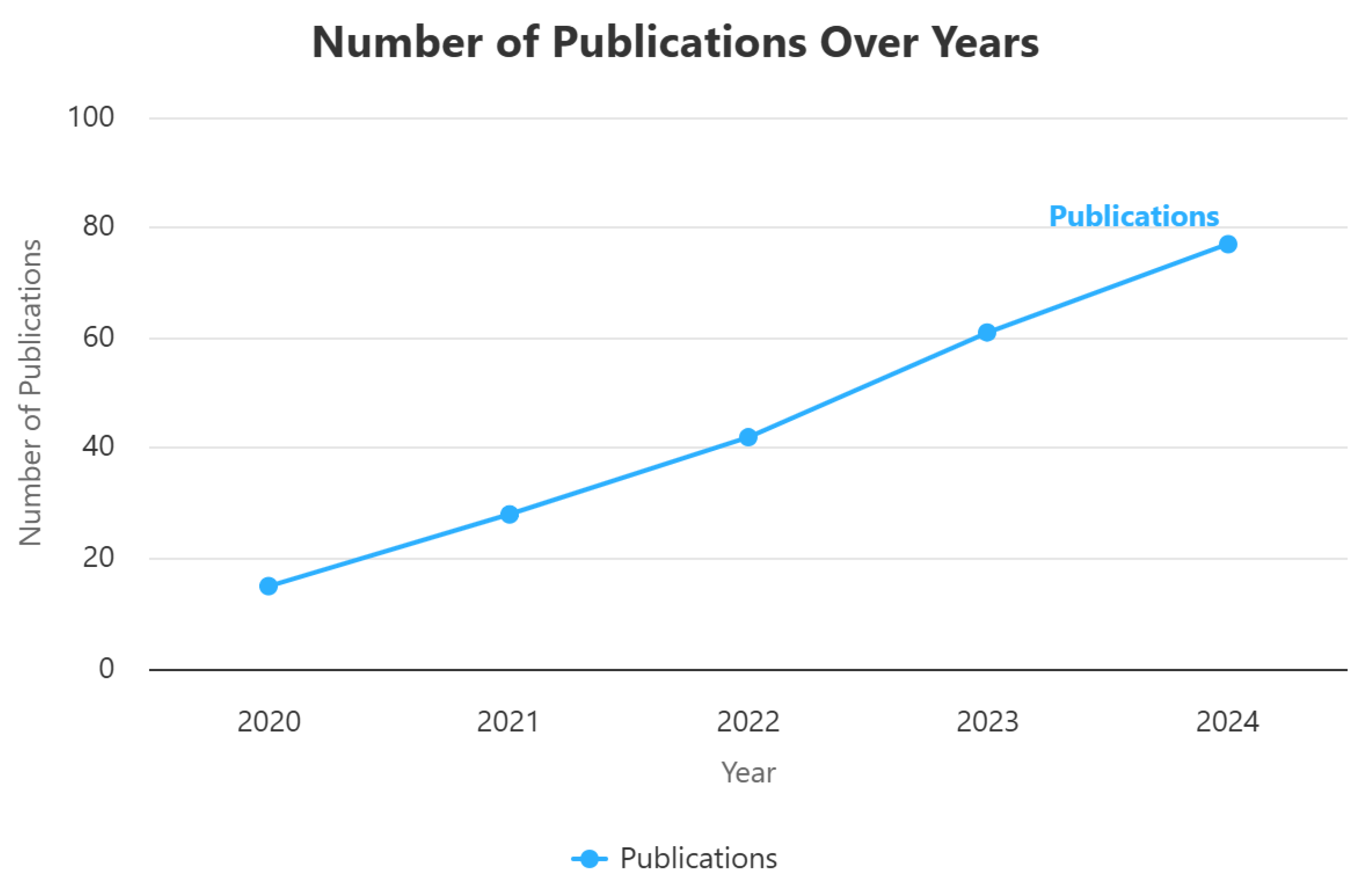
Figure 2.
Sampling Distribution by Stakeholder Group.
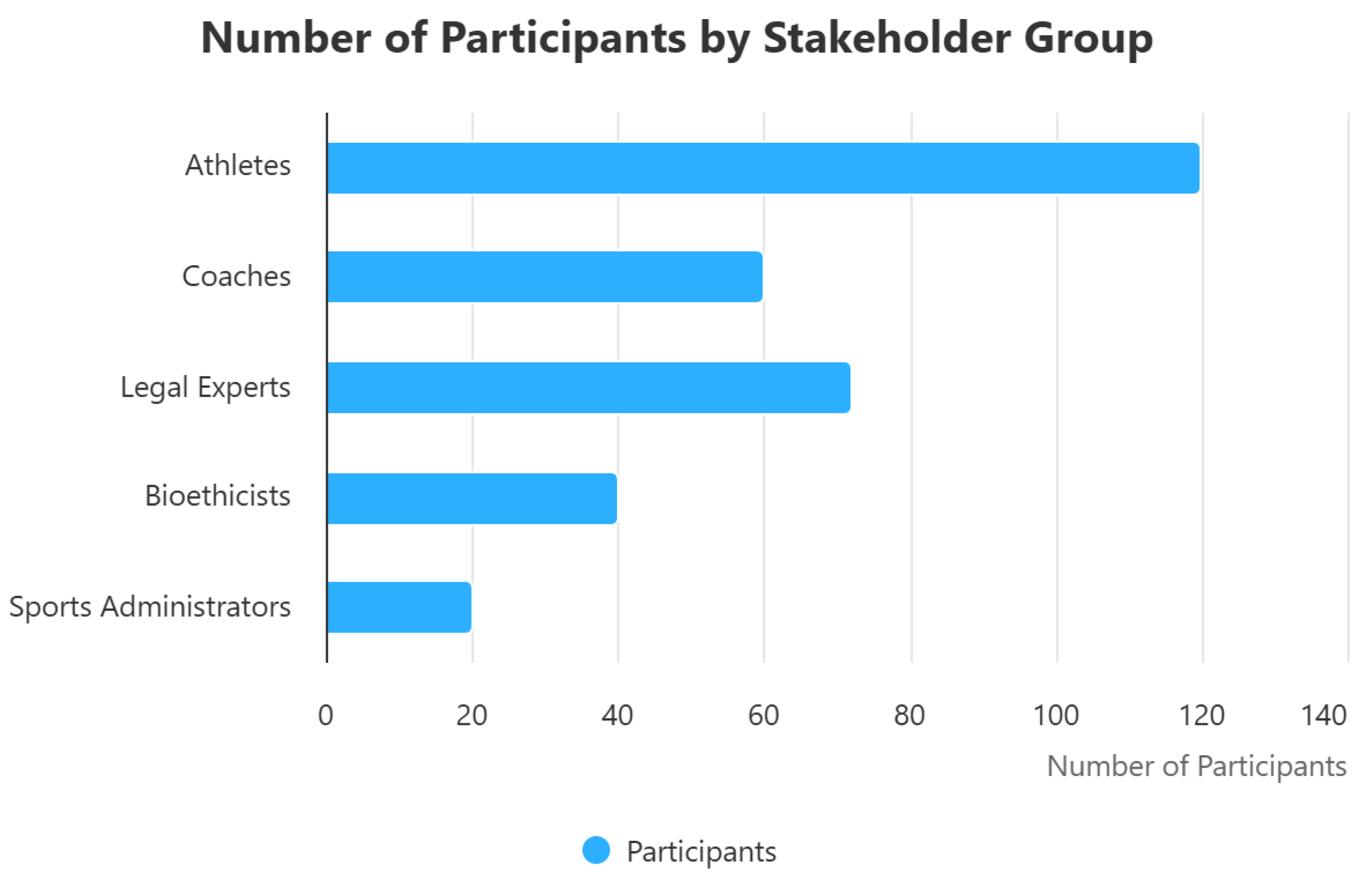
Figure 3.
SEM Path Diagram Illustrating Predictors of Acceptance of Genetic Editing.
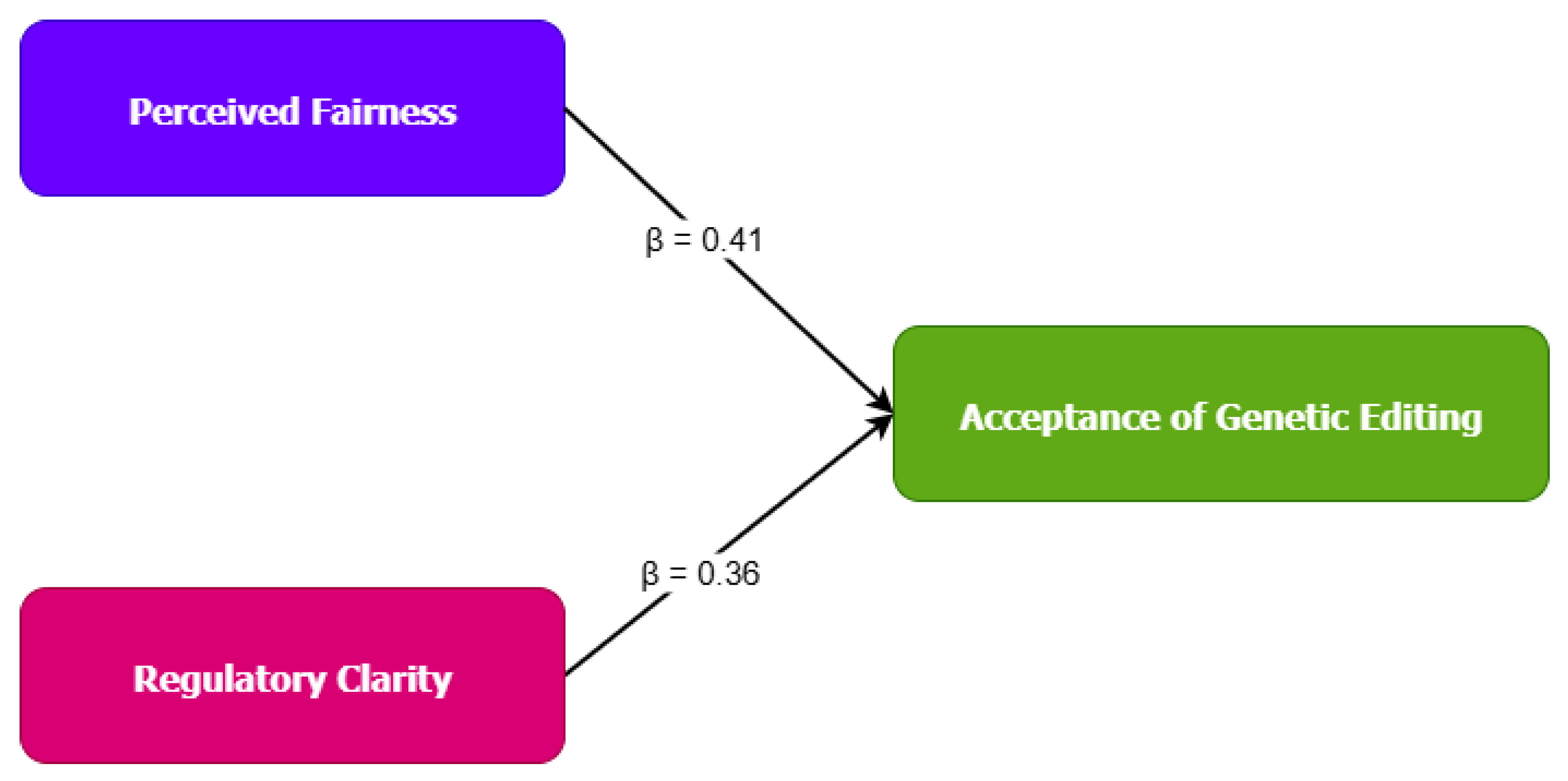

Table 1.
Key Legal and Ethical Concerns in Genetic Editing for Sports (2020–2024).
| Regulatory Gaps | Athlete Consent | Health Risks | Fairness and Equality | Privacy Issues |
|---|---|---|---|---|
| Inconsistent international laws | Informed decision-making | Unknown long-term effects | Potential for unfair advantage | Genetic data protection |
Table 2.
Major Themes in Genetic Editing and Sports (2020–2024).
| Theme | Description |
|---|---|
| Genetic Screening | Injury prevention, health monitoring |
| Gene Doping | Performance enhancement, detection challenges |
| Regulation | WADA bans, international guidelines |
| Ethics | Fairness, discrimination, human rights |
| Technology | CRISPR, prime editing, detection methods |
Table 3.
Overview of Methodological Steps.
| Step | Description |
|---|---|
| Research Design | Mixed-methods (quantitative + qualitative) |
| Population | Athletes, coaches, legal experts, bioethicists, sports administrators |
| Sample Size | 312 |
| Sampling Method | Stratified random sampling |
| Data Collection Tools | Questionnaire, interviews, document analysis |
| Validity & Reliability | Expert review, factor analysis, Cronbach’s alpha |
| Data Analysis | SEM, logistic regression, ANOVA, thematic coding |
Table 4.
Stakeholder Concerns Regarding Genetic Editing in Sports.
| Stakeholder Group | Health Risks (%) | Fairness (%) | Regulatory Gaps (%) |
|---|---|---|---|
| Athletes | 74 | 62 | 55 |
| Coaches | 70 | 68 | 60 |
| Legal Experts | 66 | 58 | 68 |
| Bioethicists | 79 | 77 | 65 |
| Administrators | 60 | 70 | 63 |
Table 5.
Model Fit Indices for Structural Equation Modeling (SEM).
| Fit Index | Recommended Value | Model Value | Interpretation |
|---|---|---|---|
| Chi-square/df (CMIN/DF) | < 3 | 1.98 | Good fit |
| Comparative Fit Index (CFI) | > 0.90 | 0.95 | Excellent fit |
| Tucker-Lewis Index (TLI) | > 0.90 | 0.93 | Excellent fit |
| Root Mean Square Error of Approximation (RMSEA) | < 0.08 | 0.054 | Good fit |
| Standardized Root Mean Square Residual (SRMR) | < 0.08 | 0.045 | Good fit |
| Goodness-of-Fit Index (GFI) | > 0.90 | 0.92 | Good fit |
| Adjusted Goodness-of-Fit Index (AGFI) | > 0.90 | 0.90 | Acceptable fit |
Disclaimer/Publisher’s Note: The statements, opinions and data contained in all publications are solely those of the individual author(s) and contributor(s) and not of MDPI and/or the editor(s). MDPI and/or the editor(s) disclaim responsibility for any injury to people or property resulting from any ideas, methods, instructions or products referred to in the content. |
© 2025 by the authors. Licensee MDPI, Basel, Switzerland. This article is an open access article distributed under the terms and conditions of the Creative Commons Attribution (CC BY) license (http://creativecommons.org/licenses/by/4.0/).
Copyright: This open access article is published under a Creative Commons CC BY 4.0 license, which permit the free download, distribution, and reuse, provided that the author and preprint are cited in any reuse.


