

Submitted:
30 June 2025
Posted:
09 July 2025
You are already at the latest version
Abstract
This single case study examines the implementation of a co-designed fifth-grade science unit enhanced by using Virtual Reality (VR) and integrating translingual and transmodal scaffolding strategies to support students’ participation and quality of talk during scientific sensemaking. The co-designed science unit covers physical and chemical changes as part of the fifth-grade science curriculum. The research involves a fifth-grade science teacher and her class of 22 students comprised of multilingual learners (ML) and English monolingual learners (EML). This study examines the learning experience of 3 student pairs grouped as ML-ML, EML-ML, and EML-EML. Using content analysis, we analyzed 911 minutes of video data on the six students’ learning in this unit. The results indicate that when the teacher used translingual and transmodal scaffolding strategies introduced during the co-design process, equal participation across MLs and EMLs was observed. The VR pair programming worked well for student pairs in increasing active participation regardless of the pairing, although active participation did not necessarily lead to high quality science talk. Findings of this study provide implications and recommenda-tions for leveraging the scaffolding from teachers, materials, and VR pair programing activity to support the equal participation and quality of talk among all learners during scientific sense-making.
Keywords:
translanguaging
; transmodaling
; scaffolding
; virtual reality
; scientific sensemaking
; collaborative learning
; multilingual learners
1. Introduction
Scientific sensemaking, with its increasing attention in science education (NSTA, 2025), is a collaborative and dialogic activity where individuals work together to understand scientific phenomena and solve problems (Miller & Reigh, 2020). Scholars have pinpointed the importance of engaging students in collaboratively making sense of scientific phenomena through essential science and engineering practices such as creating and using models to explain how and why climate change is occurring (Zangori et al., 2017). The sensemaking supports learners in pooling their knowledge and skills to tackle complex scientific concepts or tasks than they could individually.
However, studies have shown that multilingual learners (MLs) tend to be the marginalized participants in group work and gain little from the collaborative process if their participation is not carefully supported (Cohen & Lotan, 2014; Turner et al., 2013). This is partially due to the inequitable power dynamics caused by the narrowly defined means of communication: English-medium verbal-focused communication. English is typically the only language used in the US science classrooms. And although visuals and models are essential elements in scientific communications (Jewitt et al., 2001; Tardy, 2004), the English-medium verbal-focused language output is still the main channel to assess learners’ science learning outcomes (Author, 2024; Jiang et al., 2024). Without the opportunities to use the multilingual and non-verbal linguistic resources as ways to engage in group work, MLs with limited English language proficiency would therefore feel less confident in participating in the sensemaking process (Pérez Fernández, 2024).
To that end, this study orients to the translanguaging and transmodaling perspectives (García, 2017a; Newfield, 2017) to co-design sensemaking activities with elementary science teachers in the hope of fostering a more equitable group participation and science talk among MLs and their English monolingual learner (EML) peers. Collaborating with two elementary science teachers, we re-designed a “physical and chemical change” unit based off their materials. The re-designed unit engages students in creating multimodal representations (Prain & Tytler, 2022; Tang et al., 2014) of physical and chemical reactions. We also intentionally incorporated various translanguaging and transmodaling scaffolding strategies into the unit and integrated a virtual reality science game to engage students in making meanings through visual-focused and gestural-focused meaning-making (Author, 2023). And in considering the potential marginalization of MLs in group work when role assignment is used, the researchers also utilized pair programming strategy (Wei et al., 2021; Williams et al., 2002) where one student serves as driver and another serves as navigator to collaboratively complete the VR learning task. With our intentional translingual and transmodal scaffolding design, we ask two research questions:
- Q1: How did the teacher use translingual and transmodal scaffolding to support ML students’ participation and talk?
- Q2: How did MLs and EMLs participate in scientific sensemaking through the intentional translingual and transmodal scaffolding design of the unit, including the VR pair programming activity and teacher scaffolding?
2. Literature Review
2.1. Translingual and Transmodal Scaffolding
Translanguaging and transmodaling encourage students to use various languages and presentation modes to make sense of the learning contents. Translanguaging honors the diversity of language uses, encouraging the moves between named languages (García, 2017), formal academic language and informal everyday speech (Jensen & Thompson, 2019), and different forms of expression such as visual, auditory, gestural modes, or spoken and written language (Canagarajah, 2018; Kress, 2009). Transmodaling emphasizes transmodal moments, which are instances when students intentionally transduce and transform meanings across different modes of communication (e.g., sound, static and moving images, movement, and language) and even different scientific models (e.g., a drawing model and a math equation). This purposeful shift of meaning between communicative modes and models is deemed as crucial and productive to students’ science learning (Author, 2024, p. 77). Translanguaging and transmodaling both seek to expand the channels of meaning-making in classrooms, liberating learners from monolingual and monomodal standards. This approach aims to create a more equitable and dynamic learning experience for all students.
Translingual and transmodal scaffolding further refers to the scaffolding strategies that enable translanguaging and transmodaling practices in the classroom. Originating from sociocultural learning theories (Wood et al., 1976), scaffolding refers to the support structures that teachers provide to help learners bridge the gap between their current learners’ capacity and the desired academic performance. To enhance translanguaging pedagogies, especially in classrooms where only English is typically used, educators should provide support for translanguaging activities so students understand its advantages for their school-based learning (Daniel et al., 2019). For instance, Daniel et al. (2019) proposed that instructors can scaffold students’ translanguaging using macro-level planning (e.g., launching translanguaging through discussions) and micro-level planning (e.g., transliterating words, borrowing terms, using opposites, and identifying cognates). Similarly, transmodaling scaffolds create spaces for students to represent what they learn using modes beyond traditional verbal-focused means. For example, teachers can adopt the transmodal framework developed by Mina (2021) where they can implement scaffolding activities such as creating storyboarding and rhetorical choice memos.
The use of translanguaging and transmodaling scaffolding strategies generates multiple benefits in teaching and learning. It enhances bilingual learners’ comprehension and participation, particularly in whole-class discussions (Cenoz & Gorter, 2020). It also promotes a more equitable learning environment for multilingual learners (MLs) and provides substantial learning benefits for both MLs and English monolingual learners (EMLs) (Author, 2024). Furthermore, translanguaging validates students’ home and community languages as meaningful resources for learning, supporting identity affirmation, cognitive flexibility, and deeper engagement with academic content (García & Wei, 2014).
2.2. Affordances of Immersive Virtual Reality to Support Science Learning
Virtual Reality (VR) simulates physical environments by providing students with a sense of reality through vivid interactions by means of stereoscopic, high-resolution environments (Froehlich et al., 2024). This engages the learner through sensory, auditorial, and visual modes that correlate particularly well with transmodal instructional methods (Author, 2024; Mills et al., 2022). Through high-fidelity virtual scenarios, VR creates opportunities in science learning that can reduce and shift the cognitive load required of students. For instance, students can experience real environments that may not be easily accessible such as conducting experiments in a research science lab or traveling on the International Space Station (Adžgauskaité & Pesavento, 2020; Seedhouse, 2022). Students are also afforded the opportunity to experience scenarios that were impossible to explore. For example, students can learn about the components of a cell by removing and interacting with different parts of one in a virtual environment (Froehlich et al., 2024; Parong & Mayer, 2021).
VR also uniquely affords transmodal meaning-making opportunities. Author (2023, 2024) found that students engaged in visual- and gestural-based meaning-making during VR-based activity and that students heavily engaged in transforming visual or written representations into gestural movements or oral utterances. These transmodal meaning-making patterns are uniquely found during VR-based activities than other activities in the science learning unit. These transmodal meaning-making opportunities are considered particularly beneficial for supporting both EMLs and MLs’ participation and learning in the science classrooms as they use non-verbal modalities to communicate their understanding of relevant and specialized scientific concepts related to the unit phenomena that may have otherwise been inhibited through solely verbal modes of communication.
Despite the potential benefits of VR, integrating VR into K-12 education presents challenges for educators, primarily due to the cost of the devices and the complexity of managing and facilitating their use simultaneously. Consequently, VR individual play is not a viable or sustainable method for integration within K-12 settings. To leverage this emerging technology, collaborative learning should be considered to reduce the number of devices needed in classrooms while enhancing meaningful student interactions. However, the current study by Author A (under review) indicates that poorly designed VR group work can negatively impact MLs who only observe other students’ VR activities, resulting in their suboptimal performance. Author A suggests that this is due to the absence of role assignments during group tasks, which would encourage MLs to overcome language barriers and actively contribute to discussions. Consequently, structuring VR collaboration tasks is a critical pedagogical consideration to ensure equal participation from both MLs and EMLs.
2.3. Supporting Group Participation through the Pair Programming Strategy
Collaborative learning is rooted in social interdependency theory which states that the performance of individuals is affected by their own and that of others involved (Johnson & Johnson, 2009). The responsibility of being engaged in group roles gives place to a positive interdependence, presenting group work as a dynamic whole where members are made interdependent through common goals, and as members perceive mutual goals motivation to accomplish such emerges. Collaborative learning can be hard to achieve, and in group learning activities between MLs and EMLs, multilingual learners may fall into the marginalized group and have their ideas and contributions dismissed by their peers. It is crucial to effectively challenge and redefine status to foster an inclusive and equitable learning environment where all learners are perceived as valuable members of the learning community (Monteiro et al., 2024). Group roles can be effective in increasing student participation in heterogenous classrooms when used with other strategies to promote collaborative learning (Cohen & Lotan, 2014). Stoeckel (2024) presents group roles as a strategy to communicate with students that all learners can and should contribute to group work, enabling productive collaboration and engagement with one another.
In this study, we turn to pair programming as a strategy to assign roles to students in completing the VR activity. Pair programming is a collaboration strategy initially used in programming and computer science education (Wei et al., 2021). This strategy involves one student acting as the navigator who gives commands and one as the driver who executes the commands and rotates the roles during the collaboration process. In our case, we also have students paired up to complete the VR activity, one as navigator and one as driver. The navigator utilizes an iPad with a more objective point of view to guide the driver and provide directions, commands, and instructions to accomplish the goal; the driver uses the VR equipment (an immersive VR headset and two hand-held controllers) and follows the navigator’s commands to complete tasks. During the learning, students take turns to serve as navigators and drivers. Through presenting responsibility and accountability for the group work, the pair programming strategy potentially can offer equal-status participation among EMLs and MLs to complete group work and collectively achieve a mutual goal.
3. Materials and Methods
3.1. Research Design and Participants
This study is a single case study (Yin, 2003) occurred at the Kingsley Elementary School (pseudonym), a Title 1 school located in an exurban county in the southeastern United States. The unit of analysis of the case study is the translingual and transmodal VR-enhanced science unit the research co-designed with the participating teacher (see description below), noting how the participants interacted with each other and with the materials within this bounded system.
Participants are a 5th-grade science teacher, Elle (pseudonym), and her 22 students who consented to the study. The ratio of MLs to EMLs is 26.7% to 73.3% with the majority of MLs speaking Spanish as the home language. In Elle’s class, the research team worked with her to intentionally pair MLs and EMLs in pairs and in groups, and selected the group with even ML and EML distribution to closely observe throughout the unit. This leads to four groups and 10 pairs in Elle’s class. The pairs and the students’ pseudonyms were ML (Dominique) – ML (Alonso), ML (Marrisa) – EML (Morene), and EML (Nancy)-EML (James).
3.2. The Focal Science Unit
The focal unit covers the topic of physical and chemical change (NGSS Lead States, 2013), which is a part of the teacher’s typical science curriculum. We met with the two fifth-grade teachers at Kinsley from October 2024 to February 2025 to co-design and revise the unit to encourage more phenomenon-based and model-based learning activities (Achieve, 2017; Zangori & Forbes, 2016; Schwarz et al., 2017) and the integration of VR activity and the translingual and transmodal strategies.
The final unit is composed of eight 50-minute sessions. As shown in Table 1, the sequence began with video demonstrations of two familiar reactions (Mentos and Coke, and baking soda with vinegar), followed by students’ initial model construction based on their observations. Over the subsequent sessions, students were gradually supported through teacher-guided synthesis sessions, VR game simulation, lab investigative activities, and other structured learning activities. These activities purposefully scaffolded students to move from macro-level and observation-based model construction to molecule-level construction. By the end of the unit, students revised their models to include molecule representations with written explanations, demonstrating a deeper and more scientifically grounded understanding of the physical and chemical reactions.
3.3. The Translingual and Transmodal Scaffolds.
In the unit, we specifically developed or adopted hard and soft scaffolding (Saye & Brush, 2002) materials based on relevant science education and translingual and transmodal literature (e.g., Celic & Seltzer, 2013; He & Lin, 2022; MacDonald et al., 2014). Table 2 summarizes the scaffolding materials provided in this unit and provides examples of the instances where each scaffold was employed.
3.4. VR Pair Programming Activity
The VR game was developed through the first author’s previous projects. The game introduces students to making observations and inferences and simulate the Coke and Mentos experiment following the steps of scientific method (see Author, 2024 for more description of the game). In this iteration, students worked in pairs using the Meta Quest 2 equipment and iPads to cast and play the VR game based on the pair programing design (see Section 2.3).
During Session 3, students participated in a VR orientation and pair programming practice session lasting approximately 40 minutes. Members of the research team introduced students to the VR equipment allowing them to try on the VR headsets and practicing by using the equipment, giving commands and directions and acting out the movements of such commands. Students were then introduced to bilingual vocabulary using a word bank as part of a pair programming worksheet that listed commonly used commands in both English and Spanish (see Figure 1). The first and second authors explained pair programming and the roles of a navigator and a driver. Students performed hands-on practice tasks using the VR equipment and giving commands and directions to each simulating being in the virtual space and practicing pair programming (See Figure 2).
The VR pair programming activity took place during Session 4 and 5 during stations. One group completed the VR pair programming while the other group completed hands-on experiments led by Elle in the classroom. VR stations were drawn out in the hallway outside of the classroom, and the VR session was facilitated by members of the research team (See Figure 3). The following session, both groups alternated activities using a station rotation design where all students were able to participate in the VR session and the hands-on experiments stations once during the completion of the unit. Our focal group completed the VR activity during Session 4. During the VR session, each pair also used a data collection sheet designed by the research team to take notes of the scientific experiment performed in the VR space, and annotate any relevant observations and information related to the completed VR tasks.
3.5. Data Sources
The primary data sources of this study were the classroom recorded video observations accompanied by audio transcription files. The video data, recorded through three iPads, centered on the six students grouped into three pairs based on their learner characteristics (see Section 3.1). Each iPad is used to track one pair’s interactions and talk. Thus, one session would yield three angles of data to analyze. These six students were followed throughout the entire Physical and Chemical Change unit. The data documented followed the students’ interactions with their partners and their table group members. A total of 21 videos with a combined length of 911 minutes of video data were collected and saved in password-protected shared drive accessed by the research team.
The videos were later transcribed verbatim using a combination of artificially intelligent, software and professional transcription services. The research team then reviewed each transcript, correcting transcribed items and translated sections. The research team also added information on the non-verbal actions (e.g., turning and paying attention to Elle while she provided activity instruction) into the transcripts. The transcribed conversations and interactions were then separated into codeable segments that were analyzed based on a developed coding scheme that documented each student’s participation, the types of interactions, and types of conversation each student engaged in. Each segment was first identified based on the type of interaction taking place (e.g. teacher-whole class, pair or small groups, teacher-student) before identifying the participation, talk, scaffolding, translanguaging, transmodaling and in-vivo codes. The documents were uploaded to the qualitative research software, ATLAS.ti, for the collaborative coding.
3.6. Data Analysis
We answered our research questions by analyzing video data with content analysis (Vaismoradi et al., 2013). We organized and analyzed our data using ATLAS.ti Web. After the initial coder training, each team member coded 10% of the data (166 minutes) individually based on the initial coding scheme developed by the first author. After multiple rounds of coding, discussion, and recoding, a final coding scheme (see Table 3) was derived. We calculated the inter-coder reliability with Krippendorff’s c-Alpha and received high reliability for the final coding scheme (α=0.967). Research team members later used this final coding scheme to code the remaining data.
As shown by the coding scheme, we coded the interaction types (teacher-whole class, teacher-individual student or small group, student-student), the participation patterns (active, contributing, passive, non-participant), and the quality of the science talk (talk with specialized vocabulary or science concept, relevant-verbal, relevant-nonverbal, and irrelevant). We also coded the teachers’ translingual and transmodal practices done through carrying out the scaffolding. After coding was completed, coding frequencies and co-concurrence analyses were conducted in ATLAS.ti to identify patterns of ML and EML participation and talk along with their relationships with translingual and transmodal scaffolding strategies afforded through the design.
4. Results
4.1. Teachers’ Translingual and Transmodal Practices
We coded teachers’ translingual and transmodal practices during the science unit. A total of 53 observed instances where the teacher provided translingual and transmodal scaffolding or encouraged students to translanguaging/transmodaling were identified. The teacher’s scaffolding was particularly powerful for supporting Dominique, the ML with low English proficiency, for his active participation and quality of science talk. For instance, during one of the class sessions Elle asked the class for the Spanish translation of vocabulary words, and for the first time active participation was observed from Dominique during whole-class discussion. Elle asked: “How do you say observation in Spanish?” to which both Alonso and Dominique responded saying: “Observación (Observation).” Elle prompted the pair to write down their observations for both experiments saying: “So what are your observación? Observations on both experiments. Both MLs were noticed to be actively engaged in class participation during Elle’s instruction to say vocabulary words in Spanish and both students participated in class instruction of learning unit content vocabulary in both English and Spanish.
In another instance during a teacher-student interaction, Elle continued encouraging Dominique to use translanguaging, for instance Elle asked: “so, why did you put physical change”? To which Dominique responded: “because it can come back?” Elle reassured him saying: “You are right, it can be reversed. ¿Cómo se dice it can be reversed en español? (How do you say it can be reversed in Spanish?)” Dominique replied: “Puede ser reversivo” and Elle encouraged Dominique (ML) to use Spanish if preferred reminding him that it was acceptable for him to write in Spanish when completing his assignment saying: “Hey if you want to write it in Spanish, you can. If you can say more in Spanish, say it, put it in Spanish” to which Dominique nodded. During teacher questioning moments, it was observed that the use of translanguaging by the teacher during scaffolding instances MLs participation and engagement increased. The incorporation of translanguaging and transmodaling strategies from the teacher worked well in creating active teacher-student interactions and served the teacher well in promoting meaningful scientific sense-making moments in ML students.
4.2. Overall Participation and Quality of Talk
Our data show similar levels of participation among all six students, regardless of wether they are ML or EML (see Table 4). Levels of participation of student pairs also show to be very similar between each student in each pair, regardless of pairing. For instance in the, ML-ML pair, both students show active participation of 45.4% and 41.9%, the ML-EML pair presents active participation at 37.2% and 42.9% and the EML-EML pair shows active participation at 42.9% and 35.7% indicating active participation as the highest level recorded in all three pairs. The three pairs show similar levels of participation (active & contributing around 58-76%) indicating that all three groups were actively engaged or conrtibuting for the majority of the recorded interaction time.
In terms of the quality of talk observed in this unit, our analysis shows that, overall, the six students’relevant talk (including specialized, relevant-verbal, and relevant-nonverbal) ranging from 88.8% to 92.1%, indicating that each pair maintained relevant communication during the majority of the interaction time recorded (see Table 5). However, reagarding specialized talk, Pair 1 (ML-ML) shows levels of 25.8% and 8.9%. Pair 2 (ML-EML) specialized talk levels are closer together with 17.5% ML and 18.4% EML respectively, and the levels of specialized talk between students are very similar as well for pair 3 (EML-EML) showing levels of 31.4% and 28%. Overall, the use of verbal science talk (specialized & revelant) alongside relevant non-verbal present the highest levels for all six students with a combined percentage ranging from 88.8% and 92.1%. In contrast, irrelevant talk shows the lowest levels accross all three pairs ranging from 7.9% to 11.2%, indicating that each pair maintained relevant communication during the majority of the interaction time recorded.
4.3. Students’ Participation and Talk During Different Scaffolded Activities
While the overall participation and talk are similar among students, different scaffolded activities seem to yield different levels of participation and talk quality. We calculated the frequency of active participation on eight days of the unit to identify the two most active days and the two least active days for the students. Our analysis showed that the two most active days were the third and fourth sessions (n=97 and 129), both of which the students were using VR. The third class session included a 20-minute teacher-led review practice session and a 40-minute VR orientation and pair programming practice session led by two of the researchers. During the teacher-led review practice, Elle used the worksheet she made along with teacher questioning scaffolding to solidify students’ understanding of the differences between physical and chemical changes. Then, during the VR orientation and pair-programming practice, the first and second authors used a tutorial guide and a VR pair programming worksheet with bilingual vocabulary and a practice activity to teach students how to use the VR sets and engage in pair programming. Students engaged in hands-on practice and moved around during the pre-training. The first and second authors also employed several translingual and transmodal scaffoldings during the pre-training (e.g., teaching students how to give a command in both English and Spanish and connect the verbal command with bodily movements). During the fourth session, students played the VR game following the pair programming technique. The VR game and the pair programming technique seemed to successfully prompt all students to actively participate in the learning activity. During the fourth session, the research team also facilitated students’ VR play through translanguaging and teacher questioning scaffolding.
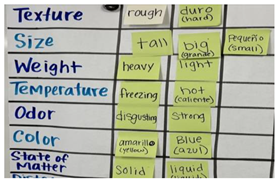
On the other hand, we observed the least active participation during the first and second sessions (n=13 and 41). During Session 1, Elle introduced the key vocabulary and concepts (such as physical change, chemical change) in both English and Spanish and elicited her Spanish-speaking students’ help. She also engaged students in building the multimodal vocabulary word wall together to prepare them for describing properties of changes (e.g., rough to describe texture). She also introduced the anchoring phenomenon through whole-class discussion and videos where she would constantly employ teacher questioning to check on students’ understanding. During Session 2, Elle prompted students to write down their initial observations and hypotheses on what would happen if putting Mentos into Coke or mixing baking soda and vinegar. Then, students are prompted to draw a model representing their hypotheses. Elle would encourage students to use the sentence stems and discourse moves for discussing and completing the tasks together, and modelled using those resources. During this session, Elle employed translingual scaffolding with ML students, too. Yet, during both sessions, the teacher is typically the one initiating an interaction to elicit student responses, especially during Session 1. Thus, while students might be contributing to the conversations, they had fewer opportunities to take the initiative and lead the conversations.
On the other hand, as we examined the frequency students engaged in high-quality science talk using specialized terms for making sense of science phenomena or practices, we noted a different pattern across the scaffolded activities. Our analysis revealed that students had the most specialized science talk during the fifth session (n=48) and had the second most specialized talk (n=35 for both sessions) during the fifth session. During session six, students were conducting the Coke and Mentos experiment, and baking soda and vinegar experiment, and collecting data on the weight of the substances, height of the geyser, and the temperature of the substances to determine whether the investigative activities are physical or chemical change. After the initial instruction from Elle, the six students carried out the experiments as a group while Elle circled around to check in and facilitate each group. The student-led hands-on experiments seemed to afford most opportunities for students to use the specialized terms.
For Session 1, although students were least active during the session, the session afforded a lot of opportunities for students to use specialized terms. Additionally, we also observed that during Session 1, all six students were using specialized terms to some degree (4~7 times), but during Session 6, the frequencies differed extremely, from Nancy (EML) contributing 19 times, to Dominique (ML with low English proficiency) contributing only 1 specialized talk. Mainly, despite the teachers’ efforts in modeling translingual discourses, we noticed that the EML students have never really used the bilingual discourse moves once. They continued to use English as the main communication channel with their peers. This was fine for Alonso and Marissa, who were MLs with higher English proficiency. They were still able to participate in pair or group work meaningfully, but for Dominique, his participation and quality of talk dropped significantly during the six-people group work where English is the only channel of communication. This is drastically different from other sessions where he engaged in pair work with Alonso and was able to converse in Spanish or other non-verbal actions.
Finally, although the two VR-related sessions (Session 3 and 4) afforded the most active participation for the six students, they were also the sessions with the least specialized talk (n=15 for both sessions). It would seem that although all six students were highly engaged during the VR sessions, they mainly used plain words or non-verbal actions to converse and complete the learning tasks together. There were few opportunities that prompted them to communicate specialized terms or concepts during the VR-related sessions.
5. Discussion and Conclusion
5.1. Translingual and Transmodal Scaffolding Supports Equal Participation
This study explores how an elementary teacher who collaborated with researchers to co-design a VR-enhanced science unit provided translingual and transmodal scaffolding to students and how MLs and EMLs participated in scientific sensemaking in this translingual and transmodal VR-enhanced unit.
Our findings showed that the translingual and transmodal scaffolding design supported MLs and EMLs’ equal participation in this unit. The six students we observed, regardless of their pairing, showed similar distribution of participation level during this unit and remained engaged for the majority of the instructional time, i.e., they remained at the active or contributing participation levels for most of the time. Two main factors seem to support the equal active participation of MLs and EMLs in this study. First, the teacher, Elle, adopted several translingual and transmodal scaffolding strategies introduced by the research team during co-design process, such as the bilingual vocabulary teaching, multimodal vocabulary wall, bilingual sentence stems, and the translanguaging discourse moves. Her translingual and transmodal scaffolding seemed to be particularly useful to support Dominique, the ML with limited English proficiency. We observed several interactions between Elle and Dominique where her encouragement of MLs to use their home language and her attempts to translanguaging enhanced Dominique’s participation in the whole-class discussions as well as during pair work. Her scaffolding played a critical role in supporting MLs to participate in discussions as much as their EML peers, giving them more confidence and agency to contribute to conversations as the “more knowledgeable other” (Abtahi et al., 2017). Although MLs with limited English proficiency tended to be less engaged in class discussions and group activities in English-medium classrooms (Safford et al., 2017), the translingual and transmodal scaffolding strategies provided by Elle significantly improved MLs’ participation, resulting in a more balanced level of participation among all students.
Second, our findings also revealed that both MLs and EMLs were noticeably more active during the VR pair programming activity than other activities. The frequency of active participation observed during the VR pair programing session (n=129) was markedly higher than the second most active session (n=97) and all the other sessions where the frequencies ranged between 13 and 95. We postulated that the disparity was due to the multimodal features of the VR and the pair programming design. Firstly, immersive VR uniquely provided transmodal meaning-making opportunities (Author, 2024), prompting students to actively interpret the multimodal input and convert the information into different communicative modes for interaction with partners or task execution. This feature intrinsically enhanced students’ active engagement. Secondly, the VR session deliberately incorporated the pair programming design where students were assigned roles and alternated between them. This intentional collaborative learning design appeared to be a fundamental aspect distinguishing the VR session from other sessions that also included hands-on pair or group work. In the author’s prior study where the pair programming strategy was not employed, it was observed that MLs were less engaged when watching others’ VR interactions and performed lower than their EML counterparts (Author, under review). Compared to the findings of the previous study, the participation levels revealed in this study are promising and suggest significant implications for implementing pair programming strategies in VR-based learning activities.
5.2. Active Participation Did Not Necessarily Lead to High Quality Science Talk
Although equal participation among MLs and EMLs was an exciting outcome, our findings also further cautioned and revealed the shortcomings of our current design with the findings on the quality of the student talk. We found that some of the most active sessions, especially the VR pair programming session, in fact had the lowest percentage of specialized science talk. On the other hand, some of the teacher-led sessions in fact afforded more equal contributions of specialized science talk among the six students. This reveals the importance roles of teachers’ direct instruction and guided practice. As elementary students are still developing and acquiring the disciplinary literacy practices (Moje, 2015), teachers’ modeling and scaffolding become extremely important to support learners’ adoption of the disciplinary discourse practices, including the use of specialized terms to explain and name a scientific concept or practice.
Additionally, our findings also showed that during the investigative lab activity where all six students worked as a group, the distribution of specialized science talk was highly unequal with one EML dominated and produced significantly higher instances of science talk and the one ML with limited English proficiency produced only one instance of specialized talk. We postulated that the limited use of specialized science talk by Dominique was due to the lack of translanguaging practice from the EML students and the lack of assigned roles during group work. Using only English creates an unbalanced power dynamic between EMLs and MLs with limited English skills, reducing their ability and confidence to contribute. Without assigned roles or tasks, MLs may be sidelined and gain little from group work.
5.3. Implications and Recommendations
This exploratory case study provides some important implications for designing science instruction and materials to support MLs. The unique context of this study also allows us to gain some initial insights on how translingual and transmodal scaffolding and the use of VR influence students’ participation in scientific sensemaking. Based on our findings, we provide several practical recommendations. First, providing professional development for teachers to enhance their translanguaging scaffolding strategies is essential to equipping them to facilitate bilingual and multimodal learning experiences for linguistically diverse students. Second, structured roles and responsibilities during group activities can ensure equitable participation and minimize power imbalances, encouraging meaningful contributions from all students. Third, expanding the design of VR pair programming to include opportunities for specialized science talk could involve integrating targeted prompts, collaborative tasks requiring technical vocabulary, or teacher-led post-VR discussions. Additionally, future research should focus on scalable strategies to implement translanguaging practices across diverse educational settings and explore ways to foster peer translanguaging to bridge communication and participation gaps further.
5.4. Conclusions and Limitations
This study highlights the pivotal role of translingual and transmodal scaffolding in fostering student participation and talk during scientific sensemaking, particularly for MLs with limited English proficiency. The intentional translingual and transmodal designs in this unit, including the teachers’ translingual and transmodal practices and the VR pair programing design, facilitated meaningful participation and talk among students. Students leveraged bilingual discussions, nonverbal cues, and gestural responses during their interactions, showcasing their adaptability and engagement with the scaffolded materials. Additionally, the incorporation of pair programming and VR-mediated learning provided avenues for active and transmodal participation, ensuring equitable involvement among students. The findings also emphasize that translingual and transmodal scaffolding strategies supported MLs in progressing through complex scientific concepts, enabling their equal participation and collaboration alongside their EML peers.
Despite these promising outcomes, the study has notable limitations. The sample size was small, comprising only six fifth-grade students and one teacher, which constrains the generalizability of the conclusions to larger populations. Furthermore, the corrupted data for James and Nancy, who were frequently out of frame, posed challenges in analyzing their contributions accurately. This limitation required considerable effort to align audio and visual data, yet the pair’s data remained less comprehensive compared to other students. Future research should aim to expand the sample size and explore scalable methods for implementing translanguaging and transmodal scaffolding across diverse educational contexts. Additionally, iterative studies could refine the use of emerging technologies, such as VR, to enhance bilingual and multimodal learning opportunities for all students.
Funding
This research received no external funding.
Institutional Review Board Statement
The study was approved by the Institutional Review Board of the University of Georgia (protocol code VERSION00003830 approved on 1/29/2025).
Informed Consent Statement
Informed consent was obtained from all participants involved in the study.
Data Availability Statement
The anonymized data presented in this study are available on request from the corresponding author due to protect participants’ identity.
Acknowledgments
This research team acknowledges the collaborative efforts of the elementary school educators, administrators, and students that participated in and supported this case study.
Conflicts of Interest
The authors declare no conflicts of interest.
Abbreviations
The following abbreviations are used in this manuscript:
| EML | English monolingual learner |
| VR | Virtual reality |
| ML | Multilingual learner |
References
- Abtahi, Y. , Graven, M., & Lerman, S. Conceptualising the more knowledgeable other within a multi-directional ZPD. Educational Studies in Mathematics 2017, 96, 275–287. [Google Scholar] [CrossRef]
- Achieve. (2017). Using phenomena in NGSS-designed lessons and units. Washington, DC: Achieve.
- Canagarajah, S. Translingual Practice as Spatial Repertoires: Expanding the Paradigm beyond Structuralist Orientations. Applied Linguistics 2018, 39, 31–54. [Google Scholar] [CrossRef]
- Celic, C. M. , & Seltzer, K. (2013). Translanguaging a CUNY-NYSIEB guide for educators. CUNY-NYSIEB.
- Cenoz, J. , & Gorter, D. Pedagogical translanguaging: An introduction. System 2020, 92. [Google Scholar] [CrossRef]
- Cohen, E. G. , & Lotan, R. A. (2014). Designing groupwork: Strategies for the heterogeneous classroom. In Communities (Vol. 2nd).
- Daniel, S. M. , Jiménez, R. T., Pray, L., & Pacheco, M. B. Scaffolding to make translanguaging a classroom norm. TESOL Journal 2019, 10. [Google Scholar] [CrossRef]
- Froehlich, F. , Hovey, C., Reza, S., & Plass, J. L. (2024). Beyond Slideshows—Investigating the Impact of Immersive Virtual Reality on Science Learning Proceedings - 2024 IEEE Conference on Virtual Reality and 3D User Interfaces, VR 2024, 945–950. [CrossRef]
- García, O. Translanguaging in schools: Subiendo y Bajando, Bajando y subiendo as afterword. Journal of Language, Identity & Education 2017, 16, 256–263. [Google Scholar] [CrossRef]
- García, O. , & Wei, L. (2014). Translanguaging: Language, bilingualism and education. Palgrave Macmillan. [CrossRef]
- He, P. E. , & Lin, A. M. Translanguaging, trans-semiotizing, and trans-registering in a culturally and linguistically diverse science classroom. Sociocultural Explorations of Science Education 2021, 143–171. [Google Scholar] [CrossRef]
- Jensen, B. , & Thompson, G. A. Equity in teaching academic language—an interdisciplinary approach. Theory Into Practice 2019, 59, 1–7. [Google Scholar] [CrossRef]
- Jewitt, C. , Kress, G., Ogborn, J., & Tsatarelis, C. Exploring learning through visual, actional, and linguistic communication: The multimodal environment of a science classroom. Educational Review 2001, 53, 5–18. [Google Scholar] [CrossRef]
- Jiang, L. , Li, Z., & Leung, J. S. C. Digital multimodal composing as translanguaging assessment in CLIL classrooms. Learning and Instruction 2024, 92. [Google Scholar] [CrossRef]
- Johnson, D. W. , & Johnson, R. T. An educational psychology success story: Social interdependence theory and cooperative learning. Educational Researcher 2009, 38, 365–379. [Google Scholar] [CrossRef]
- Kress, G. (2009). Multimodality: A social semiotic approach to contemporary communication. In Multimodality: A Social Semiotic Approach to Contemporary Communication. Routledge Taylor & Francis Group. [CrossRef]
- MacDonald, R. , Cook, H. G., & Miller, E. (2014). Doing and talking science: A teacher’s guide to meaning-making with English learners.
- Miller, E. , & Reigh, E. (2020). Interactional approach to language: Supporting all students to engage in equitable sensemaking.
- Mills, K. A. , Scholes, L., & Brown, A. Virtual Reality and Embodiment in Multimodal Meaning Making. Written Communication 2022, 39, 335–369. [Google Scholar] [CrossRef]
- Mina, L. W. (2021). A Transmodal Framework for Teaching Multimodal Composing Practices to Multilingual Students. In Plurilingual Pedagogies for Multilingual Writing Classrooms (pp. 45–57). Routledge. [CrossRef]
- Moje, E. B. Doing and teaching disciplinary literacy with adolescent learners: A Social and Cultural Enterprise. Harvard Educational Review 2015, 85, 254–278. [Google Scholar] [CrossRef]
- Monteiro, A. K. , Cheyne, M., & Kline, L. Fostering Inclusive Collaboration: Strategies to Disrupt Inequities in Student Groupwork. The Science Teacher 2024, 91, 68–75. [Google Scholar] [CrossRef]
- Newfield, D. (2017). Transformation, transduction and the transmodal moment. In C. Jewitt (Ed.), The Routledge handbook of multimodal analysis (2nd ed., pp. 100–113). Routledge.
- NGSS Lead States. (2013). Next generation science standards: For States, by States. For States, By States| The National Academies Press. https://nap.nationalacademies.org/catalog/18290/next-generation-science-standards-for-states-by-states.
- National Science Teaching Association. (2025). Sensemaking. National Science Teaching Association. https://www.nsta.org/sensemaking.
- Parong, J. , & Mayer, R. E. Cognitive and affective processes for learning science in immersive virtual reality. Journal of Computer Assisted Learning 2021, 37, 226–241. [Google Scholar] [CrossRef]
- Pérez Fernández, L. M. Translanguaging in multilingual classrooms. Translanguaging in Multicultural Societies 2024, 93–107. [Google Scholar] [CrossRef]
- Prain, V. , & Tytler, R. Theorising Learning in Science Through Integrating Multimodal Representations. Research in Science Education 2022, 52, 805–817. [Google Scholar] [CrossRef]
- Safford, K. , Tugli, F. M., Shah, S., Mukherjee, S. J., Ashour, S., Mukorera, M., & Buckler, A. (2017). Multilingual classrooms: Opportunities and challenges for English medium instruction in low and middle income contexts. www.educationdevelopmenttrust.com.
- Saye, J. W. , & Brush, T. Scaffolding critical reasoning about history and social issues in multimedia-supported learning environments. Educational Technology Research and Development 2002, 50, 77–96. [Google Scholar] [CrossRef]
- Schwarz, C. , Passmore, C., & Reiser, B. J. (2017). Helping students make sense of the world using Next generation science and engineering practices. National Science Teachers Association.
- Seedhouse, E. Presence within the virtual reality environment of the international space station. Virtual Reality 2022, 26, 1145–1153. [Google Scholar] [CrossRef]
- Stoeckel, M. R. Using Group Roles to Promote Collaboration. The Science Teacher 2024, 91, 73–77. [Google Scholar] [CrossRef]
- Tang, K. S. , Delgado, C., & Moje, E. B. An integrative framework for the analysis of multiple and multimodal representations for meaning-making in science education. Science Education 2014, 98, 305–326. [Google Scholar] [CrossRef]
- Tardy, C. The Role of English in Scientific Communication: “Lingua Franca” or “Tyrannosaurus Rex”? Journal of English for Academic Purposes 2004, 3, 247–269. [Google Scholar] [CrossRef]
- Turner, E. , Dominguez, H., Maldonado, L., & Empson, S. English learners’ participation in mathematical discussion: Shifting positionings and dynamic identities. Journal for Research in Mathematics Education 2013, 44, 199–234. [Google Scholar] [CrossRef]
- Vaismoradi, M. , Turunen, H., & Bondas, T. Content analysis and thematic analysis: Implications for conducting a qualitative descriptive study. Nursing & Health Sciences 2013, 15, 398–405. [Google Scholar] [CrossRef]
- Wei, X. , Lin, L., Meng, N., Tan, W., Kong, S. C., & Kinshuk. The effectiveness of partial pair programming on elementary school students’ Computational Thinking skills and self-efficacy. Computers & Education 2021, 160, 104023. [Google Scholar] [CrossRef]
- Williams, L. , Wiebe, E., Yang, K., Ferzli, M., & Miller, C. In Support of Pair Programming in the Introductory Computer Science Course. Computer Science Education 2002, 21, 197–212. [Google Scholar] [CrossRef]
- Wood, D. , Bruner, J. S., & Ross, G. (1976). THE ROLE OF TUTORING IN PROBLEM SOLVING*. In J. Child Psychol. Psychiat (Vol. 17, pp. 89–100). Pergamon Press.
- Yin, R. K. (2003). Case study research: Design and methods (3rd ed.). SAGE Publications.
- Zangori, L. , & Forbes, C. T. Development of an empirically based learning performances framework for third-grade students’ model-based explanations about plant processes. Wiley Online Library 2016, 100, 961–982. [Google Scholar] [CrossRef]
- Zangori, L. , Peel, A., Kinslow, A., Friedrichsen, P., & Sadler, T. D. Student development of model-based reasoning about carbon cycling and climate change in a socio-scientific issues unit. Journal of Research in Science Teaching 2017, 54, 1249–1273. [Google Scholar] [CrossRef]
Figure 1.
Bilingual Word Bank- Pair Programming Worksheet.
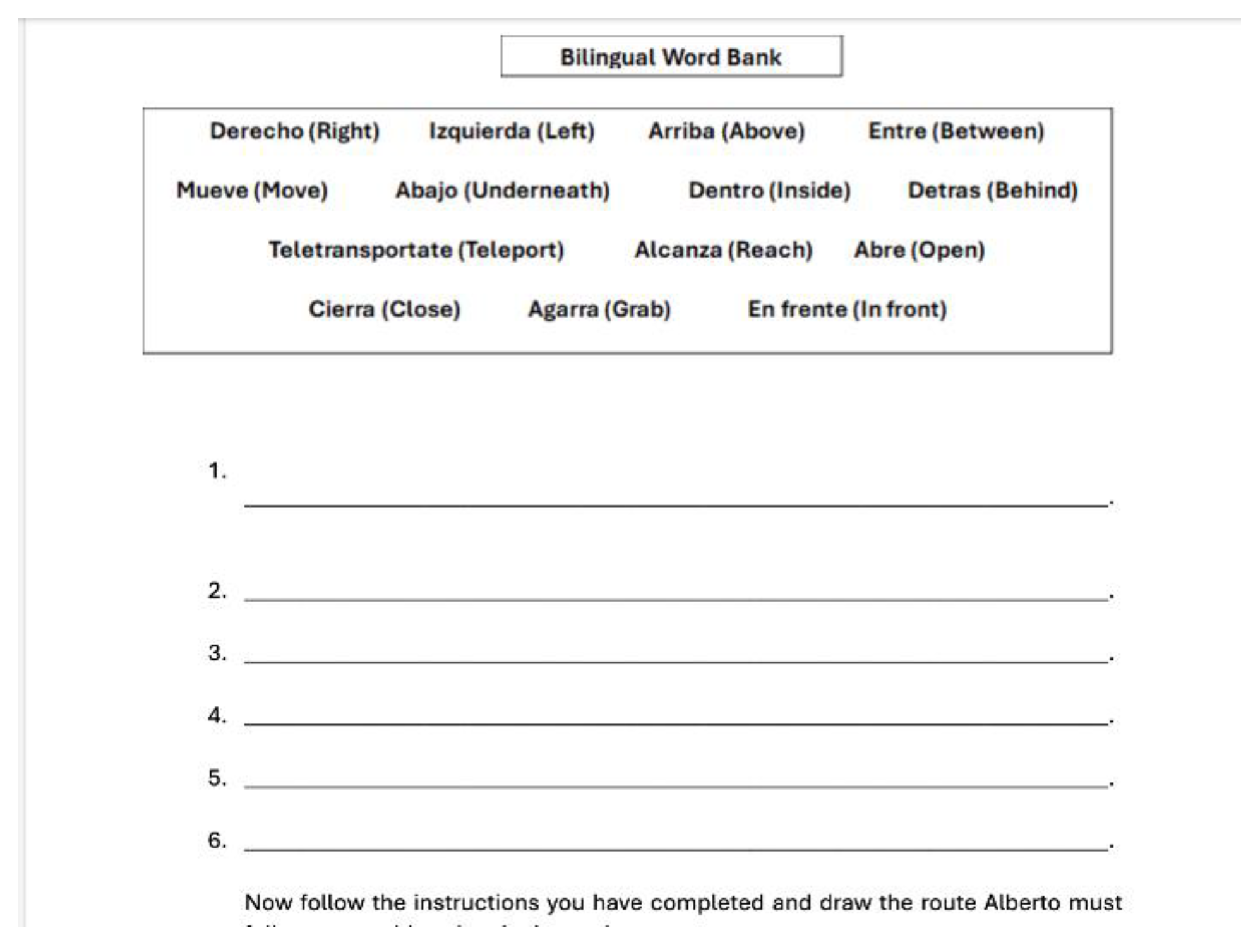
Figure 2.
Students practicing pair programming and using VR equipment during VR orientation.
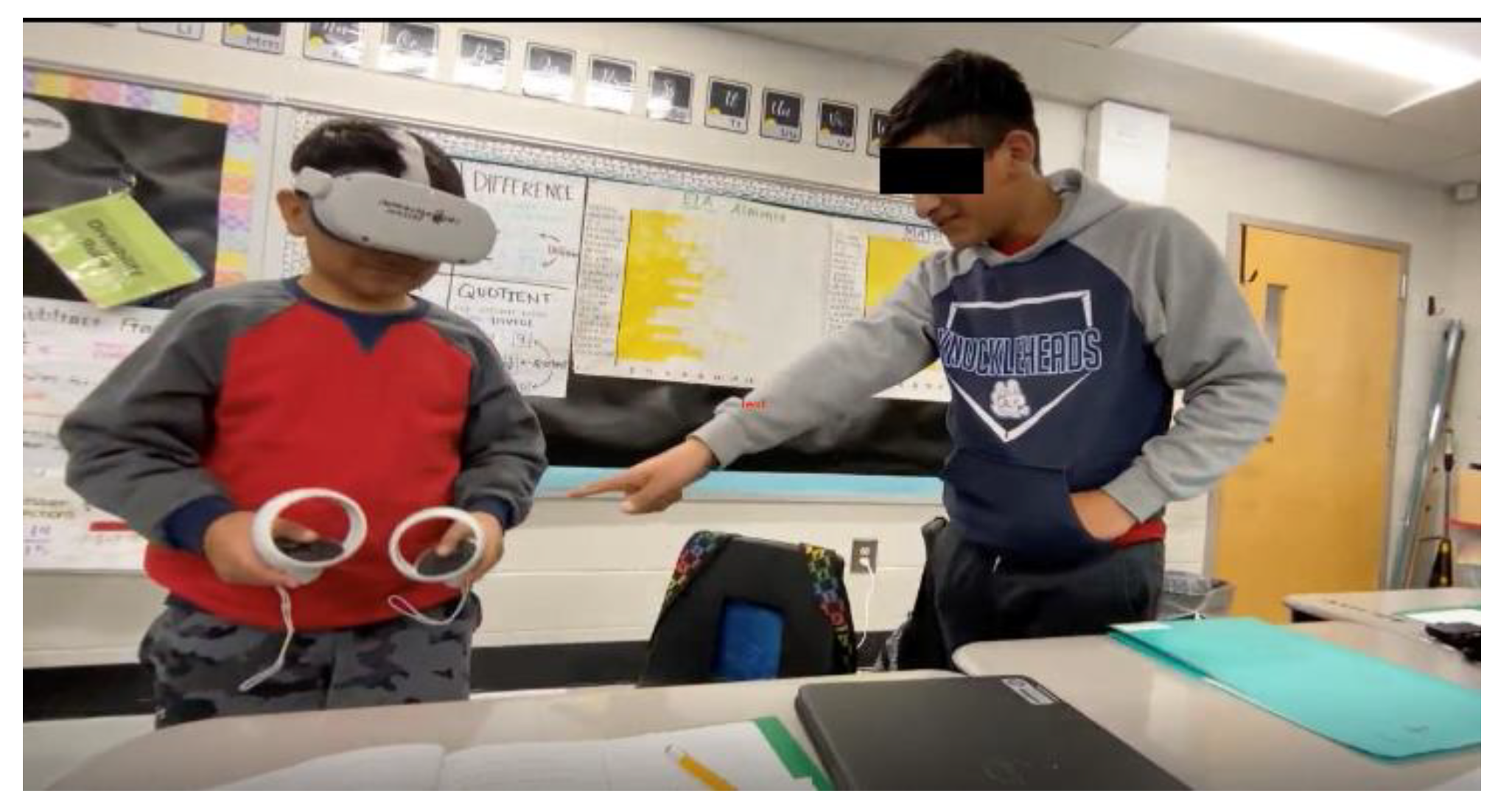
Figure 3.
VR stations located in the hallway outside of the classroom.
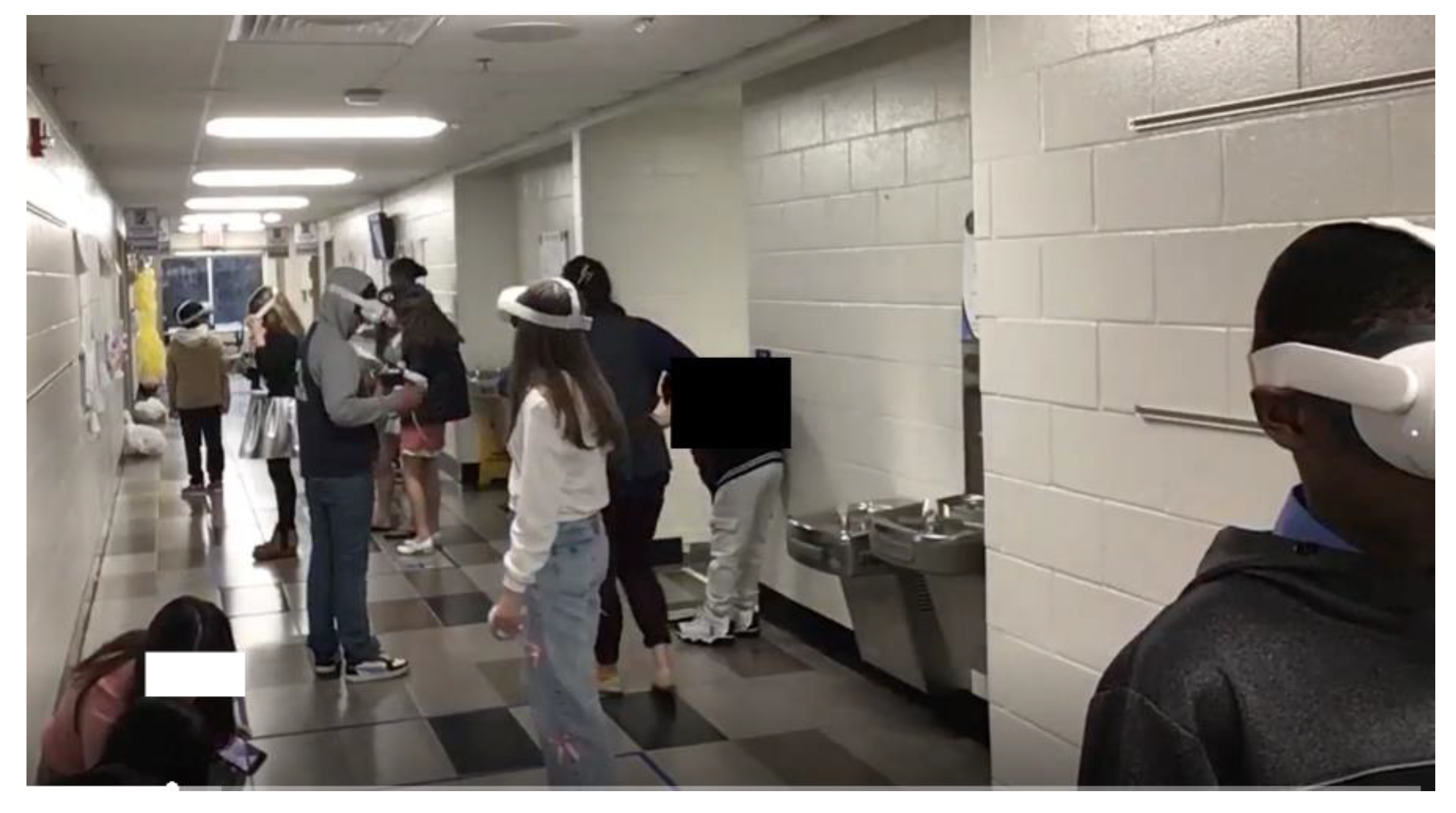

Table 1.
Learning Activities of the Eight Sessions in the Focal Science Unit.
| Session Number | Learning Activities |
|---|---|
| 1 |
|
| 2 |
|
| 3 |
|
| 4 |
|
| 5 |
|
| 6 |
|
| 7 |
|
| 8 |
|
Table 2.
Translingual and Transmodal Scaffolds.
| Hard Scaffolds | Features | Examples |
|---|---|---|
| Bilingual Vocabulary Teaching | The teacher provided opportunity for whole classroom engagement in translation of the relevant terminology using translanguaging strategies to teach vocabulary in English and Spanish. | Elle: In English, the next one is atom. All students: atom. Elle: Como se dice? Alonso: átomo. Elle: átomo? All students: átomo. |
| Multimodal Representation Poster | This poster utilized transmodaling to demonstrate the various modes students could use to respond to problems and questioning during the unit. |
 |
| Multimodal Vocabulary Wall | A poster for students to share words that can be used to describe properties of an object/phenomenon; students are encouraged to share words in En/SP using transmodal scaffolding strategies. |
 |
| Sentence Stems | Sentence stems as optional resources for students to use to develop their scientific writing. |
|
| Activity Worksheets | Worksheets created to intentionally encourage students’ translingual and transmodal practices in the unit. This includes the Pair-Programming practice worksheet, Bi-lingual Playdough Modeling activity worksheet, data collection worksheets during station activities & the CER writing worksheets | 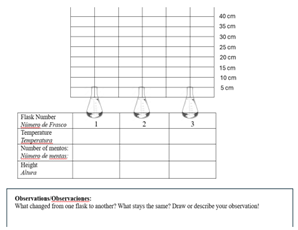 |
| Soft Scaffolds | Features | Examples |
| Teacher Discourse Moves | A list of bilingual discourse moves provided by the research teams for teachers to support one of the seven functions during conversations: (1) help a student clarify his/her thinking, (2) make ideas and thinking public, (3) mark a particular idea, (4) help students listen carefully and think about other’s ideas, (5) help students deepen their reasoning, (6) help students apply their thinking to other’s ideas, and (7) help students translanguaging and honoring students’ cultural knowledge. | Elle: OK. So do you think that there’s some sort of reaction happening inside of that? Do you think there’s a reaction happening in there? Other student: I think it might be a physical or chemical reaction… |
| Student Discourse Moves | A list of bilingual discourse moves provided by the research team for students to engage in meaningful science talk with each other during group work. | Tell or explain an idea: “I know it will work because ________.”
|
| Teacher Questioning | The specific discourse move the teacher frequently used in class to engage students in responding to her and producing talk during whole-class discussion. The question functions not on the teacher discourse moves prompts are listed under this category. | Elle: And we kind of have already been talking about that, right? About how what, what 2 substances have we mixed together that make a new substance? Alonso: Vinegar and baking soda. Elle: Vinegar and Baking soda, yes, that creates what? Alonso: A chemical. Elle: It’s a chemical reaction. What new substance do we get? Alonso: Carbon dioxide. Elle: Carbon dioxide, Good. |
| Teacher elicits student contribution | The teacher prompts students to read the worksheets in English and/or Spanish for participation in the class conversation. The elicited student output is only the repeating of the materials. | Elle: All right, the third bullet. Who can read the last one under “think about”? One more volunteer. All right, [Student E]. Other student: Whether or not mixing two or more substances makes a new substance. |
Table 3.
Coding Scheme on interaction, participation, and talk used in this study.
| Code Name | Definition | Examples |
|---|---|---|
| Interaction Types | ||
| Teacher-whole-class | The interactions involve the teacher standing at the front, addressing the whole class without directing to specific students. | Elle: Your hypothesis should say something like, I hypothesize that ______ happens because ______. Use the sentence stems. |
| Pair or small groups | Two or more students interact with one another during pair or small group work. | Dominque: ¿Cómo se dice (use pencil to point to one discourse move), Alonso: Coca Cola, Espuma (geyser)? |
| Teacher-student | The teacher interacts with specific students during pair, small group, or individual practice time. | Elle: Do you know which one is carbon and which one is oxygen? Morene: Carbon? Elle: So, look at the board, how many carbons do we have? |
| Participation Levels | ||
| Active | The student initiates the discussion or leads the task within the group. The student frequently shares ideas and opinions, asks questions, or clarifies concepts. The student actively listens to others and builds on others’ contributions. | Dominique asks Alonso: “ ¿qué opinas de la número cuatro?” (What do you thinking about number four?) “ “¿tú piensas que es physical?” (Do you think it is physical?) |
| Contributing | The student participates occasionally with relevant comments or questions. The student contributes ideas when prompted or asked directly. The student listens attentively to group discussions. | [Following Dominique’s question above] (Alonso looks down on his paper) Alonso: esperate (wait) Alonso: (responds in Spanish saying “C”) |
| Passive | The student primarily listens to others without actively contributing. The student participates minimally, like nodding or agreeing with others. The student may not be fully engaged in the group discussion or task. | Elle to the whole class: We are going to walk through one of these (writing tasks) together. It says through the Coke and candies experiment. I would say that if we mix Coke and ______ together, we will make a mess at home. What could we put in that first blank? OTHER STUDENT: 13:44 Mentos. (Marissa and Morene did not mouth the word, but they were writing) |
| Non-Participant | The student appears disengaged or withdrawn from the group. The student does not actively participate in discussions or group activities and may be doing something else. | Elle: I am going to pause you there, ask you to fill in the next sentence with the word…. Other Student: Oh, in the model, it showed that there is no change to the particles (Alonso was staring blankly; Dominique was yawning without looking at the other student) |
| Talk Quality | ||
| Specialized | The student uses specialized science vocabulary (e.g., physical and chemical change, carbon dioxide, observation, inference, height, centimeters) that was specifically introduced in the unit to explain a concept or engage in a science practice. | (kids doing the Baking soda and vinegar experiment) Nancy: What’s the height for #2? (Morene took the meterstick, bended down and did the measurement of the height) Morene: about 7 Nancy: 7? 7 inches? Morene: Centimeters |
| Relevant-Verbal | The student uses plain words to explain a concept or engage in a science practice. | (kids working on the steps of scientific method puzzle in the VR) Marissa: Yeah. Get the question one, and put a number one. James: Get question and put number one where? Marissa: Get one of the plates that says question, and put it on the number one. |
| Relevant-Nonverbal | The student makes sense of a concept through non-verbal actions or performs a science practice. | See Morene’s non-verbal actions in the “specialized” example. |
| Irrelevant | The student’s talk was irrelevant to the focus of the unit. | (Kids working on creating a model to represent chemical change using play-dough) Marissa: This is how I make tortilla (shows the flat play-dough to Alonso and Morene) |
Table 4.
Frequencies and Percentage of Students’ Participation Levels.
| Pair | Student Name | Active | Contributing | Passive | Non-Participant | Total |
|---|---|---|---|---|---|---|
| Pair 1 | Alonso (ML) |
134 | 90 | 57 | 14 | 295 |
| 45.4% | 30.5% | 19.3% | 4.7% | 100% | ||
| Dominique (ML) | 111 | 44 | 89 | 21 | 265 | |
| 41.9% | 16.6% | 33.59% | 7.9% | 100% | ||
| Pair 2 | Marissa (ML) |
89 | 58 | 80 | 12 | 239 |
| 37.2% | 24.3% | 33.5% | 5.0% | 100% | ||
| Morene (EML) |
102 | 58 | 72 | 6 | 238 | |
| 42.9% | 24.37% | 30.3% | 2.5% | 100% | ||
| Pair 3 | James (EML) |
63 | 45 | 37 | 2 | 147 |
| 42.9% | 30.6% | 25.2% | 1.7% | 100% | ||
| Nancy (EML) |
50 | 39 | 43 | 8 | 140 | |
| 35.7% | 27.9% | 30.7% | 5.7% | 100% |
Table 5.
Frequencies and Percentages of Students’ Quality of Science Talk. .
| Pair | Student Name | Specialized | Relevant-Verbal | Relevant-Non-Verbal | Irrelevant | Total |
|---|---|---|---|---|---|---|
| Pair 1 | Alonso (ML) |
60 | 106 | 48 | 19 | 233 |
| 25.8% | 45.5% | 20.6% | 8.1% | 100% | ||
| Dominique (ML) | 17 | 67 | 91 | 15 | 190 | |
| 8.9% | 35.3% | 47.9 | 7.9% | 100% | ||
| Pair 2 | Marissa (ML) | 28 | 69 | 48 | 15 | 160 |
| 17.5% | 43.1% | 30% | 9.4% | 100% | ||
| Morene (EML) | 33 | 71 | 55 | 20 | 179 | |
| 18.4% | 39.7% | 30.7% | 11.2% | 100% | ||
| Pair 3 | James (EML) | 37 | 39 | 29 | 13 | 118 |
| 31.4% | 33.1% | 24.5% | 11% | 100% | ||
| Nancy (EML) | 33 | 41 | 34 | 10 | 118 | |
| 28% | 34.7% | 28.8% | 8.5% | 100% |
Disclaimer/Publisher’s Note: The statements, opinions and data contained in all publications are solely those of the individual author(s) and contributor(s) and not of MDPI and/or the editor(s). MDPI and/or the editor(s) disclaim responsibility for any injury to people or property resulting from any ideas, methods, instructions or products referred to in the content. |
© 2025 by the authors. Licensee MDPI, Basel, Switzerland. This article is an open access article distributed under the terms and conditions of the Creative Commons Attribution (CC BY) license (http://creativecommons.org/licenses/by/4.0/).
Copyright: This open access article is published under a Creative Commons CC BY 4.0 license, which permit the free download, distribution, and reuse, provided that the author and preprint are cited in any reuse.


