

Submitted:
06 July 2025
Posted:
08 July 2025
You are already at the latest version
Abstract
The integration of Artificial Intelligence (AI) in Early Childhood Education (ECE) is transforming the teaching of essential skills for children aged 3 to 8. Artificial intelligence technologies, including as augmented reality applications, intelligent tutoring systems, and virtual environments, are increasingly employed to personalize learning, enhance engagement, and address diverse learner needs. This research investigates the impact of AI technologies on the transformation of pedagogical practices and educational environments, while also addressing the challenges of their integration compared to traditional techniques. Applications like Wonderscope (augmented reality storytelling), Osmo Little Genius (tangible artificial intelligence), and CoSpaces Edu (virtual coding and storytelling) illustrate how interactive and multisensory education may improve literacy, creativity, and computational thinking. Their adaptive feedback systems respond to children's inputs, providing tailored learning experiences. A survey of 200 early childhood educators demonstrated a significant interest in AI professional development, although highlighted a lack of training and confidence. Educators favored augmented reality (AR) over virtual reality (VR), considering it safer and more suitable for younger kids because to its interaction with the real world and diminished sensory overload. Effective use requires technical knowledge and ethical awareness, underscoring the need for specialized teacher training. Challenges include data privacy, prejudice in artificial intelligence, excessive screen time, and unequal access to technology. Guidance from organizations like UNESCO and the European Commission is crucial. The document supports the development of national strategies, investment in teacher training, and the advancement of inclusive, child-focused AI design to guarantee fair implementation in early childhood education settings.
Keywords:
Artificial Intelligence
; Early Childhood Education
; Teacher Training
2 Vlora University, Vlore, Albania; eva.cipi@univlora.edu.al
1. Introduction
In the 21st century, substantial technological advancements impact the economy, society, and educational system. Social and educational difficulties are prominently manifested in the use of Artificial Intelligence (AI) tools, which affect the development of virtual realities, facilitate automated learning, particularly in foreign languages, and enhance learning settings through virtual laboratories. AI technologies provide customized learning and significant cognitive development opportunities, transforming education [1]. AI-driven solutions facilitate interactive, multimodal, and adaptable learning approaches for young children. Children are nurtured in a digital environment characterized by screens, games, and interactive media; nonetheless, numerous educators continue to employ conventional approaches and lack the proficiency to change. The disparity between pupils and instructors requires organized support from society and governments to enhance education and equip teachers for AI integration. AI can provide unique, engaging, and developmentally appropriate learning experiences that cater to each child's needs, interests, and pace. Artificial intelligence can enhance cognitive, linguistic, creative, and social development through real-time teaching systems and immersive augmented reality applications. When employed ethically and pedagogically, AI methodologies can enhance inclusive education by addressing children's specific needs and offering tailored solutions [3]. Nonetheless, young children engaged in the digital realm encounter challenges. Are our instructors capable of properly utilizing AI tools in the classroom? Do they possess legal and institutional support to enhance their pedagogical methods without opposition from parents, administrators, or students? We aim to assess educators' knowledge and preparedness while identifying the obstacles that must be addressed to integrate AI into Albanian classrooms ethically, inclusively, and developmentally appropriately.
2. Literature Review
The incorporation of Artificial Intelligence (AI) tools into Early Childhood Education (ECE) has surfaced as a revolutionary trend in pedagogical innovation, with substantial implications for teaching and learning in the formative years. Research indicates that AI technologies, such as Augmented Reality (AR), Virtual Reality (VR), intelligent tutoring systems, and tangible AI, provide personalized, interactive, and engaging experiences suited to the developmental phases of young learners [4]. These tools demonstrate the ability to improve core skills, including reading, numeracy, and computational thinking, via multimodal feedback and adaptive learning. Augmented reality (AR) is deemed more developmentally suitable for younger children than virtual reality (VR) since it incorporates real-world situations and imposes a lesser cognitive strain [6]. Instruments such as Osmo and CoSpaces Edu foster creativity and critical thinking, underscoring the significance of tactile and immersive interfaces in early education [7]. Nonetheless, despite these opportunities, research indicates significant obstacles, including inadequate teacher preparation, diminished confidence in AI application, and ethical concerns such as data privacy and AI bias [8,9]. Teacher preparedness and professional development are essential for the effective incorporation of AI in educational settings. Surveys indicate that whereas early educators are enthusiastic about AI, they frequently lack the technical competencies and pedagogical frameworks essential for its effective and ethical application [10]. In response, international organizations have initiated the proposal of ethical principles and AI strategies specifically for the education sector, emphasizing the necessity for inclusive design and equitable access [11].
In conclusion, research endorses the perspective that AI in early childhood education possesses significant potential, although necessitates careful implementation tactics, teacher empowerment, and a robust ethical framework.
3. Research Methodology
This research used a mixed-methods approach to examine the incorporation of artificial intelligence (AI) tools in early childhood education (ECE), emphasizing both quantitative and qualitative perspectives [12]; [13]. A needs-assessment questionnaire was disseminated to 200 early childhood educators from various urban and rural educational environments to evaluate their attitudes, preparedness, and preferences for AI-enhanced technologies, including augmented reality (AR) and virtual reality (VR). The questionnaire comprised demographic inquiries, Likert-scale items, and open-ended replies to elucidate complex opinions on AI utilization, training requirements, and ethical considerations.
Semi-structured interviews were conducted with 15 educators to complement the survey results, aiming to investigate the in-depth experiences and pedagogical consequences of particular AI applications, such as Wonderscope, Osmo Little Genius, and CoSpaces Edu. The tools were assessed based on their educational affordances, developmental suitability, and facilitation of foundational learning outcomes. This dual-instrument methodology has been corroborated in previous AI-ECE studies for producing both comprehensive and nuanced results [14]; [15].
Data collection was performed via digital platforms, guaranteeing accessibility and compliance with ethical norms, including informed consent, confidentiality, and conformity with UNESCO’s AI ethics guidelines in education [9]. Quantitative data were studied via descriptive statistics and correlational analysis, and qualitative data were assessed through theme coding, uncovering patterns associated with usability, inclusivity, and developmental alignment of AI technologies.
Research reveals significant interest in AI among educators, favoring AR over VR because to its reduced sensory requirements and enhanced classroom integration. Nonetheless, little training and lack of confidence constituted significant obstacles. The report also emphasizes difficulties related to ethical utilization, data privacy, and equitable access. Constraints encompass possible self-reporting bias and restricted geographic range.
4. Results Analysis
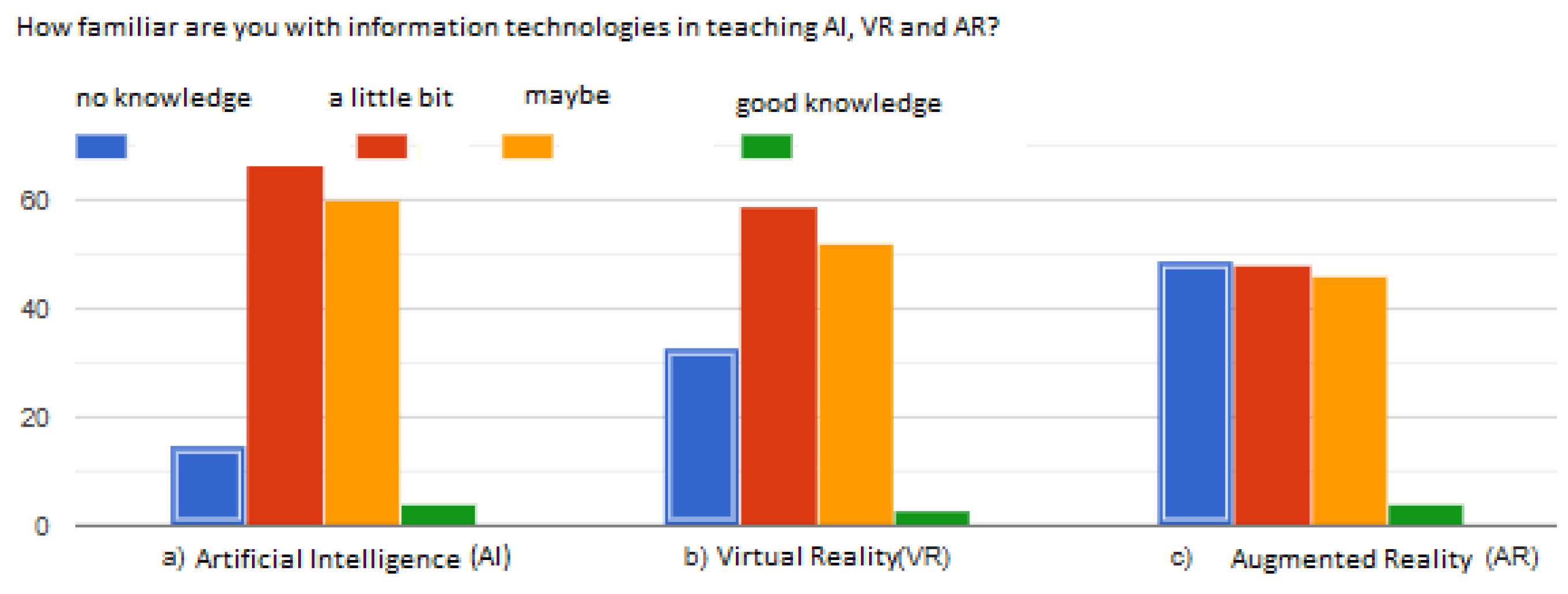
A minority of 43.5% of educators have completed at least one course in AI, VR, or AR (Figure 1). This outcome corroborates the limited comprehension of AI and AI technologies such as augmented reality (AR) and virtual reality (VR). Few educators believe they possess a comprehensive understanding of these technologies.
Figure 1.
Assessment of knowledge on AI, VR, and AR.
Classrooms hardly utilize AI-enhanced tools. 82% of participants expressed a willingness to utilize AI technology, particularly augmented reality applications, which are developmentally suitable and engaging. More than 70% of participants indicated inadequate training, while 65% identified infrastructure as a major obstacle. AI-augmented tools are little utilized. Augmented Reality (AR) was favored by 76% of participants over Virtual Reality (VR) because of its user-friendliness and its integration with real-world education [1]. 34% of respondents appreciated Osmo Little Genius and CoSpaces Edu for their contributions to reading and coding development [6,7]. Educators solicited ethical standards, training workshops, and readily available digital materials [12].
Another inquiry pertains to the contexts in which educators deem AI, VR, and AR to be most suitable for early education. 57.1 percent believe these technologies enhance attention and motivation, while 51.7 percent and 50.3 percent consider them beneficial for interactive storytelling and personalized instruction, respectively. Many believe that AI can facilitate personalized education, learning simulations, interactive narratives, and language development assistance, among other applications.
Early identification of problems enhances focus and drive. The outcomes of the response are illustrated in Fig. Three. 57.1 percent of educators assert that AI can fulfill many functions. Recent surveys indicate that 76% of educators prefer augmented reality (AR) to virtual reality (VR) because of its user-friendliness and relevance to real-world education. 34% reported that Osmo Little Genius and CoSpaces Edu contribute to the improvement of literacy and coding abilities. Educators requested ethical guidelines, training programs, and accessible digital resources [12].
We examined 147 teachers' questionnaires and created a synthesized interpretation for your research article on AI, VR, and AR in early childhood education. The survey indicates that educators are progressively interested in integrating AI, VR, and AR into early childhood and primary education, however implementation remains constrained.
It is essential for educators to provide organized assistance to effectively utilize modern technologies, thereby closing the divide between passion and practical application. By confronting these obstacles, we may facilitate a more enriched educational environment that engages young learners and provides them with vital skills for the future.
Expertise in Professional Development and Technological Proficiency: A minor fraction of responders have undergone professional training in digital technologies or specific tools such as AI, VR, or AR. Nonetheless, numerous respondents indicated possessing at least a modicum of experience with these technologies. The majority of respondents reported being "slightly familiar" with AI. Acquaintance with VR and AR was somewhat superior, with several individuals reporting "moderate" or even "high" proficiency, particularly for VR.
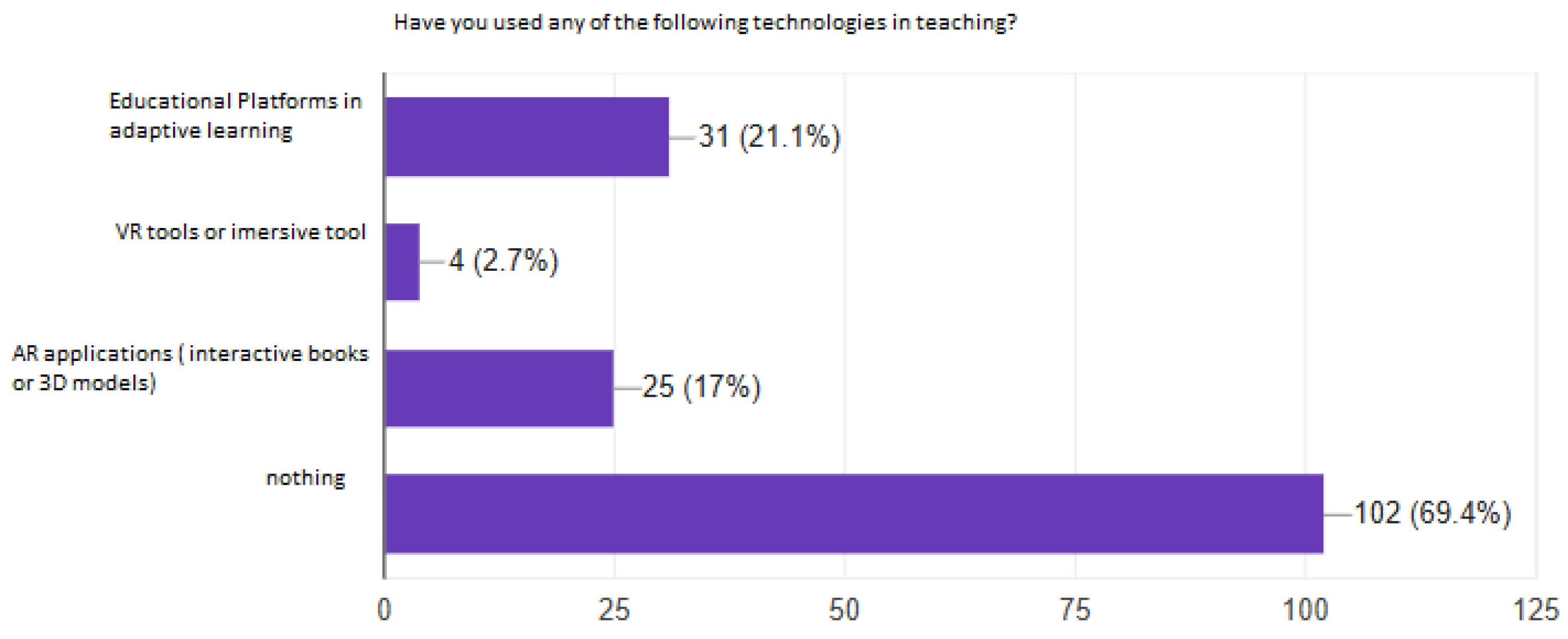
Figure 2.
Teacher evaluation of AI, VR, and AR.
Perceived Significance in Early Education: A substantial majority agree that AI, VR, and AR play a key role in early education. A pie chart depicts educators' views on the significance of digital technologies in education. A predominant 55.8% affirm the relevance of these technologies, signifying robust endorsement. Simultaneously, 40.1% remain uncertain, indicating a necessity for enhanced awareness and training. Merely 4.1% deem digital technologies insignificant. This indicates that educators see the pedagogical potential of immersive and intelligent technologies, despite minimal direct experience.
5. Discussions
Minimal classroom integration takes place. A multitude of educators have not employed AI, VR, or AR technology. Standard instruments comprise AI-enhanced educational platforms and augmented reality applications such as interactive books. The use appears disjointed and investigative, lacking a systematic approach. The primary obstacles identified were insufficient infrastructure (e.g., hardware, internet) and inadequate training/professional development.
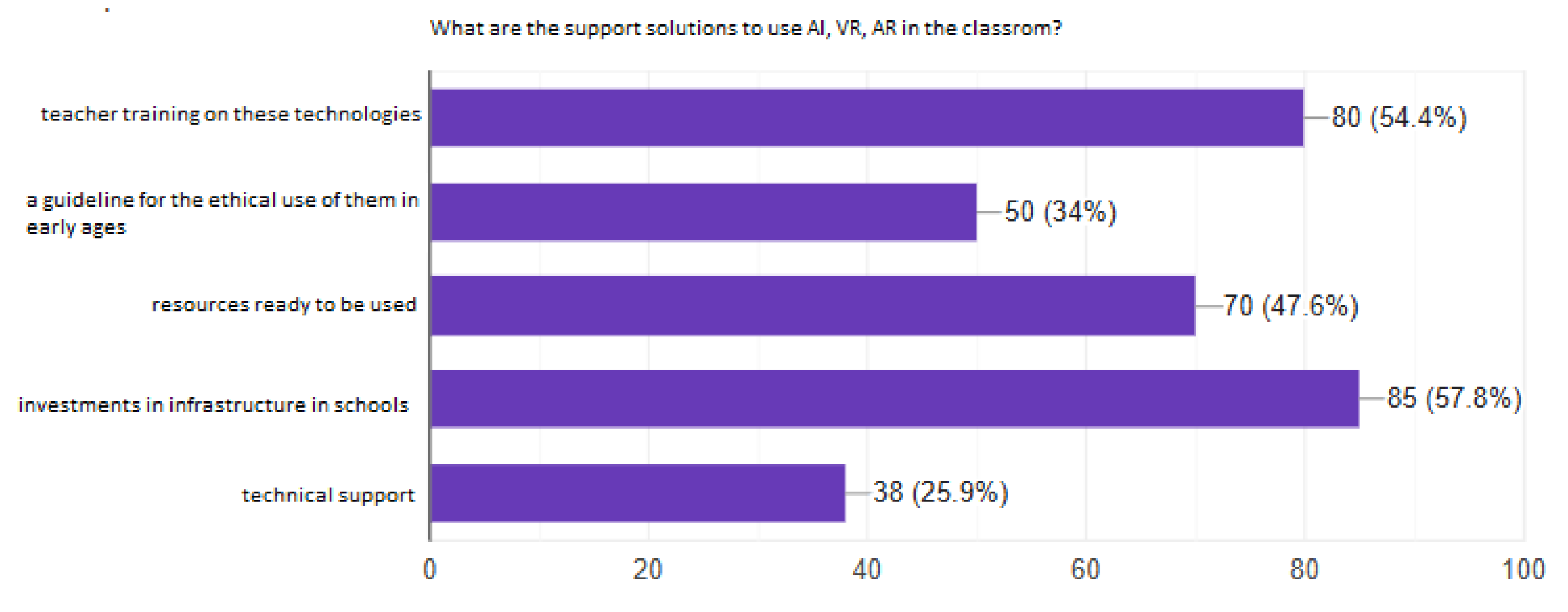
Investment in institutional tools and equipment. We require readily available digital educational resources. This indicates individual preparedness but not organizational readiness. Confidence and impact are also addressed. A mere fraction expressed "confidence" in utilizing these gadgets within the classroom, indicating a deficiency of experience and organization. Nonetheless, the majority contended that AI, VR, and AR can enhance engagement, customisation, and experience learning for young pupils.
Consolidating Policy and Curriculum. There is a general consensus that national teacher training programs and educational policies ought to include these technologies. This indicates a hierarchical approach to leadership in technology adoption. The graphic charts of the survey encapsulated these findings:
Instruction. Few educators have had formal training in digital technologies. Teachers exhibit limited knowledge with AI, although familiarity with VR and AR is marginally greater. Limited educators employ these technology in their classrooms. The majority of individuals believe that AI, VR, and AR are essential in early education
6. Findings
The implementation of AI, VR, and AR technologies in educational settings is still constrained in practice. The majority of educators indicated that they have not utilized any AI, VR, or AR tools, with their utilization frequently being sporadic and experimental rather than systematic [15]. The predominant tools utilized by those who have incorporated technology include instructional platforms with integrated AI functionalities and augmented reality applications, such as interactive books and basic storytelling programs.[7] The two most frequently referenced obstacles were:
- Inadequate infrastructure (e.g., hardware, internet connectivity)
These structural problems indicate that, despite teachers' interest and willingness, they frequently lack the institutional resources or support necessary to implement technology effectively in early education classrooms. [3] The analysis rigorously evaluated the responses and discerned distinct findings. Educators predominantly emphasized the necessity for:
- Professional development centered on practical implementation
- Institutional investment in apparatus and instruments
They underscored the significance of accessible digital educational resources and classroom-compatible materials. This suggests that although individuals are inclined to adopt new technologies, institutional preparedness is inadequate [1] The confidence and conviction in influence was another significant topic of discussion. A minor fraction of respondents demonstrated confidence in utilizing these devices in the classroom, indicating both a deficiency in expertise and structural support [16]. Most educators concurred that AI, VR, and AR may substantially improve learning for young children by enhancing engagement, facilitating tailored learning, and promoting immersive, hands-on methodologies. Concerning the integration of policy and curriculum, there was overwhelming consensus that these advanced technologies ought to be incorporated into national teacher training programs and digital education policies [3,1]. The findings indicate an increasing necessity for authoritative leadership, clear policies, and organized frameworks to promote technology integration in early childhood education.
7. Challenges and Solutions
The visual data from the survey can be encapsulated as follows:
- Training Participation - The majority of educators have not engaged in any formal training about digital and intelligent technology.
- Familiarity Levels – Limited familiarity was noted, particularly regarding AI, but knowledge of VR and AR was somewhat greater.
- Classroom Utilization - A limited number of educators have integrated AI/VR/AR tools into their instructional methodologies.
A significant majority saw these instruments as crucial for the future of early childhood education. Upon comparison of these data, we observe that they correspond with prior studies highlighting the necessity for tailored teacher training that integrates pedagogical experience with the new capabilities provided by AI. Numerous studies demonstrate that adaptive AI-driven platforms improve instruction by customizing learning pathways to meet student demands while concurrently aiding teacher decision-making [17]; [18]. These technologies offer substantial benefits in promoting interactive learning environments, including parallel or augmented realities, which enhance conceptual comprehension and elevate classroom engagement [19].
The teacher's function as organizer, leader, and evaluator is crucial in this changing educational framework. Professional development programs must be restructured to cultivate both digital competencies and pedagogical adaptability to AI-enhanced environments, ensuring educators stay inventive and responsive to societal changes.The ethical implications of AI utilization in early childhood education are paramount. Young children are particularly susceptible to data exploitation, and technologies like facial recognition, eye-tracking, and emotion detection pose considerable ethical dilemmas. UNESCO and the European Commission have developed frameworks that prioritize transparency, human oversight, data protection, and child-centered design, promoting protections and ethical principles for all AI applications involving kids [22].
Figure 3.
Solutions suggested by teachers in the survey.
In Albania, despite the emergence of pilot efforts and promising applications, numerous obstacles impede the proper integration of AI in early childhood classrooms:
- Infrastructure: Numerous schools continue to be devoid of dependable internet connectivity, smart boards, and tablets, especially in remote or under-resourced regions [23].
- Training: Educators indicate insufficient readiness to effectively utilize AI tools in early learning, frequently attributed to inadequate exposure during pre-service training [24].
- Ethical concerns: Issues including privacy, screen time, algorithmic bias, and fairness persist unresolved and are infrequently addressed in national educational discourse [21].
- Equity: Pronounced socioeconomic inequalities in access to digital infrastructure and instructional technology exacerbate the digital divide and threaten to marginalize under-resourced learners [25].
8. AI Tools – VR and AR in education
Augmented Reality (AR) tools are recognized as educational applications aimed at captivating children through interactive, multisensory experiences by integrating AR technology into the learning process. Against a vibrant, grid-patterned backdrop, four distinct sections display the names and associated icons of the most prominent AR applications for children: Wonderscope, AR Makr, Quiver, and Just a Line.
Wonderscope is an augmented reality application that converts conventional storytelling into dynamic, interactive experiences. The application includes characters that manifest in the real world using a tablet or smartphone, prompting youngsters to read aloud to progress the narrative. This interactive storytelling method markedly improves children's interest and language development [27]
AR Makr is an innovative application that enables youngsters to create drawings, capture images, and subsequently integrate their artwork into the actual world through augmented reality. This program enables the teacher to cultivate several skills in the child, including creativity, critical thinking, and spatial orientation [28].
Quiver is an application that integrates conventional coloring with augmented reality technologies. Children color pre-printed pages, after which the program animates the characters in three dimensions, allowing them to move in space. Quiver is notably proficient in using technology into artistic endeavors and visual image development, hence enhancing the relationship between creativity and technology [29].
Just a Line is an application that enables users to create drawings with their fingertips in three-dimensional space, subsequently visualizing these designs as spatial lines linked to real-world objects, thereby integrating into the physical environment.
Augmented reality solutions, although not a substitute for educators, can significantly augment the efficacy of the teaching process by enriching learning settings and complementing instructional methodologies [26].
9. Challenges and Limitations
Upon comparison, these findings correspond with other studies highlighting the necessity for individualized teacher preparation that integrates pedagogical experience with the new capabilities provided by AI. The problems of integrating AI in educational institutions are extensive and multifaceted. They encompass technological, instructional, and social ethics. In the Parent-Teacher-Student triad, establishing reliable and secure communication is essential. This is the primary worry identified by educators to facilitate the unobstructed integration of their instructional approaches into satisfactory educational norms [30]. Training must consider these challenges: Technical expertise concerning the available data to ensure AI algorithms function effectively and enhance reality appropriately. These AI solutions must manage the surge of users and the substantial volume of data entering the program. This renders the application scalable.
Furthermore, these applications must ensure the security of the data that is collected and stored. Pedagogical competencies acquired through teacher training. Teachers can only successfully integrate AI tools into the educational process with these competencies. Only with this understanding can they construct a curriculum that incorporates these technologies. These competences must also facilitate the evaluation process for the effective management of the child's education. Furthermore, educators must ensure equilibrium in educational outcomes when engaging with AI.
Ethical dilemmas are paramount: AI algorithms may reinforce existing biases when taught on prejudiced data. Transparency signifies that the solutions provided by AI must be clear and facilitate comprehension in the decision-making process. They must be transparent to kids and readily comprehensible.
Data privacy presents a significant challenge, particularly regarding the obligation of applications to safeguard user data, notably student information. Additionally, social challenges arise since the growing implementation of AI in education may result in job displacement for certain educators.
Transforming Roles for Educators: AI-driven educational tools may necessitate that educators adopt new roles, including AI trainers or instructional designers. Student Reliance on Technology: Excessive dependence on AI-driven educational tools may diminish students' critical thinking and problem-solving abilities. Concerning the Digital Divide, disparities in access to technology and infrastructure across educational settings can result in inequities in the educational resources available among schools and nations. [30]
10. Conclusions and Recommendations
Artificial intelligence possesses the capacity to transform early childhood education by delivering personalized, engaging, and developmentally appropriate learning experiences. However, actualizing this potential necessitates investment in infrastructure, training, and ethical governance. By prioritizing teachers and children in the development and implementation processes, we can guarantee that AI enhances—not supplants—human interaction and pedagogical intent. Future research should persist in examining the long-term impacts of AI utilization in early childhood education, while international collaboration should strive to bridge the digital divide and foster inclusive innovation.
To promote the appropriate and effective implementation of AI in early childhood environments, the subsequent activities are advised:
- formulate national AI education plans specifically designed for early learning
- offer continuous professional development programs for educators that encompass both educational and technological element
- promote the co-design of AI solutions incorporating requirements from educators and educational experts.
- formulate explicit ethical principles in accordance with international standards.
- advocate for public-private collaborations to improve infrastructure for the use of AI tools in educational settings
References
- Holmes, W., Bialik, M., & Fadel, C. (2019). Artificial Intelligence in Education: Promises and Implications for Teaching and Learning. Center for Curriculum Redesign.
- Kalogiannakis, M., & Papadakis, S. (2022). The use of ICT and AI in early childhood education: Benefits, challenges, and recommendations. Education and Information Technologies, 27, 9781–9797. [CrossRef]
- UNESCO. (2021). AI and education: Guidance for policymakers. United Nations Educational, Scientific and Cultural Organization. https://unesdoc.unesco.org/ark:/48223/pf0000377071.
- Yelland, N. (2018). A pedagogy of multiliteracies: Young children and multimodal learning with tablets. British Journal of Educational Technology, 49(5), 847–858. [CrossRef]
- Baker, T., & Smith, L. (2019). Educ-AI-tion rebooted? Exploring the future of artificial intelligence in schools and colleges. Nesta. https://www.nesta.org.uk/report/education-rebooted.
- Bacca, J., Baldiris, S., Fabregat, R., Graf, S., & Kinshuk. (2014). Augmented reality trends in education: A systematic review of research and applications. Educational Technology & Society, 17(4), 133–149. https://www.jstor.org/stable/jeductechsoci.17.4.133.
- Papadakis, S., Kalogiannakis, M., & Zaranis, N. (2022). Teaching mathematics with mobile devices and the Osmo educational system in kindergarten. Education and Information Technologies , 27, 2637–2658. [CrossRef]
- Holmes, W., Bialik, M., & Fadel, C. (2022). Artificial Intelligence in Education: Promises and Implications for Teaching and Learning. Center for Curriculum Redesign.
- UNESCO. (2021). AI and education: Guidance for policymakers. United Nations Educational, Scientific and Cultural Organization. https://unesdoc.unesco.org/ark:/48223/pf0000377071.
- OECD. (2021). Teachers and school leaders as valued professionals: Status, career and working conditions. OECD Publishing. [CrossRef]
- European Commission. (2022). Ethical guidelines on the use of artificial intelligence (AI) and data in teaching and learning for educators. Publications Office of the European Union. [CrossRef]
- Yin, R. K. (2018). Case study research and applications: Design and methods (6th ed.). SAGE Publications.
- Holmes, W., Bialik, M., & Fadel, C. (2022). Artificial Intelligence in Education: Promises and Implications for Teaching and Learning. Center for Curriculum Redesign.
- Tang, Y., Huang, Z., & Wang, J. (2023). Investigating preschool teachers’ perceptions and practices of AI-based tools: A national survey. Computers & Education, 198, 104770. [CrossRef]
- Li, R., Wu, Y., & Wang, J. (2021). Teachers’ readiness for AI integration in primary education: A case study in China. Education and Information Technologies, 26, 5237–5256. [CrossRef]
- Li, R., Wu, Y., & Wang, J. (2021). Teachers’ readiness for AI integration in primary education: A case study in China. Education and Information Technologies, 26, 5237–5256. [CrossRef]
- Zawacki-Richter, O., Marín, V. I., Bond, M., & Gouverneur, F. (2019). Systematic review of research on artificial intelligence applications in higher education: Learning, teaching, and institutional impacts. International Journal of Educational Technology in Higher Education, 16(1), 39. [CrossRef]
- Chen, X., Xie, H., Zou, D., & Hwang, G. J. (2022). Application and theory gaps during the rise of AI in education: A bibliometric analysis. Educational Technology Research and Development, 70(2), 651–679. [CrossRef]
- Marín-Díaz, V., Morales-Cevallos, M. B., & Morales-Cevallos, J. F. (2021). The inclusion of virtual and augmented reality in early childhood education: Advantages and concerns. Sustainability, 13(4), 2346. [CrossRef]
- Schmid, U., et al. (2021). AI in Education – Technical and Pedagogical Opportunities and Challenges. German Federal Ministry of Education and Research. [CrossRef]
- Dignum, V. (2020). Responsible Artificial Intelligence: How to develop and use AI in a responsible way. Springer. [CrossRef]
- Floridi, L., Cowls, J., Beltrametti, M., Chatila, R., Chazerand, P., Dignum, V., ... & Schafer, B. (2018). AI4People—An ethical framework for a good AI society. Minds and Machines, 28(4), 689–707. [CrossRef]
- Kostopoulos, G., Tzimas, E., & Papadakis, S. (2022). Challenges of integrating emerging technologies in preschool education: Infrastructure, training, and equity issues. Journal of Interactive Learning Research, 33(1), 85–102.
- Bakir, N. (2020). Technology and teacher preparation: An exploration of teacher candidate perceptions. TechTrends, 64(1), 121–130. [CrossRef]
- Trilling, B., & Fadel, C. (2019). 21st Century Skills: Learning for Life in Our Times. Jossey-Bass.
- Radu, I. (2014). Augmented reality in education: A meta-review and cross-media analysis. Personal and Ubiquitous Computing, 18(6), 1533–1543. [CrossRef]
- Sirakaya, M., & Cakmak, E. K. (2018). The effect of augmented reality on student achievement and motivation in a storytelling-based learning environment. Educational Research Review, 25, 1–14. [CrossRef]
- Lin, T.-J., & Chen, C.-C. (2020). Exploring the development of creativity in early childhood through AR-based storytelling apps. Educational Media International, 57(3), 195–210. [CrossRef]
- Bressler, D. M., & Bodzin, A. M. (2019). Investigating the impact of immersive augmented reality on prekindergarten children's spatial skills and engagement. Journal of Science Education and Technology, 28(5), 463–475. [CrossRef]
- Luckin, R., Holmes, W., Griffiths, M., & Forcier, L. B. (2016). Intelligence unleashed: An argument for AI in education. Pearson Education.
- Jobin, A., Ienca, M., & Vayena, E. (2019). The global landscape of AI ethics guidelines. Nature Machine Intelligence, 1(9), 389–399. [CrossRef]
Disclaimer/Publisher’s Note: The statements, opinions and data contained in all publications are solely those of the individual author(s) and contributor(s) and not of MDPI and/or the editor(s). MDPI and/or the editor(s) disclaim responsibility for any injury to people or property resulting from any ideas, methods, instructions or products referred to in the content. |
© 2025 by the authors. Licensee MDPI, Basel, Switzerland. This article is an open access article distributed under the terms and conditions of the Creative Commons Attribution (CC BY) license (http://creativecommons.org/licenses/by/4.0/).
Copyright: This open access article is published under a Creative Commons CC BY 4.0 license, which permit the free download, distribution, and reuse, provided that the author and preprint are cited in any reuse.


