

Submitted:
04 July 2025
Posted:
07 July 2025
You are already at the latest version
Abstract
Biobased polyamides (PAs) are sustainable polymers derived from renewable feedstock, such as biomass, offering a promising alternative to petroleum-based materials. This shift enables more environmentally friendly materials, with reduced carbon footprints and helps address the growing challenge of plastic waste recycling. Since the introduction of fossil-based PAs like Nylon in the 1930s, PAs have played an increasingly important role in various industries, including automotive, textiles, electronics, and packaging. Today, research focuses on biobased alternatives that not only meet sustainability criteria, but also present unique molecular structures derived from natural monomers. These include natural lignin, which provides aromatic building blocks, terpenes or fatty acids, which offer functional diversity and chain flexibility. These monomers have enabled the synthesis of biobased PAs with excellent thermal, mechanical, and barrier properties. Many of these materials exhibit high crystallinity, good chemical resistance, and tunable mechanical strength. Among the most promising biobased variants are furan-based PAs, because of the rigid, planar furan ring and its polar oxygen-rich structure. In this context, this review aims to highlight the advances in the synthesis of biobased PAs, emphasizing the excellent properties of some of them. Indeed, in some cases, biobased PAs exhibit properties comparable to their fossil-based counterparts, with the significant environmental advantage of a much lower carbon footprint.
Keywords:
polyamides
; biobased
; furan
; terpene
; fatty acids
1. Introduction
Polyamides (PAs), as the name suggests, constitute a class of polymer characterized by the presence of amide bonds between repeating units [1,2,3]. This structural feature enables the formation of hydrogen bonds between adjacent polymeric chains [1,4,5], thus, conferring to these materials outstanding mechanical properties as well as high chemical resistance [6,7,8,9]. For that reason, since the development of the aliphatic PA Nylon 6,6 and Nylon 6 [2,6,10], first synthetized by Carothers at DuPont and Paul T. Schlack, respectively in the 1930’s [11], these materials have found widespread use across a diverse range of applications. These include consumer products as well as high-performance smart materials in sectors such as electronic, textile, automotive or medicine [12,13,14]. However, PAs also present notable drawbacks. For instance, their tendency to absorb water considerably limits its dimensional stability [15]. In fact, the absorbed water acts as a plasticizer and, consequently, worsens both mechanical and thermal properties. On the other hand, the same strong intermolecular interactions that provide previously mentioned desirable attributes, such as high strength and chemical resistance, also lead to very high melting points, usually inaccessible, elevated transition temperatures and poor solubility in common organic solvents. These characteristics make the processing of certain PAs, particularly aromatic ones, extremely challenging and economically costly, thereby limiting their high scale production [3]. Consequently, over the last 20 years, many semi-aromatic PAs have been developed to combine the excellent thermal, mechanical, and chemical properties of aromatic PAs with the easier processing of aliphatic ones [4,15].
There are two common approaches for synthesizing PAs (Scheme 1): The first method is the step-growth polycondensation employing diamines and dicarboxylic acids, diesters or diacyl chlorides [16,17]. Alternatively, ω-amino acids or esters can be used as the only substrates in this polymerization. The second methodology, commonly employed to prepare PAs, is the ring-opening polymerization (ROP) of lactams [1,3,18]. For instance, ԑ-caprolactam is the most well-known lactam for making Nylon 6 through AROP (anionic ring-opening polymerization) [16].
In any case, the starting substrates used in both synthetic methodologies have traditionally been obtained from petrochemical industry [19]. However, the limited availability and the volatility of the prices of fossil resources are the main reasons that have encouraged industry and academia to look for other alternatives [3,20]. In fact, in recent years, real efforts have been made to develop polymers from more renewable feedstocks that maintain the excellent properties of their petro-based counterparts while minimizing the environmental impact [21,22,23]. Moreover, the incorporation of renewable feedstocks in polymer synthesis significantly enhances the biodegradability of the resulting materials, thereby mitigating their long-term persistence in the environment and reducing their contribution to environmental pollution [24]. Additionally, these materials often demonstrate a reduced carbon footprint over their entire life cycle, as the biomass used in their production sequesters atmospheric CO2 during growth. This carbon uptake partially compensates for the greenhouse gas emissions associated with subsequent stages. such as manufacturing, processing, and transportation [8,25,26].
This review aims to provide a comprehensive overview of the path from the first steps in the synthesis of PAs that presented mediocre properties very far from the fossil-derived analogues to the current state in which promising innovative materials have been achieved with excellent properties, high proportions of biogenic carbon and great (bio)degradability.
2. Synthesis of PAs from Lignin-Derived Monomers
Lignin is the largest non-carbohydrate component of lignocellulosic biomass. In fact, after cellulose, this biopolymer constitutes the second most abundant renewable polymer. The oxidative coupling of three aromatic monomers, p-coumaryl, coniferyl, and sinapyl alcohols in different proportions depending on the source, origins the complex and amorphous highly branched network characteristic of lignin (Figure 1) [27]. Recently, lignin and its derivatives have emerged as potential components for diverse polymer applications, such as flame retardants [28], antimicrobial agents [29], stabilizing agents [30], coatings [31], and superabsorbent hydrogels [32,33], owing to the high carbon content, good thermal stability, biodegradability, and antioxidant/antibacterial activity [34].
Despite extensive research into controlled depolymerization of lignin, the efficient and economically viable production of aromatic compounds from this abundant biopolymer remains limited. To date, only a few aromatic compounds, such as guaiacol, eugenol, ferulic acid, vanillin and syringaldehyde, can be obtained from lignin using economical and effective methodologies (see Figure 2) [35,36]. These aromatic compounds have been employed as monomers for the synthesis of various biobased polymers, including PAs. Indeed, this review will specifically focus on the synthesis of PAs derived from the aromatic compounds, vanillin and eugenol.
2.1. Vanillin based PAs
The lignin derived aromatic compound vainillin holds significant potential as a precursor to prepare biobased monomers owing to the chemical versatility of its carbonyl and phenolic functional groups [37]. However, it is noteworthy that the polymers obtained from this type of monomer usually have relatively low molecular weights, mainly due to the low reactivity of this aromatic derivative [38].
In 2021, K. Yagura et al. reported a series of biobased PAs through polycondensation protocol using different diamines and divanillic acid (DVA) previously obtained through an enzymatic process (Scheme 2). In this case, the obtained polymers presented very high weight-average molecular weights (Mw) ranging from 50 to 110 kDa. They observed that the use of the dimeric starting compound not only enhanced the molecular weights of the polymers but also improved their solubility. In fact, the vast majority of the synthesized PAs were highly soluble in common organic solvents. These findings highlight DVAPAs as promising high-performance, bio-based plastics with superior thermal properties compared to many other renewable aromatic polymers. However, their mechanical properties still require improvement for broader applications [39].
Subsequently, these same authors synthesized fully DVA-PAs with molecular weights ranging from 49-60 kDa reacting RDVA monomer with RDVA-NH2, a diamine monomer derived from RDVA (Scheme 3). Thermogravimetric analysis of the PAs found decomposition temperatures around 380 °C. The Tg values of fully divanillic DVAPAs ranged from 207 °C to 262 °C, depending on the side chain length. Notably, DVAPAs with shorter side chains exhibited higher Tg values than those with longer side chains [40]. The maximum tensile strength achieved with these materials was 40 MPa, which suggested that, although the thermal properties were good, further research was needed to improve the mechanical properties.
Similarly and more recently, Y. Zhao et al. described the synthesis of a vanillin-based poly(amide-imide) vitrimer. For this purpose, a NH2-terminated PA was prepared through an acylation process. Subsequently, this prepolymer was reacted with previously synthetized DVA monomer (Scheme 4). This vanillin-based polymer presented excellent stability, and the amide and imine dynamic bonds conferred itself healing performance showing similar mechanic and thermal properties before and after the repair. In addition to the partially biobased origin, the authors also demonstrated the recyclability of the material, making it an even more attractive option for environmentally conscious applications [41].
2.2. Eugenol Based PAs
Another promising building block that can be obtained through lignin depolymerization is eugenol, although, currently, it is predominantly extracted from clove oil. This natural compound possesses suitable and reactive functional groups for chain growth polymerization, including allylic double bond, as well as additional reactive sites, such as the aromatic ring, hydroxyl and methoxy groups [42,43].
Although different polymers have been synthetized from this natural compound to the best of our knowledge, to date, the work recently published by our research group constitutes the only one related to the synthesis of PAs derived from this natural phenolic compound. In this paper, the synthesis of a wide series of semiaromatic sulfur containing PAs was presented. All the prepared materials resulted to be amorphous showing excellent thermal properties and dimensional stability. In addition to the bio-based nature of the materials, other aspects such as the solvent-free process and the employment of an ecofriendly catalyst are also noteworthy from an environmental point of view (Scheme 5) [44].
3. Furan Based PAs
In 2004, the US Department of Energy published the Platform Chemicals List, which was later updated in 2010. This is a list of organic compounds containing from 2 to 6 carbon atoms that can be obtained by catalytic or biocatalytic processes from the lignocellulosic part of biomass [45]. It is hoped that these biobased building blocks will provide an opportunity to replace fossil sources for obtaining energy and chemical products. Two furanic compounds, 5-hydroxymethylfurfural (HMF) and 2,5-furandicarboxylic acid (FDCA) (see Figure 3) were added to the revised list. In fact, it is believed that these heterocyclic aromatic compounds are the ones with the greatest synthetic potential. Moreover, the scientific community has accepted these derivatives as key elements in bridging the gap between a fossil fuel-based economy and a sustainable one, due to the similar or better properties of the biobased materials, showing similar thermal properties and crystal structures than petroleum-based polymers [46].
3.1. Furan Containing Aliphatic PAs
The use of FDCA as a monomer in the synthesis of furane-aliphatic PAs is not a novel synthetic challenge. In fact, as early as 1961 Hopff and Krieger described the synthesis of a series of PAs by condensation of linear amines with different heterocyclic dicarboxylic acids including FDCA. The PAs obtained in these works, unfortunately, decomposed either during the synthesis itself or during processing at high temperatures. Therefore, at that time the authors concluded that these materials would not have improved performance compared to their TPA-derived (terephtalic derived PAs) analogues [47,48]. Probably due to this negative conclusion, it took more than 10 years for another work related to FDCA based PAs to be described. In fact, in 1974 Heertjes and Kok reported the synthesis of a series of PAs by the condensation of FDCA or, alternatively, the methyl ester (DMFDCA) or the acyl chloride (FDCACl) with C4, C6 or C8 linear aliphatic diamines [49]. For this purpose, two different experimental protocols were employed: interfacial solution and melt polymerization. The main drawback described by these authors was the decarboxylation of the FDCA, which occurred above 195 °C. Indeed, the decarboxylation of the acid was the reason that led them to use the dimethyl ester or the acyl chloride derivative. In any case, both the yields of the polymerizations and the molecular weights of the obtained polymers were considerably better than those previously described by Hopff and Krieger. Synthesized crystalline PAs could be used to make fibers and films and had melting temperature (Tm) between 250 °C and 125 °C. However, it should be noted that these materials still had a long way to go before they could be considered analogous in performance to TPA derivatives. Again, it took a long period of time, until 2009, when O. Grosshardt et al. described the synthesis of PAs by condensation of FDCA and a series of linear aliphatic diamines through a melt polymerization protocol using Sn or Ti derivatives as catalysts. The obtained PAs, in this case all amorphous, presented complete decomposition temperatures between 350 °C and 450 °C and Tg between 70 °C and 100 °C [50].
Subsequently, in 2014 Gruter et al., in two successive patents, described that when DMFDCA dimethyl ester was used as starting product and subjected to high temperatures for polycondensation, extensive N-methylation of the obtained PA occurred. This undesirable secondary reaction dramatically worsened the thermal and mechanical properties of the materials. To avoid it, a two-step protocol was proposed based on a first stage, with a very strict temperature control, in which the DMFC was condensed with an excess of the corresponding diamine. In the second stage, the previously obtained mixture of oligomers was treated with a bifunctional linker to grow the chain [51,52].
In 2015, Y. Jiang et al. described the first enzymatic synthesis of a furane-based PA employing DMFDCA and 1,8-octanodiamine as starting building blocks. Novozym 435, an immobilized form of Candida antarctica Lipase B (CALB) on acrylic resin, was employed as biocatalyst. The choice of the diester as monomer was based on the higher solubility and lower Tm compared to the diacid. Regarding the amine, the better catalytic activity and the higher selectivity of lipases toward long-chain aliphatic amines was taken into account. The obtained molecular weights, up to 54 kDa, were much higher than those previously obtained through melt polymerization, with the great advantage that in the enzymatic alternative high temperatures were not required. The so-obtained PA8F resulted in a promising sustainable equivalent to terephthalic acid derived PA8T with similar Tg and thermal stability but with lower Tm. It is true that this work presented a challenge to improve. In fact, toluene and diphenyl ether were used as solvents that cannot be considered green alternatives. However, the high Tm of the starting diester derivative and the tendency of diamine to sublimate made the solvent-free process unfeasible [53]. Subsequently, these same authors described the reversible cross-linking of these materials through temperature regulated Diels-Alder reactions between the furanic rings and 1,1′-(methylenedi-4,1-phenylene)bismaleimide. Alternatively, to this reversible crosslinking, aromatization of the materials was shown to provide perpetual crosslinking (see Scheme 6) [54].
In 2017, M. Cao et al. described the synthesis of a new semiaromatic PA condensating terephthalic acid and FDCA with 1,10-diaminodecane through an existing industrialization process based on a first prepolimerization step followed by a solid-state polymerization (SSP) phase. The last step was on line controlled by a TG-IR equipment, monitoring the FDCA decarboxylation reaction. The exhaustive analysis of the structure of the obtained PA revealed that, probably due to the aforementioned decarboxylation process, the ratio of the furanic moieties incorporated into the polymeric chain was considerably lower than the feeding ratio of the monomers. The obtained copolymeric PA, PA10T/10F, presented a melting point higher than 280 °C and, to the delight of the authors, a stability comparable to the PA10T homopolymer. The authors attributed this excellent stability to the fact that not all the furanic rings incorporated in the polymeric chain had carboxyl groups, the cause of FDCA instability [55].
In the same year, a comprehensive comparative study was carried out by L. Cureton et al. In this work, a wide variety of PAs were synthetized using an interfacial polymerization protocol. For this purpose, the acyl chloride derivative of FDCA was condensed with structurally diverse aliphatic and aromatic diamines (Scheme 7). In addition, with comparative intentions, different aliphatic nylons and semiaromatic PAs were prepared through the same methodology. After properly characterizing the obtained materials by means of GPC, NMR and IR, some of their properties were compared in order to establish structure-property relationships. The first difference between furane based PA and those lacking this heterocyclic ring was the solubility. In fact, all furane derived PA were soluble in polar aprotic solvents such as DMF, DMP or THF, while all nylons or semiaromatic PA were completely insoluble in these solvents. This improved solubility of the biobased PA can facilitate their subsequent processing and expand their range of applications. Analogously, notable differences were detected in the thermal behavior of the polymers. The two fully aliphatic PAs synthesized in this work (nylon 4,6 and nylon 6,6) turned out to be crystalline polymers with Tm of 262 °C and 225 °C, respectively [56], which is completely consistent with the values previously reported in the literature and with computational predictions [57]. In contrast, the two semi-aromatic PAs exhibited very different thermal behavior depending on the aliphatic chain length. Thus, poly(hexamethylene terephthalamide) showed a very significant melting peak around 270 °C although the degree of crystallinity was lower than in the fully aliphatic PAs. In poly(butylene terephthalamide), however, no crystalline regions were detected. Therefore, it was concluded that the benzene aromatic rings disrupt the crystal packings that just remain with considerable aliphatic chain lengths. In contrast, all biobased furan PAs were found to be completely amorphous regardless of the aliphatic chain length. That is, furan moiety hinders the formation of crystalline areas more effectively than the benzene ring, probably due to the kinked architecture of the furane based polymeric chains that weakens and even prevents hydrogen bonds between amide groups [56]. In fact, Karam and colleagues demonstrated through computational analysis that the double bent conformation, in which both dihedral angles are 0° (see Figure 4), is the most stable. In this conformation, hydrogen bonds between the amidic hydrogen and the furanic oxygen are greatly favored, and, therefore, hydrogen bonds between the amide functions of different chains are minimized. Furthermore, this rigidity, which limits the degrees of freedom of the chains, was also reflected in the Tgs. Thus, furanic PAs presented the highest Tgs compared to aliphatic and poly terephthalamides. As expected, due to the major flexibility of the aliphatic segment, the longer the aliphatic chain, the lower the Tg. This trend was maintained in all three types of PAs [58].
More recently, M. Kamran et al. described the synthesis of a series of PAs employing DMFDC and aliphatic amines with different chain lengths. In this case, an environmentally benign protocol was employed based on a melt polycondensation technique and using very low concentrations of titanium isopropoxide (TIPT) as catalyst (see Scheme 8). The relatively high molecular weights of the synthesized PAs (Mn = 8–11 kDa), the amorphous character of most of them and the thermal stability comparable to the fossil-based analogues are the most relevant results of this work. It is worth mentioning that, in addition to the expected amines and ester, other end groups were detected by means of MALDI due to diverse secondary reactions promoted by the high temperatures necessary for the polymerization [59].
In the same year, S. Xie et al. described the polycondensation between the diester derivative DMFDC and 1,10-decanediamine obtained from castor oil under different reaction conditions. The main difference with the previous work was that, in this case, the bulk polymerization was catalyzed by TBD, a versatile superbasic and no toxic organocatalyst (Scheme 8) [60]. Furthermore, this paper, together with a later one reported by the same authors, constitute, as far as we know, the only studies of the mechanical properties of this type of semi-aromatic PAs. In fact, for PA10F these authors described a tensile strength of 52.12 MPa, a tensile modulus of 1636 MPa and an elongation at break around 69% [61]. Subsequently, they carried out an exhaustive study on the influence of the aliphatic chain length of the diamine monomer on the thermal and mechanical properties of the prepared polymers [62].
The same diester was employed as monomer by Y. Feng et al. in 2024. In this case, an elegant and ecofriendly continuous flow technology was used to carry out the polycondensation between the furane-based diester monomer and a series of linear aliphatic diamines. The mild conditions employed prevented secondary reactions such as N-methylation. Moreover, in addition to the synthesis and the characterization of the PAs these authors described the chemical depolymerization of the materials to obtain the monomeric precursors, which is extremely important from an environmental point of view. In fact, chemical degradation opens the way to chemical recycling, a better alternative than the commonly carried out mechanical recycling as the raw monomers obtained can be reused to synthesize virgin polymers again [63].
In this point, it is important to mention the pioneering work recently published by J. Feng et al., which represents an important step towards more sustainable protocols (Scheme 8). These authors proposed the replacement of metallic or superbasic derivatives with liquid ions as catalysts. In fact, PA4F was efficiently synthetized in a two-step methodology. In the first stage, the prepolymerization took place employing different ionic liquids, all of them based on 1-butyl-3-methylimidazolium (Bmim) as catalyst and water, the greenest alternative, as solvent. In the second step, the melt polycondensation of the oligomers was carried out. The so obtained PAs showed satisfactory Mn (up to 27 kDa), elevated Tg (around 150 °C) and excellent elastic modulus (3.7 GPa) [64].
It has already been mentioned in this section that, due to the structure of the furan ring, hydrogen bonding between neighboring chains are hindered in favor of the corresponding intramolecular interactions. This fact influences the crystallinity of the materials and, consequently, their thermal and mechanical properties. Recently, Zhan et al. synthesized a series of PAs by melt polycondensation of DMFCA with long-chain aliphatic diamines containing oxalamide groups. Their strategy was to minimize intramolecular interactions by forming double hydrogen bonds between the oxalamide moieties of adjacent chains. Indeed, the crystallinity of the obtained materials increased and their properties were improved. Furthermore, the excellent chemical degradability of these PAs was demonstrated. In fact, when they were subjected to basic hydrolysis conditions, the starting monomers were recovered with excellent conversions (Scheme 9) [65].
3.2. Furan Containing Aromatic PAs
To the best of our knowledge, the first report regarding the synthesis of furan-aromatic PAs dates back to 1964. In this pioneering work, the synthesis of a series of PAs from FDCACl and various aromatic diamines was described. Unfortunately, the characterization of the materials was not very detailed. In fact, only the melting points, degradation temperatures, and inherent viscosities of some of them were given [66].
Later, Mitiakoudis and coworkers described the synthesis of an extensive series of furane-aromatic and all furane PAs. In this case, not only FDCA and the corresponding chloride, but also the 3,4-disubstituted regioisomers were used. After exhaustive optimization of the polymerization conditions in terms of yields and molecular weights of the obtained materials, these were characterized and some of their properties were compared. One of the main conclusions obtained by these authors was that furane-aromatic PAs presented, in general, better properties than wholly furane PAs [67,68].
Luo and coworkers described the direct polycondensation between FDCA and a series of aromatic diamines (Scheme 10). The so obtained partial biobased materials were properly characterized by means of FT-IR, NMR and GPC. In addition, mechanical properties of the prepared polymers were also analyzed and the influence of the structure of the diamine monomer on them was studied. Therefore, all the synthetized PAs presented adequate mechanical properties, highlighting the results obtained with the PA synthesized with para-phenylenediamine, presumably due to the rigidity of the polymeric skeleton and the high molecular weight. On the other hand, all of the PAs prepared in this work were completely soluble in common organic solvents, which can greatly facilitate processing compared with insoluble fossil-derived aromatic counterparts. However, furane derived PA prepared in this work failed to match the excellent thermal properties of traditional aromatic PA [69].
In 2020, Yu and coworkers reported the synthesis of an extensive series of furane containing full aromatic PAs through melt polycondensation reaction at low temperatures. The employed substrates were 2,5-furandicarbonyl dichloride (FDCACl), m-phthaloyl chloride (MPC), and terephthaloylchloride (TCL) and m-phenylenediamine (MPD), p-phenylenediamine (PPD), as diamine monomers (Scheme 11) and different combinations between them were performed obtaining eight furane containing PAs. An exhaustive characterization of all materials was accomplished by means of NMR, XRD, DSC and TGA. In addition, the solubility of the obtained polymers in different organic solvents was tested. The principal conclusion found in this work was that the furane containing materials presented similar thermal behavior and thermal stability to those of the traditional aromatic PAs. Regarding the solubility of these materials, these authors drawn the same conclusion previously described by Luo et al., in fact, these biobased PA presented the great advantage of being soluble in some organic solvents, which really facilitates their processing [70].
The same methodology was used few months later by Cao and coworkers, thus, a polycondensation at low temperature between FDCACl with the biobased 3,4’-diaminophenylether (Scheme 12). The so obtained polymer showed excellent solubility and spinnability, and a fiber with a smooth surface and uniform thickness was fabricated which, in addition, exhibited outstanding thermal and mechanical properties and flame-retardant quality [71].
More recently, the 4,4’-regioisomer of the diaminophenyl ether was subjected to the polycondensation reaction with FDCACl (Scheme 13). The so obtained biobased PA was properly characterized and compared with the isophthalic derived PA which presents a fossil origin. The furane containing polymer displayed analogous or even better thermal, mechanical and barrier properties. Moreover, the hydrolysis of the polymeric materials was performed under basic conditions and the starting monomers were recovered. Molecular dynamic simulations revealed that the presence of the heterocyclic ring lowered the energy barrier of the hydrolysis process [72]. Therefore, the furan ring not only increases the biogenic content of the materials but could also facilitate their chemical recycling, which is extremely important from an environmental perspective.
3.3. Multifuran Monomers
In addition to FDCA and its immediate derivatives like the dimethyl ester and diacyl chloride, other monomers have been developed that incorporate the furan ring into the polymer backbone. In fact, encouraged by the promising properties that the furan heterocycle confers on materials, different polymers have been prepared using monomers with two furan rings connected by different linkers. In this sense, Gharbi et al. synthetized a series of PAs containing a bifuranic structure condensating 2,2’-bis [2-(5-chloroformyl)furfuryl]propane with a number of structurally diverse aliphatic, cycloapliphatic or benzylic diamines (Scheme 14). A comprehensive study on the influence of the diamine structure on both, the process yields and the thermal properties of the obtained material, was conducted in this contribution [73].
Later, this protocol was extrapolated to aromatic ones with the principal objective of improving the properties of the materials due to the stiffness provided by the aromatic rings [74].
Interestingly, this type of monomers allows the incorporation of different functional groups into the spacer that joins the two furan rings, which also allows the modulation of the polymer properties. In this sense, recently, Shu and collaborators have described the synthesis of a series of bisfuran based PA with different spacer moieties employing furfuryl amine as starting material (Scheme 15). Moreover, in addition to studying the influence of the spacer on the thermal properties, crystallinity, solubility or water absorption, the obtained PAs were subjected to different postpolymerization modification processes achieving positive and negatively charged functionalized bioPAs [75]. Furthermore, these authors have demonstrated the high capacity of these cationic PAs as polyfluroalkyl (PFA) environmental contaminants adsorbents [76].
More recently, the bifuran moiety, in which two furan rings are directly linked through the 2-positions, has received more attention. In this structure, the π conjugation is extended mainly due to the complete coplanarity of the rings and the dihedral angle between them of 180°. Moreover, the rotational barrier between the heterocycles is relatively high which confers superior rigidity to this bifuran derived building block compared to those derived from biphenyl moiety. Taking into account these structural characteristics, and the possibility of synthesizing them from biobased furfural [77], different monomers with a bifuran structure have been used in the synthesis of polymeric materials, with the hypothesis of improving the thermal and mechanical properties, and, in consequence, the performance of the obtained materials [78,79]. In this context, regarding PAs, N. Miyawaka et al. described the polycondensation of bifuran derived dicarbonylchloride (see Scheme 16) with several aliphatic diamines though solution and interfacial methodologies. In fact, as expected, the prepared PAs exhibited higher Tm compared with the analogous PAs bearing a single furan ring. Moreover, PAs containing the bifuran structure also turned out to be more thermally stable [80].
In contrast, K. Arai et al. reported the condensation of bifurfurylamine (see Scheme 17), prepared starting from biomass derived furfurylamine, with seven structurally different diacyl chlorides. Newly, in this work, the superiority of polymers carrying the bifuran moiety compared to those presenting a single furan ring was demonstrated [9].
4. Terpene Derived PAs
Terpenes constitute a group of organic natural molecules, generally secondary metabolites, that exhibit remarkable functional and structural diversity. For example, some terpenes serve as defense agents in insects [81], while others act as growth regulators [82], among various other biological roles. Regarding the chemical structure, all terpenes share the common characteristic of the repetition of C5 isoprene units [6,83] although their architectures can vary. In fact, terpenes can be acyclic, mono, di or even polycyclic. Additionally, the number of repeating isoprenes is another criterion for classifying terpenes: monoterpenes (C10), sesquiterpenes (C15), diterpenes (C20), sesterterpenes (C25), triterpenes (C30) and so on[84]. Most terpenes are easily extracted from non-edible plant parts, and some of them are extremely abundant in nature. Therefore, their abundance and structural diversity make them excellent natural economically feasible building blocks with the potential to replace fossil sources as raw materials in polymer synthesis [14].
As previously discussed, the ROP of ε-caprolactam is the conventional methodology for the synthesis of Nylon 6 [84]. Similarly, the vast majority of terpene-based PAs are synthesized by ROP from the corresponding lactams. Indeed, the most widely used methodology for obtaining the lactam monomer is the Beckmann rearrangement from the oxime, which is usually prepared from the ketone derivative. In this context, Rieger and Winnacker proposed the use of terpenoids ketones, like menthone, for the synthesis of biobased PAs. For this purpose, two alkyl substituted lactams regioisomers were prepared via Beckmann rearrangement and subsequently polymerized through a ROP protocol in both acid and neutral conditions (Scheme 18). These initial studies laid the groundwork for the investigation of terpene-derived PAs with very interesting structures carrying pendant groups and stereocenters in the backbones [85].
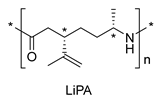
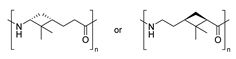
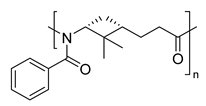
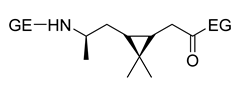
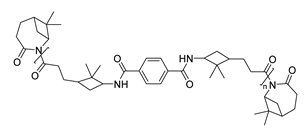
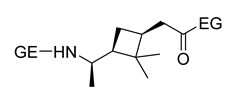
In fact, most terpene-based PA have been prepared following an analogous synthetic pathway. Table 1 summarizes the most representative works on the synthesis of PAs using terpenes as starting substrates, focusing on the structure of the materials obtained and the most relevant aspects. In this context, recently, Stockmann et al. demonstrated that limonene oxide is a suitable monomer for the synthesis of PAs with two stereocenters per repeating unit and a pendant functionalizable isopropylene moiety (Table 1, Entry 2) [14] . Similarly, α- and β-pinene regioisomers have been used in the synthesis of PA employing both cationic and anionic protocols in the ROP reaction (Entries 3-5). Carene, a cyclic terpene found in the essential oils of various plants, has also been employed in the synthesis of PAs through β- and ε-lactam intermediates. For instance, in 2019, Sieber and co-workers [86] achieved (+)-3-carene derived PAs with particular interest because of the molecular weight exceeding 30 kDa. Besides, the high thermal stability of the synthesized PAs, DSC analysis also noticed the absence of Tm, which indicates a highly amorphous nature, advantageous for applications in optics and electronics [87].
To finish this section, in 2024 Kleybolte and Winnacker presented simple anionic ring-opening polymerizations (AROP) of β-pinene lactam in bulk and in solution, and they made the proof of different initiators, all of them green alternatives with the aim of using these polymers in biomedical applications. Thereby, good mechanical, thermal and transparent appearance renders them promising high-performance biomaterials [88].

Table 1.
Synthesis of terpene-based PAs through ROP reaction.
| Entry | Substrate | ROP | Properties of PAs | Structure | Ref. |
|---|---|---|---|---|---|
| 1 | Limonene oxide | Anionic |
|
 |
[14] |
| 2 | β-pinene | Cationic |
|
 |
[89] |
| 3 | β-pinene | Anionic |
|
 |
[87] |
| 4 | α-pinene | Anionic |
|
 |
[86] |
|
|||||
| 5 | β-pinene | Anionic |
|
 |
[88] |
| 6 | (+)-3-carene | Anionic |
|
 |
[86] |
As it has been mentioned, ROP is by far the most widely used methodology in the synthesis of PA from terpene or terpenoid substrates. However, a few examples of access to terpene-based PA via polycondensation processes can also be found in the literature. In fact, the presence of two double bonds in the limonene structure allows easy access from this cyclic monoterpene to difunctionalized monomers through epoxidation or hydration reactions, among others [90]. One of the pioneering authors in this context, was Trumbo in 1988, who employed 1,8-diamino-p-menthane (MDA), a readily available limonene derivative, to synthetize PAs via interfacial condensation with various diacid chlorides [91]. This study presented MDA as a renewable alternative to petroleum-based diamines in polymer chemistry. Although the polymers obtained in this pioneering work did not present satisfactory molecular weights, it laid the foundation for subsequent research in this area.
Some years later, in 2013, Firdaus and Meyer carried out a similar work using this terpene in the synthesis of various polymers including PAs (Scheme 19). The reactivity of the double bonds presented in the racemic limonene and the successful thiol-ene click reaction was an elegant combination for the access to difunctional monomers. In fact, the obtained enantiomerically pure limonene derived diamine monomers were reacted with various biobased diesters employing TBD as a catalyst, obtaining renewable PAs with molecular weights up to 12 kDa. Additionally, they observed that the presence of cycloaliphatic bulky groups prevented intermolecular interaction, leading to amorphous PAs with Tg values around 40 °C. The study revealed that the chirality of the employed monomers did not affect the thermal properties of the PAs [92].
5. Fatty Acid Derived PAs
Oils and fats of vegetable and animal origin have historically been, and continue to be, among the most important renewable feedstocks for the chemical industry. Among fatty acids, ricinoleic acid (from castor oil) [93,94], linoleic acid and oleic acid (from sunflower oil) and palmitic acid (from palm oil) are particularly notable as raw materials for chemical production. Fatty acids possess long aliphatic chains and functional carboxylic acid groups, making them excellent candidates for the development of bio-based monomers. Their structural versatility allows for a wide range of chemical modifications, enabling the synthesis of diamines, diacids, and other intermediates suitable for polycondensation reactions [95]. In particular, 10-undecenoic acid, oleic acid, and erucic acid stand out as ideal precursors for step-growth monomer synthesis for PA due to their bifunctional nature and high availability (Scheme 20) [93]. Thus, these three fatty acids can be regarded as key starting materials for sustainable polymer chemistry and will be the primary focus among fatty acids in this review.
An example of the use of undec-10-enoic acid derivatives was reported by J. F. Carpentier and coworkers. In this study, undec-10-enenitrile was hydroformylated using the catalyst (dicarbonyl)rhodiumacetoacetonate-biphephos [Rh(acac)(CO)2-biphephos] to selectively produce the linear aldehyde. This intermediate was subsequently auto-oxidized upon exposure to air to yield the corresponding fatty acid, a precursor for nylon-12 (Scheme 21). Notably, this approach minimized by-products/waste formation, in part due to the effective recyclability of the rhodium catalyst, which maintains its activity over four to five catalytic cycles [96].
Another example of the use of fatty acid for polymers synthesis was reported by S. Mecking and collaborators. In this case, oleic and erucic acids alkyl esters were used as renewable precursors for the synthesis of biobased polyesters (PEs) and PAs (Scheme 22). For this purpose, methyl oleate and ethyl erucate were firstly subjected to alkoxycarbonylation, and the so obtained diesters were subsequently converted via two parallel routes: (I) saponification to obtain the corresponding dicarboxylic acids, or, alternatively, (II) catalytic hydrogenation using a Ru-based catalyst to afford the corresponding diols. The obtained dicarboxyilic acids were condensed with the synthesized long-chain diols, as well as shorter diols, in order to produce tunable chain length polyesters. Complementarily, the obtained diols were converted into diamines, specifically, 19-nonadecanediamine and 1,23-tricosanediamine, which were further condensed with the previously synthetized dicarboxylic acids to yield long-chain PAs. These resulting PAs exhibited melting temperatures of 156 °C and 152 °C, respectively, and molecular weights of 10 kDa [97].
Similarly, A. R. Meier et al. employed methyl undec-10-enoate, methyl oleate and methyl erucate as precursors for the synthesis of homo-and co-PAs. In their approach, the double bonds present in these fatty acid esters were functionalized via thiol-ene reaction using cysteamine to produce amino-functionalized monomers (Scheme 23). These monomers were subsequently homopolymerized, copolymerized with each other and polymerized with adipic acid and 1,6-hexamethylenediamine by using TBD as an environmentally friendly and effective catalyst. The resulting renewable PAs exhibited molecular weights ranging from 3.7 kDa to 15.9 kDa. Differential scanning calorimetry (DSC) analysis revealed distinct thermal behaviors. So, while the homopolymers derived from undecenoate and erucate derivatives exhibited clear thermal transitions, no melting point was observed for the homopolymer of oleate derivative, indicating an amorphous nature. To modulate the broad melting range observed in these homopolymers, copolymerization of monomers was performed. The thermal properties of the copolymers obtained proved to be entirely dependent on the structure of the monomers used. Therefore, it is noteworthy the tunability of the thermal properties of these materials through the choice of monomers. Furthermore, copolymerization of these monomers with adipic acid and 1,6-hexamethylenediamine, key components of Nylon 6,6, showed that the melting temperatures of the resulting PAs could be finely modulate over a wide range. Notably, both homopolymerization and copolymerization reactions produced PAs with melting points ranging from 40 °C to 182 °C. Collectively, these findings indicated that selective monomer combinations enable the synthesis of PAs ranging from amorphous to high-melting semi-crystalline materials, offering a versatile platform for thermal property engineering [95].
Regarding green approaches, again Meier et al. designed an efficient and environmentally benign strategy for the oxyfunctionalization of fatty acid methyl esters (FAMEs) employing molecular oxygen as an oxidizing agent. For this purpose, they subjected methyl oleate and methyl erucate to a co-catalyst-free Wacker oxidation procedure in a dimethylacetamide/palladium(II)chloride solvent–catalyst system. The obtained unsaturated keto-fatty acid esters were further functionalized with amines via reductive amination. The prepared renewable monomers were polymerized with 1,6-hexamethylendimethylamine and dimethyl adipate in order to obtain the corresponding PAs (Scheme 24). The synthesized coPAs exhibited Mn ranging from 11.2 kDa to 21.4 kDa, with dispersities between 1.45 and 2.28. DSC analysis revealed melting points between 224 °C and 250 °C, alongside thermal stability up to 350 °C. Notably, the study concluded that increasing the content of amine-based renewable monomers led to a reduction in melting temperatures, attributed to the steric hindrance introduced by the long aliphatic side chains. These results further underscored the tunability of thermal properties in copolymerized Nylon 6,6 PAs. Moreover, the approach highlights another greener synthetic route for fatty acid-derived monomers, benefiting from low catalyst loadings, simplified product isolation, and effective recycling of solvent–catalyst systems [98].
Similar to their previous work, years later, the same authors introduced another innovative procedure to synthesize new dimer FAMEs monomers using methyl undec-10-enoate, methyl oleate, and methyl erucate as precursors. They employed again the Wacker oxidation to obtain the keto-FAMEs, which were further submitted to reductive amination using aliphatic, cyclic or aromatic diamines in order to obtain partial renewable dimer-monomers and they even employed amino-FAME in order to obtain fully renewable dimer-monomers. Interestingly, these diamines led to dimer FAMEs monomers which were further polycondensated with 1,10-diaminodecane using TBD as catalyst. The obtained PAs resulted in molecular weights ranging from 24.4 kDa to 33.5 kDa and melting temperatures from 70 °C to 161 °C. Overall, they developed an efficient synthesis strategy to prepare partially and fully renewable dimer fatty acid methyl esters (DFA) from mono-unsaturated fatty acids via catalytic oxyfunctionalization and reductive amination [99].
On the other hand, olefin metathesis has shown to be a remarkably effective method for the synthesis of fatty acids derived monomers (Scheme 25). In this context, the same FAMEs as in previous works were protected via catalytic Lossen rearrangement. The resulting carbamates were subsequently subjected to cross-metathesis with methyl acrylate, and, following deprotection, amino-end-functionalized unsaturated FAMEs were obtained and employed as monomers to yield the corresponding PAs which exhibited Mn ranging from 14.9 kDa to 22.6 kDa and dispersities between 1.73 and 2.20. DSC analysis revealed melting points between 169 °C and 186 °C, comparable to those of commercial PAs. The study also explored the mechanical properties of the obtained materials, reporting that PAs with longer aliphatic chains exhibited lower Young’s modulus, attributed to a reduced frequency of amide groups and, consequently, diminished hydrogen bonding interactions. Overall, the study demonstrated the potential use of cross-metathesis strategy for the preparation of new bio-sourced PAs with good properties [100].
At this point, it’s worth mentioning that obtaining pure methyl oleate is neither easy nor cheap. This makes extrapolation to an industrial scale of procedures developed at the academic level with pure methyl oleate economically unviable. Recently, the use of technical-grade methyl oleate in the synthesis of different polymers has been described by Ortiz and coworkers with the aim of increasing industrial feasibility. In this work, the selective self-cross-metathesis of technical grade methyl oleate, which implies significant percentages in weight, around 20%, of methyl linoleate was reported. The so-obtained diester monomer, was subsequently reacted with diols or diamines to yield PEs and PAs. To facilitate this transformation, two novel ruthenium-based catalysts were developed. One featuring an N-heterocyclic carbene ligand in place of the traditional phosphine, and another incorporating an o-isopropoxybenzylidene moiety. These catalysts enabled efficient metathesis to afford selectively dimethyl octadec-9-enedioate. When this diester monomer was subjected to polycondensation with 1,8-diaminooctane a semicrystalline PA with a melting point of 152 °C was achieved (Scheme 26) [101].
Another interesting fatty acid-based PA synthesis starting from methyl undec-10-enoate was reported by C. Tang and coworkers. In this study, the authors reported the synthesis of biomass-derived long-chain PAs bearing pendant polar hydroxyl moieties or, alternatively, non-polar butyrate groups in order to regulate the crystallization behavior of the obtained materials. In this case, the presence of two terminal olefinic double bonds in the co-monomer allowed the polymerization reaction to be carried out by a thiol-ene click reaction to yield the corresponding functionalized PAs (Scheme 27). The obtained semicrystalline PAs displayed melting temperatures ranging from 49.5 °C to 122.3 °C. As expected, compared to conventional PAs, these long-chain PAs exhibited programmable supramolecular architectures with tunable crystallinity and mechanical performance, readily adjustable by varying the co-monomer composition. To further enhance mechanical properties, they decided to introduce metal–ligand coordination into the PA. Therefore, by coordinating cuprous ion with the sulfur atoms, the mechanical strength of these PA was significantly increased. Interestingly, the metal-coordinated PAs also provided strong luminescence, in fact the coordinated PAs revealed photoluminescence with emission peaks around 418 nm and UV–visible maximum absorption near 210 nm [102].
In the same year, A. Ullah and R. Ahmadi synthesized two bio-based PAs from dimeric FAME precursors using both conventional and microwave-assisted methods. Specifically, dimethyl 9-octadecenedioate was reacted with either p-xylylenediamine (PXDA) or diethylenetriamine (DETA), employing DBU as the catalyst (Scheme 28). In all cases, semi-crystalline PAs with high melting temperatures ranging from 45 °C to 201 °C were obtained. The obtained materials revealed degradation temperatures between 124 °C and 373 °C . Notably, the PA synthesized with DETA under microwave-assisted conditions exhibited significantly higher melting temperatures compared to its conventionally synthesized one. Further wide-angle X-ray scattering (WAXS) analysis revealed that microwave irradiation facilitated the formation of γ-crystalline phases, while conventional heating predominantly yielded amorphous or α-crystalline structures [103].
To transition away from the traditional “take, make, dispose” model, the circular economy proposes a regenerative system in which products, materials, and resources are maintained in use for as long as possible being recovered, recycled, or regenerated at the end of their life, reducing in consequence environmental impact and material wastes. Addressing this challenge, Greiner and Rist reported the synthesis and chemical recycling of linear aliphatic PAs derived from plant oil-based monomers (Scheme 29). Specifically, 1,19-nonadecanedioic acid, obtained from oleic acid, was polycondensed with various aliphatic diamines containing 4, 6, 8, or 12 methylene units to yield semi-crystalline PAs. Size exclusion chromatography (SEC) revealed high molecular weights ranging from 26 kDa to 51 kDa, with narrow dispersities between 1.6 and 1.9. Thermal and mechanical characterization via DMA, DSC, and TGA confirmed the formation of semi-crystalline materials with glass transition temperatures between 44 °C and 62 °C, melting points from 172 °C to 208 °C, and thermal degradations up to 448 °C. Remarkably, the authors also demonstrated chemical recycling of the PAs through microwave-assisted hydrolysis in aqueous hydrochloric acid. This process enabled the recovery of starting diacid quantitative yields which was newly used to synthesize a virgin PA. SEC analysis of the new polymer showed a Mn of 38 kDa and enhanced tensile strength and Young’s modulus compared to the original polymer. Overall, these results underscored the potential for closed-loop recycling, providing a significant advance toward circular bio-based polyamide materials [94].
Overall, the incorporation of fatty acid-based monomers into PA structures not only reduces the reliance on fossil resources but also provides opportunities to tailor polymer performance by varying chain length, degree of unsaturation, and branching. These properties can influence crystallinity, flexibility, and hydrophobicity, making fatty acid-derived PAs suitable for applications ranging from packaging and textiles to automotive and biomedical fields. Additionally, the position of the double bond, the length of the carbon chain, and whether the double bond is internal or terminal can significantly influence the material properties of the resulting polymeric materials [93].
5. Conclusions and Future Trends
Polyamides (PAs) represent a class of polymers with broad applications across diverse sectors, ranging from everyday plastics to high-performance materials used in automotive, textiles, electronics, and biomedical devices. Since their introduction in the 1930s with fossil-derived Nylon, their relevance has continued to grow. In recent decades, the urgent need for sustainable materials has spurred the development of biobased PAs, a new generation of polymers derived from renewable resources, which can reduce carbon emissions and diminish the dependence on fossil stocks. Beyond their environmental benefits, these polymers offer structural diversity and functional versatility due to the rich chemical variety of natural feedstocks. Functional groups, stereochemical configurations, and chain flexibility can be fine-tuned, giving rise to materials with tailored properties for specific applications. There is no doubt, therefore, that much progress has been made in this regard. PAs synthesized from biobased monomers are increasingly versatile and have increasingly improved properties, even surpassing their fossil-based analogues in some cases.
It is true that the starting substrates are biobased and that the percentages of biogenic carbon in the final polymers are increasing. This is a lot, but it is not enough. More sustainable processes with lower energy requirements must be developed, the use of organic solvents must be minimized or even eliminated, and metals have been replaced with more environmentally friendly catalysts or even enzymes. Furthermore, methods for extracting monomers from biosources must also be improved. In this sense, furan derivatives constitute an example. These compounds are usually classified as sleeping giants. In fact, despite their enormous synthetic potential, their real applications are relatively limited mainly due to the difficulty of obtaining them in biorefineries on an industrial scale.
And, finally, it’s imperative to close the loop and move toward circular chemistry. In addition to using bio-based monomers and environmentally friendly processes, materials must be able to be degraded into their starting materials, and these must be reused in the synthesis of new virgin polymers.
Author Contributions
Maria Diaz-Galbarriatu: conceptualization, writing-original draft preparation, data curation, writing-review and editing; Julia Sánchez-Bodón: investigation; writing-original draft preparation, data curation and writing-review; Isabel Moreno-Benítez: conceptualization, investigation, writing-original draft preparation, data curation, writing-review and editing, supervision; Estíbaliz Hernáez-Laviña: project administration, funding acquisition, and José Luis Vilas-Vilela: conceptualization, project administration, funding acquisition. All authors have read and agreed to the published version of the manuscript.
Funding
This research received no external funding.
Acknowledgments
The authors would like to express their gratitude to the Government of the Basque Country under the Grupos de Investigación del Sistema Universitario Vasco (IT1756-22) program for the financial support. Additionally, thanks to the technical and human support provided by SGIker (UPV/EHU/ ERDF, EU). The authors have reviewed and edited the output and take full responsibility for the content of this publication.
Conflicts of Interest
The authors declare no conflicts of interest.
Abbreviations
The following abbreviations are used in this manuscript:
| µm | micrometro |
| AROP | Anionic ring-opening polymerization |
| BHMF | 2,5-bis(hydroxymethyl)furan |
| Bmim | 1-butyl-3-methylimidazolium |
| Bz | Benzoylated lactam |
| C6, C8 | Carbon 6, Carbon 8 |
| CALB | Candida Antartica Lipase B |
| CC | Cyclocarbonated |
| CH2Cl2 | Dichloromethane |
| CROP | Cationic Ring-Opening Polymerization |
| DFA | Dimer fatty acid methyl esters |
| DBU | 1,8-diazabicyclo [5.4.0]undecen-7-ene |
| DETA | Diethylenetriamine |
| DMA | Dynamic Mechanical Analysis |
| DMF | N,N’-Dimethylformamide |
| DMFDCA | Dimethoxyferulic dicarboxylate |
| DMP | Dimethyl pimelimidato |
| DSC | Differential Scanning Calorimetry |
| DVA | Divanillinic acid |
| FAME | Fatty acid methyl ester |
| FDCA | 2,5-Furandicarboxylic acid |
| FDCACl | 2,5-Furandicarboxylic acil chloride |
| FTIR | Fourier Transform Infrared Spectroscopy |
| GPa | GigaPascals |
| GPC | Gel Permeation Chromatography |
| GPC/SEC | Gel-permeation chromatography |
| h | hours |
| HMDA | Hexamethylenediamine |
| HMF | 5-hydroxymethylfurfural (HMF) |
| IR | Infrared Spectroscopy |
| kDa | kiloDalton |
| MALDI | Matrix-Assisted Laser Desorption/Ionization |
| mbar | milibar |
| MDA | 1,8-diamino-p-menthane |
| MPa | MegaPascals |
| MPC | m-phthaloyl chloride |
| MPD | m-phenylenediamine |
| MULCH | Monounsaturated long-chain |
| Mn | Molecular weight |
| NMR | Nuclear Magnetic Resonance |
| PA | Polyamides |
| PA6,6 | Poly(hexamethylene adipamide) |
| PA8F | Polyamide 8 Furan or Poly(octamethylene furandicarboxamide) |
| PA8T | Poly(octamethylene terephthalamide) |
| PFA | polyfluoroalkyl |
| PPD | p-phenylenediamine |
| PXDA | p-xylylenediamine |
| Ref. | Reference |
| ROP | Ring-opening polymerization |
| SEM | Scanning Electron Microscopy |
| SSP | Solid-state polymerization |
| TBD | 1,5,7-Triazabiciclo [4.4.0]dec-5-ene |
| TCL | Terephtaloylchloride |
| Td | Degradation temperature |
| Tg | Glass transition temperature |
| TGA | Thermogravimetric analysis |
| THF | Tetrahydrofuran |
| TIPT | Titanium isopropoxide |
| Tm | Melting temperature |
| TPA | Terephtalic derived polyamides |
| US | United States |
| UV | Ultraviolet |
| WAXS | Wide-Angle X-ray Scattering |
References
- Winnacker, M.; Rieger, B. Bio-Based Polyamide 56: Recent Advances in Basic and Applied Research. Macromol Rapid Commun 2016, 37, 1391–1413. [Google Scholar] [CrossRef] [PubMed]
- Shakiba, M.; Rezvani, E.; Khosravi, F.; Jouybar, S.; Bigham, A.; Zare, M.; Abdouss, M.; Moaref, R.; Ramakrishna, S. Nylon — A Material Introduction and Overview for Biomedical Applications. Polymers advanced technologies 2021, 32, 3368–3383. [Google Scholar] [CrossRef]
- Jiang, Y.; Loos, K. Enzymatic Synthesis of Biobased Polyesters and Polyamides. Polymers (Basel) 2016, 8, 1–53. [Google Scholar] [CrossRef] [PubMed]
- Negi, Y.S.; Razdan, U.; Saran, V. Soluble Aromatic Polyamides and Copolyamides. Journal of Macromolecular Science - Reviews in Macromolecular Chemistry and Physics 1999, 39 C, 391–403. [Google Scholar] [CrossRef]
- Jasinska, L.; Villani, M.; Wu, J.; Van Es, D.; Klop, E.; Rastogi, S.; Koning, C.E. Novel, Fully Biobased Semicrystalline Polyamides. Macromolecules 2011, 44, 3458–3466. [Google Scholar] [CrossRef]
- Ali, M.A.; Kaneko, T. Syntheses of Aromatic/Heterocyclic Derived Bioplastics with High Thermal/Mechanical Performance. Ind Eng Chem Res 2019, 58, 15958–15974. [Google Scholar] [CrossRef]
- Papaspyrides, C.D.; Porfyris, A.D.; Vouyiouka, S.; Rulkens, R.; Grolman, E.; Poel, G. Vanden Solid State Polymerization in a Micro-Reactor: The Case of Poly(Tetramethylene Terephthalamide). J Appl Polym Sci 2016, 133, 1–14. [Google Scholar] [CrossRef]
- Khedr, M.S.F. Bio-Based Polyamide. Physical Sciences Reviews 2021, 8, 827–847. [Google Scholar] [CrossRef]
- Arai, K.; Tsutsuba, T.; Wasano, T.; Hirose, Y.; Tachibana, Y.; Kasuya, K.I. Synthesis of Biobased Polyamides Containing a Bifuran Moiety and Comparison of Their Properties with Those of Polyamides Based on a Single Furan Ring. ACS Appl Polym Mater 2023, 5, 3866–3874. [Google Scholar] [CrossRef]
- Zhang, C.L.; Wan, L.; Gu, X.P.; Feng, L.F. A Study on a Prepolymerization Process of Aromatic-Contained Polyamide Copolymers PA(66-Co-6T) via One-Step Polycondensation. Macromol React Eng 2015, 9, 512–521. [Google Scholar] [CrossRef]
- Trossarelli, L. The History of Nylon.
- Porfyris, A.; Vouyiouka, S.; Papaspyrides, C.; Rulkens, R.; Grolman, E.; Vanden Poel, G. Investigating Alternative Routes for Semi-Aromatic Polyamide Salt Preparation: The Case of Tetramethylenediammonium Terephthalate (4T Salt). J Appl Polym Sci 2016, 133, 1–11. [Google Scholar] [CrossRef]
- Khedr, M.S.F. Bio-Based Polyamide. Physical Sciences Reviews 2023, 8, 827–847. [Google Scholar] [CrossRef]
- Kleybolte, M.M.; Zainer, L.; Liu, J.Y.; Stockmann, P.N.; Winnacker, M. (+)-Limonene-Lactam: Synthesis of a Sustainable Monomer for Ring-Opening Polymerization to Novel, Biobased Polyamides. Macromol Rapid Commun 2022, 43, 1–8. [Google Scholar] [CrossRef]
- Ali, A. Polyamide Syntheses. Encyclopedia of Polymeric Nanomaterials 2015, 1–14. [Google Scholar] [CrossRef]
- Yan, K.; Wang, J.; Wang, Z.; Yuan, L. Bio-Based Monomers for Amide-Containing Sustainable Polymers. Chemical Communications 2023, 59, 382–400. [Google Scholar] [CrossRef] [PubMed]
- Kamran, M. Towards Sustainable Engineering Plastics: Synthesis and Characterisation of Semi-Aromatic Polyamides Based on Renewable 2,5-Furandicarboxylic Acid (FDCA), 2021.
- Türünç, O.; Firdaus, M.; Klein, G.; Meier, M.A.R. Fatty Acid Derived Renewable Polyamides via Thiol-Ene Additions. Green Chemistry 2012, 14, 2577–2583. [Google Scholar] [CrossRef]
- Modjinou, T.; Versace, D.; Abbad-Andallousi, S.; Bousserrhine, N.; Dubot, P.; Langlois, V.; Renard, E. Antibacterial and Antioxidant Bio-Based Networks Derived from Eugenol Using Photo-Activated Thiol-Ene Reaction. React Funct Polym 2016, 101, 47–53. [Google Scholar] [CrossRef]
- Schoubroeck, S. Van; Dael, M. Van; Passel, S. Van; Malina, R. A Review of Sustainability Indicators for Biobased Chemicals. Renewable and Sustainable Energy Reviews 2018, 94, 115–126. [Google Scholar] [CrossRef]
- Yoshimura, T.; Shimasaki, T.; Teramoto, N.; Shibata, M. Bio-Based Polymer Networks by Thiol-Ene Photopolymerizations of Allyl-Etherified Eugenol Derivatives. Eur Polym J 2015, 67, 397–408. [Google Scholar] [CrossRef]
- Neda, M.; Okinaga, K.; Shibata, M. High-Performance Bio-Based Thermosetting Resins Based on Bismaleimide and Allyl-Etherified Eugenol Derivatives. Mater Chem Phys 2014, 148, 319–327. [Google Scholar] [CrossRef]
- Zhang, C.; Garrison, T.F.; Madbouly, S.A.; Kessler, M.R. Progress in Polymer Science Recent Advances in Vegetable Oil-Based Polymers and Their Composites. Prog Polym Sci 2017, 71, 91–143. [Google Scholar] [CrossRef]
- Lochab, B.; Shukla, S.; Varma, I.K. Naturally Occurring Phenolic Sources: Monomers and Polymers. RSC Adv 2014, 4, 21712–21752. [Google Scholar] [CrossRef]
- Morales-Cerrada, R.; Molina-Gutierrez, S.; Lacroix-Desmazes, P.; Caillol, S. Eugenol, a Promising Building Block for Biobased Polymers with Cutting-Edge Properties. Biomacromolecules 2021, 22, 3625–3648. [Google Scholar] [CrossRef] [PubMed]
- Lligadas, G.; Ronda, J.C.; Galià, M.; Cádiz, V. Renewable Polymeric Materials from Vegetable Oils: A Perspective. Materials Today 2013, 16, 337–343. [Google Scholar] [CrossRef]
- Jiang, Y.; Loos, K. Enzymatic Synthesis of Biobased Polyesters and Polyamides. Polymers (Basel) 2016, 8, 1–53. [Google Scholar] [CrossRef] [PubMed]
- Mandlekar, N.; Cayla, A.; Rault, F.; Giraud, S.; Salaün, F.; Malucelli, G.; Guan, J. Thermal Stability and Fire Retardant Properties of Polyamide 11 Microcomposites Containing Different Lignins. Ind Eng Chem Res 2017, 56, 13704–13714. [Google Scholar] [CrossRef]
- Xu, C.; Liu, L.; Renneckar, S.; Jiang, F. Chemically and Physically Crosslinked Lignin Hydrogels with Antifouling and Antimicrobial Properties. Ind Crops Prod 2021, 170, 113759. [Google Scholar] [CrossRef]
- Schmidt, B.V.K.J.; Molinari, V.; Esposito, D.; Tauer, K.; Antonietti, M. Lignin-Based Polymeric Surfactants for Emulsion Polymerization. Polymer (Guildf) 2017, 112, 418–426. [Google Scholar] [CrossRef]
- Bergamasco, S.; Tamantini, S.; Zikeli, F.; Vinciguerra, V.; Mugnozza, G.S.; Romagnoli, M. Synthesis and Characterizations of Eco-Friendly Organosolv Lignin-Based Polyurethane Coating Films for the Coating Industry. Polymers (Basel) 2022, 14. [Google Scholar] [CrossRef]
- Huang, S.; Wu, L.; Li, T.; Xu, D.; Lin, X.; Wu, C. Facile Preparation of Biomass Lignin-Based Hydroxyethyl Cellulose Super-Absorbent Hydrogel for Dye Pollutant Removal. Int J Biol Macromol 2019, 137, 939–947. [Google Scholar] [CrossRef]
- Wu, L.; Huang, S.; Zheng, J.; Qiu, Z.; Lin, X.; Qin, Y. Synthesis and Characterization of Biomass Lignin-Based PVA Super-Absorbent Hydrogel. Int J Biol Macromol 2019, 140, 538–545. [Google Scholar] [CrossRef]
- Agustiany, E.A.; Ridho, M.R.; Rahmi D. N., M.; Falah, F.; Syamani, A.F. Polymer Composites - 2022 - Agustiany - Recent Developments in Lignin Modification and Its Application in Lignin-based.Pdf. Polym Compos 2022, 43, 4848–4865. [Google Scholar] [CrossRef]
- Araújo, J.D.P.; Grande, C.A.; Rodrigues, A.E. Vanillin Production from Lignin Oxidation in a Batch Reactor. Chemical Engineering Research and Design 2010, 88, 1024–1032. [Google Scholar] [CrossRef]
- Yang, W.; Ding, H.; Puglia, D.; Kenny, J.M.; Liu, T.; Guo, J.; Wang, Q.; Ou, R.; Xu, P.; Ma, P.; et al. Bio-renewable Polymers Based on Lignin-derived Phenol Monomers: Synthesis, Applications, and Perspectives. SusMat 2022, 2, 535–568. [Google Scholar] [CrossRef]
- Fache, M.; Darroman, E.; Besse, V.; Auvergne, R.; Caillol, S.; Boutevin, B. Vanillin, a Promising Biobased Building-Block for Monomer Synthesis. Green Chemistry 2014, 16, 1987–1998. [Google Scholar] [CrossRef]
- Stouten, J.; Wróblewska, A.A.; Grit, G.; Noordijk, J.; Gebben, B.; Meeusen-Wierts, M.H.M.; Bernaerts, K. V. Polyamides Containing a Biorenewable Aromatic Monomer Based on Coumalate Esters: From Synthesis to Evaluation of the Thermal and Mechanical Properties. Polym Chem 2021, 12, 2379–2388. [Google Scholar] [CrossRef]
- Yagura, K.; Zhang, Y.; Enomoto, Y.; Iwata, T. Synthesis of Highly Thermally Stable Divanillic Acid-Derived Polyamides and Their Mechanical Properties. Polymer (Guildf) 2021, 228. [Google Scholar] [CrossRef]
- Yagura, K.; Enomoto, Y.; Iwata, T. Synthesis of Fully Divanillic Acid-Based Aromatic Polyamides and Their Thermal and Mechanical Properties. Polymer (Guildf) 2022, 256, 1–9. [Google Scholar] [CrossRef]
- Zhao, Y.; Hou, W.; Huang, Y.; Zhang, T.; Zhang, Y.; Wang, Y.; Bai, X. A Green Recyclable Vanillin-Based Polymer (Amide–Imide) Vitrimer. J Polym Environ 2023, 32, 1383–1392. [Google Scholar] [CrossRef]
- Molina-Gutiérrez, S.; Manseri, A.; Ladmiral, V.; Bongiovanni, R.; Caillol, S.; Lacroix-Desmazes, P. Eugenol A Promising Building Block for Synthesis of Radically Polymerizable Monomers. Macromol Chem Phys 2019, 220, 1–10. [Google Scholar] [CrossRef]
- Morales-Cerrada, R.; Molina-Gutierrez, S.; Lacroix-Desmazes, P.; Caillol, S. Eugenol, a Promising Building Block for Biobased Polymers with Cutting-Edge Properties. Biomacromolecules 2021, 22, 3625–3648. [Google Scholar] [CrossRef]
- Diaz-Galbarriatu, M.; Sánchez-Bodón, J.; Laza, J.M.; Moreno-Benítez, I.; Vilas-Vilela, L. Amorphous Sulfur Containing Biobased Polyamides through a Solvent- Free Protocol: Synthesis and Scope. Eur Polym J 2025, 229, 1–9. [Google Scholar] [CrossRef]
- Werpy, T.; Petersen, G. Top Value Added Chemicals from Biomass Volume I — Results of Screening for Potential Candidates from Sugars and Synthesis Gas. In Biomass; 2004; p. 19.
- Karlinskii, B.Y.; Ananikov, V.P. Recent Advances in the Development of Green Furan Ring-Containing Polymeric Materials Based on Renewable Plant Biomass. Chem Soc Rev 2022, 52, 836–862. [Google Scholar] [CrossRef] [PubMed]
- Hopff, H.; Krieger, A. Über Decarboxylierung Und Dissoziation Heterocyclischer Dicarbonsäuren. Helv Chim Acta 1961, 44, 1058–1063. [Google Scholar] [CrossRef]
- Hopff, V.H.; Krieger, A. Über Polyamide Aus Heterocyclischen Dicarbonsäuren. Die Makromolekulare Chemie: Macromolecular Chemistry and Physics 1961, 47, 93–113. [Google Scholar] [CrossRef]
- Heertjes, P.M.; Kok, G.J. Polycondensation Products of 2,5-Furandicarboxylic Acid. Delft Progress Report Serie A 1974, 1, 59–63. [Google Scholar]
- Grosshardt, O.; Fehrenbacher, U.; Kowollik, K.; Tübke, B.; Dingenouts, N.; Wilhelm, M. Synthese Und Charakterisierung von Polyestern Und Polyamiden Auf Der Basis von Furan-2, 5-Dicarbonsäure. Chem Ing Tech 2009, 81, 1829–1835. [Google Scholar] [CrossRef]
- Smith, D.; Flore, J.; Aberson, R.; Adrianus Dam, M.; Duursma, A.; Gruter, G.J.M. Polyamides Containing the Bio-Based 2,5-Furandicarboxylic Acid 2014, WO20150590, 1–9.
- Duursma, A.; Aberson, R.; Smith, D.D.; Dam, M.A.; Johannes, G.; Gruter, M. Process for Preparing a Furan-Based Polyamide, a Furan-Based Oligomer and Compositions and Articles Comprising the Furan-Based Polyamide 2014, WO20150607, 1–8.
- Jiang, Y.; Maniar, D.; Woortman, A.J.J.; Alberda Van Ekenstein, G.O.R.; Loos, K. Enzymatic Polymerization of Furan-2,5-Dicarboxylic Acid-Based Furanic-Aliphatic Polyamides as Sustainable Alternatives to Polyphthalamides. Biomacromolecules 2015, 16, 3674–3685. [Google Scholar] [CrossRef]
- Huang, W.; Zhai, J.; Zhang, C.; Hu, X.; Zhu, N.; Chen, K.; Guo, K. 100 % Bio-Based Polyamide with Temperature / Ultrasound Dually Triggered Reversible Cross-Linking. Ind Eng Chem Res 2020, 59, 13588–13594. [Google Scholar] [CrossRef]
- Cao, M.; Zhang, C.; He, B.; Huang, M.; Jiang, S. Synthesis of 2,5-Furandicarboxylic Acid-Based Heat-Resistant Polyamides under Existing Industrialization Process. Macromol Res 2017, 25, 722–729. [Google Scholar] [CrossRef]
- Cureton, L.S.T.; Napadensky, E.; Annunziato, C.; La Scala, J.J. The Effect of Furan Molecular Units on the Glass Transition and Thermal Degradation Temperatures of Polyamides. J Appl Polym Sci 2017, 134, 1–12. [Google Scholar] [CrossRef]
- Yeh, I.C.; Rinderspacher, B.C.; Andzelm, J.W.; Cureton, L.T.; La Scala, J. Computational Study of Thermal and Mechanical Properties of Nylons and Bio-Based Furan Polyamides. Polymer (Guildf) 2014, 55, 166–174. [Google Scholar] [CrossRef]
- Woroch, C.P.; Cox, I.W.; Kanan, M.W. A Semicrystalline Furanic Polyamide Made from Renewable Feedstocks. J Am Chem Soc 2023, 145, 697–705. [Google Scholar] [CrossRef] [PubMed]
- Kamran, M.; Davidson, M.G.; Tsanaktsis, V.; van Berkel, S.; de Vos, S. Structure-Property Insights of Semi-Aromatic Polyamides Based on Renewable Furanic Monomer and Aliphatic Diamines. Eur Polym J 2022, 178, 1–11. [Google Scholar] [CrossRef]
- Fritz-Langhals, E. Unique Superbase TBD (1,5,7-Triazabicyclo [4.4.0]Dec-5-Ene): From Catalytic Activity and One-Pot Synthesis to Broader Application in Industrial Chemistry. Org Process Res Dev 2022, 26, 3015–3023. [Google Scholar] [CrossRef]
- Xie, S.; Yang, J.; Wang, X.; Yang, J. Synthesis of Fully Biobased Semi-Aromatic Furan Polyamides with High Performance through Facile Green Synthesis Process. Eur Polym J 2022, 162, 1–10. [Google Scholar] [CrossRef]
- Xie, S.; Yu, D.; Yao, J.; Wei, Z.; Wang, X.; Yang, J. Synthesis of Biobased Furan Polyamides with Excellent Mechanical Properties: Effect of Diamine Chain Length. J Polym Environ 2024, 32, 3195–3207. [Google Scholar] [CrossRef]
- Feng, Y.; Li, X.; Ma, T.; Li, Y.; Ji, D.; Qin, H.; Fang, Z.; He, W.; Guo, K. Preparation of Chemically Recyclable Bio-Based Semi-Aromatic Polyamides Using Continuous Flow Technology under Mild Conditions. Green Chemistry 2024, 26, 5556–5563. [Google Scholar] [CrossRef]
- Feng, J.; Yan, D.; Rong, C.; Yu, L.; Li, J.; Xin, J.; Lu, X.; Zhou, Q.; Wang, Z.; Wei, Z. Efficient Synthesis of High Molecular Weight Semi-Aromatic Polyamides with Biobased Furans over Metal-Free Ionic Liquids. Green Chemistry 2025, 27, 3335–3345. [Google Scholar] [CrossRef]
- Chen, M.; Zhang, G.; Wang, R. Synthesis of Poly(Butylene Succinate) Catalyzed by Tetrabutyl Titanate and Supported by Activated Carbon. Materials 2025, 18, 1–15. [Google Scholar] [CrossRef]
- Sarzhevskaya, V.P.; Kornev, K.A.; Zmirnova-Zamkova, S.E. No Title. Ukrainskij Khimicheskij Zhurnal 1964, 30. [Google Scholar]
- Mitiakoudis, A.; Gandini, A. Synthesis and Characterization of Furanic Polyamides. Macromolecules 1991, 24, 830–835. [Google Scholar] [CrossRef]
- Mitiakoudis, A.; Gandini, A.; Cheradame, H. Polyamides Containing Furanic Moieties. Polymer communications 1985, 26, 246–249. [Google Scholar]
- Luo, K.; Wang, Y.; Yu, J.; Zhu, J.; Hu, Z. Semi-Bio-Based Aromatic Polyamides from 2,5-Furandicarboxylic Acid: Toward High-Performance Polymers from Renewable Resources. RSC Adv 2016, 6, 87013–87020. [Google Scholar] [CrossRef]
- Yu, Z.; Deng, R.; Rao, G.; Lu, Y.; Wei, Y.; Fu, C.; Yan, X.; Cao, F.; Zhang, D. Synthesis and Characterization of Highly Soluble Wholly Aromatic Polyamides Containing Both Furanyl and Phenyl Units. Journal of Polymer Science 2020, 58, 2140–2150. [Google Scholar] [CrossRef]
- Cao, K.; Liu, Y.; Yuan, F.; Yang, Y.; Wang, J.; Song, Z.; Li, Z.; Wu, W.; Jiang, M.; Yang, J. Preparation and Properties of an Aromatic Polyamide Fibre Derived from a Bio-Based Furan Acid Chloride. High Perform Polym 2021, 33, 1083–1092. [Google Scholar] [CrossRef]
- Ye, Z.; Liu, Y.; Chen, W.; Yu, Z.; Fang, Y.; Zhou, X.; He, Y.; Wang, Y.; Tang, Z. Bio-Based, Closed-Loop Chemical Recyclable Aromatic Polyamide from 2,5-Furandicarboxylic Acid: Synthesis, High Performances, and Degradation Mechanism. Eur Polym J 2024, 210, 1–9. [Google Scholar] [CrossRef]
- Gharbi, S.; Afli, A.; El Gharbi, R.; Gandini, A. Polyamides Incorporating Furan Moieties: 4. Synthesis, Characterisation and Properties of a Homologous Series. Polym Int 2001, 50, 509–514. [Google Scholar] [CrossRef]
- Abid, S.; El Gharbi, R.; Gandini, A. Polyamides Incorporating Furan Moieties. 5. Synthesis and Characterisation of Furan-Aromatic Homologues. Polymer (Guildf) 2004, 45, 5793–5801. [Google Scholar] [CrossRef]
- Shu, H.H.; Liu, Y.; Han, S.L.; Fang, X.Q.; Wang, C.; Liu, C.M. A Novel Amine-First Strategy Suitable for Preparing Both Functional and Engineering Bio-Polyamides: Furfurylamine as the Sole Furan Source for Bisfuranic Diamine/Diacid Monomers. Polym Chem 2024, 15, 4433–4446. [Google Scholar] [CrossRef]
- Shu, H.H.; Shi, L.Q.; Zhang, H.Q.; Liu, Y.; Han, S.L.; Rao, J.Y.; Liu, C.M. Synthesis of Furan-Based Cationic Biopolyamides and Their Removal Abilities for Perfluoroalkyl and Polyfluoroalkyl Substances. Chemical Engineering Journal 2025, 507, 1–14. [Google Scholar] [CrossRef]
- Zhu, J.; Yin, G. Catalytic Transformation of the Furfural Platform into Bifunctionalized Monomers for Polymer Synthesis. ACS Catal 2021, 11, 10058–10083. [Google Scholar] [CrossRef]
- Kainulainen, T.P.; Gowda, V.; Heiskanen, J.P.; Hedenqvist, M.S. Weathering of Furan and 2,2′-Bifuran Polyester and Copolyester Films. Polym Degrad Stab 2022, 200, 1–9. [Google Scholar] [CrossRef]
- Miyagawa, N.; Ogura, T.; Okano, K.; Matsumoto, T.; Nishino, T.; Mori, A. Preparation of Furan Dimer-Based Biopolyester Showing High Melting Points. Chem Lett 2017, 46, 1535–1538. [Google Scholar] [CrossRef]
- Miyagawa, N.; Suzuki, T.; Okano, K.; Matsumoto, T.; Nishino, T.; Mori, A. Synthesis of Furan Dimer-Based Polyamides with a High Melting Point. Journal of Polymer Science 2018, 56, 1516–1519. [Google Scholar] [CrossRef]
- Boncan, D.A.T.; Tsang, S.S.K.; Li, C.; Lee, I.H.T.; Lam, H.M.; Chan, T.F.; Hui, J.H.L. Terpenes and Terpenoids in Plants: Interactions with Environment and Insects. Int J Mol Sci 2020, 21, 1–19. [Google Scholar] [CrossRef]
- Tetali, S.D. Terpenes and Isoprenoids: A Wealth of Compounds for Global Use. Planta 2019, 249, 1–8. [Google Scholar] [CrossRef]
- Thomsett, M.R.; Moore, J.C.; Buchard, A.; Stockman, R.A.; Howdle, S.M. New Renewably-Sourced Polyesters from Limonene-Derived Monomers. Green Chemistry 2019, 21, 149–156. [Google Scholar] [CrossRef]
- Winnacker, M. Terpene-Based Polyamides: A Sustainable Polymer Class with Huge Potential. Curr Opin Green Sustain Chem 2023, 41, 100819. [Google Scholar] [CrossRef]
- Winnacker, M.; Tischner, A.; Neumeier, M.; Rieger, B. New Insights into Synthesis and Oligomerization of ε-Lactams Derived from the Terpenoid Ketone (-)-Menthone. RSC Adv 2015, 5, 77699–77705. [Google Scholar] [CrossRef]
- Stockmann, P.N.; Pastoetter, D.L.; Woelbing, M.; Falckle, C.; Winnacker, M.; Strittmatter, H.; Sieber, V. New Bio-Polyamides from Terpenes: A-Pinene and (+)-3-Carene as Valuable Resources for Lactam Production. Macromol Rapid Commun 2019, 40, 1–7. [Google Scholar] [CrossRef]
- Winnacker, M.; Sag, J. Sustainable Terpene-Based Polyamides: Via Anionic Polymerization of a Pinene-Derived Lactam. Chemical Communications 2018, 54, 841–844. [Google Scholar] [CrossRef]
- Kleybolte, M.M.; Winnacker, M. From Forest to Future: Synthesis of Sustainable High Molecular Weight Polyamides Using and Investigating the AROP of β-Pinene Lactam. Macromol Rapid Commun 2024, 45, 1–7. [Google Scholar] [CrossRef]
- Winnacker, M.; Sag, J.; Tischner, A.; Rieger, B. Sustainable, Stereoregular, and Optically Active Polyamides via Cationic Polymerization of ε-Lactams Derived from the Terpene β-Pinene. Macromol Rapid Commun 2017, 38, 1–7. [Google Scholar] [CrossRef] [PubMed]
- Winnacker, M.; Rieger, B. Recent Progress in Sustainable Polymers Obtained from Cyclic Terpenes: Synthesis, Properties, and Application Potential. ChemSusChem 2015, 8, 2455–2471. [Google Scholar] [CrossRef] [PubMed]
- Trumbo, D.L. Synthesis of Polyamides Based on 1,8-Diamino-p-Menthane. J Polym Sci A Polym Chem 1988, 26, 2859–2862. [Google Scholar] [CrossRef]
- Firdaus, M.; Meier, M.A.R. Renewable Polyamides and Polyurethanes Derived from Limonene. Green Chemistry 2013, 15, 370–380. [Google Scholar] [CrossRef]
- Meier, M.A.R. Plant-Oil-Based Polyamides and Polyurethanes: Toward Sustainable Nitrogen-Containing Thermoplastic Materials. Macromol Rapid Commun 2018, 40, 1–10. [Google Scholar] [CrossRef]
- Rist, M.; Greiner, A. Synthesis, Characterization, and the Potential for Closed Loop Recycling of Plant Oil-Based PA X.19 Polyamides. ACS Sustain Chem Eng 2022, 10, 16793–16802. [Google Scholar] [CrossRef]
- Türünç, O.; Firdaus, M.; Klein, G.; Meier, M.A.R. Fatty Acid Derived Renewable Polyamides via Thiol-Ene Additions. Green Chemistry 2012, 14, 2577–2583. [Google Scholar] [CrossRef]
- Ternel, J.; Counturier, J.-L.; Dubois, J.-L.; Carpentier, J.-F. Rhodium-Catalyzed Tandem Isomerization/Hydroformylation of the Bio-Sourced 10-Undecenenitrile: Selective and Productive Catalyst for Production of Polyamide-12 Precursor. Advan Synthetic Catal 2013, 355, 3191–3204. [Google Scholar] [CrossRef]
- Stempfle, F.; Quinzler, D.; Heckler, I.; Mecking, S. Long-Chain Linear C19 and C23 Monomers and Polycondensates from Unsaturated Fatty Acid Esters. Macromolecules 2011, 44, 4159–4166. [Google Scholar] [CrossRef]
- Winkler, M.; Meier, M.A.R. Highly Efficient Oxyfunctionalization of Unsaturated Fatty Acid Esters: An Attractive Route for the Synthesis of Polyamides from Renewable Resources. Green Chemistry 2014, 16, 1784–1788. [Google Scholar] [CrossRef]
- von Czapiewski, M.; Meier, M.A.R. Synthesis of Dimer Fatty Acid Methyl Esters by Catalytic Oxidation and Reductive Amination: An Efficient Route to Branched Polyamides. European Journal of Lipid Science and Technology 2018, 120, 1–11. [Google Scholar] [CrossRef]
- Winkler, M.; Meier, M.A.R. Olefin Cross-Metathesis as a Valuable Tool for the Preparation of Renewable Polyesters and Polyamides from Unsaturated Fatty Acid Esters and Carbamates. Green Chemistry 2014, 16, 3335–3340. [Google Scholar] [CrossRef]
- Krzesiński, P.; César, V.; Grela, K.; Santos, S.; Ortiz, P. Cross-Metathesis of Technical Grade Methyl Oleate for the Synthesis of Bio-Based Polyesters and Polyamides. RSC Sustainability 2023, 1, 2033–2037. [Google Scholar] [CrossRef]
- Song, L.; Zhu, T.; Yuan, L.; Zhou, J.; Zhang, Y.; Wang, Z.; Tang, C. Ultra-Strong Long-Chain Polyamide Elastomers with Programmable Supramolecular Interactions and Oriented Crystalline Microstructures. Nat Commun 2019, 10, 1–8. [Google Scholar] [CrossRef]
- Ahmadi, R.; Ullah, A. Synthesis and Characterization of Unsaturated Biobased-Polyamides from Plant Oil. ACS Sustain Chem Eng 2020, 8, 8049–8058. [Google Scholar] [CrossRef]
Scheme 1.
General approaches for the synthesis of PAs.
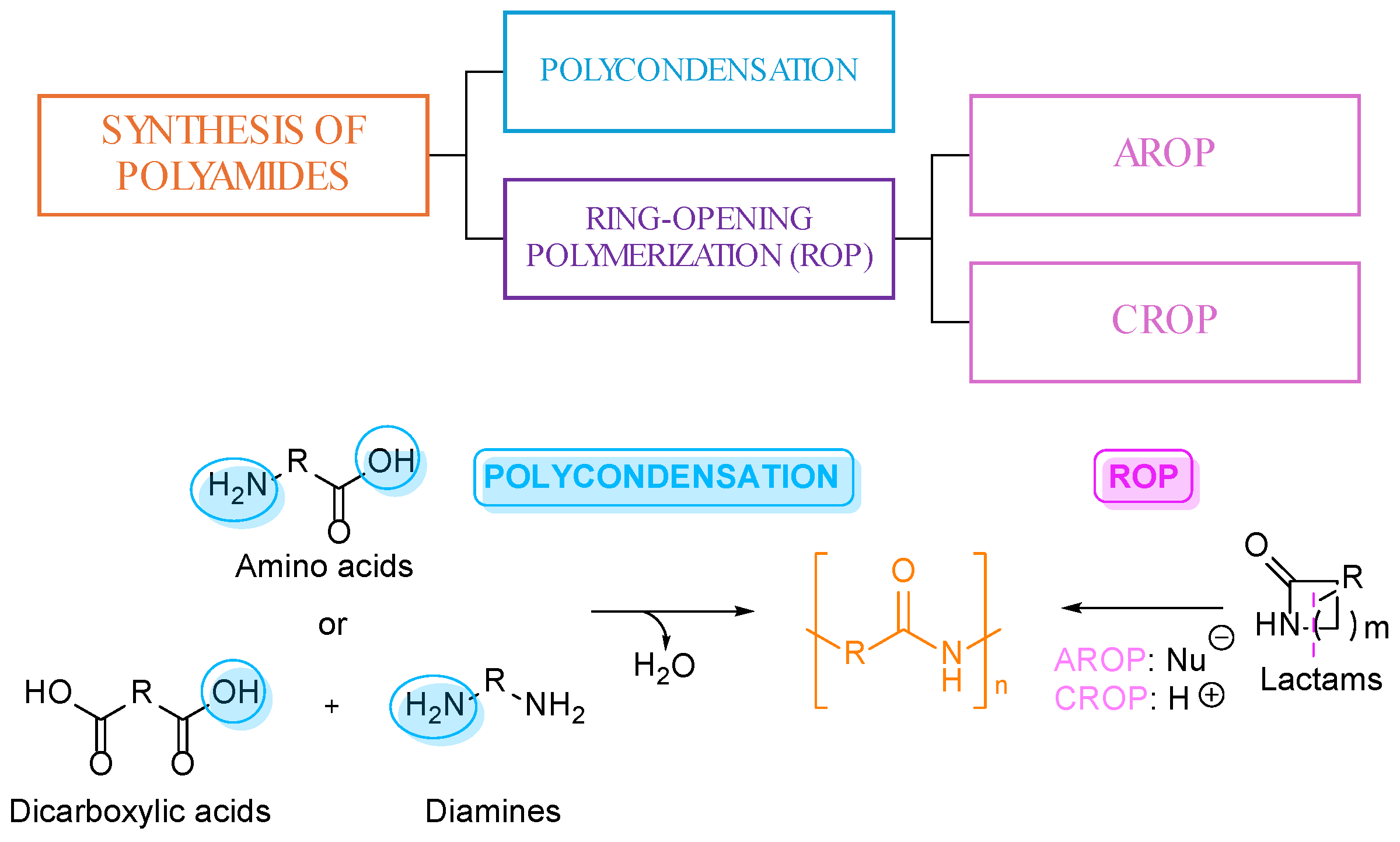
Figure 1.
Chemical structure of lignin.
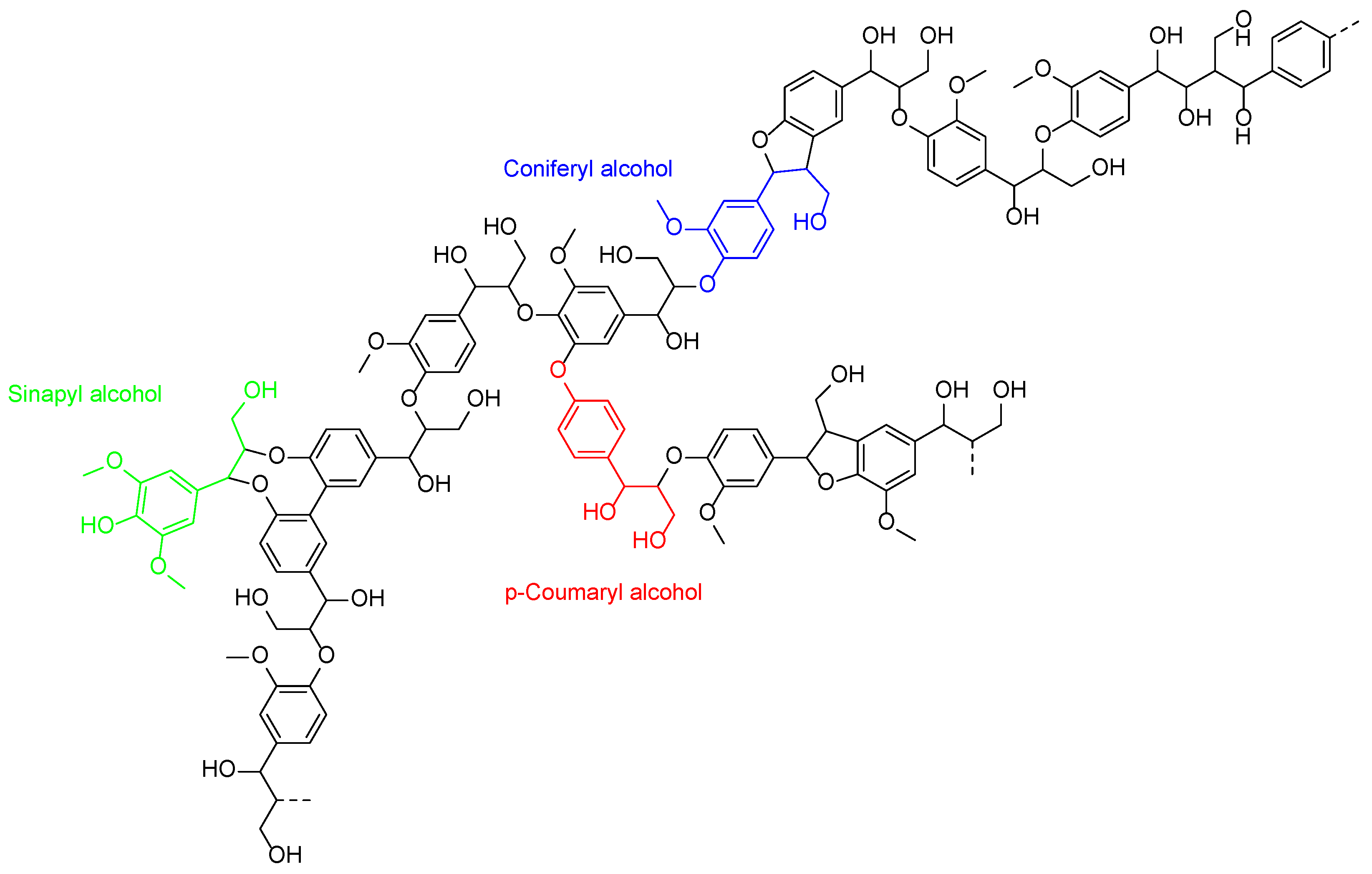
Figure 2.
Lignin aromatic derivatives structures.
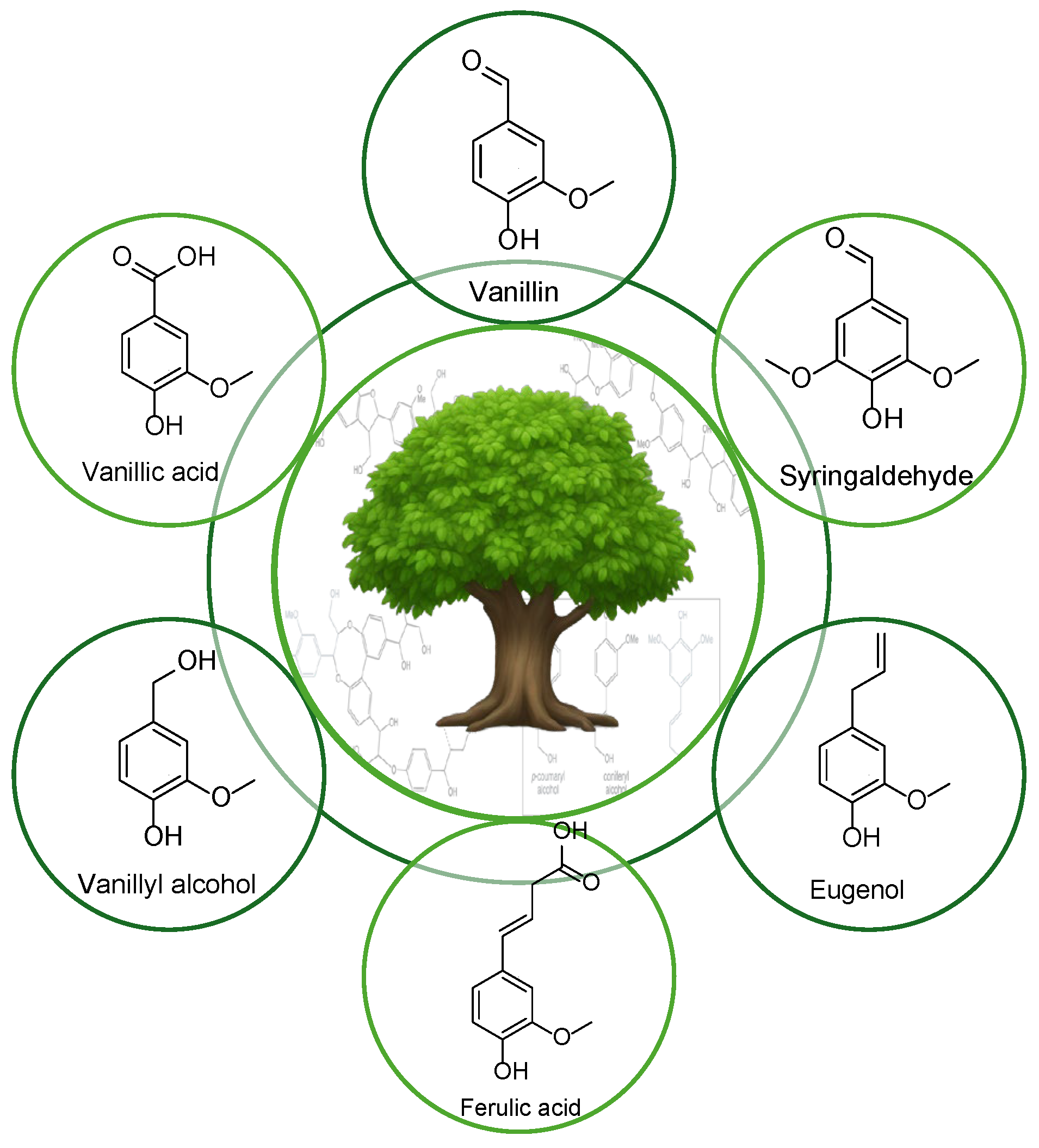
Scheme 2.
Synthesis of DVA-PA using different diamines and divanillic acid (DVA).
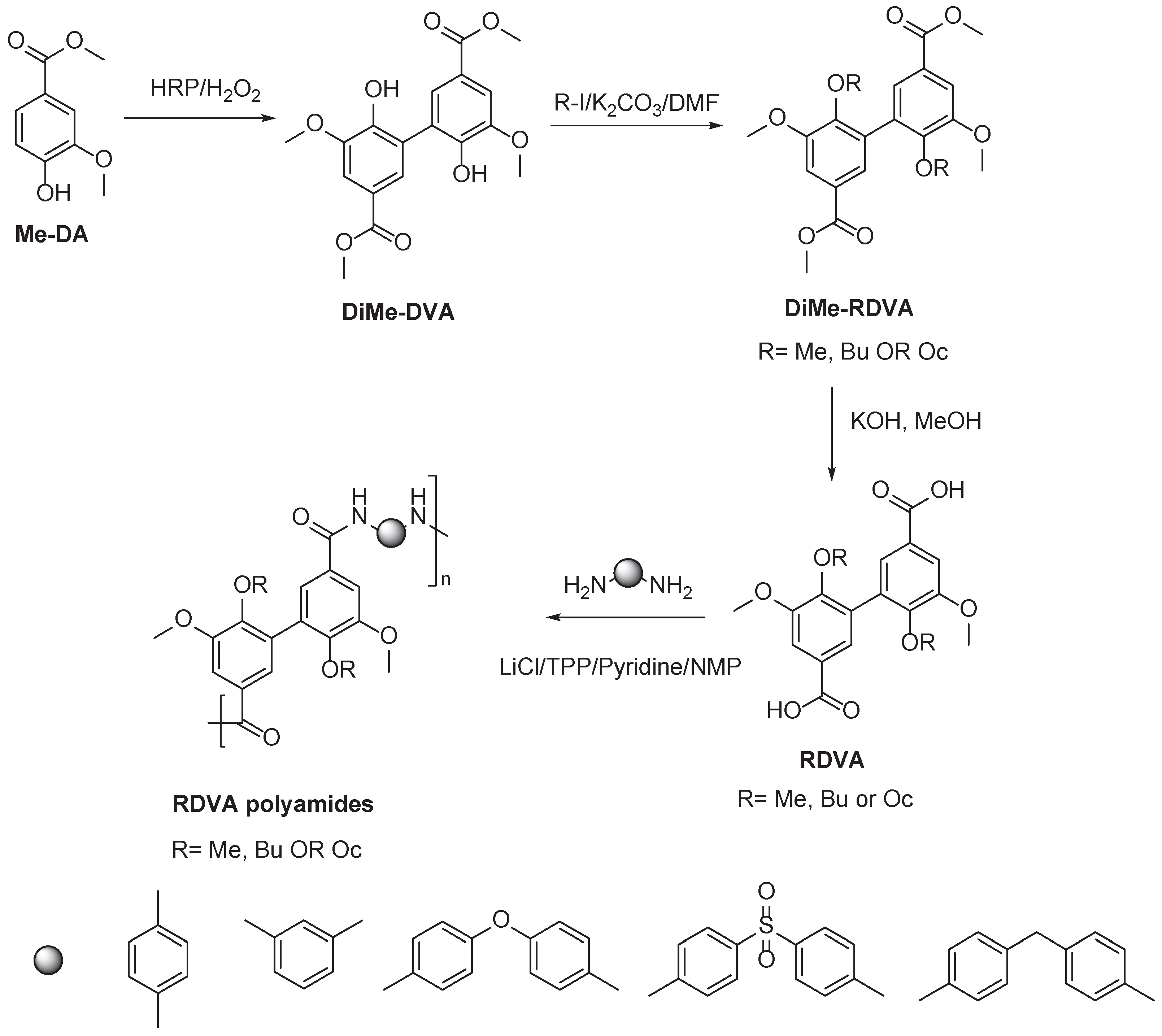
Scheme 3.
Fully DVA-derived PAs synthesis.
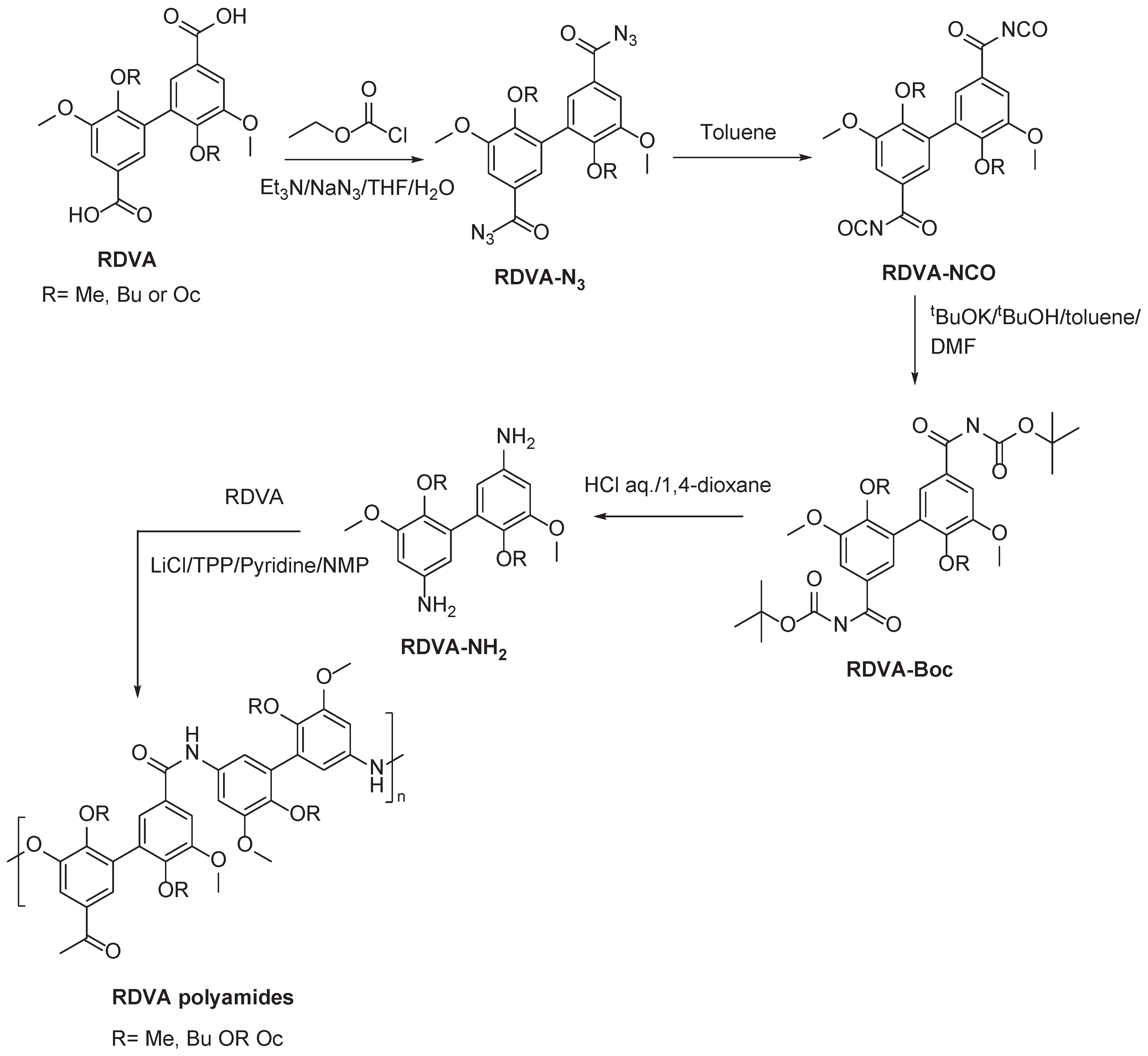
Scheme 4.
Synthesis of a vanillin-based poly(amide-imide) vitrimer.
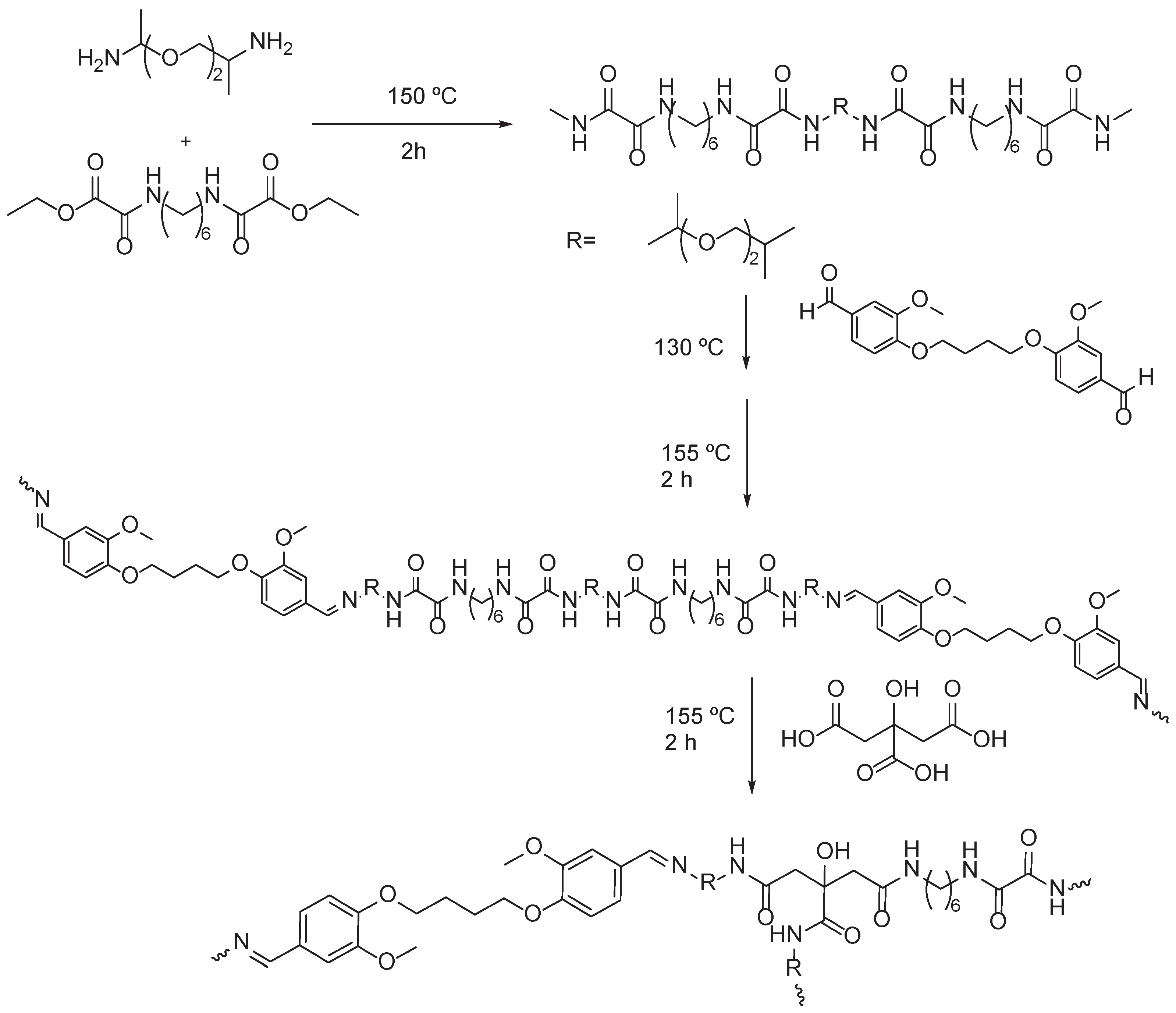
Scheme 5.
Solvent-free polycondensation reaction of eugenol derived diester monomer and a series of aliphatic and aromatic diamines for the synthesis of amorphous semiaromatic PAs.
Scheme 5.
Solvent-free polycondensation reaction of eugenol derived diester monomer and a series of aliphatic and aromatic diamines for the synthesis of amorphous semiaromatic PAs.
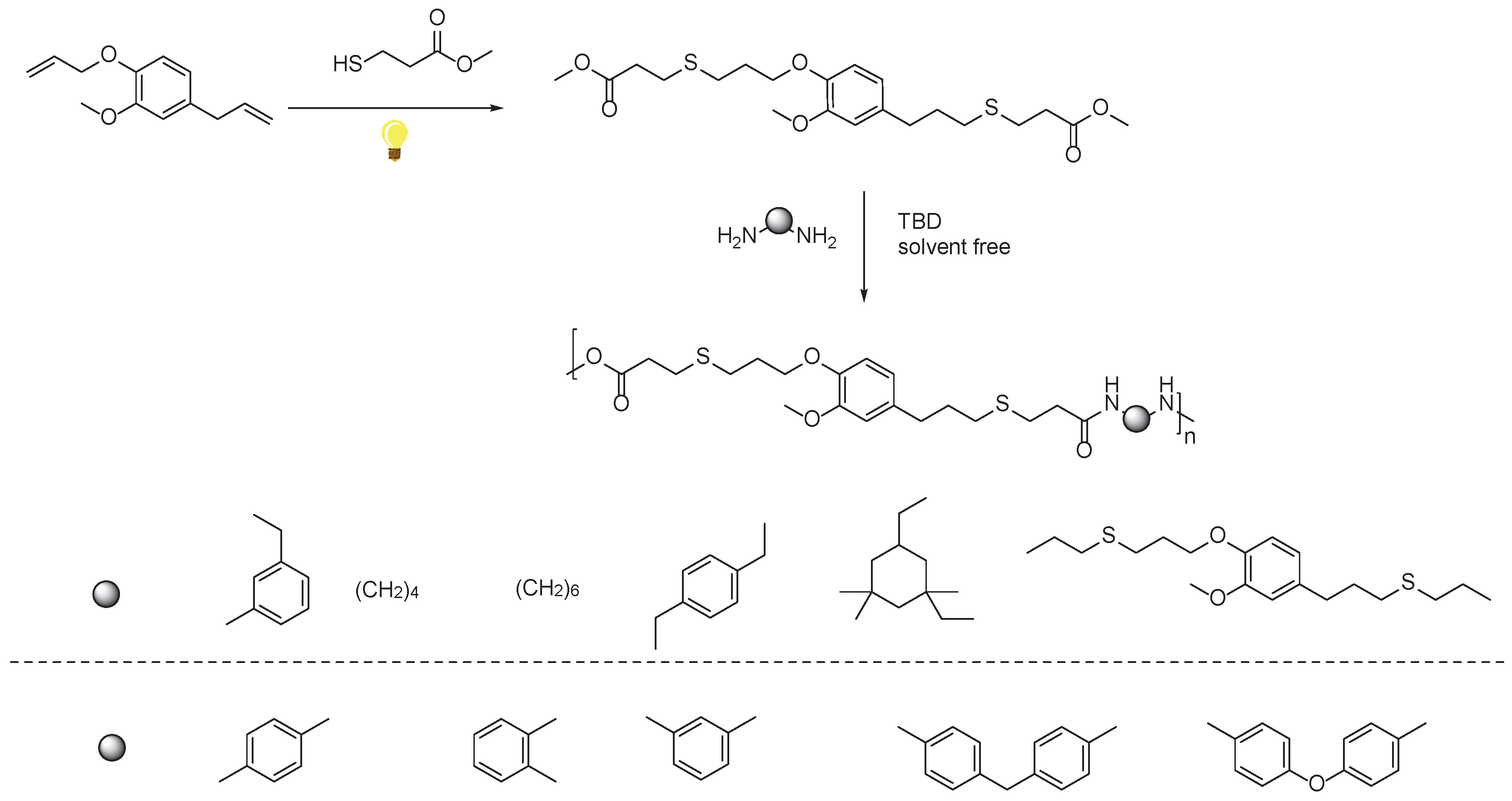
Figure 3.
Furanic compounds.

Scheme 6.
Enzymatic synthesis of a FDCA-based PA through the reaction. Reversible and perpetual crosslinking.
Scheme 6.
Enzymatic synthesis of a FDCA-based PA through the reaction. Reversible and perpetual crosslinking.
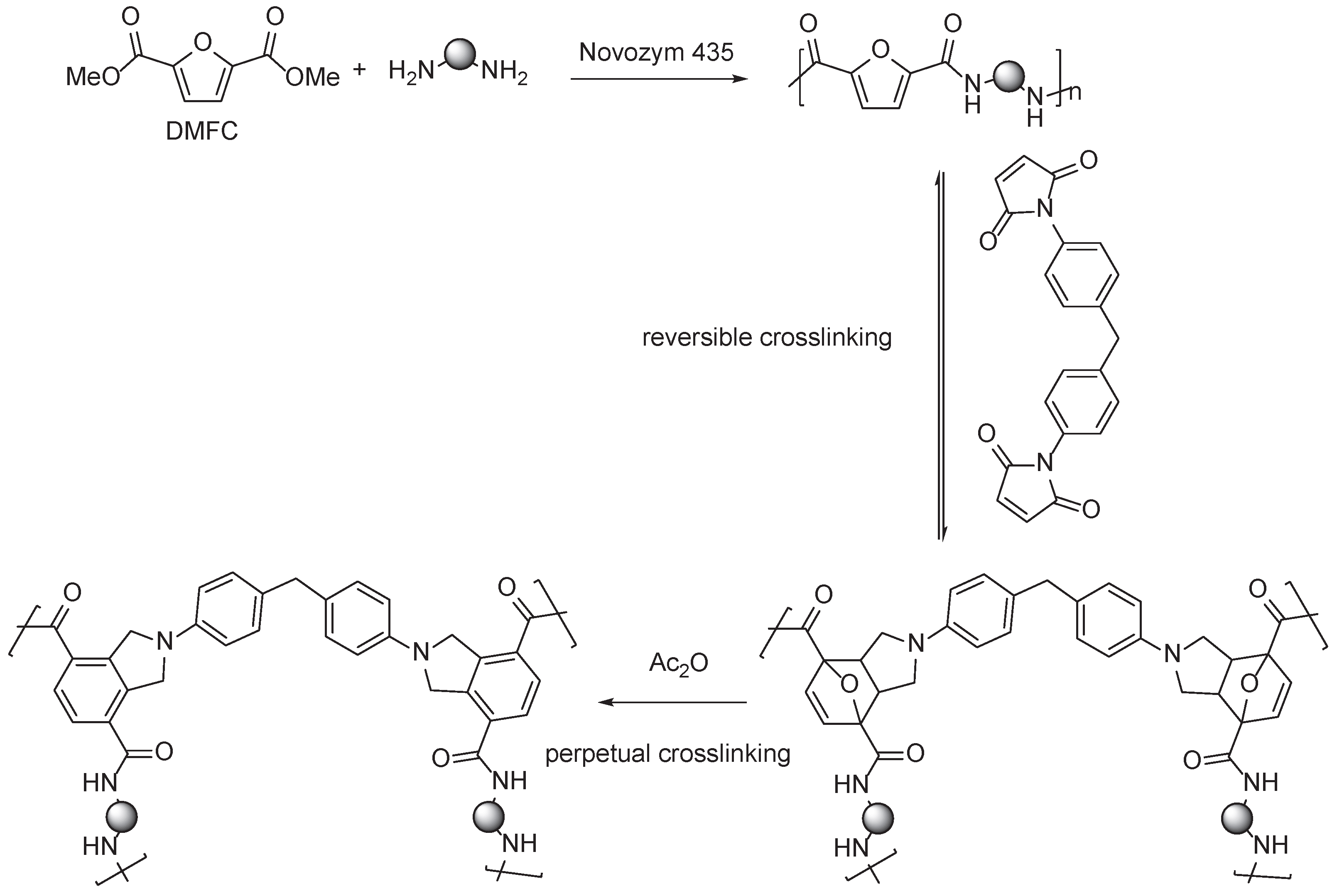
Scheme 7.
Polycondensation reaction of FDCACl and diverse diamines.
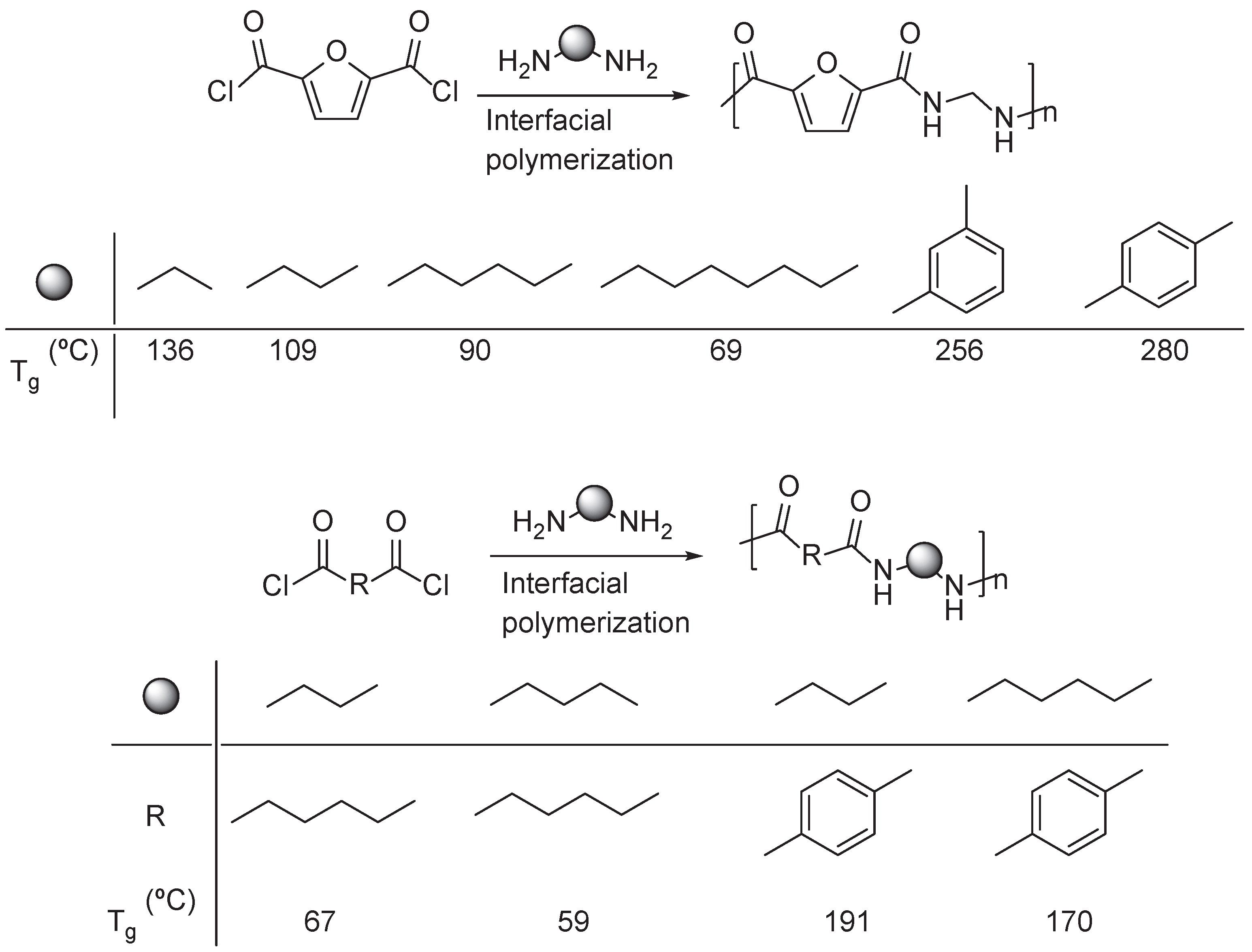
Figure 4.
“Double bent” conformation of the furan moiety.
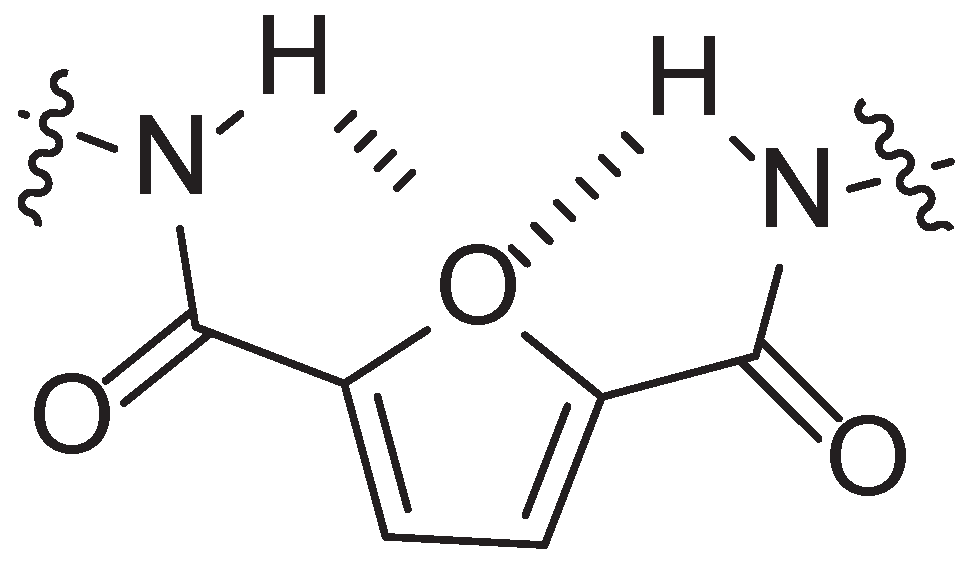
Scheme 8.
Different protocols for the synthesis of aliphatic furane-based PAs.
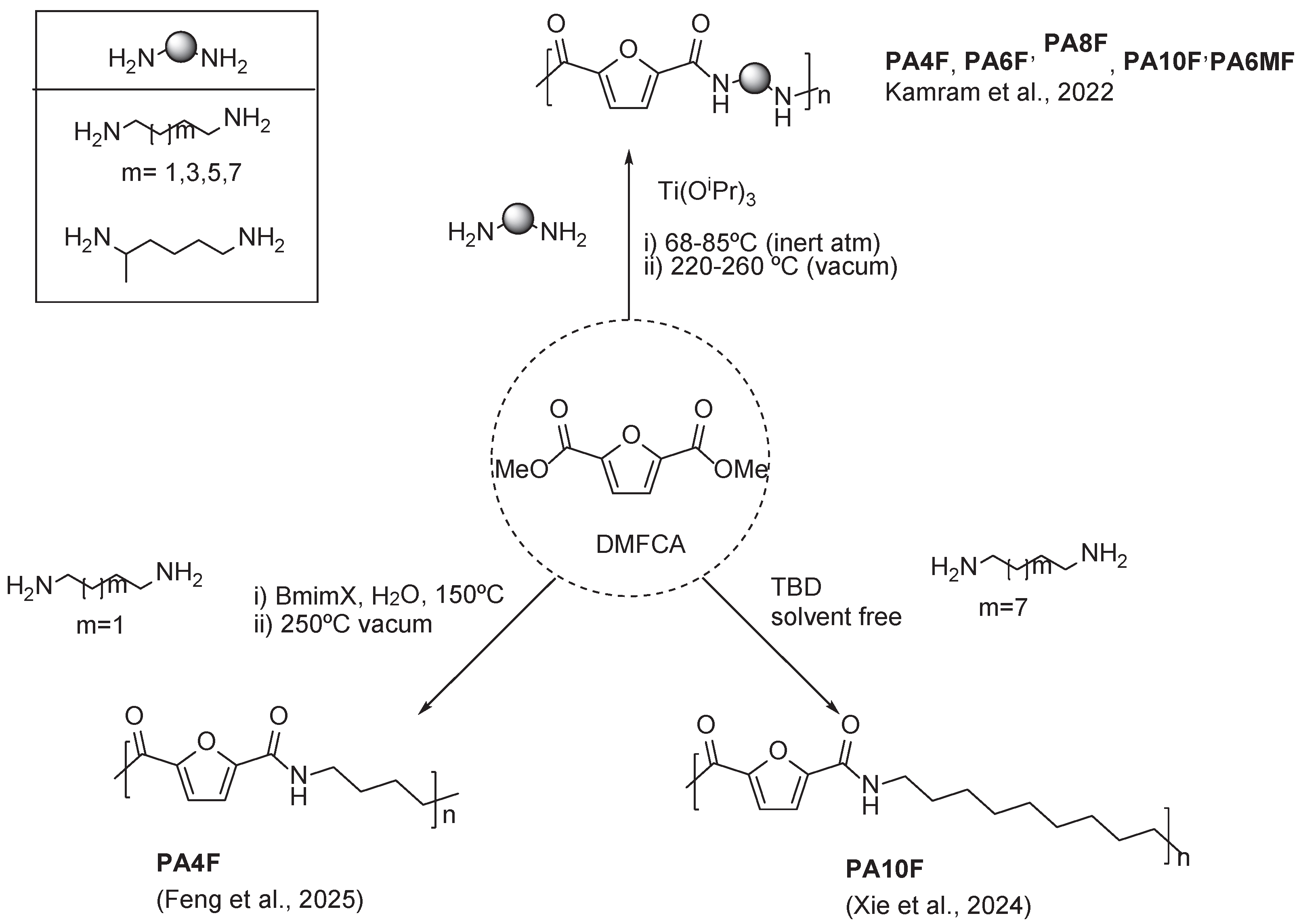
Scheme 9.
Polycondensation of DMFCA with long-chain aliphatic diamines containing oxa-lamide groups.
Scheme 9.
Polycondensation of DMFCA with long-chain aliphatic diamines containing oxa-lamide groups.

Scheme 10.
Direct polycondensation between FDCA and a series of aromatic diamines.
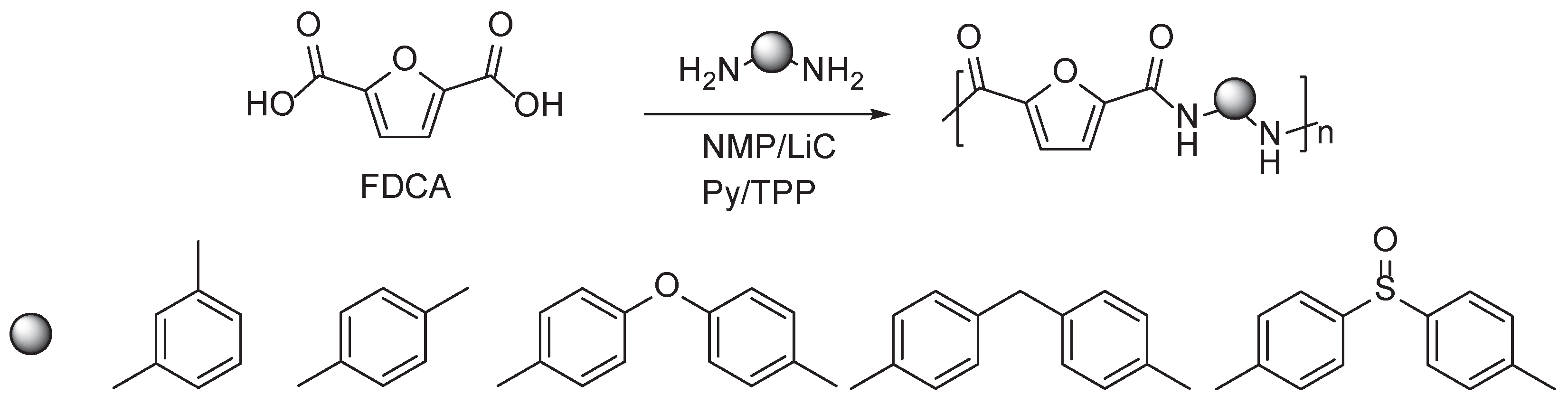
Scheme 11.
Synthesis of furane containing full aromatic PAs.
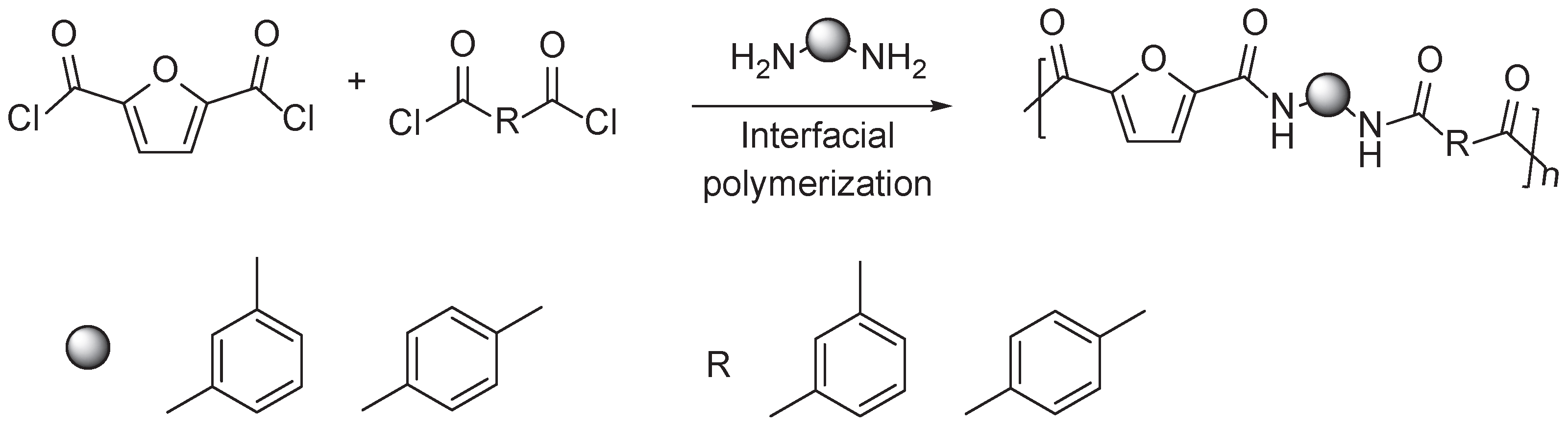
Scheme 12.
Polycondensation reaction between FDCACl and 3,4’-diaminophenylether.

Scheme 13.
Polycondensation reaction between 4,4’-diaminodiphenyl ether and FDCACl.
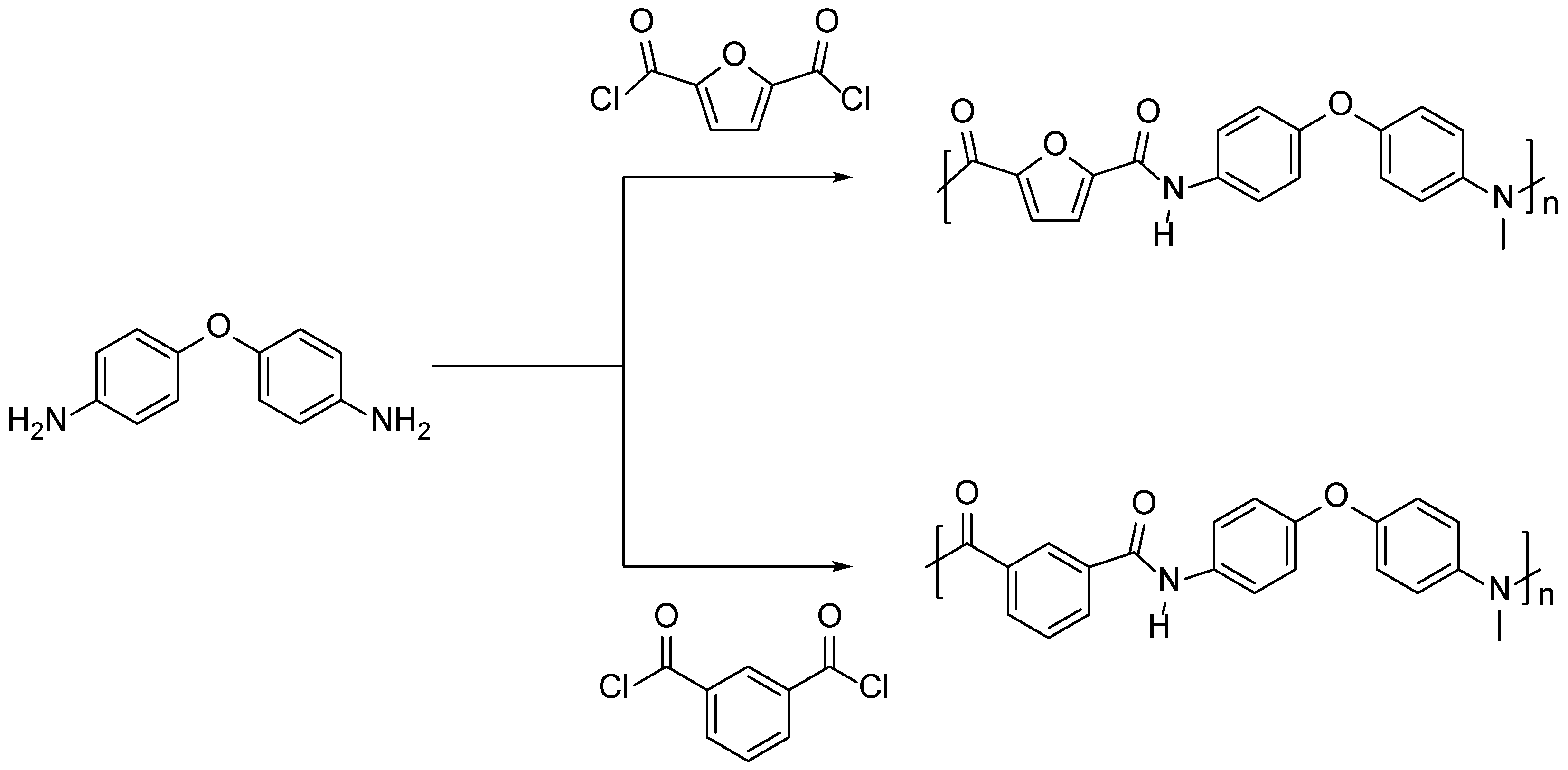
Scheme 14.
Interfacial polycondensation between 2,2’-bis [2-(5-chloroformyl)furfuryl]propane and a number of structurally diverse diamines.
Scheme 14.
Interfacial polycondensation between 2,2’-bis [2-(5-chloroformyl)furfuryl]propane and a number of structurally diverse diamines.
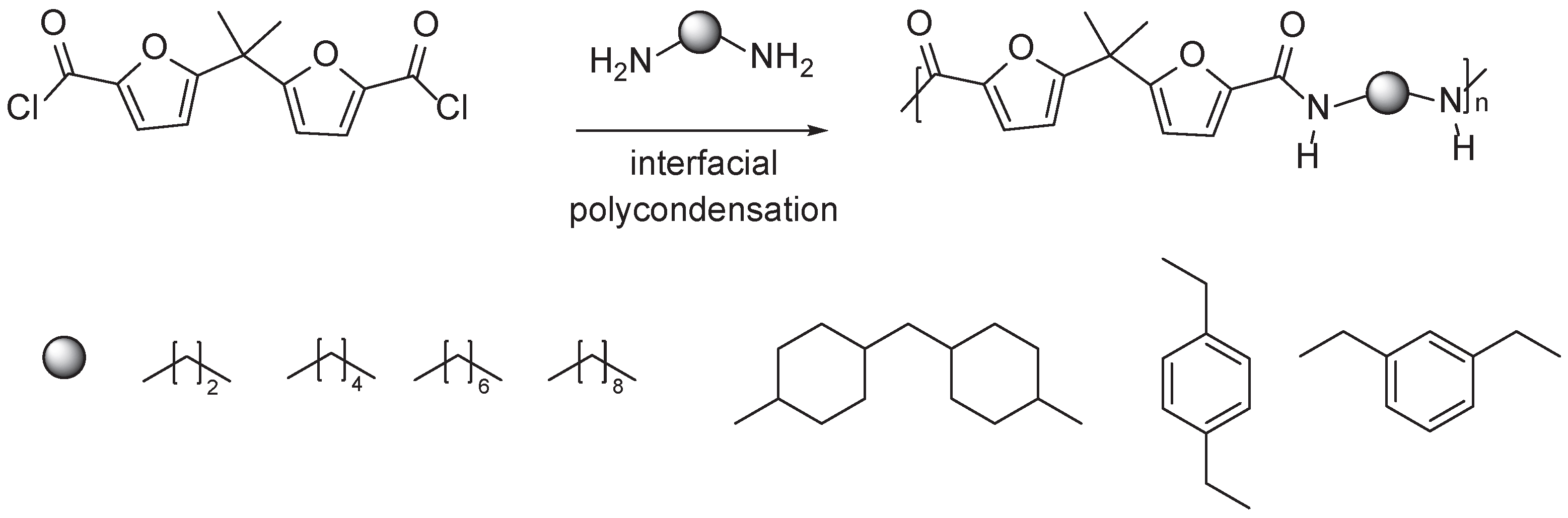
Scheme 15.
Synthesis of a series of bisfuran based PA with different spacer moieties employing furfuryl amine as starting material.
Scheme 15.
Synthesis of a series of bisfuran based PA with different spacer moieties employing furfuryl amine as starting material.
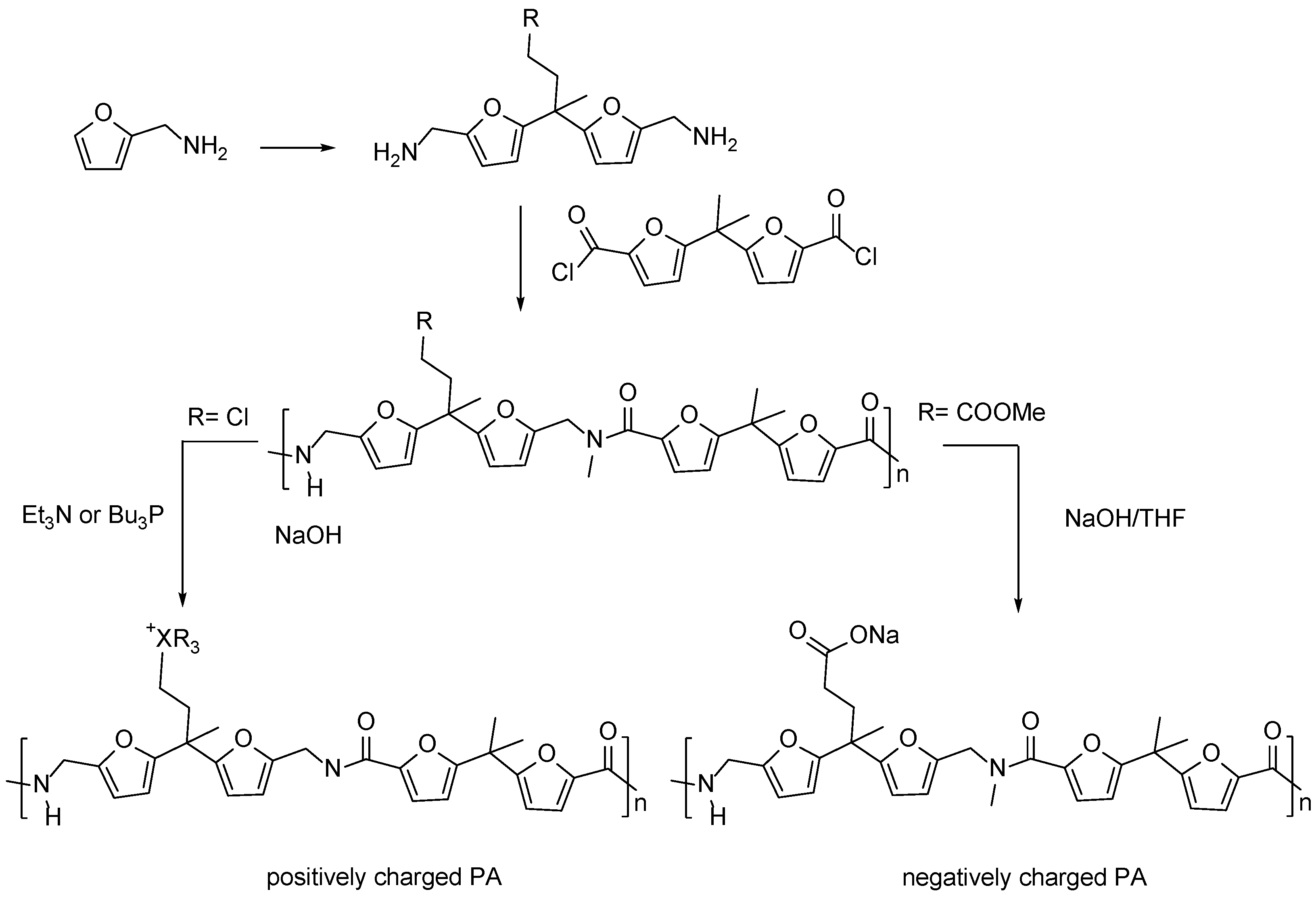
Scheme 16.
Solution and interfacial polycondensation of bifuran derived dicarbonylchloride with several aliphatic diamines.
Scheme 16.
Solution and interfacial polycondensation of bifuran derived dicarbonylchloride with several aliphatic diamines.
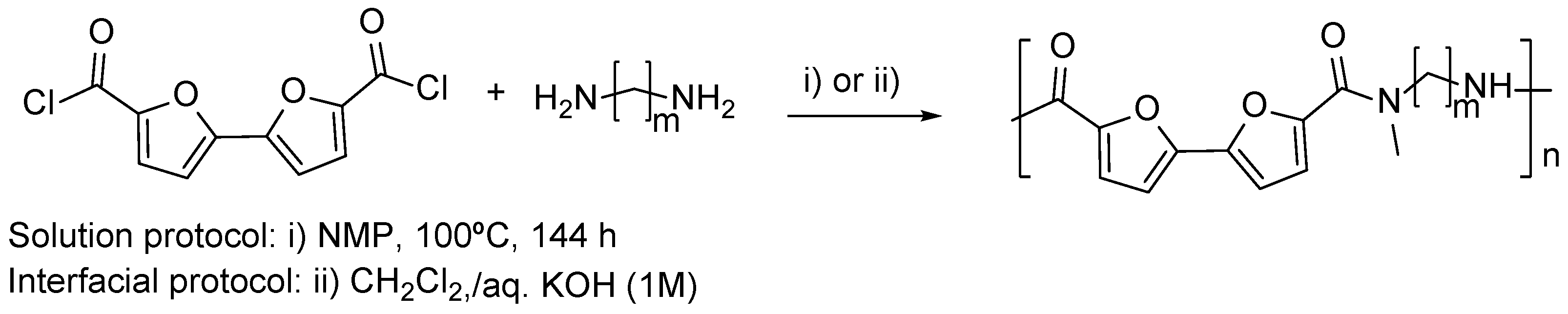
Scheme 17.
Polymerization of bifurfurylamine and a series of diacyl chlorides.
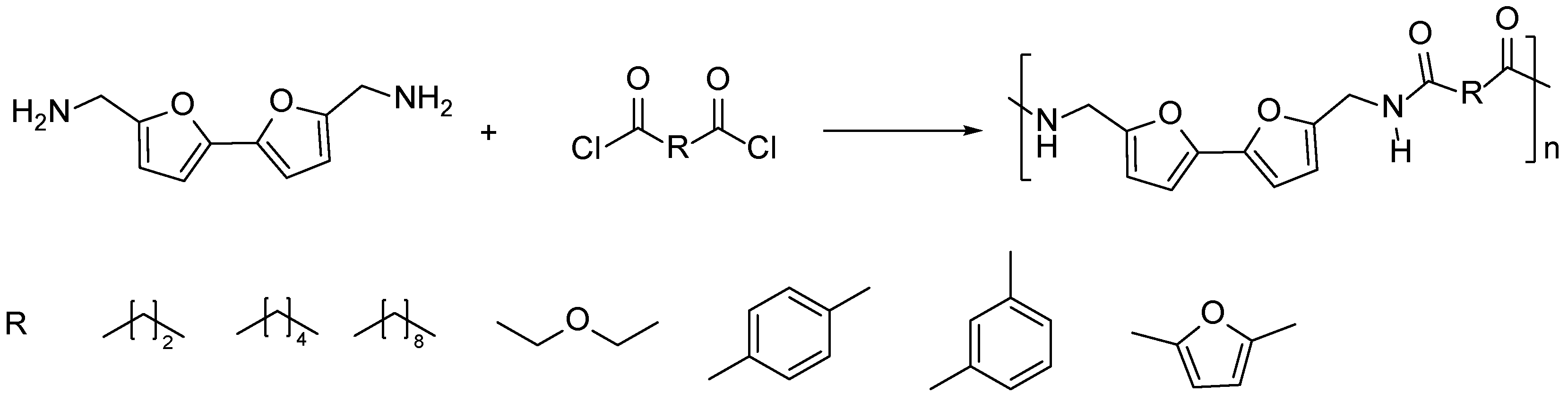
Scheme 18.
Synthesis of lactams starting from menthone and posterior ROP to synthesize PA oligomers.
Scheme 18.
Synthesis of lactams starting from menthone and posterior ROP to synthesize PA oligomers.
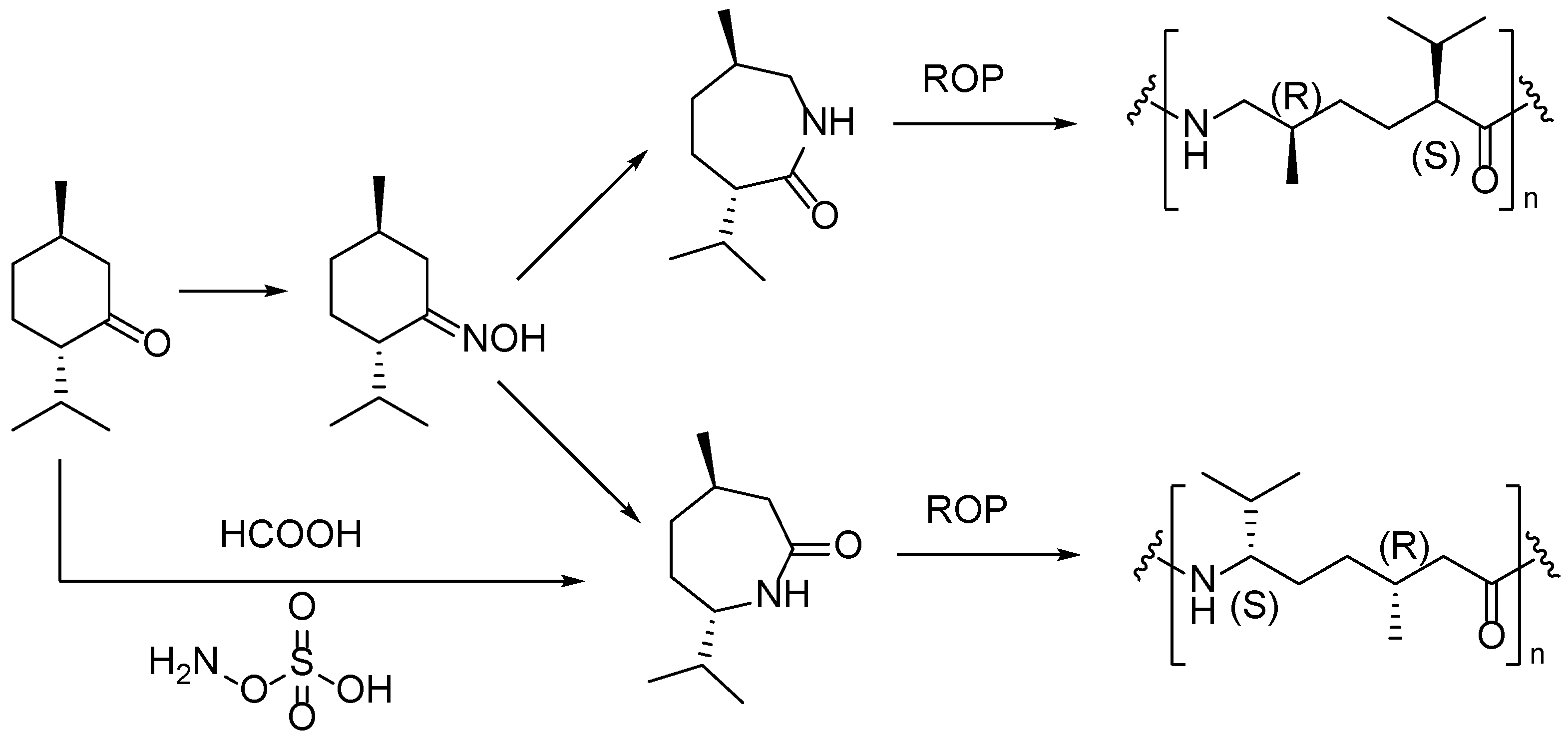
Scheme 19.
Limonene derived PA synthesis via polycondensation.
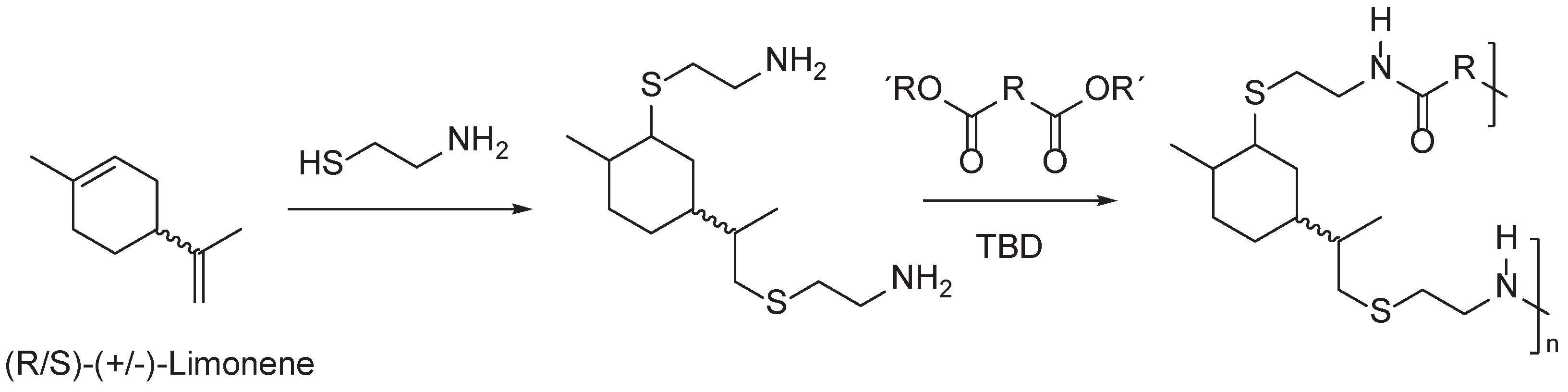
Scheme 20.
Chemical structure of undec-10-enoic, oleic and erucic acids, suitable candidates for the synthesis of biobased PAs.
Scheme 20.
Chemical structure of undec-10-enoic, oleic and erucic acids, suitable candidates for the synthesis of biobased PAs.
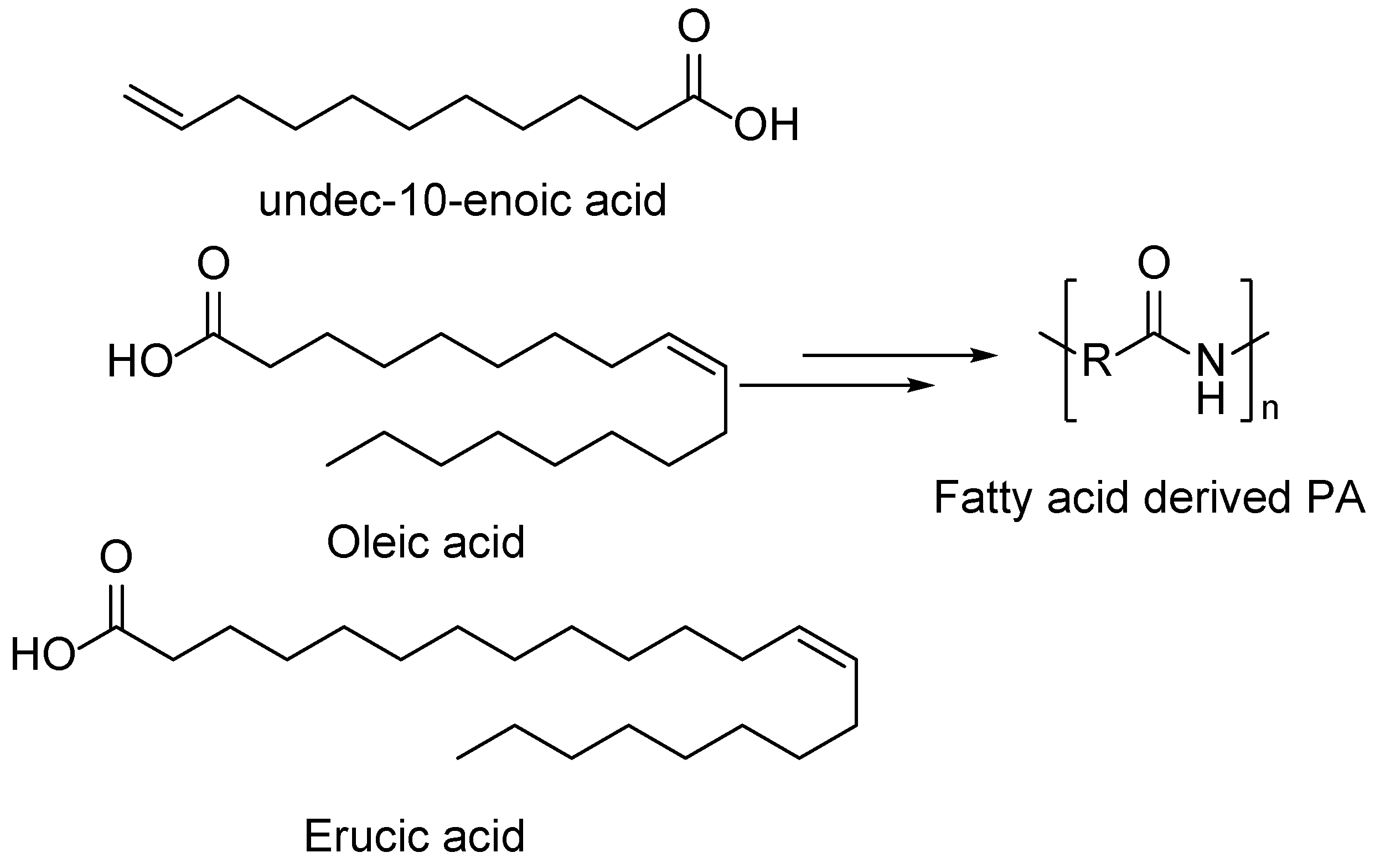
Scheme 21.
Hydroformylation and later oxidation of undec-10-enenitrile to synthesize PA12.

Scheme 22.
Synthesis of long chain PAs starting from unsaturated fatty acids.
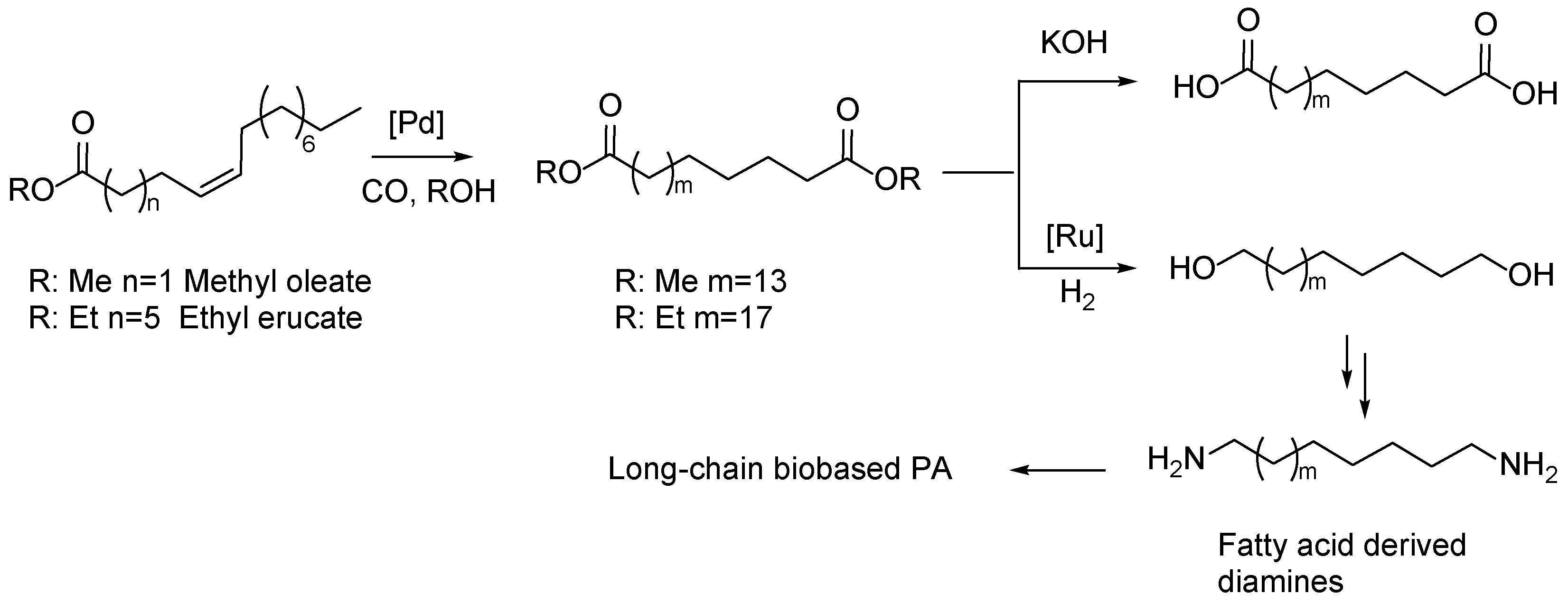
Scheme 23.
Synthesis of biobased homo and coPAs.
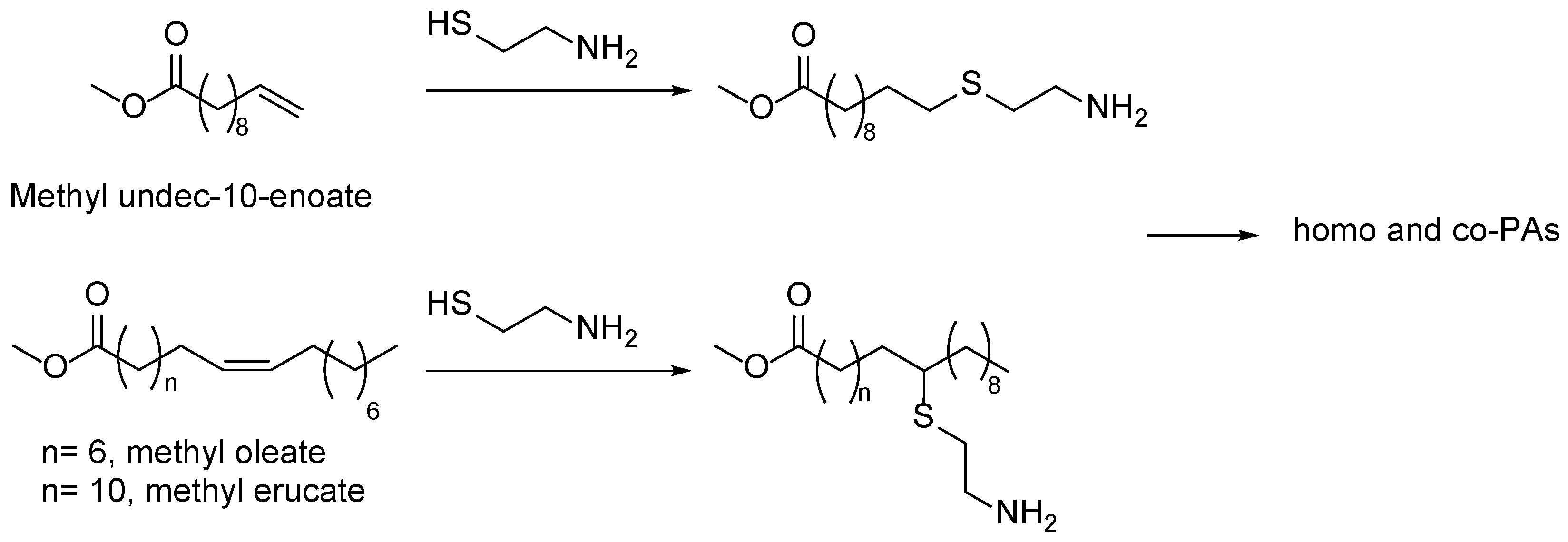
Scheme 24.
Co-catalyst free Wacker oxidation of unsaturated FAMEs, subsequent reductive amination to prepare amino FAMEs and polymerization of the synthesized monomers with TBD.
Scheme 24.
Co-catalyst free Wacker oxidation of unsaturated FAMEs, subsequent reductive amination to prepare amino FAMEs and polymerization of the synthesized monomers with TBD.
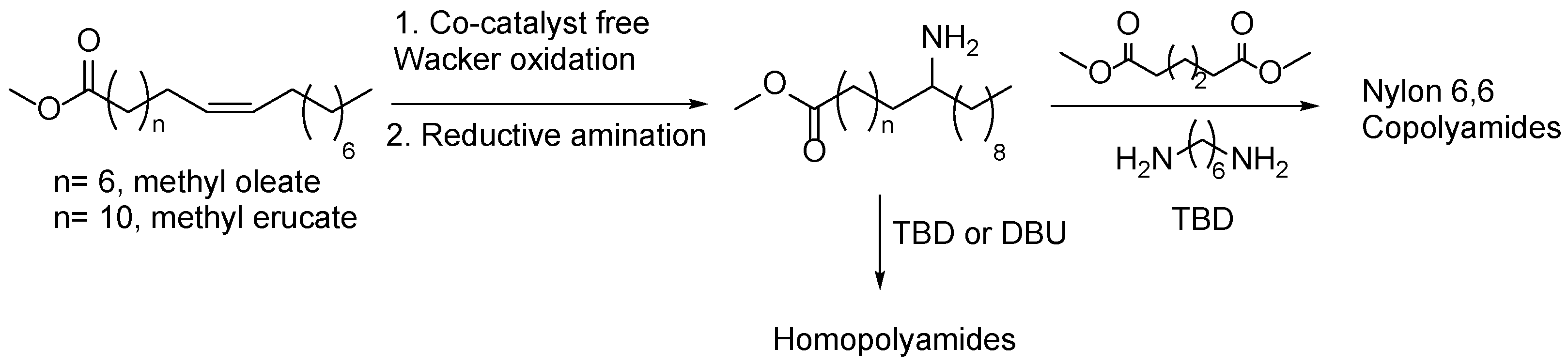
Scheme 25.
Synthesis of the monomers and fatty acid derived PAs starting from methyl oleate and methyl erucate.
Scheme 25.
Synthesis of the monomers and fatty acid derived PAs starting from methyl oleate and methyl erucate.
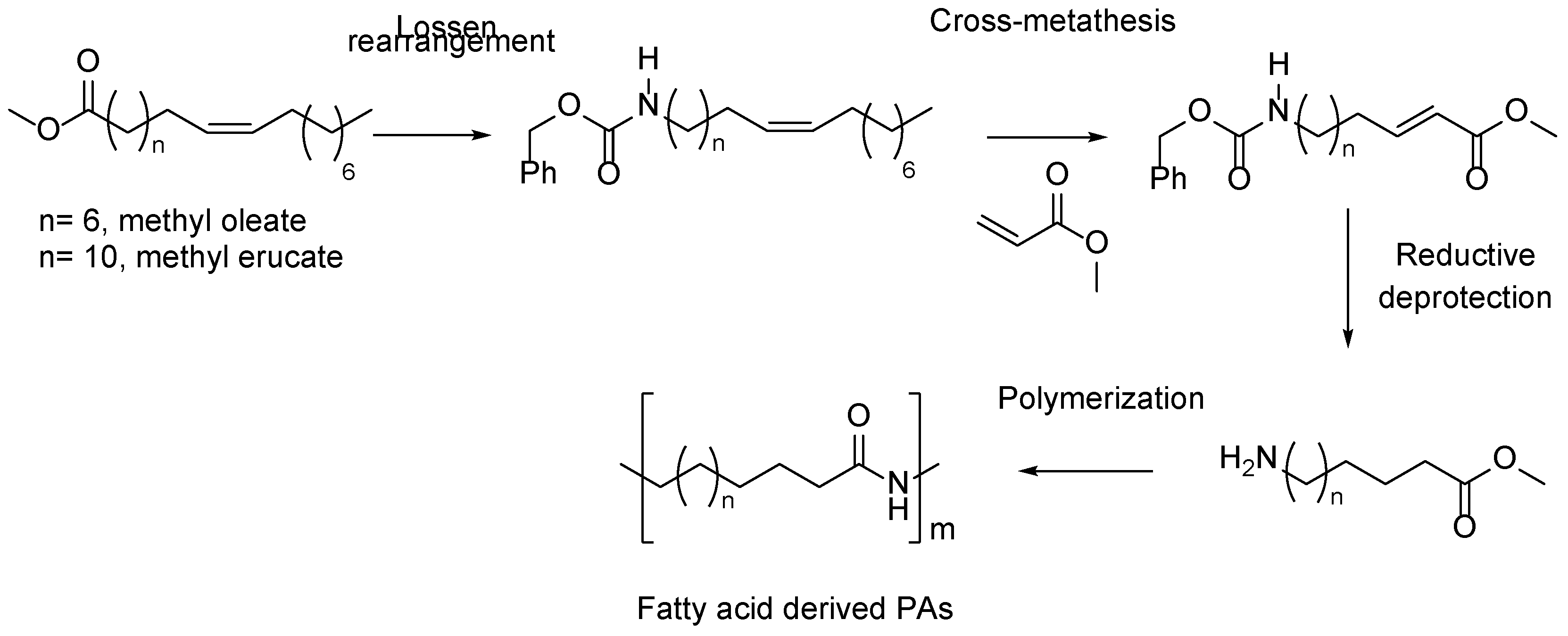
Scheme 26.
Self-cross-metathesis of technical grade methyl oleate.
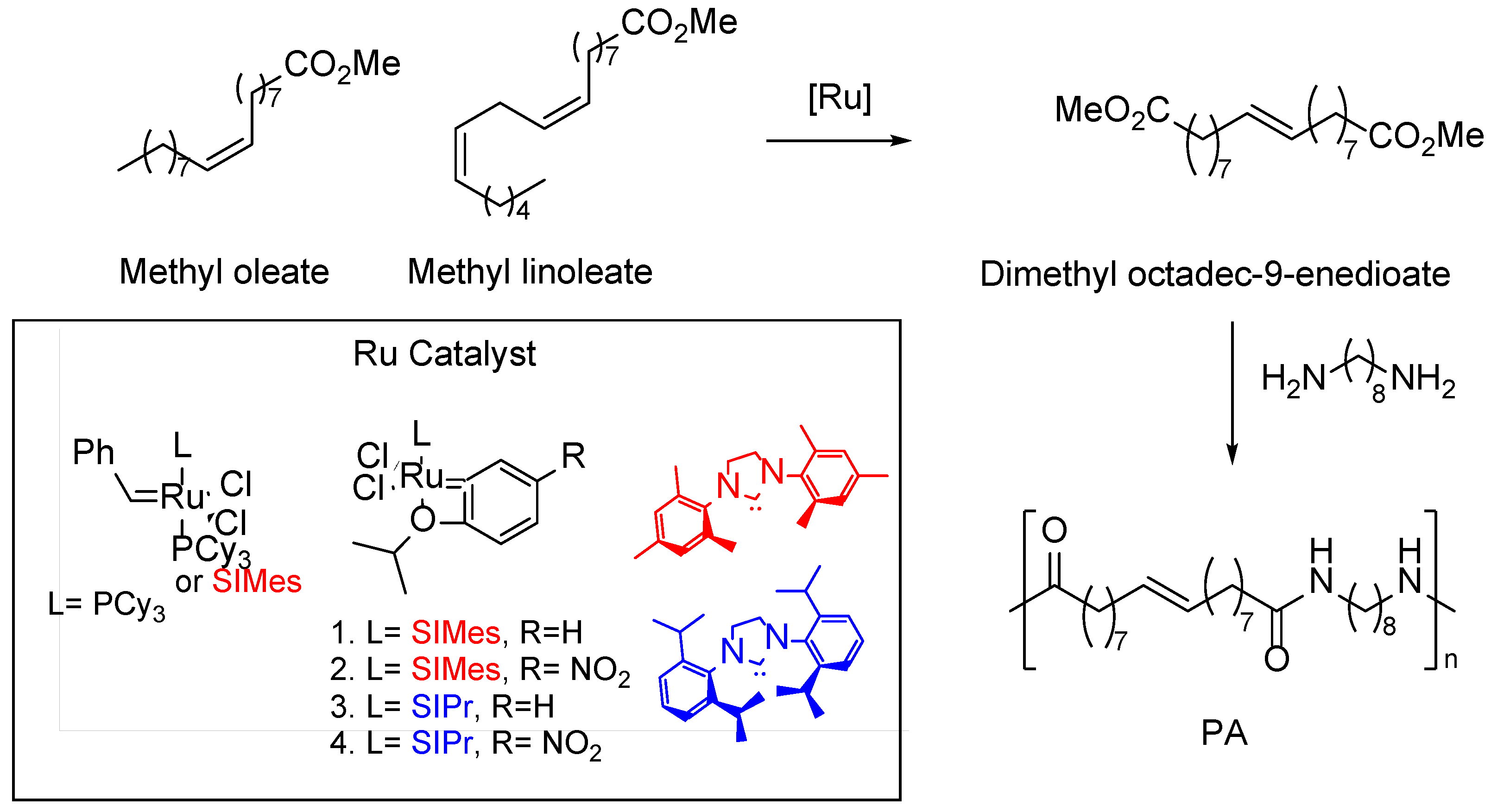
Scheme 27.
Thiol-ene copolymerization reaction synthesizing PAs with pendant groups.
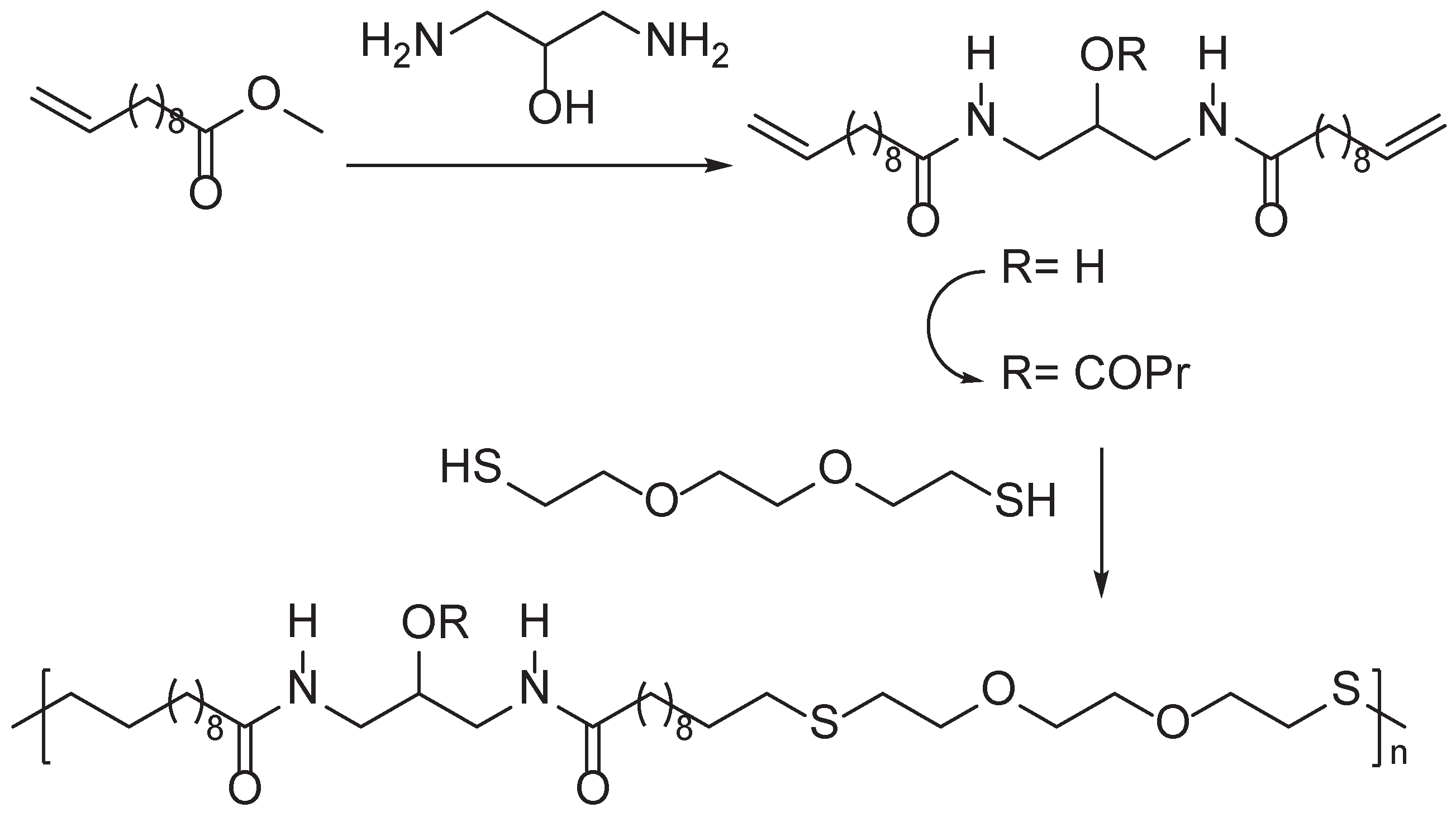
Scheme 28.
Synthesis of biobased PAs using conventional or microwave heating procedures.
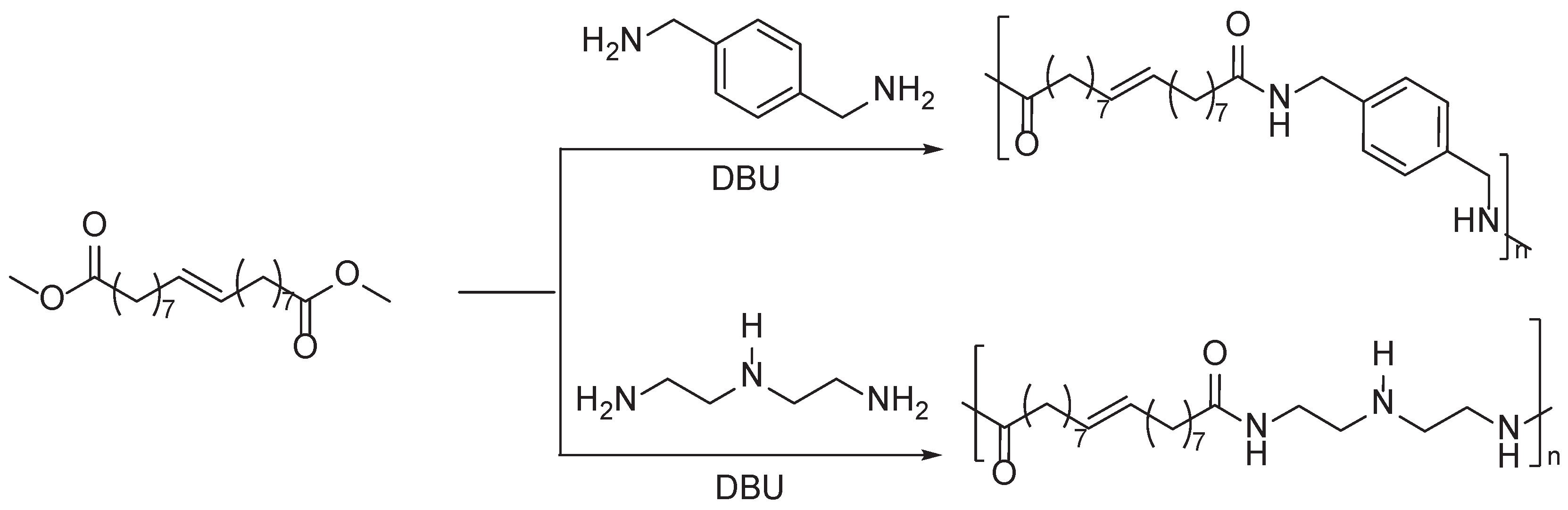
Scheme 29.
Synthesis of PAs reacting 1,19-nonadecanedioic acid with various aliphatic diamines.

Disclaimer/Publisher’s Note: The statements, opinions and data contained in all publications are solely those of the individual author(s) and contributor(s) and not of MDPI and/or the editor(s). MDPI and/or the editor(s) disclaim responsibility for any injury to people or property resulting from any ideas, methods, instructions or products referred to in the content. |
© 2025 by the authors. Licensee MDPI, Basel, Switzerland. This article is an open access article distributed under the terms and conditions of the Creative Commons Attribution (CC BY) license (http://creativecommons.org/licenses/by/4.0/).
Copyright: This open access article is published under a Creative Commons CC BY 4.0 license, which permit the free download, distribution, and reuse, provided that the author and preprint are cited in any reuse.


