

Submitted:
04 July 2025
Posted:
07 July 2025
You are already at the latest version
Abstract
Biomass and biowaste create potential environmental and health hazards in our modern society. Conversion of the solids into energy presents a promising avenue for sustainable energy generation. However, economic feasibility of the approach is limited by the challenges in material handling, particularly in developing countries whereas resource constraints amplify these obstacles. Despite their critical importance, the complexities of material handling often evade scrutiny until operational implementation. This paper highlights the challenges inherent in standard solid material handling processes, preceded by a concise review of common solid waste typologies and their physical properties, particularly those related to biomass and biowastes. It delves into the complexities of material flow, storage, compaction, agglomeration, separation, transport, and hazard management. Specialised characterisation techniques essential for informed process design are also discussed to mitigate operational risks. In conclusion, the paper emphasises the necessity of a tailored framework before the establishment of any further conversional processes. Given the heterogeneous nature of biomaterials, material handling equipment must demonstrate adaptability to accommodate the substantial variability in material properties in large-scale production. This approach aims to enhance feasibility and efficacy of any energy conversion initiatives by using biomass or other solid wastes, thereby advancing sustainable resource utilisation and environmental stewardship.
Keywords:
Biomass and biowaste
; Energy production
; Handling challenges
; Material physical properties
; Characterisations
; Flow properties
1. Introduction
Solid waste is growing rapidly and becoming a major problem in many countries, including agricultural and municipal wastes. A recent report by United Nations Environment Programme 2024 [1] shows that municipal solid waste generation is predicted to grow from 2.1 billion tonnes in 2023 to 3.8 billion tonnes by 2050. Approximately 70% of the total municipal solid waste collected was disposed of in landfills, 19% was recycled, and 11% was used for energy recovery [2,3]. However, municipal solid waste typically does not include solid waste from other sources, such as agriculture or industrial production [4], so these are in addition. The major barriers to waste recycling or energy recovery from waste solids are the economic costs and the technical complexity of the processes [5]. Compared with considerations of calorific values and chemistry of the solid wastes in combustion, solid material handling for processing the wastes invariably gets much less attention in the design of a conversion process [6]. Unlike conventional power generation from fossil fuels such as coal, the costs for material handling equipment in energy production from solid wastes can be more than two-thirds of the total costs of the entire process, simply because of the nature of the waste materials [7]. However, in spite of these challenges, the authors have observed that materials handling equipment sub-contracts are usually awarded on a “lowest bidder” basis with no consideration of the technical challenges and suitability of solutions offered, which naturally ensures the contracts are let to companies who do not understand the technical complexity of the problem, inevitably leading to delays, cost over-runs and poor performance.
Compared to conventional fossil fuels such as coal and natural gas, solid wastes come from much more varied sources, such as agriculture waste, municipal waste, biological food waste, electronic waste, automobile recycling waste, plastic waste and hazardous solid wastes such as medical waste, many of which could be used for energy recovery [8]. However, nowadays, most solid wastes are directly landfilled, which saves costs, but this causes significant impacts on the environment and human health [9]. Solid waste must be recycled or reclaimed to protect the environment, with energy recovery from solid waste residues serving as a sustainable fuel source for heat or electricity generation [10]. However, it should be noted that whilst the biogenic fraction of these residues offers a carbon-neutral energy source, the non-biogenic fraction releases fossil carbon when burned.
Many studies on energy production from solid wastes have been reported previously [11]. Direct combustion (incineration) of solid waste is a common method for treating combustible waste [6]. In this process, solid waste is generally treated by size reduction and removal of any contaminants that cannot be burned and then injected into a furnace for combustion. The advantage of incineration is that it is a simple and economical process, requiring no complex fuel preparations [12]. However, it still involves material handling such as size reduction, drying and classifying processes. Other methods for converting solid waste to energy include gasification [13], pyrolysis [14], and biological digestion [11]. Although the quality of fuels produced can be significantly improved through these methods, the requirements for fuel preparation and the number of process stages also increase substantially [15]. For gasification, the treatment temperature can be up to 1500oC, and the feed particle size needs to be less than 100 mm. A higher treatment temperature usually requires smaller feed particle sizes [16]. Pyrolysis is used to convert biomass to biochar, bio-oil, and syngas by heating them up to 800 °C, which depends on the pyrolysis methods and the waste materials [17]. Pyrolysis can be complicated, especially for fast pyrolysis where particle size is one of the major influence factors for the yields, and the size can be smaller than 10-20 mm [18]. It has been observed that smaller particle sizes result in higher syngas and bio-oil yields, accompanied by less char and lower levels of hydrogen and carbon monoxide in the syngas [19], but also introduce additional challenges to material handling processes.
In these conversions, solids must be processed in several stages, from the collection of raw materials to the production of energy products. Material handling of the solids may face different challenges at different stages [6,7,15]. Especially for biowaste or reclaimed waste from scrapped materials, the solids may contain different ingredients with extreme particle sizes and shapes and typically have a high level of water content [20]. These solids can be highly compressible, highly cohesive, have low bulk density, and exhibit high dust contamination [9,20]. These special characteristics of solid wastes create significant challenges in material handling processes, which have been widely noticed but rarely addressed [7,15]. The biggest challenge in biomass handling can be storage, which may face high risks of fire, dust emissions and interruptions of the process by flow failures of solid particles in discharges of silos or hoppers [21]. The other challenges in the process can be caking and agglomerations of materials. High water content is also a serious concern because the water must be evaporated before or during thermal processing, which consumes a significant amount of energy. For this reason, many biowaste streams, such as food waste, animal waste, and sewage sludge, are not autothermic; in these cases, the high energy required to drive off the water makes combustion or pyrolysis uneconomic, pushing them more towards digestion, where the high water content is not a problem.
It is essential to understand that the material handling process cannot be determined solely by the name of the waste, which is commonly the case in practice, leading to poor performance or even the complete failure of solids handling systems. The challenges of material handling for biowaste materials can be severe and sometimes even dangerous and life-threatening if the waste is stored in silos for an extended period. The Wolfson Centre has observed that the risks arising from these dangers are often not recognised until the process fails or damage or disaster is created, such as fire, dust explosions, or structural failure of process vessels. This paper, therefore, focuses on the challenges that can arise in material handling processes for biomass and other common solid wastes due to material properties. Challenges in material characterisation for the materials are also discussed in relation to process design. It concludes that the handling of biomass materials can face some unusual challenges due to extreme particle sizes and shapes, high moisture content, high compressibility, and biological reactions. The design of material handling systems for such wastes and biomass materials cannot rely simply on the name of waste and previous experience or conventional characterisation methods. There is not a best solution, but the best suggestion is: ‘KNOW YOUR ENEMY FIRST’; in other words, study carefully the handling and behavioural properties of the particular material stream in question before choosing and sizing equipment, and do not assume that solutions that have worked previously that happens to share the same name, will work again.
2. Biomass and Other Solid Wastes
Biomass and other solid wastes generated in human life are extremely varied and were disposed of naturally before the Industrial Revolution. Nowadays, converting solid waste to energy is a sustainable way to reduce its impact, but it can be expensive due to the material properties of different types of waste, leading to more complex processes. The common types of solid waste that can be used for energy recovery are briefly discussed here in terms of their material, physical, and mechanical properties.
2.1. Biomass
Biomass is a broad category of solid waste commonly generated from agriculture, food processing, and forestry, some of which were previously landfilled or burned in the field [22,23]. It has been recognised as a source of renewable energy for about 30 years, helping to reduce pollution and carbon emissions as a replacement for fossil fuels [24]. Although it has been used for heat generation throughout human history, long before fossil fuels were known, its use in this context has gained significance in recent years. However, it becomes extremely challenging when massive quantities of biomass materials are in mass production, such as for electricity generation and domestic heating [25,26].
The nature of the biomass materials can be extremely varied, such as herbaceous and agricultural (wheat straw, barley straw, corn cobs, grass, sugar cane, bamboo, agave bagasse), wood (eucalyptus, pine, oak, poplar) or bark, forest residues, wastes from farms and food processes, and biowastes from municipal waste, etc. [27]. The first obvious difference between mineral fuels, such as coal, and biomass is the appearance of biomass, which varies depending on the type of biomass. Most biomass solids are light (low bulk density) with extreme particle shapes (see Figure 1). Quite often, biomass contains a high level of water when they are fresh, sometimes up to 60% - 70% of the total mass, which can be internal and/or external [28]. Sometimes, it contains a high level of oils such as nut kernel residues (Figure 1).
The popular sources of biomass used for energy recovery include farm wastes from agricultural lands [22], special residues of agricultural products such as coffee grounds or nut shells [29], wastes of wood production [30], forest residues [31], energy herbaceous production [32] and domestic wastes such garden wastes. The variations of biomass waste sources, and their widely varying behavioural characteristics, make the material handling extremely difficult in terms of storage and transport [33]. Large production for energy generation makes the processes more efficient and economical. However, due to the varied sources of biomass, it is more likely that the waste needs to be collected from varied locations with tiny amounts of solids and aggregates [34]. Therefore, the collection and transport of biomass can be the first barrier to using biomass in energy production.
2.2. Municipal Solid Waste
Municipal solid waste (MSW) is one of the most common types of waste, typically with an extremely large quantity available. Due to the diverse range of human activities involved, the MSW generated is primarily from households (55–80%), market or commercial areas (10–30%), and sewage sludge [10,35]. The MSW typically consists of kitchen waste, yard waste, paper and cardboard, waste plastic and rubber, metal, glass, electronic waste, and inert materials, which are generated from dwellings, industries, streets, institutions, and many other places [36]. Generally, solid from such sources is heterogeneous in nature, and it can have variable physical and chemical characteristics depending on its original sources [20]. The compositions of MSW are subject to where and when the MSWs are collected; for example, household wastes can contain food waste, plastics, wood, metals, papers, rubbers, leather, batteries, inert materials, textiles, paint containers, demolition and construction materials as well as many others wastes [37].
The appearance of MSWs is commonly dry; however, many MSWs have a high level of water and biological content, such as sewage sludge [38]. Except for landfilling directly, these types of solid wastes need to undergo water reduction before being used for energy generation, as high-water content often means they are non-autothermic or have a deficient calorific value [39]. Due to the varied sources of the MSWs, on the one hand, the MSW solids may have significantly different particle sizes and commonly with extreme particle shapes (see Figure 2(a)) and varied solid densities and may contain high levels of oil or water and other hazardous substances that may not be suitable for combustion. On the other hand, utilising MSWs for energy recovery, incorporating drying, separation, and size reduction, is an essential disposal route, as much of the content is not recyclable; however, it may face significant technical and economic challenges [40,41]. Obtaining the necessary permits and planning consent can also be a long process. The Wolfson Centre has observed that it is common for such facilities in the UK to take twenty years from inception to operation.
2.3. Waste from Food Processing Industries
Compared to the food waste in MSWs, biowaste from the food processing industry presents large volumes of solids generated from the production, preparation, and consumption of foods. These biowastes have a wide variety, including byproducts of foodstuffs such as sugar cane residues, residues of fruits and vegetables, and wastes from meats and poultry, such as chicken feathers [42]. Unlike other solid wastes, all the biowastes from food processing industry have a high level of water or oil residues [43]. Where the food waste arises through an industrial process, each waste stream normally has fairly good uniformity of particle size and shape, and compositions or biological ingredients [44]; however, each stream may be fairly limited in quantity, and across the whole food waste landscape there is a massive range of compositions and properties
Currently, solid wastes from food processing are mostly landfilled or composted. The solid wastes from industrial streams have large contents of biodegradable organic matter, which comprises different components such as fats, oils, protein, carbohydrates, etc. [45]. These characteristics make many organic food wastes suited to anaerobic digestion or fermentation and the production of energy-rich biofuels, like butanol [46,47]. When using the food wastes for bio-digestion or combustion for heat or electricity generation, the process will have to deal with material handling, storage and processing of a high level of liquid contents, where extra difficulties may be found in storage, transport, drying process, dust control and wide-ranging calorific value [48]. A list of food processing waste samples provided by Saba [45] indicates that all 46 samples have a high level of either oil or water content, whereas a low bulk density can be observed for fluffy or sticky particles when the material is wet. The particle size of food solid waste can vary from dust to millimetres [49]. All variations in material characteristics can influence material handling processes [50].
2.4. E-Scrap and Plastic Waste
The solid waste generated from electrical and electronic equipment (also known as e-scrap waste) is rapidly increasing and has become the fastest-growing waste stream in industrialised areas [51,52]. Each year, over 50 million metric tons of e-scrap waste are produced globally, with an annual increase rate of about 3-4% [53]. Due to the shorter lifecycles of electronic products, the recovery of valuable metals from e-scrap waste is of economic interest; incineration is a common method for doing that [54]. In the case of burning e-waste for metal recovery, the heat generated can be utilised for converting the waste into other forms of energy, such as renewable energy resources [55]. However, the calorific value of the e-waste is limited as only the plastic contributes burning [55].
The e-wastes consist of varied substances. A critical part is printed circuit boards (PCBs), which is made of plastic [56]. However, various other parts used in manufacturing, such as the casings of the equipment, are often made of plastic [57]. Therefore, e-waste is a diverse and complex type of waste, containing both hazardous and non-hazardous components. In these, steel can be more than 50%, while copper, aluminium, and other metals can account for 13% or more, with approximately 21% of plastics and small percentages of other substances, including thousands of a wide variety of substances [57,58]. For energy recovery, e-scrap waste is clearly not a good fuel. Instead of heavy metal recovery, energy generation can be a byproduct of the e-scraps process, as incineration remains a primary process method [59]. The industry has recently seen substantial growth in specialist e-scrap recycling, driven by increasing awareness of the financial rewards from recovering copper, gold, and other valuable metals in scrap.
In total, the e-waste generated in 2019 (53.6 Mt) was reported to consist of small equipment (17.4 Mt), large equipment (13.1 Mt), heat exchanging devices (0.3 Mt), screens and monitors (6.7 Mt), and small IT equipment (4.7 Mt) [60]. In e-waste processing, size reduction is essential, regardless of the purpose. The size and shape of shredded e-waste solids can be extremely varied, especially in terms of electrical wire waste. However, the e-waste normally does not contain any water unless the waste has been stored openly in a scrap yard. Therefore, the main challenges for handling aspects will be the varied particle sizes and the special particle shapes.
Plastic is a special product generated during the lifecycle of synthetic polymers (plastics), which began in the 1940s [61]. The global plastic production reached about 367 million metric tons in 2020 [62]. According to a study by Geyer et al. [63], approximately 76% of primary plastics produced between 1950 and 2015 (8,300 Mt) were discarded as waste. Of this waste, 77.8% was sent to landfill sites, 12.7% to incineration plants, and only 9.5% was recycled. Nowadays, it is widely held that plastic waste should be either recycled or reprocessed rather than landfilled to minimise the environment impacts [64]. However, recycling and reprocessing are not easy because plastic waste comes in so many varieties (incompatible with processing) that the efforts and costs for sorting and processing the plastic waste are enormous [65]. A significant amount of research effort has been devoted to deriving liquid fuels from plastics, which is technically possible but not economically viable. Furthermore, even if this process were to occur, it would still result in the release of fossil carbon when the fuel is burned [66]. Due to the difficulty and high cost of recycling and reprocessing, a significant proportion of plastic waste ends up in either landfills or energy recovery facilities [64,67]. Energy recovery from plastics emits fossil carbon, whereas responsible landfilling could be considered an effective way of long-term carbon storage.
The plastics used are from almost every sector (i.e., domestic, food packaging, industry, etc.), which means the plastic waste can come in the forms of a final product such as plastic bottles, an end-of-life product such as used tyres, or parts of other solid wastes such as municipal wastes and e-waste. An example is shown in Figure 2(b). Kibria, et al. [68] summarised the sources of plastic waste; household wastes mainly contained disposable materials generated by households; industrial plastic wastes produced from massive manufacturing, processing, and packaging industries; plastic wastes from agriculture generated from used nets and coverings to protect crops; and medical plastic wastes generated with modern medical advanced technologies and service coverage of health sectors, etc. These plastic wastes can exhibit special properties, such as elastoplasticity, extreme particle shapes, including thin films or long strings, and complex chemical compositions [69]. In the processing of plastic waste, these material properties create significant challenges in transport, storage, and separation, which will add high costs to the processes [69]. Many of these plastic wastes are heavily contaminated with food, medical, and other waste, as well as water, or laminated with paper and metal in sophisticated packaging structures, further complicating their recycling and reuse [10,57,70].
2.5. Hazardous Wastes
All solid wastes can be hazardous to some degree, although some are considered less hazardous. The wastes, such as food waste, biomass, etc., have low hazard, but the wastes such as plastics, e-scrap and medical waste are heavily hazardous wastes [71]. Compared to low-hazard wastes, treatments of hazardous wastes can be more complicated and more expensive [71]. The waste is designated as ‘hazardous’, which used to be classified by the degree of hazard posed by wastes, such as in physical form, chemical composition, reactivity (fire and explosion) and quantities, biological and ecological effects (i.e. bioavailability, toxicity, ecotoxicity), chemical contaminations and mobility in various environmental media, persistence in the environment, and indirect health effects, etc. [72]. Therefore, most of the hazardous wastes mentioned here require treatment by incineration unless they can be recycled directly and used as raw materials [73].
As incineration is a common method for treating hazardous waste, it is a good candidate for energy recovery. A recent paper presented a novel approach using a hazardous industrial waste incineration system as an example for energy and hydrogen production [74]. In such a system, the hazardous industrial waste was processed through several processes before reaching the incinerator. The case demonstrates that solid hazardous waste requires processing before combustion, rather than solely considering combustion properties, such as calorific value and ash treatment [6,75]. For the incineration of hazardous solid waste, extra attention must be paid to the emission of toxic substances, which may require additional controls and process stages beyond those for non-hazardous wastes, such as extra filtration or scrubbing of hazardous or odorous gases and solid dust [76,77].
2.6. General Remarks on Solid Wastes for Energy
In summary, solid wastes are fast-growing and need to be processed or recycled to minimise the environmental impacts on human life. With about 70% of solid waste still ends up in landfills [2,3]; it needs to stop it including landfill tax [78], as it is considered a less favourable means of treating it, as it loses the reusable resource and can itself create a hazard from leaching and fire. Instead, using solid waste for energy is a sustainable way to solve the problems. The following general remarks on solid waste status are:
- Solid wastes have an extremely wide range of varieties, including biomass, municipal waste, food waste from the process industry, electronic and electrical waste, and plastic waste, among others.
- Solid waste can be non-hazardous, but most of the time, it is hazardous in various forms. Due to the quantity of solid waste, even for non-hazardous waste, landfills will no longer be a favourable solution.
- Incineration is an alternative solution. Therefore, using solid wastes for energy production, such as heat and electricity, is widely favoured. Burning the biogenic fraction (such as paper and food waste) can be favourable because it creates renewable, low-carbon energy, but burning the non-biogenic fraction (mostly plastics) releases fossil carbon, so it should be avoided where possible.
- In many solid waste treatment processes, costs and environmental impacts are the primary barriers to effectively and efficiently utilising waste for energy (for example, low or even negative calorific value in wastes with high water content).
- Material handling challenges with solid waste are commonly overlooked when developing energy from waste projects, but problems in handling have often led to significant financial losses and even complete project failure when the processes are implemented.
- Solid wastes commonly exhibit special material characteristics, which pose challenges in both material characterisation and process design and operations.
3. Material Properties and Challenges in Characterisation
It has been recognised that solid waste has extremely wide varieties, including physical properties and chemical compositions, which means that the properties of any given waste stream cannot be interpreted simply by a ‘name.’ Generally, for any bulk solids, material characteristics include particle mean size, solid density, bulk density, and flow properties such as the angle of repose and tendency to arch [79]. However, solid wastes need to be considered for some special characteristics, typically due to high water contents, unique particle shapes, biological reactions (biogenic self-heating), and dust emissivity, among others [80]. Essential requirements for characterising solid waste include the selection of a “representative sample,” a wide range of test conditions, and special characterisation techniques, with careful consideration of upstream processing and changes thereto. Here, common material properties of solid wastes and suitable characterisations are discussed.
3.1. Particle Size and Shapes
Particle size and shape are the most basic physical properties of solid particulates in the material handling process. For solid wastes, particle size and shape can vary significantly from type to type, depending on the ingredients in the waste, where particles can have more irregular shapes, making it difficult to define particle size using standard definitions. Frequently, solid particle size is characterised by a meaning of particle diameter, which is independent of particle orientation if the particles do not have an extreme dimension [81]. The particle shape factor is sometimes used to correct for the influence of the extreme dimension on the non-sphericity of the particles [82].
Because raw solid wastes come from a very wide range of sources, the particles often cannot be defined by a normal size or a size distribution due to irregular particle shapes. In terms of particle shape, most solid wastes have one or two extreme dimensions, such as chopped straw in Figure 3(a), or shredded PET bottles in Figure 2(b). Some waste particles can be very irregular, extending beyond three dimensions, such as glass cullet in Figure 3(b).
Most of the time, solid wastes need to be shredded or size-reduced to minimise the size differences in the bulk before they can be transported to another place for further processing. Size reduction for solid waste processing is critical and essential, even for landfilling of the waste [83,84], but it can be challenging, and various types of crushing or shredding processes are required across the range of different biomass. Figure 4 shows an example of raw waste tyres at the collection site, shredded waste tyres to reduce the volume of transportation, and crumbed waste tyres as reclaimed materials. Different handling techniques are required for these different types of waste tyres, as they have distinct material characteristics, despite being fundamentally the same waste materials.
According to the dimensions of particle sides, the particle can be classified into three groups using a classification system introduced by the Wolfson Centre in 2004 [81]: rounded particles with roughly equant dimensions for all sizes, without cohesion as ‘Class 1’, similar particle shapes but with significant particle cohesiveness as ‘Class 2’, and extreme shape particles – both flake shaped particles with two long sides and one very short side compared to the other two, and string/fibre particles with one very long dimension compared to the other two sides - as ‘Class 3’.
This classification can be important and useful when interpreting the type of solid waste from a handling perspective by considering particle physical properties. For ‘Class1’ particles, the particles behave like other free-flowing or easy-flowing “traditional” bulk materials (dry coal, iron ore pellets, grain etc.) with little trouble; however, problems in handling such particles can arise due to reasons such as water or oil contents or a high percentage of fine particles which contribute high cohesiveness of the particles, i.e. ‘Class 2’ as defined above; however, again these are no different in their handling properties from traditional ‘Class 2’ solids such as wet coal or iron ore fines, soya meal, etc. Flaky or stringy particles, which are the ‘Class 3’ materials because of their extreme particle shape, will present vastly greater problems in material handling. Unfortunately, many solid wastes fall into the ‘Class 3’ category.
The ‘Class 3’ materials will defeat the most existing characterisation techniques, such as mechanical sieving or laser diffraction particle size analysis. Because the ‘Class 3’ materials have at least one extreme dimension, the particles are commonly interlocking due to the extreme dimension, which significantly changes other material properties such as bulk density and flow properties [85], giving them very difficult flow properties and great potential to resist flow and cause “hang-ups” even though they are not cohesive.
3.2. Solid and Bulk Density
Solid density and bulk density of solids are also important characteristics of bulk solid materials, which are defined as the total mass of the solids in a unit of volume [86,88]. For solid wastes, the solid density is less important than the bulk density in material handling; however, the solid density of solid wastes can vary significantly in bulk due to contaminations such as metals.
For solid wastes, the bulk density can be influenced by various factors, including the composition of the waste, particle size and shape, and storage loads [87]. For some solid wastes, the bulk density can be very low, such as biomass, which creates numerous challenges, including the need for a huge storage capacity and poor transport efficiency. Variation in bulk density under loading force for such materials is also a problem, often spanning a range of up to 3 or 4 times between low and high loading stresses. A recent study clearly distinguished the bulk densities of dry, mixed, and ordinary kitchen waste as <115, 115–211, and>211 kg/m³, respectively [88].
To characterise the bulk density of solid wastes, the challenges include the water content in the solids both internally and externally, particle interlocking, variable particle size, and high compressibility [89]. For many raw solid wastes, the mixture of different types of input solid wastes can influence the measurement of the overall bulk density due to the varied solid densities of each ingredient [90]. A representative sample for the measurement can be a challenge compared to the variations found in most “traditional” bulk materials. However, conventional methods can still be used to measure the bulk density of solid wastes with a standard volume. A larger volume would be beneficial in minimising variations in the sample selections.
3.3. Water Contents
For most solid wastes, high water content is extremely common, such as biomass waste, food waste, sewage sludge from municipal waste, and even some dry solid wastes, which may be stored in an open area for a while and become dampened by rainwater or snow [91,92]. In the literature, it is reported that the water content in solid wastes can be as high as 88% in some extreme cases [91]. In municipal solid wastes, the water mainly comes from kitchen waste and other food waste; the typical water content of kitchen waste is about 70% [93]. As mentioned, biomass wastes typically contain up to 60% - 70% water by total mass, both internally and externally [28].
High water content in bulk solids has a significant impact on the physical and bulk properties of the material [94], as well as the processability discussed above. A direct impact of the moisture content is the cohesiveness of the solid materials; a high moisture content results in a high cohesiveness in the material. Unless the water is saturated in the solids, the water in the solids can be held both on the surface and inside the solids. It is the surface moisture of solids that has a direct influence on particle adhesion and internal friction of the solids. However, the internal moisture of solids may influence the surface moisture when environmental conditions change, due to moisture migration caused by temperature differences, mechanical stress, and/or gravitational settlement or drainage. When solids with a moisture content are handled in a process, the influences created by the water and the extra cohesionless material will cause difficulties in discharging material from storage or conveying it through transport [95].
Characterising water content in solid wastes can be challenging due to the type of moisture in the wastes and the types of solid wastes. For organic or porous solids, although surface moisture has a more direct impact on material handling properties, internal moisture within the solids can significantly influence surface moisture due to water migration from the interior to the surface of the particles [96]. For energy recovery, many solid wastes are organic or porous materials, even for e-scrap wastes [53]. Whether for material handling or processing, a high level of water content in the solids will create adverse effects and challenges in the process; therefore, it is imperative to characterise the moisture content and understand how the moisture, its potential variations, and migration affect its physical behaviour.
3.4. Flow Behaviours
In material handling, flowability is one of the important characteristics of the solids, indicating the handleability of bulk materials [97,98]. Because solids can sustain stresses to variable thresholds according to their structure and stress history with a degree of elastic deformation, failure to move (or flow) when it does occur is rarely uniform and may result in two common failures of solid flow in hoppers or silos as shown in Figure 5(a) and (b). Even if the solids do flow through the storage; there are two typical flow patterns in a store, core flow and mass flow which highly depends on the material properties and vessel geometry as shown in Figure 5(c) and (d). For solid wastes, material flowability is more complicated due to the significantly varied particle size and shape, high cohesiveness resulting from high moisture contents, high compressibility, and varied bulk density under loading stress. The material characteristics create considerable challenges in controlling solids flow through storage and moving the solids in transport.
Classic descriptions of flowability for bulk solids such as ‘free flowing’ or ‘poor flowing’ are subjective and only reflect a specific condition in particular circumstances. A powder can appear to be ‘free flowing’ when it is loosely poured but may settle to a substantial and stable condition when de-aerated or subject to compacting stress. Dry, rounded particles usually flow nicely but may have extreme difficulties in flowing if damp or ‘caked’ due to the presence of tiny liquid bridges binding particles together [97].
There are various techniques that attempt to quantify ‘flowability’, including Jenike’s shear cell test [99], the Carr Index [100], a triaxial cell for investigating the strength and deformation behaviour of soils at high stresses [101], and the direct shear cell test [102]. These conventional techniques work well for most of ‘Class 1’ and ‘Class 2’ solid materials but are not suitable for ‘Class 3’ materials. However, many solid waste materials fall into the ‘Class 3’ category due to their extreme particle shapes, such as long, stringy particles or shredded sheet materials. For identifying ‘Class 3’ (entangling) materials, the column test shown in Figure 6(a) is a quick and easy method. A shape material can form a stable column without collapsing, whereas free-flowing or cohesive materials will form a heap (paper in preparation by the current authors). An example of matchsticks is shown in Figure 6(b). Clearly, when characterising the ‘Class 3’ materials, most conventional characterisation techniques are not suitable for particle flowability measurements. Instead, the selection of an appropriate method will depend on the material physical properties.
3.5. Compression and Compaction
Biomass and biowastes can be highly compressible due to their high cohesiveness or irregular particle shapes, which means that loose bulk solids require more storage space because of their low bulk density. A study reported that the compaction of wastes at landfills was the main factor in controlling short-term density and the placement efficiency of wastes in landfills [103]. Maximising the bulk density of solid wastes not only allows for increased storage capacity but also improves the handleability of the solids, enabling them to easily pass through the processes without additional processing capacity or costs [104].
As shown in Figure 7(a), if ordinary bulk solids are not highly elastic, many interparticle forces rotate horizontally when the solids are compressed vertically. The material spreads laterally. For the ‘Class 3’ materials, which are often classified as solid wastes, when the material is compressed vertically, particles flatten during compression rather than moving relatively, and interparticle forces become predominantly vertical, as shown in Figure 7(b). This means that obtaining flow for “Class 1” and “Class 2” materials only requires the application of enough force to overcome the cohesive bonds; but when solids in ‘Class 3’ are subjected to increasing force, they simply compact, the bulk density of the solids is increased, and they resist flow even more strongly. The increased bulk density of the solids is beneficial for reducing storage capacity but detrimental to material flow. The compression of ‘Class 3’ particles creates strong interlocking forces between the particles, and the solids will jam in any storage space where they are under stress.
Earlier research on waste compaction focused on compressibility, as it affects both the short-term and long-term performance of landfills, which in turn influences storage space and composting performance [105]. Now, energy recovery in terms of material handling needs to focus on the variations of bulk density and the effects on bulk solid flowability due to the compression and compaction of solid wastes [85]. The compressibility of solid wastes is crucial to the design of storage facilities, especially when the material has a high-water content [106]. The challenge for characterising the compressibility of solid wastes is the particle shapes and properties; if wastes are highly elastic like polymers and rubbers, or highly cohesive like food wastes and biomass wastes, or have extreme particle shapes like bottle flakes and metal wires, they have very different behaviour which means they need completely different designs of handling systems and equipment. These effects need to be considered in the compressibility characterisation.
3.6. Caking and Self-Heating
Caking of solids is a phenomenon of lump formation that has received less attention, but it frequently occurs in waste storage due to the presence of water, which facilitates biological reactions. However, deliberate mechanical agglomeration techniques are often employed for waste utilisation to mitigate the disadvantages of bulk wastes, such as heavy metal contamination or mixing with coal, thereby producing alternative fuels for energy recovery [107].
The caking phenomenon mentioned here creates challenges with material handling in biomass wastes [108]. Because many solid wastes contain water, the caking of solids can alter particle size, as lumps form when the wastes are stored for extended periods, such as days to months [109]. If the fuels are made from organic wastes, biological reactions can be fast, even within a few hours. As a result, the material can either form lumps due to caking or generate heat or gas emissions as a result of this biogenic action. Therefore, the bioactivity of the solids presents two challenges: one is the poor flowability of the solids, and the other is the high risk of fire in storage [108]. The emission of offensive odour is another common problem from biogenic activity in biomass.
Caking and self-heating of solid wastes are not easy to assess. A standardised test for self-heating compost, called the ‘Dewar self-heating test’, has been developed [110]. The Dewar test was intended to measure the “degree of de-composting” as a means of biologically degrading organic materials. This method has been used for composting other organic wastes [111]. However, the Dewar test can only evaluate the stability of the compost and demonstrate the principles of compost ageing, but the test cannot indicate a caution on fire risks associated with self-heating. For control of silos fire caused by caking and self-heating [112], a special characterisation method has been developed, which is a type of uniaxial compression test with an integrated temperature instrument and gas and odour emission measurements [113]. The authors of this paper have found that almost all large-scale biomass handling operations will eventually experience a fire due to material self-heating. Therefore, preparations should be made to fight such fires as an extreme aspect of normal operation, rather than as an unexpected emergency.
3.7. Dust Emission of Biowaste Materials
Dust emission from solid wastes can be severe when the wastes are dry or are being dried in a process such as incineration [114]. The dust emission from waste processing is highly variable, depending on the moisture content in the solids and the size of the dust, which may also contain mould spores and aflatoxins if the solids are organic. Therefore, the dust from solid wastes can be much more dangerous to health than coal dust. Additionally, dust from bio-solid wastes is typically much lighter than that from mineral or coal dust [115], allowing it to remain suspended longer and spread further.
Dust is normally recognised as a class of solid particles which can be suspended in air [116], but there is no upper limit to the particle size, which depends on how the dust particles are entrained into atmosphere [117]. For dusts from solid waste, dust sizes can range from sub-millimetres to millimetres, commonly found in every type of solid waste. The general experience of current authors is that particles below about 100 microns are especially troublesome in terms of suspension and spreading in plant and open environments. The common sizes of dusts can be as small as sub-microns, which can suspend in the air for a longer time and hence travel substantial distances by air currents. The dust from solid wastes has two obvious impacts: one is the health and safety impact, and the other one is the material handling property impact [118]. In relation to occupational health and safety, currently, it is recognised that particles in the region of 10, 5 and especially 2.5 microns (“PM10”, “PM5” and “PM2.5”) are especially hazardous to health [119]; however, an additional hazard arises from mould spores that present in many biomass materials, the breathing of which can give rise to a highly debilitating condition known as “farmer’s lung” [120]. An accumulation of combustible dust can result in a fire in the dead zones of material handling, posing risks to life and equipment if a dust explosion forms in the neighbouring suspended dust [121,122].
There are varied types of assessments for “dust emissivity”, i.e. potential levels of particle pollution from fine particulates in bulk solids [123,124]. The need for a dust emissivity test (often just called a “dustiness test”) arises because, whilst dust is inextricably linked with particle size, a study of particle size alone does not indicate the ability of the small particles to become separated from the larger ones and suspended in the air. For example, if the particles have surface moisture or oil, the small particles will stick to the larger ones, and little dust will be emitted, even if there is a high fine content. Conversely, if the surface is dry, small particles can become separated and become airborne very quickly. In the industry, assessments of dust emissivity for bulk solids can inform expectations for the potential to cause air pollution. A popular method, which the present authors have found to be useful, is the Warren Spring Laboratory (WSL) rolling drum test method, developed in the 1980s for powders and granular materials in the food industry, and tested under standardized conditions [125]. The test can give a single number of dust emission as “dustiness index” or “dust number” so different materials can be compared at the same conditions for the level of dust generated. This method can be used for solid wastes under dry or damp conditions, except that the relative size of the particles to the drum needs to be controlled (this is only a practical issue when particles exceed approximately 20mm in size). There may be other influential factors that need to be considered, such as airflow rate [126] and relative humidity [127]. Other suitable methods for special solid waste materials, such as the drop test, can also be used for dust emission tests [128].
3.8. Fire Ignition and Explosivity
Control of fire and explosion of solid waste materials should be the highest priority in solid waste processes because many solid wastes are combustible, making them suitable for energy recovery. The waste materials can easily catch fire due to the ignition of dust or flammable gases evolved, or through self-heating, as discussed above. However, this process is also affected by various other factors, such as dust concentration [129]. The fire and explosion of waste can cause severe environmental damage, loss of life among operators, and huge financial losses.
Dust emission is a significant source of fire or explosion in particulate materials [130]. Any combustible material with low to moderate water content may be ignited by self-heat generated or other fire sources such as flash generated by electric discharges [131]. Many solid wastes are inflammable and can self-heat by themselves if the wastes are organic and presented with moisture [132] due to biogenic heating; however, some materials can self-heat due to direct oxidation even when dry; wood pellets are an especially common example, in which terpenes released from the wood fibres during the pelletisation process react directly with oxygen in the interstitial air. Material fires can potentially happen at any location in a process site, but most of them are initiated either (a) in the large material storage volumes because of the self-heating of the materials and poor ability for the heat to disperse or (b) where friction due to either mechanical failure (bearings or motors overheating, especially if covered in dust) or particles or dust trapped in pinch zones create friction, leading initially to a smouldering fire, causing incandescent embers to fall and initiate either a larger fire or a dust explosion. For the materials, the most important characteristics related to fire ignition and explosivity are the ignition temperature and the minimum ignition energy of the materials. The other characteristics that can influence fire risks and explosion possibilities are particle sizes, the type of gas released, ambient temperature, and oxygen concentrations, among others [129]. This information can inform the choice of suitable equipment in terms of ATEX category or temperature rating to contain the risk of ignition. The current authors have observed from incident investigations that such fires have often occurred because the Ignition Hazard Assessments undertaken to justify the ATEX categorisation of equipment items have overlooked the potential for mechanical failure or material trapping to cause friction, which has been observed to initiate fires even at rubbing velocities as low as 0.13 m/s.
Moist, bioactive materials, such as domestic waste, sewage sludge, and brewer’s spent grain, can release flammable gases [133]. The flammable gases can be methane, hydrogen sulphide and carbon monoxide [134]. These flammable gases can increase quickly when the environmental temperature rises. The gas emissions not only cause dangers to humans and the environment but also offensive odours and increase the risks of fire and explosion of waste materials. For solid waste materials, the assessment of the risks of fire and explosion is not easy, but it is essential before any process is implemented if the material is combustible [132,135]. However, the authors would caution that even when the greatest care is taken, it is only a matter of time before a fire will be experienced on any given biomass handling system, due to unpredictable variations in material or mistakes in overlooking cleaning etc., so a high level of preparedness for firefighting is essential; and that reliance on emergency fire services is not an adequate approach, because such services are not used to fighting such fires so may struggle to do so or even make matters worse.
4. Solutions for Material Handling Challenges
Solid waste processing can face significant challenges in material handling due to the variety of wastes and special material characteristics discussed in the previous section. For example, municipal refuse may contain many types of solid wastes including household, garden, food, plastic, and household electronic waste, as well as highly flammable solvents and energy sources such as used batteries, all mixed together. To process such materials for energy recovery, several processing stages will be required, commonly including collection, drying, classification, size reduction, storage, and transport.
In these processes, challenges of material handling can vary, including those related to material flow in storage, effective drying, size reduction and classification, transport, and handling solids with varying hazards, such as fire and dust explosions.
4.1. Common Processes for Energy Production from Biomass and Biowaste
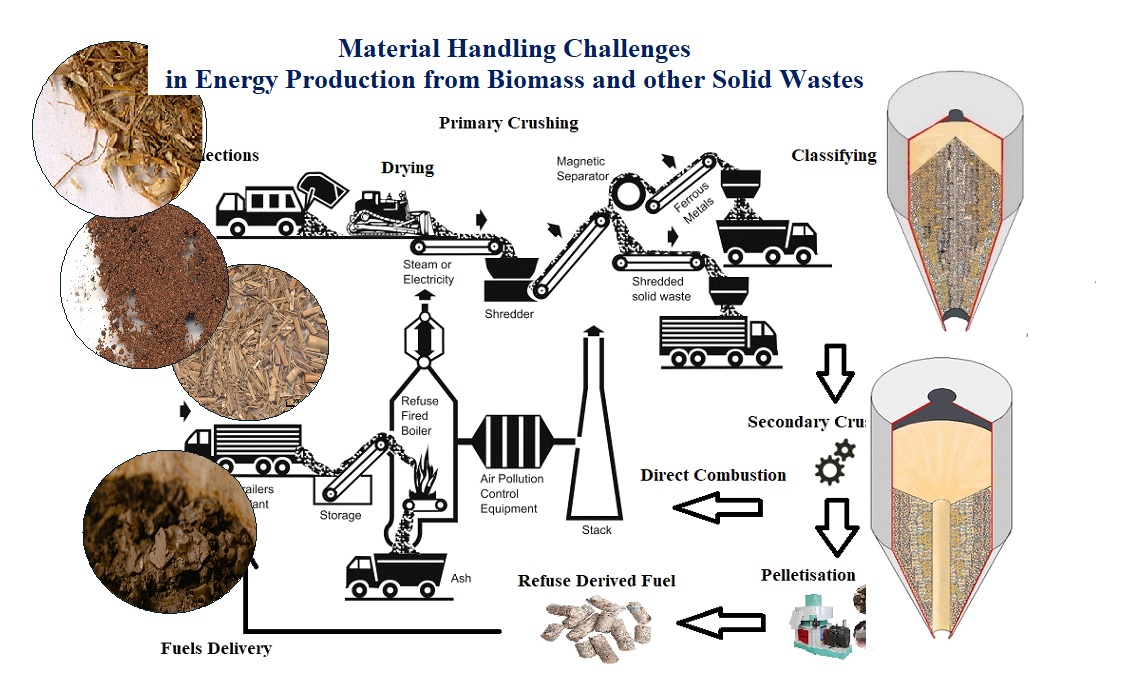
A typical process for energy recovery from biomass or biowastes is shown in Figure 8, which includes collection and transport from various locations, primary sorting and drying, crushing for size reduction, classifying combustible solids, secondary crushing and pelletization of the solids, or injection for direct combustion.
In the most of cases for biomass and biowaste, the solids need to be collected from varied sources and delivered to processing plant as bulk, which may include different types of solids with different sizes and shapes as an example shown in Figure 9(a), or with high water content such as sewage sludges shown in Figure 9(b). Processing such wastes requires answering some fundamental questions for a project designer, as many options are available for the waste materials, but the techniques may not be suitable for processing the solids shown in Figure 9.
4.2. Challenges of Storage and Flow
Solid wastes are commonly stored in open yards or landfilled directly. For energy recovery, solid wastes need to be collected and delivered to a process plant, where they can be burned for heat or electricity generation. Temporary storage and transport between the storage will be essential. A key question in the design of such a process will be: ‘Can the “Class 3” solids be stored and discharged from the storage?’, as many solid wastes fall into this class in which the particles have an extreme shape [137].
For ‘Class 1 and 2’ materials, hoppers and silos can be designed using the long-established Jenike method to allow reliable discharge under gravity in either mass flow (first-in-first-out) or core flow (first-in-last-out) flow patterns. However, it is known that normal silos or hoppers will fail completely for the ‘Class 3’ materials. The solids will stack in the silos and cannot discharge under gravity. Usual choices for the ‘Class 3’ materials are parallel or diverging bins with full-live-bottom (see Figure 10(a)). Flat stores and front loaders are also common choices in many scrap and waste yards (see Figure 10(b)) for waste materials with extreme particle size and shape, such as woodchips.
For the ‘Class 1’ materials, which are rounded, free-flowing, dry particulates without many fine particles, such as wood pellets, normal silos or hoppers will work fine without any flow issues. However, to discharge the solids effectively, special designs of the silos or the hoppers are still highly recommended [138]. If an improper design is applied to some ‘Class 1’ materials, such as biomass pellets, it may still create dead zones in the silos or hoppers where the materials reside for a long time, leading to further issues, including caking and self-heating, which can result in a silo fire [139].
For the ‘Class 2’ materials, the challenges of storage and flow are commonly due to the cohesiveness of the materials caused by high water contents or high fine contents, but the particles have regular particle shapes. The ‘Class 2’ materials can be stored in normal silos or hoppers but are likely to have discharge issues as a highly cohesive material. The ‘Class 2’ materials may cake, or agglomerate, or have a highly varied bulk density, or have self-heat due to the water present in the storages. Additionally, discharge issues such as arching and rat holes often occur.
For assessing the ‘Class 1’ and the ‘Class 2’ materials, the established characterisation of flow properties using a shear tester to measure the flow functions and calculating the necessary hopper geometry using the design procedure of Jenike can be applied, however, this approach fails completely for any ‘Class 3’ materials due to interlocking of particles.
4.3. Challenges of Drying Process
A waste-to-energy option, such as thermal waste treatment through incineration, requires a low water content in the solids to improve burning efficiency. Drying process of the raw wastes is often essential prior to combustion or pyrolysis, but costly not only due to the challenge of drying the water effectively but also because of the challenge of handling the materials, i.e. how the materials are presented to the heat sources in a loose or suspended form to allow the steam to escape [140], and also the cost of obtaining the stream of heat (even if waste heat is available there is still a cost in collecting and transporting the heat to the drying facility).
The most common drying methods currently used for drying solid wastes worldwide are bio-drying, air-drying, solar drying, and thermal drying [140]. Bio-drying is an aerobic convective evaporation process, which reduces the moisture content of the waste with minimum aerobic degradation [141]. Air drying of solid materials involves the vaporisation of water contained by the solid materials and removal of vapour either from a pile using free ambient air or fan ventilation of the pile, which is very slow (requiring huge piles) and limited in what it can achieve in terms of moisture, or in a stream of hot air [142] which is faster, needs much smaller equipment and can achieve lower moisture content so often results in lower total cost of ownership even if the heat has the paid for. The most common operation of hot air drying is the use of counter-current flow rotary dryers, which involve delivering solid materials to the dryer and result in some dust emissions from the dryer [143]. Solar drying simply presents wet solid wastes to the sun in an open layer or covered dryers and takes the moisture away in natural air circulation [144]. Solar drying requires little investment, but it can be slow and ineffective in cooler climates, and moisture absorption by the product may occur during wet periods, leading to incomplete drying. Covered dryers may accelerate the process, but they will increase costs as additional heat sources are required. The artificial dryer for dewatering can also be named as thermal drying when an external auxiliary energy source allows the heating of the waste [145].
For the effective drying of solid wastes, one challenge is achieving good air permeability so that water vapour and steam can be removed easily through air circulation. So, the particle size of the solids cannot be too small. On the other hand, because most organic solid wastes contain a high level of internal moisture, the internal moisture is not easily evaporated if the particles are too big. Therefore, controlling solid particles with optimised particle sizes present in the dryer can be crucial for effectively and efficiently drying solid wastes. Size reduction and material handling options can be the greatest challenges, especially for ‘Class 3’ materials.
4.4. Challenges of Size Reduction and Classifying
As shown in Figure 1, Figure 2, Figure 3 and Figure 4, solid wastes can exhibit large variations in size, so size reduction of the solids is essential for most handling processes to make them easier to manage. For the anaerobic digestion of organic wastes, size reduction can improve digester gas production and increase degradability, resulting in a reduction of the technical digestion time [146]. For incineration, the solids also need to be in proper sizes before the material can be injected into the furnace for heat or electricity generation (see Figure 8). In particular, the furnaces that use pulverised fuel have short residence time (1.5~4 seconds). Otherwise, particle burnout will be incomplete if the particles are too large. Whereas, moving grate furnaces are much more tolerant of larger particles due to the longer residence times, and fluidised bed furnaces are the most tolerant as the particles will remain in the fluidised bed until they become smaller and lighter enough to be suspended and taken away in the fly ash.
Shredding and grinding are popular techniques for reducing the particle size of solid wastes or biomass [147]. In size reduction, the biggest challenge is feeding the materials to the shredders or grinders, especially for ‘Class 3’ materials with extreme particle shapes. Instead, multiple size reductions are commonly applied to the shredding so that the shredder can work effectively at different sizes without jamming issues [148]. In case that the solid waste has a high-water content such as fresh biomass, it is difficult to reduce the size because the water will make the particles very plastic and redolent that reduces the effectiveness of the reduction process. Shredding can be more tolerant of higher water content than grinding.
For energy recovery, as much incombustible material should be removed from the solids as reasonably possible first, so the calorific value of the refuse can be improved, the ash can be reduced, and these incombustibles recycled (usually metal, glass and minerals). The solid wastes need to be classified. The challenge for classifying the ‘Class 3’ materials is the extreme particle shape, such as e-scrap wastes. However, many valuable metals in e-scrap are not magnetic substances, so they cannot be removed as easily as ferrous particles, and moreover, they are often combined in small structures with combustibles (copper wires in coils on plastic formers, for example). The mixture of heavy (usually metal) and light materials (usually polymers, papers, and foodstuffs) can be challenging in waste classification when they are bonded or otherwise attached together in assemblies, e.g., paper labels on cans. Additionally, the classification and separation of solids will be difficult if the solids are very cohesive.
4.5. Challenges of Transport (Mechanical and Pneumatic)
In the energy recovery of biomass and biowastes, the solids need to be transferred at the most of time from collection points to processing plants. Transport of the solids will be subject to the material characteristics, especially the size and the shape of the particles indicated in Section 3.1.
Mechanical conveyors are commonly used for solid waste handling, such as belt, chain, or screw conveyors, although pneumatic conveyors or dumper trucks are sometimes used for processed wastes. In practice, belt conveyors can be suitable for all ‘Class 1, 2 and 3’ materials, but it may be hard to clean the belt when ‘Class 2’ materials (cohesive) are conveyed because of the fines and the damp in the materials [149]. Screw conveyors can be troublesome with ‘Class 3’ materials (entangling). Chain or bucket conveyors are similar to belt conveyors but may experience issues with ‘Class 3’ materials if they fall onto the chains [150].
In principle, pneumatic conveyors can work with all classes if particles are not too large or too wet and sticky. However, the challenge of using pneumatic conveying lies in feeding the solids into the pipeline, which can be difficult and depends on the particle size, shape, and flowability of the solids [151]. Pneumatic conveying of solid wastes is less popular not only because of the feeding challenge but also due to the large energy consumption required, which can be another concern, as the waste process typically has a small profit margin.
The key concerns in conveying biomass or other solid wastes are the top particle size and the extreme particle shape, although water content can be problematic at times. If the materials are damp or waterlogged, the solids will be very cohesive and easily adhere to the surface of equipment such as the belts, but they will be hard to remove. Accumulation of fines and dust can also cause friction, leading to heat buildup and consequent fire on the conveyor (see Figure 11(a)). Spillage and wind lift-off of the solids are also a serious concern in the transport of the wastes because the solids travel at a relatively high speed to the air, and the wind can pick up small particles. It will cause dust emissions and risks of fire if the material is combustible.
4.6. Handling Hazards, Including Fire, Explosion and Dust Emissions
In the handling of solid wastes, the hazards that cause the greatest financial loss are fire and dust explosions. Dust emission from solid wastes is also hazardous to health, as described above. Failure to manage hazards may cause a disaster, as exemplified by the storage fire shown in Figure 11(a) and the silo fire explosion in Figure 11(b).
Dust emissions in the waste handling process can be influenced by the types of solid wastes, which contain fine solid particles, as well as the fines and dust generated during the drying and size reduction processes, or solids transported at a relatively high speed that suffer breakage. Dust emissions happen mainly at the transfer points of conveying, where it can be in open space (picked up by air currents), especially when there is a big drop in height within the transfer points. The authors have achieved good success in reducing dust emissions through the use of a “hood and spoon” transfer point design [152]. However, a thorough approach to containment and judicious use of extraction are also essential to achieve low dust emissions.
Dust from solid materials can pose a high risk of fire and explosion if the materials are combustible and have a low to moderate water content, or if they can generate heat on their own, such as organic waste with moisture. The high-risk areas for fire can be undisturbed static storage, especially for self-heating materials such as silos, stockpiles, and flat stores (see Figure 11(b)). Most of the solid wastes are combustible and organic, and many also emit flammable gases.
The ATEX [153] and IECEx [154] systems provide effective frameworks for controlling dust explosion hazards in process plant design and operation; however, there is no specific administrative system for controlling the risks of fires in waste material handling. The challenge for control is assessing the risks of fire and explosion, which involves analysing the interaction between materials and handling processes [155]. The risks of fire and explosion are subject to further parameters, including ignition and oxygen levels; however, the concentration of combustible materials (such as dust) is also critical in relation to a dust explosion. Therefore, control of dust emissions from solid wastes is crucial in waste transport, especially at the transfer points of conveyors.
The other challenges for hazard control include monitoring and analysis of flammable gases, as well as monitoring hot surfaces such as seized, under- or over-lubricated bearings or mechanical failure causing rubbing, jammed or trapped layers of dust or particles, etc. Sometimes, secondary dust explosion can cause more serious damage to the process plant, which is initiated by the ‘primary’ explosions [156]. Very importantly, effective cleaning to control the build-up of fugitive dust on surfaces in the plant outside of the handling equipment, is critical to minimising the possibility of a devastating “secondary explosion” that will generate a fireball through the entire plant if the accumulated dust gets raised by the draught from a small primary explosion. Here is a good example of a dust explosion that can be found at Imperial Sugar [157].
4.7. Challenges of Biomass Material Handling and Special Characterisations for Design
The challenges of biomass and biowaste material handling discussed here are mainly due to the physical properties of the materials, which need to be characterised prior to the design of the process. The important characteristics of the raw materials include particle size and size distributions, particle shape, solid density, bulk density and compressibility, water content, cohesiveness for ingredients and mixtures, overall flow behaviour class, and flow properties under consolidation stresses.
To assess the handling properties of a biomass material, the best solution is to apply the classification groups defined by the dimensions of particle sides to examine the material first. If the material is suspected of possibly being a ‘Class 3’ material, a subsequent ‘Column Test’ is suggested, which can identify the interlocking effect of the particles and confirm or refute this pattern of behaviour. Assessment of particle sizes is strongly affected by the particle shapes. Conventional measurements of particle sizes are not suitable for the ‘Class 3’ materials because of the extreme particle shape.
Assessment of material flow properties is also subject to the types of materials. For the ‘Class 3’ materials, flow properties of the materials cannot be measured by any common methods, such as shear cell testing. The handling of such materials requires a specific design approach, taking into account particle sizes and water content, and special considerations are necessary for equipment design. Typically, a “full live bottom” storage and discharge solution is employed. For cohesive materials (‘Class 2’), conventional measurements of flow properties can be applied to the material in the design of silos or hoppers; however, the results may be strongly influenced by varying bulk densities or changes in water contents over storage time under consolidation stresses.
The other processes, such as drying, classifying and size reductions, are also dependent on the physical properties of the materials. In the characterisations for these processes, the particle interlocking phenomenon needs to be identified prior to any design of the process, as the solids cannot be handled by the equipment commonly used in existing processes. Secondly, high water contents may create extra challenges in material handling, as the water inside the materials can create high cohesiveness and biological reactions. Similarly, the same challenges present in the transportation of waste may be encountered, but additional dust emissions may occur if the material is dry and travels at high speed (the authors have heard a critical speed of around 2.2 m/s on a troughed belt conveyor being reported in this regard, based on operating experience).
The handling of waste materials with hazards always requires extra attention and special assessments in design and operations. Fire and dust explosions are common in waste materials handling processes because the waste materials for energy recovery are all combustible and often rich in fine particles. If the materials contain water, gas emissions, or are self-heating, they can pose a serious hazard, leading to a high risk of fire and explosion. Proper assessments of the waste materials can effectively reduce the risks.
5. Conclusions and Remarks
In the process of solid waste energy recovery, this review focuses particularly on the types of solid waste and the challenges associated with the material handling process of solid waste, caused by the material properties.
5.1. Conclusions
Fast-growing volumes of solid wastes for reprocessing and recycling are essential for establishing a circular economy. Currently, the fastest-growing market is for energy derived from solid waste, which has brought new possibilities for reducing the environmental impacts of waste and increasing the profitability of waste valorisation.
However, significant existing project developers for energy recovery come from low-technology background or have experience only with conventional fuels. The solid wastes bring in extra challenges to material characterisation and material handling process design because the waste materials are highly variable in particle size and shape, density, and composition, and can exhibit much more challenging handling behaviour than traditional fuels. In this paper, several types of common solid wastes have been reviewed, including biomass wastes, municipal wastes, bulk food wastes, e-scrap wastes, plastic wastes, and hazardous wastes.
For these wastes, common challenges include the varied particle sizes and wide size distribution, extreme particle shape, varied bulk density and high compressibility, a high level of water content, and the material’s high cohesiveness. The bulk properties of the waste materials can be unpredictable, such as flow issues, interlocking under compaction, caking and dust contamination, due to natural variations. The special material characteristics create significant challenges in material handling. The problems are often unexpected by equipment suppliers and project developers, leading to lengthy and expensive start-up and commissioning operations, and often requiring significant equipment retrofit, which adds to costs and delays.
The challenges of materials handling for the solid wastes can be manifold related to the material properties, amongst the most common being failed flow from the storage, especially for ‘Class 3’ materials, the need for multiple stages of size reduction from the raw materials, achieving effective and economical drying of the wastes, classifying and transport challenges of the wastes, and hazards control including fire, explosion and dust emissions. A further common challenge is that regulators expect high environmental performance and low impacts, combined with marginal process economics, leading to difficulty in achieving profitability.
The risks of fire and explosion can be more serious for solid wastes due to increased dust emissions from the waste, and many solid wastes are combustible. Controlling the risks of secondary dust explosions is also challenging, as is avoiding exposure of personnel and neighbours to potentially hazardous dust and unpleasant odours.
5.2. Best Practices
To avoid the difficulties in obtaining efficient plant performance with waste material handling, the approach must always be “Know your enemy first”, that is to say, invest time and money to obtain a thorough understanding of the handling and processing challenges of the particular waste stream to be used, and only then select equipment types and detail designs very carefully to ensure they are able to cope with these behaviours. Therefore, thorough characterisations of the waste materials are essential. Variations in waste streams can be significant, so obtaining significant numbers of test samples is always recommended for material characterisations in order to understand these variations. Conventional characterisation methods for handling properties can be suitable for ‘Class 1 & 2’ materials but will not work for ‘Class 3’ materials because of the extreme particle shape.
The particle sizes of solid wastes can range from dust to metres. The particle shapes of the waste are frequently extremely large in one or two dimensions compared to the smaller dimension, which will give the bulk solid interlocking tendencies (‘Class 3’ behaviour). Therefore, for characterisation of the materials, obtaining and testing of a representative range of samples will be critical to any process design, not only for material storage and transport but also for processing.
For any process design involving solid wastes, designing simply based on previous experience for materials with the same name will often lead to inadequate plant performance. Commonly, materials with the same name, description, and specifications but originating from different sources can exhibit significant variations, including particle size, particle shape, material density, bulk density, water content, cohesiveness, and flow properties. A big tolerance for varying properties must always be included in the design because experience shows that the wastes will always show more variation than expected.
Professional characterisations and designs are strongly recommended, especially for “first-off” plants in a series. In the early stages of developing processes and treatments for waste streams, it is a good idea to choose solutions that lend themselves to flexibility, wherever possible. For example, this can be achieved by using leased mobile plant units or low-technical solutions. It is also essential to leave space in the plant and between processing units for retrofits and equipment changes.
For solid wastes, hazards including fire, explosion and dust emissions are almost inevitable. Dust is extremely common in most solid wastes and many waste materials are combustible. Therefore, the risks of fire and dust explosion are extremely high in the processing of waste for energy recovery, recycling, and processing. Not only is the control and prevention of risks critical but also having plans for how to deal with and recover from fires, in particular, is crucial for waste material handling; otherwise, large financial losses and downtime can be expected when (not “if”) they occur.
Author Contributions
Conceptualization, T. Deng and M. Bradley; methodology, T. Deng.; investigation, V. Garg, T. Deng and M. Bradley; resources, M. Bradley.; data curation, T. Deng and V. Garg; writing—original draft preparation, T. Deng; writing—review and editing, V. Garg and M. Bradley; All authors have read and agreed to the published version of the manuscript.
Funding
This research received no external funding.
Data Availability Statement
The original contributions presented in this study are included in the article. Further inquiries can be directed to the corresponding author. No new data were created in this article.
Conflicts of Interest
The authors declare no conflicts of interest.
References
- United Nations Environment Programme (2024). Global Waste Management Outlook 2024: Beyond an age of waste – Turning rubbish into a resource. Nairobi. https://wedocs.unep.org/20.500.11822/44939.
- Khan, A.H.; López-Maldonado, E.A.; Khan, N.A.; Villarreal-Gómez, L.J.; Munshi, F.M.; Alsabhan, A.H.; Perveen, K. Current solid waste management strategies and energy recovery in developing countries - State of art review. Chemosphere 2022, 291, 133088. [CrossRef]
- Kumar, A.; Singh, E.; Mishra, R.; Lo, S.L.; Kumar, S. Global trends in municipal solid waste treatment technologies through the lens of sustainable energy development opportunity. Energy 2023, 275. [CrossRef]
- Khalid, I., Ullah, S., Umar, I. S., & Nurdiyanto, H. (2022). The problem of solid waste: origins, composition, disposal, recycling, and reusing. International Journal of Advanced Science and Computer Applications, 1(1), 27-40. [CrossRef]
- Pratap, V., Bombaywala, S., Mandpe, A., & Khan, S. U. (2021). Solid waste treatment: Technological advancements and challenges. In Soft computing techniques in solid waste and wastewater management (pp. 215-231). Elsevier. [CrossRef]
- Khan, M.S.; Mubeen, I.; Caimeng, Y.; Zhu, G.; Khalid, A.; Yan, M. Waste to energy incineration technology: Recent development under climate change scenarios. Waste Manag. Res. J. a Sustain. Circ. Econ. 2022, 40, 1708–1729. [CrossRef]
- Iodice, S.; Garbarino, E.; Cerreta, M.; Tonini, D. Sustainability assessment of Construction and Demolition Waste management applied to an Italian case. Waste Manag. 2021, 128, 83–98. [CrossRef]
- Vukovic, N.; Makogon, E. Waste-to-Energy Generation: Complex Efficiency Analysis of Modern Technologies. Sustainability 2022, 14, 13814. [CrossRef]
- Sikder, S., Toha, M., & Mostafizur Rahman, M. (2024). An Overview on Municipal Solid Waste Characteristics and Its Impacts on Environment and Human Health. Technical Landfills and Waste Management: Volume 1: Landfill Impacts, Characterization and Valorisation, 135-155. [CrossRef]
- Rathi, B.S.; Kumar, P.S.; Rangasamy, G. A sustainable approach on thermal and catalytic conversion of waste plastics into fuels. Fuel 2022, 339. [CrossRef]
- Shovon, S.M.; Akash, F.A.; Rahman, W.; Rahman, A.; Chakraborty, P.; Hossain, H.Z.; Monir, M.U. Strategies of managing solid waste and energy recovery for a developing country – A review. Heliyon 2024, 10, e24736. [CrossRef]
- Peng, X.; Jiang, Y.; Chen, Z.; Osman, A.I.; Farghali, M.; Rooney, D.W.; Yap, P.-S. Recycling municipal, agricultural and industrial waste into energy, fertilizers, food and construction materials, and economic feasibility: a review. Environ. Chem. Lett. 2023, 21, 765–801. [CrossRef]
- Sajid, M.; Raheem, A.; Ullah, N.; Asim, M.; Rehman, M.S.U.; Ali, N. Gasification of municipal solid waste: Progress, challenges, and prospects. Renew. Sustain. Energy Rev. 2022, 168. [CrossRef]
- Bhatt, K.P.; Patel, S.; Upadhyay, D.S.; Patel, R.N. A critical review on solid waste treatment using plasma pyrolysis technology. Chem. Eng. Process. - Process. Intensif. 2022, 177. [CrossRef]
- Salem, K.S.; Clayson, K.; Salas, M.; Haque, N.; Rao, R.; Agate, S.; Singh, A.; Levis, J.W.; Mittal, A.; Yarbrough, J.M.; et al. A critical review of existing and emerging technologies and systems to optimize solid waste management for feedstocks and energy conversion. Matter 2023, 6, 3348–3377. [CrossRef]
- Hameed, Z.; Aslam, M.; Khan, Z.; Maqsood, K.; Atabani, A.; Ghauri, M.; Khurram, M.S.; Rehan, M.; Nizami, A.-S. Gasification of municipal solid waste blends with biomass for energy production and resources recovery: Current status, hybrid technologies and innovative prospects. Renew. Sustain. Energy Rev. 2021, 136. [CrossRef]
- Radhakrishnan, K.; Kumar, P.S.; Rangasamy, G.; Perumal, L.P.; Sanaulla, S.; Nilavendhan, S.; Manivasagan, V.; Saranya, K. A critical review on pyrolysis method as sustainable conversion of waste plastics into fuels. Fuel 2022, 337. [CrossRef]
- Hasan, M.; Rasul, M.; Khan, M.; Ashwath, N.; Jahirul, M. Energy recovery from municipal solid waste using pyrolysis technology: A review on current status and developments. Renew. Sustain. Energy Rev. 2021, 145. [CrossRef]
- Hasan, M.M.; Rasul, M.G.; Jahirul, M.I.; Khan, M.M.K. Fast Pyrolysis of Municipal Green Waste in an Auger Reactor: Effects of Residence Time and Particle Size on the Yield and Characteristics of Produced Oil. Energies 2024, 17, 2914. [CrossRef]
- Li, J.; An, D.; Shi, Y.; Bai, R.; Du, S. A Review of the Physical and Chemical Characteristics and Energy-Recovery Potential of Municipal Solid Waste in China. Energies 2024, 17, 491. [CrossRef]
- Shah, A.V.; Srivastava, V.K.; Mohanty, S.S.; Varjani, S. Municipal solid waste as a sustainable resource for energy production: State-of-the-art review. J. Environ. Chem. Eng. 2021, 9. [CrossRef]
- Drożdż, W.; Bilan, Y.; Rabe, M.; Streimikiene, D.; Pilecki, B. Optimizing biomass energy production at the municipal level to move to low-carbon energy. Sustain. Cities Soc. 2022, 76. [CrossRef]
- Okolie, J.A.; Epelle, E.I.; Tabat, M.E.; Orivri, U.; Amenaghawon, A.N.; Okoye, P.U.; Gunes, B. Waste biomass valorization for the production of biofuels and value-added products: A comprehensive review of thermochemical, biological and integrated processes. Process. Saf. Environ. Prot. 2022, 159, 323–344. [CrossRef]
- Clauser, N.M.; González, G.; Mendieta, C.M.; Kruyeniski, J.; Area, M.C.; Vallejos, M.E. Biomass Waste as Sustainable Raw Material for Energy and Fuels. Sustainability 2021, 13, 794. [CrossRef]
- Zhang, S.; Xia, Z.; Li, C.; Wang, X.; Lu, X.; Zhang, W.; Ma, H.; Zhou, X.; Zhang, W.; Zhu, T.; et al. Chromosome-scale genome assembly provides insights into speciation of allotetraploid and massive biomass accumulation of elephant grass (Pennisetum purpureum Schum.). Mol. Ecol. Resour. 2022, 22, 2363–2378. [CrossRef]
- Dodangeh, F.; Nabipour, H.; Rohani, S.; Xu, C. Applications, challenges and prospects of superabsorbent polymers based on cellulose derived from lignocellulosic biomass. Bioresour. Technol. 2024, 408, 131204. [CrossRef]
- Askaripour, M.; Saeidi, A.; Mercier-Langevin, P.; Rouleau, A. A Review of Relationship between Texture Characteristic and Mechanical Properties of Rock. Geotechnics 2022, 2, 262–296. [CrossRef]
- Zhou, M.; Tian, X. Development of different pretreatments and related technologies for efficient biomass conversion of lignocellulose. Int. J. Biol. Macromol. 2022, 202, 256–268. [CrossRef]
- Park, S.; Kim, S.J.; Kim, H.E.; Kim, S.Y.; Oh, K.C.; Cho, L.; Jeon, Y.K.; Kim, D. Potential of Torrefied Coffee Grounds to Be Used as Fuel in Thermal Power Plants. J. Biosyst. Eng. 2024, 49, 112–119. [CrossRef]
- Saleem, M. Possibility of utilizing agriculture biomass as a renewable and sustainable future energy source. Heliyon 2022, 8, e08905. [CrossRef]
- Mathanker, A.; Das, S.; Pudasainee, D.; Khan, M.; Kumar, A.; Gupta, R. A Review of Hydrothermal Liquefaction of Biomass for Biofuels Production with a Special Focus on the Effect of Process Parameters, Co-Solvents, and Extraction Solvents. Energies 2021, 14, 4916. [CrossRef]
- Jasinskas, A.; Kleiza, V.; Streikus, D.; Domeika, R.; Vaiciukevičius, E.; Gramauskas, G.; Valentin, M.T. Assessment of Quality Indicators of Pressed Biofuel Produced from Coarse Herbaceous Plants and Determination of the Influence of Moisture on the Properties of Pellets. Sustainability 2022, 14, 1068. [CrossRef]
- Cheng, Z.; Leal, J.H.; Hartford, C.E.; Carson, J.W.; Donohoe, B.S.; Craig, D.A.; Xia, Y.; Daniel, R.C.; Ajayi, O.O.; Semelsberger, T.A. Flow behavior characterization of biomass Feedstocks. Powder Technol. 2021, 387, 156–180. [CrossRef]
- Kalak, T. Potential Use of Industrial Biomass Waste as a Sustainable Energy Source in the Future. Energies 2023, 16, 1783. [CrossRef]
- Zhang, Z.; Chen, Z.; Zhang, J.; Liu, Y.; Chen, L.; Yang, M.; Osman, A.I.; Farghali, M.; Liu, E.; Hassan, D.; et al. Municipal solid waste management challenges in developing regions: A comprehensive review and future perspectives for Asia and Africa. Sci. Total. Environ. 2024, 930, 172794. [CrossRef]
- Nanda, S.; Berruti, F. Municipal solid waste management and landfilling technologies: a review. Environ. Chem. Lett. 2020, 19, 1433–1456. [CrossRef]
- Roy, H.; Alam, S.R.; Bin-Masud, R.; Prantika, T.R.; Pervez, N.; Islam, S.; Naddeo, V. A Review on Characteristics, Techniques, and Waste-to-Energy Aspects of Municipal Solid Waste Management: Bangladesh Perspective. Sustainability 2022, 14, 10265. [CrossRef]
- Djandja, O.S.; Yin, L.-X.; Wang, Z.-C.; Duan, P.-G. From wastewater treatment to resources recovery through hydrothermal treatments of municipal sewage sludge: A critical review. Process. Saf. Environ. Prot. 2021, 151, 101–127. [CrossRef]
- Chen, L.; Liao, Y.; Ma, X. Economic analysis on sewage sludge drying and its co-combustion in municipal solid waste power plant. Waste Manag. 2021, 121, 11–22. [CrossRef]
- Zhang, X.; Liu, C.; Chen, Y.; Zheng, G.; Chen, Y. Source separation, transportation, pretreatment, and valorization of municipal solid waste: a critical review. Environ. Dev. Sustain. 2021, 24, 11471–11513. [CrossRef]
- Rao, B.; Wang, G.; Xu, P. Recent advances in sludge dewatering and drying technology. Dry. Technol. 2022, 40, 3049–3063. [CrossRef]
- Bhatia, L.; Jha, H.; Sarkar, T.; Sarangi, P.K. Food Waste Utilization for Reducing Carbon Footprints towards Sustainable and Cleaner Environment: A Review. Int. J. Environ. Res. Public Heal. 2023, 20, 2318. [CrossRef]
- Kavitha, S., Kannah, R. Y., Kumar, G., Gunasekaran, M., & Banu, J. R. (2020). Introduction: sources and characterization of food waste and food industry wastes. In Food waste to valuable resources (pp. 1-13). Academic Press. [CrossRef]
- Dey, S.; Santra, M.; Choudhury, M.; Ghosh, A.R.; Samanta, P. Food waste generation and its industrial utilization: An overview. Environ. Sci. Pollut. Res. 2024, 1–20. [CrossRef]
- Saba, B.; Bharathidasan, A.K.; Ezeji, T.C.; Cornish, K. Characterization and potential valorization of industrial food processing wastes. Sci. Total. Environ. 2023, 868, 161550. [CrossRef]
- Babu, S.; Rathore, S.S.; Singh, R.; Kumar, S.; Singh, V.K.; Yadav, S.; Yadav, V.; Raj, R.; Yadav, D.; Shekhawat, K.; et al. Exploring agricultural waste biomass for energy, food and feed production and pollution mitigation: A review. Bioresour. Technol. 2022, 360, 127566. [CrossRef]
- Kowalski, S.; Gumul, D. The Use of Waste Products from the Food Industry to Obtain High Value-Added Products. Foods 2024, 13, 847. [CrossRef]
- Elnakib, S. Food Waste Recovery: Processing Technologies, Industrial Techniques, and Applications. J. Nutr. Educ. Behav. 2022, 54, 373–374. [CrossRef]
- Sharma, P.; Gaur, V.K.; Sirohi, R.; Varjani, S.; Kim, S.H.; Wong, J.W. Sustainable processing of food waste for production of bio-based products for circular bioeconomy. Bioresour. Technol. 2021, 325, 124684. [CrossRef]
- Pietraccini, M.; Danzi, E.; Marmo, L.; Addo, A.; Amyotte, P. Effect of particle size distribution, drying and milling technique on explosibility behavior of olive pomace waste. J. Loss Prev. Process. Ind. 2021, 71. [CrossRef]
- Chauhan, A.; Rajput, V.; Stanikzai, K.; Kumar, S. Understanding the Global Status of Electronic Wastes. In Electronic Waste (pp. 31-39). CRC Press.
- Dias, P.R.; Cenci, M.P.; Bernardes, A.M.; Huda, N. What drives WEEE recycling? A comparative study concerning legislation, collection and recycling. Waste Manag. Res. J. a Sustain. Circ. Econ. 2022, 40, 1527–1538. [CrossRef]
- Rene, E.R.; Sethurajan, M.; Ponnusamy, V.K.; Kumar, G.; Dung, T.N.B.; Brindhadevi, K.; Pugazhendhi, A. Electronic waste generation, recycling and resource recovery: Technological perspectives and trends. J. Hazard. Mater. 2021, 416, 125664. [CrossRef]
- Dutta, D.; Rautela, R.; Gujjala, L.K.S.; Kundu, D.; Sharma, P.; Tembhare, M.; Kumar, S. A review on recovery processes of metals from E-waste: A green perspective. Sci. Total. Environ. 2022, 859, 160391. [CrossRef]
- Van Yken, J.; Boxall, N.J.; Cheng, K.Y.; Nikoloski, A.N.; Moheimani, N.R.; Kaksonen, A.H. E-Waste Recycling and Resource Recovery: A Review on Technologies, Barriers and Enablers with a Focus on Oceania. Metals 2021, 11, 1313. [CrossRef]
- Faraji, F.; Golmohammadzadeh, R.; Pickles, C.A. Potential and current practices of recycling waste printed circuit boards: A review of the recent progress in pyrometallurgy. J. Environ. Manag. 2022, 316, 115242. [CrossRef]
- Lahtela, V.; Hamod, H.; Kärki, T. Assessment of critical factors in waste electrical and electronic equipment (WEEE) plastics on the recyclability: A case study in Finland. Sci. Total. Environ. 2022, 830, 155627. [CrossRef]
- Liu, K.; Tan, Q.; Yu, J.; Wang, M. A global perspective on e-waste recycling. Circ. Econ. 2023, 2. [CrossRef]
- Kaya, M. Recovery of metals and nonmetals from electronic waste by physical and chemical recycling processes. Waste Manag. 2016, 57, 64–90. [CrossRef]
- Nithya, R.; Sivasankari, C.; Thirunavukkarasu, A. Electronic waste generation, regulation and metal recovery: a review. Environ. Chem. Lett. 2020, 19, 1347–1368. [CrossRef]
- Tiwari, R.; Azad, N.; Dutta, D.; Yadav, B.R.; Kumar, S. A critical review and future perspective of plastic waste recycling. Sci. Total. Environ. 2023, 881, 163433. [CrossRef]
- Gola, D.; Tyagi, P.K.; Arya, A.; Chauhan, N.; Agarwal, M.; Singh, S.; Gola, S. The impact of microplastics on marine environment: A review. Environ. Nanotechnology, Monit. Manag. 2021, 16. [CrossRef]
- Chen, Y., Awasthi, A. K., Wei, F., Tan, Q., & Li, J. (2021). Single-use plastics: Production, usage, disposal, and adverse impacts. Science of the total environment, 752, 141772. [CrossRef]
- Kwon, G.; Cho, D.-W.; Park, J.; Bhatnagar, A.; Song, H. A review of plastic pollution and their treatment technology: A circular economy platform by thermochemical pathway. Chem. Eng. J. 2023, 464. [CrossRef]
- Kulas, D.G.; Zolghadr, A.; Chaudhari, U.S.; Shonnard, D.R. Economic and environmental analysis of plastics pyrolysis after secondary sortation of mixed plastic waste. J. Clean. Prod. 2022, 384. [CrossRef]
- Saha, B.; Vedachalam, S.; Dalai, A.K.; Saxena, S.; Dally, B.; Roberts, W.L. Review on production of liquid fuel from plastic wastes through thermal and catalytic degradation. J. Energy Inst. 2024, 114. [CrossRef]
- Jahirul, M. I., Rasul, M. G., Schaller, D., Khan, M. M. K., Hasan, M. M., & Hazrat, M. A. (2022). Transport fuel from waste plastics pyrolysis–A review on technologies, challenges and opportunities. Energy Conversion and Management, 258, 115451. [CrossRef]
- Kibria, G.; Masuk, N.I.; Safayet, R.; Nguyen, H.Q.; Mourshed, M. Plastic Waste: Challenges and Opportunities to Mitigate Pollution and Effective Management. Int. J. Environ. Res. 2023, 17, 1–37. [CrossRef]
- Praveenkumar, T. R., Sekar, M., Pasupuleti, R. R., Gavurová, B., Kumar, G. A., & Kumar, M. V. (2024). Current technologies for plastic waste treatment for energy recovery, its effects on poly aromatic hydrocarbons emission and recycling strategies. Fuel, 357, 129379. [CrossRef]
- Xiang, M.; Li, Y.; Yang, J.; Lei, K.; Li, Y.; Li, F.; Zheng, D.; Fang, X.; Cao, Y. Heavy metal contamination risk assessment and correlation analysis of heavy metal contents in soil and crops. Environ. Pollut. 2021, 278, 116911. [CrossRef]
- Yu, Y.H.; Su, J.F.; Shih, Y.; Wang, J.; Wang, P.Y.; Huang, C.P. Hazardous wastes treatment technologies. Water Environ. Res. 2020, 92, 1833–1860. [CrossRef]
- Siddiqua, A.; Hahladakis, J.N.; A Al-Attiya, W.A.K. An overview of the environmental pollution and health effects associated with waste landfilling and open dumping. Environ. Sci. Pollut. Res. 2022, 29, 58514–58536. [CrossRef]
- Sanito, R.C.; Bernuy-Zumaeta, M.; You, S.-J.; Wang, Y.-F. A review on vitrification technologies of hazardous waste. J. Environ. Manag. 2022, 316, 115243. [CrossRef]
- Ishaq, H.; Dincer, I. A new approach in treating industrial hazardous wastes for energy generation and thermochemical hydrogen production. J. Clean. Prod. 2021, 290. [CrossRef]
- Ramadan, B.S.; Rachman, I.; Ikhlas, N.; Kurniawan, S.B.; Miftahadi, M.F.; Matsumoto, T. A comprehensive review of domestic-open waste burning: recent trends, methodology comparison, and factors assessment. J. Mater. Cycles Waste Manag. 2022, 24, 1633–1647. [CrossRef]
- Gatrell, A.C.; Lovett, A.A. (2021). Burning questions: incineration of wastes and implications for human health. In Waste Location (pp. 143-157). Routledge.
- Fu, Z.; Lin, S.; Tian, H.; Hao, Y.; Wu, B.; Liu, S.; Luo, L.; Bai, X.; Guo, Z.; Lv, Y. A comprehensive emission inventory of hazardous air pollutants from municipal solid waste incineration in China. Sci. Total. Environ. 2022, 826, 154212. [CrossRef]
- Jofre-Monseny, J.; Sorribas-Navarro, P. Landfill tax and recycling. Fisc. Stud. 2024, 45, 483–500. [CrossRef]
- Schulze, D. (2021). Powders and bulk solids. Cham, Switzerland: Springer International Publishing.
- Ghanbarzadeh Lak, M., Ghaffariraad, M., & Jahangirzadeh Soureh, H. (2024). Characteristics and impacts of municipal solid waste (MSW). In Technical Landfills and Waste Management: Volume 1: Landfill Impacts, Characterization and Valorisation (pp. 31-92). Cham: Springer Nature Switzerland. [CrossRef]
- Ulusoy, U. A Review of Particle Shape Effects on Material Properties for Various Engineering Applications: From Macro to Nanoscale. Minerals 2023, 13, 91. [CrossRef]
- Niaz, S.; Forbes, B.; Raimi-Abraham, B.T. Exploiting Endocytosis for Non-Spherical Nanoparticle Cellular Uptake. Nanomanufacturing 2022, 2, 1–16. [CrossRef]
- Atelge, M.R.; Atabani, A.E.; Banu, J.R.; Krisa, D.; Kaya, M.; Eskicioglu, C.; Kumar, G.; Lee, C.; Yildiz, Y.Ş.; Unalan, S.; et al. A critical review of pretreatment technologies to enhance anaerobic digestion and energy recovery. Fuel 2020, 270, 117494. [CrossRef]
- Mor, S., & Ravindra, K. (2023). Municipal solid waste landfills in lower-and middle-income countries: Environmental impacts, challenges and sustainable management practices. Process Safety and Environmental Protection, 174, 510-530.
- Barletta, D.; Berry, R.J.; Larsson, S.H.; Lestander, T.A.; Poletto, M.; Ramírez-Gómez, Á. Assessment on bulk solids best practice techniques for flow characterization and storage/handling equipment design for biomass materials of different classes. Fuel Process. Technol. 2015, 138, 540–554. [CrossRef]
- Robinson, D.; Friedman, S.; Thomas, A.; Hirmas, D.; Sullivan, P.; Nemes, A. Soil bulk density and porosity connecting macro- and micro-scales through geometry.. Earth-Science Rev. 2025, 268. [CrossRef]
- McGlinchey, D. (2009). Characterisation of bulk solids. John Wiley & Sons.
- Li, Z.; Wang, Q.; Zhang, T.; Wang, H.; Chen, T. A novel bulk density-based recognition method for kitchen and dry waste: A case study in Beijing, China. Waste Manag. 2020, 114, 89–95. [CrossRef]
- Chandrappa, R., & Das, D. B. (2024). Solid waste management: Principles and practice. Springer Nature.
- Tabyang, W.; Suksiripattanapong, C.; Phetchuay, C.; Laksanakit, C.; Chusilp, N. Evaluation of municipal solid waste incineration fly ash based geopolymer for stabilised recycled concrete aggregate as road material. Road Mater. Pavement Des. 2021, 23, 2178–2189. [CrossRef]
- Widyarani; Wulan, D.R.; Hamidah, U.; Komarulzaman, A.; Rosmalina, R.T.; Sintawardani, N. Domestic wastewater in Indonesia: generation, characteristics and treatment. Environ. Sci. Pollut. Res. 2022, 29, 32397–32414. [CrossRef]
- Zhu, Y.; Zhang, Y.; Luo, D.; Chong, Z.; Li, E.; Kong, X. A review of municipal solid waste in China: characteristics, compositions, influential factors and treatment technologies. Environ. Dev. Sustain. 2020, 23, 6603–6622. [CrossRef]
- Sharma, A.; Kuthiala, T.; Thakur, K.; Thatai, K.S.; Singh, G.; Kumar, P.; Arya, S.K. Kitchen waste: sustainable bioconversion to value-added product and economic challenges. Biomass- Convers. Biorefinery 2022, 15, 1749–1770. [CrossRef]
- Sun, W.; Tribuzi, G.; Bornhorst, G.M. Particle size and water content impact breakdown and starch digestibility of chickpea snacks during in vitro gastrointestinal digestion. Food Res. Int. 2023, 173, 113201. [CrossRef]
- Maj, I. Significance and Challenges of Poultry Litter and Cattle Manure as Sustainable Fuels: A Review. Energies 2022, 15, 8981. [CrossRef]
- Geethambika, S.B.; Veerendrasimha, V.S.H.; Prakash, A.K.; Pasagadi, A.S.; Franklin, M.E.E.; Ambrose, R.P.K.; Pushpadass, H.A. Effect of moisture content on physical and flow properties of milk-millet powders. J. Food Process. Eng. 2022, 46. [CrossRef]
- Ganesan, V.; Rosentrater, K.; Muthukumarappan, K. Flowability and handling characteristics of bulk solids and powders – a review with implications for DDGS. Biosyst. Eng. 2008, 101, 425–435. [CrossRef]
- A Kulkarni, P.; Berry, R.J.; A Bradley, M.S. Review of the flowability measuring techniques for powder metallurgy industry. Proc. Inst. Mech. Eng. Part E: J. Process. Mech. Eng. 2010, 224, 159–168. [CrossRef]
- Mehos, G. Maximum solids discharge rates from hoppers. Chem. Eng. Res. Des. 2023, 191, 564–567. [CrossRef]
- Juarez-Enriquez, E.; Olivas, G.I.; Zamudio-Flores, P.B.; Perez-Vega, S.; Salmeron, I.; Ortega-Rivas, E.; Sepulveda, D.R. A review on the influence of water on food powder flowability. J. Food Process. Eng. 2022, 45. [CrossRef]
- Schwedes, J.; Schulze, D. Measurement of flow properties of bulk solids. Powder Technol. 1990, 61, 59–68. [CrossRef]
- Ku, Q.; Zhao, J.; Mollon, G.; Zhao, S. Compaction of highly deformable cohesive granular powders. Powder Technol. 2023, 421. [CrossRef]
- Lou, Y.; Zhang, Z.; Li, T.; Zhang, Y.; Chen, W. Compressibility characteristics of municipal solid waste considering multiple factors. Environ. Sci. Pollut. Res. 2024, 31, 44401–44414. [CrossRef]
- Rodionova, M.V.; Bozieva, A.M.; Zharmukhamedov, S.K.; Leong, Y.K.; Lan, J.C.-W.; Veziroglu, A.; Veziroglu, T.N.; Tomo, T.; Chang, J.-S.; Allakhverdiev, S.I. A comprehensive review on lignocellulosic biomass biorefinery for sustainable biofuel production. Int. J. Hydrogen Energy 2022, 47, 1481–1498. [CrossRef]
- Ren, Y.; Zhang, Z.; Huang, M. A review on settlement models of municipal solid waste landfills. Waste Manag. 2022, 149, 79–95. [CrossRef]
- Ogden, C.; Ileleji, K. Physical characteristics of ground switchgrass related to bulk solids flow. Powder Technol. 2021, 385, 386–395. [CrossRef]
- Borowski, G. An Overview of Particle Agglomeration Techniques to Waste Utilization. J. Ecol. Eng. 2021, 22, 263–271. [CrossRef]
- Bradley, M. S. (2016). Biomass fuel transport and handling. In Fuel Flexible Energy Generation (pp. 99-120). Woodhead Publishing.
- Miller, F.C. (2020). Composting of municipal solid waste and its components. In Microbiology of solid waste (pp. 115-154). CRC Press.
- Sheng, C.; Yao, C. Review on Self-Heating of Biomass Materials: Understanding and Description. Energy Fuels 2022, 36, 731–761. [CrossRef]
- Parvar, Z., Amiri, H., Nasiri, A., Hashemi, M., Medipour, M., & Pourafshar, M. (2025). Integrated windrow-based co-composting of domestic wastewater treatment plant sludge and solid waste for highquality compost fertilizer production. Environmental Health Engineering and Management Journal, 12, 1-12.
- Gao, L.; Tan, B.; Fan, L.; Wang, H.; Li, X.; Lu, W.; Jiang, Y. Comparison and analysis of spontaneous combustion control between coal storage silos and biomass silos. Energy 2023, 286. [CrossRef]
- Navar, R.; Semelsberger, T.A.; Davis, B.L. Impacts of caking on corn stover – An assessment of moisture content and consolidating pressure. Powder Technol. 2024, 438. [CrossRef]
- Yang, W.; Pudasainee, D.; Gupta, R.; Li, W.; Wang, B.; Sun, L. Particulate matter emission during municipal solid waste combustion: Submicron particulates formation mechanism. Fuel 2022, 310. [CrossRef]
- Kalak, T. Potential Use of Industrial Biomass Waste as a Sustainable Energy Source in the Future. Energies 2023, 16, 1783. [CrossRef]
- Foroushani, M.A.; Opp, C.; Groll, M. Investigation of Aeolian Dust Deposition Rates in Different Climate Zones of Southwestern Iran. Atmosphere 2021, 12, 229. [CrossRef]
- Huang, Y.; Adebiyi, A.A.; Formenti, P.; Kok, J.F. Linking the Different Diameter Types of Aspherical Desert Dust Indicates That Models Underestimate Coarse Dust Emission. Geophys. Res. Lett. 2021, 48. [CrossRef]
- Li, C.Z.; Zhao, Y.; Xu, X. Investigation of dust exposure and control practices in the construction industry: Implications for cleaner production. J. Clean. Prod. 2019, 227, 810–824. [CrossRef]
- Varde, A.S.; Pandey, A.; Du, X. Prediction Tool on Fine Particle Pollutants and Air Quality for Environmental Engineering. SN Comput. Sci. 2022, 3, 1–31. [CrossRef]
- Richerson, H. B. (2024). Hypersensitivity pneumonitis. In Organic Dusts Exposure, Effects, and Prevention (pp. 139-160). CRC Press.
- Athaillah, T.; Masykur, M.; Husin, H.; Adib, A.; Aulia, M.R. Briquettes from a Mixture of Cow Menure, Rice Husks and Wood Dust as Alternative Fuel. J. Ecol. Eng. 2024, 25, 290–299. [CrossRef]
- Perelli, S., D’Angelo, D., & Pellegrini, L. (2023). Analysis of dust fires and explosions in the food processing industry. Chemical Engineering Transactions, 104, 169-174.
- Aminzadegan, S.; Shahriari, M.; Mehranfar, F.; Abramović, B. Factors affecting the emission of pollutants in different types of transportation: A literature review. Energy Rep. 2022, 8, 2508–2529. [CrossRef]
- Alshetty, D., & SM, S. N. (2022). Urban characteristics and its influence on resuspension of road dust, air quality and exposure. Air Quality, Atmosphere & Health, 1-15.
- Hjemsted, K., & Schneider, T. (1996). Documentation of a dustiness drum test. The Annals of occupational hygiene, 40(6), 627-643.
- Wangchai, S.; Hastie, D.B.; Wypych, P.W. The investigation of particle flow mechanisms of bulk materials in dustiness testers. Part. Sci. Technol. 2015, 34, 241–254. [CrossRef]
- Ribalta, C.; Jensen, A.C.; Shandilya, N.; Delpivo, C.; Jensen, K.A.; Fonseca, A.S. Use of the dustiness index in combination with the handling energy factor for exposure modelling of nanomaterials. NanoImpact 2024, 33, 100493. [CrossRef]
- Dazon, C.; Bau, S.; Payet, R.; Fierro, V.; Witschger, O. Towards a surface metric to measure the dustiness of nanomaterial powders. Environ. Sci. Process. Impacts 2023, 25, 670–679. [CrossRef]
- Ferens, W.; Rybak, W.; Moroń, W. Dust ignition characteristics of different coal ranks, biomass and solid waste. Fuel 2019, 237, 606–618. [CrossRef]
- Eckhoff, R.K.; Li, G. Industrial Dust Explosions. A Brief Review. Appl. Sci. 2021, 11, 1669. [CrossRef]
- Yang, Y.; Luo, Z.; Chen, S.; Liu, L.; Zhou, S.; Shu, C.-M. Dynamic behaviours and inerting suppression characteristics of dust explosion of anti-yellowing agent. Process. Saf. Environ. Prot. 2025, 199. [CrossRef]
- Rollinson, A.N. Fire, explosion and chemical toxicity hazards of gasification energy from waste. J. Loss Prev. Process. Ind. 2018, 54, 273–280. [CrossRef]
- Kumar, M.; Barbhai, M.D. Sustainable fire safety solutions: bioactive natural polysaccharides and secondary metabolites as innovative fire retardants for textiles. Emerg. Manag. Sci. Technol. 2023, 3. [CrossRef]
- Moroń, W.; Ferens, W. Analysis of fire and explosion hazards caused by industrial dusts with a high content of volatile matter. Fuel 2023, 355. [CrossRef]
- Singh, G.; Yadav, P.K.S. (2022). Hazardous waste characteristics and standard management approaches. In Hazardous Waste Management (pp. 145-164). Elsevier. [CrossRef]
- Foster, W.; Azimov, U.; Gauthier-Maradei, P.; Molano, L.C.; Combrinck, M.; Munoz, J.; Esteves, J.J.; Patino, L. Waste-to-energy conversion technologies in the UK: Processes and barriers – A review. Renew. Sustain. Energy Rev. 2021, 135. [CrossRef]
- Owonikoko, A. (2012). Predicting storage vessel geometry requirements for discharge of extreme shape materials (Doctoral dissertation, University of Greenwich).
- Feise, H. J. (2010). Handling of Solids–Transport and Storage. Chemical Engineering and Chemical Process Technology-Volume II: Unit Operations–Fluids and Solids, 265.
- Villacorta, E.; Haraldseid, I.; Mikalsen, R.F.; Hagen, B.C.; Erland, S.; Kleppe, G.; Krause, U.; Frette, V. Onset of smoldering fires in storage silos: Susceptibility to design, scenario, and material parameters. Fuel 2021, 284. [CrossRef]
- Acar, C.; Dincer, I.; Mujumdar, A. A comprehensive review of recent advances in renewable-based drying technologies for a sustainable future. Dry. Technol. 2020, 40, 1029–1050. [CrossRef]
- Payomthip, P.; Towprayoon, S.; Chiemchaisri, C.; Patumsawad, S.; Wangyao, K. Optimization of Aeration for Accelerating Municipal Solid Waste Biodrying. Int. J. Renew. Energy Dev. 2022, 11, 878–888. [CrossRef]
- Mujumdar, A. S., & Menon, A. S. (2020). Drying of solids: principles, classification, and selection of dryers. In Handbook of industrial drying (pp. 1-39). CRC Press.
- Echeeri, A.; Maalmi, M. Performance evaluation of a rotary dryer in both co-current and counter-current configurations. J. Therm. Eng. 2021, 7, 1945–1957. [CrossRef]
- Wzorek, M. Solar drying of granulated waste blends for dry biofuel production. Environ. Sci. Pollut. Res. 2021, 28, 34290–34299. [CrossRef]
- Xing, Z.; Ping, Z.; Xiqiang, Z.; Zhanlong, S.; Wenlong, W.; Jing, S.; Yanpeng, M. Applicability of municipal solid waste incineration (MSWI) system integrated with pre-drying or torrefaction for flue gas waste heat recovery. Energy 2021, 224. [CrossRef]
- Li, Y.; Li, X.; Wang, P.; Su, Y.; Xie, B. Size-dependent effects of polystyrene microplastics on anaerobic digestion performance of food waste: Focusing on oxidative stress, microbial community, key metabolic functions. J. Hazard. Mater. 2022, 438, 129493. [CrossRef]
- Khodier, K.; Viczek, S.A.; Curtis, A.; Aldrian, A.; O’Leary, P.; Lehner, M.; Sarc, R. Sampling and analysis of coarsely shredded mixed commercial waste. Part I: procedure, particle size and sorting analysis. Int. J. Environ. Sci. Technol. 2020, 17, 959–972. [CrossRef]
- Khodier, K.; Feyerer, C.; Möllnitz, S.; Curtis, A.; Sarc, R. Efficient derivation of significant results from mechanical processing experiments with mixed solid waste: Coarse-shredding of commercial waste. Waste Manag. 2021, 121, 164–174. [CrossRef]
- Lubongo, C.; Alexandridis, P. Assessment of Performance and Challenges in Use of Commercial Automated Sorting Technology for Plastic Waste. Recycling 2022, 7, 11. [CrossRef]
- Moorthi, S.; Megaraj, M. Design and development of single screw conveying machine for pyrolysis of waste plastics using nano zeolite particles in fixed bed reactor. Mater. Today: Proc. 2021, 47, 880–884. [CrossRef]
- Farré, J.A.; Mateu, C.; Teixidó, M.; Cabeza, L.F. Pneumatic Urban Waste Collection Systems: A Review. Appl. Sci. 2023, 13, 877. [CrossRef]
- McBride, W.; Ilic, D. Design of Self Compensating Soft Loading Hood. Part. Part. Syst. Charact. 2007, 24, 370–374. [CrossRef]
- Jespen, T. (2016). ATEX—Explosive Atmospheres. Springer Series in Reliability Engineering.
- IEC System for Certification to Standards relating to Equipment for use in Explosive Atmospheres, The International Electrotechnical Commission (IEC), Geneva, Switzerland. www.iecex.com/certified-equipment-scheme/standards/.
- Bello, A.S.; Al-Ghouti, M.A.; Abu-Dieyeh, M.H. Sustainable and long-term management of municipal solid waste: A review. Bioresour. Technol. Rep. 2022, 18. [CrossRef]
- Ibrahim, M.A. Risk of spontaneous and anthropogenic fires in waste management chain and hazards of secondary fires. Resour. Conserv. Recycl. 2020, 159. [CrossRef]
- Inferno: Dust Explosion at Imperial Sugar, USCBS, www.youtube.com/watch?v=Jg7mLSG-Yws.
Figure 1.
Chopped miscanthus straws (Left) and nut kernel waste (Right).
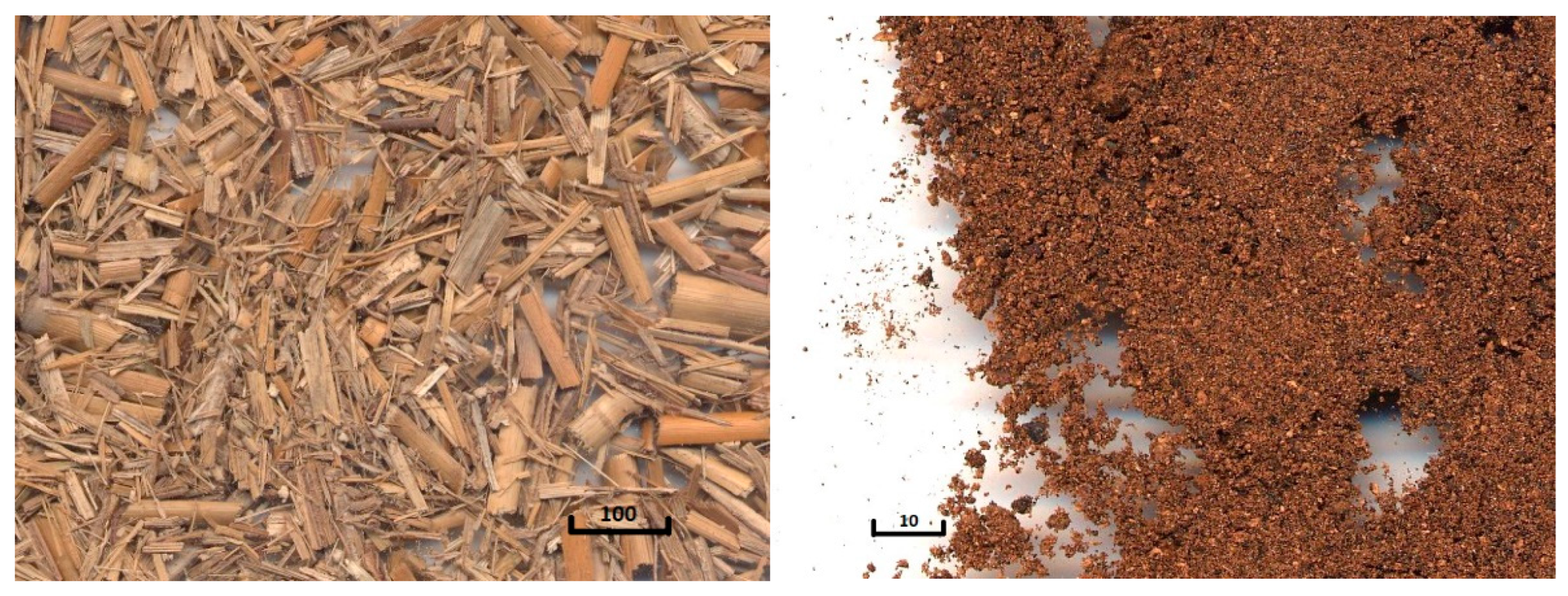
Figure 2.
(a) Municipal solid refuse, and (b) Shredded PET bottles.
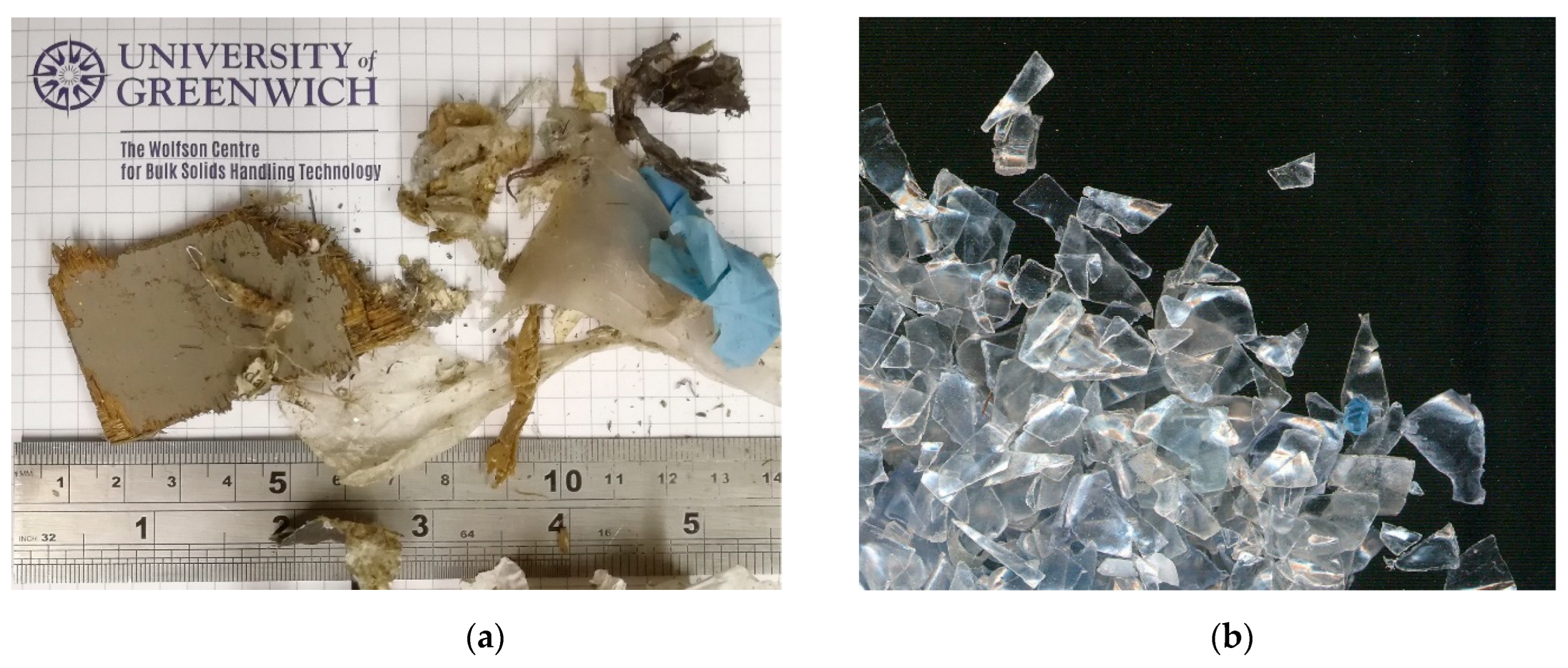
Figure 3.
Difference of particle shapes between (a) straw, and (b) glass cullet.
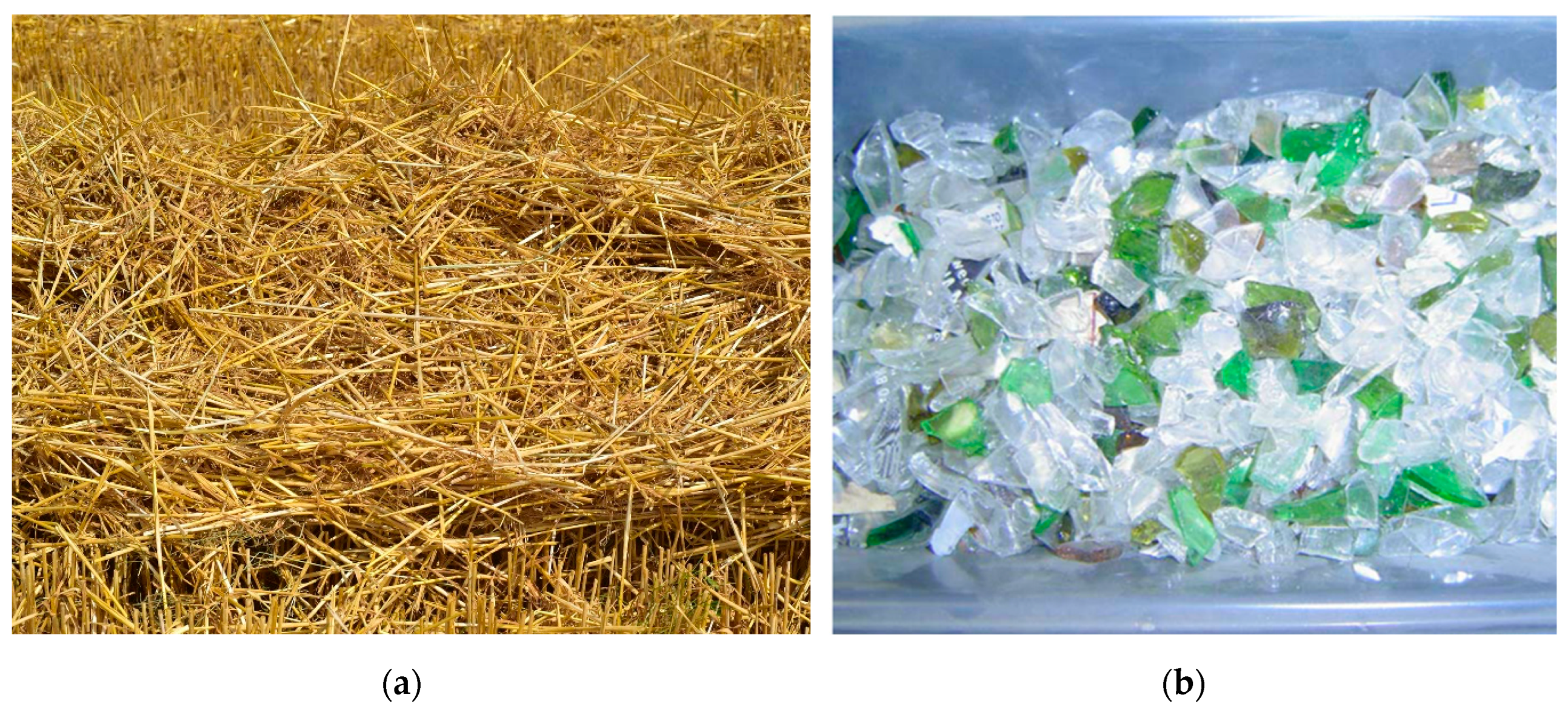
Figure 4.
: Waste tyres (a) raw, (b) shredded, and (c) crumbed.

Figure 5.
Two common failures of solid flow in hoppers and silos: (a) rat-hole (b) arching, and two common flow patterns in hoppers and silos: (c) core flow and (d) mass flow.
Figure 5.
Two common failures of solid flow in hoppers and silos: (a) rat-hole (b) arching, and two common flow patterns in hoppers and silos: (c) core flow and (d) mass flow.
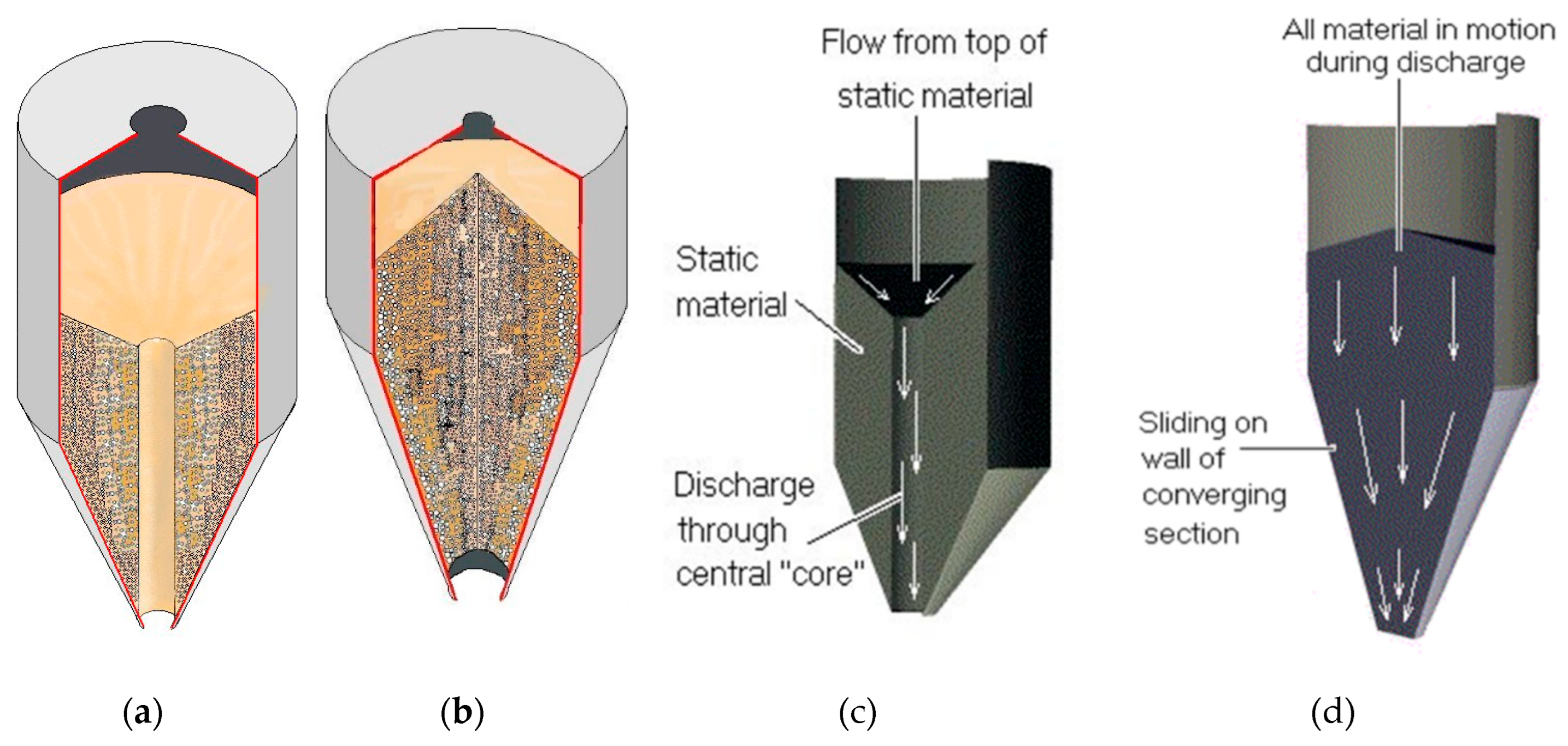
Figure 6.
Column test for identifying “Class 3” (entangling) materials: (a) principle (b) testing of matchsticks.
Figure 6.
Column test for identifying “Class 3” (entangling) materials: (a) principle (b) testing of matchsticks.
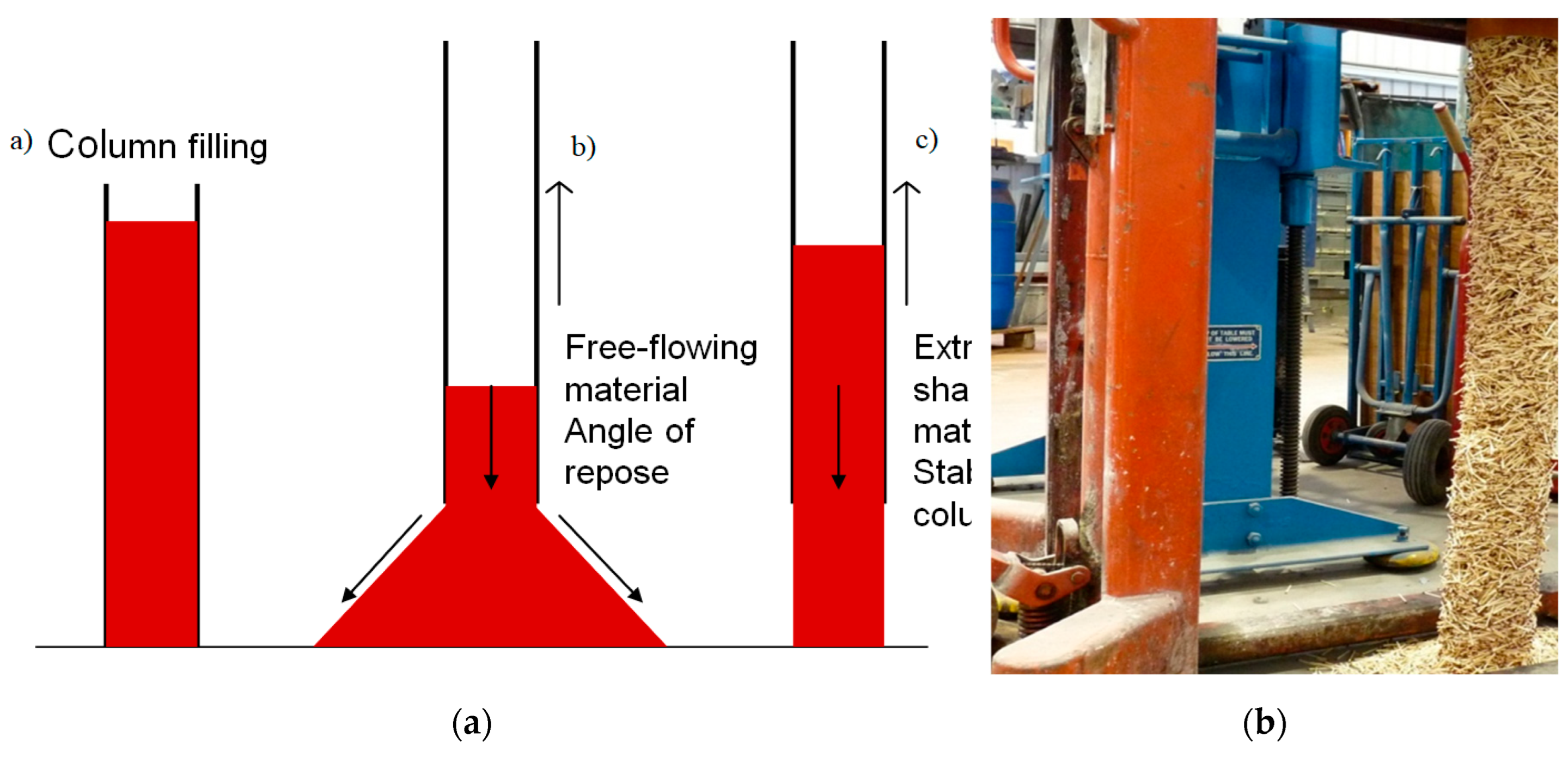
Figure 7.
Principle of solid particle compression: (a) ordinary solids (b) stringy particles.
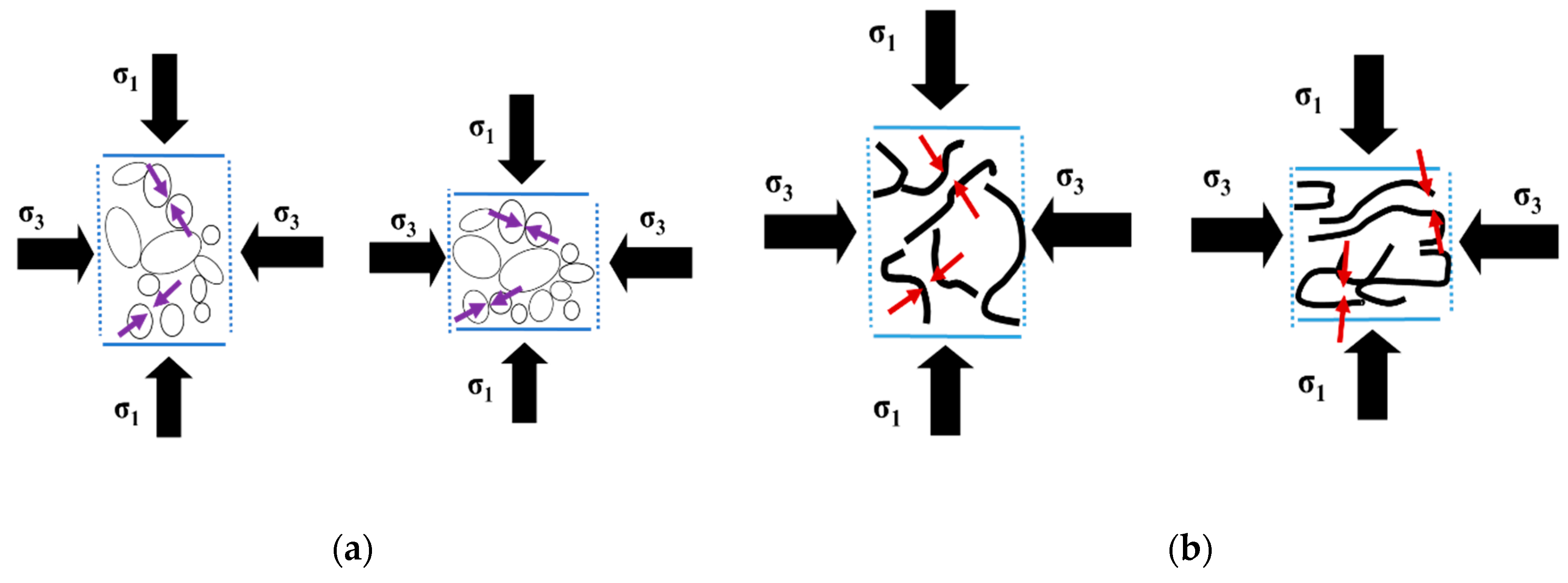
Figure 8.
Process of refuse-derived fuel/pellets for combustion [136].
Figure 8.
Process of refuse-derived fuel/pellets for combustion [136].
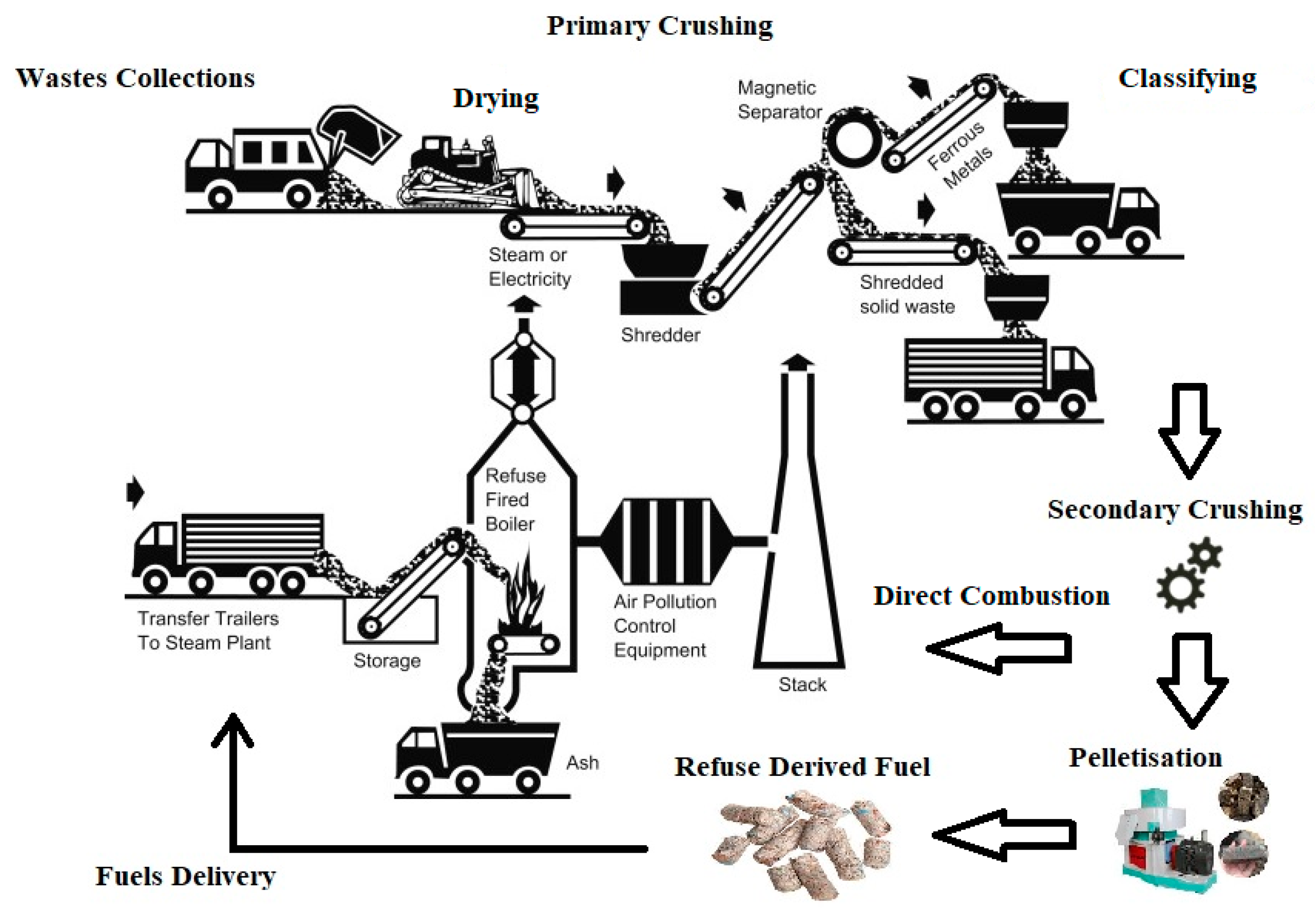
Figure 9.
Wastes with special size, shape and water content (a) recycled garden waste, and (b) sewage sludge.
Figure 9.
Wastes with special size, shape and water content (a) recycled garden waste, and (b) sewage sludge.
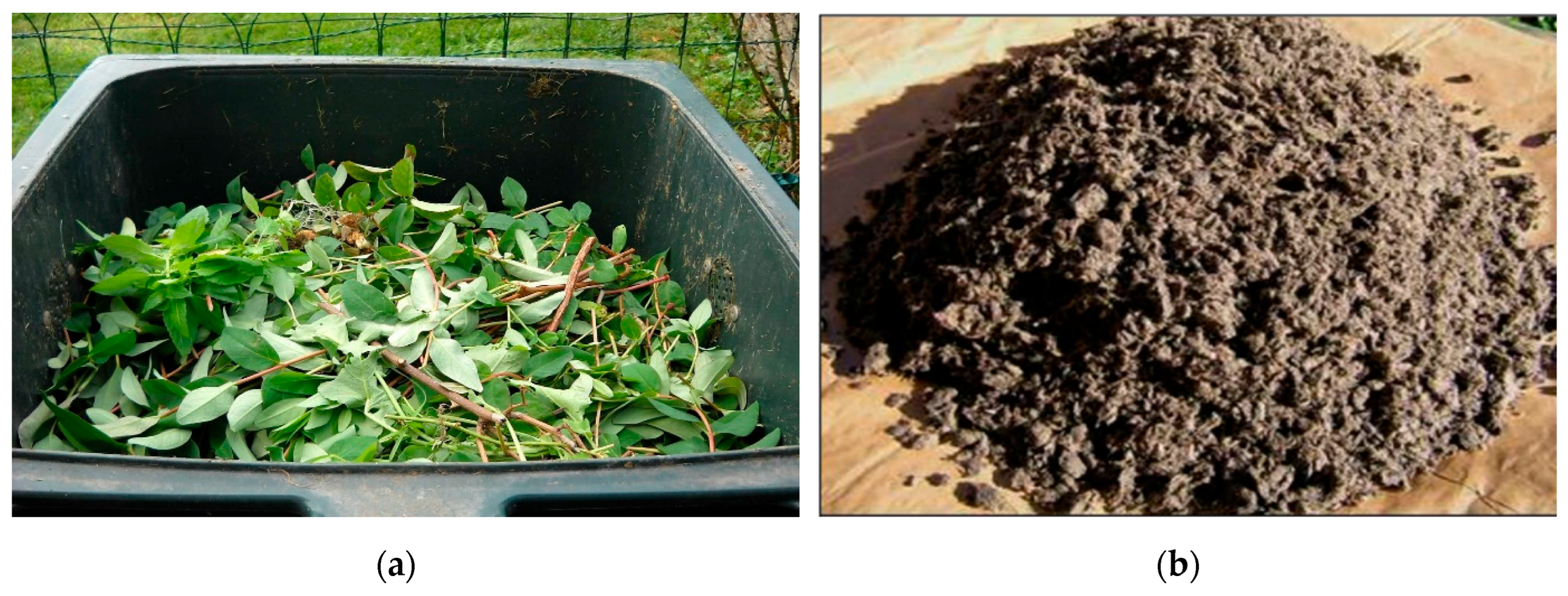
Figure 10.
Full-live-bottom discharger: (a) Planetary screw discharger (b) Push floor.
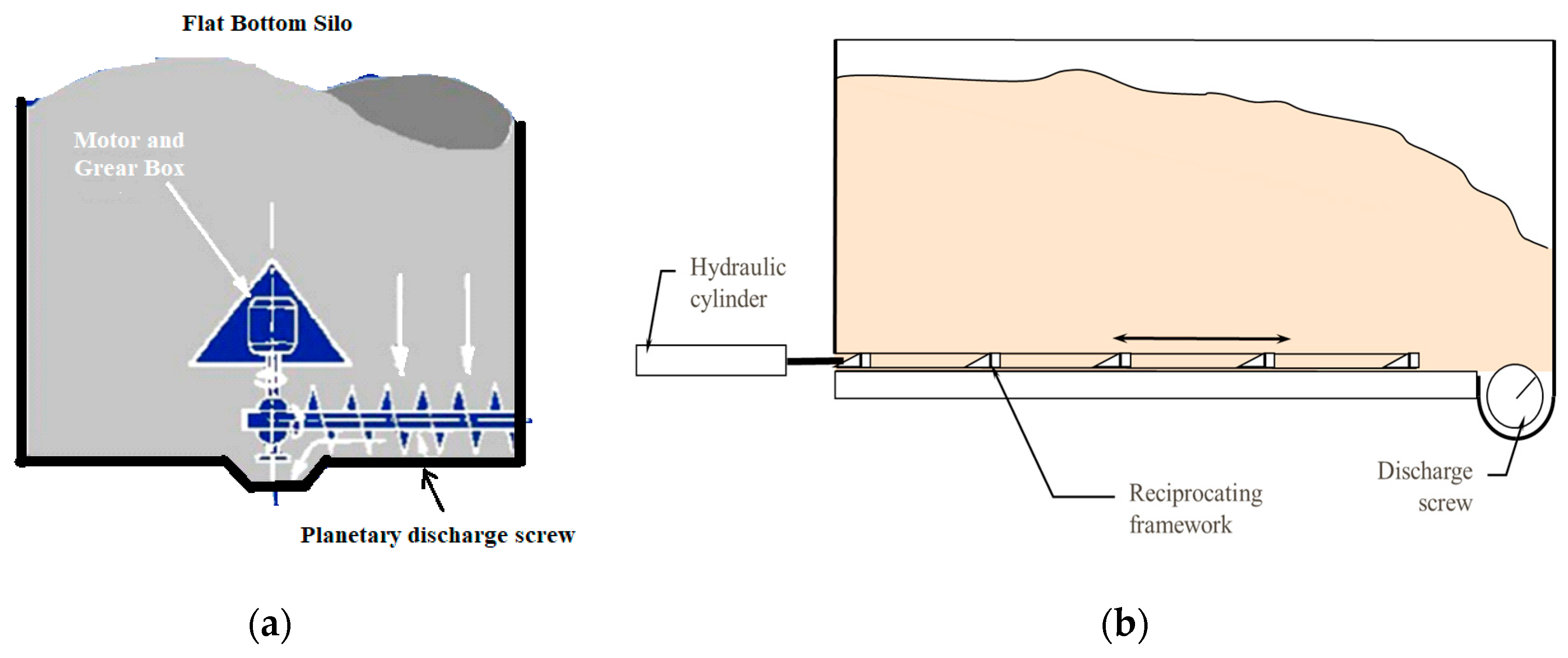
Figure 11.
Fire hazards: (a) storage fire, and (b) Silo fire explosion.
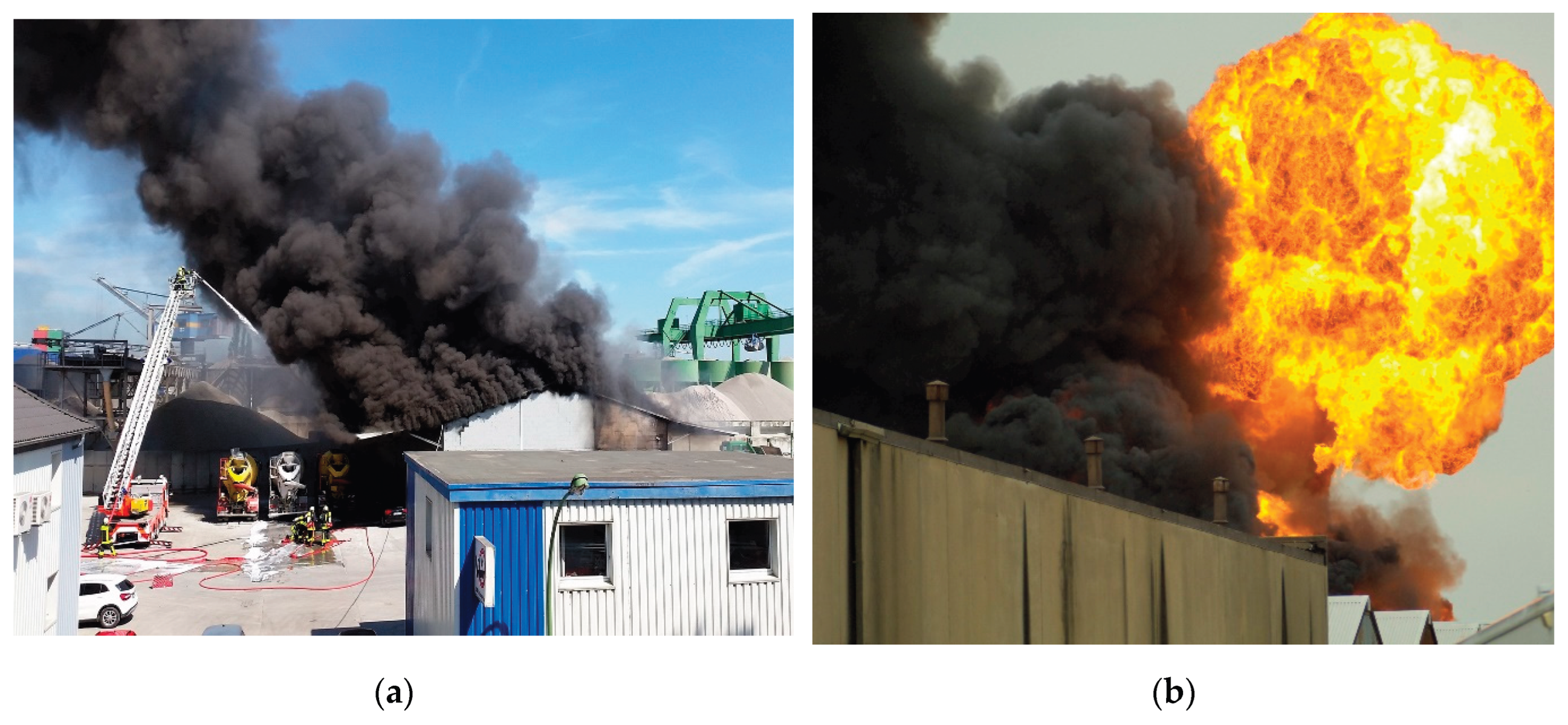
Disclaimer/Publisher’s Note: The statements, opinions and data contained in all publications are solely those of the individual author(s) and contributor(s) and not of MDPI and/or the editor(s). MDPI and/or the editor(s) disclaim responsibility for any injury to people or property resulting from any ideas, methods, instructions or products referred to in the content. |
© 2025 by the authors. Licensee MDPI, Basel, Switzerland. This article is an open access article distributed under the terms and conditions of the Creative Commons Attribution (CC BY) license (http://creativecommons.org/licenses/by/4.0/).
Copyright: This open access article is published under a Creative Commons CC BY 4.0 license, which permit the free download, distribution, and reuse, provided that the author and preprint are cited in any reuse.


