

Submitted:
22 June 2025
Posted:
07 July 2025
You are already at the latest version
Abstract
The shift from secondary school or college to university represents a period of change characterized by multiple transitions, educationally, socially, and emotionally. As students move from strictly regulated school environments to the relative independence of university study, they arrive at expectations of university life. For some, expectations of university will not change across the course of their degree, while for others partial or total expectation shifts may occur. The current study conducted nine focus group sessions in 2018 with a total of 46 undergraduate psychology students (32 first-year and 14 and third-year), seeking to explore the academic factors that shape students’ experiences across their degree. Using thematic analysis, the study conceptualized five main themes: prior experience, adjustment to university, staff relationships, the experience of studying, and future career plans. Together these show how students’ expectations change across their undergraduate studies. We suggest that good expectation management for students first starting university would help in their initial transition. Ongoing support such as between module check-ins and continued employability support across the span of each student’s degree would be beneficial for their overall experience. Additionally, the findings also highlight the key role played by staff in developing a feeling of belonging.
Keywords:
university transition
; focus groups
; qualitative
; academic expectations
; higher education
Introduction
When students decide to attend a university, they may have expectations about the program they have selected, including the type of topics they will cover and the teaching they will receive (Tomlinson et al 2023; Hassel & Ridout, 2017; Money et al., 2017). The progression from secondary to higher education is a period of change characterised by multiple concurrent transitions, involving several contextual and environmental changes such as geographical, educational, and living (Gall et al., 2011; Holton, 2015). This period also involves various interpersonal transitions leading to changes in areas such as friendship, levels of independence, and self-perceptions. Although many researchers have explored the transitional period from college to university, further research is required to avoid so-called “blanket statements” regarding student expectations (Nadelson et al 2013). Not all expectations are the same and different students will come with a variety of expectations based on their previous environments and experiences.
Depending on their background, prior qualifications, and previous experiences students will undergo their educational transition in different forms and intensities, however, as Jackson (2010) notes, for all students this period will represent one of disequilibrium. Typically, this is illustrated by a U-shaped period of adjustment. The novelty of the new experience in the first few weeks brings excitement and enjoyment, followed by a period of disillusionment and dejection (which can induce dropping out for some), followed by a period of adjustment (Risquez et al., 2008; Menzies & Baron, 2014; Jaremka et al., 2020). Students who have unrealistic academic expectations (Cook & Lecky 1999; Denovan & Macaskill 2013) tend to gain lower first-year grades than students who have lower or more realistic expectations of their academic abilities (Smith & Wertlieb, 2005). The first semester is seen as a key stage in the student’s transition cycle as this is when they are most likely to drop out of university or disengage with their studies (Bolam & Dodgson, 2003). These risks are even higher for students from non-traditional or widening participation backgrounds such as those with a disability (Kilpatrick et al., 2016), or international students (Ecochard & Fotheringham, 2017), for they face additional challenges.
As well as navigating the personal challenges of higher education such as financial pressures (Hoffman et al., 2008), making friends (Chiang, 2007), and homesickness (Maunder, 2018; English et al., 2017), students also must deal with academic challenges and changes that could affect their study outcomes. Factors such as prior study (Hands & Limniou, 2022) and transferable skills from prior academic and vocational experience (Schaeper, 2020) have been shown to affect the expectations of students arriving at university. Furthermore, factors such as engagement with learning (Kuh et al., 2009), self-efficacy (Bandura, 1994), and self-regulation (Zimmerman, 2000) are also known to impact student learning experiences once at university. Additionally, even the structural environment such as the use of a Virtual Learning Environment (VLE; Hands & Limniou, 2023), or lecture recordings (Nordmann et al., 2019) can impact student experiences. Students face a range of barriers and facilitators to their learning which are multifaceted and multi-dimensional. This complex interaction inevitably has an impact on how students feel as they pursue their degrees (Nadelson et al., 2013), as well as dropout risk, future engagement, and academic success. To facilitate successful student transitions amidst the challenges they face student expectations must be recognised.
It is common for student study expectations to vary from the reality of their university experience (McInnis et al., 2000). Additionally, these expectations can play a role in how students react to situations at different points in their academic journey. The immediacy of one’s experience may change the emphasis placed on factors affecting their learning experience. For example, if asked about exam stress students will often emphasise anxiety, pressure, and nervousness prior to the exam, however, once the exam is completed, they may emphasise relief and feelings of accomplishment, disappointment, and/or regret depending on their perceived performed (Krispenz et al., 2019). The same is also true for wider student experiences. A time-lapse may be necessary across a student’s course of study to allow them to reflect on and fully appreciate the relevance of course activities. For example, Drew (2001) found classes aimed at developing study skills were conceptualized as more valuable to students in retrospect compared to the time of their current engagement. Baloo (2018) found that newly admitted students are unable to differentiate between their expectations and aspirations. As such, their expectations displayed may really represent socially desirable views or legitimate university objectives such as career goals or academic interests. Therefore, it is important to consider both the expectations of new students as well as the reflections of those who have completed their studies, which is currently an area of the literature which remains underdeveloped. Only a handful of scholars have applied a longitudinal approach to exploring the matter.
Current Study
The current study seeks to explore students’ academic learning experiences of transitioning to higher education by comparing the viewpoints of students at the start and end of their academic journeys. Building on the previous studies regarding the student university transition based on their prior experience, adjustment to university, staff relationships, the experience of studying, and future career plans, the study examines what aspects of students’ transitions through university are initially most important to them. As such, first- and third-year Psychology students’ views regarding their degree program were compared. Psychology students were intentionally selected due to their large cohort size, and the known variation in prior knowledge (Hands & Limniou, 2023) and expectations (Brett, 2007) students have upon arriving to university. This study seeks to identify and explore whether these key academic factors influence student transitional experiences and how such factors change over one’s degree program.
Methodology
For this study, focus groups were conducted to understand students’ views and expectations. Beneficially, group interactions may stimulate conversation between participants and encourage respondents to share their own experiences due to the presence and disclosure of others (Kitzinger, 1994). As such, valuable insights into students' perceptions of specific study areas can be gained through setups like low stakes testing, which does not impact their final grades. This approach allows students to freely share their opinions and preferences, even if they might be hesitant initially.
The focus groups were semi-structured to allow for specific areas of interest to be explored whilst giving participants the flexibility and spontaneity to take the discussion in unexpected directions. This approach enabled participants to generate and express their opinions and highlighted priority areas within their own vocabulary (Kitzinger & Farquhar, 1999). A group setting also enables students to explore shared experiences (Morgan, 1996), allowing for a more in-depth exploration of the research questions and the generation of rich data. (Braun & Clarke 2006)
Participants
46 undergraduate psychology students (32 and 14 first and third-year students respectively) were recruited using opportunity sampling from a large Russell Group university in the Northwest of England via posters, course announcements, and word-of-mouth to participate in focus groups.
Nine focus group sessions were run, each containing four to six students. For disability reasons, a single third-year student was interviewed alone. The one-to-one session and one of the focus group sessions were conducted by one of the authors, whilst the remaining sessions were led by a master’s student close in age to the participants. A conscious decision was made to predominately use a peer interviewer to facilitate student participation and disclosure (Platt, 1981; Devotta et al., 2016).
The focus group sessions took place at two points in 2018 – one at the end of the 2017-2018 academic year, and the other at the start of the 2018-2019 academic year. Upon completion of their degree, 14 students discussed their experiences from late May to early June. Additionally, within the second and third weeks of their degree (early/mid-October), 32 first-year students were given the opportunity to participate in the focus groups s in exchange for a small amount of course credit. The demographics of the sample matched the general demographic profile of the university’s student Psychology population in terms of sex, age, disability, ethnicity, and academic performance (see Table 1 and Table 2 for breakdown). One student from the first-year group dropped out at the end of the first semester, whilst the remaining students graduated with an array of classifications, averaging a 2:1 classification.
Each focus group session lasted between 20 and 65 minutes and was audio recorded using voice recorders. The recording was then transcribed verbatim, without student hesitations or vocal disfluencies (i.e., speech fillers, such as umm or err).
Theoretical Approach
The study adopted an interpretive approach, using qualitative thematic analysis as its primary methodological framework. Braun and Clarke’s (2006) model was selected for its clarity, flexibility, and suitability for a comprehensive analysis. This approach allowed for both inductive and deductive analysis, drawing on existing literature and emergent data patterns, particularly in line with the main authors' prior work. The framework offers a systematic process that supports rigour and consistency, enhancing the reliability of findings. Its adaptability enabled us to work effectively with a diverse dataset, facilitating the identification and interpretation of both explicit and underlying themes. The model also supports analysis beyond surface meanings, helping to uncover latent mechanisms and contextual influences. Widely used and well-documented, Braun and Clarke’s approach increases the transparency and replicability of our analysis, ensuring that our findings are both trustworthy and accessible to other researchers.
Analysis Procedure
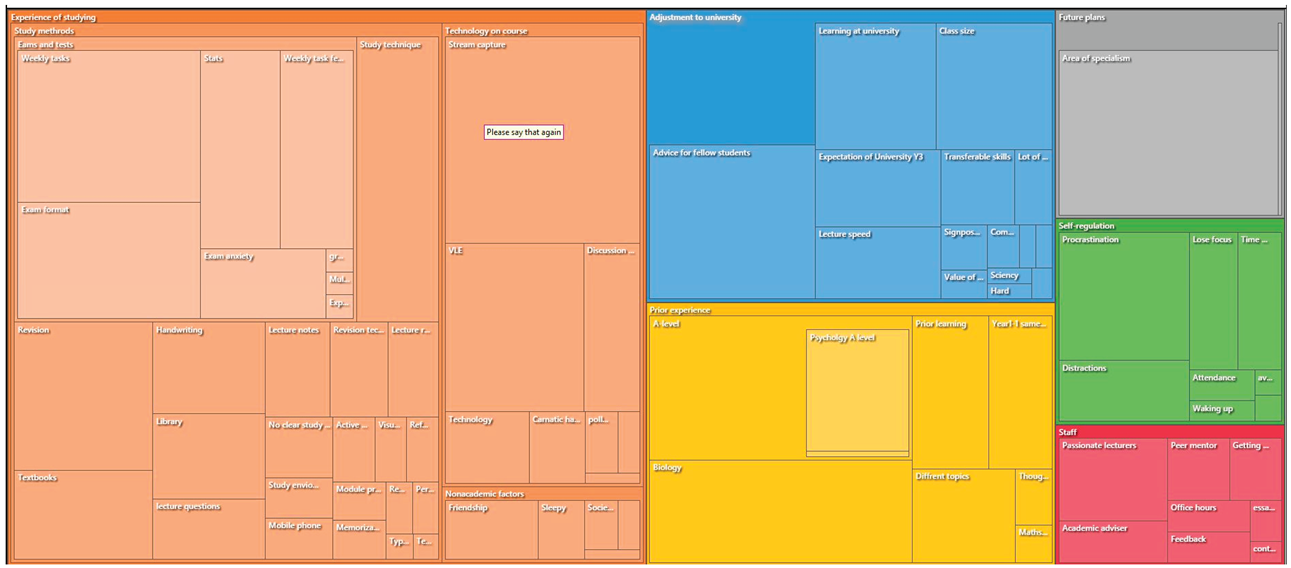
Firstly, the research team familiarised themselves with the discussion transcripts through an inductive process, approaching the data from the bottom up and taking participants’ accounts at face value. The transcripts were coded line by line, and these codes were refined to form categories within each interview. These categories were then grouped to generate initial themes. A side-by-side review of relevant literature was used to refine these themes further, aiding clarification and conceptual development. The study aimed to explore student experiences at multiple levels—both superficially, as expressed directly in the focus group discussions, and conceptually, through shared patterns identified across the dataset. Following this initial phase, a second researcher independently analysed the data using a set of five themes: prior experience, adjustment to university, staff relationships, the experience of studying, and future career plans. These themes were generated inductively rather than imposed deductively. Table 4 provides an overview of the analytic process.
Results and Discussion
The five finalised themes of prior experience, adjustment to university, staff relationships, the experience of studying, and future plans were discussed. Together these themes illustrate some of the barriers and facilitators students face within their transition to higher education.

Table 5.
Identified Themes.
| Theme temporality | Main theme | Sub Themes |
|---|---|---|
| Theme 1 – Before starting | Prior experience | Subject matter Student expectations |
| Theme 2 – On arrival | Adjustment to university | Learning environment Expectations vs reality |
| Theme 3 – Adjustment facilitators | Staff relationships | Teaching style and engagement Lecturer qualities |
| Theme 4 – Barriers and facilitators | Experience of university level study | Study habits Time management Technology use |
| Theme 5 – Beyond graduation | Future (career) plans | Path certainty Vocation diversity |
Prior Experience
A common statement among the first-year participants was how they envisaged having an A-level in Psychology to be advantageous in their transition due to having a pre-established baseline of prior knowledge. This view was based on their experience of the introductory lectures where theories, studies, and researcher names were recognised giving them some familiarity and connection between their secondary and tertiary knowledge. A few students spoke of this as being repetitive but, mostly it was viewed as an advantage. Having prior experience can be important for undergraduate students in a few ways. Firstly, building on existing knowledge enables students to make connections and understand current information more easily and readily (Witherby & Carpenter, 2022). This in turn enhances student motivation as they can see the relevance of what they are learning, and in turn improving content retention (Martin et al., 2017) due to the connection and relatability between current information and existing knowledge. Prior qualifications were seen as valuable for preparing students as the following quote exemplifies:
- (Y1, focus group 1)
- “A-levels definitely help with coming into university when you’ve already had that kind of foundation of the tough exams at the end and you have to kind of manage your time studying.”
An apparent difference between the years of study regarding the utility of specific subject prior knowledge was seen. Third-year students viewed holding an A-level qualification in Biology to be most beneficial in aiding their degree studies: “…the only thing that helped from A-level was doing Biology; I don’t think Psychology helped at all whereas Biology gave you more of a head start with like neuro-science stuff.” (Y3, focus group 3). Conversely first-year students placed a greater emphasis on the benefits of holding a Psychology A-Level qualification as they felt this gave them a greater grounding in the information they were currently being presented with:
- (Y1, focus group2)
- “Doing psychology has made me, at A-level really helped me just give it like the background knowledge. It is just like a basic, like foundation but it just helps you out so much like learning it, I cannot imagine like having to learn it all from scratch at university [laughs].”.
Given the timing of the first-year student interviews within the semester, it is possible that the students were unaware of the biological elements entailed in later semesters of their degree, thus placing greater focus on the utility of a Psychology A-level qualification due to it being the primary teaching area within the introductory weeks. Research by Hands and Limniou (2023) demonstrates that attaining an A-level in Chemistry and/or Biology plays a greater role in first-year success than holding an A-level in Psychology. This finding suggests that it may be worth making a science qualification a prerequisite for undergraduate entry – an idea also reflected by a year three student:
- (Y3, focus group 1)
- “There should be a bit of a sort of a disclaimer saying you know `some of the modules are quite heavily science-based, like you don’t require the science, but it may work in your favour to have it`, maybe ‘cos then at least people are aware.”.
It should be noted that prior experience can also have negative effects possibly leading to student disappointment, confusion, and/or frustration (Timmis et al 2024. Boujaoude, 1992), as demonstrated by one participant who commented: “I thought we might get like some more applied psychology stuff as in like the theories as well as like what a psychologist does and like, how to be one. Whereas it’s more just – this is what psychology thinks.” (Y3, focus group 1).
As well as possessing direct knowledge, prior discipline experience can help students develop key skills and transferable knowledge to other domains such as critical thinking, problem-solving, and communication skills (Pellegrino & Hilton, 2012). Students also stressed the importance of scientific literacy in helping the development of their transferable skills and adjustment to higher education:
- (Yr. 3, focus group 3)
- “I think it’s more what you’ve learnt as well like in A-levels ‘cos you learn like how to revise and how to manage your time compared to before then ‘cos you have a bit freer time, so I think that’s probably more useful”.
- (Y3, focus group 2)
- “Just like the essay-writing and the problem-solving skills … you came to Uni with them. So, as you came to like more equipped going through like things like problems and stuff like on the course.”.
Adjustment to University
Starting university marks a transition period for many students as they move away from home and learn to take care of themselves. Additionally, students must navigate an array of new social situations and emotional states such as building social networks, living independently (Ding, 2017), assimilating to university life/culture, and managing the academic demands placed on them. The transition from secondary to tertiary education is typically marked by a decrease in structured weekly class time, reduced direct contact with teachers, and a greater reliance on self-regulated learning (Richardson et al., 2012; Broadbent, 2017). Across the sessions, students elaboratively spoke about adjusting and adapting to university life. The stories told were of a greater complexity than the simple comparison of the expectations to the realities of university life. Insights were instead given on the ways in which student study habits changed, how new technological systems were navigated, and even how students moderated their expectations to meet the realities of higher education. Lecturers’ teaching style and the classroom environment were frequently mentioned in the upscaling of class sizes from small A-level cohorts to large-scale lecture halls containing hundreds of students.
Many students enter higher education with unrealistic expectations and/or understanding or appreciation of study expectations and demands. This can partially be explained by the difference in pedagogical approaches between educational levels (Cook & Leckey, 1999). Such shifts in approaches, expectations, and complexities can lead to students feeling overwhelmed as demonstrated in the following quote: “I was expecting it to be a big jump between A-Level and degree level, obviously it’s a lot more work, but it’s a lot.” (Y1, focus group 4). McInnis, James, and Hartley (2000) discovered that after one semester, students realised that there was a significantly higher workload and time demand for studying than originally anticipated prior to starting. We found a similar pattern, even in their first couple of weeks, some interviewees noted their struggles: “I feel overwhelmed. I feel like it’s more difficult than I expected it to be, so I don’t know so far.” (Y1, focus group 3).
This finding suggests that for some students the onset of university culture shock (as labelled by Risquez et al., 2008), is occurring even sooner than originally thought by researchers. Throughout the interviews, it was obvious that the initial novelty of being at university was wearing off and the realisation of university procedures and customs, particularly regarding the classroom environment, was proving difficult for many students. Such realisations in turn increase student susceptibility to dropping out (Karimi-Haghighi et al., 2022). The sheer size of lectures was a big adjustment for most students, with many feeling a lack of assimilation or immersion in both the physical learning environment and the curriculum:
- (Y3, focus group 1)
- “…look, I mean you can’t ‘cos there’s such a big year group I don’t know my lecturers, like I know my supervisor and my tutor, but I don’t think, I could probably walk past any of them, and they’d have no idea who I was.”.
Additionally, other barriers were noted such as irritations from typing noises, lack of confidence in class participation and lecture pace and length, as demonstrated by the following two excerpts:
- (Y1, focus group 5)
- “Seminars to me were daunting let alone lectures because I came from a Sixth Form where my biggest class had like seven people in it so than having suddenly having thirty people, I was like whoa this is a lot of people so I feel like I can’t speak up so then, never mind the lecture where there’s four hundred of us sat in the same room.”.
- (Y1, focus group 5)
- “…they were like very fast-paced, like I was just sat there, and I couldn’t keep up with all the content and them speaking so fast and it was just a bit overwhelming I think.” … “didn’t realise that lectures would be two hours long, ... after about half an hour my teacher had to give me a break …so being sat down for like two hours straight, after like the first half an hour, I lose focus”.
Overall, while students acknowledged the differences between university and their previous education, our analysis suggests they did not fully understand the implications of these differences, or the need to adjust their behaviour as a result. This finding is also noted by other scholars (see Williamson et al., 2011). University lecturers may need to adjust their content and produce strategies to address and manage students’ unrealistic expectations to help them acclimatise to their new learning environment (see Crisp and colleagues, 2009) who provide suggestions on teacher-student dialogue).
Staff Connections
Inherently the move from secondary to tertiary education involves changes in teaching styles, expectations, support, and contact with lecturers and other faculty members. Unsurprisingly students' perceptions and their working relationships with staff members, emerged as a key theme. As the literature notes, university students value academic staff who have a positive attitude, a friendly demeanour, effective timely communication, and most importantly enthusiasm in their teaching (Voss et al., 2007; Pithers & Holand, 2006). Enthusiasm was noted by many of the interviewees through the passion the staff displayed when teaching about their own personal research areas. Such enthusiasm in lecturers clearly increased student motivation and carried over to their independent and wider study experiences, as exemplified in the following quotes:
- (Y3, focus group 3)
- “They’ve got such a fountain of knowledge from them that it’s just so good that you’ve got that as an ongoing resource, they’re in the building somewhere, you can go find them, they will help you, most of them will be completely happy to help you and just sit down and listen to your questions.”.
- (Y1, focus group 1)
- “Brain and Cognition is my favourite, just ‘cos errs, I was already interested in it, but the enthusiasm of the lecturer, or he wasn’t like fully enthusiastic but his, you could tell he really enjoyed it, so it sort of rubbed off on me.”.
Additionally, lecturer enthusiasm was also noted by the interviewees through lecturer idiosyncrasies and performance style:
- (Y1, focus group 4)
- “I find that some of the lecturers are quite engaging though as well like you can kind of, they’ll put in some of their own quirky jokes and stuff which I quite like cos I was quite worried that it was going to be like really mundane lectures sort of really kind of tight lecturers but actually they’re a lot more engaging and you can tell that they’re really passionate about their subject field as well.”.
Short and Martin (2011) found that students performed significantly better when lectures were given in a performance style - incorporating personal anecdotes and audience interaction – over a presentation style focusing on information transmission with no interaction. Overall, students reported good relations with the academic staff however many noted such rapport grew over time with class size being a significant barrier to developing these relations specifically within their first year of study:
- (Y3, focus group 3)
- “I think definitely one of the things we miss out on being such a massive course is having like that closer relationship with members of staff. You know when you’ve come from school and in A-levels you’re in like classes of 15 and you have really close relationships with your teachers. … So, I think that’s definitely one of the things I’ve found most helpful, but it is one of the things that you miss out on in the course because it so massive.”.
- (Y3, focus group 2)
- “From the initial [meeting with your supervisor] that makes you like not just a face in the crowd. Like, if you did that in first years like you’d know your lecturers. Like, only meeting them in this year and stuff is like great but it’s one of them things where you wish you’d have known them for first year ‘cos they’d have been of such help.”.
The connection between staff and students within an educational institution is of paramount importance. This bond goes beyond the traditional roles of teacher and learner; it forms the cornerstone of a positive learning environment. When staff members genuinely engage with students, it fosters a sense of belonging, trust, and mutual respect. This connection allows educators to understand individual student needs, provide tailored support, and create an atmosphere where students feel comfortable expressing their concerns and ideas. Furthermore, a strong staff-student connection can enhance motivation, retention rates, and overall academic success. Beyond academics, this relationship also contributes to personal and professional growth, helping students develop essential life skills and networks that can benefit them well beyond their time in education.
The Experience of Studying
Within this theme, three main subsections emerged – changes in study habits, time management, and technology use. Regarding study habits, there were distinct differences between year groups regarding student study habits and methods. Many first-year students predicted that they would need to change their study and revision habits to adapt to their new learning environment – as also seen elsewhere in the literature (see Pownall et al., 2021). Identifying appropriate methods and study techniques drastically varied across first-year students with many still experimenting with different methods:
- (Y1, focus group 5)
- “I still haven’t found something that’s worked for me, like I didn’t find it in A-Level and I’m still trying out different methods for me. I think the only one that came close to slightly working was having visuals so like something colourful to look at.”.
For third-year students, many reflected on how they had to adapt, adjust, and try different methods until they reached a system that worked:
- (Y3, focus group 1)
- “It took me ages to try and work out the best way to actually take notes just in lectures and stuff, like I just spent like so long not, like just trying to figure out the most like efficient way to do it … I was like this is so difficult … kind of made like my own versions”.
Consistent with other scholars (e.g., Hadwin et al., 2001) students spoke of changing their study habits to fit their routine, workload, and specific modules due to differences in assessment modes, in turn informing their exam approach and revision methods. Third-year students recognized how much more work was required at the end of their degree compared to the start as the following exchange shows:
Student 1: “I don’t know what we did with our hours in first year like, what did we do?”
Student 2: “Just like watching some TV, like being hungover!”
Student 1: “We just wasted so much time.”
Student 3: “Now it’s like there’s not enough hours in the day.”
Student 1: “Yeah, it’s just like completely different, isn’t it?” (Y3, focus group 3).
Time management is an essential skill required by students, with many noting procrastination and other forms of distraction as two of the biggest barriers to effective timekeeping. As one first year noted:
- (Y1, focus group 1)
- “I procrastinate a lot …, it’s just sort of trying to motivate yourself to do it quickly, I often start things and then I’m like I’ll come back to that later and then I leave it really the last minute”.
As shown, many students were aware of their working habits and noted their tendencies to procrastinate with the pressure of an emerging deadline inciting productivity:
- (Y1, focus group 4)
- “I made study timetables, but I didn’t have the self-control to stick to them. I think I tried every method possible; I tried working with somebody, I tried rewarding myself and it just never worked for me, I think I always kind of procrastinated and I work best under stress, that is when I do all”.
This response was common throughout the interviews, and the wider literature, with procrastination tendencies and emerging deadlines forcing students to improvise, prioritize tasks, and find actionable and creative solutions (Grant, 2016; Mohammed, 2021). Distractions were another commonly mentioned barrier to learning with the use of technology (such as one’s mobile phone, or laptops) and/or living in communal student residential spaces (which many had never experienced before) leading students to seek quiet working environments:
- (Y1, focus group 5)
- “It’s also getting distracted especially, I think I just need to work in the library because when I work back at the accommodation like I normally didn’t have my phone on me like at A-Levels I didn’t, but now it’ll be next to me and someone will be like “Oh do you want to meet up?” or “I’m doing washing, do you want to come down?” And I’ll be like, “Oh yeah” and then I’ll just leave it and then I eat tea and then I’ll just be like “Oh I’ll do it all tomorrow” and it’s just something that I shouldn’t do.”.
As well as distractions caused outside the classroom by fellow students and friends and one’s living environment, classroom distractions are also prominent. For example, Limniou et al., (2020) found that devices used in lectures, while mostly offering a positive addition to learning, could also act as a distractor particularly when there was a mismatch between learning and the information provided on the device (e.g., a web page). Indeed, despite initial difficulties adjusting to new software and technologies used in higher education, such sources played an overwhelmingly positive and facilitative role in the participant’s learning experiences. Consistently students talked about helpful technological resources ranging from lecture recordings (aka stream captures) and Blackboard - the University’s VLE - including some of its features such as virtual discussion boards. The use of recorded lectures increased as students progressed through their degree with its main application being to catch up on missed lectures, or recap the lectures themselves at the student’s own pace for clarification, or revision purposes:
- (Y1, focus group 1)
- “It’s definitely a useful resource regardless of whether you do make use of it or not because especially if, erm it might not necessarily be because you haven’t understood the lecture and you feel like going over it again, if you are like ill, or for whatever reason you cannot make it.”.
Stream captures also played an important facilitating role for those with a learning difficulty or disability, as well as for international students who may not be studying in a secondary language (Panopto, 2018), as demonstrated in the following two excerpts:
- (Y1, focus group 4)
- “[I have a] hearing impairment and things like that so from an accessibility point of view, I feel it is quite essential at times to have it even if the majority of people don’t necessarily use it”.
- (Y1, focus group 5)
- “…because I’m the only one listening to it, I can pause it when I need to, like I can slow it down to my pace to make the notes when I want, like if I’ve heard a certain part, I’ll pause it, make notes on it, replay that part to make sure I’ve got everything then move onto the next part.”.
As well as longitudinal increases, periodic increases in the use of stream captures were also noted. Heightened use was noted during exam periods for both first and third-year students. The convenience of having learning resources online was also appreciated by students to accommodate their routine, work patterns, and availability:
- (Y1, focus group 1)
- “[The VLE platform] makes it really easy to do work at whatever time you have, so erm, like there was a certain bit of reading that we had to do that was available on Blackboard so it was really easy when you have a spare hour to like make the most of that and you can be in your room doing that as opposed to having to go to the library, find the book, find the right bit”.
The convenience of VLE’s discussion board feature to interact with both the lecturers and fellow peers was also noted:
- (Y3, focus group 2)
- “Although not all lecturers replied efficiently, I thought it was really useful ‘cos obviously everything was all in one place … the discussion boards were good,” (Y3, focus group 1). … “. there are some things you wouldn’t have thought of and then someone’s asked a question on it, and you get the answer and you're like, oh!”.
One aspect that varied across modules and affected student posting on discussion boards was the ability to do so anonymously: “There’s been times that I’ve done it and not realising it’s not anonymous, so my name was coming up and I was like “god, I sound so stupid.” (Y3, focus group 2). Students reported greater use of this feature when their responses were anonymous. This preference is likely to be driven by anxieties over social desirability and being wrong in front of both their peers and lecturers (Freeman & Bamford, 2004).
Future Plans
Prior experience to entering higher education and then throughout can help students identify and explore their career interests, as well as help them develop desirable skills and knowledge in the eyes of employers. First-year students displayed an array of perspectives with some starting their degree with clear career aspirations whilst others had no idea and were open to seeing where their interests fell:
- (Y1, focus group 3)
- “I think I want to… but my main goal is to become a clinical psychologist, but we don’t have that module until next year.”.
- (Y1, focus group 4)
- “… I think it’s definitely open yeah, I’m not completely set in what I want to do yet, I’m not completely sure … over the next three years that I’ll get different tastes of different parts of Psychology and feel that maybe I might find something completely new that I might be more interested in … so I’ve got three years to decide.”.
Conversely, many of the third-year students reported that during their degree they had learnt about numerous career options that they were previously unaware of, and for many career aspirations had changed. Whilst the scope of modules and training in different Psychology subfields widened as the course progressed, many students wanted these specialised classes to appear earlier on in their course. The main drive for this was for student expectations to be managed and for an accurate depiction of subfield contents and career pathways to be presented. For example, one third-year student noted:
- (Y3, focus group 3)
- “I just had so many misconceptions of what it actually entailed, and I think people think like it’s forensic psychology like massively glamorised and I actually don’t, don’t really know what it is until you, and I think what people think they want to do is like clinical psychology in a forensic setting rather than actual forensic psychology.”.
Future careers/directions also varied across the third-year students with some wanting to leave academia, others wanting to take a break before returning for post-graduate study, whilst others planned to immediately continue studying in a related subfield of Psychology, such as forensic or clinical Psychology. Such preferences were given to these areas due to these offerings being prominent within master’s degree and doctorate programs.
Limitations
As with any research, the study had a few limitations. Whilst shared experiences can be fostered with focus group settings, such a set-up can create the potential for certain participants to monopolise the conversation and influence other participants’ responses (both in terms of their agreeableness and what they choose to share). This limitation: however, can be softened through effective pre-planning in determining the composition of focus groups (i.e., grouped into similar ages), and the use of a skilled and conscientious interviewer to ensure equal participation is maintained during the interview.
By focusing on the academic side of the student’s experiences, the narrative presented overlooks many of the other multiple and concurrent transitions students experience when starting their degree. These include navigating new friendships and living independently, often for the first time. By focusing solely on academic experiences and excluding the consideration of students’ social and extracurricular activities, the study’s scope is thus limited since these areas have a dramatic effect on a student’s academic career (Guilmette et al., 2019; King et al., 2020). A lack of balance between academic and non-academic responsibilities in either direction can negatively affect a student’s university experience. A future study could explore this area as well as the academic expectations of students.
Similarly, a lack of balance between academic and non-academic responsibilities can have far-reaching implications for a student's overall university experience. When academic commitments overwhelm the non-academic aspects of a student's life, it can lead to burnout, increased stress levels, and a diminished quality of life. This imbalance might result in students missing out on important personal growth opportunities, social interactions, and extracurricular activities that contribute to their holistic development. On the other hand, if non-academic responsibilities and activities take precedence, it could potentially lead to a decline in academic performance and the inability to meet educational goals. A future study delving into this intricate relationship should also explore the academic expectations that students hold. These expectations play a pivotal role in shaping a student's experience. Understanding what students expect in terms of workload, grading, and educational outcomes can shed light on how they perceive the balance between their academic and non-academic lives. It can also help educators and institutions tailor their support systems and curricula to better align with students' expectations, enhancing their overall university experience and promoting a healthier balance between their academic and non-academic pursuits.
Additionally, since the conduction of this research, there have been considerable changes throughout the education system both at the pedagogical and departmental levels due to the global COVID-19 pandemic. As such, current students may face additional challenges (or facilitators) that were not a part of this study’s student experiences such as online examinations, increased use of novel technologies, and a greater emphasis on mental health and student well-being. (Liverpool et al., 2023; Copeland et al., 2021; Lischer et al., 2022). As such, this data may not accurately and fully reflect the current student experience. As students transition in, and back out of university, they will face both barriers and facilitators within their experience. Overall, we hope the transition will be a positive one, as also wished through the advice by a third-year participant: “Be yourself, don’t be worried and enjoy every single piece of university. It is a good experience, and you should love it.” (Y1, focus group 6).
Conclusion
Taken together these results offer an insight into how students’ prior experience and transferable skills support their adjustment to university life. Several factors blocking the efficacy of first-year student adjustment were learning environment features (e.g., large lecture sizes and lecture pace), as well as interpersonal relations (e.g., the reduction in familiarity and working relationships with the lecturers). The passion of staff members for their research topics was noted to spark student interest and motivation, which we saw was carried through to influence study experiences, exam preparation, and even future plans. By the time students came to graduate they looked back on their period of adjustment and wondered why they found it as stressful as they did. As a result, it may be worth encouraging students who have graduated to speak to students who are just starting to provide reassurance that this feeling of disequilibrium will pass for those trying to successfully navigate the transition to university.
Building strong relationships and fostering a sense of belonging are also crucial for meeting student expectations. Many students look forward to meeting new people, including peers and staff members, and forming lasting friendships during their university years. Universities can facilitate this by organizing a variety of community-building activities such as social events, clubs, and interest-based groups. These activities provide platforms for students to connect and form bonds outside the classroom. Furthermore, fostering strong relationships between staff and students through mentorship programs, regular office hours, and informal meet-and-greet sessions can help students feel more supported and connected to the university community.
Improving the transition to university life is another essential aspect that universities should focus on. Implementing comprehensive orientation programs that introduce students to academic expectations, campus resources, and social opportunities can help ease the transition. Providing ongoing support for international students through cultural integration programs, language assistance, and visa support can also enhance their university experience. Mental health and well-being services, including accessible counselling and well-being workshops, are vital in helping students manage the stresses of university life. Additionally, offering academic skills development workshops and ensuring robust technical support can help students adapt to the academic rigors and digital demands of higher education. By addressing these areas, universities can better support students in managing their expectations and transitioning smoothly into university life. Universities can also consider working with further education providers and schools to facilitate visits and information for those planning on a university course. By allowing prospective students to spend time in a university environment and have a good understanding of this prior to starting the course can help offset some of the anxieties and misconceptions students may have prior to attending. For those planning on undertaking a psychology course, it may be worth emphasising the value of scientific literacy and biological/chemical knowledge in particular.
It is evident that universities must recognize and address the high expectations that students hold when embarking on their academic journeys. Many students simultaneously anticipate engaging with interesting and relevant content and have clear employability plans, expecting to link their studies with real-world applications. To meet these expectations, universities should ensure that their curricula are not only engaging but also incorporate practical examples and case studies that students can relate to. Inviting industry professionals for guest lectures and establishing partnerships with companies for internships or projects can provide valuable real-world insights. Additionally, regular module check-ins and comprehensive employability support throughout the duration of their studies can significantly enhance students' overall experience.
Overall, it should be noted that while most students successfully transition to their university studies by implementing simple expectation management, student support during this transition period could aid student expectations and confidence earlier on their studies, in turn aiding their overall transition.
Acknowledgements
The authors would like to thank Miss Beth Wood for undertaking the interviews and checking transcriptions.
Appendix A
References
- Anderson, B.; Marshall-Lucette, S.; Webb, P. African and Afro-Caribbean men's experiences of prostate cancer. Br. J. Nurs. 2013, 22, 1296–1307. [Google Scholar] [CrossRef] [PubMed]
- Balloo, K. In-depth profiles of the expectations of undergraduate students commencing university: a Q methodological analysis. Stud. High. Educ. 2017, 43, 2251–2262. [Google Scholar] [CrossRef]
- Bandura, A.; Wessels, S. (1994). Self-efficacy (Vol.4, pp. 71-81). New York, NY: Academic Press.
- Bolam, H.; Dodgson, R. Retaining and Supporting Mature Students in Higher Education. J. Adult Contin. Educ. 2003, 8, 179–194. [Google Scholar] [CrossRef]
- de Astudillo, L.R.; Niaz, M. Reasoning strategies used by students to solve stoichiometry problems and its relationship to alternative conceptions, prior knowledge, and cognitive variables. J. Sci. Educ. Technol. 1996, 5, 131–140. [Google Scholar] [CrossRef]
- Braun, V.; Clarke, V. Using thematic analysis in psychology. Qualitative Research in Psychology 2006, 3, 77–101. [Google Scholar] [CrossRef]
- Briggs, S. An exploratory study of the factors influencing undergraduate student choice: the case of higher education in Scotland. Stud. High. Educ. 2006, 31, 705–722. [Google Scholar] [CrossRef]
- Broadbent, J. Comparing online and blended learner's self-regulated learning strategies and academic performance. Internet High. Educ. 2017, 33, 24–32. [Google Scholar] [CrossRef]
- Cook, A.; Leckey, J. Do Expectations Meet Reality? A survey of changes in first-year student opinion. J. Furth. High. Educ. 1999, 23, 157–171. [Google Scholar] [CrossRef]
- Cook, A.; Rushton, B.S.; McCormick, S.M.; Southall, D.W. Guidelines for the management of student transition. University of Ulster, Coleraine. 2005. [Google Scholar]
- Crisp, G.; Palmer, E.; Turnbull, D.; Nettelbeck, T.; Ward, L.; LeCouteur, A.; Sarris, A.; Strelan, P.; Schneider, L. First year student expectations: Results from a university-wide student survey. J. Univ. Teach. Learn. Pr. 2009, 6, 16–32. [Google Scholar] [CrossRef]
- Ding, F. "Free in Time, Not Free in Mind": First-Year University Students Becoming More Independent. J. Coll. Stud. Dev. 2017, 58, 601–617. [Google Scholar] [CrossRef]
- Drew, S. Perceptions of what helps learn and develop in education. Teaching In Higher Education 2001, 6, 309–331. [Google Scholar] [CrossRef]
- Ecochard, S.; Fotheringham, J. International Students’ Unique Challenges – Why Understanding International Transitions to Higher Education Matters. J. Perspect. Appl. Acad. Pr. 2017, 5. [Google Scholar] [CrossRef]
- English, T.; Davis, J.; Wei, M.; Gross, J.J. Homesickness and adjustment across the first year of college: A longitudinal study. Emotion 2017, 17, 1–5. [Google Scholar] [CrossRef] [PubMed]
- Gall, T.L.; Evans, D.R.; Bellerose, S. Transition to First-Year University: Patterns of Change in Adjustment Across Life Domains and Time. J. Soc. Clin. Psychol. 2000, 19, 544–567. [Google Scholar] [CrossRef]
- Guilmette, M.; Mulvihill, K.; Villemaire-Krajden, R.; Barker, E.T. Past and present participation in extracurricular activities is associated with adaptive self-regulation of goals, academic success, and emotional wellbeing among university students. Learn. Individ. Differ. 2019, 73, 8–15. [Google Scholar] [CrossRef]
- Hadwin, A. F. , Winne, P. H., Stockley, D. B., Nesbit, J. C., & Woszczyna, C. (2001). Context moderates’ students' self-reports about how they study. Journal of Educational Psychology, 93(3), 477.
- Hands, C. & Limniou, M. (2023). How does student access to a virtual learning environment (VLE) change during periods of disruption? Journal of Higher Education Theory and Practice, 23(2), 18-34.
- Hands, C. & Limniou, M. (2023). Why science qualifications should be a pre-requisite for a Psychology degree programmes – a case study analysis from a UK (United Kingdom) university. Chapter 3, High Impact Practices in Higher Education: International Perspectives. Emerald Publishing.
- Hassel, S.; Ridout, N. An Investigation of First-Year Students' and Lecturers' Expectations of University Education. Front. Psychol. 2018, 8, 2218. [Google Scholar] [CrossRef]
- Holton, M. Adapting relationships with place: Investigating the evolving place attachment and ‘sense of place’ of UK higher education students during a period of intense transition. Geoforum 2015, 59, 21–29. [Google Scholar] [CrossRef]
- Jackson, C. Transitions into Higher Education: Gendered implications for academic self-concept. Oxf. Rev. Educ. 2003, 29, 331–346. [Google Scholar] [CrossRef]
- Jaremka, L.M.; Ackerman, J.M.; Gawronski, B.; Rule, N.O.; Sweeny, K.; Tropp, L.R.; Metz, M.A.; Molina, L.; Ryan, W.S.; Vick, S.B. Common Academic Experiences No One Talks About: Repeated Rejection, Impostor Syndrome, and Burnout. Perspect. Psychol. Sci. 2020, 15, 519–543. [Google Scholar] [CrossRef]
- Hoffman, M.J.; McKenzie, K.S.; Paris, S. Paper or plastic? The CPA Journal 2008, 78, 16. [Google Scholar]
- Karimi-Haghighi, M.; Castillo, C.; Hernández-Leo, D. (2022, July). A causal inference study on the effects of first year workload on the dropout rate of undergraduates. Inartificial Intelligence in Education: 23rd International Conference, AIED (Artificial intelligence in education) 2022, Durham, UK, July 27–31, 2022, Proceedings, Part I (pp. 15–27). Cham: Springer International Publishing.
- Kilpatrick, S.; Johns, S.; Barnes, R.; Fischer, S.; McLennan, D.; Magnussen, K. Exploring the retention and success of students with disability in Australian higher education. Int. J. Incl. Educ. 2016, 21, 747–762. [Google Scholar] [CrossRef]
- King, A.E.; McQuarrie, F.A.; Brigham, S.M. Exploring the Relationship Between Student Success and Participation in Extracurricular Activities. Sch. A J. Leis. Stud. Recreat. Educ. 2020, 36, 42–58. [Google Scholar] [CrossRef]
- Kitching, H.J.; Hulme, J. Bridging the gap: Facilitating students’ transition from pre–tertiary to university psychology education. Psychol. Teach. Rev. 2013, 19, 15–30. [Google Scholar] [CrossRef]
- Kitzinger, J. The methodology of Focus Groups: the importance of interaction between research participants. Sociol. Heal. Illn. 1994, 16, 103–121. [Google Scholar] [CrossRef]
- Kitzinger, J.; Farquhar, C. The analytical potential of ‘sensitive moments’ in focus group discussions. Developing focus group research: Politics, theory, and practice 1999, 156–172. [Google Scholar]
- Krispenz, A.; Gort, C.; Schültke, L.; Dickhäuser, O. How to Reduce Test Anxiety and Academic Procrastination Through Inquiry of Cognitive Appraisals: A Pilot Study Investigating the Role of Academic Self-Efficacy. Front. Psychol. 2019, 10, 1917. [Google Scholar] [CrossRef]
- Kuh, G.D.; Cruce, T.M.; Shoup, R.; Kinzie, J.; Gonyea, R.M. Unmasking the Effects of Student Engagement on First-Year College Grades and Persistence. J. High. Educ. 2008, 79, 540–563. [Google Scholar] [CrossRef]
- Limniou, M.; Duret, D.; Hands, C. Comparisons between three disciplines regarding device usage in a lecture theatre, academic performance and learning. High. Educ. Pedagog. 2020, 5, 132–147. [Google Scholar] [CrossRef]
- Lischer, S.; Safi, N.; Dickson, C. Remote learning and students’ mental health during the Covid-19 pandemic: A mixed-method enquiry. PROSPECTS 2021, 51, 589–599. [Google Scholar] [CrossRef]
- Liverpool, S.; Moinuddin, M.; Aithal, S.; Owen, M.; Bracegirdle, K.; Caravotta, M.; Walker, R.; Murphy, C.; Karkou, V.; Lin, C.-Y. Mental health and wellbeing of further and higher education students returning to face-to-face learning after Covid-19 restrictions. PLOS ONE 2023, 18, e0280689. [Google Scholar] [CrossRef]
- Martin, A.J.; Ginns, P.; Papworth, B. Motivation and engagement: Same or different? Does it matter? Learning and Individual Differences 2017, 55, 150–162. [Google Scholar] [CrossRef]
- Maunder, R.E. Students’ peer relationships and their contribution to university adjustment: the need to belong in the university community. J. Furth. High. Educ. 2017, 42, 756–768. [Google Scholar] [CrossRef]
- McInnis, C.; James., R.; Hartley, R. Trends in the first-year experience in Australian Universities. 2000. Available online: http://melbourne cshe.unimelb.edu.au/research/experience/trends-in-the-first year-experience (accessed on 6 July 2016).
- Menzies, J.; Baron, R. International postgraduate student transition experiences: the importance of student societies and friends. Innov. Educ. Teach. Int. 2013, 51, 84–94. [Google Scholar] [CrossRef]
- Money, J.; Nixon, S.; Tracy, F.; Hennessy, C.; Ball, E.; Dinning, T. Undergraduate student expectations of university in the United Kingdom: What really matters to them? Cogent Education 2017, 4, 1301855. [Google Scholar] [CrossRef]
- Morgan, D. L. (1996). Focus groups as qualitative research (vol. 16). Sage Publications.
- Nadelson, L.S.; Semmelroth, C.; Martinez, G.; Featherstone, M.; Fuhriman, C.A.; Sell, A. Why Did They Come Here? –The Influences and Expectations of First-Year Students’ College Experience. High. Educ. Stud. 2013, 3, p50. [Google Scholar] [CrossRef]
- Nordmann, E.; Calder, C.; Bishop, P.; Irwin, A.; Comber, D. Turn up, tune in, don't drop out: The relationship between lecture attendance, use of lecture recordings, and achievement at different levels of study. Higher Education 2019, 77, 1065–1084. [Google Scholar] [CrossRef]
- Panopto. (2018, April 19). Using lecture recording and video to enhance the international student experience. https://www.panopto.com/blog/using-lecture-recording-and video-to-enhance-the-international-student-experience/.
- Pithers, R, & Holland, A. (2006). Student expectations and the effect of experience. Paper presented at the Australian Association for Research in Education Annual Conference, Adelaide, Australia, November 26–30.
- Pownall, M.; Blundell-Birtill, P.; Coats, R.O.; Harris, R. Pre-tertiary subject choice as predictors of undergraduate attainment and academic preparedness in Psychology. Psychol. Teach. Rev. 2021, 27, 9–25. [Google Scholar] [CrossRef]
- Richardson, M.; Abraham, C.; Bond, R. Psychological correlates of university students' academic performance: A systematic review and meta-analysis. Psychol. Bull. 2012, 138, 353–387. [Google Scholar] [CrossRef]
- Risquez, A.; Moore, S.; Morley, M. Welcome to College? Developing a Richer Understanding of the Transition Process for Adult First Year Students Using Reflective Written Journals. J. Coll. Stud. Retention: Res. Theory Pr. 2007, 9, 183–204. [Google Scholar] [CrossRef]
- Schaeper, H. The first year in higher education: the role of individual factors and the learning environment for academic integration. High. Educ. 2019, 79, 95–110. [Google Scholar] [CrossRef]
- Short, F.; Martin, J. Presentation vs. Performance: Effects of lecturing style in Higher Education on Student preference and Student Teaching Review. 2011; 17, 71–82. [Google Scholar]
- Smith, J.S.; Wertlieb, E.C. Do first-year college students’ expectations align with their first-year experiences? NASPA Journal 2005, 42. Available online: http://publications.naspa.org/naspajournal/vol42/iss2/art2. [CrossRef]
- Timmis, M.A.; Hibbs, A.; Polman, R.; Hayman, R.; Stephens, D. Previous education experience impacts student expectation and initial experience of transitioning into higher education. Front. Educ. 2024, 9, 1479546. [Google Scholar] [CrossRef]
- Tomlinson, A.; Simpson, A.; Killingback, C. Student expectations of teaching and learning when starting university: a systematic review. J. Furth. High. Educ. 2023, 47, 1054–1073. [Google Scholar] [CrossRef]
- Voss, R.; Gruber, T.; Szmigin, I. Service quality in higher education: The role of student expectations. J. Bus. Res. 2007, 60, 949–959. [Google Scholar] [CrossRef]
- Williamson, M.; Laybourn, P.; Deane, J.; Tait, H. Closing the Gap: An Exploration of First-Year Students' Expectations and Experiences of Learning. Psychol. Learn. Teach. 2011, 10, 146–157. [Google Scholar] [CrossRef]
- Zimmerman, B.J. Self-Efficacy: An Essential Motive to Learn. Contemp. Educ. Psychol. 2000, 25, 82–91. [Google Scholar] [CrossRef]
Table 1.
Participant Demographics.
| Number of students | ||
|---|---|---|
| Gender | Female | 43 |
| Male | 3 | |
| Disability | Able bodied | 39 |
| Listed disability | 7 | |
| Student type | UK (Home) student | 44 |
| European | 1 | |
| International | 1 | |
| Total | 46 |
Table 2.
Academic breakdown.
| Number of students | ||
|---|---|---|
| Academic Performance | 1st Class | 4 |
| 2:1 | 35 | |
| 2:2 | 5 | |
| 3rd Class | 1 | |
| Did not complete degree | 1 | |
| Total | 46 |
Table 4.
Braun and Clarke ‘s (2006) framework steps (as cited in Anderson et al., 2013).
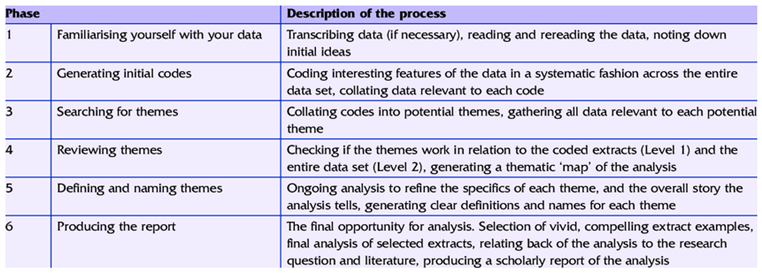 |
* Steps 5 and 6 were conducted iteratively, with literature both shaping and being shaped by the evolving theme definitions.
Disclaimer/Publisher’s Note: The statements, opinions and data contained in all publications are solely those of the individual author(s) and contributor(s) and not of MDPI and/or the editor(s). MDPI and/or the editor(s) disclaim responsibility for any injury to people or property resulting from any ideas, methods, instructions or products referred to in the content. |
© 2025 by the authors. Licensee MDPI, Basel, Switzerland. This article is an open access article distributed under the terms and conditions of the Creative Commons Attribution (CC BY) license (http://creativecommons.org/licenses/by/4.0/).
Copyright: This open access article is published under a Creative Commons CC BY 4.0 license, which permit the free download, distribution, and reuse, provided that the author and preprint are cited in any reuse.


