

Submitted:
24 June 2025
Posted:
26 June 2025
You are already at the latest version
Abstract
Infections caused by Staphylococcus aureus pose significant public health challenges, particularly due to antibiotic-resistant strains like MRSA. In this context, Streptomyces, a genus known for producing natural antibiotics, emerges as a promising source for novel therapeutic agents. This study conducted a bibliometric analysis of scientific literature (2015–2024) on Streptomyces as antibiotic biofactories against S. aureus, aiming to identify publication trends, collaborative networks, and emerging research areas. Using the Web of Science database, searches were performed with descriptors ("Streptomyces" AND "Staphylococcus aureus"), including original articles and reviews in English. Data were analyzed with VOSviewer and Biblioshiny to visualize collaborative networks, keyword co-occurrences, and trends. A total of 755 articles from 3,705 authors were analyzed, highlighting significant collaboration (98.7%). Publications showed marked growth, particularly in Microbiology (27.67%), Pharmacology and Pharmacy (21.51%), and Biotechnology and Applied Microbiology (20.50%). China and India led in publication volume, whereas the United States exhibited the highest citation impact. Key emerging research topics include biosynthesis and metabolic optimization, antimicrobial activity and bioprospecting, mechanisms of antibiotic action and bacterial resistance, and genomic analyses. Research into Streptomyces for antibiotic production against S. aureus demonstrates continuous expansion and global interest, emphasizing the importance of international collaboration and multidisciplinary approaches. Future studies should intensify exploration of biodiverse environments, genetic engineering applications, and combinatorial strategies to effectively address antimicrobial resistance.
Keywords:
MRSA
; bioprospecting
; genomics
; secondary metabolites
; antimicrobial resistance
1. Introduction
Staphylococcus aureus infections constitute a critical public health challenge, exacerbated by the emergence of multidrug-resistant strains, particularly methicillin-resistant S. aureus (MRSA), which causes over 120,000 deaths annually worldwide [1,2]. This versatile pathogen is a leading cause of both nosocomial and community-acquired infections, manifesting as conditions ranging from superficial skin and soft tissue infections to invasive diseases such as pneumonia, bacteremia, and infective endocarditis, which are often refractory to conventional antimicrobial therapy [2,3].
The ability of S. aureus to rapidly develop resistance against multiple antimicrobial classes results in significant therapeutic failures and increased mortality rates, highlighting the urgent need for new anti-staphylococcal agents [2,4]. Recent estimates attribute more than 250,000 deaths in 2019 to infections caused by resistant strains of S. aureus, underscoring the urgent need for the development of innovative therapeutic strategies against antimicrobial resistance [4].
Given the growing ineffectiveness of conventional antibiotics against resistant strains of S. aureus, a scientific consensus has been established regarding the urgent need to develop new antimicrobial agents with innovative mechanisms of action [2,5]. Contemporary research efforts prioritize natural sources for antimicrobial discovery, based on the proven track record of natural products in anti-infective chemotherapy and the urgent need to overcome bacterial resistance [6]. More than two-thirds of known natural antibiotics are biosynthesized by actinobacteria of the genus Streptomyces, consolidating this group as the primary microbial source of therapeutically relevant antimicrobial compounds [6,7].
Between 1981 and 2019, approximately 71% of clinically approved low-molecular-weight antibiotics were derived directly or indirectly from natural products, demonstrating the continued relevance of biodiversity as a source of antimicrobial pharmaceutical innovation [8], and a large portion of these compounds originate from Streptomyces metabolites [9]. These filamentous Gram-positive actinobacteria possess a diverse biosynthetic arsenal. They produce multiple classes of bioactive molecules with distinct mechanisms of action, including β-lactams, macrolides, and aminoglycosides [10].
Historically, Streptomyces have occupied a central position in combating staphylococcal infections. Their metabolites constitute cornerstones of modern antimicrobial therapy [11]. Clinically important antibiotics such as aminoglycosides (e.g., gentamicin) [12], macrolides (such as erythromycin) [13] and lipopeptides (like daptomycin) [14] originate from Streptomyces species.
The discovery of streptomycin in 1943 from Streptomyces griseus inaugurated the era of aminoglycosides. Subsequently, various Streptomyces species have provided effective molecules against S. aureus, including compounds capable of overcoming bacterial resistance mechanisms [15]. Even with the emergence of MRSA with expanded resistance, Streptomyces compounds maintain their therapeutic relevance. Daptomycin, a cyclic lipopeptide, constitutes an effective alternative to vancomycin for bacteremia and endocarditis caused by MRSA. Platensimycin represents another promising example of an anti-staphylococcal metabolite derived from this genus [14,16]. These examples highlight the ongoing importance of the Streptomyces genus as natural “biofactories” for potent antibiotics.
In the last decade, the prospection for new anti-S. aureus metabolites from Streptomyces has intensified significantly. This search is driven by the urgent need for therapeutic alternatives against multidrug-resistant strains [11]. Recent studies have reported the identification of new Streptomyces strains that biosynthesize metabolites with potent anti-staphylococcal activity, including compounds effective against multidrug-resistant MRSA and VRSA strains [17]. The isolation of the Streptomyces sp. YX44 strain exemplifies this trend, revealing broad-spectrum antimicrobial metabolites with proven efficacy against resistant strains of S. aureus [11]. Similarly, metabolites such as alnumycin D, obtained from Streptomyces albus, have demonstrated the ability to eradicate S. aureus biofilms at micromolar concentrations, targeting an important virulence factor of this pathogen [18].
Findings like these indicate that the chemical potential of Streptomyces is far from exhausted, paving the way for new classes of antibiotics or therapeutic adjuvants against S. aureus infections. At the same time, advances in genomics and biotechnology have made it possible to more broadly explore the potential of Streptomyces as cellular factories of bioactive molecules [19,20]. The analysis of complete Streptomyces genomes reveals that each species possesses between 20 and 50 gene clusters dedicated to the biosynthesis of secondary metabolites, of which up to ~90% remain “silent” under standard laboratory conditions [21]. This latent genetic richness suggests that many novel antibiotic molecules may still be discovered through the activation of cryptic biosynthetic pathways [21].
Modern strategies, including strain genetic engineering (“genetic mining”) and the heterologous expression of clusters in chassis hosts, have succeeded in awakening the production of hidden compounds and increasing the yields of known antibiotics [22]. Such approaches reinforce the view of Streptomyces as versatile biofactories: not only natural producers of antibiotics, but also organisms that can be optimized to produce greater quantities or improved variants of antimicrobial drugs [23]. Consequently, the research field involving Streptomyces and S. aureus has attracted growing interdisciplinary attention, bringing together microbiology, natural product chemistry, molecular biology, and pharmacology in the effort to discover and develop new therapies [24].
Considering this context, it becomes relevant to assess how the scientific community has been directing efforts to investigate Streptomyces in the search for anti-S. aureus agents. Bibliometric analyses emerge as an informative tool for mapping knowledge production in a given area, allowing the identification of trends, gaps, and key players involved. The main objective of the present study is to investigate the scientific output on the potential of Streptomyces as biofactories of antibiotics against Staphylococcus aureus, during the period from 2015 to 2024, based on data indexed in the Web of Science database. Specifically, it aims to:
- Map the volume and temporal evolution of publications, as well as the citation index, highlighting growth trends in the field;
- Identify the most relevant journals, countries, institutions, and authors with the greatest influence and international collaboration, providing an overview of collaboration networks;
- Determine the most cited articles and the predominant keywords, highlighting emerging research lines and their respective contributions;
- Discuss the results in light of the growing challenges of bacterial resistance, in order to identify gaps and opportunities for the development of new antimicrobial therapies.
2. Results
The main statistical information obtained from the bibliometric analysis is presented in Table 1. Although research on the genus Streptomyces is widespread, specific interest in the production of antibiotics against Staphylococcus aureus has shown significant growth in recent years. Between 2015 and 2024, a total of 755 original publications and review articles were identified, involving 3.705 different authors, resulting in a total of 4.776 author appearances. Of these, only 10 articles were written by a single author, while 745 involved multiple researchers, reinforcing the collaborative nature of this research area. Such articles were distributed across various international scientific journals, reflecting the global relevance of the topic and indicating strong interest in the discovery of new molecules with therapeutic potential in the face of the challenge of bacterial resistance.
After publication, each article was automatically categorized into different research areas in the Web of Science database. Figure 1 shows the percentage distribution of the main areas in which studies on the use of Streptomyces as biofactories of antibiotics against Staphylococcus aureus were conducted, in the period from 2015 to 2024. The predominant areas were Microbiology (27.67%), Pharmacology and Pharmacy (21.51%), and Biotechnology and Applied Microbiology (20.50%). Combined, these three areas account for approximately 69.7% of the identified scientific production. Next, Medicinal Chemistry (15.97%) and Biochemistry and Molecular Biology (12.08%) stand out. Other important areas include Multidisciplinary Sciences (7.67%), Multidisciplinary Chemistry (6.04%), Immunology (5.91%), Plant Sciences (5.79%), and Organic Chemistry (4.53%). This broad disciplinary diversity highlights both the complexity and the interdisciplinary nature of the research with Streptomyces for antibiotic production, reflecting the plurality of methodological approaches and potential therapeutic applications.
Figure 2 presents the annual number of publications and accumulated citations on Streptomyces as biofactories of antibiotics against Staphylococcus aureus between 2015 and 2024. A significant increase in publications was observed since 2015, starting with 51 articles and reaching a peak in 2022 with 94 published articles. The growth was particularly notable from 2017, which recorded 81 publications. Although there was a slight decrease to 71 articles in 2023, there was a subsequent recovery to 90 articles in 2024, reflecting a continuous and sustained interest in this research topic. This growth pattern reinforces the scientific relevance and the consistency of academic efforts to explore the antibiotic potential of the genus Streptomyces against Staphylococcus aureus, considering the growing global impact of bacterial resistance.
Figure 3 presents the number of citations per year of the articles published on the use of Streptomyces as biofactories of antibiotics against Staphylococcus aureus, highlighting a significant peak in the years 2017 and 2018, with 2697 and 2638 citations respectively. After this period, a progressive reduction in the number of citations was observed, with 1196 citations recorded in 2019 and 941 in 2022. Starting in 2023, citations decreased considerably, with only 267 citations, which is expected due to the shorter time available since the publication of these articles to exert academic influence. This behavior is consistent with what is expected in the dynamics of scientific publications, where more recent articles tend to present an initially reduced number of citations, increasing gradually with the maturation and recognition of these publications by the scientific community.
Based on the updated data shown in Table 2, China (n = 147) and India (n = 110) stand out as the countries with the highest number of published articles on the use of Streptomyces against Staphylococcus aureus, corresponding, respectively, to 21.43% and 16.03% of the total publications. Following them, are the USA (n = 60; 8.75%), Egypt (n = 47; 6.85%), and South Korea (n = 40; 5.83%).
Regarding the number of citations, China (n = 2341) and the USA (n = 2064) appear as the most influential countries in the area, accounting for, respectively, 15.40% and 45.90% of all citations. Although India is in second place in number of articles (n = 110), it occupies the third position in terms of citations (n = 1579; 13.30%). Egypt maintains fourth place in both categories, with 47 published articles and 1026 citations (25% of the total).
Next, South Korea (n = 40 articles; 399 citations; 17.60%), Japan (n = 33 articles; 475 citations; 17.60%), Germany (n = 26 articles; 951 citations; 43.50%), Spain (n = 24 articles; 383 citations; 23.90%), Thailand (n = 20 articles; 96 citations; 4.80%), and France (n = 18 articles; 120 citations; 15%) stand out, completing the list of the ten countries with the greatest scientific expression on this topic. These results highlight a wide geographical distribution and indicate the growing global and diversified collaboration in research related to the potential of Streptomyces in combating Staphylococcus aureus.
We mapped the cooperation of countries/regions using Bibliometrix. Cooperation occurred mainly between the United States, China, Asian countries, and European countries (Figure 4A). A visualization of the international collaboration network involving 64 countries that published at least a certain number of articles is illustrated in Figure 4B. Each node represents a country, and the size of the node is proportional to the volume of publications, while the thickness of the lines between the nodes reflects the intensity of their partnerships. It is observed that “peoples r China” and “India” appear in a central position in the network, indicating their prominent role as main contributors. In total, 13 different clusters are identified (highlighted by colors), formed from stronger collaborative links between certain groups of countries. Some blocks group European nations (e.g., Finland, Germany, and Poland), while others combine countries from Asia (such as Malaysia, South Korea, and Bangladesh), from the Middle East (Saudi Arabia, Iran), as well as partnerships involving countries from the Americas (Brazil, Canada, and Mexico), among others. At certain extremities of the map, we see more isolated nodes, such as “Russia” and “Switzerland”, suggesting somewhat less diversified collaborations. Overall, this representation provides a comprehensive view of the co-authorship landscape, highlighting both the most cooperative cores and the less frequent links among the 64 countries.
The ten most productive academics in research on the use of Streptomyces against Staphylococcus aureus, described in Table 3, were responsible for a total of 107 articles, representing approximately 14.17% of the publications identified in this bibliometric analysis. These researchers jointly accumulated 2,169 citations, equivalent to 16.61% of the total citations received. Among these academics, researchers from Spain and China stand out, occupying four positions each, in addition to one representative from South Korea. Reyes F. (n = 258; 11.89%) and Zhang ZZ (n = 290; 13.37%) occupied the top two positions, standing out not only for the number of articles published, but also for the significant quantity of citations received compared to the other authors. It should also be noted that Li J presented the highest h-index (n = 3), indicating significant academic influence in his/her publications. The last positions among the top ten were occupied by researchers from Spain and China, including Martín J (n = 154) and Li QL (n = 125), demonstrating the importance and geographical diversity of the most active researchers in this field.
A Table 4 presents the ten most cited articles on the use of Streptomyces as biofactories of antibiotics against Staphylococcus aureus, considering the total number of citations, the annual citation rate (TC per year), and the normalized number of citations (Normalized TC). Standing out in first place is the study published by Peterson et al. (2018) in the journal Frontiers in Microbiology, which obtained a total of 573 citations and an annual rate of 71.63 citations, reflecting its significant impact in the field. In second place is the work by Dunbar et al. [28], published in Chemical Reviews, with 469 citations, indicating its relevance for the understanding of secondary metabolites produced by Streptomyces.
Also noteworthy are the articles by Smyth et al. [29], published in Natural Product Reports, and Martens et al. [30], in the Journal of Antibiotics, with 433 and 319 citations, respectively. These studies made fundamental contributions on the biosynthesis of antibiotics by actinobacteria and their application in combating resistant pathogens.
Furthermore, the analysis of the annual citation rate reveals the ongoing impact of the most recent publications. As an example, the article by [31] published in Nanomaterials-Basel, demonstrates high visibility, with an annual rate of 26.17 citations, reflecting the growing interest in the application of nanotechnological materials in enhancing the antimicrobial activity of compounds derived from Streptomyces.
The ranking presented in Table 4 therefore reinforces the international relevance of research on Streptomyces as an important source of new antibiotics, highlighting the growing impact of these studies in the face of the challenge posed by bacterial resistance.
Figure 5 presents the main journals that published studies on the use of Streptomyces against Staphylococcus aureus, revealing a significant concentration of publications in high-impact journals in the field of microbiology and natural products. Among the most relevant journals are the Journal of Natural Products (36 articles), Frontiers in Microbiology (35 articles), Journal of Antibiotics (30 articles), and Marine Drugs (29 articles), reflecting the growing interest of the scientific community in this line of research. The predominance of these journals indicates the relevance of the topic for the discovery of new bioactive compounds, especially in light of the growing concern with bacterial resistance. These data reinforce the importance of exploring the secondary metabolites produced by Streptomyces, with therapeutic potential for the development of innovative antibiotics.
The top ten institutions that published the most articles on the use of Streptomyces against Staphylococcus aureus are described in Table 5. The institution that leads in number of publications is the Egyptian Knowledge Bank (EKB), with a total of 121 articles. Next, the Chinese Academy of Sciences stands out with 78 publications, followed by Zhejiang University with 38 published articles. Other institutions with significant production include Kitasato University (29 articles), Seoul National University (SNU, 26 articles), and Sathyabama Institute of Science and Technology (25 articles). With a similar number of published articles are the Centre National de La Recherche Scientifique (CNRS, 24 articles), Council of Scientific and Industrial Research (CSIR) of India (24 articles), University of Chinese Academy of Sciences, CAS (24 articles), and, finally, University of California System (21 articles). These data reinforce the international and collaborative character of research in this thematic area.
A word cloud with the main keywords identified in the articles related to the use of Streptomyces as biofactories of antibiotics against Staphylococcus aureus is presented in Figure 6. The words with higher frequency appear in proportionally larger size, indicating prominent relevance in the analyzed studies. Clearly, the terms “Staphylococcus aureus”, “antibiotics”, “biosynthesis”, “natural-products”, and “diversity” are the most prominent, highlighting the central focus of research in this area. This relevance confirms that the published studies predominantly focus on the identification, biosynthesis, and diversity of natural products obtained from Streptomyces with antibiotic activity, especially against the pathogen S. aureus, including resistant strains. Words like “antibacterial activity”, “identification”, “metabolites”, and “Streptomyces “ also emerge prominently, reflecting methodological aspects and predominant experimental approaches in the literature. The presented overview reveals important insights about current trends and the direction of studies focused on finding effective solutions against bacterial resistance through microbial biofactories.
A more detailed analysis using the co-occurrence network tool in VOSviewer (Figure 7) allowed visualizing how the keywords relate to each other, grouping into four main clusters according to the frequency with which they appear simultaneously in the articles. Cluster 1 (34 terms) focuses on aspects related to the biosynthesis and optimization of metabolites (e.g., “biosynthetic gene-cluster”, “fermentation”, and “antibiotic production”), also including topics related to gene expression and structural characterization of Streptomyces compounds. Cluster 2 (33 terms), meanwhile, groups words associated with antimicrobial activity and bioprospecting (“antibacterial activity”, “antifungal activity”, and “metal nanoparticles”), highlighting usage strategies of extracts or nanoparticles in in vitro tests. In turn, Cluster 3 (30 terms) highlights mechanisms of action and bacterial resistance, featuring terms like “biofilm formation”, “mrsa”, and “antibiotic-resistance”, as well as target organisms such as Bacillus subtilis, Escherichia coli, and Pseudomonas aeruginosa. Finally, Cluster 4 (20 terms) groups references to the genomic study and taxonomic diversity of Streptomyces (“annotation”, “genome”, “strains”, and “taxonomy”), reinforcing the importance of molecular characterization in the development of new strategies to combat Staphylococcus aureus. Thus, the co-occurrence of keywords highlights a multidisciplinary research area, where the search for new antibiotics involves both strain engineering and the investigation of resistance mechanisms and biotechnological potential.
3. Discussion
The results of this bibliometric analysis reveal substantial and sustained growth in research focused on the use of Streptomyces against S. aureus over the last ten years. In the period from 2015 to 2024, we identified 755 publications related to the topic, demonstrating the considerable volume of studies undertaken by the scientific community. In fact, only 10 articles (1.3%) were single-authored, whereas the vast majority (98.7%) resulted from the joint effort of multiple authors, corroborating the notion that the investigation of new antibiotics demands interdisciplinary teams and scientific cooperation. [38].
The analysis of the distribution of publications by research area reveals an interdisciplinary profile, with a predominance of Microbiology (27.67%), Pharmacology and Pharmacy (21.51%), and Biotechnology and Applied Microbiology (20.50%). This multidisciplinary character reflects the inherent complexity of the study of Streptomyces as a source of antibiotics, requiring diverse approaches ranging from genomic analyses to antimicrobial activity assays. As highlighted by [39] this convergence of areas has been fundamental to drive advances in the discovery of new bioactive metabolites.
The temporal growth of publications, starting from 51 articles in 2015 and reaching peaks such as the 94 articles in 2022, highlights the growing interest of the scientific community in the potential of Streptomyces as natural biofactories of antibiotics. This increase coincides with the worsening of global antimicrobial resistance, recognized by the World Health Organization as one of the greatest threats to global health. Recent global reports estimate that infections by resistant S. aureus contributed significantly to mortality associated with antimicrobial resistance, totaling hundreds of thousands of deaths in 2019 [40].
The geographical distribution of publications reveals an interesting pattern, with China (147 articles; 21.43%) and India (110 articles; 16.03%) leading in number of publications, followed by the USA (60 articles; 8.75%). However, when we analyze the impact through citations, we observe that the USA shows greater proportional influence, with 2064 citations (45.90% citation rate), surpassing China (2341 citations; 15.40%). This contrast between quantity and impact of publications reflects different patterns of scientific maturity and international integration of research, a phenomenon also observed in other emerging scientific fields [41].
The analysis of international collaboration networks revealed 13 distinct clusters, with China and India occupying central positions. Such a pattern of scientific cooperation is fundamental in the context of discovering new antibiotics, as it allows the integration of different perspectives and resources. An example of this approach is provided by [42], who highlight how multi-institutional collaborative projects have been effective in identifying novel antimicrobial compounds, demonstrating the value of interaction between areas such as microbiology, medicinal chemistry, and science education in tackling bacterial resistance.
Regarding the most productive researchers, scientists from Spain and China stand out, with Reyes F. and Zhang ZZ occupying prominent positions in number of publications and citations. This concentration of expertise in certain research groups reflects the necessary specialization for working with Streptomyces, which demands expertise in microbiology, genetics, and natural products chemistry. Examples of this are the studies by Reyes F., who collaborated in the discovery of new ikarugamycin derivatives with antifungal and antibacterial properties [43], and of Zhang ZZ, involved in the identification of the streptopyrazinones A–D, rare metabolites isolated from marine Streptomyces sp. ZZ446 [44].
Among the most cited articles, the study by Peterson stands out et al. [32], with 573 citations, which addresses fundamental aspects of antibiotic biosynthesis by actinobacteria. This high number of citations demonstrates the continuous influence of seminal works in directing subsequent research. As Aria and Cuccurullo observe [25], In bibliometric analyses, highly cited articles frequently establish methodological or conceptual paradigms that shape the evolution of a scientific field. For example, in the study by Polinko and Coupland [45] titled “Paradigm shifts in forestry and forest research: a bibliometric analysis”, the authors argue that changes in research trends reflect a paradigmatic transition towards sustainable forest management. Similarly, the analysis by [46] titled “Shifting research paradigms in landscape ecology: insights from bibliometric analysis” reveals that concepts such as “dynamics”, “disturbance”, and “landscape structure” were fundamental for the development of landscape ecology. These examples illustrate how influential articles can introduce new concepts or methodologies that reorient the trajectory of a field of study.
Regarding the most relevant journals, the Journal of Natural Products (36 articles), Frontiers in Microbiology (35 articles), and the Journal of Antibiotics (30 articles) stand out as the main publication vehicles. The predominance of these specialized journals reflects the specific and specialized character of research with Streptomyces, requiring publication channels that cater to the particularities of the field.
The analysis of keyword co-occurrence revealed four main clusters that map the emerging subfields in research on Streptomyces against S. aureus. The first cluster, focused on biosynthesis and metabolic optimization, reflects the growing interest in the engineering of Streptomyces to increase antibiotic production or generate new derivatives. As reviewed by [47], strategies such as the activation of silent genes and regulatory manipulation have shown great potential to overcome production limitations in native strains.
The second cluster, related to antimicrobial activity and bioprospecting, highlights the continuous search for new sources of Streptomyces in unexplored environments. Recently, research conducted in the Brazilian Amazon identified new lineages of Streptomyces with potent activity against resistant S. aureus [48]. This finding highlights the importance of exploring megadiverse ecosystems for the discovery of new antimicrobials.
The third cluster, centered on mechanisms of action and resistance, demonstrates the growing concern with understanding the factors that influence antimicrobial efficacy against resistant strains, especially MRSA. Recent studies, such as that by [49], revealed that certain metabolites produced by Streptomyces, such as the granaticin derivatives identified in strain QHH-9511, possess significant activity against MRSA and demonstrate the capacity to inhibit S. aureus biofilms, one of the main virulence factors of this pathogen [49].
The fourth cluster, focused on genomics and taxonomic diversity, reflects the advances in sequencing technologies that have revolutionized the exploration of the biosynthetic potential of Streptomyces. Recent genomic analyses, such as those by [21], revealed that each Streptomyces species can contain between 20 and 50 gene clusters dedicated to the biosynthesis of secondary metabolites, of which a large part remains “silent” under standard laboratory conditions, indicating a vast unexplored potential for the discovery of new antibiotics. This vast unexplored genetic reservoir represents a promising frontier for the discovery of new antibiotics.
An important limitation of this bibliometric study was the restriction to a single database (Web of Science), which may have resulted in the omission of publications indexed exclusively in other platforms. Furthermore, as observed by [50], bibliometric analyses capture quantitative trends in scientific production, but do not necessarily reflect the practical impact of this research on the development of new commercially viable antimicrobials.
Despite these limitations, the results obtained provide a comprehensive overview of the current state of research on Streptomyces as biofactories of antibiotics against S. aureus. In a scenario of growing antimicrobial resistance, with projections estimating up to 10 million annual deaths by 2050, studies such as that by [39] demonstrate the enormous genomic potential of these microorganisms for the discovery of antibiotics with a low risk of resistance, reinforcing their strategic role in confronting this global challenge.
4. Materials and Methods
The bibliometric analysis was conducted to investigate research trends on Streptomyces as biofactories of antibiotics against Staphylococcus aureus, following established methodologies used in recent bibliometric studies [25,26]. The search strategy (Box 1) was designed to retrieve relevant articles from the Web of Science database (https://www.webofscience.com/, accessed on March 1, 2025), selected for its comprehensive coverage of the biological, pharmaceutical, and biotechnological sciences. Original articles and reviews written in English and published between 2015 and 2024 were included, provided they contained the descriptors “Streptomyces” AND “Staphylococcus aureus” in the titles, abstracts, or keywords. Subsequently, the authors manually reviewed the titles and abstracts of the publication set to eliminate irrelevant articles.
The metadata from the final collection were exported as bibliography (.CSV) and comma-separated values files for post-processing using VOSviewer and Biblioshiny software. VOSviewer is a free Java-based tool developed for the construction and visualization of bibliometric maps, enabling the analysis of bibliometric networks and the intuitive graphical representation of maps. Biblioshiny, on the other hand, is a web interface for the R package bibliometrix, offering researchers a platform to perform comprehensive bibliometric analyses without the need for coding, facilitating data import, filtering, and various metric analyses.
Although each tool has distinct features in terms of functionality, the combination of both software platforms enables researchers to draw a broad overview of the evolution of a research field. This integrated approach considers indicators such as the quantitative growth of publications and citations, mapping of collaborative networks among countries, institutions, and researchers, as well as co-occurrence analysis of keywords [27].
Box 1. Search query sequence used in this study
(TS = (Streptomyces) AND (“Staphylococcus aureus”))
AND PUBLICATION YEARS: (2015-2024) AND (LIMIT-TO (LANGUAGE,”English”))
5. Conclusions
The bibliometric analysis showed continuous growth in publications on Streptomyces as biofactories of anti-Staphylococcus aureus antibiotics (2015-2024), with peaks in 2022 and 2024. The high level of co-authorship (98.7%) reflects international collaborations structured into 13 distinct clusters, with China and India standing out in terms of production volume and the United States in terms of proportional impact. The co-occurrence analysis identified four emerging sub-areas: biosynthesis and metabolic optimization; antimicrobial activity and bioprospecting; mechanisms of action and resistance; and genomics and taxonomic diversity.
To tackle growing antimicrobial resistance, it is recommended to: intensify bioprospecting in megadiverse environments such as the Brazilian Amazon; employ genetic engineering to activate silent gene clusters; and develop combinatorial strategies using Streptomyces metabolites as therapeutic adjuvants. The results reveal a dynamic field with significant potential for innovative solutions to contemporary antimicrobial challenges.
Funding
This research was financially supported by the Programa de Apoio à Produção Científica Qualificada (PAPCIQ) of the Federal University of Western Pará (UFOPA)
Institutional Review Board Statement
Not applicable.
Informed Consent Statement
Not applicable.
Data Availability Statement
The data presented in this study are available within the article. Raw data supporting this study are available from the corresponding author upon reasonable request.
Acknowledgments
This research was financially supported by the Programa de Apoio à Produção Científica Qualificada (PAPCIQ) of the Federal University of Western Pará (UFOPA) and by the Coordenação de Aperfeiçoamento de Pessoal de Nível Superior – Brasil (CAPES).
Conflicts of Interest
The authors declare no conflicts of interest.
References
- Y. L. Chan, C. F. Chee, S. N. Tang, e S. T. Tay, “Unveilling genetic profiles and correlations of biofilm-associated genes, quorum sensing, and antibiotic resistance in Staphylococcus aureus isolated from a Malaysian Teaching Hospital”, Eur. J. Med. Res., vol. 29, no 1, p. 246, abr. 2024. [CrossRef]
- S. Esposito et al., “New Antibiotics for Staphylococcus aureus Infection: An Update from the World Association of Infectious Diseases and Immunological Disorders (WAidid) and the Italian Society of Anti-Infective Therapy (SITA)”, Antibiot. Basel Switz., vol. 12, no 4, p. 742, abr. 2023. [CrossRef]
- F. S. Rasquel-Oliveira et al., “Staphylococcus aureus in Inflammation and Pain: Update on Pathologic Mechanisms”, Pathog. Basel Switz., vol. 14, no 2, p. 185, fev. 2025. [CrossRef]
- C. J. L. Murray et al., “Global burden of bacterial antimicrobial resistance in 2019: a systematic analysis”, The Lancet, vol. 399, no 10325, p. 629–655, fev. 2022. [CrossRef]
- C. Röhrig et al., “Targeting Hidden Pathogens: Cell-Penetrating Enzybiotics Eradicate Intracellular Drug-Resistant Staphylococcus aureus”, mBio, vol. 11, no 2, p. e00209-20, abr. 2020. [CrossRef]
- F. Song, “Antimicrobial Natural Products”, Antibiotics, vol. 11, no 12, Art. no 12, dez. 2022. [CrossRef]
- S. Schlimpert e M. A. Elliot, “The Best of Both Worlds-Streptomyces coelicolor and Streptomyces venezuelae as Model Species for Studying Antibiotic Production and Bacterial Multicellular Development”, J. Bacteriol., vol. 205, no 7, p. e0015323, jul. 2023. [CrossRef]
- D. J. Newman e G. M. Cragg, “Natural Products as Sources of New Drugs over the Nearly Four Decades from 01/1981 to 09/2019”, J. Nat. Prod., vol. 83, no 3, p. 770–803, mar. 2020. [CrossRef]
- L. Donald, A. Pipite, R. Subramani, J. Owen, R. A. Keyzers, e T. Taufa, “Streptomyces: Still the Biggest Producer of New Natural Secondary Metabolites, a Current Perspective”, Microbiol. Res., vol. 13, no 3, Art. no 3, set. 2022. [CrossRef]
- C. Caicedo-Montoya, M. Manzo-Ruiz, e R. Ríos-Estepa, “Pan-Genome of the Genus Streptomyces and Prioritization of Biosynthetic Gene Clusters With Potential to Produce Antibiotic Compounds”, Front. Microbiol., vol. 12, set. 2021. [CrossRef]
- T.-L. Chang et al., “An Actinobacterial Isolate, Streptomyces sp. YX44, Produces Broad-Spectrum Antibiotics That Strongly Inhibit Staphylococcus aureus”, Microorganisms, vol. 9, no 3, Art. no 3, mar. 2021. [CrossRef]
- F. Román-Hurtado et al., “One Pathway, Two Cyclic Non-Ribosomal Pentapeptides: Heterologous Expression of BE-18257 Antibiotics and Pentaminomycins from Streptomyces cacaoi CA-170360”, Microorganisms, vol. 9, no 1, p. 135, jan. 2021. [CrossRef]
- K. Hoshino, Y. Imai, K. Mukai, R. Hamauzu, K. Ochi, e T. Hosaka, “A putative mechanism underlying secondary metabolite overproduction by Streptomyces strains with a 23S rRNA mutation conferring erythromycin resistance”, Appl. Microbiol. Biotechnol., vol. 104, no 5, p. 2193–2203, mar. 2020. [CrossRef]
- R. H. Baltz, “Regulation of daptomycin biosynthesis in Streptomyces roseosporus: new insights from genomic analysis and synthetic biology to accelerate lipopeptide discovery and commercial production”, Nat. Prod. Rep., vol. 41, no 12, p. 1895–1914, dez. 2024. [CrossRef]
- S. Opimakh, “SELMAN ABRAHAM WAKSMAN, BORN IN UKRAINE — AN OUTSTANDING SCIENTIST, A NOBEL LAUREATE, THE DISCOVERER OF STREPTOMYCIN AND THE MODERN ERA OF ANTI-TUBERCULOSIS CHEMOTHERAPY”, Ukr. Pulmonol. J., vol. 31, p. 65–73, jan. 2023. [CrossRef]
- Z. Wang et al., “Platensimycin-Encapsulated Liposomes or Micelles as Biosafe Nanoantibiotics Exhibited Strong Antibacterial Activities against Methicillin-Resistant Staphylococcus aureus Infection in Mice”, Mol. Pharm., vol. 17, no 7, p. 2451–2462, jul. 2020. [CrossRef]
- P. K. Maiti, S. Das, P. Sahoo, e S. Mandal, “Streptomyces sp SM01 isolated from Indian soil produces a novel antibiotic picolinamycin effective against multi drug resistant bacterial strains”, Sci. Rep., vol. 10, no 1, p. 10092, jun. 2020. [CrossRef]
- L. Sagurna et al., “Characterization of the Antibacterial Activity of Quinone-Based Compounds Originating from the Alnumycin Biosynthetic Gene Cluster of a Streptomyces Isolate”, Antibiotics, vol. 12, no 7, Art. no 7, jul. 2023. [CrossRef]
- K. Alam et al., “Complete genome sequencing and in silico genome mining reveal the promising metabolic potential in Streptomyces strain CS-7”, Front. Microbiol., vol. 13, out. 2022. [CrossRef]
- B. Matarrita-Carranza et al., “Streptomyces sp. M54: an actinobacteria associated with a neotropical social wasp with high potential for antibiotic production”, Antonie Van Leeuwenhoek, vol. 114, p. 379–398, 2021. [CrossRef]
- N. Lee et al., “Thirty complete Streptomyces genome sequences for mining novel secondary metabolite biosynthetic gene clusters”, Sci. Data, vol. 7, no 1, p. 55, fev. 2020. [CrossRef]
- H.-S. Kang e E.-S. Kim, “Avanços recentes na expressão heteróloga de clusters de genes biossintéticos de produtos naturais em hospedeiros Streptomyces”, Curr. Opin. Biotechnol., vol. 69, p. 118–127, jun. 2021. [CrossRef]
- X. Li et al., “Adaptive Optimization Boosted the Production of Moenomycin A in the Microbial Chassis Streptomyces albus J1074”, ACS Synth. Biol., vol. 10, no 9, p. 2210–2221, set. 2021. [CrossRef]
- R. Sankhwar, A. Kumar, S. Yadav, V. Singh, e R. K. Gupta, “Emicina-E purificada de Streptomyces sp. RG1011 do solo do Himalaia tem atividade antibiofilme contra Staphylococcus aureus”, Microb. Pathog., vol. 182, p. 106256, set. 2023. [CrossRef]
- M. Aria e C. Cuccurullo, “bibliometrix : Uma ferramenta R para análise abrangente de mapeamento científico”, J. Informetr., vol. 11, no 4, p. 959–975, nov. 2017. [CrossRef]
- N. J. van Eck e L. Waltman, “Software survey: VOSviewer, a computer program for bibliometric mapping”, Scientometrics, vol. 84, no 2, p. 523–538, ago. 2010. [CrossRef]
- B. Pham-Duc, T. Tran, H.-T.-T. Le, N.-T. Nguyen, H.-T. Cao, e T.-T. Nguyen, “Research on Industry 4.0 and on key related technologies in Vietnam: A bibliometric analysis using Scopus”, Learn. Publ., vol. 34, no 3, p. 414–428, 2021. [CrossRef]
- K. L. Dunbar, D. H. Scharf, A. Litomska, e C. Hertweck, “Enzymatic Carbon-Sulfur Bond Formation in Natural Product Biosynthesis”, Chem. Rev., vol. 117, no 8, p. 5521–5577, abr. 2017. [CrossRef]
- J. E. Smyth, N. M. Butler, e P. A. Keller, “A twist of nature – the significance of atropisomers in biological systems”, Nat. Prod. Rep., vol. 32, no 11, p. 1562–1583, out. 2015. [CrossRef]
- E. Martens e A. L. Demain, “The antibiotic resistance crisis, with a focus on the United States”, J. Antibiot. (Tokyo), vol. 70, no 5, p. 520–526, maio 2017. [CrossRef]
- S. S. Salem et al., “Bactericidal and In-Vitro Cytotoxic Efficacy of Silver Nanoparticles (Ag-NPs) Fabricated by Endophytic Actinomycetes and Their Use as Coating for the Textile Fabrics”, Nanomaterials, vol. 10, no 10, Art. no 10, out. 2020. [CrossRef]
- E. Peterson e P. Kaur, “Antibiotic Resistance Mechanisms in Bacteria: Relationships Between Resistance Determinants of Antibiotic Producers, Environmental Bacteria, and Clinical Pathogens”, Front. Microbiol., vol. 9, nov. 2018. [CrossRef]
- A. H. Ashour et al., “Antimicrobial activity of metal-substituted cobalt ferrite nanoparticles synthesized by sol–gel technique”, Particuology, vol. 40, p. 141–151, out. 2018. [CrossRef]
- X. Tang et al., “Identification of Thiotetronic Acid Antibiotic Biosynthetic Pathways by Target-directed Genome Mining”, ACS Chem. Biol., vol. 10, no 12, p. 2841–2849, dez. 2015. [CrossRef]
- S. D. Taylor e M. Palmer, “The action mechanism of daptomycin”, Bioorg. Med. Chem., vol. 24, no 24, p. 6253–6268, dez. 2016. [CrossRef]
- N. Allocati, M. Masulli, C. Di Ilio, e V. De Laurenzi, “Die for the community: an overview of programmed cell death in bacteria”, Cell Death Dis., vol. 6, no 1, p. e1609–e1609, jan. 2015. [CrossRef]
- W. R. Miller, A. S. Bayer, e C. A. Arias, “Mechanism of Action and Resistance to Daptomycin in Staphylococcus aureus and Enterococci”, Cold Spring Harb. Perspect. Med., vol. 6, no 11, p. a026997, nov. 2016. [CrossRef]
- G. Sun et al., “Antibiotic resistant bacteria: A bibliometric review of literature”, Front. Public Health, vol. 10, p. 1002015, nov. 2022. [CrossRef]
- R. A. S. Antony, A. H. M. Alejandro, S.-C. Norberto, e C. Corina-Diana, “Genome mining of Streptomyces for the discovery of low-resistance antibiotics”, 29 de dezembro de 2023, bioRxiv. [CrossRef]
- K. S. Ikuta et al., “Global mortality associated with 33 bacterial pathogens in 2019: a systematic analysis for the Global Burden of Disease Study 2019”, The Lancet, vol. 400, no 10369, p. 2221–2248, dez. 2022. [CrossRef]
- N. Donthu, S. Kumar, D. Mukherjee, N. Pandey, e W. M. Lim, “How to conduct a bibliometric analysis: An overview and guidelines”, J. Bus. Res., vol. 133, p. 285–296, set. 2021. [CrossRef]
- A. A. Fuller et al., “Multi-Institution Research and Education Collaboration Identifies New Antimicrobial Compounds”, ACS Chem. Biol., vol. 15, no 12, p. 3187–3196, dez. 2020. [CrossRef]
- R. Lacret et al., “New Ikarugamycin Derivatives with Antifungal and Antibacterial Properties from Streptomyces zhaozhouensis”, Mar. Drugs, vol. 13, no 1, Art. no 1, jan. 2015. [CrossRef]
- M. Chen, W. Chai, R. Zhu, T. Song, Z. Zhang, e X.-Y. Lian, “Streptopyrazinones A−D, rare metabolites from marine-derived Streptomyces sp. ZZ446”, Tetrahedron, vol. 74, no 16, p. 2100–2106, abr. 2018. [CrossRef]
- A. D. Polinko e K. Coupland, “Paradigm shifts in forestry and forest research: a bibliometric analysis”, Can. J. For. Res., vol. 51, no 2, p. 154–162, fev. 2021. [CrossRef]
- J. Wang, W. Zhao, J. Ding, e Y. Liu, “Shifting research paradigms in landscape ecology: insights from bibliometric analysis”, Landsc. Ecol., vol. 40, no 3, p. 63, mar. 2025. [CrossRef]
- Z. Xu et al., “Metabolic engineering of Streptomyces to enhance the synthesis of valuable natural products”, Eng. Microbiol., vol. 2, no 2, p. 100022, jun. 2022. [CrossRef]
- R. E. de L. Procópio, I. R. da Silva, M. K. Martins, J. L. de Azevedo, e J. M. de Araújo, “Antibiotics produced by Streptomyces”, Braz. J. Infect. Dis., vol. 16, p. 466–471, out. 2012. [CrossRef]
- X.-L. Feng et al., “Genomic and Metabolite Profiling Reveal a Novel Streptomyces Strain, QHH-9511, from the Qinghai-Tibet Plateau”, Microbiol. Spectr., vol. 11, no 1, p. e02764-22, jan. 2023. [CrossRef]
- H. Dehghanbanadaki et al., “Bibliometric analysis of global scientific research on Coronavirus (COVID-19)”, Med. J. Islam. Repub. Iran, vol. 34, p. 51, maio 2020. [CrossRef]
Figure 1.
Percentage distribution of the research areas of the published articles on the use of Streptomyces as biofactories of antibiotics against Staphylococcus aureus (2015-2024). Data obtained from the Web of Science database.
Figure 1.
Percentage distribution of the research areas of the published articles on the use of Streptomyces as biofactories of antibiotics against Staphylococcus aureus (2015-2024). Data obtained from the Web of Science database.
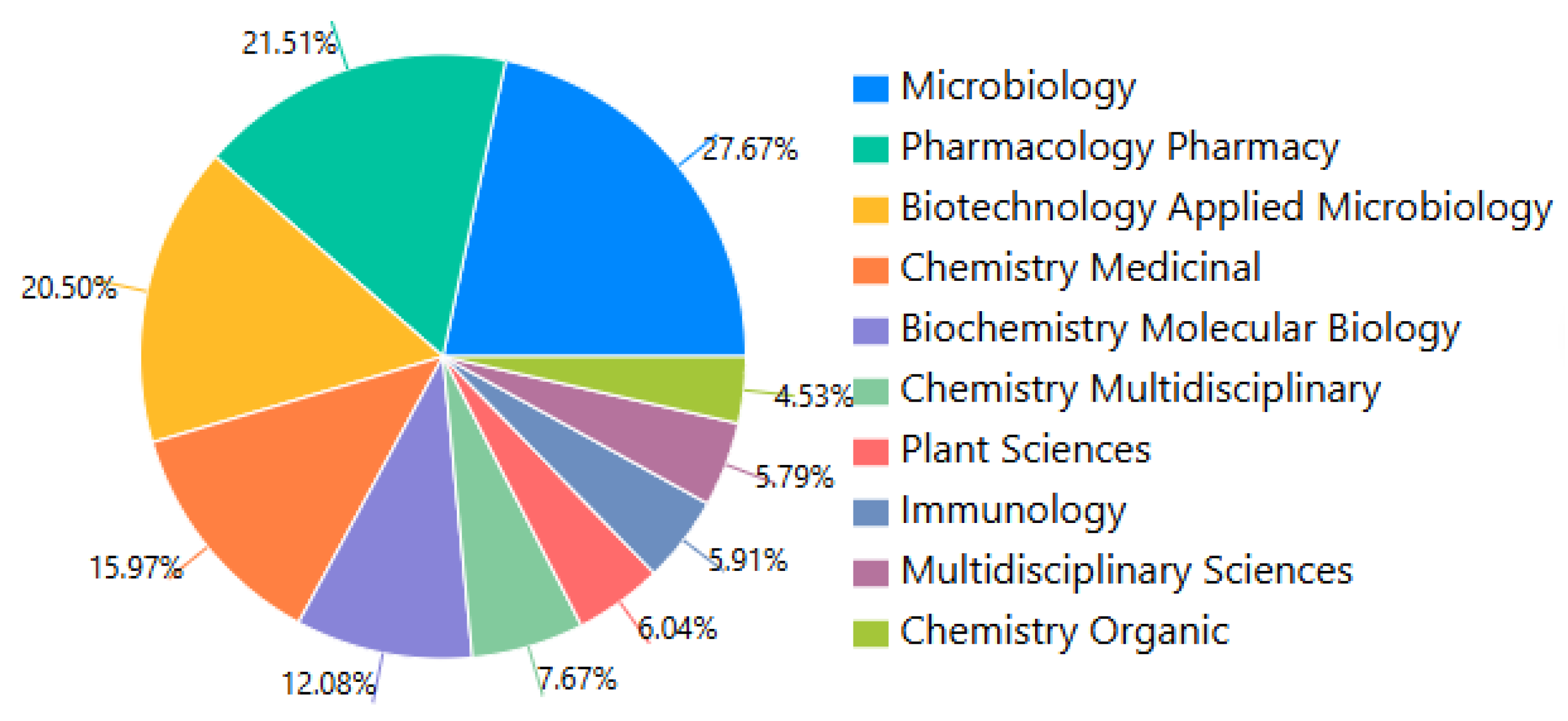
Figure 2.
Annual number of publications and their cumulative number during the period (2015-2024).
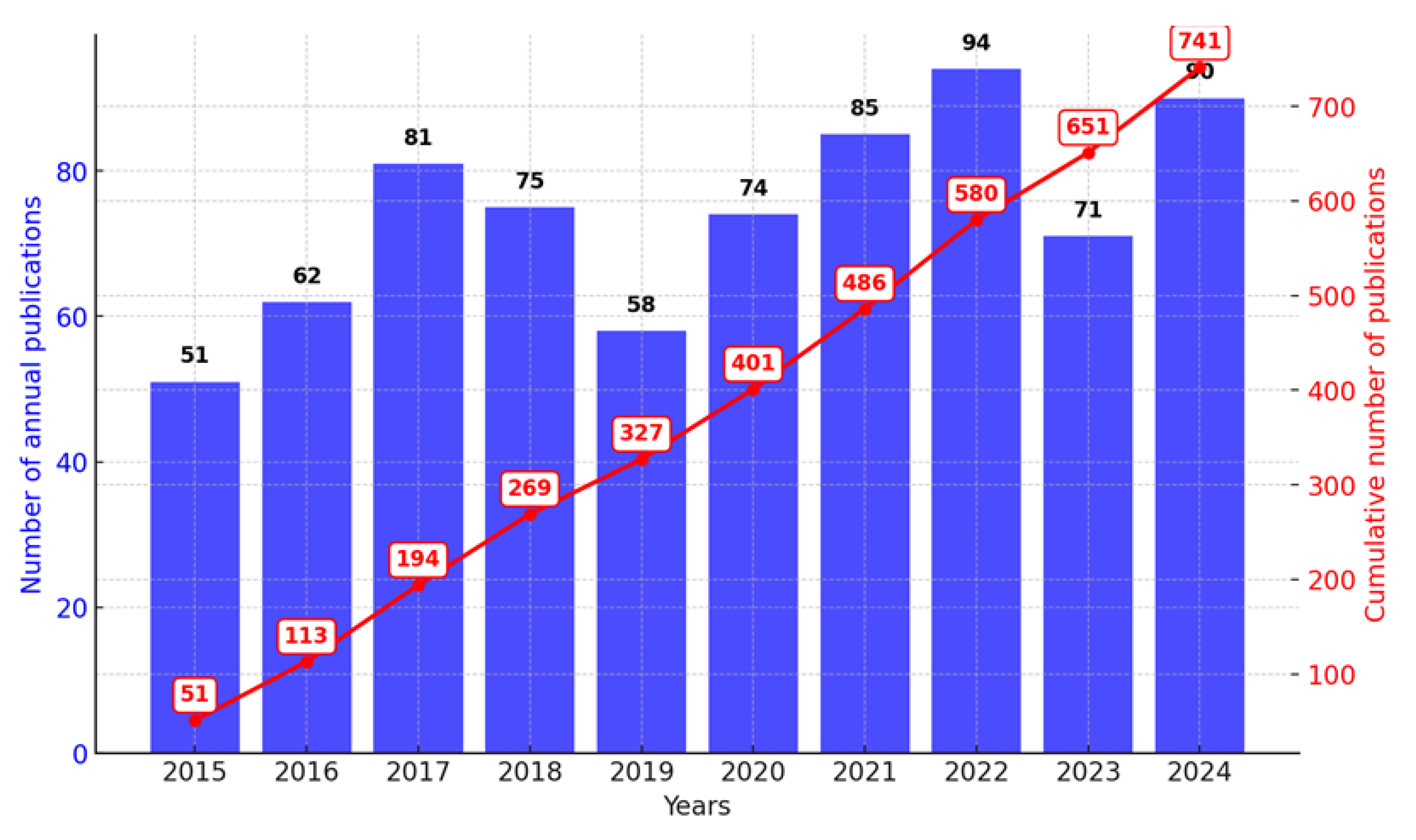
Figure 3.
Number of citations per year of article publication during the period 2015-2024.
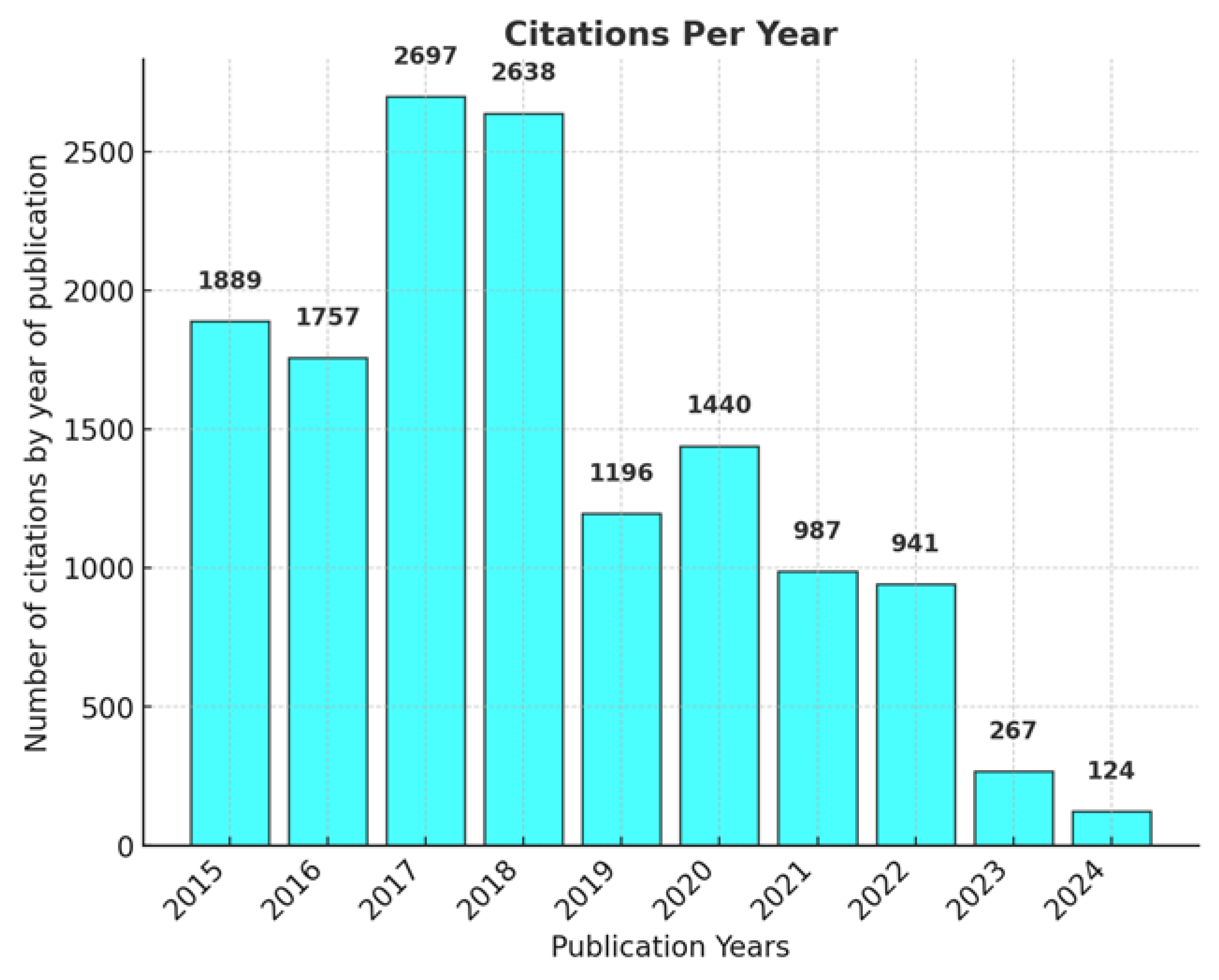
Figure 4.
World map of international cooperations, in which the color intensity represents the volume of publications of each country and the lines indicate co-authorship partnerships. (B) Network visualization by VOSviewer, showing the distribution of countries into different cooperation groups (clusters), with the node size associated with the number of articles and the colors reflecting the degree of collaborative affinity.
Figure 4.
World map of international cooperations, in which the color intensity represents the volume of publications of each country and the lines indicate co-authorship partnerships. (B) Network visualization by VOSviewer, showing the distribution of countries into different cooperation groups (clusters), with the node size associated with the number of articles and the colors reflecting the degree of collaborative affinity.
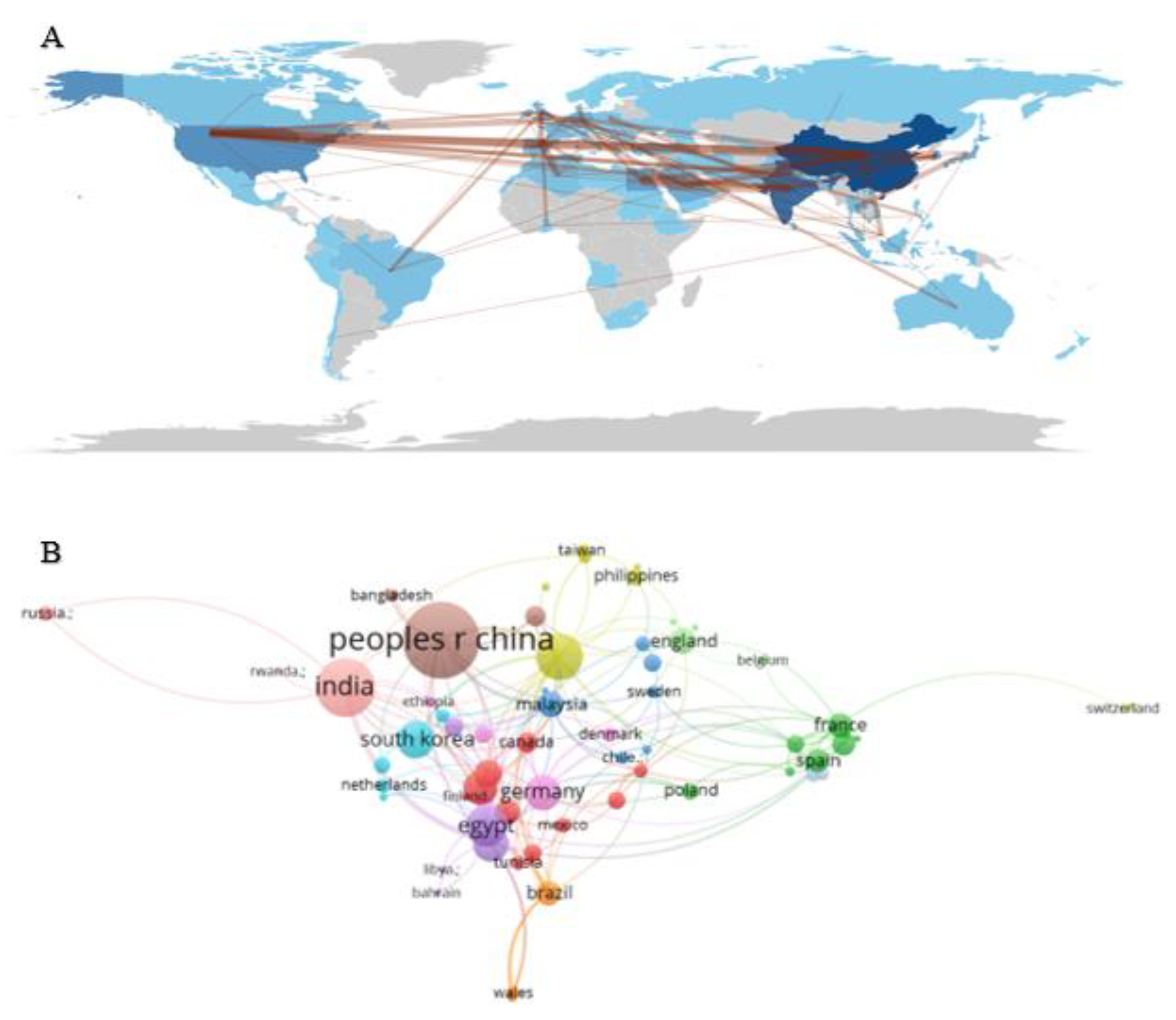
Figure 5.
Main journals in research on Streptomyces against S. aureus.
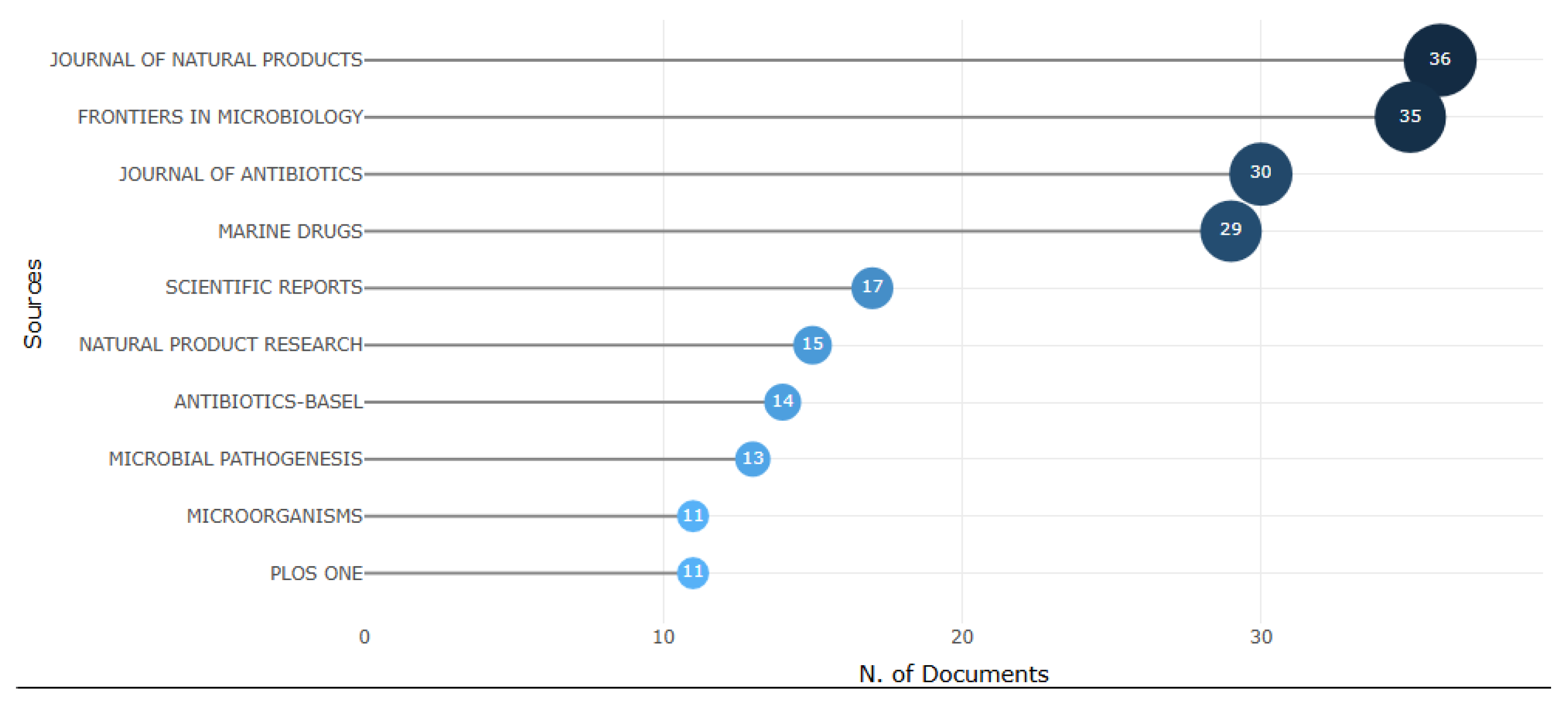
Figure 6.
Main journals in research on Streptomyces against S. aureus.
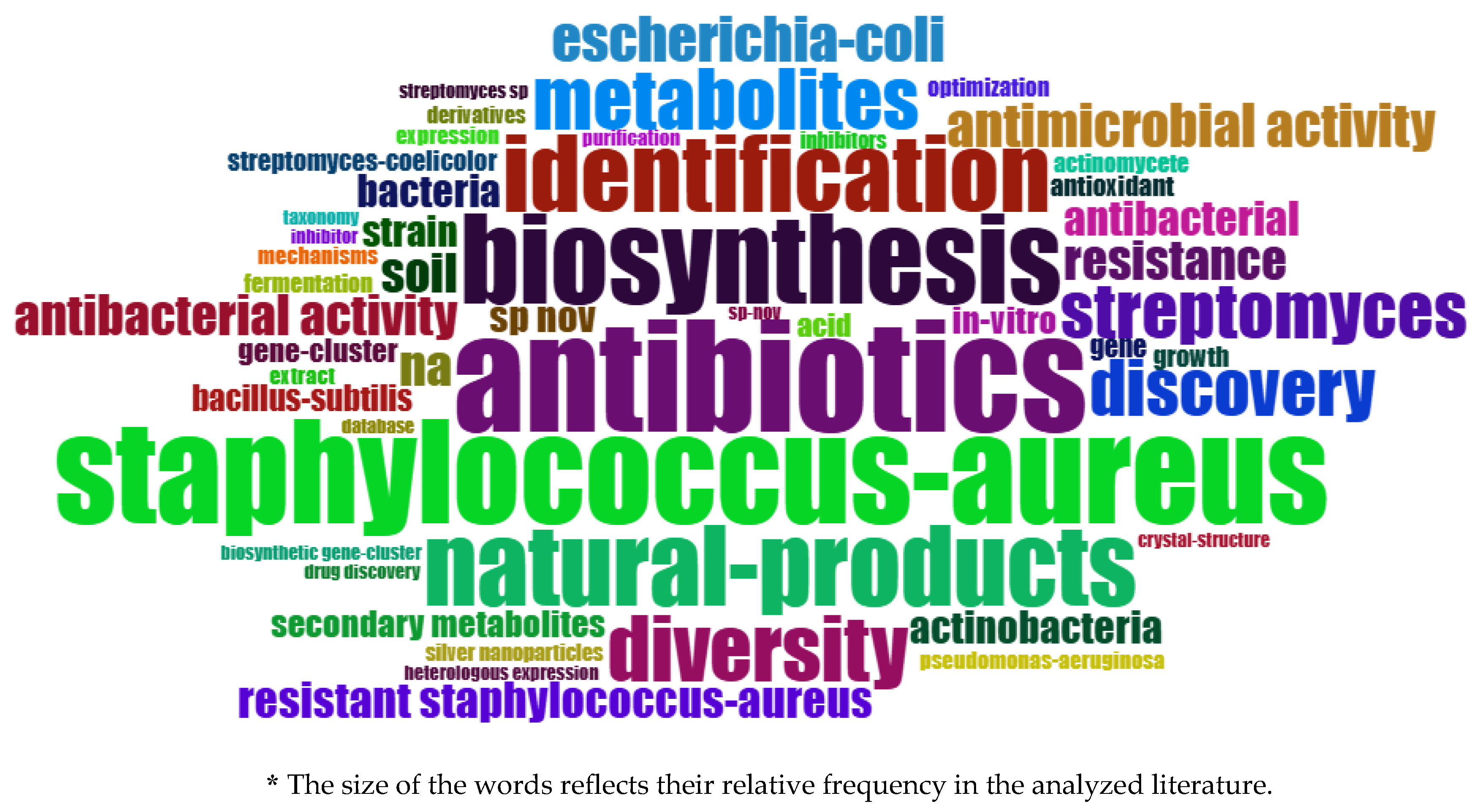
Figure 7.
The co-occurrence network of the 117 most frequent keywords in figure 6. Each node represents a keyword, and the thickness between the nodes represents the strength of the relationship between the keywords, determined by the frequency with which they appeared together in the publications.
Figure 7.
The co-occurrence network of the 117 most frequent keywords in figure 6. Each node represents a keyword, and the thickness between the nodes represents the strength of the relationship between the keywords, determined by the frequency with which they appeared together in the publications.
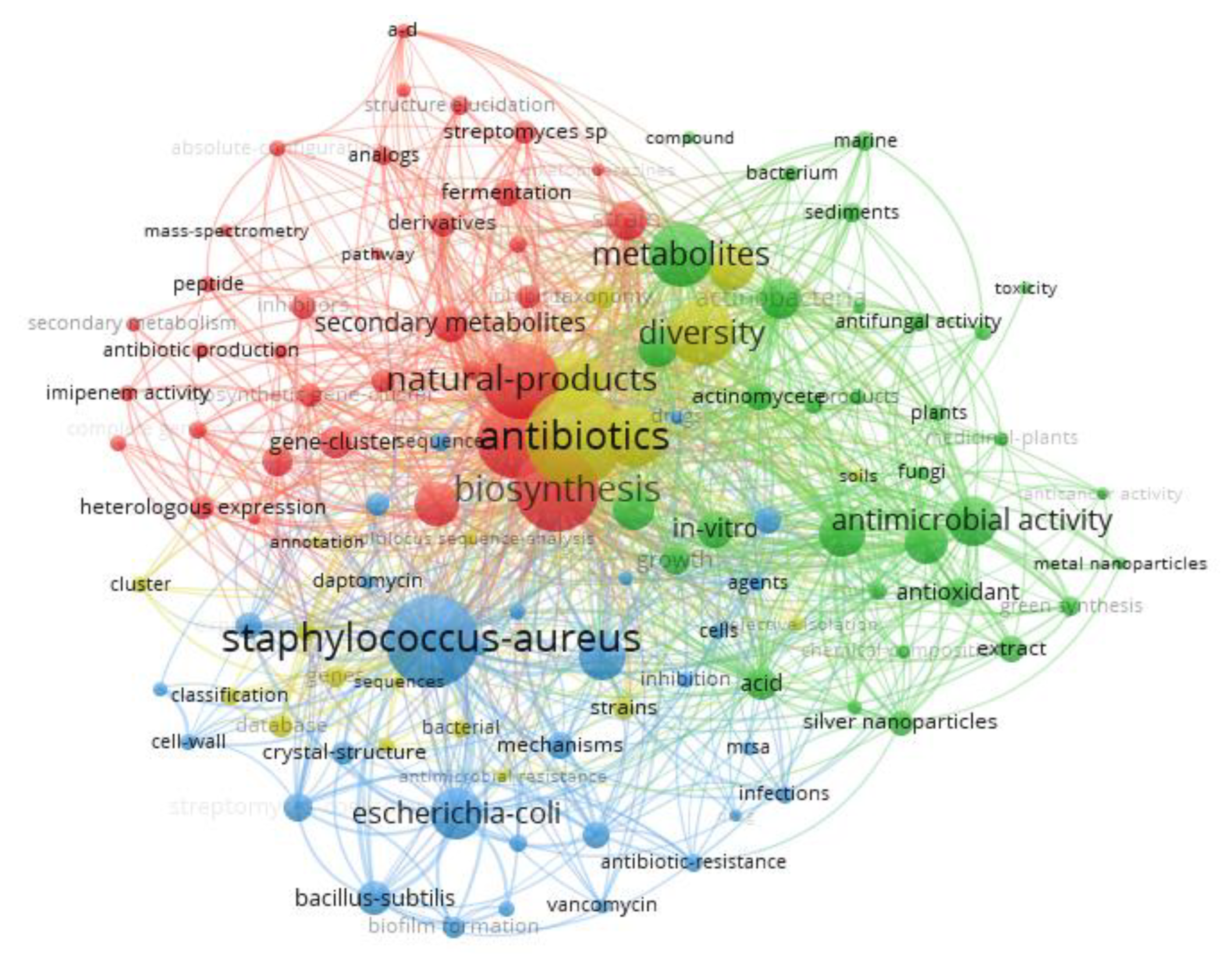

Table 1.
General statistical information on the scientific production related to the use of Streptomyces as antibiotic biofactories against Staphylococcus aureus, published in the Web of Science database in the period from 2015 to 2024.
Table 1.
General statistical information on the scientific production related to the use of Streptomyces as antibiotic biofactories against Staphylococcus aureus, published in the Web of Science database in the period from 2015 to 2024.
| Description | Value |
|---|---|
| Original articles and review articles | 755.0 |
| Authors | 3705.0 |
| Appearances of the author | 4776.0 |
| Authors of single-author documents | 10.0 |
| Authors of multi-author documents | 746.0 |
| Single-author documents | 10.0 |
| Authors per document | 6.32 |
| Co-authors per document | 5.32 |
| Documents per author | 0.2 |
Table 2.
The ten most productive countries based on the number of articles and citations.
| Order | Country | Total articles | % Articles | Total citations | % Citations |
|---|---|---|---|---|---|
| 1 | CHINA | 147 | 21.43 | 2341.0 | 15.40 |
| 2 | INDIA | 110 | 16.03 | 1579.0 | 13.30 |
| 3 | USA | 60 | 8.75 | 2064.0 | 45.90 |
| 4 | EGYPT | 47 | 6.85 | 1026.0 | 25.00 |
| 5 | SOUTH KOREA | 40 | 5.83 | 399.0 | 17.60 |
| 6 | JAPAN | 33 | 4.81 | 475.0 | 17.60 |
| 7 | GERMANY | 26 | 3.79 | 951.0 | 43.50 |
| 8 | SPAIN | 24 | 3.5 | 383.0 | 23.90 |
| 9 | THAILAND | 20 | 2.92 | 96.0 | 4.80 |
| 10 | FRANCE | 18 | 2.62 | 120.0 | 15.00 |
Table 3.
Top ten academics based on the number of articles.
| Order | Author | Institution/Country | Nº of articles | Nº of citations |
|---|---|---|---|---|
| 1 | REYES F | Fdn Medina, Ctr Excelencia Invest Medicamentos Innovadores An, Granada 18016/Spain | 14 | 258 |
| 2 | ZHANG ZZ | Zhejiang Univ, Ocean Coll, Zhoushan Campus, Zhoushan 316021/China | 13 | 290 |
| 3 | JU JH | Chinese Acad Sci, Cas Key Lab Trop Marine Bioresources & Ecol/China | 12 | 218 |
| 4 | LI J | Shanghai Jiao Tong Univ, Ren Ji Hosp, Res Ctr Marine Drugs,Dept Pharm, State Key Lab Oncogenes & Related Genes,Sch Med/China | 11 | 361 |
| 5 | LIAN XY | Zhejiang Univ, Ocean Coll, Zhoushan Campus, Zhoushan 316021/China | 11 | 242 |
| 6 | LEE J | Seoul Natl Univ, Coll Agr & Life Sci, Dept Agr Biotechnol, Seoul 08826/South Korea | 10 | 116 |
| 7 | GENILLOUD O | Fdn Medina, Ctr Excelencia Invest Medicamentos Innovadores An, Granada 18016/Spain.; | 9 | 184 |
| 8 | LI QL | Chinese Acad Sci, Cas Key Lab Trop Marine Bioresources & Ecol/China | 9 | 125 |
| 9 | MARTÍN J | Fdn Medina, Ctr Excelencia Invest Medicamentos Innovadores An, Granada 18016/Spain.; | 9 | 154 |
| 10 | VICENTE F | Fdn Medina, Ctr Excelencia Invest Medicamentos Innovadores An, Granada 18016/Spain.; | 9 | 221 |
Table 4.
Most cited articles on Streptomyces against Staphylococcus aureus.
| Paper | DOI | Total Citations | TC per Year | Normalized TC |
|---|---|---|---|---|
| Peterson E [32], Front Microbiol | 10.3389/fmicb.2018.02928 | 573 | 71.63 | 16.29 |
| Dunbar Kl [28], Chem Rev | 10.1021/acs.chemrev.6b00697 | 469 | 52.11 | 14.09 |
| Smyth Je [29], Nat Prod Rep | 10.1039/c4np00121d | 433 | 39.36 | 11.69 |
| Martens E [30], J Antibiot | 10.1038/ja.2017.30 | 319 | 35.44 | 9.58 |
| Ashour Ah [33], Particuology | 10.1016/j.partic.2017.12.001 | 241 | 30.13 | 6.85 |
| Tang Xy [34], Acs Chem Biol | 10.1021/acschembio.5b00658 | 183 | 16.64 | 4.94 |
| Taylor Sd [35], Bioorgan Med Chem | 10.1016/j.bmc.2016.05.052 | 179 | 17.9 | 6.32 |
| Allocati N [36], Cell Death Dis | 10.1038/cddis.2014.570 | 169 | 15.36 | 4.56 |
| Salem Ss, [31], Nanomaterials-Basel | 10.3390/nano10102082 | 157 | 26.17 | 8.07 |
| Miller Wr [37], Csh Perspect Med | 10.1101/cshperspect.a026997 | 151 | 15.1 | 5.33 |
Table 5.
Main institutions in number of scientific publications.
| AFFILIATION | ARTICLES |
|---|---|
| Egyptian Knowledge Bank (EKB) | 121 |
| Chinese Academy of Sciences | 78 |
| Zhejiang University | 38 |
| Kitasato University | 29 |
| Seoul National University (SNU) | 26 |
| Sathyabama Institute of Science and Technology | 25 |
| Centre National de La Recherche Scientifique (CNRS) | 24 |
| Council of Scientific and Industrial Research (CSIR) - INDIA | 24 |
| University of Chinese Academy of Sciences, CAS | 24 |
| University of California System | 21 |
Disclaimer/Publisher’s Note: The statements, opinions and data contained in all publications are solely those of the individual author(s) and contributor(s) and not of MDPI and/or the editor(s). MDPI and/or the editor(s) disclaim responsibility for any injury to people or property resulting from any ideas, methods, instructions or products referred to in the content. |
© 2025 by the authors. Licensee MDPI, Basel, Switzerland. This article is an open access article distributed under the terms and conditions of the Creative Commons Attribution (CC BY) license (http://creativecommons.org/licenses/by/4.0/).
Copyright: This open access article is published under a Creative Commons CC BY 4.0 license, which permit the free download, distribution, and reuse, provided that the author and preprint are cited in any reuse.