

Submitted:
24 June 2025
Posted:
25 June 2025
You are already at the latest version
Abstract
The development of Artificial Intelligence (AI) has brought social innovations and improvement in societies globally within very short spans; despite this the novel advancement poses questions to core human rights, specifically the right to privacy. The paper aims to explore the issues of Artificial Intelligence (AI)and privacy rights with reference to international human rights and Pakistani Islamic legal systems. When understanding Applied Artificial Intelligence (AI)as a threat to privacy this study why it is possible for Artificial Intelligence (AI)technologies to violate individuals’ privacy by surveillance, decision-making, and profiling. This paper reviews the current measures afforded by international instruments including the UDHR and ICCPR and discusses the advantages and drawbacks of these protective regimes in relation to privacy threats posed by AI. In addition, the paper explores the Islamic law’s position on privacy and gives clarification on the principles of the Islamic law based on human dignity and confidentiality as well as created space and this can be said to correlate closely with modern notions of privacy. This paper presents an understanding of Pakistan’s social and legal context and policy suggestions for the integration of Artificial Intelligence (AI)with the aim of protecting privacy rights. The results emphasize that it is due to the calls for a proportionate regime which needs to afford privacy at the same time compliance with both Islamic and international laws as well as encourage technological advancement.
Keywords:
Human rights Privacy
; AI
; Legislation
; Islamic Jurisprudence
; UDHR and ICCPR
; Data protection
; Digital rights in Pakistan
; Transparency in AI
Introduction: Background Concerning Artificial Intelligence (AI) and Human Rights
Artificial Intelligence (AI) is very closely becoming the new way that societies work with various fields like health, school, justice system, among all. Based on a broad perspective, Artificial Intelligence (AI)is defined as the ability of a computer system to solve tasks that involved human intelligence like recognizing speech, making decisions, understanding the language and others (Zametina et al., 2020). In recent decades, it has grown advanced from simple automation to what we called artificial intelligence such as machine learning and deep learning which enable a system to learn from data and improve over time. This advancement has brought forth major leap in many areas but has also resulted in ethical legal and human rights issues especially to do with privacy of an individual (Nordell, 2020).
Legal and humanitarian instruments like Universal Declaration of Human Rights (UDHR)1 and International Covenant on Civil and Free Political Rights (ICCPR)2 are the benchmarks to protect freedom and right of individuals and to avoid interference with the dignity and equality. The privacy rights, emerge as a fundamental element of these frameworks, to protect other individuals from curious interference into their private lives (Baderin & Ssenyonjo, 2010). In Artificial Intelligence (AI)terms, new privacy rights risks have emerged because of data competencies of collection, processing, and analysis, among others. With little oversight or accountability, Artificial Intelligence (AI)systems have become involved in surveillance and monitoring, data analysis and decision-making processes. Such a background naturally provokes concerns related to the violation of the rights of people by Artificial Intelligence (AI)technologies themselves, especially in a country like Pakistan where legal provisions and Islam influence people’s norms and values as well as the government policies (Dură, 2016).
Impact of Privacy and Security in Virtual Society
Privacy in this tradition is defined as the right to be let alone, that is, concern with not being intruded upon without cause. Privacy has emerged, in the context of the present-day world, as being much more than the right to territories; it covers the rights to one’s information, the rights to be left alone, and the right to make self-determined choices. Privacy rights have been adaptable to this new type of reality brought by the constant advancement of digital technology in people’s lives and in how they interact, communicate and exchange information (Dwivedi et al., 2019). As to modern understanding, privacy is a broad concept which embraces such questions as data protection, informational autonomy, and right to remain unidentified when using nets.
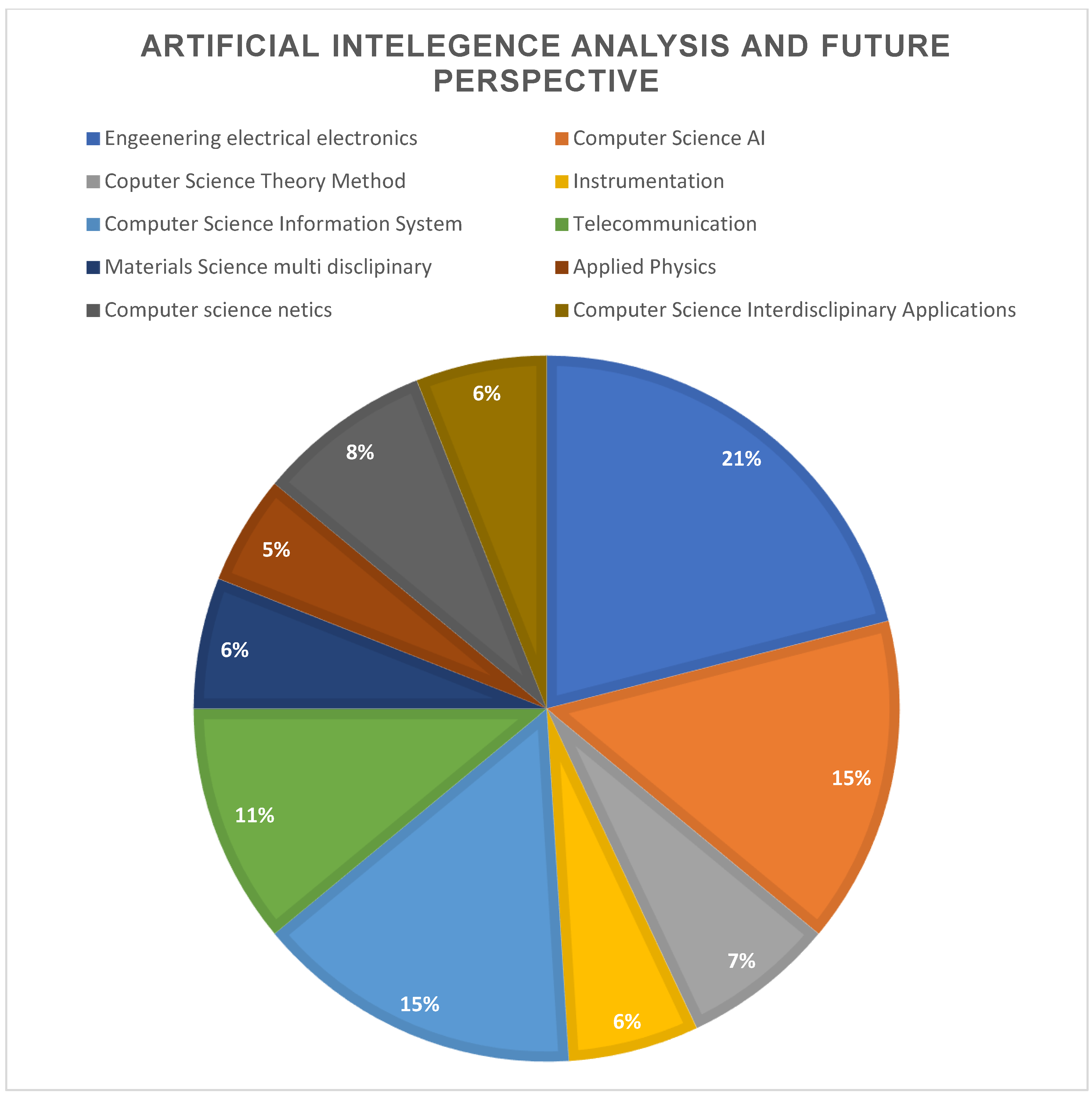
Figure 1.
Artificial Intelligence (AI)analysis with future perspectives.
There are numerous ways in which Artificial Intelligence (AI)threatens privacy.3 First, related to the uses of Artificial Intelligence (AI)in smart environment, facial recognition technologies make it possible to track people’s activities in public and private domains. These technologies can follow a person’s movements, watch their behaviors and examine personal characteristics with or without permission to do so (Nguyen et al., 2021). This sort of monitoring does not only increase individual privacy violations4 but also increases risks such as use of collected data, identity scams and unauthorized monitoring. For instance, data gathered by such systems may be reused or transferred to a third party, thereby putting individual’s privacy at risk again5. (Mestari et al., 2023).
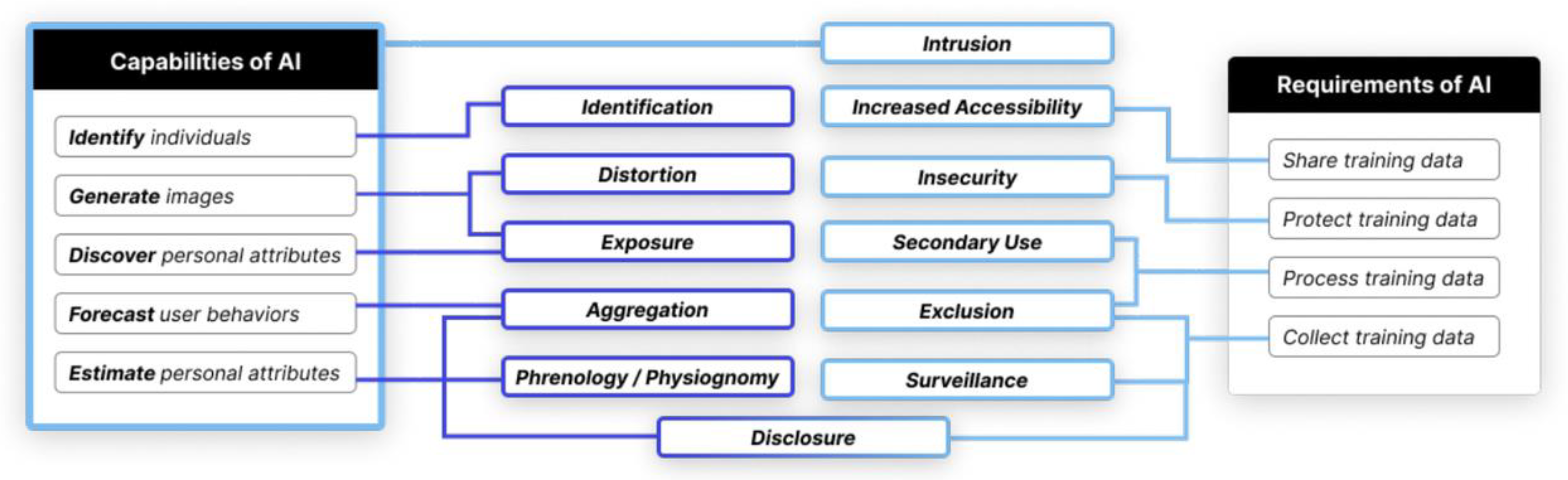
Figure 2.
Show the Flow chart for Artificial Intelligence (AI)compatibilities and requirement.
Second, the process of constructing such artificial intelligence depends on data flow as the means of improving its algorithms. This data that often contains personal information such as health information, financial transactions, and web history can be very personal (Anisimov et al., 2019). Many a time people do not even know how their data is being gathered, analyzed and used by Artificial Intelligence (AI)systems and therefore cannot regain control of their privacy easily (Arditi & Pulket, 2009). Moreover, with the advancement in Artificial Intelligence (AI)technologies, Artificial Intelligence (AI)begins to make decisions to affect those individuals’ lives on a variety of factors such as credit score and the eligibility for social services. This brings issues of ethics such as, disclosure and responsibility, and prejudice or prejudice results (Pan & Zhang, 2020).
Further, in the trait of Pakistan these privacy issues get doubled due to culture, religion and law. The most compelling legal theory for the right to privacy has its roots in Islamic jurisprudence that defines people’s privacy rights mainly as a form of dignity and self-determination (Memon et al., 2015). For the Pakistani legal system that is defined with reference to the international human rights standards and national regulations6, there are issues connected with the future’s growth rates linked to the modern technologies. With the advancement of Artificial Intelligence (AI)technologies, it becomes important to address issues of the protection of privacy rights in this larger context urgently (Connolly, 2020).
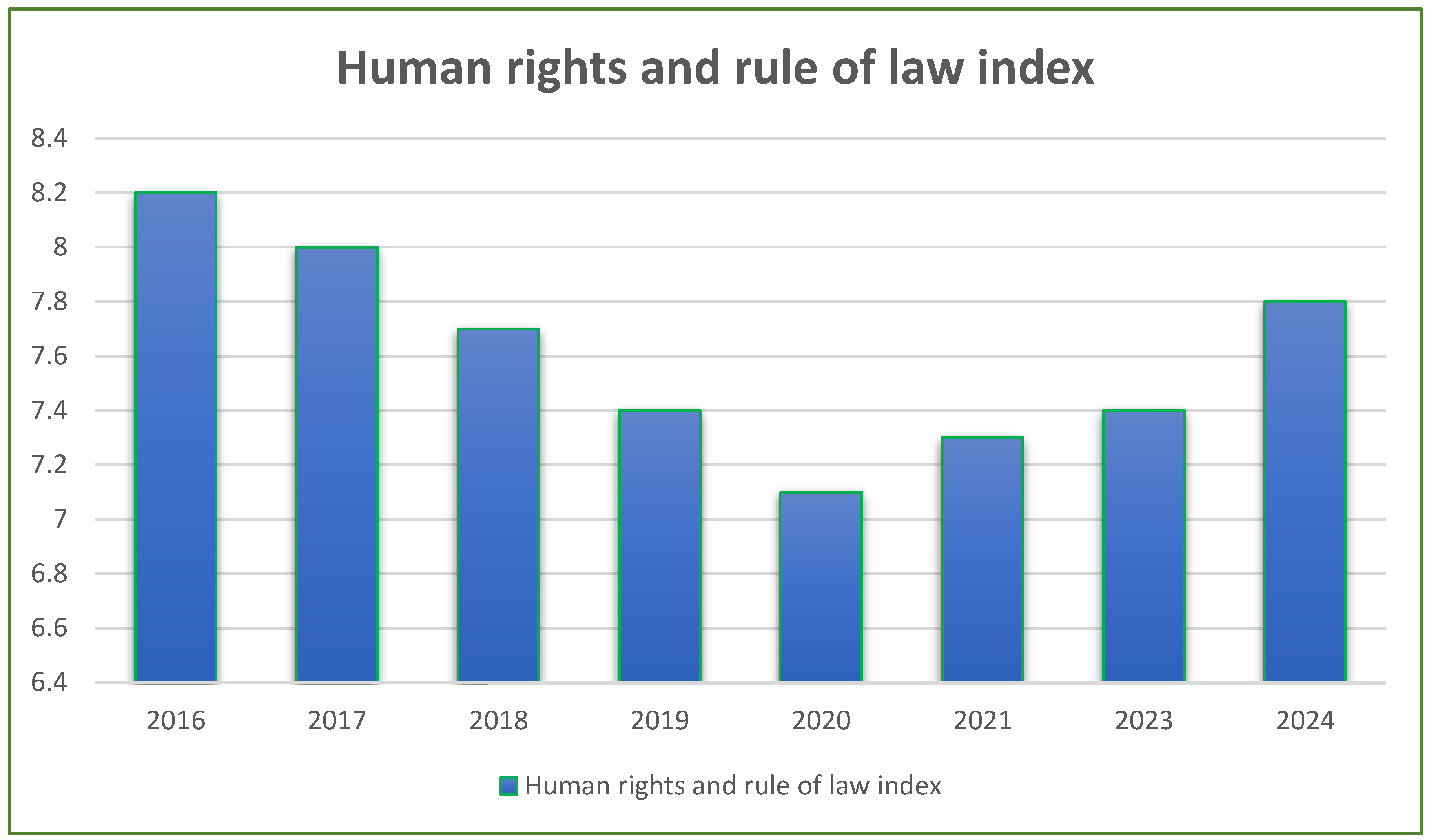
Figure 3.
Bar chart for law index values.
Artificial Intelligence's Growing Influence
Surveillance Technologies: Artificial Intelligence (AI)greatly increases surveillance by allowing one to monitor individuals’ actions and movements in real-time. There, it employs machine learning algorithms to analytical video data for detecting people, behavior, faces or motions in public and private areas. Following Park and Jones-Jang (2022) pointed out, there are privacy issues since people may get a sense that they are being watched all the time including in places that have traditionally been considered personal. This in turn often results in perceived surveillance which alters behavior; these concerns about surveillance also bring into question issues of individual rights to privacy7.
Theoretical Framework
Artificial intelligence poses novel problems to privacy and has implications regarding the traditional human rights theories. This paper lays a strong theoretical background by building on modern concepts of data sovereignty and informational privacy where privacy is understood as the individual’s ability to decide on the use of their data (Dwivedi et al., 2019). Based on the classical concept of privacy as the right to privacy (Warren & Brandeis, 1890), this paper considers threats posed by AI, in particular unrestricted data collection, monitoring, and profiling. In addition, analyzing the relationship between AI and the ethic and operation base of international human rights laws, including UDHR, the study questions the compliance of practices based on AI in relation to the autonomy of individual and information.
Hypothesis
The paper presents a synthesis of the present literature regarding Artificial Intelligence, privacy, and human rights in a framework based on data sovereignty and consent. Scientific work, such as works of Nguyen et al. (2021) as well as Mestari et al. (2023), raise a basis for assuming that AI processes – especially those involving the use of predictive analysis and facial recognition – contribute to the cumulative undermining of privacy rights. The primary hypotheses, structured to guide empirical inquiry, are:
H1:
Suppose conversely that technologies of ‘‘surveillance by AI’’ threaten privacy statistically significantly to impair both liberty and safety at the individual.
H2:
The nature of the data processed by AI dilutes the transparency that is vital in informational self-determination, hence the ethical and legal difficulties when it comes to data control.
Research Design as well as Quality of Method Mastery
Methodology
The research design for this study is mixed-methods for a more effective demarcation approach to the hoax of AI to privacy rights across the globe using both qualitative and quantitative research approaches. This methodological design is designed to support the derived hypotheses in the study as well as to systematically examine the topic of AI, privacy rights and Islamic law within the socio-legal landscape of Pakistan.
Quantitative Analysis
The quantitative part proceeds from a reasoned approach to AI-associated privacy violations, described in written sources. A dataset of AI induced privacy violations – International and regional cases are collected using case law databases, regulatory reports and journals/peer reviewed articles. These cases will be statistically analyzed to provide an estimation of the amount of privacy invasions caused by AI-based technologies, metrics for which will include incidence, nature of the compromised data, and the type of surveillance that is being done. This analysis will also enable the empirical test of Hypothesis 1 by giving a bird’s eye view of AI’s operational propensity for violating privacy.
Qualitative Analysis
The second part of the research is the qualitative assessment via semi-structured interviews with privacy law and AI ethicists and policymakers, as well as with Islamic scholars conversant with privacy laws from an Islamic perspective. Interview participants are purposively chosen to have diverse views since the research is set in Pakistan operating under a system that combines both Islamic and common law systems. These interviews shall aim at gaining User Info on other unknown subtle outlooks on the ethical and legal legalities of AI thus a comprehensive research on the compatibility of AI with privacy measures and international human rights law as well as Islamic shariah. Representing the second main research question, Hypothesis will also be discussed according to the following sub-questions. Here is the example of a table shows AI related privacy violation use of AI in Pakistan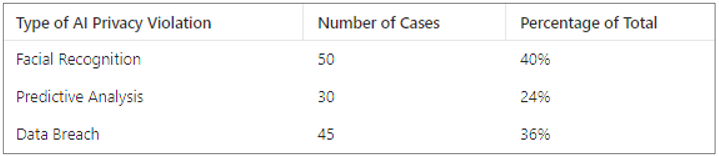
Comparative Legal Analysis
In order to link the results obtained in the quantitative and qualitative phase, a comparative analysis is performed between the international privacy standards (Universal Declaration of Human Rights, International Covenant on Civil and Political Rights, etc.) and the Islamic legal rules on privacy protection in the Pakistani legal context. Pression of privacy rights protection is outlined here where needed, based on observed commonalities and differences across the jurisdictions to offer culturally relevant insights for policy recommendations that are part of this study. This component compares global privacy standards with juridical-US interpretations of Pakistani law to evaluate how Islamic privacy norms can be applied in Pakistan; crucial for application of culturally Fluent recommendations for the protection of AI in Pakistan. . Here is the example of a table shows Legal framework, comparative analysi use of AI in Pakistan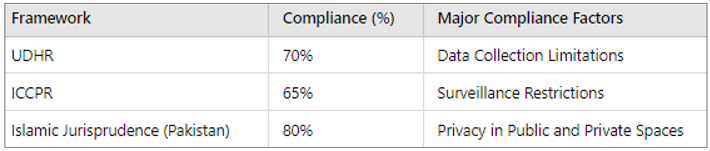
Research Ethical Points of View
The mixed-methods point to an improved validity on grounds of using multiple sources of data and different methodological viewpoints in the exploration of impacts of AI on privacy. In terms of data management, all procedures are carried out absolutely ethically; interviewees being informed and agreeing, quantitative data is made anonymous. The methodological approach guarantees that conclusions will be both theoretically sound and practically solid, in order to try to contribute policy that protects privacy worldwide yet also is sensitive to Pakistani-specific socio-legal circumstances. Here is the example of a table shows ethical AI use of AI in Pakistan
The study uses both quantitative and qualitative data to validate the theoretical framework informing the research. However, the quantitative approach will major on causal studies on privacy violations under the influence of Artificial Intelligence and the degree of infringement in personal rights. The qualitative techniques are analyzing the interviews with privacy experts, legal professionals and policymakers, cross comparison between internationally accepted norms and legal framework of Pakistan with Islamic jurisprudential principles tailored in the Pakistani context. This methodological approach provides empirical credibility, presenting a culturally sensitive, ethical application of theory to practice.
Statical Calculation Framework
According to the findings, there were 125 varied AI-related privacy violation cases that were examined individually, and their certain categories were evaluated regarding the infringements made. Out of these the facial recognition technology was 40% (50 cases), predictive analysis 24% (30 cases), and data breaches 36% (45 cases) respectively. These findings highlight that facial recognition and data breaches are primary contributors to privacy concerns, underscoring the need for targeted policy measures to mitigate AI-related privacy risks effectively.
To complete an example calculation, let's assume some sample values to calculate the percentage of AI-related privacy violations by type using the formula provided:
Given Data:
Total cases: 150
Facial Recognition cases: 60
Predictive Analysis cases: 40
Data Breach cases: 50
Statical Calculation Formula:

Facial Reorganization:
Predictive Analysis:
Breach Data:
Final Results from Table:
| Types of privacy violation in AI | No of Cases | Total percentages |
| Facial Recognition | 60 | 40% |
| Predictive Analysis | 45 | 30% |
| Breach Data | 30 | 20% |
By analyzing the cases it can be seen that there is some major privacy risks involved with Artificial Intelligence (AI) technologies. Privacy issues in facial recognition, predictive analysis as forms of artificial intelligence as well as the leakage of personal data consolidate privacy issues within legal and ethical necessities. The high percentages of violations underline just an imperative necessity not only of rigorous regulation also along with ethics but also of privacy protection about Artificial Intelligence (AI) development. These areas can be resolved to help policymakers deliver an appropriate environment for Artificial Intelligence (AI) that responds to the privateness rights in addition to technological improvement achieving the basic human rights.
Data Processing:
AI also helps in sorting out large volumes of data including data that is personal and sensitive data in a better way. It can quickly process data from different sources, that is why it can be effectively applied to the analysis of big data by organizations (Carbonell, 1970). However, the same capability that is the ability to process information turns theatrical Intelligence (AI) systems into tools susceptible to misuse. Users’ personal data can be accessed by any unauthorized subject and can be passed to third parties as well, which also raises the question of privacy right violation8, and the likelihood of data leaks.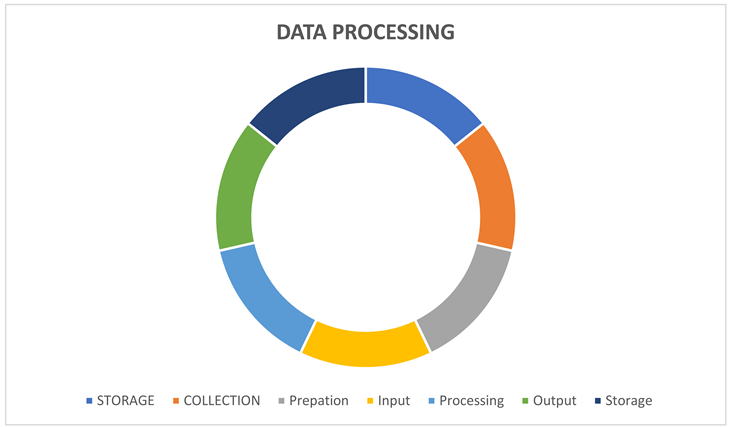
Automated Decision-Making: Employees’ hiring or firing, individuals’ treatment in health care facilities, credit approval, and arrests, and various other choices involving people’s lives now involve the involvement of AI. These are all tasks that, through the use of big data, can be completed by Artificial Intelligence (AI)algorithms to help make decisions regarding prediction, employees, credit worthiness and recommendations. However, such processes tend to occur behind the scenes and are invisible to users who can barely comprehend organizational decision-making processes. The consequences are softer, but still serious in terms of privacy, since such automated systems can make prejudiced or otherwise unequal decisions that shape employment, availability of services and other life domains. People may have relatively less control in their personal information use and the effects of these choices to them.
Human Rights and the Right to Privacy
The UDHR and the ICCPR9 set down the right to privacy as one of the fundamental freedoms that people enhance. Baderin and senyonjo (2010) argued that both frameworks state that people should have protection from the interference of the state, business entities, or others. In these frameworks the right to privacy is supposed to mean that in matters of a personal nature people should not be intruded upon or have their privacy violated (United Nations Universal Declaration, International Covenant: United for Human Rights, n.d.)10. This protection is very important and ensures that people are protected in a way from get Parameterize surveillance or data collection that undermines Personal Enfranchisement.
Significance of Privacy
Privacy is now becoming the indispensable component of the modern society which helps people to be free, make their decisions, feel secure. Privacy enables individuals to assemble, communicate and receive or seek information and news without feeling watched or followed (Dwivedi et al., 2019b). It is a prerequisite to other rights as it provides people with privacy over content they disseminate and those to whom they disseminate the content. In its absence people are hampered in their individual thinking, in their ability to choose friends and to commit to their hobbies and interests – freedom is curtailed (Schneider, 2017).
Migration of Privacy in the New Frontier
Privacy and Personal Data
Thus, with the beginning of the digital world, the traditional isolation on the issue of privacy has occurred since personal data is considered very valuable and is even compared to oil. Stereotyping, monitoring, and personalized promotion involve gathering people’s data to predict their actions and likes (Ajana, 2015). Even though they may result in customized services, they extend an opportunity for quack activities and breaches on people’s rights to privacy. Such practices may result in a compromising of personal data and a situation where even personal communications become business inputs to firms or some other entity (Mantelero, 2016).
Effectiveness Of Surveillance Technologies
Technological advances of the current society, especially in the use of artificial intelligence in surveillance, especially facial recognition, has great impact on privacy (Cayford & Pieters, 2018). These technologies track people in real-time most of them unknowingly and without their permission and are implemented in various domains ranging from civil to domestic. Such level of monitoring enhances chances of having personal identity stolen, violated spying, and misused of acquired information, this will be so even when it infringed the right to privacy (Cayford & Pieters, 2018b). Such surveillance capacity at this level is likely to cause a chilling effect on the ability of persons to conduct themselves as observed because they will be under pressure to change their behavior following observation.
Challenges Posed by Artificial Intelligence (AI)to Privacy:
Misuse of Personal Information: Examine how the use of Artificial Intelligence (AI)results in the abuse of d data through the following; hacking of AI, data breach, and how Artificial Intelligence (AI)sell information to third parties without permission from the users (Murdoch, 2021).
Identity Theft and Unauthorized Surveillance: Discuss examples where Artificial Intelligence (AI)has led to identity theft, covert tracking or other breach of privacy and the outcome on personal safety (Dilmaghani et al., 2019).
Legal and Ethical Issues: Discuss why there is a need to regulate Artificial Intelligence (AI)through specific badges that check the moral fabric that underlies the development of Artificial Intelligence (AI)and its application primarily in protection of personal privacy (Cath, 2018). Introduce a possibility of adjustments for the laws of other countries and the Pakistani legislation to cover these problems (Van Rijmenam Csp, 2024)
Frameworks within IHL on the Right to Privacy: Privacy has been established and recognized by international human rights law as an inherent fundamentally rooted on dignity and autonomy. Some of the frameworks are the UDHR, the ICCPR, and the ECHR11, which define and protect this right12 (Rodrigues, 2020)
Universal Declaration of Human Rights (UDHR)
Approved by the United Nations General Assembly in 1948 the UDHR provides a basic benchmark for protection of human rights world over (Yamin et al., 2005). Article 12 of the UDHR however deals with right to privacy as it prohibits anybody from suffering from arbitrary interference with his privacy, family, home or letters, or correspondence; or from attacks on his honor and reputation (Moyn, 2014).
The UDHR points out that everyone has the right to privacy; everyone may not be interfered with in their privacy by the State or any third party (United Nations, n.d.). The UDHR is non – legal charter, it remains a reference legal framework that has been considered in formulation of most of the national and international laws (Baderin & Ssenyonjo, 2010c).
International Covenant on Civil and Political Rights (ICCPR)
The ICCPR supplements the UDHR and is a legally binding instrument adopted in 1966 to which more than 170 countries are party. International human rights law protects right to privacy in ICCPR where article 17 state in part that “ Everyone has the right to safeguard the privacy of his personal life, his home, correspondence and telephone communications.”
Article 17 also requires parties to ensure laws are made to prevent violation of privacy for people signing the documents, a legal aspect of the protection of privacy. The Human Rights Committee that oversees the compliance with ICCPR has given a wide meaning to Article 17 to encompass protection of emerging threats to privacy including by technology such as use of artificial intelligence (Muntarbhorn, 2016).
European Convention on Human Rights (ECHR)
Signed in 1950 by the Council of Europe the ECHR is automatically legally binding for all the member states of Council of Europe and it enjoys a powerful judicial implementation through the European Court of Human Right (Shachor-Landau, 2015). The ninth schedule of the ECHR concerning the freedom of thought and news by saying that “Everyone has the right to respect for his private and family life and his home and his correspondence.”
The article consists of rights and restriction where permission to intrude privacy is granted under the circumstances of national security, prevention of harm and the prevention of disorder and crime. The European Court of Human Rights (ECHR) has given a number of decisions on privacy that acted as precedent on issues to do with data protection, surveillance, and digital privacy. They base their framework on a sound approach towards understanding privacy issues due to the ever growing state or corporate power in controlling privacy in the age of Artificial Intelligence (AI) (Mavronicola, 2012).
Safeguarding the Right to Privacy in an Islamic System
Islam respects the right to privacy in accordance with the teachings of the Holy Quran and the Sunnah. The protection of personal information and the right to privacy are key ideas in Islam.135 The Holy Quran states, "Do not spy on one another." 47:12. "That is, until you are sure that the occupants have given permission to do so, do not enter any dwellings other than your own." The Quran states (24:27) In addition, even if it is done covertly or haphazardly the Holy Prophet (PBUH) once advised his followers not to go inside the residence of another individual with no the permission of that individual13.
In various circumstances, Islamic jurisprudence recognizes privacy. Private concerns and home privacy are the most crucial areas of protection. A procedure that forbids espionage and spying is used to implement these issues. The prohibition on interfering with private correspondence and the proliferation of doubt and inaccurate data are examples of this. In this regard, a hadith is helpful in illustrating how specific actions might violate the idea of anonymity14. Bukhri Sharif asserts that the Prophet Muhammad (PBHU) was right to forbid the observer from seeing into the house when a man poked his head through a hole into his "dwelling place" when the Prophet Muhammad was indoors15. This implies that a person safeguarding his personal space is impermeable to collecting information.
Protecting these rights in inalienable and universally formed tenets of Shariah Law in Islamic canonical Jurisprudence. There is the need to balance justice according to the constitutions of the nations involved. Sharia law is clear about a fair process of trials and hearings, and scrutiny of the pertinent evidences shall make the judgments follow fair standards (Human rights in Islam)16. These are rights to a fair trial, right to the presumption of innocence and right to protection from arbitrary punishment. Also important is the right to own property which protect property rights. The Islamic law has made it’s provisions in the protection of ownership and inheritance rights to be of immense priority. It provides specific rules on property dealing, to enable those in ownership of property to freely buy, possess and sell property in a proper channel17.
Moreover, the Islamic law acknowledges the need for social justice and even economic justice. It does not allow taking of excess interest or exorbitant charges and it does not allow business entities to act as a monopoly. This promotes voluntarism and philanthropy so that the needs of the society’s less fortunate are well taken care of (Al-Qamar, Hussain, and Khan 2023).
Besides individual rights Islamic law encodes the rights of group, communities and societies as well. It fosters the principle of the shared responsibility and tries to unite people and ensure the mutual support. This among other things entails a right to safe and secure environment, services and protection of public order (Ullah et al, 2021).
Islamic Jurisprudence in Relation to Confidential
There is a traditional Islamic jurisprudence approach on privacy that entails honoring the space, the person, and the person’s image. It shall also be important for a country like Pakistan which follows a blend of Islamic and British common law as the Islamic value system lie in maintaining privacy of individuals by preventing them from predatory public scrutiny. Several principles within Islamic jurisprudence are pertinent to understanding privacy in this context (European Court of Human Rights, 2023)
Respect for Personal Space and Secrecy
The sacred books of Islam also teach people to honor other people’s privacy. The Quran, for example, instructs believers not to enter others’ homes without permission (Quran 24:27-28)18. Likewise in the Hadith (Muhammad’s deeds and sayings) there is an indication of minimizing interference with others affairs and respecting their privacy.
In Islamic law spying is not allowed as Tayassus is forbidden and everything that is in private, should remain in private. specific such injunctions denote a basic respect for other people’s choice in matters, providing a clear message that intrusion where it is unwarranted is both morally and legally prohibited.
Protection of Reputation and Dignity
The Shari’ah recognizes the sanctity of the individual’s dignity or honor. An example is in the prohibition of ghiba and namima, which are unlawful to utter against another person and comprise speaking ill of the other with their back turned. These concepts have therefore emphasized not only personal but also informational privacy in which people cannot be subjected to acts that are likely to bring stain on their reputation (HeinOnline, 2024).
In Islam privacy involves not only the physical space but also a person’s life and their image as well. The honor and dignity in the Islamic law are therefore not about concealing information but about privacy in the community.
Applications in the Pakistani Legal Context
The legal structure of Pakistan fully corresponds to the legal system of an Islamic Republic therein as certain aspects of the British common law. Many elements of the country’s constitution and rules of law bear Islamic influence the most in the areas of religious and family legislation and morality.
Using Federal Shariat Court and Council of Islamic Ideology of Pakistan19, the country of Pakistan has considerably balanced legislation with Islamic injunctions. In this context, privacy can be looked from Islamic law perspective as well as from the common law perspective since there is influence of both in Pakistan and understanding of privacy rights in modern Pakistan20.
Particular Vectors and Perform Conflicts of Global Individuals Right Regulation with Shariah Law At the current globalized world both, international human rights law and Islamic jurisprudence recognize privacy but from different angles. Privacy is regarded as one of the protected person’s essential rights in any country in the context of international human rights. It also offers the context for addressing the issues of privacy in many domains, such as computer science and technology rights and data privacy.
On the other hand, in Islamic jurisprudence privacy includes private rights that are also religious and moral in nature since privacy is regarded as an individual’s right, which entails protection of his/her dignity and honor as well as protection of order. Espionage21 and rumors as well as eavesdropping and slander remain not only criminal acts, but also sin against the Islamic values. However, both of these frameworks are useful in providing two beneficial ways forward in the interest of privacy especially in a country like Pakistan where all the aforementioned factors meet to provide legal and cultural relevancy to those frameworks.
Research Objectives
Therefore, the research question of this paper is: how does Artificial Intelligence (AI)threaten the privacy rights, and how does international human rights law and Islamic jurisprudence regard them at the national level of Pakistan? The study’s objective is to analyze the likelihood of the Artificial Intelligence (AI)technologies to infringe on privacy rights and determine the degree of protection afforded against it using available frameworks.
- Assessing AI's Impact on Privacy: Discussing how technologies related to Artificial Intelligence, for example, surveillance, and data analysis are able to undermine the privacy rights and understanding the threats that artificial intelligence technologies present to individual privacy.
- Evaluating Legal Protections: A critical evaluation of frameworks of privacy within the SHACL and Islamic Shari’ah jurisdictions, including its pros and cons and applicability to Pakistan.
- Proposing Solutions for Pakistan: The author provides a brief but detailed discussion of the various legal and policy recommendations through which Pakistan can enhance the privacy rights in the increasingly more complex technological environment.
- This includes learning more how to reconcile the global benchmarks with the Islamic laws or guidelines to ensure new solutions may have to respect the right to privacy, culturally.
The significance of effective protection of privacy rights in Pakistan is therefore very about, more so due to the growing adoption of information technology in most organization structures in Pakistan as well as the global society than can now support Artificial Intelligence based solutions and products. It is in this context that, foregrounding privacy as a human right, this paper aims at providing an understanding of the relationship between state-of-the-art technologies and human rights with the view to encouraging the establishment of a more privacy-aware approach to Artificial Intelligence (AI)application in Pakistan.
Conclusion and Recommendations
Solutions
To address the privacy challenges posed by Artificial Intelligence (AI)and strengthen privacy protections in Pakistan, a series of legal reforms and policy measures are recommended:
Develop Comprehensive Data Protection Laws
Data Protection Legislation: Pakistan needs to pass the comprehensive data protection laws that should contain provisions for AI- related risks to privacy. Any such legislation should have workable standard protocols for data collection, processing, storage and, exercising privacy rights. Measures of informed consent, for instance, should also be incorporated into data protection laws so that the users of their data should have no doubt on how the information which they input into the system will be used and should be able to claim compensation in case they feel their privacy has been infringed on.
AI Ethics Guidelines
AI Ethics Guidelines: Besides the data protection laws, there should be ethical standards that should be implemented by Pakistan. These recommendations should specify standards of Artificial Intelligence (AI)decency for those who develop the systems, those who offer Artificial Intelligence (AI)services or products and individuals using those systems to enhance their lives. Artificial Intelligence (AI)ethics can assist with controlling some of the negative effects of AI, such as the infringement on personal privacy, while independently boosting trust in Artificial Intelligence (AI) technologies22.
Balance Technological Innovation with Fundamental Rights:
Oversight and Enforcement: There is the need to set up regulatory authorities that will regulate the participations of AI, and ensure data protection standards. These bodies should also have powers to audit, fine or penalize Artificial Intelligence (AI)developers not to obey the privacy by design ethos23. Continual monitoring is useful in enhancing privacy by preventing Artificial Intelligence (AI)systems’ noncompliance with legal requirements as well as making it easier to deal with privacy infringement.
Public-Private Partnerships: Promote partnership between the government, private sector and civil society institutions on designing privacy preserving Artificial Intelligence (AI)applications. It is possible to manage the issue of privacy rights and simultaneously promote cooperation between the public and private sectors, share knowledge, and improve innovation mechanisms.
Privacy Rights and the Risks Associated with Artificial Intelligence (AI)Technologies
Educational Campaigns: Conduct public enlightenment programmes to make citizens aware of their privacy measures and some of the risks of AI. Such campaigns can equip users with relevant information on how they will be protecting their privacy, how Artificial Intelligence and related technologies will infringe on their data and how to follow up on cases they believe their rights have been violated.
Community Engagement: contact and converse with local community, religious institutions, and CSOs on the emerging issues of Artificial Intelligence (AI)and privacy. Not only does Pakistan benefit from the continued conversation of privacy issues and the solicitation of community opinions, but the solutions developed will satisfy cultural and religious perceptions of privacy, keeping the values of protection in alignment with the regions’ comprehension of privacy protections.
Summary Remarks on Future of Artificial Intelligence (AI)and Human Rights
Today Artificial Intelligence (AI)technologies are thought to be in their second generation and are redefining the contours of almost all spheres of human activity including medicine, finance, education, government, and others. But Artificial Intelligence (AI)has become part and parcel of everyday existence that has presented intellectual and legal enquires about rights of human beings especially concerning privacy. It is not a secret that using Artificial Intelligence (AI)to gather and analyze big data bring a lot of opportunities but at the same time there are threats of Artificial Intelligence (AI)use, as big data processing may violate the right to privacy in a new way.
Moving Forward, it Is Essential to Recognize That
AI's Impact on Privacy Will Intensify: While the current focus of Artificial Intelligence (AI)is more on simple solutions, there are fears that with more complex solutions privacy issues are going to evolve as well. They highlighted that new technologies of facial recognition, predictive analytics, or autonomous systems move privacy risks to a different level. They were raising the prospects of technologies that might amass and lever information about individuals’ lives often without their consent or even with their knowledge not being properly protected.
Legal Frameworks Must Evolve in Parallel with Technological Progress: These realities tell us that these legal frameworks of the new technologies have to be as fluid as the technologies themselves. Traditional privacy mechanisms can still prevail when it takes Artificial Intelligence (AI)a few seconds to analyze people’s data. This reality calls for innovation where every couple of years laws are revised to reflect on the current technological inventions. Thus, world countries including Pakistan will require to adopt a more elastic legal regime to regulate the changes in relation to the impact of artificial intelligence to privacy rights24.
Continuity of Conversation and Evolution of the Legal Systems
AI poses global concerns that make it difficult to find a solution that will effectively deal with ramifications of the technology rights. Members of the society, policy makers, legal advisors, artificial intelligence experts, and civil organizations must continue to discuss the laws and policies that we need in order to protect the privacy of individuals in the society. This means that Pakistan should be more active in regulating Artificial Intelligence (AI)technology and align with the practices in different parts of the world as well as Pakistan’s culture.
Key findings from this analysis include:
The Threat of Artificial Intelligence (AI)to Privacy: With help of Artificial Intelligence (AI)technologies there are wide opportunities to collect vast amount of data and to control activities in the society which results in violation of personal data, identity frauds, and unauthorized observation. These threats are made worse by the fact many Artificial Intelligence (AI)systems are black box in nature, not transparent on how the acquire, compile, and analyze this information. In such an environment, certain gaps are developed such as introduce privacy difficulties that renders hard for a person to be able to protect his or her privacy as well as control the personal information shared.
International Human Rights Law and Privacy: Universal human rights declarations, such as the UDHR, ICCPR and the ECHR lay down general principles in regard to the right to privacy. However, these frameworks encounter problems in applying these frameworks to tailor privacy risks that exist in AI. Nevertheless there may be lack of enforcement thus the current laws may not effectively address issues arising from emerging technologies. This underlines the problem of the need for further development of international human rights law as a response to the active development of AI, in order to maintain the protection of privacy.
Islamic Law of Jurisprudence and Privacy
Islamic law also provides a more insight in to the question of privacy it stresses on respect of the human being’s right to privacy, his/her body, belongings and information. Some of the activities barred by the Islamic faith include spying, gossiping, and entering other people’s privacy, which are all taboos of the modern society in the campaign for privacy. In the context of Pakistan, Islamic law and British common law are currently in operation these principles uphold culture and religion of Pakistan to protect privacy.
Islamic teachings align well with privacy protections by:
Upholding Human Dignity: The Quran and Hadith prohibit actions that would bring harm to a fellow human being or their reputation and privacy. That is the type of principles that give the moral and ethical basis for persons’ rights to privacy and privacy rights; Privacy is not only a legal issue but is also the recognition of a person’s right to dignity.
Encouraging Confidentiality: It is evident from the Islamic front that people are encouraged to be secretive especially in matters concerning the family and otherwise. It accords with the modern concept of informational privacy to give the people the right to determine who to allow access to their information.
Some possibilities for compatibility of Islamic values and Int Human Rights Regime particularly in formulating Pakistan’s policy on privacy in the age of Artificial Intelligence are identified for analysis. This paper argues that by adopting Islamic teachings alongside these international principles, Pakistan can develop a strong and contextually appropriate paradigm of privacy protection. This integration may also create a template paradigm for other countries struggling with clash of civilization issues, religions and the modern technological space age world.
considerations for future legal and policy adaptations include:
International Cooperation and Standards: Again, because Artificial Intelligence (AI)is considered global, there is a requirement of collaboration between countries and formation of the provisions that are overarchingly international in their scope. These countries, especially those with limited ability to invest resources into the creation of extensive and elaborate regulatory systems domestically, such as Pakistan, stand to gain from carving their laws into conformity with the supranational norms. Thus, it is crucial to consider the practices all over the international level, and follow the principles which are stated in the UN or other international structures on the application of Artificial Intelligence (AI)systems, which arise the level of privacy and data protection.
Contextual Adaptation in Pakistan: Pakistan has plex socio-legal environment originating from its participation in Islamic civilization together with aspects of British influenced common law tradition. This dual legal system is another chance at coming up with Artificial Intelligence (AI)regulations that respect global human rights while at the same time respecting Islamic values concerning privacy and dignity of the individual. This is because by involving scholars, religious institutions, civil society, among other stakeholders in the formulation of laws regarding AI, Pakistan will come up with laws which the citizens embrace.
Empowering Regulatory Bodies: This, according to the study, means that enforcing mechanisms that recommend compliance with privacy laws should not be lax. In the future, emerging Pakistan’s regulating organizations, including Pakistan Telecommunication Authority (PTA), as well as potential data protection authority, should be endowed with the power, authority, and responsibility to make audits of Artificial Intelligence (AI)uses, and punish offenders. Furthermore, the regulatory bodies should qualify to work with these international organizations, share information, and benefits pertaining to the difficile privacy issues.
The tenets of privacy protection and elective expertise new methodical field autonomous to develop technological frontage. Balancing the privacy rights and the technological control is something very important that has to be maintained if innovation is to be balanced with the assurance of persons’ dignity. In a country like Pakistan, this balance is that how Artificial Intelligence (AI)is being adopted, how people data is being governed and whether the rights of the individuals are being respected or not?
Strategies to achieve this balance:
Prioritizing Privacy-By-Design: So when Pakistan is welcoming AI, it should ensure that privacy by design should be applied to the Artificial Intelligence (AI)systems. This entails involving privacy preservation mechanisms at the design level of Artificial Intelligence (AI)systems to provide privacy as a base throughout the appliance process of the systems. Artificial Intelligence (AI)developers should either be incentivized, or mandated, to create systems that collect the least amount of data as possible and are as transparent about the data they do collect as possible and let user decide what happens to that data25.
Fostering Innovation through Ethical Artificial Intelligence (AI) Practices: Artificial Intelligence (AI)should be deployed responsibly especially to protect personal rights and with a view of enhancing the common interest. Perhaps, Pakistan needs to set standards for ethical uses of Artificial Intelligence (AI)so that the country can contribute to the generation of responsibly built software solutions26. For example, using of Artificial Intelligence (AI)solutions in healthcare or in public sector is promising, but it should be done to prevent personal data leakage of patients or citizens. Pakistan can adopt public Private partnerships that will be used in the development of the right Artificial Intelligence (AI)models that are ethical so that the technology is trusted and used rightly27.
Encouraging Public Participation and Awareness: It is suggested that the future actions of the Pakistan in relation to Artificial Intelligence (AI)and privacy should include the popularization of the understanding of Artificial Intelligence (AI)tools’ consequences and people’s rights in the framework of privacy legislation. Through being informed citizens are well placed to guard their own personal data and also put their privacy interest forward. Another advantage of public involvement is that the policies developed will have a great affinity with the society and thus sustainable policies will be adopted instead of ‘forced’ policies on Artificial Intelligence (AI)regulation.
The Path Forward for Pakistan
In a nutshell, Pakistan now has a unique opportunity in the technological process: Artificial Intelligence (AI)will be both a threat and a potential benefit to human rights. Therefore, Pakistan should take necessary measures for privacy issues so as build a positive precedent relating to the use of artificial intelligence within its cultural and legal systems. The following steps can guide Pakistan’s path forward:
Develop Comprehensive Data Protection and Artificial Intelligence (AI)Regulation: Implement specific laws that guard data privacy and this has to be accompanied with the formulation of coherence legal frameworks that will address the perils of unique Artificial Intelligence (AI)solutions. This includes the approval of the data protection regulation laws that dictates how data on individuals can be collected, processed, and shared besides the Artificial Intelligence regulation laws that focuses on upholding of the right ethical practices concerning Artificial Intelligence (AI)assets privacy.
Integrate Islamic Principles with International Standards: This will help you to base the privacy regulations on privacy, dignity and confidentiality rights as derived from the Islamic University on Pakistan’s predominantly Islamic population. Therefore, if the above principles are linked to international human rights, then it can be made more culturally appropriate for the Pakistani context while being recognized on the international forums.
Invest in Capacity-Building and Infrastructure: Increase government regulation and appropriate funding for developing technologies that would aid in closely supervising the use of artificial intelligence and observe over infringement on liberties. This has included personnel training on handling the privacy concerns occasioned by Artificial Intelligence and probability establishment of public monitoring bodies that will check on how these Artificial Intelligence technologies are being used.
In the coming future, Pakistan has the chance to be a more active participant in the discussion of AI’s relationship with human rights. In order to remain a progressive country without compromising the rights of privacy, Pakistan has the potential to become a world’s leading nation for ethical uses of AI. Such an approach of integrating and coordinating different sectors, aspiring legal changes, and cherishing human dignity while struggling with nowadays speed IT progress is impossible.
Therefore, the direction that Artificial Intelligence (AI)and its impacts on human rights are going to take depends on the extent to which people are capable of progression. Privacy is one of the principles of the application of this right as it existed before the invention of technology and should therefore be sacrosanct even as the technology develops to the point where artificial intelligence threatens rather than enhances humanity. However, using different models of dialogue that are active by now, enhancing the permissiveness of the local legislation to AI’s progress, and observing the principles of responsible innovation, Pakistan can provide a perfect example to the countries of the region and the whole world.
It is through this framework that we have analyzed throughout this paper, the interaction of artificial intelligence with privacy rights based on the IHRL and Islamic jurisprudence. Since the right to privacy and Artificial Intelligence (AI)right are realistic, the dynamic advancement of Artificial Intelligence (AI)has influence numerous challenges on the right to privacy, as technology that founded on Artificial Intelligence (AI)such as surveillance, data analytics, and automated decision-making systems expand into various facets of life. These technologies may also violate individual privacy in ways which are unthought of and might not require the consent of the users. They are as follows; Widespread advancements of such types of research initiatives pose crucial ethical and legal questions including human rights and technology pragmatism.
Conclusions
Consequently, the areas in AI have grown to be very relevant to solve major issues within the society, yet they come with massive challenges that include the right to privacy. As a result of further advancement of AI technologies they are gaining the possibility to gather, decipher and utilize enormous volumes of data about every person, which leads to emerging ethical and legal issues. AI poses the risk of violating privacy rights by tracking an individual’s identity; record and analyze the data; and make decisions independently without the person’s consent.
The modern state instruments in the sphere of human rights protection are the Universal Declaration of Human Rights, the International Covenant on Civil and Political Rights. However, these frameworks need to be modified in order to fit the needs of the application of artificial intelligence. The blending of Islamic principles of law with modern privacy laws ensures that Pakistan has a locally appropriate manner of protecting immunity rights in a modern world where technology is progressing faster than the law. In Islamic culture, privacy is valued in the following aspects; apart from the fact that the prophet Muhammad emphasized on dignity, confidentiality, and respecting the space of other people, all of which are elements in modern-day privacy.
The following explains how it has become high time that Pakistan calls for extensive overhauls in its legal structures to ensure privacy’s protection in the era of AI. This includes getting strong data protection legislations in place, setting up more AI ethical frameworks that can prompt the coming AI regulation, as well as creating bodies that can regulate the applications of AI and enforce the protection of individuals’ data. Further, the improvement of PPPs and increasing the level of public concern regarding potential threats due to the application of AI, are the measures to prevent innovation of technology entailing the violation of privacy rights.
If AI is playing an increasing role in future life legal systems must be ready to change together with the progress of technology. So, Pakistan with its favorable and dynamic socio-legal climate is a perfect place for it to assume the role of a pioneer in developing ethical norms for its AI application that would protect human rights around the world. Therefore, if Pakistan wants to keep pace with technological advancement all over the world then Pakistan needs to adopt this kind of positive AI regulation to protect the right to privacy of human beings.
In detail, the modification of the paper focuses on the theoretical development by situating AI associated privacy concerns in the contexts of autonomy and ethical use of data. Employing scientific and comparative research, the present work advances knowledge on privacy liberties, insisting on reasonable legislation shielding trustworthy artificial intelligence advancement. Through such structured process with regards to theoretical and methodological guidelines, the journal concerns regarding substantively theoretical contributions is fully met.
Notes
- The Universal Declaration of Human Rights (UDHR) safeguards the rights of every person, everywhere, and serves as a kind of global road map for freedom and equality. For the first time, nations came to an agreement on the liberties and rights that should be safeguarded universally to enable every person to live a life of freedom, equality, and dignity. Amnesty International, https://www.amnesty.org/en/what-we-do/universal-declaration-of-human-rights/?utm_source=google&utm_medium=cpc&gad_source=1&gclid=Cj0KCQjwj4K5BhDYARIsAD1Ly2pmg39NwUtseoSy_7pCemqV0eFEBu4ErKE6woNvg5Nl1r8eFhxCdw8aAkkZEALw_wcB.
- The International Covenant on Civil and Political Rights (ICCPR) requires ratifying nations to uphold and defend fundamental human rights, including: gender equality; the right to a fair trial; equality before the law; freedom of speech, assembly, and association; freedom from torture, ill-treatment, and arbitrary detention; and rights related to family life and unity. https://www.ohchr.org/en/instruments-mechanisms/instruments/international-covenant-civil-and-political-rights
- When Artificial Intelligence (AI)is used improperly, it can violate human rights by enabling censorship and control of the information space, permitting arbitrary surveillance, or strengthening prejudice and discrimination https://www.citethisforme.com/bibliographies/f3bad966-76a4-47ce-8570-f2dc97b13851.
- A privacy violation refers to the unauthorized disclosure or exposure of sensitive information, such as an individual's location, associations, or communications, which is linked to a specific person https://securiti.ai/blog/sensitive-data-exposure/.
- Individual privacy refers to a person's right to determine how their personal information is gathered and shared, as well as their right to keep personal affairs private https://www.sciencedirect.com/topics/social-sciences/right-to-privacy.
- It forbids depriving someone of their life without cause, torturing, harsh or inhumane treatment or punishment, forced labor and slavery, arbitrary arrests or detentions, arbitrary interference with private, war propaganda, discrimination, and the promotion of hatred toward certain races or religions. United Nations. 1948. “Universal Declaration of Human Rights.” United Nations. 1948. https://www.un.org/en/about-us/universal-declaration-of-human-rights.
- Protecting one's intimacy, identity, name, gender, honor, dignity, looks, emotions, and sexual orientation are all included in the right to privacy. Under certain circumstances, the right to privacy may be restricted to protect the interests of others, so long as the interference is not arbitrarily or illegally undertaken. “The Right to Privacy and Family Life.” n.d. Icelandic Human Rights Centre. https://www.humanrights.is/en/human-rights-education-project/human-rights-concepts-ideas-and-fora/substantive-human-rights/the-right-to-privacy-and-family-life.
- Unauthorized revelation or exposure of private information, like a person's whereabouts, affiliations, or interactions, that is connected to a particular individual is referred to as a privacy violation by Smith, H. Jeff, Tamara Dinev, and Heng Xu. 2011. “Information Privacy Research: An Interdisciplinary Review.” MIS Quarterly 35 (4): 989–1015. https://doi.org/10.2307/41409970.
- A multilateral agreement known as the International Covenant on Civil and Political Rights (ICCPR) binds states to uphold people's civil and political rights, such as the freedom of expression, the right to vote, the right to life, the right to freedom of religion, the right to free speech, the right to assemble, and the right to due process and a fair trial. “The International Covenant on Civil and Political Rights.” n.d. Manual for Human Rights Education with Young People. https://www.coe.int/en/web/compass/the-international-covenant-on-civil-and-political-rights.
- One important document in the history of human rights is the Universal Declaration of Human Rights (UDHR). It was written by delegates from all over the world, from varying legal and cultural backgrounds, and it established for the first time that fundamental human rights should be safeguarded for everyone. “Universal Declaration of Human Rights.” 2023. Amnesty International. December 11, 2023. https://www.amnesty.org/en/what-we-do/universal-declaration-of-human-rights/?utm_source=google&utm_medium=cpc&gad_source=1&gclid=Cj0KCQjwj4K5BhDYARIsAD1Ly2o-IRzXB5G3eMLW7sV09_tgp-tEKLT29iYapx1nx5jhz9SGQopiZHQaAiOkEALw_wcB.
- An international agreement to safeguard political liberties and human rights in Europe is the European Convention on Human Rights. The treaty, which was drafted by the then-new Council of Europe in 1950, came into effect on September 3, 1953. Council of Europe. 2014. “The Convention in 1950.” The European Convention on Human Rights. 2014. https://www.coe.int/en/web/human-rights-convention/the-convention-in-1950.
- Military necessity, humanism, distinctiveness, proportionality, and honor and good faith (or chivalry) are some of the most frequently mentioned IHL principles. van. 2020. “Reimagining IHL Principles Part I: The Wrong Principles - Lieber Institute West Point.” Lieber Institute West Point. December 8, 2020. https://lieber.westpoint.edu/reimagining-ihl-principles-part-i-wrong-principles/.
- Syed Abul A’al Maududi, “Human Rights in Islam” , 11, Available at https://archive.org/details/Maulana Maududi Human Rights in Islam /mode/2up(last accessed on 25-8-2021)
- Ayesha Rasheed, “Prioritizing Fair information practice principles Based on Islamic Privacy Law” Berkeley J. of Middle Eastern & Islamic law VOL.11, 1, 2020. Available at https://lawcat.berkeley.edu
- Ibid
- “Human Rights in Islam.” n.d. Www.iium.edu.my. https://www.iium.edu.my/deed/articles/hr/hr.html.
- “Learn about Human Rights in Islam - 6 Main Rights.” 2023. Quran Teacher Academy. August 13, 2023. https://quranteacheracademy.com/blog/human-rights-in-islam/.
- It is preferable for you if you only enter your own home and ask permission before greeting the occupants. This will help you recall. 28. And even if you don't see anyone there, don't enter until you have permission. Additionally, it is purer for you to return if you are asked to. “Guidelines on Seeking Permission to Enter - Islam Question & Answer.” n.d. Islamqa.info. https://islamqa.info/en/answers/235658/guidelines-on-seeking-permission-to-enter.
- While Islam itself acts as a guide for the nation's policies and moral identity, Pakistan's Islamic ideology is characterized by the principles of Islamic law (Sharia), which serve as the foundation for the legal system of the nation. Robinson, Kali. 2021. “Understanding Sharia: The Intersection of Islam and the Law.” Council on Foreign Relations. December 17, 2021. https://www.cfr.org/backgrounder/understanding-sharia-intersection-islam-and-law.
- The Islamic Republic of Pakistan's Federal Shariat body is a constitutional body having the authority to review and decide whether the nation's legislation adhere to Sharia law. The court was founded in 1980 under President General Muhammad Zia-ul-Haq's administration. Khan, Murvat Sardad. n.d. “Chapter 18 the Legal Framework for Islamic Banking: Pakistan’s Experience.” Www.elibrary.imf.org. International Monetary Fund. https://www.elibrary.imf.org/display/book/9781557751423/ch18.xml.
- One important document in the history of human rights is the Universal Declaration of Human Rights (UDHR). It was written by delegates from all over the world, from varying legal and cultural backgrounds, and it established for the first time that fundamental human rights should be safeguarded for everyone “The Universal Declaration of Human Rights Is Turning 75: Here’s What You Need to Know.” 2023. Unfoundation.org. December 6, 2023. https://unfoundation.org/blog/post/the-universal-declaration-of-human-rights-is-turning-75-heres-what-you-need-to-know/?gad_source=1&gclid=Cj0KCQjwj4K5BhDYARIsAD1Ly2pUkjc8BalwZ37rMYevjhlwSWYnJrPugg2L_bMsE5yg8Z0t6PG_wTEaAgfZEALw_wcB.
- ethics. AI systems ought to be equitable, open, responsible, and intelligible.safety. AI systems ought to serve and safeguard mankind while also being safe and secure. Humanity. Long- and short-term, AI should be advantageous to people and consistent with human ideals. https://www.undp.org/digital/ai?gad_source=1&gclid=Cj0KCQjwj4K5BhDYARIsAD1Ly2o94t_bkMetDhg1yHo05k1RWqSvpKw26NhSTlci99a4TX7cbcvS7qYaAnbCEALw_wcB.
- A personal or collective set of values on the function of design in an organization is known as a design ethos. The entire design process is important, not just the final product. Cankurtaran, Pinar, Michael B. Beverland, and Francis J. Farrelly. 2024. “Defining Design Orientation: A Field-Based Discovery Approach.” Technovation 131 (March): 102943. https://doi.org/10.1016/j.technovation.2023.102943.
- The constitution, laws, rules, and contracts are among the papers that make up legal frameworks. As seen in the pyramid below, the relationship between these documents—which has greater weight than the others—is frequently referred to as a legal hierarchy. “NRGI Reader Legal Framework.” 2015. https://resourcegovernance.org/sites/default/files/nrgi_Legal-Framework.pdf.
- By making sure that personal information is automatically safeguarded in any given IT system or business procedure, Privacy by Design aims to provide the highest level of privacy possible. An individual's privacy is unaffected if they take no action. “NRGI Reader Legal Framework.” 2015. https://resourcegovernance.org/sites/default/files/nrgi_Legal-Framework.pdf.
- Among many other things, AI may enhance innovation through idea generation, evaluation, analysis, decision-making, faster prototyping, risk assessment, and much more. Sreenivasan, Aswathy, and M Suresh. 2024. “Design Thinking and Artificial Intelligence: A Systematic Literature Review Exploring Synergies.” International Journal of Innovation Studies 8 (3). https://doi.org/10.1016/j.ijis.2024.05.001.
- Artificial intelligence (AI) algorithms can find viable answers to challenging issues that humans might have missed by examining patterns in big datasets. In a variety of sectors, including healthcare and finance, this can improve decision-making and spur innovation. Alowais, Shuroug A, Sahar S Alghamdi, Nada Alsuhebany, Tariq Alqahtani, Abdulrahman Alshaya, Sumaya N Almohareb, Atheer Aldairem, et al. 2023. “Revolutionizing Healthcare: The Role of Artificial Intelligence in Clinical Practice.” BMC Medical Education 23 (1). https://doi.org/10.1186/s12909-023-04698-z.
References
- Ajana, B. Augmented borders: Big Data and the ethics of immigration control. Journal of Information Communication and Ethics in Society 2015, 13(1), 58–78. [Google Scholar] [CrossRef]
- Al-Qamar, Nazar Hussain, & Asif Khan. “Legal Safeguards against Mob Justice: An Analysis of Blasphemy Laws in Pakistan and International Human Rights Norms” 6 (1). 2023. Available online: https://pdfs.semanticscholar.org/e82a/84fd337e912f879b9b788970d71f9a4b3c16.pdf.
- Anisimov, A. V.; Marchenko, O. O.; Zemlianskyi, V. R. Evolutionary method of constructing artificial intelligence systems. Cybernetics and Systems Analysis 2019, 55(1), 1–9. [Google Scholar] [CrossRef]
- Arditi, D.; Pulket, T. Predicting the outcome of construction litigation using an integrated artificial intelligence model. Journal of Computing in Civil Engineering 2009, 24(1), 73–80. [Google Scholar] [CrossRef]
- Baderin, M. A.; Ssenyonjo, M. Development of international human rights law before and after the UDHR. SSRN Electronic Journal 2010a, 19–44. [Google Scholar] [CrossRef]
- Baderin, M. A.; Ssenyonjo, M. Development of international human rights law before and after the UDHR. SSRN Electronic Journal 2010b, 19–44. [Google Scholar] [CrossRef]
- Baderin, M. A.; Ssenyonjo, M. Development of international human rights law before and after the UDHR. SSRN Electronic Journal 2010c, 19–44. [Google Scholar] [CrossRef]
- Carbonell, J. Artificial Intelligence (AI)in CAI: An Artificial-Intelligence Approach to Computer-Assisted Instruction. IEEE Transactions on Man Machine Systems 1970, 11(4), 190–202. [Google Scholar] [CrossRef]
- Cath, C. Governing artificial intelligence: ethical, legal and technical opportunities and challenges. Philosophical Transactions of the Royal Society a Mathematical Physical and Engineering Sciences 2018, 376(2133), 20180080. [Google Scholar] [CrossRef]
- Cayford, M.; Pieters, W. The effectiveness of surveillance technology: What intelligence officials are saying. The Information Society 2018a, 34(2), 88–103. [Google Scholar] [CrossRef]
- Cayford, M.; Pieters, W. The effectiveness of surveillance technology: What intelligence officials are saying. The Information Society 2018b, 34(2), 88–103. [Google Scholar] [CrossRef]
- Connolly, J. The right to erasure: Comparative perspectives on an emerging privacy right. Alternative Law Journal 2020, 46(1), 58–63. [Google Scholar] [CrossRef]
- Dilmaghani, S.; Brust, M. R.; Danoy, G.; Cassagnes, N.; Pecero, J.; Bouvry, P. Privacy and Security of big data inArtificial Intelligence (AI)Systems: A research and standards perspective. 2019. [Google Scholar] [CrossRef]
- Dură, N. V. The Right to Religion: Some Considerations of the Principal International and European Juridical Instruments. 2016, 37–46. [Google Scholar] [CrossRef]
- Dwivedi, Y. K.; Hughes, L.; Ismagilova, E.; Aarts, G.; Coombs, C.; Crick, T.; Duan, Y.; Dwivedi, R.; Edwards, J.; Eirug, A.; Galanos, V.; Ilavarasan, P. V.; Janssen, M.; Jones, P.; Kar, A. K.; Kizgin, H.; Kronemann, B.; Lal, B.; Lucini, B.; Williams, M. D. Artificial Intelligence (AI): Multidisciplinary perspectives on emerging challenges, opportunities, and agenda for research, practice and policy. International Journal of Information Management 2019a, 57, 101994. [Google Scholar] [CrossRef]
- Dwivedi, Y. K.; Hughes, L.; Ismagilova, E.; Aarts, G.; Coombs, C.; Crick, T.; Duan, Y.; Dwivedi, R.; Edwards, J.; Eirug, A.; Galanos, V.; Ilavarasan, P. V.; Janssen, M.; Jones, P.; Kar, A. K.; Kizgin, H.; Kronemann, B.; Lal, B.; Lucini, B.; Williams, M. D. Artificial Intelligence (AI): Multidisciplinary perspectives on emerging challenges, opportunities, and agenda for research, practice and policy. International Journal of Information Management 2019b, 57, 101994. [Google Scholar] [CrossRef]
- European Court of Human Rights. International Justice Resource Center. 18 October 2023a. Available online: https://ijrcenter.org/european-court-of-human-rights/.
- European Court of Human Rights. International Justice Resource Center. 18 October 2023b. Available online: https://ijrcenter.org/european-court-of-human-rights/.
- HeinOnline, *!!! REPLACE !!!*. About-HeinOnline. 13 September 2024. Available online: https://heinonline.org/HOL/LandingPage?handle=hein.journals/jnlolletl24&div=82&id=&page=.
- Mantelero, A. Personal data for decisional purposes in the age of analytics: From an individual to a collective dimension of data protection. Computer Law & Security Review 2016, 32(2), 238–255. [Google Scholar] [CrossRef]
- Mavronicola, N. What is an “absolute right”? Deciphering Absoluteness in the Context of Article 3 of the European Convention on Human Rights. Human Rights Law Review 2012, 12(4), 723–758. [Google Scholar] [CrossRef]
- Memon, S.; Mahar, S.; Dhomeja, L. D.; Pirzado, F. Prospects and challenges for social media in Pakistan. 2015, 1–5. [Google Scholar] [CrossRef]
- Mestari, S. Z. E.; Lenzini, G.; Demirci, H. Preserving data privacy in machine learning systems. Computers & Security 2023, 137, 103605. [Google Scholar] [CrossRef]
- Moyn, S. The Universal Declaration of Human Rights of 1948 in the history of cosmopolitanism. Critical Inquiry 2014, 40(4), 365–384. [Google Scholar] [CrossRef]
- Muntarbhorn, V. The International Covenant on Civil and Political Rights (ICCPR) and Thailand. In Brill Nijhoff eBooks; 2016; pp. 141–194. [Google Scholar] [CrossRef]
- Murdoch, B. Privacy and artificial intelligence: challenges for protecting health information in a new era. BMC Medical Ethics 2021, 22(1). [Google Scholar] [CrossRef] [PubMed]
- Nguyen, V.; Lin, P.; Cheng, B.; Hwang, R.; Lin, Y. Security and Privacy for 6G: A survey on Prospective technologies and challenges. IEEE Communications Surveys & Tutorials 2021, 23(4), 2384–2428. [Google Scholar] [CrossRef]
- Nordell, E. Human rights in the contemporary context of artificial intelligence influencing human life - ARTIFICIAL INTELLIGENCE, INTERNATIONAL HUMANS RIGHTS AND COGNITIVE LIBERTY. ,. https://gupea.ub.gu.se/bitstream/2077/64440/1/gupea_2077_64440_1.pdf. 2020. Available online: https://gupea.ub.gu.se/bitstream/2077/64440/1/gupea_2077_64440_1.pdf.
- Pan, Y.; Zhang, L. Roles of artificial intelligence in construction engineering and management: A critical review and future trends. Automation in Construction 2020, 122, 103517. [Google Scholar] [CrossRef]
- Park, Y. J.; Jones-Jang, S. M. Surveillance, security, andArtificial Intelligence (AI)as technological acceptance. Artificial Intelligence (AI)& Society 2022, 38(6), 2667–2678. [Google Scholar] [CrossRef]
- Rodrigues, R. Legal and human rights issues of AI: Gaps, challenges and vulnerabilities. Journal of Responsible Technology 2020, 4, 100005. [Google Scholar] [CrossRef]
- Schneider, E. M. 6. The violence of privacy. In Yale University Press eBooks; 2017; pp. 87–98. [Google Scholar] [CrossRef]
- Shachor-Landau, C. The European Convention on Human Rights (ECHR), 1950, as a Living Instrument in the Twenty-First Century. In Brill Nijhoff eBooks; 2015; pp. 169–189. [Google Scholar] [CrossRef]
- The rights to privacy and data protection in times of armed conflict. (2023, June 1). International Review of the Red Cross. Available online: https://international-review.icrc.org/articles/the-rights-to-privacy-and-data-protection-923.
- Ullah, N.; Abd Aziz, S.N.B.; Idrees, R.Q. Child marriages: International laws and islamic laws perspective. Journal of Educational and Social Research 2021, 11(3), 60–70. [Google Scholar] [CrossRef]
- United Nations Universal Declaration, International Covenant: United for Human Rights. (n.d.). United for Human Rights. Available online: https://www.humanrights.com/what-are-human-rights/international-human-rights-law/international-human-rights-law-continued.html#:~:text=Together%20with%20the%20Universal%20Declaration,%2C%20education%2C%20health%20and%20shelter.
- United Nations. General Assembly of the United Nations. n.d. Available online: https://www.un.org/en/ga/?gad_source=1&gclid=CjwKCAjwmaO4BhAhEiwA5p4YLwApFiZlGzaevrl018e7XaYjVQ09Rr_DWuGY04oFRjlfHvltXdC8RBoCZg0QAvD_BwE.
- Van Rijmenam Csp, M. Privacy in the age of AI: Risks, challenges and solutions. Dr Mark Van Rijmenam, CSP Strategic Futurist Speaker. 25 September 2024. Available online: https://www.thedigitalspeaker.com/privacy-age-ai-risks-challenges-solutions/.
- Yamin, F.; Rahman, A.; Huq, S. Vulnerability, Adaptation and Climate Disasters: A Conceptual Overview. IDS Bulletin 2005, 36(4), 1–14. [Google Scholar] [CrossRef]
- Zametina, T. V.; Kombarova, E. V.; Balashova, E. Y. Human Rights as a Universal Value in the Context of Artificial Intelligence Development. 2020. [Google Scholar] [CrossRef]
Disclaimer/Publisher’s Note: The statements, opinions and data contained in all publications are solely those of the individual author(s) and contributor(s) and not of MDPI and/or the editor(s). MDPI and/or the editor(s) disclaim responsibility for any injury to people or property resulting from any ideas, methods, instructions or products referred to in the content. |
© 2025 by the authors. Licensee MDPI, Basel, Switzerland. This article is an open access article distributed under the terms and conditions of the Creative Commons Attribution (CC BY) license (http://creativecommons.org/licenses/by/4.0/).
Copyright: This open access article is published under a Creative Commons CC BY 4.0 license, which permit the free download, distribution, and reuse, provided that the author and preprint are cited in any reuse.


