

Submitted:
25 June 2025
Posted:
26 June 2025
You are already at the latest version
Abstract
Generative Artificial Intelligence (GenAI) is rapidly transforming the beverage industry by fundamentally reshaping innovation pipelines, optimizing product development processes, and redefining consumer engagement strategies. This comprehensive review synthesizes evidence from 40 academic and industry studies to systematically map GenAI’s current applications, critically evaluate prevalent implementation challenges, and identify future opportunities for growth. Our key findings reveal that advanced GenAI models, including transformer architectures, generative adversarial networks (GANs), and multimodal AI systems, are driving significant advancements across three core areas: (1) Product Innovation, where AI accelerates processes such as flavor profiling, recipe optimization, and virtual prototyping, exemplified by AI-designed non-alcoholic spirits and precision-engineered reduced-sugar formulations; (2) Operational Efficiency, demonstrated through IoT-integrated AI enhancing quality control, facilitating predictive maintenance, and reducing waste in complex processes like brewing and fermentation; and (3) Marketing Personalization, leveraging tools like ChatGPT and DALL·E for dynamic content generation, granular sentiment analysis, and the execution of hyper-targeted campaigns.
Keywords:
generative AI
; beverage industry
; product innovation
; quality control
; personalized marketing
; ethical challenges
1. Introduction
The global beverage industry stands at a critical juncture, where profound technological innovation is fundamentally reshaping traditional paradigms of product development, manufacturing, and consumer engagement. According to [1] projected global food and beverage processing equipment market will achieve a valuation of USD 91.8 billion by 2028, reflecting a compound annual growth rate (CAGR) of 6.0% over the forecast period. While conventional methods of beverage innovation have historically relied heavily on human expertise and iterative trial-and-error experimentation, GenAI offers unprecedented opportunities to significantly accelerate research and development (R&D) cycles, optimize complex production processes, and personalize consumer experiences at an unprecedented scale. However, the successful integration of these advanced technologies into established industry frameworks introduces complex technical, organizational, and ethical considerations that necessitate systematic and rigorous investigation.
AI is transforming the food and beverage industry by enhancing efficiency, quality control, supply chain management and customizing and personalizing consumer experiences through information technologies like machine learning, robotics and automation, computer vision and natural language processing (Fig. 1). Machine learning supports the development of new beverage formulation by identifying the patterns and relationships in ingredient combination and predicting taste preferences. Robotics and automation are transforming beverage manufacturing industries by reducing labor costs and ensuring consistency in processes such as bottling, packaging and sorting.
Figure 1.
Overall past, present and future growth of AI in the food and beverage market in USD Billion (2020 to 2030). Source Global Market CAGR.
Figure 1.
Overall past, present and future growth of AI in the food and beverage market in USD Billion (2020 to 2030). Source Global Market CAGR.
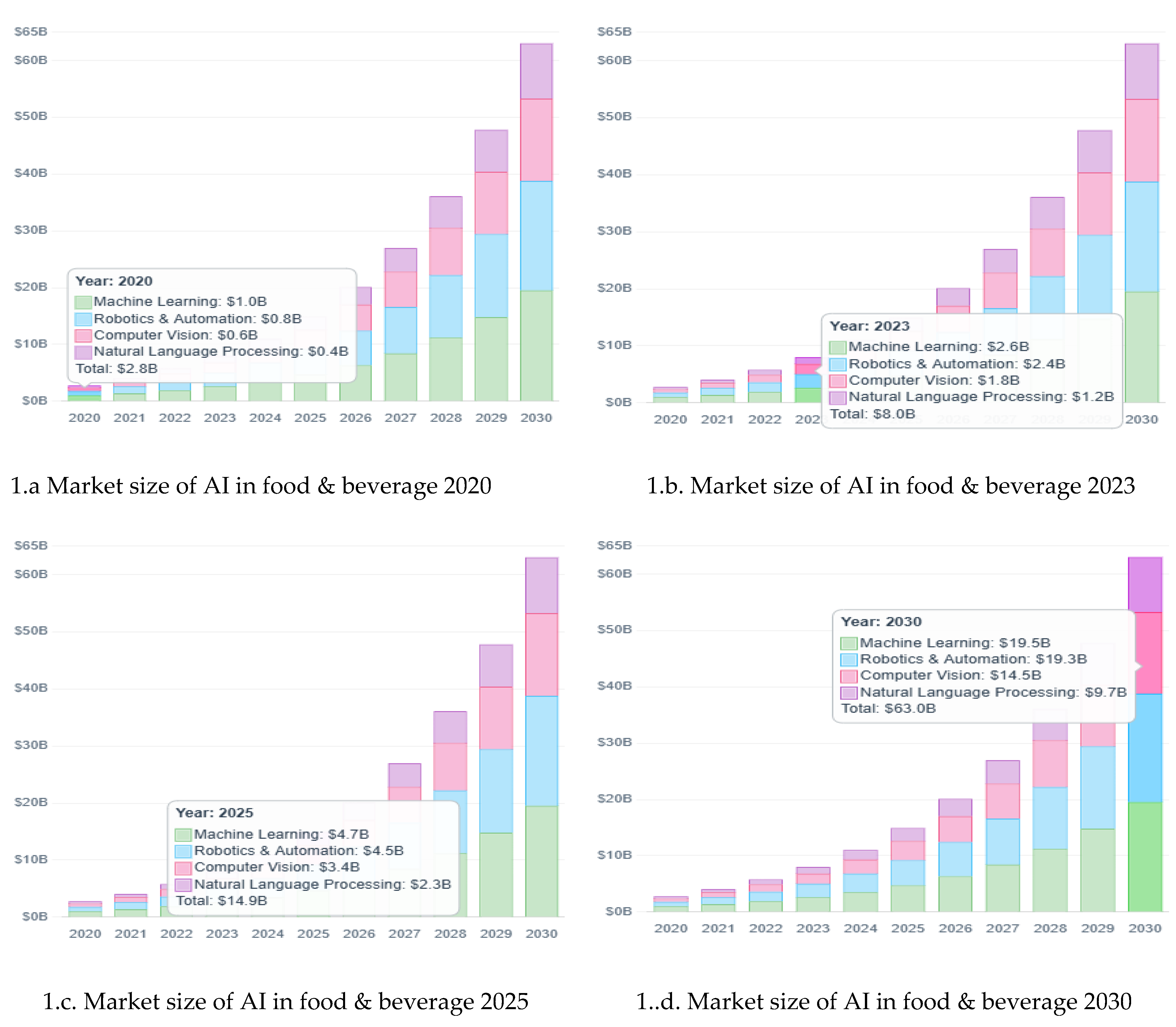
The bar chart shows the swift expansion of the AI market within the food and beverage sector from 2020 to 2030, focusing on major categories such as Machine Learning, Robotics & Automation, Computer Vision, and Natural Language Processing. In 2020, the market was valued $2.8 billion (Fig. 1.a), but it experiences a marked and steady rise each year, projected to reach $63.0 billion by 2030 (Fig. 1.d). The most pronounced growth occurs between 2025 (Fig. 1.c) and 2030 (Fig. 1.d), with Machine Learning and Robotics & Automation representing the largest portions by 2030—$19.5 billion and $19.3 billion, respectively. Computer Vision ($14.5 billion) and Natural Language Processing ($9.7 billion) also post substantial increases. This positive trajectory signals a strong compound annual growth rate (CAGR), pointing to the rising implementation of AI to boost efficiency, lower labor expenses, and satisfy shifting consumer demands. Overall, the figures highlight a vigorous and accelerating adoption of AI technologies throughout the food and beverage industry’s operations.
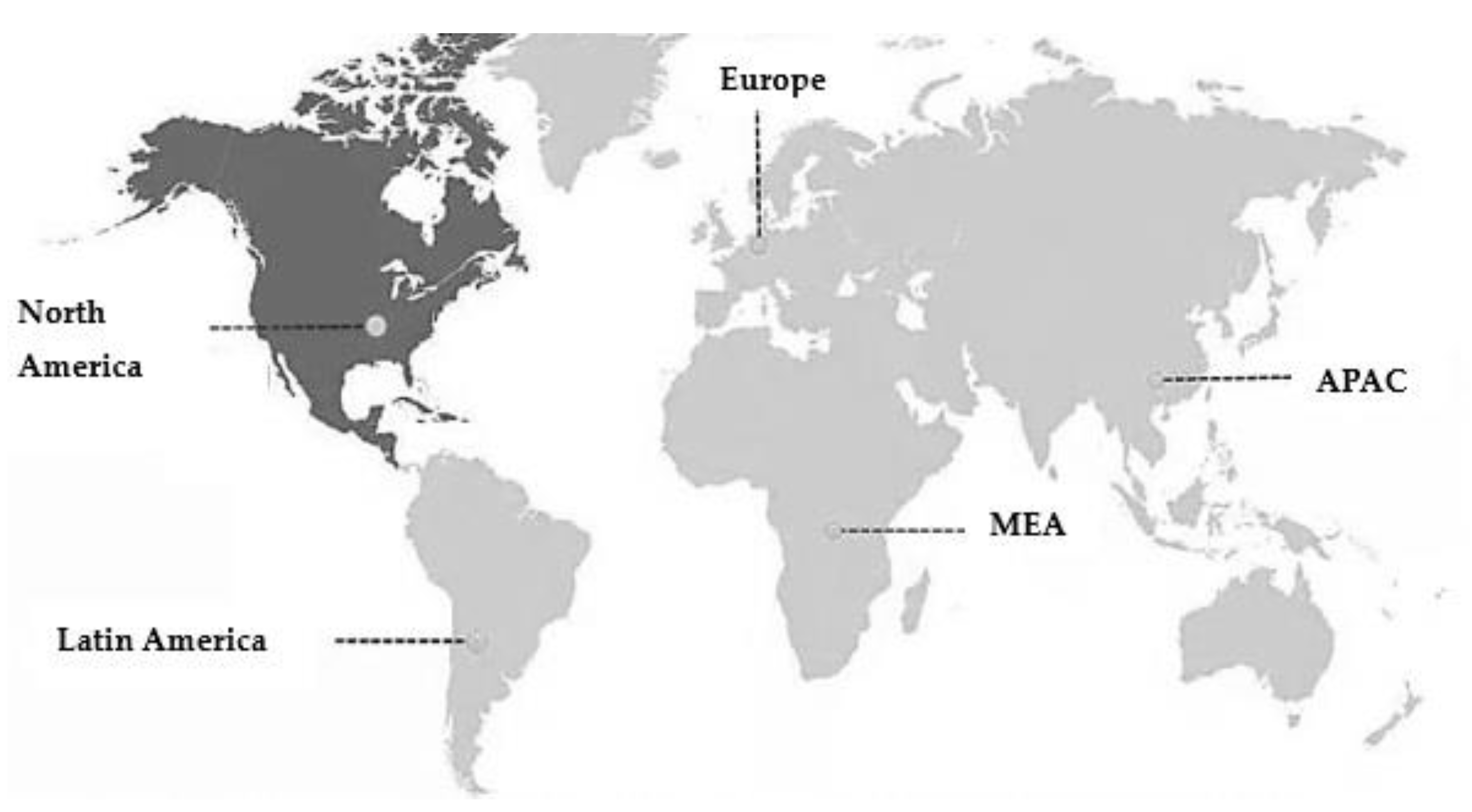
As per MarketsandMarkets(2023) in 2023 North America is holding the largest global AI in food and beverage market share (Figure 2), this is because of its high level of technological infrastructure, early investment in AI research and development. Most of the companies in that region, namely US, Canada have increasingly adopted AI tools in the quality control, supply chain optimization etc. This trend is expected to continue due to the cost of labor and more importantly the shortage of labor. Furthermore, growing demand for transparency, sustainability and safety can be other reasons for AI adoption.
Recent advancements in GenAI technologies are particularly well-suited to address the unique and evolving needs of the beverage sector. Large Language Models (LLMs) such as GPT-4 and Claude are revolutionizing recipe development by meticulously analyzing vast datasets of historical flavor pairings and subsequently generating innovative product concepts. Similarly, generative adversarial networks (GANs) and diffusion models enabling breakthroughs in novel flavor molecule design and packaging innovation [1], as compellingly evidenced by NotCo's successful utilization of GANs to precisely replicate the dairy mouthfeel in their plant-based beverage alternatives. Beyond direct product development, reinforcement learning (RL) algorithms are transforming production efficiency, with documented cases such as Heineken's smart breweries achieving a notable 15% reduction in energy consumption through AI-optimized fermentation processes. These diverse examples collectively illustrate the multifaceted potential of GenAI across the entire beverage value chain, from initial concept generation and formulation to efficient final product delivery.
Despite these promising applications and demonstrated capabilities, significant gaps persist in our comprehensive understanding of GenAI's full potential and, critically, its limitations within the nuanced context of the beverage industry. This persistent implementation gap stems from a confluence of factors, including pervasive data fragmentation across organizational silos, inherent resistance to technological change among traditional producers, and unresolved questions pertaining to the ethical deployment of AI in food formulation. Moreover, the evolving regulatory landscape for AI-generated ingredients [3] remains markedly uncertain, creating additional barriers to commercialization and wider industry uptake. This paper aims to systematically address these critical knowledge gaps through a comprehensive review of 40 peer-reviewed studies and industry reports. Our primary objectives are threefold: first, to systematically map the current and emerging GenAI applications across the entire beverage value chain; second, to provide a nuanced analysis of the technical, organizational, and ethical barriers that currently limit broader adoption; and third, to propose a pragmatic framework for responsible AI integration that effectively balances the imperative for innovation with crucial considerations for consumer safety and ethical integrity. By synthesizing current evidence and precisely identifying critical research needs, this review aims to provide both academic scholars and industry practitioners with actionable insights for navigating the rapidly evolving intersection of artificial intelligence and beverage science.
The paper is subsequently structured as follows: Section 2 outlines the methodology employed for this research. Section 3 then discusses the application areas of Generative AI (GenAI) within the beverage industry. Section 4 addresses the significant challenges associated with successfully integrating GenAI in this sector, concurrently proposing strategic solutions to mitigate these obstacles. Section 5 identifies critical future directions and presents a comprehensive research agenda for GenAI within the beverage industry. Finally, the paper concludes in Section 6.
2. Materials and Methods
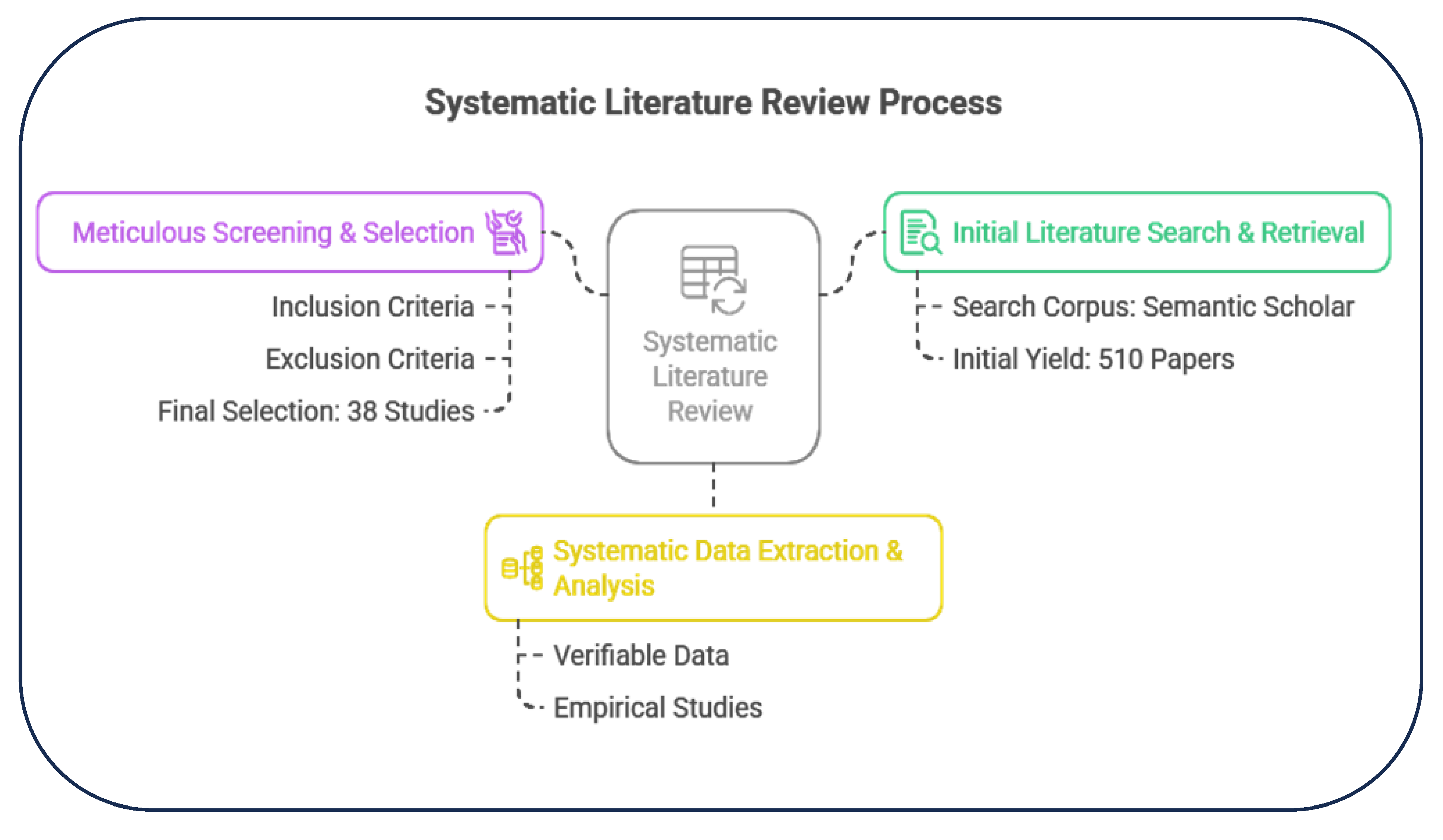
This section outlines the rigorous methodology employed to systematically evaluate how generative artificial intelligence (GenAI) technologies are transforming the beverage industry. Our research process was structured into three distinct yet interconnected phases: comprehensive paper search and retrieval, meticulous screening and selection, and systematic data extraction and analysis. Each phase was meticulously designed to ensure broad coverage of GenAI applications within the beverage sector while upholding methodological transparency and promoting reproducibility.
The initial literature search was conducted utilizing the Semantic Scholar corpus, a vast repository encompassing over 126 million academic papers. The primary research question guiding our inquiry—"How do generative AI technologies currently transform innovation, product development, and marketing strategies in the beverage industry?"—informed the precise formulation of our search queries. This initial search yielded a pool of 510 potentially relevant papers. To ensure the inclusion of only high-quality, directly applicable studies, a multi-stage, stringent screening process was subsequently implemented. Papers were rigorously evaluated against seven predefined inclusion criteria: (1) explicit focus on generative AI applications specifically within the beverage industry; (2) presentation of empirical evidence of practical implementation, such as detailed case studies or robust empirical data; (3) coverage spanning alcoholic, non-alcoholic, or both beverage sectors; (4) classification as either primary research or a systematic review; (5) inclusion of verifiable quantitative or qualitative supporting evidence; (6) discussion of actual implementation scenarios rather than purely theoretical applications; and (7) a specific focus on generative AI technologies as distinct from broader AI or general machine learning tools. These criteria were applied holistically to ascertain each paper's direct relevance and contribution, ultimately leading to the selection of 38 studies deemed suitable for comprehensive analysis.
Figure 3.
Systematic literature review process (methods of inclusion and exclusion of Academic papers about generative Ai in the beverage industry) in diagrammatic representation.
Figure 3.
Systematic literature review process (methods of inclusion and exclusion of Academic papers about generative Ai in the beverage industry) in diagrammatic representation.
Following the selection phase, data extraction was meticulously performed by systematically analyzing each of the selected papers. Information was extracted and categorized across five predefined dimensions: study design, specific research focus on generative AI, data sources and sample characteristics, analytical approach employed, and primary findings reported. Study designs were rigorously classified as systematic reviews, scoping reviews, qualitative content analyses, bibliometric analyses, theoretical/conceptual studies, or empirical research, with any methodologies lacking clear specification noted accordingly. The research focus category meticulously documented the specific generative AI technologies (e.g., ChatGPT, DALL-E, GANs), the particular industry sectors examined, and the precise types of innovation discussed. Details regarding data sources and sample sizes, where available, were meticulously recorded, encompassing academic publications, proprietary company reports, and interview data. Analytical approaches were systematically cataloged to identify common methodologies, such as qualitative content analysis or bibliometric techniques, along with any specialized software or frameworks utilized. Finally, primary findings were carefully extracted to capture the transformative impact of generative AI on innovation, product development, and marketing, with particular attention to reported benefits, challenges, and emerging opportunities.

Table 1.
Characteristics of Analyzed Literature.
| Study | Study Design | Domain | Core AI Technologies | Key Findings |
|---|---|---|---|---|
| Carlson et al., 2022[4] | Theoretical/conceptual study | Wine, Beer | Transformer neural network (generative artificial intelligence) | Machine-generated reviews, review synthesis, marketing innovation |
| Yu et al., 2022 [5] | Systematic review (not explicitly stated as such) | Traditional fermented alcoholic beverages | Artificial intelligence and machine learning (not generative) | Trends, challenges, artificial intelligence in supply chain |
| Schreurs et al., 2024[6] | Empirical study | Beer | Gradient boosting (machine learning) | Flavor prediction, product innovation |
| Basile et al., 2023[7] | Systematic review | Plant-based foods/beverages | Artificial intelligence and machine learning (artificial neural networks, chemometrics) | Sensory analysis, product innovation |
| Addanki et al., 2022[8] | Review (type not specified in the paper) | Food industry (dairy, bakery, beverages) | Artificial intelligence and machine learning | Applications in quality, shelf life, robotics |
| Tardáguila et al., 2021[9] | Systematic review | Viticulture (wine) | Artificial intelligence, digital technology | Sensing, decision support, sustainability |
| Brown et al., 2024[10] | Theoretical/conceptual study | Multiple (including beverage) | ChatGPT, generative artificial intelligence | Workplace transformation, marketing, business models |
| Patil et al., 2021[11] | Bibliometric analysis | Tea | Artificial intelligence and machine learning, sensors | Digital flavor recognition, marketing |
| Kessler et al., 2020[12] | Systematic review | Beverages | Automated facial expression analysis (AFEA) | Consumer emotion, sensory evaluation |
| Tan et al., 2022[3] | Systematic review | Food & beverage | Deep learning | Quality assessment, product innovation |
| Wang et al., 2024[13] | Review (type not specified in the paper) | Alcoholic beverages | Artificial intelligence, biometrics | Sensory analysis, production |
| McDonagh et al., 2020[14] | Theoretical/conceptual study | Formulated products | Artificial intelligence and machine learning, simulation | Research and development transformation, digital modeling |
| Gao et al., 2022[15] | Exploratory artificial intelligence-based study | Wine tourism | Deep neural networks | Value creation, sentiment analysis |
| Ta et al., 2024[16] | Systematic review | Food value chain | Artificial intelligence (image-based) | Sustainability, quality control, marketing |
| Liao et al., 2023[17] | Systematic review | Alcoholic beverages | Artificial intelligence, intelligent monitoring | Safety, hazard mitigation |
| Queiroz et al., 2024[18] | Systematic review | Flavor engineering | Artificial intelligence (general) | Flavor development, industry perspective |
| Doanh et al., 2023[19] | Critical review | Manufacturing | ChatGPT, DALL-E | Product/process innovation, marketing |
| Kanbach et al., 2023[20] | Scoping review, qualitative | Software, healthcare, finance | ChatGPT, DALL-E | Business model innovation, content creation |
| Chintalapati and Pandey, 2021[21] | Systematic review | Marketing (general) | Artificial intelligence (general) | Artificial intelligence in marketing, use cases |
| Misra et al.,2020[22] | Systematic review | Agriculture, food | Internet of Things, artificial intelligence and machine learning | Process control, automation |
| Mariani et al., 2023[23] | Systematic review, bibliometric | Innovation (general) | Artificial intelligence (general) | Types of innovation, research agenda |
| Bahoo et al., 2023[24] | Systematic review | Corporate innovation | Artificial intelligence (general) | Taxonomy, innovation fields |
| Sedkaoui and Benaichouba, 2024[25] | Systematic review | Multiple sectors | Generative artificial intelligence | Innovation, creativity, ethics |
| Nicoletti and Appolloni, 2023[26] | Systematic review | Manufacturing, servitization | Generative artificial intelligence | Business model, regulatory, financial innovation |
| Anayat and Rasool, 2022[27] | Bibliometric analysis | Marketing | Artificial intelligence (general) | Science mapping, research gaps |
| Torrico et al., 2022[28] | Systematic review | Sensory evaluation | Artificial intelligence, biometrics | Novel sensory methods |
| Kler et al., 2022[29] | Systematic review | Food industry | Artificial intelligence and machine learning | Supply chain, optimization |
| Nunes et al., 2023[30] | Systematic review | Food sensory/consumer | Artificial intelligence (general) | Sensory/consumer studies |
| Liao et al., 2022[17] | Theoretical/conceptual study | Microbial engineering | Machine learning | Design-build-test-learn cycle optimization |
| Ganeshkumar et al., 2021[31] | Systematic review, qualitative | Agriculture value chain | Artificial intelligence and machine learning | Value chain actors, adoption |
| Naeem et al., 2024[32] | Bibliometric + systematic review | Product-service innovation | Artificial intelligence (general) | Business models, innovation clusters |
| Kyaw et al., 2022[33] | Theoretical/conceptual study | Milk, beverages | Artificial intelligence (general) | Food safety, automation |
| Violino et al., 2020[34] | Systematic review | Beer | Internet of Things, smart technology | Production, logistics, traceability |
| Madanchian, 2024[35] | Systematic review | E-commerce, energy, public health | Generative adversarial networks, variational autoencoders, transformers | Consumer behavior prediction, marketing |
| Singh et al., 2024[36] | Theoretical/conceptual study | Organizations (general) | Generative artificial intelligence (general) | Innovation, ethics, performance |
| Gupta and Khan, 2024[37] | Systematic review, bibliometric | Marketing/customer engagement | Artificial intelligence (general) | Customer engagement, value creation |
| Liu and Yu, 2021[38] | Systematic review | E-commerce, video | Artificial intelligence-powered video generation (generative video artificial intelligence) | Video generation, marketing |
| Cui et al., 2025[[2] | Systematic review | Food flavor | Artificial intelligence (general) | Flavor development, product innovation |
| Yoo et al., 2024[39] | Mixed-methods | Customer relationship management (general) | Generative artificial intelligence, machine learning | Customer relationship management features, competitive advantage |
The culminating analysis focused on the 38 highest-scoring and most relevant papers from the screened selection. These studies collectively represented a diverse range of methodologies, comprising 25 systematic reviews, 8 theoretical/conceptual studies, 5 bibliometric analyses, and a smaller complement of empirical, scoping, and mixed-methods research. The beverage sectors covered were broad, ranging from general food and beverage applications to highly specific categories such as wine, beer, and plant-based products. Generative AI technologies featured prominently across the selected literature, with 11 studies specifically focusing on tools like ChatGPT and GANs, while others examined broader AI and machine learning applications. The extracted data was then subjected to rigorous thematic analysis to identify recurring patterns in technological adoption, realized operational benefits, and persistent implementation challenges. This comprehensive analytical process formed the bedrock for the review's key insights and strategic recommendations. This robust methodological approach ensured a comprehensive, evidence-based assessment of generative AI's current and prospective impact on the beverage industry.
In addition, several recent publications contribute further insights into the use of artificial intelligence in fields closely related to the beverage industry. The use of AI in digital content creation is becoming more common in marketing and communication strategies. AI is also being used to better understand customer emotions and opinions through sentiment analysis tools in marketing applications [40] Research into product development has shown how AI technologies can support formulation and innovation processes, particularly in complex production environments like pharmaceuticals, which share similarities with beverage manufacturing [41]. The broader role of AI in shaping sustainable digital marketing strategies and responsible business practices is also gaining attention [42]. Other studies have explored AI’s potential in transforming the food industry by enabling smarter operations, personalized products, and more efficient supply chains [43]. AI tools are also helping companies redesign products based on customer feedback from online platforms [44]. Additional studies have examined the role of AI in supporting family-run businesses [45], improving manufacturing systems [46], and automating operations in sectors such as hospitality and tourism [47]. Lastly, the application of AI in learning and development, particularly in synthesizing knowledge and supporting decision-making, has also been explored [48]. Together, these studies offer useful examples, tools, and frameworks that complement the core findings of this review and help explain how AI, including generative AI, is reshaping innovation, product design, and marketing practices across different industries.
Having established the rigorous methodology guiding this review, the subsequent section will transition into a detailed exploration of the various applications of Generative AI that are currently reshaping the beverage industry.
3. Generative AI Applications in Beverages
This section provides a comprehensive examination of how generative artificial intelligence (GenAI) is catalyzing an innovative transformation within the beverage industry. Readers will explore the multifaceted applications of GenAI across the entire beverage value chain, specifically highlighting its pivotal role in revolutionizing product ideation, optimizing core processes, advancing digital product development, enhancing smart manufacturing integration, and fundamentally reshaping marketing strategies.
4.1. AI-Driven Product Ideation and Conceptualization
Generative AI technologies, including sophisticated transformer-based models and deep neural networks, are emerging as powerful tools for product ideation and conceptualization within beverage development [4,19,26]. These advanced AI systems possess the capability to analyze vast datasets of existing products, prevailing consumer trends, and extensive scientific literature, thereby enabling the generation of novel product concepts. They can even produce expert-level reviews for diverse beverages, such as wine and beer. Beyond core product ideation, GenAI is increasingly being applied to support marketing innovation by identifying nascent market gaps and automating early-stage innovation processes across various business domains, including product design, financial innovation, and regulatory compliance.
4.2. Process Optimization and Quality Control Enhancement
Empirical and review studies [6,7] consistently demonstrate the remarkable capability of machine learning and generative models to accurately predict complex flavor profiles and anticipate consumer appreciation. This unparalleled predictive power facilitates highly targeted product optimization, allowing manufacturers to precisely refine existing formulations and develop new products with a significantly higher likelihood of market success. Furthermore, artificial intelligence-driven sensory analysis, often coupled with advanced chemometric tools, is profoundly enhancing quality control measures in the production of both plant-based and alcoholic beverages. Critically, the strategic integration of AI with the Internet of Things (IoT) and other smart technologies [34] supports real-time monitoring of critical production parameters. This enables proactive process optimization and effectively minimizes potential quality deviations throughout the intricate beverage manufacturing lifecycle.
4.3. Digital Product Development Evolution
Generative AI stands at the vanguard of a digital evolution in beverage product development, introducing unprecedented levels of speed, efficiency, and creativity into the research and development pipeline.
Automated Formulation Systems: Several studies [14,2] report the increasing adoption of AI and generative models to automate the intricate process of product formulation. By leveraging extensive datasets of ingredient properties, complex chemical interactions, and nuanced sensory profiles, these intelligent systems and sophisticated simulation tools can dramatically accelerate the R&D timeline and reduce associated costs. This level of automation facilitates rapid prototyping and enables virtual experimentation, allowing for the comprehensive exploration of a wider spectrum of novel beverage product possibilities before committing to costly physical trials.
Sensory Analysis and Prediction: Artificial intelligence-powered sensory analysis, critically incorporating deep learning and generative models, is fundamentally transforming the evaluation of flavor, aroma, and texture in beverages [6,7,11]. These advanced technologies can analyze complex sensory data to predict consumer preferences with increasing accuracy and pinpoint the key sensory attributes that drive product appreciation. This capability empowers data-driven decisions throughout product development, ensuring that new beverages are meticulously aligned with evolving consumer expectations.
4.4. Smart Manufacturing Integration for Enhanced Efficiency
Comprehensive reviews [16,29,34] underscore the expanding integration of generative AI with smart manufacturing systems within the beverage industry. This powerful synergy, frequently involving the Internet of Things (IoT) and advanced robotics, enables highly automated quality assurance processes, proactive predictive maintenance schedules for critical equipment, and significantly optimized supply chain management. The documented benefits of this integration are substantial, including marked increases in overall production efficiency, considerable reductions in waste generation, and a significant enhancement of sustainability practices across beverage manufacturing operations.
4.5. Marketing Strategy Revolution through AI Insights
Generative AI models, including generative adversarial networks (GANs), variational autoencoders (VAEs), and sophisticated transformers, are being extensively deployed to analyze and predict intricate patterns in consumer behavior [35]. This advanced analytical capability supports the development of more effective market targeting and granular consumer segmentation strategies. Furthermore, automated sentiment analysis and sophisticated value creation frameworks are being utilized to precisely identify the key experiential drivers influencing consumer choices in areas such as beverage tourism and broader consumption patterns.
4.6. Personalized Consumer Engagement and Digital Platforms
Personalization Capabilities: Studies [4,38] compellingly demonstrate the power of generative AI to synthesize highly personalized content. This includes tailored product reviews, customized marketing materials, and engaging promotional videos. These technologies facilitate the real-time adaptation of marketing strategies to align precisely with the unique preferences and behaviors of individual consumers, thereby fostering stronger brand connections and driving sales.
Digital Engagement Platforms: The strategic deployment of generative AI in digital engagement platforms, such as AI-enabled customer relationship management (CRM) systems, intelligent chatbots, and virtual assistants, is becoming increasingly prevalent [10,37]. These AI-powered platforms facilitate seamless multi-channel customer interactions, automate routine customer service tasks, and provide valuable, actionable insights for optimizing marketing campaigns and consistently enhancing overall customer satisfaction.
This section has thoroughly explored the diverse and transformative applications of Generative AI across the beverage industry's value chain, from ideation to consumer engagement. The subsequent section will transition to an in-depth discussion of the significant challenges that must be addressed for the successful and widespread implementation of these powerful technologies.
4. Challenges and Solutions
This section discusses the significant challenges involved in successfully integrating Generative AI (GenAI) within the beverage industry, and it also proposes strategic solutions to overcome these obstacles. Readers will understand the technical, organizational, and ethical considerations crucial for GenAI's effective and widespread use.
5.1. Technical Implementation Challenges and Solutions
Effective GenAI deployment fundamentally depends on robust technical infrastructure and advanced data management. Both areas present notable difficulties. Infrastructure Requirements: Several studies [14,16,26] highlight the critical need for resilient digital infrastructure to support GenAI. This includes extensive data storage for growing datasets, high-performance computing (HPC) for training complex models, and seamless integration with existing manufacturing and enterprise systems. The cost and complexity of setting up and maintaining this infrastructure often hinder adoption, especially for small and medium-sized beverage producers (SMEs). Solutions involve exploring scalable cloud-based AI platforms, adopting modular integration strategies, and fostering collaborative infrastructure sharing models to ease the financial burden on SMEs.
Data Management: The performance and reliability of GenAI models directly relate to the quality and quantity of their training data. Access to large, high-quality datasets covering sensory evaluations, consumer reviews, and production parameters is essential [7,34,35]. Key problems include a lack of standardized data formats across different operational areas, issues with data ownership and governance, strict data privacy regulations, and the need for domain-specific AI models tailored to the beverage industry. Addressing these data challenges requires developing industry-wide data standardization protocols, establishing secure and privacy-preserving data sharing frameworks (like data trusts), and investing in robust data cleaning, curation, and augmentation techniques to create high-quality training datasets for specialized beverage applications.
5.2. Business Adaptation Challenges and Solutions
Integrating GenAI requires significant adjustments within beverage companies, affecting their structure, workflows, and overall culture. Organizational Changes: Multiple studies [10,20,26] show that GenAI adoption is more than a technical upgrade; it drives fundamental organizational change. This means a clear shift toward collaboration between human experts and AI systems. New roles are emerging for data scientists, AI specialists, and digital strategists who can bridge the gap between technical capabilities and business goals. Successful adaptation requires proactive change management, fostering a data-driven culture across all organizational levels, and establishing clear communication and collaboration channels between technical and business teams.
Skill Requirements: The successful integration, deployment, and ongoing maintenance of advanced GenAI systems depend critically on having a skilled workforce [16,32]. This means not only hiring individuals with AI and data science expertise but also investing in comprehensive training and upskilling programs for current employees. Building strong cross-functional collaboration between technical teams and experienced beverage domain experts is vital to ensure AI solutions effectively meet industry-specific needs and challenges. Solutions include forming partnerships with academic institutions and specialized training providers, implementing internal upskilling initiatives, and promoting a culture of continuous learning and knowledge sharing throughout the organization.
5.3. Ethical and Regulatory Considerations and Solutions
Deploying GenAI in the beverage industry raises important ethical and regulatory questions that must be addressed proactively to ensure responsible innovation and maintain consumer trust.
Ethical and Regulatory Considerations: Several studies [25,26] emphasize the significant ethical challenges with GenAI. These include concerns about data privacy, the potential for algorithmic bias leading to unfair or discriminatory outcomes (as discussed in Section 4 regarding cultural biases in sensory models and privacy risks in personalized marketing), and the need to comply with evolving and often unclear regulatory landscapes (as highlighted in Section 4.6). Ensuring responsible development practices and establishing transparent governance frameworks are essential to mitigate these risks and build public trust in AI-driven beverage innovations. Addressing these concerns requires implementing robust data governance policies, adopting bias detection and mitigation techniques in AI model development, and actively working with regulatory bodies to shape clear and adaptive legal frameworks for AI applications in the food and beverage sector.
This section has outlined the key challenges and proposed solutions for implementing Generative AI in the beverage industry, covering technical, organizational, and ethical aspects. The next section will present future directions and a research agenda to guide further development and adoption.
5. Future Directions and Research Agenda
This section identifies critical future directions and proposes a comprehensive research agenda for Generative AI (GenAI) in the beverage industry. Based on our systematic analysis of current applications and identified limitations, we pinpoint five vital research areas essential for advancing the field and ensuring responsible, impactful, and sustainable GenAI adoption in this sector.
6.1. Multimodal AI for Holistic Beverage Design
Future GenAI systems must move beyond processing single data types. They need to integrate diverse data—text, chemical compositions, sensory attributes, and comprehensive consumer data—into unified, holistic architectures. Promising avenues include developing:
•Multimodal Transformers: These advanced transformer models will process and correlate information from different sources simultaneously. For example, they could combine intricate flavor chemistry data with real-time social media sentiment analysis (e.g., an envisioned GPT-5 architecture integrated with electronic tongue outputs).
•Digital Twin Ecosystems: These integrated digital representations of the entire beverage production lifecycle will link AI-driven formulation tools with real-time sensor data from production facilities [16] (as explored in Ta et al., 2023), allowing for unparalleled optimization and foresight.
Research Priority: A critical area of future research involves developing robust cross-modal embedding spaces. These will effectively predict consumer acceptance of a beverage directly from its underlying molecular structure and associated contextual data [49] .
6.2. Culturally Adaptive Sensory Models
Current AI models for flavor prediction and sensory analysis often show Western-centric biases due to their training data. To address this limitation and improve global applicability, future research should focus on developing:
•Federated Learning Frameworks: These distributed learning approaches will aggregate regional palate data from diverse geographical and cultural sources without central data storage. This ensures compliance with data privacy regulations like the EU GDPR.
•Generative Synthetic Data for Underrepresented Taste Profiles: New techniques will generate high-fidelity synthetic sensory data for less common or culturally specific taste profiles (e.g., the complex flavor nuances of traditional African fermented beverages). This will enhance the inclusivity, generalizability, and accuracy of AI models.
Case Example: Heineken's proposed global beer flavor atlas initiative (with a pilot program anticipated in 2025) represents a significant step toward capturing and modeling global taste diversity.
6.3. Sustainable AI for SME Adoption
Recognizing that most beverage producers (85% according to FAO, 2023), particularly SMEs, currently lack resources for extensive AI integration, future research must prioritize developing more accessible, cost-effective, and environmentally sustainable AI solutions, such as:
•TinyML Solutions for Edge-Device Quality Control: This involves developing lightweight AI models deployable on low-cost edge devices for real-time quality monitoring and control. The goal for implementation costs is significantly below current standards (e.g., less than $5,000 per implementation).
•Green AI Formulations: These AI-driven approaches will optimize beverage formulations for both taste and functionality, and also for environmental sustainability. For instance, Reinforcement Learning can guide formulation using upcycled ingredients to minimize carbon footprint and promote circular economy principles. Metric Target: A measurable goal for future research could be a 50% reduction in water and energy consumption per AI-optimized beverage batch by 2030, significantly contributing to industry sustainability.
6.4. Robust Regulatory and Ethical Frameworks
The evolving landscape of AI in the beverage industry requires the proactive development of clear, adaptive, and robust regulatory and ethical frameworks. Key areas needing immediate attention include:
•Clear FDA/EFSA Guidelines for AI-Generated Novel Foods: Establishing specific, comprehensive guidelines by leading regulatory bodies like the FDA and EFSA for the rigorous evaluation and approval of novel food ingredients or formulations designed through AI (with draft guidelines anticipated by 2025).
•Blockchain-AI Hybrids for Auditable Decision Trails: Integrating blockchain technology with AI systems to create transparent, immutable, and auditable records of AI-driven decisions. This is particularly important in sensitive areas like ingredient sourcing, quality control, and supply chain integrity (building upon successful models such as the Italian DOCG wine anti-fraud system). Policy Proposal: The formation of an industry-wide consortium dedicated to establishing universally recognized AI safety and quality certification standards, potentially modeled on existing food safety management systems like ISO 22000.
6.5. Human-AI Collaboration Paradigms
Future research must shift from a "human versus AI" perspective toward exploring collaborative paradigms that leverage the complementary strengths of both human expertise and AI capabilities. This research includes investigating:
•AI Sommelier Assistants: Developing AI tools designed to augment, rather than replace, the invaluable expertise of human sensory panels and beverage experts (as exemplified by PepsiCo's 2024 trials), enhancing their analytical capabilities and decision-making.
•Explainable AI (XAI) Interfaces: Adapting and applying Explainable AI techniques (such as LIME and SHAP) to provide transparency and interpretability for AI-driven formulation choices, enabling human experts to fully understand, validate, and strategically refine AI recommendations.
Key Study: Longitudinal comparative analyses of new product launches that incorporate AI-enhanced processes versus those relying solely on traditional methods will be critical (with initial results expected around 2026) to quantify the benefits of human-AI collaboration.
6.5. Implementation Roadmap
To help translate research advancements into practical industrial applications, we propose the following phased implementation roadmap:
Table 2.
Proposed roadmap.
| Timeframe | Focus Area | Key Milestones |
| 2024–2025 | Technical Validation | Development of standardized benchmark datasets specifically for beverage AI (e.g., a comprehensive "BevNet-1M" dataset). Release of open-source foundational formulation models (e.g., under an MIT License) to encourage widespread adoption and collaborative development. |
| 2026–2028 | Industry Scaling | Widespread implementation of AI-augmented HACCP (Hazard Analysis and Critical Control Points) systems across beverage production facilities. Establishment of cross-company data trusts to facilitate secure and collaborative data sharing, particularly for rare or specialized ingredients. |
| 2029–2030 | Policy Integration | Development and adoption of global standards for AI in food and beverage safety, ensuring harmonized regulatory environments. Pilot programs for carbon-negative AI-optimized breweries, showcasing advanced sustainability through GenAI. |
6.6. Critical Gaps Requiring Immediate Attention:
Several crucial knowledge gaps demand immediate and focused research attention to ensure long-term success and responsible implementation of GenAI in the beverage industry:
•Long-term Consumer Trust: Robust, longitudinal studies (spanning five or more years) are critically needed to fully understand how consumer trust, acceptance, and perception of AI-designed or AI-optimized beverages evolve.
•Energy Efficiency of Large Flavor Models: Urgent research is required to optimize the energy consumption of training and deploy large-scale GenAI models for flavor discovery and development. Current estimates suggest a significant carbon cost (approximately 25 kg CO2 per formulation), calling for efforts toward "Green AI."
•IP Frameworks for AI-Generated Recipes: Clear and internationally recognized legal and intellectual property (IP) frameworks are essential to address the complex issues arising from AI-generated recipes and formulations, requiring ongoing global negotiations (e.g., through the WTO and WIPO).
This comprehensive research agenda calls for focused, interdisciplinary efforts among computer scientists specializing in AI architecture, food chemists with deep domain expertise, and regulatory bodies responsible for consumer safety, market fairness, and ethical innovation.This section has provided an overview of future directions and a research agenda for the responsible and impactful adoption of Generative AI in the beverage industry. The next section will conclude this paper by summarizing its main findings and highlighting key takeaways for future research and industry collaboration.
6. Conclusion
The literature reviewed in this paper clearly indicates that Generative AI (GenAI) technologies are beginning to profoundly transform innovative pipelines, product development processes, and marketing strategies within the beverage industry. Our analysis highlights GenAI's growing potential in areas such as automated content creation for marketing, improving the precision of sensory analysis, predicting consumer behaviors, accelerating product formulation, and enhancing efficiency in smart manufacturing environments.
However, our comprehensive analysis also shows a significant imbalance in the existing research. The current scholarly landscape largely consists of review articles and conceptual explorations, which, while valuable for outlining GenAI's theoretical promise, often lack detailed empirical evidence. In contrast, there is a relative scarcity of robust empirical data that rigorously evaluates the large-scale implementation and actual impact of these technologies across diverse, real-world beverage industry settings. Furthermore, the reviewed studies consistently point to ongoing technical hurdles related to data quality, infrastructure limitations, and computational costs. They also highlight organizational challenges in adapting workflows, managing change, and upskilling the workforce, alongside unresolved ethical dilemmas concerning "artificial naturalness," algorithmic bias, and intellectual property.
These findings collectively emphasize a pressing need for future research that specifically prioritizes empirical investigation. It is essential to move beyond theoretical discussions and conduct practical experiments across a wide range of beverage industry segments, from large multinational corporations to nimble small and medium-sized enterprises. Such research should aim to quantify the real-world impact of GenAI deployments on key performance indicators (KPIs), address the practical aspects of integrating GenAI with existing systems, and develop and share best practices for handling the identified technical, organizational, and ethical complexities.
Ultimately, while GenAI's transformative potential in the beverage industry is clear, achieving its sustainable, equitable, and responsible integration requires a coordinated and collaborative effort. This includes rigorous empirical validation of its effectiveness, the development of practical and scalable solutions for implementation challenges, and the proactive establishment of comprehensive ethical and regulatory frameworks that both foster innovation and protect consumer trust. The next phase of research and development will be crucial in defining a clear path for GenAI to evolve from a promising disruptive force into a reliable, value-adding, and sustainable partner in the dynamic and evolving global beverage sector.
Author Contributions
Conceptualization, K.K. MI. ; methodology, K.K. and MI; software, K.K; validation, M.I.,K.K and S.S.; resources, M.I and K.K.; data curation, M.I., K.K and S.S; writing—original draft preparation, K.K. and M.I; writing—review and editing, M.I., K.K and S.S; visualization, M.I.; All authors have read and agreed to the published version of the manuscript.
Funding
This research received no external funding.
Conflicts of Interest
The authors declare no conflicts of interest.
References
- Ray, D.P., Shrivastava, P., Das, I. and Roy, S.B. Business Opportunities for Food and Beverages from Natural Fibre Plant Materials. Econ. Aff., 2024, 69(01):p. 531-539.
- Cui, Z., et al., Artificial intelligence and food flavor: How AI models are shaping the future and revolutionary technologies for flavor food development. Comprehensive Reviews in Food Science and Food Safety, 2025. 24(1). [CrossRef]
- Tan, W.K., et al., Recent technology for food and beverage quality assessment: a review. Journal of Food Science and Technology, 2022. 60(6): p. 1681–1694. [CrossRef]
- Carlson, K., et al., Complementing human effort in online reviews: A deep learning approach to automatic content generation and review synthesis. International Journal of Research in Marketing, 2023. 40(1): p. 54–74. [CrossRef]
- Yu, H., et al., Artificial intelligence-based approaches for traditional fermented alcoholic beverages’ development: review and prospect. Critical Reviews in Food Science and Nutrition, 2022. 64(10): p. 2879–2889. [CrossRef]
- Schreurs, M., et al., Predicting and improving complex beer flavor through machine learning. Nature Communications, 2024. 15(1). [CrossRef]
- Basile, T., D. Mallardi, and M.F. Cardone, Spectroscopy, a Tool for the Non-Destructive Sensory Analysis of Plant-Based Foods and Beverages: A Comprehensive Review. Chemosensors, 2023. 11(12): p. 579. [CrossRef]
- Addanki, M., P. Patra, and P. Kandra, Recent advances and applications of artificial intelligence and related technologies in the food industry. Applied Food Research, 2022. 2(2): p. 100126. [CrossRef]
- Tardaguila, J., et al., Smart applications and digital technologies in viticulture: A review. Smart Agricultural Technology, 2021. 1: p. 100005. [CrossRef]
- Brown, O., et al., Theory-Driven Perspectives on Generative Artificial Intelligence in Business and Management. British Journal of Management, 2024. 35(1): p. 3–23. [CrossRef]
- Patil, A.B., M.R. Bachute, and K. Kotecha, Artificial Perception of the Beverages: An In-Depth Review of the Tea Sample. IEEE Access, 2021. 9: p. 82761–82785. [CrossRef]
- Kessler, S.J., F. Jiang, and R.A. Hurley, The State of Automated Facial Expression Analysis (AFEA) in Evaluating Consumer Packaged Beverages. Beverages, 2020. 6(2): p. 27. [CrossRef]
- Wang, J., et al., From Traditional to Intelligent, A Review of Application and Progress of Sensory Analysis in Alcoholic Beverage Industry. Food Chemistry: X, 2024. 23: p. 101542.
- McDonagh, J.L., et al., What can digitisation do for formulated product innovation and development? Polymer International, 2020. 70(3): p. 248–255.
- Gao, D., et al., Value creation in wine tourism – an exploration through deep neural networks. Journal of Vacation Marketing, 2022. 30(3): p. 376–391. [CrossRef]
- Ta, M.D.-P., S. Wendt, and T.O. Sigurjonsson, Applying Artificial Intelligence to Promote Sustainability. Sustainability, 2024. 16(12): p. 4879. [CrossRef]
- Liao, H., et al., Mitigation of microbial nitrogen-derived metabolic hazards as a driver for safer alcoholic beverage choices: An evidence-based review and future perspectives. Comprehensive Reviews in Food Science and Food Safety, 2023. 22(6): p. 5020–5062. [CrossRef]
- Queiroz, L.P., I.B.R. Nogueira, and A.M. Ribeiro, Flavor Engineering: A comprehensive review of biological foundations. Food Research International, 2024. 196: p. 115100. [CrossRef]
- Doanh, D.C., et al., Generative AI in the Manufacturing Process: Theoretical Considerations. Engineering Management in Production and Services, 2023. 15(4): p. 76–89. [CrossRef]
- Kanbach, D.K., et al., The GenAI is out of the bottle: generative artificial intelligence from a business model innovation perspective. Review of Managerial Science, 2023. 18(4): p. 1189–1220. [CrossRef]
- Chintalapati, S. and S.K. Pandey, Artificial intelligence in marketing: A systematic literature review. International Journal of Market Research, 2021. 64(1): p. 38–68. [CrossRef]
- Misra, N.N., et al., IoT, Big Data, and Artificial Intelligence in Agriculture and Food Industry. IEEE Internet of Things Journal, 2022. 9(9): p. 6305–6324. [CrossRef]
- Mariani, M.M., I. Machado, and S. Nambisan, Types of innovation and artificial intelligence: A systematic quantitative literature review and research agenda. Journal of Business Research, 2023. 155: p. 113364. [CrossRef]
- Bahoo, S., M. Cucculelli, and D. Qamar, Artificial intelligence and corporate innovation: A review and research agenda. Technological Forecasting and Social Change, 2023. 188: p. 122264. [CrossRef]
- Sedkaoui, S. and R. Benaichouba, Generative AI as a transformative force for innovation: a review of opportunities, applications and challenges. European Journal of Innovation Management, 2024. [CrossRef]
- Nicoletti, B. and A. Appolloni, Artificial Intelligence for the Management of Servitization 5.0. Sustainability, 2023. 15(14): p. 11113.
- Anayat, S. and G. Rasool, Artificial intelligence marketing (AIM): connecting-the-dots using bibliometrics. Journal of Marketing Theory and Practice, 2022. 32(1): p. 114–135. [CrossRef]
- Torrico, D.D., A. Mehta, and A.B. Borssato, New methods to assess sensory responses: a brief review of innovative techniques in sensory evaluation. Current Opinion in Food Science, 2023. 49: p. 100978. [CrossRef]
- Kler, R., et al., Machine Learning and Artificial Intelligence in the Food Industry: A Sustainable Approach. Journal of Food Quality, 2022. 2022: p. 1–9. [CrossRef]
- Nunes, C.A., et al., Artificial intelligence in sensory and consumer studies of food products. Current Opinion in Food Science, 2023. 50: p. 101002. [CrossRef]
- Ganeshkumar, C., et al., Artificial intelligence in agricultural value chain: review and future directions. Journal of Agribusiness in Developing and Emerging Economies, 2021. 13(3): p. 379–398. [CrossRef]
- Naeem, R., M. Kohtamäki, and V. Parida, Artificial intelligence enabled product–service innovation: past achievements and future directions. Review of Managerial Science, 2024. [CrossRef]
- Kyaw, K.S., et al., Toward in-process technology-aided automation for enhanced microbial food safety and quality assurance in milk and beverages processing. Critical Reviews in Food Science and Nutrition, 2022. 64(6): p. 1715–1735. [CrossRef]
- Violino, S., et al., Internet of Beer: A Review on Smart Technologies from Mash to Pint. Foods, 2020. 9(7): p. 950. [CrossRef]
- Madanchian, M., Generative AI for Consumer Behavior Prediction: Techniques and Applications. Sustainability, 2024. 16(22): p. 9963. [CrossRef]
- Singh, K., S. Chatterjee, and M. Mariani, Applications of generative AI and future organizational performance: The mediating role of explorative and exploitative innovation and the moderating role of ethical dilemmas and environmental dynamism. Technovation, 2024. 133: p. 103021. [CrossRef]
- Gupta, Y. and F.M. Khan, Role of artificial intelligence in customer engagement: a systematic review and future research directions. Journal of Modelling in Management, 2024. 19(5): p. 1535–1565. [CrossRef]
- Liu, C. and H. Yu, AI-Empowered Persuasive Video Generation: A Survey. ACM Computing Surveys, 2023. 55(13s): p. 1–31. [CrossRef]
- Yoo, J.W., J. Park, and H. Park, the impact of AI-enabled CRM systems on organizational competitive advantage: A mixed-method approach using BERTopic and PLS-SEM. Heliyon, 2024. 10(16): p. e36392. [CrossRef]
- César, I., et al., A Systematic Review on Responsible Multimodal Sentiment Analysis in Marketing Applications. IEEE Access, 2024. 12: p. 111943–111961. [CrossRef]
- Gosavi, A.A., et al., Exploring the Potential of Artificial Intelligence as a Facilitating Tool for Formulation Development in Fluidized Bed Processor: a Comprehensive Review. AAPS PharmSciTech, 2024. 25(5). [CrossRef]
- Gündüzyeli, B., Artificial Intelligence in Digital Marketing Within the Framework of Sustainable Management. Sustainability, 2024. 16(23): p. 10511. [CrossRef]
- Hassoun, A., et al., From Food Industry 4.0 to Food Industry 5.0: Identifying technological enablers and potential future applications in the food sector. Comprehensive Reviews in Food Science and Food Safety, 2024. 23(6). [CrossRef]
- Qin, J., P. Zheng, and X. Wang, Product Redesign and Innovation Based on Online Reviews: A Multistage Combined Search Method. INFORMS Journal on Computing, 2024. 36(3): p. 742–765. [CrossRef]
- Kumar, D. and V. Ratten, Artificial intelligence and family businesses: a systematic literature review. Journal of Family Business Management, 2024. 15(2): p. 373–392. [CrossRef]
- Varriale, V., et al., Critical analysis of the impact of artificial intelligence integration with cutting-edge technologies for production systems. Journal of Intelligent Manufacturing, 2023. 36(1): p. 61–93. [CrossRef]
- Ozgit, H. and A. Öztüren, Themed editorial: The impact and usage of automation and AI in the hospitality and tourism industry. Worldwide Hospitality and Tourism Themes, 2024. 16(2): p. 125–126. [CrossRef]
- Passmore, J. and D. Tee, The library of Babel: assessing the powers of artificial intelligence in knowledge synthesis, learning and development and coaching. Journal of Work-Applied Management, 2023. 16(1): p. 4–18. [CrossRef]
- Chen, X., et al., Teaching large language models to self-debug. arXiv preprint arXiv:2304.05128, 2023.
Figure 2.
AI in global beverage and food market (regional analysis 2023).
Disclaimer/Publisher’s Note: The statements, opinions and data contained in all publications are solely those of the individual author(s) and contributor(s) and not of MDPI and/or the editor(s). MDPI and/or the editor(s) disclaim responsibility for any injury to people or property resulting from any ideas, methods, instructions or products referred to in the content. |
© 2025 by the authors. Licensee MDPI, Basel, Switzerland. This article is an open access article distributed under the terms and conditions of the Creative Commons Attribution (CC BY) license (http://creativecommons.org/licenses/by/4.0/).
Copyright: This open access article is published under a Creative Commons CC BY 4.0 license, which permit the free download, distribution, and reuse, provided that the author and preprint are cited in any reuse.


