

Submitted:
25 October 2024
Posted:
29 October 2024
You are already at the latest version
Abstract
The affordable housing crisis in the United States disproportionately affects low-income families, with millions facing severe housing cost burdens and limited access to adequate housing. This article explores the potential of generative artificial intelligence (AI) to address this housing gap by providing innovative, data-driven solutions that optimize housing development, design, and construction processes. By leveraging AI for predictive analysis, automated design, and construction optimization, stakeholders can significantly reduce costs, increase efficiency, and create sustainable housing that meets the needs of low-income populations. The article examines how AI can accurately predict future housing demand, generate efficient building designs, and streamline construction processes, while also addressing challenges such as equity, bias in AI models, and technical and financial barriers to implementation. Additionally, recommendations are provided for policymakers, developers, and community organizations to ensure that AI-driven housing solutions are deployed equitably and effectively. This paper concludes that while AI is not a standalone solution to the housing crisis, it has the potential to complement existing strategies and significantly improve access to affordable housing for low-income families across the U.S.
Keywords:
artificial intelligence (AI)
; generative artificial intelligence (AI)
; housing gap
; low-income families
; affordable housing
1. Introduction
The housing crisis in the United States has reached
a critical point, particularly for low-income families, where affordable
housing is increasingly out of reach. The demand for housing far exceeds the
supply, driving up prices and leaving many families vulnerable to homelessness
or being severely cost-burdened. According to the National Low Income Housing
Coalition (NLIHC), the United States faces a shortage of over 7 million
affordable and available rental homes for extremely low-income families. For
every 100 low-income renters, there are only 37 affordable rental homes
available, meaning millions are left without viable housing options (NLIHC,
2022).
Several factors contribute to this housing gap,
including rising land and construction costs, restrictive zoning regulations,
and economic disparities that limit low-income households’ ability to afford
market-rate housing. The situation is further exacerbated by stagnant wage
growth, leaving many unable to meet the rising costs of homeownership or rental
properties. The implications of this shortage are profound: increased rates of
homelessness, overcrowded housing conditions, and displacement from urban areas
due to gentrification and unaffordable living costs.
Generative artificial intelligence (AI) is emerging
as a potential tool that can be leveraged to address these challenges in
innovative ways. Unlike traditional artificial intelligence, which is
programmed to perform specific tasks, generative AI is capable of producing new
data, simulating scenarios, and generating content that closely mimics
real-world inputs (Goodfellow et al., 2014). This ability to generate and
simulate opens new possibilities for addressing complex challenges in housing,
including design optimization, predictive analytics, and the efficient use of
materials and resources in construction.
In this paper, I explore how generative AI can be
applied to mitigate the housing crisis in the U.S., particularly for low-income
families. I will examine the potential of AI to enhance housing development
through predictive analysis, design automation, and construction efficiency.
Additionally,I will address the challenges and barriers that must be overcome
to fully realize the benefits of generative AI in affordable housing, including
equity concerns and the need for interdisciplinary collaboration.
The aim of this study is to provide a comprehensive
overview of how generative AI can be a transformative tool in solving one of
the most pressing social issues in the U.S. today: the lack of affordable
housing for low-income populations. By leveraging AI’s predictive capabilities,
optimizing design processes, and improving resource allocation, we can develop
housing solutions that are not only affordable but also sustainable and
scalable. As we will explore, the potential of AI in this context goes beyond technological
advancements—it represents a shift toward more data-driven, efficient, and
inclusive housing policies and practices.
2. Understanding the Housing Gap
The affordable housing gap in the U.S. is a complex
issue influenced by multiple economic, social, and regulatory factors. As the
demand for affordable housing continues to outpace supply, the crisis has
particularly affected low-income families, who are increasingly unable to find
homes within their financial means. According to the Joint Center for Housing
Studies at Harvard University (JCHS), nearly one in four renters in the U.S. is
considered severely cost-burdened, meaning they spend more than 50% of their
income on housing (JCHS, 2022). This burden not only limits disposable income
for essentials such as food, healthcare, and education but also forces many
families to live in substandard conditions or risk eviction.
Several interrelated factors contribute to the
housing gap. Firstly, rising construction costs, driven by increased prices for
building materials, labour shortages, and regulatory hurdles, have made it more
expensive to build new homes. This is particularly true in high-demand urban
areas, where land prices have skyrocketed, and zoning regulations often
restrict high-density or affordable housing developments. The result is a
market in which developers are incentivized to build luxury units that promise
higher returns on investment, rather than affordable homes for low-income
families.
Additionally, zoning laws in many cities impose
restrictions that limit the development of affordable housing. These
regulations, often referred to as "exclusionary zoning," include
minimum lot sizes, height restrictions, and parking requirements that make it
difficult or impossible to build affordable housing units. While these laws
were originally designed to control urban growth and maintain property values,
they have inadvertently contributed to the housing crisis by reducing the
supply of affordable homes.
Another significant factor in the housing gap is
wage stagnation. Over the past few decades, the cost of housing has risen at a
much faster rate than wages, particularly for low- and middle-income earners.
This widening gap between wages and housing costs has left many families unable
to afford even modest rental units, pushing them into overcrowded housing or
forcing them to relocate to areas far from their workplaces or schools.
The consequences of this housing gap are
wide-ranging. For low-income families, the lack of affordable housing can lead
to instability, poor health outcomes, and limited access to educational and
economic opportunities. Homelessness rates have surged in many urban areas, and
those who are housed often live in overcrowded or unsafe conditions. Moreover,
the housing crisis disproportionately affects marginalized groups, including
people of colour, immigrants, and individuals with disabilities, who are more
likely to experience housing insecurity.
Addressing this complex issue requires a
multifaceted approach that includes policy reform, financial investment, and
innovative solutions. This is where generative AI can play a crucial role,
offering new ways to analyse, predict, and optimize housing solutions in ways
that traditional methods cannot achieve.
3. Generative AI: An Overview
Generative artificial intelligence (AI) is a subset
of AI that focuses on creating new data, designs, or content based on patterns
and input data. Unlike traditional AI models that are typically programmed to
analyse or predict based on existing data, generative AI can produce entirely
new outputs. This capacity for innovation is particularly promising in fields
like urban planning, architecture, and housing, where creative problem-solving
is often necessary to address complex challenges.
At the core of generative AI are algorithms such as
Generative Adversarial Networks (GANs) and Variational Autoencoders (VAEs),
which have been used extensively in areas like image generation, text
synthesis, and even drug discovery (Goodfellow et al., 2014). These algorithms
can learn from existing datasets and create new data that mimics or expands
upon the original. For example, a GAN can be trained on a dataset of
architectural designs to generate new housing models that are optimized for
space, efficiency, and cost.
In the context of housing, generative AI can be
employed in several key areas. One of the most promising applications is in
predictive analysis. By analysing large datasets that include demographic
information, housing trends, economic indicators, and geographic data, AI can
predict where future housing demand will be highest. This allows developers and
policymakers to focus resources on areas that are likely to experience the
greatest shortages of affordable housing, ensuring that new developments are built
where they are most needed.
Another critical application of generative AI is in
design automation. Traditionally, architectural design is a time-consuming and
expensive process, particularly for affordable housing projects that often face
budget constraints. Generative AI can streamline this process by producing
multiple design iterations in a fraction of the time it would take a human
architect. These designs can be optimized for various factors such as space
efficiency, natural lighting, and energy use, resulting in homes that are not
only affordable but also environmentally sustainable and liveable.
Generative AI also has the potential to
revolutionize construction methods. For instance, AI can be used to optimize
material use and reduce waste during construction. Techniques such as 3D
printing, guided by AI algorithms, are already being explored as cost-effective
solutions for building affordable homes. These methods can significantly reduce
construction costs, making it possible to build high-quality homes at a
fraction of the cost of traditional methods.
Furthermore, generative AI can assist in the
policy-making process by simulating the effects of different housing policies.
For example, AI can model how changes to zoning laws, tax incentives, or rent
control policies will impact housing affordability and availability. This
allows policymakers to make data-driven decisions that are more likely to have
a positive impact on housing outcomes.
While the potential applications of generative AI
in housing are vast, there are also challenges to consider. Ensuring that have
widened the gap between wages and housing costs. Furthermore, the COVID-19
pandemic has exacerbated these challenges, causing disruptions in housing
markets and further straining low-income households. The economic fallout from
the pandemic has left many families unable to afford rising rents, and many
regions have seen significant increases in housing instability.
Traditional approaches to affordable housing
development, such as government subsidies and public-private partnerships,
while essential, have not been sufficient to close the gap. There is an urgent
need for innovative solutions that can address the multifaceted challenges of
the housing crisis, particularly for low-income populations.
Generative Artificial Intelligence (AI) is emerging
as a powerful tool that can help address these challenges. By leveraging large
datasets and machine learning models, generative AI can simulate various
development scenarios, optimize resource allocation, and provide new design
solutions that reduce costs and increase efficiency. AI’s ability to process
vast amounts of data and generate insights makes it particularly useful in
tackling complex problems like housing shortages, where numerous variables—such
as geographic location, demographic trends, and economic factors—need to be
considered simultaneously.
Generative AI’s potential goes beyond traditional
predictive models. It offers a unique capability: the ability to create novel
solutions based on existing data. In the context of housing, this means AI can
be used to generate innovative design solutions, optimize construction methods,
and forecast future housing needs with greater accuracy than ever before. By
automating time-consuming tasks such as zoning analysis and building design, AI
can also significantly reduce the time and costs associated with housing
development projects.
This paper aims to explore the role of generative
AI in addressing the affordable housing gap for low-income families in the U.S.
Specifically, it will examine how AI can be applied in predictive analysis,
design automation, and construction optimization to reduce costs, increase the
availability of affordable housing, and ensure that housing developments meet
the needs of low-income populations. The paper will also consider the
challenges and limitations of using AI in this context, including concerns about
equity, bias in AI models, and the technical and financial barriers to
implementation.
By the end of this paper, it will be evident that
while generative AI is not a silver bullet for the housing crisis, it offers a
powerful set of tools that can complement existing approaches to affordable
housing development. If implemented thoughtfully, AI has the potential to
transform the way housing is developed, making it more affordable and
accessible to those who need it most. As we continue to grapple with the
growing housing crisis, integrating AI into housing policy and development
strategies could represent a significant step forward in closing the gap.
4. Applications of Generative AI in Housing
Generative AI has several promising applications in
the housing sector, particularly in addressing the affordable housing gap for
low-income families. By applying AI to different aspects of housing
development—such as predictive analysis, design optimization, and construction
methods—stakeholders can unlock new efficiencies, reduce costs, and create more
sustainable and accessible housing solutions.
4.1. Predictive Analysis and Planning
One of the key challenges in affordable housing
development is accurately predicting where and when housing will be needed.
Generative AI can be used to analyse large datasets on demographics, income
levels, geographic trends, and economic conditions to predict future housing
demand with a high degree of accuracy. For example, AI models can analyse
factors such as population growth, migration patterns, and job market trends to
determine which areas are likely to see the greatest increase in demand for affordable
housing in the next 5 to 10 years.
This predictive capability is invaluable for
governments and developers as it allows them to proactively allocate resources
and plan housing developments in areas where the need is greatest. Traditional
methods of predicting housing demand often rely on historical data and linear
projections, which may not fully account for complex, dynamic factors such as
economic downturns, population shifts, or changing migration patterns.
Generative AI, on the other hand, can integrate a wide range of variables, producing
more nuanced and accurate predictions that adapt as conditions change.
For instance, AI models could predict how an
economic recession might affect housing demand in certain regions or how
urbanization trends will increase the need for affordable housing in growing
cities. By doing so, policymakers and developers can better prioritize areas
for affordable housing projects, ensuring that low-income families are not left
behind in areas where housing demand is soaring.
Figure 1.
Demographic Home Buying trends.
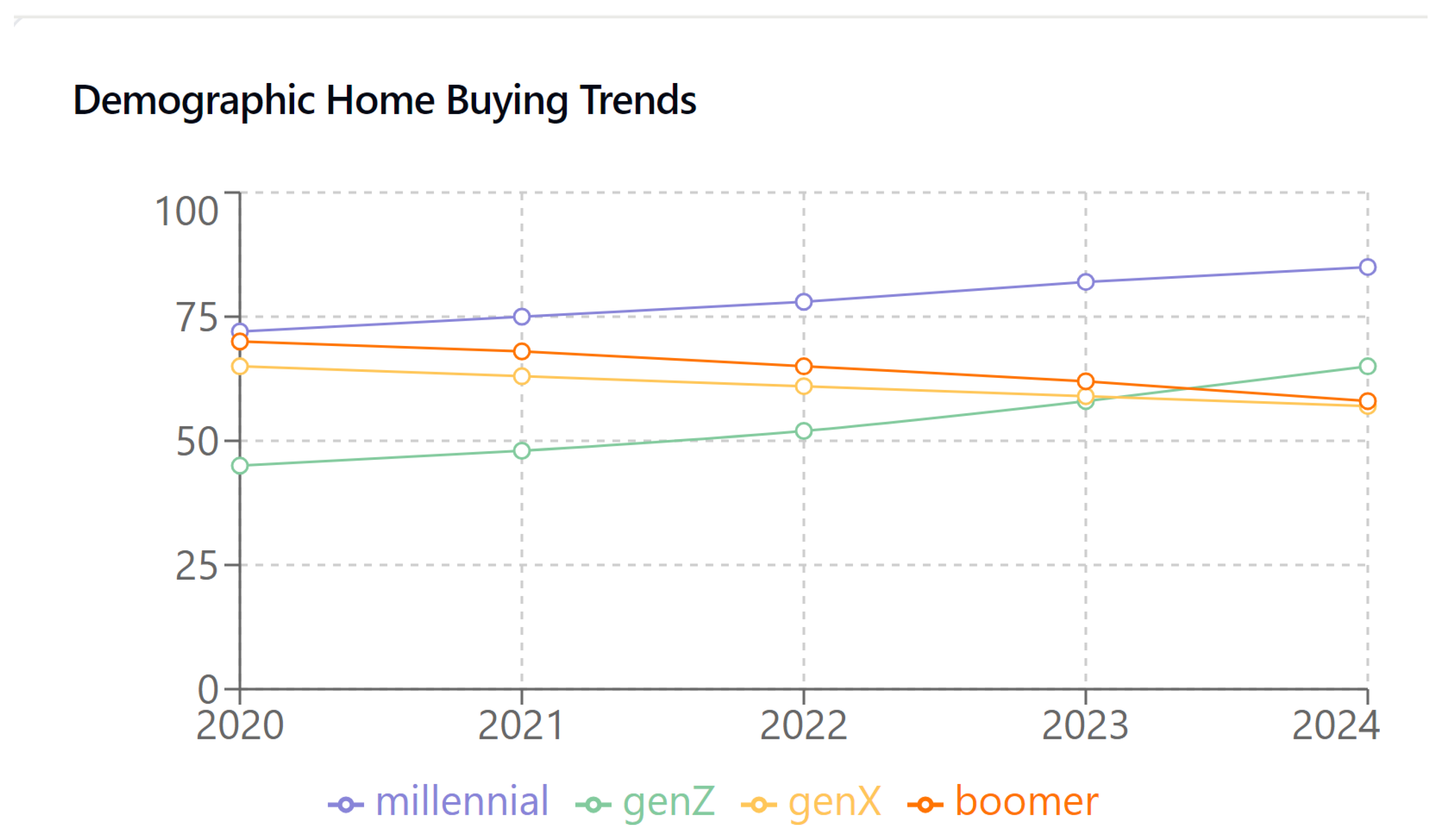
Figure 2.
Regional Housing demand forecast.
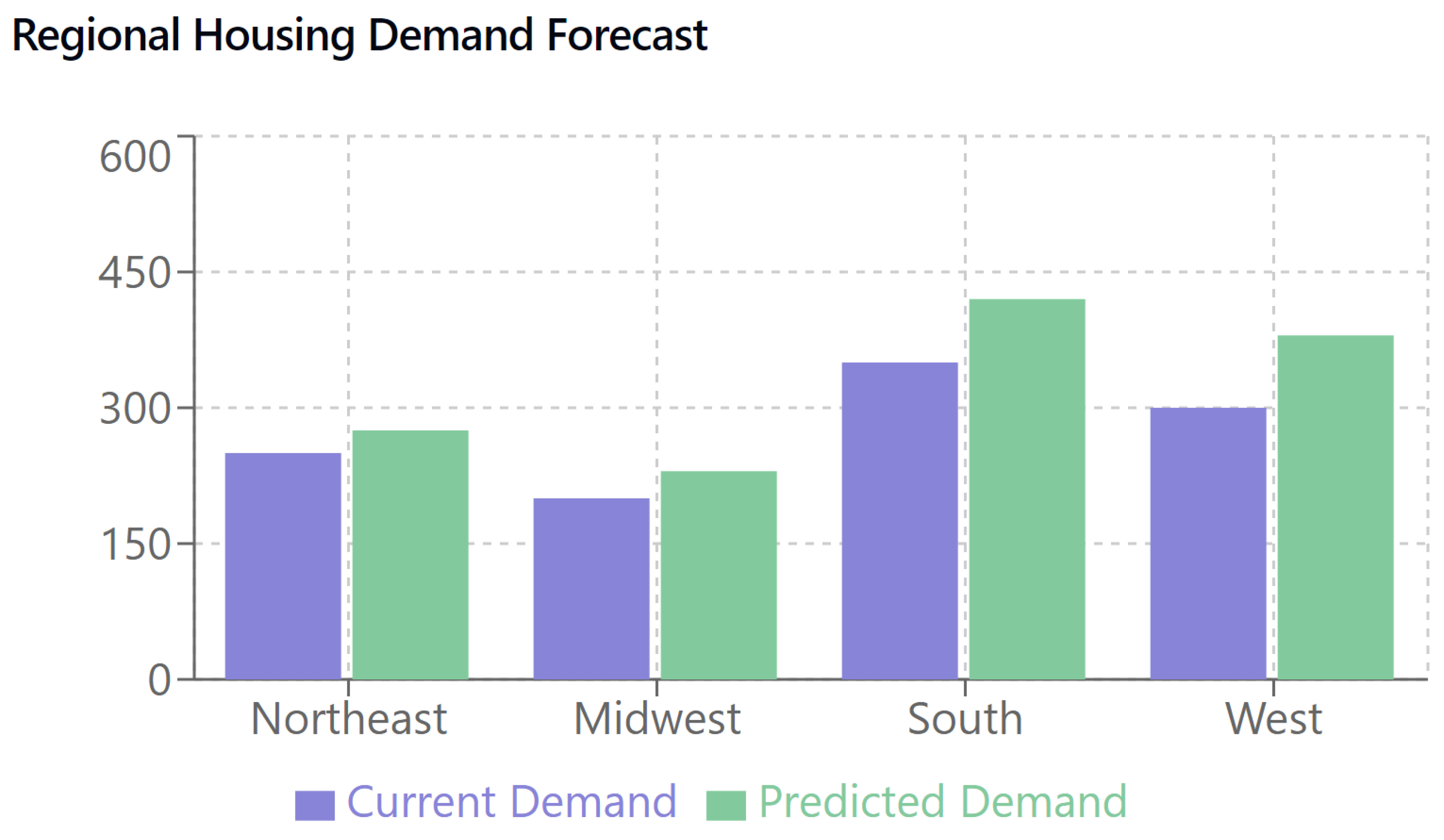
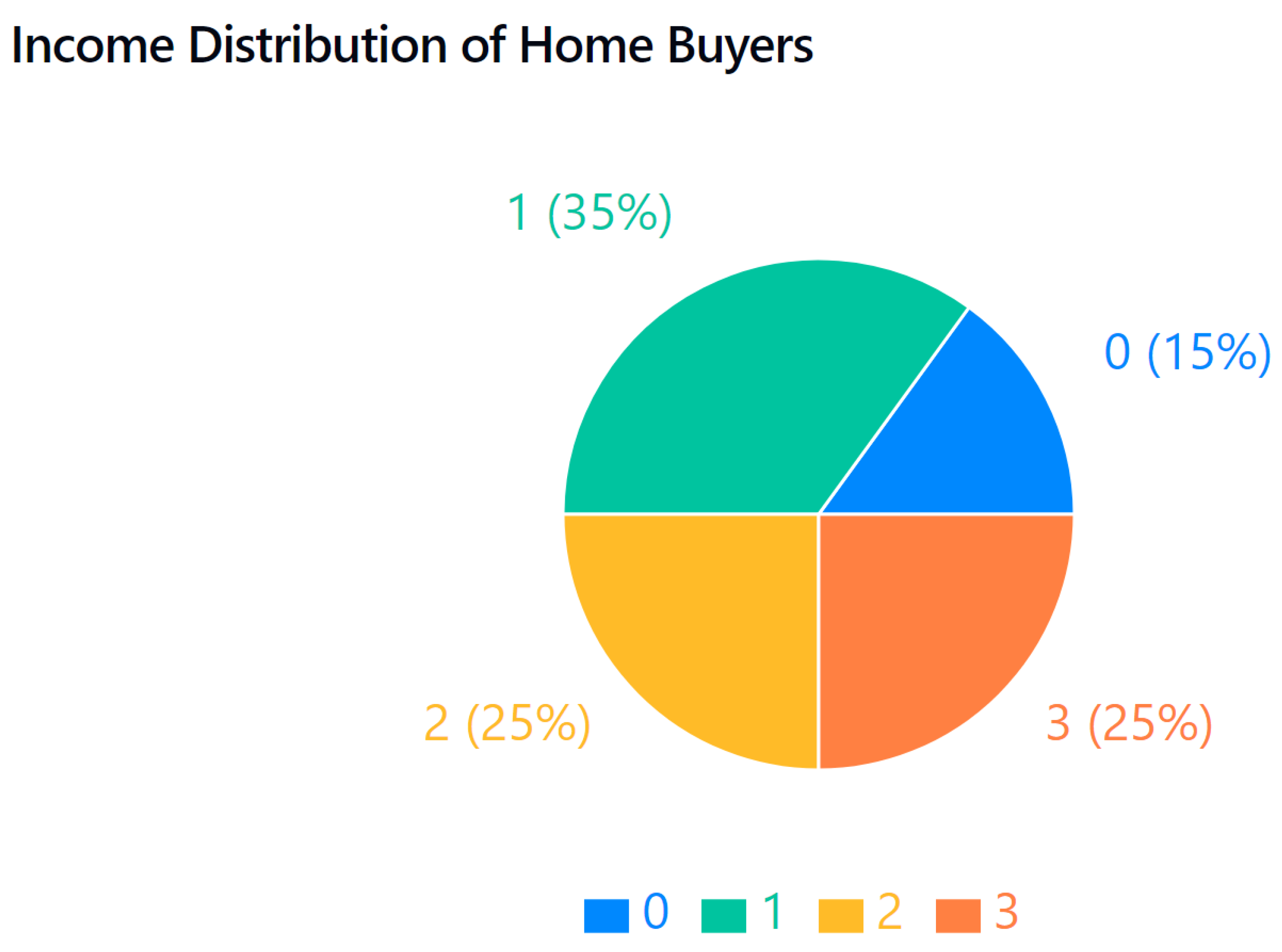
Figure 3.
Income distribution of Home buyers.
4.2. Automated and Efficient Design
Another critical application of generative AI in
housing is in the design phase. AI can automate the architectural design
process, generating multiple design options that optimize for factors such as
space utilization, energy efficiency, and cost-effectiveness. This ability to
rapidly generate and evaluate various design scenarios makes AI particularly
useful in the development of affordable housing, where budget constraints often
limit the options available to developers.
For example, generative design algorithms can
create hundreds of potential building layouts for a given plot of land, each
tailored to maximize the use of space while minimizing material costs and
energy consumption. These designs can then be evaluated against criteria such
as natural light exposure, ventilation, and overall liveability, ensuring that
the final design is both cost-effective and conducive to a high quality of life
for residents.
This approach not only reduces the time and cost
associated with the design process but also allows for greater flexibility in
meeting the specific needs of low-income populations. For instance,
AI-generated designs could prioritize communal spaces or incorporate modular
construction techniques that allow for future expansion. Moreover, by
optimizing building materials and reducing waste, generative AI can help lower
construction costs, making it more feasible to develop affordable housing on a
large scale.
4.3. Optimizing Construction Methods
In addition to design, generative AI can be used to
optimize construction methods, reducing costs and increasing efficiency.
Construction is one of the most expensive and time-consuming aspects of housing
development, particularly in low-income housing projects where tight budgets
often lead to delays and cost overruns. AI-driven solutions can streamline the
construction process by optimizing supply chains, reducing material waste, and
even automating certain aspects of construction.
One example of AI’s potential in construction is
the use of 3D printing technology, which is already being explored as a way to
produce affordable homes at a fraction of the cost of traditional construction
methods. Generative AI can be used to design 3D-printed homes that are
structurally sound, energy-efficient, and cost-effective, making it possible to
build affordable housing quickly and at scale. AI can also be applied to
modular construction, where prefabricated units are built off-site and then assembled
on-site. By optimizing the design and production of these units, AI can
significantly reduce construction time and costs.
Generative AI can also help in managing
construction projects by predicting potential delays or resource shortages. AI
models can analyse factors such as weather patterns, material availability, and
labour schedules to forecast potential bottlenecks in the construction process.
This allows developers to proactively address issues before they become major
problems, ensuring that projects stay on time and within budget.
The generative AI offers a range of applications
that can help reduce the cost and time associated with affordable housing
development. By predicting housing demand, automating design processes, and
optimizing construction methods, AI can play a key role in closing the
affordable housing gap for low-income families. However, while the potential
benefits are significant, there are also challenges to implementing these
technologies, particularly in terms of ensuring equity and overcoming technical
and financial barriers.
5. Challenges and Considerations
While the potential of generative AI in addressing
the affordable housing crisis is immense, its implementation is not without
challenges. Several critical considerations must be taken into account to
ensure that AI-driven solutions are both effective and equitable. These include
the risks of bias in AI models, the technical and financial barriers to
implementation, and the need for regulatory frameworks that support the
responsible use of AI in housing development.
5.1. Equity and Bias in AI Models
One of the most significant concerns associated
with AI, particularly in applications that affect public welfare such as
housing, is the risk of bias. AI models learn from historical data, and if that
data reflects existing inequalities or discriminatory practices, the AI may
perpetuate those biases in its outputs. For example, an AI model trained on
historical housing data might favour certain geographic regions or demographic
groups over others, reinforcing existing disparities in access to affordable
housing.
Bias in AI models can have serious consequences,
particularly for low-income and marginalized communities. If an AI model is
used to predict where affordable housing should be built, and that model is
biased, it could result in housing developments being concentrated in certain
areas while others are neglected. This could exacerbate existing inequalities
and leave low-income families in underserved regions with even fewer housing
options.
To mitigate these risks, it is essential to ensure
that AI models are trained on diverse and representative datasets that capture
the full range of housing needs and demographics. Additionally, AI models
should be regularly audited for bias, and developers should adopt transparent
and accountable practices when designing and deploying AI systems. Involving
community stakeholders in the development and oversight of AI-driven housing
solutions can also help ensure that these technologies are used equitably.
5.2. Technical and Financial Barriers to Implementation
The implementation of generative AI in housing
development requires significant technical expertise and financial investment.
Many smaller developers, particularly those working in low-income housing, may
lack the resources or knowledge to adopt AI technologies. The upfront costs of
implementing AI-driven solutions, such as acquiring the necessary software and
hardware, hiring skilled professionals, and integrating AI into existing
workflows, can be prohibitive for many organizations.
Moreover, the construction industry has
historically been slow to adopt new technologies, and there may be resistance
to incorporating AI into housing development processes. Developers and
construction firms may be hesitant to invest in AI-driven solutions without
clear evidence of their cost-effectiveness and scalability. Overcoming this
reluctance will require robust case studies and pilot projects that demonstrate
the tangible benefits of AI in reducing costs and improving efficiency in
affordable housing development.
Governments and public agencies can play a crucial
role in addressing these barriers by providing funding, incentives, and
technical support to developers interested in adopting AI technologies.
Public-private partnerships can also help bridge the gap, with tech companies
offering AI solutions and expertise to developers working on affordable housing
projects. By reducing the financial and technical barriers to AI adoption, it
will be possible to expand the use of AI in housing development and ensure that
low-income families benefit from these innovations.
5.3. Regulatory and Ethical Considerations
The use of AI in housing development raises
important ethical and regulatory questions. As AI becomes more integrated into
the decision-making processes that affect housing access, it is essential to
establish clear guidelines and regulations to ensure that these technologies
are used responsibly. This includes developing standards for transparency,
accountability, and fairness in AI systems, as well as ensuring that AI-driven
housing solutions comply with existing housing laws and regulations.
Regulators will need to work closely with
developers, tech companies, and community stakeholders to create a regulatory
framework that supports the responsible use of AI in housing. This may include
guidelines on data privacy and security, as well as measures to prevent
discrimination and ensure that AI-driven housing solutions are accessible to
all. By establishing a robust regulatory framework, it will be possible to
harness the full potential of AI in housing development while protecting the
rights and interests of low-income families.
6. Recommendations
To fully realize the potential of generative AI in
addressing the affordable housing gap, several key recommendations must be
considered. These recommendations focus on policy support, community
engagement, collaboration between stakeholders, and ensuring the equitable
deployment of AI-driven solutions in housing development.
6.1. Policy Support and Government Incentives
Governments at all levels play a critical role in
facilitating the adoption of AI technologies in affordable housing development.
One of the most effective ways to encourage the use of generative AI is through
the provision of targeted incentives and funding. By offering grants, tax
credits, or low-interest loans to developers who incorporate AI into their
housing projects, governments can reduce the financial burden of adopting these
technologies and encourage innovation in the housing sector.
Additionally, governments should prioritize the
development of AI-driven housing solutions through public-private partnerships.
These partnerships can bring together tech companies, developers, and public
agencies to create AI-powered tools and platforms that streamline the housing
development process. By fostering collaboration between the public and private
sectors, governments can ensure that AI technologies are used effectively to
meet the needs of low-income populations.
6.2. Community Engagement and Stakeholder Participation
Community engagement is essential to ensure that
AI-driven housing solutions are responsive to the needs of low-income families.
One of the risks of implementing AI in housing development is that it may lead
to top-down decision-making that overlooks the specific concerns and
preferences of the communities it is intended to serve. To mitigate this risk,
developers and policymakers should involve community members in the planning
and design of affordable housing projects that use AI technologies.
This can be achieved through participatory design
processes, where local residents have a voice in determining the features and
amenities that are most important to them. By incorporating community feedback
into the AI models used to generate housing designs, developers can create
housing that better meets the needs of residents. In addition, community
members should be involved in the oversight and evaluation of AI-driven housing
projects to ensure that these technologies are used equitably and effectively.
6.3. Collaboration Between Developers, Tech Companies, and Nonprofits
Collaboration is key to scaling the use of
generative AI in affordable housing development. Tech companies that specialize
in AI solutions can offer valuable expertise and resources to developers
working on affordable housing projects, while nonprofits can provide insights
into the needs and challenges of low-income communities. By working together,
these stakeholders can create AI-powered tools and platforms that make it
easier to develop affordable housing at scale.
For example, tech companies can develop AI
platforms that automate the design and construction processes, while developers
and nonprofits can provide the on-the-ground knowledge needed to ensure that
these solutions are tailored to the needs of low-income families. Collaborative
efforts can also help reduce the cost of implementing AI technologies by
sharing resources and expertise across different organizations.
6.4. Ensuring Equity in AI Deployment
Equity must be a central consideration in the
deployment of AI technologies in housing development. As discussed earlier,
there is a risk that AI models may perpetuate existing inequalities if they are
not designed with equity in mind. To prevent this, developers and tech
companies must ensure that AI models are trained on diverse and representative
datasets that capture the full range of housing needs and demographics.
In addition, AI-driven housing solutions should be
subject to regular audits to ensure that they do not disproportionately benefit
certain groups over others. Developers should adopt transparent and accountable
practices when deploying AI technologies, and regulators should establish clear
guidelines to ensure that AI-driven housing solutions comply with
anti-discrimination laws and promote fairness in housing access.
7. Conclusion
Generative Artificial Intelligence holds
significant promise for addressing the affordable housing gap in the United
States, particularly for low-income families. By leveraging AI’s capabilities
in predictive analysis, design optimization, and construction efficiency,
policymakers and developers can create more affordable, sustainable, and
accessible housing solutions. However, while the potential benefits of AI are
considerable, it is essential to address the challenges associated with equity,
bias, and the technical and financial barriers to implementation.
AI can play a transformative role in housing
development by predicting future housing demand, automating the design process,
and optimizing construction methods. These applications can significantly
reduce the time and cost associated with affordable housing projects, making it
more feasible to build housing that meets the needs of low-income populations.
However, ensuring that these AI-driven solutions are deployed equitably is
critical. AI models must be designed to avoid perpetuating existing biases, and
developers must engage with communities to ensure that housing solutions are
tailored to their specific needs.
To fully realize the potential of AI in housing
development, governments, tech companies, developers, and nonprofits must work
together to create an ecosystem that supports the responsible use of AI. This
includes providing funding and incentives for AI adoption, engaging with
communities to ensure that AI solutions are equitable, and developing
regulatory frameworks that promote transparency and accountability in AI-driven
housing projects.
In conclusion, while generative AI is not a silver
bullet for solving the housing crisis, it offers a powerful set of tools that
can complement existing approaches to affordable housing development. If
implemented thoughtfully and equitably, AI has the potential to transform the
way housing is designed, built, and managed, making it more accessible and
affordable for low-income families across the United States. As the housing
crisis continues to evolve, integrating AI into housing policy and development
strategies will be essential to closing the affordable housing gap and ensuring
that everyone has access to safe, affordable, and sustainable housing.
References
- Goodfellow, I., Pouget-Abadie, J., Mirza, M., Xu, B., Warde-Farley, D., Ozair, S., ... & Bengio, Y. (2014). Generative adversarial nets. Advances in Neural Information Processing Systems, 27, 2672–2680.
- Huang, J., & Zheng, Y. (2021). Automated architectural design: AI applications in the construction industry. Journal of Construction Engineering and Management, 147(6), 04021041. [CrossRef]
- Joint Center for Housing Studies of Harvard University. (2022). *The State of the Nation's Housing 2022*. Harvard University. Retrieved from https://www.jchs.harvard.edu/state-nations-housing-2022.
- Li, X., Zhang, Y., & Wang, S. (2022). Barriers to implementing AI in the construction industry: A critical review. Automation in Construction, 135, 104124. [CrossRef]
- National Low Income Housing Coalition. (2022). The Gap: A Shortage of Affordable Homes. NLIHC. Retrieved from https://nlihc.org/gap.
- O'Neil, C. (2016). Weapons of math destruction: How big data increases inequality and threatens democracy. Crown Publishing Group.
- Radford, A., Wu, J., Child, R., Luan, D., Amodei, D., & Sutskever, I. (2019). Language models are unsupervised multitask learners. OpenAI Blog, 1(8), 9. Retrieved from https://openai.com/blog/better-language-models/.
- Shi, W., Yang, F., & Zhou, Y. (2020). Urban housing demand forecasting using machine learning and demographic data. Computers, Environment and Urban Systems, 80, 101428. [CrossRef]
- Sidewalk Labs. (2019). Generative design tools for urban planning. Retrieved from https://www.sidewalklabs.com/blog/generative-design-comes-to-urban-planning.
- Smith, P., & Sanchez, A. X. (2020). AI in construction: A review of applications and future directions. Proceedings of the Institution of Civil Engineers - Civil Engineering, 173(6), 59–66. [CrossRef]
Disclaimer/Publisher’s Note: The statements, opinions and data contained in all publications are solely those of the individual author(s) and contributor(s) and not of MDPI and/or the editor(s). MDPI and/or the editor(s) disclaim responsibility for any injury to people or property resulting from any ideas, methods, instructions or products referred to in the content. |
© 2024 by the authors. Licensee MDPI, Basel, Switzerland. This article is an open access article distributed under the terms and conditions of the Creative Commons Attribution (CC BY) license (http://creativecommons.org/licenses/by/4.0/).
Copyright: This open access article is published under a Creative Commons CC BY 4.0 license, which permit the free download, distribution, and reuse, provided that the author and preprint are cited in any reuse.


