

Submitted:
16 June 2025
Posted:
17 June 2025
You are already at the latest version
Abstract
Bacterial endophytes are a diverse group of microorganisms that reside within tissues of plants without causing any harm and have gained significant attention due to their role in plant growth promotion, stress tolerance and disease resistance. Inter-actions between plant tissues and bacterial endophytes are complex and dynamic, in that understanding their colonization mechanisms remains crucial. Advances in ge-nomic and molecular techniques has provided insights into these interactions, but there is still much to explore. The diversity of these microorganisms leads to different functions among strains, making their isolation and characterization challenging. Therefore, researchers utilize a range of culture-independent molecular techniques and high-throughput sequencing technologies to elucidate the diversity of bacterial endophytes. Identifying and understanding these beneficial bacteria is crucial for their applications in agriculture, biotechnology, and environmental sustainability. Re-searchers can overcome the limitations and improve known techniques, from refining sample collection techniques to developing new computational algorithms. This re-view provides an overview of recent progress in bacterial endophytes identification, exploring both traditional and emerging techniques. It furthermore discusses broad applications of bacterial endophytes in various fields and highlights directions for fu-ture research aimed at enhancing our understanding and utilization of these valuable microorganisms.
Keywords:
Bacterial endophytes
; plant growth-promoting bacteria (PGPB)
; Isolation
; Identification
; Application
1. Introduction
In different ways, diverse microorganisms (bacteria, fungi, archaea and oomycota) are naturally connected to plants. Endophytic microorganisms are widespread in plants and their relationships with host plants has been described as a balanced symbiotic continuum that ranges from mutualism throughout to commensalism but not parasitism [1,2]. They have been reported to be found in nearly all parts of plants from all groups; algae, angiosperms, bryophytes, gymnosperms, lichens, and pteridophytes, including seeds in tall fescue (Festuca arundinacea) or other grasses, which are vertically transferred to the next generation [3]. Bacterial endophytes are one class that colonize the internal tissues of the host plant, the stem, leaves, flowers, and fruits together with the seeds, thus developing their lifestyle without causing harm to the host cells and showing no external sign of infection or negative effect on their host [4]. Bacterial endophytes benefit from plants in that plants provide protected living space and constant supply of nutrients [5,6]. In turn, bacterial endohytes form a beneficial relationship with their host plants, providing them with various benefits such as enhanced plant growth [7], improved phytoremediation efficiency [8], confer host plant tolerance to abiotic and biotic stresses [9], nutrient uptake, hormone production, and protection against pathogens [10,11]. Mundt and Hinkel documented the first isolation of endophytic bacteria from the ovules and seeds of 27 plants [12]. Bacterial endophytes are commonly classified into two major divisions based on the plant inhabiting life strategies they exhibit viz., facultative and obligate endophytes [13]. Facultative bacterial endophytes are a group that have a stage in their life cycle where they dwell outside the host plant but may enter the host tissue through infection/slightest opportunity and alternate between host plants and the soil; while obligate bacterial endophytes are strictly hooked and live inside their host plant tissues for their growth [14,15]. The novelty of the present review brings to light the bacterial endophytes dynamics and current understanding status pertaining to the recent advances and developments in bacterial endophytes identification. This study also explores traditional, emerging techniques and omic approaches and further highlighting the challenges and limitations in their identification.
2. Diversity and Distribution of Bacterial Endophytes
Bacterial endophytes can be isolated from two different regions known as the part above ground of the plant (phyllosphere) and the part belowground (rhizosphere), characterising each environment to harbour different bacterial communities shaped by traits of each section. Diversity for the belowground can be regulated by different factors associated to the soil microbial communities and the host factors. The microbiome composition in the root interior is significantly less diverse than the microbiomes in the soil [16]. Numerous studies have documented great bacterial endophytes diversity and further demonstrated that microbial communities are still far more diverse in the endosphere than they are in the rhizosphere [17,18]. The diversity of bacterial endophytes demonstrate that they relate to different plant species and have been found in every plant species studied. Thus, pertaining that an endophyte-free plant is a rare exception in the natural environment. In fact, a plant without associated beneficial bacteria would be less fit to deal with phytopathogens and more susceptive to stress conditions [19,20]. Significant number of studies have analysed and reported on the effects of different environmental variables on bacterial endophyte diversity and have shown that different plant hosts may harbour a similar population of endophytic bacteria [12]. Bacterial endophytes population varies within the same species, from plant to plant, from species to species, from region to region and differs with climatic conditions within the same region. Bacterial endophytes are important and their distribution and population structure within host plants is considerably affected by a wide range of factors such as the hosts’ genetic backgrounds, ages, interactions between the inhabiting microorganisms as well as the microbe-plant interaction and environmental conditions [21]. Plant compartments, genotypes and geographic locations are vital factors that shape the endophytic microbiome composition, therefore, such environmental conditions including availability of nutrients, pH, temperature and humidity which determine the distribution ranges of hosts, also determine species distribution among the endophytes [22]. Studies done on Arabidopsis, Oryza, Populus and Zea validated that bacterial endophyte communities are generally influenced by combination of the host environment and season, host genotype variation and host species identity [23,24].
Additionally, single host plant species may accommodate multiple bacterial endophytic genera and species; and the bacterial endophytic community range depends widely on the colonized tissue, plant type or endophyte isolation season. The technique (type, concentration and even length of the treatment time with sterilizing agent) employed to investigate these bacterial endophytes is a significant determinant utilised to detect the host plant's bacterial endophytic diversity [25]. Depending on the diversity and composition of microbial communities, bacterial endophytes are often associated with a variety of plant organs of which many may harbour similar species. The most described genera in literature of bacterial endophytes and also common inhabitants of the rhizosphere are Azospirillum, Bacillus, Burkholderia, Enterobacter, Microbacterium, Micrococcus, Pantoea, Pseudomonas, Stenotrophomonas and Serratia; thus suggesting that endophytic microbiome could be a subpopulation of the rhizosphere inhabiting bacteria [26,27,28,29,30,31].
3. Biological Roles, Benefits and Prospective Application of Bacterial Endophytes
Bacterial endophytes use direct or indirect techniques to benefit their host plants in multiple ways. The ability of bacterial endophytes to produce bioactive compounds of agricultural, industrial and pharmaceutical importance makes them interesting candidates for research purposes. They play important roles in different fields of life, ranging from their impacts on host plants, their effects on the environment and human life, thus encompassing a range of beneficial applications in agriculture, biotechnology and environmental management as shown in Figure 2 [9,32]. The cross-talking between key mechanisms used by bacterial endophytes to benefit the host plant largely contributes to and accounts for signal transduction. Mechanisms that bacterial endophytes employ for plant growth and development comprise processes that include biocontrol [33], bioremediation [34], biotic/abiotic stress reduction [35], endosphere colonization [36], enzyme secretion [37], and induction of plant-resistance [38]. The production of antibiotics, cell wall-degrading enzymes, decreased plant ethylene levels, reduced iron availability to pathogens and the synthesis of pathogen-inhibiting volatile compounds are also just a few examples of the numerous common mechanisms used by bacterial endophytes to promote plant growth and development [39]. Furthermore, bacterial endophytes can indirectly enhance plant growth by stimulating plant responses or producing secondary metabolites against phytopathogens [40].
Figure 2.
Overview of beneficial roles and application of bacterial endophytes.
3.1. Biocontrol Role
Biocontrol of plant pathogens (phytopathogens) has gained significant attention in the past years due to its potential as a sustainable and environmentally friendly alternative to chemical pesticides and one such approach involves the use of bacterial endophytes, which are beneficial bacteria residing within plant tissues. The design and development of novel antimicrobial agents has attracted considerable attention due to adverse impacts associated with conventional agrochemical pesticides (fungicides, insecticides, and herbicides and nematicides), such as phytotoxicity, pathogen resistance, and chemical residues exposed to the host plants [41]. Agrochemicals execute effective roles to ensure continuous dynamic agricultural structure and control of plant diseases, but extensive use of agrochemicals result in adverse outcome on functioning of the environment, agricultural prosperity and on humans. Bacterial endophytes possess several mechanisms that secrete biocontrol agents to inhibit entry and control the growth of phytopathogens among other activities, such as competition for nutrients, production of antimicrobial compounds and induction of plant defence responses [42,43]. Furthermore, other studies have presented evident data on the impact of bioinoculant and endophyte application on development and growth for nutrient absorption in corn, cotton, sorghum and tomato [44,45]. Certain bacterial endophytes such as B. amyloliquefaciens, B. pumilus, B. subtilis, Pseudomonas fluorescens, P. syringae and Serratia marcescens assist their host plants to elicit antibiotics and induce systemic resistance (ISR), resistance mechanisms which occur when plants successfully activate their defence mechanisms in response to infection by a phytopathogen [46,47]. Bacillus spp demonstrated antagonistic activity against Xylella fastidiosa that causes olive quick decline syndrome (OQDS) in olive trees [48,49]. Moreover, novel Streptomyces spp MBFA-172 in strawberry plant was reported to exhibit biocontrol activity against Glomerella cingulata [50]. Bacillus amyloliquefaciens, B. subtilis, B. velezensis, Lactococcus lactis and Leuconostoc mesenteroides are a good few documented seed associated bacterial endophytes to be used to treat bacterial wilt of tomato and exhibited biocontrol agent properties [51]. Studies by other teams also reported on the ability of B. velezensis to inhibit a variety of fungal phytopathogens, Colletotrichum coccodes, Fusarium avenaceum, Phoma foveat and Rhizoctonia solani on potato in both in vitro and field experiments [52,53]. Therefore, isolates of bacterial endophytes can commercially be incorporated to synthesize biopesticides to both protect host plants and maintain a healthy environment [54]. Another study demonstrated that B. velezensis IALR619 has potential to inhibit strawberry pathogen growth in greenhouse and possibly increase fruit yield in the field which comfirmed with a study that reported that B. velezensis is a typical biocontrol agent used control various soil-borne diseases as well as a plant growth promoting bacteria [55,56]. Furthermore, some biocontrol agents possess plant growth promoting capabilities and their use can help reduce reliance on synthetic chemicals, minimizing environmental damage and promote sustainable agricultural practices. As research in this field continues to progress, exploiting the potential of bacterial endophytes for biocontrol purposes holds great promise for the future of agriculture.
3.2. Nanoparticle Biosynthesizer Role
Biosynthesis and production of nanoparticles (NPs) utilizing bacterial endophytes have emerged as cutting-edge technology, due to the various functions, environmental clean-up, potential bioactivity, non-pathogenic nature and enormous therapeutic applicability of these particles [57]. Biological approach of NPs synthesis over physical and chemical approaches have been reported to have numerous advantages; they are easy, economical, safe and eco-friendly because it requires less energy and produces no harmful waste [58]. Biocompatible and non-toxic NPs are preferred when it comes to drug delivery and medicine. Therefore, their synthesis could easily utilise bacterial endophytes and reports have revealed that numerous researchers have employed prokaryotic and eukaryotic endophytes for the synthesis of gold, silver, copper metal and metal oxide NPs which have been used in all the domains of science [59]. Bacterial endophytes reduce metallic ions during biosynthesise and produce NPs. Furthermore, other researchers have reported NPs synthesis with other elements such as zinc sulfide, copper oxide, cobalt oxide, nickel oxide from endophytes that were isolated from both terrestrial and marine environments. There are numerous potential uses for these biosynthesized NPs in nanomedicine because of their antibacterial, antifungal, antioxidant, antimicrobial, antidiabetic, anticancer and photocatalytic degradation properties [60,61]. AgNPs synthesized using endophytic Streptomyces spp. showed antimicrobial, antioxidant and larvicidal activities [62]. Low concentrations of AgNPs synthesized by Pantoea ananatis showed antimicrobial activity against Candida albicans and Bacillus cereus and higher concentrations were active against multidrug-resistant strains of Enterococcus faecium, Escherichia coli, Streptococcus pneumoniae and Staphylococcus aureus [63,64]. The endophytic Streptomyces spp. isolated from medicinal plants synthesized CuNPs and CuONPs with antibacterial, antifungal, antioxidant and insecticidal activities [65,66]. Fadiji and team demonstrated the function of various NPs synthesized from bacterial endophytes in sustainable agriculture by enhancing plant growth and development, thus strengthening resistance to disease [67]. Other studies documented that bacterial endophytes may serve as bio-factories for NPs and those synthesized from them have immense potential in healthcare applications [68]. Silver NPs are widely used specifically in bio-labelling, antimicrobial agents, catalysts and sensors due to their unique optical, electrical and magnetic properties [69].
3.3. Plant Growth Promotion Role
One key area of interest in the study of bacterial endophytes is their role in promoting plant growth through enhancing disease resistance, nutrient uptake, and stress tolerance, which are attributed to several mechanisms employed by endophytes, such as the production of phytohormones (auxin, cytokinin, ethylene, and gibberellin), siderophores, and various enzymes that aid in nutrient acquisition, including nitrogen fixation, phosphate solubilization, and iron and potassium mobilization [70,71]. Additionally, bacterial endophytes can also facilitate plant growth by inducing systemic resistance against phytopathogens and pests, by secondary metabolite synthesis, antibiosis activities ultimately boosting plant responses to environmental stressors leading to healthier host plants and surrounding environment [72,73]. Bacterial endophyte Pseudomonas spp. has shown to stimulate pea plant growth and exhibit plant-beneficial traits such as phosphate solubilization, production of indole-3-acetic acid (IAA), siderophores, hydrogen cyanide (HCN), and ammonia (NH3) [74]. Certain bacterial endophytes genera, including Acinetobacter, Bacillus, Micrococcus, Paenibacillus, Pseudomonas, Pantoea, and Staphylococcus; have demonstrated the ability to thaw dormant seeds, enhance seedling growth, protect against phytopathogens, and promote plant development [75,76]. These beneficial properties may explain why such microbes are consistently transmitted to subsequent plant generations through seeds [77]. Bacterial endophytes also play a significant role in protecting plants from pathogens, including bacteria, fungi and nematodes [78]. Notably, the protein BphKLB400 from Burkholderia xenovorans LB400 confers herbicide tolerance onto pea plants and facilitates detoxification of multiple herbicides [79]. Under abiotic stress conditions such as drought, salinity, and heavy metal exposure, enzymes like 1-aminocyclopropane-1-carboxylate (ACC) deaminase and IAA, along with phosphate-solubilizing traits, help plants adapt and maintain growth [80]. IAA contributes directly to plant physiological processes like chlorophyll content, increased biomass and root development, while ACC deaminase modulates ethylene levels, mitigating growth inhibition under stress. Endophytes also promote drought tolerance by producing abscisic acid (ABA), volatile compounds, and osmoprotectants, improving plant water retention and osmotic adjustment [81]. Taxonomically, bacterial endophytes are diverse, encompassing Gram-positive and Gram-negative genera such as Achromobacter, Agrobacterium, Bacillus, Pantoea, Xanthomonas, and others. Many of these microbes produce bioactive compounds with antimicrobial and anticancer activities, positioning them as valuable resources treat a range of illnesses [82,83]. Moreover, their bioactive metabolites have been reported to exhibit antidiabetic, antifungal, immunosuppressive, and anti-inflammatory properties [84,85,86,87]. The production of ACC deaminase is one of the key attributes of endophytic bacteria in stimulating plant growth under high concentrations of toxic metals, and lowers ethylene levels during stress, while simultaneously facilitating mineral solubilization [88,89]. Other findings also highlight endophyte-triggered defense responses, Arthrobacter agilis produces N,N-dimethyl hexadecylamine, a compound that induces iron uptake by roots against the growth of pathogenic fungi and defense-related gene expression in Medicago truncatula, offering protection against Botrytis cinerea and Pseudomonas syringae without involving the jasmonic acid (JA) pathway [90,91]. Additionally, ACC deaminase and IAA interaction is critical in modulating ethylene levels. Excess ethylene stimulated by IAA-induced ACC synthase activity can inhibit plant growth, which is mitigated by microbial ACC deaminase [92]. The application of the plant growth promoting endophytes producing this enzyme has been linked to enhanced tolerance to various environmental stresses [93]. Specific endophytic strains such as Pantoea agglomerans aid in salt stress tolerance through IAA production, whilst Bacillus licheniformis promotes overall plant health, inhibits fungal parasites, and synthesizes gibberellins [94,95]. Similarly, Bacillus stratosphericus has demonstrated to suppress bacterial and fungal parasites and aid plants in phytoremediation of heavy metals and other pollutants, including salt [34,96]. Thus, understanding these diverse mechanisms through which bacterial endophytes promote plant growth lays the foundation for the application of bacterial endophytes in environmental biotechnology and sustainable agriculture.
3.4. Phytoremediation Role
Phytoremediation is a green and sustainable technology that employs plants and their associated microorganisms to remove hazardous organic and inorganic pollutants from the environment [97,98]. Plants have the inherent ability to degrade certain pollutants, and phytoremediation using plants has been recognized as a cost-effective and eco-friendly approach for remediating contaminated sites. Success outcome of phytoremediation largely depends on the combined ability of plants and their bacterial endophytes to tolerate high levels of contamination [99,100]. Microbial degradation of inorganic compounds can result in the production of environmental metabolites such as carbon dioxide, humus, salts, water, and other beneficial bio-products. In addition, bacterial endophytes have been shown to degrade environmental pollutants, including explosives, herbicides, and hydrocarbons [101,102]. In plant-endophyte interactions, plants offer bacterial endophytes nutrients and shelter. In turn, bacterial endophytes with appropriate metabolic activity and degradation pathways enhance the breakdown of organic pollutants while reducing phytotoxicity and evapotranspiration. Moreover, plant growth-promoting endophytes further improve plant development and stress adaptation, especially in contaminated soils and water bodies [103].
Many bacterial endophytes are known for their ability to degrade xenobiotic pollutants including alkanes, hydrocarbons, and pesticides; while also promoting plant growth through mechanisms such as auxin production, nitrogen fixation, and siderophore secretion [104]. Some bacterial endophytes produce IAA and other bioactive compounds that support plant growth and facilitate remediation in heavy metal-contaminated environments [105,106]. Notably, phosphate-solubilizing bacterial genera such as Pseudomonas, Burkholderia, Paraburkholderia, Novosphingobium, and Ochrobactrum have demonstrated the ability to enhance biomass yield in certain seedlings due to their multifunctional traits. The development of bioinoculants using root-associated endophytes shows great promise in modern agriculture [107]. Given the extensive research on plant growth-promoting bacteria, their integration into organic farming systems has the potential to significantly boost agricultural productivity and contribute to global food security. Experimental bioremediation studies have revealed that the bacterial endophyte Paenibacillus spp., isolated from Tridax procumbens, achieved significant heavy metal removal eliminating up to 59.4% of copper and 51.4% of zinc, demonstrating its potential for multi-metal remediation [108,109,110]. Further research is needed to identify novel bacterial endophytes with strong contaminant-degrading abilities. Optimizing their potential can enhance sustainable plant health and contribute to environmentally friendly agricultural practices aimed at improving crop productivity and ecosystem resilience.

Table 1.
Beneficial association between bacterial endophytes and host plant.
| Role of beneficial bacteria | Bacterial Endophyte | Host plant | References |
|---|---|---|---|
| Enhance plant resistance to phytopathogens | Bacillus amyloliquefaciens | Ginkgo biloba and Panax notoginseng | [111,112] |
| Bacillus sp. | Curcuma longa | [113] | |
| Cohnella sp., Paenibacillus sp. and Pantoea sp. | Centella asiatica | [114] | |
| Phyllobacterium myrsinacearum | Epimedium brevicornu | [115] | |
| Stenotrophomonas maltophilia and Bacillus sp. | Panax ginseng | [116] | |
| Improved plant abiotic stress tolerance | Achromobacter xylosoxidans | Catharanthus roseus | [117] |
| Agrobacterium spp. and Bacillus spp. | Pteris vittata | [118] | |
| Citrobacter putida | Euphorbia milii | [119] | |
| Glutamicibacter halophytocola | Limonium sinense | [120] | |
| Paenibacillus sp. | Plantago asiatica and Tridax procumbens | [108,121] | |
| Plant growth promotion | Bacillus and Paenibacillus spp. | Curcuma longa | [122] |
| Bacillus cereus and Bacillus subtilis | Teucrium polium | [123] | |
| Bacillus siamensis | Coriandrum sativum | [124] | |
| Micrococcus luteus and Lysinibacillus fusiformis | Panax ginseng | [125] | |
| Paenibacillus and Bacillus spp. | Lonicera japonica | [126] | |
| Serratia marcescens | Achyranthes aspera | [127] | |
| Variovorax sp. | Lavandula dentata | [128] | |
| Promotion of plant metabolites accumulation | Bacillus subtilis | Ligusticum chuanxiong | [129] |
| Burkholderia sp. and Paenibacillus polymyxa | Panax ginseng | [130,131] | |
| Pseudomonas fluorescens | Atractylodes lancea and Atractylodes macrocephala | [132,133] | |
| Pseudonocardia sp. | Artemisia annua | [134] |
4. Isolation Techniques
Several researchers have extensively studied and reviewed various techniques for isolating bacterial endophytes from various plant tissues, such as seeds, roots, stems, stems, leaves and flowers [135,136]. The most widely accepted isolation technique is whole-surface sterilization, which involves three main steps: (1) surface sterilization of plant tissues, (2) maceration of the sterilized tissues, and (3) culturing of serially diluted macerates [16,137,138]. Surface sterilization is a critical first step of isolation that eliminates all potential pollutants, epiphytic microorganisms, external contaminants, and debris. This is typically achieved by sequential treatment of the plant tissues with sterilizing agents, such as ethanol, hydrogen peroxide, sodium or mercuric chloride, and hypochlorite solutions, for a predetermined period of time to improve the effectiveness of the sterilization procedure; followed by thorough rinsing with sterile distilled water to remove any residual chemicals [139,140]. Effectiveness of sterilization is verified by plating the final rinse water on a culture medium; where the absence of bacterial growth confirms the effectiveness of the sterilization procedure and any growth observed denotes availability of unwanted pollutants [100,141]. A high yield of bacterial colonies after sterilization indicates minimal impact on the internal endophytic population [142,143]. An ideal sterilization protocol must balance the complete removal of surface microbes while preserving the viability of internal endophytes. The sterilizing agents ought to eliminate the epiphytic microbes without causing any damage to the endophytes or host tissue; though this balance is often difficult to achieve because aggressive sterilizing agents can sometimes penetrate plant tissues and harm the endophytes.
Surface sterilization methods may vary depending on the plant species, tissue type, and researcher’s preference, however most common used surface-sterilisation protocol followed are those outlined by [144,145,146]. Mashiane et al. demonstrated surface sterilization of explants using a three-step approach that involved immersion in 70% ethanol for 60sec, followed by rinsing with distilled water and subsequent sterilisation in 3% sodium hypochlorite (NaClO) for 60sec and finally in 70% ethanol for 30sec. Samples were further washed in sterile distilled water three times, for 60sec each. The process involved the inoculation of explants obtained from different parts of the maize plants on nutrient agar, tryptone soy agar, and nutrient broth, and incubated at 27°C for 24 hours to isolate endophytic bacteria [147]. In another study, Dasgupta et al. sterilized pooled leaf samples from Eucalyptus clones with 70% ethanol (10 min), 2% NaClO (15 min), and 70% ethanol (10 min), followed by eight sterile water washes. The sterilized leaves were plated on Luria-Bertani (LB) agar to confirm sterility and later used for genomic DNA extraction [148]. Similarly, Abbamondi et al. reported on isolation of 12 bacterial strains from fresh roots using a protocol involving washing with P-buffer containing Tween 40, sterilization in 5% NaClO (5 min), five sterile water rinses, tissue maceration in 10 mM MgSO₄, and plating serial dilutions on LB medium. Surface sterility was confirmed by plating the final rinse water [149].
5. Identification and Characterization of Bacterial Endophytes
Accurate identification is essential to understand the diversity, functionality and potential applications of bacterial endophyte populations. Numerous studies have well documented diverse approaches for the assessment of these microorganisms, and a summary of some techniques used to study bacterial endophytes is presented in Table 2. Research in this area generally employs both culture-dependent and culture-independent techniques as cornerstone methods for identification and characterization. These typically involve: (i) basic culturing, (ii) DNA extraction, (iii) PCR amplification using specific primers, (iv) sequencing and (v) comparison of the obtained sequences with those available in public databases using BLAST [150,151,152].
Table 2.
Summary of some techniques and characteristics used to study bacterial endophytes.
| Techniques | Characteristics |
|
Culture dependent |
Culture- based techniques (by plating)Advantages
|
|
Culture independent |
Microscope- based techniques (TEM and SEM)Advantages
|
Molecular and Omics- based techniques (PCR and sequencing)Advantages
|
5.1. Culture-Dependent Techniques
Traditionally, culture-dependent techniques have been utilised to obtain pure bacterial isolates for studying the roles, characteristics, and functional traits of bacterial endophytes. These methods have contributed significantly to the identification and characterization of the diversity of plant-associated bacterial endophytes, however, key limitation is that they capture only a small fraction of the total microbial population, leading to a biased representation of the actual diversity of endophytic populations [153,154]. Culturable bacterial endophytes are identified and characterized through biochemical, morphological, physiological, and molecular approaches [155,156]. These techniques are inherently restricted to microorganisms that can be cultivated under both in vitro and in planta conditions, excluding the vast majority of unculturable microbes. As a result, culture-dependent approaches do not provide a comprehensive overview of the endophytic bacterial population [157,158]. Some studies analyzed the bacterial endophyte diversity in various tissues of Dendrobium officinale and demonstrated that culture-dependent methods yielded a skewed and limited diversity profile. Comparable observations have been reported in other studies, which found that these methods tend to underestimate microbial diversity when compared to culture-independent approaches [153,159].
Bacterial colonies exhibiting distinct morphologies are typically sub-cultured on freshly prepared nutrient media and preserved on nutrient agar slants for downstream analysis. The composition of the nutrient medium plays a critical role in supporting bacterial growth, with carbon- and nitrogen-rich media such as nutrient agar and potato dextrose agar commonly used to encourage the proliferation of bacterial endophytes [160]. In addition to culturing, microscopy and staining techniques can be employed to visualize the colonization patterns, morphology, and cellular structures of bacterial endophytes. Various types of microscopes; including transmission electron microscopes, bright-field microscopes, fluorescence microscopes, and laser scanning microscopes have been instrumental in bacterial endophyte identification [158,161]. These techniques are frequently complemented by biochemical assays to evaluate the metabolic and physiological capabilities of bacterial endophytes. Despite their value, culture-dependent approaches have significant limitations. They only allow the recovery and analysis of culturable microorganisms, leaving most unculturable endophytic populations unexplored. It is estimated that only around 5% of bacterial endophytes have been identified using conventional culturing techniques, as many bacterial strains have highly specific metabolic and physiological requirements that are challenging to replicate in vitro [162,163].
5.2. Culture-Independent Techniques
Literature has confirmed the occurrence of bacterial endophytes in host plants through various culture-independent assays [164]. Researchers can examine the diversity and functionality of bacterial endophytes using vast of molecular techniques once they have been isolated. Researchers can investigate the diversity and functionality of these bacterial endophytes using an array of molecular techniques once they have been isolated. Culture-independent techniques bypass the need for cultivation, providing a fast and accurate taxonomic landscape of endophytic bacteria. This allows the study of microbial communities in their natural environment [160]. As high-throughput techniques, they offer a more comprehensive understanding of endophyte diversity and community structure. Additionally, culture-independent techniques have elucidated the makeup of bacterial communities in a variety of plants, including bananas, beans and rice and medicinal plants such as aloe vera [87,165]. Molecular and visualization approaches, as examples of culture-independent techniques, enable the identification of unculturable bacterial endophytes within host plants, including those that grow slowly or are present in low abundance and thus overlooked by culture-dependent methods [166,167,168]. Microscopy is the most direct method for observing bacterial endophytes, and the exact location of these endophytes within plant tissue can be determined using both electron and light microscopy [169,170]. While light microscopy provides a general overview of the structures and morphology, it is limited in resolution compared to electron microscopy, which enables high-resolution ultrastructural analysis. Electron microscopy helps detect bacterial endophytes, reveal their extent of colonization, and visualize bacteria–host interactions and their establishment within the plant environment. Scanning electron microscopy (SEM) and transmission electron microscopy (TEM) yield valuable information about the surface and internal structures of bacterial endophytes, respectively [155,171,172].
Morare and colleagues morphologically identified bacterial endophytes from Crinum macowanii using gram staining, and high-resolution images were created using SEM micrographs to detail the shapes and confirm identities. Macroscopic identification of bacterial endophyte colonies involved assessing colony color, consistency, elevation, margin, opacity, and surface structure. Isolates were further subjected to a gram stain reaction and viewed under an oil immersion compound bright-field microscope at 100× magnification [173,174]. Biochemical assays such as catalase, oxidase, urease, coagulase, and starch hydrolysis tests are also employed to validate the biochemical activity of bacterial endophytes [3,164]. However, the use of different culture-independent techniques depends on the experimental design and research objectives. The choice of one technique over another is often subjective, based on the researcher’s hypotheses and available resources. Having a thorough understanding of the advantages and limitations of each technique increases the possibility of obtaining more comprehensive data and insights. Advancements in meta-omics provide modern tools to better understand the activities of bacterial endophytes in plants [175,176]. Ultimately, the most effective approach might involve combining modern techniques with traditional methods; a strategy that has been shown to reduce error rates in some next-generation sequencing methods and improve data quality.
5.2.1. Meta-Omics Approaches
a. Metagenomics
Metagenomics utilizes modern genomic techniques to analyze genome sequences obtained directly from various environments, providing insights into the diversity, genetics and physiology of unculturable microorganisms. This approach has been a widely used method for studying microbiome populations, as it examines both single marker genes and the complete genomes of all organisms present, providing valuable information on genetic structure, novel genes, functional roles and evolutionary relationships within microbial communities [177,178]. The application of metagenomic techniques has demonstrated significant potential in identifying the role of bacterial endophytes in essential plant biological processes, such as biodegradation, nitrification, plant growth promotion, phytoremediation and the suppression of phytopathogens. Compared to traditional culture-dependent methods, metagenomics provides an unbiased perspective, although it comes with limitations such as high sequencing costs, interference from plant DNA, low extraction efficiency and small DNA yields [179,180,181]. employed a metagenomics approach to analyze bacterial endophyte communities in tomatoes and discovered secondary metabolites capable of suppressing nematode infections in roots. Similarly, functional genes associated with nitrogen metabolism, IAA and tryptophan biosynthesis, siderophore production and phosphate solubilization have been identified in root-associated endophytic microbiomes in maize using a shotgun sequencing. High-throughput sequencing technologies such as Illumina and 454 pyrosequencing have been utilized to explore diverse bacterial endophytes in oak and sorghum plants [182,183]. Furthermore, shotgun metagenomic sequencing, coupled with bioinformatics analysis has revealed taxonomic composition and predicted functional genes involved in plant growth promotion. In the Panax ginseng bacterial community, genes related to ACC deaminase activity, phosphate solubilization, 4-phytase, methanol utilization, and nitrogen metabolism have been identified through metagenomic analysis. Additionally, metagenomics has facilitated the study of genes responsible for bacterial attachment, carbohydrate metabolism, responses to temperature fluctuations, osmotic stress, pH regulation and secretion systems [184,185,186].
b. Metatranscriptomics
Metatranscriptomics focuses on studying the expression of all messenger RNA (mRNA) transcripts in microbial cells associated with various plants. This technique provides insight into transcribed genes, enabling the understanding of genetic profiles and functional similarities or differences among bacterial endophytes in diverse environments [151,187,188]. RNA sequencing (RNAseq) allows comprehensive transcriptome analysis of microbial communities under different conditions, establishing a direct link between microbial genetic composition and the functional roles of expressed genes. These techniques have widely been used in plant-microbe interaction studies, as they characterize active microbial genes with specific functions and identifies those driving symbiotic relationships between microbial communities and plant hosts. In this context, proteins play a key role in promoting plant growth under stress conditions by acting as precursors for various bacterial endophyte-induced mechanisms [189,190]. Moreover, stress-responsive genes from bacterial endophytes can act as catalytic regulators of microRNAs (miRNAs), which modulates the expression of essential genes involved in plant responses to abiotic stress in crops such as wheat, rice, Arabidopsis, and Medicago. miRNA169 and miRNA169c have been reported to enhance stress responses in tomato and rice plants. Additionally, some studies have also explored the role of miRNAs in mediating metal stress in two rice subspecies, Indica and Japonica using RT-PCR analysis [191,192,193,194]. Bacterial endophytes also contribute to plant stress tolerance through the secretion of ACC deaminase, making them promising candidates for bioinoculants that support plant survival under challenging conditions such as drought, salinity and extreme temperatures. The effectiveness of metatranscriptomic studies is enhanced when combined with metagenomic approaches. While metagenomics identifies genes present and absent in culturable and non-culturable bacteria, metatranscriptomics compares transcriptomes of related bacterial species, shedding light on microbial community responses to environmental changes. Together, these techniques provide valuable insights into endophytic bacteria within ecosystems, potentially leading to the discovery of novel genes and their functions [187,195]. One key advantage of metatranscriptomics is that it does not require probes or primers, allowing for an unbiased sequencing of microbial transcripts. Additionally, it provides information on the expression of non-coding genes and small RNAs, further enhancing its utility in microbial profiling. As direct sequencing methods advance, metatranscriptomics will continue expanding microbial community databases, helping to address emerging research questions. Despite its advantages, the technique encounters various setbacks, and such includes the recovery of mRNA transcripts as it is unstable metatranscriptomics faces several challenges. Additionally, separating mRNA from other RNA types, including tRNA, rRNA, and miRNA, remains a complex process. The presence of humic compounds that co-exist with nucleic acids can also interfere with accurate sequencing results [196,197,198,199].
c. Metaproteomics
Metaproteomics studies gene expression at the protein level within microbial communities, offering insights into their functional activities, including biochemical processes, bioremediation and degradation pathways. This technique allows for the classification and quantification of proteins from bacterial endophytes, aiding in the understanding of gene functions, DNA transcription to mRNA and subsequent protein translation [151,187,188]. Metaproteomics provides cutting-edge capabilities for analyzing microbial functions under biotic and abiotic conditions, such as enzyme activity in metabolic pathways, protein identification and osmotic regulation. In one study, metaproteomic analysis has identified the endophytic bacterium Gluconacetobacter diazotrophicus in drought-prone sugarcane soils. Another study compared metaproteomic profiles of ratoon sugarcane in the rhizosphere with those of the plant itself, revealing that 24.77% of the proteins found in soil originated from bacteria, with many upregulated proteins linked to membrane transport and signal transduction [150,200]. Metaproteomics has emerged as an essential tool for linking microbial taxonomic diversity with functional profiles. However, analyzing proteomes in mixed microbial communities remains challenging due to their complexity, with only a small fraction (approximately 1%) of the total metaproteome typically identified. The absence of genetic data further complicates microbial proteome studies, making them incomplete. Additionally, protein extraction and sample preparation are hindered by interfering substances such as alkaloids, organic acids, polysaccharides, polyphenols, lipids, and secondary metabolites. Despite these challenges, metaproteomic studies have yielded valuable findings. Other teams identified diazotrophic methanotrophs in rice roots using metaproteomic analysis, while bacterial proteins linked to amino acid, carbohydrate, and lipid metabolism have been reported in endophytic genera such as Actinobacteria, Bacteroidetes, Firmicutes, and Proteobacteria [9,201,202]. Metaproteomics has been applied in environmental research, particularly in soil-microbe and plant-microbe interactions, highlighting its potential in agricultural biotechnology. Analyzing the genomes of endophytes from plants in drought-prone soils could help predict specific functional protein genes associated with bacterial and fungal adaptations [188,200,203]. However, metaproteomics is still in its early stages and literature on the protein expression of bacterial endophytes in major crops remains limited. Future research should focus on expanding metagenomic data from diverse microbial environments to enable a more comprehensive characterization of bacterial endophyte communities. Advancing metaproteomic techniques will be crucial in unveiling the protein functions and metabolic pathways of endophytic bacteria, ultimately enhancing their application in sustainable agriculture [204,205,206].
d. Metabolomics
Metabolomics focuses on the study of metabolites in living cells and has been widely applied across various biological fields, although less literature is available documenting its use in identifying functional characteristics of microbial endophytes [5,207]. Research has documented numerous bacterial metabolites analyzed using techniques such as capillary electrophoresis-mass spectrometry (CE-MS), liquid and gas chromatography-mass spectrometry (LC-MS and GC-MS) and nuclear magnetic resonance spectroscopy (NMR). In plants, metabolites are chemical compounds produced through metabolic pathways that play essential roles in growth, development and defense mechanisms [186,208,209]. The application of metabolomics in crop production holds great potential for determining metabolite composition at different developmental stages. Bacterial endophytes contribute significantly to plant growth and survival under extreme environmental conditions by producing metabolites that support adaptation and survival. Studies investigating the metabolic potential of bacterial endophytes have revealed diverse functional secondary metabolites that drive microbial adaptation, interactions and lifestyle shifts in plant-associated environments [178,210,211]. Notable metabolites produced by bacterial endophytes include sespenine (Streptomyces spp.), spoxazomicins (Streptosporangium oxazolinicum), siderophores (Pseudomonas aeruginosa), serobactin A (Herbaspirillum seropedicae), valienamine (Burkholderia kirkii), pavettamine (Burkholderia spp.), and coronatine (Pseudomonas syringae). Microbial metabolite profiling plays a crucial role in identifying novel compounds involved in cellular processes and microbial interactions. This approach also offers potential for the discovery of alternative antibiotics derived from bacterial endophytes, contributing to advancements in biotechnology and medicine [202,212,213,214].
6. Materials and Methods
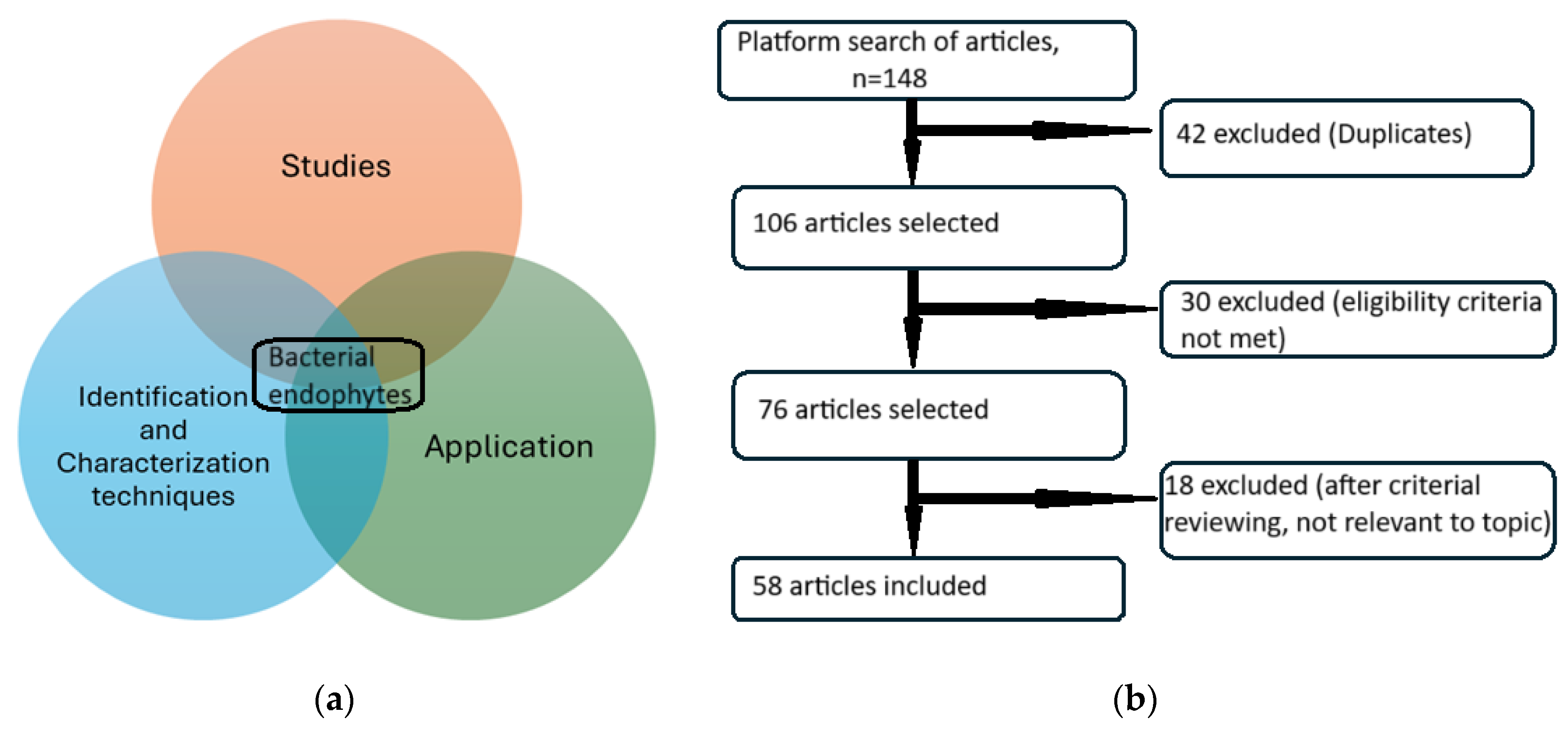
In order to ensure comprehensive review of the literature and achieve the objective of the review process and analysis, a thorough search of published articles on research terms related to the bacterial endophytes diversity, isolation, identification and application was undertaken. Platforms such as Google Scholar, NCBI, PubMed, ResearchGate, Science Direct, Scopus, Semantic Scholar, Springer Link, Web of Science Master’s and Doctoral dissertations etc were used to retrieve studies from 2014 to 2024 and enabled us to access scientific publications more easily. Following the guidelines described by Moher et al of Preferred Reporting Items for Systematic Reviews and Meta-Analyses (PRISMA), all information collected was used to structure and contribute to the build-up of review and the results of this search were collected and grouped using bibliographic management tool (Zotero), enabling relevant articles to be identified and integrated into context [215]. However, thorough scrutiny and assessment of titles, abstracts, and conclusions in the literature was carried out manually to determine their relevance. The search terms and flowchart of the literature review process is shown in Figure 1.
Figure 1.
Survey methodology used in this review: (a) Search terms used; (b) flowchart of the literature review process.
Figure 1.
Survey methodology used in this review: (a) Search terms used; (b) flowchart of the literature review process.
7. Conclusions and Future Outlook
As research progresses, the translation of these findings into practical applications will play a crucial role in addressing global challenges related to food security, environmental degradation, and sustainable development. The study of bacterial endophytes is a challenge in the field of research despite the efforts to exploit these bacteria to produce bioactive compounds. However, understanding the mechanisms underlying plant-microbe interactions and developing practical applications for commercial use are important directions for future exploration. In addition, advances in molecular techniques and bioinformatics have enabled researchers to identify and characterize bacterial endophytes more efficiently, shedding light on their diverse roles within plant microbiomes. However, further research multi-interdisciplinary scientific approaches including molecular genetics, metabolomics, genome mining, bioinformatics etc. is needed to fully understand the mechanisms underlying the beneficial interactions between endophytes and host plants, their possible exploration in assisting stress tolerance and disease control in plants with the view of combating diverse agricultural problems and ensuring food safety, as well as their potential impact on crop productivity and sustainability in various agroecosystems. Therefore, more studies are necessary to optimize the application of endophytic bacteria in different crops and environmental conditions. This type of knowledge base is crucial for future advancement of more effective biocontrol and plant-specific growth-promoting chemicals. Furthermore, there is a need for more studies focusing on the diversity and function of endophytic communities in different ecosystems to fully grasp their ecological significance. Integrating advanced omics techniques promises to provide a more comprehensive understanding of the complex interactions between plants and bacterial endophytes. Ultimately, these advancements will contribute towards harnessing the full potential of bacterial endophytes for improving crop health and yield in the future.
Author Contributions
N.M.M. and T.M.M. participated in conceptualization. N.M.M. drafted the manuscript and T.E.R., M.M., and T.M.M. contributed to the editing and reviewing of the manuscript. All authors read and approved the final manuscript for submission.
Funding
The APC was funded by University of South Africa, Life and Consumer Department.
Data Availability Statement
All data contained within the manuscript.
Conflicts of Interest
The authors declare no conflicts of interest.
Abbreviations
The following abbreviations are used in this manuscript:
| ABA | abscisic acid |
| ACC | 1-aminocyclopropane-1-carboxylate |
| AgNPs | silver nanoparticles |
| BLAST | basic local alignment search tool |
| CE-MS | capillary electrophoresis-mass spectrometry |
| DNA | deoxyribonucleic acid |
| GC-MS | gas chromatography-mass spectrometry |
| IAA | indole-3-acetic acid |
| ISR | induce systemic resistance |
| JA | jasmonic acid |
| LB | luria-bertani |
| LC-MS | liquid chromatography-mass spectrometry |
| mRNA | messenger rna |
| miRNAs | micrornas |
| NCBI | the national center for biotechnology information |
| NMR | nuclear magnetic resonance spectroscopy |
| NPs | nanoparticles |
| OQDS | olive quick decline syndrome |
| PCR | polymerase chain reaction |
| PGPB | plant growth-promoting bacteria |
| PRISMA | preferred reporting items for systematic reviews and meta-analyses |
| RT-PCR | reverse transcription polymerase chain reaction |
| RNA | ribonucleic acid |
| rRNA | ribosomal rna |
| tRNA | transfer rna |
| SEM | scanning electron microscopy |
| TEM | transmission electron microscopy |
References
- Araújo, W.L.; Marcon, J.; Maccheroni, W.; van Elsas, J.D.; van Vuurde, J.W.L.; Azevedo, J.L. Diversity of Endophytic Bacterial Populations and Their Interaction with Xylella Fastidiosa in Citrus Plants. Appl. Environ. Microbiol. 2002, 68, 4906–4914. [Google Scholar] [CrossRef] [PubMed]
- Nair, D.N.; Padmavathy, S. Impact of Endophytic Microorganisms on Plants, Environment and Humans. Sci. World J. 2014, 2014, 250693. [Google Scholar] [CrossRef]
- Gupta, K.; Dubey, N.K.; Singh, S.P.; Kheni, J.K.; Gupta, S.; Varshney, A. Plant Growth-Promoting Rhizobacteria (PGPR): Current and Future Prospects for Crop Improvement. In Current Trends in Microbial Biotechnology for Sustainable Agriculture; Yadav, A.N., Singh, J., Singh, C., Yadav, N., Eds.; Springer Singapore: Singapore, 2021; pp. 203–226. ISBN 978-981-15-6949-4. [Google Scholar]
- Chebotar, V.K.; Malfanova, N.V.; Shcherbakov, A.V.; Ahtemova, G.A.; Borisov, A.Y.; Lugtenberg, B.; Tikhonovich, I.A. Endophytic Bacteria in Microbial Preparations That Improve Plant Development (Review). Appl. Biochem. Microbiol. 2015, 51, 271–277. [Google Scholar] [CrossRef]
- Ou, T.; Xu, W.; Wang, F.; Strobel, G.; Zhou, Z.; Xiang, Z.; Liu, J.; Xie, J. A Microbiome Study Reveals Seasonal Variation in Endophytic Bacteria Among Different Mulberry Cultivars. Comput. Struct. Biotechnol. J. 2019, 17, 1091–1100. [Google Scholar] [CrossRef] [PubMed]
- Bamisile, B.S.; Akutse, K.S.; Siddiqui, J.A.; Xu, Y. Model Application of Entomopathogenic Fungi as Alternatives to Chemical Pesticides: Prospects, Challenges, and Insights for Next-Generation Sustainable Agriculture. Front. Plant Sci. 2021, Volume 12-2021. [Google Scholar] [CrossRef]
- Egamberdieva, D.; Wirth, S.J.; Alqarawi, A.A.; Abd_Allah, E.F.; Hashem, A. Phytohormones and Beneficial Microbes: Essential Components for Plants to Balance Stress and Fitness. Front. Microbiol. 2017, Volume 8-2017. [Google Scholar] [CrossRef]
- Kabiraj, A.; Biswas, R.; Halder, U.; Bandopadhyay, R. Bacterial Arsenic Metabolism and Its Role in Arsenic Bioremediation. Curr. Microbiol. 2022, 79, 131. [Google Scholar] [CrossRef]
- Kaur, R.; Kaur, C.; Kaur, G.; Kaur, J.; Rath, S.K.; Dwibedi, V. From Microscopy to Omics: A Comprehensive Review of Tools and Techniques in Studying Endophytic Adaptation Under Abiotic and Biotic Stress. J. Plant Growth Regul. 2024. [Google Scholar] [CrossRef]
- Reinhold-Hurek, B.; Hurek, T. Living inside Plants: Bacterial Endophytes. Curr. Opin. Plant Biol. 2011, 14, 435–443. [Google Scholar] [CrossRef]
- Resti, Z.; Liswarni, Y.; Martinius, M. Endophytic Bacterial Consortia as Biological Control of Bacterial Leaf Blight and Plant Growth Promoter of Rice (Oryza Sativa L.). J. Appl. Agric. Sci. Technol. 2020, 4. [Google Scholar] [CrossRef]
- Mundt, J.O.; Hinkle, N.F. Bacteria within Ovules and Seeds. Appl. Environ. Microbiol. 1976, 32, 694–698. [Google Scholar] [CrossRef] [PubMed]
- Bhore, S.; Christina, A.; Christapher, V. Endophytic Bacteria as a Source of Novel Antibiotics: An Overview. Pharmacogn. Rev. 2013, 7, 11. [Google Scholar] [CrossRef]
- Anand, U.; Pal, T.; Yadav, N.; Singh, V.K.; Tripathi, V.; Choudhary, K.K.; Shukla, A.K.; Sunita, K.; Kumar, A.; Bontempi, E.; et al. Current Scenario and Future Prospects of Endophytic Microbes: Promising Candidates for Abiotic and Biotic Stress Management for Agricultural and Environmental Sustainability. Microb. Ecol. 2023, 86, 1455–1486. [Google Scholar] [CrossRef] [PubMed]
- Neelam Geat, D.S.; Rajawat, M.V.S.; Prasanna, R.; Rajeev Kaushik, A.K.S. Isolation and Characterization of Plant Growth Promoting Endophytic Diazotrophic Bacteria from Wheat Genotypes and Their Influence on Plant Growth Promotion. Int. J. Curr. Microbiol. Appl. Sci. 2017, 6, 1533–1540. [Google Scholar] [CrossRef]
- Musa, Z.; Ma, J.; Egamberdieva, D.; Abdelshafy Mohamad, O.A.; Abaydulla, G.; Liu, Y.; Li, W.-J.; Li, L. Diversity and Antimicrobial Potential of Cultivable Endophytic Actinobacteria Associated With the Medicinal Plant Thymus Roseus. Front. Microbiol. 2020, Volume 11-2020. [Google Scholar] [CrossRef]
- Compant, S.; Clément, C.; Sessitsch, A. Plant Growth-Promoting Bacteria in the Rhizo- and Endosphere of Plants: Their Role, Colonization, Mechanisms Involved and Prospects for Utilization. Soil Biol. Biochem. 2010, 42, 669–678. [Google Scholar] [CrossRef]
- Lopez-Echartea, E.; Strejcek, M.; Mukherjee, S.; Uhlik, O.; Yrjälä, K. Bacterial Succession in Oil-Contaminated Soil under Phytoremediation with Poplars. Chemosphere 2020, 243, 125242. [Google Scholar] [CrossRef] [PubMed]
- Suman, A.; Yadav, A.N.; Verma, P. Endophytic Microbes in Crops: Diversity and Beneficial Impact for Sustainable Agriculture. In Microbial Inoculants in Sustainable Agricultural Productivity: Vol. 1: Research Perspectives; Singh, D.P., Singh, H.B., Prabha, R., Eds.; Springer India: New Delhi, 2016; ISBN 978-81-322-2647-5. [Google Scholar]
- Wu, J.; Zhao, N.; Li, X.; Zhang, P.; Li, T.; Lu, Y. Nitrogen-Mediated Distinct Rhizosphere Soil Microbes Contribute to Sorghum Bicolor (L.) Moench and Solanum Nigrum L. for Phytoremediation of Cadmium-Polluted Soil. Plant Soil 2024, 495, 723–740. [Google Scholar] [CrossRef]
- Afzal, I.; Shinwari, Z.K.; Sikandar, S.; Shahzad, S. Plant Beneficial Endophytic Bacteria: Mechanisms, Diversity, Host Range and Genetic Determinants. Microbiol. Res. 2019, 221, 36–49. [Google Scholar] [CrossRef]
- Wang, W.; Zhai, Y.; Cao, L.; Tan, H.; Zhang, R. Endophytic Bacterial and Fungal Microbiota in Sprouts, Roots and Stems of Rice (Oryza Sativa L.). Microbiol. Res. 2016, 188–189, 1–8. [Google Scholar] [CrossRef]
- Lundberg, D.S.; Lebeis, S.L.; Paredes, S.H.; Yourstone, S.; Gehring, J.; Malfatti, S.; Tremblay, J.; Engelbrektson, A.; Kunin, V.; Rio, T.G. del; et al. Defining the Core Arabidopsis Thaliana Root Microbiome. Nature 2012, 488, 86–90. [Google Scholar] [CrossRef] [PubMed]
- Shen, S.Y.; Fulthorpe, R. Seasonal Variation of Bacterial Endophytes in Urban Trees. Front. Microbiol. 2015, Volume 6-2015. [Google Scholar] [CrossRef]
- Al-Hawamdeh, F.; Ayad, J.Y.; Alananbeh, K.M.; Akash, M.W. Bacterial Endophytes and Their Contributions to Alleviating Drought and Salinity Stresses in Wheat: A Systematic Review of Physiological Mechanisms. Agriculture 2024, 14. [Google Scholar] [CrossRef]
- Romero, F.M.; Marina, M.; Pieckenstain, F.L. The Communities of Tomato (Solanum Lycopersicum L.) Leaf Endophytic Bacteria, Analyzed by 16S-Ribosomal RNA Gene Pyrosequencing. FEMS Microbiol. Lett. 2014, 351, 187–194. [Google Scholar] [CrossRef] [PubMed]
- Zhao, L.; Xu, Y.; Lai, X. Antagonistic Endophytic Bacteria Associated with Nodules of Soybean (Glycine Max L.) and Plant Growth-Promoting Properties. Braz. J. Microbiol. 2018, 49. [Google Scholar] [CrossRef] [PubMed]
- Eid, A.M.; Salim, S.S.; Hassan, S.E.-D.; Ismail, M.A.; Fouda, A. Role of Endophytes in Plant Health and Abiotic Stress Management. In Microbiome in Plant Health and Disease: Challenges and Opportunities; Kumar, V., Prasad, R., Kumar, M., Choudhary, D.K., Eds.; Springer Singapore: Singapore, 2019; ISBN 978-981-13-8495-0. [Google Scholar]
- LUO, W.; WANG, D.; QI, H.; WANG, T.; LIU, Z.; TIAN, L.; DAI, X.; CHEN, J.; MIJITI, M. Identification of Antagonistic Bacterium Strain KRS022 and Its Inhibition Effect on Verticillium Dahliae. Sci. Agric. Sin. 2023, 56, 649–664. [Google Scholar] [CrossRef]
- Rabasco-Vílchez, L.; Bolívar, A.; Morcillo-Martín, R.; Pérez-Rodríguez, F. Exploring the Microbiota of Tomato and Strawberry Plants as Sources of Bio-Protective Cultures for Fruits and Vegetables Preservation. Future Foods 2024, 9, 100344. [Google Scholar] [CrossRef]
- Karabulut, F.; Parray, J.A.; Shafi, N.; Ikram, M. Chapter 8 - Endophytes: Role in Maintaining Plant Health under Stress Conditions. In Plant Endophytes and Secondary Metabolites; Egamberdieva, D., Parray, J.A., Davranov, K., Eds.; Academic Press, 2024; pp. 105–132 ISBN 978-0-443-13365-7.
- Wu, T.; Xu, J.; Liu, J.; Guo, W.-H.; Li, X.-B.; Xia, J.-B.; Xie, W.-J.; Yao, Z.-G.; Zhang, Y.-M.; Wang, R.-Q. Characterization and Initial Application of Endophytic Bacillus Safensis Strain ZY16 for Improving Phytoremediation of Oil-Contaminated Saline Soils. Front. Microbiol. 2019, Volume 10-2019. [Google Scholar] [CrossRef]
- Lata, R.; Chowdhury, S.; Gond, S.K.; White Jr, J.F. Induction of Abiotic Stress Tolerance in Plants by Endophytic Microbes. Lett. Appl. Microbiol. 2018, 66, 268–276. [Google Scholar] [CrossRef]
- Kaur, M.; Karnwal, A. Screening of Endophytic Bacteria from Stress-Tolerating Plants for Abiotic Stress Tolerance and Plant Growth-Promoting Properties: Identification of Potential Strains for Bioremediation and Crop Enhancement. J. Agric. Food Res. 2023, 14, 100723. [Google Scholar] [CrossRef]
- Gange, A.C.; Gadhave, K.R. Plant Growth-Promoting Rhizobacteria Promote Plant Size Inequality. Sci. Rep. 2018, 8, 13828. [Google Scholar] [CrossRef] [PubMed]
- Compant, S.; Cambon, M.C.; Vacher, C.; Mitter, B.; Samad, A.; Sessitsch, A. The Plant Endosphere World – Bacterial Life within Plants. Environ. Microbiol. 2021, 23, 1812–1829. [Google Scholar] [CrossRef]
- Russo, A.; Carrozza, G.P.; Vettori, L.; Felici, C.; Cinelli, F.; Toffanin, A. Plant Beneficial Microbes and Their Application in Plant Biotechnology. Innov. Biotechnol. 2012, 57–72. [Google Scholar]
- Harish, S.; Kavino, M.; Kumar, N.; Balasubramanian, P.; Samiyappan, R. Induction of Defense-Related Proteins by Mixtures of Plant Growth Promoting Endophytic Bacteria against Banana Bunchy Top Virus. Biol. Control 2009, 51, 16–25. [Google Scholar] [CrossRef]
- Glick, B.R. Introduction to Plant Growth-Promoting Bacteria. In Beneficial Plant-Bacteria. In Beneficial Plant-Bacterial Interactions; Glick, B.R., Ed.; Springer International Publishing: Cham, 2020; ISBN 978-3-030-44368-9. [Google Scholar]
- Narayanan, Z.; Glick, B.R. Secondary Metabolites Produced by Plant Growth-Promoting Bacterial Endophytes. Microorganisms 2022, 10. [Google Scholar] [CrossRef] [PubMed]
- Müller, T.; Behrendt, U. Exploiting the Biocontrol Potential of Plant-Associated Pseudomonads – A Step towards Pesticide-Free Agriculture? Biol. Control 2021, 155, 104538. [Google Scholar] [CrossRef]
- Djaya, L.; Hersanti, *!!! REPLACE !!!*; Istifadah, N.; Hartati, S.; Joni, I.M. In Vitro Study of Plant Growth Promoting Rhizobacteria (PGPR) and Endophytic Bacteria Antagonistic to Ralstonia Solanacearum Formulated with Graphite and Silica Nano Particles as a Biocontrol Delivery System (BDS). Biocatal. Agric. Biotechnol. 2019, 19, 101153. [Google Scholar] [CrossRef]
- Zheng, T.; Liu, L.; Nie, Q.; Hsiang, T.; Sun, Z.; Zhou, Y. Isolation, Identification and Biocontrol Mechanisms of Endophytic Bacterium D61-A from Fraxinus Hupehensis against Rhizoctonia Solani. Biol. Control 2021, 158, 104621. [Google Scholar] [CrossRef]
- Arora, N.K.; Mishra, J. Next Generation Microbe-Based Bioinoculants for Sustainable Agriculture and Food Security. Environ. Sustain. 2024, 7, 1–4. [Google Scholar] [CrossRef]
- Laskar, I.H.; Vandana, U.K.; Das, N.; Pandey, P.; Mazumder, P.B. Role of Microbial Bio-Inoculants in Sustainable Agriculture. In Microbial Biotechnology for Sustainable Agriculture. In Microbial Biotechnology for Sustainable Agriculture Volume 2; Arora, N.K., Bouizgarne, B., Eds.; Springer Nature Singapore: Singapore, 2024; ISBN 978-981-97-2355-3. [Google Scholar]
- Rabiey, M.; Hailey, L.E.; Roy, S.R.; Grenz, K.; Al-Zadjali, M.A.S.; Barrett, G.A.; Jackson, R.W. Endophytes vs Tree Pathogens and Pests: Can They Be Used as Biological Control Agents to Improve Tree Health? Eur. J. Plant Pathol. 2019, 155, 711–729. [Google Scholar] [CrossRef]
- Mamarasulov, B.; Davranov, K.; Umruzaqov, A.; Ercisli, S.; Ali Alharbi, S.; Ansari, M.J.; Krivosudská, E.; Datta, R.; Jabborova, D. Evaluation of the Antimicrobial and Antifungal Activity of Endophytic Bacterial Crude Extracts from Medicinal Plant Ajuga Turkestanica (Rgl.) Brig (Lamiaceae). J. King Saud Univ. - Sci. 2023, 35, 102644. [Google Scholar] [CrossRef]
- Spantidos, T.-N.; Douka, D.; Katinakis, P.; Venieraki, A. Genomic Insights into Plant Growth Promotion and Biocontrol of Bacillus Velezensis Amfr20, an Olive Tree Endophyte. Horticulturae 2025, 11. [Google Scholar] [CrossRef]
- Zicca, S.; De Bellis, P.; Masiello, M.; Saponari, M.; Saldarelli, P.; Boscia, D.; Sisto, A. Antagonistic Activity of Olive Endophytic Bacteria and of Bacillus Spp. Strains against Xylella Fastidiosa. Microbiol. Res. 2020, 236, 126467. [Google Scholar] [CrossRef] [PubMed]
- Marian, M.; Ohno, T.; Suzuki, H.; Kitamura, H.; Kuroda, K.; Shimizu, M. A Novel Strain of Endophytic Streptomyces for the Biocontrol of Strawberry Anthracnose Caused by Glomerella Cingulata. Microbiol. Res. 2020, 234, 126428. [Google Scholar] [CrossRef]
- Dowarah, B.; Agarwal, H.; Krishnatreya, D.B.; Sharma, P.L.; Kalita, N.; Agarwala, N. Evaluation of Seed Associated Endophytic Bacteria from Tolerant Chilli Cv. Firingi Jolokia for Their Biocontrol Potential against Bacterial Wilt Disease. Microbiol. Res. 2021, 248, 126751. [Google Scholar] [CrossRef] [PubMed]
- Figueiredo, J.E.F.; Diniz, G. de F.D.; Marins, M.S.; Silva, F.C.; Ribeiro, V.P.; Lanza, F.E.; Oliveira-Paiva, C.A. de; Cruz-Magalhães, V. Bacillus Velezensis CNPMS-22 as Biocontrol Agent of Pathogenic Fungi and Plant Growth Promoter. Front. Microbiol. 2025, Volume 16-2025. [Google Scholar]
- Cui, L.; Yang, C.; Wei, L.; Li, T.; Chen, X. Isolation and Identification of an Endophytic Bacteria Bacillus Velezensis 8-4 Exhibiting Biocontrol Activity against Potato Scab. Biol. Control 2020, 141, 104156. [Google Scholar] [CrossRef]
- Verma, M.L.; Kumar, A.; Chintagunta, A.D.; Samudrala, P.J.K.; Bardin, M.; Lichtfouse, E. Microbial Production of Biopesticides for Sustainable Agriculture. Sustainability 2024, 16. [Google Scholar] [CrossRef]
- Mei, C.; Amaradasa, B.S.; Chretien, R.L.; Liu, D.; Snead, G.; Samtani, J.B.; Lowman, S. A Potential Application of Endophytic Bacteria in Strawberry Production. Horticulturae 2021, 7. [Google Scholar] [CrossRef]
- Lahlali, R.; Ezrari, S.; Radouane, N.; Kenfaoui, J.; Esmaeel, Q.; El Hamss, H.; Belabess, Z.; Barka, E.A. Biological Control of Plant Pathogens: A Global Perspective. Microorganisms 2022, 10. [Google Scholar] [CrossRef]
- Saravanan, A.; Kumar, P.S.; Karishma, S.; Vo, D.-V.N.; Jeevanantham, S.; Yaashikaa, P.R.; George, C.S. A Review on Biosynthesis of Metal Nanoparticles and Its Environmental Applications. Chemosphere 2021, 264, 128580. [Google Scholar] [CrossRef] [PubMed]
- Salem, S.S.; Fouda, A. Green Synthesis of Metallic Nanoparticles and Their Prospective Biotechnological Applications: An Overview. Biol. Trace Elem. Res. 2021, 199, 344–370. [Google Scholar] [CrossRef]
- Ahmad, W.; Kalra, D. Green Synthesis, Characterization and Anti Microbial Activities of ZnO Nanoparticles Using Euphorbia Hirta Leaf Extract. J. King Saud Univ. - Sci. 2020, 32, 2358–2364. [Google Scholar] [CrossRef]
- Rahman, S.; Rahman, L.; Khalil, A.T.; Ali, N.; Zia, D.; Ali, M.; Shinwari, Z.K. Endophyte-Mediated Synthesis of Silver Nanoparticles and Their Biological Applications. Appl. Microbiol. Biotechnol. 2019, 103, 2551–2569. [Google Scholar] [CrossRef]
- Nero, B.F. Phytoremediation of Petroleum Hydrocarbon-Contaminated Soils with Two Plant Species: Jatropha Curcas and Vetiveria Zizanioides at Ghana Manganese Company Ltd. Int. J. Phytoremediation 2021, 23, 171–180. [Google Scholar] [CrossRef]
- Fouda, A.; Hassan, S.E.-D.; Abdo, A.M.; El-Gamal, M.S. Antimicrobial, Antioxidant and Larvicidal Activities of Spherical Silver Nanoparticles Synthesized by Endophytic Streptomyces Spp. Biol. Trace Elem. Res. 2020, 195, 707–724. [Google Scholar] [CrossRef] [PubMed]
- Baker, S.; Satish, S. Biosynthesis of Gold Nanoparticles by Pseudomonas Veronii AS41G Inhabiting Annona Squamosa L. Spectrochim. Acta. A. Mol. Biomol. Spectrosc. 2015, 150, 691–695. [Google Scholar] [CrossRef]
- Saeed, S.; Iqbal, A.; Ashraf, M.A. Bacterial-Mediated Synthesis of Silver Nanoparticles and Their Significant Effect against Pathogens. Environ. Sci. Pollut. Res. 2020, 27, 37347–37356. [Google Scholar] [CrossRef] [PubMed]
- Hassan, S.E.-D.; Salem, S.S.; Fouda, A.; Awad, M.A.; El-Gamal, M.S.; Abdo, A.M. New Approach for Antimicrobial Activity and Bio-Control of Various Pathogens by Biosynthesized Copper Nanoparticles Using Endophytic Actinomycetes. J. Radiat. Res. Appl. Sci. 2018, 11, 262–270. [Google Scholar] [CrossRef]
- Hassan, S.E.-D.; Fouda, A.; Radwan, A.A.; Salem, S.S.; Barghoth, M.G.; Awad, M.A.; Abdo, A.M.; El-Gamal, M.S. Endophytic Actinomycetes Streptomyces Spp Mediated Biosynthesis of Copper Oxide Nanoparticles as a Promising Tool for Biotechnological Applications. JBIC J. Biol. Inorg. Chem. 2019, 24, 377–393. [Google Scholar] [CrossRef]
- Fadiji, A.E.; Mortimer, P.E.; Xu, J.; Ebenso, E.E.; Babalola, O.O. Biosynthesis of Nanoparticles Using Endophytes: A Novel Approach for Enhancing Plant Growth and Sustainable Agriculture. Sustainability 2022, 14. [Google Scholar] [CrossRef]
- Bogas, A.C.; Henrique Rodrigues, S.; Gonçalves, M.O.; De Assis, M.; Longo, E.; Paiva De Sousa, C. Endophytic Microorganisms From the Tropics as Biofactories for the Synthesis of Metal-Based Nanoparticles: Healthcare Applications. Front. Nanotechnol. 2022, Volume 4-2022. [Google Scholar] [CrossRef]
- Tripathy, P.; Sethi, S.; Panchal, D.; Prakash, O.; Sharma, A.; Mondal, R.B.; Pal, S. Chapter 13 - Biogenic Synthesis of Nanoparticles by Amalgamating Microbial Endophytes: Potential Environmental Applications and Future Perspectives. In Microbial Endophytes and Plant Growth; Solanki, M.K., Yadav, M.K., Singh, B.P., Gupta, V.K., Eds.; Academic Press, 2023; pp. 215–231 ISBN 978-0-323-90620-3.
- Long, H.H.; Schmidt, D.D.; Baldwin, I.T. Native Bacterial Endophytes Promote Host Growth in a Species-Specific Manner; Phytohormone Manipulations Do Not Result in Common Growth Responses. PLOS ONE 2008, 3, e2702. [Google Scholar] [CrossRef] [PubMed]
- Goswami, S.K.; Kashyap, A.S.; Kumar, R.; Gujjar, R.S.; Singh, A.; Manzar, N. Harnessing Rhizospheric Microbes for Eco-Friendly and Sustainable Crop Production in Saline Environments. Curr. Microbiol. 2023, 81, 14. [Google Scholar] [CrossRef] [PubMed]
- Maheshwari, R.; Bhutani, N.; Bhardwaj, A.; Suneja, P. Functional Diversity of Cultivable Endophytes from Cicer Arietinum and Pisum Sativum: Bioprospecting Their Plant Growth Potential. Biocatal. Agric. Biotechnol. 2019, 20, 101229. [Google Scholar] [CrossRef]
- Aleem, A.; Sidik, N.J.; Wan, W.R.; Razak, A.; Yunus, N.M. Secretion of Root Exudates in Response to Biotic and Abiotic Environment. Sarhad J. Agric. 2024, 40. [Google Scholar] [CrossRef]
- Duhan, P.; Bansal, P.; Rani, S. Isolation, Identification and Characterization of Endophytic Bacteria from Medicinal Plant Tinospora Cordifolia. South Afr. J. Bot. 2020, 134, 43–49. [Google Scholar] [CrossRef]
- Khalaf, E.M.; Raizada, M.N. Taxonomic and Functional Diversity of Cultured Seed Associated Microbes of the Cucurbit Family. BMC Microbiol. 2016, 16, 131. [Google Scholar] [CrossRef]
- Saad, D.M.; El- Demerdash, M.E.; Abdellatif, Y.M.; Hassan, E.A.E.-T. Isolation and Identification of Bacteria Producing Indole from Rhizospheric Plant. Arab Univ. J. Agric. Sci. 2024, 0, 0–0. [Google Scholar] [CrossRef]
- Frank, A.; Saldierna Guzmán, J.; Shay, J. Transmission of Bacterial Endophytes. Microorganisms 2017, 5, 70. [Google Scholar] [CrossRef]
- Vyas, P.; Singh, B. Plant Growth-Promoting Endophytes from Stevia Rebaudiana Identified to Possess Bio-Control Potential against Maize Sheath Blight Pathogen Rhizoctonia Solani. Eur. J. Plant Pathol. 2024, 168, 571–591. [Google Scholar] [CrossRef]
- Orozco-Mosqueda, Ma. del C.; Flores, A.; Rojas-Sánchez, B.; Urtis-Flores, C.A.; Morales-Cedeño, L.R.; Valencia-Marin, M.F.; Chávez-Avila, S.; Rojas-Solis, D.; Santoyo, G. Plant Growth-Promoting Bacteria as Bioinoculants: Attributes and Challenges for Sustainable Crop Improvement. Agronomy 2021, 11, 1167. [Google Scholar] [CrossRef]
- Kaur, G.; Patel, A.; Dwibedi, V.; Rath, S.K. Harnessing the Action Mechanisms of Microbial Endophytes for Enhancing Plant Performance and Stress Tolerance: Current Understanding and Future Perspectives. Arch. Microbiol. 2023, 205, 303. [Google Scholar] [CrossRef] [PubMed]
- Ullah, A.; Nisar, M.; Ali, H.; Hazrat, A.; Hayat, K.; Keerio, A.A.; Ihsan, M.; Laiq, M.; Ullah, S.; Fahad, S.; et al. Drought Tolerance Improvement in Plants: An Endophytic Bacterial Approach. Appl. Microbiol. Biotechnol. 2019, 103, 7385–7397. [Google Scholar] [CrossRef]
- Santoyo, G.; Moreno-Hagelsieb, G.; del Carmen Orozco-Mosqueda, Ma.; Glick, B.R. Plant Growth-Promoting Bacterial Endophytes. Microbiol. Res. 2016, 183, 92–99. [Google Scholar] [CrossRef]
- Gouda, S.; Das, G.; Sen, S.K.; Shin, H.-S.; Patra, J.K. Endophytes: A Treasure House of Bioactive Compounds of Medicinal Importance. Front. Microbiol. 2016. [Google Scholar] [CrossRef]
- Singh, M.; Kumar, A.; Singh, R.; Pandey, K.D. Endophytic Bacteria: A New Source of Bioactive Compounds. 3 Biotech 2017, 7, 315. [Google Scholar] [CrossRef]
- Panigrahi, S.; Rath, C.C. In Vitro Characterization of Antimicrobial Activity of an Endophytic Bacterium Enterobacter Cloacae (MG001451) Isolated from Ocimum Sanctum. South Afr. J. Bot. 2021, 143, 90–96. [Google Scholar] [CrossRef]
- Raimi, A.; Adeleke, R. Bioprospecting of Endophytic Microorganisms for Bioactive Compounds of Therapeutic Importance. Arch. Microbiol. 2021, 203, 1917–1942. [Google Scholar] [CrossRef]
- Tlou, M.; Ndou, B.; Mabona, N.; Khwathisi, A.; Ateba, C.; Madala, N.; Serepa-Dlamini, M.H. Next Generation Sequencing-Aided Screening, Isolation, Molecular Identification, and Antimicrobial Potential for Bacterial Endophytes from the Medicinal Plant, Elephantorrhiza Elephantina. Front. Microbiol. 2024, Volume 15-2024. [Google Scholar] [CrossRef]
- Chandwani, S.; Amaresan, N. Role of ACC Deaminase Producing Bacteria for Abiotic Stress Management and Sustainable Agriculture Production. Environ. Sci. Pollut. Res. 2022, 29, 22843–22859. [Google Scholar] [CrossRef] [PubMed]
- Gamalero, E.; Lingua, G.; Glick, B.R. Ethylene, ACC, and the Plant Growth-Promoting Enzyme ACC Deaminase. Biology 2023, 12. [Google Scholar] [CrossRef] [PubMed]
- Morales-Cedeño, L.R.; Orozco-Mosqueda, Ma. del C.; Loeza-Lara, P.D.; Parra-Cota, F.I.; de los Santos-Villalobos, S.; Santoyo, G. Plant Growth-Promoting Bacterial Endophytes as Biocontrol Agents of Pre- and Post-Harvest Diseases: Fundamentals, Methods of Application and Future Perspectives. Microbiol. Res. 2021, 242, 126612. [Google Scholar] [CrossRef]
- Wahab, A.; Batool, F.; Abdi, G.; Muhammad, M.; Ullah, S.; Zaman, W. Role of Plant Growth-Promoting Rhizobacteria in Sustainable Agriculture: Addressing Environmental and Biological Challenges. J. Plant Physiol. 2025, 307, 154455. [Google Scholar] [CrossRef]
- Ratnaningsih, H.R.; Noviana, Z.; Dewi, T.K.; Loekito, S.; Wiyono, S.; Gafur, A.; Antonius, S. IAA and ACC Deaminase Producing-Bacteria Isolated from the Rhizosphere of Pineapple Plants Grown under Different Abiotic and Biotic Stresses. Heliyon 2023, 9, e16306. [Google Scholar] [CrossRef]
- Saikia, J.; Sarma, R.K.; Dhandia, R.; Yadav, A.; Bharali, R.; Gupta, V.K.; Saikia, R. Alleviation of Drought Stress in Pulse Crops with ACC Deaminase Producing Rhizobacteria Isolated from Acidic Soil of Northeast India. Sci. Rep. 2018, 8, 3560. [Google Scholar] [CrossRef]
- Bell, D.T.; McComb, J.A.; van der Moezel, P.G.; Bennett, I.J.; Kabay, E.D. Comparisons of Selected and Cloned Plantlets against Seedlings for Rehabilitation of Saline and Waterlogged Discharge Zones in Australian Agricultural Catchments. Aust. For. 1994, 57, 69–75. [Google Scholar] [CrossRef]
- Singh, R.P.; Jha, P.N. A Halotolerant Bacterium Bacillus Licheniformis HSW-16 Augments Induced Systemic Tolerance to Salt Stress in Wheat Plant (Triticum Aestivum). Front. Plant Sci. 2016, Volume 7-2016. [Google Scholar] [CrossRef]
- Durairaj, K.; Velmurugan, P.; Park, J.-H.; Chang, W.-S.; Park, Y.-J.; Senthilkumar, P.; Choi, K.-M.; Lee, J.-H.; Oh, B.-T. Potential for Plant Biocontrol Activity of Isolated Pseudomonas Aeruginosa and Bacillus Stratosphericus Strains against Bacterial Pathogens Acting through Both Induced Plant Resistance and Direct Antagonism. FEMS Microbiol. Lett. 2017, 364, fnx225. [Google Scholar] [CrossRef]
- Stępniewska, Z.; Kuźniar, A. Endophytic Microorganisms—Promising Applications in Bioremediation of Greenhouse Gases. Appl. Microbiol. Biotechnol. 2013, 97, 9589–9596. [Google Scholar] [CrossRef]
- Liu, L.; Quan, S.; Li, L.; Lei, G.; Li, S.; Gong, T.; Zhang, Z.; Hu, Y.; Yang, W. Endophytic Bacteria Improve Bio- and Phytoremediation of Heavy Metals. Microorganisms 2024, 12, 2137. [Google Scholar] [CrossRef]
- Kong, Z.; Glick, B.R. The Role of Bacteria in Phytoremediation. In Applied Bioengineering; John Wiley & Sons, Ltd, 2017; pp. 327–353 ISBN 978-3-527-80059-9.
- He, W.; Mallavarapu, M.; Chun-Ya, W.; Suresh R., S.; and Dai, C.-C. Endophyte-Assisted Phytoremediation: Mechanisms and Current Application Strategies for Soil Mixed Pollutants. Crit. Rev. Biotechnol. 2020, 40, 31–45. [Google Scholar] [CrossRef] [PubMed]
- Datta, S.; Singh, S.; Kumar, V.; Dhanjal, D.S.; Sidhu, G.K.; Amin, D.S.; Kumar, S.; Singh, J.; Singh, J. Endophytic Bacteria in Xenobiotic Degradation. In Microbial Endophytes; Kumar, A., Singh, V.K., Eds.; Woodhead Publishing, 2020; pp. 125–156 ISBN 978-0-12-818734-0.
- Ren, Z.; Cheng, R.; Chen, P.; Xue, Y.; Xu, H.; Yin, Y.; Huang, G.; Zhang, W.; Zhang, L. Plant-Associated Microbe System in Treatment of Heavy Metals–Contaminated Soil: Mechanisms and Applications. Water. Air. Soil Pollut. 2023, 234, 39. [Google Scholar] [CrossRef]
- Afzal, M.; Khan, Q.M.; Sessitsch, A. Endophytic Bacteria: Prospects and Applications for the Phytoremediation of Organic Pollutants. Chemosphere 2014, 117, 232–242. [Google Scholar] [CrossRef]
- Egamberdieva, D.; Alimov, J.; Shurigin, V.; Alaylar, B.; Wirth, S.; Bellingrath-Kimura, S.D. Diversity and Plant Growth-Promoting Ability of Endophytic, Halotolerant Bacteria Associated with Tetragonia Tetragonioides (Pall.) Kuntze. Plants 2022, 11. [Google Scholar] [CrossRef] [PubMed]
- Zhang, Y.; He, L.; Chen, Z.; Zhang, W.; Wang, Q.; Qian, M.; Sheng, X. Characterization of Lead-Resistant and ACC Deaminase-Producing Endophytic Bacteria and Their Potential in Promoting Lead Accumulation of Rape. J. Hazard. Mater. 2011, 186, 1720–1725. [Google Scholar] [CrossRef]
- Wang, Z.; Zhang, H.; Xiong, Y.; Zhang, L.; Cui, J.; Li, G.; Du, C.; Wen, K. Remediation Mechanism of High Concentrations of Multiple Heavy Metals in Contaminated Soil by Sedum Alfredii and Native Microorganisms. J. Environ. Sci. 2025, 147, 179–188. [Google Scholar] [CrossRef]
- Chen, L.; Luo, S.; Li, X.; Wan, Y.; Chen, J.; Liu, C. Interaction of Cd-Hyperaccumulator Solanum Nigrum L. and Functional Endophyte Pseudomonas Sp. Lk9 on Soil Heavy Metals Uptake. Soil Biol. Biochem. 2014, 68, 300–308. [Google Scholar] [CrossRef]
- Govarthanan, M.; Mythili, R.; Selvankumar, T.; Kamala-Kannan, S.; Rajasekar, A.; Chang, Y.-C. Bioremediation of Heavy Metals Using an Endophytic Bacterium Paenibacillus Sp. RM Isolated from the Roots of Tridax Procumbens. 3 Biotech 2016, 6, 242. [Google Scholar] [CrossRef]
- Mamphogoro, T.P.; Babalola, O.O.; Aiyegoro, O.A. Sustainable Management Strategies for Bacterial Wilt of Sweet Peppers (Capsicum Annuum) and Other Solanaceous Crops. J. Appl. Microbiol. 2020, 129, 496–508. [Google Scholar] [CrossRef]
- Azmi, N.S.A. Phytomicrobiome Engineering for Crop Growth and Resilience. In Plant Microbiome Engineering; Dharumadurai Dhanasekaranand Narayanan, A.S., Ed.; Springer US: New York, NY, 2025; ISBN 978-1-0716-4180-4. [Google Scholar]
- Yang, R.; Fan, X.; Cai, X.; Hu, F. The Inhibitory Mechanisms by Mixtures of Two Endophytic Bacterial Strains Isolated from Ginkgo Biloba against Pepper Phytophthora Blight. Biol. Control 2015, 85, 59–67. [Google Scholar] [CrossRef]
- Ma, L.; Cao, Y.H.; Cheng, M.H.; Huang, Y.; Mo, M.H.; Wang, Y.; Yang, J.Z.; Yang, F.X. Phylogenetic Diversity of Bacterial Endophytes of Panax Notoginseng with Antagonistic Characteristics towards Pathogens of Root-Rot Disease Complex. Antonie Van Leeuwenhoek 2013, 103, 299–312. [Google Scholar] [CrossRef] [PubMed]
- Jayakumar, A.; Krishna, A.; Mohan, M.; Nair, I.C.; Radhakrishnan, E.K. Plant Growth Enhancement, Disease Resistance, and Elemental Modulatory Effects of Plant Probiotic Endophytic Bacillus Sp. Fcl1. Probiotics Antimicrob. Proteins 2019, 11, 526–534. [Google Scholar] [CrossRef]
- Rakotoniriana, E.F.; Rafamantanana, M.; Randriamampionona, D.; Rabemanantsoa, C.; Urveg-Ratsimamanga, S.; El Jaziri, M.; Munaut, F.; Corbisier, A.-M.; Quetin-Leclercq, J.; Declerck, S. Study in Vitro of the Impact of Endophytic Bacteria Isolated from Centella Asiatica on the Disease Incidence Caused by the Hemibiotrophic Fungus Colletotrichum Higginsianum. Antonie Van Leeuwenhoek 2013, 103, 121–133. [Google Scholar] [CrossRef] [PubMed]
- He, R.-L.; Wang, G.-P.; Liu, X.-H.; Zhang, C.-L.; Lin, F.-C. Antagonistic Bioactivity of an Endophytic Bacterium Isolated from Epimedium Brevicornu Maxim. Afr. J. Biotechnol. 2009, 8, 191–195. [Google Scholar]
- Hong, C.E.; Jo, S.H.; Jo, I.-H.; Park, J.M. Diversity and Antifungal Activity of Endophytic Bacteria Associated with Panax Ginseng Seedlings. Plant Biotechnol. Rep. 2018, 12, 409–418. [Google Scholar] [CrossRef]
- Karthikeyan, B.; Joe, M.M.; Islam, Md.R.; Sa, T. ACC Deaminase Containing Diazotrophic Endophytic Bacteria Ameliorate Salt Stress in Catharanthus Roseus through Reduced Ethylene Levels and Induction of Antioxidative Defense Systems. Symbiosis 2012, 56, 77–86. [Google Scholar] [CrossRef]
- Xu, J.-Y.; Han, Y.-H.; Chen, Y.; Zhu, L.-J.; Ma, L.Q. Arsenic Transformation and Plant Growth Promotion Characteristics of As-Resistant Endophytic Bacteria from As-Hyperaccumulator Pteris Vittata. Chemosphere 2016, 144, 1233–1240. [Google Scholar] [CrossRef]
- Khaksar, G.; Siswanto, D.; Treesubsuntorn, C.; Thiravetyan, P. Euphorbia Milii-Endophytic Bacteria Interactions Affect Hormonal Levels of the Native Host Differently Under Various Airborne Pollutants. Mol. Plant-Microbe Interactions® 2016, 29, 663–673. [Google Scholar] [CrossRef]
- Qin, S.; Feng, W.-W.; Zhang, Y.-J.; Wang, T.-T.; Xiong, Y.-W.; Xing, K. Diversity of Bacterial Microbiota of Coastal Halophyte Limonium Sinense and Amelioration of Salinity Stress Damage by Symbiotic Plant Growth-Promoting Actinobacterium Glutamicibacter Halophytocola KLBMP 5180. Appl. Environ. Microbiol. 2018, 84, e01533–18. [Google Scholar] [CrossRef]
- Zhu, X.; Jin, L.; Sun, K.; Li, S.; Ling, W.; Li, X. Potential of Endophytic Bacterium Paenibacillus Sp. PHE-3 Isolated from Plantago Asiatica L. for Reduction of PAH Contamination in Plant Tissues. Int. J. Environ. Res. Public. Health 2016, 13. [Google Scholar] [CrossRef] [PubMed]
- Aswathy, A.J.; Jasim, B.; Jyothis, M.; Radhakrishnan, E.K. Identification of Two Strains of Paenibacillus Sp. as Indole 3 Acetic Acid-Producing Rhizome-Associated Endophytic Bacteria from Curcuma Longa. 3 Biotech 2013, 3, 219–224. [Google Scholar] [CrossRef]
- Hassan, S.E.-D. Plant Growth-Promoting Activities for Bacterial and Fungal Endophytes Isolated from Medicinal Plant of Teucrium Polium L. J. Adv. Res. 2017, 8, 687–695. [Google Scholar] [CrossRef] [PubMed]
- Ibrahim, E.; Fouad, H.; Zhang, M.; Zhang, Y.; Qiu, W.; Yan, C.; Li, B.; Mo, J.; Chen, J. Biosynthesis of Silver Nanoparticles Using Endophytic Bacteria and Their Role in Inhibition of Rice Pathogenic Bacteria and Plant Growth Promotion. RSC Adv 2019, 9, 29293–29299. [Google Scholar] [CrossRef] [PubMed]
- Vendan, R.T.; Yu, Y.J.; Lee, S.H.; Rhee, Y.H. Diversity of Endophytic Bacteria in Ginseng and Their Potential for Plant Growth Promotion. J. Microbiol. 2010, 48, 559–565. [Google Scholar] [CrossRef]
- Zhao, L.; Xu, Y.; Lai, X.-H.; Shan, C.; Deng, Z.; Ji, Y. Screening and Characterization of Endophytic Bacillus and Paenibacillus Strains from Medicinal Plant Lonicera Japonica for Use as Potential Plant Growth Promoters. Braz. J. Microbiol. 2015, 46, 977–989. [Google Scholar] [CrossRef]
- Devi, K.A.; Pandey, P.; Sharma, G.D. Plant Growth-Promoting Endophyte Serratia Marcescens AL2-16 Enhances the Growth of Achyranthes Aspera L., a Medicinal Plant. HAYATI J. Biosci. 2016, 23, 173–180. [Google Scholar] [CrossRef]
- Pereira, S.I.A.; Monteiro, C.; Vega, A.L.; Castro, P.M.L. Endophytic Culturable Bacteria Colonizing Lavandula Dentata L. Plants: Isolation, Characterization and Evaluation of Their Plant Growth-Promoting Activities. Ecol. Eng. 2016, 87, 91–97. [Google Scholar] [CrossRef]
- Yin, D.D.; Wang, Y.L.; Yang, M.; Yin, D.K.; Wang, G.K.; Xu, F. Analysis of Chuanxiong Rhizoma Substrate on Production of Ligustrazine in Endophytic Bacillus Subtilis by Ultra High Performance Liquid Chromatography with Quadrupole Time-of-Flight Mass Spectrometry. J. Sep. Sci. 2019, 42, 3067–3076. [Google Scholar] [CrossRef]
- Fu, Y. Biotransformation of Ginsenoside Rb1 to Gyp-XVII and Minor Ginsenoside Rg3 by Endophytic Bacterium Flavobacterium Sp. GE 32 Isolated from Panax Ginseng. Lett. Appl. Microbiol. 2019, 68, 134–141. [Google Scholar] [CrossRef]
- Gao, Y.; Liu, Q.; Zang, P.; Li, X.; Ji, Q.; He, Z.; Zhao, Y.; Yang, H.; Zhao, X.; Zhang, L. An Endophytic Bacterium Isolated from Panax Ginseng C.A. Meyer Enhances Growth, Reduces Morbidity, and Stimulates Ginsenoside Biosynthesis. Phytochem. Lett. 2015, 11, 132–138. [Google Scholar] [CrossRef]
- Zhou, J.-Y.; Li, X.; Zhao, D.; Deng-Wang, M.-Y.; Dai, C.-C. Reactive Oxygen Species and Hormone Signaling Cascades in Endophytic Bacterium Induced Essential Oil Accumulation in Atractylodes Lancea. Planta 2016, 244, 699–712. [Google Scholar] [CrossRef] [PubMed]
- Yang, H.-R.; Yuan, J.; Liu, L.-H.; Zhang, W.; Chen, F.; Dai, C.-C. Endophytic Pseudomonas Fluorescens Induced Sesquiterpenoid Accumulation Mediated by Gibberellic Acid and Jasmonic Acid in Atractylodes Macrocephala Koidz Plantlets. Plant Cell Tissue Organ Cult. PCTOC 2019, 138, 445–457. [Google Scholar] [CrossRef]
- Li Jie AND Zhao, G.-Z.A.N.D.V.A.A.N.D.Q.S.A.N.D.X.Z.A.N.D.H.H.-Y.A.N.D.Z.W.-Y.A.N.D.Z.L.-X.A.N.D.X.L.-H.A.N.D.Z.S.A.N.D.L.W.-J. An Endophytic Pseudonocardia Species Induces the Production of Artemisinin in Artemisia Annua. PLOS ONE 2012, 7, 1–9. [CrossRef]
- Compant, S.; Mitter, B.; Colli-Mull, J.G.; Gangl, H.; Sessitsch, A. Endophytes of Grapevine Flowers, Berries, and Seeds: Identification of Cultivable Bacteria, Comparison with Other Plant Parts, and Visualization of Niches of Colonization. Microb. Ecol. 2011, 62, 188–197. [Google Scholar] [CrossRef]
- Papik, J.; Folkmanova, M.; Polivkova-Majorova, M.; Suman, J.; Uhlik, O. The Invisible Life inside Plants: Deciphering the Riddles of Endophytic Bacterial Diversity. Biotechnol. Adv. 2020, 44, 107614. [Google Scholar] [CrossRef]
- Mahlangu, S.G.; Serepa-Dlamini, M.H. First Report of Bacterial Endophytes from the Leaves of Pellaea Calomelanos in South Africa. South Afr. J. Sci. 2018, 114, 1–9. [Google Scholar] [CrossRef]
- Ogofure, A.G.; Green, E. Bioactivity and Metabolic Profiling of Crude Extracts from Endophytic Bacteria Linked to <em>Solanum Mauritianum</Em> Scope: Discovery of Antibacterial and Anticancer Properties. Heliyon 2025, 11. [Google Scholar] [CrossRef]
- Jacob, J.; Krishnan, G.V.; Thankappan, D.; Bhaskaran Nair Saraswathy Amma, D.K. Endophytic Bacterial Strains Induced Systemic Resistance in Agriculturally Important Crop Plants. In Microbial Endophytes; Kumar, A., E.K, R., Eds.; Woodhead Publishing, 2020; pp. 75–105 ISBN 978-0-12-819654-0.
- Sonowal, S.; Ahmed, R.; Chikkaputtaiah, C.; Basar, E.; Velmurugan, N. A Comprehensive Characterization of Culturable Endophytic Bacteria of Paris Polyphylla and Their Potential Role in Microalgal Growth in Co-Culture. Appl. Soil Ecol. 2022, 174, 104410. [Google Scholar] [CrossRef]
- Etesami, H.; Jeong, B.R.; Glick, B.R. Biocontrol of Plant Diseases by Bacillus Spp. Physiol. Mol. Plant Pathol. 2023, 126, 102048. [Google Scholar] [CrossRef]
- Hallmann, J.; Quadt-Hallmann, A.; Mahaffee, W.F.; Kloepper, J.W. Bacterial Endophytes in Agricultural Crops. Can. J. Microbiol. 1997, 43, 895–914. [Google Scholar] [CrossRef]
- Eevers, N.; Gielen, M.; Sánchez-López, A.; Jaspers, S.; White, J.C.; Vangronsveld, J.; Weyens, N. Optimization of Isolation and Cultivation of Bacterial Endophytes through Addition of Plant Extract to Nutrient Media. Microb. Biotechnol. 2015, 8, 707–715. [Google Scholar] [CrossRef] [PubMed]
- Makuwa, S.C.; Serepa-Dlamini, M.H. The Antibacterial Activity of Crude Extracts of Secondary Metabolites from Bacterial Endophytes Associated with Dicoma Anomala. Int. J. Microbiol. 2021, 2021, 8812043. [Google Scholar] [CrossRef] [PubMed]
- Anwar, N.; Jiang, Y.; Ma, W.; Yao, Y.; Li, J.; Ababaikeli, G.; Li, G.; Ma, T. Culturable Bacteria Diversity in Stem Liquid and Resina from Populus Euphratica and Screening of Plant Growth-Promoting Bacteria. BMC Microbiol. 2022, 22, 322. [Google Scholar] [CrossRef] [PubMed]
- Singh, M.; Naskar, A.; Rupashree, A.; Rajput, M.; Singh, V.K. Analysis of Endophytic Microbes Harboring in Medicinal Plants of Himalayan Region with Their Medicinal Properties. Biocatal. Agric. Biotechnol. 2023, 53, 102857. [Google Scholar] [CrossRef]
- Adeleke, R.A.; Mashiane, A.R.; Bezuidenhout, C.C.; Chirima, G. Community Composition and Functions of Endophytic Bacteria of Bt Maize. South Afr. J. Sci. 2018, 114. [Google Scholar] [CrossRef]
- Dasgupta, M.G.; Burragoni, S.; Amrutha, S.; Muthupandi, M.; Parveen, A.B.M.; Sivakumar, V.; Ulaganathan, K. Diversity of Bacterial Endophyte in Eucalyptus Clones and Their Implications in Water Stress Tolerance. Microbiol. Res. 2020, 241, 126579. [Google Scholar] [CrossRef]
- Abbamondi, G.R.; Tommonaro, G.; Weyens, N.; Thijs, S.; Sillen, W.; Gkorezis, P.; Iodice, C.; de Melo Rangel, W.; Nicolaus, B.; Vangronsveld, J. Plant Growth-Promoting Effects of Rhizospheric and Endophytic Bacteria Associated with Different Tomato Cultivars and New Tomato Hybrids. Chem. Biol. Technol. Agric. 2016, 3, 1. [Google Scholar] [CrossRef]
- Abiraami, T.V.; Singh, S.; Nain, L. Soil Metaproteomics as a Tool for Monitoring Functional Microbial Communities: Promises and Challenges. Rev. Environ. Sci. Biotechnol. 2020, 19, 73–102. [Google Scholar] [CrossRef]
- Adeleke, B.S.; Babalola, O.O. Meta-Omics of Endophytic Microbes in Agricultural Biotechnology. Biocatal. Agric. Biotechnol. 2022, 42, 102332. [Google Scholar] [CrossRef]
- Taheri, E.; Tarighi, S.; Taheri, P. An Endophytic Bacterium with Biocontrol Activity against Important Wheat Pathogens. Biol. Control 2023, 183, 105243. [Google Scholar] [CrossRef]
- Pei, C.; Mi, C.; Sun, L.; Liu, W.; Li, O.; Hu, X. Diversity of Endophytic Bacteria of Dendrobium Officinale Based on Culture-Dependent and Culture-Independent Methods. Biotechnol. Biotechnol. Equip. 2017, 31, 112–119. [Google Scholar] [CrossRef]
- Zhao, C.; Onyino, J.; Gao, X. Current Advances in the Functional Diversity and Mechanisms Underlying Endophyte–Plant Interactions. Microorganisms 2024, 12. [Google Scholar] [CrossRef] [PubMed]
- War Nongkhlaw, F.; Joshi, S. Microscopic Study on Colonization and Antimicrobial Property of Endophytic Bacteria Associated with Ethnomedicinal Plants of Meghalaya. J. Microsc. Ultrastruct. 2017, 5, 132. [Google Scholar] [CrossRef]
- Alves, A.R.A.; Yin, Q.; Oliveira, Rui. S.; Silva, E.F.; Novo, L.A.B. Plant Growth-Promoting Bacteria in Phytoremediation of Metal-Polluted Soils: Current Knowledge and Future Directions. Sci. Total Environ. 2022, 838, 156435. [Google Scholar] [CrossRef]
- Khanna, A.; Raj, K.; Kumar, P.; Wati, L. Antagonistic and Growth-Promoting Potential of Multifarious Bacterial Endophytes against Fusarium Wilt of Chickpea. Egypt. J. Biol. Pest Control 2022, 32, 17. [Google Scholar] [CrossRef]
- Kandel, S.L.; Firrincieli, A.; Joubert, P.M.; Okubara, P.A.; Leston, N.D.; McGeorge, K.M.; Mugnozza, G.S.; Harfouche, A.; Kim, S.-H.; Doty, S.L. An In Vitro Study of Bio-Control and Plant Growth Promotion Potential of Salicaceae Endophytes. Front. Microbiol. 2017, Volume 8-2017. [Google Scholar] [CrossRef]
- Valdez-Nuñez, R.A.; Ríos-Ruiz, W.F.; Ormeño-Orrillo, E.; Torres-Chávez, E.E.; Torres-Delgado, J. [Genetic Characterization of Rice Endophytic Bacteria (Oryza Sativa L.) with Antimicrobial Activity against Burkholderia Glumae]. Rev. Argent. Microbiol. 2020, 52, 315–327. [Google Scholar] [CrossRef]
- Kandasamy, G.D.; Kathirvel, P. Insights into Bacterial Endophytic Diversity and Isolation with a Focus on Their Potential Applications –A Review. Microbiol. Res. 2023, 266, 127256. [Google Scholar] [CrossRef]
- Ali, M.; Ali, Q.; Sohail, M.A.; Ashraf, M.F.; Saleem, M.H.; Hussain, S.; Zhou, L. Diversity and Taxonomic Distribution of Endophytic Bacterial Community in the Rice Plant and Its Prospective. Int. J. Mol. Sci. 2021, 22. [Google Scholar] [CrossRef]
- Ma, Y.; Zhang, C.; Oliveira, R.S.; Freitas, H.; Luo, Y. Bioaugmentation with Endophytic Bacterium E6S Homologous to Achromobacter Piechaudii Enhances Metal Rhizoaccumulation in Host Sedum Plumbizincicola. Front. Plant Sci. 2016, Volume 7-2016. [Google Scholar] [CrossRef]
- de Moura, G.G.D.; de Barros, A.V.; Machado, F.; Martins, A.D.; da Silva, C.M.; Durango, L.G.C.; Forim, M.; Alves, E.; Pasqual, M.; Doria, J. Endophytic Bacteria from Strawberry Plants Control Gray Mold in Fruits via Production of Antifungal Compounds against Botrytis Cinerea L. Microbiol. Res. 2021, 251, 126793. [Google Scholar] [CrossRef]
- Beukes, C.W.; Palmer, M.; Manyaka, P.; Chan, W.Y.; Avontuur, J.R.; van Zyl, E.; Huntemann, M.; Clum, A.; Pillay, M.; Palaniappan, K.; et al. Genome Data Provides High Support for Generic Boundaries in Burkholderia Sensu Lato. Front. Microbiol. 2017, Volume 8-2017. [Google Scholar] [CrossRef]
- Marokane-Radebe, C.; Raimi, A.; Amoo, S.; Adeleke, R. Metabolomic Profiling and 16 S rRNA Metabarcoding of Endophytes of Two Aloe Species Revealed Diverse Metabolites. AMB Express 2024, 14, 122. [Google Scholar] [CrossRef]
- Li, F.; Neves, A.L.A.; Ghoshal, B.; Guan, L.L. Symposium Review: Mining Metagenomic and Metatranscriptomic Data for Clues about Microbial Metabolic Functions in Ruminants1. J. Dairy Sci. 2018, 101, 5605–5618. [Google Scholar] [CrossRef]
- Wijayawardene, N.N.; Bahram, M.; Sánchez-Castro, I.; Dai, D.-Q.; Ariyawansa, K.G.S.U.; Jayalal, U.; Suwannarach, N.; Tedersoo, L. Current Insight into Culture-Dependent and Culture-Independent Methods in Discovering Ascomycetous Taxa. J. Fungi 2021, 7. [Google Scholar] [CrossRef] [PubMed]
- Ambikapathy, V.; Babu, S.; Anbukumaran, A.; Shijila Rani, A.S. Screening of Endophytes for Biosurfactant Production. In Endophytic Microbes: Isolation, Identification, and Bioactive Potentials; 2023; pp. 209–212.
- Johnston-Monje, D.; Lundberg, D.S.; Lazarovits, G.; Reis, V.M.; Raizada, M.N. Bacterial Populations in Juvenile Maize Rhizospheres Originate from Both Seed and Soil. Plant Soil 2016, 405, 337–355. [Google Scholar] [CrossRef]
- Kumar, P.; Rani, S.; Sarita, S.; Dang, A.; Suneja, P. Detection of Endophytes by Electron Microscope. In Endophytic Microbes: Isolation, Identification, and Bioactive Potentials; Sankaranarayanan A.and Amaresan, N. and D.M.K., Ed.; Springer US: New York, NY, 2023; ISBN 978-1-0716-2827-0. [Google Scholar]
- de França Bettencourt, G.M.; Degenhardt, J.; dos Santos, G.D.; Vicente, V.A.; Soccol, C.R. Metagenomic Analyses, Isolation and Characterization of Endophytic Bacteria Associated with Eucalyptus Urophylla BRS07-01 in Vitro Plants. World J. Microbiol. Biotechnol. 2021, 37, 164. [Google Scholar] [CrossRef] [PubMed]
- Deb, L.; Dutta, P.; Tombisana Devi, R.K.; Thakuria, D.; Majumder, D. Endophytic Beauveria Bassiana Can Protect the Rice Plant from Sheath Blight of Rice Caused by Rhizoctonia Solani and Enhance Plant Growth Parameters. Arch. Microbiol. 2022, 204, 587. [Google Scholar] [CrossRef]
- Morare, R.; Ubomba-Jaswa, E.; Serepa-Dlamini, M. Isolation and Identification of Bacterial Endophytes from Crinum Macowanii Baker. Afr. J. Biotechnol. 2018, 17, 1040–1047. [Google Scholar] [CrossRef]
- Jana, S.K.; Islam, M.M.; Hore, S.; Mandal, S. Rice Seed Endophytes Transmit into the Plant Seedling, Promote Plant Growth and Inhibit Fungal Phytopathogens. Plant Growth Regul. 2023, 99, 373–388. [Google Scholar] [CrossRef]
- Agtuca, B.J.; Stopka, S.A.; Tuleski, T.R.; do Amaral, F.P.; Evans, S.; Liu, Y.; Xu, D.; Monteiro, R.A.; Koppenaal, D.W.; Paša-Tolić, L.; et al. In-Situ Metabolomic Analysis of Setaria Viridis Roots Colonized by Beneficial Endophytic Bacteria. Mol. Plant-Microbe Interactions® 2020, 33, 272–283. [Google Scholar] [CrossRef] [PubMed]
- Sipriyadi; Masrukhin; Wibowo, R. H.; Darwis, W.; Yudha, S.; Purnaningsih, I.; Siboro, R. Potential Antimicrobe Producer of Endophytic Bacteria from Yellow Root Plant (Arcangelisia Flava (L.)) Originated from Enggano Island. Int. J. Microbiol. 2022, 2022, 6435202. [Google Scholar] [CrossRef]
- Bikel, S.; Valdez-Lara, A.; Cornejo-Granados, F.; Rico, K.; Canizales-Quinteros, S.; Soberón, X.; Del Pozo-Yauner, L.; Ochoa-Leyva, A. Combining Metagenomics, Metatranscriptomics and Viromics to Explore Novel Microbial Interactions: Towards a Systems-Level Understanding of Human Microbiome. Comput. Struct. Biotechnol. J. 2015, 13, 390–401. [Google Scholar] [CrossRef]
- Agrawal, S.; Bhatt, A. Microbial Endophytes: Emerging Trends and Biotechnological Applications. Curr. Microbiol. 2023, 80, 249. [Google Scholar] [CrossRef]
- Bulgarelli, D.; Rott, M.; Schlaeppi, K.; Ver Loren van Themaat, E.; Ahmadinejad, N.; Assenza, F.; Rauf, P.; Huettel, B.; Reinhardt, R.; Schmelzer, E.; et al. Revealing Structure and Assembly Cues for Arabidopsis Root-Inhabiting Bacterial Microbiota. Nature 2012, 488, 91–95. [Google Scholar] [CrossRef]
- Trivedi, P.; Leach, J.E.; Tringe, S.G.; Sa, T.; Singh, B.K. Plant–Microbiome Interactions: From Community Assembly to Plant Health. Nat. Rev. Microbiol. 2020, 18, 607–621. [Google Scholar] [CrossRef] [PubMed]
- Molefe, R.R.; Amoo, A.E.; Babalola, O.O. Metagenomic Insights into the Bacterial Community Structure and Functional Potentials in the Rhizosphere Soil of Maize Plants. J. Plant Interact. 2021, 16, 258–269. [Google Scholar] [CrossRef]
- Maropola, M.K.A.; Ramond, J.-B.; Trindade, M. Impact of Metagenomic DNA Extraction Procedures on the Identifiable Endophytic Bacterial Diversity in Sorghum Bicolor (L. Moench). J. Microbiol. Methods 2015, 112, 104–117. [Google Scholar] [CrossRef]
- Fadiji, A.E.; Ayangbenro, A.S.; Babalola, O.O. Metagenomic Profiling of the Community Structure, Diversity, and Nutrient Pathways of Bacterial Endophytes in Maize Plant. Antonie Van Leeuwenhoek 2020, 113, 1559–1571. [Google Scholar] [CrossRef]
- Liljeqvist, M.; Ossandon, F.J.; González, C.; Rajan, S.; Stell, A.; Valdes, J.; Holmes, D.S.; Dopson, M. Metagenomic Analysis Reveals Adaptations to a Cold-Adapted Lifestyle in a Low-Temperature Acid Mine Drainage Stream. FEMS Microbiol. Ecol. 2015, 91, fiv011. [Google Scholar] [CrossRef]
- Hong, C.E.; Kim, J.U.; Lee, J.W.; Bang, K.H.; Jo, I.H. Metagenomic Analysis of Bacterial Endophyte Community Structure and Functions in Panax Ginseng at Different Ages. 3 Biotech 2019, 9, 300. [Google Scholar] [CrossRef]
- Alawiye, T.T.; Babalola, O.O. Metagenomic Insight into the Community Structure and Functional Genes in the Sunflower Rhizosphere Microbiome. Agriculture 2021, 11. [Google Scholar] [CrossRef]
- Funnicelli, M.I.G.; de Carvalho, L.A.L.; Teheran-Sierra, L.G.; Dibelli, S.C.; de Macedo Lemos, E.G.; Pinheiro, D.G. Unveiling Genomic Features Linked to Traits of Plant Growth-Promoting Bacterial Communities from Sugarcane. Sci. Total Environ. 2024, 947, 174577. [Google Scholar] [CrossRef] [PubMed]
- Kaul, S.; Sharma, T. ; K. Dhar, M. “Omics” Tools for Better Understanding the Plant–Endophyte Interactions. Front. Plant Sci. 2016. [Google Scholar] [CrossRef]
- Gómez-Godínez, L.J.; Fernandez-Valverde, S.L.; Martinez Romero, J.C.; Martínez-Romero, E. Metatranscriptomics and Nitrogen Fixation from the Rhizoplane of Maize Plantlets Inoculated with a Group of PGPRs. Syst. Appl. Microbiol. 2019, 42, 517–525. [Google Scholar] [CrossRef]
- Zhou, Y.; Wei, Y.; Zhao, Z.; Li, J.; Li, H.; Yang, P.; Tian, S.; Ryder, M.; Toh, R.; Yang, H.; et al. Microbial Communities along the Soil-Root Continuum Are Determined by Root Anatomical Boundaries, Soil Properties, and Root Exudation. Soil Biol. Biochem. 2022, 171, 108721. [Google Scholar] [CrossRef]
- Lima, J.C. de; Loss-Morais, G.; Margis, R. MicroRNAs Play Critical Roles during Plant Development and in Response to Abiotic Stresses. Genet. Mol. Biol. 2012, 35, 1069–1077. [Google Scholar] [CrossRef]
- Meena, K.K.; Sorty, A.M.; Bitla, U.M.; Choudhary, K.; Gupta, P.; Pareek, A.; Singh, D.P.; Prabha, R.; Sahu, P.K.; Gupta, V.K.; et al. Abiotic Stress Responses and Microbe-Mediated Mitigation in Plants: The Omics Strategies. Front. Plant Sci. 2017. [Google Scholar] [CrossRef]
- Yongpisanphop, J.; Babel, S.; Kurisu, F.; Kruatrachue, M.; Pokethitiyook, P. Isolation and Characterization of Pb-Resistant Plant Growth Promoting Endophytic Bacteria and Their Role in Pb Accumulation by Fast-Growing Trees. Environ. Technol. 2020, 41, 3598–3606. [Google Scholar] [CrossRef]
- Ma, Y. Abiotic Stress Responses and Microbe-Mediated Mitigation in Plants. Agronomy 2023, 13. [Google Scholar] [CrossRef]
- Dubey, A.; Saiyam, D.; Kumar, A.; Hashem, A.; Abd_Allah, E.F.; Khan, M.L. Bacterial Root Endophytes: Characterization of Their Competence and Plant Growth Promotion in Soybean (Glycine Max (L.) Merr.) under Drought Stress. Int. J. Environ. Res. Public. Health 2021, 18. [Google Scholar] [CrossRef]
- Moreira, L.M.; Soares, M.R.; Facincani, A.P.; Ferreira, C.B.; Ferreira, R.M.; Ferro, M.I.T.; Gozzo, F.C.; Felestrino, É.B.; Assis, R.A.B.; Garcia, C.C.M.; et al. Proteomics-Based Identification of Differentially Abundant Proteins Reveals Adaptation Mechanisms of Xanthomonas Citri Subsp. Citri during Citrus Sinensis Infection. BMC Microbiol. 2017, 17, 155. [Google Scholar] [CrossRef] [PubMed]
- Kleiner, M. Metaproteomics: Much More than Measuring Gene Expression in Microbial Communities. mSystems 2019, 4, 10.1128–msystems.00115. [Google Scholar] [CrossRef]
- Suárez-Acevedo, S.; Chaves-Bedoya, G.; Guariz-Pinheiro, D.; Cristina-Lopes, A.; Mari-Murata, M.; Hirochi-Herai, R.; Aparecido-Ferro, J.; Rodas-Mendoza, E. Comparative Transcriptional Analyzes of Xanthomonas Citri Subsp. Citri Reveal Mechanisms of Adaptation and Bacterial Virulence in the Early Stage of Citrus Canker Disease. Eur. J. Plant Pathol. 2022, 163, 557–572. [Google Scholar] [CrossRef]
- Peng, J.; Zhou, X.; Rensing, C.; Liesack, W.; Zhu, Y.-G. Soil Microbial Ecology through the Lens of Metatranscriptomics. Soil Ecol. Lett. 2023, 6, 230217. [Google Scholar] [CrossRef]
- Pan, H.; Wattiez, R.; Gillan, D. Soil Metaproteomics for Microbial Community Profiling: Methodologies and Challenges. Curr. Microbiol. 2024, 81, 257. [Google Scholar] [CrossRef] [PubMed]
- Bao, Z.; Okubo, T.; Kubota, K.; Kasahara, Y.; Tsurumaru, H.; Anda, M.; Ikeda, S.; Minamisawa, K. Metaproteomic Identification of Diazotrophic Methanotrophs and Their Localization in Root Tissues of Field-Grown Rice Plants. Appl. Environ. Microbiol. 2014, 80, 5043–5052. [Google Scholar] [CrossRef]
- Kaur, J.; Pandove, G. Understanding the Beneficial Interaction of Plant Growth Promoting Rhizobacteria and Endophytic Bacteria for Sustainable Agriculture: A Bio-Revolution Approach. J. Plant Nutr. 2023, 46, 3569–3597. [Google Scholar] [CrossRef]
- Pan Chongleand Banfield, J.F. Quantitative Metaproteomics: Functional Insights into Microbial Communities. In Environmental Microbiology: Methods and Protocols; Paulsen Ian T.and Holmes, A.J., Ed.; Humana Press: Totowa, NJ, 2014; ISBN 978-1-62703-712-9. [Google Scholar]
- Lohmann, P.; Schäpe, S.S.; Haange, S.-B.; Oliphant, K.; Allen-Vercoe, E.; Jehmlich, N.; Bergen, M.V. Function Is What Counts: How Microbial Community Complexity Affects Species, Proteome and Pathway Coverage in Metaproteomics. Expert Rev. Proteomics 2020, 17, 163–173. [Google Scholar] [CrossRef]
- Muth, T.; Renard, B.Y.; Martens, L. Metaproteomic Data Analysis at a Glance: Advances in Computational Microbial Community Proteomics. Expert Rev. Proteomics 2016, 13, 757–769. [Google Scholar] [CrossRef]
- Dobrzyński, J.; Jakubowska, Z.; Kulkova, I.; Kowalczyk, P.; Kramkowski, K. Biocontrol of Fungal Phytopathogens by Bacillus Pumilus. Front. Microbiol. 2023. [Google Scholar] [CrossRef]
- Lankadurai, B.P.; Nagato, E.G.; Simpson, M.J. Environmental Metabolomics: An Emerging Approach to Study Organism Responses to Environmental Stressors. Environ. Rev. 2013, 21, 180–205. [Google Scholar] [CrossRef]
- Fan, W.; Xiao, Y.; Dong, J.; Xing, J.; Tang, F.; Shi, F. Variety-Driven Rhizosphere Microbiome Bestows Differential Salt Tolerance to Alfalfa for Coping with Salinity Stress. Front. Plant Sci. 2023. [Google Scholar] [CrossRef]
- Spina, R.; Saliba, S.; Dupire, F.; Ptak, A.; Hehn, A.; Piutti, S.; Poinsignon, S.; Leclerc, S.; Bouguet-Bonnet, S.; Laurain-Mattar, D. Molecular Identification of Endophytic Bacteria in Leucojum Aestivum In Vitro Culture, NMR-Based Metabolomics Study and LC-MS Analysis Leading to Potential Amaryllidaceae Alkaloid Production. Int. J. Mol. Sci. 2021, 22. [Google Scholar] [CrossRef] [PubMed]
- Kohl, K.D. Ecological and Evolutionary Mechanisms Underlying Patterns of Phylosymbiosis in Host-Associated Microbial Communities. Philos. Trans. R. Soc. B Biol. Sci. 2020, 375, 20190251. [Google Scholar] [CrossRef] [PubMed]
- Brader, G.; Compant, S.; Mitter, B.; Trognitz, F.; Sessitsch, A. Metabolic Potential of Endophytic Bacteria. Curr. Opin. Biotechnol. 2014, 27, 30–37. [Google Scholar] [CrossRef] [PubMed]
- Araldi-Brondolo, S.J.; Spraker, J.; Shaffer, J.P.; Woytenko, E.H.; Baltrus, D.A.; Gallery, R.E.; Arnold, A.E. Bacterial Endosymbionts: Master Modulators of Fungal Phenotypes. Microbiol. Spectr. 2017, 5, 10.1128. [Google Scholar] [CrossRef]
- Sharma, M.; Sudheer, S.; Usmani, Z.; Rani, R.; Gupta, P. Deciphering the Omics of Plant-Microbe Interaction: Perspectives and New Insights. Curr. Genomics 2020, 21, 343–362. [Google Scholar] [CrossRef]
- Chowdhury, T.; Shishir, Md.A.; Fakruddin, Md. Endophytic Bacteria Are Potential Source of Medicinal Plant Therapeutics and Bioactive Compound Synthesis. Aust. Herb. Insight 2024, 7. [Google Scholar] [CrossRef]
- Moher, D.; Liberati, A.; Tetzlaff, J.; Altman, D.G. Preferred Reporting Items for Systematic Reviews and Meta-Analyses: The PRISMA Statement. Int. J. Surg. 2010, 8, 336–341. [Google Scholar] [CrossRef]
Disclaimer/Publisher’s Note: The statements, opinions and data contained in all publications are solely those of the individual author(s) and contributor(s) and not of MDPI and/or the editor(s). MDPI and/or the editor(s) disclaim responsibility for any injury to people or property resulting from any ideas, methods, instructions or products referred to in the content. |
© 2025 by the authors. Licensee MDPI, Basel, Switzerland. This article is an open access article distributed under the terms and conditions of the Creative Commons Attribution (CC BY) license (http://creativecommons.org/licenses/by/4.0/).
Copyright: This open access article is published under a Creative Commons CC BY 4.0 license, which permit the free download, distribution, and reuse, provided that the author and preprint are cited in any reuse.


