

Submitted:
16 June 2025
Posted:
17 June 2025
You are already at the latest version
Abstract
Food safety regulations and their implementations are becoming increasingly complex due to various reasons such as diverse food sources, supply chain, processing technologies, distribution system and environmental concerns. Additionally, it is crucial to address the diversified consumers and their preferences. To address these multifaceted challenges, adopting an integrated unified management system is essential. This review provides a comprehensive overview of the progressive food safety governance in the Sultanate of Oman. The country is transitioning from a multi-agency to an integrated food control management system. This integrated approach can enhance the coordination between different government agencies and other stakeholders, avoid duplication, identify required resources and ensure optimum use of the resources. The progress can enhance efficiency and effectiveness in managing food safety in Oman. It addresses the issues of food safety management system, explores the legislative frameworks, risk-based assessment and their enforcement, and creates public awareness and required research for continuous improvement in the food safety. This integration approach is expected to continue strengthening the food safety governance in the country. Finally, the future challenges in achieving food safety are envisioned including new food sources and technologies, applications of artificial intelligence, and new sensors for quick identification of risks in foods.
Keywords:
Food Safety Management
; Integrated Food Control System
; Food security
; Multi-Agency Approach
; Legislative framework
; Comparative analysis
1. Introduction
Effective National Food Control Systems (NFCSs) are crucial in safeguarding consumer’s health and well-being [1]. The NFCSs are essential structures designed to protect all the processes of the food supply chain consisting of the initial production stages to the final consumer. They play a vital role in ensuring safety and quality of food products throughout its lifecycle. The effectiveness of NFCSs often depends on its human and capital capacity, public health status and economic stability. These factors help to build trust and confidence both domestically and in international trade performance [2]. Active collaboration and engagement from all stakeholders in the food supply chain are essential for adopting a preventive approach and developing a comprehensive strategy that spans the entire food chain. This approach can enhance national food security and build integrity and credibility in the global marketplace [3]. Furthermore, NFCSs contribute to the achievement of the UN Sustainable Development Goals SDG 2 (Zero Hunger) and SDG 3 (Good Health and Well-Being) by safeguarding national health and promoting fair practices in the food trade [4].
Establishing effective and modern food safety systems depend on several factors, including expertise in the field, sound policies, a strong food safety culture, adequate resources, adherence to food laws, and compliance with standards and regulations [1]. The foundation of a resilient national food control system lies in the formulation and enforcement of comprehensive food laws and regulations, which ensure the safety and quality of the food products [3,5]. Ensuring food safety and quality is of a paramount importance for the protection of public health, promoting consumer confidence and enhancing food security. Effective management of food safety and quality throughout the farm-to-plate continuum improves the availability of wholesome food, protects consumers from mislabeled or adulterated food products, and reduces the incidence of foodborne illnesses, which affect millions of lives worldwide causing numerous fatalities annually [5,6].
With escalating demand, complex supply chains, and increased global interdependence, ensuring food safety has become a critical challenge. Having consolidated food control systems that are more unified with streamline functions, mandates and risk-based approach, offers numerous benefits, thus enhancing efficiency [1,3,7]. National food control systems around the globe have transitioned from multi-agency structure to integrated or more unified (single) food control systems [8,9,10]. These unified systems have shown reduction in fragmentation, ensuring quicker and consistent response to food safety challenges, elimination of redundancies, consistency in regulations and standards, efficient management, cost reduction of monitoring and surveillance and resource optimization. They are more aligned with international food safety standards and global trade with better surveillance and data sharing. Many countries have shown successful transition and overcome institutional resistance, fragmentation, and the complexity of integrating multiple agencies and functions.
Oman has transition from the multi-agency structure to integrated system in 2020 with the issuance of the Royal Decree No. (92/2020), by appointing the Ministry of Agricultural, Fishery, and Water Resources as the competent authority for food safety in Oman [11,12]. This transition has involved major legal reforms, capacity building and engagement of various stakeholders to create a cohesive framework by strengthening the country’s food safety and regulatory capabilities.
1.1. Food Security and Sustainability in Oman
According to the Global Food Security Index, food security is described as the condition where individuals consistently have physical, social, and economic access to an adequate and nutritious food supply to maintain a healthy and active lifestyle [13]. It consists of four main pillars for maintaining food supply: food availability, food access, food utilization and food stability [14]. Food safety and food security are interconnected elements essential for a sustainable future and should be aligned to achieve the UNSDGs, and innovative strategies, such as reducing food waste, promoting plant-based diets, and valorization of food resources from conventional inedible parts and byproducts [15].
Due to its historically low food production levels, Oman has made significant efforts to achieve self-sufficiency in food security across various sectors, including agriculture and fisheries. These efforts have been driven by strategic planning and the adoption of modern technologies. By 2040, the country aims to reach 100% food sufficiency [16]. This progress aligns with the aims of setting out in the tenth Five-Year Economic Development Plan (2021-2025) and the Oman Vision 2040 [17].
Significant achievement have been observed with a substantial rise in food production, from 3.9 million tonnes in 2019 to 4.7 million tonnes in 2022, reflecting an average annual growth rate of 6.4% and with a value increase from RO958 million to RO1.261 billion for 2019 and 2022, respectively marking a 9.6% increase [18]. Similarly, the country had made notable advances in self-sufficiency across various food sectors. In 2022, it reached 97% self-sufficiency in dates, 88% in fresh milk, 77% in vegetables, 61% in poultry, 59% in table eggs, 44% in red meat, 26% in fruits and recording the highest self-sufficiency in fish products of 151%. The agriculture and fisheries sectors contributed 2.1% to the country’s GDP, with an increase of 3.5% in their share of the non-oil GDP [18].
In order to enhance food security and to align with the tenth Five-Year Economic Development Plan (2021-2025) and Oman Vision 2040, the Ministry of Agriculture, Fisheries and Water Resources (MAFWR) launched an investment program known as “Food Security Laboratory”. It is a collaboration effort between MAFWR, the Oman Vision 2040 Follow-up and Implementation Unit, the National Investment and Export Development Program (Nazdaher), and the National Employment Program [19]. The event has been held annually since 2021, aiming to empower food strengthen country’s food security by introducing new investment opportunities to boost food sector’s contribution to the GDP and enhancing food sustainability and availability.
In the 11th edition of the Global Food Security Index, 113 countries were evaluated based on key food security dimensions, such as food accessibility, availability, quality and safety, sustainability, and adaptation [20]. Oman was ranked 35th globally in 2022 with an improved score from 40th place in 2021. It held third in the Arab world with a score of 71.2 points after the United Arab Emirates ranked first in the Arab world (23rd globally), followed by Qatar in second place (30th globally) [20]. Oman performed well in several key indicators within the Arab World; ranking second for food accessibility, with a score of 88.6 points, and showed notable improvement in food availability, rising to fourth place with an increase of 7 points in its score compare to eighth back in 2021. Furthermore, a seventh position in the Arab world within the food sustainability and adaptation category, improving of 8.4 points.
In the Quality and Safety Index, Oman ranked 42nd globally with a score of 73.2% [20]. Within the Arab region, Oman maintained its position as the third highest ranked country in the food safety and quality index, consistent with its ranking in 2021. However, showing a declined score from 83.8 points to 73.2 points, in the years 2021 and 2022 respectively [21]. One main reason for the decline was due to the low score received in the legislation component. This component reflects the progress, update and amendment of local legislations in the last 5 years. It stated that there were no changes in the regulation, while in reality there was few additions and amendments in Oman’s food safety regulation, which was not reflected in the assessment.
1.2. Regional and Global Interaction and Collaboration
Oman has been actively participated in various regional and international food safety organizations in particular the Gulf Cooperation Council (GCC). Being a member of this cooperation with other member states including Kingdom of Saudi Arabia, State of Qatar, United Arab Emirates, Kingdom of Bahrain, and the State of Kuwait, the council has been instrumental in eliminating trade barriers and felicitating trade practices among its members [22]. Harmonization of standards and technical Regulations by the Gulf Standards Organization (GSO) has eased the challenges faced by policy makers, food traders and producers [23]. A unified GCC Custom Union with an aim to create a free trade zone, a single entry and a common market for the GCC member states to examine and ensure conformity of any foreign goods. Hereafter, the goods can move freely within member states overcoming the Intra-GCC transit of the goods given that member states operate as a single customs territory [22].
Many efforts have been made within the GCC members’ states to enhance food safety requirements, with mutual coordination to mitigate risks associated with the dependency of imported goods [24,25]. Advancement in the development of food safety legal frameworks has made significant strides within member states. A Unified Food Law is currently under discussion by the Ministerial Committee for Food Safety of the Gulf Cooperation Council (GCC) member states to fully or partially replace the current national law of each country. The decision aims to enhance enforcement and monitoring practices in achieving integration among the member states in safeguarding their public health. Furthermore, a GCC Guide for Control on Imported Foods has been developed by the Secretariat General of the Cooperation Council for the Arab States of the Gulf and adopted by the GCC member’s states [25]. The guide aims to achieve a unified and harmonized inspection systems and certifications for imported goods based on risk management, best practices and in alignment with World Trade Organization agreements, Codex Alimentarius, World Organization for Animal Health (WOAH) and the International Plant Protection Convention (IPPC) [25]. Consequently, imported food entering any of GCC entry points should undergo health control checks, and carrying verified health certificates. A GCC Rapid Alert System for Food and Feed (GRASFF) established in 2012, represents a significant advancement for the Gulf Cooperation Council in the food safety domain [24,25,26]. The system enables rapid exchange of information during food related emergencies or crisis and is regarded as one of the most comprehensive risk-based systems implemented in the region.
Oman has been actively engaged on the global stage as a member of several key organizations, including Codex Alimentarius, World Trade Organization, World Health Organization (WHO) and the Food and Agriculture Organization (FAO). During the 47th Session of the Codex Alimentarius Commission (CAC47), Oman has taken the role of Coordinator of the FAO/WHO Codex Coordinating Committee for the Near East. This international involvement has played a significant role in strengthening the country’s food safety framework by enhancing its food safety framework, aligning food safety practices with global benchmarks, benefiting from knowledge exchange, and adopting best practices in food safety management. Martin et al. [27], outlined the progress of the food safety regulations and their implementation in Australia. Progress was driven to reduce inconsistencies and inefficiencies with State and Territory legislation, and to reduce the cost and link with the international regulatory system. The States and Territories are now implementing this system. Slorach [28], emphasized the integrated approaches to the management of food safety throughout the food chain. The regulatory governance pathways to improve the efficacy of Australian food policies was recently published considering a specific case [29].
2. Objectives
This review provides a comprehensive overview of the recently restructured food safety governance in the Sultanate of Oman, highlighting the process of transitioning from a multi-agency to an integrated food control system, a very crucial step taken by the government to enhance coordination, efficiency and effectiveness in managing food safety across the country. It examines several aspects of food safety management system, including legislative frameworks, risk assessment enforcement mechanisms, public awareness and research development. It furnished the achievements and challenges faced by the system by identifying specific areas that requires further enhancements, highlighting the current dynamics of the system and support continuous improvement in the Oman's food safety governance.
3. Progress of the National Food Safety Management System in the Sultanate of Oman
Any national food control system must establish clear objectives (protecting public health, safeguarding consumers, and contributing to economic development), a defined scope of work, and key components: laws and regulations, integrated laboratories, education and capacity building, as well as the presence of an effective administrative authority (or authorities) and an efficient inspection program [7]. Globally, there are three types of national administrative structures used for regulating the food sector: sector-based multi-agency systems, single-agency systems, and integrated multi-agency systems. The integrated system is considered the most effective when there is active coordination and cooperation among various entities involved in the "farm-to-table" chain [7].
In the Sultanate of Oman, the current situation resembles the integrated system. The national Competent Authority (CA) predominantly oversees all farm-to-table chain. However, it lacks authority to coordinate inspection activities and monitor their performance in the market, which is the responsibility of the municipal sector and the Public Authority for Special Economic Zones and Free Zones. This limitation was addressed by the mandates of the National Food Safety Committee (NFSC) issued by the MD 89/2022, the main national platform for such coordination.
In the Sultanate of Oman, ensuring the safety and integrity of food products is of the government’s highest priority. In 2020, the nation experienced significant governmental restructuring aimed at streamlining the public sector framework to align with the governance objectives outlined in Oman's Vision 2040. The vision serves as the national framework for economic and social planning spanning from 2021 to 2040, shaping national sector strategies and five-year development plans [17]. As part of this initiative, Royal Decree No. 92/2020 was issued to transfer all regulations, resources, rights, responsibilities, and assets from the Public Authority for Stores and Food Reserve, the Water Resources sector, and the Food Safety and Quality Centre (FSQC) within the Ministry of Regional Municipalities and Water Resources (MRMWR) to the newly renamed Ministry, now known as the Ministry of Agriculture, Fisheries Wealth, and Water Resources (MAFWR) [11,12].
Prior to the Royal decree, the enforcement of food safety legislation was overseen by a multi-agency system comprising various governmental authorities in different ministries with overlapping responsibilities and mandates [30]. This fragmented approach led to several issues, including the absence of inter-agency data sharing, inefficient surveillance system for foodborne diseases, inadequate alignment among the different control bodies and insufficient oversight of different segments of the food supply chain. The CA ensuring food safety and quality known as Food Safety and Quality Centre (FSQC), was established back in 2019 under the Royal Decree No. 24/2019. In 2020 with the issuance of the Royal Decree No. (92/2020), it was reallocated to the MAFWR with its outlined responsibilities and resources [11,12].
FSQC, since being integrated into the MAFWR, has aligned its objectives and specializations with all directorates and departments concerned with food within the Ministry. Among the most significant of these are the Agricultural Quarantine Department and the Veterinary Quarantine Department. This alignment has had a positive impact on enhancing and developing the food safety and quality system to operate in a comprehensive and integrated manner, from "farm to fork" across the supply chain. This is achieved through effective legislation and regulatory systems based on the "science, evidence and risk-based approach," serving as the main framework for decision-making related to food regulation in accordance with the recommendations of the Codex Alimentarius Commission and the parent organizations (the Food and Agriculture Organization and the World Health Organization), as well as international best practices.
The center is generally responsible for establishing and enforcing various systems, controls, initiatives, and procedures that regulate and ensure the production, import, export, circulation, and consumption of safe food products of all kinds. This is achieved through preventive, regulatory, and executive measures.
The newly reformed management and enforcement system have integrated various authorities to create a comprehensive food safety framework that spans over the entire farm-to-fork continuum [12]. The integrated national food control system employs a risk-based approach to address food safety challenges across domestic, import, and potential export markets. It encompasses harmonized laws, legislations, regulations, enforcement mechanisms, partnerships with industry stakeholders and international organizations. Its governance framework supports the development and implementation of laws, regulations, standards, and monitoring systems to mitigate foodborne hazards and ensure compliance with safety and quality requirements.
3.1. Food Control Management
The Food Safety and Quality Centre (FSQC) administrative structure consists of five technical departments with dedicated mandates and responsibilities working collaboratively to enforce food safety and quality across all stages of food supply chain. It is responsible for executing regulatory, legislative, related standards, specifications and hygiene requirements for food businesses, food establishments and associated activities, as well as overseeing imports and exports of food commodities [16]. FSQC role and duties include implementation and monitoring policies, strategic plans and programs for food safety and quality management. Its primary mandate is the enforcement of the Food Safety Law established by Royal Decree No. 84/2008, along with its executive regulations issued under Ministerial Decision No. 2/2010. The organization is responsible for updating and developing legislation, regulations, standards, and specifications to ensure food safety and quality in line with internationally recognized criteria. FSQC has established an effective mechanism to enforce food safety and quality policies at all stages of the food supply chain. It collaborates with relevant authorities to monitor food commodities and prevent commercial fraud throughout the production, storage, transportation, distribution of food, and in border entry points [16]. FSQC conducts analytical test on food, water and food contact materials and takes necessary action on the non-compliant findings and issues licenses to complied food establishments and transporting vehicles and vessels. It engages in scientific and research studies to overcome any challenges in the field of food safety. FSQC supervised third party laboratories that are directly affiliated with the center to validate their analytical tests and results. Permits for food-related advertising, promotional campaigns, and events are also verified and issued by the center [16].
The presence of a central laboratory with a comprehensive range of state-of-the-art analytical techniques responsible for all the analyses required to ensure compliance against the increasingly stringent quality and safety standards [16]. The center has a dedicated department for Risk Assessment and Food Crisis Management operating on the prevention and forecasting of potential food risks in the supply chain. A department on Food Safety Systems Development was established to qualify food establishments in ensuring their adherence to hygiene practices and the implementation of food safety management systems in their facilities. Food Specifications and Compliance Department is also a new addition to the center. The department was established to issue and review standards, keeping up to date with food legislation and to ensure the conformity of products with standards [16].
The exceptionality of the fisheries wealth in the Sultanate of Oman that lies on coastline spanning over 3165 km long at the eastern edge of the Arabian Peninsula with rich fishing grounds, has led the government to set a dedicated center with a vital role in ensuring the safety and quality of this wealth. Seafood safety and quality control measures are prioritized and in order to maintain compliance with national and international laws and regulation, a national center was established known as Fish Quality Control Centre (FQCC) [30,31,32]. This center was established back in 1998 under the Directorate General of Fisheries Research within the Ministry of Agriculture and Fisheries Wealth (former) with regional offices in various coastal governorates [31]. It was later reallocated to the FSQC by Royal Decree No. (92/2020). The center carries out a vital role within the FSQC in managing the seafood supply chain by enforcing quality and safety requirements on the locally produced seafood and maintaining the integrity of both imported and exported seafood products as per the Ministerial Decree No. (12/2009) [30,31]. It has its own laboratory facilities that carries out all the required analysis for ensuring the integrity of the seafood products and conducts inspections, assessments and approving seafood facilities, vessels and related activities [31]. The FQCC is designated by the FSQC to serve as the primary seafood safety regulator in the country and as the Competent Authorities in the global fisheries markets. It works in collaboration with the General Directorate of Fisheries Development and the veterinarian quarantine within the General Directorate of Animal Wealth within the MAFWR in the issuance of health certificates and for monitoring [33]. The MAFWR is bounded by international agreements with the European Commission (EC), Eurasian Economic Union, the United States, and other global markets to ensure the delivery of high quality and safe products [24].
Additionally, the FSQC have set up departments distributed across all governorates of Oman with main clear mandates and responsibilities for ensuring compliance to food safety regulations [16]. They serve as the center’s key support in the various governorates in issues related to food safety and enforcement. Departments affiliated with FSQC similarly exists in all borders points (sea, air and lands) for monitoring and inspection of food safety, serving the center’s overall enforcing system [16]. The Center develops and executes training, qualification programs and awareness activities and campaigns related to food safety and quality based on risk assessment for its employees and for the food industry. It collaborates with regional and international organizations to exchange information and experiences concerning the latest updates on food safety and quality [16].
The current National Food Control System continues to share its mandates and responsibilities with various governmental authorities, including the Ministry of Commerce, Industry and Investment (MCIIP), Regional Municipalities, Ministry of Health, Ministry of Endowments and Regional Affairs, Consumer Protection Authority and Oman Public Authority for Special Economic Zones and Free Zones (OPAZ) as illustrated in Figure 1. Although the number of external authorities has decreased compared to the previous national food control structure established before Royal Decree No. 92/2020, challenges persist, efforts are being made to address the challenges faced by the current integrated system, either through effective management and coordination with internal authorities or by collaborating with external ones [12]. Figure 2 illustrates the roles, responsibilities (A) and processes (B) carried out by the various authorities in terms of legislation, permits and inspections. The diagram depicts oversight of the Food Safety Management System throughout the food supply chain, spanning the pre-border, border, and post-border stages. The MAFWR, in collaboration with other relevant entities, holds control over most parts of the supply chain and serves as the national competent authority for food safety in the country.
3.2. Legislative and Policy Frameworks
The legal framework for food safety and quality in Oman consists of various laws, regulations, standards and specifications that govern various stages of the food supply chain. This framework was designed to ensure the protection of public health through promoting hygiene and best practices in food handling, production, processing, distribution and enforcement mechanisms, in enhancing safety and quality across all stages of food production from farm to plate continuum. It also fosters collaboration among stakeholders and international organizations [25,30].
The Food safety legislation framework and the mechanism promulgated in the Sultanate of Oman in the issuance of laws, executive regulations, regulations, decisions, technical regulations and standard Specification are illustrated in Table 1. Oman has two types of legislation: primary and secondary [34]. The primary one is referred to Royal Decree (RD) and promulgated by the Sultan, head of state [34]. As for the second legislation referred as executive regulations, regulations and Ministerial Decisions (MD), which are promulgated by relevant ministers and government bodies in accordance with the granted authority given by the RDs, with basic laws taking precedence in a case of conflict [34,35]. Technical Regulation and standard specifications are mostly promulgated by local and regional standard agencies such as Ministry of Commerce, Industry and Investment Promotion (for local) and the Gulf Standard Organization (GSO). With the latter being a regional standard organization for the member states of the Gulf Cooperation Council and Yemen, established under the authority of the Gulf Cooperation Council [23]. It servers all its member states in fostering integration and interdependence with an aim to safeguard the quality life for its member states and strengthen their economies to compete globally.
The issuance and implementation of food safety laws and policies are the main mandates of the FSQC. It is responsible for overseeing and enforcing these laws in coordination with relevant governmental authorities through the NFSC. In 2008, Food Safety Law was issued by the Royal Decree No. 84/2008 granting the former MRMW the authority to establish and enforce regulations ensuring consumer safety and well-being. According to the Royal Decree No. 92/2020 promulgated in 2020, following the governmental restructuring, all regulations, resources, rights, and responsibilities related to food safety were transferred from the MRMWR to the MAFWR [11]. As stated earlier, FSQC operating under MAFWR, serves as the national CA overseeing the entire food supply chain in Oman, from farm to fork, and ensuring compliance with national and international food safety and quality requirements as sole legislator [11]. Other authorities will adhere to this law and its executive regulations and collaborating to harmonize the legal codes across the country [12]. The NFSC works to provide legal provisions pertaining to food safety and quality by proposing appropriate measure for inspections, monitoring, and corrective actions to ensure adherence to food safety legislation and standards. The NFSC harmonize standards by aligning technical regulation and standard specifications across the different authorities to comply with international standards. It coordinates with regional and international committee to ensure adherence to food safety regulations and standards in the protection of consumer health and safety [30,36].
The Food Safety Law RD (84/2008), its Executive Regulations MD (2/2010) and Food Control Regulation (MD 29/2016) amending MD (241/1999) comprise of general provisions and articles related to the protection of public health. They cover everything related to hygienic practices; promotion of foodstuffs; aspects of distribution and transportation of food products and related permits; storage; compliance with standard specifications; import and export of food products; permits for the release of food shipments; inspections; withdrawal of food products from the food market and fine and penalties. Another important laws that govern the integrity and safety of food and feed were also promulgated by MAFWR, which are the Veterinary Quarantine Law (RD 45/2004) and it’s Executive Regulations for (MD 107/2008); the Plant Quarantine Law (RD 91/2000; amended in 2007 to 47/2007) and its Executive Regulations (MD 32/2006) and the Pesticide Law (RD 64/2006) and its Executive Regulations (MD 41/2012) [30]. The seafood safety division has its own regulations in place to ensure compliance with conditions and standards approved by the competent authority as shown in Figure 3. The relevant food safety authorities have also issued laws that have provisions and articles related to the protection of public well-being and are illustrated in Figure 3.
The Minister of MAFWR has issued various MDs with the latest one being MD 69/2024. This decision introduces regulations for the registration and promotion of foodstuffs, with an aim to establish a comprehensive database for tracking food products as part of a comprehensive food traceability system. The decision will streamline local, import and export processors, and regulate production, enhance food safety standards and trade practices, outlines procedures for the registration and advertising of food items domestically and internationally. In addition, it will affirm the conformity of products. Together, these policy and legal frameworks create a comprehensive approach to managing food safety, ensuring that Oman's food supply is safe, reliable, and of high quality.
However, limitation do exist in terms of outdated legislation, fragmented and sector-specific food policies, thus failing to follow a holistic approach to address challenges faced by the food control systems. Candela and Pereira [37], have reviewed global challenges in food policy and suggested a holistic and integrated approach towards addressing interconnected issues such as public health, food security, sustainability and economic stability. The authors highlighted the need to adopt long-term strategies to align with global frameworks such the UN’s Sustainable Development Goals.
3.3. Food Monitoring and Surveillance
The monitoring and surveillance of the national food control systems aim at unifying the efforts across the country and the various border entry points, which includes official inspectors, quarantine departments, governmental and private laboratories all under a cohesive framework. The MAFWR aims to unify all the enforcement efforts of the various authorities in and with those of the FSQC to carry a holistic enforcement mechanism through inspections, monitoring and laboratory analyses throughout the supply chain [16]. This consolidation effort is design to ensure the implementation of essential preventive measures, mitigation of potential risks, and enhance community health and safety. The ministry seeks collaboration with various governmental authorities and private sectors to achieve an integrated, harmonized and effective food safety system in the country.
3.4. Inspection and Official Enforcement
Food inspection is crucial within national food control activities, ensuring that all the stakeholders within the food productions and supply chain adhere to proper processes, gathering evidence, and verify compliance with established standards and requirements [5]. A Risk-based inspection is founded on scientific methods and prioritize inspection efforts on food products and establishments presenting highest risks to consumer health [5]. The frequency of risk-based inspection should be aligned with the food safety risks associated with food processing and the inherent risks within the process facilities with an aim of determining inspection frequency according to the evaluated risk levels for both food and facilities [5].
The Food and Quarantine Departments (FQDs), which are strategically positioned across the country, featuring maritime ports, land and air entry points along with primary quarantine facilities located in most governorates serve the inspection of all food, agriculture and animal consignments ensuring their safety and being free from pests and diseases [16]. Enforcement mechanisms, including inspections, monitoring, and assessments, are currently implemented in Oman with the coordination of various authorities responsible for food safety enforcement. The integrity and safety of food commodities are maintained from the source before being granted entry to the country. Joint inspection with the relevant food safety authorities (internal and external authorities) is carried out at the boarders as shown in Figure 2. It is worth noting that FSQC is currently working on the implementation of Conformity Bodies (CBs) inside and outside the country.
The joint efforts with the strategic partners, including regional municipalities responsible for food monitoring in their respective governorates; the Consumer Protection Authority, which plays a crucial role in preventing commercial fraud in food and other sectors, and the Public Authority for Special Economic Zones and Free in the industrial sector, are all coordinated under the NFSC (MD no. 45/2003) [16]. This committee unifies these enforcement authorities to fulfill their role and mandates as specified in the Food Safety Law.
3.4.1. Veterinary Quarantine
FQDs are the first defensive line in the country with critical roles in ensuring food safety, prevention of the entry and spread of infectious diseases and the transmission of zoonotic diseases (transmitted from animals to humans) that impact both human and animal health. As a fundamental part of public health strategy, the veterinary quarantine acts as a protective barrier against transboundary epidemic and infectious disease in livestock and their products by execution of food security policies, food safety, and biosecurity measures [16]. The veterinary quarantine department oversee all sea, land and air entry points, with quarantine facilities serving all the governances of the Sultanate operating under the Veterinary Quarantine Law issued by Royal Decree No. 45/2004 and its executive regulations issued by Ministerial Decision No. 107/2008 [16]. The Veterinary Quarantine Law is a unified legislation for the Gulf Cooperation Council (GCC) countries and in accordance with the recommendations of the World Organization for Animal Health (WOAH) and the Codex Alimentarius [16,30]. The VQ also serves as the sultanate's representative in the WOAH.
In addition to FQDs, a Central Animal Health Laboratory with Veterinary Quarantine capabilities has been established to enhance disease diagnosis. This initiative aims to protect public health by conducting regular examinations of locally, imported and exported of animals and food from animal origin, ensuring their safety and quality while preventing the transmission of diseases to humans.
3.4.2. Plant Quarantine
FQDs also function at boarder entry points to ensure the safety of imported, exported and transit agricultural consignments. The Plant Quarantine is governed under the Royal Decree No. 47/2004 and its executive regulations issued under Ministerial Decision No. 32/2006 [16]. This law provides a unified framework for the GCC countries and complies with the International Plant Protection Convention (IPPC), with the Plant Quarantine Department acting as the representative of Oman in the later organization. The law aims to prevent agricultural epidemics and diseases, protect the environment and plant resources and regulation of importation and exportation of plant and their products.
The rapid advancement of transportation and international trade have led to a significant increase in the movement of agriculture products across borders, resulting in the spread of diseases and infested plants. In response, the ministry established a central laboratory of phytosanitary and plant health to address these challenges and operated by a private entity [16].
3.4.3. Official Food Control Laboratories
Official food control laboratories are integral to the functioning of national food safety and control systems. They contribute to safeguarding public health, prevention of foodborne illnesses, regulatory compliance, and the overall safety and quality of the food supply chain. Various governmental and private laboratories serve the national food control authority in maintaining the integrity of the food products and ensuring consumer confidence. FSQC as the national food control authority in the country operates international accredited laboratories with ISO/IEC 17025 that are involved in the analysis of official samples of food and water commodities. Most of the regulatory laboratories have adequate facilities and are well equipped with the latest instruments and devices [16,30,38], as following:
Central Food Laboratory within FSQC: Analyse microbiological, chemical, pesticide residue, mycotoxins and radioactivity measurement for food, water and environment samples. They response to concerns on any local or imported food products that do not conform to standard specifications. Products that failed to comply with safety criteria are rejected and banned from entering local markets.
FQCC Laboratories within FSQC: conducts rigorous analyses and monitoring of seafood products to ensure they meet national and international safety requirements. The laboratories receive samples from wild and aquaculture fisheries products and carries out residue monitoring program on locally, important and exported products. They ensure the implementation of effective biosecurity measures in the aquaculture sector to safeguard fish health, ensuring food safety and quality and ultimately contributing to the sustainability of the fisheries sector.
Quarantine laboratories: as mentioned previously, the two laboratories that function under the veterinary and plant quarantines work in collaboration with FSQC in ensuring the safety of consignments entering the country at boarders’ points for plants, animal and their products.
Regional Municipality’s Laboratories: In addition to the FSQC central laboratory, ten regional laboratories allocated in various governorates under the jurisdiction of the municipalities at the governorates are functioning in coordination with the central laboratory. They conduct analysis on food and water samples to ensure compliance with required standards and regulations.
Private Laboratories: Currently, there are 21 third-party food testing laboratories operate independently from government authorities and with no affiliations to suppliers or manufacturers, play crucial role in the harmonizing efforts of the food control systems in Oman. Their independent status ensures credibility of the tests and analyses conducted to verify compliance with regulatory standards and specifications. The 16 out of the 21 private laboratories are accredited to ISO/IEC 17025 and distributed in some governorates with some positioned in logistics stations.
Accreditation and Inter Laboratory Programs: All laboratories affiliated with the National Food Control Authority, whether governmental or private, must be accredited to international standards such as ISO/IEC 17025, as stipulated by MD 59/2011. This decision establishes regulations for the registration of examination and calibration laboratories. Any private laboratories providing testing and calibration services must be registered in accordance with this Decision, under the oversight of the Directorate General of Standards and Metrology in the Ministry of Commerce, Industry, and Investment. The recognized laboratories must have a formal recognition and competency to perform tests and analyses fulfilling requirements for quality and competence in produce reliable and accurate results with calibrated instruments and devices.
The affiliated laboratories are engaged in regular internal audits and assessment by the FSQC officials to verify compliance to the requirements of the management system and legislation laid down the competent authority. Proficiency Tests (PTs), a type of Inter-Laboratory Comparison (ILC) are carried out periodically by the Central Food Laboratory within FSQC with all the recognized laboratories to assess the comparability and reliability of test results which is vital for regulatory compliance and enhancing the overall integrity of the food control systems. The overall performance indicator of PT in 2023 was 98.7%, indicating an excellent performance.
3.4.4. Accreditation and Qualification of Food Facilities at Source (Domestic and International)
The Fishery Quality Control Center, Food Safety Systems Development Department within FSQC, Veterinary and Plant Quarantines play a critical role in ensuring adherence to health and food safety standards at the pre-border control [16]. Proactively verifying health standards and food safety at point of origin is essential before products enter the country. Effective border control in the country of origin is crucial for maintaining the integrity of the food products by enforcing regulations and standards form the source. In this regard, FSQC has developed an initiative to raise the standards of 300 national food establishments annually.
The growing global distribution of food products necessitates inspection and testing of imported goods at both national and international borders [39]. Challenges that are usually not present in local produce may arise when dealing with imports from countries. The strengthening post-border or in-country controls serves as a robust defensive against the transmission of infectious diseases, contaminates, unapproved veterinary pharmaceuticals in animal-derived foodstuffs or excessive levels of pesticides in plant products [39].
Domestic control, on the other hand, ensures the adoption and implementation of recognized food safety management systems throughout the entire food supply chain. This includes all primary producers, such as farms and fish farms, as well as fishing vessels, both artisanal and commercial [40]. The scope extends to processors, storage facilities, distributors and retailers. Additionally, transportation services must also adhere to specific guidelines to maintain food safety during transit. Food preparation and catering services, in coordination with regional municipalities, are also included to ensure safe food handling practices are observed in meals served to the public.
Regular inspections, training programs, and compliance audits are fundamental components of this control framework. By implementing these measures, authorities can effectively mitigate risks and safeguard public health throughout the entire farm-to-table continuum.
3.4.5. Logistic Stations or Hubs
The Logistics Stations in Oman are hubs established as part of partnership between the MAFWR and the private sector. Five hubs have been built across the country with more on the way to serving the logistic sector, regulator and the food industry [40]. The idea of establishing models for logistics cities seeks to create integrated facilities for inspection, visual and laboratory testing, as well as provide handling, storage and sorting services according to the best global safety and quality standards [36,41]. This initiative responds to regional and global developments and aligns with key national priorities emphasizing on redefining the roles and relationships between the public and private sectors with an aim to support the ministry's mission of fostering public, private, partnerships [36,41]. Therefore, encouraging effective contributions from the private sector to enhance food and water security while maximizing economic benefits.
The hubs serve as the first line of defense for food imports and export from various countries through ports and land crossings. Representatives from food control authorities responsible for registration, inspection of safety and quality, animal and plant health, governmental and private laboratories operate under one roof to facilitate and streamline procedures and enhance time and inspection efficiency [41].
3.4.6. Traceability
Traceability as defined by Codex Alimentarius Commission (2006) [42], is “the ability to follow the movement of a food through specified stage(s) of production, processing and distribution”. Omani legislation and food control enforcement have made significant strides in enhancing traceability, which is vital for ensuring food safety, sharing information, addressing potential risks, fostering consumer trust, and aligning with both national and global standards. An initiative known as the "Food Management and Tracking Program," is currently in development and will be launched soon [43]. Ministerial Decision No. 69/2024 has been issued to establish a comprehensive database for tracking food products as part of a broader food traceability system. Additionally, the establishment of logistic hubs and modern facilities reflects government efforts to implement traceability across various stages of the supply chain [36,40].
Despite these advancements, challenges remain in current traceability systems, including limited implementation in certain segments, fragmentation, and a lack of technological integration, particularly among smallholders. In contrast, modern and large food processors have adopted traceability primarily to meet market demands rather than regulatory compliance, aligning with the findings of Pham et al. in Vietnam [44].
A study was conducted in the Oman’s seafood sector, to evaluate the level of implementation of Seafood Traceability Systems in seafood establishments and the enforcement role of government officials [45]. The findings, based on qualitative questionnaires, indicated that government officials are generally effective in the enforcement of the traceability regulations. However, while seafood establishments recognize the potential benefits of the system, they face challenges in implementation, particularly in the upstream stages of the supply chain [45].
3.5. Management of Food Safety Emergencies and Crisis
The management of food safety emergencies requires a well-structured approach to ensure public health and safety. An essential component of the Food Safety Emergency Response (FSER) as defined by FAO and WHO [46], involves assessing risks, making informed management decisions and effectively communicating risks. Emergencies and crises can be minor or major depending on the levels of impact, therefore, it is crucial that both governments and food business operators have the capabilities to prevent and control food safety risks at their early stages [46]. When food safety risks compromised, it can expand rapidly from a domestic issue to an international incident affecting the reputation of the country in the global market.
A Risk Assessment and Food Crisis Management Department at the FSQC, is one of the important departments in addressing emerging issues and crisis based on risk and science. It operates on both local and international levels by monitoring the domestic and global markets, while coordinating its internal operations with relevant ministries and authorities [16].
Continuous surveillance and monitoring of food products within the supply chain aids in the early detection of potential hazards, risks and foodborne illness. Therefore, the created Rapid Alert System for Food and Feed (GCC-RASFF) system for the Gulf Cooperation Council (GCC) facilitates communication and exchange of information among member states including Oman, Bahrain, Kuwait, Qatar, Saudi Arabia, and the UAE on issues related to food safety risks [30,33]. The platform provides data on food safety incidents, alerts on contaminated or unsafe products and allowing information transmit to its members, consequently, encouraging the collaboration among the GCC national food safety authorities and their relevant stakeholders to react promptly and effectively to ensure a unified response during emergencies. Effective communication channels among governmental officials, stakeholders and consumers are essential in saving lives. The development of early warning system during extreme weather disaster and pandemics, enhance resilience and availability of food safe food [46], particularly as Oman has experienced extraordinary weather conditions in recent years.
3.6. Public Awareness and Research Development
Public awareness and advancing research in food safety are vital in the advancement of the national food control authorities. Technological advancements in food science and food safety are progressing rapidly resulting in the adoption of new techniques, methods and technologies [1]. If these innovations are integrated and embraced by the relevant authorities and stakeholders, they will enhance their working knowledge and experience [47]. Fostering a strong culture in food safety through awareness programs, education and training can safeguard public health, improve food security and reduce food waste.
The national food control authority in Oman in collaboration with all other concerned governmental authorities conduct an annual Food Safety Week that includes public awareness campaigns, training workshops, and scientific conferences, the first of which took place in 2010 [30,48]. This initiative aims to raise awareness and enhance knowledge within the community about food safety and quality, public health protection, best practices, and effective responses during food safety emergencies. Additionally, it focuses on building capacity and developing resources to improve food safety efforts [48]. Similarly, other specialized conferences and seminars are held throughout the year by the competent authorities and relevant authorities.
Research development in food safety is fundamental for enhancing public health by mitigating risks associated with foodborne illnesses, addressing emerging food safety challenges and ensuring food quality [49,50]. It supports the development of evidence-based regulations and standards, ensuring compliance with food products to the safety requirements and facilitating updates to the regulatory framework. Collaboration between government authorities, academic institutions and private sector aid in research leads to the development of new technologies, advance monitoring methods, testing, innovative food products and improving food safety practices.
Food Safety and Quality Centre (FSQC) performs various scientific research work in collaboration with academic institutes and relevant authorities [36]. A key initiative in this effort is the Strategic Research Project Program, which is supported and funded by the Ministry of Higher Education, Research, and Innovation. The program aligns with Oman Vision 2040 with an aim to address strategic priorities across multiple sectors, including health, food and water security, energy security, water research, and artificial intelligence technology [51]. The program's outcomes are expected to greatly enhance evidence-based decision-making and improve efficiency and productivity by providing innovative solutions to government challenges [51]. Additionally, FSQC research studies receive funding from the Agricultural and Fisheries Development Fund, an independent agency that plays a crucial role in promoting innovation, development, and sustainability within the agriculture, livestock, fisheries sectors, and food security [52].
4. Achievements, Challenges and Future Directions of the National Food Control System
4.1. Achievements
Oman’s national food safety control system has witnessed substantial progress in enhancing the safety and quality of food products from farm to table continuum. It has evolved significantly over the past few years strengthening its food safety control systems through a combination of effective legislation (laws, regulations, technical regulation, and standards), infrastructure development, advance technology, capacity building and international cooperation. In recognition of the deficiencies in the previous institutional framework governing the food safety system, the Royal Decree No. 92/2020 was issued to address the establishment of an integrated food control system, overcoming the previous multi-agency system [12]. Similarly, several countries have adopted similar approaches to unify their national food control systems shifting towards a more risk-based approach, as seen in the work of [8,9,53].
The Sultanate of Oman is an active member in the Codex since 1972. It took on the role of Coordinator of the FAO/WHO Codex Coordinating Committee for the Near East during the 47th session of the Codex Alimentarius Commission that was held in Geneva, Switzerland from 25–30 November. This Show Oman’s journey with Codex and the commitment to regional and global collaboration, supporting food safety and quality and enabling consumer protection and the fair practices in the food trade.
The period post 2020 has marked a significant transformation in Oman’s national food control system. The transformation has been driven by the country’s broader goals to fulfill Oman vision 2040, and the needs of addressing emerging of food safety risks, improving public health and enhancing food security. Al Busaidi and Jukes [30], reported that prior to 2020, the food control system in Oman was characterized as fragmented entity with overlapping responsibilities spread across various governmental authorities. These authorities often had roles, with the laws and regulations related to food safety and quality issued by various governmental bodies. Enforcement of these regulations, on the other hand, was carried out by different authorities in the form of multi-agency system. The system was comprised of Ministry of Regional Municipalities and Water Resources (MRMWR) as the primary authority for food safety, along with the Ministry of Agriculture and Fisheries Wealth (MAFW), Ministry of Commerce and Industry (MOCAI), Ministry of Health (MOH), Local Municipalities (Muscat, Sohar and Dhofar), Public Authority for Consumer Protection (PACP), and Royal Oman Police (ROP) [30]. A situation faced by many countries around the globe, prompting numerous efforts to unify and establish a unified or integrated system [8,9].
Digitalization and real time monitoring systems are highly effective tools in monitoring food safety, enabling the tracking of non-compliant food businesses, processors, foodborne illnesses and contamination risks. The national food control center is on the verge of implementing these systems to enhance its response to emerging health risks related to food [43]. One of such initiative is the "Food Management and Tracking Program”.
Post 2020, monitoring surveillance has been enhanced with a focus on a risk-based inspection system and more digitized real time monitoring schemes. Rapid responses system with better communication among regulatory agencies for more responsive and effective handling of food safety crisis. More achievements have been highlighted in Table 2, with differences that were made prior to 2020 and the changes that occurred following the issuance of Royal Decree No. 92/2020. The table illustrates the transformation before and after the decree, comparing key differences and improvements.
4.2. Challenges
Despite the achievements in food safety governance, the national food control system encounters several challenges that need to be addressed. Effective enforcement and compliance with food safety legislation is one of the primary challenges, regardless of the existence of comprehensive regulations in the country. The ineffectiveness could be due to resource constraints, limited capacity, and the complexity of the food supply and distribution chain, monitoring the abuse of cold chain, and the issues of the cold chain in the warm climate. Moreover, capacity-building, logistical constraints and inadequate training may hinder the ability of the enforcement authorities to carry out inspections, monitoring compliance and enforcing penalties. Absence of a risk assessment center that can provide scientific based opinion on emerging food issues is a limiting factor toward resilient and efficient control system. Legislative gaps, overlaps and outdated regulations may present challenges beside the lack of coordination in food safety mandates among the relevant authorities. Challenges related to supply chain management, emerging threats and technological advancements are some of the several challenges that are still faced by the national food safety control authority. For instance, weak monitoring of certain segments of the food supply chain due to resources constraints may enhance food frauds and adulteration thus introducing new hazards and risks that requiring stronger regulatory controls and preventive measures. The lack of an effective traceability system in certain segments of the supply chain within the country may hinder the ability to track the origin of food items and its movement throughout the supply chain, causing delays in addressing safety concerns. The need for advanced and continuously evolving food safety measures in all its aspects is of paramount importance in addressing the new risks with the increasing complexity of the global food supply chain and rapid technological advancements, with more challenges addressed in Table 2.
Similar challenges have been highlighted by Barinda and Ayuningtyas [54], emphasizing on regulatory gaps, overlaps, and resource limitations that hinder effective food safety management in the Indonesia's food control system. Hai and Dinh [8] , provide an analysis of the food control system in Vietnam forecasting achievements and remaining issues such as weak enforcement, insufficient resources, fragmented regulations, and lack of public awareness that continue to undermine the effectiveness of the food control system. Alrobaish et al. [53], have examined the food safety governance system in Saudi Arabia, with a particular focus on the challenges associated with controlling imported food. They identified key challenges of being inadequate regulatory frameworks, limited enforcement capacity, insufficient coordination between authorities, and gaps in monitoring and inspection systems for imported food products. Given the similar challenges faced by various countries, a more effective regulatory framework with an enhanced internal food safety control system, and a greater collaboration among relevant stakeholders, may enhance risk mitigation and safeguard food safety.
4.3. Future Directions
Oman should develop capabilities of Artificial Intelligence (AI) in the food safety and security. The possible AI applications are broad in food safety risk prediction and monitoring food safety throughout the supply chain and food security assessment. AI capabilities need to be developed to strengthen food safety and successful progress requires strategic collaborations across the supply chain, including with technology providers, regulators, and academics [55]. First, it is important to develop a big database across the food supply chain, food stability, risk and safety. AI then can support the ability to analyze, interpret and control when infrastructure measures, monitors and integrates information through technology, devices and human inputs [56]. This could be real-time monitoring, data analysis, and risk assessment within the food industry. Oman has shown attention to AI and innovation, where it launched the first version of Food Safety Hackathon in 2024 [57].
In addition, development of infrastructure facilities and resources needs to be developed for rapid monitoring using advanced techniques so that quick actions and control can be implemented. In this regard, analytical tools need to be considered, such as artificial sensors, e.g. such as e-nose, e-tongue and computer vision systems and natural language processing for quick assessment [56].
Globally different sources of food are emerging to address food security and environmental issues. These could be insects, lab grown foods, such as lab grown or cell culture meat, cheese, milk, mycoproteins, and precision fermentation [58]. Microbial fermentation technology is progressing rapidly. This technology could use any sort of bioresource or waste to convert it into different types of food ingredients [59]. Each country should have strategies to address the acceptability and safety issues. It is important to assess the potential risk factors, such as nutritional, biological and chemical risk factors [58].
Sultanate of Oman has signed several letters of agreement with several countries to enhance food security and specifically food safety. Collaboration and partnership with some countries has also facilitated the food safety, trade and consumer protection specifically with GCC.
5. Comparative Analysis of Food Safety Management System from Multi-Agency to Integrated Food Control System
The food safety management system in Oman has evolved in the last couple of years from a multi-agency system, where different governmental authorities handled various aspects of food control, to a more integrated food control system. The evolved system has demonstrated improvements in coordination, efficiency and effective food safety measures across the entire food supply chain, including domestically produced, imported and exported products [12]. Although the integrated system has brought various improvements in the national food control system, limitations in certain aspects remain. Accordingly, Table 2 provides a comparative analysis of the existing Food Safety Management System, contrasting the Pre-2020 system with the Post-2020 transformation, and in line with international guidelines.
6. Conclusions
Oman’s transition from a multi-agency food safety system to an integrated food control system represents a significant step toward ensuring the health and safety of its population. The integrated approach, led by Royal Decree No. 92/2020 restructuring the Food Safety management system in the country, has improved coordination, data sharing, and the overall effectiveness of food safety measures. Aligning food safety with plant and animal quarantines has established a better coordination of food safety systems. In addition, Oman is aligning with the GCC coordinated approach and participating in Codex in implementing and controlling of food safety. Oman also initiated to harmonize food safety standards with developing regional infrastructure, logistic hubs, national database, and establishing central Governmental and private accredited lab faculties. However, continued investment in AI technology, monitoring, surveillance, human resources, training, and public outreach is essential to overcome remaining challenges and ensure real-time monitoring system for long-term success. Real-time and quick monitoring systems should be implemented by adopting artificial sensors, such as e-nose, e-tongue, vision technology. It is also important to address the issues of new food sources in relation to food safety and acceptability, such insects, lab grown foods, and precision fermented foods. However, precision fermented foods are relatively acceptable since it evolved from traditional fermentation, and this technology could be used to produce many food ingredients by selecting appropriate microbial strains with optimum growing conditions.
Credit Author Statement
Moza Abdullah Al Busaidi: Conceptualization, Methodology, Visualization, Writing-Original draft preparation, Writing- Reviewing and Editing. Mohammad Shafiur Rahman: Conceptualization, Methodology, Visualization, Writing-Original draft preparation, Writing- Reviewing and Editing. Hussein Samh Al Masroori: Conceptualization, Methodology, Visualization, Writing-Original draft preparation, Writing- Reviewing and Editing. All authors read and approved the final manuscript.
Conflicts of Interest
The authors declare no conflict of interest.
References
- FAO/WHO, (2019a). Food control system assessment tool: Dimension A – Inputs and resources. Food safety and quality series No. 7/2. Rome. License: CC BY-NC-SA 3.0 IGO.
- FAO & WTO, (2017). Trade and food standards. Food and Agriculture Organization of the United Nations (FAO) & World Trade Organization (WTO).
- FAO, (2006). Strengthening national food control systems guidelines to assess capacity building needs. Rome: Food and Agriculture Organization of the United Nation.
- United Nations. (n.d.). Sustainable Development Goals. Retrieved from. https://sdgs.un.org/goals (March, 2025).
- World Health Organization (WHO), (2024). Risk-based food inspection system: Practical guidance for national authorities. World Health Organization Regional Office for the Western Pacific; 2023. License: CC BY-NC-SA 3.0 IGO. GCC-STAT, 2022. The status of GCC performance in the Food Security Report, 2022. Report on 20/10/2022. Retrieved from. https://impact.economist.com/sustainability/project/food-security-index/.
- FAO/WHO, (2012). FAO/WHO guide for developing and improving national food recall systems. Food and Agriculture Organization of the United Nations/World Health Organization. Rome.
- FAO/WHO, (2003). Assuring food safety and quality: Guidelines for strengthening national food control systems. Rome, Food and Nutrition Paper, 76.
- Hai Vu Pham, Tuong Lan Dinh, (2020). The Vietnam’s food control system: Achievements and remaining issues. Food Control 2020, 108. [CrossRef]
- Phillips, M. A., Badrie, N., & Singh, M. (2020). The national food control system in Guyana: Evaluation of the current regulatory framework for food control systems. In Proceedings of The International Conference on Emerging Trends in Engineering and Technology (IConETech-2020) (pp. 28-35). Faculty of Engineering, The UWI, St. Augustine.
- Edwards, F., Sonnino, R., & López Cifuentes, M., (2024). Connecting the dots: Integrating food policies towards food system transformation. Environmental Science & Policy, 156, 103735. [CrossRef]
- Ministry of Justice and Legal Affairs (MJLA), (2019). Royal Decree 24/2019 establishing the Centre for Food Safety and quality in the Ministry of Regional municipalities and water resources. Ministry of Regional Municipalities and Water Resources. https://mjla.gov.om/eng/legislation/decrees/details.Aspx?Id5554&type5L (accessed on 6 June 2024).
- Faour-Klingbeil, D., Al-Busaidi, M. A., & Todd, E. C. D., (2022). Legislation for food control in the Arab countries of the Middle East. In Food safety in the Middle East (pp. 275-322). Elsevier. [CrossRef]
- GFSI. (2022). Global Food Security Index. The Economist Intelligence Unit Limited.
- FAO, 2009. The State of Food and Agriculture. Food and Agricultural Organization, Rome. http://www.fao.org/docrep/012/i1318e/i1318e00.pdf.
- Ivar Vågsholm, Naser Shah Arzoomand and Sofia Boqvist, (2020). Food Security, Safety, and Sustainability—Getting the Trade-Offs Right. Front. Sustain. Food Syst., 21 February 2020 Sec. Agro-Food Safety. Volume 4 - 2020. [CrossRef]
- Ministry of Agriculture, Fisheries Wealth, and Water Resources (MAFWR), (2021). Food Systems Report in the Sultanate of Oman: United Nations Food Systems Summit. Ministry of Ministry of Agriculture, Fisheries Wealth, and Water Resources. Sultanate of Oman.
- Oman Vision 2040 Implementation Follow-Up Unit. (n.d.), (2020). Oman Vision 2040: Its priorities and objectives. Sultanate of Oman. Retrieved from. https://www.oman2020.om.
- Ministry of Agriculture, Fisheries Wealth, and Water Resources (MAFWR), (2023). Annual Report for 2023. Ministry of Ministry of Agriculture, Fisheries Wealth, and Water Resources. Sultanate of Oman.
- Ministry of Agriculture, Fisheries and Water Resources (MAFWR) (n.d.). Nazdaher Platform. Retrieved Oct. 20, 2024 from. https://api.nazdaher.om.
- Economist Impact, (2022). Global Food Security Index 2022. Retrieved from. https://impact.economist.com/sustainability/project/food-security-index/explorecountries/Oman.
- Home. https://gccstat.org/en/ (accessed on 31 January 2025).
- Secretariat General of the Gulf Cooperation Council, (2024). The Customs Union. Retrieved Nov. 03, 2024, from. https://www.gcc-sg.org/en.
- GCC Standardization Organization (GSO), (2024). Standards support the economy, improve safety and health, use our global resources more efficiently and improve our quality of life. Retrieved Nov. 03, 2024, from. https://www.gso.org.sa/en/standards/.
- Al-Busaidi, M. A. A. (2017a). Effective seafood safety and quality management systems: An analysis of the situation in the Sultanate of Oman (Doctoral dissertation, University of Reading).
- FAO, (2024a). Cooperation Council for the Arab States of the Gulf. FAOLEX Database, 01 January 2014. https://www.fao.org/faolex/.
- GCC rapid alert system for food (GRASF). Saudi Food and Drug Authority (SFDA). Retrieved Oct.19, 2024, from. https://grasf.sfda.gov.sa/.
- Martin, T., Dean, E., Hardy, B., Jhonson, T., Jolly, F., Mattews, F., Mckay, I., Souness, R., Williams, J., (2003). A new era for food safety regulation in Australia. Food Control 14: 429-438.
- Slorach, A. A., (2002). Integrated approaches to the management of food safety throughout the food chain. FAO/WHO Global Forum of Food Safety Regulators, Marrakesh, Morocco, 28-30 January 2002.
- Ngqangashe, Y., Friel, S., (2022). Regulatory governance pathways to improve the efficacy of Australian food policies. Australian and New Zealand Journal of Public Health 46(5): 710-715.
- Al-Busaidi, M. A., & Jukes, D. J., (2015). Assessment of the food control systems in the Sultanate of Oman. Food Control, 51, 55 69. Available from. [CrossRef]
- Al-Busaidi, M. A., Jukes, D. J., & Bose, S., (2016). Seafood safety and quality: An analysis of the supply chain in the Sultanate of Oman. Food Control, 59(0), 651e662. [CrossRef]
- Al-Busaidi, M. A., Jukes, D. J., & Bose, S., (2017b). Hazard analysis and critical control point (HACCP) in seafood processing: An analysis of its application and use in regulation in the Sultanate of Oman. Food Control, 73, 900–915. [CrossRef]
- FAO. 2024b. Fishery and Aquaculture Country Profiles. Oman, (2013). Country Profile Fact Sheets. In: Fisheries and Aquaculture. Updated Nov 27, 2015. https://www.fao.org/fishery/en/facp/omn.
- Ministry of Justice and Legal Affairs (MJLA), (2024). Basic Law of State. Sultanate of Oman. Retrieved Oct.03, 2024, from. https://www.mjla.gov.om/.
- Oxford Business Group, (2019). Summary of relevant laws and regulations for investors in Oman. Retrieved Oct.03,2024, from. https://oxfordbusinessgroup.com/reports/oman/2019-report/economy/guiding-principles-a-robust-set-of-laws.
- Food Safety and Quality Centre (FSQC), 2023a. The efforts of the Food Safety and Quality Center to ensure the safety of food products. [Unpublished report].Ministry of Agricultural, Fisheries, and Water Resources.
- Candela, J. J. L., & Pereira, L., (2017). Towards integrated food policy: Main challenges and steps ahead. Environmental Science and Policy, 75, 88-95.
- Neeliah, S. A., Goburdhun, D., & Neeliah, H. (2008). Using a stakeholder analysis to assess the Mauritian food control system. RECIIS (Electronic Journal of Communication, Information & Innovation in Health), 2(2), 17–29.
- Heinzler, M., Gerlach, D. & Brunn, H. (2011). New border control system for food originating from third world countries. Environ Sci Eur 23, 14 (2011). [CrossRef]
- Food Safety and Quality Centre (FSQC), (2023b). Annual Report 2023. Ministry of Agricultural, Fisheries, and Water Resources.
- Oman Daily, (2022). To accommodate future growth in food consumption and exports of fish and agricultural products, the Sohar Logistics City has been launched. Retrieved from. https://www.omandaily.om/print-article?articleId=1123851.
- Codex Alimentarius Commission, (2006). Principles for traceability/product tracing as a tool within a food inspection and certification system. CAC/GL 60-2006.
- FSQC Director-General, personal communication, February 2025, Ministry of Agriculture, Fisheries Wealth, and Water Resources (MAFWR).
- Pham, H. V., & Dinh, T. L. (2020). The Vietnam's food control system: Achievements and remaining issues. Food Control, 108, 106862.
- Al Mandhari, W. A. Al Mandhari, W. A., Al Jufaili, S., Al Busaidi, and M., Dutta, S., (2025). Seafood traceability system: A comprehensive assessment of seafood establishments in the Sultanate of Oman, Aquaculture and Fisheries, ISSN 2468-550X. [CrossRef]
- FAO/WHO, (2011). FAO/WHO guide for application of risk analysis during food safety emergencies Food and Agriculture Organization of the United Nations/World Health Organization. Rome.
- FAO/ WHO. (2019b). Food control system assessment tool: Dimension D – Science/Knowledge base and continuous improvement. Food safety and quality series No. 7/5. Rome.
- Codex Alimentarius Commission (CAC), (2014). World Food Safety Day/ The Day becomes a “food safety week” in Oman. Retrieved Oct.19, 2024, from. https://www.fao.org/fao-who-codexalimentarius/news-and-events/news.
- Eruaga, M. A., (2024). Assessing the role of public education in enhancing food safety practices among consumers. International Journal of Scholarly Research in Science and Technology, 4(1), 022–031. [CrossRef]
- Sribuathong, S., & Trevanich, S. (2010). Role of research and development for food safety and food security in Thailand. Journal of Developments in Sustainable Agriculture, (5:110-120).
- Ministry of Higher Education, Research, and Innovation (MoHERI), (2021). Guidelines of Strategic Research Projects Program (SRPP) November 2021. Ministry of Higher Education, Research, and Innovation.
- Agricultural and Fisheries Development Fund (AFDF), (2024). Retrieved Oct. 20, 2024, from. https://afdf.gov.om/about-the-fund/.
- Alrobaish, W. S., Vlerick, P., Luning, P. A., & Jacxsens, L. (2020). Food safety governance in Saudi Arabia: Challenges in control of imported food. Journal of Food Science, 86(1), 112-121.
- Barinda, S., & Ayuningtyas, D. (2022). Assessing the food control system in Indonesia: A conceptual framework. Food Control, 134, 108687.
- Friedlander, A., Zoellner, C. (2020). Artificial intelligence opportunities to improve food safety at retail. Food Protection Trends 40(4): 272-278.
- Manning, L. (2023). Artificial intelligence (AI) and food safety. Institute of Food Science and Technology: 1-2.
- Food Safety and Quality Centre (FSQC), (2024). Annual Report 2024. Ministry of Agricultural, Fisheries, and Water Resources. Sultanate of Oman.
- Wang, Y., Zhao, J., Jiang, L., Zhang, L., Raghavan, V., Wang. J. (2024). A comprehensive review on novel synthetic foods: Potential risk factors, detection strategies, and processing technologies. Comprehensive Reviews Food Science and Food Safety 23: 1-32 (e13371).
- Nadar, C. G., Fletcher, A., Moreira, B. R., Hine, D., Yadav, S. (2024). Waste to protein: A systematic review of a century of advancement in microbial fermentation of agro-industrial byproducts. Comprehensive Reviews in Food Science and Food Safety 23: 1-18 (e13375).
Figure 1.
The Current National Food Safety Control System (Internal and External Authorities).
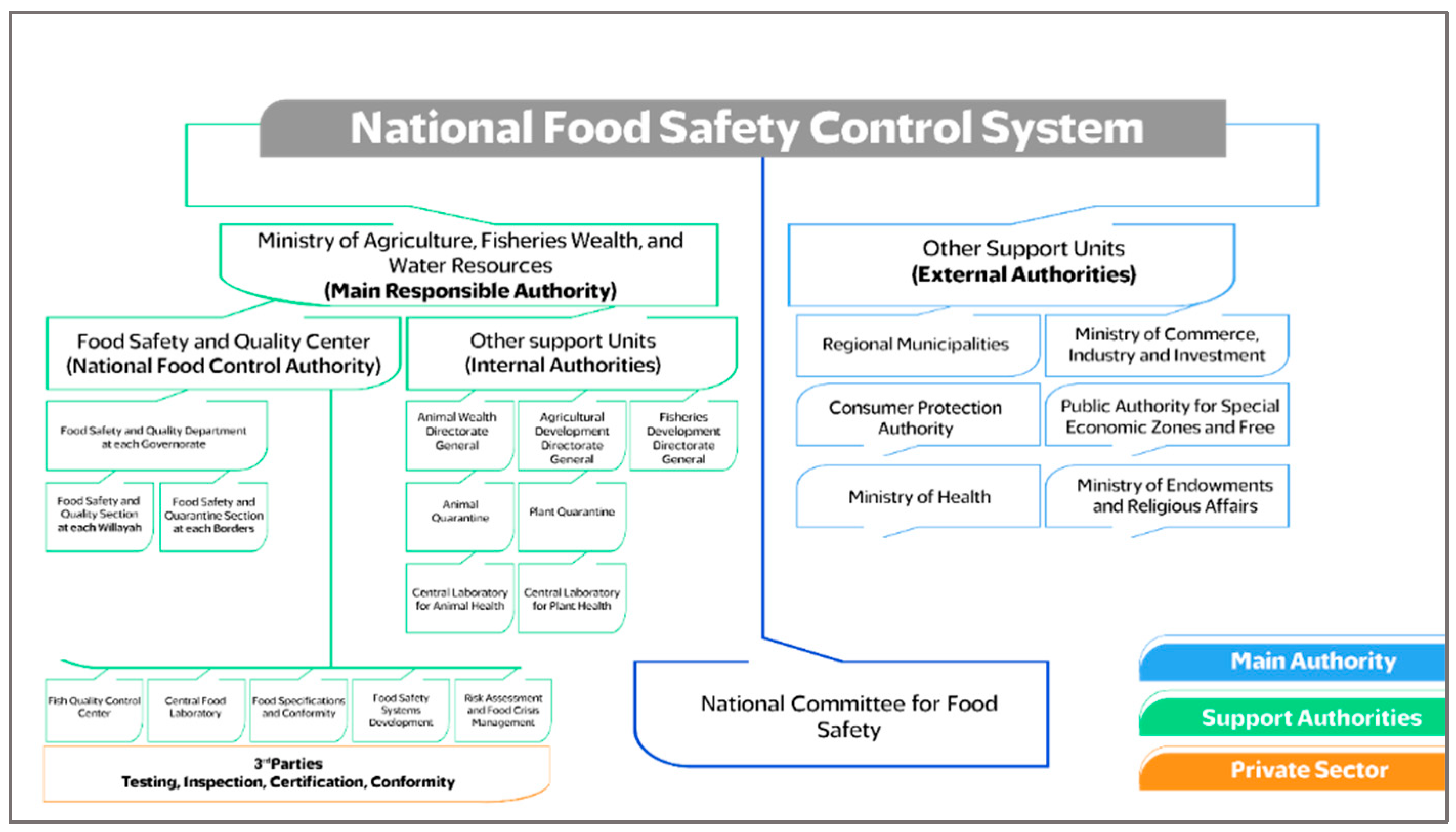
Figure 2.
National Food Safety Management System: (A) Roles, Responsibilities and (B) Processes across the Food Supply Chain.
Figure 2.
National Food Safety Management System: (A) Roles, Responsibilities and (B) Processes across the Food Supply Chain.
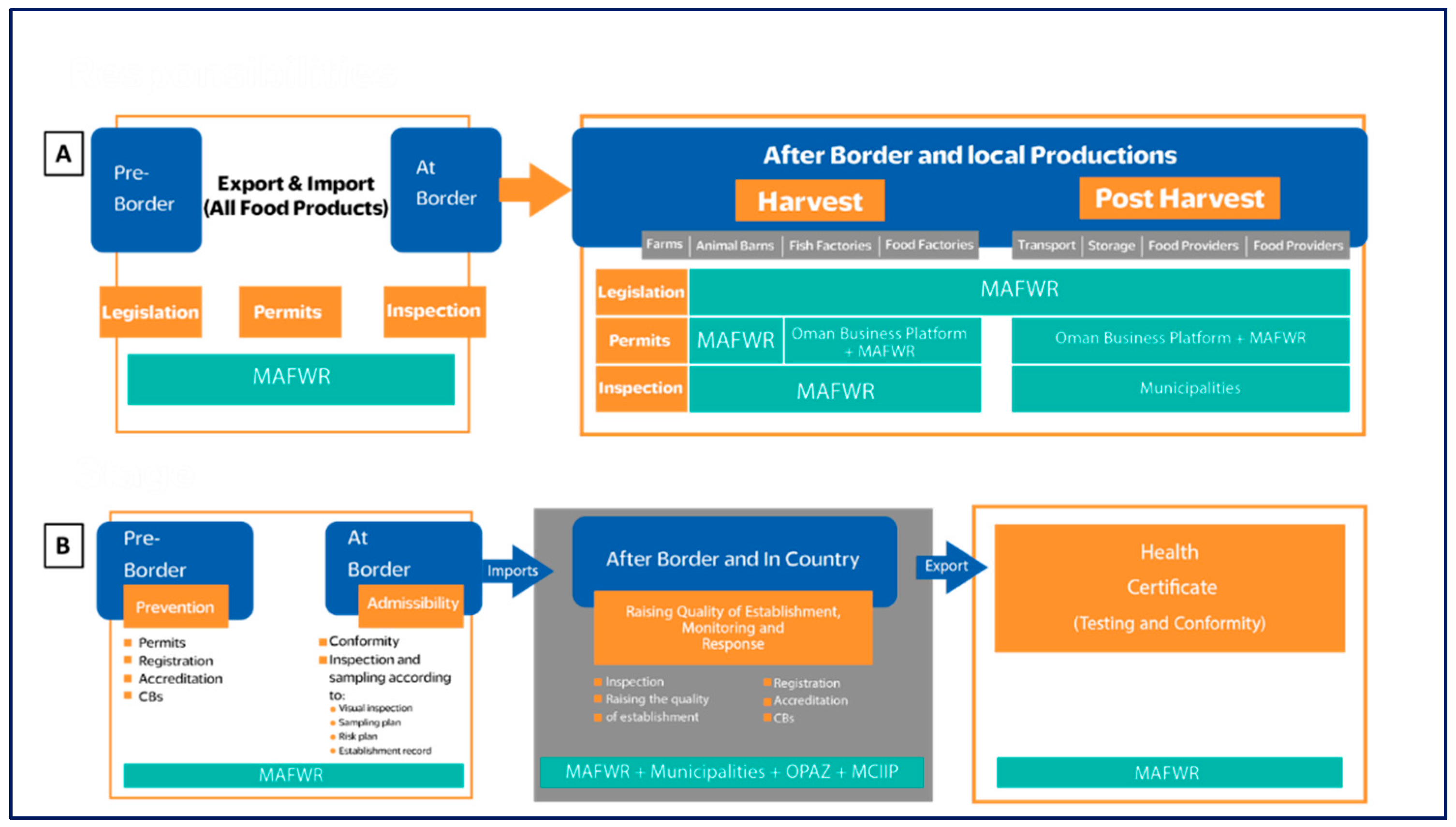
Figure 3.
Food Safety Legal Framework in the Sultanate of Oman.


| Omani Food Safety Legislation | Description | Authorities responsible of issuance |
|---|---|---|
| Law | The legal foundation for any system or rules that regulate the conduct of a community, outlining mandates and responsibilities of enforcement and empowers of regulatory bodies, as well as penalties for non-compliance. | Royal Decree (RD) promulgated by the Sultan |
| Executive Regulation | Rules or directives issued by a government or regulatory authority to implement and enforce laws passed by the legislative body. | Ministerial Decision (MD) by Relevant Ministries |
| Regulation | Refers to a rule or directive created and enforced by a governmental authority to control or govern conduct within its jurisdiction. Such as Specific regulations provide detailed requirements for food safety practices, including hygiene standards, labeling requirements, permissible limits for contaminants and etc. | |
| Decision | A formal conclusion or resolution made by an authority or governing body on a specific issue or case. | |
| Technical Regulation | Refers to a set of specific requirements, standards, procedures, product characteristics or their related processes and production methods and applicable administrative provisions, established by a regulatory authority, which compliance is mandatory, to ensure safety, quality, and performance in various sectors, including food safety, manufacturing, and consumer products. | Ministry of Commerce, Industry and Investment Promotion & Gulf Standard Organization (GSO) |
| Standard Specification | National standards for food quality and safety are aligned with international benchmarks to ensure consistency and reliability. These standards cover aspects such as food additives, packaging materials, and nutritional information. |
Table 2.
Comparative Analysis of Food Safety Management System: Pre-2020 vs. Post-2020 transformation based on international guidelines [1,3,24,47].
| Components of Analyses |
Pre-2020 (Multi-Agency) | Post-2020 (Integrated Food Control System) |
|---|---|---|
| ||
| Administrative structure |
|
|
| Allocation of resources in terms of financial, human, equipment, information, etc. |
|
|
| Scientific Principles and risk analysis approach |
|
|
| Food Safety Crisis Response |
|
|
| Integrated food chain approach covering the entire farm to plate continuum |
|
|
| Involvement of the various stakeholders from farm to plate continuum in decision making process and flow of information |
|
|
| Active involvement in regional and international standard-setting bodies on issues related to food safety and quality |
|
|
| Surveillance of food-borne illnesses (microbial, chemical, allergen and etc.) from primary production to consumption |
|
|
| Existence of a national database that consolidates all data generated from enforcement and laboratory activities. |
|
|
| ||
| Ensure a high level of health protection and safeguard consumer interests |
|
|
| The roles and responsibilities of government authorities responsible for food control within the Food Safety Control Management Systems along with the mechanisms and procedures for their interactions |
|
|
| Existence of an integrated and comprehensive legislation that covers the entire farm-to-table continuum |
|
|
| Technical regulations and standards are based on sound science and comply with Codex Alimentarius Commission (CAC) |
|
|
| Sanctions and penalties enforcement |
|
|
| Outlines clear provisions on the responsibility for food safety and quality lies with producers and processors |
|
|
| Provides clear provision for the approval, registration or licensing of food premises |
|
|
| Provides clear provisions on traceability and recall procedures in case of safety issues |
|
|
| Includes obligations ensuring that only safe and fairly presented food are placed in the market |
|
|
| Recognized country’s international obligations particularly to trade |
|
|
| Legislation in line with international standard |
|
|
| Contains provisions for detailed enforcement procedures |
|
|
| ||
| Inspection based on risk analysis including sampling programs and techniques for domestically-produced, imported and exported food |
|
|
| Roles and responsibilities of the inspection activities are clearly defined |
|
|
| Inspection activities encompass the entire farm-to-table approach |
|
|
| Requirement for qualified and trained inspectors |
|
|
|
Reputation and integrity of the inspectors |
|
|
| Number of official inspectors authorized to carry out the enforcement duties within the Food safety Control Systems |
|
|
| Existence of Inspection Standard Operating Procedures (SOPs)/manuals |
|
|
| A comprehensive understanding of existing food laws and regulations |
|
|
| Development of digitalization and Real-Time Monitoring |
|
|
| Presence of a national database that categorizes food premises based on the risk level of the produced food products |
|
|
| Access to logistical for conducting inspections including resources, facilities, transportation modes, inspection equipment and devices |
|
|
| Existence of records and documentation covering various aspects of inspection activities such as; consumer complaints, investigation and management of outbreaks of food-borne illnesses, respond to and manage food emergencies, etc. |
|
|
| Presence of a review and evaluation mechanism for the food inspection system |
|
|
| ||
| Adequate number and strategic placement of official food control laboratories to support the Food Control System |
|
|
| Presence of reference laboratories for contaminants and food-borne disease causative agents |
|
|
| Accreditation of official food control laboratories according to international standards |
|
|
| Qualified food analysts with appropriate training, experience and integrity |
|
|
| Adequate infrastructure, facilities, equipment, supplies , reference materials, and participation in inter-laboratory proficiency testing |
|
|
| Access to calibration and maintenance services for equipment and instruments |
|
|
| Analytical methods for analysis of various contaminants are validated |
|
|
| Presence of Standard Operating Procedures (SOPs) for all analytical methods |
|
|
| Effective coordination and collaboration between official food control laboratories and the enforcement officials |
|
|
| Effective coordination and collaboration between official food control laboratories and the public health system for food-borne disease surveillance, as well as any other relevant laboratories |
|
|
| ||
| Presence of extension and developing programs for implementing Information, Education, and Communication (IEC) activities |
|
|
| There is a policy in place for IEC regarding food safety and quality, targeting external audiences such as consumers, NGO, the food industry, and others |
|
|
|
Availability of sufficient financial resources, appropriate materials and equipment to carry out IEC activities |
|
|
| Sufficiently trained FSC staff to carry out IEC |
|
|
| A risk communication system in place to manage food crisis and emergencies |
|
|
| Presence of dedicated research institutions or departments focused on food safety and quality |
|
|
| Investment in food safety research |
|
|
| Collaboration with Academic and Research Institutions |
|
|
| Innovation in Food Safety Practices |
|
|
* GCC: Gulf Cooperation Council, GSO: Gulf Standardization Organization, WTO: World Trade Organization (TBT: Technical Barriers to Trade Agreement & SPS: Sanitary and Phytosanitary Measures Agreement), ROMPE: Regional Organization for the Protection of the Marine Environment, EU: European Union, IAEA: International Atomic Energy Agency, CAC: Codex Alimentarius Commission, WOAH: World Organization for Animal Health, IPPC: International Plant Protection Convention.
Disclaimer/Publisher’s Note: The statements, opinions and data contained in all publications are solely those of the individual author(s) and contributor(s) and not of MDPI and/or the editor(s). MDPI and/or the editor(s) disclaim responsibility for any injury to people or property resulting from any ideas, methods, instructions or products referred to in the content. |
© 2025 by the authors. Licensee MDPI, Basel, Switzerland. This article is an open access article distributed under the terms and conditions of the Creative Commons Attribution (CC BY) license (http://creativecommons.org/licenses/by/4.0/).
Copyright: This open access article is published under a Creative Commons CC BY 4.0 license, which permit the free download, distribution, and reuse, provided that the author and preprint are cited in any reuse.


