

Submitted:
13 June 2025
Posted:
16 June 2025
You are already at the latest version
Abstract
Unceasing exposure of skin and its microbiome to various external and internal factors influences its health. Any imbalance ensuing may result in dysbiosis and consequently skin diseases. Thus, it becomes critical to identify and recognize the influence of different factors on skin microbiome and various disorders associated. In the current investigation, we studied skin microbiome from 15 subjects by next generation shotgun sequencing method and compared them with 48 healthy sub-jects from Human Microbiome Project (HMP) (website URL: https://hmpdacc.org/). This work focused on the analysis of the impact of different skin care routine – use of sunscreen and moisturizers on various skin microbiome and related skin diseases. Difference was observed in the microbiome of subjects who used moisturizer (p=3.1e-5) and moisturizer with sunscreen (p=3.2e-13) with those who did not use these products. Male and female skin microbiome were compared with respect to use of sunscreen. Female participants showed higher difference in diversity in comparison to males. The current investigation also found that usage of sunscreen influences skin protecting species in skin microbiome. This work allowed us to comprehend the impact of different factors on skin health. The present evaluation shall pave the way for personalized skin care product development.
Keywords:
skin
; microbiome
; sun exposure
; sunscreen
; moisturizer
; atopic dermatitis
; pigmentation
; diet
1. Introduction
Healthy skin illustrates the well-being of the human body. Skin is the largest organ of the human body shielding its interior from various external factors like sun exposure specifically UV radiation, chemicals used in cosmetics and skin care products, infection and external injury [1,2]. It also functions as the primary shield of the immune system. The skin comprises of different layers – the epidermis, dermis and hypodermis. Microorganisms are also associated with these different skin layers. The skin microorganisms and their gene expression together with the genes expressed by the host skin cells to sustain an intricate association with skin include the skin microbiome [3]. Skin microbiome is critical to human skin surface as it is involved in inhibiting pathogen growth, developing innate immunity and adaptive immunity by reducing inflammation post injury, regulating the production of local cytokines etc [4,5].
Previous studies conducted showed that skin microbiome is influenced by age, lifestyle etc. Work done by Nagase et al has shown that bedridden elderly subjects have distinct microbiome when compared to young subjects and are more prone to infections [2]. A study by Hwang et al demonstrated that application of cosmetics demonstrated increased relative abundance of Cutibacterium spp. and Staphylococcus spp. on skin [6]. Cosmetics rich in Gingko biloba extract and components from other natural ingredients reduce wrinkles [7]. Humans utilize cosmetics like moisturizer, sunscreen etc daily to enhance appearance and improve well-being. For instance, moisturizers are extensively utilized for conditions like atopic dermatitis [8]; and sunscreens are used to protect from photodamage [9].
An investigation by Ying et al on correlation between age and gender in urban and rural population with respect to skin microbiome in Shanghai, China demonstrated the higher abundance of Trabulsiella was noticed in urban population. Moreover, it was seen that adults have higher microbial diversity when compared to teenagers or elderly people [10]. Skin is also prone to damage by UV-A and UV-B radiation which could lead to premature aging or cancer due to DNA damage and oxidative stress. The study of sun exposure conducted on inhabitants of the Mediterranean coast showed the absence of taxa Streptococcaceae and Cyanobacteria, specifically in summers [11].
Skin health is also influenced by the diet and intestinal/gut microbiome [12]. Consumption of mango and almonds is linked to reduction of wrinkles, while consumption of avocado is associated with increased firmness and elasticity of skin. Furthermore, plant-based diet has positive effects on inflammatory diseases like psoriasis, acne, and atopic dermatitis [13]. Extensive studies have been done on understanding the effect of various factors on skin microbiome, but very little work has been performed in integrating the dietary effects, skin care routine and sun exposure on skin microbiome and related disorders. Hence, the current study explores the skin microbiome of males and females and correlates it with usage of moisturizer and sunscreen and its association with conditions like atopic dermatitis and hyperpigmentation. The investigation also aims to explore the impact of type of diet and sun exposure on microbiome variation.
2. Materials and Methods
2.1. Study Population and Design
This cross-sectional study comprised of 15 subjects (10 females and 5 males). The average age of participants was 33.1±10.0. All participants involved in the study provided informed consent for participating in the study (HREBA.CHC-25-0013). Data for 48 healthy subjects was collected from HMP site (website URL: https://hmpdacc.org/). Subjects who were pregnant or lactating and had undergone skin treatment within 3 months were excluded from this study. 10 females and 5 males participated in this study. Subjects were informed not to apply any cosmetics overnight before sample collection.
2.2. Extraction of DNA
Skin microbiome samples from facial skin were collected by using BioSkin kit from BioAro Inc. (Calgary, AB, Canada) as per manufacturer instructions The microbiome DNA was extracted at BioAro Inc. using in-house protocol at BioAro Inc. Briefly, the cells were enzymatically lysed, followed by bead beating and DNA purification by spin colms. The extracted DNa was quantified on Qubit Fluorometer 3.0 (Thermo Fisher Scientific, Waltham, MA, USA).
2.3. Next Generation Sequencing
The extracted DNA samples were processed for paired end shotgun sequencing by next generation sequencing method. Library of the samples (350-450 nucleotides) was generated on MGI-SP100(MGI Tech Co., Ltd., Shenzhen, China). The extracted DNA was ligated to the adaptorsfollowed by amplification to genrate libraries. The library was quanitified using Qubit Fluorometer and the fragment size was checked using Agilent Tapestation. The library of all samples was then sequenced using MGIEasy Circularisation Module (MGI Tech Co., Ltd., Shenzhen, China). The adapter ligated library was cicularised to ssDNa library. This circularised was then loaded into the flow cells post-processing using DNBSeq-G400RS High Throughput Sequencing Kit (MGI Tech Co., Ltd., Shenzhen, China) and DNBSeq-G400RS Sequencing Flow Cell (MGI Tech Co., Ltd., Shenzhen, China) on MGI-DNBG400 sequencer (MGI Tech Co., Ltd., Shenzhen, China). A negative control was included throughout the procedure to test all possible materials and reagent contaminations.
2.4. Analysis of the Microbiome
The raw reads were processed through an in-house pipeline at BioAro Inc. Briefly, the raw reads were analyzed for its quality, low quality reads and adaptors were trimmed. Further, host DNA and rRNA were removed from the sequences by mapping with human reference genome. The taxonomy classification and species identification was performed using Meta PhlAn 4 [42].
2.5. Statistical Analysis
R studio (version 2024.04.0-735) was used to perform tertiary analysis. A heatmap of relative abundance of different species was made using heatmap.2 of ggplot2 package. Kruskal-Wallis test, Wilcoxon test, t-test and ANOVA was used to compare the participants characteristics and relative abundance amongst the groups.
3. Results
3.1. Microbiome Composition and Alpha Diversity
The participant characteristics are shown in Table 1. The table indicates their gender, skin care routine habits, type of diet and sun exposure. 5 males and 10 females were part of this study. 33.33% of the participants had oily skin while the rest of the participants had dry skin. All the participants used moisturizer except for two of them. Participants were also classified based on daily sun exposure. Moreover, the Shannon Diversity was also calculated for skin microbiome samples for all the participants. The diversity values varied from 0.43 to 2.73 for the participants in the study. The microbiome composition of some major species is depicted in Figure 1, which shows the relative abundance of the top 50 species for the participants. This assessment was made after all the sequences were rarefied at 15,580 depth. The heat map of the top 10 species for all participants is depicted in Figure 2. All the subjects in the study were compared with the 48 healthy subjects from the HMP site. Cutibacterium acnes and Staphylococcus epidermidis were observed in most of the participants.
3.2. Relationship Between Skin Care Routine and Skin Microbiome
All the participants in the study were grouped into males and females and further classified on the basis of usage of moisturizer, sunscreen, sun exposure daily and type of diet. The comparison between the subjects using moisturizer and those using moisturizer and sunscreen was significant (Wilcoxon test p=3.1e-0.5, p=3.2e-13) as depicted in Figure 3.
Cutibacterium acnes and Staphylococccus epidermidis were major species found to be present in all samples irrespective of their skin care routine or gender. Figure 4 depicts the common and uncommon microorganisms observed in skin microbiota of the subjects based on their skin care routine (use of moisturizer and sunscreen).
Corynebacterrium sanguinis and Brachybacterium nesterenkovii were observed in participants using both moisturizer and sunscreen, while Corynebacterium kroppenstedtii and Micrococcus terreus were observed in participants with no skin care routine. Corynebacterium kefirresidentii, Cutibacterium avidum and Streptococcus capitis were also found to be common among all three groups. Besides, male and female participants were compared based on their skin care routine, i.e. based on the use of moisturizer and sunscreen. The relative abundance and diversity were higher in females with respect to the males as observed (p=0.034) from Figure 5.
3.3. Skin Microbiome and Sun Exposure
The participants were also grouped based on exposure to sun as indicated in Table 1. The relative abundance of species was compared for some bacteria prominent in all participants grouped by skin care routine. The box plots for them are shown in Figure 6. The significant association was found to be in C. acnes (low vs. moderate sun exposure, p=0.05), Malassezia restricta (moderate vs. high sun exposure, p=0.02) and S. epidermidis (low vs moderate sun exposure, p=0.03; moderate vs. high sun exposure, p=0.05).
3.4. Skin Microbiome, Moisturizer and Atopic Dermatitis
The current study also explored impact of sunscreen on Staphylococcus aureus, S. epidermidis (p=0.02), S. haemolyticus and S. hominis species of bacteria associated with atopic dermatitis as depicted in Figure 7.
3.5. Skin Microbiome, Moisturizer and Hyperpigmentation
This study also tried to analyze the effect of usage of moisturizer on microbial species associated with hyperpigmentation as shown in Figure 8. No significant difference was noticed.
3.6. Skin Microbiome and Plant-Based Diet
This study also investigated the difference in skin microbiome of subjects using moisturizer and sunscreen according to plant-based diet and meat-based diet consumed as shown in Figure 9. However, we do not have equal number of plant based diet consumed individuals (n=2) with respect to the meat based diet (n=13), the analysis yielded higher diversity in subjects with meat-based diet while it was lower in subjects with plant-based diet (p=0.0001).
4. Discussion
Skin is incessantly exposed to various physical, chemical and biological factors that impact the skin in addition to its microbiome [14]. Skin microbiome has an active role in skin health. The microbiota on the surface of skin stimulates the cells of the host to release antimicrobial peptides, inhibit pathogens and moreover help in the differentiation of T- cells. Any change in the healthy balance of the skin microbiome may lead to dysbiosis, resulting in various inflammatory disorders of the skin. Thus, it is important to fathom the effects of various internal and external factors on the skin microbiome [15]. In the current investigation, we focused on integrating the effect of skin care routine (chemical factor) and type of diet (internal factor) in conjunction with exposure to the sun (physical factor) and skin disorders (biological factor) on the skin microbiome. Earlier studies have shown that skin health is affected by numerous factors leading to the development of skin interactome [16]. Skin interactome is based on integrating the knowledge of microbiome, genome and exposome. Current analysis shall result in improved understanding of skin interactome as it focuses on incorporating the effect of multiple factors like skin care, diet and sun exposure influencing skin health and microbiome.
This analysis allowed us to identify the differences in the skin microbiome based on skin care routine – use of moisturiser and sunscreen, exposure to the sun and type of diet consumed – plant-based or meat based. Probing the effect of skin care routine in participants indicated that the relative abundance of species was higher in participants using moisturizer and moisturiser and sunscreen together. Comparison of various groups based on skin care routine recognised the common species among all groups like C. acnes, S. epidermidis, C. kefirresidentii, C. avidum and S. capitis. Previous 16S rRNA based study on the diversity of the microbiome of skin identified similar genera common to the skin which were Cutibacterium, Streptococcus and Staphylococcus spp. [6,17].
The effect of cosmetics on skin microbiome as a function of age and skin condition was analysed before [10]. Our study is one of the few initial studies that differentiates between the skin microbiome of males and females according to skin care routine. The current examination detected higher abundance of bacteria like S. epidermidis, M. restricta, and C. acnes in females. Previous work done on the skin microbiome from axillary region in males and females have shown Corynebacterium amycolatum and Corynebacteirum kroppenstedtii were specifically identified in males while Corynebacterium urealyticum and Corynebacterium variabile were only seen in females [18]. This was slightly contradictory to results of this study, as C. amycolatum was found in facial skin microbiome of both male and female participants. Moreover, C. urealyticum and C. variabile was not found in female participants.
Sun exposure is critical to the health of skin. Exposure to ultraviolet radiation can lead to skin problems like sunburn, skin inflammation, early ageing, or skin cancer. As per recommendation by the American Academy of Dermatology using sunscreen, avoiding high exposure to the sun, using protective clothing, and avoiding tan are considered good practices for prevention of skin cancer [19,20,21]. In an independent time-point study conducted on holidaymakers, it was observed that exposure to sun reduces the proteobacteria in the study participant which were restored to their pre-holiday levels after 28 days [21]. Studies conducted on the effects of UV radiation and Malassezia spp., showed that these microorganisms produce pityriacitrin which helps in the protection of host and microbial cells [22]. Investigation of UV radiation on murine skin microbiome discovered that S. epidermidis protected the host from chronic exposure [23]. Examination of the effect of UV exposure on skin microbiome in the presence of sunscreen, found that C. acnes was abundant in all subjects with exposed, non-exposed, placebo and sunscreen covered skin. In the current analysis, we compared the relative abundance of C. acnes, C. granulosum, L. crispatus, M. globosa, M. restricta, S. aureus, S. capitis, S. hominis, S. epidermidis and M. luteus which were observed in participants according to sun exposure irrespective of their skin care routine. Furthermore, our analysis found that sun exposure was found to have a significant effect on the abundance of C. acnes (low vs. moderate sun exposure), M. restricta (moderate vs. high sun exposure) and S. epidermidis (low vs moderate sun exposure and moderate vs. high sun exposure). Prior studies conducted have shown that C. acnes abundance is affected in the presence of sunscreens [24]. The presence of M. restricta and S. epidermidis in all participants in our study irrespective of sun exposure, is suggestive of their essential role in shielding the host skin.
Hyperpigmentation of the skin can arise due to multiple factors one of which includes exposure to the sun. This type of hyperpigmentation includes melasma and post inflammatory hyperpigmentation [25]. Hyperpigmentation can result in early photoageing and senescence of skin melanocytes [26]. Prior work done by Fatima et al indicates that usage of sunscreen acted as an adjuvant in therapy for hyperpigmentation and aided in improvement [27]. Hyperpigmentation on skin is linked to Corynebacterium spp. [28]. In our study no significant correlation was noticed between Corynebacterium spp. and usage of sunscreen and may be attributed to the small sample cohort. A larger cohort size might provide better insight into the association of hyperpigmentation, corynebacterium spp. and sunscreen usage.
Another common skin disorder observed is atopic dermatitis. It is an inflammatory disorder affecting all age groups [29]. Skin microbiome is critical from the perspective of atopic dermatitis as it is severely impacted by the disorder. Infection of S.aureus can exacerbate the skin damage and result in dysbiosis [30]. This disorder is characterized by dry and itchy skin, recurring eczema flares and immune dysregulation stimulating production of antibody, IgE [31]. Atopic dermatitis is linked with colonization of S. aureus [29,30,32,33] and increased abundance of S. haemolyticus [30]; while S.epidermidis and S. hominis are associated with protecting against pathogens and preventing skin microbiome dysbiosis [30,32,33]. These bacterial species are producing antimicrobial compounds against S. aureus preventing its colonization [33]. One of the treatment steps in atopic dermatitis involves using moisturizer to nourish the dry skin patches [34]. Our study attempts to check the effect of the usage of moisturizer in enhancing the skin protective species like S. epidermidis and S. hominis. Our results corroborated our hypothesis that using moisturizer enhanced the growth of skin protecting species like S. epidermidis and S. hominis which prevent or interfere with growth of pathogens like S. aureus.
Food is source of energy and nutrients for the human body, and it is critical for overall health including skin [35]. Skin health is influenced by external and internal factors. One of the major internal factors influencing skin is the type of diet consumed. Recently, there is an arising effort in understanding the effect of type of diet on skin-health [13]. The type of diet consumed is crucial to the gut microbiome. Dysbiosis of the gut microbiome is linked to various skin disorders like atopic dermatitis, rosacea, acne and psoriasis. Various studies conducted previously have linked the health of skin to homeostasis of the gut [36]. Prior studies have indicated that phenol and p-cresol produced by Clostridiodes difficile in the gut are associated with reduced moisture in skin consequently affecting keratinization and skin barrier integrity [37]. Thus, the gut-skin axis becomes one of the major criteria to understand lifestyle impact on skin. Prior work indicated that atopic dermatitis [38] psoriasis and rosacea [39]. might be linked to gut-skin axis. In the current investigation we compared the type of diet in participants using both moisturizer and sunscreen. Our analysis had limitations of a small sample size, and a larger cohort will help in better comprehension of the trends or effect. However, we detected the presence of unique species in plant-based diet like Veilonella parvula, Streptococcus mitis, Streptococcus cristatus, Mesorhizobiium amorphae, Micrococcus luteus, Kocuria rhizophila, Gemella hemolysans, and Actinomyces oris. This is primary research on difference in skin microbiota of people following a skin care routine but consuming different types of diets. A detailed investigation with larger number of subjects will be beneficial in developing the knowledge of gut-skin axis from the perspective of skin care practices and treatment of various skin disorders.
5. Conclusions
Skin and its microbiome are unceasingly exposed to various physical, biological and chemical factors that may impact health positively or negatively [40]. One of the prior metabolome studies conducted confirmed that skin care routine and gut-skin axis by the skin care practices followed [41]. The results of the current study are primarily centered on evaluating the effect of skin care routine (chemical factor), sun exposure (physical factor) and type of diet consumed (internal factor) on skin microbiome. This work efficaciously demonstrated the potential of various factors in influencing the skin microbiome. Skin care routine and sun exposure concurrently influenced the skin microbiome. Though the exact molecular mechanism ensuing effect is not known, this study shall provide future conduit in advancing the medicine for healthy glowing skin.
Author Contributions
Conceptualization, K.D.; methodology, R.C., K.D.; software, K.D., P.B. and F.D.D.A.; validation, K.D., P.B. and M.B.T.; formal analysis, P.B., S.V. and A.B.; investigation, K.D., P.B. and M.B.T.; writing—original draft preparation, K.D.; writing—review and editing, K.D., P.B., M.B.T., I.K., R.S., R.K. and A.K.; All authors have read and agreed to the published version of the manuscript.
Funding
This research received no external funding.
Acknowledgments
We sincerely acknowledge the support provide by BioAro Inc. to provide facility for performing this research.
Conflicts of Interest
This study was a collaborative project between University of Lethbridge, Lethbrige, Canda and BioAro Inc., Calgary, Canada. The authors declare the following potential conflicts of interest: BioAro Inc provided facility to perform this research. R.K.,A.K., R.C., R.S. and M. B.T are employed by BioAro Inc., and K. D. and I. K. is affiliated with University of Lethbridge. The views expressed in this publication are those of the authors and do not necessarily reflect those of BioAro Inc. and University of Lethbridge.
References
- Murphy B, Grimshaw S, Hoptroff M, Paterson S, Arnold D, Cawley A, Adams SE, Falciani F, Dadd T, Eccles R, Mitchell A, Lathrop WF, Marrero D, Yarova G, Villa A, Bajor JS, Feng L, Mihalov D, Mayes AE. Alteration of barrier properties, stratum corneum ceramides and microbiome composition in response to lotion application on cosmetic dry skin. Sci Rep. Nature Research; 2022 Dec 1;12(1). [CrossRef] [PubMed]
- Nagase S, Ogai K, Urai T, Shibata K, Matsubara E, Mukai K, Matsue M, Mori Y, Aoki M, Arisandi D, Sugama J, Okamoto S. Distinct Skin Microbiome and Skin Physiological Functions Between Bedridden Older Patients and Healthy People: A Single-Center Study in Japan. Front Med (Lausanne). Frontiers Media S.A.; 2020 Apr 8;7. [CrossRef]
- Dréno B, Araviiskaia E, Berardesca E, Gontijo G, Sanchez Viera M, Xiang LF, Martin R, Bieber T. Microbiome in healthy skin, update for dermatologists. Journal of the European Academy of Dermatology and Venereology. Blackwell Publishing Ltd; 2016. p. 2038–2047. [PubMed]
- Sanford JA, Gallo RL. Functions of the skin microbiota in health and disease. Seminars in Immunology. 2013. p. 370–377. [CrossRef] [PubMed]
- Roux PF, Oddos T, Stamatas G. Deciphering the Role of Skin Surface Microbiome in Skin Health: An Integrative Multiomics Approach Reveals Three Distinct Metabolite‒Microbe Clusters. Journal of Investigative Dermatology. Elsevier B.V.; 2022 Feb 1;142(2):469-479.e5. [CrossRef] [PubMed]
- Hwang BK, Lee S, Myoung J, Hwang SJ, Lim JM, Jeong ET, Park SG, Youn SH. Effect of the skincare product on facial skin microbial structure and biophysical parameters: A pilot study. Microbiologyopen. John Wiley and Sons Inc; 2021 Oct 1;10(5). [CrossRef] [PubMed]
- Garcella P, Wijaya TH, Kurniawan DW. Narrative Review: Herbal Nanocosmetics for Anti Aging. JPSCR: Journal of Pharmaceutical Science and Clinical Research. Universitas Sebelas Maret; 2023 Apr 10;8(1):63.
- Lindh JD, Bradley M. Clinical Effectiveness of Moisturizers in Atopic Dermatitis and Related Disorders: A Systematic Review. American Journal of Clinical Dermatology. Springer International Publishing; 2015. p. 341–359. [CrossRef] [PubMed]
- Mansuri R, Diwan A, Kumar H, Dangwal K, Yadav D. Potential of Natural Compounds as Sunscreen Agents. Pharmacogn Rev. EManuscript Technologies; 2021 Jun 7;15(29):47–56. [CrossRef]
- Ying S, Zeng DN, Chi L, Tan Y, Galzote C, Cardona C, Lax S, Gilbert J, Quan ZX. The influence of age and gender on skin-associated microbial communities in urban and rural human populations. PLoS One. Public Library of Science; 2015 Oct 28;10(10). [CrossRef] [PubMed]
- Harel N, Reshef L, Biran D, Brenner S, Ron EZ, Gophna U. Effect of Solar Radiation on Skin Microbiome: Study of Two Populations. Microorganisms. MDPI; 2022 Aug 1;10(8). [CrossRef]
- Skowron K, Bauza-kaszewska J, Kraszewska Z, Wiktorczyk-kapischke N, Grudlewska-buda K, Kwiecińska-piróg J, Wałecka-zacharska E, Radtke L, Gospodarek-komkowska E. Human skin microbiome: Impact of intrinsic and extrinsic factors on skin microbiota. Microorganisms. MDPI AG; 2021. p. 1–20. [CrossRef]
- Flores-Balderas X, Peña-Peña M, Rada KM, Alvarez-Alvarez YQ, Guzmán-Martín CA, Sánchez-Gloria JL, Huang F, Ruiz-Ojeda D, Morán-Ramos S, Springall R, Sánchez-Muñoz F. Beneficial Effects of Plant-Based Diets on Skin Health and Inflammatory Skin Diseases. Nutrients. Multidisciplinary Digital Publishing Institute (MDPI); 2023. [CrossRef] [PubMed]
- Luna PC. Skin Microbiome as Years Go By. American Journal of Clinical Dermatology. Adis; 2020. p. 12–17. [PubMed]
- Isler MF, Coates SJ, Boos MD. Climate change, the cutaneous microbiome and skin disease: implications for a warming world. International Journal of Dermatology. John Wiley and Sons Inc; 2023. p. 337–345. [CrossRef] [PubMed]
- Khmaladze I, Leonardi M, Fabre S, Messaraa C, Mavon A. The skin interactome: A holistic “genome-microbiome-exposome” approach to understand and modulate skin health and aging. Clinical, Cosmetic and Investigational Dermatology. Dove Medical Press Ltd; 2020. p. 1021–1040. [CrossRef]
- Grice EA, Kong HH, Conlan S, Deming CB, Davis J, Young AC, Bouffard GG, Blakesley RW, Murray PR, Green ED, Turner ML, Segre JA. Topographical and temporal diversity of the human skin microbiome. Science (1979). 2009 May 29;324(5931):1190–1192. [CrossRef] [PubMed]
- Li M, Budding AE, van der Lugt-Degen M, Du-Thumm L, Vandeven M, Fan A. The influence of age, gender and race/ethnicity on the composition of the human axillary microbiome. Int J Cosmet Sci. Blackwell Publishing Ltd; 2019;41(4):371–377. [CrossRef] [PubMed]
- Smith ML, O’Neill CA, Dickinson MR, Chavan B, McBain AJ. Exploring associations between skin, the dermal microbiome, and ultraviolet radiation: advancing possibilities for next-generation sunscreens. Frontiers in Microbiomes. Frontiers Media SA; 2023 Jun 23;2. [CrossRef]
- Grant GJ, Kohli I, Mohammad TF. A narrative review of the impact of ultraviolet radiation and sunscreen on the skin microbiome. Photodermatology Photoimmunology and Photomedicine. John Wiley and Sons Inc; 2024. [CrossRef] [PubMed]
- Willmott T, Campbell PM, Griffiths CEM, O’Connor C, Bell M, Watson REB, McBain AJ, Langton AK. Behaviour and sun exposure in holidaymakers alters skin microbiota composition and diversity. Frontiers in Aging. Frontiers Media SA; 2023;4. [CrossRef]
- Patra VK, Byrne SN, Wolf P. The skin microbiome: Is it affected by UV-induced immune suppression? Front Microbiol. Frontiers Media S.A.; 2016 Aug 10;7(AUG).
- Keshari S, Balasubramaniam A, Myagmardoloonjin B, Herr DR, Negari IP, Huang CM. Butyric acid from probiotic staphylococcus epidermidis in the skin microbiome down-regulates the ultraviolet-induced pro-inflammatory IL-6 cytokine via short-chain fatty acid receptor. Int J Mol Sci. MDPI AG; 2019 Sep 2;20(18). [CrossRef] [PubMed]
- Schuetz R, Claypool J, Sfriso R, Vollhardt JH. Sunscreens can preserve human skin microbiome upon erythemal UV exposure. Int J Cosmet Sci. John Wiley and Sons Inc; 2024 Feb 1;46(1):71–84. [CrossRef] [PubMed]
- Schalka S. New data on hyperpigmentation disorders. Journal of the European Academy of Dermatology and Venereology. Blackwell Publishing Ltd; 2017. p. 18–21. [PubMed]
- Henning SM, Yang J, Lee RP, Huang J, Hsu M, Thames G, Gilbuena I, Long J, Xu Y, Park EHI, Tseng CH, Kim J, Heber D, Li Z. Pomegranate Juice and Extract Consumption Increases the Resistance to UVB-induced Erythema and Changes the Skin Microbiome in Healthy Women: a Randomized Controlled Trial. Sci Rep. Nature Publishing Group; 2019 Dec 1;9(1). [CrossRef] [PubMed]
- Fatima S, Braunberger T, Mohammad T, Kohli I, Hamzavi I. The role of sunscreen in melasma and postinflammatory hyperpigmentation. Indian Journal of Dermatology. Wolters Kluwer Medknow Publications; 2020. p. 5–10. [CrossRef]
- Dimitriu PA, Iker B, Malik K, Leung H, Mohn WW, Hillebrand GG. New Insights into the Intrinsic and Extrinsic Factors That Shape the Human Skin Microbiome. 2019; Available from:. [CrossRef]
- Edslev SM, Agner T, Andersen PS. Skin microbiome in atopic dermatitis. Acta Derm Venereol. Medical Journals/Acta D-V; 2020;100(100-year theme Atopic dermatitis):358–366. [PubMed]
- Fölster-Holst R. The role of the skin microbiome in atopic dermatitis – correlations and consequences. JDDG - Journal of the German Society of Dermatology. John Wiley and Sons Inc; 2022. p. 571–577. [CrossRef] [PubMed]
- Bjerre RD, Bandier J, Skov L, Engstrand L, Johansen JD. The role of the skin microbiome in atopic dermatitis: a systematic review. British Journal of Dermatology. Blackwell Publishing Ltd; 2017. p. 1272–1278. [CrossRef] [PubMed]
- Khadka VD, Key FM, Romo-González C, Martínez-Gayosso A, Campos-Cabrera BL, Gerónimo-Gallegos A, Lynn TC, Durán-McKinster C, Coria-Jiménez R, Lieberman TD, García-Romero MT. The Skin Microbiome of Patients With Atopic Dermatitis Normalizes Gradually During Treatment. Front Cell Infect Microbiol. Frontiers Media S.A.; 2021 Sep 24;11. [CrossRef] [PubMed]
- Carmona-Cruz S, Orozco-Covarrubias L, Sáez-de-Ocariz M. The Human Skin Microbiome in Selected Cutaneous Diseases. Frontiers in Cellular and Infection Microbiology. Frontiers Media S.A.; 2022. [CrossRef] [PubMed]
- Nicol NH, Rippke F, Weber TM, Hebert AA. Daily Moisturization for Atopic Dermatitis: Importance, Recommendations, and Moisturizer Choices. Journal for Nurse Practitioners. Elsevier Inc.; 2021 Sep 1;17(8):920–925. [CrossRef]
- Pace LA, Crowe SE. Complex Relationships Between Food, Diet, and the Microbiome. Gastroenterology Clinics of North America. W.B. Saunders; 2016. p. 253–265. [PubMed]
- Mahmud MR, Akter S, Tamanna SK, Mazumder L, Esti IZ, Banerjee S, Akter S, Hasan MR, Acharjee M, Hossain MS, Pirttilä AM. Impact of gut microbiome on skin health: gut-skin axis observed through the lenses of therapeutics and skin diseases. Gut Microbes. Taylor and Francis Ltd.; 2022. [PubMed]
- Thye AYK, Bah YR, Law JWF, Tan LTH, He YW, Wong SH, Thurairajasingam S, Chan KG, Lee LH, Letchumanan V. Gut–Skin Axis: Unravelling the Connection between the Gut Microbiome and Psoriasis. Biomedicines. MDPI; 2022. [CrossRef]
- Lee SY, Lee E, Park YM, Hong SJ. Microbiome in the gut-skin axis in atopic dermatitis. Allergy, Asthma and Immunology Research. Korean Academy of Asthma, Allergy and Clinical Immunology; 2018. p. 354–362. [CrossRef]
- Szántó M, Dózsa A, Antal D, Szabó K, Kemény L, Bai P. Targeting the gut-skin axis—Probiotics as new tools for skin disorder management? Exp Dermatol. Blackwell Publishing Ltd; 2019 Nov 1;28(11):1210–1218. [PubMed]
- Prescott SL, Larcombe DL, Logan AC, West C, Burks W, Caraballo L, Levin M, Etten E Van, Horwitz P, Kozyrskyj A, Campbell DE. The skin microbiome: Impact of modern environments on skin ecology, barrier integrity, and systemic immune programming. World Allergy Organization Journal. BioMed Central Ltd; 2017. [CrossRef]
- Bouslimani A, Da Silva R, Kosciolek T, Janssen S, Callewaert C, Amir A, Dorrestein K, Melnik A V., Zaramela LS, Kim JN, Humphrey G, Schwartz T, Sanders K, Brennan C, Luzzatto-Knaan T, Ackermann G, McDonald D, Zengler K, Knight R, Dorrestein PC. The impact of skin care products on skin chemistry and microbiome dynamics. BMC Biol. BioMed Central Ltd.; 2019 Jun 12;17(1). [CrossRef] [PubMed]
- Blanco-Míguez, A., Beghini, F., Cumbo, F. et al. Extending and improving metagenomic taxonomic profiling with uncharacterized species using MetaPhlAn 4. Nat Biotechnol 41, 1633–1644 (2023). [CrossRef]
Figure 1.
Relative abundance of top 50 species for all participants.
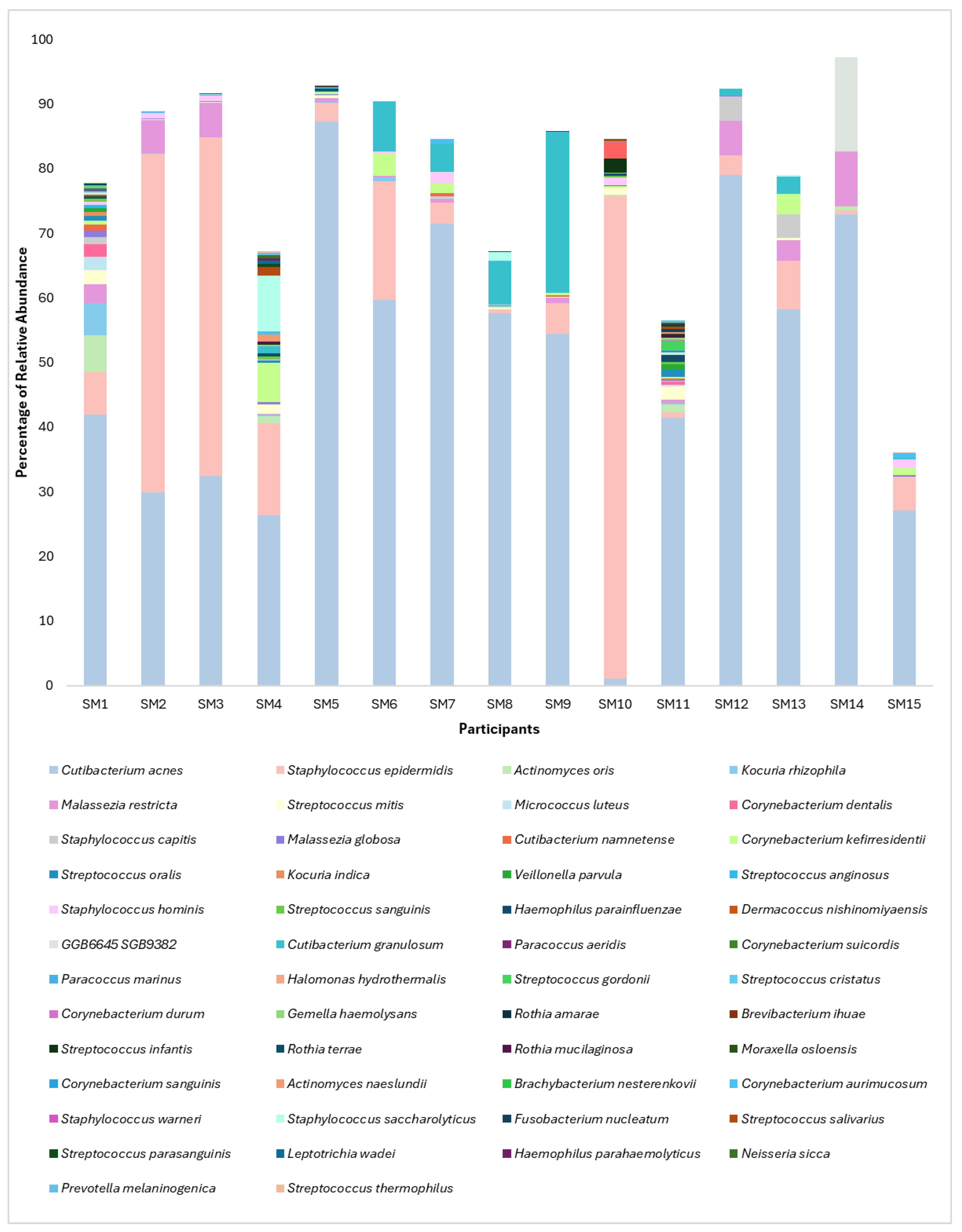
Figure 2.
Heat map of top 10 species for all the subjects.
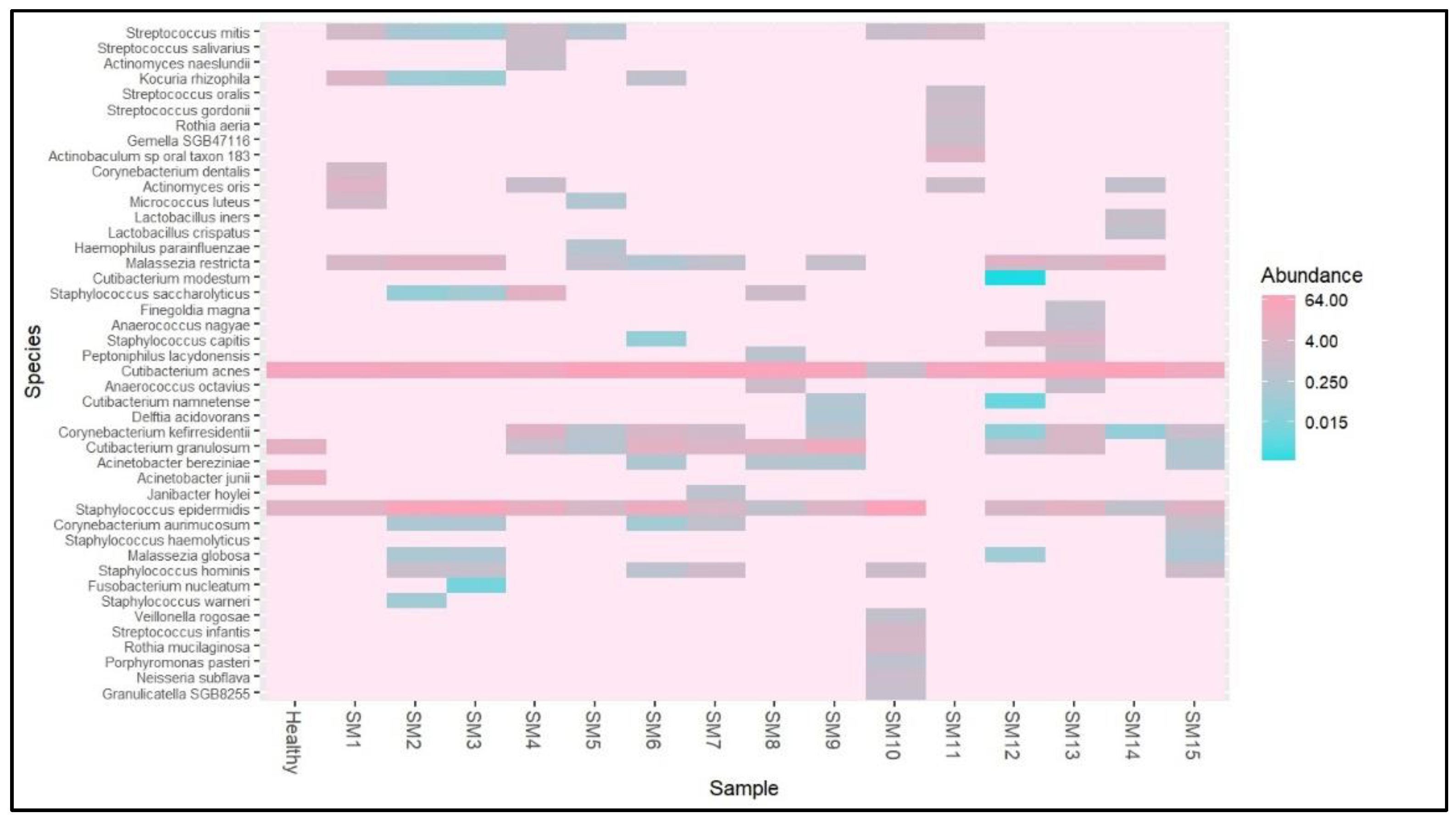
Figure 3.
Relative abundance of microbiome based on use of moisturizer and sunscreen in males and females; the difference in the relative abundance of males and females based on the usage of moisturizer (p=3.1e-0.5) and moisturizer+sunscreen (p=3.2e-13) is significant.
Figure 3.
Relative abundance of microbiome based on use of moisturizer and sunscreen in males and females; the difference in the relative abundance of males and females based on the usage of moisturizer (p=3.1e-0.5) and moisturizer+sunscreen (p=3.2e-13) is significant.
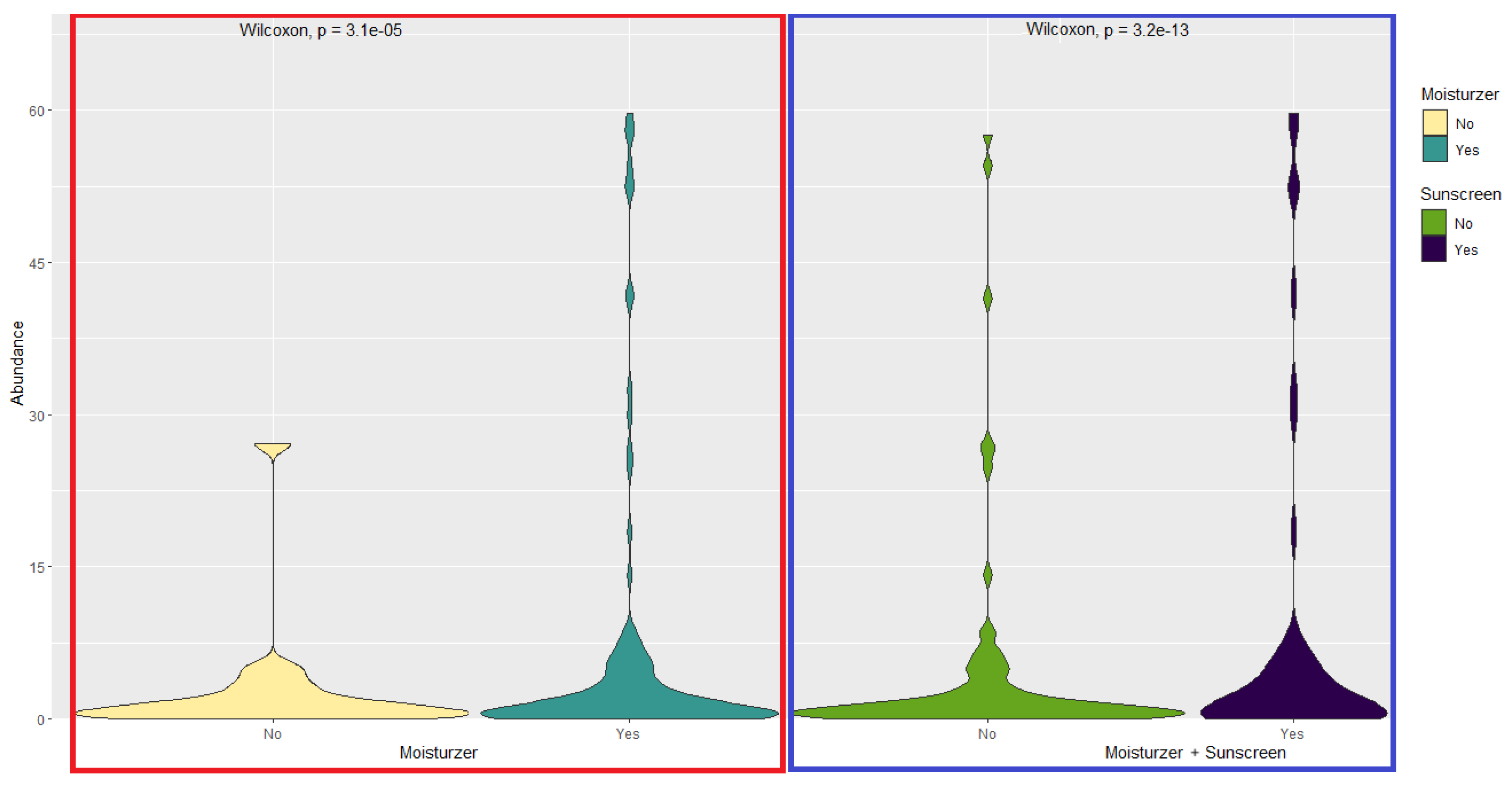
Figure 4.
Venn diagram at microbial level from participants using only moisturizer (Group_B), participants using moisturizer and sunscreen (Group_A) and participants who did not use any moisturizer and sunscreen (Group_D).
Figure 4.
Venn diagram at microbial level from participants using only moisturizer (Group_B), participants using moisturizer and sunscreen (Group_A) and participants who did not use any moisturizer and sunscreen (Group_D).
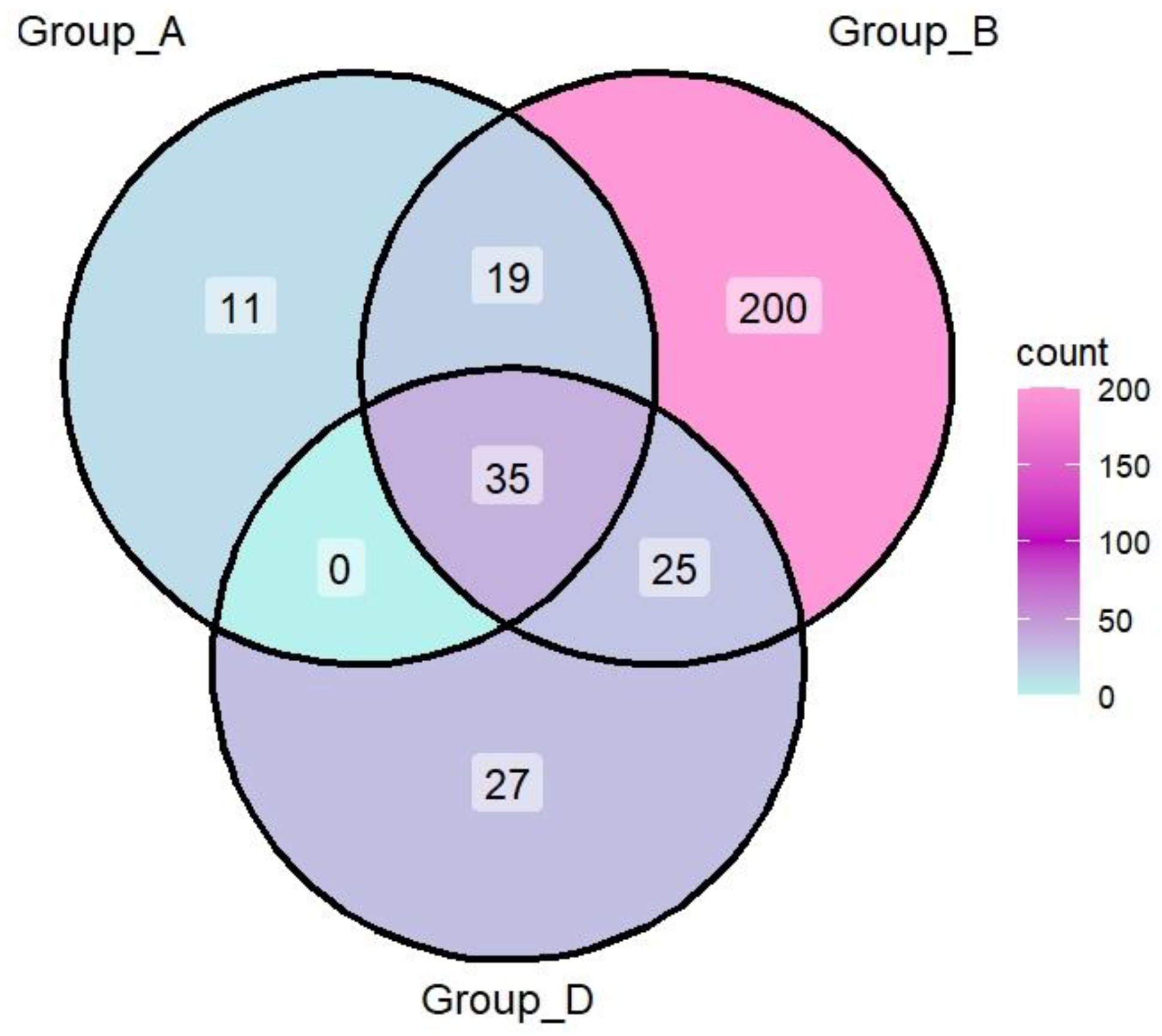
Figure 5.
Relative abundances of species in females and males based on skin care routine (p=0.034). higher relative abundances and diversity is observed in females than male participants.
Figure 5.
Relative abundances of species in females and males based on skin care routine (p=0.034). higher relative abundances and diversity is observed in females than male participants.
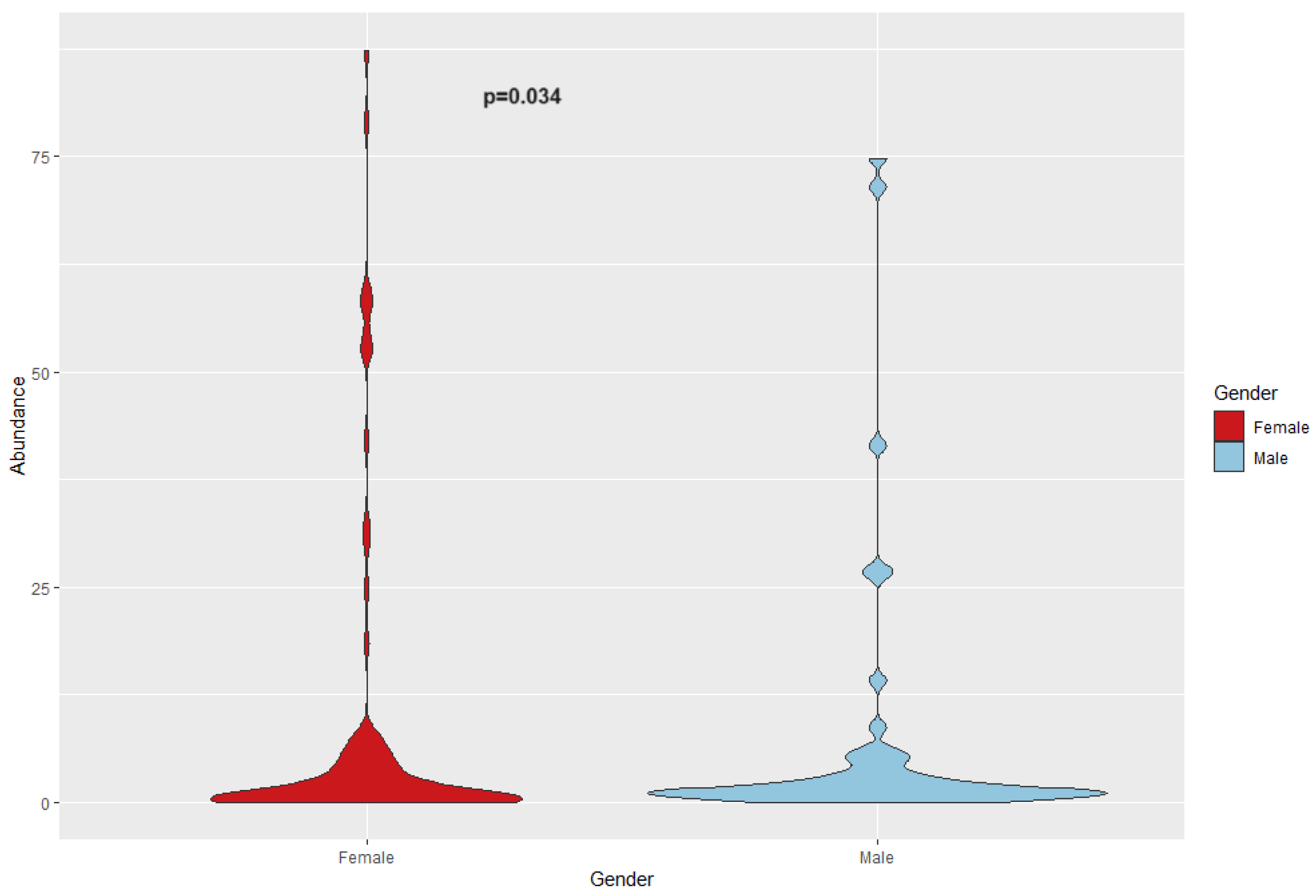
Figure 6.
Relative abundance of some commonly seen species in all samples compared with daily exposure to sun: (A) Cutibacterium acnes, (B) Cutibacterium granulosum, (C) Lactobacillus crispatus, (D) Malassezia globosa, (E) Malassezia restricta, (F) Staphylococcus aureus, (G) Staphylococcus capitis, (H) Staphylococcus epidermidis, (I) Staphylococcus hominis and (J) Micrococcus luteus. The comparison was found to be significant for C. acnes (low and moderate sun exposure), M. restricta (moderate and high sun exposure) and S. epidermidis (low and moderate sun exposure, moderate and high sun exposure). Box plot centre line indicates the median, edges of boxes are quartiles and error bar depicts max value. Notation NS=Not significant,*p=signicant value.
Figure 6.
Relative abundance of some commonly seen species in all samples compared with daily exposure to sun: (A) Cutibacterium acnes, (B) Cutibacterium granulosum, (C) Lactobacillus crispatus, (D) Malassezia globosa, (E) Malassezia restricta, (F) Staphylococcus aureus, (G) Staphylococcus capitis, (H) Staphylococcus epidermidis, (I) Staphylococcus hominis and (J) Micrococcus luteus. The comparison was found to be significant for C. acnes (low and moderate sun exposure), M. restricta (moderate and high sun exposure) and S. epidermidis (low and moderate sun exposure, moderate and high sun exposure). Box plot centre line indicates the median, edges of boxes are quartiles and error bar depicts max value. Notation NS=Not significant,*p=signicant value.
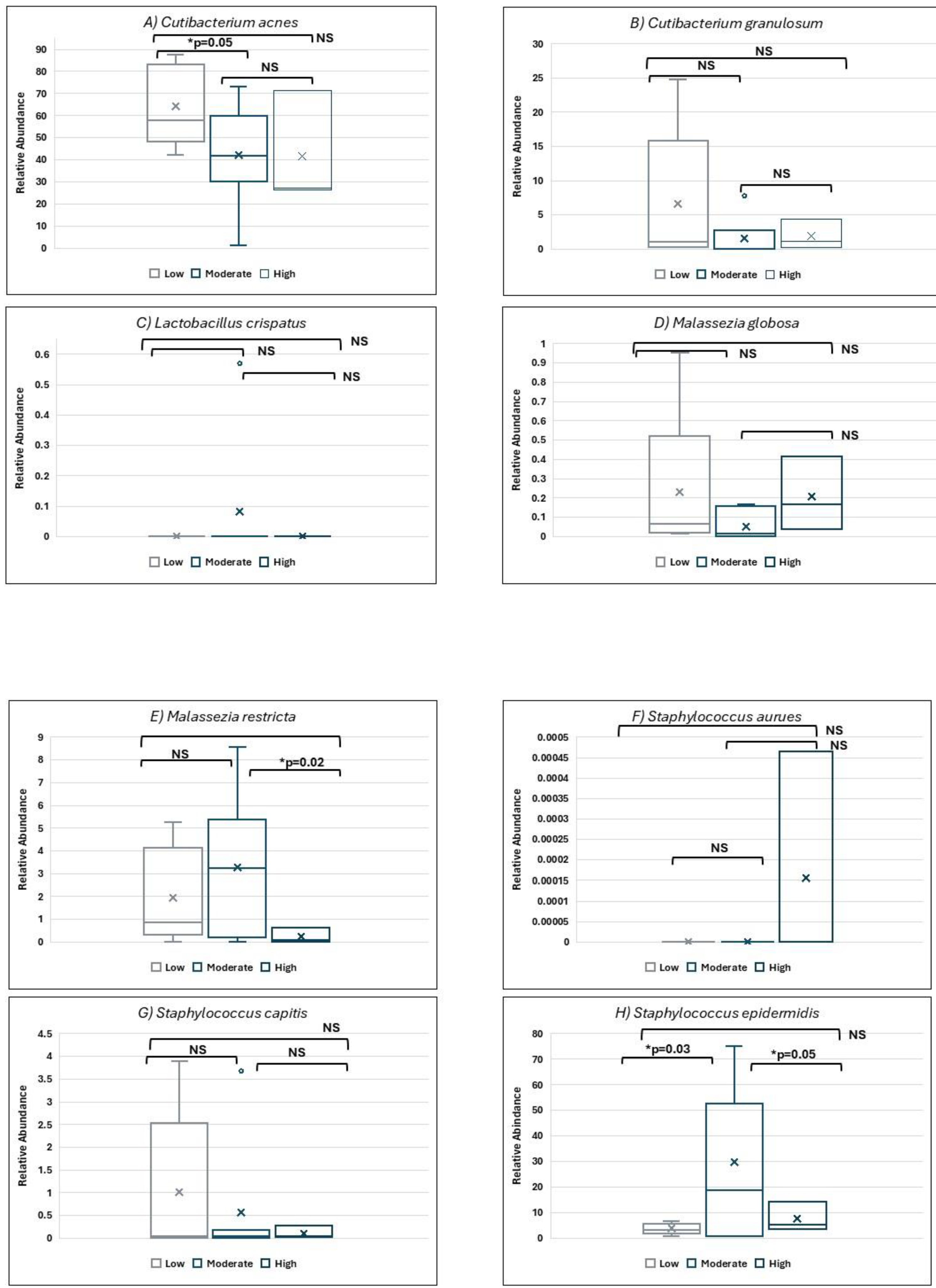
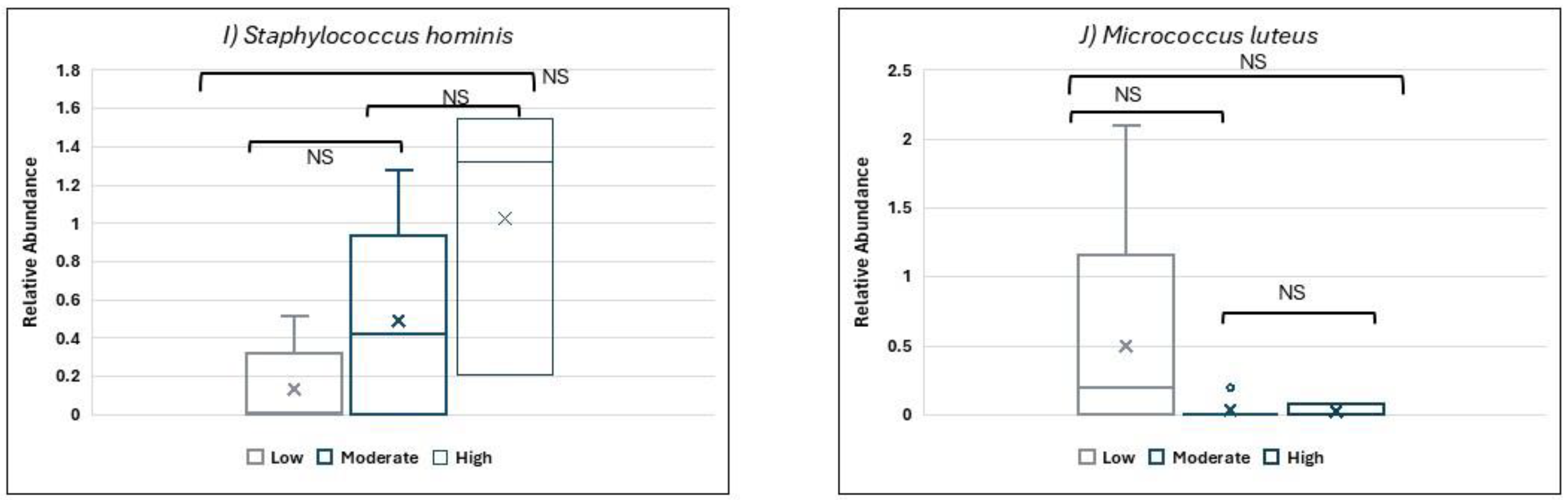
Figure 7.
Relative abundance comparison for Staphyloccus aureus, Staphylococcus epidermidis, Staphylococcus haemolyticus and Staphylococcus hominis in subjects using sunscreen and no sunscreen. It was found to be significant in S. epidermidis and S. hominis based on usage of moisturiser Box plot centre line indicates the median, edges of boxes are quartiles and error bar depicts max value. Notation NS=Not significant,*p=signicant value.
Figure 7.
Relative abundance comparison for Staphyloccus aureus, Staphylococcus epidermidis, Staphylococcus haemolyticus and Staphylococcus hominis in subjects using sunscreen and no sunscreen. It was found to be significant in S. epidermidis and S. hominis based on usage of moisturiser Box plot centre line indicates the median, edges of boxes are quartiles and error bar depicts max value. Notation NS=Not significant,*p=signicant value.
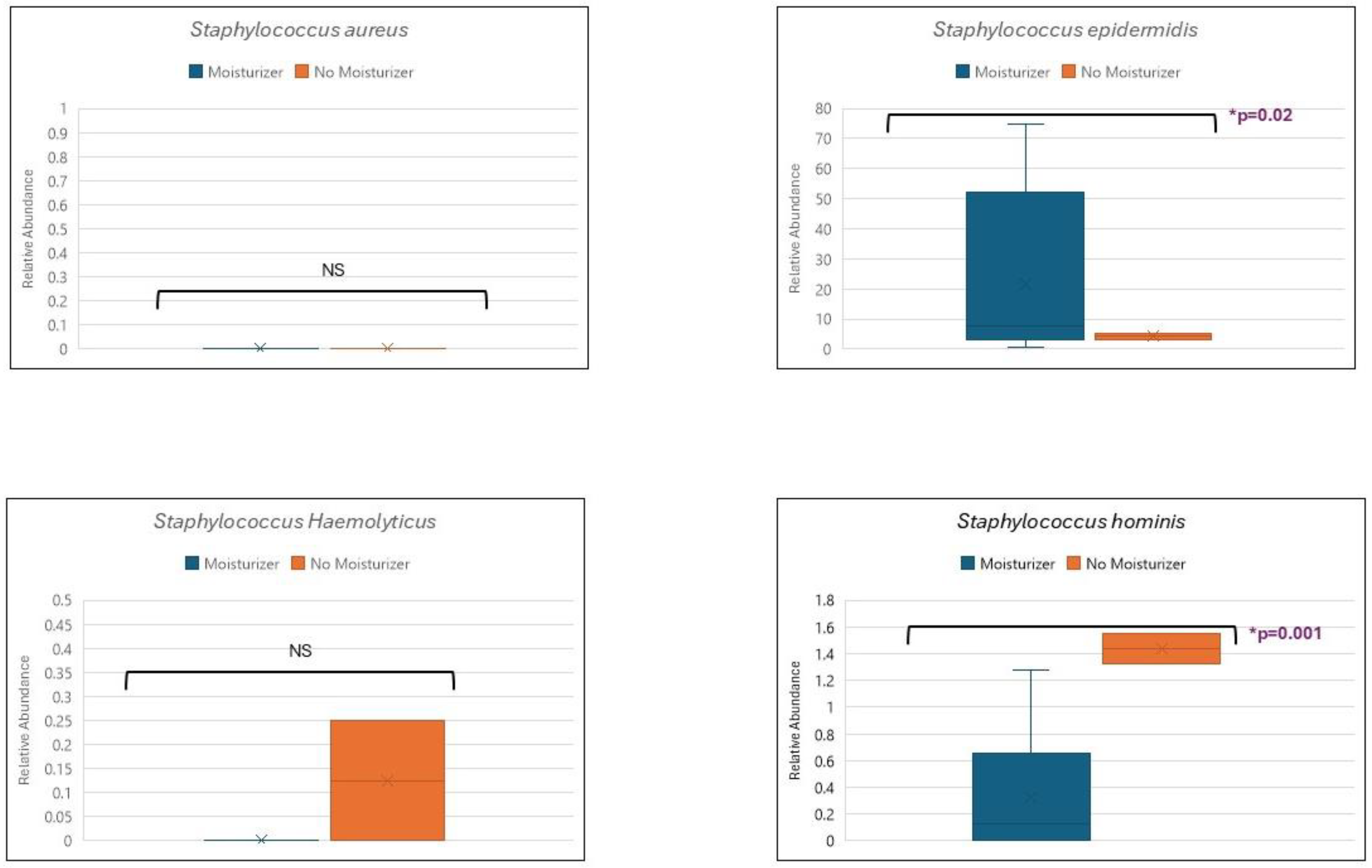
Figure 8.
Relative abundance comparison for Corynebacteium spp. for subjects using moisturizer and no moisturizer. Box plot centre line indicates the median, edges of boxes are quartiles and error bar depicts max value. Notation NS=Not significant,*p=signicant value.
Figure 8.
Relative abundance comparison for Corynebacteium spp. for subjects using moisturizer and no moisturizer. Box plot centre line indicates the median, edges of boxes are quartiles and error bar depicts max value. Notation NS=Not significant,*p=signicant value.
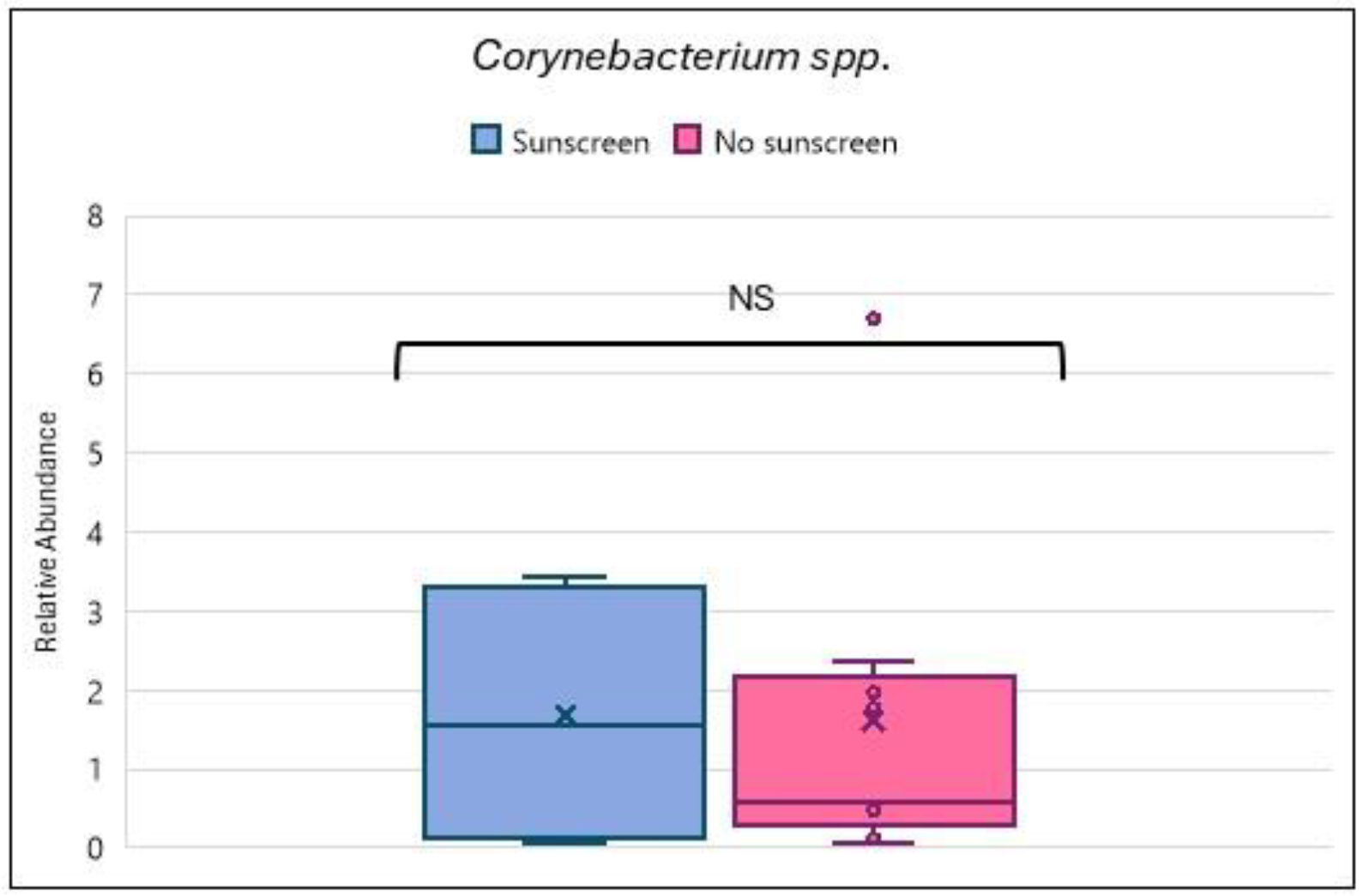
Figure 9.
Relative abundance comparison of microbiome based on meat based diet and plant based diet for participants. The comparison was highly significant with p=0.0001.
Figure 9.
Relative abundance comparison of microbiome based on meat based diet and plant based diet for participants. The comparison was highly significant with p=0.0001.
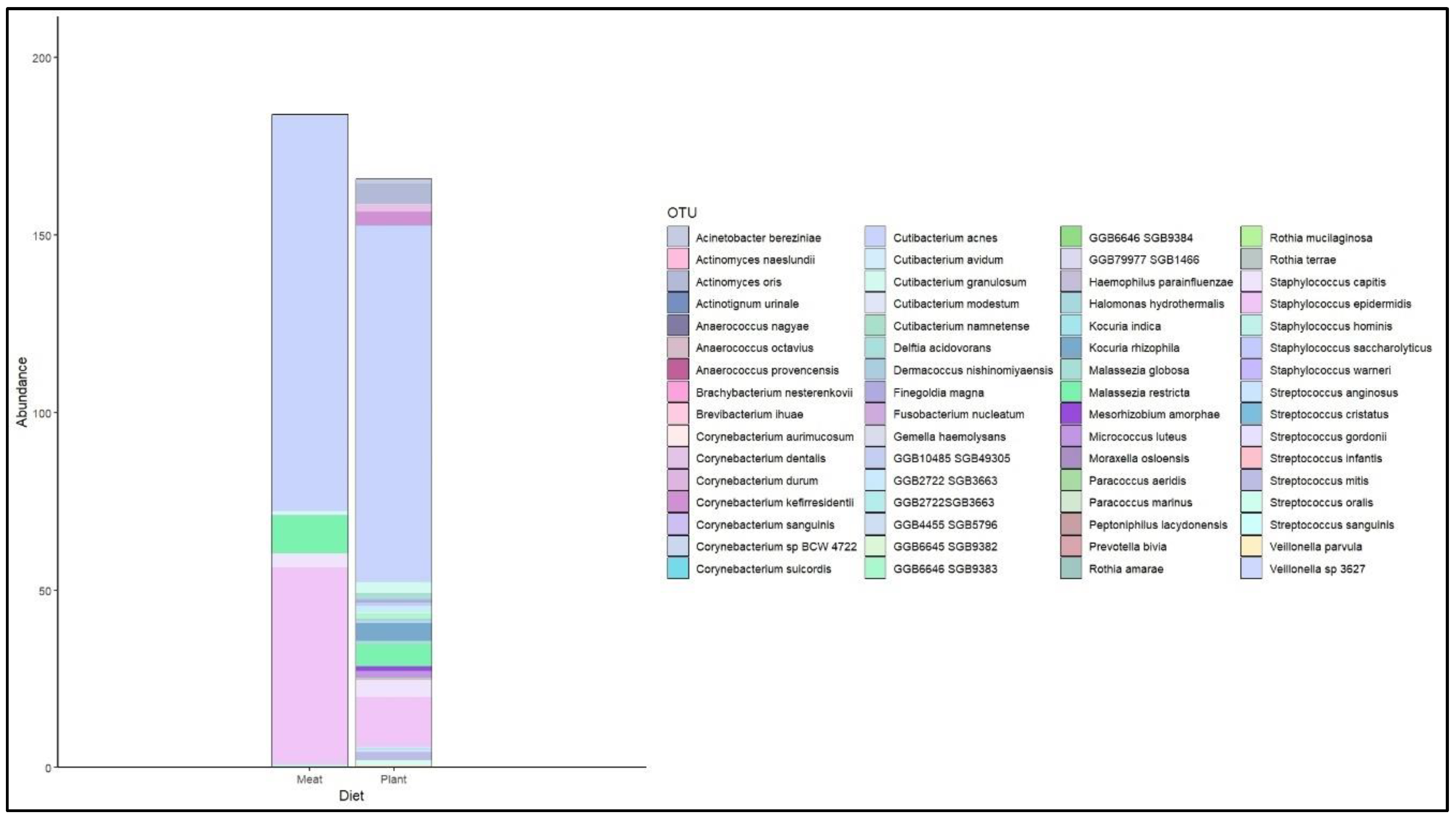

Table 1.
Participants’ Characteristics.
| Sample | Gender | Skin Type | Diet | Moisturizer | Sunscreen | Sun Exposure* | Shannon Diversity |
|---|---|---|---|---|---|---|---|
| SM1 | Female | Oily | Plant | Yes | Yes | Low | 2.12 |
| SM2 | Female | Dry | Meat | Yes | Yes | Moderate | 0.93 |
| SM3 | Female | Dry | Meat | Yes | Yes | Moderate | 0.94 |
| SM4 | Male | Dry | Meat | Yes | No | High | 2.4 |
| SM5 | Female | Dry | Meat | Yes | No | Low | 0.43 |
| SM6 | Female | Dry | Meat | Yes | Yes | Moderate | 1.02 |
| SM7 | Male | Dry | Meat | No | No | High | 1.04 |
| SM8 | Female | Oily | Meat | Yes | No | Low | 1.32 |
| SM9 | Female | Dry | Meat | Yes | No | Low | 1.14 |
| SM10 | Male | Dry | Meat | Yes | No | Moderate | 0.99 |
| SM11 | Male | Oily | Meat | Yes | No | Moderate | 2.73 |
| SM12 | Female | Oily | Meat | Yes | Yes | Low | 0.61 |
| SM13 | Female | Oily | Plant | Yes | Yes | Moderate | 1.27 |
| SM14 | Female | Dry | Meat | Yes | No | Moderate | 0.91 |
| SM15 | Male | Dry | Meat | No | No | High | 1.09 |
*Sun exposure – Low=less than 1 hour, Moderate=1 -3 hours and high=more than 3 hours daily.
Disclaimer/Publisher’s Note: The statements, opinions and data contained in all publications are solely those of the individual author(s) and contributor(s) and not of MDPI and/or the editor(s). MDPI and/or the editor(s) disclaim responsibility for any injury to people or property resulting from any ideas, methods, instructions or products referred to in the content. |
© 2025 by the authors. Licensee MDPI, Basel, Switzerland. This article is an open access article distributed under the terms and conditions of the Creative Commons Attribution (CC BY) license (http://creativecommons.org/licenses/by/4.0/).
Copyright: This open access article is published under a Creative Commons CC BY 4.0 license, which permit the free download, distribution, and reuse, provided that the author and preprint are cited in any reuse.


