
Submitted:
14 June 2025
Posted:
16 June 2025
You are already at the latest version
Abstract
Background: Effective personal hygiene and access to hygiene facilities are critical for preventing infectious diseases among college students. However, limited data exist on hygiene practices and infrastructure in college settings. The aim of the study was to assess student hygiene and sanitation practices, availability of hygiene facilities, and hygiene education among college students.
Methods: A cross-sectional survey was conducted among 150 college students to collect data on hygiene behaviors, access to hygiene materials, and perceptions of hygiene education and infrastructure.
Results: Only 32.0% of students reported soap availability on campus, and 73.5% stated that handwashing stations were inadequate. While 61.9% of students always washed their hands, other hygiene practices were less frequent: 9.5% showered daily, 7.5% regularly used deodorant, and 23.8% wore clean clothes consistently. Respiratory hygiene and nail trimming were practiced by just over half of respondents. Significant barriers such as lack of time, privacy, and facilities were reported by 59.9% of students. Furthermore, 73.5% indicated a lack of hygiene education programs, and 78.9% reported that health education was not part of the curriculum.
Conclusion: The study identified major gaps in hygiene infrastructure and education contributing to suboptimal hygiene behaviors among college students. Enhancing WASH facilities and integrating hygiene education into college curricula are essential steps to improve student health outcomes.
Recommendations: College administrations should prioritize providing adequate hygiene facilities, incorporate hygiene education into curricula, and establish regular hygiene monitoring systems to promote healthier practices.
Keywords:
Water
; Sanitation
; Hygiene
; practices
; college student
; infectious diseases
1. Introduction
Improved sanitation and hygiene practices in educational institutions are important for reducing the spread of germs, avoiding diseases, and enhancing general health. In order to prevent and control the transmission of infectious diseases and to promote good health, it is widely acknowledged that encouraging excellent hygiene and sanitation practices is an affordable, practical, and practical public health approach (Kabir et al. 2021). It has been found that the growing prevalence of infectious diseases in emerging nations is largely caused by inadequate sanitation practices [1].
Acute respiratory infections, diarrheal ailments, and other illnesses associated with poor personal cleanliness are among the communicable diseases th[1]at students are more prone to contract while attending college classes. College students frequently practice poor hygiene, endangering their health and leading to a number of negative effects. These include major absences from school, the spread of contagious diseases to other pupils, and parental and guardian missed workdays
Sanitation and hygiene habits have a direct impact on health, and students can be readily taught proper habits, which can be an inexpensive and efficient way to prevent sickness and lower absenteeism from school due to diseases [2]. Most of population in Ethiopia lack access to safe water, which is the lowest percentage on the continent. Poor environmental health conditions resulting from unsafe and inadequate water supplies as well as poor hygienic and sanitation practices are the cause of more than 60% of communicable diseases in Ethiopia [3]
Since sanitation and hygiene are both related to health, it’s critical to understand their differences because health is wealth. We can’t even imagine being healthy without both. Unsanitary conditions lead to more terrible illnesses, like the present epidemic caused by the Corona virus, which ultimately end the earth [4].
Access to safe water, adequate sanitation, and proper hygiene practices (WASH) is essential for health, dignity, and development. Globally, an estimated 2.2 billion people lack access to safely managed drinking water services, while 4.2 billion people do not have safely managed sanitation services [5].
Poor hygiene and sanitation practices among students can lead to increased incidence of waterborne diseases such as diarrhea, cholera, and intestinal parasites, which disproportionately affect school-aged children. These health issues contribute to absenteeism, reduced learning outcomes, and in severe cases, long-term developmental effects. Furthermore, the lack of gender-sensitive sanitation facilities, particularly for menstruating girls, contributes to gender disparities in education ([5]. In Ethiopia, although there have been significant improvements in expanding WASH infrastructure, challenges remain, especially in rural and semi-urban areas. According to the 2020 Joint Monitoring Programme (JMP), only 54% of schools in Ethiopia had basic drinking water services, and 27% had basic sanitation facilities [5].
Educational institutions play a pivotal role in promoting WASH practices. Implementing comprehensive WASH programs within schools, including the establishment of hygiene clubs, provision of handwashing facilities, and regular health education sessions, has been shown to improve students’ hygiene behaviours and reduce the incidence of WASH-related diseases [6].
2. Method and Materials
2.1. Study Area and Period
The study will be conducted in dr Abdimajid CTE from Feb-March 15 -17, 2025.
2.2. Study Design
The study design will be cross-sectional.
2.3. Sample Size Determination and Sampling Technique
2.3.1. Sample Size Determination
The whole population was not studied before this study. Therefore, the representative sample size will be fixed by using the formula for the sample size determination for a finite population [7].
N= NZ2pq
D2 (N-1) +Z2pq
Where
z -is the normal standard deviation set at 1.96 which corresponds to 95% confidence interval, d- is the degree of accuracy desired set at 5% in this study,
q=1-p and
p= 50%. (Presumed prevalence for unknown expected prevalence)=0.5
N= Degree of population from dr Abdimajid CTE college is 458.
ni= 458(1.96)2(0.5)(0.5) = 209
(0.05)2(458-1) + (1.96)2(0.5) (0.5)
ni=209
nf =ni = 209 = 209 =209 = 143
1+ni/N 1+209/458 1+0.46 1.46
nf=143
The calculated sample size is 143. Therefore, the final sample size for quantitative data will be 143.
The sample size for the qualitative data will be (20); five 5 cleaners, 5 male students (Monitors), 5 from management staffs and 5 instructors who will be purposively chosen.
2.3.2. Sampling Procedure
Multistage sampling technique will be used to recruit students from six departments in the college into the study. This sampling technique has the advantage being more accurate than cluster sampling for the same population size. It is also cost effective and time effective as compared to simple random sampling. To achieve the stated aims of this study, appropriate questionnaires and a checklist will be developed and will be validated. To ensure that items and contents in the questionnaire measure what they are designed to measure, experts will evaluate the initial draft for items and materials validation. Suggestions and observations of the expert’s opinions will be incorporated into the final versions of the questionnaires and checklists. Analysis for reliability will be carried out prior to the administration of the questionnaire
2.4. Populations
2.4.1. Source Population
All students who have been currently following their education in dr Abdimajid CTE
2.4.2. Study Population
All students who have been currently following their education in governmental dr Abdimajid CTE
2.5. Inclusion and Exclusion Criteria
2.5.1. Inclusion Criteria
Students willing to participate in the study.
2.5.2. Exclusion Criteria
Students not willing to participate in the study.
2.6. Data Collection Methods
A mixed-method approach was used for this study. Mixed method research involves using both quantitative and qualitative approaches to measure the general strength of the study[8]. Therefore, both qualitative and quantitative data were collected for this study.
All the students were explained about how to answer a structured questionnaire, questionnaire was distributed in class and 30 minutes time is given to fill it. Teacher of concerned class was cooperated in maintaining discipline.
Therefore, Data was collected using pretested structured questionnaire and observational check list.
2.6.1. Questionnaires
The quantitative data was gathered by questionnaire survey which was conducted at college using pre-test tools with help of data collectors.
2.6.2. Observation Checklist
This comprised of items were observed. Particularly the researcher used this method to observe the adequacy and utilization of the different sanitation facilities. The enumerators were more focusing on looking at the condition of latrine status; superstructure of latrine, cleanness, latrine hole coverage condition, placement of hand washing, presence of water at hand washing device, compound sanitation, water and food utensils hygiene.
2.6.3. Focus Group Discussion
These were group discussions with water, sanitation and hygiene committees (WASH COMs) from different groups and at dr Abdilmajid Hussein College of teacher’s education. They were adopted so as to compliment the quantitative method by soliciting for explanations that cannot be quantified through sampling views.
2.7. Study Variables
2.7.1. Dependent Variable
- Hygiene practices.
2.7.2. Independent variable
- Socio-demographic factors like age, sex, batch year of students,
2.8. Data Processing and Analysis
Data was analyzed using SPSS software version 27. The descriptive statistical method was used to analyze frequencies and percentages. The collected data was checked at the end of each data collection day for their completeness and consistency. The raw data was processed manually by using pocket scientific calculator. These data were also compiled, organized and presented in tables. Finally the result was compared and discussed based on different principles, standard and with others similar findings.
2.9. Data Quality Control
Before data collection, the data collectors were received 2days of training. A pretest was conducted at dr Abdimajid CTE to assess the clarity of the survey tool and the responses of the respondents. The questionnaire was first prepared in English. The English questionnaire was translated into Somali and then back-translated into English to ensure consistency.
2.11. Ethical Considerations
A formal letter was obtained from dr Abdimajid CTE to precede the study. The objective of the study were explained to the director research office and coordination.
The study was ensure the ethical issues that was involved, including the risks and benefits of the respondents. Before conducting data collection, each respondent was clearly informed about the purposes, type of information coverage, and confidentiality.
2.12. Operational Definitions
Hygiene: According to World Health Organization (WHO), hygiene is related to health as it mainly focuses on preserving health and preventing diseases [9]. In a simple terms it related to Health and Diseases.
Sanitation: According to World Health Organization (WHO), sanitation refers to the safe disposal of human waste (which could be human urine and faeces) and the provision of adequate services and facilities for that [9].
Water: Focuses on ensuring access to safe and clean drinking water sources for drinking, cooking, and personal hygiene[9].
3. Results
Out of the 143 questionnaires administered, all 143 were also returned although with varying degrees of missing entries in them. The results as presented in the table below covers responses retrieved from the questionnaire in line with the study objective.
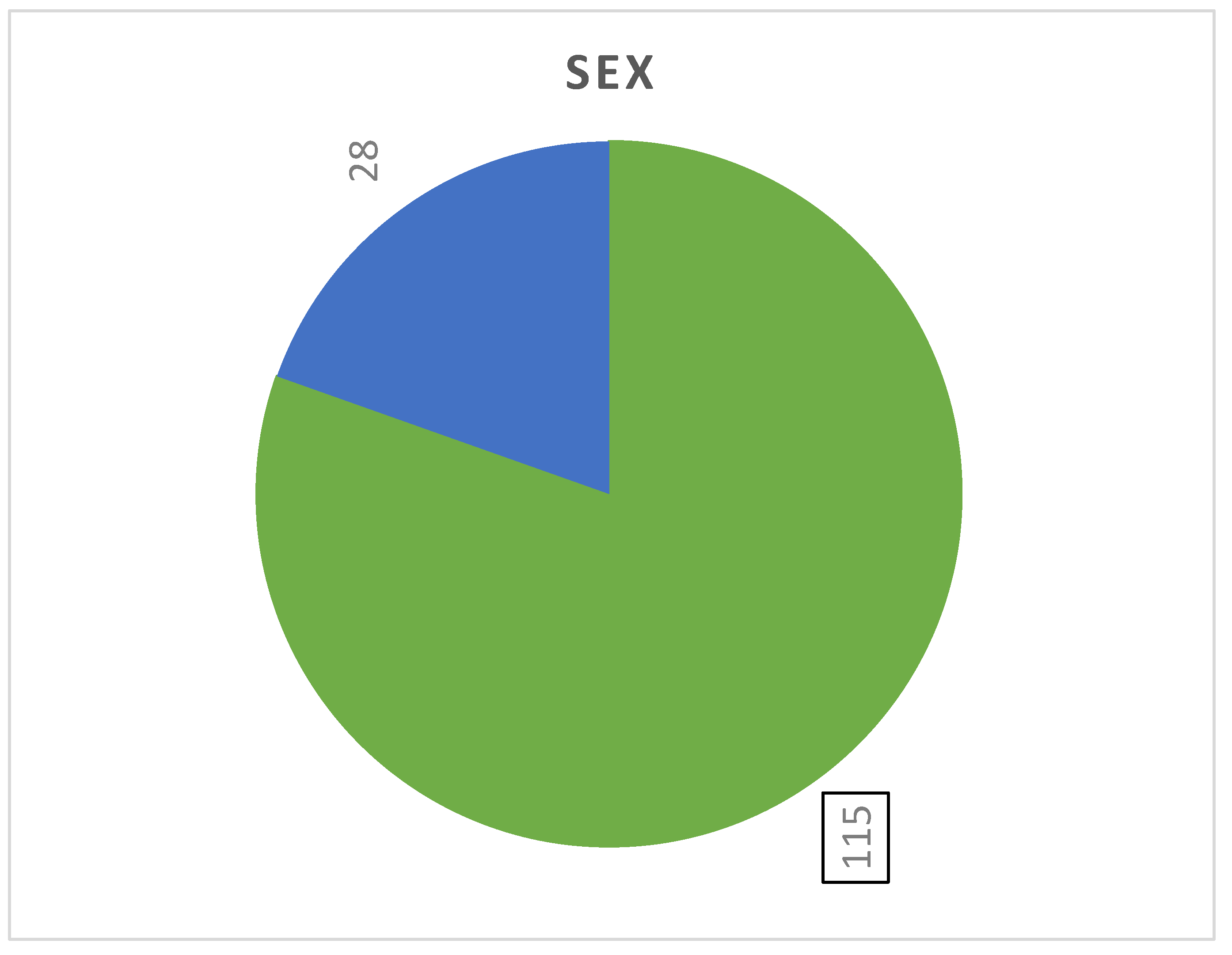
Figure 1.
Study participants by sex.
3.1. Socio-Demographic Characteristics
A comprehensive Water, Sanitation, and Hygiene (WASH) assessment requires a clear understanding of the socio-demographic background of the target population. Socio-demographic variables provide context to the findings and help identify vulnerable groups or service gaps. The present WASH assessment includes data on the sex, age, academic level, and residence of students of Dr. Abdimajid Hussein College of teacher’s education which is the primary college of teachers training educational college in Somali regional state of Ethiopia.
Among the 143 respondents, 115(78.2%), the majority were male students while female students constituted only 28(19.0%) of the population. This uneven distribution has important implications for WASH services, particularly in ensuring gender-sensitive facilities. A smaller female population does not reduce the importance of adequate, private, and secure hygiene services for women, especially menstrual hygiene management, which is often neglected in male-dominated settings. Planning WASH interventions should take into account the specific needs of female students to promote inclusiveness and equity.
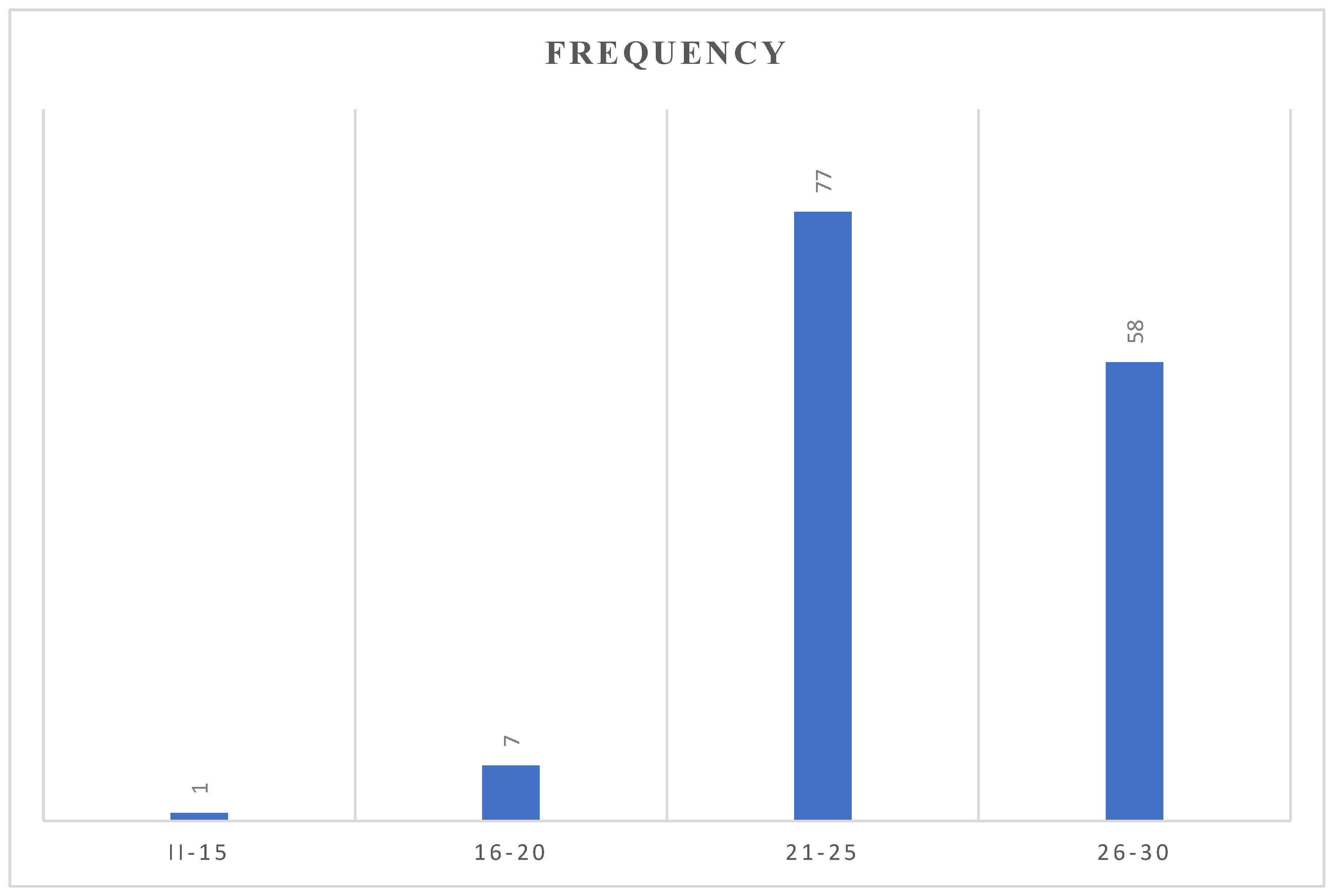
The student population is predominantly composed of young adults aged 21–25; 77(52.4%) and 26–30; 58(39.5%), indicating that the majority of the respondents are likely in the later years of their tertiary education or early professional development stages. Younger age groups, such as those aged 11–15; 1(0.7%) and 16–20; 7(4.8%), are minimally represented. This age profile suggests that students have the capacity to understand and participate in personal hygiene practices and WASH-related awareness programs. Therefore, WASH education and campaigns can be tailored to an adult audience, focusing on behavior change, sustainability, and health outcomes rather than basic hygiene instruction.
Figure 2.
Student age category.
The study population consists mainly of degree students 105 (71.4%), with diploma students accounting for 38(25.9%). Degree students, possibly spending more years on campus, may have higher exposure to the existing WASH facilities and their quality over time. They may also serve as effective peer educators or focal points for promoting hygiene behavior among the student body. Tailored WASH education programs and leadership roles could be integrated into student activities to reinforce best practices.
The vast majority of respondents 141(95.9%) reside in campus dormitories, with only 2(1.4%) living at home. This is a critical finding for the WASH assessment, as it implies that the students rely heavily on institutional WASH facilities for their daily water usage, sanitation, and hygiene needs. Overcrowding in dormitories may strain available resources and reduce the effectiveness of WASH interventions. This information underscores the need for consistent water supply, clean and adequate toilet facilities, and access to hygiene supplies within student housing. Institutions should also ensure regular maintenance and sanitation services to prevent the spread of disease.

Table 1.
Socio-demographic profile Dr Abdilmajid Hussein CTE study subjects.
| Socio-demographic Variables | Level | Frequency | Percentage (%) |
|---|---|---|---|
| Students‘ sex | Male | 115 | 78.2% |
| Female | 28 | 19.0% | |
| Age | 11-15 | 1 | 0.7% |
| 16-20 | 7 | 4.8% | |
| 21-25 | 77 | 52.4% | |
| 26-30 | 58 | 39.5% | |
| Student Study years( batch): | Degree | 105 | 71.4% |
| Diploma | 38 | 25.9% | |
| Current residence of the respondents | Dorm | 141 | 95.9% |
| Home | 2 | 1.4% |
3.2. Assessments of Students Hygiene Practices
Water, Sanitation, and Hygiene (WASH) are essential for safeguarding health and preventing the spread of diseases, particularly in communal settings like colleges. This assessment explores the hygiene-related practices, awareness, and challenges faced by students. The data includes critical indicators such as handwashing behavior, availability of hygiene materials, and personal hygiene habits, providing insight into current conditions and areas for improvement.
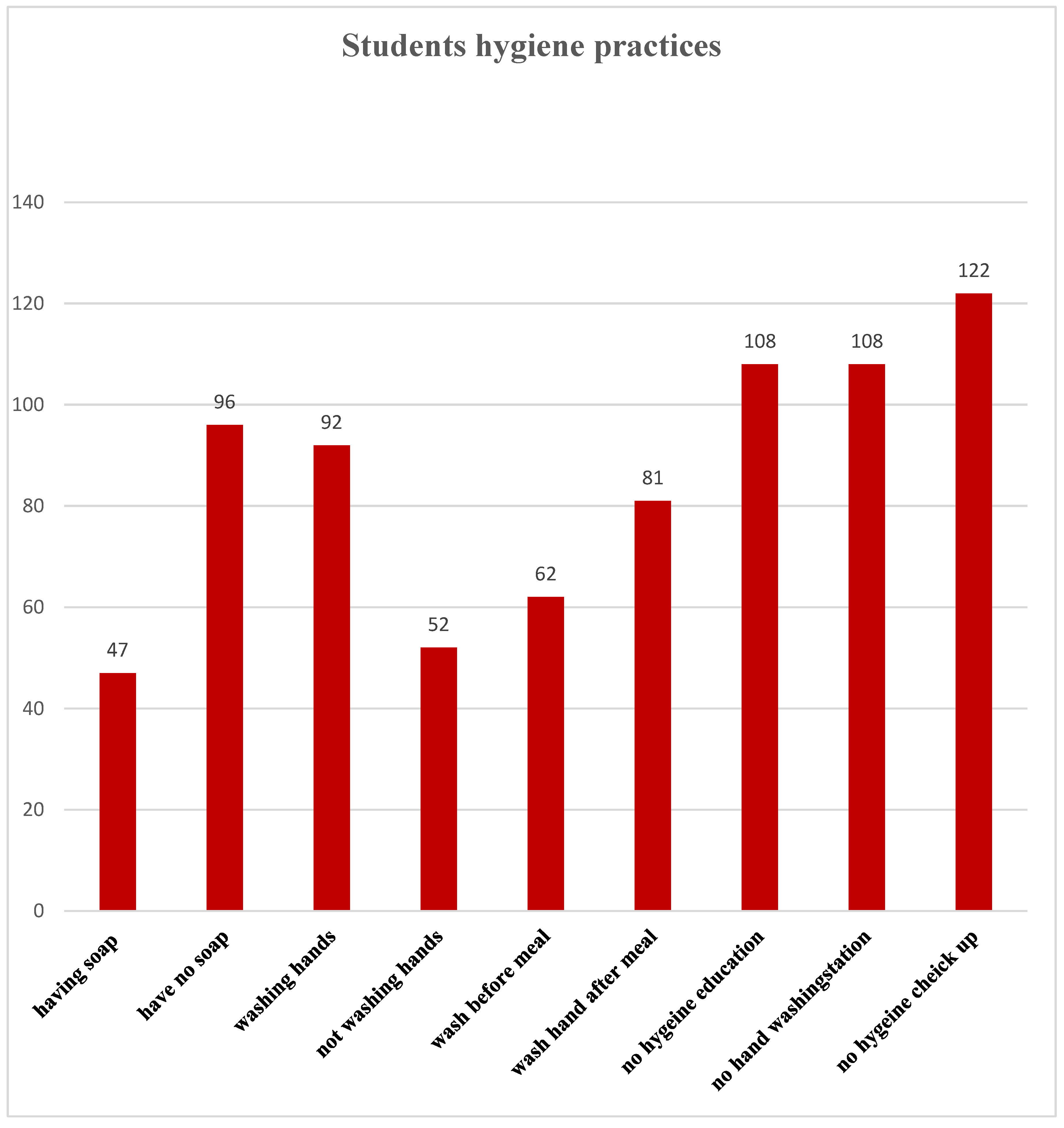
Only 47 students (32.0%) reported having soap available at college, while a significantly higher number, 96 students (65.3%), stated that soap was not available. This indicates a major gap in the provision of basic hygiene materials within the institution. The lack of access to soap poses serious health risks, as it directly affects students’ ability to practice effective hand hygiene. One of the simplest and most effective methods of preventing the spread of infectious diseases. This issue should be a top priority for college administrators and health officers aiming to improve WASH standards on campus.
Hand hygiene remains a cornerstone of disease prevention. In this assessment, 91 students (61.9%) reported that they always wash their hands, while 52 students (35.4%) said they do so sometimes. This is encouraging but still leaves room for improvement. 62 students (42.2%) reported washing hands before meals and the rest 81 students don’t wash hands be. 21 students (14.3%) said they brush their teeth twice a day. Only 14 students (9.5%) said they shower daily. 35 students (23.8%) wear clean clothes regularly. Just 11 students (7.5%) reported using deodorant. This shows that while handwashing is somewhat prioritized, other hygiene practices are far less consistently followed.
Good respiratory hygiene helps limit the spread of airborne infections. In this survey, 84 students (57.1%) said they cover their mouth and nose when sneezing or coughing, while 59 students (40.1%) do not. In terms of nail hygiene, 78 students (53.1%) reported that they trim their fingernails and toenails regularly, while 65 students (44.2%) do not.
Education and infrastructure are crucial for sustaining hygienic behavior. However, the majority of students reported gaps in both areas; 108 students (73.5%) said there are not enough hygiene education programs, compared to only 35 students (23.8%) who believed there were sufficient efforts. Similarly, 116 students (78.9%) stated that health education is not incorporated into the curriculum, while only 27 students (18.4%) said it is.In terms of facilities, 108 students (73.5%) indicated there are not enough handwashing stations, and 35 students (23.8%) said the stations were adequate. A striking 122 students (83.0%) reported that there is no personal hygiene check-up system at the college, compared to only 21 students (14.3%) who said there is one.
Figure 3.
Student hygiene practices.
Toothbrush replacement habits reveal awareness about oral hygiene.73 students (49.7%) replace their toothbrush only when it looks worn out.35 students (23.8%) replace theirs every 3 months. Another 35 students (23.8%) do so every 6 months. As for bathing habits:64 students (43.5%) reported always bathing regularly.61 students (41.5%) said they bathe sometimes.18 students (12.2%) bathe frequently. None of the respondents reported never bathing.
Over half of the respondents 88 students (59.9%) reported facing barriers to maintaining personal hygiene in college, while 55 students (37.4%) did not. These barriers may include lack of time, or insufficient privacy and facilities.
Sanitation practices are essential for health, particularly handwashing after using the toilet. The responses were as follows: 51 students (34.7%) always wash their hands after defecation.52 students (35.4%) do so frequently.28 students (19.0%) do so sometimes. 12 students (8.2%) never do so.
Table 2.
Assessments of hygiene practices among Dr. Abdilmajid CTE Student.
| Characteristics | level | frequency | Percentage (%) |
|---|---|---|---|
| Do you have soap to wash hands at college? | Yes | 47 | 32.0% |
| No | 96 | 65.3% | |
| How often do you wash your hands? | always | 91 | 61.9% |
| sometimes | 52 | 35.4% | |
| Do you use hand sanitizer regularly? | Yes | 30 | 20.4% |
| no | 113 | 76.9% | |
| Which of the following do you do to maintain personal hygiene? | Shower daily | 14 | 9.5% |
| Brush teeth twice a day | 21 | 14.3% | |
| Wash hands before meals | 62 | 42.2% | |
| Use deodorant | 11 | 7.5% | |
| Wear clean clothes | 35 | 23.8% | |
| Do you cover your mouth and nose when sneezing or coughing? | Yes | 84 | 57.1% |
| no | 59 | 40.1% | |
| Do you think there are enough hygiene education programs in your school? | Yes | 35 | 23.8% |
| no | 108 | 73.5% | |
| How often do you change your toothbrush? | Every 3 months | 35 | 23.8% |
| Every 6 months | 35 | 23.8% | |
| whenever it looks worn out | 73 | 49.7% | |
| Are there enough handwashing stations at your college? | yes | 35 | 23.8% |
| no | 108 | 73.5% | |
| Is there any personal hygiene check up in the college? | Yes | 21 | 14.3% |
| no | 122 | 83.0% | |
| Is health education incorporating in the college curriculum? | Yes | 27 | 18.4% |
| no | 116 | 78.9% | |
| Do you trim your finger and toe nails regularly? | Yes | 78 | 53.1% |
| no | 65 | 44.2% | |
| Is there any barriers do you face in maintaining personal hygiene at college ? | Yes | 88 | 59.9% |
| no | 55 | 37.4% | |
| Washing hands after defecation? | Always | 51 | 34.7% |
| Frequently | 52 | 35.4% | |
| Sometimes | 28 | 19.0% | |
| Never | 12 | 8.2% | |
| Using soap to wash your hands? | Always | 66 | 44.9% |
| Frequently | 22 | 15.0% | |
| Sometimes | 24 | 16.3% | |
| Never | 31 | 21.1% | |
| Maintaining regularity in taking a bath? | Always | 64 | 43.5% |
| Frequently | 18 | 12.2% | |
| Sometimes | 61 | 41.5% | |
| Never | 0 | 0% | |
| Wearing washed clothes? | Always | 82 | 55.8% |
| Frequently | 40 | 27.2% | |
| Sometimes | 20 | 13.6% | |
| Never | 1 | 0.7% |
3.3. Assessments of Potable Water and Sanitation Practices among students
A clean and safe college environment is crucial for student health, learning, and overall well-being. This study evaluates the potable water availability, sanitation infrastructure, hygiene practices, and students’ perceptions at Dr. Abdilmajid Hussein College of Teacher Education (CTE). The data reflects important strengths and weaknesses in the institution’s current WASH (Water, Sanitation, and Hygiene) framework.
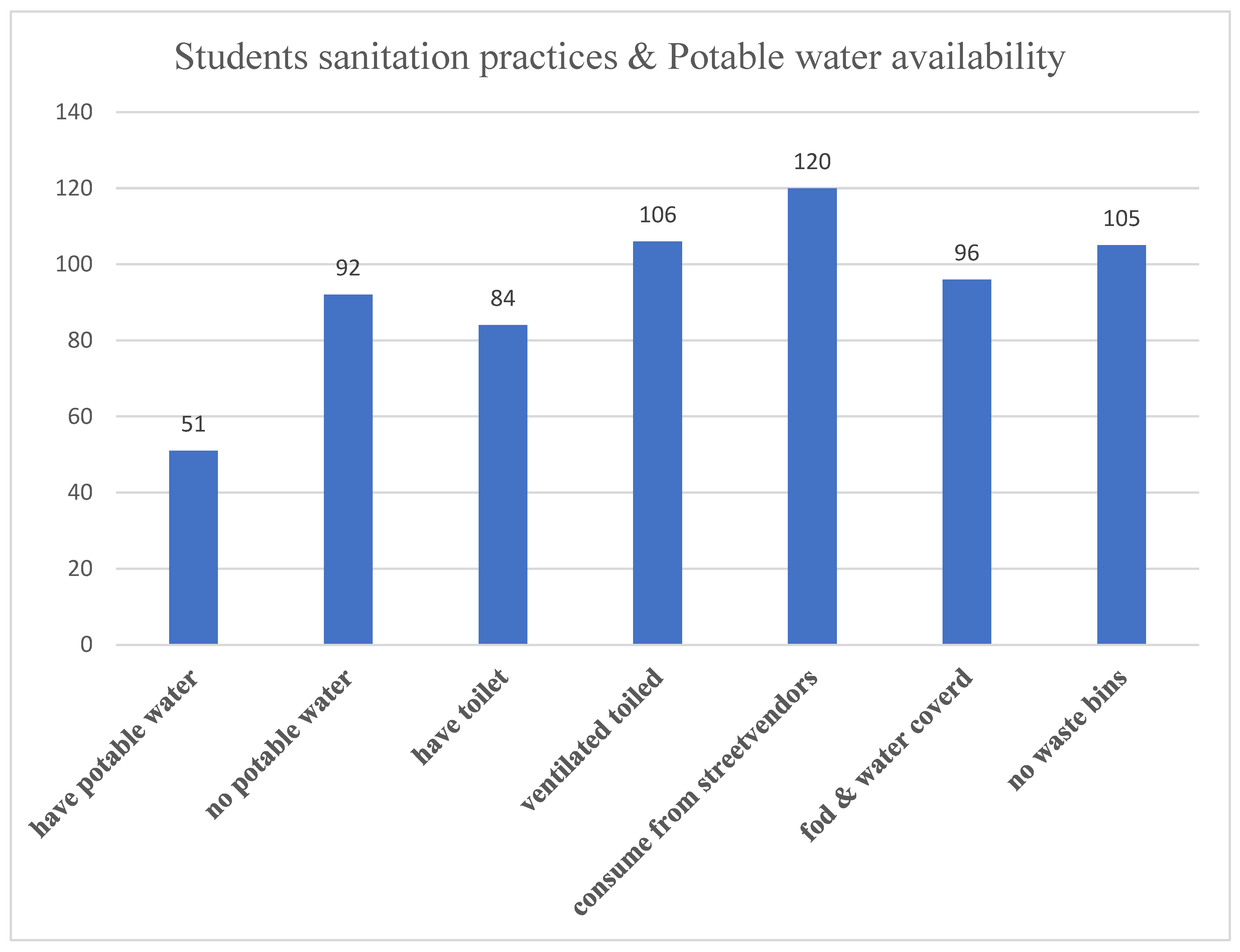
Only 51 students (34.7%) confirmed having access to potable water at college, while 92 students (62.6%) reported the lack of it, suggesting a serious gap in basic water provision. While 84 students (57.1%) acknowledged the presence of toilet facilities, 59 (40.1%) said they were unavailable. This indicates that a significant proportion of students do not have reliable access to safe water and sanitation. Additionally, while 106 students (72.1%) reported that toilets are ventilated, 37 (25.2%) said they are not, highlighting mixed perceptions of facility quality.
Daily consumption of food and drinks from street vendors is high among students, with 120 students (81.6%) reporting such behavior, which raises concerns about food safety. Encouragingly, 96 students (65.3%) reported keeping food and water covered and protected from flies, which is a positive hygiene behavior. The availability of waste bins near classrooms was poor, with only 38 students (25.9%) indicating they had nearby access, compared to 105 students (71.4%) who did not.
Sanitation facilities were deemed inadequate by 96 students (65.3%), while only 47 (32.0%) felt they were sufficient. Despite the challenges, 89 students (60.5%) felt the college supports sanitation practices, while 54 (36.7%) disagreed. when asked how often they clean their living space: Daily: 52 (35.4%) Weekly: 51 (34.7%) Monthly: 20 (13.6%) Rarely: 20 (13.6%) This shows a fairly strong commitment to dorm hygiene, though regularity varies.
Use of separate sandals for toilet use remains limited;Always 44 (29.9%)Frequently 24 (16.3%)Sometimes (0.7%)Never 74 (50.3%).Study identified key areas in need of improved sanitation:Restrooms: 50 (34.0%)Dorms: 32 (21.8%)Cafeteria: 32 (21.8%)Classrooms: 20 (13.6%)Lockers: 9 (6.1%)Study also expressed the preferences for policy improvements:Better facility maintenance: 46 (31.3%)Increased hygiene education: 33 (22.4%)Student involvement in sanitation: 30 (20.4%)More frequent cleaning: 20 (13.6%) Stricter rule enforcement: 14 (9.5%)In terms of waste disposal methods: Recycling bins: 50 (34.0%)Trash bins: 46 (31.3%)Composting: 37 (25.2%)Don’t know: 10 (6.8%)Study suggest the following as essential elements for sanitation:Trash cans: 41 (27.9%)Hand sanitizing stations: 27 (18.4%)Clean water sources: 26 (17.7%)Proper waste disposal systems: 25 (17.0%) Regular cleaning schedules: 24 (16.3%)
Figure 4.
Students sanitation practices & Potable water availability.
The Study suggested various measures to improve sanitation; Regular sanitation inspections: 33 (22.4%)More cleaning staff; 29 (19.7%)Availability of clean water; 29 (19.7%)Handwashing campaigns; 26 (17.7%)Promotion of hygiene awareness; 26 (17.7%).Regarding good food safety practices, students highlighted Washing fruits and vegetables; 45 (30.6%)Refrigerating perishables; 30 (20.4%)Checking expiration dates;25 (17.0%)Cooking food thoroughly;22 (15.0%)Separating raw/cooked foods: 21 (14.3%).A large majority, 101 students (68.7%), also agreed there should be stricter penalties for littering, showing a strong demand for better enforcement. Finally, when asked about factors contributing to disease spread; Untidy restrooms;55 (37.4%)Poor ventilation; 28 (19.0%)Lack of handwashing; 27 (18.4%)Shared utensils; 21 (14.3%)Overcrowded classrooms; 12 (8.2%).
Table 3.
Assessments of Potable Water and Sanitation Practices among Dr. Abdilmajid Hussein CTE Students.
Table 3.
Assessments of Potable Water and Sanitation Practices among Dr. Abdilmajid Hussein CTE Students.
| Characteristics | level | Frequency | Percentage (%) |
|---|---|---|---|
| Do you have potable water at college? | Yes | 51 | 34.7% |
| no | 92 | 62.6% | |
| Do you have a toilet facility? | Yes | 84 | 57.1% |
| no | 59 | 40.1% | |
| Is toilet ventilated? | Yes | 106 | 72.1% |
| No | 37 | 25.2% | |
| Is the waste bin positioned close to your classroom? | Yes | 38 | 25.9% |
| no | 105 | 71.4% | |
| Daily consume edibles/drinks from street vendors | Yes | 120 | 81.6% |
| no | 23 | 15.6% | |
| Keeps water and edibles covered or protected from flies | Yes | 96 | 65.3% |
| no | 47 | 32.0% | |
| Maintaining regularity in cleaning your Dorm? | Always | 65 | 44.2% |
| Frequently | 42 | 28.6% | |
| Sometimes | 24 | 16.3% | |
| Never | 12 | 8.2% | |
| Where do you think there is a need for improved sanitation in your college? | Restrooms | 50 | 34.0% |
| Classrooms | 20 | 13.6% | |
| Cafeteria | 32 | 21.8% | |
| Dorms | 32 | 21.8% | |
| Locker | 9 | 6.1% | |
| Using separate sandals for toilet? | Always | 44 | 29.9% |
| Frequently | 24 | 16.3% | |
| Sometimes | 1 | 0.7% | |
| Never | 74 | 50.3% | |
| How often do you clean your living space (room or dorm)? | daily | 52 | 35.4% |
| weekly | 51 | 34.7% | |
| monthly | 20 | 13.6% | |
| rarely | 20 | 13.6% | |
| Which of the following do you consider essential for maintaining good sanitation in public areas? | Trash cans for litter | 41 | 27.9% |
| Hand sanitizing stations | 27 | 18.4% | |
| clean water sources | 26 | 17.7% | |
| Proper waste disposal systems | 25 | 17.0% | |
| Regular cleaning schedules | 24 | 16.3% | |
| How do you dispose your waste properly? | Trash bins | 46 | 31.3% |
| Recycling bins | 50 | 34.0% | |
| Composting | 37 | 25.2% | |
| don’t know | 10 | 6.8% | |
| What changes would you like to see in the college sanitation policies? | more frequent cleaning | 20 | 13.6% |
| Better maintenance of facilities | 46 | 31.3% | |
| Increased hygiene education | 33 | 22.4% | |
| Strict enforcement of sanitation Rules | 14 | 9.5% | |
| Student involvement in sanitation initiatives | 30 | 20.4% | |
| Which of the following do you believe are good practices for food safety? | Washing fruits and vegetables | 45 | 30.6% |
| separating raw and cooked foods | 21 | 14.3% | |
| cooking food thoroughly | 22 | 15.0% | |
| refrigerating perishable item | 30 | 20.4% | |
| Checking expiration dates | 25 | 17.0% | |
| Do you think the school should provide more sanitation facilities? | yes | 96 | 65.3% |
| no | 47 | 32.0% | |
| Do the college support students in maintaining good sanitation practices? | Yes | 89 | 60.5% |
| no | 54 | 36.7% | |
| Which of the following do you think can help improve sanitation practices in your college? | more cleaning staff | 29 | 19.7% |
| Handwashing campaigns | 26 | 17.7% | |
| Regular sanitation inspections | 33 | 22.4% | |
| Promotion of hygiene awareness | 26 | 17.7% | |
| Availability of clean water | 29 | 19.7% | |
| Do you think there should be stricter penalties for littering at your college? | yes | 101 | 68.7% |
| no | 42 | 28.6% | |
| Which of the following do you think can contribute to the spread of diseases at your college? | Lack of handwashing | 27 | 18.4% |
| Shared utensils | 21 | 14.3% | |
| Poor ventilation | 28 | 19.0% | |
| Overcrowded classrooms | 12 | 8.2% | |
| Untidy restrooms | 55 | 37.4% |
Observation Findings
Using a structured observation checklist, the researchers assessed the adequacy andutilization of sanitation facilities at Dr. Abdilmajid Hussein College of Teacher’s Education. Observations revealed several critical issues:
- Latrine Conditions: Most latrines lacked proper superstructures, resulting in poor privacy and exposure to external elements. Many latrines were unclean, with visible dirt and waste around the latrine hole and floor areas. Coverage of latrine holes was often missing or damaged, posing health and safety risks.
- Handwashing Facilities: Handwashing stations were either insufficient in number or poorly maintained. In many cases, water was not available at the handwashing points, and soap was entirely absent. This severely limited the students’ ability to perform effective hand hygiene.
- Compound Sanitation: Overall compound sanitation was poor, with litter and stagnant water observed in various parts of the college premises, which could increase exposure to pathogens.
- Water and Utensil Hygiene: Water storage containers and food utensils were often found to be inadequately cleaned or improperly covered, increasing the risk of contamination.
Focus Group Discussions (FGDs)
FGDs conducted with members of the Water, Sanitation, and Hygiene Committees (WASH COMs) provided valuable insights into the challenges and perceptions related to hygiene management on campus:
- Infrastructure Challenges: Participants acknowledged the lack of sufficient handwashing stations and the poor maintenance of existing facilities. One committee member remarked, “We often face shortages of soap and water, and the latrines are not cleaned regularly, which discourages students from using them properly.”
- Hygiene Education and Awareness: Committee members emphasized that hygiene education is limited and sporadic. They highlighted the need for continuous hygiene promotion activities to improve students’ knowledge and practices.
- Resource Constraints: Limited funding and support from the college administration were cited as major barriers to improving sanitation infrastructure and ensuring the availability of hygiene supplies.
- Behavioural Factors: WASH COMs noted that some students neglect hygiene practices due to lack of awareness or motivation, and others face practical barriers such as overcrowding and insufficient privacy in sanitation facilities.
Together, these qualitative findings complement the quantitative data, illustrating how infrastructural deficiencies and lack of consistent hygiene education contribute to inadequate personal hygiene practices among students. They also highlight areas for targeted intervention, including infrastructure improvement, resource allocation, and behavioural change programs.
4. Discussion
The findings of this study reveal significant gaps in access to water, sanitation, and hygiene (WASH) infrastructure and practices among students at Dr. Abdimajid Hussein College of Teacher Education in Jigjiga, Ethiopia. This section interprets the results in light of existing literature, highlighting both alignments and contrasts, and identifying implications for policy and future research.
A major concern emerging from the study is the lack of adequate hygiene infrastructure. Only 32.0% of students reported having access to soap on campus, and just 23.8% considered the available handwashing stations to be adequate. These findings are consistent with national studies showing similar inadequacies in Ethiopian schools. For instance Kumie et.al, 2022 reported that many schools in Addis Ababa had non-functional or overcrowded handwashing facilities, with inconsistent soap availability. Globally, similar WASH challenges are evident in schools in Nepal Adhikari et.al, 2024 and Ghana Abanyie et.al, 2021 where infrastructural deficits hinder hygiene compliance [10,11,12].
Despite some awareness 61.9% of students reported always washing their hands other critical hygiene behaviors were poorly observed, such as daily showering (9.5%) and deodorant use (7.5%). These findings suggest a disconnect between hygiene knowledge and behavior. This pattern has been observed in other Ethiopian contexts. Degefu et.al, 2023 found that although over 85% of urban schools had functional handwashing stations, less than one-third of students washed their hands at critical times. This discrepancy supports the view that physical infrastructure alone is insufficient unless supported by health education and institutional reinforcement Freeman et.al, 2012 [13,14].
Access to safe drinking water and adequate sanitation facilities also emerged as critical issues. Only 34.7% of students reported access to potable water, while 62.6% reported lacking it. Additionally, while 57.1% had access to toilets, nearly 40.1% of students still lacked such basic sanitation. Although 72.1% of those facilities were ventilated, cleanliness and privacy were often cited as concerns. These findings are consistent with the broader literature. Admasie et.al, 2016 National surveys in Ethiopia have similarly documented struggles in maintaining consistent access to improved water sources in schools Kumie et.al, 2022. Comparable global data from Ghana Abanyie et.al, 2021 and India Sharma et al., 2019 reinforce the conclusion that lack of infrastructure directly impacts students’ ability to maintain hygiene [10,12,15].
Another major finding was the high prevalence of unsafe food practices. A large proportion of students (81.6%) reported consuming street food daily. While 65.3% reported covering their food and drinks, waste management on campus was poor, with 71.4% noting the absence of bins near classrooms. These findings mirror those of Admasie et.al, 2016 who reported poor waste disposal systems in Ethiopian communities. Globally, the lack of structured hygiene promotion and food safety education has been linked to increased risk of foodborne illnesses WHO/UNICEF, 2021 [5].
Students demonstrated awareness and willingness to improve WASH conditions, with 65.3% stating that more sanitation facilities were needed and 68.7% supporting penalties for littering. However, 78.9% reported that hygiene education was not part of the curriculum, underscoring a key institutional gap Eshetu et.al, 2020 found similar results in Miralem Town, where despite positive attitudes toward hygiene, only 39.1% of students practiced handwashing regularly. This highlights the need for structured hygiene education alongside infrastructural improvements [16].
Contrary to the findings of this study, research at Bahir Dar Tabor et.al, 2011 showed that more than 80% of students consistently practiced hand hygiene. This discrepancy was attributed to active WASH promotion and recent infrastructure investment, demonstrating the effectiveness of institutional support. Comparable findings have emerged from Kenya KATHUNI, et.al, 2021 and Ghana Abanyie et.al, 2021, where hygiene behaviors improved significantly following targeted WASH interventions [12,17,18].
5. Conclusion and Recommendations
The dominance of male students, the young adult age group, and the high number of dormitory residents highlight the need for targeted and context-sensitive WASH services. Institutions should prioritize inclusive planning, address female needs, ensure cleanliness, and engage students in sustainable hygiene practices to create a healthier, safer, and more equitable environment.
The WASH assessment highlights critical gaps in hygiene practices, resource availability, and educational support among students. While some students demonstrate good handwashing habits, others struggle with consistent personal hygiene due to barriers and lack of infrastructure. The absence of hygiene education in the curriculum and the shortage of handwashing stations exacerbate the problem.
The WASH assessment highlights gaps in hygiene practices, resource availability, and educational support among students. While some students demonstrate good handwashing habits, others struggle with consistent personal hygiene due to barriers and lack of infrastructure. The absence of hygiene education in the curriculum and the shortage of handwashing stations exacerbate the problem.
5.1. Conclusion
The findings of this study highlight significant challenges in the Water, Sanitation, and Hygiene (WASH) conditions at Dr. Abdilmajid Hussein College of Teacher Education. Despite some positive behaviours among students such as covering food and maintaining personal dorm hygiene the overall WASH infrastructure remains inadequate. Limited access to potable water, insufficient and poorly maintained sanitation facilities, and a lack of proper waste disposal systems are major concerns. A substantial number of students also rely on street food and do not consistently follow basic hygiene practices like using separate sandals for toilet use.
To foster a safe and healthy learning environment, the college should prioritize investment in reliable water access, upgrade sanitation infrastructure, and implement consistent hygiene promotion campaigns. Collaborative efforts involving administration, staff, and students are essential to transform current WASH conditions and support students’ well-being, academic success, and quality of life.
5.2. Recommendations
- College administrations should prioritize the provision of adequate hygiene facilities, including the consistent availability of soap and sufficient handwashing stations.
- Regular hygiene monitoring and check-up systems should be established to reinforce good practices and identify areas needing improvement.
- Hygiene education must be integrated into the college curriculum to raise awareness and encourage consistent personal hygiene practices among students.
- Future interventions should address identified barriers such as lack of privacy and time constraints to ensure effective hygiene behavior change.
- Further research is recommended to evaluate the impact of these interventions and to explore contextual factors influencing student hygiene in diverse educational settings.
6. Limitation of the Study
The current study’s limitation was its cross-sectional design, which made it difficult to accurately establish the strength of the relationships identified.
Author Contributions
Conceptualization, Abas Mahammed Abdi methodology, Abas Mahammed Abdi validation, Abas Mahammed Abdi And Kafi Hassen; formal analysis, Abas Mahammed Abdi.; data curation, Abas Mahammed Abdi and Kafi Hassen; writing original draft preparation, Abas Mahammed Abdi.; writing review and editing, Abas Mahammed Abdi., Kafi Hassen, Alemayo Aschalew, Abdilahi Dill and Mohamed Arab visualization, Abas Mahammed Abdi, Kafi Hassen, Abdilahi Dill, Alemayo Aschalew and Mohammmed Arab.; supervision, Abas Mahammed Abdi, Kafi Hassen, Abdilahi Dill, Alemayo Aschalew and Mohamed Arab. Review and editing, Abas Mahammed Abdi project administration, Abas Mahammed Abdi and Kafi Hassen.; funding acquisition, Abas Mahammed. All authors have read and agreed to the published version of the manuscript.
Funding
This research was fully funded by Dr Abdimajid Hussein College of Teachers Education, no any other funding was received.
Institutional Review Board Statement
The study was conducted with the approval by the Research Ethics Committee of Dr Abdimajid Hussein College of Teachers Education.
Informed Consent Statement
Informed consent was obtained from all subjects involved in the study.
Data Availability Statement
The data presented in this study are available on request from the corresponding author due to privacy and ethical reasons.
Acknowledgments
We would like to express our deepest gratitude to Mr Abdillahi Dayl for his incredible encouragement to develop this project project. Our thanks also go to Dr. Abdimajid Hussein College of teacher’s education academic, administrative and Research Coordinator staffs for their efforts to facilitate the development of this study. Lastly, we would like to pass my deepest thanks to Kafi hassen my co-investigator for helping us in all phases of this research project.
Conflicts of Interest
The authors declare no conflicts of interest.
References
- Igudia, E.O. and J. Agbonifoh, Sanitation Practices among Undergraduate Students at the University of Benin, Nigeria. Makerere Journal of Higher Education, 2019. 11(1): p. 83-91.
- Anand, D. and S. Prakash, Assessment of the hygiene and sanitation practices of students of class VI to IX in urban government inter college at Allahabad district, India. Int J Community Med Public Health, 2018. 5(9): p. 3870-3875.
- Muhummed, A.M., et al., Water Quality, Sanitation, Hygiene, and Diarrheal Diseases among Children in Adadle District, Somali Region, Eastern Ethiopia. 2023.
- (HG), H.G. Hygiene and Sanitation: What’s the Difference? 2021 [cited 2024 December 24]. Available from: https://humanitarianglobal.com/hygiene-and-sanitation-whats-the-difference/.
- WHO/UNICEF, Progress on household drinking water, sanitation and hygiene 2000–2020: Five years into the SDGs. 2021.
- Shehmolo, M., et al., Magnitude and Factors Associated with Hygiene Practice Among Primary School Children in Mareko District, Southern Ethiopia: A Cross-Sectional Study. J Multidiscip Healthc, 2021. 14: p. 311-320.
- Daniel, W.W., Biostatistics: a foundation for analysis in the health sciences. 2009: John Wiley & Sons.
- Plano Clark, V.L., Mixed methods research. The Journal of Positive Psychology, 2017. 12(3): p. 305-306.
- United Nations Children’s Fund, W.H.O.P.o.d.w., sanitation and hygiene in schools: special focus on COVID-19. World Health Organization., Progress on drinking water, sanitation and hygiene in schools: special focus on COVID-19. 2020: World Health Organization.
- Kumie, A., Worku, A., & Abera, D, School sanitation and hygiene status in Addis Ababa: A cross-sectional survey. Ethiopian Journal of Health Development, 36(3), 145–152. Ethiopian Journal of Health Development, 2022. 36(3): p. Ethiopian Journal of Health Development.
- Adhikari, S., et al., Farmers’ Perceptions of the impact of climate change on apple production in lower Mustang, Nepal. Archives of Agriculture and Environmental Science, 2024. 9(1): p. 8-13.
- Abanyie, S.K., et al., WASH in selected basic schools and possible implications on health and academics: an example of the Wa municipality of Ghana, West Africa. merican Journal of Environmental Science and Engineering, 2021. 5(1): p. 15-20.
- Degefu, S., et al., Assessment of menstrual hygiene management practice and associated factors among prisoners in South Nation Nationalities and peoples region, Ethiopia. Heliyon, 2023. 9(6).
- Freeman, M.C., et al., Assessing the impact of a school-based water treatment, hygiene and sanitation programme on pupil absence in Nyanza Province, Kenya: a cluster-randomized trial. Tropical medicine & international health, 2012. 17(3): p. 380-391.
- Admasie, A. and A. Debebe, Estimating access to drinking water supply, sanitation, and hygiene facilities in Wolaita Sodo town, southern Ethiopia, in reference to national coverage. Journal of Environmental and Public Health, 2016. 2016(1): p. 8141658.
- Eshetu, D., T. Kifle, and A.T. Hirigo, Knowledge, attitudes, and practices of hand washing among aderash primary schoolchildren in Yirgalem Town, Southern Ethiopia. Journal of Multidisciplinary Healthcare, 2020: p. 759-768.
- Tabor, M., M. Kibret, and B. Abera, Bacteriological and physicochemical quality of drinking water and hygiene-sanitation practices of the consumers in Bahir Dar city, Ethiopia. Ethiopian journal of health sciences, 2011. 21(1): p. 19-26.
- KATHUNI, S.K., et al., School hygiene promotion approaches and their influence on pupil’s hygiene practices in public primary schools in Dagoretti, Nairobi city county, Kenya. Global Journal of Health Sciences, 2021. 6(1).
Disclaimer/Publisher’s Note: The statements, opinions and data contained in all publications are solely those of the individual author(s) and contributor(s) and not of MDPI and/or the editor(s). MDPI and/or the editor(s) disclaim responsibility for any injury to people or property resulting from any ideas, methods, instructions or products referred to in the content. |
© 2025 by the authors. Licensee MDPI, Basel, Switzerland. This article is an open access article distributed under the terms and conditions of the Creative Commons Attribution (CC BY) license (http://creativecommons.org/licenses/by/4.0/).
Copyright: This open access article is published under a Creative Commons CC BY 4.0 license, which permit the free download, distribution, and reuse, provided that the author and preprint are cited in any reuse.


