

Submitted:
11 June 2025
Posted:
12 June 2025
You are already at the latest version
Abstract
Rabies remains a significant global public health concern, causing an estimated 59,000-69,000 human fatalities annually. Despite being entirely preventable through vaccination, rabies continues to impose substantial economic burdens worldwide. This study presents a scoping review of the economic research of rabies to determine overlaps and gaps in knowledge and inform future research strategies. We selected 150 studies (1973-2024) to analyze. The review categorizes the literature based on geographic distribution, species focus, and type of study. Findings indicate that economic studies are disproportionately concentrated in developed countries, such as the United States and parts of Europe, where rabies risk is low, while high-risk regions, particularly in Africa and Asia, remain underrepresented. Most studies focus on dog-mediated rabies, reflecting its dominant role in human transmission, while fewer studies assess the economic impacts of wildlife and livestock-mediated rabies. Case studies and modeling approaches dominate the literature, whereas cost-benefit and cost-effectiveness analyses—critical for informing resource allocation—are limited. The review highlights the need for more economic evaluations in rabies-endemic regions, expanded research on non-dog reservoirs, and broader use of economic methods. Addressing these gaps will be crucial for optimizing rabies control and supporting global initiatives to eliminate dog-mediated rabies by 2030.
Keywords:
Rabies
; economics
; cost analysis
; scoping review
1. Introduction
Rabies, an acute viral encephalomyelitis caused by the rabies virus, primarily affects the nervous systems of mammals. As one of the oldest known diseases, rabies has been documented for over 4,000 years and is characterized by one of the highest case fatality ratios among infectious diseases, approaching 100% once clinical symptoms manifest [1]. It is estimated that rabies results in approximately 59,000 to 69,000 global fatalities each year, underscoring its significance as a public health concern [2,3]. Notably, while rabies is fatal once symptoms appear, it is entirely preventable through effective vaccination strategies.
Globally the burden of rabies varies, influenced by regional characteristics and local control measures. In developed countries where canine rabies has been largely eliminated, the virus persists primarily in wildlife reservoirs, including bats, foxes, raccoons, and skunks. In contrast, domestic dogs serve as the principal reservoir in many developing nations, accounting for 99% of global human rabies cases [4,5]. The economic and social impacts of rabies in canids are profound, leading researchers to focus on this variant for data collection and analysis. Hampson et al. [2] estimated the cost of human life lost due to rabies, utilizing disability-adjusted life years (DALYs), resulting in a global economic burden of canine rabies estimated at US $8.6 billion. Similarly, Anderson & Shwiff [3] conducted a Monte Carlo simulation to value human life in this context, estimating the annual global economic impact of canine rabies to be approximately US $124.2 billion. The ranges for these estimates are quite broad, reflecting the uncertainty in the data and the challenges of estimating the burden of this neglected disease.
Effective strategies to combat dog-mediated rabies hinge on governmental priorities, resource availability, and public education. Various approaches have been implemented globally, including local dog population management, parenteral and oral vaccination campaigns, or combinations thereof [6,7]. The success of rabies control programs relies on collaboration across multiple disciplines [8]. In 2015, a global strategic plan was launched to eliminate dog-mediated rabies by 2030, supported by major organizations such as the WHO, the Food and Agriculture Organization (FAO), the World Organization for Animal Health (OIE), and the Global Alliance for Rabies Control (GARC) [9] (pp.125). Economic evaluations of these interventions are essential for developing cost-effective management strategies and achieving the goal of eliminating dog-mediated rabies.
Several literature reviews have addressed economic aspects of rabies, notably Meltzer and Rupprecht [10], who examined economic questions surrounding postexposure prophylaxis (PEP) in humans and rabies control programs in animals. Systematic reviews of the cost-effectiveness of various control programs have been conducted, often focusing on specific geographic areas [11,12,13]. Anothaisintawee et al. [14] provided a review concentrated on economic evaluation studies related to rabies mitigation programs.
Research on the economics of rabies has identified critical areas of concern, including the economic burden from healthcare expenses, lost productivity, and PEP costs [2]. Furthermore, the economic impact extends to livestock and wildlife, indirectly affecting agricultural sectors and tourism. Public health costs, particularly those associated with vaccination initiatives for pets and wildlife, are significant. The effectiveness of interventions—such as mass dog vaccination campaigns, wildlife vaccination efforts, and public awareness initiatives—has also been a focus of study. Despite these valuable insights, a comprehensive examination of the literature on the global economics of rabies remains lacking. A thorough review is essential to assess data variability, long-term economic impacts, comprehensive cost analyses, and regional differences in economic estimates.
This paper presents a scoping review of the economics of rabies on a global scale. This study contributes to existing literature in three important ways: first, it categorizes economic studies by location, species, and type of analysis; second, it identifies overlaps in research efforts and gaps in knowledge; and third, it discusses the implications of these findings and suggests potential avenues for future research. The remainder of this manuscript is organized as follows: In the next section, we outline the methodological strategy employed to collect the articles considered in this analysis. We then describe the methods employed to categorize each article by certain factors, followed by the results of our analysis. Lastly, the discussion section examines the broader implications for rabies management and policy.
2. Materials and Methods
We used a scoping review to identify literature based on the method ological guidelines outlined by the Preferred Reporting Items for Systematic reviews and Meta-Analyses (PRISMA), with focus on the extension for Scoping Reviews (PRISMA-ScR) [15,16]. The literature search flow diagram for this scoping review is provided in Figure 1. The protocol of this scoping review has not been registered or published.
To capture the breadth of studies investigating the potential economic impact of rabies, literature evaluating a myriad of costs associated with the disease were con sidered eligible and are reflected in the use of broad search terms. Scientific peer-reviewed literature from journals, edited book volumes, government reports, or other similar documents were considered eligible. The following bibliographic databases were searched: Web of Science, EBSCO, PubMed, and Scopus. Primary search terms were looked for within the title and abstract, and keywords. The term “rabies” was paired with terms associated with economic impacts: economic(s), financial, cost, bioeconomic, and dollar(s). Publications published in any year were considered eligi ble, and the initial search yielded 744 articles. Details of the full electronic search strategy are outlined in Appendix A.
Publication titles and abstracts were screened and were excluded if they were a duplicate version of an already encountered publication (n=230), did not report an economic cost of the disease (n=19), were incomplete/unavailable text (n=2), were in response to already encountered papers and were not relevant to economics (n=5) , or were a review with no novel economic findings (n=9). Duplicates were screened and removed using Zotero software, then manually checked. Additional articles were added manually from the references of review articles included in the initial search (n=9). The same primary search terms in the title, abstract, and index terms were considered as in the first stage. Once all relevant sources were identi fied and retrieved, each source was reviewed to ensure relevance. Based on these criteria, a total of 544 articles were excluded.
In the final eligibility stage, 204 articles were included. The next step was sorting these articles into categories – Case Studies, Reviews, Modeling, Letters. We removed any articles that strictly related to human vaccination development or procedures (n=54). The remaining 150 articles were compiled into a database to describe and summarize various characteristics of the publication. Using this database, we investigated the selected articles to summarize the research completed so far on the economics of Rabies specific to variables such as location, species, institution, year, and methods.
3. Results
This section may be divided by subheadings. It should provide a concise and precise description of the experimental results, their interpretation, as well as the experimental conclusions that can be drawn.
3.1. Timeline
For this analysis, the final database included 150 rabies-related economic studies published between 1973 and 2024 over the six continents with the presence of rabies (Figure 2). The number of studies published each year varies, with peaks in 2017 (15 studies) and 2019 (13 studies). The earliest study noted that met our review criteria was a case study in Argentina published in 1973 that included economic loss estimates in their summary of bat-transmitted rabies in the country [17]. The first formal cost-benefit analysis model was published by the Center of Disease Control and Prevention (CDC) using North America based data in 1996 [18]. The 2024 studies included research on trends in animal bites and rabies-related deaths in northern Iran, along with an evaluation of the monetary costs, and a Canadian modeling study that assessed the efficiency of local rabies vaccination strategies for raccoons in an urban setting using individual-based modeling [19,20].
Four years, 2016-2019, stand out as notable publication years from the data, with 10, 15, 10 and 13 publications per year respectively (Figure 2). Several interesting patterns emerge from these years including that, in 2019, the total number of studies was driven up by the number of studies conducted in the USA (4 studies) and globally (3 studies). This cannot be said for the previous high publication years. In 2016 and 2017 each year had only 1 publication from the USA, while 2018 had none. In terms of global studies, 2017 and 2018 each had 1 publication while 2016 had none. Examining the temporal changes by aggregating the countries to the continent or global study level indicates that studies conducted in Asia were mainly responsible for the spike from 2016 to 2019 (Figure 3).
3.2. Location and Research Institution
Over the study period, the database comprises rabies-related economic studies from 46 unique countries and 6 continents. The most frequently represented countries are USA (31 studies), Haiti (8 studies), the Philippines (7 studies), Canada (7 studies), and India (6 studies) (Figure 4). A significant number of global or multi-country studies are also represented (18 studies). The first study included in this analysis was from South America (Argentina) in 1973 and focused on bat rabies (Figure 2). Europe was next with studies in Italy (1975) and Germany (1978). Economics related studies from North America were first recorded in 1980 for the US and 1988 for Canada. The first global economic study was also conducted in 1988. Asia (Philippines) and Africa (Tunisia) conducted their first studies in the economics of rabies in 1991 and 1998 respectively (Figure 3).
Across the globe, 111 countries are considered at high risk for human rabies exposure [21]. Of those high-risk countries, only 19 or roughly 17% had published studies on the economics of rabies. Of those 19 countries, 7 were in Africa, 6 in Asia, 3 in South America and the final 3 were in the Middle East and the Caribbean. This result indicates that most of the high-risk areas in Africa and Asia have not examined the economics of rabies. Overlapping the 19 countries with rabies economic studies, that are also high risk for human rabies exposure, with basic country economic conditions, reveals that 6 of these countries fall into the category of “least developed countries” (Figure 4). The remaining fall into the category of “developing countries.”
Examining the number of studies from regions where rabies exposure risk levels for humans are moderate to low provides insight into the relationship between the potential for human rabies exposure and economic development. For example, the US is considered at low risk for human exposure to rabies, likely because of the presence of rabies in wildlife as opposed to dogs, however, it leads the world in the number of studies conducted on the economics of rabies. Canada, parts of Europe (France, Germany, Switzerland, Italy, UK, Netherlands, Finland, Slovenia, and Croatia), Argentina, Australia, have also conducted numerous studies, and they too are considered at low risk for human exposure to rabies for the same reasons as the US and for the most part are considered “developed countries” (Figure 5).
The dataset includes papers affiliated with a diverse range of institutions. In total, publications from over 90 different institutions were identified. The most frequently represented institutions include the United States Department of Agriculture’s National Wildlife Research Center (23 papers) and Centers for Disease Control and Prevention (15 papers). Beyond these top contributors, the remaining papers are evenly distributed among other institutions, suggesting a widespread interest across government agencies, public health organizations, and academic institutions both nationally and internationally. Funding sources, when explicitly stated, also came from a widespread range of sources. Notable contributors were UBS Optimus Foundation (18 papers), the Wellcome Trust (14 papers), and Global Alliance for Rabies Control (6 papers). These organizations, representing philanthropic, global health, and disease-specific initiatives respectively, highlight the multifaceted support driving rabies research.
3.3. Species
Much of the world is impacted by dog rabies, except in the cases of developed countries where dog rabies has been eliminated, and wildlife has become the main reservoir for rabies. Studies on the economics of dog-mediated rabies form the majority of those included in this analysis (Figure 6). For these studies, research was focused on canine vaccination programs, post-exposure prophylaxis (PEP), epidemiological surveillance, and economic assessments. Case studies document rabies outbreaks in dogs, particularly in endemic regions such as Africa, Asia, and Latin America. Modeling studies related to dog rabies assess transmission dynamics and vaccination strategies. When looking at specially dog-focused studies, there was a noticeable difference in study location compared to all species, with more representation from Africa and Asia (Figure 6). Non-dog-related rabies studies examine wildlife reservoirs such as bat rabies, rabies in wild carnivores such as foxes, raccoons, and skunks, and were primarily focused on North America and Europe. Livestock studies assess economic impacts and spillover risks in agricultural settings of rabies mediated by a variety of hosts to livestock, most especially cattle.
3.4. Type of Analysis
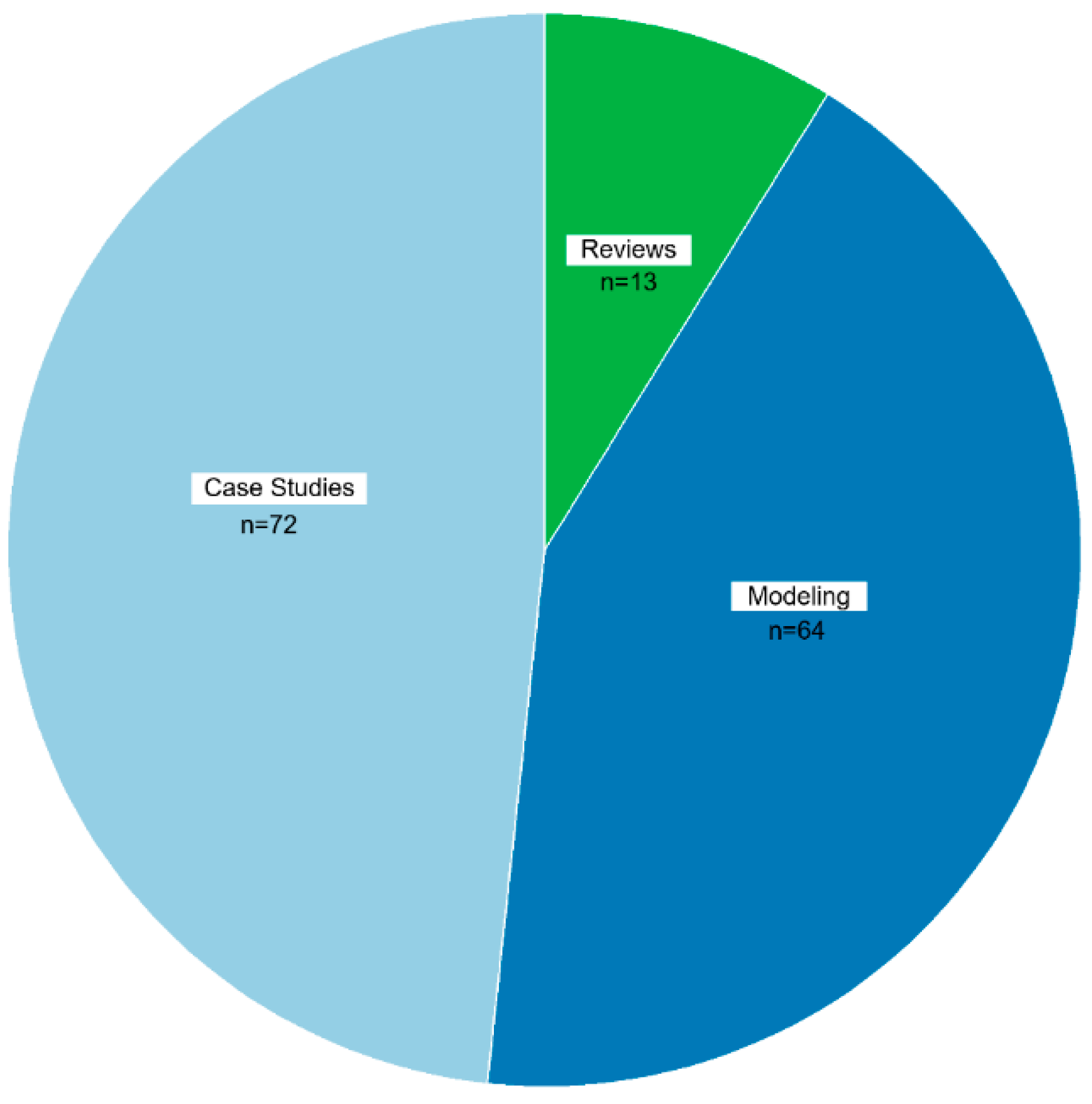
The dataset is comprised of various study types, with the most common being case studies (72 studies). Case studies within the context of this review tended to focus on examining the economics of a particular rabies prevention or elimination campaign, or human rabies exposure. Case studies were often limited by species and location meaning that broad extrapolation of findings was limited. Modeling-based studies (64 studies), which include both prospective and retrospective approaches, were most often represented by studies that attempted to examine the hypothetically optimal level and mix of rabies control measures to determine the most cost-effective strategy. The dataset also contains systematic reviews (13 studies) (Figure 7). Cost-benefit analyses (CBA) or Cost-effectiveness analysis (CEA) comprised 38 studies. CBA typically involved comparing the monetary costs associated with management or elimination of the disease against the monetary benefits of preventing or avoiding the disease in humans, companion animals, wildlife, and livestock. Costs are typically measured by things such as vaccines, baits, personnel, while benefits are measured as the prevention or cessation of PEP, PrEP, livestock loses, companion animal losses, medical treatment, and DALY’s. CEA is a method used to evaluate the efficiency of healthcare interventions by comparing their costs with their health outcomes. It aims to determine which intervention provides the best value for money in terms of health benefits. For example, in the case of wildlife rabies prevention, a CEA might compare the costs of an oral rabies vaccine campaign vs. trap vaccinate release vs. culling, to determine which method resulted in the largest reduction in PEP. A total of 61 studies did not incorporate any type of formal economic assessment.
4. Discussion
The findings of this scoping review reveal significant gaps and imbalances in the global economic literature on rabies. While rabies remains a substantial public health and economic burden, particularly in regions where dog-mediated transmission persists, the distribution of research efforts does not align proportionally with areas of highest risk. The majority of economic studies originate from developed countries, such as the United States and parts of Europe, where the risk of human rabies exposure is relatively low due to well-established control measures. Conversely, many high-risk regions in Africa and Asia, where rabies poses the greatest human and economic threat, have produced comparatively few economic studies. This discrepancy underscores the need for increased research efforts in endemic regions to better inform cost-effective prevention and control strategies.
A notable pattern emerging from this review is the dominance of case studies and modeling-based analyses. Case studies, while valuable for assessing the effectiveness of specific interventions, are often geographically and temporally limited, making broad generalizations difficult. Modeling studies provide crucial insights into cost-effective strategies, yet their accuracy depends on the availability of high-quality data, which remains scarce in many high-risk regions. For example, rabies deaths are significantly underreported across the globe, likely due to inadequate reporting systems, limited access to healthcare in rural areas, and a lack of awareness about the disease [23]. Cost-benefit analyses and cost-effectiveness studies, though essential for guiding resource allocation, are underrepresented in the literature, particularly in countries with limited rabies control infrastructure. Expanding such studies in these areas could offer a clearer understanding of the economic feasibility of various intervention strategies, helping policymakers allocate resources more effectively.
Another key insight from this review is the strong focus on dog-mediated rabies, which reflects the global burden of the disease. However, economic research on non-dog reservoirs, such as wildlife, remains limited despite their relevance in rabies transmission and control. In high-income countries where canine rabies has been largely eliminated, wildlife species such as bats, raccoons, and foxes serve as primary reservoirs, influencing public health costs, livestock losses, and rabies prevention efforts. Future research should explore the economic implications of wildlife-mediated rabies and the cost-effectiveness of control strategies such as oral vaccination programs.
The observed temporal trends in publication frequency also highlight shifting research priorities. Peaks in publication output during specific years suggest that external factors, such as international funding initiatives, disease outbreaks, or policy changes, influence the research agenda. However, the lack of consistent growth in rabies economic studies indicates that sustained investment in economic research remains a challenge. Given the ongoing global push to eliminate dog-mediated rabies by 2030, continued economic evaluation of intervention strategies is essential to assess progress and adapt policies accordingly.
In conclusion, while substantial progress has been made in understanding the economics of rabies, critical gaps remain in geographic coverage, study diversity, and economic assessment methodologies. Addressing these gaps through targeted research in high-risk regions, increased focus on non-dog reservoirs, and broader application of cost-benefit and cost-effectiveness analyses will be essential for optimizing global rabies control efforts. Strengthening interdisciplinary collaborations and enhancing data collection efforts will further support evidence-based decision-making, ultimately contributing to the success of global rabies elimination initiatives.
Supplementary Materials
The following supporting information can be downloaded at the website of this paper posted on Preprints.org, Figure S1: title; Table S1: title; Video S1: title.
Author Contributions
Conceptualization, S.S.; methodology, S.S. and M.S.; software, P.K., C.J. and M.S.; validation, M.S. and S.S.; formal analysis, M.S., P.K., C.J., L.L., S.S. and S.S.; investigation, M.S., L.L., S.S. and S.S.; resources, M.S.; data curation, M.S.; writing—original draft preparation, M.S. and S.S.; writing—review and editing, M.S., P.K., C.J., L.L. and S.S.; visualization, M.S.. P.K., and C.J.; supervision, S.S.; project administration, S.S.; funding acquisition, S.S. All authors have read and agreed to the published version of the manuscript.
Funding
This research received no external funding.
Data Availability Statement
The original contributions presented in this study are included in the article/supplementary material. Further inquiries can be directed to the corresponding author.
Acknowledgments
In this section, you can acknowledge any support given which is not covered by the author contribution or funding sections. This may include administrative and technical support, or donations in kind (e.g., materials used for experiments).
Conflicts of Interest
The authors declare no conflicts of interest. The funders had no role in the design of the study; in the collection, analyses, or interpretation of data; in the writing of the manuscript; or in the decision to publish the results.
Abbreviations
The following abbreviations are used in this manuscript:
| DALYs | disability-adjusted life years |
| WHO | Directory of open access journals |
| FAO | Food and Agriculture Organization |
| OIE | World Organization for Animal Health |
| GARC | Global Alliance for Rabies Control |
| PEP | postexposure prophylaxis |
| PRISMA | Preferred Reporting Items for Systematic reviews and Meta-Analyses |
| ScR | Scoping Review |
| CDC | Center of Disease Control and Prevention |
| CBA | Cost-benefit analyses |
| CEA | Cost-effectiveness analysis |
Appendix A

Table A1.
Electronic Search Strategy for the Scoping Review (conducted 10/1/2024).
| Database | Query | # of results |
| Web of Science | TI=Rabies AND TI=Economic OR Financial OR Cost OR Bioeconomic | 115 |
| TI=Rabies AND AB=Dollar | 18 | |
| EBSCO Host | TI=Rabies AND TI=Economic OR Financial OR Cost OR Bioeconomic | 324 |
| TI=Rabies AND AB=Dollar | 42 | |
| PubMed | TI=Rabies AND TI=Economic OR Financial OR Cost OR Bioeconomic | 97 |
| TI=Rabies AND TIorAB=Dollar | 2 | |
| Scopus | TI=Rabies AND TI=Economic OR Financial OR Cost OR Bioeconomic | 125 |
| TI=Rabies AND AB/TI/KEYW=Dollar | 21 | |
| Total: | 744 |
References
- Tarantola, A. (2017). Four thousand years of concepts relating to rabies in animals and humans, its prevention and its cure. Trop Med Infect Dis, 2(2), 5. [CrossRef]
- Hampson, K., Coudeville, L., Lembo, T., Sambo, M., Kieffer, A., Attlan, M., Barrat, J., Blanton, J. D., Briggs, D. J., Cleaveland, S., Costa, P., Freuling, C. M., Hiby, E., Knopf, L., Leanes, F., Meslin, F.-X., Metlin, A., Miranda, M. E., Müller, T., ..., Dushoff, J. (2015). Estimating the global burden of endemic canine rabies. PLoS Neglected Tropical Diseases, 9(4), e0003709. [CrossRef]
- Anderson, A., & Shwiff, S. A. (2015). The cost of canine rabies on four continents. Transboundary and Emerging Diseases, 62(4), 446–452. [CrossRef]
- Shwiff, S., Hampson, K., & Anderson, A. (2013). Potential economic benefits of eliminating canine rabies. Antiviral Research, 98(2), 352–356. [CrossRef]
- World Health Organization. (2013). Expert consultation on rabies. Second report.
- Elmore, S. A., Chipman, R. B., Slate, D., Huyvaert, K. P., VerCauteren, K. C., & Gilbert, A. T. (2017). Management and modeling approaches for controlling raccoon rabies: The road to elimination. PLoS Neglected Tropical Diseases, 11(3), e0005249. [CrossRef]
- Tiwari, H. K., Gogoi-Tiwari, J., & Robertson, I. D. (2021). Eliminating dog-mediated rabies: Challenges and strategies. Animal Diseases, 1, 19. [CrossRef]
- VerCauteren, K. C., Ellis, C., Chipman, R., DeLiberto, T., Shwiff, S., & Slate, D. (2012). Rabies in North America: A model of the one health approach. In S. N. Frey (Ed.), Proceedings of the 14th Wildlife Damage Management Conference (pp. 56–63).
- World Health Organization. (2018). WHO expert consultation on rabies, third report (WHO Technical Series Report No. 1012).
- Meltzer, M. I., & Rupprecht, C. E. (1998). A review of the economics of the prevention and control of rabies: Part 2: Rabies in dogs, livestock and wildlife. Pharmacoeconomics, 14, 481–498. [CrossRef]
- Jibat, T., Hogeveen, H., & Mourits, M. C. M. (2015). Review on dog rabies vaccination coverage in Africa: A question of dog accessibility or cost recovery? PLoS Neglected Tropical Diseases, 9(2), e0003447. [CrossRef]
- Shwiff, S. A., Anderson, A., & Nadin-Davis, S. (2023). The health economics of rabies in the Americas: An historical summary and a synthesis of the literature. In C. E. Rupprecht, N. L. Dykes, & J. E. Childs (Eds.), History of rabies in the Americas: From the pre-Columbian to the present, Volume I: Insights to specific cross-cutting aspects of the disease in the Americas (pp. 281–292). Springer.
- Tunas, I. K., Putra, M. P. H., Sutiasa, I. M., Budayanti, N. N. S., Antara, I. N. L. W., & Sudhana, I. B. P. (2023). Cost-effectiveness analysis of rabies control program, 2008–2017: A systematic review. Journal of Health Management, 25(4), 966–973. https://www.google.com/search?q=. [CrossRef]
- Anothaisintawee, T., Genuino, A. J., Thavorncharoensap, M., Youngkong, S., Rattanavipapong, W., Meeyai, A., & Chaikledkaew, U. (2019). Cost-effectiveness modelling studies of all preventive measures against rabies: A systematic review. Vaccine, 37, A146–A153. [CrossRef]
- Page, M.J., McKenzie, J.E., Bossuyt, P.M., Boutron, I., Hoffmann, T.C., Mulrow, C.D., Shamseer, L., Tetzlaff, J.M., Akl, E.A., Brennan, S.E., et al. The PRISMA 2020 Statement: An Updated Guideline for Reporting Systematic Reviews. BMJ 2021, 88, 105906. [CrossRef]
- Tricco, A.C.; Lillie, E.; Zarin, W.; O’Brien, K.K.; Colquhoun, H.; Levac, D.; Moher, D.; Peters, M.D.J.; Horsley, T.; Weeks, L.; et al. PRISMA Extension for Scoping Reviews (PRISMA-ScR): Checklist and Explanation. Ann. Intern. Med. 2018, 169, 467–473. [CrossRef]
- Diego, A. I. de, & Valotta, J. R. (1973). Bat-transmitted rabies. Situation in Argentina. (pp. 275–295).
- Noah, D. L., Smith, M. G., Gotthardt, J. C., Krebs, J. W., Green, D., & Childs, J. E. (1996). Mass human exposure to rabies in New Hampshire: Exposures, treatment, and cost. American Journal of Public Health, 86(8), 1149–1151. https://www.google.com/search?q=. [CrossRef]
- Kiakalayeh, A. D., Gharib, Z., Mohammadi, R., Kanafi Vahed, L., & Davoudi-Kiakalayeh, S. (2024). Trends in animal bites and rabies-related deaths in northern Iran: Implications for public health interventions. Archives of Iranian Medicine, 27(5), 272. https://www.google.com/search?q=. [CrossRef]
- Bastille-Rousseau, G., Gorman, N. T., McClure, K. M., Nituch, L., Buchanan, T., Chipman, R. B., Gilbert, A. T., & Pepin, K. M. (2024). Assessing the efficiency of local rabies vaccination strategies for raccoons (Procyon lotor) in an urban setting. The Journal of Wildlife Diseases, 60(1), 26–38. https://www.google.com/search?q=. [CrossRef]
- Henry, R. E., Blanton, J. D., Angelo, K. M., Pieracci, E. G., Stauffer, K., Jentes, E. S., Rao, S. R., Turabelidze, G., White, P., Blazes, D. L., Kosmos, C., Chipman, R. B., & Wallace, R. (2022). A country classification system to inform rabies prevention guidelines and regulations. Journal of Travel Medicine, 29(4). [CrossRef]
- United Nations Department of Economic and Social Affairs. (2025). World economic situation and prospects 2025. https://www.un.org/development/desa/dpad/publication/world-economic-situation-and-prospects-2025/.
- Taylor, L. H., Hampson, K., Fahrion, A., Abela-Ridder, B., & Nel, L. H. (2017). Difficulties in estimating the human burden of canine rabies. Acta Tropica, 165, 133–140. [CrossRef]
Figure 1.
Flow diagram detailing the literature search and study selection process based on the PRISMA guidelines. This work is licensed under CC BY 4.0. To view a copy of this license, visit https://creativecommons.org/licenses/by/4.0/.
Figure 1.
Flow diagram detailing the literature search and study selection process based on the PRISMA guidelines. This work is licensed under CC BY 4.0. To view a copy of this license, visit https://creativecommons.org/licenses/by/4.0/.
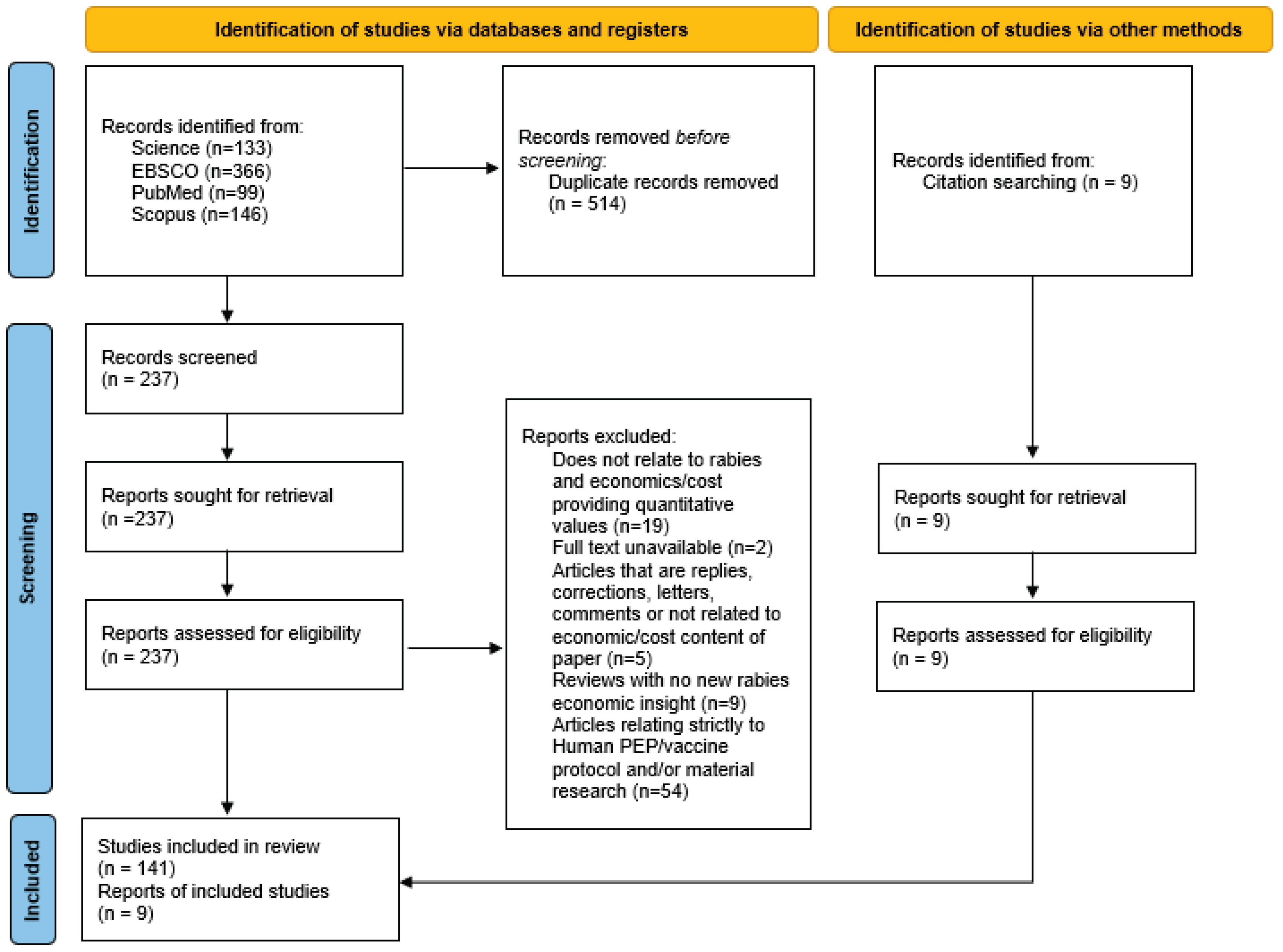
Figure 2.
Temporal distribution and geographic focus of the reviewed literature. Panel A shows the cumulative growth of studies across different regions, highlighting a significant increase in publications after key global initiatives (e.g., the 2015 WHO framework). Panel B presents the annual publication frequency, demonstrating a surge in research output in recent years.
Figure 2.
Temporal distribution and geographic focus of the reviewed literature. Panel A shows the cumulative growth of studies across different regions, highlighting a significant increase in publications after key global initiatives (e.g., the 2015 WHO framework). Panel B presents the annual publication frequency, demonstrating a surge in research output in recent years.
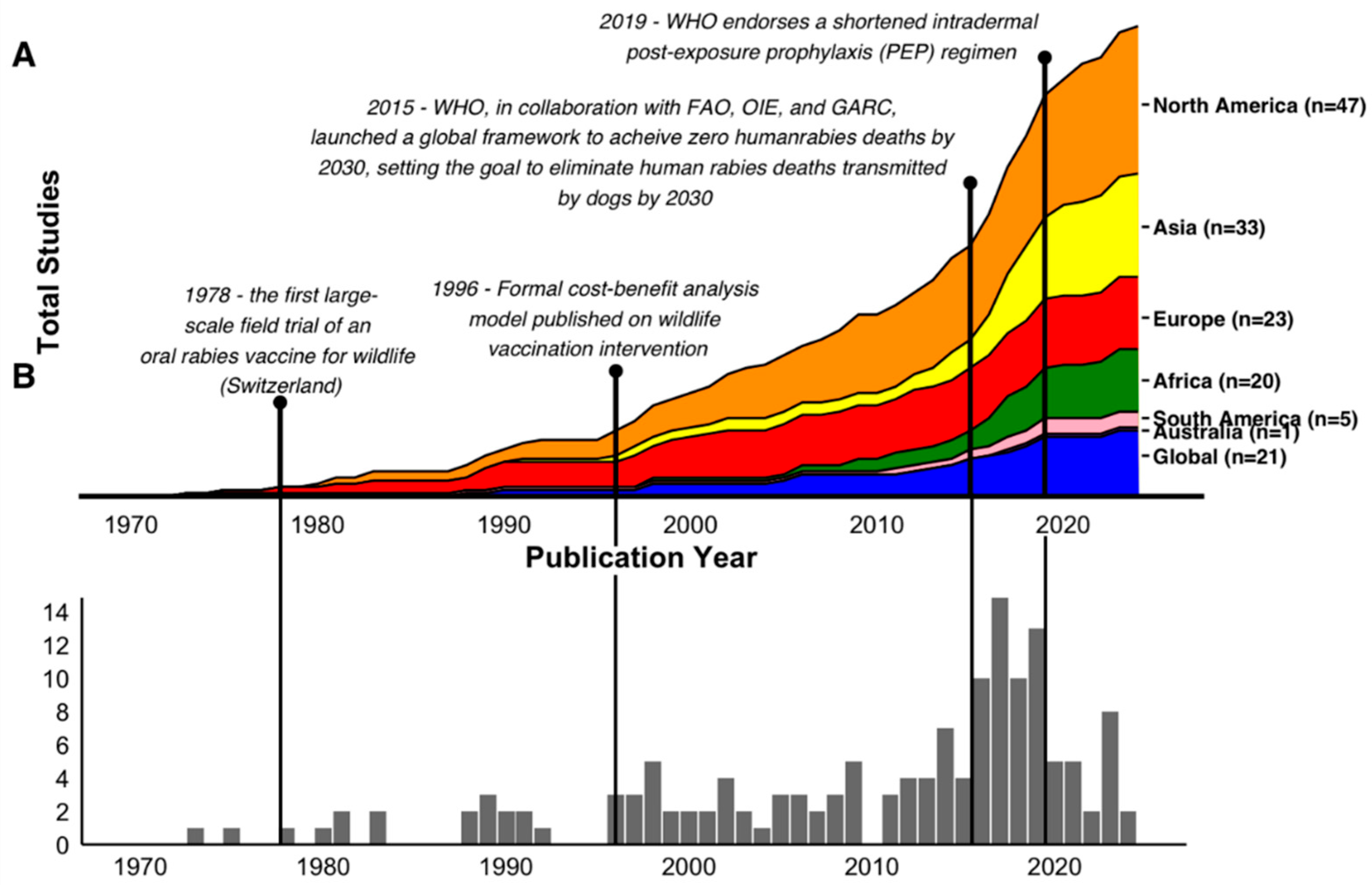
Figure 3.
Annual publication counts by continent. The heatmap visually compares the research output across different continents over the study period, highlighting regions with consistently higher or lower publication numbers in specific years.
Figure 3.
Annual publication counts by continent. The heatmap visually compares the research output across different continents over the study period, highlighting regions with consistently higher or lower publication numbers in specific years.
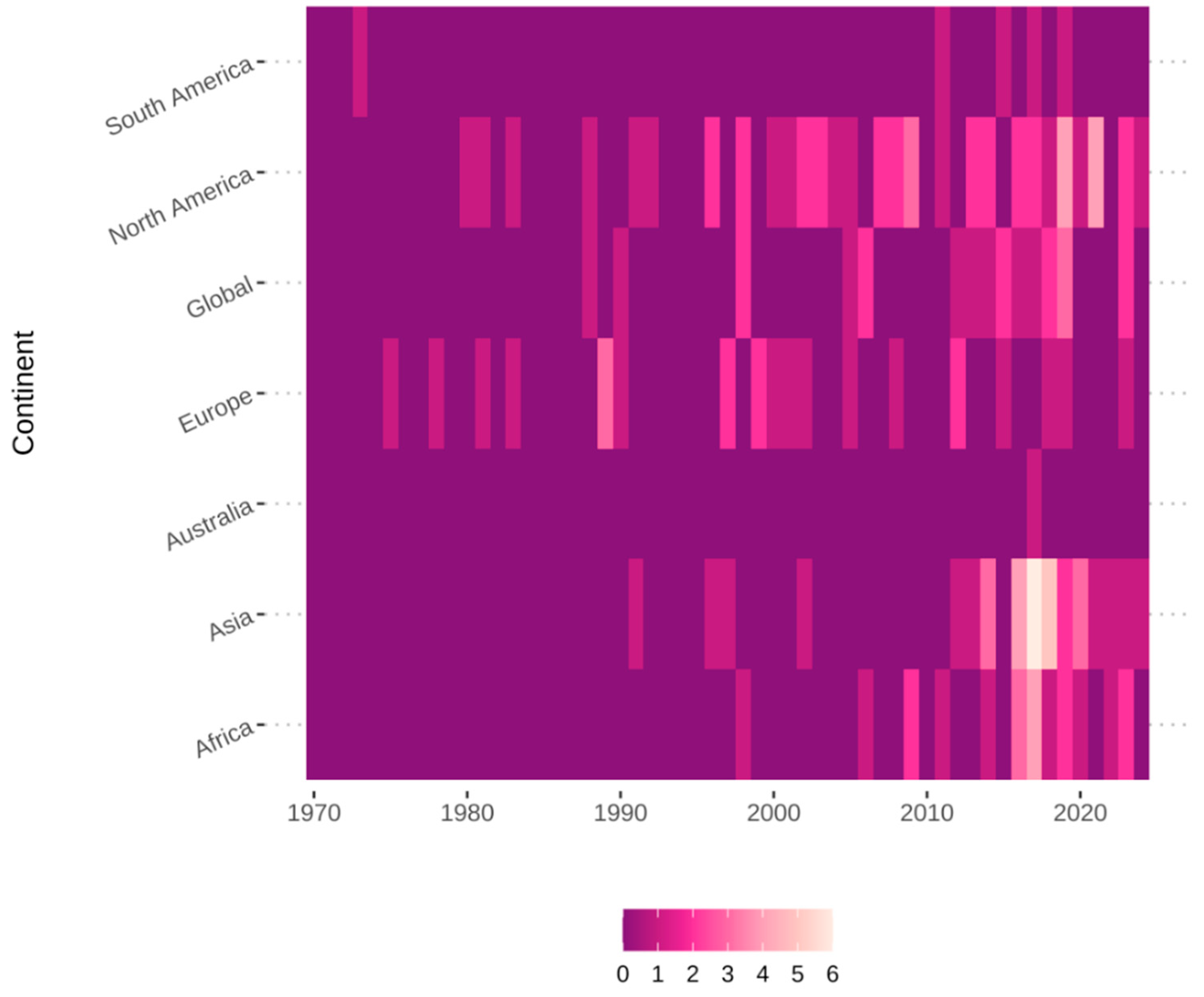
Figure 4.
(a) Geographic distribution of rabies risk categories worldwide [21]; (b) the corresponding number of rabies-related studies identified in this review for each country; (c) the current economic classification of each country [22].
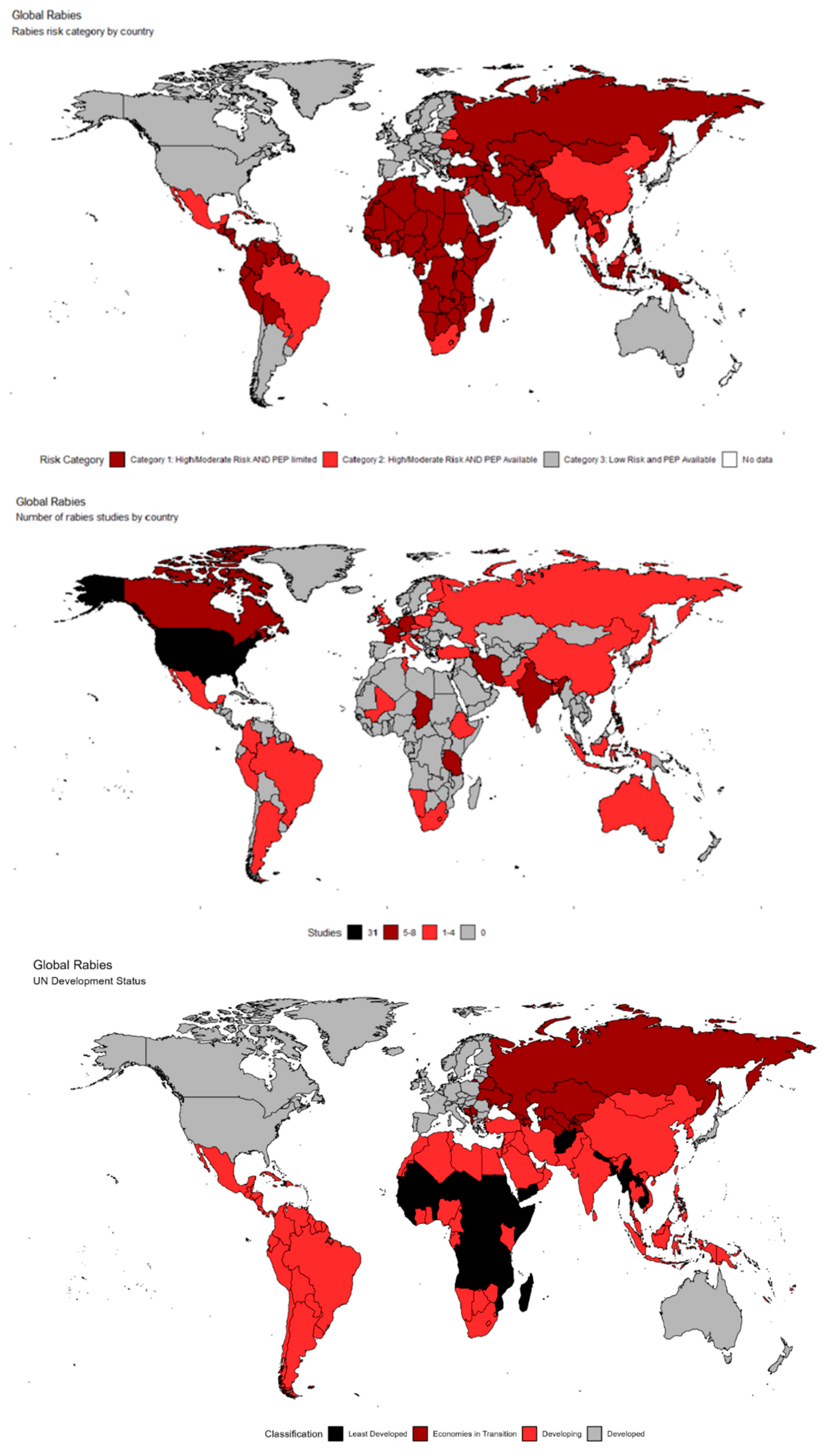
Figure 5.
Geographic representation of the volume of rabies economic studies, overlaid with the development status of the corresponding countries illustrated using a choropleth map.
Figure 5.
Geographic representation of the volume of rabies economic studies, overlaid with the development status of the corresponding countries illustrated using a choropleth map.
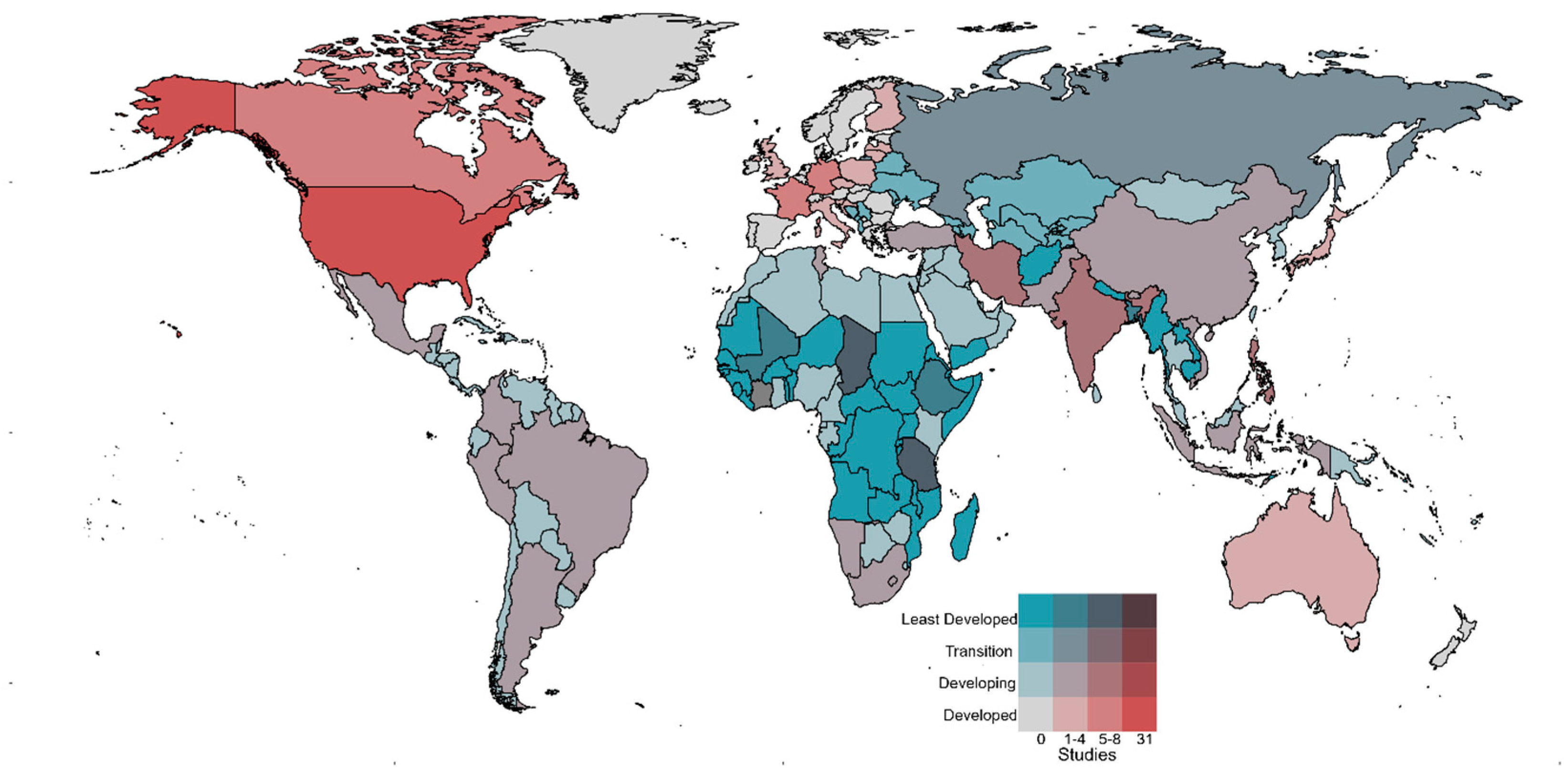
Figure 6.
Species-specific focus of the reviewed literature. Dogs were the most frequently studied species, followed by foxes and raccoons. Continent breakdown of dog-focused studies provided in popout.
Figure 6.
Species-specific focus of the reviewed literature. Dogs were the most frequently studied species, followed by foxes and raccoons. Continent breakdown of dog-focused studies provided in popout.
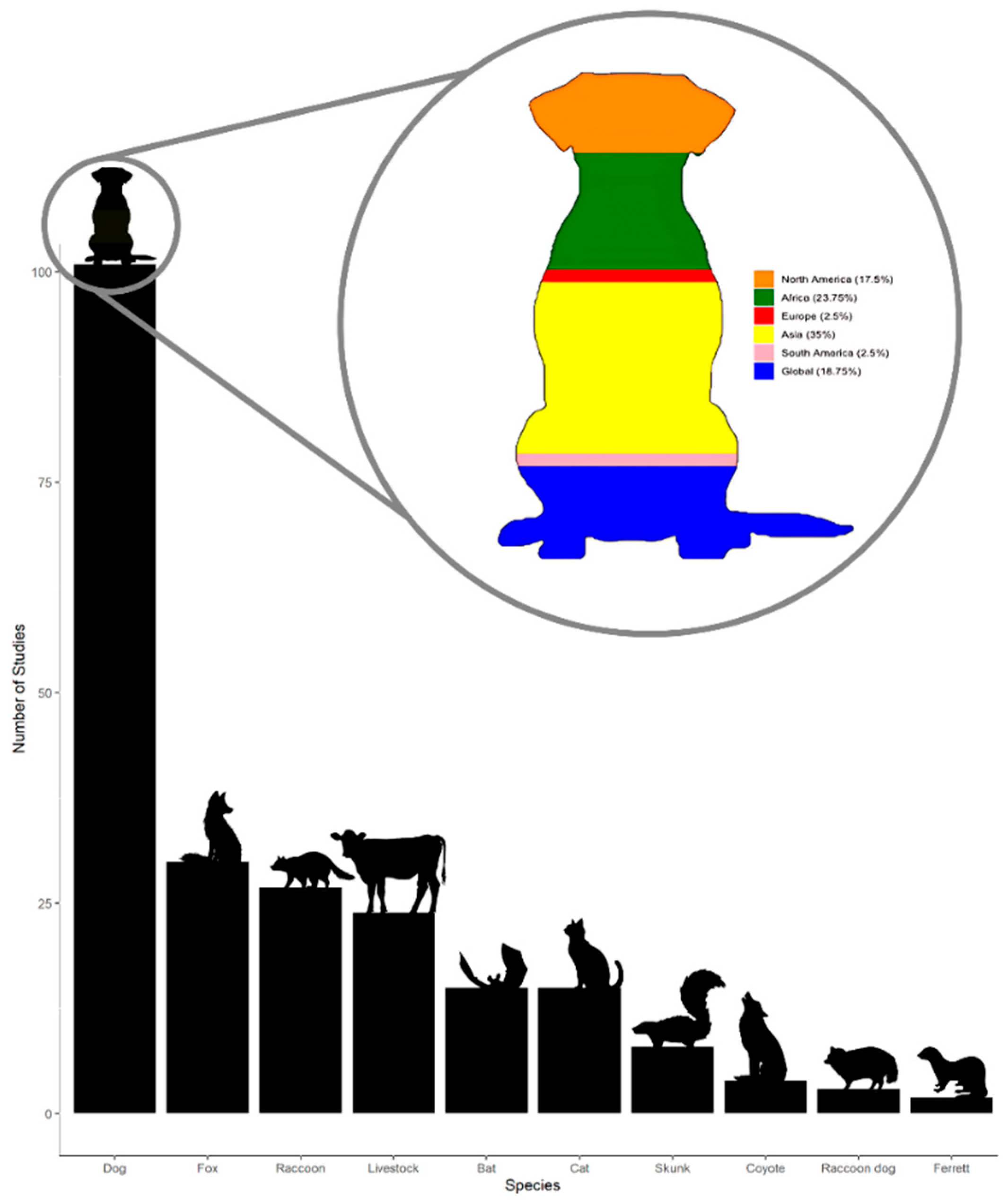
Figure 7.
Distribution of economics rabies studies by study type.
Disclaimer/Publisher’s Note: The statements, opinions and data contained in all publications are solely those of the individual author(s) and contributor(s) and not of MDPI and/or the editor(s). MDPI and/or the editor(s) disclaim responsibility for any injury to people or property resulting from any ideas, methods, instructions or products referred to in the content. |
© 2025 by the authors. Licensee MDPI, Basel, Switzerland. This article is an open access article distributed under the terms and conditions of the Creative Commons Attribution (CC BY) license (http://creativecommons.org/licenses/by/4.0/).
Copyright: This open access article is published under a Creative Commons CC BY 4.0 license, which permit the free download, distribution, and reuse, provided that the author and preprint are cited in any reuse.


