
Submitted:
28 May 2025
Posted:
30 May 2025
You are already at the latest version
Abstract
This study investigates the empowering role of public-private partnerships (PPP) in sustainable economic waste management and the circular industry economy, specifically in the small, rapidly industrialising Emirate of Ajman, UAE. Grounded in the principles of sustainable reverse logistics theory, the study focuses on collaboration among key stakeholders: employees in the Ajman Municipality and Planning Department, waste-generating industries, and private industrial waste management firms. A quantitative methodological orientation is employed in a survey-based research design, followed by the Partial Least Square Structural Equation Modelling statistical technique to test the hypothesised relationships. Sampling involved the three sub-populations of government employees (n = 123), managers/employees of private waste collection businesses (n = 106), and employees of private industrial waste generation industries (n = 276). Findings indicate that PPP empowerment positively impacts sustainable economic waste management and contributes to the creation of a circular industry economy. Moreover, sustainable economic waste management fosters the growth of the circular industry economy in Ajman. Notably, the perspectives of government stakeholders differ from those of non-government actors. This research underscores the significance of PPP empowerment in the development of a circular industry economy towards SDGs 11, 12 and 17, emphasising the mediating role of sustainable economic waste management between PPPs and the circular industry economy in small, rapidly industrialising states. The study recommends that the Ajman government implement training and social initiatives aimed at aligning the sustainability perspectives of all stakeholders involved in waste management.
Keywords:
public-private partnership
; sustainable economic waste management
; circular industry economy
; small
; rapidly industrialising states
; reverse logistics
; Ajman Emirate
; PLS-SEM
1. Introduction
The circular economy paradigm emphasises reducing waste and maximising the reuse of materials through practices such as sharing, reusing, repairing, and recycling. This approach is fundamental for addressing global climate change, escalating pollution, increasing landfills and greenhouse gases, and advancing beyond mere sustainability towards a holistic vision of planetary health (PH) [1]. PH champions the interconnectedness of human health, community vitality, and the health of Earth’s ecosystems [2]. PH is defined as the vitality of the earth’s natural ecosystems and the responsible management of these systems [2] (p. 1978). The holistic vision, thus, involves the pursuit of the highest possible level of health, well-being, and equity on a global scale, making efficient and effective use of political, economic, and social systems for sustainable development within a definite framework where the earth’s natural systems are balanced safely for human flourishing [2].
Focusing on design-based thinking, the circular economy plays a vital role in addressing global climate change and the rise of pollution while also significantly contributing to public health by promoting practices that extend beyond mere sustainability [3]. Unlike the traditional linear economy, which follows a take-make-dispose model, circular economy operates in closed loops where resources are continuously reused, with minimal overall waste generation, leading to more sustainable practices and a healthier planet [4,5]. Ultimately, the interconnectedness of human health, community vitality, and the health of earth’s ecosystems becomes evident in a circular economy, reinforcing the crucial link between sustainable industry practices and PH. By prioritising the well-being of both people and the planet, circular economy not only mitigates environmental damage but also fosters resilient communities that thrive in harmony with nature.
As interest in PH grows, public-private partnerships (PPPs) have shown significant potential in their ability to harness the strengths of both the private and public sectors to foster circular economy initiatives [6]. PPPs are pivotal in unlocking new market opportunities, promoting sustainable industrial raw material consumption, and improving industrial resource efficiency. These elements are crucial for the sustainability agenda and the development of socio-economic frameworks that advance PH within safe environmental limits where mutually beneficial outcomes accrue to both public and private actors [6,7]. By fostering PPPs, cities can leverage the expertise, resources, and innovation of private entities to enhance waste management systems, reduce urban pollution, and improve overall urban sustainability, thus aligning with the SDG objectives [8].
The empowering role of PPPs in sustainable waste management policy implementation across key geo-political spaces has been registered, with economic motives gaining an overarching significance [4]. PPPs in diverse fields of applications, including waste management, have demonstrated a potential to generate substantial economic benefits, reaching over 600 billion euros per annum in the EU manufacturing sector, with over one trillion US dollars potential in the global economy [9]. The economic sustainability potential of PPP empowerment in a circular industry economy (CIE) warrants keen attention in creating a model attractive to all stakeholders involved in industrial waste management, adding value to products and businesses through industry supply chains [3,4]. While the circular economy builds on sustainable social, environmental, and economic dimensions, it is clear that the economic dimension often serves as a primary motivator because it aligns directly with the core objectives of industry actors' operations, profitability, growth, and risk management [9]. Furthermore, by integrating economic sustainability with PH, these practices not only enhance industry performance but also contribute to a healthier planet, ensuring that economic benefits do not come at the expense of ecological well-being.
PH is especially vital for small, rapidly industrialising states, who’s limited carrying capacities heighten their vulnerability to severe environmental, public health, and socio-economic consequences from industrial waste generation that far outstrip their spatial and infrastructural limits. The need to divert industrial waste from landfills in such states has become critical. In the case of the Emirate of Ajman, rapid waste generation from industrialisation and urbanisation in an area of less than 100 square miles poses a serious threat to both national sustainability and PH by overburdening limited local ecosystems and contributing to broader environmental degradation that imperils global resilience [10]. The Emirate of Ajman acknowledges the potential of PPP solutions to sustainability [10], and an empirically validated model that places economic drivers at the core of sustainability will help channel this agenda. This insight may be generalisable to other small states in leveraging the economic benefits of sustainable waste management as a key driver of CIE creation [3,4,10].
Insight in this regard directly centres on the Sustainable Development Goals (SDGs) Goal 11 (Sustainable Cities and Communities), Goal 12 (Responsible Consumption and Production), and Goal 17 (Partnerships for the Goals), placing circular economy as crucial to addressing global climate change and rapidly increasing pollution whilst championing the drive beyond sustainability [3,11]. Goal 11 aligns seamlessly with the study's focus on waste management within urban and industrial settings, as sustainable waste management practices are critical for maintaining healthy, liveable cities. Goal 12 lines up with sustainable production central to this study and revolves around the promotion of reuse, recycling, and reduction of industrial waste. Finally, Goal 17 underscores the importance of revitalising global partnerships for sustainable development; this study highlights the empowerment of PPPs as a key strategy in achieving this SDG. By fostering collaboration between public authorities and private sector stakeholders, PPPs can drive the implementation of sustainable waste management practices, facilitate knowledge sharing, leverage private entities’ expertise, resources, and innovation, and mobilise the necessary financial and technical resources to achieve the SDGs.
The alignment of these SDGs with the objectives of PPPs and sustainable waste management, as articulated in “The Future We Want” from the 2012 UN Conference on Sustainable Development in Rio de Janeiro, underscores a commitment to safeguarding PH in balance with human economic advancement. This vision recognises that small island developing states (SIDS), such as the Emirate of Ajman, confront unique vulnerabilities, not only due to their limited land resources, narrow export bases, and exposure to economic shocks but also because their constrained environmental capacities amplify the risks of ecological degradation that can ripple across the planet. These structural challenges complicate the pursuit of CIE and sustainable waste management, stressing the need to harmonise economic viability, social responsibility, and the protection of natural systems that support PH. The PH principles of (1) sustainable vitality of all systems, (2) values and purpose, (3) integration and unity, (4) planetary consciousness, and (5) advocacy are especially pertinent for addressing these issues [1,12], ultimately reinforcing sustainable development efforts that promote resilient ecosystems and the well-being of communities globally.
The aim of this study is to examine the empowering role of PPP in the economic sustainability of waste management (ESW) and CIE of small states facing rapid industrialisation, considering the Emirate of Ajman in the United Arab Emirates (UAE). By integrating an empirical analysis of diverse stakeholder perspectives—from the Ajman Municipality and Planning Department, waste-generating industries, to private waste management enterprises—this paper critically evaluates how coherent PPP strategies can simultaneously promote profitability, environmental resilience, and ecosystem well-being, thereby aligning advanced waste management practices with both national sustainability objectives and the broader imperatives of PH.
The remaining sections of this paper are organised as follows: Section 2 briefly reviews the literature in support of key concepts and sustainable reverse logistics (SRL) theory. Hypotheses development and the conceptual framework are presented in Section 3. Section 4 presents the research methodology, measurement and selection criteria. The results are presented in Section 5. Finally, Section 6 presents the discussion and conclusions.
2. Theoretical Background
2.1. CIE and sustainable industrial waste management
The global economy is below 10% recycling and reuse rate, with linear material flow from production to landfills as the dominant model [13]. Very few successful attempts have been made to transition from linear and moderate recycling systems to circular-based economies. In addition, existing waste management practices do not fully embrace the circular economy concept, as little progress has been made on the introduction of novel solutions for waste identification, treatment and utilisation [14]. Salmenperä et al. [14] emphasise that it is critical that the core principles of waste reduction, biological material regeneration, and material restoration and reuse are strictly maintained across industries.
Ultimately, the global trends in sustainable waste management have shown strong tendencies in the shift towards circular business models as necessary to optimising sustainability [15]. This shift is essential to overcoming the excessive production of waste and the characterisation of modern civilisation as a “waste society”, within which sustainability alone is inadequate [16] (p. 1297). Ultimately, the contemporary world is one of excess, pollution, and waste; waste prevention through circular economic modules optimises the quest for sustainability by prioritising waste reduction, reuse, and recycling before evaluating alternatives like energy recovery from incineration. In such an economic system, landfill and waste disposal are significantly diminished as combustion for energy is the second to last option, with the highest economic value obtained [9].
2.2. Sustainable Reverse Logistics Theory
The SRL theory acknowledges the need to move beyond the reuse of waste towards integrating sustainability as a core aspect of the industries such that competitive returns are made possible or optimised without sacrificing the associated social and environmental aspects [17]. This theory aligns with the Quattro bottom line concept via integrated implementation and stakeholder engagement [18] (Figure 1). Here, internal stakeholders—including consumers, industry, and intermediary businesses—and external stakeholders, such as society, government, and the broader environment, are brought on board [17]. The government provides a level playing field for all actors or stakeholders. Stakeholders advocate for governmental intervention to promote and support SRL programs in alignment with sustainability principles.
Six balancing criteria derived from the Quattro bottom-line approach for SRL theory maintain the interaction among stakeholders [17]. These parameters include a re-design of economic systems that support profit and planet (supportable), conformity between the creation of additional value and alignment of incentives (equitable), optimisation of resources in use, maintenance, repair and upgrade (capable), alignment of responsibility of maintaining a healthy planet and people (bearable), and finally an alignment of fair design using deep niche position in the market (align-able). Sustainability encompasses a specific blend of profit, planet, people, and reputation using the array of skills and concepts that enable businesses to attain competitive economic returns while preserving the environment and society [19]. The economic potential of sustainability, however, remains a fundamental supporting factor of the SRL theory [17].
2.3. Empowering PPP to support sustainable waste management in the UAE
In the UAE, local authorities coordinate waste management at the Emirate level. Challenges to UAE industrial solid waste management include low-quality industrial solid waste mixtures that result from poor design and operation [10]. This leads to excessive amounts of unusable solid waste that require additional budgets for waste segregation and reuse/recycling [20]. Industrial waste is becoming an area of interest, driven by a sluggish adoption of modern industrial processes that minimise waste management budgets. To improve waste management, private actors are invited as part of new structural and industrial development frameworks to assist industrial waste generators in complying with regulatory requirements and safely managing waste.
In the small, rapidly industrialising Emirate of Ajman, the population approaches 1 million people within a 100 square mile area, alongside significant expansion in social and industrial activities. Yet, over 80% of all waste is still not thoroughly treated and is disposed of in municipal landfills [21]. With approximately 1.76 to 2.3 kilogrammes of waste produced per capita daily in the UAE [22], growing landfills in such small states lead to heightened levels of greenhouse gases (e.g. methane) from organic waste, threatening the general livelihoods if not well managed. Plastic industrial and municipal waste remains one of the most threatening hazardous waste classifications in the Emirate of Ajman [21] (Figure 2).
The primary objective of the UAE is to exploit innovative means to reach set sustainability benchmarks. Wang and Ma [23] posit that PPPs provide an excellent mechanism for ensuring sustainability, as inter-organisational relationships help deliver economic value. Through PPPs, the Ajman Emirate exploits the private sector's proficiency, organisational frameworks, technology, interpersonal skills, and holistic framework for project development, particularly when resources are constrained. PPPs provide an effective mechanism for attaining sustainable development, albeit contingent upon the extent to which all stakeholders meet their obligations [24].
2.4. PPP as a Mutualistic Strategy for PH Towards a Sustainable Future
The optimal blend of health and vitality of individuals, communities, and earth’s natural systems underscores the shift towards mutualistic strategies such as PPPs. These strategies take into account the attitudes of involved actors, such as industry waste generators, waste collectors, and the government, which acts as the primary custodians of environmental health. Such mutualistic strategies aim to create solutions that yield co-benefits for “people, places, and planet” [1]. Empowered PPP frameworks contribute significantly to economic sustainability by establishing an “ecosystem” that reflects the economic interests of stakeholders involved in industrial waste generation. This argument is not new, as recent studies have emphasised the intricate relationship between economic policies, industrial waste management practices, and their effects on local communities and broader PH [25,26].
Empowerment through PPP, as part of a mutually beneficial system towards sustainable waste management and CIE, embodies PH. PPPs in industrial waste management facilitate resource efficiency, foster innovation, and address complex environmental challenges—an essential aspect of SWM and CIE [26]. Notably, integrating PPPs in waste management can improve service delivery and resource recovery, directly influencing socio-economic outcomes and enhancing community well-being towards improved PH [1]. Furthermore, in the interest of SWM, PPP amplifies co-benefits, offering solutions that enrich both human and ecological systems, exemplifying the need for a whole-of-society framework that addresses PH’s pursuit of health and environmental sustainability, especially in small, rapidly industrialising states with limited environmental carrying capabilities [26].
According to Prescott et al. [27] in The Canmore Declaration: Statement of Principles for PH, the principles of PH are encapsulated in ten key tenets that stress the intimate connection between human well-being and the resilience of Earth's ecosystems, tagged 21st Century Agenda for Global Health. Drawing on the foundational principles of PH, key principles that may be drawn into perspective include the sustainable vitality of all systems – this is central to asserting that integrated waste management practices must protect both local ecosystems and industrial processes over the long term. Equally critical are the principles of values and purpose, as well as integration and unity, which underscore the alignment of economic growth with environmental stewardship and the collaborative synergy among government, private sectors, and local communities. Moreover, the principle of planetary consciousness broadens the study’s perspective by linking local waste management outcomes with global ecological health and limited carrying capabilities of small, rapidly developing states, while the principle of advocacy reflects the active role that stakeholders assume in pushing for transformative policies. These five out of the 10 principles not only elevate the theoretical underpinnings of the research but also provide practical benchmarks for assessing the transformative capacity of PPPs within CIE and sustainable waste management frameworks.
3. Hypotheses Development
3.1. The Role of PPP in ESW
PPPs provide an efficient approach to tackling the various obstacles associated with waste management; they enable the operationalisation of policy frameworks, regulations and standards that direct the activities of private sector entities, offering incentives and creating the legal structure that oversees waste management collaborative projects in a very efficient approach [6,28]. PPP has gained popularity in sustainable waste management due to its fundamental role in risk sharing and resource mobilisation [29]. The strength of the relationship between PPP and sustainable industrial waste management may be attributed to the actors’ capacity to exploit the potential of empowerment and deliver waste management more efficiently through technical proficiency, financial investment, operations management, and effective strategy development [30]. Whilst PPPs contribute to all three arms of sustainability, including economic, social, and environmental sustainability, the economic benefits have received keen attention [31]. PPP facilitates ESW through collective funding, planning, construction, operation, maintenance, and even ownership of key public services [31,32]. In sustainable waste management, the economic outcome of sustainability remains a key driver of PPPs and may exist in the fields of infrastructure building [33], resource management, reuse, and expertise transfer [29]. Based on these observations, the first research hypothesis is established.
Hypothesis 1.
Perceived PPP empowerment has a significant impact on ESW.
3.2. The Role of PPP in CIE
Akomea-Frimpong et al. [33] work on circular economy success factors highlights that PPP remains central to maximising economic gains and operationalising circular business models optimised to provide value to various stakeholders. A similar observation has been made in the case of the Emilia-Romagna region, Italy [34]; in their study, PPP was observed as vital to technology innovation, financial investment, market orientation and overall efficacy of initiatives directed at waste reduction. PPP contributes to CIE by directly influencing circular project design and input modelling in industry waste management. PPP facilitates long-term development, such as repair guarantees [35], helping formulate circular supply chain strategies and collaborative industrial consumption that remain essential to CIE [36,37]. Ultimately, PPPs play a fundamental role in maintaining a shared economic model that considers the participation of both public and private actors in CIE creation through increased circular economy value and efficiency [37]. An emphasis on resource recovery and innovative application of PPPs reflects on waste recycling and reuse throughout CIE phases [38]. These arguments lead to the second research hypothesis as follows:
Hypothesis 2.
Perceived PPP empowerment has a significant impact on the achieved CIE
3.3. The Role of Sustainable Waste Management in CIE
Sustainable waste management is a crucial component for the achievement of a circular economy [39]. The financial incentives of ESW drive CIE by enabling waste management transformation into a profitable resource within the supply chain of industries [40]. ESW enables the closed loop supply chain systems where manufacturing of a diverse array of products is improved using waste as feedstocks as an input. Aspects that underpin the bond between ESW and CIE include the economic value from waste reuse, recycling economies, as well as waste recovery and disposal costs [5,41]. The rise in the market value of products that have been recovered and recycled, the reduction of waste sites, and the availability of raw resources for reuse at cheaper rates than raw materials draw out the economic strength of sustainable waste management in CIE [42]. The final research hypothesis is established below, alongside the conceptual framework in Figure 3. The model outlines the relationship between the three main constructs of PPP empowerment in waste management, ESW and achieved CIE.
Hypothesis 3.
ESW has a significant and positive impact on the achieved CIE.
4. Materials and Methods
4.1. Methods and Procedures
The survey was collected from stakeholders involved in sustainable waste management and circular economy practices in the Emirate of Ajman – UAE plastic industrial waste sector. The online survey questionnaire was designed to gather data; the survey was separated into four main sections. Section A gathered data on the respondent demographics, including gender, age, management, and organisation. Section B had four items on PPP adapted from Ngullie et al. [32]; Section C had five items on ESW adapted from Patel et al. [43] and Fucio et al. [44]. Finally, the achieved CIE had five items adapted from Kamble et al. [45] (Table 1). The questionnaire items within the framework of reference were measured using the five-point Likert scale. A pilot study of 39 conveniently sampled respondents was conducted using the Cronbach alpha test for internal consistency to assess reliability and variance inflation factor as well as tolerance to evaluate multi-collinearity. Inter-factor correlations were also observed to ensure that the items had construct and discriminant validity. The pilot study cemented the survey questionnaire for this study.
4.2. Selection criteria
The study population constitutes immediate stakeholders in industrial waste management in the Ajman case study region. The three stakeholders of the Ajman Emirate’s PPP agenda were considered in three sub-populations. The government or waste management regulatory arm, represented by the Ajman Municipality and Planning Department, has a population frame of 180 knowledge workers directly associated with waste management within the Emirate. The second sub-population constitutes manufacturing firms in the plastic industry. A total of 65 industries are currently working with the government on various PPP programs, with approximately 970 employees. The third sub-population is the private business waste management companies. An estimated total of 145 knowledge workers under two waste industrial collectors are currently operational within the Emirate. Generalisability was sought at the sub-population level using Slovin’s formula [46]. A total of 123 employees of the Ajman Municipality, 276 employees in private plastic industries, and 106 private waste collector employees were considered.
5. Results
This study results of the partial least squares-based structural equation modelling (PLS-SEM) path analysis, following Hair’s [47] recommended procedure, are presented in two main layers. The first part of the results examines the external model and its reliability and validity, whilst the second part looks at the internal model loadings and hypotheses testing. This technique debunks arguments against the treatment of the Likert scale as a continuous scale, as it constitutes a non-parametric alternative to CO-SEM [48]. The descriptive statistics are presented in conformity with the three sub-population groups (Table 2). A multi-group analysis was later conducted using these demographic factors. Based on the demographics data presented in Table 2, the distribution of gender across the proportion of government, private businesses, and industries reveals male dominance at 59.5%, 59.8%, and 73.8%, respectively. Age distribution was between 32.4% and 39.1% of the various sub-populations for ages between 29-38 years and 39-48 years. These age groups cumulatively accounted for 67.5% to 71.7% of government, private businesses, and industries. Finally, the distribution of the management level reveals that operational employees account for a majority of government (72.9%), private businesses (58.7%), and industries (72.7%). This was followed by top management personnel between 18% to 20% for the groups. Based on this data, an overall response rate of 71.88% was obtained, led by government respondents at 90.24% (n = 111) and followed by private waste collectors at 86.79% (n = 92) and industries at 57.97% (n =160).
5.1. External Model reliability and validity testing
A close look at the factor loadings also indicates that none of them were below .7, an indication of satisfactory loading for all indicators within the model [47]. Generally, the mean scores were between 2.94 and 4.791 on a five-point Likert scale alongside a generally controlled standard deviation of less than |2|. In line with the adapted PLS-SEM procedure, an external model evaluation was conducted together with factor loadings, Cronbach’s alpha, composite reliability (CR), and average variance extracted (AVE), as shown in Table 3 [47]. Discriminant validity was evaluated using the Heterotrait-monotrait ratio (HTMT) presented in Table 4. Cronbach’s alpha and CR of 0.7 or above indicate acceptable reliability [47]. Moreover, an AVE of 0.5 or above is also acceptable [47]. For this study, Cronbach’s alpha, CR and AVE for all three constructs were within acceptable range. Discriminant validity was also generally under 0.85; below this threshold, discriminant validity is acceptable [49]. The evidence presented here shows that the study has successfully examined the reliability and validity of the measurement indicators and study constructs.
5.2. Internal Model structure and hypotheses testing
The internal model structure inspection examines the relationships between latent variables, as shown in Figure 4 and Table 5. Analyses indicate that PPP has a significant impact on ESW; thus, H1 is statistically supported, given that β = .143(p < .05). This shows that PPP empowerment has the potential to bolster the adoption of sustainability in waste management, where sustainable waste management is mainly defined by its economic dimension. Nonetheless, the effect size for this relationship was not statistically significant. This is an indication of a statistically significant but limited practical application of this insight.
For the second research hypothesis (H2), PPP has a significant impact on CIE (β = .339, p < .05), with a moderate effect size (f2 = .155, p < .05). The results show that PPP empowerment contributes towards the achievement of CIE in the Ajman plastic industry, as perceived by the stakeholders in the plastic waste industry. There is a positive and strong relationship between these constructs. For the third research hypothesis, ESW registered the strongest statistically significant impact on CIE (β = .352, p < .05); the effect size was also statistically significant (f2 = .167, p < .05).
Multi-group analyses of these hypotheses were conducted at two main levels, following a presentation of the results in support of the research hypotheses (Table 5). The first level constitutes a test for the difference between government (Gov), private waste collectors (P.Bus) and industry (Ind). These tests show that government respondents have a higher perception than private waste collectors with regard to the impact of PPP on ESW (i.e. H2). The test for the difference here was statistically significant, where p < 0.05. For the same hypothesis, government actors registered a higher level of perceptions from industry respondents at p < 0.1 threshold. For H1, government respondents’ perceptions were likewise statistically significantly higher than private waste actors and industry respondents, given p < 0.1. Ultimately, these results show that government respondents registered relatively stronger results than private waste collectors and industry respondents for both H1 and H2. For H3, no difference exists between the sub-population groups.
The second level of the multi-group analysis looks at the individual bootstrapping results for government, private businesses and industries. The results in the first level are reflected in this part of the results. It may be noted that whilst government respondents registered statistically significant results for H1, H2 and H3, this was not the case for private businesses, as H1 and H2 did not pass the test for statistical significance for private business respondents. For industry respondents, H1 was not statistically significant; H2 and H3 were statistically significant for this sub-population.
6. Discussion and Conclusions
The evidence supports the empowering role of PPPs in driving ESW, aligning with the broader goals of sustainable development. These findings are in alignment with earlier studies, including Wang et al. [6]. The results demonstrate that PPP empowerment is perceived to hold significant potential in bringing ESW frameworks, regulations and standards into effect. Actors perceive the synergised efforts of PPP will drive sustainable waste management, given key economic motives of sustainability such as economic incentives financially rewarding collaborative projects [23]. Moreover, PPP is perceived to facilitate economic risk sharing and resource mobilisation needed for ESW. It may, however, be highlighted that the role of PPP in ESW may lack practical salience when clear technical blueprints, financial incentives, an operational threshold of sustainability, and a clear, effective strategy development are not yet in place [30].
In support of the second research hypothesis, the results are in alignment with documented studies [33,34,36,37]. The findings show that PPP plays a central role in circular business models by optimising the value accruing to various stakeholders. Evidence shows that PPP has direct implications for circular industry project design through repair guarantees for long-term development [35]. The collaboration between parties stimulates a shared economic model that breeds high economic value and efficiency [37]. PPP provides a steady platform for resource recovery, waste recycling and reuse to complete the loop in CIE. The impact of ESW on CIE was the strongest path coefficient in the study findings. This evidence posits that the alignment between ESW and CIE is seamless and has a firm theoretical basis [39]. ESW and CIE share underlying economic drivers within the industry supply chain by building on the economic value of waste within the industry [40;41]. Nonetheles, given that a difference exists between government, private businesses, and industry respondents, key implications may be raised for the SRL theory.
The study’s findings illustrate how PPP empowerment can create synergies that address both sustainable waste management and circular industry in resonation with the principles of PH, including (1) sustainable vitality of all systems, (2) values and purpose, (3) integration and unity, (4) planetary consciousness, and (5) advocacy [1,27]. The diverse perspectives of stakeholders highlight the importance of inclusive decision-making processes that incorporate varied values and attitudes in a mutually benefiting ecosystem. In supporting a transition from viewing health narrowly to understanding it as an integral part of planetary systems in a whole-of-society approach, this study underscores the potential for equitable flourishing in PPP empowerment towards ESW and CIE that benefits people, ecosystems, and economies, considering the case of Ajman.
6.1. Theoretical Contribution
The results of this study provide a key enabling context for the SRL theory by reinforcing the importance of integrating economic benefits into sustainable regulatory and management strategies, not only through financial rewards and cost savings but also by contributing directly to PH. Within the SRL framework, profit is reinterpreted as a multidimensional driver that supports the planet by promoting resource-efficient, environmentally sound practices, ensures equitable benefits for people, and builds a robust reputation among internal stakeholders [17]. This holistic view underscores that economic motives have direct implications, not merely for enhancing profitability but for sustaining the ecosystems on which human well-being depends, thus aligning with core PH principles. However, among external stakeholders, the critical role of profit in advancing PH is often overlooked. The findings reveal notable divergences in perceptions, with government respondents positioning themselves as pivotal players and regulators within the sustainability agenda—a position that may inadvertently create a disconnect with other industry actors. While SRL theory emphasises the necessity of stakeholder engagement and consensus on economic benchmarks [18], these gaps pose challenges to the unified pursuit of sustainable waste management and CIE [17]. Overall, the study offers novel insights into ESW, underlining that the empowering role of PPPs is essential for integrating profit-driven strategies with environmental and social well-being, thus contributing significantly to PH in small, rapidly industrialising states.
6.2. Practical Implications
For the UAE, evidence supports the empowering role of PPP in ESW and CIE in the small, rapidly industrialising Emirate of Ajman. The challenges of low-quality industrial solid waste mixtures, poor design and operations, and economic unattractiveness of waste management somewhat hindered the relationship between PPP and ESW. Alhosani and Liravi [10] argue that these areas are still in development as the local governance body continues to exploit the embedded benefits of PPP to create novel CIE approaches. Moreover, the sluggish adoption or lack of interest by key stakeholders, demonstrated by only two industrial plastic waste management companies operational in the Emirate at the moment, and accompanied by a lack of significant results for this sub-population for H1 and H2, reinforces a significant need for work among the private waste collectors. Resolving any lack of consensus and building an attractive PPP environment is vital to the very survival of the Ajman Emirate, where landfills are estimated to reach unsustainable levels in the next decade [21].
The findings support SDG 11, which aims to make cities inclusive, safe, resilient, and sustainable. PPPs play a crucial role in achieving this goal by leveraging the enhanced infrastructure of the private sector. By involving private entities in waste management, PPPs ensure high-quality public services. Private partners bring in innovation, efficiency, and accountability, which enhances the overall performance of waste management systems. Moreover, PPPs facilitate the optimisation of resources through efficient waste management practices. Towards SDG 12 on ensuring sustainable consumption and production patterns, PPP empowerment is vital in promoting circular economy models, where waste is viewed as a resource rather than a liability. This SDG supports economic incentives for private partners to participate in waste management initiatives. These incentives, including tax breaks, subsidies, and revenue-sharing models, encourage private entities to invest in sustainable waste management practices. Finally, SDG 17’s focus on the importance of partnerships in achieving sustainable development remains at the core of the evidence established. PPPs are a prime example of such partnerships and contribute to this goal in multiple ways, including collaborative efforts, capacity building, and financial resource allocation for waste management projects. This reduces the financial burden on public budgets and ensures the availability of funds for sustainable waste management initiatives. The infusion of private capital also accelerates the implementation of innovative waste management solutions.
It is concluded that PPP empowerment plays a crucial role in advancing ESW and CIE, ultimately promoting PH in Ajman. By recognising the interconnectedness between government policy structures, economic practices, community welfare, and ecological balance, stakeholders can pursue common interests whilst cultivating an ecosystem that fosters mutual benefits for actors and the planet.
6.3. Limitations and Future Research
The study is limited in scope with regard to the sustainability dimensions; social and environmental sustainability are equally important to a more sustainable and inclusive approach to waste management and CIE, further aligning with the broader goals of the SDGs. Future research may explore the bond between the other dimensions of sustainability and CIE. Qualitative methods and interviews may particularly be useful in unearthing how PPPs may be capitalised as a mechanism for ensuring sustainability and helping deliver economic value [23]. It is recommended that the Ajman government instigate training and social programs to align sustainability perceptions of actors or stakeholders involved in waste management within the Emirate. Olukanni and Nwafor [24] outline that this can be achieved by building resilient holistic frameworks, developing and introducing dedicated technology, exploiting the interpersonal strengths of the stakeholders, and installing KPIs to ensure that all stakeholders meet their obligations. Such training programs may also emphasise PH as a central element to effectively motivate actors to engage in pursuing their mutual interests.
Funding
This research received no external funding.
Data Availability Statement
Data will be made available upon request.
Acknowledgements
The author would like to express his utmost gratitude to Ajman Municipality and Planning Department for their continuous support, the resourcing of data and for granting access to some of their facility.
Conflicts of Interest
The author declares no conflicts of interest.
Abbreviations
The following abbreviations are used in this manuscript:
| UAE | United Arab Emirates |
| PH | Planetary Health |
| PPP | Public-Private Partnership |
| PLS-SEM | Partial Least Square Structural Equation Modelling |
| CO-SEM | Covariance-based Structural Equation Modelling |
| SDGs | Sustainable Development Goals |
| SRL | Sustainable Reverse Logistics |
| AMPD | Ajman Municipality and Planning Department |
| SIDS | Small Island Developing States |
| CIE | Circular Industry Economy |
| ESW | Economic Sustainability of Waste Management |
| KPI | Key Performance Indicators |
| MGA | Multi-group Analysis |
| CR | composite reliability |
| AVE | Average variance extracted |
| HTMT | Heterotrait-monotrait ratio |
References
- Prescott, S.L.; Logan, A.C.; Bristow, J.; Rozzi, R.; Moodie, R.; Redvers, N.; Haahtela, T.; Warber, S.; Poland, B.; Hancock, T.; et al. Exiting the Anthropocene: Achieving personal and planetary health in the 21st century. Allergy 2022, 77, 3498–3512. [CrossRef]
- Whitmee, S; Haines, A; Beyrer, C; Boltz, F; Capon, A. G.; de Souza Dias, B. F; Ezeh A.; et al. Safeguarding human health in the Anthropocene epoch: report of The Rockefeller Foundation–Lancet Commission on planetary health. The lancet 2015, 386,1973-2028. https://doi:10.1016/S0140-6736(15)60901-1.
- Zorpas, A. A. Strategy Development in the Framework of Waste Management. Science of The Total Environment 2020, 716, 137088. [CrossRef]
- Šomplák, R.; Kůdela, J.; Smejkalová, V.; Nevrlý, V.; Pavlas, M.; Hrabec, D. Pricing and Advertising Strategies in Conceptual Waste Management Planning. Journal of Cleaner Production 2019, 239, 118068. [CrossRef]
- Ghobakhloo, M.; Iranmanesh, M.; Fathi, M.; Rejeb, A.; Foroughi, B.; Nikbin, D. Beyond Industry 4.0: A Systematic Review of Industry 5.0 Technologies and Implications for Social, Environmental and Economic Sustainability. Asia-Pacific Journal of Business Administration 2024, ahead-of-print. [CrossRef]
- Wang, H.; Xiong, W.; Wu, G.; Zhu, D. Public–Private Partnership in Public Administration Discipline: A Literature Review. Public Management Review 2018, 20, 293–316. [CrossRef]
- Bui, T.D.; Tseng, J.W.; Tseng, M.L.; Lim, M. K. Opportunities and Challenges for Solid Waste Reuse and Recycling in Emerging Economies: A Hybrid Analysis. Resources, Conservation and Recycling 2022, 177, 105968. [CrossRef]
- Zaman, A. U.; Lehmann, S. Challenges and Opportunities in Transforming a City into a “Zero Waste City.” Challenges 2011, 2, 73–93. [CrossRef]
- Korhonen, J.; Honkasalo, A.; Seppälä, J. Circular Economy: The Concept and Its Limitations. Ecological Economics 2018, 143, 37–46. [CrossRef]
- Alhosani, K.; Liravi, P. Sustainable-Business Waste Management a Case the Emirate of Ajman – UAE. In Proceedings of the World Renewable Energy Congress - Lisbon, Portugal, 16-17 November 2022; pp. 26-30. https://repository.derby.ac.uk/item/94z1q/sustainable-business-waste-management-a-case-the-emirate-of-ajman-uae.
- Sharma, H. B.; Vanapalli, K. R.; Samal, B.; Cheela, V. R. S.; Dubey, B. K.; Bhattacharya, J. Circular Economy Approach in Solid Waste Management System to Achieve UN-SDGs: Solutions for Post-COVID Recovery. Science of The Total Environment 2021, 800, 149605. [CrossRef]
- Hillbom, E.; Palacio, A.; Tegunimataka, A. How Do Small Island Developing States Meet the Sustainable Development Goals? Journal of Sustainable Development 2022, 16, p17. [CrossRef]
- Govindan, K.; Hasanagic, M. A Systematic Review on Drivers, Barriers, and Practices towards Circular Economy: A Supply Chain Perspective. International Journal of Production Research 2018, 56, 278–311. [CrossRef]
- Salmenperä, H.; Pitkänen, K.; Kautto, P.; Saikku, L. Critical Factors for Enhancing the Circular Economy in Waste Management. Journal of Cleaner Production 2021, 280, 124339. [CrossRef]
- Khan, F.; Ali, Y. Moving towards a Sustainable Circular Bio-Economy in the Agriculture Sector of a Developing Country. Ecological Economics 2022, 196. [CrossRef]
- De Feo, G.; De Gisi, S. Domestic Separation and Collection of Municipal Solid Waste: Opinion and Awareness of Citizens and Workers. Sustainability 2010, 2, 1297–1326. [CrossRef]
- Maheswari, H.; Yudoko, G.; Adhiutama, A. Government and Intermediary Business Engagement for Controlling Electronic Waste in Indonesia: A Sustainable Reverse Logistics Theory through Customer Value Chain Analysis. Sustainability 2019, 11, 732. [CrossRef]
- Abdissa, G.; Ayalew, A.; Dunay, A.; Illés, C. B. Role of Reverse Logistics Activities in the Recycling of Used Plastic Bottled Water Waste Management. Sustainability 2022, 14, 7650. [CrossRef]
- Kleindorfer, P. R.; Singhal, K.; VanWassenhove, L. N. Sustainable Operations Management. Production and Operations Management 2005, 14, 482–492. [CrossRef]
- Al-Hajj, A.; Hamani, K. Material Waste in the UAE Construction Industry: Main Causes and Minimization Practices. Architectural Engineering and Design Management 2011, 7, 221–235. [CrossRef]
- Ajman Municipality and Planning Department (AMPD). City of Ajman Population and Waste Management; Municipality and Planning Department, Ajman, UAE, 2023.
- Shareefdeen, Z.; Youssef, N.; Taha, A.; Masoud, C. Comments on Waste to Energy Technologies in the United Arab Emirates (UAE). Environmental Engineering Research 2020, 25, 129–134. [CrossRef]
- Wang, N.; Ma, M. Public–Private Partnership as a Tool for Sustainable Development – What Literatures Say? Sustainable Development 2021, 29, 243–258. [CrossRef]
- Olukanni, D. O.; Nwafor, C. O. Public-Private Sector Involvement in Providing Efficient Solid Waste Management Services in Nigeria. Recycling 2019, 4, 19. [CrossRef]
- Veidis, E. M.; LaBeaud, A. D.; Phillips, A. A.; Barry, M. Tackling the Ubiquity of Plastic Waste for Human and Planetary Health. The American journal of tropical medicine and hygiene 2021, 106, 12. [CrossRef]
- Alhosani, K. M., Kaied, Y. O., Salam, A., Darwish, H. H., Farrell, P. A Framework For Public-Private Partnerships Empowerment Towards Zero Industrial Waste In The UAE. Journal of Engineering Science and Technology 2025, 20, 95 – 117. https://scholar.google.com/citations?view_op=view_citation&hl=en&user=02Q4uqkAAAAJ&citation_for_view=02Q4uqkAAAAJ:9yKSN-GCB0IC.
- Prescott, S. L.; Logan, A. C; Albrecht G.; Campbell, D. E.; Crane, J.; Cunsolo, A.; Holloway, J. W.; et al. The Canmore declaration: statement of principles for planetary health. Challenges 2018, 9, 31. [CrossRef]
- Ismail, S. Critical Success Factors of Public Private Partnership (PPP) Implementation in Malaysia. Asia-Pacific Journal of Business Administration 2013, 5, 6–19. [CrossRef]
- Moalem, R. M.; Remmen, A.; Hirsbak, S.; Kerndrup, S. Struggles over Waste: Preparing for Reuse in the Danish Waste Sector. Waste Management & Research 2023, 41, 98–116. [CrossRef]
- Mandiriza, T.; Fourie, D. J. The Role of Stakeholders in the Adoption of Public–Private Partnerships (PPPs) in Municipal Water Infrastructure Projects: A Stakeholder Theory Perspective. World 2023, 4, 416–430. [CrossRef]
- Yescombe, E.R. Public-private partnerships: principles of policy and finance, 1st ed.; Elsevier, Burlington, M.A, 2011.
- Ngullie, N.; Maturi, K. C.; Kalamdhad, A. S.; Laishram, B. Critical Success Factors for PPP MSW Projects – Perception of Different Stakeholder Groups in India. Environmental Challenges 2021, 5, 100379. [CrossRef]
- Akomea-Frimpong, I.; Jin, X.; Osei Kyei, R.; Tetteh, P. A.; Tumpa, R. J.; Ofori, J. N. A.; Pariafsai, F. A Review of Circular Economy Models and Success Factors on Public-Private Partnership Infrastructure Development. Built Environment Project and Asset Management 2024, 14, 109–126. [CrossRef]
- Sani, D.; Picone, S.; Bianchini, A.; Fava, F.; Guarnieri, P.; Rossi, J. An Overview of the Transition to a Circular Economy in Emilia-Romagna Region, Italy Considering Technological, Legal–Regulatory and Financial Points of View: A Case Study. Sustainability 2021, 13, 596. [CrossRef]
- Torres-Guevara, L. E.; Prieto-Sandoval, V.; Mejia-Villa, A. Success Drivers for Implementing Circular Economy: A Case Study from the Building Sector in Colombia. Sustainability 2021, 13, 1350. [CrossRef]
- Deetman, S.; Marinova, S.; van der Voet, E.; van Vuuren, D. P.; Edelenbosch, O.; Heijungs, R. Modelling Global Material Stocks and Flows for Residential and Service Sector Buildings towards 2050. Journal of Cleaner Production 2020, 245 (118658). [CrossRef]
- Buso, M.; Moretto, M.; Zormpas, D. Excess Returns in Public-Private Partnerships: Do Governments Pay Too Much? Economic Modelling 2021, 102, 105586. [CrossRef]
- Hongo, T. Circular Economy Potential and Public–Private Partnership Models in Japan. In Towards a Circular Economy: Corporate Management and Policy Pathways; Anbumozhi, V., Kim, J., Eds.; ERIA Research Project Report, Jakarta, Indonesia, 2016, Chapter 2, pp. 17–30.
- Halkos, G. E.; Aslanidis, P. S. C. New Circular Economy Perspectives on Measuring Sustainable Waste Management Productivity. Economic Analysis and Policy 2023, 77, 764–779. [CrossRef]
- Arancon, R.A.D.; Lin, C.S.K.; Chan, K.M.; Kwan, T.H.; Luque, R. Advances on Waste Valorization: New Horizons for a More Sustainable Society. Energy Science & Engineering 2013, 1, 53–71. [CrossRef]
- Zhang, C.; Hu, M.; Di Maio, F.; Sprecher, B.; Yang, X.; Tukker, A. An Overview of the Waste Hierarchy Framework for Analysing the Circularity in Construction and Demolition Waste Management in Europe. Science of The Total Environment 2022, 803, 149892. [CrossRef]
- Moustakas, K.; Loizidou, M. Sustainable Waste Management and Circular Economy. Environmental Science and Pollution Research 2024, 31, 17525–17526. [CrossRef]
- Patel, A.; Gami, B.; Patel, B.; Parmar, V.; Patel, P. Cost Benefit and Environmental Impact Assessment of Compressed Biogas (CBG) Production from Industrial, Agricultural, and Community Organic Waste from India. Biomass Conversion and Biorefinery 2022, 14, 4123–4137. [CrossRef]
- Fucio, R. L.; Bato, M. O.; Fucio, C. L. Importance of Solid Waste Management in Laguna University for Sustainable Development. Puissant 2024, 5, 1137–1154. https://puissant.stepacademic.net/puissant/article/view/354.
- Kamble, C. B.; Raju, R.; Vishnu, R.; Rajkanth, R.; Pariatamby, A. A Circular Economy Model for Waste Management in India. Waste Management & Research 2021, 39, 1427–1436. [CrossRef]
- Saunders, M.N.K.; Lewis, P.; Thornhill, A. Research methods for business students, 9th ed.; Pearson, Harlow, England, 2023.
- Hair, J.F. A Primer on Partial Least Squares Structural Equation Modeling (PLSSEM). SAGE: Los Angeles, USA, 2017.
- Ringle, C. M.; Wende, S.; Becker, J.-M. SmartPLS 3; SmartPLS GmbH, Bönningstedt, Schleswig-Holstein, Germany, 2015.
- Henseler, J.; Ringle, C. M.; Sarstedt, M. A New Criterion for Assessing Discriminant Validity in Variance-Based Structural Equation Modeling. Journal of the Academy of Marketing Science 2015, 43, 115–135. [CrossRef]
Figure 1.
Quattro bottom-line approach for Sustainable Reverse Logistics (SRL) theory [17].
Figure 1.
Quattro bottom-line approach for Sustainable Reverse Logistics (SRL) theory [17].
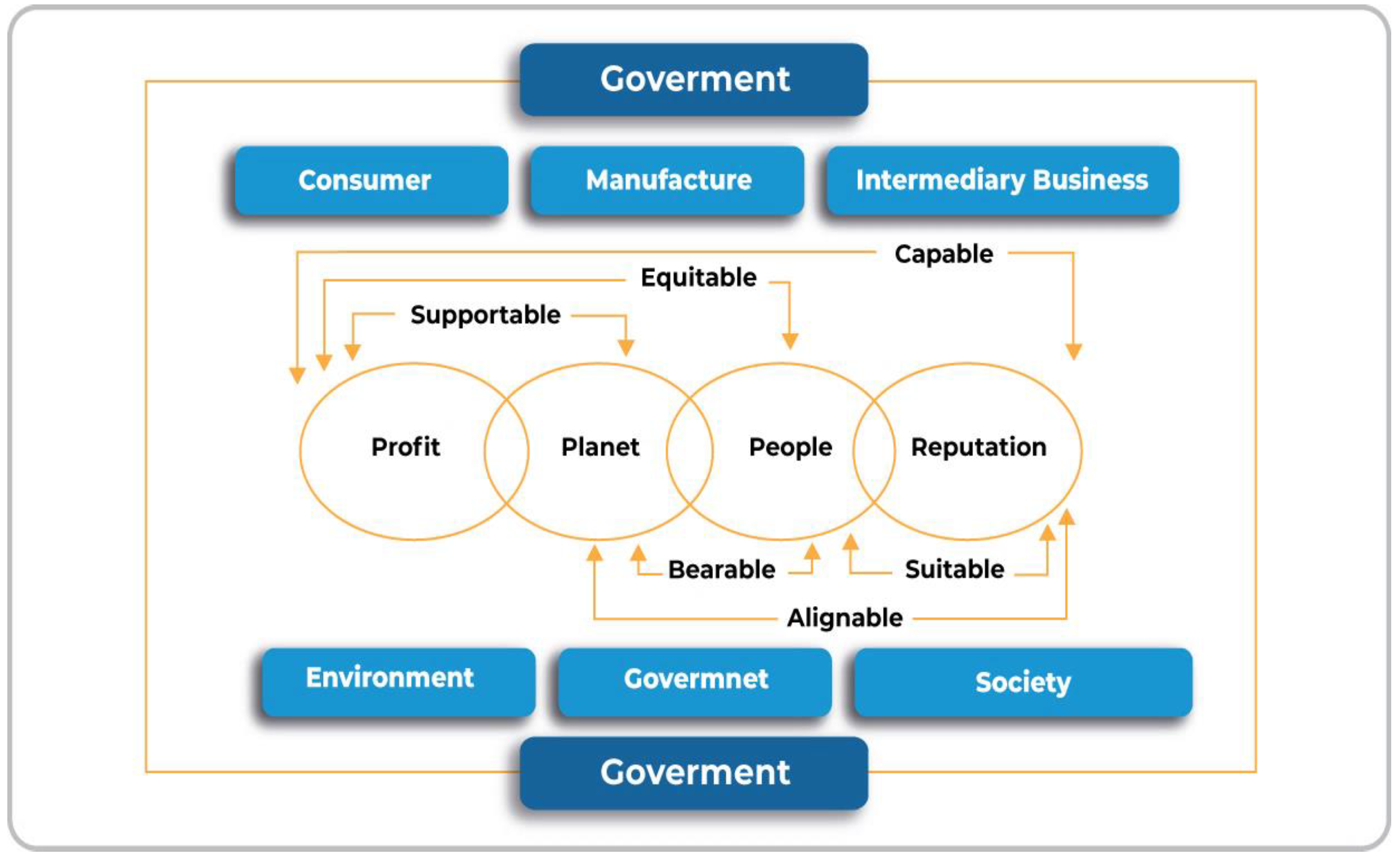
Figure 2.
Non-hazardous industrial waste classification [21].
Figure 2.
Non-hazardous industrial waste classification [21].
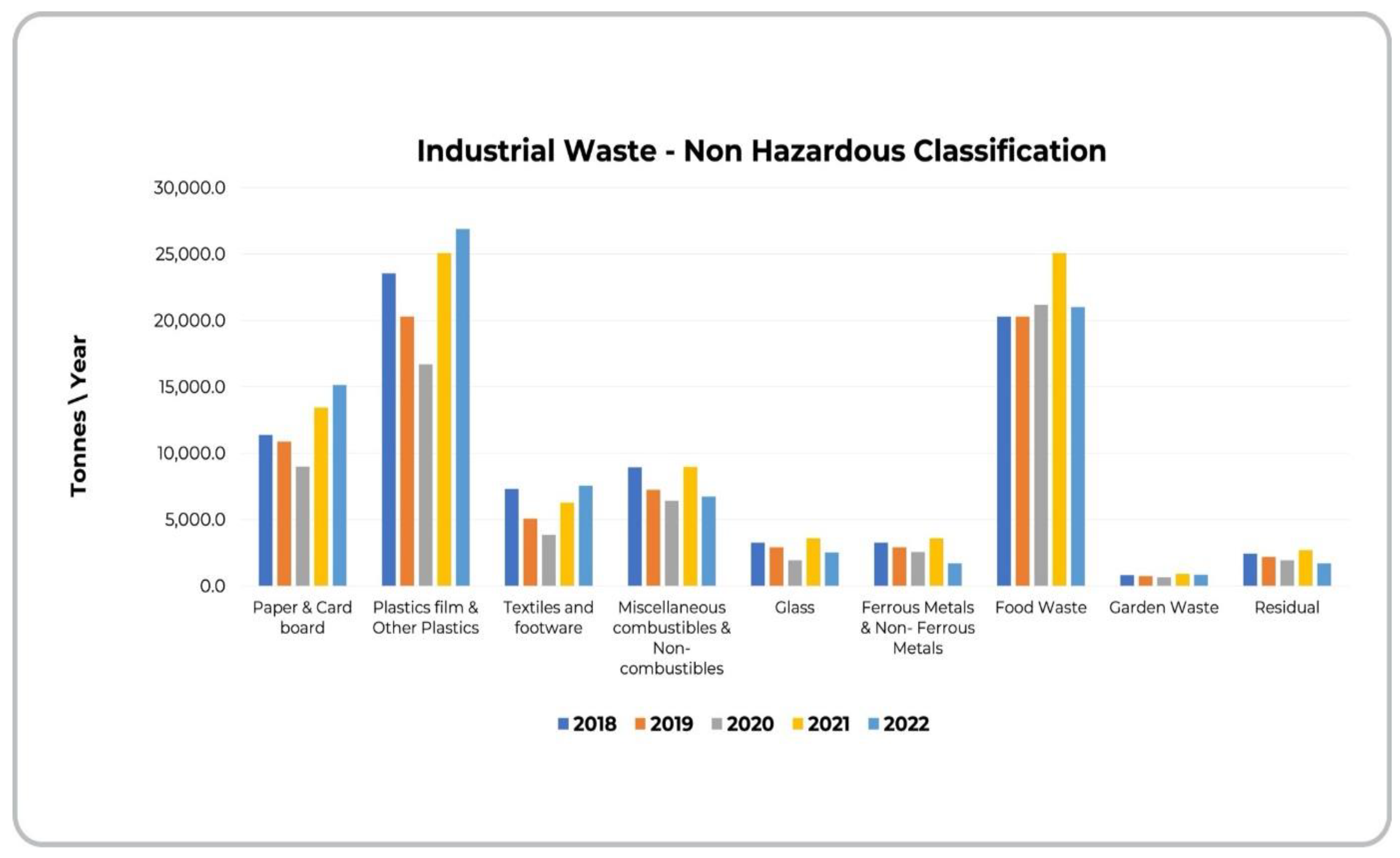
Figure 3.
Conceptual framework relating PPP, ESW and CIE.
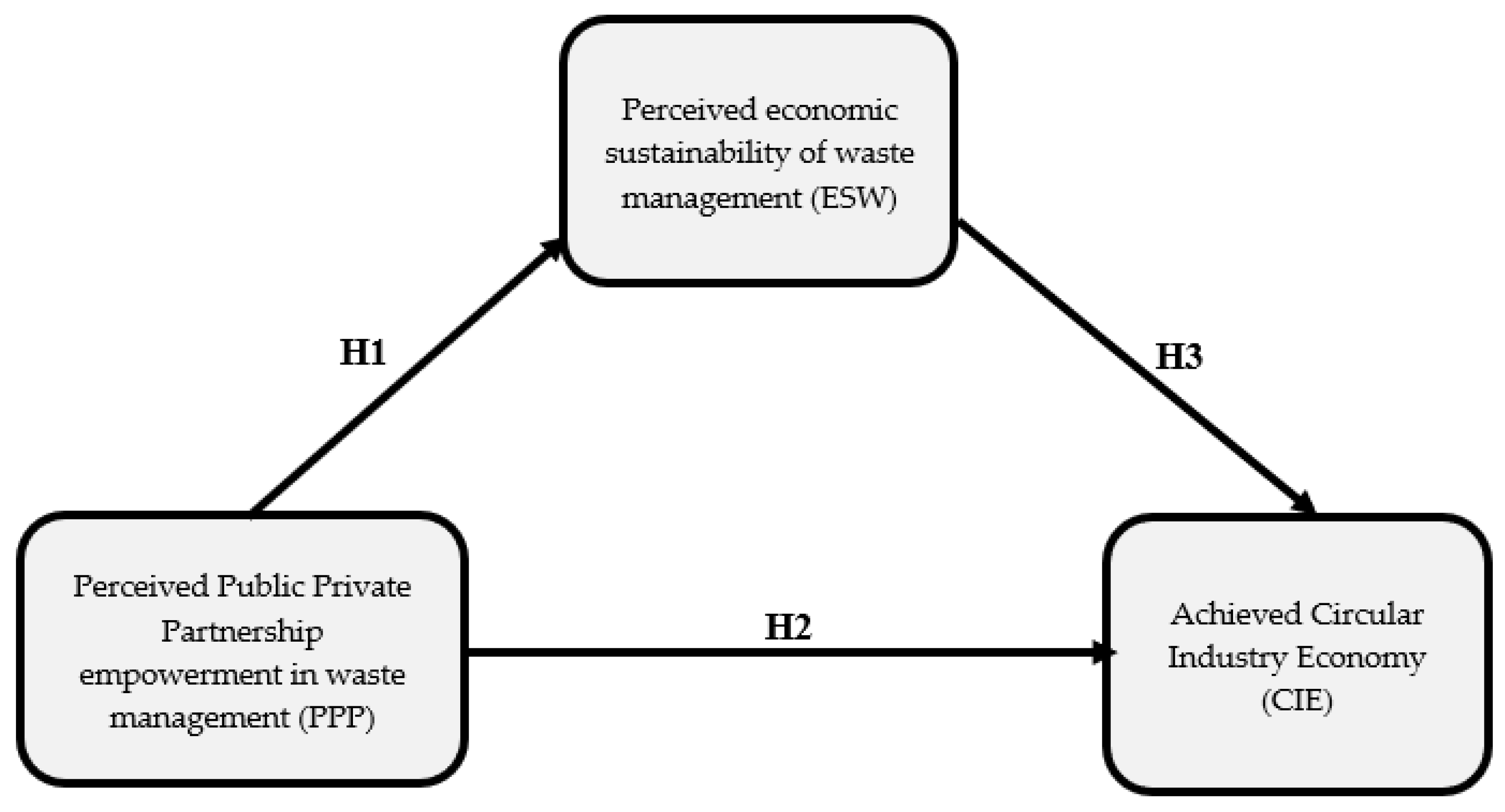
Figure 4.
Path Analysis of Structural Equation Model for the Impact of PPP on CIE through ESW.
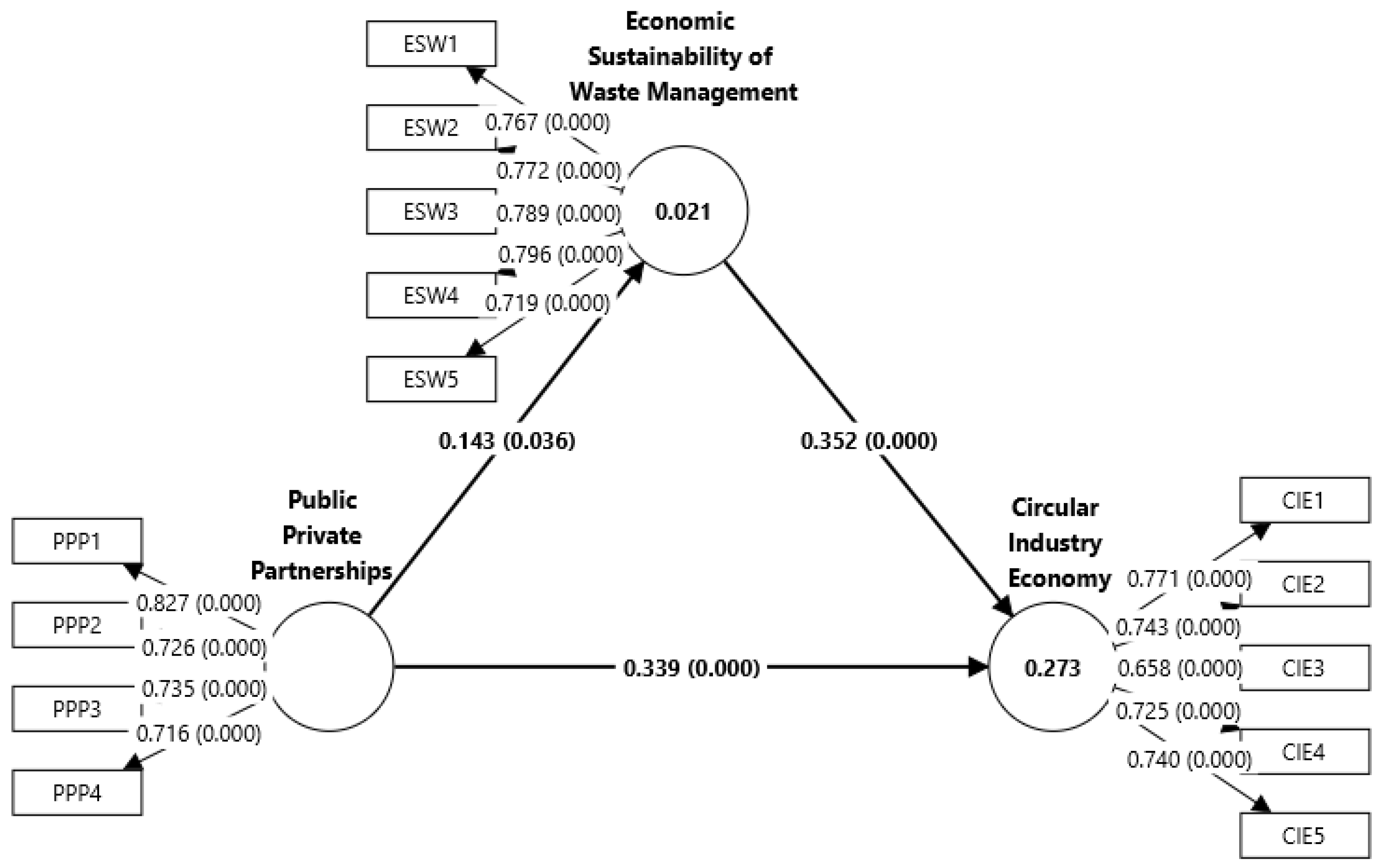

Table 1.
Measurement items included in the survey questionnaire on PPP empowerment in ESW and CIE.
| Construct | Definition | Code | Item | Source |
| Perceived PPP Empowerment in Waste Management | Perceived mechanism or arrangement between a government and private institutions and other entities that offer defined roles and responsibilities in a common socio-economic framework. | PPP1 | The partners engaged in waste management demonstrated competence in their roles and responsibilities. | Ngullie et al., [32] |
| PPP2 | There is transparency in the procurement process when selecting private partners to handle waste management, ensuring the right partners are chosen. | |||
| PPP3 | Appropriate tariff structures and payment mechanisms have been implemented to make waste management a profitable endeavour. | |||
| PPP4 | There is political backing or support for waste management partnerships. | |||
| Perceived economic sustainability of waste management (ESW) | Perceived economic benefits of the transition of resources from the traditional linear model of production to a circular economic model that pursues zero waste generation in all areas of materials, energy and products. | ESW1 | Effective industrial waste management leads to a significant reduction in labour costs. | Patel et al. [43]; Fucio et al. [44] |
| ESW2 | Education is considered crucial for realising the economic benefits of industrial waste management. | |||
| ESW3 | Proper waste management is one of the key drivers behind business transformation in various industries. | |||
| ESW4 | Industries that effectively manage waste can establish distinct price differentials. | |||
| ESW5 | Maintaining a robust reverse chain logistics system, such as using industrial plastic waste as raw materials, enhances the productivity of industries. | |||
| Achieved Circular Industry Economy (CIE) | Perceived existence of an economic system that has closed loops within which raw materials, components and products are re-deployed into the production network to result in as little overall waste as possible. | CIE1 | Industries keep their factory components in good condition to help minimise the production process waste. | Kamble et al. [45] |
| CIE2 | The government incentives for utilising processed waste in product development are deemed satisfactory. | |||
| CIE3 | New technological innovation has been implemented to digest and process waste for the purpose of product development. | |||
| CIE4 | Industries frequently utilise waste materials, which can be incorporated as raw materials after undergoing a short processing stage. | |||
| CIE5 | There is a priority placed on the recycling of waste products. |
Table 2.
Descriptive Statistics.
| Attributes | Option | Government (n = 111) | Private Business (n = 92) | Industries (n = 160) | ||||||||||
| Number | Proportion | Number | Proportion | Number | Proportion | |||||||||
| Gender | Male | 66 | 59.5% | 55 | 59.8% | 118 | 73.8% | |||||||
| Female | 43 | 38.7% | 30 | 32.6% | 41 | 25.6% | ||||||||
| I prefer not to say | 2 | 1.8% | 7 | 7.6% | 1 | 0.6% | ||||||||
| Age | 18-28 Years | 9 | 8.1% | 8 | 8.7% | 24 | 15.0% | |||||||
| 29-38 Years | 36 | 32.4% | 36 | 39.1% | 56 | 35.0% | ||||||||
| 39-48 Years | 39 | 35.1% | 30 | 32.6% | 53 | 33.1% | ||||||||
| 49-58 Years | 26 | 23.4% | 18 | 19.6% | 26 | 16.3% | ||||||||
| 59 & above | 1 | 0.9% | 0 | 0.0% | 1 | 0.6% | ||||||||
| Management | Top Level Management | 20 | 18.0% | 17 | 18.5% | 32 | 20.0% | |||||||
| Expert | 7 | 6.3% | 11 | 12.0% | 8 | 5.0% | ||||||||
| Employee | 82 | 73.9% | 54 | 58.7% | 116 | 72.5% | ||||||||
| Others (Please Specify) | 2 | 1.8% | 10 | 10.9% | 4 | 2.5% | ||||||||
Table 3.
Reliability and convergence of variables in the questionnaire survey.
| Latent Variable | Items | Mean (SD) | Factor loading | Cronbach Alpha | Composite Reliability | AVE |
| PPP | PPP1 | 3.791 (.838) | 0.827 | .747 | .767 | .566 |
| PPP2 | 3.628 (.871) | 0.726 | ||||
| PPP3 | 3.620 (.847) | 0.735 | ||||
| PPP4 | 3.567 (.859) | 0.716 | ||||
| ESW | ESW1 | 2.942 (1.067) | 0.767 | .827 | .833 | .591 |
| ESW2 | 2.959 (1.060) | 0.772 | ||||
| ESW3 | 3.088 (1.023) | 0.789 | ||||
| ESW4 | 2.854 (1.071) | 0.796 | ||||
| ESW5 | 2.909 (1.075) | 0.719 | ||||
| CIE | CIE1 | 3.771 (.892) | 0.771 | .779 | .789 | .531 |
| CIE2 | 3.490 (.887) | 0.743 | ||||
| CIE3 | 3.645 (.897) | 0.658 | ||||
| CIE4 | 3.548 (.889) | 0.725 | ||||
| CIE5 | 3.413 (.904) | 0.740 |
Table 4.
Heterotrait-monotrait ratio (HTMT).
| CIE | ESW | |
| ESW | 0.488 | |
| PPP | 0.501 | 0.175 |
Table 5.
Hypothesis testing for the impact of PPP on CIE through ESW.
| Hypotheses | Path | Standardised Path Coefficient | T-value (p-value) | Null hypothesis rejected | |||||||||||
| H1 | PPP -> ESW | 0.143 | 2.101 (.036) | Y | |||||||||||
| H2 | PPP -> CIE | 0.339 | 7.144 (***) | Y | |||||||||||
| H3 | ESW -> CIE | 0.352 | 8.028 (***) | Y | |||||||||||
| Bootstrap MGA of difference between government, private businesses, and industries | |||||||||||||||
| Difference |
2-tailed p-value | ||||||||||||||
| Gov- Ind |
Gov- P.Bus |
Ind- P.Bus |
Gov- Ind |
Gov- P.Bus |
Ind- P.Bus |
||||||||||
| H1 | 0.278 | 0.575 | 0.297 | 0.101 | 0.040 | 0.272 | |||||||||
| H2 | 0.188 | 0.273 | 0.086 | 0.075 | 0.073 | 0.621 | |||||||||
| H3 | -0.057 | -0.113 | -0.056 | 0.692 | 0.434 | 0.541 | |||||||||
| P-values of bootstrapping results for government, private businesses and industries | |||||||||||||||
| Gov | Ind | P.Bus | |||||||||||||
| H1 | 0.002 | 0.084 | 0.491 | ||||||||||||
| H2 | 0.000 | 0.000 | 0.138 | ||||||||||||
| H3 | 0.009 | 0.000 | 0.000 | ||||||||||||
Disclaimer/Publisher’s Note: The statements, opinions and data contained in all publications are solely those of the individual author(s) and contributor(s) and not of MDPI and/or the editor(s). MDPI and/or the editor(s) disclaim responsibility for any injury to people or property resulting from any ideas, methods, instructions or products referred to in the content. |
© 2025 by the authors. Licensee MDPI, Basel, Switzerland. This article is an open access article distributed under the terms and conditions of the Creative Commons Attribution (CC BY) license (http://creativecommons.org/licenses/by/4.0/).
Copyright: This open access article is published under a Creative Commons CC BY 4.0 license, which permit the free download, distribution, and reuse, provided that the author and preprint are cited in any reuse.


