

Submitted:
29 May 2025
Posted:
29 May 2025
You are already at the latest version
Abstract
Industrial wastewater pollution has reached acute environmental levels; consequently, scientists are developing new sustainable treatment methods. Lignocellulosic Biomass (LB) stands as a promising raw material because it originates from agricultural waste, forestry residues, and energy crop production. This review examines the application of nanomaterials derived from lignocellulosic resources in wastewater management, highlighting their distinctive physical-chemical properties, including a large surface area, adjustable porosity structure, and multifunctional group capability. The collection of nanomaterials incorporating CNCs with lignin nanoparticles, as well as biochar and carbon-based nanostructures, demonstrates high effectiveness in extracting heavy metals, dyes, and organic pollutants through adsorption, membrane filtration, and catalysis mechanisms. Nanomaterials have benefited from recent analytical breakthroughs that improve both their manufacturing potential and eco-friendly character through hybrid catalysis methods and functionalization procedures. This research demonstrates the capacity to simultaneously turn waste into value while cleaning up the environment through its connection to circular bioeconomic principles and the United Nations Sustainable Development Goals (SDGs). This review addresses hurdles related to feedstock variability, production costs, and lifecycle impacts, demonstrating the capability of lignocellulosic nanomaterials to transform wastewater treatment operations while sustaining global sustainability.
Keywords:
Lignocellulosic Waste
; Lignocellulosic Biomass
; Nanomaterial
; Sustainable Wastewater Treatment Technologies
1. Introduction
Substantial environmental destruction has emerged from the rising non-renewable energy usage, which includes oil, coal, and natural gas, as well as increased greenhouse gas production and climate warming. The worldwide transformation has begun to prioritize renewable energy solutions and sustainable waste management strategies because of worsening non-renewable energy dependency [1,2,3]. Lignocellulosic biomass is the most abundant renewable resource and it plays a crucial role in biofuel production [4,5]. Lignocellulosic biomass which is composed of cellulose, hemicellulose, and lignin, plays a vital role in determining the efficiency of biofuel production [6]. There is a necessity for innovative and sustainable pretreatment methods to effectively disintegrate lignocellulosic biomass and transform into biofuels [7]. LCB sources from energy crops, agricultural residues, and forestry by-products exist as one of Earth's most widespread renewable materials. Its application benefits the circular bioeconomy through two key actions. It minimizes our reliance on fossil fuels as well as fights environmental pollution [8,9,10]. Nanomaterials derived from this substance provide innovative solutions to worldwide problems related to waste management and water pollution and energy security, according to [11,12]. Green nanomaterials, especially lignocellulosic nanomaterials, create a sustainable solution that simultaneously benefits environmental relationships and health protection through the use of renewable ingredients and harmless manufacturing procedures [13]. Plant-based nanomaterials represent an emerging contemporary antibiotic alternative that provides improved medical outcomes through reduced toxic effects on human cells [14]. Wastewater treatment methods benefit significantly from the adoption of nanomaterials derived from lignocellulosic biomass. These nanomaterials possess important functional attributes, which include significant surface area, adjustable functionalities, and tunable characteristics alongside porosity and catalytic efficiency [15,16,17,18]. These features make them effective for pollutant extraction and environmental cleanup operations. The applications of nanomaterials focus on solving vital problems caused by heavy metal accumulation as well as dye and organic substance pollutants in industrial waste streams [19,20]. New adsorbent development like biochar enhances the effective treatment of lignocellulosic biomass wastewater since it recovers nutrients and reduces environmental impacts of wastewater treatment procedures [21]. A study demonstrates how bacterial-algae co-culture serves as a reliable solution to detoxify wastewater from lignocellulosic pretreatment while simultaneously lowering carbon pollution levels. This advances sustainable resource management strategies [22]. The innovative material satisfies several United Nations Sustainable Development Goals (SDGs), which aim to establish clean water access and sustainable industrial practices [1]. Lignocellulosic biomass provides an environment-friendly biosorbent to extract toxic wastewater pollutants effectively through chemical adjustment of adsorption capacity [23]. The mechanical advantages of CNCs combined with their sustainable nature make them suitable for different applications when used to enhance the properties of lignocellulosic nanomaterials [24]. Lignocellulosic biomass presents a sustainable and cost-effective solution for wastewater treatment which supports its natural properties to efficiently remove pollutants while promoting carbon neutrality and resource recovery [25]. The integration of biochar derived from lignocellulosic biomass enhances wastewater treatment efficiency as well as contributes to carbon sequestration [26]. Biopolymers obtained from lignocellulosic biomass enhance wastewater treatment processes by delivering sustainable solutions which replace synthetic materials and generate better environmental consequences [27].
1.1. Lignocellulosic Biomass
Lignocellulosic biomass is primarily composed of three biopolymers: cellulose (35–60%), hemicellulose (20–40%), and lignin (10–25%) [28,29]. These components provide structural integrity to plants but also present challenges due to their recalcitrant nature. Cellulose is a crystalline homopolymer characterized by strong hydrogen bonding networks that confer mechanical strength and chemical stability. Hemicellulose is an amorphous heteropolymer that contributes flexibility to plant cell walls. Lignin, a complex phenolic polymer with aromatic structures and diverse functional groups such as hydroxyl (-OH) and carboxyl (-COOH), provides rigidity but is highly resistant to degradation. [30,31]. The complex structures of these materials create obstacles for their transformation into valuable products; yet, their potential remains high due to their renewable nature. [32,33]. Sources of lignocellulosic biomass include agricultural residues (e.g., sugarcane bagasse, rice straw), forestry waste, municipal solid waste, and dedicated energy crops. The global production of lignocellulosic biomass is estimated to be approximately 1 × 10^10 metric tons annually. [34]. Despite its abundance and renewability, the structural complexity of lignocellulosic biomass necessitates advanced pretreatment methods, such as thermal decomposition or γ-valerolactone-based fractionation, to unlock its potential for conversion into high-value products, including biochar, bio-oil, syngas, or nanomaterials. [11,35].
1.2. Nanomaterials Derived from Lignocellulosic Biomass
Nanomaterials derived from lignocellulosic biomass include nanocellulose (for instance, cellulose nanocrystals [CNCs]), carbon-based nanostructures (e.g., graphene oxide [GO], carbon nanotubes [CNTs]), lignin nanoparticles (LiG NPs), and biochar. These materials exhibit exceptional properties, including high surface area-to-volume ratios, tunable porosity, mechanical strength, chemical reactivity, and functional group diversity. For example:
i. CNCs possess high adsorption capacities for heavy metals like Pb2+ and Cr6+ due to their surface charge tunability [29].
ii. GO effectively removes dyes and organic pollutants via electrostatic interactions [36].
iii. MnO2-modified lignin nanoparticles demonstrate adsorption capacities up to 806 mg/g for methylene blue dye removal [37].
1.3. Nanomaterials in Wastewater Treatment
Water pollution caused by industrial effluents containing heavy metals, dyes, pharmaceuticals, and other hazardous contaminants poses significant risks to human health and ecosystems. Conventional wastewater treatment methods often fail due to inefficiency at low pollutant concentrations, high operational costs, or the generation of secondary waste. Utilizing lignocellulosic biomass for wastewater treatment addresses both environmental pollution and transforms waste into valuable resources, thereby enhancing sustainability through closed-loop systems and recycling waste materials into biofuels. [40]. Nanotechnology offers a promising alternative by enabling the development of advanced materials with superior adsorption capacities and catalytic efficiencies. [20,41]. Nanomaterials such as magnetite nanoparticles (Fe3O4) have unique physicochemical properties, including high surface area and reactivity, which make them ideal for pollutant adsorption and biodegradation processes. Their integration with biological systems enhances the efficiency of wastewater treatment. [42]. In Figure 1, the process of utilizing nanomaterials in wastewater treatment is illustrated.
Nanomaterials derived from lignocellulosic biomass address these challenges effectively:
i. Biochar exhibits excellent adsorption properties for heavy metals like Zn2+ through ion exchange mechanisms.
ii. Functionalized CNCs enhance selectivity for specific contaminants such as Cr(VI) or methylene blue via carboxylation or phosphorylation processes [29].
iii. Magnetite nanoparticles derived from lignocellulose offer superparamagnetic behavior for easy recovery using magnetic fields while efficiently adsorbing pollutants like Pb(II) or Cu(II) [43].
This review aims to critically explore the potential of lignocellulosic waste as a pioneer for nanomaterial innovation in advancing sustainable wastewater treatment technologies. It emphasizes key aspects, including extraction methods, material properties, pollutant removal mechanisms, scalability challenges, economic feasibility, and prospects. By integrating insights from diverse studies across the field, this work aims to provide a comprehensive understanding of how lignocellulosic-derived nanomaterials can revolutionize wastewater treatment, addressing pressing environmental concerns globally. In Figure 2, a detailed overview of lignocellulosic nanomaterials in wastewater treatment, from feedstock to application, is presented.
2. Lignocellulosic Biomass: A Renewable Resource
2.1. Sources and Availability
Lignocellulosic biomass (LB) is a widely available, renewable resource derived from agricultural residues (e.g., sugarcane bagasse, rice straw, corn stover, wheat straw), forestry by-products (e.g., sawdust, wood chips), and industrial waste streams (e.g., paper pulp, sewage sludge). Dedicated energy crops, such as switchgrass and Miscanthus, also contribute significantly to its supply. Global production of lignocellulosic biomass exceeds 200 billion tons annually, making it an abundant and cost-effective feedstock for bio-based applications. (1,8,9,11,19,31,32,34,37,44–50). Agricultural residues, such as sugarcane bagasse, alone account for approximately 25–45% of processed cane, generating around 1.9 billion tons annually. Similarly, corn stover in the U.S. produces approximately 75 million dry tons annually. Forestry residues and non-wood sources, such as flowers and leaves, further expand the biomass pool [20,35,51]. Industrial wastes, such as xylose residue (XR) and oil palm trunk fibers, are also promising sources for nanomaterial synthesis. [52]. Importantly, LB does not compete with food production systems, making it a sustainable second-generation feedstock. [34].
2.2. Structural Composition
Lignocellulosic biomass is composed primarily of three biopolymers: cellulose, hemicellulose, and lignin. These components are intricately organized to provide structural integrity to plants.
Cellulose: Constituting approximately 30–50% of LB, cellulose is a linear polymer of β-D-glucose units linked by β- (1→4) glycosidic bonds. It forms crystalline microfibrils that impart mechanical strength and rigidity. [11,12,15]. Its crystalline regions are highly resistant to enzymatic degradation but are valuable for nanocrystal production. [29].
Hemicellulose: Representing about 20–40% of LB, hemicellulose is an amorphous heteropolymer composed of pentoses (e.g., xylose) and hexoses (e.g., mannose). It serves as a matrix linking cellulose and lignin but has lower thermal stability compared to cellulose. [8,11].
Lignin: Making up about 15–30% of LB, lignin is a complex aromatic polymer composed of monolignols such as p-coumaryl alcohol, coniferyl alcohol, and sinapyl alcohol. It provides rigidity and hydrophobicity but hinders enzymatic hydrolysis due to its recalcitrance. [28,53]. Other minor components include extractives, such as terpenes, and ash content, which add chemical complexity to LB [10].
2.3. Current Utilization
Despite its abundance, lignocellulosic biomass remains underutilized due to its structural recalcitrance. Traditional applications include:
Bioenergy Production: LB is extensively used for bioethanol production through enzymatic hydrolysis and fermentation. Other biofuels, such as biodiesel and biohydrogen, are also derived from LB using dark fermentation processes. [35,51].
Biochar Generation: Pyrolysis of LB produces biochar for soil amendment or environmental remediation applications [45].
Pulp and Paper Industry: Cellulose fibers from LB are used in paper manufacturing. However, this process underutilizes hemicellulose and lignin components [54].
Emerging applications aim to valorize all components of LB into high-value products:
Nanomaterials: Cellulose nanocrystals (CNCs) and lignin nanoparticles are being explored for their potential in composites, aerogels, and membranes with applications in water treatment technologies [29].
Bioplastics: Hemicellulose and cellulose derivatives are being developed into bio-based plastics with enhanced biodegradability [55].
Carbon-Based Materials: Lignin is being converted into carbon fibers and activated carbons for pollutant adsorption [56].
Advanced pretreatment methods, such as acid hydrolysis or deep eutectic solvents (DES), have enabled the efficient fractionation of LB into its functional components. This has expanded its utility in producing platform chemicals, such as furfural, and specialty materials, including nanocellulose composites [52,57]. Only 10–15% of lignocellulosic waste is currently valorized, primarily for low-value applications such as animal feed or combustion. High-value applications, such as nanocellulose production, remain underexplored. [58,59].
3. Nanomaterials from Lignocellulosic Waste
3.1. Types of Nanomaterials
Lignocellulosic biomass serves as a versatile precursor for various nanomaterials, including:
Nanocellulose: Comprises cellulose nanocrystals (CNCs) and cellulose nanofibrils (CNFs), known for their high mechanical strength, biocompatibility, and biodegradability [11,15,60,61]. CNCs are characterized by high crystallinity and functional groups, such as sulfate or carboxyl groups, which enhance adsorption. [29,62]. Fe-Cu composites with CNCs adsorb Pb2+ (85.8 mg/g) through chelation. [29,62,63,64]. CNFs exhibit high aspect ratios and tunable surface chemistry. [16,38].
Lignin-Based Nanoparticles: Offer antioxidant properties, UV resistance, and hydrophobicity, making them suitable for pollutant adsorption, drug delivery, and environmental remediation [12,28,55]. Functionalized lignin nanoparticles, such as MnO2-modified variants, enhance adsorption capacities due to hierarchical structures [37].
Carbon-Based Nanomaterials: Includes carbon nanotubes, graphene oxide, and biochar-derived nanoparticles produced via pyrolysis or hydrothermal processes [9,11,65]. Carbon quantum dots (CQDs) derived from sugarcane bagasse exhibit photoluminescence and pollutant detection capabilities [36].
Metal/Metal Oxide Nanoparticles: Synthesized using lignin or cellulose as reducing agents, these nanoparticles exhibit catalytic activity and pollutant binding potential [9,43]. Magnetite Nanoparticles (Fe3O4) are applied for pollutant adsorption and microbial immobilization [42].
Other Nanomaterials: Magnetic nanoparticles (MNPs) are used for enzyme immobilization and pollutant recovery [16]. Nanohemicelluloses and silica nanoparticles enhance film-forming properties and chemical stability, respectively [20,66]. In Table 1, different types of lignocellulosic biomass-derived nanomaterials and their properties has been given.
3.2. Extraction Techniques
Achieving a uniform distribution of nanoparticles in lignocellulosic biomass is critical for maximizing their effectiveness in treatment applications. Emerging green technologies like nanobiotechnology are addressing this challenge while focusing on sustainable processing methods [67]. In Table 2, a comparative overview of pretreatment methods for nanomaterial extraction is provided. The extraction of nanomaterials from lignocellulosic biomass involves a variety of mechanical, chemical, thermal, and biological methods:
Mechanical Methods: High-pressure homogenization, ball milling, and ultrasonication are employed to isolate CNFs, but are energy-intensive [34,38].
Chemical Pretreatments: Acid hydrolysis dissolves amorphous cellulose regions to yield CNCs with high crystallinity [29]. Alkaline treatments remove lignin to expose cellulose fibers for further processing [11].
Thermal Processes: Pyrolysis and hydrothermal carbonization convert biomass into biochar or carbon-based nanostructures under controlled conditions [1,68].
Biological Methods: Enzymatic hydrolysis using cellulases or fungi like Aspergillus oryzae reduces energy consumption while preserving structural integrity [8,28].
Emerging Technologies: Techniques such as microwave-assisted extraction and solvent-based fractionation using green solvents like γ-valerolactone optimize yield while minimizing environmental impact [35,52].
Functionalization Techniques: Methods like TEMPO oxidation introduce carboxyl groups to enhance adsorption capacities for dyes and heavy metals [29].
3.3. Properties of Nanomaterials
Nanomaterials derived from lignocellulosic waste exhibit unique properties that make them suitable for diverse applications:
Surface Area and Porosity: High surface area-to-volume ratios (>500 m²/g) and mesoporous structures enhance adsorption capacities for pollutants such as heavy metals and dyes [16,19].
Mechanical Strength: Nanocellulose exhibits tensile strengths up to ~220 GPa, making it ideal for durable membranes and composites [54].
Functional Group Diversity: Abundant oxygenated functional groups (-OH, -COOH) enable chemical modifications for specific applications like catalysis or pollutant binding [9,15].
Thermal Stability: Lignin-based nanoparticles demonstrate high thermal stability suitable for biomedical applications [28].
Biocompatibility and Biodegradability: These properties minimize secondary pollution while supporting environmental sustainability in wastewater treatment systems [17,20].
Catalytic Activity: Carbon-based nanostructures exhibit excellent electrical conductivity and enhanced catalytic activity in environmental remediation processes [65,69]. In Table 3, a comparison has been shown which provides detailed information on the feedstock sources, properties, pollutant removal efficiencies, and cost range of different lignocellulosic-derived nanomaterials.
4. Applications in Wastewater Treatment
4.1. Nanocellulose-Based Composites
Nanocellulose-based composites have emerged as efficient materials for wastewater treatment due to their high surface area, functional groups, and biodegradability. These composites are widely used for adsorbing heavy metals (for example, Pb²⁺, Cd²⁺) and organic pollutants like dyes and pharmaceuticals. Functionalized nanocellulose membranes demonstrate high selectivity for contaminants through adsorption, size exclusion, or electrostatic interactions [11,15,16,55]. For instance, carboxylated nanocellulose crystals (CNCs) exhibit adsorption capacities of up to 1237 mg/g for Pb(II), while CNC-based aerogels effectively remove Cu(II) due to their porous structure [41]. Additionally, nanocellulose composites such as chitosan-CNC multilayers achieve over 99% oil-water separation, demonstrating their versatility [29]. The integration of nanomaterials into wastewater treatment processes enables innovative solutions for industrial effluents containing harmful contaminants. This includes the use of biochar as a catalyst and nanocatalysts to improve energy efficiency and pollutant degradation [67,70]. Nanocellulose composites are also utilized in membrane filtration systems, enhancing mechanical strength and fouling resistance. Modified CNCs improve water flux and chlorine resistance in thin-film composite membranes [20]. Real-world applications include CNC/graphene aerogels used for oil spill remediation and CNC-based adsorbents achieving 96% removal of Cr(VI) from industrial effluents [29,71]. Chitosan-CNC multilayers on stainless steel achieve 99.5% oil-water separation [29,62,63,64]. A study highlights the potential of amino-functionalized lignocellulosic biopolymers as effective and sustainable adsorbents for removing toxic anionic contaminants, such as Congo red and Cr(VI), from wastewater, demonstrating their excellent reusability and eco-friendly nature [72]. Another study highlights that chemically modified cellulosic biofibers, such as those derived from okra, can significantly enhance the adsorption capacity for heavy metal ions, offering a sustainable and cost-effective solution for wastewater remediation [73]. In Table 4, the pollutant removal efficiencies of various lignocellulosic nanomaterials are provided.
4.2. Catalytic Applications
Lignin-derived nanoparticles and biochar serve as catalysts or catalyst supports in advanced oxidation processes (AOPs), enabling the degradation of organic pollutants like dyes and phenols. Functionalized biochar enhances the adsorption kinetics of heavy metals, such as Pb2+, Zn2+, and Cu2+, while maintaining a high recycling capacity over multiple cycles [52]. Similarly, MnO2-lignin nanocomposites exhibit superior adsorption capacities for dyes, such as methylene blue, due to chemical interactions between the MnO2 nanodots and dye molecules [37]. Biochar derived from lignocellulosic waste exhibits excellent catalytic properties due to its high porosity and environmental sustainability. Current research focuses on producing and activating biochar-based catalysts for wastewater remediation, with significant potential for removing hazardous contaminants [74]. Fe-modified lignocellulosic biochar simultaneously performs wastewater treatment by combining adsorption with catalytic performance thus boosting treatment efficiency [75]. CNC-supported ZnO/TiO2 composites degrade organic dyes (e.g., 97% methylene blue removal) via photocatalysis [29,62,63,64]. Photocatalysis using nanocellulose-metal oxide hybrids or lignin-derived materials is another promising approach. For example, CNC-supported ZnO/TiO2 composites achieve over 97% methylene blue removal under UV light [29]. Fe3O4-lignin nanocomposites facilitate Fenton reactions, achieving a 95% reduction in phenol within two hours [36]. Magnetic nanoparticles immobilized with enzymes further enhance catalytic efficiency in pollutant degradation processes [34]. The integration of enzyme-based nanobiocatalysts in the treatment of lignocellulosic biomass wastewater can significantly enhance resource recovery and it also minimizes environmental pollutants [76].
4.3. Lignin Valorization
Lignin valorization involves converting lignin into value-added products such as activated carbon, biochar, or nanoparticles for wastewater treatment. Lignin-derived biochar exhibits high adsorption capacities for pollutants like methylene blue and phenols due to its porous structure and functional groups [15,19]. Lignin nanoparticles are also utilized as adsorbents for toxic metals, such as Hg(II) and Cd(II), through ion exchange mechanisms, or as precursors for activated carbon production. [2,56]. Lignin-derived carbon quantum dots exhibit photocatalytic activity for degrading pharmaceuticals, while DES-based flocculants achieve over 99% turbidity reduction and simultaneous sterilization of harmful microorganisms like E. coli [52]. Additionally, lignin fractions from gamma-valerolactone processes can be used to produce carbon foams or battery anodes, contributing to environmental sustainability [35].
4.4. Case Studies: Real-World Applications
Numerous case studies highlight the practical efficacy of lignocellulosic nanomaterials in industrial wastewater treatment:
Methylene Blue Adsorption: Biochar derived from rice straw achieved maximum adsorption capacities of up to 160.5 mg/g due to its porous structure and oxygen-functional groups [15].
Oil-Water Separation: Nanocellulose-based membranes demonstrated effective separation of oil from water in industrial settings [61].
Heavy Metal Removal: Sugarcane bagasse-derived nanomaterials achieved significant removal efficiencies for heavy metals in industrial wastewater experiments [51].
Pharmaceutical Contaminants: CNC-based membranes effectively removed tetracycline through electrostatic interactions [16].
Integrated Solutions: Sequential treatment using lignin-derived materials achieved drinkable water quality by combining flocculation, adsorption, and photocatalysis [52].
Antifouling Properties: CNF-based membranes retained bacteria and viruses through size exclusion mechanisms while exhibiting antifouling properties [38,54].
Sequential Treatment Systems: Lead-zinc mineral processing wastewater was treated sequentially using lignocellulosic nanomaterials, integrating flocculation, adsorption, and photocatalysis to achieve drinkable water quality [52].
Klang Valley Water Treatment: CNC/graphene aerogels restored water quality following an oil spill in Klang Valley, Malaysia, demonstrating the practical utility of these materials in emergency scenarios [29].
Silver Nanoparticles for Antibacterial Activity: Biogenic silver nanoparticles incorporated into membranes exhibited potent antibacterial activity against pathogens like E. coli, offering dual benefits of pollutant removal and microbial disinfection [20].
Rice Husk-Derived SiO2 Nanoparticles: SiO2 nanoparticles synthesized from rice husk ash effectively remove heavy metals, such as lead, from wastewater, showcasing cost-effective and sustainable solutions for industrial effluents [20].
Carbon-Silicon Nanostructures: Rice husk-derived carbon-silicon nanostructures achieved a removal efficiency of up to 90% for arsenic from groundwater, providing a novel approach to addressing toxic metal contamination [36,77,78].
Functionalized Biochar for Heavy Metals: Functionalized biochar demonstrated high recycling capacity over multiple cycles while efficiently adsorbing heavy metals such as Pb2+, Zn2+, and Cu2+ due to its porous structure and enhanced adsorption kinetics [52].
5. Related Challenges
The production and scaling up of nanomaterials from lignocellulosic biomass face multifaceted challenges across technical, economic, and environmental dimensions. These challenges are crucial to address to achieve industrial scalability, cost-effectiveness, and sustainability. The primary challenge in utilizing lignocellulosic biomass lies in its recalcitrant structure. Lignin's resistance to microbial degradation and hemicellulose's hydrophilicity necessitate innovative pretreatment strategies for the efficient conversion of these materials into value-added products. Additionally, the underutilization of industrially produced lignin, of which only about 2% is currently valorized, represents a significant opportunity for research into high-value applications, such as binders or dispersants [28]. High energy costs for pyrolysis (≥700°C) and enzymatic pretreatment (approx. 20% of total cost) hinder commercialization [58,59].
5.1. Technical Barriers
Energy-Intensive Processes: Pretreatment methods such as pyrolysis, hydrothermal liquefaction, and acid hydrolysis demand significant energy inputs, raising concerns about scalability [1,44,61].
Feedstock Variability: The heterogeneous composition of lignocellulosic biomass complicates the standardization of extraction processes and achieving consistent quality in nanomaterials [31,34,53].
Process Optimization: Achieving high yields and purity during extraction remains challenging due to the recalcitrant structure of biomass [32,79]. Additionally, maintaining uniform particle size distribution and material stability during synthesis is difficult [28,56].
5.2. Economic Viability
High Production Costs: The cost of advanced technologies like ionic liquids, green solvents, enzymatic hydrolysis, and mechanical disintegration limits commercial scalability [11,16,18,29].
Capital Investment: High initial capital costs for biorefineries and advanced equipment hinder widespread adoption despite long-term benefits [80,81].
5.3. Environmental Considerations
Effluent Management: Chemical pretreatments generate toxic by-products and sulfate-rich wastewater that require effective disposal strategies to avoid secondary pollution [8,29].
Energy Consumption: The environmental footprint of energy-intensive processes like pyrolysis (approx. 700°C) must be minimized through renewable energy integration or process optimization [45,61].
Nanoparticle Toxicity: The potential ecotoxicity of nanomaterials such as carbon nanotubes necessitates rigorous lifecycle assessments to prevent unintended ecological impacts [36,39].
Green Chemistry Approaches: Transitioning to greener synthesis methods using supercritical CO2 or recyclable solvents like GVL is critical to ensure sustainability [41,80].
Waste Minimization: Closed-loop systems for solvent recovery and zero-waste principles are essential for reducing environmental risks during large-scale production [52].
5.4. Integrated Challenges
The interplay between technical barriers, economic viability, and environmental considerations highlights the complexity of scaling up nanomaterial production:
i. Energy-intensive pretreatment methods exacerbate both economic and environmental challenges.
ii. High costs associated with advanced technologies limit their adoption despite their potential to reduce environmental impacts.
iii. The toxicity of inevitable by-products demands innovative solutions that align with sustainability goals while maintaining economic feasibility.
6. Innovations and Future Prospects
6.1. Emerging Technologies
The development of choline-based ionic liquids and deep eutectic solvents as green solvents has revolutionized sustainable LB processing and pretreatment methods by diminishing environmental effects, according to [46,83]. The efficiency of producing lignocellulosic nanomaterials has increased via advancements in enzymatic hydrolysis methods, coupled with bio-based solvents, and integrated biorefineries [17,28]. The extraction of nanomaterials using microwave-assisted pyrolysis, combined with ultrasound pretreatments and hybrid catalytic approaches, demonstrates high potential for efficient extraction while simultaneously degrading pollutants, as shown in studies [2,11,32]. When lignocellulosic biomass is pretreated effectively, it can serve as a valuable feedstock in microbial fuel cells (MFCs) for both electricity generation and wastewater treatment [84]. Nanotechnology yields three distinct applications in pollutant management: multifunctional nanocomposites serve as pollution removal tools, blended membranes unite biological treatments with nanotechnology, and magnetic nanobiocatalysts provide reusable systems for pollutant degradation [16,58]. The application of microbe-derived enzymes combined with plant-based extracts in green synthetic methods both promotes eco-friendly characteristics and scales up performance [43]. Experts have integrated machine learning to enhance the biological reaction pathways of biochar during wastewater treatment [74]. Modern technological applications involving biological and physical treatments demonstrate improved process efficiency. Research on surface modifications with thiol and amine group attachment to lignin nanoparticles has improved the selective pollutant capture capacity of these nanoparticles for Hg(II) and Pb(II) [41]. Flash Nano Precipitation applies a sustainable production technique for generating uniformly sized nanoparticles at large-scale operational levels [28]. Bioaugmentation through engineered microbial consortia shows great promise to enhance pollutant degradation synergistically when combined with nanomaterials, according to [57]. In Table 6, innovations in functionalization techniques to improve performance are presented. In Figure 3, a framework for the circular bioeconomy for lignocellulosic nanomaterial applications has been presented.
6.2. Circular Bioeconomy
Lignocellulosic waste valorization serves sustainability goals through waste conversion into valuable nanomaterials, along with biofuels, as well as bioplastics, while reducing environmental impacts, according to [45,61]. Research shows that the execution of closed-loop recycling systems that utilize solvents such as gamma-valerolactone (GVL), as well as all fractions of biomass, leads to improved resource utilization [35]. Integrated biorefineries produce nanomaterials together with bioenergy or biochemicals while minimizing waste to a degree of 70%, according to [36,77]. The conversion of agricultural waste into nanomaterials helps achieve zero-waste targets by resolving worldwide waste management problems and simultaneously generating usable products, such as bioethanol and biogas [57,85]. LB extraction for industrial purposes results in improved resource efficiency combined with better environmental sustainability because it decreases industrial-scale waste disposal quantities [86]. In Figure 4, the lifecycle of lignocellulosic biomass, from feedstock to nanomaterial synthesis, applications, and its role in a circular economy, is illustrated.
6.3. Policy and Industry Support
Government incentives play a key role in facilitating the large-scale deployment of sustainable technologies. Lignocellulosic-based innovations are gaining wider acceptance for wastewater treatment when governments implement renewable resource promotion alongside enhanced effluent regulations [19,55]. The commercialization of green nanotechnology requires critical research and development subsidies to accelerate its development process [29]. Technology transfer, together with industrial adoption, requires the strong support of public-private partnerships. Industry-academia partnerships create conditions that increase manufacturing scale yet maintain sustainability standards [54,83]. The use of renewable materials in wastewater treatment can accelerate global sustainability targets when policy frameworks support their utilization [65]. The convergence of modern green technology advancements with circular bioeconomic models and appropriate policy structures demonstrates great potential to transform bioenergy systems that utilize lignocellulosic materials. Advanced technology solutions address vital environmental problems while enabling the development of large-scale, sustainable industrial practices. Future investigations must establish affordable biomass fractionation procedures to enhance the complete utilization of biomass, advance LB-derived nanomaterials in environmental cleanup, and optimize bio-based plastics through improved manufacturing approaches.
7. Conclusions
The review provides in-depth measurements regarding the ability of nanomaterials from lignocellulosic biomass to transform ecological wastewater management methods. The development of novel wastewater treatment solutions relies on the exploitation of nanomaterials derived from lignocellulosic biomass, as these materials offer large surface areas along with adjustable porosity features and various functional groups, enabling the extraction of heavy metals, dyes, and organic pollutants through adsorption, catalytic effects, and membrane separation. Nanomaterials have gained environmental and scalable qualities through the application of green extraction technology combined with hybrid catalysis systems that adhere to bioeconomy principles and support the Sustainable Development Goals (SDGs). The industrial use of these promising nanomaterials presents significant challenges due to inconsistent feedstock requirements, high production costs, and the need for environmental assessments. The combination of policy assistance with green chemistry advancements and process enhancement will create sustainable economic stability that preserves ecological sustainability. Resource efficiency improvements become achievable through functionalized techniques that integrate with hybrid systems and closed-loop biorefineries, enabling environmental footprint reduction. Lignocellulosic nanomaterials represent a significant advancement in wastewater treatment, offering an effective solution to global pollution issues and facilitating waste transformation toward value creation. The future of material and scalability research in water treatment needs functionalization strategies and full industrial integration to establish sustainable treatment systems at all levels worldwide.
Funding
This work was financially supported by the Deanship of Scientific Research, Vice Presidency for Graduate Studies and Scientific Research, King Faisal University, Saudi Arabia (Grant No. KFU250144X).
Data Availability Statement
No new data were created or analyzed in this study.
References
- Vieira S, Barros MV, Sydney ACN, Piekarski CM, De Francisco AC, Vandenberghe LPDS, et al. Sustainability of sugarcane lignocellulosic biomass pretreatment for the production of bioethanol. Bioresour Technol. 2020 Mar;299:122635. [CrossRef]
- Chandel H, Kumar P, Chandel AK, Verma ML. Biotechnological advances in biomass pretreatment for bio-renewable production through nanotechnological intervention. Biomass Convers Biorefinery. 2024 Feb;14(3):2959–81. [CrossRef]
- Marriott PE, Gómez LD, McQueen-Mason SJ. Unlocking the potential of lignocellulosic biomass through plant science. New Phytol. 2016 Mar 1;209(4):1366–81.
- Cai J, He Y, Yu X, Banks SW, Yang Y, Zhang X, et al. Review of physicochemical properties and analytical characterization of lignocellulosic biomass. Renew Sustain Energy Rev. 2017 Sep 1;76:309–22. [CrossRef]
- Yousuf A, Pirozzi D, Sannino F. Chapter 1 - Fundamentals of lignocellulosic biomass. In: Yousuf A, Pirozzi D, Sannino F, editors. Lignocellulosic Biomass to Liquid Biofuels [Internet]. Academic Press; 2020. p. 1–15. Available from: https://www.sciencedirect.com/science/article/pii/B9780128159361000010.
- Bajpai P. Structure of Lignocellulosic Biomass. In: Bajpai P, editor. Pretreatment of Lignocellulosic Biomass for Biofuel Production [Internet]. Singapore: Springer Singapore; 2016. p. 7–12. Available from: . [CrossRef]
- Mankar AR, Pandey A, Modak A, Pant KK. Pretreatment of lignocellulosic biomass: A review on recent advances. Bioresour Technol. 2021 Aug 1;334:125235.
- Brethauer S, Studer MH. Biochemical Conversion Processes of Lignocellulosic Biomass to Fuels and Chemicals – A Review. CHIMIA. 2015 Oct 28;69(10):572. [CrossRef]
- Dutta S, Saravanabhupathy S, Anusha, Rajak RC, Banerjee R, Dikshit PK, et al. Recent Developments in Lignocellulosic Biofuel Production with Nanotechnological Intervention: An Emphasis on Ethanol. Catalysts. 2023 Nov 14;13(11):1439. [CrossRef]
- Okolie JA, Nanda S, Dalai AK, Kozinski JA. Chemistry and Specialty Industrial Applications of Lignocellulosic Biomass. Waste Biomass Valorization. 2021 May;12(5):2145–69.
- Amalina F, Syukor Abd Razak A, Krishnan S, Sulaiman H, Zularisam AW, Nasrullah M. Advanced techniques in the production of biochar from lignocellulosic biomass and environmental applications. Clean Mater. 2022 Dec;6:100137. [CrossRef]
- Wang J, Xi J, Wang Y. Recent advances in the catalytic production of glucose from lignocellulosic biomass. Green Chem. 2015;17(2):737–51. [CrossRef]
- Arif MD, Hoque ME, Rahman MZ, Shafoyat MU. Emerging directions in green nanomaterials: Synthesis, physicochemical properties and applications. Mater Today Commun. 2024 Aug 1;40:109335.
- Rahman S, Sadaf S, Hoque ME, Mishra A, Mubarak NM, Malafaia G, et al. Unleashing the promise of emerging nanomaterials as a sustainable platform to mitigate antimicrobial resistance. RSC Adv. 2024;14(20):13862–99.
- Leng L jian, Yuan X zhong, Huang H jun, Wang H, Wu Z bin, Fu L huan, et al. Characterization and application of bio-chars from liquefaction of microalgae, lignocellulosic biomass and sewage sludge. Fuel Process Technol. 2015 Jan;129:8–14.
- Shukla BK, Sharma PK, Yadav H, Singh S, Tyagi K, Yadav Y, et al. Advanced membrane technologies for water treatment: utilization of nanomaterials and nanoparticles in membranes fabrication. J Nanoparticle Res. 2024 Sep;26(9):222. [CrossRef]
- Choe B, Lee S, Won W. Process integration and optimization for economical production of commodity chemicals from lignocellulosic biomass. Renew Energy. 2020 Dec;162:242–8.
- Mohan D, Sarswat A, Ok YS, Pittman CU. Organic and inorganic contaminants removal from water with biochar, a renewable, low cost and sustainable adsorbent – A critical review. Spec Issue Biosorption. 2014 May 1;160:191–202.
- S Rangabhashiyam, P Balasubramanian. The potential of lignocellulosic biomass precursors for biochar production: Performance, mechanism and wastewater application—A review. Ind Crops Prod. 2019 Feb;128:405–23. [CrossRef]
- Saud A, Gupta S, Allal A, Preud’homme H, Shomar B, Zaidi SJ. Progress in the Sustainable Development of Biobased (Nano)materials for Application in Water Treatment Technologies. ACS Omega. 2024 Jul 9;9(27):29088–113. [CrossRef]
- Renju, Singh R. Re-routing lignocellulosic biomass for the generation of bioenergy and other commodity fractionation in a (Bio)electrochemical system to treat sewage wastewater. Ind Crops Prod. 2024 Dec 15;222:119664.
- Wang H, Zhu S, Elshobary M, Qi W, Wang W, Feng P, et al. Enhancing detoxification of inhibitors in lignocellulosic pretreatment wastewater by bacterial Action: A pathway to improved biomass utilization. Bioresour Technol. 2024 Oct 1;410:131270. [CrossRef]
- Guleria A, Kumari G, Lima EC, Ashish DK, Thakur V, Singh K. Removal of inorganic toxic contaminants from wastewater using sustainable biomass: A review. Sci Total Environ. 2022 Jun 1;823:153689. [CrossRef]
- Rashid AB, Hoque ME, Kabir N, Rifat FF, Ishrak H, Alqahtani A, et al. Synthesis, Properties, Applications, and Future Prospective of Cellulose Nanocrystals. Polymers. 2023 Oct 12;15(20):4070.
- Bhardwaj A, Bansal M, Garima, Wilson K, Gupta S, Dhanawat M. Lignocellulose biosorbents: Unlocking the potential for sustainable environmental cleanup. Int J Biol Macromol. 2025 Mar 1;294:139497. [CrossRef]
- Shoudho KN, Khan TH, Ara UR, Khan MR, Shawon ZBZ, Hoque ME. Biochar in global carbon cycle: Towards sustainable development goals. Curr Res Green Sustain Chem. 2024 Jan 1;8:100409.
- Hoque ME, Shafoyat MU. Biopolymers and Their Composites for Biotechnological Applications. In: Applications of Biopolymers in Science, Biotechnology, and Engineering [Internet]. 2024 [cited 2025 Mar 4]. p. 189–217. Available from: . [CrossRef]
- Yadav VK, Gupta N, Kumar P, Dashti MG, Tirth V, Khan SH, et al. Recent Advances in Synthesis and Degradation of Lignin and Lignin Nanoparticles and Their Emerging Applications in Nanotechnology. Materials. 2022 Jan 26;15(3):953. [CrossRef]
- Norfarhana AS, Khoo PS, Ilyas RA, Ab Hamid NH, Aisyah HA, Norrrahim MNF, et al. Exploring of Cellulose Nanocrystals from Lignocellulosic Sources as a Powerful Adsorbent for Wastewater Remediation. J Polym Environ. 2024 Sep;32(9):4071–101.
- Li Y, Bhagwat SS, Cortés-Peña YR, Ki D, Rao CV, Jin YS, et al. Sustainable Lactic Acid Production from Lignocellulosic Biomass. ACS Sustain Chem Eng. 2021 Jan 25;9(3):1341–51. [CrossRef]
- Kumar B, Bhardwaj N, Agrawal K, Chaturvedi V, Verma P. Current perspective on pretreatment technologies using lignocellulosic biomass: An emerging biorefinery concept. Fuel Process Technol. 2020 Mar;199:106244.
- Hassan SS, Williams GA, Jaiswal AK. Emerging technologies for the pretreatment of lignocellulosic biomass. Bioresour Technol. 2018 Aug;262:310–8. [CrossRef]
- Dollhofer V, Dandikas V, Dorn-In S, Bauer C, Lebuhn M, Bauer J. Accelerated biogas production from lignocellulosic biomass after pre-treatment with Neocallimastix frontalis. Bioresour Technol. 2018 Sep;264:219–27.
- Singhvi M, Kim BS. Current Developments in Lignocellulosic Biomass Conversion into Biofuels Using Nanobiotechology Approach. Energies. 2020 Oct 12;13(20):5300. [CrossRef]
- Motagamwala AH, Won W, Maravelias CT, Dumesic JA. An engineered solvent system for sugar production from lignocellulosic biomass using biomass derived γ-valerolactone. Green Chem. 2016;18(21):5756–63.
- El-Sakhawy M, Kamel S, Tohamy HAS. A Greener Future: Carbon Nanomaterials from Lignocellulose. J Renew Mater. 2025;13(1):21–47. [CrossRef]
- Zhai R, Hu J, Chen X, Xu Z, Wen Z, Jin M. Facile synthesis of manganese oxide modified lignin nanocomposites from lignocellulosic biorefinery wastes for dye removal. Bioresour Technol. 2020 Nov;315:123846.
- Choudhury RR, Sahoo SK, Gohil JM. Potential of bioinspired cellulose nanomaterials and nanocomposite membranes thereof for water treatment and fuel cell applications. Cellulose. 2020 Aug;27(12):6719–46. [CrossRef]
- Jain K, Patel AS, Pardhi VP, Flora SJS. Nanotechnology in Wastewater Management: A New Paradigm Towards Wastewater Treatment. Molecules. 2021 Mar 23;26(6):1797.
- Liu A, Wu H, Naeem A, Du Q, Ni B, Liu H, et al. Cellulose nanocrystalline from biomass wastes: An overview of extraction, functionalization and applications in drug delivery. Int J Biol Macromol. 2023 Jun 30;241:124557.
- Kumar A, Kumar V. A Comprehensive Review on Application of Lignocellulose Derived Nanomaterial in Heavy Metals Removal from Wastewater. Chem Afr. 2023 Feb;6(1):39–78. [CrossRef]
- EL-Bestawy E, Hassan SWM, Mohamed AA. Enhanced biodegradation of lignin and lignocellulose constituents in the pulp and paper industry black liquor using integrated magnetite nanoparticles/bacterial assemblage. Appl Water Sci. 2024 Oct;14(10):211. [CrossRef]
- El-Gendy NSh, Nassar HN. Biosynthesized magnetite nanoparticles as an environmental opulence and sustainable wastewater treatment. Sci Total Environ. 2021 Jun;774:145610.
- Ahmad M, Rajapaksha AU, Lim JE, Zhang M, Bolan N, Mohan D, et al. Biochar as a sorbent for contaminant management in soil and water: A review. Chemosphere. 2014 Mar 1;99:19–33.
- Osman AI, Abdelkader A, Johnston CR, Morgan K, Rooney DW. Thermal Investigation and Kinetic Modeling of Lignocellulosic Biomass Combustion for Energy Production and Other Applications. Ind Eng Chem Res. 2017 Oct 25;56(42):12119–30. [CrossRef]
- Mäkelä M, Benavente V, Fullana A. Hydrothermal carbonization of lignocellulosic biomass: Effect of process conditions on hydrochar properties. Appl Energy. 2015 Oct;155:576–84. [CrossRef]
- Akobi C, Yeo H, Hafez H, Nakhla G. Single-stage and two-stage anaerobic digestion of extruded lignocellulosic biomass. Appl Energy. 2016 Dec;184:548–59.
- Ge X, Xu F, Li Y. Solid-state anaerobic digestion of lignocellulosic biomass: Recent progress and perspectives. Bioresour Technol. 2016 Apr;205:239–49.
- Li DC, Jiang H. The thermochemical conversion of non-lignocellulosic biomass to form biochar: A review on characterizations and mechanism elucidation. Bioresour Technol. 2017 Dec;246:57–68. [CrossRef]
- Liu F, Chen G, Yan B, Ma W, Cheng Z, Hou L. Exergy analysis of a new lignocellulosic biomass-based polygeneration system. Energy. 2017 Dec;140:1087–95.
- Soares JF, Confortin TC, Todero I, Mayer FD, Mazutti MA. Dark fermentative biohydrogen production from lignocellulosic biomass: Technological challenges and future prospects. Renew Sustain Energy Rev. 2020 Jan;117:109484. [CrossRef]
- Wang B, Wang J, Hu Z, Zhu AL, Shen X, Cao X, et al. Harnessing Renewable Lignocellulosic Potential for Sustainable Wastewater Purification. Research. 2024 Jan;7:0347.
- He J, Huang K, Barnett KJ, Krishna SH, Alonso DM, Brentzel ZJ, et al. New catalytic strategies for α,ω-diols production from lignocellulosic biomass. Faraday Discuss. 2017;202:247–67.
- Sharma A, Anjana, Rana H, Goswami S. A Comprehensive Review on the Heavy Metal Removal for Water Remediation by the Application of Lignocellulosic Biomass-Derived Nanocellulose. J Polym Environ. 2022 Jan;30(1):1–18.
- Kim H, Lee S, Ahn Y, Lee J, Won W. Sustainable Production of Bioplastics from Lignocellulosic Biomass: Technoeconomic Analysis and Life-Cycle Assessment. ACS Sustain Chem Eng. 2020 Aug 24;8(33):12419–29. [CrossRef]
- Hartoyo APP, Solikhin A. Valorization of Oil Palm Trunk Biomass for Lignocellulose/Carbon Nanoparticles and Its Nanomaterials Characterization Potential for Water Purification. J Nat Fibers. 2023 Apr 24;20(1):2131688. [CrossRef]
- Martínez-Gutiérrez E. Biogas production from different lignocellulosic biomass sources: advances and perspectives. 3 Biotech. 2018 May;8(5):233.
- Rai M, Ingle AP, Pandit R, Paralikar P, Biswas JK, Da Silva SS. Emerging role of nanobiocatalysts in hydrolysis of lignocellulosic biomass leading to sustainable bioethanol production. Catal Rev. 2019 Jan 2;61(1):1–26. [CrossRef]
- Sánchez-Ramírez J, Martínez-Hernández JL, Segura-Ceniceros P, López G, Saade H, Medina-Morales MA, et al. Cellulases immobilization on chitosan-coated magnetic nanoparticles: application for Agave Atrovirens lignocellulosic biomass hydrolysis. Bioprocess Biosyst Eng. 2017 Jan 1;40(1):9–22.
- Ahmad M, Lee SS, Dou X, Mohan D, Sung JK, Yang JE, et al. Effects of pyrolysis temperature on soybean stover- and peanut shell-derived biochar properties and TCE adsorption in water. Bioresour Technol. 2012 Aug 1;118:536–44.
- Integrated Composites Laboratory (ICL), Department of Chemical and Biomolecular Engineering, University of Tennessee, Knoxville, Tennessee 37996, USA, Yuan B, Li L, School of Forest Resources, University of Maine, Orono, ME 04469-5755, USA, Murugadoss V, Integrated Composites Laboratory (ICL), Department of Chemical and Biomolecular Engineering, University of Tennessee, Knoxville, Tennessee 37996, USA, et al. Nanocellulose-based composite materials for wastewater treatment and waste-oil remediation. ES Food Agrofor [Internet]. 2020 [cited 2025 Mar 2]; Available from: http://www.espublisher.com/journals/articledetails/315.
- Sayyed AJ, Pinjari DV, Sonawane SH, Bhanvase BA, Sheikh J, Sillanpää M. Cellulose-based nanomaterials for water and wastewater treatments: A review. J Environ Chem Eng. 2021 Dec 1;9(6):106626. [CrossRef]
- Salama A, Abouzeid R, Leong WS, Jeevanandam J, Samyn P, Dufresne A, et al. Nanocellulose-Based Materials for Water Treatment: Adsorption, Photocatalytic Degradation, Disinfection, Antifouling, and Nanofiltration. Nanomaterials. 2021;11(11).
- Nasrollahzadeh M, Sajjadi M, Iravani S, Varma RS. Starch, cellulose, pectin, gum, alginate, chitin and chitosan derived (nano)materials for sustainable water treatment: A review. Carbohydr Polym. 2021 Jan 1;251:116986. [CrossRef]
- Pérez H, Quintero García OJ, Amezcua-Allieri MA, Rodríguez Vázquez R. Nanotechnology as an efficient and effective alternative for wastewater treatment: an overview. Water Sci Technol. 2023 Jun 15;87(12):2971–3001. [CrossRef]
- Barhoum A, Jeevanandam J, Rastogi A, Samyn P, Boluk Y, Dufresne A, et al. Plant celluloses, hemicelluloses, lignins, and volatile oils for the synthesis of nanoparticles and nanostructured materials. Nanoscale. 2020;12(45):22845–90. [CrossRef]
- Mumtaz M, Baqar Z, Hussain N, Afifa, Bilal M, Azam HMH, et al. Application of nanomaterials for enhanced production of biodiesel, biooil, biogas, bioethanol, and biohydrogen via lignocellulosic biomass transformation. Fuel. 2022 May 1;315:122840.
- Wilk M, Magdziarz A, Jayaraman K, Szymańska-Chargot M, Gökalp I. Hydrothermal carbonization characteristics of sewage sludge and lignocellulosic biomass. A comparative study. Biomass Bioenergy. 2019 Jan;120:166–75.
- Yang Z, Qian K, Zhang X, Lei H, Xin C, Zhang Y, et al. Process design and economics for the conversion of lignocellulosic biomass into jet fuel range cycloalkanes. Energy. 2018 Jul;154:289–97. [CrossRef]
- Thanigaivel S, Priya AK, Dutta K, Rajendran S, Sekar K, Jalil AA, et al. Role of nanotechnology for the conversion of lignocellulosic biomass into biopotent energy: A biorefinery approach for waste to value-added products. Fuel. 2022 Aug 15;322:124236.
- Park SH, Shin SS, Park CH, Jeon S, Gwon J, Lee SY, et al. Poly(acryloyl hydrazide)-grafted cellulose nanocrystal adsorbents with an excellent Cr(VI) adsorption capacity. J Hazard Mater. 2020 Jul 15;394:122512. [CrossRef]
- Mei M, Du P, Li W, Xu L, Wang T, Liu J, et al. Amino-functionalization of lignocellulosic biopolymer to be used as a green and sustainable adsorbent for anionic contaminant removal. Int J Biol Macromol. 2023 Feb 1;227:1271–81.
- Singha AS, Guleria A. Chemical modification of cellulosic biopolymer and its use in removal of heavy metal ions from wastewater. Int J Biol Macromol. 2014 Jun 1;67:409–17. [CrossRef]
- Godvin Sharmila V, Kumar Tyagi V, Varjani S, Rajesh Banu J. A review on the lignocellulosic derived biochar-based catalyst in wastewater remediation: Advanced treatment technologies and machine learning tools. Bioresour Technol. 2023 Nov 1;387:129587.
- Chon K, Mo Kim Y, Bae S. Advances in Fe-modified lignocellulosic biochar: Impact of iron species and characteristics on wastewater treatment. Bioresour Technol. 2024 Mar 1;395:130332. [CrossRef]
- Ghalkhani M, Teymourinia H, Ebrahimi F, Irannejad N, Karimi-Maleh H, Karaman C, et al. Engineering and application of polysaccharides and proteins-based nanobiocatalysts in the recovery of toxic metals, phosphorous, and ammonia from wastewater: A review. Int J Biol Macromol. 2023 Jul 1;242:124585.
- Isikgor FH, Becer CR. Lignocellulosic biomass: a sustainable platform for the production of bio-based chemicals and polymers. Polym Chem. 2015;6(25):4497–559. [CrossRef]
- Nasir S, Hussein MZ, Zainal Z, Yusof NA. Carbon-Based Nanomaterials/Allotropes: A Glimpse of Their Synthesis, Properties and Some Applications. Materials. 2018;11(2).
- Sawatdeenarunat C, Surendra KC, Takara D, Oechsner H, Khanal SK. Anaerobic digestion of lignocellulosic biomass: Challenges and opportunities. Bioresour Technol. 2015 Feb;178:178–86. [CrossRef]
- Alonso DM, Hakim SH, Zhou S, Won W, Hosseinaei O, Tao J, et al. Increasing the revenue from lignocellulosic biomass: Maximizing feedstock utilization. Sci Adv. 2017 3(5):e1603301.
- Tobin T, Gustafson R, Bura R, Gough HL. Integration of wastewater treatment into process design of lignocellulosic biorefineries for improved economic viability. Biotechnol Biofuels. 2020 Dec;13(1):24. [CrossRef]
- Kang KE, Jeong JS, Kim Y, Min J, Moon SK. Development and economic analysis of bioethanol production facilities using lignocellulosic biomass. J Biosci Bioeng. 2019 Oct;128(4):475–9.
- Sakthivel S, Muthusamy K, Thangarajan AP, Thiruvengadam M, Venkidasamy B. Nano-based biofuel production from low-cost lignocellulose biomass: environmental sustainability and economic approach. Bioprocess Biosyst Eng. 2024 Jul;47(7):971–90. [CrossRef]
- Sani A, Savla N, Pandit S, Singh Mathuriya A, Gupta PK, Khanna N, et al. Recent advances in bioelectricity generation through the simultaneous valorization of lignocellulosic biomass and wastewater treatment in microbial fuel cell. Sustain Energy Technol Assess. 2021 Dec 1;48:101572. [CrossRef]
- Nanda S, Azargohar R, Dalai AK, Kozinski JA. An assessment on the sustainability of lignocellulosic biomass for biorefining. Renew Sustain Energy Rev. 2015 Oct;50:925–41. [CrossRef]
- Hitam CNC, Jalil AA. A review on biohydrogen production through photo-fermentation of lignocellulosic biomass. Biomass Convers Biorefinery. 2023 Jul;13(10):8465–83. [CrossRef]
Figure 1.
Process of using nanomaterials in wastewater treatment.
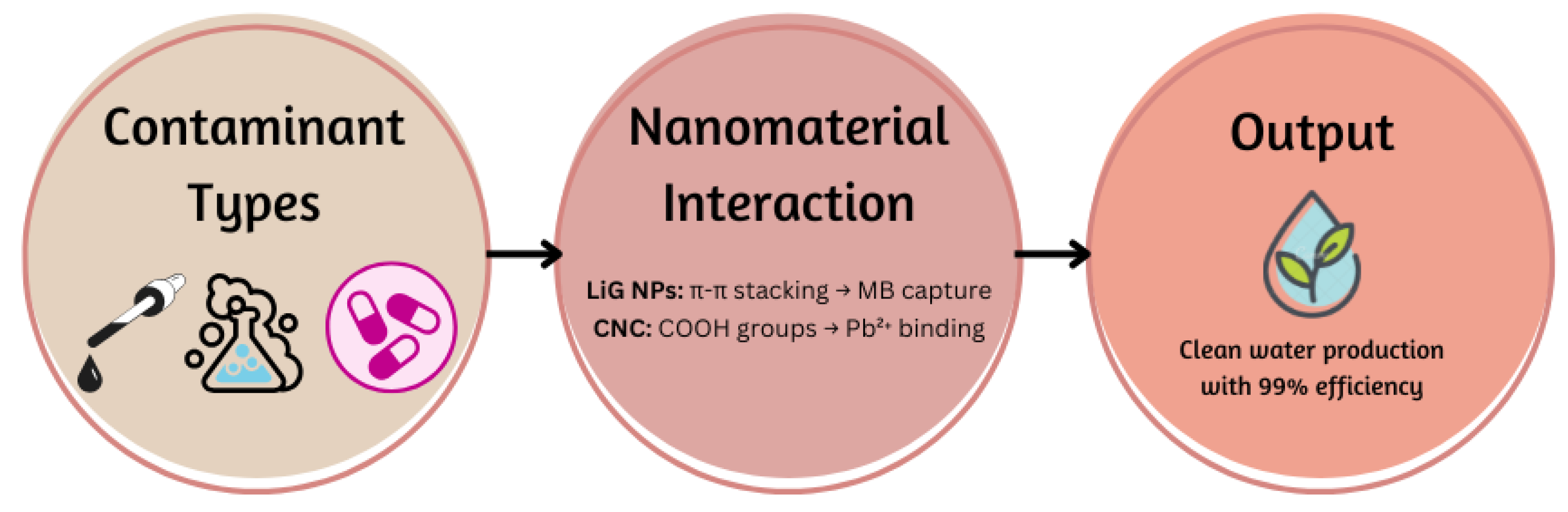
Figure 2.
Overview of Lignocellulosic Nanomaterials in Wastewater Treatment.
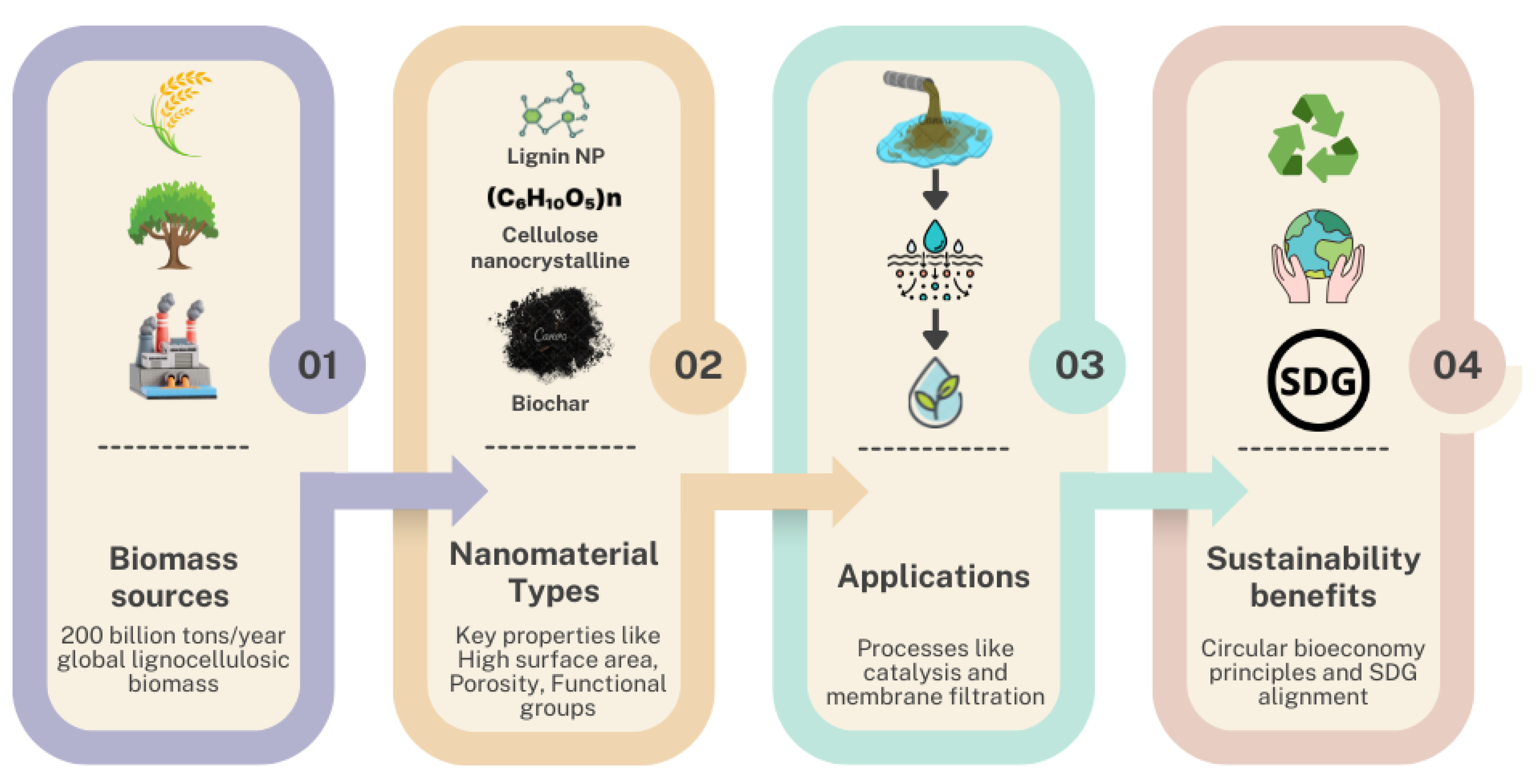
Figure 3.
Circular Bioeconomy Framework for Lignocellulosic Nanomaterial Applications.
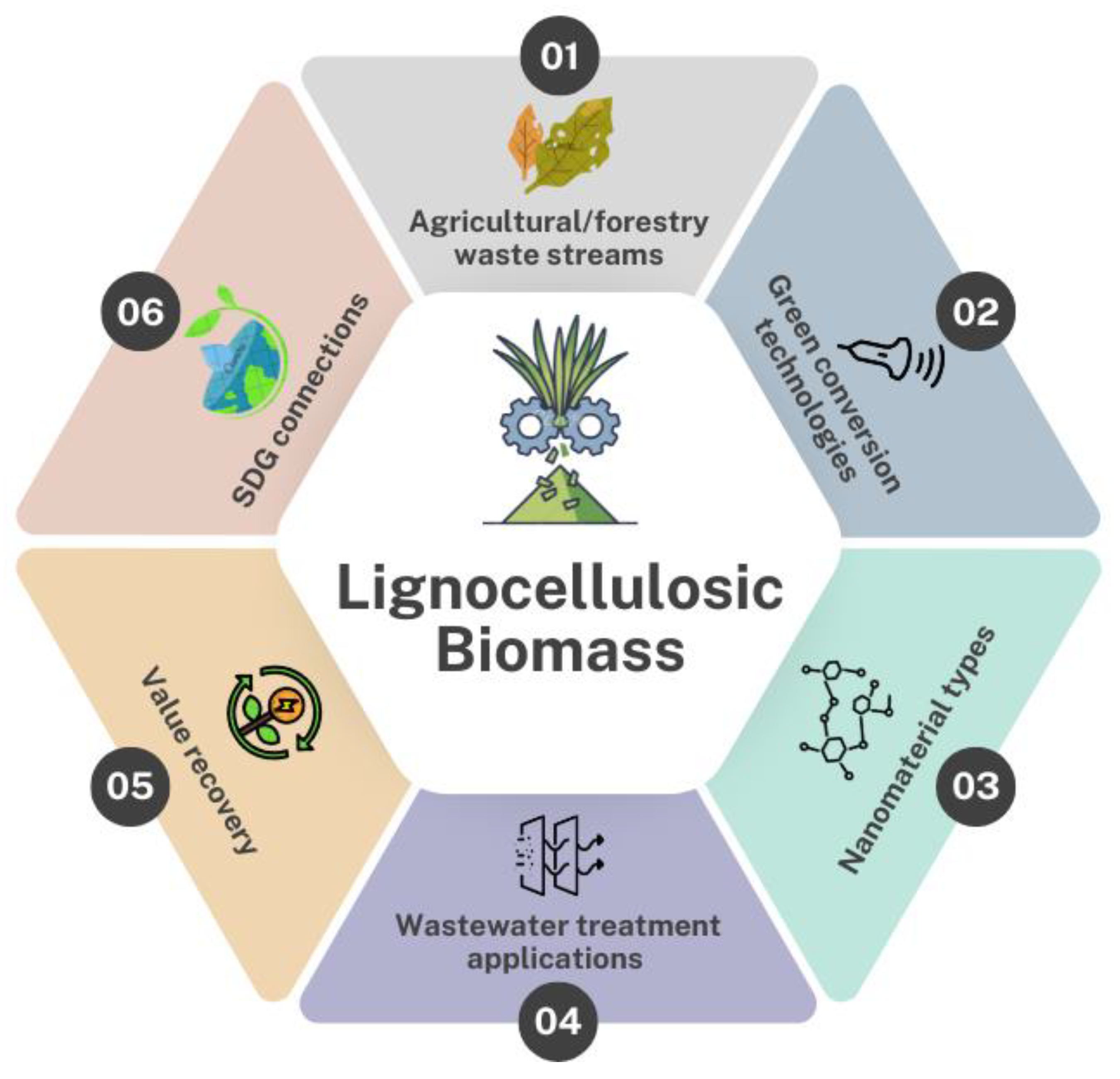
Figure 4.
Lignocellulosic Biomass to Nanomaterial Lifecycle.
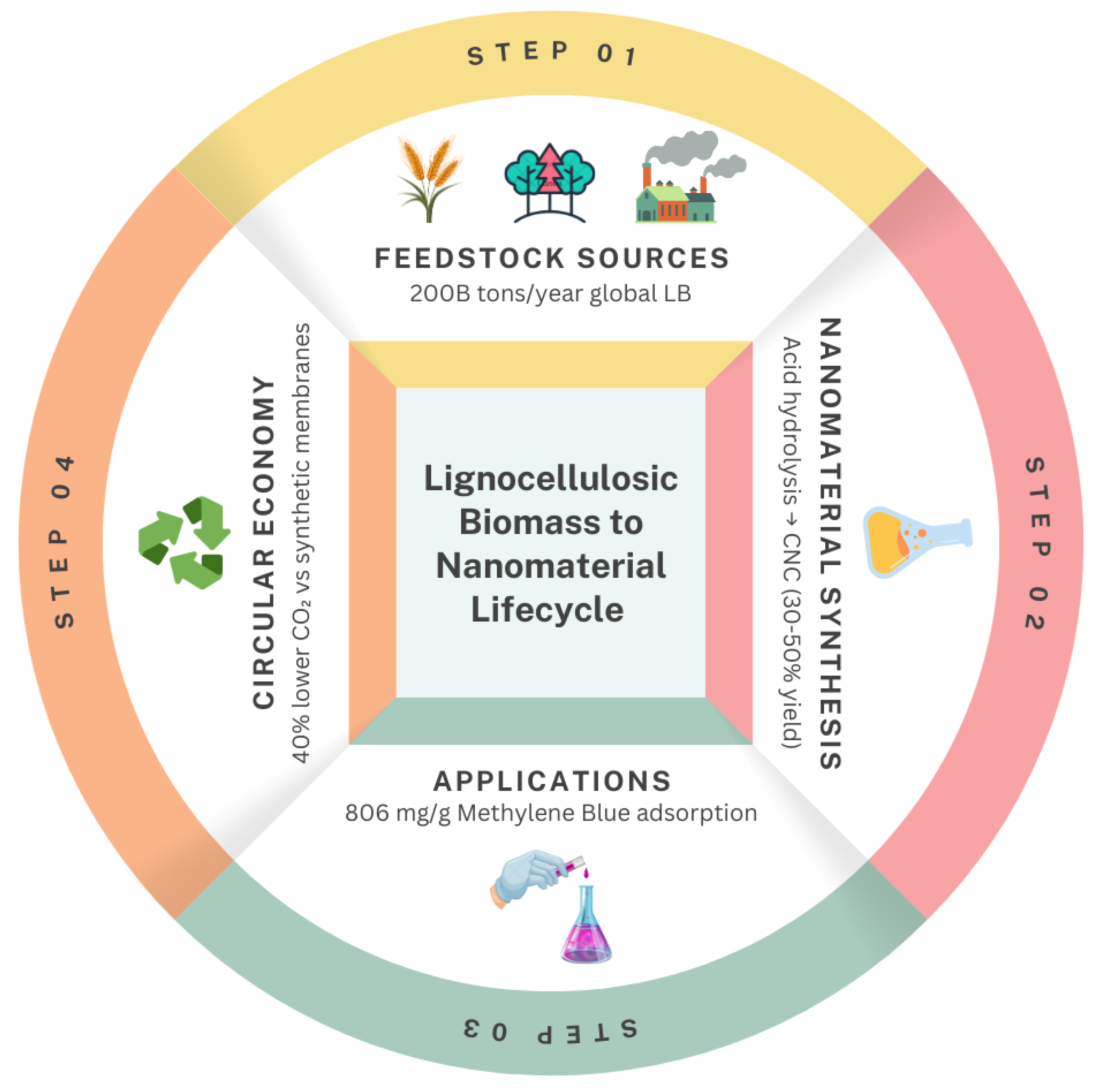

Table 1.
Types of Lignocellulosic Biomass-Derived Nanomaterials and Their Properties.
| Nanomaterial Type | Source Biomass | Key Properties | Applications | References |
|---|---|---|---|---|
| Cellulose Nanocrystals | Sugarcane bagasse | Surface area: 500 m2/g; Tensile strength: 220 GPa | Heavy metal adsorption, membranes | [29] |
| Lignin Nanoparticles | Rice straw | Thermal stability: >300°C; Functional groups: -OH, -COOH | Dye removal, catalytic supports | [37] |
| Biochar | Forestry residues | Porosity: 0.8 cm3/g; Adsorption capacity: 806 mg/g | Organic pollutant degradation | [15] |
| Graphene Oxide | Wheat straw | Electrical conductivity: 103 S/m; Surface charge: -25 mV | Photocatalysis, sensors | [36] |
| Magnetic Fe3O4 NPs | Corn stover | Superparamagnetic; Adsorption capacity: 95% Pb(II) | Magnetic recovery systems | [43] |
Table 2.
Comparative Analysis of Pretreatment Methods for Nanomaterial Extraction.
| Method | Energy Use | Yield (%) | Environmental Impact | Scalability | References |
|---|---|---|---|---|---|
| Acid Hydrolysis | High | 45–60 | Toxic effluent generation | Moderate | [8] |
| Enzymatic Hydrolysis | Low | 30–40 | Biodegradable by-products | High | [28] |
| Pyrolysis | Very High | 50–70 | CO₂ emissions | Low | [45] |
| Microwave-Assisted | Moderate | 55–65 | Reduced solvent use | High | [52] |
| γ-Valerolactone | Low | 60–75 | Solvent recyclability | High | [35] |
Table 3.
Comparison of Different Lignocellulosic-Derived Nanomaterials.
| Features | CNC | Lignin NPs | Biochar |
|---|---|---|---|
| Feedstock sources | Sugarcane bagasse | Hardwood | Rice husk |
| Key properties | High crystallinity (220 GPa) | Antioxidant and UV-resistant | Mesoporous (500 m2/g) |
| Pollutant removal efficiency | Pb2+ (96% removal) | Methylene blue (806 mg/g) | Zn2+ (85% ion exchange) |
| Cost range | $50-100/kg | $20-50/kg | $5-20/kg |
Table 4.
Pollutant Removal Efficiencies of Lignocellulosic Nanomaterials.
| Pollutant | Nanomaterial | Removal Efficiency | Mechanism | References |
|---|---|---|---|---|
| Pb(II) | Carboxylated CNCs | 1,237 mg/g | Electrostatic interaction | [29] |
| Methylene Blue | MnO2-Lignin nanocomposites | 806 mg/g | Chemical adsorption | [37] |
| Cr(VI) | TEMPO-oxidized cellulose | 96% | Redox reaction | [29,71] |
| Tetracycline | CNC-chitosan membranes | 97% | Size exclusion | [20] |
| Cu(II) | Biochar-ZnO hybrid | 92% | Ion exchange | [19] |
Table 5.
Economic and Environmental Metrics of Lignocellulosic Nanomaterial Production.
| Parameter | Conventional Materials | Lignocellulosic Nanomaterials | Improvement Factor | References |
|---|---|---|---|---|
| Production Cost ($/kg) | 1–5 | 20–50 | 4–10x | [62] |
| Carbon Footprint (kg CO2/kg) | 8–12 | 2–4 | 3–4x reduction | [11] |
| Adsorption Capacity (mg/g) | 100–300 | 500–1,200 | 2–5x | [41] |
| Reusability Cycles | 3–5 | 8–12 | 2–3x | [52] |
Table 6.
Innovations in Functionalization Techniques for Enhanced Performance.
| Functionalization Method | Nanomaterial | Outcome | Applications | References |
|---|---|---|---|---|
| TEMPO Oxidation | Cellulose nanocrystals | Increased carboxyl groups (-COOH) | Selective Cr(VI) adsorption | [29] |
| MnO₂ Deposition | Lignin NPs | Hierarchical pore structure | Dye degradation | [37] |
| Fe3O4 Coating | Biochar | Magnetic separation capability | Heavy metal recovery | [43] |
| Chitosan Grafting | CNC membranes | Antifouling properties | Oil-water separation | [20] |
| DES Modification | Lignin-carbon | Enhanced dispersibility | Flocculation | [52] |
Disclaimer/Publisher’s Note: The statements, opinions and data contained in all publications are solely those of the individual author(s) and contributor(s) and not of MDPI and/or the editor(s). MDPI and/or the editor(s) disclaim responsibility for any injury to people or property resulting from any ideas, methods, instructions or products referred to in the content. |
© 2025 by the authors. Licensee MDPI, Basel, Switzerland. This article is an open access article distributed under the terms and conditions of the Creative Commons Attribution (CC BY) license (http://creativecommons.org/licenses/by/4.0/).
Copyright: This open access article is published under a Creative Commons CC BY 4.0 license, which permit the free download, distribution, and reuse, provided that the author and preprint are cited in any reuse.


